Unlike women of my mother’s generation, I’ve never killed a live chicken. However, I have cut up a lot of whole birds to hone my cooking skills, save money, and prepare extraordinary foods.
I was inspired by watching my mom who was inspired by supermarket whole chicken sales. She’d send my dad and me to buy six or so birds. She’d then go at them with her sharp knife — all of which would result in a pot of comforting chicken pho (pho ga), garlicky Maggi roasted chicken (ga ro ti), and a whole host of Vietnamese charcuterie that we’d put into banh mi and much more.
Naturally, when Rory and I started living together, I began buying on-sale whole chickens to experiment on cutting them up myself. I practiced in our tiny apartment in West Los Angeles, and our eating life became full of stocks, stews, liver pate, and roast chicken dinners. He was a poor grad student and I was a low-level university administrator but we at a diet rich in chicken-y foods. (This year marks our 30th wedding anniversary so I guess he didn’t mind my chicken obsessions.)
From cutting up whole chickens, I learned bird anatomy and became and expert carver of roasted chicken, duck, and turkey. I also became a better chicken shopper (When are bigger or smaller birds better?) and cook (What cut works better for which dish?).
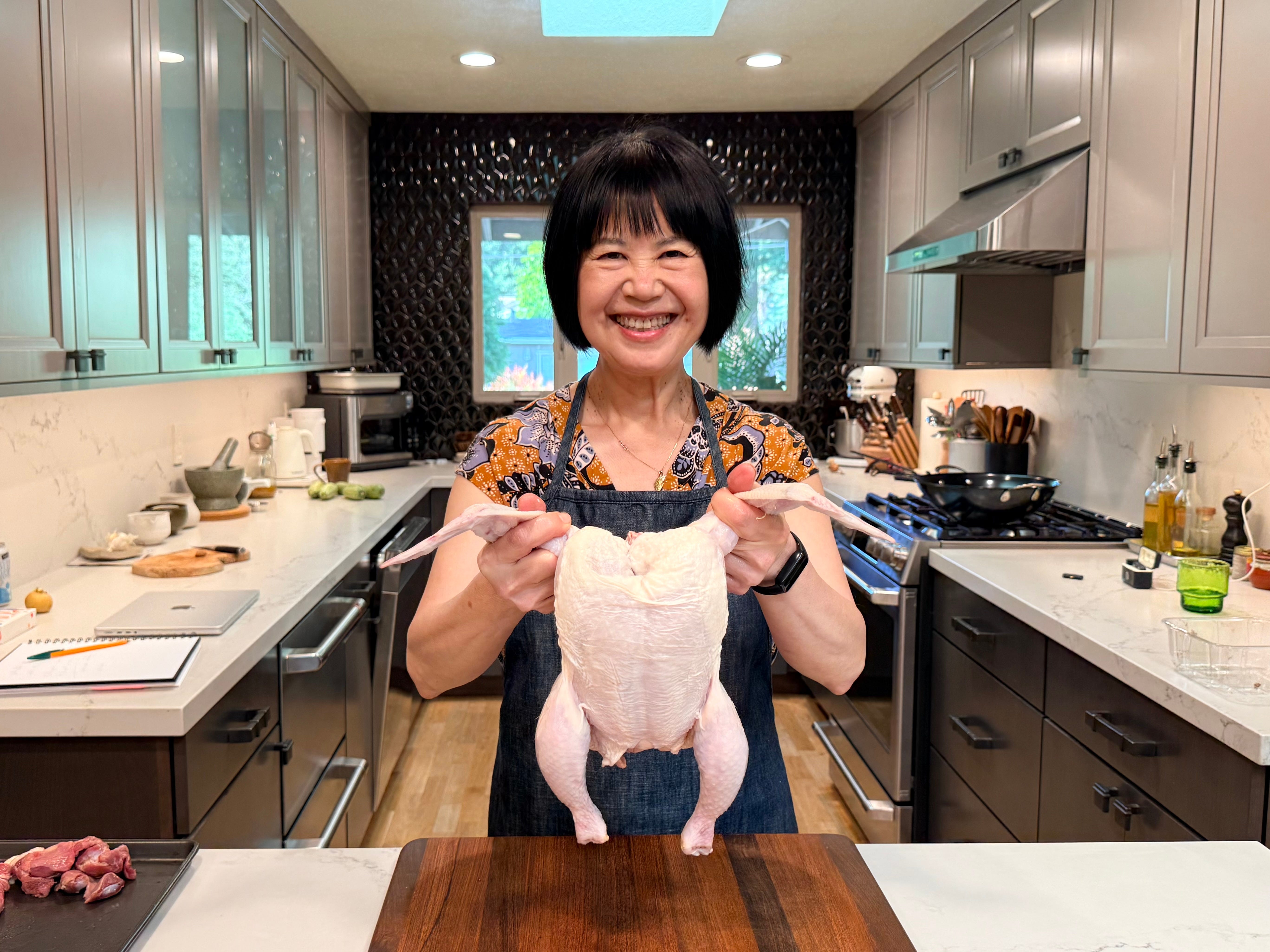
My Julia Child moment at home.
Butchering chicken is a cooking lifeskill that unless you are a vegetarian, you ought to master. Unfortunately, most modern cooks do not know how to break down a chicken and make the most of it.
PTFS subscribers have expressed keen interest in learning how to break down a chicken. I’ve had it on my to-do list but something I saw last week kicked me into high gear: Whole Foods was selling boneless skinless chicken thighs for $10.99 a pound! Meanwhile, the WF whole chicken was $2.69 per pound.
A whole chicken is like manna from Heaven. A whole bird can seed many more delicious meals than a pound of deboned, skinless chicken. I bought several chickens and recruited Rory to help me make the four (4) videos in this dispatch:
Chicken rinsing (yes or no and how?)
How to cut up a whole chicken (+ what size and kind of bird to buy)
Cutting and deboning chicken parts (for good flavor and cuts that you can only get at specialty markets)
Chop chicken bones like a boss (for better broth and excellent pho, whack away!)
These videos will also help you with:
food safety issues
buying chicken intelligently
getting better flavor
specialty-style cuts
broth/pho technique
cooking confidence to deal with bones, boning knives, and cleavers
Feel free to share your knowledge and tips too!
These four Chicken Butchering videos comprise a mini class, which is free to paid subscribers. They seed and sponsor PTFS knowledge. Join us to access this complete post, mine the recipe index, and gain so much more. Thanks for your considerations!
Book tours are lots of fun. It’s exciting meeting people, and in spite of the jet lag, and bleariness from sometimes getting up at 4am, you try to get in some good meals, too. Also important is getting fresh food, which we eat a lot of at home, but hard to do while on the road.
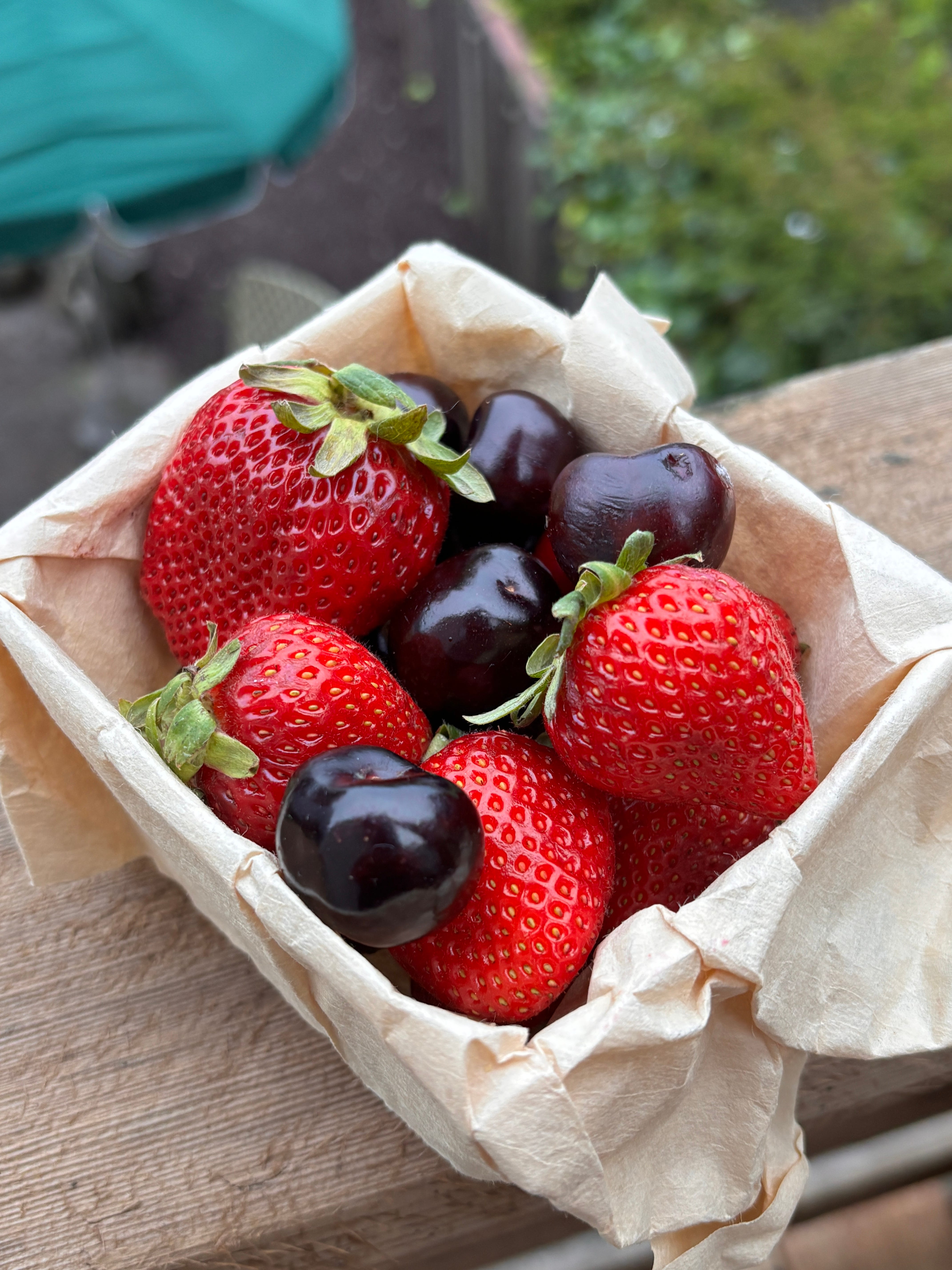
Thankfully, some wonderful folks brought me a beautiful basket of cherries and strawberries from the Berkeley Farmers’ Market while I was doing a booksigning nearby at Market Hall Foods, and I enjoyed the fruit as soon as I got home. (Thanks to the women who gave them to me!) I did also get a few gifts of chocolate, some more chocolate, and then, some more chocolate, which I guess is to be expected when you’re doing a tour for a chocolate book. 😊
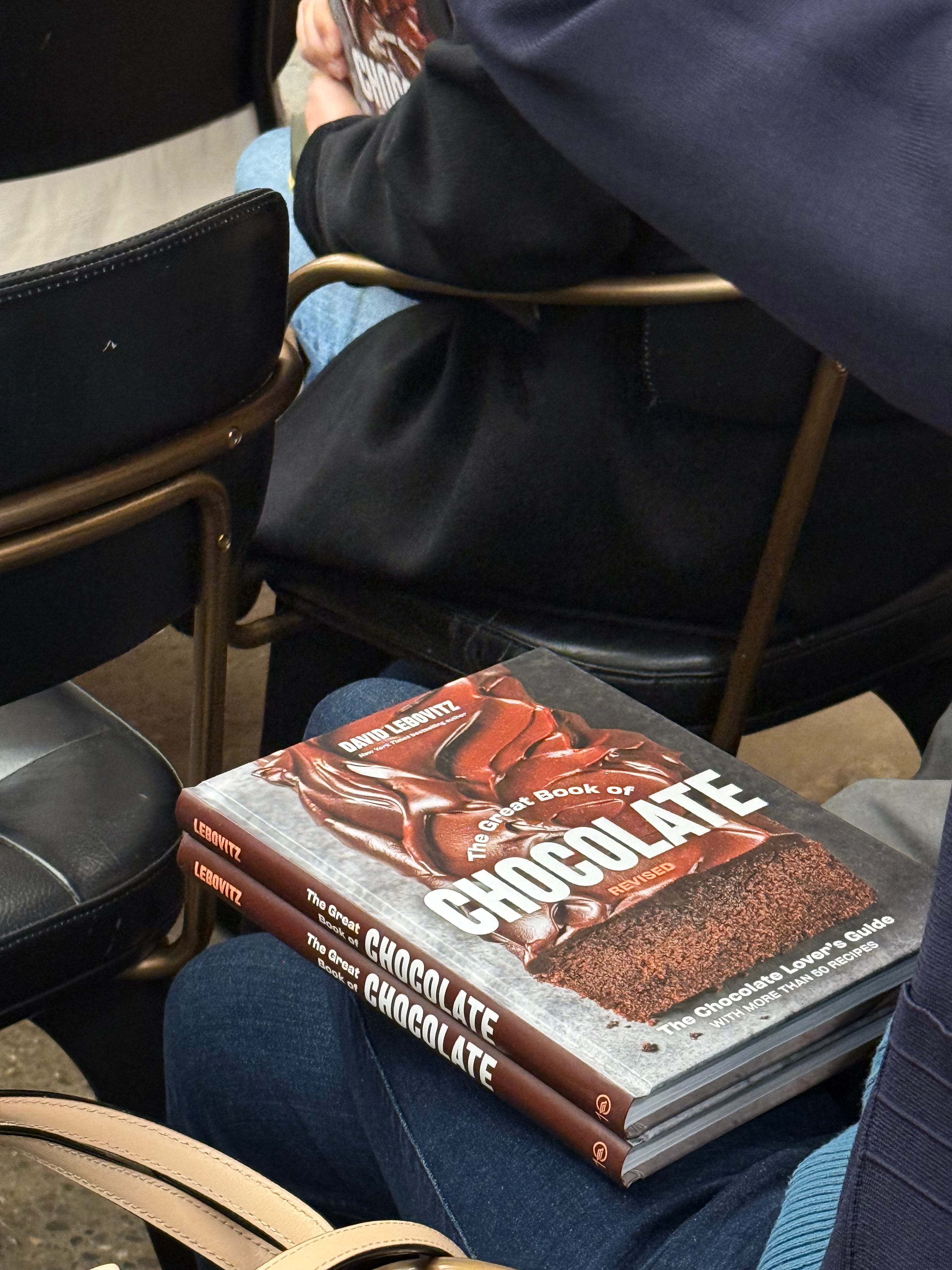
My suitcase is already at capacity, even though I arrived with it half full. But it’s nice to see people enjoying the book, which has surpassed our (me and my publisher’s) expectations, as well as the venues selling the book. So thanks to everyone who bought or ordered a copy.
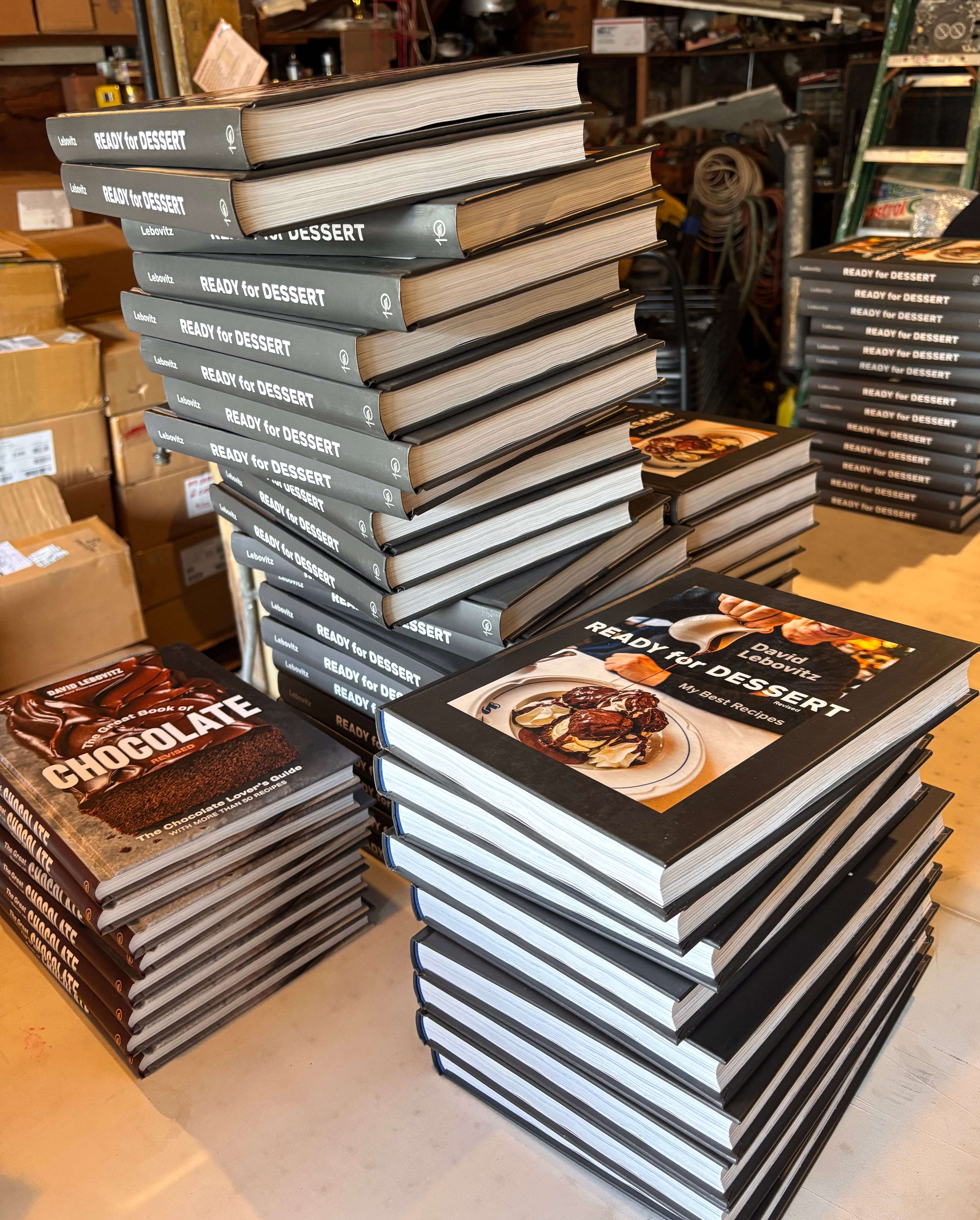
I signed a few hundred atOmnivore Books for people who came to say hi, and for others who ordered signed copies. If you ordered one, it should arrive shortly.
I did another event at Dandelion Chocolate in San Francisco. That sold out quickly since they could only seat so many people, but if you’re in San Francisco, do stop by. They do factory tours, teach classes, and have a chocolate salon where you can sip hot chocolate and enjoy delicious desserts made with their small-batch, single-origin chocolate. (Pro tip: Go for the S’more, if they have it on the menu.)
At Dandelion Chocolate
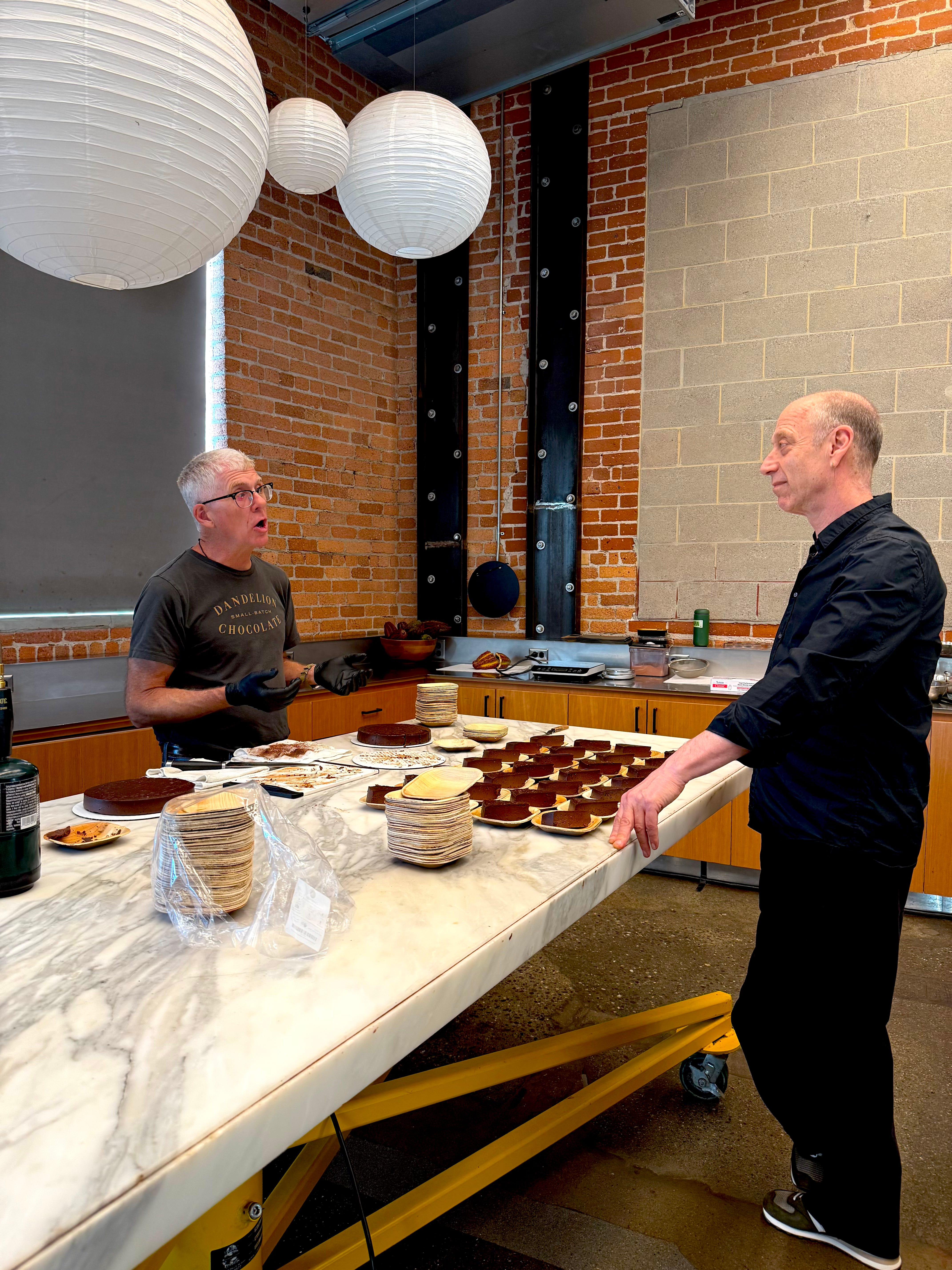
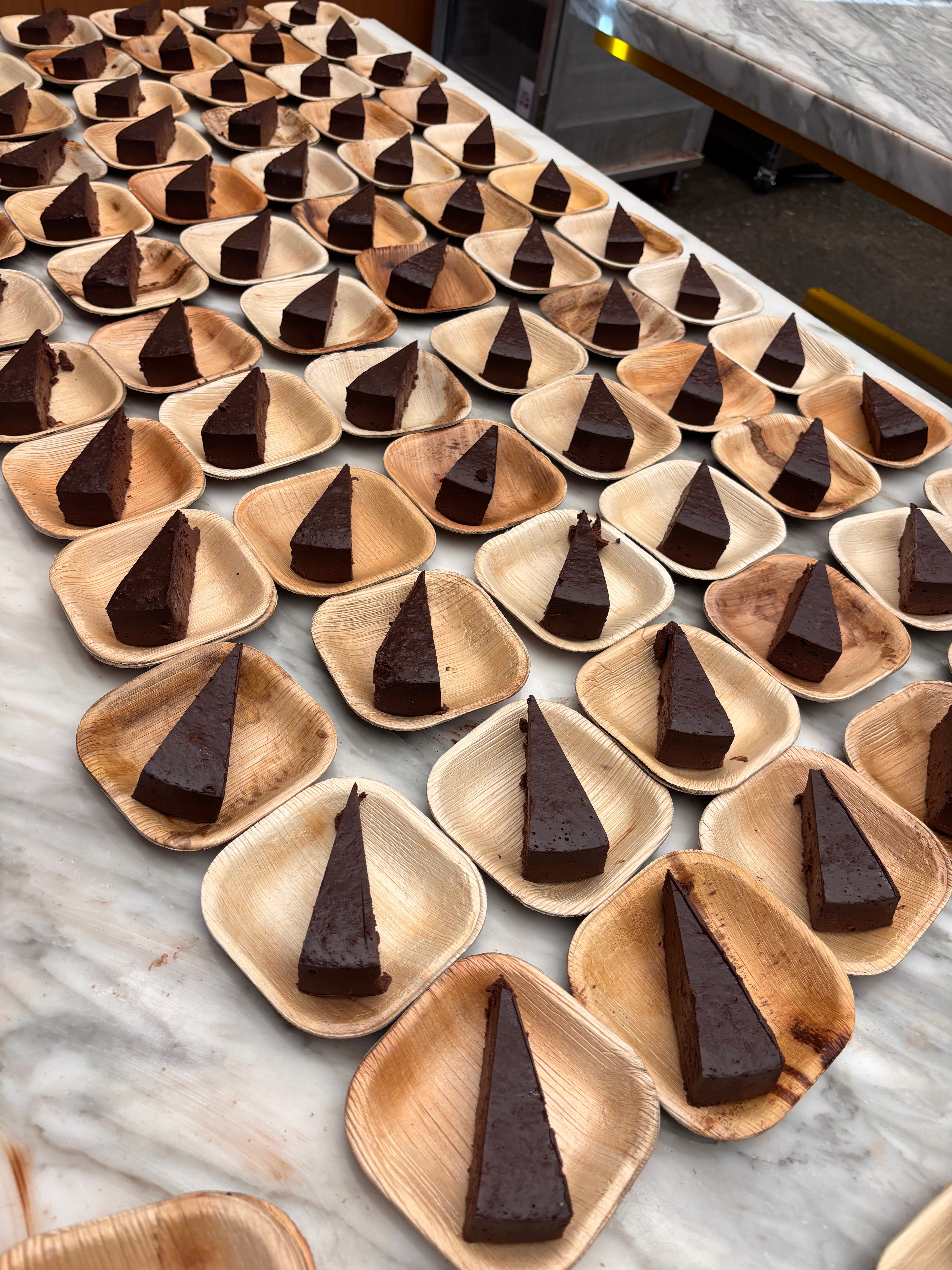
We had a wonderful turnout and enthusiastic crowd at Dandelion Chocolate, where pastry chef Stephen Durfee did a masterful job ofbaking and slicing Torta Divina, a rich chocolate cake that’s in The Great Book of Chocolate, adapted from author and baking instructor Nick Malgieri.
I had a really terrific time chatting with Stephen. (I want to call him “chef,” but he’s wearing a T-shirt, so I’m just going to go with Stephen.) We both talked about how the world of chocolate has greatly expanded since I wrote the first edition of the book and since the founding of Dandelion in 2010; the owners came to Paris and did a chocolate tour with me, then returned and started making chocolate.
While I can say that I didn’t have anything to do with their success, I’m glad they’ve been successful, and their chocolate is considered some of the best in the world. I did also mention how bean to bar has now become a thing in France as well, influenced by the American chocolate revolution, as chocolate specialist Chloé Doutre-Roussel dubbed it; they use the English term, bean to bar, in France.
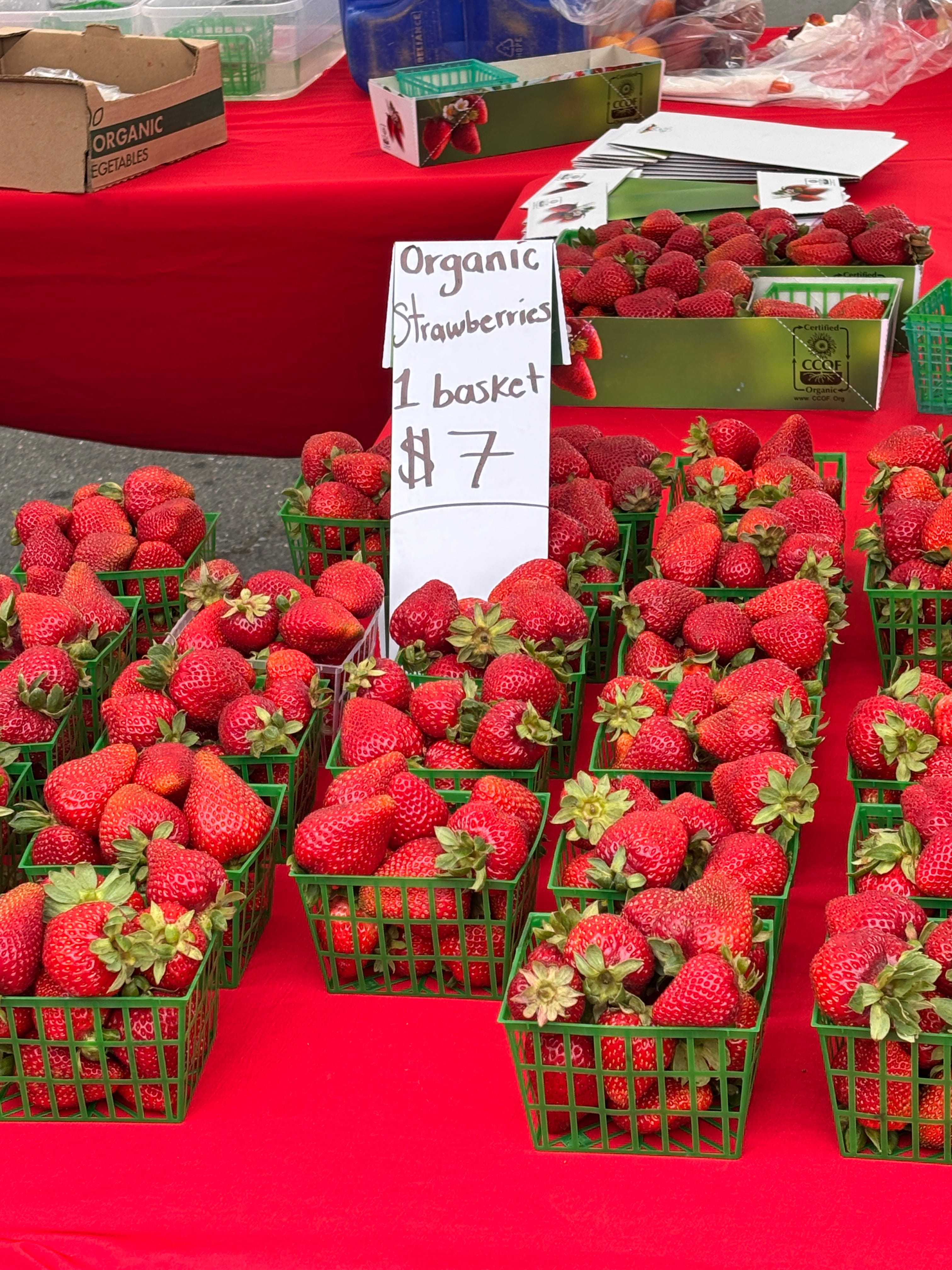
On the road, especially with all the chocolate I’m eating, I make an effort to get as much fresh food as I can, whenever and wherever possible. I was happy to be staying near a greenmarket in San Francisco, and was relieved to see baskets and boxes of berries and other fruits and vegetables that came from local farms.
I know it’s triggering for some when I post pictures of strawberries that cost $7/basket, but since that’s what they cost in France — at least the good ones — I’m not stupefied. I also know that it takes a lot of work to grow, pick, and deliver berries, which are fragile, and I didn’t see any of the berry farmers pulling up in BMWs. All I know is that last year I spent over €80($93) on things that would repel the slugs that decimated our garden, including the peppers, basil, and tomatoes, so I’m fine paying for someone who succeeds in the battle against them.
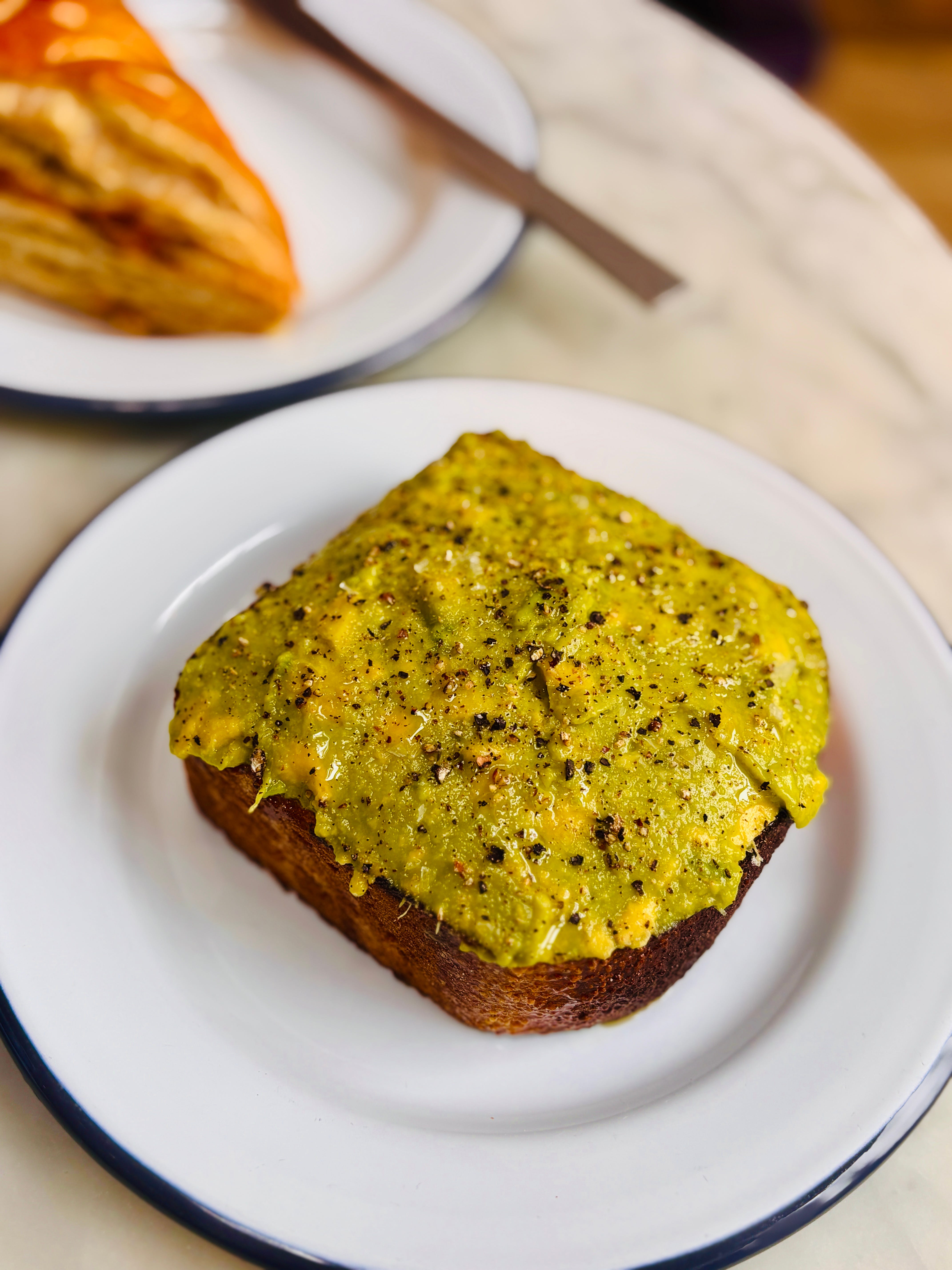
Speaking of $$, I remember when the $4 toast was considered a harbinger of the downfall of San Francisco.
Now, that seems like a bargain. But one of my first stops in SF isThe Mill, where it’s become a custom for me to meet up with Heidi Swanson of 101 Cookbooks, one of the OG food blogs. Heidi moved to Los Angeles a few years ago, but lucky for me (and for San Francisco), she recently moved back. We caught up over avocado toast and talked about the difference between sunny SoCal and foggy San Francisco. As wistful as I am about San Francisco, the chilly fog that rolls in at night is a deal-breaker for me, moving back there.
The Mexican food scene has ramped up in Paris, partially thanks to my friend Carlos at Comer, which is excellent, but a lot of it still doesn’t match what you can get in California. I arrived rather late in San Francisco the first night and my friends who I was staying with saved me a burrito from El Castillito. Like bagels in New York, there’s an endless discussion about who makes the best Mission burrito in SF. I still rank Pancho Villa at the top. But I had many a burrito from El Castillito in my lifetime — at least in San Francisco — although nowadays, my French-trained tummy can only handle a half of one before I’m full.
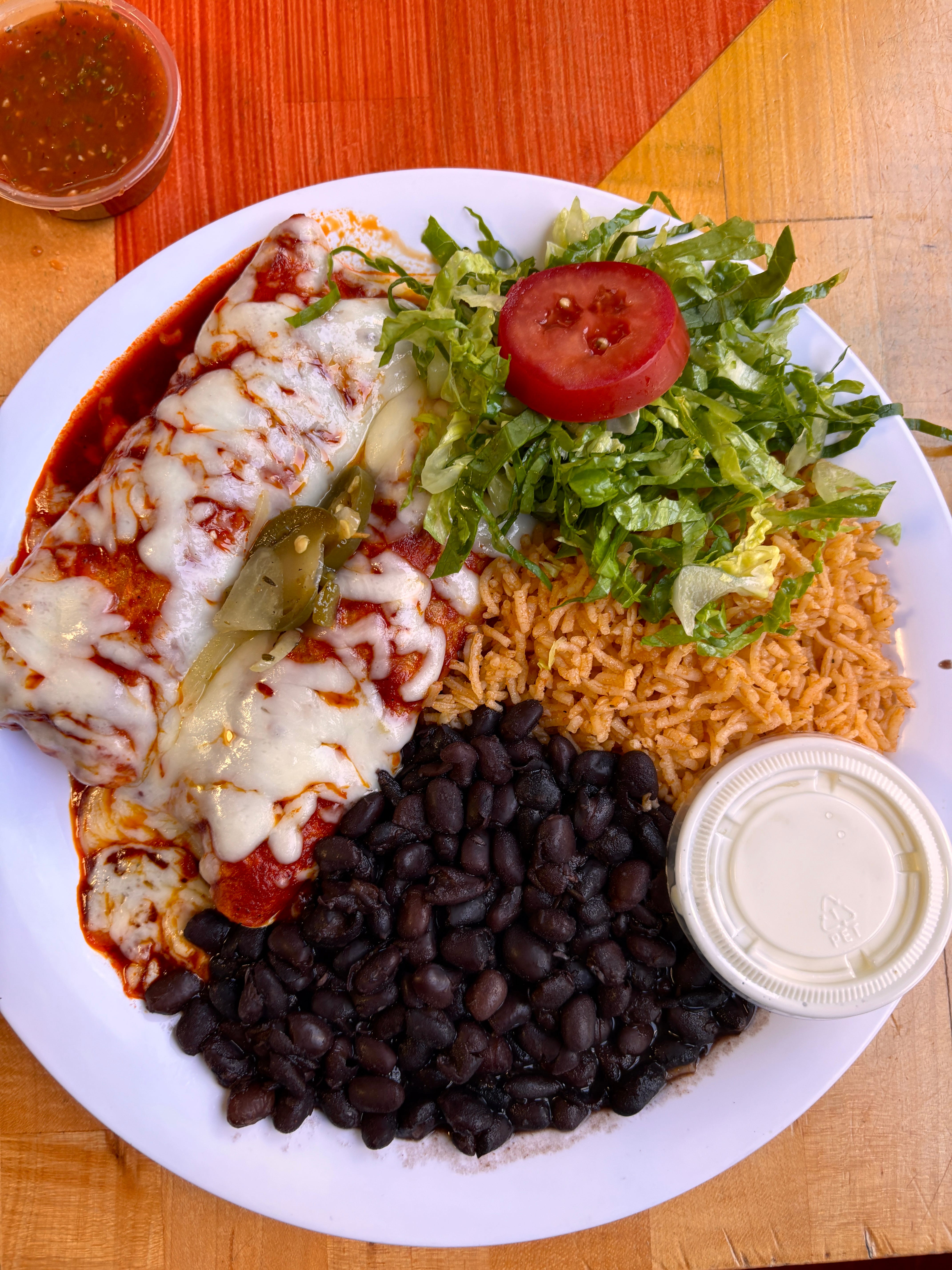
Before my event at Market Hall Foods, I had what Diana Kennedy railed about: the Mexican combo platter, at Cactus Taqueria. The late Ms. Kennedy was famously prickly about, well…everything. I once spent a week with her and avoided her wrath but heard about it from others who were on the receiving end of it. However, I stopped caring what people thought of me, or what I ate, a few years ago, and am a lot happier. Besides, if I went around scolding people making non-authentic Niçoise salads or putting chicken on Caesar salads, I wouldn’t have time to write about all the delicious things I get to eat. And when you’re at the airport, or on book tour, a chicken Caesar often hits the spot.
Not sure what Madame Kennedy would have to say about Nopalito, but the crisp quesadilla with asparagus, brussels sprouts, and fresh epazote (above, right) was so good, I went back a second time to have it. Literally everything is good at Nopalito, including the tamal with soft masa filled with ancho-braised chicken, and the enchiladas de mole con pollo, chicken enchiladas with mole, above left. (Yes, there’s a mole recipe in my chocolate book, too.)
A few months ago I went to the Staub factory in France and met Belle English, who runs the test kitchen at Williams-Sonoma in San Francisco. I remember going into my firstWilliams-Sonoma store in San Francisco, which was on Sutter Street, where I saw such wonders as Duralex glasses, Le Creuset cookware, and curiosities like madeleine molds and tart rings from France. Chuck Williams introduced America to the food processor. It was a store for people who liked to cook, and I was fascinated by everything they carried.
So it was a pleasure to be in their gorgeous test kitchen, where I got to play with all the kitchen gadgets, and Belle and I made Bouchons together, from my chocolate book. As soon as they were cool enough to handle (actually, she ate one that was still a bit too warm…), dove into them.
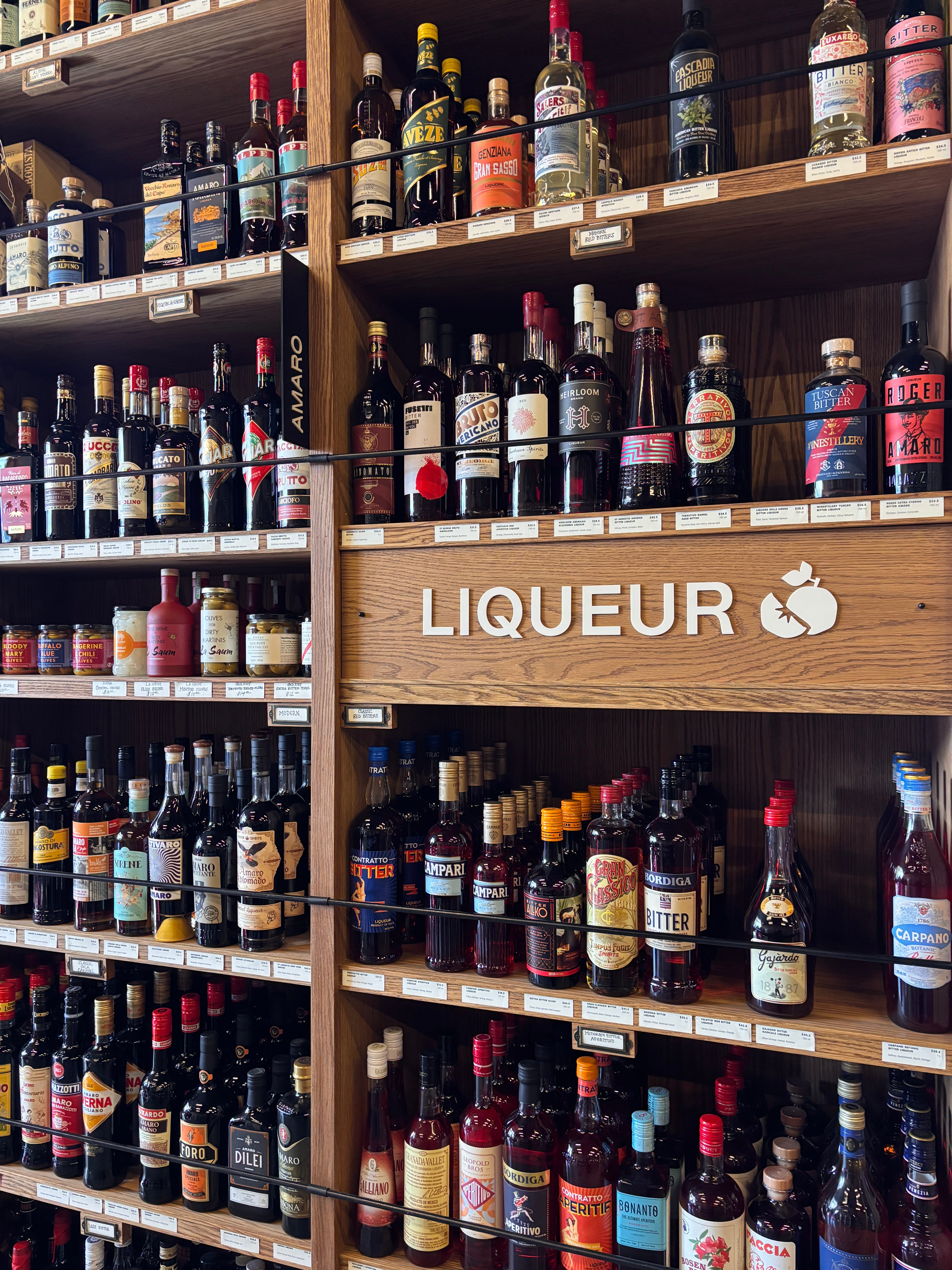
I also stopped into Bitters and Bottles, a shop I discovered during Covid when I was doing Drinking French apéro hours on Instagram. When I wrote the book, I did a lot of checking around to see what French bottles were available in the U.S., and Bitters and Bottles had a stellar selection, including some that are hard to find, even in France. Interestingly, Americans seem to like many French apéritifs more than the French do!
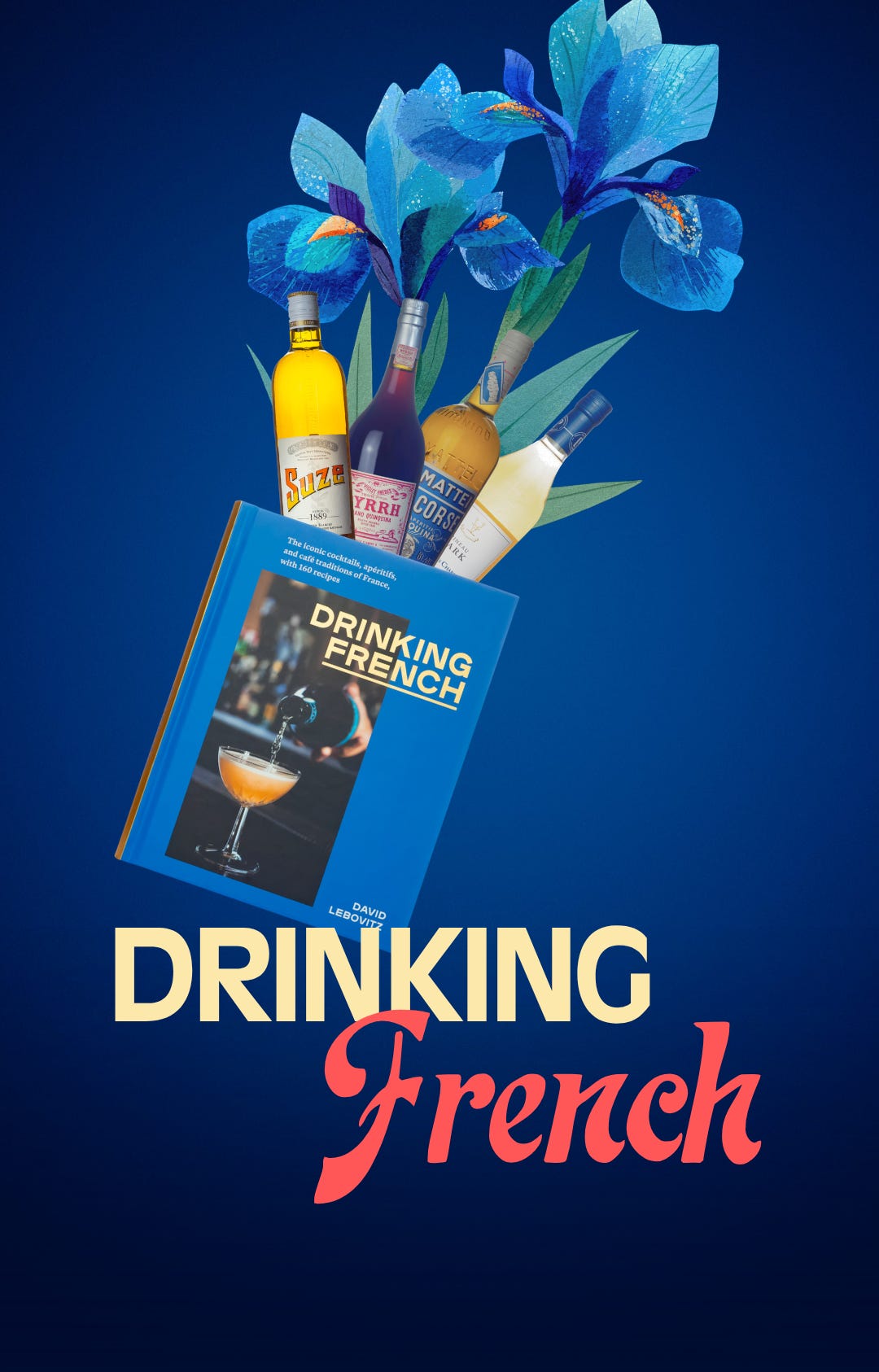
I did see that after my visit, they’re offering a Drinking French box with seven of my favorite bottles, which are perfect for summer, including Cap Corse and Byrrh; these are especially good over ice or with a splash of tonic water and an orange slice for a refreshing spritz.
I loved my meal at Nari, above, and am looking forward to chef/owner Pim Techamuanvivit’s upcoming book, Cooking Thai, co-authored with . I got a sneak preview of it, and it’s not only a beautiful book, but very well-written, making the authentic Thai dishes approachable.
Subscribe to my newsletter to get recipes and posts sent right to your inbox!
I was sad to learn a few years back that one of my favorite dim sum places, Hong Kong Lounge II, had a fire and had closed. So it was nice to hear they reopened as HK Lounge Bistro in the unlikely neighborhood of South of Market. In my day, people used to hang out in that area late at night and into the morning hours, when they wanted to have some unrestrained fun, which sometimes involved restraints. Although you didn’t hear that from me…
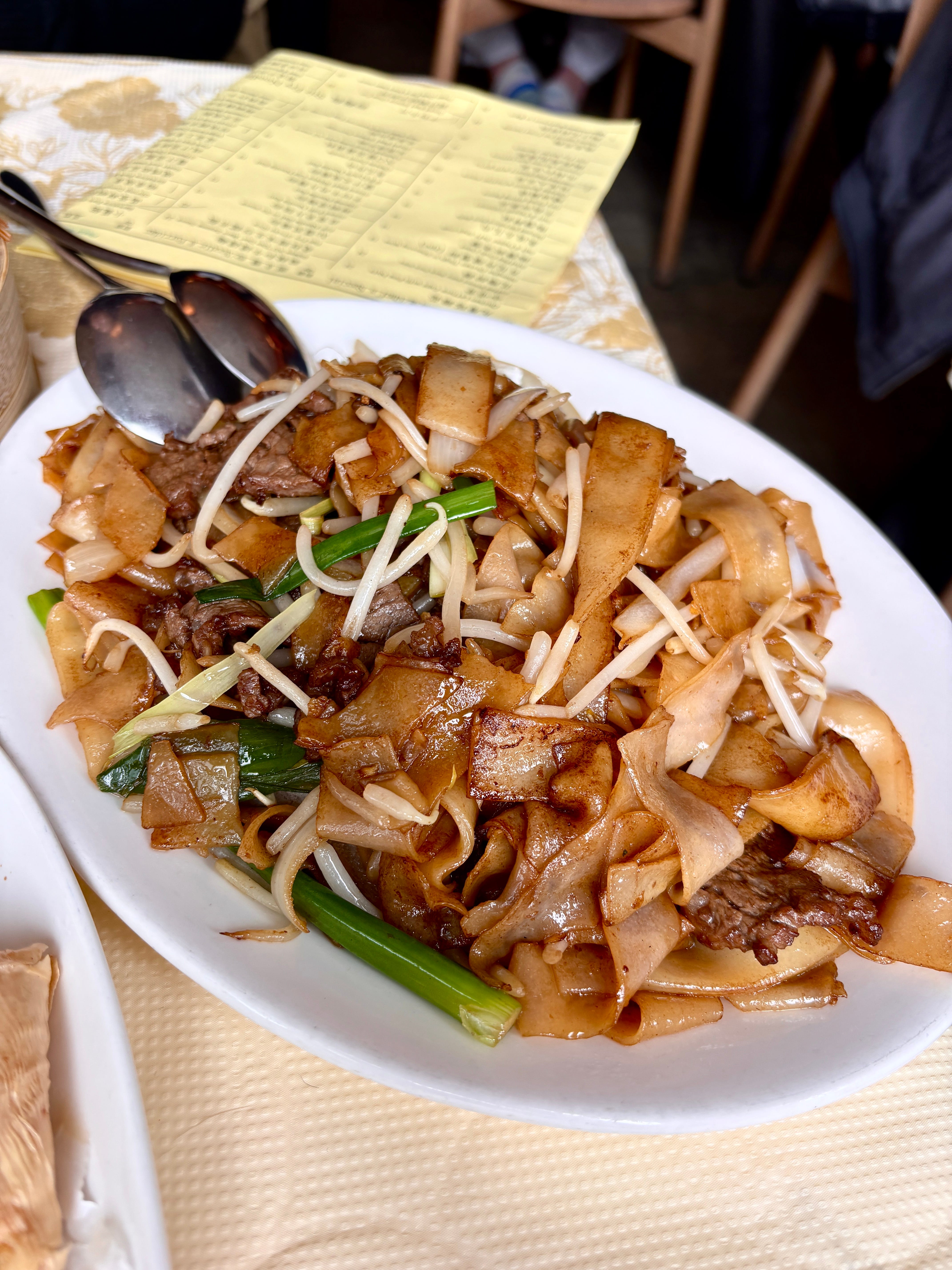
I was thrilled to dig into a big platter of their beef chow fun, above, was still excellent, and had wok hei, the smoky char that rice noodles get from being wok-fried. That smokiness is a big part of the flavor of a good chow fun. Otherwise it’s just a big heap of noodles.
While they may not look all that good in the picture (above, right), I dreamed about their crisp tofu skins with shrimp. They weren’t quite as good as I remembered, but it was nice to have a big plate of pea shoots, above left. When Romain first tasted pea shoots, he asked the same question as I did: Why don’t we have those in Paris? I even memorized the words for them in Chinese, thinking they might be an “off-menu” item. But no, they don’t seem to exist in France. However, it’s hard to believe anyone could make them better than here.
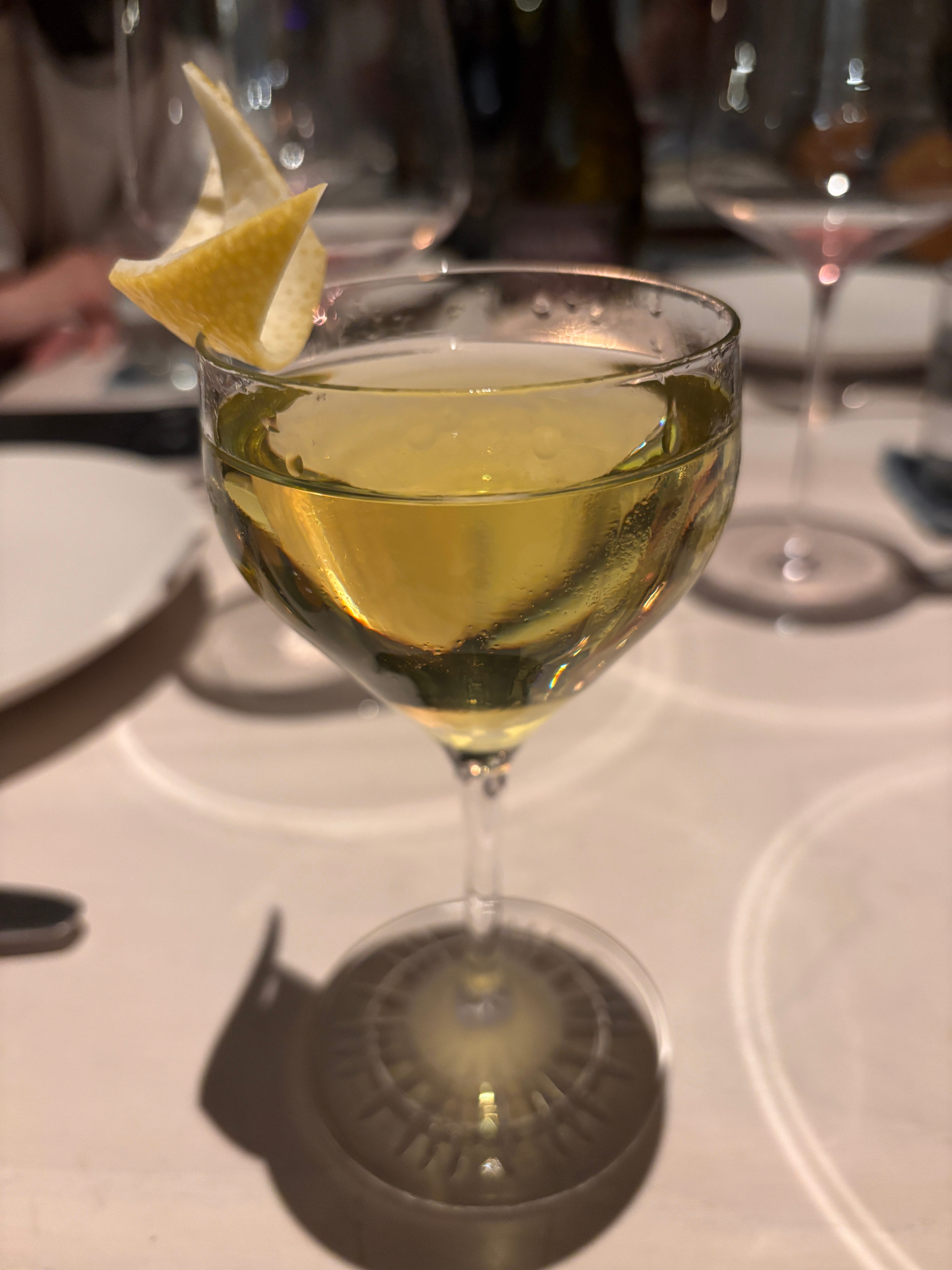
After my event at Dandelion Chocolate, I met up with friends at The Morris. One of them was owner Paul Einbund, a major fan of, and expert on, Chartreuse. I did a video with him in his apartment, which is filled with bottles of Chartreuse, old and new, but Instagram seems to have buried all my videos somewhere (which is why I’m now doing them here). I started off with an Alaska cocktail. If you go, the Chartreuse Slushy is a must.
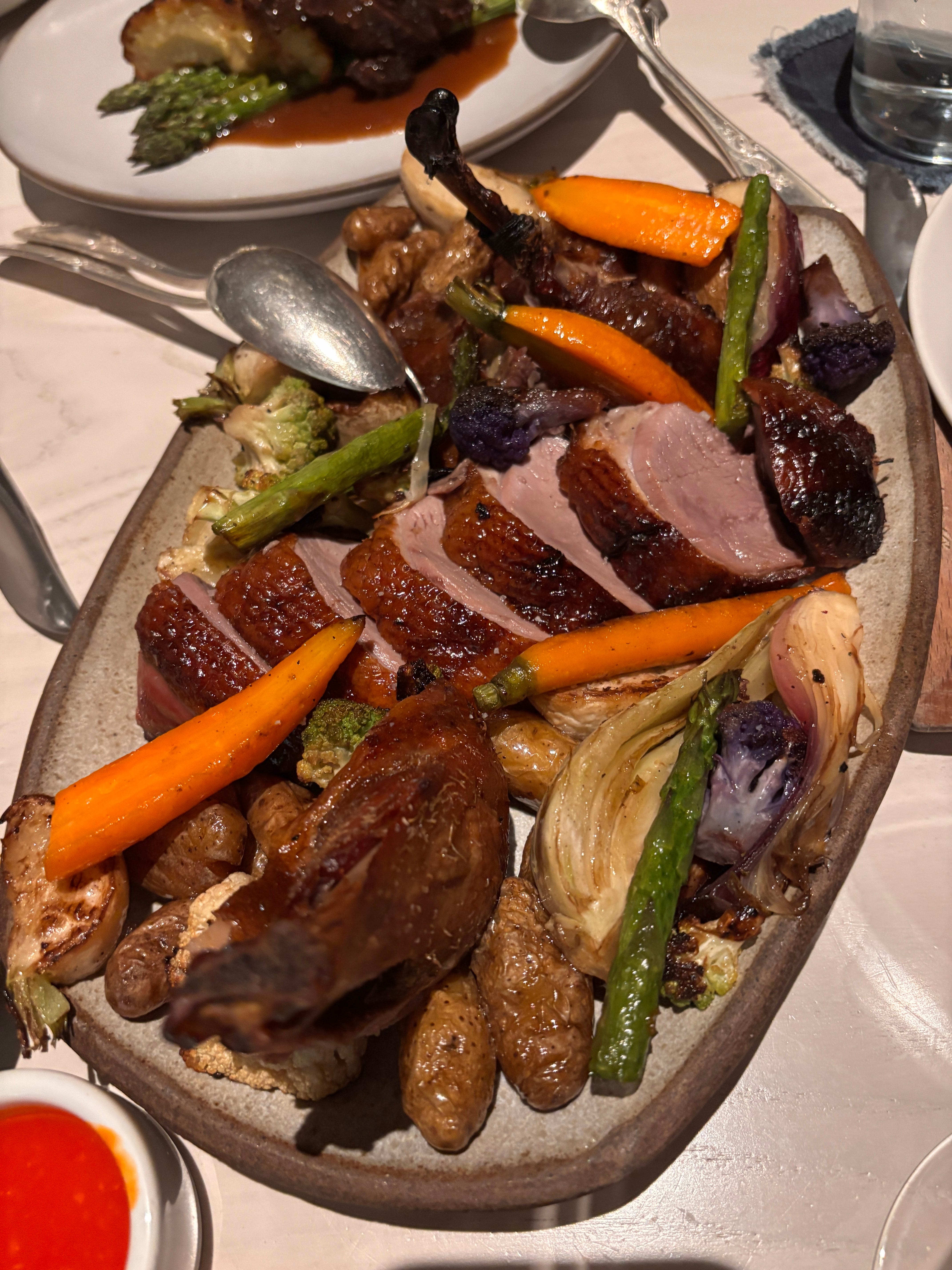
We share a whole smoked duck with root vegetables, which was generous enough to feed five of us. I’d filled up on chocolate cake before dinner — oops! That shocked Paul, but others who know me are used to it.
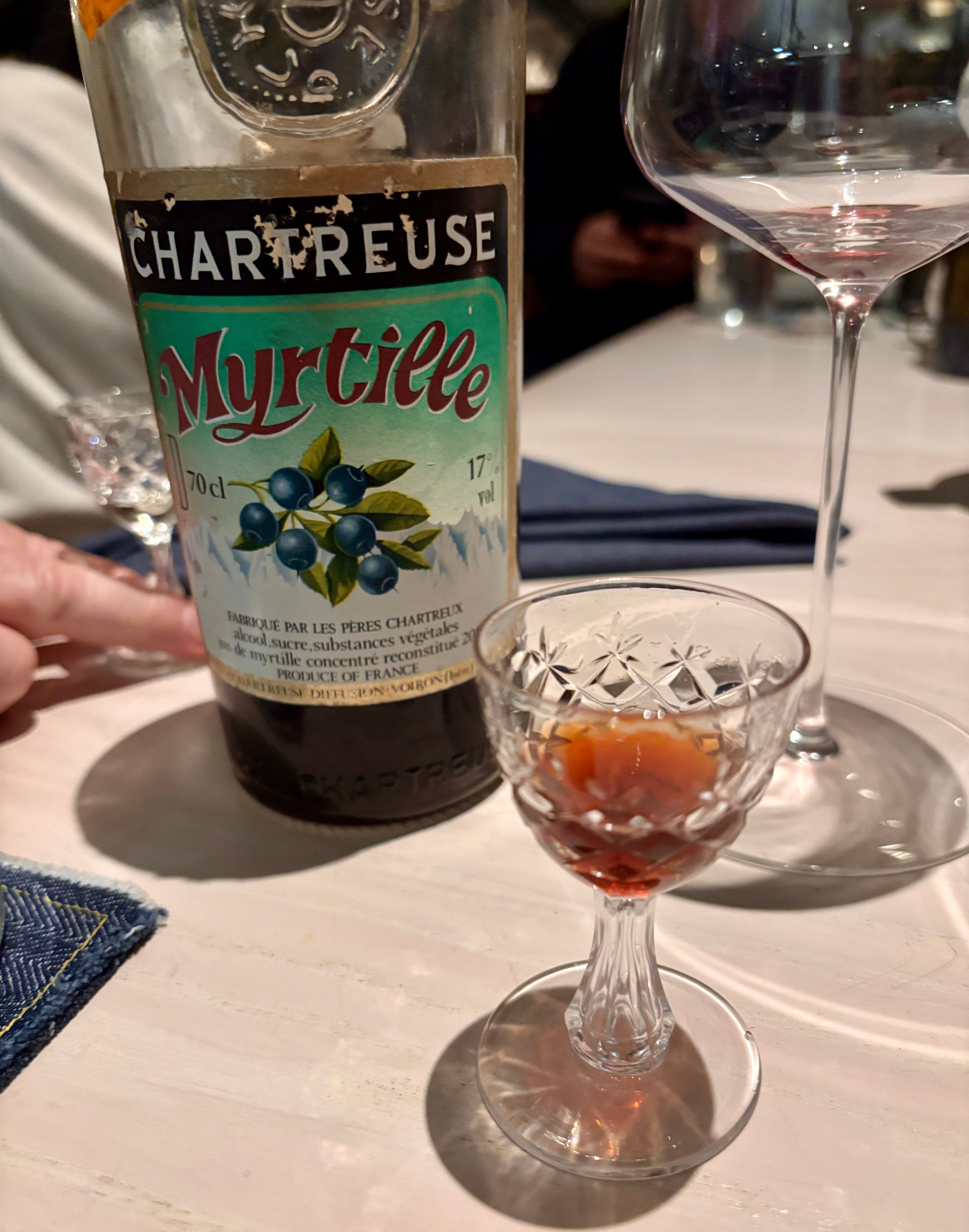
After dinner Paul brought out a special treat: Blueberry Chartreuse. In the 1970s, the monks who make Chartreuse tried to make it more popular, and had the idea to add fresh blueberry juice to it and bottle it. There’s also an orange version and Paul swears there was a raspberry one as well. They’re really hard to find, although one doesn’t drink them for the flavor since they didn’t age well. He called the taste “Flat Coke,” which was hard to dispute.Paul said in an article: “I would actively dissuade my guests from purchasing the late ’70s fruit Chartreuse bottlings.”
I woke up the next day feeling okay. The blueberry-flavored Chartreusedidn’t cause any harm. And I’m looking forward to the book on Chartreuse that Jordan Mackay wrote with Paul, which is the book that I wanted to do. But they know more than I do about the subject, although I’m happy to do more research on it. Maybe that’ll be my next book…and book tour?

 Login
Login