Normal view

Pluralistic: Lee Lai's "Cannon" (08 May 2026)


Today's links


The Drawn & Quarterly cover for Lee Lai's 'Cannon.'

Lee Lai's "Cannon" (permalink)

Lee Lai's Cannon is an extraordinary graphic novel that turns out a beautifully told, subtle and ambiguous tale about Lucy (Lucy -> "Loose" -> "Loose Cannon" -> "Cannon"), a queer Chinese-Canadian chef at a Montreal restaurant whose messy family, work, personal and sex life are all falling apart in ways that are powerfully engrossing:

https://drawnandquarterly.com/books/cannon/

This is the second outing from Lee Lai, whose debut, Stone Fruit, swept many of the field's awards and won major critical acclaim. When a debut comes out that strong, it's sometimes followed with the dread "second book syndrome" in which a creator who has poured everything they ever thought about putting in a book now has to write another book, from scratch. But Cannon avoids any hint of that second book malaise; rather, it is jammed with dense and densely connected ideas, character beats and graphic signifiers that are brilliant in so many ways:

https://www.fantagraphics.com/products/stone-fruit

Cannon is a thirtysomething chef in a Montreal restaurant run by Guy, an instantly recognizable hustler who praises Cannon for her culinary abilities and her pliability, talks over her, demands the impossible from her kitchen colleagues and periodically breaks out into soliloquies about his own martyrdom to the hardships of entrepreneurship.

Cannon cares for her grandfather, who has been abandoned by her mother, who has been traumatized by the abuse he meted out to her during her upbringing. Now in decline and unable to care for himself, Cannon's grandfather continues his abusive ways, scaring off all of his home help, which means Cannon must devote even more time to him (she can't bring herself to put him in a care facility that will inevitably be full of white people who don't speak Chinese).

These familial duties leave Cannon isolated, with only one important friendship: Trish, an up-and-coming novelist whom Cannon has known since their school days in Montreal's suburban Eastern Townships, where they were the only queer Chinese girls either of them knew. Trish owes her professional acclaim to her own neurotic social instincts, which she polishes on the page with the help of an old writing teacher who serves as her mentor. Trish may be Cannon's oldest and best friend, but she's not actually a very good friend, and now that they're both in their 30s, neither Cannon nor Trish is entirely sure where they'd make new friends.

This is where Cannon starts, as Cannon tries to resolve all these bad situations, each of which is only worsening. Trish disapproves of Cannon's sexual affair with the new front-of-house woman at the restaurant – even as Trish begins a friends-with-benefits arrangement with a guy from her fitness club who clearly wants more than the odd tumble. Guy the restaurateur positions Cannon as his hatchet-woman and confidante, driving conflict in the kitchen that she is meant to hold the bag for. Her grandfather enters a terminal decline, and still her mother won't answer her calls and texts about it. And then, Cannon discovers that Trish has violated her in a way that is intimate and appalling.

These may sound like the beats that you'd find in a melodramatic soap opera, but Cannon's affect is so stoic, and her interiority is so beautifully and inventively depicted – Lai deploying the unique strengths of the graphic novel form here with total virtuosity – that the vibe is more David Lynch than Dallas.

The result is something that's beautiful, sharp, critical and lingering. Long after I closed the cover, I found myself mulling over the delicate ways that Lai raised the contradictions, sorrows and beauty of queer love, racial identity, camaraderie, self-control, and self-indulgence. Lai's characters have no answers, only questions that can never be fully resolved. Instead, these questions are the defining puzzles, defeats and triumphs of their lives.

It's a magnificent, sensitive and innovative work of storytelling.


Hey look at this (permalink)


A shelf of leatherbound history books with a gilt-stamped series title, 'The World's Famous Events.'

Object permanence (permalink)

#25yrsago Ebay paying newspapers to run listings in the classifieds section https://web.archive.org/web/20010506063910/http://www.business2.com/news/2001/05/ebaypapers.htm

#20yrsago Airline spoons of the world photo-gallery https://www.flickr.com/photos/airlinespoons

#20yrsago Coach passengers arrested for moving to first class http://news.bbc.co.uk/1/hi/england/manchester/4980364.stm

#15yrsago Hidden cognitive costs of doing stuff https://web.archive.org/web/20110507154653/https://us.lifehacker.com/5798202/the-cognitive-cost-of-doing-things

#15yrsago Syria’s man-in-the-middle attack on Facebook https://www.eff.org/deeplinks/2011/05/syrian-man-middle-against-facebook

#10yrsago Weird erotica author who was dragged into Hugo Awards mess pulls off epic troll https://web.archive.org/web/20160506175535/http://www.dailydot.com/lol/chuck-tingle-trolling-hugo-zoe-quinn-genius/

#10yrsago FBI has been harassing a Tor developer since 2015, won’t tell her or her lawyer why https://blog.patternsinthevoid.net/fbi-harassment.html

#10yrsago 2,000 US doctors endorse Sanders’ single-payer healthcare proposal https://web.archive.org/web/20160506095034/https://www.washingtonpost.com/news/wonk/wp/2016/05/05/2000-doctors-say-bernie-sanders-has-the-right-approach-to-health-care/

#10yrsago Community college evicts daycare center to make room for Goldman Sachs https://www.golocalprov.com/news/daycare-center-being-moved-out-of-ccri-for-goldman-sachs

#10yrsago Data-driven look at America’s brutal, racist debt-collection machine https://www.propublica.org/article/so-sue-them-what-weve-learned-about-the-debt-collection-lawsuit-machine

#10yrsago Homeland Security wants to subpoena Techdirt over the identity of a hyperbolic commenter https://www.techdirt.com/2016/05/06/homeland-security-wants-to-subpoena-us-over-clearly-hyperbolic-techdirt-comment/

#5yrsago NY AG attributes Net Neutrality fraud to telcos https://pluralistic.net/2021/05/06/boogeration/#pais-lies

#5yrsago Ed-tech apps spy on kids https://pluralistic.net/2021/05/06/boogeration/#i-spy

#5yrsago Scammers recycled covid nose-swabs https://pluralistic.net/2021/05/06/boogeration/#up-your-nose

#1yrago The Adventures of Mary Darling https://pluralistic.net/2025/05/06/nevereverland/#lesser-ormond-street


Upcoming appearances (permalink)

A photo of me onstage, giving a speech, pounding the podium.


A screenshot of me at my desk, doing a livecast.

Recent appearances (permalink)


A grid of my books with Will Stahle covers..

Latest books (permalink)


A cardboard book box with the Macmillan logo.

Upcoming books (permalink)

  • "The Reverse-Centaur's Guide to AI," a short book about being a better AI critic, Farrar, Straus and Giroux, June 2026 (https://us.macmillan.com/books/9780374621568/thereversecentaursguidetolifeafterai/)
  • "Enshittification, Why Everything Suddenly Got Worse and What to Do About It" (the graphic novel), Firstsecond, 2026

  • "The Post-American Internet," a geopolitical sequel of sorts to Enshittification, Farrar, Straus and Giroux, 2027

  • "Unauthorized Bread": a middle-grades graphic novel adapted from my novella about refugees, toasters and DRM, FirstSecond, April 20, 2027

  • "The Memex Method," Farrar, Straus, Giroux, 2027


Colophon (permalink)

Today's top sources:

Currently writing: "The Post-American Internet," a sequel to "Enshittification," about the better world the rest of us get to have now that Trump has torched America. Third draft completed. Submitted to editor.

  • "The Reverse Centaur's Guide to AI," a short book for Farrar, Straus and Giroux about being an effective AI critic. LEGAL REVIEW AND COPYEDIT COMPLETE.
  • "The Post-American Internet," a short book about internet policy in the age of Trumpism. PLANNING.

  • A Little Brother short story about DIY insulin PLANNING


This work – excluding any serialized fiction – is licensed under a Creative Commons Attribution 4.0 license. That means you can use it any way you like, including commercially, provided that you attribute it to me, Cory Doctorow, and include a link to pluralistic.net.

https://creativecommons.org/licenses/by/4.0/

Quotations and images are not included in this license; they are included either under a limitation or exception to copyright, or on the basis of a separate license. Please exercise caution.


How to get Pluralistic:

Blog (no ads, tracking, or data-collection):

Pluralistic.net

Newsletter (no ads, tracking, or data-collection):

https://pluralistic.net/plura-list

Mastodon (no ads, tracking, or data-collection):

https://mamot.fr/@pluralistic

Bluesky (no ads, possible tracking and data-collection):

https://bsky.app/profile/doctorow.pluralistic.net

Medium (no ads, paywalled):

https://doctorow.medium.com/

Tumblr (mass-scale, unrestricted, third-party surveillance and advertising):

https://mostlysignssomeportents.tumblr.com/tagged/pluralistic

"When life gives you SARS, you make sarsaparilla" -Joey "Accordion Guy" DeVilla

READ CAREFULLY: By reading this, you agree, on behalf of your employer, to release me from all obligations and waivers arising from any and all NON-NEGOTIATED agreements, licenses, terms-of-service, shrinkwrap, clickwrap, browsewrap, confidentiality, non-disclosure, non-compete and acceptable use policies ("BOGUS AGREEMENTS") that I have entered into with your employer, its partners, licensors, agents and assigns, in perpetuity, without prejudice to my ongoing rights and privileges. You further represent that you have the authority to release me from any BOGUS AGREEMENTS on behalf of your employer.

ISSN: 3066-764X

Meet the Future of the Democratic Party

8 May 2026 at 10:02
In Maine: Susan Collins vs. Graham Platner

Friends,

Last Thursday, populist Democratic candidate Graham Platner shook up the Democratic establishment when his primary competitor, Maine Governor Janet Mills, suspended her Senate campaign amid polls showing her badly trailing Platner, an oyster farmer who had come out of nowhere to win a national following.

Platner is the latest example of the rise of anti-establishment outsiders in the Democratic Party — a trend that also includes self-proclaimed democratic socialist Zohran Mamdani, who last year defeated former Gov. Andrew Cuomo for New York City mayor.

Yet the Democratic establishment — corporate Democrats, wealthy Democratic donors, entrenched Washington “centrists,” the Democratic Senatorial Campaign Committee, the Democratic Congressional Campaign Committee, the Democratic National Committee, and Hakeem Jeffries and Chuck Schumer — still don’t get it.

Hell, the Democratic establishment didn’t get it a decade ago when Hillary Clinton was the presumptive Democratic nominee (and, not incidentally, Jeb Bush was considered a shoe-in for the Republican nomination).

I remember interviewing voters about their political preferences in the late spring of 2015, in the Rust Belt, Midwest, and South, for a book I was then writing. When I asked them whom they wanted for president, they kept telling me Bernie Sanders or Donald Trump. Often the same individuals offered both names. They explained they wanted an “outsider,” someone who would “shake up” the system, ideally a person who wasn’t even a Democrat or a Republican.

The people I met were furious with their employers, with the federal government, and with Wall Street. They were irate that they hadn’t been able to save for their retirements, indignant that their children weren’t doing any better than they had at their children’s age, and enraged at those at the top. Several had lost jobs, savings, or homes in the financial crisis or the Great Recession that followed it.

They kept reiterating that the system was “rigged” in favor of the powerful and against themselves. They didn’t oppose government per se; most favored additional spending on Social Security, Medicare, education, and roads and bridges. But they hated “crony capitalism” — large corporations using their political clout to gain special favors and changes in laws that often hurt average people.

The following year, Sanders — then a 74-year-old Jew from Vermont who described himself as a democratic socialist and wasn’t even a Democrat until the 2016 presidential primaries — came within a whisker of beating Clinton in the Iowa caucus and ended up with 46 percent of the pledged delegates to the Democratic National Convention from primaries and caucuses. Had the DNC not tipped the scales against him by deriding his campaign and rigging its financing in favor of Clinton, Sanders would probably have been the Democratic nominee in 2016.

Trump, then a 69-year-old egomaniacal billionaire reality TV star who had never held elected office or had anything to do with the Republican Party and who lied compulsively about almost everything, of course won the Republican primaries and went on to beat Clinton, one of the most experienced and well-connected politicians in modern America. Granted, he didn’t win the popular vote, and he had some help from Vladimir Putin, but he won.

Something very big was happening in America: a full-scale rebellion against the political establishment.

That rebellion continues to this day. Yet much of Washington’s Democratic elite is still in denial. They prefer to attribute the rise of Trump and, more broadly, Trumpism — its political paranoia, xenophobia, white Christian nationalism, misogyny, homophobia, and cultural populism — solely to racism. Well, racism is certainly a part of it. But hardly all.

In 2024, Democrats didn’t even get to choose their nominee from the primary process, since Biden dropped out after a dreadful debate performance and was replaced by Kamala Harris — leaving some Democrats feeling like higher powers were picking their nominee.

The anti-establishment groundswell has by now spread to independent voters — who are now a whopping 45 percent of the electorate and have moved sharply against Trump. It’s one of the most dramatic shifts in recent political history.

Trump’s approval rating among independents now stands at 25 percent, while 68 percent of independents disapprove of him. In 2024, independents were evenly divided, with 48 percent voting for Harris and 48 percent for Trump. In 2020, independents favored Biden by 9 percentage points.

The Democratic establishment still doesn’t see the groundswell — or is actively fighting it.

In Iowa, whose primary is June 2, the Democratic Senatorial Campaign Committee is quietly backing state Rep. Josh Turek against state Sen. Zach Wahls. That’s probably a mistake. Turek is a good candidate, but Wahls is a young, dynamic progressive — similar to Platner in his ability to inspire and rally. (In Iowa, independents who want to vote in the Democratic primary need only declare themselves Democrats by June 2.)

In California, whose primary is also June 2, the Democratic Congressional Campaign Committee just rejected Randy Villegas as its preferred nominee for the 22nd Congressional District and instead endorsed doctor and assemblywoman Jasmeet Bains. Villegas, known as a strong progressive, has been endorsed by the congressional progressive caucus and the congressional Hispanic caucus’s campaign arm. “This is about party leadership and D.C. elites putting their thumb on the scale for who they know will bend the knee to party leadership and corporate interests,” Villegas says.

In Arizona, whose primary is July 21, the DCCC has endorsed Marlene Galán-Woods in a Democratic primary to replace Representative David Schweikert, the Republican who is leaving Congress to run for governor. The DCCC rejected Amish Shah, a doctor and former state legislator who won the primary in 2024 and came within a few points of defeating Schweikert. (That year, Ms. Galán-Woods finished third in the primary.) Shah has been leading Galán-Woods by a 3-to-1 margin in the only public poll of the race. Shah says Democrats should stop backing the party apparatus if they want to win the House majority.

In Michigan, whose primary is August 4, the DSCC is backing Rep. Haley Stevens, who’s in a tight race against rival Abdul El-Sayed. Also probably a mistake. El-Sayed is another young progressive who’s showing a remarkable ability to galvanize Democrats and independents. (Michigan has open primaries in which any voter can participate.)

I could go on, but you get the point.

If Democrats fail to connect with the frustrations of average hardworking Americans and decide instead to side with big corporations and Wall Street, they’ll have given up the most crucial opportunity in a generation both to take back control of Congress and to lead the way on a new progressive agenda.

What does this anti-establishment surge — including the remarkable growth of independents and their sharp rejection of Trump — mean for the presidential race in 2028?

For one thing, it suggests that the current presumed Democratic frontrunners — Kamala Harris and Gavin Newsom — are frontrunners only because of their name recognition. As voters find out more about the alternatives, it’s unlikely that either of them will make the cut.

For another, it suggests that anti-establishment candidates are the ones to watch.

Obama chief of staff and former Chicago mayor Rahm Emanuel told a packed crowd at the Milken Institute Global Conference this week that the biggest challenge both parties have faced over the last quarter-century has been the battle between establishment forces and anti-establishment forces.

Emanuel was correct. But he then went on to suggest, absurdly, that he’s anti-establishment. Emanuel’s cozy ties to corporate America, his closeness to Citadel founder Ken Griffin (who praised Emanuel from Milken’s main stage), and even Emanuel’s presence at the Milken conference, belie his claim.

But the mere fact that Emanuel thinks it important to claim anti-establishment creds underscores that the biggest force in American politics today — and in the Democratic Party — is anti-establishment rage at political insiders.

Despite the Democratic establishment, a younger and more charismatic generation of populist and progressive Democrats is on the way to winning primaries and general election races across America. If Graham Platner beats Republican Senator Susan Collins in Maine, which seems likely, he’s the kind of candidate who (in my humble opinion) will be the future of the Democratic Party.

Share

Viewer Beware!

7 May 2026 at 23:01

Friends,

Our media is controlled by just a handful of billionaires and their corporations. And Trump is making it worse.

Trump’s FCC just approved a massive merger that would let one huge media company control what over 80 percent of American households see. One of these merging companies, called Nexstar, tried to silence late-night host Jimmy Kimmel.

Trump’s FCC also cleared the way for billionaire Larry Ellison and his son, David, to buy Paramount — which includes CBS News. The Ellisons are huge Trump boosters.

Under their ownership, CBS News has already seen a massive shift toward a Trump-friendly agenda. Which is probably why Trump gave his blessing for the Ellisons’ company, Skydance Media, to also acquire Warner Brothers Discovery. If that deal goes through, Trump allies would also control CNN. Larry Ellison has reportedly had discussions with Trump about firing CNN hosts Trump doesn’t like.

And thanks to Trump, the Ellisons can also count TikTok as part of their growing media empire. Did you know that one out of five Americans gets their news from TikTok?

So, what can we do about this?

1. Pressure our State Attorneys General to sue and block these mergers. You can find your state AG here.

2. When Democrats take back power at the federal level, bust up these massive media conglomerates.

3. Support local independent media, as well as outlets like NPR and PBS — news funded by the public, not owned by billionaires.

4. Please share this post and video, so as many people as possible are aware of the Trump media takeover.

As a once-respected newspaper says, “Democracy dies in darkness.” We can’t let Trump’s billionaire helpers turn out the lights.

Share

Claude Mythos is an onslaught of software exploits? Color me unimpressed

7 May 2026 at 20:19

A few days ago Anthropic, one of the most important companies of the American AI industry, released a new tool called Claude Mythos that’s making thousands and thousands of software professionals lose their sleep. It may also be a big case of AI overrating and waste of energies.

A great summary of why Mythos is the greatest nightmare of software managers is a Verge article by Yael Grauer titled “Attack of the killer script kiddies”. If you have never heard that term before, “Script kiddies” are people who try to break into computer systems for illegal purposes, but using only software tools (”scripts”) developed by others, because they aren’t skilled enough to write their own. Some quotes of that article are a perfect introduction to my thesis that Mythos isn’t really that interesting, so here they are, almost verbatim:

  • Claude Mythos is a new AI model that seems to find vulnerabilities in every piece of software it’s pointed at

  • fears are growing that not only can AI detect these flaws, but also be used to exploit them, putting hacking skills into the hands of everyone across the planet (that is, script kiddies)

  • [the arrival of AI tools like Mythos] represents a major escalation, where people without technical backgrounds are able to use AI to enhance their capabilities in a way that wasn’t possible with simple scripts [and] is likely to have far more wide-reaching repercussions

  • [the reason is that] AI is great at pattern matching, and [therefore will make] easier and easier for people to find variants of bugs that are already known and ones that have not yet been discovered. And writing exploits is becoming easier as well

  • you can use AI tools and with very minimal human guidance, and in some cases no human guidance, find in widely used software bugs that its developers never had the time to find

  • industry experts predict that the advancement in AI security capabilities is going to lead to a lot more software exploits. Bad actors could direct AI to find bugs in uncommon pieces of software that no one previously would have put in the effort to exploit

  • [with tools like Mythos] you can write exploits [even] for software that exists in only one configuration that one company has. And you can do it on the fly

After the problem, the Verge article describes the steps companies can take to prepare for “the coming onslaught of software vulnerability reports”. Of that section, the part I like the most is the explicit mention of the idiocy of “many people in cybersecurity roles have been laid off because of AI’s efficiencies, even though those efficiencies are exactly why more humans need to remain in the mix” because companies will “need people to decide which patches to prioritize and implement”. But I digress.

They spent billions for bug discovery… and they applied to software first???

Claude Mythos only does software? What You Talkin Bout Willis? (if you never met Arnold, click here)

The concerns about the misuse of Mythos must be taken seriously. No doubts about that. A lunatic or terrorist script kiddie may hurt - maybe not deadly, but seriously - many more people with Mythos than with weapons. Your pension money is much less likely to be stolen by some script kiddie using Mythos AI than by the coming crash of AI stocks that will take your whole pension fund down with them, but that’s not a reason to ignore AI script kiddies, is it?

And yet... I can’t help thinking that a term like Kiddies, that is “juvenile” or “immature”, somehow also applies to treating almost like THE ultimate god of destruction and havoc something made (spending tons of money) to only find and fix bugs in software.

I say so because we should all start to consider the greatest hackers and disruptors the people who exploit or fix bugs in other systems, that are much more critical than software (1). And no, it’s not AI-powered genetic hacking I’m talking about.

Script kiddies for LAWS, not software. That’s what we need

Fixing bugs in software before AI can help exploit them is absolutely necessary. But applying something as powerful as Mythos only to software bugs would be a real waste.

Why did Anthropic first create a Mythos for software companies and institutional users of software?

Why didn’t Anthropic do what I proposed two and a half years ago instead? Namely, unleash AI that finds and exposes all the cruft, contradictions and uselessly complicated language in all the law corpuses of the world.

Please re-read all the bullets above replacing “software” with “laws” and then...

Imagine if there was something like Claude Mythos that any law student or wannabe accountant could use to tell all the citizens of his country “hey, here’s a loophole in law so-and-so that you can use to claim back half the taxes you paid last year, and these are the exact steps to follow to do it”. Then try to imagine a better way to stimulate lawmakers of every party to fix broken laws NOW.

Imagine if there was something like Claude Mythos that, every time a new law proposal is published, everybody could use to easily discover that that proposal violates, contradicts or duplicates in any way other, already existing laws.

Imagine if there was something like Claude Mythos that, after reading all the laws of a country, produced a completely equivalent but much shorter, much more readable set of laws. Something that would make it much quicker and easier for everybody to see what’s good and bad in every law, and for whom.

Of course, every AI-generated denounce of flawed law proposals and every AI-powered rewrite of any law or regulation should be verified word by word by every human with the will and real skills to do it, possibly with “Bug Bounty Programs” as it happens for software. And after that, it should still be ratified by accountable, elected representatives before actually becoming (or not) the new law of the land.

But just imagine how society would change, if existing laws were much shorter and much easier to understand than today for everybody, and if introducing new laws that are redundant or flawed in any way became much, much harder than it is today. The only way to make it even better would be if laws also had the same revision control systems as software.

Those would be really cool, really powerful hacks, not breaking computer systems. They would concretely mitigate, for every human, serious risks that would still exist even if all software of the world was built and managed by real saints that would never use software to hurt anybody. Wouldn’t that be the best and most prestigious hacking of all? Wouldn’t that be the best way ever to be a script kiddie?

Leave a comment

Why isn’t Anthropic or anybody else already doing this?

Of course, since good laws are a foundation of any decent society, their drafting, reviewing and approving MUST remain work done exclusively by humans. That’s not up for discussion. Have you noticed that the AI “law-hacking” uses I suggest are all reactive, not proactive? Nobody should be so dumb to tolerate new laws proposed or written by AI, ever.

The only questions here are: Mythos is a serious risk, but what makes people paint it as the biggest disruption there can be? And why weren’t tools like Mythos first developed and adopted to help make the result of 100% human lawmaking as easy to use and understand as possible? If you ask me, this is a serious lack of imagination and real spirit of innovation.

What’s lacking here? Maybe the answer is the same that makes even people who don’t make of AI a childish religion take seriously concepts like “network states” managed only by unelected software, blockchain-based quality guarantees that don’t really certify what they claim they certify, or “smart” contracts that are all software, but have little or none of the power of real legal contracts.

Maybe the answer is that both AI companies and wannabe script kiddies are making the same mistake: the mistake of liking software and access to software so much to conclude that software, together with rules and criteria that can be completely encoded in software, can be enough to build and manage a society worth living in.

Two-sentences side rant, if I may: historically, another form of the same mistake is the confidence that something only valid for actual software bugs, that is Linus’s law that “given enough eyes all bugs are shallow”, would be enough to make everybody adopt Free/Open Source Software. In practice, this too often led to neglect non-technical flaws that were deal-breakers for too many people who could never write, document or understand source code and never will (2), but by sheer numbers could have spread FOSS much more, much faster, than software hackers alone could ever do.

Back to lack of AI script kiddies that force lawmakers to make laws more readable and harder to fool: I am aware that the answer above cannot be complete. I’d really like to complete it and, above all, I’d really like to find out who will be the first to release a “law-hacking AI”. Hence...

Serious question for Dario Amodei, CEO of Anthropic

Dear Mr. Amodei... can we talk? Seriously. I’d really like to hear what you think of my proposal, and know from you if Mythos or any other product of yours could be used as I propose. My email is mfioretti@nexaima.net. Also, as everybody can see here or here, in general I am very critical of what passes for AI today. But since you and your company seem the most responsible member of the pack... who knows? It may be interesting, and mutually beneficial, to try to do something for Anthropic. Here are some of my qualifications, to help you decide if that may be possible.

Everybody else who’d like to read more stuff like this... Thanks in advance for your subscription (possibly but not necessarily paid) or, even better, a donation for any amount, or consulting, writing or speaking work.

Subscribe now

  1. Yes, “exploit OR fix”, because the true definition of hacker is the one in the Jargon File (1983!!!): not a criminal, but “a person who enjoys exploring the details of programmable systems and how to stretch their capabilities, as opposed to most users, who prefer to learn only the minimum necessary.”

  2. I still remember the flame wars of twenty years ago when many reviews of OpenOffice (the precursor of LibreOffice) included a complain like “not a bad word processor, too bad it doesn’t have a word counter”. Every time that happened, it started the same flame war. On one side, there were the developers going more or less “Duh, is this guy weird, I have never needed a word counter”. On the other, those like me pointing out that “you developers don’t matter. Not with a word processor at least. The people who can tell everybody else to use your product are journalists, and they absolutely need word counters. Can you complain that they don’t recommend your software if you don’t make them happy?”

Trump's Blow-Up

7 May 2026 at 16:02

Friends,

We are witnessing what happens to a person who is consumed with the need to dominate but cannot.

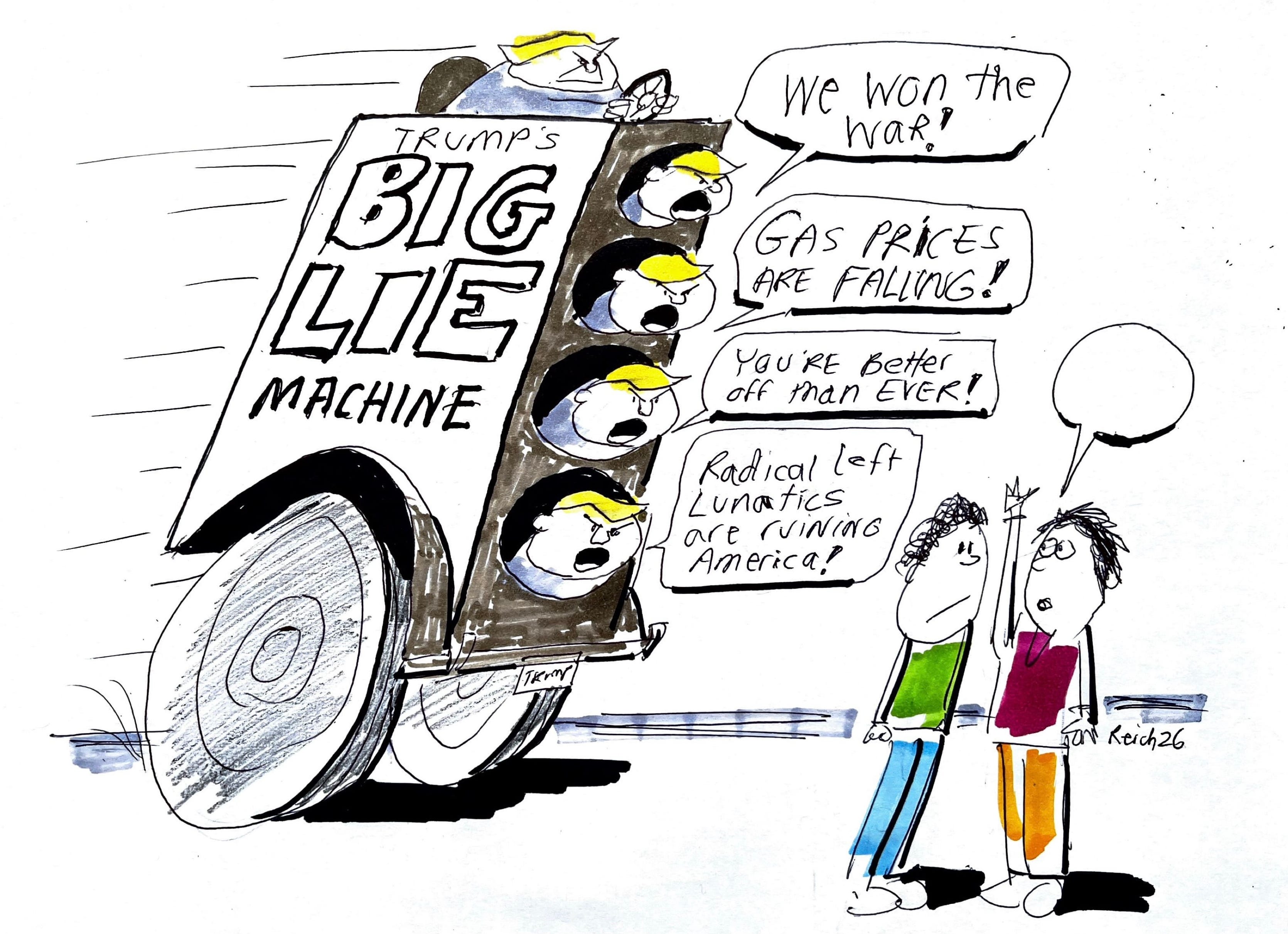
Iran is unlikely to give in. It can withstand the economic pressure of a blockade better than Trump can withstand the political pressure that comes with rising gas prices (now nearly $4.50 a gallon, on average), soon followed by rising food prices.

His looming failure in Iran is not just a serious geopolitical defeat for the United States; it’s a personal crisis for Trump.

Those rising prices coupled with an increasingly unpopular war have increased the likelihood that Democrats will take back control of the House and even possibly the Senate in the upcoming midterms.

Here again, not just a political defeat for the Republican Party but a personal crisis for Trump.

His ego cannot accept a humiliating loss, as we saw after the 2020 election. His need to bully, dominate, and gain submission is so hardwired inside his insecure head that the defeats he’s now facing — to Iran and to Democrats — are already setting off explosions.

He’s posting more wildly than ever — attacking, insulting, ridiculing, threatening.

On Sunday, Trump posted that Democrats had “RIGGED the 2020 Presidential Election. GET TOUGH REPUBLICANS—THEY’RE COMING, AND THEY’RE COMING FAST! They’re no good for our Country, they almost destroyed it, and we don’t want to let that happen again!” He demanded that Republicans “approve all of the necessary Safeguards we need for Elections to protect the American Public during the upcoming Midterms.”

More of his posts are bizarre AI-generated paeans to himself, his godlike powers, his wished-for physique, and his self-image of omnipotence. On Friday night, he posted an AI-image of himself, JD Vance, Marco Rubio, and Doug Burgum, all shirtless and with young physiques, standing in the reflecting pool in front of the Lincoln Memorial, along with an unidentifiable woman in a bikini. Minutes later he posted an image of House Minority Leader Hakeem Jeffries holding a baseball bat, with a caption calling Jeffries “low IQ,” “a THUG,” and “a danger to our Country.” On Tuesday, he posted AI-images of Joe Biden on one knee with the caption “COWARDS KNEEL,” Barack Obama with the caption “TRAITORS BOW,” and himself with his fist raised and the caption “LEADERS LEAD.”

His mouth — never in control — is now in diarrheic mode. He’s even back to attacking the pope, accusing him of “endangering a lot of Catholics and a lot of people,” adding, “but I guess if it’s up to the pope, he thinks it’s just fine for Iran to have a nuclear weapon.”

His thin-skinned vindictiveness is beyond anything we’ve seen before, which is saying a lot. Last week, after German chancellor Friedrich Merz said the U.S. was “being humiliated by the Iranian leadership,” Trump repeatedly attacked and ridiculed Merz. The Defense Department then said it was pulling 5,000 troops out of Germany, and Trump said he was increasing tariffs on European cars and trucks to 25 percent (from 15 percent).

He’s becoming ever more obsessed with monuments to himself — his ballroom, his arch, his so-called “garden of heroes,” his Trump-embossed passports, his image on 24-karat gold commemorative coins, and his name plastered or etched all over Washington. His plans for self-monuments are becoming larger by the day, more grotesque, more grandiose, and more expensive. Senate Republicans just proposed $1 billion more for Trump’s ballroom, which, recall, was supposed to “cost taxpayers nothing.”

He has even directed the Treasury to announce that his own signature — yes, the same one that appears in a book of birthday greetings for Jeffrey Epstein — will replace the Treasurer’s on all new U.S. paper currency. This will be the first time in American history that a sitting president’s name will appear on circulating cash money.

His thirst for vengeance is exploding, too. Last week the Department of Justice launched another criminal case against former director of the FBI James Comey (whose earlier indictment was quashed by the courts) for posting a picture of seashells spelling out “86 47” on Instagram a year ago. Trump is also insisting that the Justice Department restart its criminal investigation of Jerome Powell and double-down against former Joint Chiefs of Staff Chair Mark Milley and others he considers “enemies.”

Facing the two monumental failures of Iran and control over Congress, Trump is fanatically seeking other ways to assert dominance. On Tuesday, his Education Department announced a civil rights investigation into Smith College over enrolling transgender students. Expect more of this.

Regardless of what happens in Iran, he’ll claim victory. That will be difficult to do convincingly when gas prices remain over $4 a gallon, but he’ll undoubtedly try.

What if Democrats win control of one or both chambers of Congress in the midterms and he claims they lost or cheated? The nation barely survived the last time Trump’s fragile ego faced a major loss.

We’ll also have to cope with Trump as a lame-duck president who can no longer dominate and gain submission as he did before. Will he try to remain president beyond his second term to avoid this?

The man is unwell. Seriously unwell. Lame-duck presidents fade away, but injured dictators can be dangerous.

Share

Pluralistic: Bubbles are REALLY evil (07 May 2026)


Today's links


The royal carriage of king Louis Philippe is burned in front of the Chateau d'eau during the French revolution of 1848, Paris 24th February 1848.

Bubbles are REALLY evil (permalink)

I am on record as saying that every economic bubble is terrible, but some bubbles do at least leave behind a salvageable productive residue while others leave behind nothing but ashes; indeed, this is the thesis of my next book, The Reverse Centaur's Guide to Life After AI:

https://us.macmillan.com/books/9780374621568/thereversecentaursguidetolifeafterai/

Here's a historical comparison that's illuminating: Enron vs Worldcom. Both were monumental frauds, the CEOs of both companies died shortly after the frauds were discovered, but they have very different legacies. Enron – a scam that pretended to secure billions of dollars' worth of new efficiencies through "energy trading" but was actually just engineering rolling blackouts in order to jack up energy prices – left behind nothing.

Well, not quite nothing. Enron did leave behind a little useful residue after it burned to the ground: a giant repository of emails. You see, after Enron went bust, it was sued by its creditors, who demanded access to relevant emails from the company's Outlook server. But the company execs decided they didn't want to spend the money to weed out the irrelevant emails before the court-mandated disclosure, so instead they published all the emails ever sent or received by anyone at Enron, including tons of extremely private, personal, sensitive information relating to Enron's employees and customers:

https://en.wikipedia.org/wiki/Enron_Corpus

This became the "Enron Corpus" and it was the first large tranche of emails that were in the public domain and available to researchers. As a result, it became the gold standard dataset for researchers investigating social graphs, natural language, and many other subjects that subsequently became very important computer science fields and commercial applications.

As legacies go, the Enron Corpus is pretty small ball, and even so, it is decidedly mixed, both because the Enron Corpus constitutes a gross, ongoing privacy violation for a huge number of people; and because a lot of that social graph and natural language work that it jumpstarted has been put to deeply shitty purposes.

Then there's Worldcom: also a gigantic fraud, Worldcom falsified billions of dollars' worth of orders for new fiber optic lines, and it then dug up streets all over the world and installed them. When Worldcom went bankrupt, all that fiber stayed in the ground, and many people are still using it today. My home in Burbank has a 2GB symmetrical fiber connection through AT&T that runs on old Worldcom fiber that AT&T bought up for pennies on the dollar.

So while you have to squint really hard to find any benefit that can be salvaged from Enron, it's really easy to point at Worldcom's productive residue – it's a ton of fiber and conduit running under the streets of major cities around the world, ready to be lit up and bring the people nearby into the 21st century. Fiber, after all, is amazing, literally thousands of times better than copper or 5G or Starlink:

https://pluralistic.net/2026/04/07/swisscom/#stacked

Even though Enron's CEO Ken Lay and Worldcom's CEO Bernie Ebbers both received prison sentences after their fraud was revealed, the bubbles never stopped, and indeed, they only got worse. AI is the biggest bubble in human history, worse even than the South Sea Bubble:

https://en.wikipedia.org/wiki/South_Sea_Company

And like those earlier bubbles, some of our modern bubbles will leave behind nothing, while others will leave behind some productive residue. Take the cryptocurrency bubble. Crypto will go to zero, and when it does, all it will leave behind is shitty monkey JPEGs and even worse Austrian economics:

https://www.web3isgoinggreat.com/

As with Enron, you can find some productive residue from cryptocurrency if you look hard enough. A lot of programmers have had a heavily subsidized education in Rust programming and cryptographic fundamentals, both of which are unalloyed goods in our otherwise very insecure digital world.

Some of the underlying mechanisms from crypto are useful, even without blockchains. Take Metalabel, a system that lets collaborators on creative projects automate how they handle revenues from those projects by plugging DAO-like logic into traditional, dollar-based bank accounts. They're recycling some of the tooling from the crypto bubble to create a very useful utility, without the crypto:

https://www.metalabel.com/

But, as with the Enron Corpus, this is pretty small ball. The world has flushed away hundreds of billions to get paltry millions' worth of value out of crypto – the rest of that value disappeared into the pockets of crooked insiders who defrauded the public into parting with their savings.

If crypto will be Enron-like in its post-bubble life, what about AI? I think AI is more like Worldcom: there's a bunch of useful stuff that AI can do, after all. Take away the bubble and we'd call the things AI can do "plug-ins" and some people would use them, and others wouldn't, and some of those uses would be productive, and others would be foolish, but we wouldn't bet the world's economy on them, nor would we squander our last dribbles of potable water to cool their data centers.

After the AI bubble pops, there will be a lot of durable residue. The data centers will still stand. The GPUs will still be there, and if we don't "sweat the assets" by running them as hot and hard as they can tolerate, they won't burn out in 2-3 years. There will be lots of applied statisticians, skilled data-labelers, etc, looking for work. And there will be lots of open source models that have barely been optimized (why make an open source model more efficient when you're raising capital based on the promise of outspending everyone else in order to dominate a world of ubiquitous, pluripotent, winner-take-all centralized AI?):

https://pluralistic.net/2025/10/16/post-ai-ai/#productive-residue

That's a situation not unlike the post-dotcom bubble of the early 2000s. Almost overnight, the legion of humanities undergrads who'd been treated to subsidized training in perl, Python and HTML found themselves looking for work. Servers could be purchased in bulk for pennies on the dollar (with user data still on them!). I bought a "dining room set" of six $1,000+ fancy office chairs for $50 each (still wrapped in plastic!) from a dotcom founder who was selling them on the sidewalk out front of his failed startup's office in the Mission. He offered to sell me ten lifetime's supply of branded t-shirts for $20. I turned him down.

That was the birth of Web 2.0. All of a sudden, people who wanted to make real things that were good could do so, because they could find skilled workers, hardware, and office space at such knock-down prices that they could be funded out of pocket or put on a credit card. People got to pursue the web they wanted, free from asshole bosses and VCs. Not everything that got built in those heady days was good, but many good things got built.

I can easily imagine that the post-bubble AI scene will produce benefits comparable to Web 2.0 – projects built by and for people who want to do useful and fun things, without being distracted by the mirage of illusory billions promised by the stock swindlers who created the bubble.

I can easily imagine that I will find some of those post-bubble tools useful, and that in 20 years I will still be using them, just as today, I am still using some of those early post-dotcom bubble services and tools.

And despite all that, IT IS NOT WORTH IT.

The residue that is left behind by every bubble is subsidized, but that subsidy doesn't come from the deep-pocketed investors who are gripped by "irrational exuberance." It comes from mom-and-pop, normie, retail investors who have been tricked into giving their money to the insiders who inflated the bubble.

From Worldcom to Enron, from crypto to AI, the point of the bubble wasn't ever the residue or lack thereof – it was a transfer from working people to crooks. Bubbles are a system for moving the painfully sequestered life's savings of people who do things to people who steal things.

Since the Carter years, workers have been forced to flush their savings into the stock market, after the traditional "defined benefits pension" (that guarantees you an inflation-adjusted sum every month until you die) was replaced with 401(k)s and other "market-based pensions" (where you only get to survive after retirement if you bet correctly on the movement of stocks):

https://pluralistic.net/2022/05/29/against-cozy-catastrophies/

Despite this having all the appearances of a rigged game – finance industry insiders are always going to be better at betting on stocks than teachers, nurses, janitors and other productive workers – proponents of this system always insisted that workers weren't really the suckers at the table. But the stock market is like Kalshi or Polymarket in that one bettor's losses are another bettor's gains, and in those markets, nearly all the money is harvested by less than 1% of bettors:

https://www.coindesk.com/markets/2026/04/29/a-tiny-group-is-winning-on-polymarket-as-under-1-of-wallets-take-half-the-profits

Somehow, supposedly, we could beat those insiders and survive into our old age without having to eat dog food or become a burden on our kids by betting on the whole market, through index-tracker funds:

https://pluralistic.net/2022/03/17/shareholder-socialism/#asset-manager-capitalism

Supposedly, this would "diversify" our portfolios, which would insulate us from risks we could not understand, much less estimate. But thanks to private equity and the AI bubble, betting on "the whole market" is basically "betting on AI." 35% of the S&P 500 is tied up in seven AI companies, who are engaged in the obviously fraudulent (and Worldcom-adjacent) practice of passing the same $100b IOU around really quickly and pretending it's in all their bank accounts at once:

https://www.fool.com/investing/2025/11/05/ai-growth-stocks-is-there-still-room-to-run/

When the AI bubble pops, it will vaporize (at least) 35% of the US stock market and wipe out everyday savers who have been swindled into betting their futures on AI, based on the fraudulent representations of AI pitchmen. Millions of people who worked hard all their lives and deprived themselves of small comforts in order to save for their retirement will be wiped out. They will be made dependent on the Social Security system that Republicans are determined to starve into bankruptcy and then turn into (yet another) "market based system" that you will be required to convert into chips at the stock market casino where you're up against professional players who hold all the cards:

https://www.newsweek.com/major-social-security-change-proposed-to-build-wealth-11727844

Annihilating a third of the stock market will have severe knock-on effects, even though the median US worker only has $955 saved for retirement:

https://finance.yahoo.com/news/955-saved-for-retirement-millions-are-in-that-boat-150003868.html

Because wiping out the life's savings of everyone else will tank consumption for a generation. Retirees who have to sell their family homes to pay their medical bills won't be buying breakfast at the local diner or catching a Tuesday night movie. They won't be indulging their grandkids with nice birthday presents or helping their own kids buy their first home.

Worse still: the only thing our society knows how to do about economic catastrophe (for now, anyway) is to impose brutal austerity, and austerity drives voters into the arms of fascist strongmen, who blame all their woes on a scapegoated minority in order to win office, and then steal everything that's not nailed down:

https://pluralistic.net/2026/04/12/always-great/#our-nhs

Which is all to say, there's a world of difference between recognizing that the AI bubble is the superior sort of bubble in that it will leave a productive residue, and endorsing the AI bubble as a productive or morally acceptable way to produce that residue. It's one thing to anticipate salvaging something useful out of a catastrophe, and another thing altogether to deliberately induce or prolong that catastrophe so as to maximize the amount of salvage.

The swindlers who created this bubble are crooks who have set out to destroy the futures of a generation of savers. They are monsters, and their bubble needs to be popped as quickly as possible.


Hey look at this (permalink)


A shelf of leatherbound history books with a gilt-stamped series title, 'The World's Famous Events.'

Object permanence (permalink)

#20yrsago Judge mocks FCC’s legal argument for wiretapping VoIP https://web.archive.org/web/20060512141440/https://www.eff.org/deeplinks/archives/004638.php

#20yrsago Podcasting saved from the UN — for now https://web.archive.org/web/20060603152220/https://www.eff.org/deeplinks/archives/004637.php

#15yrsago Two billion people and the royal wedding: pretty damned unlikely https://www.gyford.com/phil/writing/2011/05/06/2-billion-viewers/

#15yrsago Mozilla tells DHS: we won’t help you censor the Internet https://torrentfreak.com/homeland-security-wants-mozilla-to-pull-domain-seizure-add-on-110505/

#15yrsago Foxconn workers forced to sign promise not to commit suicide due to working conditions https://memex.craphound.com/2011/05/05/foxconn-workers-forced-to-sign-promise-not-to-commit-suicide-due-to-working-conditions/

#15yrsago Shannon’s Law: a story about bridging Faerie and the mundane world with TCP-over-magic https://reactormag.com/shannons-law/

#15yrsago Green Army men with PTSD https://www.wearedorothy.com/collections/artworks/products/casualties-of-war

#10yrsago Deep Insert skimmers: undetectable, disposable short-lived ATM skimmers https://krebsonsecurity.com/2016/05/crooks-go-deep-with-deep-insert-skimmers/

#10yrsago How standardizing DRM will make us all less secure https://www.eff.org/deeplinks/2016/04/standardized-drm-will-make-us-less-safe

#10yrsago Excellent advice for generating and maintaining your passwords https://www.wired.com/2016/05/password-tips-experts/

#10yrsago Amid education funding emergency, Washington State gives Boeing, Microsoft $1B in tax breaks https://jeffreifman.com/2016/05/05/forget-boeing-microsofts-tax-break-costs-776-million/

#5yrsago MRNA vaccines and Clarke's Law https://pluralistic.net/2021/05/05/clarkes-third-law/#indistinguishable-from-magic

#5yrsago Stimmies killed the McJob https://pluralistic.net/2021/05/05/clarkes-third-law/#precariat-nostalgia

#1yrago Bridget Read's 'Little Bosses Everywhere' https://pluralistic.net/2025/05/05/free-enterprise-system/#amway-or-the-highway


Upcoming appearances (permalink)

A photo of me onstage, giving a speech, pounding the podium.


A screenshot of me at my desk, doing a livecast.

Recent appearances (permalink)


A grid of my books with Will Stahle covers..

Latest books (permalink)


A cardboard book box with the Macmillan logo.

Upcoming books (permalink)

  • "The Reverse-Centaur's Guide to AI," a short book about being a better AI critic, Farrar, Straus and Giroux, June 2026 (https://us.macmillan.com/books/9780374621568/thereversecentaursguidetolifeafterai/)
  • "Enshittification, Why Everything Suddenly Got Worse and What to Do About It" (the graphic novel), Firstsecond, 2026

  • "The Post-American Internet," a geopolitical sequel of sorts to Enshittification, Farrar, Straus and Giroux, 2027

  • "Unauthorized Bread": a middle-grades graphic novel adapted from my novella about refugees, toasters and DRM, FirstSecond, April 20, 2027

  • "The Memex Method," Farrar, Straus, Giroux, 2027


Colophon (permalink)

Today's top sources:

Currently writing: "The Post-American Internet," a sequel to "Enshittification," about the better world the rest of us get to have now that Trump has torched America. Third draft completed. Submitted to editor.

  • "The Reverse Centaur's Guide to AI," a short book for Farrar, Straus and Giroux about being an effective AI critic. LEGAL REVIEW AND COPYEDIT COMPLETE.
  • "The Post-American Internet," a short book about internet policy in the age of Trumpism. PLANNING.

  • A Little Brother short story about DIY insulin PLANNING


This work – excluding any serialized fiction – is licensed under a Creative Commons Attribution 4.0 license. That means you can use it any way you like, including commercially, provided that you attribute it to me, Cory Doctorow, and include a link to pluralistic.net.

https://creativecommons.org/licenses/by/4.0/

Quotations and images are not included in this license; they are included either under a limitation or exception to copyright, or on the basis of a separate license. Please exercise caution.


How to get Pluralistic:

Blog (no ads, tracking, or data-collection):

Pluralistic.net

Newsletter (no ads, tracking, or data-collection):

https://pluralistic.net/plura-list

Mastodon (no ads, tracking, or data-collection):

https://mamot.fr/@pluralistic

Bluesky (no ads, possible tracking and data-collection):

https://bsky.app/profile/doctorow.pluralistic.net

Medium (no ads, paywalled):

https://doctorow.medium.com/

Tumblr (mass-scale, unrestricted, third-party surveillance and advertising):

https://mostlysignssomeportents.tumblr.com/tagged/pluralistic

"When life gives you SARS, you make sarsaparilla" -Joey "Accordion Guy" DeVilla

READ CAREFULLY: By reading this, you agree, on behalf of your employer, to release me from all obligations and waivers arising from any and all NON-NEGOTIATED agreements, licenses, terms-of-service, shrinkwrap, clickwrap, browsewrap, confidentiality, non-disclosure, non-compete and acceptable use policies ("BOGUS AGREEMENTS") that I have entered into with your employer, its partners, licensors, agents and assigns, in perpetuity, without prejudice to my ongoing rights and privileges. You further represent that you have the authority to release me from any BOGUS AGREEMENTS on behalf of your employer.

ISSN: 3066-764X

Office Hours: Who Should Be the Democratic Presidential Candidate in 2028 (Part III)?

7 May 2026 at 10:02

Friends,

Two weeks ago, I listed the top four potential 2028 Democratic presidential candidates by current name recognition: Kamala Harris, Gavin Newsom, Pete Buttigieg, and Alexandria Ocasio-Cortez. Out of the 7,174 of you who voted on these four, only 6 percent chose Kamala Harris; 12 percent were for Gavin Newsom; 26 percent of you chose Pete Buttigieg; and 6 percent were for AOC.

The rest of you — 49 percent — wanted someone else.

Last week, I listed the top four “someone else” candidates: Illinois Governor JB Pritzker, Arizona Senator Mark Kelly, Pennsylvania Governor Josh Shapiro, and Kentucky Governor Andy Beshear. Out of the 6,422 of you who voted on these four, 24 percent chose Pritzker, 37 percent were for Kelly, 7 percent were for Shapiro, and 18 percent were for Beshear. The remaining 14 percent wanted someone else.

That left a “third tier” — in terms of name recognition — comprising California Congressman Ro Khanna, New Jersey Senator Cory Booker, Michigan Governor Gretchen Whitmer, and former congressman and Chicago mayor Rahm Emanuel.

So this week we’re going to assess these four. Here’s a summary of the current third tier’s strengths and weaknesses. Please vote among these four.

Read more

Pluralistic: In praise of vultures (06 May 2026)


Today's links

  • In praise of vultures: They screw you because they can.
  • Hey look at this: Delights to delectate.
  • Object permanence: Linus v MSFT; Argentina v MSFT; Danny Hillis on theme parks v games; Smartfilter v Distributed Boing Boing; Rental laptops filled with spyware; Torture didn't help capture bin Laden; Massively parallel Apple //e; Stephen Harper v election law; John Deere v Iowa cartoonist; Qualia.
  • Upcoming appearances: Guelph, Barcelona, Berlin, Hay-on-Wye, London, NYC, Edinburgh.
  • Recent appearances: Where I've been.
  • Latest books: You keep readin' em, I'll keep writin' 'em.
  • Upcoming books: Like I said, I'll keep writin' 'em.
  • Colophon: All the rest.


A down-at-heel frontier courtroom presided over by a flustered judge and his miserable clerk. In the foreground is a vulture in a powdered barrister's wig.

In praise of vultures (permalink)

One of my bedrock beliefs is that capitalists really hate capitalism. They may name their beloved institutes after the likes of Adam Smith, but they ignore everything Smith had to say about the necessity of competition to keep markets from turning into monopolies:

https://pluralistic.net/2023/06/09/commissar-merck/#price-giver

The theory of capitalism holds that markets are a kind of distributed computer that aggregates trillions of decisions from billions of market participants in order to optimize production and distribution of goods and services, creating a "Pareto-optimal" world where no one can be made better off without making someone else worse off.

Whether or not you believe that this computer exists and functions as predicted, one indisputable fact about it is that it requires the freedom to choose in order to work. The point of market-as-computer is that it aggregates decisions, so it can only work if everyone is as free as possible to decide.

But that's not the world capitalists want. For capitalists, the point is to restrict other people's choices in order to maximize your own freedom. That's how we get economic doctrines like "revealed preferences": the idea that if a person says they want one thing, but does another thing, then you can tell what they really prefer by looking at the latter and disregarding the former. This is the kind of doctrine you can only fully embrace after sustaining the kind of highly specific neurological injury that is induced by taking an economics degree, an injury that makes you incapable of perceiving or reasoning about power. Under the doctrine of revealed preferences, someone who sells their kidney to make the rent has a revealed preference for only having one kidney:

https://pluralistic.net/2026/03/30/players-of-games/#know-when-to-fold-em

Capitalism is supposed to run on risk: the risk of being overtaken by a competitor drives businesses to deliver better services more efficiently, thus producing a bounty for all. But capitalists really hate risk, hence the drive to monopoly: Mark Zuckerberg admitted, in writing, that he only bought Instagram so that he wouldn't have to compete with it ("It is better to buy than to compete" -M. Zuckerberg):

https://pluralistic.net/2025/11/20/if-you-wanted-to-get-there/#i-wouldnt-start-from-here

Capitalists hate capitalism, but they love feudalism. Feudalism is like capitalism, in that you have a ruling class that creams off the surplus generated by labor; but under feudalism, society is organized to protect rents (money you get from owning stuff) over profits (money you get from doing stuff). The beauty of rents is that they are insulated from risk: if you own a coffee shop, you're in constant danger of being put out of business by a better coffee shop. But if you own the building and your coffee shop tenant goes under, well, you've still got the building, and hey, now it's on the same hot block as the amazing new cafe that's driving its competitors out of business:

https://pluralistic.net/2023/09/28/cloudalists/#cloud-capital

Douglas Rushkoff calls this "going meta": don't drive a taxi, rent a medallion to a taxi driver. Don't rent a medallion, start a ride-hailing app company. Don't start a ride-hailing company, invest in the company. Don't invest in the company, buy options on the company's shares. Each layer of indirection takes you further from the delivery of a useful service – and insulates you further from risk:

https://pluralistic.net/2022/09/13/collapse-porn/#collapse-porn

Monopoly is to capitalism as gerrymandering is to democracy, a way to strip out any meaningful choice. Think of the two giant packaged goods companies that fill your grocery aisles: Procter & Gamble and Unilever. Practically everything on your grocer's shelves is made by a division of one of these two massive conglomerates. If you try to "vote with your wallet" by buying a low-packaging version of a product, it's going to be sold to you by the same company that sells the high-packaging version. If you switch to an artisanal brand of cookies made by a local family business, Unilever or P&G will buy that company and issue a press release declaring that they made the acquisition because they know "their customers value choice":

https://pluralistic.net/2024/05/18/market-discipline/#too-big-to-care

Gerrymandering strips your vote of any impact on political outcomes. Monopoly strips your purchases of any ability to influence economic outcomes. Wrap both of them in "revealed preferences" and you get a system that endlessly narrates its ability to deliver choice, and then blames your misery on your having chosen badly.

This is the method of the entire conservative project. As Dan Savage says: the thing that unites conservative assaults on voting, birth control, abortion and no-fault divorce is the stripping away of choice. Conservatives are trying to create a world populated by husbands you can't divorce, pregnancies you can't prevent or terminate, and politicians you can't vote out of office. Add to that Trump's assault on the National Labor Relations Board, his reversal of the FTC's ban on noncompetes, and his protection of "TRAP" agreements that force employees to pay thousands of dollars if they quit their jobs, and you get "jobs you can't quit":

https://pluralistic.net/2025/09/09/germanium-valley/#i-cant-quit-you

Conservative strongmen like Trump and Musk exalt the value of self-determination – for themselves, at everyone else's expense. Trump's ability to stiff the contractors that built his hotels and Musk's ability to rain flaming rocket debris down on the people who live near his company town require that everyone else be stripped of protections. They get to determine their own course in life by taking away your ability to determine your own. Their right to swing their fists ends two inches past your nose:

https://pluralistic.net/2026/04/21/torment-nexusism/#marching-to-pretoria

Cheaters and bullies hate the rule of law, hence Trump's endless repetition of Nixon's mantra: "When the president does it, that means it is not illegal." But not everyone can be president, and the world is full of would-be Trumps in positions of power who would like to be able to commit crimes without fear of legal repercussions. For these people, we have something called "binding arbitration."

"Binding arbitration" is a widely used contractual term that forces you to surrender your right to sue a company that wrongs you. Instead of suing, binding arbitration forces you to take your case to an "arbitrator"; that is, a lawyer who is paid by the company that cheated you or maimed you or killed your loved one. The arbitrator decides whether their client is guilty, and, if so, how much that client owes you. The entire process is confidential and it is non-precedential, meaning that if a company rips off millions of people in the same way, each of them has to arbitrate their claims separately, and people who are successful can't share their tactical notes with the people who are next in line to plead for justice.

That makes binding arbitration another key weapon in the conservative movement's war on choice: not just jobs you can't quit and politicians you can't vote out of office, but also companies you can't sue. Binding arbitration is a creation of the Federalist Society and their champion Antonin Scalia, who authored a series of Supreme Court dissents and (ultimately) decisions that opened the door for binding arbitration everywhere:

https://pluralistic.net/2025/10/27/shit-shack/#binding-arbitration

Given the Fedsoc's role in shoving binding arbitration down every worker and shopper's throat, it's decidedly odd that they invited Ashley Keller to be their keynote debater in 2021, where he argued that "concentrated corporate power is a greater threat than government power":

https://www.youtube.com/watch?v=aY5MrHGjVT8

Keller is a powerhouse lawyer, and an avowed conservative, who has pioneered many tactics for overcoming binding arbitration clauses. He helped create "mass arbitration," bringing thousands of arbitration cases on behalf of Uber drivers who'd had their wages stolen by the company. Since Uber has to pay the arbitrators in each of those cases, they faced a much larger bill than they would face in any possible class action suit:

https://www.reuters.com/article/otc-uber-frankel-idUKKCN1P42OH/

Mass arbitration cases spread to all kinds of large firms that used petty grifts to steal from thousands or even millions of people, like Intuit, who deceive – and rip off – millions of Americans every year with their fake Turbotax "free file" system:

https://pluralistic.net/2022/02/24/uber-for-arbitration/#nibbled-to-death-by-ducks

Mass arbitration worked so well that Amazon actually revised its terms of service to remove binding arbitration from their terms of service, because they realized that they'd be better off facing class action suits:

https://pluralistic.net/2021/06/02/arbitrary-arbitration/#petard

Of course, the point of binding arbitration was never to create a streamlined system of justice – it was to bring about a world of no justice, where you have no right to sue. It's part of the decades-old "tort reform" movement that the business lobby has used to take away your right to sue altogether. Any time you hear about a seemingly crazy lawsuit (like the urban legends about the McDonald's "hot coffee" case), you're being propagandized for a world without legal consequences for companies that defraud you, steal from you, injure you, or kill you:

https://pluralistic.net/2022/06/12/hot-coffee/#mcgeico

That's why companies (like Bluesky) are now trying terms of service that also ban you from mass arbitration, while retaining the right to consolidate claims into a mass arbitration case if that's advantageous to them:

https://pluralistic.net/2025/08/15/dogs-breakfast/#by-clicking-this-you-agree-on-behalf-of-your-employer-to-release-me-from-all-obligations-and-waivers-arising-from-any-and-all-NON-NEGOTIATED-agreements

But Keller keeps finding creative ways around binding arbitration. He's currently bringing thousands of arbitration claims against Google, on behalf of advertisers whom Google stole from (Google is a thrice-convicted monopolist, and they lost a case last year over their monopolization of ad-tech, where they were found to have defrauded advertisers).

He also just argued before the Supreme Court in a case against Monsanto over the company's attempt to escape liability for causing cancer in farmworkers with their Roundup pesticide:

https://www.npr.org/2026/04/27/nx-s1-5793804/supreme-court-monsanto-roundup-arguments

Keller appears in the latest episode of the Organized Money podcast, for a fascinating interview about his work and outlook, and how he reconciles his work fighting corporate power with his identity as a movement conservative:

https://www.organizedmoney.fm/p/the-conservative-who-torments-big

Keller's first big, important point is that (basically), capitalists hate capitalism (see above). He cites Milton Friedman, who "always said that the tort system is the best way to ensure that companies behave and follow the rules." For Keller (and Friedman) the alternative to private litigation against bad businesses is "government regulation and the alphabet soup of Washington, DC agencies [that] try and police these companies."

But, of course, the businesses that want binding arbitration and tort reform (so they can't be sued) also want to "dismantle the administrative state" (so they can't be regulated). They're the impunity movement, the "when the president does it, that means it is not illegal" movement, the "heads I win, tails you lose" movement. They're the caveat emptor movement, the "that makes me smart" movement:

https://pluralistic.net/2024/12/04/its-not-a-lie/#its-a-premature-truth

They don't want efficient markets, with the ever-present threat of a better competitor putting them out of business. They want feudalism. They want to go meta. They want to have the kind of self-determination you can only achieve by taking away everyone else's self-determination.

I was very struck by Keller's claim to be engaged in an exercise that Milton Friedman identified as the best one for making markets work. One of Keller's most forceful points is that class action suits are especially important for reining in petty, recurrent grifts, the junk fees that are the hallmark of enshittification.

He quotes his old boss, the archconservative judge Richard Posner, who said "Only a lunatic or a fanatic sues for $20." But if you multiply a $20 junk fee by ten million purchases, a company can use that fact to make hundreds of millions of dollars. That's real folding money, which is why every company has figured out a way to whack you for a $20 junk fee.

There are two ways to end this racket: one is litigation, the other is regulation, and the capitalism-hating-capitalists who run the world want to kill both. That's why the business lobby smears lawyers like Keller as being "vultures." But as Matt Stoller says, "vultures look aggressive and whatnot, but when you actually get rid of vultures out of an ecosystem, all sorts of things go haywire."

I love this point. Vultures live off the disgusting, rotting crap that would otherwise pile up around us, breeding disease and emitting an unbearable stench. If plaintiff-side, no-win/no-fee lawyers are vultures, then junk fees, wage theft, and the million petty frauds they fight are the disgusting, rotting crap that vultures feed off of – and the harder we make it for our noble vulture lawyers, the more disgusting, rotting crap we have to live with, hence the unbearable stench that is all around us.

Listening to Keller was a fascinating exercise. I thoroughly disagree with him about many things – the way he characterized Section 230 of the Communications Decency Act couldn't have been more wrong – but it's quite bracing to hear a capitalist who doesn't hate capitalism defend it against the vast majority of capitalists, who hate capitalism more than any socialist ever did.


Hey look at this (permalink)


A shelf of leatherbound history books with a gilt-stamped series title, 'The World's Famous Events.'

Object permanence (permalink)

#25yrsago Torvalds responds to Microsoft's Craig Mundie https://web.archive.org/web/20011019132822/http://web.siliconvalley.com/content/sv/2001/05/03/opinion/dgillmor/weblog/torvalds.htm

#25yrsago Bankrupt Argentina considers banning proprietary code and switching to free software https://web.archive.org/web/20010614131152/https://www.wired.com/news/business/0,1367,43529,00.html

#20yrsago Danny Hillis on how games are(n’t) like a theme park https://web.archive.org/web/20060513182649/https://www.wired.com/wired/archive/14.04/disney.html

#20yrsago Mission Impossible opening marked by anti-Scientology flyover https://web.archive.org/web/20060514000636/http://hailxenu.net/

#20yrsago SmartFilter targets Distributed Boing Boing – how to defeat it https://memex.craphound.com/2006/05/04/smartfilter-targets-distributed-boing-boing-how-to-defeat-it/

#15yrsago John Ashcroft assumes charge of “ethics and professionalism” for Blackwater https://web.archive.org/web/20110507103749/https://www.wired.com/dangerroom/2011/05/blackwaters-new-ethics-chief-john-ashcroft/

#15yrsago Rumsfeld and other US officials say torture didn’t help catch bin Laden https://web.archive.org/web/20110505012303/https://www.wired.com/dangerroom/2011/05/surveillance-not-waterboarding-led-to-bin-laden/

#15yrsago Rental laptops equipped with spyware that can covertly activate the webcam and take screenshots https://web.archive.org/web/20110506130156/http://www.ajc.com/business/pa-suit-furniture-rental-933410.html

#15yrsago Parallel machine made out of 17 stitched-together Apple //e’s https://web.archive.org/web/20110504194313/http://home.comcast.net/~mjmahon/AppleCrateII.html

#15yrsago Sarah Palin and James Lankford: giving $4 billion of taxpayer money to oil companies doesn’t matter https://web.archive.org/web/20110505220640/https://thinkprogress.org/2011/05/03/palin-lankford-oil-subsidies/

#15yrsago Stephen Harper violated election laws https://web.archive.org/web/20110701000000*/http://www.examiner.com/canada-headlines-in-canada/stephen-harper-breaks-election-rules-campaigns-on-radio-on-election-day

#15yrsago History and future of bin Ladenist extremism https://www.juancole.com/2011/05/obama-and-the-end-of-al-qaeda.html

#10yrsago Belushi widow & Aykroyd produce Blues Brothers animated series https://deadline.com/2016/05/the-blues-brothers-animated-comedy-series-dan-aykroyd-1201748389/

#10yrsago Chinese censorship: arbitrary rule changes are a form of powerful intermittent reinforcement https://www.techdirt.com/2016/05/04/why-growing-unpredictability-chinas-censorship-is-feature-not-bug/

#10yrsago US government and SCOTUS change cybercrime rules to let cops hack victims’ computers https://www.wired.com/2016/05/now-government-wants-hack-cybercrime-victims/

#10yrsago After advertiser complaints, Farm News fires editorial cartoonist who criticized John Deere & Monsanto https://web.archive.org/web/20160505042150/https://www.kcci.com/news/longtime-iowa-farm-cartoonist-fired-after-creating-this-cartoon/39337816

#10yrsago Outstanding rant about establishment pearl-clutching over Trump https://web.archive.org/web/20160505033357/https://theconcourse.deadspin.com/george-will-is-a-haughty-dipshit-1774449290

#10yrsago The Planet Remade: frank, clear-eyed book on geoengineering, climate disaster, & humanity’s future https://memex.craphound.com/2016/05/04/the-planet-remade-frank-clear-eyed-book-on-geoengineering-climate-disaster-humanitys-future/

#5yrsago Qualia https://pluralistic.net/2021/05/04/law-and-con/#law-n-econ

#5yrsago Whales decry the casino economy https://pluralistic.net/2021/05/04/law-and-con/#all-bets-are-off


Upcoming appearances (permalink)

A photo of me onstage, giving a speech, pounding the podium.


A screenshot of me at my desk, doing a livecast.

Recent appearances (permalink)


A grid of my books with Will Stahle covers..

Latest books (permalink)


A cardboard book box with the Macmillan logo.

Upcoming books (permalink)

  • "The Reverse-Centaur's Guide to AI," a short book about being a better AI critic, Farrar, Straus and Giroux, June 2026 (https://us.macmillan.com/books/9780374621568/thereversecentaursguidetolifeafterai/)
  • "Enshittification, Why Everything Suddenly Got Worse and What to Do About It" (the graphic novel), Firstsecond, 2026

  • "The Post-American Internet," a geopolitical sequel of sorts to Enshittification, Farrar, Straus and Giroux, 2027

  • "Unauthorized Bread": a middle-grades graphic novel adapted from my novella about refugees, toasters and DRM, FirstSecond, April 20, 2027

  • "The Memex Method," Farrar, Straus, Giroux, 2027


Colophon (permalink)

Today's top sources:

Currently writing: "The Post-American Internet," a sequel to "Enshittification," about the better world the rest of us get to have now that Trump has torched America. Third draft completed. Submitted to editor.

  • "The Reverse Centaur's Guide to AI," a short book for Farrar, Straus and Giroux about being an effective AI critic. LEGAL REVIEW AND COPYEDIT COMPLETE.
  • "The Post-American Internet," a short book about internet policy in the age of Trumpism. PLANNING.

  • A Little Brother short story about DIY insulin PLANNING


This work – excluding any serialized fiction – is licensed under a Creative Commons Attribution 4.0 license. That means you can use it any way you like, including commercially, provided that you attribute it to me, Cory Doctorow, and include a link to pluralistic.net.

https://creativecommons.org/licenses/by/4.0/

Quotations and images are not included in this license; they are included either under a limitation or exception to copyright, or on the basis of a separate license. Please exercise caution.


How to get Pluralistic:

Blog (no ads, tracking, or data-collection):

Pluralistic.net

Newsletter (no ads, tracking, or data-collection):

https://pluralistic.net/plura-list

Mastodon (no ads, tracking, or data-collection):

https://mamot.fr/@pluralistic

Bluesky (no ads, possible tracking and data-collection):

https://bsky.app/profile/doctorow.pluralistic.net

Medium (no ads, paywalled):

https://doctorow.medium.com/

Tumblr (mass-scale, unrestricted, third-party surveillance and advertising):

https://mostlysignssomeportents.tumblr.com/tagged/pluralistic

"When life gives you SARS, you make sarsaparilla" -Joey "Accordion Guy" DeVilla

READ CAREFULLY: By reading this, you agree, on behalf of your employer, to release me from all obligations and waivers arising from any and all NON-NEGOTIATED agreements, licenses, terms-of-service, shrinkwrap, clickwrap, browsewrap, confidentiality, non-disclosure, non-compete and acceptable use policies ("BOGUS AGREEMENTS") that I have entered into with your employer, its partners, licensors, agents and assigns, in perpetuity, without prejudice to my ongoing rights and privileges. You further represent that you have the authority to release me from any BOGUS AGREEMENTS on behalf of your employer.

ISSN: 3066-764X

Sergey Brin Is Making the Case for Why We Need a Wealth Tax

6 May 2026 at 10:02

Friends,

Google co-founder Sergey Brin, one of the three or four wealthiest people in the world, with a net worth hovering around $260 billion to $277 billion, is devoting some of his wealth to fighting California’s wealth tax on billionaires.

So far, he’s spent $57 million trying to defeat the measure.

Brin’s actions — along with Elon Musk’s $250 million “investment” in getting Trump reelected in 2024 — should be Exhibits A and B in why America needs a wealth tax.

First, let’s stipulate that there is nothing inherently wrong about being a billionaire, a multibillionaire, or even, as Musk is likely to become, a trillionaire.

Wealth isn’t a “zero-sum” game in which these vast accumulations at the top depend on the rest of us losing an equal amount. In fact, the super-wealthy may help the rest of us do somewhat better than we were doing before.

Even though the wealth of the top 0.1 percent has soared in recent years, the bottom 50 percent are doing somewhat better than before. (See chart below.)

But wait.

The problem is that political power is a zero-sum game. The more political power is concentrated in a few hands, the less political power in everyone else’s hands.

It’s almost impossible to separate wealth from power, because the wealthy turn their fortunes into campaign contributions to politicians who will change laws to their liking and stop laws they’d detest — such as higher taxes on the super-wealthy. The wealthy also finance public relations campaigns and think-tanks to persuade the public of the wisdom of their positions.

Billionaire spending on presidential elections has soared even faster than billionaire wealth. And if you believe they’re donating because they want people with great integrity and excellent character to be elected president, consider that most billionaire political spending in 2024 went to Trump.

They’re donating because they want to protect and enlarge their fortunes and don’t want politicians elected who support higher taxes on them.

Nor do they want politicians elected who support stricter anti-monopoly legislation or who would make it easier to form labor unions or stop climate change (all of which might reduce the profits of, say, Google).

Take Sergey Brin and his $57 million against California’s tax on billionaires — which, not incidentally, was proposed because California must now pay more for Medicaid for lower-income Californians, because Trump and his Republican lackeys enacted a giant federal tax cut whose benefits have gone mostly to the wealthy.

Brin has become a major Republican donor. Last May, he donated nearly half a million dollars to the Republican National Committee.

Why? Because the Republican Party is more dedicated to protecting and enlarging the wealth of the super-wealthy than is the Democratic Party.

By spending his fortune trying to stop California from taxing billionaires, Brin is illustrating why we need to tax billionaires. He’s making the argument for a billionaire wealth tax more clearly and articulately than anyone else possibly could.

Thank you, Serge.

Share

Lessons from a Boomer for Younger Generations

5 May 2026 at 18:03

Friends,

This is the time of year when young people are graduating — from college, from high school, from family and familiar surroundings to different and unfamiliar places, from being children to being adults.

Because I’ve been around them so long here on this university campus — and maybe just because I’ve been around so long, period — they recently asked me some questions, the answers to which might be of interest to you.

Today also happens to be Teacher Appreciation Day — and as an old boomer who’s dedicated to teaching and who has prized his years in the classroom — I thought perhaps my responses and reflections particularly appropriate.

So, here goes.

Hope you enjoy,

Share

Thank you to Americans Who Tell Truth for collaborating on this piece with our team at Inequality Media, and for their important advocacy. You can learn more about them, and view a recent portrait and profile they wrote about me here.

A Classical War

Note: the way this Substack usually works is that every public piece has a follow-up piece for subscribers only containing all the screams I restrained to make the free one nice and civilized and not have to argue reality with sea lions in the comments.

However, this particular one is a standalone under a paywall because I’m about to talk about real people I used to know very well during the era of 9/11 and the Iraq War. And it’s not nice to put them on blast, even anonymously, even if it’s a somewhat elegant (if anything featuring gifs can be elegant AND IT CAN) and well thought-out blast, as they weren’t specifically trying to be bad or stupid or naive, they just listened to a lot of bad stupid naive shit hardly anyone had learned how to publicly say was bad and stupid and naive yet.

And this is about the ONGOING war in Iran and the absolute skull-fractures running it, not holding adults to account for the silly things they thing when we’re young. I’m no better.

So to protect the, if not innocent, at least the “helplessly morally bulldozered by how we were all raised,” I have chosen to screen the calls, so to speak.

Also it happens to be my birthday today. So for whatever reason pleases you, consider signing up to support my work, give me a birthday present, and/or hear about my misspent youth amongst the normies.

Subscribe now

A long, long time ago, I can still remember how that music used to make me…

Premium Photo | Patriotic Parade with American Flags Marching Band
Not for a nation: not the dividing, estranging thing…not for my country right or wrong; not for the drum or the bugle; not for the song, which pipes me away from my home against my will, along with the other children, to where I would not go

…want to fucking puke.

Read more

Pluralistic: The three armies fighting for the post-American world (05 May 2026)


Today's links


'The Spirit of 76,' a famous painting depicting three soldiers marching after a US Revolutionary War battle. The figures' heads have been swapped for a man in a top hat, Che Guevara, and a 19th century European general in a silly hat. The US flag in the background has been replaced with the EU flag. The fallen soldier at their feet sports a Trump wig and his skin has been tinted Cheeto orange.

The three armies fighting for the post-American world (permalink)

Political change is downstream of coalition building, and coalitions are fragile things, because by definition they are not fully aligned; they share some goals but often violently disagree about others. A coalition forms when groups set aside their differences to pursue the common elements of their agenda.

Trump is a master coalition builder. He wouldn't have been able to seize and wield so much power without a coalition that includes people who absolutely hate each other and want each other to die. Let's face it, Nick Fuentes wants to turn Ben Shapiro into a lampshade, but they both sent their followers to the ballot box for Trump. We've all seen those videos of Trump supporters railing against "elites" after watching the richest man on Earth cavorting with Trump while promising to give all of their jobs to AI and robots.

This contradiction isn't a bug, it's a feature: the bigger a coalition gets, the more power it has – provided you've got a Trump figure at the top, using his cult of personality to coerce and flatter his coalition members into playing nice with each other.

But Trump's incontinent belligerence, his bullying, and his cognitive decline mean that he's conjuring a new anti-Trump coalition into existence: groups of people who don't agree on much, but do agree on fighting Trumpismo and its leader. This is very visible in US domestic politics, where "Never-Trumper" conservatives find themselves on the same side as Democratic Socialists, at least on this narrow issue. The anti-Trump mass mobilizations – the Women's March, the anti-ICE demonstrations, the No Kings rallies – are visibly, palpably coalitional, made up of people carrying signs and banners for groups that are often at odds with one another…except when it comes to Trump.

But I'm much more interested in the international coalitions that are forming to fight Trump. It started with my longstanding fight for a good internet, free from surveillance, extraction and manipulation, the three evils inherent to the business models of America's shitty, enshittifying tech companies.

Under normal circumstances, you'd expect tech companies in other countries to capitalize on the fact that America exports its obviously defective tech products around the world. As Jeff Bezos often reminds his suppliers: "Your margin is my opportunity." Whether it's Apple taking a 30% margin on iPhone payments, Apple and Meta creaming 51 cents off every ad dollar, Amazon harvesting 50-60% from every platform seller, or inkjet printer companies marking up the colored water you use to print your grocery list by 25 quattuordecillion percent, there's a ton of opportunities to disrupt these comfortable ex-disruptors.

But no one does that, because the US Trade Representative bullied every US trading partner into enacting an "anticircumvention" law that makes it a crime to modify America's tech exports. The quid pro quo for this? Free trade with the USA – and tariffs for any country that didn't fall into line. Well, they all fell into line, and Trump tariffed them anyway.

That means that America's tech giants' margins are now everyone else's opportunity. The trillions that US tech companies extract could be someone else's billions – all they'd have to do is offer the interoperable goods and services that disenshittify America's tech products. They could sell the tools that let anyone in the world use independent app stores, or fix their cars and tractors, and put generic ink in their printers. A year ago, no country could afford to allow a company headquartered in its borders to get into this business, lest they be clobbered with tariffs. Today, any country that isn't thinking about this is a sucker that will end up buying these tools from another country that gets there first.

This means that digital rights hippies like me (who've been banging this drum for 25 years), suddenly have a new ally in the fight against enshittified tech products. Today, there are people who want to help you protect your pocketbook and your privacy, but not because they believe in human rights – rather, because they want to get really, really rich. They see Big Tech's margin as their opportunity.

But it's not just entrepreneurs and activists who want a post-American internet – we have a third member of our coalition: national security hawks. Trump wants to steal Greenland. He wants to steal Alberta. He wants to steal all the oil in Venezuela. He wants to interfere in foreign elections to keep his dictator cronies in office, lest they lose power and find themselves facing prison. And when Trump's allies do face justice, he wants to fire the judges who dare hold these corrupt, powerful men to account.

So when the International Criminal Court issued an arrest warrant for the genocidaire Benjamin Netanyahu, Trump had Microsoft shut down the court's IT systems. The Chief Justice of the ICC lost his Office 365 account, which means he can't access his email archives, his working files, his calendar or his address books. He can't even log in to his non-Microsoft accounts because they're tied to his Outlook email address.

The ICC was just a warmup: Trump did the same thing to the Brazilian high court judge who sentenced the dictator Jair Bolsonaro to prison for attempting a coup after he lost his re-election bid, having presided over a term of gross misrule.

All of this has inflamed concerns within every (former) US ally's national security establishment. These people all understand that Trump doesn't need to roll tanks to take over their countries: he can just brick their key ministries, major firms, and households. He doesn't need to send an army to steal Greenland, he can just shut down Denmark and cut off the world's supply of Lego, Ozempic and ferociously strong black licorice.

Combine the natsec hawks; the economic development wonks, entrepreneurs and investors; and the privacy and digital and human rights activists, and you've got a hell of an anti-Trump coalition around the world, all pulling together to build the post-American internet, a disenshittified and enshittification-resistant internet built on international digital public goods and running on servers outside of the USA:

https://pluralistic.net/2026/01/01/39c3/#the-new-coalition

But this coalition isn't limited to the post-American internet – you'll find a coalition much like it in every place where Comrade Trump is calling forth a post-American world. That's the shape of the coalition that's winning Trump's war on fossil fuels: climate activists (hippies), electrification manufacturers and installers (businesses) and national security hawks who don't want to get hormuzed:

https://pluralistic.net/2026/05/04/hope-in-the-dark/#hormuzed-into-the-gretacene

I'm not as plugged into the other areas where Trump has dismantled US hegemony, but it wouldn't surprise me to learn that a coalition much like this one is popping up in the countries where Trump and Musk doged the public health system into oblivion. The global south is full of countries that signed up to enforce US agricultural and pharmaceutical patents and US restrictions on birth control and abortion in exchange for the food-aid and health-aid that Elon Musk and his merry band of broccoli-haired brownshirts killed. It's easy to imagine that reproductive rights and health justice advocates in those countries are now on the same side as investors who'd like to get into business selling generic pharmaceuticals and agricultural inputs, and that they're being backed by people worried that their country's food and health sovereignty are at risk unless they hasten the transition to a post-American world.

I have been an activist all my life, and a digital rights activist for the majority of my adult life. I'm sure there are members of this post-American coalition who want things that are absolutely antithetical to my agenda. That's what makes us a coalition – we disagree about so much, but we all agree on this: it's past time for a post-American world, and Comrade Trump is delivering it.


Hey look at this (permalink)


A shelf of leatherbound history books with a gilt-stamped series title, 'The World's Famous Events.'

Object permanence (permalink)

#25yrsago North Korean dictator's son arrested trying to sneak into Tokyo Disneyland https://www.nytimes.com/2001/05/03/world/japan-is-said-to-detain-son-of-north-korean-leader.html

#25yrsago Bruce Sterling on good design https://memex.craphound.com/2001/05/03/great-illustrated-bruce-sterling-rant/

#20yrsago Mainstream press: Colbert wasn’t funny at the White House Correspondents' Dinner, so we ignored him https://web.archive.org/web/20070207014019/http://www.salon.com/opinion/feature/2006/05/03/correspondents/index_np.html

#20yrsago Bush and cronies livid about Colbert’s White House gig https://web.archive.org/web/20060615113045/https://www.usnews.com/usnews/news/articles/060501/1whwatch.htm0

#20yrsago Identity thief rips off 3-week-old baby https://abcnews.com/US/story?id=155878&page=1

#20yrsago Network neutrality – why it matters, and how do we fix it? https://web.archive.org/web/20060507215106/http://www.slate.com/id/2140850/

#15yrsago Federal judge: open WiFi doesn’t make you liable for your neighbors’ misdeeds https://arstechnica.com/tech-policy/2011/05/after-botched-child-porn-raid-judge-sees-the-light-on-ip-addresses/

#10yrsago Taliban condemn Pakistan city’s first McDonald’s: “we don’t even consider it as a food.” https://www.nbcnews.com/news/world/mcdonald-s-opens-quetta-pakistan-taliban-isn-t-lovin-it-n564651

#10yrsago Norway’s titanic sovereign wealth fund takes a stand against executive pay https://www.bbc.co.uk/news/business-36185925

#10yrsago TSA lines grow to 3 hours, snake outside the terminals, with no end in sight https://www.nytimes.com/2016/05/03/business/airport-security-lines.html?smid=pl-share&_r=0

#10yrsago Inside a Supreme Court case on cheerleader uniforms, a profound question about copyright https://arstechnica.com/tech-policy/2016/05/supreme-court-to-hear-copyright-fight-over-cheerleader-uniforms/

#5yrsago Dishwashers have become Iphones https://pluralistic.net/2021/05/03/cassette-rewinder/#disher-bob


Upcoming appearances (permalink)

A photo of me onstage, giving a speech, pounding the podium.


A screenshot of me at my desk, doing a livecast.

Recent appearances (permalink)


A grid of my books with Will Stahle covers..

Latest books (permalink)


A cardboard book box with the Macmillan logo.

Upcoming books (permalink)

  • "The Reverse-Centaur's Guide to AI," a short book about being a better AI critic, Farrar, Straus and Giroux, June 2026 (https://us.macmillan.com/books/9780374621568/thereversecentaursguidetolifeafterai/)
  • "Enshittification, Why Everything Suddenly Got Worse and What to Do About It" (the graphic novel), Firstsecond, 2026

  • "The Post-American Internet," a geopolitical sequel of sorts to Enshittification, Farrar, Straus and Giroux, 2027

  • "Unauthorized Bread": a middle-grades graphic novel adapted from my novella about refugees, toasters and DRM, FirstSecond, April 20, 2027

  • "The Memex Method," Farrar, Straus, Giroux, 2027


Colophon (permalink)

Today's top sources:

Currently writing: "The Post-American Internet," a sequel to "Enshittification," about the better world the rest of us get to have now that Trump has torched America. Third draft completed. Submitted to editor.

  • "The Reverse Centaur's Guide to AI," a short book for Farrar, Straus and Giroux about being an effective AI critic. LEGAL REVIEW AND COPYEDIT COMPLETE.
  • "The Post-American Internet," a short book about internet policy in the age of Trumpism. PLANNING.

  • A Little Brother short story about DIY insulin PLANNING


This work – excluding any serialized fiction – is licensed under a Creative Commons Attribution 4.0 license. That means you can use it any way you like, including commercially, provided that you attribute it to me, Cory Doctorow, and include a link to pluralistic.net.

https://creativecommons.org/licenses/by/4.0/

Quotations and images are not included in this license; they are included either under a limitation or exception to copyright, or on the basis of a separate license. Please exercise caution.


How to get Pluralistic:

Blog (no ads, tracking, or data-collection):

Pluralistic.net

Newsletter (no ads, tracking, or data-collection):

https://pluralistic.net/plura-list

Mastodon (no ads, tracking, or data-collection):

https://mamot.fr/@pluralistic

Bluesky (no ads, possible tracking and data-collection):

https://bsky.app/profile/doctorow.pluralistic.net

Medium (no ads, paywalled):

https://doctorow.medium.com/

Tumblr (mass-scale, unrestricted, third-party surveillance and advertising):

https://mostlysignssomeportents.tumblr.com/tagged/pluralistic

"When life gives you SARS, you make sarsaparilla" -Joey "Accordion Guy" DeVilla

READ CAREFULLY: By reading this, you agree, on behalf of your employer, to release me from all obligations and waivers arising from any and all NON-NEGOTIATED agreements, licenses, terms-of-service, shrinkwrap, clickwrap, browsewrap, confidentiality, non-disclosure, non-compete and acceptable use policies ("BOGUS AGREEMENTS") that I have entered into with your employer, its partners, licensors, agents and assigns, in perpetuity, without prejudice to my ongoing rights and privileges. You further represent that you have the authority to release me from any BOGUS AGREEMENTS on behalf of your employer.

ISSN: 3066-764X
The AI Job Apocalypse Is Already Happening

5 May 2026 at 10:02

Friends,

How can the stock market be rising to record levels while jobs and wages are going nowhere, most Americans are paying higher prices for just about everything, and consumer sentiment is in the dumps?

Answer: Stock prices reflect corporate profits, which have risen to record levels. And corporate profits are soaring for two big reasons:

1. Corporations have more monopoly power than ever. This means they can raise prices without worrying that competitors will grab away consumers by underpricing them.

This is also a reason why wages are going nowhere. Workers have fewer competing companies to work for. Plus, more corporations are requiring their workers to sign so-called “noncompete agreements” so they can’t work for a competitor even if they found one. Researchers estimate that 38 percent of workers are now subject to such noncompete agreements at some point — not just for white-collar but increasingly for blue-collar jobs.

2. Corporations are using artificial intelligence (AI) — and the anticipation of AI — to slash jobs and wages.

Wages are around two-thirds of the typical corporation’s total costs. So a key way to increase profits is to cut total payroll costs by reducing the number of workers and keeping down the pay of those who remain.

AI is rapidly becoming central to this. Regardless of whether AI can substitute for all these jobs, corporations are behaving as if it can — and Wall Street is rewarding corporations that are slashing jobs in anticipation of AI.

The U.S. job market is already experiencing a wave of mass layoffs. So far, in the first four months of 2026, big corporations have cut over 128,000 jobs.

Meta is laying off 8,000 employees as it shifts toward AI. Meta’s shares have risen briskly since the start of the year. Amazon has cut 30,000 jobs, many of them replaced by AI, while racking up record profits. The six biggest Wall Street banks are cutting 15,000 jobs and showing profits 18 percent higher than last year’s. They’re crediting AI.

Oracle is cutting thousands of jobs and gaining over $6 billion in profits as part of its AI push. Its expected layoffs could total 20,000 to 30,000. UPS is planning to cut up to 30,000 jobs this year. Dow, the chemical maker, has announced cuts of about 4,500 jobs, leveraging AI and automation. Block, Inc. (Square/Cash App) is cutting nearly 40 percent of its workforce, or roughly 4,000 jobs, in an AI-driven restructuring.

So, the answer to how the stock market can be rising to record levels — when jobs and wages are going nowhere and most Americans are paying more for goods and services — is that it’s hitting records because jobs and wages are going nowhere, and most people are paying more for goods and services.

Monopoly power (including noncompete clauses) and AI are creating one of the largest redistributions in history — from workers to the owners of capital (top executives and investors).

Meanwhile — and for much the same reason — consumer sentiment hit a record low in April, dragged down by worries about the Iran war, gas prices, and job risks from AI. Today’s perception of the economy is darker than during any previous crisis since the University of Michigan started tracking sentiment more than 50 years ago,

3. A final crucial point: Wealthier Americans keep spending (the richest 10 percent now account for almost half of all spending; three decades ago, they accounted for 36 percent), while most everyone else is strapped. The people really taking it on the chin are the bottom half. Not only are they losing jobs and wages but the Trump regime is cutting the federal assistance they rely on.

Because of Trump and congressional Republicans’ refusal to extend subsidies under the Affordable Care Act, ACA enrollments are declining about 20 percent — from 24 million people who were covered last year to around 19 million now. Larger losses are forecast by the end of the year.

In addition, Trump’s work requirements for Medicaid are making it harder for many of the nation’s low-income people to qualify because they can’t get work.

More Americans are losing food assistance under SNAP. And the Trump regime’s proposed rule to impose harsh work requirements and time limits on people receiving rental assistance will put an estimated 3.7 million people — more than half of them children — at risk of losing housing.

***

How should Democrats respond to all this? At least, pledge to:

(1) Break up monopolies through major antitrust enforcement.

(2) Regulate AI so corporations using it cannot engage in mass layoffs, but are only permitted to downsize by a small percentage (3 percent?) of their workforce per year.

(3) Establish Medicare for all.

(4) Institute a Universal Basic Income financed by higher taxes on those at the top, so all families have at least a subsistence wage.

Will Trump take these steps? Of course not. Will Democrats demand them and pledge to take these steps if elected? I hope so.

Share

Tonight's Bezos Ball

4 May 2026 at 21:01

Friends,

Tonight is the Met Gala, an annual paean to the conspicuous extravagance of America’s wealthy. Its honorary chairs this year are, appropriately, Jeff Bezos and his wife, Lauren Sanchez Bezos.

If you’d like a ticket to the Bezos Ball, all you’ll need do is shell out $100,000 and wear something memorably daring and expensive. Oh, and you’ll also have to be on the “A List” of Very Wealthy People.

A record 55 percent of Americans now report their financial situation is worsening, citing severe stress from high inflation, housing costs, and rising gas prices, according to Gallup/USA Today polling. One in 3 households is unable to cover a month of living expenses. Prices are soaring, wages are going nowhere, millions are losing access to health insurance. Yet corporate profits are in the stratosphere.

This year’s Met Gala is a testament to the vapid arrogance of the Bezoses and other neo-robber barons of this second Gilded Age.

As I mentioned recently, Bezos has made his fortune off the backs of millions of working people. According to a newly unsealed filing in an antitrust lawsuit, Bezos’s Amazon has pressured major brands like Levi’s and Hanes to demand that competing retailers raise prices on their products.

Another recent lawsuit against Bezos accused Amazon of making it difficult for consumers to cancel its Prime subscription service. Amazon agreed to pay up to $2.5 billion — including $1 billion in penalties and additional payouts to consumers — but didn’t admit or deny wrongdoing.

Meanwhile, Bezos’s workers are among the worst-treated in America. Bezos is virulently anti-union. Until Trump took over the National Labor Relations Board, its attorneys were prosecuting Amazon for firing delivery employees because they’d voted to join the Teamsters, a direct violation of labor laws.

On April 6, an Amazon warehouse worker collapsed and died on the floor of Amazon’s warehouse in Troutdale, Oregon. A co-worker trained in CPR tried to help but was told by an Amazon manager not to. For more than an hour, employees said, they were instructed to continue packing items and loading trucks as the man lay dead. One manager reportedly told workers to “just turn around and not look” and get back to work.

As of April 2026, Bezos’s net worth was estimated to be between $259 billion and $269 billion, making him one of the three richest people in the world. And he won’t let anyone forget it.

He celebrated his wedding last year to Lauren Sánchez with a multi-day event in Venice, Italy, estimated to cost more than $50 million, featuring guests like Oprah Winfrey and Kim Kardashian.

His “homes” include three adjacent properties on Indian Creek Island in Florida, costing over $230 million; the former Warner estate in Beverly Hills, California, which features a 13,600-square-foot mansion and a golf course, which he purchased for $165 million; a 14-acre compound on Maui with a 4,500-square-foot main house and 700-square-foot pool; a $23 million mansion in Washington, D.C.; and a massive multi-lot compound with waterfront frontage in Medina, Washington.

What really puts Bezos at the head of all the other robber barons in this second Gilded Age is his slavish sycophancy toward the worst president in American history.

Bezos bought the legendary Washington Post for $250 million in October 2013 and has turned it into a Trump media suck-up — prohibiting its editorial page from endorsing Kamala Harris in 2024 and barring it from writing anything critical about American capitalism or Trump.

In February, Bezos fired more than 300 Post journalists, about a third of its staff. He paid $40 million to license the documentary “Melania” plus $35 million to market it — and earned back almost none of it — a blatant bribe of Trump.

And he does whatever Trump wants. After Trump complained to Bezos about Amazon’s plans to display for consumers the costs of Trump’s tariffs, Bezos immediately canceled the plan.

Bezos has sucked up to Trump presumably to secure Pentagon contracts for his Blue Origin rocket company, which landed a $2.3 billion NASA contract early in Trump’s second term. And to avoid further antitrust lawsuits or labor law scrutiny.

That he has zero scruples does not necessarily distinguish Bezos from the other robber barons of this despicable era. And one could say it’s not Bezos’s “fault” that he’s filthy rich — he’s just taken advantage of the current system. But he’s also made the system even more rotten.

Why did the Met choose him and his wife as honorary co-chairs of tonight’s gala? It’s his money, of course. But there’s nothing honorable about him. His public-be-damned business practices, his conspicuous consumption, and his excessive sucking up to Trump make Bezos, at least to my mind, the worst billionaire of them all.

If you’re in New York tonight, you might consider attending — as a protester.

Share

Pluralistic: Demand destruction vs fuel-superseding infrastructure (04 May 2026)


Today's links


Alexander Rodchenko's classic Russian constructivist 'books' advertising poster; Lilya Brik's face has been replaced with Greta Thunberg's, and instead of shouting the word 'books,' a spray of geometric sunbeams are emanating from her mouth. Superimposed and beneath her is a Soviet propaganda poster of a furiously pointing Lenin. Lenin's skin is Cheeto orange and he wears a straw-yellow Trump wig.

Demand destruction vs fuel-superceding infrastructure (permalink)

No one is better at keeping hope alive than Rebecca Solnit, the historian and essayist whose Hope in the Dark got me through the first Trump administration and whose A Paradise Built In Hell inspired my novel Walkaway:

https://www.penguinrandomhouse.com/books/301070/a-paradise-built-in-hell-by-rebecca-solnit/

In her latest, "Truth, Consequences, Climate, and Demand Destruction," Solnit is nothing short of inspirational – not because she downplays the horror and misery of Trump and his war of choice in Iran, but because she tells us what we stand to salvage from the wreckage:

https://www.meditationsinanemergency.com/truth-consequences-climate-and-demand-destruction/

Solnit starts by explaining some of the (many, many) things that Trump doesn't understand. Principally, Trump doesn't understand the concept of "demand destruction," which is what happens when shortages prompt people to make durable, one-way changes in their behavior that permanently reduce the demand for fossil fuels.

High prices sometimes create demand destruction: for example, if a transient shortage in eggs pushes prices up, people might discover that they prefer tofu scrambles in the morning, so even when the price of eggs comes back down, they buy two dozen fewer eggs every month, forever.

Beyond high prices, shortages and rationing are far more likely to lead to demand destruction. In the 10 years following the 1970s oil crisis, US cars doubled in fuel efficiency, and the gas-guzzler didn't return until car manufacturers exploited the American "light truck" loophole to fill the streets with deadly SUVs:

https://medium.com/vision-zero-cities-journal/the-chicken-tax-and-other-ways-the-u-s-government-subsidizes-your-ford-f-150-444a5164c627

But to really max out on demand destruction, you need both rationing and a cheap, easily installed substitute, and that's what the Strait of Epstein crisis, along with solar and batteries, offers the world today. Solar is incredibly cheap, and getting cheaper every day. Batteries are also incredibly cheap, and they're getting cheaper too. For decades, fossil fuel apologists have insisted that we'll never stop setting old dead shit on fire because "the sun doesn't always shine and the wind doesn't always blow," but thanks to battery deployment in China and California (and more places very soon), the sun shines all night long:

https://ember-energy.org/app/uploads/2026/04/Global-Electricity-Review-2026.pdf?ref=meditationsinanemergency.com

In starting this stupid, unforgivable war, Trump has vastly accelerated the process of demand destruction. Rather than buying American oil, the whole world has undertaken a simultaneous, rapid, irreversible shift to electrical substitutes for fossil fuel applications, from induction tops to balcony solar to ebikes and EVs:

https://thepolycrisis.org/01-demand-destruction-us-oil-is-not-winning-the-iran-war/

As Solnit writes, Trump's stupid war follows on the heels of another unforgivable and cruel blunder: Putin's quagmire in Ukraine, which catapulted Europe into the Gretacene, with a wholesale, continent-wide shift away from fossil fuels to renewables and the devices they power. Now, the rest of the world is following suit. In South Korea, President Lee Jae Myung is leading the charge to transition the country to renewables, framing fossil fuels as an existential geopolitical risk.

Trump's demand destruction accelerates Putin's demand destruction: China and India both increased their energy consumption in 2025 – but reduced their fossil fuel consumption over the same period. In 2025, coal accounted for less than a third of the world's energy for the first time in modern history. 2025 was the year that solar and wind overtook coal globally.

Meanwhile, Trump and his oil baron buddies keep trying to make fetch happen. On the campaign trail, Trump told the oil industry that if they slipped him a $1b bribe, he would give them anything they wanted, and he's kept his promise. Trump will let Big Oil drill anywhere they like, from sacred sites like New Mexico's Chaco Canyon to the Arctic. He'll even let them take all of Venezuela's oil. The problem is that banks can see the demand destruction writing on the wall, and they are conspicuously declining to loan the oil companies the money they'd need to get that oil.

Truly, Trump's a machine for creating stranded assets at scale. As Solnit writes, that's because Trump has no strategic foresight; strategy being "the ability to plan for things to arise that may counter your agenda, so you can continue to pursue your agenda." Trump's a bully, and he's accustomed to intimidating his adversaries into capitulating. That's why Trump keeps making moves without ever thinking about the countermove he might provoke. He can't metabolize the strategic maxim that "the enemy gets a vote."

This is the GOP's whole vibe these days: "how dare you do unto me as I have done unto you?" Solnit points to GOP outrage in response to Democratic gerrymandering in blue states, which Democrats undertook in direct, explicit response to shameless gerrymandering in Texas and other red states. Solnit says that the GOP has "confused having a lot of power with having all the power" and is perennially surprised when their attacks on Iran and Minneapolis elicit a reaction from the people in Iran and Minneapolis.

This is the defective reasoning that caused Comrade Trump to hormuz the world into the full Gretacene. Whereas once the case for the energy transition was driven by activists who warned people about the future consequences of inaction, Trump has summoned up a new army of people who are worried about the present consequences of inaction: such as not being able to drive your car, use your gas stove, or fertilize your crops. Trump has summoned up another army of people, who are worried about the politics of oil, the fact that oil leads to wars and can be mobilized as a weapon when it is withheld from your country.

Activists couldn't deliver the energy transition on their own – but now there's a coalition that's driving rapid, irreversible change: activists concerned about the future of the planet, in coalition with economic actors concerned about the consequences of not being able to cook, heat your home, or keep the lights on; in coalition with national security hawks worried about the geopolitics of oil. That's Comrade Trump's three-part mobilization: human rights, finance, and national security, all insisting that the enemy gets a vote, and voting unanimously for a post-American world.

Last week marked the first Transitioning Away from Fossil Fuels conference, attended by representatives from 54 countries who sidestepped the US- and China-dominated UN to ratify the Fossil Fuel Nonproliferation Treaty Initiative, whose 18 signatories include Colombia, a major oil producer.

The world is moving on, and Trump continues to insist that he can roll back history to some imaginary era of a Great America. Every time this fails, he doubles down on his failures and sets the stage for more failure to come. Take Trump's decision to have the US blockade the Strait of Hormuz. Not only is this a powerful force for demand destruction – but, as Trita Parsi writes, it's also poison for Trump's own electoral fortunes in America:

https://responsiblestatecraft.org/trump-iran-blockade/

Trump won in 2024 by campaigning to improve Americans' cost of living. This is a powerful campaign strategy, and it's not limited to fascists, as Zohran Mamdani can attest. But for this to work, you actually have to reduce the cost of living once you take office, otherwise you will be hated and rejected and hampered in everything you do. The problem (for Trump – but not for Mamdani!) is that America's high cost of living is driven by corporate profiteering, and the only way to fix it is to make the rich poorer so as to make the poor richer:

https://pluralistic.net/2026/02/24/mamdani-thought/#public-excellence

If Trump had chosen to bullshit his way through the Iranian blockade of the strait, allowing the Iranians to collect a $2m toll per tanker (payable in Chinese renminbi!), well, oil would have gone up in price some, but the coming runaway inflation on food and fuel would have been substantially blunted. Instead, he decided to "snatch defeat from the jaws of victory" by adding a US blockade, which means that prices in the US are going to skyrocket, making his base furious and driving turnout for Democrats, along with support for more renewables, even among blood-red Republican rural Texas ranchers, who have had enough of "DEI for fossil fuels":

https://austinfreepress.org/renewables-are-now-the-costco-of-energy-production-bill-mckibben-says/

The renewables transition is now a self-licking ice-cream cone, a flywheel that only spins faster and faster. As Solnit writes, this is true notwithstanding the concerns by some climate advocates about the materials needed for the transition. Sure, there will be some extraction involved in mass electrification, and if that's done badly, it will involve stealing and destroying more land from poor and indigenous people. But we don't have to do it badly!

Meanwhile, not transitioning to renewables absolutely requires an endless cycle of incredibly destructive and genocidal extraction. Remember, fossil fuels are fuels, while renewables are infrastructure. Fuels need to be dug up and destroyed every year for so long as we insist on setting old dead shit on fire to survive. We dig up a lot of fossil fuels. The world consumes seventeen times more fossil fuels in a year than we will require to electrify the planet forever:

https://pluralistic.net/2024/08/06/with-great-power/#comes-great-responsibility

The infrastructure of renewables – panels, batteries, transmission lines – requires materials that are often scarce and whose processing involves extremely harmful and polluting processes. But those materials are all recyclable: we don't recycle them today because we haven't prioritized doing so, not because it it technologically beyond our reach. In 2024, America saw its first all-solar powered solar panel recycling factory, which reclaimed 99% of the materials in a panel that was 20% efficient, and then used those materials to make two panels that were each 40% efficient:

https://interestingengineering.com/energy/solarcycle-to-recycle-10-million-solar-panels-yearly

Trump shut that plant down, which means that other countries will get to recycle America's superannuated panels into modern, efficient ones and sell them back to America. America may have blocked any climate reparations for the poor world, but thanks to Comrade Trump, America's still going to end up paying them, in the form of windfall profits for countries whose cleantech economy is racing ahead of America's.

Unlike a fossil fuel economy, a cleantech sector does not require that your country have access to some difficult to find, unevenly distributed reservoir of old dead shit or even rare minerals. Not only is lithium far more common than once believed, it's also being phased out for use in batteries and replaced by sodium, the world's sixth-most abundant element:

https://cen.acs.org/energy/energy-storage-/Sodium-ion-batteries-Should-believe/103/web/2025/11

Lithium is set to join cobalt, a notorious conflict mineral, in the cleantech revolution's rear-view mirror as a transitional material used in early, primitive batteries and no longer required.

A post-carbon future is a post-petrostate future is a post-American future. It will run on solar and wind and batteries, which can be brought online cheaply and quickly, every time demand-destruction surges, using materials that are widely distributed around the world. It won't be a nuclear future, and not just because nuclear materials are (like oil) concentrated according to accidents of geography, nor merely because fissiles are geopolitically catastrophic (like oil). Nuclear plants take at least a decade to bring online, which means that they will always arrive ten years after some future Comrade Trump-type kicks off another orgy of demand destruction, and by the time we turn them on, the world will have already bought, improved and recycled two generations of batteries and panels.

(Image: Stefan Müller (climate stuff), CC BY 2.0)


Hey look at this (permalink)


A shelf of leatherbound history books with a gilt-stamped series title, 'The World's Famous Events.'

Object permanence (permalink)

#25yrsago Beck dumps Winona and becomes a Scientologist https://web.archive.org/web/20010502151355/http://www.suntimes.com/output/zwecker/zp30.html

#25yrsago Fuck San Francisco https://craphound.com/fucksf.html

#25yrsago Desktop Linux rant https://web.archive.org/web/20021204051712/http://www.linuxplanet.com/linuxplanet/opinions/3297/1/

#25yrsago History of ASCAP and BMI https://www.woodpecker.com/writing/essays/royalty-politics.html

#25yrsago AUSA: If we let you decrypt DVDs, airplanes will start falling out of the sky https://web.archive.org/web/20010504221956/https://www.wired.com/news/digiwood/0,1412,43485,00.html

#25yrsago Microsoft shits on open source https://www.nytimes.com/2001/05/03/business/technology-microsoft-is-set-to-be-top-foe-of-free-code.html

#20yrsago Dan Gillmor explains “citizen journalism” https://web.archive.org/web/20060512043722/https://sf.backfence.com/bayarea/showPost.cfm?myComm=BA&bid=2271

#20yrsago UN plans a treaty to kill podcasts https://web.archive.org/web/20060512141428/https://www.eff.org/deeplinks/archives/004619.php

#20yrsago Sen Stevens tries to sneak the Broadcast Flag into law https://web.archive.org/web/20060505054724/http://ipaction.org/blog/2006/05/breaking-news-broadcast-flag-is-back.html

#20yrago How the US Navy queered San Francisco https://web.archive.org/web/20060504024636/http://ask.yahoo.com/20060502.html

#20yrago Help wanted: new DRM czar for Sony-BMG https://web.archive.org/web/20060512063724/http://www.paidcontent.org/sonybmg-director-new-technology-content-protection-nyc

#20yrsago Rich Americans as sick as poor Brits https://web.archive.org/web/20060516225807/http://www.newscientist.com/article.ns?id=dn9098&feedId=online-news_rss20

#15yrsago Sculpture embodies lossy copying using much-copied house-key https://web.archive.org/web/20110316215804/http://www.danielbejar.com/Visual_Topography_of_a_Generation_Gap.html

#15yrsago Piracy and poor countries: Big Content wants to have its cake and eat it too https://www.theguardian.com/technology/2011/may/03/why-poor-countries-lead-world-piracy

#15yrsago Brust’s Tiassa: versatile fantasy in three modes https://memex.craphound.com/2011/05/02/brusts-tiassa-versatile-fantasy-in-three-modes/

#15yrsago Why New Zealand was dumb to let the USA write its copyright laws https://web.archive.org/web/20110601173727/http://www.geekzone.co.nz/juha/7615

#15yrsago Canadian neocon Tories take a slim majority in election, pro-Internet New Democrats form the opposition https://web.archive.org/web/20110503041720/https://www.theglobeandmail.com/news/politics/new-political-era-begins-as-tories-win-majority-ndp-grabs-opposition/article2006635/

#15yrsago Will technology make us freer, and if so, how? https://locusmag.com/feature/cory-doctorow-techno-optimism/

#15yrsago Wikileaks: America will foot the bill for record company enforcement in NZ if NZ will let America write its laws
https://web.archive.org/web/20110502135002/http://www.michaelgeist.ca/content/view/5769/125/

#15yrsago Horology considered hazardous: the “German Time Bomb” clock with its deadly mainspring https://web.archive.org/web/20110516102538/https://www.anniversaryclocks.org/aci/haller-gtb.pdf

#5yrsago Political economy vs inflation https://pluralistic.net/2021/05/01/mayday/#inflationary-political-economy

#1yrago Apple faces criminal sanctions for defying App Store antitrust order https://pluralistic.net/2025/05/01/its-not-the-crime/#its-the-coverup

#1yrago AI and the fatfinger economy https://pluralistic.net/2025/05/02/kpis-off/#principal-agentic-ai-problem


Upcoming appearances (permalink)

A photo of me onstage, giving a speech, pounding the podium.


A screenshot of me at my desk, doing a livecast.

Recent appearances (permalink)


A grid of my books with Will Stahle covers..

Latest books (permalink)


A cardboard book box with the Macmillan logo.

Upcoming books (permalink)

  • "The Reverse-Centaur's Guide to AI," a short book about being a better AI critic, Farrar, Straus and Giroux, June 2026 (https://us.macmillan.com/books/9780374621568/thereversecentaursguidetolifeafterai/)
  • "Enshittification, Why Everything Suddenly Got Worse and What to Do About It" (the graphic novel), Firstsecond, 2026

  • "The Post-American Internet," a geopolitical sequel of sorts to Enshittification, Farrar, Straus and Giroux, 2027

  • "Unauthorized Bread": a middle-grades graphic novel adapted from my novella about refugees, toasters and DRM, FirstSecond, April 20, 2027

  • "The Memex Method," Farrar, Straus, Giroux, 2027


Colophon (permalink)

Today's top sources:

Currently writing: "The Post-American Internet," a sequel to "Enshittification," about the better world the rest of us get to have now that Trump has torched America. Third draft completed. Submitted to editor.

  • "The Reverse Centaur's Guide to AI," a short book for Farrar, Straus and Giroux about being an effective AI critic. LEGAL REVIEW AND COPYEDIT COMPLETE.
  • "The Post-American Internet," a short book about internet policy in the age of Trumpism. PLANNING.

  • A Little Brother short story about DIY insulin PLANNING


This work – excluding any serialized fiction – is licensed under a Creative Commons Attribution 4.0 license. That means you can use it any way you like, including commercially, provided that you attribute it to me, Cory Doctorow, and include a link to pluralistic.net.

https://creativecommons.org/licenses/by/4.0/

Quotations and images are not included in this license; they are included either under a limitation or exception to copyright, or on the basis of a separate license. Please exercise caution.


How to get Pluralistic:

Blog (no ads, tracking, or data-collection):

Pluralistic.net

Newsletter (no ads, tracking, or data-collection):

https://pluralistic.net/plura-list

Mastodon (no ads, tracking, or data-collection):

https://mamot.fr/@pluralistic

Bluesky (no ads, possible tracking and data-collection):

https://bsky.app/profile/doctorow.pluralistic.net

Medium (no ads, paywalled):

https://doctorow.medium.com/

Tumblr (mass-scale, unrestricted, third-party surveillance and advertising):

https://mostlysignssomeportents.tumblr.com/tagged/pluralistic

"When life gives you SARS, you make sarsaparilla" -Joey "Accordion Guy" DeVilla

READ CAREFULLY: By reading this, you agree, on behalf of your employer, to release me from all obligations and waivers arising from any and all NON-NEGOTIATED agreements, licenses, terms-of-service, shrinkwrap, clickwrap, browsewrap, confidentiality, non-disclosure, non-compete and acceptable use policies ("BOGUS AGREEMENTS") that I have entered into with your employer, its partners, licensors, agents and assigns, in perpetuity, without prejudice to my ongoing rights and privileges. You further represent that you have the authority to release me from any BOGUS AGREEMENTS on behalf of your employer.

ISSN: 3066-764X
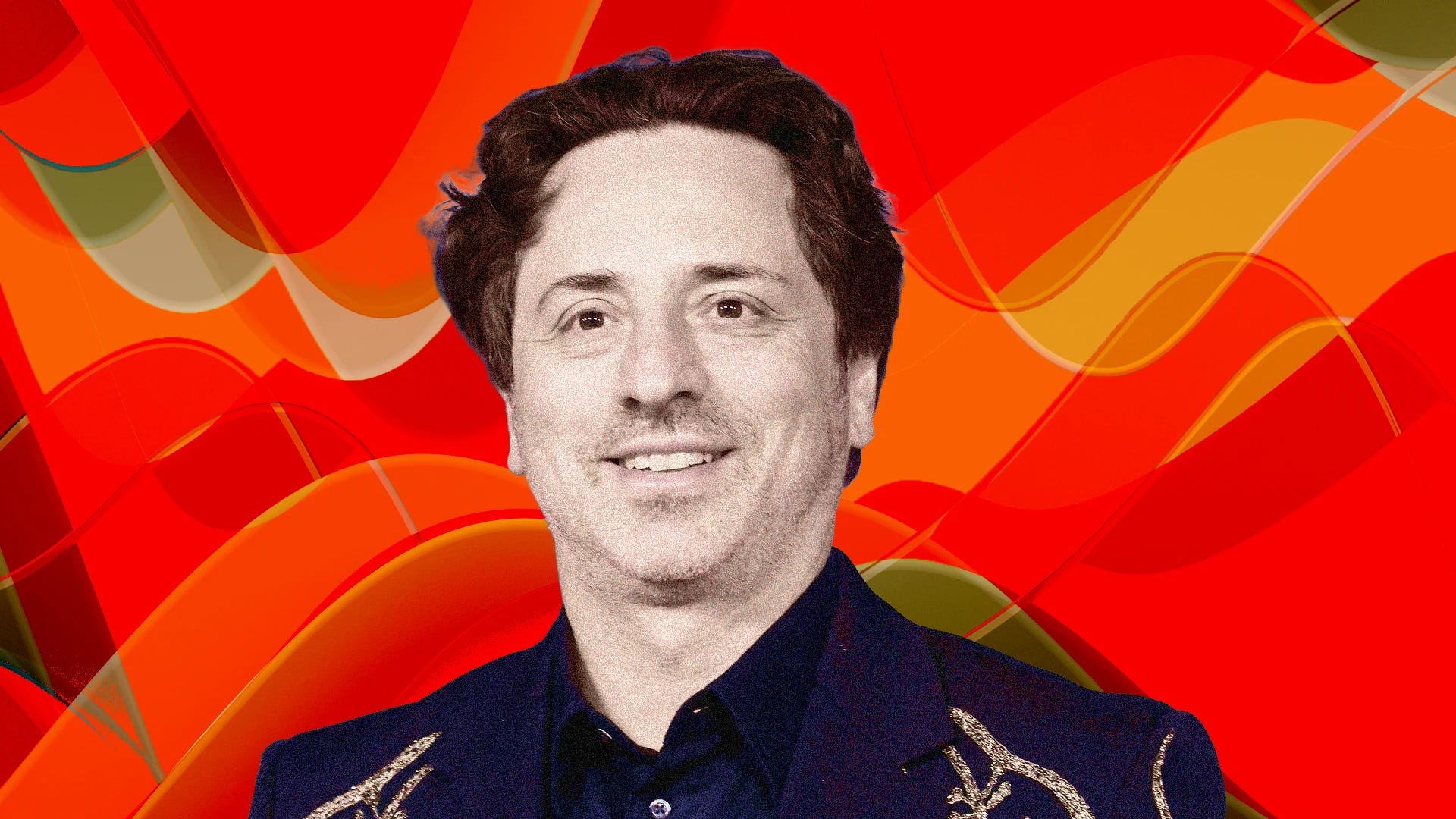
Sam Alito and My Friend Mickey

4 May 2026 at 10:02
Mickey (Michael) Schwerner

Friends,

When I learned what Samuel Alito and the other Republican appointees to the Supreme Court did to the Voting Rights Act last week, I thought of Mickey.

(Forgive me if I’ve already told you about him, but he was very important to me.)

I met Mickey the summer after third grade. His family had rented one of the summer cabins in the Adirondack Mountains where my grandmother also had a tiny summer cabin. I was eight, and Mickey was a teenager. We were not friends, yet I came to love him.

Mickey was kind and gentle, with a ready smile. I don’t recall asking him to protect me. He wasn’t the kind of hulking kid I usually chose as protector from bullies who’d torment and ridicule me. Mickey was on the short side and thin. He wore a sailor’s cap and seemed forever cheerful. I don’t remember him fighting to defend me or even quieting the kids who made fun of me, but I do remember his warmth and reassuring presence. His calm good nature seemed to cast a positive spell over kids who might otherwise turn to teasing or bullying.

Years went by and I grew into a teenager who no longer needed older boys to protect me from bullies, and I lost track of Mickey.

It wasn’t until September 1964, the start of my freshman year at Dartmouth College, that I heard what had happened to him.

Early that summer, Mickey — whose full name was Michael Schwerner — had traveled to Mississippi. The Civil Rights Movement was gaining strength. Martin Luther King Jr. had given his famous “I Have a Dream” speech at the August 1963 March on Washington, where 250,000 people had gathered at the Lincoln Memorial to hear him.

“Freedom Summer” of 1964 had brought college students, both Black and white, Mickey among them, from northern schools together with Black people from Mississippi to educate and register Black voters, under the aegis of the Student Nonviolent Coordinating Committee (SNCC).

Mississippi was chosen because only 7 percent of the state’s eligible Black voters were registered, in a state that was about 40 percent Black. Most had been frozen out of the polls with poll taxes, subjective literacy tests, and brutality. It had been that way since 1877. The system was enforced by white supremacists who could commit crimes with impunity because the entire region had become a one-party state run by white supremacists.

Mickey was among the first wave of volunteers to arrive in Mississippi for Freedom Summer. On the afternoon of June 21, he and two other student volunteers — Andrew Goodman, also white, and James Chaney, a young Black man — were driving near the town of Philadelphia when Neshoba County Deputy Sheriff Cecil Ray Price stopped them for allegedly speeding. Price locked them up in the local jail. That night, after they paid their speeding ticket and left the jail, Price followed them in his police car, stopped them again, ordered them into his car, and took them down a deserted road where he turned them over to a group of his fellow Ku Klux Klan members. They beat Mickey, Goodman, and Chaney with chains. Then they killed them and buried their bodies in an earthen dam under construction.

For weeks, no one knew what had happened to the three volunteers. Lyndon Johnson used concern over their disappearance to pressure the House to pass the Civil Rights Act of 1964 into law on July 2.

On July 16, a little more than three weeks after Chaney, Goodman, and Schwerner disappeared, and two weeks after Johnson signed the Civil Rights Act, Senator Barry Goldwater accepted the Republican nomination for president at the Cow Palace in Daly City, California. Goldwater told Republican delegates that “extremism in the defense of liberty is no vice. And … moderation in the pursuit of justice is no virtue.”

Mickey’s body and those of Chaney and Goodman were found August 4. They were illustrations of extremism in the defense of what white supremacists defined as liberty.

The state of Mississippi refused to bring murder charges against any of the killers, but eventually Price and Neshoba County Sheriff Laurence Rainey, also a Klan member, and sixteen others, including Samuel Bowers, the Imperial Wizard of Mississippi’s White Knights of the Ku Klux Klan, were arraigned for the federal crime of conspiracy to violate the civil rights of the murdered young men. An all-white jury found seven of them guilty, including Price and Bowers. After several unsuccessful appeals, each received a sentence of between three and 10 years. None would spend more than six years behind bars.

When the news reached me that Mickey had been beaten and murdered by white supremacists — by adult bullies who would stop at nothing to prevent Black people from exercising their right to vote — something snapped inside me. It was as if I had gotten a new pair of eyes and began to see everything differently. Before then, I understood bullying as a few kids picking on me for being short, making me feel bad about myself. After I learned what happened to Mickey, I began to see bullying on a larger scale, all around me: Black people bullied by whites; workers bullied by employers; girls and women bullied by men; the disabled or gay or poor or sick or immigrant bullied by politicians, insurance companies, landlords, and bigots. I saw the powerful and the powerless, the exploiters and the exploited.

It seemed as if the world had changed, when in fact it was I who had changed. I had a different understanding of the meaning of injustice. It became as personal to me as were the bullies who had called me names and threatened me in the boys’ room and on the playground — but larger, more encompassing, more urgent.

In 1965, Congress passed the Voting Rights Act, protecting the right of Black people to vote.

After that, the stranglehold of the white supremacists on the one-party South began to loosen. At the center of the law’s success was Section 5, commonly referred to as the “coverage formula,” which determined those states that had to receive clearance from the Justice Department before changing their election rules, based on their histories of race-based voter discrimination.

Another critical part of the law was Section 2, which prohibits states and political subdivisions from imposing voting qualifications, standards, or practices that discriminate on the basis of race, color, or membership in a language minority group. It forbids any election rule that results in a denial or abridgment of the right to vote, aimed at preventing vote dilution, such as discriminatory redistricting.

In the 20 years following the law’s passage, the disparity in registration rates between white and Black people dropped from nearly 30 percent in the early 1960s to 8 percent. Based on its continuing success, the Voting Rights Act was repeatedly reauthorized by Congress. But the forces of racism and violence did not disappear.

On August 3, 1980, Ronald Reagan launched his presidential campaign with a rally at the Neshoba County Fair, only a few miles from where Cecil Ray Price had stopped Schwerner, Chaney, and Goodman on that fateful night 16 years earlier. In defending “states’ rights” that day, Reagan, the cheerful “morning in America” candidate, was sending a dark dog-whistle to racist bullies, telling them he was on their side.

Thirty-three years later, on June 25, 2013, the Supreme Court struck down the coverage formula in the Voting Rights Act, in the case Shelby County v. Holder. The court’s five conservatives decided that the formula was out of date, despite Congress’s repeated reauthorizations, effectively ending pre-clearance. The court’s opinion was written by Chief Justice John Roberts and joined by Samuel Alito, Antonin Scalia, Anthony Kennedy, and Clarence Thomas. Reagan had put Scalia and Kennedy on the court.

“Our country has changed,” Roberts wrote. The Voting Rights Act was “strong medicine,” but in 1965 it was the right response to “entrenched racial discrimination.” When first enacted, he wrote, the rate of voter registration among Black people in Mississippi was 6.4 percent, and the gap between Black and white rates of registration was more than 60 percentage points. But now, Roberts said, pre-clearance was no longer needed.

Yet within 24 hours of the ruling, states of the old Confederacy were already proving Roberts wrong. Texas announced it would implement a strict photo ID law. Mississippi and Alabama began to enforce the same photo ID laws that federal pre-clearance had previously barred. Other Southern states began to purge voters from their rolls, curtail early voting, eliminate same-day registration, and prevent county boards of elections from opening polls for an additional hour.

In 2021 and 2022, in response to record voter turnout in the 2020 election, 19 states passed more than 30 laws making it harder to vote. The United States Senate, although nominally under Democratic control, did not have the votes needed to overcome a Republican filibuster and restore Section 5.

Samuel Alito

Then, last week, the six Republican appointees on the court decided to gut Section 2. In Louisiana v. Callais, Alito — in a remarkably dishonest opinion, even for him — said he was only bringing Section 2 up to date. “Vast social change has occurred throughout the country,” Alito wrote, “particularly in the South.” As a result of the Voting Rights Act, he claimed, Black Americans, once barred from the polls, now vote at similar rates as the rest of the electorate.

Rubbish. According to a recent study in which researchers analyzed nearly a billion votes cast in federal general elections between 2008 and 2022, “significant and robust evidence” shows that the racial turnout gap widened in parts of the country that had been covered by the Voting Rights Act after Shelby gutted Section 5.

The Republican appointees on the court have now invited Republican state legislatures to draw new congressional maps that will likely create a solid red south, creating the largest reduction in Black political representation since the death of Reconstruction. It could result in a loss of as many as 19 seats in the U.S. House and nearly 200 state legislative seats nationwide — and dramatically remake the balance of power in favor of Republicans. The Roberts-Alito court has ensured that Dred Scott and the Confederacy are reborn.

Immediately after the ruling, the Florida legislature passed a new congressional map drafted by Gov. Ron DeSantis’s office, aiming to flip up to four Democratic-leaning seats. Louisiana is postponing primaries to allow for a special session to redraw maps. Officials in Alabama are seeking to lift a lower court injunction to change their map. Mississippi is also actively exploring new white Republican districts.

It is hard for me to think back on the deaths of Mickey Schwerner, Andrew Goodman, and James Chaney, along with that of Martin Luther King Jr. and other martyrs to civil and voting rights, and not fear that — because of the dishonest and regressive opinions of Roberts, Alito, Thomas, and other Republican appointees to the Supreme Court — they died in vain.

Share

The list of countries that get social media wrong keeps growing...

4 May 2026 at 07:22

A few weeks ago Turkey passed a bill to restrict social media use for children under 15, thus joining the group of (as of May 1st, 2026) at least 24 states that have imposed similar age restrictions, or are actively moving in that direction.

All those 24 states are wrong. To see why, imagine a society that at some point finds itself full of huge, very crowded shopping malls with these characteristics:

Thanks for supporting my writing with paid subscriptions, free subscription, or in any other way (see below)

  1. the necessary and sufficient condition to enter those malls is to carry a gun. That is, literally everybody can enter, as long as they have a gun with themselves. No gun, no entrance.

  2. just being in the malls makes visitors wish to use their guns, because the walls leak some invisible gas that makes most humans very nervous and intolerant

  3. outside the malls, giving personal guns to kids as young as 8/9 years old has become almost a dogma. Almost all kids have a gun and are expected to carry it along at all times, often to make their parents feel safer

  4. after a dozen years of gun-enabled violence in those malls, the governments of that society finally realize what’s happening and, pressured by the same enraged parents that armed their children, finally move to protect at least all kids from that violence...

  5. ...but, for technical reasons not relevant right now, it’s impossible to verify the age of who wants to get into the malls without spending lots of money to turn the whole society around the malls into a machine for ever-increasing surveillance and censorship

But governments can’t ignore the problem anymore, and so they decree that, in order to end kids dying inside the malls, everybody can keep visiting the malls carrying a gun (because, of course, the economy!)... as long as the malls keep the armed kids outside, using age verification systems, consequences of point 4 above be damned.

And they all do that with a straight face, instead of going for the single, hugely simpler, hugely cheaper measure that should be implemented before anything else even if the malls weren’t toxic, that is:

forbid kids younger than 15 to have guns, before guns don’t belong in children hands period, so not only said kids can’t enter the malls (see point 1 above), but they finally cannot hurt each other anymore outside the malls.

This absurdity in that hypothetical society is exactly what Turkey and all those other countries are doing right now in our world: imposing age verification systems on social media instead of doing the same for personal smartphones.

Don’t trust me? Just search for “dangers of age verification”.

Don’t like the malls analogy? Try these then

When we invented cars and highways, nobody dreamed for a moment to prevent kids under 16 or 18 from driving their own cars on the highways, by checking everybody’s age at the tollbooth. We said the right thing, that is “never mind highways! Until you’re tall enough to see over the hood and mature enough to handle something lethal, NO CAR FOR YOU, NOWHERE”.

Ditto for weapons. Nobody, not even the most fanatical advocates of pro-gun rights ever demanded laws that would allow children to have their own gun and use it everywhere... except inside shopping malls.

Not enough? Try tobacco or alcool then. Imposing age limits on social media instead of smartphone possession makes as much sense as making selling cigarettes to minors legal, but setting age limits to enter designated smoking areas.

As someone else said, “Honestly, it’s the phones”

The reasons why no sensible adults thinks that, as long as we forbid them to use those products in certain places, children could own cars, weapons, cigarettes or liquors are obvious: everybody can see the risks, and everybody gets that preventing the possession of any of those products is hugely easier than regulating any possible damage that may happen by using them.

Of course, smartphones do not directly cause physical harm. However, after almost two decades of exposure, it’s impossible to deny that personal (that is: uncontrollable) smartphones in children hands too often trigger, or at least amplify, equally important negative effects, including many (e.g. facilitating self-isolation, insufficient sleep, exposure to sexting and cyberbullying, inability to focus, peer pressure to be always “on stage”, excessive gaming, personality-altering AI support for everything from homework to dating advice...) that would exist even if social media didn’t exist at all.

Finally, smartphones in children hands are a powerful part of adultification, that is treating children, for somebody else’s profit of course, “as if they are an adult, usually in a way that is wrong or harmful”.

I’ll say even more clearly: even if we all finally acknowledged - as we really, really should - that way too often the primary or major causes that eventually led kids to suffer all those problems online are offline, social factors like poverty, lack of outdoor playgrounds, or parenting shortcomings of whatever kind and origin... giving the victims a device that in almost every real case would make those problems bigger and more likely to occur makes as much sense as forcing someone who must use crutches because he broke a leg... to wear roller skates.

Governments imposing age limits on social media instead of smartphones is like seeking shelter from a storm in a house with all the doors and windows open, and trying to keep it warm by manually closing only the front entrance, instead of closing everything at once, by pushing the right button on the home automation remote control.

Leave a comment

Enough with analogies. Why is this colossal mistake happening?

So far, the only reasons why we haven’t treated smartphones as those other products that are intrinsically unsuitable for children are, in no particular order:

  • these days, if let free to decide by themselves, almost all governments don’t dare - or can’t afford - to propose any solution to any problem that will make people spend less in purchases or taxes

  • still in general, we adults have been all groomed to consider every step back in the deployment of any technology as a really uncool, really boor act that no well-educated, well-mannered person would do.

  • that’s especially true with digital technology. Showing off a smartphone and posting on Instagram has become cooler (even in the USA) than having a car or a gun. Take any two adults with diametrically opposite political or cultural ideas, and the two things they’ll most likely still have in common will be a smartphone in their pockets, and not enough understanding of its true, long-term social impacts

Mind you, I say this without any contempt for the average smartphone user. The three bullets above are just the unavoidable consequence of everything going digital at the same time, way too fast for everybody’s good.

As far as children, smartphones and social media are concerned, however, this is not an excuse anymore to keep acting in the wrong, intrinsically dumbest way. On to action now.

There are only two things that are good in age verification policies

One is that age verification motivates kids to acquire skills that may come useful later:

Hey Canva, draw me an ID card! (Screenshots sources: ChildSafeNet and The Mirror)

The other good thing of hugely misplaced age verification laws is... that it is really easy to make them irrelevant and unnecessary. All it takes is for parents to wake up and push that one button that closes all the doors and windows of that house exposed to the storm: that is, to stop letting their kids have personal smartphones before they are 15 or 16 years old.

That’s a measure that parents have no excuse anymore to avoid, for four excellent reasons. First, see above, age verification laws for social media are too little, too late and too off-target. As things stand now, age verification laws for social media are just Rube Goldberg machines built to fight YESTERDAY’s battles.

Second, while not having a smartphone does not guarantee 100% protection from all the problems I listed, it surely makes avoiding them much, much easier, and the urgent necessity of real solutions to the root problems (e.g. more outdoor play) much harder to ignore, at all levels.

Left: Age Verification Laws, explained by Rube Goldberg 105 years ago. Right: what would actually work (sources: Wikimedia/Wikipedia).

Third, the huge cost-benefit ratio and lack of meaningful side effects: not giving a child a personal smartphone before she’s 15 is one simple act that’s 100% legal everywhere, it’s more than free because it saves money and doesn’t need any law or anybody’s permission to work. At the same time, not having a personal smartphone wouldn’t deprive children of any of the real benefits of the internet or of any actually valuable digital skill. That’s all stuff they could and indeed should still learn and practice as soon as possible, but without any risk of overexposure, that is with desktop or laptop computers at home or in schools, libraries and so on.

Yes, I DO know that for some really special kids 24x7 internet access via smartphone can be a real, effective lifeline. But the solution is to find better lifelines for those kids or making exceptions for them. It cannot be to keep all the other kids in a state that is, as a minimum, a waste of time and sleep._

Fourth, and maybe most important: this is a job for parents only, not governments. There are cases when outsourcing parental responsibilities can be positive, or at least unavoidable, or cheaper. But this is not one of them. No way.

Thanks for sharing this post both in and OUTSIDE Substack. ALL parents must read it.

Share

If I had to do this myself...

If I ruled the world, which thanks God I don’t, I’d spare kids from the hassle and leash of having any electronic tag, sorry: I meant “any portable phone” until they’re 14 or 15 years old. For the record, that’s what I actually did with my own kids, in years when all their peers were already playing with smartphones. I walked the walk, and it did pay off. But that’s not why I’d say no to any portable phone.

I would do that because I am damn sure that the fact that their children could not be instantly reachable was the last or almost last concrete concern of every parent from the advent of Homo Abilis to your own parents or grandparents. I also happen to think that being on their own was beneficial for the kids.

But if you are different, that’s OK, really: give your kids a normal cellphone, without internet connectivity, cameras and geolocation, and it will still be a huge improvement. You’ll be much less stressed, they’ll still be reachable when it’s actually necessary, and the physical impossibility to get lost alone in less than healthy online spaces, self-inflicted narcissism and similar hassles will open up much better worlds for your kids.

However, even if I did rule the world, I wouldn’t issue any law that forbids smartphones for children. I would launch a massive educational campaign for parents to voluntarily do it themselves, because this is their responsibility. Governments must not impose this part of education, only create support for it. Doing otherwise, as all those states are proudly doing now to look as if they care, can only waste money to produce all sorts of harmful side effects. Including lessening the very meaning and terrible beauty of parenting.

Thanks in advance for helping me to contribute to this education, via direct funding, webinars, speaking engagements or any other work. To discuss these possibilities or just suggest new topics, please email me at mfioretti@nexaima.net.

Just an invitation... is a reader-supported publication. To receive new posts and support my work, consider becoming a free or paid subscriber.

Sunday caption contest: The machine

3 May 2026 at 23:01

Friends,

Please submit your caption in the Comments section and, as before, please use the Comments section only for captions.

Winners will be announced next Sunday. For consideration, please post your caption by Monday at 9 pm PT, 12 midnight ET.

Leave a comment

Last time’s winner (from two weeks ago):

“Remember — when you dis the Pope it makes you a Dope.”

(Congratulations, Donald Hodgins.)

Runners-up:

“You will be going straight to hell. Thank you for your attention to this matter. Jesus H. Christ.”

(Congratulations, Marvel.)

“Just between you and me, I’m God and you’re not.”

(Congratulations, Shirley Butz.)

“So this was the ear you were shot in huh? Can you hear me???”

(Congratulations, Scott Neuman.)

“Good-Bye Donald, the elevator downstairs is over there.”

(Congratulations, Ken.)

“And lo, I say unto you: Don’t be such a dick!”

(Congratulations, Christine Meyer.)

“Really Donald. On Easter? You make Judas look like a Boy Scout.”

(Congratulations, Clare C Gunther.)

“Dante called — they’re adding an extra circle for your ass.”

(Congratulations, John Bernard.)

“Dude, stay in your lane. You have no cards.”

(Congratulations, Hal Garyn.)

“What part of ‘love thy neighbor’ did you not understand?”

(Congratulations, Victoria Sweet.)

“Don’t worry, Donny, you’re going to be FIRED like no one else has ever been FIRED, in THE biggest, most beautiful FIRE ever.”

(Congratulations, Just Judy.)

“Release the Epstein files!”

(Congratulations, Jim Cook.)

Share

Give the gift of Robert Reich's Substack

Comrade Trump

A Soviet propaganda poster featuring Lenin pointing angrily into the distance. It has been altered. Lenin now has Trump's hair and his skin in orange. The hammer/sickle logo behind him has been replaced with a cross.

This week on my podcast, I read Comrade Trump, a recent column from my Pluralistic newsletter, which will be syndicated in The Nerve.


All of which means that my experience of the Trump years is decidedly weird. On the one hand, I exist in a near-perpetual state of anxious misery, as Trump and his chud army of Christian nationalists and degenerate gamblers pursue a program of gleeful genocide. But at the very same time, I’m living in a world in which Trump is (inadvertently) dismantling many of the worst aspects of the old order in favor of something decidedly better.

Take Trump’s tariff policy. Back during Trump I, he decided that Americans couldn’t buy Chinese solar anymore, which had the double benefit of allowing him to pursue the twin goals of throwing red meat to Sinophobic Cold War 2.0 freaks and delivering a giant gift to the planet-wrecking oil companies that had helped him buy his way into office.

MP3

Sunday thought: What is Being Born

3 May 2026 at 10:02

Friends,

I’m not going to dwell on this week’s outrages by Trump and his regime — his Supreme Court appointees gutting the Voting Rights Act, his bizarre claim that his war doesn’t require congressional approval because it’s “terminated,” his murders of additional sailors he suspects of smuggling drugs, his ongoing ICE raids, his continuing efforts to use the Justice Department to punish perceived enemies, his renewed attempts to silence comedians such as Jimmy Kimmel, his giant self-aggrandizing triumphal arch (what triumph?) and grotesque ballroom, his never-ending corruption and lies.

Yet in the midst of this cataclysm, the backlash against Trump is growing. Your work has been critical — your demonstrations and No Kings marches, your letters and phone calls to Congress, your boycotts and your local activism. Trump’s approval ratings are in the cellar. Two-thirds oppose his war. Many are demanding an end to his reign. Even some MAGA faithful are turning on him.

But it’s more than resisting Trump.

A new progressivism is being born.

Many of you are leading this. You are the activists in Montana and Hawaii pushing a new vision for reining in corporate power. You’re the activists in California and New York devising new ways to tax the super-wealthy to pay for what most people need.

You’re the activists in Massachusetts taking the lead on reproductive rights and access to health care. In Washington state, pushing new and more aggressive environmental regulations and renewable energy. In San Diego, Oakland, and San Francisco, devising new ways to address homelessness. Organizations like Voz in Portland, Oregon, empowering immigrant day laborers.

You are the activists in red states refusing to let warehouses be turned into migrant detention centers or let their towns host giant AI data centers.

You’re raising the minimum wage across America. Since the start of this year, 22 states have raised it, bringing the total number of jurisdictions raising the minimum — including cities and counties — to almost 90, with 18 states and the District of Columbia now mandating $15 an hour or more.

You’re supporting a new generation of young progressives in Congress: Maxwell Frost, Summer Lee, Greg Casar, Delia Ramirez, and the just-elected Analilia Mejia. And new progressive local leaders like New York’s mayor Zohran Mamdani.

You’re encouraging a new cohort of progressive rising stars, including Minneapolis’s Omar Fateh, Tennessee’s Aftyn Behn, Wisconsin’s Francesca Hong, Illinois’s Kat Abughazaleh, Texas’s James Talarico, San Francisco’s Saikat Chakrabarti, Maine’s Graham Platner, Tennessee’s Justin Pearson, Michigan’s Abdul El-Sayed, Florida’s Elijah Manley, and many others.

In my six decades in and around American politics, I’ve never seen anything close to the progressive talent and energy that’s now emerging.

Make no mistake. These are terrible times — the worst I’ve lived through, and I’ve lived through some bad ones. (Remember 1968? Nixon’s enemies list? Anyone old enough to recall Joe McCarthy’s communist witch hunts?) Trump and his goons are doing everything they can to destroy America and much of the world.

But out of the embers and rubble that Trump and his despicable regime have wrought, a new America is being born. We are making it happen.

As long as we are alive and as long as we are resolved, as long as we are taking action to stop the worst of this catastrophe and also trying to make America and the world better, have no doubt: We will prevail.

Be safe. Hug your loved ones. Never, ever give up.

Robert Reich

Share

❌