Normal view

Pluralistic: Shareholder supremacy and the precog CEO (13 Jun 2026)


Today's links


A fake cover for CEO magazine. The central figure is a ZOLTAR fortune-telling animatronic, seated before various divination tools. The headline over him is FIDUCIARY DUTY. In the top right corner, there's a slug reading 'UNIVERSAL EXCUSE: A bright line test that's also *totally* unfalsifiable.' To Zoltar's left is another slug reading, 'FRIEDMAN SAID IT: I believe it. That's good enough for me.'

Shareholder supremacy and the precog CEO (permalink)

It's been 55 years since Milton Friedman – cursed be his name – published his NYT editorial, "The Social Responsibility of Business Is to Increase Its Profits," in which he invented the idea of shareholder supremacy out of whole cloth and declared it to be a universal, freestanding, inarguable truth:

https://www.nytimes.com/1970/09/13/archives/a-friedman-doctrine-the-social-responsibility-of-business-is-to.html

Friedman's editorial railed against the idea of "corporate social responsibility," arguing that corporate managers should confine the exercise of their consciences to projects involving their own money and resources. At work, managers must harden their bleeding hearts and do nothing except increase the returns to their shareholders.

Friedman wasn't merely arguing that this would give rise to better companies – the crux of his argument was that by adopting this "fiduciary duty" standard, it would be easy to determine whether a company was being well-managed or run into the ground:

https://pluralistic.net/2024/09/18/falsifiability/#figleaves-not-rubrics

Friedman argued that "being a good person" was a squishy, undefinable standard that could never be objectively measured. But "maximizing shareholder value" was a crisp, bright-line test that could be readily evaluated by any reasonable person. "Did this manager make as much money as possible for the company's owners?" feels like the kind of question we can all agree on, while, "Did this manager behave in an ethical way?" is much harder to answer.

But even a few moments' thoughts reveal the flaw in this line of reasoning. We can all agree whether a manager made money for the shareholders – but how can we know whether the manager made as much money as possible?

Think about how much "corporate social responsibility" cashes out to performative and insincere nonsense and/or cynical marketing. Target didn't stock Pride merch because they love their LGBTQ friends. They stocked it because they thought they could sell it (same goes for BP marketing its "green" gasoline). Google supports its coders' environmental/queer/antipoverty efforts because being the "don't be evil" company lets you hire in-demand workers who might otherwise go to work for Meta, and every engineer a Silicon Valley firm hires adds an average of $1m to the company's annual bottom line.

Further: it would be absurd to hold managers to the "make as much money as possible" standard in a competitive market, because in that market, there will always be a company that comes in second. If "as much money as possible" is the standard and you're Chairman of the Board of the number two company, with $10b in profit, while the number one pulled in $11b, "as much money as possible" demands that you fire the C-suite immediately, since they objectively could have done 10% better.

So the real standard isn't "make as much money as possible," it's "try to make as much money as possible." And here again, there's no objective way to evaluate managerial performance. Target made a lot of money by selling Pride merch…until they didn't. Do we fire the Target C-suite because they failed to anticipate that 2024 would mark America's transition into the chuddocene, an era in which selling Pride tchotchkes makes you cucked and soy and, you know, gay?

Whether it's "make as much money as possible" or "try to make as much money as possible*," shareholder supremacy can only be evaluated with the aid of a crystal ball…or a time machine.

Which raises a question: what made this nonsensical shareholder supremacy standard so damned attractive to corporate leaders?

Well, what if the ambiguity of shareholder supremacy was a feature and not a bug? What if the function of shareholder supremacy was to absolve the cruelest people for indulging their most sociopathic instincts? What if this "bright line test" was actually a universal excuse, an all-purpose accountability sink that could be used to justify any cruelty or cowardice? "Why didn't I fire my college buddy when I found out that he was sexually abusing his colleagues? Well, he was the best salesman on the team, and I have an obligation to my shareholders. Sorry, my hands were tied."

In other words: Don't get mad at me.

Get mad at Milton Friedman.


Hey look at this (permalink)


A shelf of leatherbound history books with a gilt-stamped series title, 'The World's Famous Events.'

Object permanence (permalink)

#20yrsago Microsoft gets Linux geeks evicted from convention center https://web.archive.org/web/20010619154332/http://www.newsforge.com/article.pl?sid=01/06/01/1540231

#20yrsago Stanford prof sues James Joyce estate for right to study Joyce https://web.archive.org/web/20060615203517/http://news.yahoo.com/s/ap/20060613/ap_on_en_ot/james_joyce_lawsuit

#20yrsago Inside China’s iPod sweat-shops https://web.archive.org/web/20060616173514/http://www.macworld.co.uk/news/index.cfm?RSS&NewsID=14915

#15yrsago Terry Pratchett initiates assisted suicide process https://web.archive.org/web/20110614215922/https://www.telegraph.co.uk/health/8571142/Sir-Terry-Pratchett-begins-process-that-could-lead-to-assisted-suicide.html

#15yrsago Lego-making machine made of Lego https://www.eurobricks.com/forum/forums/topic/56346-review-moulding-machine-4000001-lego-insider-tour-exclusive/

#10yrsago It’s getting harder and harder to use gag clauses to silence laid off workers in America https://web.archive.org/web/20160611202305/https://www.nytimes.com/2016/06/12/us/laid-off-americans-required-to-zip-lips-on-way-out-grow-bolder.html

#5yrsago The ACCESS Act https://pluralistic.net/2021/06/12/access-act/#interop


Upcoming appearances (permalink)

A photo of me onstage, giving a speech, pounding the podium.


A screenshot of me at my desk, doing a livecast.

Recent appearances (permalink)


A grid of my books with Will Stahle covers..

Latest books (permalink)


A cardboard book box with the Macmillan logo.

Upcoming books (permalink)

  • "The Reverse-Centaur's Guide to AI," a short book about being a better AI critic, Farrar, Straus and Giroux, June 2026 (https://us.macmillan.com/books/9780374621568/thereversecentaursguidetolifeafterai/)
  • "Enshittification, Why Everything Suddenly Got Worse and What to Do About It" (the graphic novel), Firstsecond, 2026

  • "The Post-American Internet," a geopolitical sequel of sorts to Enshittification, Farrar, Straus and Giroux, 2027

  • "Unauthorized Bread": a middle-grades graphic novel adapted from my novella about refugees, toasters and DRM, FirstSecond, April 20, 2027

  • "The Memex Method," Farrar, Straus, Giroux, 2027


Colophon (permalink)

Today's top sources:

Currently writing: "The Post-American Internet," a sequel to "Enshittification," about the better world the rest of us get to have now that Trump has torched America. Third draft completed. Submitted to editor.

  • "The Reverse Centaur's Guide to AI," a short book for Farrar, Straus and Giroux about being an effective AI critic. LEGAL REVIEW AND COPYEDIT COMPLETE.
  • "The Post-American Internet," a short book about internet policy in the age of Trumpism. PLANNING.

  • A Little Brother short story about DIY insulin PLANNING


This work – excluding any serialized fiction – is licensed under a Creative Commons Attribution 4.0 license. That means you can use it any way you like, including commercially, provided that you attribute it to me, Cory Doctorow, and include a link to pluralistic.net.

https://creativecommons.org/licenses/by/4.0/

Quotations and images are not included in this license; they are included either under a limitation or exception to copyright, or on the basis of a separate license. Please exercise caution.


How to get Pluralistic:

Blog (no ads, tracking, or data-collection):

Pluralistic.net

Newsletter (no ads, tracking, or data-collection):

https://pluralistic.net/plura-list

Mastodon (no ads, tracking, or data-collection):

https://mamot.fr/@pluralistic

Bluesky (no ads, possible tracking and data-collection):

https://bsky.app/profile/doctorow.pluralistic.net

Medium (no ads, paywalled):

https://doctorow.medium.com/

Tumblr (mass-scale, unrestricted, third-party surveillance and advertising):

https://mostlysignssomeportents.tumblr.com/tagged/pluralistic

"When life gives you SARS, you make sarsaparilla" -Joey "Accordion Guy" DeVilla

READ CAREFULLY: By reading this, you agree, on behalf of your employer, to release me from all obligations and waivers arising from any and all NON-NEGOTIATED agreements, licenses, terms-of-service, shrinkwrap, clickwrap, browsewrap, confidentiality, non-disclosure, non-compete and acceptable use policies ("BOGUS AGREEMENTS") that I have entered into with your employer, its partners, licensors, agents and assigns, in perpetuity, without prejudice to my ongoing rights and privileges. You further represent that you have the authority to release me from any BOGUS AGREEMENTS on behalf of your employer.

ISSN: 3066-764X
Trillionaire Testosterone | The Coffee Klatch for Saturday, June 13, 2026

13 June 2026 at 10:02

Friends,

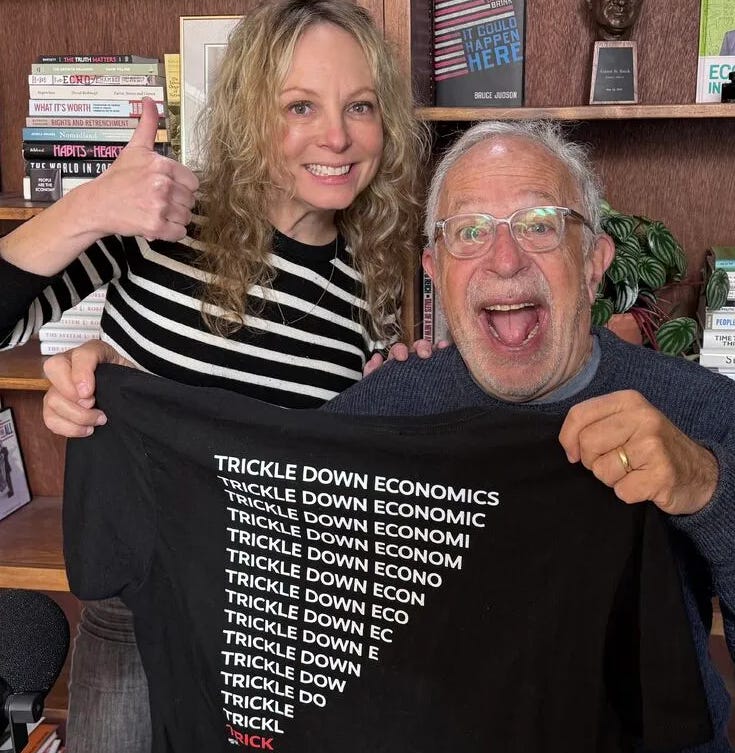
Today Heather and I take a deep dive into Elon Musk’s new status as America’s first trillionaire — worth one thousand billion dollars — and its meaning for the future of American capitalism. How much of SpaceX’s valuation is based on hype? How much on connections in the Trump regime? How much on Musk’s lobbying of major stock index funds? Answer: almost all of it.

We also look at Musk and Trump’s (and Pete Hegseth’s and Robert F. Kennedy Jr.’s and JD Vance’s) obsession with male virility — where that comes from and how it’s connected to tomorrow’s cage match on the South Lawn of the White House.

So please grab a cuppa, pull up a chair, and join in the conversation.

Leave a comment

Share

💾

Pluralistic: Google's new remote attestation scheme is every bit as terrible as its old remote attestation scheme (12 Jun 2026)


Today's links


A pig in a sty. It is wearing badly applied lipstick. From behind one hairy ear pokes the Android droid.

Google's new remote attestation scheme is every bit as terrible as its old remote attestation scheme (permalink)

Long before "agentic AI," we had the idea that software would act as your agent on the internet. That's why the old-fashioned technical term for a browser is a "user agent." Your browser acts on your behalf to retrieve information and then show it to you, in the format you choose. It's your agent:

https://pluralistic.net/2024/05/07/treacherous-computing/#rewilding-the-internet

This is a powerful and profound idea. It is because browsers are our "agents" that we expect them to accept our directives, say, by blocking pop-ups, or by turning off autoplay sound, or by blocking commercial surveillance trackers:

https://privacybadger.org/

Your browser does all that because your browser works for you. The reason your browser can work for you is that the web is an open, standardized technology. In theory, anyone who follows the standards published by the World Wide Web Consortium (W3C) can make a browser, and that web browser can connect to any web server. Browsers and servers are interoperable. It's the same force that means you can put anyone's gas in your gas-tank, or anyone's shoelaces in your shoes, or anyone's milk on your cereal.

But what if manufacturers could dictate those choices to you? What if your light socket refused to use a lightbulb unless it was officially blessed by the socket's manufacturer? What if your dishwasher refused to wash your dishes unless you bought them from one of the manufacturer's "dish partners"? What if your toaster refused to toast "unauthorized bread"?

https://arstechnica.com/gaming/2020/01/unauthorized-bread-a-near-future-tale-of-refugees-and-sinister-iot-appliances/

It's hard to see how a company could win its market with this strategy. After all, if the dishes are really better than the competition's, you'd buy them voluntarily, without any need for law or technology to force the matter. The only reason to make a dishwasher that refuses a rival's dishes is if the manufacturer's own dishes are ugly, expensive, and/or badly made.

But once a company owns the market – once they've achieved dominance by buying out their rivals; by bribing potential competitors to stay out of their lane; and by engaging in deceptive conduct to trap key suppliers and customers – they could cement their dominance by blocking interoperability, keeping out rival dishes, milk, gas, lightbulbs, shoelaces and bread, capturing their whole market and squeezing it.

That's what Google has done, and that's what Google wants to do more of. Google's commercial behavior has been so unethical, deceptive and abusive that the company just lost three federal antitrust cases:

https://www.bigtechontrial.com/p/google-loses-the-adtech-monopolization

This thrice-convicted monopolist bribed Apple – more than $20b/year – to stay out of the search market:

https://www.eff.org/deeplinks/2025/02/how-do-you-solve-problem-google-search-courts-must-enable-competition-while

They cheated app vendors, ripping them off with sky-high junk fees and onerous conditions that raised prices while lowering the share of your spending that went to the companies whose products you were paying for:

https://www.thebignewsletter.com/p/boom-google-loses-antitrust-case

They cheated advertisers, rigging the ad market to gouge businesses on ad prices and underinvesting to fight rampant ad-fraud, sucking hundreds of billions out of the productive economy for overpriced ads that no one saw:

https://www.justice.gov/opa/pr/department-justice-prevails-landmark-antitrust-case-against-google

Google wasn't always this way. The "don't be evil" company owes its very existence to the open web ecosystem. When the company started to index the web in 1998, it was playing on an open field, where any web server could talk to any "user agent," even one whose user was a startup like Google, that was making a copy of every page on the server.

For years, Google thrived on the open web, and built open technologies. Android – the mobile operating system that Google bought in 2005 – was presented as an "open" alternative to existing mobile offerings, and as the mobile market collapsed into two companies – Google and Apple – Google always presented Android as the open alternative to Apple's "walled garden."

There were always ways in which Google's "open" Android wasn't exactly open. The company engaged in illegal "tying" arrangements that forced hardware vendors and carriers to lock out versions of Android that were created by Google's competitors:

https://ec.europa.eu/commission/presscorner/detail/en/ip_18_4581

In other words, even though Google offered a mobile platform that was (mostly) technically open, they used commercial and legal strategies to choke off the market oxygen for alternative Android versions that tried to capitalize on that technical openness.

But life finds a way. The existence of an open, modifiable, tinkerer-friendly mobile operating system meant Android hackers could create alternatives to Google's (de facto) walled garden, which thrived in the cracks in that garden wall. Operating systems like CalyxOS, PureOS and Graphene offered a more private, more secure Android experience, one that was largely "de-Googled," blocking Google's relentless acquisition of your private data:

https://grapheneos.org/

And Google's data-hunger is relentless. Android exfiltrates a chunk of your personal and behavioral data every five minutes. The "resting heartbeat" of Android surveillance pulses and pulses, irrespective of whether you're using your device, and the instant you unlock your screen, that heartbeat quickens, sending even more data to the company:

https://digitalcontentnext.org/blog/2018/08/21/google-data-collection-research/

All that data has proved irresistible to authoritarian governments. Donald Trump's enforcers have seized on Google data as a vital source of information about the identity of protesters and the location of migrants hunted by ICE:

https://www.eff.org/deeplinks/2026/04/google-broke-its-promise-me-now-ice-has-my-data

So there are plenty of reasons why users would seek out these de-Googled alternatives to Android, finding them in spite of Google's illegal commercial tactics to block access to competing technologies. The worse it got, the better those alternatives looked.

Perhaps this explains Google's years-long effort to increase the technical barriers to using modified versions of Android, beefing these up to match the commercial restrictions that stand in the way of a de-Googled existence.

Back in 2023, Google floated the idea of "Web Environment Integrity" (WEI), a set of modifications to web standards that would force your computer to disclose its operating environment to the web servers it connected to, even if you objected to this disclosure:

https://pluralistic.net/2023/08/02/self-incrimination/#wei-bai-bai

WEI was a form of "remote attestation." That's when your device uses a sub-processor (sometimes called a "Technical Protection Module" or "TPM") or a walled off part of its main processor (sometimes called a "secure enclave") to produce a cryptographically signed description of your device and its configuration: which hardware, software, plug-ins and settings you're running.

When you connect to a server, it demands that your device send this "attestation" before it handles your request. If your device won't provide this data, or if the server doesn't like (or recognize) your device and its details, it can refuse to deal with you. And because the attestation is prepared by a TPM or a secure enclave that you can't modify or override, you don't get to decide which facts about your device it's allowed to see.

Practically speaking, this means that remote attestation lets a server refuse to deal with you until you turn off your ad-blocker and your tracker-blocker. It means that the server can discriminate against users who block auto-play sound and video, who block pop-ups, who put the tab in the background when it's playing a mandatory pre-roll ad.

WEI was especially disturbing in light of Google's efforts to kill ad-blockers and privacy blockers through updates to Chrome, an effort that continues to this day:

https://protonprivacy.substack.com/p/google-is-finally-killing-ublock

These blockers are an important part of the dynamic between web publishers and their users. In the real world, when you get an offer, you can make a counter-offer. That's all an ad-blocker is: a way for users to respond to a server whose opening bid is, "How about you give me all your data and let me take over your computer in exchange for showing you this page?" with "How about 'Nah?'"

https://www.eff.org/deeplinks/2019/07/adblocking-how-about-nah

We didn't get rid of pop-up ads by making them illegal, or by boycotting advertisers who used them. We got rid of pop-up ads when web users installed pop-up blockers, which made pop-up ads pointless. Take away our ability to block obnoxious digital content and you guarantee that we will be flooded with it.

These kinds of modifications aren't just used to block ads – they're also key to accessibility. People who have photosensitive epilepsy or who (like me) suffer from low-contrast vision problems use add-ons to reformat pages so that we can safely and legibly access them.

WEI's creators said they were only trying to put the web on a level playing field with apps, which routinely rat you out to the companies you connect to. Apps are a source of bottomless enshittification, not least because (unlike the web), they enjoy special, dangerous legal protections that make it very legally risky to modify them:

https://pluralistic.net/2025/07/31/unsatisfying-answers/#systemic-problems

WEI wasn't an effort to level the playing field between apps and the web – it was a race to the bottom, an attempt to make the web as enshittogenic as the app hellscape.

Public outrage to WEI killed the project, but Google's commitment to augmenting its illegal commercial lockdown efforts with technical lockdowns never ended. Now, Google has rolled out an experimental "reCAPTCHA Mobile Verification" that uses an app, your camera, and your device's TPM or secure enclave to produce an attestation about your Android device:

https://support.google.com/recaptcha/answer/16609652

This will make it much easier for the apps and other services you interact with to block your device if you run an Android alternative, or if you install a mod that overrides the actions of Google's stock Android:

https://www.reddit.com/r/PrivacySecurityOSINT/comments/1tbdjbj/privacy_concerns_around_googles_recaptcha_mobile/

This is a terrible idea – it's every bit as bad as WEI was. In an age in which Big Tech is ever-more tied to authoritarian governments, redesigning our devices to tell strangers things we don't want them to know isn't just shortsighted, it's inexcusable.


Hey look at this (permalink)


A shelf of leatherbound history books with a gilt-stamped series title, 'The World's Famous Events.'

Object permanence (permalink)

#20yrsago Images from anti-DRM protest at the San Fran Apple Store https://www.flickr.com/photos/quinn/tags/drmprotest/

#15yrsago Reasons people were arrested at the Toronto G20 https://memex.craphound.com/2011/06/11/reasons-people-were-arrested-at-the-toronto-g20/

#15yrsago Paul Krugman: Rule by rentiers favors billionaires, Chinese bond-holders over jobs and homeowners https://www.nytimes.com/2011/06/10/opinion/10krugman.html?_r=1

#15yrsago Ontario publicly funded Catholic school bans rainbows, appropriates student donations for LGBT cause and gives them to Catholic charity https://web.archive.org/web/20110610125236/https://www.xtra.ca/public/Toronto/Rainbows_banned_at_Mississauga_Catholic_school-10262.aspx

#10yrsago How to be less wrong about the First Amendment https://web.archive.org/web/20160611221927/https://popehat.com/2016/06/11/hello-youve-been-referred-here-because-youre-wrong-about-the-first-amendment/

#10yrsago Mounties used Stingrays to secretly surveil millions of Canadians for years https://web.archive.org/web/20160610182607/https://motherboard.vice.com/read/the-rcmp-surveilled-thousands-of-innocent-canadians-for-a-decade

#5yrsago Privacy Without Monopoly, EU edition https://pluralistic.net/2021/06/11/technological-self-determination/#dma


Upcoming appearances (permalink)

A photo of me onstage, giving a speech, pounding the podium.


A screenshot of me at my desk, doing a livecast.

Recent appearances (permalink)


A grid of my books with Will Stahle covers..

Latest books (permalink)


A cardboard book box with the Macmillan logo.

Upcoming books (permalink)

  • "The Reverse-Centaur's Guide to AI," a short book about being a better AI critic, Farrar, Straus and Giroux, June 2026 (https://us.macmillan.com/books/9780374621568/thereversecentaursguidetolifeafterai/)
  • "Enshittification, Why Everything Suddenly Got Worse and What to Do About It" (the graphic novel), Firstsecond, 2026

  • "The Post-American Internet," a geopolitical sequel of sorts to Enshittification, Farrar, Straus and Giroux, 2027

  • "Unauthorized Bread": a middle-grades graphic novel adapted from my novella about refugees, toasters and DRM, FirstSecond, April 20, 2027

  • "The Memex Method," Farrar, Straus, Giroux, 2027


Colophon (permalink)

Today's top sources:

Currently writing: "The Post-American Internet," a sequel to "Enshittification," about the better world the rest of us get to have now that Trump has torched America. Third draft completed. Submitted to editor.

  • "The Reverse Centaur's Guide to AI," a short book for Farrar, Straus and Giroux about being an effective AI critic. LEGAL REVIEW AND COPYEDIT COMPLETE.
  • "The Post-American Internet," a short book about internet policy in the age of Trumpism. PLANNING.

  • A Little Brother short story about DIY insulin PLANNING


This work – excluding any serialized fiction – is licensed under a Creative Commons Attribution 4.0 license. That means you can use it any way you like, including commercially, provided that you attribute it to me, Cory Doctorow, and include a link to pluralistic.net.

https://creativecommons.org/licenses/by/4.0/

Quotations and images are not included in this license; they are included either under a limitation or exception to copyright, or on the basis of a separate license. Please exercise caution.


How to get Pluralistic:

Blog (no ads, tracking, or data-collection):

Pluralistic.net

Newsletter (no ads, tracking, or data-collection):

https://pluralistic.net/plura-list

Mastodon (no ads, tracking, or data-collection):

https://mamot.fr/@pluralistic

Bluesky (no ads, possible tracking and data-collection):

https://bsky.app/profile/doctorow.pluralistic.net

Medium (no ads, paywalled):

https://doctorow.medium.com/

Tumblr (mass-scale, unrestricted, third-party surveillance and advertising):

https://mostlysignssomeportents.tumblr.com/tagged/pluralistic

"When life gives you SARS, you make sarsaparilla" -Joey "Accordion Guy" DeVilla

READ CAREFULLY: By reading this, you agree, on behalf of your employer, to release me from all obligations and waivers arising from any and all NON-NEGOTIATED agreements, licenses, terms-of-service, shrinkwrap, clickwrap, browsewrap, confidentiality, non-disclosure, non-compete and acceptable use policies ("BOGUS AGREEMENTS") that I have entered into with your employer, its partners, licensors, agents and assigns, in perpetuity, without prejudice to my ongoing rights and privileges. You further represent that you have the authority to release me from any BOGUS AGREEMENTS on behalf of your employer.

ISSN: 3066-764X
Did Trump Promise "No Wars" If Elected?

12 June 2026 at 23:01

Friends,

Sometimes I provide you with information that I hope you’ll find helpful in making arguments with others. I don’t expect that what I share with you will change the minds of committed Trumpers, but the facts and the evidence may have some sway with Republicans and independents who are wavering about whom to support in the midterms.

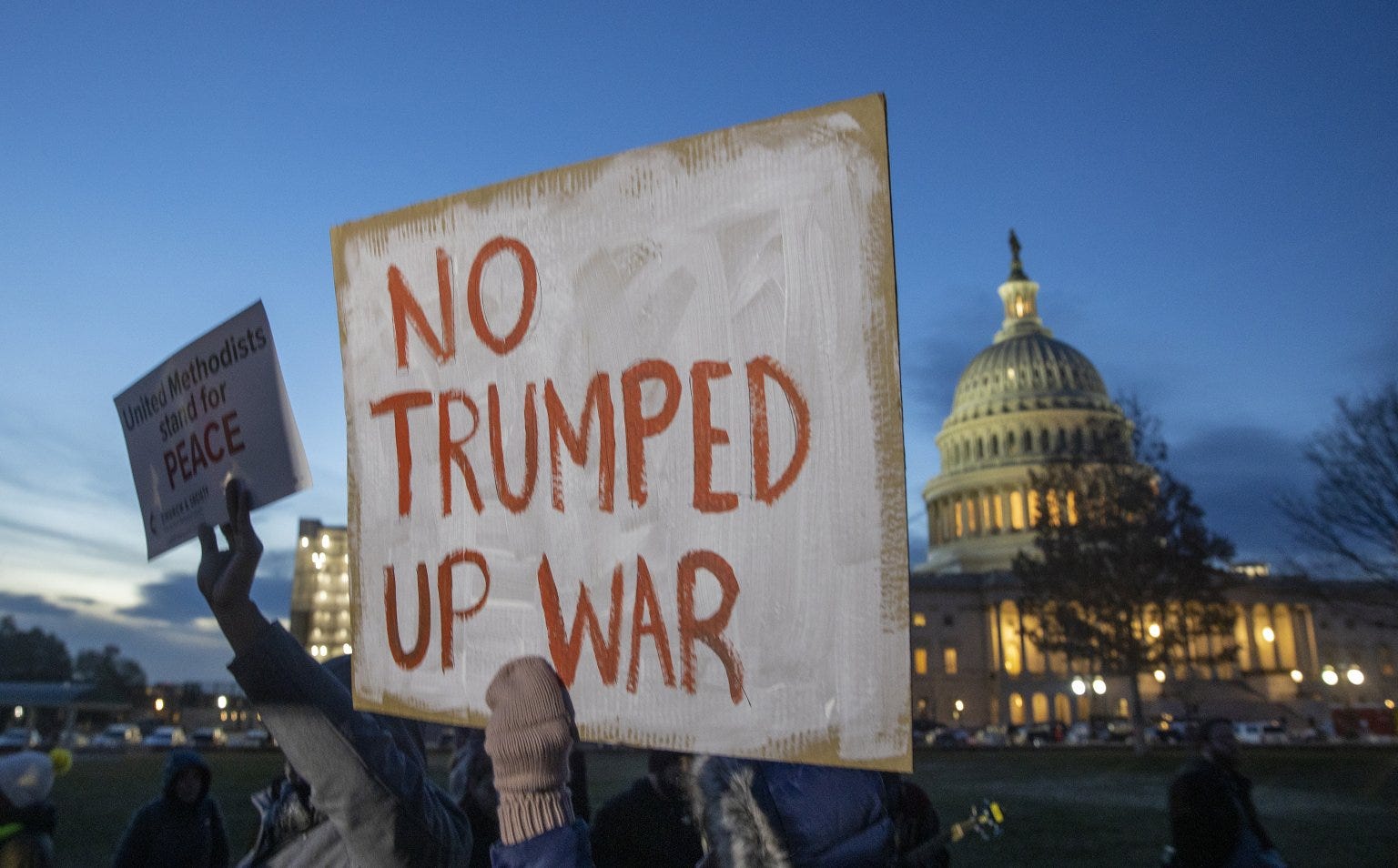
One of the main reasons Trump was elected was his pledge to keep the United States out of wars, especially the kind of “endless” wars America has fought in Iraq, Iran, Syria, and Afghanistan.

Obviously, he broke that pledge. We’re now well into the fourth month of a war he said would be four or five weeks at most.

In addition, the war he initiated in Iran was a war of choice — Iran did not attack the United States, and most specialists in foreign policy say Iran was not close to devising a nuclear weapon at that time. (It’s likely to be closer now, or at least more committed to making one.)

Yet in a lengthy interview with Kristen Welker, the host of NBC’s “Meet the Press,” which aired Sunday, Trump was once again trying to rewrite his own history, He claimed:

“I didn’t guarantee no war. So when you say I promised, I didn’t promise anything. I don’t like these endless wars. This is not an endless war. We’ve been doing this for three months.”

In fact, Trump repeatedly and unequivocally promised during the 2024 election campaign that the U.S. would not have any wars during his second presidency.

Herewith, some examples.

In a June 2024 social media post, Trump described the election as “a choice between STRENGTH or WEAKNESS, COMPETENCE or INCOMPETENCE, peace and prosperity or war and no war.”

In one of the highest-profile speeches of his campaign — his July 2024 address to the Republican National Convention — he said, “With our victory in November, the years of war, weakness, and chaos will be over. I don’t have wars.”

He made the promise again and even more directly during an August 2024 rally in the swing state of Pennsylvania, saying: “Under Trump, we will have no more wars, no more disruptions, and we will have prosperity and peace for all.”

Trump reprised the same pledge in an August 2024 interview with Adin Ross, an online personality. After saying there were no wars during his first administration, he promised, “And we won’t have wars again.”

At another rally that month in the hotly contested state of North Carolina, Trump approvingly cited Viktor Orbán, then the prime minister of Hungary, as supposedly having said, “Make sure that Trump gets reelected president, and you’re not going to have any more wars.” Trump reiterated moments later, “No more wars. No more disruptions. We will have prosperity, and we will have peace.”

Trump told versions of the Orbán story at numerous other events. For example, in the swing state of Wisconsin in October 2024, he said, “Viktor Orbán said, ‘If Trump comes back, you won’t have any wars. You won’t have any wars.’ And he’s about as tough as they get, and he said it loud and clear and he said why. But you won’t have any wars.”

Finally, in his victory address in November 2024, Trump made a clear promise that he would not start a war — even when he no longer had to persuade voters to elect him. He said in that high-profile speech: “Four years, we had no wars, except we defeated ISIS. … They said, ‘He will start a war.’ I’m not going to start a war, I’m going to stop wars.”

In reality, of course, Trump has been one of the most bellicose presidents in modern American history.

His failing war in Iran and his campaign pledge not to start any wars should be held against Republicans in the House and Senate. They’re partly responsible. They have repeatedly refused to stop his wars. They have repeatedly enabled his aggression.

Share

❌