Normal view

Add a Shortcut to Control Center to Open the Current App’s Preferences in the Settings App

6 August 2026 at 19:36

Regarding my earlier complaint about it being a slog to open Safari’s preferences in the Settings app on iOS, a few readers pointed me to this tweet last year from Quinn Nelson, showing how to build (or download from iCloud) a simple Shortcuts shortcut that you can add to Control Center to open the current app’s preferences in Settings. Works great.

Update: Stephen Robles:

I made a few riffs off that one as well:

BMW Executive in 2023: No Plans to Sell in-Vehicle Ads

6 August 2026 at 18:46

Tanya Gazdik, reporting for MediaPost back in December 2023:

Despite the ever-expanding screens in its vehicles, including an available 31-inch backseat theatre screen, BMW has no plans to sell advertising on any of them. Radio commercials are intrusive enough, says Stephan Durach, the brand’s senior vice president, connected company development.

“At the end of the day, I think your car is your last private space,” Durach told a small group of media members last week during a roundtable discussion. “It’s where you can do whatever you want by yourself — you have the right temperature, the music you want. To say I’m selling the screen to play a commercial — I don’t see it. It’s a private space.”

So much for that.

BMW has not been afraid to push the envelope to find new ways to make money. The automaker was the first to charge a fee for heated seats in its vehicles in some overseas markets. But earlier this fall, the automaker dropped the heated seats subscription option after customers expressed discontent for having to pay to unlock existing functions in their cars.

“Discontent” is doing a lot of work there.

I got this MediaPost link from this article in Der Spiegel, regarding the outrage over the Spider-Man ad BMW injected into the dashboards of its vehicles around the world last week. The Der Spiegel article is in German, but according to Safari’s translation to English, a BMW spokesperson had the temerity to claim that the Spider-Man promotion is not an advertisement, but instead “a special surprise for its customers”, and that it is “not intended to advertise the film or serve as a conventional film trailer. In this respect, it is also not classic advertising — and no advertising will continue to be displayed in the vehicle.”

If BMW was paid by Sony for this, it’s by definition an advertisement. If I owned a BMW and this fucking thing showed up on my dashboard I’d feel compelled to take it back to the dealership and drive it right through the window into the showroom, to reciprocate with “a special surprise” for them.

StopTheScript Is a Dickover Killer

6 August 2026 at 17:55

Back in March I sung the praises of Jeff Johnson’s StopTheScript and StopTheMadness Safari extensions. I want to re-link to StopTheScript in particular. I wrote last week about ad-blocking content blockers, and I’ve gotten a slew of wonderful feedback from readers about that. (My thanks to everyone who whitelisted DF with their ad-blocker of choice, too.)

One of the recurring issues that readers raised are sites that present “It looks like you’re running an ad-blocker...” dickovers. It’s classic whack-a-mole: (1) website shows annoying obtrusive ads; (2) you install a browser extension to hide those ads; (3) website tries to detect that you’re hiding their ads and prevent you from accessing their content until you turn it off. Fuck them. It’s your web browser.

The detectors require JavaScript to do their thing. The entire purpose of StopTheScript is to disable JavaScript on a per-website basis. By itself, Safari only offers a global on/off switch for JavaScript (in the Security tab in its Settings window on Mac, or in Settings → Apps → Safari → Advanced on iOS). For me, and probably for you, it’s unfeasible to browse the entire web with JavaScript disabled. StopTheScript is the solution. When you run into a website where JavaScript is being used against you, just tap the StopTheScript button in Safari’s toolbar and then tap “Always Allow on This Website” — or, what I often do, tap “Allow for One Day” just to see if it helps.

For these ad-blocker-detecting-dickovers, StopTheScript generally works like a charm. I just used it earlier today when I linked to the BMW/Spider-Man ad story at The Hollywood Reporter. Turned off JavaScript on THR’s website, reloaded the web page, and boom, their fucking dickover was gone. Turning off JavaScript on THR does have other side effects — it prevents the loading of thumbnail images in the sidebar list of “Most Popular” articles — screenshot. I see this as a positive side effect, not a negative. StopTheScript also works like a charm to disable the ad-blocker-detecting-dickover at Snopes, which I linked to for my Ulysses S. Grant post this week. And you will definitely want to enable it for Reuters.

If turning off JavaScript breaks a website, you can re-allow it. It’s easier on the Mac: Control-click on the StopTheScript toolbar button and choose “Manage Extension...” — this will jump you to the right place in Safari’s Settings. On iOS, you’ve (alas) got to trek into the Settings app (Settings → Apps → Safari → Extensions → StopTheScript) to revoke it for a particular website.

StopTheScript is a $6 one-time purchase, including Mac, iPhone, and iPad. A veritable bargain.

BMW Has Put a Spider-Man Ad on the Dashboard Display of Owners’ Cars

6 August 2026 at 17:19

James Hibberd, The Hollywood Reporter:

BMW owners are taking to social media to express outrage that the automaker suddenly started pushing ads for Spider-Man: Brand New Day onto their dashboards.

The ads began appearing last week on newer-model vehicles and some drivers who forked up to $160,000 for a luxury car or SUV aren’t very happy about being spammed when they start their cars. The promotion is scheduled to run through Aug. 10, according to the automaker’s press release, and represents a partnership between the automaker and Sony-Marvel.

Some of the scathing comments on Reddit’s r/BMW forum and other subreddits include: “That’s some absolute bullshit”; “Insanely dystopian”; “This needs to be made illegal before everyone starts doing it”; “$130K to get a Spider-Man commercial”; “sounds like a Black Mirror episode” and simply: “Fuck everything about this.”

A banner touting the film first appears when the car is started, though owners have to click on the ad to see the full video. Still, one owner claimed BMW has been pushing increasingly intrusive videos onto its dashboard space.

This is absolutely insane, especially for cars that people own. If you own a car and an ad is shown in your car, you should get paid for the ad. And you should need to agree to it first. BMW is supposed to be a luxury brand, and one meant for driving enthusiasts. This is so absurd it’s hard to believe it’s real. I asked a family member who just got a new BMW to confirm it. Unbelievable.

Matthew Green on Anthropic’s New Cryptanalysis Results

6 August 2026 at 01:08

Matthew Green:

If you’re under the impression that these models are “glorified autocomplete” or that progress is slowing down, I need to urge you: stop thinking that. The models are very intelligent and capable, they are getting better at a fast clip. I can cite measurable and impressive progress over just the past five months on specific types of problem I’ve asked them to look at. If there’s a ceiling out there, I don’t yet see evidence of it. The people who think models are dumb are mostly using Google’s free AI search results, and not interacting with the high-end stuff (which only costs $20, so it’s not out of reach.) And they’re mostly not working in new areas.

On the other hand: if you think that models are super-intelligent or that AGI is already here, you should also stop thinking that. Working with these tools is like swimming in a pond where the ground drops off sharply. One minute you’re wading comfortably and there’s support under your feet. Then suddenly you cross a specific line, and you’re back to swimming on your own. This analogy is my best way to explain what it feels like when the model goes from helpful to clueless.

Green is second-to-none in his ability to explain advanced cryptography in easily understood ways, without dumbing it down.

Uh, I’m Pretty Sure People Would Know

5 August 2026 at 23:53

New York Times Magazine story editor Willy Staley tried Sean O’Mara’s “Living Diet” (nothing but steak and fermented foods like sauerkraut) for a week:

To O’Mara, the diet is not just a temporary means of losing weight but a way to eat for good. He has been doing it for 10 years, and credits it with turning his life around. At one point in our conversation he pulled up the Bristol Stool Chart, which ranges from Type 1 (“separate, hard pellets”) to Type 7 (“watery, no solid pieces”). O’Mara is consistently delivering Type 4 (“smooth, soft, like a snake”), with pointed ends, indicative of healthy rectal function, he told me. “When you start eating healthy, you don’t need toilet paper,” he claimed. “Animals in the wild have no residual stool on their anus.” He described a proper bowel movement to me this way: odorless, wipe-free, over in three to seven seconds and “nearly orgasmic.”

“I could have a bowel movement behind a sheet at a dinner party in the corner of the room,” he said, “and nobody would know.”

My first thought upon reading this was, What a load of shit. Then I realized, well, yes, literally.

Then I thought about it some more and realized this is the Platonic ideal of a bullshit claim. If I told you that, say, I can eat an entire meal while doing a headstand, you could say, “I don’t believe you, show me.” But who in their right mind would challenge this quack O’Mara on this one? Certainly not the hosts of the dinner party, that’s for sure.

Sam Altman, Definitely Not a Weirdo

5 August 2026 at 23:10

Sam Altman, on Twitter/X:

cool use case of chatgpt work i heard last night:

connect your family calendars and explain your kids’ interests.

every morning for the drive to school, have it make a podcast that talks about one kid’s soccer game that afternoon, one kid’s upcoming birthday, some news, etc.

Katie Notopoulos, at Business Insider:

Talking to your kids about their upcoming soccer game or birthday is one of the enjoyable, pleasurable experiences of parenting. Those nice moments of positive connection, chatting in the car, are something I suspect most parents aren’t looking to give up or outsource.

This is one of the overall challenges with where we are with AI right now: AI might be capable of doing some of the tasks we find pleasurable and enjoyable (like creative writing or drawing), but what many people want is for it to take on the ones we don’t want to do.

I’m starting to think maybe Sam Altman isn’t hooked up right.

David Pogue: ‘Alexa+ Is a Buggy Embarrassment’

5 August 2026 at 22:56

David Pogue, at Pogue’s Posts:

Amazon’s “50+ things to try” list mentions that Alexa can “find a home maintenance professional.” So I tried it.

ME: I need a septic-system repair.

ALEXA: That service isn’t currently supported. I can help with plumbing services instead.

ME: Okay, fine. Plumbing services.

ALEXA: What’s your plumbing issue?

ME: I have untreated sewage pouring out of my kitchen faucet.

ALEXA: Is this urgent?

Uh … what do YOU think, dumbass? But OK:

ME: Yes.

ALEXA: When do you need it by?

Displays four responses: ASAP, Within a week, Further out, and I haven’t decided yet.

ME: ASAP.

ALEXA: I’m Alexa, not Shaq.

This could only have been funnier if Alexa had responded “The Aristocrats!”

(Which great film, is, in fact, available to stream on Amazon Prime.)

Paul Thurrott Reviews the HP OmniBook Ultra 14, With Qualcomm’s Snapdragon X2

5 August 2026 at 17:41

Paul Thurrott:

We didn’t need more evidence that Qualcomm’s Snapdragon X2 compute platform is superior to anything in the x86 world. But here it is, regardless: The HP OmniBook Ultra 14 is yet another nearly-perfect laptop running Windows 11 on Arm, an ideal combination of hardware and software that delivers a superior overall experience.

Thurrott has high praise for the performance, battery life, and silence (it has a fan, but Thurrott says he never heard it engage). Intel and the x86 platform seem well and fully cooked. They completely lost Apple 6 years ago and the Windows world is finally catching up. Maybe they can hold onto the gaming market for a while but for a work laptop it sounds like you’re crazy if you don’t go with Qualcomm’s ARM chips.

Thurrott likes the design too:

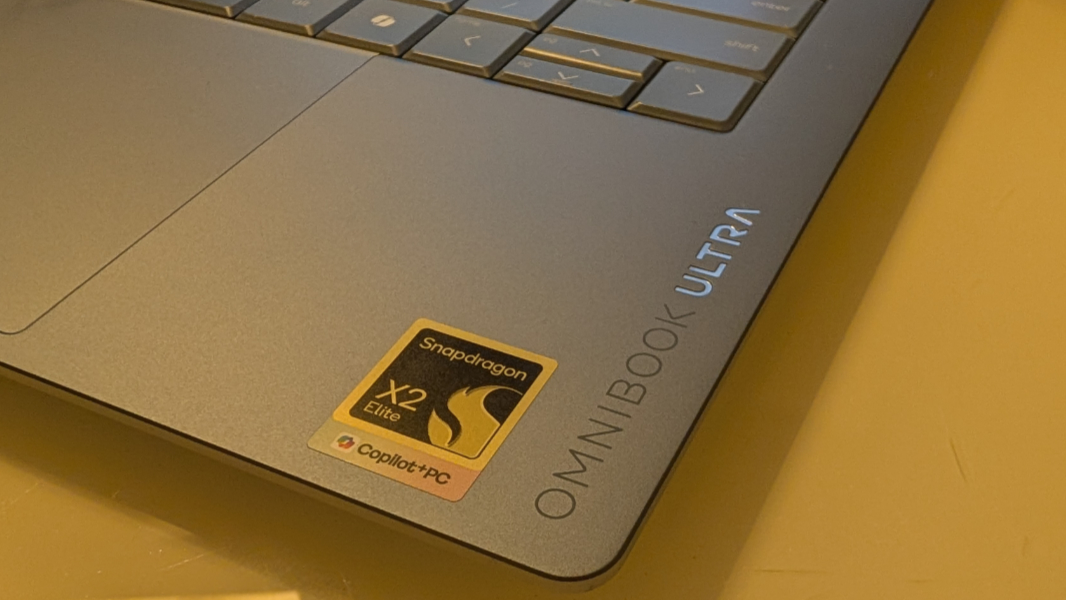
In Snapdragon X2 guise, the laptop comes in a unique blue-gray Stone Blue color that’s nicely complemented by the darker gray of the keyboard keycaps. But if you get an Intel model, oh the horror, you can choose between Eclipse Gray and Silk Sand colors instead. Either way, the branding is minimal and classy and premium all the way.

He helpfully includes this photo of the “Snapdragon X2 Elite / Copilot+PC” sticker on the palm rest to prove how minimal and classy and premium all the way” it is.

Coming from the Mac world, I think the irregular shape of the OmniBook case is ungainly and bizarre. And the default display is criminally crude — low-res and only 300 nits. But if you spend to upgrade the display it seems like a nice machine, and 2.8 pounds is lighter than a MacBook Air (3.0 pounds).

Hacker News Thread on OpenAI’s ‘Apple Is Getting This Wrong’ Post

5 August 2026 at 16:57

There’s an old adage that you should never bring a knife to a gunfight. My take on OpenAI’s response yesterday was expressing incredulity that OpenAI was bringing, like, a box of chocolates to the gunfight. Apple is trying to kill io, and OpenAI’s public response is basically “We love you guys, can’t we just be friends?

This thread on Hacker News though points out that their response doesn’t even explain what they’re responding to. There’s no context. They just assume the reader is up to date on the lawsuit Apple filed. If you didn’t know anything about the suit and started with this post, it would make no sense at all. I’ve heard from friends there that the OpenAI culture is “too online”, and this might be the best proof of it.

★ OpenAI Responds to Apple’s Lawsuit and Motion for Preliminary Injunction: ‘Apple Is Getting This Wrong’

5 August 2026 at 00:51

OpenAI published an unbylined blog post overnight, responding in public — but not yet in court — to Apple’s new motion for a preliminary injunction. It’s an unusual move to respond to a high-stakes legal filing with a blog post, but OpenAI is an unusual company. A few snippets from their post, and some commentary:

Apple had claimed that they contacted OpenAI in February and that we didn’t respond. They now admit that their outside lawyers emailed the wrong person after confusing two Asian last names — only after we brought this to their attention.

OpenAI is hanging on to the fact that Apple’s outside counsel, Gabriel Gross, sent one email to the wrong address, and quickly emailed an apology. In OpenAI’s phrasing, it sounds like Apple’s attorney sent the entire initial letter of concern to the wrong person, and that’s why OpenAI never responded — because it wasn’t sent to the correct person (OpenAI general counsel Che Chang). That’s not what happened. The initial blockbuster “hey we think you guys are stealing our trade secrets and we want to talk to you about it” letter was sent to Che Chang. And Che Chang never did respond to Apple’s lawyers. That a mistaken email thanking Che Chang for a phone call that never happened (because that email was intended for another OpenAI employee) was also sent is irrelevant. I don’t understand why OpenAI is continuing to focus on this inconsequential mistake. (Apple’s motion for a preliminary injunction includes the full text of the mistaken email and subsequent apology.)

Apple accuses Chang Liu of accessing Apple confidential information after leaving the company, but only now admits that Apple employees reached out to him and asked for his help to locate this information (you can read the messages here). Apple now tries to shift the blame to “residual access”, but they also don’t disclose that this is a common issue with Apple which is caused by them failing to properly manage system access when people leave. What that means in practice is that former employees who are trying to do the right thing when they leave still have access to Apple files — despite not wanting them or even being aware of them.

OpenAI is seemingly alluding to Apple’s unusual use of iCloud Drive, tied to employees’ personal Apple Account IDs, that I (coincidentally?) wrote about yesterday. Apple’s motion for injunction, however, addresses this very point. From page 3 of the motion:

Mr. Liu resigned on Thursday, January 22, 2026, and provided notice that he would start at OpenAI the following Tuesday. On his last day, he failed to respond to Apple’s attempt to schedule his exit interview or sign his confidentiality reminder.

In the days following his departure, Mr. Liu seemed initially cooperative and aware of his obligations to Apple. He worked with others on his former Apple team to return certain Apple information remaining on his personal iCloud account to Apple.1 He also continued to converse with former co-workers, for example, to answer questions about his earlier work and where certain information was stored. But these interactions and exchanges cannot explain the repeated, unauthorized downloading of voluminous technical files from Apple’s cloud-based storage discussed below, which Mr. Liu performed on multiple occasions from February to April 2026 while employed by OpenAI.

That footnote reads:

1 While Apple seeks discovery into what Apple confidential information Mr. Liu accessed from his personal storage accounts (including iCloud) and devices after his departure, the specific unauthorized downloads referenced in the complaint and at the heart of this motion are not based on iCloud activity, but instead relate to Apple’s third-party cloud storage.

Nowhere in any of Apple’s filings (here’s the Court Listener index page for all the documents filed in the case) does it say who the third-party cloud storage provider is, but I’m almost certain it’s Box, which I know is widely used throughout Apple.

The iMessage transcripts that OpenAI provides at the bottom of their post do not contradict Apple’s claims at all. Apple’s motion states that Liu helped former colleagues find certain documents that were in iCloud; that’s what OpenAI’s transcript shows. But that’s not in dispute. Apple also claims that Liu accessed confidential information, presumably in Box and definitely not in iCloud Drive, on five different occasions, up until 27 April 2026, over three months after he left Apple. These chat transcripts offer no explanation for that. The chat transcripts explain iCloud Drive access that Apple itself says is not in dispute, and do not explain the 37 documents Liu downloaded from the third-party cloud provider (Box?) that Apple says are at the heart of naming him in the lawsuit. Here is Apple’s declaration from digital forensic specialist Daniel Roffman, documenting Liu’s access to confidential files post-employment (albeit with significant redactions).

I do not understand why OpenAI is treating this as a PR problem instead of as a legal problem. Dan Moren, linking to it from Six Colors, is of similar mind, writing:

What kept running through my head while reading this was the old legal chestnut: “If you have the facts on your side, pound the facts. If you have the law on your side, pound the law. If you have neither on your side, pound the table.”

Thus far this feels like table-pounding from OpenAI to me. Their blog post does, however, move the ball from “we have no interest” in Apple’s trade secrets to “we don’t have them”, (emphasis added):

Apple also accuses Tang Tan of trying to get and use their trade secrets. However, Tang has always been clear with the team that we do not want, and must not use, any confidential information from other companies. Tang served Apple for more than 24 years and was widely known as one of the most innovative leaders at the company. [...]

Apple’s request for a preliminary injunction is both based on false information and completely unnecessary because we do not have, nor want, any of their trade secrets. We’re much more interested in building innovative products and technologies that push the frontier.

To me, the most interesting response from OpenAI wasn’t their blog post. It was an email released by Apple, as “Exhibit F” to one of their expert declarations submitted to the court last night. OpenAI has retained the renowned law firm Quinn Emanuel as outside counsel, and this exhibit is a long email from Quinn Emanuel attorney Patrick Curran to Apple’s attorneys. From that email, dated Monday July 20, Curran writes:

You also ask that we “revisit” the specific points proposed in your July 15 letter. It appears that you want to move backwards. As noted, we already discussed these during our meet and confer but Apple was unable to respond to basic questions my colleagues raised about these requests. For example, your letter proposes that OpenAI “[p]roduce witnesses to testify at deposition” but Apple was unable to identify who those witnesses would be. Similarly, Apple was unsure when we asked if it was actually proposing that hundreds of OpenAI employees fill out “questionnaires” even if Apple has no basis to allege (and is indeed not alleging) that such employees have any connection to this litigation. The seven sections in your letter are broadly worded and remain vague and general. This is not what a forensic protocol looks like and we’re sure you understand that you will not get this as relief from the court. You first need to (preliminarily) identify the TS you are suing for, and your email states that you “appreciate the need” to do so. Any protocol will be informed by such identification. A forensic protocol cannot be based on general terms like “Apple confidential information”; you need to tell us what you’re looking for, and it sounds like you understand that and are prepared to do so. The efficient way forward is therefore to tackle these issues as part of the negotiation of a proper, detailed forensic protocol. If you instead prefer to move for a PI because OpenAI did not agree off the bat to subject hundreds of employees to “questionnaires” about “Apple confidential information” generally, that is unfortunate — and inconsistent with what I understand both our clients have requested. If you choose this path instead of working with us, we look forward to filing an opposition that sets the record straight.

Apple, obviously, did choose this path (“PI” = preliminary injunction), and I too look forward to OpenAI’s setting the record straight, especially if they do so in plainspoken language like Curran’s in this email. Curran continues:

Finally, although I know OpenAI would like to resolve this amicably, as their counsel I have to tell you what I think you already know — this case lacks merit. You have not articulated any basis to support a preliminary injunction. Your complaint is predicated on a misrepresentation of facts and allegations that are speculative at best. It fails to even remotely identify any trade secrets. You are attacking ordinary business practices (used widely across the industry). You are complaining about situations that you have caused, including through your own procedures and decisions. We stand ready to oppose any preliminary injunction motion and tell the world what really happened here to set the record straight. We made clear we would prefer to quickly and collaboratively address any legitimate concerns that your client has, but that is not well-served by repeated threats.

This email is a far better response than what OpenAI published on their blog.

Apple Seeks Preliminary Injunction Against OpenAI in Trade Secrets Case

4 August 2026 at 18:02

Reuters:

Apple on Monday asked a U.S. judge for a preliminary injunction barring two former employees ​and OpenAI from accessing, acquiring, using or disclosing alleged confidential information as it moves ahead with its trade secrets case. [...]

The iPhone maker also filed a concurrent motion on Monday seeking expedited discovery, including production of documents relating to the defendants’ alleged access ​of Apple’s proprietary and trade secret information. It asked the judge to order the two ​former Apple employees named in the lawsuit, Chang Liu and Tang Yew Tan, to sit for depositions, along with OpenAI employee Yu-Ting Peng and an unnamed OpenAI employee who previously worked at ​Apple.

The request for expedited discovery and the depositions, I understand. Apple wants to move fast, and they want to get depositions (especially, I’m sure, with Tan) now. The preliminary injunction request, though, I think Reuters is underplaying here.

I suggest reading Apple’s actual motion, not the news coverage. From Apple’s motion:

OpenAI, its people, and partners should not be permitted to develop, release, and benefit from products using and developed with the benefit of Apple’s trade secrets.

Bending Spoons to Buy Airtable for $1.3 Billion

4 August 2026 at 17:13

Ivan Mehta, reporting for TechCrunch:

In its first acquisition since going public last month, Bending Spoons on Tuesday said that it has agreed to buy spreadsheet and database startup Airtable for $1.28 billion in cash.

Founded in 2013, Airtable has so far raised over $1.4 billion over multiple funding rounds. At its peak, during the boom days of 2021, it was valued at over $11 billion, but earlier this year, its shares were said to be trading on the secondary markets at a valuation of $4 billion.

With its current net cash-and-cash-equivalents balance, Airtable is now valued at about $2.25 billion, Bending Spoons said.

The problem isn’t that Airtable isn’t a good product with a good business. According to the announcement, Airtable’s revenue is up to $480 million/year and grew 20 percent year-over-year. That’s good. That’s just not $11-billion-valuation good. In the abstract building a company worth $1 billion is a success; it’s a problem, though, if its financials are such that it needs to justify a valuation an order of magnitude greater than what it’s actually worth.

TerminalWidget 1.0

4 August 2026 at 04:32

New app from Brett Terpstra:

TerminalWidget lets you send output from commands, scripts, APIs, and Shortcuts directly to widgets across macOS, iOS, and iPadOS with rich formatting, progress bars, sparklines, and image support. It is available as a universal app on the App Store for $19.99.

I don’t know what I’m going to use this for, but I know I want to use it.

[Sponsor] MCP vs. REST: The Right Way to Connect Agents to Your API

REST serves the developers building against your API. MCP serves the agents now trying to use it. Most teams treat these as competing standards and have to pick one.

They’re not rivals, they’re layers: most MCP servers just call REST internally to do the real work. The best ones don’t convert every endpoint into a tool, they design around what the agent’s trying to accomplish.

Shipping that server also means shipping OAuth 2.1 with scoped tokens. WorkOS AuthKit already speaks that spec, so you skip building an auth provider on top.

Read the breakdown →

John Ternus Has Rehired Former Hardware VP Laura Legros

4 August 2026 at 00:01

Juli Clover, MacRumors:

Incoming Apple CEO John Ternus is rehiring Laura Legros, a former vice president of hardware engineering who retired from Apple in 2022, reports Bloomberg. Legros previously managed product delivery, development schedules, and coordination across engineering teams. Under Ternus, she will work across different parts of the company, and report directly to him.

According to Bloomberg, Legros was one of Ternus’ most trusted deputies before she retired. She has presented at past Apple events, introducing the 2018 MacBook Air and the 2020 iPad Air.

The 2018 introduction of the first retina MacBook Air was an interesting event. I noted at the time that it was conspicuous how seldom Apple mentioned “Intel”, despite the fact that all the products introduced ran on Intel chips. Then you look at the specs of that MacBook Air compared to the then-current iPad Pros (see link above) and you can see why Apple, privately, was seething.

The Information on Apple’s Unusual Use of iCloud for Confidential Work

3 August 2026 at 23:45

Aaron “Homeboy” Tilley, reporting for The Information (paywalled without gift links, alas, but MacRumors has a summary):

When new employees join Apple, the company often issues them an iPhone and Mac and pays for an iCloud account with a large amount of online storage capacity. Crucially, during the onboarding process, Apple encourages new hires to use their preexisting personal Apple IDs with this iCloud account, through which their co-workers can share internal Apple documents and other files with them.

There’s a practical reason for Apple’s policy. Users of iPhones can only log into a single primary Apple ID that unlocks all iCloud capabilities at a time. Apple employees who want to maintain separate work and personal Apple IDs need to carry two iPhones with them. As a result, most Apple employees opt to use their personal Apple IDs to access their iCloud accounts, former employees said.

When employees leave Apple, the company revokes access to a dedicated iCloud directory for Apple work files, as well as an authentication system for logging into other internal services, such as Slack. But former employees say the company doesn’t do a thorough job during the offboarding process of looking for confidential files that have slipped through the cracks. Because those former employees typically continue to use their personal Apple IDs with their iCloud accounts, any Apple documents stored outside workplace directories remain available to them.

If you use your personal Apple ID, you get a magic “Apple Work” folder in iCloud Drive. When you leave Apple, that “Apple Work” folder disappears. But any other files or folders that were shared with you that were outside that magic folder are still in your iCloud Drive, because it’s still your personal iCloud account.

Another factor that plays into this, I think, but which Tilley doesn’t address, is that your Apple ID is not an email address. Your Apple ID is an account that has one or more email addresses associated with it. Let’s say your personal iCloud account has two email addresses associated with it: example@icloud.com and example@gmail.com. Then you take a job at Apple and get the address example@apple.com. When you leave Apple, you lose access to the @apple.com address. But anything shared with your Apple ID through iCloud is still shared with you. You still have the same Apple ID account, even though you no longer have an employee @apple.com email account. Overall, this is a humane way of dealing with digital identity. Your Apple ID account is you, the person, not “example@icloud.com”, one specific unique email address. And you, the person, may well have multiple email addresses — all of which can be associated with your one Apple ID account. That makes Apple IDs more nuanced and complicated than a simple mapping of one email address = one account. And it obviously makes access restrictions more complicated.

Let’s say you delete your Gmail account. Now you can’t access your old example@gmail.com email address. But your iCloud access to items shared with your Apple ID still works, even for items that were sent to your now-deleted @gmail.com address. That’s just not how “work stuff” is accessed at most companies.

Tilley’s report at The Information is presented as being potentially relevant to Apple’s trade secret lawsuit against OpenAI, but Apple, in a statement to The Information, says it is not:

In a statement, Apple said: “This case is about OpenAI employees wrongfully taking Apple’s secret and confidential information regarding our unreleased technologies, processes, and products. Nothing in the filing relates to documents shared by, or stored in, iCloud.” The company said it doesn’t pursue legal claims against former employees who accidentally hold on to Apple documents in their personal iCloud accounts.

❌