Normal view

Received — 13 January 2026 David Lebovitz Newsletter

Brownie Brittle with Candied Walnuts

13 January 2026 at 17:25

If I told you that today’s recipe is for dried-out brownies, I wouldn’t blame you if your finger was hovering over the keyboard, ready to click away. Look, I like soft, moist, chocolatey brownies as much as the next guy. (Perhaps even more.) But this is one of the most surprising recipes I’ve come across, and one that I wasn’t expecting to like as much as I did.
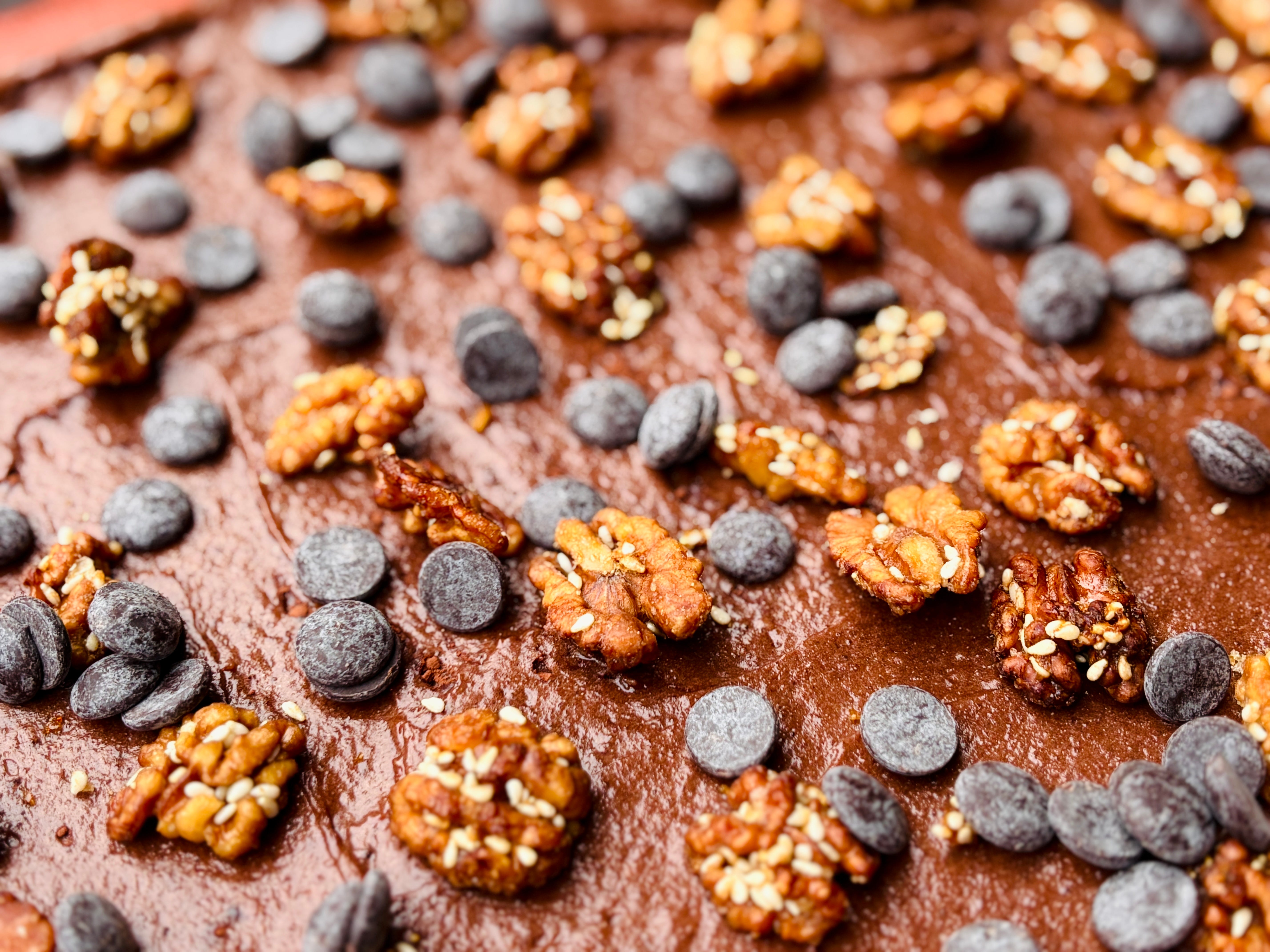
It’s from a new book, 108 Asian Cookies by whose subtitle will likely resonate with quite a few of you: Not-Too-Sweet Treats from a Third-Culture Kitchen, and I was intrigued by the idea of Asian cookies.

Flipping through the book, I found that quite a few of the recipes are variations of Western favorites, which is where the third culture comes in. There are Linzer cookies accented with yuzu, Lace cookies get drizzled with miso caramel, Thai basil perfumes Chocolate sandwich cookies, and Red velvet brownies are spiced up with doubanjiang, Chinese fermented bean paste.
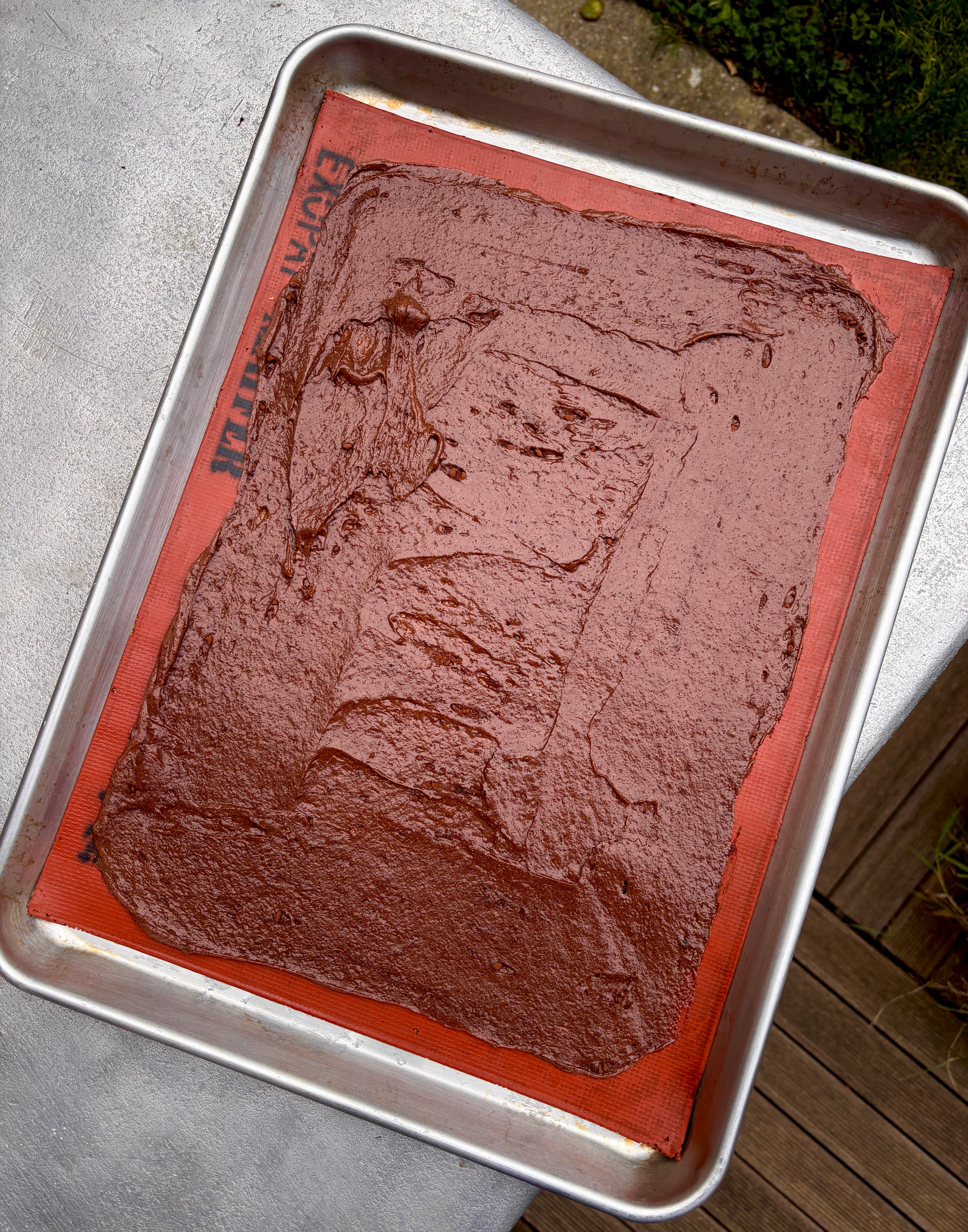
I’d bookmarked a few recipes but the Chocolate brownie brittle with candied walnuts stood out, partially because I had all the ingredients on hand, and partially because I’m drawn to crispy foods, even when the moniker is applied to brownies. I couldn’t imagine how a crackly, uber-thin brownie could satisfy my chocolate cravings. I like very dark chocolate desserts yet wasn’t sure something as thin as a coin could give me the same pleasure as a dense, chewy brownie. But I was proved wrong.
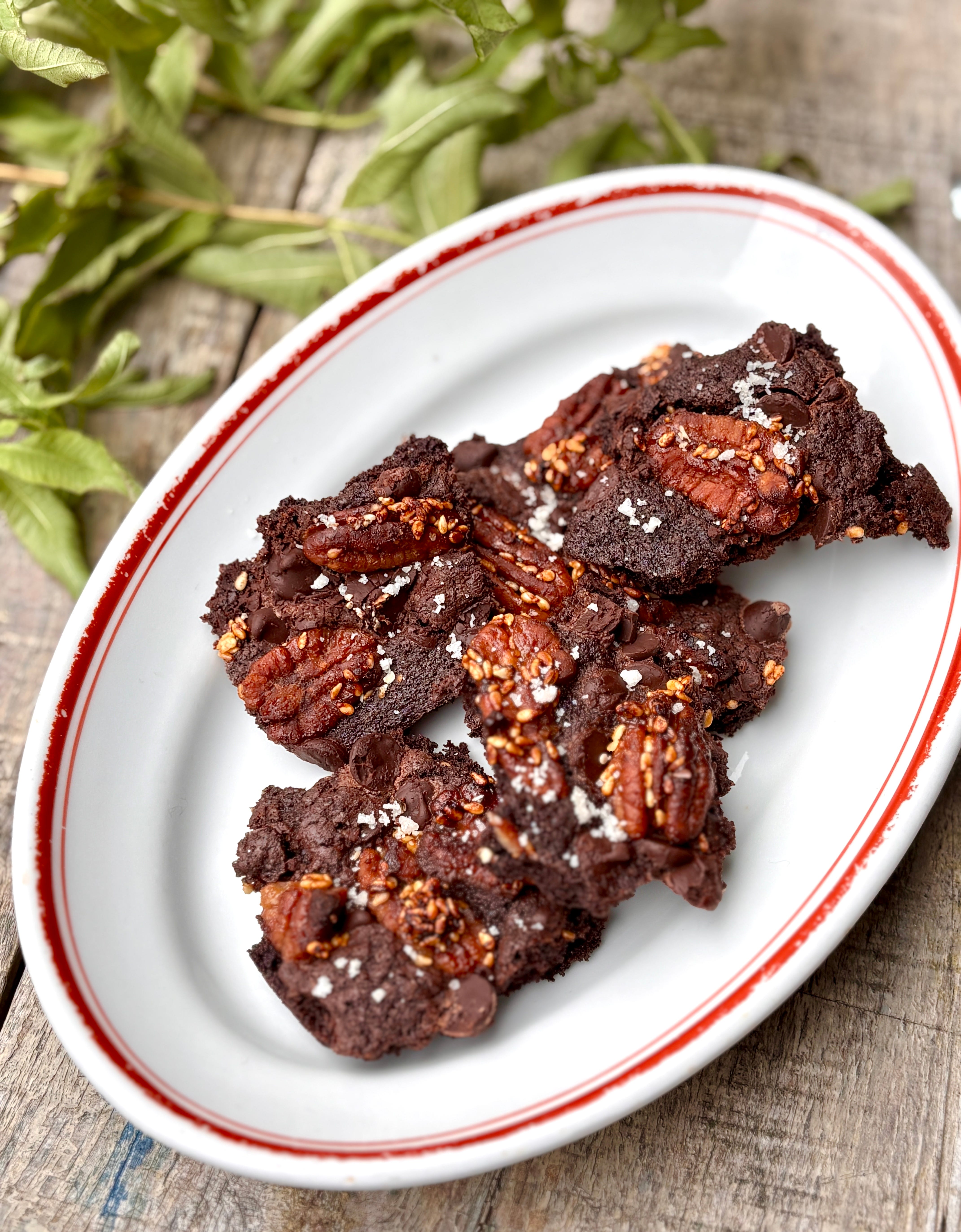
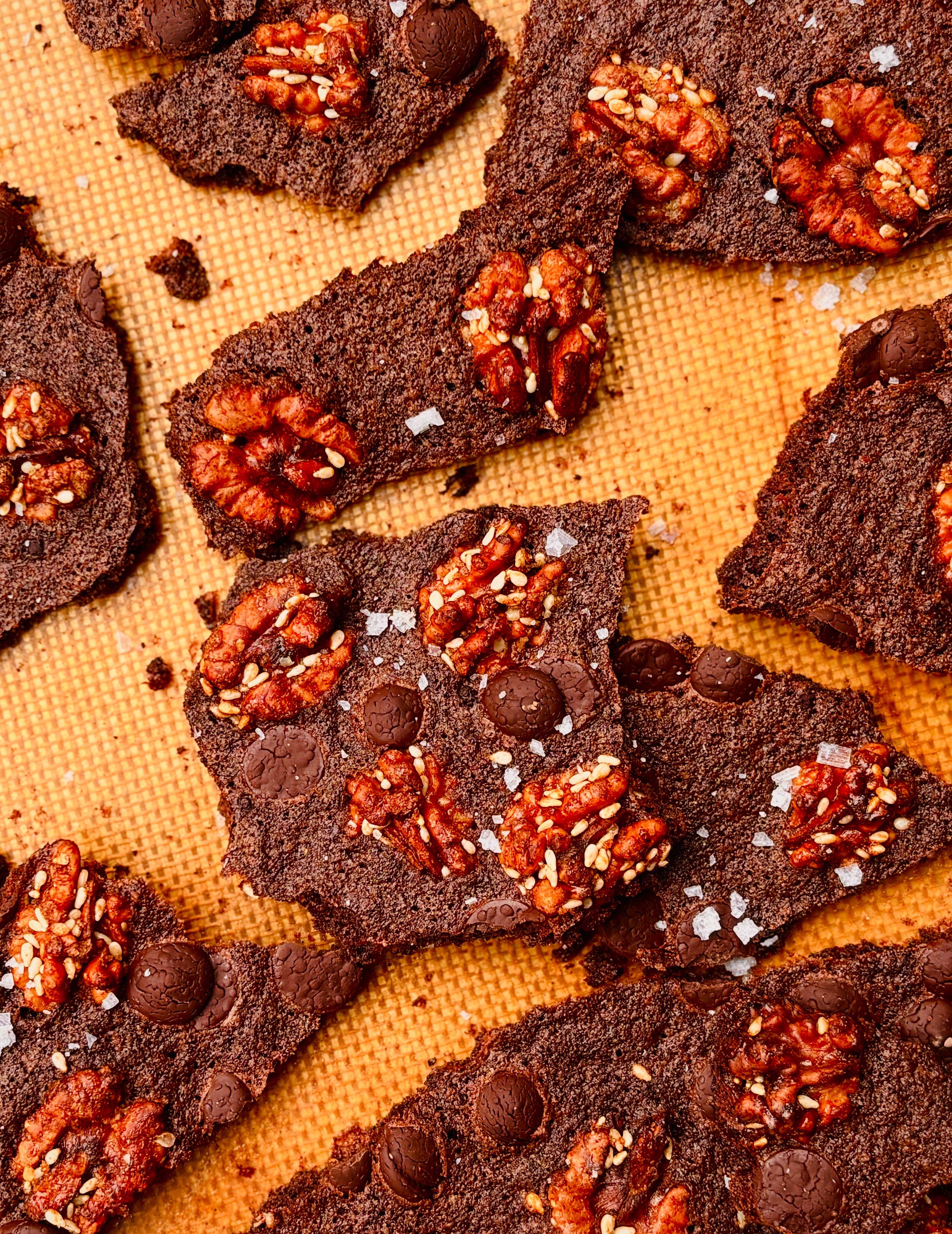
My first batch, with candied pecans.

My first reaction to them, coming out of the oven was, “Um…okay…” The brittle looked like dried-out shards of chocolate batter.

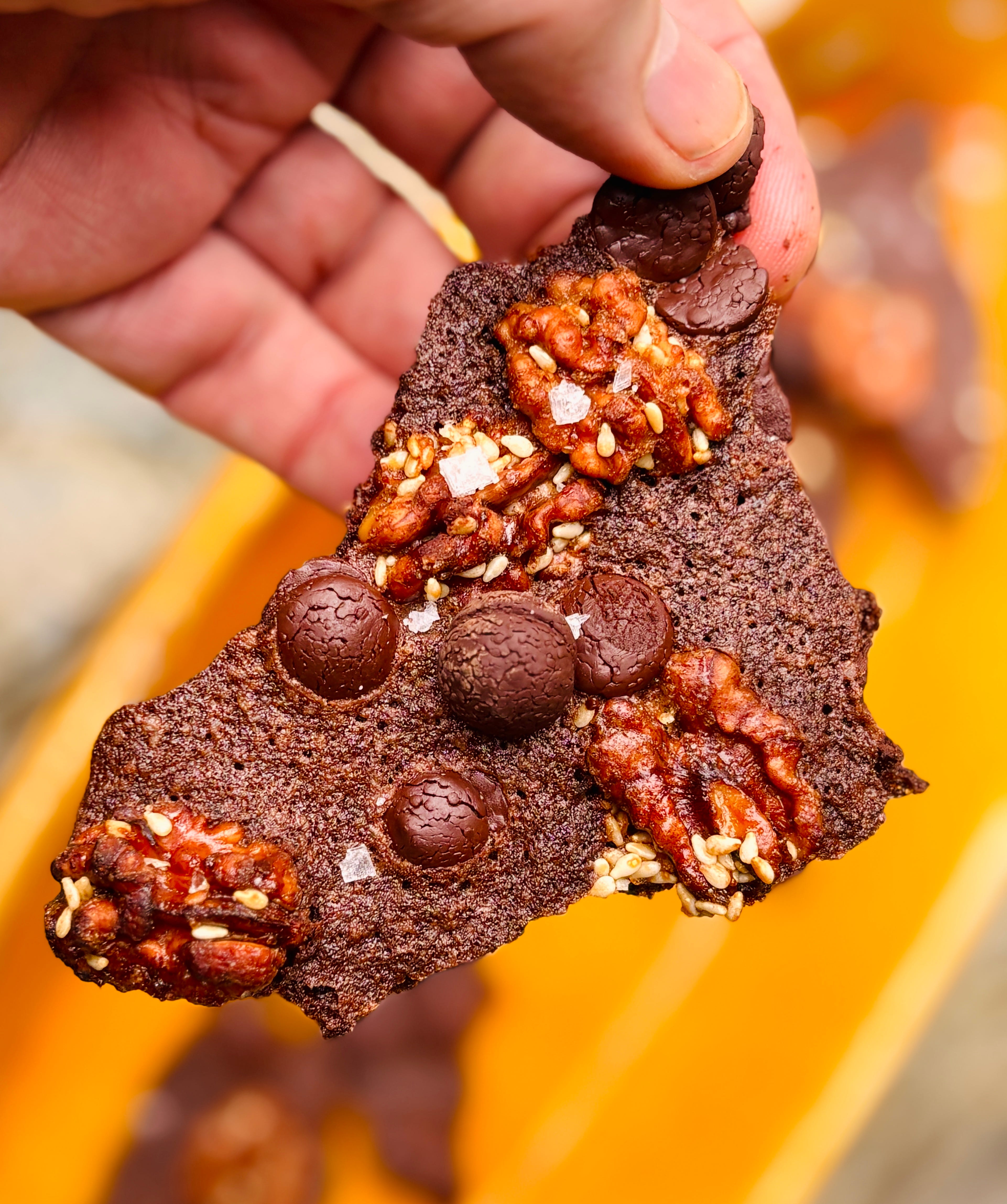
Then I took a taste and wow — was that good!

Subscribe to my newsletter to get recipes, stories, Paris dining tips, and more, sent right to your Inbox!

Like a number of recipes in the book, this one called for a tablespoon of Japanese whisky in the brownie batter and a tablespoon of miso in the glazed walnuts. I’m not sure if I could discern a difference if I omitted that small amount, or maybe my palate isn’t as acute as other people’s. But you can take matters into your own hands and Kat offers up bourbon as an alternative to the Japanese whisky, which I didn’t have on hand (but I’ve got plenty of other whiskys), and I do have white miso, which I swapped for the red miso called for in the walnuts. But I also tried the candied walnuts with soy sauce in place of the miso, which works, too.

I tend to use dark cocoa powder (Valrhona or Cacao Barry extra brute) when I bake because I don’t believe you can have too much chocolate flavor. But when you use it, things’ll come out darker, and you risk people seeing your pictures and saying, “Hey, that’s burnt.” I’m not sure if comments like that are meant to be helpful, or what. But if you don’t know what you’re talking about, it’s probably best not to say anything.

For the first try (shown farther above), the brownie brittle came out quite dark due to the cocoa powder and looks almost burnt, but wasn’t. 😅
https://www.davidlebovitz.com/book/ready-for-dessert-revised/

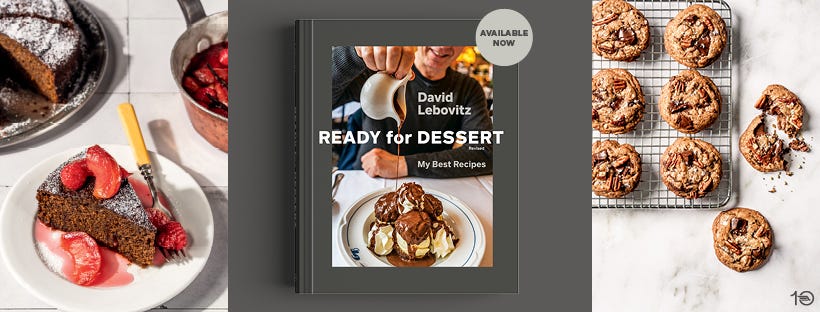
Get Ready for Dessert

The next time I gave it a go with regular Dutch-process cocoa powder (Bensdorp), below, and they came out a little lighter. (Note: I took the pictures on different days and the light here changes almost by the hour. So there are some differences due to that, too.)
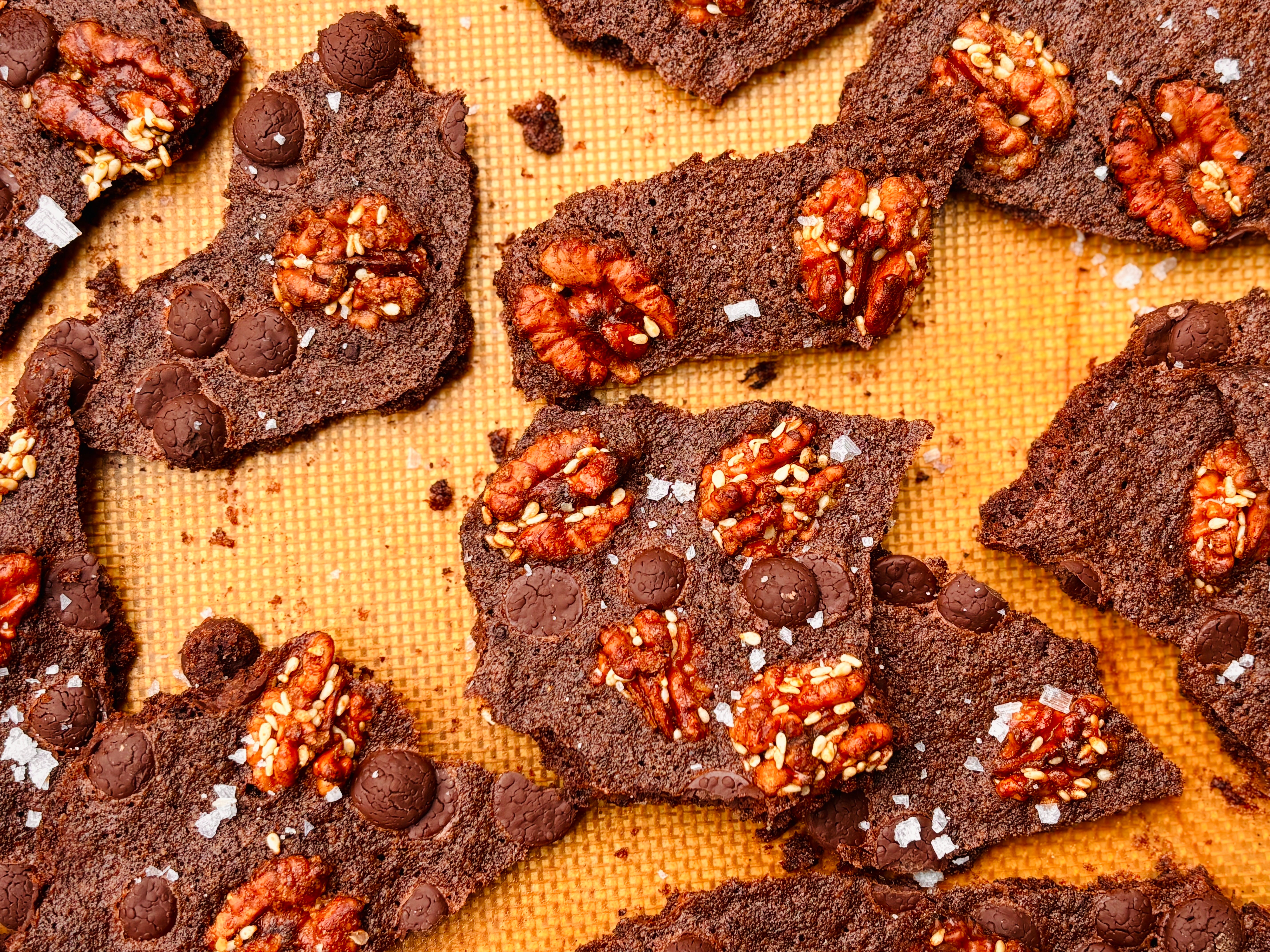
In addition to the rich chocolate color, the chocolate flavor came through loud and clear. The chocolate chips scattered about gave it an extra boost of chocolate, and the lightly savory nuts were just as delicious on their own as they were on the brittle…and thankfully the recipe makes extra, so you can toss them into a winter salad. Baker’s Bonus: A few of the nuts may fall off the brittle when you break it up, with the caramel fused to the batter, which are especially tasty to snack on.

Bravo to Kat for introducing me to this brittle. Not only that, but friends who came by and grabbed a bite loved it too. I’m not a fan of the word “addictive,” but I’m going to use it here because in this case, I know what I’m talking about and won’t shut up about it.

Leave a comment

Chocolate Brownie Brittle with Candied Walnuts

Adapted from 108 Asian Cookies: Not-Too-Sweet Treats from a Third-Culture Kitchen by Kat Lieu

This chocolate brownie brittle has lots of chocolate flavor, even though the batter has only 2 tablespoons (12g) of cocoa powder. The chocolate chips on top also dial up the chocolate flavor, but I’m a sucker for anything with candied nuts on it as well, and this brownie brittle ended up checking lots of boxes for me.

Cocoa powder FAQs

In her book, Kat calls for Japanese whisky in the brownie batter, and red miso with the candied nuts. I tinkered and tested it with various ingredients and substitutions, and if you don’t have red miso, you could use white miso or soy sauce, or leave it out and just stir in a good pinch of salt when mixing in the nuts with butter and sugar. For the Japanese whisky (or bourbon) in the brownie batter, I made it with a teaspoon of pure vanilla extract, and it came out very well, but a tablespoon of rum or brandy would work too.

I also gave the recipe a go with pecans in place of the walnuts, which work just as well. Whichever you use, you’ll end up with more candied nuts than you’ll need for the brittle; leftovers can be tossed in a winter salad or enjoyed as a snack.

Candied walnuts

2 cups (220g) whole shelled walnuts

1/4 cup (50g) sugar

2 tablespoons (30g) unsalted butter, cut into small cubes, at room temperature (very soft)

1 tablespoon red or white miso (optional, see headnote)

1/3 cup (40g) toasted white sesame seeds

Brownie brittle

1/2 cup (60g) all-purpose flour

2 tablespoons (12g) unsweetened Dutch-process cocoa powder

1/2 teaspoon baking soda

Pinch of salt

2 large egg whites (1/4 cup), at room temperature

1/2 cup (100g) sugar

4 tablespoons (60g) melted unsalted butter

1 tablespoon whisky or 1 teaspoon pure vanilla extract (see headnote)

1/2 cup (85g) bittersweet or semisweet chocolate chips

Flaky sea salt, such as Maldon or fleur de sel

To make the candied walnuts, preheat the oven to 350ºF (175ºC). Line a baking sheet with parchment paper or a silicone baking mat.

Put the walnuts in a medium saucepan, cover them with water, and bring the water to a boil (this reduces their bitterness). Drain the walnuts very well in a strainer, shaking off as much excess water as you can. Put the walnuts in a medium mixing bowl and add the sugar, cubed butter, miso (if using), and sesame seeds. Stir vigorously until the butter and sugar are melted and the nuts are well coated.

Spread the nuts and any liquid on the prepared baking sheet. Bake for a total of 18-20 minutes, stirring the nuts every 5 minutes, making sure that you mix in the nuts from the edges of the pan, which will start browning first, toward the center, so they all toast evenly. When done, the nuts should be lightly browned. There may be some syrup on the pan when the nuts are finished. If so, stir the syrup into the nuts as they cool so it coats the nuts, which’ll firm up as the nuts cool.

(The nuts can be made a few days in advance and kept in an airtight container at room temperature.)

To make the brownie brittle, reduce the heat of the oven to 325ºF (160ºC). Line a baking sheet with parchment paper or a silicone baking mat.

In a small bowl, whisk or sift together (if the cocoa powder is lumpy) the flour, cocoa powder, baking soda, and salt. In a separate medium bowl, whisk the egg whites until they just start to hold their shape when you lift the whisk, but are still a little sloshy; don’t beat them until stiff.

Whisk the sugar into the egg whites in four additions, then stir in the melted butter and whisky or vanilla. Fold in the dry ingredients with a flexible spatula. Spread the batter on the prepared baking sheet so it’s in a thin, even layer (a small, offset metal spatula works best for this). You want to end up with a rectangle that measures about 14 x 10 inches (35 x 25 cm). Top the batter with about 1 1/4 cups (115g) of the walnuts (or more, if you want) evenly spaced over the top, then the chocolate chips.

Bake the brittle until it’s baked through and crispy, 20 to 25 minutes. Remove from the oven and let cool on the baking sheet, then sprinkle with flaky sea salt and break into shards.

Storage: The brittle will keep for 3-4 days in an airtight container at room temperature.

Chocolate Brownie Brittle With Candied Walnuts
87KB ∙ PDF file
Download
Download

https://www.modernasianbaking.com/preorder

108 Asian Cookies

Received — 8 January 2026 David Lebovitz Newsletter

At Home in Paris and Bloom Where You're Planted

8 January 2026 at 14:58

Moving to a foreign country has been in the news a lot lately. But it isn’t always what people expect it to be and it’s not always easy, which I can attest to. (Although it may have been a little easier for me if my name was George Clooney.)

When I see the phrase “Live like a local!” I wonder if people really want to go to city hall to renew visa paperwork or change their internet provider in a foreign language, which in America requires you to just drop off your modem at your provider’s nearest storefront, while in France, it’s a six-month affair. And, you have to pay to quit.

When I sent my old cable box back, they had to verify that every single cable was included, even though it was 15 years old and I have no idea what they do with them. But a friend didn’t have one and got charged €200 ($240), so I made sure I had everything…and I documented it all with photos and a certified mail receipt. (Even then, after 6 months when I didn’t get my deposit back, I had to hound them for it, providing - yup - photos and a copy of the certified mailing; only then did they finally refund it. Lesson learned after many years here!)

I’ve learned a lot living here after nearly twenty-five years and while moving from one country to another poses challenges wherever you are, France has a lot of unspoken rules of conduct and etiquette, and it’s not known for its “ease of use”…shall we say. Although I was stunned when a very nice woman from the citizenship office called me to say that I made a mistake on one of my forms and wanted to confirm that it wasn’t right so that she could change it for me. France has a way of surprising you.

Not being able to easily return things (and indifferent, at best, customer service) is one of the hardest things for Americans to adapt to. When I was in French class, shortly after arriving in France, the teacher went around the room and asked people what they didn’t like about France. Most Americans in the room replied, “Lack of customer service,” which the teacher confirmed was what Americans usually said, when asked.

Some people who come here have a hard time adjusting. So much so that an organization, the Franco-American Community Center in Paris, used to have a program called Bloom Where You’re Planted, a one-day event with speakers to help newcomers learn about, and integrate into, life in Paris.

Subscribe now

Topics covered were health care questions, cultural issues, mental health, accounting and taxes, and immigration issues. For some reason they asked me to speak, perhaps to lighten the mood?…which I did by talking about some of the goofy things that happened to me, or that I did, so people would feel more at ease in their new home and realize that they weren’t the only ones going through a challenging transition.

At Home in Paris explains the complexities of life in Paris, including on the métro.

After I spoke, I took questions from attendees and found out that some people didn’t want to be in Paris. (In spite of what you see on social media, moving abroad can be very lonely, no matter how many pictures people post of croissants.) In some instances their spouses were transferred here, so they had to move their whole family (and lives) abroad. Many were baffled at cultural differences. Others, like me, were at transition points in their lives and looking for a new beginning or somewhere else to settle. Somehow, we all ended up here.
Some had had bad interactions, such as a curt shopkeeper, or they’d been shoved out of the way on the métro. It was especially hard on them because they couldn’t talk to their friends about their emotional difficulties since people would invariably say, “But you’re in Paris!” This was before Emily in Paris arrived, but if anyone expects Paris to be like that, please let the rest of us know where all those hot French guys, who somehow speak perfect English — are.
Read more

Received — 1 January 2026 David Lebovitz Newsletter

January 2026 Newsletter

1 January 2026 at 10:19

For a country with a reputation for being slow to change, France has certainly been changing in several ways. The restaurants have gotten a lot better, and more diverse, since the days of gloom and doom, when French cuisine was in decline, coffee was referred to, in French, as jus de chausette (sock juice), and chain bakeries (yuck) were being pitted against artisan boulangeries.

People who don’t live in France often don’t like to hear that France is changing, but change isn’t bad, especially when things change for the better. Sure, no one has figured out how to keep the electronic kiosks at customs at Charles de Gaulle airport in working order, which makes you miss the few humans who worked at the kiosks before. (Even though that never seemed enough, either.) Nor has the repairman come to fix our heat; only two of the eight radiators in our apartment are working right now. (This week the temperatures dropped below freezing.) And rather than a Joyeux Noël message from my accountant, she sent me a request for loads of paperwork…on Christmas Eve. Bah humbug, or however you say that in French. (They do have Père Fouettard, who punishes children who are bad with a whip. But no word if they have someone like that for heating repairmen who don’t show up.)

Subscribe now

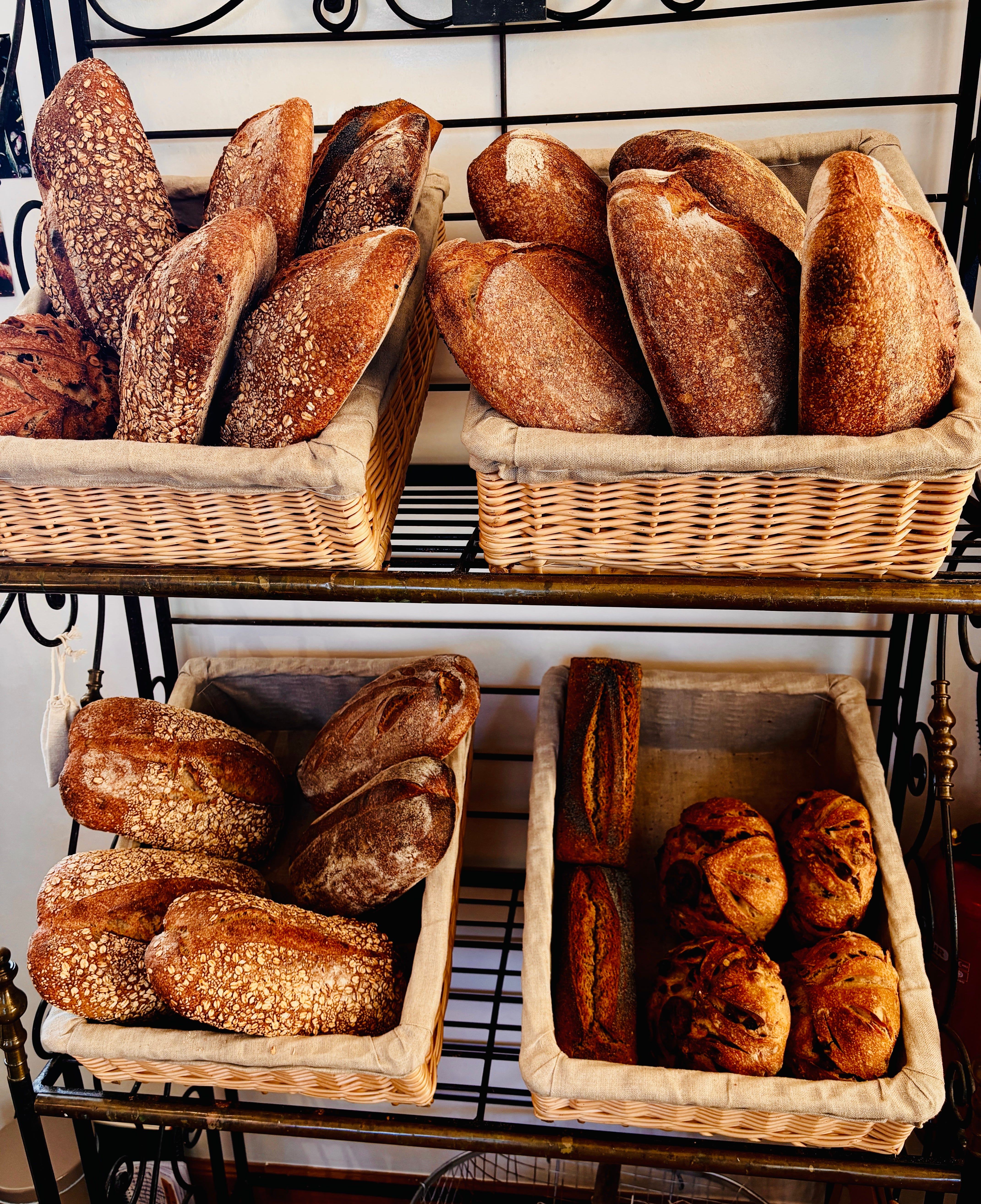
On the other hand, we do have over 1000 kilometers (620 miles) of bike lanes in Paris, which is credited for cutting pollution in half. There’s a new wave of chocolate boutiques in Paris, and we’re in the middle of a bread renaissance, with more and more boulangeries baking great-quality bread, often with heritage grains and slow fermentation methods.

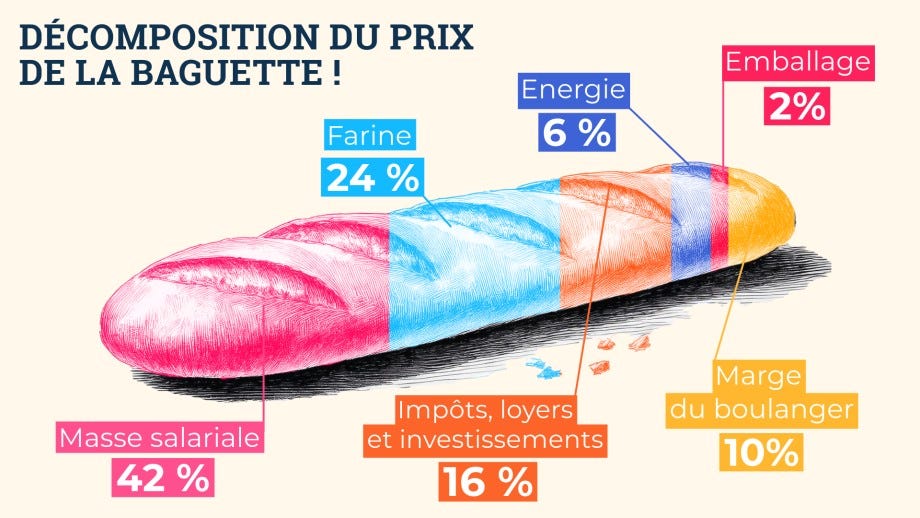
Almost a decade ago, in “Challenging the way the French think about bread,” baker Alice Quillet of Ten Belles bread remarked that when they opened, French people were outraged they didn’t make baguettes. But with the marge (profit margin) on a baguette averaging 8 to 10 centimes, it’s no wonder that some bakeries aren’t keen on making or selling them.

The breakdown of the cost (and profit, 10%) of a baguette in France.

While I love a good baguette, I’m really excited about what bread bakers are baking up in Paris right now. As bakery owner Benoît Castel recently said, “We’ve never eaten such good bread as we are right now”…and I agree.

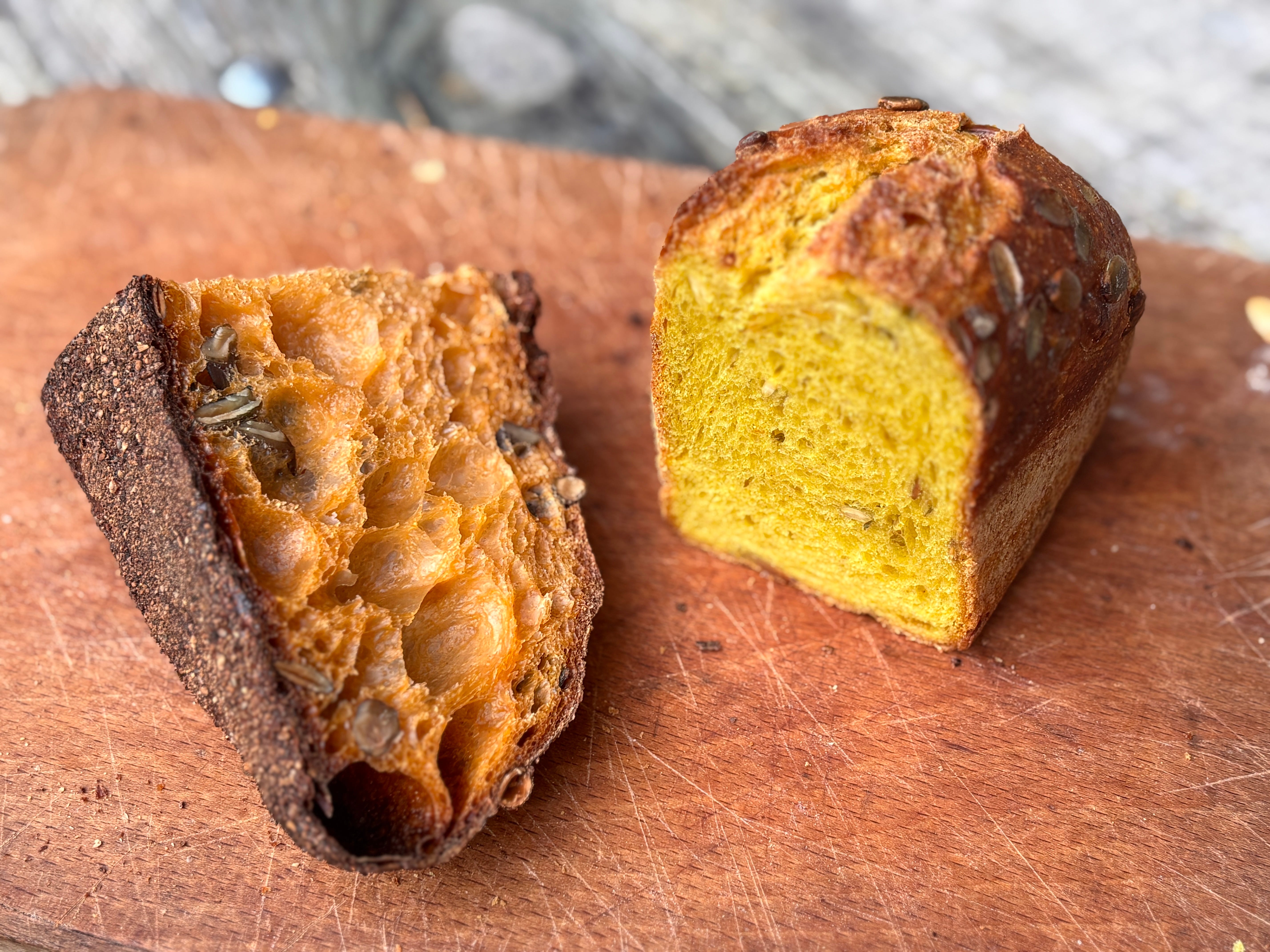
Pumpkin seed bread from Brigat’ and corn-turmeric bread from Polka

Bakeries in France are considered a vital part of life in France and during the Covid lockdowns, bakeries were exempt, as they were considered “essential” businesses. (As were tobacco stores.) Bread is considered a right in France, hence the low prices for baguettes, which range from about €1 - €1,60 ($1.20 - $1.90), although the owner of Du Pain et des Idées shocked people by charging €4 for a croissant and €4,30 for a chocolatine (pain au chocolat), around three times what other bakeries charge, arguing that the price of the ingredients and the labor justified the price.

Beautiful breads at Le Doyenné

Leave a comment

I feel spoiled and it’s easy to get blasé about having access to good bread. Some favorite bakeries I frequent: Landemaine, Poilâne, Terroirs d’Avenir, Brigat’, Sain, Ten Belles, Archibald, and Mamiche, which is the only place in Paris that I’ll wait in a line that long. And no, I don’t have any clout or get any special favors — like getting to jump the queue — around here.

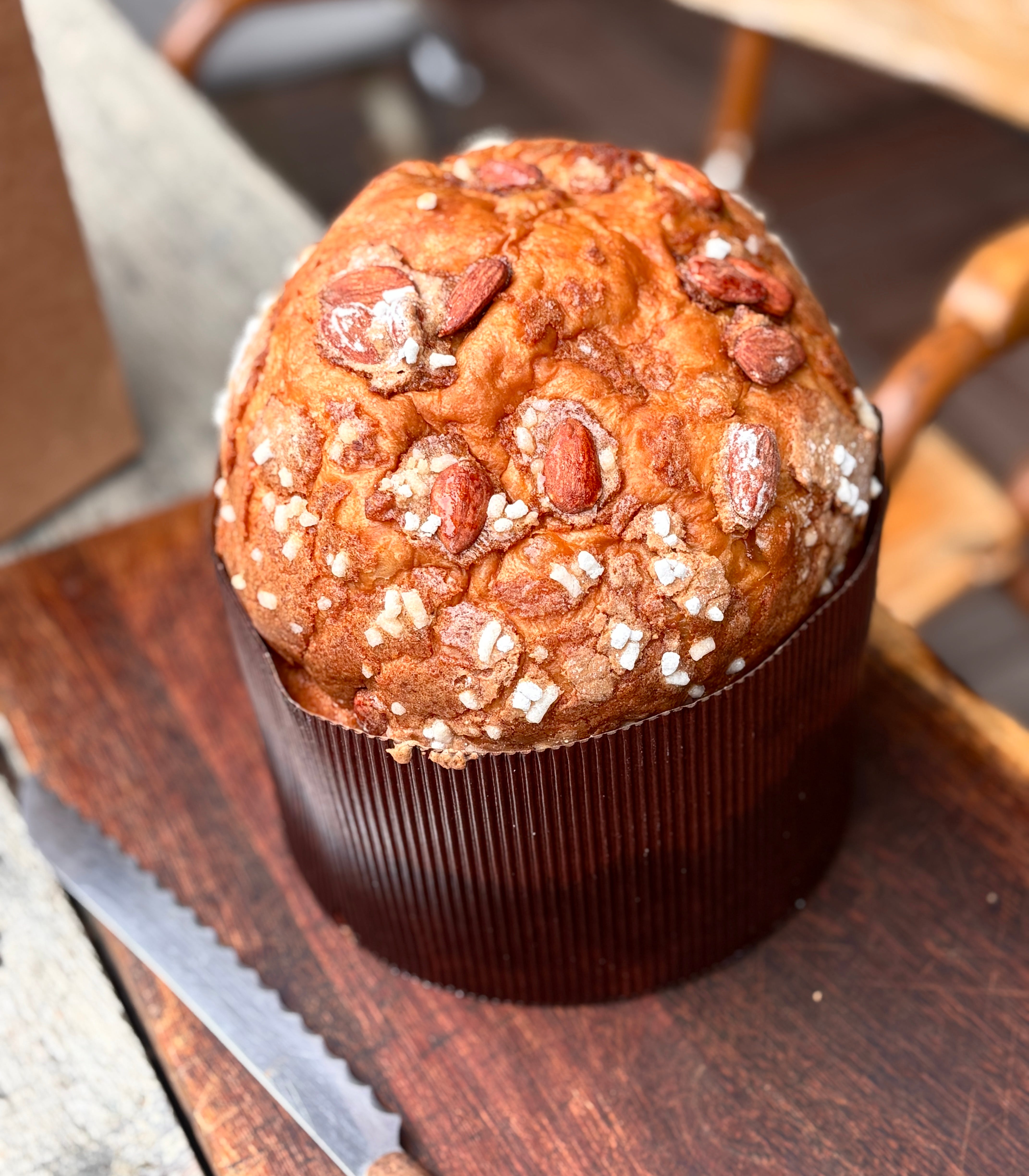
As another example, I put my name on the waiting list in early December for a panettone from Christophe Louie. I’ve been a fan since he started making them and visited his private workshop, which he kindly gave me a tour of, before he opened his own bakery in the Marais. I put my name on the waiting list to be notified when more would be available but didn’t get any notifications. I was in the neighborhood and stopped by to see if my charms could move me up a few notches.

No dice. (Although I don’t wish a visit from Père Fouettard on him.) So I got a panettone from Brigat’, which was excellent, even though a Debbie Downer online tried to dampen my excitement, saying there shouldn’t be any almonds on a panettone. I couldn’t bring myself to pick them off and throw them away.

Subscribe to my newsletter to get news from Paris, as well as recipes, restaurant tips, and more, sent right to your inbox!

In spite of it being a little chilly around here, we’re also doing our best to make it through winter and Romain keeps reminding me that, as of last month, the days are now (supposedly) getting longer.

I’m not packing up my gloves, scarves, and down comforter quite yet, but am enjoying winter cooking. One of my favorite things to make when it’s cold out is braised duck. A lot of French cooking involves braising, cooking foods at a gentle simmer until they’re tender and succulent, like this one.

There’s nothing more foolproof than braised duck legs, which are actually thighs…as Debbie D. might point out. But if someone wants to take on the English language, and all the quirky translations, be my guest. Like, why is an entrée in French a starter, whereas in American English, it’s the main course? I also once tried explaining to Romain that in English, green beans cut on the diagonal are called “French-cut.” I got a perplexed look, similar to when I offered him a pretzel filled with peanut butter from a bag a friend brought me over from the States.

The most challenging part may be finding the duck thighs. But if you can’t find them, you could use chicken and swap out white wine for the red, which would probably work better with the milder-flavored chicken. You’d also want to reduce the amount of time since chicken cooks faster than duck.

I have a braised duck with prunes recipe here that I braise in the oven…

Braised Duck recipe

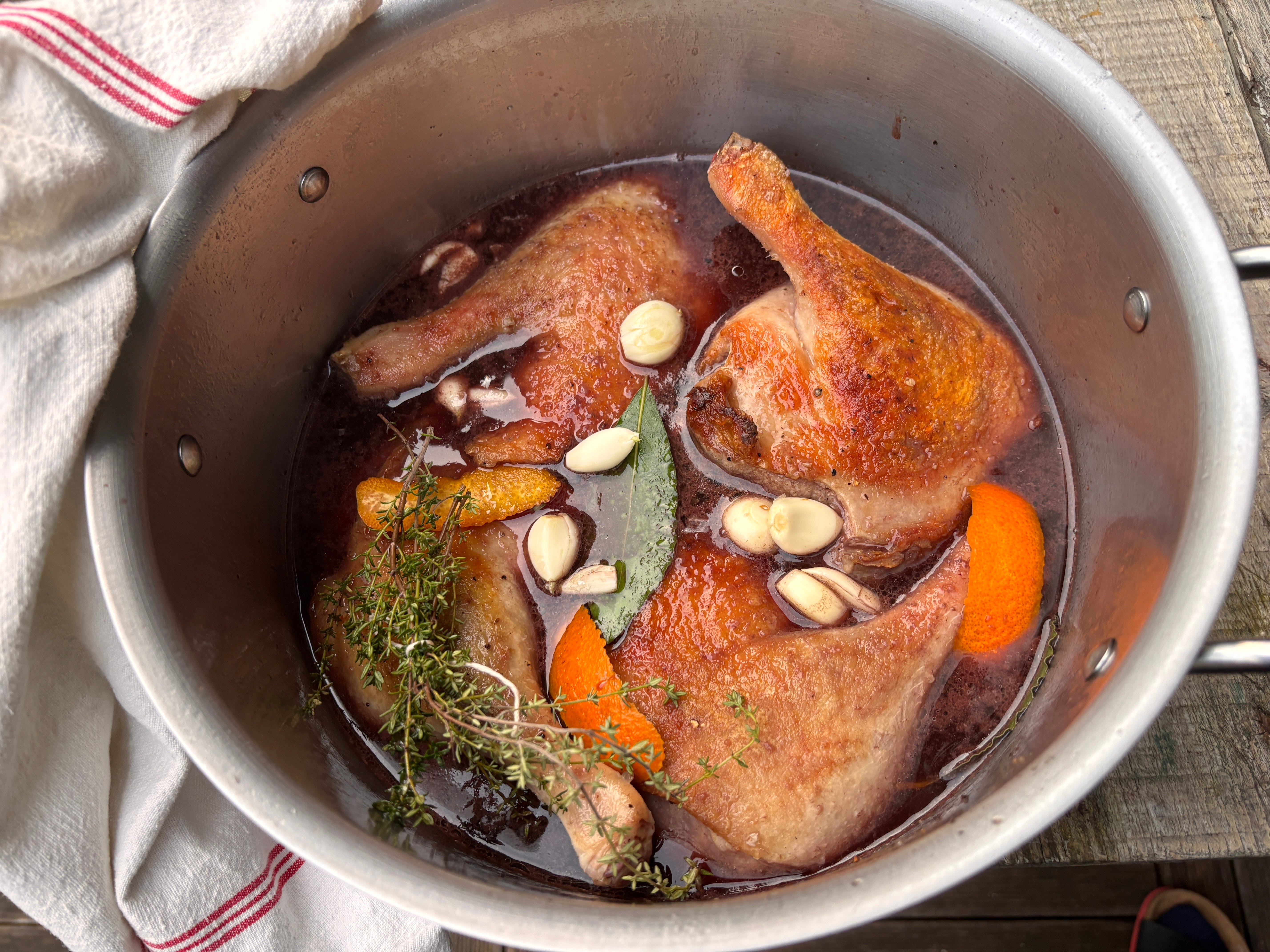
…but this time around, I cooked them on the stovetop. I seasoned the duck thighs with salt and pepper, and browned them in a bit of oil, skin side down. If you’re thinking ahead, salting the duck a day or two in advance improves its flavor.

Once browned, remove the thighs from the pot, add a splash of decent red wine from a bottle, scrape the delicious bits off the bottom of the pan, then add the duck back, along with the rest of the bottle of wine. I like to add thyme, bay leaves, garlic, and orange peel, but you can use whatever you’d like.

Add enough water to cover the duck thighs (if cooking chicken, add enough water to cover them halfway). Bring the liquid to a boil, then reduce it to a very low simmer and cook gently, covered, until the thigh meat is very tender. Figure about three hours. I did add some peeled pearl onions and cubes of rutabaga an hour before the duck was done.

The duck can be cooked the day before, then cooled and refrigerated, which allows you to skim off excess fat before rewarming it. But it can be enjoyed right away, or kept in the braising liquid for an hour or so, until you’re ready for dinner. It’s good with mashed potatoes, if you’re not adding root vegetables to the pot, or wide noodles.

Share

January is the most challenging month in Paris, with the cold weather keeping most of us inside, and everyone is missing the days when we could sit on a café terrace and have a glass of wine. Smoking must make people hardier than I thought since les fumeurs remain steadfastly outside in sub-zero temperatures, puffing away.

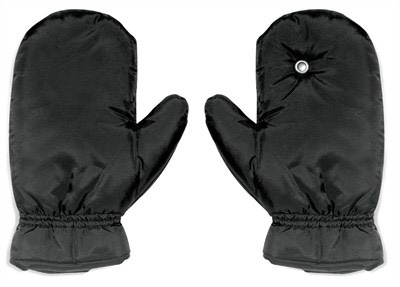
Yes, there are smoker’s mittens…

We did get to warm ourselves by a fire for my birthday, which came at the end of December. A lot of businesses close in Paris that week so people can take a break, which is nice, although our favorite places are also closed, which makes going out for dinner a little challenging. So we headed out of town. You can read a bit more about where we went, below…

- David

Leave a comment

Le Doyenné

To end the year, we celebrated my birthday at Le Doyenné, the beautiful restaurant and guesthouse owned and run by chef James Henry and chef Shaun Kelly, who’s in charge of the potager (garden), located about 45 minutes from Paris. I’ve been meaning to go since they opened, but somehow never found the right time or date to have dinner there. But when I noticed a room available on my birthday, I booked it, along with a table for dinner.

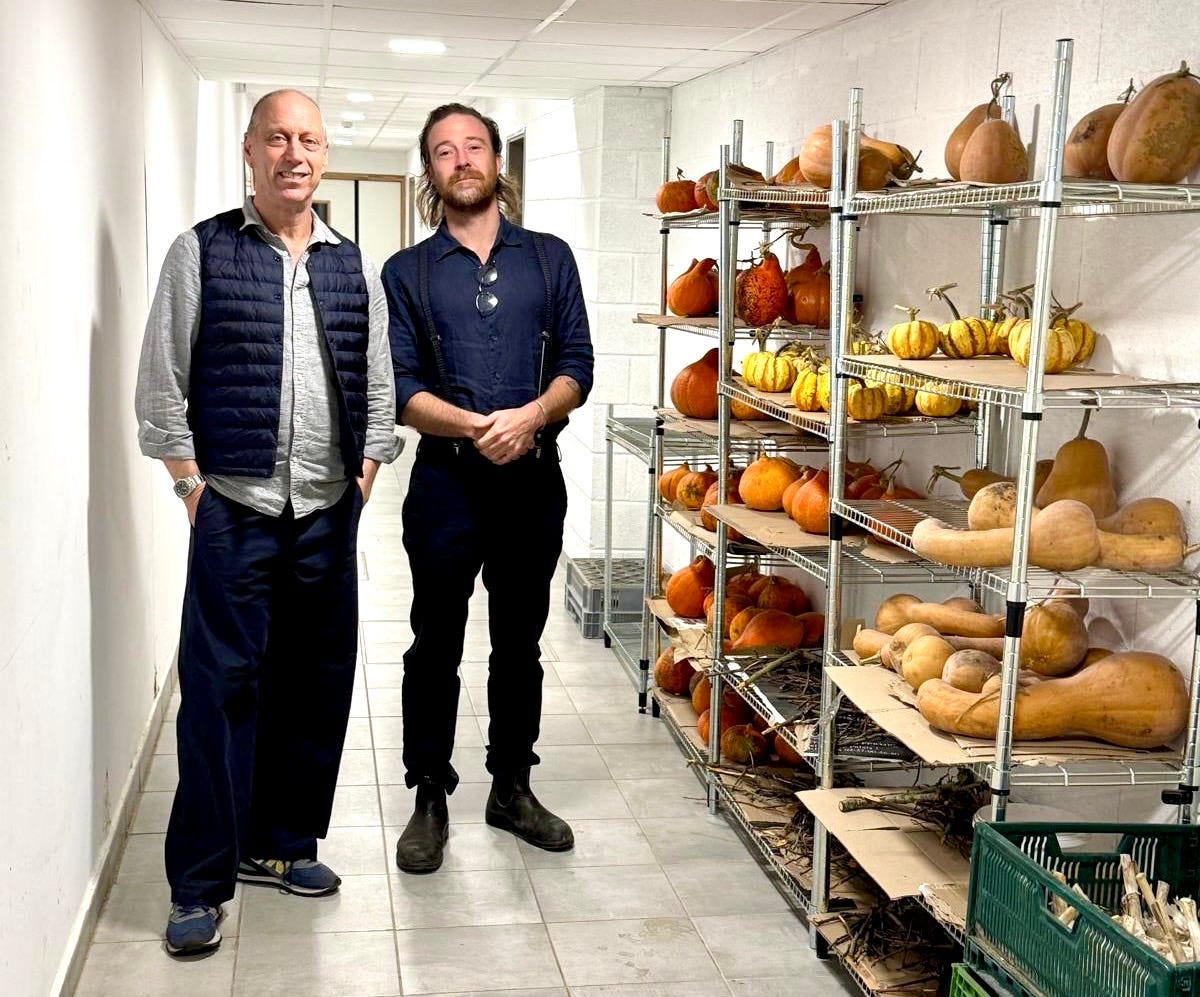
We arrived by car in the late afternoon, just as night was getting ready to fall, and took a walk through the gardens before dinner. Most of the garden was in repose, with hardy vegetables like mâche, kale, cabbage, and Brussels sprouts holding their own in the cold. Shaun gave me a tour of the various rooms and cold chambers in the kitchens where winter squash were stored; berries, seaweeds, and other fermentations were doing their things in glass jars; charcuterie was drying; and bread was rising for the restaurant. (James worked at Tartine in San Francisco and Ten Belles in Paris, and is known for his breads.)

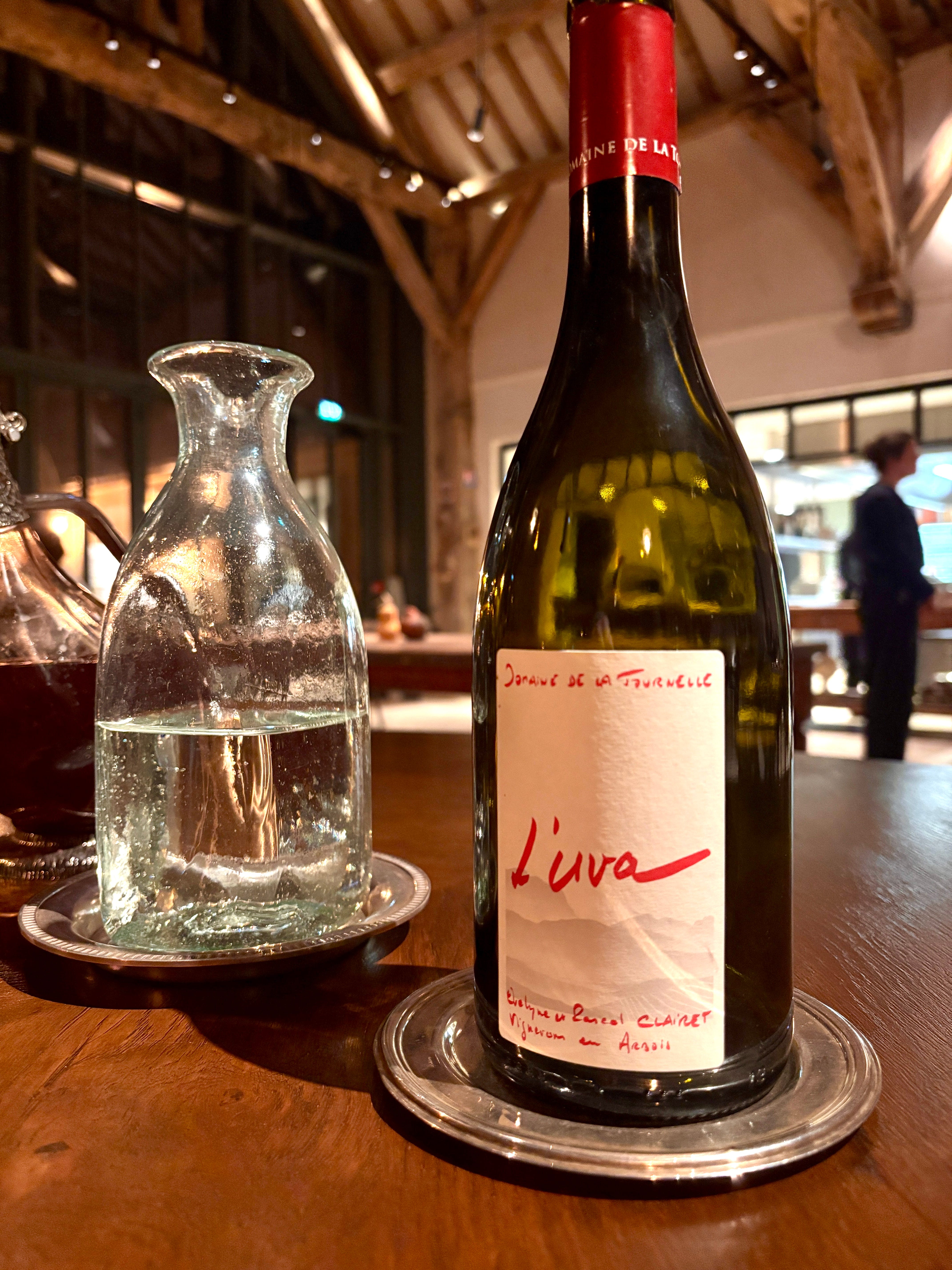
After our walk we curled up on the sofa with glasses of wine by the fireplace, until the sommelier stopped by with the wine list to ask us what we wanted to drink with dinner. We mostly drink white wines these days, but for a change, she helped us pick a nice red wine that was from a favorite producer in the Jura. It was great to see a wine list with good wines at a range of prices, from €39 to several hundred, and the list leans heavily into low-intervention (or natural) wines.

Visiting the vegetable cellar with Shaun.

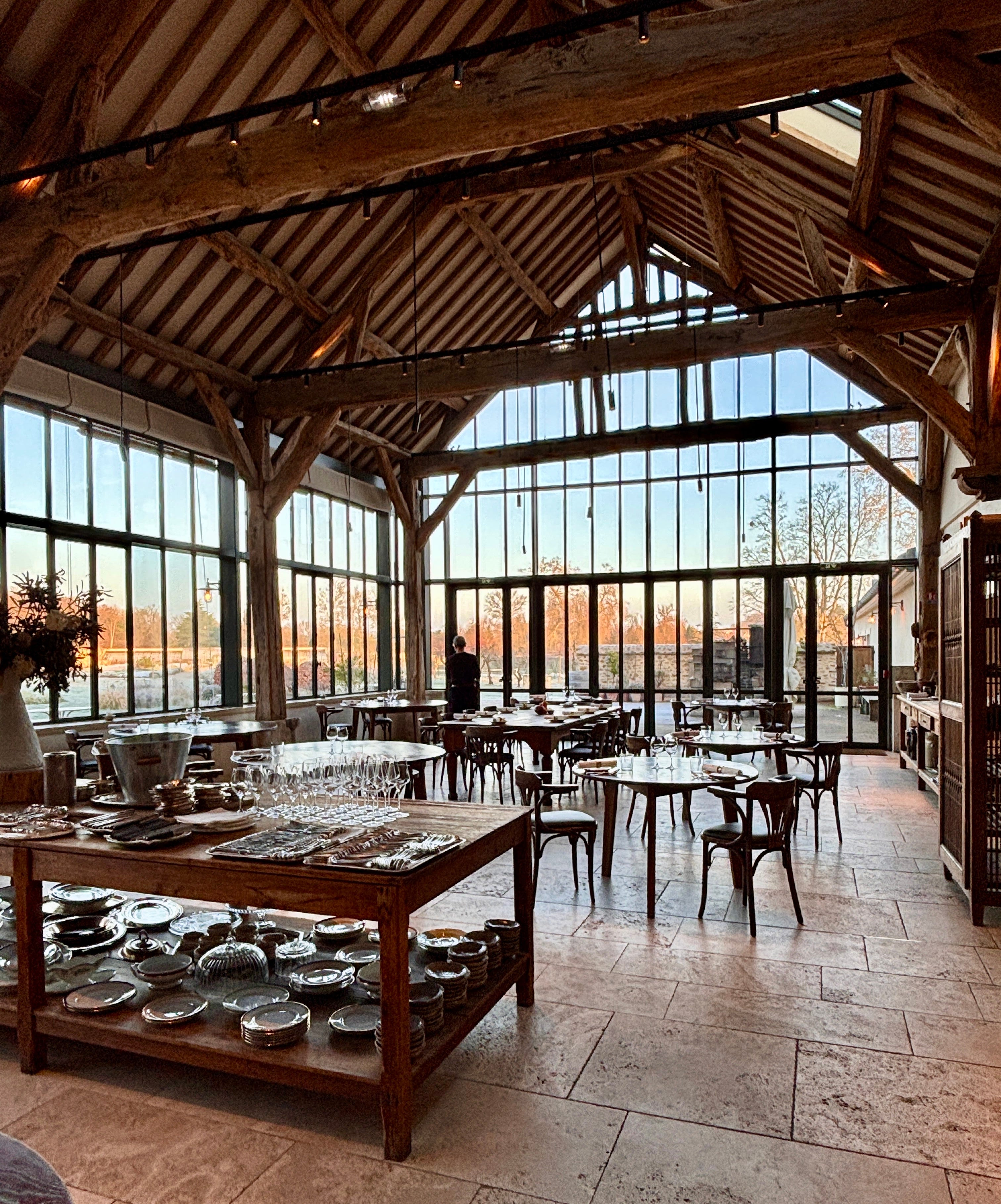
Then we moved to the cathedral-like, glassed-in dining room, which was a bit chilly when the sun went down (I would have taken my dinner by the fire!). Dinner began with a parade of hors d’œuvres, which included two thin slices of incredibly good charcuterie; fresh scallops sitting on a dab of raw cream, with pickled wild mushroom juice and bits of Meyer lemon on top; as well as an array of crudités, raw vegetables that had been picked that day from their garden. We loved everything.

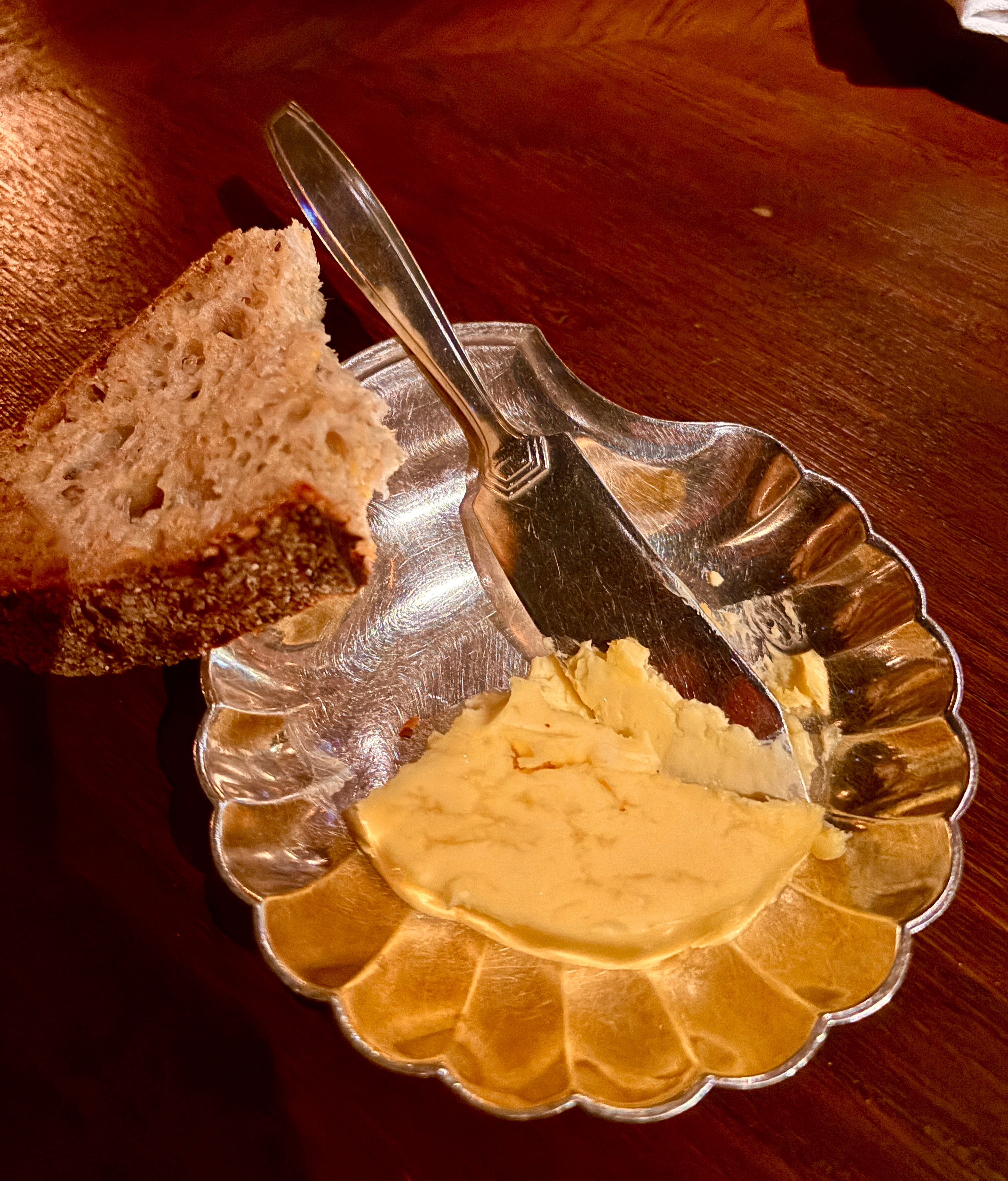
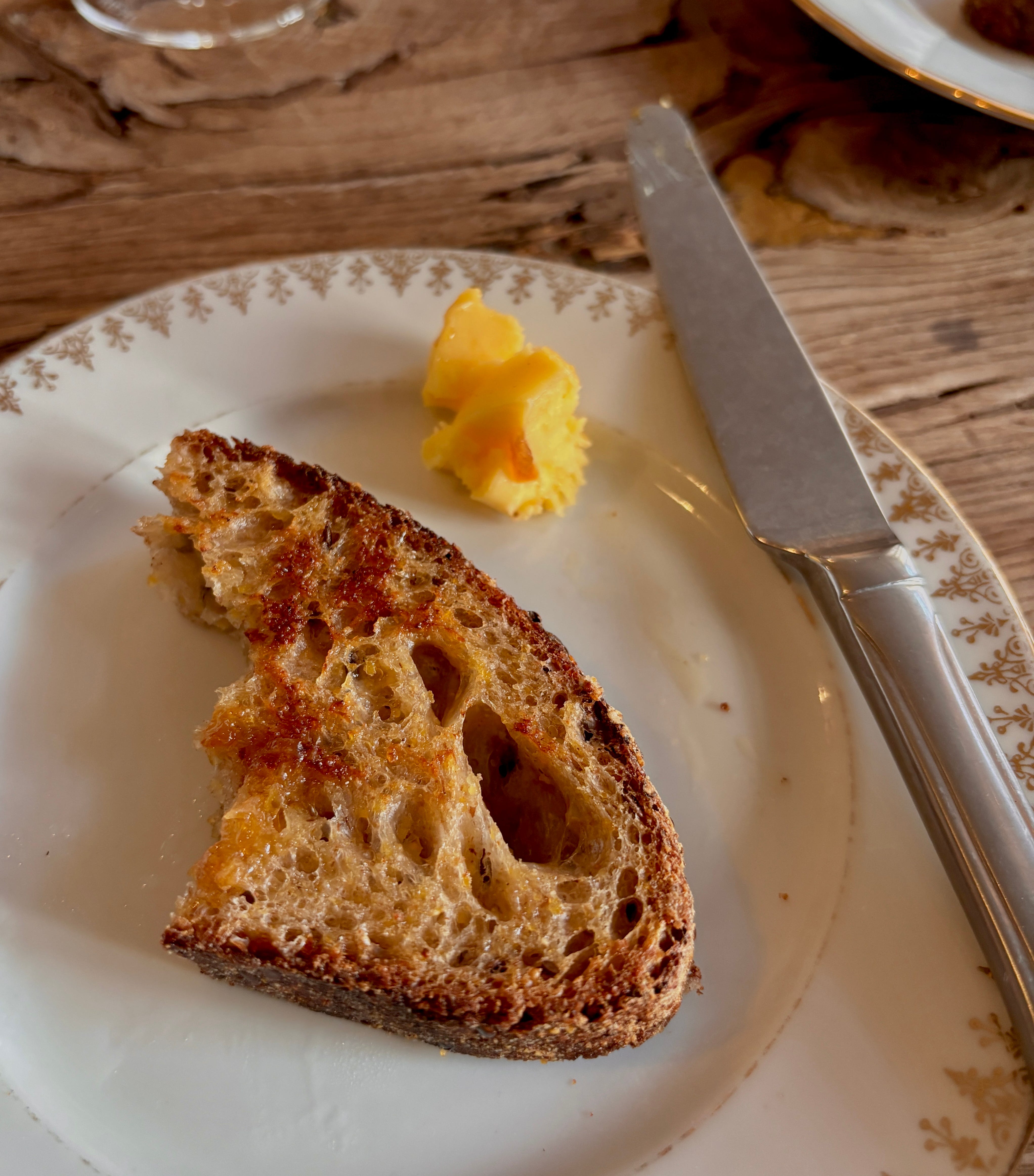
I wish I could tell you (and show you) how good this butter was, which was shot in low light, but we were too busy eating it to think about adjectives to describe it. But wow, was that good…

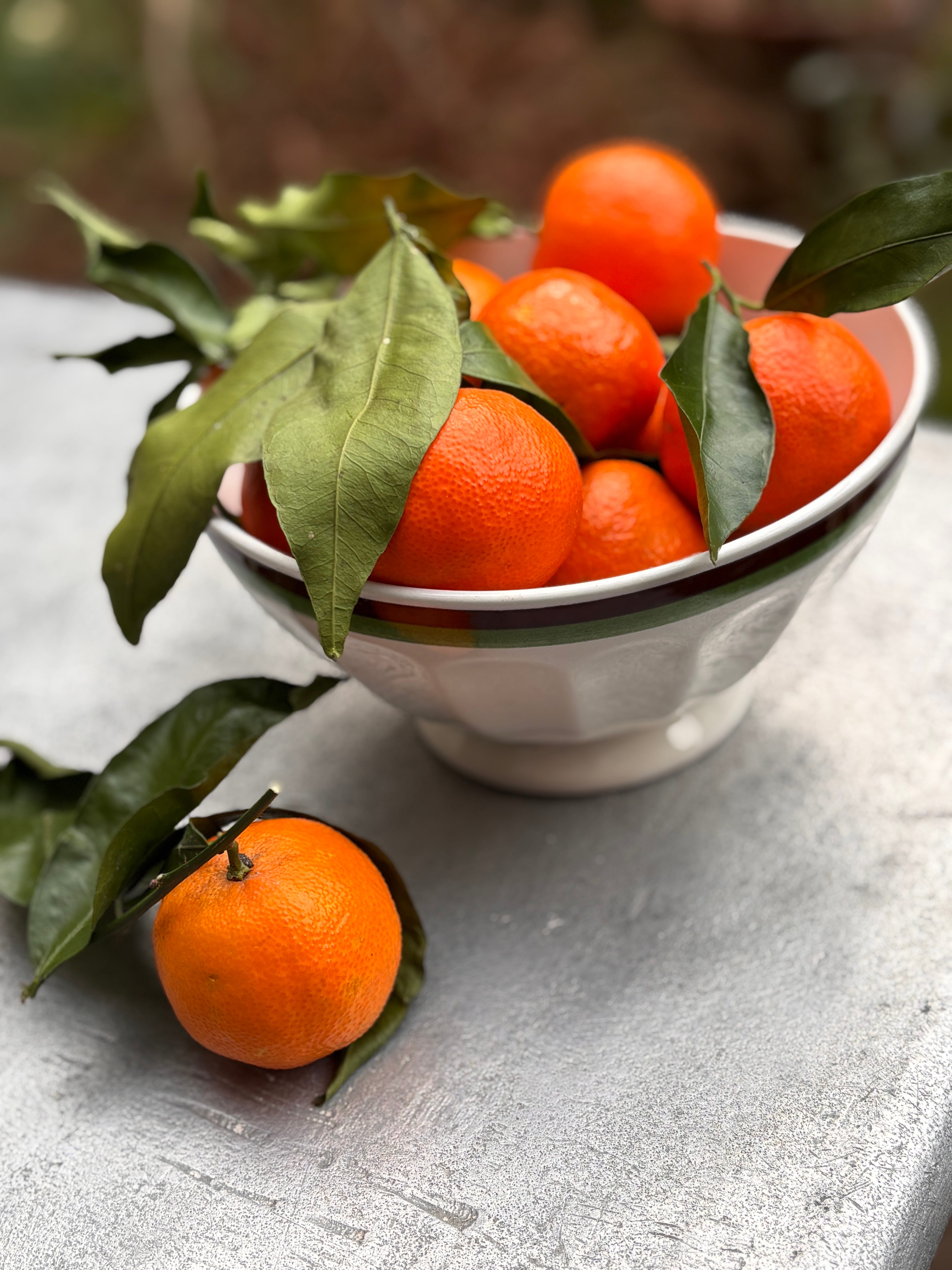
The next course was an onion tart made with pink onions from Roscoff, in Brittany, and wild mushrooms, held in place by a little ricotta, with a sauce spiked with the lightly oxidized wine from the Jura, vin jaune. Following that were a few slices of barely cooked dorade with seaweed, spinach, and pomelo. (Their citrus comes from a producer in the south of France.)

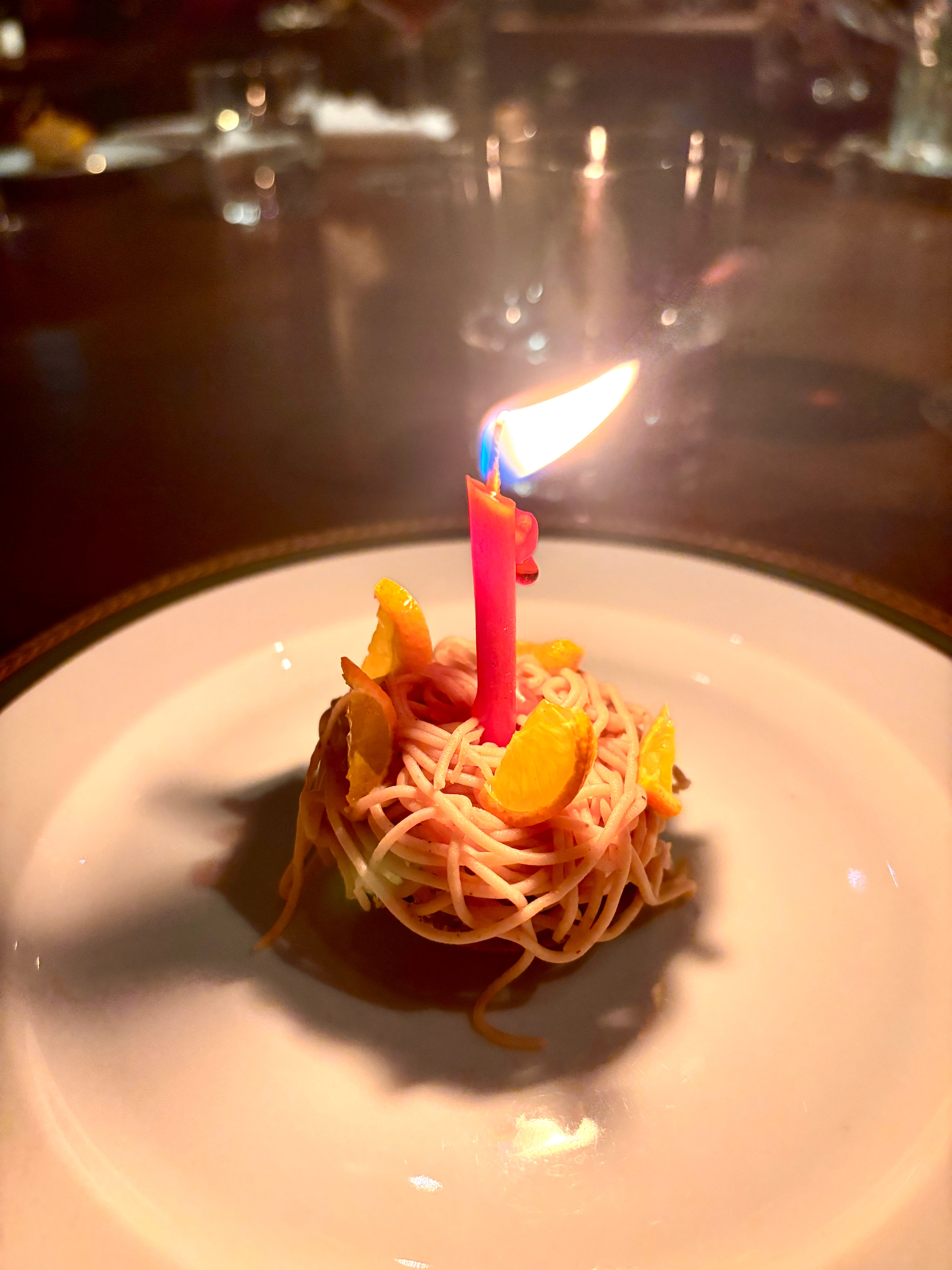
Then we had a flavorful plate of duck (yes, duck is popular in France in the winter…), which came with radicchio and squash from the garden, and a gratin dish of pommes boulangère, slow-cooked, well-bronzed potato slices. We skipped the optional cheese course since it was a lot of food and went right to dessert, which was a chestnut tart - and included a candle - as well as Jerusalem artichoke ice cream, made with topinambours from the garden, and ruby grapefruit sorbet.

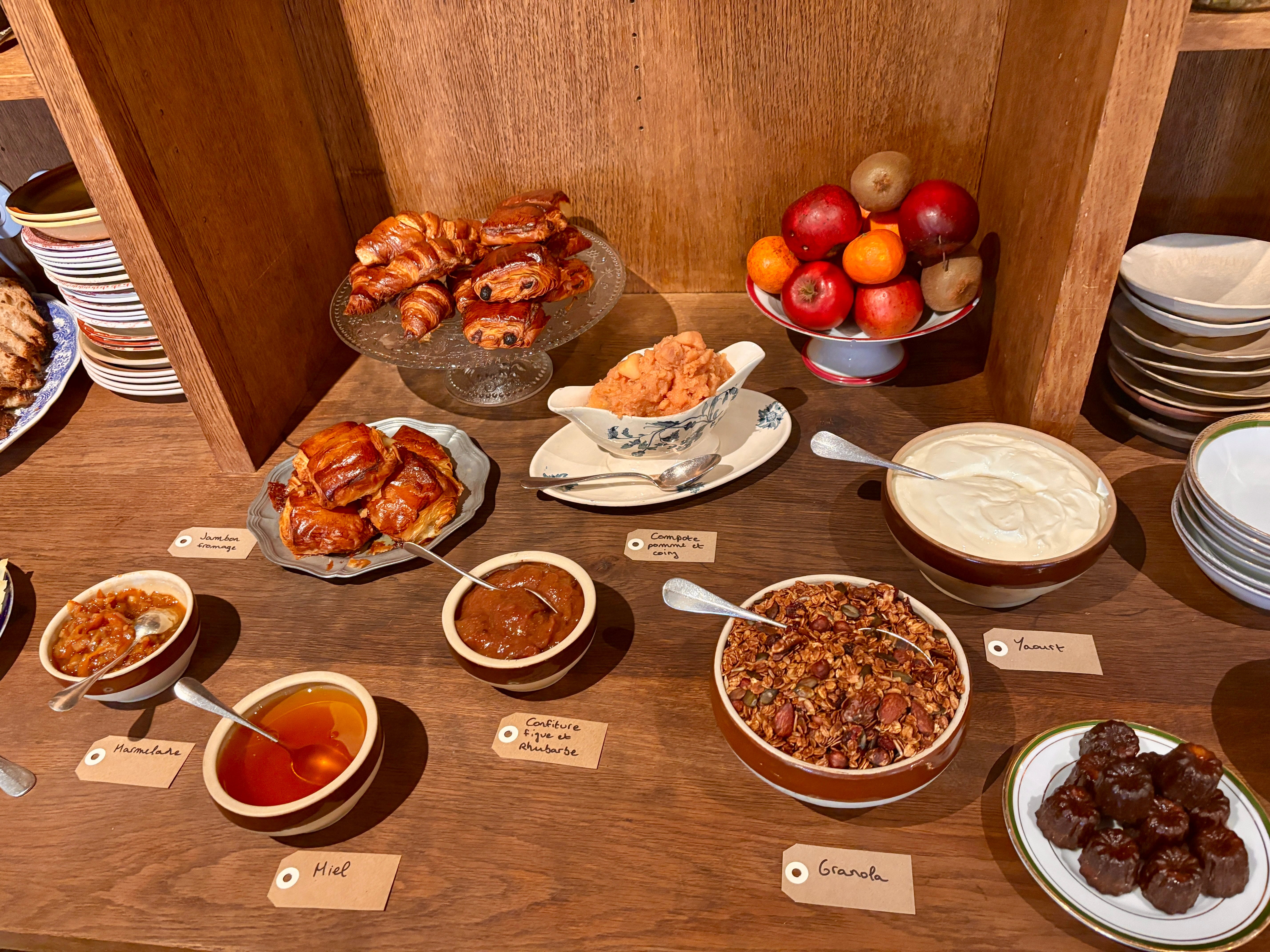
After herbal tisane by the fire, we headed to bed, and woke up to a spectacular breakfast buffet that featured everything from housemade croissants and ham and cheese pastries, mini canelés, apple-quince sauce, yogurt and granola, to thin sliced ham from their cellar, smoky grilled bread with some of the best butter I’ve ever tasted, along with homemade bitter orange marmalade, fresh carrot juice, and lots of dark coffee.

It was quite an experience and I was sorry that I had waited so long to go. Le Doyenné is quite a special place and while so many places are boasting about their farm-to-table fare, it was reassuring to be somewhere where the connection and commitment were direct and immediate, and real.

More of that amazing butter (in better light) at breakfast.

After hitting the boutique, where they wrapped up a loaf of bread for us to take home — the butter, unfortunately, wasn’t for sale — we headed back to Paris.

Subscribe now

If you want to go, you can get to Le Doyenné from Paris by taking the RER C, then a taxi or Uber for the short trip (about 5 minutes, they said) to the restaurant. Or you can get a taxi or Uber for making the trip from Paris if you don’t have a car. (I checked the Uber app while we were there to see the price, which was €45 one-way on a Sunday afternoon, but prices fluctuate.) They have detailed instructions for getting there here.

If you go for dinner, which lasts around 2 1/2 to 3 hours, it’s probably best to either stay the night or get a ride back to Paris. It’s possible to do lunch as a day trip. Rooms run between €265 and €340 per night, which includes a fantastic breakfast. It’s a bit of a splurge, but if it’s your birthday, maybe you can justify it? ☺️

Get The Great Book of Chocolate

Lastly…

Maybe I’ve saved the best for last? (Or buried the lede…) But I’ve got a new book coming out this spring, a completely revised version of The Great Book of Chocolate. When I first wrote TGBOC in 2004, there were maybe three bean-to-bar chocolate makers in the United States, and now there are over two hundred. So much has changed!

You can now get high-quality chocolate chips and cocoa powders at supermarkets, and there’s a huge variety of chocolates available at every price point. And some companies are even experimenting with non-cacao chocolate substitutes, which I tested and wrote about in the book, along with my results baking with them. As an added bonus, I include a beautifully photographed chapter and guide on where to find the best chocolates in Paris.

The information about chocolate has been completely brought up-to-date, and I added lots of new recipes to the book. They include a rich dark Chocolate olive oil spread with flaky sea salt, Individual warm chocolate cakes with runny, salted butter caramel centers, Triple (or quadruple) chocolate cookies, Vegan chocolate marshmallows (don’t turn your nose up - they were approved, and loved, by a French policeman!), Turkey mole, and a sophisticated Chocolate Negroni from the world’s best cocktail bar.

I recast and revised the other recipes, such as the Chocolate-cherry buttermilk scones and a decidedly French Gâteau au chocolate, as well as the Homemade rocky road and the ultra-dark Mocha pudding cake.

What was once a slender volume on chocolate has grown into a full-size book with beautiful new photographs from award-winning photographer Ed Anderson with food styling by George Dolese and Elisabet der Nederlanden.

Pre-order The Great Book of Chocolate

You can pre-order The Great Book of Chocolate at your favorite independent local bookstore 😍 or online at Bookshop, Barnes & Noble, and Amazon.

Received — 23 December 2025 David Lebovitz Newsletter

Giving Thanks, and a Favorite French Cookie Recipe

23 December 2025 at 08:22

It’s almost the end of 2025 and I can probably guess that you’re feeling a bit like me right now. Somewhat overwhelmed as the year draws to a close. A little tired, but with enough enthusiasm for the current and upcoming holidays and parties. It was nice to get away to Japan before the sprint to the finish. And I am hoping Santa puts a Japanese WC under our tree. Okay, we don’t have a tree…but maybe I’ll get one for my birthday, which is a few days later.

We’re staying put this year. A friend offered his house on a sunny French island, where the temperature is currently 80ºF (27ºC), but Air France wanted €3000 ($3500) for each of us to get there, squished into an airline seat for the 13 1/2-hour flight, so we took a pass. Home is pretty nice around the holidays so I’m not too upset. Even better, lots of people leave Paris to visit family in their maisons sécondaires, so it’s rather quiet. We are going to do an overnight out in the countryside, which is my birthday treat to myself. (Although Romain is coming along too!)

Subscribe now

One of the best things that happened this year was I released a new book. Writing a book is a two-year project, from getting all the recipes tested and written, to taking the photos and designing the final book. I was really fortunate to have an excellent group of people working on the project: my main editor, the copy and production editors, proofreaders, and book designer, as well as the two remarkable food stylists and food photographer who came to Paris for three weeks to shoot the book. Thanks team!

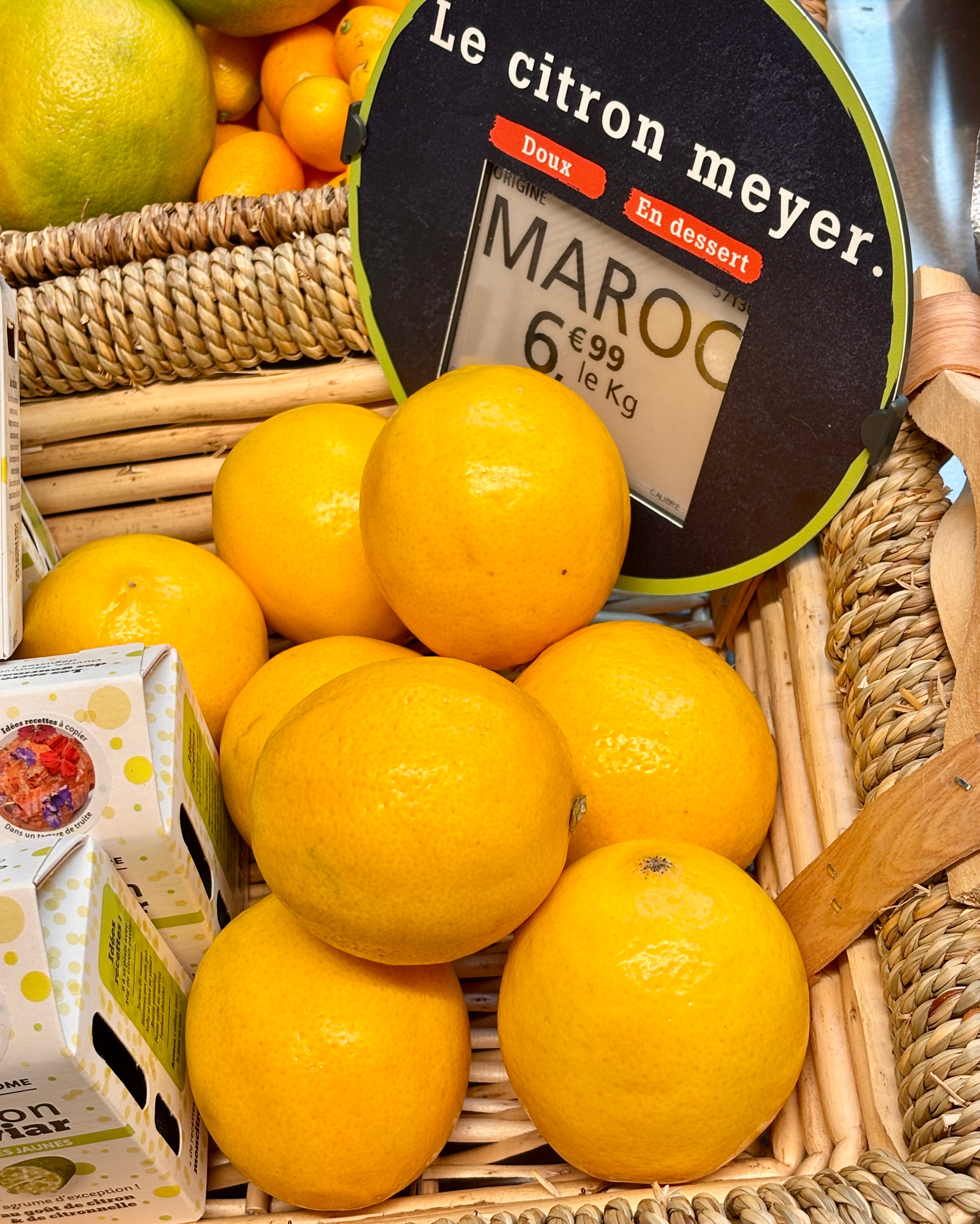
I’m planning on making either the Marjolaine or the Lemon semifreddo from the book for Christmas dessert. My little Meyer lemon tree in our backyard only has one lone, ripe lemon on it — except I just noticed bird had attacked it 😟 — but I spotted Meyer lemons at a new, produce-oriented grocery store near me (you can also get them in France here), and scooped them all up.

I guess the birds wanted a taste of Meyer lemons, too…

So need to decide which one to make…or should I make them both?

Leave a comment

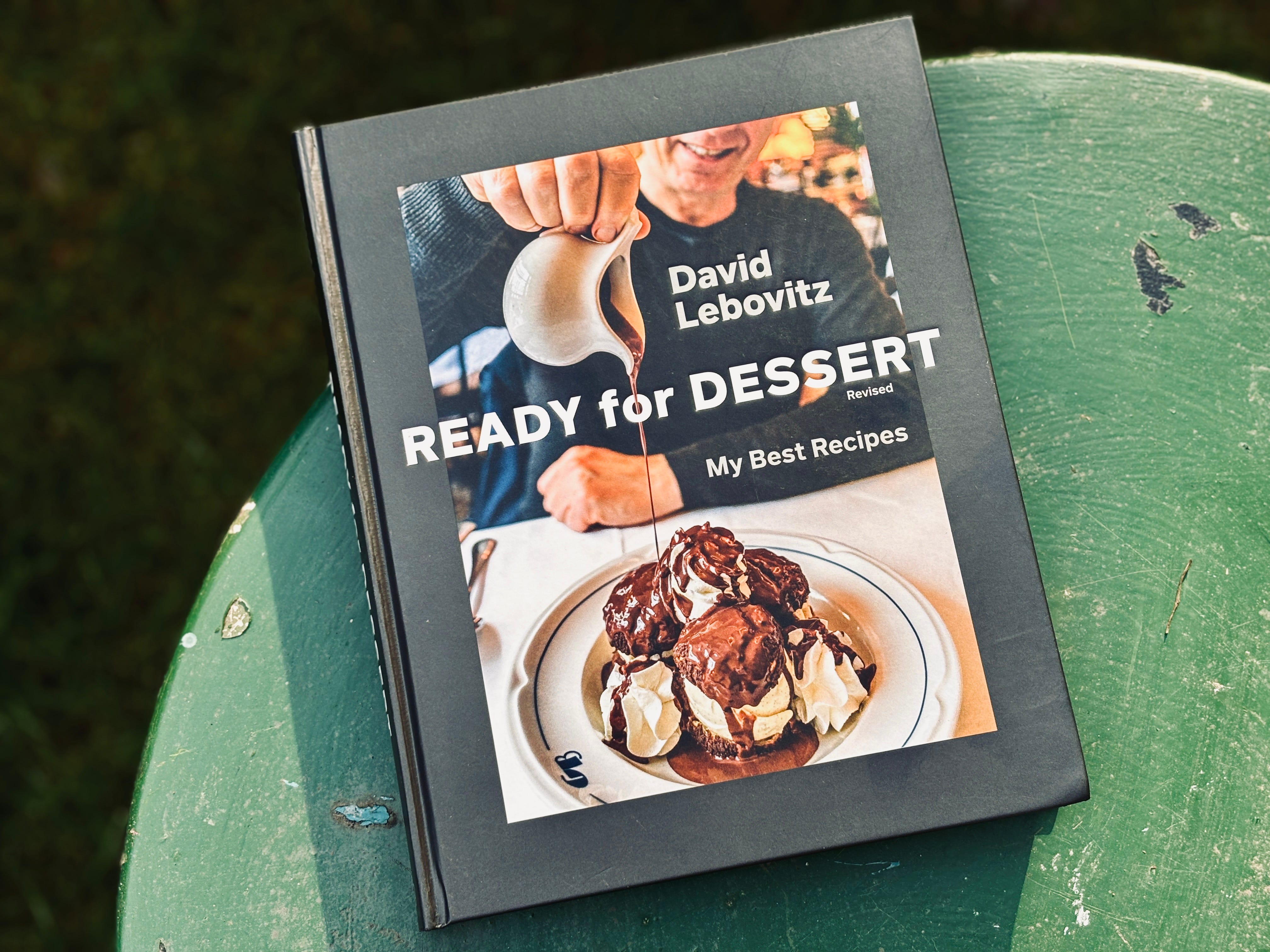
It’s been really nice to see such enthusiasm for my book, Ready for Dessert, and I thought I’d share a roundup on where it’s been.

And….I just want to also take a moment as this year draws to a close to thank everyone who is a paid subscriber to the newsletter. Making the switch from an ad-supported platform to a reader-supported one has been the right decision, and I like how this has become a comfortable community, rather than just a website of people clicking by.

So thanks to everyone of you who subscribes to the newsletter — free and paid — and looking forward to keeping in touch in 2026!

If you’re not a subscriber, subscribe here…

(If you’d like to upgrade to a paid subscription, you can do so here.)

Also…thanks for everyone who featured Ready for Dessert in their newsletter and in print. A few newsletters are partially paywalled but you can read the interviews and Q & As on most of them without (or before) subscribing:

https://amzn.to/3NdScvH

Get Ready for Dessert!

  • David Lebovitz on Boring Headnotes, New Editions, and the Cookbooks That Got Away ()

Jeffrey Morgenthaler on Instagram: "Most of you know I love to …

Also check out:

And I chatted with France24 about French cuisine…

Give a gift subscription

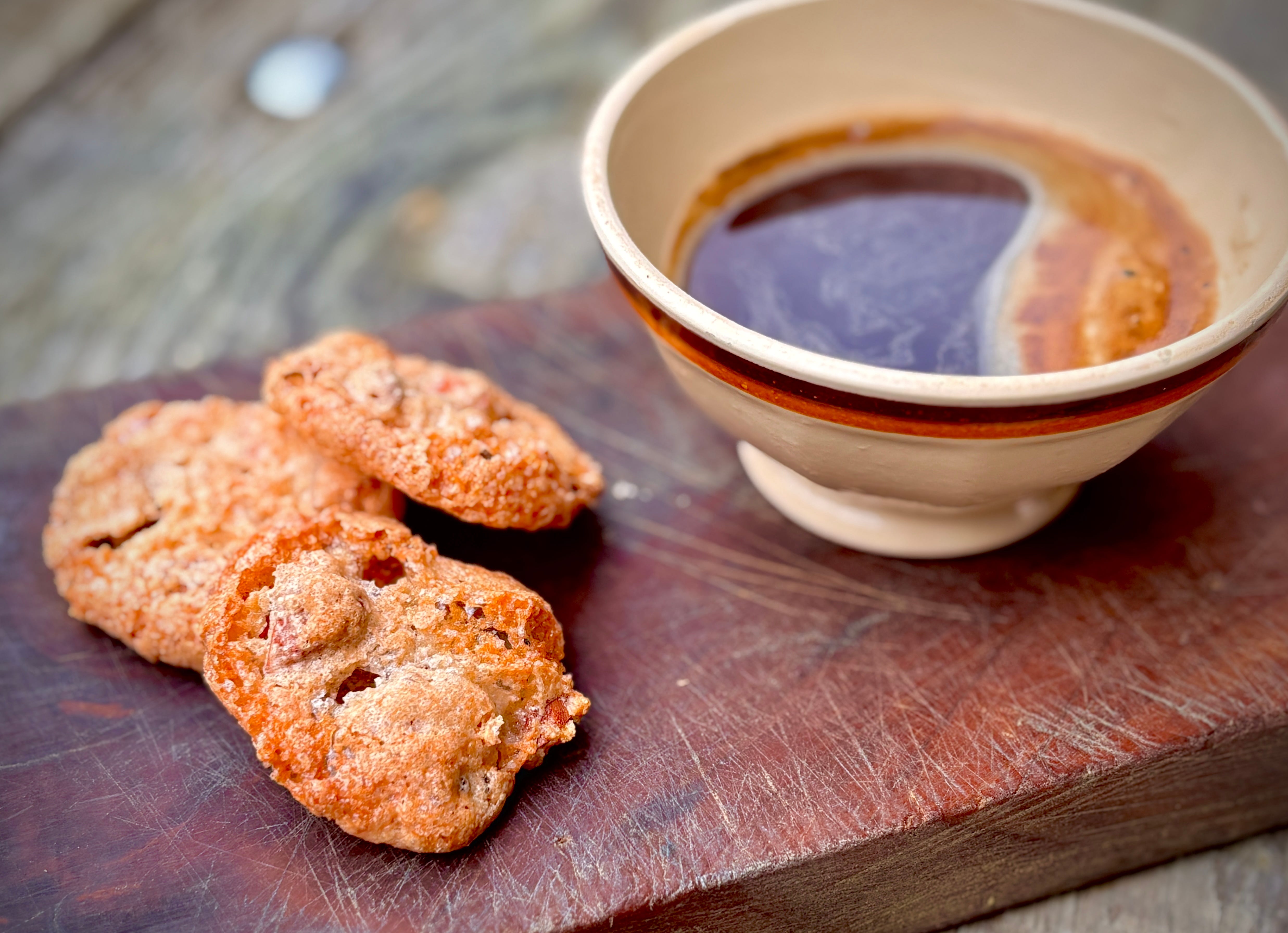
Croquants

About 60 cookies

Adapted from Ready for Dessert

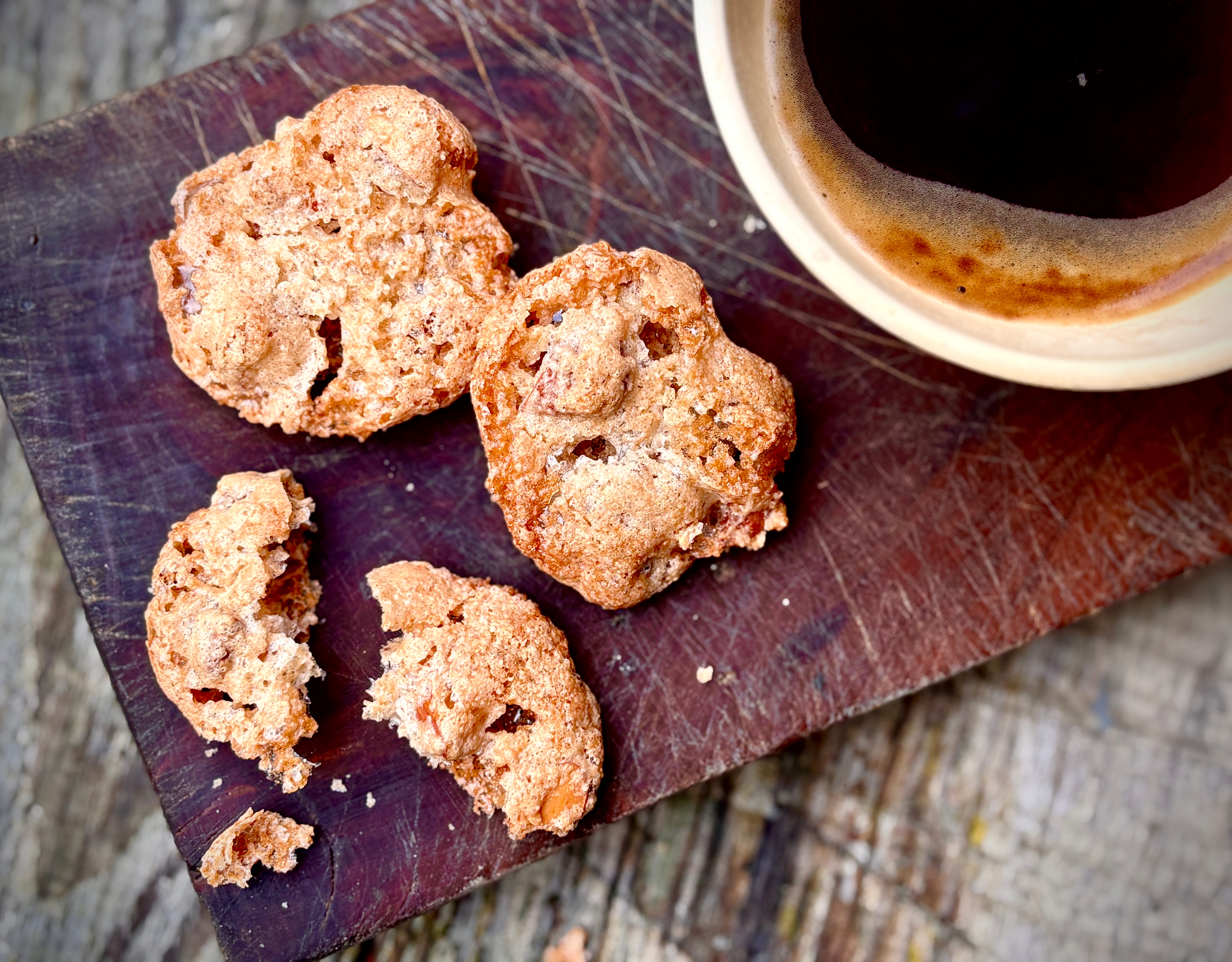
A reader recently wrote to me about the recipe for Croquants (page 251) in Ready for Dessert, wondering if the one teaspoon of batter per cookie was correct. I assured her that was the right amount; the cookies are meant to be small, about the size of a silver dollar. In France, cookies of this size might fall under the moniker of croques-télés, which refers to snackable candies or sweets that you might eat while watching television.

Before I moved to France, I bought these little French cookies by the bagful when I’d find them in the U.S. They were expensive but were everything I wanted in a cookie: crispy, crunchy, nutty, and a touch salty. While I can now buy them in France, they’re easy to make. You just stir the ingredients together, plunk little dabs on a baking sheet, and bake them.

It’s important to chop the nuts in large pieces, roughly the size of small peas. Even though the nuts will take up seemingly precious space in the little teaspoon you’re measuring the batter with, the batter will spread quite a bit and it’s nice to bite into big pieces of nuts when eating these cookies.

Oh, and yes, you can bake them a little larger. Feel free to do so, if you wish. They’ll probably need an extra minute or so in the oven, until they’re golden brown across the top. But I’d never say no to more of anything, when it comes to cookies.

1 cup (200g) sugar

5 1/2 tablespoons (50g) all-purpose flour

1/4 cup (60ml) egg whites (from about 2 large eggs), at room temperature

Pinch of salt

3/4 cup (90g) almonds or hazelnuts, toasted and very coarsely chopped

Preheat the oven to 400ºF (200ºC). Line two baking sheets with parchment paper. (Silicone mats tend to steam cookies a bit, so I prefer to use parchment paper for these.)

In a medium bowl, mix the sugar, flour, egg whites, and salt until well combined. Stir in the chopped nuts.

Drop level teaspoons of the lumpy batter, evenly spaced apart (about 2 inches, 5cm), on the baking sheets.

Bake the cookies, rotating the baking sheets in the oven midway during baking so they bake evenly, until the cookies are light golden brown all the way across the top, 10 to 12 minutes. Remove from the oven and let the cookies cool on the baking sheets.

Storage: The batter can be stored in the refrigerator for up to one week before baking. The baked cookies are best, and crispiest, the day they are made, but can be stored in an airtight container for up to 3 days.

Croquants
58.5KB ∙ PDF file
Download
Download

Received — 19 December 2025 David Lebovitz Newsletter

Devil's Chocolate Cake

19 December 2025 at 09:38

I don’t think I’ve ever had a Thanksgiving dinner in Paris that was the same from year to year. One year a friend hired a chef and dinner was served all plated up, in the kitchen. Another year I volunteered to make Thanksgiving dinner and ended up cutting the turkey into small pieces and braising it. Since I was cooking for twenty+ people, that was the only way a turkey would fit in my French oven, which at the time was so small that I could barely squeeze a chicken into it.

Another year I was staying with friends in Provence and we were shocked when the bird that we pre-ordered from the local butcher came already stuffed, by the butcher. I was tempted to scoop his out and cook the bird with the stuffing mix we’d already prepared, but he’d done such a beautiful job of sewing it up with butcher’s twine that we cooked the turkey as is, and it was incredible.

Subscribe now

Thanksgiving is a holiday that’s traditional, of course, for Americans (Canadians have their own Thanksgiving), but French people don’t really “get” it. And to make the meal, you have to go on a scavenger hunt, tracking down all the fixings, like cranberries (nope, the airelles at Picard aren’t the same thing…let’s not pretend that they are), sweet potatoes (hold the marshmallows, at least for European guests), Pepperidge Farm stuffing mix, and whole turkeys, which you often have to pre-order, and if you live in an upscale neighborhood, they can cost a small fortune.

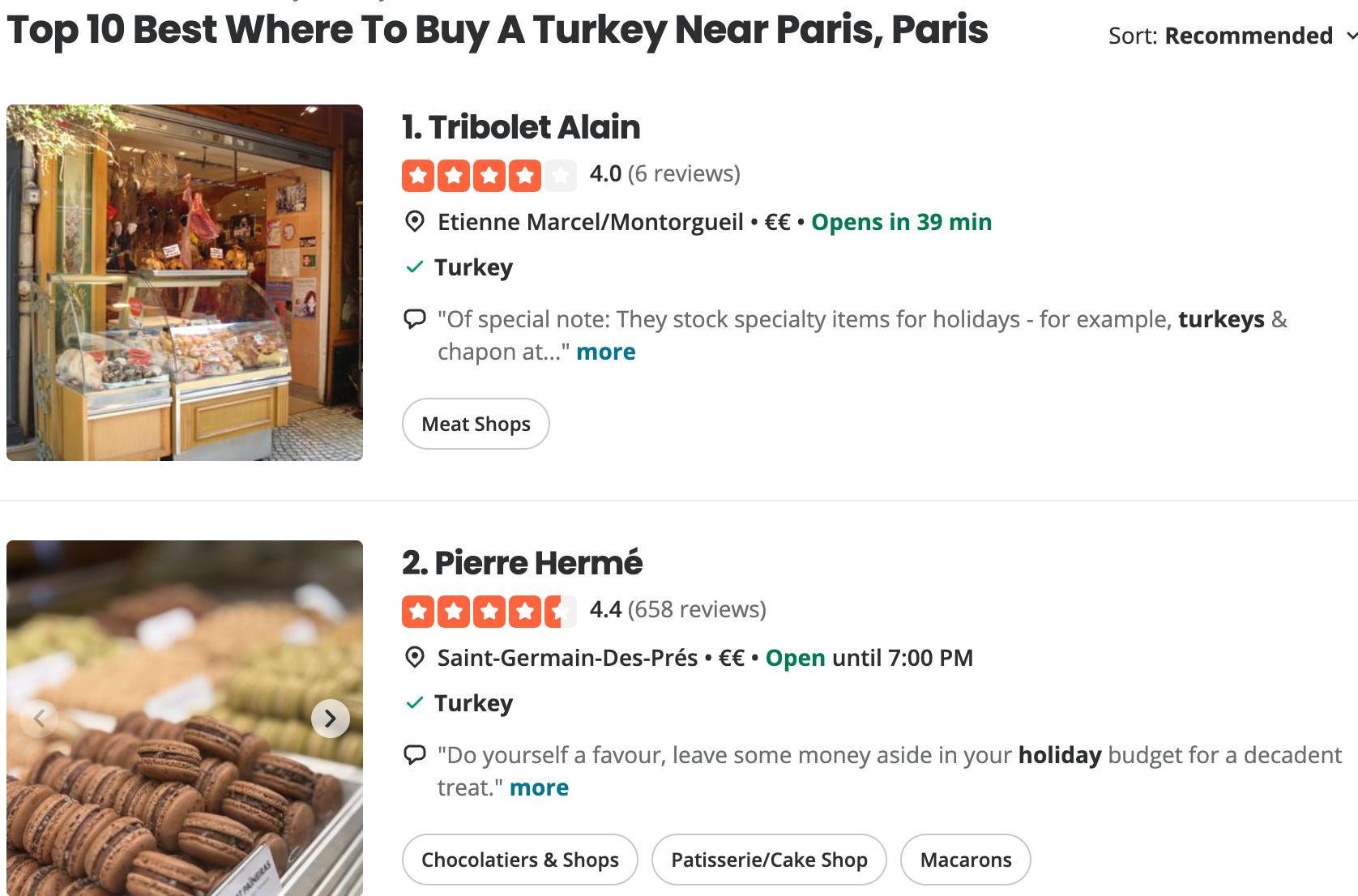
Oddly, when I went to look up the price of a turkey, for some reason, Pierre Hermé was listed as the 2nd best place in Paris to buy a turkey. That’s news to me! (And probably to pastry chef Pierre Hermé…)

It’s a holiday about gathering around the table with familiar foods and turkey is not high on most French people’s list of things they prefer to eat. That said, the dinde fermière, heritage free-range turkeys, in France are delicious. But once Romain discovered stuffing (la farce), he was hooked.

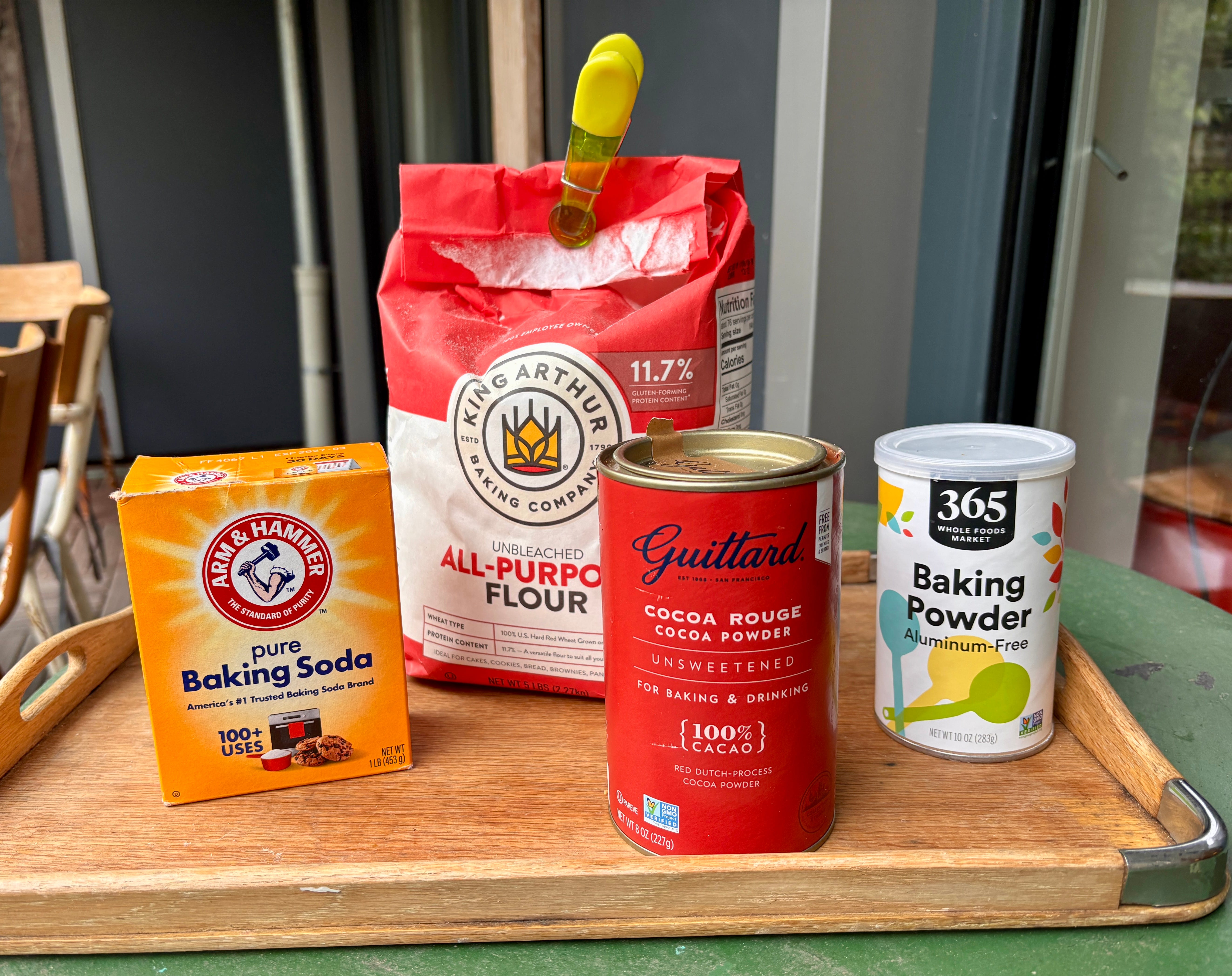
This year I was invited to a dinner and was tasked with making an American dessert by my French-American hosts. Since the theme was américain, I decided I should use American ingredients and dug into my stash of King Arthur flour, Guittard cocoa powder, aluminum-free Whole Foods baking powder, and Arm & Hammer baking soda to make my dessert.

American Baking in France (Ingredients)

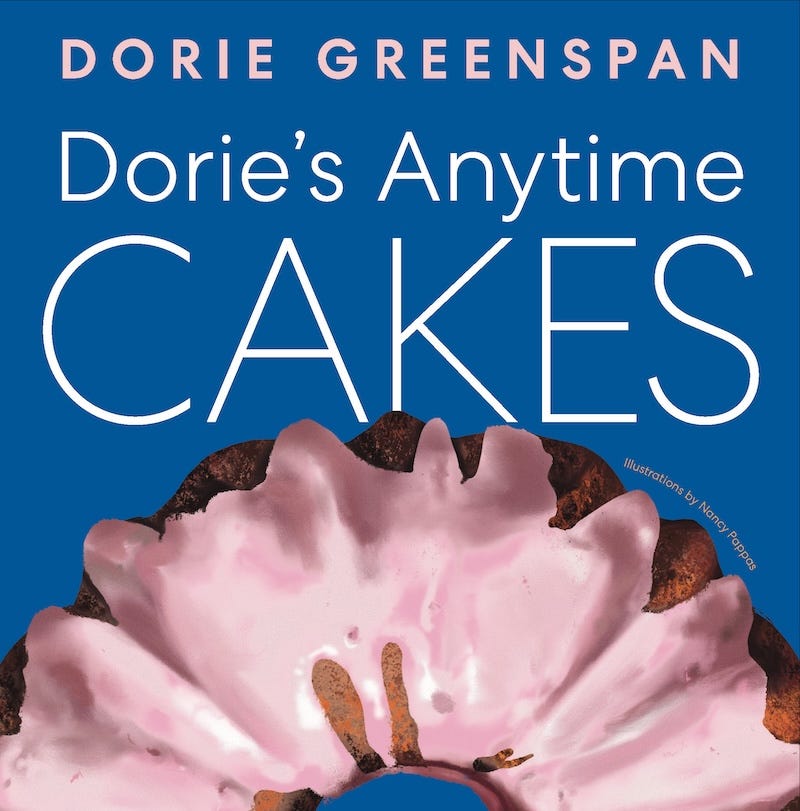
At the top of the stack of books that came out this fall is ’s new one, Dorie’s Anytime Cakes. I had bookmarked her recipe for portokalopita, a Greek orange cake that I fell in love with in Tinos, but a cake made with filo dough didn’t seem like a T-Day dessert. So I’m saving that for when someone invites me over for a Greek dinner. Hint hint…

I have a few devil’s food cakes in my repertoire but was intrigued by Dorie’s because it’s baked in a bundt pan, which is also très américain (although there are kugelhopf pans in France). I have a few bundt pans I brought back from the States and decided to use the one with the deep and intricate design.

https://doriegreenspan.com/book/dories-anytime-cakes/

Get Dorie's Anytime Cakes

Devil’s food cake is historically made with natural cocoa powder, which hasn’t been Dutch-processed with an alkaline ingredient, so is generally used along with baking soda as a leavening agent. The reaction of the two can give the cake a reddish hue,* hence the name of the cake. Dorie recommends using Dutch-process cocoa powder in her recipe, so I stuck with that. To stay in the rouge vein, I used Guittard cocoa rouge cocoa powder, which has a reddish hue, but feel free to use your favorite cocoa powder here, Dutch-process or natural.

Share

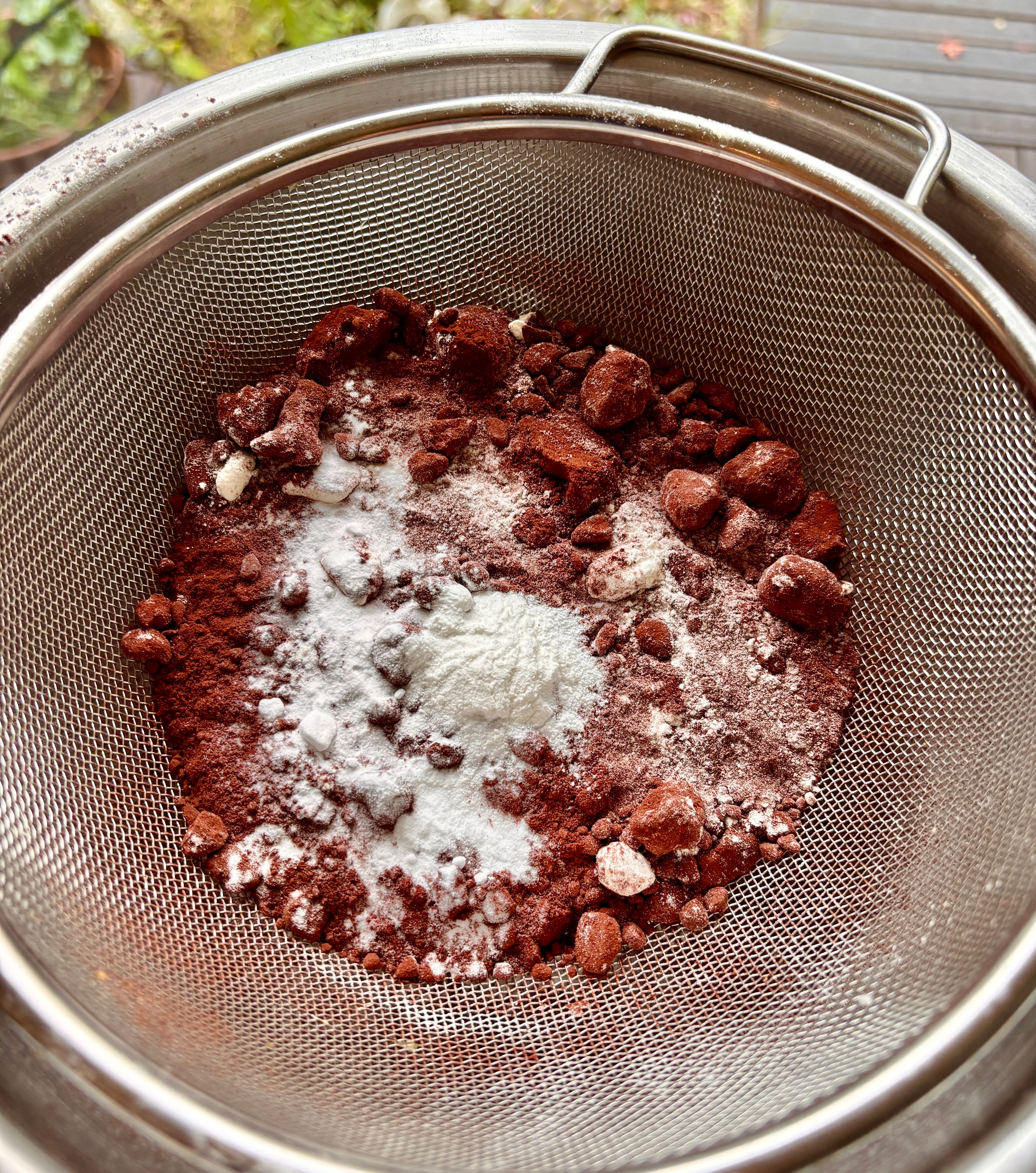
While Romain watched me gather the ingredients for making the cake, he wondered why I was putting the dry ingredients in a sieve. I told him it was to disperse them, especially the lumpy cocoa powder.

When I lived in San Francisco, I was a member of the Bakers Dozen group, an informal association of bakers and people who like to bake at home.

At one of our get-togethers (which were heaven, being in the company of a hundred other bakers who loved to talk about things like sifting for an hour), the late baker Marion Cunningham, who was never shy about offering her opinion, chimed in with: “Well, do you have to sift is like asking: ‘Do you have to wear shoes?’”

Which is a good question.

A few years ago I ran into an acquaintance at a local bakery. When we took out our phones to exchange contact info, I looked down and noticed that he wasn’t wearing shoes. Kinda perplexed, I asked him about it and he said that he stopped wearing shoes a few years ago. I wondered aloud if he was concerned about all the grit and glass, not to mention the 💩 on the sidewalks, and he said it didn’t bother him.

And as for shoes, I’m going to continue wearing mine in Paris. And here, I did sift.

I baked the cake in my stylish bundt pan, which, woe was me, didn’t want to let go of the cake. (I can’t say I blame it…) That’s the trouble with some of the more intricate bundt pans; they look cool but don’t work for every cake.

https://www.davidlebovitz.com/book/ready-for-dessert-revised/

Get Ready for Dessert!

So I remade the cake in a less-complicated bundt pan and it released just fine. I happened to be texting my friend George that day, who was one of the food stylists for my book Ready for Dessert, and he told me that he uses Bak-Klene on intricate bundt pans and nothing ever sticks. He graciously had left me a can of it, but I forgot about it in my cupboard. Next time.

(Some bakers make a baker’s goo, mixing together flour, vegetable shortening, and vegetable oil, and use that to grease cake pans. I haven’t tried it but apparently it’s a game-changer.)

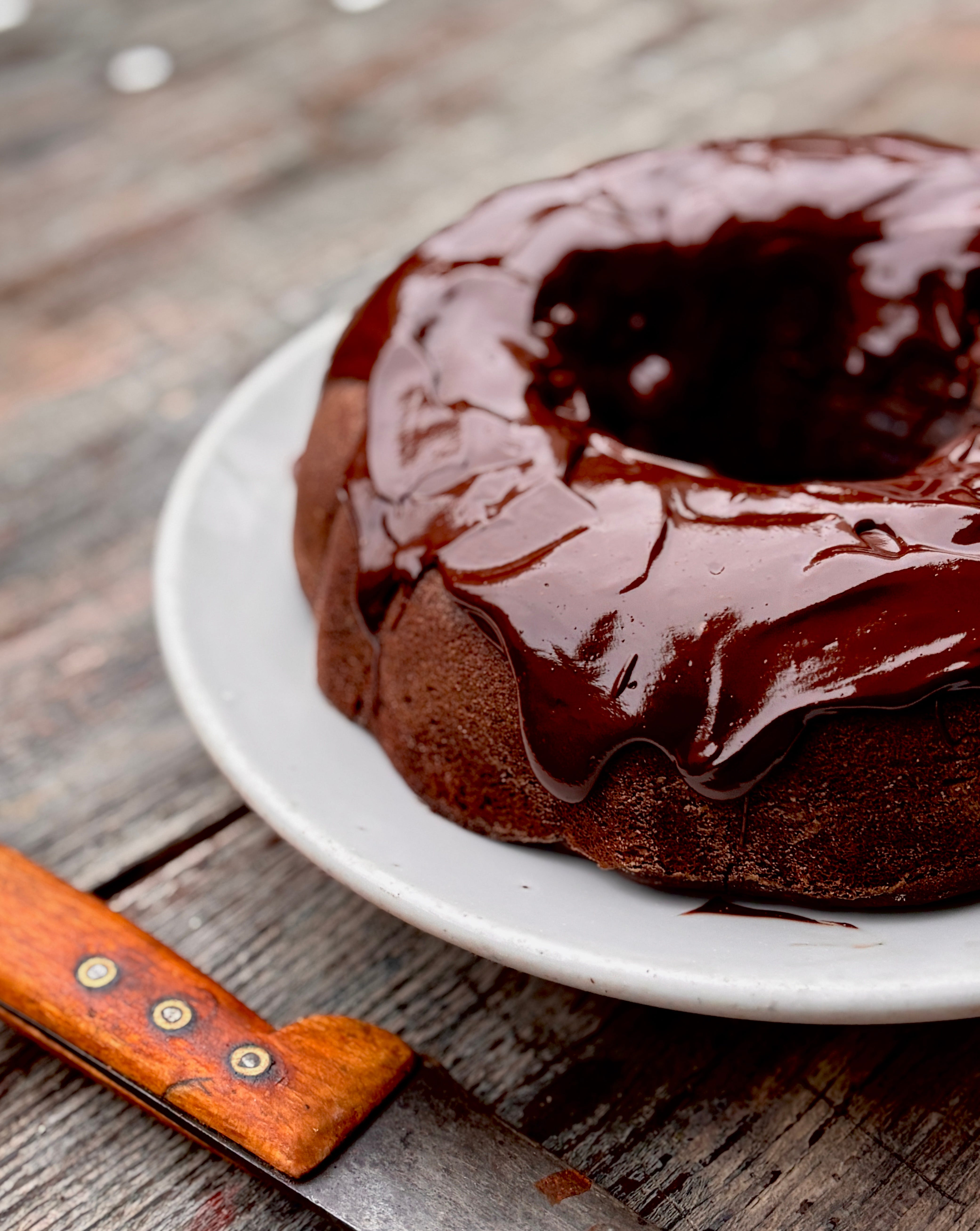
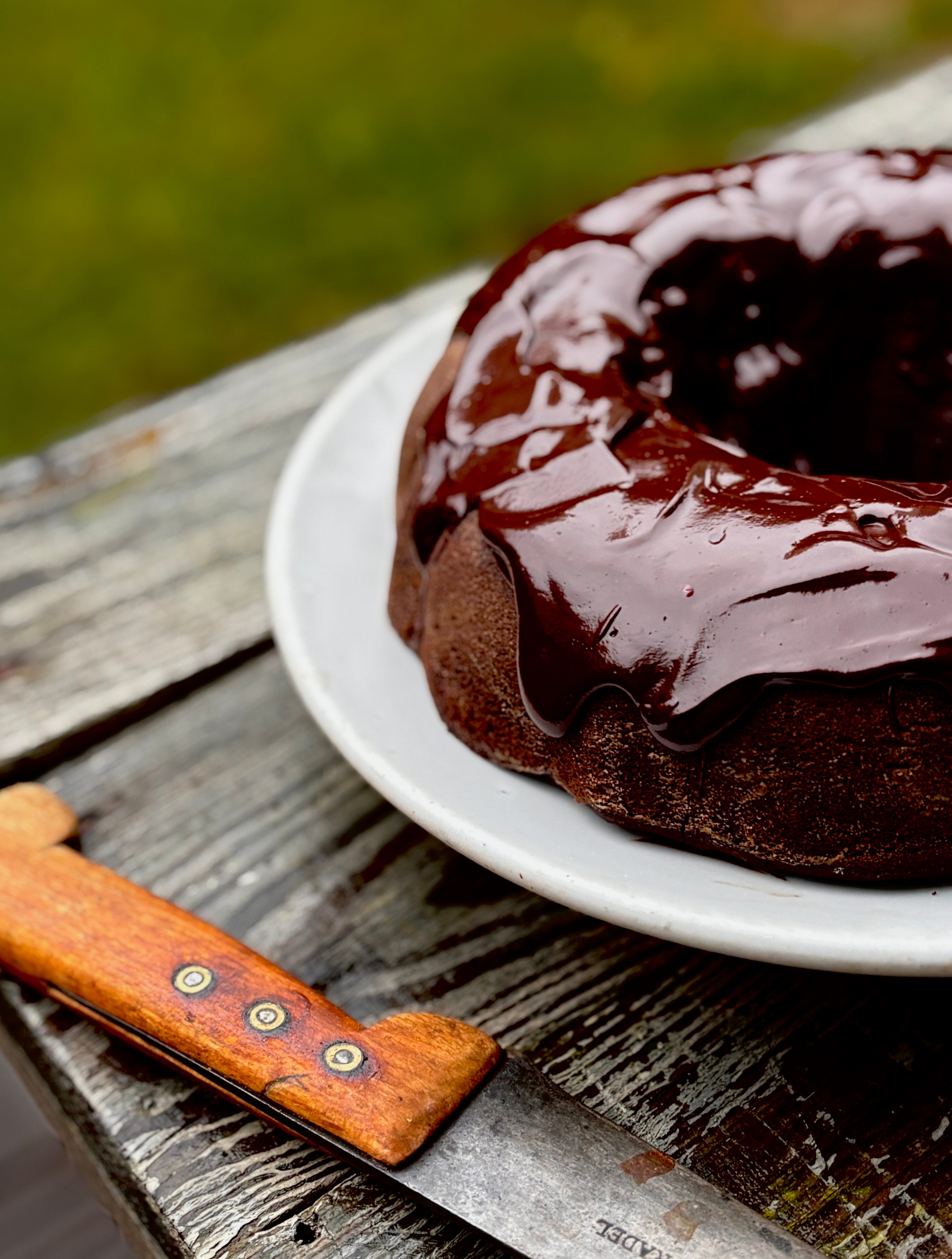
Dorie’s book lives up to its name and is filled with recipes that you’ll want to make anytime. The cake was a hit, and you don’t need to wait until Thanksgiving to enjoy it. You can be an angel and make it for your friends or family whenever the mood for an all-American chocolate cake hits.

Leave a comment

Devil’s Chocolate Cake

10-12 servings

Adapted from Dorie’s Anytime Cakes by

When you assemble the cake, you might think that the cake pan doesn’t seem filled with enough batter when you put it in the oven. But it will rise considerably while it bakes. Like most chocolate desserts, err on the side of underbaking rather than overbaking. Check the cake before the recommended baking time.

If you don’t have a bundt pan, a tube pan with smooth sides and a hollow tube in the middle will work. As mentioned in the post (thanks George!), the best pan coating is baker’s nonstick spray, the kind that has flour in it, such as Baker’s Joy or Bak-Klene, which is available at Webstaurant, Amazon, and Williams-Sonoma. Nordic Ware recommends not using regular nonstick spray on their bundt pans, which causes buildup and degrades the coating.

Dorie recommends topping the cake, after it’s glazed, with rosettes of whipped cream and either maraschino or amarena cherries, or chocolate sprinkles or shaved chocolate. I kept it squarely in the chocolate direction but if I wasn’t bringing the cake to a party, I’d serve it with ice cream.

For the cake

1 1/3 cups (180g) all-purpose flour

1/2 cup (45g) unsweetened cocoa powder, preferably Dutch-process

3/4 teaspoon baking soda

1/2 teaspoon baking powder, preferably aluminum-free

1 teaspoon kosher or sea salt

10 tablespoons (140g, 5oz) unsalted butter, at room temperature

1/2 cup (100g) granulated sugar

1/2 cup (100g) packed light brown sugar

3 large eggs, at room temperature

2 teaspoons pure vanilla extract

2 ounces (60g) bittersweet or semisweet chocolate, chopped and melted, but kept warm and fluid

1/2 cup (125ml) whole milk, at room temperature

1/2 cup (125ml) very hot dark coffee (you can use instant coffee mixed with boiling water)

4 ounces (115g) bittersweet or semisweet chocolate, finely chopped (or use mini-chips)

For the glaze

4 tablespoons (60g, 2 ounces) unsalted butter, cut in small pieces

4 ounces (115g) bittersweet or semisweet chocolate, chopped

1 1/2 tablespoons light corn syrup

To make the cake, spray the inside of a 10-cup bundt pan with baker’s spray (see the headnote), or grease it with butter or shortening, making sure to get it into all the crevasses, then dust the pan with flour, tapping out the excess.

Preheat the oven to 350ºF (175ºC).

Sift together the flour, cocoa powder, baking soda, baking powder, and salt into a medium bowl.

In the bowl of a stand mixer fitted with the paddle attachment, or by hand, beat the butter and sugars on medium-high speed until light and fluffy, about 4 minutes. Stop the mixer midway and scrape down the sides to make sure the ingredients are mixing evenly.

Turn the mixer down to medium speed and add the eggs one at a time, stopping the mixer to scrape down the sides. Once the eggs are incorporated, mix in the vanilla and melted chocolate.

With the mixer on its lowest speed, add one-third of the dry ingredients, then half of the milk. Add half of the remaining dry ingredients, mix in the rest of the milk, then mix in the last of the dry ingredients. With the mixer still on low speed, mix in the very hot coffee. Remove the bowl from the mixer and stir in the chopped chocolate by hand with a flexible spatula.

Scrape the batter into the prepared cake pan. Rap the pan gently on the counter a few times and smooth the top. Bake the cake until a toothpick inserted into the center comes out almost clean, with moist crumbs attached, about 35 minutes, but check it at the 30-minute mark, or before.

Let the cake cool on a wire rack for 10 minutes. Unmold the cake on the wire rack and let cool completely before glazing.

To make the glaze, place the butter, chocolate, and corn syrup in a medium bowl. Place the bowl over a small saucepan of barely simmering water, stirring it occasionally until the butter and chocolate are melted and the mixture is smooth. Remove from the heat and let cool for a minute or two to thicken slightly, enough so that it can be spooned over the top of the cake, but not too runny that it will all run down the sides and off the cake.

Pour or spoon the glaze over the top of the cake, using a butter knife or offset metal spatula to encourage it to flow down the sides.

Storage: The cake can be stored for up to two days at room temperature, if well-wrapped.

Devil's Chocolate Cake Recipe
73.3KB ∙ PDF file
Download
Download

*When I was in pastry school here in France, one of the chef-instructors said to add a little red food coloring to chocolate batters to enhance the color of the chocolate. Just an FYI.

Addendum

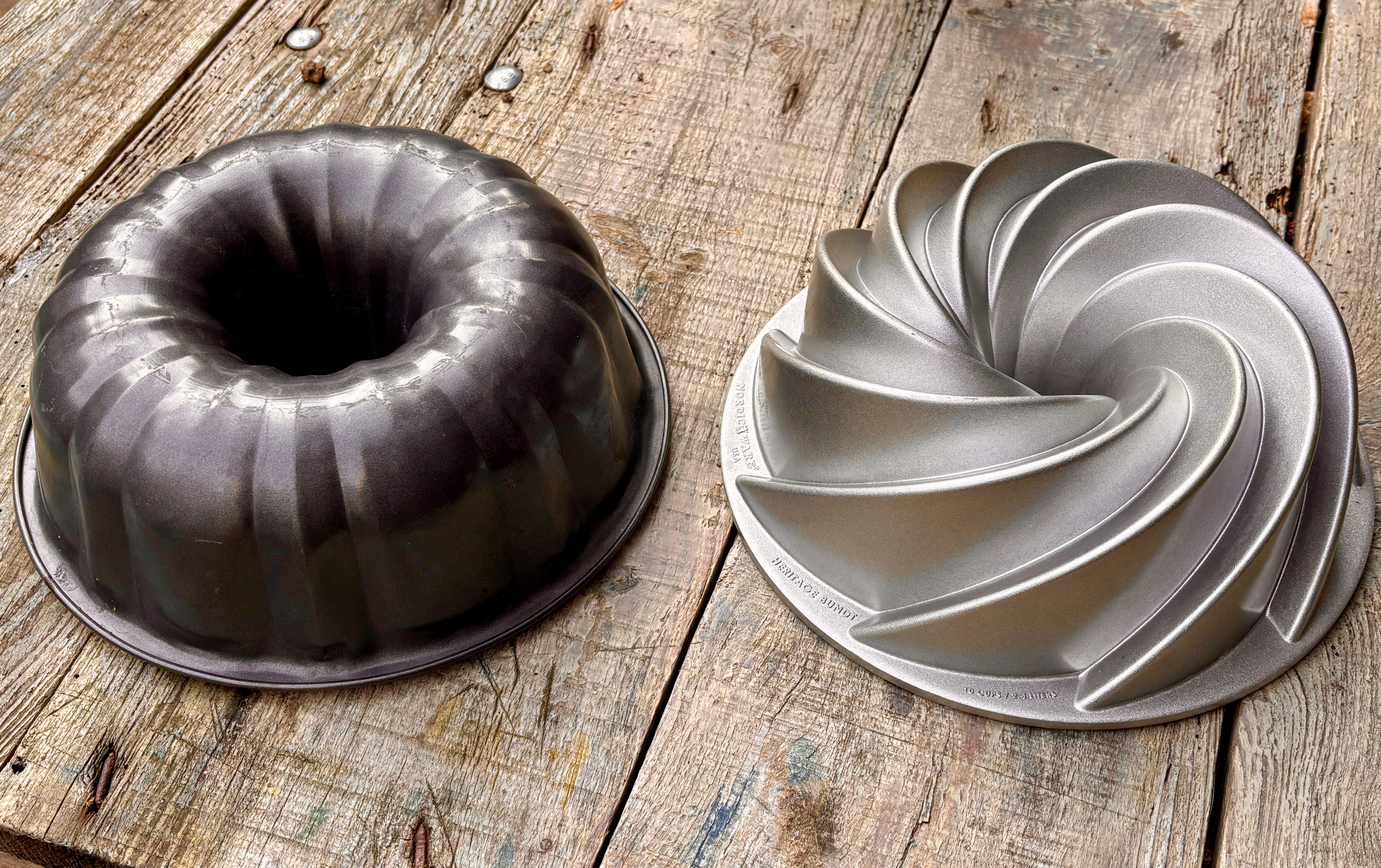
Just a footnote here on bundt pans. These are the two that I own:

The one on the left is an oldie, but goodie that I bought at a stall at the market in Paris. The one on the right is a newer on from Nordic Ware. I had trouble getting it out of the one on the right, and used the one on the left for the cake in this post.

As mentioned above, my esteemed food stylist friend says that he always uses a baking spray with flour in it on bundt pans, and they pop out easily. That was echoed a few days ago when I was talking to baking expert Brian Hart Hoffman, founder and editor-in-chief of Bake from Scratch magazine, who shared that sentiment and said to always use baking spray with flour in bundt and fluted pans, not regular non-stick spray.

Confession: I may have used non-stick spray on the pan on the above right a few times, as well as run it through the dishwasher - another no no, which may be why cakes stick in it sometimes. Nordic Ware has a video about how to wash a bundt pan.

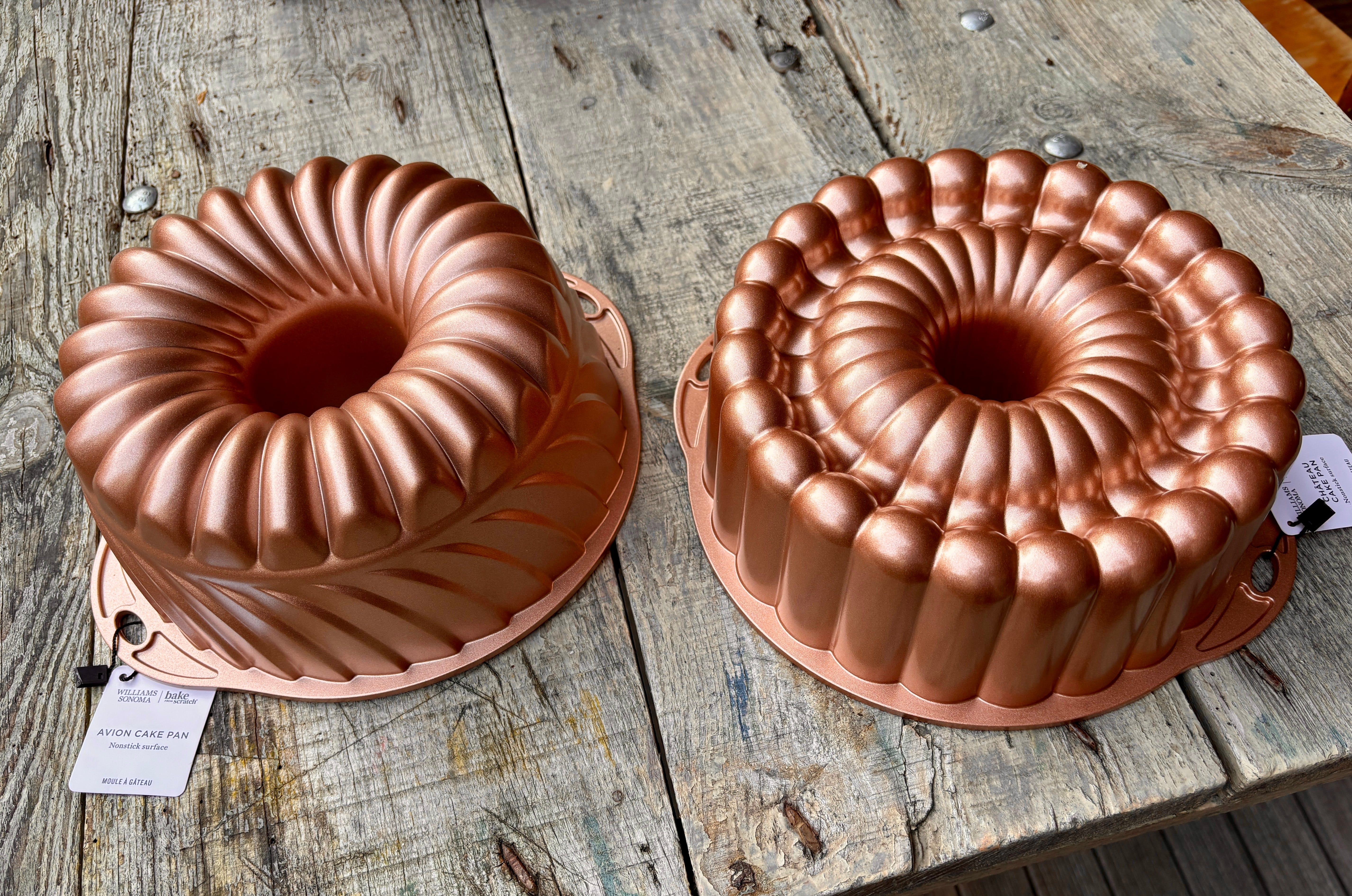
As a treat, Brian brought me two of the cake pans he designed for Williams-Sonoma, below, so I can start afresh with my shiny new fluted tube pans. And this time, I’ll treat them right!

❌