When Asian people celebrate — birthdays, graduations, retirement, whatever — there’s likely to be a layer cake featuring fresh strawberries and light, fluffy whipped cream. Such cakes are stalwarts at Asian bakeries, which churn them out daily. But truth be told, the cakes are rather tasteless because they are mass produced with unripe, sturdy fruit. The whipped cream doesn’t taste like much and neither does the cake itself. I’ve been disappointed too many times by these perfect looking cakes. So I bake my own.
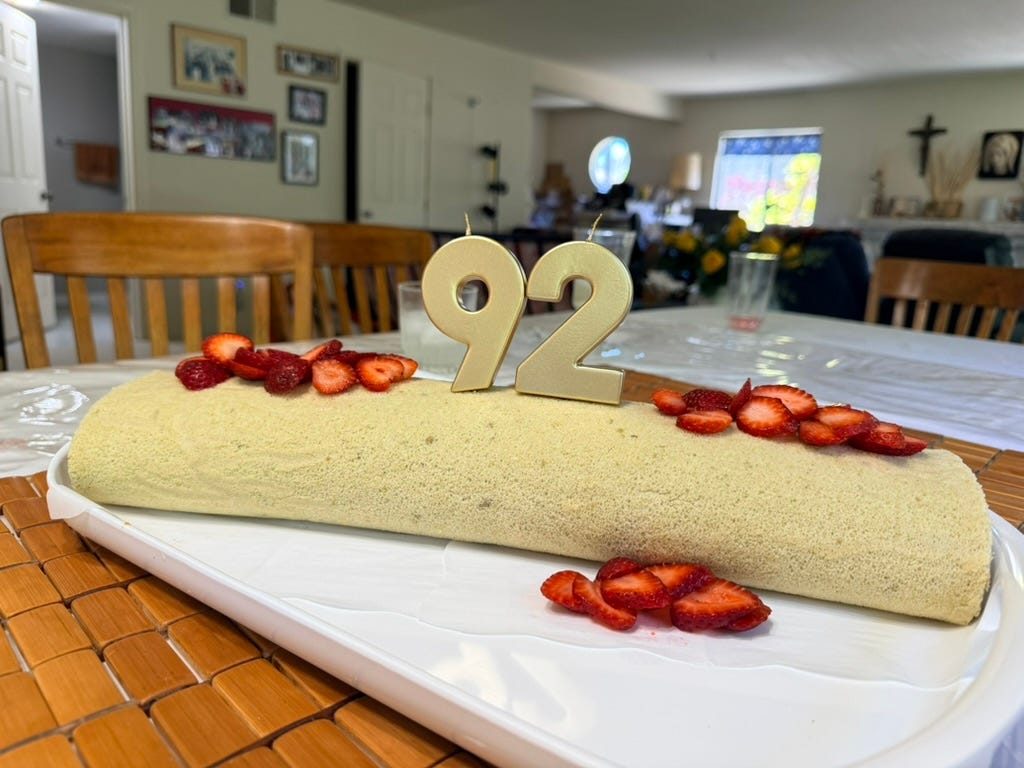
Gearing up for my mom’s 92nd birthday luncheon, I dreamt of baking her a pandan cake. My initial thoughts went to a favorite pandan chiffon cake recipe (🆓 on my website). It’s showstopper green and fragrant from the alluring vanilla-coconut flavor of pandan leaf (screwpine, lá dứa in Vietnamese). Baked in an angel food cake mold, pandan chiffon cake is casual. I needed easy-ish celebratory sparkle, a cake I could bake after a day of work and one that would hold up to an 8-hour roadtrip to my mom’s house. 💖
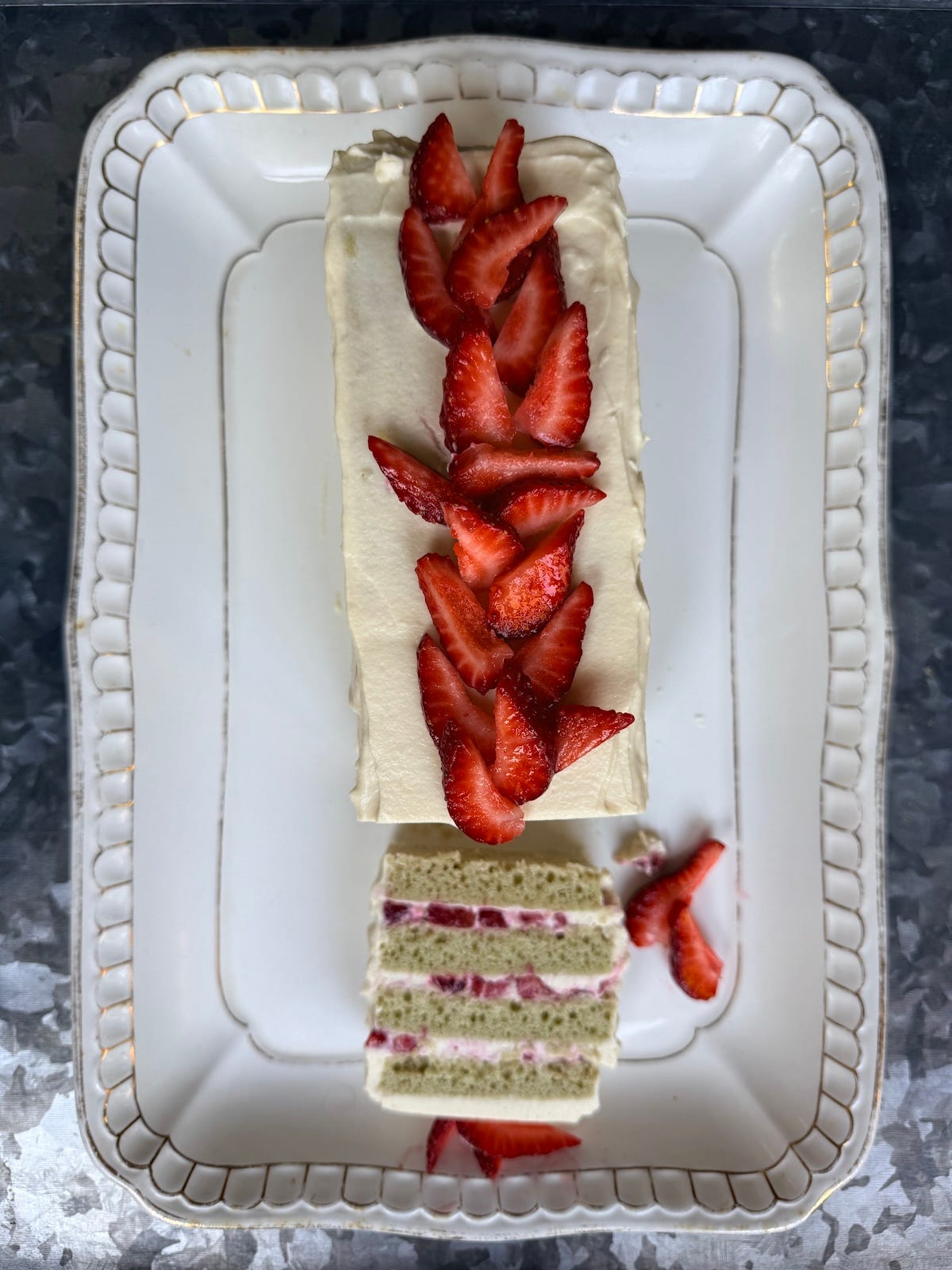
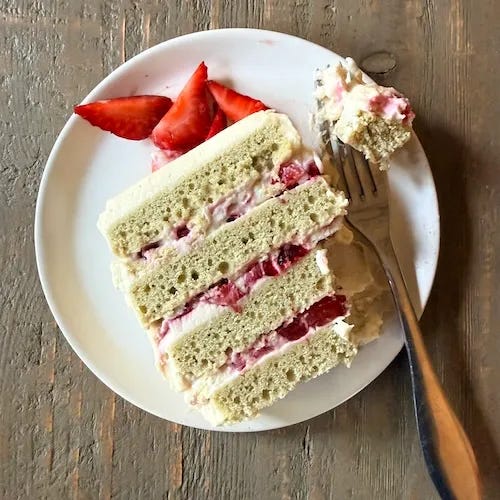
In the end, I tweaked Shilpa Uskokovic’s strawberry roll cake recipe in a recent issue of Bon Appetit. My creation was a pandan-strawberry cake filled with a coconutty whipped cream. We had twelve adults and two toddlers and when it came time for dessert, I presented the cake. Viola!
My sister Tasha gasped. “You made that?” she said. She’d eaten lots of strawberry and cream cakes with me when we lived near Monterey Park in the 1990s.
Everyone loved the cake, though Linh, my avid baker sister, said, “The cream is delicious but I’d like more cake.” I agreed. You didn’t taste enough pandan. Plus the cake was strangely salty. (Linh had baked a Sicilian orange cake for my mom so our cakes shared the plates.)
Driving home, I sketched out a new recipe for a thicker cake in my head. It took two more bakes before I arrived at the versatile recipe I’m sharing with you today.
Along the way, test cakes went to the neighbors. One neighbor shared a big piece with their grieving best friend who’d just lost her mother to a long battle with breast cancer. The friend ate the biggest piece, I was told.
As I aimed for a thicker cake, I realized that you can’t roll it because the cake cracks and breaks. You can’t see it in the cake on the left but there’s a fissure that kept getting bigger as the cake sat. The neighbors didn’t mind, though!
I tinkered with the batter again and the cake broke during rolling. What to do?
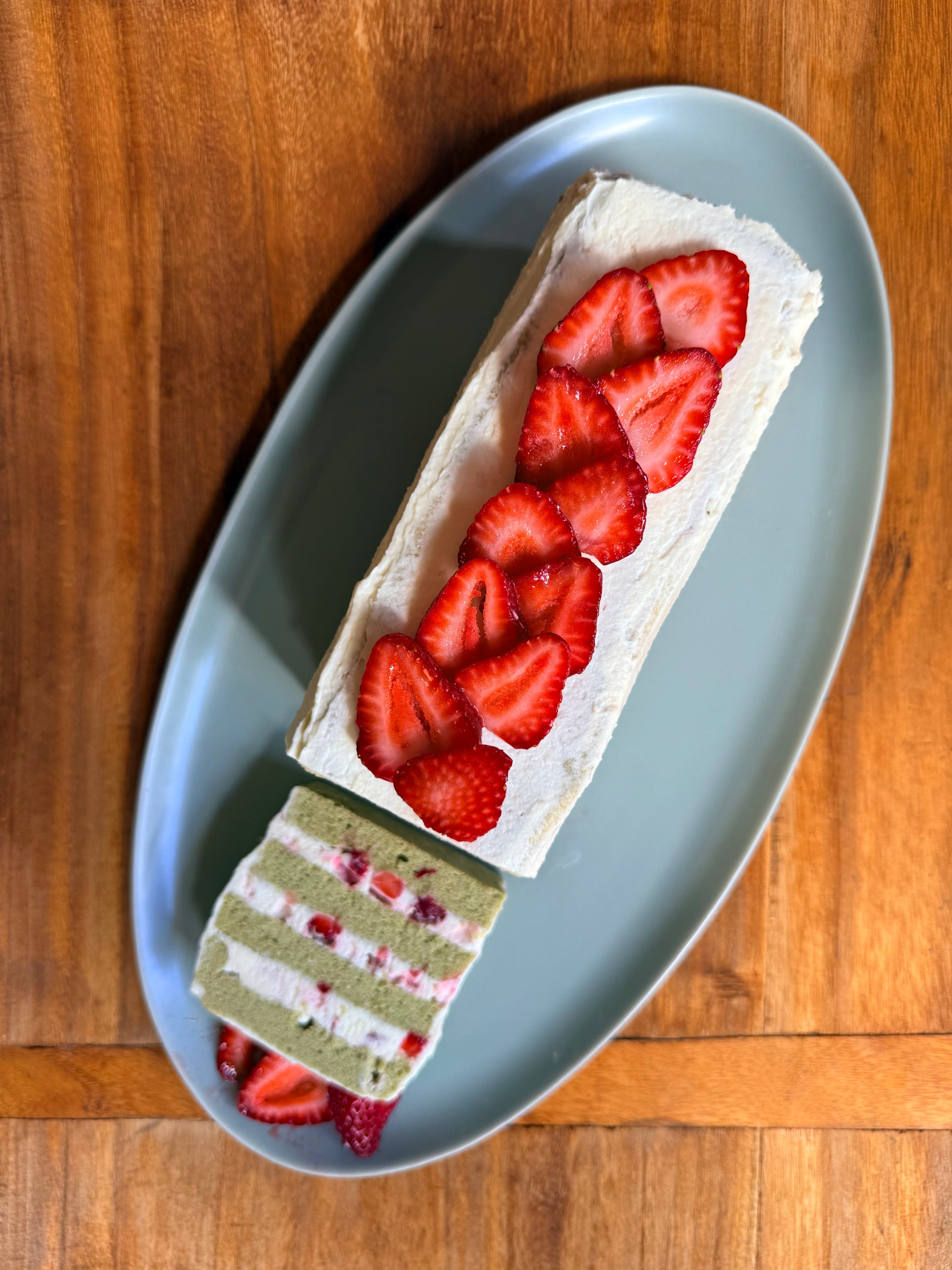
I patched up the cake and pivoted to building a rectangular layer cake. Rory said it looked much fancier than the roll cake. They’re the same cake! 😆 😆 I gifted cake #4 to a different neighbor, who’d just finished an arduous week on a construction project. He couldn’t believe I had baked it and as you see (in his text above), he was so happy.
What began as an Asian celebration cake turned out to be a happiness cake for everyone. Along the way, I made different flavored cakes — pandan, matcha, citrus, and vanilla. I also made two kinds of whipped cream: vanilla and coconut. And yes, I also crafted roll and layer cakes. There were so many wondrous possibilities.
For all those reasons, this is my Strawberry and Cream Dream Cake recipe!
Below you’ll find a versatile, useful package of information containing.
The Pandan-Strawberry and Cream Cake recipe that you can make as a roll cake or as a layer cake (in full text and downloable PDF), with vanilla whipped cream or a coconutty whipped cream!
Three (3) cake variations for Matcha-Strawberry and Cream Layer Cake, Citrusy Strawberry and Cream Layer Cake, and Vanilla-Strawberry and Cream Layer Cake
Pointers for choosing flavorful berries, natural pandan shortcuts, and making fluffy, stable whipped cream that holds up for days
A video tips for making billowy cake batter
Make ahead timing tips so you won’t get cranky
I’m not a skilled cake baker but I mastered this one enough to impress my jaded family and neighbors. It took me a few tries to get here but you’ll make a knockout cake on your first time out because I’ve eliminated a lot of the vagaries.
Bring this dreamy strawberry and cream cake into your dessert rotation.
Curious cooks, readers and eaters fuel this newsletter. The dispatch was created for paid subscribers who sponsor PTFS. For the complete strawberry and cream cake lowdown, fully use the recipe index plus save 25% on my cooking classes, become a paid subscriber. Your support makes a big impact.
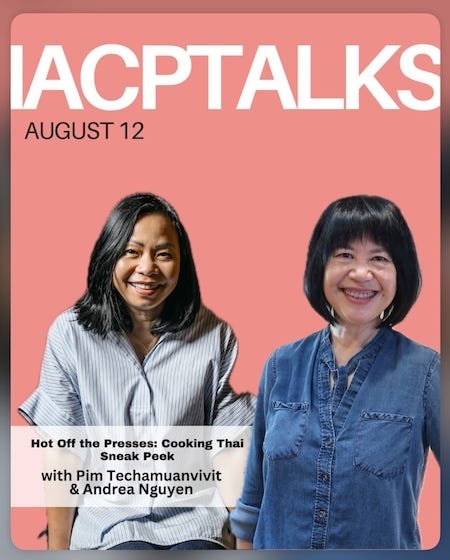
Rob from Asheville, NC, emailed earlier this week asking about Thai cooking classes and I pointed him to Cooking Thai, which releases on August 25. I wish I had had this video to share with him. It’s the playback of our cookbook preview talk last Wednesday, August 12.
In the Zoom session, you’ll learn how we structured the book, worked together, and how much we love Cooking Thai. We hope you do too!
We appreciate IACP giving us the space to share our new book baby. I’ve been a member of the organization for decades. If you’re interested in joining, IACP shared this code » 20%offjoinnow « for a discount on your membership.
A zillion thanks to the PTFSers who attended from as far as New Zealand where it was very, very early in the morning! You asked standout questions on topics such as wine pairing and fresh coconut milk (Grant), tofu substitutions (Ann), turmeric storage (Jen), and the joy of cookbook collaboration (Nina). More about the book at my website.
If you have not already pre-ordered — head to a local bookshop or check out various online vendors. If you’re in the Bay Area, we’d love to meet you!
Coming up on Sunday is a pandan-strawberry and cream cake recipe I’ve been developing for too long. After going four (4) rounds with the recipe, I’m happy to report that it’s finally ready for you.
Oh boy — I’m late with this dispatch because our water heater pooped out yesterday. It was basically on its 10th birthday. We tried trouble shooting it and eventually called the plumber, who labeled it planned obsolescence. We’re switching to a top-of-the-line tankless Navein unit which he says is energy efficient and lasts a very long time so long as we do regular maintenance and repairs.
Before sharing today’s recipes, I’m spotlighting cool ideas from PTFSers!
PTFS community tips
I’m thrilled whenever you send me a great tip. Here are ones from this past week!
and I are obsessed with artisanal Tin fish sauce from Vietnam. Its producer dates back centuries and the flavor is excellent — smooth and not too intense. My mom loves it too, not just because it’s from Phan Thiet, where my dad once served as provincial governor. If you’re in the Bay Area, Maia spotted it at the Costco on Almaden. It is imported by the Lee’s Sandwich people, I’m told, so I was also able to buy it at Lee’s Supermarket in San Jose after the local Costcos quickly sold out.
used my Kewpie Dupe Mayo recipe to make a dupe of Duke’s mayonnaise! Duke’s is delicious and unavailable in many parts of the U.S. It’s got a cult following in the American South. Get Steph’s tips in the comment section of the Kewpie Dupe mayo recipe (🆓 at le blog!)
shared an article about 10 must-Try Vietnamese foods. Bánh xèo (sizzling rice recipes) is on the list. Nina took my recent best bánh xèo class and commented that the crepe in the article did not look as good as the one from my recipe. ☺️ My response is that now, she’s making them better than many cooks in the world! 😉 I love being an enabler — especially whenever people make my recipe theirs.
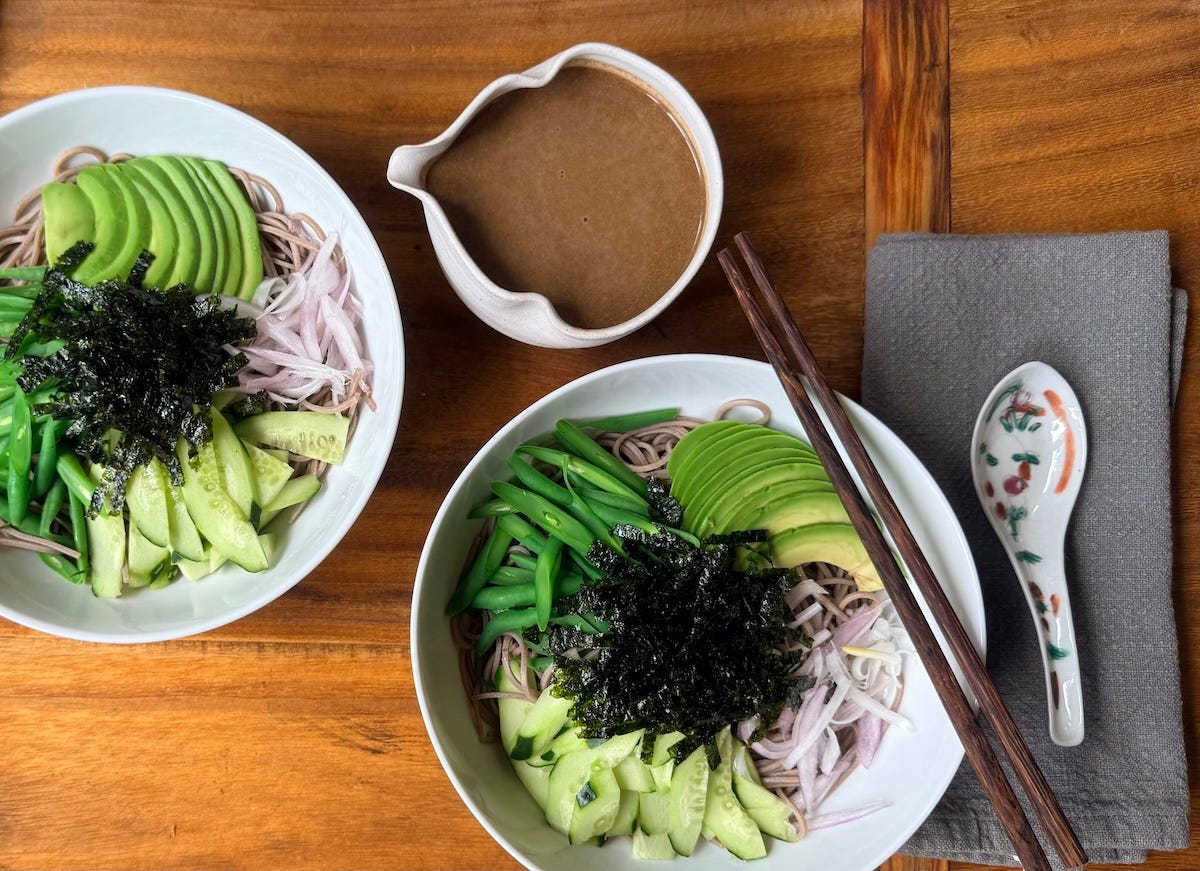
Speaking of making a recipe your own, I recently test drove a cold soba dish that’s just sensational. It’s not the classic zaru soba, which always leaves me feeling hungry. This sesame soba is super satisfying yet light and special tasting.
It’s Goma Dare Soba (Cold Sesame Soba) — a cold noodle that’s served with lots of veggies and seasoned by an umami-rich, nutty sesame-soy milk broth. A pop of wasabi at the table enlivens the whole thing. It’s hearty but light. If soba isn’t handy, make it with different noodles or even a capellini or spaghetti (but change the name into something like “Cold Sesame Ramen”).
The recipe comes from Japanese Comfort Cooking, a great new book by Tadashi Ono and Harris Salat. I made minor tweaks and took their cues to play with the toppings. The recipe uses dashi so you can now make more of the wondrous Japanese broth! Slurp up the 🆓 Cold Sesame Soba recipe at my blog.
Cold or Cool Noodles?
Ya know, such Asian noodle dishes are never served super cold or even coolish, though they are cooling. They are room temperature.
But compared to a steaming hot bowl of ramen or pho, Japanese goma dare soba and Vietnamese bún are ‘cold.’ If you’re dealing with diners who like to split hairs, stick with the dish’s native language name to avoid misleading them.
Or maybe is has to do with Japanese and Chinese cultures?
In Vietnamese, we don’t have the “cold” or “cool” notion of noodles like in other East Asian cuisines. Certain noodle dishes feature supple tangles of noodley carbs at room temp or slightly warm. If you chill rice noodles, they break! Identifying the temperature of the noodle isn’t important to identify a dish. We want to know what noodle is served. That’s why a ‘cold’ noodle dish like bún chả is just about the noodles and the other main feature.
With that in mind, we are deep in grilling season so it’s time to lean into Vietnamese bún rice noodles. They’re on repeat at our house for rice paper rolls and bún salad bowls.
Just last week, my mom served us Hanoi-style bún chả grilled pork and rice noodles. Southern California was having a minor heat wave and the noodles comforted us without adding to the heat of the day. Make my traditional bún chả recipe with pork or take the veggie path with my meatless version. Heck, combine the two, like I have!
Want to freestyle your bún bowls? Play with my bún rice noodle bowl template to create your own (lots recipes and tips included in the 🆓 post on my blog!).
Pass the Fish Sauce is reader-supported. To receive new posts and support my work, becoming a subscriber. Or, be a paid subscribers to get all recipes and bonus perks.
That said, Viet people are not wedded to their noodle dishes. My mom requested the Taiwanese sesame noodles for her birthday luncheon last week! She made most of her 6-course meal but wanted me to add the noodles. In East Asian culture, noodles symbolize long life and she wants to stick around to eat more good food!
My grand nephew asked to help out with the cooking so I let him put on the final touches. He’s three years old. His parents took leftover noodles home for dinner.
My mom’s a formal lady and I was surprised that she was so smitten with these casual noodles from Taiwan. She loves them and so does the rest of our family. Make the Taiwanese sesame noodles for an easy one-dish meal, or include it in a party menu — present it on a communal platter and ask someone at the table to toss and serve! Along with other dishes, each batch will serve 8.
Meet me at upcoming Cooking Thai events!
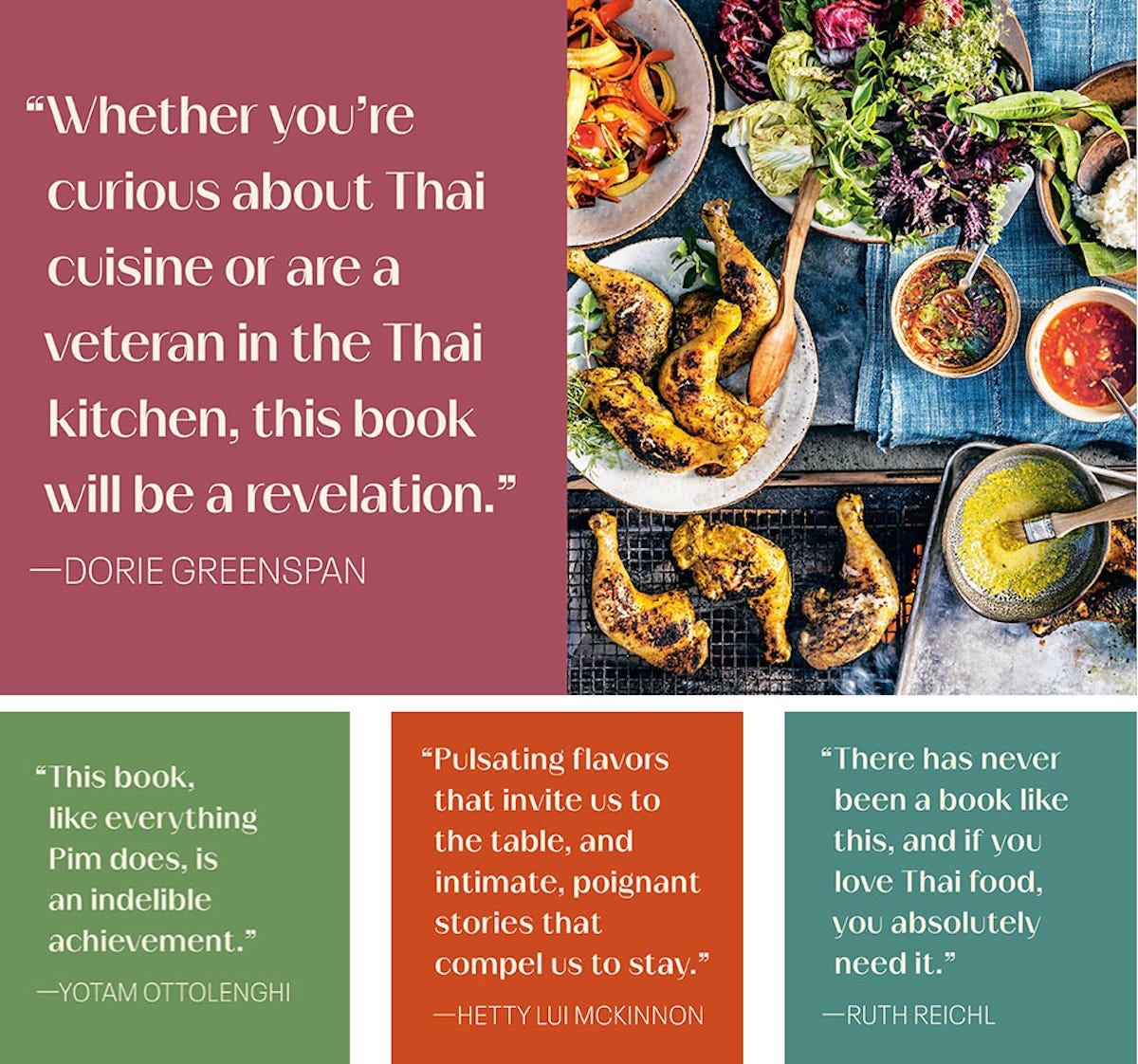
Cooking Thai releases soon on August 25. If you haven’t checked out the book, the early assessments and praise by heavy hitters like Yotam Ottolenghi, Ruth Reichl, David Lebovitz, Dorie Greenspan, and Hetty McKinnon are stunningly positive. I’m thrilled, totally stoked.
Event-wise, things are unfolding and thus far, I’ll be joining Pim at these events:
Wed., Aug. 26, 6:30pm book talk @ Omnivore Books, SF, pre-order your copy if you can’t make it in person
Tues., Sept. 1, 7pm, book talk and tastings @ Bookshop Santa Cruz, pre-order your copy if you can’t make it in person
Coming next weekend for paid subscribers is a stupendous pandan roll cake that I’ve been tinkering with for months. It wowed my family at mom’s birthday party. My taste testers (the neighbors!) love it just as much. I hope you do too!
Here we are in August already. The July 19 banh xeo sizzling crepe class sold out (hard to believe!!!) and the fun 2-hour session flew by. There was clean up afterwards (of course) and exhaustion but I had dinner made already!
The next day, we packed for a week-long trip to Kauai. It’s our second time there this year to hang out with our dear friend, the fashion and jewelry designer Chan Luu. Where I eat while I’m on the island? At Chan’s home. Her property is loaded with fresh tropical fruit, produce, and now hen-laying chickens. We do market runs to Foodland, Safeway, or Costco for anything else we need!
Some notes on the photos:
The pineapple crowns I saw in January now have fruits! Chan grows many kinds and the pink one looks cool but has little flavor, Chan says. The white Sugarloaf is a bit too sweet for me. The yellow one (above) had a balanced sweet-tanginess. We clean up the pineapple crown so it will root and then Chan’s staff replants them. About 1 1/2 years later, there’s fruit to eat! You can grow from store-bought pineapples but success all depends on growing conditions. She has well draining soil and very good sun on a slope.
The spiky fruit in the basket is soursop, which has a tart-sweet flavor. We had lots of tasty bananas, too.
We also harvested and processed a jackfruit! The tree isn’t big but it produces fruits weighing 12 to 15 pounds. That felt like a giant bowling ball. You don’t want one to fall on your head. If you have to cut jackfruit apart, oil your knives, wear gloves and work on a tarp to minimize its latex mess.
And, next time you’re near a fresh coconut, remember this tool:
Construction workers on her property gift her food they catch (fish!, crab!), hunt (wild pigs!), or forage. One of them, a generous young man named Kaiola, took us into the rain forest on Native Hawaiian land where we picked edible pohole fern tips. Loaded with nutrition, they’re snappy and have flavors similar to asparagus and green beans but with a slightly mucilaginous quality.
Absolutely delicious for stir-fries, salad, and soup. They need to be washed well and then quickly cooked to preserve their texture and color. We wrapped them in banana leaf to keep for about 3 days in the fridge. The fern is available in Thailand, where it’s called pak kood, and is made into salads, stir-fries and even dessert.
Island life is good in Hawaii — the most Asian of all States in the nation.
Thanks for reading Pass the Fish Sauce! This post is public so feel free to share it.
When you wish a vacation would continue, it means it was a good vacation. The day after we got home, I opened Alana Kysar’s new cookbook, Aloha Veggies. Alana has a knack for capturing the spirit of her native Hawaii in recipe form while making the dishes doable for mainlanders like me.
Mushrooms in my fridge and ripe cucumber, green onions, cherry tomatoes from my garden led me to Alana’s Kale and Shoyu Mushroom Salad. All I had to buy was trimmed lacinato (dino) kale leaves from Trader Joe’s. While I roasted the mushrooms and made the sesame soy dressing, Rory cut the greens. Our restorative lunch came together in about 30 minutes!
The vegan salad is simple to make yet layered with the cultures and foodways that make Hawaii inviting and interesting. It was deliciously energizing (dark leafy greens with plenty of fiber!) but moreover, it allowed me to savor island life a little longer. For Alana’s Kale and Shoyu Mushroom Salad recipe, head to my website, where it’s available for free.
Summer in 30+ recipes and oodles of kitchen pointers
Looking ahead at the rest of the year for PTFS, I had to look back. When I did, I realized that we’ve covered a hella lot of territory in since mid May, when I posted the last recap.
There have been so many delicious recipes and a bunch of focused deep dives. Anything marked 🆓 is available to all. The others are for PTFS paid subscribers.
For full access to all paywalled recipes (not just ones listed here!), become a paid subscriber. You’ll also get class discounts and seed new content, too! ⚡️⚡️ Try PTFS for a year at a discount, or save for life! Your support matters.
Cooking Thai releases on August 25 but Pim and I are going to do a fun chat about the book for (International Association of Culinary Professionals). If you want to check out the book before (or after) you pre-order it, sign up here for the virtual session. All are welcome to the free IACP event.
I’ll share info on SF and Santa Cruz book events soon!
Hope summer is treating you well — that you’re not overheating somewhere. Stay cool and well fed.
I hope the heat dome has not been too unkind to you. This week’s Sunday Special arrives early because on Sunday, I’ll be readying for the cooking class. I’m so excited and looking forward to seeing all of you.
Gadzooks! So many people are interested in mastering crispy banh xeo rice crepes. The class is packed. And there I was worried that no one would sign up! Thank you for your enthusiasm.
🏝️ Vacation Mode 🏝️ : To celebrate our 30th wedding anniversary and take some much needed time off, we’re going on vacation next week. That means you won’t hear from me again until Sunday, August 1. If I don’t see you this Sunday in class, enjoy the rest of July!
But before I go, I want to share a recipe that will repay you many times over.
Among the paid subscriber recipe suggestions this year was for more Asian basics. Those workhorse recipes help you build meals with greater ease. Earlier, I unleashed all I know about making Vietnamese nước chấm dipping sauce. This week, I wrote up my recipe for dashi stock. It’s utterly easy and incredibly transformative.
However, because dashi involves ‘exotic’ ingredients — kombu (dried kelp) and katsuobushi (shaved bonito flakes), most English-language recipes call for instant dashi. I have done that to lower recipe’s barrier to entry and get you to try something new.
When dashi is needed in a small amount to be used as a seasoning, it’s too much effort to make it from scratch. Instant is fine. However, when dashi stars in a dish, using instant dashi takes your food down a couple of notches. It’s worth it to go homemade in such situations.
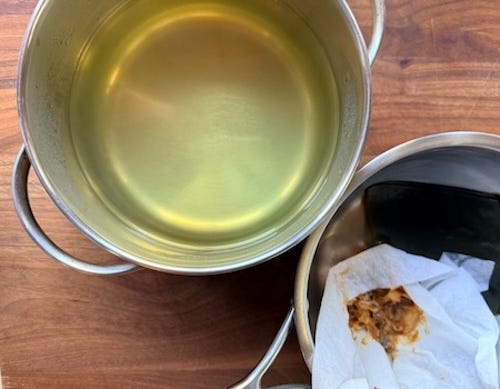
Dashi looks like there’s little going on but it has umami superpowers.
But know this: Dashi stock is much much faster and easier than making chicken, beef, vegetable, or ramen stock!
Dashi only involves 2 key ingredients plus water.
Most of the “cooking” is you letting the kombu soak in water! You can cook while you’re sleeping.
My dashi recipe plus a buying guide for kombu and dried bonito flakes are on the website. The stock keeps well for days! I included a vegan dashi variation too! Get the dashi stock 🆓 recipe and tutorial!
And, just like when you have any kind of homemade stock, when you have dashi in the fridge, a flavorful world opens up. I’m not just saying to make miso soup! I’m talking about agedashi dofu, a classic tofu dish that dates back centuries.
In Japanese, “age” refers to something fried. “Dashi” refers to the basic Japanese stock.
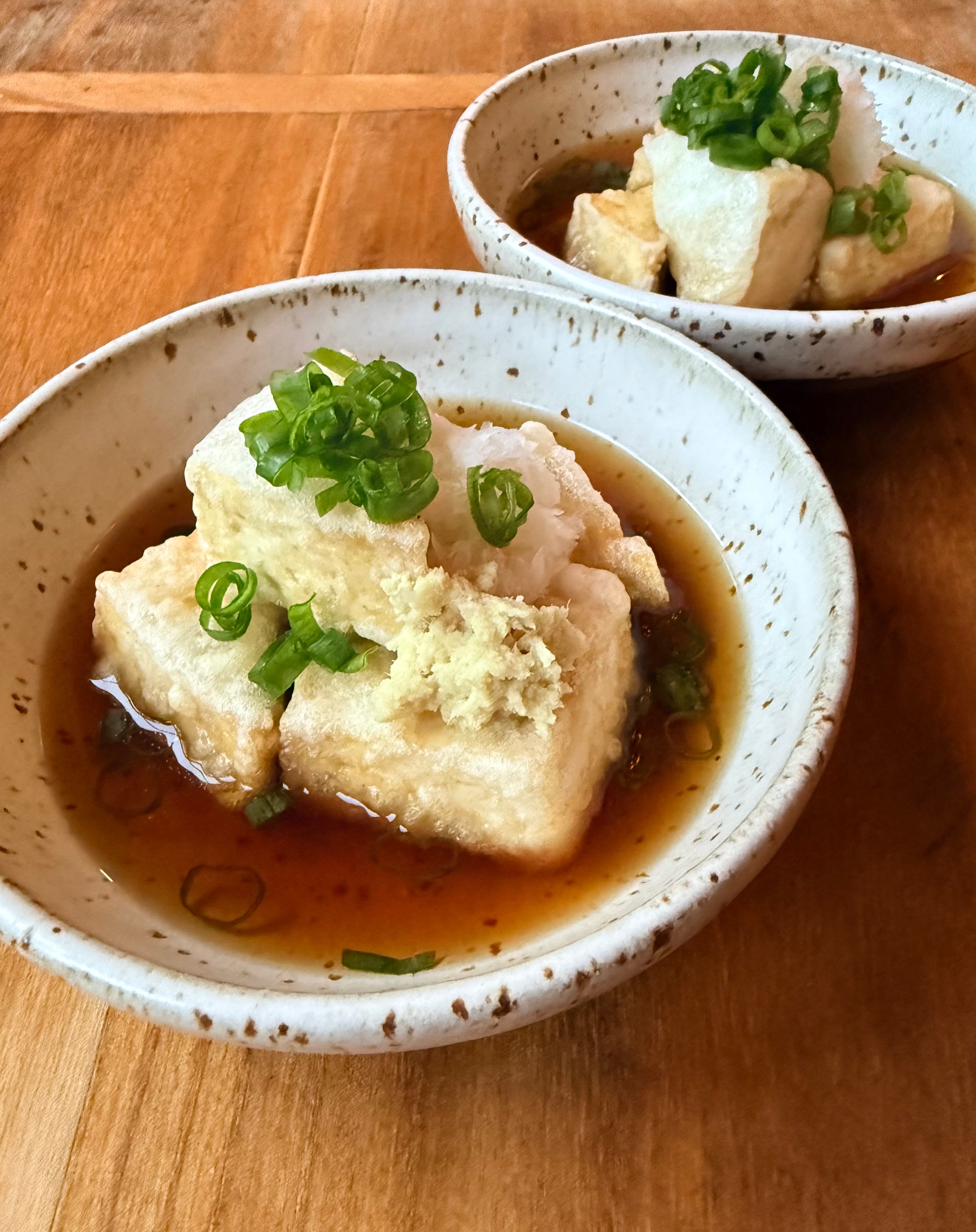
For agedashi tofu, blocks of tofu are fried to a crisp then quickly served in a savory-slightly sweet sauce of seasoned dashi. Ginger and green onion add heat and pungency. If you like, add grated daikon to cut the richness and/or a bit of bonito flakes for a smoky touch. Either way, agedashi tofu’s flavor and textural contrasts are strikingly synergistic.
You’re looking at oven-fried tofu! I was mightily impressed with what the Combi produced.
A tofu bestseller
The first formal recipe for agedashi tofu appeared in Tofu Hyakuchin (100 Tofu Recipes), a 1782 bestseller! The tofu cookbook was such a hit that two additional volumes of tofu recipes followed. Tofu in Japan is taken seriously.
Centuries later, agedashi dofu remains on countless menus all over the world and is prepared by home cooks too. It’s heavenly comfort food when the tofu is fried to a slight crisp and the delicate sauce just lightly cloaks. Most often, the tofu is sadly soggy from waiting too long to be delivered to your table. If you make agedashi dofu at home, you can eat the tofu as soon as it’s ready!
Agedashi tofu is typically deep-fried but I devised a great air-fried option in my Ninja Combi Multicooker oven (you can use your air fryer). You’ll find those cooking instructions in my package of tofu tastiness below:
The agedashi tofu recipe with deep-fried and oven-fried directions for cooking the tofu. It’s all provided both as text and as a downloadable PDF.
An explainer on what makes the tofu crispy (so you can use it elsewhere).
Two sauce options, depending on how saucy you want to be!
Timing and planning tips so you can impress friends and family.
Agedashi tofu is often listed on menus as a snack but I’ve served it as a main dish with rice and other dishes.
Curious cooks, readers and eaters fuel this newsletter. The dispatch was created for paid subscribers who sponsor PTFS. For the complete agedashi tofu recipe, fully use the recipe index plus save 25% on my cooking classes, become a paid subscriber. Your support makes a big impact.
Summertime is grilling season and in case you missed it, listen to my chat with Francis Lam on the Splendid Table. Our July 4 episode was all about grilling!
We’re also in sandwich season and my favorites are banh mi and tomato-mayo. The two were born in different places on our planet but they overlap in their reliance on mayonnaise. The synergy between mayo and Maggi seasoning sauce heavily defines the rich umami of a good banh mi. You likely buy mayonnaise but it’s expensive, despite being made of only egg, oil, and seasonings!
I’d love for you to make your own mayo because I have a ridiculously easy, 2-minute method for a Kewpie-style mayonnaise. I call it “Q.P. Mayonnaise” because Q.P. stands for Quick Prep. I’ve never had a bad batch.
My recipe plus a video to show you how easy it is to make are at my website. So, skip the grocery store run and make my 🆓 Kewpie dupe recipe (in the article, you’ll also get links to a master banh mi blueprint and hot dog banh mi recipe).
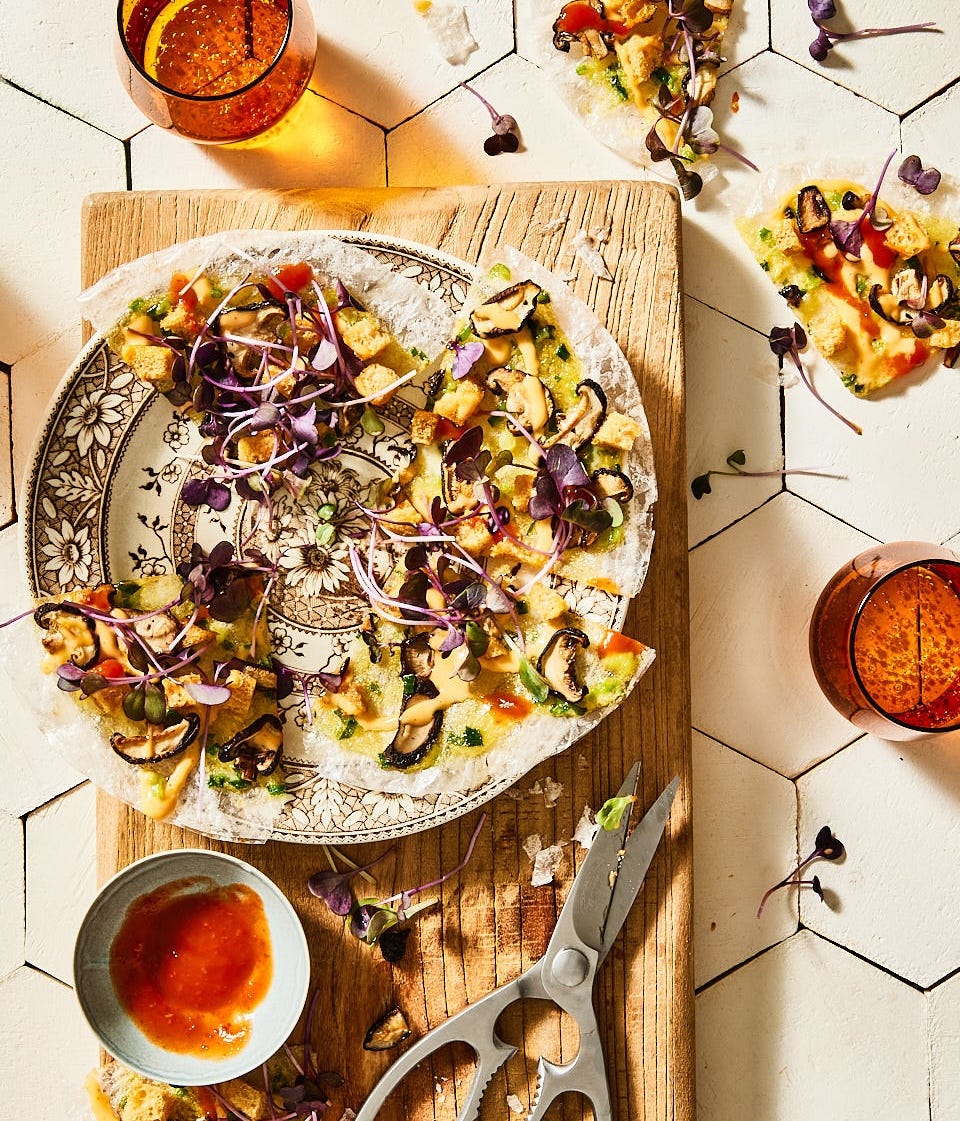
Grilling and mayo intersects in Vietnamese cooking in the form of rice paper pizzas called bánh tráng nướng (grilled rice paper). After reading about them in ’s newsletter dispatch, asked about the pizzas. They were a wonderment to Yotam’s children, who adored them and couldn’t stop talking about them. Yotam didn’t offer a recipe. Did I have one?
Yes I do, in Ever-Green Vietnamese. Drew looked up the recipe in my book and we discussed the possibility of the pizza being a fun thing for kids and adults alike. Thanks to Yotam and Drew, today’s newsletter features the pizzas!
From a street food to a home cooking home run
A beloved modern snack, bánh tráng nướng is sad to have originated in Phang Rang, a coastal city in southern Vietnam with Cham roots. It’s not the same as traditional thick rice crackers of the same name; Viet food terms to confuse.
From Phan Rang, the grilled rice paper “pizzas” trended upward in hipster-ish Da Lat and Saigon (HCMC) where young people literally ate them up. A Neapolitan would scoff at calling them “pizza”, but that’s how many Viet people have described the crispy, chewy grilled rice-paper platforms, which are topped with a mixture of eggy green-onion oil and a choice of savory, crunchy, unctuous, spicy toppings. Like with Italian pizzas, toppings vary endlessly.
I first had rice-paper pizzas prepared by a street vendor in Da Nang, a coastal town in southern Vietnam. It was early afternoon and she had positioned herself near a school. Why wasn’t she near businesses like other vendors I has seen?
The snack is a hit with schoolkids, she told me.
School hadn’t let out yet so I got to spend a while watching her craft my order on a coal-fired brazier. She had all her mis en place ready and rhythmically prepared each one, asking me what toppings I wanted. “The works!” I said. Among her toppings was a hot, salty-sweet sauce and crunchy canned shoestring potato sticks!
I grabbed a little video of her cooking:
The sauce was a byproduct from a beef jerky maker, she divulged. No wonder it tasted so good. Her riotous combo of textures and flavors was superb. My travel buddy, Karen, ate so many that she got a stomachache afterwards. We’re either kids at heart or the pizzas are damn good or both. My vote is both!
What’s fabulous about Vietnamese pizzas is that they’re fashioned from next to nothing but they are so much more than the sum of their humble parts. That’s the genius of street food vendors whose craft needs to be portable, uniquely delicious, and financially viable (low cost).
A leaf fan was part of the lady’s barebones set-up. Over the years of traveling to Vietnam, I’ve seen Viet pizzas as rounds or folded up like a quesadilla or small burrito.
Replicating food that you taste while traveling isn’t easy because of differences in ingredients and cooking equipment. There are countless hyperlocal rice papers in Vietnam that aren’t available in America. And I’m not going to ask you to get a charcoal brazier going to serve 4! After weeks of trying, I got an assist from chef friends. Their tips along with lots of recipe testing and development is how I successfully translated this street food from Vietnam into a doable recipe for your home kitchen.
Below you’ll find:
A versatile recipe for Grilled Rice Paper Pizzas in text and downloadable PDF
Step-by-step photos and instructions to manipulate rice paper into a crispy pizza!
Selection tips for choosing suitable rice paper
Timing and planning tips so you can make a fun group activity around bánh tráng nướng
Let’s grill them up!
Curious cooks, readers and eaters fuel this newsletter. The dispatch was created for paid subscribers who sponsor PTFS. To get the full Vietnamese grilled rice paper lowdown, fully use the recipe index plus save 25% on my cooking classes, become a paid subscriber. Your support makes a big impact.
California’s Napa Valley wine country is dreamy but it’s also expensive. A couple weekends ago, we went to Napa for a friend’s 90th birthday party and we were astounded by the prices. So, I’d leading off with pointers gleaned from our recent experience there.
💎 Do go on Sunday through Thursday when hotel prices tend to be lower. On a Saturday night at the tidy Best Western Plus, we [ahem] paid $400‼️ (tax and fees included); the midweek rate is about $140. Across the street from the BW are an In-and-Out burger, McDonald’s and Raley’s supermarket so you can get snacks and/or breakfast — which are not included in the hotel price. There’s a swankier Hampton Inn nearby. Stay on the edge of Napa to save money and drive a few minutes into Napa central. You’ll have to drive to the wineries anyway!
💎 Don’t overlook the wine bars and restaurants run by the Culinary Institute of America. They are located in Napa at Copia and at the historic Greystone campus on Highway 29 in St. Helena. The wine bars are automated and you can sample what you like from a curated list (you won’t have a bad wine). It’s fun and low-pressure. The CIA restaurants are helmed by student chefs who prepare and serve a la carte and multi-course dinners with wine pairings. The grounds at Copia and Greystone are great to stroll around, too. More about the CIA wine bars and restaurants here.
Very close to Copia is Oxbow Marketplace for fancy-casual food, an outpost of Gott’s Refresher (good burgers), the Model Bakery (sinful English Muffins and more), plus the Fatted Calf (sandwichery, butcher shop, charcuterie). Grab lunch or dinner or make yourself a picnic.
💎 Pop in for lunch at charming Oakville Grocery. Compared to when I first went in the late 1980s, the grocery store is now much more upscale but in a pleasant, casual elegant way. There’s outdoor seating, plenty of parking, and a automated wine bar. Order a sandwich, pizza, or salad or grab a sweet. Buy a split bottle of bubbly and sit outdoors under the shade for a splendid, lazy lunch.
Opus One’s pyramid-esque building, as seen from the Oakville Grocery parking lot.
You’ll be hanging out adjacent to Opus One (Mondavi’s ultra luxe winery), a spectacular facility where the “Opus One Experience” costs $250 per person. Less expensive is the Mondavi Estate that just reopened after renovations; tastings and tours are ticketed and worthy, if you’re a wine enthusiast and Mondavi fan.
💎 Buy beans at Rancho Gordo’s official shop! They recently moved to a bigger location on Main Street, where you can peruse their full selection. The staff is super knowledgeable, and I always notice a new bean or two when I go there (versus shopping online for RG beans). Beans make great gifts.
💎 Eat well at Stateline Roadhouse, if you’re in the Kansas City barbecue mood. Stand in line to place your order at the counter and they’ll bring it to your table. Along with the regular menu, check out the specials by chef/co-owner Darrell Bell, who trained in France and has cooked at Michelin-star restaurants in the States. One time, we got a hamachi collar special that was a knockout.
Pass the Fish Sauce is a reader-supported publication. To receive new posts, mine the 150+ recipe index, and get 25% off class sign-ups, become a paid subscriber. I welcome your support at all levels!
💎 What have you been cooking up?
The PTFS community is near and far, which I’m grateful for in unfathomable ways. I write these dispatches and share recipes that I think you’ll want to cook because they’re tasty, fun, and out of the ordinary.
Bob recently shared a special Peking duck dinner with pancakes and salad with the nuoc cham vinaigrette. Duck and lychee with nuoc cham vinaigrette is an idea I’m borrowing! Also, I love how Bob got a duck from Weee! Do you shop at Weee!?
made the apricot ginger jam with ‘cots on the East Coast and reports the results were 💯! I made a second batch and gifted some to the neighbors whose trees I gleaned. The stellar recipe is 🆓 on my website for you to use!
in France made the fresh apricot sauce with his local abricots and loved it. He had fun taking it in many directions.
I’m stoked that my recipes offer you entry points to play with food in ways that you normally wouldn’t. To keep me posted and share photos, comment on my dispatches, or use Substack Notes or Subcriber Chat (better for pics). I love hearing from you!
💎 Coming up . . .
Don’t forget to register for the July 19 cooking class! It’s only 10 days away. Paid subscribers can sign up for a 25% discount with a special promo code (which you can share with friends and family). Details here: 👇
For this upcoming Sunday Special, I’m sharing knowhow for making a Viet street food that’s popular with kids of all ages. I consider us all youthful adults.
We’re heading into a long weekend so I’m heading things off by sending this early. You won’t hear from me on Sunday but I’ll be back next week. A zillion thanks to all the folks who’ve registered for the virtual “Banh Xeo Fry Off” cooking class on July 19! Seats are still available. 😁 Join me!
The United States has its problems and we are divided on many issues. However, I’m happy to be an American citizen, especially when I reflect upon the clever, delicious ways that flavors and traditions have naturally come together at our tables. You can enjoy purist beef pho noodle soup but there are Viet cooks making smoked brisket pho in Texas and New York. In California, I’ve spotted menus offering birria pho.
Vietnamese people have been in America for over half a century and have contributed plenty. Why not include some Vietness to celebrate the nation’s commitment to democracy and self determination?
Many other Asian people have been in the United States far longer than Viet people. Filipinos were the first Asian people documented to have arrived, landing in Morro Bay , California, in 1587. They were part of the Spanish galleon trade which transported people, many of whom were enslaved, between Manila in the Philippines and North America. The ship the Filipinos were on soon departed from California bound for Acapulco, its final destination.
Numbering about 4.6 million, Filipinos comprise the third largest group of Asian Americans (nearly 20 percent of the total Asian American population), according to Pew Research. The Filipino population is most concentrated in California and Hawaii. There are Filipino restaurants and many capable Filipino chefs creating incredible culture-bending foods.
I thought of all this while paging through a new cookbook by Maui-based chef and restaurateur, Sheldon Simeon. He’s got extra cred and popularity from being a favorite Top Chef contestant. Simeon is Filipino American and like many Fil-Am chefs I’ve met, has a knack for cleverly tweaking and combining classics.
His new book is called Ohana Style (“Ohana” means blood family as well as your community, your people). The book is filled with cheffy homey fare.
This week, I test drove two recipes. One is a fabulous Vietnamese Coffee Swirl Brownie that marries fudgy American brownies with Viet coffee and condensed milk. The cream cheese swirl makes the brownie seem cheesecake like too. It’s a high-class, handsome sweet that’s easy to make. Cut the brownie into big or small pieces, depending on who’s coming over. They freeze well too so you can enjoy some now and later.
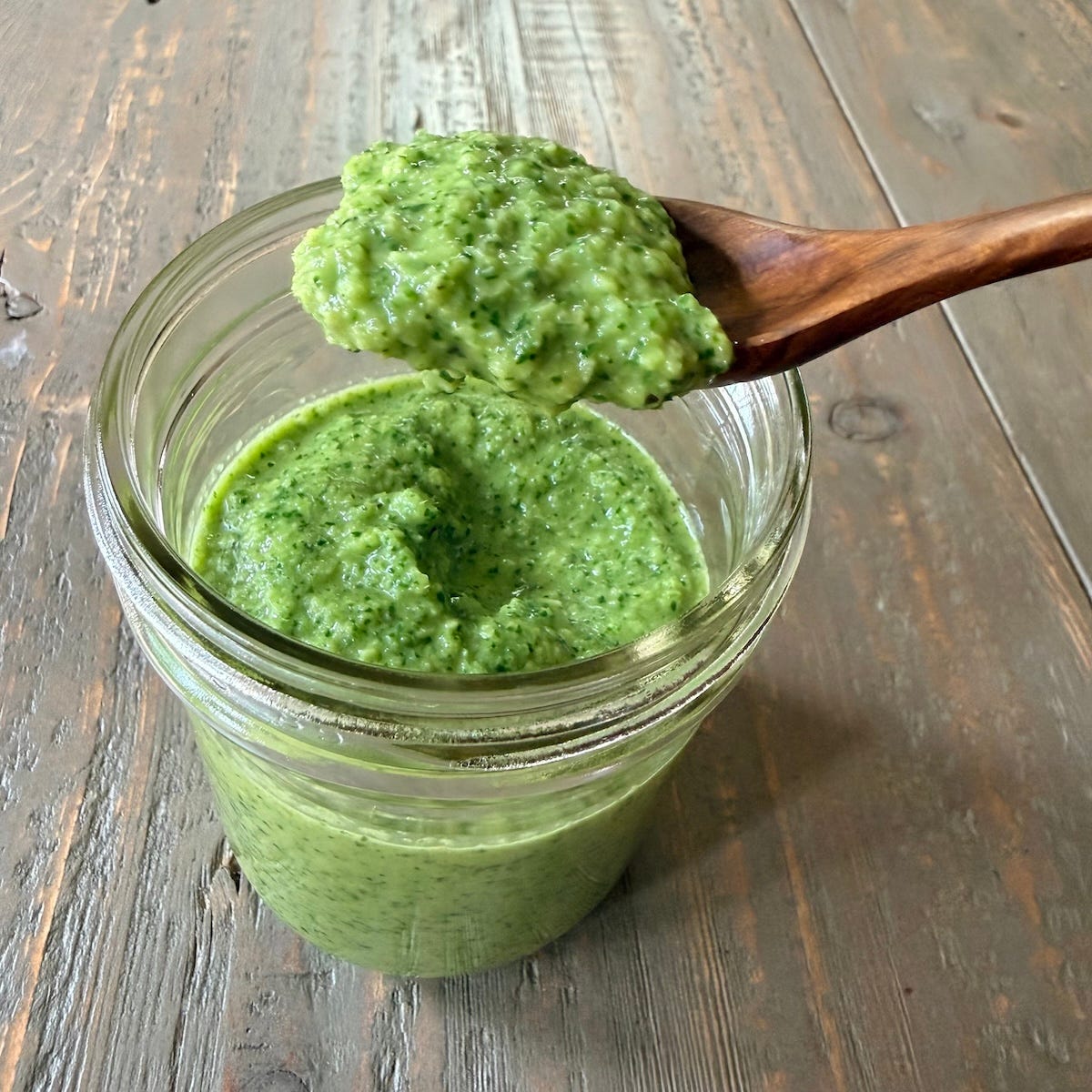
Aside from the brownie, I test drove the “Ginger Chimichurri” from Ohana Style. It’s cheffy in how all the flavors are layered into one gingery herb sauce. Simeon’s recipe isn’t like a classic, loose chimichurri, but rather more like a creamy sauce — so I’ve renamed it as Ginger Herb Sauce here. Whatever you call it, it’s light and you really experience the ginger, herb mixture plus lingering allium notes. As a bonus, the sauce is packed with good-for-you phytochemicals.
Simeon’s flavors combination was excellent though there were no weight measurements to serve as guardrails for the ingredients. I went two rounds with the sauce recipe and added weight measurements so you can follow it easily and make tweaks of your own. Also, I simplified the process so you can quickly blitz your way to Ginger Herb Sauce happiness.
The notion of combining all these flavors is boldly American. Better yet, the sauce can be quickly manipulated to make many flavorful dishes.
What to do with all the Ginger Herb Sauce that you’re about to make? 😉 In Ohana Style, Simeon shows it photographed with prime rib. He suggests serving it with grilled or roasted meats or using it as a dressing for vegetable dishes, dip for bread, or “any other way you can think up.”
With that cue, I thought up four simple ways to use the sauce aside from just swiping bread through it.
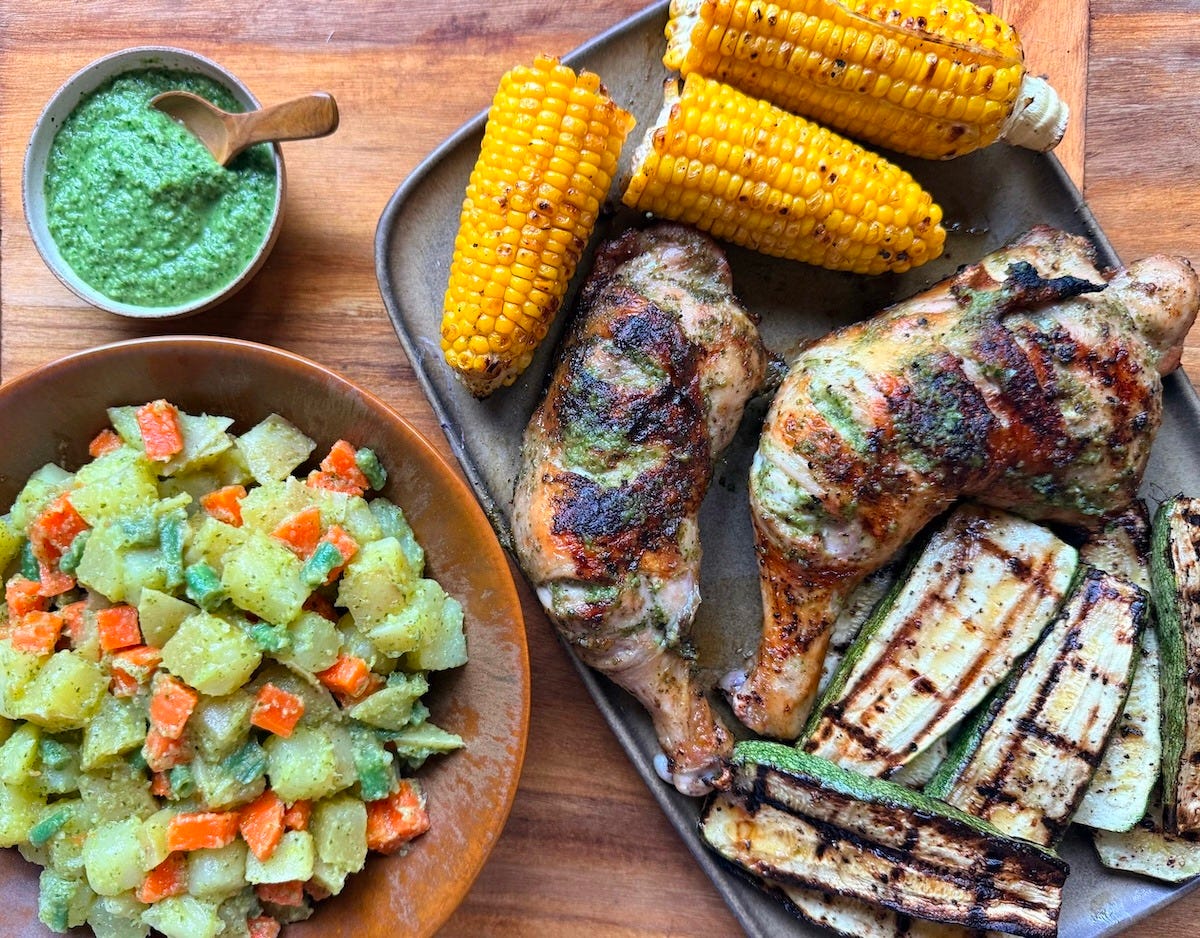
Ginger Herb Sauce can be used for many, many things. Here’s a very simple, very tasty grilled chicken plus a potato salad!
Served with crispy tofu, the sauce lends a rich bright flavor. Quickly manipulated into a dressing, the sauce turns potato salad emerald green. Brushed on grilled chicken, the sauce veils it with gingery, herbaceousness. In thirty seconds, I turned it into a salad dressing for mixed greens too. I bet you can smear it on a roast beef sandwich in lieu of horseradish or mustard! It’s a rare recipe that can magically transform so many ingredients from land and sea into something new and exciting.
Below you’ll find a package of five (5) recipes in text and as a downloadable PDF. There are bonus pointers, too!
Ginger Herb Sauce recipe
Crispy Tofu with Ginger Herb Sauce
Ginger Herb Grilled Chicken
Emerald Potato Salad
30-Second Green Salad
The sauce is vegan adaptable and keeps for 1 week. I’m sure you’ll come up with more ideas than what I’ve offered you here.
People from all over the world have come to America over the centuries, melding traditions to create new ones. I doubt that these culinary ideas could have been born and executed so well in another country. Happy Independence Day! 💥
Curious cooks, readers and eaters fuel this newsletter. The dispatch was created for paid subscribers who sponsor PTFS. To get all five recipes, fully use the recipe index plus save 25% on my cooking classes, become a paid subscriber. Your support makes a big impact.
Wowza — I’m thrilled that so many of you are interested in the July cooking class. I worried that it was summer and you’d not be available. But I was wrong!
Coincidentally, and I have been chatting about the challenges of making bánh xèo well. He has used my recipe in Vietnamese Food Any Day but hasn’t gotten satisfaction so he signed up for the class! Sometimes you need to watch someone to get all the moves and pointers so you can finesse your own cooking. Also, the VFAD recipe is good but the new one that I’ll be teaching is excellent.
That’s the beauty of taking a cooking class. I’ll be your banh xeo coach.
Joe sent this photo of banh xeo and pho from a Viet restaurant. I assured him that his will be better. 😆
When I researched and developed the versatile only kung pao chicken you need, it dawned upon me that Sichuan cooking has a knack for using peanuts to yield heady dishes. Kung pao is one of them but there’s another popular dish called “second sister rabbit cubes” (èr jiě tù dīng 二姐兔丁 ) that includes peanuts, poached rabbit, fermented chile sauce, and green onions.
I make a vegan riff with tofu because it’s easier, healthy, and just as rich, spicy and umami laden. Also, the rabbit version is cool weather fare but the tofu version is lighter and great year round. Without a nickname, my take on the Sichuan favorite is simply called “spicy tofu and peanuts” (huā rén dòufu gān 花生豆腐干).
I wish you could take a whiff of the tofu to take in its tantalizing aroma. Yes, tofu dishes can look and smell inviting!
Like kung pao chicken and mapo tofu 🆓, dishes like this one are wickedly addictive. They possess a broad range of flavors — from rich and salty to spicy and pungent. The spectrum of textures span from soft to crunchy to chewy. Stand over the bowl, inhale the tofu’s aromas, and you’ll want to dive right in.
Your nose will tingle just a bit from the chile heat — which you can partly control with homemade chile oil. This condiment is a constant in my kitchen like it is in many Asian kitchens. It’s more useful than chili crisp because it plays with other flavors well without taking over.
Make the 2-ingredient recipe from my 🆓 free chile oil recipe at the website. Dial in the heat and play with the flavors! Aside from using chile oil here and in the Taiwan sesame cold noodles, you can drizzle it onto noodle soup, mix it into dipping sauces, and so much more.

Below you’ll find:
Spicy Tofu and Peanuts recipe in text and as a downloadable PDF
Pointers on sourcing and using two umami powerhouses — fermented chile bean sauce and fermented black beans
Tips for how to choose the “right” tofu and prep it for big flavor
Ingredient substitutions (because we all like them!)
Serving suggestions so you can make the most of this recipe
And, this tofu dish happens to be vegan. I hope you befriend and make it often.
Curious cooks, readers and eaters fuel this newsletter. The dispatch was created for paid subscribers who sponsor PTFS. To get all the spicy tofu details, fully use the recipe index plus save on my cooking classes, become a paid subscriber. Your support makes a big impact.
One of my 2026 goals was to teach more online cooking classes! It’s taken so long to open a class because I’ve been fine tuning a recipe for bánh xèo — Vietnamese sizzling rice crepes. They are a classic Saigon treat that many people swoon over. To make bánh xèo thin, crispy, and light is a feat normally left to professional street food chefs or tenacious home cooks.
But, you can rival them. I’ve come up with batter options and techniques for you to make them just as good as the pros! After months of tinkering, this recipe is the best I’ve ever made. I’m very happy with the results, which wowed even my mother.
My new bánh xèo recipe is:
Doable with supermarket or with Asian market ingredients
Consistently crispy with just the right amount of chew
Easy to fry up and won’t make a mess of your stove
Gluten-free, dairy-free and vegan friendly!
Despite using everyday ingredients, the crepes involve a certain level of finesse. Given that, I built a new online class called “Mastering Bánh Xèo” so you can make the Vietnamese sizzling rice crepes yourself.
The crepe recipes yields a satisfying one-dish meal but to round things out, I developed a fruity 3-color dessert parfait (chè ba màu hoa quả) to go with the crepes!
Take the class and I’ll walk you through making a fabulous menu to celebrate Vietnamese street food at its best. You can entertain and make a party from this menu too!
Bánh Xèo class details
Topic: Mastering Bánh Xèo: Make Vietnamese Sizzling Rice Crepes at Home
Day and time: Sunday, July 19, 2 to 4pm PST
Cost: $42.50 per person (includes all recipes and video playback)
Can’t attend the livestream? Sign up for the class to receive the recipe packet and video playback. You can also email me questions!
Registration discounts
🐦⬛ 🌅 Early bird discount:Between now and June 30, save 15% off the ticket price with this special code: sizzle15
✨ 🎁 Paid PTFS subscribers alwaysreceive a 25% off discount between now and when ticket sales close. That promo code is in this dispatch for paid subscribers.
If you’ve been on the fence about upgrading, now’s a great time! Save 30% for 1 year. Save on the class ticket too!
Cooking class general information
The low-down on how the classes run:
Day and time: Sundays, 2-4pm PST, so you can make something for dinner or for the week ahead. It’s also (hopefully) an unhurried time for you.
Class length: 2 hours, including Q&A
Online platform: Zoom, with a playback recording for all registrants
Ingredients: Most ingredients are available at supermarkets. Asian market shopping is sometimes required. You will get pointers, such as brand suggestions, in class materials.
Equipment: Basic home kitchen equipment. Nothing fancy or exotic is required. If there’s something special, it will be flagged in the class materials.
Class materials: After registering, you’ll get a confirmation email with a link to a downloadable PDF of class materials which contain all recipes, Zoom link, plus lists and pointers (groceries, equipment, and prep).
Zoom class link: The day of class, you will get an email reminder with the link again.
Cost: Each ticket is $42.50
Refund-ability: Unfortunately, class registrations are not refundable. Student attendees receive the detailed class materials, livestream class, plus access to the recorded playback.
Want the class but can’t attend? Just sign up to get the class materials and recording to watch. Whether or not you attend the livestream, you can email me follow-up questions.
I’m so excited about teaching you how to make this new recipe. Join me on July 19.
P.S. Coming this Sunday — a spicy, nutty tofu to keep on hand, take on a picnic or bring to a potluck. It’s deliciously indestructible!
By now, you know Vietnamese nuoc cham dipping sauce, well yes? I shared all my tips and recipes for how to make the versatile sauce in a March PTFS dispatch. I hope you’ve made good use of the recipes👇!
Let’s boost your Viet cooking game with dipping sauces that are sort of an insider’s secret. They’re popular in Vietnam, where people buy them and make them at home too. They require few ingredients and in 2 minutes, you can conjure up a spicy, sweet, tangy, creamy condiment that goes with practically anything!
Originally from Nha Trang, a coastal city in the southern part of central Vietnam with lots of fresh seafood, these sauces involve an unusual combination of ingredients that includes sweetened condensed milk. You can make either a green or reddish-orange sauce depending on your chile preference. The more popular one is green and called Muối Ớt Xanh — literally green chile salt, but in English, it’s often called “Green Seafood Sauce”.
Indeed, there’s truth in advertising — Green Seafood Sauce goes well with seafood. However, it also goes with other animal proteins and veggies too. Ditto for the red version.
I experimented with the sauces by trying both with a mixed grill this week that included shrimp, squid, veggies, and Viet restaurant-style lemongrass pork (thịt heo nướng sả), a free 🆓 recipe on my website.
The well-seasoned pork has layered flavors and this sauce amplified them, rather than overwhelm. Remarkably, the sauces punched up the flavors of everything. The shrimp was briny sweet, the squid was delicate, and the veggies each had their personal flavor characteristics. (All those items cook up fast so along with cooked rice that was heated up in the microwave, we had dinner in little time.)
The sauce colors are outrageous and all natural, I swear!
So, you should have my versatile formulas for these sauces in your back pocket for grilling season and beyond (they go well with steamed seafood, and roast chicken and steamed chicken, I’ve heard!). While you’re at it, try brushing these sauces on food while they’re grilling. Why not?
Translation note: The green sauce is often translated into English as “Green Seafood Sauce” but the red one is awkwardly called “Red Chile Salt Sauce”. They both go well with seafood so I’m just calling them Green and Red Seafood Sauce. If you want to be 100 percent correct, call them by their Vietnamese names:
❇️ Muối Ớt Xanh (“moo-ee uht sann”)
🅾️ Muối Ớt Đỏ (“moo-ee uht daw”)
Below you’ll find this suite of information for you to enjoy what I prepared and to riff on it!
5 recipes: Green Seafood Sauce + Red Seafood Sauce recipes + guidance on how to make simple Grilled Shrimp + Grilled Squid + Grilled Veggies
Recipes are in text and as a downloadable PDF
A techniques video on how to trim shell-on, head-on shrimp like a pro
Ingredient explainers and strategies for dialing in a heat level to match your taste buds
I’m keeping jars of these sauces in my fridge this summer and so should you!
Curious cooks, readers and eaters fuel this newsletter. The dispatch was created for paid subscribers who sponsor PTFS. To get all the saucy details, fully use the recipe index plus get other benefits, become a paid subscriber. Your support makes a big impact.
I can’t remember if we had El Nino or La Nina last year but the weather yielded a bumper crop of apricots in Santa Cruz. One of my neighbors is out of the country and I’ve been gleaning the fruit that’s fallen off his trees. Successive windy days knocked lots of the delicate Royal Blenheims off his trees. So far, my windfall ‘harvest” has yielded about 30 pounds of apricots. If I didn’t gather the fruit, the ants would have feasted and I would have cried.😆
At home with the fruit, I sorted them into piles of soft (eat or cook soon) and firm (hold). Blenheims are known for their intense aroma and sweet flavor. They bruise easily so I keep them refrigerated in recycled shoe boxes.
Add to that, another neighbor texted that he was leaving town and I was welcomed to glean what remained on his apricot tree. He even left his picker out for us to grab the fruit at the top of the tree.
We’re eating lots of apricots now to savor their summertime splendor; they’re a delicious, fiber-filled fruit. Plus, I’ve been cooking with them in various recipes. For instance, I’m experimenting with making umeboshi apricots, which will take till July or so to finish. Instead of red shiso, I’m using Vietnamese shiso (tia to), which is garnet and green. This Japanese recipe and this other recipe are serving as my guides.
Here are three other recent apricot projects of mine from this past week that you may be interested in!
The first time I shared a jar of apricot ginger jam with my dad, he ate it right off the spoon. His eyes widened and a big grin spread across his face. The jam was and is that good. It’s not too sweet and has enough lemony tang and gingery bite to balance the flavors and make it taste super special. It’s one of my favorite ways to preserve apricots for winter when I’m needing some sweet sunny summer cheer.
Use apricots from your tree (or someone else’s!), the farmer’s market (ask for jam-quality fruit to save money), or the supermarket. Make a half batch with just 2 1/2 pounds (1.1kg) of fruit, if you like! The jam makes a great gift too so bank your efforts for the holiday gift giving season. The stellar recipe is 🆓 on my website for you to use!
💎 Spicy fresh apricot sauce
Thank for this saucy idea that she suggested on Substack Notes — make a fresh apricot sauce with chile and fish sauce for grilled seafood. I did just that and it was great — even on rice, which reminded me of when my mom used to serve us kids sliced ripe mango with rice and a smidgen of fish sauce. It was Mom’s clever way to get us it to “get the rice to go down.” I’ve adored the fruity-funky combo ever since I was 5 years old! Rory is new to the idea and loved the sauce on rice too.
Enjoy the apricot sauce at room temperature as a dipping sauce or chutney-ish relish. Keep scrolling for the recipe . . .
Spicy Fresh Apricot Sauce Recipe
In a small food processor blend together:
8 ounces (225g) pitted ripe apricots (soft ones are welcomed!)
1 Thai chile, coarsely chopped
2 Tbsp fresh lime juice, plus more to taste
1 Tbsp fish sauce, plus more to taste
1 very small clove garlic, finely chopped
Taste and adjust the flavor with extra lime juice by the to tame sweetness or fish sauce to add savory umami-ness. Incrementally add each by the 1/2 Tbsp (1 1/2 tsp). Use immediately or store in a jar for up to 1 week.
Support Pass the Fish Sauce! Join us for free or upgrade to a become a paid subscriber to enjoy 150+ professionally developed recipes, seed new content, and get future class discounts. Thanks for your enthusiasm!
💎 Almond Apricot Cake (gluten free)
Apricots are from Central Asia and China and almonds may have hailed from those regions too. They are destined to be together in a sweet treat. I wanted an easy cake to combine and celebrate the two ingredients and created this delight. I riffed on ’s almond butter cake recipe from her brilliant Gluten-Free Flavor Flours cookbook, but baked fresh apricots right into the cake, an idea poached from the French moelleux of summer fruits, a cake recipe that wrote about a number of years ago.
One cake serves 8, if you decide to share it.
The fruit sank into the bottom and didn’t turn totally mushy; it added a tangy contrast to the cake that was wonderful to eat. The top baked to a delicate crispness that finished the cake with a truly special crust. (Yes, I think you can make this vegan too!)
I shared some with neighbors, two of whom enjoyed it to celebrate their baby’s 6 month birthday (their baby is also named Rory).
Like the popular PTFS easy lime pound cake recipe, this one is also made in the processor. (I’m a somewhat lazy cake baker.) I’ve just written the 🆓 recipe up at the website for you to bake it up yourself. You can easily play with it too. Make this almond apricot cake recipe your summer go-to!
Coming up for this Sunday Special are ideas for the grilling season that is now upon us!
Woks were invented in China about two thousand yeas ago but they remain a mystery to many cooks. That’s why my stir-fry recipes specify that you can cook the dish in a large wok or skillet. My recipe developer’s heart is always hoping that you’ll use a wok because that’s how the dish was meant to be cooked. A skillet will do but the explosive action of a good wokked stir-fry fills the kitchen with sizzling sounds, smells and then savors that a skillet cannot provide!
I’ve been spending more time on Substack’s Notes app and chatting with some of you. Earlier this week, remarked that she aspired to having a well-seasoned wok like the one I used in the kung pao chicken recipe video.
That tickled me because I don’t consider myself a master of the wok. Vietnam has being heavily influenced by Chinese culture but wok cooking is not a thing for many Vietnamese cooks. Most people choose skillets over woks, though as reminded me, some Viet pro cooks use woks for making sizzling rice crepes (bánh xèo). In the main, folks use skillets for those crepes and countless other dishes.
As I was growing up, my mom didn’t even have a wok. When you watch a video of me ‘effortlessly’ using mine, that’s the product of didactic practice. Over the years I’ve owned at least a dozen woks, and currently keep three (3) in my kitchen on rotation. Tinker and play with wok cooking to hone your skills.
Top, left to right, are carbon steel woks. Bottom left is a carbon steel wok. Center bottom is a lightweight traditional cast iron won. Bottom left is an electric teflon coated wok. I’ve owned and tried these and more!
In this post, I’m going to offer my pointers on:
Selecting a good wok
Buying pre-seasoned carbon steel woks
Seasoning and re-seasoning a wok
Wok cooking and cleaning tools
Plus, I have a baker’s dozen (13) wok recipes for you to wok away!
How to choose a good wok
Woks are workhorses in the kitchen. They heat up in a flash and can cook food quickly or be used for braising, frying, smoking, or maybe even steaming, though that will wipe out much of the patina that you’ve built up.
When shopping for a wok, consider:
Round or flat-bottom wok? Both round and flat-bottom woks work great on gas stoves. If your stove is electric coil or induction, choose a flat-bottom pan so it will have maximum contact with the heat surface.
What is a good wok made of? Choose a metal that can heat up fast and effectively — the bottom and sides of the wok should get hot because you use all that surface area to cook with.
Carbon steel woks are king. They’re known for their durability, weight options (light or heavy, more below), and endurance (you can heat it until ripping hot and you can neglect it and it’ll come back to serve you well). BUT, a carbon steel wok often requires maintenance by way of seasoning to maintain a nonstick surface.
Coated nonstick woks seem dreamy but the only coated nonstick skillet worth considering is the Joyce Chen Excalibur nonstick wok, which I reviewed on my website (🆓). After using it for nearly five years, I ‘retired’ it to my mom’s house so I can use it when I visit. Carbon steel woks rock. Second to that are old school cast iron woks.
Chinese lightweight traditional cast iron woks are thin and lovely to cook with — lots of swooshes and sizzling noises to propel you ahead! Heavy cast iron woks, like those made by Lodge, are unwieldy for tossing food around and take too long to heat. The only cast iron wok I own is a small 9-inch one that I bought to test drive single portion recipes.
asked: What about stainless steel woks and why does mine stick so much? Stainless steel pans, like ones by All Clad, require a long preheating until they are super hot (to test: flick water onto the surface and it should literally dance around, not pool). Once sufficiently hot, then you add oil/fat to film and start cooking. There should be minimal sticking (practice by frying an egg.) My mom use a thin, stainless steel wok for deep-frying. I’ve only used her wok for stir-frying greens but it didn’t perform as well as others.
I’m nudging you toward carbon steel for a good reason.
For the past two years, I’ve been road testing three carbon steel woks that are impressively good. Though they are are not all labeled as “pre-seasoned” they require very little elbow grease to prepare them for your wokking pleasures.
3 pre-seasoned carbon steel woks in rotation these days in my kitchen: the Yosukata (top), Anolon EverLast (bottom right), and a Japan iron wok/Beijing wok (bottom left).
Two are heavy duty and the third is lightweight. The lightweight Japan iron/Beijing wok is perfect for cooks who love to toss and flip food.
asked about a wok for cooks with carpal tunnel. My wrist issues are minimal but if I had wrist or hand pain, I would reach for the light Japan/Beijing carbon steel wok. It’s easier to maneuver than other woks, though it had its disadvantages. I put it to work in this kung pao chicken recipe video.
All three carbon steel woks are joys to cook with. I wrote up my review of each carbon steel wok (it’s 🆓 and at my website). Here’s the down and dirty on how they stack up:
When you’ve found a wok you like, you learn its strengths and identify its quirks. Unless a wok is Teflon coated, it needs to be seasoned. Even if a wok comes “pre-seasoned”, it still requires a little seasoning. It’s like with cast iron — you must maintain and cultivate the metal to ensure a lifetime of good cooking.
What exactly is seasoning a wok? Seasoning a wok involves heating the metal (carbon steel or cast iron) so it expand a bit to receive oil or fat, which gets into the microscopic crevices to form a film. This happens during a purposeful seasoning process as well as through regular usage. Overtime, as oil gets into the metal, a patina develops and the pan surface becomes more slick. As a pan gets seasoned, it may change color, depending on the metal.
To season a wok, I use one of these methods, depending on the pan and needs:
Cook with the wok regularly (I do it twice a week, at least) to keep the seasoning going. Aside from stir-frying, fry an egg or better yet — sear beef steaks or cook fish fillet in a wok.
Why sear steaks or fish in the wok? Because (1) the hot heat creates a crisp well browned exterior, (2) you can easily baste the food with butter or another fat that will pool in the bottom and (3) most oil droplets fall back down into the wok so there’s less of a mess to clean up.
I simply salted and peppered this steak well and added a drizzle of soy sauce to promote browning. Then I left it to sit out for about 30 minutes while I cooked other parts of the meal.
When and how to re-season a wok? I think of re-seasoning as refreshing the wok, only you’re not starting from scratch.If a wok looks dry or if food is sticking too much during repeated uses, re-season the wok. When I neglect to wash the wok well and black bits flake off during cooking, it’s time to re-season.
Here’s my quick “oil smear” re-seasoning process: Wash the pan well with coarse salt and soap, then I dry it over medium heat, add a tiny bit of oil, use paper towel to smear it all over, let the pan keep heating up till it smokes, then turn the heat off and leave the wok to cool. This whole process takes literally only a couple of minutes.
If the pan is super gross, then I may boil water and a little vinegar in it to thoroughly remove the gunk. Then I’d do one of the three seasoning methods instead of the oil smear.
A good wok talks to you over its lifetime of service in your kitchen. Sometimes it may need some extra love to perform better for you!
This free article was sponsored by paid newsletter subscribers. Join us to seed new content, fully use the recipe index, get class discounts, and more. I value your support at all levels! Thanks for being here.
Wok cooking and cleaning tools
To wok well, you don’t just need something that matches the shape of the wok to scoop, push, flip, and help you quickly move food around. In the photo below, my metal wok spatula has a gentle edge so it does not scratch or ding the wok much when I’m swiftly cooking. The handle is long so you can stand back from the stove and still cook easily. A broad wood spatula works well too!
For cleaning a wok, I love a good bristle brush. A favorite dish scrub brush works too. The handled brush in the above photo is a bona fide wok cleaning brush purchased from a restaurant supply shop.
How I clean my woks
Let the wok briefly cool after you dish out the food. Then hit it with a spray of hot water, a drop of dish soap, lots of active scrubbing and a good rinse to remove all debris; finish with drying on the stove over a low flame or wiping with a dishtowel, depending on the surface.
When stuff is super stuck on the wok, let the dirty pan soak with some water in it while you’re eating. Clean up will be lots easier. Re-season with the “oil smear” method if needed.
If a wok was used for deep-frying, let the oil cool then strain to reuse; or, stir in oil solidifier while the oil is still hot, let it harden, then discard the oil.
Get wokking with 13 recipes
A wok gets better the more you use it. Yes, food will occasionally stick but you’ll befriend the wok and know how to heat it just enough and how to use its best qualities to make great food. Here is a special collection of favorite recipes on my website (🆓) and this newsletter. Jam packed PTFS recipe dispatches often have multiple recipes so there’s lots of versatility built in.
For those of you who wondered how long the Taiwanese sesame noodle sauce lasts, I’m confirming that it’s freezable. I froze a jar of it for a week, then drove it to my mom’s house in Southern California where I whipped up the noodles for a fast lunch. The sauce tasted like it was freshly made! So go ahead and make a double batch of the cold sesame noodles sauce and use one now. Freeze the balance as 1/3 cup (80ml) portions for single servings and faster thawing.
Using egg strips for the sesame noodles reminded me how useful egg sheets are as a protein-rich addition to East Asian noodles, dim sum, and rice dishes. I grew up with trứng tráng (egg sheets in Vietnamese) in sophisticated Hanoi-style bún thang noodle soup and cheery mixed rice (cơm trộn).
My mom regularly prepared the rice dish, which is easy breezy and healthier than fried rice. Cơm trộn is simply hot rice mixed with add-ins but done in a particular fashion so it tastes special and fun. In the photo below, the red strips are a quick pickled sweet pepper which lends a crunch, piquant note to the rice.
Vegetarian mixed rice (cơm trộn chay) with seared tofu. I’ve prepared it with grilled leftovers during summer and thrown in a handful of fresh herbs too. The sky’s the limit with mixed rice so get the blueprint and make it!
Feeling nostalgic and hungry the other day, I threw together a vegetarian batch of cơm trộn for an easygoing lunch. However you make mixed rice, it’s lite and can be served warm or at room temp. It was so good that I shared my blueprint recipe and tips on the website for you to craft your own. When you make my mixed rice, look for the link to the recipe for egg sheets too (you’re welcome). Get friendly with the Viet mixed rice recipe this summer!
This week’s big cooking star was kung pao. I challenged myself to come up with a stellar kung pao chicken recipe that:
Can be used as a plug-and-play template to feature other proteins or be vegan
Includes enough vegetables so it can be eaten with rice as a satisfying, wholesome meal
Allows nuts to shine, not just be minor decor as they usually are in takeout versions
Breaking kung pao rules (sort of)
In Mandarin Chinese, 宫保鸡丁gōngbǎo jī dīng literally means “Palace Guardian Chicken Cubes”. It was a favorite dish of an 18th century provincial governor named Ding Baozhen (1820–1886). Parsing the Chinese name:
宫保 gōng bǎo (Palace Guardian) was part of Ding Baozhen’s official title
鸡 jī means chicken
丁 dīng means cubes and also is a pun on the man’s surname, Ding
Kung pao chicken, the Sichuanese spicy, tangy chicken stir-fry that we know today, likely originated from the time the governor spent his youth in Guizhou (a southwestern Chinese province located north of Vietnam). Modern cooks in Guizhou season kung pao with fermented bean sauce and chili-garlic-ginger paste. No nuts are included in Guizhou kung pao. And, there are versions with chicken, shrimp, potatoes, and even pig’s stomach.
Ding loved chicken stir-fries so much he told his cooks to include it on menus for guests. When he governed northeastern Shandong province, he enjoyed a chile-less version with walnuts or cashews instead of peanuts.
His last post was in Sichuan, which explains why the popularized version of kung pao chicken includes dried chile, Sichuan peppercorns, peanuts, and Chinkiang vinegar. Those ingredients are found in other Sichuan favorites.
My version of Sichuan kung pao chicken.
Compared to other Sichuan dishes like mapo tofu, kung pao chicken is not overly spicy or fiercely hot. Perhaps the governor’s cook incorporated all the ideas from the three provinces where governor Ding had been posted? He and his family moved about the country with a staff, including cooks, who likely adopted his favorite chicken dish to local tastes and ingredient availability, writes Fuchsia Dunlop in an article for the Los Angeles Times1.
As a result, nerdy kung pao fans will recognize Guizhou, Shandong and Sichuan versions. I’ve not graduated to nerdish level and am stuck in the Sichuan level so I focused on that iconic iteration for the foundation of my recipe. That said, kung pao has a rich backstory that makes it much more interesting than what we may normally think. You can play with it.
After formulating my kung pao chicken recipe, I used it to make scallop kung pao and a mushroom kung pao. From one recipe, I got three (3) surprisingly delicious kung pao stir fries. AWESOME.
To prime you to flex your kung pao muscles, watch me make the stir-fry and preview the techniques.
Below you’ll find:
My master kung pao chicken recipe in full text and downloadable PDF
Notes for making Kung Pao Scallop and Kung Pao Mushroom
Ingredient tips for chiles and peppercorns
Pointers for getting kung pao’s vinegary tang just right
Paid subscribers sponsor PTFS. This kung pao tour de force is for them. Upgrade to paid status to get the whole shebang, mine the full newsletter recipe index, and gain so much more. Thanks for your considerations.
It’s been a nutty and seedy time my kitchen these days. I mean that in good culinary ways. Two recipes got me thinking about how we transform nuts and seeds to use their lusciousness in foods. More often than not, we think of chopping nuts. Seeds are added whole to dishes.
But if you take a minute to pound or grind nuts or seeds, you’ll release their aroma and oils so they can efficiently enrich dishes. For instance, I pound sesame seeds for a last minute flourish in my Vietnamese pomelo salad (gỏi bưởi). It’s such a lean salad that it needs fattiness to help balance and unite all the components. Pounded sesame seeds enrich without making the salad slick and oily; the seeds are rendered into teeny tiny bits, not a liquid.
Vietnam is the world’s leading exporter of cashews but traditional Vietnamese recipes employ whole or chopped cashews only for stir-fries or candy. Andy Baraghani got me thinking otherwise. He grinds cashews for a creamy nuoc cham sauce that’s voluptuous, tangy, a little hot and a lot umami.
Cashews have a natural fattiness and mild sweetness so grinding them up for the sauce unlocks those qualities and then some. In the photo below, you wouldn’t know that cashews are behind the melon-colored sauce atop the roasted carrots, napa cabbage and mint. (There’s a hint of fish sauce in there but you could sub soy sauce, if you like!)
The purple napa could have been regular napa, mild radicchio, frisee, arugula, Romaine, iceberg or a mixture of them. I was inspired by springtime carrots at our local market and the mint growing with abandon in our garden.
Rory devoured nearly 75 percent of that plate. I should have doubled the recipe. He deemed the dish a keeper. I admitted that I’d simply riffed on the roasted carrots and creamy nuoc cham recipe at my website (which you should bookmark!). I added this iteration to the write up so you have my formula.
Note that the roasted carrots and creamy nuoc cham keeps for days in the fridge (hello meal prep!). Roast the carrots in the evening or early morning if it’s hot where you are. Double, triple, or quadruple the recipe for a crowd. Tinker with it because it goes with many other veggies and even lettuce wraps.
From that nutty sauce, I turned to a seedy recipe for Taiwanese sesame cold noodles (涼麵 Liáng Miàn, literally “Cold Noodles”), published in and Ivy Chen’s Made in Taiwan cookbook. Their recipe headnote (introduction):
There’s a cold noodle vendor called Liu Mama’s 劉媽媽麵館 in Taipei that’s open exclusively from 9:30 p.m. to 9:00 a.m. By virtue of their hours, they serve a distinct class of night owls who crave sesame-drenched noodles with scoops of julienned cucumbers. It sounds bland in comparison to the typical and perhaps more comforting repertoire of greasy late-night skewers, but there’s something both fortifying and refreshing about finishing off a really late night with a large plate of cold noodles. These noodles are also very much a popular lunch staple. So popular, in fact, that you can buy them refrigerated and ready-to-eat at all convenience stores across the country.
Noodles morning, noon and night? I’m in. I’ve used sesame paste for similar noodle dishes but theirs called for roasted sesame seeds and throwing all the sauce ingredients into the blender. So easy and I happen to have sesame seeds in the freezer!
Ivy and Clarissa’s sesame noodles had a wonderful depth of flavor that I’d not experienced before. It was because of the freshly roasted sesame seeds and their sauce formula. The seeds lent flavor and body to the thick sauce, which was plop-able. Optional garlic and chile garnishes allow you to layer on flavors. WOW.
Even if you’re not a vegetarian or vegan, you’ll love these noodles.
However, we wanted more vegetables and a little less noodles and sauce. I remade the sesame cold noodles several times to tweak it to fit our lifestyle. Additionally, I came up with a shortcut sauce(!), if you don’t want to start from seeds and nuts.
After going multiple rounds with the recipe, I realized that you can take sesame cold sesame noodles many directions — vegetarian, vegan, or with chicken, if you like! I bet you’ll craft more ways to play with the versatile sauce.
Part of my recipe development was trying all toppings, noodles, and sauces.
Below you’ll find:
Sesame Cold Noodles recipe in full text + a downloadable PDF
Shortcut sesame noodle sauce recipe in full text + a downloadable PDF
Sesame seed shopping and toasting tips
Noodle selection tips to go vegan, gluten-free, or whole grain + a pro-tipe for making them ramen-esque chewy
Keep this recipe handy for the summer for easy meals, entertaining, potlucks or taking on a picnic. You can have so much fun with it.
Paid subscribers sponsor this newsletter and this sesame noodle package is for them. Join us to access this complete post, mine the recipe index, and gain so much more. Thanks for your considerations.
Hello there! I hesitated to send a Midweek Gem this week because I realized that Substack sends you a lot of emails about the livestreams that I’ve been doing. Moving forward with the livestreams, I’m going to curtail those emails.
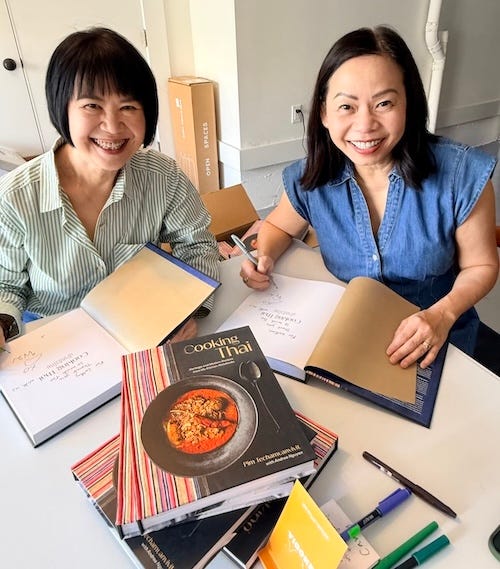
That said, I wanted to share some exciting news with you! Something called an “advance copy” of Cooking Thai recently arrived on my doorstep.
The book is still being printed overseas but my publisher gets a handful of copies. Chef Pim and I each got one and we’re totally gobsmacked about holding the actual book baby in our hands!
What’s on the cover? One of our favorite recipes in the book — Massaman Curry, based on a time tested recipe by Pim’s grandmother. Pim’s curry pastes are stellar and we developed recipes for you to make it with meat or meatless. There are tips to tweak the heat level so you don’t have to have a Thai built-in heat shield to enjoy this food!
A number of Cooking Thai recipe testers are also PTFS subscribers. We were overwhelmed by their positive response to the flavors and techniques.
It’s been quite a journey to bring Cooking Thai to print. Lots of thrills and near spills. We’ve built it as a solid guide for your Thai cooking adventures for years to come. That’s how Pim and I intend to use the book so we hope you’ll do the same!
How and when can you get the book?Cooking Thai releases on August 25, 2026. The printer is in Asia but luckily the books won’t be shipped through the Strait of Hormuz!
To get a copy ASAP, pre-order it from your favorite book store, cookbook shop, or a vendor like the ones listed here. Pim is planning the book tour so more news will come as things develop. Thanks for your ongoing interest and support.
Congratulations to for winning the giveaway. She cooks lots of Cantonese food so I’ll be curious to know what she thinks of adding Taiwanese flavor to her recipes.
Thanks to all of you who shared your soy sauce brands. And, also to who shed light on La Choy soy sauce and then some.
💎 Focaccia di Recco (one of the best things I’ve ever eaten)
If you live in the Santa Cruz area, get yourself to Mentone in Aptos and order the focaccia di Recco off the specials menu! I’d love for chef David Kinch to permanently add the bedsheet thin flatbread-cracker-quesadilla filled with milky crescenza cheese on the menu. My photo on the right does not do the focaccia justice. 😩
I was so taken by it — a marvel in dough management and manipulation — that I looked up how to make it when we got home from dinner. There are a handful of recipes out there but Janet Fletcher has the scoop from Lidia Bastianich’s recipe. It’s all here on Janet’s website. To get a sense of how it’s made, watch this:
Support Pass the Fish Sauce! Join us for free or upgrade to a become a paid subscriber to enjoy 150+ professionally developed recipes, seed new content, and get future class discounts. Thanks for your enthusiasm!
Coming up for this Sunday Special is a cool noodle dish that Rory and I have been enjoying all week long and we’ve not tired of it.
It’s a long weekend in the United States as we celebrate Memorial Day. I know you’re all busy but I just wanted to thank all the folks like Jim Christol, , , , , and who attended my live video with ! The full video playback is above.
PTFSers asked great questions that got answered and then some. When you watch the video, you’ll glean information about:
When soy sauce got to Taiwan and how colonization impacted the condiment and the island nation’s cuisine
There’s a soy sauce fermentation index that’s akin to the N in fish sauce!
Black soybeans versus yellow soybeans
How fat and protein determine soy sauce flavor
What is tamari? Bottom vat soy sauce? Soy paste?
Taiwanese soy sauce flavor distinctions and how they factor into Heydoh, Clarissa’s new soy sauce company
Single and double fermentation of soy sauce
Soy sauce shopping and storage tips
Heydoh Soy Sauce Tasting Notes and Giveaway
During the interview, I tasted Clarissa’s new soy sauce, Heydoh (named for the Chinese word for black soybean). It was delicious — full of layered savoriness, umami, and with a hint of sweetness. Compared to other regular soy sauces, Heydoh is about 20% lower in sodium.
Heydoh is the first soy sauce I’ve tasted that made me want to just sip it! The Classic is terrific for cooking and dipping sauces. The Silky is double fermented and good for finishing dishes, and drizzling — even on ice cream. Seriously. (I do have a sweet-savory tofu ice cream recipe inspired by a trip to Japan!)
The Classic and Silky are sold at the Heydoh website, where you can also check the store locator to see if it’s sold near you. Meantime, Clarissa generously offered to gift a PTFS subscriber Heydoh soy sauce!
The Heydoh giveaway lowdown:
What is being given away: A complimentary soy sauce duo set
Who is eligible: Anyone with a valid mailing address in the United States: the 50 States, D.C., Puerto Rico, and the Virgin Islands.
When the giveaway closes: Wednesday, May 27 at 10am PST. I’ll randomly pick a winner and notify the person via email.
One thing Clarissa mentioned was the color in soy sauce. It’s one of ways you can sense quality. I was struck by Heydoh’s beautiful amber cast, a result of careful soybean selection and fermentation. After our chat, I compared it to a few other soy sauces I have.
La Choy is not my favorite brand. I keep it around to benchmark what my family first used when we got to America in 1975. It’s not naturally brewed like traditional soy sauce and has stuff that’s not normally found in soy sauce. The color is dark and the flavor is sharp, somewhat chemically.
Pearl River Bridge Special Golden Label is a darker brown than HeyDoh and it’s made in a mainland Chinese/Cantonese style. It’s not as complex tasting as Heydoh but is very good and my go-to for cooking and recipe development.
Zhongba Soy Sauce is the darkest because it contains a special mushroom from Sichuan. The flavor is very deep and intense, as is the viscosity. Look how Zhongba keeps its amoeba-like shape with rounded edges. It is only available through the Mala Market.
So, not all soy sauces are alike. As Clarissa says, and I have echoed about fish sauce, you want to find one that you like for dishes that you like to cook! Check in with my Mega Soy Sauce Buying Guide to delve into the many kinds of soy sauces available.
Pass the Fish Sauce relies on smart, curious cooks, readers and eaters for support. Join us at any level. Become a paid subscriber to gain extra useful content as you sponsor my work. Thank you!
Wood Ear Salad and Beginner’s Guide
In the aftermath of the soy sauce chat, I test drove Heydoh against Pearl River Bridge (PRB) in a Wood Ear Mushroom Salad. If you've been to dumpling restaurants like Din Tai Fung, you’ve seen it on the menu and perhaps have tried it. It’s handsome, crunchy, slithery, and tangy savory.
Wood Ear Mushroom Salad done at home is leagues better than what a restaurant churns out! Get the recipe at my website.
Clarissa and Ivy Chen’s recipe in their book Made in Taiwan is much better than what I’ve ever had at restaurants. Wood ear salad (liang ban hei mu er) is not just for eating with dumplings. It’s a nice nibble to go with a rice plate, noodles, or even a green salad dressed with olive oil, as Rory and I had it yesterday.
It’s also super easy to make and you can keep it in the fridge for a good 4 days, if not a week! It’s got ginger for a nice bite too.
The salad was excellent with PRB as it was with Heydoh Classic Soy Sauce, though I had to add just a little drizzle extra of Heydoh to bring the salinity up. Once I made the adjustment, the salad popped with extra nuanced flavor. You don’t need Heydoh soy sauce to make the salad. As Clarissa says in her book, Kimlan or Kikkoman will work for her recipes. Make the wood ear mushroom salad recipe at my website.
What are wood ear mushroom?
You know shiitake but what about wood ear mushrooms? They’re ebony or dark brown, crunchy, and loaded with health benefits while being low in calories. Sometimes they are called black fungus, which sounds scary and lacks the charm of wood ear 🪵 👂. They’re used throughout East and Southeast Asia in a variety of dishes, such as the above salad and classic hot and sour soup (suan la tang).
Unlike women of my mother’s generation, I’ve never killed a live chicken. However, I have cut up a lot of whole birds to hone my cooking skills, save money, and prepare extraordinary foods.
I was inspired by watching my mom who was inspired by supermarket whole chicken sales. She’d send my dad and me to buy six or so birds. She’d then go at them with her sharp knife — all of which would result in a pot of comforting chicken pho (pho ga), garlicky Maggi roasted chicken (ga ro ti), and a whole host of Vietnamese charcuterie that we’d put into banh mi and much more.
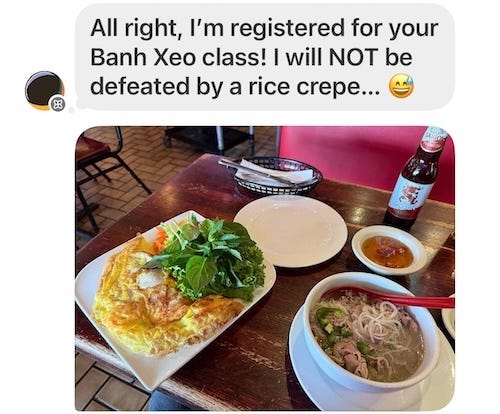
Naturally, when Rory and I started living together, I began buying on-sale whole chickens to experiment on cutting them up myself. I practiced in our tiny apartment in West Los Angeles, and our eating life became full of stocks, stews, liver pate, and roast chicken dinners. He was a poor grad student and I was a low-level university administrator but we at a diet rich in chicken-y foods. (This year marks our 30th wedding anniversary so I guess he didn’t mind my chicken obsessions.)
From cutting up whole chickens, I learned bird anatomy and became and expert carver of roasted chicken, duck, and turkey. I also became a better chicken shopper (When are bigger or smaller birds better?) and cook (What cut works better for which dish?).
My Julia Child moment at home.
Butchering chicken is a cooking lifeskill that unless you are a vegetarian, you ought to master. Unfortunately, most modern cooks do not know how to break down a chicken and make the most of it.
PTFS subscribers have expressed keen interest in learning how to break down a chicken. I’ve had it on my to-do list but something I saw last week kicked me into high gear: Whole Foods was selling boneless skinless chicken thighs for $10.99 a pound! Meanwhile, the WF whole chicken was $2.69 per pound.
A whole chicken is like manna from Heaven. A whole bird can seed many more delicious meals than a pound of deboned, skinless chicken. I bought several chickens and recruited Rory to help me make the four (4) videos in this dispatch:
Chicken rinsing (yes or no and how?)
How to cut up a whole chicken (+ what size and kind of bird to buy)
Cutting and deboning chicken parts (for good flavor and cuts that you can only get at specialty markets)
Chop chicken bones like a boss (for better broth and excellent pho, whack away!)
These videos will also help you with:
food safety issues
buying chicken intelligently
getting better flavor
specialty-style cuts
broth/pho technique
cooking confidence to deal with bones, boning knives, and cleavers
Feel free to share your knowledge and tips too!
These four Chicken Butchering videos comprise a mini class, which is free to paid subscribers. They seed and sponsor PTFS knowledge. Join us to access this complete post, mine the recipe index, and gain so much more. Thanks for your considerations!
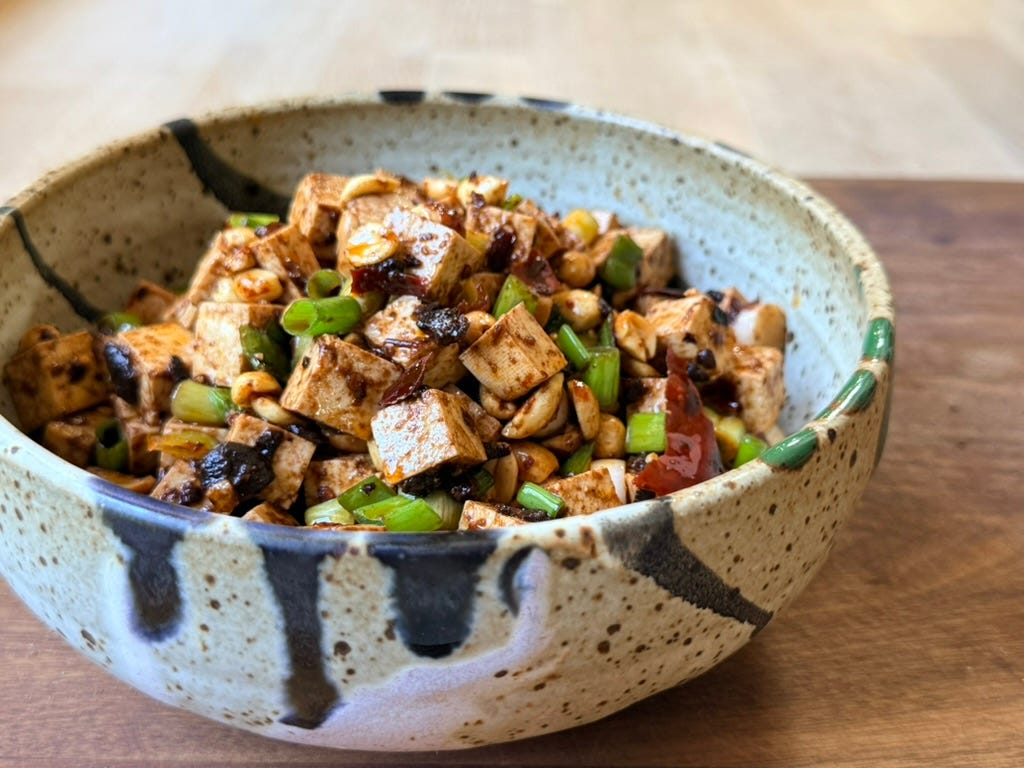
On the heels of our fish sauce 101 livestream a couple weeks ago, I reached out to cookbook author and now entrepreneur , who recently co-founded Hey Doh, a new artisanal soy sauce company. Clarissa is among my go-to experts on Taiwanese and Chinese cooking. A former Los Angeleno, she’s now based in Taipei, Taiwan.
She sent me Hey Doh products that I’m going to taste for the first time on Thursday, May 21 during a livestream! I’ve also got lots of soy sauce questions because despite using it regularly, I don’t know enough about it.
Due to our time difference, I’ve scheduled the livestream for 6pm PST / 9pm ET / 9am TPE — it’ll be happy hour or breakfast, depending on where you are. The interview will run 30 to 45 minutes.
To recap, on Thursday, May 21, at 6pm PST, you’ll get a Substack email about the livestream. Click on the link to join our chat about Hey Doh, soy sauce making, and why Taiwanese soy sauce is distinctive.
💎 Weeknight Vegetable Stir-Fry Blueprint
I’ve been adding asparagus to many recipes of late because it’s one of my favorite spring-time vegetables. Why not indulge till you’re nearly satiated? Susan M. wrote last week and reminded me of a terrific stir-fry from Ever-Green Vietnamese. It’s the Weeknight Vegetable Stir-Fry on page 195, in the sides chapter. I love that chapter because I could make a meal of sides.
I originally conceived of this stir-fry in spring, when our farmers harvest super delicious asparagus, carrots, and radishes. (Yes, you can cook radishes and they’re good. Chef David Chang got me doing it it years ago and I’ve never looked back.)
I set up the stir-fry recipe as a blueprint for you to plug and play with it. If you don’t yet have the book, I just published the recipe on my website. Make the Weeknight Vegetable Stir-Fry recipe a couple times and you’ll be riffing on it endlessly.
If you want an asparagus only side dish to serve at room temp, look to my very easy asparagus dressed up with a veil of soy sauce and sesame oil. It’s a great combination of asparagus’s natural umami with that of soy sauce, all of which is made fragrant and enriched by the power of sesame.
I return to this Chinese-ish asparagus annually. I have it on my mind because of next week’s conversation with Clarissa. Get the asparagus with soy sauce and sesame recipe. (P.S. It’s naturally vegan, like the Weeknight Vegetable Stir-Fry!)
💎 Recipe recap from the last 2 months
No wonder March and April flew by. I cooked up a lot for you to play with. Here are the recipes mentioned in my dispatches to you. Below are PTFS recipes as well as those posted at the website. I’ve updated the PTFS recipe index to include them too!
And, don’t forget the mega Fish Sauce FAQ and buying guide at the website. It’s not a recipe but the ingredient figures into so many recipes nowadays.
Support Pass the Fish Sauce! Join us for free or upgrade to a become a paid subscriber to enjoy 150+ professionally developed recipes, seed new content, and get future class discounts. Thanks for your enthusiasm!
Coming up for this Sunday Special are some butchering tips I owe you.
Hey there! If you want to watch me crack jokes, discuss cooking and travel in Vietnam with , here’s the playback of our livestream. He interviewed me on a wide range of topics but it always came back to how food makes a difference in our lives.
Among the people mentioned in the interview was my mom and her recipe notebook. Moms impact our nourishment from the get go.
And with that, Happy Mother’s Day to all the brave humans who’ve birthed and shepherded new life into this world. I am in awe of you all who have loved and nurtured your flock into adulthood, despite the odds.
In the photo below my Mẹ Già (Elder Mother, a Viet term of endearment) is looking pretty 🔥. She’s in her element at a Viet grocery store! (We were at Green Farm in Garden Grove, CA, that day.)
💭 “These opo squash — I will turn them into a quickie canh soup when I get home!”
A few notes on my mom’s new stove: Before the stove arrived, I made sure she’d be ready to cook so I ordered her a welcome present: a 5-liter jug of premium fish sauce! She usually doesn’t like gifts but that was one she couldn’t refuse.
Speaking of fish sauce, I just published a mega fish sauce guide and FAQ that includes substitutes, brand suggestions, recipes, plus the video playback of our PTFS nuoc mam livestream. Head to “Fish Sauce: What is it? Plus, how to buy, store, use, and sub for it” at the website.
After delivery of her new stovetop, Mom set out to làm bạn (literally make friends) with it. She initially reheated leftovers and found out that her steamer didn’t need to go on the power burner, unless she wanted overcooked food. Then she deep-fried a batch of tofu to perfection, she reported.
“The stove designers have researched and thought all this through for years,” Mom said. “It all makes sense and works well.”
One of the things mothers do well is to remind us the importance of trying new things for a lifetime of learning.
That, along with Mom mentioning fried tofu, inspired me to "‘get acquainted’ with a Vietnamese tofu dish that I’d never made before — Spicy Braised Tofu in Coconut Water (Đậu Hũ Khìa Nước Dừa).
With chile heat and the sweet lilt of coconut water, this handsome main dish strongly reflects southern Vietnamese cooking. Though the tofu looks deep fried, a modicum of oil was involved.
Yep, you can make this with veggies other than asparagus! See my ideas below.
This tofu features an uncommon Vietnamese braising technique using the refreshingly sweet juice from a young (green) coconut — aka coconut water. Most people think of drinking coconut water. I’ve used it for nuoc cham dipping sauce and have used it in cooking too — just not in this delightful new manner.
There’s always a moment when you’re cooking a new dish when you ask yourself how is this going to taste? How does it work? I was kind of skeptical about this braise, called dau hu khia nuoc dua. There’s a lot of gurgling as things cook because it comes together fast. But after the mildish sauce cooked down and worked its magic, the tofu and veggies were absolutely delicious.
Unlike most Viet braises featuring caramel sauce, this one is very low sugar. It’s great for diabetics and anyone looking to cut back on refined sugar. Other reasons for praising this braise:
One batch serves four, which in our home means that Rory packs some for lunch with rice, and I enjoy the rest with a salad or turn it into banh mi!
The tofu is terrific hot, warm or at room temperature.
You can make this recipe with ingredients from the supermarket.
Ready the ingredients days ahead then braise when you need an easy, quick main dish for dinner
To equip you to make this tofu recipe, I’m providing the following:
A flexible braised tofu in coconut water recipe in full text and downloadable PDF (this tofu dish can be make vegan or not!)
Explainer on the tofu prep technique, which differs from my normal playbook
Vegetable swaps because we won’t be in asparagus season forever
Ingredient tips (what’s the best coconut water?)
Advance prep pointers
I hope you’ll get well acquainted with this Viet tofu winner!
Thanks for being here. Paid subscribers sponsored this Sunday Special dispatch. Join us at any level to get in on the action. Become a paid subscriber to enjoy the full braised tofu lowdown plus many other recipes, insights, and benefits. Your support matters.