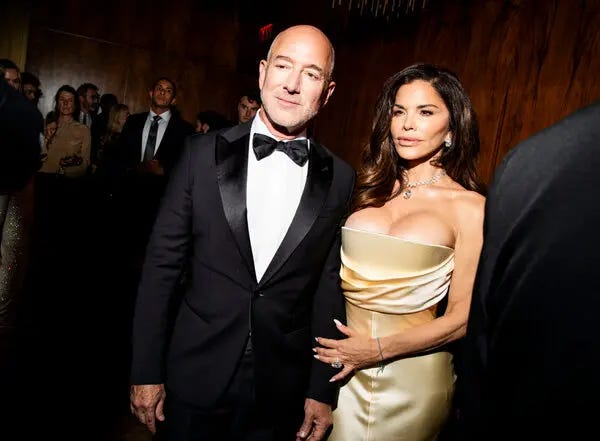
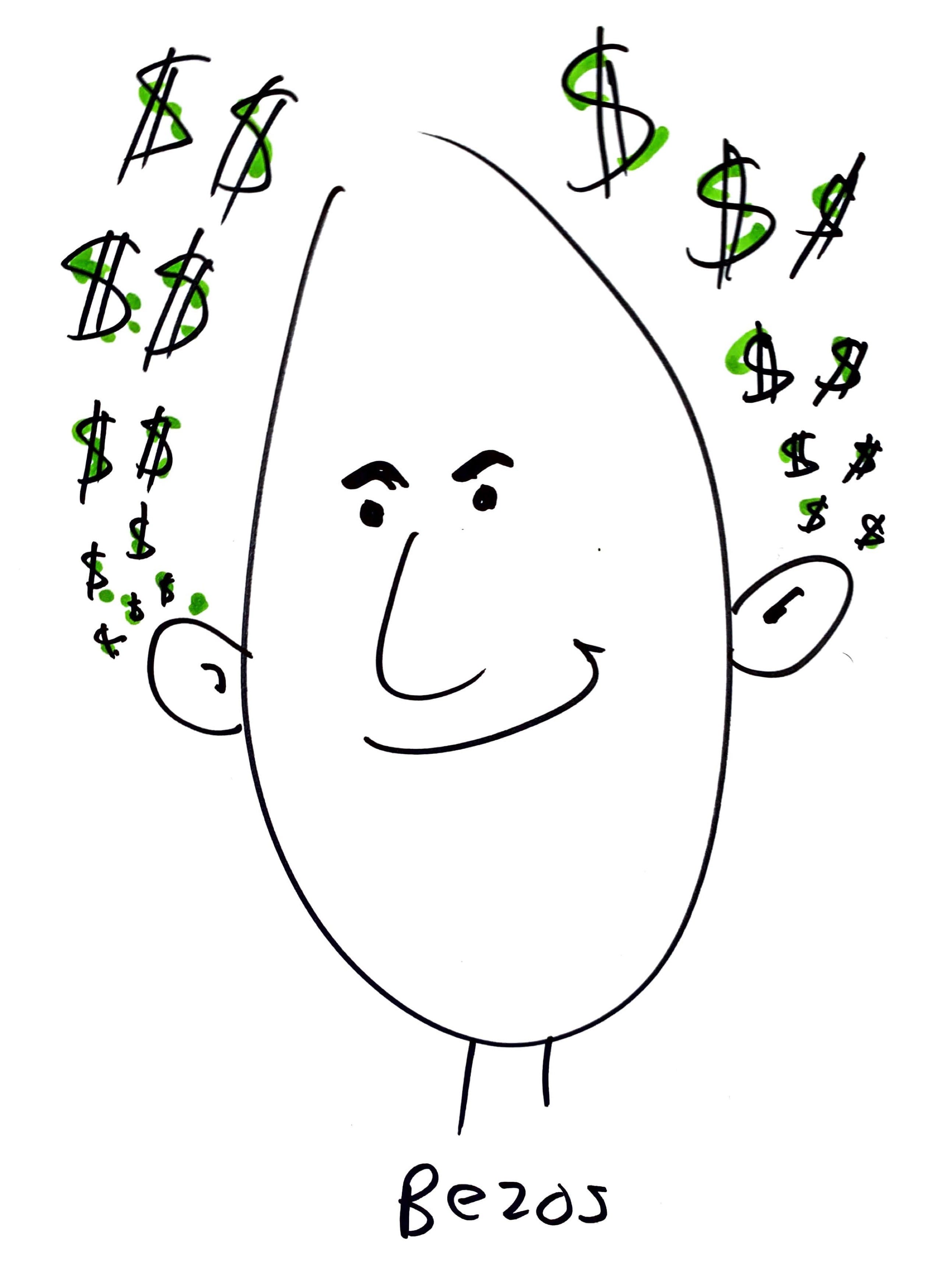
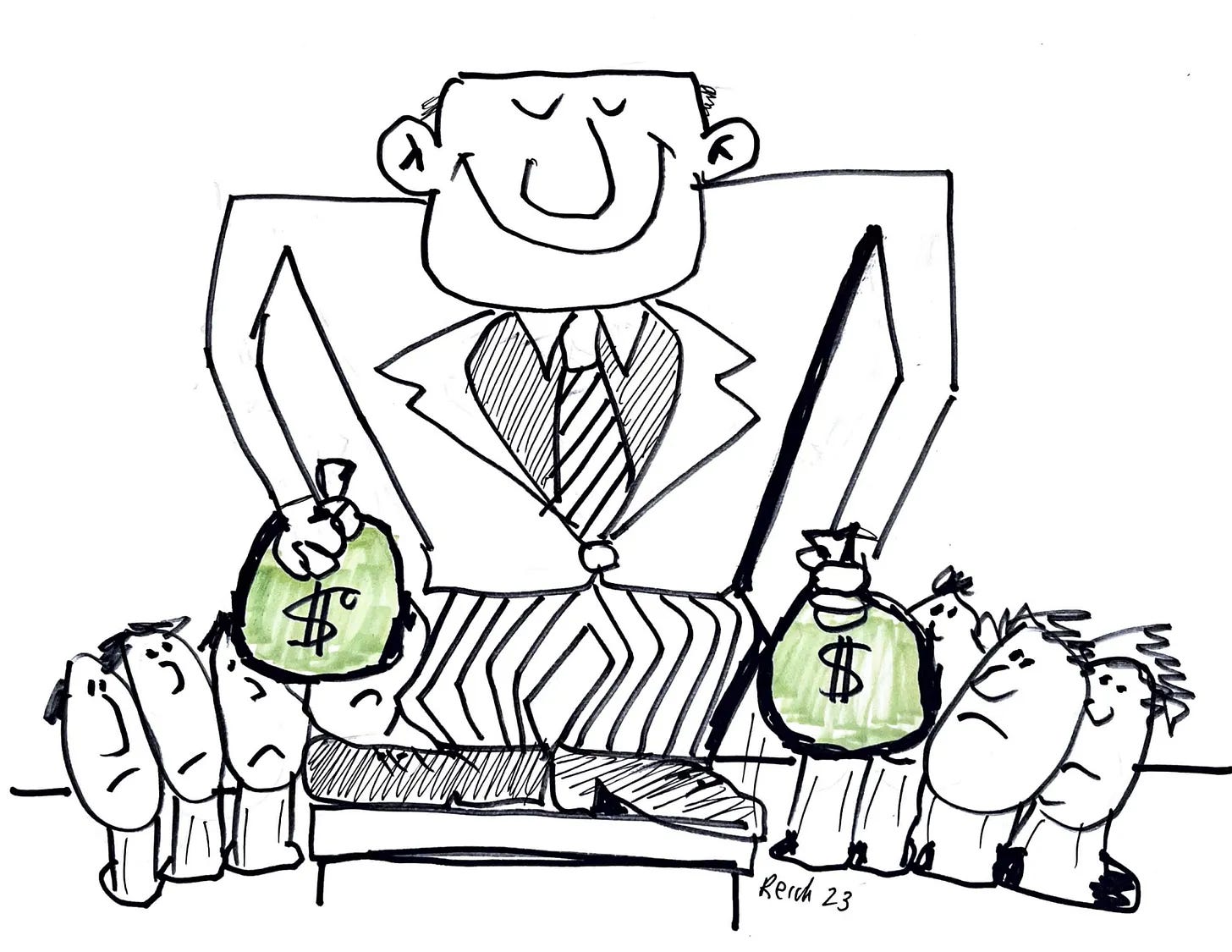
Tonight is the Met Gala, an annual paean to the conspicuous extravagance of America’s wealthy. Its honorary chairs this year are, appropriately, Jeff Bezos and his wife, Lauren Sanchez Bezos.
If you’d like a ticket to the Bezos Ball, all you’ll need do is shell out $100,000 and wear something memorably daring and expensive. Oh, and you’ll also have to be on the “A List” of Very Wealthy People.
A record 55 percent of Americans now report their financial situation is worsening, citing severe stress from high inflation, housing costs, and rising gas prices, according to Gallup/USA Today polling. One in 3 households is unable to cover a month of living expenses. Prices are soaring, wages are going nowhere, millions are losing access to health insurance. Yet corporate profits are in the stratosphere.
This year’s Met Gala is a testament to the vapid arrogance of the Bezoses and other neo-robber barons of this second Gilded Age.
As I mentioned recently, Bezos has made his fortune off the backs of millions of working people. According to a newly unsealed filing in an antitrust lawsuit, Bezos’s Amazon has pressured major brands like Levi’s and Hanes to demand that competing retailers raise prices on their products.
Another recent lawsuit against Bezos accused Amazon of making it difficult for consumers to cancel its Prime subscription service. Amazon agreed to pay up to $2.5 billion — including $1 billion in penalties and additional payouts to consumers — but didn’t admit or deny wrongdoing.
Meanwhile, Bezos’s workers are among the worst-treated in America. Bezos is virulently anti-union. Until Trump took over the National Labor Relations Board, its attorneys were prosecuting Amazon for firing delivery employees because they’d voted to join the Teamsters, a direct violation of labor laws.
On April 6, an Amazon warehouse worker collapsed and died on the floor of Amazon’s warehouse in Troutdale, Oregon. A co-worker trained in CPR tried to help but was told by an Amazon manager not to. For more than an hour, employees said, they were instructed to continue packing items and loading trucks as the man lay dead. One manager reportedly told workers to “just turn around and not look” and get back to work.
As of April 2026, Bezos’s net worth was estimated to be between $259 billion and $269 billion, making him one of the three richest people in the world. And he won’t let anyone forget it.
He celebrated his wedding last year to Lauren Sánchez with a multi-day event in Venice, Italy, estimated to cost more than $50 million,featuring guests like Oprah Winfrey and Kim Kardashian.
His “homes” include three adjacent properties on Indian Creek Island in Florida, costing over $230 million; the former Warner estate in Beverly Hills, California, which features a 13,600-square-foot mansion and a golf course, which he purchased for $165 million; a 14-acre compound on Maui with a 4,500-square-foot main house and 700-square-foot pool; a $23 million mansion in Washington, D.C.; and a massive multi-lot compound with waterfront frontage in Medina, Washington.
What really puts Bezos at the head of all the other robber barons in this second Gilded Age is his slavish sycophancy toward the worst president in American history.
Bezos bought the legendary Washington Post for $250 million in October 2013 and has turned it into a Trump media suck-up — prohibiting its editorial page from endorsing Kamala Harris in 2024 and barring it from writing anything critical about American capitalism or Trump.
In February, Bezos fired more than 300 Post journalists, about a third of its staff. He paid $40 million to license the documentary “Melania” plus $35 million to market it — and earned back almost none of it — a blatant bribe of Trump.
And he does whatever Trump wants. After Trump complained to Bezos about Amazon’s plans to display for consumers the costs of Trump’s tariffs, Bezos immediately canceled the plan.
Bezos has sucked up to Trump presumably to secure Pentagon contracts for his Blue Origin rocket company, which landed a $2.3 billion NASA contract early in Trump’s second term. And to avoid further antitrust lawsuits or labor law scrutiny.
That he has zero scruples does not necessarily distinguish Bezos from the other robber barons of this despicable era. And one could say it’s not Bezos’s “fault” that he’s filthy rich — he’s just taken advantage of the current system. But he’s also made the system even more rotten.
Why did the Met choose him and his wife as honorary co-chairs of tonight’s gala? It’s his money, of course. But there’s nothing honorable about him. His public-be-damned business practices, his conspicuous consumption, and his excessive sucking up to Trump make Bezos, at least to my mind, the worst billionaire of them all.
If you’re in New York tonight, you might consider attending — as a protester.
When I learned what Samuel Alito and the other Republican appointees to the Supreme Court did to the Voting Rights Act last week, I thought of Mickey.
(Forgive me if I’ve already told you about him, but he was very important to me.)
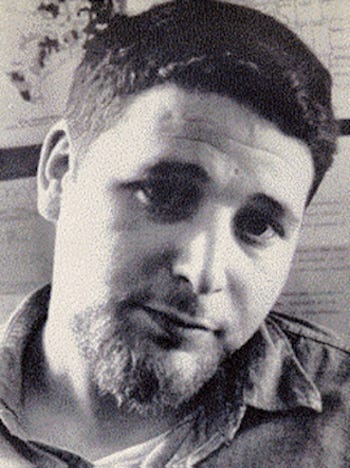
I met Mickey the summer after third grade. His family had rented one of the summer cabins in the Adirondack Mountains where my grandmother also had a tiny summer cabin. I was eight, and Mickey was a teenager. We were not friends, yet I came to love him.
Mickey was kind and gentle, with a ready smile. I don’t recall asking him to protect me. He wasn’t the kind of hulking kid I usually chose as protector from bullies who’d torment and ridicule me. Mickey was on the short side and thin. He wore a sailor’s cap and seemed forever cheerful. I don’t remember him fighting to defend me or even quieting the kids who made fun of me, but I do remember his warmth and reassuring presence. His calm good nature seemed to cast a positive spell over kids who might otherwise turn to teasing or bullying.
Years went by and I grew into a teenager who no longer needed older boys to protect me from bullies, and I lost track of Mickey.
It wasn’t until September 1964, the start of my freshman year at Dartmouth College, that I heard what had happened to him.
Early that summer, Mickey — whose full name was Michael Schwerner — had traveled to Mississippi. The Civil Rights Movement was gaining strength. Martin Luther King Jr. had given his famous “I Have a Dream” speech at the August 1963 March on Washington, where 250,000 people had gathered at the Lincoln Memorial to hear him.
“Freedom Summer” of 1964 had brought college students, both Black and white, Mickey among them, from northern schools together with Black people from Mississippi to educate and register Black voters, under the aegis of the Student Nonviolent Coordinating Committee (SNCC).
Mississippi was chosen because only 7 percent of the state’s eligible Black voters were registered, in a state that was about 40 percent Black. Most had been frozen out of the polls with poll taxes, subjective literacy tests, and brutality. It had been that way since 1877. The system was enforced by white supremacists who could commit crimes with impunity because the entire region had become a one-party state run by white supremacists.
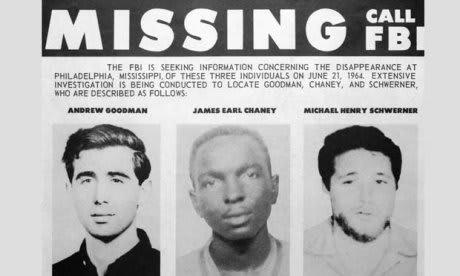
Mickey was among the first wave of volunteers to arrive in Mississippi for Freedom Summer. On the afternoon of June 21, he and two other student volunteers — Andrew Goodman, also white, and James Chaney, a young Black man — were driving near the town of Philadelphia when Neshoba County Deputy Sheriff Cecil Ray Price stopped them for allegedly speeding. Price locked them up in the local jail. That night, after they paid their speeding ticket and left the jail, Price followed them in his police car, stopped them again, ordered them into his car, and took them down a deserted road where he turned them over to a group of his fellow Ku Klux Klan members. They beat Mickey, Goodman, and Chaney with chains. Then they killed them and buried their bodies in an earthen dam under construction.
For weeks, no one knew what had happened to the three volunteers. Lyndon Johnson used concern over their disappearance to pressure the House to pass the Civil Rights Act of 1964 into law on July 2.
On July 16, a little more than three weeks after Chaney, Goodman, and Schwerner disappeared, and two weeks after Johnson signed the Civil Rights Act, Senator Barry Goldwater accepted the Republican nomination for president at the Cow Palace in Daly City, California. Goldwater told Republican delegates that “extremism in the defense of liberty is no vice. And … moderation in the pursuit of justice is no virtue.”
Mickey’s body and those of Chaney and Goodman were found August 4. They were illustrations of extremism in the defense of what white supremacists defined as liberty.
The state of Mississippi refused to bring murder charges against any of the killers, but eventually Price and Neshoba County Sheriff Laurence Rainey, also a Klan member, and sixteen others, including Samuel Bowers, the Imperial Wizard of Mississippi’s White Knights of the Ku Klux Klan, were arraigned for the federal crime of conspiracy to violate the civil rights of the murdered young men. An all-white jury found seven of them guilty, including Price and Bowers. After several unsuccessful appeals, each received a sentence of between three and 10 years. None would spend more than six years behind bars.
When the news reached me that Mickey had been beaten and murdered by white supremacists — by adult bullies who would stop at nothing to prevent Black people from exercising their right to vote — something snapped inside me. It was as if I had gotten a new pair of eyes and began to see everything differently. Before then, I understood bullying as a few kids picking on me for being short, making me feel bad about myself. After I learned what happened to Mickey, I began to see bullying on a larger scale, all around me: Black people bullied by whites; workers bullied by employers; girls and women bullied by men; the disabled or gay or poor or sick or immigrant bullied by politicians, insurance companies, landlords, and bigots. I saw the powerful and the powerless, the exploiters and the exploited.
It seemed as if the world had changed, when in fact it was I who had changed. I had a different understanding of the meaning of injustice. It became as personal to me as were the bullies who had called me names and threatened me in the boys’ room and on the playground — but larger, more encompassing, more urgent.
In 1965, Congress passed the Voting Rights Act, protecting the right of Black people to vote.
After that, the stranglehold of the white supremacists on the one-party South began to loosen. At the center of the law’s success was Section 5, commonly referred to as the “coverage formula,” which determined those states that had to receive clearance from the Justice Department before changing their election rules, based on their histories of race-based voter discrimination.
Another critical part of the law was Section 2, which prohibits states and political subdivisions from imposing voting qualifications, standards, or practices that discriminate on the basis of race, color, or membership in a language minority group. It forbids any election rule that results in a denial or abridgment of the right to vote, aimed at preventing vote dilution, such as discriminatory redistricting.
In the 20 years following the law’s passage, the disparity in registration rates between white and Black people dropped from nearly 30 percent in the early 1960s to 8 percent. Based on its continuing success, the Voting Rights Act was repeatedly reauthorized by Congress. But the forces of racism and violence did not disappear.
On August 3, 1980, Ronald Reagan launched his presidential campaign with a rally at the Neshoba County Fair, only a few miles from where Cecil Ray Price had stopped Schwerner, Chaney, and Goodman on that fateful night 16 years earlier. In defending “states’ rights” that day, Reagan, the cheerful “morning in America” candidate, was sending a dark dog-whistle to racist bullies, telling them he was on their side.
Thirty-three years later, on June 25, 2013, the Supreme Court struck down the coverage formula in the Voting Rights Act, in the case Shelby County v. Holder. The court’s five conservatives decided that the formula was out of date, despite Congress’s repeated reauthorizations, effectively ending pre-clearance. The court’s opinion was written by Chief Justice John Roberts and joined by Samuel Alito, Antonin Scalia, Anthony Kennedy, and Clarence Thomas. Reagan had put Scalia and Kennedy on the court.
“Our country has changed,” Roberts wrote. The Voting Rights Act was “strong medicine,” but in 1965 it was the right response to “entrenched racial discrimination.” When first enacted, he wrote, the rate of voter registration among Black people in Mississippi was 6.4 percent, and the gap between Black and white rates of registration was more than 60 percentage points. But now, Roberts said, pre-clearance was no longer needed.
Yet within 24 hours of the ruling, states of the old Confederacy were already proving Roberts wrong. Texas announced it would implement a strict photo ID law. Mississippi and Alabama began to enforce the same photo ID laws that federal pre-clearance had previously barred. Other Southern states began to purge voters from their rolls, curtail early voting, eliminate same-day registration, and prevent county boards of elections from opening polls for an additional hour.
In 2021 and 2022, in response to record voter turnout in the 2020 election, 19 states passed more than 30 laws making it harder to vote. The United States Senate, although nominally under Democratic control, did not have the votes needed to overcome a Republican filibuster and restore Section 5.
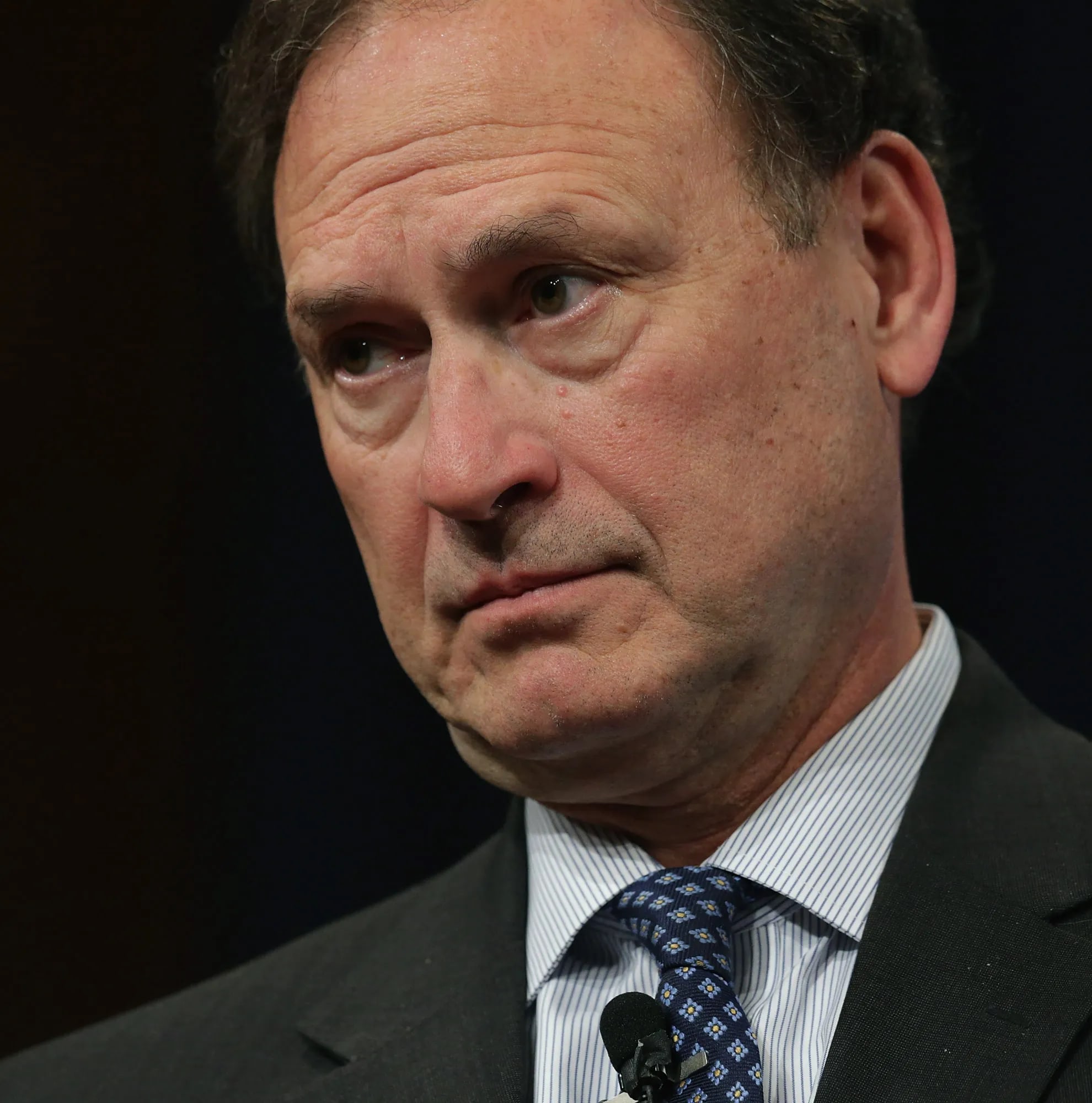
Samuel Alito
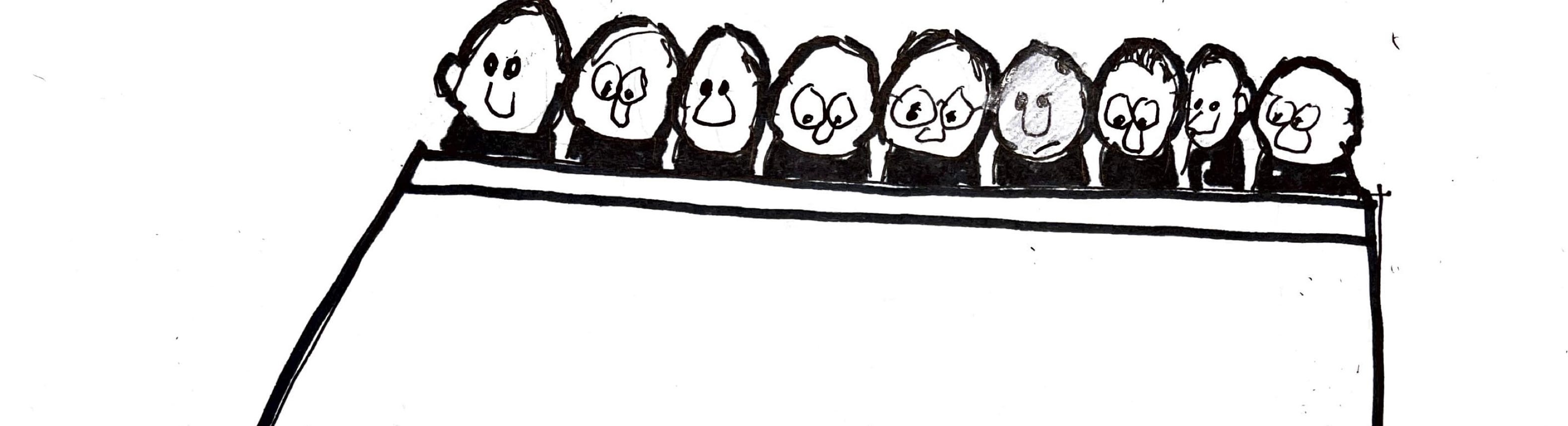
Then, last week, the six Republican appointees on the court decided to gut Section 2. In Louisiana v. Callais, Alito — in a remarkably dishonest opinion, even for him — said he was only bringing Section 2 up to date. “Vast social change has occurred throughout the country,” Alito wrote, “particularly in the South.” As a result of the Voting Rights Act, he claimed, Black Americans, once barred from the polls, now vote at similar rates as the rest of the electorate.
Rubbish. According to a recent study in which researchers analyzed nearly a billion votes cast in federal general elections between 2008 and 2022, “significant and robust evidence” shows that the racial turnout gap widened in parts of the country that had been covered by the Voting Rights Act after Shelby gutted Section 5.
The Republican appointees on the court have now invited Republican state legislatures to draw new congressional maps that will likely create a solid red south, creating the largest reduction in Black political representation since the death of Reconstruction. It could result in a loss of as many as 19 seats in the U.S. House and nearly 200 state legislative seats nationwide — and dramatically remake the balance of power in favor of Republicans. The Roberts-Alito court has ensured that Dred Scott and the Confederacy are reborn.
Immediately after the ruling, the Florida legislature passed a new congressional map drafted by Gov. Ron DeSantis’s office, aiming to flip up to four Democratic-leaning seats. Louisiana is postponing primaries to allow for a special session to redraw maps. Officials in Alabama are seeking to lift a lower court injunction to change their map. Mississippi is also actively exploring new white Republican districts.
It is hard for me to think back on the deaths of Mickey Schwerner, Andrew Goodman, and James Chaney, along with that of Martin Luther King Jr. and other martyrs to civil and voting rights, and not fear that — because of the dishonest and regressive opinions of Roberts, Alito, Thomas, and other Republican appointees to the Supreme Court — they died in vain.
I’m not going to dwell on this week’s outrages by Trump and his regime — his Supreme Court appointees gutting the Voting Rights Act, his bizarre claim that his war doesn’t require congressional approval because it’s “terminated,” his murders of additional sailors he suspects of smuggling drugs, his ongoing ICE raids, his continuing efforts to use the Justice Department to punish perceived enemies, his renewed attempts to silence comedians such as Jimmy Kimmel, his giant self-aggrandizing triumphal arch (what triumph?) and grotesque ballroom, his never-ending corruption and lies.
Yet in the midst of this cataclysm, the backlash against Trump is growing. Your work has been critical — your demonstrations and No Kings marches, your letters and phone calls to Congress, your boycotts and your local activism. Trump’s approval ratings are in the cellar. Two-thirds oppose his war. Many are demanding an end to his reign. Even some MAGA faithful are turning on him.
But it’s more than resisting Trump.
A new progressivism is being born.
Many of you are leading this. You are the activists in Montana and Hawaii pushing a new vision for reining in corporate power. You’re the activists in California and New York devising new ways to tax the super-wealthy to pay for what most people need.
You’re the activists in Massachusetts taking the lead on reproductive rights and access to health care. In Washington state, pushing new and more aggressive environmental regulations and renewable energy. In San Diego, Oakland, and San Francisco, devising new ways to address homelessness. Organizations like Voz in Portland, Oregon, empowering immigrant day laborers.
You are the activists in red states refusing to let warehouses be turned into migrant detention centers or let their towns host giant AI data centers.
You’re raising the minimum wage across America. Since the start of this year, 22 states have raised it, bringing the total number of jurisdictions raising the minimum — including cities and counties — to almost 90, with 18 states and the District of Columbia now mandating $15 an hour or more.
You’re supporting a new generation of young progressives in Congress: Maxwell Frost, Summer Lee, Greg Casar, Delia Ramirez, and the just-elected Analilia Mejia. And new progressive local leaders like New York’s mayor Zohran Mamdani.
You’re encouraging a new cohort of progressive rising stars, including Minneapolis’s Omar Fateh, Tennessee’s Aftyn Behn, Wisconsin’s Francesca Hong, Illinois’s Kat Abughazaleh, Texas’s James Talarico, San Francisco’s Saikat Chakrabarti, Maine’s Graham Platner, Tennessee’s Justin Pearson, Michigan’s Abdul El-Sayed, Florida’s Elijah Manley, and many others.
In my six decades in and around American politics, I’ve never seen anything close to the progressive talent and energy that’s now emerging.
Make no mistake. These are terrible times — the worst I’ve lived through, and I’ve lived through some bad ones. (Remember 1968? Nixon’s enemies list? Anyone old enough to recall Joe McCarthy’s communist witch hunts?) Trump and his goons are doing everything they can to destroy America and much of the world.
But out of the embers and rubble that Trump and his despicable regime have wrought, a new America is being born. We are making it happen.
As long as we are alive and as long as we are resolved, as long as we are taking action to stop the worst of this catastrophe and also trying to make America and the world better, have no doubt: We will prevail.
Be safe. Hug your loved ones. Never, ever give up.
Today marks 60 days since the start of Trump’s failed war in Iran. The U.S. Constitution (Article I, Section 8) gives Congress the power “To declare War,” and the War Powers Resolution of 1973 — enacted over Nixon’s veto — mandates that troops be withdrawn within 60 days unless Congress extends the deadline or declares war.
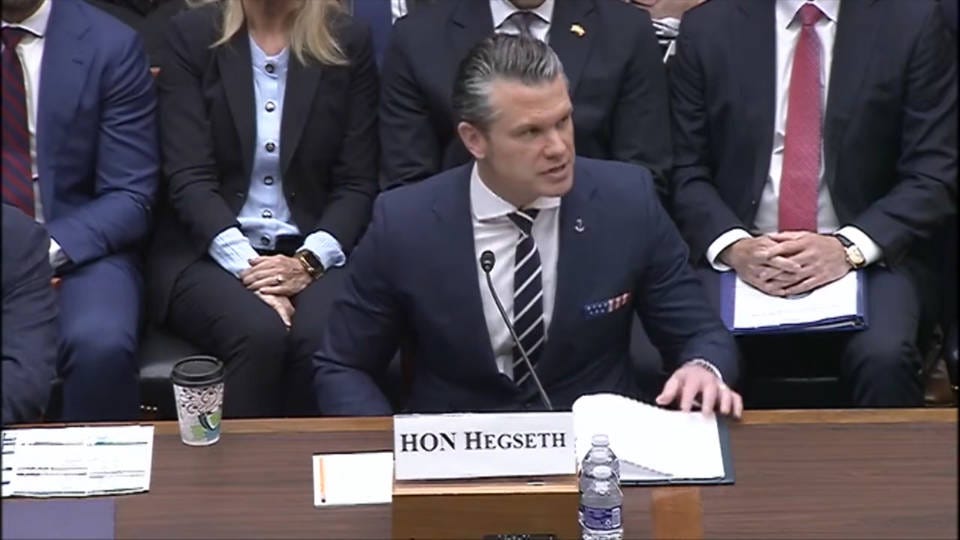
On Thursday, Defense Secretary Pete Hegseth claimed that Trump doesn’t need Congress’s approval to continue the war past the 60-day mark because the ceasefire agreement with Iran has effectively stopped the clock. (Trump echoed Hegseth’s claim today in a letter to Congress.)
That’s bullshit, of course. But the interesting question is why — when Republicans have majorities in both chambers of Congress — Trump doesn’t want such a vote. Why not just let Republicans vote in favor of continuing his war, and be done with it?
It’s possible, of course, that Trump is worried that some Republican members might vote against the war — joining with all or almost all Democrats in voting against its continuation. Even a close vote could force a debate and pressure Trump to set the conditions and timeline for a withdrawal.
But there’s an easier and more straightforward reason.
Trump’s war is so unpopular that Republican members of Congress don’t want to have to go on record as voting in favor of it. With midterm elections in six months, they know their votes in favor of Trump’s war could be held over their heads — especially if the war drags on, or if gas prices continue to rise because Iran is blocking the Strait of Hormuz, or both.
They’ve let the White House know that forcing them to vote on the war will hurt their chances of maintaining control of Congress.
So congressional Republicans are choosing the coward’s way out: agree with Hegseth and Trump that there’s no need for such a vote because the ceasefire has tolled the clock. Or claim, even more absurdly (as has Speaker of the House Mike Johnson) that there’s no “war” to begin with, and hence no reason for such a vote.
Republicans in Congress are not brave people. To the contrary, they may be the most cowardly group ever to claim to represent the American people.
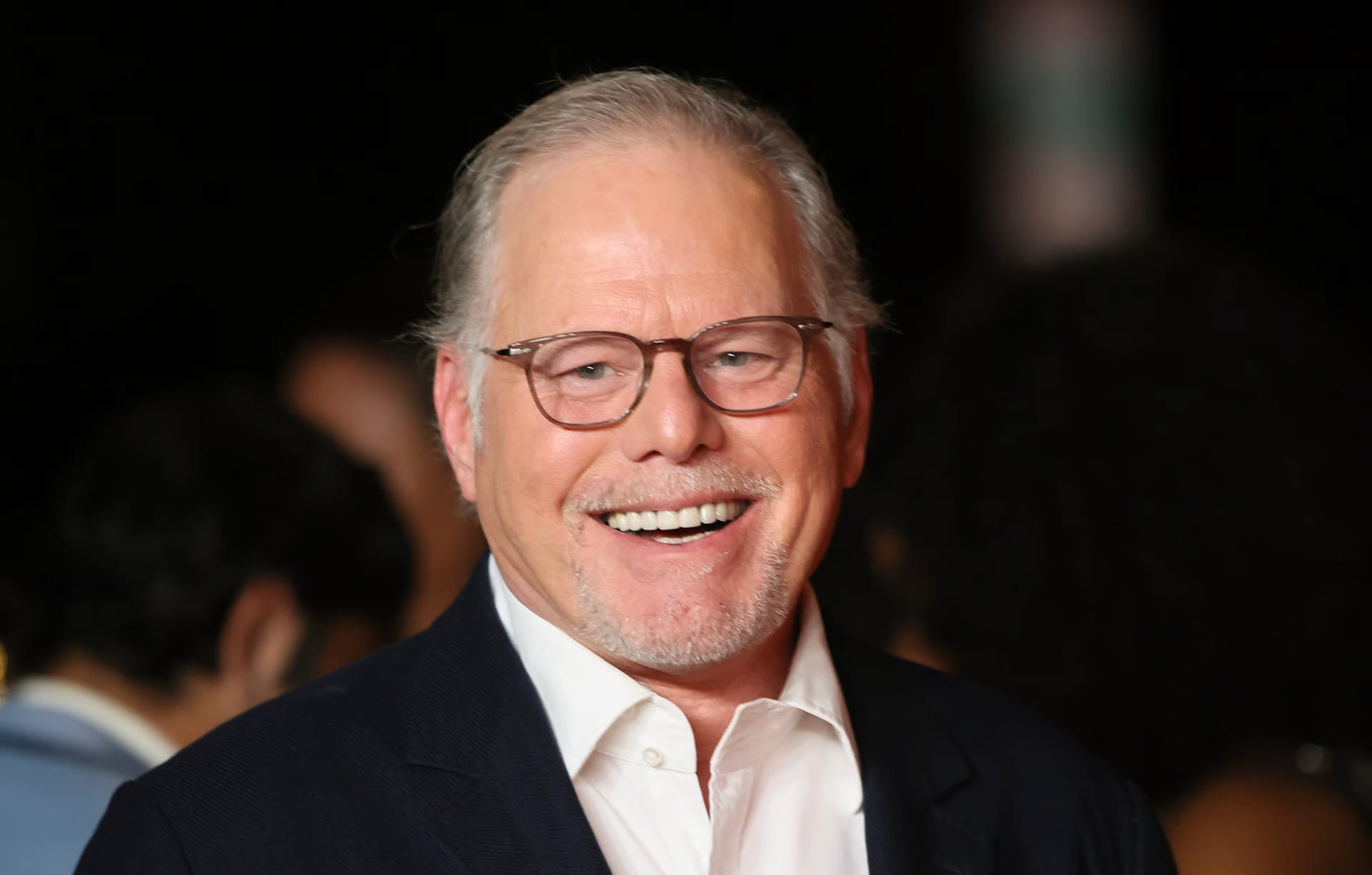
David Zaslav, CEO of Warner Bros. Discovery, has reason to smile
Friends,
Warner Bros. Discovery shareholders voted last Thursday on the Ellison family’s purchase of the company. Some 1.743 billion shares were cast in favor of the sale; 16.3 million were cast against it, a ratio of roughly 99 to 1.
1. Great for a Handful of Super-Wealthy, but Bad for Workers and Bad for America
This vote came soon after more than 4,000 workers in the media industry — directors, screenwriters, producers, actors, editors, cinematographers, musicians, and composers — signed a letter predicting an industry disaster if the sale went through.
That’s because, as my friend Harold Meyerson from The American Prospect has noted, such deals typically saddle the purchased companies with gigantic debts that buyers incur to make the deal — in the case of Warner Bros. Discovery, $79 billion — and this debt, in turn, requires that buyers slash costs (especially payrolls) to pay off some of it.
More than 70 percent of all the shares in Warner Bros. Discovery are held by institutional investors — including the Vanguard Group, BlackRock, and State Street. These institutions voted for the sale because they believe it will make their shares more valuable.
The sale will also make certain individuals a lot of money. David Zaslav, the CEO of Warner Bros. Discovery, stands to collect some $886 million for shepherding it, in addition to his regular pay package (which was $51 million in 2024). Oracle’s Larry Ellison and his son, David, the new owners of Warner Bros. Discovery, are already among the richest people in the world.
But what about the workers in the industry who’ll lose their jobs as a result of the sale? What about all the people whose wages will be slashed? What about Los Angeles, which may lose a sizable portion of its major industry?
And what about the concentration of so much of the news business — so much of what Americans learn about what’s happening — under these two Trump suck-ups?
If Trump’s Justice Department approves the deal (do birds fly?), CBS News and CNN — along with CBS entertainment (home to Stephen Colbert, whose contract is about to run out and who will be taken off the air because of his criticisms of Trump) and Comedy Central (home to Jon Stewart) and HBO (John Oliver) and TikTok (where 1 out of 5 Americans now get their news) — are all about to become one giant mega-media monopoly under the control of Trump allies, the Ellisons.
2. The Moral Bankruptcy of Shareholder Capitalism
At the heart of modern American capitalism is the assumption that a corporation exists for only one purpose: to make its shares more valuable.
That goal trumps (excuse me) all other goals — such as raising workers’ wages, improving workers’ job security, creating more jobs, enhancing the quality of life for the community where a company is headquartered or does business, making life better for the inhabitants of the nation and the world, even protecting democracy.
In fact, if shareholders can make more money by shafting these other “stakeholders” and destroying these other values, that’s thought to be perfectly fine. It’s simply the way “impersonal market forces” work. It’s “efficient.”
Before the 1980s, American capitalism ran on a very different principle: that large corporations had responsibilities to all their stakeholders. “The job of management,” proclaimed Frank Abrams, chairman of Standard Oil of New Jersey, in a 1951 address, “is to maintain an equitable and working balance among the claims of the various directly affected interest groups … stockholders, employees, customers, and the public at large.”
The sentiment may seem quaint or inauthentic today, but in the three decades after World War II, it laid the basis for rapid economic growth and, with strong unions, an equally rapid expansion of the American middle class.
It reflected the sincere views of corporate executives. Many had endured the Great Depression and the war and felt some responsibility for America’s future well-being. These views helped legitimize the role of the large corporation in the public’s mind.
Today, shareholder capitalism has replaced stakeholder capitalism — and most Americans are excluded from its benefits.
Over 92 percent of the value of all the shares of stock owned by Americans is owned by the richest 10 percent. More than half is owned by the richest 1 percent. And even they have turned over their votes to giant institutions like Vanguard, BlackRock, and State Street, which have no concern for the well-being of anyone or anything other than the short-term value of the shares they buy or sell.
We are witnessing the logical ending point of shareholder capitalism.
As the share values of America’s biggest corporations continue to soar — even as (and in many cases, because) they eliminate tens of thousands of jobs — the goal of “maximizing shareholder returns” is revealing itself to be morally bankrupt and economically rotten.
And as Artificial Intelligence takes over a growing amount of the work Americans do, the gap between share values (including the wealth of top investors and executives) and the incomes of most Americans will widen into a chasm.
3. Toward a New Stakeholder Capitalism
But here’s the good news: We don’t have to stick with shareholder capitalism. We don’t have to be victims of “impersonal market forces” over which we supposedly have no control.
We can have control. The market is a human creation. It is based on laws that humans devise. We can make laws that alter market forces to serve the interests of the vast majority instead of mainly the oligarchs at the top.
Over the last four decades, corporate laws have been shaped by wealthy individuals to channel a large portion of the nation’s total income and wealth to themselves.
If America’s super-wealthy continue to have unbridled influence over laws and gain control over the assets at the core of Artificial Intelligence, they will end up with almost all the wealth, all the income, and all the political power. Under such conditions, our economy and society simply cannot endure.
Laws can and should be changed to produce a new version of stakeholder capitalism that shares the wealth more widely.
How? For example, corporations could be required to provide long-term employees with the same number of shares as are held by investors. Profitable corporations could be required to provide their workers a portion (a quarter?) of their profits.
Corporations whose highest-paid executives earn more than 100 times their lowest-paid employees should have to pay a surtax. Corporations over a certain size (worth, say, $1 trillion or more) or having more than a certain share of their markets (say, 25 percent) should be broken up. Unfriendly (hostile) takeovers should be banned (as they were, in effect, before 1980).
The “stepped-up basis” rule that allows the wealthy to pass assets to their heirs without ever paying capital gains taxes on them should be eliminated. Vast accumulations of private wealth (say, in excess of a billion dollars) should, after a certain number of years, automatically be turned over to a fund providing subsistence incomes — a universal basic income.
State corporate laws shouldn’t empower corporations to make any campaign donations (effectively reversing Citizens United).
Sound radical? Maybe it is. But shareholder capitalism doesn’t work — as illustrated by the Warner Bros. Discovery fiasco. Unless radical changes are made, that fiasco is just a taste of what’s to come. If Artificial Intelligence isn’t to destroy capitalism and obliterate democracy, we’re going to have to come up with something that does work, and soon.
I was driving my car yesterday, heading home after doing some errands, when someone ran a red light and just about hit me. I swerved to avoid him, then stopped my car, got out, and stood in the middle of the road screaming at the vanishing as*hole and giving him the finger.
Are drivers becoming more belligerent, or am I becoming grouchier?
Not just drivers. A few days ago, I was waiting in line at a bakery when someone broke in line ahead of me without even a “Please excuse me.” I tapped him on the shoulder and told him in no uncertain terms to get back in line.
Is our civic life becoming more brutish, or am I becoming angrier about it?
I’ve been seeing more people dump their trash on the street, and telling them to stop. I’m watching parents scream at their kids with a ferocity I’ve rarely witnessed before, and occasionally I suggest they treat their kids better. My neighbor has started using a loud power tool in the evening, and I’ve asked him to keep it down.
I’m aware of more shoving and pushing — in a department store, at a local restaurant, at an airport — which pisses me off. I hear more people using racial, ethnic, and sexist insults, which I just won’t tolerate. Yesterday’s errands included a stop at the neighborhood Safeway, where someone called the cashier a “bitch.” I told him he shouldn’t say that.
Are such small acts of bullying on the rise, or am I becoming less tolerant of them?
Okay, maybe I am turning into a grouchy old man. But there’s another old man in the White House who has lowered the moral tone of the nation. His selfish, bigoted belligerence has signaled to America that it’s okay to disregard social norms in pursuit of whatever you want.
He’s signaled it’s okay to disregard norms, not just in social interactions but in the system as a whole.
CEOs of hugely profitable firms are now laying off large numbers of workers — not because they have to, but because they figure they can make even more money that way. Until recently, highly profitable corporations didn’t do mass layoffs; it was considered bad form.
A Wall Street Journalstory calls the past few months “the era of the mega-layoff,” citing Amazon’s recent reduction of its workforce by 30,000 and Oracle’s laying off many thousands of its employees. As the Journal reports,
“Instead of laying off people in more incremental—and less disruptive—waves, employers are seizing on the potential financial upsides of severing swaths of their workforces at once. That is a departure from not long ago, when mass layoffs registered as a sign of trouble or mismanagement and that a company needed to take drastic measures to right its performance. Now, such a company is more likely to get a big stock bump and praise from investors for acting boldly.”
Wall Street, meanwhile, is investing in crypto and private credit, in apparent disregard for the dangers they pose to the financial system. It’s as if the Street is saying: Who cares, if there’s money to be made?
We’re in a wave of selfish assertiveness even worse than the “greed is good” days of Gordon Gekko.
Trump is not singularly responsible for every such breach of public morality, of course. But a president inevitably influences the character of a nation. We’re continuously bombarded by how he acts, what he says and does, the ways he treats others, his style, his attitude.
Trump’s are disgusting.
This coarsening of American life should be counted among the myriad ways Trump has worsened America.
I for one am going to resist this degradation of our civic life, even if it earns me a reputation of being an old grouch.
Joyce Vance was U.S. Attorney for the Northern District of Alabama. I’m grateful to her for sharing her views on today’s shameful and dishonest Supreme Court decision kneecapping Section 2 of the Voting Rights Act, in which Samuel Alito pretends he’s not nullifying Section 2 while doing exactly that. It’s a bad day for American democracy.
Today, with all six Republican appointees in favor and all three Democratic appointees opposed, the Supreme Court in Louisiana v. Callais significantly weakened the Voting Rights Act.
In striking down a Louisiana voting map as a racial gerrymander, the court opened the door for other states to redraw their maps in ways that dilute the votes of minority voters.
But Justice Alito — writing for himself and the five other Republican appointees on the court — did this by sleight of hand. Rather than directly strike down Section 2 of the Voting Rights Act, which prohibits voting practices that discriminate on the basis of race, Alito weakened Section 2 so much he renders it almost toothless.
Until today’s decision, an assessment of whether a state violated Section 2 of the Voting Rights Act would begin with a simple question: Is a minority group sufficiently large and compact to form a single member district where they would have a fair chance of electing their candidate of choice?
Now, according to the test announced by Alito, plaintiffs get that chance only if a random computer model would give them that opportunity.
This is totally contrary to the history of Section 2 of the Voting Rights Act, which Congress amended in 1982 specifically to respond to an earlier Supreme Court decision (City of Mobile v. Bolden) in which the court said plaintiffs had to prove discriminatory intent. Congress responded by saying that if a redistricting plan results in vote dilution — that is, has that effect — plaintiffs have proven their case.
Today Alito says that the court must reject that 1982 law to avoid a clash with the 14th and 15th Amendments. Rubbish. The ratifiers of those amendments engaged in race-conscious legislation to protect former slaves. Everyone understood that those amendments permitted race consciousness in order to reverse America’s horrible history of slavery — which still has repercussions today.
Rather than be faithful to Congress’s effects test, Alito revives the intentional discrimination test:
In short, §2 imposes liability only when the evidence supports a strong inference that the State intentionally drew its districts to afford minority voters less opportunity because of their race.
This effectively guts Section 2 of the Voting Rights Act. It will end what has been the most successful way Black and other minority voters have gotten fair representation in Congress, in state legislatures, and in local bodies. It will make all our legislative bodies whiter. It will significantly diminish protection for minority voters.
A Supreme Court so fundamentally hostile to the rights of minority voters places the court at odds with democracy itself.
From now on, favoring a party is viewed as a venerable tradition in districting. And when a state favors a party in a way that significantly dilutes the votes of minorities, it’s not a Section 2 violation unless minority voters would have been hurt without a redistricting plan that favors one party.
What does this mean for the 2026 elections? In many states, primaries are over, or nearly so. But the decision could affect places still redistricting for 2026, including, most importantly, Florida. It could also affect state and local elections, from school boards and city councils to state legislatures.
Its major effect will be in 2028.
Justice Kagan’s dissent is correct. She notes that the court is now bringing back the requirement that minority voters prove discriminatory intent — while denying it is doing so.
Alito knew precisely what he was doing today — making it seem as if he’s not gutting the Voting Rights Act through legal and technical gibberish, while turning it on its head.
Alito’s mission has long been to favor the white Republicans he seems to think he represents, rather than all Americans. His five Republican-appointed colleagues on the court appear to believe the same thing.
So many of you participated in last week’s Office Hours discussion about who should be the Democratic presidential candidate in 2028 that I think it will be useful to have your views about the “second tier” of candidates (second tier only in terms of national name recognition at this point).
Last week, I listed the top four potential Democratic candidates by current name recognition: Kamala Harris, Gavin Newsom, Pete Buttigieg, and Alexandria Ocasio-Cortez. Out of the 7,174 of you who voted on these four, only 6 percent chose Kamala Harris; 12 percent were for Gavin Newsom; 26 percent of you chose Pete Buttigieg; and 6 percent were for AOC.
The rest of you — 49 percent — wanted someone else.
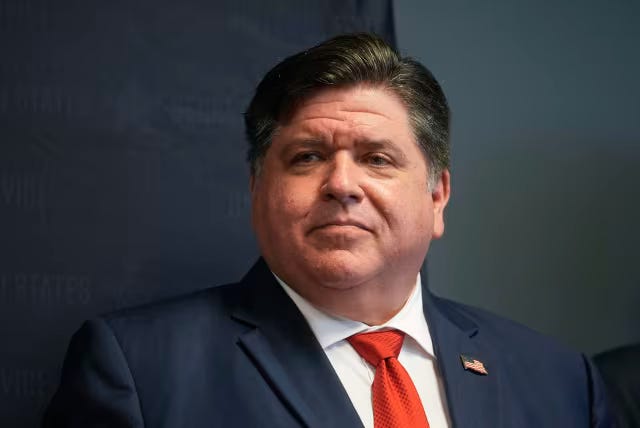
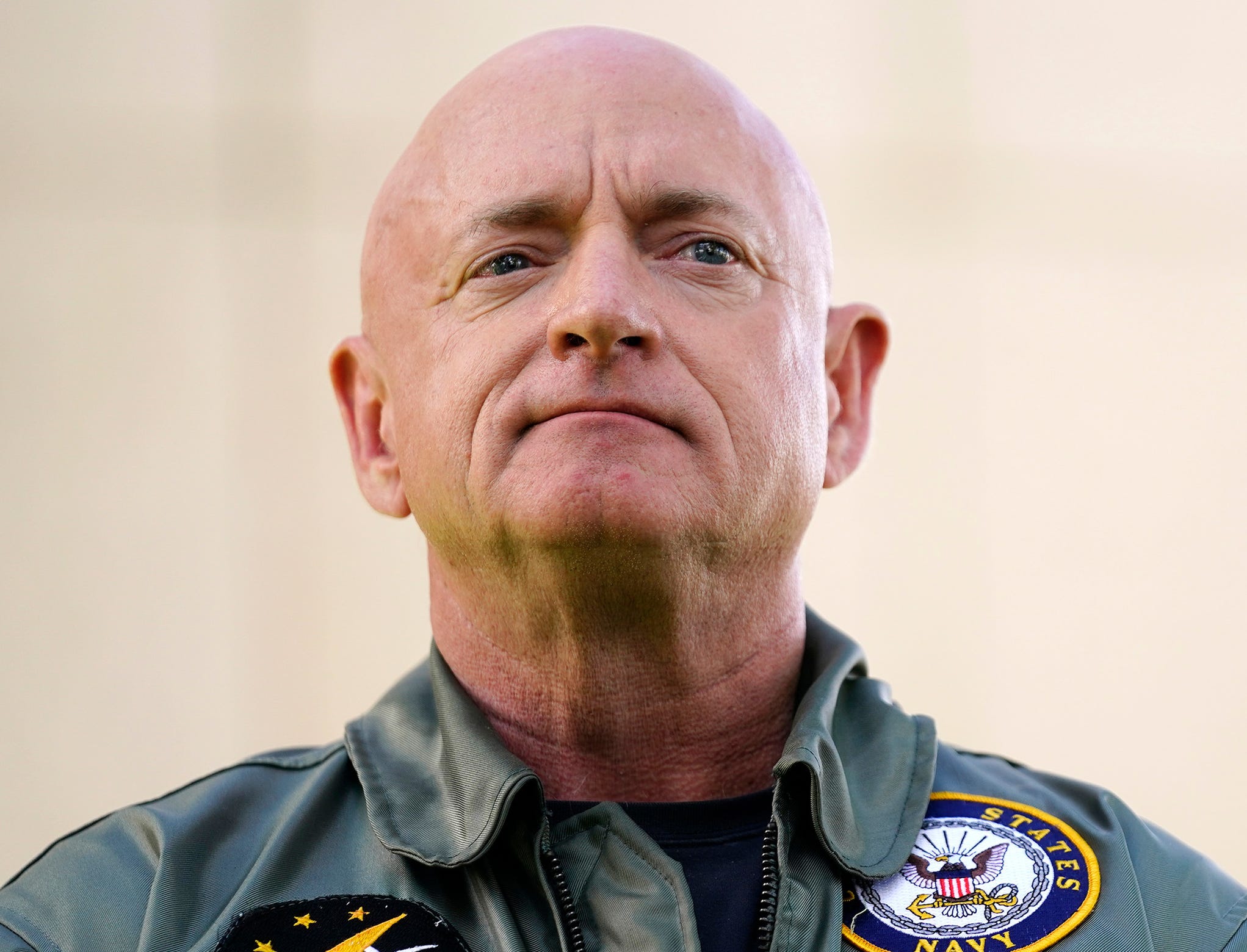
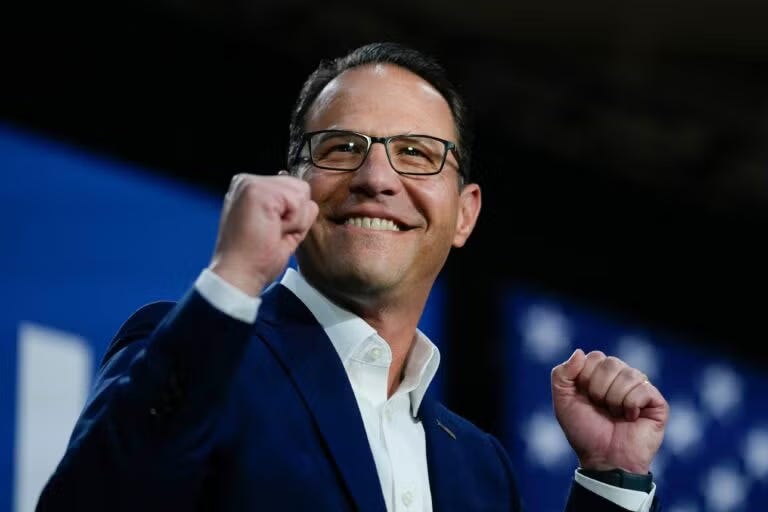
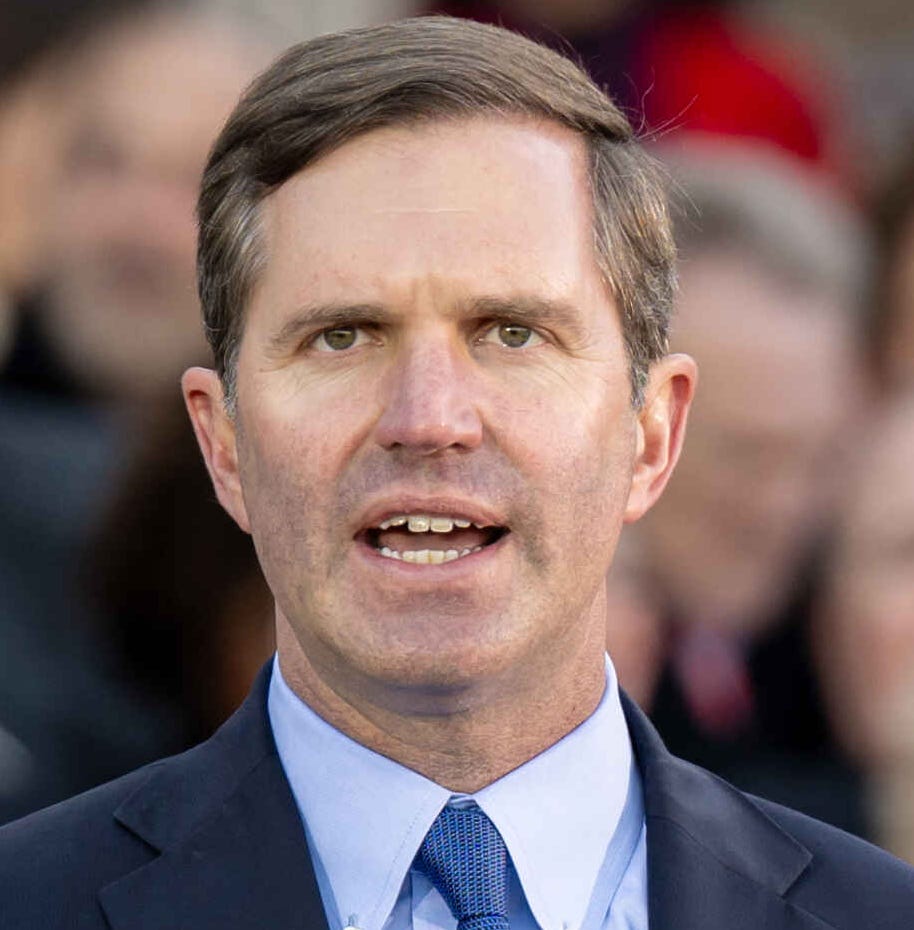
So today we’re going to focus on the top “someone else” options in current polls: Illinois Governor JB Pritzker, Arizona Senator Mark Kelly, Pennsylvania Governor Josh Shapiro, and Kentucky Governor Andy Beshear. (That still leaves a “third tier” comprising California Congressman Ro Khanna, New Jersey Senator Cory Booker, Michigan Governor Gretchen Whitmer, and former congressman and Chicago mayor Rahm Emanuel — all of whom we’ll get to soon.)
Here’s a summary of the current second tier’s pros and cons.
As much as he’d love to be, Trump is not king of America. Which makes Charles III’s visit here a bit odd. It’s billed as a state visit, but Charles isn’t a head of state; his function is purely symbolic.
Most Americans disapprove of Trump, but there’s something special about the relationship between the Brits and their Royal Family. For it is in fact their Royal Family — not just an archaic symbol of what remains of the British Empire but a living, breathing, soap opera of a family that in the minds of many Brits represents modern-day Britain.
To those who say it’s bizarre for one of the world’s major democracies of the 21st century to cling to the fiction of royalty — and it is indeed a fiction, because Charles III has no tangible political power — I say this: It’s a relatively harmless fiction and one that arguably meets the needs of people to gossip about, project upon, and vicariously live the lives of a storybook family that tries to be of service to their nation.
Here in America — at least before Trump — some of us romanticized our presidents and their families. Remember Camelot?
But because our presidents also run the executive branch of our government, the two roles — the projected glamor and the political reality — have often gotten confused, leaving us disappointed on both grounds.
After Camelot came Lyndon Johnson, who pulled up dogs by their ears. And then, eventually, Donald (“Grab ‘em by the pussy. You can do anything”) Trump. You can’t get any further from a romanticized Camelot.
Britain’s government may seem drab and boring but is at least free to do its drab and boring best.
Here, we demand that our presidents and their spouses throw formal balls (Trump is trying to build the biggest ballroom anywhere) and state dinners, decorate the White House like a castle, appear in person at every major national anniversary or memorial or funeral, and always symbolize the nation.
I’m certainly not suggesting America should have a royal family. Count me in the “No Kings” camp.
It’s just that Britain’s infatuation with its own royalty may have some social utility there that we Yanks don’t fully understand. Keeping the trappings of royalty separate from the daily slog of governing makes some sense.
His aides don’t trust his judgment, so they’ve excluded him from the war room. So, who’s in charge of his war with Iran?
He’s losing his marbles, friends. For the good of the nation and the world, it’s time we faced the reality that the head of the most powerful nation in the world can’t do the job. Congress should impeach and convict him as soon as possible — and get him out of the Oval Office.
You can be Secretary of Defense (War) and cause the mightiest military in the world to be brought to its knees, and still keep your job in the Trump regime.
You can be in charge of public health and cause measles to reemerge as a major hazard to Americans, and still keep your job.
You can be illegally enriching yourself and your family as Commerce Secretary, and still keep your job.
But you’ll be fired for actively and unnecessarily getting bad press.
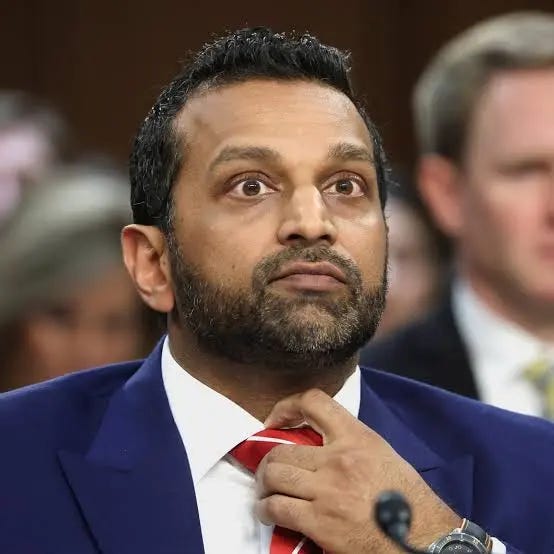
A few days ago, a senior White House official toldPolitico that FBI director Kash Patel’s bad press was “not a good look for a Cabinet secretary” and had frustrated Trump. “It’s only a matter of time,” they said, before Patel is canned.
Like Kristi Noem, Pam Bondi, and Lori Chavez-DeRemer, Patel has been his own worst press agent.
He filed a $250 million defamation claim against The Atlantic magazine over its April 17 report claiming that his FBI colleagues were alarmed by his excessive drinking and unexplained absences. The report included claims that his security detail struggled to rouse him due to intoxication several times in the past year and that he drank heavily at a private club in Washington. Bureau employees expressed concerns that his behavior posed a threat to public safety.
I doubt it’s Patel’s excessive drinking and absences that are making Trump upset; it’s that they’re being reported, and that Patel has made them even bigger stories by suing The Atlantic over them.
Last week, Patel added to the drinking story when he erupted at NBC’s Ryan Reilly, who asked Patel at a press conference whether, as The Atlantic alsoreported, he feared he had been fired when he was unable to log into his government computer.
“The problem with you and your baseless reporting is that is an absolute lie,” Patel shot back. “It was never said. It never happened. And I will serve in this administration as long as the president and the attorney general want me to do so.” Patel added, “You are off topic,” and “the answer to your question is you are lying.”
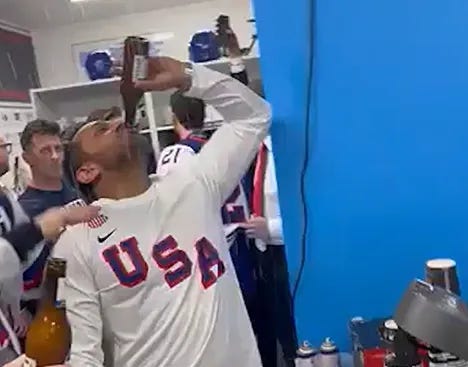
Worse yet, from Trump’s viewpoint, is that some of Patel’s drinking has been in the public eye. One video showed him drinking a beer, banging his fist on a table, and celebrating with the U.S. men’s hockey team at this year’s Winter Olympics in Italy.
Nothing gets Trump angrier than when one of his underlings is caught doing something stupid on videotape. After the video of Patel spread on social media, Trump called Patel to convey his discontent, Politico reported.
Soon after Patel sued TheAtlantic, TheNew York Timesreported that the FBI had been investigating Elizabeth Williamson. Williamson was the Times journalist who revealed that Patel had used a SWAT team to protect his country singer girlfriend, Alexis Wilkins, when she was invited to sing the national anthem at the annual convention of the National Rifle Association. And that Patel had “ripped into” the SWAT team’s commander when the team left after it became apparent there was no threat to her.
It’s not that Patel misused government funds on his girlfriend. Or that Patel exploded at the FBI SWAT team’s commander. Or even that Patel ordered an investigation of the journalist who reported this. No, it’s that all of this became a national story — twice. Such self-generated negative press infuriates Trump.
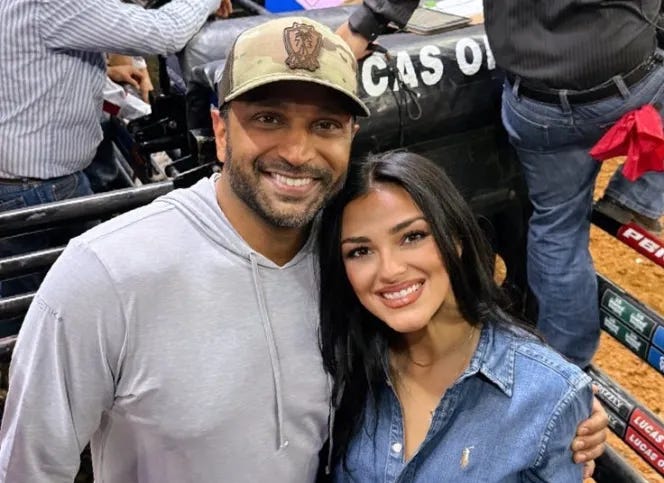
Patel with girlfriend Alexis Wilkins
The same day that the Times reported on the FBI’s investigation of Elizabeth Williamson, NBC reported that a federal judge in Texas had tossed out a defamation case brought by Patel against former FBI assistant director-turned-MSNBC contributor Frank Figliuzzi. Patel had brought the case over Figliuzzi’s remark on “Morning Joe” that Patel had been “been visible at nightclubs far more than he has been on the seventh floor of the Hoover building.”
More self-generated negative press: not that Patel has been doing the nightclub circuit and disregarding his job, but that he invited a story about it by suing Figliuzzi.
Similarly, it’s not that Patel has repeatedly wrongly accused people of federal crimes (announcing someone had been arrested for the murder of right-wing commentator Charlie Kirk when the real murderer hadn’t yet turned himself in, and that a person of interest had been detained in the Brown University shooting, only for that individual to be released hours later).
It’s that Patel’s wrong accusations were widely reported, making Patel — and, indirectly, Trump — look dumber than dirt.
Patel simply doesn’t know how to keep a low profile. Like so many others in the Trump regime, he made his name by promoting himself. As a frequent guest on right-wing programs before Trump appointed him FBI director, he pushed conspiracy theories about the “deep state,” the 2020 presidential election, and the January 6 Capitol attack.
But the occupant of the Oval Office doesn’t want his underlings engaging in self-promotion and vindictive lawsuits. If anyone’s going to be self-promotional and vindictive, Trump wants it to be himself.
Patel has been trying to win back Trump’s favor by escalating FBI investigations into Trump enemies. But so far, the investigations haven’t yielded adequate evidence to indict, another mark against him in Trump’s book.
A week ago Sunday, Patel promised that the Justice Department would soon make arrests related to the 2020 election, stating on Fox News’s “Sunday Morning Futures” that “We’ve got all the information we need, we’re working with our prosecutors at the Department of Justice under [acting] Attorney General Todd Blanche, and we are going to be making arrests, and it’s coming, and I promise you, it’s coming soon.”
Patel’s plea was obviously directed at Trump.
I doubt it will work. Patel will soon be locked out of his computer for good.
Frankly, I couldn’t think of anything even slightly humorous to draw for today’s Sunday caption contest. As Karla Von Huben put it in her comment about my post this morning about the White House Correspondents Dinner: “I suspect that most people are going to think this is fake, just like the ‘attack’ in Butler that resulted in no scar on his ear. I also think it’s going to backfire bigly. I’m just so sick of this lunatic I could scream. Or cry. Or throw things.”
Me, too.
So let’s resume the Sunday caption contest next week.
In the meantime, be well. Be safe. Hug your loved ones.

 Login
Login