Words matter. When describing a government, they inevitably carry moral weight.
Over the last 16 months, Trump and his appointees have so profoundly undermined the United States government that we should use different words to describe these people than we’ve used to describe all previous administrations.
To begin with, they shouldn’t be called an “administration” at all.They should be referred to as a regime.
The Trump regime has flagrantly defied court orders. In February 2026, a federal judge (appointed by President George W. Bush) identified approximately 200 orders from the District of Minnesota alone that ICE had ignored since the start of the year, concluding that ICE had “likely violated more court orders in January 2026 than some federal agencies have violated in their entire existence.” The regime has also vilified judges who rule against it and demanded their impeachment.
The regime has usurped Congress’s powers to declare war, issue tariffs, and appropriate public funds. It is using tariffs as cudgels for Trump’s political aims. The regime is seeking to stifle speech and silence criticism — in universities, law firms, and the media.
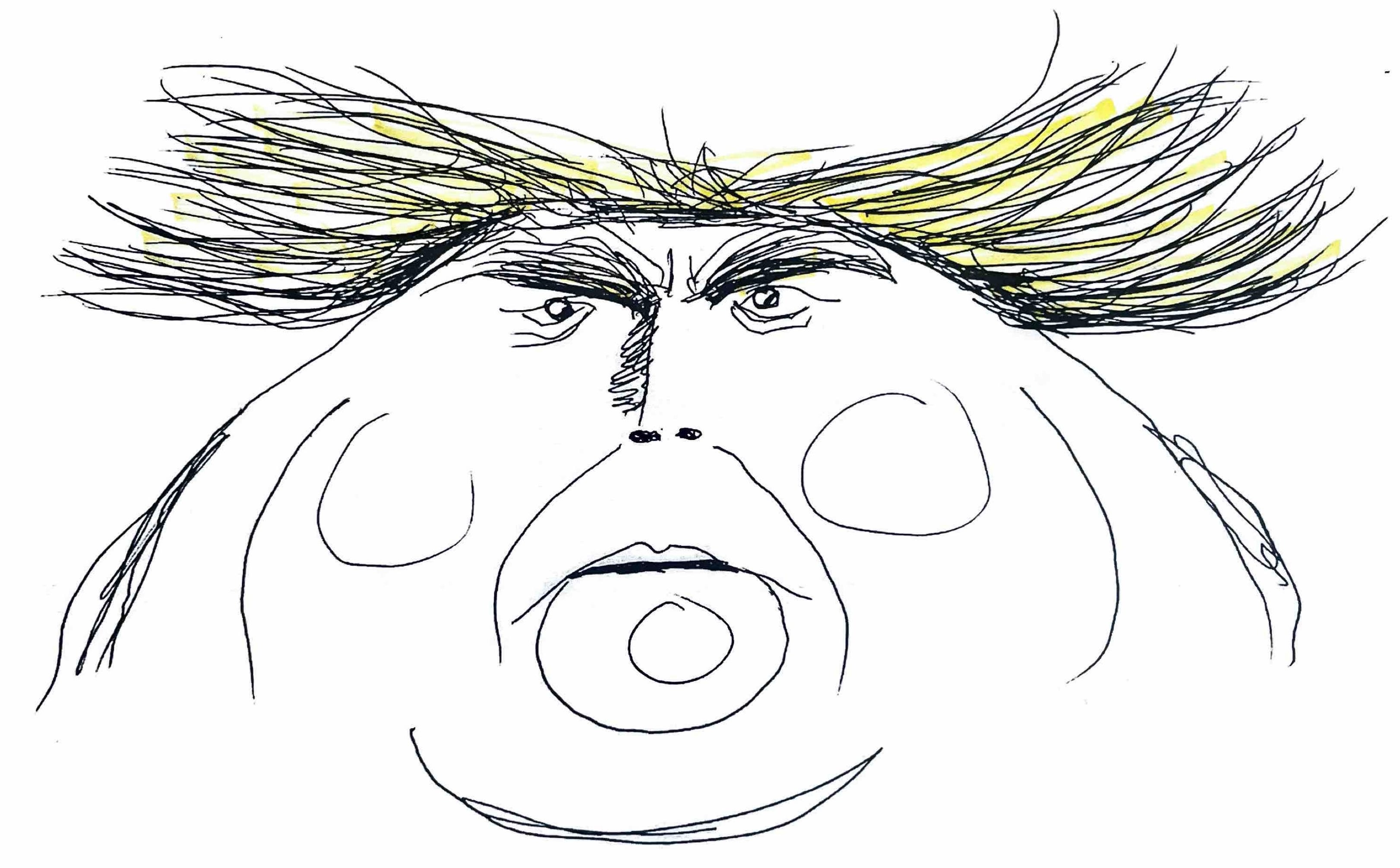
Secondly, this regime is not headed by a “president,” as the Constitution of the United States and our laws and history have designated the head of the executive branch of the U.S. government. To put the term “President” before Trump’s name defiles the Constitution. He is an authoritarian.
Trump has illegally fired more than 300,000 career civil servants. He has fired inspectors general who are charged with holding political appointees accountable. He punishes whistleblowers who protest abuses. He attacks marginalized groups and foments bigotry. He is openly persecuting political opponents. He has given out pardons to convicted felons who are political supporters or financial contributors — including nursing home fraudsters, a Honduran president who smuggled 400 tons of cocaine into the United States, and January 6 seditionists. He has sent federal troops into states and cities headed by Democratic officials.
Thirdly, Trump has no interest in governing. He wants only to impose his will and make money from his office.His regime’s disregard for law is so monumental that it negates what we have come to understand as a “government of laws.” A better word for it is lawless.
During the first 16 months of Trump’s lawless regime, immigration agents have shot or killed 16 people, including three U.S. citizens.More people died last year in the custody of Immigration and Customs Enforcement — a total of 32 — than in the preceding 20 years.People only suspected of being in the U.S. illegally have been detained or deported by masked and armed immigration agents, without a hearing. People only suspected of smuggling drugs have been murdered by the U.S. military in international waters, in violation of international law.
Meanwhile, Trump is accepting gifts from foreign powers. He blatantly promotes his family’s crypto business and implements policies favorable to it. He has sued the Internal Revenue Service for $10 billion and is now in settlement negotiations with his own Justice Department, which reportedly has offered to drop any future IRS audits of Trump, his family, or his businesses.
Finally, the true test of a successful president of the United States and his (eventually her) administration is not how much power he accumulates or how much he gets done. The real test is how much better off are the American people and how much stronger is our democracy. By these measures, Trump and his regime are not just lawless. They are a catastrophe.
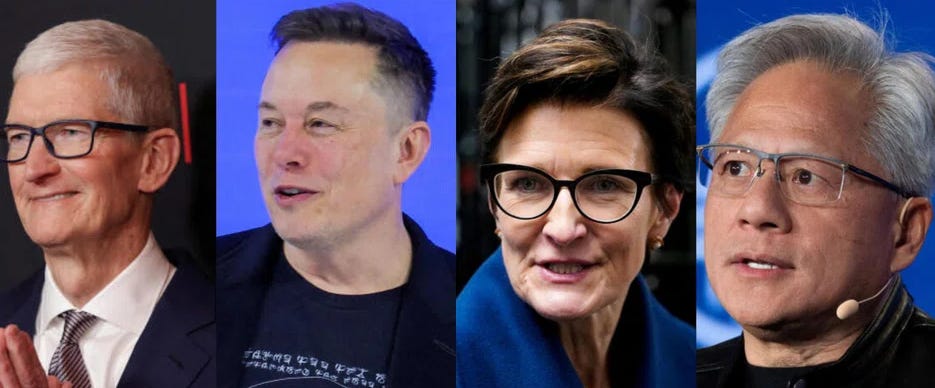
Trump calls the entourage of 12 CEOs accompanying him to China an “incredible gathering” of America’s “Greatest Businessmen/women.”
Well, it may be an incredible gathering. But to characterize them as America’s greatest business leaders — who are assumed to be leading America’s competitive charge against China — is misleading.
The American CEOs traveling with Trump to China don’t think of themselves as being in competition with China. In fact, they’d like nothing better than to make more money for themselves and their shareholders by setting up more lower-cost, highly productive factories and research facilities in China and hiring more Chinese talent.
It’s an important distinction. The CEOs of Chinese companies are in business not only to make money but also to strengthen China’s geopolitical power in the world. The CEOs of American companies want to make gobs of money, of course, but they couldn’t give a rat’s ass about strengthening America’s geopolitical power in the world.
This basic difference is airbrushed away in breathless media stories about the competitive race between the American and Chinese economies — the so-called “race for supremacy” in AI, advanced semiconductors, supercomputers, solar wafers, biotechnology, and other industries of the future.
The distinction never appears in the breezy press coverage of Trump’s trip to China, along with his “U.S. corporate” delegation.
Take Elon Musk, obviously a conspicuous presence in Trump’s CEO delegation. Musk’s Tesla Gigafactory Shanghai produces over a third of Tesla’s global car sales. It’s also Tesla’s most productive factory. In February 2025, Musk opened a second factory in Shanghai, a $200-million plant focused on producing Megapack batteries. Nearly 40 percent of Tesla’s entire battery supply chain relies on Chinese companies.
All good for Musk and for Tesla shareholders, but what about American workers, who aren’t getting this work? What about America’s national security, which could be compromised if China gains further global dominance over batteries (as well as other renewables)? Do you think Musk cares?
Or consider Apple’s Tim Cook, also in Trump’s CEO delegation. China has become the gravitational core of Apple’s supply chain. Indeed, much of Apple’s success is due to Cook’s move to consolidate virtually all of his company’s manufacturing in China. About 90 percent of iPhones are assembled there, backed by massive investments in local supplier expertise and infrastructure. Cook explains that he’s taking advantage of China’s “unmatched” expertise in advanced tooling and manufacturing.
Since 2008, Apple has worked with Chinese suppliers to train 30 million workers there and has transferred practical engineering knowledge of how to make complex things from American engineers to thousands of Chinese engineers in hundreds of Chinese factories and research centers. Apple’s Cupertino, California, headquarters has sent so many American engineers to China to teach Chinese engineers that it even persuaded United Airlines to schedule three weekly flights from San Francisco to Chengdu and Hangzhou.
A third CEO in Trump’s delegation is Jane Fraser, CEO of Citigroup. Her goal has been to expand the bank’s (and its clients’) investments in China by growing Citigroup’s team in China and capturing market share for the corporation in high technology and advanced manufacturing.
Fraser’s moves may be good for Citigroup’s bottom line, but they may not be good for America. As she connects international investors with opportunities within China, she may be siphoning off potential investments in high technology and advanced manufacturing in the United States.
Another American CEO in Trump’s delegation is Jensen Huang, CEO of Nvidia. Huang’s goal is to get China to buy Nvidia’s AI and its advanced H200 processors, even at the risk that Chinese computer scientists and engineers might reverse-engineer them, as they have so many other technologies America once dominated.
Huang argues that with roughly half of all the world’s AI researchers, China is strategically vital for American tech companies. Huang may be right, but what’s strategically vital for American AI companies may not be in the strategic interest of the United States. The capacities that increase these corporations’ profits and returns to their American investors (including the pay packages of their CEOs) do not necessarily increase the productivity, knowledge, or strategic strength of America’s AI.
Doesn’t Trump know this? Does he assume that the rest of us don’t know? Is he really ignorant of the fact that Chinese corporations are tethered to China, but the CEOs of Tesla, Apple, Nvidia, and other so-called “American” corporations are not strategically bound to America? American CEOs aren’t paid to worry about the competitiveness of the United States, nor the number of good jobs in America, nor even about American national security.
Maybe Trump knows all this but doesn’t care. When it comes to making big money doing global deals, Trump’s merry band of CEOs has about as much loyalty to the United States as does Trump himself.
Sorry to invade your inbox for a third time today, but I thought you’d find this interesting and useful.
Southern white Republican legislatures are now breaking up Black districts — both because Donald Trump asked them to, and because the Supreme Court now allows them to.
The vast majority of Americans understand this is morally wrong. It’s not where the nation should be now, more than 161 years after General Robert E. Lee surrendered to General Ulysses S. Grant at Appomattox Court House.
Justin Jones, a rising star among southern Black political leaders, joins me to explain what’s happening, why it’s happening, and what we must do in response.
***
As you’ll hear, Jones says that in light of the Supreme Court’s shameful decision in Louisiana v. Callais, the Tennessee legislature has already turned all its congressional districts into white-majority districts. Now, Black voters in Tennessee — who comprise nearly 30 percent of the state’s population — have no voice.
Jones describes the lengths to which the Tennessee legislature has gone to create white-majority districts. “There’s a Krispy Kreme in Nashville,” he explained. “There’s another just 30 minutes away by car. In traveling from one to another, you now pass through five of Tennessee’s nine congressional districts.” That’s how absurdly gerrymandered Tennessee has become.
What to do?
First, Jones notes that the state used census maps to redistrict. Those maps identify people by race but not by political party. Jones believes this could be sufficient evidence of intent to racially gerrymander — the Supreme Court’s new test under the Voting Rights Act. Intent is incredibly difficult to prove, however.
Jones also thinks it would be appropriate for the young people of America to undertake another Freedom Summer, as they did in 1964.
“It’s the moment for courage,” Jones says. “We’re fighting the same forces of the confederacy as in the Civil War. Sometimes a democracy requires disruption …. We have to sound the alarm. The story of civil rights is being written at this moment. The question is whether you stand up now. We need a new multiracial generation of civil rights activists.”
Hope you get a chance to watch the whole interview, which runs 12 minutes, 40 seconds.
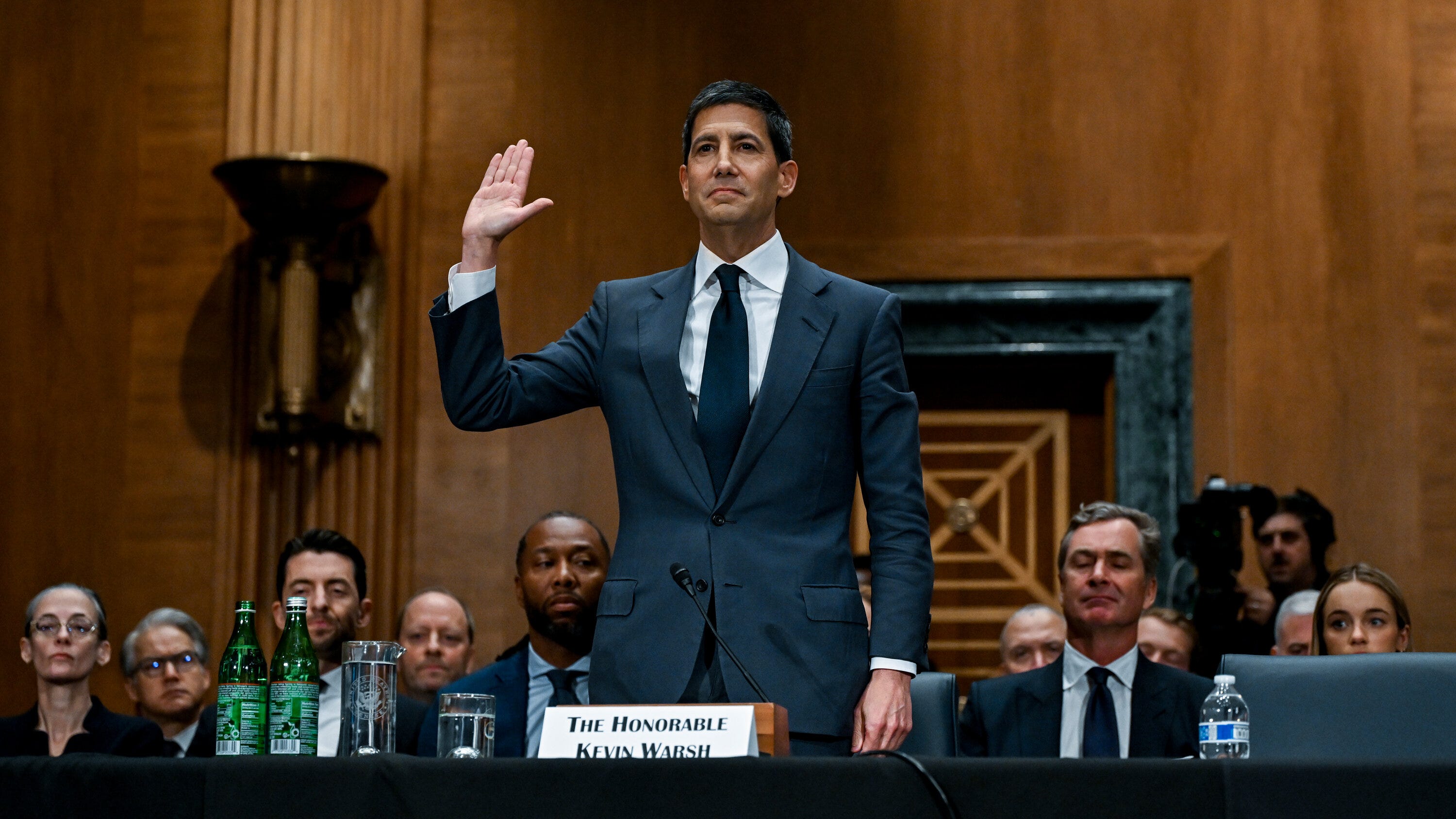
The Senate just confirmed Kevin Warsh to become the next chair of the Federal Reserve on a 54-45 vote.
This marks a new chapter in the history of an institution that depends for its credibility on political independence. That independence is important to you and everyone else who wants prices to remain stable and avoid inflation.
Trump has repeatedly attacked the Fed and its former chairman, Jerome Powell (not incidentally, a Trump appointee) for not lowering interest rates as quickly as Trump wants. Presumably, Trump wants lower interest rates because he figures that a “hot” economy is good for Republicans going into the 2026 midterms and perhaps even the 2028 general election, even if it means faster inflation.
Trump launched a trumped-up (pardon me) criminal investigation of Powell based on alleged cost overruns for refurbishing the Fed building and another against Fed member Lisa Cook based on alleged mortgage fraud. Neither of these individuals has left the Fed. (Powell’s term as chair ends May 15, but he has announced he’ll fill the remainder of his term, which runs until January 31, 2028, as a Fed governor. He says Trump’s pressure campaign against the central bank left him no choice but to stay on. The case against Cook has been taken up by the Supreme Court, which is expected to issue an opinion before its current term ends in July.)
Senator Thom Tillis, Republican of North Carolina and a member of the Senate Banking Committee, blocked Warsh’s nomination until Trump dropped his legal threats against Powell. (Tillis thereby earns one of my Joseph N. Welch Awards for courage in the face of Trump’s tyranny.)
The big question now is whether Warsh will do Trump’s bidding and advocate lower interest rates even in the face of rising inflation — a move that would worsen the inflation even if it gives the economy (along with Trump and the Republicans) a temporary boost. (All but one Democrat in the Senate voted against confirming Warsh, reflecting concerns about his willingness to maintain the Fed’s political independence. During his confirmation hearing, Senate Democrats derided Warsh as Trump’s “sock puppet.”)
Why Fed independence is so important
The reason why the Fed, like most nations’ central banks, is supposed to be independent of politics is so people who are buying and selling financial assets don’t base their transactions on Trump’s or any other political leader’s desire for a booming economy in the short run (that is, until the next election) even at the risk of inflation.
Otherwise, inflation could easily get out of control. As William McChesney Martin Jr., the longest-serving chairman of the Federal Reserve, famously put it, the role of the Fed is “to take away the punch bowl just as the party gets going.”
Martin’s “party” is an expanding economy with growing inflationary pressures, and the “punch bowl” is low interest rates and easy credit that fuel these growing pressures. As the designated chaperone, the Fed has to raise interest rates to prevent the economy from overheating, even if doing so harms a president’s political prospects.
I was in the Carter administration when Fed Chair Paul Volcker decided to “break the back” of inflation by raising interest rates so high that he put the economy into a recession and, arguably, caused voters to boot Carter out of office in 1980.
I was in the Clinton administration when Fed Chair Alan Greenspan threatened to raise interest rates (which might also have led to a recession and caused voters to boot Clinton out of office in 1996) unless Clinton reduced the federal budget deficit — which Clinton did (over my strenuous but failed objections).
Can Warsh succeed?
Warsh’s success on the job depends on the perceptions of millions of financial traders, who presumably will be looking for any hint that he’s soft on inflation.
Ironically, Trump’s loud insistence on lower interest rates, coupled with rising inflation due to Trump’s war in Iran and his tariffs, all make Warsh’s job far more difficult.
I don’t expect the Fed to lower interest rates before the end of the year, regardless. Warsh’s first meeting as chair will be June 16-17.
Trump’s war with Iran — which he originally promised would be over in “four to five weeks” — has now entered its third month. Iran and Trump are engaged in a massive game of chicken — and time seems to be running out for both sides.
The consequences of the war for Iran’s economy are far worse than for America’s, but Iran’s dictatorship presumably can withstand public pressure more easily than Trump can, especially with midterm elections in the U.S. in less than six months. Sixty percent of Americans disapprove of Trump’s handling of the war.
The International Monetary Fund projects that Iran’s economy will contract 6.1 percent this year and inflation will reach nearly 70 percent. Iran’s currency, the rial, has hit record lows (around 1.32–1.8 million to the dollar), resulting in massive layoffs, high unemployment, and acute shortages of essential goods and medicine.
In the United States, the average price of gasoline has climbed to more than $4.55 per gallon, up over $1.50 since the war began in late February. Driven by a surge in energy costs from the war, inflation rose in April to an annual rate of 3.8 percent, up from 3.3 percent in March — marking the highest rate of inflation since May 2023 and making it unlikely that the Federal Reserve will cut interest rates this year.
So what will Trump do now? The man who claims he knows better than anyone how to make a deal has so far been outmaneuvered by the regime he says he toppled.
I’ve summarized below the four main options now open to him, according to specialists in foreign policy and the Middle East.
I had dinner recently with a group of political operatives — sophisticated people who for years have been advising politicians and candidates. During dinner they shared with me their fantasy, which they gave 30 percent odds of becoming a reality within the next four months.
In my dinner companions’ fantasy, Trump’s failed war will elevate gas and food prices so high and long that much of the Republican base will begin turning against Trump. And Trump’s mental problems will become even more obvious.
Faced with all this, JD Vance promises Marco Rubio that he’ll appoint him vice president if Rubio joins Vance in seeking to oust Trump under the 25th Amendment.* Rubio agrees.
Vance and Rubio then approach House Speaker Mike Johnson and Senate Majority Leader John Thune for confidential discussions in which they broach the possibility. Johnson and Thune give Vance and Rubio their tacit support.
Vance and Rubio then get Pete Hegseth to sign on, promising Hegseth that he’ll keep his job. They get Todd Blanche to sign on by promising him he’ll be appointed permanent attorney general.
Vance, Rubio, Hegseth, and Blanche are what Thune and Johnson need to make the 25th stick.
This arrangement serves everyone’s interests. For Vance and Rubio, it avoids what could be a messy 2028 primary election in which the two are pitted against each other. As president, Vance gets a head start on being elected president in 2028. As vice president, Rubio is heir apparent in 2032 (when Rubio will be only 60 years old) or in 2036.
As president and vice president, Vance and Rubio end Trump’s tariffs and his war, which have caused prices to soar, upset the Republican base, and turned much of the world against America.
Hegseth gets the job security he’s desperate for. Blanche gets the promotion he covets.
Republicans in the House and Senate get rid of Trump, who’s become an albatross around their necks and who they fear, if he remains in office, will cause them to lose control over the House and Senate in the midterms — and could lead to a congressional rout in 2028.
The plan is finalized when Trump is away at Mar-a-Lago. It’s executed in a conference call to Trump — during which Vance, Rubio, Hegseth, Blanche, Johnson, and Thune notify Trump he’s no longer president.
Trump screams, hollers, pounds his Mar-a-Lago desk, and threatens legal action, but there’s nothing he can do. He’s out of office.
I listened intently as my dinner companions spelled all this out. “So you really think there’s a 30 percent chance of this happening?” I asked them.
“Could be higher if the war continues,” one of them said, and the others agreed. Another of them thought the odds already higher.
“I can’t decide whether to be elated or worried,” I responded.
They laughed, but I was serious.
_____
** To remind you: Section 4 of the 25th Amendment states that “whenever the Vice President and a majority of … the principal officers of the executive departments … transmit to the president pro-tempore of the Senate and the Speaker of the House of Representatives their written declaration that the President is unable to discharge the powers and duties of his office, the Vice President shall immediately assume the powers and duties of the office as Acting President.” Section 2 of the 25th Amendment states that “whenever there is a vacancy in the office of the Vice President, the President shall nominate a Vice President who shall take office upon confirmation by a majority vote of both Houses of Congress.
Yesterday I spoke with Tennessee state representative Justin Jones, one of the nation’s young Black leaders who’s been a rising star in Tennessee politics, about the Supreme Court’s shameful April 29 decision in Louisiana v. Callais gutting Section 2 of the Voting Rights Act.
Jones told me that, at Trump’s urging, Tennessee Republicans had prepared a redistricting map even before the court announced its decision. Then, despite pleas from Black voters and voting rights advocates, the white Republican legislators moved their meeting to another room without allowing the public in to watch, passed the new map out of committee, and enacted it within 24 hours.
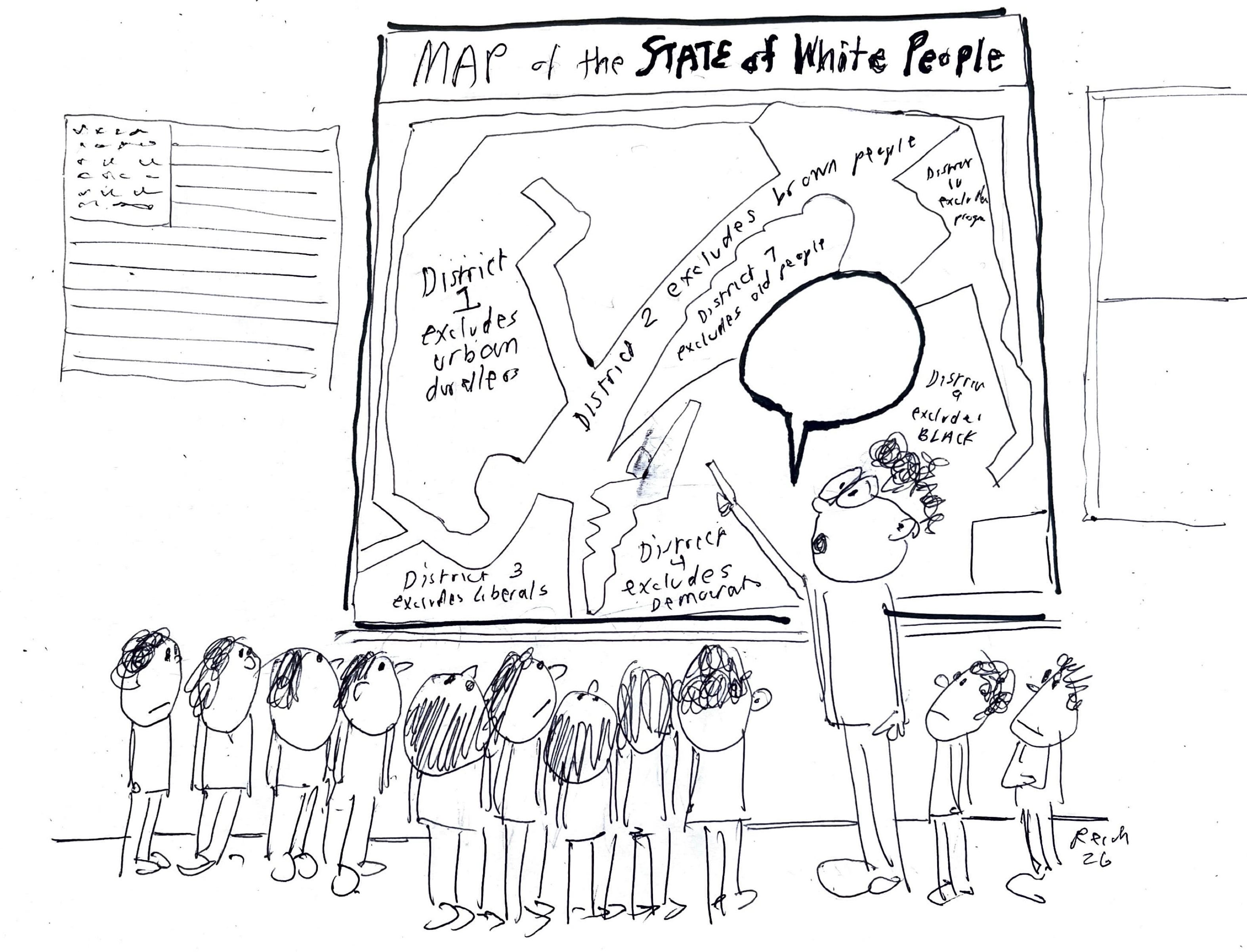
The new map has eliminated Tennessee’s one remaining Democratic district around Memphis, a city of about 610,000 people, about two-thirds of whom are Black — by cracking it into three majority-white districts, one stretching hundreds of miles. The map has also divided Nashville, another city with a Black majority, into five white-majority districts.
Jones described Tennessee House Speaker Cameron Sexton as the “grand wizard in chief,” explaining that “that’s what they want to do. They want to create a process that is unfair and unequal.”
Other southern states have joined Tennessee’s rush to redistrict.
Louisiana’s governor has ordered that the state’s ongoing congressional election be set aside while state lawmakers redraw maps to eliminate a Democratic-majority — that is, a Black-majority — seat covering Baton Rouge.
At Trump’s request, Alabama Republicans have approved legislation directing the governor to schedule new primary elections this year under a GOP-friendly map that would end districts represented by Black lawmakers, if courts lift an injunction on its redistricting.
The Mississippi legislature will soon convene in a Confederate-era Capitol building that it hasn’t used in 100 years, presumably to eliminate the Democratic majority in the one Mississippi district held by a Black representative.
South Carolina’s Republican majority in the statehouse voted Wednesday to extend its legislative calendar, allowing time to consider whether they should eliminate the state’s sole Democratic-majority, Black-majority district, held by long-serving representative James Clyburn.
Florida was already in a special redistricting session when the Supreme Court announced its decision, enacting a congressional map for its 28 districts that packs Black and brown voters into four districts on the south Florida coast and Orlando, eliminating every other Democratic majority.
“We’re going backwards at warp speed,” Jones told me. “In just over a week, we’ve gone from the 1965 Voting Rights Act back to the era of Jim Crow.”
I asked him what he and other Black political leaders in the South were planning to do.
“There’ll be a lot of litigation,” he said, “but we can’t be optimistic with this Supreme Court.”
“So, what’s the strategy?”
“We need the biggest voter turnout in history this fall. Every Black person, every Brown person, every Democrat, everyone who cares about the moral soul of this nation has to vote for equal voting rights. Take over Congress. Increase our power in state legislatures. This is the only way to respond.”
“I’m with you,” I said, “but I really wonder whether that’s possible.”
“How about a new Freedom Summer?” Jones responded, with a smile. “A multiracial force of young people fanning out across the South, registering voters, getting them to the polls, just like they did in 1964.”
“I remember. I lost a dear friend in Mississippi Freedom Summer.”
“I have no direct memory, of course,” Jones said. “I was born in 1995, 31 years after Freedom Summer. But the South is almost back to where it was then. So, yes, it’s possible. It’s got to be possible.”
I told him I’d share his idea with you and ask you for your responses.
The U.S. national debt just crossed a once-unthinkable threshold on the way toward breaking the record set in the wake of World War II: It now exceeds 100 percent of America’s gross domestic product.
As of March 31, our publicly held debt was $31.27 trillion, while America’s GDP in 2025 was $31.22 trillion. This puts the ratio at 100.2 percent, compared with 99.5 percent when the last fiscal year ended September 30.
That 100.2 percent figure will likely climb, because the federal government is running historically large annual deficits of nearly 6 percent of GDP, which add to the debt. The final tally will depend on Iran war spending, tariff refunds, and the strength of the economy.
Should you worry? Well, it’s not as if we’re heading into a depression. Passing the 100 percent threshold won’t suddenly cause the world to lose confidence in the dollar.
The real problem is that an increasing portion of our nation’s budget — and your tax dollars — is dedicated to paying interest on this growing debt. That’s money we don’t spend on education, healthcare, roads and bridges, social safety nets, or (if we actually needed more spending on it) national defense.
As the debt continues to grow, interest payments continue to soar. We’ll soon be paying more in interest on the federal debt each year than we spend each year on Medicare.
So, who exactly receives these interest payments? This is an issue you hear very little discussion about, because the wealthy and powerful of this country would rather you didn’t know.
You probably do hear that a chunk of our debt is held by foreign governments and foreign investors. That’s true, but they hold only about 30 percent of our debt. The rest — roughly 70 percent — is held domestically. That is, we pay the interest to ourselves.
And who, exactly, is the “ourselves” who receive these interest payments? The Federal Reserve holds part of this debt, state and local governments hold part.
But the biggest chunk — nearly half — is held by mutual funds, pension funds, insurance companies, and banks. And who owns them? The Americans who invest in these funds — and who thereby, directly or indirectly, hold Treasury bills.
And who, exactly are these Americans — the Americans who are directly or indirectly collecting a large amount of the interest we’re paying on the national debt? It’s the people at the top.
The richest 1 percent of U.S. households hold about 35.6 percent of all financial assets — shares of stock, corporate bonds, and Treasury bills — so it’s safe to assume they hold at least a third of all Treasury bills.
What’s wrong with this picture?
Here’s where things get really interesting.
Decades ago, wealthy Americans financed the federal government mainly by paying taxes. Their tax rate was far, far higher than it is today. In the 1950s, under President Dwight Eisenhower, the richest Americans paid a marginal tax rate of 91 percent. (Tax deductions and tax credits meant that the top effective marginal rate was lower than this.)
Fast forward. Now, wealthy Americans finance the federal government mainly by lending it money and collecting interest payments on those loans.
Interest payments on the national debt this year are expected to reach $1 trillion.
There are roughly 128 million households in the United States. Dividing $1 trillion in annual interest among U.S. households would amount to $650 per household per month. (This is a simplified average, of course; actual burdens vary based on tax status, income, and spending.)
The point is that a big chunk of the growing interest payments American taxpayers make on the federal debt is going to wealthy Americans.
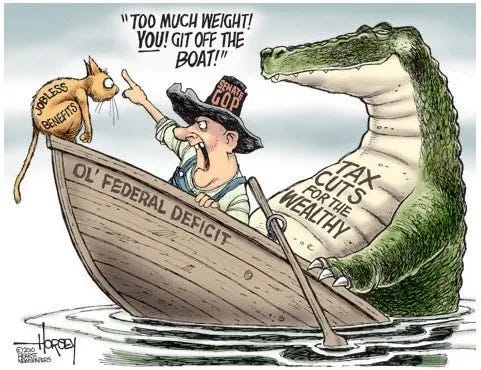
Keep following the money. One of the biggest reasons the federal debt has exploded is that tax cuts — starting with the George W. Bush administration in 2001 and extending through Trump’s 2018 and 2024 tax cuts — have reduced government revenues by $10.6 trillion.
Most of the benefits from those tax cuts are going to the wealthy. Since 2000, 65 percent of the benefits from tax cuts have gone to the richest fifth of Americans — 22 percent to the top 1 percent.
So, you see what’s happened?
The wealthiest Americans used to pay higher taxes to finance the government. Now, the government pays wealthy Americans interest on a swelling debt, caused largely by lower taxes on wealthy Americans.
Which means a growing portion of everyone else’s taxes are now paying wealthy Americans interest on those loans, instead of paying for government services everyone needs.
So, from now on, whenever you hear someone say how huge, horrible, and out-of-control the national debt is, explain to them that it’s because of tax cuts to the wealthy — who are also the major recipients of interest on that debt.
America’s wealthy have never been wealthier. If they paid their fair share of taxes, we wouldn’t have such a huge federal debt. And we wouldn’t be paying them so much interest on that debt.
When I was very young and frustrated about one thing or another, my mother reassured me that “everything works out in the end.”
Her optimism used to drive me nuts. “When is the end?” I’d ask her. “Next week? Next year? After we die? In a century? What are we supposed to do in the meantime? Just wait?”
My mother’s words come back to me, partly because it’s Mother’s Day.
They also come back to me because of the horrible setbacks of the last two weeks — the Supreme Court’s gutting of what remained of the Voting Rights Act; the headlong rush of Louisiana, Florida, North Carolina, Tennessee. Alabama, and Mississippi to resurrect Jim Crow redistricting laws; and the Virginia Supreme Court’s invalidation of Virginia’s redistricting plan. All of this combined with Trump’s war in Iran, his ongoing ICE police state inside America, and his innumerable attacks on the Constitution — have reminded me of my mother’s optimism.
I thought I had seen this country at its worst. I lived through Joe McCarthy, George Wallace, Bull Connor, and Richard Nixon. The Ku Klux Klan murdered a dear man who had protected me from bullies when I was a child. The Vietnam War took the life of a good friend from college. Watergate undermined much of my generation’s faith in government.
But what we’re now experiencing is in many ways worse, because the Supreme Court, the Republican Party, and Trump are destroying laws and institutions that had been painstakingly enacted and implemented to protect our democracy, defend against bigotry, and strengthen the rule of law. We had not achieved these goals, of course, but at least we’d used these laws and institutions to seek them. That effort was the foundation of my mother’s optimism, which became my own.
Yet the people now in power are no longer fighting for a good society. They are pursuing a cruel, regressive society. So where does this leave the rest of us?
Like many of you, I’m furious about the wanton destruction of so much I’ve believed in and worked for. But I’ll be damned if I’m going to give up the fight.
Over the years I’ve come to understand my mother’s optimism. Many important social goals requires working hard for them but not expecting them to be achieved anytime soon — in fact, accepting that there will be times when we seem to be going backwards, and that the goals may not even be achieved in our lifetimes. Yet seeking them is essential for our lives to matter. As Martin Luther King Jr., assured us, “the arc of the moral universe is long, but it bends toward justice.”
I admit to occasional bouts of pessimism. But pessimism is different from cynicism. Pessimism is a sense that things will worsen, at least in the foreseeable future. Pessimism is understandable at a time like this. Even my optimistic mother, were she still with us and witnessing what’s happening, might succumb to it on bad days.
Cynicism is a belief that the worsening is inevitable and that nothing we can do will make any difference. Cynicism is a black hole from which there’s no escape. It’s the end of the line.
Powerful reactionary forces want us to embrace cynicism because then they win everything; they can take it all without a fight.
If you occasionally feel pessimistic, you’re not alone. But please do not fall into cynicism.
Happy Mother’s Day to all of you who are mothers, and to the mothers of all of you. And believe me: If we continue to seek social justice, everything will work out in the end.
This morning, Michael and I (Heather is out today) delve into the redistricting wars — including the decision by the Virginia Supreme Court to cancel that state’s redistricting — and examine strategies still open to Democrats before the midterms. We also try to decipher what’s really happening in the Persian Gulf. And we take a close look at Trump’s sycophants Kash Patel at the FBI, Todd Blanche at Justice, Brendan Carr at the FCC, and Bill Pulte at the Federal Housing Finance Agency and the wrecking balls they’re wielding.
Given all this, we compare Michael’s Gen Z’s outlook on America with my postwar boomer’s outlook.
So please pull up a chair, grab a cuppa, and join in today’s conversation.
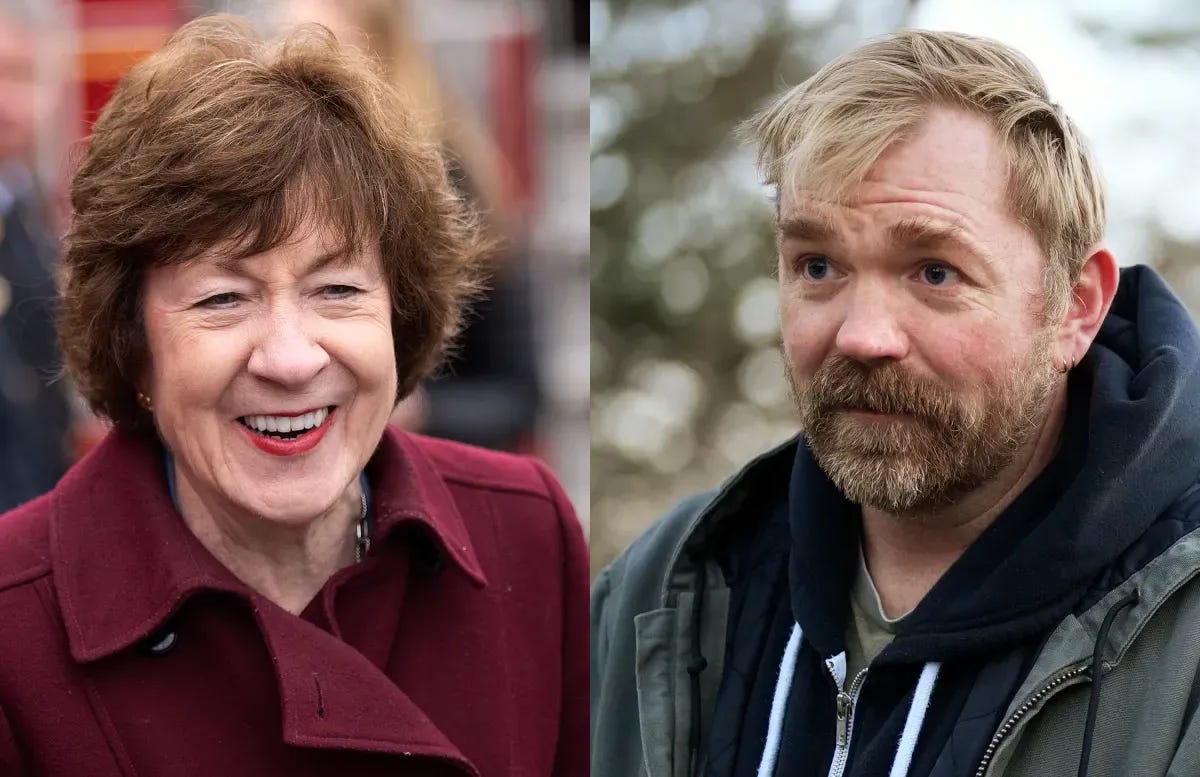
Last Thursday, populist Democratic candidate Graham Platner shook up the Democratic establishment when his primary competitor, Maine Governor Janet Mills, suspended her Senate campaign amid polls showing her badly trailing Platner, an oyster farmer who had come out of nowhere to win a national following.
Platner is the latest example of the rise of anti-establishment outsiders in the Democratic Party — a trend that also includes self-proclaimed democratic socialist Zohran Mamdani, who last year defeated former Gov. Andrew Cuomo for New York City mayor.
Yet the Democratic establishment — corporate Democrats, wealthy Democratic donors, entrenched Washington “centrists,” the Democratic Senatorial Campaign Committee, the Democratic Congressional Campaign Committee, the Democratic National Committee, and Hakeem Jeffries and Chuck Schumer — still don’t get it.
Hell, the Democratic establishment didn’t get it a decade ago when Hillary Clinton was the presumptive Democratic nominee (and, not incidentally, Jeb Bush was considered a shoe-in for the Republican nomination).
I remember interviewing voters about their political preferences in the late spring of 2015, in the Rust Belt, Midwest, and South, for a book I was then writing. When I asked them whom they wanted for president, they kept telling me Bernie Sanders or Donald Trump. Often the same individuals offered both names. They explained they wanted an “outsider,” someone who would “shake up” the system, ideally a person who wasn’t even a Democrat or a Republican.
The people I met were furious with their employers, with the federal government, and with Wall Street. They were irate that they hadn’t been able to save for their retirements, indignant that their children weren’t doing any better than they had at their children’s age, and enraged at those at the top. Several had lost jobs, savings, or homes in the financial crisis or the Great Recession that followed it.
They kept reiterating that the system was “rigged” in favor of the powerful and against themselves. They didn’t oppose government per se; most favored additional spending on Social Security, Medicare, education, and roads and bridges. But they hated “crony capitalism” — large corporations using their political clout to gain special favors and changes in laws that often hurt average people.
The following year, Sanders — then a 74-year-old Jew from Vermont who described himself as a democratic socialist and wasn’t even a Democrat until the 2016 presidential primaries — came within a whisker of beating Clinton in the Iowa caucus and ended up with 46 percent of the pledged delegates to the Democratic National Convention from primaries and caucuses. Had the DNC not tipped the scales against him by deriding his campaign and rigging its financing in favor of Clinton, Sanders would probably have been the Democratic nominee in 2016.
Trump, then a 69-year-old egomaniacal billionaire reality TV star who had never held elected office or had anything to do with the Republican Party and who lied compulsively about almost everything, of course won the Republican primaries and went on to beat Clinton, one of the most experienced and well-connected politicians in modern America. Granted, he didn’t win the popular vote, and he had some help from Vladimir Putin, but he won.
Something very big was happening in America: a full-scale rebellion against the political establishment.
That rebellion continues to this day. Yet much of Washington’s Democratic elite is still in denial. They prefer to attribute the rise of Trump and, more broadly, Trumpism — its political paranoia, xenophobia, white Christian nationalism, misogyny, homophobia, and cultural populism — solely to racism. Well, racism is certainly a part of it. But hardly all.
In 2024, Democrats didn’t even get to choose their nominee from the primary process, since Biden dropped out after a dreadful debate performance and was replaced by Kamala Harris — leaving some Democrats feeling like higher powers were picking their nominee.
The anti-establishment groundswell has by now spread to independent voters — who are now a whopping 45 percent of the electorate and have moved sharply against Trump. It’s one of the most dramatic shifts in recent political history.
Trump’s approval rating among independents now stands at 25 percent, while 68 percent of independents disapprove of him. In 2024, independents were evenly divided, with 48 percent voting for Harris and 48 percent for Trump. In 2020, independents favored Biden by 9 percentage points.
The Democratic establishment still doesn’t see the groundswell — or is actively fighting it.
In Iowa, whose primary is June 2, the Democratic Senatorial Campaign Committee is quietly backing state Rep. Josh Turek against state Sen. Zach Wahls. That’s probably a mistake. Turek is a good candidate, but Wahls is a young, dynamic progressive — similar to Platner in his ability to inspire and rally. (In Iowa, independents who want to vote in the Democratic primary need only declare themselves Democrats by June 2.)
In California, whose primary is also June 2, the Democratic Congressional Campaign Committee just rejected Randy Villegas as its preferred nominee for the 22nd Congressional District and instead endorsed doctor and assemblywoman Jasmeet Bains. Villegas, known as a strong progressive, has been endorsed by the congressional progressive caucus and the congressional Hispanic caucus’s campaign arm. “This is about party leadership and D.C. elites putting their thumb on the scale for who they know will bend the knee to party leadership and corporate interests,” Villegas says.
In Arizona, whose primary is July 21, the DCCC has endorsed Marlene Galán-Woods in a Democratic primary to replace Representative David Schweikert, the Republican who is leaving Congress to run for governor. The DCCC rejected Amish Shah, a doctor and former state legislator who won the primary in 2024 and came within a few points of defeating Schweikert. (That year, Ms. Galán-Woods finished third in the primary.) Shah has been leading Galán-Woods by a 3-to-1 margin in the only public poll of the race. Shah says Democrats should stop backing the party apparatus if they want to win the House majority.
In Michigan, whose primary is August 4, the DSCC is backing Rep. Haley Stevens, who’s in a tight race against rival Abdul El-Sayed. Also probably a mistake. El-Sayed is another young progressive who’s showing a remarkable ability to galvanize Democrats and independents. (Michigan has open primaries in which any voter can participate.)
I could go on, but you get the point.
If Democrats fail to connect with the frustrations of average hardworking Americans and decide instead to side with big corporations and Wall Street, they’ll have given up the most crucial opportunity in a generation both to take back control of Congress and to lead the way on a new progressive agenda.
What does this anti-establishment surge — including the remarkable growth of independents and their sharp rejection of Trump — mean for the presidential race in 2028?
For one thing, it suggests that the current presumed Democratic frontrunners — Kamala Harris and Gavin Newsom — are frontrunners only because of their name recognition. As voters find out more about the alternatives, it’s unlikely that either of them will make the cut.
For another, it suggests that anti-establishment candidates are the ones to watch.
Obama chief of staff and former Chicago mayor Rahm Emanuel told a packed crowd at the Milken Institute Global Conference this week that the biggest challenge both parties have faced over the last quarter-century has been the battle between establishment forces and anti-establishment forces.
Emanuel was correct. But he then went on to suggest, absurdly, that he’s anti-establishment. Emanuel’s cozy ties to corporate America, his closeness to Citadel founder Ken Griffin (who praised Emanuel from Milken’s main stage), and even Emanuel’s presence at the Milken conference, belie his claim.
But the mere fact that Emanuel thinks it important to claim anti-establishment creds underscores that the biggest force in American politics today — and in the Democratic Party — is anti-establishment rage at political insiders.
Despite the Democratic establishment, a younger and more charismatic generation of populist and progressive Democrats is on the way to winning primaries and general election races across America. If Graham Platner beats Republican Senator Susan Collins in Maine, which seems likely, he’s the kind of candidate who (in my humble opinion) will be the future of the Democratic Party.
Trump’s FCC just approved a massive merger that would let one huge media company control what over 80 percent of American households see. One of these merging companies, called Nexstar, tried to silence late-night host Jimmy Kimmel.
Trump’s FCC also cleared the way for billionaire Larry Ellison and his son, David, to buy Paramount — which includes CBS News. The Ellisons are huge Trump boosters.
Under their ownership, CBS News has already seen a massive shift toward a Trump-friendly agenda. Which is probably why Trump gave his blessing for the Ellisons’ company, Skydance Media, to also acquire Warner Brothers Discovery. If that deal goes through, Trump allies would also control CNN. Larry Ellison has reportedly had discussions with Trump about firing CNN hosts Trump doesn’t like.
And thanks to Trump, the Ellisons can also count TikTok as part of their growing media empire. Did you know that one out of five Americans gets their news from TikTok?
We are witnessing what happens to a person who is consumed with the need to dominate but cannot.
Iran is unlikely to give in. It can withstand the economic pressure of a blockade better than Trump can withstand the political pressure that comes with rising gas prices (now nearly $4.50 a gallon, on average), soon followed by rising food prices.
His looming failure in Iran is not just a serious geopolitical defeat for the United States; it’s a personal crisis for Trump.
Those rising prices coupled with an increasingly unpopular war have increased the likelihood that Democrats will take back control of the House and even possibly the Senate in the upcoming midterms.
Here again, not just a political defeat for the Republican Party but a personal crisis for Trump.
His ego cannot accept a humiliating loss, as we saw after the 2020 election. His need to bully, dominate, and gain submission is so hardwired inside his insecure head that the defeats he’s now facing — to Iran and to Democrats — are already setting off explosions.
He’s posting more wildly than ever — attacking, insulting, ridiculing, threatening.
On Sunday, Trump posted that Democrats had “RIGGED the 2020 Presidential Election. GET TOUGH REPUBLICANS—THEY’RE COMING, AND THEY’RE COMING FAST! They’re no good for our Country, they almost destroyed it, and we don’t want to let that happen again!” He demanded that Republicans “approve all of the necessary Safeguards we need for Elections to protect the American Public during the upcoming Midterms.”
More of his posts are bizarre AI-generated paeans to himself, his godlike powers, his wished-for physique, and his self-image of omnipotence. On Friday night, he posted an AI-image of himself, JD Vance, Marco Rubio, and Doug Burgum, all shirtless and with young physiques, standing in the reflecting pool in front of the Lincoln Memorial, along with an unidentifiable woman in a bikini. Minutes later he posted an image of House Minority Leader Hakeem Jeffries holding a baseball bat, with a caption calling Jeffries “low IQ,” “a THUG,” and “a danger to our Country.” On Tuesday, he posted AI-images of Joe Biden on one knee with the caption “COWARDS KNEEL,” Barack Obama with the caption “TRAITORS BOW,” and himself with his fist raised and the caption “LEADERS LEAD.”
His mouth — never in control — is now in diarrheic mode. He’s even back to attacking the pope, accusing him of “endangering a lot of Catholics and a lot of people,” adding, “but I guess if it’s up to the pope, he thinks it’s just fine for Iran to have a nuclear weapon.”
His thin-skinned vindictiveness is beyond anything we’ve seen before, which is saying a lot. Last week, after German chancellor Friedrich Merz said the U.S. was “being humiliated by the Iranian leadership,” Trump repeatedly attacked and ridiculed Merz. The Defense Department then said it was pulling 5,000 troops out of Germany, and Trump said he was increasing tariffs on European cars and trucks to 25 percent (from 15 percent).
He’s becoming ever more obsessed with monuments to himself — his ballroom, his arch, his so-called “garden of heroes,” his Trump-embossed passports, his image on 24-karat gold commemorative coins, and his name plastered or etched all over Washington. His plans for self-monuments are becoming larger by the day, more grotesque, more grandiose, and more expensive. Senate Republicans just proposed $1 billion more for Trump’s ballroom, which, recall, was supposed to “cost taxpayers nothing.”
He has even directed the Treasury to announce that his own signature — yes, the same one that appears in a book of birthday greetings for Jeffrey Epstein — will replace the Treasurer’s on all new U.S. paper currency. This will be the first time in American history that a sitting president’s name will appear on circulating cash money.
His thirst for vengeance is exploding, too. Last week the Department of Justice launched another criminal case against former director of the FBI James Comey (whose earlier indictment was quashed by the courts) for posting a picture of seashells spelling out “86 47” on Instagram a year ago. Trump is also insisting that the Justice Department restart its criminal investigation of Jerome Powell and double-down against former Joint Chiefs of Staff Chair Mark Milley and others he considers “enemies.”
Facing the two monumental failures of Iran and control over Congress, Trump is fanatically seeking other ways to assert dominance. On Tuesday, his Education Department announced a civil rights investigation into Smith College over enrolling transgender students. Expect more of this.
Regardless of what happens in Iran, he’ll claim victory. That will be difficult to do convincingly when gas prices remain over $4 a gallon, but he’ll undoubtedly try.
What if Democrats win control of one or both chambers of Congress in the midterms and he claims they lost or cheated? The nation barely survived the last time Trump’s fragile ego faced a major loss.
We’ll also have to cope with Trump as a lame-duck president who can no longer dominate and gain submission as he did before. Will he try to remain president beyond his second term to avoid this?
The man is unwell. Seriously unwell. Lame-duck presidents fade away, but injured dictators can be dangerous.
Two weeks ago, I listed the top four potential 2028 Democratic presidential candidates by current name recognition: Kamala Harris, Gavin Newsom, Pete Buttigieg, and Alexandria Ocasio-Cortez. Out of the 7,174 of you who voted on these four, only 6 percent chose Kamala Harris; 12 percent were for Gavin Newsom; 26 percent of you chose Pete Buttigieg; and 6 percent were for AOC.
The rest of you — 49 percent — wanted someone else.
Last week, I listed the top four “someone else” candidates: Illinois Governor JB Pritzker, Arizona Senator Mark Kelly, Pennsylvania Governor Josh Shapiro, and Kentucky Governor Andy Beshear. Out of the 6,422 of you who voted on these four, 24 percent chose Pritzker, 37 percent were for Kelly, 7 percent were for Shapiro, and 18 percent were for Beshear. The remaining 14 percent wanted someone else.
That left a “third tier” — in terms of name recognition — comprising California Congressman Ro Khanna, New Jersey Senator Cory Booker, Michigan Governor Gretchen Whitmer, and former congressman and Chicago mayor Rahm Emanuel.
So this week we’re going to assess these four. Here’s a summary of the current third tier’s strengths and weaknesses. Please vote among these four.
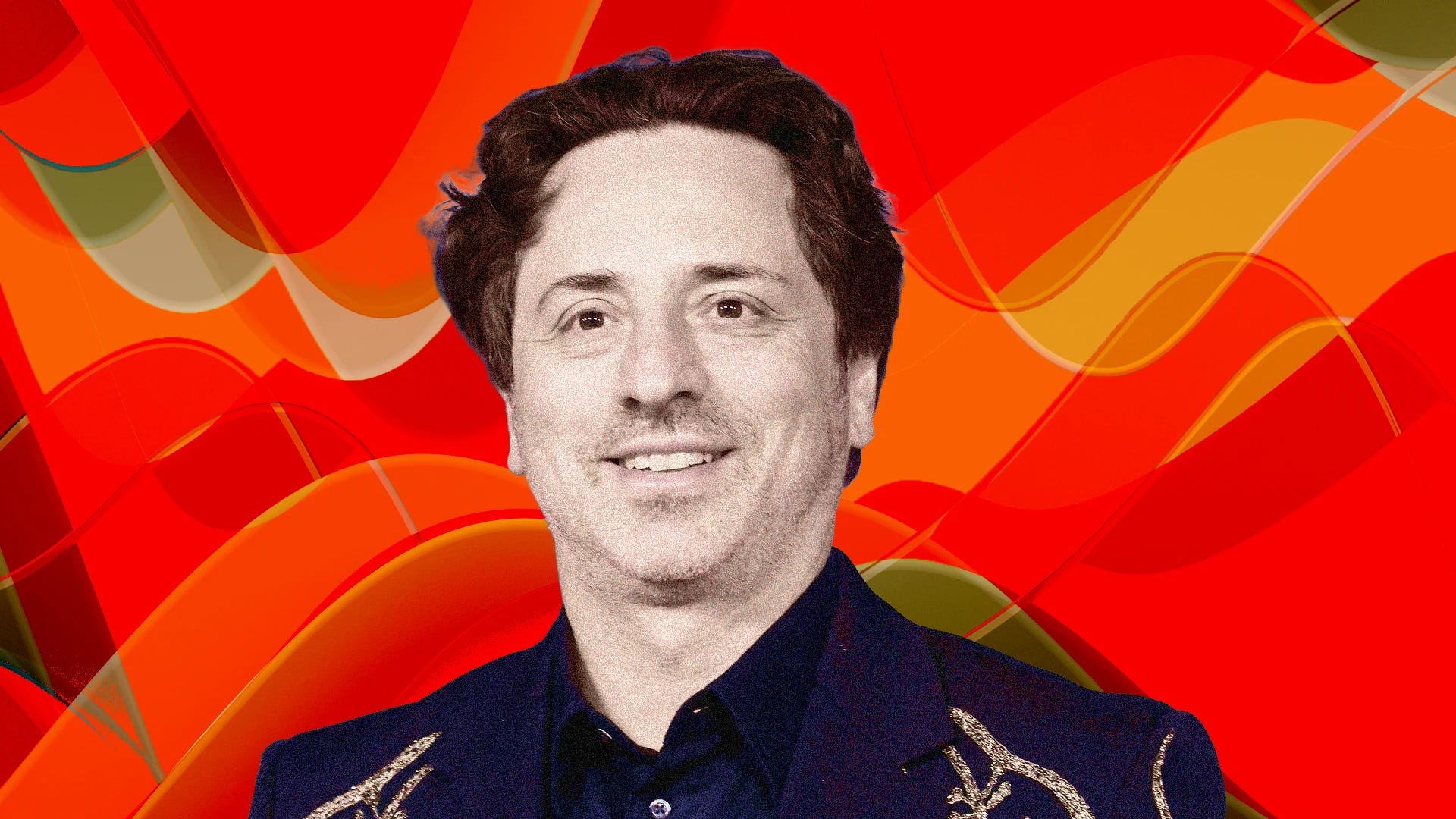
Google co-founder Sergey Brin, one of the three or four wealthiest people in the world, with a net worth hovering around $260 billion to $277 billion, is devoting some of his wealth to fighting California’s wealth tax on billionaires.
So far, he’s spent $57 million trying to defeat the measure.
Brin’s actions — along with Elon Musk’s $250 million “investment” in getting Trump reelected in 2024 — should be Exhibits A and B in why America needs a wealth tax.
First, let’s stipulate that there is nothing inherently wrong about being a billionaire, a multibillionaire, or even, as Musk is likely to become, a trillionaire.
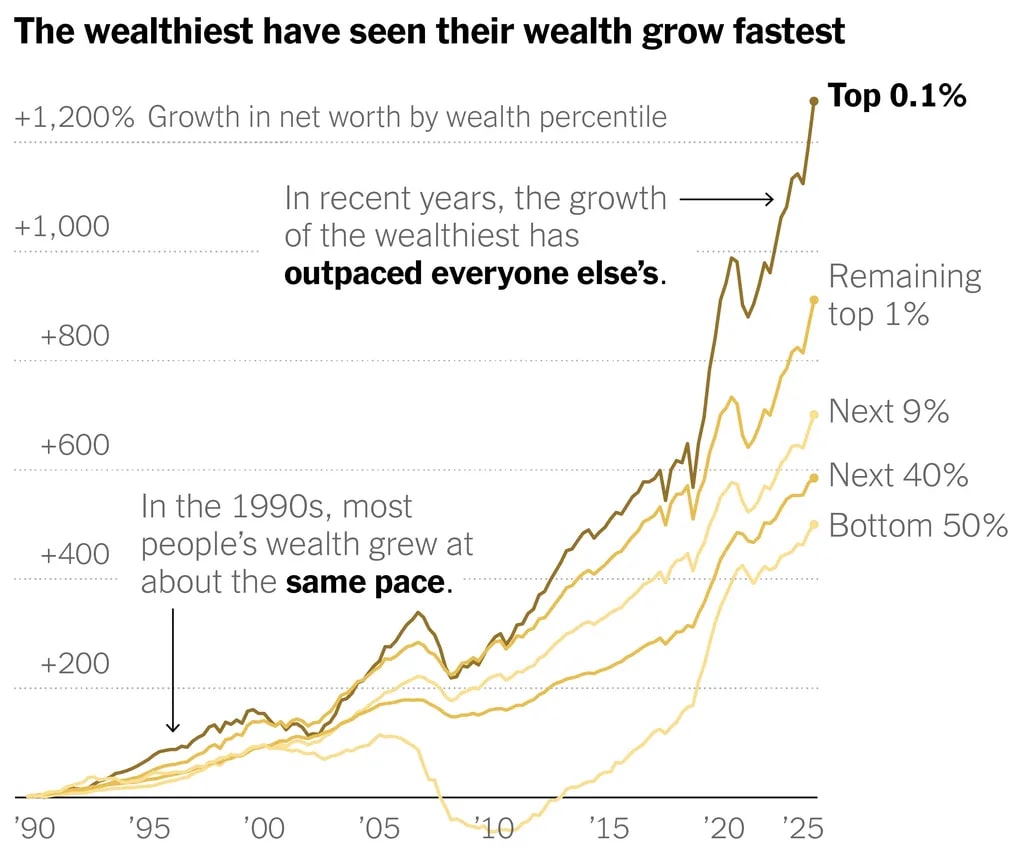
Wealth isn’t a “zero-sum” game in which these vast accumulations at the top depend on the rest of us losing an equal amount. In fact, the super-wealthy may help the rest of us do somewhat better than we were doing before.
Even though the wealth of the top 0.1 percent has soared in recent years, the bottom 50 percent are doing somewhat better than before. (See chart below.)
But wait.
The problem is that political power is a zero-sum game. The more political power is concentrated in a few hands, the less political power in everyone else’s hands.
It’s almost impossible to separate wealth from power, because the wealthy turn their fortunes into campaign contributions to politicians who will change laws to their liking and stop laws they’d detest — such as higher taxes on the super-wealthy. The wealthy also finance public relations campaigns and think-tanks to persuade the public of the wisdom of their positions.
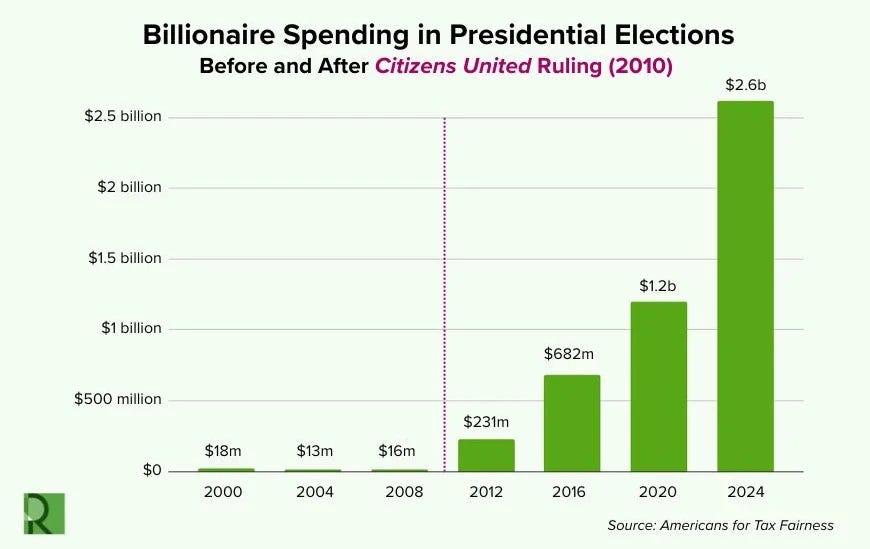
Billionaire spending on presidential elections has soared even faster than billionaire wealth. And if you believe they’re donating because they want people with great integrity and excellent character to be elected president, consider that most billionaire political spending in 2024 went to Trump.
They’re donating because they want to protect and enlarge their fortunes and don’t want politicians elected who support higher taxes on them.
Nor do they want politicians elected who support stricter anti-monopoly legislation or who would make it easier to form labor unions or stop climate change (all of which might reduce the profits of, say, Google).
Take Sergey Brin and his $57 million against California’s tax on billionaires — which, not incidentally, was proposed because California must now pay more for Medicaid for lower-income Californians, because Trump and his Republican lackeys enacted a giant federal tax cut whose benefits have gone mostly to the wealthy.
Brin has become a major Republican donor. Last May, he donated nearly half a million dollars to the Republican National Committee.
Why? Because the Republican Party is more dedicated to protecting and enlarging the wealth of the super-wealthy than is the Democratic Party.
By spending his fortune trying to stop California from taxing billionaires, Brin is illustrating why we need to tax billionaires. He’s making the argument for a billionaire wealth tax more clearly and articulately than anyone else possibly could.
This is the time of year when young people are graduating — from college, from high school, from family and familiar surroundings to different and unfamiliar places, from being children to being adults.
Because I’ve been around them so long here on this university campus — and maybe just because I’ve been around so long, period — they recently asked me some questions, the answers to which might be of interest to you.
Today also happens to be Teacher Appreciation Day — and as an old boomer who’s dedicated to teaching and who has prized his years in the classroom — I thought perhaps my responses and reflections particularly appropriate.
Thank you to Americans Who Tell Truth for collaborating on this piece with our team at Inequality Media, and for their important advocacy. You can learn more about them, and view a recent portrait and profile they wrote about me here.
How can the stock market be rising to record levels while jobs and wages are going nowhere, most Americans are paying higher prices for just about everything, and consumer sentiment is in the dumps?
Answer: Stock prices reflect corporate profits, which have risen to record levels. And corporate profits are soaring for two big reasons:
1. Corporations have more monopoly power than ever. This means they can raise prices without worrying that competitors will grab away consumers by underpricing them.
This is also a reason why wages are going nowhere. Workers have fewer competing companies to work for. Plus, more corporations are requiring their workers to sign so-called “noncompete agreements” so they can’t work for a competitor even if they found one. Researchers estimate that 38 percent of workers are now subject to such noncompete agreements at some point — not just for white-collar but increasingly for blue-collar jobs.
2. Corporations are using artificial intelligence (AI) — and the anticipation of AI — to slash jobs and wages.
Wages are around two-thirds of the typical corporation’s total costs. So a key way to increase profits is to cut total payroll costs by reducing the number of workers and keeping down the pay of those who remain.
AI is rapidly becoming central to this. Regardless of whether AI can substitute for all these jobs, corporations are behaving as if it can — and Wall Street is rewarding corporations that are slashing jobs in anticipation of AI.
The U.S. job market is already experiencing a wave of mass layoffs. So far, in the first four months of 2026, big corporations have cut over 128,000 jobs.
Meta is laying off 8,000 employees as it shifts toward AI. Meta’s shares have risen briskly since the start of the year. Amazon has cut 30,000 jobs, many of them replaced by AI, while racking up record profits. The six biggest Wall Street banks are cutting 15,000 jobs and showing profits 18 percent higher than last year’s. They’re crediting AI.
Oracle is cutting thousands of jobs and gaining over $6 billion in profits as part of its AI push. Its expected layoffs could total 20,000 to 30,000. UPS is planning to cut up to 30,000 jobs this year. Dow, the chemical maker, has announced cuts of about 4,500 jobs, leveraging AI and automation. Block, Inc. (Square/Cash App) is cutting nearly 40 percent of its workforce, or roughly 4,000 jobs, in an AI-driven restructuring.
So, the answer to how the stock market can be rising to record levels — when jobs and wages are going nowhere and most Americans are paying more for goods and services — is that it’s hitting records because jobs and wages are going nowhere, and most people are paying more for goods and services.
Monopoly power (including noncompete clauses) and AI are creating one of the largest redistributions in history — from workers to the owners of capital (top executives and investors).
Meanwhile — and for much the same reason — consumer sentiment hit a record low in April, dragged down by worries about the Iran war, gas prices, and job risks from AI. Today’s perception of the economy is darker than during any previous crisis since the University of Michigan started tracking sentiment more than 50 years ago,
3. A final crucial point: Wealthier Americans keep spending (the richest 10 percent now account for almost half of all spending; three decades ago, they accounted for 36 percent), while most everyone else is strapped. The people really taking it on the chin are the bottom half. Not only are they losing jobs and wages but the Trump regime is cutting the federal assistance they rely on.
Because of Trump and congressional Republicans’ refusal to extend subsidies under the Affordable Care Act, ACA enrollments are declining about 20 percent — from 24 million people who were covered last year to around 19 million now. Larger losses are forecast by the end of the year.
In addition, Trump’s work requirements for Medicaid are making it harder for many of the nation’s low-income people to qualify because they can’t get work.
How should Democrats respond to all this? At least, pledge to:
(1) Break up monopolies through major antitrust enforcement.
(2) Regulate AI so corporations using it cannot engage in mass layoffs, but are only permitted to downsize by a small percentage (3 percent?) of their workforce per year.
(3) Establish Medicare for all.
(4) Institute a Universal Basic Income financed by higher taxes on those at the top, so all families have at least a subsistence wage.
Will Trump take these steps? Of course not. Will Democrats demand them and pledge to take these steps if elected? I hope so.
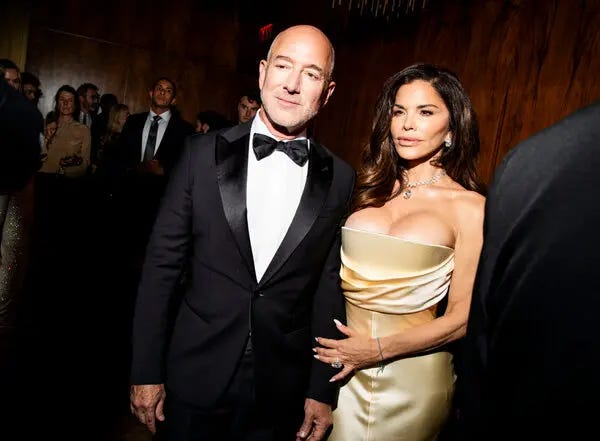
Tonight is the Met Gala, an annual paean to the conspicuous extravagance of America’s wealthy. Its honorary chairs this year are, appropriately, Jeff Bezos and his wife, Lauren Sanchez Bezos.
If you’d like a ticket to the Bezos Ball, all you’ll need do is shell out $100,000 and wear something memorably daring and expensive. Oh, and you’ll also have to be on the “A List” of Very Wealthy People.
A record 55 percent of Americans now report their financial situation is worsening, citing severe stress from high inflation, housing costs, and rising gas prices, according to Gallup/USA Today polling. One in 3 households is unable to cover a month of living expenses. Prices are soaring, wages are going nowhere, millions are losing access to health insurance. Yet corporate profits are in the stratosphere.
This year’s Met Gala is a testament to the vapid arrogance of the Bezoses and other neo-robber barons of this second Gilded Age.
As I mentioned recently, Bezos has made his fortune off the backs of millions of working people. According to a newly unsealed filing in an antitrust lawsuit, Bezos’s Amazon has pressured major brands like Levi’s and Hanes to demand that competing retailers raise prices on their products.
Another recent lawsuit against Bezos accused Amazon of making it difficult for consumers to cancel its Prime subscription service. Amazon agreed to pay up to $2.5 billion — including $1 billion in penalties and additional payouts to consumers — but didn’t admit or deny wrongdoing.
Meanwhile, Bezos’s workers are among the worst-treated in America. Bezos is virulently anti-union. Until Trump took over the National Labor Relations Board, its attorneys were prosecuting Amazon for firing delivery employees because they’d voted to join the Teamsters, a direct violation of labor laws.
On April 6, an Amazon warehouse worker collapsed and died on the floor of Amazon’s warehouse in Troutdale, Oregon. A co-worker trained in CPR tried to help but was told by an Amazon manager not to. For more than an hour, employees said, they were instructed to continue packing items and loading trucks as the man lay dead. One manager reportedly told workers to “just turn around and not look” and get back to work.
As of April 2026, Bezos’s net worth was estimated to be between $259 billion and $269 billion, making him one of the three richest people in the world. And he won’t let anyone forget it.
He celebrated his wedding last year to Lauren Sánchez with a multi-day event in Venice, Italy, estimated to cost more than $50 million,featuring guests like Oprah Winfrey and Kim Kardashian.
His “homes” include three adjacent properties on Indian Creek Island in Florida, costing over $230 million; the former Warner estate in Beverly Hills, California, which features a 13,600-square-foot mansion and a golf course, which he purchased for $165 million; a 14-acre compound on Maui with a 4,500-square-foot main house and 700-square-foot pool; a $23 million mansion in Washington, D.C.; and a massive multi-lot compound with waterfront frontage in Medina, Washington.
What really puts Bezos at the head of all the other robber barons in this second Gilded Age is his slavish sycophancy toward the worst president in American history.
Bezos bought the legendary Washington Post for $250 million in October 2013 and has turned it into a Trump media suck-up — prohibiting its editorial page from endorsing Kamala Harris in 2024 and barring it from writing anything critical about American capitalism or Trump.
In February, Bezos fired more than 300 Post journalists, about a third of its staff. He paid $40 million to license the documentary “Melania” plus $35 million to market it — and earned back almost none of it — a blatant bribe of Trump.
And he does whatever Trump wants. After Trump complained to Bezos about Amazon’s plans to display for consumers the costs of Trump’s tariffs, Bezos immediately canceled the plan.
Bezos has sucked up to Trump presumably to secure Pentagon contracts for his Blue Origin rocket company, which landed a $2.3 billion NASA contract early in Trump’s second term. And to avoid further antitrust lawsuits or labor law scrutiny.
That he has zero scruples does not necessarily distinguish Bezos from the other robber barons of this despicable era. And one could say it’s not Bezos’s “fault” that he’s filthy rich — he’s just taken advantage of the current system. But he’s also made the system even more rotten.
Why did the Met choose him and his wife as honorary co-chairs of tonight’s gala? It’s his money, of course. But there’s nothing honorable about him. His public-be-damned business practices, his conspicuous consumption, and his excessive sucking up to Trump make Bezos, at least to my mind, the worst billionaire of them all.
If you’re in New York tonight, you might consider attending — as a protester.
When I learned what Samuel Alito and the other Republican appointees to the Supreme Court did to the Voting Rights Act last week, I thought of Mickey.
(Forgive me if I’ve already told you about him, but he was very important to me.)
I met Mickey the summer after third grade. His family had rented one of the summer cabins in the Adirondack Mountains where my grandmother also had a tiny summer cabin. I was eight, and Mickey was a teenager. We were not friends, yet I came to love him.
Mickey was kind and gentle, with a ready smile. I don’t recall asking him to protect me. He wasn’t the kind of hulking kid I usually chose as protector from bullies who’d torment and ridicule me. Mickey was on the short side and thin. He wore a sailor’s cap and seemed forever cheerful. I don’t remember him fighting to defend me or even quieting the kids who made fun of me, but I do remember his warmth and reassuring presence. His calm good nature seemed to cast a positive spell over kids who might otherwise turn to teasing or bullying.
Years went by and I grew into a teenager who no longer needed older boys to protect me from bullies, and I lost track of Mickey.
It wasn’t until September 1964, the start of my freshman year at Dartmouth College, that I heard what had happened to him.
Early that summer, Mickey — whose full name was Michael Schwerner — had traveled to Mississippi. The Civil Rights Movement was gaining strength. Martin Luther King Jr. had given his famous “I Have a Dream” speech at the August 1963 March on Washington, where 250,000 people had gathered at the Lincoln Memorial to hear him.
“Freedom Summer” of 1964 had brought college students, both Black and white, Mickey among them, from northern schools together with Black people from Mississippi to educate and register Black voters, under the aegis of the Student Nonviolent Coordinating Committee (SNCC).
Mississippi was chosen because only 7 percent of the state’s eligible Black voters were registered, in a state that was about 40 percent Black. Most had been frozen out of the polls with poll taxes, subjective literacy tests, and brutality. It had been that way since 1877. The system was enforced by white supremacists who could commit crimes with impunity because the entire region had become a one-party state run by white supremacists.
Mickey was among the first wave of volunteers to arrive in Mississippi for Freedom Summer. On the afternoon of June 21, he and two other student volunteers — Andrew Goodman, also white, and James Chaney, a young Black man — were driving near the town of Philadelphia when Neshoba County Deputy Sheriff Cecil Ray Price stopped them for allegedly speeding. Price locked them up in the local jail. That night, after they paid their speeding ticket and left the jail, Price followed them in his police car, stopped them again, ordered them into his car, and took them down a deserted road where he turned them over to a group of his fellow Ku Klux Klan members. They beat Mickey, Goodman, and Chaney with chains. Then they killed them and buried their bodies in an earthen dam under construction.
For weeks, no one knew what had happened to the three volunteers. Lyndon Johnson used concern over their disappearance to pressure the House to pass the Civil Rights Act of 1964 into law on July 2.
On July 16, a little more than three weeks after Chaney, Goodman, and Schwerner disappeared, and two weeks after Johnson signed the Civil Rights Act, Senator Barry Goldwater accepted the Republican nomination for president at the Cow Palace in Daly City, California. Goldwater told Republican delegates that “extremism in the defense of liberty is no vice. And … moderation in the pursuit of justice is no virtue.”
Mickey’s body and those of Chaney and Goodman were found August 4. They were illustrations of extremism in the defense of what white supremacists defined as liberty.
The state of Mississippi refused to bring murder charges against any of the killers, but eventually Price and Neshoba County Sheriff Laurence Rainey, also a Klan member, and sixteen others, including Samuel Bowers, the Imperial Wizard of Mississippi’s White Knights of the Ku Klux Klan, were arraigned for the federal crime of conspiracy to violate the civil rights of the murdered young men. An all-white jury found seven of them guilty, including Price and Bowers. After several unsuccessful appeals, each received a sentence of between three and 10 years. None would spend more than six years behind bars.
When the news reached me that Mickey had been beaten and murdered by white supremacists — by adult bullies who would stop at nothing to prevent Black people from exercising their right to vote — something snapped inside me. It was as if I had gotten a new pair of eyes and began to see everything differently. Before then, I understood bullying as a few kids picking on me for being short, making me feel bad about myself. After I learned what happened to Mickey, I began to see bullying on a larger scale, all around me: Black people bullied by whites; workers bullied by employers; girls and women bullied by men; the disabled or gay or poor or sick or immigrant bullied by politicians, insurance companies, landlords, and bigots. I saw the powerful and the powerless, the exploiters and the exploited.
It seemed as if the world had changed, when in fact it was I who had changed. I had a different understanding of the meaning of injustice. It became as personal to me as were the bullies who had called me names and threatened me in the boys’ room and on the playground — but larger, more encompassing, more urgent.
In 1965, Congress passed the Voting Rights Act, protecting the right of Black people to vote.
After that, the stranglehold of the white supremacists on the one-party South began to loosen. At the center of the law’s success was Section 5, commonly referred to as the “coverage formula,” which determined those states that had to receive clearance from the Justice Department before changing their election rules, based on their histories of race-based voter discrimination.
Another critical part of the law was Section 2, which prohibits states and political subdivisions from imposing voting qualifications, standards, or practices that discriminate on the basis of race, color, or membership in a language minority group. It forbids any election rule that results in a denial or abridgment of the right to vote, aimed at preventing vote dilution, such as discriminatory redistricting.
In the 20 years following the law’s passage, the disparity in registration rates between white and Black people dropped from nearly 30 percent in the early 1960s to 8 percent. Based on its continuing success, the Voting Rights Act was repeatedly reauthorized by Congress. But the forces of racism and violence did not disappear.
On August 3, 1980, Ronald Reagan launched his presidential campaign with a rally at the Neshoba County Fair, only a few miles from where Cecil Ray Price had stopped Schwerner, Chaney, and Goodman on that fateful night 16 years earlier. In defending “states’ rights” that day, Reagan, the cheerful “morning in America” candidate, was sending a dark dog-whistle to racist bullies, telling them he was on their side.
Thirty-three years later, on June 25, 2013, the Supreme Court struck down the coverage formula in the Voting Rights Act, in the case Shelby County v. Holder. The court’s five conservatives decided that the formula was out of date, despite Congress’s repeated reauthorizations, effectively ending pre-clearance. The court’s opinion was written by Chief Justice John Roberts and joined by Samuel Alito, Antonin Scalia, Anthony Kennedy, and Clarence Thomas. Reagan had put Scalia and Kennedy on the court.
“Our country has changed,” Roberts wrote. The Voting Rights Act was “strong medicine,” but in 1965 it was the right response to “entrenched racial discrimination.” When first enacted, he wrote, the rate of voter registration among Black people in Mississippi was 6.4 percent, and the gap between Black and white rates of registration was more than 60 percentage points. But now, Roberts said, pre-clearance was no longer needed.
Yet within 24 hours of the ruling, states of the old Confederacy were already proving Roberts wrong. Texas announced it would implement a strict photo ID law. Mississippi and Alabama began to enforce the same photo ID laws that federal pre-clearance had previously barred. Other Southern states began to purge voters from their rolls, curtail early voting, eliminate same-day registration, and prevent county boards of elections from opening polls for an additional hour.
In 2021 and 2022, in response to record voter turnout in the 2020 election, 19 states passed more than 30 laws making it harder to vote. The United States Senate, although nominally under Democratic control, did not have the votes needed to overcome a Republican filibuster and restore Section 5.
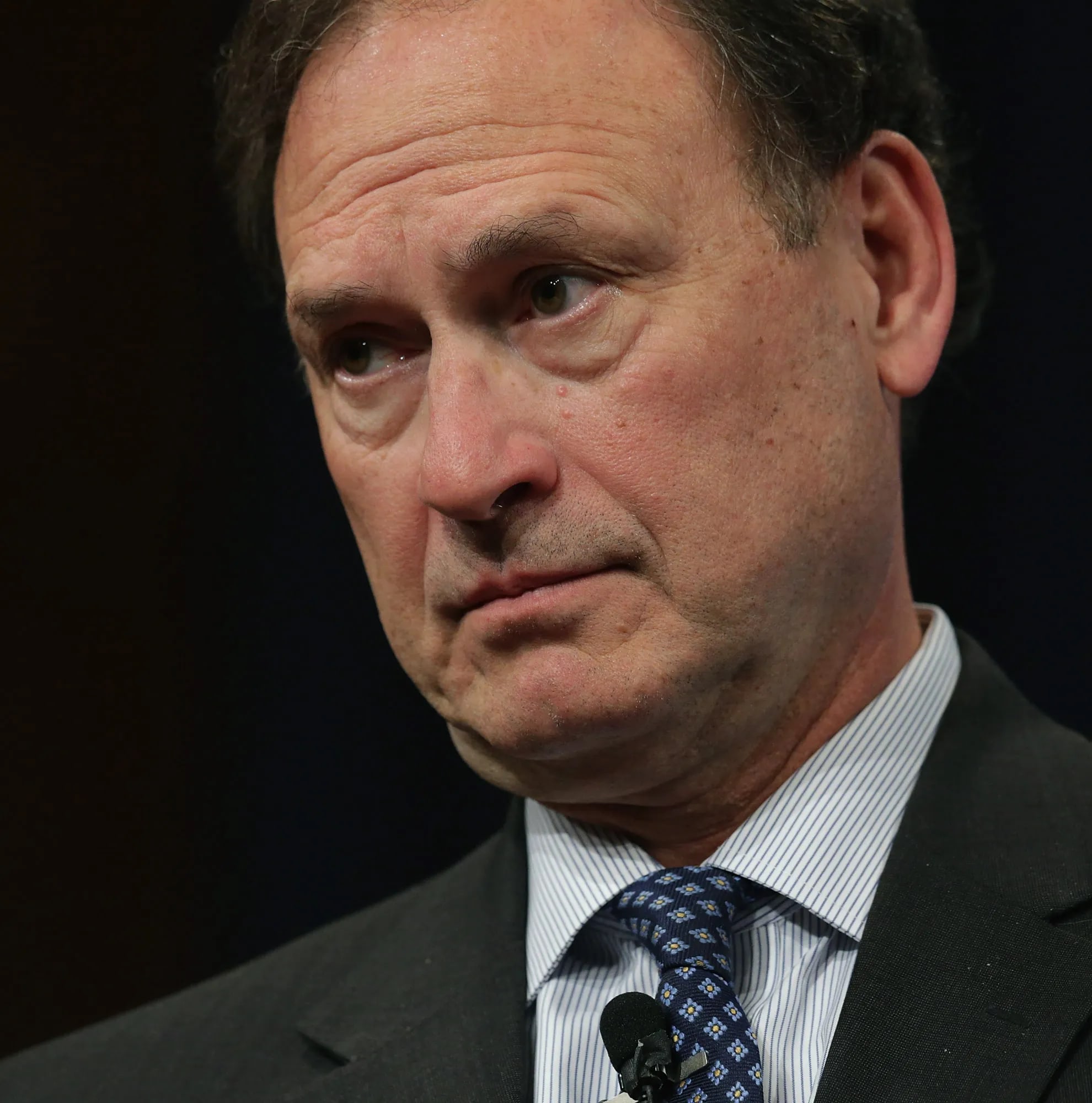
Samuel Alito
Then, last week, the six Republican appointees on the court decided to gut Section 2. In Louisiana v. Callais, Alito — in a remarkably dishonest opinion, even for him — said he was only bringing Section 2 up to date. “Vast social change has occurred throughout the country,” Alito wrote, “particularly in the South.” As a result of the Voting Rights Act, he claimed, Black Americans, once barred from the polls, now vote at similar rates as the rest of the electorate.
Rubbish. According to a recent study in which researchers analyzed nearly a billion votes cast in federal general elections between 2008 and 2022, “significant and robust evidence” shows that the racial turnout gap widened in parts of the country that had been covered by the Voting Rights Act after Shelby gutted Section 5.
The Republican appointees on the court have now invited Republican state legislatures to draw new congressional maps that will likely create a solid red south, creating the largest reduction in Black political representation since the death of Reconstruction. It could result in a loss of as many as 19 seats in the U.S. House and nearly 200 state legislative seats nationwide — and dramatically remake the balance of power in favor of Republicans. The Roberts-Alito court has ensured that Dred Scott and the Confederacy are reborn.
Immediately after the ruling, the Florida legislature passed a new congressional map drafted by Gov. Ron DeSantis’s office, aiming to flip up to four Democratic-leaning seats. Louisiana is postponing primaries to allow for a special session to redraw maps. Officials in Alabama are seeking to lift a lower court injunction to change their map. Mississippi is also actively exploring new white Republican districts.
It is hard for me to think back on the deaths of Mickey Schwerner, Andrew Goodman, and James Chaney, along with that of Martin Luther King Jr. and other martyrs to civil and voting rights, and not fear that — because of the dishonest and regressive opinions of Roberts, Alito, Thomas, and other Republican appointees to the Supreme Court — they died in vain.

 Login
Login