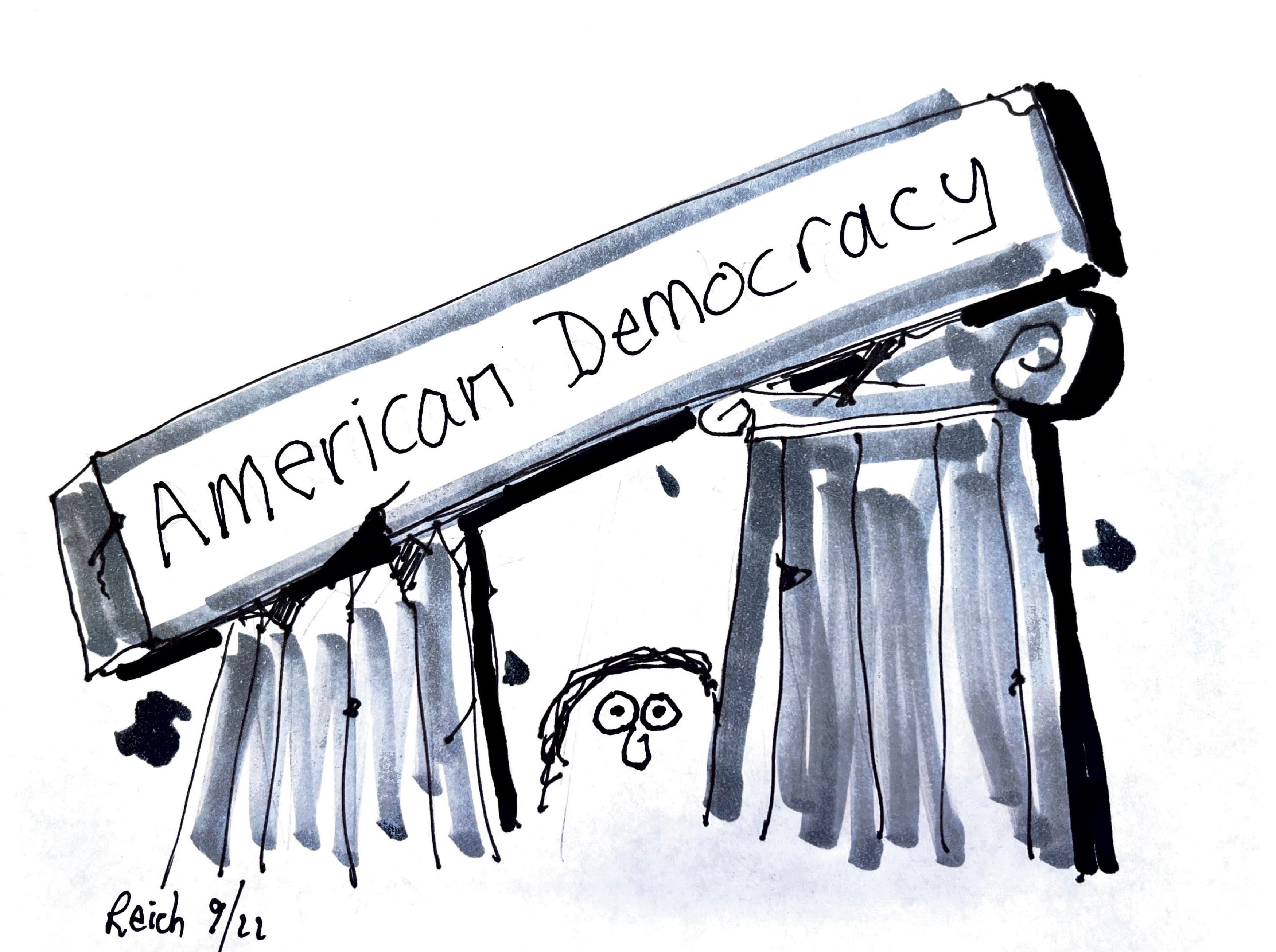
No, he’s not over over. I wish he were. But something important has changed.
Yesterday, the U.S. House of Representatives voted to direct him to withdraw U.S. forces from Iran or win approval from Congress to continue the war. It was a remarkable rebuke. Four Republicans sided with Democrats.
His “short-term excursion” into Iran, which he promised in late February would last no more than “four to five weeks,” has now entered its fourth month, with no end in sight. His claim to have “destroyed” Iran’s missiles and drones is belied by Iran’s massive attack on Kuwait on Tuesday. Iran still controls the Strait of Hormuz. Its highly enriched uranium remains hidden. Even MAGAs have had enough of his forever war.
Meanwhile, Senate Republicans are rebelling. They’ve forced Trump to abandon the $1 billion request for his gilded ballroom, which was becoming ever more grotesque as Americans struggle to make ends meets.
His $1.8 billion Thug Fund is also dead, largely because a significant number of previously gutless Republicans (including — gasp! — Lindsey Graham) pushed back.
Trump’s name is coming off the Kennedy Center because a federal judge ordered it off and no Republicans came to his defense.
Even Trump’s endorsement is losing its magic. On Tuesday, Iowa voters rejected Trump’s choice for governor, Randy Feenstra, whom Trump called “MAGA all the way.” It was Trump’s first major endorsement loss.
And even with Stephen Colbert off the air, Trump has become a bigger late-night joke than ever. All the entertainers — even the B- and C-list also-rans desperate for exposure — dropped out of his 250th anniversary ego trip. So he’s going to be the headliner in a four-hour Fidel Castro speech. Good luck with that.
His Ultimate Fighting Championship event on the White House’s South Lawn has become a one-liner. To attend, military members have to pay their way to Washington and cannot have a waist size more than 55 percent of their height. (“No Fatties at UFC White House Event,” declared a Facebook page.) We’ll see how many show up.
As if all this weren’t enough, he’s nominated an unqualified sycophantic MAGA mortgage clown to be the director of national intelligence — an action so absurd that even Mitch McConnell had to object: “Anyone performing this role of such immense public trust must have the extensive national security experience required by statute, and no nominee who falls short of this requirement will earn my vote.” Get ready for a circus of a Senate confirmation fight.
No, Trump’s not done. He’ll continue to torment us with his cruelty, corruption, and criminality for some time, so we have to keep fighting.
But his power is disappearing. He’s become a lame duck whose quack no longer causes anyone to quake.
He has no one to blame but himself. His hubris finally reached its own breaking point.
Trump is trying to rig the midterms because he’s scared. And because Trump’s scared, he’s trying to scare Americans with an imaginary boogeyman: so-called “voter fraud.”
But Trump’s using this boogeyman to sabotage our elections. Here are three things I’m worried about — then I’ll tell you how we fight back.
#1 New voting restrictions
Trump is pushing for strict voter registration laws (the so-called “Save America Act”) that would require eligible voters to prove their citizenship. But a state ID or driver’s license won’t do. Voters would need to show either a current passport or a certified birth certificate from the state they were born in to register.
And even if you do have it, about 80% of married women and 30% of trans people have legal names that don’t match the name on their birth certificates — which makes it even harder to register.
Trump’s hypocrisy would be laughable if it weren’t so dangerous. Some 45 million votes were cast by mail in the 2024 general election (which he won, and doesn’t say was rigged, by the way). Restricting mail-in voting, along with instituting harsh voter ID laws, is blatant voter suppression.
#2 Voter intimidation
Trump insiders say he might deploy armed ICE or Border Patrol agents to polling sites.
Trump’s violent ICE agents have run rampant in our streets, abusing both noncitizens and citizens alike. The presence of armed agents of the state at polling places would almost certainly have a chilling effect on voter turnout — which is exactly what Trump wants.
#3 Denying election results
Trump’s latest big lie is that any Democratic victory is illegitimate.
What if Republicans lose the midterms but follow Trump’s 2020 example and try to hold onto power? A few years ago, this would have been unthinkable. But after what Trump tried doing in 2020, it’s frighteningly plausible.
The bottom line is Trump is deeply unpopular, which is why he is trying to suppress the vote.
But here is howwe can fight back.
1. Press your state and local leaders to protect our elections right now. Your state attorney general and local election officials still have authority over our voting system. Urge them to develop a plan to protect our elections. Call on them to sue the Trump administration if it tries to seize ballots. Tell your state legislature to ban armed federal agents from polling places, like New Mexico just did.
2. Second, VOTE — and help turn out the vote! We need to show up in such large numbers that no amount of voter suppression can change the result. Go to vote.org right now and check your registration. Then reach out to three friends and make sure they are registered to show up.
3. Lastly, SOUND THE ALARM. Share the video I’ve posted above, which I made with the talented team at Inequality Media Civic Action. Help spread the word that the boogeyman of voter fraud is just a cover for Trump’s election sabotage.
Trump’s strategy to sabotage the election depends on fear, confusion, and division.
We must respond by being brave, focused, and united.
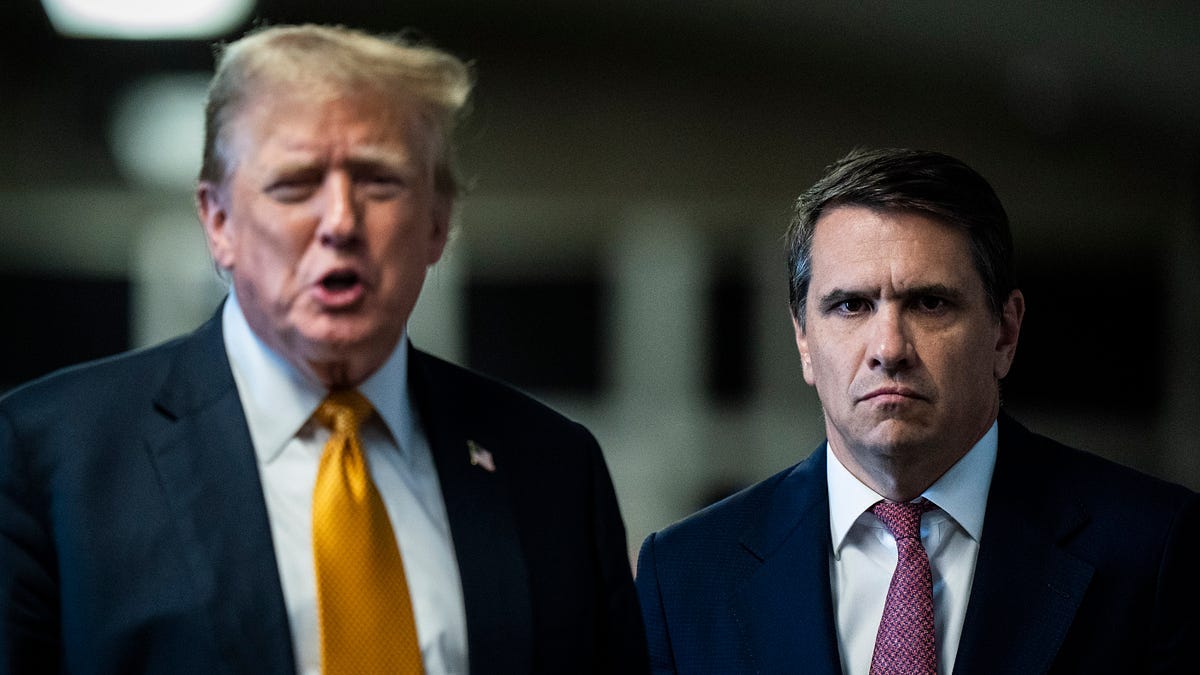
Trump and his lawyer, Todd Blanche (who also happens to be acting attorney general)
Friends,
The Senate is set to vote this afternoon on a motion to proceed to Trump’s budget package. This will allow senators to vote against Trump’s $1.8 billion payout slush fund, via amendments before final passage. Trump and his Justice Department have already dropped the slush fund, but that should be codified into law.
Congress must also vote against the part of the deal that releases Trump and members of his family from any pending or future prosecutions or investigations involving their tax returns. At a hearing yesterday, acting Attorney General Todd Blanche confirmed that this part of the settlement remains intact.
This protection for Trump and his family is unprecedented in its scope and form. It even extends to “affiliates” of the Trumps. It’s potentially worth tens of millions of dollars. One estimate puts it at $100 million.
If it’s interpreted to mean that the Trumps are protected from future IRS audits — and you can bet that Trump and his family will argue that in court, should they ever be audited again — all the self-dealing and the pay-to-play bribes that Trump and his family have collected will vanish.
Previous standard IRS procedure was to audit the president every year, rather than confer on him sweeping protection from scrutiny on tax returns.
Senate Republicans have protested the $1.8 billion fund but have looked the other way at the audit protection. “I haven’t been focused on that, to tell the truth,” said Maine’s Republican Senator Susan Collins. Well, it’s time that she and other Republicans did focus on it.
Only one Senate Republican — Thom Tillis of North Carolina, who’s not running for reelection — has been critical of the audit immunity. “How can you not at least have them be subject to the same thing that I’m subjected to, and every one of you?” he asked yesterday.
Blanche has tried to cast the audit protections as a “standard” and “typical” outcome of litigation against the IRS. “Like anytime the IRS settles with an individual taxpayer or another company, as part of the settlement, it’s standard, it’s typical to get rid of past ongoing audits,” he testified yesterday.
Bullsh*t. First, Trump’s lawsuit against his own IRS is hardly “typical.” No president has ever done this before.
Second, his lawsuit had nothing to do with an audit or tax issue. It focused on the leak of his tax returns by a former IRS contractor during Trump’s first term.
Third, this “settlement” provision — giving the Trumps protection against IRS scrutiny — directly violates a law barring the IRS from dropping audits at the direction of the president or his aides.
Fourth, Blanche, the acting attorney general, doesn’t even have authority to order the IRS — a separate agency that’s part of the Treasury Department — to stop civil tax audits.
Compounding all this is the fact that Blanche had been Trump’s personal defense attorney from April 2023 to March 2025, representing Trump in the New York hush-money case, the classified documents case, and the election interference case. His conflict of interest now is so blatant that he should have recused himself from participating in Trump’s IRS suit to begin with, along with its ersatz “settlement.”
Connecticut Representative Rosa DeLauro said at yesterday’s House hearing that the IRS order proved that Blanche was continuing to act as Trump’s personal lawyer. “Do you not find there’s any conflict of interest in what you are doing here as the acting attorney general of the United States?” she asked. Blanche said there was none.
The vote is coming up in a few hours. Please call your senators and representatives now and tell them you want them to reject Trump’s entire “settlement” — including both the $1.8 billion fund and the IRS immunity.
Reminder: The congressional switchboard is (202) 224-3121. An operator will answer and connect you directly to the office of any senator or representative in Congress.
Someone I didn’t know approached me early this morning on my way to breakfast. He looked about 60 years old, with dark hair graying at the temples. He was dressed in a tie and jacket.
He asked me if I was Robert Reich. I admitted to it.
“Well, I just want to say …” he began, but nothing more came out of his mouth. “I just want to say …” he started again. Then silence.
“I’m sorry,” I said with as friendly a smile as I could muster at that hour of the morning, “but I’m meeting someone for breakfast.”
His eyes welled up.
“Oh, I didn’t mean to be rude!” I said, suddenly feeling dreadful. “I apologize. I just …”
“No, no, no,” he said, shaking his head and wiping his eyes. “It’s just that I’ve been feeling, well, so lonely in all this …”
“I understand,” I said.
“You see, I-I’m from the Central Valley,” he continued. “My wife and my brother are Trumpers, and a lot of my neighbors. You have no idea ….” His eyes welled up again.
“I really do get it. I hear it all the time.”
“They tell me stuff that’s just … well, not true.”
“It’s like they’re in a different world,” I said.
“Yes! Exactly!” he became more animated. “I mean, sometimes I don’t know if they’re crazy or I’m crazy.”
“Well, I don’t know you, so I can’t say for certain,” I said with a smile, “but I very much doubt you’re the crazy one.”
“So when I saw you … well,” his voice grew quieter. “You make sense.”
“I try to,” I said, starting to feel embarrassed. I glanced at my watch. “Look, I really …”
“Oh, I don’t want to hold you up!” he said. “It’s just that ….”
“Look, there are millions of people like you,” I said. “Some live in MAGA parts of the country. They often feel lonely, and sometimes they wonder if they’re crazy. But let me assure you .…”
“No need!” he said, shaking his head. “You go on to your breakfast! I’ve taken enough of your time.”
“I just want to tell you most Americans now feel exactly as you do. Even if they didn’t a year and a half ago, they do now. They’re now seeing the results of this despicable regime.”
“Thank you,” he said.
“Good luck!” We shook hands. He turned away, walking quickly in the other direction. I ran to breakfast.
I’ve had a lot of brief discussions like this with people who feel isolated and sometimes unsure of themselves.
In my experience, the vast majority of Americans are decent people. But like the man I briefly spoke with this morning, they can sometimes feel alone and confused.
Our job — yours and mine — is to reassure them that they’re not alone and they’re not crazy, that America has been taken over by a man and a regime that are spewing blatant lies, and those lies are being amplified on social media and occasionally on mainstream media.
Too many people don’t understand this. They feel as if they’re the only ones feeling disconnected and powerless. But they’re not powerless. In fact, if each of them votes in November, their votes will force a great change in America. Even greater in 2028.
I think it also important to reassure each other that these terrible times will end. More Americans are seeing through the lies as well as the cruelty and corruption. They’re deciding they want this daymare to end, peacefully, and are committed to rebuilding and rectifying the nation.
Famed “60 Minutes” correspondent Scott Pelley was fired tonight. “We have parted ways with Scott Pelley,” Nick Bilton, the tech journalist who CBS News’s editor-in-chief Bari Weiss hired last week as the show’s new executive producer, wrote in a memo to the staff this evening.
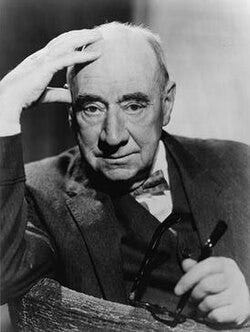
What had Pelley done to get the axe? At a staff meeting yesterday, he accused Weiss of “murdering” “60 Minutes,” according to an audio recording and a source who was in the room. Others at the meeting applauded him. (Earlier today I gave Pelley this week’s Joseph N. Welch Award for truth-telling in the face of tyranny.)
It was all part of Weiss’s shakeup of the revered broadcast.
Why, you may wonder, is Weiss so eager to shake up “60 Minutes”?
I mean, it’s the most successful television news broadcast in U.S. history. It has remained the #1 news program for 50 straight years and consistently ranks among the top 10 of all Nielsen-rated television programs.
And it pulls in a fortune for CBS. “60 Minutes” is one of the most profitable programs in all of television, generating tens of millions in annual profit for CBS. In one recent year, its advertising revenues were $67.5 million. The network wholly owns the franchise, which makes it a gold mine. It’s the most lucrative and prestigious journalism operation on the network.
I could understand Weiss wanting to shake up, say, CBS’s Sunday morning news program. But why in hell would Weiss want to shake up CBS’s golden goose?
One hint: Besides firing Pelley for insubordination and chucking the show’s former executive producer, Weiss has also cut ties with “60 Minutes” producers Sharyn Alfonsi and Cecilia Vega.
In December, Alfonsi challenged Weiss’s decision to hold a “60 Minutes” segment on an El Salvador maximum-security prison where the Trump administration sent hundreds of Venezuelan migrants, including alleged gang members. Weiss had raised concerns about the comment-seeking process and determined that it needed additional reporting. Alfonsi termed the decision a political move. (The segment, called “Inside CECOT,” eventually ran in January, with some additional material bookending the piece.)
Alfonsi calls the network’s decision now to allow her contract to expire “a deliberate choice to penalize a journalist for refusing to sanitize factually accurate reporting” that “sends a chilling message to the entire newsroom.”
Vega is no less blunt. “In recent months, my producing teams and I have experienced efforts to insert political bias into our stories,” she said in a statement. “Reporting teams have held back on submitting story pitches about important news topics out of fear of the internal repercussions…. Let’s call this what it is: censorship, both imposed and self-driven.”
Of course it’s censorship, because CBS is now owned and controlled by Trump pals Larry and David Ellison, who kissed Trump’s assets to get Trump’s FCC chair Brendan Carr to approve their acquisition of CBS from Paramount.
Trump’s “fingerprints and DNA are all over this,” veteran “60 Minutes” correspondent Steve Croft says. “He’s been making threats against ‘60 Minutes’ and how he wanted it gone. And he finally got his wish.”
Trump has fixated on “60 Minutes,” calling the show “a dishonest Political Operative disguised as News.”
Trump sued CBS News over an interview of then presidential candidate Kamala Harris that Trump claimed had been edited in such a way as to hurt his presidential campaign. After “60 Minutes” aired a story about Ukraine and another about Greenland, Trump said CBS “should lose their license.”
This much is clear. CBS is being “murdered,” as Pelley calls what’s happening, not because of economics but because of politics. Economically, “60 Minutes” is a gold mine. Politically, Trump thinks it’s dangerous as hell because it tells the truth about him and his regime, and wants it killed.
Bari Weiss knows this. Larry and David Ellison know it. Nick Bilton knows it. Everyone who’s been fired from “60 Minutes” knows this. Trump’s lapdog at the FCC, Brendan Carr, knows this.
You need to know this.
“60 Minutes” — the most successful television news broadcast in U.S. history — is being dismantled because Trump doesn’t want America to know the truth.
It’s the same reason CBS canned Stephen Colbert — because Trump hated Colbert’s truth-telling jokes about him.
It’s important to see all this as a systematic effort by Trump to silence the truth about what he’s doing to America.
Trump’s increasingly corruption — rife with crony capitalism, corporate welfare, and payoffs to the powerful — is producing an increasingly corrupt economy in which everything depends on bribes and personal deals made by the biggest Republican loyalists and grifters, oligarchs and plutocrats, billionaires and multibillionaires, and monopolists.
When political and economic deal-making become personal transactions — when greed and payoffs replace trust — what happens? Authoritarianism replaces democracy. And an economy collapses, as it did at the end of America’s first Gilded Age, in the Great Crash of 1929, leading to the Great Depression.
One day we will look back on the murder of “60 Minutes” as one of the travesties of Trump’s despicable reign.
In the meantime, thank you Scott Pelley for telling the truth. Thank you, former “60 Minutes” producers, correspondents, and staff, for telling the truth.
And now, what do we do in the interest of the truth? We boycott CBS.
Anthropic — the artificial intelligence company behind the chatbot Claude —confidentially filed yesterday for an Initial Public Offering of its shares of stock. Soon, SpaceX and OpenAI will be doing the same. These three I.P.O.s could mark a once-in-a-generation creation of giant AI firms — valued at more than a trillion dollars each— and huge money for a relative handful of people (including the world’s first trillionaire, Elon Musk).
But this giant AI wave is also likely to spell the end of a large number of jobs. True, AI will also create some new jobs. But the AI tsunami is coming so quickly that, unlike in previous technological waves, most workers won’t have much chance to adapt.
Not only will AI destroy jobs, but it will further reduce the bargaining leverage workers now have — which means that to stay employed (or land a job) they’ll have to settle for lower wages.
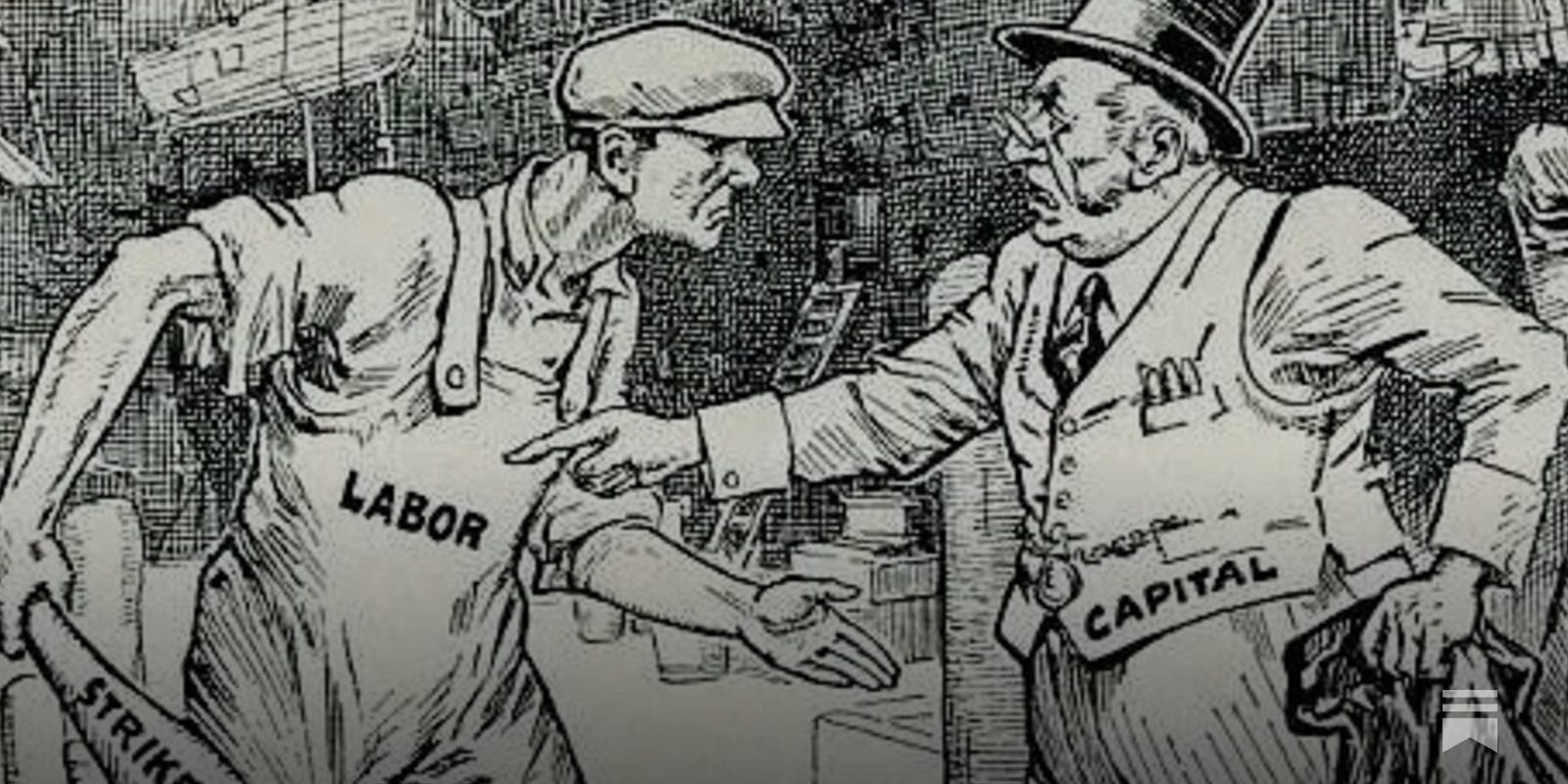
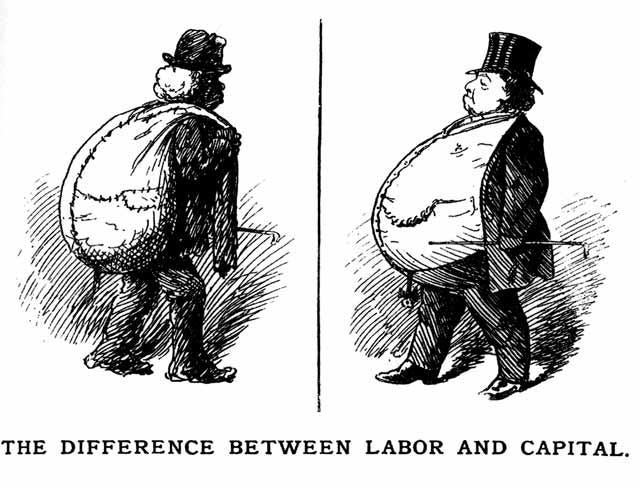
Put this together with (as I pointed out Sunday) languishing returns to labor and soaring returns to capital even before the AI tsunami hits, and AI is sure to shift the balance of economic power further from labor to capital — making wages an even less reliable mechanism for distributing prosperity. We’re heading for a major shakeup of our entire political economic system — and it’s coming soon.
So what should be done?
Herewith, four ideas that are being actively discussed — in schools of public policy, in legislative cloakrooms, and among the billionaire class. I’m going to set each of them out as clearly as I can, along with their downsides, and ask you to weigh in.
What does Trump do when facing a humiliating defeat? He closes everything down. If that doesn’t work, he dumps it entirely and criticizes the hell out of whoever’s then in charge. Call it the Trump dump.
He did this in the 2020 election — refusing to accept defeat and then trying to close it all down by instigating an attack on the U.S. Capitol. When that didn’t work, he spent the next four years blaming Biden for everything.
When performers scheduled to appear at the Kennedy Center canceled in protest of Trump’s taking over the center and putting his name on it, Trump closed the center, with the lame excuse that he was “renovating” it.
Then, Friday, after a federal court ordered him to reopen the center and remove his name, he announced, “I have no interest in continuing what could only be a hopeless journey into ‘NEVER NEVER LAND,” followed by: “The Kennedy Center will soon be closed, probably never to open again” and “the Kennedy Center will collapse, both structurally and financially.”
A similar Trump dump occurred over the weekend after artists pulled out of his 250th anniversary concert series on the mall when they discovered that the series was a promotional vehicle for Trump. In response, he said he was canceling the series and replacing it with a Trump rally.
Trump is pulling a nearly identical — and far more serious — Tump dump in Iran. In mid-April, rather than accept Iran’s humiliating blockage of the Strait of Hormuz, he pretended he was in charge and that he’d close the strait. So he ordered a naval blockade, which did nothing but maintain the status quo.
Last Friday, when Iran signaled it might be willing to reopen the strait on its own terms (by charging tolls), Trump once again acted as if he were in charge, announcing that he’d be making a “final determination” on a potential deal that “must see the strait reopened, and then Iran must work with the U.S. to have its highly enriched uranium DESTROYED.”
Now that Iran is reportedly breaking off talks with the Trump administration and seeking “complete closure” of the Strait of Hormuz because of Israel’s attacks on Lebanon, we can expect an even larger Trump dump.
What might this one look like? One likelihood: Trump takes credit for brokering a shaky peace deal between Iran and Israel over Lebanon’s Hezbollah, while blaming critics inside the U.S. for imperiling his peace talks with Iran. He announces he’s ending the ceasefire — which ended over the weekend anyway, with the U.S. military striking Iranian radar and drone sites near the Strait of Hormuz — and that “he’s finished with negotiations!” He then claims he’s done. He’s destroyed Iran’s military and killed off its old regime and warns that if Iran doesn’t open the strait and give up its nuclear program, he’ll resume bombing. It’s up to them.
In effect, he leaves the problem of reopening the strait to other countries more dependent on oil shipped through it, such as China, and the problem of taming Iran’s nuclear ambitions to Israel. It’s the final Trump dump.
In light of my post yesterday about Trump’s plans for a Trump rally on the mall to celebrate the start of America’s 250th birthday festivities — designed, in his words, for “patriots” and promising to be “wild” — several of you wanted to know more about how it’s being planned and paid for.
This year’s 250th anniversary events, commemorating America’s founders’ refusal to be bound by a tyrant, were supposed to be planned by a nonpartisan, nonprofit group created by Congress in 2016 via a bipartisan congressional caucus of more than 350 members.
That nonpartisan, nonprofit group is called “America250.”
“America250” still exists, at least in theory. It lists as Honorary National Co-Chairs George W. Bush, Barack Obama, Laura Bush, and Michelle Obama. Its ex-officio members include present and former government officials drawn from both parties. You can read more about it at the “Official website of the U.S. Semiquincentennial Commission,” here.
But “America250” is not planning this year’s 250th anniversary events on the mall or anywhere else in official Washington. Trump and his MAGA allies circumvented Congress and created their own planning committee, confusingly named“Freedom 250.”
Trump’s “Freedom 250” describes itself in much the same way “America250” does — as a “non-partisan organization leading the celebration of our Nation’s 250th birthday.” See here.
But unlike “America250,” Trump’s “Freedom 250” is bankrolling events promoting Trump and his political agenda (which is why most of the performing artists who originally agreed to participate dropped out last week when they learned of the ruse).
The “Freedom 250 toolkit” lists as its “core theme” elevating “President Trump’s Freedom 250 vision” — boosting Trump’s supposed achievements and not his many failures (such as two impeachments, criminal conviction on 34 felony charges, attempted coup against the United States, incitement of an attack on the U.S. Capitol, disastrous war in Iran, etc.) — analogous to Trump’s executive order requiring that the Smithsonian remove details about his impeachments from museum exhibits.
Not surprisingly, Trump’s “Freedom 250” is also designed to make money for Trump. Trump’s personal business is now trademarking the term “Trump 250,” along with a logo nearly identical to America250’s logo.
The Trump Organization has filed several trademark applications in connection with America’s 250th anniversary celebration, all featuring the Trump name as a centerpiece of the highly anticipated festivities. In one filing, a “Trump 250” image was trademarked to be used on a variety of merchandise including bumper stickers, tote bags, drinkware, clothing items, and golf balls. A wordmark application was also submitted for the name “Trump 250” on Friday.
Like the White House ballroom project, Trump’s “Freedom 250” is also a pay-to-play scheme. People and companies with financial interests likely affected by Trump are encouraged to make tax-deductible donations to gain access to, and seek favors from, him.
Corporations pay between $500,000 and $10 million to become Freedom 250 “sponsors.” A corporation giving $1 million or more will be invited to a “private Freedom 250 thank you reception” hosted by Trump. For $2.5 million or more, sponsors will even get a speaking role at the Fourth of July celebration in Washington. (Major donors so far include Lockheed Martin, ExxonMobil, Oracle, Palantir, Mastercard, and United Airlines.)
Who else is paying for Trump’s “Freedom 250” festivities? You and I, at least in part.
Tucked away inside last year’s sprawling 870-page “One Big Beautiful Act” was an allocation of $150 million for “events, celebrations, and activities surrounding the observance and commemoration of the 250th anniversary of the founding of the United States.”
Most of those funds are going to Trump’s “Freedom 250” rather than to the nonpartisan “America250.” Why? When Congress appropriated the $150 million, only America250 was planning celebrations for the 250th. But now that Trump’s Freedom 250 is up and running, Trump’s Interior Department has doled out $100 million to it ($25 million has gone to the nonpartisan America250).
Oh, and unlike other groups created by Congress, Trump’s Freedom 250 doesn’t have to disclose anything about its spending until 2027.
So the answer to your questions about how America’s 250th is being planned and paid for — and why it’s becoming a propaganda vehicle celebrating Trump — is that Trump has pushed aside the nonpartisan group Congress set up in 2016 to plan it and substituted his own Trump-loyalist group, to which Trump’s Interior Department is siphoning off most of the taxpayer funds.
This is exactly what Trump did to the Kennedy Center, the Smithsonian Institution, the National Capital Planning Commission, and every other semi-public body Congress established for the common good.
This is the way authoritarianism substitutes for democracy — slowly and incrementally, until the whole system suddenly tips over.
But this particular example is especially ironic because “America250” was supposed to celebrate our fight for democracy against arbitrary tyranny. Trump’s “Freedom 250” is doing exactly the opposite.
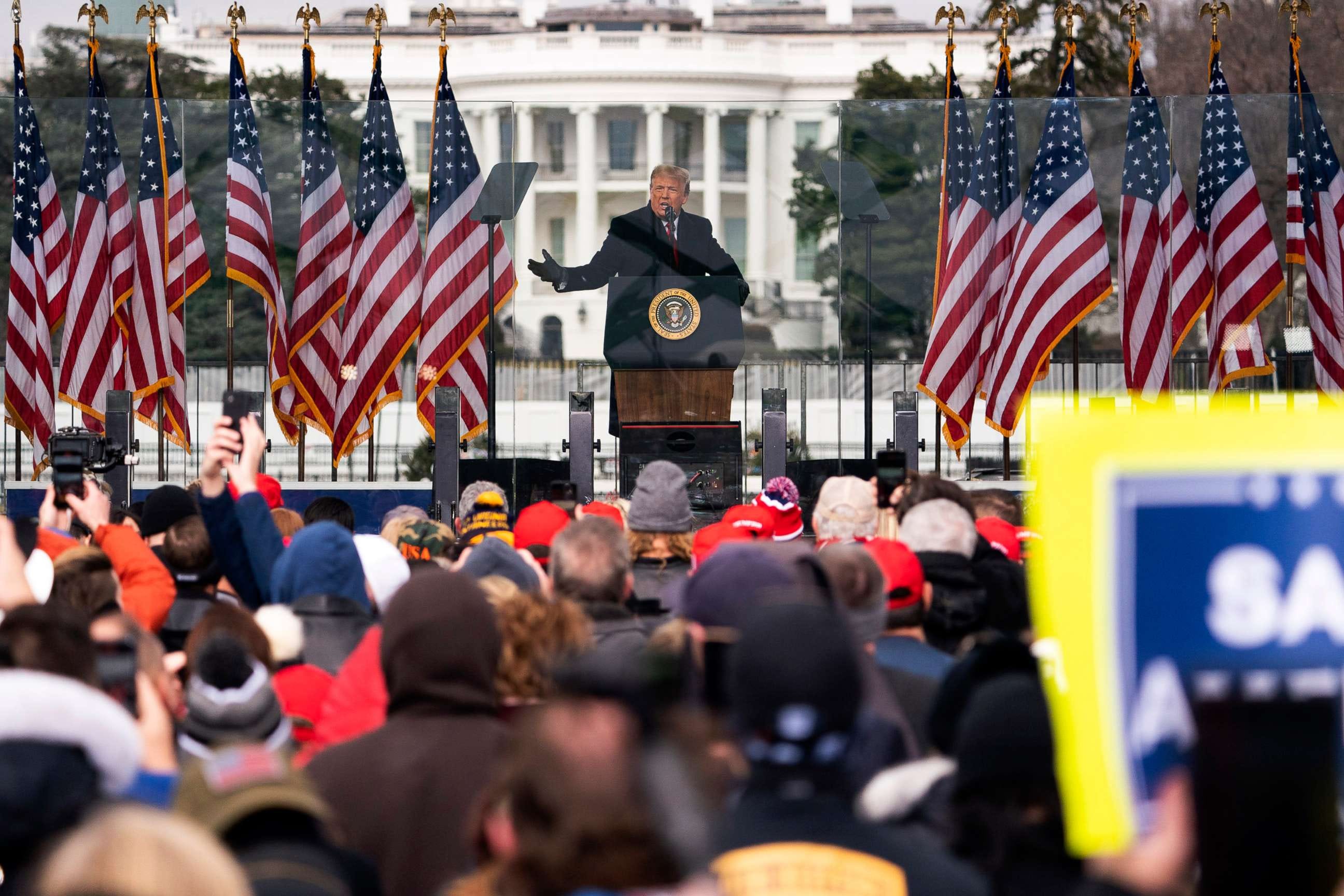
Trump’s last big rally on the mall, January 6, 2021
Friends,
Trump often confuses himself with America, and America with himself.
Not surprisingly, his plan for celebrating the nation’s 250th anniversary is looking more and more like a celebration of Trump.
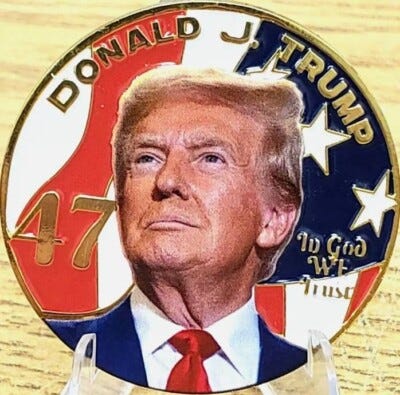
Trump’s face will be engraved on a $250 bill. It will be etched onto both sides of a celebratory gold coin. It’s already on passports issued this year. His signature is on dollar bills. He’s emblazoning his name on every edifice possible. If you still fail to get the point, his visage will soon be draped over federal buildings.
There’s also a 250th anniversary summer concert series on the National Mall. It was to have started June 25 with country music star Martina McBride. But McBride announced Thursday she wouldn’t perform, because, as she explained, although she had been “assured this was a nonpartisan event,” that assurance “turned out to be misleading.”
So far, seven of the nine featured musical acts have backed out of the concert series after discovering it would be more a celebration of Trump than of America.
So, what does Trump do? Yesterday, he posted:
“I understand Artists are getting ‘the yips’ having to do with their performance … so I am thinking about bringing the Number One Attraction anywhere in the World, the man who gets much larger audiences than Elvis in his prime, and he does so without a guitar, the man who loves our Country more than anyone else, and the man who some say is the Greatest President in History (THE GOAT!), DONALD J TRUMP, to take the place of these highly paid, Third Rate ‘Artists,’ and give a major speech, rallying the Country forward like I have done ever since being President!”
It’s difficult to read this without laughing, but it’s no joke. His malignant narcissism is ramping up even higher than its usual galactic level.
Trump followed this post by revealing his real intention all along:
I am ordering my Representatives to look at the feasibility of doing an AMERICA IS BACK Rally on Wednesday, Washington, DC, same time, same location. Only Great Patriots invited — It will be a Wild and Beautiful Celebration of America!”
Only “Great Patriots” invited? It will be “wild?”
Anybody recall the last rally Trump held on the mall, to which he invited patriots and promised it would be “wild?”
I doubt he’ll instigate another attack on the U.S. Capitol this time. More likely, he’ll renew his attacks on immigrants, Somali-Americans, Muslims, Democrats, trans people, “coastal elites,” RINOs, judges who have ruled against him, and anyone “woke” (including the artists who refused to participate in his glorification).
In other words, Trump will star in his own hate rally on the National Mall, to celebrate America’s Trump’s 250th anniversary.
It’s impossible to understand American politics without also understanding the American economy (and vice versa). Politics and economics may be different disciplines, but they’re two sides of the same coin.
This came home to me again when I saw Thursday’s report on the U.S. gross domestic product.
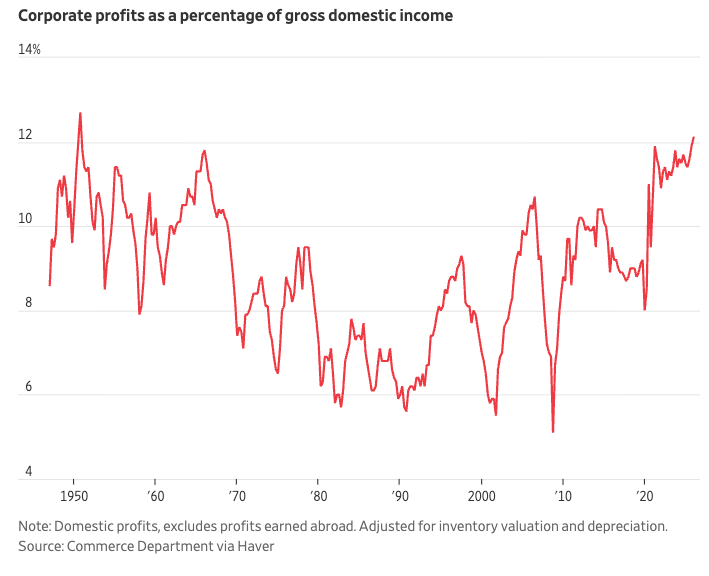
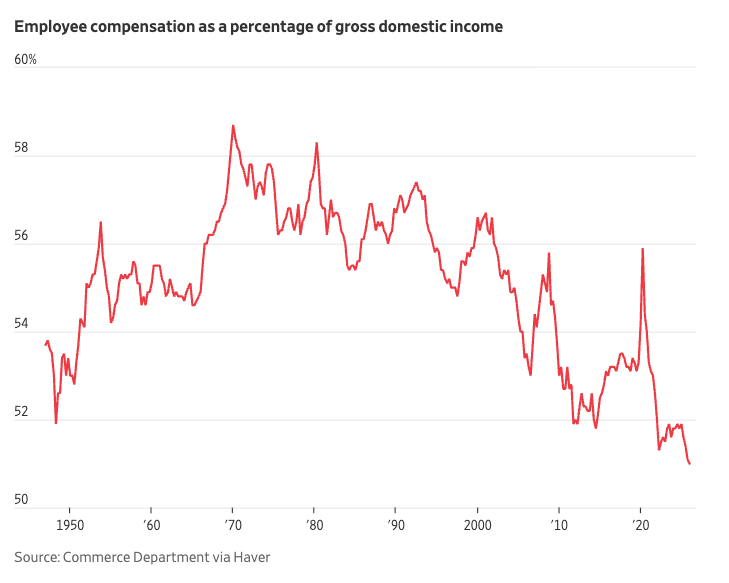
Numbers can be pretty boring, but bear with me. Worker compensation — wages and benefits — grew 0.8 percent from the fourth quarter of 2025 to the first quarter of 2026. Corporate profits grew 2.7 percent.
When you adjust for inflation, hourly wages have risen 3 percent since the end of 2019. Corporate profits have risen 50 percent.
Workers’ share of the nation’s income has now dropped to the lowest it’s been since records began in 1947. Profits’ share is the highest since 1950.
Most people who depend on wages for a living are struggling, while a small minority at the top who own most shares of stock and private equity — that is, people who rely on capital gains — have never had it as good.
The trend toward lower wages and higher profits began in the 1980s, increased in the 2000s, picked up speed after the pandemic, and is about to explode as Artificial Intelligence takes over.
In coming months, three companies centered on AI will go public — SpaceX, OpenAI, and Anthropic — with expected valuations of around $1 trillion each (reflecting the gargantuan profits investors expect). But what about workers?
This is not just morally wrong. “Income from capital risks replacing income from labor,” Pope Leo wrote in Magnifica Humanitas, his encyclical letter devoted to the effects of AI, released this week.
It also threatens the future stability of our economic and political system.
What accounts for the increasing shift of the American economy from wages to profits, even before AI?
One big reason is monopolization. The economy has become concentrated in a few giant corporations with the power both to raise prices and keep wages down.
Sure, there are still lots of small businesses and mom-and-pop operations. But the gravitational center of the U.S. economy is now Amazon, Alphabet (Google), Apple, Microsoft, Nvidia, Meta, Walmart, Costco, Home Depot, Kroger, United Health, Cigna, CVS, AT&T, Verizon, ExxonMobil, Chevron, JPMorgan Chase, Bank of America, Citigroup, Vanguard, Fidelity, Blackstone, Apollo, and KKR.
These giants control large swathes of the economy. They also exert significant political power. They’re like black holes in space, sucking in vast sums of money.
Their political power makes it impossible to know whether government policy is based on the public interest or private gain.
Consider Trump’s war in Iran and its resulting surge in energy prices. The energy-price rise has caused after-tax disposable income to drop and the profits of energy companies to soar. Did Trump decide to go to war because he thought it necessary, or because Big Oil nudged him into it?
Workers, meanwhile, no longer have any countervailing power. In the 1950s, over a third of workers in the private sector were unionized. That gave them enough bargaining power to claim a significant share of the total economy. Now, only 6 percent of workers are unionized. Their bargaining power has been further eroded by their easy replacement by lower-wage workers in Asia and by software. AI will further erode it.
This trend is not sustainable. It feeds growing anger at the system, which demagogues like Trump exploit for their own ends.
What should be done? Let me list five steps (I’ll go into each in greater detail in coming months).
1. For one thing, we’re going to need a new era of antitrust. Giant corporations will have to be busted up.
2. We’ll also need to tax those at the top, especially on the value of their ownership of capital. (California voters will likely be asked to vote on a billionaire tax in November.)
3. We’ll need to regulate AI and simultaneously provide a universal basic income to cushion those who lose their jobs because of it.
4. Universal health care will be a necessity (perhaps via Medicare for all) along with subsidized childcare and eldercare.
5. Finally, we’ll need to distribute capital far more widely, so that the broad American public has a palpable stake in the rip-roaring stock market and the AI tsunami.
None of these fixes will be easy. Even if all are implemented, they may still be insufficient.
But, my friends, we have no choice but to try. We’ve already witnessed what mass anger can do to America, in the form of Trump. Unless we act soon, we’re likely to have Trumps, or worse, as far as the eye can see.
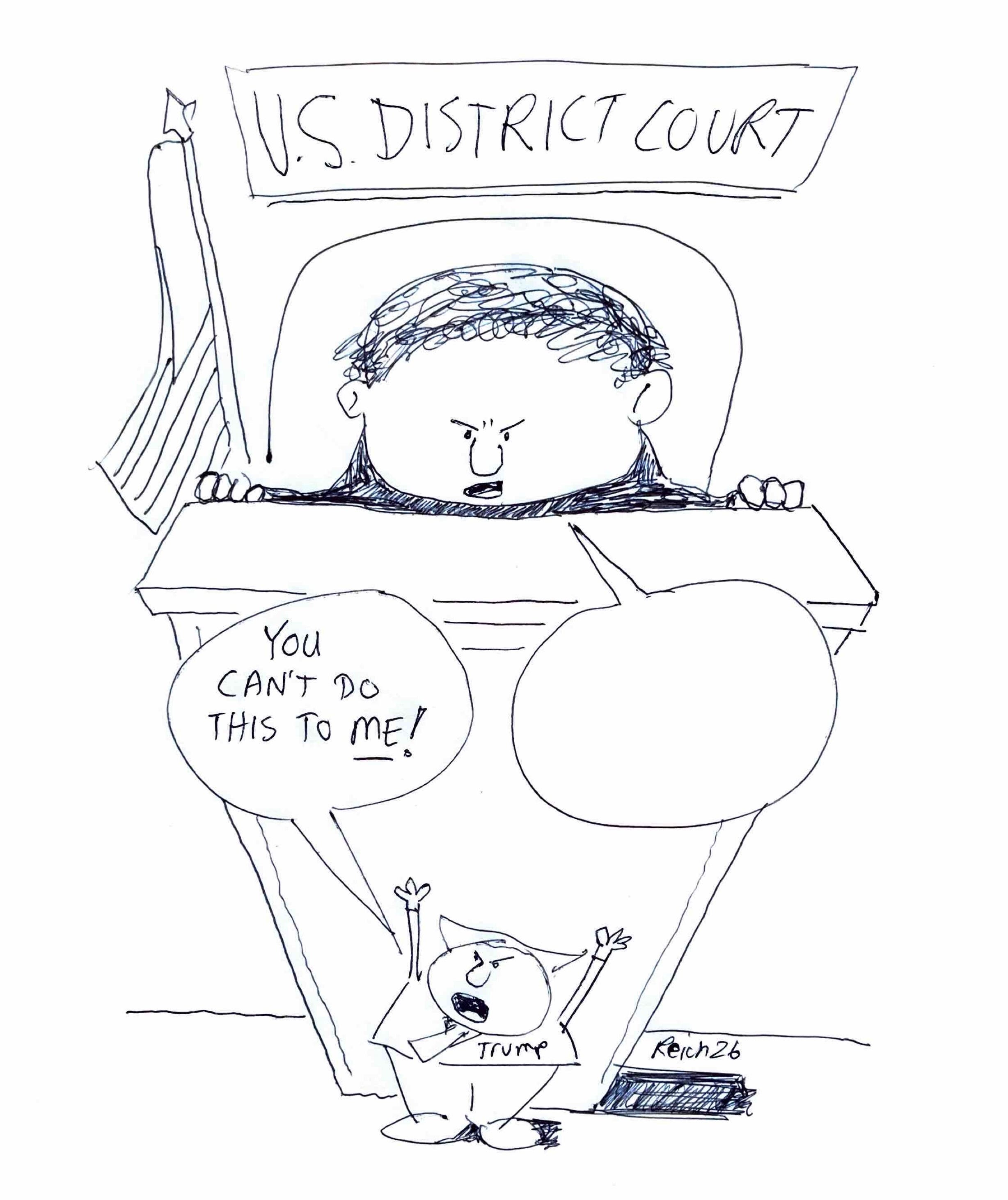
I can’t overstate the importance of Judge Kathleen Williams’s decision on Friday to reopen Trump’s $10 billion case against the IRS.
She said she wants to investigate “grievous allegations” that the hasty deal to resolve it was “premised on deception,” and she ordered Trump’s lawyers to tell her by June 12 whether the lawsuit should be formally reopened because “the court was the victim of a fraud.”
The “deception” and “fraud” Judge Williams refers to were allegedly carried out by Trump and his Justice Department.
This is a big deal.
Judge Williams’s decision came in response to court papers filed on Wednesday by a bipartisan group of 35 former federal judges who urged her to revive the case and dig into the details of the agreement to settle it.
I don’t recall a similar instance of 35 former federal judges filing such a motion or amicus (friend of the court) brief.
In it, the judges argue that the parties’ — Trump and the Justice Department’s — so-called “settlement” agreement was made to circumvent the court’s possible finding that the case presented no actual controversy, since Trump is on both sides of it.
This, they conclude, constitutes a fraud on the court.
Let me quote the remarkable brief filed by the 35 former federal judges:
“The parties have used this lawsuit—which was never an adversarial proceeding over which the Court even had jurisdiction—as a means to allow a “commission” controlled by the President to dole out $1.776 billion in taxpayer dollars without constitutional or congressional authority to do so, and to confer unlawful private benefits to the President and his family by purportedly prohibiting the United States from prosecuting any and all claims against them.
And the parties have plainly tried to shield this conduct from necessary judicial scrutiny by short-circuiting this Court’s inquiry into whether the lawsuit is in fact an actual case or controversy by [seeking to dismiss the case] before they announced the “settlement”—clearly in hopes of preventing the Court from ever completing that inquiry, which, if it comes out against the parties, will undo their collusive “settlement.” ….
Accordingly, because “[t]he parties’ ‘collusive’ activity perpetrated a fraud on the judicial machinery itself, by fostering an appearance that the litigation involved adverse parties, when, in fact, it did not,” the Court should void its prior dismissal and reopen the case to assess in due course whether a fraud occurred.”
In her order on Friday, Judge Williams said she wanted to investigate the circumstances surrounding Trump’s efforts to settle the lawsuit in a way that benefited him and his allies.
She added that a federal court rule requires attorneys to ensure that court filings are “not presented for any improper purpose” and that “a party’s decision to file a frivolous lawsuit for the sole purpose of forcing a settlement may qualify as such an improper purpose.”
She also noted that the settlement appeared to run afoul of Department of Justice policies that require any settlements to be “specifically limited to the immediate subject matter of the claim.”
Finally, Judge Williams pointed out that a settlement addendum that waives all tax claims the U.S. may currently have against Trump, his two eldest sons, and his businesses and trusts was signed only by Todd Blanche, the acting attorney general.
This could result in questions being asked of Blanche. Ultimately, it could result in his disbarment or even imprisonment. Recall that Nixon’s attorney general, John Mitchell, was convicted of conspiracy, perjury, and obstruction of justice for his role in the Watergate break-in and cover-up. He served 19 months of a two-and-a-half to eight-year sentence in federal prison before being paroled. He was the first attorney general in United States history to be incarcerated.
Let me just say that there are forces in this country — specifically, Judge Kathleen Williams and the bipartisan group of 35 former federal judges — bent on preventing Trump from exercising authoritarian power.
In so doing, they’re displaying extraordinary courage and commitment to democracy and the rule of law. They are in effect representing all of us, seeking to create a bulwark against Trump’s and his regime’s corruption.
We owe them a great debt of gratitude. (I’m awarding them this week’s Joseph N. Welch Award for Courage in the Face of Tyranny.)
Attorney Joseph N. Welch, who stood up to Senator Joe McCarthy in the Army-McCarthy Hearings of June 1954
Heather is back (after a grueling week; we wish her mother a speedy recovery).
Today we take a deep dive into Trump’s Department of Injustice, now headed by Acting Attorney General Todd Blanche, who’s criminally prosecuting Trump’s enemies — including private citizens such as E. Jean Carroll.
We also examine Trump and the Republican Party’s obsession with testosterone — part of the so-called “manosphere” — which includes the scheduling of UFC cage matches on the White House’s South Lawn, denigrating Democrats such as Senate candidate James Talarico as being “low T,” ridiculing LGBTQ+ people, Trump and Secretary of “War” Pete Hegseth’s hyper-aggressiveness, and Trump’s fear of strong women who stand up to him.
We also discuss the blatant corruption of the Trump regime and its relationship to the horrific U.S. economy.
So please pull up a chair, grab a cuppa, and join in the conversation.
When the history of the sordid and cruel megalomaniac who now occupies the Oval Office is written, it may well be that his deal with himself to set up a $1.8 billion fund for reimbursing anyone he feels was harmed by the federal government is chronicled as the final straw.
Why not Trump’s absurd tariffs, which are really import taxes passed on to consumers? Why not Trump’s needless war against Iran, which caused prices to soar and is unlikely to result in a better deal on its nuclear ambitions than the one struck by Obama? Why not his cruel ICE and Border Patrol dragnets? Why not the Epstein files or dozens of other lawless or outrageous things he’s done?
I think because almost everyone knows that the fund will be used to pay off Trump’s supporters — including the 1,500 who attacked the U.S. Capitol and then were imprisoned for it — and that paying them is a bridge too far.
This morning a federal judge barred the government from taking steps to launch the fund or process payments at least until a hearing is held in June in a pending lawsuit challenging its legality.
The order came in a case brought by a group of individuals and entities who say they have faced partisan attacks by the Trump regime but who say they expect to be excluded from accessing the fund.
It’s unusual, to say the least, that such a group would be recognized by a court as having standing to bring such a suit, because their status is entirely speculative. They merely expect to be excluded. But such is the level of cynicism about the motives and processes of Trump that even a district court judge would automatically recognize the validity of such an expectation.
It is impossible to conceive that those who have been attacked by Trump’s Justice Department — such as former FBI director James Comey and New York Attorney General Letitia James — would be compensated by Trump’s fund. Nor would the former federal prosecutor who claims he was fired for his work on the January 6 investigation, or people arrested while protesting immigration raids.
Other lawsuits challenging the fund have been filed in the District of Columbia and in California. But the interesting thing is it’s not just lawsuits, and it’s not just Democrats. A number of prominent Republican lawmakers have publicly objected to the fund.
The fact that public money would be spent, and that the fund would be entirely under Trump’s control, also figures in.
Remarkably, 35 former federal judges on Wednesday urged the judge who closed Trump’s case with the IRS — the origin of the fund — to take another look at the terms of the deal. I can’t recall another instance of former judges petitioning a sitting judge to take another look at the terms of a settlement.
The stench of Trump’s self-dealing, compounded by the absurdity of his suing his own Justice Department for $10 billion — and the department’s responding with a “deal” that would give him $1.8 billion to reward his supporters, and future immunity from IRS audits — seems to have tipped some set of cosmic scales.
The scales of justice and also the political scales. Republican members of Congress are hearing an uproar from their constituents about this, which persuaded many to leave town without acting on Trump’s second big reconciliation bill.
I asked earlier this week if Trump has finally overplayed his hand. I believe the cumulative effects of all his wanton and harmful initiatives over the last several months are now setting in. The $1.8 billion fund will be seen as the straw that broke Trump’s legal and political back — the act of hubris that illuminated all the other acts of hubris, the very emblem of Trump’s contempt for anything and everyone beyond himself and his own self-glorification.
Trump’s Department of Injustice Justice has opened a criminal investigation into writer E. Jean Carroll.
I’ve spoken with E. Jean about her cases against Trump and her fabulous (and, believe it or not, hilarious) book about what she’s been through — Not My Type: One Woman vs. a President, which I can’t recommend highly enough. (See the interview Heather Lofthouse and I did with E. Jean on March 14, above.)
First, some background:
In 2022, Carroll alleged that a chance encounter with Trump at Bergdorf Goodman’s Fifth Avenue store in Manhattan in the mid-1990s ended violently — that Trump slammed her against a dressing room wall, pulled down her tights, and forced himself into her.
In May 2023, a federal jury in New York unanimously found that Trump was liable for sexually abusing Carroll. The judge in that trial clarified that Trump didn’t just “sexually abuse” her. He “raped” her:
The finding of sexual abuse “does not mean that she failed to prove that Mr. Trump ‘raped’ her as many people commonly understand the word ‘rape.” Indeed, as the evidence at trial recounted below makes clear, the jury found that Mr. Trump in fact did exactly that.”
(When Trump sued ABC News over George Stephanopoulos’s assertion that Trump had raped Carroll, ABC chose to give in and pay Trump $16 million rather than rely on the judge’s clarification.)
The jury also found that Trump had defamed Carroll by saying she had lied about the assault. The jury awarded Carroll $5 million.
Trump appealed, but the verdict was upheld by the U.S. Court of Appeals for the Second Circuit. A three-judge panel unanimously rejected Trump’s request for a new trial, concluding that he had “not demonstrated that the district court erred in any of the challenged rulings.”
(Last November, Trump asked the Supreme Court to overturn the ruling. It has yet to decide whether to hear the case.)
After the verdict, Trump denied he had assaulted Carroll, called her claims “a complete con job” and a “Hoax and a lie,” and said she was not his “type.”
Trump’s comments caused Carroll to charge Trump with defaming her once again. After this second trial, a unanimous jury awarded Carroll $83.3 million.
The verdict included $65 million in punitive damages. The jury found that Trump had acted with malice in defaming Carroll a second time. Her lawyers had argued that a large verdict was necessary to “make him stop” his attacks on her — which he continued at news conferences, in social media posts, and during the trial itself.
The $83.3 million verdict was upheld by a Second Circuit appeals court in a unanimous three-judge ruling, in which the judges found that Trump “never wavered or relented in his public attacks” on Carroll and that she was subjected to public harassment as a result of his statements, including death threats and threats of physical injury.
Trump has vowed to appeal this case to the Supreme Court as well.
And now Trump is using the Justice Department as another cudgel against the woman he sexually abused (the judge said “raped”).
The mainstream media is characterizing this as “the latest chapter” in Trump’s retribution campaign carried out by the Justice Department — following the department’s criminal investigations of former FBI director James Comey, New York Attorney General Letitia James, and other Trump opponents.
Wrong. This investigation marks a dangerous escalation of Trump’s use of the Justice Department for personal vendettas.
In going after Carroll, Trump is no longer simply weaponizing the department against people he considers political enemies. Carroll has never been a politician; she’s never served in a president’s administration; she’s never been a prosecutor. She’s a private citizen whom a jury unanimously found Trump had sexually abused (raped), and two juries unanimously found he had defamed.
Hell, if Trump can use his Justice Department to criminally investigate private citizens who have held him civilly accountable for past brutality, there’s no logical end to his potential vindictiveness. Any of us who has tried to hold him accountable, in any way, could be next.
A criminal investigation isn’t a party invitation. It’s hugely costly to the people targeted, time-consuming, often grueling and anxiety-provoking.
The Justice Department’s trumped-up criminal investigation is looking into whether Carroll committed criminal perjury when she said in a 2022 deposition before her first civil lawsuit against Trump that she hadn’t had outside help in funding it — although some of her legal bills were paid by a nonprofit financed by Reid Hoffman (a major Democratic donor and founder of LinkedIn, who may also be the target of a criminal investigation).
But this issue was already considered, and dismissed, in Trump’s appeal of that first verdict — in which Trump’s lawyers accused Carroll of concealing financial support from Hoffman, and her lawyers argued in response that Hoffman’s financial support was irrelevant to Carroll’s legal claims and that she had nothing to do with obtaining the outside funding.
The appellate court found that she had “plausibly … forgotten about the limited outside funding counsel obtained” and that “Carroll simply was not involved in the matter of who was or was not funding her litigation costs.”
For Trump’s Justice Department to now launch a criminal investigation of Carroll on the same claim his lawyers made years ago, which was dismissed by an appellate court, is a transparent abuse of justice, harassment of a private citizen, and violation of the rule of law.
Even worse, Todd Blanche, Trump’s acting attorney general, was the lawyer who represented Trump in Trump’s appeals of Carroll’s verdicts and who made the very argument that the appellate court rejected and the Justice Department is now turning into a criminal investigation.
Although Blanche is said to have recused himself from the probe because of his prior representation of Trump in Carroll’s cases, his fingerprints are all over it. Blanche is desperate for Trump to promote him to full attorney general, and, to this end, has been even more accommodating of Trump’s thirst for revenge than his predecessor, Pam Bondi. Moreover, officials from department headquarters have been involved in the decision to investigate Carroll — officials who directly report to Blanche.
Friends, I was an attorney in the Justice Department soon after Richard Nixon had tried to turn it against his enemies and Nixon Attorney General John Mitchell had gone to jail for his role in Watergate. I was fortunate enough to work for Edward Levi, Gerald Ford’s attorney general, who sought to insulate the department from any similar abuses in the future and regain the public’s trust in our system of justice. President Ford supported Levi’s efforts. Levi’s successors, Griffin Bell and Benjamin Civiletti, continued Levi’s work to depoliticize — and professionalize — the department, with the support of Jimmy Carter.
The next president and attorney general must rededicate themselves and the Justice Department to the same principles.
Nixon’s Justice Department was bad. Trump’s is far worse, and more dangerous.
I sometimes share with you perspectives about what we’re up against from non-American writers and journalists. Asli Aydintasbas, a visiting fellow at the Brookings Institution in Washington D.C., and a former journalist, published this short essay, titled “Trump Will Overplay His Hand: Here’s How to be Ready,” on December 1, 2024, in PoliticoMagazine, just weeks before the start of Trump’s second regime. Eighteen months later, I still find this essay a useful guide.
***
American democracy is about to undergo a serious stress test [this was written January 1, 2025.] I know how it feels, in part because I lived through the slow and steady march of state capture as a journalist working in Recep Tayyip Erdoğan’s Turkey.
Over a decade as a high-profile journalist, I covered Turkey’s descent into illiberalism, having to engage in the daily push and pull with the government. I know how self-censorship starts in small ways but then creeps into operations on a daily basis. I am familiar with the rhythms of the battle to reshape the media, state institutions and the judiciary.
Having lived through it, and having gathered some lessons in hindsight, I believe that there are strategies that can help Democrats and Trump critics not only survive the coming four years, but come out stronger. Here are six of them.
1. Don’t Panic — Autocracy Takes Time
President-elect Donald Trump’s return to power is unnerving but America will not turn into a dictatorship overnight — or in four years. Even the most determined strongmen face internal hurdles, from the bureaucracy to the media and the courts. It took Erdoğan well over a decade to fully consolidate his power. Hungary’s Viktor Orbán and Poland’s Law and Justice Party needed years to erode democratic norms and fortify their grip on state institutions. [Reminder: On April 12, 2026, Péter Magyar led his Tisza party to victory with an extraordinary 138 seats over Orbán's Fidesz party, which retained only 55 seats, and the far-right Our Homeland, with 6.]
I am not suggesting that the United States is immune to these patterns, but it’s important to remember that its decentralized system of governance — the network of state and local governments — offers enormous resilience. Federal judges serve lifetime appointments, states and governors have specific powers separate from those granted federally, there are local legislatures, and the media has the First Amendment as a shield, reinforced by over a century of legal precedents.
Sure, there are dangers, including by a Supreme Court that might grant great deference to the president. But in the end, Donald Trump really only has two years to try to execute state capture. Legal battles, congressional pushback, market forces, midterm elections in 2026 and internal Republican dissent will slow him down and restrain him. The bottom line is that the U.S. is too decentralized in its governance system for a complete takeover. The Orbanization of America is not an imminent threat.
2. Don’t Disengage — Stay Connected
After a stunning electoral loss like this, there’s a natural impulse to shut off the news, log off social media and withdraw from public life. I’ve seen this with friends in Turkey and Hungary with opposition supporters retreating in disillusionment after Erdogan’s or Orbam’s victories. Understandably, people want to turn inwards.
Dancing, travel, meditation, book clubs — it’s all fine. But eventually, in Poland, Hungary and Turkey, opponents of autocracy have returned to the fight, driven by a belief in the possibility of change. So will Americans.
Nothing is more meaningful than being part of a struggle for democracy. That’s why millions of Turks turned out to the polls and gave the opposition a historic victory in local governments across Turkey earlier this year. That’s how the Poles organized a winning coalition to vote out the conservative Law and Justice Party last year. It can happen here, too.
The answer to political defeat is not to disconnect, but to organize. You can take a couple of days or weeks off, commiserate with friends and mute Elon Musk on X — or erase the app altogether. But in the end, the best way to develop emotional resilience is greater engagement.
3. Don’t Fear the Infighting
Donald Trump’s victory has understandably triggered infighting inside the Democratic Party and it looks ugly. But fear not. These recriminations and finger-pointing are necessary to move forward. In Turkey, Hungary and Poland, it was only after the opposition parties faced their strategic and ideological misalignment with society that they were able to begin to effectively fight back.
Trump has tapped into the widespread belief that the economic order, labor-capital relations, housing and the immigration system are broken. You may think he is a hypocrite, but there is no doubt that he has convinced a large cross-section of American society that he is actually the agent of change — a spokesman for their interests as opposed to “Democratic elites.” This is exactly what strongmen like Erdoğan and Orban have achieved.
For the Democratic Party to redefine itself as a force for change, and not just as the custodian of the status quo, it needs fundamental shifts in how it relates to working people in the U.S. There is time to do so before the midterms of 2026.
4. Charismatic Leadership Is a Non-Negotiable
One lesson from Turkey and Hungary is clear: You will lose if you don’t find a captivating leader, as was the case in 2023 general elections in Turkey and in 2022 in Hungary. Coalition-building or economic messaging is necessary and good. But it is not enough. You need charisma to mobilize social dissent.
Trump was beatable in this election, but only with a more captivating candidate. For Democrats, the mistake after smartly pushing aside President Joe Biden was bypassing the primaries and handpicking a candidate. Future success for the party will hinge on identifying a candidate who can better connect with voters and channel their aspirations. It should not be too hard in a country of 350 million.
Last year’s elections in Poland and Turkey showcased how incumbents can be defeated (or not defeated, as in general elections in Turkey in 2023) depending on the opposition’s ability to unite around compelling candidates who resonate with voters. Voters seek authenticity and a connection — give it to them.
5. Skip the Protests and Identity Politics
Soon, Trump opponents will shake off the doldrums and start organizing an opposition campaign. But how they do it matters. For the longest time in Turkey, the opposition made the mistake of relying too much on holding street demonstrations and promoting secularism, Turkey’s version of identity politics, which speaks to the urban professional and middle class but not beyond. When Erdoğan finally lost his absolute predominance in Turkish politics in 2024, it was largely because of his mismanagement of the economy and the opposition’s growing competence in that area.
Trump’s appeal transcends traditional divides of race, gender and class. He has formed a new Republican coalition and to counteract this. Democrats too, must broaden their tent, even if means trying to appeal to conservatives on some issues. Opposition over the next four years must be strategic and broad-based.
Street protests and calls to defend democracy may be inspirational, but they repel conservatives and suburban America. Any grassroots action must be coupled with a clear, relatable economic message and showcase the leadership potential of Democratic mayors and governors. Identity politics alone won’t do it.
6. Have Hope
Nothing lasts forever and the U.S. is not the only part of the world that faces threats to democracy — and Americans are no different than the French, the Turks or Hungarians when it comes to the appeal of the far right. But in a country with a strong, decentralized system of government and with a long-standing tradition of free speech, the rule of law should be far more resilient than anywhere in the world.
Trump’s return to power certainly poses challenges to U.S. democracy. But he will make mistakes and overplay his hand — at home and abroad. America will survive the next four years if Democrats pick themselves up and start learning from the successes of opponents of autocracy across the globe.
[Question to you: Does this essay still ring true? In what ways does it seem especially relevant today? Are there ways in which it seems either naive or overly optimistic?]
I do not wish Trump ill. While he hasn’t shown a shred of compassion for anyone other than himself, this doesn’t justify our lacking compassion for him.
It’s also in the interest of America and the world that he be physically and mentally able to discharge the duties of his office.
So we have reason to be concerned about Trump’s visit to Walter Reed National Military Medical Center early Tuesday for what the White House called a “routine annual dental and medical assessment.”
Trump turns 80 next month. I feel entitled to comment on the practical meaning of this milestone because I’ll also turn 80 next month (he was born 10 days before me).
Let’s just say that reaching it doesn’t mean altogether good things, unless you consider the alternative.
Even in a healthy person, small things begin to break down as one approaches 80. Everything takes just a bit more time and effort. Joints ache. Energy isn’t quite as abundant.
The 80-year-old mind isn’t as quick. The frontal lobe’s capacity to remember names goes to shit. (Yesterday, I could barely remember the name of a garage mechanic whom I’ve known for nearly half a century.)
Taken separately, such minor frailties are typically no more than a personal frustration, but they begin to mount up. In a president of the United States, they can pose a major challenge to the nation and world.
Trump frequently proclaims he’s in excellent health. “Just finished my 6 month physical at Walter Reed Military Medical Center. Everything checked out PERFECTLY,” he wrote on Truth Social early yesterday afternoon. “Thank you to the great Doctors and Staff! Heading back to the White House.”
But even “PERFECTLY” is a relative concept for someone ending his seventh decade and beginning his eighth, who’s the oldest person to assume the presidency and the second-oldest to hold the office. (Joe Biden was 82 when he left in 2025.)
Presidents aren’t legally required to release their medical records, but, given the effluvium of lies in which Trump permanently floats, we’d be excused if we didn’t entirely trust this PERFECTLY report.
Plus, there are his bruised hands, swollen ankles, bouts of drowsiness, exceedingly long blinks during official meetings (some call them “naps”), and erratic — if not off-the-charts weird — behavior.
Add in the frequency of his health “checkups.”
Tuesday’s visit to Walter Reed was Trump’s third in-person doctor’s visit in a little over a year. His first physical of this term of office was in mid-April last year. He returned in early October for a “semiannual physical.” In early January, he had what was described as a brief dental appointment. Earlier this month, another dental appointment. Followed by his return to Walter Reed on Tuesday for his third “annual” physical in 13 months.
Consider also the shifting explanations. In July, Navy Capt. Sean Barbabella, Trump’s physician, explained that bruises on Trump’s right hand were “consistent with minor soft tissue irritation from frequent handshaking.” The explanation seemed plausible until the bruises spread to his left hand.
Then there’s the changing story about Trump’s scans. In December he told reporters that he’d had an MRI in October but wasn’t sure what part of his body was scanned. “It wasn’t the brain,” he said, defensively, “because I took a cognitive test and I aced it.” Barbabella then issued a memo explaining it had been a scan of his heart and abdomen, and that in both cases the advanced imaging was “perfectly normal.”
In January, Trump altered his story to say it was a CT scan rather than an MRI. Why? Trump being Trump, he doesn’t want anyone to know anything about his health that might reveal something he fears enemies and critics might see as a weakness.
“In retrospect, it’s too bad I took [the scan] because it gave them a little ammunition,” Trump said. “I would have been a lot better off if [I] didn’t, because the fact that I took it said, ‘Oh gee, is something wrong?’ Well, nothing’s wrong.”
What’s he afraid of? Probably that the American public will catch on to his rapidly diminishing capacities.
Three years ago, according to a Washington Post-ABC News-Ipsos poll, only 28 percent of the public thought Trump insufficiently healthy to hold the nation’s highest office. Earlier this month, the same poll found that 55 percent of the public thought his health insufficient for him to serve effectively.
Behind the public’s mounting worries is a growing sense that Trump isn’t mentally all there.
Physical and mental health aren’t easily separated, especially as one reaches 80. I often can’t remember where I put my wallet and keys or why I’ve entered a room. I also have less patience than I used to. I’m less tolerant of long waiting lines, automated phone menus, and Republicans.
But if Trump can’t remember where he put, say, a top-secret memo or why he entered the Situation Room, or if he expresses bizarre impatience, it’s a potential risk to the nation and world.
Worse, Trump is exhibiting clear symptoms of dementia.
“Open the Fuckin’ Strait, you crazy bastards, or you’ll be living in Hell,” Trump exploded on his social media Easter morning, adding an Islamic prayer to the end of the post.
The following Tuesday he threatened that unless Iran struck a deal in 12 hours, its whole civilization would die.
When Iran shot down two U.S. airmen, aides who were getting minute-by-minute updates reportedly kept Trump out of the Situation Room because they believed his impatience wouldn’t be helpful, a senior administration official said.
Then came Trump’s rant against the pope.
“Pope Leo is WEAK on Crime, and terrible for Foreign Policy. … I like his brother Louis much better than I like him, because Louis is all MAGA. He gets it, and Leo doesn’t! … Leo should get his act together as Pope, use Common Sense, stop catering to the Radical Left, and focus on being a Great Pope, not a Politician. It’s hurting him very badly and, more importantly, it’s hurting the Catholic Church!”
During a subsequent Q&A with reporters, Trump doubled down: “I don’t think he’s doing a very good job. He likes crime, I guess. … I am not a fan of Pope Leo.”
Days later Trump posted an AI-generated portrait of himself as a kind of American Jesus. When this caused a wave of criticism and outrage (much of it from fundamentalist Christians), he insisted he was portraying himself “as a doctor, making people better.”
Rather than helping Republicans in the upcoming midterm elections by, for example, embarking on an “affordability tour” (as White House aides have urged him to do), Trump has been on a “revenge tour” against Republican members of Congress he deems insufficiently loyal — a gambit that may cost Republicans dearly in the midterms.
At yesterday’s Cabinet meeting, Trump touted the primary wins of Republicans he endorsed, including yesterday’s Texas victory of Ken Paxton over incumbent Republican Senator John Cornyn.
Paxton carries more baggage than the U.S. Postal Service — including abuse-of-office allegations from his top staff, an indictment for securities fraud, impeachment by Texas’s Republican House, and an ongoing divorce initiated by his wife, who alleges adultery — which will help the Democratic challenger, James Talarico.
Yet Trump insisted at the Cabinet meeting that “I don’t care about the midterms.” He was referring to Iranian officials who “thought they were going to outwait me” by relying on mounting political pressures to force him to give up, but he might as well have been talking about the blowback from his revenge tour.
Trump ended yesterday’s Cabinet meeting with further evidence of his mental decline in another rant against Somali-Americans. “The Somalians, what they’ve done to Minnesota, the Somalians, crooked as hell. Ilhan Omar, crooked as hell,” he said, in reference to the Democratic congresswoman from Minnesota. “They’re all crooks, and we got them, we got them. Now we’re putting the clamps on,” Trump said.
His antipathy toward Somali-Americans is growing, with his dementia. In December, weeks before ICE went on a rampage in Minneapolis, Trump claimed Somalis made Minnesota a “hellhole,” saying “the Somalians should be out of here. They’ve destroyed our country.” Of Somalia-born Omar, Trump said, “she shouldn’t be allowed to be a congresswoman, and I’m sure people are looking at that. She should be thrown the hell out of our country.” A day earlier, he called the congresswoman “garbage,” saying he didn’t want Somalis in the U.S.
Can you imagine any other president of the United States singling out a group of foreign-born Americans like this? Of course not.
The evidence continues to mount. Trump is both physically and mentally incapable of discharging the duties of president of the United States.
The sooner the 25th Amendment is invoked, or he is impeached, the safer America and the world will be.
Trump’s war in Iran is entering its third month. Gas is $1.50 more at the pump than it was before February 28. Other prices are rising. The American economy is showing signs of the dreaded stagflation (the combination of inflation and stagnation that’s difficult to overcome). There’s a loud outcry over revelations about Trump’s self-dealing, including his $1.8 billion slush fund and permanent immunity from any IRS audits of him and his family.
Given all this, some political observers I rely on tell me Trump has finally overplayed his hand. He’s a lame duck who’s now facing the beginning of the end. His power is disappearing. Not all political observers I’ve been consulting agree.
Hence, this week’s Office Hours question: In your view, has Trump finally overplayed his hand, and, if so, what are the likely consequences for him, America, and the world?
I’ve grouped the responses I’ve received from seasoned political observers into several categories, which I’ve summarized below. I’d appreciate your thoughts.
The 2026 Billionaire Tax Act initiative recently submitted enough signatures to be put on the California ballot for the November 2026 elections. Its goal is to raise revenue by imposing a one-time 5 percent wealth tax on California billionaires to offset large cuts to California’s Medicaid caused by the Trump regime and Congress when, in July 2025, they cut federal taxes mainly on the wealthiest.
The reason for targeting California billionaires for new revenue is their wealth has grown faster than anyone else’s in recent years and they currently pay low taxes relative to their large wealth gains. Many borrow against their wealth for living expenses (banks are delighted to lend to them), enabling them to claim little or no taxable income.
As a result, taxing billionaires can both raise substantial revenue and restore tax progressivity at the very top. California is in the vanguard of what the nation must do. I believe they will do it when Democrats are back in control, and when they enact campaign finance reforms so no member of Congress is necessarily dependent on the super-wealthy for the bulk of their campaign contributions.
The following oped appeared in today’s New York Times. It was written by two of my colleagues at Berkeley, Professors Emmanuel Saez and Gabriel Zucman (who is also at the Paris School of Economics). I have reproduced it in its entirety, with permission, and have highlighted paragraphs I believe to be particularly important.
They make the case for the billionaire wealth tax in California, and indirectly for a billionaire wealth tax nationwide. They also answer the arguments against the tax, such as that California billionaires may leave the state in expectation that such wealth taxes would be renewed, possibly reducing future income tax revenue to the state and reducing its economic dynamism as the engine of tech innovation.
With wealth inequality now surging beyond anything ever witnessed in America, the dictum attributed to Justice Louis D. Brandeis has become dramatically relevant: “America faces a choice: We can have great wealth in the hands of a few, or we can have a democracy, but we cannot have both.” A wealth tax is a necessary precondition for everything else.
***
The billionaire class in California includes roughly 250 households, a mere 0.001 percent of the state’s families. Yet its wealth now amounts to more than half of California’s entire annual economic output.
This means that if these billionaires spent all of their wealth, they could buy more than half of the goods and services produced in a year in the entire state.
This extraordinary wealth does not translate into extraordinary tax contributions.
From 2019 to 2025, California billionaires’ wealth grew an average of over 15 percent per year, while they paid, on average, just 0.26 percent of their wealth annually in state income taxes. Their income tax payments accounted for only 2.4 percent of California’s income tax revenue.
For the very richest individuals, the effective burden was even lower. The four wealthiest Californians — former Google co-founder Sergey Brin, Nvidia’s Jensen Huang, former Google CEO Larry Page, and Facebook’s (Meta’s) Mark Zuckerberg — paid an average of just 0.07 percent of their wealth annually in California income tax over that period, according to our analysis of Securities and Exchange Commission records on stock sales and executive compensation from their companies.
California’s tax system fails to effectively tax ultrahigh-net-worth individuals. The same is true of the United States’ tax system and those of other countries.
The problem is that billionaires’ fortunes are largely held in assets (mainly stocks) that rise in value over time. This rise in value is not taxed unless the assets are sold. Under current law, when billionaires don’t sell their stock, wealth accumulates while taxes on their gains are deferred indefinitely and sometimes avoided entirely.
To understand how California’s billionaires have become so unfathomably rich, it’s helpful to think of their fortunes as icebergs. Some earnings are easy to see — and tax. From 2019 to 2025, Mr. Zuckerberg reported more than $7.1 billion in income from Meta: $181 million in compensation, $1.4 billion in dividends and $5.6 billion in gains from selling stock.
Despite making so much money, Mr. Zuckerberg was taxed a combined state and federal rate of just 27 percent on that income. That’s not much higher than the average California household’s effective tax rate of about 20 percent.Mr. Zuckerberg’s tax rate was relatively low in large part because most of his income was in the form of capital gains — what he made from selling stock that had risen in value. Capital gains are taxed federally at a lower rate than ordinary income.
Most of Zuckerberg’s wealth is hidden from income taxes. Since 2019, Meta has made hundreds of billions of dollars in profit. As Meta’s chief executive, Mr. Zuckerberg has invested much of that money back into the company, of which he owns about 13 percent. These profits have been taxed at a relatively low 17 percent, Meta’s effective corporate income tax rate. Their reinvestment has boosted the company’s value and, therefore, the value of its shares. This caused Mr. Zuckerberg’s wealth to rise by tens of billions of dollars.
The same is true of the wealth Mr. Zuckerberg accumulated as Meta grew and investors became more bullish about the company. This dynamic increased the value of his shares by an additional $142 billion. Unless Mr. Zuckerberg sells his shares, all of this growth remains untaxed.
But he can put his gains to use without selling them, borrowing tax-free against his holdings at low interest rates, as he did in 2023, when he pledged $3.1 billion worth of his Meta shares as collateral for a loan.
California’s other top billionaires have similarly structured fortunes. Without a wealth tax, these tech barons will continue to hoard the rewards of the state’s economic growth while its cities cut services and its workers lose health care.
Google’s founders, Mr. Brin and Mr. Page, are the state’s richest individuals, with more than $600 billion in wealth between the two of them — up from $345 billion last September. They have come out against the wealth tax initiative while making moves to leave the state. They benefit from the status quo.
Mr. Brin has funded the political campaign against the measure and has funded signature collection for two competing ballot initiatives that could undercut the wealth tax, spending at least $57 million to fight it.
They stepped down from day-to-day management at the end of 2019. That year and in 2020 and 2023, each got from Alphabet, Google’s parent company, only $1 per year in executive compensation.
They didn’t sell stock, and they didn’t receive dividends or any other compensation relating to Alphabet, so they paid no income tax on their wealth related to the company. But their stock wealth rose by $133 billion, driven in part by the reinvestment of their share of company profits, which amounted to $20 billion in those three years. Scenarios like this show why some of the very wealthiest people in America are among the least taxed.
This arrangement violates basic principles of fairness, deprives the government of revenue it needs for public services and fuels wealth concentration.
Overwhelming wealth becomes power — power to influence the direction of corporate behemoths, power to sway society through donations and media ownership, power to steer politics through unlimited campaign contributions to super PACs.
Elon Musk’s recent adventures in the executive branch, after spending hundreds of millions of dollars to help elect Donald Trump, demonstrate how quickly concentrated wealth can transmute into political control.
We don’t imagine that a one-time 5 percent tax on the wealth of California billionaires, as proposed in the 2026 Billionaire Tax Act, would fix all these problems. But it could raise nearly $100 billion in revenue for California. This amount would make up for the funding the federal government is taking away from the state over the next five years. It would also be tiny relative to billionaires’ recent wealth gains.
In the past three years alone, the total wealth of California’s billionaires grew by a staggering 144 percent, to over $2 trillion.
Taking such a small bite out of billionaires’ exponentially growing tech wealth wouldn’t doom Silicon Valley because the value of California’s concentrated tech talent dwarfs the proposed wealth tax. Nvidia’s chief executive, Mr. Huang, who would be one of the biggest payers of the tax, said he would be “perfectly fine” with it.
Other myths about the proposal need to be dispelled. It would tax only billionaires. It has been carefully written to respect the California and U.S. Constitutions. It contains provisions designed to prevent taxation beyond 5 percent of the fair market value of anyone’s shares and to avoid hitting start-ups hard. Billionaire entrepreneurs, with sizable illiquid stakes in newly founded private companies, would be able to defer payments until they began to cash out.
It is too late for superrich Californians to flee the state to avoid the tax. If approved in November, the tax would apply to billionaires who were residents of California as of Jan. 1, 2026. Some affected taxpayers might have left between the ballot initiative’s introduction, in late October 2025, and the end of the year. But it is improbable that any significant number of billionaires fully cut ties with California in that short period.
Critics of the ballot measure have voiced concerns that even a small number of billionaires leaving the state would lead to lower state tax revenues overall. Their math doesn’t add up. California’s billionaires currently pay such a low tax rate that even if all of them left the state, it would take 25 years for the loss of their tax payments under the current set of rules to surpass the amount the state would raise if the one-time tax succeeds this fall.
In 2025, California collected $4.1 billion in income tax from its billionaires. We estimate that California would collect about 25 times that much revenue — about $103 billion — from the proposed wealth tax.
While billionaires who no longer run their businesses day to day may choose to eventually leave California, uprooting an established business that relies on the pool of California’s tech talent and tech ecosystem would be much harder: While Mr. Page and Mr. Brin may leave for Florida or Nevada, there are no discussions of Google leaving Mountain View.
California’s tech sector produces billionaires faster than any other state’s. Its superrich — who have benefited from the state’s infrastructure, universities and networks of people and businesses — have accumulated enormous fortunes almost tax-free. The proposed billionaire tax would finally make them contribute in modest proportion to their gains.
In November, California’s voters should show the nation the way forward.
He’s no longer even trying to hide it. He makes a deal with himself for a $1.8 billion slush fund to reward loyalists willing to defy the law and commit violence on his behalf, and for a pardon of himself and his family for any illegal self-dealing and financial wrongs “FOREVER” (it’s in all caps in the document).
Then, when the deal is widely criticized, he posts:
“I gave up a lot of money in allowing the just announced Anti-Weaponization Fund to go forward. I could have settled my case, including the illegal release of my Tax Returns and the equally illegal BREAK IN of Mar-a-Lago, for an absolute fortune. Instead, I am helping others who were so badly abused by an evil, corrupt, and weaponized Biden Administration, receive, at long last, JUSTICE! President DJT.”
Does he really believe he could have settled his case for an absolute fortune — the case that he brought against himself — the case a federal judge doubted was even a “case” because he was on both sides of it?
Last week, a disclosure form showed that Trump’s investment portfolio executed more than 3,600 trades in the first three months of this year alone, many involving companies that he has favored with access or policies.
America is slouching toward the 250th anniversary of our revolution against arbitrary power with a president who shamelessly exercises it. Never before have we witnessed this degree of self-dealing, bribe taking, usurpation of congressional authority, and open defiance of federal courts.
It’s an unconstitutional slippery slope. If Trump can get away with creating for himself a $1.8 billion slush fund that Congress never approved and courts cannot oversee, and wantonly trade the shares of companies his policies are favoring, what’s to stop him from creating a $10 billion or $10 trillion self-dealing slush fund?
If he can get away with preemptively pardoning himself and his family for any and all future financial wrongdoing, what’s to stop him from pardoning himself and his family for any future criminal acts?
These are only a part of the slippery slope we’re on. If he can abduct a foreign president without Congress’s permission, what’s to stop him from abducting anyone? If he can order the U.S. military to kill a foreign head of state without even Congress declaring a war, what’s to stop him from ordering the military to kill anyone?
If he can target political enemies for criminal prosecution, what’s to stop him from jailing or murdering his opponents?
If he can unilaterally decide that someone on a boat in the high seas is an “enemy combatant” and summarily kill them, what’s to stop him from calling anyone he dislikes an enemy combatant and having them killed?
If he can put his name on buildings all over Washington and take a wrecking ball to the East Wing of the White House, what’s to stop him from taking a wrecking ball to the entire edifice and putting up a Trump tower?
He feels unstoppable because there’s no one around him to tell him no. Instead, he’s surrounded by sycophants who tell him yes. He gets blind loyalty from his lapdogs — his vice president, his Cabinet, and most Republicans in Congress — who work for him rather than for the American people.
He feels indomitable because his billionaire backers — Jeff Bezos, Elon Musk, Larry and David Ellison, Mark Zuckerberg, and Rupert Murdoch, among others — have stuffed his PAC with their money and silenced criticism of him on their media platforms, in order to garner his favors. Meanwhile, his followers feast on his white Christian nationalism and regard him as godlike.
He feels invincible because he was reelected president even though he was impeached twice and has been found guilty of 34 felony counts, and the Supreme Court has shielded him from further criminal prosecution for “official” acts (which he takes to mean any actions while he’s president). Congress is barely an obstacle because, as he demonstrated as recently as last week, he has a chokehold over the Republican Party. He even says he “doesn’t need Congress.”
He feels invulnerable because he’ll never directly face voters again, and therefore will never lose — nor, he assumes, ever be held accountable for anything.
My friends, this is full-frontal neofascism. I suggest we respond in these ways:
On July 4, the 250th anniversary of the nation’s independence, we wear black armbands to acknowledge the near death of our democracy and the rule of law under Trump.
In the weeks and months leading up to the midterm election on November 3, 2026, we commit to getting the largest voter turnout in American history, to take back Congress and stop the neofascist in the White House. Not just a blue wave but a blue tsunami.
On Election Day 2028, we elect a president whose character and temperament are consistent with the founding ideals of the United States — someone both humble and honorable, who’s committed to strengthening democracy and the rule of law, who will revive the self-governing institutions that Trump has shat on and refocus the nation on our vast unfinished agenda of inclusion, rather than exclusion.
Beyond these, we will do whatever we can to learn from this catastrophe and help America learn. We will teach our children and grandchildren the truth of what has happened and how close we’ve come to losing our democracy. And we will educate future generations on what we owe one another as citizens of this great land.
To accomplish all this we mutually pledge to each other our lives, our fortunes, and our sacred honor.

 Login
Login