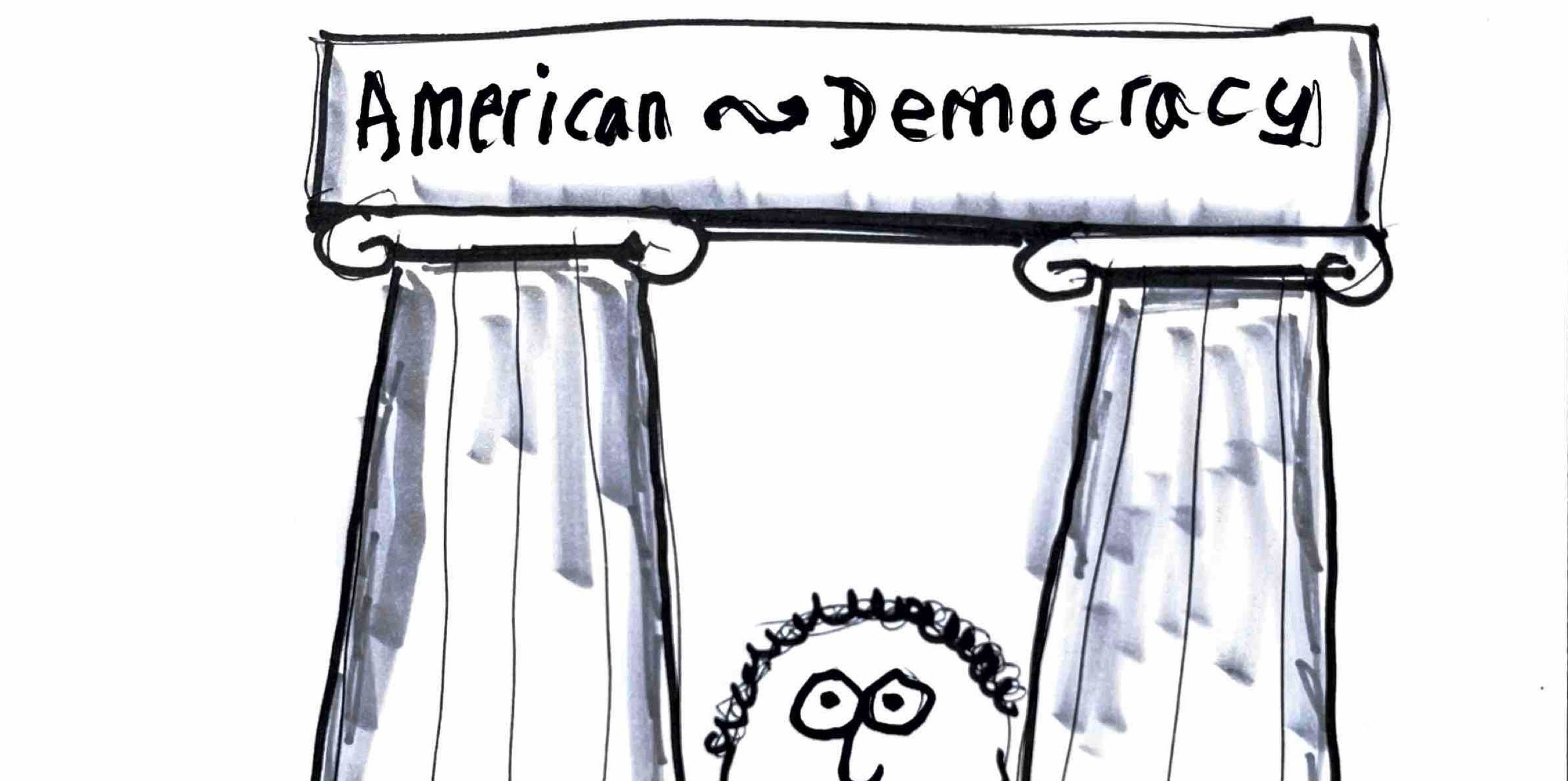
I detest him and everything he does or says. Ditto his despicable aides and Cabinet members, his unprincipled sycophants and suck-ups.
But it’s possible that someday we’ll look back on this horrendous era and say we needed Trump. We needed to see how horrible it could get before America was able to revive its ideals.
Please hear me out.
Even before Trump, we were barreling down the wrong road. Inequalities of income, wealth, and opportunity were worsening. Legalized bribery was soaring in the form of mounting campaign contributions from big corporations and the wealthy. Workers were getting shafted. On Wall Street and in C-suites, fealty to the rule of law was giving way to “greed is good” selfishness. Giant corporations were monopolizing ever more of the economy. America was losing its moral authority in the world (think Abu Ghraib and the torture memo).
We couldn’t have remained on that road. Even if we didn’t know it then, most of us understand that now. Trump has opened our eyes to the consequences of extreme greed, corruption, cruelty, and utter disregard for the Constitution and the rule of law. His brazenness and shamelessness have awakened us to much that we took for granted.
He and his regime are still dangerous as hell, of course. But the American public is catching on. His polls are in the cellar; they continue to fall.
It’s as if the nation has been through basic training in democracy, a stress test in civics, a crash course in the importance of having a decent and good government.
Before Trump, how many Americans understood the importance of “checks and balances” among the three branches of government, as envisioned by the Founders?
Now nearly everyone knows, because we’ve seen what happens when the head of the executive branch usurps the power of Congress and defies the federal courts.
How many of us really knew what “due process” meant when it came to giving people accused by the government an opportunity to defend themselves?
By now most of us have seen videos of people dragged out of their homes in the dead of night by masked agents of the U.S. government and thrown into detention camps without so much as a hearing. And we’ve seen government agents murder American citizens in cold blood on the streets of our cities.
Did we understand the meaning of corruption, bribes, self-dealing, and pay-to-play before Trump extorted corporations and billionaires to contribute millions to his campaign, his PAC, his inauguration, his ballroom, and his 250th birthday party? Now, we surely do.
Did we really know the importance of professional civil servants before Trump fired tens of thousands of them and substituted brainless loyalists? Before he got rid of the head of the Bureau of Labor Statistics because it published truthful jobs data he didn’t like?
Did we understand the importance of expertise before Trump turned his back on career diplomats at the State Department, doctors and epidemiologists at the Centers for Disease Control, and experienced lawyers at the Justice Department and replaced them with loyalist hacks?
Or the meaning of “equal justice under the law” before Trump turned the Justice Department into his own private law firm to prosecute political enemies and pardon supporters?
Did we comprehend the true meaning of freedom of speech and expression before Trump attacked our universities for allowing demonstrations he disliked? Before he got CBS to fire Stephen Colbert for satirizing him and muzzle “60 Minutes” for criticizing him?
Did we know the dangers of oligarchy before Trump authorized Elon Musk to destroy entire federal agencies? Before Trump suck-up Jeff Bezos prohibited the editorial board of TheWashington Post from endorsing Kamala Harris? Before Trump turned over to Larry and David Ellison much of how Americans learn what’s going on — CBS’s broadcast network, its news division, and over 28 local television stations, as well as CNN, TikTok, Comedy Central, Discovery, HBO and HBO Max, and Warner Bros. Studios?
Did we understand the importance of the federal government keeping us safe and healthy before Trump eviscerated health and safety regulations? Before he decimated the Environmental Protection Agency, the Centers for Disease Control, and much of the Department of Health and Human Services? Before he authorized a crackpot with no medical background who opposes vaccines to run the world’s largest and most powerful health agency?
Did we understand why the Federal Reserve needs to be independent of politics? Did we know why the Federal Trade Commission needs to crack down against monopolies? Did we appreciate why the National Labor Relations Board must protect workers’ rights to form unions?
I venture to say, in answer to all of these questions: No, we did not know.
Now, most of us do.
It’s a terrible time. I share your sadness, anger, and fear. But prior to this daymare, too many of us had fallen asleep at the wheel. We had let America barrel down a road that was compromising too many of the ideals we hold in common.
Maybe we needed this horrific wakeup call in order to get back on the road we should have been on. We needed to see how fragile the institutions of self-government are in order to know why we must strengthen them. We needed to be reminded of what America is all about — what it should be about — in order to revive it — and reclaim it, for and by the people.
We will use what we’ve learned. We will fight for a stronger democracy. We’ll demand equal justice and the rule of law. We’ll commit ourselves to the common good. And we will assign Trump and his regime to the dustbin of history.
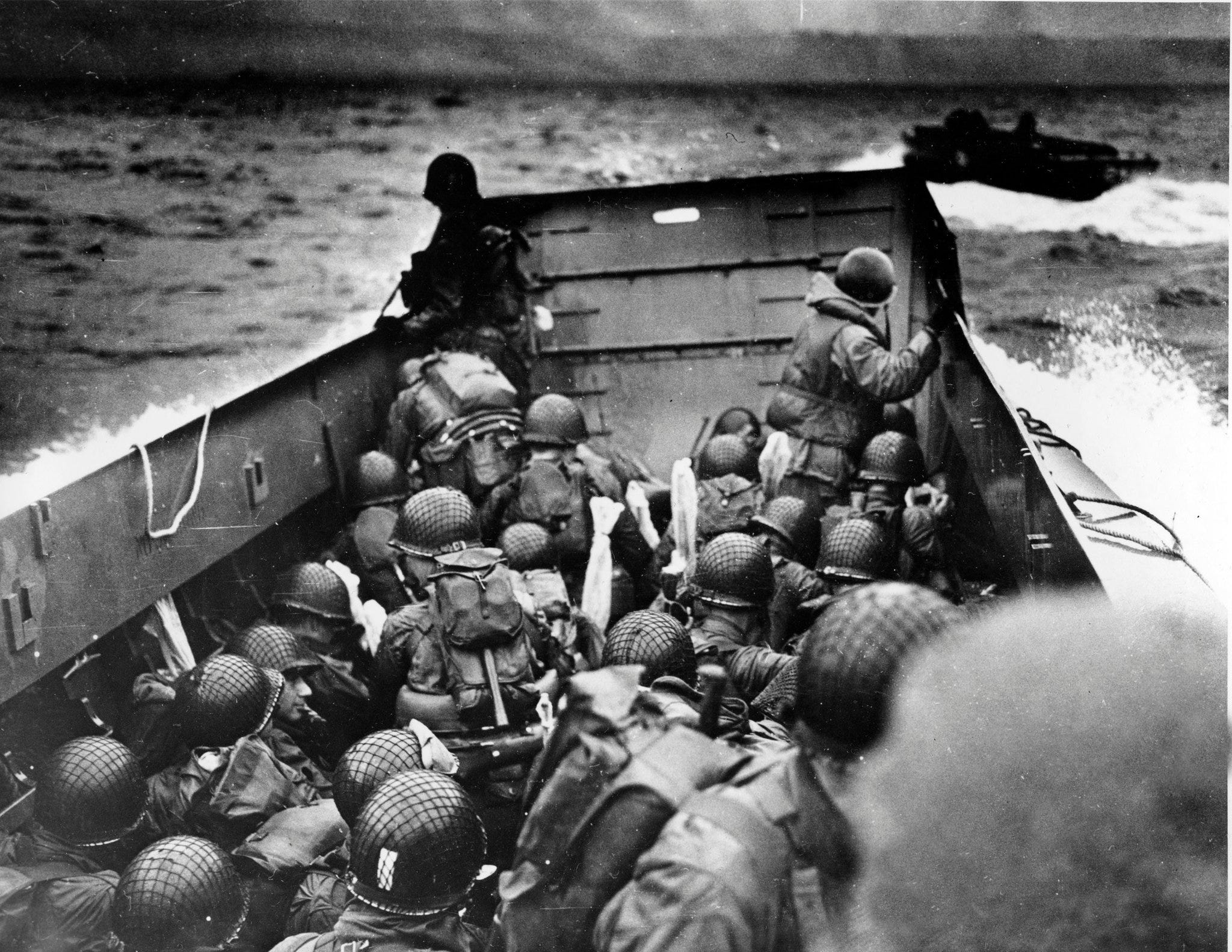
Today is the 82nd anniversary of D-Day — the Allied invasion of Normandy on June 6, 1944. It’s referred to as “D-Day” after the military term for a day when a secret combat attack or operation is planned.
It was the largest seaborne invasion in history. It began the Western Allied effort to liberate western Europe from Nazi Germany.
Over 2,500 American soldiers, sailors, and airmen were killed during the initial amphibious assaults and airborne operations. All told, there were 4,414 confirmed Allied deaths on the first day of the invasion, which also included troops from the United Kingdom and Canada.
At the time of the invasion, my father was 30 years old, in a tank battalion readying to go to Europe. My mother was 25, working in a factory producing gas masks for the war. Some of their friends participated in the invasion. A few were paratroopers. Others were pilots. Others were soldiers.
As a small boy, I remember trying to talk with my father and my mother about D-Day. I wanted stories. The little I’d heard about it made it seem romantic and exciting. But they were reluctant to talk about it. They answered my questions in short sentences. Their voices were hurried. It was as if I was trying to open a door they’d rather keep closed. They had lost friends, relatives. D-Day, and the war it helped end, had left deep scars.
Eventually they and their generation were called America’s “greatest generation” for their valor and sacrifice. They had fought fascism and won.
Now, 82 years later, we have homegrown fascism. An entire political party seems to have given up on democracy. They’re supporting an egomaniacal “strong man” who cares only about enlarging his own (and his family’s) wealth and power.
His regime is marked by a degree of corruption, cruelty, and criminality never before witnessed in America’s national government.
The firing of so many top brass by Trump and his “war” secretary, Pete Hegseth, can be seen as a way to guarantee the loyalty of other officers to Trump rather than to America. Trump’s proposal to increase the U.S. military budget by nearly 50 percent can be understood as a bribe to officers. He wants them to side with him, if and when he tries to stay in power indefinitely.
He has already tried to turn much of America into a police state.
Public support for him is waning, and the federal courts have fought back. But it is startling and saddening how far Trump and his regime have gotten.
What happened to the bravery and dedication of the greatest generation? What became of the sacrifices my parents and their peers made so that this nation could be free?
How and why did so many Americans succumb to neofascism?
I think it has to do with the anger so many Americans have felt that they and their children haven’t been able to get ahead, no matter how hard they work. Trump and other neofascists have channeled that anger toward immigrants, gay people, transgender people, Muslims, and Black people.
Democrats and progressives should be channeling that anger toward the real culprits — a wealthy elite that’s used their money to gain political power and rig the economy to their benefit and against everyone else.
Another reason so many have succumbed to Trumpian neofascism is the passage of time. Eighty-two years is long enough for a nation to forget, especially a nation whose collective memory is short to begin with. Very few living Americans remember the terror and heroism of our fight against Nazi fascism. The greatest generation has mostly died off.
But we must not forget. Fascism is being born again, in America and in Europe. This time it’s masquerading as white Christian nationalism, but it’s as dangerous as ever.
The best way to remember and honor the men and women who risked everything for us is to fight neofascism — fight for a stronger democracy, fight for the rule of law and social justice, fight against bigotry.
Today’s weather is so beautiful that Heather and I decided to have our coffee klatch outside on the Berkeley campus. Much to talk about — including the giant initial public stock offerings of the Artificial Intelligence behemoths Anthropic, OpenAI, and SpaceX, in coming weeks, expected to generate over a trillion dollars each. AI may create all sorts of fabulous things, but it’s also dangerous as hell, and the window is rapidly closing on what can be done to stop AI from eating our jobs and destroying the human race.
We also talk about Trump’s 10 days — the House voting to end his war in Iran (or get authorization to continue it), the courts ordering his name off the Kennedy Center and pausing his $1.8 billion Thug Fund, entertainers bailing out of his 250th anniversary megalomaniacal show on the mall, his endorsee losing Iowa’s governor’s race — and what it means for the future of his pathetic lame-duck presidency.
So please pull up a chair, grab a cuppa, and join the conversation.
I focused this morning on Chevron and the Big Oil monopoly — and the importance of antitrust enforcement. I’d like to give you a bit more background on what happened to antitrust in America.
Whether it’s Big Oil, Big Ag, Big Tech, Kroger and Albertsons dominating the grocery market, or Big AI (Anthropic, OpenAI, and SpaceX), corporate concentration is on the rise.
And its social costs are growing.
— The typical American household is paying more than $5,000 a year because corporations can raise their prices without fear that competitors will draw away consumers.
— Such corporate market power has also been a major force driving inflation.
— Huge corporations also suppress wages, because workers have fewer employers from whom to get better jobs — limiting the ability of workers to negotiate higher wages and benefits. According to the U.S. Congress Joint Economic Committee, this drop in labor market bargaining power costs U.S. workers more than $1 trillion annually.
— And corporate giants are also fueling massive flows of big money into politics (one of the major advantages of large size).
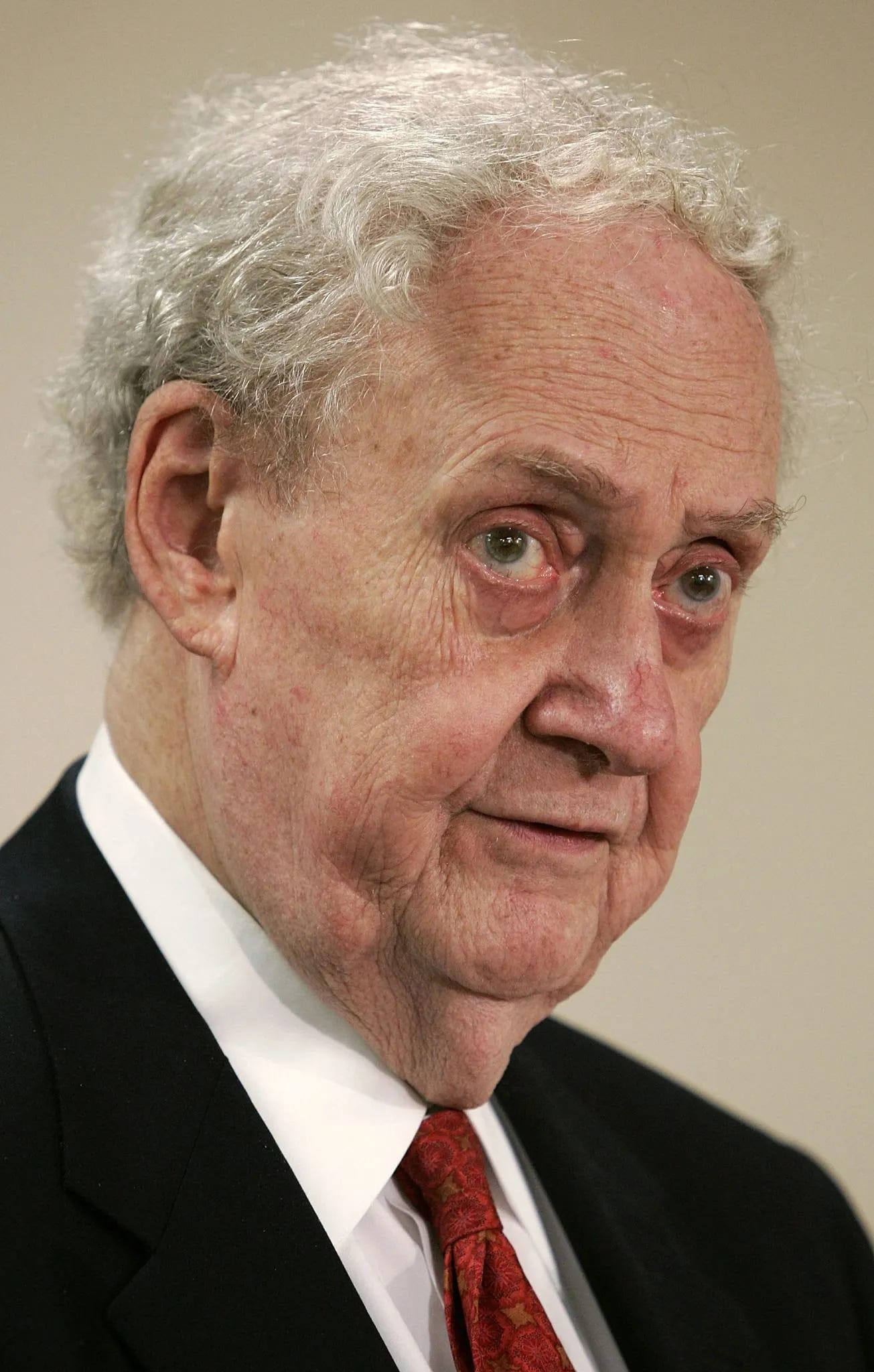
Yet the federal courts have been slow to do anything about this. And the monied interests — as exemplified on the editorial pages of TheWall Street Journal and The Washington Post — argue that antitrust shouldn’t be enforced. Why? Because of a man named Robert Bork.
I first met Bork in September 1971, when I took his class on antitrust at Yale Law School. I recall him as a large, imposing man with a red beard and a perpetual scowl.
He was only in his mid-40s then, but he seemed impatient and bored with us (also in that class were Hillary Rodham and Bill Clinton).
We kept challenging his view that the only legitimate purpose of antitrust law was to lower consumer prices.
“What about the political power of giant corporations?” we asked.
His retort: “How do you expect courts to measure political power?”
“But what about the power of big corporations to suppress wages?”
“Employees are always free to find better jobs.”
“What about their power to undercut potential rivals with lower prices?”
“Lower prices are good for consumers.”
“What about the sheer power that comes from their gigantic size?”
“Also good for consumers. Large size means lower costs through efficiencies of scale.”
Bork had an answer to each of our objections, but we were never satisfied. He spouted economic theory based on dubious “Chicago School” assumptions that all economic players have perfect information and face no cost of entering or leaving markets (Bork had attended the University of Chicago and its law school).
Even in our mid-20s, we knew this was bullshit.
Bork refused to recognize power — even though antitrust laws emerged from the Gilded Age of the late 19th century, when a central concern was the untrammeled power of giant corporations.
A few years later, Bork wrote a book called The Antitrust Paradox that summarized his ideas. The staff of a conservative California governor bound for the White House read it and passed it along to their boss, and Bork’s book formed a basic tenet of Reaganomics.
Federal judges read it, too. Most judges didn’t (and still don’t) know much economics and hated getting bogged down in interminable and almost incomprehensible antitrust trials that could last for years. They found Bork’s simplicity and cogency helpful in limiting such lawsuits.
BORK’S INFLUENCE over the courts represented the culmination of years of work by the monied interests to kill off antitrust. They’re still at it.
Which is why the new view of antitrust that was pioneered by the Biden administration — through Lina Khan’s FTC and the Antitrust Division of the Justice Department — was so important.
This new view regarded corporate concentration as a problem even if it provides economies of scale that might allow lower consumer prices in the short term. That’s because corporate concentration also means less innovation, more wage suppression, predatory behavior, price-push inflation, and increased political power.
The optimist in me thinks that as the public becomes more aware of the close connections between corporate power, predation, high prices, inflation, wage suppression, and political corruption, the new antitrust movement will eventually succeed.
This won’t happen in the Trump regime, of course, but it should be a central part of the progressive message for the midterms and in 2028.
I rarely share with you anything written about me. But I decided to share this article from the British Prospect because I think it does a decent job summarizing my work (including my recent book “Coming Up Short” and movie “The Last Class”) and because you’re unlikely to come across it on this side of the pond.
Robert Reich is short: 4ft 11in, to be exact. He has multiple epiphyseal dysplasia, also known as Fairbank’s disease, a rare genetic disorder affecting bone growth.
Throughout his career in government and academia, including stints as the United States’s secretary of labour under Bill Clinton and an economic adviser to Barack Obama, Reich has often made jokes about his height. In the late 1990s, he hosted a PBS talk show with the late Republican senator Alan Simpson called The Long and the Short of It (Simpson is 6ft 7in). And when Reich ran unsuccessfully in the 2002 Democratic primaries for governor of Massachusetts, he titled his concurrent book I’ll Be Short. The Boston Herald even ran the front-page headline “Short People are Furious with Reich” for joking about his height on the campaign trail.
From the title Coming Up Short, you might expect Reich’s new book to follow a similar pattern. But this, unlike his more straightforwardly polemical books, is a memoir—and in it, he reveals that his height has not always been a laughing matter. In particular, he details his experiences of severe, traumatic bullying as a child, with his size marking him out to nastier students as an easy target.
Reich recounts the survival tactics he would employ, including finding benevolent older students who could act as his protectors. One such student was Michael Schwerner, whose kindly presence made him feel safer at school. Recruited by civil rights leader John Lewis to volunteer in Mississippi, Schwerner later joined the civil rights movement, and he and his wife helped to register African-American voters during the state’s “Freedom Summer” in 1964.
Months later, aged 24, Schwerner was murdered by the Ku Klux Klan. His body remained undiscovered for 44 days. After hearing of Schwerner’s murder as he started university, something changed in Reich. He saw that there were much more powerful and dangerous bullies in the world than the ones he confronted in the playground. He began to see bullying not just as an interpersonal challenge he had faced, but as a structural condition of society. From politics and economics to gender relations and the law, bullies were everywhere. And, quite often, they won.
“By the time I was a young man,” Reich tells me from his study in Berkeley, California, “I understood that bullying really is a metaphor for all sorts of abuses of power. Men bullying women, or white supremacists bullying black people and brown people, or employers bullying employees.”
His own experiences, he says, solidified his “lifelong conviction that our moral responsibility is to protect the weak from the strong”. He remembers his father, a progressive Jewish Republican, yelling “son of a bitch” at political figures he saw as bullies—such as Senator Joseph McCarthy—when they appeared on his television set.
Meanwhile, Reich became inspired by the legacies of populist Democrats such as Franklin D Roosevelt, whom he saw as the antidote to the bullies of the world. This would set him on a mission into the reformist circles of law and government.
But first, he needed training. The young Reich travelled to New Hampshire to study at the Ivy League Dartmouth College, where he would go on a date with Hillary Rodham from the all-female Wellesley College.
Later, he would meet fellow Rhodes scholar Bill Clinton on a transatlantic ship on their way to the University of Oxford. The young Clinton offered the seasick Reich a comforting bowl of chicken soup. They would later agonise over whether to avoid being drafted to fight in Vietnam, which would have cut their overseas studies short. Reich narrowly missed out due to his height (one inch too short), while Clinton had to manufacture a more complex excuse, one which would later haunt him politically. They later attended Yale Law School together, where Reich introduced Clinton to Hillary Rodham, and the rest is political history.
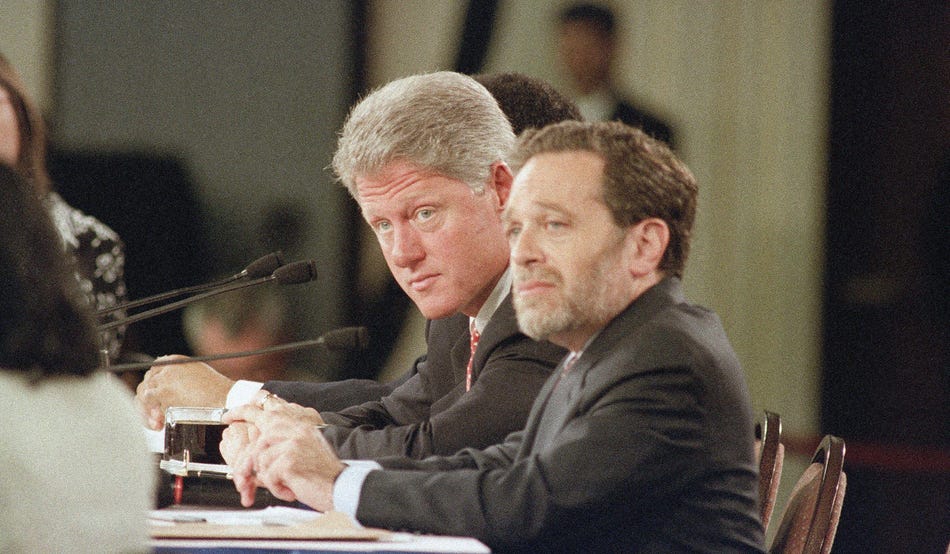
(Reich with Bill Clinton, 1993. Image: Associated Press / Alamy)
Another of their classmates, Clarence Thomas, now sits as a conservative justice on the Supreme Court. According to Reich, “Clarence’s hand was never in the air. I don’t recall him saying anything, ever.” Meanwhile, “Bill was never in class.”
From there, Reich bounced from government to academia and back again, becoming more progressive as his prominence grew. But with greater access to the halls of power came a creeping sense of alienation from a Washington machine that seemed to be increasingly oiled by large corporate donors and ever more amenable to their demands. He soon became a thorn in the side of such lobbyists.
The tension was encapsulated in the late 1990s by what was dubbed the “battle of the Bobs”, a long-running disagreement between Reich and Robert “Bob” Rubin, Clinton’s treasury secretary. It was far less acrimonious than the press made it out to be—“I liked Bob. We often had dinner together,” Reich writes—but the two officials nonetheless held “two fundamentally different views, not only about what [Clinton] should do but more generally about the role of government”.
Rubin had spent his career on Wall Street, including 26 years at Goldman Sachs. He commuted to Washington from New York by private jet. He emphasised deficit reduction and deregulation of the financial sector, which he held would boost the economy and eventually enable more social spending. Reich, conversely, advocated for rapid public investments in education, childcare and healthcare, and emphasised the need to arrest widening inequality.
Reich argued his side vigorously, often leveraging the fact he was the only cabinet member small enough to fit in the jump seat of Clinton’s limousine in order to lobby him in private. But Clinton generally sided with Rubin on most matters—“not because [he] had better arguments”, Reich writes, but because “Bill was intimidated by Wall Street”.
Reich was the only cabinet member small enough to fit in the jump seat of Clinton’s limousine, where he could lobby him in private
Reich eventually stepped down from Clinton’s cabinet to spend more time with his children, which allowed him to air his concerns more publicly. Yet when recounting his transition from Democratic establishment sage to vocal critic, Reich’s tone is almost brooding. In trying to confront the economic bullies, Reich believes his generation of Democrats “came up short”. This is where his polemical edge returns—his memoir does not retell his life, and through it the recent history of American liberalism, for the fun of it. Instead, it is a cautionary tale for the next generation, whom he believes have been let down by even their well-meaning forebears. Reich’s argument is that, since Ronald Reagan’s election, American liberalism has failed to check the forces of Wall Street—and has too often been seduced by them.
His career has been a lonely struggle to avert this outcome and push the Democratic party’s economic agenda to the left. When telling his story, Reich resists the obvious metaphor of David and Goliath—a small man up against big business. But his ultimate defeat seems to weigh heavily on him. Reich laments the missed opportunities and instances where he could have more effectively changed minds. The fourth section of his book, dedicated to his time in government, is titled simply “Failure”.
This failure, he argues, caused the Democratic party to lose its working-class supporters, many of whom became primed for the demagoguery of the Maga movement.
He puts the price of this failure in unceremonious terms, calling Trump a “neo-fascist” forging a “dictatorship”—“and I use the term dictatorship advisedly”, he tells me. Born to a Jewish-American family in 1946, Reich is filled with the sinking feeling that history is approaching a full-circle moment.
Though he now spends much of his time in rural California (earlier attempts to interview Reich had been thwarted by the intermittent wi-fi, a byproduct of frequent windstorms), Reich maintains a connection with Berkeley, where he taught for 17 years until his retirement in late 2023. His academic career lasted more than four decades, including teaching at Harvard and Brandeis. Surrounded by dusty books and an old globe, he looks and sounds almost professorial again.
But Reich conveys a good deal more feeling than the average public policy professor, which he expresses principally with his hands. In The LastClass, a documentary on his final semester teaching at Berkeley, he laments that too many students are “used to absorbing data to regurgitate on exams”. Instead, Reich tries to use data to tap into their emotions. When the subject is the divergence of the super-rich and everyone else over the last 40 years, who can blame him?
“Since Reagan, American liberalism has failed to check the forces of Wall Street—and has too often been seduced by them,” Reich says.
Now, Reich has turned his attention to raising the consciousness of the next generation—and not merely in the classroom. He starred in the 2017 Netflix documentary Saving Capitalism and even made a cameo on The Simpsons, explaining the decline of the American middle class. And, despite being a near octogenarian, he has become something of a TikTok star, with more than 1.4m followers. For these he has his son to thank—Sam Reich suggested shortform video would be a more effective means than books of communicating his ideas to a younger generation. “I believe, but have no way of proving, that I am the oldest person to fastdance on TikTok,” Reich confesses. The video in question, in which he dances to an audio sample titled “pretty young twerkalator” beneath text reading, “Is he a ‘radical lefty’ or does he just think billionaires should pay more in taxes than schoolteachers?”, has been viewed more than 2.2m times.
Much of his credibility among this younger audience derives from the sense that he was prophetic on the dangers of inequality—or, as he puts it in Coming Up Short, “unfortunately prescient”. The book even contains a memorandum to Clinton, dated 2nd October 1994, in which he wrote: “Profitable companies must share part of the burgeoning profits with their employees.” The memo received no response.
But was Reich really so consistently sceptical of the Washington Consensus as he now suggests? Last year in the American Prospect (no affiliation to these pages), a magazine that Reich helped create, his co-founder Paul Starr wrote, “[Reich] doesn’t say much in his memoir about the considerable change in his politics since he burst into national prominence.” Starr argues that Reich was perhaps more neoliberal in his mindset in the 1990s and more in favour of the North American Free Trade Agreement (Nafta) than it might seem from his book.
When I put this criticism to Reich, he counters that he was “always concerned” about the agreement, which enabled US industries to outsource manufacturing jobs from the Rust Belt to Mexico. But “I couldn’t publicise my concerns because I was secretary of labour in an administration that was supporting Nafta. It’s always a trade-off. When you’re in an administration that is doing something you don’t want, do you resign or do you think that you can do better by staying on, at least for a time? I chose the latter.” Starr argues that Reich advocated strongly for Nafta before he entered Clinton’s cabinet. Though, at that time, it was intended to be coupled with the Reemployment Rights Act to upskill affected workers—an idea which was eventually shelved.
Reich concedes to changing his mind on one thing, however: the causes of widening inequality. “For many years, I thought the major causes were globalisation coupled with technological change,” he tells me. But “I was missing a very big factor, and that was power that came from big money in our election system. [It] was changing the rules of the market in favour of people who were wealthy and against everybody else.”
Throughout our conversation, Reich returns to this core theme with the message discipline of other American progressives such as Bernie Sanders and Zohran Mamdani—the idea that everything, ultimately, comes back to the perversion of the political system by economic elites. Some might consider this reflexive or reductive. But others find it brave and consistent. Whether he had a Damascene conversion or was always ahead of the curve, my impression of Reich is one of almost painful sincerity.
Something his left-leaning supporters might find surprising is Reich’s lifelong friendship with certain conservative Republicans, including the late Alan Simpson. In the book, he calls his bond with Simpson an “illicit affair”, the odd couple slipping out to have lunch together without telling their staffers, who advised against them being seen together in Washington for fear of alienating their respective supporters. I posit that Reich would find it harder to forge such alliances across the aisle in Washington today, and he emphatically agrees: “I respected many [Republicans]. But… they no longer have any purpose other than rubberstamping what Trump wants. He has purged the Republican party of anybody who is not supportive of him personally.”
There is another critique of Reich’s narrative of failure: that he has been quite successful in steering the Democratic agenda in recent years as a commentator, perhaps even more so than he was as a government official. Might he be selling himself short? Are the next generation of progressive Democrats implicitly students of Reich?
“There are a few Democrats who are really stating what needs to be done,” he concedes. “But there are too many Democrats who still believe that what the Democratic party ought to do is move to the centre, like Rahm Emanuel [Obama’s former chief of staff], who really don’t demonstrate any idea of what the real stakes are these days.”
Perhaps his skillset is more as an educator than a bureaucrat or political writer. Reich has never believed he was a great success in government, and the book catalogues a series of minor administrative and public relations blunders. But in The Last Class, he was visibly emotional when giving up his true passion: teaching. I suspect he never really wanted to stop.
In the years before his retirement, Reich found many of his students wracked by pessimism. They were so concerned about the trajectory of economic inequality and growing authoritarianism that he identified, along with rapid climate change and environmental degradation, that some even called themselves members of the “last generation”. But Reich implored them not to let these feelings curdle into nihilism.
He recently gave the commencement address at Berkeley to more than 7,000 graduates. “I told them in no uncertain terms that we are relying on them,” he tells me. “In terms of this battle between democracy and authoritarianism, in terms of making the system fairer.”
“Pessimism is fine and it’s understandable,” he tells me. “But if it dips into cynicism and hopelessness, then I do worry because [those are] the last refuges for people who don’t feel that they have a responsibility, agency or the ability to change the system. And if it’s not going to be young people, I don’t know who it’s going to be.”
If nothing else, Reich’s inside account shows that, despite the areas where his generation failed, the course of history is not inevitable. People can still change the trajectory of politics. And if his students and admirers succeed, he’ll have played his part.
Trump and his Republicans say gas is hugely expensive in California because of state taxes and fees (mostly related to the environment).
Here’s the sign you’ll see at Chevron stations:
This is total rubbish. See my video, above.
Gas prices are higher in California because giant oil corporations like Chevron have more monopoly power in California than they have in other states, which gives them the power to charge higher prices and make a fatter return.
Chevron, by the way, is a direct descendant of the original Standard Oil Trust, which the Supreme Court decided in 1911 was an unlawful monopoly, and busted up. (Chevron used to be called Standard Oil of California, SoCal.) It’s regrown to become one of the largest corporations in the world.
Iran is more dangerous today than it was when went to war on it, and energy prices are far higher.
Trump’s brutal efforts to crackdown on undocumented people in the United States have generated a huge backlash, including among Latinos who voted for him in 2024 but are moving into the Democratic camp.
His attempt to cover up the Epstein files continues to rankle MAGA voters.
His $1.8 billion “slush” fund and family immunization from future IRS audits, in “settlement” of his $10 billion lawsuit against the IRS, has drawn widespread bipartisan scorn and hit judicial roadblocks.
I could go on, but you get the point. Trump’s failures are mounting.
Why?
I’ve worked for three presidents and advised a fourth. All of them solicited honest feedback, including criticism.
Trump solicits only praise. He relishes compliments. He needs everyone around him to pander to his egomaniacal need for admiration. He punishes the bearers of bad news.
He promotes people who kiss his assets, such as Bill Pulte, the home-building heir Trump put in charge of the Federal Housing Finance Agency and who Trump is now making acting director of national intelligence.
And Todd Blanche, the lawyer who represented him in his multiple lawsuits and who Trump now wants to become Attorney General.
Pulte, with no known experience in national security, got the job because he told Trump what Trump wanted to hear. He weaponized the housing agency and tried to dig up dirt on Trump enemies — specifically, the Fed’s Lisa Cook, Senator Adam Schiff, and New York Attorney General Letitia James.
As the person in charge of national intelligence, Pulte will continue to tell Trump whatever he wants to hear. Trump won’t get national intelligence; he’ll get national stupidity.
Trump has so many people “he could be listening to,” said a former Trump official, “and he listens to Pulte, who just continually f*cks things up.”
Blanche got the nod for Attorney General because he went even further than his predecessor, Pam Bondi, was willing to go in throwing integrity and principles odown the toilet in favor of going after Trump’s enemies. He secured a second felony indictment against the former FBI Director James Comey, alleging Comey threatened Trump ia a social media post that arranged seashells to spell “86 47.” Blanche also commenced a bonkers criminal investigation of Fed chief Jerome Powell, and tried to establish a $1.8 billion slush fund for Trump as well as immunity from I.R.S. audits as a fake “settlement” of Trump’s $10 billion lawsuit against the I.R.S.
So how does Trump make decisions if he doesn’t have people telling him the truth?
He relies, he has said, on his gut. “My gut tells me more sometimes than anybody else’s brain can ever tell me.” He toldTheWashington Post that he reaches decisions “with very little knowledge other than the knowledge I [already have], plus the words ‘common sense,’ because I have a lot of common sense.”
In other words, he doesn’t listen to anyone — especially not anyone who tells him anything he doesn’t want to hear.
Presto. He makes colossal mistakes.
Even normal people don’t like to get negative feedback. And most people don’t want to give it.
Yet receiving and giving truthful feedback are absolutely essential in a complex world.
If you have power over other people, it’s even more important to get negative feedback, because your mistakes could harm many others. Yet the more power you have, the less willing people are to give you negative feedback, since they have more reason to fear your reaction to it. Which means you have to go out of your way to solicit it.
The best leaders I’ve had the privilege of serving during my nearly 60 years of working life have been people who have actively sought and rewarded negative feedback.
Trump does just the opposite. Small wonder he’s one of the worst leaders the nation has ever endured.
No, he’s not over over. I wish he were. But something important has changed.
Yesterday, the U.S. House of Representatives voted to direct him to withdraw U.S. forces from Iran or win approval from Congress to continue the war. It was a remarkable rebuke. Four Republicans sided with Democrats.
His “short-term excursion” into Iran, which he promised in late February would last no more than “four to five weeks,” has now entered its fourth month, with no end in sight. His claim to have “destroyed” Iran’s missiles and drones is belied by Iran’s massive attack on Kuwait on Tuesday. Iran still controls the Strait of Hormuz. Its highly enriched uranium remains hidden. Even MAGAs have had enough of his forever war.
Meanwhile, Senate Republicans are rebelling. They’ve forced Trump to abandon the $1 billion request for his gilded ballroom, which was becoming ever more grotesque as Americans struggle to make ends meets.
His $1.8 billion Thug Fund is also dead, largely because a significant number of previously gutless Republicans (including — gasp! — Lindsey Graham) pushed back.
Trump’s name is coming off the Kennedy Center because a federal judge ordered it off and no Republicans came to his defense.
Even Trump’s endorsement is losing its magic. On Tuesday, Iowa voters rejected Trump’s choice for governor, Randy Feenstra, whom Trump called “MAGA all the way.” It was Trump’s first major endorsement loss.
And even with Stephen Colbert off the air, Trump has become a bigger late-night joke than ever. All the entertainers — even the B- and C-list also-rans desperate for exposure — dropped out of his 250th anniversary ego trip. So he’s going to be the headliner in a four-hour Fidel Castro speech. Good luck with that.
His Ultimate Fighting Championship event on the White House’s South Lawn has become a one-liner. To attend, military members have to pay their way to Washington and cannot have a waist size more than 55 percent of their height. (“No Fatties at UFC White House Event,” declared a Facebook page.) We’ll see how many show up.
As if all this weren’t enough, he’s nominated an unqualified sycophantic MAGA mortgage clown to be the director of national intelligence — an action so absurd that even Mitch McConnell had to object: “Anyone performing this role of such immense public trust must have the extensive national security experience required by statute, and no nominee who falls short of this requirement will earn my vote.” Get ready for a circus of a Senate confirmation fight.
No, Trump’s not done. He’ll continue to torment us with his cruelty, corruption, and criminality for some time, so we have to keep fighting.
But his power is disappearing. He’s become a lame duck whose quack no longer causes anyone to quake.
He has no one to blame but himself. His hubris finally reached its own breaking point.
Trump is trying to rig the midterms because he’s scared. And because Trump’s scared, he’s trying to scare Americans with an imaginary boogeyman: so-called “voter fraud.”
But Trump’s using this boogeyman to sabotage our elections. Here are three things I’m worried about — then I’ll tell you how we fight back.
#1 New voting restrictions
Trump is pushing for strict voter registration laws (the so-called “Save America Act”) that would require eligible voters to prove their citizenship. But a state ID or driver’s license won’t do. Voters would need to show either a current passport or a certified birth certificate from the state they were born in to register.
And even if you do have it, about 80% of married women and 30% of trans people have legal names that don’t match the name on their birth certificates — which makes it even harder to register.
Trump’s hypocrisy would be laughable if it weren’t so dangerous. Some 45 million votes were cast by mail in the 2024 general election (which he won, and doesn’t say was rigged, by the way). Restricting mail-in voting, along with instituting harsh voter ID laws, is blatant voter suppression.
#2 Voter intimidation
Trump insiders say he might deploy armed ICE or Border Patrol agents to polling sites.
Trump’s violent ICE agents have run rampant in our streets, abusing both noncitizens and citizens alike. The presence of armed agents of the state at polling places would almost certainly have a chilling effect on voter turnout — which is exactly what Trump wants.
#3 Denying election results
Trump’s latest big lie is that any Democratic victory is illegitimate.
What if Republicans lose the midterms but follow Trump’s 2020 example and try to hold onto power? A few years ago, this would have been unthinkable. But after what Trump tried doing in 2020, it’s frighteningly plausible.
The bottom line is Trump is deeply unpopular, which is why he is trying to suppress the vote.
But here is howwe can fight back.
1. Press your state and local leaders to protect our elections right now. Your state attorney general and local election officials still have authority over our voting system. Urge them to develop a plan to protect our elections. Call on them to sue the Trump administration if it tries to seize ballots. Tell your state legislature to ban armed federal agents from polling places, like New Mexico just did.
2. Second, VOTE — and help turn out the vote! We need to show up in such large numbers that no amount of voter suppression can change the result. Go to vote.org right now and check your registration. Then reach out to three friends and make sure they are registered to show up.
3. Lastly, SOUND THE ALARM. Share the video I’ve posted above, which I made with the talented team at Inequality Media Civic Action. Help spread the word that the boogeyman of voter fraud is just a cover for Trump’s election sabotage.
Trump’s strategy to sabotage the election depends on fear, confusion, and division.
We must respond by being brave, focused, and united.
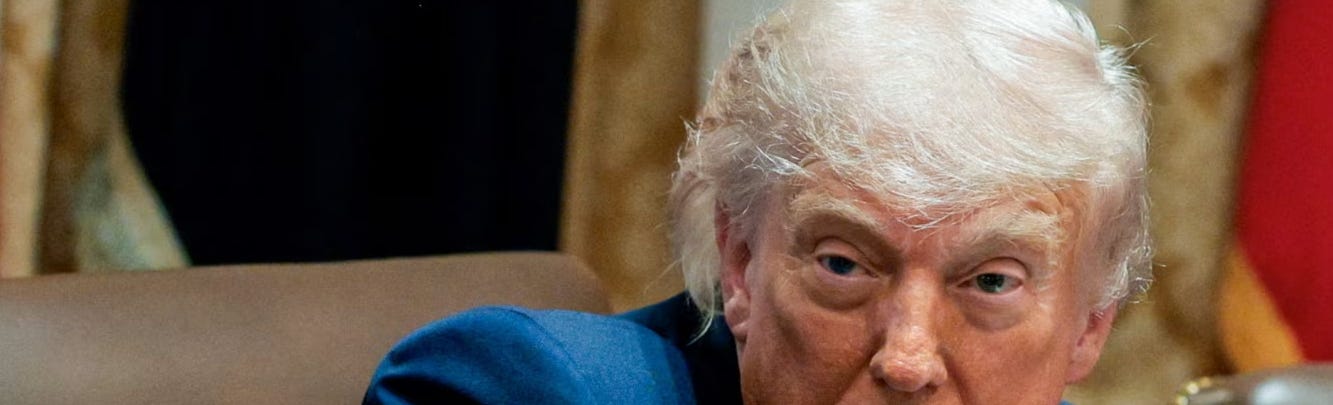
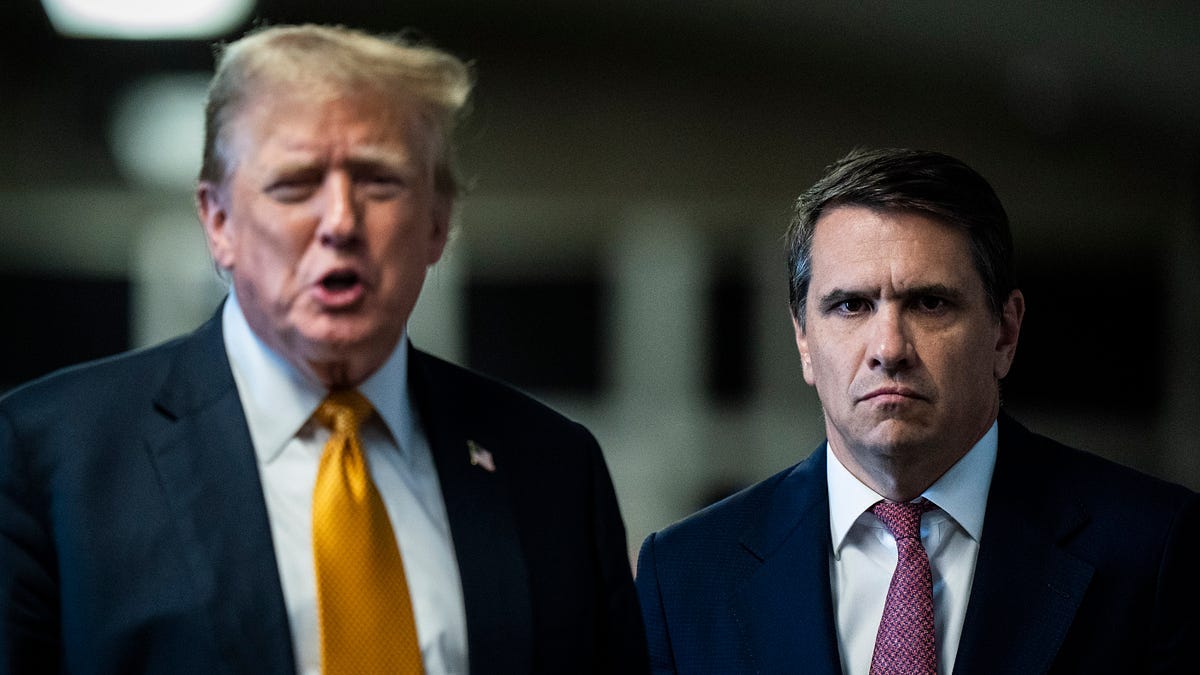
Trump and his lawyer, Todd Blanche (who also happens to be acting attorney general)
Friends,
The Senate is set to vote this afternoon on a motion to proceed to Trump’s budget package. This will allow senators to vote against Trump’s $1.8 billion payout slush fund, via amendments before final passage. Trump and his Justice Department have already dropped the slush fund, but that should be codified into law.
Congress must also vote against the part of the deal that releases Trump and members of his family from any pending or future prosecutions or investigations involving their tax returns. At a hearing yesterday, acting Attorney General Todd Blanche confirmed that this part of the settlement remains intact.
This protection for Trump and his family is unprecedented in its scope and form. It even extends to “affiliates” of the Trumps. It’s potentially worth tens of millions of dollars. One estimate puts it at $100 million.
If it’s interpreted to mean that the Trumps are protected from future IRS audits — and you can bet that Trump and his family will argue that in court, should they ever be audited again — all the self-dealing and the pay-to-play bribes that Trump and his family have collected will vanish.
Previous standard IRS procedure was to audit the president every year, rather than confer on him sweeping protection from scrutiny on tax returns.
Senate Republicans have protested the $1.8 billion fund but have looked the other way at the audit protection. “I haven’t been focused on that, to tell the truth,” said Maine’s Republican Senator Susan Collins. Well, it’s time that she and other Republicans did focus on it.
Only one Senate Republican — Thom Tillis of North Carolina, who’s not running for reelection — has been critical of the audit immunity. “How can you not at least have them be subject to the same thing that I’m subjected to, and every one of you?” he asked yesterday.
Blanche has tried to cast the audit protections as a “standard” and “typical” outcome of litigation against the IRS. “Like anytime the IRS settles with an individual taxpayer or another company, as part of the settlement, it’s standard, it’s typical to get rid of past ongoing audits,” he testified yesterday.
Bullsh*t. First, Trump’s lawsuit against his own IRS is hardly “typical.” No president has ever done this before.
Second, his lawsuit had nothing to do with an audit or tax issue. It focused on the leak of his tax returns by a former IRS contractor during Trump’s first term.
Third, this “settlement” provision — giving the Trumps protection against IRS scrutiny — directly violates a law barring the IRS from dropping audits at the direction of the president or his aides.
Fourth, Blanche, the acting attorney general, doesn’t even have authority to order the IRS — a separate agency that’s part of the Treasury Department — to stop civil tax audits.
Compounding all this is the fact that Blanche had been Trump’s personal defense attorney from April 2023 to March 2025, representing Trump in the New York hush-money case, the classified documents case, and the election interference case. His conflict of interest now is so blatant that he should have recused himself from participating in Trump’s IRS suit to begin with, along with its ersatz “settlement.”
Connecticut Representative Rosa DeLauro said at yesterday’s House hearing that the IRS order proved that Blanche was continuing to act as Trump’s personal lawyer. “Do you not find there’s any conflict of interest in what you are doing here as the acting attorney general of the United States?” she asked. Blanche said there was none.
The vote is coming up in a few hours. Please call your senators and representatives now and tell them you want them to reject Trump’s entire “settlement” — including both the $1.8 billion fund and the IRS immunity.
Reminder: The congressional switchboard is (202) 224-3121. An operator will answer and connect you directly to the office of any senator or representative in Congress.
Someone I didn’t know approached me early this morning on my way to breakfast. He looked about 60 years old, with dark hair graying at the temples. He was dressed in a tie and jacket.
He asked me if I was Robert Reich. I admitted to it.
“Well, I just want to say …” he began, but nothing more came out of his mouth. “I just want to say …” he started again. Then silence.
“I’m sorry,” I said with as friendly a smile as I could muster at that hour of the morning, “but I’m meeting someone for breakfast.”
His eyes welled up.
“Oh, I didn’t mean to be rude!” I said, suddenly feeling dreadful. “I apologize. I just …”
“No, no, no,” he said, shaking his head and wiping his eyes. “It’s just that I’ve been feeling, well, so lonely in all this …”
“I understand,” I said.
“You see, I-I’m from the Central Valley,” he continued. “My wife and my brother are Trumpers, and a lot of my neighbors. You have no idea ….” His eyes welled up again.
“I really do get it. I hear it all the time.”
“They tell me stuff that’s just … well, not true.”
“It’s like they’re in a different world,” I said.
“Yes! Exactly!” he became more animated. “I mean, sometimes I don’t know if they’re crazy or I’m crazy.”
“Well, I don’t know you, so I can’t say for certain,” I said with a smile, “but I very much doubt you’re the crazy one.”
“So when I saw you … well,” his voice grew quieter. “You make sense.”
“I try to,” I said, starting to feel embarrassed. I glanced at my watch. “Look, I really …”
“Oh, I don’t want to hold you up!” he said. “It’s just that ….”
“Look, there are millions of people like you,” I said. “Some live in MAGA parts of the country. They often feel lonely, and sometimes they wonder if they’re crazy. But let me assure you .…”
“No need!” he said, shaking his head. “You go on to your breakfast! I’ve taken enough of your time.”
“I just want to tell you most Americans now feel exactly as you do. Even if they didn’t a year and a half ago, they do now. They’re now seeing the results of this despicable regime.”
“Thank you,” he said.
“Good luck!” We shook hands. He turned away, walking quickly in the other direction. I ran to breakfast.
I’ve had a lot of brief discussions like this with people who feel isolated and sometimes unsure of themselves.
In my experience, the vast majority of Americans are decent people. But like the man I briefly spoke with this morning, they can sometimes feel alone and confused.
Our job — yours and mine — is to reassure them that they’re not alone and they’re not crazy, that America has been taken over by a man and a regime that are spewing blatant lies, and those lies are being amplified on social media and occasionally on mainstream media.
Too many people don’t understand this. They feel as if they’re the only ones feeling disconnected and powerless. But they’re not powerless. In fact, if each of them votes in November, their votes will force a great change in America. Even greater in 2028.
I think it also important to reassure each other that these terrible times will end. More Americans are seeing through the lies as well as the cruelty and corruption. They’re deciding they want this daymare to end, peacefully, and are committed to rebuilding and rectifying the nation.
Famed “60 Minutes” correspondent Scott Pelley was fired tonight. “We have parted ways with Scott Pelley,” Nick Bilton, the tech journalist who CBS News’s editor-in-chief Bari Weiss hired last week as the show’s new executive producer, wrote in a memo to the staff this evening.
What had Pelley done to get the axe? At a staff meeting yesterday, he accused Weiss of “murdering” “60 Minutes,” according to an audio recording and a source who was in the room. Others at the meeting applauded him. (Earlier today I gave Pelley this week’s Joseph N. Welch Award for truth-telling in the face of tyranny.)
It was all part of Weiss’s shakeup of the revered broadcast.
Why, you may wonder, is Weiss so eager to shake up “60 Minutes”?
I mean, it’s the most successful television news broadcast in U.S. history. It has remained the #1 news program for 50 straight years and consistently ranks among the top 10 of all Nielsen-rated television programs.
And it pulls in a fortune for CBS. “60 Minutes” is one of the most profitable programs in all of television, generating tens of millions in annual profit for CBS. In one recent year, its advertising revenues were $67.5 million. The network wholly owns the franchise, which makes it a gold mine. It’s the most lucrative and prestigious journalism operation on the network.
I could understand Weiss wanting to shake up, say, CBS’s Sunday morning news program. But why in hell would Weiss want to shake up CBS’s golden goose?
One hint: Besides firing Pelley for insubordination and chucking the show’s former executive producer, Weiss has also cut ties with “60 Minutes” producers Sharyn Alfonsi and Cecilia Vega.
In December, Alfonsi challenged Weiss’s decision to hold a “60 Minutes” segment on an El Salvador maximum-security prison where the Trump administration sent hundreds of Venezuelan migrants, including alleged gang members. Weiss had raised concerns about the comment-seeking process and determined that it needed additional reporting. Alfonsi termed the decision a political move. (The segment, called “Inside CECOT,” eventually ran in January, with some additional material bookending the piece.)
Alfonsi calls the network’s decision now to allow her contract to expire “a deliberate choice to penalize a journalist for refusing to sanitize factually accurate reporting” that “sends a chilling message to the entire newsroom.”
Vega is no less blunt. “In recent months, my producing teams and I have experienced efforts to insert political bias into our stories,” she said in a statement. “Reporting teams have held back on submitting story pitches about important news topics out of fear of the internal repercussions…. Let’s call this what it is: censorship, both imposed and self-driven.”
Of course it’s censorship, because CBS is now owned and controlled by Trump pals Larry and David Ellison, who kissed Trump’s assets to get Trump’s FCC chair Brendan Carr to approve their acquisition of CBS from Paramount.
Trump’s “fingerprints and DNA are all over this,” veteran “60 Minutes” correspondent Steve Croft says. “He’s been making threats against ‘60 Minutes’ and how he wanted it gone. And he finally got his wish.”
Trump has fixated on “60 Minutes,” calling the show “a dishonest Political Operative disguised as News.”
Trump sued CBS News over an interview of then presidential candidate Kamala Harris that Trump claimed had been edited in such a way as to hurt his presidential campaign. After “60 Minutes” aired a story about Ukraine and another about Greenland, Trump said CBS “should lose their license.”
This much is clear. CBS is being “murdered,” as Pelley calls what’s happening, not because of economics but because of politics. Economically, “60 Minutes” is a gold mine. Politically, Trump thinks it’s dangerous as hell because it tells the truth about him and his regime, and wants it killed.
Bari Weiss knows this. Larry and David Ellison know it. Nick Bilton knows it. Everyone who’s been fired from “60 Minutes” knows this. Trump’s lapdog at the FCC, Brendan Carr, knows this.
You need to know this.
“60 Minutes” — the most successful television news broadcast in U.S. history — is being dismantled because Trump doesn’t want America to know the truth.
It’s the same reason CBS canned Stephen Colbert — because Trump hated Colbert’s truth-telling jokes about him.
It’s important to see all this as a systematic effort by Trump to silence the truth about what he’s doing to America.
Trump’s increasingly corruption — rife with crony capitalism, corporate welfare, and payoffs to the powerful — is producing an increasingly corrupt economy in which everything depends on bribes and personal deals made by the biggest Republican loyalists and grifters, oligarchs and plutocrats, billionaires and multibillionaires, and monopolists.
When political and economic deal-making become personal transactions — when greed and payoffs replace trust — what happens? Authoritarianism replaces democracy. And an economy collapses, as it did at the end of America’s first Gilded Age, in the Great Crash of 1929, leading to the Great Depression.
One day we will look back on the murder of “60 Minutes” as one of the travesties of Trump’s despicable reign.
In the meantime, thank you Scott Pelley for telling the truth. Thank you, former “60 Minutes” producers, correspondents, and staff, for telling the truth.
And now, what do we do in the interest of the truth? We boycott CBS.
Anthropic — the artificial intelligence company behind the chatbot Claude —confidentially filed yesterday for an Initial Public Offering of its shares of stock. Soon, SpaceX and OpenAI will be doing the same. These three I.P.O.s could mark a once-in-a-generation creation of giant AI firms — valued at more than a trillion dollars each— and huge money for a relative handful of people (including the world’s first trillionaire, Elon Musk).
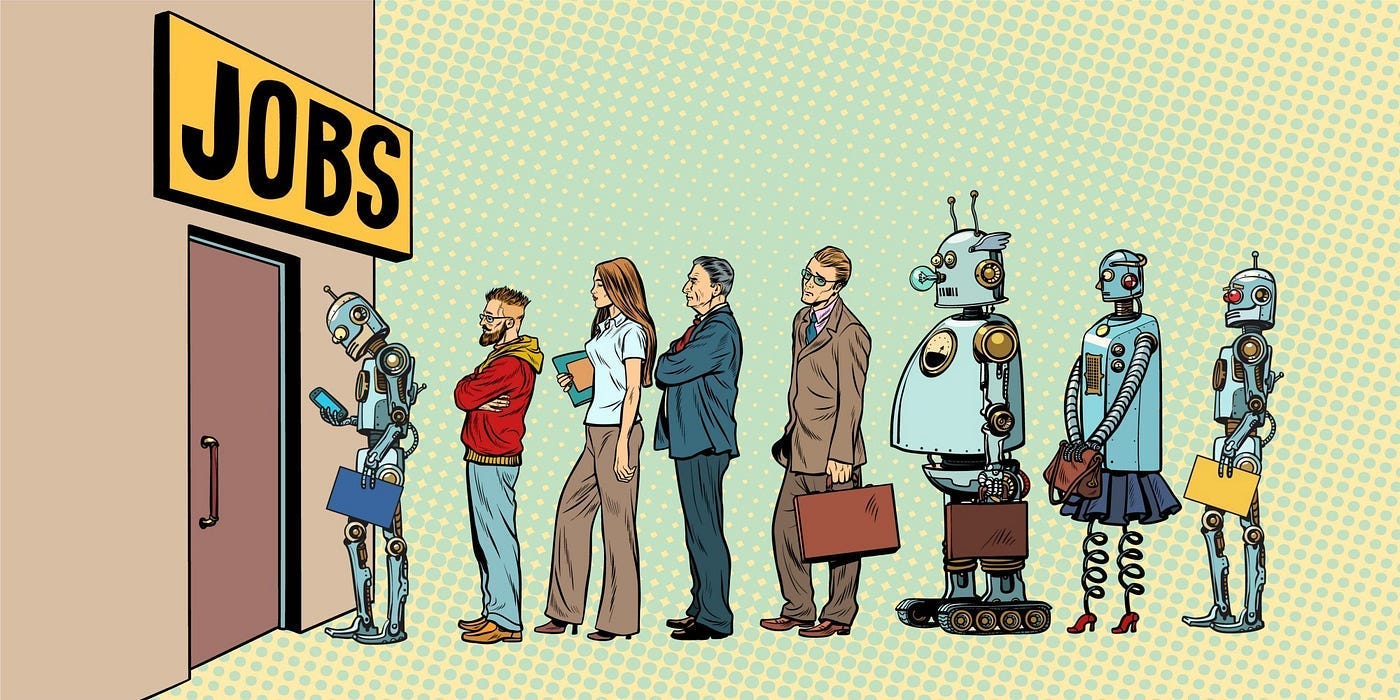
But this giant AI wave is also likely to spell the end of a large number of jobs. True, AI will also create some new jobs. But the AI tsunami is coming so quickly that, unlike in previous technological waves, most workers won’t have much chance to adapt.
Not only will AI destroy jobs, but it will further reduce the bargaining leverage workers now have — which means that to stay employed (or land a job) they’ll have to settle for lower wages.
Put this together with (as I pointed out Sunday) languishing returns to labor and soaring returns to capital even before the AI tsunami hits, and AI is sure to shift the balance of economic power further from labor to capital — making wages an even less reliable mechanism for distributing prosperity. We’re heading for a major shakeup of our entire political economic system — and it’s coming soon.
So what should be done?
Herewith, four ideas that are being actively discussed — in schools of public policy, in legislative cloakrooms, and among the billionaire class. I’m going to set each of them out as clearly as I can, along with their downsides, and ask you to weigh in.
What does Trump do when facing a humiliating defeat? He closes everything down. If that doesn’t work, he dumps it entirely and criticizes the hell out of whoever’s then in charge. Call it the Trump dump.
He did this in the 2020 election — refusing to accept defeat and then trying to close it all down by instigating an attack on the U.S. Capitol. When that didn’t work, he spent the next four years blaming Biden for everything.
When performers scheduled to appear at the Kennedy Center canceled in protest of Trump’s taking over the center and putting his name on it, Trump closed the center, with the lame excuse that he was “renovating” it.
Then, Friday, after a federal court ordered him to reopen the center and remove his name, he announced, “I have no interest in continuing what could only be a hopeless journey into ‘NEVER NEVER LAND,” followed by: “The Kennedy Center will soon be closed, probably never to open again” and “the Kennedy Center will collapse, both structurally and financially.”
A similar Trump dump occurred over the weekend after artists pulled out of his 250th anniversary concert series on the mall when they discovered that the series was a promotional vehicle for Trump. In response, he said he was canceling the series and replacing it with a Trump rally.
Trump is pulling a nearly identical — and far more serious — Tump dump in Iran. In mid-April, rather than accept Iran’s humiliating blockage of the Strait of Hormuz, he pretended he was in charge and that he’d close the strait. So he ordered a naval blockade, which did nothing but maintain the status quo.
Last Friday, when Iran signaled it might be willing to reopen the strait on its own terms (by charging tolls), Trump once again acted as if he were in charge, announcing that he’d be making a “final determination” on a potential deal that “must see the strait reopened, and then Iran must work with the U.S. to have its highly enriched uranium DESTROYED.”
Now that Iran is reportedly breaking off talks with the Trump administration and seeking “complete closure” of the Strait of Hormuz because of Israel’s attacks on Lebanon, we can expect an even larger Trump dump.
What might this one look like? One likelihood: Trump takes credit for brokering a shaky peace deal between Iran and Israel over Lebanon’s Hezbollah, while blaming critics inside the U.S. for imperiling his peace talks with Iran. He announces he’s ending the ceasefire — which ended over the weekend anyway, with the U.S. military striking Iranian radar and drone sites near the Strait of Hormuz — and that “he’s finished with negotiations!” He then claims he’s done. He’s destroyed Iran’s military and killed off its old regime and warns that if Iran doesn’t open the strait and give up its nuclear program, he’ll resume bombing. It’s up to them.
In effect, he leaves the problem of reopening the strait to other countries more dependent on oil shipped through it, such as China, and the problem of taming Iran’s nuclear ambitions to Israel. It’s the final Trump dump.
In light of my post yesterday about Trump’s plans for a Trump rally on the mall to celebrate the start of America’s 250th birthday festivities — designed, in his words, for “patriots” and promising to be “wild” — several of you wanted to know more about how it’s being planned and paid for.
This year’s 250th anniversary events, commemorating America’s founders’ refusal to be bound by a tyrant, were supposed to be planned by a nonpartisan, nonprofit group created by Congress in 2016 via a bipartisan congressional caucus of more than 350 members.
That nonpartisan, nonprofit group is called “America250.”
“America250” still exists, at least in theory. It lists as Honorary National Co-Chairs George W. Bush, Barack Obama, Laura Bush, and Michelle Obama. Its ex-officio members include present and former government officials drawn from both parties. You can read more about it at the “Official website of the U.S. Semiquincentennial Commission,” here.
But “America250” is not planning this year’s 250th anniversary events on the mall or anywhere else in official Washington. Trump and his MAGA allies circumvented Congress and created their own planning committee, confusingly named“Freedom 250.”
Trump’s “Freedom 250” describes itself in much the same way “America250” does — as a “non-partisan organization leading the celebration of our Nation’s 250th birthday.” See here.
But unlike “America250,” Trump’s “Freedom 250” is bankrolling events promoting Trump and his political agenda (which is why most of the performing artists who originally agreed to participate dropped out last week when they learned of the ruse).
The “Freedom 250 toolkit” lists as its “core theme” elevating “President Trump’s Freedom 250 vision” — boosting Trump’s supposed achievements and not his many failures (such as two impeachments, criminal conviction on 34 felony charges, attempted coup against the United States, incitement of an attack on the U.S. Capitol, disastrous war in Iran, etc.) — analogous to Trump’s executive order requiring that the Smithsonian remove details about his impeachments from museum exhibits.
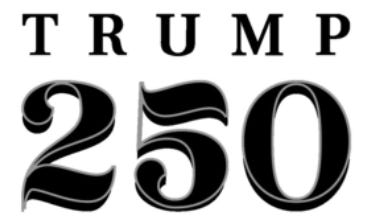
Not surprisingly, Trump’s “Freedom 250” is also designed to make money for Trump. Trump’s personal business is now trademarking the term “Trump 250,” along with a logo nearly identical to America250’s logo.
The Trump Organization has filed several trademark applications in connection with America’s 250th anniversary celebration, all featuring the Trump name as a centerpiece of the highly anticipated festivities. In one filing, a “Trump 250” image was trademarked to be used on a variety of merchandise including bumper stickers, tote bags, drinkware, clothing items, and golf balls. A wordmark application was also submitted for the name “Trump 250” on Friday.
Like the White House ballroom project, Trump’s “Freedom 250” is also a pay-to-play scheme. People and companies with financial interests likely affected by Trump are encouraged to make tax-deductible donations to gain access to, and seek favors from, him.
Corporations pay between $500,000 and $10 million to become Freedom 250 “sponsors.” A corporation giving $1 million or more will be invited to a “private Freedom 250 thank you reception” hosted by Trump. For $2.5 million or more, sponsors will even get a speaking role at the Fourth of July celebration in Washington. (Major donors so far include Lockheed Martin, ExxonMobil, Oracle, Palantir, Mastercard, and United Airlines.)
Who else is paying for Trump’s “Freedom 250” festivities? You and I, at least in part.
Tucked away inside last year’s sprawling 870-page “One Big Beautiful Act” was an allocation of $150 million for “events, celebrations, and activities surrounding the observance and commemoration of the 250th anniversary of the founding of the United States.”
Most of those funds are going to Trump’s “Freedom 250” rather than to the nonpartisan “America250.” Why? When Congress appropriated the $150 million, only America250 was planning celebrations for the 250th. But now that Trump’s Freedom 250 is up and running, Trump’s Interior Department has doled out $100 million to it ($25 million has gone to the nonpartisan America250).
Oh, and unlike other groups created by Congress, Trump’s Freedom 250 doesn’t have to disclose anything about its spending until 2027.
So the answer to your questions about how America’s 250th is being planned and paid for — and why it’s becoming a propaganda vehicle celebrating Trump — is that Trump has pushed aside the nonpartisan group Congress set up in 2016 to plan it and substituted his own Trump-loyalist group, to which Trump’s Interior Department is siphoning off most of the taxpayer funds.
This is exactly what Trump did to the Kennedy Center, the Smithsonian Institution, the National Capital Planning Commission, and every other semi-public body Congress established for the common good.
This is the way authoritarianism substitutes for democracy — slowly and incrementally, until the whole system suddenly tips over.
But this particular example is especially ironic because “America250” was supposed to celebrate our fight for democracy against arbitrary tyranny. Trump’s “Freedom 250” is doing exactly the opposite.
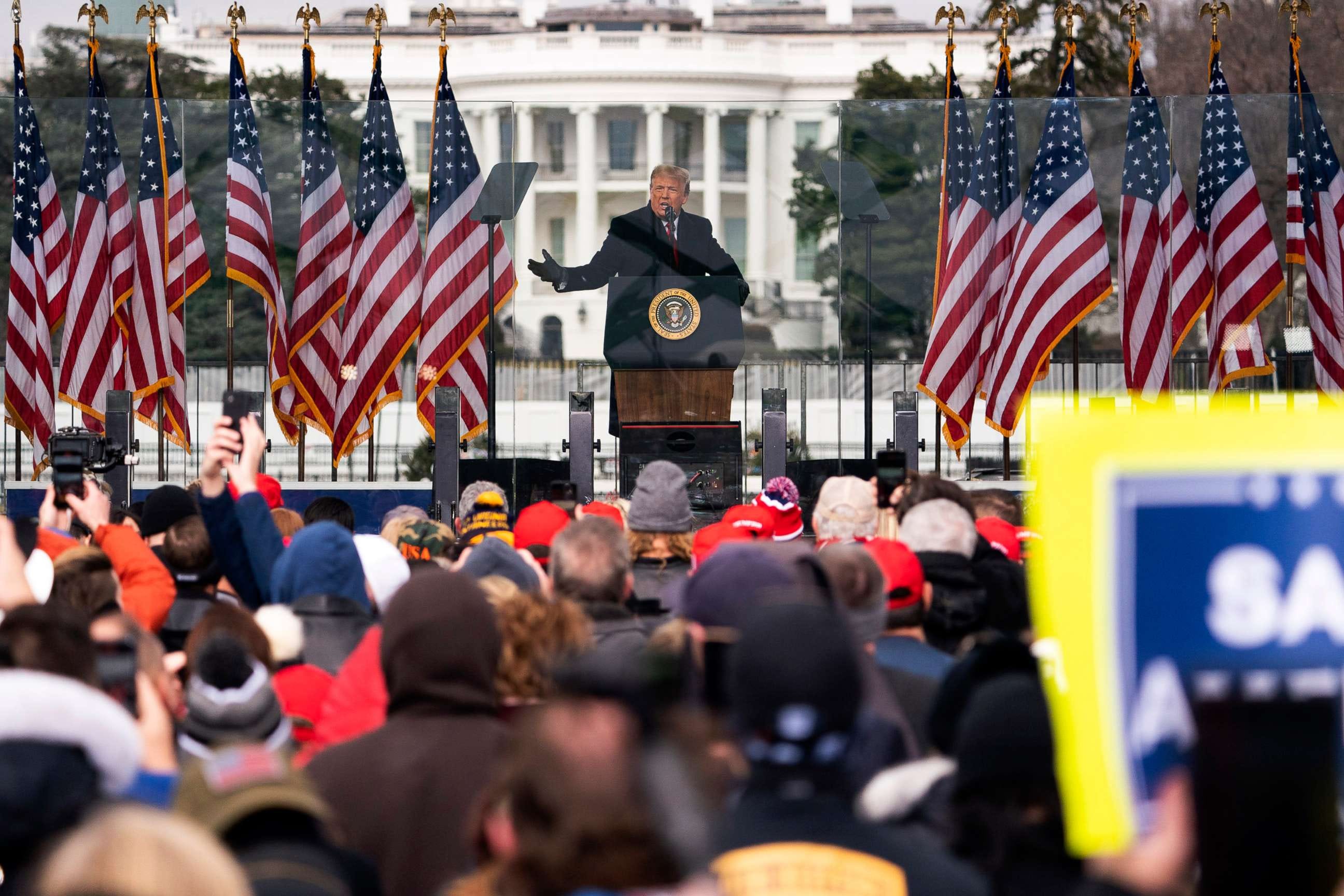
Trump’s last big rally on the mall, January 6, 2021
Friends,
Trump often confuses himself with America, and America with himself.
Not surprisingly, his plan for celebrating the nation’s 250th anniversary is looking more and more like a celebration of Trump.
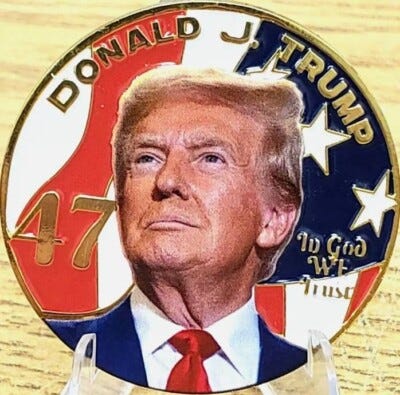
Trump’s face will be engraved on a $250 bill. It will be etched onto both sides of a celebratory gold coin. It’s already on passports issued this year. His signature is on dollar bills. He’s emblazoning his name on every edifice possible. If you still fail to get the point, his visage will soon be draped over federal buildings.
There’s also a 250th anniversary summer concert series on the National Mall. It was to have started June 25 with country music star Martina McBride. But McBride announced Thursday she wouldn’t perform, because, as she explained, although she had been “assured this was a nonpartisan event,” that assurance “turned out to be misleading.”
So far, seven of the nine featured musical acts have backed out of the concert series after discovering it would be more a celebration of Trump than of America.
So, what does Trump do? Yesterday, he posted:
“I understand Artists are getting ‘the yips’ having to do with their performance … so I am thinking about bringing the Number One Attraction anywhere in the World, the man who gets much larger audiences than Elvis in his prime, and he does so without a guitar, the man who loves our Country more than anyone else, and the man who some say is the Greatest President in History (THE GOAT!), DONALD J TRUMP, to take the place of these highly paid, Third Rate ‘Artists,’ and give a major speech, rallying the Country forward like I have done ever since being President!”
It’s difficult to read this without laughing, but it’s no joke. His malignant narcissism is ramping up even higher than its usual galactic level.
Trump followed this post by revealing his real intention all along:
I am ordering my Representatives to look at the feasibility of doing an AMERICA IS BACK Rally on Wednesday, Washington, DC, same time, same location. Only Great Patriots invited — It will be a Wild and Beautiful Celebration of America!”
Only “Great Patriots” invited? It will be “wild?”
Anybody recall the last rally Trump held on the mall, to which he invited patriots and promised it would be “wild?”
I doubt he’ll instigate another attack on the U.S. Capitol this time. More likely, he’ll renew his attacks on immigrants, Somali-Americans, Muslims, Democrats, trans people, “coastal elites,” RINOs, judges who have ruled against him, and anyone “woke” (including the artists who refused to participate in his glorification).
In other words, Trump will star in his own hate rally on the National Mall, to celebrate America’s Trump’s 250th anniversary.
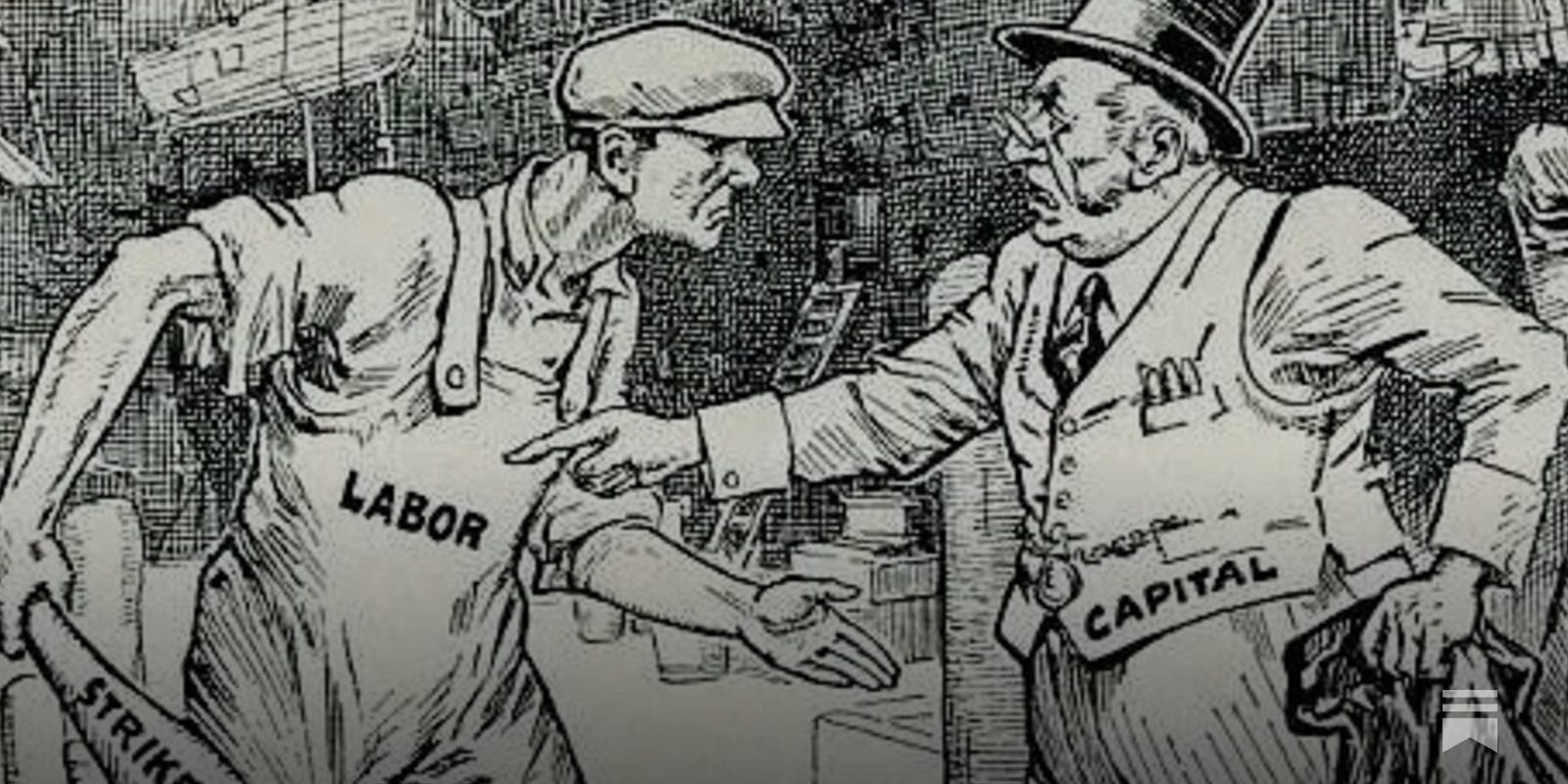
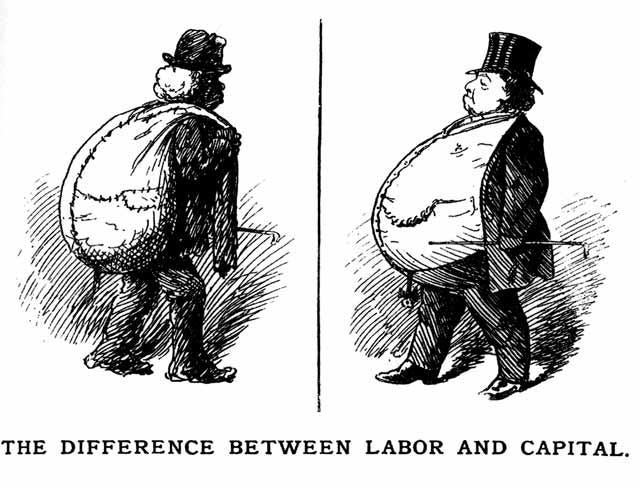
It’s impossible to understand American politics without also understanding the American economy (and vice versa). Politics and economics may be different disciplines, but they’re two sides of the same coin.
This came home to me again when I saw Thursday’s report on the U.S. gross domestic product.
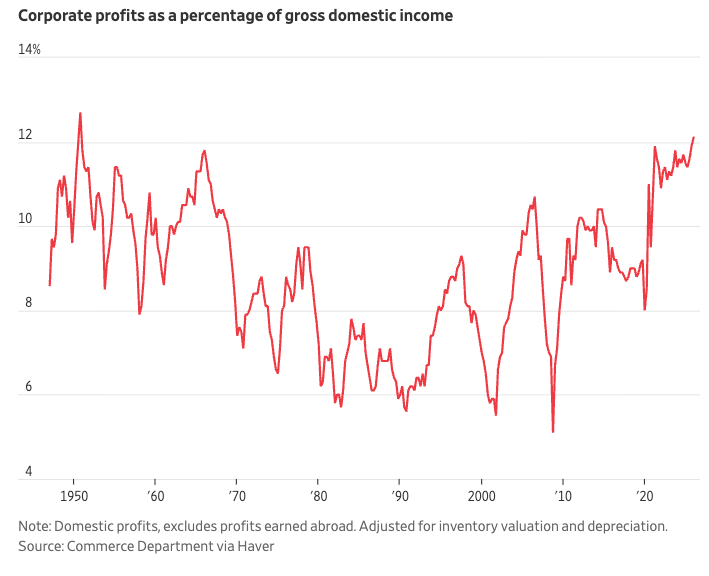
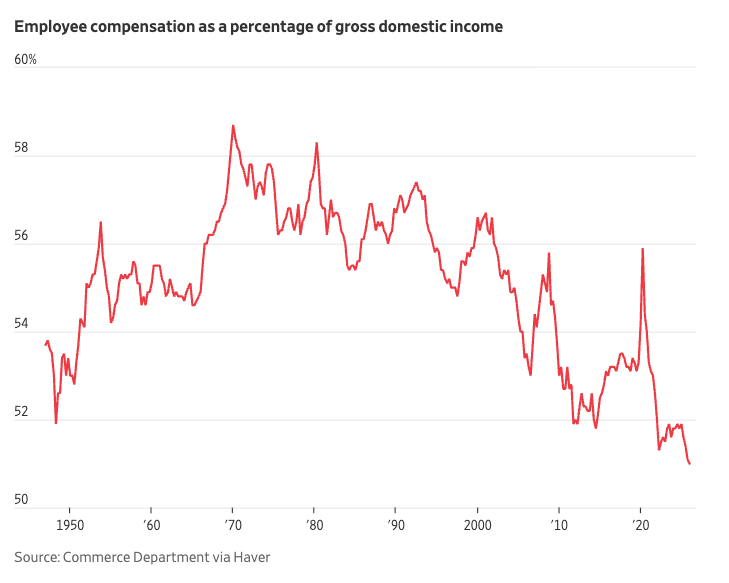
Numbers can be pretty boring, but bear with me. Worker compensation — wages and benefits — grew 0.8 percent from the fourth quarter of 2025 to the first quarter of 2026. Corporate profits grew 2.7 percent.
When you adjust for inflation, hourly wages have risen 3 percent since the end of 2019. Corporate profits have risen 50 percent.
Workers’ share of the nation’s income has now dropped to the lowest it’s been since records began in 1947. Profits’ share is the highest since 1950.
Most people who depend on wages for a living are struggling, while a small minority at the top who own most shares of stock and private equity — that is, people who rely on capital gains — have never had it as good.
The trend toward lower wages and higher profits began in the 1980s, increased in the 2000s, picked up speed after the pandemic, and is about to explode as Artificial Intelligence takes over.
In coming months, three companies centered on AI will go public — SpaceX, OpenAI, and Anthropic — with expected valuations of around $1 trillion each (reflecting the gargantuan profits investors expect). But what about workers?
This is not just morally wrong. “Income from capital risks replacing income from labor,” Pope Leo wrote in Magnifica Humanitas, his encyclical letter devoted to the effects of AI, released this week.
It also threatens the future stability of our economic and political system.
What accounts for the increasing shift of the American economy from wages to profits, even before AI?
One big reason is monopolization. The economy has become concentrated in a few giant corporations with the power both to raise prices and keep wages down.
Sure, there are still lots of small businesses and mom-and-pop operations. But the gravitational center of the U.S. economy is now Amazon, Alphabet (Google), Apple, Microsoft, Nvidia, Meta, Walmart, Costco, Home Depot, Kroger, United Health, Cigna, CVS, AT&T, Verizon, ExxonMobil, Chevron, JPMorgan Chase, Bank of America, Citigroup, Vanguard, Fidelity, Blackstone, Apollo, and KKR.
These giants control large swathes of the economy. They also exert significant political power. They’re like black holes in space, sucking in vast sums of money.
Their political power makes it impossible to know whether government policy is based on the public interest or private gain.
Consider Trump’s war in Iran and its resulting surge in energy prices. The energy-price rise has caused after-tax disposable income to drop and the profits of energy companies to soar. Did Trump decide to go to war because he thought it necessary, or because Big Oil nudged him into it?
Workers, meanwhile, no longer have any countervailing power. In the 1950s, over a third of workers in the private sector were unionized. That gave them enough bargaining power to claim a significant share of the total economy. Now, only 6 percent of workers are unionized. Their bargaining power has been further eroded by their easy replacement by lower-wage workers in Asia and by software. AI will further erode it.
This trend is not sustainable. It feeds growing anger at the system, which demagogues like Trump exploit for their own ends.
What should be done? Let me list five steps (I’ll go into each in greater detail in coming months).
1. For one thing, we’re going to need a new era of antitrust. Giant corporations will have to be busted up.
2. We’ll also need to tax those at the top, especially on the value of their ownership of capital. (California voters will likely be asked to vote on a billionaire tax in November.)
3. We’ll need to regulate AI and simultaneously provide a universal basic income to cushion those who lose their jobs because of it.
4. Universal health care will be a necessity (perhaps via Medicare for all) along with subsidized childcare and eldercare.
5. Finally, we’ll need to distribute capital far more widely, so that the broad American public has a palpable stake in the rip-roaring stock market and the AI tsunami.
None of these fixes will be easy. Even if all are implemented, they may still be insufficient.
But, my friends, we have no choice but to try. We’ve already witnessed what mass anger can do to America, in the form of Trump. Unless we act soon, we’re likely to have Trumps, or worse, as far as the eye can see.
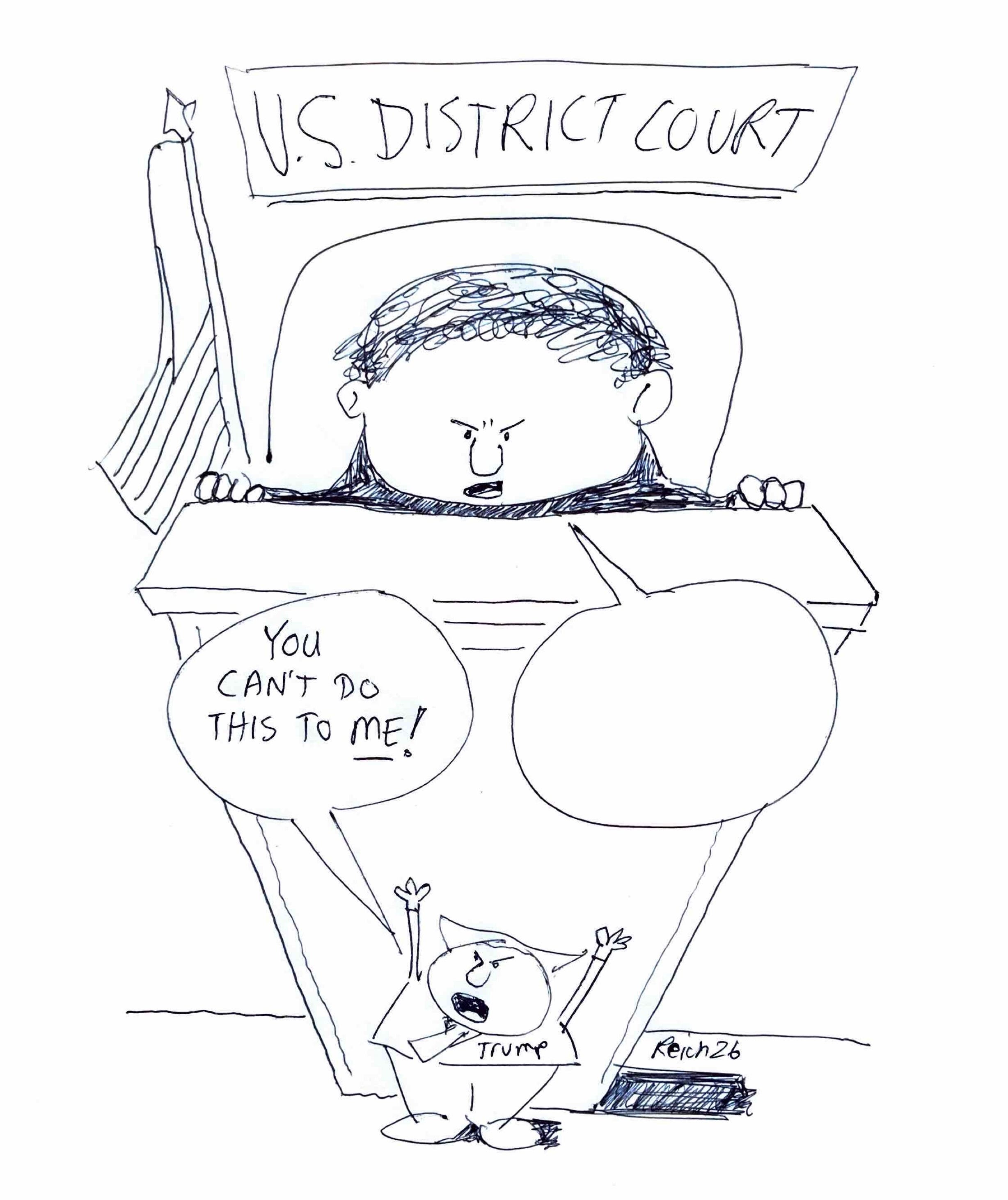
I can’t overstate the importance of Judge Kathleen Williams’s decision on Friday to reopen Trump’s $10 billion case against the IRS.
She said she wants to investigate “grievous allegations” that the hasty deal to resolve it was “premised on deception,” and she ordered Trump’s lawyers to tell her by June 12 whether the lawsuit should be formally reopened because “the court was the victim of a fraud.”
The “deception” and “fraud” Judge Williams refers to were allegedly carried out by Trump and his Justice Department.
This is a big deal.
Judge Williams’s decision came in response to court papers filed on Wednesday by a bipartisan group of 35 former federal judges who urged her to revive the case and dig into the details of the agreement to settle it.
I don’t recall a similar instance of 35 former federal judges filing such a motion or amicus (friend of the court) brief.
In it, the judges argue that the parties’ — Trump and the Justice Department’s — so-called “settlement” agreement was made to circumvent the court’s possible finding that the case presented no actual controversy, since Trump is on both sides of it.
This, they conclude, constitutes a fraud on the court.
Let me quote the remarkable brief filed by the 35 former federal judges:
“The parties have used this lawsuit—which was never an adversarial proceeding over which the Court even had jurisdiction—as a means to allow a “commission” controlled by the President to dole out $1.776 billion in taxpayer dollars without constitutional or congressional authority to do so, and to confer unlawful private benefits to the President and his family by purportedly prohibiting the United States from prosecuting any and all claims against them.
And the parties have plainly tried to shield this conduct from necessary judicial scrutiny by short-circuiting this Court’s inquiry into whether the lawsuit is in fact an actual case or controversy by [seeking to dismiss the case] before they announced the “settlement”—clearly in hopes of preventing the Court from ever completing that inquiry, which, if it comes out against the parties, will undo their collusive “settlement.” ….
Accordingly, because “[t]he parties’ ‘collusive’ activity perpetrated a fraud on the judicial machinery itself, by fostering an appearance that the litigation involved adverse parties, when, in fact, it did not,” the Court should void its prior dismissal and reopen the case to assess in due course whether a fraud occurred.”
In her order on Friday, Judge Williams said she wanted to investigate the circumstances surrounding Trump’s efforts to settle the lawsuit in a way that benefited him and his allies.
She added that a federal court rule requires attorneys to ensure that court filings are “not presented for any improper purpose” and that “a party’s decision to file a frivolous lawsuit for the sole purpose of forcing a settlement may qualify as such an improper purpose.”
She also noted that the settlement appeared to run afoul of Department of Justice policies that require any settlements to be “specifically limited to the immediate subject matter of the claim.”
Finally, Judge Williams pointed out that a settlement addendum that waives all tax claims the U.S. may currently have against Trump, his two eldest sons, and his businesses and trusts was signed only by Todd Blanche, the acting attorney general.
This could result in questions being asked of Blanche. Ultimately, it could result in his disbarment or even imprisonment. Recall that Nixon’s attorney general, John Mitchell, was convicted of conspiracy, perjury, and obstruction of justice for his role in the Watergate break-in and cover-up. He served 19 months of a two-and-a-half to eight-year sentence in federal prison before being paroled. He was the first attorney general in United States history to be incarcerated.
Let me just say that there are forces in this country — specifically, Judge Kathleen Williams and the bipartisan group of 35 former federal judges — bent on preventing Trump from exercising authoritarian power.
In so doing, they’re displaying extraordinary courage and commitment to democracy and the rule of law. They are in effect representing all of us, seeking to create a bulwark against Trump’s and his regime’s corruption.
We owe them a great debt of gratitude. (I’m awarding them this week’s Joseph N. Welch Award for Courage in the Face of Tyranny.)
Attorney Joseph N. Welch, who stood up to Senator Joe McCarthy in the Army-McCarthy Hearings of June 1954
Heather is back (after a grueling week; we wish her mother a speedy recovery).
Today we take a deep dive into Trump’s Department of Injustice, now headed by Acting Attorney General Todd Blanche, who’s criminally prosecuting Trump’s enemies — including private citizens such as E. Jean Carroll.
We also examine Trump and the Republican Party’s obsession with testosterone — part of the so-called “manosphere” — which includes the scheduling of UFC cage matches on the White House’s South Lawn, denigrating Democrats such as Senate candidate James Talarico as being “low T,” ridiculing LGBTQ+ people, Trump and Secretary of “War” Pete Hegseth’s hyper-aggressiveness, and Trump’s fear of strong women who stand up to him.
We also discuss the blatant corruption of the Trump regime and its relationship to the horrific U.S. economy.
So please pull up a chair, grab a cuppa, and join in the conversation.

 Login
Login