Normal view

The End of Independent Agencies

29 June 2026 at 18:45

Friends,

First of all, you should know that I spent five years of my life advising the commissioners of the Federal Trade Commission how they could best protect Americans from monopolies and deceptive corporate practices.

I’m proud of the work the FTC did then and proud of much of what it’s accomplished since then. When I served there, the chair of the FTC was Michael Pertschuk, an energetic and charismatic trust-buster and consumer advocate. More recently, the FTC has been chaired by Lina Khan, who courageously stood up to some of the biggest and most politically powerful corporations in America.

Part of the reason the FTC has been so effective is that it is — or was — independent, and therefore immune to the political moves of powerful corporations seeking to stop it from acting for the common good.

The FTC was established in 1914 as part of what’s known as the “progressive era” when the government first sought to rescue the nation from the grip of the robber barons who then ran the railroads, oil, shipping, and much of the rest of the economy — and corrupted the nation’s politics — during the First Gilded Age.

Reformers of that era created an income tax to try to limit the robber barons’ incomes, caps on corporate campaign expenditures to limit their political reach, and independent regulatory agencies such as the FTC to limit their power.

That progressive era was followed by the New Deal, when Congress and FDR established other independent regulatory agencies, modeled in part on the FTC, to use their expertise for the benefit of the American people — and not just the wealthiest and most powerful citizens whose unbridled greed had led the nation into the Great Depression.

We’re now in America’s Second Gilded Age, when a new set of robber barons (think Elon Musk, Jeff Bezos, Mark Zuckerberg, and Larry and David Ellison) are running much of the economy and corrupting our politics.

Unfortunately, we now have a president and a Supreme Court, three of whose members he appointed, who are in their pockets.

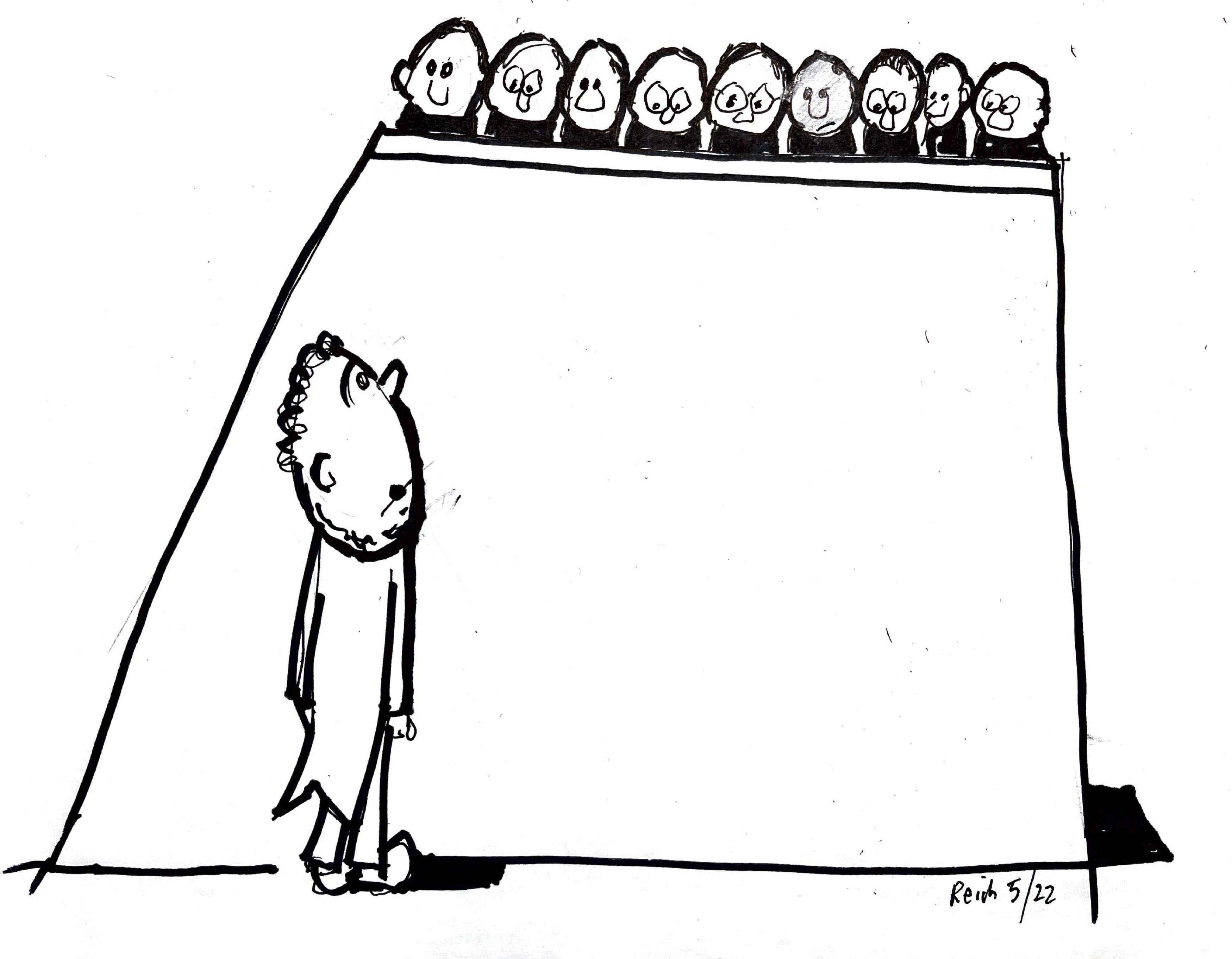
Hence today’s Supreme Court ruling that a president can utterly disregard the will of Congress and install his own hacks in all independent regulatory agencies (with the odd exception of the Federal Reserve Board).

Today’s ruling is in direct conflict with a 1935 case in which the court ruled that FDR could not replace an FTC commissioner because Congress had explicitly given FTC commissioners protection against such firing, in a case known as Humphrey’s Executor v. United States. Today marks the culmination of a years-long weakening of that New Deal-era precedent.

Humphrey’s Executor v. United States concerned a federal law that protected commissioners of the Federal Trade Commission, saying they could be removed only for “inefficiency, neglect of duty or malfeasance in office” — the same language that Congress has since used to protect most other independent commissioners and board members throughout government.

Franklin D. Roosevelt nonetheless fired commissioner William Humphrey, arguing only that Humphrey’s actions were not aligned with the administration’s policy goals. The Supreme Court held that the firing was unlawful and the law establishing the independence of the Federal Trade Commission was constitutional.

But the Roberts Supreme Court doesn’t like independent regulatory agencies. Most of the current justices subscribe to what’s called the “unitary executive” theory, a bonkers notion that the framers intended for a president to have total control over every aspect of the executive branch.

It’s a bonkers theory because the framers didn’t say anything like this. In fact, their biggest fear was that the executive branch would become too powerful.

In 2020, the Roberts Supreme Court laid the groundwork for reversing Humphrey’s Executor in a case involving the Consumer Financial Protection Bureau. The law that created the bureau — again, using language identical to that at issue in Humphrey’s Executor — said the president could remove its director only for “inefficiency, neglect of duty or malfeasance in office.”

In a 5-4 decision, the Roberts Supreme Court struck down that provision, ruling that it violated the separation of powers and that the president could remove the bureau’s director for any reason.

Roberts, writing for the majority, said the presidency requires an “energetic executive.” He continued: “In our constitutional system, the executive power belongs to the president, and that power generally includes the ability to supervise and remove the agents who wield executive power in his stead.”

Two justices — Clarence Thomas and Neil M. Gorsuch — would have pulled the plug on independent agencies then and there. Thomas wrote: “The decision in Humphrey’s Executor poses a direct threat to our constitutional structure and, as a result, the liberty of the American people. With today’s decision, the court has repudiated almost every aspect of Humphrey’s Executor. In a future case, I would repudiate what is left of this erroneous precedent.”

Justice Elena Kagan, writing for what were then the court’s four liberals, dissented, saying the Constitution did not address the scope of the president’s power to fire subordinates. Congress should therefore be free, she said, to grant agencies “a measure of independence from political pressure.”

That 2020 decision by the majority of the Supreme Court anticipated the Supreme Court’s decision in July of 2024 that granted Trump, then a private citizen, immunity from prosecution for any “official” conduct during his first term.

Of all the things the framers of the Constitution worried about, their biggest worry was that a president would become as powerful as a king. Which is why they created Congress and the judiciary — to check and constrain him.

Congress has by now established 19 independent regulatory agencies, including the Securities and Exchange Commission, the Federal Reserve, the Commodity Futures Trading Commission, the National Labor Relations Board, the Federal Deposit Insurance Corporation, the Consumer Financial Protection Bureau, and the Office of Special Counsel.

These independent agencies, staffed with experts, have become a major countervailing power to the political clout of large corporations.

But as of today, they are no longer independent and no longer have any countervailing power.

Today’s ruling overturns the basic idea — part of the fabric of our government for well over a century — that Congress has the power to create independent agencies.

As the nation prepares to mark the 250th anniversary of our independence from a king, the Supreme Court and our current president are doing everything possible to resurrect a king in America.

Share

Is JD Vance More Dangerous Than Trump?

29 June 2026 at 10:03

Friends,

JD Vance said on Friday that the U.S. wins “either way” in negotiations with Iran. “If we make the final deal, then great,” Vance told HBO’s Bill Maher. “If we don’t make the final deal, their nuclear program is still destroyed. They’re still much weaker as a country.”

Just hours after Vance’s appearance on HBO, Iran launched attack drones on Bahrain — which hosts the U.S. Navy’s Fifth Fleet headquarters, a major logistical base for U.S. military operations. Iran also struck an oil tanker in the Strait of Hormuz, its second attack on a ship since Thursday.

So much for Iran being much weaker.

Pressed by Maher on whether Iran’s nuclear program has been destroyed, Vance shot back: “What part of it is not destroyed? The thing that you have to destroy is their ability to enrich uranium, which has been destroyed.”

In fact, Iran still has a stockpile of 60 percent-enriched uranium, which experts concede could be turned into a nuclear weapon.

Vance’s media appearance came two days after he visited the Richard Nixon presidential library and museum in California to talk about his new book on his journey from atheism to allegedly devout Catholicism.

During his visit he defended Nixon for the Watergate break-in scandal that ended his presidency. “I think that his historical legacy is enjoying a bit of a renaissance — but I think deservedly so,” Vance said of Nixon. “If Watergate happened tomorrow, it would be like a 12-hour news story. Like, the idea that it would have taken down a presidency is crazy.” It was the “deep state that took down Richard Nixon” — not Nixon’s serious crimes.

Hello? The only conceivable reason Watergate might not bring down a presidency tomorrow or be a 12-hour story is the gargantuan criminality and corruption of the Trump-Vance regime, which puts Watergate in the minor league by comparison.

I raise Vance’s recent bizarro comments because in a few months he’ll be actively campaigning to be the Republican candidate for president in 2028.

He’s a more dangerous demagogue than Trump because he wraps his demagoguery in the apparent thoughtfulness of a graduate of Yale Law School and a serious best-selling author.

I’ve spent the last two days reading his latest book, Communion: Finding My Way Back to Faith, a memoir focusing on his 2019 conversion to Catholicism, and can assure you of three things: First, it’s a serious book. Second, Vance’s mind is as vacuous and unprincipled as he is in person. Third, the book isn’t worth reading.

In one of the few mea culpas in the book, Vance writes that it was “boneheaded” of him — “one of the dumbest things I ever said” — to call Kamala Harris and several other prominent Democrats “childless cat ladies who want to make the rest of the country miserable too.” In the book Vance calls the insult, “intentionally (and successfully) provocative rather than illuminating.”

What Vance doesn’t admit to is that, when his remark resurfaced during his early days as Trump’s running mate, he refused to apologize or express any regret for it. “Obviously, it was a sarcastic comment. I’ve got nothing against cats,” he said then — sarcastically — adding that “if you look at Kamala Harris, Pete Buttigieg, AOC, the entire future of the Democrats is controlled by people without children,” which in his view had made the entire Democratic Party “anti-family and anti-child.”

Vance’s intentionally provocative rather than illuminating demagoguery was in evidence again when he insisted during the 2024 campaign that the pets of upright Americans residing in Springfield, Ohio, were being “abducted and eaten” by Haitian immigrants “who shouldn’t be in this country.”

When confronted with irrefutable evidence that Haitian immigrants were not eating pets in Springfield, Vance admitted publicly that he was speaking, shall we say, metaphorically: “If I have to create stories so that the American media actually pays attention to the suffering of the American people, then that’s what I’m going to do,” he told CNN.

It’s much the same with Vance’s recent response to the fatal stabbing of Henry Nowak by Vickrum Digwa in the British city of Southampton. After Digwa was sentenced to life imprisonment, Vance declared that Nowak would still be alive had Europeans “stood their ground against the politics of self-hatred and the mass invasion of migrants, many of whom despise the West and the people who love it.”

Inconveniently for Vance, Digwa didn’t migrate to Britain. He was born and raised there.

Vance would never have become a senator from Ohio in 2022 were it not for the billionaire tech financier Peter Thiel, who staked $15 million on Vance’s election — a major portion of all the funds that went into Vance’s Senate race.

Before running for the Senate, Vance had worked for Thiel’s California venture capital firm and was part of Thiel’s libertarian community of rich crypto bros, tech executives, back-to-the-landers, and disaffected far-right intellectuals.

Because Thiel had been a major funder of Trump’s 2016 presidential run, he had significant influence with Trump when urging him to pick Vance for his vice president.

Why was Thiel such a devoted sponsor of Vance? Because Thiel saw in his protege a future leader of a political movement to turn the U.S. away from democracy. “For Peter,” said one of the people familiar with his thinking, “Vance is a generational bet.”

Thiel is a self-styled libertarian who once wrote: “I no longer believe that freedom and democracy are compatible.”

Bullshit. Freedom is incompatible with democracy only if you view democracy as a potential constraint on your wealth and power.

Thiel and Vance believe that the only way true libertarians can win in the U.S. is for a Caesar-like figure to wrest power from the U.S. establishment and install a monarchical regime, run like a startup.

The first step, as Vance offered in a 2021 podcast, is to replace “every single midlevel bureaucrat, every civil servant in the administrative state … with our people. And when the courts stop you, stand before the country, and say” — as did Andrew Jackson — that “the chief justice has made his ruling. Now let him enforce it.”

The next step is to foment so much division and bigotry inside the U.S. and within other major Western nations that people come to view those on the other side of the political divide as the source of everything that’s wrong with their lives — which Vance has been eagerly trying to do.

That way, they won’t look upward to see that the billionaire robber barons, plutocrats, and oligarchs of this second Gilded Age have grabbed most of the wealth and power for themselves. Hence, average people will trade in democracy for strongman autocracy.

Behind Vance’s demagoguery about the U.S. winning either way in Iran, Nixon being taken down by the deep state, childless cat ladies, the Democratic Party being anti-family and anti-child, Haitian-Americans eating pets, and immigrants threatening Western civilization is a deadly serious plan to unite the far-right of America and Europe and rid much of the world of democracy. If Vance becomes president, he’s intent on furthering the job.

Vance resembles Trump in every way — he lies effortlessly, he’s utterly without principle, and he’s intent on gaining power — except that he’s smarter and more ruthless than Trump.

Take note and beware.

Share

❌