Bulwark LIVE: THE GOOD FIGHT TOUR with Tim, Sarah, Sam, and me is coming to the Southeast in October. Tickets go on sale August 21. Bulwark+ members get early access via our presale through Thursday night. Upgrade now to read this story about Trump and his very young staffer and then join us at one of our fall tour stops!
We have to talk about the Trump–Natalie Harp thing. I’m sorry. I had a big piece about economics teed up for today. About limbic capitalism and global reserve currency. (I can feel your excitement.)
But people are freaking out over the idea that Trump might be shtupping his human printer and I want to talk about that.
Because if only it were so simple.
Man, I wish Trump were just having an affair with someone forty-five years his junior. That kind of relationship would make sense. It would be gross, but intelligible. The reality of the Trump–Harp . . . thing . . . is so bonkers that I don’t have words for it.
I mean, you guys all saw Fatal Attraction, right?
So let’s go deep on this crazy.
I learned about Natalie Harp’s existence when Marc Caputo wrote about her for us in May 2024. That’s right—The Bulwark was way early on this thing:
Harp, 32, occupies a unique role in the history of presidential campaigns: aide who travels with a portable printer (plus paper and rechargeable batteries in a large bag) whose job is to feed Trump a steady stream of information on 8.5x11″ pieces of paper.
Marc reported that Harp sat with Trump at the defense table when he was on
Programming note: The tickets presale for our upcoming Bulwark LIVE events is now active for Bulwark+ members. If you want to get in on the presale, join Bulwark+ today:
(Photo illustration by Sarah Rogers/The Bulwark | Photos: Getty, Shutterstock)
1. Shameful. Joyous.
What is it we say about bad things happening to bad people?
Meet Brent Jindra, a California tech salesman who voted for Donald Trump three times because of his promises to rid America of immigrants. Last year Brent met Galina Bobreneva, a nice Russian girl. They got married.
In July the couple took a domestic flight from San Francisco to Burbank. When they got off the plane government agents were waiting for Galina. First, they told her she had been selected for a “secondary screening.” Then, after getting her to a back room, she was handcuffed and hustled off to an unmarked vehicle. She spent the night on the floor of a jail cell in Los Angeles and was eventually sent to an internment camp in the Mojave desert.
And now Brent is upset because his wife isn’t that kind of immigrant. “She did not jump a wall, she did not swim a river,” he says.
This story has so many layers that I don’t even know what metaphor to use. It’s like watching a guy at the zoo jumping the fence and running full-speed toward a hot stove inside the leopard enclosure. It’s terrible. It’s karmic. And you can’t take your eyes off of it.
JVL and Andrew Egger give their takes on Donald Trump’s latest chaotic press conference, from his bizarre claims about talking with Kim Jong Un to his demand that South Korea pay up for U.S. protection. They also look at Trump’s latest comments on the Iran war, the state of the USS Abraham Lincoln, and his increasingly strange defense of his White House ballroom. Plus: Trump lashes out at a CNN reporter, calls the press “fake news,” and insists his ballroom will be bulletproof and missile-proof.
Photo illustration by Sarah Rogers/The Bulwark | Photos Shutterstock
1. Sides
Over the weekend Hakeem Jeffries was asked if he endorsed the agenda of the Democratic Socialists of America. He said no.
“I don’t support the DSA agenda, as has been articulated by the DSA itself,” Jeffries said. This makes sense. Jeffries is a Democrat, not a member of the DSA. If he endorsed the entire DSA agenda, then he’s be a member of the DSA.
As you might expect, this made some people on the internet mad.
But you know what? They can suck it. Because the DSA—by which I mean the official organ that controls the infrastructure of the Democratic Socialists of America—is forking nuts. So nuts that if you told me that the DSA was a false flag operation run by the Heritage Foundation in order to discredit the Democratic party, it would make sense.
Individual DSA politicians might be closet normies (like Mamdani) but the organization itself? Guys, buckle up. We’re going on a tour of crazy.
(1) There are still balcony seats left for the Best Friends Show in NYC on September 8. Come sell out the 92nd Street Y with us! You can get tickets here.
If we sell this show out, JVL will do something nuts.
(2) Sarah, Tim, Sam and I are coming to South Carolina, North Carolina, and Atlanta in October for Bulwark LIVE. We’re bringing friends. Tickets go on sale August 21, but Bulwark+ members get access to an exclusive presale on August 18. Upgrade today to get early access to the best seats.
Trump is trying to put his name on the Kennedy Center again. Grandpa is so thirsty.
Karoline Leavitt is taking her talent for baldfaced lying to the private sector. Who will be the lucky news organization to buy the privilege of having her lie to its audience? And what lucky liar will inherit her spot behind the podium?
JVL loses his mind over the revelation that after DHS agents murdered Alex Pretti, the federal government launched far-reaching investigations against . . . liberal activist groups in Minnesota. This story will take your hate-fire to 11.
Sarah was always right about the Wisconsin Democratic primary.
Why don’t progressives say a little prayer of thanksgiving for winning a big race in Minnesota with Peggy Flanagan while not having to defend Francesca Hong? Take the W.
Also: JVL has some nice things to say about Bernie while Sarah is totally getting there on AOC.
(4) And then there’s the feelings talk. JVL has a lot of them. About Flash and mortality and his gratitude to all of you guys.
(Also: (5) We have news about Rebecca taking us home.)
This isn’t an Instant Classic level show, but it’s a good one. Top quintile for sure. Come to the comments and hang with us there all weekend.
The Secret Podcast with JVL and Sarah is exclusively for members of Bulwark+. Upgrade now to watch (or listen) to this episode and join the Secret community in the comments. New shows drop each Friday. Ride with us!
(Photo illustration by Sarah Rogers/The Bulwark | Photos: Getty, Shutterstock)
1. Burrito Discourse
Last week Republican influencers spent a few days fighting over the price of burritos. What happened was this:
A TPUSA guy tweeted about how a burrito now costs $20 and this sucks.
And then Republicans lost their minds. The reactions broke down into three reasonably distinct groups.
America First types agreed that burritos cost too much and blamed either Joe Biden and/or neocons.
Pro-Trump True ConservativesTM mocked the entitled snowflakes by explaining that when they were kids they walked to school four miles in the snow, uphill both ways.
I am here to tell you that the Great Burrito Discourse isn’t actually about burritos.
It’s about housing.
The short version is this:
Thirty years ago young adults didn’t mind eating ramen every night because they were saving up to buy a house and they knew that once they had skin in the real estate game they were on an escalator to wealth.
Buying a first home today is increasingly out of reach for young adults. Real estate has become insanely expensive not just in absolute terms but relative to the historical standards of the last three generations of Americans.
As the American economy froze young people out of the traditional route to wealth accumulation it offered, in return, an elevated consumer experience. Sure, you can’t afford to buy a house. But we can offer you cheap iPhones, 65-inch flatscreen TVs, and tasty burritos.
Young people resent $20 burritos because it means even this crappy deal is slipping out of reach and they are praying that The System doesn’t alter it further.
Hey guys: If you missed Jasmine’s Triad last week, go back and give it a read. It’s so good.
Her thesis is that while “woke” eventually grew into an amorphous oppressive blob—if you like Thanksgiving or don’t like bike lanes, then you are read out of the movement!—the original ideas behind “staying woke” are pretty valuable. And also turned out to be . . . right. Here’s Jasmine:
Maybe at this point you’re thinking I’m making a True Woke has never been tried! argument. Not quite. My point is that “wokeness”—in an idealized form—is an argument for guardrails against unrestrained domination by the most powerful forces in society. It was in the calls for an end to extrajudicial police killings. It was in the demands for accountability when influential figures parroted harmful racist remarks. It was in the warnings of how easily civil protections for vulnerable groups—trans people or noncitizen immigrants or pregnant women—could be trampled upon.
The best Triads make you think about the world a little differently. This is one of them. If you missed it, read Jasmine here.
(Photo illustration by Sarah Rogers/The Bulwark | Photos: Getty)
1. The Polls
For all the carping about polls, they’re usually correct. Even in the big surprise elections, like 2016, the polling was mostly accurate: Trump’s results were within the margin of error in almost every state.1
But sometimes there are misses. It’s useful to look at the polling in Wisconsin to understand what happened last night because while the topline result is shocking, the numbers . . . aren’t really?
This isn’t the story of a polling miss so much as voter sentiment moving so fast that the polls were a few days behind it.
Let’s look at the most recent polls heading into the election:
And what did we get when the actual votes were counted?
So let’s start with Francesca Hong. She underperformed her polling, but not by that much. The average of the last three polls had her at 42.7 percent. She finished with 39.37 percent. Three points is awfully close to the margin of error.
What happened to Hong’s number? She had been sitting at 40 percent since the middle of July. Then there was a little boomlet as Wisconsin Democrats took a closer look at her, so she gained a few points. And then, over the last week or so, she cooled off and settled back to her baseline. This isn’t a collapse. The polls just didn’t capture her reversion during the last week.
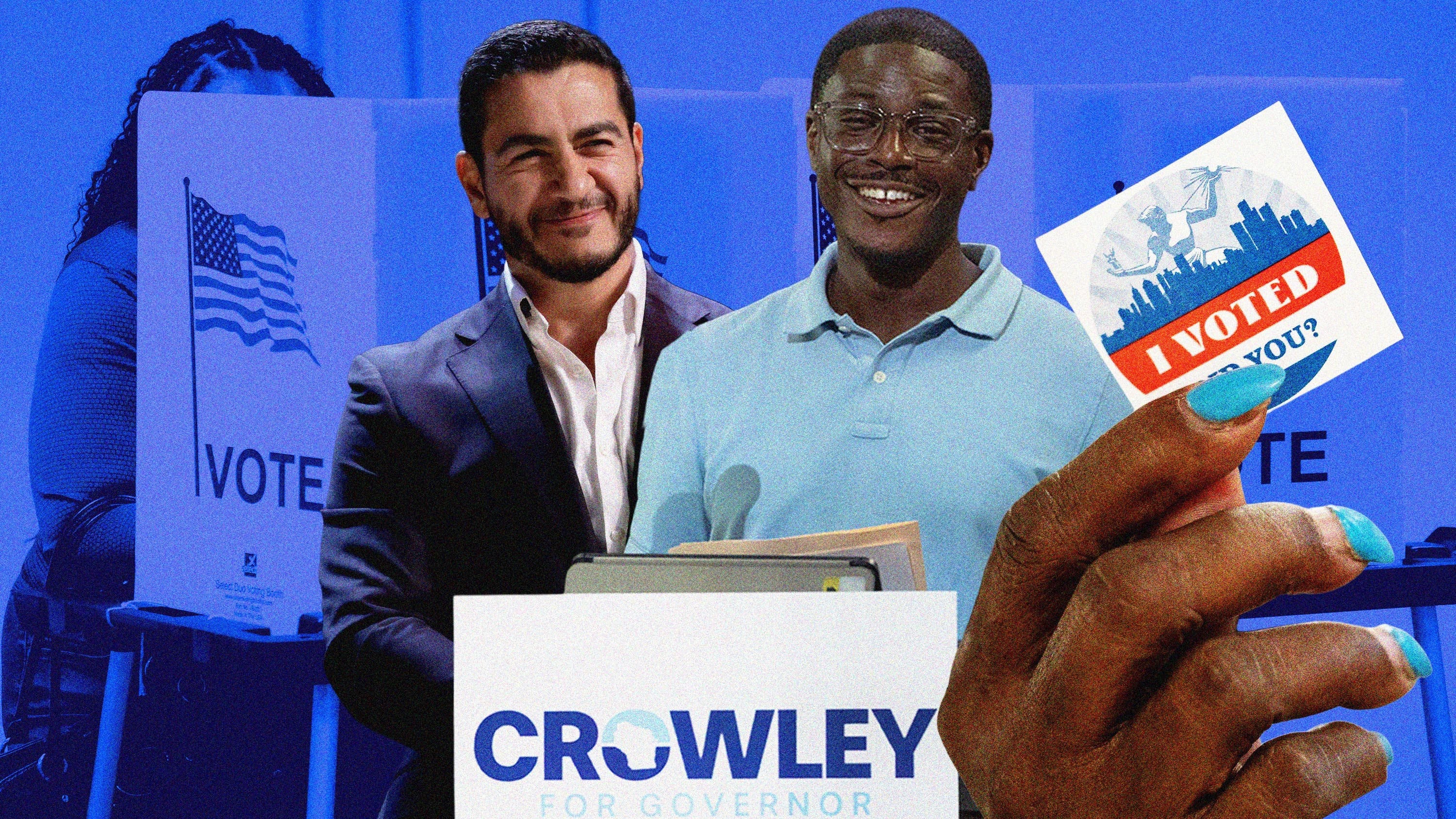
The big shock is David Crowley’s 39.78 percent.
That number is a surprise, but there were signs that something was happening. In early July Crowley didn’t even register because he’d dropped out of the race. Last week, after rejoining, he was at 22 percent. Voters were finding their way to him. Mandela Barnes had been sitting on something like 20 percent and he dropped out just two weeks ago. His voters had to go somewhere. It turns out they flowed to Crowley.
The polls captured the beginning of that flow, but polling doesn’t work in real time. There’s latency.
The polls in Wisconsin weren’t wrong so much as a week behind. The environment was more fluid than some of us realized and the movement that we saw in the polls toward Crowley was happening faster than surveys could capture.
Today’s Triad is free because I wanted to make sure it was as widely read as possible. You can read our locked newsletters—and join the conversation—with a Bulwark+ membership:
The reason I’m picking apart the polling is because between Hong in Wisconsin and El-Sayed in Michigan, we’re going to get a narrative about how DSA-branded Democrats always underperform.
And the reality is more complicated than that.
El-Sayed isn’t actually a DSA Democrat. He’s a normal Democrat who, for various reasons, codes as DSA-adjacent. Yet he underperformed much more than Hong. El-Sayed’s polling average had him up by 13; he won by a point.
Francesca Hong is a real-deal DSA-er and she finished within the margin of error of where the polls had her.
So at the broadest possible level, a narrative saying DSA Dems underperform their polls isn’t right.
But there is a lesson in here and it seems important.
Haley Stevens did well with African-American voters. Abdul El-Sayed did not. Francesca Hong did best in Wisconsin’s college towns. In densely urban Milwaukee she ran behind Crowley, who has been county executive there since 2020.
The eternal lesson is that African-American voters are the backbone of the Democratic coalition. And African-American voters seem to be less interested in DSA-forward candidates than most other parts of the coalition.
Maybe that will change!2 But until it does, we should keep in mind that to succeed in Democratic primaries, candidates need to do well with African-American voters.
Black voters represent the dead-center of the party.
And by the way: Thank God. Maybe Hong could have won the general election, but the matchup polls for her with Tom Tiffany were tough. I like Crowley’s chances against a weak Republican in a wave year.
I am not a Democratic strategist, but if I were, I would tell prospective Dems to lean into the African-American vote. Find ways to appeal to black voters and your chances of winning general elections improve because black voters aren’t just the center of the Democratic party—they’re close to the center of our broader political culture.
After stepping down as CEO of MyPillow, Mike Lindell’s quest to be the governor of Minnesota blew up last night.
The results were humiliating. So let’s luxuriate in them.
Lindell is one of the most famous men in all of MAGA. A captain of industry. A patriot outsider. He was endorsed by Trump. He was running against Lisa Demuth, a state legislator (and speaker of the Minnesota House) who was propped up by a single establishment Republican megadonor, Richard Uihlein.
And Lindell got schlonged.
Even in the reddest of red counties—the Trumpiest places in the Land of 10,000 Lakes—Lindell couldn’t break 50 percent.
How could this have happened?
Well, as of this writing, neither @realMikeLindell nor @RealLindellTV have tweeted about the result. The tears, they are delicious.
Gene Weingarten read Ross Douthat’s farewell column so I didn’t have to:
Douthat is forever defining “populism” as a noble political stance instead of what it is and has always been: the politics of trawling for eyes and ears and hearts and minds by milking resentment over invented hobgoblins that come and go with the times — Chinese laborers, foreigners, feminists, brown people, the intelligentsia, the rich, the poor, whatever is currently unpopular with the masses.
Here’s Douthat’s whole column, but I’ll save you the ordeal. I have distilled it down into two bullets.
Douthat says he hates Trump, but always manages to somehow express his distaste with a tepid qualifier. He complains that Trump is bad, but was made that way by idiot liberal policies to which he was reacting. In this piece, Douthat actually says this: “But as Trumpism has flailed and failed, it hasn’t consolidated the kind of authoritarian power anticipated by its most alarmed opponents.” (It hasn’t? Really? Let’s just let this particular opinion air out a little in the backyard until it is bearable to approach.)
But here’s the big one: Douthat wrote the following: “I lived with the blue-state governance that doctrinaire progressivism encouraged, and it yielded civic and educational collapse.” Aaaand: “I lived through the years of peak woke, and it was a McCarthyite experience.”
I love this trick of Douthat’s. He says that we aren’t at full-blown authoritarianism—not yet—and the fact that we have only had an attempted coup and a handful of dissidents executed by the masked secret police discredits all of the “alarmists” who warned that Trump was an aspiring autocrat.
But also: “blue-state governance” has yielded “civic and educational collapse.”
Excuse me? Collapse? Who’s the alarmist now, Mr. Potato Head?
Blue-state socioeconomic markers for income far outpace those of red states and on the question of education, well, would you rather your kids go to a school in NY/NJ/CT or WV/MO/AL?
If it is truly civic and educational collapse, how can Douthat raise his family in a blue state? Why hasn’t he struck out for Wyoming or Kentucky?
But then, that’s what this clown does, and always has done. He’s not a public intellectual. He’s a grifter whose marks happen to be elite media executives.
(Photo illustration by Sarah Rogers/The Bulwark | Photos: Getty)
1. Hogan’s Funhouse
You cannot understand Donald Trump without professional wrestling. The key text of the Trump era is not a tome of political reporting, but Josie Riesman’s book Ringmaster, which is both a biography of Vince McMahon and an autopsy of American politics.
Wrestling is the Rosetta Stone for Trumpism.
Some readers rebel against this idea, but I want you to hear me out. Because today we’re going to look at a new book about Hulk Hogan and the parallels between Terry Bollea, Hulkamania, Trump, and MAGA will drop you like a heart attack.
This is high concept. And it’s a ride. But it will change the way you look at the world. Oh, also: It goes to five.
I know how annoying the paywall is. I get it. But the vast majority of what we do here is free and if you were ever going to take a chance on Bulwark+, this is the piece to do it.
And if it doesn’t hit for you, you can always cancel. It’s like two clicks.
But this one’s a banger. I’m genuinely excited about the newsletter today because I think it could change your understanding of Trump’s authoritarian proposition.
(Photo illustration by Sarah Rogers/The Bulwark | Photos: Shutterstock)
1. South Carolina
On The Focus Group this weekend, Sarah hunkered down with some folks from South Carolina. These were three-time Trump-voting Republicans. They offered their thoughts about Lindsey Graham, Donald Trump, and much else.
In that offering they provided more data points for a proposition that I frequently champion: Everybody lies.
That’s my shorthand for a longer, slightly more complicated argument. We’re going to tax your patience here and go pretty dark. So if you’re willing to take the ride today, strap in.
One of the things Sarah and Tim often say is that people are messy. They are full of contradictions. They don’t reason deductively or follow trains of logic. They are idiosyncratic.
I understand this argument. I do not think it goes far enough.
The Secret Podcast with JVL and Sarah is exclusively for members of Bulwark+. To watch or listen to future episodes and join the Secret community in the comments become a Bulwark+ member today. Ride with us.
Today I’m going to sketch out a blueprint for reforming the systemic problems with how the federal government is constituted. I do not have a snappy, camera-ready name for it, but that’s a feature not a bug.1
Ready to roll up your sleeves? Let’s look at America’s problemschallenges opportunities and come up with some real-world, non-fantasy solutions.
1. Structures
What is the root of our problem right now?
It’s the character of the American people. Some significant minority of the country wants a post-liberal order.
We can’t change that reality. It will either get worse or resolve itself, independent of any conscious choices made by the forces of liberalism.
What we can do is reform our system of government, which has gone from protecting minority rights to enforcing minority rule. If post-liberalism is going to triumph, at least the chuds should have to earn it at the ballot box. We shouldn’t get dog-walked into a post-liberal order because a bunch of existing liberal institutions got hacked.
So the mission is: How do we reform existing systems to rebalance the power afforded to the minority?
I come to you today not with complaints, but answers. Let’s ride.
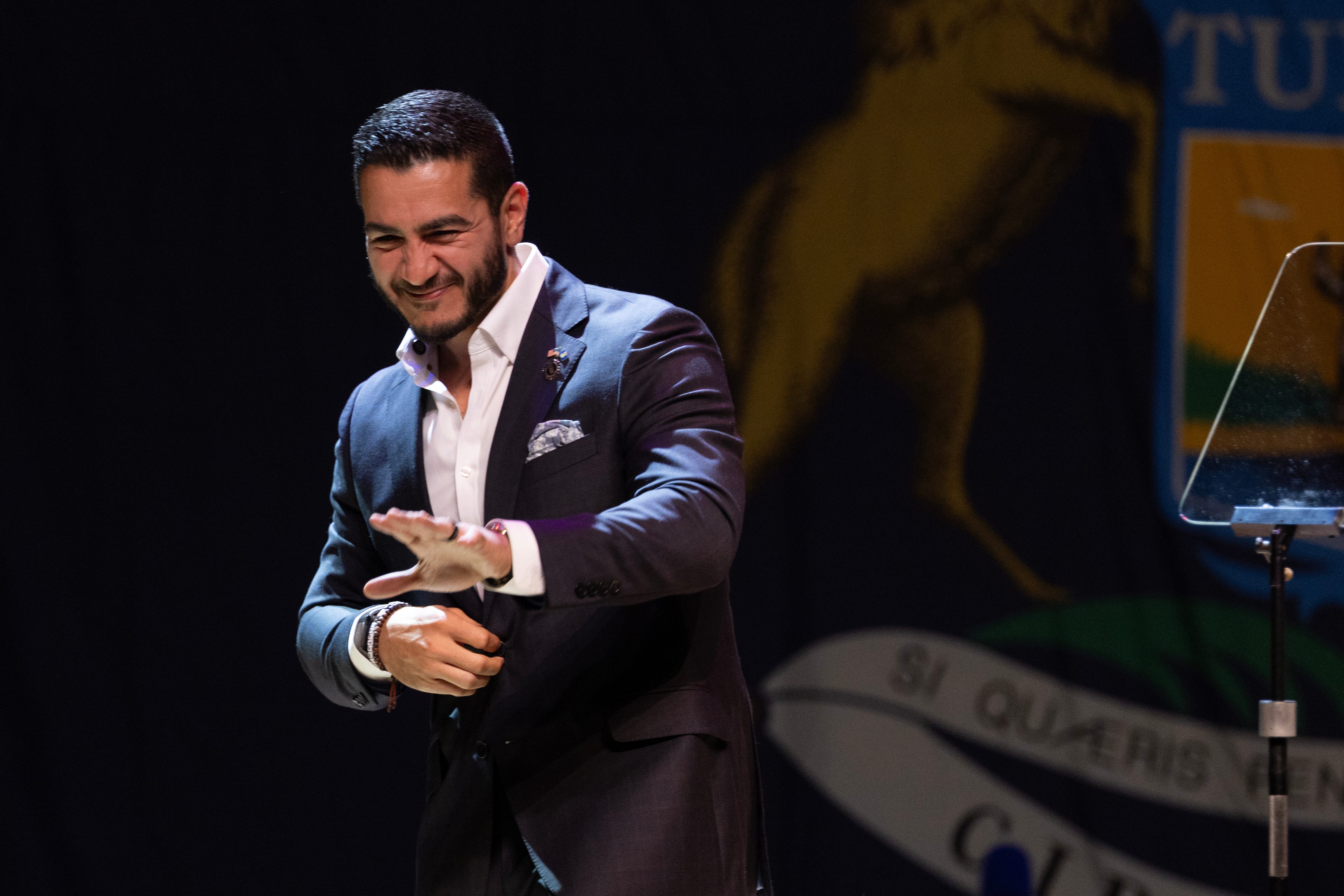
The Associated Press this morning called the Michigan Senate Democratic primary: Abdul El-Sayed won a much closer than expected victory over Haley Stevens.
Let’s get under the hood on the numbers to understand if Democrats are taking a big risk on the youngblood.
Start with this: El-Sayed should beat Mike Rogers, the former longtime congressman who is the Republican nominee, because Michigan is a fairly Democratic state.
The current governor of Michigan is a Democrat and Democrats have held the governorship for 16 of the last 24 years.1
Since 1979, Democrats have held both of Michigan’s Senate seats for the entire period, with the exception of a single Senate term when Spencer Abraham was elected in the 1994 Republican wave.
That’s an incredible run.
Here are the ten Senate elections since Abraham broke the streak:
You can see a clear pattern of Republicans gaining ground since 2014—but Democrats have still performed well. They’ve won open seats; they’ve won in midterm elections when Republicans are surging nationally. They’ve won in presidential years when Republicans captured the White House.
They’ve even won an open seat while Trump was carrying the state at the presidential level.
What this tells us is that Michigan is a Democratic state. With an open seat, in a good environment for Democrats, without Trump at the top of the ticket, any replacement-level D should win this Senate seat.2
Probably by > 1.5 percent.
Translation: El-Sayed would have to be worse than a generic Democrat—by at least 1.5 points—in order to lose.
That’s a lot of positives. And here’s another one: El-Sayed turned out a lot of voters.
The last time Michigan Democrats had a semi-competitive primary was in 2024. Elissa Slotkin romped with 76 percent of 934,000 votes.
More than 1.5 million people voted in yesterday’s primary. In a primary race in a state where the total number of eligible voters—of both parties—is around 8 million, that’s a lot of excitement; a lot of energy. You have to give El-Sayed credit for a lot of it.
And yet . . .
El-Sayed dramatically underperformed his polls. The last batch of polls had El-Sayed ahead by +13 on average. His worst poll in the final days had him at +8.
As of this writing, he’s ahead by just about 1 percent.
Also concerning is the voting pattern. This race had become a referendum on El-Sayed. He was the main character. He was so far ahead and had so much energy behind his campaign that the question for Democrats wasn’t so much Stevens vs. El-Sayed, but, “Are you sure you want to roll with this guy?”
When Slotkin beat Mike Rogers in 2024, she won by a total of 19,000 votes out of 5.6 million votes cast.
How did she do it? She rolled up huge margins in Wayne, Washtenaw, and Ingham Counties where she won with Saddam numbers. She dominated 8 of the 11 most populous counties.
But she also hung on in the rural counties. Slotkin only dropped below 30 percent in a handful of rural outposts. The difference between hitting 30 percent, or falling to 20 percent, in a county with 5,000 voters isn’t much—500 votes.
But again: She won by 19,000 votes, total. And there are a lot of those small, rural counties.
So the blueprint for a Democrat winning Michigan is:
Absolutely crush with the black vote in Wayne, Oakland, and other dense urban counties, but also . . .
Find every vote you can in the small, rural counties. Lose by 30 points, not 40 points.
El-Sayed only did half of that.
Look at that list up top 👆. El-Sayed lost Wayne and Oakland by >6 points. This tells us that he wasn’t able to excite the African-American voters who are the foundation of the party in Michigan. (Our Jonathan Cohn had his eye on this possibility, and wrote about it last week.)
Now maybe El-Sayed turns out those voters in November. But remember: He doesn’t just need huge turnout in those counties—he needs to absolutely crush the margins.
I am slightly concerned with El-Sayed’s numbers in Macomb, too. Macomb is an affluent white Detroit suburb where Mike Rogers did very well in 2024. El-Sayed lost Macomb by 7 points. He’s going to need to get a bunch of votes out of there and probably can’t afford to lose Macomb by >10 points.
On the rural counties, it’s a mixed bag for El-Sayed.
He did well in places like Iron and Marquette Counties while Stevens won most of the rural counties. But El-Sayed stayed competitive. He didn’t dip below the 30 percent mark anywhere. This suggests to me that rural Democrats are not totally opposed to him. They’ll listen to his pitch and if he connects, then maybe he can get the numbers he needs from the hinterlands.
The final concern for El-Sayed is that Mike Rogers has done this before.
Democrats are dismissive of Rogers as a carpetbagging empty suit. Fair enough. But Rogers ran statewide two years ago and earned a lot of votes. He’s been tested in a high-profile, big-time campaign. There won’t be any bombshells blowing him up. Two years ago he got 48.3 percent of the vote against a quality Democrat. The guy has already convinced 2.7 million Michiganders to pull the lever for him once.
How much is that worth? We have a comp.
In 2018, Republican John James ran for Debbie Stabenow’s Senate seat. He got 45.76 percent of the vote—good enough for 1.9 million votes.
Encouraged by this showing, James ran it back in 2020 for the other Michigan Senate seat. He ticked up to 48.22 percent and 2.6 million votes.
This isn’t straight apples-to-apples. But it’s close. It’s hard to picture Rogers doing much worse in 2026 than he did in 2024. Without Trump at the top of the ticket, he could lose some altitude. But he probably has a hard floor of 47 percent.
Do you like deep-dive analysis that has a point of view but doesn’t pander to your preferences? That’s what we do here, every day. Come ride with us:
Last thing: Another hidden advantage for El-Sayed is that Francesca Hong is going to act as a human shield for his campaign. Every time the media has a “Look at the radical DSA” story, it’ll focus on Hong and El-Sayed will seem mainstream by comparison.
Don’t sleep on this dynamic.
3. Drones
The era of drone warfare is already posing risks to civilian aviation. Yikes.
This past May, a twin-engine Beechcraft King Air medevac plane took off from Roswell, New Mexico, and headed west to the town of Ruidoso to pick up a patient. It shouldn’t have been a challenging flight for the two pilots and two nurses aboard. The temperature was 69 degrees; the sky was clear. The 60-mile journey normally takes a half hour, at most.
But once airborne, the plane ran into trouble. At the White Sands Missile Range that night, US military personnel were conducting a GPS jamming exercise that left the King Air pilots—and anyone else within hundreds of miles—unable to use modern navigation systems. Forced to revert to older technology, ones that they rarely if ever use, the medevac pilots got disoriented and crashed into the side of a mountain. There were no survivors.
The accident marked the first time that GPS jamming had contributed to the crash of a civilian plane in the United States. But it was just one of a string of recent disruptionsacross the world. The skies are more contested than ever, whether it’s civilian drones wandering out of the approved zone or US agencies getting their signals crossed, as happened earlier this year when New Mexico and Texas scared the public by temporarily closing their airspace. (It turned out that US Customs and Border Patrol were using anti-drone lasers in that area.) The GPS jamming exercise that led to this latest crash is not a singular event. In the past year, the US military appeared to have sent out notices for at least 10 such exercises. “As drone warfare and electronic warfare expand, airlines are increasingly encountering navigation disruptions hundreds of miles beyond the actual conflict zone,” says Eliran Almog, CEO of the cybersecurity firm Cyviation.
Sarah’s on vacation, so Sam, Tim, and JVL discuss: -Live results from the (unexpectedly close) Michigan Senate primary, and discuss what an Abdul El-Sayed or Haley Stevens win would mean for November. -The horrifying child abuse allegations against Rep. Max Miller, and his disastrous CNN interview. -Trump’s anger at Jeanine Pirro after she dropped vandalism charges related to the reflecting pool. -Todd Blanche advancing out of the Senate Judiciary Committee -Finally, they discuss JVL’s triad about democratic socialists (meh) versus social democrats (better), and how Democrats can stop letting Republicans set the narrative of this election.
I don’t begrudge Wisconsin Democratic voters the decision to embark on the Great Francesca Hong Experiment.
But, you know, they shouldn’t have any illusions as to how this is going to turn out.
There are two ideas in tension here.
The first idea is that Democrats, as a party, need to try lots of different stuff. They need to try diligent centrists, Christian libs, populist crusaders, and McKinsey-style technocrats. It’s not crazy to think that they should also try full-monty DSA. You don’t know what the product-market fit is going to be until you test the market.
The second idea is that many of these elections matter. If Hong loses—and I suspect she’s going to get absolutely smoked in November—then there will be a Republican election denier with the power to monkey with certification and voting in a possible tipping-point state in 2028.
So, sure. It’s fine to experiment. But also: You can’t pretend these are free shots.
I have been asked over and over about the DSA-Democratic party split and today I want to propose a solution. Because there’s a way to bring new ideas into the Democratic party while keeping out the people who want to destroy the party.
(1) I have an idea for how to fix our post-Trump political system.
(2) There’s an opening in the Reflecting Pool case to send someone from the Trump administration to jail.
This is as close to Optimistic JVL as you’re ever going to get. Let’s dive in.
By the end of this week America will forget about the case of David Hearn, the man Donald Trump blamed for the failure of his Reflecting Pool.
Quick catchup for anyone who has already forgotten:
Trump is obsessed with the physical beauty of Washington, D.C., and so is trying to turn the downtown area into a presidential palace compound.
Part of this project involved his revulsion that the Reflecting Pool by the Lincoln Memorial resembled an actual patch of water and not a hyper-idealized artist’s rendering.
So Trump gave a no-bid contract to “fix” the Reflecting Pool to a vendor no one knew anything about.
Within days of the project’s completion, the Reflecting Pool failed in a spectacular and embarrassing manner.
Trump needed to blame the failure on someone; he claimed that the project had been physically attacked and vandalized (despite having previously promised it would be vandalism-proof). He set his Justice Department on the case of finding someone to prosecute for this imagined crime.
U.S. Attorney for the District of Columbia (and former TV lawyer) Jeanine Pirro looked around and decided to charge David Hearn with a felony—thus bringing the full weight and power of the American government against a blameless citizen purely to satisfy the narcissism of the president.
I want to underline this: Hearn faced up to ten years in prison for these charges.
On Friday Pirro’s office withdrew its case against Hearn, claiming that its own charges were baseless—that the Reflecting Pool failed because of the contractor, not because of vandalism, and that a different branch of the Trump administration had hidden these facts from the prosecution.
I encourage you to read the motion for dismissal. I am not a lawyer, but it seems to me that either someone from the Department of the Interior should go to jail, or someone from the Department of Justice should be disbarred. (Or both?) We’re going to talk about why that is and who it might be in a moment.
“The defendant, Hearn, ripped a piece of recently installed sealant on the bottom of the Reflecting Pool at the Lincoln Memorial. The evidence shows, and we will prove beyond a reasonable doubt, that Hearn willfully destroyed property at the Lincoln Memorial Reflecting Pool.”
“Our evidence further shows that the National Park Service employees observed Hearn actually forcefully and violently pulling up and removing the bottom liner with both hands.”
After Pirro’s prepared remarks she took questions from reporters. She insisted that, “There was an effort, a violent effort, to rip up the sealant from the bottom of the pool.”
When a reporter pressed her, pointing out the trove of video evidence existing that showed the Reflecting Pool failing prior to Hearn’s arrival on the scene, Pirro mocked the reporter:
Reporter: Did he have any tools or was it just his bare hands?
Pirro: Right now, we believe it’s his bare hands, both hands.
Reporter: So does that indicate in your belief that it was probably damaged before or do you believe that he—
Pirro: Oh, he damaged it.
Reporter: —further, but do you believe it had already been damaged before—
Pirro: He damaged the pool.
Reporter: —before he touched it.
Pirro: He damaged this pool.
Reporter: But there had been, you know, all these videos.
Pirro: Well, good. I’m glad you’ve got that evidence. Come on in the grand jury, you can testify.
By the Justice Department’s own admission, we can now say—definitively—that these were falsehoods. Pirro lied. She lied about a private citizen in the course of a criminal prosecution against him.
It’s outrageous. But it also tells us how we can fix almost everything in American politics going forward:
The Secret Podcast with JVL and Sarah is exclusively for members of Bulwark+. To watch or listen to future episodes and join the Secret community in the comments become a Bulwark+ member today. Ride with us.
Triad Mailbags will be posted in the Bulwark Takes feed for our audiophiles and a transcript can be found below for the readers among us.
In this episode we cover:
From Dave Y.: DSA candidates have gotten a lot of publicity lately. What is your take on them? (starting around 0:28)
From Judy B.:What can be done to protect the 2030 census?(starting around 8:09)
From JennyB:What do you think about Ross Douthat joining ‘60 minutes’?(starting around 9:21)
From Stephen R.: Do you agree with the theory that Republican voters want authoritarianism because they believe that left-wing authoritarianism is out to destroy them? (starting around 15:12)
From In The Age of Now:In the Secret Pod, you said “We’re going to lose, but you have to go down fighting.” This reminded me of Tolkien’s idea of “the long defeat” in the fight against evil. Does Tolkien’s idea resonate with you? (starting around 18:15)
From Kate B.:Why aren’t you a fan of Ezra Klein? (starting around 22:16)
From tupper:What problems was the website’s redesign trying to solve? (starting around 27:25)
From SJ:Could you take a minute and gush about another member of The Bulwark? (starting around 31:18)
From Alejandro M.:What World Cup jerseys have you been sporting? (starting around 34:10)
From E.J. Joseph:Have you considered writing another book? (starting around 35:20)
From Jessica E.:Do you play any instruments? Does anyone in your family?(starting around 35:58)
Also from Jessica E.:Who are your favorite musicians/bands?(starting around 36:54)
From MCM:What are your favorite comic book series?(starting around 37:15)
From Smike:What is something in arts/culture that you hate and everyone else seems to love, or you love it and everyone else seems to hate it?(starting around 39:20)
The transcript, edited for clarity and concision, is below, but you can also read the PDF version here:
Jasmine poses Triad readers’ questions to JVL: What do you think about the DSA? What can be done to protect the 2030 census from Republican meddling? Why does the right crave authoritarianism? Why did The Bulwark change its website? All that and more (like JVL’s hidden backstory as an opera singer) in this week's mailbag.
JVL and Andrew Egger discuss Todd Blanche’s stalled attorney general confirmation, as Senators John Cornyn and Thom Tillis seek assurances that the Trump administration will not revive a proposed “anti-weaponization” fund for allies and January 6 defendants. They also consider Trump’s response, Blanche’s political strategy, and the senators’ reluctance to confront the president directly.
Photo Illustration by Sarah Rogers/The Bulwark | Photos Getty, Wikimedia Commons
1. Political Violence
Because irony is dead, two weeks ago, the Trump administration hosted an international conference on “The Resurgence of Political Terrorism.”
This would be the same Trump administration whose first act was to pardon hundreds of political terrorists who attempted a violent coup. The administration headed by a man who summoned thousands of people to Washington for the express purpose of carrying out a coup. A man who, on January 6, 2021, after being warned that members of his mob were armed, directed them to march on the Capitol where Congress was attempting to ratify the results of the election and said:
[Y]ou'll never take back our country with weakness. You have to show strength and you have to be strong. . . .
If we allow this group of people to illegally take over our country because it's illegal when the votes are illegal when the way they got there is illegal when the states that vote are given false and fraudulent information. . . .
And we fight. We fight like hell. And if you don’t fight like hell, you’re not going to have a country anymore.
An administration headed by a man who has expressly called for violence against his opponents over, and over, and over:
But this conference—the administration tried to class it up by referring to it as a “ministerial”—wasn’t about all political violence. It was about one very specific sub-class: “Left-wing” political violence.
I know. You are not shocked by this.
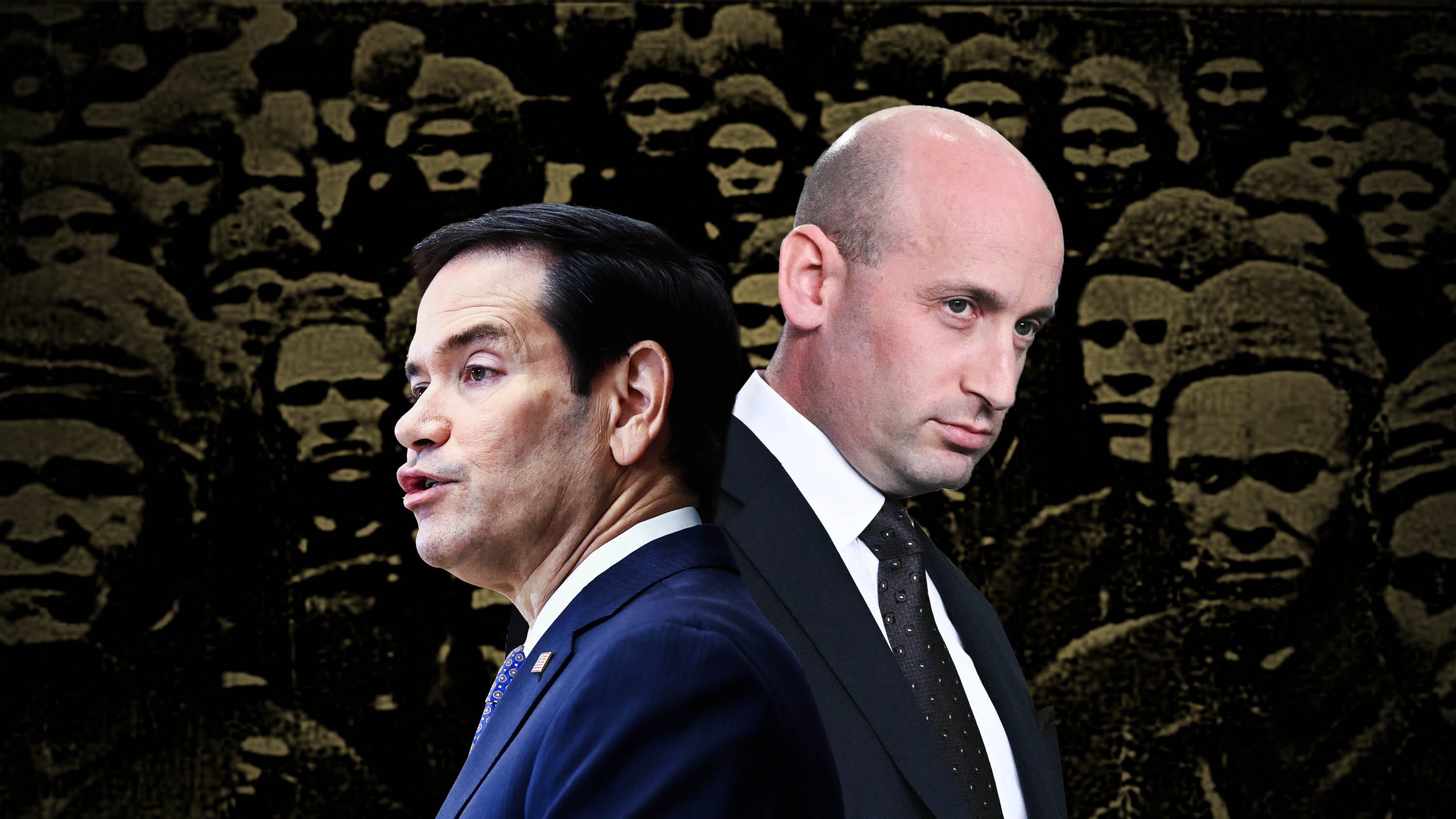
What will shock you are the words spoken by Marco Rubio and Stephen Miller in their prepared remarks to the “ministerial.” Because they weren’t just shameless, or hypocritical.

 Login
Login