Plus: Some questions for Tom Homan about shooting January 6 insurrectionists; Haley Stevens and authenticity; and the Mitch McConnell conspiracy theory. Also, a conversation about raising good men.
But the big topic is the Department of Defense suddenly removing the names of four dead soldiers from the Iran war casualty list because they were killed after Trump declared a ceasefire in April—because there are now apparently two distinct Iran wars. Even though neither of them is, for legal purposes, a “war.”
The Secret Podcast with JVL and Sarah is exclusively for members of Bulwark+. To watch or listen to future episodes and join the Secret community in the comments become a Bulwark+ member today. The only way through is together.
(Photo illustration by Bill Kuchman/The Bulwark | Photos: Getty, Shutterstock)
WHEN SEN. GARY PETERS QUESTIONED Defense Secretary Pete Hegseth about the administration’s handling of the conflict with Iran, Hegseth responded by accusing Peters of denigrating the military.
That wasn’t what Peters was doing. In fact, even before Peters asked Hegseth a question, he offered comfort to the families of those who had given their lives in the Iran war. “I want to begin by first echoing my colleagues’ comments,” he said, “and joining them in mourning the loss of American service members who were killed in action these few days. My thoughts are with their families, with the service member who remains missing, and with all those injured during the strike. And I will continue to pray for their families.” He very quickly went out of his way to express admiration for the service members carrying out extraordinarily difficult missions: “I have long said the United States has the strongest military in history, in the world, and I have no doubt that our brave service members can execute any mission and prevail in any battle.” His criticism was directed not at the troops, but at the civilian leadership responsible for defining the mission, establishing the strategy, and honestly describing the results. That distinction matters.
No tribal allegiances. No false equivalency. Just straight talk about saving democracy. Join us.
When I was a young lieutenant, stationed in Germany on my first assignment, I had a conversation with an old veteran in my unit who had been a medevac helicopter crew chief in Vietnam. He was highly decorated, and he was relaying some of the adventures that were reflected in the medals he wore on his chest.
He was young when he got drafted. He didn’t want to go to war, but he answered his country’s call. He flew hundreds of missions, saved untold numbers of lives, was wounded, recovered, and after a year of service, eventually came home. He told me he was proud of all he did in service to his country—proud enough to choose to make a career in the military—but when his plane landed in San Francisco and he stepped into the terminal wearing his khaki uniform, he experienced something disheartening. As he walked through the airport, strangers cursed him, called him baby killer, and even spat on him.
Then, in a changing mood, he looked down and quietly said something that has stayed with me ever since: “It made that whole year seem like a waste. I didn’t agree with the war, either, but it seemed my fellow citizens were confusing the war with the warrior.”
His disappointment wasn’t rooted in the hardship of combat, because soldiers understand hardship. It was his realization that many Americans could not distinguish between the man who had served and the policy that had sent him there. That confusion reappeared during Secretary Hegseth’s testimony this week.
In our constitutional system, the military does not choose the wars it fights. Soldiers, sailors, airmen, marines, guardians, and coasties execute lawful orders issued by civilian leaders. Their professionalism lies in carrying out those missions to the best of their ability, regardless of the politics and the policies surrounding them. Supporting the military does not require supporting every military operation, nor does questioning the wisdom of a campaign diminish the courage of those asked to fight it.
In fact, the opposite is true.
One of the highest forms of respect all citizens can show our military is demanding that our armed forces be committed only to missions with clear objectives, realistic plans, sufficient resources. This is especially true for those who serve in government who make the decisions—or non-decisions—about war and peace. For our leaders, respecting the military means telling the American people the honest truth about progress and setbacks, casualties and costs. For the rest of us, holding civilian leaders accountable for those responsibilities is our way of honoring those in uniform.
Too often, political leaders blur these lines. When strategy is challenged, they wrap themselves in the valor of the troops. When operational shortcomings are exposed, they imply that criticism somehow insults those risking their lives. This may be an effective political argument, but it is a dangerous civic one. The sacrifice of those in uniform should never become a shield protecting policymakers from legitimate scrutiny.
We owe our warriors gratitude, respect, and every resource necessary to accomplish the missions. We owe our civilian leaders rigorous oversight, honest debate, and accountability for their actions and the missions they assign.
We also owe ourselves, as citizens of a great republic, a government that is responsive to our needs and expectations. That applies to the military as much as to anything else. We respect the troops by ensuring that their missions are aligned with the priorities of the country, and we respect ourselves by ensuring that the bravery and sacrifice of those in uniform doesn’t cause us to forget why their calling is called “service.”
Tom Holland, Christopher Nolan, and Matt Damon at the premiere of The Odyssey in Mumbai, India on July 11, 2026. (Photo by Prodip Guha/Getty Images)
A COUPLE OF MONTHS BACK, I highlighted the strange reaction to Christopher Nolan’s then-upcoming film, The Odyssey, in certain portions of the conservative media ecosystem. Particularly among the grifter set on Twitter, where Elon Musk had whipped people into a fury over the casting of Lupita Nyong’o as Helen of Troy (because Helen of Troy couldn’t possibly be black and to suggest otherwise is a betrayal of Western civilization) and Elliot Page as a Greek soldier (because a trans actor couldn’t possibly play a Greek soldier).
I was fascinated by this story because it combined so many of my different interests: social media as a vector for disinformation, as chuds insisted that Page was playing Achilles even though no one associated with the production had suggested anything of the sort; conservatives turning against Christopher Nolan, who had long been seen on the right as, if not a fellow traveler, at least sympathetic to classically liberal/Tory-ish ideals; and amateur box office sleuths predicting disaster in the face of all evidence that Nolan and his studio, Universal, had a triumph on their hands via massive presales.
But the reason they felt so confident attacking Nolan was, ultimately, because they fundamentally misread the effect of previous outrage campaigns against major motion picture releases. They looked at the outrage directed at 2022’s Lightyear (because the film featured a brief lesbian kiss), last year’s Snow White (because the actress playing Snow White is Hispanic and had said she didn’t much care for the original), and this year’s Supergirl (because the lead actress said male audiences have a problem with strong superheroines), and concluded that those films all failed because loud people were angry on Twitter.
This impulse is, perhaps, understandable. It was also, quite obviously, incomplete. I think it’s safe to say that those movies failed because they were movies that nobody wanted, really. Lightyear was a weird digression from the Toy Story franchise featuring none of the previous films’ voice actors that was too complicated to explain to audiences in a one-sentence pitch. The original Snow White (1937) is too old to hit the nostalgia sweet spot, where parents take kids to see the live-action versions of movies that they themselves grew up with (like Aladdin or Beauty and the Beast). And no one is interested in Supergirl because outside of a handful of big names (like Superman or, as we’ll see next week, Spider-Man), the superhero boom seems to be over.
I’m bringing this back up not to take a victory lap—though I will do that in a second—but as a reminder that we all live in bubbles that we’ve built for ourselves on social media and elsewhere. And the Odyssey bubble on Twitter was exacerbated by the fact that someone at the site must have juiced the algorithm to highlight content about the film: Anecdotally, everything I tweet about the movie does huge numbers. These people were absolutely convinced that The Odyssey was going to bomb, that they were going to claim a great triumph for Western civilization by waging war on the forces of woke. They were blinded by a number of very obvious signals that this movie was going to put up numbers, like near-record presales.
And here’s where the victory lap comes in: In its first six days of release, The Odyssey has grossed nearly $200 million domestically. It’s running roughly 60 percent ahead of Oppenheimer at the same point, a gap that suggests this film will gross in the neighborhood of $500 million domestically and could make a run at $600 million. This means that, with the worldwide grosses included, the film will likely earn well over a billion dollars, in the range of $1.2–$1.4 billion. This means that it will handily make money for Universal, which reportedly spent about $375 million on production and advertising. Even if you assume theaters are keeping half of the take, that means that the film “only” needs to gross $750 million or so worldwide to edge into the black . . . and I don’t think any serious observer thinks it won’t get there. Elon Musk and his chud brigade have been soundly defeated.
The lesson, as always, is this: Twitter is not real life, and we should all keep in mind the bubbles we live in and what they blind us to.
One of the things we try to do here at The Bulwark is poke holes in bubbles. Right now we’ve got a deal going: New subscribers get fourteen days for free. That’s two weeks of bubble-busting. Sign up and hang out in the comments section with the rest of the cool kids:
I could’ve talked about this Odyssey nonsense on a thousand podcasts; I just love the story so much. But I’ll limit myself to linking to the video on the topic I did with Sam Stein and Will Sommer. It’s a fun one; I think you’ll enjoy it.
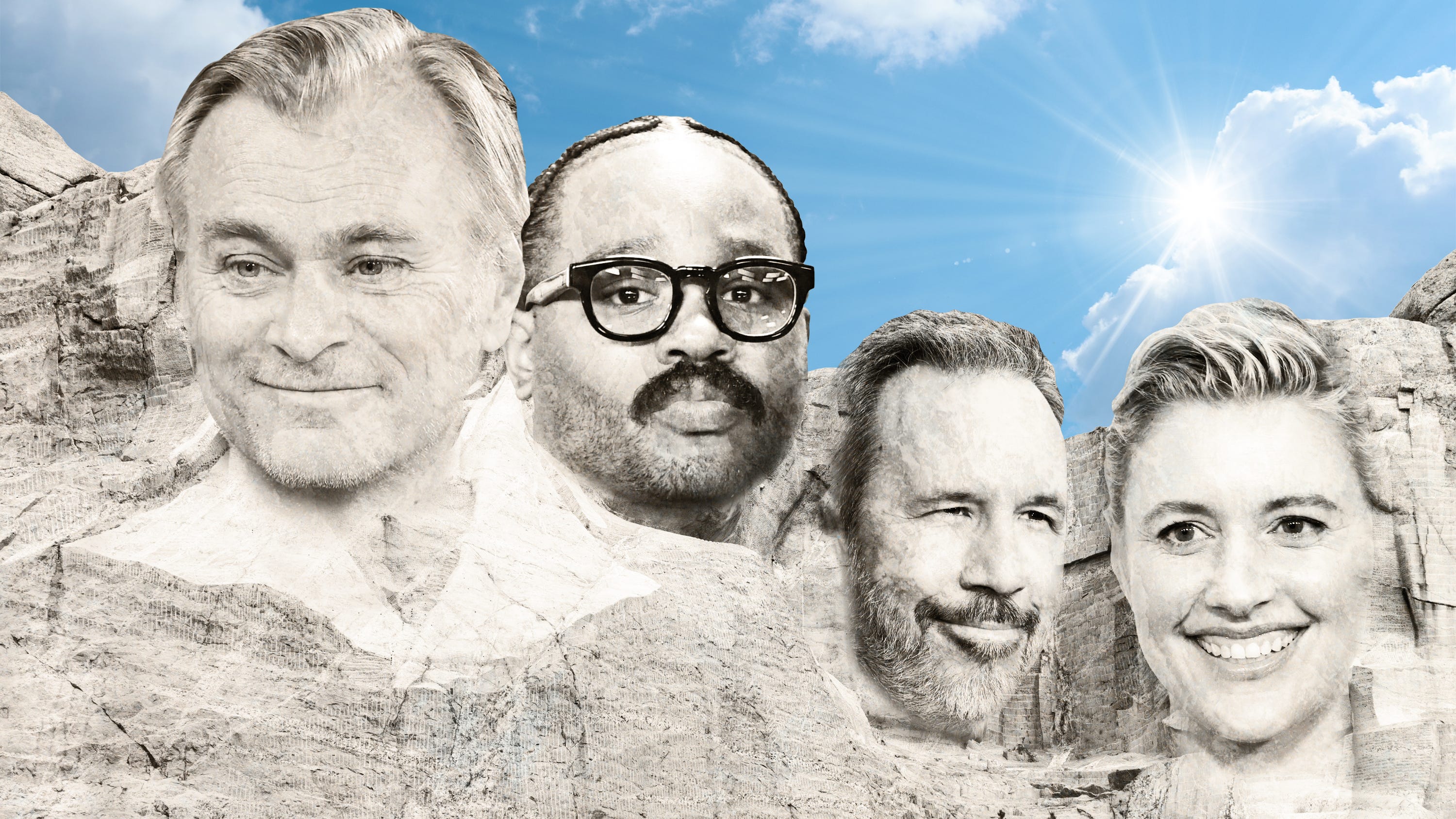
SPEAKING OF FUN PODCASTS, I had Nate Jones from Vulture on to discuss his new feature ranking the hundred most powerful directors. Check it out and leave your picks in the comments!
Review: Motor City
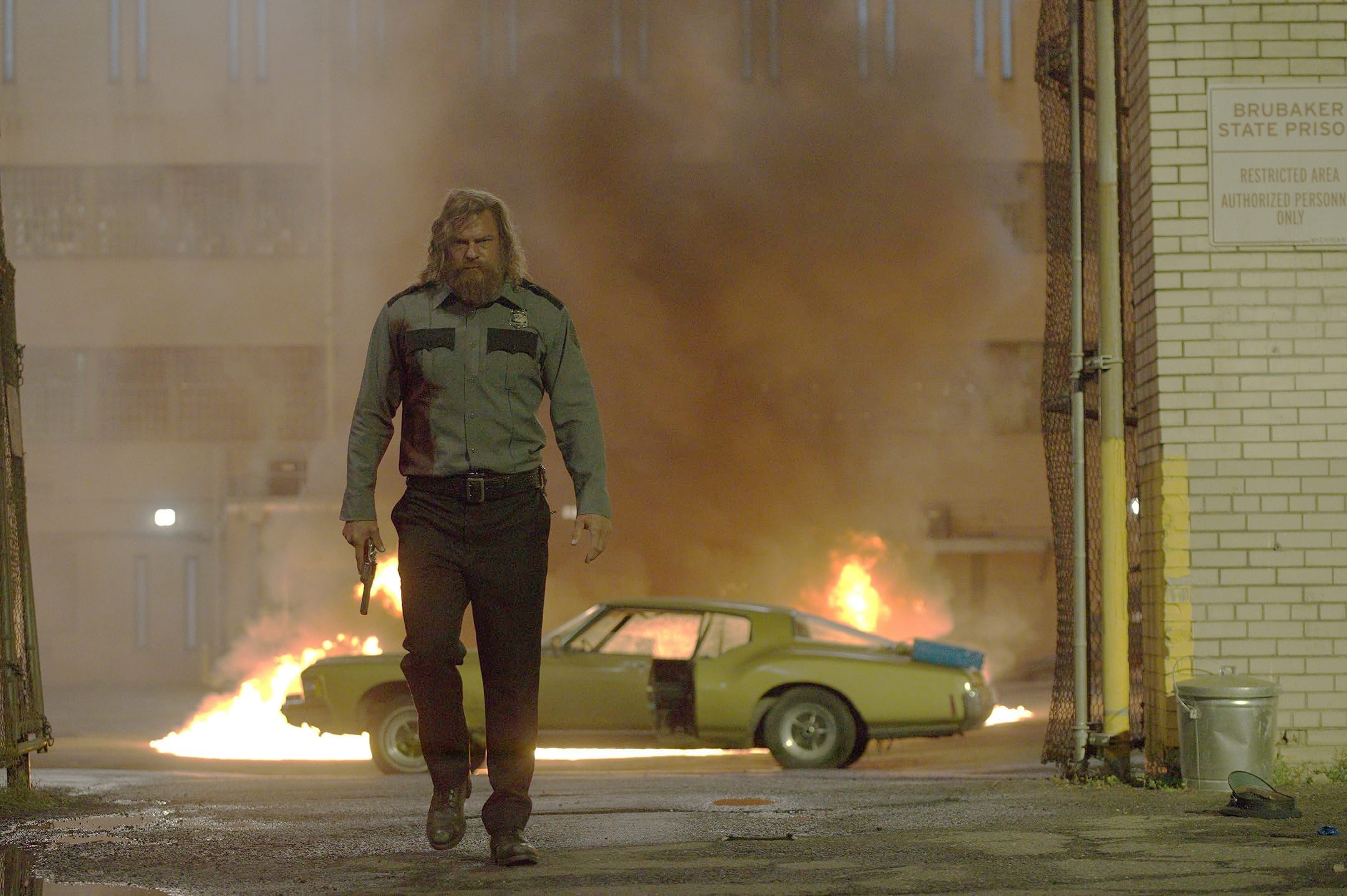
Alan Ritchson in Motor City. (Courtesy IFC)
MOST MOVIES CLEARED OUT this weekend since it’s smack-dab in between The Odyssey and Spider-Man: Brand New Day. But there are a couple of new things in theaters. The new Nicolas Winding Refn flick, Her Private Hell, is out now. Not really my cup of tea, though I’m always there for a new Refn in the hopes that he recaptures that Drive/Bronson/Only God Forgives vibe, and I dug The Neon Demon.
More to my liking is Motor City, a movie made from a script that hit the Black List almost two decades ago but took a while to get off the ground. Probably because of the film’s gimmick: It is almost entirely free of dialogue, telling its story simply through the visual imagery onscreen. From my review:
What’s fascinating about Motor City is that it works almost entirely because we understand the language of cinematic tropes that St. John and Ponciroli are playing with. The wronged ex-con, the crooked cops, the loyal friends, the misled ex-girlfriend, etc. One could argue that this renders the film little more than a collection of clichés, nothing more than formulae designed to move things along. One could also invert this argument, arguing that St. John and Ponciroli are exposing these tropes, and commenting upon them with the silent structure.
Personally, I prefer to take the story simply as it’s presented: Motor City hits its emotional beats and revels in its “every shot a painting” aesthetic, luxuriating both in the slow-motion movement and in soaking in the faces on the screen. And there are some great faces in this movie. Ritchson, best known for his three seasons as Jack Reacher, looks as though he’s carved from granite, while Woodley embodies a sort of fierce, soft sadness. Ben McKenzie has aged into his post-O.C. roles with real grace: he looks weary and righteous as a cop who takes it upon himself to free Miller from his unjust imprisonment. And Miller’s buddies—Lionel Boyce (of The Bear fame)and Amar Chadha-Patel play two pals who fought with him in Vietnam and help spring him from prison—are perfectly expressive and emotive. Patel in particular embodies a sort of wild joy that accompanies the pursuit of justice.
It’s in theaters now. If you’ve already seen The Odyssey—or you’re waiting to see it on IMAX—you could do much worse than Motor City.
(Photo illustration by Bill Kuchman/The Bulwark | Photos: Shutterstock)
A VAGUELY OMINOUS BUT LITTLE-NOTICED regulatory filing issued in late June could have a profound impact on business, immigrants, and the balance of power in our country.
The filing was a notification that the Trump administration had drafted new rules governing the decennial census. The actual specifics of those new rules remain scant. But from conversations I’ve been having with people close to the process, it is widely expected that the administration will try to recategorize millions of immigrants (both unauthorized and legal) as not actually living here in the United States.
Why would they do that? For several reasons.
The first is a longstanding animus that the president and his top aides have to the immigrant population. The administration has unleashed unprecedented border crackdowns and interior enforcement measures, in the service of a vast project of mass deportation. Through the census, it can continue the spirit of that campaign. Put another way: If you can’t deport every immigrant, you can at least remove evidence they exist.
The second is power.
An “actual Enumeration” of the entire U.S. population is required by the Constitution’s Census Clause.It’s pretty clear that the Constitution requires counting the full population, based on the use of the word “Persons” in this spot in the original text (rather than “Citizens” as used elsewhere), and similar language—“the whole number of persons”—in the Fourteenth Amendment.1
Join Bulwark+ to support independent media built by readers who refuse to be anyone’s plaything.
The resulting census is hugely important to the functioning of our government. It determines how many congressional representatives each state gets and how districts are drawn. It thereby also affects how many votes each state has in the Electoral College process used in presidential elections. And it plays a role in how trillions of federal dollars are allocated each year, since census data are used to calculate funding levels for health care programs, nutrition, highways, housing, school lunches, etc.
The stakes, in other words, are incredibly high. Which makes this rules submission process so profoundly important.
And here’s the kicker: So far, virtually no one has noticed.2
Let me warn you that this issue gets a little weedy. That’s by design; the administration wants you to not understand what they’re doing, so you won’t notice you’re being disenfranchised and robbed until it’s too late.
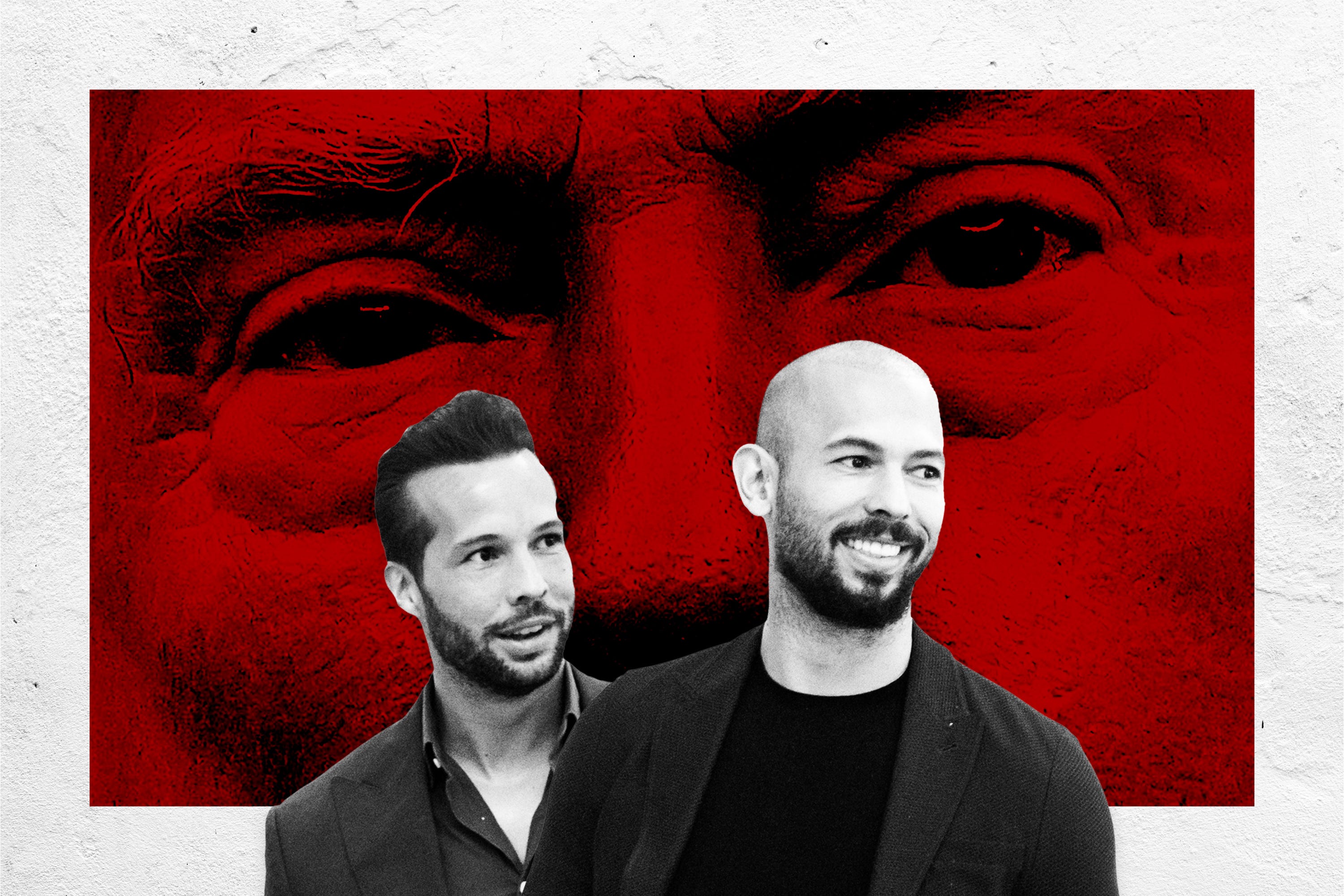
MAGA may be rallying behind Andrew and Tristan Tate, but the White House isn’t interested in spending political capital on protecting the manosphere sex pests from rape charges in the UK. Asked yesterday whether the White House would block the brothers’ extradition, Press Secretary Karoline Leavitt was terse: “No. We’ve already answered that question.”
Some housekeeping: You may have noticed that Morning Shots looks a little different today. This is part of a wider refresh for The Bulwark that we’re excited to share with you today. We hope you like what you see, but as with all home renovations, there’s always a punch list. Happy Friday.
Join JVL and special guest Paul Krugman for Receipts Live at 12:30 p.m. EDT today on Substack and YouTube.
(Photo illustration by Sarah Rogers/The Bulwark | Photos Getty)
Cancel Culture at the Pentagon
by William Kristol
1st Lt. Tyler James Feehan, 25, of Hawaii.
Pvt. Isabella Gonzales, 19, of Texas.
Sgt. Angel Rampersad, 28, of New York.
Sgt. Michael Emmanuel Swinton, 30, of North Carolina.
These soldiers died in the past week in the war against Iran. Lt. Feehan, Sgt. Rampersad, and Pvt. Gonzales were killed by an Iranian ballistic missile attack in Jordan. Sgt. Swinton died as a result of the demolition of an Iranian drone in Iraq. Their service to our nation should be honored. It certainly should not be erased.
But Donald Trump’s Defense Department has tried to erase these four service members from its official list of Iran war casualties.
As the New York Times reported last night, on Wednesday, the Pentagon’s casualties website listed eighteen service members who had been killed during the war with Iran. By Thursday, the Defense Department had lowered that number to fourteen—apparently excluding Lt. Feehan, Pvt. Gonzales, Sgt. Rampersand, and Sgt. Swinton.
(Photos: Department of Defense)
Three military officials told the Times that “one reason behind the change was that the Trump administration decided to remove four service members killed this past weekend from the list—three in Jordan and one in northern Iraq—because their deaths occurred after President Trump declared a cease-fire in the war in April.”
Trump’s Defense Department responded to the Times report on Thursday evening by claiming that the change was due to “temporary data disruptions” and that “these site anomalies are currently being resolved in coordination with the Military Services.”
But as I write on Friday morning, the “anomalies” haven’t been “resolved.” The Pentagon’s Defense Casualty Analysis System website still lists only fourteen deaths as a result of the Iran conflict—even though the Pentagon’s press release earlier in the week in connection with the dignified transfer of the four soldiers’ remains stated, “The deaths are related to Iranian aggression.”
But the administration, from the president on down, has been preoccupied with trying to downplay the costs of Trump’s war. The president has been regularly posting and talking about how many fewer casualties there have been compared to prior conflicts. And he has gone out of his way to call the war an “excursion” or a “skirmish.”
And the administration does have a particular interest in pretending these latest deaths aren’t somehow part of the Iran war. At his appearance Tuesday before the Senate Appropriations Committee, Hegseth was once again challenged about the lack of congressional authorization for the war. Then on Thursday, there were votes in both the House and Senate on war powers resolutions. One of many disingenuous arguments the Trump administration made to try to beat back demands for congressional authorization was that the clock for requiring congressional approval should restart after pauses in the war. The claim that these four soldiers’ deaths can’t be attributed to Trump’s Operation Epic Fury because they happened after the collapse of the ceasefire is part of the effort to avoid congressional accountability.
But it is also, of course, part of a broader phenomenon. As retired Army Lt. Gen. Ben Hodges told the Times, “The administration seems to have a real hard time being honest about what is going on—not just about casualties, but about the whole war in general.” And about much else besides.
The erasure of the deaths of Lt. Feehan, Pvt. Gonzales, Sgt. Rampersand, and Sgt. Swinton is only one of many, many instances of the dishonesty of the Trump administration—though it’s an extraordinarily petty and a strikingly callous one. It goes without saying that the administration’s dishonesty cannot diminish the honor due to these soldiers. But it does stain the honor of our country.
On Wednesday, the landmark nuclear agreement permitting Saudi Arabia to develop a civilian nuclear program with American uranium looked like a done deal: agreed to, signed, and announced with great fanfare by both nations. One day later, Trump threw the whole thing into confusion with—what else?—a post on Truth Social. The deal, he now said, would be “totally subject to Saudi Arabia joining the very respected and successful Abraham Accords.” In other words: No deal unless Saudi Arabia agrees to diplomatically recognize Israel. Why sandbag the Saudis with this extra demand after the agreement was signed, rather than as part of the negotiating process? Who knows? Art of the deal, baby!
Whatever the reason, the White House insists—for now—that Trump’s eleventh-hour concern is official U.S. policy. What U.S. negotiators said until now matters little, White House Press Secretary Karoline Leavitt told reporters yesterday: Trump alone is the “final dealmaker.” “If they don’t join the Abraham Accords,” Leavitt said, “the deal is off.”
What happens next is far from clear. The Saudis have not publicly tipped their hand, although one Saudi source suggested to veteran foreign policy reporter Laura Rozen that they may try to stare Trump down: A deal “was signed, so nothing to renegotiate,” the source said. “Tweets don’t overturn signed agreements.” (I’m sorry: Have they met this guy?)
We’ve had this guy’s number from the start. We don’t do empty both-sidesism or pretend that things are normal. Join us.
Trump has never been shy during his presidency about ripping up other people’s deals—NAFTA, say, or the JCPOA. Lately, though, the deals he’s ripping up have been his own. The same thing happened last month with Iran: The ink was barely dry on the memorandum of understanding before he was assuring his hawkish critics that the U.S. would hold Iran to stricter concessions than Iran had actually agreed to. It didn’t matter that Iran hadn’t agreed to permanently dismantle its nuclear program, Trump insisted: “If it’s not, we will bomb them. . . . We’re going to bomb the hell out of you.”
This shouldn’t come as a surprise, exactly. Dating all the way back to his pre-political business career, Trump has never seen his word as his bond; contracts and agreements, to him, aren’t so much mutually binding pledges as momentary branding exercises intended to get a little leverage. An ordinary negotiator gets the best deal he can, then goes home and tries to sell the deal to the public; Trump, by contrast, is willing to jettison whole portions of any deal he strikes if he senses it would make the selling-to-the-public bit easier. If the other party objects, well, that’s their problem.
This is a terrible characteristic in anybody, of course—nobody wants partners in life, in business, or in politics that can’t be trusted even to try to abide by their commitments. But in a would-be American emperor, it’s ruinous. Trump wants the entire world to run on his IOUs. When he’s gone, will there be a single country left that hasn’t learned a hard lesson about trusting the United States again?
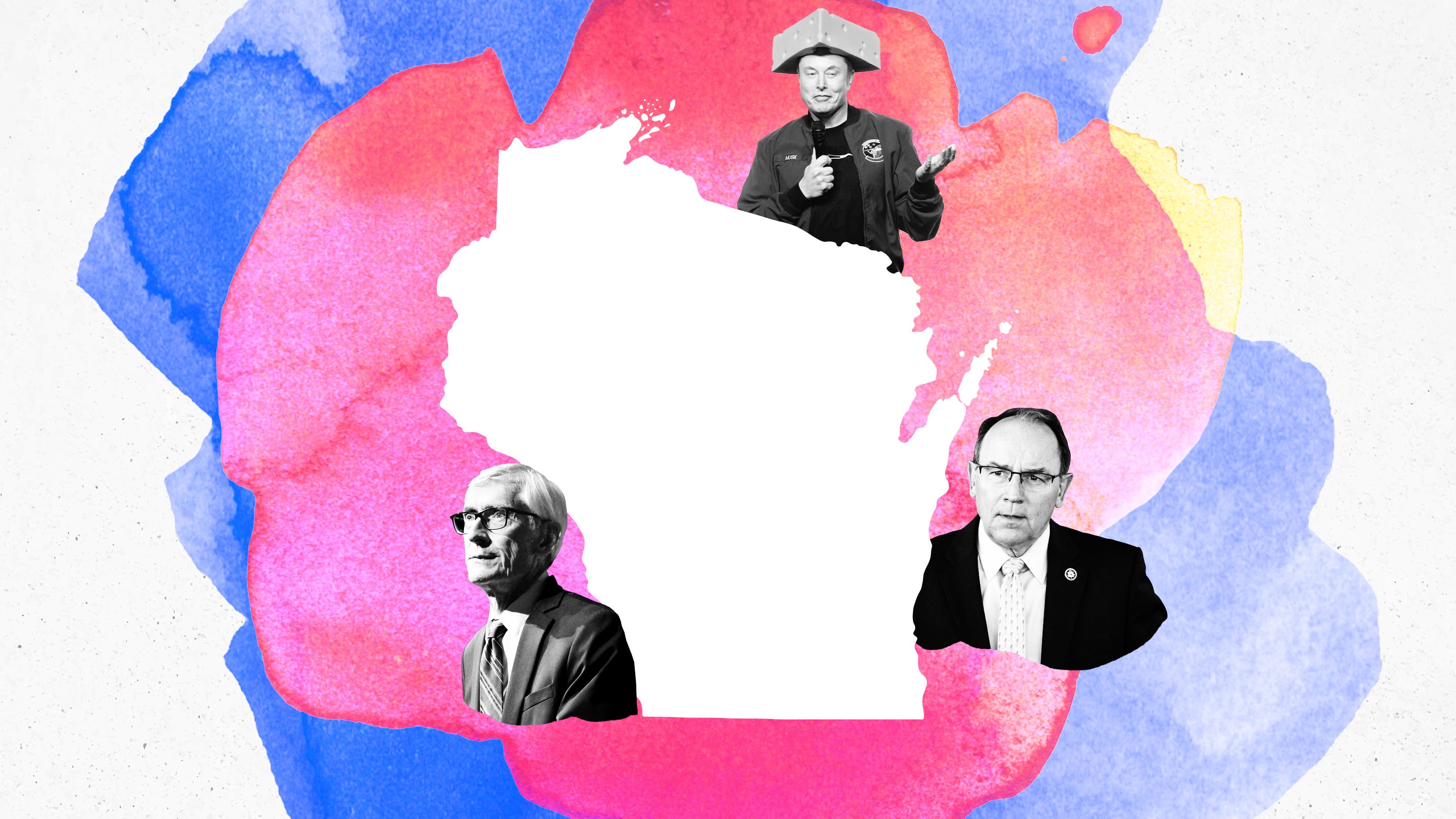
A High-Stakes Primary in Wisconsin’s Race for Governor… Will the Democrat who wins the party’s gubernatorial nomination August 11 be too progressive to beat a sycophantic Trump crony? BILL LUEDERS reports.
FUN WITH TARIFFS: Ever since the Supreme Court overturned his “Liberation Day” tariffs back in February, Donald Trump has been trying to keep his protectionist trade regime with the legal equivalents of duct tape and-chewing gum. One temporary authority expired last night at midnight; accordingly, he issued a new set of tariffs on a new authority to go into effect against more than eighty countries at 12:01 a.m. today. Here’s the New York Times:
The duties were issued under Section 301 of the Trade Act of 1974, which allows the president to impose tariffs on foreign countries that engage in unreasonable or discriminatory trade practices. The administration has cited the failure of foreign countries to pass or enforce laws banning the importation of goods made by forced labor into their own countries, saying that disadvantages U.S. businesses that do follow such laws.
Canada, which is subject to a 10 percent tariff under the arrangement, already prohibits importing forced labor goods. The European Union, also at 10 percent, has a ban that is scheduled to take effect in December 2027. But Trump officials say that the governments have not effectively enforced those laws.
Obviously, these are invented post-hoc rationalizations: Trump and his team are merely saying they care about forced labor because forced-labor concerns are what you need to have to unlock this particular tariff authority. One weird trick to running the government more or less by fiat is you can just lie about things!
EVERYBODY’S WHIPPING BOYS: They’re not the most sympathetic group in the world, but there’s a certain pathos to the plight of Senate Republicans right now—the group Trump has spent his disappointing second year back in office scapegoating for the paralysis of his domestic agenda. “I’ve never seen people so mad,” Sen. Roger Marshall (R-Kan.) said this week on 13th and Park, the podcast of top D.C. lobby shop Ballard Partners (yes, they have a podcast). “The job of the national media, what they try to do is make my parents mad. They sit at home and they watch Fox News and Newsmax, and guess what? They’re mad at me, they’re mad at John Thune, they’re mad at Mitch McConnell.”
“I mean, like, there’s this purity test,” Marshall went on. “So I feel this anger. More than ever before.”
It’s not every day a sitting Republican senator openly airs his frustration with Fox News. But the strain on the larger GOP apparatus is getting harder to ignore. After White House Press Secretary Karoline Leavitt castigated Senate Republicans for failing to pass the SAVE America Act yesterday, Senate Majority Leader John Thune quipped to reporters: “She or somebody else ought to get on the phone and get the votes, right?”
“Instead of pointing the finger at Republicans, they might think about going after the people who are stopping it on the floor, which is the Democrats,” Thune added. “And if there are Republicans that they think are gettable, get on the phone. Let’s get them to yes.”
SHUT UP, MOMS: Brandon Herrera, the Texas gun-nut YouTuber and GOP congressional nominee, has a long history of ludicrous loudmouth takes. But none have raised more eyebrows than a clip that resurfaced this week of Herrera offering an extraordinarily vulgar reaction to the gun-control group Moms Demand Action—and by extension on moms participating in political discourse at all. (Seriously, it’s gross—don’t say we didn’t warn you.)
“Just because you let somebody creampie you doesn’t mean I have to give a shit about your political opinions,” Herrera said in the clip, cocking an eyebrow in front of a wall of guns. “The fact that you kept your cum trophy doesn’t make you any less wrong about the dumb shit that you say.”
It’s not exactly news that America’s political realignment has left some very strange social-policy bedfellows in the Republican tent—after all, the coalition purporting to stand up for traditional values, morality, religion, and Western civilization has been helmed for a decade by a faithless philanderer and pathological liar who’s never opened a book in his life.
But those contradictions are only growing stronger and stranger as the GOP imports a new coalition of young men that are disproportionately nihilistic, terminally online edgelords. Is the GOP a party that prizes motherhood as a high calling, as so many old-school social conservatives suggest? Or is it one that sneers off mothers who dare participate in the political process as people who just “kept their cum trophies”? Apparently, it’s both!
Photo Illustration by Bill Kuchman/The Bulwark | Photos: Getty, Shutterstock
On this week’s episode, I’m joined by Nate Jones of Vulture to discuss his monumental effort to rank the 100 most powerful directors in Hollywood. We discussed how the audience has shifted from stars to IP to maybe, now, directors, and what that means for the industry. Plus: Who did his inside sources think he rated too highly … and too lowly? All that and more on this week’s (if I do say so myself) very fun episode. Debate amongst yourselves: Who has the most juice in Hollywood … and who should have the most juice?
What our country is going through now—a soul-ripping, mind-rending nightmare of corrupt authoritarianism in which a far-right candidate takes power on the back of economic discontent and culture wars and then uses his victory to claim a mandate for a sweeping, lawless assault on democracy itself—happened first in Wisconsin.
Wikler’s book, now awash in nationalattention, draws parallels between Wisconsin’s experience under Governor Scott Walker and the United States under President Donald Trump. Walker, swept into office with the Republican tsunami of 2010 that put both houses of the state legislature under GOP domination, demonized public employee unions, especially teachers, as part of a “divide and conquer” strategy. Trump, similarly, has demonized immigrants who are not members of his immediate family.
Both Walker and Trump used the levers of power to redraw voter district boundaries to their party’s advantage, while doctrinaire conservative justices on the Wisconsin Supreme Court and U.S. Supreme Court nodded in approval. Wisconsin was left as what was often labeled the most heavily gerrymandered state in the nation. Republicans were able to maintain huge majorities in both houses of the state legislature despite Wisconsin being almost equally politically divided between the two major parties.
Walker served two terms before being ousted in 2018 by Democrat Tony Evers, who now, at age 74, has decided not to seek re-election after serving two terms himself. That sets up an eventual contest between the presumptive Republican nominee, U.S. Rep. Tom Tiffany, and whoever emerges victorious from a pack of five Democrats competing for their party’s nomination in the August 11 primary.
What happened in Wisconsin, thanks in large part to Wikler’s capable leadership, is that, beginning in 2023, the Democrats were able to leverage a series of wins for liberals on the officially nonpartisan state Supreme Court, putting the state’s rigged voting districts in the crosshairs. Republican legislative leaders ultimately agreed to accept maps drawn by Evers—mainly to avoid having the court, now controlled by liberals, redraw maps that would go even further in eroding the Republicans’ deliberately unfair advantage.
We’re big fans of fairness over here. That’s why we’re offering you two weeks of Bulwark+ for free—give us a fair shake, and then decide whether our annual subscription is a fair deal.
Heading into the fall elections, Wisconsin Democrats have a good chance of reclaiming the state senate and at least a fighting chance of winning control of the assembly for the first time since 2011. Tiffany, a shameless election denier who in January 2021 voted against certifying Joe Biden’s victory over Trump in two swing states and even signed on to a legal brief that sought to overturn the election result, could emerge victorious. Like most members of his party, Tiffany refuses to acknowledge that Biden won the race fair and square, citing an ongoing need to investigate “the improprieties that happened.”
ALL FIVE OF THE RACE’S Democratic primary contenders, culled from an initial field of nine, have a reasonable shot at garnering the most votes and advancing to the general election in November. They are: former Lieutenant Gov. Mandela Barnes, former state Department of Administration secretary Joel Brennan, Milwaukee County executive David Crowley, state Rep. Francesca Hong, and state Sen. Kelda Roys.
Crowley dropped out of the race on July 8 only to jump back in less than two weeks later when the state’s current lieutenant governor, Sara Rodriguez, whom he had endorsed, ended her campaign amid a scandal that erupted over her campaign manager’s filing of significantly incorrect financial reports. Evers, who had previously not endorsed any of his potential successors, promptly came out in support of Crowley, much to the annoyance of the other candidates and their supporters.
“This Hail Mary serves no purpose other than playing spoiler and handing our state to Trump’s handpicked candidate in Tom Tiffany,” groused Barnes’s campaign manager, Darby O’Connor. Barnes was Evers’s lieutenant governor during his first term.
Barnes and others have speculated that Evers’s endorsement of Crowley is meant to undermine the candidacies of more progressive candidates, prominently including Hong, who identifies as a democratic socialist.
Even Paul Fanlund, publisher and president of the once–proudly progressive Capital Times newspaper, has sounded an alarm about Hong’s support “from a narrow but hard-core far left” that holds little sway “beyond the sanctimonious, progressive bubble of Madison.” As Fanlund sees it, “Tiffany appears to be a weak, extremist candidate in what looks like a Democratic wave election cycle, but Democrats appear capable of screwing this up.”
According to a Marquette Law School Poll released July 22, Hong leads the field with 26 percent support, with Barnes following at 15 percent. The poll, conducted during the brief period between Crowley’s exit and re-entry into the race, found that nearly half (45 percent) of likely Democratic primary voters remain undecided. Another finding: “Two-thirds of Democratic voters say having a candidate who can win in November is ‘extremely important.’”
Hong, in a statement, crowed about the poll results. “Our working-class movement is leading this race,” she said. “Even our opponents’ own polling confirms that Wisconsinites are responding to our positive campaign and our vision of permanent affordability.”
Anthony Chergosky, a political science professor at the University of Wisconsin-La Crosse, has come up with campaign nicknames for the Democratic contenders to highlight points of distinction between them, as he discussed with a reporter for an article in the Capital Times.
Brennan, a straitlaced former state bureaucrat (and incidentally the only white male in the race, which is remarkable given that Wisconsin has never elected a nonwhite or female governor), could call his campaign “Evers 2.0.” Hong, who has dubbed herself “The Wild Card,” might also latch on to “The Surprise Frontrunner.” Crowley could be “The Local Executive” on account of his experience in local government. Roys, who has served in the state legislature for nine years and ran for governor once before, could be “The Experienced Madisonian.” And Barnes, who won election to statewide office as lieutenant governor only to lose a race against Ron Johnson for U.S. Senate, could be “The Comeback Candidate.”
WIKLER, IN HIS BOOK, observes that it’s not just Democrats who see Wisconsin as playing an oversized role in shaping the nation’s—perhaps even the world’s—political fortunes. This was also the position adopted by billionaire-on-his-way-to-briefly-becoming-a-trillionaire Elon Musk in March 2025, just before a state Supreme Court election that would determine whether liberals or conservatives controlled the court for years to come.
Musk, at a rally in Green Bay, expressed his belief that this race would “affect the entire destiny of humanity.” He put his big money where his big mouth was, pumping at least $20 million (Wikler puts the total at $56 million) into what was far and away the most expensive judicial election in U.S. history. This he did on behalf of conservative candidate Brad Schimel, formerly the state’s Republican attorney general.
To gin up interest in the race, Musk handed out two $1 million checks to rallygoers in exchange for their votes. The state’s Democratic attorney general, Josh Kaul, sued to stop this “blatant attempt” to secure votes through bribery. But the liberal-dominated Wisconsin Supreme Court—being dominated by, you know, liberals—refused to take action to block this giveaway.
Schimel lost to liberal Susan Crawford by a 10-point margin.
And now Musk stands to come out a loser in more ways than one. Earlier this month, the Wisconsin Elections Commission, on a bipartisan vote of 5–1, found probable cause to believe that Musk’s $1 million checks violated state election-bribery laws. It referred the case to the district attorney’s office in Brown County, which includes Green Bay, to determine if criminal charges are warranted. The Brown County prosecutors have forty days to report their findings back to the commission.
Democratic lawmakers are now urging Brown County DA David Lasee, a Republican, to bring charges. “With just four months to go before the midterms, we must send a message, loud and clear, that Wisconsin’s votes are not for sale,” said state Rep. Lee Snodgrass. Musk is also being sued by a government watchdog group that seeks to bar him from ever again offering cash payments in Wisconsin, lest the state’s elections “become an open auction.”
In fact, there is a good chance that Wisconsin will not only beat a Trump acolyte amid the president’s raging unpopularity, but also deliver real-world consequences for the equally disliked Elon Musk. I propose a working campaign nickname: “Wisconsin’s Time to Shine.”
ONCE, UPON THE ARRIVAL of an unusually handsome man in town and all the ensuing flustrations, I proposed a business idea to my friend: We would found a residential program for women who wanted to learn to cope with handsome men. Our clients, by residing at a remote wilderness work camp with a bevy of male models, would learn to act normal no matter what species of jaw and brow and forearm confronted them. After, these women would return to their everyday lives immunized against the possibility of spilt coffees, logorrhea, elaborate pratfalls, and other farcical hazards. There would be nothing untoward, nothing creepy. (Possibly, we were already overoptimistic on this front.) It would be exposure therapy only. We would call it the Dude Ranch.
Little did I know that in the course of these conversations, not only was I exercising my spectacularly ill-advised entrepreneurial instincts—I was also participating in an instance of what Phoebe Maltz Bovy calls “the himbo plot.”
In the sixth chapter of The Last Straight Woman, she explains:
The himbo, a dim (or just chill) and good-looking man, is himself a trope, but the himbo plot is something more. It’s a narrative structure based around the effect a spectacular-looking man has on the women around him. Everything’s going along the way it normally does, the regular characters doing their usual thing, when suddenly there is a handsomeness situation afoot. A man’s beauty, and nothing else about him, sets forth plot developments, romantic or otherwise.
The Last Straight Woman is several things: a tour of the last ten years of internet gender discourse; an attempt to dispel a vaporous sense that there is something inherently cringey—or worse, retrograde—about the mere fact of wanting a man; a vindication of the rights of the much-overlooked female schlub; an attempt to articulate a feminist account of straight female desire; an argument against the premise that desire needs a political justification in the first place. All these different threads come together in a loose sprang weave, with each chapter addressing a different clutch of phenomena pulled from the spools of straight womanhood.
The himbo plot is one of these concepts, and it is key to The Last Straight Woman’s project in two ways.
First: Insofar as The Last Straight Woman has a unified thesis, rather than a bundle of related questions and observations, it is that the current most salient problem with female heterosexual desire is not its failure to be something other than heterosexual desire—or, really, a problem with female heterosexual desire itself at all. Instead, the problem is a larger cultural refusal to treat women by default as desirers rather than as desirees.
Get more of our independent political and cultural journalism—including entertaining and thoughtful review-essays like this one—by signing up for a free or paid subscription:
Second: The Last Straight Woman is as much an appreciation of British sitcoms, and an ode to the blue-haired, polyester-clad matrons who inhabit them, as it is anything else. And the himbo plot, as it turns out, is fertile ground for exploring the quirks and nuances of Maltz Bovy’s favorite forms of media. There is no getting around this aspect of the book: It will either work for you or it will not. I found it delightful.
There are, however, downsides to using television as a lens to explore female heterosexuality. Sometimes it seems to land Maltz Bovy in what is often called “heteropessimism.” In the introduction, she writes “Life expectancy for Canadian women is over eighty. This means of approximately seventy man-liking years, a woman may spend ten of them in love-interest mode herself.” Perhaps this is true for those dealing with casting agents, but for the rest of us, surely it overstates the case. I cannot be the only one who witnessed her grandparents, in the midst of all the vicissitudes of old age and all the typical domestic squabbles over misplaced bills and expired milk, spend their declining years in a passionate romance. Beyond any question of whether women should lead interesting romantic lives—including romantic lives as objects of desire—past the first blush of nubility, the observable fact is that, without fanfare, glamor, or pretension to the role of permanent universal ingénue, women regularly do lead such lives.
Again in this heteropessimistic strain, she writes, “Everyone gets that a man does not lose his pre-existing sexual orientation upon making a commitment, and that the most that can be asked of him is that he not be too careless with his web browser.” Is it, really?
Maltz Bovy is correct that the most direct and object-oriented form of straight female desire is real, and often ignored. But I am skeptical that designating this direct and object-oriented mode—the mode of straight women’s desire that most symmetrically corresponds to the way straight men tend to desire—as the real, legitimate form of hetero female sexuality will cure straight womanhood of its indignities and embarrassments.
Men and women usually want the same things in different ways, and sex is no different. If we think for a moment in terms of desired outcomes rather than desired persons, a straight woman’s desired sexual outcome often might look something like melting in the enfolding embrace of the werewolf with a heart of gold, or what have you. Enfolding the werewolf, however willing he may be, is less likely to make the cut.
Part of the problem for straight women is accessing a cultural imaginary—or, absent something ready to hand, building one—wherein desire from the receptive end of the heterosexual seduction structure is not considered the absence of sexuality; or an indiscriminate and mechanical response; or a mandate for a publicly owned and scrutinized sexual attractiveness (by which, one way or another, they can always be humiliated); or mere passivity.
Ultimately, this surprisingly evasive positive account of desire is one that figures straight women as agents who actively shape their own romantic and sexual destinies, including when specific content of their desires might still be read as receptive. This presents a challenge Maltz Bovy doesn’t consistently meet.
For instance, Maltz Bovy asks “And if female sexuality is responsive, what even is a no, anyway?” Perhaps this is true for the most extreme imaginable version of what “responsive” means. But why would “responsive” mean “non-desiring,” let alone “non-consenting”? Why would it be the case that, simply because a hypothetical woman’s strongest sexual arousal tends to occur with a man’s initiation rather than spontaneously, she should be presumed incapable of deciding whether this particular man, and the particular woo he’s pitching, is working for her?
For that matter, I do not think the fact that many straight men feel confirmed in their potency only upon seeing it manifest as a woman’s pleasure—with all the psychological vulnerability that this entails—is evidence of some kind of abject disassociation from their own sexuality. The hard categories of active and passive, subject and object, doer and done, probably better describe violent or unpleasant sex than the entangled, mutable, and somewhat mysterious dynamism of reciprocally pleasurable heterosexuality.
UNFORTUNATELY, VIOLENT AND UNPLEASANT SEX is as much a part of the heterosexual story as the reciprocally pleasurable, and gets its due in The Last Straight Woman with a chapter on #MeToo. It is a mixed bag.
On one hand, Maltz Bovy teases out something I have not seen anyone else get at. When reporting allegations of abuse, harassment, and assault, journalists often present those actions within a context of everything the perpetrator ever did that might conceivably have been a red flag. The intent, I imagine, is to narrate the interior trajectory that often corresponds to these kinds of violations: Something seems a little off about a guy in a way you can’t put your finger on, so you ignore it, until you can’t. But for the person reading the article, the effect is that the real, substantial allegations come to visibility midway through the narrative, and then disappear again into a background haze of bad vibes.
On the other hand, though, Maltz Bovy has her own somewhat distracting way of blending the weighty with the trivial: making a serious claim, then coyly retreating into Britcoms. She writes:
There can also be—and here’s where things get really awkward—a wishful-thinking element to women’s discussion of men’s forwardness. . . . I don’t dare bring up real-life instances of this but will do the discreet thing of pointing you instead to a 1991 episode of Britcom Waiting for God (“Young People”).
Nodding along in faux-agreement while your friends bewail the plenitude and overexcitement of their suitors, as Maltz Bovy cops to doing in a very funny anecdote, is one thing. But if she is accusing women of actually confabulating instances of male sexual aggression in order to be thought pretty, she should name names and share on what grounds she believes that they are telling falsehoods.
In general, the chapter suffers from a tendency to treat #MeToo violations as a referendum on desirability:
I have been in elevators once or twice in my life but, barring other cues, have never reacted this way to sharing one with a strange man. A man would need motive, not just opportunity, and for reasons doubtless as particular to myself as Kwon’s are to hers, I do not assume a man would find proximity to me a source of such temptation.
I believe the reason that most women are not especially afraid of elevators—certainly the reason I am not especially afraid of elevators—is that even among rapists, the man who will assault a total stranger in a well-trafficked semi-public place is a minority. I calibrate my perceived threat level according to the low probability of sharing any given elevator with a particularly extreme sub-type of rapist, not according to whether or not I think I look rapeable today. I do not dispute the claim that, in general, gorgeous twentysomethings experience more street harassment than little old ladies, but it would be a mistake to use trends that occur at an aggregate level to adjudicate likelihood or unlikelihood in any specific given case, especially when so many other more dispositive factors are almost certainly in play. Maltz Bovy’s own street harassment story occurs when she is a pre-teen; many women experience their highest incidence of predatory behavior from men around this time, probably due to some mix of visible vulnerability combined with the coinciding of aggression and deviance in predatory men. Presumably we can all agree that it is not because 11-year-olds are hot stuff.
But I found myself less outraged than confused by passages like the one containing her elevator musings above. It is hard to know what the end game is here. I cannot imagine that what Maltz Bovy wants is for reporting harassment to be equated with calling yourself hot; or for some sort of plausibility test to be applied to women’s looks, some sort of social tribunal to decide whether she was really pretty enough to be groped on the subway. I cannot imagine how this could be construed as a victory for the vast majority of women who are not Emily Ratajkowski–type supermodels.
What is the alternative, then? How do we address the fact that some women receive large amounts of hostile and negative attention, while some receive very little? I do not think the desire to be desired, the desire to be seen as beautiful, is trivial. But I also do not think there is a good answer to this specific tension, except the same one women must learn, again and again, vis-à-vis the fashion and entertainment industries, vis-à-vis the purveyors of eating disorders, vis-à-vis middle school cliques, vis-à-vis men who reduce you to a numbered scale, who solicit images of your nude body and use them to demean you: Resist the perverse instinct to treat as the authority on your beauty the people who want you dead.
But The Last Straight Woman is probably better conceived as an exploration of tensions than an attempt to resolve them, which is why, despite this long and incomplete list of disputes, I thoroughly enjoyed it. A book that is comfortable with ambivalence, that is a pleasure to quarrel with, that channels a kind of Ephronesque spirit of plainspoken inquiry into everyday absurdities—this is a rare gift. You never know exactly what Maltz Bovy is going to think about something until you read her: in the world of opinion journalism, a rarer gift still.
Send this review-essay to someone who thinks deeply about the nature of desire, plus someone else you know who thinks very superficially about it.
MOTOR CITY DERIVES FROM A SCRIPT that earned a spot on the Black List—a competition highlighting unique and unproduced screenplays—in the late ’00s. Virtually dialogue-free and entirely dependent upon the staging and the action to get its point across, the film bounced around Hollywood for the last decade and a half, garnering interest and helping the writer earn gigs like London Has Fallen and Peppermint (an entirely underrated revenge thriller), but never attracting a studio brave enough to execute on the vision of the delightfully named Chad St. John.
Eventually the stars aligned and the script found its way to also delightfully named Potsy Ponciroli (who directed the grimly intense Old Henry) and a bucket of cash from, among others, the free-spending indie distributor Black Bear. It’s obvious, though, that the unconventional nature of the screenplay—the very thing that made it so compelling to so many script readers looking for something new and interesting in a sea of boring sameness—made it a hard sell to audiences.
Indeed, I remember seeing the trailer for this in theaters with a paying audience and thinking, “Oh, cool choice, no dialogue in the trailer.” I did not realize that it was less a choice than a necessity, given the dialogue-bereft nature of the film. I can imagine regular filmgoers finding it off-putting, given that CinemaScore audiences gave John Woo’s Silent Night, which has a similar conceit—minimal dialogue, action-driven plot, lots of killing—a disastrous C.
The setup is pretty straightforward: It’s Detroit in the 1970s, and after an in medias res opening in which the hulking John Miller (Alan Ritchson) is seen tossing guys off roofs and firing a shotgun shell that seems to have been topped with an engagement ring—I imagine this will reappear—we flash back to the before times. Miller is wrapping up parole and about to get engaged (well, that was fast) to waitress Sophia (Shailene Woodley). Miller is set up to take the fall for a drug stash he had no knowledge of by corrupt cop Lieutenant Savick (Pablo Schreiber), leading Sophia right back into the arms of local drug kingpin Reynolds (Ben Foster). Can Miller win her back? More to the point: How many people will he have to kill on the way to winning her back?
Ben Foster and Shailene Woodley in Motor City. (Courtesy IFC)
What’s fascinating about Motor City is that it works almost entirely because we understand the language of cinematic tropes that St. John and Ponciroli are playing with. The wronged ex-con, the crooked cops, the loyal friends, the misled ex-girlfriend, etc. One could argue that this renders the film little more than a collection of clichés, nothing more than formulae designed to move things along. One could also invert this argument, arguing that St. John and Ponciroli are exposing these tropes, and commenting upon them with the silent structure.
Personally, I prefer to take the story simply as it’s presented: Motor City hits its emotional beats and revels in its “every shot a painting” aesthetic, luxuriating both in the slow-motion movement and in soaking in the faces on the screen. And there are some great faces in this movie. Ritchson, best known for his three seasons as Jack Reacher, looks as though he’s carved from granite, while Woodley embodies a sort of fierce, soft sadness. Ben McKenzie has aged into his post-O.C. roles with real grace: he looks weary and righteous as a cop who takes it upon himself to free Miller from his unjust imprisonment. And Miller’s buddies—Lionel Boyce (of The Bear fame)and Amar Chadha-Patel play two pals who fought with him in Vietnam and help spring him from prison—are perfectly expressive and emotive. Patel in particular embodies a sort of wild joy that accompanies the pursuit of justice.
I am sure there will be people who are annoyed by the lack of dialogue in this film, though not for a lack of understanding: You really have to give Ponciroli and St. John credit for making this thing perfectly legible despite being able to count the lines of dialogue on one hand. That very simplicity may spark a backlash. But I quite enjoyed it. It’s a nice little spin on a familiar genre. I hope you give it a shot in theaters this weekend.
Sam Stein and Ben Parker give their takes on why the DOJ abruptly withdrew its subpoenas against three New York Times reporters and their family members over reporting on security flaws in Trump’s Qatari-gifted Air Force One. But the losses in court don't stop there, the administration also quietly dropped its demand for a list of Jewish faculty and students at UPenn, and a Trump-appointed judge just blocked the White House from obtaining Kentucky’s voter rolls. Plus, in a scene straight out of Pyongyang: Trump finishes a speech, and the applause just… doesn’t stop. A full uncomfortable minute of a room too scared to be the first one to sit down.
As always: Watch, listen, and leave a comment. Bulwark+ Takes is home to short videos, livestreams, and event archives exclusively for Bulwark+ members.
Add Bulwark+ Takes feed to your player of choice, here.
(Photo Illustration by Bill Kuchman/The Bulwark | Photos: Getty, Shutterstock)
SHOULD THOSE OF US WHO WANT to defeat the proto-fascists in charge of the Republican party be worried about a few blue districts that have recently indulged their ids and voted for members of the Democratic Socialists of America? Yes. If their victories become a trend, it could sabotage the Democratic party.
In a way, Democrats should be grateful to Trump. In the past eighteen months, he has done all he can to alienate the swing voters who boosted him to victory in 2024. Young voters, black men, and Hispanics are particularly disappointed. This is, or should be, a rare moment of hope for the opposition.
Yet it’s almost as if a subset of Democratic primary voters rubbed their hands together and asked: What can we do to improve the GOP’s prospects?Let’s vote for Democratic Socialist candidates like Claire Valdez, Darializa Avila Chevalier, Melat Kiros, and Janeese Lewis George! The primary voters who chose those candidates have done Republicans a huge favor. Six months ago, Republicans had almost nothing to run on. Now, instead of attempting to explain high prices, a terrible war, an immigration crackdown that has shocked the conscience, and corruption beyond anything in American history, Republican candidates can and will put these DSA candidates in the front window as emblematic of the “communist” turn the Democrats are taking.
When one party has gone mad, it’s understandable that some in the other party feel radicalized too. But that’s a trap. In the first place, the GOP’s idiocy opens an opportunity to win back some of the moderates Democrats have recently lost. But by embracing ideas that are on the fringes of American public opinion, Democrats risk further alienating swing voters.
We have three rules here: We tell the truth, we tell you what we really think, and we put democracy above party allegiance. Join us.
Democrats don’t have the same luxury as Republicans to indulge extreme ideas because the baseline political environment is moderately conservative. Gallup found in January that 35 percent of Americans call themselves conservative, 33 percent moderate, and 28 percent liberal. Most Democrats recognize this balance. A May New York Times/Siena poll found that 52 percent of Democrats and those who lean toward the Democrats believe the party should move to the center to win the next presidential election.
Finally, in addition to the ideological makeup of the electorate, the Electoral College gives a structural advantage to small states that tends to help the GOP. As a result, Democrats need to win 60 percent of moderates in order to win presidential elections.
That’s the pragmatic case. The substantive argument could fill volumes, but let’s address a few issues.
RESPONDING TO THE FLURRY OF VICTORIES by DSA candidates, some complacent souls ask, What’s so bad about socialism? It’s working well in Sweden.
That’s a common misconception. Sweden implemented semi-socialist policies in the 1960s featuring extremely high taxes, government ownership of key industries, extensive regulation of the economy, and generous welfare benefits. But growth slowed, wages stagnated, debt accumulated, and in the early 1990s, the country experienced a terrible financial crash. In the short term, it spent as much as 4 percent of GDP and even nationalized two banks to prevent a financial collapse and save its banking sector—but the long-term reforms that followed focused more on fiscal discipline. Johan Norberg has written convincingly of Sweden’s post-crisis turn away from government control of markets:
Public spending was reduced, and fiscal rules that lowered debt were introduced. Taxes were cut and abolished entirely on wealth, gifts, and inheritances. Business sectors were deregulated, government-owned enterprises privatized, and social security reformed.
Sweden also became a pioneer in privatizing welfare services, giving citizens the freedom to choose private providers, including for-profit businesses, of elder care, health care, preschool, and education. Most notably, Sweden introduced a national school voucher system. The private sector now provides around a fifth of all tax-funded welfare services.
The stories of the other Nordic countries are similar—with the exception of Norway, which is both more capitalistic than its American reputation would suggest and a petrostate. In general, the highly egalitarian countries of Northern Europe are not socialist, but free-market, capitalist countries with large safety nets underwritten by high taxes on the middle class. Like the United States, they tax income, but they also levy high value-added taxes on consumption, which hit the middle class harder than American sales taxes do. If it were possible to fund a generous welfare state by taxing only the rich, someone would have figured out how to do so. But France tried a millionaires tax and soon repealed it, as did Austria and Denmark with similar measures. Sure, we could raise taxes on the rich, but it’s simply wrong to imagine, as Sanders tirelessly insists, they have enough to carry the load themselves. Even confiscating all the wealth of America’s 800 or so billionaires wouldn’t be enough to fund a more generous safety net for more than a year or so.
Some naïve souls say: We have nothing to fear from Democratic Socialists of America. After all, the word “democratic” is in their name. A word about names. There is a spectrum of left wing parties and ideologies. There are socialists who believe in and abide by democratic norms. They sit in parliaments throughout the world. But those who didn’t live through the Cold War may not be aware that Communist countries had a habit of calling themselves democratic and socialist. It was the unfree East Germany whose official name was the German Democratic Republic. West Germany, which was actually democratic, was the Federal Republic of Germany. The USSR, the ur-Communist nation, was the Union of Soviet Socialist Republics. North Korea is formally the Democratic People’s Republic of Korea, Yugoslavia was the Socialist Federal Republic of Yugoslavia, and so on. The joke went around in those days that the easiest way to tell if a country was undemocratic was whether it had “democratic” in its name. Names can be deceiving.
The Democratic Socialists of America are not the Stasi or Juche zealots, but neither are they benign Nordic redistributionists. The DSA platform calls for abolishing the police and prison system; defunding the U.S. military entirely and closing all international military bases; ending sanctions on Cuba, Venezuela, Iran, and other nations that have merely “acted independently of the United States”; replacing the presidency and Supreme Court with bodies chosen by Congress; instituting a 32-hour work week; canceling all student debt; and basically free everything: housing, health care, retirement, and schooling. The DSA holds the United States and NATO responsible for Russia’s invasion of Ukraine, Israel responsible for October 7th, and capitalism responsible for every sparrow that falls anywhere in the world.
The DSA’s political leadership is divided between a kind of Menshevik faction that supports something that could be fairly described as democratic socialism, and a Bolshevik faction that is avowedly communist—though itself split among Marxists, Marxist-Leninists, Maoists, Trotskyists, and various other flavors. The structure of the DSA is as convoluted as any Communist party’s, but in toto, the communists seem to be dominating. And while their economic views are mockable, the implications of communist sympathies are dead serious.
Unlike socialists, communists do not believe in democracy. There has never been a communist country that delivered prosperity or freedom to its people. On the contrary, communism is an assault on human rights and human dignity. Communist regimes claim to take power from oligarchs or royalists or capital, but in fact they always and without exception take power from the people. They abolish not just free exchange of goods and services, but free expression, religious observance, artistic freedom, the right to vote, the right to travel—and, by the way, the right of workers to organize. Past proletarian paradises had to erect walls and shoot people to keep them inside. In the words of George Orwell, “A boot stamping on a human face—forever.”
THE DEMOCRATIC PARTY HAS Along history of misinterpreting or being blind to the abuses of communism. But from the founding of Americans for Democratic Action in 1947 by Eleanor Roosevelt, Reinhold Niebuhr, Arthur Schlesinger, Jr. and others, to the exclusion of Communist-dominated unions from the CIO, to the marginalization of Henry Wallace, Democrats took decisive steps to keep the far left at bay. And while some Democrats in the post-Vietnam era took a “no enemies to the left” approach to foreign policy, they got over it when the Berlin Wall fell and the reality of the Communist oppression became indisputable. Today, only 6 percent of Democrats label themselves as socialists. Rachel Janfaza, who studies Generation Z and has interviewed hundreds of young voters, has yet to find a single one who identifies as a Democratic Socialist.
The vibes may be exciting, especially because New York Mayor Zohran Mamdani’s smiling face disguises the authoritarianism of the movement that nurtured him, but if Democrats are going to win this year and in 2028, they must reject the DSA. If you’re tempted by a democratic socialist this year, think of what use Republicans will make of these victories, and ask yourself whether you want to do favors for fascists.
In 2026, everyone who follows politics has an opinion about Maine politics. Here’s the thing: a lot of people in Maine think they’re wrong. So, Sarah talked to a former national political reporter who moved his family to Maine to help stand up a local paper. Former NBC News reporter Alex Seitz-Wald, now deputy editor of the Midcoast Villager, joins to discuss his transition to local journalism, the unique culture of Maine politics, and how Graham Platner’s exit from the U.S. Senate race landed with Maine voters. They also size up the new Democratic candidate, Troy Jackson, and discuss why Susan Collins has had such staying power, and how–or whether–her luck might finally run out in 2026.
As always: Watch, listen, hit the like button or leave a comment. We want to hear from you.
Ad-free editions of The Bulwark Podcast are available exclusively for Bulwark+ members.
The Bulwark Podcast with Tim Miller is available wherever you get podcasts and on YouTube. New shows drop each weekday afternoon. If you like the show, leave a comment and ⭐⭐⭐⭐ wherever you listen. Add The Bulwark Podcast to your player of choice, here.
Sam Stein and Will Sommer break down the double standard at the heart of the GOP right now: Democrats forced Graham Platner off the ballot over disturbing allegations, while Republicans stand by candidates and members with far more documented records. Texas gun-YouTuber Brandon Herrera made disgusting comments about women and children. Arizona's Mark Lamb is facing sexual misconduct allegations. Sitting Congressmen Cory Mills and Max Miller continue to face domestic abuse allegations. So what does Mike Johnson say when he's asked directly about it? He dodges.
As always: Watch, listen, and leave a comment. Bulwark+ Takes is home to short videos, livestreams, and event archives exclusively for Bulwark+ members.
Add Bulwark+ Takes feed to your player of choice, here.
(Photo illustration by Sarah Rogers/The Bulwark | Photos: Getty, Shutterstock)
1. Rotten to the Core
We’re going to have a fairly technical discussion about economics and AI in a minute, but first I want to give you some candy.
As part of the America 250 BS, the Trump administration held a quiz bowl–style competition for high school kids about “civics.”
And they rigged the game.
One of the semifinalists was a Sikh kid from Connecticut with immigrant parents. The judges made clear-cut “mistakes” in grading his answers so that three white kids—one homeschooled, one from a private Catholic school, and one whose dream is to go to Hillsdale—made the finals.
On the one hand: This is not a big deal. Anyone who has ever watched a $100 Rotary scholarship go to the son of the guy who runs the local chamber of commerce knows this is how things work sometimes.
That’s life.
On the other hand: The rest of us don’t have to play along and pretend not to see what’s happening. Oh, and one last thing in the footnotes.2
There’s a new academic paper making the rounds from a couple of researchers at Wharton. It is . . . alarming. They try to anticipate effects from the AI disruption and their thesis goes something like this:
AI will rapidly replace many workers.
The surge in unemployment will crush overall demand for products and services.
At which point the companies that replaced workers with AI will suffer.
This trap is akin to the Prisoner’s Dilemma. Overall, businesses would be better off if they cooperated and slowed their adoption of AI. But individually, businesses will be harmed if they don’t replace workers as fast as possible.
Not gonna lie: It’s a pretty grim assessment. So let’s look closer.
I know these paywalls can be annoying but they make it possible for us to do what we do here every day—helping you see around corners. I hope you’ll consider giving Bulwark+ a try, FREE for the next two weeks. A membership helps keep our work sustainable and includes the best community on the internet. We keep each other sane.
(Photo illustration by Bill Kuchman/The Bulwark | Photos: Getty, Shutterstock)
Can MAGA Fight the Charges Against Andrew Tate?
PROMINENT MANOSPHERE INFLUENCERS and accused sex traffickers Andrew and Tristan Tate were arrested by U.S. marshals in Miami last weekend, as they were set to host—what else?—a bare-knuckle boxing match.
Video of their arrest, which quickly went viral, showed Andrew Tate dressed in clamdigger pants and an unusual purple shirt unbuttoned down almost to his navel. But maybe the most surprising thing is that it happened on American soil at all.
That’s because, despite years of accusations involving rape and sex trafficking, the Tates have enjoyed a strangely close relationship with Trump world that seems to have extended to preferential treatment from the government. Andrew Tate has had numerous friendly conversations with Barron Trump and Donald Trump Jr., according to the New York Times. With the influencer brothers unable to leave Romania for years as the investigation went on, prominent Trump world figure Ric Grenell reportedly spoke to Romanian officials about their case. Soon after those conversations, the Tates were allowed to leave Romania.
Another time, after the troubled pair had their phones seized last year, Trump officialPaul Ingrassia reportedly intervened to help them.1 And just days before their arrest last weekend, the Tates were partying in Washington with Trump administration luminaries.
Incredibly, nearly all of the MAGA movement’s embrace of the brothers has come after they were first accused of sex trafficking in 2022. That seemed pretty crazy for a bunch of people who claim their biggest issue is child sex trafficking. But it seemed the friendly feelings for the Tates might have reached their limits last week after they were arrested to be extradited to the United Kingdom, where they face new charges related to allegedly choking women unconscious and raping them.
And yet, despite the seriousness of the crimes, there is still a growing movement on the right urging the Trump administration to intervene and prevent the extradition.
Rep. Abe Hamadeh (R-Ariz.) has become one of the Tates’ most prominent defenders in the aftermath of the extradition, claiming in a tweet that they’re victims of politicized “lawfare” in both the U.K. and Romania. He doesn’t specify why he thinks the brothers would be targets of lawfare—what political reasons these countries would have for taking down the Tates. Nevertheless, Hamadeh said the Trump administration should refuse to extradite the brothers, who are dual American and British citizens.
“There should be no extradition of American citizens when the charges are unclear and political,” Hamadeh wrote.
Right-wing influencers and media figures are also supporting the Tates. White nationalist podcaster Nick Fuentes said their extradition would be a “national humiliation.” Far-right influencers the “Hodge Twins” compared the Tates to pro-Trump comedian Russell Brand, himself facing rape charges in the U.K., ostensibly to imply both were being unfairly targeted. And hustle-bro podcaster Patrick Bet-David went so far as to say the Tates were an inspiration to fatherless children.
“I think they’re doing more good for society than bad, if you ask me,” he said on his podcast following the extradition, though he admitted that the Tates were “very complicated human beings.”
Support this newsletter’s coverage of the right, the far right, and the far-out right—sign up for a Bulwark+ membership today, with a two-week free trial.
THE RALLYING AROUND THE TATES has put meaningful pressure on Secretary of State Marco Rubio, who has the power to block their extradition or see it go through. While both Rubio and Trump are reportedly unwilling to intervene to help the influencers, Rubio didn’t entirely foreclose the possibility at a press conference Wednesday, saying he didn’t see a role for the State Department “at this moment.”
“I’m not going to opine on something that’s still working through a legal process,” Rubio said.
That’s a fairly neutral stance to take on two men accused of being prolific international sex criminals! And given the Trump administration’s willingness to drop investigations into political allies or give them pardons and commutations, it doesn’t seem impossible that a pro-Tate pressure campaign could end up winning the brothers their freedom.
Tate lawyer Joseph D. McBride, a MAGA figure who has also represented January 6th defendants, appears to be courting administration support. When Ingrassia, now acting general counsel of the General Services Administration, tweeted on Sunday that the American system must protect “the presumption of innocence” in an apparent reference to the Tates, McBride retweeted him and other prominent Tate supporters.2
The online defense of the Tates is congealing around the idea that the brothers simply can’t receive a fair trial in a British court. Pointing to news stories and an exaggerated report on the British government’s slow response to immigrant “grooming gangs”—combined with its enforcement of laws that would violate American free speech standards—many on the right are convinced that the British justice system is essentially illegitimate.
But there is a secondary element to MAGA’s continued Tate brothers embrace that can’t be ignored. This movement has become instinctively distrustful of these types of allegations—at least when directed against one of their own.
Donald Trump himself has faced numerous rape and sexual assault allegations that he claimed they were politically targeted against him. While Trump blamed his legal woes on the “deep state,” Tate has adopted a similar concept, saying he’s being punished by operatives from an unspecified social control scheme he calls “The Matrix.” Per his telling, Tate is not facing legitimate criminal investigations because of his misdeeds, but, like Keanu Reeves’s Neo in The Matrix, is being punished by Mr. Smith-type “agents” for attempting to pull the rest of humanity into the real world.
That argument hasn’t always landed. In a 2024 interview with Tucker Carlson, Tate grew frustrated after his attempt at explaining away his criminal charges foundered when Carlson said he had not actually seen The Matrix.
“There’s a bunch of other similarities, which are difficult for me to explain because you haven’t watched the movie,” Tate said.
Ingrassia denied helping the Tates in an interview with ProPublica, though the outlet said it had reviewed a written request from Ingrassia supporting them.
Ingrassia, who received his law degree from Cornell in 2022, absurdly claims that the presumption of innocence “is what separates America from the world, and is what makes this country exceptional.” In fact, British law, which provided the foundation for American law, also holds the presumption of innocence sacred.
Don’t look now, but Brent crude is suddenly pushing $100 a barrel again. Happy Thursday.
Now’s the time to try out a Bulwark+ membership. Get access to members-only newsletters and podcasts, and join the community in the comments FREE for two weeks. Join us.
President Donald Trump salutes as members of a U.S. Army carry team move a flag-draped transfer case during a dignified transfer at Dover Air Force Base on July 22, 2026 in Dover, Delaware. (Photo by Kevin Dietsch/Getty Images)
Support Our Troops by Ending Trump’s War
by William Kristol
Yesterday, President Trump traveled to Dover Air Force Base in Delaware to attend the dignified transfer ceremony for the four young American soldiers killed last weekend in the war he started almost five months ago.
But Donald Trump doesn’t do dignified. And so as he departed the White House, he couldn’t resist enlisting these fallen soldiers to the cause of justifying his failing war. “All of them said very strongly, ‘We cannot let Iran have a nuclear weapon.’”
After the ceremony, Trump flew to a political rally in Georgia. There, in the course of his rambling remarks, he called his war—a war in which eighteen service members have died and hundreds have been wounded, a war that has cost us tens of billions of dollars and that is now expanding and escalating daily—a “skirmish.”
Trump explained his use of the term: “I call it a skirmish. This skirmish we have with the Islamic Republic of Iran, and I call it that because let me tell you, they’re getting hit so hard, they want to make a deal. . . . They’re not ready, they’ll be ready very soon.”
Needless to say, there is no more evidence that Trump is telling the truth about the intentions of the rulers of Iran than that he was telling the truth about the views of the fallen American soldiers.
Meanwhile yesterday, as Trump was talking, the House of Representatives was voting. The House passed along party lines a budget resolution that allocated $73 billion of new spending for Trump’s “skirmish.”
So the Republican House’s final major vote before heading home for a five-week break was to fund the war.
You can spend two of those five weeks glorying in a new Bulwark+ membership for FREE. You’ll love joining our community.
And the war is strikingly unpopular. For example, a new Fox News survey shows only 34 percent of registered voters approving of Trump’s handling of Iran, with 66 percent disapproving. A more detailed University of Maryland Critical Issues Poll confirms that the American public wants this war to end. Fifty-two percent of all respondents—including 76 percent of Democrats, 65 percent of independents, and even 23 percent of Republicans—say that the United States should end the war with Iran now. Only 24 percent of all respondents say the United States should undertake military actions whenever the White House deems necessary.
And 58 percent of Americans say the Iran war has impacted American interests more negatively than positively. Only 12 percent of Americans say the reverse. Even a plurality of Republicans say the war’s impact has been net negative (by 32 percent to 27 percent).
The analysis of the University of Maryland survey concludes, “the public’s preference for the war to end now is divorced from any objectives the Trump administration has used as a justification. The public wants the war to end now even without achieving any unachieved objectives. . . . None of the justifications for war are landing.”
So Republicans will be going home for the August recess having to defend an unpopular war on which they have just voted to spend tens of billions more dollars. This won’t be an easy sell. And Republicans are already trailing in the generic congressional ballot—by six points in the new Economist/YouGov poll, and by seven points according to Fox News and Strength in Numbers/Verasight. In the Strength in Numbers survey, the Democratic margin increases to nine points among those who say they’ll probably or definitely vote in November. A new Emerson poll out this morning shows Democrats with an astonishing 11-point advantage in the generic ballot—something of an outlier, but one Republicans no doubt wish pointed in the opposite direction.
The August recess is often the time when the public’s judgment settles in prior to a midterm election. After Labor Day, voting intentions tend not to change much, except to continue somewhat more in the direction they’re already heading in. So August matters politically.
Democrats will have a simple and popular message that can cut through the summer heat: We want to end the war. Republicans just voted to continue it.
Republicans will claim in response that Democrats aren’t supporting our troops. But that argument will fall flat if Democrats argue that the best way to support our troops is to end Trump’s reckless and foolish war. It’s a politically strong argument. It’s also true.
As Bill explains above, Donald Trump could sure do with some good news on Iran. But it’s not clear when he’s going to get any. A new Politico poll finds that even his core base is getting decidedly sour on the Mideast misadventure that has increasingly defined his second term: Back in May, half the MAGA base thought the war was worth its economic costs. Now, only about a third do.
The poll comes even as the end of the conflict seems to be sliding farther and farther away, with Trump back to the “bomb the bridges and power plants” rhetoric that marked the most belligerent stage of the conflict. The Memorandum of Understanding is a dead letter, the Strait of Hormuz remains closed, and the president is once again puzzling away trying to figure out how to write a Truth Social post dire enough in its maledictions to get knees knocking in Tehran—despite the testimony of recent history that the Iranians are willing to read even threats of total genocide as idle bluster. And why not? They’ve been correct so far.
Even the president knows something has to change. We know he knows this, because he was telling us just a month ago. When he spoke at the G7 conference in France shortly after the signing of the MOU, Trump railed at length against his Iran-hawk critics, grumpily reminding them he needed a deal to avert global economic calamity.
“We run out of reserves in about four weeks,” the president harrumphed. “We would really run out [of oil], and there would be a time when you wouldn’t be able to get it. And you want to see bedlam?” Trump was uninterested, he said, in associating his name with “the late, great Herbert Hoover”—in being blamed, in other words, for total financial disaster.
“If we didn’t do this deal, we could have dropped more bombs for another three weeks, two weeks, four weeks, two years,” Trump said then. “You would never have the Hormuz Strait open. You would never have success. Your market . . . would go down at levels that nobody ever saw before, maybe except for 1929 or whatever.”
All that remains true today. In fact, if anything, the energy situation is worse now. Yesterday, the Wall Street Journalreported that we’re suddenly staring down the barrel of a three-front energy stranglehold. As the Iran conflict spirals, it is clogging even more crucial waterways: Iran-backed Houthi militants have suddenly begun turning back oil tankers in the Red Sea. Meanwhile, Ukrainian attacks continue to wreak havoc on Russian oil infrastructure, including a crucial oil pipeline in the Black Sea.
“The world goes into these disruptions,” the Journal notes, “with the lowest levels of oil reserves in years.”
The trouble is—has been all along—that when it comes to Iran, Trump has no escape hatch. He can’t get out peacefully without giving Iran even more than he’s already been willing to offer, which would mean swallowing far more humiliations than even his adoring base would be willing to accept. And he can’t get out belligerently without ordering either mass war crimes on an unprecedented scale or a ground invasion—red lines even he seems unwilling to cross.
All the bullshit and bluster aside, Trump knows he’s in real trouble here. Economically and politically, he’s running out of time.
Trump Can’t Stop Pretending the Iran War Is Over… Just as he lied about COVID quickly going away, he insists Iran is desperate for peace. The attacks on U.S. service members and the Strait of Hormuz suggest otherwise, argues WILL SALETAN.
WELL, SOMEONE’S LYING HERE: How desensitized have we all become to Republicans’ politicization of every arm of government, including the Justice Department? House Judiciary Committee Chair Jim Jordan yesterday referred former Special Counsel Jack Smith to DoJ for possible criminal prosecution, the latest GOP attempt to harass and punish anybody who made life difficult for Donald Trump over the past decade, and it feels like a page-three story. Here’s the New York Times:
The criminal referral could provide a catalyst for a prosecution of Mr. Smith—in many ways the top target of the president’s campaign of retribution.
“The responses provided by Mr. Smith gave the impression that neither Mr. Smith nor his team had access to the content of members’ privileged text messages,” Mr. Jordan wrote in a letter to Todd Blanche, the acting attorney general who led Mr. Trump’s criminal defense team in the two federal cases brought by Mr. Smith. “We now know this to be false.”
Mr. Smith’s legal team accused Republicans of intentionally taking his answers out of context to provide an excuse to investigate him. They say he was responding narrowly to the inquiry about the toll records, not speaking more broadly about an investigation he is precluded from publicly discussing without approval from Trump administration officials.
A criminal referral is a non-binding recommendation; the Justice Department is under no obligation to pursue the matter further. And Trump’s attempts to prosecute his political enemies so far have been so fruitless and shambolic that it’s easy to start to feel more complacent about them. But those attempts are no less authoritarian simply because they’re going badly.
BLUE WAVE VIBE CHECK: The latest Fox News poll, which Bill mentioned above, gives Democrats a 53–46 advantage over the GOP on the generic congressional ballot—which, as the pollsters note, is “the highest percentage either party has received on the generic House ballot in Fox News polling since 1996.”
The poll also suggests Trump and Republicans have lost ground with the electorate across a host of issues, with Democrats showing stronger support on issues that drove turnout for Trump in 2024—inflation (+10), the economy (+9), immigration (+1). Only on crime (+7) and national security (+1) do Republicans still enjoy a small lead.
All this is roughly in keeping with what we’re seeing from other polls lately—but it’s a bit more fun when it’s Fox News, isn’t it?
PUT ANOTHER TARIFF ON IT: It’s not exactly surprising to see Donald Trump throwing around a bunch of new tariff threats again—this is, after all, Trump we’re talking about. But many GOP strategists are fretting that Trump’s public re-embrace this week of economic gunboat diplomacy—which has featured threats of major trade action against Canada and generic drug manufacturers abroad—couldn’t be coming at a worse time for an electorate already incensed about the president’s inability to deliver on affordability. Here’s Politico:
“Everything that you do that’s not focused on affordability is not helpful. This might not be a negative five, but it’s a negative 0.5. Anything that you’re doing that is not on the plus side of the scale is a problem,” said one person close to the White House, granted anonymity to speak about the impact of the tariffs on the GOP’s midterm chances. “When you announce new tariffs, it’s not like, okay, well, let’s see what they do. It’s, ‘Oh crap, those are the bad things.’”
Could Trump 2.0 so thoroughly poison the public against tariffs that we reverse-polarize back into an optimistic, prosperous free-trading future? Hey, we can dream, right?
(Photo illustration by Sarah Rogers/The Bulwark | Photos: Getty)
THE TECH LORD PETER THIEL and those in his orbit have a thing about naming their companies after elements from J.R.R. Tolkien’s TheLord of the Rings. The most infamous of these is, of course, Palantir, the data-analytics and intelligence-software company heavily integrated into wartime decision-making, law enforcement, and the Trump administration’s immigration crackdown. Others include Mithril Capital and Lembas LLC. It doesn’t stop with Thiel, though. His friend and business partner Vice President JD Vance co-founded Narya Capital, an Ohio-based firm with an LOTR-derived name. And Palmer Luckey, the cofounder of Oculus, has shifted his attention to Anduril Industries, a defense company specializing in autonomous systems, once again lifting its name from the pages of the British fantasy series.
Tolkien—whose creations famously include walking trees that overthrow an industrial despot whose satanic mills have wrought destruction on their green and pleasant lands—is an unlikely source of imagery and symbolism for Silicon Valley’s new war boys.
Nevertheless, fed up with criticism that he and Thiel had missed the point, earlier this year Luckey took to a podcast to defend their Tolkienphilia. “‘Oh, I can’t believe Palmer named his company after something from Lord of the Rings. He doesn’t understand the novels. They don’t understand that Tolkien hated war. Blah, blah, blah,’” he mimicked his critics. Well, he’d come prepared with a quotation from Tolkien’s friend and Inklings buddy C.S. Lewis:
Almost the central theme of the book is the contrast between the Hobbits (or “the Shire”) and the appalling destiny to which some of them are called, the terrifying discovery that the humdrum happiness of the Shire, which they had taken for granted as something normal, is in reality a sort of local and temporary accident, that its existence depends on being protected by powers which Hobbits forget, against powers which Hobbits dare not imagine.
There you have it. If you aren’t ready, like Palantir’s frenetic CEOAlex Karp, to ensure that America’s enemies fear “something really bad is going to happen to you and your friends and your cousins and your bank account and your mistress and whoever was involved,” then you’re just a peacenik hobbit, living under the AI-defense umbrella, smoking your pipe and chasing Proudfoot girls or what have you.
The tech right joins a long tradition of conservative or right-wing claims to possess Tolkien and the one true interpretation of TheLord of the Rings. In some ways, Tolkien lends himself to certain conservative interpretations. Yet, at least regarding our new military industrialists, it’s hard to imagine a group that could get him more wrong.
Understanding just what is going on here requires some Thieleological analysis.
CONSERVATIVE INTELLECTUALS embraced Tolkien early, when the writer’s work had a significant following, but less critical credibility. One of his early fans on the American right was the books and culture editor of the foundational conservative magazine National Review, a rambunctious figure who was quietly a fan of sci-fi and fantasy, Frank Meyer. Meyer, who had supposedly memorized parts of LOTR, boosted Tolkien’s work in the magazine in the early 1960s. According to friends, Meyer saw in the wizard Gandalf’s “war upon the Orcs” his own battle against communism.1
Palantír. Noun. 1. A crystal seeing stone granting the user knowledge and insight at the cost of their soul. 2. A data-analytics and military-intelligence business whose integration into military and law and immigration enforcement carries no risk at all to anyone’s soul, honest.
Tolkien’s work is now esteemed as an extraordinary literary achievement, built upon decades of philological scholarship and involving innovativeworldbuilding techniques that gave the stories a richness beloved by generations of readers. But it didn’t always enjoy the prestige it possesses now. Many midcentury critics saw his work as escapist, and ultimately for children (and those who wouldn’t grow up). A smaller number saw its merit. W.H. Auden, who had studied with Tolkien, warned, “If someone dislikes it, I shall never trust their literary judgment about anything again.”
Meyer spread the good news of the books to some of his magazine’s writers, including highbrow literature professors Hugh Kenner and Guy Davenport. These two hoped to imbue conservatism with a sophisticated sensibility derived from modernist poets like T.S. Eliot and Ezra Pound. They, especially Davenport, enthused about Tolkien too. “My Gawd, what clarity of eye and heart in those books. The power of Wagner, the eye of Disney, the inventiveness of Shakespeare,” Davenport wrote to Kenner, reminding us how original Tolkien was before his work was replicated into tropey cliché.2 “Note that [H.G.] Wells and Jules Verne would have used the Nazgûl for one book, elves for another, orcs for another,” he marveled. Although cooler on the books than Davenport, Kenner was a genuine admirer of Tolkien’s epic too.
Davenport championed Tolkien to conservative readers. As he put it in National Review in 1965, Tolkien “restored to dignity the all but buried world of European myth—dragons, elves, kings and queens, wizards, trolls, dwarves, and the power of the unseen, both good and evil, to move through ordinary lives.” More broadly, National Review stood up for Tolkien’s literary rights against bootleggers, notified readers of new Tolkienalia, and published research by a Tolkien scholar. Internally, the magazine staff noted that “Any mention of Tolkien brings mail from the remotest corners of the earth, of course.”
Anduril. Noun. 1. An elvish blade, shattered and reforged, symbolizing the return of Aragorn, the king of Gondor, and his sacrificial leadership. 2. Purveyors of, among other things, unmanned drone systems designed to kill at a safe distance.
These conservative Tolkien fans saw conservatism as a cultural, rather than economic or even political, project. They had ambitions of a high cultural movement, literary, thoughtful, symbolically rich. Tolkien’s mythology resonated with them, and other traditionalists, on several levels. For instance, in 1968 the conservative journal Modern Age celebrated Tolkien’s literary circle, the Inklings, as “traditionalists in manners and morals.” They appreciated Tolkien’s anti-materialist outlook, which, perhaps ironically, they saw as the defining feature of modern liberalism and socialism. Russell Kirk, a traditionalist conservative icon, praised Tolkien for reviving myth and allegory in both theory, in his writings on fairy tales, and in practice, in TheLord of the Rings.
IF CULTURE-MINDED CONSERVATIVES discovered Tolkien in the early 1960s, in a near example of horseshoe theory, in the late 1960s, Tolkien fandom became popularly associated with hippie subculture. Something about pipe-smoking peaceniks taking trips, I guess. Conservatives contended, though, that their claim over Middle Earth was a truer one.
Valar. Noun. 1. “Angelic powers” or “gods,” who shaped Middle Earth and governed its forces. 2. The humble namesake of Valar Ventures, a firm whose founders, like their mythic counterparts, seek to shape the world from a distance.
The right’s Tolkien appreciators reveled in the depth of the imaginary history in his writing, which implied he shared their mystical reverence for the past. And they sensed, too, the deep religiosity that permeated his writing. And as cold warriors, they cheered his rigorous treatment of good and evil that had to be repelled by arms—what Davenport dubbed Tolkien’s “moral clarity.” As two writers put it in the conservative journal Modern Age, The Lord of the Rings had expressed “the mature acceptance of the necessity of fighting evil, even by the use of force.” Not a crusading effort to “finally conquer evil,” but a “recognition of present duty.” Kenner, too, felt “the moral discriminations” would escape nobody, nor Tolkien’s distinguishing between “blind adventure” and “responsibility clearly felt.” Far from “tuning in, turning on, and dropping out,” the members of the fellowship that set out to destroy the Ring embraced duty and calling.
“That these Adamite-hippie positions”—including free love, pacifism, and hostility to authority—“are incompatible with the underlying values expressed throughout The Lord of the Rings . . . ought to be obvious to anyone who has read the trilogy. It is evidently not obvious to the hippies,” huffed Modern Age. Conservatives dismissed hippies as nihilistic hobbits, insulated in their Bay Area urban Shire, unable to grasp the moral use of force. Anticipating Palmer Luckey’s defense of his Tolkien appropriation, the Modern Age writers complained that “neither the hobbits nor the hippies would long survive in their respective worlds if they were not constantly sheltered by those around them whom they ignore (hobbits and hippies) and condemn (hippies).”
The effort to make American conservatism into a culturally rich worldview ultimately failed, descending into populist slop and hackery—Kenner briefly broke with National Review in 1968over its support for the presidential ambitions of Gov. Ronald Reagan, whom Kenner (and other National Reviewliterary lights, like Joan Didion) dismissed as vulgar. Likewise, while the anti-materialist critique still permeates parts of the traditionalist right, the conservative coalition has broadly fetishized the allegedly natural workings of the market to the point that the metaphysical theorizing of traditionalists is either irrelevant or mendacious.
Mithril. Noun. 1. A metal, resembling silver, but stronger than steel, the greedy mining of which unleashed demonic forces. 2. Thiel’s limited liability company, Mithril Capital, the name of which makes no commentary on the nature of venture capitalism.
Love for Tolkien persisted on the right, though. Like the works of C.S. Lewis, Tolkien’s books became treasured parts of America’s evangelical and Catholic intellectual subcultures. In the late 1990s and early 2000s (coinciding with Peter Jackson’s cinematic adaptation of the trilogy), writers like Joseph Pearce and historian Bradley Birzer wrote books on Tolkien. (This trend among conservative writers has notabated.) And while critics dismissed the way “these authors tend to overplay the superficial Christian elements like the eucharistic symbolism of the elven waybread lembas, or the Marian imagery behind the depiction of the elven Lady Galadriel,” they came to their reading of Tolkien fairly.
They emphasized not only Tolkien’s profound Catholic faith, but also his uncomfortable disposition toward modernity. Like traditionalist conservatives, he found himself looking philosophically, religiously, philologically, and personally askance at modernity.
ALL OF WHICH MAKES the tech embrace of his work all the more ironic. The tech defense industry’s obsession with drawing insights from the structured data is peak high modernity—undercut only by the AI sector’s tendency for post-religious mysticism about the unknowable god-in-the-box to come.
Lembas. Noun. 1. A deeply sustaining elvish bread. 2. An LLC Thiel used to sell Facebook shares, suggesting where his bread gets buttered.
With this intellectual heritage, a set of now-classic films, and the flourishing of nerd culture beyond its confines, it’s no surprise that the contemporary right reaches for Tolkienesque imagery. And yet it still offends. The conservative intellectuals saw themselves as part of high culture with depth of imagination, an anti-materialist critique, and strong moral realism. They conflated their moral surety with not only themselves, but their political and economic prescriptions on issues like social security, civil rights, and nuclear war.
The tech-right Tolkienists torque this moral arrogance up to 11. Because at the core of Tolkien’s work is a form of moral clarity, yes, but also humility, sacrifice, and a certain recognition of human frailty. My favorite passage, and I am surely not alone in this, addresses the tension between humility and duty directly. Frodo Baggins, the hobbit who comes into possession of the all-powerful One Ring, laments: “I wish it need not have happened in my time.” To which, the wise Gandalf replies, “And so do all who live to see such times. But that is not for them to decide. All we have to decide is what to do with the time that is given us.” Far from approaching wealth, power, and the means of destruction with fear and trembling, the Thiels, Luckeys, and Vances of the world instead say with Boromir, “It is a gift, I say; a gift to the foes of Mordor.”
Narya. Noun. 1. The “ring of fire,” one of three forged for the elves, but secretly beholden to the One Ring. 2. A venture capital firm cofounded by JD Vance, with funding from Thiel, perhaps not quite as independent as at first glance.
For while there may be moral clarity in Tolkien’s writing, it’s not the cartoon Palmer Luckey draws for us. For Tolkien, the “malign magic” of Sauron and Saruman is, according to Ralph C. Wood, “the product of panicked despair.” This vision of evil, as Daniel Kennelly has pointed out, “is so developed, its presentation of sin and fallenness so painful, and its conclusion mixed so strongly with grief and joy, hope and despair, that one would be justified in asking why anyone would think that reading such a novel is an escape from reality.”
For conservatives to make an honest claim to Tolkien, they need moral realism and clarity in their choice of leadership, not authority without justice, certitude without humility. Such attitudes are nowhere to be found among the tech right, who are “mortal men, doomed.”
Stephen King, writing a generation ago, on the way fantasy writers mimicked Tolkien: “Sometimes it’s beautiful and . . . even after a thousand pages we don’t want to leave the world the writer has made for us, or the make-believe people who live there. You wouldn’t leave after two thousand pages, if there were two thousand. The Rings trilogy of J.R.R.Tolkien is a perfect example of this. A thousand pages of hobbits hasn’t been enough for three generations of post-World War II fantasy fans; even when you add in that clumsy, galumphing dirigible of an epilogue, The Silmarillion, it hasn’t been enough. Hence Terry Brooks, Piers Anthony, Robert Jordan, the questing rabbits of Watership Down, and half a hundred others. The writers of these books are creating the hobbits they still love and pine for; they are trying to bring Frodo and Sam back from the Grey Havens because Tolkien is no longer around to do it for them.”

 Login
Login