(Photo Illustration by Sarah Rogers/The Bulwark | Photos Getty)
1. Dinner Time
On Friday night the White House Correspondents’ Association hosted the re-do of its annual dinner. It was a stunning display of weakness. A sham in which serious journalists chose to pretend that Donald Trump is a normal political figure.
It was also a reminder that Trump understood America and our institutions more clearly than . . . well, certainly more clearly than I did prior to 2015.
Finally, it was an object lesson on why Trump was defeated by the Islamic Republic of Iran.
What I’m working toward here is a sort of Grand Unified Theory of Trumpism, which explains why Trump was able to flout American political norms and destroy many of our institutions—but has presided over the end of the American age, globally.
The short version?
The essence of Trumpism is that the other side will always choose surrender over discomfort.
But you should read the long version. It’s worth it. Let’s take that ride.
Upgrade today to unlock this edition of The Triad and support independent media, built by readers who refuse to be anyone’s plaything. Join to best community on the internet. We keep you sane!
Will Sommer and Sam Stein went live to cover Laura Loomer's recent trip to Ukraine, the giant conspiracy theory on Joe Rogan, Kash Patel using the FBI to hype himself up, Liz Truss partnering up with Matt Schlapp, and Trump posting gross and disgusting slop all weekend long.
Leave us questions for our next edition of “Ask JVL” in the comments on this post. We’ll pin this to the top of the Triad channel on the site and remind you of the link throughout the week.
Questions can be whatever is on your mind. Was there something JVL needs to explain more from a recent Triad? Something he hasn’t addressed lately that you’d like to hear more about?
If you posted a question last time that didn’t get picked, feel free to post it here again. There were so many good, worthy questions.
Before you pose a question, please look through the existing questions and upvote (by clicking the 🩶) those you most wish to explore, and thread your replies if you have similar questions or follow-ups. Upvoted comments float to the top, letting us know what’s most important to the community for us to answer.
By all appearances, the war in Iran is back on hold. After nearly two weeks of nightly bombing, the United States abruptly paused further strikes on Iran on Friday, ostensibly in order to create space for further peace talks. The pause reportedly came after Chairman of the Joint Chiefs of Staff Gen. Dan Caine raised concerns Friday about America’s dwindling munitions stockpile. It’s all going great! Happy Monday.
Join Will Sommer and Sam Stein for MAGA Mondays today at 10:00 a.m. EDT on Substack and YouTube.
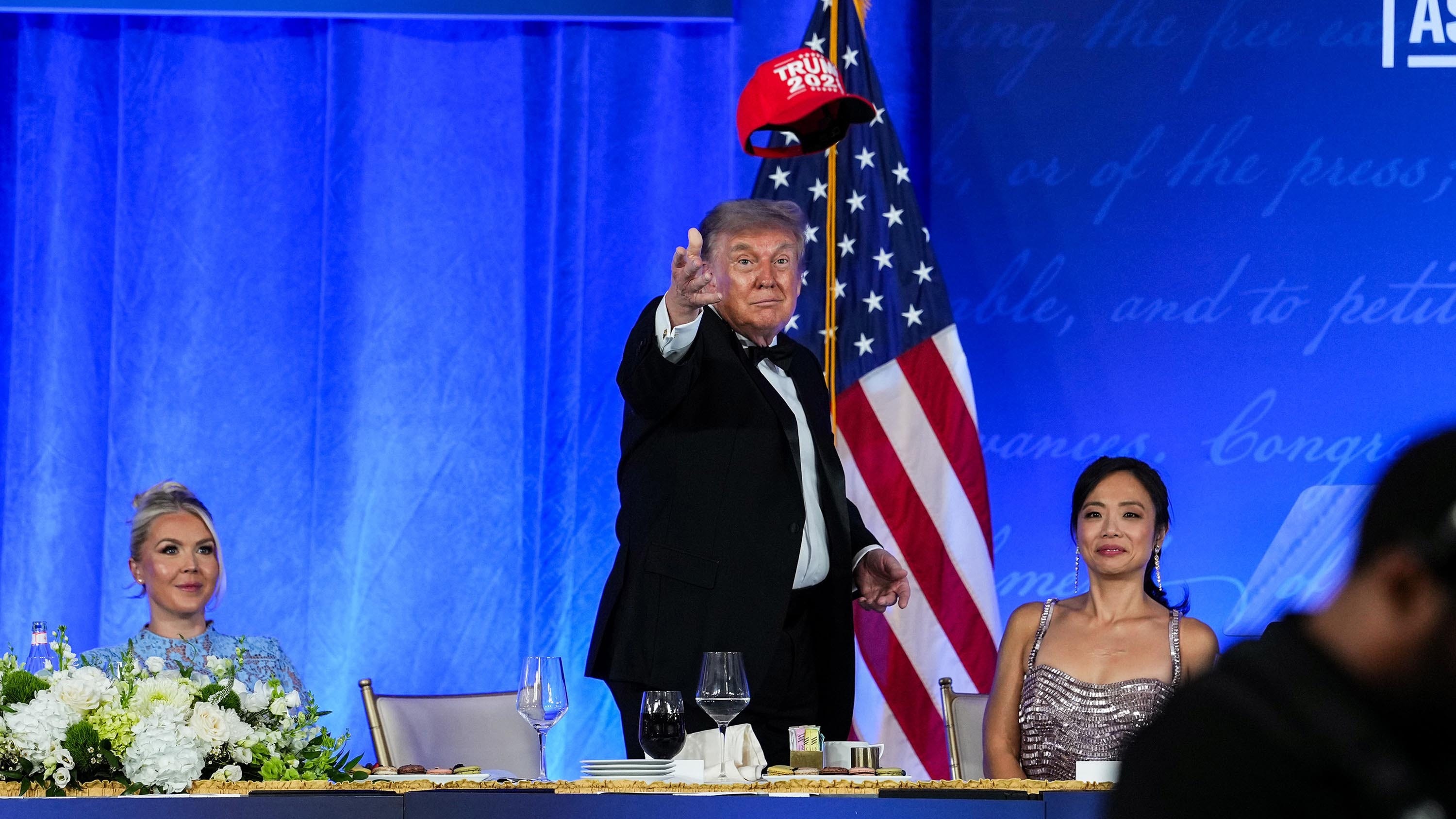
President Donald Trump tosses his TRUMP 2028 hat to an attendee during the re-scheduled White House Correspondents Dinner on July 24, 2026 in Washington, D.C. (Photo by Eric Lee/Getty Images)
A Surreal Spectacle at the WHCD
by Andrew Egger
Donald Trump, it was clear, really, really wanted to have his moment at the White House Correspondents Dinner. He’d skipped them during his first term, but had been looking forward to this year’s—until the April event ended in chaos and panic after a would-be assassination attempt. Even then he’d wanted to continue. “We held out right till the end,” he said in the aftermath. “But they didn’t want to take a chance.” But he promised they’d reschedule: “I am ready, willing, and able. And I was all set to really rip it,” he said. “So I’ll have to save it.”
Trump finally got his rescheduled dinner on Friday. And, as promised, he ripped it, after a fashion. In his rambling, hour-long speech, Trump heaped insults on the reporters in the room, went after his political enemies with a host of colorful epithets (that they’re fat, mostly), insisted he’d won the election in 2020, and joked (?) that he’d run again in 2028.
And yet even as he delivered it, it was plain the speech wasn’t shaping up as he imagined it would. To his apparent surprise, a room full of journalists he’s spent a decade deriding as “the enemy of the people” makes for a pretty tough crowd. As punchline after punchline landed with a thud, Trump started openly grousing about the bad jokes he’d been given.
“The other day, a senator I know got a text—a great guy—from his wife,” Trump said. “And she said, when you get home, I want to have you immediately come up the stairs and make love to me. And he said, I can’t do both.” Crickets.
“In other words, can’t go up the stairs and make love,” Trump explained. “Does anybody get that? Well, I thought that was actually pretty good. That was actually the only thing I thought was good in this whole frickin’ stupid speech that they wrote. That was the only good one, and that went down with not exactly great laughter.”
He tried one more time: “I think, you know, in other words, you can’t go up the stairs and make love to a woman. So we’re looking for term limits. Does anybody understand this stuff?”
There’s a lot we don’t understand—but we’re making sense of it together. Join our pro-democracy community for two weeks for free and get everything we have to offer.
And so on and so on. Nobody likes to bomb on stage, but you have to imagine it was a particularly distasteful experience for Trump, who spends his entire life these days nestled snugly in a cocoon of over-the-top praise and adulation from the people he surrounds himself with—his staff, his online fans, his rally crowds, the business tycoons and world leaders who know how much he loves to be buttered up. Every room he’s in is happy to guffaw the second they sense he’s even attempting a joke, so why not this one? Must just be this terrible material his speechwriters handed him, the president decided.
The silly spectacle of the WHCD has always loomed large both in Washington’s psychology and in Trump’s own. Fifteen years ago, at the 2011 dinner, Trump sat stone-faced in the audience suffering roast after roast from President Barack Obama and emcee Seth Meyers. It’s long been speculated that Trump’s grievance over that night helped fuel his ultimate decision to run for president for real, ushering us all into this deeply stupid chapter in American history.
Since then, Trump has succeeded beyond his wildest imaginings in twisting the country and the world into his own clownish image. And yet it’s remarkable how much this would-be great man of history still cares about the two-bit prestige of what he perceives as America’s elite institutions like the WHCD. He’s spent his presidency raking in billions of dollars and luxuriating in the obeisance of the wealthiest and the most powerful people in the world. And yet somehow he still has a hunger to go into a black tie event to try to win the affection of people he sees on TV, no matter how hopeless his prospects. What does it profit a man to gain the whole world if he can’t even get a chuckle out of Wolf Blitzer?
To begin the week, just a brief thought on political parties.
In modern politics, you can’t really live without them. But it’s a pain to live with them.
We know that bold leaders don’t fit comfortably in them. Churchill switched parties (twice!), and then spent the 1930s fighting against the disastrous policies of the party he’d returned to. Reagan switched parties once, but then went so far as to challenge the sitting president of his adopted party for the nomination. The senators I’ve known the best and admired the most, Pat Moynihan and John McCain, were willing to take on their own parties.
Even we ordinary citizens have a difficult time with political parties. If you like to think for yourself, you chafe at party orthodoxy. If you like strong leadership, you chafe at party timidity.
This is all a way of saying that if you, dear reader, find today’s Democratic party annoying and frustrating and exasperating, there’s nothing wrong with you. Quite the contrary. You’re most likely a reasonable person.
And you’re not alone. A majority of Americans look set to choose the Democratic party over the Republicans this fall. But they share your doubts about the Democratic party, which clocks in at only about 38 percent approval.
Still, most Americans seem to realize that, whatever its problems, there’s only one party that stands ready to check a reckless administration that threatens our well-being and to oppose an authoritarian movement that threatens our freedoms. They accept the fact that what the 2026 election is about is whether Donald Trump will for the next two years have a Congress run by Republicans who will continue to bow to him and enable him, or one run by Democrats that will challenge and check him.
It’s frustrating to loyal Democrats that they’re not universally loved. But asking Americans who aren’t thrilled with either party suddenly, in the summer of 2026, to become huge fans of the Democrats, is asking too much. All Democrats have to do is to win their vote this November.
Democrats won’t want to tell this hoary old joke out loud, but they might keep it in mind:
Two friends are in the woods, having a picnic. They spot a bear running at them. One friend gets up and starts running away from the bear. The other friend opens his backpack, takes out his running shoes, changes out of his hiking boots, and starts stretching.
“Are you crazy?” the first friend shouts, looking over his shoulder as the bear closes in on his friend. “You can’t outrun a bear!”
“I don’t have to outrun the bear,” said the second friend. “I only have to outrun you.”
Democrats don’t have to enchant the American public over the next three months. They just have to put on their sneakers and outrun Republicans burdened with authoritarian gear and cloddish hiking boots. After that, Democrats will have to deal with the bear in the woods. But sufficient unto the day is outrunning the other guy.
News broke late Friday that Paramount Skydance and Warner Bros. Discovery had agreed to delay finalizing P-Sky’s $111 billion purchase of WBD until either June 1, 2027, or following the outcome of an antitrust trial—whichever came first. As I noted in my newsletter last week, the consolidation of theatrical power seems to be a sticking point, as the combined company would control more than 30 percent of the box office market, creating a presumption of illegality in a proposed merger.
For their part, Paramount is saying this is a “significant win,” as this speeds the path to a trial. California Attorney General Rob Bonta, meanwhile, suggested this confirms the wisdom of the antitrust suit by the state attorneys general: “Today’s agreement is great news for audiences, movie theaters, and the many people who write, build, and create the art, news, and entertainment so many of us enjoy.”
So, who’s right? Well, it’s hard to see how this is good news for Paramount Skydance. The seven-million-dollar-a-day ticking fee P-Sky has to pay to WBD shareholders kicks in at the beginning of October; if this drags out until June, that amounts to nearly $1.7 billion. Simply canceling the deal isn’t a better option, given the $7 billion breakup fee. But then P-Sky’s risking both the breakup fee and the ticking fee if they go to trial and the purchase still falls apart. And if Democrats take the House and Senate in the midterms before the deal closes, they’re sure to call for hearings investigating this proposed merger, which could slow things down further. It’s a real Scylla/Charybdis. (Go see The Odyssey.)
Indie super-producer Ted Hope thinks the whole thing might be kaput. A few folks I talked to said this meant NBCUniversal, recently in the process of being spun off from Comcast, could make a play for WBD. It’s unclear to me how that would overcome the theatrical market share problem—Warner Bros. and Universal accounted for more than 40 percent of the box office last year—but it would keep CNN out of the hands of noted Trump allies Larry and David Ellison, who have already been accused of reshaping CBS and its flagship news program, 60 Minutes, into a Trump-friendlier outlet. An NBC–WBD merger might stave off action by state AGs, but it would likely face a problem P-Sky didn’t really encounter: scrutiny from a Trump-controlled DOJ, as happened when AT&T purchased Warner Bros. during the first Trump administration.
Why Did Trump Stop the Bombing? The reason will tell us a lot about whether American strategy is adapting, observes MARK HERTLING.
Special Delivery: Ukraine Blows Up ‘Russia’s Amazon’... With its drone attacks on the e-commerce giant Wildberries, Ukraine hopes to ship the reality of war right to Russians’ doorsteps, writes CATHY YOUNG.
WEAPONIZATION WITHOUT LIMIT: Last October, in the opening days of what would become the longest government shutdown in history, the Department of Energy suddenly announced the cancellation of more than $8 billion in clean-energy grants directed to blue states. Though they pretended otherwise,1 it was immediately obvious the cuts were intended to punish states with Democratic senators that had voted for Kamala Harris. We noted as much that day.
Now, the White House has quietly admitted the truth. In court filings this month first reported by the New York Times, federal officials acknowledged that their decisions on which projects to cut were “based solely on the political identity of the grant recipient’s state,” specifically “whether the recipient’s location and/or place of performance was in a Blue State or a non-Blue State.” None of the cancellations, they admitted, had been “based on any programmatic, statutory, cost-reduction or performance-based factor.”
What amazing times we live in, where you can barely turn over a court filing without finding ten or twelve impeachable offenses!
KEN MARTIN’S HOT SEAT: Democratic National Committee Chair Ken Martin is in trouble. Less than four months from the midterms, his party is in dire financial straits—in fact, they’re in debt. And more and more disgruntled Democrats are starting to place the blame directly on Martin’s leadership.
The place is leaking like a sieve, with a number of unflattering anecdotes about Martin coming out over the weekend: the time he slammed a phone down on a junior staffer’s desk, or the fact that the DNC’s D.C. headquarters building was put up as collateral for a loan that hasn’t been paid off yet. As our Lauren Egan reported yesterday, the financial problems have become self-reinforcing: “Democratic donors have largely lost faith in Martin and are reluctant to write a check to a chair whom they don’t trust.”
Bill argues above that the Democrats don’t have to be great to be the better alternative, but: Is it so much to ask for the only party that has a hope of reining in Donald Trump to show a baseline level of competence?
In a press release, the Department of Energy claimed that “these projects did not adequately advance the nation’s energy needs, were not economically viable, and would not provide a positive return on investment of taxpayer dollars.”
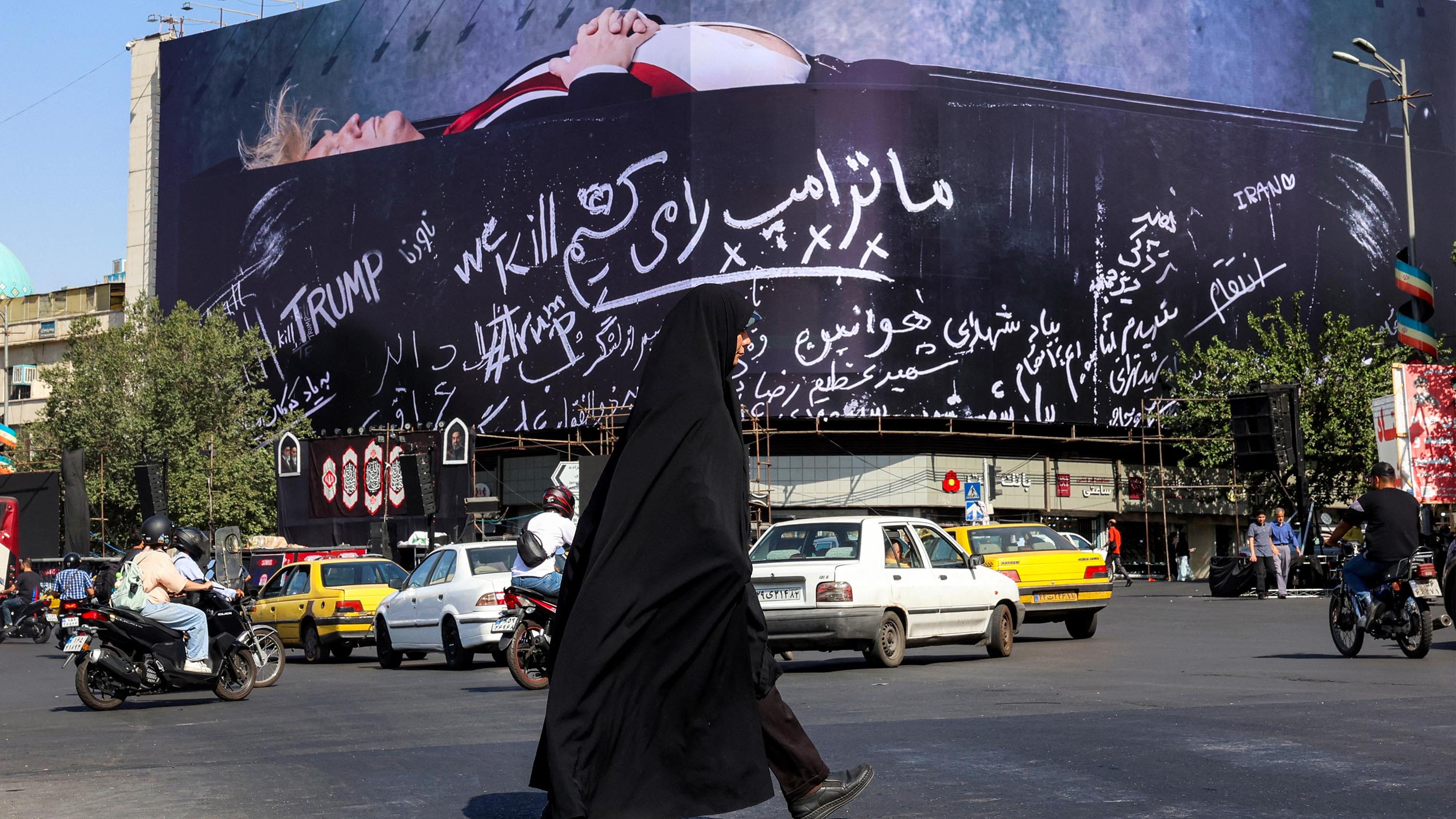
A woman crosses Tehran’s Enghelab Square on July 15, 2026, past a giant anti-U.S. billboard featuring Donald Trump in a coffin. The text reads (in Persian) “We Kill Trump.” (Photo by AFP via Getty Images)
AFTER THIRTEEN CONSECUTIVE NIGHTS of American bombing of Iran, the fourteenth night was quiet.
That silence has generated almost as much speculation as the strikes themselves. The New York Timesreported that President Trump ordered the halt out of concern that the United States is running dangerously low on missile interceptors. But that concern doesn’t preclude other reasons for pausing the strikes: Are nascent diplomatic efforts indicating a path beyond military operations? Did America’s regional partners quietly urge restraint? Or did the president’s advisers conclude that continued bombing was no longer advancing America’s strategic objectives?
We may not know the answers for months, perhaps years. But it may be getting through to the administration that the strategy of air strikes it has pursued against Iran for five months isn’t advancing political objectives.
The moment military action begins producing diminishing strategic returns, leaders face one of the hardest decisions in war: whether to continue pressing the attack or adapt before events force them to. Military professionals still use Carl von Clausewitz’s term for that moment: the “culminating point” of an offensive, when continued attacks begin consuming more military capability than the strategic advantage they produce. Modern military commanders, rather than awaiting the culminating point, now seek evidence that they are approaching culmination, because recognizing the signs in advance helps prevent strategic overreach and potential failure.
That distinction matters. Adaptation is one of the defining characteristics of successful military campaigns; the military that adapts first often prevails. And the most important adaptations occur at the strategic level. Adversaries change their methods. Allies reassess their interests. Resources become constrained. Diplomatic opportunities emerge and disappear. A campaign designed to solve one problem frequently evolves into something else, usually something larger. Continuing yesterday’s operational design simply because it worked yesterday is not persistence; it is wrongheaded.
Don’t just read the news. See farther, understand deeper, and join our pro-democracy community by becoming a Bulwark+ member.
HISTORY OFFERS AN INSTRUCTIVE EXAMPLE. In February 1991, after only one hundred hours of ground combat during Operation Desert Storm, President George H.W. Bush, Chairman of the Joint Chiefs of Staff Gen. Colin Powell, and Gen. Norman Schwarzkopf agreed to halt the offensive. Coalition forces retained overwhelming combat power, and they almost certainly could have continued their assault, even driving toward Baghdad. But liberating Kuwait—not toppling Saddam Hussein—was the coalition’s political objective, and that objective had been achieved. Continuing the attack would not have simply extended the campaign; it would have fundamentally changed its purpose.
Images from what later became known as the Highway of Death reinforced another uncomfortable reality. Coalition airpower continued destroying Iraqi forces that were already retreating from Kuwait. Those attacks undoubtedly remained militarily effective, but they also illustrated the growing gap between tactical success and strategic necessity, punishing an enemy unnecessarily. Additional destruction promised little additional political advantage but would have increased humanitarian costs while risking the cohesion of the international coalition. The decision to stop reflected the judgment that military operations had accomplished the mission assigned.
Iran’s military power today is nowhere near as broken as Saddam’s was at the end of Operation Desert Storm. It remains capable of influencing events across the region, particularly through its network of proxy organizations. The Houthis, who at first largely stayed out of the conflict, are now threatening international shipping and attacking Saudi ports and facilities. Their strikes against Aramco refineries and other facilities have widened the conflict, and American naval forces are now protecting both the Strait of Hormuz and the approaches to the Bab el-Mandeb.
The American campaign initially appeared focused on degrading Iran’s conventional military capability. Increasingly, however, the conflict is being shaped by Tehran’s actions and those of its proxies. Every Houthi attack against commercial shipping, every strike against Gulf energy infrastructure, and every disruption of maritime commerce broadens the war geographically while allowing Iran to impose additional costs on the United States. Continuing to concentrate military effort where the conflict began rather than where it is expanding risks fighting yesterday’s campaign while the enemy adapts.
At the same time, the Times report and others indicating that America’s weapons stockpiles are being used up perilously fast deserve attention. Precision-guided munitions are not merely tactical assets. They are strategic resources underpinning deterrence in the Indo-Pacific, reassuring allies in Europe and the Levant, protecting American forces worldwide, and preserving the nation’s ability to respond to crises that cannot yet be predicted. Every Tomahawk missile launched at Iran, every long-range standoff weapon fired from an American bomber in the Middle East, and every interceptor expended defending U.S. forces in Jordan or Kuwait or the UAE must eventually be replaced. The question is not whether America possesses overwhelming military power; it’s whether continuing to expend some of its most sophisticated capabilities produces strategic gains commensurate with the opportunities they foreclose elsewhere. That’s the difference between having more weapons to use and having as many as you might need.
NO COMMANDER—CIVILIAN OR MILITARY—can simultaneously track operational progress, logistical sustainability, alliance implications, resource consumption, and global readiness alone. That job of integrating those perspectives, identifying approaching risks, and recommending adaptation before success on today’s battlefield creates unnecessary vulnerability tomorrow falls in large part to the chairman of the Joint Chiefs of Staff, who commands no combat forces but has a large staff responsible for understanding these kinds of strategic tradeoffs. The joint staff, with its numbered departments, exists to help civilian and military leaders think strategically rather than operationally. The J3 continuously monitors military operations around the world. The J4 evaluates logistics, sustainment, and the consumption of critical resources, including precision-guided munitions. The J5 examines long-range strategy and assesses how today’s operations affect commitments in all the theaters around the world. The J8 evaluates readiness, force structure, industrial capacity, and future requirements.
The president isn’t obligated to listen to the chairman of the Joint Chiefs, or the joint staff, or anyone. As commander-in-chief, his judgment predominates. If the Times’s reporting is correct, and President Trump ordered the strikes against Iran paused or even ended due to concerns about weapons stockpiles, the question for future historians will be: Why now?
STRATEGY HAS ALWAYS REQUIRED military operations to create political space rather than to substitute for political solutions. Bombs and missiles destroy targets; they do not negotiate agreements, reassure allies, stabilize energy markets, or restore international confidence in freedom of navigation. Those responsibilities belong to diplomacy, economic policy, intelligence, and coalition management. Hints that the Trump administration is considering renewed diplomacy, combined with the growing concerns of Gulf partners about the regional expansion of the conflict, suggest that military operations may finally be creating opportunities for those other instruments of national power to assume greater prominence.
Perhaps that is what makes the silence after thirteen nights so significant. It may have reflected concerns about ammunition inventories. It may have resulted from growing proxy activity, expanding diplomatic efforts, or pressure from regional partners. Most likely, it reflected some combination of all those factors, which together suggest that the campaign was approaching—if not past—its culminating point and was unlikely to produce strategic returns.
We may eventually learn exactly why President Trump ordered the bombing campaign paused. Whatever the explanation proves to be, the more enduring lesson extends well beyond this conflict. Successful governments do not demonstrate strength by refusing to change course. They demonstrate strength by recognizing when circumstances have changed, by adapting before operational success becomes strategic overreach, and by understanding that the purpose of military power is not to maximize destruction but to achieve clearly defined political objectives.
If the halt in bombing reflects that realization, history may judge it as the moment strategy finally began catching up with operations. The silence of the fourteenth night may ultimately prove more consequential than the explosions of the previous thirteen.
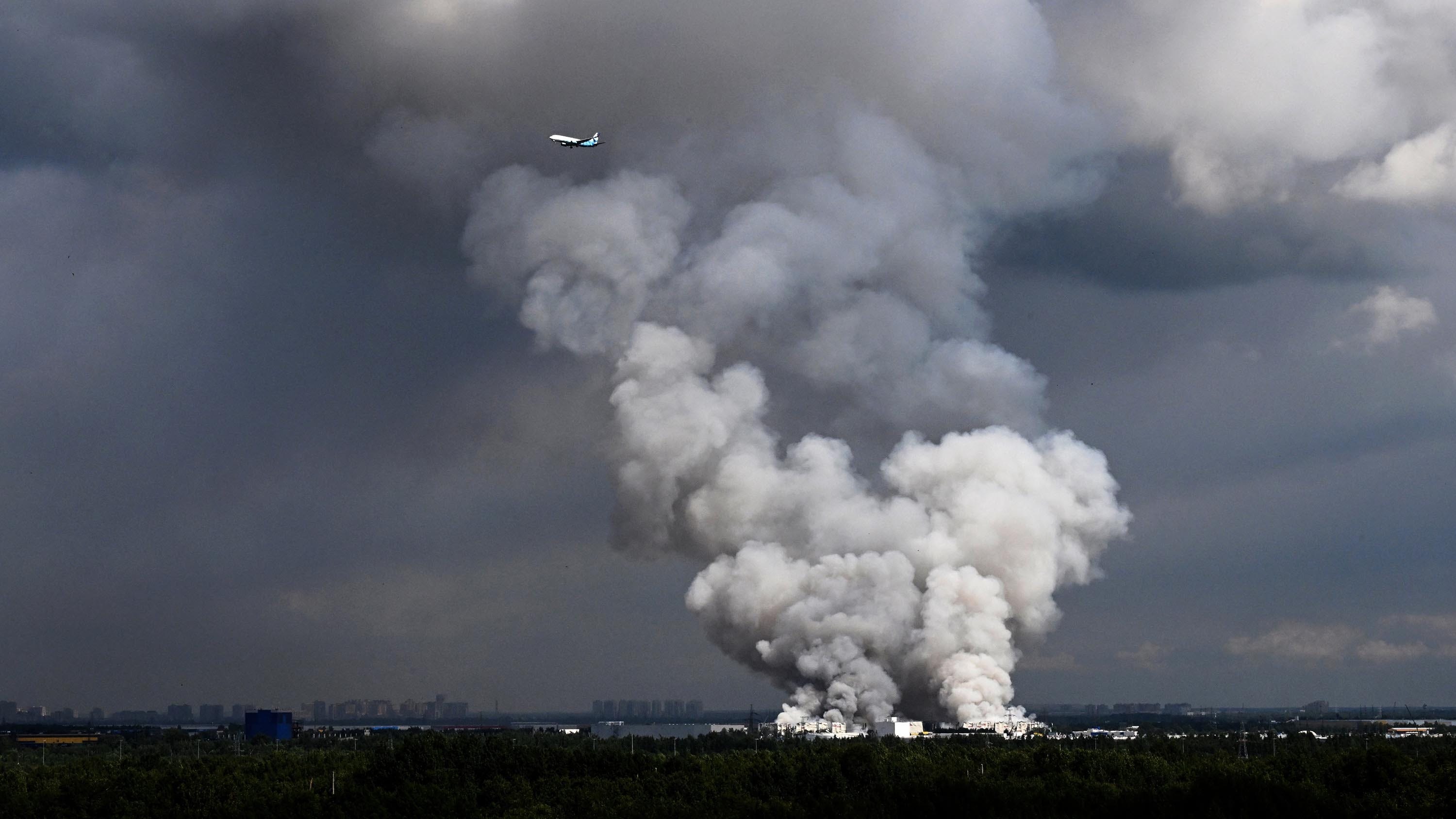
A passenger plane flies past smoke rising from a Wildberries warehouse near Saint Petersburg after being hit by Ukrainian drones on July 24, 2026. (Photo by AFP via Getty Images)
“EVERYONE JUMPED OUT OF BED in the middle of the night, no one could understand what was happening,” said an elderly woman in a short video clip that went viral in Russia over the last few days. She was talking about a nighttime Ukrainian drone strike on the outskirts of Elektrostal, an industrial city some 36 miles east of Moscow. “Scary isn’t the word,” said the woman. “People thought it was war.”
Did they, now? More than four years into Russia’s war against Ukraine, it’s hard to think of a more tragicomic symbol of the clueless Russian remaining clueless.
The war of aggression came home to Russia itself long ago, with Ukrainian drone and long-range missile strikes deep inside Russian territory—primarily targeting oil refineries and munitions factories and depots—escalating since at least late 2023. Since the start of this summer, Russians have been seeing and feeling the effect of those raids at the gas pump: long lines, closed gas stations, rationing. But the strike that so shook up the woman in the clip from Elektrostal was on a new Ukrainian target of choice: a warehouse belonging to Russia’s biggest online retailer, Wildberries, often nicknamed “Russia’s Amazon.” At least nine Wildberries warehouses—including a major hub in St. Petersburg—have been hit since July 18, with most of them either destroyed or severely damaged.
In a country where online shopping accounts for about a fifth of all retail sales and Wildberries handles about half of all e-commerce orders, that’s hitting where it hurts. Some online commenters have joked that instead of his alleged goals of the “demilitarization” and “de-Nazification” of Ukraine, Vladimir Putin is getting the “de-wildberrization” of Russia.
Kyiv has described the Wildberries strikes as retaliation against continuing Russian attacks on Ukraine’s civilian infrastructure and also cited the firm’s role as a seller of military and dual-use goods: military helmets (described as combat-tested), bulletproof vests, radios, first-aid kits, and fiber-optic cable for drones. The Wildberries website has now apparently disabled searches for “SVO”—the Russian acronym for “special military operation”—and “everything for SVO.” But related keywords seem to still work: My own search for “SVO accessories” on Sunday returned over 100,000 items, including “tactical backpacks,” helmets, and military patches.1 (The text on one patch uses a pun on the dual meaning of mir as “peace” and “the world” for a global domination joke: “We want mir—preferably all of it.”) Russia has especially little cause for complaint, considering that it has repeatedly bombed sorting facilities and vehicles belonging to the Ukrainian private postal operator Nova Poshta, supposedly because of its use for delivery of dual-use goods.
Opinions differ on whether the military justification holds water under the Geneva Conventions. (It should also be noted that at least nine Russian warehouse workers have been killed in the strikes and dozens have been injured—though, unlike Russia, Ukraine has tried to minimize civilian casualties by striking only at night when there is likely to be minimal staff presence at the facilities.) Be that as it may, there is widespread agreement that the primary purpose of the Ukrainian strikes is not to incinerate some vests, helmets, backpacks, and patches with bad puns. As expatriate Russian commentator Dmitry Bykov put it, “It’s a very legitimate way to shatter not even the Russian economy so much as the Russian consensus that everything is normal.”
WILDBERRIES SELLERS, AT LEAST, are certainly getting an unpleasant taste of the new normal—as evinced by video clips compiled by the exiled dissident network TV-RAIN. “I’m raising two children on my own,” sobs one woman. “I’ve fucking lost everything.” Others point out that you can’t do business when your inventory could be seconds away from burning to a crisp: “Yesterday you were leading a normal life, now you’re a bum.”
The sellers’ dismay has been exacerbated by the fact that on July 7—eleven days before the first warehouse strike—Wildberries had announced a policy change (or “clarification”): From that point forward, “attacks by military hardware and aircraft (including UAVs), weapons of destruction, munitions or their components” will be treated as force majeure and not subject to mandatory compensation. On July 12, another big Russian online retailer, Ozon, sent out a similar notice. Naturally, conspiracy theories have quickly taken off. Could someone at Wildberries have been tipped off about the upcoming strikes by a contact in the Ukrainian military? It’s not inconceivable, given how many personal and family ties still exist between the two countries. But it’s equally possible that the owners simply saw which way the wind was blowing, or which way the drones were flying.
Public outrage, and perhaps fear of government action, did force Wildberries management to announce that the sellers will be compensated—but so far, details remain murky. Several sellers who appear in the TV-RAIN reel complain about pitifully inadequate compensation, such as a 3,000-ruble payout for 800,000 rubles’ worth of destroyed merchandise.
Will Ukraine’s “war is hell” message reach the average middle-class Russians, until recently largely shielded from this war’s effects? Maybe. So far, says TV-RAIN host and analyst Anna Mongait, none of the video reactions from distraught sellers mention the war. There’s no surge of hatred against Ukraine—but no tangible anger at the Kremlin, either. (One young woman in the TV-RAIN compilation cited above does plaintively ask, “Why can’t we all simply live in peace?”) Mongait believes it may not be cluelessness so much as fear: “People have grown used to the fact that any talk of the war is punished.” But she also thinks this may change: “There’s a sense that people are getting so sick of all this, they’re on the brink of speaking the forbidden words” (for instance, ‘stop this war’).
One person who has come very close to that third rail is fitness and beauty influencer Victoria Bonya, a former Russian reality-TV star who now lives in Monaco but still has a large following in her native country. As I reported in late April, Bonya caused a stir earlier this year with a viral video criticizing Putin for being out of touch with the country’s problems. While the video didn’t mention the war and ultimately blamed feckless or mendacious advisers for Putin’s indifference (the old ‘good tsar, bad boyars’ trope), it was enough to elicit a massive response and infuriate Kremlin propagandists. Now, the blazing Wildberries warehouses have apparently induced Bonya to break her silence again. In a new video, she asks:
When have we gotten so out of control and so divided from each other that we are engaging in self-destruction? Please answer this question for me. Does anyone know? We’re leaving our children a legacy more shameful than any generation has ever left.
When indeed? Numerous commenters have volunteered snide answers to Bonya’s question. True, much of the video dealt with environmental catastrophe, and Bonya stressed that she didn’t want to blame anyone. But the former reality star also offered a remarkable explanation for this sorry state of affairs: “One small dick—one small peepee is having a measuring contest with another small peepee while destroying everything in its path.” A “both-sides” analysis, to be sure, but let’s face it: In 2026, suggesting to Russian audiences that Putin is sacrificing the country to the inadequacies of his manhood is pretty radical.
It’s hard to say what further fallout the Wildberries attacks may have. Russian economist and dissident politician Vladimir Milov points out that Wildberries has made itself an easy target by investing in mega-warehouses and touting its partnership with Russia’s second-largest, primarily state-owned bank: A collapse of Wildberries, Milov says, could lead to a banking crisis. Milov estimates that damage to the company already amounts to 500 billion rubles, or about $6 billion—and the strikes will undoubtedly continue.
Whether more disaffected Russians will finally be pushed to name the war as the cause of the destruction remains to be seen. But TV-RAIN’s Mongait, at least, sees evidence that “things are starting to boil.” The Wildberries strikes certainly promise a long, hot rest of the summer for Russia—and more pressure on Putin to accept a peace deal in the fall.
It should be noted that I conducted my test searches of the Wildberries storefront from the United States, but the company might give different results for searches originating from different locales.
Eliot returns from his trip to western Canada to review the latest jackassery with Eric. The two discuss recent developments surrounding a potential U.S.-Saudi nuclear cooperation agreement and contextualize it against the history of U.S. non-proliferation and counter-proliferation efforts. They also reflect on their personal experiences with the late Senator Lindsey Graham and examine his legacy. From there they turn to the latest updates from Ukraine, including President Zelensky’s dismissal of Defense Minister Fedorov and Commander-in-Chief Syrskyi. Finally, they consider the ongoing likelihood of escalation in Iran.
Shield of the Republic is a Bulwark podcast co-sponsored by the Miller Center of Public Affairs at the University of Virginia.
Will Saletan and Ben Parker take on Mike Waltz's Sunday show gauntlet defending Trump's Iran war—confused goals, dwindling munitions, Russia and China's help, civilian infrastructure targeting, and fantasy pipelines meant to bypass the Strait of Hormuz.
As always: Watch, listen, and leave a comment. Bulwark+ Takesis home to short videos, livestreams, and event archives exclusively for Bulwark+ members.
Add Bulwark+ Takes feed to your player of choice, here.
Bill Kristol welcomes Epstein survivor Dani Bensky to discuss her private meeting with Todd Blanche, her communications with Senators Tillis and Cornyn, and whether any GOP Senators will do the right thing.
(Photo illustration by Bill Kuchman/The Bulwark | Photos: Getty, Shutterstock)
AS DEMOCRATIC NATIONAL COMMITTEE members gathered at the end of last week to discuss the 2028 presidential primary calendar, their chair, Ken Martin, had another topic on his mind.
The DNC’s latest fundraising numbers had come out, showing the committee yet again falling far behind its GOP counterpart. After the latest update, the committee had $2 million of debt compared to the Republican National Committee’s more than $128 million on hand. And the already embattled Martin was mindful that some of those gathered in a conference room at the Salamander Hotel weren’t particularly supportive of his tenure and were increasingly concerned about the state of the committee.
In between discussions about leading the primary calendar with either Nevada or South Carolina, Martin urged DNC members to read and share a Substack article he’d posted defending the committee’s dismal financial situation. He re-emphasized the main points: that it was “simply wrong” to say the DNC was in financial trouble; that the committee was raising an average of $8.6 million per month and spending it on important projects; and that they were building campaign infrastructure, not just tending to a healthy balance sheet.
To the national committee members and party officials I spoke with—including several who were at the Salamander meeting—Martin’s post came off as
(Photo illustration by Bill Kuchman/The Bulwark | Photos: Getty, Shutterstock)
Detroit, Michigan ANOTHER JOLT JUST HIT the highest-profile Democratic Senate primary in the country: Big Gretch entered the conversation.
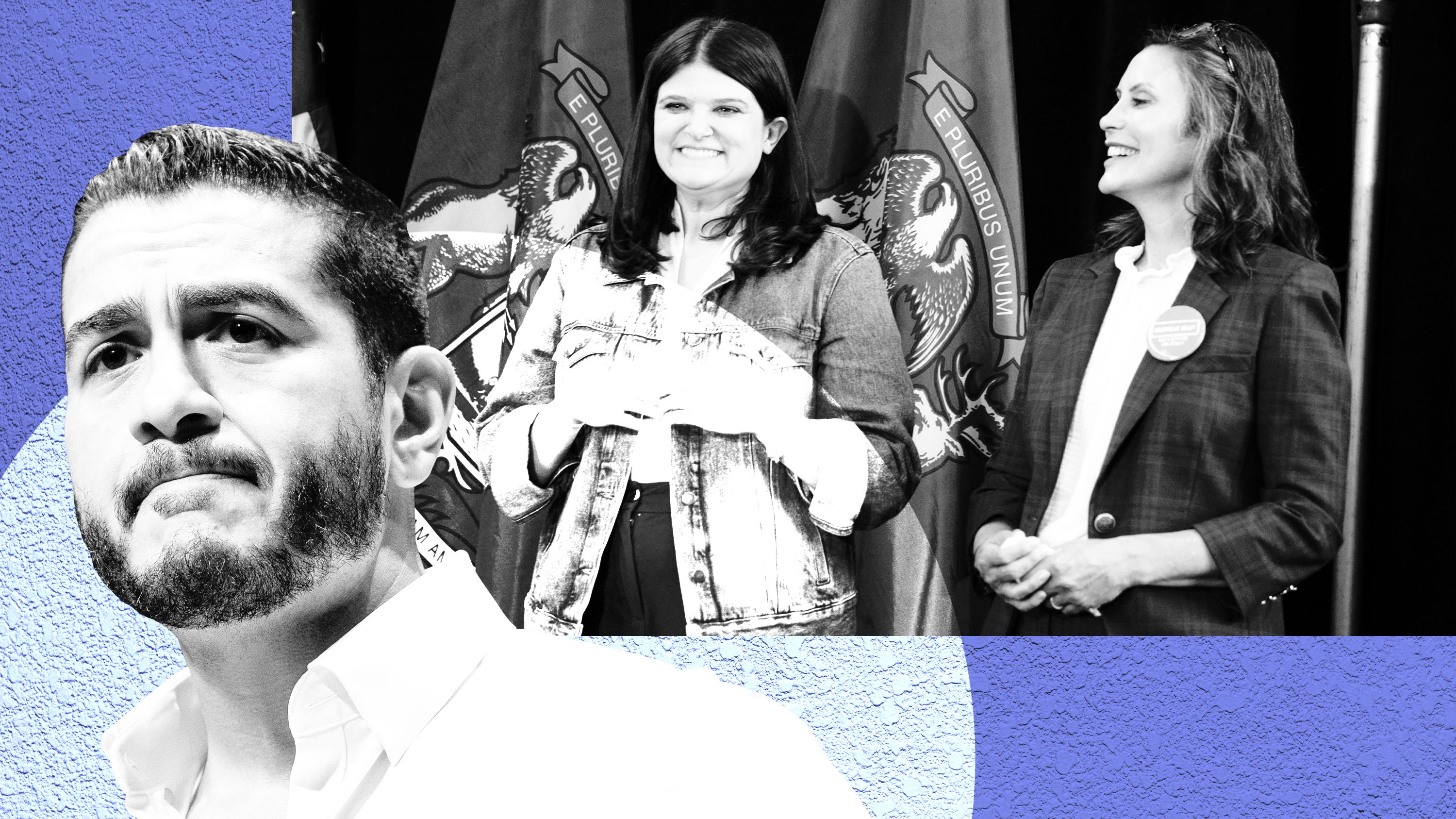
That’s the affectionate nickname for Gretchen Whitmer, the two-term Democratic governor who is by most reckonings the most popular statewide elected official in Michigan. On Friday, she announced that she was endorsing Haley Stevens, the four-term House Democrat who has been running in a tightly contested, increasingly bitter campaign against former Detroit and Wayne County public health director Abdul El-Sayed.
Whitmer made the announcement in a video—and then in person about three hours later, during a campaign event at a Teamsters union hall in Detroit, where she said “Michiganders need a fighter in Washington.” Never once in either case did she mention El-Sayed. But she alluded to him indirectly during the speech when she said the top priority for Democratic voters was keeping the open Senate seat—now occupied by Gary Peters, who is not seeking re-election—in the party’s hands.1
“Democrats cannot take back the Senate without winning the state of Michigan,” Whitmer said, as a crowd of about a hundred supporters cheered. “We don’t hold this seat, we can’t fight back against Medicaid cuts. We can’t fight back against tariffs, against skyrocketing gas and grocery prices. We can’t fight back against the chaos and division and political gamesmanship that have consumed our country for too long.”
That argument cut right to the heart of the question that for many Michigan Democrats is the most important: Which candidate has the best chance of winning? Supporters of Stevens have said she’s the one, citing her record of winning in swing districts and the difficulties El-Sayed would have defending a left-wing platform in a closely divided state. El-Sayed’s backers counter that his populist message actually speaks to many conservatives, while Stevens’s support from wealthy outside groups ties her to an establishment that infuriates voters across the ideological spectrum.
Whitmer at the Friday appearance didn’t have to spell out which side of the argument she finds compelling. But she did drop a reminder of why she has some authority to speak on the matter—as “someone who won statewide twice,” pausing and drawing out that last word for emphasis, and holding up two fingers for effect.
Just how seriously Michigan voters will take this advice is a separate question. Endorsements certainly don’t have the power they did in the old days. Just ask the editors of the Detroit Free Press, whose compelling endorsement of the campaign’s third candidate, state Sen. Mallory McMorrow, appeared exactly six days before she dropped out of the race.
Meanwhile, more than 690,000 Michiganders have already voted via mail or absentee ballot, according to official figures.2 And Whitmer’s reputation has recently taken a hit thanks to in-state controversies over her support for data-center construction and her veto of several budget amendments. The former has pissed off progressives, environmentalists, and local activists. The latter has pissed off longtime Whitmer allies in the state legislature and key interest groups like labor.
But there are still plenty of reasons to think Whitmer’s endorsement will matter, maybe quite a lot.
We know—paywalls are a pain. But there’s an easy way around this one: Sign up for a free trial of Bulwark+ membership. You’ll be able to read the rest of this newsletter covering the Michigan primary, participate in the comments section, and enjoy our other locked content for two weeks without paying a penny. We bet you’ll like it.
Thomas Edsall tells Mona Charen Democrats can recover from Trump's bad ratings by moderating on three fronts: transgender policy (affirm two sexes, restrict sports/prisons/youth surgery), immigration (pro-legal, pro-enforcement), and crime (oppose lenient DAs and no-bail policies).
His diagnosis: the party's become too elitist and needs working-class voters back to beat MAGA.
Bulwark Book Club pick for August: Mark Twain’s Pudd’nhead Wilson. Join Mona Charen and Bill Kristol to discuss this classic that explores racism and slavery. Published in 1894, the novel tells the story of two boys – one born into slavery, the other the master’s son – who were switched at birth. Send your questions, comments, and thoughts on the book here.
Watch your inbox for details on when the episode will drop.
The Mona Charen Show is a weekly, one-on-one discussion that goes in depth on political and cultural topics. New shows drop Saturdays. Find this show wherever you get your podcasts and on YouTube. Add the show to your player of choice, here.
Ad-free editions of The Mona Charen Show are exclusively available for Bulwark+ members. Access this member edition in the Bulwark App—now available on Apple and Google. Or set up the ad-free edition of this Bulwark show on your player of choice using your private RSS feed here.
Trump took the stage at the White House Correspondents’ Dinner and delivered one of the most uncomfortable speeches of his political career. Sam Stein and Will Saletan break down the jokes that bombed, the attacks on Kaitlan Collins and other targets that crossed the line from comedy into cruelty, the surreal Wall Street Journal/Epstein moment, and what happened when Trump faced an audience that simply stopped laughing.
As always: Watch, listen, and leave a comment. Bulwark+ Takesis home to short videos, livestreams, and event archives exclusively for Bulwark+ members.
Add Bulwark+ Takes feed to your player of choice, here.
Happy Saturday! Overtime is for everyone. If you’re a Bulwark+ member: thank you. If you’re not, there’s no better time to subscribe to Bulwark+ than today. If you like today’s issue, you can share this newsletter with someone you think would value it.
FC Cincinnati defeated the Vancouver Whitecaps 4-3 in a return to MLS play earlier this week.
Congrats to our World Cup Winner… David Belkin, a OG Bulwark member. While he didn’t correctly pick Spain winning it all, he was in the 94th percentile of players. Impressive! He wins a free year’s access and some surprise goodies. While the World Cup is over, baseball is back, and the summer of soccer continues (for some of us.)
Welcome to our newly redesigned site! Everyone here is genuinely excited about the new look, the refreshed logos, and all the improvements that came with the redesign. I’ve lived through a number of site overhauls over the years, and none have gone as smoothly as this one. Kudos to everyone who made it happen. I am impressed and what I see makes me proud as one of our original employees.
We’re still ironing out a few minor kinks, but you’ll notice the navigation bar has been reorganized (for the better!) so it’s easier to get where you want to go, including our members-only chats. The account page, in particular, is much better organized, allowing you to change what you want to get and how. And the “Read to Me” feature you may already know from the app? It’s available on the website now, too.
In Pennsylvania, Gov. Josh Shapiro is on track for a pretty big win in November. And he can’t do that without winning over a lot of former Trump voters, including the ones in our focus group. Cook Political Report editor-in-chief Amy Walter returns to the show to discuss how our Pennsylvania focus group felt about Shapiro, AND Sen. John Fetterman’s possible party switch, and about the Trump administration. They also break down whether Democrats should be concerned about the generic ballot polling we’re seeing right now.
There are more tickets to see Sarah and JVL on September 8 in NYC! We are about to sell out the orchestra section—but we want to sell out the balcony, too. It’s a point of pride. Come hang with us. Tickets are here.
Full ad-supported episodes of The Focus Group Podcast are available wherever you get your podcasts and YouTube. Hit that like 🤍 button and share this episode with a friend.
Ad-free editions like this one are available exclusively for Bulwark+ members on the site, the Bulwark App, via your member-only RSS feeds, and the Substack mobile and TV Apps. Upgrade now to listen without ads and to join the community in the comments.
JVL joins Destiny for his first-ever political stream to talk about how MAGA media manufactures reality, why mainstream outlets keep playing by obsolete rules, and how Democrats kill their own messages before voters ever hear them.
As always: Watch, listen, and leave a comment. Bulwark+ Takes is home to short videos, livestreams, and event archives exclusively for Bulwark+ members.
Add Bulwark+ Takes feed to your player of choice, here.
Plus: Some questions for Tom Homan about shooting January 6 insurrectionists; Haley Stevens and authenticity; and the Mitch McConnell conspiracy theory. Also, a conversation about raising good men.
But the big topic is the Department of Defense suddenly removing the names of four dead soldiers from the Iran war casualty list because they were killed after Trump declared a ceasefire in April—because there are now apparently two distinct Iran wars. Even though neither of them is, for legal purposes, a “war.”
The Secret Podcast with JVL and Sarah is exclusively for members of Bulwark+. To watch or listen to future episodes and join the Secret community in the comments become a Bulwark+ member today. The only way through is together.
(Photo illustration by Bill Kuchman/The Bulwark | Photos: Getty, Shutterstock)
WHEN SEN. GARY PETERS QUESTIONED Defense Secretary Pete Hegseth about the administration’s handling of the conflict with Iran, Hegseth responded by accusing Peters of denigrating the military.
That wasn’t what Peters was doing. In fact, even before Peters asked Hegseth a question, he offered comfort to the families of those who had given their lives in the Iran war. “I want to begin by first echoing my colleagues’ comments,” he said, “and joining them in mourning the loss of American service members who were killed in action these few days. My thoughts are with their families, with the service member who remains missing, and with all those injured during the strike. And I will continue to pray for their families.” He very quickly went out of his way to express admiration for the service members carrying out extraordinarily difficult missions: “I have long said the United States has the strongest military in history, in the world, and I have no doubt that our brave service members can execute any mission and prevail in any battle.” His criticism was directed not at the troops, but at the civilian leadership responsible for defining the mission, establishing the strategy, and honestly describing the results. That distinction matters.
No tribal allegiances. No false equivalency. Just straight talk about saving democracy. Join us.
When I was a young lieutenant, stationed in Germany on my first assignment, I had a conversation with an old veteran in my unit who had been a medevac helicopter crew chief in Vietnam. He was highly decorated, and he was relaying some of the adventures that were reflected in the medals he wore on his chest.
He was young when he got drafted. He didn’t want to go to war, but he answered his country’s call. He flew hundreds of missions, saved untold numbers of lives, was wounded, recovered, and after a year of service, eventually came home. He told me he was proud of all he did in service to his country—proud enough to choose to make a career in the military—but when his plane landed in San Francisco and he stepped into the terminal wearing his khaki uniform, he experienced something disheartening. As he walked through the airport, strangers cursed him, called him baby killer, and even spat on him.
Then, in a changing mood, he looked down and quietly said something that has stayed with me ever since: “It made that whole year seem like a waste. I didn’t agree with the war, either, but it seemed my fellow citizens were confusing the war with the warrior.”
His disappointment wasn’t rooted in the hardship of combat, because soldiers understand hardship. It was his realization that many Americans could not distinguish between the man who had served and the policy that had sent him there. That confusion reappeared during Secretary Hegseth’s testimony this week.
In our constitutional system, the military does not choose the wars it fights. Soldiers, sailors, airmen, marines, guardians, and coasties execute lawful orders issued by civilian leaders. Their professionalism lies in carrying out those missions to the best of their ability, regardless of the politics and the policies surrounding them. Supporting the military does not require supporting every military operation, nor does questioning the wisdom of a campaign diminish the courage of those asked to fight it.
In fact, the opposite is true.
One of the highest forms of respect all citizens can show our military is demanding that our armed forces be committed only to missions with clear objectives, realistic plans, sufficient resources. This is especially true for those who serve in government who make the decisions—or non-decisions—about war and peace. For our leaders, respecting the military means telling the American people the honest truth about progress and setbacks, casualties and costs. For the rest of us, holding civilian leaders accountable for those responsibilities is our way of honoring those in uniform.
Too often, political leaders blur these lines. When strategy is challenged, they wrap themselves in the valor of the troops. When operational shortcomings are exposed, they imply that criticism somehow insults those risking their lives. This may be an effective political argument, but it is a dangerous civic one. The sacrifice of those in uniform should never become a shield protecting policymakers from legitimate scrutiny.
We owe our warriors gratitude, respect, and every resource necessary to accomplish the missions. We owe our civilian leaders rigorous oversight, honest debate, and accountability for their actions and the missions they assign.
We also owe ourselves, as citizens of a great republic, a government that is responsive to our needs and expectations. That applies to the military as much as to anything else. We respect the troops by ensuring that their missions are aligned with the priorities of the country, and we respect ourselves by ensuring that the bravery and sacrifice of those in uniform doesn’t cause us to forget why their calling is called “service.”
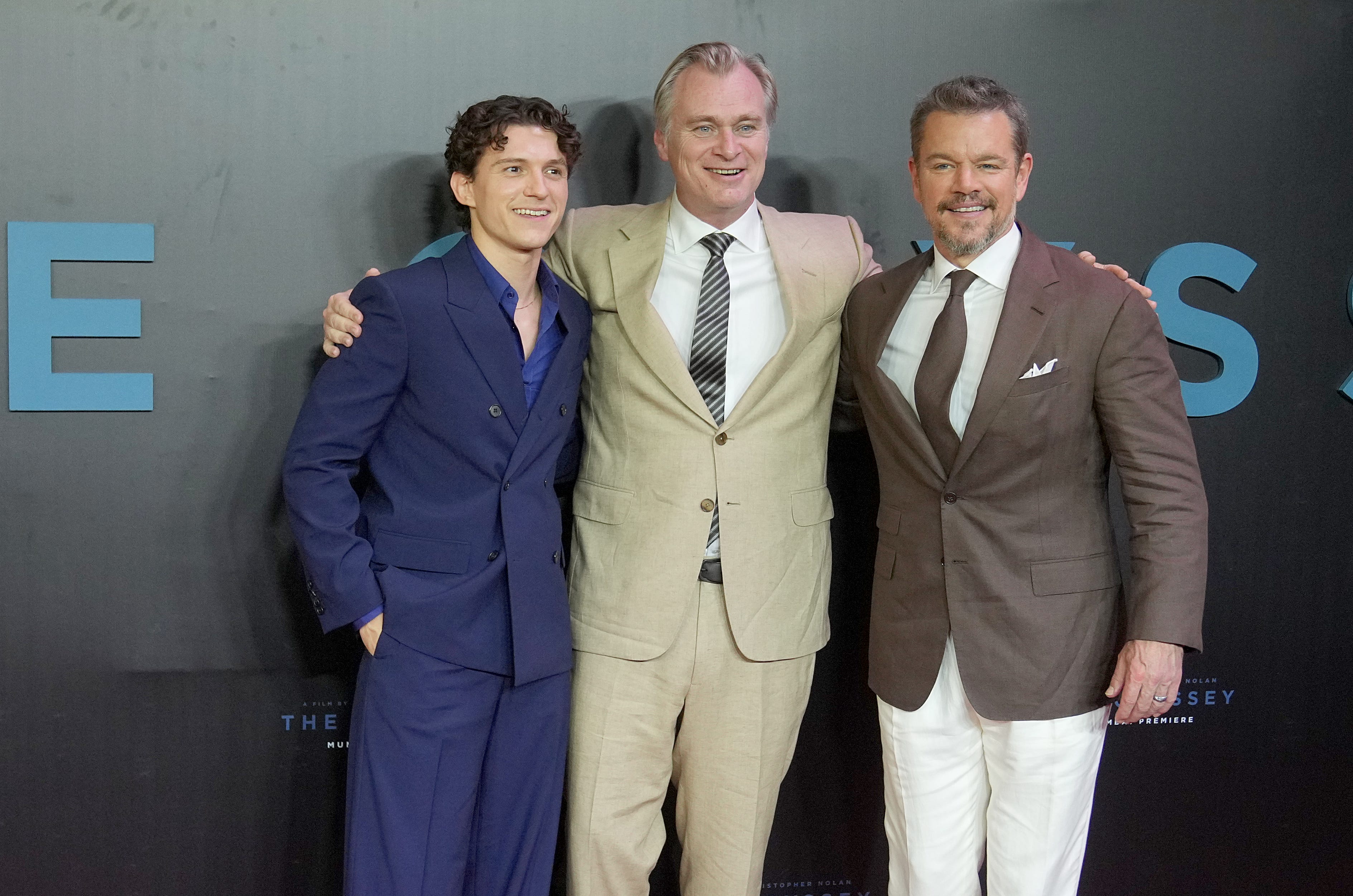
Tom Holland, Christopher Nolan, and Matt Damon at the premiere of The Odyssey in Mumbai, India on July 11, 2026. (Photo by Prodip Guha/Getty Images)
A COUPLE OF MONTHS BACK, I highlighted the strange reaction to Christopher Nolan’s then-upcoming film, The Odyssey, in certain portions of the conservative media ecosystem. Particularly among the grifter set on Twitter, where Elon Musk had whipped people into a fury over the casting of Lupita Nyong’o as Helen of Troy (because Helen of Troy couldn’t possibly be black and to suggest otherwise is a betrayal of Western civilization) and Elliot Page as a Greek soldier (because a trans actor couldn’t possibly play a Greek soldier).
I was fascinated by this story because it combined so many of my different interests: social media as a vector for disinformation, as chuds insisted that Page was playing Achilles even though no one associated with the production had suggested anything of the sort; conservatives turning against Christopher Nolan, who had long been seen on the right as, if not a fellow traveler, at least sympathetic to classically liberal/Tory-ish ideals; and amateur box office sleuths predicting disaster in the face of all evidence that Nolan and his studio, Universal, had a triumph on their hands via massive presales.
But the reason they felt so confident attacking Nolan was, ultimately, because they fundamentally misread the effect of previous outrage campaigns against major motion picture releases. They looked at the outrage directed at 2022’s Lightyear (because the film featured a brief lesbian kiss), last year’s Snow White (because the actress playing Snow White is Hispanic and had said she didn’t much care for the original), and this year’s Supergirl (because the lead actress said male audiences have a problem with strong superheroines), and concluded that those films all failed because loud people were angry on Twitter.
This impulse is, perhaps, understandable. It was also, quite obviously, incomplete. I think it’s safe to say that those movies failed because they were movies that nobody wanted, really. Lightyear was a weird digression from the Toy Story franchise featuring none of the previous films’ voice actors that was too complicated to explain to audiences in a one-sentence pitch. The original Snow White (1937) is too old to hit the nostalgia sweet spot, where parents take kids to see the live-action versions of movies that they themselves grew up with (like Aladdin or Beauty and the Beast). And no one is interested in Supergirl because outside of a handful of big names (like Superman or, as we’ll see next week, Spider-Man), the superhero boom seems to be over.
I’m bringing this back up not to take a victory lap—though I will do that in a second—but as a reminder that we all live in bubbles that we’ve built for ourselves on social media and elsewhere. And the Odyssey bubble on Twitter was exacerbated by the fact that someone at the site must have juiced the algorithm to highlight content about the film: Anecdotally, everything I tweet about the movie does huge numbers. These people were absolutely convinced that The Odyssey was going to bomb, that they were going to claim a great triumph for Western civilization by waging war on the forces of woke. They were blinded by a number of very obvious signals that this movie was going to put up numbers, like near-record presales.
And here’s where the victory lap comes in: In its first six days of release, The Odyssey has grossed nearly $200 million domestically. It’s running roughly 60 percent ahead of Oppenheimer at the same point, a gap that suggests this film will gross in the neighborhood of $500 million domestically and could make a run at $600 million. This means that, with the worldwide grosses included, the film will likely earn well over a billion dollars, in the range of $1.2–$1.4 billion. This means that it will handily make money for Universal, which reportedly spent about $375 million on production and advertising. Even if you assume theaters are keeping half of the take, that means that the film “only” needs to gross $750 million or so worldwide to edge into the black . . . and I don’t think any serious observer thinks it won’t get there. Elon Musk and his chud brigade have been soundly defeated.
The lesson, as always, is this: Twitter is not real life, and we should all keep in mind the bubbles we live in and what they blind us to.
One of the things we try to do here at The Bulwark is poke holes in bubbles. Right now we’ve got a deal going: New subscribers get fourteen days for free. That’s two weeks of bubble-busting. Sign up and hang out in the comments section with the rest of the cool kids:
I could’ve talked about this Odyssey nonsense on a thousand podcasts; I just love the story so much. But I’ll limit myself to linking to the video on the topic I did with Sam Stein and Will Sommer. It’s a fun one; I think you’ll enjoy it.
SPEAKING OF FUN PODCASTS, I had Nate Jones from Vulture on to discuss his new feature ranking the hundred most powerful directors. Check it out and leave your picks in the comments!
Review: Motor City
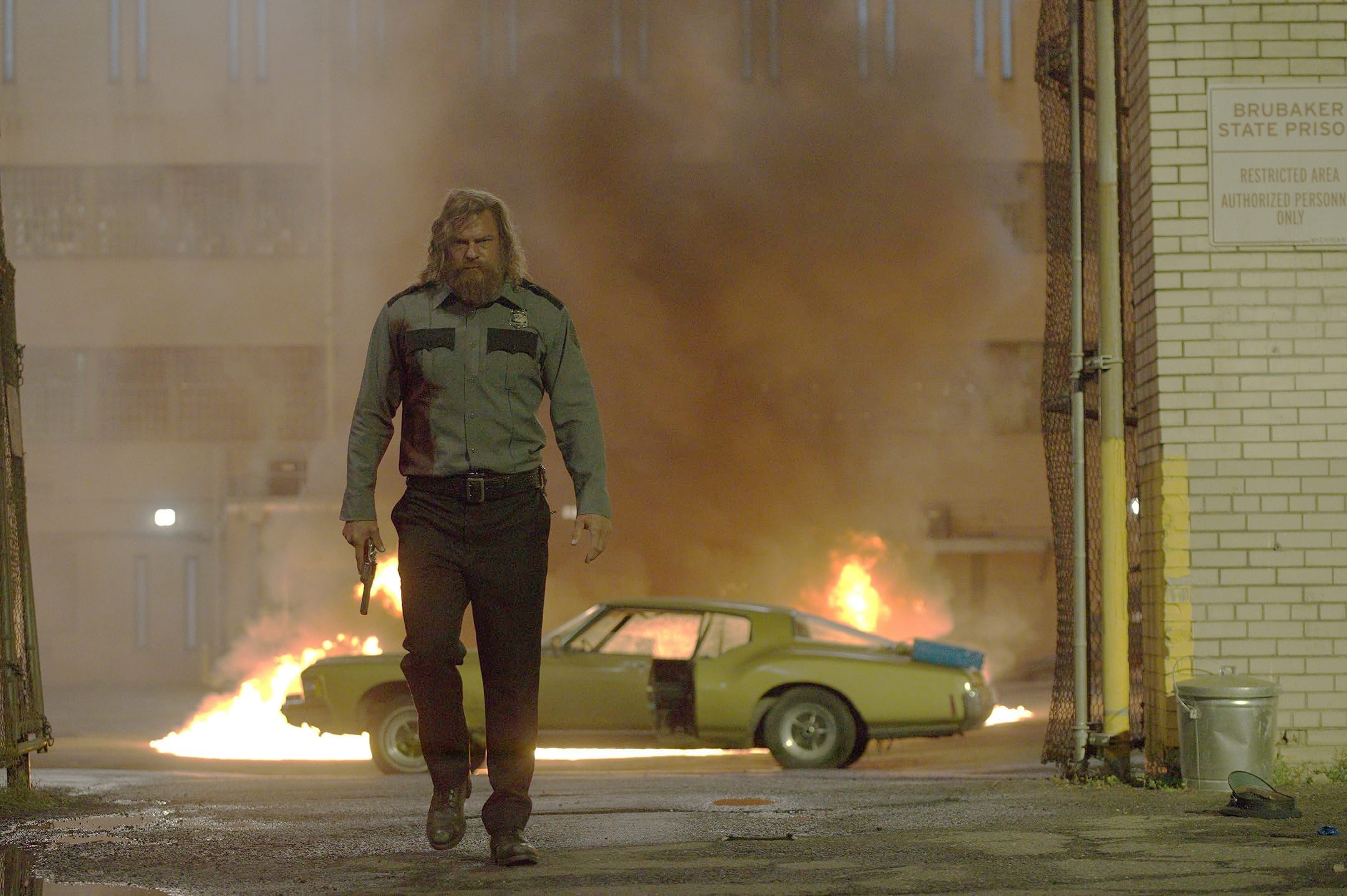
Alan Ritchson in Motor City. (Courtesy IFC)
MOST MOVIES CLEARED OUT this weekend since it’s smack-dab in between The Odyssey and Spider-Man: Brand New Day. But there are a couple of new things in theaters. The new Nicolas Winding Refn flick, Her Private Hell, is out now. Not really my cup of tea, though I’m always there for a new Refn in the hopes that he recaptures that Drive/Bronson/Only God Forgives vibe, and I dug The Neon Demon.
More to my liking is Motor City, a movie made from a script that hit the Black List almost two decades ago but took a while to get off the ground. Probably because of the film’s gimmick: It is almost entirely free of dialogue, telling its story simply through the visual imagery onscreen. From my review:
What’s fascinating about Motor City is that it works almost entirely because we understand the language of cinematic tropes that St. John and Ponciroli are playing with. The wronged ex-con, the crooked cops, the loyal friends, the misled ex-girlfriend, etc. One could argue that this renders the film little more than a collection of clichés, nothing more than formulae designed to move things along. One could also invert this argument, arguing that St. John and Ponciroli are exposing these tropes, and commenting upon them with the silent structure.
Personally, I prefer to take the story simply as it’s presented: Motor City hits its emotional beats and revels in its “every shot a painting” aesthetic, luxuriating both in the slow-motion movement and in soaking in the faces on the screen. And there are some great faces in this movie. Ritchson, best known for his three seasons as Jack Reacher, looks as though he’s carved from granite, while Woodley embodies a sort of fierce, soft sadness. Ben McKenzie has aged into his post-O.C. roles with real grace: he looks weary and righteous as a cop who takes it upon himself to free Miller from his unjust imprisonment. And Miller’s buddies—Lionel Boyce (of The Bear fame)and Amar Chadha-Patel play two pals who fought with him in Vietnam and help spring him from prison—are perfectly expressive and emotive. Patel in particular embodies a sort of wild joy that accompanies the pursuit of justice.
It’s in theaters now. If you’ve already seen The Odyssey—or you’re waiting to see it on IMAX—you could do much worse than Motor City.

 Login
Login