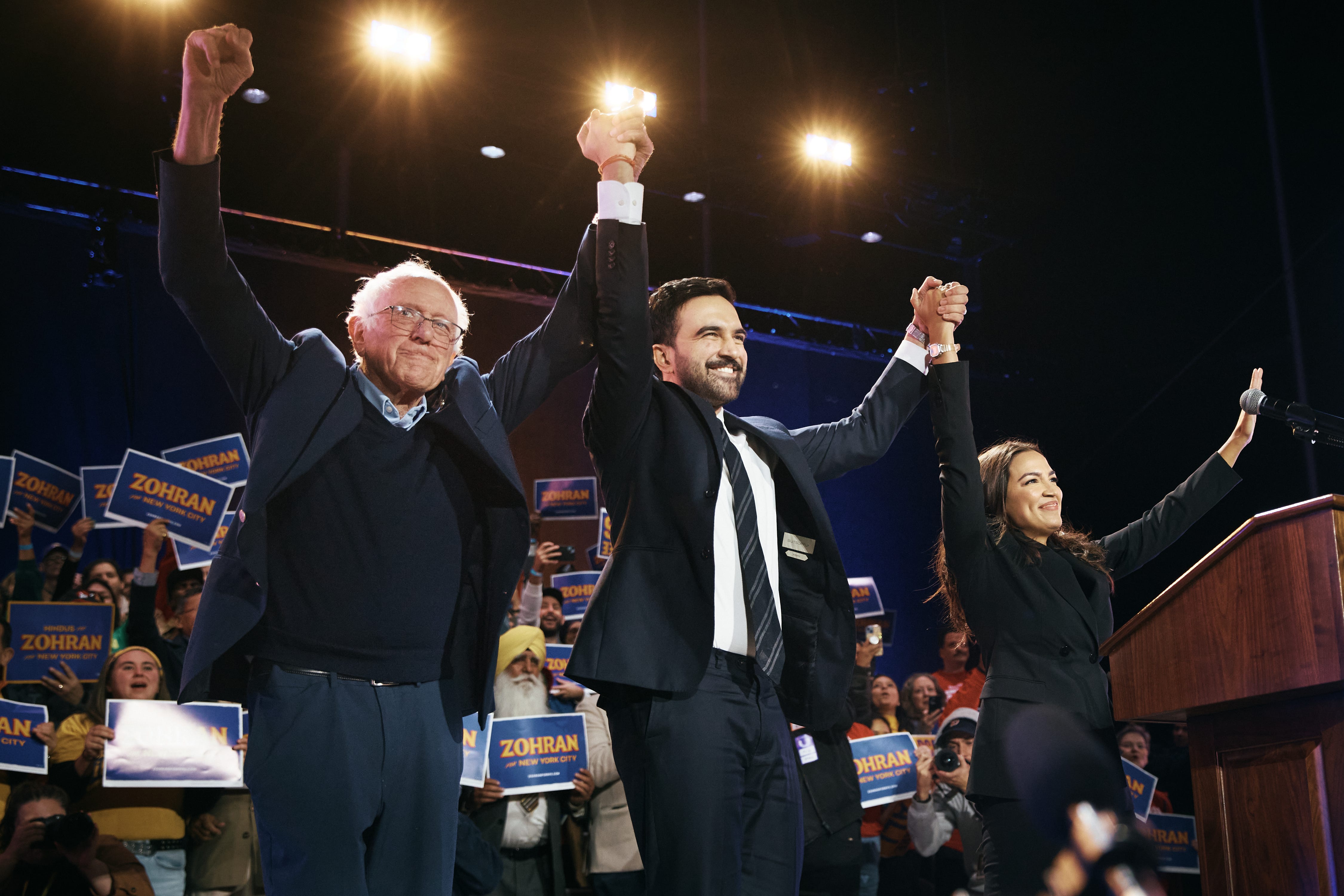
I don’t begrudge Wisconsin Democratic voters the decision to embark on the Great Francesca Hong Experiment.
But, you know, they shouldn’t have any illusions as to how this is going to turn out.
There are two ideas in tension here.
The first idea is that Democrats, as a party, need to try lots of different stuff. They need to try diligent centrists, Christian libs, populist crusaders, and McKinsey-style technocrats. It’s not crazy to think that they should also try full-monty DSA. You don’t know what the product-market fit is going to be until you test the market.
The second idea is that many of these elections matter. If Hong loses—and I suspect she’s going to get absolutely smoked in November—then there will be a Republican election denier with the power to monkey with certification and voting in a possible tipping-point state in 2028.
So, sure. It’s fine to experiment. But also: You can’t pretend these are free shots.
I have been asked over and over about the DSA-Democratic party split and today I want to propose a solution. Because there’s a way to bring new ideas into the Democratic party while keeping out the people who want to destroy the party.
Andrew Egger and Bill Kristol went live to cover the DOJ dropping more Reflecting Pool cases, Senate Republicans advancing Todd Blanche’s vote out of committee, Max Miller defiantly staying in for bid for re-election, and Oman and Iran potentially coming to a deal over the Strait of Hormuz.
The United States, Reuters reports today, has used “virtually all” its stockpile of long-range precision missiles during five-plus months of conflict in Iran. But we probably won’t be needing them anyway—after all, you only need missiles when you get involved in wars, and our peace-loving president wouldn’t do a thing like that.
Here’s something you DO need: a Bulwark+ membership. It’ll let you access our locked content, watch videos without ads, and join in the comments sections. Our two-week free trial offer expires tonight, so sign up today!
Bill and Andrew will be live on YouTube and Substack at 10 a.m. EDT. Come hang out. Happy Tuesday.
(Photo by Nicholas Kamm/AFP via Getty Images)
President Spaceman
by Andrew Egger
It’s been stranger than usual, watching Donald Trump operate this week. The president has long lived on a different planet from the rest of us—a world defined by his own personal information bubble of yes-men and online fans shouting his praises. But it’s rarely been so clear just how far Trump’s planet is from our reality.
Take Iran. To hear the president tell it, America is forever on the verge of total victory. He is perpetually giving the mullahs one last, last, last chance to surrender before he turns their country into a parking lot—then inventing some pretext to call off the attack, pretending Iran has waved some secret white flag and is ready to make a deal.
Now, however, Iran is barely bothering even to participate in this charade. Which leaves the president performing a strange one-man play: After threatening to level Iran with “Military Terror, Strength, and Power not seen since World War II,” Trump announced Saturday he would hold off because “the perimeters of a deal has been agreed to.”What did this deal involve? “The Immediate, Complete, and Total OPENING OF THE HORMUZ STRAIT, and an end to Iran’s nuclear threat.” Talks on such a deal, he said, would get underway Monday.
We’ve seen this movie before: What Trump is describing is essentially the memorandum of understanding that he signed back in June, which has been out of force for weeks. This time, however, his assertions are even more fanciful: No such deal exists, and no talks are ongoing.
Iran said as much yesterday, insisting its only current direct negotiations are with Oman to work out joint control of the previously open strait—exactly the opposite, in other words, of what Trump claimed. This contradiction led to another tantrum from Trump, who called Iran “unbelievably duplicitous” in a post yesterday, but declined to resume his threats of devastating military action.
Meanwhile, another cargo ship reported being struck by a projectile in the strait overnight. It’s been two weeks since Trump issued a seeming ultimatum: For every ship Iran attacked in the strait, the United States would “bomb and destroy ONE BRIDGE OR POWER PLANT” near Tehran in Iran. Several such attacks by Iran later, Trump hasn’t followed through once. His planet and our own have taken different paths; one no longer exerts much gravity on the other.
Or take U.S. Attorney Jeanine Pirro. As JVL described yesterday, the White House suffered an embarrassment this weekend after reaching the end of the line on its ridiculous Reflecting Pool saga. After contriving a government-wide effort to lie that the pool’s lining had been damaged by vandals, including ex-Olympian David Hearn, the administration quietly dropped the charges and admitted what had been obvious all along: The lining had been faultily installed.
But this was not obvious to everyone. Donald Trump spent yesterday spinning up a totally different tale: that Hearn was guilty, that a hostile judge in the case had been “really vicious,” and that his handpicked D.C. prosecutor had simply wilted under the pressure. Pirro “choked,” he complained to reporters. She had “folded like an umbrella.”
Pirro could never have done anything else; she wasn’t going to risk getting herself disbarred over hallucinated damage to the Reflecting Pool. But her position in the White House now dangles by a thread. Trump dressed her down in a phone call Saturday, then summoned her to the White House yesterday evening for more recriminations. Whether Pirro will survive the trip back to our planet remains to be seen.
Every time you look, Trump seems to have drifted further from our reality. Reading his Truth Social posts these days is like looking at a red-shift star. His poll numbers have never been worse, but don’t try to tell him that: “My REAL Polling Numbers,” he insisted yesterday, “are the best they have ever been.”
Other posts make clear how difficult it has become to understand the customs and behaviors of those who live on Trump’s planet. Why is he forever posting AI slop of himself? Why is he scolding random CEOs for not praising him enough in random Fox News hits? Why is he bragging about his Kim Jong-il–style wins at the club championships of golf courses he owns, saying things like “I am so honored in that, unlike the rest of the field, I’m given very little time to practice, because I’m focused on many other things” and boasting that “It’s called TALENT, and I have it, and they don’t!” Why is he reposting random Kim Strassel columns from early March arguing that the Iran War is going well? Why do space aliens from another reality do anything?
Trump has spent a decade trying to drag us along the path of his own suspended reality. But something has snapped; the real world has moved back onto its own course. Trump’s planet—where America is the hottest country in the world, Iran has been brought to its knees, vandals who destroyed the Reflecting Pool will be brought to justice, and he is extraordinarily popular and oh so good at golf—is so far from Earth it can no longer be seen with the naked eye. And as more and more people begin to wake up to this fact, the president is making no effort to reverse thrust. Already his world cannot be seen except through our most powerful telescopes; soon we may be unable to see him at all.
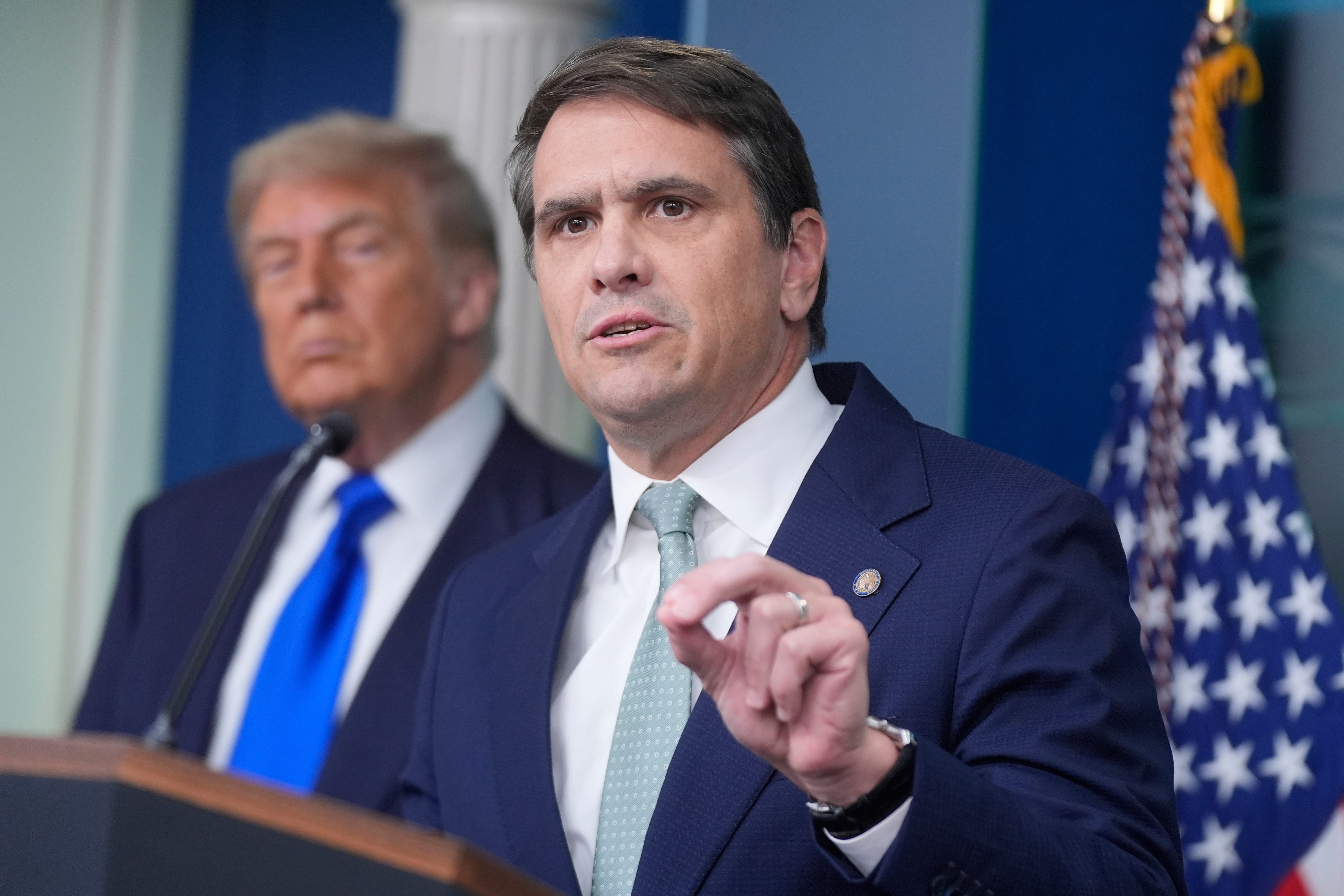
Donald Trump’s personal lawyer and nominee for attorney general, Todd Blanche, will most likely be reported out of the Senate Judiciary Committee this morning on a party-line vote. He’ll likely be confirmed later this week on another party-line vote by the full Senate. So the man who directed the Trump administration’s Jeffrey Epstein coverup, who flew to Florida to meet with Epstein’s convicted co-conspirator Ghislaine Maxwell right after the notorious Trump birthday card to Epstein became public, and who a week later presided over her move to the low-level federal prison facility, will become attorney general of the United States.
There are major figures in both the Democratic and Republican parties who were closely tied to Jeffrey Epstein. The whole Epstein story sheds a terrible light on a not insignificant part of the American elite. But right now, it’s only the Republican party that’s voting to continue the coverup. It’s only the Republican party that’s voting to ensure that there will be no further federal investigation of the Epstein matter nor prosecution of—or even accountability for—other wrongdoers.
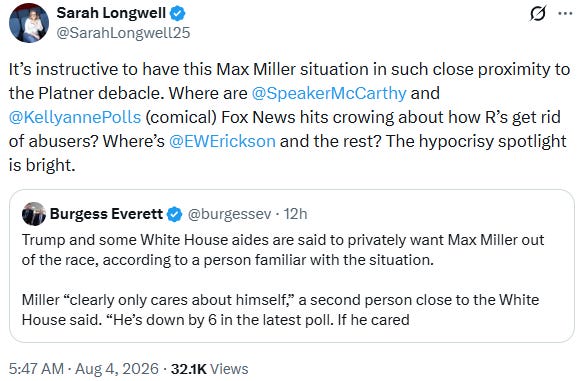
Which brings us to Representative Max Miller, the former Trump White House aide, now a Republican congressman from Ohio’s 7th congressional district. Miller has been unconvincingly, to say the least, defending himself against spousal and child abuse charges from his ex-wife, whom he married in 2022 at Donald Trump’s golf club in New Jersey. For now, at least, Miller says he’s not resigning from Congress, or even giving up on his re-election bid this year.
But on Sunday, Republican senator Bernie Moreno, father of Miller’s ex-wife, finally spoke up, supporting his daughter’s account of the abuse and saying that his former son-in-law isn’t fit to serve in Congress. A few other Republican senators volunteered yesterday that they believe their colleague. And President Trump apparently phoned Miller last night to raise the possibility of him ending his re-election bid because his seat may be in jeopardy. Miller would need to withdraw before Wednesday in order for a special primary election to be scheduled to replace him on the ballot.
But Trump has had nothing critical to say about Miller’s actual behavior. Rather, he expressed empathy for him. And Ohio Republican Representative Jim Jordan last week said of Miller, “I know Max is a good man.” Jordan apparently stands by that judgment.
Meanwhile, we’ve heard nothing from the conspicuously pious speaker of the House, Mike Johnson. As for the other Republicans from Miller’s home state, Politicoreported the following last night:
Notably still silent was GOP Sen. Jon Husted, Ohio’s other senator, who while leaving the Capitol Monday did not respond to reporters’ questions about whether Miller should resign. Other Republicans in the Ohio House delegation are also staying quiet for now. Almost every House Republican from the state either declined to comment or did not respond to requests for comment on Moreno’s statement.
So some Republicans like Max Miller. Some are concerned because they think he may lose the seat. Some are concerned because the daughter of a fellow senator is involved. But if Miller had abused someone who wasn’t the daughter of a senator, and if there were no electoral repercussions, would any of them have spoken up to condemn his behavior?
No.
It would be unfair to say the Republican party is pro-abuse. But it might be fair to say they seem to be anti-anti-abuse. They seem happy to turn a blind eye to abuse. They certainly don’t seem to get too upset about the abuse of women.
But we shouldn’t be surprised. It is, after all, Donald Trump’s party.
Don’t Believe Todd Blanche About Trump’s Slush Fund From Hell… The attorney general nominee did not kill off Trump’s egregiously corrupt fund, even if he duped Sens. Cornyn and Tillis into thinking he had, warns PHILIP ROTNER.
What the Hell Happened to Sean Duffy’s Road-Trip TV Show? Three months after it was announced, the secretary of transportation’s summer show—funded by companies he regulates—hasn’t aired a single episode, WILL SOMMER reports in False Flag.
RFK Jr.’s CNN Meltdown Was Even Worse Than You Think… On Bulwark Takes, WILL SALETAN dismantles RFK Jr.’s disastrous CNN interview, exposing one false claim after another on COVID, vaccines, Anthony Fauci, Donald Trump, and the media.
The Attack We Knew Was Coming… Effectively defending against cyber threats against critical infrastructure requires a long-term commitment of political will, writes MARK HERTLING.
Quick Hits
FRESH IDEAS WANTED: The Trump administration is in difficulties. Neither of its tried and re-tried strategies for dealing with Iran—pressuring them with sanctions and bombs or sweet-talking them by stopping the sanctions and bombs—seem to be getting anywhere. Some fresh brainstorming is in order. Why not crowdsource it?
“We are looking for new creative and unconventional ways to pressure and punish Iran,” reads the email sent by a CENTCOM intel officer to “a broad group of military analysts” last week, per a new report from CNN:
The crowdsourcing-style query, which military officials said was unusual over email, is one sign of the limited — and potentially unpalatable —options available to Trump to force Iran into a deal on his terms. Hoping to find an alternative, the official at CENTCOM kicked off the brainstorming session via email to see if anyone had a better idea. The second source said CENTCOM is looking at everything, acknowledging it needs to reevaluate the strategy.
We at The Bulwark often crowdsource, as well: for story ideas, tips, even the best ways to increase our subscriber count (SUBSCRIBE!). Fortunately for us, lives, the price of oil, and America’s standing across the globe aren’t on the line.
As for CENTCOM’s search for Iran answers, Bill offered one. Hey, no bad ideas in a brainstorm!
BAD BOSS ALERT: Max Miller isn’t the only Republican House member with a developing personal scandal. The House Ethics Committee on Monday released the results of their investigation of Rep. Chuck Edwards (R-N.C.), finding that he violated the House code of conduct “by failing to adhere to the spirit of rules prohibiting sexual harassment of and unwanted advancement to House staffers.” The report continues:
Representative Edwards engaged in persistent unprofessional and inappropriate conduct towards two young female staffers. While Representative Edwards denied that any of his conduct was intended as a sexual or romantic advance, his pattern of behavior would lead a reasonable observer to interpret it as such, including providing the young women with lavish and recurrent gifts, making comments regarding their appearance and dress, inviting them to intimate dinners and vacations, sending notes regarding his effusive affection, and inviting them to other activities as a way to spend time together.
The committee’s report, which you can read here, “found no evidence,” it said, that Edwards had ever propositioned any of his staffers. He was, however, “aware that his excessive attention toward the young women had led to rumors and innuendo in the office.” Is it too much to ask for just a few more normal people in elected office?
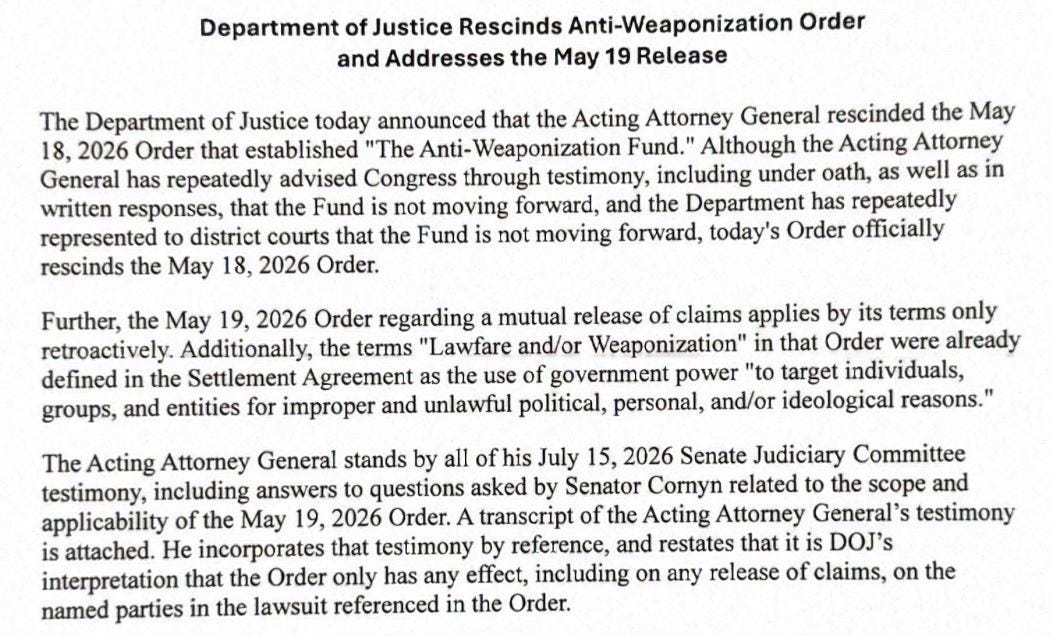
THE SO-CALLED “ANTI-WEAPONIZATION FUND” established as part of a purported settlement between President Trump and the IRS isn’t dead, it’s just sleeping.
Don’t be fooled by the weasel-worded statements that Acting Attorney General Todd Blanche posted on the Department of Justice website and tweeted out late Sunday night. They are clearly intended to give a false impression that a stake has finally been driven into the fund’s heart. It hasn’t.
Blanche posted two written statements on Sunday night, one that he calls an “order” and one that he calls an “update.” Let’s look at each of them in turn.
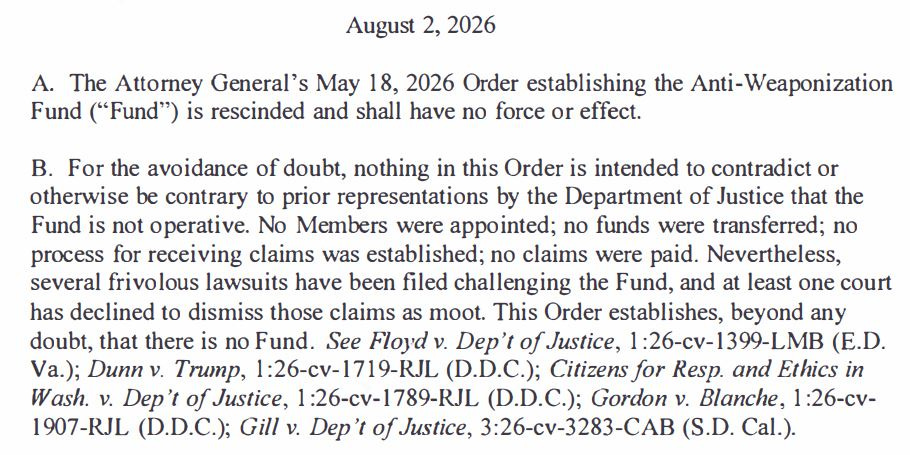
Part A of the order, dated August 2, 2026, contains the operative language: “The Attorney General’s May 18, 2026 Order establishing the Anti-Weaponization Fund . . . is rescinded and shall have no force and effect.” Note that only the May 18 DOJ order is rescinded, not the settlement agreement between Trump and the DOJ that created the fund, and not the fund itself.
So let’s take a look at what it means to rescind the May 18 order.
The May 18 order is merely a step toward implementing the settlement agreement. As the May 18 Order explicitly states, the settlement agreement—not the May 18 order—“created the Anti-Weaponization Fund.” The May 18 order merely established the funding required by the settlement agreement.
Make sure you never miss any of our articles, newsletters, podcasts, and livestreams—sign up for Bulwark+ today, with a two-week free trial:
Accordingly, rescinding the May 18 order did not and could not have killed the fund, it only defunded it for the time being. Only a rescission or amendment of the settlement agreement between Trump and the DOJ, as to which both parties would have to agree in writing, could extinguish Trump’s contractual right to compel the DOJ to fund the Anti-Weaponization Fund.
The carefully crafted language of Part B of Blanche’s August 2 order confirms the limited effect of rescinding the May 18 Order. “For the avoidance of doubt,” Blanche tells us, the fund is “not operative.” Not dead. Just not operative (because it no longer has any funding). The statement that “there is no Fund” appears to be strategically ambiguous—there may be no Fund in the sense that it is no longer funded, but it does not amount to an amendment of the settlement agreement requiring the DOJ to establish funding at some point.
The second document posted by Blanche on Sunday night, the so-called update, uses even more limited weasel wording. Apparently even the mush about being not “operative” was a bit strong for Blanche’s (or Trump’s) liking because now the update tells us merely that the fund “is not moving forward.” Blanche clearly deemed it unnecessary to finish the thought with “at this time.”
If Senators Cornyn and Tillis are too dense to understand the difference between “not operative” or “not moving forward,” on the one hand, and “dead forever,” on the other, then maybe Trump stumbled on something true by branding them as no longer fit to be senators.
Blanche has either bamboozled Cornyn and Tillis by giving them meaningless written “assurances” that assure nothing, or they have simply caved to pressure from Trump, Senate colleagues, the right-wing blogosphere, or their own allies and supporters. Even more troubling, they have completely folded on their purported efforts to limit or kill the outrageous immunity the DOJ has given Trump and his family regarding their tax returns. Merely assuring the two recalcitrant senators that the release given to Trump and his family applies “only retroactively” doesn’t come close to addressing the true vice of the deal: Giving Trump and his family complete immunity from prosecution for any crimes they may have ever committed in their tax returns, in exchange for his agreement to dismiss a corrupt sham lawsuit is a blatant betrayal of the American public. Claiming that it only applies retroactively—meaning it applies to any tax return Trump or his family have ever filed—only perfumes the pig.
WHEN REPORTS EMERGED LAST WEEK that hackers had penetrated water systems across multiple American states, public attention immediately turned to the question of responsibility. Was it Iran, Russia, China, or—as President Trump wildly suggested—Democrats within the affected states? While Iranian-affiliated cyber actors are widely considered the leading suspects, federal investigators have yet to make a formal attribution. More importantly, so far there is no evidence that drinking water has been contaminated or that public health has been endangered. What the attacks did demonstrate, however, was that malicious actors have the capacity and, at times, desire to compromise the operational systems that control essential public infrastructure.
Yet the greatest significance of these attacks lies not in their novelty but in their familiarity. For those who have spent careers in the military or national security space, the reports were unsurprising: The attacks represent precisely the kind of threat that American strategists and analysts have anticipated for more than two decades. Long before cyberwarfare entered the public vocabulary, successive administrations, military planners, and allied governments repeatedly warned that America’s greatest vulnerabilities would not necessarily be found on distant battlefields but at home, embedded within the civilian infrastructure that underpins modern society.
That conclusion has appeared consistently in a range of national security planning documents, in various threat assessments by all agencies, and within the National Cybersecurity Strategy. The specific language has evolved over the years, but the underlying assessment has remained strikingly consistent. America’s critical infrastructure—including energy grids, communications systems, transportation networks, financial institutions, health care ecosystems, pipelines, and water systems—would become targets for adversaries seeking strategic advantage while avoiding direct military confrontation. These systems support every other element of national power while often remaining lightly defended compared with traditional military targets, which makes them soft targets.
Within the military, recognizing this has fundamentally changed how campaigns are planned. Leaders no longer view cybersecurity as a technical specialty to be delegated to communications experts after operational plans have been completed. Instead, it has necessarily become an integral part of campaign design from the outset. While joint doctrine describes offensive cyberspace operations, defensive cyberspace operations, and the operation of the Defense Department’s own information networks as distinct missions, commanders tend to think about cyber in broader operational terms. More and more, however, the military integrates cyber capabilities into comprehensive campaigns in which diplomacy, intelligence, economic pressure, information operations, and military force are all synchronized to achieve strategic objectives. Cyber has become another asymmetric capability available and integrated into virtually every modern campaign plan rather than treated as a supporting specialty.
Some cyber operations are conducted independently to collect intelligence, penetrate networks, or create strategic effects without employing conventional military force. Others directly support combat operations by disrupting the enemy’s command-and-control systems, logistics networks, air defenses, or communications, thereby allowing friendly aircraft, ships, and ground forces to maneuver inside the disrupted space.
The strategic evolution of cyber operations reflects a broader truth about contemporary conflict: Adversaries no longer need to destroy a nation’s military to impose real strategic costs; they can instead undermine the systems upon which civil society itself depends. On the face of it, a water-treatment facility may appear to have little connection to national defense until one considers the cascading consequences of disabling it. Hospitals rely upon clean water. Fire departments rely upon water (and water pressure). Manufacturing plants depend upon reliable municipal systems. Citizens expect government to provide potable water every day without interruption. Even a temporary disruption to that confidence forces governments to divert resources, commands attention at the highest political levels, and reminds the public that essential services are more fragile than they are believed to be. The strategic objective is often less about physical destruction than about eroding confidence and trust in government and its institutions. A cyber attack that causes the public to question its drinking water, for example, becomes psychological as much as operational.
Support our independent political and cultural journalism by snagging a Bulwark+ membership:
WHILE SERVING AS CHIEF OF OPERATIONS for U.S. Army Europe nearly twenty years ago, I was present as Estonia experienced what many military professionals now regard as the opening chapter of modern strategic cyberwarfare. In April 2007, the Estonian government decided to relocate a statue called the Bronze Soldier, a Soviet war memorial in central Tallinn that many ethnic Estonians viewed as a symbol of decades of Soviet occupation. The decision ignited protests and diplomatic outrage from Moscow, and, within days, a wave of coordinated cyber attacks unlike anything the world had previously witnessed.
The attacks targeted far more than government websites. The Estonian parliament, ministries, banks, newspapers, broadcasters, telecommunications providers, and other essential services found themselves overwhelmed by distributed denial-of-service (DDOS) attacks that flooded networks with malicious traffic. Financial transactions slowed or stopped. News organizations struggled to communicate. Government agencies found it difficult to provide public services. Emergency communications were affected. It wasn’t war. Nothing exploded, no missiles crossed the border, and no Russian armored columns rolled toward Tallinn. Yet millions of Estonians experienced something deeply unsettling all the same: the realization that a hostile power had found a way to disrupt the daily life of an entire society without firing a shot.
These attacks were particularly acute because of their target. In 2007, only sixteen years had passed since Estonia had regained its independence from the Soviet Union. During that short period, the country had reinvented itself as one of the world’s most digitally advanced democracies. Citizens filed taxes online, voted electronically, managed financial transactions digitally, and embraced technology as a symbol of both national progress and independence from Moscow. The cyber attacks struck at Estonia’s confidence in the very institutions that had defined its remarkable post–Cold War transformation. For many Estonians, the attacks felt less like electronic vandalism than a reminder that geography alone could no longer protect sovereignty.
Rather than retreating from the digital frontier, Estonia invested more deeply in resilience (as well as other counterintelligence programs). Estonian planners redesigned networks with redundancy in mind. Government agencies strengthened partnerships with private industry and facilitated cybersecurity education throughout society. Reserve cyber capabilities were developed. Estonia shifted the emphasis from an impossible goal of preventing every intrusion to an achievable one of ensuring that society could continue functioning despite them. Estonia understood that resilience—not invulnerability—was the true measure of national security.
NATO drew the same conclusion from the lessons of 2007. The alliance established the Cooperative Cyber Defence Centre of Excellence in Tallinn, where military officers, civilian experts, and researchers from across NATO now study cyber doctrine, conduct advanced research, and participate in multinational exercises. (I was proud to have later participated in one of those events as commander of U.S. Army forces in Europe.)
I HAVE WRITTEN REPEATEDLY in The Bulwark about the importance of the Cybersecurity and Infrastructure Security Agency here in the United States, about the value of Estonia’s whole-of-society resilience model, and about the growing disconnect between our strategic understanding of cyber threats and our willingness to sustain the institutions responsible for defending against them. Cybersecurity rarely commands public attention when it succeeds because successful cyber defense is measured largely by crises that never occur: The absence of headlines is evidence that the system is working.
No network can ever be made completely secure. The objective isn’t perfect defense but resilient defense—the ability to continue operating despite persistent attacks. That distinction has become important because our adversaries know they don’t need to destroy infrastructure to achieve strategic effects; they only need to convince citizens that they are vulnerable. An attack on water infrastructure will certainly do just that.
It is difficult to avoid the uncomfortable conclusion highlighted by the widely reported attacks last week. They aren’t a failure of imagination or intelligence. America’s security thinkers correctly identified the threat years ago. It’s been assessed, tracked, incorporated into plans, and publicly discussed. Allied nations like Estonia have demonstrated both the vulnerability and the solution. The problem has never been recognizing the danger. It has been sustaining the political will, institutional continuity, and long-term investment necessary to build resilience before a crisis forces our attention.
It’s an old military adage that generals often prepare to fight the last war. The greater danger today may be that democratic societies remember the last cyber attack only until the next crisis arrives. Strategic documents are written, conferences are held, after-action reports are published, and warnings are issued. But then budgets tighten, institutions are reorganized, priorities shift, and the urgency gradually fades. The result is strategic amnesia.
This reported attack—no matter who conducted it—should remind us that cyberwarfare is not a future threat. It is part of the operational environment in which every modern democracy must function. Professionals in the military, intelligence agencies, and national security have long understood this reality. The question is whether we as a nation possess the strategic discipline to defend and protect the approach that we must take. That, more than the identity of this week’s attackers, will determine how well prepared we are for the next campaign that arrives not with bombs or missiles, but through the networks that sustain our daily lives.
Tim Miller and Sam Stein give their takes on Trump’s chaotic press conference in the Oval Office on Monday, where Trump defended Rep. Max Miller amid domestic violence allegations and lashed out at his longtime friend and U.S. Attorney Jeanine Pirro over her failed Reflecting Pool vandalism case. Is Jeanine Pirro about to be fired? Plus, Trump once again warned Iran that it was their “last chance” for a deal after threatening to commit war crimes against the entire country.
Sean Duffy and Rachel Campos-Duffy visiting the Liberty Bell with their family, in a scene from the trailer for The Great American Road Trip. (Screenshot via YouTube)
SECRETARY OF TRANSPORTATION SEAN DUFFY and his family promised back in May to help American families bond during vacation season. The plan: The Great American Road Trip, a new online television show starring, well, the Duffys—Sean, his wife Rachel Campos-Duffy, and their nine children.
The idea is that the Duffys would drive around together—with cameras documenting their every wholesome conversation in the car, and then following them around on their sightseeing escapades.
These trips for the family of eleven didn’t come cheaply, and were seemingly funded to the tune of millions of dollars in donations from corporations Duffy regulates. Still, there was theoretically a noble goal involved. Campos-Duffy—who is a Fox News host and, like her husband, a former reality TV star—said that the show would be an antidote to Americans’ typical lives in what she bafflingly called “a Pornhub world.”
Describing the show—on Fox News and in a promotional conversation in the Oval Office with President Trump—Duffy said their motto is “To love America is to see America.”
Maybe so, but you know what part of America nobody has seen? Duffy’s show.
This Saturday marks three months since the Duffys’ Fox News appearance. Summer is more than half over. The celebrations around the Fourth of July that Duffy’s show was supposed to promote—the project was “aligned” with Trump’s sketchy Freedom250 alternative celebration—are well in the past. Many American school students will go back to school this week.
Yet The Great American Road Trip, which Duffy promised would premiere in June, has not released a single episode. That’s a pretty significant failure for a show the Department of Transportation once described as a “key initiative.”
What happened to The Great American Road Trip? Why have the Duffys failed to help a single American family grow closer or disconnect from the “Pornhub world”?
Perhaps the public’s appetite for accompanying Duffy
Bust past this paywall with a free two-week membership:
Will Saletan dismantles RFK Jr.'s disastrous CNN interview, exposing one false claim after another on COVID, vaccines, Anthony Fauci, Donald Trump, and the media. From conspiracy theories to blatant contradictions, the secretary of Health and Human Services spends more time attacking Dana Bash than defending his own claims and the facts don't hold up. If the nation's top health official is still pushing COVID misinformation, Americans deserve to know.

 Login
Login