Normal view

What Woke Got Wrong—and Right

7 August 2026 at 19:24

Hi guys! It’s Jasmine here, filling in today for JVL. You may know me from my omnipresence in the comments section or from the Triad Mailbags. This is my first time writing a Triad, so I hope you’ll let me know your thoughts in the comments. Today, we’re going to talk about “woke”—the ideas behind it, plus the political impulse that fell under that umbrella term—and I want to prime you all:

  1. Woke began as one inner-circle concept and ballooned into many other things.

  2. Because of its many meanings, people often talk past one another when it comes to woke.

  3. Keep that in mind when reading below and in our discussion in the comments.

Now let me give you the short version: It’s time we bring back woke.

I’m kidding! I kid because I know that out there on X, someone is going to say, “The Bulwark wants MORE woke?!” And that’s not what I’m arguing here. Today I’m trying to explain the evolution of woke. I want to see if we can come up with a theory for what a new and improved wokeness would look like.

(Spoiler: I think maybe we can?)

But this only works if everyone dials back and engages in good faith. Which I know you guys will do.

If you want to be heard in the comments section, please join us as a Bulwark+ member. That way you can read today’s full newsletter and let me know what I’ve gotten right and where I’ve gone wrong. And you can enjoy all our other locked content. Click here:
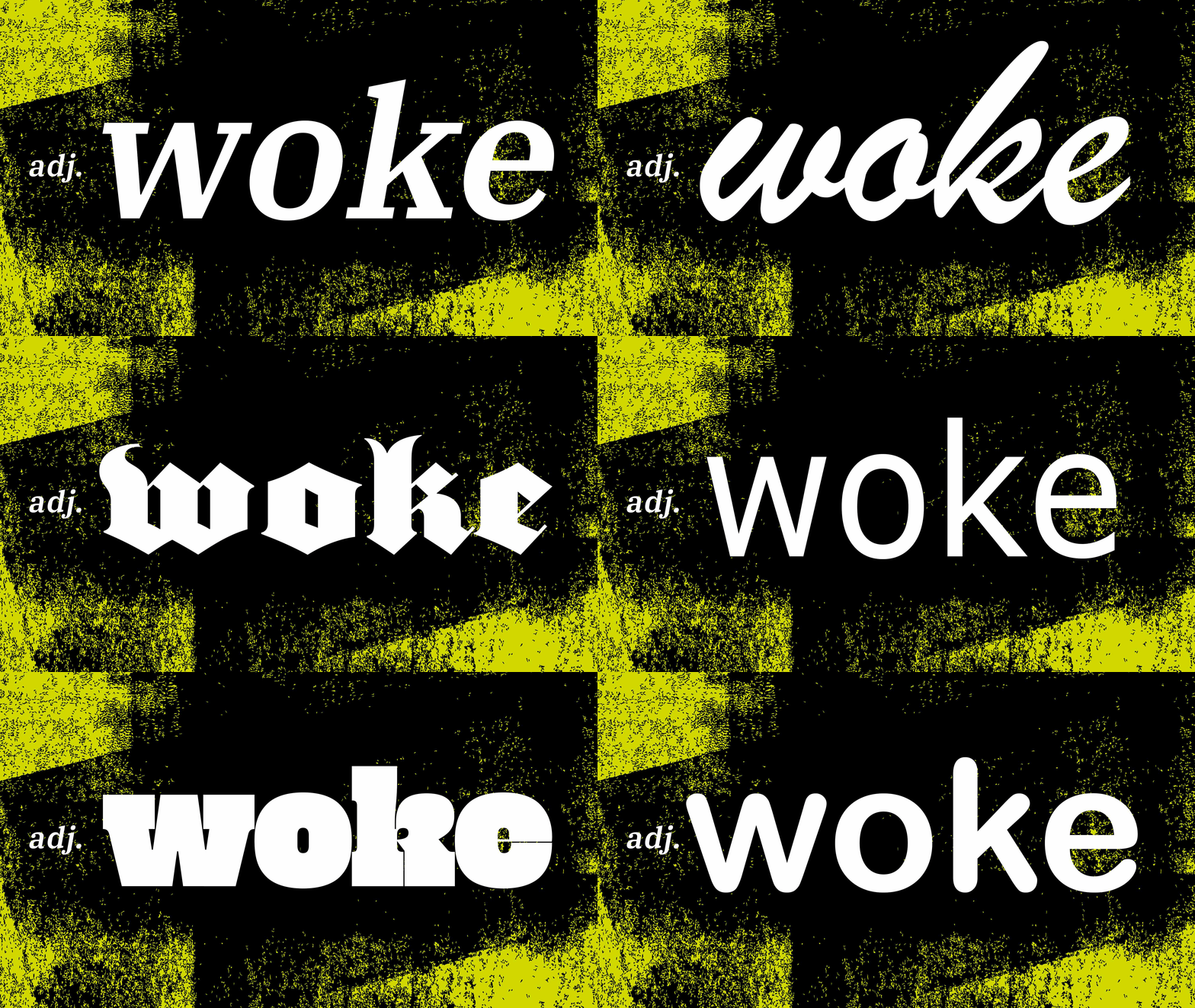
Join Bulwark+ today

(Photo illustration by Sarah Rogers/The Bulwark | Photos Shutterstock)

1. The re-awokening

The word “woke” is as curious a cultural phenomenon as it is a linguistic one. Woke’s great language problem is its flimsy definition: Across roughly a decade, it went from being one half of a phrase used within the Black community (“stay woke”) that meant simply to be aware of social injustice; to a term adopted earnestly by progressives for the same reason; to an insult leveled against sensitive, politically correct leftists; to an amorphous criticism used to describe anything the speaker does not like.

This current definition—“woke” as an all-purpose pejorative used by both the right and the left—is a familiar villain’s journey.

After gaining traction during the first wave of the Black Lives Matter movement in 2014, woke went mainstream. By 2017, lexicographers added it to the Oxford English Dictionary and the political phenomenon became so prominent that commentators started joking, sometimes disparagingly, about a “Great Awokening.” Then woke went off the rails, careening into unpopularity by 2020 when leftists started insisting upon agreement with a host of social and policy issues ranging from expanding bike lanes, to diversity hiring quotas, to critical race theory in K-12 schools.1

This is when, for a swath of America, the left took woke too far. The crossover point where woke peaked and the MAGA “vibe shift” began was probably around 2022. By 2024, Donald Trump was able to return to the White House in part by running against woke identity politics (think of the “they/them” attack ads he ran against Kamala Harris).

The irony, of course, is that to the extent that wokeness was repressive, it was nothing compared to the total obeisance Trumpism demands of Republicans. The canceling, the censorship, the sycophantic ass-kissing, the overreach—these are now inalienable features of the Republican party. Except the Trump administration has outshone woke and created an actual authoritarian agenda, with real-life, dire consequences—but more on that in a moment.


A word of caution: I am not arguing that we should bring back wokeism. Woke created in-groups and out-groups based on the acceptance of an inflexible ideology that divided society into victims and oppressors, from which the latter group was supposed to grovel for the forgiveness of the former. If woke was attempting to build a unifying coalition to bring about actual change, that was decidedly not the way to do it.

But woke is having a bit of a renaissance. The electoral victories of left-wing Democrats such as Zohran Mamdani,2 D.C.’s Janeese Lewis George, and Colorado’s Melat Kiros—people who would’ve been easily identified as “woke” just a few years ago (and sometimes still are)—may not mean that this strain of candidate is about to sweep the country. But it probably means something.3

Yet Democrats continue to balk at their woke adolescence, cringing at their old social media posts and statements like a twentysomething recalling their embarrassing college years. The latest viral example is from Wisconsin gubernatorial-hopeful Francesca Hong: After facing criticism online over her 2020 post that Thanksgiving should be abolished because it celebrates colonialism, Hong now says it is her favorite holiday.

Canceling Thanksgiving is a ridiculous idea, and it’s equally ridiculous that a candidate for governor is having to talk about this. Many woke trademarks were like this: trivial and irrelevant outside of certain feisty corners of the internet.4 But the terror campaign that Republicans have executed during their government trifecta is of actual consequence. Republicans made a bogeyman out of liberal woke repressiveness—even comparing it to Soviet purges under Stalin—but have stood by as their own party turned into a far more repressive, submissive collective. Yet Democrats refuse to point out this hypocrisy.

Instead, the consensus among Democratic officeholders and candidates—from Gov. Gavin Newsom to Abdul El-Sayed, from Sen. Bernie Sanders to James Talarico—seems to be to continue to distance themselves from wokeism to save face ahead of the midterms. In an article published in the Guardian shortly after the Democratic victories in last November’s off-year elections, labor union leader Dustin Guastella wrote that to maintain the Democrats’ newfound momentum, progressives should embrace moderates, and he warned against “reanimating the dead-end politics of fringe woke causes.”

To be clear: Democratic operatives are wise to widen the party’s aperture to left-wing populism. It’s more likely to create a winning coalition than wokeness, which sabotaged itself by issuing mandates of compulsory guilt and shallow activism. But in the scramble for center-left Democrats to shake off wokeness and brandish populism, they are ignoring that “woke,” flawed as it was, was also not completely off the mark—and that some of its core demands foreshadowed


Get around the paywall by joining our growing community:

Read it all with a Bulwark+ membership


Read more

BREAKING: Awful Jobs Report; 23,000 Jobs Lost; May & June Numbers Revised Down | Receipts Live

7 August 2026 at 19:09

Catherine Rampell and Sam Stein went live to cover the terrible jobs report this month, the White House's attempt to spin the economy as booming, the bill in the Senate that could give Trump more tariff power, and a federal appeals court blocking construction on Trump's ballroom.

This episode is sponsored by The New York Times.

Read more from Catherine's newsletter:
https://www.thebulwark.com/p/senate-voting-to-give-trump-a-tariff

Leave a comment

Read more

💾

Blanche on the Bubble

7 August 2026 at 15:41

With America’s stockpiles of crucial munitions getting worryingly low, America’s adversaries seem to be getting interested in testing the boundaries of what they can get away with. Citing U.S. intelligence reports, the Wall Street Journal reports that Vladimir Putin is mulling the possibility of “testing NATO’s resolve” with a “limited assault” on a member country in the next few years. Hey, Vlad, there’s a lot going on over here—could you give us a minute?

In other news, we got some pretty disappointing jobs numbers today: The economy lost 23,000 jobs in July, while May and June’s reports were revised down by a combined 103,000 jobs more. The unemployment rate actually ticked down a hair, to 4.1 percent, as 260,000 people left the labor force. In other words, employers aren’t hiring and workers are starting to notice. To wit, this stat from the Journal: “In recent months, almost three in 10 of the unemployed have been looking to work for more than six months, the greatest share since the pandemic recovery four years ago.” Happy Friday.


Join Catherine Rampell and Sam Stein for Receipts Live on Substack and YouTube today at 12:00 p.m.


(Photo by Eric Lee/Getty Images)

Cassidy in the Spotlight

by William Kristol

[Update (August 7, 2026, 12:30 p.m. EDT): In remarks on the Senate floor an hour after this newsletter was published, Sen. Cassidy announced he would be voting for Blanche after all. So it goes.]

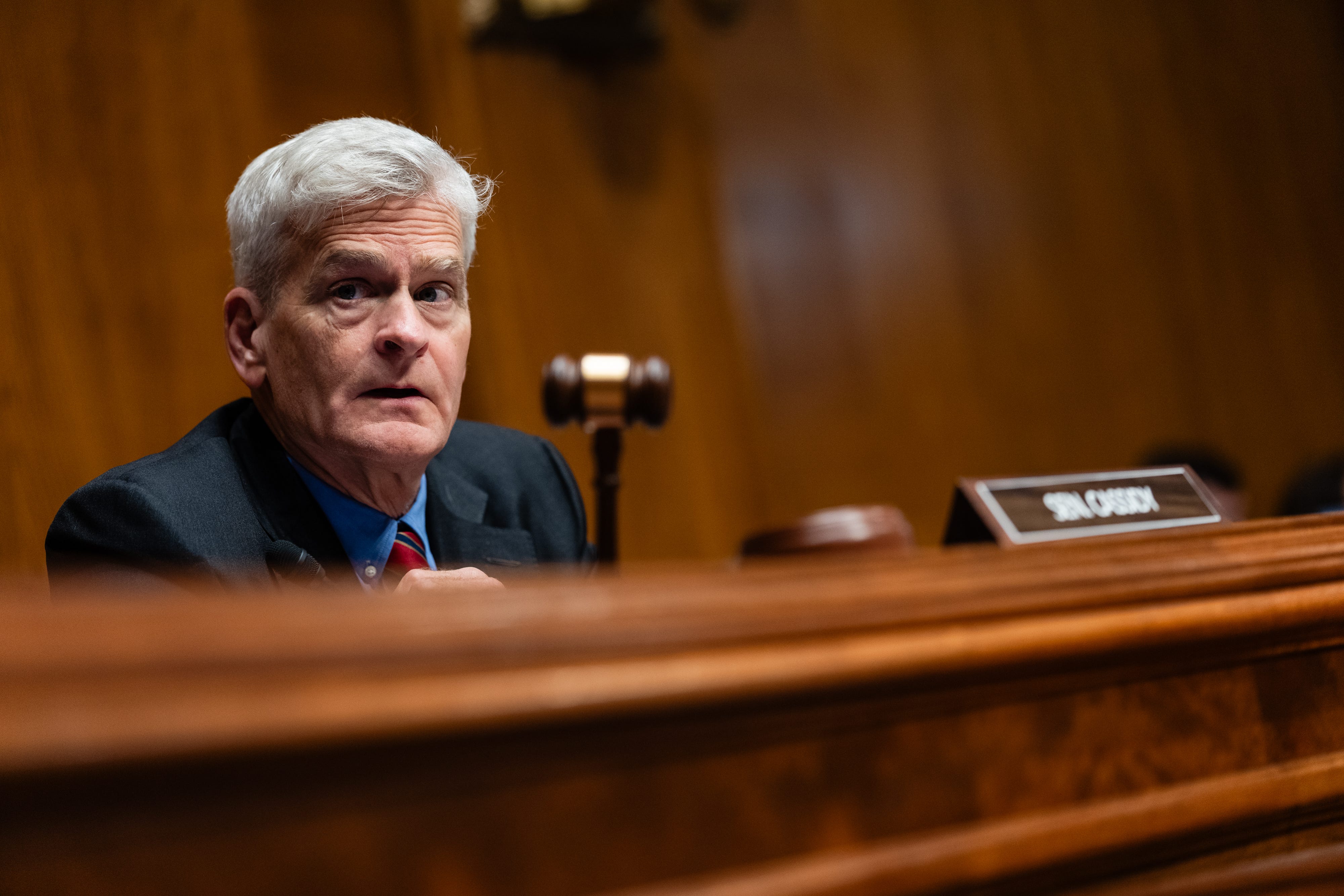
With Sen. Lisa Murkowski’s (R-Alaska) announcement early this morning that she will oppose Todd Blanche’s confirmation as attorney general, it all comes down to the senior Republican senator from Louisiana, Bill Cassidy.

Cassidy could join Murkowski in opposition. They had, after all, met together with Blanche on Wednesday. This morning Murkowski cited “the politicization—even weaponization” of the Department of Justice that “accelerated” during this administration as her reason for opposing Blanche. Cassidy had already said prior to that meeting that he was “very concerned about the weaponization of the Justice Department” under Blanche. All Cassidy has to say now is that Blanche didn’t satisfy his concerns, as he didn’t satisfy Murkowski’s.

And Cassidy owes Trump nothing. After he voted to convict Trump in the February 2021 Senate impeachment trial, Cassidy was targeted by Trump, and was crushed in the Republican primary earlier this year by a Trump-backed challenger.

What’s more, at the beginning of Trump’s second term, after much public agonizing, Cassidy, a physician and chair of the Senate Health, Education, Labor, and Pensions Committee, provided the decisive vote to confirm Robert F. Kennedy Jr. as secretary of Health of Human Services. He’d received several assurances from Kennedy about what Kennedy would do and wouldn’t do as secretary—assurances that Kennedy has subsequently broken. So you’d think Cassidy would have plenty of reason to resolve not to be fooled again.

Share this story with a friend who keeps getting fooled to help them wise up.

Share

But will he so resolve? Will he do the right thing? Or will he follow in the footsteps of his Republican colleague, North Carolina Senator Thom Tillis?

Tillis was elected to the Senate in the same year as Cassidy, in 2014. A businessman who had entered politics a decade before and had become Speaker of the North Carolina House of Representatives, he ran for the Senate that year with the backing of Jeb Bush, Mitt Romney, and the Chamber of Commerce. He was the establishment pick. And after he defeated a couple of Tea Party Republicans for the nomination, he seemed set to be a relatively centrist North Carolina senator.

Then came Trump. Tillis joined the vast majority of his colleagues in years of accommodation, appeasement, and acquiescence. In February 2021, he chose not to follow Cassidy or, for that matter, his fellow Republican senator from North Carolina, Richard Burr, in voting to convict Trump. But Burr wasn’t planning on running for re-election in 2022, while Tillis was focused on his bright political career ahead.

Nonetheless, by June 2025, his lack of true Trumpist zeal meant that he would face a likely primary challenge from the Trump wing of the party. So Tillis announced he wouldn’t run for re-election.

A couple of weeks ago, Tillis demanded as a condition of his support that Blanche meet with the Epstein survivors whom he’d shunned for eighteen months. Once Blanche’s behavior in that meeting turned out to be utterly disrespectful of the survivors, it would have been easy for Tillis to announce his opposition to Blanche, which would have killed the nomination.

But Tillis caved.

You might think that such a record of repeated capitulation to Trump would induce Tillis to slink off quietly into the sunset. But he didn’t even have the dignity for that. Instead, as the publishing house HarperCollins announced yesterday, he has written a book.

According to HarperCollins, How to Lose Friends and Antagonize Presidents brings us Tillis “outspoken and uncensored.” The book is a “bare-knuckled, darkly funny wake-up call,” a “sharp, no-BS book, “ “a bracing tonic to stiffen spines.” Tillis “pulls no punches” about the “spineless Republican yes-men (and -women), and the weirdos of the MAGA world,” about “the grifting sycophants and useful idiots in Trump 2.0.”

As the kids used to say, gag me with a spoon.

Underscoring the absurdity of it all is the book jacket. It features as examples of the sycophants and idiots of Trump 2.0, photos of Kristi Noem, Robert F. Kennedy Jr., and Pete Hegseth. Tillis voted to confirm all three to their Cabinet posts, along with every other Trump nominee.

Does Cassidy now look at Tillis—and the other pathetic, gag-inducing Respectable Republicans™—and find it just too much? Is it possible that this morning Bill Cassidy is saying to himself: Don’t be Thom Tillis? Or does he too decide that he can write a post-Senate memoir about fake courage without displaying actual courage when he could make a difference?

Leave a comment


AROUND THE BULWARK


Quick Hits

BIRTHRIGHT CITIZENSHIP, AGAIN: When it comes to throwing out constitutional amendments via executive order, Donald Trump has a simple philosophy: If at first you don’t succeed, try, try again. Two months after the Supreme Court tore up his last attempt to restrict birthright citizenship as “facially unconstitutional,” Trump signed a pair of executive orders attempting to nibble around the edges of which infants born on U.S. soil automatically qualify as citizens. Here’s the New York Times:

It was not immediately clear how the twin orders could realistically be enforced. They would restrict those who could qualify for birthright citizenship, to exclude children of staff working for foreign governments but serving in the United States, and the babies of mothers who lie about their intentions for visiting the country while pregnant. There is a third category, for babies born in U.S. territories, but that would first require congressional action.

And then there are children whose parents are tagged by the government as being part of known terrorist groups or who are “alien enemies.”

Given how tightly the summer’s ruling has tied the administration’s hands on this matter, most of yesterday’s signing ceremony was simply an occasion for grumping. Stephen Miller fumed that the 14th amendment had been passed “exclusively . . . to ensure that the children of slaves would be citizens,” and that it “had no other meaning and purpose outside of that.”1 But there may be some policy levers left to the administration. For example, White House Staff Secretary Will Scharf suggested that they were considering guidance to deny visas to visitors who they suspect are entering the country for the purpose of delivering a child here.

Join now


PRESIDENT CARLSON?: Could Tucker Carlson run for president? At the very least, he’s plainly trying to keep the possibility on people’s minds. The former Fox News broadcast star raised eyebrows this week after photos were released of him eating dinner at his Maine home with several exiled MAGA dissidents, including Rep. Thomas Massie, former Rep. Marjorie Taylor Greene, and former administration official Joe Kent. “We said no more foreign wars and we meant it and supported Donald Trump because he made that promise,” Greene posted. “The movement has begun.”

Then, on Wednesday, Carlson released a 90-minute livestream containing what he described as a a ten-point program for “whatever comes next”—a program marrying typical MAGA and MAHA impulses (America should be “sovereign,” “beautiful,” “healthy,” and “united”) with populist attacks on the sort of open corruption and foreign adventurism Trump has embraced (one set of rules must apply to everyone, even presidents, and government officials should be punished for lying to citizens).

There was a lot more to it than that, some of which JVL, Andrew, and Will Sommer discussed on video yesterday. But we have a feeling we’re going to be hearing a lot more from Tucker in the days and weeks to come.


LOSING ALLIES: The list of Republicans calling on Rep. Max Miller to suspend his re-election campaign and resign from Congress continues to grow. Yesterday, two more senators joined the chorus: Jon Husted, who serves alongside Miller’s father-in-law Bernie Moreno as Ohio’s other senator, and Montana Sen. Tim Sheehy. Husted’s statement was more diplomatic—Miller, he said, ought to resign “to focus on what is in the best interest of his daughter”—while Sheehy’s was somewhat less so:

This guy is clearly a degenerate sociopath. Max should step aside and seek help. Staying in this race makes it far more likely we lose this seat and hand Democrats a majority to impeach President Trump.

It’s already too late for district Republicans to hold a special election to replace Miller as their nominee, but party leaders could still replace him in the ballot if he were to drop out before Monday. Miller continues to insist he’s being railroaded and doesn’t intend to drop out. But our old colleague Marc Caputo reports for Axios that not everybody is convinced he’ll stick with it: “Republicans privately expect that Miller will drop his re-election bid by the end of this week, according to two sources.”

Share


Cheap Shots

We lost a real one this week:

1

For the record, this is such a cartoonish reading of history that not even the judges who dissented from this summer’s decision would agree.

Senate Voting to Give Trump a Tariff Nuke

7 August 2026 at 13:04
(Photo by Jim Watson / AFP via Getty Images)

[Update (August 7, 2026, 2:05 p.m. EDT): The bill discussed in this newsletter passed the Senate 86–11 on Friday afternoon. Efforts to strip the tariff powers from the legislation (led by Sens. Ron Wyden and Rand Paul) failed. The bill now goes to the House.]

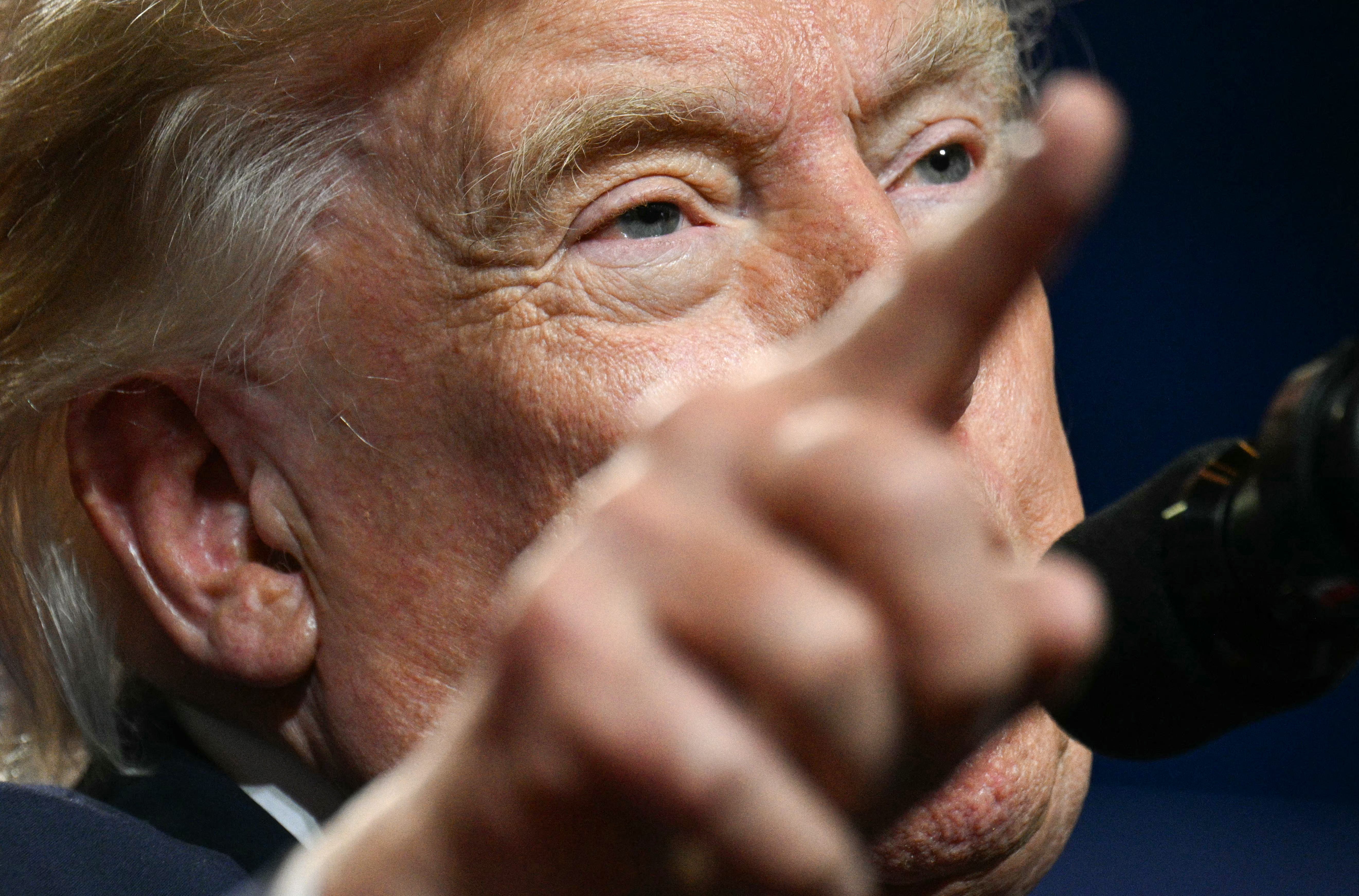
DONALD TRUMP HAS SPENT the past year and a half bending every obscure trade law until it snapped, alienating global allies and jacking up costs for Americans. Democrats have heaped scorn on him for this, and Republicans have expressed their own displeasure via indirect or anonymous grumbling to the press. Yet now, lawmakers from both parties are poised to give the president even more tariff power.

And not just any tariff power. It’s potentially the nuclear bomb of tariff power.

A new, bipartisan bill could allow Trump to drop 100 percent tariffs on virtually any country he likes, for as long as he likes, and with pretty much bulletproof legal authority to do so; which means even the Supreme Court couldn’t bail out Congress (or the rest of us) next time.

This is all happening through the Lindsey O. Graham Sanctioning Russia Act, which is rapidly moving through Congress with broad bipartisan support. It is expected to clear the Senate, where it has 62 cosponsors (including 21 Democrats), as soon as today.

As the name implies, the bill is intended to honor the legacy of the late South Carolina Republican and to punish Russia via sanctions.

In reality,


Blast past the paywall: Sign up for Bulwark+ to read on.

Join Bulwark+ today


Read more

Amy Acton’s Prescription for Ohio

7 August 2026 at 09:24

Cincinnati, Ohio
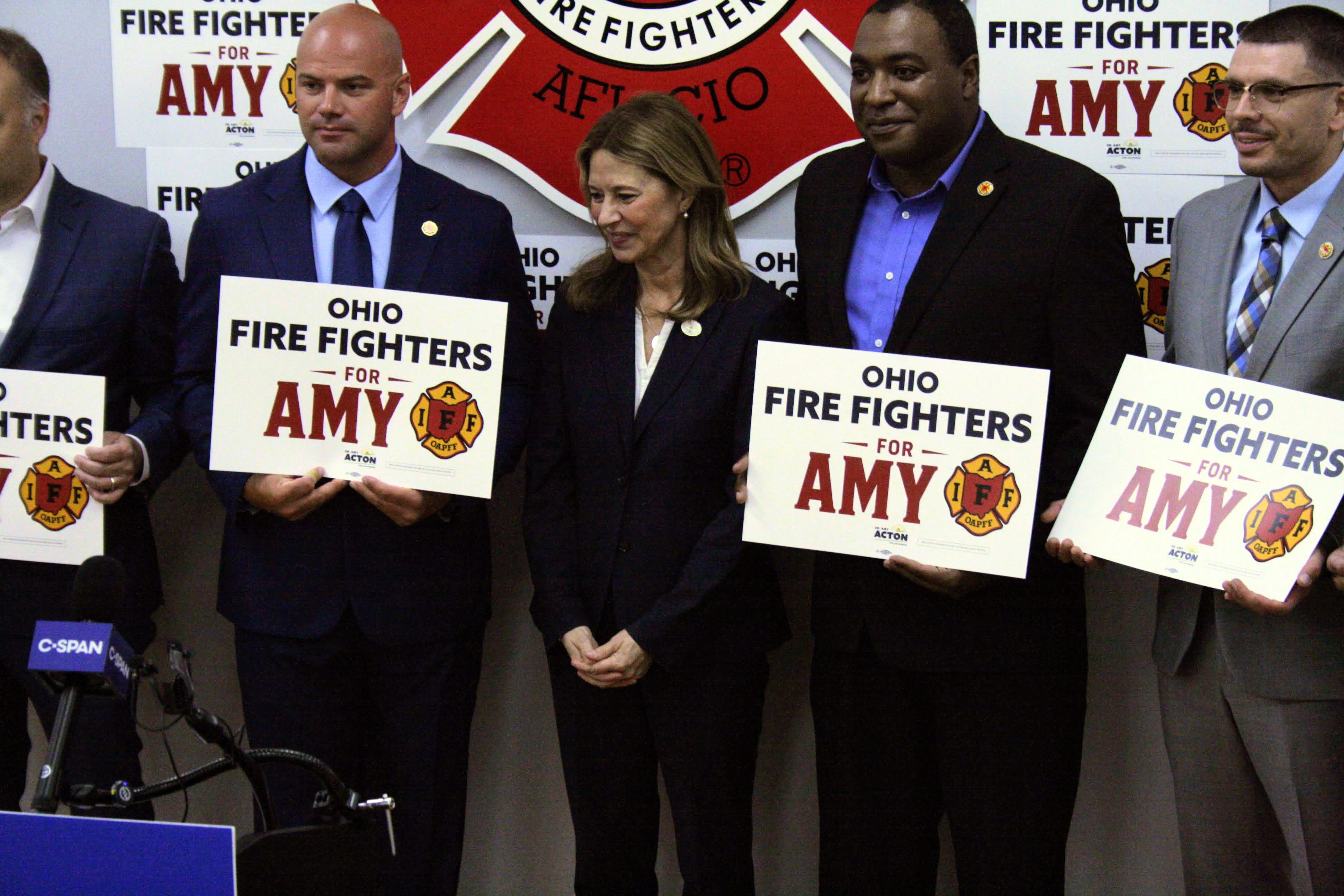
AMY ACTON PICKED UP A BIG ENDORSEMENT Monday in a union hall on the city’s west side. In a room decorated with historical mementos honoring Cincinnati’s fire department, the oldest professionalized municipal fire department in the country, Acton was surrounded by a dozen or so union leaders as the Ohio branch of the International Association of Fire Fighters threw its support behind her gubernatorial bid.

This year, the cops-and-firefighters split is stark in Ohio. The state’s Fraternal Order of Police gave Republican Vivek Ramaswamy its endorsement, which it also extended to every other Republican running statewide. And while the firefighters have in the past gone in for both Republicans and Democrats, for most of the last decade and a half—ever since then-Gov. John Kasich in 2011 pushed for and signed a law (later repealed) sharply curtailing public employees’ collective-bargaining rights—they’ve placed their bets pretty firmly with Democrats. This fall they are all-in on Acton.

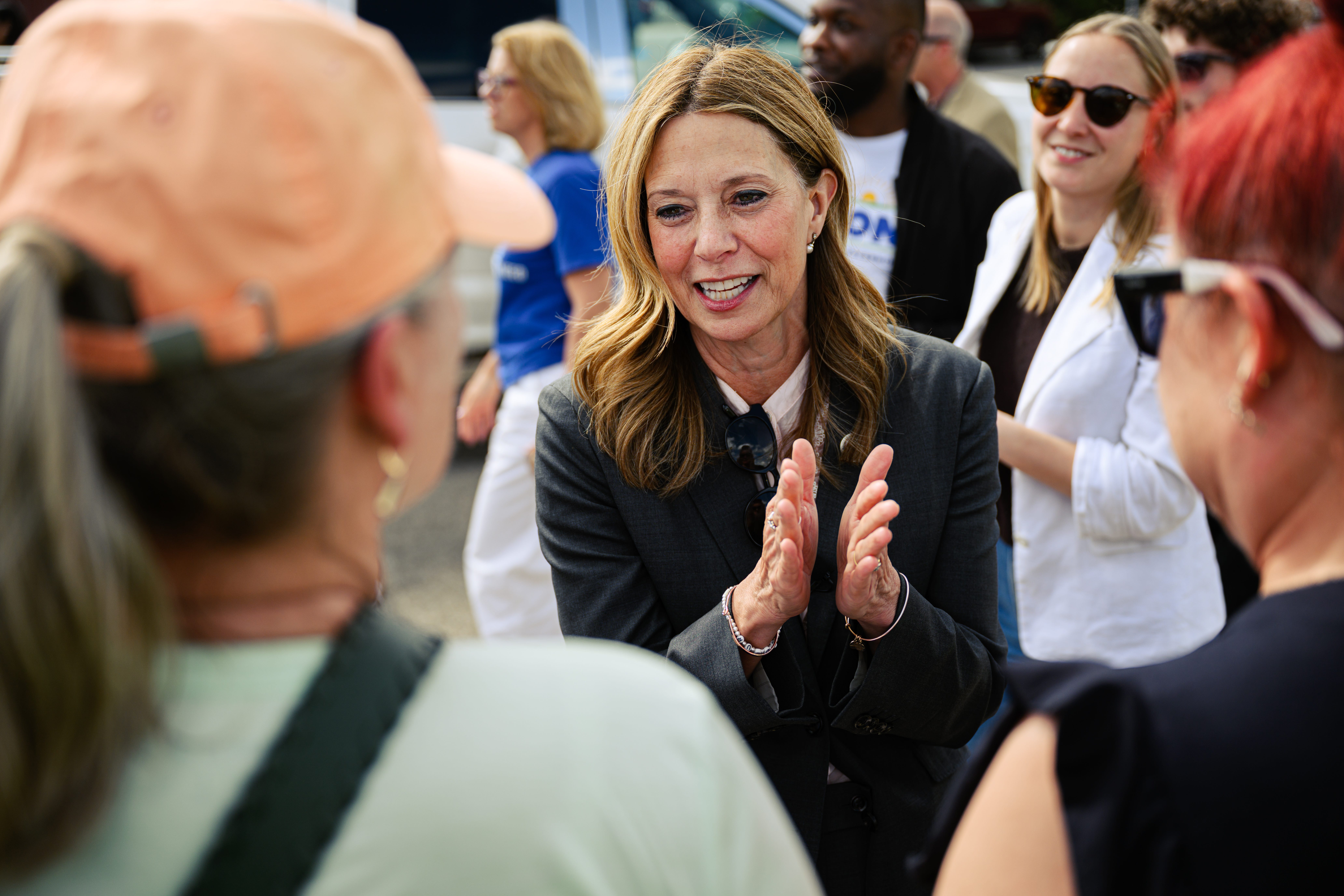
On this hot summer day I’ve come to the Fire Fighters Union Local 48 hall to see Acton in action and grab her for a chat after. The event, closed to the public but open to some members of the press, will be the first chance I’ve gotten to observe the candidate up close.

(Photo by Jim Swift)

The first thing to grab my attention is a reminder from the president of Columbus’s Local 67, Steve Stein, of how Acton, a physician who was director of Ohio’s Department of Public Health from 2019 to 2020, responded to the pandemic. For Republicans, seething over COVID public health interventions has become de rigueur. There was some freshness, then, in hearing words of praise for a public servant who did battle with a deadly virus against which we were initially almost defenseless:

We weren’t sure if we were going to lose half of our workforce responding to this [COVID]. And every single one of our members said, “We’ll see you tomorrow.” And it was leadership—proven leadership—[from] people like Dr. Acton, Gov. DeWine and the team, and the hard work of our firefighters, EMTs, and paramedics, that responded to every single Ohioan, no matter where they lived. . . . Those decisions weren’t partisan. They were decisions about safety. They were decisions about serving other people.

Stein wouldn’t be offering this praise if Acton didn’t welcome it, which suggests the candidate is going to respond to Republicans’ COVID-related attacks by refusing to cede the ground of science and memory to them. A preference for the truth shouldn’t be extraordinary in mainstream political candidates, but in 2026, it’s a promising opener for anyone who would prefer not to be gaslit about that recent episode of extraordinary suffering and death.

When Acton gets up to speak, she makes clear she is less interested in relitigating the pandemic than in talking about the Ohio she wants to build. But as she gives her values-forward stump speech, it’s tempting to let your mind wander backwards, to a time before the pandemic and before MAGA. In some ways, the future Ohio envisioned by Acton sounds an awful lot like the one she knew during childhood.

“When I was growing up in Youngstown, we didn’t know what party you were in,” she says. “We knew what union you were in.”


Fearless reporting.
Sharp analysis.
And commentary that helps you see around corners.
Make sure you miss nothing—join Bulwark+.

Join now


In the Youngstown of Acton’s memory, partisan affiliation was an abstract feature of a person’s identity. The concrete things about you had to do with the institutions down the street: unions, yes, but also churches, neighborhoods, and civic organizations, and underneath all that, the general expectation that you and your neighbors would look out for one another. It’s the spirit of small-town Ohio—a pretty faithful impression, even if the warts have been removed.

Life in such a setting can be far from idyllic, of course. Acton and her brother experienced a childhood marked by abuse and neglect—the subject of her first campaign ad. For a time, they lived in a tent during a Youngstown winter. This morning, she emphasizes that it was often first responders and neighbors who intervened to make sure the pair of kids were okay. Some would even invite them onto their front porch for an impromptu breakfast “just because we were hungry.”

It might be because of this hardscrabble background, but Acton’s empathy doesn’t feel like an act in the way it so often does with other candidates out on the campaign trail. “I’m a doctor. I’m not much of a politician,” she says, adding, “I’m becoming one right in front of your eyes.” Watching Acton, it seems to me that she doesn’t work a room so much as observe it, and in a way that reminds me of the moment a physician looks you over before starting the conversation during an exam. In response to questions, she sometimes pauses to take in the questioners for so long that it’s almost physically discomfiting. Call it retail bedside manner.

The doctor’s diagnosis is that the state has an acute infection of political acrimony that needs to be addressed in order to treat a deeper underlying condition: economic malaise. “Everywhere we go, people are longing for public servants again, and they’re longing for this hate and chaos and vitriol and purposeful pitting against one another to end,” she says. “The issues they talk about—95 percent of them—no one would disagree on: It’s the cost of living, housing, educational costs, childcare, property taxes.”

She cites a Clermont County family with premature twins who had accumulated $300,000 in medical debt from a neonatal intensive care stay. They had done everything right, she says, yet still found themselves financially overwhelmed. Anecdotes like this frame Acton’s defense of her medical debt–relief policy, which Ramaswamy recently seized on as proof that she is a socialist of some kind.

It’s a stark contrast to Ramaswamy—who recently was booed by an audience of conservatives for claiming his generation is “going to be fine” and has “already made it.”1

“For pennies on the dollar, we’re renegotiating that debt,” Acton says—noting that “Illinois spent $10 million of state funding, and they alleviated a billion dollars of people’s debt.”

After this, Acton moves through a cavalcade of pocketbook-focused policies, concluding with her proposal for a “circuit breaker” rebate for middle-income homeowners facing steep tax increases. After that, a moment of vintage Americana.

“This endorsement means everything to me,” she tells the firefighters. “You’ve been my heroes, and I promise that I’ll be fighting so that no one in this state is ever unseen.”

Share The Bulwark


SITTING DOWN WITH ME after her speech, Acton reiterates that she isn’t a natural politician. “My last office I ran for was in high school,” she tells me. “The instincts of being a 60-year-old doctor and doing public health and preventive medicine—it’s always about going to ground. It’s always about the community as your patient. That was my instinct all along, and I started going around listening even before I filed my paperwork to make the decision to run.” In her Toledo-built Jeep Wrangler, she says, “I’ve been to every county in Ohio. . . . I wanted to meet people where they are.”

Meet them she did. At a recent Democratic dinner in Fulton County that normally draws a few dozen people, more than three hundred attendees turned out. Many, she recalls, introduced themselves not as Democrats but as lifelong Republicans. Acton believes some of her draw, and some of the willingness of those guests to put aside partisan loyalties, traces back to the pandemic.

“It’s a deep bond that formed around going through such a very hard time. It’s very unique. I don’t think a politician could intentionally create this kind of connection,” she reflects.

That experience of collective suffering—and Acton’s presence in communal memories of it—also helps explain why, she says, “I’ve never been in a room in two and a half years where someone doesn’t cry.”

Every campaign has its unique rhythms and quirks; regular weeping from eventgoers is far from the strangest I’ve encountered over my years of following national politics. But it provides a curious point of contrast with the aversive reaction associated with Ramaswamy’s campaign.

“My opponent was just out last week with the whole, ‘victors not victims, you’re whiny and complaining’ stuff,” she tells me. I point out that, during his humiliating performance at YALCon, there were quite a few whiners in the crowd.

She laughs. “He’s the biggest whiner I’ve met.”

Join now


FOR ALL THE ATTENTION PAID to Acton’s public health role during Ohio’s experience of the pandemic, it is easy to forget that it represents only a small chapter in her career. She has worked with five governors—Republicans and Democrats—and her experiences have given her a zest for (reasonable) bipartisanship.

If elected, she says, she will appoint Republicans to her cabinet, because Ohioans should expect their governor to work with anyone willing to solve everyday problems.

One former Republican governor in particular genuinely excites her: Bob Taft.2 Acton and her running mate, lieutenant governor candidate David Pepper, recently met Taft for lunch. The former governor arrived carrying a crumpled, coffee-stained sheet of paper on which he’d listed everything he’d hoped to accomplish when he became governor in 1999.

Together, Acton tells me, the three of them walked through the list. The Taft of yesteryear had set his sights on constructive, reasonable goals: new parks, initiatives to encourage economic development, and other long-term projects of the sort that rarely dominate campaign speeches but can shape a state for decades.

Acton explains that she didn’t see this as an exercise in nostalgia. Rather, she takes it as a reminder that governors once measured success by what they built. In a time of endless, unproductive scrapping, that seems like a useful thing to recall.

But in addition to the economic and material considerations informing Acton’s policy offer and her own desire for building up Ohio, she has a priority issue in the area of cultural politics. The question: Why are we all so bummed out? Acton’s answer: because we are so damn lonely.3

Ohioans are “absolutely exhausted of hate, chaos, and vitriol, and being pitted against one another,” she tells me. “We are hardwired for human connection.” As an exhausted and angry Ohioan, I am inclined to agree.

She invokes Bowling Alone, sociologist Robert Putnam’s landmark study of America’s fraying civic life and declining social capital that has been helping people see those problems more clearly for over a quarter century. Putnam’s book is “about the fabric of our civic society. I was talking earlier about [how] people didn’t know what party you were in; they knew what union you were in,” she tells me. “They also knew what hat you wore, if you were an Elk or a Moose or whatever. There’s so much pride, and people wanna have pride again in Ohio.”

As an Elk (and a fan of Putnam, who has been a Bulwark Daily guest), I heard Acton speaking to me in my own born-again Ohioan’s language. Our state’s politics, culture, and even our sports teams are subject to derision and often made the butt of hostile jokes. People still laugh about the Cuyahoga River catching on fire. But damn it, I still love Ohio. I moved back here, after all. It’s clear that Acton does, too.

“I always say when I’m going around the country, it’s the United States of Ohio,” she says. “We’re the test market. We represent the whole United States.” That’s part of what being the “Heart of It All” is all about. But the heart is deceitful above all things, and it’s got reasons that reason does not know—all of which is to say, it’s going to be another three months of weeping and whining before we know the road ahead for Ohio, and for the United States thereof.

Leave a comment

1

It’s certainly understandable that Ramaswamy would have a loose grasp of on-the-ground issues for Ohioans, given that he appears to have spent almost half his time during this campaign outside the state.

2

Full disclosure: I campaigned for Taft in high school and still have the t-shirt.

3

Connecticut’s Sen. Chris Murphy, who agrees, wrote a piece about this for The Bulwark.

Tucker Carlson Thinks MAGA Is Ready to Dump Trump

7 August 2026 at 00:12

Tucker Carlson has a new message for the Republican Party—and it sounds an awful lot like the opening pitch of a presidential campaign. JVL, Andrew Egger and Will Sommer give their takes on Tucker's sweeping "10-point" vision for America, why he's increasingly distancing himself from Donald Trump, and whether he's laying the groundwork for a 2028 White House run. Plus, we break down Tucker's appeal to disaffected MAGA voters, the growing rift inside Trump's coalition over foreign policy and corruption, and why JD Vance, Donald Trump Jr., and the rest of the Republican field should be paying attention.

Read more from Will's newsletter: Tucker 2028

Leave a comment

Read more

💾

❌