When Trump came back into power, his administration leaned heavily on former CIA analyst Julia Curlee to help safeguard our national security. The first CIA officer to transition openly, Curlee had worked at the highest levels in the White House for years. But once her gender identity became public through a witch hunt, she was hounded out. Curlee talks with Tim about the chaos of Trump’s slash-and-burn firings, the administration’s demonizing of trans people, and how Mike Pence treated her with dignity and respect when she was his personal briefer. Plus: The 19th’s Errin Haines joins to discuss the Florida primaries, the Dems’ prospects in the South, the real backlash against the Callais decision, and AOC’s Woke 1 comments. And Tim asks The Bulwark community to help Venezuelan detainees Freddys Revilla and Edgarianny Gervis.
Bulwark LIVE: GOOD FIGHT TOUR with Tim, Sarah, Sam and JVL is coming to the Southeast in October. Tickets go on sale August 21. Bulwark+ members get early access via our presale NOW. Head to TheBulwark.com/Events for details and to get your tickets.
As always: Watch, listen, hit the like button or leave a comment. We want to hear from you.
Ad-free editions of The Bulwark Daily are available exclusively for Bulwark+ members.
Tim Miller’s Bulwark Daily is available wherever you get podcasts and on YouTube. New shows drop each weekday afternoon. If you like the show, leave a comment and ⭐⭐⭐⭐ wherever you listen. Add The Bulwark Daily to your player of choice, here.
Bulwark LIVE: THE GOOD FIGHT TOUR with Tim, Sarah, Sam, and me is coming to the Southeast in October. Tickets go on sale August 21. Bulwark+ members get early access via our presale through Thursday night. Upgrade now to read this story about Trump and his very young staffer and then join us at one of our fall tour stops!
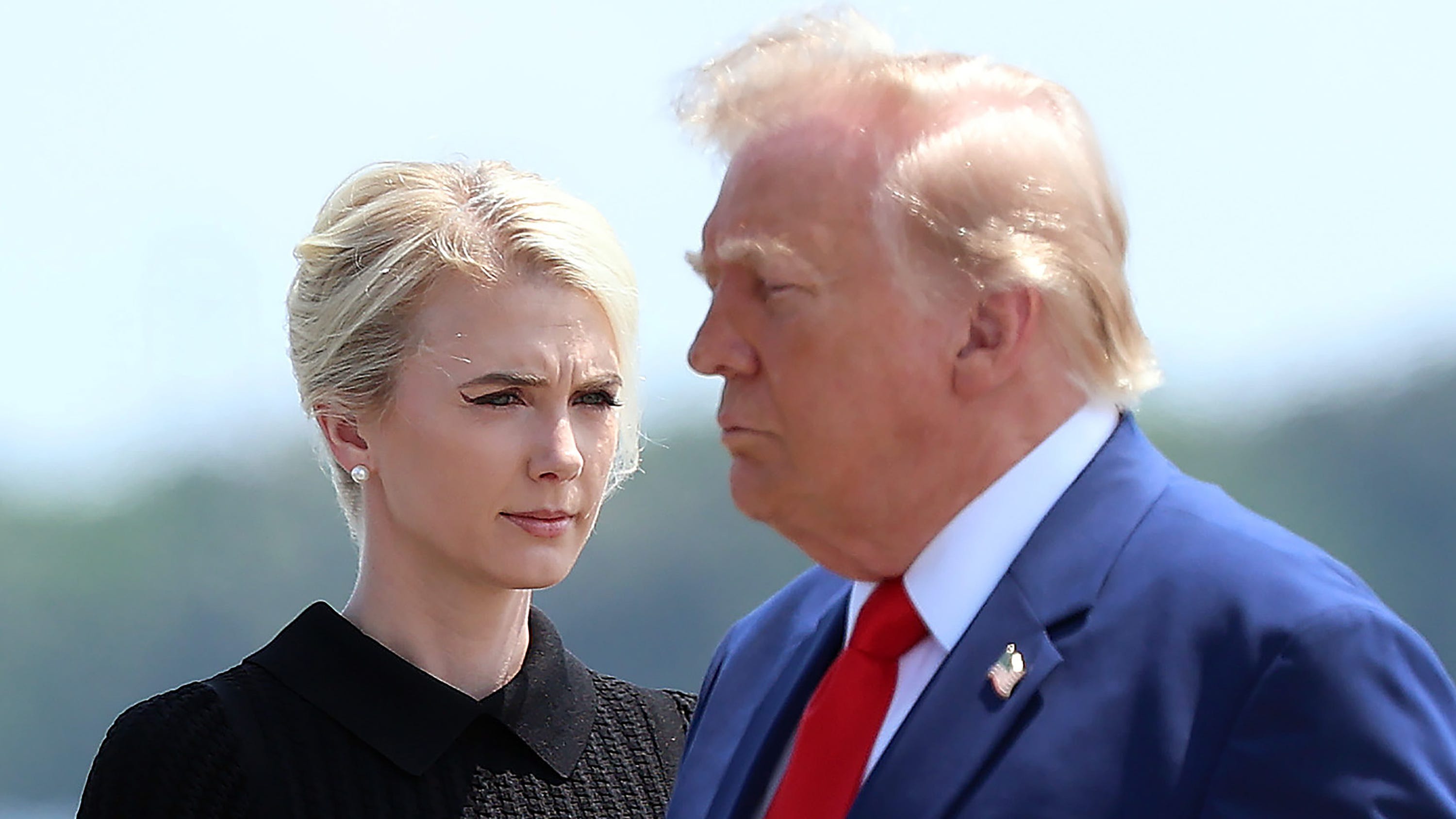
We have to talk about the Trump–Natalie Harp thing. I’m sorry. I had a big piece about economics teed up for today. About limbic capitalism and global reserve currency. (I can feel your excitement.)
But people are freaking out over the idea that Trump might be shtupping his human printer and I want to talk about that.
Because if only it were so simple.
Man, I wish Trump were just having an affair with someone forty-five years his junior. That kind of relationship would make sense. It would be gross, but intelligible. The reality of the Trump–Harp . . . thing . . . is so bonkers that I don’t have words for it.
I mean, you guys all saw Fatal Attraction, right?
So let’s go deep on this crazy.
I learned about Natalie Harp’s existence when Marc Caputo wrote about her for us in May 2024. That’s right—The Bulwark was way early on this thing:
Harp, 32, occupies a unique role in the history of presidential campaigns: aide who travels with a portable printer (plus paper and rechargeable batteries in a large bag) whose job is to feed Trump a steady stream of information on 8.5x11″ pieces of paper.
Marc reported that Harp sat with Trump at the defense table when he was on
Lt. Gen. Mark Hertling (Ret.) and Ben Parker went live to cover Trump’s newest push to meet North Korean dictator Kim Jong Un and Trump contradicting Jared Kushner on Iran. Plus they walk through what a typical Deputies Committee would look like in the NSC.
(Photo illustration by Bill Kuchman/The Bulwark | Photos: Getty, Shutterstock)
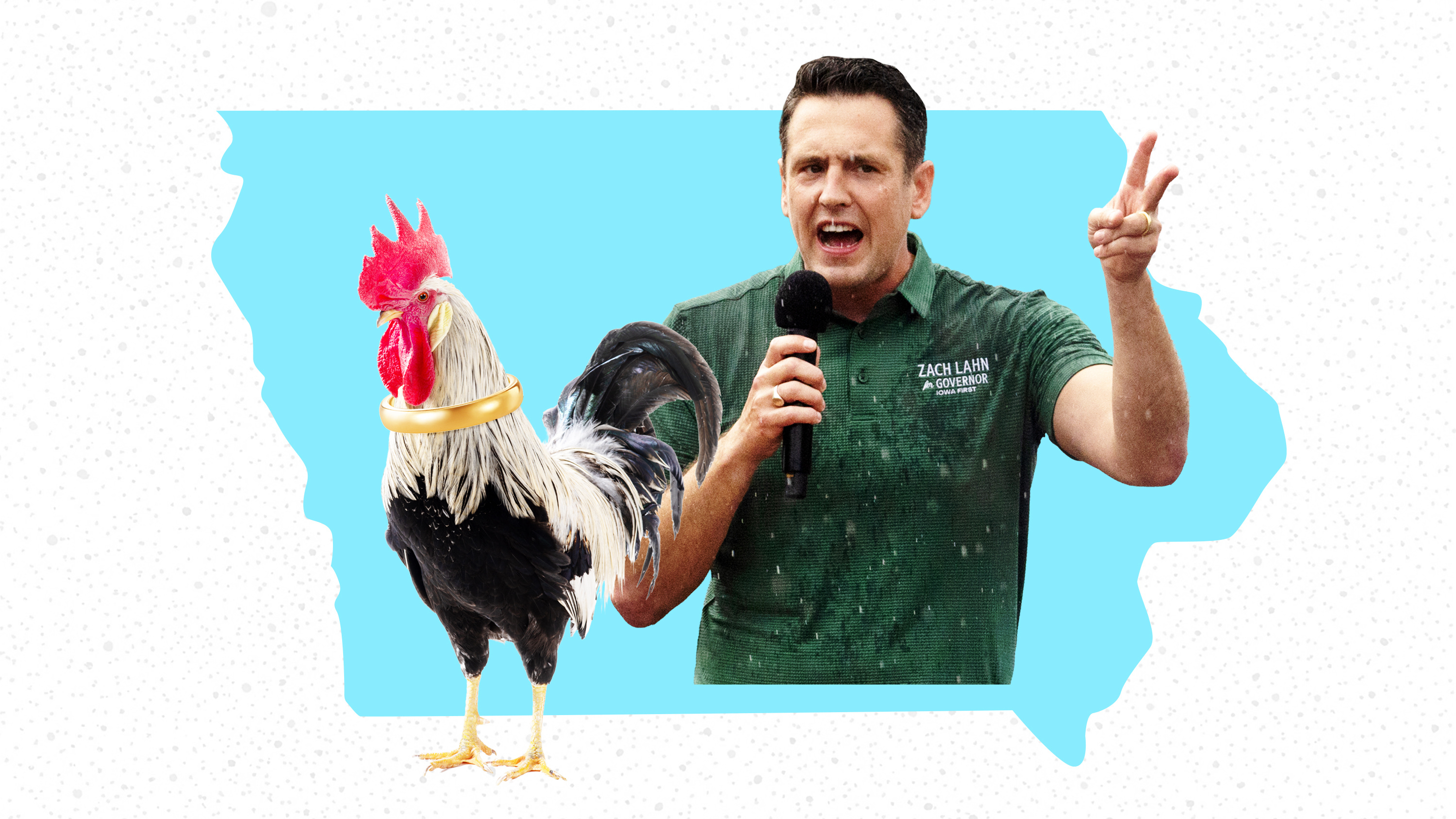
AFTER BEATING TRUMP-ENDORSED congressman Randy Feenstra in Iowa’s Republican gubernatorial primary, Zach Lahn—a political newcomer—will face Democratic nominee Rob Sand in November. Lahn presents himself as a farmer first and foremost. His campaign website opens with an aerial shot of Iowa corn. “Our fields, our families, our future,” it promises. But if Lahn’s investments are anything to go by, corn isn’t the only thing he’s interested in sprouting. Lahn’s business record has faced scrutiny, including over his ties to FirmTech Inc., a company that sells “innovative wearable erection rings” that allow users to “Track [their] sexual health and keep it up,” which has raised, ahem, eyebrows.
Lahn has insisted that his interest in the company was confined to its therapeutic work, and disavowed any involvement in its products intended for anything other than wellness, telling the Des Moines Register that, “What I’ve invested in is not a sex toy. It’s a grade two medical device.” His campaign told the Register that Lahn invested early in the company but, after expressing concerns about the company’s marketing and direction, resigned from the board of directors in September 2023, after more than two years’ involvement—before any of FirmTech’s “pleasure” products were released. According to the company’s 2025 annual report, Lahn retains a 25 percent ownership stake in FirmTech via a limited liability company he owns.
But in the sex-products marketplace, there is—and always has been—significant overlap between those products intended as medical devices or therapeutic tools and those intended as “toys” or for pleasure. These loosely defined terms are at times used in tandem or interchangeably, and are sometimes used to describe the same object in different contexts. As FirmTech CEO Elliot Justin told The Bulwarkin an email, “One sector’s toy is also the progressive urologist’s answer to the most common cause of [erectile dysfunction].”
And this semantic and conceptual haziness is reflected in an extensive review of FirmTech’s products, marketing, legal and financial documents signed by Lahn, and porn-industry awards: Even if some of FirmTech’s devices do monitor vitals like heart rate and blood pressure and are intended to combat erectile dysfunction, the company also leaned into claims about the devices’ pleasurable effects throughout Lahn’s involvement. The claim that Lahn left FirmTech before it turned to pleasure devices is impossible to maintain.
Did you have ‘Republican sex-toy investor’ on your 2026 bingo card? Neither did we.
According to financial documents filed with the SEC and signed by Lahn, the Republican joined the board of FirmTech as one of three directors in 2020. The same document shows that on September 8, 2021, he paid $1 million to FirmTech via Selah Group LLC, a company owned entirely by Lahn, to purchase 1,250 FirmTech shares, making him the company’s second-largest shareholder with a 28.2 percent stake.
Despite Lahn’s emphasis on the items being “grade two medical devices,” the erection rings that FirmTech sold during the time Lahn served as a director on the company’s board were often described by the company as “sex toys.” FirmTech marketed these erection rings, also called “cock rings” or “c-rings,” as devices for generating pleasure. The company also announced a “clitoral vibrator” to investors in documents bearing Lahn’s signature.
Two quick notes at this point: First, for squeamish readers, apologies in advance to those of you about to follow me on this weird and somewhat graphic investigation of sex toys, sexual marketing, porn-industry awards, and investor pitch documents. And second, more generally, none of what follows is intended to denigrate the customers who seek out sex-related devices for whatever reason, medical or otherwise. The issue of interest here is whether Lahn has been honest in how he has described himself to potential voters.
It is difficult to give credence to Lahn’s claims that he only ever saw the company as a provider of medical devices. Pleasure was
On a certain level, you’ve got to feel for Sen. Darline Graham (R-S.C.). If her brother Lindsey hadn’t died unexpectedly this year, she wouldn’t be in the Senate at all—much less running in her own right. And man, has the learning curve been brutal. In last night’s GOP primary debate, she was asked whether Taiwan and the South China Sea are national security issues for the United States.
“I’m just going to be honest here. I’m not on national security that—I’m not that informed on national security,” Graham replied haltingly. “So—but I do support the military. . . . I’m not a polished politician up here, national security is not my thing, not my area of expertise, but I do support the military.” Happy Wednesday.
Join Mark Hertling and Ben Parker for Command Post live on Substack and YouTube at 10:30 a.m. EDT today.
(Photo Illustration by Sarah Rogers/The Bulwark | Photos Getty, Shutterstock)
This Aggression Will Not Stand, Man
by Sonny Bunch
One of the more depressing responses to Trump 2.0 has been the cowardly way some in the media have responded to the president’s relentlessly bullying legal tactics. They’ve often chosen to settle rather than fight the president on cases that could easily be won, just to avoid regulatory hassles for the parent conglomerates of these media companies.
But even some of the quislings seem to have had enough.
The most egregious of those early cases, of course, was Paramount’s decision to settle with Donald Trump over claims that 60 Minutes deceptively edited an interview with Kamala Harris to make her sound more intelligent than she actually was. The case was, on its face, absurd: Virtually every interview that isn’t live is edited in some form or fashion for reasons of time, continuity, coherence, etc. This is just standard practice; everyone who has ever done an interview understands that some things are likely to be trimmed. CBS itself stated repeatedly that the lawsuit was meritless. I don’t think you’ll find a single reputable scholar who thinks Trump could have won on the merits.
And yet, CBS’s parent company, Paramount, caved because it was in the process of being absorbed by Skydance, a company owned and operated by David Ellison, who bought it with the backing of his Trump-donor father, Oracle’s Larry Ellison. What’s a $16 million settlement in the face of an $8 billion purchase?
Meanwhile, ABC agreed to cover $1 million in legal fees and sent another $15 million to the “nonprofit” building Trump’s presidential library/hotel following George Stephanopoulos’s repeated insistence that Trump had been convicted of “rape”—rather than the more strictly accurate statement that he had been held liable for sexual abuse—in the E. Jean Carroll case. Truth be told, this was a trickier case than the farcical 60 Minutes suit—technically, Donald Trump has not been convicted of rape despite repeatedly being accused of sexual assault and instructing a confidante that, as a star, he can “do anything . . . grab them by the pussy”—but it’s hard to imagine Disney/ABC settling for that amount of money with someone who did not vindictively wield regulatory power.
It’s more important than ever to have independent media. We don’t have partisan loyalties or parent conglomerates. But we do have a community we’d love for you to join.
Caving to Trump didn’t win ABC any favors from the administration. As I discussed with Robert Corn-Revere on last week’s episode of The Bulwark Goes to Hollywood, Trump and his hand-picked FCC bulldog Brendan Carr have gone after Disney and ABC relentlessly, pressuring the network to suspend Jimmy Kimmel following a crass joke he made about Charlie Kirk in the wake of the young pundit’s assassination. After Disney suspended Kimmel, Carr took a victory lap, which in turn provoked a counter-outrage, and Kimmel was quickly reinstated. When Carr and Trump again turned their eyes on Kimmel following a crack about Melania Trump glowing like “an expectant widow,” there were renewed calls to punish Kimmel—calls that were, ultimately, ignored.
Carr then escalated the attacks by announcing that ABC’s broadcast licenses would be put up for renewal earlier than expected. The network vowed to fight the action and on Tuesday filed suit against the administration on First Amendment grounds. Here’s the crux of ABC’s argument:
The day after the President objected to additional on-air comments by Mr. Kimmel, the Commission issued an unprecedented order requiring the Stations to file early applications to renew their licenses—years before any of their licenses would have come up for renewal in the ordinary course and allowing only thirty days to file applications which ordinarily take months to prepare. Until the day before that order issued, the Commission had not called for a renewal application ahead of schedule in more than half a century. Nor had it ever demanded simultaneous early renewal applications from a group of stations commonly owned with a single broadcast network.
ABC’s entire complaint is worth reading. It’s a chilling catalogue of governmental efforts to restrict speech at the behest of the president and a reminder why Trump has such a healthy friendship with dictators like Vladimir Putin and Kim Jong Un: Like them, he does not believe in freedom of speech. He believes only in obeisance and obedience.
What makes the actions of CBS’s and ABC’s first settlement so disappointing—as well as similar capitulations by the law firms that settled with Trump and social media companies that had justifiably banned Trump following the January 6th riots—is that Trump’s suits almost always crumble when challenged. The courts have dismissed Trump’s cases against the Wall Street Journal for their reporting on the president’s intimate friendship with child-sex-trafficking kingpin Jeffrey Epstein and CNN for its use of the phrase “The Big Lie” to describe Donald Trump’s big lies about winning the 2020 election.
Bulwark LIVE: THE GOOD FIGHT TOUR with Tim, Sarah, Sam, and JVL is coming to the Southeast in October. Tickets go on sale August 21. Bulwark+ members get early access now. Click here for details and to get your tickets.
The Real Danger of Russia’s Fake Elections… The anti-war, anti-government sentiment was apparently more than Putin bargained for, observes CATHY YOUNG.
MIDTERMS VIBE CHECK: Florida, Alaska, and Wyoming all held their primaries yesterday, with many of the most interesting results coming out of the Sunshine State. A sampling:
Cory Mills lost. The Trump-endorsed congressman, who has faced a blizzard of sexual-misconduct and campaign-finance accusations, was defeated by former local-TV anchor Ryan Elijah, who had campaigned hard on Mills’s personal baggage risking losing the seat to Democrats. Elijah will face former NASA Chief of Staff Bale Dalton in November.
Byron Donalds won—but not as overwhelmingly as he’d hoped. The three-term congressman had hoped his strong name ID, Freedom Caucus credentials, and Trump endorsement would clear the field in his race to succeed Gov. Ron DeSantis. But he ultimately took only 48 percent of the primary vote, with 25 percent of voters pulling the lever for current Lt. Gov. Jay Collins, 10.5 percent supporting groyper shock jock James Fishback, and 8.5 percent voting for anti–data center campaigner Paul Renner. Donalds has some work to do to unite Florida Republicans ahead of his matchup with the Democratic nominee, former Republican David Jolly.
Democratic establishmentarians and iconoclasts traded blows. Rep. Jared Moskowitz fended off a progressive challenger in his newly drawn 25th District, as did former DNC Chair Rep. Debbie Wasserman Schultz in the 20th. But the biggest prize went to DSA candidate Angie Nixon, who knocked off a far better funded moderate contender in Alex Vindman to capture Florida Democrats’ Senate nomination. Nixon now heads to a showdown with Republican Sen. Ashley Moody in a contest to close out the last two years of former Sen. Marco Rubio’s term.1
BLUE WAVE VIBE CHECK: Are you a Democrat looking for a jolt of hopium? Feast your eyes on the last special general election until November, a sleepy Pennsylvania state House race in the 12th District, which a Republican won in 2024 by 30 points—and in which Democrat Brandon Dukes may have just pulled out a stunning upset over Republican Scott Timko. Carolyn Fiddler reports on her Substack This Week in Statehouse Action:
As of this writing, Dukes has pulled out a shocking win—he leads Timko 50.26-49.74%, which comes down to 88 votes.
Provisional ballots and some overseas ballots likely won’t be counted until next week, so this number may yet shift.
But even if Timko makes up that deficit, the safe R nature of this seat makes this outcome a huge L for his party.
And it’s a final upward-trending data point in terms of the dramatic Democratic overperformances that have characterized the vast majority of special elections this cycle. . . . Across 109 contested special elections over the past 21 months, Democrats have improved on Kamala Harris’ performance in these same seats by an average of 12.5%.
NO EXCUSE FOR CENSORSHIP: The terrible story of Jason Arday, the British academic and author who died in an apparent suicide shortly after resigning his Cambridge University professorship under scrutiny for offenses ranging from plagiarism to extensive fabulism about his life story, has produced dramatically polarized narratives. Many progressives see a talented black scholar hounded to death by racist detractors and media vultures. Many conservatives and centrists see fraud enabled by a diversity-fixated academic institution. Perhaps the most provocative essay, by Substack blogger Sam Kriss, argues that Arday’s self-invention should have been treated as a work of genius far above conventional academic toil.
The complications of the story, though, haven’t stopped some people from going absolutely bonkers. There’s a Change.org petition for a UK law limiting “the number of news articles published about a single individual within a defined time frame” to minimize “mental anguish.” Obviously, anyone can start an online petition. But dozens of British academics and other public figures, including members of Parliament, have signed an open letter to the British government urging a public inquiry into the media’s supposed racist harassment of Arday and declaring that “self-regulation of the press has comprehensively failed.”
British law, especially on libel, already allows far more suppression of speech than American law. And before the scandal broke, Arday actually used threats of litigation to squash journalistic inquiries into his record. Thankfully, in the United States, the First Amendment largely prevents such abuses. But some left-wing American commentators such as Ibram X. Kendi are now joining the media-bashing chorus with accusations of a “lynching.”
This would be disturbing in any circumstances. At a time when a right-wing administration would love nothing more than to gut the First Amendment, progressive sympathy for censorship is not only wrong but grotesquely self-sabotaging.
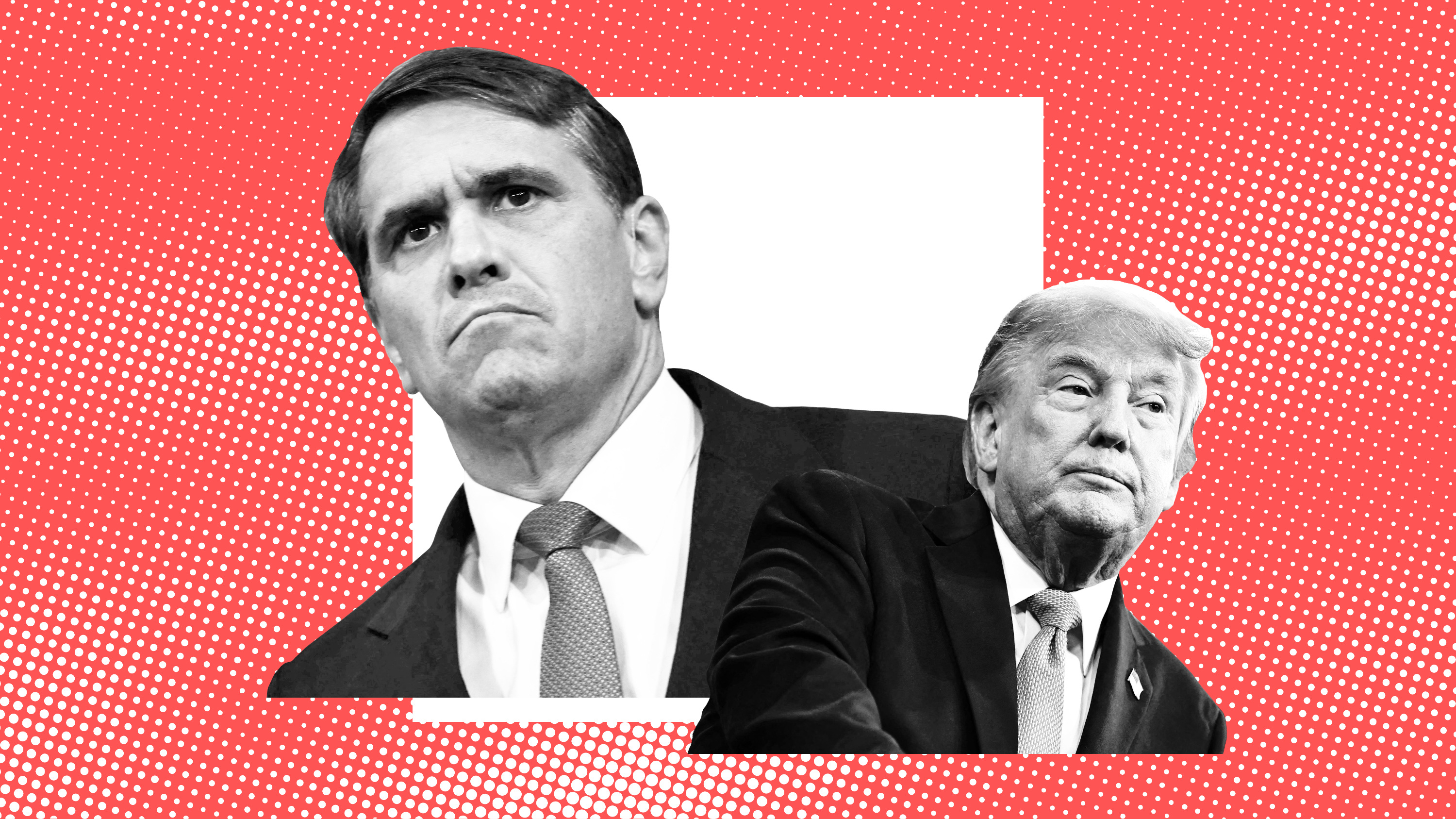
(Photo illustration by Bill Kuchman/The Bulwark | Photos: Getty, Shutterstock)
TODD BLANCHE WAS DONALD TRUMP’S personal attorney, so it was natural that, when he was elevated to attorney general, a journalist asked whether he would “pledge that the Justice Department will always act independently of the White House?”
The correct answer to such a question is obvious. The Justice Department and I are committed to the impartial administration of justice. We will always make prosecution decisions based solely upon the facts and the law after a fair evaluation of the evidence.
No, I’m not going to pledge that. And no attorney general should ever pledge that. The president, I mean, if I were to pledge I will be independent of the White House, what that means is that if President Trump says, ‘I want the Department of Justice to go after every violent criminal in this country,’ which is what he has said, what you’re saying to me is I should say, ‘No, sir, I’m not going to do it.’
What jumps out first about Blanche’s answer is the blithe refusal even to mouth (however disingenuously) the expected platitude. This is the Trumpian way. They don’t just break the rules behind closed doors; they shatter the rules in broad daylight. It’s not enough, for example, that the Trump Justice Department is denying resources to the team that investigates and prosecutes foreign corrupt practices; Trump issued an executive order pausing all such prosecutions. So it’s not news that Trump’s new attorney general will fail to seek impartial justice, but the refusal to even feign regard for impartial justice is new.
The substance of Blanche’s justification is also fatuous. Pledging to act independently of the White House doesn’t mean acting in every instance in direct opposition to the president. That’s absurd, and it’s not what independence requires. Nor could the president order the attorney general to “go after every violent criminal in this country,” since more than 98 percent of violent crimes are state offenses, not federal ones, and in any case the combined forces of the state and federal governments don’t have the resources to go after every violent criminal.
The Bulwark is about three things: Factual reporting, honest analysis and commentary, and pro-democracy community. Join us.
So much for deflection. The coffee-spitting moment came later, when Blanche was asked whether he would carry out an order that “crossed a legal or ethical line” and he proclaimed that “The president will never ask me to do something unethical or legal—or illegal. He never has. He never will.”
Let’s let the Freudian slip pass, but in fact the president had demanded that the Justice Department do something unethical that very week—namely, reconsider the decision to drop spurious vandalism charges against David Hearn. Jeanine Pirro’s own motion to the court acknowledged that the original indictment was based upon false information provided by the Department of the Interior. Nevertheless, President Trump fumed that Pirro had “choked.” This week we learned that she was convening a special grand jury for some unknown purpose. If I were Hearn, I’d keep my lawyer close.
And that perversion of justice is only a ripple in the flood of plainly politicized acts and forbearances by this administration. This is a president who sent a DM to his previous attorney general demanding the prosecution of his political opponents. It’s hard to think of how you could more comprehensively upend the idea of blind justice.
Trump’s apologists do have a valid point when they note that the Manhattan DA’s case against Trump in the Stormy Daniels case was also a form of lawfare. I said at the time that the case was flimsy and almost certainly would never have been brought if Trump were not the target. Trump’s flagrant lawbreaking did present a quandary: How do you hold him responsible for his crimes without unintentionally validating the idea in the minds of his supporters that all justice is corruptly motivated?
There are no easy answers. Still, the Bragg prosecution was a local case, not the federal government seeking to punish a political foe. Ditto for the civil case Letitia James brought. At the federal level, Attorney General Merrick Garland was actually extremely reluctant to pursue federal charges against Trump despite the gravity of his conduct before and on January 6th. It was only after Trump announced his re-election bid that Garland felt compelled to appoint a special prosecutor (precisely to avoid the appearance of a conflict of interest).
Nor is it the case that President Biden’s administration used the Justice Department to settle political scores. To repeat, Garland was widely criticized for moving slowly against Trump’s obvious lawbreaking in the Mar-a-Lago documents case as well as the January 6th insurrection. One can understand his hesitation. One administration prosecuting another opens the possibility of a dangerous tit-for-tat, but whatever your view about the wisdom of going slow against Trump, it’s preposterous to “whatabout” this. Under Garland’s leadership, the Department brought indictments against Rep. Henry Cuellar, Sen. Bob Menendez, former Rep. TJ Cox, Illinois Speaker Michael Madigan, Mayor Eric Adams (and we know how that turned out when Trump returned), former Mayor Andrew Gillum, and Hunter Biden—Democrats all.
Trump’s second-term Department of Justice, by contrast, has been a nonstop cavalcade of corruption, featuring blatantly political prosecutions, attempted prosecutions, or investigations of Jerome Powell, Lisa Cook, Mark Kelly, Miles Taylor, Christopher Krebs, James Comey, “sandwich guy,” Adam Schiff, Letitia James, Kilmar Ábrego García, Alex Padilla, John Brennan, John Bolton, Sean Dunn, Ras Baraka, Jacob Frey, anti-ICE protesters in Minnesota, including the widow of Renée Good, and many more.
Biden made poor decisions in pardoning his family at the end, but that was trivial compared with Trump’s mass pardons for the January 6th criminals; his pardons for cronies, donors, and other corrupt public figures; his firings of any official who participated in the January 6th or Mar-a-Lago investigations; his kid-glove treatment of Ghislaine Maxwell; and of course, his putrid attempt to create a $1.8 billion slush fund for so-called “victims of lawfare” along with a get-out-of-jail-free card for Trump and his insatiable family regarding past tax evasion.
The aptly named Blanche (because he should, but doesn’t, blush) was along for all of it. He personally visited Maxwell in prison and has yet to provide an explanation for that highly unusual visit, nor for her promotion to a more comfortable prison. He was at the Department of Justice as 3,400 lawyers resigned in protest rather than engage in the kinds of unethical and unprofessional conduct Pam Bondi and Todd Blanche were demanding. He has defended with a straight face James Comey’s indictment for threatening the president with an Instagram photo of seashells.
This ethical flexibility was enough to make even some Republican senators hesitate about confirming him. But in the end, all but Collins and Murkowski voted yes, presumably because they fear that if it’s not Blanche it will be someone even worse. Thus does Trump extort his party—by threatening to get even dirtier. But this tactic only succeeds because of learned helplessness by Republican officeholders. In fact, when Trump gets pushback, he backs down. Ask Iran. Or consider the first utterly horrific attorney general candidate he proposed after winning the 2024 election, Matt Gaetz. Enough Republicans balked that Trump withdrew his name. He didn’t nominate someone even worse after that (admittedly a tall order). He went with Pam Bondi, a smidge less awful.
It seems the tactic of standing up to Trump is just crazy enough to work. But, no, the GOP has not learned that lesson. Republicans have chosen spinelessness instead. Even after a decade of this, I still cannot understand why.
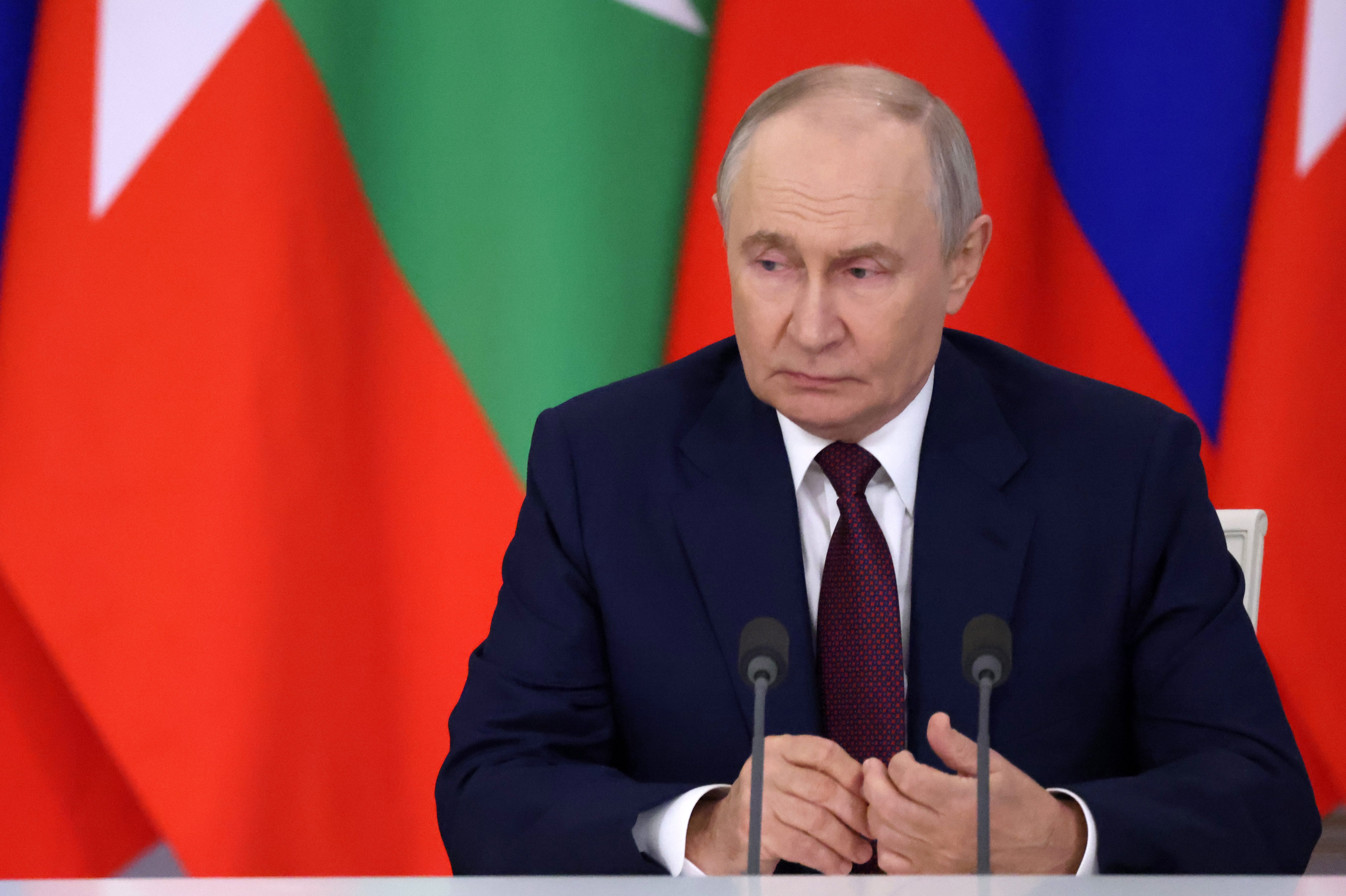
Russian President Vladimir Putin attends a Russian–Myanmar meeting at Kremlin on August 18, 2026 in Moscow, Russia. (Photo by Contributor/Getty Images)
LIKE THE UNITED STATES, Russia is having national elections this fall. From September 18 to 20, voters will cast ballots for (but not necessarily choose) members of the lower house of the federal legislature, the Duma. So far, the only party worthy of the label “opposition,” Yabloko, has been struck from the ballot, in a decision affirmed on Monday by the appellate college of Russia’s Supreme Court. On the same day, one of the same party’s most recognizable political figures, a former member of a regional assembly, was handed a prison sentence of eleven years and one month on charges of spreading “false information” about the Russian army. Earlier, another politician who had announced his Duma candidacy on an antiwar, pro-freedom platform had fled the country after a clear signal that he had to choose between emigration and prison.
It is, in other words, the sort of election you’d expect in Vladimir Putin’s Russia as the war in Ukraine creeps closer to the five-year mark.
But does the ruthless crackdown attest to the Kremlin’s totalitarian might or to its fragility—or both? And could it energize a new generation of young pro-freedom activists, hundreds of whom braved the police in Moscow to support Yabloko?
Defend democracy. Support independent media. Join our community.
YABLOKO, FOUNDED IN 1993—its name, Russian for “apple,” is also a portmanteau of the names of three founders, of whom only one, Grigory Yavlinsky, is still sort of on the political scene—has long been regarded as a quaint relic of the 1990s and as a pathetic symbol of impotent liberalism, or even faux liberalism. It has also been perceived as Putin’s pet opposition: Not affirmatively cooperative like the “establishment opposition” parties (Just Russia, Liberal Democratic Party, and even the Communists) but nonetheless tame, toothless, and permitted to exist as long as it knew its place. A former Yabloko member, blogger and activist Maxim Katz, accused the party of “self-castration” five years ago, citing such displays of cowardice as a 2019 post on the party’s Twitter account discouraging people from attending peaceful protests.
Until recently, other opposition activists generally despised Yabloko—which hasn’t had a caucus in the Duma since 2003 and has typically received less than 1.5 percent of the vote in parliamentary elections—as an officially approved spoiler deployed against genuine opposition forces. (Yavlinsky’s former personal friendship with Putin didn’t help.) In 2015, Yabloko sued Alexei Navalny, the late anti-corruption activist, over a post charging that a regional Yabloko chapter had been “bought” by an oligarch with ties to the ruling United Russia party. In February 2021, Yavlinsky shocked many people by writing an article assailing Navalny, then already imprisoned after an attempted poisoning by Russian special services, as a nationalist and populist with his own autocratic tendencies.1
Even so, Yabloko was Russia’s only officially registered political party to oppose the Crimea annexation in 2014 and the invasion of Ukraine in 2022. It also had a few highly visible and genuinely brave activists—among them Lev Shlosberg, a former member of the Pskov regional assembly who, back in 2015, publicized evidence of Russia’s covert involvement in the war in Eastern Ukraine. That’s the man who just got an eleven-year sentence for supposed fake news about the Russian armed forces. At least four other Yabloko members and activists, including the Deputy Chairman Maxim Kruglov, are already serving sentences on the same spurious charge.
Despite the official hounding, Yabloko’s registration for September’s Duma elections was approved by Russia’s Central Elections Commission in late July. It still faced some major handicaps. It was denied registration in several localities including St. Petersburg, where it enjoys relatively high popularity. In addition, over a dozen relatively high-profile Yabloko members, including Chairman Nikolai Rybakov, were disqualified from running because of typically absurd political charges such as posting “extremist imagery” online. In Rybakov’s case, the extremist image was a photo of Navalny in a condolence message on his death.
Still, Yabloko was on the ballot, with a slate of mostly young candidates and with the slogan, “For peace and freedom—for life without fear.”
That didn’t last long. Within days, Yabloko’s registration was challenged by the small, hawkish party Rodina (“Motherland”). Yabloko’s call for the immediate cessation of hostilities in Ukraine, Rodina charged, was extremist and unconstitutional because it meant leaving “Russian territory”—i.e., Ukrainian territories annexed by Putin in September 2022 and written into the Russian Constitution, but still under Ukrainian control—in the hands of “the Kiev Nazi regime.” Other allegations had to do with foreign funding, specifically donations from Russian citizens who had income from foreign sources; illegal campaign expenditures, on the assumption that social media posts and podcasts publicizing Yabloko were (or amounted to) paid advertising; and copyright violations in campaign materials.
The copyright charges were especially Kafkaesque. Initially, Yabloko was accused of the unauthorized use of a photo from the Kommersant newspaper (a tank in a sunflower field) in its campaign materials, but it turned out that the photo had been legally purchased and properly credited. When that charge fell apart, the complaint had to fall back on far more esoteric claims. Yabloko’s logo was accused of suspicious resemblance to an image from a 1920 Soviet poster by avant-garde artist El Lissitsky: both feature a triangle piercing a circle. Also flagged were a U.S. army photo of the ruins of Hiroshima (which is in the public domain) and an image made with ChatGPT without OpenAI’s permission. And then there was a podcast host’s utterance, in an interview with Yavlinsky that was later posted on the Yabloko website, of two Soviet-era antiwar quotes that have long been part of the common language: “Anything but war,” a slightly altered line from the 1959 play Five Evenings, and “May there always be sunshine,” from a famous 1962 children’s song. (The American analogues might be “War is hell” and “What is it good for? Absolutely nothing!”) To compound the absurdity, the son of the song’s composer publicly stated that his heirs had no objection to Yabloko using the line in any way it wanted.
But whether the accusations made any sense never really mattered: On August 10, Russia’s Supreme Court ordered Yabloko struck off the ballot. An appeal was filed; but, given that the Central Election Commission and the General Prosecutor’s Office supported the decision, the chances of it being reversed on were roughly the same as Putin publicly apologizing to Ukraine for the invasion. On Monday, the disqualification was upheld, after a supposedly “open” hearing where only six members of the public were allowed inside the courtroom and no audio or video feed was permitted. (Someone still managed to smuggle out an audio recording.) A final appeal to the presidium of the Supreme Court is a simple formality.
SO, WHAT IS THE MEANING of this charade? Why was Yabloko registered? Why was it booted from the ballot when, even if it miraculously won a majority of the vote nationwide, the Kremlin could have easily rigged the results—particularly now that Russia’s electoral districts include the annexed and partially occupied provinces of Ukraine, where United Russia can freely give itself 99.9 of the vote if needed?
The consensus among Russia’s independent, mostly exiled pundits and political activists is that giving Yabloko its moment in the electoral sandbox was intended primarily to demonstrate that antiwar sentiment in Russia is pathetically marginal—between one and two percent of the electorate. There’s also a view that Yabloko was meant to split the “tame liberal” vote and weaken New People (Noviye Lyudi), a six-year-old party which backs the war in Ukraine but opposes censorship and supports more democratic elections.2 While New People is basically a Kremlin project meant to appeal to young voters, the Kremlin may feel that it shouldn’t be allowed to get too big.
But something funny happened on the way to the voting booth: Support for Yabloko started to surge. The presence of an antiwar, pro-freedom party on the ballot galvanized large number of young Russians online. The party’s fruity name proved useful: Suddenly, merely posting a clip discussing one’s love for apples, or happily munching on one, became a sly act of political defiance. Apple memes and emojis multiplied, as did Internet searches for Yabloko. “Closed” government polls reportedly showed about 10 percent of voters expressing an intent to vote for Yabloko before it had even started campaigning. The threshold for representation in the Duma is five percent. (Yes, vote-rigging is a given—but too large a gap between the actual vote and the reported results could annoy enough of the populace to give the Kremlin a headache.) Meanwhile, even official and public polls have been showing United Russia’s rating at a record low of about 32 percent. And while majorities still profess approval of Russia’s actions in Ukraine—whether out of fear, passive conformism, or sincere conviction—recent polls find that nearly two-thirds of Russians support peace talks, while one in four favor immediate concessions for peace.
What’s more, it’s likely that the regime’s real fear was not so much the actual voting as the campaign. As former Duma member Dmitry Gudkov told Radio Liberty: “There are no elections in Russia—it’s a scam, the house always wins. But if we got six weeks of a legal antiwar campaign in Russia, that could have gotten a lot of traction. There would have been hundreds of thousands of activist volunteers all over the country distributing leaflets and so on.” Not to mention at least some access to mainstream media including federal television channels, guaranteed to every party on the ballot. Perhaps, by election time, the share of Russians who want peace now—even on Ukraine-friendly terms—would have risen from a sizable minority to a majority.
Many believe that the Kremlin’s strategists made another miscalculation, counting on the Russian opposition in exile—which still has an underground following in Russia, including on banned but widely accessed platforms like YouTube and Telegram—to join in a pile-on against Yabloko. Instead, there was remarkable consolidation behind it: Even activists from Navalny’s Anti-Corruption Fund, including his widow Yulia Navalnaya, set old grudges aside and urged voting for the only antiwar and pro-freedom party on the ballot.
TV-RAIN host and analyst Yekaterina Kotrikadze has said that the most dramatic effect of Yabloko’s campaign was its appeal to young people who had largely withdrawn from the political into the personal, only to see their personal world invaded by the war and the state: Ukrainian drone strikes at online retail warehouses, gas lines caused by strikes at oil refineries, moves to throttle the Internet. In Kotrikadze’s words, “People realized that they don’t want to live like this.” Hundreds of young people showed up to support Yabloko outside the Supreme Court offices, both for the initial hearing and for the appeal—braving dozens of arrests, as well as police warnings to young men that protesting would get the draft board’s attention. Dmitry Medevedev, former fake president and current Putin attack dog, was sufficiently rattled to gripe about young pridurki (“retards,” basically) who, he suggested, are either lured by promised benefits or want to show off their rebellion.
POLITICAL SCIENTIST EKATERINA SHULMAN told TV-RAIN that the rash decision to greenlight Yabloko’s run, followed by a scramble to block it, was not only a “massive embarrassment in two acts” but a sign of “dysfunction” in the regime’s upper echelons. Some see it as a sign of intensifying conflict between Kremlin factions—the legendary hawks vs. doves, or quasi-liberal technocrats vs. siloviki, hardliners from the military and security structures that represent brute force. (We could call it “technocrats vs. jackboots.”) Others agree with political analyst Stanislav Belkovsky that the warring “Kremlin towers” are largely a myth, and Putin is the only decider.
Whoever (besides Putin) may have played a role in the Yabloko two-step blunder, Russian dissidents in exile have widely viewed it as an encouraging sign of the regime’s weakness: as ex-party memberMaxim Katz put it in a recent video, “from ‘Kyiv in three days’ to being scared of Yabloko.” A similar fragility can be seen in the response to onetime Duma member Boris Nadezhdin’s aborted campaign. Like Yabloko, Nadezhdin was once seen as a reliable “house liberal,” known mainly as a token dissident/whipping boy on Russian propaganda shows. In early 2024, he was allowed to register as a candidate for the presidential elections; after thousands lined up to sign his nomination forms, enough signatures were invalidated to keep him off the actual ballot. This time, 63-year-old Nadezhdin was handled far more harshly: Shortly after declaring his Duma candidacy last month, he was branded a “foreign agent,” making him ineligible to hold public office, and then arrested and fined for display of “extremist imagery.” (The offense? Once again, a Navalny photo.) When a foreign travel ban notice appeared on Nadezhdin’s electronic account for government services and then disappeared, he got the message: He is now in Paris.
Displays of weakness? In a sense, yes; but these are also displays of ruthless power. That’s why, for opposition veterans like former TV journalist Viktor Shenderovich, the signs of a new generation’s awakening are both heartening and terrifying. “We see that life goes on—there are sane people, wonderful people,” Shenderovich said in an interview on a Russian-language Polish channel. “But then I remember Iran and realize that in the next round, when Putin gets scared for real, they’ll start shooting people. For now, they’ll be throwing them in jail.”
It’s tempting to believe, with former political prisoner Vladimir Kara-Murza, that the regime’s collapse could happen soon and very suddenly. One can certainly see signs of hope in the fact that Russian troops are stuck in Ukraine and that Ukrainian long-range missiles are hitting more and more Russian strategic targets. But for the moment, Putin and his totalitarian machine are still more than capable of inflicting horrific damage—on Ukrainians and on Russian resisters.
Navalny was expelled from Yabloko for his nationalist views in 2007; he himself claimed that his expulsion had more to do with challenging Yavlinsky’s leadership.
New People initially came out against the invasion of Ukraine but quickly reversed itself. It is widely seen as a project of Putin’s first deputy chief of staff Sergei Kirienko.
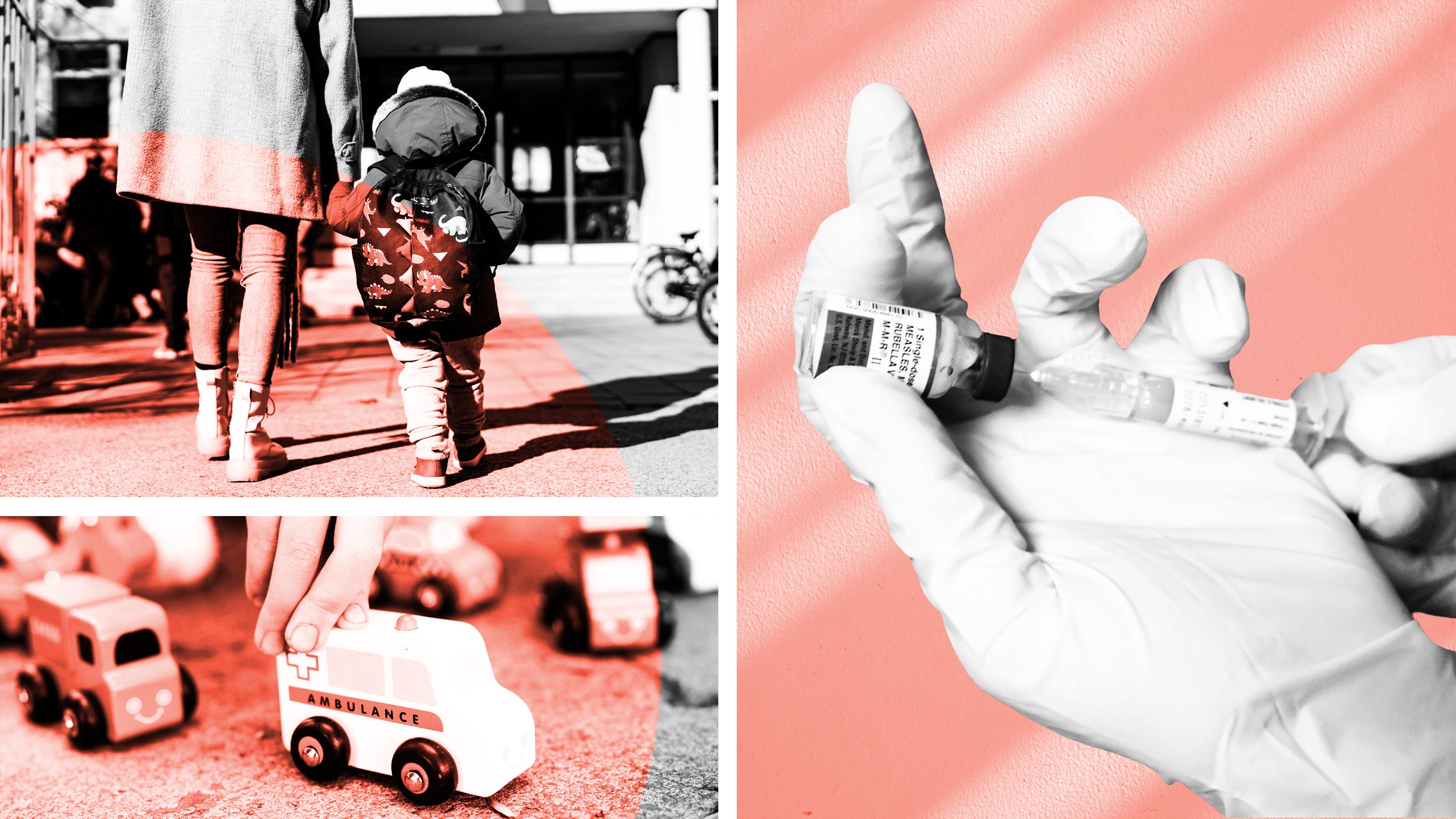
(Photo illustration by Bill Kuchman/The Bulwark | Photos: Getty, Shutterstock)
A PRESS RELEASE ABOUT KIDS AND VACCINES that the CDC distributed on Monday had just three sentences. But wow, those three sentences said a lot—about how we are backsliding on vaccination, and how the Trump administration is about to make things even worse.
The first two sentences initially seemed innocuous, maybe even a little encouraging. They explained that vaccination rates for kindergarteners “remain high,” with just a tiny drop-off between the 2024–25 and 2025–26 school years. But if you clicked through to the data, you learned that there has been a substantial rise in exemptions—that is, families opting out of school vaccination mandates, citing either medical necessity or, in states that allow it, personal beliefs.
Overall, 4.2 percent of kindergarteners had exemptions for at least one vaccine normally required for school attendance. That was up from 3.6 percent the previous year. The jump of 0.6 percent might not seem like much, but keep in mind that it is a national average, meaning that it masks wide variation among the states.1 The highest exemption rate was in Idaho, where 17 percent of parents opted out of the requirements.
Statewide vaccination rates also had that kind of variation. In many states, more than 98 percent of kindergartners had gotten the MMR vaccine, which protects against measles, mumps, and rubella. But in the states with the lowest rates, far fewer did: Idaho, again at the bottom, saw just 75 percent of kindergartners get it.
And just as the national numbers mask variation among the states, the statewide numbers mask variation within their borders. MMR rates in some communities are well below the 95 percent level that’s become the scientific shorthand for “herd immunity,” meaning protection sufficient to stop sustained transmission when isolated cases appear. It is in these communities that outbreaks have driven this year’s measles count past 2,500, the highest in thirty-five years, with more than four months of calendar still to go.
And it’s not just measles. Although pertussis case numbers were down in 2025 from a year earlier, the tally remains higher than before the pandemic, with falling vaccination rates believed to be a significant factor.2 And last year there were sixteen related deaths. Babies are also dying from brain bleeds after their parents spurned vitamin K shots that would have prevented them, as ProPublica reported earlier this year.3
Against that backdrop, Monday’s data release would have been an obvious opportunity for the CDC to encourage vaccination, as part of a broader and aggressive public relations push. But there has been no such push from administration officials, including new CDC director Erica Schwartz, and the only advisory in Monday’s press release was its bland final sentence: “CDC continues to encourage parents to discuss vaccination options with their doctors.”
That mantra should sound familiar. It has been the agency’s party line under Robert F. Kennedy Jr., who has been underminingfederalsupportforvaccines ever since taking over as health and human services secretary last February. And he’s been doing so with the full support of President Donald Trump, whose own medically illiterate skepticism of vaccines was on full display last week during an Oval Office ceremony to sign an executive order.
An underappreciated element of that order is an instruction to federal agencies, calling on them to scrutinize and pressure states that make it difficult for parents to take exemptions—yes, the very trend that Monday’s press release documents. Among the agencies the order mentioned was the Justice Department, in what has been widely interpreted as a promise to start or join litigation against states that, in the Trump administration’s view, don’t make exemptions appropriately easy to obtain.
California is almost certainly one of those states, because exemptions there are especially tough for parents to get. But that wasn’t always the case. California’s vaccine rules are stringent because lawmakers made them that way. And they did so following a measles outbreak a decade ago—one that offers a preview of what’s in store for the rest of the country if the Trump administration’s latest effort succeeds.
Want to support our in-depth reporting, our careful policy analysis, and our thoughtful commentary? Or our sparkling conversation and our sharp movie and book reviews? Our members make it all possible. Join Bulwark+ today and ensure you don’t miss a thing.
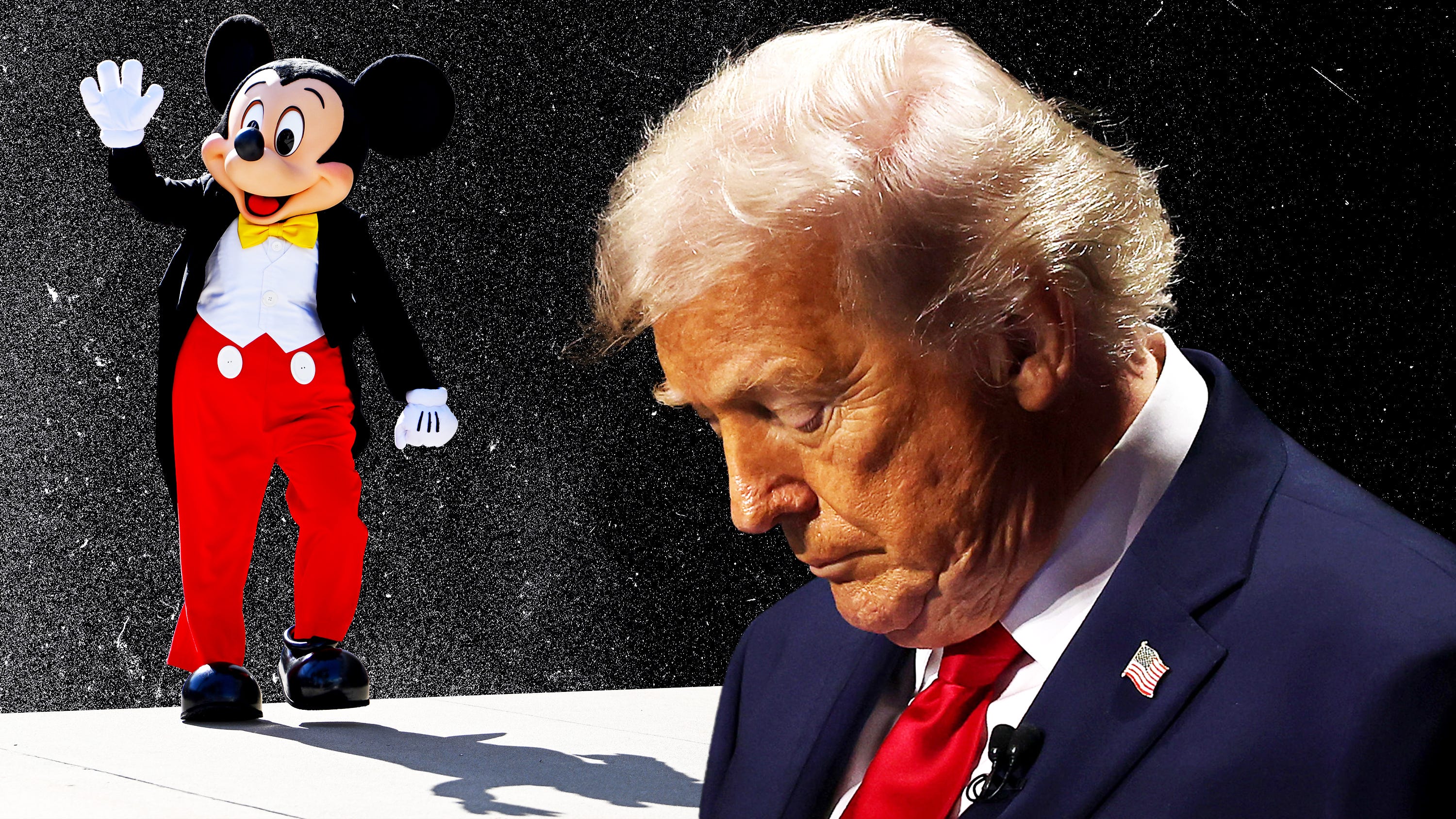
IN EARLY JANUARY 2015, California’s state health department started getting reports of suspected measles cases from doctors and clinics. First it was one, then a half dozen, then dozens. Public health investigators got to work and quickly found a common element: All of the initially affected people had been to the happiest place on earth—i.e., Disneyland—just before Christmas.
The resort’s theme parks were a perfect environment for the disease to spread, as a subsequent Los Angeles Times article detailed, especially with the peak crowds from the holiday season. Standing in packed indoor queues for rides and shows, kids and adults were swapping breath and droplets for long enough to pick up a virus that can linger in the air for up to two hours, and that infects about nine of ten susceptible people who encounter it.
Except, that is, when they are vaccinated. The full, two-dose MMR vaccine is 97 percent effective at preventing measles, and symptoms in the breakthrough cases tend to be milder. The overwhelming majority of cases in the 2015 outbreak—both those who picked up the disease in Disneyland and those who got it afterward through secondary transmission—either had not been vaccinated or had unknown vaccination status.
California lawmakers responded quickly, in part because they were already paying attention. In 2012, following a decade in which the number of non-medical exemptions had risen from 4,000 to nearly 15,000, the legislature had passed a law making the process of obtaining an exemption a bit more complex: Instead of simply signing a piece of paper saying they had a principled reason for objecting, parents had to show they’d gotten information from a health provider about the risks and benefits of immunization (like avoiding the possibility of disability or death from measles).
To lawmakers like Democratic state senator Richard Pan, a pediatrician, the Disneyland outbreak was proof that California needed to do more. Pan cosponsored a bill eliminating non-medical exemptions altogether, arguing—in a neat reversal of anti-vaxxers’ libertarian rhetoric—that the legislation was “about freedom; freedom from deadly contagions that are now preventable because of vaccines.” The bill drew plenty of angry opposition, enough that Pan got extra security. But the bill passed and became law with the signature of Jerry Brown, California’s Democratic governor.4
Four years later, following reports that some doctors were signing exemption forms without good clinical reason and sometimes without even seeing patients, lawmakers passed a bill tightening the medical exemption standard. Under the new legislation, which Democrat Gavin Newsom signed and is still in force today, the state tracks medical exemptions through a central system that requires doctors to attest that they’ve evaluated the patient and have a clinical basis for the exemption.
There’s solid evidence the laws had the effect their champions had hoped for. Before 2015, the MMR vaccination rate for California kindergartners was just above 92 percent, according to official state data. Since 2016, it has been at or above 95 percent for every year.
That’s not 100 percent, obviously. And the rate has actually declined by nearly a percentage point over the past few years, in a reminder that official requirements are just one of the factors determining vaccine takeup.5 But at least some of the parents opting out of vaccines for non-medical reasons are homeschooling their children, reducing the opportunities for spread within schools. And the state’s overall high vaccination rates are making outbreaks less likely.
That sounds a lot like a successful public health effort. Now the Trump administration seems bent on undermining it, possibly through the courts.
Help vaccinate the world against ignorance: Share this newsletter far and wide.
FOUR OTHER STATES also have no religious exemption for school vaccine requirements. And likethosefourstates, California has faced litigation from anti-vaccination groups, religious freedom advocates, and parents who say that’s illegal. The Justice Department could join those lawsuits, or launch new ones.6
To date, lower federal courts have issued inconsistent, sometimes conflicting rulings in cases before them, University of California, San Francisco law professor Dorit Reiss told me in a phone interview. And the Supreme Court has so far declined to take up the issue directly.
But Reiss said that could change, noting that the justices have already vacated a lower court decision backing New York’s strict vaccine laws. In that 2025 ruling, the Court’s conservative majority instructed the lower court to take up the case again, this time taking into account a recent decision recognizing parents’ rights to pull their kids out of LGBTQ-inclusive lessons for reasons of religious faith.
And Justice isn’t the only cabinet department that Trump commanded to focus on vaccine exemptions. Under the executive order, the Department of Education can withhold grants to states that don’t allow exemptions easily enough to meet the administration’s standards. And while any attempt to cut off funds would likely provoke legal challenges from states like California, it might push other states with strict vaccine requirements in the other direction.
West Virginia is a perfect example. It is one of the four other states with no current religious exemptions and, as of the 2025–26 school year, it had the nation’s highest MMR vaccination rate: almost 99 percent. But bills that would reinstitute religious exemptions or roll back vaccine mandates in other ways have been gaining strength in the legislature. And the governor has already tried to introduce religious exemptions via executive order, though a federal court has for the moment blocked him.
The threat of litigation or lost funds, not to mention anti-vaccination lobbying from the Trump administration, could help the sponsors of those bills rally majority support.
“I know that my immunization colleagues in red states are worried,” said Reiss, who is a widely cited expert on vaccination law. “They expect legislation to be brought—and they expect pressure to pass it—that would either weaken vaccine mandates or weaken vaccine recommendations following the federal guidance.”
A glimpse of what could be in store for West Virginia comes from Mississippi, where MMR vaccination rates have fallen from 99 percent in 2023 (then the highest in the nation, just above West Virginia) to 97 percent (sixth highest). One reason is the introduction of religious exemptions, after a federal judge sided with plaintiffs who said the state’s lack of faith-based exemptions violated their freedom of religion. More than 3,500 students received the exemptions last year, nearly six times the number claiming medical exemptions.
State Health Officer Dan Edney told Mississippi Today that more measles outbreaks are “inevitable” as vaccination rates fall. That’s true for the rest of the country, as well. Evidently that trend is just fine with the Trump administration, where the only alternative to doing nothing is making the vaccination situation worse.
Clarification (August 18, 2026, 10:05 p.m. EDT): As originally published, this sentence began “The jump of 0.6 percent might not seem like much. . . .” To ease the mind of readers concerned that the jump from 3.6 percent to 4.2 percent should instead be called a 16.7 percent increase, we have changed the clause to refer to a “jump of 0.6 percentage points.”
The story with pertussis is more complicated than with measles, because newer versions of the vaccine provide protection that wanes over time, making it more likely people will get the disease—albeit, with less severe symptoms.
Pan is currently the Democratic nominee running for Congress in California’s redrawn 6th district. He is up against the incumbent, Kevin Kiley, a former Republican now running as an independent.
Kennedy and his allies frequently say that the backlash to COVID-19 rhetoric and policies have fueled vaccine skepticism. And that’s almost certainly true. But they rarely mention their own role in undermining faith in scientists, both before and during the pandemic, by fearmongering and spreading false information.
Note that one of the states is New York, which removed religious exemptions via legislation in 2019 and did so in response to a major measles outbreak in the state.
Tim, JVL, and Andrew Egger discuss: -(Yet another) story of a former Trump voter seeing a loved one run into the immigration policies he voted for. -The faux outrage from MAGA-world at Sen. Jon Ossoff pointing out that Donald Trump and Natalie Harp travel together a lot. -Karoline Leavitt leaving the White House, and who might come next. -The Florida primary, and how Florida could become competitive in the fall. -Pete Hegseth traveling to Iowa. Is HE running?
Plus: -Andrew breaks down the latest weird trend on right wing twitter: Postpartum Depression truthers. -Tim welcomes Nancy Mace to the YouTube content game.
Bulwark LIVE: The Good Fight Tour is heading to the Southeast in October. Join Sarah, Tim, JVL and more for a night of politics among friends Oct 16-20. Tickets go on sale this Friday.
Trump is flailing so badly on Iran. He dispatched Jared Kushner to negotiate with the regime but then denies that any talks are happening at all. He also threatened to bomb one ally and hammered another for not helping him fight his war. And somehow, in all of this, Kushner—a private businessman and a consultant for the Saudis—is meeting with Hamas officials and Netanyahu while also looking out for his own financial interests. Plus: a primer on why we keep troops in South Korea, Hegseth may be mulling a presidential run, and Gen Alpha may save us all.
Bulwark LIVE: GOOD FIGHT TOUR with Tim, Sarah, Sam and JVL is coming to the Southeast in October. Tickets go on sale August 21. Bulwark+ members get early access via our presale NOW. Head to TheBulwark.com/Events for details and to get your tickets.
As always: Watch, listen, hit the like button or leave a comment. We want to hear from you.
Ad-free editions of The Bulwark Daily are available exclusively for Bulwark+ members.
Tim Miller’s Bulwark Daily is available wherever you get podcasts and on YouTube. New shows drop each weekday afternoon. If you like the show, leave a comment and ⭐⭐⭐⭐ wherever you listen. Add The Bulwark Daily to your player of choice, here.

 Login
Login