Login
Login
chicken salad for celery enthusiasts


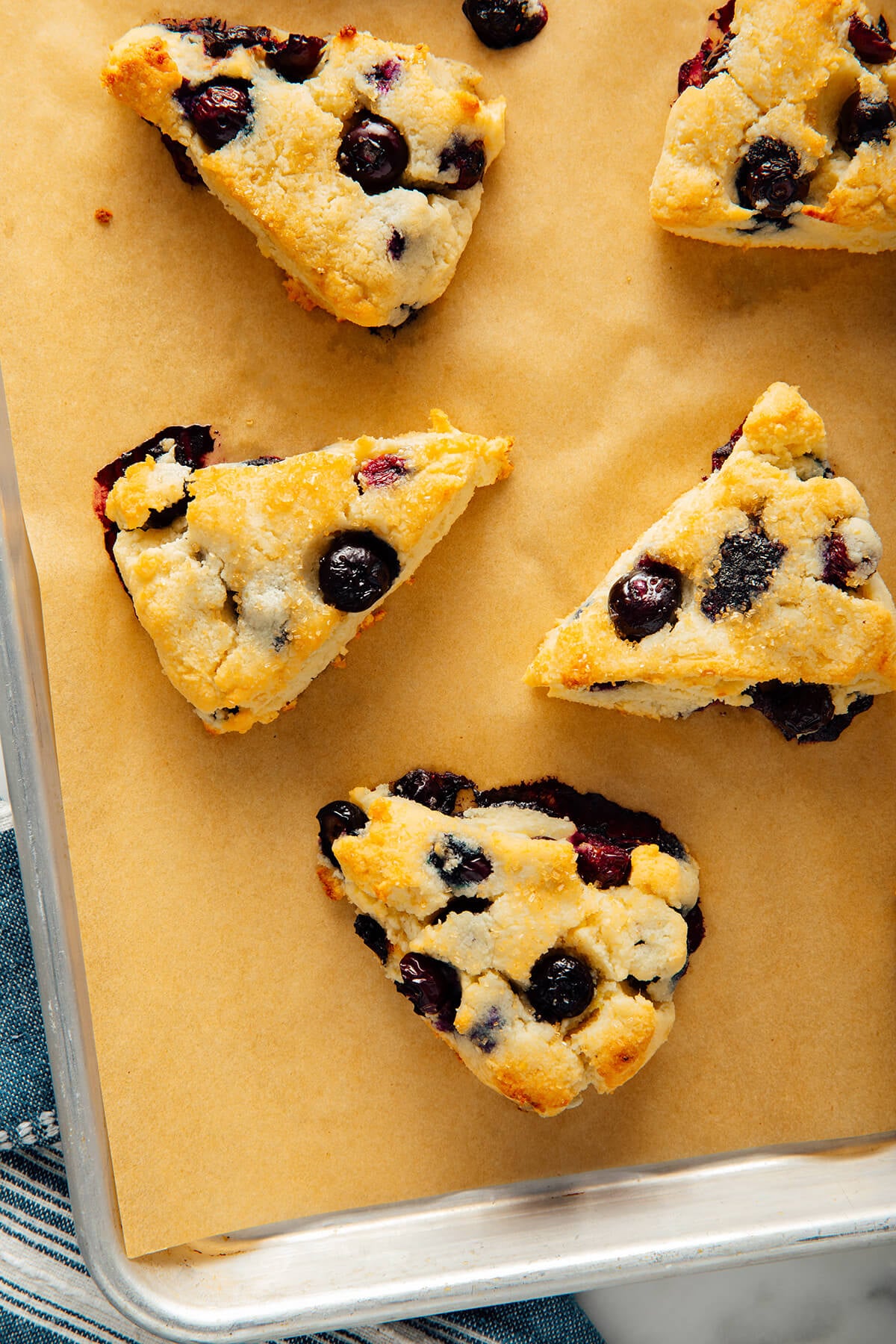
These scones are made with almond flour, and frankly, maybe all scones should be—whether you need them to be gluten-free or not. They’re 100 percent delicious, featuring perfectly tender insides and golden exteriors that offer a light crunch along the edges. Jammy burst blueberries, lemon zest and a light sprinkle of raw sugar take them to the next level!
I didn’t come up with this idea myself. When I published my Blueberry Scones, which are made with whole wheat or all-purpose flour, I received several questions about how to make the recipe with almond flour.
Since almond flour has become my favorite flour over the past year or two, I had to figure it out. Despite being made entirely with almond flour, the scones don’t taste overtly of almond. They’re easy to make with simple, wholesome, lower carbohydrate ingredients, so they’re a win all around.
It took seven tries to get the recipe just right. Along the way, it became the topping for a Peach Cobbler. I’m delighted with this recipe and all the variations you’ll find below.
Continue to the recipe...The post Almond Flour Scones (Gluten Free) appeared first on Cookie and Kate.
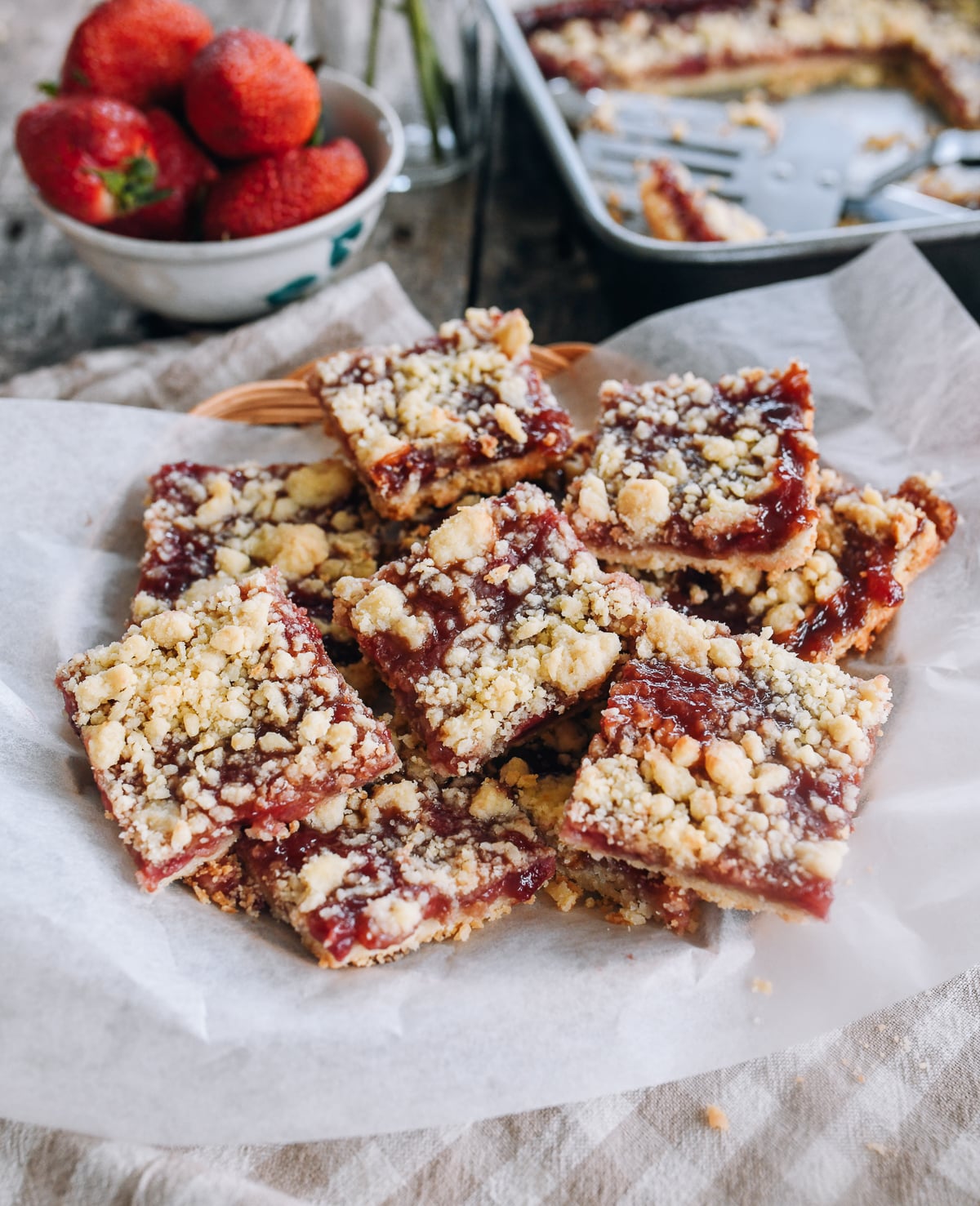 These strawberry bars are incredibly simple to make, with just 6 ingredients. A crisp shortbread base holds strawberry jam and fresh strawberries, and the topping is a crumble made from the same shortbread dough! They’re so easy, not-too-sweet, and you’ll make them again and again. Baking Doesn’t Have to Be Hard Sometimes you come across […]
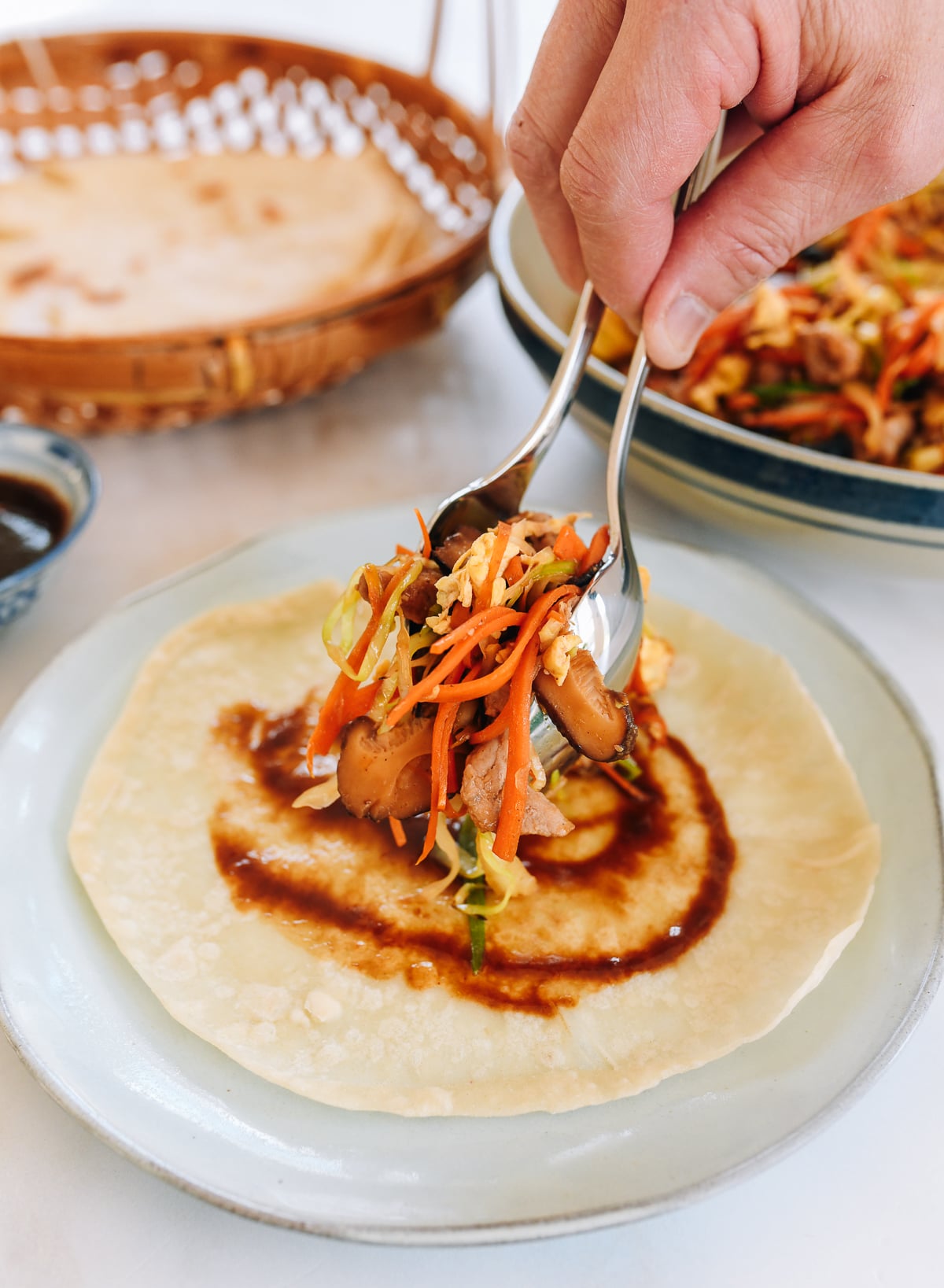 Moo shu pork is an iconic Chinese restaurant dish of stir-fried pork, cabbage, carrots, and mushrooms, served on paper-thin, chewy pancakes with a sweet hoisin-based sauce. It is an absolutely delicious combination, and this moo shu pork recipe will yield that nostalgic flavor from American Chinese restaurants past. Moo Shu Memories Fun to eat and […]
Unlike women of my mother’s generation, I’ve never killed a live chicken. However, I have cut up a lot of whole birds to hone my cooking skills, save money, and prepare extraordinary foods.
I was inspired by watching my mom who was inspired by supermarket whole chicken sales. She’d send my dad and me to buy six or so birds. She’d then go at them with her sharp knife — all of which would result in a pot of comforting chicken pho (pho ga), garlicky Maggi roasted chicken (ga ro ti), and a whole host of Vietnamese charcuterie that we’d put into banh mi and much more.
Naturally, when Rory and I started living together, I began buying on-sale whole chickens to experiment on cutting them up myself. I practiced in our tiny apartment in West Los Angeles, and our eating life became full of stocks, stews, liver pate, and roast chicken dinners. He was a poor grad student and I was a low-level university administrator but we at a diet rich in chicken-y foods. (This year marks our 30th wedding anniversary so I guess he didn’t mind my chicken obsessions.)
From cutting up whole chickens, I learned bird anatomy and became and expert carver of roasted chicken, duck, and turkey. I also became a better chicken shopper (When are bigger or smaller birds better?) and cook (What cut works better for which dish?).
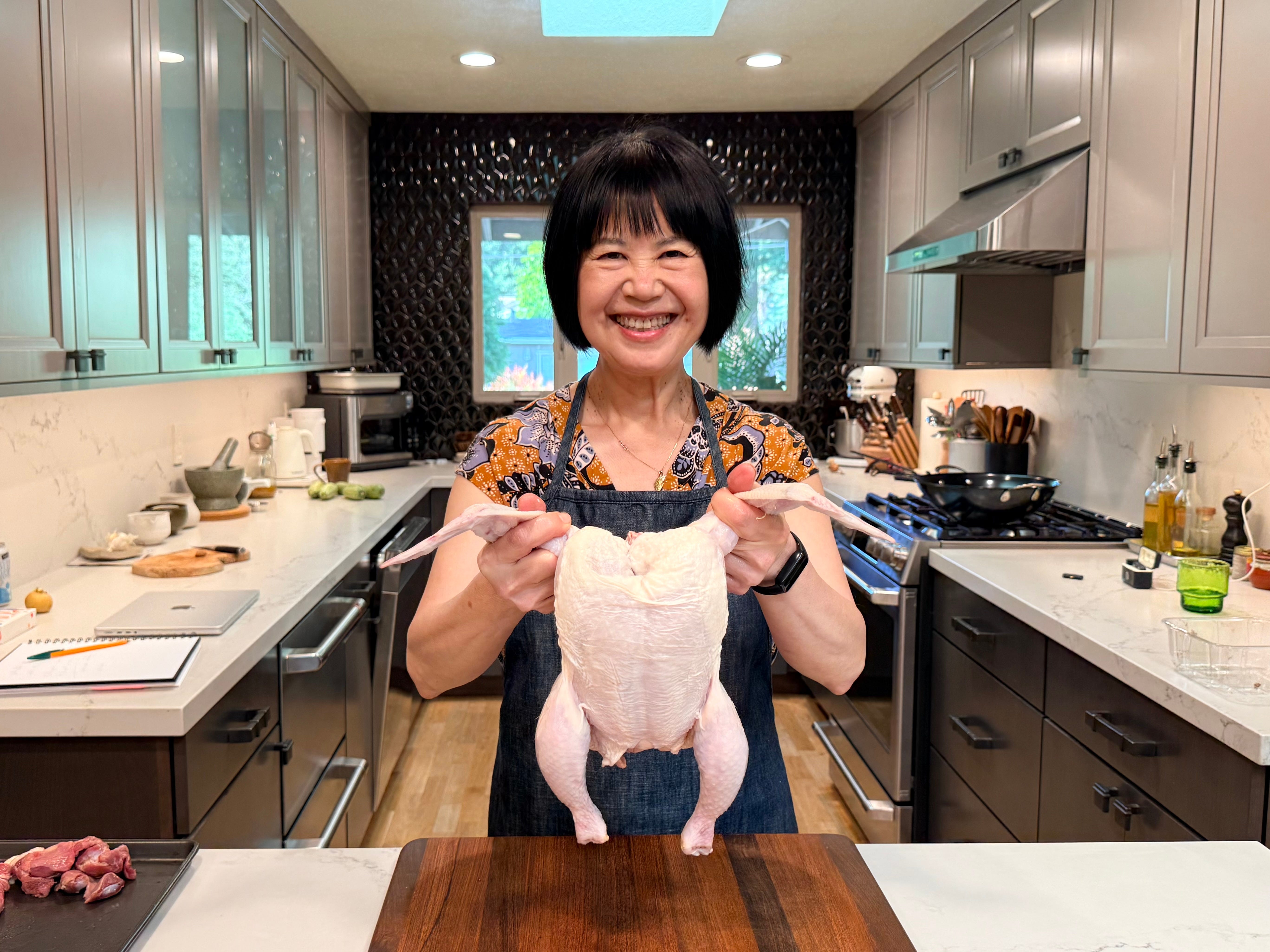
Butchering chicken is a cooking lifeskill that unless you are a vegetarian, you ought to master. Unfortunately, most modern cooks do not know how to break down a chicken and make the most of it.
PTFS subscribers have expressed keen interest in learning how to break down a chicken. I’ve had it on my to-do list but something I saw last week kicked me into high gear: Whole Foods was selling boneless skinless chicken thighs for $10.99 a pound! Meanwhile, the WF whole chicken was $2.69 per pound.
A whole chicken is like manna from Heaven. A whole bird can seed many more delicious meals than a pound of deboned, skinless chicken. I bought several chickens and recruited Rory to help me make the four (4) videos in this dispatch:
Chicken rinsing (yes or no and how?)
How to cut up a whole chicken (+ what size and kind of bird to buy)
Cutting and deboning chicken parts (for good flavor and cuts that you can only get at specialty markets)
Chop chicken bones like a boss (for better broth and excellent pho, whack away!)
These videos will also help you with:
food safety issues
buying chicken intelligently
getting better flavor
specialty-style cuts
broth/pho technique
cooking confidence to deal with bones, boning knives, and cleavers
Feel free to share your knowledge and tips too!
These four Chicken Butchering videos comprise a mini class, which is free to paid subscribers. They seed and sponsor PTFS knowledge. Join us to access this complete post, mine the recipe index, and gain so much more. Thanks for your considerations!
Book tours are lots of fun. It’s exciting meeting people, and in spite of the jet lag, and bleariness from sometimes getting up at 4am, you try to get in some good meals, too. Also important is getting fresh food, which we eat a lot of at home, but hard to do while on the road.
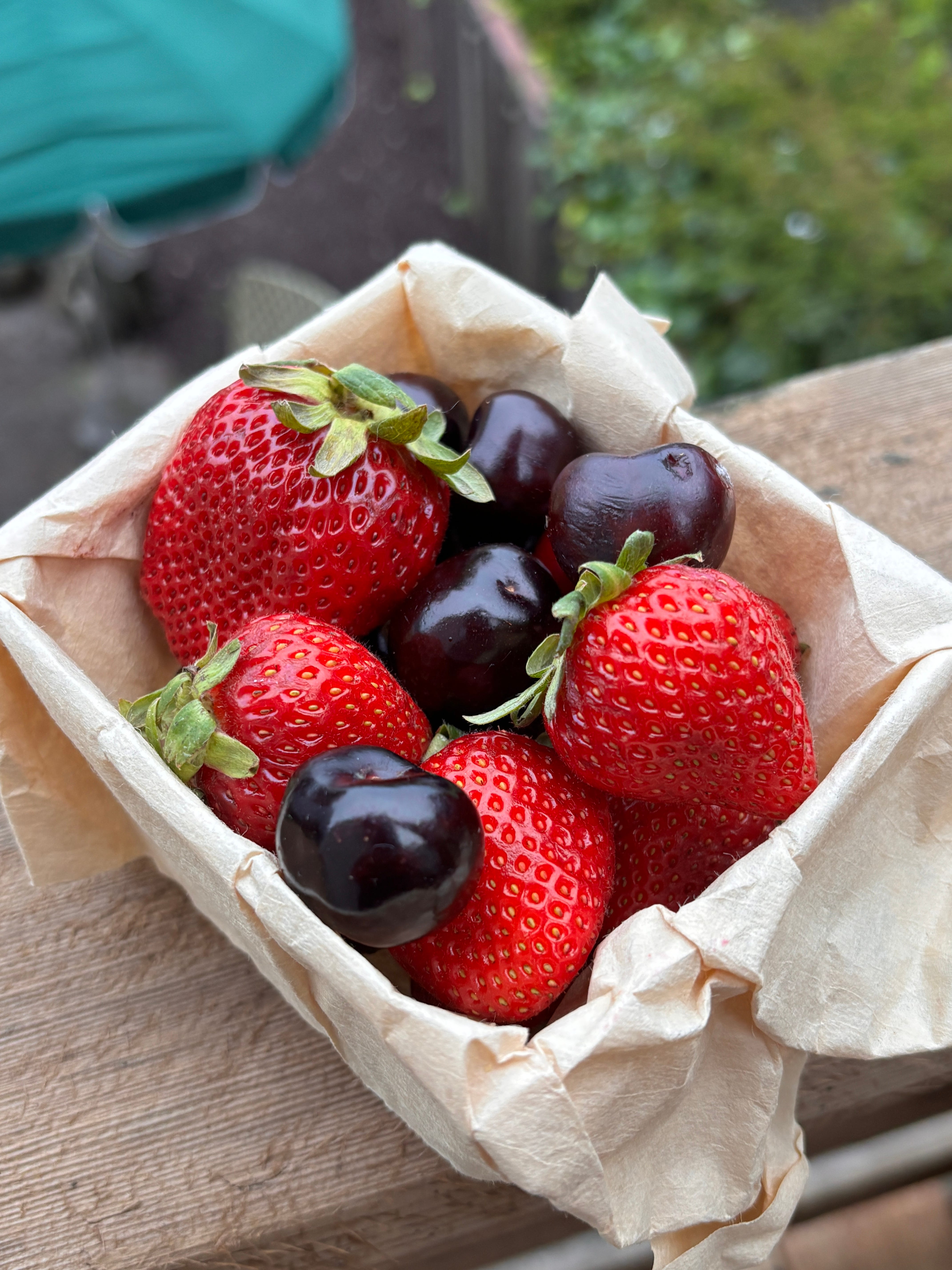
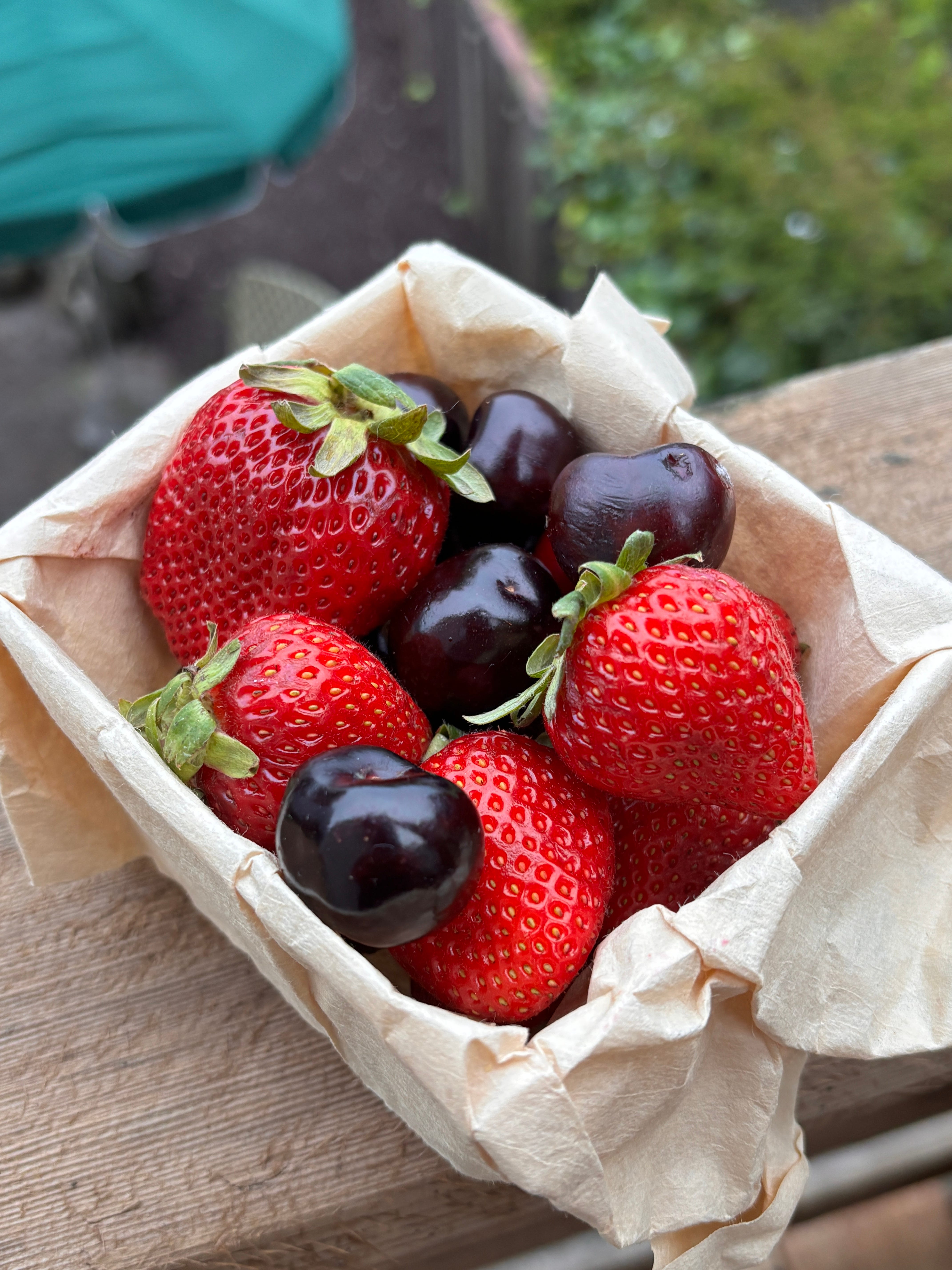
Thankfully, some wonderful folks brought me a beautiful basket of cherries and strawberries from the Berkeley Farmers’ Market while I was doing a booksigning nearby at Market Hall Foods, and I enjoyed the fruit as soon as I got home. (Thanks to the women who gave them to me!) I did also get a few gifts of chocolate, some more chocolate, and then, some more chocolate, which I guess is to be expected when you’re doing a tour for a chocolate book. 😊
My suitcase is already at capacity, even though I arrived with it half full. But it’s nice to see people enjoying the book, which has surpassed our (me and my publisher’s) expectations, as well as the venues selling the book. So thanks to everyone who bought or ordered a copy.
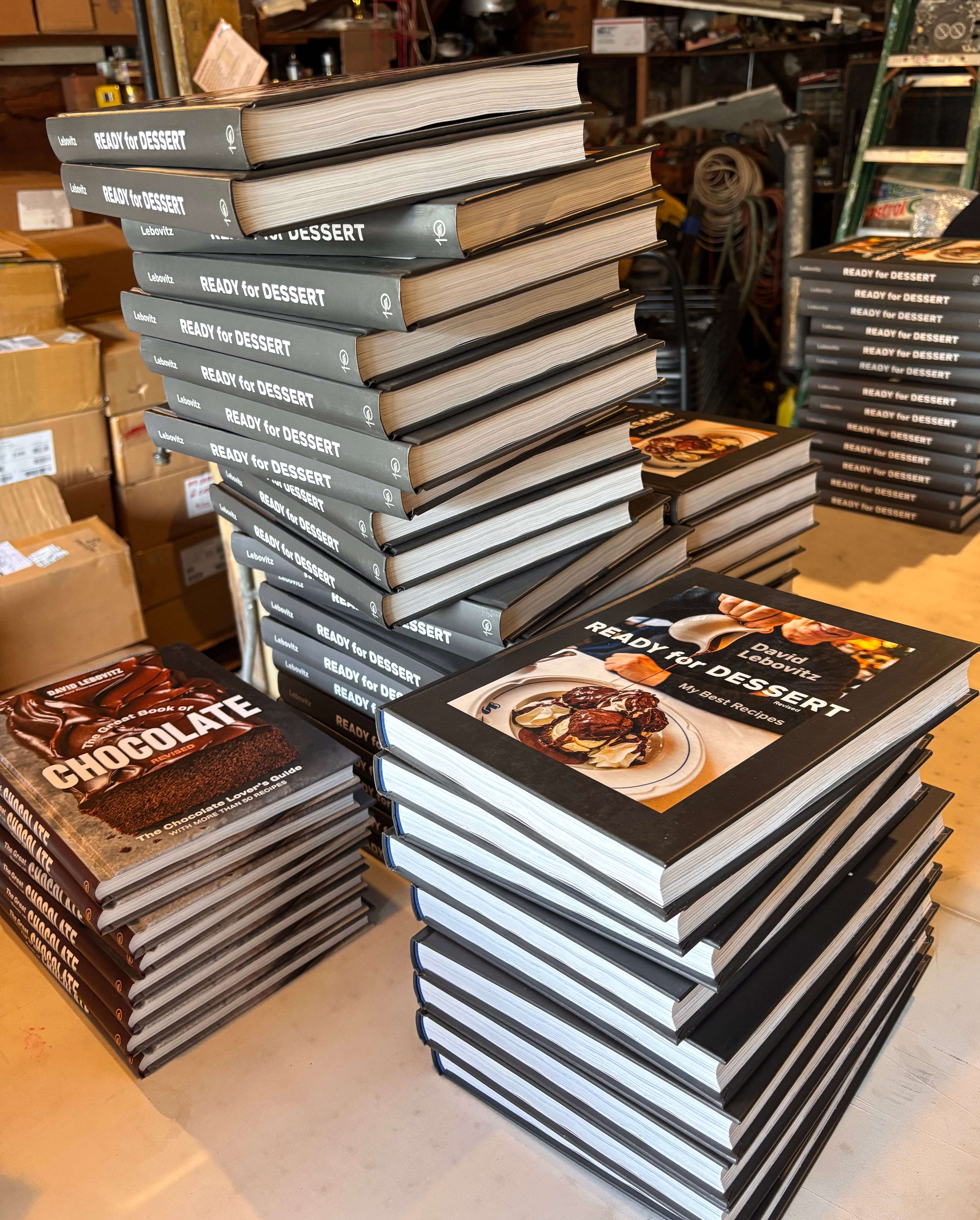
I signed a few hundred at Omnivore Books for people who came to say hi, and for others who ordered signed copies. If you ordered one, it should arrive shortly.
I did another event at Dandelion Chocolate in San Francisco. That sold out quickly since they could only seat so many people, but if you’re in San Francisco, do stop by. They do factory tours, teach classes, and have a chocolate salon where you can sip hot chocolate and enjoy delicious desserts made with their small-batch, single-origin chocolate. (Pro tip: Go for the S’more, if they have it on the menu.)
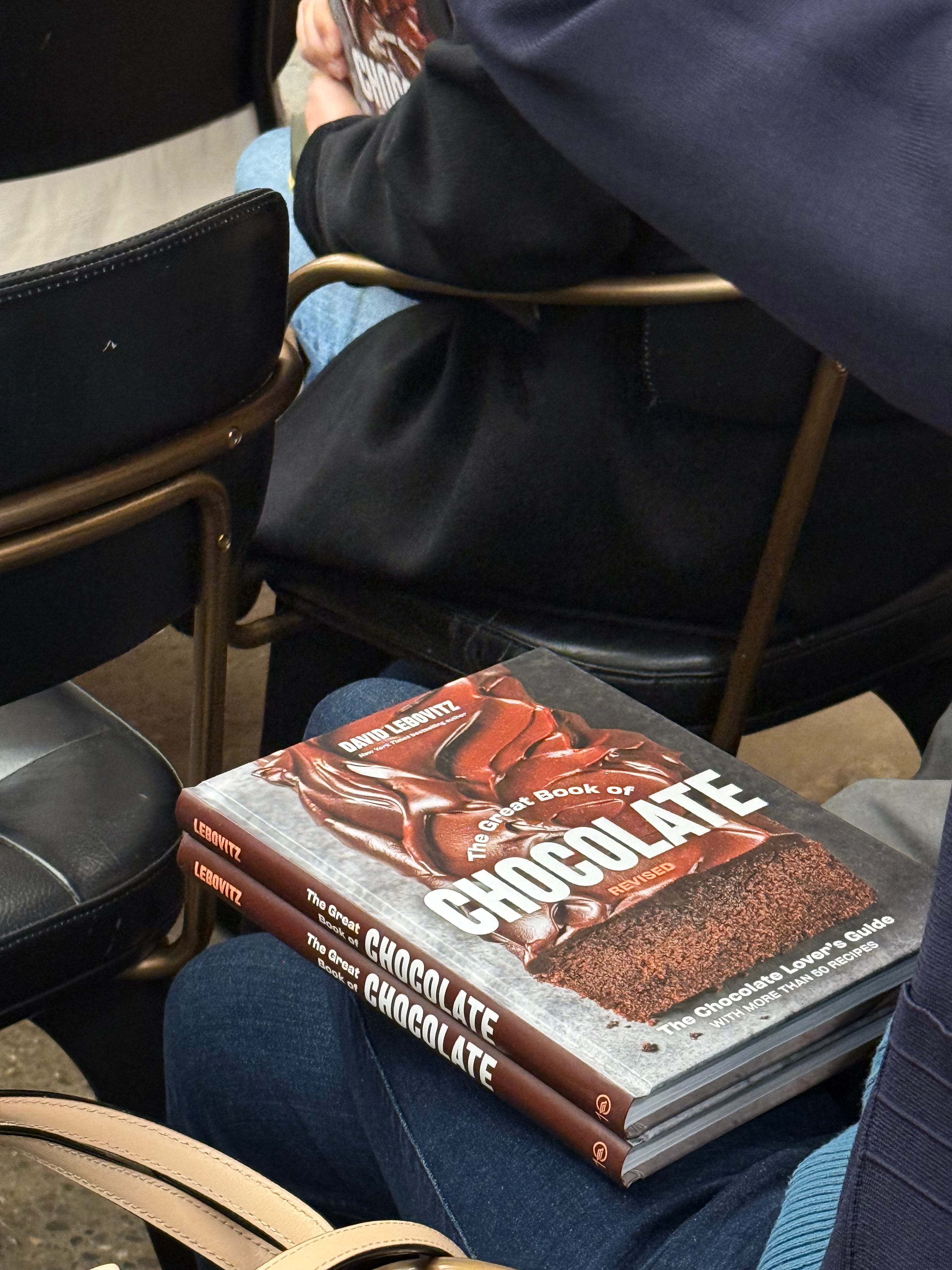
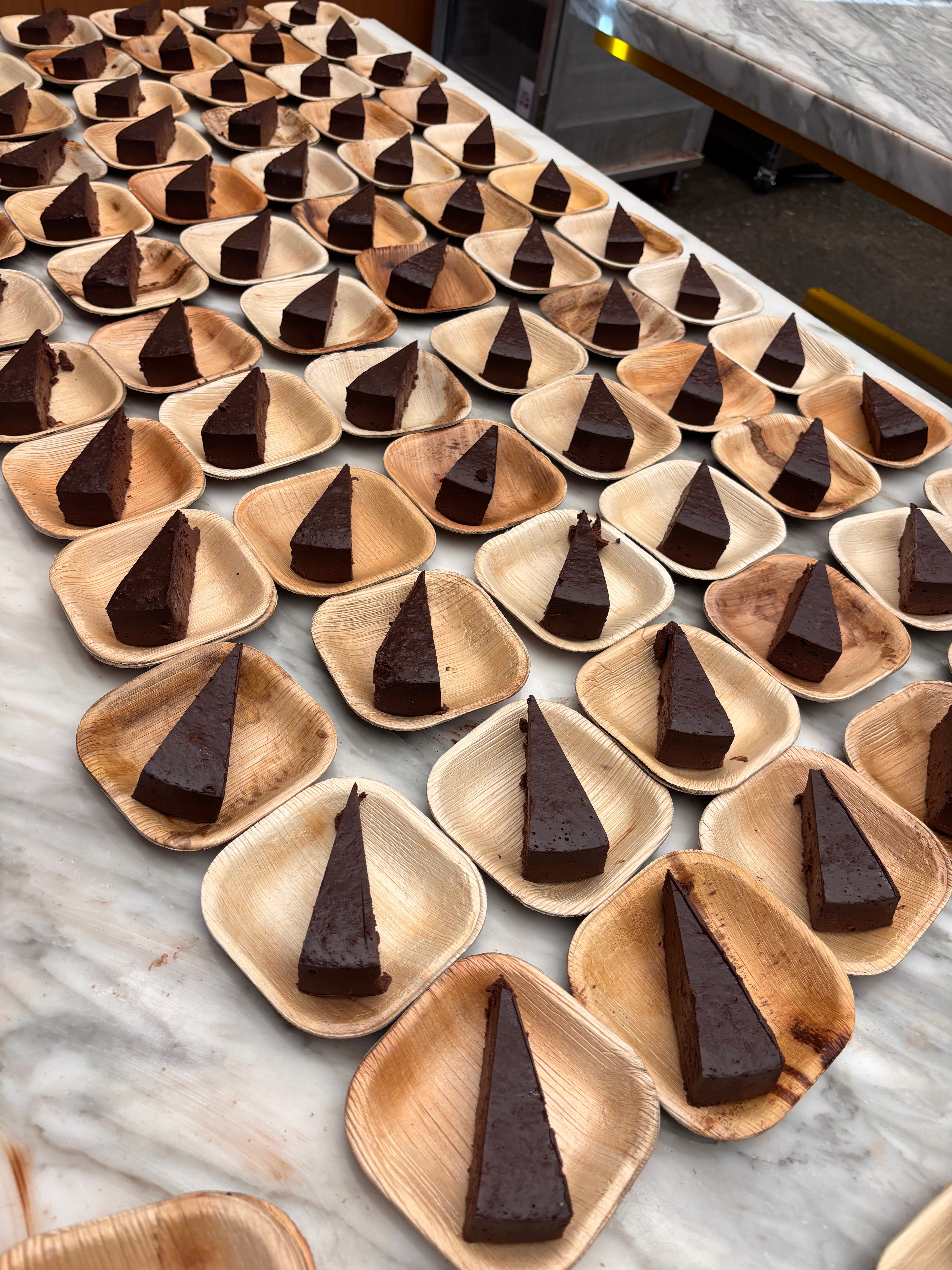
We had a wonderful turnout and enthusiastic crowd at Dandelion Chocolate, where pastry chef Stephen Durfee did a masterful job of baking and slicing Torta Divina, a rich chocolate cake that’s in The Great Book of Chocolate, adapted from author and baking instructor Nick Malgieri.
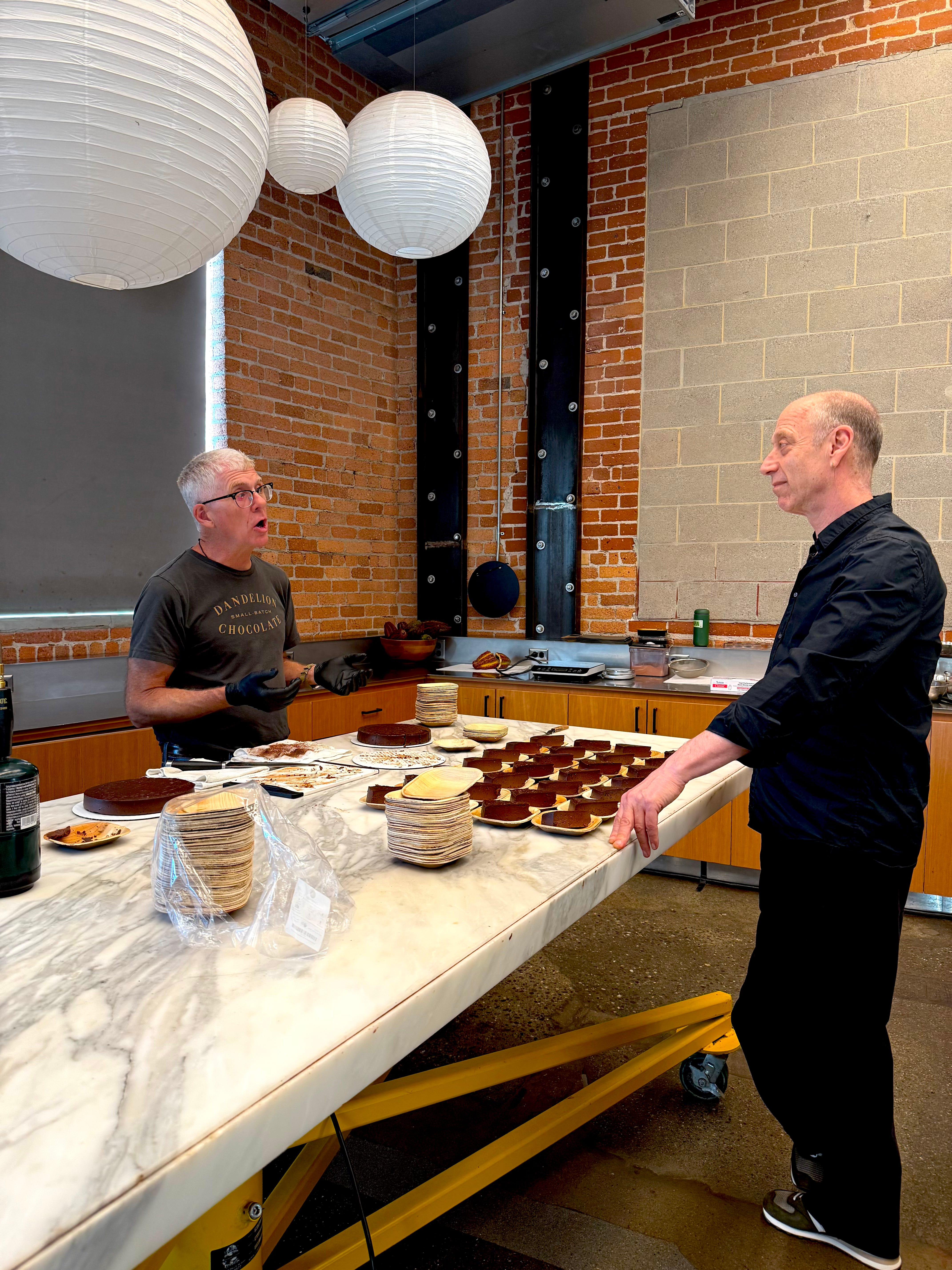
I had a really terrific time chatting with Stephen. (I want to call him “chef,” but he’s wearing a T-shirt, so I’m just going to go with Stephen.) We both talked about how the world of chocolate has greatly expanded since I wrote the first edition of the book and since the founding of Dandelion in 2010; the owners came to Paris and did a chocolate tour with me, then returned and started making chocolate.
While I can say that I didn’t have anything to do with their success, I’m glad they’ve been successful, and their chocolate is considered some of the best in the world. I did also mention how bean to bar has now become a thing in France as well, influenced by the American chocolate revolution, as chocolate specialist Chloé Doutre-Roussel dubbed it; they use the English term, bean to bar, in France.
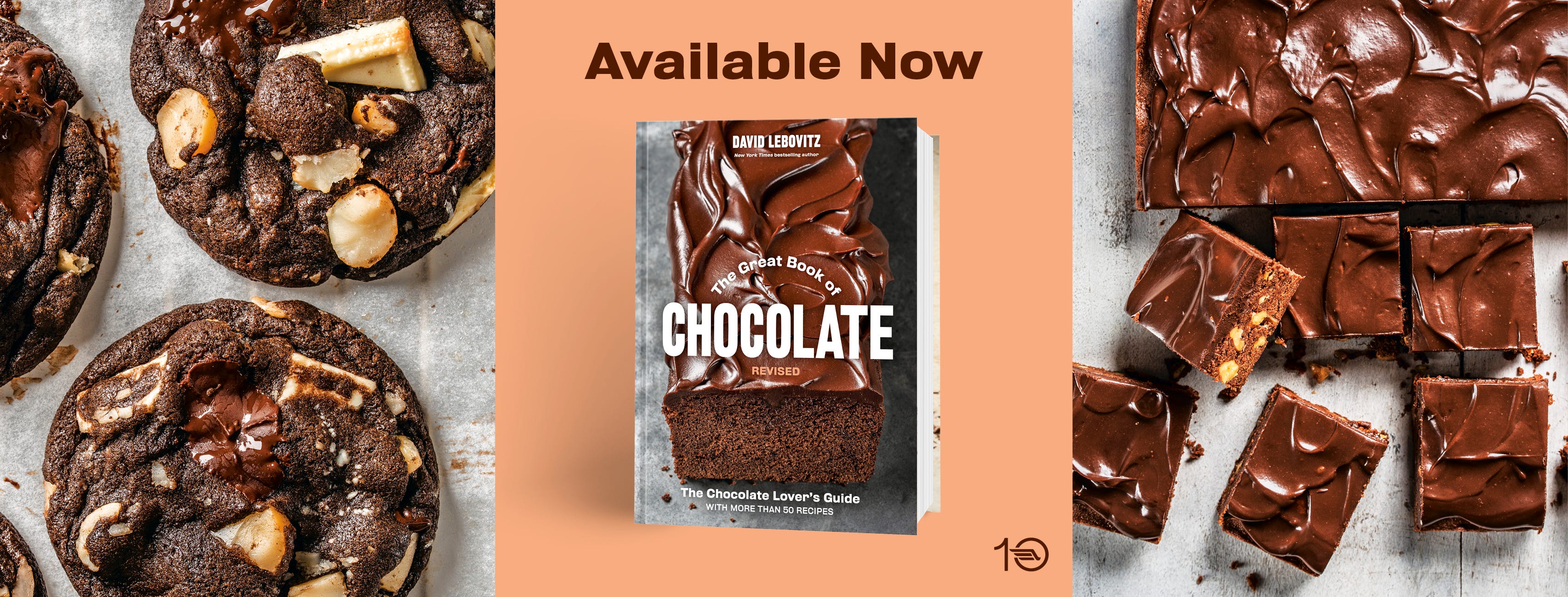
Get The Great Book of Chocolate

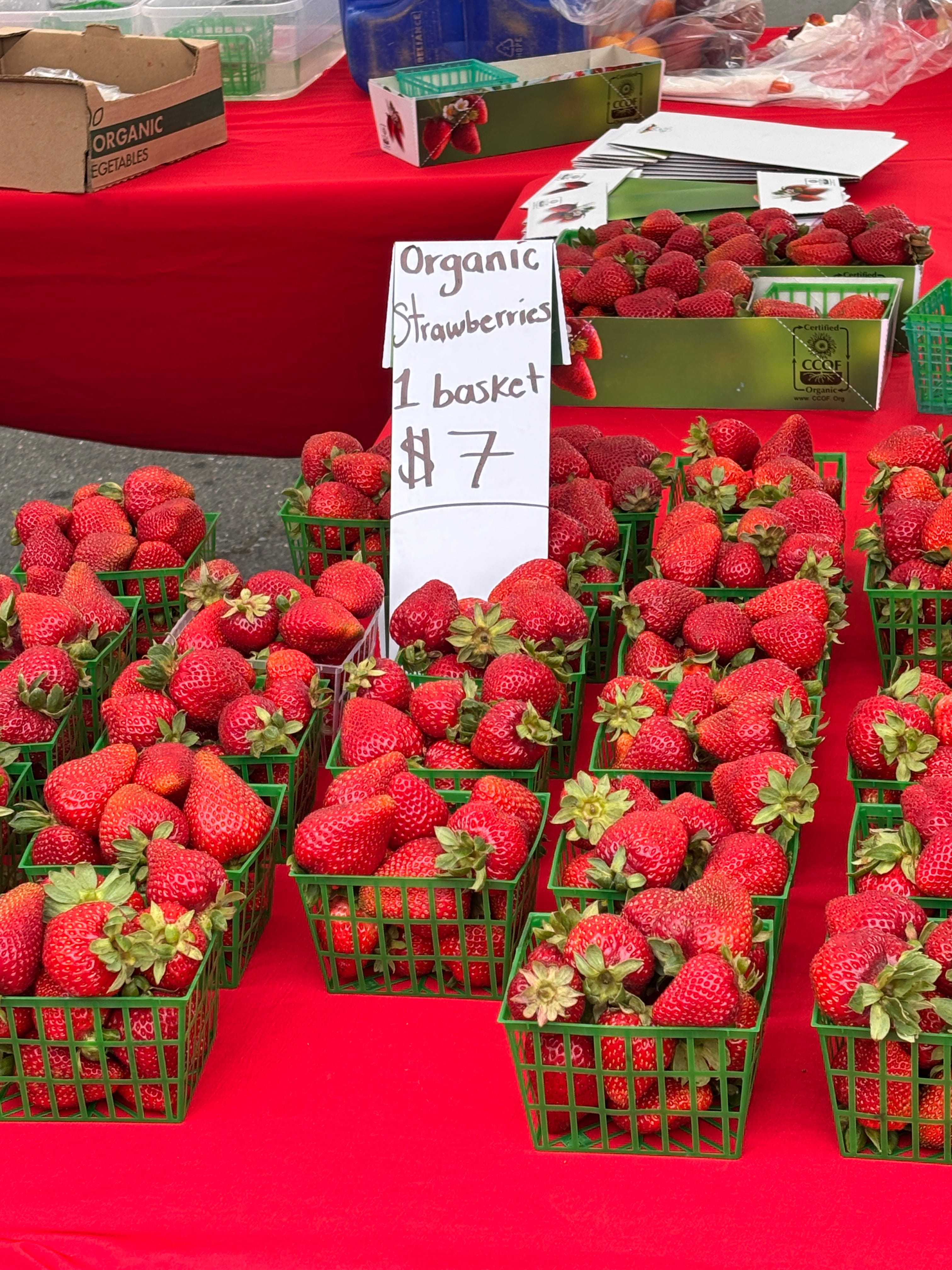
On the road, especially with all the chocolate I’m eating, I make an effort to get as much fresh food as I can, whenever and wherever possible. I was happy to be staying near a greenmarket in San Francisco, and was relieved to see baskets and boxes of berries and other fruits and vegetables that came from local farms.
I know it’s triggering for some when I post pictures of strawberries that cost $7/basket, but since that’s what they cost in France — at least the good ones — I’m not stupefied. I also know that it takes a lot of work to grow, pick, and deliver berries, which are fragile, and I didn’t see any of the berry farmers pulling up in BMWs. All I know is that last year I spent over €80 ($93) on things that would repel the slugs that decimated our garden, including the peppers, basil, and tomatoes, so I’m fine paying for someone who succeeds in the battle against them.
Speaking of $$, I remember when the $4 toast was considered a harbinger of the downfall of San Francisco.
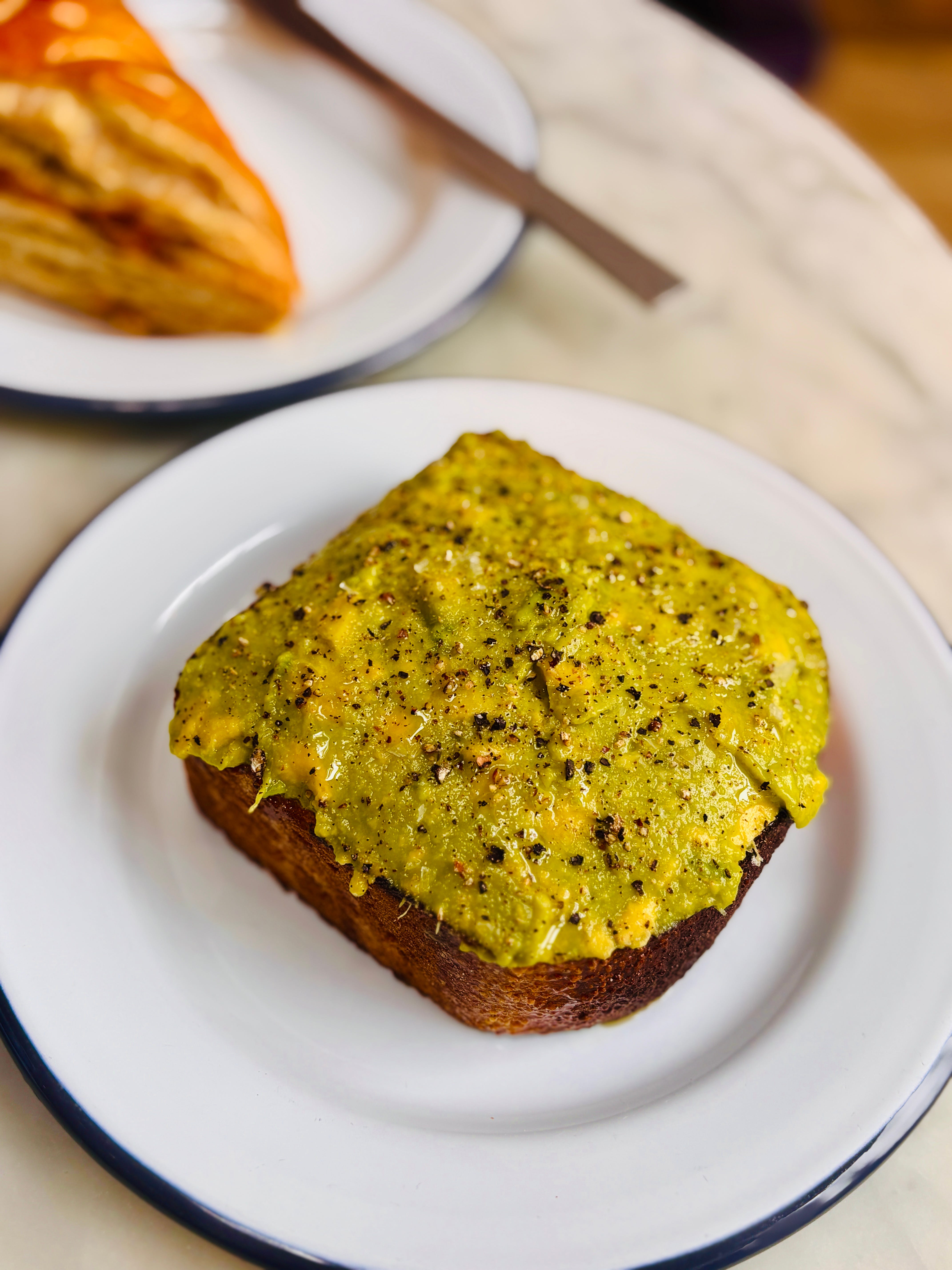
Now, that seems like a bargain. But one of my first stops in SF is The Mill, where it’s become a custom for me to meet up with Heidi Swanson of 101 Cookbooks, one of the OG food blogs. Heidi moved to Los Angeles a few years ago, but lucky for me (and for San Francisco), she recently moved back. We caught up over avocado toast and talked about the difference between sunny SoCal and foggy San Francisco. As wistful as I am about San Francisco, the chilly fog that rolls in at night is a deal-breaker for me, moving back there.
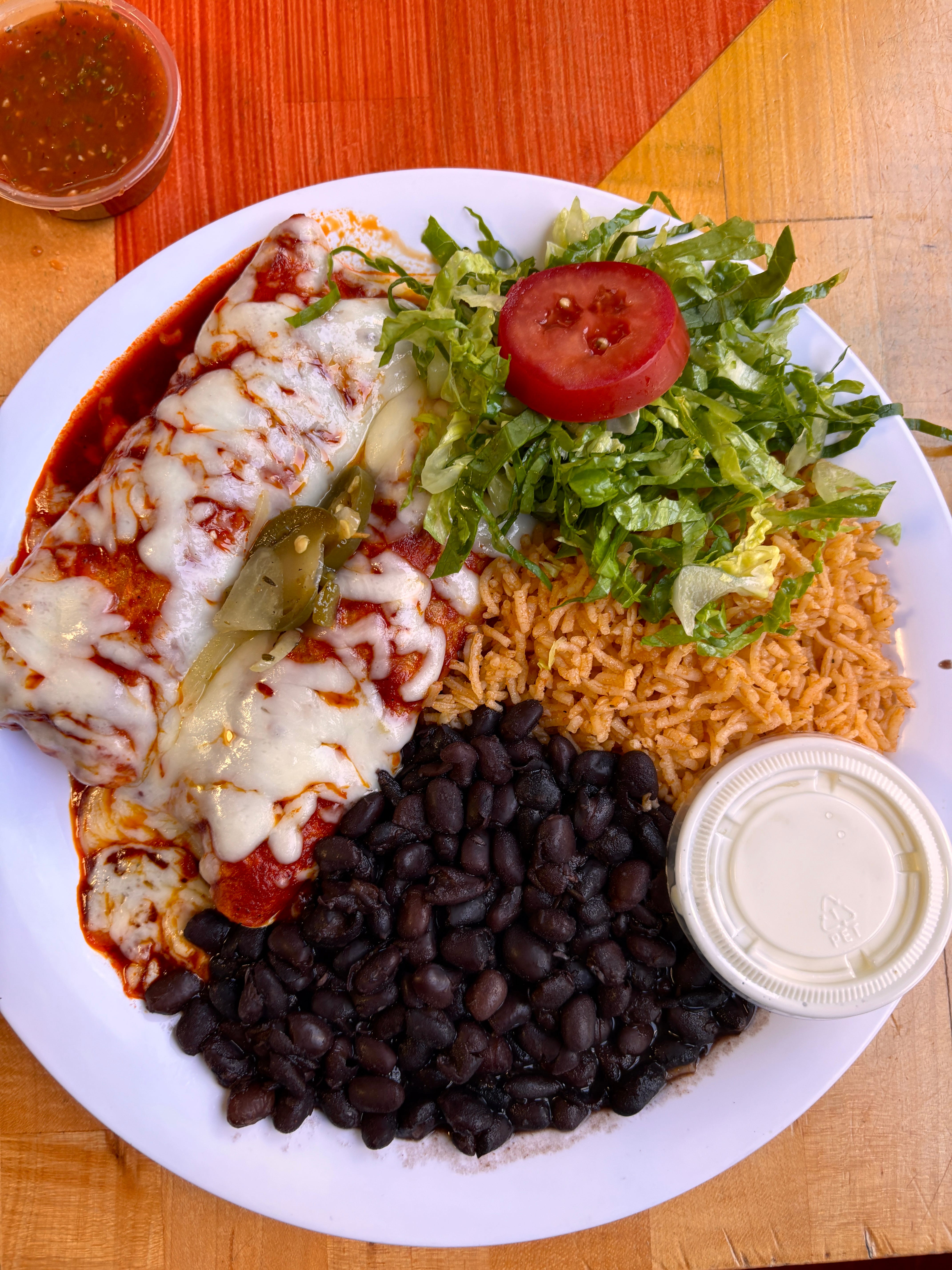
The Mexican food scene has ramped up in Paris, partially thanks to my friend Carlos at Comer, which is excellent, but a lot of it still doesn’t match what you can get in California. I arrived rather late in San Francisco the first night and my friends who I was staying with saved me a burrito from El Castillito. Like bagels in New York, there’s an endless discussion about who makes the best Mission burrito in SF. I still rank Pancho Villa at the top. But I had many a burrito from El Castillito in my lifetime — at least in San Francisco — although nowadays, my French-trained tummy can only handle a half of one before I’m full.
Before my event at Market Hall Foods, I had what Diana Kennedy railed about: the Mexican combo platter, at Cactus Taqueria. The late Ms. Kennedy was famously prickly about, well…everything. I once spent a week with her and avoided her wrath but heard about it from others who were on the receiving end of it. However, I stopped caring what people thought of me, or what I ate, a few years ago, and am a lot happier. Besides, if I went around scolding people making non-authentic Niçoise salads or putting chicken on Caesar salads, I wouldn’t have time to write about all the delicious things I get to eat. And when you’re at the airport, or on book tour, a chicken Caesar often hits the spot.
Not sure what Madame Kennedy would have to say about Nopalito, but the crisp quesadilla with asparagus, brussels sprouts, and fresh epazote (above, right) was so good, I went back a second time to have it. Literally everything is good at Nopalito, including the tamal with soft masa filled with ancho-braised chicken, and the enchiladas de mole con pollo, chicken enchiladas with mole, above left. (Yes, there’s a mole recipe in my chocolate book, too.)
A few months ago I went to the Staub factory in France and met Belle English, who runs the test kitchen at Williams-Sonoma in San Francisco. I remember going into my first Williams-Sonoma store in San Francisco, which was on Sutter Street, where I saw such wonders as Duralex glasses, Le Creuset cookware, and curiosities like madeleine molds and tart rings from France. Chuck Williams introduced America to the food processor. It was a store for people who liked to cook, and I was fascinated by everything they carried.
So it was a pleasure to be in their gorgeous test kitchen, where I got to play with all the kitchen gadgets, and Belle and I made Bouchons together, from my chocolate book. As soon as they were cool enough to handle (actually, she ate one that was still a bit too warm…), dove into them.
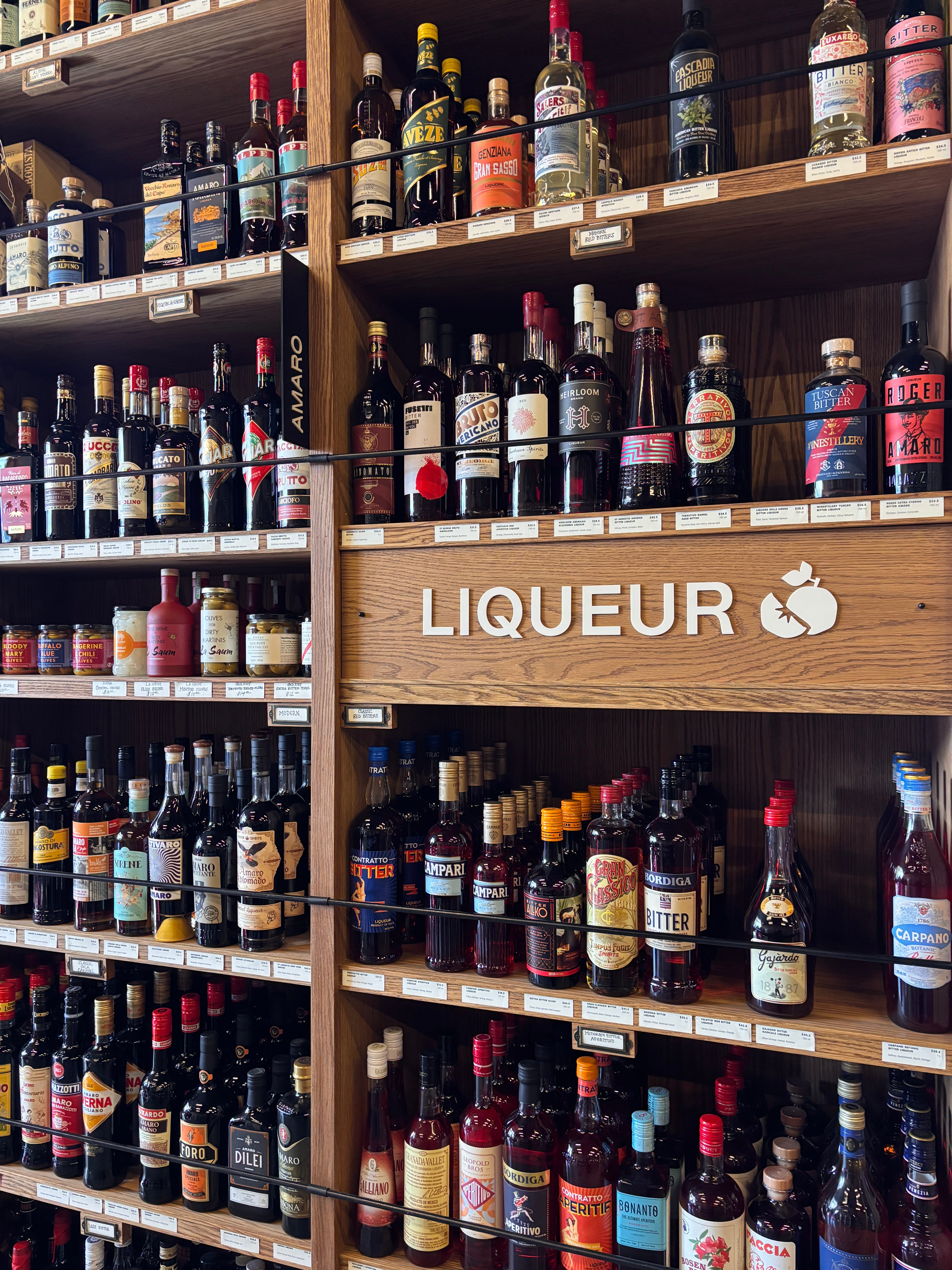
I also stopped into Bitters and Bottles, a shop I discovered during Covid when I was doing Drinking French apéro hours on Instagram. When I wrote the book, I did a lot of checking around to see what French bottles were available in the U.S., and Bitters and Bottles had a stellar selection, including some that are hard to find, even in France. Interestingly, Americans seem to like many French apéritifs more than the French do!
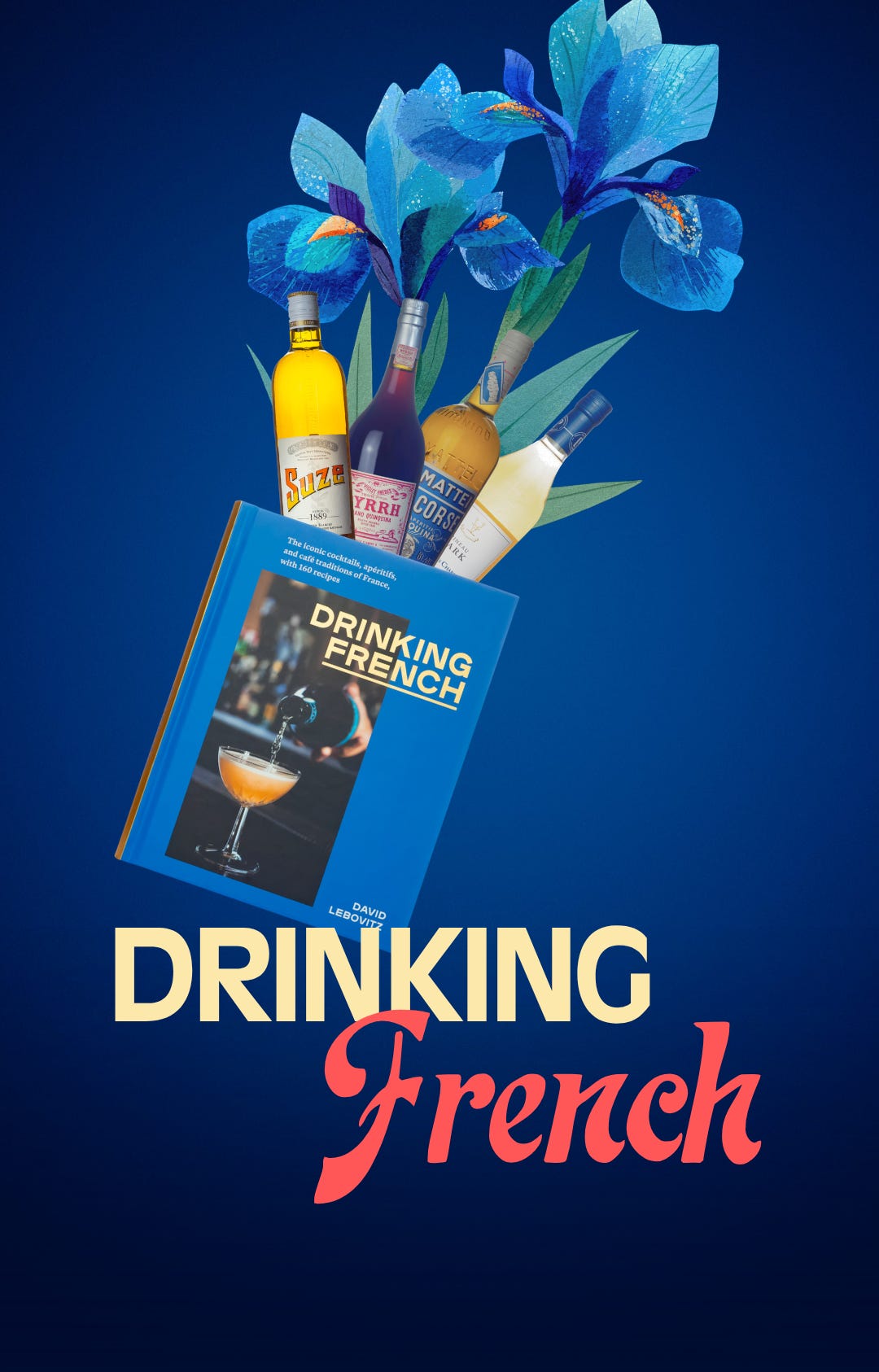
I did see that after my visit, they’re offering a Drinking French box with seven of my favorite bottles, which are perfect for summer, including Cap Corse and Byrrh; these are especially good over ice or with a splash of tonic water and an orange slice for a refreshing spritz.
I loved my meal at Nari, above, and am looking forward to chef/owner Pim Techamuanvivit’s upcoming book, Cooking Thai, co-authored with . I got a sneak preview of it, and it’s not only a beautiful book, but very well-written, making the authentic Thai dishes approachable.
Subscribe to my newsletter to get recipes and posts sent right to your inbox!
I was sad to learn a few years back that one of my favorite dim sum places, Hong Kong Lounge II, had a fire and had closed. So it was nice to hear they reopened as HK Lounge Bistro in the unlikely neighborhood of South of Market. In my day, people used to hang out in that area late at night and into the morning hours, when they wanted to have some unrestrained fun, which sometimes involved restraints. Although you didn’t hear that from me…
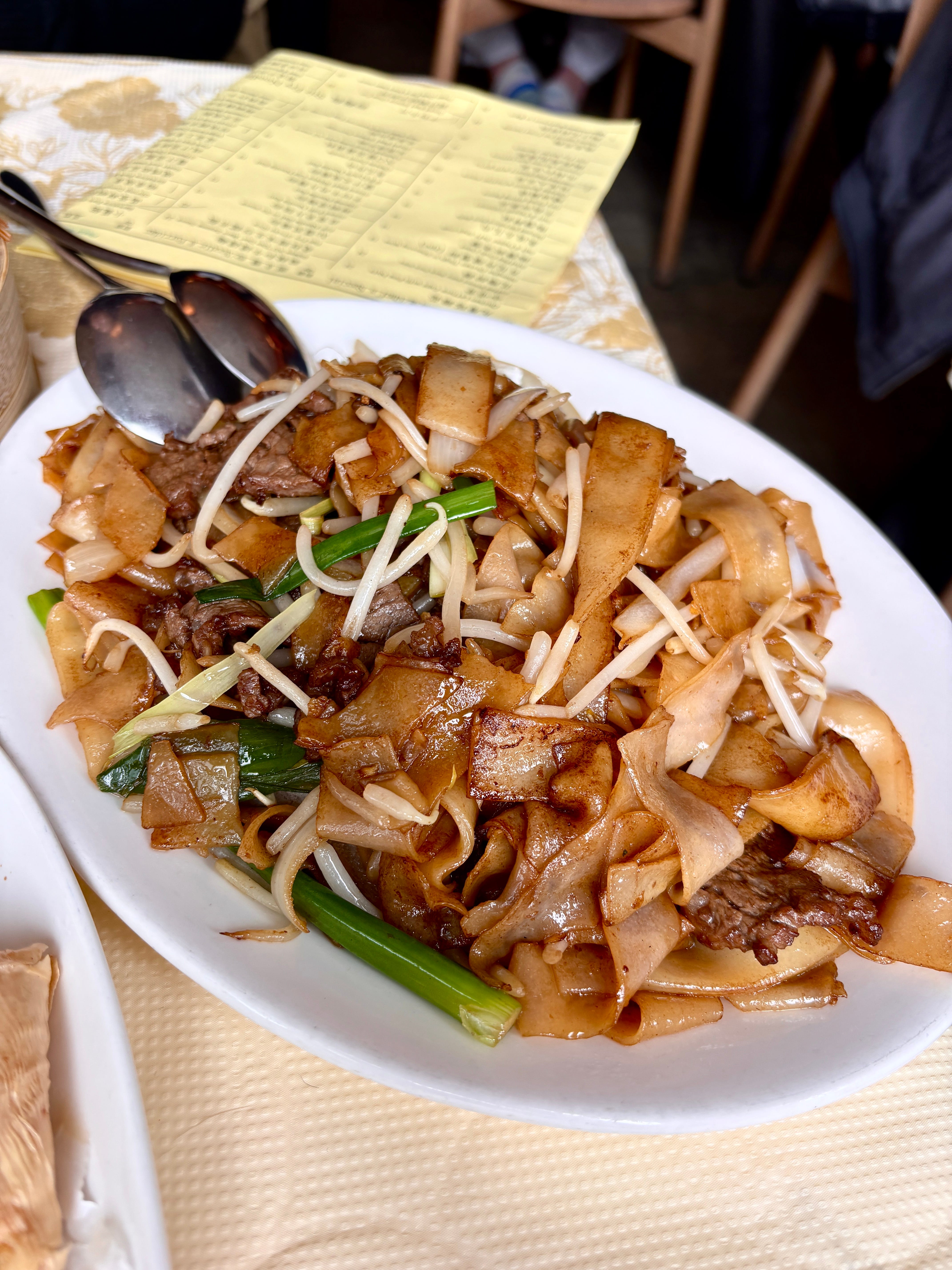
I was thrilled to dig into a big platter of their beef chow fun, above, was still excellent, and had wok hei, the smoky char that rice noodles get from being wok-fried. That smokiness is a big part of the flavor of a good chow fun. Otherwise it’s just a big heap of noodles.
While they may not look all that good in the picture (above, right), I dreamed about their crisp tofu skins with shrimp. They weren’t quite as good as I remembered, but it was nice to have a big plate of pea shoots, above left. When Romain first tasted pea shoots, he asked the same question as I did: Why don’t we have those in Paris? I even memorized the words for them in Chinese, thinking they might be an “off-menu” item. But no, they don’t seem to exist in France. However, it’s hard to believe anyone could make them better than here.
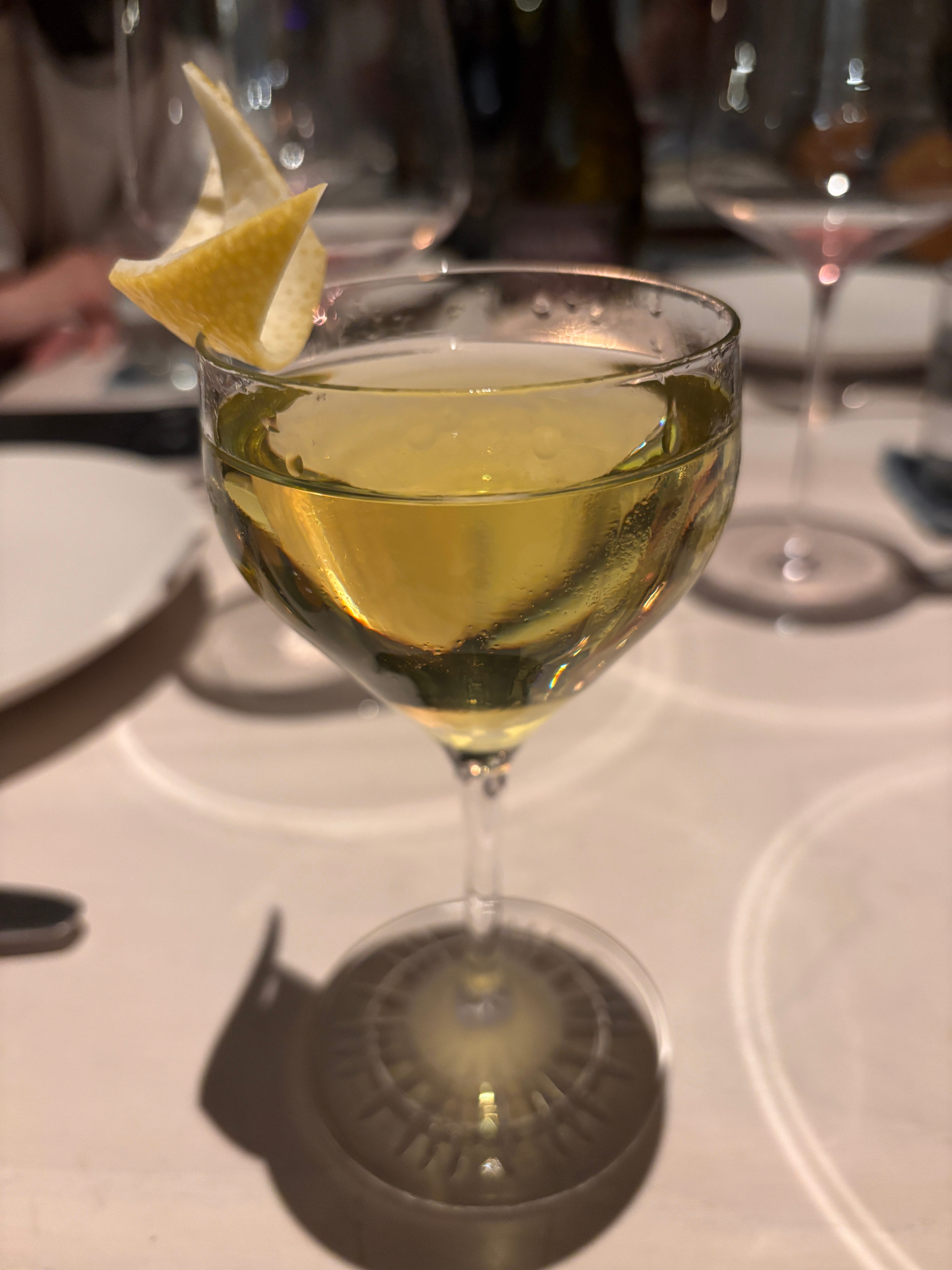
After my event at Dandelion Chocolate, I met up with friends at The Morris. One of them was owner Paul Einbund, a major fan of, and expert on, Chartreuse. I did a video with him in his apartment, which is filled with bottles of Chartreuse, old and new, but Instagram seems to have buried all my videos somewhere (which is why I’m now doing them here). I started off with an Alaska cocktail. If you go, the Chartreuse Slushy is a must.
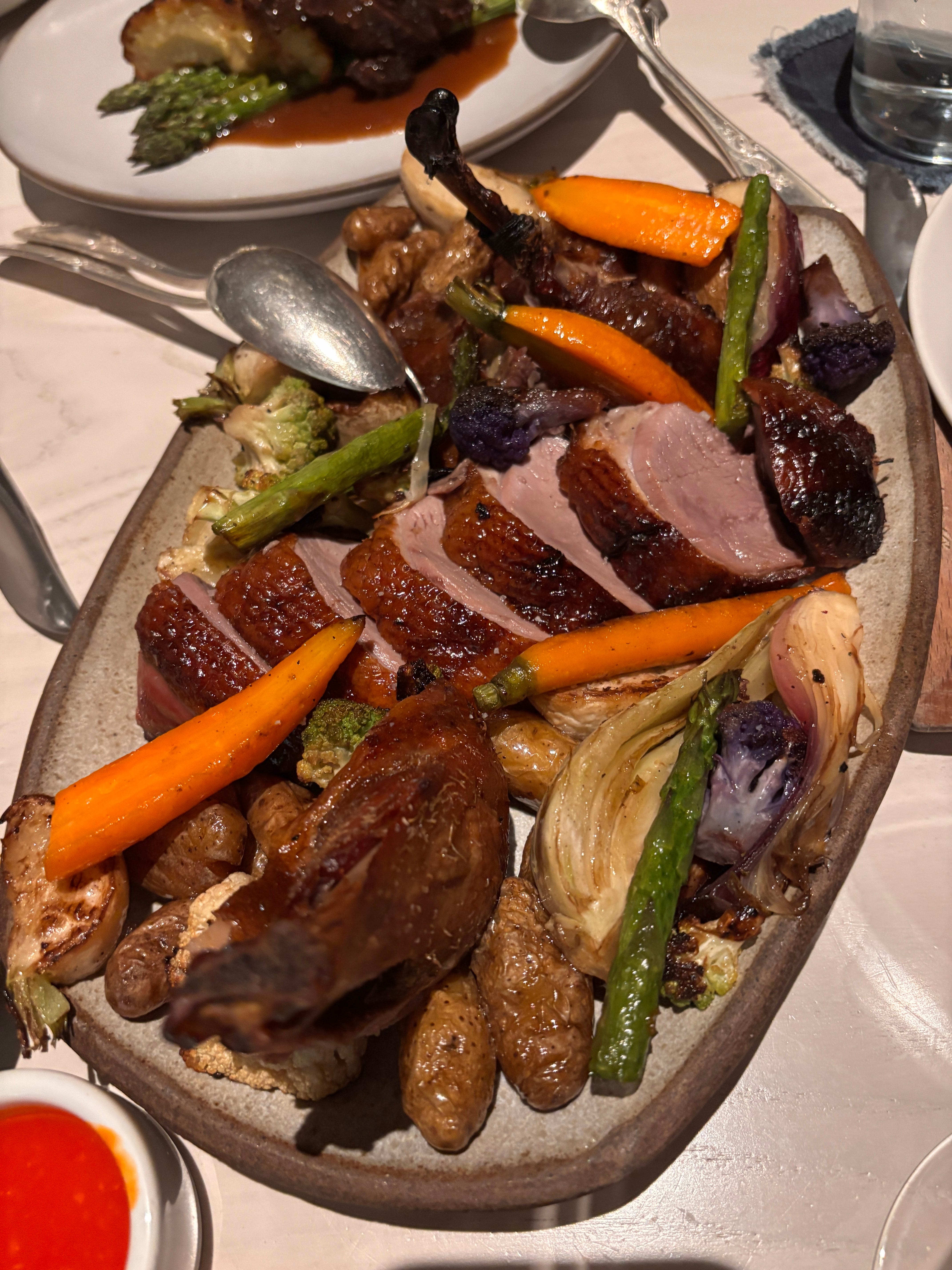
We share a whole smoked duck with root vegetables, which was generous enough to feed five of us. I’d filled up on chocolate cake before dinner — oops! That shocked Paul, but others who know me are used to it.
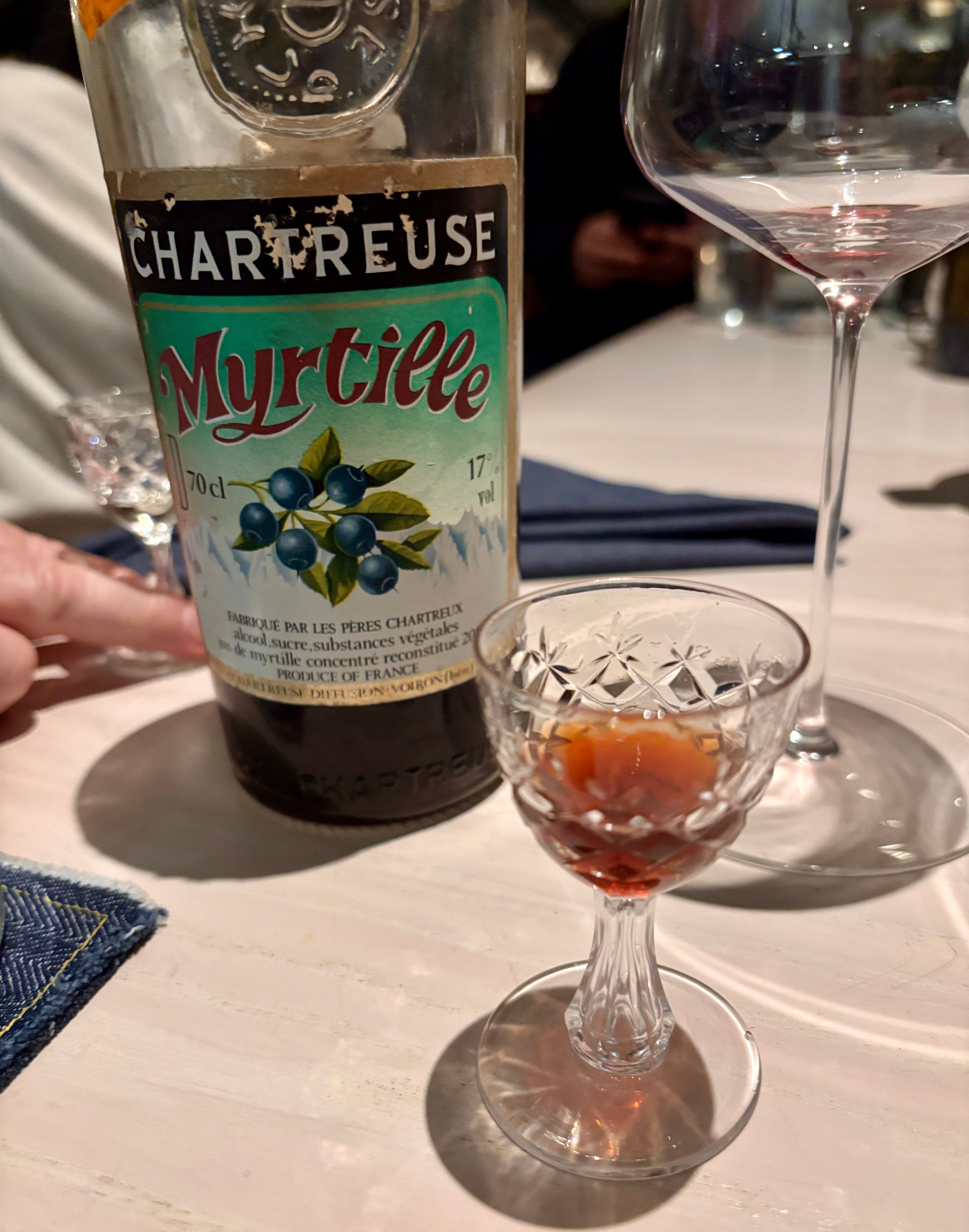
After dinner Paul brought out a special treat: Blueberry Chartreuse. In the 1970s, the monks who make Chartreuse tried to make it more popular, and had the idea to add fresh blueberry juice to it and bottle it. There’s also an orange version and Paul swears there was a raspberry one as well. They’re really hard to find, although one doesn’t drink them for the flavor since they didn’t age well. He called the taste “Flat Coke,” which was hard to dispute. Paul said in an article: “I would actively dissuade my guests from purchasing the late ’70s fruit Chartreuse bottlings.”
I woke up the next day feeling okay. The blueberry-flavored Chartreuse didn’t cause any harm. And I’m looking forward to the book on Chartreuse that Jordan Mackay wrote with Paul, which is the book that I wanted to do. But they know more than I do about the subject, although I’m happy to do more research on it. Maybe that’ll be my next book…and book tour?
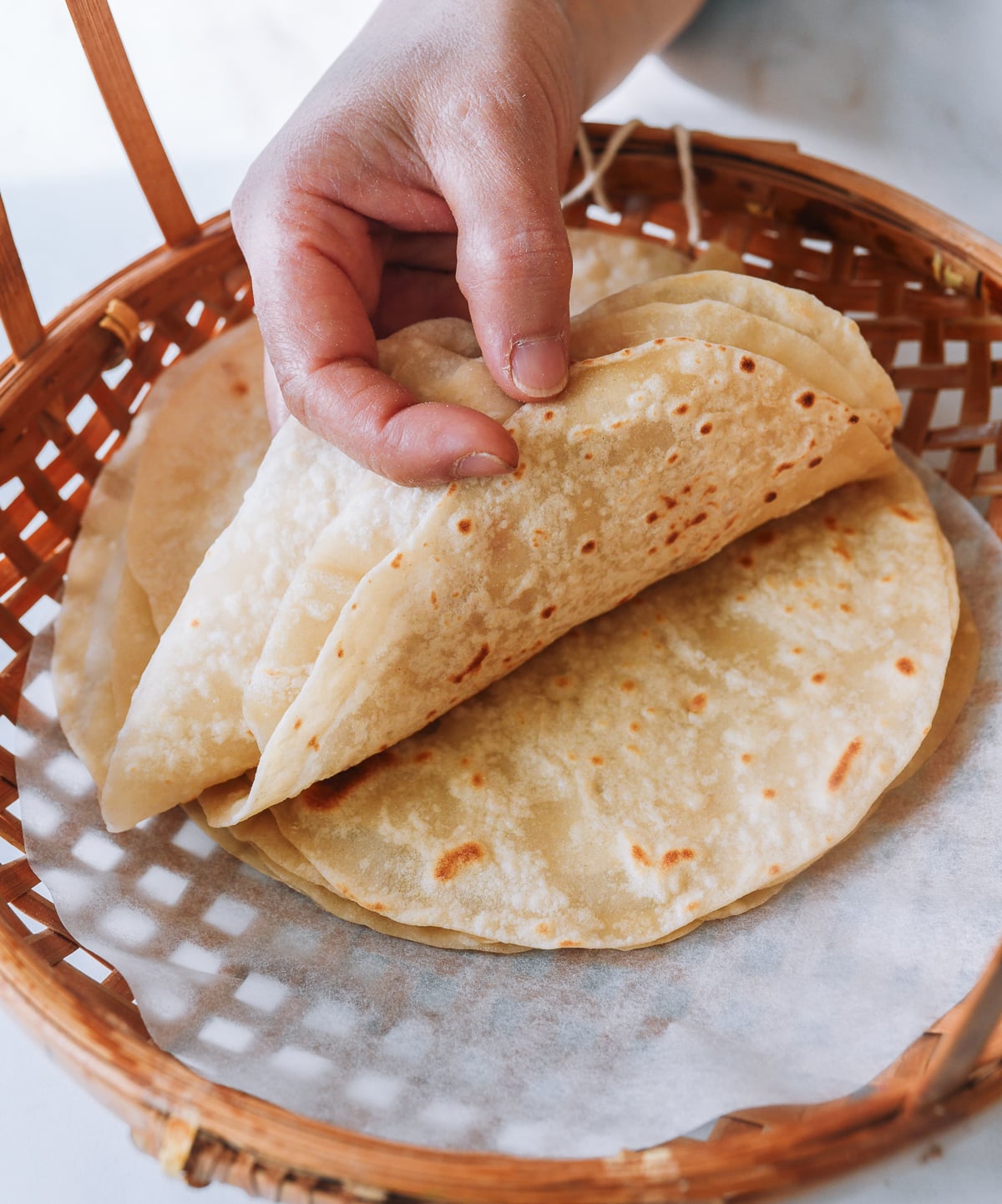 Imagine a wrapper so thin it’s almost translucent, yet strong and chewy enough to cradle a mountain of savory filling — that’s the magic of fresh moo shu pancakes, or chūnbǐng (春饼). They are as easy as combining all-purpose flour, salt, and boiling water. We’ll show you the simple rolling technique to get perfectly paper-thin […]
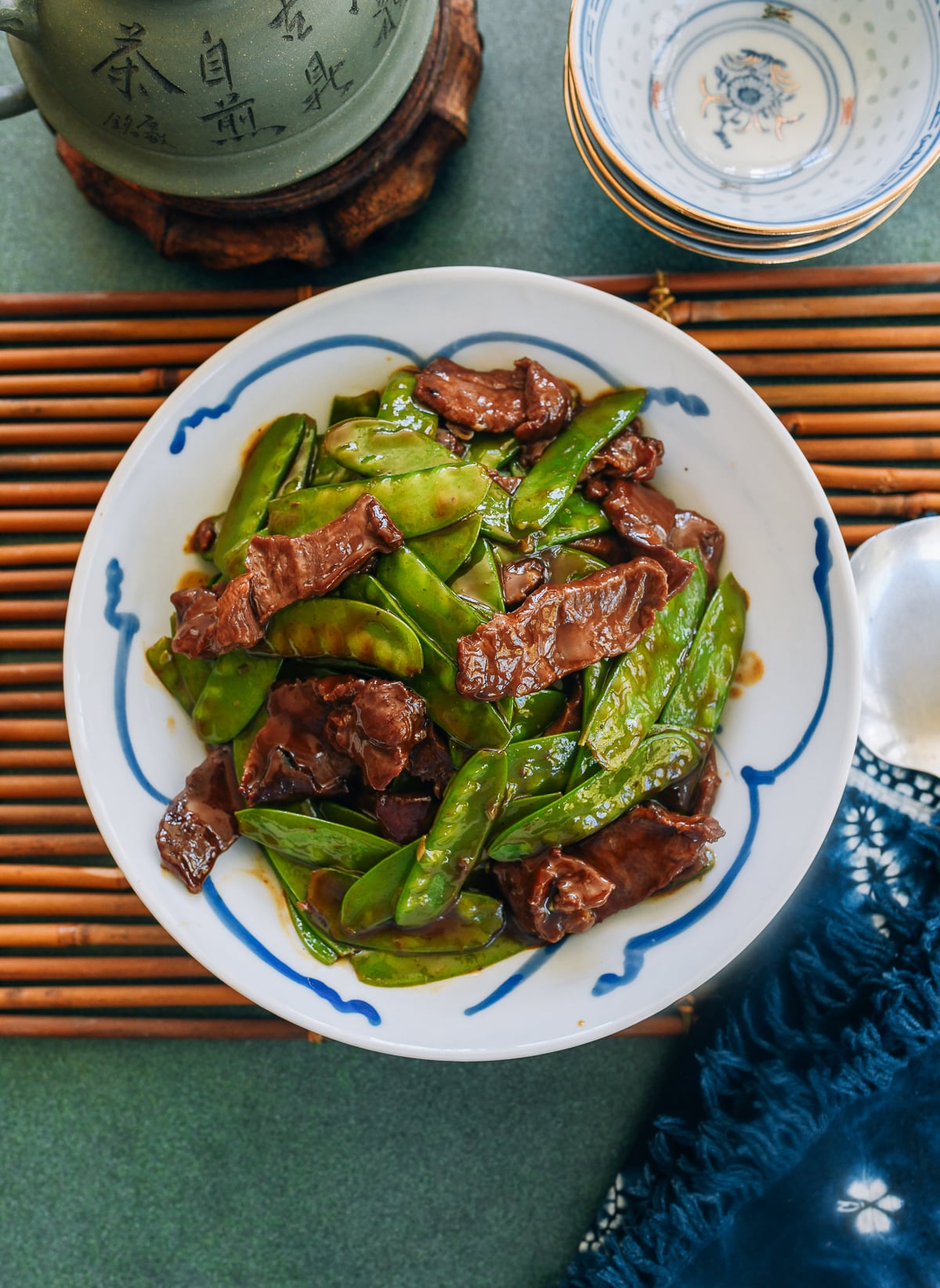 Beef with Snow Peas is a classic Chinese stir-fry that belongs in every home cook’s weeknight rotation. Tender, savory slices of marinated flank steak meet crisp, sweet snow peas in a glossy, umami-rich sauce. It all comes together in under 30 minutes! Serve it over a bowl of steamed white rice and you’ve got a […]
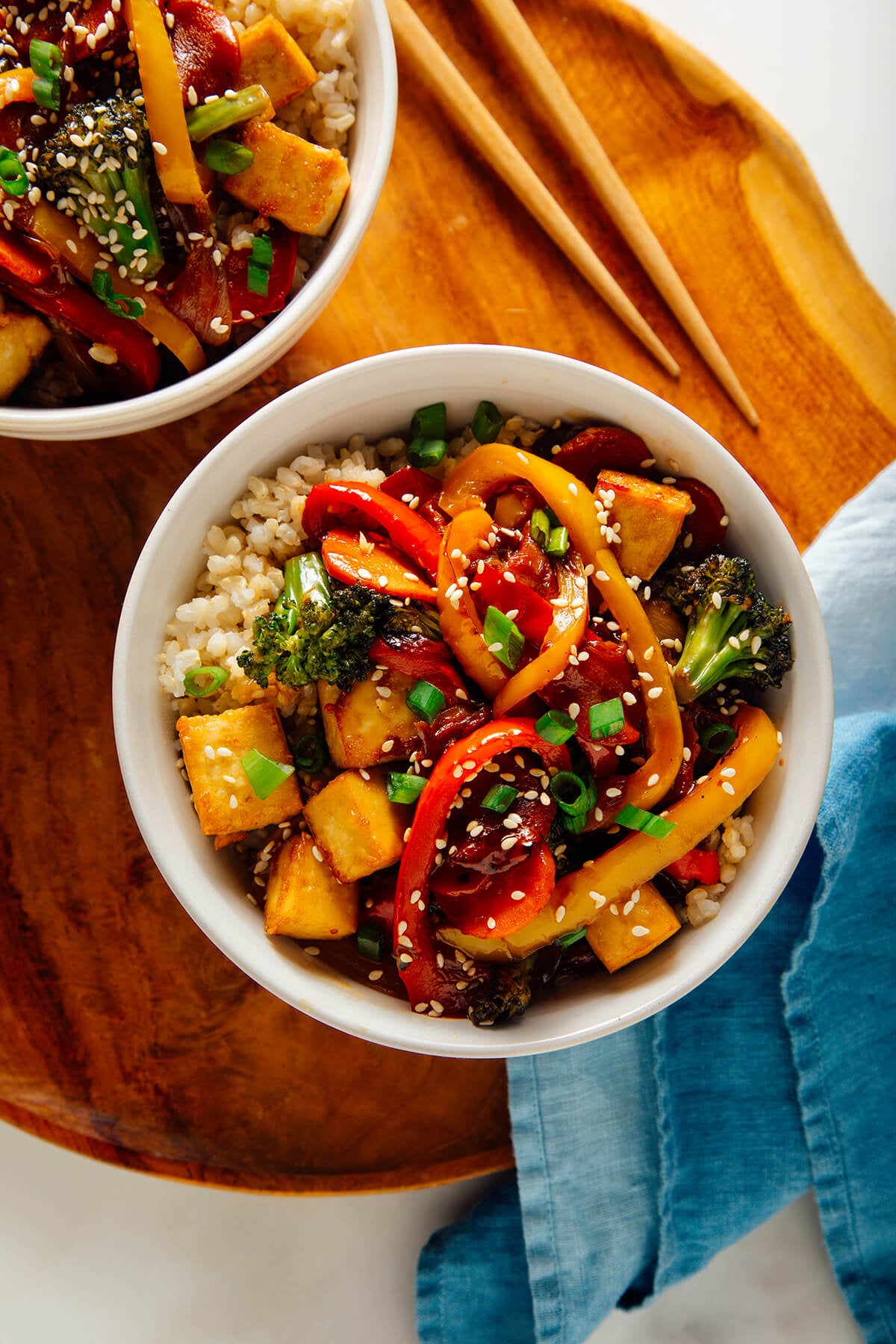
This vegetable stir fry tastes as good as it looks! It features perfectly fork-tender, seared vegetables in a glossy sauce that leans more savory than sweet. I love the vibrant combination of broccoli, bell pepper, carrot and red onion shown here, but you can change up the vegetables with the seasons.
Serve it as a simple side dish, or turn it into a full meal by adding rice and protein, like the crispy baked tofu shown here. Add a sprinkle of green onion and just-toasted sesame seeds, and this healthy homemade dish will taste much fresher than takeout.
Continue to the recipe...The post Vegetable Stir Fry appeared first on Cookie and Kate.

On the heels of our fish sauce 101 livestream a couple weeks ago, I reached out to cookbook author and now entrepreneur , who recently co-founded Hey Doh, a new artisanal soy sauce company. Clarissa is among my go-to experts on Taiwanese and Chinese cooking. A former Los Angeleno, she’s now based in Taipei, Taiwan.
She sent me Hey Doh products that I’m going to taste for the first time on Thursday, May 21 during a livestream! I’ve also got lots of soy sauce questions because despite using it regularly, I don’t know enough about it.
Due to our time difference, I’ve scheduled the livestream for 6pm PST / 9pm ET / 9am TPE — it’ll be happy hour or breakfast, depending on where you are. The interview will run 30 to 45 minutes.
To recap, on Thursday, May 21, at 6pm PST, you’ll get a Substack email about the livestream. Click on the link to join our chat about Hey Doh, soy sauce making, and why Taiwanese soy sauce is distinctive.
I’ve been adding asparagus to many recipes of late because it’s one of my favorite spring-time vegetables. Why not indulge till you’re nearly satiated? Susan M. wrote last week and reminded me of a terrific stir-fry from Ever-Green Vietnamese. It’s the Weeknight Vegetable Stir-Fry on page 195, in the sides chapter. I love that chapter because I could make a meal of sides.
I originally conceived of this stir-fry in spring, when our farmers harvest super delicious asparagus, carrots, and radishes. (Yes, you can cook radishes and they’re good. Chef David Chang got me doing it it years ago and I’ve never looked back.)
I set up the stir-fry recipe as a blueprint for you to plug and play with it. If you don’t yet have the book, I just published the recipe on my website. Make the Weeknight Vegetable Stir-Fry recipe a couple times and you’ll be riffing on it endlessly.
If you want an asparagus only side dish to serve at room temp, look to my very easy asparagus dressed up with a veil of soy sauce and sesame oil. It’s a great combination of asparagus’s natural umami with that of soy sauce, all of which is made fragrant and enriched by the power of sesame.
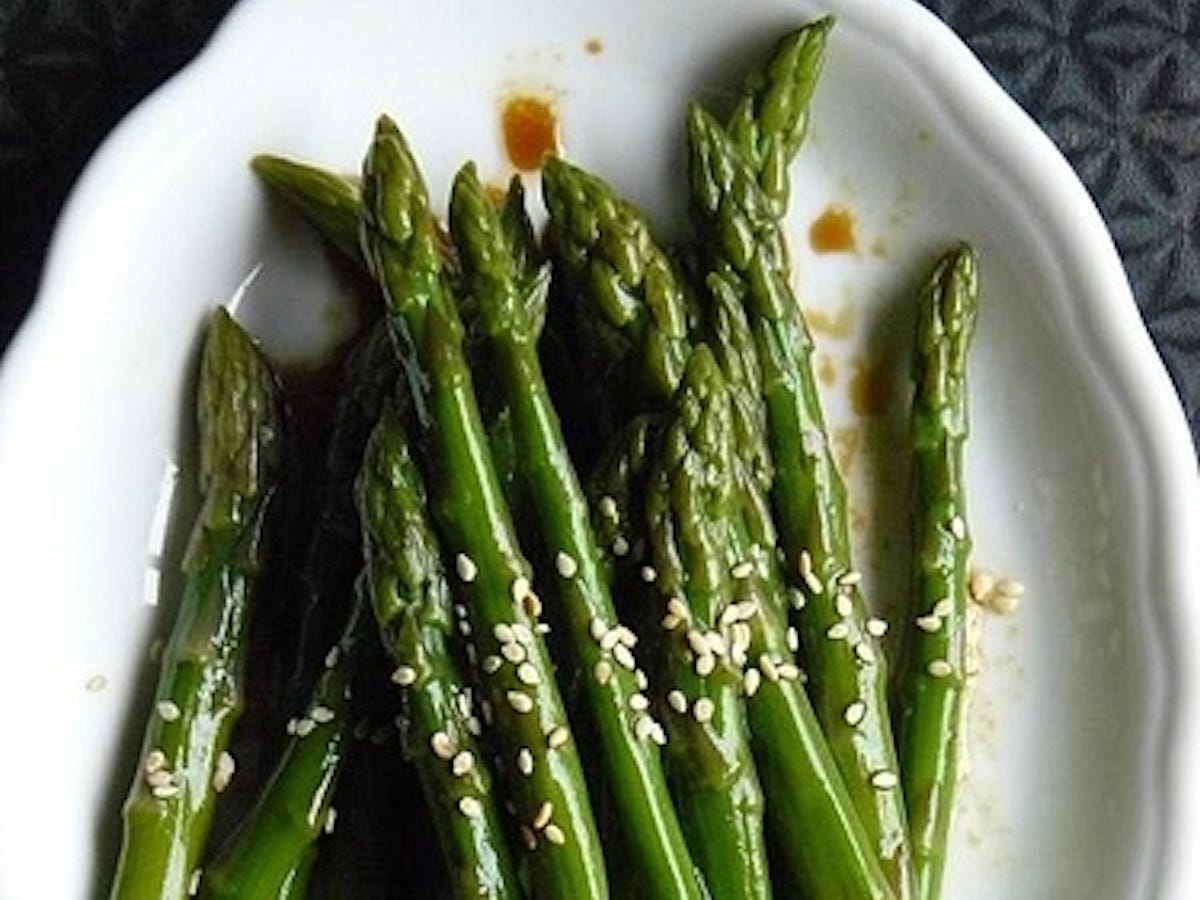
I return to this Chinese-ish asparagus annually. I have it on my mind because of next week’s conversation with Clarissa. Get the asparagus with soy sauce and sesame recipe. (P.S. It’s naturally vegan, like the Weeknight Vegetable Stir-Fry!)
No wonder March and April flew by. I cooked up a lot for you to play with. Here are the recipes mentioned in my dispatches to you. Below are PTFS recipes as well as those posted at the website. I’ve updated the PTFS recipe index to include them too!
Vietnamese Asparagus Soup (Sup Mang Tay Chay) 2 recipes with seafood or go vegan or vegetarian
Crispy Spicy Lemongrass Tofu (Dau Hu Chien Xa Ot)
Chinese-American Chicken and Rice Casserole (in conventional oven)
And, don’t forget the mega Fish Sauce FAQ and buying guide at the website. It’s not a recipe but the ingredient figures into so many recipes nowadays.
Support Pass the Fish Sauce! Join us for free or upgrade to a become a paid subscriber to enjoy 150+ professionally developed recipes, seed new content, and get future class discounts. Thanks for your enthusiasm!

Coming up for this Sunday Special are some butchering tips I owe you.

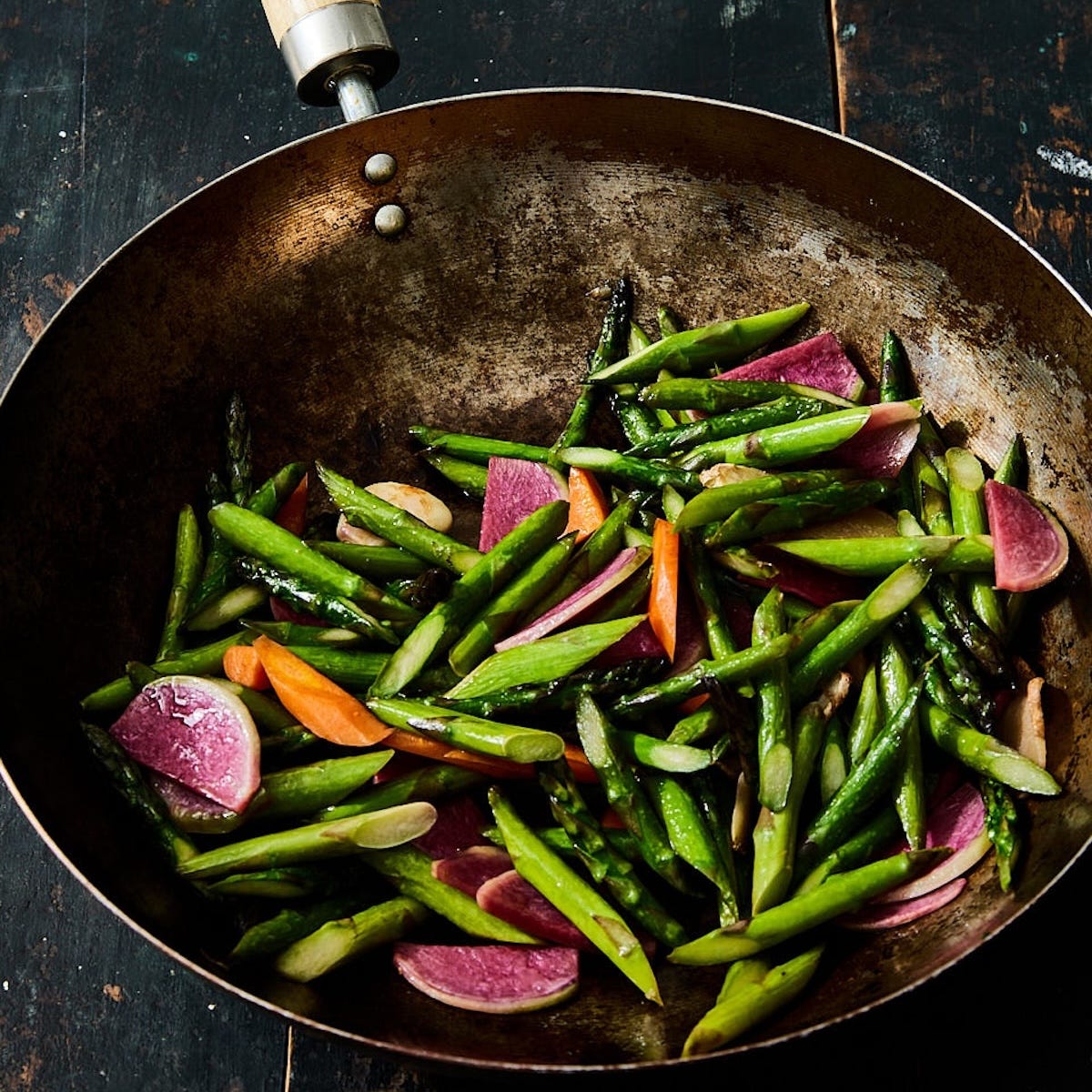
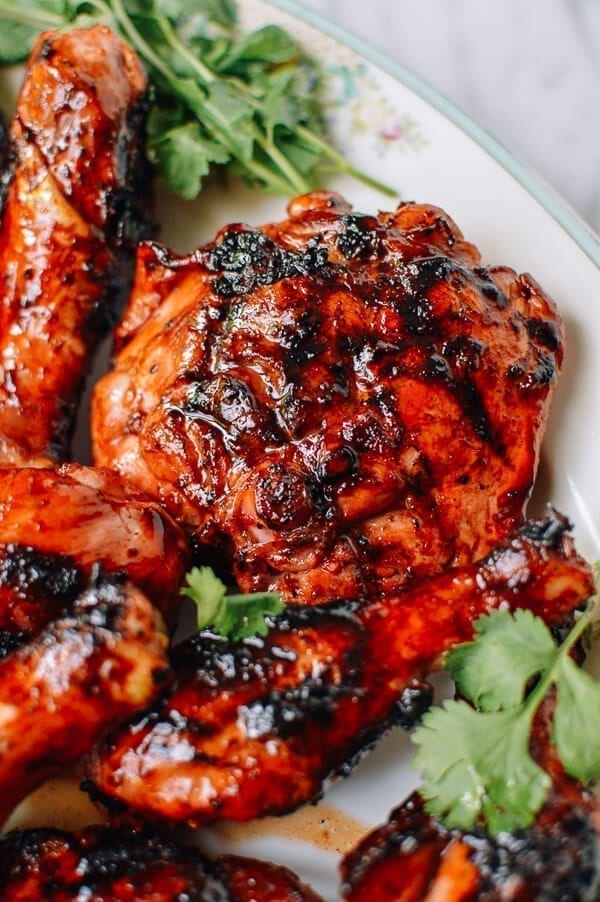 Memorial Day BBQs have always been events at our house to look forward to––sunshine, spring temperatures, the smell of fresh cut grass, and yes, delicious food! Check out this list of unique Memorial Day recipes to shake up your kitchen and/or grill this year and serve something different alongside (or in lieu of?) burgers and […]
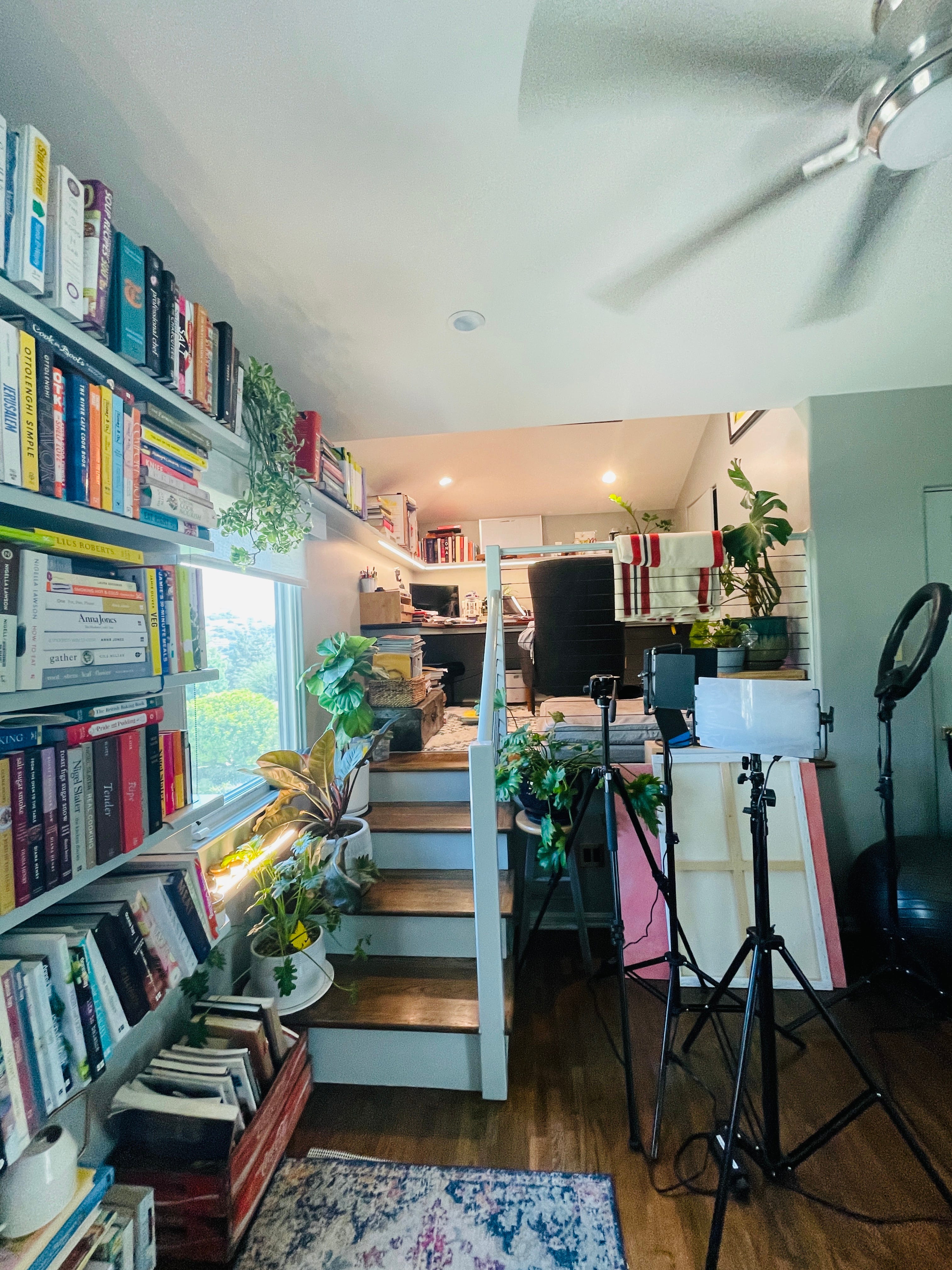
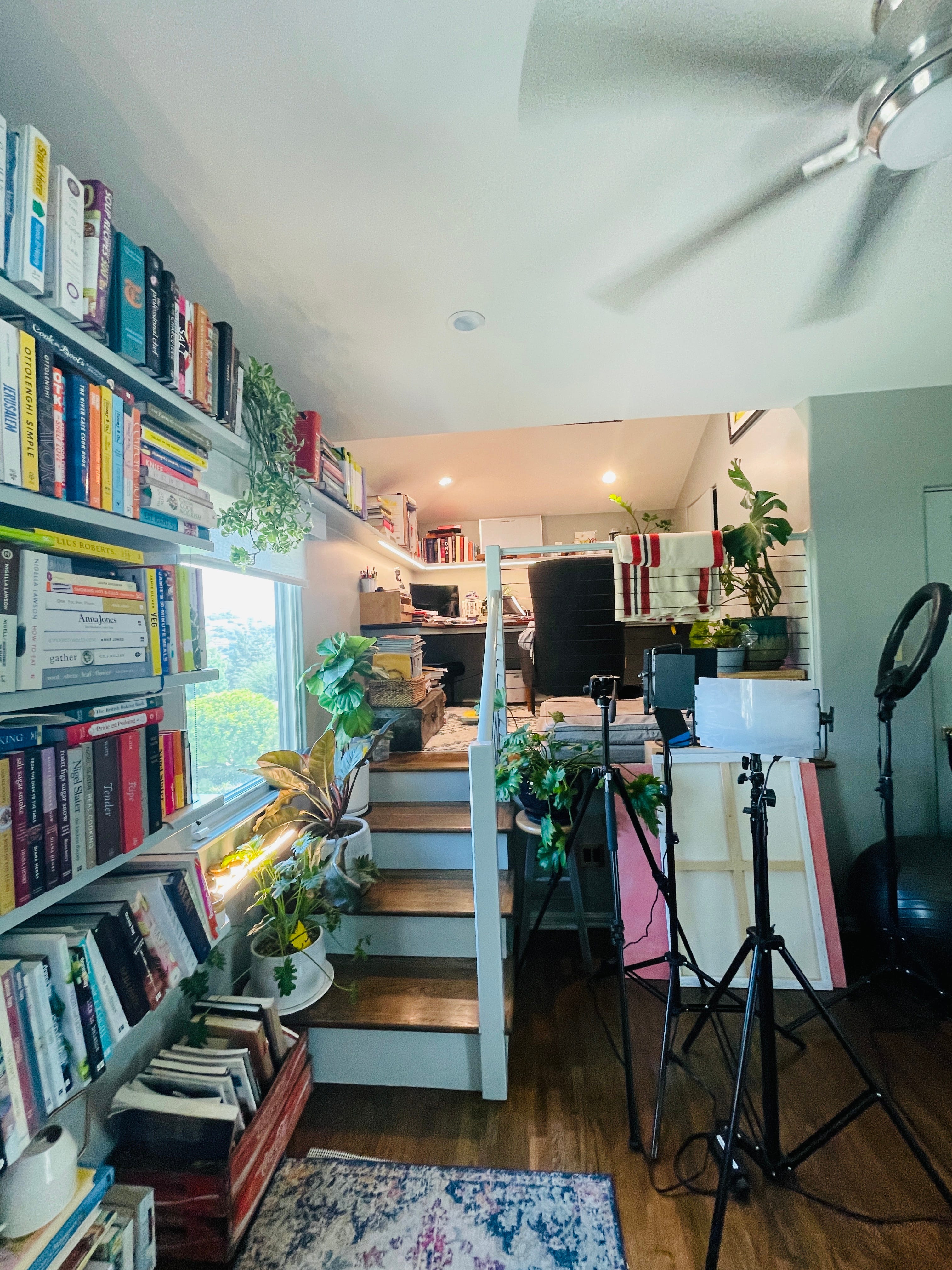
A few days ago, someone left a comment here asking which oven we use at America’s Test Kitchen.
I realized then that I never properly said goodbye.
Or perhaps goodbye is the wrong word. The newsletter quietly moved homes a few months ago, and somewhere between filming in Boston, recipe testing, new-book deadlines, and the general chaos of life, I forgot to leave a note on the door.
I still open this app from time to time out of habit. Usually late at night. I’ll scroll through old posts, photographs, recipes, and comments from years ago. It’s a little strangely emotional seeing pieces of your former self preserved in chronological order like that. Tiny snapshots of who you were at the time.
This space holds a very particular chapter of my life.
Just like life, it comes with its own ups and downs.
And somehow, through all of it, many of you stayed.
You cooked the recipes. You sent kind emails. You corrected my mistakes gently. You told me stories about your families, kitchens, and the dishes you grew up eating. Over time, this stopped feeling like a newsletter and started feeling more like an ongoing conversation.
The work itself has changed quite a bit since those early posts. What started as a small food blog eventually grew into books, photography, and now Flavor Forward and In the Test Kitchen. Science became a bigger part of the storytelling. The recipes became more detailed. The audience grew larger than I ever imagined. sitting at that little table years ago, balancing plates near the window, trying to chase good light.
A few months ago, I decided to move the newsletter to a new platform. Mostly because I needed more flexibility and a space that felt better suited for where this work is headed next. The newsletter itself hasn’t changed in spirit, though. It’s still me standing in the kitchen, trying to figure out the best way to make a veggie burger, why certain smells trigger memory so intensely, or why tiny adjustments in technique can completely transform the way food tastes.
I should have posted this publicly here sooner. When the newsletter moved, I was only able to notify email subscribers directly. Over the past few weeks, I started noticing comments stacking up in Notes and realized many people who followed the newsletter here never actually saw that update. One of the strange quirks of these platforms is that followers and subscribers don’t always overlap in the ways you assume
Substack gave me a home to share my writing with you. There was something comforting about the quiet rhythm of writing here and sharing food with all of you. I’ll always be grateful for that. But like all creative work, this space evolved over time, and eventually I did too.
If you’ve recently subscribed here and wondered where everything went, I’d love for you to join me over at The Flavor Files. That’s where all the new essays, recipes, and guides are living now.
And if you’ve been here from the beginning, thank you. Truly.
For reading. For cooking. For staying curious with me for all these years.
Nik
When I told Deb Perelman of Smitten Kitchen that I was doing a complete revision of The Great Book of Chocolate, which included adding new recipes, she insisted that I include her Chocolate-Olive Oil Spread. For those who follow Deb know that when she says something is delicious and worth making, you not only listen, but in my case, you spread the word. No pun intended.

Get The Great Book of Chocolate
As luck would have it, Deb was recently in Paris so I invited her into my kitchen to make her Chocolate-Olive Oil Spread. As you can see in the video, not only is the recipe fun to make, but its very easy as well. And unlike store-bought spreads, you know exactly what’s in it. The only thing that’s a bit tricky is to get it to just the right consistency for spreading. But if I can do it, so can you.
Deb finishes the dark chocolate spread by leaving it on the counter at room temperature for a few hours, whereas in The Great Book of Chocolate, I’m a bit more impatient so I place it in the refrigerator until it reaches the right consistency, then transfer it to a jar. Because it has no dairy, it can be stored at room temperature.
After you make this spread, if you find that it’s too firm, a few seconds in the microwave will soften it just enough to make it spreadable. If you don’t have a microwave, you can warm the jar in a small saucepan of warm water. The temperature of your room can be a factor, and I did find that using a high-percentage chocolate — one that’s 70% or more cacao solids — will firm up more solidly than one that’s 50-55% cacao solids, which is what we used in the video.
[Thanks to Irene Wong for shooting the video, Michael Sellers for editing.]
Hey there! If you want to watch me crack jokes, discuss cooking and travel in Vietnam with , here’s the playback of our livestream. He interviewed me on a wide range of topics but it always came back to how food makes a difference in our lives.
Among the people mentioned in the interview was my mom and her recipe notebook. Moms impact our nourishment from the get go.
And with that, Happy Mother’s Day to all the brave humans who’ve birthed and shepherded new life into this world. I am in awe of you all who have loved and nurtured your flock into adulthood, despite the odds.
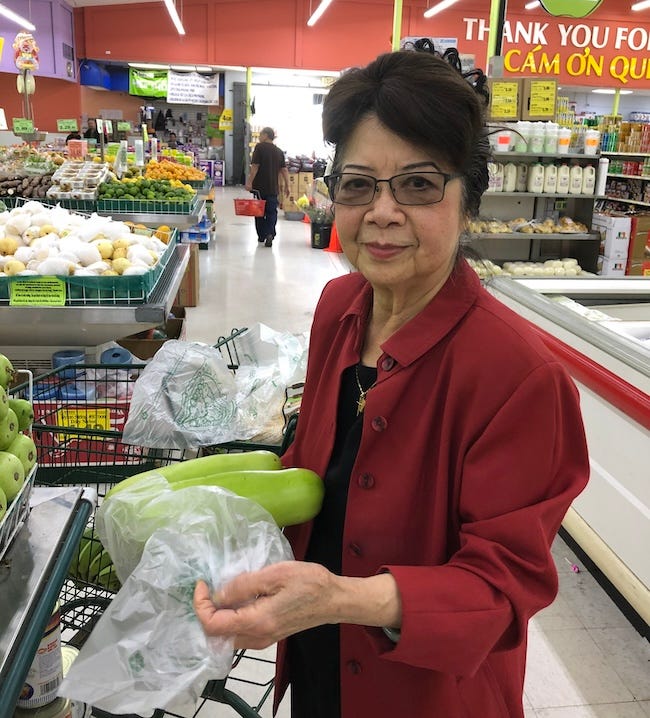
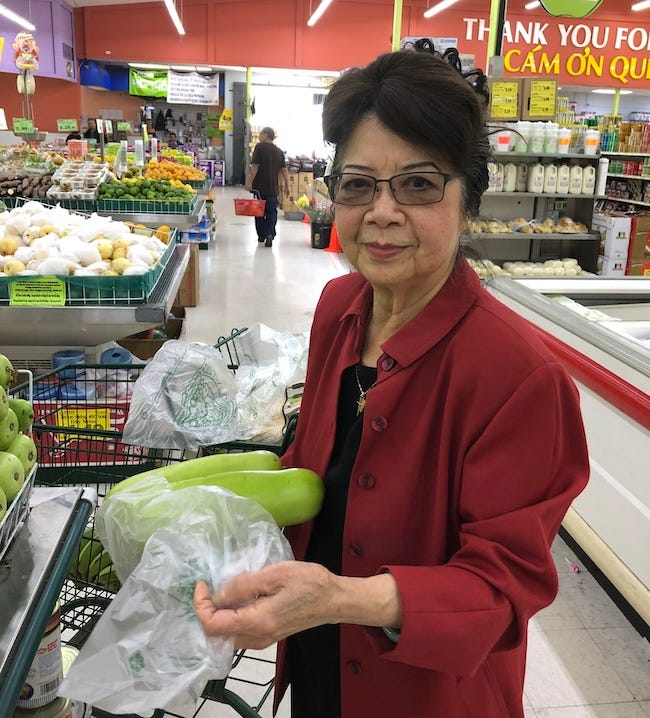
In the photo below my Mẹ Già (Elder Mother, a Viet term of endearment) is looking pretty 🔥. She’s in her element at a Viet grocery store! (We were at Green Farm in Garden Grove, CA, that day.)
A few notes on my mom’s new stove: Before the stove arrived, I made sure she’d be ready to cook so I ordered her a welcome present: a 5-liter jug of premium fish sauce! She usually doesn’t like gifts but that was one she couldn’t refuse.
Speaking of fish sauce, I just published a mega fish sauce guide and FAQ that includes substitutes, brand suggestions, recipes, plus the video playback of our PTFS nuoc mam livestream. Head to “Fish Sauce: What is it? Plus, how to buy, store, use, and sub for it” at the website.
After delivery of her new stovetop, Mom set out to làm bạn (literally make friends) with it. She initially reheated leftovers and found out that her steamer didn’t need to go on the power burner, unless she wanted overcooked food. Then she deep-fried a batch of tofu to perfection, she reported.
“The stove designers have researched and thought all this through for years,” Mom said. “It all makes sense and works well.”
One of the things mothers do well is to remind us the importance of trying new things for a lifetime of learning.
That, along with Mom mentioning fried tofu, inspired me to "‘get acquainted’ with a Vietnamese tofu dish that I’d never made before — Spicy Braised Tofu in Coconut Water (Đậu Hũ Khìa Nước Dừa).
With chile heat and the sweet lilt of coconut water, this handsome main dish strongly reflects southern Vietnamese cooking. Though the tofu looks deep fried, a modicum of oil was involved.
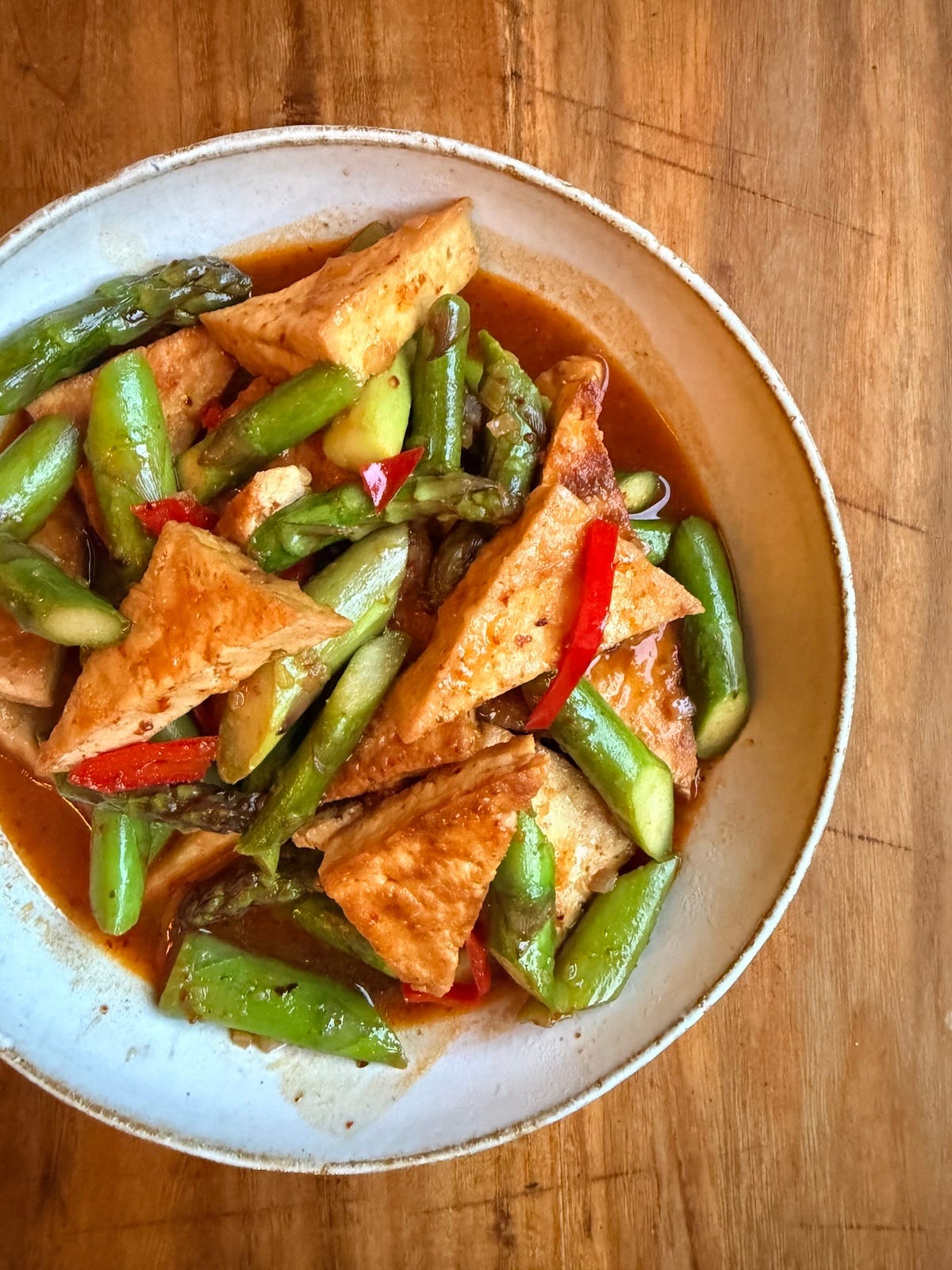
This tofu features an uncommon Vietnamese braising technique using the refreshingly sweet juice from a young (green) coconut — aka coconut water. Most people think of drinking coconut water. I’ve used it for nuoc cham dipping sauce and have used it in cooking too — just not in this delightful new manner.
There’s always a moment when you’re cooking a new dish when you ask yourself how is this going to taste? How does it work? I was kind of skeptical about this braise, called dau hu khia nuoc dua. There’s a lot of gurgling as things cook because it comes together fast. But after the mildish sauce cooked down and worked its magic, the tofu and veggies were absolutely delicious.
Unlike most Viet braises featuring caramel sauce, this one is very low sugar. It’s great for diabetics and anyone looking to cut back on refined sugar. Other reasons for praising this braise:
One batch serves four, which in our home means that Rory packs some for lunch with rice, and I enjoy the rest with a salad or turn it into banh mi!
The tofu is terrific hot, warm or at room temperature.
You can make this recipe with ingredients from the supermarket.
Ready the ingredients days ahead then braise when you need an easy, quick main dish for dinner
To equip you to make this tofu recipe, I’m providing the following:
A flexible braised tofu in coconut water recipe in full text and downloadable PDF (this tofu dish can be make vegan or not!)
Explainer on the tofu prep technique, which differs from my normal playbook
Vegetable swaps because we won’t be in asparagus season forever
Ingredient tips (what’s the best coconut water?)
Advance prep pointers
I hope you’ll get well acquainted with this Viet tofu winner!
Thanks for being here. Paid subscribers sponsored this Sunday Special dispatch. Join us at any level to get in on the action. Become a paid subscriber to enjoy the full braised tofu lowdown plus many other recipes, insights, and benefits. Your support matters.

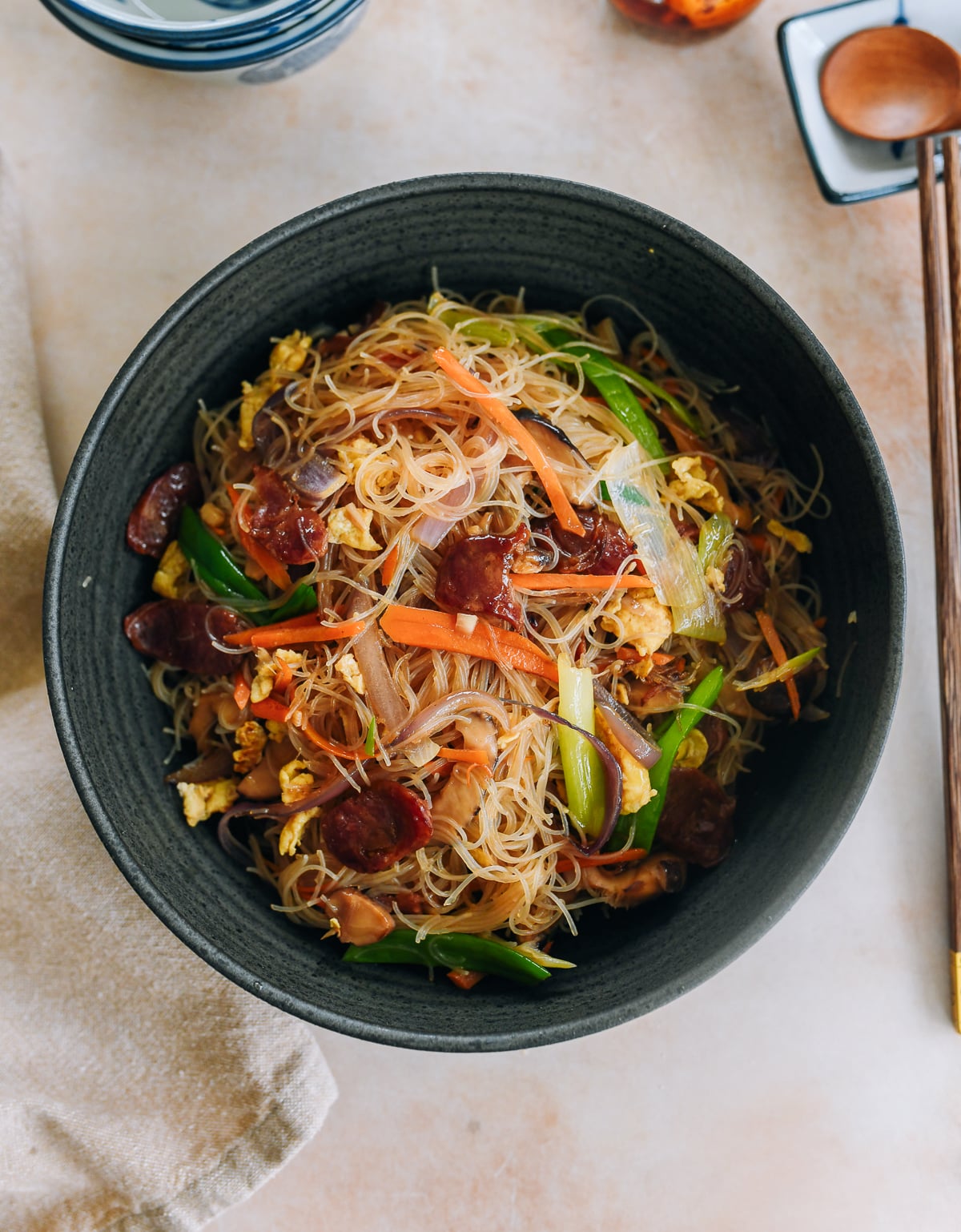 This Lap Cheong Mei Fun is a deliciously simple way to enjoy mei fun, or thin rice vermicelli, with Chinese sausage and a bright variety of vegetables! We enjoyed a dish similar to this at a Chinese restaurant in Queens recently, and it snuck up on me how much I loved it. In a large […]
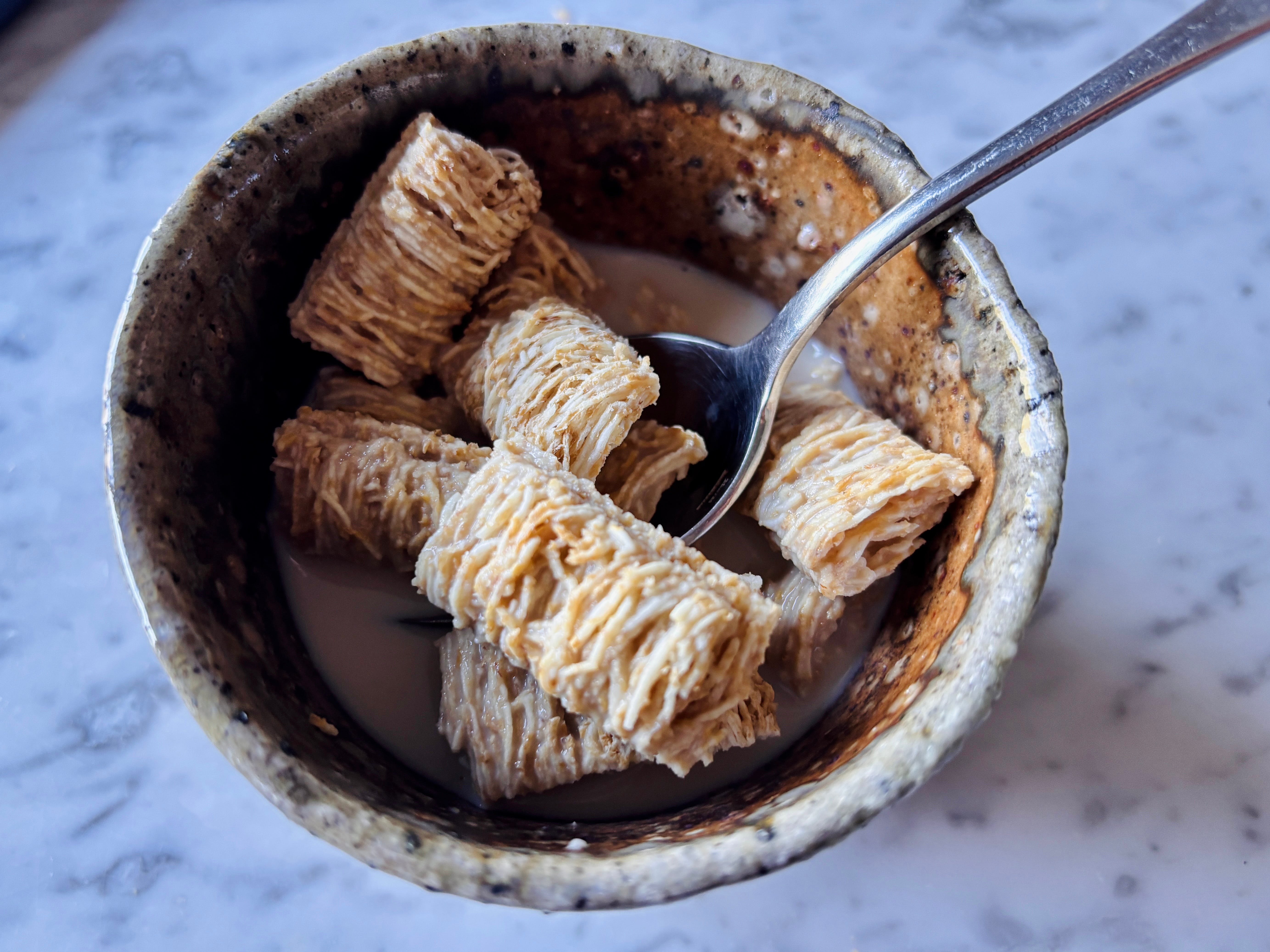

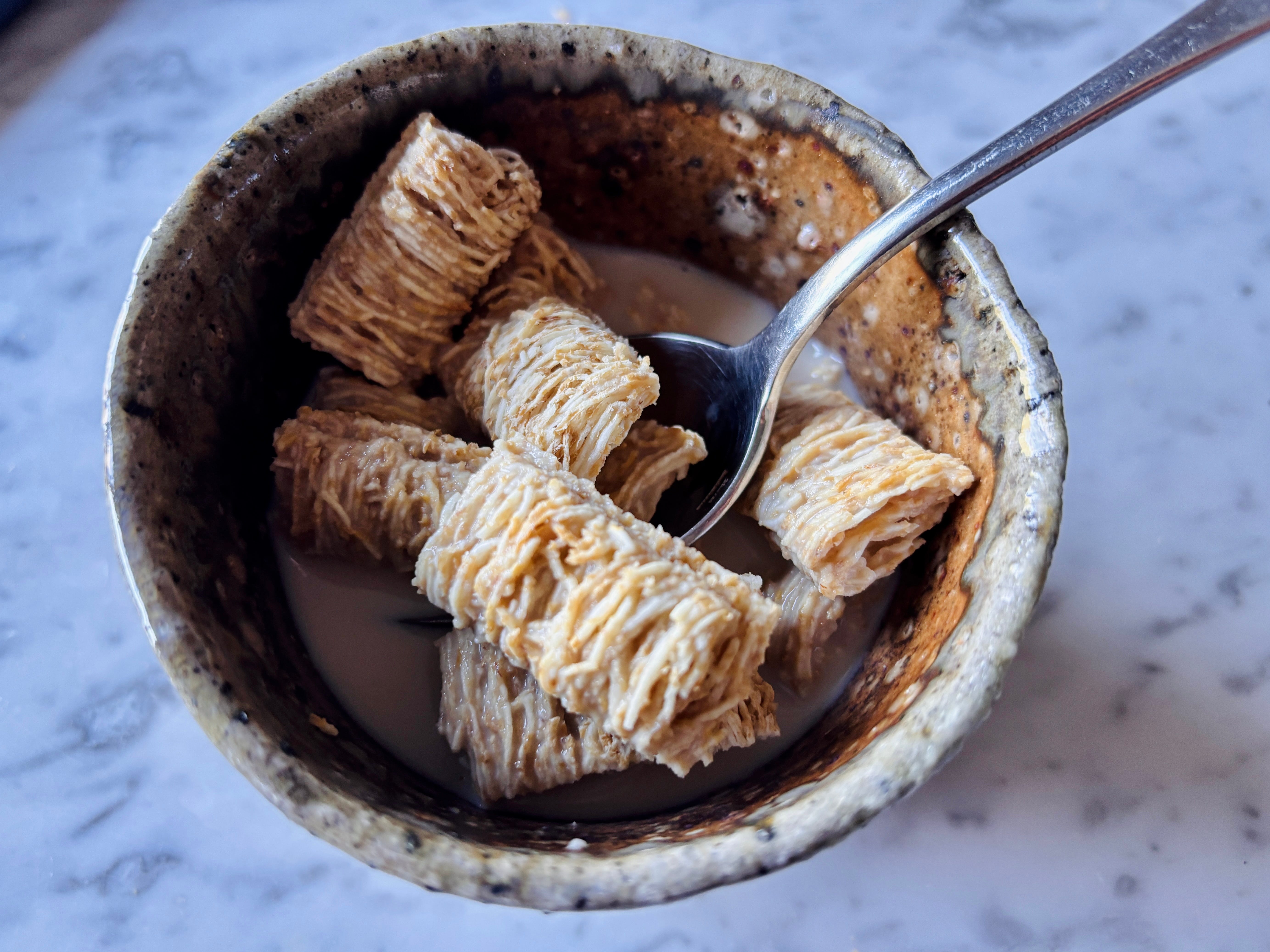
Sometimes when I travel, people point me towards Michelin-starred restaurants. I’m not sure why, since (hopefully) that’s not the vibe I put out. I’ve sat through those meals and honestly, I’m just as happy having a slice of pepperoni pizza, an incredible bánh mi sandwich, or even something as simple as a bowl of shredded wheat; spooning up those little woven squares of whole wheat, floating in a bowl of cold milk, is a Proustian moment for me.
One thing I was especially craving when I arrived in New York City was an everything bagel. CDG airport in Paris can be confusing, something they plan to address in 2027, so hopefully when you’re looking for gate 4, you’ll find it between gates 3 and 5, rather than way on the other side of another terminal, which you need to take a shuttle to.
JFK airport is doing what CDG should do: a complete and total overhaul. My taxi driver was swearing all the way through the tangle of roads that led to my terminal in Paris, and even almost came to blows with another driver. I’m pretty much used to that from living in France for so long, but I admire that French people get over altercations quickly…c’est normal, whereas I hold them in forever.) At JFK, I waited 45 minutes for my suitcase at baggage claim, my Lyft took nearly 30 minutes to arrive, and the drive to Manhattan added another 95 minutes. So while I appreciate people asking me to come to their city, travel is certainly a challenge these days, to put it mildly.
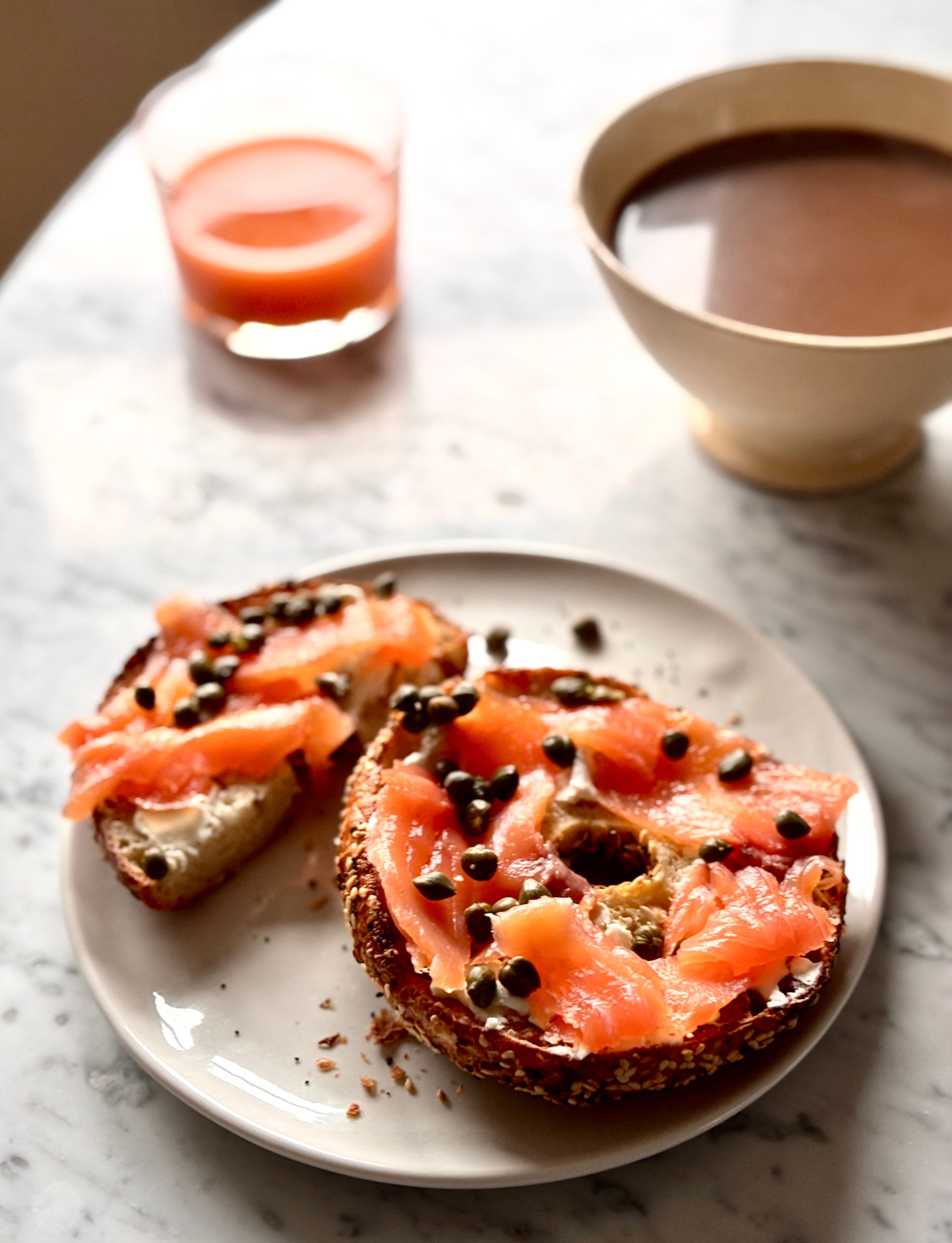
I was staying just down the street from Apollo Bagels, which is one of those places that always has a line. Their website describes their bagels as having a “shattering crisp exterior,” which is certainly truth in advertising. The surfaces, both top and bottom, are embedded with a thick layer of “everything” seeds, and they’re not too thick or puffy. (My other faves are Russ & Daughters, but that would’ve been a longer hike from where I was staying and time was of the essence.)
Even though my flight arrived at 12:30pm, by the time I got there two minutes before closing time, at 4:58pm, they were out of bagels. Apologies to the person who tried to talk to me on the street as I was on the verge of hysteria, but getting a bagel was my priority.
The next morning I was up at 2:30am, thanks to the décalage horaire (or, le jet-lag, as we call it in my dual language home), and took care of the cavalcade of emails and messages that piled up in my absence. I got a bagel when Apollo at 7:01am, right as they opened, and topped it with cream cheese, smoked salmon, and capers. I know there’s no red onion on it — and to me, I save the tomatoes for summer salads — but travel means that you take what you can get. As a French friend once told me: On ne peut pas tout avoir, You can’t have it all. But that bagel was darned good.
One thing that Paris still lags on is dumplings. After catching up with a good friend who I worked with at Chez Panisse, over dim sum at Tim Ho Wan, I told her about the remarkable brownies at Hani’s, just a few blocks away.
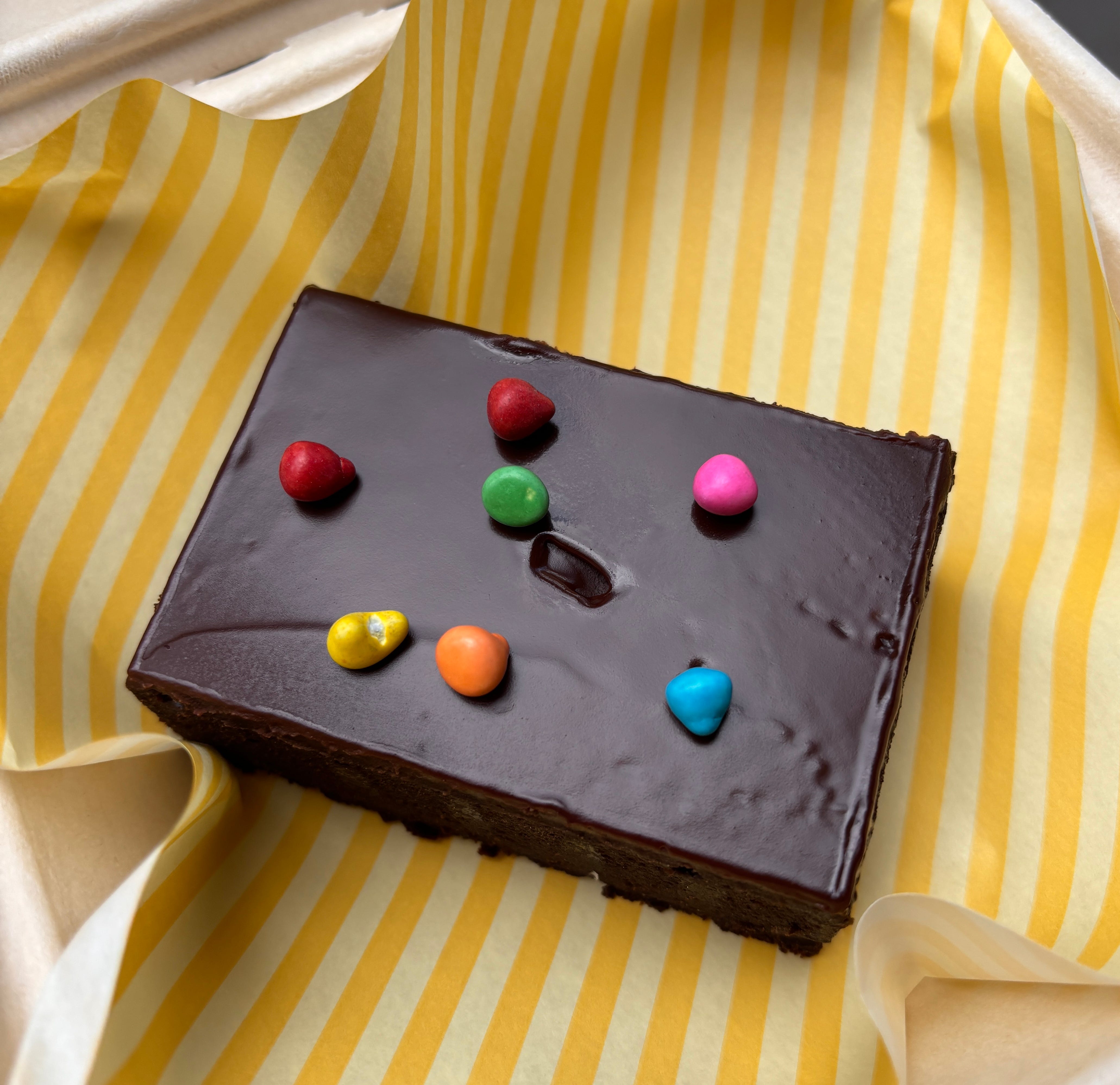
You don’t know how good a brownie can be until you’ve had one at Hani’s. They’re hard to describe, but it’s like a solid block of the densest, darkest chocolate one can imagine. Even I can’t imagine it. You just need to experience it.
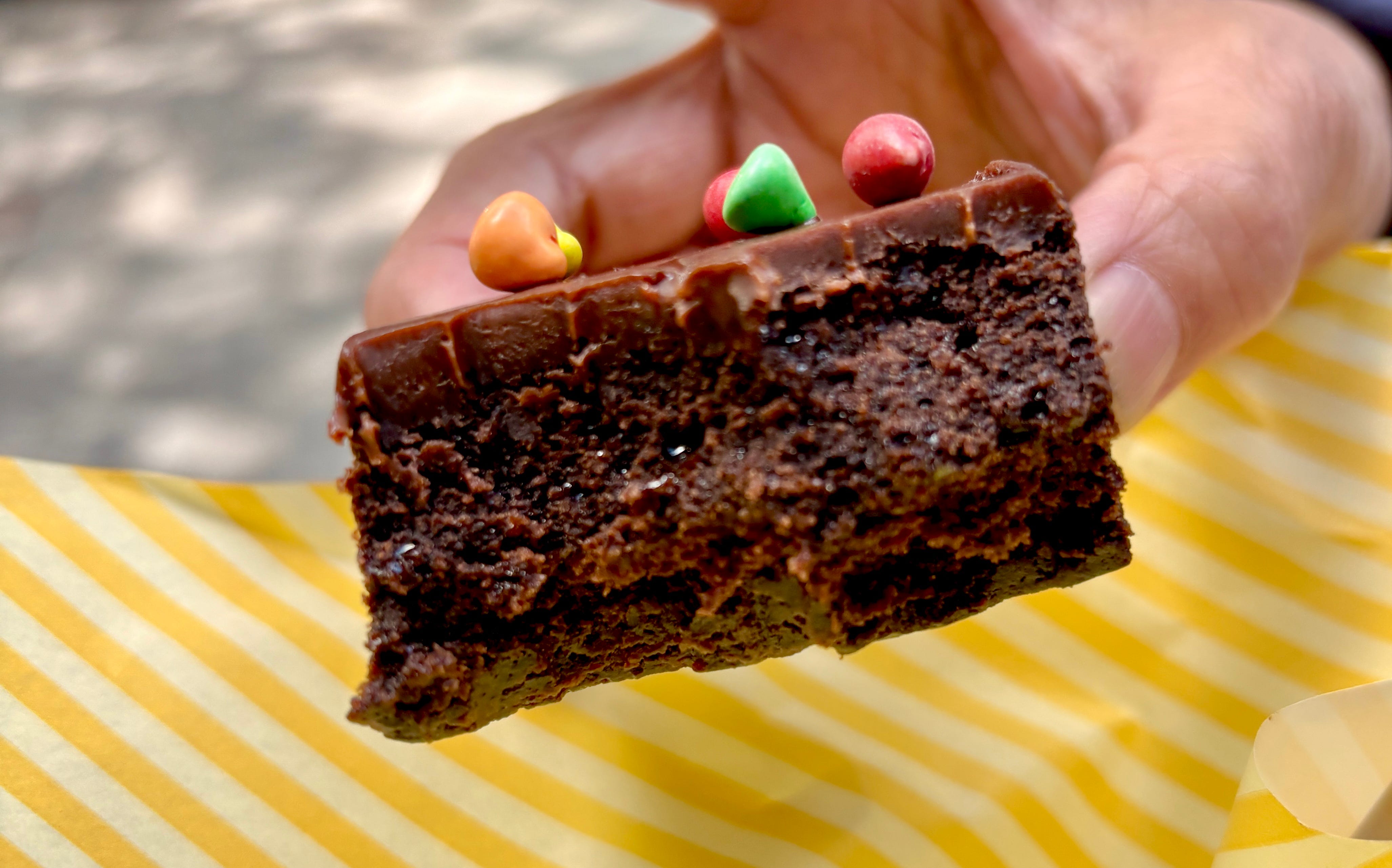
The line was long since it was Sunday, but Miro, the super-friendly baker and owner, was manning the door, smiling as he ushered people in, anxious for one of their awesome cinnamon buns or tahini-pistachio Rice Krispies treats, which are also unimaginably good.
One perk of being a baker is that we look out for each other, and Miro kindly stepped inside and emerged with a brownie for us, with a chocolate chip cookie as an added bonus, which was the size of a toddler’s head.
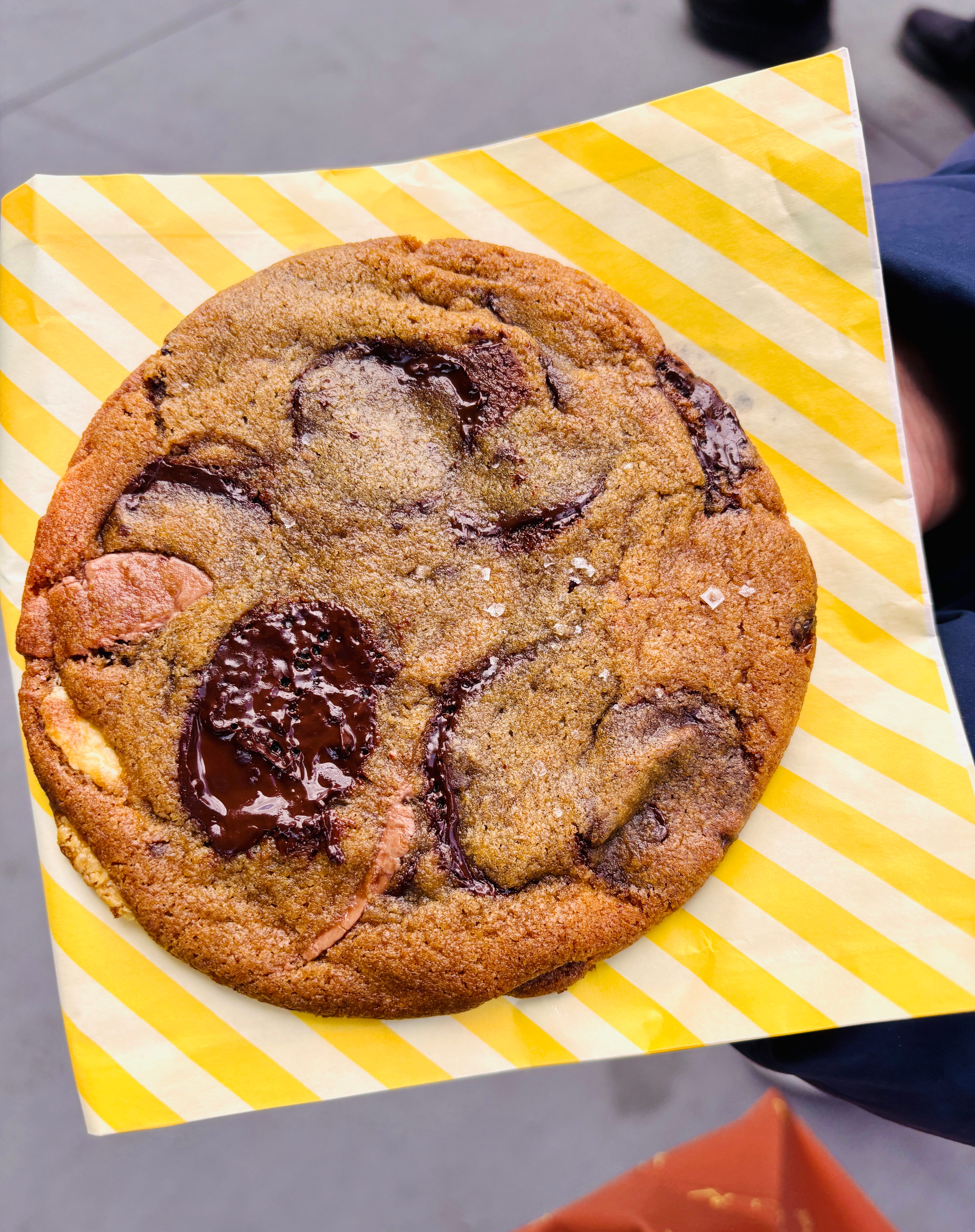
My friend is très exigeante, meaning she has a very discerning palate, and she was also swooning over the brownie (and cookie) that we wolfed down on the sidewalk.
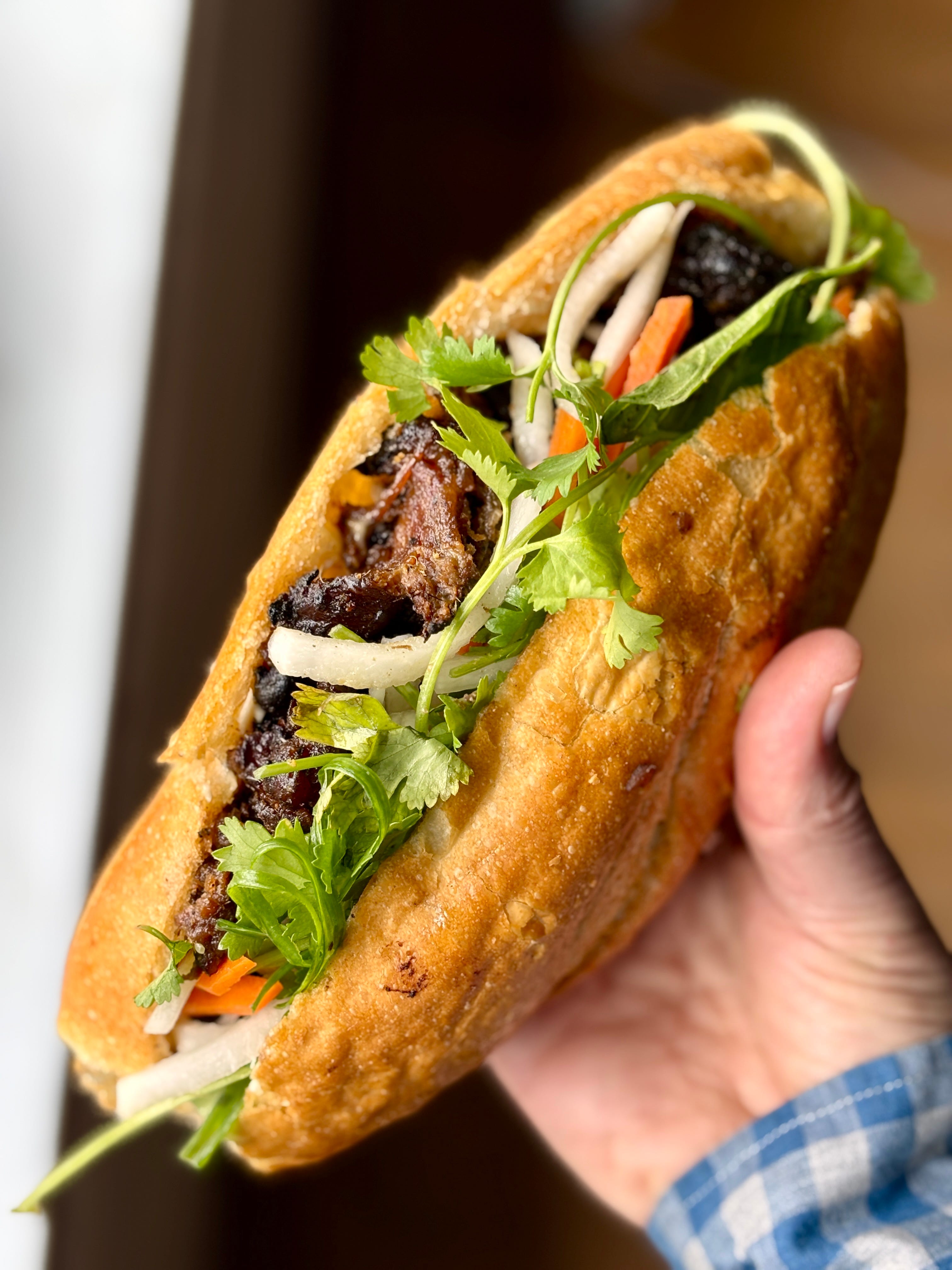
On another day, my friend asked me what I was doing for lunch. She was out of town but recommended the bánh mi sandwich at Bánh Anh Em. When she described the housemade bread as “so light and crispy…it just kind of melts as you eat the sandwich,” I was sold. And another sandwich was sold. Thankfully, you can order online and pick up your sandwich at a designated time. I ordered the char-fired barbecued pork belly with pickled vegetables, hoisin sauce, and scallion oil, and I have to say, it was one of the best sandwiches I’ve had in my life. (Thanks, Susan!)
It was also huge and was so big that I had a hard time eating the whole thing, but I also had a hard time stopping.
Not too far away is Astor Wines & Spirits, a place I used as a reference when I was writing Drinking French to see what French spirits and apéritifs were available in the U.S. In spite of tariffs and other shipping issues, it’s nice to see that Astor still has a great selection of French spirits and apéritifs at drinkable prices. Some bottles were less expensive here, and easier to find, than they are in France.
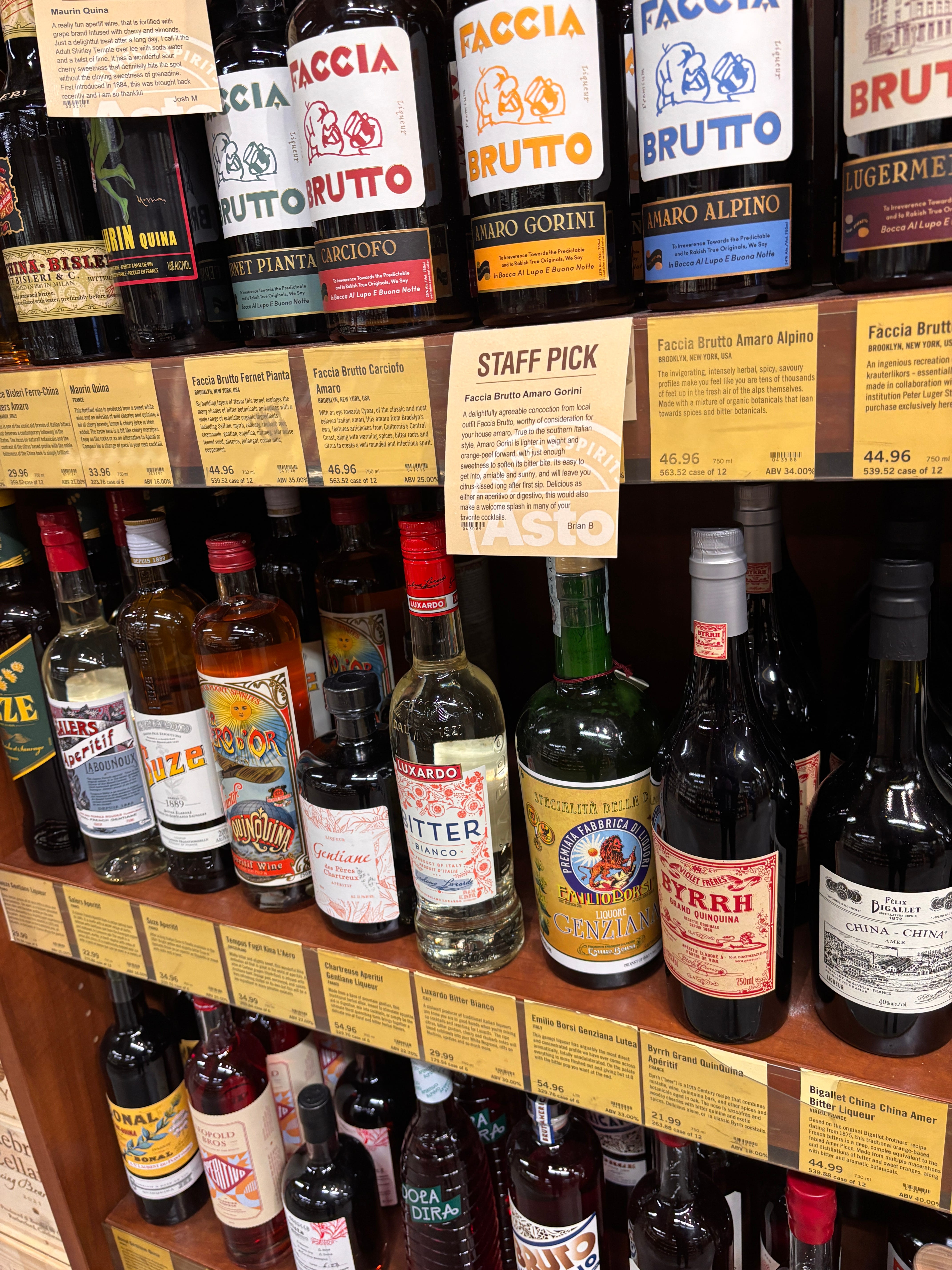
Astor has elusive bottles like Bonal, Salers, Avèze, Byrrh Grand Quinquina, Bigallet China-China, an even-better replacement for Picon Amer (which is unavailable in the U.S.), and cherry-flavored Maurin Quina.
Other finds include Dola Dira, made in Burgundy, a lovely low-sugar, bitter red apéritif flavored with rhubarb and bitter oranges, as well as Bruto Americano from St. George Spirits in California, a better swap-out for brash Campari, plus a lineup of Brooklyn-born spirits from Faccia Brutto. I was tempted to bring a few bottles home, but I’m still working on the 200+ bottles I amassed while writing Drinking French. Cheers!
I normally avoid French restaurants and French bakeries when I’m traveling, since I live in France. True, there are great French restaurants and bakeries outside of France, for sure, but I don’t need a macaron in Taipei, and would prefer to drink sake over Sancerre when I’m in Tokyo. But a friend reserved at Marcel, the new restaurant in the Breuer building, a brutalist masterpiece in New York City, and I didn’t want to miss a chance not only to see my friend, but also to dine in that building.
The restaurant is helmed by French chef Marie-Aude Rose, who’s cooking elevated French food, dishes rooted in classic French cuisine, but updated and spiffed up, with stiffer prices. (Although prices are similar to what you’d pay at an elevated bistro in Paris nowadays.) Between the five of us, we shared two endive salads ($28 each) that came with apples, bacon, and Gruyère cheese, then had mains. I had a very good steak hachée à la française ($48), a pan-fried patty of ground beef over slices of potatoes, topped with a perfectly poached egg. The restaurant is not inexpensive but it’s located in a swanky part of town and you’re paying to eat in that fabulous space designed by Breuer. The food was well prepared and more filling than it is in France, thanks for rich, well-made sauces.
The dessert menu is divided into two parts, and the second part is called Les Grands. While the prices seem steep…
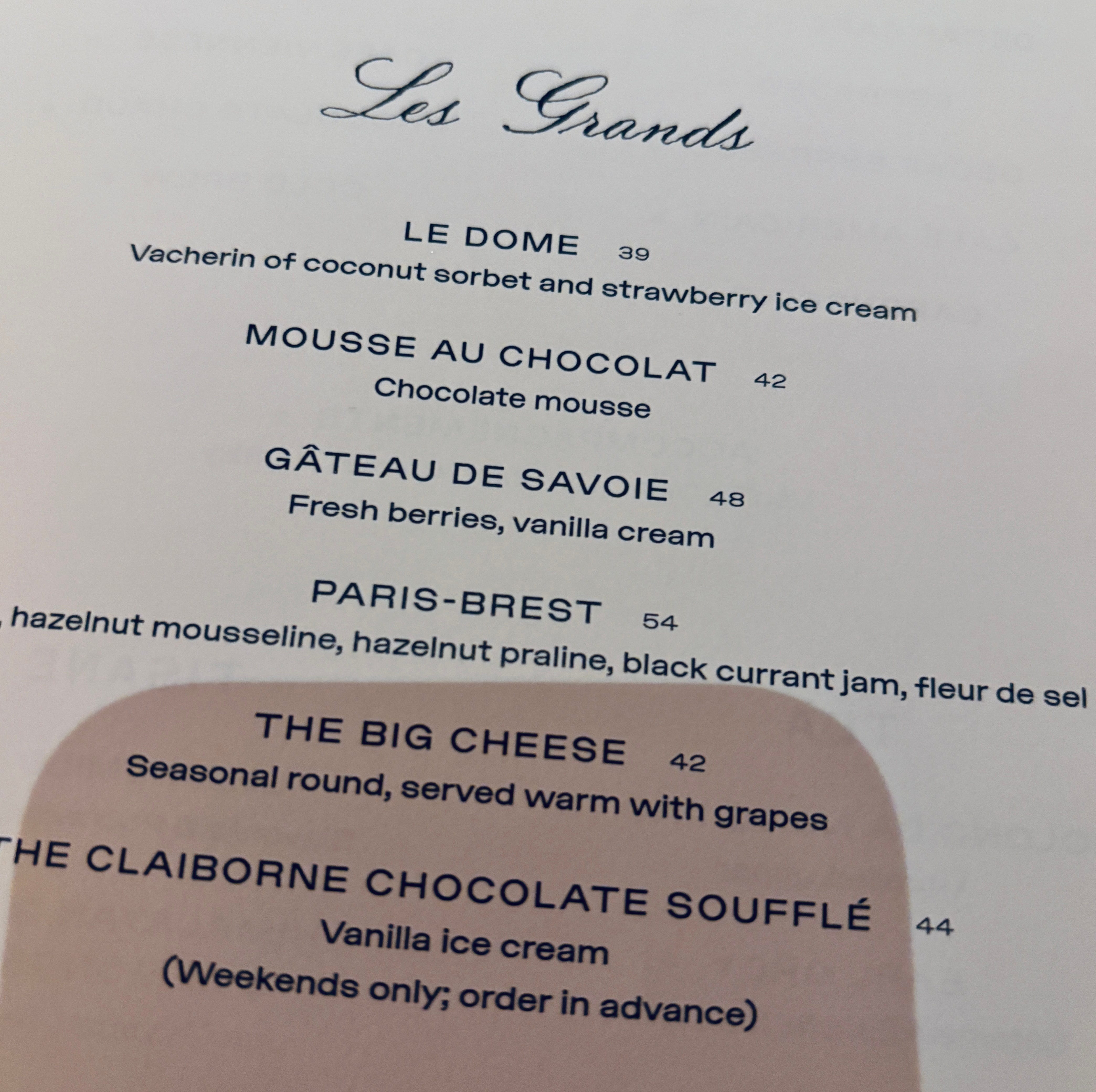
…they bring out a whole cake. As usual, everyone looked at me when it was time to order dessert, which happens…even though another guest at our table was a well-known pastry chef. The waiter had mentioned the soufflé needed to be ordered in advance, which I should have been more dynamic about ordering, but no one could decide, so we didn’t.
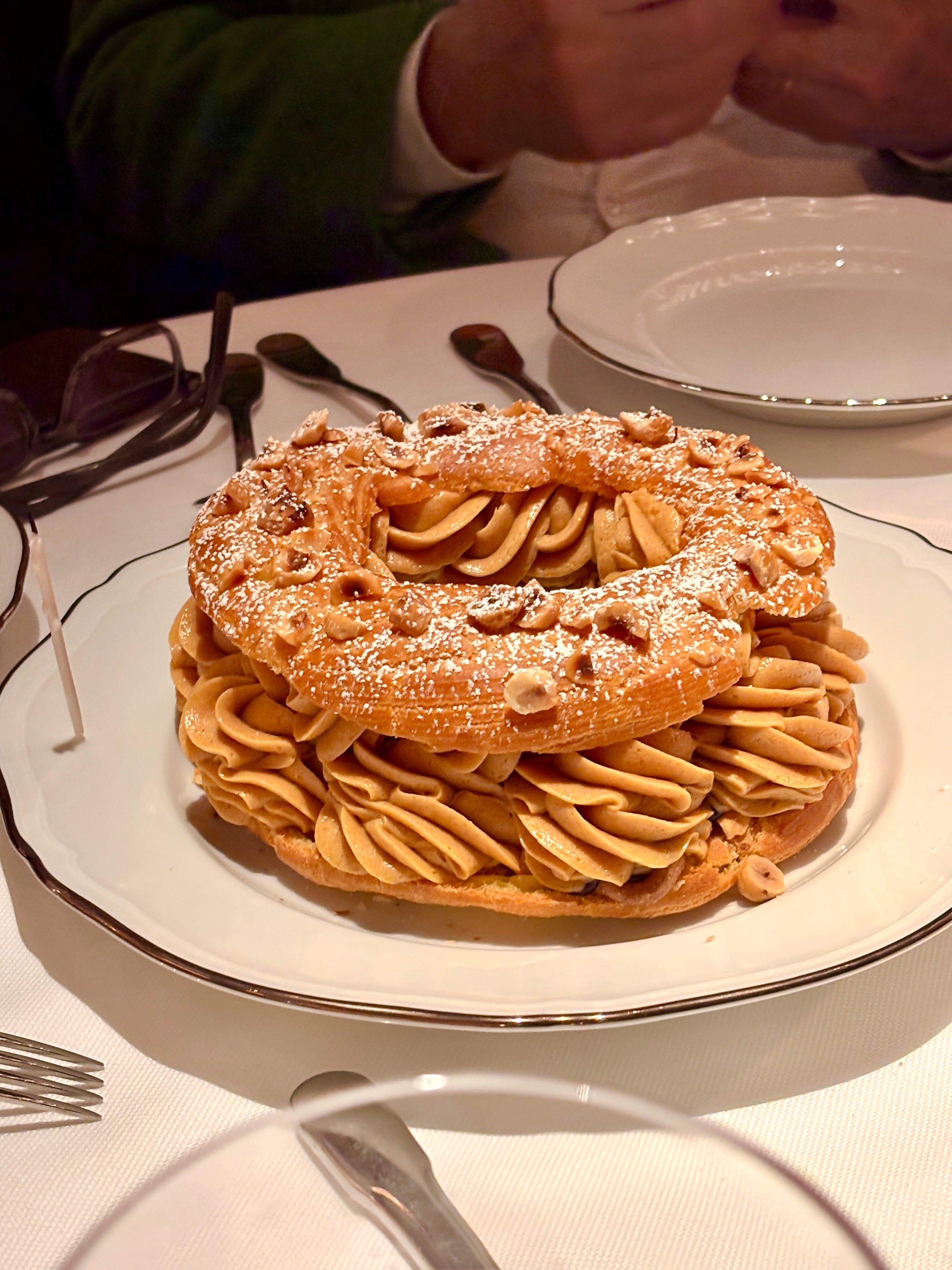
Instead we had this Paris-Brest, which was fabulous. Laced with a bit of black currant puree, it was filled with a rich caramelized hazelnut cream and was well worth it.
Share David Lebovitz Newsletter
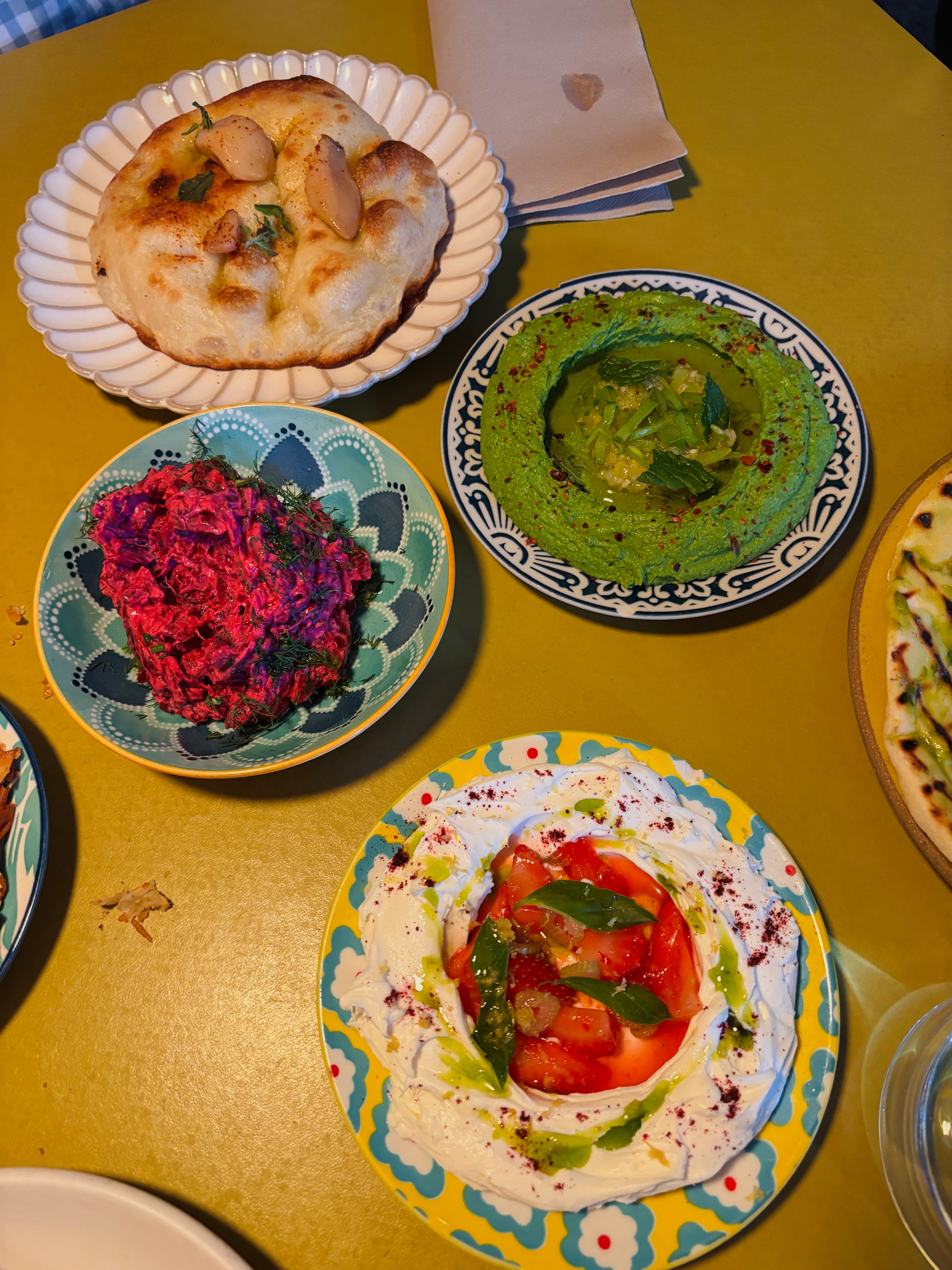
A must-stop for me in New York is Shukette. Even in the Middle East, I haven’t had food like this. That bottom dish is labneh with strawberries and basil oil, which sounds like a questionable idea. But wow — the strawberries on top were bright and slightly acidic, and melded perfectly with the rich labneh cream, along with a swirl of herby basil oil. I wasn’t thinking of ordering it, but , who I was dining with, added it to our order.
The spring pea dip was also a dream, with spring garlic and preserved lemon, and you can’t eat at Shukette without having a few things from the “Rip This” portion of the menu, which features housemade breads. The best was the frena, fluffy (yet crisp on the bottom) Moroccan bread topped with roasted garlic. Another, not shown, was lafa - a grilled flatbread liberally brushed with ramp butter.
There were also shawarma-spiced fries, toum (garlic spread), beet tzatziki, and tahini soft-serve ice cream for dessert, topped with halvah floss and pomegranate syrup. I don’t know how many recipes chef will be sharing in her upcoming book, Mediterranean All the Way, but I can’t wait to see it.
Speaking of books, while I can’t see everyone I want to when I come to New York - with apologies to Renato, Casey, , and , which makes me feel like a heel, I make time to see Susan Friedland, who acquired and edited my first two cookbooks. If it wasn’t for her, I wouldn’t be writing cookbooks.
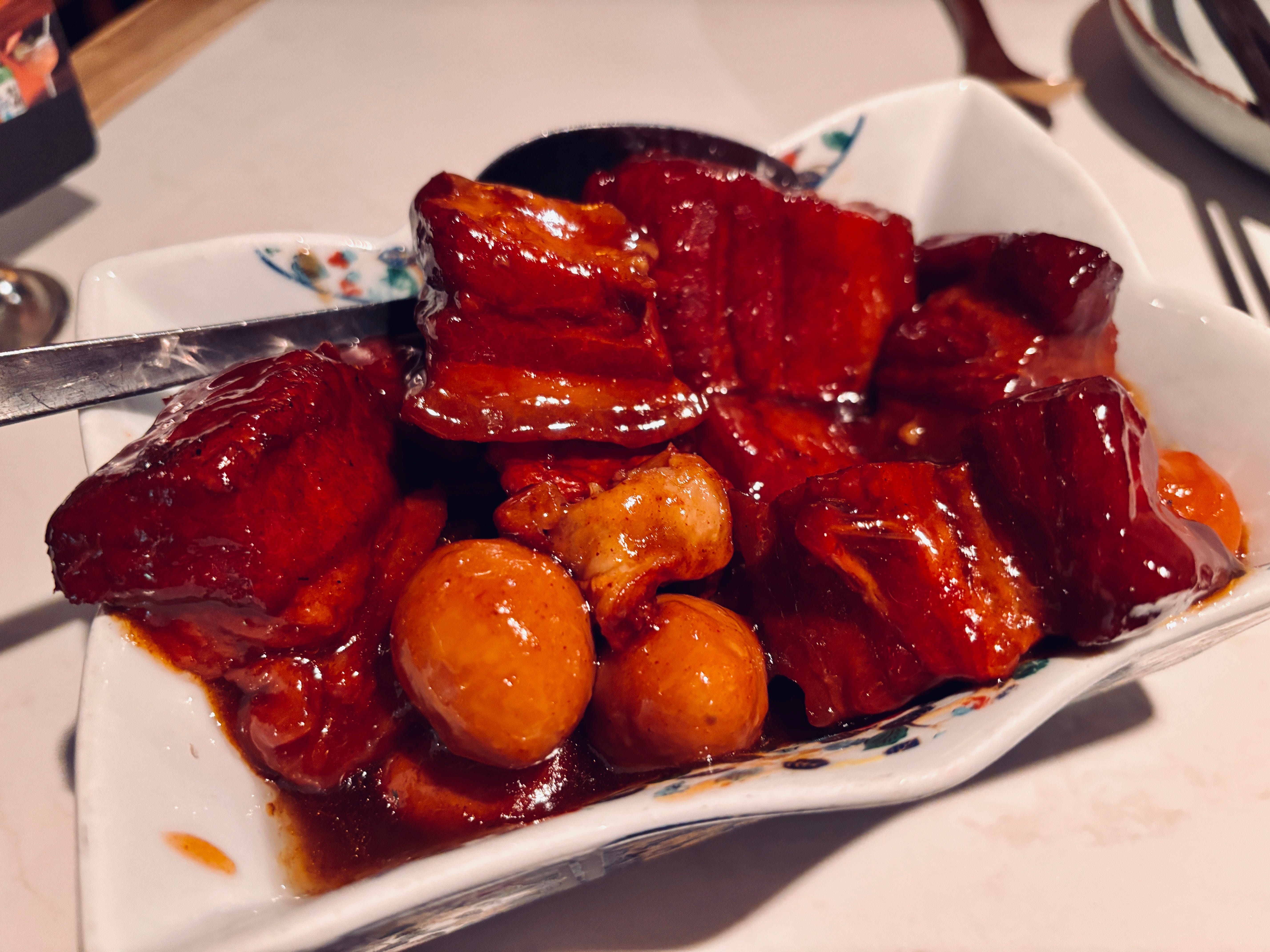
We met up at CheLi, and unlike everyone else I dine out with, she doesn’t reply to my asking what she wants to order with, “I don’t know, what do you want to order?” She knows what she wants, and she knows good food. She also spilled some tea when I had her on my podcast, talking the truth about the world of cookbook publishing:
So I let her guide us through the menu and she was pretty insistent we order the pork belly with quail eggs, shown above. It was excellent as were the dry-fried green beans, a necessity when you travel since you never want to miss a chance to get some vegetables into your diet. One cannot live by brownies and pork belly alone, although it certainly feels like I’m giving it a try.

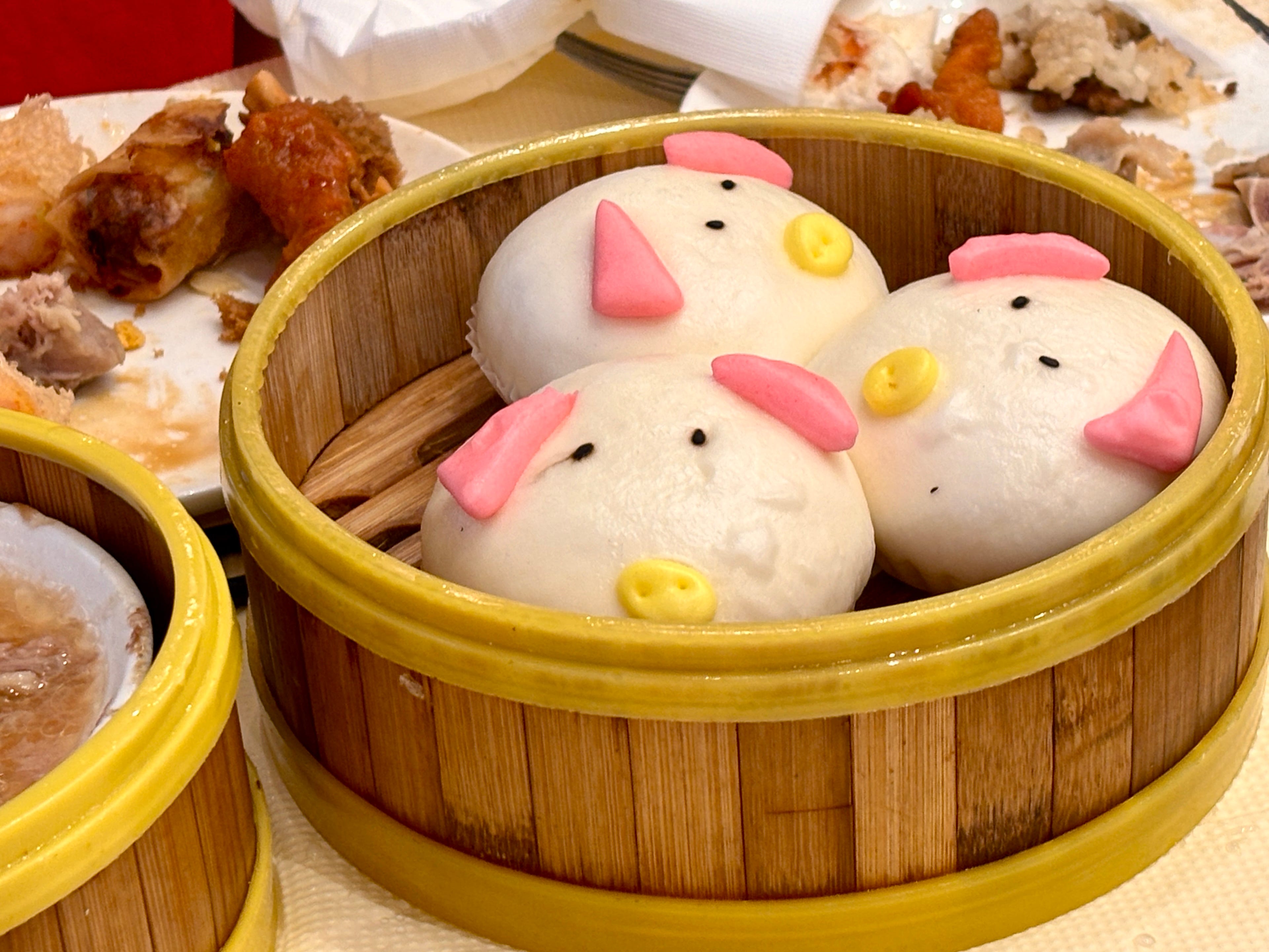
Yesterday I met with friends, ramen master Ivan Orkin, and cookbook author J. J. Goode, at 100 Feast & Lounge for more dim sum, then I hoofed it up to Kitchen Arts & Letters to sign copies of my book for folks who pre-ordered, and left a stack of signed copies for those who come into the shop or order online.
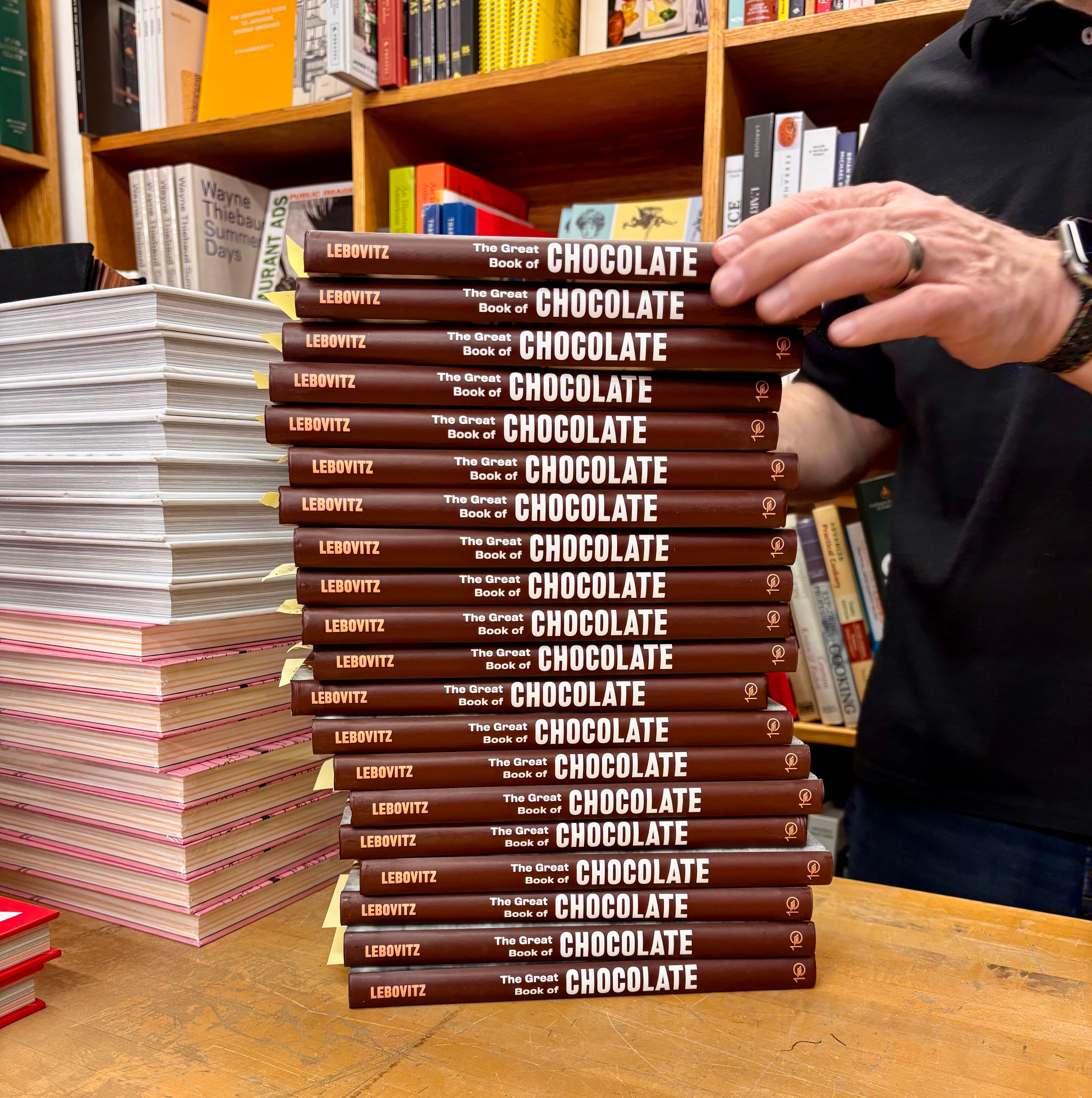
I also stopped in Wild Sorrel Cookbooks, a new cookbook store in the East Village, then headed to Williams-Sonoma to do a signing at their store in Columbus Circle. Whew!
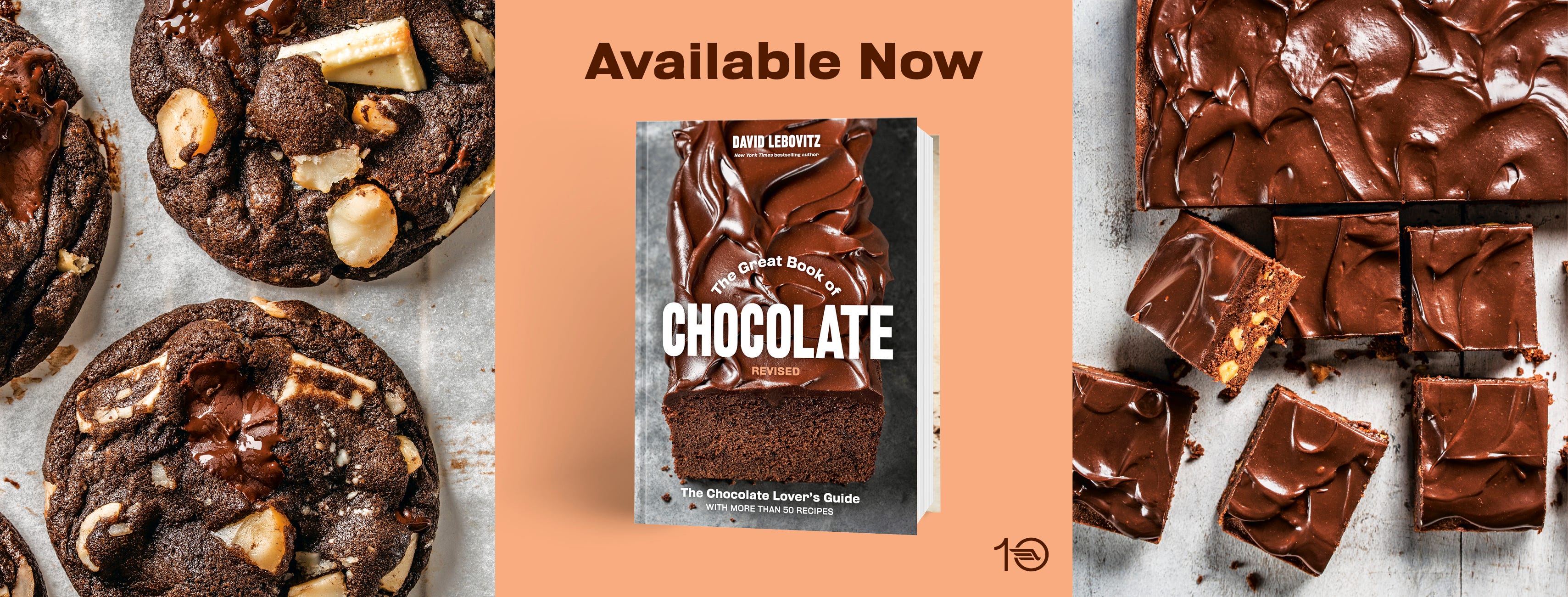
Get The Great Book of Chocolate here!
Thanks for everybody who turned out for my events in New York. It was a whirlwind trip, but as you can see, I got a lot in…with more places to go.

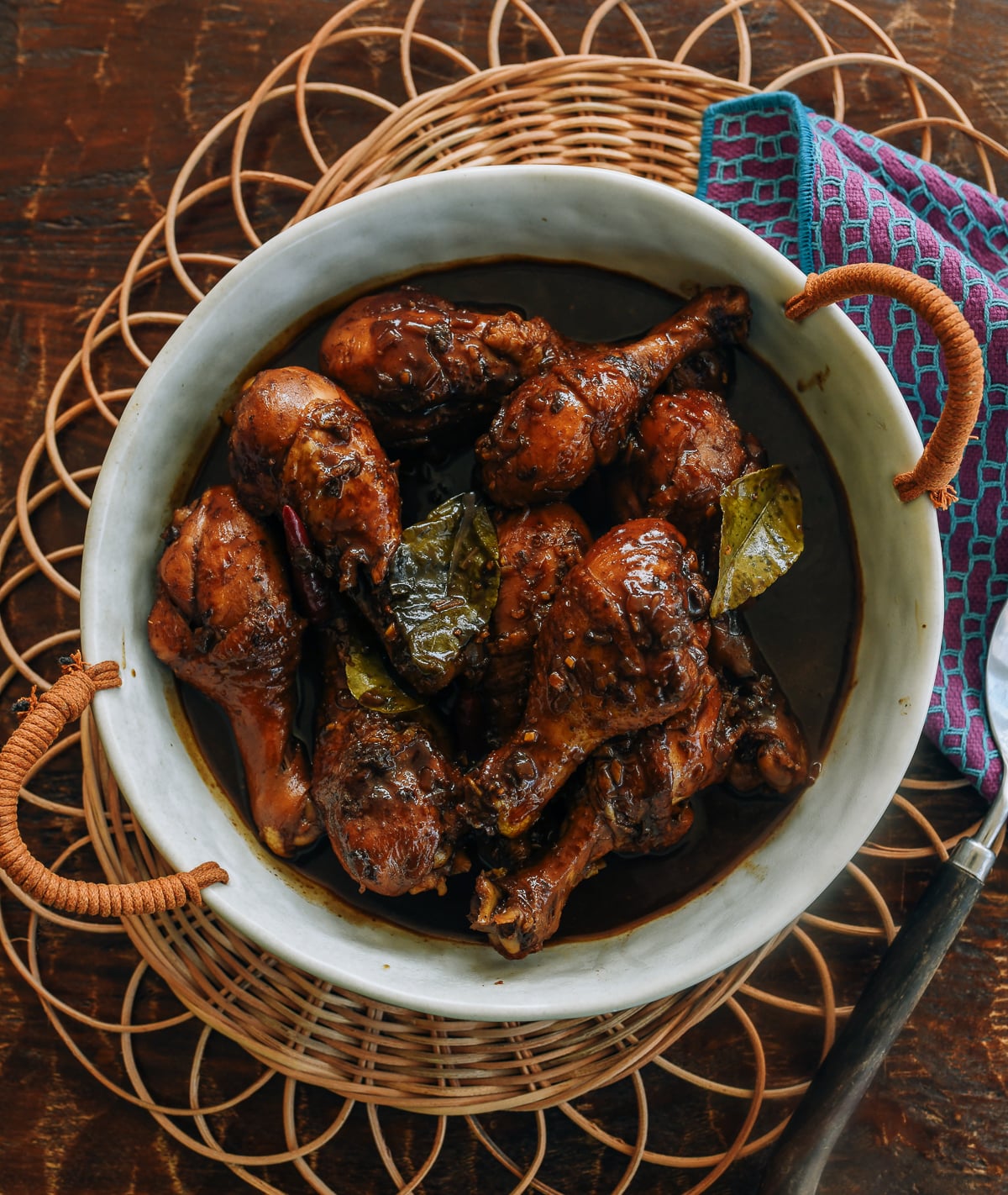 Ayam kecap is a popular Indonesian chicken dish made with kecap manis — a sweet dark soy sauce — and a unique blend of spices including fresh ginger, garlic, shallots, makrut lime leaf, galangal, coriander, and clove. Although we have never been to Indonesia, we love the flavors of Indonesian food, and many Indonesian dishes […]

Bonjour, here! When David received a copy of ’s perfect new cookbook, The Art of Gluten-Free Bread, I (as the resident celiac) jumped straight on it, having adored her recipes for years.
Baking bread is like alchemy, seeing something so delicious come of almost nothing, balanced delicately with the disappointment when it goes wrong for no discernible reason, but with Aran’s well-researched explanations, everyone can become a successful gluten-free baker. It’s written to help you succeed, suitable for all levels from beginner to expert, and is divided into eight logical chapters.
Alongside the groundbreaking recipes you’ll find equipment and technical explanations, pantry staples, instructions for making a starter and thoughtful ways to use the discard, and information on different flours, including how to mill your own at home. Aran also gives clear directions for buying psyllium husk and swapping out dairy, eggs, and different types of yeast (there’s even a yeast-free bread recipe).
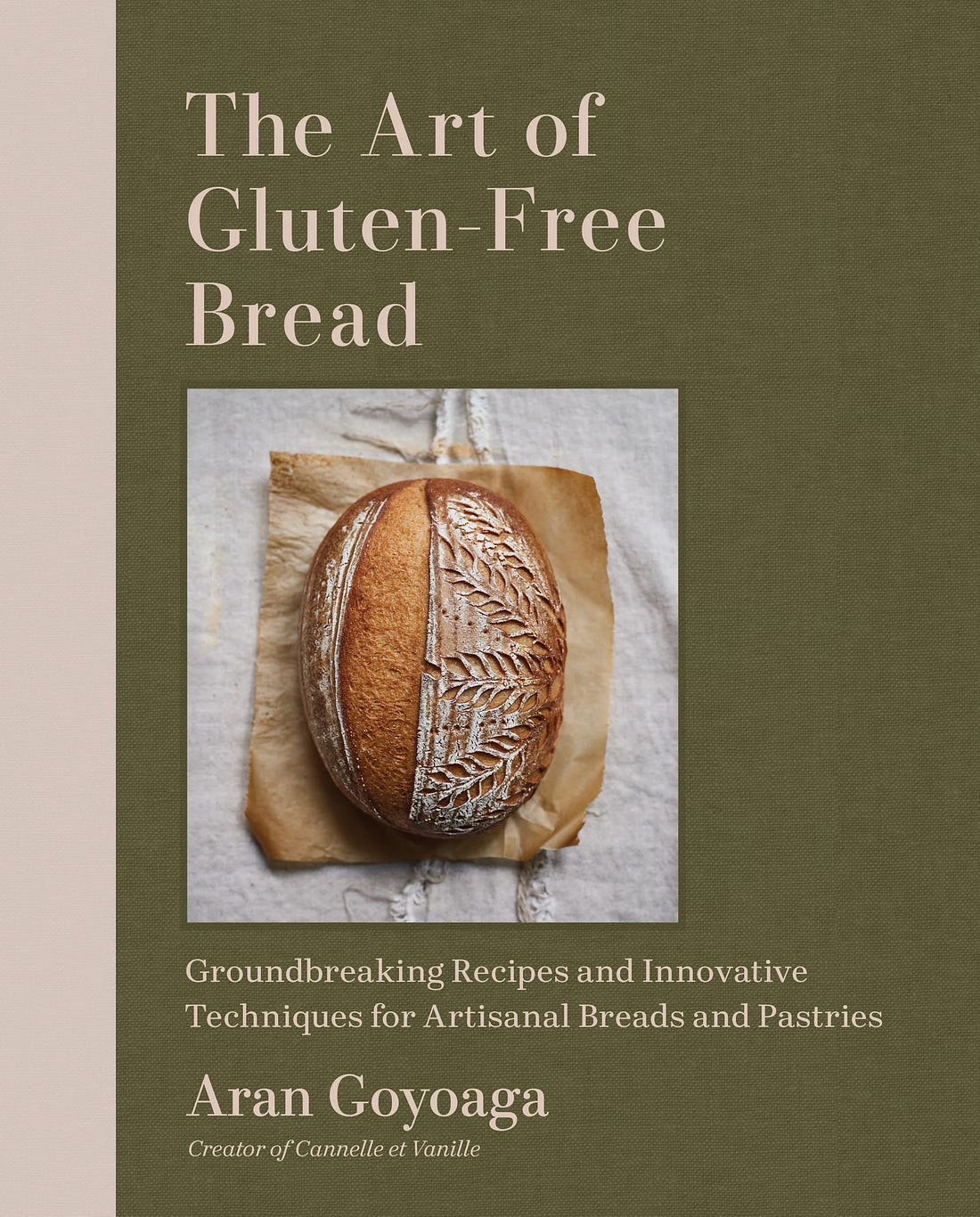
Get The Art of Gluten-Free Bread
I’ve so far made the Roscón de Reyes, popovers, soft pretzels, and vanilla-glazed donuts, and have a sourdough starter bubbling away happily. Although I’m handing David back his copy (admittedly with a few butter smudges - sorry!), I’ve already ordered my own to keep, and you can find yours here or in your local bookshop.
Open the book to any page and you will want to eat, so choosing just one project to share here was a challenge (Aran said the recipe she’s most proud of is the Danish). I eventually settled on pain de mie (pain means bread and mie refers to the soft interior crumb) because of its connection to France. It’s a square loaf that’s baked in a sealed pan to give it a thin crust and tight crumb. This bread is very popular for sandwiches and ideal for making croque-monsieur and croque-madame.
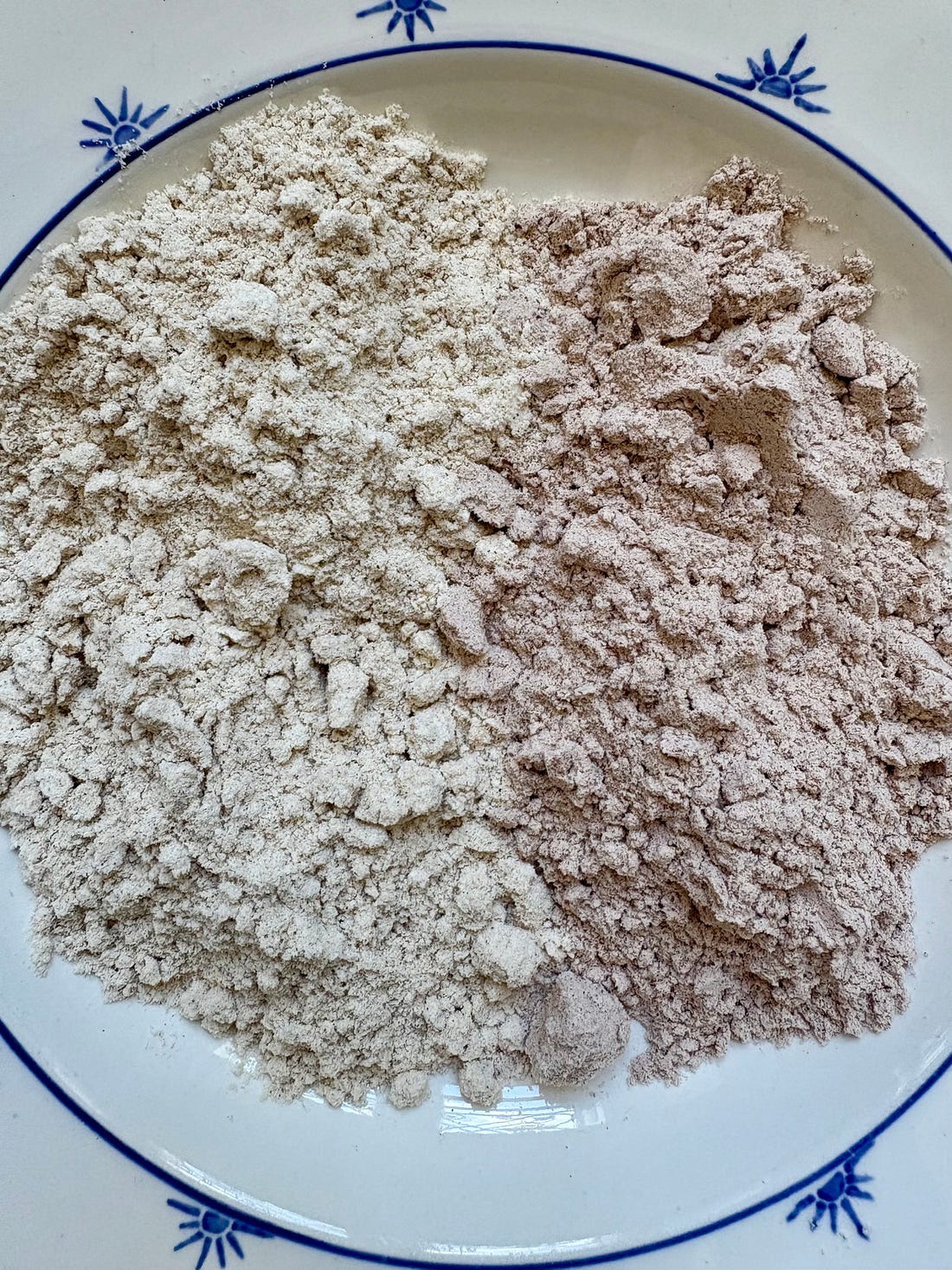
Aran describes sorghum (the main ingredient) as “slightly sweet, wheat-y tasting and light yellow flour… grows well in the US, but it seems harder to find in parts of Europe” and suggests millet in its place if necessary. I found sorghum flour easily in France but it was quite dark, so my loaves came out looking slightly more rustic than the image in the cookbook. Then while traveling I found Bob’s Red Mill sorghum flour, which was a lighter color and baked very pleasing loaves.
Subscribe to David’s newsletter to get more recipes, Paris dining tips, and stories, sent right to your Inbox!
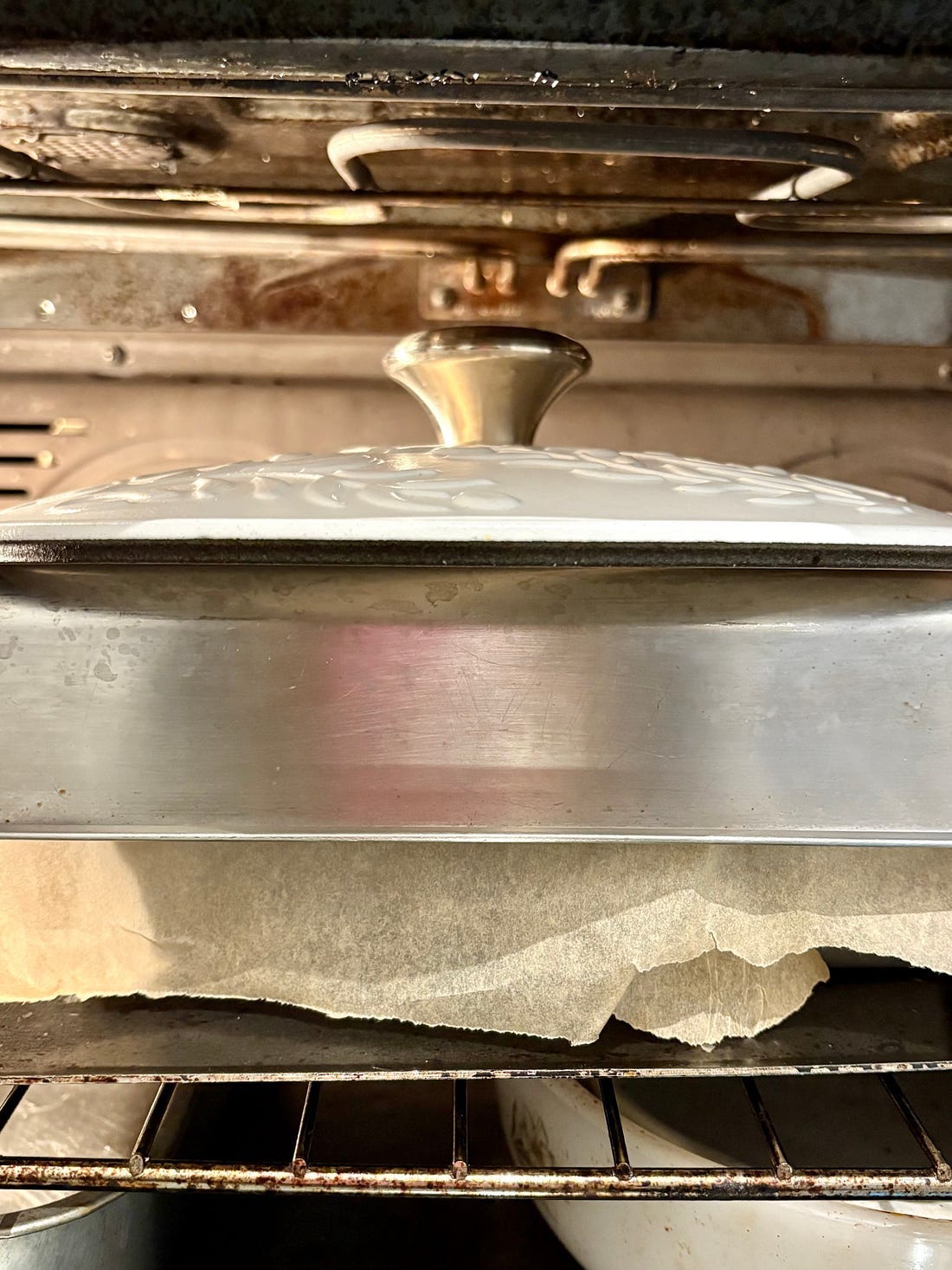
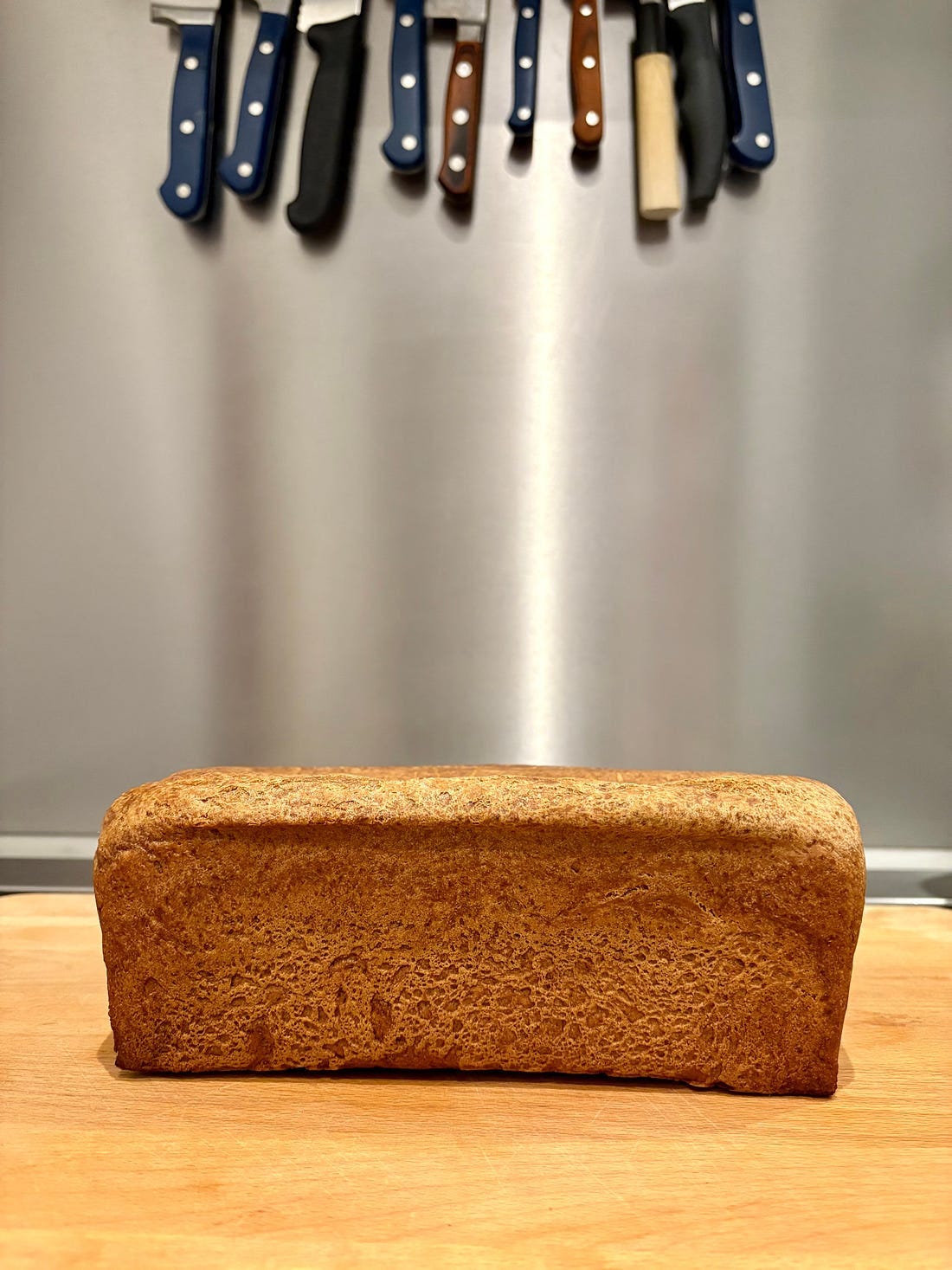
This recipe calls for a Pullman tin with a lid and I considered buying one but know I’ll use it once, lose the lid, and forever feel regret when opening the baking drawer. Instead I used a 9-inch (23cm) loaf tin and for my first bake MacGyvered a lid out of baking paper, a roasting tray, and a Le Creuset lid to weigh it down. This almost contained the bread into a rectangle and on the second try, I got it to behave. I also tried a version where I let it roam free with no lid and as promised by Aran in the notes, the crust was very slightly thicker and the crumb was less tight, but it was equally as delicious.
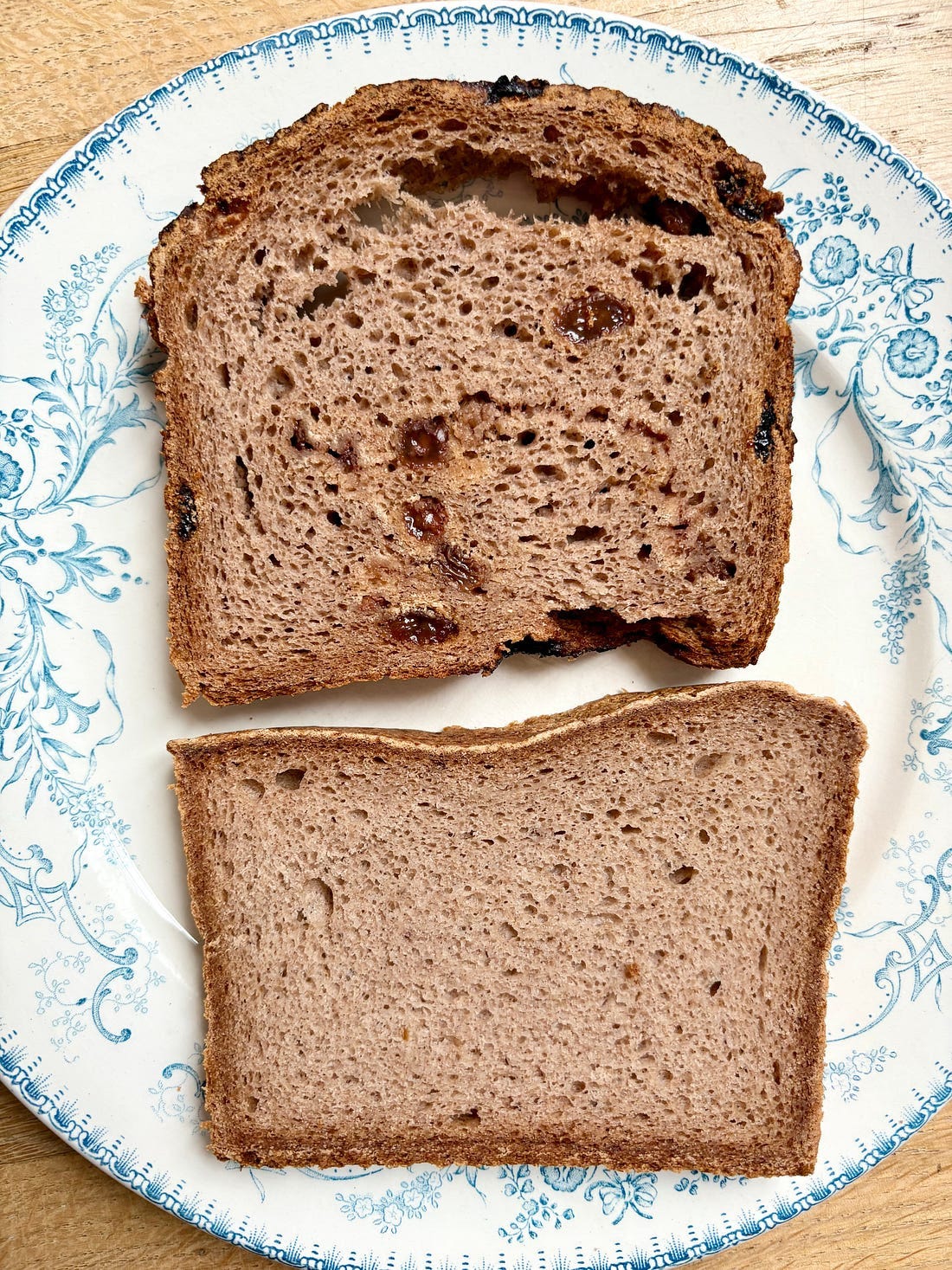
I used to be slapdash with baking but have learned that with gluten-free recipes, it pays to stick to them as precisely as possible (my heart sung when she presented the liquids by weight rather than volume), and I used my timer methodically at each step. It’s a long recipe (around three hours) but mostly done in 30-minute increments of waiting. While it takes patience to leave the bread in the cooling oven and then again on a wire rack for another half hour, these two steps had a noticeable effect on the finished structure of the loaf, exactly as promised in the instructions. Her writing may feel effortless, but it’s clear Aran takes recipe development seriously and has tested each one to the nth degree.
Follow Aran Goyoaga on Instagram
The first time I tried this recipe there were snowflakes dancing on the glass ceiling of our kitchen, so I allowed an extra 15 minutes proofing to make up for the cooler room temperature, but on regular weather days the dough was right on time at each step.
Happy baking - Emily

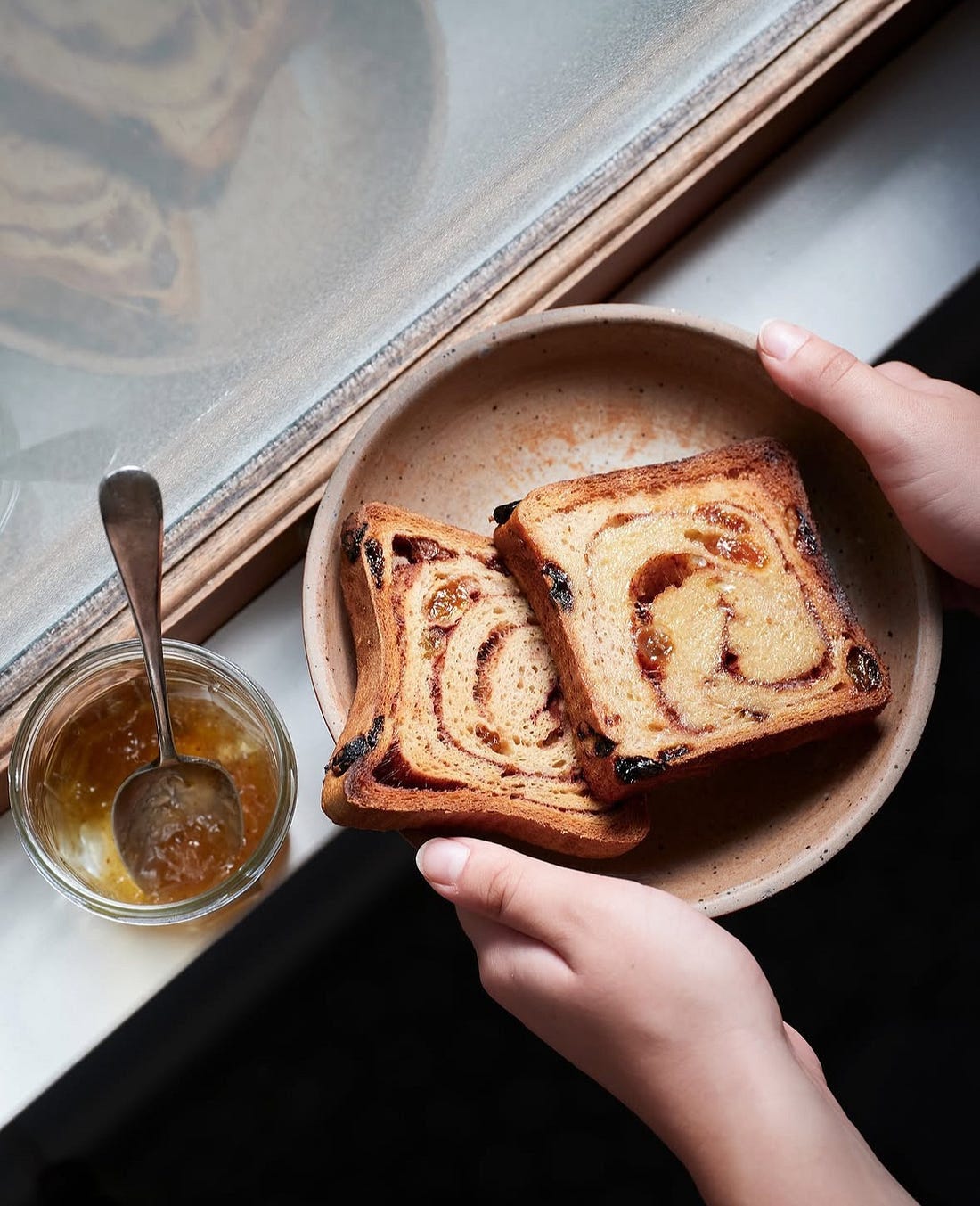
Adapted from The Art of Gluten-Free Bread by
Makes 1 loaf
2 1/2 teaspoons (10g) active dry yeast
300 grams water, heated to 105°F (41°C)
300 grams whole milk or oat milk, heated to 105°F (41°C)
40 grams honey or maple syrup
30 grams psyllium husk powder
280 grams sorghum flour
160 grams tapioca starch
100 grams potato starch
12 grams kosher salt
1 teaspoon (4g) baking powder
55 grams unsalted butter or vegan butter, at room temperature, plus more for greasing
Psyllium-yeast mixture: Sprinkle the yeast into a large bowl. Add the water, milk, and honey and whisk until dissolved. Let the mixture sit until frothy, about 10 minutes. Whisk in the psyllium. Let it gel for 5 minutes.
Make the dough: In a stand mixer, stir together the sorghum flour, tapioca starch, potato starch, salt, and baking powder. Add the psyllium-yeast mixture and the butter (cut into small cubes) to the dry ingredients. Snap on the dough hook and mix on medium-low speed until the dough comes together, 2 to 3 minutes. Make sure there is no loose flour under the dough ball. It will look quite wet but should hold together nicely and fall out in one big ball when you tip it onto the work surface.
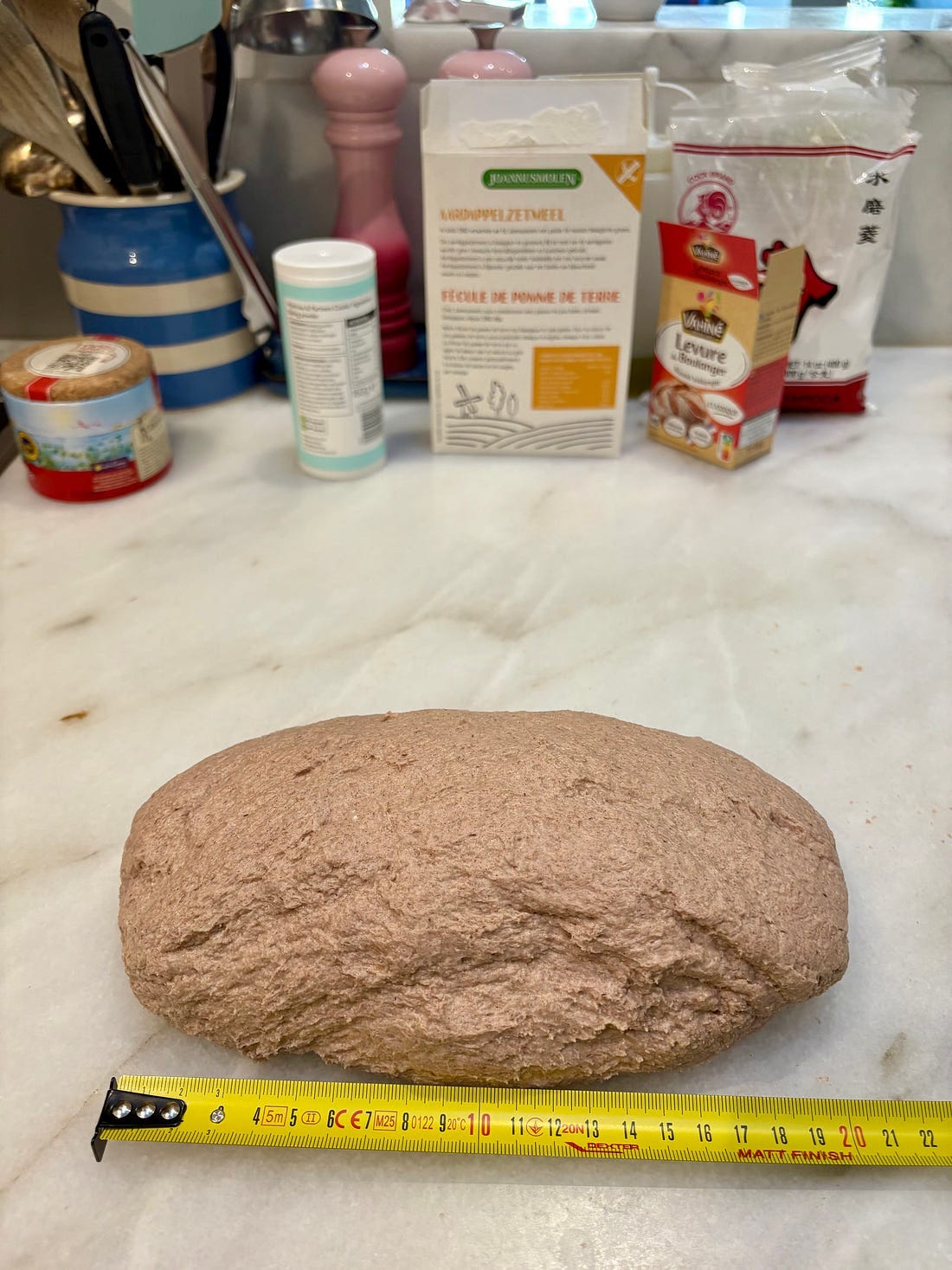
Shape and proof the dough: Transfer the dough to a work surface and knead a few times to shape into a tight ball. Roll this ball into an oval shape that is about 8 inches (20cm) long. Grease the bottom and sides of a 9-inch (23cm) Pullman loaf pan as well as the underside part of the lid with butter. Place the dough inside, cover the pan with a kitchen towel, and leave at room temperature. Proof the dough until it almost reaches the top rim of the pan, about 30 minutes. Don’t let it go past the top of the pan or it can overproof and collapse while baking.
Preheat the oven: Position a rack in the bottom third of the oven and preheat to 425°F (220°C).
Bake the bread: Cover the Pullman pan with its lid. Bake for 30 minutes. Reduce the oven temperature to 375°F (190°C) and bake for a further 30 minutes. Turn the oven off and remove the lid, but leave the pan in the closed oven for another 30 minutes.
Cool the bread: Invert the bread onto a wire rack and let it cool for at least 30 minutes before cutting. If the edges cave slightly, don’t despair; even the bread in the cookbook photo has a slightly concave shape.
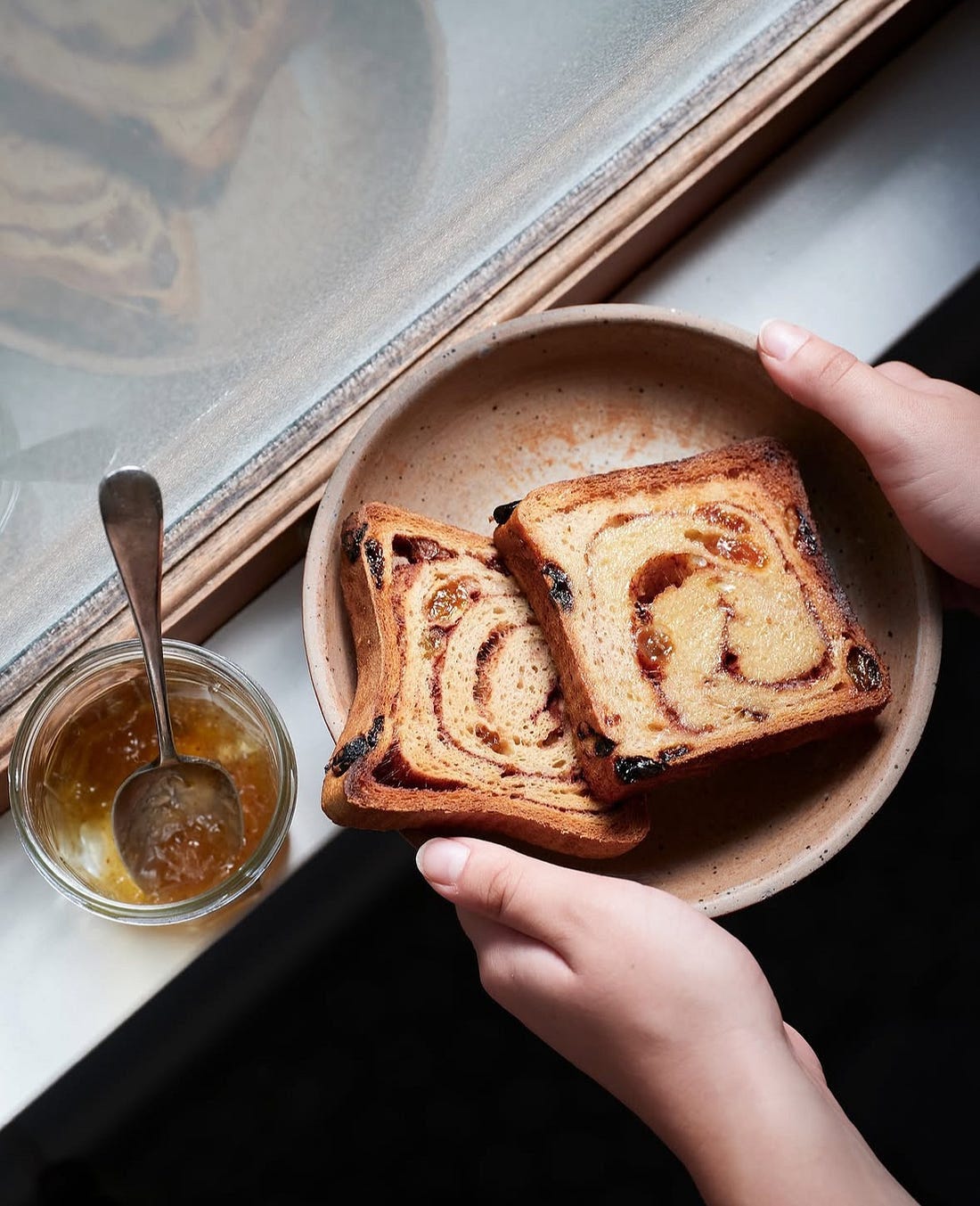
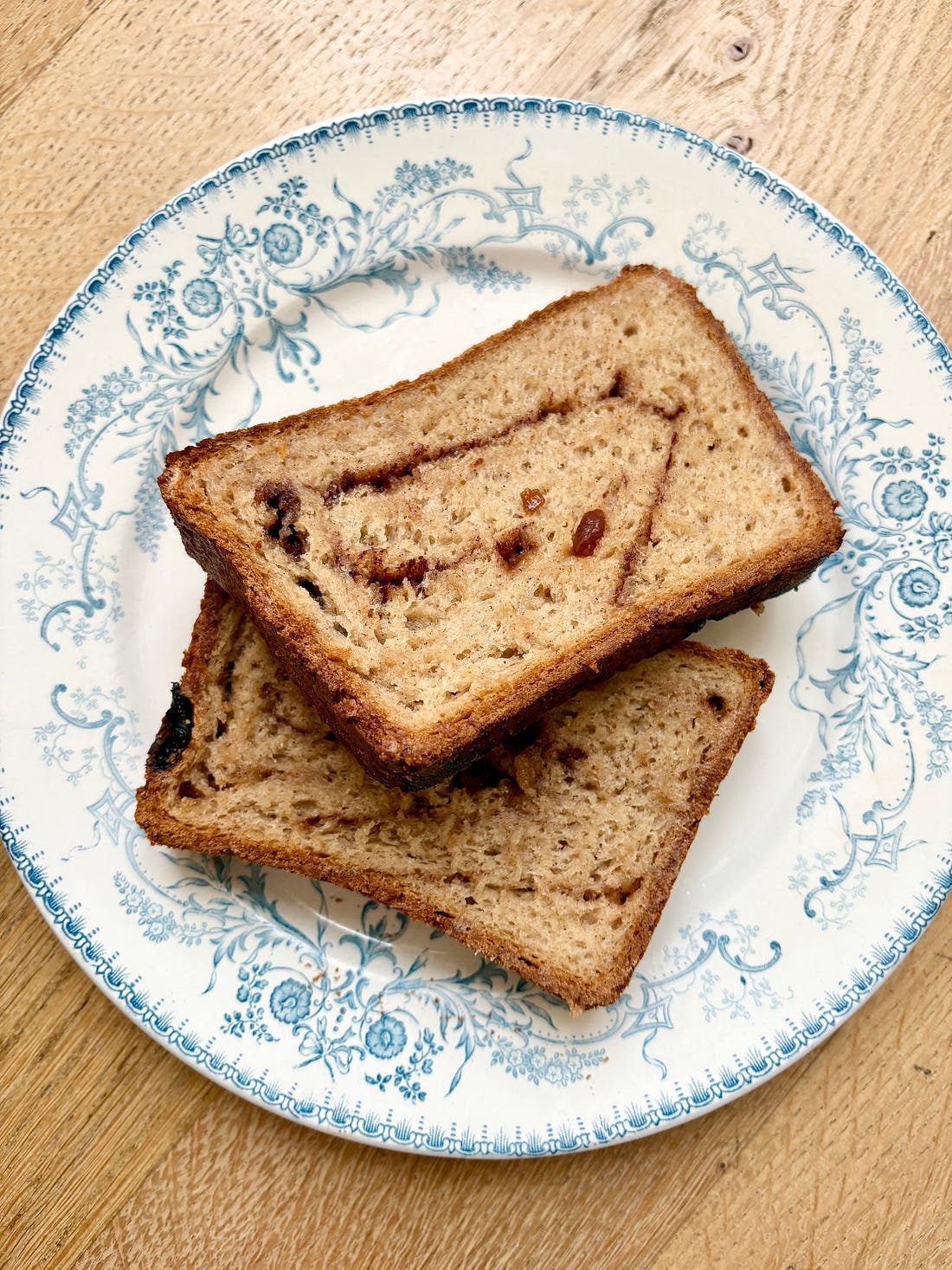
Cinnamon-Raisin Option: Add 1 1/2 teaspoons (4g) of cinnamon along with the dry ingredients when making the dough, then add 80 grams of raisins at the end of the mixing time. Dust a work surface with a bit of sorghum flour and knead the dough a few times until a tight ball forms. Roll into a rectangle about 12 x 10 inches (30 x 25cm) and 1/2 inch (1.3cm) thick. In a small bowl, mix 50 grams of sugar with 2 teaspoons (6g) of cinnamon.
Sprinkle the surface of the dough with half the mixture. With a short side facing you, fold the top third onto the middle and the lower third up over it, creating a letter fold. Turn the dough 90 degrees and roll again into a rectangle 13 x 8 inches (33 by 20cm). Sprinkle the surface with the remaining cinnamon sugar and roll from a short side into a tight log. Continue to roll a few times to seal the seam. Place in the greased pan, seam side down, then proof and bake as directed.
Tips: If you’re like me and not sure when you bought your baking powder, test some with a little acid (vinegar or lemon juice) to check if it still fizzes nicely.
As yeast in France can be hit or miss, I activate it in a small amount of warm water to be sure it’s alive before proceeding (make sure to keep the total amount of water in the recipe the same by subtracting the amount). Once you see bubbles forming, you know your yeast is working and can proceed.
Storage: Like most gluten-free bakes, this one is best eaten the day it’s made but freezes well and toasts up nicely. Aran suggests storing the bread at room temperature, wrapped in a paper bag, for up to three days, but by day two, mine was quite hard so best to eat it fresh, and freeze whatever you won’t eat. You can slice bread and freeze it in slices, then pop the frozen slices directly into the toaster.

Share David Lebovitz Newsletter