❌

Reading view

A tale of two election ads offering different visions for America

“My name is Abdul; it means servant.” So begins the most compelling ad of this year’s election cycle. Dr. Abdul El-Sayed speaks, simply and directly, to the camera. Seated in a brown leather armchair while holding a coffee mug, Michigan’s Democratic Senate nominee lays claim to his Muslim faith in straightforward, affecting terms. 

“I pray everyday,” he says. “I reflect on my role in this life, on this earth, how we leave it better than we found it, to serve God, to serve our neighbors.”

A cloud of suspicion, much of it tangled up in his ethnicity and religion, has hovered over El-Sayed’s candidacy. The othering has been both blatant and subtle. In August, I spoke with Sen. Tommy Tuberville, R-Ala., as he made his way from the Capitol subway to his Senate office the day after El-Sayed’s primary win. Tuberville told me the Michigan Democrat was “a cheerleader for 9/11” and “basically” a terrorist. A pair of debates has seen El-Sayed’s Republican opponent, former Rep. Mike Rogers, accusing him of being “bought” by and “pledg[ing] his support” to the Muslim Brotherhood, claims that are unfounded. Others, including wavering centrist Democrats such as party strategist James Carville, who recently gave El-Sayed a reluctant endorsement, have pointed to the nominee’s attacks on Israel over the Gaza war as evidence that he is hostile to Jews and Judaism. More broadly, anti-Muslim rhetoric and attacks are becoming a defining feature of the GOP.

El-Sayed’s ad, released last Sunday, is entitled “Prayer” and marks an obvious attempt to refute those accusations and change the conversation — to persuade hesitant voters in the final days of this tight race to pull the lever for him. As El-Sayed speaks, snapshots roll. He stands with a voter, who points across the river, a subtle message of an aspirational future. There is El-Sayed standing and holding hands in prayer with a group of Black churchgoers. A menorah and a humble church flash on the screen. And then there’s the candidate himself, standing alone in prayer, his head bowed. 

El-Sayed connects his belief to a national crisis of faith embodied in Washington: “We don’t have faith in our future; we don’t have faith that we can actually fix things.” Then he returns to his own candidacy. “I’m Abdul El-Sayed,” he says at the end. “A man of faith — and that’s a good thing.”

The ad offers a reason for his candidacy and life of public service, and ends what has been a tumultuous campaign on a grace note — and with an implicit promise. Everyone is welcome in my coalition, El-Sayed is saying, I’ll protect you.

A good election spot offers an appeal to voters by telling a story, and “Prayer” certainly does that. But there are other ingredients that can boost a political ad to the realm of greatness. In a positive ad, voters are offered an intimate look into the candidate’s reason for running. “Prayer” also does that, and therein lies its true power. It shows a different side to El-Sayed, whose refusal to back down from a fight and ability to cut through the noise, as Salon’s Amanda Marcotte recently wrote, “terrifies MAGA.” The ad offers a reason for his candidacy and life of public service, and ends what has been a tumultuous campaign on a grace note — and with an implicit promise. Everyone is welcome in my coalition, El-Sayed is saying, I’ll protect you. 

Even though “Prayer” is targeted to Michigan voters, it cannot be divorced from what’s happening nationally. It adds El-Sayed to an emerging list of Democrats who, as unabashed members of the religious left, are comfortable talking about their faith openly. Most, such as Texas U.S. Senate candidate James Talarico, Kansas U.S. Senate nominee Adam Hamilton, former Transportation Secretary Pete Buttigieg, Georgia Sen. Raphael Warnock, Kentucky Gov. Andy Beshear and Maryland Gov. Wes Moore, are Christian. Others, such as Georgia Sen. Jon Ossoff and Pennsylvania Gov. Josh Shapiro, are Jewish. By attaching his name to those ranks, El-Sayed is staking out important space for Muslims in public life.

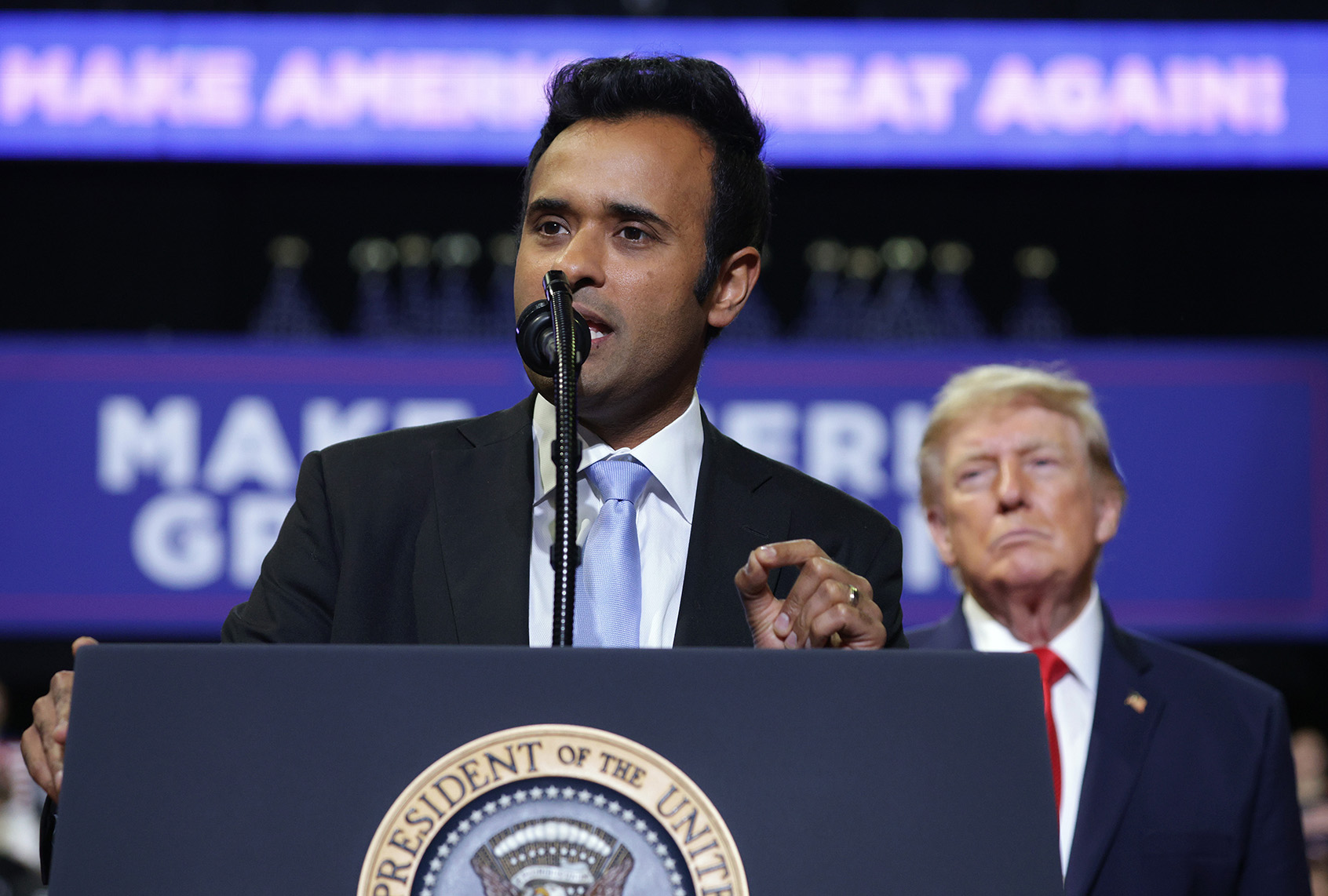
But there’s more to it than just his religious and ethnic identity. The ad’s message serves as a proxy for the stark choice facing voters across the country, and just south of the Wolverine State’s border. In Ohio, Vivek Ramaswamy, the Republican nominee for governor, funded and produced an ad attacking Dr. Amy Acton, his Democratic opponent, and featuring her own mother.

The spot, released only 24 hours after El-Sayed’s, carries a message that is the direct inverse of the Michigan candidate’s. Rooted in cruelty and scripted with a lashing of DARVO, a tactic easily recognizable to victims of abuse — Deny, Attack and Reverse Victim Offender order — the ad is uncomfortable to watch, and vile. 

Viewers see an elderly woman looking into the camera and identifying herself as Donna Arthur. “It’s not easy for a mother to say this,” she says, “but Amy has a serious problem: she is a liar.” Arthur goes on to attack her daughter’s credibility, but without producing any evidence beyond her own testimony, which is severely imperiled by a documented history of her own actions.

Arthur has been estranged from her daughter since 1978, when the 12-year-old Acton accused her stepfather of raping her. According to court records, Cledith Arthur was arrested and charged with the crime, but fled the state before being tried. When his wife supported him, branding young Amy Acton a liar, both the girl and her younger brother were removed from Donna Arthur’s custody and raised by their biological father. In a statement released by her campaign, Acton’s brother stood by his sister’s account and branded Ramaswamy’s campaign “despicable” for turning the abuse Acton says she suffered “into a political talking point.”

In the ad, Arthur does not mince words. “My daughter needs help,” she says, “and she can’t help you if she can’t help herself . . . Don’t vote for people who lie; don’t let her become your governor.”


Want more sharp takes on politics? Sign up for our free newsletter, Standing Room Only, written by Amanda Marcotte, now also a weekly show on YouTube or wherever you get your podcasts.


Setting aside Arthur’s agency and the willing role she played in the ad, Ramaswamy has chosen to retraumatize his opponent before the eyes of millions of voters. By platforming a woman who is, at the very least, an enabler and accomplice to the alleged sexual assault of a minor, if perhaps only in the aftermath, he is sending a chilling signal to victims of abuse in Ohio and throughout the U.S.: There are consequences to speaking up.

But if Ramaswamy’s behavior wasn’t bad enough, Donald Trump and JD Vance had to get in on the act. Vance, who as an Ohioan has particular skin in the game, positioned himself alongside Ramaswamy as a truth-teller, saying he “wasn’t even supposed to talk about” the ad but “couldn’t help himself.” The vice president went on to praise the candidate for having the “audacity to run a TV commercial which calls it out like it is and calls Amy Acton a liar.”

On Thursday, the president was even more crass, calling the ad an example of “hitting pay dirt.” Ramaswamy, he wrote on Truth Social, “should keep it up, and let everyone listen to the mother of a defective, dishonest, and incapable Candidate, explain how the daughter is a DISASTER who, uncontrollably, lies, cheats, and steals! I only wish the mothers of my opponents would be so brave.”

A handful of other Republicans, including outgoing Gov. Mike DeWine and former Ohio Rep. John Kasich, decried the commercial and said it should be taken down.

There is no other word for the behavior of Ramaswamy and MAGA leaders: It is personally and publicly cruel, and the message it sends acts as a reveals far too much about Republican policies and the political leaders who advance and implement them. In their world, victims are treated with disdain and abusers defended while the American people are subjected to severe economic and psychological mistreatment. 

The cost-of-living crisis is ignored, all because a vainglorious president decides to wage an unnecessary war in Iran. The healthcare of millions is stripped away to line the pockets of the wealthiest. The rights of women, people of color, immigrants and LGBTQ+ Americans are under assault because of leaders and voters who want to hoard their privilege. 

Against this backdrop, El-Sayed’s ad stands as a balm for voters who long not just for a fighter, as he has well demonstrated he is, but also for a leader who is unafraid to lead with compassion and humility. It’s too early to know if his appeal will result in success at the polls. But the ad, in contrast to Ramaswamy’s, nonetheless underscores what’s at stake in the midterms: a choice between faithful service and abject cruelty.

The post A tale of two election ads offering different visions for America appeared first on Salon.com.

  •  

Ramaswamy’s ad exposes MAGA’s obsession with parental estrangement

As soon as Vivek Ramaswamy released an ad celebrating a woman accused of backing a fugitive rapist, the widespread assumption among the pundit class was that it would backfire on him. Ohio’s Republican gubernatorial candidate is falling behind in the polls against his Democratic opponent, Dr. Amy Acton, in a race that threatens to turn long-red Ohio blue.

In a move reeking of desperation, Ramaswamy’s campaign ran a spot featuring Acton’s elderly mother, Donna Arthur, calling her daughter a “liar” and suggesting she suffers from severe mental illness. But it took almost no time at all before the record was widely corrected, with extensive media reports showing the facts in black-and-white: In 1978, Arthur sided with her husband, Cledith, when he was charged with raping his 12-year-old stepdaughter Amy. 

Acton has not seen her mother since the Arthurs fled Ohio in an effort to evade justice nearly five decades ago. Her brother confirmed what both Acton and court records show, calling the Ramaswamy campaign “despicable.” The news that the GOP nominee was championing an abusive mother over her daughter quickly became the media narrative, leading to multiple predictions that the ad would backfire on Ramaswamy.

And yet MAGA leaders, including President Donald Trump and Vice President JD Vance, are doubling down on the ad. At a Wednesday campaign event in Cincinnati, Vance praised Ramaswamy for his “audacity to run a TV commercial which calls it out like it is,” despite there being no evidence that Acton lied about her rape and ample evidence — such as fleeing the state — that the Arthurs did. On Wednesday, Trump defended the ad, saying, “It’s very unusual for a mother to hate her daughter, but I don’t think that has anything to do with Vivek.”

The president escalated his rhetoric on Thursday, posting on Truth Social, “let everyone listen to the mother of a defective, dishonest, and incapable Candidate.” In Iowa on Thursday, Trump went further, calling Ramaswamy “lucky” to have this situation to exploit, and that he should thank “God” for the favor. 

MAGA media figures like the Daily Wire’s Ben Shapiro, Trump’s traveling companion Laura Loomer and Newsmax’s Greg Kelly have also defended the ad. Podcaster Megyn Kelly praised Arthur for trying to expose her daughter’s “sketchy history,” citing an interview Arthur did with a woman convicted of attempting to bomb an abortion clinic. In that conversation, Arthur complained that the last time she saw her daughter, in 1978, the 12-year-old was wearing clothes she deemed immodest.

Ramaswamy’s campaign has pledged to spend $4 million airing the ad. The reason is grim political strategy. With Trump’s approval ratings hitting record new lows by the day, Republicans feel their only hope to eke out victories in close midterm races is to juice MAGA turnout. Demonizing an adolescent rape victim is a likely two-fold play; it could energize the same people who are currently attacking Jane Doe, the Cornell gang rape accuser.

But the framing of Ramaswamy’s ad also suggests there is another audience his campaign has in mind: aging MAGA voters who are obsessively angry about the phenomenon of parental estrangement.  


Want more Amanda Marcotte on politics? Sign up for her free newsletter, Standing Room Only, now also on YouTube or wherever you get your podcasts.


As I documented in an extensive 2024 report, right-wing media frequently runs scare stories about adult children who cut off their parents, a phenomenon that gets blamed on therapists, progressive ideology and social decay supposedly producing selfish children — but never the parents themselves. Just this year alone, Fox News has run multiple stories blaming “cutoff culture,” “social contagion,” “social media” and “ungrateful” children for parental estrangement. Earlier this month, the conservative National Review castigated children who go no-contact for being too poisoned by left-wing ideology to return their parents’ allegedly unconditional love. In September, the Wall Street Journal called it an “epidemic” and quoted supposed experts who claim children suffer from “self-delusion,” “diminished skill for tough conversations” and “a focus on identity over family,” which is often a euphemism for LGBTQ+ adults who refuse to stay in the closet to placate their family. 

“No one is reckoning with the question of what is happening in a lot of families that makes kids feel like they would be better off going low- or no-contact,” explained Joshua Stein, a political researcher who has spent years tracking parental estrangement forums. Instead, there’s an “online ecosystem of estrangement experts,” who often work through right-wing media, “selling services and stories appeal to that audience by first assuring them that it’s not their fault.”

“This is the same underlying politics of grievance at the heart of the American right,” he told me, noting that the Acton situation, while an extreme example, is not unusual. 

“Donna Arthur is a symptom of the moral psychology of right-wing reactionary politics,” Stein said, noting that for the “reactionary right,” the concept of respect “is one-directional.”

“Donna Arthur is a symptom of the moral psychology of right-wing reactionary politics,” Stein said, noting that for the “reactionary right,” the concept of respect “is one-directional.” In this view, “authority figures are entitled to respect, regardless of conduct,” and that “respect includes deferring to the authority,” which all too often results in making excuses for child abuse. 

While none of the estranged adult children who spoke to Salon in 2024 had endured sexual violence, many described how right-wing politics were deeply intertwined with parents being controlling, cruel and abusive. Some spoke of being severely beaten. Others had parents who wanted to dictate their romantic lives. One woman was pushed into a bad marriage at an early age. Another man described how his parents ran off girlfriends for being the “wrong” race or religion. A woman reported being denied medical care for religious reasons. Another woman, who is biracial, said her white mother made racist comments to her. 

In online forums for estranged parents, which tend to lean conservative, Stein found that children’s stories of mistreatment were regularly dismissed. “The driving narrative of children exaggerating trauma is central to reactionary politics of estrangement,” he explained, noting that Ramaswamy’s ad featuring Acton’s mother is “a manifestation” of this “reasoning under its worst conditions.” 

Ramaswamy, Trump, Vance and their advisers are all notorious for being constantly online, and they are almost certainly aware that the topic of parental estrangement is a driving concern with many MAGA voters, some of whom have experienced estrangement or distancing from their own children, family members or friends, and are outraged at the thought of facing social consequences for their reactionary views. Much of the online response in right-wing spaces suggests this read on the GOP base is accurate enough. On social media, plenty of GOP voters have defended Arthur and denounced Acton. Many of them appear to be elderly.

“Because of the estrangement factor,” one Daily Wire commenter wrote, “I believe the mom.” Many concurred.

“So telling the truth is a horrible thing. Mothers know their kids better than anybody,” one person posted on Facebook in response to a local news post about the ad. “NOT all daughters are good daughters EITHER,” agreed one. “Our mothers know us best!!” added another. 

To be clear, these attitudes are not the norm among Americans generally, and pollsters haven’t had a chance to gauge if Ramaswamy’s ad has boomeranged. But if the goal is to energize Republican voters who may feel demoralized this cycle, the strategy makes more sense. There’s a widespread sense of grievance on the right over feeling rejected for their political views, which manifests in everything from Republicans complaining that liberals won’t date them to a woman at a rally for Byron Donalds, Florida’s GOP nominee for governor, demanding that the law force her “petty” daughter to stay in contact.

The Donna Arthur ad was designed to stoke that very sense of entitlement and persuade conservatives to use their vote to punish liberal family members and neighbors for shunning them. It may not be enough to overcome the disgust that Ramaswamy stirred up in voters who have a healthier attitude about family and boundaries. Still, from the party that gave us “Haitians eat pets” and “LGBTQ kids poop in litter boxes,” there really is no move too morally depraved, if they think they can get votes with it. 

The post Ramaswamy’s ad exposes MAGA’s obsession with parental estrangement appeared first on Salon.com.

  •  

American Eagle defends “Great Jeans” campaign after backlash

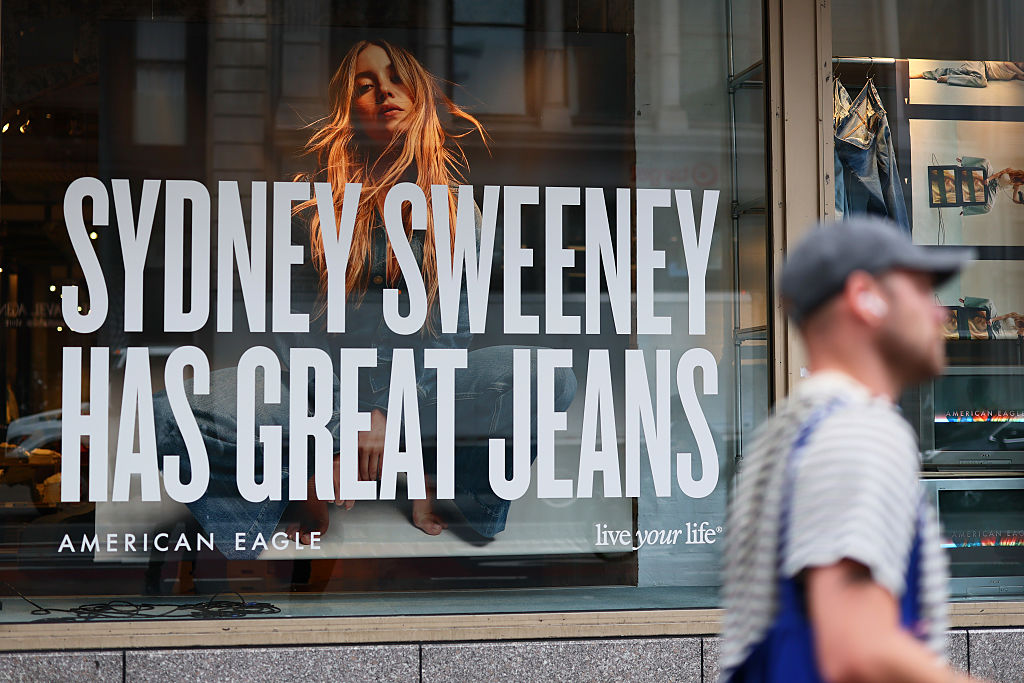
American Eagle is standing by its fall denim campaign starring “Euphoria” and “Anyone But You” star Sydney Sweeney after a wave of criticism accused the ads of leaning into racially coded language and imagery.

The campaign hinges on a pun: Sweeney talks about inherited traits before a male voiceover says, “Sydney Sweeney has great jeans.”

In some ads, “genes” is crossed out and replaced with “jeans.” What AE framed as playful wordplay struck a nerve with critics, who argued it echoed historic eugenics rhetoric, particularly given the ad’s focus on her physical appearance like her blond hair and blue eyes.

Social media reaction was swift, with detractors calling it “tone‑deaf” and “Nazi‑coded,” while supporters, especially conservative commentators, praised the joke and dismissed the outrage as performative.

On Friday, American Eagle posted a statement to Instagram defending the campaign: “This is about the jeans. Her jeans. Her story,” the company wrote, adding, “Great jeans look good on everyone.” The retailer noted that proceeds from Sweeney’s campaign will go to Crisis Text Line to help victims of domestic violence.

Sweeney herself has stayed silent. Still, the uproar has boosted visibility for the brand, driving spikes in online engagement and even a reported uptick in AE’s stock price — suggesting that in the culture‑war economy, controversy can be as valuable as the clothes themselves.

The post American Eagle defends “Great Jeans” campaign after backlash appeared first on Salon.com.

  •  

Sydney Sweeney’s new campaign draws fire for racial undertones

American Eagle’s new fall campaign starring Sydney Sweeney is under fire—not for the jeans, but for the tagline: “Sydney Sweeney Has Great Jeans.”

The phrase, used in bold on billboards in Times Square and Las Vegas, was designed as a denim pun. But online, many saw something else: “great genes,” a phrase historically used to celebrate whiteness, thinness and attractiveness. This makes this campaign seem to be a tone-deaf marketing move.

And it’s not like they were being subtle about it. One campaign advertisement literally has Sweeney “painting” over the words “great genes” to become “great jeans.”

“Maybe I’m too … woke,” one viral post read, “but getting a blue-eyed, blonde, white woman and focusing your campaign around her having perfect genetics feels weird…” Others described the slogan as too close to “master race” propaganda and said it echoed eugenics-era language used to validate and promote the superiority of white beauty.

Eugenics movements in the U.S. often promoted the idea of “good genes” to encourage reproduction among white, able-bodied people while justifying the forced sterilization of others. Critics say those ideas still show up in modern advertising and influencer culture, often unexamined.

American Eagle has not addressed the backlash directly. The campaign features Sweeney modeling a limited-edition “Sydney Jean” denim collection that benefits Crisis Text Line (a helpline for victims of domestic violence), along with AR filters, AI try-ons and massive 3D billboards in Times Square and Las Vegas.

Despite the controversy, the campaign caused American Eagle stock to spike by as much as 16%. Analysts pointed to meme stock behavior, a viral surge driven by retail traders on Reddit and Stocktwits, not by fundamentals. Like GameStop or AMC before it, AEO became a momentary favorite based on online buzz and speculation.

One commenter summed up the tension: “It’s not just about the jeans. It’s about who gets to be the face of America’s ‘best genes.’”

The post Sydney Sweeney’s new campaign draws fire for racial undertones appeared first on Salon.com.

  •  

Ad for Huel meal replacement shakes banned in UK

HelgaQ/Shutterstock

A social media ad for "nutritionally complete" meal replacement shakes was banned by the UK's advertising watchdog over a suggestion the shakes can replace conventional food. Huel's ad, which ran on Instagram and YouTube, showed celebrity entrepreneur Spencer Matthews talking to Huel Founder Julian Hearn about a race-winning athlete who "only eats Huel." — Read the rest

The post Ad for Huel meal replacement shakes banned in UK appeared first on Boing Boing.

  •  
❌