❌

Reading view

MAGA influencers are still paying for the Big Lie

With less than two weeks before some states begin mailing ballots for the 2026 midterms, there is plenty to worry about. Donald Trump is escalating his campaign to interfere with the machinery of American elections, demanding sensitive voter files, threatening state officials with prosecution and rewriting the rules for mail-in ballots. On Monday, the Supreme Court gave the administration a procedural victory that could let parts of Trump’s mail-voting scheme move forward, and new litigation is already underway to stop it.

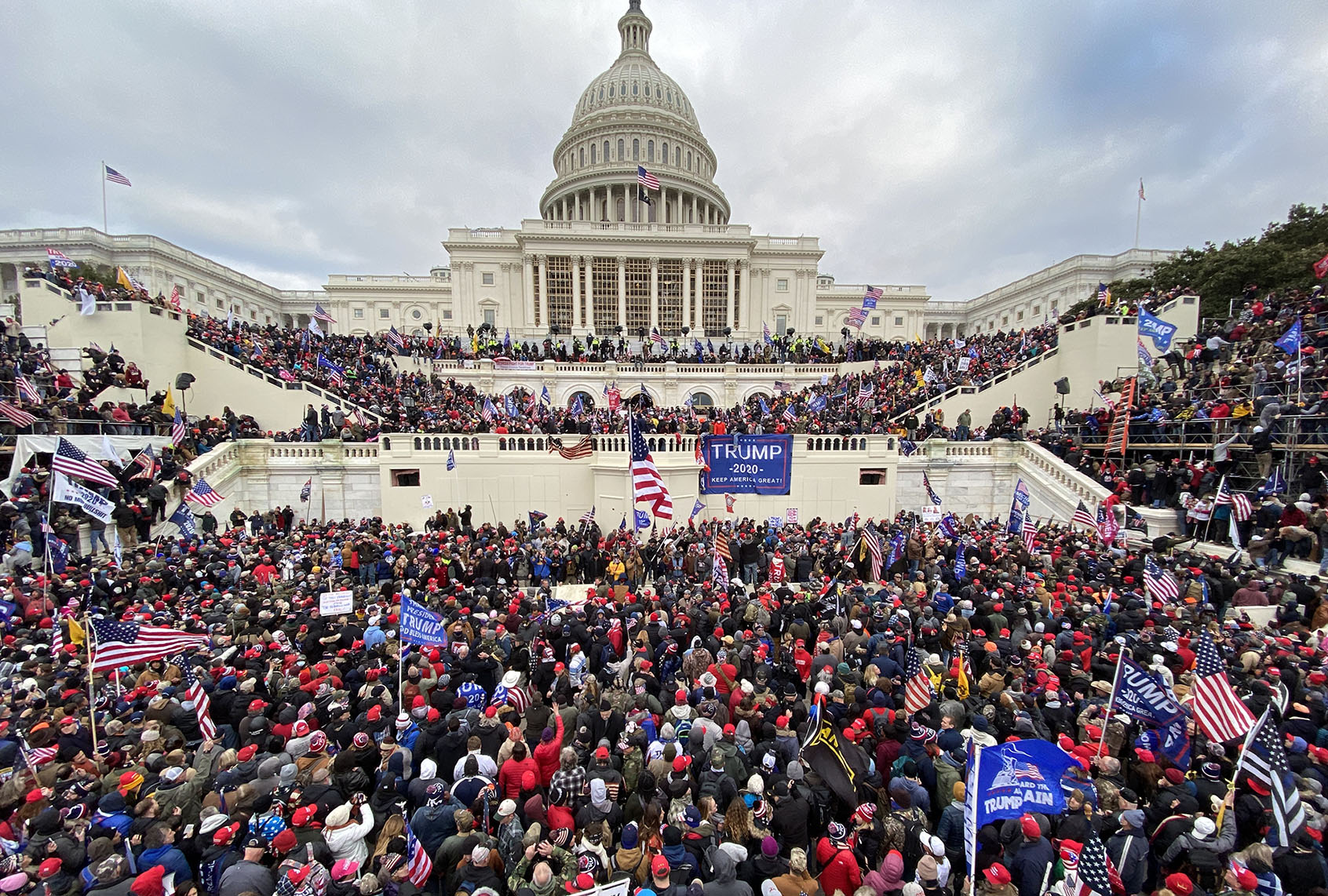
But looking past the daily torrent of alarming headlines reveals another story worth telling. The Big Lie continues to cost its most committed promoters. Many of the MAGA men who cashed in on screaming — falsely — about the 2020 presidential election being stolen are finally facing a legal reckoning for manufacturing the project’s most enduring images.

Dinesh D’Souza, the conservative commentator and filmmaker, settled a defamation case on the eve of trial in Atlanta this month, ending a lawsuit over a so-called documentary released in 2022 that became one of the most influential pieces of post-2020 election conspiracy propaganda. The suit should have stripped “2000 Mules” of any remaining pretense of credibility the moment it was filed, as it  claimed that thousands of people were paid to collect and illegally deposit ballots in battleground states. The film grossed more than $9 million and Trump screened it approvingly at Mar-a-Lago.

One of the supposed “mules” was Mark Andrews, an auditor in Gwinnett County, Georgia, who appeared onscreen in deceptively edited footage returning absentee ballots for himself and four family members before the 2020 election. The film treated a few seconds of surveillance video as license to publicly accuse an ordinary man of an election crime. D’Souza’s voice-over declared, “What you are seeing is a crime. These are fraudulent votes.”

They weren’t. Andrews had done nothing illegal, and after Georgia investigators cleared him of wrongdoing, he sued D’Souza and others involved in the film. The settlement amount remains undisclosed. That is less satisfying than a jury verdict, but it is still a remarkable endpoint for one of the Trump era’s most consequential election-fraud narratives. It also follows D’Souza’s own acknowledgment that the whole project was a fraud. In December 2024 he apologized to Andrews, and Salem Media Group, which distributed the movie, also apologized and withdrew “2000 Mules” and its companion book from distribution.

While D’Souza’s unraveling took years, the next chapter of MAGA’s fraud theater is falling apart in real time. 


Start your day with essential news from Salon.
Sign up for our free morning newsletter, Crash Course.


Earlier this month, conservative provocateurs James O’Keefe and Cam Higby dressed in what they described as traditional Muslim clothing. With O’Keefe in a thobe and Higby in a burqa, the pair walked into Minneapolis polling places during the state’s primary to test a decades-old voter vouching law, which lets a registered voter attest that a newly arrived or recently moved neighbor lives in the precinct. O’Keefe used a badly affected accent and, in one instance, gave poll workers the name of a real registered voter, William Pomeranz, who learned days later that his identity had been used in a viral video without his knowledge. A third member of the group, Anthony Rubin, reportedly told poll workers he wanted to vouch for people he described as recently arrived Hamas members from Gaza. 

None of them actually cast a ballot or completed a registration. Rather than uncovering a loophole, they appear to have landed themselves squarely in legal jeopardy.

Falsely signing a vouching oath is perjury under Minnesota law, punishable by up to five years. Misrepresenting your identity to obtain a ballot is a separate felony. Steve Simon, Minnesota’s Democratic secretary of state, slamming the stunt, noted that fewer than 0.6% of the state’s 2024 votes involved vouching at all, and that roughly 71% of those were already registered voters simply updating an address. Local law enforcement in Hennepin County is now reviewing the footage, which has reportedly been viewed more than seven million times. O’Keefe, who was ousted in 2023 from Project Veritas, the right-wing organization he founded, over what its own board called financial malfeasance, built his career on precisely this kind of stunt. He targeted Minneapolis after Trump zeroed in on the state as a hotbed of election fraud based on nothing but racist vibes. Now it looks like O’Keefe is left holding the bag.

That is the recurring joke at the heart of MAGA’s election theater: The people who arrive promising to expose a corrupt system keep discovering that the system has rules for them too.

That is the recurring joke at the heart of MAGA’s election theater: The people who arrive promising to expose a corrupt system keep discovering that the system has rules for them too.

Scott Presler and his political action committee, Early Vote Action, offer another version of the same schtick. The watchdog group Public Citizen recently filed a complaint alleging that Presler and his group failed to register or disclose spending related to their campaign to unseat three Pennsylvania Supreme Court justices in the state’s 2025 retention election. Under Pennsylvania law, any committee spending more than $250 to influence an election, including a judicial retention race, must register and disclose its donors and expenditures. Presler’s operation reportedly ran a two dozen person paid field staff in the state, sent tens of thousands of postcards to Amish voters and texted more than 100,000 people in Bucks County alone, yet it never once showed up in the state’s campaign finance database. The complaint alleges that Presler and Early Vote Action sidestepped transparency laws meant to let voters know who is bankrolling attempts to hijack their judiciary. 

The justices Presler tried to unseat, all Democrats, were reelected anyway. Since then, he has become a prominent outside advocate for the SAVE America Act, pressing Senate Republicans to embrace the Trump-endorsed legislation’s proof-of-citizenship and voter-identification mandates. A separate Public Citizen complaint alleges that neither Presler nor his affiliated super PAC registered lobbying disclosures for activity promoting the measure on Capitol Hill.

The pattern here is unmistakable.

The Trump administration is building an extraordinary federal apparatus, backed by the Supreme Court’s blessing on at least part of it, to police an epidemic of noncitizen voting that its own Justice Department cannot document well enough to win a single voter roll case in 23 tries. The propagandists who manufactured the visual evidence for that epidemic, chief among them D’Souza, are settling defamation suits and apologizing to the private citizens they smeared. The stunt artists trying to manufacture a fresh round of viral fraud evidence are instead generating criminal referrals against themselves. And the MAGA media personalities raising money and influence around the cause of “election integrity” are themselves facing questions about whether they followed the disclosure rules that govern political spending.

The Big Lie was never just a rhetorical grievance nursed by Trump’s inner circle. It was a lucrative enterprise built to destroy our faith in elections. Instead, it continues to expose the people who sold it. 

The midterms will bring more attempts to manufacture doubt with ominous warnings and baseless allegations of fraud. The lesson from 2020, despite Trump’s return to the White House, has not changed. Do not yield to MAGA’s performance. Fight back and protect the people who administer elections.

The post MAGA influencers are still paying for the Big Lie appeared first on Salon.com.
  •  

How Trump is prepping to deny election results

With the midterm elections a week away, President Donald Trump is pre-emptively casting doubt on the results if they are unfavorable to the Republican Party. On Tuesday, reporters asked the president if he would unconditionally accept the results in November. “I will if they’re honest elections,” Trump responded.

It’s a familiar line for Trump. As the Washington Post summarized, “In 2016, Trump said he would accept the election results ‘if I win.’ In 2020, he repeatedly declined to commit to accept the results, saying ‘We’re going to have to see what happens.’ In 2024, Trump said he would accept the results if the election was ‘fair and legal and good.’”

Trump has yet to admit he lost the 2020 election against Joe Biden, in one six month period alone claiming he won more than 100 times, despite there being no evidence of widespread voter fraud. The president has lost at least 64 court cases challenging the results.

But some analysts are growing increasingly worried Trump might do more to annul voting results this time around, especially as the Department of Justice is getting increasingly involved in the elections. Earlier this month, the DOJ filed criminal charges against more than two dozen green card holders in California, accusing them of illegally registering to vote or casting fraudulent ballots. Last week, Trump personally requested a DOJ lawsuit against Alaska to block certification of the state’s Senate election if the Republican incumbent loses. The New York Times reported it was “a highly unusual move that signaled an effort to potentially intervene in the outcome.”

On Monday, the Trump administration threatened Washington state with legal action if it did not purge around 400 people from its voter rolls that they claim are not U.S. citizens.


Start your day with essential news from Salon.
Sign up for our free morning newsletter, Crash Course.


“The timing of this request — one week before the General Election — is no doubt intended to cast unfounded suspicion on the results,” Washington Secretary of State Steve Hobbs said in a statement on Monday. “We take our responsibility to protect voter information seriously and will only respond to requests that follow due process. We saw what happened in California and don’t want Washingtonians to be harassed.”

Even if these attempts don’t work, the overall goal may be to rattle voter confidence in the security of the U.S. elections. “This is part of the election takeover playbook that I’ve seen around the world and unfortunately in some other autocratic environments,” Michael McNulty, a former senior elections adviser for the U.S. Agency for International Development, told the New York Times. McNulty has studied elections in countries like El Salvador, Hungary and Venezuela. “Trump has essentially undermined the independence of the DOJ and it’s been weaponized,” he said.

“Time and again, the evidence shows U.S. elections are secure. State and local election officials, in communities across the country, painstakingly implement layered security to protect the integrity of elections,” Ben Hovland and Emma Hulbert write in a recent article for Center for American Progress. “Despite all this evidence, the Trump administration continues to call the security of elections into question. As the Center for American Progress has detailed, alleging voter fraud or invoking national security emergencies provide powerful pretexts for challenging election results, despite the fact that these claims are contrived to justify just such election subversion. Widespread voter fraud is a myth, and presidents have no constitutional or legal authority to take control of elections.”

The post How Trump is prepping to deny election results appeared first on Salon.com.

  •  

Meta’s $25 billion legal loss just put blood in the water

Mark Zuckerberg seen through the window of a black SUV.

When attorneys general from across the US announced a $17 billion settlement with Meta this summer, the sum was unprecedented. But a ruling last week by a New Mexico judge blew that number out of the water. The judge ordered Meta to pay $25 billion to resolve claims that Meta misled users around the 2018 Cambridge Analytica scandal and related incidents. Similar claims were resolved by the settlement with most other states. The outcome raised an obvious question: Should these states have asked for more?

The answer depends on a mix of factors, including whether the $25 billion order stands up to Meta's legal challenges. Meta's chief legal of …

Read the full story at The Verge.

  •  

MAGA influencers use Brazil’s election to sow doubt on midterms

For a preview of the conservative copium that could follow the Nov. 3 midterm election results, look no further than the conspiracy theories MAGA’s biggest voices are already spinning about Brazil. The immediate reaction to the country’s presidential race makes clear that MAGA is preparing to unleash a predictable wave of election denialism. 

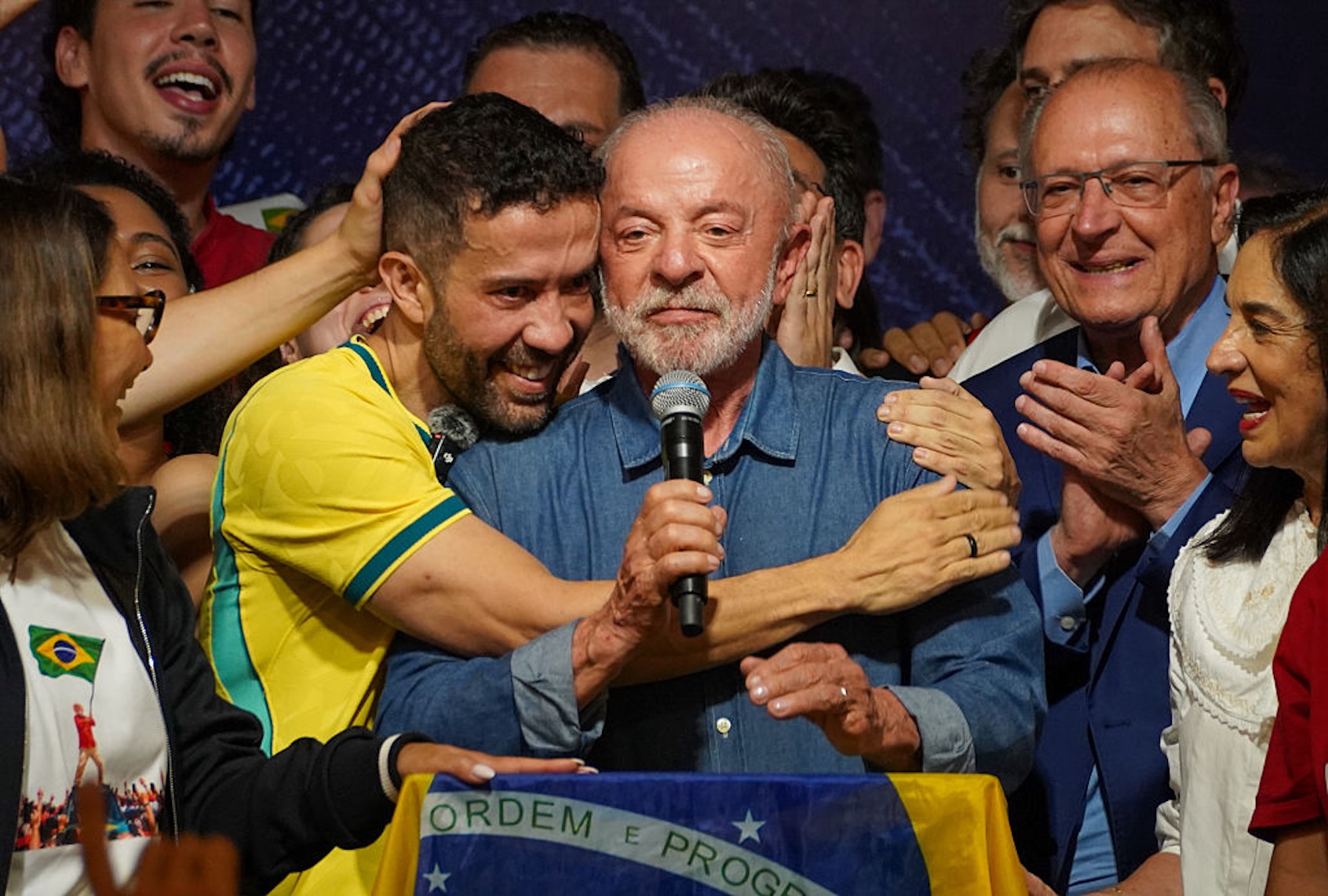
On Sunday, the incumbent leftist Luiz Inácio Lula da Silva came back from a first-round deficit to beat Sen. Flávio Bolsonaro, son of the former right-wing president Jair Bolsonaro. It was the first time since Brazil returned to democracy in 1985 that the candidate who lost the first round won the runoff, and it made Lula the first person elected to his country’s presidency four times. Before the disappointment had settled, Lula’s MAGA detractors were turning an inconvenient result into an international election fraud narrative — and warning their followers that the same supposedly sinister forces were coming for the United States. Conservative podcaster and former Trump strategist Steve Bannon made the connection explicit: Without action, he claimed on his show, it would happen “next Tuesday.”

Other influential MAGA figures immediately began manufacturing reasons to doubt the outcome in Brazil, telling Americans that a right-wing defeat cannot possibly reflect what voters wanted. Nick Shirley primed his audience’s disappointment with an exuberant before picture. The 24-year-old YouTuber traded his trademark hoodie and the Minnesota daycare centers that gained him right-wing notoriety for a spot on Bolsonaro’s campaign bus and a pre-election parade, then reported back to his followers. “I have never seen crowds and energy like this for an election,” he posted Saturday, adding that thousands of people were chanting that Lula is a thief whose place is prison. On Sunday Shirley declared that Brazil’s right-wing revolution had begun. Then Lula won by roughly 4.4 million votes and the revolution lasted about as long as the polls stayed open. The hoodie had returned on Monday, along with Shirley’s posts about corruption and election meddling.

The centerpiece of the fraud story is a two-hour extension of voting on Sunday, ordered by Supreme Court Justice Cristiano Zanin amid bad weather and transportation problems. Zanin once served as Lula’s personal lawyer, and the American right has treated that line on his résumé as a signed confession. MAGA conspiracy theorist Jack Posobiec called the ruling unprecedented and said it came from a judge loyal to Lula. 

What MAGA leaves out is that both campaigns asked for more time. Lula’s side cited bus delays in cities where he was strong. Bolsonaro’s side cited flooding in regions largely loyal to him. In a race decided by millions, early data shows that fewer than 40,000 votes were cast during the added window. Still, Elon Musk told his 241 million followers that the math doesn’t add up. But it does. It just doesn’t add up to the answer he wanted.


Want more sharp takes on politics? Sign up for our free newsletter, Standing Room Only, written by Amanda Marcotte, now also a weekly show on YouTube or wherever you get your podcasts.


Bolsonaro himself initially called the extension a “dirty trick” and said he would challenge the outcome. Donald Trump supplied his blessing. At Maryland’s Joint Base Andrews, where he was about to board Air Force One to hold a rally for Sen. Cindy Hyde-Smith, who is in a surprisingly tight re-election bid, the president told reporters, “It looked like another rigged election, frankly.” The White House Rapid Response account promptly promoted the clip, even as the president insisted he had not taken sides. He offered no evidence because there is none. 

Minutes after Trump signaled that he would not intervene, Bolsonaro effectively conceded and backed off his call to annul the election results. He said he would instead sue Lula for abusing the power of incumbency. “I wasn’t the one who lost; the system won,” Bolsonaro said, vowing to turn the overwhelming conservative legislature into a fortress against what he called barbarism.

The personal and political networks linking the MAGA movement to Bolsonaro’s ultra-conservative apparatus run deep, and they have been cultivated over years.

The personal and political networks linking the MAGA movement to Bolsonaro’s ultra-conservative apparatus run deep, and they have been cultivated over years. Prominent figures within the American right, including Bannon and senior MAGA advisers like Jason Miller, have long maintained intimate ties with the Bolsonaro family. Organizations like the Conservative Political Action Conference have repeatedly expanded their presence into South America, hosting regional summits that fuse American-style culture war rhetoric with local right-wing nationalism. Mar-a-Lago has also served as a gathering ground for the Bolsanaros. When Jair Bolsonaro faced legal consequences and potential imprisonment in Brazil following his own post-election maneuvering, his political allies in the U.S. took the development as a personal warning, treating the legal accountability of a foreign leader as a direct threat to their own domestic political project.

Bannon’s “War Room” podcast has become a hub for election denialism. Right-wing pundits and administration officials alike have used the show to argue for a national emergency declaration covering the midterms. Bannon spent Monday demanding that Secretary of State Marco Rubio cut off diplomatic relations with Brazil and shut down trade entirely. The goal of his rant was clear: to convince MAGA that democratic institutions across the globe have been captured by hostile forces, rendering standard electoral participation obsolete unless it is backed by relentless resistance. Alex Jones declared that Brazil must be liberated. The disgraced former national security adviser Michael Flynn asked whether Brazil was turning into a banana republic. Kari Lake, who is hardly a neutral authority on losing gracefully after claiming fraud in her own losing bids for Arizona governor and the U.S. Senate in 2022 and 2024, said Brazil’s elections reminded her of Arizona’s. 

Running underneath the fraud talk is a conservative creation myth. MAGA lore holds that the Department of Government Efficiency’s dismantling of the U.S. Agency for International Development dismantled the left’s machinery in Latin America, and its triumphalists claim the left has not won a single election in the region since. But much of the region has been governed from the right for decades, and its longest-lived left-wing governments expelled USAID years ago precisely because they regarded it as a hostile American instrument, not a benefactor.

The immediate deluge of claims alleging manipulation and shadowy state intervention is more than standard right-wing culture wars. They are a calculated effort to prime American audiences for the idea that any electoral outcome unfavorable to Trump’s MAGA coalition is inherently fraudulent. The narratives depend on a selective performance of democracy in which visible enthusiasm for a preferred candidate counts as evidence of popular legitimacy, all while the actual votes can be dismissed as fraudulent whenever they produce an unwelcome result. Crowds become proof that a candidate must win. A defeat becomes proof that the system is rigged. No outcome can disprove the theory.  

House Minority Leader Hakeem Jeffries, D-N.Y., recently told CNN that Americans have to assume Republicans will try to come up with any diabolical scheme to prevent Nov. 3 from being a free and fair election. After watching Brazil, you could argue the scheme is no longer diabolical so much as announced.

The post MAGA influencers use Brazil’s election to sow doubt on midterms appeared first on Salon.com.

  •  

Americans hate tipping. So why haven’t they stopped?

I am a recovering people-pleaser, though I admit most of the recovering still takes place in private. I rehearse difficult conversations for weeks — on walks by the lake, in the shower, in the mirror — before actually having them. I’ve let subscriptions renew rather than endure the discomfort of calling to cancel. I once managed to pay extra for one of the worst haircuts of my life. And then there was the onyx. At a metaphysical shop, a cashier with impeccable black nails and at least six rings that looked like they had their own elaborate backstories silently turned a touchscreen toward me. It asked whether I’d like to leave a tip. Now, I’d never considered the etiquette of tipping for a rock, but something about the setting made pressing “No Tip” feel like tempting fate. I selected 15%, unwilling to risk the karmic consequences.

It took a blueberry muffin to break me.

At an airport coffee shop, I’d retrieved a bottled juice from the refrigerator and selected a muffin, mummy-wrapped in plastic cling wrap. The cashier scanned my items, and the tablet swung around. Would I like to leave a tip? My suggested options were 20%, 23% and 25%.

For once in my life, I declined. The muffin, I reasoned, could hardly take it personally.

For all the complaints about tipping culture, however, Americans appear remarkably reluctant to abandon the practice where it’s traditionally been expected. According to new data from restaurant technology company Toast, highlighted in an October 10 Food & Wine report, the average tip at full-service restaurants was 19.1% in the second quarter of 2026, while quick-service restaurants averaged 15.8%. Those figures, drawn from card and digital transactions that included gratuities, have barely budged over the last two years. Meanwhile, a 2025 Bankrate survey found that 63% of American adults held at least one negative view about tipping, including 41% who believed tipping culture had gotten out of control. Yet 70% of respondents who ate at sit-down restaurants said they always tipped their servers.

In other words, Americans have developed a fairly robust appetite for complaining about tipping, but considerably less enthusiasm for actually stopping.

The phenomenon has acquired its own name: “tipflation.” According to Google Trends, searches for the term were virtually nonexistent before November 2022, only to peak in popularity the following summer. The timing was hardly coincidental. Americans had spent much of the preceding year grappling with soaring prices on everything from groceries to gasoline. Now, just as they were adjusting to the fact that seemingly everything cost more, they were being asked to leave gratuities on transactions that had never previously seemed to require them.

Digital payment systems have made this negotiation both more ubiquitous and, somehow, more awkward. “The screen is just going to ask you a few questions,” a cashier might say, employing a euphemism now familiar to anyone who has purchased a coffee in the last several years. What might once have been a couple dollars dropped into a jar has become an additional decision at checkout, complete with suggested percentages and the opportunity to feel vaguely terrible about selecting none of them.


Want more great food writing and recipes? Sign up for Salon’s free food newsletter, The Bite.


And the irritation isn’t entirely financial. The same screen might appear whether someone has prepared six elaborate espresso drinks or simply scanned a packaged muffin, leaving customers to make impromptu judgments about the value of someone else’s labor. Is the employee earning a tipped wage? Does the gratuity go directly to them? These are rather complicated questions to consider while standing in line for coffee, particularly when the person behind you is waiting to order. What was once an opportunity to offer something extra has become a request customers must actively decline.

There is, however, an important distinction between resenting a tip request at an airport kiosk and deciding not to tip the person who has spent the last hour bringing you dinner. In most of the country, restaurant servers work under a compensation structure that explicitly assumes gratuities will make up a substantial portion of their earnings. Even where employers are required to pay the full minimum wage before tips, gratuities can remain an important part of a server’s income. 

Over time, this economic arrangement has also hardened into a remarkably durable social contract. Americans may disagree about whether to tip someone who pours an iced coffee from a jug, but at a full-service restaurant, the expectations are considerably clearer. The bill arrives, you calculate a gratuity and, assuming nothing has gone terribly wrong, you leave something in the neighborhood of 20%. For many diners, myself included, it’s simply part of the cost of eating out, as much as the entrée or the glass of wine.

Of course, the trouble with calling tipping a social contract is that it makes it sound as though we all sat down and agreed on the terms. We didn’t. The practice, imported from European aristocratic traditions, took hold in America after the Civil War, when white employers found in gratuities a convenient excuse to pay newly emancipated Black workers little or nothing. It became especially entrenched in the service industry, and when Franklin Roosevelt signed the Fair Labor Standards Act in 1938, restaurant workers were among those excluded from its original minimum-wage protections. The federal tip credit, formally introduced in 1966, further institutionalized the notion that customers could be responsible for supplying a portion of workers’ wages.

There’s a reasonable argument, then, that this is a social contract overdue for renegotiation. But changing it requires more than convincing diners to stop leaving an extra $20 on the table. Restaurants operate on notoriously narrow margins, and even when price increases are necessary, customers don’t always greet them enthusiastically.

During the recent egg-price spikes, I watched some of my favorite breakfast spots paste new prices over old ones, often with apologetic little notes explaining the change. That was just the cost of one ingredient; imagine trying to explain an entirely different system of paying the people who prepare and serve the meal.

Still, some restaurants have been experimenting with precisely that. In a 2022 interview with Salon’s Maggie Hennessy, Ron Hsu, chef-owner of Atlanta’s Lazy Betty, described his decision to move away from the traditional tipped-wage model in favor of paying employees at least the federal minimum wage and using service charges to distribute compensation more equitably between front- and back-of-house workers.

Interestingly, Hsu’s restaurants were experimenting with different versions of that arrangement. At the higher-end Lazy Betty, the service charge was incorporated into menu prices; at the more casual (and now-closed) Juniper Cafe, customers saw an additional 20% on their bills. Hsu said the second approach met with more resistance, in part because staff were uncomfortable explaining the unfamiliar model to customers. Even when the money was ultimately going toward the same purpose, how it appeared on the bill mattered.

“One good thing Covid did is make everyone more aware of how difficult working in restaurants is,” Hsu told Hennessy. “You can’t work remotely if you’re cooking or serving food. Because so many restaurants rely on face-to-face interaction to put forth their product, a lot of our customers were like, ‘they’re working during a pandemic. We’re going out as entertainment, they’re working to survive.’ Everyone’s awareness and empathy increased.”

Still, he wasn’t under any illusions about the difficulty of changing the system.

“Of course, there’s still a lot of pushback. Not everyone that comes in likes it,” he acknowledged.

“But it’s gotta start somewhere. Danny Meyer tried implementing it in his restaurants [Union Square Hospitality Group] in New York in 2015, but it didn’t work. I think we’re decades away from truly seeing a different model. It is happening; we just have to do a little at a time and keep chipping away.”

And perhaps that’s what makes the online backlash against tipping more interesting than its angriest manifestations suggest. Consider r/EndTipping, a Reddit community whose name sounds like a call to arms against the gratuity line. Its stated mission, however, is to advocate for a system in which workers aren’t dependent on tips, with labor costs folded into the prices customers see upfront. Members disagree about how to get there — including whether refusing to tip under the current system advances that goal or simply punishes workers — but the distinction matters.

Perhaps the more productive conversation isn’t about whether Americans should tip more or less, but about how we build a hospitality industry in which workers are fairly compensated and diners understand what they’re paying for. That will require experimentation, transparency and a willingness to accept that the true cost of a restaurant meal may look a little different than we’re accustomed to.

In the meantime, refusing to tip your server isn’t going to dismantle the system. It’s just going to leave your server with less money.

But the next time a touchscreen asks you to leave a gratuity on a piece of onyx? Feel free to decline. I suspect the universe will understand.


The post Americans hate tipping. So why haven’t they stopped? appeared first on Salon.com.

  •  

Trump’s Big Beautiful Bill is back to haunt GOP’s midterms

Republicans wanted the 2026 midterms to be a victory lap for Donald Trump’s tax cuts. Instead, the GOP’s signature legislation from the president’s second term — 2025’s One Big Beautiful Bill Act — is shaping up to be a sleeper vulnerability for the party. 

When Republicans first passed Trump’s signature bill in party-line votes in both the House and Senate in 2025, its tax cuts took effect immediately, while the deepest cuts to Medicaid were scheduled for after the midterms, when the voters who would feel them could no longer hold anyone accountable. But even then, one of their own issued a warning that now hangs over the midterms. North Carolina Sen. Thom Tillis, who announced his retirement after indicating he would oppose the legislation, told CNN’s Jake Tapper that the bill would result in losses of the kind Democrats suffered in 2010 after passing Obamacare. 

Republicans passed the One Big Beautiful Bill Act anyway. Now, across social media, Americans are sharing stories of children cut off from cancer treatment and families struggling to afford prescriptions.

On Tuesday, Children’s Mercy Hospital announced that families in the Kansas City metropolitan area who buy coverage on the Affordable Care Act marketplace will find the region’s only dedicated children’s hospital out of network on Jan. 1 — a devastating development for parents whose children depend on specialized care. It is also the kind of story that can demolish incumbent Kansas Sen. Roger Marshall’s carefully constructed distinction between cutting government spending and hurting actual people.

The story went viral fast. Influencer Jen Hamilton’s video walking viewers through what the Children’s Mercy Hospital news means for families drew 3.2 million views across three social media platforms and was shared on Facebook at 73 times her average rate. Kasey Jackson, a Kansas City mother whose son is being treated for cancer, posted a series of videos explaining that her family’s marketplace plan would stop treating his hospital as in-network when the new year arrived. Jackson explained that she previously sold her small business to pay for her son’s  leukemia treatments, but had few options left with no health plans to choose from. “As entrepreneurs, we don’t really have access to a group plan, so we have to go through the [Affordable Care Act] because there’s nobody that will provide private insurance for a kid with a pre-existing condition,” she explained. One clip passed half a million views.

The Children’s Mercy news arrives at an especially dangerous moment for Marshall, who has found himself in the middle of a re-election bid that was never supposed to be competitive.

The Children’s Mercy news arrives at an especially dangerous moment for Marshall, who has found himself in the middle of a re-election bid that was never supposed to be competitive. Kansas has not elected a Democrat to the Senate since 1932, and Trump carried it by 16 points in 2024. Yet the Cook Political Report moved the race to a toss-up this month, and an Emerson College poll gives his challenger, Adam Hamilton, a Kansas City-area megachurch pastor running on the cost of living, a two-point lead.

Republicans have quadrupled their ad spending in the state since late September, a move that must be particularly galling for the party because as a physician, Marshall should have been inoculated against a healthcare attack. Instead, the OB-GYN specialist’s career choices have come under heavy scrutiny. 

In September, The New York Times reported that Marshall’s former practice had sued more than 700 of its own patients over unpaid bills, some as small as $101, and that 81 people were arrested as a result. Hamilton’s campaign built an ad around Meischa Zimmerman, who says she was arrested while eight months pregnant after missing a $50 payment, and found herself pleading not to be handcuffed in front of her two-year-old. “Roger Marshall preyed on the low-income families of Kansas,” she says. The ad has been viewed more than a million times on X. Marshall’s lawyers have called it defamatory, demanding it come down, saying the debt was larger and the arrest was for missing court dates. Marshall himself told cameras there were “no Medicaid cuts” in the law he voted for, dismissing the Times’ reporting as a “hit job.” A doctor-senator insisting the largest Medicaid cut in American history does not exist, while his own brutal record of collecting fees runs in heavy rotation, is the Big Beautiful Bill’s national problem in miniature.

But the social media outrage is not confined to one hospital or one state. The issue is also the number one subject in Senate advertising and the number two issue in House advertising, according to the nonpartisan Cook Political Report’s Battleground Issue Tracker, which found that Democrats are airing tens of thousands more ads and spending tens of millions more on the issue than Republicans, who have all but declined to defend their own law. GOP candidates in competitive races have run a total of four television ads about the Big Beautiful Bill since its passage, according to AdImpact. 

Still, a POLITICO poll released last week found an overwhelming majority of voters know the law and oppose its contents, with their views slightly worse than when the bill was passed and signed into law. At the time, a KFF survey found opponents outnumbering supporters two to one. Since then, the White House’s attempt to rebrand the package as the “Working Families Tax Cuts” has moved almost no one, per the same POLITICO poll. 

The problem for the GOP is that voters do not have to agree with every Democratic argument about healthcare to dislike paying more for their own insurance. In a KFF health opinion poll conducted in June, 37% of Republican voters said healthcare costs were extremely important. More than half of Republican and Republican-leaning independents who identify with the MAGA movement said Congress had done the wrong thing by allowing enhanced Affordable Care Act subsidies to expire, according to KFF polling released in March. Among marketplace enrollees, 62% blamed Republicans or Trump for the expiration.

Meanwhile, Vice President JD Vance recently announced that the Centers for Medicare and Medicaid Services had canceled ACA enrollments covering 760,000 people, citing claims of widespread fraud. The Trump administration views its focus on fraud in federal health programs as a message that will resonate with voters. A KFF poll in mid-September found that 44% of voters and 54% of Republican voters call fraud in government programs extremely important for candidates to address, and a separate KFF and Associated Press survey found it was the top topic rural Republicans want to hear about. The administration withheld about $2 billion in Medicaid funding from California, and announced plans to defer more than $500 million in federal funds from Minnesota, claiming the state had failed to protect its Medicaid program from abuse.

Republicans are betting on energizing their base — and hoping to pull along persuadable voters. Polling, however, points the other way. A fraud crackdown may be the top concern for Republican-leaning voters, but only 44% of voters overall call it extremely important, according to KFF, which found healthcare to be the top issue for the electorate at large. 


Want more sharp takes on politics? Sign up for our free newsletter, Standing Room Only, written by Amanda Marcotte, now also a weekly show on YouTube or wherever you get your podcasts.


Some of the largest disruptions from the Big Beautiful Bill Act that Republicans scheduled for later are being moved forward by state budgets. Because the law shifts enormous new costs onto states in the coming years, some state lawmakers are cutting now to brace for the shortfall. Colorado, facing a $1.5 billion hole, has cut what it pays doctors who treat Medicaid patients. In Maine, a hospital has eliminated its labor and delivery unit. The $50 billion rural health fund that Republicans added to the bill at the last minute amounts to a fraction of what rural communities stand to lose from the same law.

Democrats who have made the bill’s Medicaid cuts a leading message are tied or leading in many battleground races, including in states Trump previously won. In Georgia, ACA enrollment dropped by more than half a million, hitting Trump strongholds like the district in northwestern Georgia formerly represented by Marjorie Taylor Greene, where the number of uninsured is higher than the national average. Incumbent Sen. Jon Ossoff, D-Ga., has been laser-focused on hitting GOP cuts on the campaign trail all year. In Maine, incumbent Republican Sen. Susan Collins is being attacked by Troy Jackson, her Democratic challenger, for casting a procedural vote to advance Trump’s cuts to Medicare and Medicaid to a Senate floor debate.,Although Collins voted against final passage of the One Big Beautiful Bill, Jackson argues her vote helped pave the way for its enactment. In the House, California Rep. David Valadao’s Central Valley toss-up district, where roughly six in 10 constituents are enrolled in Medicaid, could help give Democrats control of Congress. Valadao, a Republican, voted for the Big Beautiful Bill. During a televised Oct. 6 debate, he said there are no actual cuts to Medicaid. His Democratic challenger has supported Medicare-for-All. 

The GOP’s scramble explains why, weeks before the election, the Trump administration began mailing one-time payments of $500, along with a letter from the president touting his health record, to more than 950,000 people in the 30 states that use HealthCare.gov. The money comes from accumulated marketplace user fees, but only enrollees who bought coverage without premium subsidies qualified, which means roughly one in 20 marketplace customers received a check while the rest got the higher bills. Trump has also promised every American adult $5,000 if Republicans keep Congress, and Medicare beneficiaries have been told to expect $90.

But it is not just drastic healthcare cuts driving voters’ alienation from the GOP. An analysis published Thursday showed that millions of Americans have lost critical food assistance since Trump signed last year’s massive Republican tax giveaway for the superrich, with soaring grocery prices and cuts to school meals exacerbating the crisis. According to a report from the Center on Budget and Policy Priorities, approximately 5.5 million people, including roughly two million children, have lost Supplemental Nutrition Assistance Program assistance since July 2025. SNAP participation and spending have been falling, and the decline is much deeper than the Congressional Budget Office initially projected. These are by far the deepest SNAP cuts in history, and each month, new data reveals the damage is worse than previously anticipated. Republicans have responded that a slight reduction from an explosive increase is hardly a cut, and they have cheered SNAP participation returning to pre-pandemic levels, ignoring the mounting human toll. 

As Election Day approaches, the reality of these policy choices has turned the GOP’s signature legislative victory into a major political liability. The strategic miscalculation of the One Big Beautiful Bill Act is getting harder for conservatives to contain. By forcing millions of Americans to choose between basic medical care and daily necessities, Republicans transformed tax cuts for the rich into a personal crisis unfolding on screens and in living rooms nationwide.

The post Trump’s Big Beautiful Bill is back to haunt GOP’s midterms appeared first on Salon.com.

  •  

Even Jesse Watters seems tired of pushing Fox News’ culture war

There’s this old joke about a guy’s first day in hell. He’s being given the orientation: Here’s where we keep the pitchforks. Here’s where we make the printers. Then the time comes to pick his eternal punishment. The first room is fire and brimstone, eternal agony. “That’s not for me,” the man says. The second is full of people being eaten by animals. “Pass,” he says. In the third room, he finds people sipping coffee while waist deep in excrement. “I think I can handle that,” he says. The door closes behind him as a demon yells, “Coffee break’s over! Back on your heads!”

I’m not naive enough to think that Jesse Walters came to Fox News during a proverbial break in their typical wallowing. He came on as a production assistant to former host Bill O’Reilly during the boom years of George W. Bush’s first term. Watters made a name as an liberal-needler, confronting progressive targets in the halls of congressional office buildings and peppering them with bad faith questions, and he’s since parlayed his willingness to be irritating into a decades-long career. Now nearing 50, there are signs that Watters is tiring of playing the enfant terrible, that he’s over standing on his head and then coming up to flash the requisite grin. 

Take, for example, his subtle distancing from Mike Rogers and Ken Paxton, the Republican Senate nominees from Michigan and Texas. On his afternoon panel show “The Five” earlier this month, Watters refused to wholeheartedly join in on bashing James Talarico, Paxton’s Democratic opponent in the Lone Star State. While his co-hosts jeered at Talarico for being weak — and possibly even vegan — Watters admitted that Paxton’s past fraud allegations and general demeanor marked him as a bit of a creep. 

“[Talarico is] running against Paxton, and Paxton has a lazy eye and this whiff of corruption around him,” Watters said. “There’s just something off-putting about him.” 

Likewise, while covering the Michigan Senate race, Watters has been remarkably friendly toward the Democratic nominee, Dr. Abdul El-Sayed. While the progressive rabble-rouser represents the exact opposite of nearly everything Fox News stands for, he still seems to pass the “would like to have a beer with him” test. After a contentious interview with the candidate on Aug. 25, Watters admitted that El-Sayed was “not your typical stiff,” even though he thought his policy goals were the work of a “lunatic.” 

“I actually like Abdul,” Watters said. “I probably shouldn’t like him, but I do.”

It’s not the first time that Watters has been slightly out-of-step with his network. Attorney General Todd Blanche dropped by “Jesse Watters Primetime” on his first day on the job, almost certainly expecting a friendly interview. Watters grilled Blanche about the Justice Department’s handling of the Epstein files and accused him of not understanding why Americans felt stiffed by their slow-walked release. 


Want more sharp takes on politics? Sign up for our free newsletter, Standing Room Only, written by Amanda Marcotte, now also a weekly show on YouTube or wherever you get your podcasts.


Lately, Watters has been openly grousing about Fox News’ coverage of the upcoming midterms. The polling does not look good for Republicans, with reliable states like Texas and Alaska seemingly turning into coin tosses. While the Senate projections are narrower, most prognosticators expect Democrats to take back the House and narrowly win the upper chamber. Watters noted that the only path to avoid a congressional bloodbath for Republicans was amping up the “fear porn.”

“You have to say, ‘These people are going to take your healthcare, they’re going to let in the Third World, they’re going to jack up your taxes,’ and that’s what’s going to get people to come out to vote,” he said on Oct. 15. “You have to say, these people are scary and dangerous.”

But Watters seems to be growing weary of flimsy culture war fights. Earlier this week, the host rejected a planned segment on the WNBA and the trans panic surrounding the league — in which no trans athletes play — that his network has played an integral role in fostering.

“I hate the story,” he said on “The Five.” “I hate the WNBA. I don’t watch it. No one watches it. The only time we talk about it is like, they fouled the white star too hard or someone wore a t-shirt . . . I don’t want to push this story anymore! I want to leave this story alone! I am no longer talking about the WNBA. As of now, I boycott this segment.” 

Watters has seen the polling. In his “fear porn” hot tip, he noted that the MAGA base will come out and vote, but that the rest of the GOP coalition is unmotivated. In fleeing from the talking points of a Trump administration gloating over an unpopular war, Watters appears to be distancing himself from election results that are, at best, likely to be deeply embarrassing.

In fleeing from the talking points of a Trump administration gloating over an unpopular war, Watters appears to be distancing himself from election results that are, at best, likely to be deeply embarrassing.


Watters has weathered enough sea changes over his decades at Fox News that he can chart the tides. He made the turn from gleeful prankster to established host as the nation soured on Bush’s brand of “aw shucks” neoconservatism. He held on through Trump’s various impeachments and election losses thanks to a winking persona that could quickly drop any talking point that didn’t go over. Now that the coffee break is almost over, that the second Trump administration’s brief period of celebratory cruelty is almost certainly coming to an end, Watters isn’t quite ready to get back on his head. 

His smug presentation won’t jibe with a hamstrung Trump administration, and there’s no room for outsider outrage while their guy is still in the White House. Look for Watters’ shows to get all the more murky and interesting in the back half of Trump’s term. Expect him to run from issues around gender and immigration, especially once the new Congress is in session and hammering Trump daily on kitchen table issues. 

You have to wonder if he’ll lose a bit of the arrogance, if the space between Watters’ segments and the network’s chosen tack will grow even wider. After all, it’s hard to be self-satisfied eating in that third room, and anyway, according to Fox News, that’s supposed to be the Democrats’ job.

The post Even Jesse Watters seems tired of pushing Fox News’ culture war appeared first on Salon.com.

  •  

Iran war could last another year, Trump ambassador says

On Thursday, President Donald Trump posted to his social media website a headline from the Wall Street Journal: “More oil is now coming out of the Persian Gulf than before the Iran War.” While this is indeed what the Journal used as a headline in a recent story, the president did not link to the article or give more info beyond that. As the report reads, “Middle East oil flows, including shipments through Hormuz and alternative routes across the region, averaged more than 24 million barrels a day in the week through Oct. 18, surpassing prewar levels of 23.3 million, according to ship tracker Kpler.”

Those details reveal a difference of roughly 700,000 barrels of oil, which is a lot of oil to be sure, but only 3% more than the 23.3 million before Israel and the U.S. launched a war against Iran on Feb. 28. So we’re basically back to where things were before the fighting started.

Regardless, it doesn’t appear that this 3% increase is going to bring down oil prices any time soon. On Friday, the price of Brent crude, the international oil benchmark, reached more than $117 a barrel, the highest level since April, and close to the highest levels since the war began, according to the New York Times. This is in spite of Trump desperately trying to bring down the cost of diesel, which averaged an all-time high of $6.52 per gallon on Sept. 22 and as of Friday, sits at an average of $6.31 per gallon. Regular unleaded is averaging about $4.29 a gallon.

Among other moves, Trump has slashed rules for truckers, offered farmers $8 billion in relief and struck a deal with Russian President Vladimir Putin to ease fuel sanctions, a move critics have said may be illegal. On Friday, the first shipment of Russian oil departed on a tanker headed to the U.S.


Start your day with essential news from Salon.
Sign up for our free morning newsletter, Crash Course.


None of this is predicted to change the cost of oil any time soon, according to experts. “The president tends to discount long-term losses over short-term gain, and I am skeptical if there is any short gain to be had here,” said Chris Borick, a pollster and political scientist at Muhlenberg College in Pennsylvania, told Reuters Friday.

Meanwhile, fighting in the Middle East continues, with at least seven commercial oil tankers damaged by either Iranian attacks or naval mines in the Strait of Hormuz on one night alone, which may possibly be the largest single-day number of vessels damaged in the waterway since the war started. 

Yet there seems to be no close end to the war. In fact, the U.S. could still be stuck in a stalemate with Iran a year from now, according to Mike Waltz, Trump’s U.N. ambassador to the UN. In an interview with the Financial Times published Friday, Waltz said “the president and the U.S. Navy can maintain this blockade [on Iranian ports] for the foreseeable future,” he said, adding that the Trump administration is “tightening” its economic pressure on Iran. “I’m not going to put out hypotheticals. One would hope that they’ll come to the table in a meaningful way before that,” Waltz said.

The post Iran war could last another year, Trump ambassador says appeared first on Salon.com.

  •  

A tale of two election ads offering different visions for America

“My name is Abdul; it means servant.” So begins the most compelling ad of this year’s election cycle. Dr. Abdul El-Sayed speaks, simply and directly, to the camera. Seated in a brown leather armchair while holding a coffee mug, Michigan’s Democratic Senate nominee lays claim to his Muslim faith in straightforward, affecting terms. 

“I pray everyday,” he says. “I reflect on my role in this life, on this earth, how we leave it better than we found it, to serve God, to serve our neighbors.”

A cloud of suspicion, much of it tangled up in his ethnicity and religion, has hovered over El-Sayed’s candidacy. The othering has been both blatant and subtle. In August, I spoke with Sen. Tommy Tuberville, R-Ala., as he made his way from the Capitol subway to his Senate office the day after El-Sayed’s primary win. Tuberville told me the Michigan Democrat was “a cheerleader for 9/11” and “basically” a terrorist. A pair of debates has seen El-Sayed’s Republican opponent, former Rep. Mike Rogers, accusing him of being “bought” by and “pledg[ing] his support” to the Muslim Brotherhood, claims that are unfounded. Others, including wavering centrist Democrats such as party strategist James Carville, who recently gave El-Sayed a reluctant endorsement, have pointed to the nominee’s attacks on Israel over the Gaza war as evidence that he is hostile to Jews and Judaism. More broadly, anti-Muslim rhetoric and attacks are becoming a defining feature of the GOP.

El-Sayed’s ad, released last Sunday, is entitled “Prayer” and marks an obvious attempt to refute those accusations and change the conversation — to persuade hesitant voters in the final days of this tight race to pull the lever for him. As El-Sayed speaks, snapshots roll. He stands with a voter, who points across the river, a subtle message of an aspirational future. There is El-Sayed standing and holding hands in prayer with a group of Black churchgoers. A menorah and a humble church flash on the screen. And then there’s the candidate himself, standing alone in prayer, his head bowed. 

El-Sayed connects his belief to a national crisis of faith embodied in Washington: “We don’t have faith in our future; we don’t have faith that we can actually fix things.” Then he returns to his own candidacy. “I’m Abdul El-Sayed,” he says at the end. “A man of faith — and that’s a good thing.”

The ad offers a reason for his candidacy and life of public service, and ends what has been a tumultuous campaign on a grace note — and with an implicit promise. Everyone is welcome in my coalition, El-Sayed is saying, I’ll protect you.

A good election spot offers an appeal to voters by telling a story, and “Prayer” certainly does that. But there are other ingredients that can boost a political ad to the realm of greatness. In a positive ad, voters are offered an intimate look into the candidate’s reason for running. “Prayer” also does that, and therein lies its true power. It shows a different side to El-Sayed, whose refusal to back down from a fight and ability to cut through the noise, as Salon’s Amanda Marcotte recently wrote, “terrifies MAGA.” The ad offers a reason for his candidacy and life of public service, and ends what has been a tumultuous campaign on a grace note — and with an implicit promise. Everyone is welcome in my coalition, El-Sayed is saying, I’ll protect you. 

Even though “Prayer” is targeted to Michigan voters, it cannot be divorced from what’s happening nationally. It adds El-Sayed to an emerging list of Democrats who, as unabashed members of the religious left, are comfortable talking about their faith openly. Most, such as Texas U.S. Senate candidate James Talarico, Kansas U.S. Senate nominee Adam Hamilton, former Transportation Secretary Pete Buttigieg, Georgia Sen. Raphael Warnock, Kentucky Gov. Andy Beshear and Maryland Gov. Wes Moore, are Christian. Others, such as Georgia Sen. Jon Ossoff and Pennsylvania Gov. Josh Shapiro, are Jewish. By attaching his name to those ranks, El-Sayed is staking out important space for Muslims in public life.

But there’s more to it than just his religious and ethnic identity. The ad’s message serves as a proxy for the stark choice facing voters across the country, and just south of the Wolverine State’s border. In Ohio, Vivek Ramaswamy, the Republican nominee for governor, funded and produced an ad attacking Dr. Amy Acton, his Democratic opponent, and featuring her own mother.

The spot, released only 24 hours after El-Sayed’s, carries a message that is the direct inverse of the Michigan candidate’s. Rooted in cruelty and scripted with a lashing of DARVO, a tactic easily recognizable to victims of abuse — Deny, Attack and Reverse Victim Offender order — the ad is uncomfortable to watch, and vile. 

Viewers see an elderly woman looking into the camera and identifying herself as Donna Arthur. “It’s not easy for a mother to say this,” she says, “but Amy has a serious problem: she is a liar.” Arthur goes on to attack her daughter’s credibility, but without producing any evidence beyond her own testimony, which is severely imperiled by a documented history of her own actions.

Arthur has been estranged from her daughter since 1978, when the 12-year-old Acton accused her stepfather of raping her. According to court records, Cledith Arthur was arrested and charged with the crime, but fled the state before being tried. When his wife supported him, branding young Amy Acton a liar, both the girl and her younger brother were removed from Donna Arthur’s custody and raised by their biological father. In a statement released by her campaign, Acton’s brother stood by his sister’s account and branded Ramaswamy’s campaign “despicable” for turning the abuse Acton says she suffered “into a political talking point.”

In the ad, Arthur does not mince words. “My daughter needs help,” she says, “and she can’t help you if she can’t help herself . . . Don’t vote for people who lie; don’t let her become your governor.”


Want more sharp takes on politics? Sign up for our free newsletter, Standing Room Only, written by Amanda Marcotte, now also a weekly show on YouTube or wherever you get your podcasts.


Setting aside Arthur’s agency and the willing role she played in the ad, Ramaswamy has chosen to retraumatize his opponent before the eyes of millions of voters. By platforming a woman who is, at the very least, an enabler and accomplice to the alleged sexual assault of a minor, if perhaps only in the aftermath, he is sending a chilling signal to victims of abuse in Ohio and throughout the U.S.: There are consequences to speaking up.

But if Ramaswamy’s behavior wasn’t bad enough, Donald Trump and JD Vance had to get in on the act. Vance, who as an Ohioan has particular skin in the game, positioned himself alongside Ramaswamy as a truth-teller, saying he “wasn’t even supposed to talk about” the ad but “couldn’t help himself.” The vice president went on to praise the candidate for having the “audacity to run a TV commercial which calls it out like it is and calls Amy Acton a liar.”

On Thursday, the president was even more crass, calling the ad an example of “hitting pay dirt.” Ramaswamy, he wrote on Truth Social, “should keep it up, and let everyone listen to the mother of a defective, dishonest, and incapable Candidate, explain how the daughter is a DISASTER who, uncontrollably, lies, cheats, and steals! I only wish the mothers of my opponents would be so brave.”

A handful of other Republicans, including outgoing Gov. Mike DeWine and former Ohio Rep. John Kasich, decried the commercial and said it should be taken down.

There is no other word for the behavior of Ramaswamy and MAGA leaders: It is personally and publicly cruel, and the message it sends acts as a reveals far too much about Republican policies and the political leaders who advance and implement them. In their world, victims are treated with disdain and abusers defended while the American people are subjected to severe economic and psychological mistreatment. 

The cost-of-living crisis is ignored, all because a vainglorious president decides to wage an unnecessary war in Iran. The healthcare of millions is stripped away to line the pockets of the wealthiest. The rights of women, people of color, immigrants and LGBTQ+ Americans are under assault because of leaders and voters who want to hoard their privilege. 

Against this backdrop, El-Sayed’s ad stands as a balm for voters who long not just for a fighter, as he has well demonstrated he is, but also for a leader who is unafraid to lead with compassion and humility. It’s too early to know if his appeal will result in success at the polls. But the ad, in contrast to Ramaswamy’s, nonetheless underscores what’s at stake in the midterms: a choice between faithful service and abject cruelty.

The post A tale of two election ads offering different visions for America appeared first on Salon.com.

  •  

Sure, let’s smoosh SpaceX and Tesla together, who cares

Elon Musk with money.
Mars not depicted. | Image: Cath Virginia / The Verge, Getty Images

Oh sure, SpaceX's credit risk is pretty high because it's about to borrow another $40 billion to spend on Nvidia chips, but who cares about that? SpaceX and Tesla have formed special committees to discuss a merger!

The degree to which you find this merger compelling likely has to do with the degree to which you believe Elon Musk about wanting to go to Mars, or "spread the light of consciousness," as he put it in this week's SpaceX earnings call (and earlier S-1). Now, a reasonably informed person knows that we don't have the technology - or, frankly, even the raw information to build the technology - in order to support human life in space. …

Read the full story at The Verge.

  •  

Fox News’ midterm fear mongering grows increasingly desperate

Fox News’ closing argument for the final midterm elections of Donald Trump’s political reign is increasingly frantic. The network promised its viewers prosperity. With early voting underway in most states, its best pitch now is footage of burning streets in France.

During the 2024 presidential campaign, Fox repeatedly sold Trump’s return to office as the cure for high prices. As economic indicators began to disappoint toward the end of 2025, the network pivoted to promises that 2026 would bring an economic boom. Once again, that prosperity has failed to materialize. Now, with the year nearing its end and Fox’s leading personalities struggling to explain why voters should reward Republicans for their stewardship of the country, the network has changed its pitch: Forget what Republicans promised to do for you. Be terrified of what Democrats will supposedly do to you.

Jesse Watters said the quiet part out loud on “The Five” on Oct. 15. Polling, he explained, shows the MAGA base is engaged and locked in, while “the non-MAGA faction and independents” are where Republicans are exposed. He cited an interview with Caroline Sunshine, a former Disney star turned MAGA operative, who told him the GOP could not simply sell the great stuff Trump had done because accomplishments “don’t motivate.”

“You got to go out and have fear porn,” Watters concluded. “You have to say, ‘These people are going to take your healthcare, they’re going to let in the Third World, they’re going to jack up your taxes,’ and that’s what’s going to get people to come out to vote. You have to say, these people are scary and dangerous.”

His fellow host, Greg Gutfeld, apparently delighted, replied, “Good for you, fear porn!”

Fox’s fear-mongering is a performance for the converted, intended to escape the studio through Trump’s Truth Social feed and whatever the mainstream press can be induced to cover.

Notice whom Watters said he was worried about. MAGA is engaged. It is the “non-MAGA faction and independents” who trouble Republicans — precisely the voters least likely to be persuaded by the insular world of “The Five.” Fox’s fear-mongering is a performance for the converted, intended to escape the studio through Trump’s Truth Social feed and whatever the mainstream press can be induced to cover.

The result is a campaign by the network that has the instability of an advertising operation testing different nightmares. The targets change, but the pitch remains the same. One day it is rioting in France. The next it is a Democratic senator’s comments about prosecuting officials who break the law. Now Fox is turning its cameras toward the home of Rep. Ilhan Omar, scrutinizing her family’s movements and encouraging speculation about her whereabouts. The instruction never changes: Your dissatisfaction with the people in power must not become a vote against them.

Sean Hannity has called this “the single most important, consequential midterm election in our lifetime,” warning that Democrats would “shred your Constitution” on behalf of a “radicalized leftist democratic socialist communist movement.” Republicans, Hannity conceded, may be “imperfect” and even “pathetically weak,” but “Democrats are completely insane.” He has also claimed Democrats want to abolish the family and seize control of Americans’ assets, food and healthcare. Laura Ingraham warned Wednesday that Democrats want the public to “submit or be crushed.”

Coincentedally, Fox’s October surprise arrived on cue. What began as student protests over conditions at a high school north of Paris has expanded into a broader protest movement, with large demonstrations across France. Although the overwhelming majority of demonstrators have marched peacefully, scattered violence over the weekend gave Fox the footage it needed. Media Matters tallied at least five hours and 18 minutes of network airtime devoted to the unrest between Saturday and Wednesday morning. Monday alone accounted for two hours and 22 minutes, with the subject raised in every hour of programming from 5 a.m. until midnight.

Ingraham called the footage a “reality check” for anyone who doubts the stakes of the midterms, claiming a Democratic victory would bring the same chaos to the United States. Brian Kilmeade, co-host of “Fox and Friends,” warned viewers that “this type of stuff is coming here.” Hugh Hewitt was even blunter: “It’s coming here.” Kayleigh McEnany, the former Trump press secretary now collecting a Fox paycheck, called the scenes “very instructive” as Americans decide who should lead the country.

The argument presented by Fox hosts was as crude as it was consequential: French unrest became evidence of what American Democrats supposedly intend to unleash at home. The network offered little reason to believe that the political circumstances in France were transferable to the United States. It did not need to establish that connection. It needed viewers to feel it.

Then came the feedback loop that has defined the Trump era. The president, who often posts in real time while watching Fox, declared Sunday morning that “France is burning” and demanded that the U.S. close its borders. By Monday evening, footage of the protests had made its way into his stump speech for embattled Sen. Roger Marshall in Kansas, where video clips had already been screened for rallygoers. Trump described France as a nation being conquered by migrants, jihadists and communists hostile to Christianity and Western civilization. Democrats, he claimed, wanted to bring the same destruction to America.

House Speaker Mike Johnson joined the pile-on, posting that France was “descending into chaos because they wanted OPEN BORDERS.” POLITICO reported that Republican operatives saw the story as a potential jolt for their campaigns, with party sources saying that linking the perceived anarchy to Democratic policies would be a focus of the GOP’s closing message. Fox News Digital further amplified the narrative by publishing an investigation identifying what it called “a transnational network of communist and socialist organizations” linked to the French movement.

The process is familiar: Fox finds a frightening story, strips it of context and recasts it as a warning about Democrats. Trump amplifies the coverage, giving the story the authority of the presidency. Republican operatives then convert the resulting panic into a campaign message, which Fox can cover as a political development in its own right.

This is a campaign-season ritual. In 2014, the fearmongering centered on Ebola. In 2018, it was migrant caravans. In 2020, the Hunter Biden laptop became an obsession. In 2022, Fox returned to the old-fashioned panic over “America’s crime crisis.” In 2024, it was Kamala Harris being for “they/them.” Each story was presented as an urgent national threat with implications for the election. 


Want more sharp takes on politics? Sign up for our free newsletter, Standing Room Only, written by Amanda Marcotte, now also a weekly show on YouTube or wherever you get your podcasts.


This year’s French panic, however, appears to have sputtered. While Trump continued invoking the unrest on the campaign trail, by Wednesday morning Fox’s coverage had fallen sharply. The network was already moving on to its next outrage: days-old comments from Sen. Elissa Slotkin, a Michigan Democrat and former CIA analyst.

At a University of Chicago event on Oct. 13, Slotkin discussed how Democrats might hold Trump administration officials accountable if they regained power. She said she wanted to pursue significant cases against officials who enabled unlawful conduct and to make prospective employees think carefully about the legal risks of working for the administration.

“I want young people coming out of school to say, ‘Should I go work for the Trump administration? Like, that sounds fun, I might get an opportunity,’” Slotkin said. “I want them to be like, ‘Lord, that might be buying myself a ton of problems that I don’t want, and so let me avoid participating in that.’ I want that deterrence message.”

There is a legitimate debate to be had about how Democrats would exercise investigative and prosecutorial powers if they regain control of Congress, and politicians should be careful not to imply that public servants are presumptively guilty because of whom they work for. But Slotkin’s stated target was officials who enable unlawful conduct, not young conservatives as a class. Her remarks concerned the prospect of legal accountability, not a blanket prohibition on conservative participation in government.

Fox seized on the comments as evidence that Democrats intend to intimidate young conservatives out of public service. Slotkin pushed back, arguing that the Supreme Court’s grant of presidential immunity did not extend to people who commit illegal acts at a president’s direction.

So then the network turned its attention to Omar, exposing just how selective its concern about intimidation can be.

Earlier this month, federal agents searched Omar’s home near Washington under a judicially authorized warrant. Citing unnamed sources, Fox reported that the investigation concerned immigration paperwork completed by Omar’s late father when she was a child. The allegations remain allegations; the existence of an investigation does not establish wrongdoing by the congresswoman.

Fox did not merely cover the search. Its reporters were at her door on the morning it happened. On Oct. 20, Fox News Digital published an article centered on Omar’s daughters arriving at the residence. The report described her eldest daughter, Isra Hirsi, pulling into the driveway after dark and carrying a bag into the house.

The headline read, “Omar’s daughters show up at scene of DC raid as rumors swirl about embattled rep’s location.” A promotional post on X asked, “Where is Ilhan Omar?” and explained that the congresswoman had not been spotted publicly since the search and that Fox was “tracking new activity at the residence.” It described her daughters’ arrivals and noted that her husband had continued to appear outside the home.

The framing was unmistakable. Fox was not simply reporting on the status of an investigation. It was inviting viewers to treat the movements of Omar’s family as clues in a mystery, while encouraging speculation about the congresswoman’s whereabouts. One of the daughters, when approached by Fox News Digital, responded with a pointed question: “What’s your problem?”

It is a fair question. The public has a legitimate interest in allegations involving an elected official. That interest does not automatically extend to tracking her children’s movements or turning their arrival at a family home into a political spectacle. Fox’s reporting made the family part of the story without establishing why their ordinary activities were relevant to the investigation.

The episode also exposes the hypocrisy of Fox’s Slotkin coverage. The network wants viewers to believe that Democrats’ talk of accountability will intimidate young conservatives into avoiding public service. Yet its own reporters are making the movements of a Democratic official’s children into content, inviting public harassment and targeting.

Fox’s fixation on Omar has long gone beyond policy criticism. Its personalities have repeatedly invoked her Somali background and Muslim identity to cast her as an alien presence in American politics.

Fox’s fixation on Omar has long gone beyond policy criticism. Its personalities have repeatedly invoked her Somali background and Muslim identity to cast her as an alien presence in American politics. Kilmeade recently seized on an account of the congresswoman being disappointed by the homelessness she encountered in New York after arriving in the United States to accuse her of being ungrateful. The implication was that Omar’s criticism of the country was itself evidence of a defective character.

That framing makes the doorstep surveillance more disturbing. Omar is not simply a politician whose positions can be challenged. She is a perpetual outsider whose loyalty is always in question and whose private life is treated as fair game. When Fox’s cameras turn toward her family, the distinction between political journalism and political harassment becomes harder to defend.

The network’s rapid succession of panics reflects the problem at the heart of the Republican campaign. Trump promised to make Americans more prosperous. Fox helped sell that promise. But with voters still confronting the cost of living and increasingly skeptical of the administration’s performance, the network has little incentive to dwell on whether Republicans have delivered. It is far easier to insist that the alternative would be worse.

Fear can be a powerful political tool. But it has limits. It works best when voters have little direct evidence with which to test the claims being made to them. Fox’s message is competing with a reality its audience can see for itself: The economy is not delivering the uncomplicated prosperity Trump promised, and dissatisfaction with the direction of the country is creating opportunities for Democrats.

The network can show its viewers burning streets in France. It can portray a senator’s comments about legal accountability as a threat to an entire generation of conservatives. It can turn a congresswoman’s family into the subject of a lurid guessing game. None of that answers the basic question now facing voters: Have Republicans earned another two years in power?

The post Fox News’ midterm fear mongering grows increasingly desperate appeared first on Salon.com.

  •  

Bari Weiss’ pro-MAGA CBS News pivot is falling flat

When I watched veteran “60 Minutes” correspondent Lesley Stahl report from the West Bank on a recent Sunday night, my first thought was to wonder how the segment had slipped past the watchful eyes of Bari Weiss. Stahl accompanied a group of Palestinians trying to reach their own land, only to be confronted by Israeli settlers clad in black. The Palestinians had approached the settlers with their hands behind their backs to make plain they posed no threat. One man was headbutted in the face and his nose fractured. An Israeli army captain finally defused the standoff, but the Palestinians never reached their property and the settlers appeared to suffer no consequences. It was a riveting piece of television, framed by the Oct. 27 Israeli elections. 

The report did not slip past Weiss, of course. Within a day, Oliver Darcy of the Status newsletter reported that screenings of the segment had grown extraordinarily contentious, with the CBS News editor-in-chief taking a “very, very hands-on” role and Stahl, who has been at the broadcast since 1991, privately floating the idea of quitting. Darcy’s sources said Weiss’ objections were not confined to a single factual assertion but ranged far more broadly, and that some on the team were unsure the report would even air at all. 

CBS News, for its part, called the Status account a “ludicrous, twisted narrative” and insisted the piece received far fewer edits than most. Perhaps so. But even the network’s version concedes the larger point: A correspondent of Stahl’s stature had to survive an internal fight over an eyewitness account of violence that she and her crew watched unfold.

The former Free Press editor arrived at the network promising to rescue mainstream news from ideological conformity. Yet her tenure has increasingly been defined by disputes over editorial interference, the departure of veteran journalists and a growing perception that certain political narratives receive more scrutiny than others.

That contradiction sits at the heart of the Bari Weiss experiment. The former Free Press editor arrived at the network promising to rescue mainstream news from ideological conformity. Yet her tenure has increasingly been defined by disputes over editorial interference, the departure of veteran journalists and a growing perception that certain political narratives receive more scrutiny than others. As I’ve previously argued, the crisis at CBS News is bigger than one controversial editor. It is about what happens when corporate power no longer values a news organization’s independence as a principle to be defended.

Under the watch of Skydance boss David Ellison and Weiss, whom he handpicked, CBS News’ rightward renovation is running into a problem. The internal revolt at the network has become a daily reality for rank-and-file employees who watched the forced departures of foundational figures like Scott Pelley, Sharyn Alfonsi and Cecilia Vega. The journalists who remain have not all agreed to become instruments of Weiss’ apparent worldview; many are leaking their misgivings to media reporters. Nor do the audience numbers establish that replacing an investigative institution’s identity with a slickly packaged right-wing populist brand constitutes a successful business strategy. Now the network is caught struggling to hold on to the credibility it inherited while forging the political project its leadership appears determined to impose. 

If you want to hear what passes for rigor in Weiss’ newsroom, the tape is available. After Weiss fired London bureau chief Claire Day in April — her offense was apparently coverage of Israel that displeased the new regime — she installed Shayndi Raice as foreign editor. Last week Raice summoned the foreign staff to a virtual meeting and delivered a 15-minute tirade that Status obtained on audio and later released in full. “This is not your publishing platform,” she told the assembled journalists. “This is a company that we all work for, and there’s a hierarchy in place.” Failure to follow that hierarchy, she explained, “is called insubordination, and it’s legal grounds for firing.” 

When Holly Williams, the veteran correspondent whose report on the anniversary of the Oct. 7 attacks had been edited to remove the Palestinian death toll, respectfully challenged her, Raice informed Williams that she had gotten her own story “wrong.” Williams, Raice said, does not know it as well as she does. As for the figure itself — more than 74,000 Palestinians killed in Israel’s bombardment of Gaza — Raice waved it off as a “magic number.” Including it in the report, she suggested, amounted to “posturing” rather than journalism. 

The same partisan thumb has appeared on the scales in CBS’s domestic political coverage. Semafor’s Max Tani reported that Weiss has taken a personal interest in Michigan’s Senate race, and she has pushed CBS journalists to pursue story after story about Democratic nominee Dr. Abdul El-Sayed and his supposed sympathy for the Muslim Brotherhood, raising the subject on editorial calls and tasking the network’s investigative unit with combing his background for a link to the organization. 

The raw material for this enterprise is a 2012 tweet by El-Sayed’s half-sister describing a conversation with their mother about her activism in the Muslim Brotherhood in Egypt in the early 1970s. El-Sayed has disavowed the group. He has explained that his parents divorced when he was young and that he was raised by his father and stepmother, and the leap from a mother’s politics in another country half a century ago to a candidate’s secret loyalties is the kind American journalism once required evidence to make.


Want more sharp takes on politics? Sign up for our free newsletter, Standing Room Only, written by Amanda Marcotte, now also a weekly show on YouTube or wherever you get your podcasts.


To be fair, El-Sayed is a legitimate story. A Senate candidate’s family history is fair game, and there is nothing inherently scandalous in an editor telling reporters to look into it. The scandal, though, is in the selectivity. The same editor who dispatched investigators after a Democrat on the strength of his mother’s biography also tasked staff with pursuing the theory that James Talarico, the Democratic nominee for Senate in Texas, had secretly checked into a mental health facility during his nine-day absence from the campaign trail, a claim right-wing influencers manufactured out of a bad case of the flu — and one that collapsed on contact with a hospital’s denial and time-stamped security footage. One CBS staffer told Semafor that Weiss’ story ideas “routinely come from social media influencers or from opposition research that’s been placed in conservative outlets,” and that the resulting reports “usually leave out important context and facts.”

It is worth highlighting what unites the targets: El-Sayed and Talarico are both progressives who have criticized Israel’s conduct in Gaza and the West Bank.

What Weiss is building with her other hand is a stage to platform MAGA. Her signature project is Things That Matter, a town-hall series she devised and launched by interviewing Erika Kirk, the widow of Turning Point USA founder Charlie Kirk, in a December broadcast that drew 1.87 million viewers, which was notably down 11% from what CBS ordinarily draws in that hour. Of the series’ single-guest town halls since, exactly one has featured a Democrat, Maryland Governor Wes Moore. The segment’s latest installment on Saturday handed a Michigan stage to Vice President JD Vance a little over two weeks out from the midterm elections, in a state where the administration needs every vote it can find.

Ironically, the format’s one unscripted moment came from the audience. Joey Amor, whose wife, Master Sgt. Nicole Amor ,was one of six American soldiers killed in an Iranian drone strike on an outpost in Kuwait in March, asked the vice president when this administration would hold its own officials accountable for the failures that left those troops exposed. Vance pleaded unfamiliarity, explaining that “sometimes information doesn’t filter up to me.” 

The irony was abundant: A town hall designed as a coronation had accidentally produced a news story, and the news was that the vice president of the United States had nothing to say to a man widowed by President Donald Trump’s war of choice.

Now consider what the new CBS has gotten for all this friction. “60 Minutes” recently saw the smallest audience of the season and the smallest for a fourth episode in at least a quarter century. The season premiere in September managed 7.94 million, a 21% drop from 2025 and the weakest opening this century. 

This is a broadcast that grew 9% last season. Nobody was asking Weiss to fix it.

The post Bari Weiss’ pro-MAGA CBS News pivot is falling flat appeared first on Salon.com.
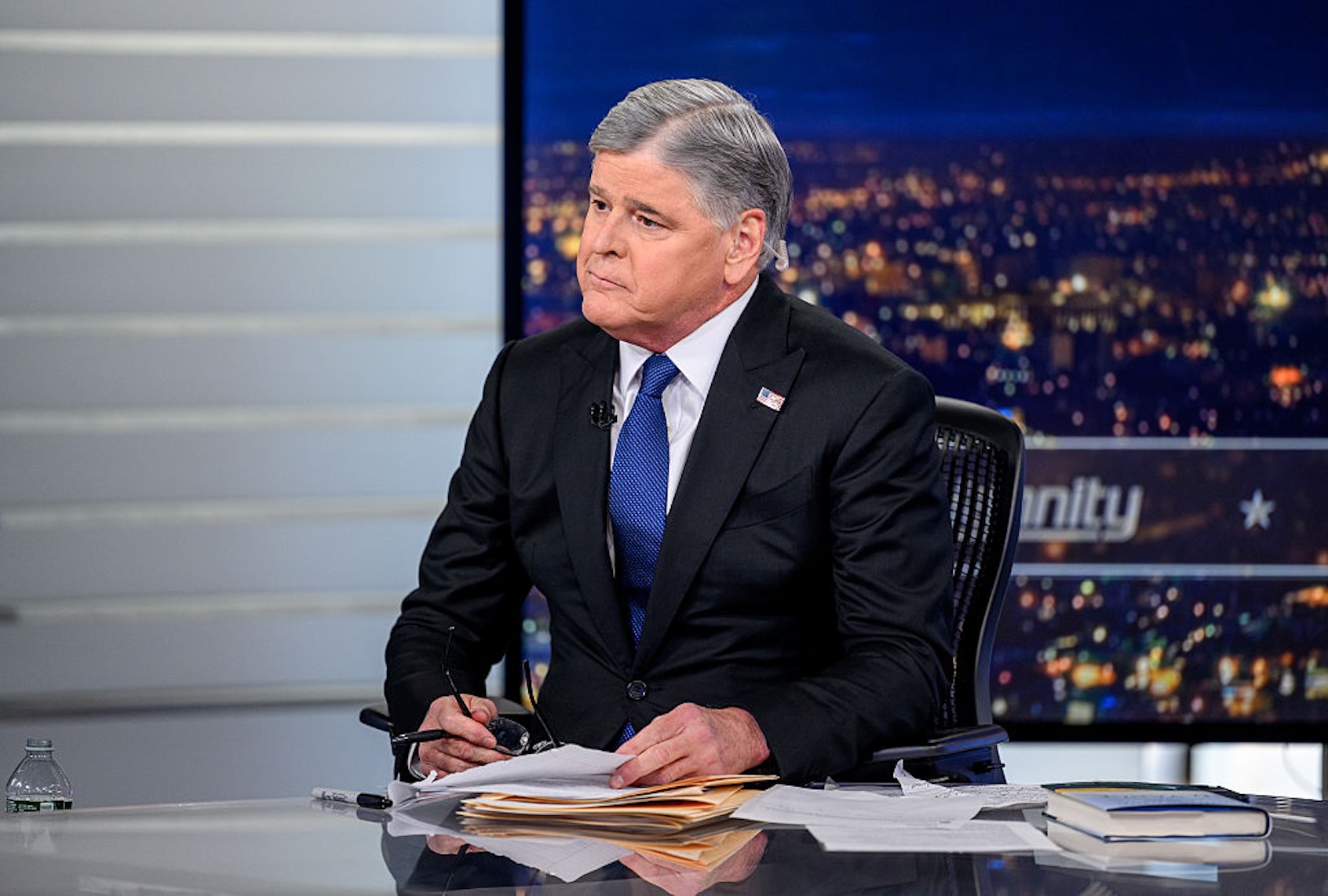
  •  

CoreWeave’s debt is becoming the whole AI industry’s problem

CoreWeave had a bad week last week. Its bonds slipped into distressed territory by a common definition - when investors demand 1,000 basis points more in yield than they'd get from government bonds. Last Tuesday Chamath "SPAC King" Palihapitiya noticed the distressed debt, and also asked whether the AI buildout was a private credit bubble. Its shares are down more than 20 percent since Tuesday's close, which is kind of a lot! There even seemed to be some collateral damage in the market on other AI companies, too.

Now, I have also asked if the AI industry is a bubble, but when the SPAC King echoes concerns held by a lady whose ongoing questi …

Read the full story at The Verge.

  •  

Food safety fears are bipartisan. Trust in oversight isn’t

A Crunchwrap Supreme and a bag of supermarket salad generally appeal to rather different notions of a good lunch. One offers the architectural pleasure of a crunchy tostada tucked inside a warm tortilla; the other, the satisfaction of having arranged to eat vegetables without chopping any. This summer, however, both came with a less welcome consideration: iceberg lettuce.

A massive cyclospora outbreak linked to shredded iceberg from Taylor Farms de Mexico prompted recalls extending from Taco Bell kitchens to supermarket produce aisles. Shoppers began trying to determine which seemingly unrelated groceries shared a supplier; someone even made a barcode-scanning app for precisely this purpose. (Such was the broader atmosphere of suspicion that an entirely unsupported rumor about the Trump administration’s promised bargain beef being horse meat eventually inspired online guides for distinguishing one animal from the other.)

It was, in short, Bad Lettuce Summer.

And according to a Gallup poll published October 8, Americans emerged from it considerably more cautious about what they eat. Nearly three-quarters now say they have avoided buying certain foods because of recalls or government advisories, up from 53% in 2024. This newfound vigilance crosses party lines: 81% of Democrats and 63% of Republicans report having taken such precautions.

What it did not produce was much agreement about the people responsible for keeping the lettuce safe.

In 2024, when Joe Biden occupied the White House, 74% of Democrats and 50% of Republicans expressed confidence in federal food-safety oversight. Two years and one change of administration later, those figures stand at 30% and 70%, respectively. 

A 24-point Democratic advantage has become a 40-point Republican one, a remarkable 64-point reversal.

Ahead of the midterms, the findings illustrate a curious feature of American political life: People can encounter the same dangers, take similar precautions and nevertheless arrive at radically different conclusions about the institutions responsible for protecting them. And if there were ever a summer when one might have expected a little consensus about the importance of competent food-safety oversight, surely it was this one.

The outbreak, the largest recorded cyclospora outbreak in U.S. history, sickened nearly 13,000 people across 21 states, hospitalizing 570 and killing two. The recall included lettuce served at Taco Bell and Marketside iceberg salad sold at Walmart. Taylor Farms maintained that its own branded salad kits were unaffected, a distinction that mattered scientifically, if not necessarily psychologically, to shoppers eyeing the refrigerated wall of greens.

The trouble with becoming an amateur food-safety inspector is that the job is never quite finished. You can establish that the blueberries in your refrigerator haven’t been recalled, but this tells you remarkably little about the blueberries you’ll purchase next Thursday. You can discover who owns the company that packaged your broccoli, though what to do with that information is another matter. Every new discovery yields a little more knowledge, if not necessarily a corresponding increase in certainty.


Want more great food writing and recipes? Sign up for Salon’s free food newsletter, The Bite.


There was a policy dimension to this uncertainty, too. In March 2025, the FDA announced plans to delay compliance with its Food Traceability Rule, which requires businesses handling higher-risk foods, including leafy greens, to maintain records that help investigators identify and remove contaminated products more quickly. Originally scheduled for January 2026, the compliance deadline was proposed to be extended to July 2028; Congress subsequently directed the FDA not to enforce the rule before then. The agency said businesses needed additional time to coordinate their systems.

The delay did not cause the summer’s outbreak. Still, there is something peculiar about postponing industry-wide traceability requirements while ordinary shoppers are left scanning their broccoli with smartphones, hoping to learn something useful about where it came from.

During Bad Lettuce Summer, even the official answers required some translation.

In July, the FDA announced that a lettuce sample had tested positive for cyclospora, then corrected the finding as a false positive. Taylor Farms emphasized the correction; federal investigators maintained that their broader epidemiological and traceback evidence still implicated the company’s shredded iceberg. Subsequent environmental testing strengthened that evidence, without conclusively establishing how the contamination occurred.

One could read the competing statements carefully and emerge with some more information, but not much more confidence about dinner.

Then came the political subplot. As the investigation intensified, Taylor Farms representatives met privately with White House officials. The company and its leadership had donated substantial sums to Republican-aligned political groups, including $1 million to the pro-Trump super PAC MAGA Inc. Rep. Robert Garcia, the ranking Democrat on the House Oversight Committee, subsequently sought answers about whether the company had attempted to influence the investigation. The White House denied compromising public safety, and no evidence established that political access changed the FDA’s findings.

Still, it is an extraordinary distance to travel from wondering whether the lettuce in your taco is safe to wondering who has the ear of the White House.

The Gallup numbers do not establish why Americans’ confidence has diverged so dramatically. Someone may distrust the industrial food system while enthusiastically supporting an administration promising to reform it. Someone else may have specific objections to that administration’s regulatory decisions. But the speed of the partisan reversal suggests that who runs Washington matters enormously to how Americans evaluate its institutions — though there is a certain irony to this in the age of Make America Healthy Again, which has elevated suspicion of the conventional food system into something approaching a civic virtue.

Its influence has extended all the way to the fast-food fryer: Steak ‘n Shake announced that it had “RFK’d” its French fries by replacing vegetable oil with beef tallow, a development Health and Human Services Secretary Robert F. Kennedy Jr. celebrated over burgers and fries during a televised appearance with Sean Hannity. The nation’s health secretary had become a verb, and the French fry a political statement.

It is, admittedly, easier to stage a photo opportunity around a basket of fries than a database of food-traceability records. Both involve questions about what Americans eat, but investigating foodborne illness requires a rather different kind of governmental attention.

Of course, Americans did not suddenly begin losing confidence in food-safety oversight under Trump. 

Gallup found that overall confidence has fallen from 85% in 2004 to just 47% today. And recalls themselves contain an uncomfortable ambiguity: They reveal that something dangerous entered the food supply, but also that someone detected a problem and warned the public. The same event can look like evidence of a system working or a system failing, depending on which part of the story one chooses to emphasize.

With the midterms approaching, that distinction matters. The lawmakers elected in November will have a say in how federal food-safety agencies are funded, scrutinized and held accountable when the next outbreak arrives. Yet Americans are approaching that election with increasingly different assessments of the institutions charged with protecting them, even as their own precautions suggest a broadly shared sense of vulnerability.

The next outbreak, unfortunately, will not wait for everyone to agree on whom to trust.

The post Food safety fears are bipartisan. Trust in oversight isn’t appeared first on Salon.com.
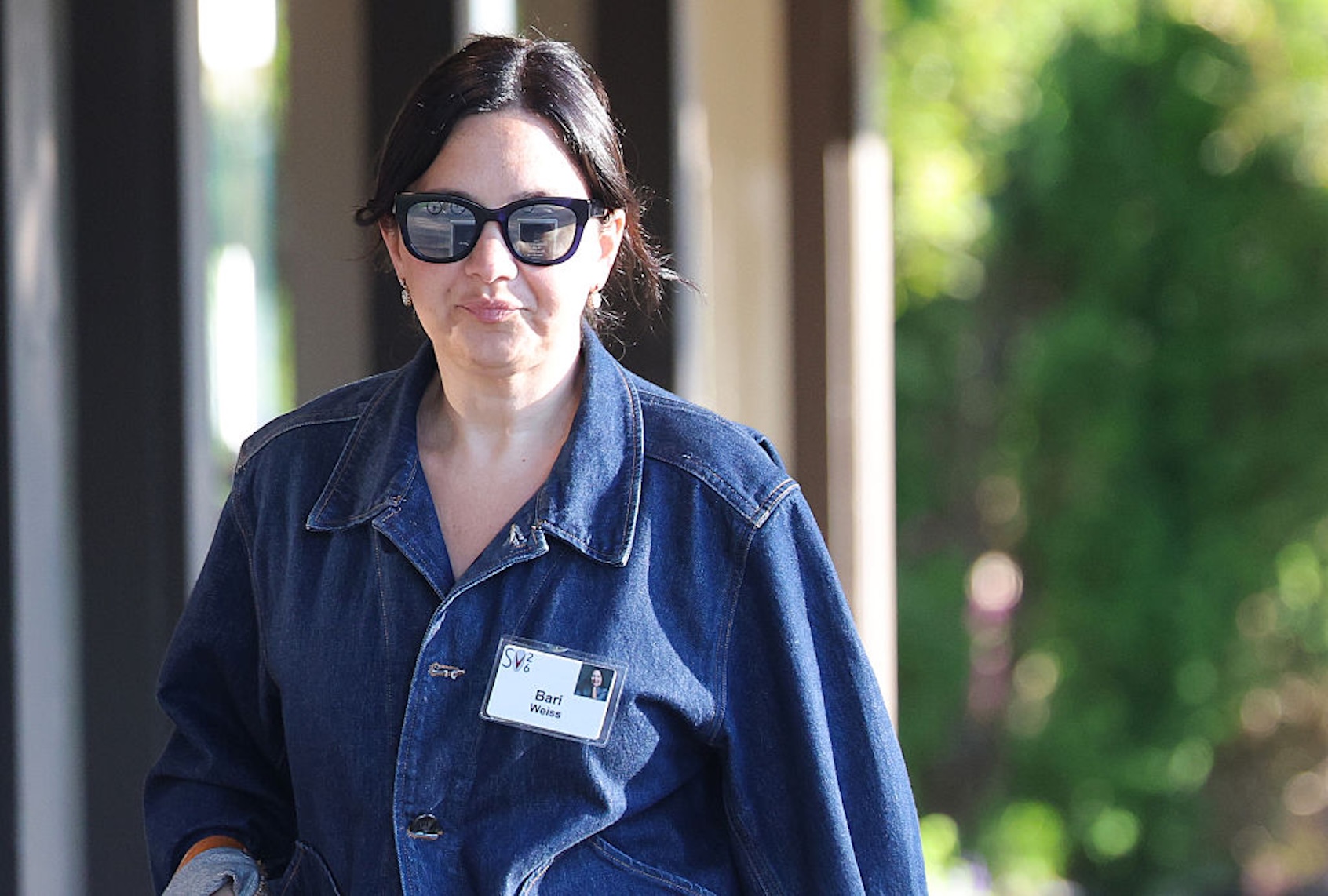
  •  

The media’s Ilhan Omar blind spot handed Trump an opening

The pre-dawn search of Rep. Ilhan Omar’s Washington, D.C., home on Monday should have prompted a searching national outcry about presidential power and the weaponization of federal law enforcement for political purposes. Federal agents seized her phone and passport and searched her residence as part of an investigation into allegations dating back to her childhood. Authorities have also issued more than a dozen grand jury subpoenas, including to her relatives. But instead of treating this escalation as a major test of American democracy, the mainstream media’s editorial response to the breaking news has been sorely lacking. Rather than interrogating the fascistic implications of a president weaponizing federal immigration agencies to threaten political opponents with deportation, major media outlets platformed the administration’s narrative that something fishy must be occurring.

This is not how the American press normally reacts when armed agents of the federal government knock on the door of a prominent political figure. As media watchdog Adam Johnson noted at the Intercept, the very day of the FBI raid against former national security adviser John Bolton brought scathing editorials from the New York Times, The Washington Post and The Wall Street Journal. Over the next week, each newspaper published opinion pieces opposing the raid and leveling outrage at the obvious power grab. The raid was explicitly condemned in POLITICO, The New Yorker and The Atlantic, which published four different indignant columns. 

The asymmetry in the mainstream media’s response to the Omar raid is the story. It is not simply the search itself but the absence of a sustained institutional response to the right’s yearslong campaign targeting the congresswoman that made it possible.

The asymmetry in the mainstream media’s response to the Omar raid is the story. It is not simply the search itself but the absence of a sustained institutional response to the right’s yearslong campaign targeting the congresswoman that made it possible. For years, the press treated each escalation against Omar as a discrete political controversy rather than examining how the attacks were clearly building toward a confrontation with the federal government. The allegations appeared on right-wing television, circulated through MAGA podcasts and were repeated by administration officials. The investigation was discussed publicly before the search took place. By the time agents arrived at Omar’s home, the political narrative had been prepared. Yet the national conversation too often focused on whether there might be something suspicious about Omar rather than on how the administration had transformed longstanding partisan allegations into a federal investigation.

Right-wing media had agitated for this result for months, as Media Matters’ Matt Gertz has documented. In July, Fox News host Sean Hannity told a caller on his radio show that an investigation into Omar was underway. “I can tell you this: There is an investigation going on. I don’t know why it’s being slow-walked,” he said. In September, right-wing podcaster Benny Johnson said he had been hearing “rumblings” about Omar and that Vice President JD Vance had told him on the record that something was about to happen.

The administration was not subtle about what it wanted. In March, Vance said on Johnson’s podcast that “we think Ilhan Omar definitely committed immigration fraud against the United States of America,” and then described the project in plain terms: “That’s the thing that we’re trying to figure out is what are the legal remedies now that we know that she’s committed immigration fraud — how do you go after her, how do you investigate her, how do you actually do the thing, how do you build a case necessary to get some justice for the American people?” In September, Homeland Security Secretary Markwayne Mullin told Johnson there was an “ongoing investigation” into Omar and raised the possibility of deportation, declaring that “something’s going to happen” while stating as fact that Omar “married her brother to try to bring him to the United States.”

But not everyone in the MAGA coalition was satisfied. Laura Loomer, the conspiracy theorist and internet personality who once traveled to Minneapolis in her own fruitless attempt to prove that Omar had married her brother, fumed after the Mullin interview that the congresswoman was somehow being protected from deportation. Fox host Tomi Lahren was angrier still, devoting much of her Sept. 12 show to accusing Mullin of using Omar’s case as a sideshow to distract from the lack of larger-scale deportations. “If they want to do an investigation, do an investigation,” Lahren said, while also noting that whether Omar married her brother wouldn’t “get people out to vote.” What would, she said, was “promises made, promises kept” — mass deportations.

After Monday’s search, the celebration became even more explicit. Johnson opened his show by asking his audience whether they were excited to send Omar “back to her indigenous peoples” before announcing, “We were right. Forgive us. We’re going to gloat just a bit today.” He called the developments his “crowning achievement for life” and presented the investigation as a victory for his program. Katie Miller, the wife of White House deputy chief of staff Stephen Miller, reportedly posted “promises made, promises kept” above an article about the search before deleting the post. Even CNN anchor Jake Tapper’s questioning why Omar’s didn’t seek to make a deal with the Biden Justice Department was celebrated by MAGA influencers and right-wing outlets such as Breitbart as evidence that mainstream journalists shared their suspicions. 

The federal inquiry apparently reaches back to 1995, when Omar arrived in the United States as a Somali refugee, and to her naturalization in 2000. The warrant reportedly lists conspiracy, false statements on immigration paperwork and immigration fraud. Officials are examining allegations concerning Omar’s age and her late father’s records. Mullin has also discussed a possible racketeering case, suggesting that a conspiracy theory could connect alleged conduct across different periods. Jeanine Pirro, the U.S. Attorney for the District of Columbia, has said that several investigations involving Omar are underway, including one concerning her financial disclosures.


Want more sharp takes on politics? Sign up for our free newsletter, Standing Room Only, written by Amanda Marcotte, now also a weekly show on YouTube or wherever you get your podcasts.


The scope of these inquiries makes independent scrutiny essential. A congressional watchdog previously cleared Omar of wrongdoing in connection with financial disclosures that are now reportedly under examination. The Washington Post has also reported that immigration officials scrutinized similar allegations during Trump’s first term and did not find citizenship-related issues. The administration has not publicly demonstrated why the earlier review was insufficient or what new evidence now justifies the extraordinary escalation. These are precisely the questions that a serious press corps should pursue relentlessly.

This pattern extends beyond Omar. Former FBI Director James Comey and New York Attorney General Letitia James faced indictments after Trump publicly pressured his attorney general to prosecute them. Both indictments were later dismissed because of a defect involving the appointment of the prosecutor, although the Justice Department subsequently pursued a new indictment against Comey. Former Federal Reserve Chair Jerome Powell and Fed governor Lisa Cook have faced investigations or other government actions following sustained attacks by Trump. Their cases differ in important respects, but together they raise questions about the relationship between presidential hostility and the exercise of state power.

The consequences of this dynamic extend beyond Omar. When an administration can repeatedly identify enemies, encourage public speculation about their criminality and then launch investigations without facing sustained institutional scrutiny, the boundary between law enforcement and political retaliation becomes harder for the public to discern. The next target may be a different member of Congress, a public official or a naturalized citizen without Omar’s visibility or resources. The danger lies in normalizing a method of governance in which the president’s adversaries are continually placed under suspicion while the administration’s motives receive comparatively little examination.

The press cannot determine the outcome of Omar’s investigation, and it should not prejudge the evidence. But it can insist on transparency where legally possible, investigate the history of the allegations and examine whether officials are adhering to the standards that protect prosecutorial independence. It can also refuse to let the story disappear once the initial spectacle has passed.

Trump’s advantage lies in his ability to make extraordinary actions feel routine. Each failure to examine the cumulative pattern makes the next escalation easier to present as ordinary government business. That is how a media blind spot becomes a political opening. If the media can summon immediate outrage when federal power threatens one political figure but offer only procedural coverage when it threatens another, it risks helping normalize the very abuse it is supposed to expose.

The post The media’s Ilhan Omar blind spot handed Trump an opening appeared first on Salon.com.

  •  

Katie Zacharia was too incompetent even for Trump

Well, that didn’t last too long. Katie Zacharia became White House press secretary just five days ago, but after President Donald Trump told reporters she should “reconsider,” the New York Times reported she’d been fired Friday afternoon. 

Zacharia held the position for less than a week, but generated considerable controversy in that short time. Her first briefing on Tuesday lasted only 14 minutes as she took questions from just three reporters at Breitbart, Fox News and the Daily Mail, appearing flustered and disorganized. Meanwhile, questions about her credentials took center stage, as she identified herself as a lawyer but in fact had never passed the bar exam. Her long history of pushing far-right conspiracy theories like QAnon also resurfaced. 

Then, Zacharia made two appearances on Fox News, both of which did not seem to go well. Sean Hannity grilled her on her false credentials Thursday night and told her, “I can give you some unsolicited advice. That’s never going to be a friendly room to you,” referring to the White House press pool. The next morning, she appeared on “Fox and Friends” and was asked if she still had the “confidence” of the president. “I-I-I’m standing here and I was able to travel with him through all of the midterm convention — or, excuse me — the midterm rallies, and I hope to be able to build the trust and confidence of everyone around me,” she replied.


Start your day with essential news from Salon.
Sign up for our free morning newsletter, Crash Course.


Apparently, she did not have Trump’s confidence. Speaking to reporters at the White House Friday, the president said he told her “Honestly, if I were you, I’d reconsider.” He added that he would leave the decision to her, according to CNN, but said they would speak when he returned to the White House. “Katie, do you need this? I don’t think you need this,” he said he told her. A few hours later, she was out. 

Numerous people online compared Zacharia’s short tenure was compared to Anthony Scaramucci, who was appointed White House Communications Director in 2017 during Trump’s first term, but just lasted 11 days. “To put it more precisely: a Zacharia is about .4 of a Scaramucci,” Anna Bower, a senior editor at Lawfare, posted on Blue Sky. The Mooch, as Scaramucci is popularly known, posted on X that “Records are made to be broken. But I take no pleasure in other people’s pain.”

Zacharia replaced secretary Karoline Leavitt, who resigned from the position in August.

😳 Zacharia flames out on Fox News for the second time in 12 hours 😳

With the wreckage still smoldering from her debacle on Hannity, Katie went on Fox & Friends and received another grilling from Fox hosts

LAWRENCE JONES: It’s been a tough week for you. Do you wish you would’ve disclosed to the president about not passing the bar?

ZACHARIA: Those questions weren’t asked

Here’s the whole segment:

— Aaron Rupar (@atrupar) October 16, 2026

The post Katie Zacharia was too incompetent even for Trump appeared first on Salon.com.

  •  

The tech backlash is now in theaters

An image of Elizabeth Holmes being photographed by an array of cameras.

Though movies about disruptive tech founders are nothing new, 2026 has been unusually stacked with features that take a much more critical look at how Silicon Valley is reshaping our reality. Aaron Sorkin's The Social Reckoning frames Mark Zuckerberg as a robotic villain whose ambitions are destabilizing society. Nathan Fielder and Lance Oppenheim's You Can See Everything paints a damning picture of Theranos founder Elizabeth Holmes as she prepares for her ongoing stint in prison. After years of being widely celebrated as a visionary, you can see how the larger narrative around Elon Musk has shifted in projects like Alex Gibney's Musk docume …

Read the full story at The Verge.

  •  

A viral Talarico hoax drowned out Paxton’s corruption story

For the past month, Texas state Rep. James Talarico and Attorney General Ken Paxton had been competing on roughly equal footing in public attention. The two candidates in what is perhaps the country’s marquee Senate race were being searched for at about the same clip, which is what you would expect of a competitive contest in a state that has not elected a Democrat statewide in decades. Then right-wing influencers invented a story that Talarico had secretly checked into an Ohio psychiatric facility, and the search traffic around the Democrat exploded. The lie collapsed with almost embarrassing speed, and the people who spread it now face potential legal exposure. 

But its political purpose was achieved anyway. By the time the story fell apart, the damage had already been done: A candidate’s health had become a national political spectacle, a social media feeding frenzy had swallowed the news cycle and a Republican politician facing serious questions about his own conduct had been handed a convenient distraction.

The Talarico hoax shows exactly how MAGA media governs the information war. While we watched a fake scandal implode, a very real one centering on Paxton slipped by.

This is what Talarico calls the “rage economy.” At a CNN town hall on Wednesday, he described a system in which conspiracy theorists collect clicks, social media platform owners collect profits and the public gets angrier without becoming any better equipped to solve the country’s problems. The Talarico hoax shows exactly how MAGA media governs the information war. While we watched a fake scandal implode, a very real one centering on Paxton slipped by.

The episode began when Talarico spent nine days off the campaign trail recovering from a bout of the flu. There was never any genuine mystery about his whereabouts. He had appeared virtually at an event in early October to inform attendees that he had come down with the illness. But Paxton saw an opening and used it. The attorney general demanded “proof of life” and set up a tip line for information about his opponent’s whereabouts. He led a “Where is James Talarico?” chant at a rally. President Donald Trump posted on Truth Social that “James TalaFREAKo” was “MISSING IN ACTION.”

MAGA influencers filled in the innuendo with the cruelest narrative. Former Los Angeles mayoral candidate Spencer Pratt claimed to have sources who said Talarico was in a psychiatric facility. By Sunday afternoon, the rumor had acquired its supposed smoking gun. Nick Sortor, a conservative influencer known for filming scuffles outside an Immigration and Customs Enforcement facility, and Rhein Amacher, a self-described “right-wing provocateur,” claimed that an employee at the Lindner Center of Hope in Mason, Ohio, had confirmed that Talarico was discharged that evening. Sortor posted a short audio clip, and Elon Musk amplified the claim repeatedly from his account. Within hours, the story had spread across X with millions of views. According to the reporting cited in Talarico’s own account of the episode, 50 accounts pushed the claim within 20 minutes and those posts accumulated 9.3 million views. One account posted the same text 83 times in under two hours.

The problem was that the “proof” was not proof. The full recording, obtained by The Bulwark, revealed that the person on the phone repeatedly denied that anyone named James Talarico was in the hospital system. The candidate said he had never even been to Ohio. The timeline was equally impossible: Amacher said he made the calls on Saturday evening, but Talarico had already appeared at the Austin City Limits Music Festival on Friday and attended a Kacey Musgraves concert the next day. He could not have been discharged from an Ohio psychiatric facility on Saturday because he was visibly back in Texas. By Sunday evening, the hospital itself issued a flat public denial that Talarico had never been a patient.

Naturally, the self-correcting mechanism of truth did not immediately penetrate the right-wing ecosystem. Musk had already supercharged the claim. The falsehood had been viewed millions of times before the correction arrived. Right-wing media figures like Megyn Kelly continued demanding answers even after the hospital issued its official rebuttal, and White House deputy chief of staff Stephen Miller kept conspiracy-posting long after The New York Times reviewed and reported on time-stamped security images proving Talarico was safely at his home in Austin during the disputed window of time.

The initial burst also illustrates how a relatively small number of high-profile accounts can set the agenda for a much larger audience. This is the difference between an information ecosystem that rewards accuracy and one that rewards attention. In the former, a claim becomes more credible as evidence accumulates. In the latter, a claim can become more influential simply because more people have seen it. The only people who benefit from a manufactured outrage are the people selling it and the politicians who can hide behind it.


Want more sharp takes on politics? Sign up for our free newsletter, Standing Room Only, written by Amanda Marcotte, now also a weekly show on YouTube or wherever you get your podcasts.


And hide is precisely what Paxton needed to do. On Monday the Wall Street Journal reported that only days after being indicted for embezzlement, a fugitive donated $25,000 to the attorney general. The paper also reported that Paxton rang in 2025 at a New Year’s party in Dubai attended by two men federal prosecutors had indicted for allegedly embezzling millions from an Illinois hospital. One of those men was Anosh Ahmed, who according to records from the Texas Ethics Commission, gave Paxton $190,000 between 2022 and 2024. 

These are the kinds of facts that, in a normal campaign, would dominate the week. A sitting state attorney general taking money from people accused of looting a hospital is a story about who he works for — a man accused of being a criminal or the people of Texas. Instead, it was buried under a fabricated tale about his opponent’s mental health.

To be clear, I am not suggesting that Paxton personally scripted the Ohio hoax. I am saying something that does not require a conspiracy at all. The right has built an incentive structure in which the people with the biggest megaphones are rewarded for flinging dirt and are never penalized when it turns out to be false. Paxton’s own conduct fits that structure like a glove. He fueled the “Talarico is missing” narrative from the stage and through his tip line. He benefited when the fog rolled in. The MAGA influencer ecosystem did the rest. Nobody had to give an order.

Consider also the broader pattern of the attacks on Talarico. A pro-Paxton super PAC ran an ad that placed the Democrat’s face on a cutout in a dress. Allies of Trump have spent months insinuating that Talarico is somehow insufficiently masculine, that he is “beta,” that he is unmarried and that questions about his sexuality are fair game. At a Wednesday rally for Paxton in Tyler, Texas, Vice President JD Vance openly suggested that Talarico is gay. Republicans have even attempted to other him through food, calling him a vegan. (He is not.) Taken together, the mental hospital hoax belongs to the same family of attacks. It is an attempt to make a candidate seem strange and unfit through innuendo because the substance of his message is hard to rebut. A candidate who talks about food and gas prices and community is difficult to caricature as a threat. So MAGA media built a caricature — Talafreako — instead.

Some of it deserves laughter. A man tricking a hospital receptionist is not exactly a criminal mastermind. But the stupidity is the tell, not the excuse. MAGA media do not need smart lies anymore. They need fast ones, repeated at volume across a captured platform and timed to drown out real reporting about real corruption. 

Earlier fiascos like Missouri Sen. Eric Schmitt’s Jack Smith flop should have taught them caution. Instead the right has learned from Trump that there is no penalty for being wrong in public — as long as you are wrong at scale and never look back.

The post A viral Talarico hoax drowned out Paxton’s corruption story appeared first on Salon.com.
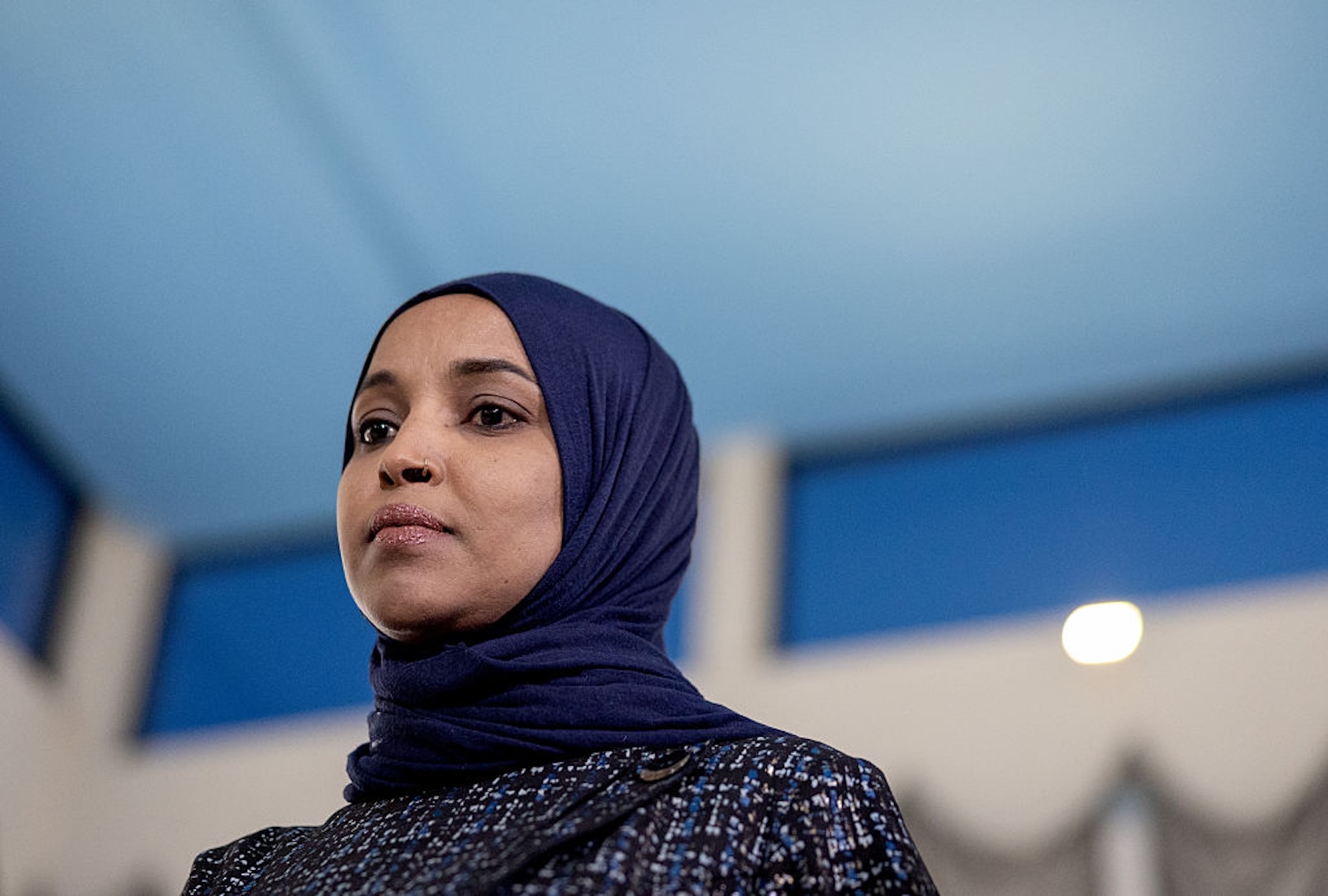
  •  

Democrats have discovered the key to midterm victory

Former Speaker of the House Nancy Pelosi always said that the only way for Democrats to win elections was to focus on the proverbial “kitchen table issues.” As the leader of the caucus for 20 years, she had quite a track record, presiding over quite a few big wins and many small ones, so she knew what she was talking about. According to her way of thinking, people are motivated to vote over concerns about their own material well-being, and in recent years, this has meant healthcare, job security and the cost of living — the basics.

Republicans, by contrast, tend to rely on a broader appeal to security in general. “Law and order” has been their bumper sticker, covering a wide range of free-floating anxieties in American society having to do with cultural changes, race and the loss of status of straight white males. Their answer to economic stress comes down to blaming the bogeyman of the day, whether it’s immigrants or the deficit, and the answer is always tax cuts and more tax cuts. 

Democrats have usually been trusted more on the kitchen-table issues, depending on whether they happen to be in office when some kind of economic crisis hits. Jimmy Carter paid a high price, losing his 1980 re-election bid after having inherited crippling stagflation from his GOP predecessors, and was hit with a big recession as a result of the Federal Reserve policies — which he supported — to break it. His successor, Ronald Reagan, reaped the benefit, a common consequence of painful Democratic policies necessarily deployed to clean up a Republican administration’s economic mess.

The GOP enjoyed 12 years in the White House after Carter’s loss, including a big boom which inevitably turned into a recession and helped ensure Bill Clinton’s victory over George H.W. Bush in the 1992 election. Clinton presided over an economic boom that saved his presidency, which was otherwise dogged by scandals largely perpetrated by the GOP’s final evolution from the party of mainline Protestants and main street business owners to one of ruthless street-fighters.

Economics, of course, aren’t the only issue that motivates voters. While more abstract notions of foreign policy and national security are rarely at the top of the agenda, war certainly can be. George W. Bush learned this in 2006, when the American people finally realized the Iraq war was a disaster. But something else was looming on the horizon. Bush had also made the fatal mistake of trying to privatize Social Security, breaking whatever trust people had in Republicans to safeguard their hard-won benefits. The Democrats won the midterm election in a rout.

Two years later, Barack Obama was hit with a double whammy. The war in Iraq was still the top issue, but at the height of his campaign against Arizona Sen. John McCain, the Republican nominee, the bottom fell out of the housing market and the world suffered the worst financial crisis since the Great Depression. At the same time, the healthcare crisis had reached a crescendo, with millions of people going bankrupt, and many suffering and dying due to the high price of insurance. After his win, those kitchen-table issues were front and center in shaping Obama’s presidency. In fact, two years into his first term, as the Great Recession continued to drag on, the American people let out the equivalent of a political primal scream and gave Democrats what Obama famously admitted was a “shellacking” in the 2010 midterms. Perversely, this was largely caused by the passage of the Affordable Care Act, the party’s healthcare plan, underscoring that no good deed goes unpunished.


Want more sharp takes on politics? Sign up for our free newsletter, Standing Room Only, written by Amanda Marcotte, now also a weekly show on YouTube or wherever you get your podcasts.


Then came Donald Trump. When he announced his candidacy for president in 2015, the economy was on the upswing, and just enough people were gulled by his phony reputation as a great businessman and promises to make everyone rich that he eked out an Electoral College win. Once in office, Trump basically just rode the recovery that was already underway and took credit for it. When the Covid-19 pandemic hit and his incompetence fully manifested itself, voters turned against him. If there was ever a kitchen-table issue, the pandemic was it: We were all stuck sitting around the table for months, wondering if the world was ever going to be the same. Trump failed to rise to the occasion.

But he was elected again after Joe Biden presided over the pandemic’s economic recovery, which was painful, ushering in inflation for the first time in decades to a chunk of a population that had never experienced it. The issue did him — and his vice president, Kamala Harris, who replaced him on the ticket — in, returning Trump to the White House on the promise that he would restore the economy to the alleged golden age of his first term. Unfortunately for America and the world, enough people bought into Trump’s chicanery once again, and here we are today in a crisis of chaos, mistrust, incompetence and despair over the radical policies wrought by a second Trump administration. 

Kitchen-table issues are still at the top of most voters’ lists. The cost of living remains high and keeps climbing. Housing is out of control, and gas prices are through the roof due to Trump’s war of choice with Iran. His much-ballyhooed tariffs have helped keep inflation high, and there is now little doubt what is driving the polls showing that Republicans are about to take a drubbing in the November midterms. 

But the concept of kitchen-table issues has its limits. Not everything in life is actually about money, and people’s perceptions of the economy are often colored by other issues that don’t appear at first glance to be directly related.

But the concept of kitchen-table issues has its limits. Not everything in life is actually about money, and people’s perceptions of the economy are often colored by other issues that don’t appear at first glance to be directly related. Bush’s losses in 2006, for instance, were affected by his mishandling of Hurricane Katrina and the Iraq War, both of which contributed to a sense that the administration suffered from hubris and incompetence. There is little doubt that the backlash against Obama during his first term was also driven by the recoil on the right to his identity as the first Black president. Trump likewise benefited from the fact that misogyny and racism were in play in his victories over the first two women to win the nominations of a major party.

The problem is that Democrats have too often relied solely on the kitchen-table issue agenda and failed to address underlying anxieties that contribute to their distress. And with Donald Trump, they are legion. 

The unrelenting pandemonium of his presidency, from his brutal immigration crackdown to the flagrant corruption and degeneration of the president himself, as manifested in his obsession with gold and the building of personal monuments in a time of economic stress, is making the public depressed and angry. The fact that Trump broke one of his fundamental promises to not get the country into a war, as he whines constantly about being denied the Nobel Peace Prize, is maddening. His ongoing disregard of the rule of law and the assault on the democratic process are obvious. The disconnect between what average Americans are feeling and the way their leaders are behaving is a mile wide.

People have been yearning for a holistic explanation for this chaos and confusion — and Democrats have finally found a way to express it. As POLITICO recently noted, Sen. Jon Ossoff of Georgia, along with Senate candidates Dr. Abdul El-Sayed of Michigan and James Talarico of Texas, as different as they are individually, are “leaning hard into anti-corruption messaging in the final weeks of the campaign as new research suggests that linking corruption to Americans’ economic struggles can boost Democrats into the home stretch.”

The corruption argument is compelling. Beyond the hated war in Iran (and its resulting gas prices), Trump’s son-in-law Jared Kushner and old friend Steve Witkoff’s deals in the Middle East have come under scrutiny and outrage, as have the government contracts being handed out to companies in which Trump’s sons are invested. Pardons are being sold to anyone with enough cash, some of them to people convicted of healthcare fraud, even as the Republicans are cutting Medicaid and healthcare subsidies. Contrary to his blarney, Trump’s Louis XIV-style monuments to himself are being largely paid for by the taxpayers. On top of all that, there are the reports that Trump has made $2 billion since returning to the White House, a figure that is excessive, even for him. 

The shameless grifting is too obvious for voters to overlook, and the Democrats have finally realized that the critique of Trump and MAGA Republicans must go beyond the kitchen table because it is all connected. The chaos, incompetence, deceit and self-dealing are at the heart of America’s distress, and it’s benefiting Trump and his cronies at the expense of average taxpayers. 

Distilling all this into a media-ready indictment, a soundbite, is difficult, but “Washington is rigged to benefit the wealthy at the expense of everyday Americans” is about as good as it gets. Let’s hope Democrats can carry this message of reform past Election Day and actually do something about it.

The post Democrats have discovered the key to midterm victory appeared first on Salon.com.
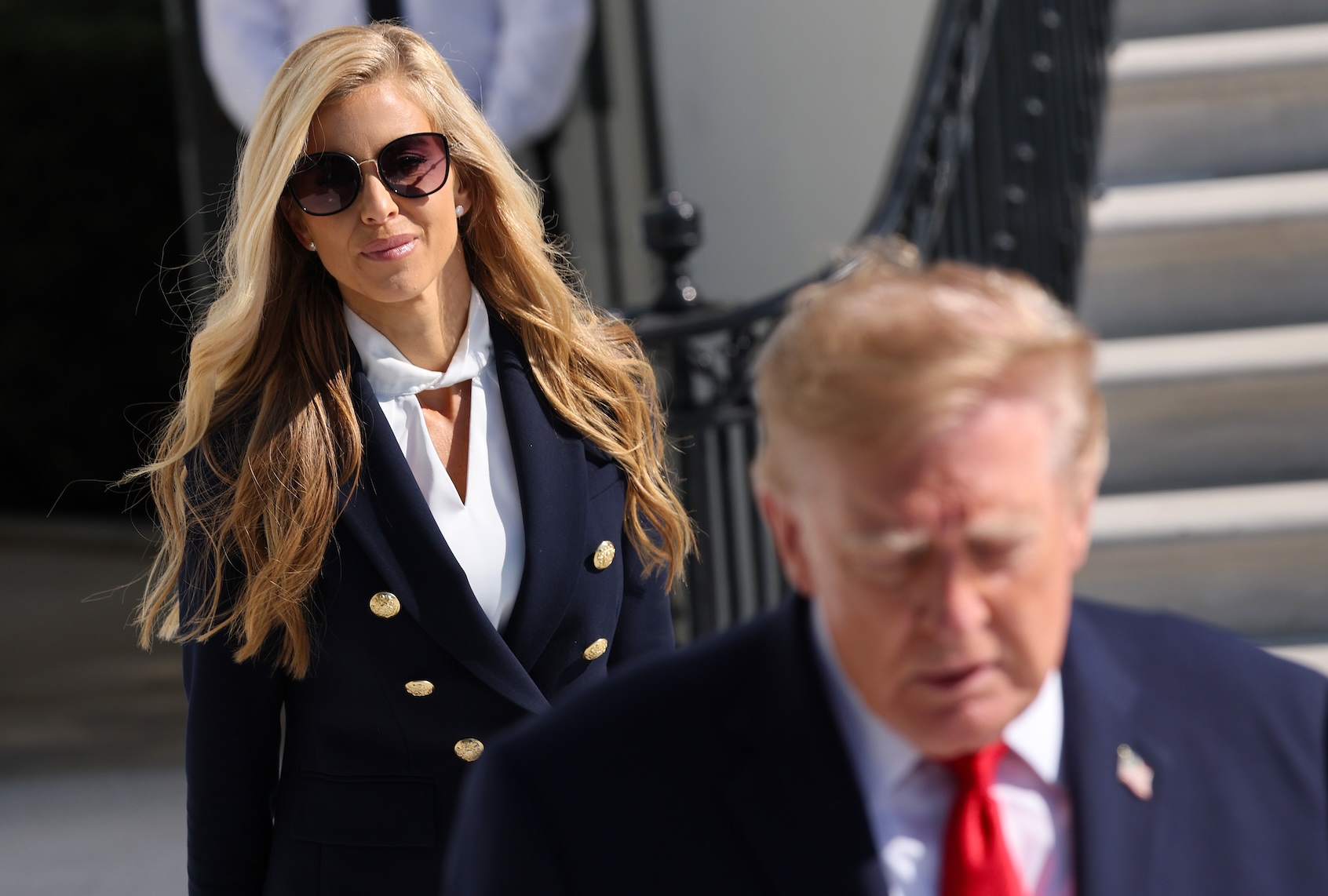
  •  

The best feature of Apple’s HomeView might be its simplicity

Apple’s HomeView smart display seems tailor-made for the kitchen. (That aluminum base looks like it will hold up better than my now off-white kitchen HomePod.)

I'm just going to come right out and say it. I love the approach Apple has taken with the HomeView. I think it's the shared, always-available household interface that my family might finally use. Is Apple's first smart display my dream smart home dashboard? No. But is it the right product for Apple Home at this moment? Absolutely.

A lot of initial reactions to the $299 HomeView (which looks like a giant Apple Watch on a flatter metallic HomePod Mini) ask why you would want it when you can do most of what it offers on your iPhone or iPad. And yes, its features replicate many of the things you already do on the devices you use all the time. B …

Read the full story at The Verge.

  •  
❌