 Login

From TPM Reader TS
Some thoughts on the 2026 midterm from TPM Reader TS (Theda Skocpol) …

Some thoughts on the 2026 midterm from TPM Reader TS (Theda Skocpol) …
After two or three days of stupor and disorientation Donald Trump has reverted to form, as predicted, and has reacted to his historic repudiation by leaning into the powers of the presidency to reassert power and dominance. So far, they are mostly assertions and visual, thin performances not so much of power but of aggression, which seem more risible because the power is so clearly draining out of him. Trump appointed Stephen Miller as his new White House chief of staff. Today he has offered the press secretary position to Dana White, CEO of UFC, the mixed martial arts promotion company, who Trump lauds as “the Great Dana White, a violent Fighter and Warrior.” Trump is asking him to take on the press secretary role with a series of MMA fighter “assistants,” one or more of whom is associated with a Chechnyan warlord. We say “offered” because Trump seems to have offered White the job and then asked him via Truth Social to accept the job.

It now seems pretty clear that Scott Colom (pronounced c’l-O-m or like ‘cologne’ but with a final m instead of an n) is going to be the next senator from the state of Mississippi — not called yet but getting close. He would be the first Democrat elected from Mississippi since 1982 and the first Black senator since Blanche K. Bruce who served from 1875 to 1881. But one striking thing about the claims of victory from Sen. Cindy Hyde-Smith, which manage to be both aggressive and half-hearted, is that as far as I can tell she has yet to appear in public since Election Day. I’m not even sure she’s done any media call-ins. Her first Twitter comment was written in the third person, as though the staffer who wrote it couldn’t even bother to pretend it was Hyde-Smith writing it. This turns out to be a through-line continuing from the campaign itself.
We’re already wise to the way the building Blue Wave in 2026 exposed a number of Republican incumbents who simply weren’t ready for prime time as candidates but had gotten by pretty much unchallenged on Republican dominance of their states. Outgoing Senator Roger Marshall is the poster-boy for this dynamic. But Marshall at least mobilized late and mounted a campaign — a really comically bad campaign but still a campaign. Reviewing the wreckage of Hyde-Smith’s apparent defeat, it really seems like she was at best a part-time candidate and that really over-states her involvement in the election.
President Trump’s decision to replace Chief of Staff Susie Wiles (a rare beacon of competence if not good values) with Stephen Miller confirms the predictable Trump storyline. Always double down. For maybe 48 hours Trump seemed stunned and drifting. Now he’s coming to from the smelling salts of ambient chatter about his political legacy concluding in disgrace and failure. We can’t know the future. But this is why Democrats can have realistic hopes of a second strong election in a row in 2028. Trump is making the characteristic decision of force feeding the country what it just spit up. We know this about Trump: he reacts to being dominated, owned and mocked by casting around for ways to assert power and dominance. It’s as predictable with him as night follows day.

Yesterday, I wrote about JD Vance’s push to make the 2026 midterm a referendum solely about the Iran War. Things were going great, he claims, substantively and politically, until the Iran War brought everything crashing down. We’re seeing that a number of Democrats, albeit for different reasons, want to push this line too. Yesterday Eric Levitz at Vox interviewed data guy David Shor who said something similar. If you’re not familiar with him, Shor’s in the group who argue that Democrats need to jettison hot-button social and cultural issues that make them unviable with big parts of the electorate — immigration, gender and sexuality, guns, policing, etc. This is one of these claims that is demonstrably accurate to a significant degree in electoral terms, but more complicated when it comes down to applying it to the practicalities, commitments and mutabilities of the actual world. In this case it leaves him wanting to place overwhelming emphasis on the Iran War since Democrats put up the biggest midterm landslide in half a century and mostly didn’t avoid hot-button issues, or at least not as much as people with this viewpoint said was required, for most of the 2026 campaign.
Here’s the discussion of this issue …
TPM’s Untitled Live Show (Name TBD) returns today at 2 p.m. Eastern. If you think everything to be said about the midterms has already been said, you might be right, but we’ve got thoughts and analysis nevertheless. We’re going to pay special attention to the non-politician winners and losers from Tuesday night. I hope you’ll join Nicole, Hunter, Derick, and myself this afternoon on YouTube.

I wanted to flag this critical data point: across the Deep South (AL, MS, SC, LA, GA) the percentage of the electorate made up by Black voters rose dramatically — by 3 percentage points in all those states except for, Alabama where it rose by 4 percentage points. For instance, in Mississippi, it rose from 30% in 2024 to 33% in 2026. Put differently, Black voters turned at out at 96% of their 2024 turnout whereas white voters managed only 71%. The impact of this gap showed up especially in Senate races in South Carolina and Mississippi. This was, needless to say, critical to Democratic victories throughout the region. Paradoxically the increase was greatest in Alabama which didn’t have a Senate race and lacked a high profile governor’s race, judged by national attention, though Democrat Doug Jones made it a much closer race against Tommy Tuberville than most anticipated. There was a closely watched House race where Rep. Shomari Figures (AL-2) retained his seat despite an attempt to gerrymander him out of it. These numbers can be compared to a stable share of the electorate in the Northeast and Industrial Midwest. So much of 2026 was a rebellion against Donald Trump and MAGA. Here it’s at least slightly different: all the evidence we have tells us this as a reply to the Callais decision in which the corrupt Court majority essentially struck down what remained of the Voting Rights Act and unleashed a string of rushed gerrymanders to eliminate Black majority districts across the region. How different this is is hard to say: SCOTUS is pretty much MAGA at this point. But it’s a distinct wave or tsunami within the larger one.
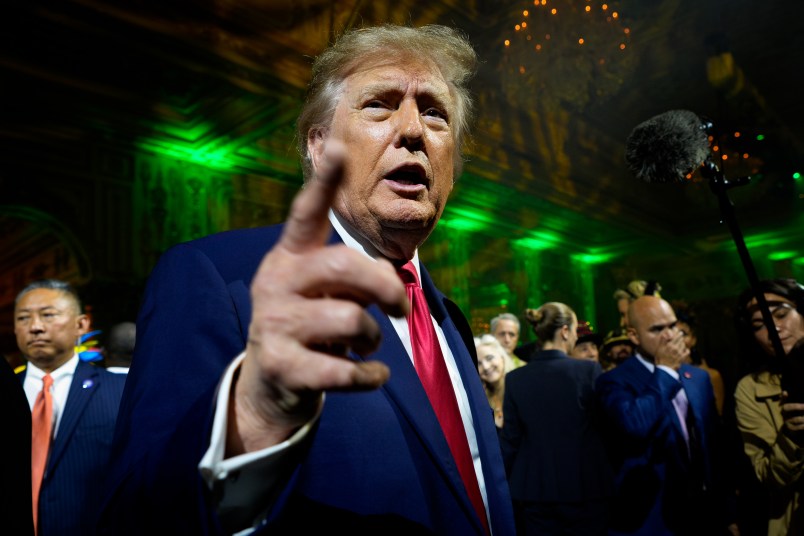
I’ve seen a few comments over the last couple days to the effect that our system turned out to be more robust, stronger than some of us feared. Trump tried to tamper with and rig the 2026 election. But he mostly failed. I would put it a little differently. We turned out to be — the American people — stronger, more robust than many of us feared. This may seem mawkish or merely semantic. But it’s more than that and the difference speaks directly to the current debates about accountability and how it should shape the next Congress and the next two years.
The singular lesson of the Trump Era has been that no system can be stronger than its participants’ willingness to follow and enforce the rules that govern it. It’s worth sitting with that for a moment. No constitution or system of laws and protections can be stronger than its participants’ willingness to follow the rules that govern it. Trump was faced with the big challenge that states control the administration of elections. But the White House came up with numerous quite ingenious angles to overcome those obstacles. It took an immense amount of work by voters, elected officials, judges, lawyers, countless Americans in myriad positions and professions to stop it. A governmental system provides a framework, a playing field. But as the authors of the federal Constitution debated and largely decided: there is no machine that runs of itself. It lives or dies, degenerates or perseveres, based on the people, the citizens who make it up.
The clearest signal from Donald Trump at the moment is the lack of any signal. His public comments have ranged from resigned to cooperative to boasting. His affect is disorganized, enervated, sometimes light. It’s one of the few times we’ve seen Trump seemingly unable to figure out how to react. This appears to apply to the whole White House.

We’re seeing Republicans wrestle their way toward a first reaction to Tuesday’s genuinely historic electoral collapse. We saw it most clearly, with a heavily “nationalist” tinge, in JD Vance’s Tuesday sleight of hand about Trump’s Iran War. Vance’s argument is that Trump Two was basically going great, both substantively and politically, until Trump launched his war on Iran back in February. So the problem isn’t Trumpism but not sticking to Trumpism with enough resolve. They only went wrong with the Iran War and even more Israel.
Let’s start by noting that Vance’s gambit is just warmed over TuckerCarlsonism, or TuckCarlsonism without all the charisma. That is, racial/religious nationalism which has a specific beef with both Jews and Israel as part of a broader argument that America is a white and Christian country where non-whites and non-Christians are at best guests. You see this in Vance’s frequent references to “heritage Americans” and attacks on “ungrateful” Blacks and non-white immigrants who should be kicked out of the country if they don’t express gratitude clearly enough. This is a reality that deserves a lot of attention from Jews who are rightly concerned about antisemitism of various sorts on the left. Vance is not only clearly an antisemite personally but he is signaling that he plans to use that animus as a central lever of his drive to power.
There’s a point of diminishing returns on non-definitive updates on the still outstanding Mississippi Senate race. But I’ve kept looking at the mix of outstanding votes, where they are, historical precedents, etc., and I’m pretty confident that Scott Colom is going to win this race and be the next senator from Mississippi. If it were callable it would be called. And it may take days or even a week to get a final verdict. But I just can’t find any argument that the remaining ballots don’t heavily favor Colom and he’s already up by almost 2,000 votes. (The AP numbers which most sites use are out of date.)
Assuming that is true we’re likely looking at a 56-seat majority for the Democrats — technically 54 seats plus the two independents who caucus with the Democrats, if you want to be picky. That’s not only good news on its own for Democrats. It puts them in a good position to hold the Senate majority through the remainder of this decade.

A number of you have written in to ask how the polls ended up doing in the 2026 midterms. I think we know that they underestimated Democratic strength. But how much? How consistently? What I’ve assembled below is just a provisional, back-of-the-envelope read. Others will do this more comprehensively, looking across all polls, comparing them with the final certified results and then adding additional fancy numbers stuff. But I wanted to come up with a provisional read.
I took 12 Senate races that by the widest measure appeared to be contested. I took the final poll average in each from Nate Silver’s Silver Bulletin and I compared them to the current posted results on The New York Times results page. Votes are still being counted, but margins won’t change much. With the poll average and the final result I rounded to the closest whole number before comparing them to find the amount of error or miss.
Here’s what I came up with.
As I mentioned last night, the data analysts I trust think Scott Colom is more likely than not to win the Mississippi Senate race. A short time ago I noticed that DecisionDeskHQ has more votes reported than most reporting sites which mostly use the data feed provided by the AP. DDHQ is a several year old upstart elections service which has aimed to compete with AP’s data service. They’re legit. They provide data to RCP and many other sites, but not as many as the AP. I’d still like to see these numbers confirmed by another source. But I’m pretty sure they’re real. They now show Colom opening up a lead of 1,864 votes. Add to this that the remaining votes appear to be in Colom-friendly areas. We can’t be sure of the outcome yet. But his odds look good.
NBC News currently projects that Democrats will hold 258 seats in the House in the next Congress — an 81-seat margin. Let’s assume that’s accurate; in any case, it won’t be far off. If that holds, that will be the largest majority either party has held since 1990 — 36 years ago. It’s important to note that this was in the pre-1994 U.S. political system in which Democrats still held large majorities based in part on incumbency in southern districts that were already strongly Republican. That changed decisively in 1994, and U.S. politics has never been the same. The last time Republicans won a majority that large was, I believe, in 1928.
I want to again thank everyone who joined us for last night’s election night video-cast. We had a great time (with an assist from the American electorate) and we hope you did too. It’s not quite as exciting as a rerun. But if you’d like to catch a few minutes of it just to see what it was like you can check it out here. We plan to do more of these. The written word remains our primary medium. But there’s a lot more that even a small organization can do with live coverage of events through video. If you joined us, we’d love to hear your feedback.
Just before 2 a.m., I’m trying to make sense of the Senate results. If I’m making sense of this right, Democrats have clearly won 54 senate seats, appear likely to win 55 and could still win 56.
The final uncertain seat is in Mississippi. The Times calls it a toss-up with a 61% chance of Republicans winning it. But election watchers I trust seem to think it’s just a bit more likely that Colom will win. To be clear, they’re only talking about likelihoods, and it’s a bit more likely, in their view, that Colom will win. To be fair to the Times, these are models that are fully devised in advance. And this is extremely close. When it’s that down to the wire, it’s down to picayune details, idiosyncrasies of particular counties that may just be hard for a model to fully capture. The people I’m following suggest that in the key counties where votes remain the last ballots tend to lean Democratic.
Thank you to everyone who joined us for tonight’s livecast. We had about a thousand people watching through most of the evening from 8 PM to around 12:30 or so. We really enjoyed it and we hope you did too. We’re going to be doing more of these.
As I’ve noted a few times, polling is just a predictive artifact. None of all those polling questions matter now. But one thing is worth observing simply to think clearly about the unpredictability of polling error. It will take a while for numbers folks to crunch all the numbers. But simply look at the Senate races it’s clear that while some polls were accurate quite a number of them significantly underestimated Democratic strength – South Carolina, Texas, Iowa and a number of others. This isn’t an exhaustive list. I’ve been on our video-cast for almost five hours. I’m a bit fried. But again, polling error doesn’t just underestimate Republicans. It goes both ways. It’s unpredictable.
7:45 PM: Okay, we still only have a few states reporting. But there are some important ones. And this is looking like it’s going to be a very long night for Republicans and perhaps not that long a night for reporting results. I don’t want to get ahead of ourselves but the details are looking that way. Buckle up.
7:06 PM: If you’re watching individual races don’t put much stock in any results unless you have a good handle on what’s early vote and what’s election day vote. We know that the early vote was landslide margins for Dems. And they’re often counted first. This is why you start to be able to understand what’s happening when you start seeing total results even in small counties. Then you get a real sense of swings.
7:03 PM: We’re about to get a bunch of results. But one thing to keep in mind is that we might see a somewhat different story in battlegrounds and non-battleground states. The general take about 2024 was that even though Harris lost, her campaign pushed the battleground further in her direction than the locked down parts of the country. So another possible dynamic to keep in mind. It might be rougher for the GOP outside the battlegrounds. But that can play out in unpredictable ways. You can have a big Dem swing. But in a very Red state most Republicans might still hold on.
6:36 PM: Another thing to keep an eye on is when races in what should be safe Republican seats don’t get called right when polls close. They’ll probably win most of those. But you get a read of what’s happening just by when some of these races can’t be called right away even if the Republican likely will end up winning it.
6:30 PM: As noted below, join us at 8 PM for our live videocast. For now, we only have reporting from a couple states. But we’re seeing some Republicans in pretty Red districts with real races on their hands. They may win those. But those seats being in contention point toward something bigger than your average wave. We’re seeing substantial swings in Indiana. Keep an eye on Indiana 5, Victoria Spartz’s district. That’s a R+8 Cook PVI district. Trump won it by 17 points in 2024. And she may have a race on her hands. (Remember that midterms can be weird. Different states can have different dynamics.)
We hope you will join us tonight starting at 8 p.m. eastern for our live videocast as we bring you live election results and commentary. It’ll be me and TPM Publisher Joe Ragazzo and pretty much the whole TPM cycling through to discuss different races over the course of the evening. We’ll also be answering your questions in real time over the course of the evening. You can either watch on our TPM YouTube page or right here at the website where the live feed will be embedded on the front page. Can’t wait to see you this evening.
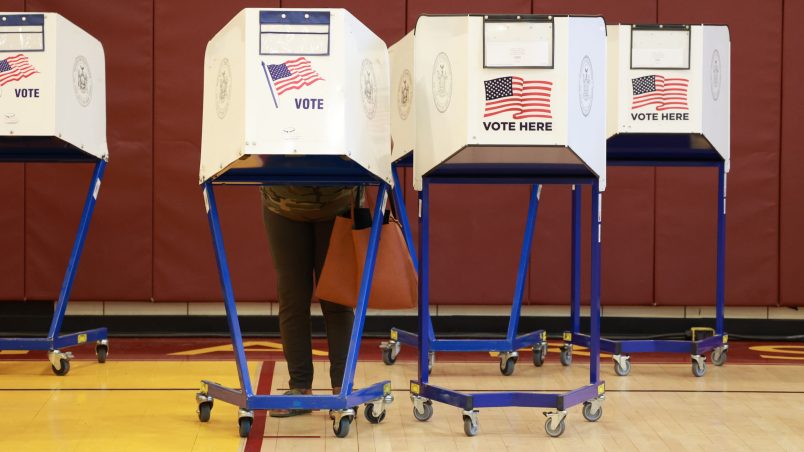
We’re now down to nothing to do but wait (and, obviously, pore over day-of indicators that mostly won’t mean anything). So with that in mind, a couple quick observations.
