❌

Reading view

Democrats are the unwitting beneficiaries of Trump’s immigration policies

In a 2025 investigation, The New York Times reported that officials in President Joe Biden’s administration, in the wake of Biden’s 2020 election win, had viewed rising immigration as “a distraction” best ignored so that the administration could concentrate political resources on more important economic matters.

Scott Shuchart, a Biden appointee who joined the Immigration and Customs Enforcement agency in 2022, told the newspaper that the White House was “wishing the problem would go away so that they could focus on the things they cared about.”

But two years after Donald Trump leveraged voter dissatisfaction with the Biden administration’s management of the U.S. southern border to win the 2024 election and enforce his immigration crackdown, the issue has suddenly become a secondary matter.

Amid the rising U.S. cost of living, a destabilizing war in Iran and a disrupted system of global commerce, the now-quiet border has relieved Democrats of their thorniest issue just in time for midterm elections.

From liability to advantage

For the past three decades, the Democratic Party and its candidates have struggled to develop and pass new immigration policies and communicate related political messages.

Bipartisan attempts at comprehensive immigration reform died on Capitol Hill in 2006, 2007 and 2013. Since then, a majority of Americans has trusted Republicans more with governing the issue. That has given the GOP an advantage when the salience of immigration policy has risen due to border crises and related high-profile events, even if that edge has recently narrowed.

In a February 2024 poll, 28% of U.S. respondents told Gallup that immigration was the country’s most important problem – matching the largest share since tracking began in 1981. By May 2026, that figure was 8%, a staggering drop in such a short period.

In a different poll by The Economist/YouGov, the share of U.S. registered voters who identified immigration as the country’s most important issue fell from 14% in October 2024 to 5% in September 2026.

Erik Iverson, a Republican Senate campaign pollster, recently told Axios that declining border crossings have reduced the urgency of immigration, depriving Republicans of an issue that previously energized voters and offered conservatives an advantage.

“You become a victim of your own success,” he said.

But this success is dubious. President Trump’s approval ratings on immigration are underwater.

In the RealClear Polling average from September to October 2026, his net approval was at negative 10.8%. In a recent Fox News poll, most Americans believe the Trump administration has “gone too far” in enforcing immigration laws, including 60% of independents.

Despite Republicans’ insistence that the mass removal of undocumented immigrants and a halt to new migrants would raise wages and make housing more accessible, Americans are experiencing high inflation rates, slow gross domestic product growth and sour consumer sentiment.

Two men wearing bulletproof vests overlook a line of passengers in an airport. 
Immigration and Customs Enforcement agents patrol Terminal 1 at John F. Kennedy International Airport in New York on March 27, 2026.
Michael M. Santiago/Getty Images

Ominously for the White House, Trump’s negative 10.8% net approval score on immigration is actually among his best. On inflation, the economy and foreign policy, his net approval rating is at negative 42.8%, negative 31.7% and negative 27.8%, respectively.

These dynamics bode well for Democrats’ midterm election prospects.

Republicans are now less concerned about immigration – what has been their greatest source of political energy and the left’s greatest political liability – as both parties’ voters are focused on other matters.

Despite the White House’s aggressive and frequently violent pursuit of undocumented immigrants, its proposal to end birthright citizenship, and its near closure of U.S. borders, even Democrats are no more likely to identify immigration as the country’s top issue today than they were previously.

According to The Economist/YouGov polling cited earlier, 1% of Democrats named immigration as their top issue in September 2026. In October 2024, 3% said the same.

Remarkably, without Democrats’ endorsement of a single new immigration policy idea, independents now express greater trust in Democrats than Republicans on immigration, 41% to 27%, according to a September 2026 Marist survey.

Democrats’ trial and error

Democrats’ sudden edge arises after a decade of trialing different approaches to counter the nativism and popular discomfort that Trump has harnessed.

Before Trump’s 2016 election victory and immediately thereafter, Democratic leaders sought to ameliorate the image of foreigners in the U.S., by highlighting that immigrants start more businesses, file more patents and commit fewer crimes than native-born U.S. citizens on average.

Gates at a border crossing bridge are painted with U.S. and Texas flags. 
The Eagle Pass 1 International Bridge at the U.S.-Mexico border is pictured in Eagle Pass, Texas, on Feb. 18, 2026.
Ronaldo Schemidt/AFP via Getty Images

During this period, Democrats commonly cited immigrants’ acute vulnerability and their willingness and ability to fill critical low-skilled and high-skilled labor gaps. But the praise and pity produced resentment among many Americans who did not want an admissions system that elevated foreigners to a higher pedestal.

Toward the end of the first Trump administration, Democrats
began citing
the immense macroeconomic and fiscal benefits driven by immigrants’ long-term settlement in the U.S.

Economists attribute to immigrants the bulk of U.S. population growth from 1990 to 2015. And economists have shown that continued immigration mitigates inflation and extends the solvency of Social Security and Medicare funds. Immigration also provides workers for industries like construction, agriculture, food production and healthcare.

However, the benefits of these relationships for average voters tend to be diffuse and realized in the medium-to-long run. That makes them hard to recognize.

After the global pandemic halted most human mobility in 2020, the Biden administration sought to avoid the immigration issue altogether. It’s a strategy that Democrats have now carried over while the dynamics of being out of power still permit doing so.

No mandate for inaction

Should Democrats win majorities in the Senate and House of Representatives in 2026, the issue of immigration is highly unlikely to be resolved. As a matter of constitutional oversight, Democrats plan to commence investigations into the Trump administration’s abusive immigration enforcement tactics, questionable case adjudication and alleged corruption.

It will be almost impossible to pass meaningful immigration legislation in such an environment.

The Biden-era approach was a pivotal electoral liability in 2024. And the Obama administration’s series of immigration executive actions instigated a tennis match of such orders between subsequent administrations ever since.

Democrats will soon feel some pressure to develop bipartisan approaches to immigration governance that ensure order at U.S. borders and a strategy for immigrant selection and integration that is designed with the national interest in mind.

Anything less, and the dysfunctional system – with its massive political risks – will return.


Justin Gest, Professor of Policy and Government, George Mason University; Institute for Humane Studies

This article is republished from The Conversation under a Creative Commons license. Read the original article.

The post Democrats are the unwitting beneficiaries of Trump’s immigration policies appeared first on Salon.com.
  •  

5 things Westminster doesn’t know about the UK economy (but probably should)

LONDON — Britain’s government runs on numbers — but what if they’re a shot in the dark?

From tepid economic growth to squeezed household incomes, this week’s budget from Chancellor John Healey was packed with grim figures about the state of play in the U.K. — and a host of costly measures to try and turn things around.

Yet it’s almost certain that the budget forecasts Healey relied upon Wednesday will be revised by the time the next fiscal event rolls around.

In this week’s episode of the Westminster Insider podcast, POLITICO unpacked the numbers that govern the U.K. — and found out just how many doubts there are about the information the country relies on.

1. True levels of immigration

Few issues divide Brits like immigration — but grappling with hard data on the issue has proven to be a repeated challenge to governments of all stripes.

For decades, immigration into the U.K. was calculated by the International Passenger Survey (IPS) — essentially people with clipboards at airports, train stations and ports asking people about their intention to stay in the U.K.

The Eurostar platform is pictured at St. Pancras station in London on Nov. 14, 2007. | Cate Gillon/Getty Images

But between 2012 and 2020, the number of European Union nationals coming into the country was off by 76% — or 93,000 people a year. The Office for National Statistics (ONS) only discovered this error after trialing a new approach to counting immigration that focused less heavily on the IPS, which was dropped altogether in 2025.

The ONS now uses this new measurement — relying on a combination of Home Office data, information from the Department for Work and Pensions and tax receipts.

But this was again wrong in the year to June 2023 — by 234,000 people.

The original numbers published by the ONS in November 2023 said net migration to the U.K. was 672,000. A year later, the ONS admitted there had been a mistake and said it was in fact 906,000.

Laura Gilbert, who ran data science in No. 10 Downing Street until last year, told POLITICO that net migration numbers are often incredibly misleading — and even the way we calculate those numbers is “highly spurious.”

Gilbert says the quality of the numbers on immigration normally improves months later, sometimes by “quite a lot.” But she warned, “if politicians are making a decision based on exact numbers, often they are using the first number that comes out, which is the worst one.”

2. The scale of unemployment

Healey and Prime Minister Andy Burnham have vowed to get welfare spending down “but in a Labour way.” Much of this will rest on getting young people into work, the subject of a 217-page report by Tony Blair-era minister Alan Milburn.

But Britain’s workforce — and the number of young people out of work — is counted by the Labour Force Survey (LFS), an ONS measurement beset with issues.

For example, between 2019 and 2024, the LFS missed 1 million workers because people with full-time jobs are less likely to answer the phone to surveyors during the week, according to the Resolution Foundation think tank.

The Office for Budget Responsibility (OBR) admitted just this week that the survey is too unreliable to measure productivity. “In recent years, falling response rates have significantly affected the quality of the LFS, making it more difficult to estimate reliably the number of workers and the hours they work,” the watchdog said.

Gilbert says Healey’s claim that there are “1 million young people out of work” is unlikely to be accurate.

The number of NEETs — people not in education, employment or training — is also based on figures from a subset of the LFS, which is particularly susceptible to inaccuracies.

Healey leaves No. 11 Downing St. in London to present the budget to Parliament on Oct. 28, 2026. | Peter Nicholls/Getty Images

“I think being within 50,000 on either side of that number is very unlikely to be the sort of level of accuracy that you’re at,” Gilbert said. “It’s entirely spurious, if I’m completely honest, but it’s a big number, you write it down, and everyone reads the papers.”

Ben Warner, who set up 10DS, Downing Street’s data science unit, says the LFS can’t accurately measure the number of entrepreneurs arriving in the country, either, making it difficult for ministers to know if decisions — such as a much-hyped tax relief for founders — are actually encouraging people to come to the U.K.

“I’m willing to bet you a hundred quid [we don’t have accurate numbers] at the level that you would need to make thoughtful policy around this,” Warner said. “I am sure there are people who have very, very good knowledge of the economic statistics. But if you’re a minister, you don’t necessarily have access.”

3. Where inflation and GDP sit

These are hugely important measures for a government: Are costs rising for households — and is the British economy growing?

But buried inside this week’s budget assessment by the OBR was a startling admission: There is a one in five chance inflation in 2027 will come in at over 4.5% … and the same chance it will be under 2.5%. They are profoundly different outcomes for the cost of living, a top political issue.

Warner told POLITICO, “The whole thing is mental. We are discussing the uncertainty of the numbers and pretending that these are real.”

Gilbert says there are knock-on effects at play: problems with net migration numbers and workforce data bleed into inflation and GDP projections.

“Understanding migration tells us about the demographics of the country, and when we look at how many people are in work, and that is wildly undercounted, it looks like there are more people who are unemployed, which has a knock-on effect on GDP and inflation,” she explained.

4. The number of kids on free school meals

The number of pupils in England on free school meals is just over 2.2 million, according to government statistics from the start of this year. That’s more than a quarter of all children in the country.

But Gilbert warns that these numbers are likely to be overestimated because schools “game the system” when census data is collected. “So for anyone who has children in school they may have received a text message that says don’t send them to school with a packed lunch — because the schools get funding based on how many children are on school meals,” she said.

5. The number of rough sleepers on the streets

One of Burnham’s flagship promises when he became prime minister was to end homelessness in the U.K., and Wednesday’s budget put £432 million towards precisely that promise.

Yet the way rough sleepers are counted in the U.K. varies according to each council, with some areas relying on an estimate and others on a street count — sending workers out to physically count the number of people on the streets on a particular day in autumn.

Tents line the side of Euston Road in London on Nov. 13, 2025. | Dan Kitwood/Getty Images

Some councils have swapped between methods — which can make it look as though they have dramatically reduced their rough sleepers from one year to the next.

For example, in 2017 Brighton and Hove Council used an estimate of rough sleepers which put that number at 176. The following year, the council used a street count — but this took place on a snowy night, so the number fell to 68.

This made it appear as though the number of people experiencing homelessness had been more than halved.

  •  

Britain by numbers: everything we don’t know about the country

Budgets are all about numbers: growth, inflation, unemployment, headroom. So this week on Westminster Insider, Sascha and Pat look into the numbers behind Britain’s economy — and just how much government policy is really made up of guesswork, rather than solid measurements.

Sascha talks to Dr Laura Gilbert, the former director of data at Number 10 Downing Street, who explains exactly why the numbers we have on measurements like immigration or the workforce are often wrong by hundreds of thousands of people.

Ben Warner, who was chief advisor on data and digital at Number 10 during the pandemic, explains why this uncertainty spells chaos for political decision-making and says he believes most ministers don’t know how to use data.

  •  

The ICE arrest of a pro-Trump evangelical has MAGA in an uproar

Samuel Sey spent the past two years telling American Christians that the Bible demands what Immigration and Customs Enforcement does. “Christian ethics do not denounce deportations,” the conservative Christian blogger and podcaster wrote in Feb. 2025. “They demand it.” Immigration was a privilege and not a right, he argued, and America “doesn’t owe anything to people born outside of the country — including me.” Should his own residency ever be ended, he allowed, that would be “inconvenient — not unjust.”

Now Sey, who is originally from Ghana and grew up in Canada, has found himself swept up in the very deportation apparatus he spent years cheering on.

The resulting uproar has exposed a particularly ugly contradiction in the MAGA movement: Its most enthusiastic defenders of mass deportation suddenly understand the human cost of immigration enforcement when the person facing removal belongs to their own. On Oct. 21 federal agents arrested Sey at the Columbus airport. He now sits in the Butler County Jail on an ICE hold. The Department of Homeland Security says he entered the country legally in 2022 but overstayed by more than four years, that he has no pending applications and that he accepted voluntary departure. Sey’s wife — who was born in the U.S., as were the couple’s three children was born in the U.S. — says he entered legally and has spent years working with a lawyer to secure permanent status. His friends call the whole thing a clerical error. The conservative movement that amplified him is tearing itself apart over what to feel about his detention, because the answer exposes what its immigration politics were always made of.

“This has been probably the darkest 24 hours I’ve ever experienced on social media,” wrote Joel Berry, the former Babylon Bee managing editor who calls himself a right-wing Protestant evangelical Trump supporter. “There is a segment of the so-called ‘Christian’ nationalist crowd that has given itself completely over to Satan.”

For a political coalition that has built its entire identity around the demonization of undocumented immigrants and the ruthless execution of mass removals, the detention of one of their own foot soldiers has triggered a profound internal fracture.

For a political coalition that has built its entire identity around the demonization of undocumented immigrants and the ruthless execution of mass removals, the detention of one of their own foot soldiers has triggered a profound internal fracture. Christian conservative influencers like The Blaze’s Allie Beth Stuckey and The Daily Wire’s Megan Basham immediately flooded social media to sound the alarm and rally support for their fallen comrade. Berry rushed to set up a GiveSendGo crowdfunding campaign that quickly hauled in more than $30,000 to cover legal fees. The right-wing influencers rallying around Sey have suddenly discovered that an immigrant can be a good person, that the government’s account might be incomplete and that separating a father from his children can be devastating. 

As Salon’s Amanda Marcotte has extensively documented, Stuckey has built a lucrative career railing against what she dismissively derides as toxic empathy whenever progressives advocate for basic human decency toward migrants and asylum seekers. Being so empathetic toward one set of people that you are blinded to everyone else, she has written, “isn’t just misguided, it’s evil.” Yet when Sey was taken, Stuckey asked her followers to empathize with his family. “As you can imagine, his wife, who’s at home with their 3 babies, is devastated and also trusting the Lord to help them find a resolution quickly. Please pray for all of the Seys,” she wrote on X. Berry, who produces the Jeremy Boreing podcast, which Sey was traveling to record when he was arrested, once declared that “the only due process owed to an illegal alien is deportation.” Now he says that Sey “is in my tribe, and he is my brother” and “would make an excellent American.”

But the reactions from the broader MAGA grassroots suggest that despite Sey’s relentless pandering to white Christian nationalists, he was never truly seen as an equal member of the tribe. “Lord, we thank you sincerely. We thank you for the arrest of Samuel Sey,” Joel Webbon, a prominent Texas pastor, said following the podcaster’s detention. “We thank you for shutting his mouth from spewing out more lies and slander against your servants and your church here in these United States of America.” Webbon described Sey as an “illegal alien wrongfully in our country” who lectures Americans about their heritage. 

Sey has spent much of the past year feuding with a set of conservative pastors who promote antisemitic and pro-segregation theology. In response to his arrest, evangelical pastor and author Dale Partridge, who has called himself an “aspiring general in the culture war,” said that he hoped “justice is served” with Sey, adding that “a black migrant who slanders Christian Nationalists is the White evangelicals’ ultimate hero.” 


Want more sharp takes on politics? Sign up for our free newsletter, Standing Room Only, written by Amanda Marcotte, now also a weekly show on YouTube or wherever you get your podcasts.


The replies that appeared on social media beneath these marquee names were filled with racial slurs and attacks on Sey’s interracial marriage, indicating that the coalition’s submerged half is surfacing. For them, Sey was never a brother whose paperwork went wrong. He was a Black immigrant whose usefulness was conditional, and the condition has expired. The nativist core of the movement cares very little about theological alignment when it comes to crude racial purity. 

The teachings of Jesus Christ — which these Christian nationalists love to weaponize for political clout — explicitly center on radical compassion and hospitality toward the stranger. In the Bible, Christ never asked for someone’s legal status before offering grace or demanding justice, yet the modern American right has twisted religion into a cudgel to justify state-sponsored violence against the vulnerable. Sey believed he was one of the good ones. He thought that by loudly condemning other migrants and bowing before the altar of MAGA he had purchased safety for himself and his family. He learned the hard way that when you feed a beast built on xenophobia and exclusion, eventually it turns on you too.

Even now, leading allies are working overtime to keep sympathy for Sey from blossoming into actual political reconsideration. Berry has reaffirmed his support for ICE. Aaron Baer, Sey’s podcast co-host and president of the Center for Christian Virtue, said that after speaking with his colleague in detention, neither man’s position on immigration enforcement had changed. 

The polling suggests why. In its recent American Values Survey, PRRI found that 47% of white evangelical Protestants back identifying and deporting undocumented immigrants, down from a peak of 53% in 2024. Approval of Donald Trump’s handling of immigration among white evangelicals slid from 74% to 67% over the same year. According to Pew’s Oct. 13 poll, white evangelical approval of Trump stands at 58%, a dramatic decline of 20 points since he returned to office in January 2025.

When a prominent, token defender of the regime like Sey falls victim to the machine, it shatters the comfortable illusion that one can successfully pander to fascistic impulses and somehow remain immune to their collateral damage. The cruelty his friends cheered has no category for “one of ours,” because it never had a category for anything except the count.

The post The ICE arrest of a pro-Trump evangelical has MAGA in an uproar appeared first on Salon.com.
  •  

The global war on citizenship

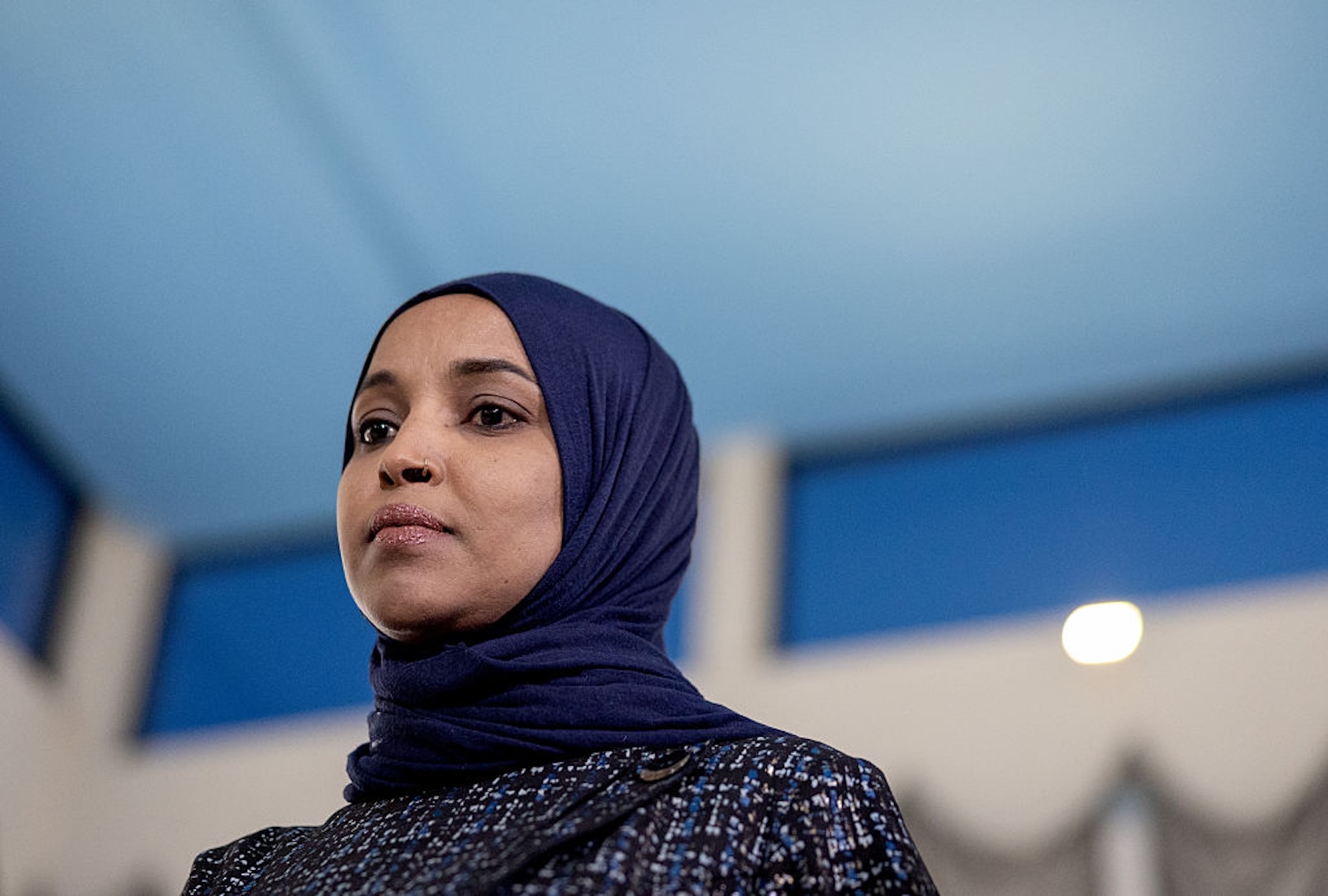
Ilhan Omar is onstage talking into a mic
The move to strip citizens of their passports and their rights is not a new one, nor is it limited to the United States and Rep. Ilhan Omar. | Stephen Maturen/Getty Images

What do a Bollywood actor, a member of Congress, and Israeli directors have in common? 

It sounds like the beginning of a bad joke. The punchline, though, is that governments of India, the United States, and Israel, respectively, think they should be stripped of their national status.

Bollywood star Imran Khan, nephew of Bollywood superstar Aamir Khan, was told he has until October 28 (and since extended to November 2) to leave India, where he resides on an Overseas Citizen of India (OCI) card. India doesn’t allow dual citizenship, but OCI status gives individuals of Indian descent and their family members the right to permanently live, work, and study in India; its revocation uproots its holders from their homes and their lives. Khan had protested in a demonstration demanding the resignation of Gyanesh Kumar, India’s chief election commission. He is challenging the order in court.

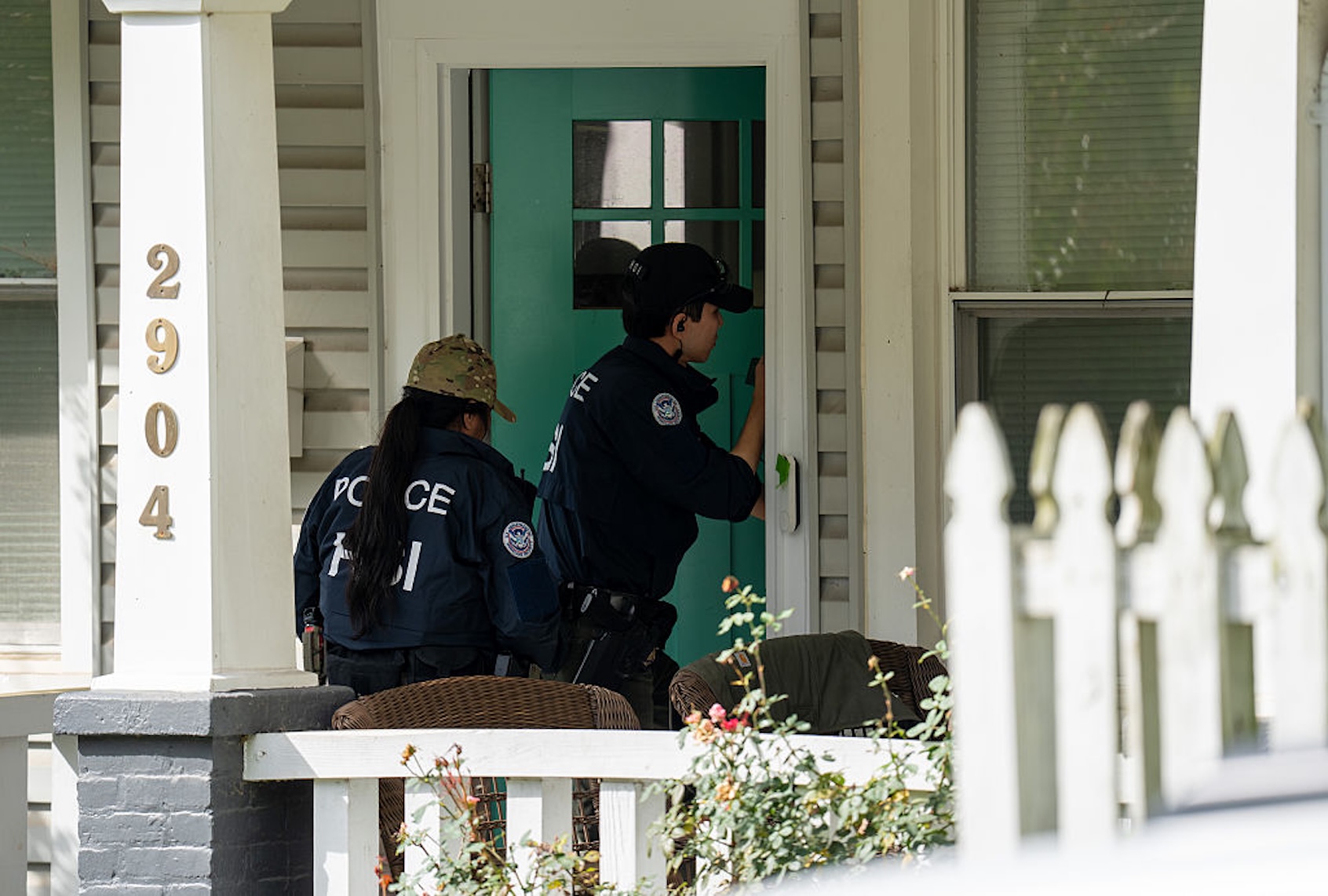
Earlier this month, US Rep. Ilhan Omar’s home was raided by federal authorities who are reportedly preparing a case to strip her of citizenship, alleging that her father said she was 17 when she was really 18 when he filed her naturalization paperwork. President Donald Trump subsequently said that, because a federal court filing allegedly referred to her as “Ilhan Nur Said Elmi, a/k/a Ilhan Abdullahi Omar,” she should have to resign from Congress.

Israeli Prime Minister Benjamin Netanyahu has intimated that Yuval Abraham and Rachel Szor, directors of the film NAZA, in which Abraham interviews Israeli soldiers and intelligence officers on Tel Aviv rooftops about how they assessed and decided to kill civilians in Gaza, could be stripped of their Israeli citizenship, saying he would pursue legislation to go after critics of the military who crossed a line. “We will revoke citizenship for anyone who defames IDF soldiers around the world — he will be deeply hurt in his pocket,” said Netanyahu, who cited the filmmakers as a potential example and called their work “intolerable.”

The move to strip citizens of their passports and their rights is not a new one, nor is it limited to these three countries. Perhaps most famously, Jews were stripped of citizenship by the Nazis in Germany and elsewhere in Europe in the 1930s and ’40s. To take a more recent example, over the summer, Russia passed legislation that effectively strips Russians abroad facing domestic prosecution on political grounds of their citizenship (the law takes away their property, freezes their bank accounts, and refuses them consular services).

Still, that three high-profile cases are coming from three countries that claim to be democracies raises the question: Why do reactionary leaders in democracies reach for denaturalization (or quasi-denaturalization, in the case of loss of OCI) as a weapon against political and cultural elites? What do they hope to gain? And, relatedly: What might they lose instead?

It’s not just about the high-profile targets

Reactionary leaders do not typically threaten to make an example of high-profile political opponents or cultural elites as a first step. In each of these cases, there are demographic groups — whole swathes of the population — whose governments have been trying to disenfranchise, denaturalize, or deport them (or some combination of the three) long before the recent spate of high-profile headlines. 

In India, there’s currently a politicized election integrity push that experts warn could illegitimately prevent tens of millions of voters from marginalized groups, especially Muslims, from participating in elections. What should have been a routine clean up of voter rolls ended up with 130 million — nearly 10 percent of the population — struck off the lists. The sweeping approach has raised widespread concern from critics that many voters will be incorrectly removed — and deep suspicions that this disenfranchisement is targeted and intentional.  

Mukulika Banerjee, a professor of anthropology at the London School of Economics, noted this happened after the position of chief election commissioner was made partisan and given immunity for life. And while normally in India (unlike in the United States) the onus is on the state, not individuals, to register voters, in this case, the state said that if people were to be put back on the voter rolls, they “had to produce a whole bunch of documents…which by implication affected the socially disadvantaged,” per Banerjee. 

That meant women, people from lower castes, rural voters — and, since “the Muslim population amongst the most seriously socially disadvantaged, the likelihood of Muslims falling in this category is very high,” Banerjee, author of Cultivating Democracy: Politics and Citizenship in Agrarian India, said. In places like West Bengal, where Muslims make up nearly 30 percent of the population, there were some assembly constituencies where, in elections earlier this year, the number of names deleted from the rolls was greater than the margin of victory, and while anti-incumbent sentiment was high and the BJP may well have won anyway, some, per Banerjee, are asking, “was this an attempt to choose the electorate, so to speak.”

In the United States, the Trump administration has made denaturalization a priority, hoping to find people they can make an example of as part of their broader immigration crackdown. They have already filed to strip dozens of Americans of their citizenship by claiming they lied on their naturalization paperwork (“Justice Department Moves to Strip Citizenship from 40 Criminals in Largest Single-Period Filing Under the Trump Administration,” a press release from earlier this month crowed). The White House also tried, unsuccessfully, to revoke America’s constitutional right to birthright citizenship, which could have left future generations far more vulnerable to removal or persecution.

And in Israel, Palestinians have long been made to feel the weight of citizenship — and the heft of its absence. This is not only true in, say, the West Bank, where Jews live as citizens but Palestinians live under occupation and military law, but in East Jerusalem, where most Palestinians are permanent residents, not citizens, meaning they cannot vote in general elections for the Israeli legislature.

“That is a tool that Israel has used in a different way that could easily be transplanted to citizens,” said Mairav Zonszein, senior analyst on Israel at Crisis Group. And if you can strip residency from Palestinians in Jerusalem, maybe you can strip citizenship, too. “If this government is reelected, I could see that becoming a less and less crazy idea” as what was once unthinkable becomes “normalized.” Palestinian citizens in Israel have expressed the same concern.

The chilling effect of deportation threats 

How — and why — does an aspiring authoritarian move from threatening the rights and status of demographic groups to going after elites?

Sometimes, the elites are — in addition to being outspoken and high profile — from the demographic group under threat.

Several years before Khan’s OCI status came under threat, the Modi government took journalist Aatish Taseer’s OCI card from him. This happened in 2019 — months after Taseer authored a Time story with “India’s Divider in Chief” plastered across the cover, after which the prime minister himself said, “Time Magazine is foreign. The writer has also said he comes from a Pakistani political family. That is enough for his credibility.” Taseer’s father was indeed a Pakistani political figure, but this was hardly some secret of which Taseer had made offhand mention; Taseer had written about his father and the role his absence and rediscovery in his life, including in his first book, Stranger to History: A Son’s Journey Through Islamic Lands.

And so with Imran Khan, Taseer said in a phone interview, there is an element of, “Just get the Muslim out” (Khan’s mother is Muslim). In Taseer’s own case, he said, he became “the Paki.”

The same is true at least in one high-profile case in the United States: Omar is Muslim and from Somalia, two groups that frequently attract the ire of the Trump administration. Recently, Trump urged Minnesotans to “fight back” against Somali immigrants before the state is “taken over.” Omar is also a prominent and progressive member of Congress. 

“It’s got these two levels,” Taseer said. “One is an ethnonationalist agenda. The other is a blunt instrument of coercion.” If you speak out too freely, Taseer added, “you won’t be able to return home.”

The blunt instrument, though, is more narrowly applied than, say, stripping people from voter rolls en masse. It is designed to cause fear among elites: journalists and actors and academics.

And it is meant, Banerjee said, to raise the price of protest.

The government’s first instinct, she said, is to call protesters terrorists and anti-nationals, rather than citizens exercising their rights: “They don’t seem to understand that to peacefully protest is there in…the constitution.”

And by taking a Bollywood star’s OCI status, the government can “make an example and say, look, we can take the biggest and the richest and the most prominent.” It is a message to the rich and the famous and the powerful: Do not think you are bigger than government coercion. You are not.

Whether it works is almost beside the point. Trump is facing an uphill legal battle in proving that an error committed by Omar’s father, if indeed any error exists, means she should lose her citizenship. Omar has said she sees the administration’s goal as exhausting and intimidating her to the point she leaves politics — something she says will not happen. 

And, it’s unlikely, Zonszein said, that Abraham and Szor will actually be stripped of citizenship given Israel’s own judicial protections. But, “It’s an empty threat, but one that works, because it chills dissent, it stifles it, it makes people scared.”

It also suggests that, regardless of whether you’re a member of the targeted group, or have some special status that could set you apart, power can come for you, too. That can scare people out of speaking out for the marginalized. It can also alert them into the need for doing so.

“When it happens in a democracy, one has to always keep one’s radar attuned to who is suddenly becoming prey, whether it’s LGBT in Russia or now in Turkey or in this case in India, Muslims, Taseer said. ”It’s sort of — what they’re going to those people, they’re going to eventually do to the population at large. It’s not one of those things where they’re like, ah, let us do this little thing, and then you guys can all live happily ever after. It’s generally always accompanied by a deeper authoritarian turn.”

For example, in addition to threatening Abraham and Szor, Israel has revoked the entry permits of American Jews who volunteered to work with and protect Palestinian farmers during harvests and froze aliyah — the name for the process by which Jews abroad immigrate — of two Jews over their pro-Palestinian West Bank activism, which, as Israeli outlet Haaretz reported, could be a violation of Israeli law guaranteeing the right of all Jews around the world the right to move to Israel and become citizens. 

“I mean, anybody with their head on straight would say, if you treat one person this way, it’s not that hard to treat another person this way,” Zonszein said. “That’s pretty basic, obvious stuff.” 

  •  

French MPs will vote on Sánchez-style amnesty plan for undocumented workers

PARIS — Lawmakers in the French National Assembly will vote on a Socialist Party proposal to grant amnesty to an estimated 300,000 to 400,000 unauthorized immigrants employed in France.

The measure is expected to be supported by center-left presidential candidate Raphaël Glucksmann, whose campaign is eager to find some breathing space between centrist candidates like Gabriel Attal and Edouard Philippe, and Jean-Luc Mélenchon, his rival on the radical left. Glucksmann has previously expressed support for such a step in multiple interviews.

The proposal, introduced by Socialist lawmaker Paul Christophle, hails Spain’s Pedro Sánchez for having “chosen to provide foreign nationals with the legal means to settle and work” instead of “trying — in vain — to control migration flows.”

Earlier this year, Spain moved to grant legal status to half a million unauthorized immigrants who could prove they had been living in Spain for at least five months, could provide proof of employment or a familial link to the country and did not have a criminal record.

Christophle wants to grant legal status to an estimated 300,000 to 400,000 people who have been employed in France for over six months but without proper documentation.

The bill is likely to unite left-leaning MPs in the French National Assembly, but opposition from center-right and far-right groups means it will probably fail.

However, Glucksmann’s campaign hopes the proposal will highlight a rift between lawmakers backing French President Emmanuel Macron and voters who elected him in 2022 — some of whom are more progressive on issues like immigration.

The debate on immigration will be an effective way to differentiate Glucksmann from his center-right rival Édouard Philippe, who believes that amnesty plans should be contingent on a European agreement, said an official who is backing the center-left MEP. It might also help poach Macron voters “who are completely opposed to a closed society,” he added.

Among those who voted for Macron in 2022, 29% plan to vote for Raphaël Glucksmann next year, according to a Cluster17 poll commissioned by POLITICO, against 49% for Édouard Philippe.

Glucksmann is currently projected to receive 13% of the overall vote, according to the poll, against 16% for Philippe. They both trail far-right frontrunner Marine Le Pen (33%) and Mélenchon (18.5%). The top two candidates will advance to a runoff if no one wins a majority in the first round.

The bill is scheduled to be voted on Nov. 19.

  •  

Burnham wants UK back in EU within his lifetime

LONDON — Prime Minister Andy Burnham reiterated Monday his desire for the U.K. to rejoin the EU within his lifetime — but ruled out a move to reverse Brexit in the current parliament.

Asked by ITV’s Good Morning Britain Monday whether he wanted to rejoin the EU, Burnham said: “I’m going to be honest and say, in my lifetime, I would like to see that happen but I am not going to move ahead of the public.

“I am not going to dictate in terms of my own opinions here. You have to make sure that the public, the British public, are the bosses.”

At the ruling Labour Party’s conference last month, Burnham called for closer links with the EU.

He has yet to spell out precise details of the relationship he would seek — but the party’s 2024 election-winning manifesto under Keir Starmer ruled out rejoining the single market, customs union or accepting freedom of movement with the bloc.

Burnham said Monday that the promises of the 2016 referendum that took Britain out of the EU have not been delivered.

“We got a harder Brexit than was proposed in the referendum campaign,” he said. “It’s weakened our economy. It’s also weakened our control of immigration and that might surprise people.”

But he said: “I’m not proposing rejoining in this Parliament. We’re way, way away from that at this particular moment in time. What I am saying is we need to take some practical steps to make the arrangement work better than the arrangement we’ve got right now.”

The PM’s remarks come after he told the Sunday Times that accepting freedom of movement with the bloc should not be off the table in future negotiations.

A U.K.-EU summit is scheduled for next month, although that is set to focus tightly on technical tweaks to the existing relationship rather than addressing bigger questions of Britain’s future ties to the bloc.

Burnham’s decision to reignite debate in Britain about the EU has already provoked a bullish response from some of Brexit’s leading cheerleaders.

Speaking at a Westminster press conference Monday, Nigel Farage said rejoining the bloc would be “utterly moronic” and argued Brexiteers would win a referendum on reversing the result “very comfortably.”

“Listen, Brexit would not have happened if I had not been born — all right, simple as that,” the Reform UK leader said Monday. “Yes, there were some Johnny-Come-Latelies. They came in at five minutes to midnight. Am I up for the fight again? You bet your blooming life I am.”

Sam Blewett contributed to this report.

  •  

Trump on Norway: ‘Shithouse country’

Donald Trump on Sunday night said Norway “sucks,” as he fulminated about being repeatedly overlooked for the Nobel Peace Prize.

Despite starting a war with Iran and toppling the leader of Venezuela, Trump has vigorously touted his peacemaking credentials, claiming to have settled at least eight conflicts during his second term in office.  

But he was passed over twice by the Oslo-based Nobel committee: in 2025 for María Corina Machado, the Venezuelan opposition figurehead; and in 2026 for South African jurist Navi Pillay, for her efforts to promote peace and international law.

“What about me? Do they do two of them? So I’m not in love with Norway. Frankly, Norway sucks. Norway has become a shithouse country, actually,” the U.S. president mused during a campaign rally speech in Port Huron, Michigan.

Trump was railing about immigration to the U.S. when he segued into the criticism of Norway.

“We work with Denmark, good country, good nice country. Anybody that would like to come into our country from Denmark, I’m all for it. But I must tell you, from Somalia … I’ve had it with them. I’ve had it with them. I much prefer Denmark. Denmark, we’ll take them. Sweden, Norway … I don’t think so because I didn’t get the Nobel Prize even though I ended it. So I don’t want anybody from Norway. I don’t want anything to do with Norway,” Trump said.

Espen Barth Eide, Norway’s foreign minister, responded to Trump’s remarks by reiterating the Nobel committee’s independence. “He knows very well that the Nobel committee is independent. We have reminded him of that, in case anyone is wondering, and that is still the case,” Eide told Norwegian news outlet NRK Monday.

While Trump didn’t get the 2025 prize, the Venezuelan winner did present him with her medal during a meeting at the White House in January this year.

“And the person who got it, Maria, was very nice,” the president said during his rally speech. “She said, ‘I can’t believe I got it. This should go to President Trump,’ and she gave me her Nobel Peace Prize, that was so nice. It was very nice. I won’t forget that. It was very nice.”

  •  

Burnham open to return of free movement between UK and EU

BRUSSELS — British Prime Minister Andy Burnham has expressed openness toward restarting free movement between the United Kingdom and the European Union as the two sides prepare for next month’s leaders’ summit.

A return to free movement would not be a red line for talks, he suggested, as immigration trends had changed since the U.K. voted to leave the EU in 2016. However, Burnham said he would not “jump to a firm position” on the issue just yet.

“Freedom of movement had very significant challenges associated with it and I spoke about them in my previous time in parliament,” he told the Sunday Times.

“But at the same time, it was a type of immigration that perhaps wasn’t as difficult [as now]. Revolving door migration where people would come and then go back is different. The balance of migration has changed, hasn’t it, since then? I think we’ve just got to have an honest discussion about those things.”

Burnham said at the Labour Party Conference in September that he is weighing different options for a reset of relations with the 27-country bloc.

He did not elaborate in his conference speech on the options he would present — but different figures within Labour have argued for joining the EU single market, the customs union, or rejoining the bloc wholesale. Rejoining the single market would require the U.K. to sign up to the EU’s rules permitting free movement of people.

His stance on freedom of movement marks a significant shift from the Labour Party’s 2024 manifesto, which ruled out a return to the single market, customs union or free movement, and comes one month ahead of a Nov. 20 summit where the EU and the U.K. hope to sign off on a set of agreements ranging from trade to climate regulations.

In his interview with the Sunday Times, he set out his own red lines, adding that he “can’t see myself ever recommending anything that would involve joining the euro or Schengen.”

  •  

Can Trump deport Ilhan Omar?

Rep. Ilhan Omar, wearing a gray suit jacket with a multicolored head scarf, gestures with both hands while speaking at a podium; behind her stand other members of Congress.
Rep. Ilhan Omar (D-MN) speaks at a press conference at the US Capitol on January 13, 2026, in Washington, DC. | Heather Diehl/Getty Images

President Donald Trump has been attacking Rep. Ilhan Omar (D-MN) since she first entered Congress in 2019. At various points, he’s called for Omar — a progressive lawmaker who came to the United States as a child refugee from Somalia and who is one of Trump’s most vociferous critics — to be investigated, arrested, and deported. 

Now, Trump’s Justice Department is seemingly trying to make good on his threats. Last week, Omar’s Washington, DC, home was raided by federal agents from Homeland Security Investigations, an arm of the US Immigration and Customs Enforcement. According to the Wall Street Journal, the raid was part of an investigation into her immigration paperwork with the explicit goal of denaturalizing and deporting her.

The timing alone would make the raid unusual — it’s rare for the Justice Department to take action in political cases so close to an election — and as Washington Post immigration reporter Ted Hesson explains, it also feels uncomfortably pretextual. “It’s almost as if the outcome of the investigation has been stated before anything has taken off,” he told Today, Explained co-host Sean Rameswaram. 

Hesson joined Sean to talk about the long history of Trump’s attacks on Omar, what the agents might have been looking for, and whether the administration could actually undermine Omar’s citizenship or even deport her. 

Below is an excerpt of their conversation, edited for length and clarity. There’s much more in the full podcast, so listen to Today, Explained wherever you get podcasts, including Apple Podcasts, Pandora, and Spotify.

What do we know about what federal agents were looking for in Rep. Ilhan Omar’s Washington, DC, residence?

What we’ve learned through our reporting is that the investigation has looked at both her birth date and whether [Omar or her father] may have lied about it on the naturalization application. 

A second piece is whether, looking at her father’s military service, she was born in Somalia and was there during the civil war and fled with her family as a young child to a refugee camp in Kenya and was there for years before they eventually came to the US as refugees.

This is the president of the United States and his administration entering a sitting representative’s home to figure out what her original birthday is. What is the motivation here, to the best of our knowledge?

For years, President Trump has criticized Rep. Omar and made unsubstantiated accusations related to immigration fraud. 

There have been theories circulating on the far right — again, unsubstantiated — that she had married her brother as part of an immigration fraud scheme. President Trump himself has repeated that. And several top Trump administration officials in the last few months have said that they believe that there is fraud in her background. They’re making these statements prior to there being an investigation, prior to there being evidence put forward. And it’s almost as if the outcome of the investigation has been stated before anything has taken off. 

One thing I should say is that while it does appear that they’re looking at her birthdate, when refugees come into the US, it’s extremely common that their birth records are unreliable because people are fleeing countries that are often in disarray, whether it’s due to civil war or other reasons. 

Often, nations like Somalia don’t maintain accurate birth records. So it’s common that refugees who’ve left their country as children, spent time in refugee camps, and then come to the US don’t have a solid understanding of when exactly they were born. I don’t know for sure that that’s the case here, but I know that generally when you’re dealing with refugees, that is true.

I know there’s a lot we don’t know here, but investigators enter Rep. Omar’s home. Potentially they’re looking for some documents that may list her birthday. If they find some information that’s maybe contrary to official government records, what could that mean, in theory?

It’s unclear what sort of charges could be brought from this. And part of the question is, was she 17 and a child at the time of that application or was she 18? 

Even if it was determined that she was not a child, I don’t believe they would be able to, say, launch a denaturalization process based on that fact alone. And even if they did attempt to do something like that, these things are not taken lightly and it’s a long involved legal process and very uncommon to pursue something like this over something as simple as this sort of paperwork discrepancy.

The president has a long history of hating on Somalia and Somali immigrants to this country. 

How does this investigation into Rep. Ilhan Omar fit into the president and his administration’s broader efforts to take away American citizenship?

In the past year especially, we’ve seen President Trump use really inflammatory and derogatory language to refer to Somali Americans and Somali immigrants in the US. Even for someone who frequently employs anti-immigrant rhetoric, and the president has in his past, some of the things he said went beyond even that. He does seem to have particularly targeted Somalis in the US and Somali Americans, and Rep. Omar has been part of that. 

I think what’s interesting here or what could be interesting is that this case wades into different territory of taking somebody who’s a naturalized citizen, who’s been in the US for decades as a citizen, and saying, “We’re potentially going to reopen that and go back and look at your file and see, do we find anything that might be out of line?”

The idea that you could do that with someone who’s a sitting lawmaker could mean that you could potentially do that to any other person who may have applied.

Now, one thing we’ve learned is that in the case of Rep. Omar, the administration has looked at the idea, in the event that criminal charges can’t be brought, of potentially canceling her citizenship certificate. It’s almost like a fast-track way to disrupt someone’s citizenship. 

It doesn’t remove it. You remain a citizen, but you lose the document that is the underlying proof of that, which could then cause problems with federal government documents, and it could even lead to immigration proceedings where the government tries to make the case that you should be deported.

How has Rep. Omar responded?

Her camp has vociferously pushed back against the allegations. 

In regard to the search, they’ve actually said that there was a court-ordered guideline that should have been followed, and that involved consulting the counsel for the House of Representatives before the search happened. They said that never happened, and if it had, it would’ve given Rep. Omar perhaps time to prepare for this or some sort of legal recourse. 

They’re saying that not only is this continuation of President Trump’s attack on her politically motivated, but also that the actual legal guidelines that were outlined in that search warrant were not followed.

Are other Democrats speaking up on her behalf?

Former President Barack Obama in particular is one extremely prominent person who came out and made a social media post elevating her case. 

The interesting part is that President Obama does not often weigh in on public debates like this or is at least measured in the opportunities when he does. So it comes with more gravity to hear him stepping in and raising concerns about this. 

I think it speaks to the fact that he thought this was very significant. And if you remember, President Trump’s political career was built on the narrative that Barack Obama was not born in the US.

I do remember, Ted.

And the hunt for his birth certificate. You can imagine that former President Obama saw a parallel here and realizes that this mirrors the sort of attacks that were made on him when he was in office.

We’ve talked about President Trump a bunch in this conversation, and he’s made no secret of his disdain for Rep. Omar and the country from which she comes. What has he explicitly said about this investigation?

He’s saying that the Justice Department is acting independently. That said, he has been extremely critical of Rep. Omar in his public statements and continues to be. And the president himself and other top officials have said that it should be investigated. 

We’ve had, for months now, a sort of public encouragement of top officials and saying that they should be looking into this. So whether he’s directly liaising with them or whether they’re just reading his social posts, it may be kind of a nuanced distinction. He’s publicly saying he wants this to be pursued.

  •  

Trucker blockades in southern Italy ramp up pressure on Meloni

ROME — Roadblocks by truckers in southern Italy are exposing the limits of Prime Minister Giorgia Meloni’s hardline approach toward protests, as she concedes she will have to take a carrot-and-stick approach to demonstrators struggling with soaring fuel costs.

The demonstrations across the south are fast spiraling into a full-blown economic crisis. Truck drivers and farmers protesting soaring diesel bills have blocked highways, ports and distribution centers this week, leaving supermarket shelves empty and petrol pumps dry. Airports in the south are also suffering from fuel shortages.

After a cabinet meeting on Thursday, the right-wing Meloni vowed to use a security decree to clear the roadblocks, but also pledged to give financial relief to farmers and fishermen crippled by the price of diesel.

Regarding the decree, she said her government would not be “blackmailed by those who use violence as an instrument of pressure.” But she cushioned that blow by acknowledging that financial relief measures were needed to offer “immediate responses, especially to workers, to people who are in difficulty, to families.”

With elections expected in spring next year, the truckers’ protests threaten to shift the political debate from immigration and crime to whether Italians can afford to keep their businesses running. 

Gaetano Amato, a lawmaker from Naples for the populist left 5Star Movement, accused the government of offering security measures instead of answers to the economic grievances driving the protests.

“The government has done nothing and is continuing to do nothing, because it is basing everything on security decrees,” he told POLITICO. 

Stefano Orlacchio, president of the opposition center-left Democratic Party’s youth wing in the southern region of Campania, also slammed the government’s response as “an anti-southern attitude.”

“The protests in the south aren’t being taken into consideration at all,” he told POLITICO.

Diesel squeeze

At the heart of the revolt is a squeeze that truckers say they can no longer absorb. Diesel prices in Italy have risen by about a third since the U.S. and Israeli strikes on Iran began, and the cost of a long haul journey like Naples to Milan has climbed with them. 

Pasquale, a truck driver with a Campania-based company, who asked POLITICO to withhold his surname for fear of retaliation, said a trip’s profit had now shrunk sharply once fuel, tolls and wages were covered, and that the extra cost was working its way down the supply chain to supermarket shelves. 

Far-right Transport Minister Matteo Salvini of the League party, who posed in a truck cab a few months ago, should “come spend a week with me and we’ll see how comfortable it is,” Pasquale quipped.

While a cap on fuel prices exists on paper, he added petrol stations had ignored it “in these days of chaos.”

Beyond fuel prices, Pasquale zeroed in on EU environmental rules that Italian businesses struggle to comply with, even as cheaper foreign produce continues to reach supermarket shelves. “How can you face something like that?” he asked.

The Brussels-based International Road Transport Union has also appealed directly to European Commission President Ursula von der Leyen for help. 

In a letter sent on Thursday and seen by POLITICO, the group and its national member associations said they did not support the blockades but warned that soaring diesel prices were pushing operators to the brink, calling for extended EU state aid and tougher rules on late payments from customers.

The blockades hit hundreds of supermarkets and dozens of distribution centers, according to retailers’ association Federdistribuzione. Fresh fruit, meat and fish ran out within days, followed by other food products, leaving some shops completely empty.

Carlo Alberto Buttarelli, the association’s president, put the damage at “tens of millions of euros,” with fresh food spoiling in trucks and warehouses. Supplies were beginning to resume in Sicily and Calabria on Thursday, but disruption remained in Campania. 

No room to maneuver

Meloni has limited resources to offer relief. Italy remains subject to EU deficit proceedings, constraining Rome’s room for additional spending, while the international instability driving fuel prices higher lies largely beyond her control.

Amato dismissed the announced support from the cabinet meeting on Thursday as money that had already been promised.

While the government’s reaction to last weekend’s northern protests, which were hijacked by masked gangs that looted shops and set fires, was to link the unrest to immigration and deploy troops, the southern unrest is harder for Meloni to handle because it demands concrete economic relief, said Marco Valbruzzi, a researcher at the University of Naples Federico II.

Frustrated voters could turn to the 5Star Movement, which has previously channeled economic discontent in the south, or abstain from voting altogether. 

The protests could also weaken the appeal of early elections expected in April or May next year. A winter of sustained protests would give Meloni a reason to wait until autumn 2027, hoping for an ease in international instability and improved fiscal flexibility. 

If economic grievances dominate the campaign, “she is playing an electoral game on a field that she cannot control,” Valbruzzi said.

  •  

‘There is no immunity to Donald Trump’

he world is starting to understand that there is no way to fully and lastingly protect itself from President Donald Trump.

The man just can’t let things go — and he’ll get creative to get what he wants.

The latest blowup over Ukraine is emblematic of Trump’s wily persistence, and it suggests a challenging two years lie ahead for the international set even if Democrats gain some power in the midterm elections.

Not that long ago, Trump seemed to have patched up ties with Ukrainian President Volodymyr Zelenskyy as Kyiv made gains against Russia. Trump signed legislation last month that was championed by his late friend, Sen. Lindsey Graham (R-S.C.), to impose heavy new sanctions and tariffs to punish Russia for its war on Ukraine.

This month, the original Trump — the one who fawns over Russian leader Vladimir Putin and despises Zelenskyy — roared back. He waived many of the legislation’s penalties on Russia, moved to buy Russian diesel and signaled he’s more interested in doing business with Moscow than seeking justice for Kyiv. Ukrainians suspect the U.S. has pressured them by throttling its satellite connections and intelligence-sharing. (The Trump administration disputes much of this.)

“Russia, frankly, has been fine on Ukraine,” Trump said Monday as he welcomed the idea of an arms control summit with Putin and Chinese leader Xi Jinping that might include talks about Ukraine.

The lesson, foreign officials and others steeped in diplomacy tell me, is that you cannot truly change Trump’s mind or stop his overall trajectory. Even if Trump seems briefly chastened or stages a tactical retreat, he will eventually return in new, often-surprising modes to push his original views and goals. He will try to exhaust you into submission.

Imagine how startling it is to be Ukrainian these days as Trump pressures you to make concessions to Russia by blaming you for a global energy crisis he caused by launching a war on Iran. Or what it’s like for officials across European capitals trying to craft a response, knowing there’s never an end to the process.

“There is no immunity to Donald Trump. He makes a deal in order to make a better deal the next day,” one senior European official mused, having been granted anonymity because the topic involves sensitive diplomacy.

It’s hard to blame world leaders who think they’ve learned to manage Trump only to be bewildered by a sudden left hook on his part. Foreign policy is often driven by hope when you lack good options. And Trumpology is a confounding, but still a relatively new, subfield.

Besides, Trump’s messaging is inconsistent, incoherent and nonstrategic — characteristics that can obscure his single-minded pursuit of his goals. So the global actors dealing with him — whether it’s the Gulf Arab states who shower him with gifts or the Canadians furious over his trade and territorial threats — sometimes think they’ve come to terms with him only to find they’re fighting on a newly configured plane.

A Supreme Court ruling that gutted many of Trump’s tariffs earlier this year was good news in many capitals. But since then, the so-called Tariff Man has moved to impose the import taxes under pretexts not considered by the court, including turning to accusations involving forced labor.

The White House doesn’t dispute Trump’s aggressive tactics.

“There is no greater fighter for America First interests than President Trump — and he is willing to look anyone in the eye to deliver wins on behalf of the United States,” spokesperson Anna Kelly told me in a statement.

The Greenland saga shows the limits of trying to mollify Trump.

In his first term, Trump wanted to buy the frozen island. The idea was shelved amid global laughter, but authorities in Greenland and Denmark made it clear to Trump that they welcomed more U.S. investment in the Danish territory.

In his second term, Trump huffed and puffed about an all-out U.S. takeover of Greenland, only to agree in September to an expanded U.S. military footprint that he could have gotten anyway under existing, decades-old diplomatic accords without all the drama. The whole affair has led to lingering anger in Europe about what Canada’s leader called a “rupture” in the global order — but many European officials hoped that the saga had faded away.

Yet, it’s far from certain that Trump has given up on possessing Greenland. Just days ago, he touted on social media plans to start oil, gas and mineral exploration in “our new and beautiful Greenland.”

The use of “our” is more than a little suggestive.

Defying Trump, too, can get you only so far.

Brazilians effectively told Trump to take a hike when he used tariffs and sanctions to punish the country for charging its former president, Jair Bolsonaro, in a coup attempt.

A few months later, as Bolsonaro was about to start his prison sentence, Trump seemed to admit defeat in his effort to help his political ally. “That’s too bad,” he said in November 2025, with little emotion. (“Brazil Defied Trump and Won,” The New York Times declared.)

But Trump wasn’t done with Brazil. He and his team have pursued efforts to undercut the current Brazilian government while quietly backing Bolsonaro’s son, Flávio, in his efforts to win the presidency this year. The runoff election is on Sunday, and it’s tight.

World leaders are doing what they can to make their countries Trump-resistant, if not all-out Trump-proof.

That has meant everything from diversifying their sources of trade and security alliances to joining Trump on ventures that, on the surface at least, can be helpful to them. (Then there are the many countries, especially in Africa, that diplomats privately tell me are happy to be off Trump’s radar.)

My takeaway from watching all of this, though, is that it’s not enough to stay one step ahead of Trump. You have to stay several steps ahead, and you have to be wildly imaginative about the lengths to which Trump and his devoted aides are willing to go to complicate your life.

The second Trump administration is filled with people who have turned to unique, bizarre and clever interpretations of law and reality to push his agenda. It’s not always clear who is behind which move, but it’s hard to imagine Trump isn’t fine with most of what’s happening.

It’s why a teenager is being held in immigration detention for the actions of his grandmother decades ago. It’s why Congress can scream and shout about its spending orders yet Trump ignores it.

Sen. Chris Murphy (D-Conn.) said other nations should not hope that the Republican Party will shed Trump’s worldview, including his disdain for allies, once Trump’s out of power.

“I would love for our allies to know that we have consistent common adversaries that we’re going to work together to fight. I just don’t know that you can make that guarantee,” Murphy, a frequent Trump critic, told me. “That’s painful to say, but given the state of the Republican Party right now, it’s true.”

I understand why Ukraine and the European Union are trying to diversify their sources of intelligence and military industrial bases as Trump keeps chasing love from Russia.

Despite Secretary of State Marco Rubio’s claims, the reality is that the United States can no longer be trusted for such security assistance.

But it’s not enough to find new intelligence partners or weapons manufacturers. You have to ask bigger questions, like, “What are the untapped streams of intelligence that no one knows are out there? What’s a potential weapon no one has considered? How can I acquire what I need before Trump stops me?”

Governments need to have plans — now — for scenarios that seem completely crazy. Better to be wrong than unprepared.

Still, even if you do all of that … “I don’t think it’s possible to stay two or three steps ahead of Trump,” said Charles Kupchan, a former senior national security official during the Obama administration who apparently enjoys raining on parades.

“He acts on impulse,” argued Kupchan, who has a new book out on the crumbling world order. “We need to try to limit the damage he’s causing and ride him out.”

A Democratic win in November’s midterms — one or both chambers of Congress — is unlikely to do much to rein in Trump’s actions abroad during his final years, current and former U.S. and foreign officials tell me.

He still has the veto and has been willing to ignore congressional demands. There’s also the fact that presidents have significantly more power to act in unilateral ways overseas than they do domestically.

Ukraine, the European Union, the world — all will be dealing with a politically wounded Trump who’s likely to double down on what he feels he must have.

“He’s going to be angrier,” Murphy predicted.

  •  

Serious risks at EU borders, fundamental rights agency warns

The Ceuta migration crisis put human rights at the bloc’s external borders to the test, the EU Agency for Fundamental Rights warned in a report Thursday.

The Vienna-based agency warned that there are serious risks to fundamental rights at the bloc’s external borders and the sudden arrival of thousands of migrants to the Spanish exclave of Ceuta in July “put the balance between protecting fundamental rights and safeguarding the EU’s external borders to the test.”  

In late July, more than 70,000 migrants crossed from Morocco into Ceuta in the space of 48 hours, leading to questions about how the EU should deal with sudden mass movements that may be engineered or used against the bloc. In her State of the Union address, Commission President Ursula von der Leyen promised a European emergency response framework, which she said should allow for “time-limited and strictly defined flexibility in standard procedures.”

Greece has called for a measure suspending asylum applications in emergency situations — something that could amount to pushbacks, which are banned under international law. Several countries have thrown their support behind the idea, while others question whether this type of measure should be taken at the level of the EU, rather than in national capitals.

In its report, the agency said any emergency measure should comply with EU and international law, both of which guarantee the right to seek asylum and the principle of non-refoulement — a “cornerstone of refugee protection,” it added.

At a meeting of EU leaders last week, von der Leyen said the Commission would come up with a proposal for the emergency framework before the end of the year. 

“We will always uphold our values and fundamental rights, but we will never compromise on protecting our borders,” she said.

The agency’s report also highlighted other fundamental rights concerns at the EU’s external borders, including the implementation of rights monitoring mechanisms as part of migration reforms, restrictions on search and rescue organizations, and investigations into rights violations at the borders.

According to the agency’s numbers, 12 EU countries opened 322 preliminary criminal investigations between 2020 and 2025, but only nine of those resulted in a conviction.

Gaps in those investigations “lead to a perception of impunity, which risks undermining the rule of law, one of the fundamental values on which the Union is founded,” the report stated.

  •  

Far-right Italian general hunts the manosphere vote

ROME — Former paratrooper General Roberto Vannacci portrays himself on social media as a Roman legionary and charioteer. He has declared he prefers women “without skirts” and posted an AI-generated image of a female junior minister with exaggerated cleavage.

None of these projections of masculinity and anti-woke culture are clumsy gaffes. The insurgent far-right star of Italian politics is making a deliberate play to the so-called manosphere to transform himself from an internet provocateur into a heavyweight political force.

For Italy’s first female prime minister, Giorgia Meloni, Vannacci now poses a serious problem as she needs to decide whether he is an asset or a liability. With elections expected next spring, his National Future party is polling at about 8%, making him a potentially crucial factor in building a right-wing coalition.

“It is disgusting to think you can manipulate the image of a woman for such deplorable propaganda,” the center-right junior minister in Meloni’s coalition whose image was manipulated, Matilde Siracusano, told POLITICO.  “I don’t think we have ever sunk this low, especially from someone aspiring to be a national political leader.”

Vannacci’s provocations may look like familiar trolling from a politician who has built his reputation on saying the unsayable. But behind them lies a broader political project, tapping into the grievances of young men who feel alienated by feminism and progressive culture.

Emanuele Pozzolo, a National Future parliamentarian who defected from Meloni’s Brothers of Italy, believes young men have become increasingly constrained in their relationships with women.

“I think young Western men are very often almost castrated in their instinct for dealing with women,” he said, arguing that even legitimate romantic approaches risk being treated as aggression. 

“The cultural problem is that sometimes everything seems to be harassment, everything abuse, everything violence,” he added, while stressing that genuine abuse must be punished.

Mediterranean patriarchy

Vannacci combines inflammatory online messaging and an alpha-male persona with a political program that promises to restore traditional roles for men and women. National Future even has a name for its preferred social order: “Mediterranean patriarchy.”

Its political program calls for the formation of “strong men” capable of controlling their emotions and passions, protecting women and sacrificing themselves for society. It opposes the recently introduced crime of femicide, condemns feminism, and declares the defense of life “from conception to natural death” and the “natural family” among its non-negotiable values.

The architect of this vision and principal author of the program is Lorenzo Gasperini, a conservative Catholic philosophy teacher from Tuscany, who has opposed vaccines and abortion rights on social media and blamed feminism for violence against women.

The result is a political offering that combines different traditions: conservative Catholic ideas about family and sexuality, older Italian ideas of virility and the much newer online politics of male grievance.

Giorgia Meloni speaks at a press conference in Prague on Sept. 29, 2026. | Milan Kammermayer/AFP via Getty Images

The manifesto seeks to put traditional family values into practice with proposals to pay parents who leave work to raise children, and reward parents of large families with tax exemption and public sector jobs.  

Some proposals echo Benito Mussolini’s fascist-era “Battle for Births,” which offered similar incentives while promoting motherhood as a patriotic duty.

Luca Sforzini, a former Vannacci ideologue who has since broken with him, said the Mediterranean label was a clever piece of marketing.

“It’s like talking about the Mediterranean diet,” he told POLITICO. “You think of Italian food, mozzarella, tomatoes, olive oil.” The result, he said, was to conceal a patriarchal model with men above women behind “bucolic, positive images. It’s monstrous,” he said.

Pozzolo rejected the suggestion that the program advocates for male supremacy.

“It is exactly the opposite,” he said. “When we talk about Mediterranean patriarchy, the main idea is to recover, preserve and pass on the responsibilities of being a man within the family and society.” Men, he argued, had a duty to show women respect, love and protection, while rejecting violence or coercive control.

He defended the “without skirts” remark as “extremely funny” — picking up on a reference to Deputy Prime Minister Antonio Tajani advocating long skirts — and not remotely offensive, comparing Vannacci’s ability to connect with ordinary Italians to Silvio Berlusconi’s. 

At a recent rally in the Umbrian city of Orvieto, Vannacci defended the Mediterranean patriarchy concept as not “oppression and possession” but “duty, fidelity, sacrifice,” and said it was the family model that had allowed “us to prevail over the last 2,000 years.”

Elisa Ercoli, president of the women’s rights organization Differenza Donna, condemned the program as “a return to the supremacy of the white, cisgender alpha male, and the woman as his handmaiden.”

Appealing to alphas

Vannacci, who served in Iraq and Afghanistan, became a media sensation in 2023 with the self-published book “The World Upside Down,” a broadside against immigration, feminism and homosexuality. In it, he told gay people: “You are not normal, get over it.”

Lionized by fans as a defender of common sense against progressive politics, he received more than half a million votes as a candidate for the anti-immigration League in the 2024 European elections, before founding National Future in February.

Polling analysis suggests that about 62% of National Future’s prospective voters are male, including strong support among manual workers and the unemployed.

Vannacci speaks during the National Future’s constituent assembly in Rome on June 14, 2026. | Filippo Monteforte/AFP via Getty Images

Pozzolo denied National Future was deliberately targeting male voters, insisting the party’s ambition was to reach Italians of all backgrounds who felt unrepresented.

Federica Formato, a lecturer at Brighton University in the U.K., who studies gender and the far right, said Vannacci was “testing the waters” to see whether he can reach a younger male audience, tapping into what she described as the “aggrieved entitlement” of young men.

A career soldier, he has repeatedly portrayed himself through images of physical strength, competition and military prowess. On social media, AI-generated versions proliferate of Vannacci as an ancient Roman in scenes recalling the Ridley Scott epic Gladiator.

For Formato, the Roman imagery projects “virility and hyper-masculinity,” while Vannacci’s army background itself helps construct the image of an “alpha male.”

Humor, memes and deliberate provocation are particularly effective with a younger online audience, Formato said, allowing relatively complex ideological messages to be reduced to instantly comprehensible images. “He is not naive,” she said. “He says things to provoke and get more attention.”

That presents Meloni with a headache. Vannacci’s party is drawing voters from her Brothers of Italy and Matteo Salvini’s League, while offering a more uncompromising platform on immigration, social issues and foreign policy.

Yet Vannacci has opened the door to an alliance with Meloni if she needs his votes. He has described National Future as a natural partner for the center-right, while insisting that any deal must respect his party’s principles. With Italy’s new electoral law offering a parliamentary majority bonus to coalitions winning at least 42 percent of the vote, those votes could matter.

That presents Meloni with an uncomfortable choice: Keep Vannacci outside the coalition, or bring into her government a movement whose appeal rests partly on the grievances of men who believe feminism has gone too far.

For Formato, Vannacci is exploiting a space in Italian politics that has so far lacked a figure capable of turning those grievances into an organized political constituency.

Vannacci, with his promises to restore traditional masculinity, appears determined to occupy it.

“There is an empty chair,” she said.

  •  

Macron slams ‘stupid’ comments after Trump pins French riots on immigration

PARIS — French President Emmanuel Macron on Wednesday hit out at the “unacceptable and stupid comments from many foreign leaders” in the aftermath of unrest which rocked several French cities over the weekend.

“Some people have claimed that we’ve been overrun by hordes of migrants and Islamists, which is completely false,” Macron told reporters during a trip to Qatar. His comments were a clear swipe at U.S. President Donald Trump, who this week railed that France is “being conquered, looted, and burned to the ground by migrants, jihadists, and Communists.”

While hundreds of thousands of protesters in France demonstrated peacefully over the cost of living and school conditions at the weekend, the mayhem — including public buildings being set on fire, stores being looted and clashes with riot police — sparked widespread condemnation in France and abroad, including in the U.S., where Trump is using the French unrest to rally voters ahead of November’s midterm elections.

There is no evidence tying last weekend’s incidents in France to immigration.

Macron said Trump is “among” a group of political leaders who are campaigning “off of France’s back,” adding, “it’s at times like these that you can tell who loves France and who doesn’t.”

Right-leaning leaders in other European countries like Hungary and Poland also tried to pin the unrest in France on immigration to justify their countries’ hard-line policies on the divisive issue. Hungarian Prime Minister Péter Magyar said on X that the chaos that engulfed several French cities makes it “clear to everyone why Hungary advocates the strictest possible approach to migration.”

French Foreign Minister Jean-Noël Barrot responded by offering to “assist the countries concerned in understanding the situation, to prevent them from spreading or relaying false information.”

“Foreign leaders who comment on or exploit recent events in France for electoral purposes or to harm us — without understanding anything about them — should show at least a basic measure of restraint,” he added.

  •  

JD Vance is America’s worst insult comedian

Theories abound as to why JD Vance, once a promising Yale Law graduate with a best-selling memoir, went MAGA. Some argue that it was always a mistake to confuse the vice president’s cosmopolitanism for intellectual sophistication, pointing out that “Hillbilly Elegy” is a bad book that panders to ugly right-wing stereotypes about his working class family of origin. Others suggest he is an empty shell who will become whatever it takes to gain money and power, as evidenced by his constantly shifting attitudes about race and religion. The truth likely falls in the “why not both?” arena. After all, empty and insecure people have often been drawn to far-right ideologies. 

But there is one under-appreciated possibility for the MAGA turn of a man who once called Donald Trump “America’s Hitler”: that he finally found an audience willing to laugh at his unfunny jokes.

Vance is clearly embroiled in a lifelong struggle with a common ailment of self-serious men who consider themselves profound geniuses. He longs to be the funniest guy in the room, but he is unable to understand how humor works. But the vice president has discovered what second-rate talents that end up as the “comic” relief on Fox News learned long ago: The right-wing crowd doesn’t care if you’re not funny just as long as you’re cruel. 

Vance is taking full advantage of MAGA’s lack of discernment in the last weeks of the midterm campaign. During a stop in Texas supporting the Republican Senate candidate, state Attorney General Ken Paxton, Vance responded to a fan by saying, “I love you, too, sir. And in a totally platonic way, to be clear. I’m the vice president, not James Talarico.” The audience roared with laughter, apparently unable to realize that calling Paxton’s Democratic opponent “gay” is less witty than if Vance had made fart noises with his armpit. 

The vice president can’t stop with tedious jokes about Talarico, who is leading in statewide polls. On his way to Texas, Vance falsely accused Talarico of having “a weird focus on transgender kids and drag queens,” topics that he and Trump bring up every chance they get. Vance added, “typically people who say stuff like that tend to have some pretty unusual search histories.” 

But Vance isn’t content to simply dabble in homophobia and transphobia. Racism is also his forte. During a North Carolina rally on Monday, he called non-white congresswomen “crazies” and mispronounced the name of Rep. Ilhan Omar, D-Minn. When a protester jumped up to demand that the Trump administration release the Epstein files, Vance suggested, apparently taking note of the young man’s darker skin, that the protester was in the U.S. because of “illegal border crossings.” 

At another event, Vance called Dr. Abdul El-Sayed, Michigan’s Democratic candidate for Senate, a “little weasel” who should “shut his mouth and show a little gratitude.” This was not out of character; the vice president often demands that people of color bow and scrape before white people for graciously allowing them to exist. But this time he got rebuked by the far funnier El-Sayed, who responded that Vance “had a cute little rally” with the “five people who like him.”

But the vice president’s lack of wit was perhaps best illustrated at an Ohio rally in support of GOP gubernatorial candidate Vivek Ramaswamy, when he suggested that Dr. Amy Acton, the Democratic nominee, has a substance abuse problem. “I did promise Amy that I would meet her at a bar later. I understand she’s into that sort of thing,” Vance said, pausing for laughter that even the MAGA audience could barely muster. 

Vance’s implication can be traced to a Republican ad that paints Acton as an alcoholic after a 2019 incident in which the police were called during a loud fight with her husband. The call was reported not violent by officers, and her campaign claims the situation is being blown out of proportion. (Acton has also been hit with ads featuring insults from her mother, Donna Arthur, with whom she has been estranged since 1978 after Arthur refused to support her when she accused her stepfather of molesting and raping her between the ages of nine and 12. According to the New York Times, Acton’s stepfather entered a not-guilty plea and was indicted by a grand jury, then went on the run from Ohio before standing trial.) 

Vance’s stream of insults ring particularly noxious when considering that he spent the summer portraying himself as a heartfelt Catholic convert whose salvation has imbued him with a newfound sense of Christian grace.

Vance’s stream of insults ring particularly noxious when considering that he spent the summer portraying himself as a heartfelt Catholic convert whose salvation has imbued him with a newfound sense of Christian grace. In an obvious effort to soft-launch a 2028 presidential campaign, the vice president published “Communion: Finding My Way Back to Faith” in June, and strived mightily to convince interviewers they were beholding a humble servant of Jesus Christ. 

Vance told USA Today that “my faith tells me to fight against” the blind pursuit of ambition and instead “focus on the good” and “make wise decisions and moral decisions.” In an excerpt published in the Wall Street Journal, he wrote that he’s learned “to love all parts of our Christian communion,” including those “who voted for me and those who didn’t.” He went on “The View” with this gentle Christian message, claiming regret over “boneheaded” insults in the past, such as when he described childless women as being “miserable,” “sociopathic” and “cat ladies. The hosts weren’t having it, though, pointing out that there is nothing of Christian communion in the administration’s attacks on Black people and immigrants, and leaving a visibly uncomfortable vice president to pretend not to know what they were talking about. 


Want more sharp takes on politics? Sign up for our free newsletter, Standing Room Only, written by Amanda Marcotte, now also a weekly show on YouTube or wherever you get your podcasts.


Vance may be able to wriggle around his very un-Christian insults and falsehoods about Democratic politicians by calling politics a “dirty business,” as he did in the Wall Street Journal. But it’s impossible to square his claims of grace and salvation with the utter nastiness he unleashes on immigrants, most of whom are Christians themselves. He has yet to apologize for falsely accusing Haitian immigrants — most of whom are Catholic, like himself — of stealing people’s dogs and cats to eat them. Shortly after publishing “Communion,” Vance accused immigrants of making America “dirtier and poorer and less safe and less prosperous.” (This is also flat-out false, as immigration has been proven to boost the economy, and the country is objectively cleaner than it was decades ago, when a thick cloud of smog hung over many American cities.)

Through it all, Vance seems to be hoping that the crowd that sees his “Christian charity” face isn’t the same one showing up to hoot at his lame “no homo” jokes about the devout Talarico. This behavior was on display during his recent CBS town hall event, where he tucked away the bad insult comedy and put on his choir boy mask. The dishonesty and hypocrisy reached stratospheric levels when audience members, including a Catholic nun, challenged Vance on his support for mass deportations and his racist lies about immigrants. 

“To the extent that my rhetoric has been imperfect here,” Vance said, “that’s on me.” Then he framed the administration’s widespread abuses as reasonable, even compassionate, restrictions on immigration. 

His comments came mere hours after he falsely blamed the riots in France on immigrants, posing on X that “liberals imported the third world into France and other countries” while “ignor[ing] fundamental questions of assimilation and compatibility.” No doubt Vance would deflect and deny if he were confronted on it, but there’s no way to interpret his words except as a claim that people of different backgrounds cannot live together without violence — a frequent insinuation of his that is never slowed by the fact that his own wife and children are Indian-American. 

This is ultimately why — despite the undeniable ugliness of Vance’s insults of Democrats, immigrants, queer people and single women — his humor rarely generates the outrage he’s clearly trolling for. Vance tends to come across as more of a pathetic striver than an effective bully. Verbal jabs work a lot better if the would-be roaster has a sense of self- confidence, or at least the ability to fake it. Whether he’s speaking of love or hate, Vance never really seems to be talking with any conviction at all, beyond the hope that whatever he’s saying will win him more power. 

The post JD Vance is America’s worst insult comedian appeared first on Salon.com.
  •  

The Ilhan Omar raid makes me fear for my family

When Donald Trump clinched the presidency in 2016, my wife broke into tears on camera as a local journalist interviewed patrons at a bar in Queens that had advertised a presidential watch party, complete, in its wide-eyed audacity, with Clinton cocktails. As an immigrant and Deferred Action for Childhood Arrivals (DACA) recipient who had to navigate the cruel vagaries of the U.S. immigration system, she grokked then what it would take many people years to understand. Not long after, Trump attempted to dismantle DACA, the executive order that defended immigrant children in lieu of the DREAM Act. While my wife is now a citizen, the raid of Democratic Minnesota Rep. Ilhan Omar’s home is a reminder that not even U.S. citizenship guarantees the safety of immigrants in Trump’s United States.

The case against Omar worries me, not only because it’s bald-faced political vengeance, a grim milestone in our collective lurch toward fascism, but also because of what it means for naturalized citizens in the United States — people like my wife, my sister and my mother. Attacks on citizens who did not arrive on the Mayflower or through Ellis Island is an extension of the Trump administration’s remorseless persecution of immigrants in the U.S. Child of immigrants? Side eye. Naturalized citizen. Well, let’s revisit that paperwork, shall we?

On the first day of his second term, Trump attempted to end birthright citizenship, how I became a U.S. citizen, via executive order. Over the summer, the Supreme Court ruled against the president, but a month later, he signed two more executive orders targeting so-called birth tourism and birthright citizenship. As this latest attack on immigrants faces fresh challenges, the Department of Homeland Security is focusing on denaturalization.

In June 2025, DHS issued a memo about “prioritizing denaturalization,” a process that enables the federal government to strip people of their citizenship, which historically was reserved mostly for Nazi war criminals. At the time, I worried the memo signaled the escalation of an effort to broaden the discretion of the federal government to determine, even retrospectively, who deserves to be a U.S. citizen. Given Monday’s sweep of Omar’s Washington, D.C., home by Homeland Security Investigations agents, my fears appear to be well-founded.

The federal case against Omar follows years of accusations and innuendoes — and even a review during Trump’s first term that reportedly found no issues with her citizenship. But the president has still repeatedly called for her denaturalization and deportation, saying on social media earlier this year that she “should be in jail” and “sent back to Somalia.” He has called people from Somalia “scammers” and “lowlifes.” Vice President JD Vance has also suggested that Omar is likely guilty of immigration fraud. But what is the actual case against her?

Unfortunately, the judicial warrant is sealed, and as usual, the Department of Justice hasn’t revealed much information except to say that it is an “ongoing criminal investigation.” The involvement of Immigration Customs and Enforcement in the search, however, gives weight to comments made by public officials about potential immigration fraud. Is there any merit to the accusation? Not really.

The U.S. government granted Omar’s family, refugees from Somalia, asylum in 1995. Five years later, Omar became a U.S. citizen via a law in which minors are eligible for citizenship once their parents naturalize. Some critics have suggested without evidence that Omar was born a year earlier, which would have made her ineligible for citizenship through the aforementioned law. The bigger question is: Why now?

It’s been over 25 years, and the federal government happened to unearth “incriminating” evidence of a vocal Trump critic three weeks before the midterm elections? It’s dubious at best, and a rank abuse of power at worst.

It’s been over 25 years, and the federal government happened to unearth “incriminating” evidence of a vocal Trump critic three weeks before the midterm elections? It’s dubious at best, and a rank abuse of power at worst. Even in the worst-case scenario, Omar was a girl at the time, so any fudging of numbers would have been done by her late father, who filed the paperwork. 

But this is nothing new for Trump. Casting doubt on a political adversary’s right to be in the U.S. was how Trump made his presidential bones. His 2011 birtherism tour, in which he suggested President Barack Obama was not born in the United States but rather in Kenya, was his beautillion ball, laying the groundwork for what would become his primary political strategy: Attack with conspiracy theories. Never bother to substantiate. Repeat ad infinitum. The difference now is that he has a loyal Justice Department and DHS at his back.

The birtherism lie was not unlike the current mudslinging campaign against Omar. But between then and now, a couple of major changes have taken place. One, Trump became president, and two, in his second term, he has, through a series of executive orders, communiqués and personnel rejiggering, weaponized DHS, Customs and Border Protection, ICE, Border Patrol, U.S. Marshals and other federal agencies by affording them a dangerous amount of latitude. 


Want more sharp takes on politics? Sign up for our free newsletter, Standing Room Only, written by Amanda Marcotte, now also a weekly show on YouTube or wherever you get your podcasts.


A salient example is the expanded 287(g) program, which allows ICE to deputize local law enforcement, thereby entangling local and federal police, effectively eliminating a peacekeeping backstop against federal overreach. Congress established the 287(g) program in 1996 through the Illegal Immigration Reform and Immigrant Responsibility Act, but in Trump’s second term, the program has so far ballooned from 140 memorandums of agreement to 2,660 agreements in 38 states and two U.S. territories.

Combine that with $70 billion in immigration funding, donning masks, failing to produce identification and eschewing judicial warrants in favor of administrative warrants — nothing more than a performative gesture — and Trump has effectively created a paramilitary domestic force that does his bidding, including going after political foes with impunity. 

Denaturalizations are up, owing to this administration’s expressed priority, and naturalizations are down 75%, a consequence of intimidation tactics and the practice of federal agents ambushing immigrants at green card and naturalization hearings.

Omar’s case will be a litmus test for this administration’s authority, both in terms of carrying out political vendettas and processing denaturalization. Even if Trump’s DHS fails to denaturalize and expel the congresswoman from the country, the mere attempt sends a chilling message to naturalized citizens across the country, including my own family: You’re not safe in Donald Trump’s America.

In January, my wife and I will return to the U.S. for the first time in 15 months — the longest time we’ve been away from the country. Before becoming a U.S. citizen four years ago, my wife hadn’t left the country since she arrived as a toddler. Suddenly, she was free to come and go as she pleased, so when her postgraduate program in Versailles accepted her application, we went. Now, as our return to the U.S. approaches, a worm of doubt squirms within us. We’re both U.S. citizens, safe on paper, but what if the value of our papers has changed? What if the manner by which we obtained our citizenships — birthright and naturalization — now invites skepticism and scrutiny? 

Before we moved to Europe, we went on a weekend trip to Montreal. Ahead of our return, prompted by horror stories I had seen in the news about people being detained for something as innocuous as a meme, I deleted media on my phone that could be construed as critical of the Trump administration, and I turned my phone off while going through customs. It was the only time in my life I’ve done that. 

In January, I’ll do it again.

The post The Ilhan Omar raid makes me fear for my family appeared first on Salon.com.

  •  

Stephen Miller Is Anchoring the Trump Administration’s Nightmare Blunt Rotation

[Essay]

The Devil’s Advocates

There’s a scene in the classic 1997 horror film “The Devil’s Advocate” where Charlize Theron finds herself in a changing room with the other wives at the high-powered law firm that just hired her husband. A darkness lurks behind all of the luxury and hospitality since the founding partner of the company is actually Satan in the form of Al Pacino. As the women try on couture and sip champagne, they reveal themselves as demon hellspawn when their faces begin to morph and twist into distorted grimaces. 

It’s truly a fantastic movie, and I have thought of the shopping scene many times over the years when attending various Trumpworld parties in Washington and New York. There is, of course, a darkness lurking among the very ‘90s rococo, dated, black tie fetes popular with President Donald Trump and his cronies. It is beyond disturbing to find yourself clinking glasses and sharing hors d’oeuvres with the people who are dropping bombs, disappearing families, persecuting their political enemies, and looting the public coffers on a daily basis. The prevalence of “Mar-a-Lago face” and garish pancake makeup among the women (and men) at these ghastly events only makes the resemblance to Pacino’s demonic hordes hit harder. 

In today’s Washington, these types of hellish scenes seem to be playing out at one of the capital’s most terrifying places: the home of White House Deputy Chief of Staff Stephen Miller and his wife, Katie. 

Earlier this month, Vanity Fair published a fascinating look into how Katie is “becoming MAGA DC’s premier hostess” at the couple’s home. The story noted their parties have featured Cabinet secretaries, law enforcement officers, and other White House staffers. Recent bashes included a celebration of the confirmation of ethically challenged Attorney General Todd Blanche and a birthday-slash-farewell party for outgoing White House Press Secretary Karoline Leavitt before she dipped out through the administration’s revolving door into Fox News. Leavitt’s grand goodbye at the Miller manse featured cookies decorated in icing that spelled out MAGAworld’s aversion to transparency, reading “No More Questions.” 

Katie Miller has refashioned herself as a podcast momfluencer after stints working for Trump’s Department of Homeland Security — which oversees ICE — and for race-obsessed billionaire Elon Musk. She has also seemingly used her party-planning cachet to land guests and distribution for her show despite its middling traffic numbers. The spectacle of all the dealmaking and schmoozing against the backdrop of rampant corruption and cruelty that has defined Trump’s second term is made all the more grotesque since the Millers are two of the most extreme figures in the president’s orbit. 

Stephen Miller has long been known as the mastermind of many of the sickest aspects of Trump’s mass deportation agenda. He is also one of the White House advisers who most frequently and openly engages in borderline white nationalist rhetoric with bromides about the supposed cultural supremacy of native-born Americans. Just this week on X, Miller posted that low school test scores in the Golden State were due to children who were not “California kids.” That type of comment suggesting there is some population inside America that is inferior and un-American is something of a MAGA and Miller specialty. It is almost certainly an attack on minorities and immigrants that’s stated just indirectly enough to offer the thinnest degree of plausible deniability. 

Since stepping into her new role as an influencer, Katie Miller has  gotten far more explicitly racist. Along with dabbling in the debunked New Age conspiracies that have become a staple of the MAHA wing of the Trumpian right (Vanity Fair pointed out the Millers’ parties have featured chefs that cater to the pro-raw milk and anti-seed oil preferences of the RFK Jr. set), Katie has used her platform to espouse blatantly white supremacist “Great Replacement Theory” rhetoric.

“In America, foreign-born women … they’re having 25% of the births in the United States. Foreign born have more children than that of native born,” Miller said in one appearance this week where she railed against the “rape of Europe” and “unfettered migration” both here and abroad. 

“That is what happens when you have this replacement of civilization,” Miller added. “For societies to grow and societies to flourish and for there to be bonds to be between you and I … it has to have this common culture and, unfortunately we’ve lost that.”

The accounts of the festivities at the Millers’ home shows how common and accepted these racist views are  in the upper echelons of the Trump administration. 

To add to the dystopian vibe, Vanity Fair noted the Millers are among the Trump officials who have taken to living on military bases around Washington, D.C. These moves have been made to avoid public anger, protests, and the threats that come along with them. As a result, all of the crudites, Hibachi chefs and pizza trucks being enjoyed at Katie and Stephen’s parties are being shared behind barbed wire. 

In the article about the scene, Vanity Fair noted Trumpworld has operated under a sense of victimization and siege mentality, particularly in the diverse and largely liberal confines of Washington. These are people who see one of their own being turned away at a fancy restaurant as an outrage far worse than inhumane immigration detention camps. 

“It’s hard for anyone in the Trump administration,” Leavitt somehow told the magazine with a straight face. “So why not just create our own parties with our own friends?”

This article exposed the sick world of extremist parties taking place under high security in America’s center of power. Even some of the old elite seem turned off by the scene. Whenever there is a discussion of Washington society, reporters tend to seek out a quote from the quintessential Georgetown doyenne Sally Quinn. In this story, the famed hostess once again espoused the perhaps mythical idea of a bygone bipartisan party scene in the city. 

“When the five o’clock bell rang on the Hill, in the old days, that’s when they’d get out the bottles of bourbon and start drinking together,” Quinn said. 

Even Quinn, whose desire to paint the ancient political class as a bastion of civility has always seemed out of touch, recognizes things have changed now. 

“When Trump got elected the first time, that’s when the whole thing fell apart,” Quinn told Vanity Fair. “That’s when people stopped talking to each other.”

Things are different at the Miller home. It’s spooky season. The people sipping champagne are demons. Their faces are morphing and distorting before our eyes. 

Link Copied

By Hunter Walker

[Essay]

The Rise of Rationalist Media

The day after federal agents raided Ilhan Omar’s D.C. residence, I received an email from the prediction market Polymarket with the subject line: “World War Eleven.” If your brain hasn’t been fizzled by X fumes, “World War Eleven” is a reference to Omar’s misreading of the roman numeral in World War II while promoting the “Neighbors Not Enemies Act.” Naturally, it became a right-wing meme and then, of course, the Trump admin’s nickname for its operation targeting Omar’s immigration status. That Polymarket would use provocative right-wing framing for its daily newsletter was hardly surprising. The previous day, their newsletter’s subject line was: “The Texas Flu” — a reference to the MAGA conspiracy that Texas Senate Candidate James Talarico had been absent from the campaign trail because he was in a mental hospital in Ohio after a nervous breakdown (in fact, he had the flu). The body of the email featured a post from a user named Gaetan Dugas (not even going to attempt to unpack that one) who claims to be a top 1% trader on the prediction market Kalshi and whose tweet jokingly promoted the mental hospital conspiracy. To the extent that Polymarket editorialized the issue, it was to explain that regardless of whether Talarico had the flu or had suffered a mental breakdown, the big news was that a few points had been shaved off his lead in the Texas Senate race.

For months now I have been receiving Polymarket’s newsletter, Polygraph, and the examples above are far from outliers. Likewise, on X, Polymarket has been semi-secretly running accounts like NewsWire which often features headlines designed to excite a right-leaning audience. While it’s tempting to dismiss Polymarket as part of the online right’s milieu of gambling apps, crypto schemes, conspiracy culture, and try-hard transgressive politics, it might not be that simple.

As with gambling and crypto, prediction markets depend on a certain amount of what writer Max Read calls “suckerification,” where young men who hang out in right-wing spaces like X aren’t just the target audience, but the mark. What makes prediction markets, and particularly Polymarket, different from gambling and crypto is that they appear to have an objective beyond merely separating (primarily) young men from their money. As many before me have noted, and Katie Knibbs reported recently in Wired, Polymarket has clear ambitions to expand into a media company. And although they regularly post right-coded headlines to drive engagement to their markets, the push into media isn’t about promoting right-wing ideology, but rather the new ideological bogeyman on the block: rationalism.

By now you’re probably tired of hearing about the rationalists — the Silicon Valley pseudo cult best known for its embrace of polyamory, Harry Potter fan fiction, and believing that AI is a sentient God that may end humanity yet spending billions of dollars to be the first to build it anyway. That much of the recent discourse has focused on their weirdness (an understandable impulse when a group of people keep telling you they are building a doomsday machine) unfortunately misses the more salient point that a large and growing part of the population has already adopted the rationalists’ core concept of making decisions based on probabilities. While few of us are likely to think that software could have a soul or that effective altruism is the best way to deliver live-saving aid, many of us are comfortable making choices probabilistically. This may seem natural, and in some cases, it is. Statistical analysis has obvious social benefits, and plenty of industries and services couldn’t function without it. But we also need to draw a line between acting instinctively or according to internal values and/or judgement and opting to outsource our decisions to applied mathematics. Rationalists want us to keep blurring that line, and that’s where the prediction markets come in. 

It’s not a coincidence that prediction markets align with rationalists’ values. While the rationalists didn’t invent them, they’ve played a central role in building and popularizing modern iterations. Each year, the rationalists hold the Manifest conference at their Lighthaven headquarters in Berkeley, where they discuss the state of prediction markets and debate things like whether sports should have any place in them. Polymarket CEO Shayne Coplan has deep ties to the rationalist community and describes the prediction market as a “truth machine” that uses a wisdom-of-the-crowd mentality to overcome personal or media biases (a big no-no among rationalists). He has also cited as inspiration the rationalist-endorsed concept of “futarchy,” in which the government essentially operates on the precepts of prediction markets. But in order for prediction markets to be useful at the scale necessary to run something as big as the government, you need considerable engagement from the populace.  

One way the prediction markets looked to drive engagement was to take a page out of the gambling industry’s capture of sports media and partner with legacy news outlets desperate for new funding to replace the ad revenue gobbled up by the tech industry. This may have worked to mainstream the prediction markets, but the portion of the population most likely to speculate on essentially a new form of gambling has mostly tuned out traditional news media. To reach this demographic, as John Herrman at New York mag explained, prediction markets filled the news and information vacuum created when traditional media left X. Using provocative right-coded headlines to garner attention, Polymarket then pushed the idea that prediction markets were a method of news consumption where you could have “skin in the game.” In practice, this meant that you could bet money on the outcome of a news event like whether the Strait of Hormuz would open by the end of the year. At a deeper level, it appealed to a desire prominent among young, alienated men on the internet not to be a passive observer or non-player character (NPC) in events they mostly engage with by scrolling on their phone. The darkest interpretation is that it teaches people to only care about news that can be understood, and bet on, through probabilities. And while consumers of traditional news media dwindle, adoption of prediction markets is increasing rapidly. 

As with most things coming out of the rationalist community, it’s hard to know how much true belief there is in the promise of prediction markets and how much is motivated by good old-fashioned profit motive. But considering that the primary obsession of the rationalists is aligning AI with human interests, it’s not crazy to think that if the rationalists can’t figure out a way to make the machines think like humans, they might try to get humans to think like the machines instead.

Link Copied

By Derick Dirmaier

[Good Posts]

Kacey, 1. Kristi, 0.

I don’t think you have a dog in this fight but if you did you would have shot it. https://t.co/bI50bahJZu

— K A C E Y (@KaceyMusgraves) October 12, 2026
Link Copied

By

[TPM Trivia]

How Much of This Week’s News Do You Remember?

  1. Which Trump ambassador was forced to resign this week after a series of damning reports in the Wall Street Journal?
  2. How many days did White House Press Secretary Katie Zacharia last? a) 5 b) 4 c) 3
  3. Which single individual has spent the most money on the 2026 midterms elections, and how much has this person spent?

Answers below

Link Copied

By

[TPM in the Wild]

We’re Begging You to Stop Mainstreaming Christopher Rufo

From Haitian immigrants eating people’s pets to the Great Replacement theory, there’s hardly a far-right anti-immigrant talking point that conservative operative Christopher Rufo won’t contemplate. Yet he’s welcomed on New York Times podcasts and given Big Serious Profiles as a conservative thinker — someone whose ideas should be given real consideration. 

TPM’s Chris Mathias doesn’t see it that way. In an appearance on On the Media, Chris said, “I don’t believe that you can do a polite sitdown interview with someone like Rufo without him really advancing his agenda, and I would argue that that agenda is a white nationalist agenda — and that he is someone who deserves, I think, a lot more of our disdain and scorn than he does our respectability.” 

Listen to the full interview below and check out Chris’ recent coverage of Rufo’s fretting over the so-called “Indian question,” i.e. whether Indians can ever really assimilate to American society.

Link Copied

By

[Galaxy Brain]

Beware the Witches of TikTok

I guess he’s hoping no one watches the clip. Ty Masterson, president of the Kansas State Senate and Republican nominee for Kansas governor, accused his Democratic opponent of engaging in “witchcraft” in her bid to win the election. “They’re doing witchcraft spells on TikTok so she can win the governorship,” Masterson said of Sen. Cindy Holscher (D) at an event at Praise Chapel Wichita. “It’s like demonic stuff that they’re doing. Just in your face that way.” 

He was apparently referring to a TikTok video in which Holscher’s smiling 21-year-old daughter waves her hands around to a trending audio clip talking about “brujas” while her mom looks on indulgently. The text on the screen reads “Summoning a spell so my mom wins the governorship.” According to Masterson, this is evidence that the race is a “spiritual battle” in which “evil is maturing.” Think he’s onto something.

Link Copied

By

[This Effing Guy]

When Even Trump Thinks You’ve Gone Too Far

It’s hard to stand out as particularly ghoulish in the second Trump administration, but Pete Hegseth is doing his damndest. The defense secretary championed the idea of livestreaming the execution of the Army officer convicted for the 2009 Fort Hood shootings. “People need to understand that there’s serious consequences for these types of things,” Hegseth said in an interview promoting the broadcast of Maj. Nadal Halik Hasan’s execution. The proposal was met with bipartisan disgust, and even vice president JD Vance expressed skepticism. President Trump eventually intervened to cancel Hegseth’s gruesome Pentagon ceremony, saying, “Many very good and well meaning people would rather not watch him die, through streaming, or through any other visual device. He will die, as scheduled, by firing squad, but this event will not be streamed.”

Link Copied

By

[In the Cafe]

A Hideous Precedent

Donald Trump’s ability to jail millions of people without even a bond hearing depends on what the Supreme Court thinks about one man’s case. TPM alum Matt Shuham returns to explain the Trump admin’s ghoulish mass detention policy, and how it goes beyond even the Japanese internment camps and 19th-century law requiring hard labor from Chinese immigrants found to be in the U.S. illegally.

Link Copied

By

[No Words]

Caption This…

Now that is quite a photo.(Credit: Doug Mills / New York Times)

— Matt Novak (@paleofuture.bsky.social) 2026-10-14T16:25:20.230Z

This category is called No Words, but c’mon…what a rich visual! Weekender readers, send us your best caption ideas.

Link Copied

By

Trivia answers: 1) Kimberly Guilfoyle, ambassador to Greece 2) a. 5 days 3) Elon Musk, of course. He’s shelled out some $366 million so far.

Update: In “The Rise of Rationalist Media,” the mention of “furry conventions” as something rationalists are “best known for” has been replaced with “Happy Potter fan fiction” after we received some helpful insight from a reader.

Link Copied

By

  •  

The media’s Ilhan Omar blind spot handed Trump an opening

The pre-dawn search of Rep. Ilhan Omar’s Washington, D.C., home on Monday should have prompted a searching national outcry about presidential power and the weaponization of federal law enforcement for political purposes. Federal agents seized her phone and passport and searched her residence as part of an investigation into allegations dating back to her childhood. Authorities have also issued more than a dozen grand jury subpoenas, including to her relatives. But instead of treating this escalation as a major test of American democracy, the mainstream media’s editorial response to the breaking news has been sorely lacking. Rather than interrogating the fascistic implications of a president weaponizing federal immigration agencies to threaten political opponents with deportation, major media outlets platformed the administration’s narrative that something fishy must be occurring.

This is not how the American press normally reacts when armed agents of the federal government knock on the door of a prominent political figure. As media watchdog Adam Johnson noted at the Intercept, the very day of the FBI raid against former national security adviser John Bolton brought scathing editorials from the New York Times, The Washington Post and The Wall Street Journal. Over the next week, each newspaper published opinion pieces opposing the raid and leveling outrage at the obvious power grab. The raid was explicitly condemned in POLITICO, The New Yorker and The Atlantic, which published four different indignant columns. 

The asymmetry in the mainstream media’s response to the Omar raid is the story. It is not simply the search itself but the absence of a sustained institutional response to the right’s yearslong campaign targeting the congresswoman that made it possible.

The asymmetry in the mainstream media’s response to the Omar raid is the story. It is not simply the search itself but the absence of a sustained institutional response to the right’s yearslong campaign targeting the congresswoman that made it possible. For years, the press treated each escalation against Omar as a discrete political controversy rather than examining how the attacks were clearly building toward a confrontation with the federal government. The allegations appeared on right-wing television, circulated through MAGA podcasts and were repeated by administration officials. The investigation was discussed publicly before the search took place. By the time agents arrived at Omar’s home, the political narrative had been prepared. Yet the national conversation too often focused on whether there might be something suspicious about Omar rather than on how the administration had transformed longstanding partisan allegations into a federal investigation.

Right-wing media had agitated for this result for months, as Media Matters’ Matt Gertz has documented. In July, Fox News host Sean Hannity told a caller on his radio show that an investigation into Omar was underway. “I can tell you this: There is an investigation going on. I don’t know why it’s being slow-walked,” he said. In September, right-wing podcaster Benny Johnson said he had been hearing “rumblings” about Omar and that Vice President JD Vance had told him on the record that something was about to happen.

The administration was not subtle about what it wanted. In March, Vance said on Johnson’s podcast that “we think Ilhan Omar definitely committed immigration fraud against the United States of America,” and then described the project in plain terms: “That’s the thing that we’re trying to figure out is what are the legal remedies now that we know that she’s committed immigration fraud — how do you go after her, how do you investigate her, how do you actually do the thing, how do you build a case necessary to get some justice for the American people?” In September, Homeland Security Secretary Markwayne Mullin told Johnson there was an “ongoing investigation” into Omar and raised the possibility of deportation, declaring that “something’s going to happen” while stating as fact that Omar “married her brother to try to bring him to the United States.”

But not everyone in the MAGA coalition was satisfied. Laura Loomer, the conspiracy theorist and internet personality who once traveled to Minneapolis in her own fruitless attempt to prove that Omar had married her brother, fumed after the Mullin interview that the congresswoman was somehow being protected from deportation. Fox host Tomi Lahren was angrier still, devoting much of her Sept. 12 show to accusing Mullin of using Omar’s case as a sideshow to distract from the lack of larger-scale deportations. “If they want to do an investigation, do an investigation,” Lahren said, while also noting that whether Omar married her brother wouldn’t “get people out to vote.” What would, she said, was “promises made, promises kept” — mass deportations.

After Monday’s search, the celebration became even more explicit. Johnson opened his show by asking his audience whether they were excited to send Omar “back to her indigenous peoples” before announcing, “We were right. Forgive us. We’re going to gloat just a bit today.” He called the developments his “crowning achievement for life” and presented the investigation as a victory for his program. Katie Miller, the wife of White House deputy chief of staff Stephen Miller, reportedly posted “promises made, promises kept” above an article about the search before deleting the post. Even CNN anchor Jake Tapper’s questioning why Omar’s didn’t seek to make a deal with the Biden Justice Department was celebrated by MAGA influencers and right-wing outlets such as Breitbart as evidence that mainstream journalists shared their suspicions. 

The federal inquiry apparently reaches back to 1995, when Omar arrived in the United States as a Somali refugee, and to her naturalization in 2000. The warrant reportedly lists conspiracy, false statements on immigration paperwork and immigration fraud. Officials are examining allegations concerning Omar’s age and her late father’s records. Mullin has also discussed a possible racketeering case, suggesting that a conspiracy theory could connect alleged conduct across different periods. Jeanine Pirro, the U.S. Attorney for the District of Columbia, has said that several investigations involving Omar are underway, including one concerning her financial disclosures.


Want more sharp takes on politics? Sign up for our free newsletter, Standing Room Only, written by Amanda Marcotte, now also a weekly show on YouTube or wherever you get your podcasts.


The scope of these inquiries makes independent scrutiny essential. A congressional watchdog previously cleared Omar of wrongdoing in connection with financial disclosures that are now reportedly under examination. The Washington Post has also reported that immigration officials scrutinized similar allegations during Trump’s first term and did not find citizenship-related issues. The administration has not publicly demonstrated why the earlier review was insufficient or what new evidence now justifies the extraordinary escalation. These are precisely the questions that a serious press corps should pursue relentlessly.

This pattern extends beyond Omar. Former FBI Director James Comey and New York Attorney General Letitia James faced indictments after Trump publicly pressured his attorney general to prosecute them. Both indictments were later dismissed because of a defect involving the appointment of the prosecutor, although the Justice Department subsequently pursued a new indictment against Comey. Former Federal Reserve Chair Jerome Powell and Fed governor Lisa Cook have faced investigations or other government actions following sustained attacks by Trump. Their cases differ in important respects, but together they raise questions about the relationship between presidential hostility and the exercise of state power.

The consequences of this dynamic extend beyond Omar. When an administration can repeatedly identify enemies, encourage public speculation about their criminality and then launch investigations without facing sustained institutional scrutiny, the boundary between law enforcement and political retaliation becomes harder for the public to discern. The next target may be a different member of Congress, a public official or a naturalized citizen without Omar’s visibility or resources. The danger lies in normalizing a method of governance in which the president’s adversaries are continually placed under suspicion while the administration’s motives receive comparatively little examination.

The press cannot determine the outcome of Omar’s investigation, and it should not prejudge the evidence. But it can insist on transparency where legally possible, investigate the history of the allegations and examine whether officials are adhering to the standards that protect prosecutorial independence. It can also refuse to let the story disappear once the initial spectacle has passed.

Trump’s advantage lies in his ability to make extraordinary actions feel routine. Each failure to examine the cumulative pattern makes the next escalation easier to present as ordinary government business. That is how a media blind spot becomes a political opening. If the media can summon immediate outrage when federal power threatens one political figure but offer only procedural coverage when it threatens another, it risks helping normalize the very abuse it is supposed to expose.

The post The media’s Ilhan Omar blind spot handed Trump an opening appeared first on Salon.com.

  •  

White Nationalist Attempted Mass Shooting at Hindu Temple While Indian-American Congressman Was Inside

‘We Were Very Fortunate That Something Much, Much Worse Did Not Happen’

For years, but with increasing ferocity lately, the far-right has been directing its hatred toward Indian Americans and other immigrants of South Asian descent. Some Republican candidates have seized on this strain of bigotry, perhaps hoping a panic over demographic change will fuel voter turnout.

This week, this dark, very American story advanced to its inevitable next chapter, as a young man who police have described as unstable targeted a Hindu temple west of Chicago for a mass shooting.

However, when 19-year-old Alexandros Paporakis showed up at the temple in Aurora, Illinois, his gun jammed, police say.

He texted a colleague at Taco Bell, where he worked, about what he was up to. The colleague called the authorities.

“I think we were very fortunate that something much, much worse did not happen,” Palatine, Illinois’ police chief, Bill Nord, told press. “The seriousness of this alleged threat cannot be overstated,” he said later.

Police found tactical gear and hundreds of rounds of ammunition at the 19-year-old suspect’s home, as well as white nationalist material. They also found a manifesto titled “Why I Fought: A.K.A.: (Aurora Shooter’s Manifesto).” The manifesto targeted South Asian, Jewish and Black people, per local reports.

Rep. Raja Krishnamoorthi (D-IL) was at the temple on Sunday when Paporakis turned up, he said, and on Thursday called on the feds to get involved.

“We know this type of hate is coursing thorough social media online, it’s exploded,” Krishnamoorthi told a local news station. “We can’t rely on luck, that’s why we have to condemn the hatred. We can’t stay silent, or worse, condone it or fan the flames.”

“Secondly,” he continued, “we have to redirect the FBI’s focus to domestic violent extremism and trying to uncover these plots.”

The FBI, under Trump, has largely abandoned efforts to track neo-Nazi extremists, in some cases repositioning resources toward targeting the president’s critics and political enemies.

Trump’s Long-Brewing Effort to Oust Ilhan Omar From America

WASHINGTON, DC December 10: U.S. Rep. Ilhan Omar (D-MN) poses for a portrait in her office on Capitol Hill on Wednesday December 10, 2025. (Photo by Demetrius Freeman/The Washington Post via Getty Images)

The Trump administration effort to eject Muslim representative Ilhan Omar (D-MN) from the country is the culmination of a years-long fixation.

  • Way back in 2019, TPM reporter Christopher Mathias noted this week, attendees at Trump rallies were chanting “send her back” when the president mentioned Omar.
  • That year, the Washington Post reported yesterday, a “political appointee in the first Trump administration” demanded that DHS scrub Omar’s immigration records for any indication of fraud. It ultimately did not find what it needed to to move forward with a case.
  • In its second term, the Trump administration is increasingly attempting to make use of denaturalization, an extremely difficult outcome to achieve legally. That, however, is the goal with its latest investigation of Omar, per the Wall Street Journal.
  • To successfully denaturalize someone, “the government needs to show that there was an omission or falsehood on the naturalization paperwork of such magnitude that it would have prevented the person from getting citizenship had the truth been shared with immigration authorities,” writes TPM’s Josh Kovensky, who has been covering the administration’s denaturalization efforts for us since 2024.
  • The administration appears to specifically be looking into whether Omar’s father filed immigration paperwork claiming she was 17 when she was actually 18, a theory that has been pushed on the right for years, most prominently by a QAnon-supporting candidate who once challenged Omar in a primary campaign, Josh reports. A 17-year-old minor naturalizes with their parent when their parent obtains citizenship, while an 18-year-old adult must apply for citizenship independently.
  • “I think her citizenship is solid and there wasn’t any fraud there,” one former official involved in the 2019 investigation told the Washington Post.

Tabs

  • The White House is denying that Trump himself gave the order to restrict Ukraine’s access to Starlink, Bloomberg reports. But the order came “from inside the White House,” Reuters reports. “The officials said ‌leaders at the Defense Department received a message that the SpaceX Starshield service for the Ukrainian military needed to be slowed,” the Reuters report says.
  • Meanwhile, Ukraine has run out of patriot missiles, CNN reports. The U.S. seems to be withholding them as Trump punishes the country’s leader, Volodymyr Zelensky, for criticizing his pre-midterms diesel deal with Russia. Patriot missiles, which are used as interceptors, are in extremely short supply more generally thanks in part to the war with Iran. As a result, Russian missiles are more easily striking Ukrainian targets.
  • Hunter Walker profiles Bobby Pulido, the Tejano singer who, thanks in part to a GOP Texas gerrymandering effort that appears increasingly to have been misguided, stands a real chance of flipping his district from red to blue.

Man of the Hour

WASHINGTON, DC – MARCH 17: Paolo Zampolli (C), who was appointed by U.S. President Donald Trump to the board of the John F. Kennedy Center for the Performing Arts stands on the stage of the Opera Hall with fellow board members following a meeting on March 17, 2025 in Washington, DC. (Photo by Chip Somodevilla/Getty Images)

It’s longtime Trump friend and now-former State Department Special Envoy for Arts and Culture Paolo Zampolli, who, Politico recently reported, has been in a bizarre, long-running, sprawling feud with his boss, cc-ing a dozen-plus people as they snap at each other over email. Among other issues, Zampolli blamed said boss, Deputy Secretary of State Christopher Landau, for, he thought, being the source of a New York Times article that said Zampolli got his longtime girlfriend deported by ICE as part of a custody battle over their son. (Yes, it’s messy.) The girlfriend, in turn, threatened to reveal details she said she knew about Trump, Melania, and Jeffrey Epstein. (Messy.) Anyway, Trump — who, as Josh Marshall observes, suddenly seems to have no taste for drama — canned Zampolli yesterday

Are We at War?

No, says Rep. Rob Wittman (R-VA).

“Right now we are defending U.S. assets there, so there is no war as we speak,” Wittman told HuffPost Thursday.

  •  
❌