❌

Reading view

Why Ari Fleischer is against resurrecting the extinct White House press briefings

In so-called normal times and under business-as-usual administrations the job of White House Press Secretary doesn’t lead to renown or infamy. Those terms — normal, business as usual — don’t apply to Donald Trump’s tenure in the Oval Office, and his press secretaries have become household names mostly for the wrong reasons.

Sean Spicer’s claim to fame is being a terrible liar and an even worse dancer. Sarah Huckabee Sanders distinguished herself by reducing the once-frequent White House press corps briefings to very occasional insult exchanges peppered by lies.  Her successor Stephanie Grisham, meanwhile, spends her time appearing on the One America News Network, Sinclair Broadcast Group stations, and Fox News instead of serving as a liaison between the press corps and the Oval Office.

More than 300 days have passed since the White House has held a news conference with reporters. In light of the recent saber-rattling between the U.S. military and Iran, that number is stunning. Times such as these require an official briefings from the White House and the military, who are charged with a duty to convey information to citizens via the press corps with clarity.

Such times also present tremendous opportunities to spin the administration’s actions in a persuasive light, leading citizens to have confidence in its actions. Indeed, Ari Fleischer used his position as George W. Bush’s press secretary to sell a war that has been dragging on now for 17 years.

On Friday, Fleischer appeared in Pasadena to talk about the upcoming “American Experience” profile “George W. Bush,” part of PBS’ day of press conferences at the Television Critics Association winter press tour. This is where Salon sat down with him for an interview that took place before the “American Experience” panel.

Right around the same time, 13 former White House press secretaries, military and foreign service officials published a letter on CNN calling for the restoration of regular press briefings.

“An informed press corps strengthens our ability to govern,” the letter states. “Yes, presidents are now able to communicate directly via the internet, social media and tweets. But most Americans will learn about the work of the White House in the reports they see, read, and hear in what we collectively call ‘the press.'”

The statement then observes that regular White House briefings generally lead to better and more responsible reporting, later adding, “In times of military conflict and international crisis, these briefings take on even more importance. Americans want to know the latest developments and seek the truth. On social media, wild rumors can fly, and our adversaries can manipulate disinformation to their advantage. This is now well documented.”

“For that reason, among many, the country needs trusted sources of information delivered on a timely and regular schedule. That is the fundamental responsibility of people who serve as spokesmen and women for presidents, cabinet secretaries and other high-ranking government officials.”

White House spokesman Hogan Gidley responded to the letter by calling its writers “D.C. establishment swamp creatures.”

Among those who signed are Victoria Clarke, who worked under Defense Secretary Donald Rumsfeld, and Scott McClellan, who worked under Bush as his press secretary.

Missing from that list are McClellan’s fellow Bush-era press secretaries Dana Perino and Fleischer. Perino is now a Fox News anchor, and Fleischer is a contributor at Fox News.

In this one-on-one conversation with Salon, Fleischer talked about his view of the press’ relationship with the White House in the current climate and was asked to reflect on his time as press secretary to the second President Bush, specifically with regard to conveying false information about Saddam Hussein possessing weapons of mass destruction that led us to the U.S. invasion of Iraq in 2003.

Please note that this interview has been lightly edited for clarity and length.

 I don’t know if you read the recent Twitter challenge from authors Don Winslow and Stephen King to Stephanie Grisham.

No, I haven’t.

 They stated that if she would hold a press briefing, they’ll give $200,000 to St. Jude’s Charity. This was a serious offer, speaking to the fact that there has not been a White House press briefing for more than 300 days.

Yeah.

You held that job and observed the traditional means of operating as an information bridge between the White House and the press corps. So what do you think about the fact that the last couple of press secretaries have been not only less approachable, but granting less access to official information coming out of the White House?

I’m a traditionalist, so it concerns me a lot and there’s a tremendous value to the briefing. There certainly was during the Bush era, and historically now, the advantage to a president is you have people reinforce his message and buttress what he says. The advantage to the country is it gives reporters a chance to ask more probing, longer follow-up questions.

But everything’s changed now in this era of hostility between President Trump and the press. And I’ve never seen such rancor and hostility in both directions. And so as much as I’m a traditionalist and see the benefits of the briefing, I don’t know that if they brought the briefing back in this current environment, it would serve the press, the public or the press secretary any good cause. I just think it would turn the room into nothing but a TV show that was full of nasty arguments both directions.

I’m not going to disagree with the partisan rancor in this country. That is abundantly clear. But I do not believe that what you’re saying about the animosity in terms of the press, particularly the actual people in that briefing room, is justified.

 I say that because there is a habit nowadays, as we’re consuming media, of conflating the people who are on the ground and in that room doing their job as journalists and asking questions, with punditry. You know this. You’re a pundit.  So I understand that you’re going to have a viewpoint on this topic that’s going to be a bit skewed. But I just want to say that when you’re blaming both sides, I need to disagree with that.

 The questions that are being asked are probing and they’re certainly pressing tough issues with the president. But I would also say that the reaction the president has had, and the press secretaries from Sean Spicer to Sarah Huckabee Sanders and now what we seen of Stephanie Grisham, that is where the rancor has showed up. And you can call me biased on the behalf of those journalists, but when I’m watching the news, the rancor is really elevated from the [White House] side.

 Just one other factor I’ll mention – and I’ll come back to that.  But there’s another big factor here that’s changed things. And that’s the accessibility of the president himself versus President Obama, President Bush, President Clinton. No predecessor has been as open and accessible to the press as the president himself. And that is the primary job of the White House press corps, is to ask the president hard questions. So he’s doing it on virtually a daily basis, whether it’s a good day for him or a bad day —

As he’s getting on a helicopter with very loud rotors where he limits amount of time spent answering questions.

—that matters. I mean, if you’re, if you’re sitting there, they’re getting seven, eight, nine, 10 questions —

They’re getting in a couple of questions repeated seven, eight, nine, 10 times…And he’s not really answering those questions.

 I don’t think that’s the case.

 I’m just saying that there’s a difference between those formal briefings, which as you know, you have a controlled environment that you, as the press secretary, used to your advantage. Just in terms of being able to distill information accurately and effectively to the press.  What you did, and I’m not saying this was right, but you distilled the message to the press, and the press gave it credibility and repeated it. I’ll also say the press should have questioned you even more. I would say that to every press secretary.

 But the role that the press secretary plays carries a certain level of respect with the press. By saying Trump is more accessible, that doesn’t necessarily mean that the press is getting a better value in the information he’s sharing.

That’s on the press, not on the president. They have daily access and the press can get out of it whatever they seek. And I don’t think venue matters. They have access to the president, which is an improvement over prior White Houses for the press. So given the fact that the president is so accessible, I still wish as a traditionalist there were the briefing, but I’m realist enough to know that that rancor, that hostility would turn into a nasty red hot TV show where the few grandstanders in the room will spoil it for the lot of them, particularly print reporters who really do just want to get questions answered.

[CNN White House correspondent] Jim Acosta, for example. He acts like a pundit when he should be a correspondent. He states his opinion. He tells the White House what they should be concluding, and I think it’s that type of grandstanding along with the breakdown of the media in the modern era that has led to such polarizing media outlets. We used to have a much more dedicated, neutral fact-finding press corps and now, in both directions, the press takes stands for and against. And I think that’s a reality that’s going to live long after President Trump as well. There’s just been a breakdown on what the media represents that’s changed with this polarization. All of it in the Trump era leads me to think that as traditional as I am, and as constructive as the briefing can be, it makes little to no sense to fiddle with the Trump administration.

At the same time you have to also consider who is that in that room. You’re talking about the breakdown in the media. But there are people in that room who aren’t actually, and I am saying this politely, traditional media. They’re not even really media at all. The White House has invited propaganda machines into that room.

They’ve always been there.

So you’re saying this is normal, that you let in the likes of One America News, conspiracy bloggers ,and newsletter writers, you let those in during the Bush era?

 Oh yeah. I mean, my approach during the Bush era was the press secretary should not be the person who decides who was or who was not media. There were people who worked for me who made that decision based on logistics and Secret Service reviews. I don’t think it’s helpful for the press secretary to decide you are acceptable as a journalist. That’s a thin line on thin ice. So I had people in there who were far, far left pundits and then far, far right pundits. That’s the way it goes.  I’d spend most of my time taking questions from the front couple of rows, which is where the traditional mainstream outlets sit.

The difference now is that when Trump has appeared and asked questions, he’s gone to the “friendlier” outlets that aren’t actual news organizations. And that’s something as press secretary when you would brief Bush, my guess is, and you can clarify this, but I suspect you encouraged him to take questions from the traditional news outlets that carried the most weight.

He did, regularly. What really changed is the internet and social media has created profound changes in the way the media operates. And then breakdown of the media in terms of the polarization that the rest of the nation is going through as well.

When I was there, there was no Facebook, there was no Twitter, it was the dawn of the social media internet era. Toward the end of the Bush years, Twitter existed and Facebook existed, but I remember thinking if we ever wanted to produce a White House video, we would have released it through government channels and I’d have been hammered for creating government propaganda.

Technology changed, and the Obama administration regularly released YouTube videos and it was widely accepted. It was measured then by how many clicks it got as a measure of whether it was popular, whether it was successful. Gone was the notion that this could be propaganda even though the only difference was who carried it: YouTube versus the government channel.

Technology has really changed everything for the media probably in many ways that are positive in many ways that are negative and we’re still flushing that out.

Let’s talk about that. A lot of your tweets and recent interviews have been quoted. You are getting on Fox News and saying a lot of things in the moment, that you’re having thrown back in your face and you’re being asked to defend yourself.

 I’m talking about everything that’s happening in Iran, the missile strikes in Iraq, and all the reaction around this new conflict in the Middle East. People have taken issue with your recent initial reaction of  “we’ll be greeted as liberators,” which is what you said in 2003.  After that, there were marches in the streets of Iran showing that not to be the case.

 Looking at this part of a 17-year war – one which you had role in starting – it’s curious to me that now, 17 years later that you wouldn’t look back and observe that maybe we shouldn’t be doing this, maybe we shouldn’t be increasing tensions with Iran.

Yeah, I’d do it the same way I always have. And that’s to say what I believe. It’s not complicated.

Not even in hindsight?

First off, you have to make the distinction between the military operation, the war itself, and then the occupation. The aftermath fact is from March of 2003 till roughly July, August of 2003, we were greeted as liberators. You could go to cafes and downtown Baghdad, sit outside and have meals. It was a peaceful city. People welcomed the Americans. Starting in the fall of 2003 predominantly, that’s when the occupation turned terrible. And that’s when we start to lose many more lives. And that’s when the tide turned.

So two things can be right at the same time. We were greeted as liberators, and then a guerrilla war became a highly successful guerrilla operation. And we didn’t handle the occupation, right? We handled the military invasion. We didn’t handle the occupation.

But I’m talking about the information that was dispensed to the press before the war.

I’ll get back to that. The other big thing was the issue of weapons of mass destruction. This is an entirely legitimate issue. Of course, I faithfully and accurately reported to the American people precisely what the CIA concluded. The CIA concluded the Saddam had weapons of mass destruction, biological or chemical, no if, ands, or buts.

And the UN investigators went in and didn’t find any conclusive evidence of WMDs.

 The CIA said that he had them. That was the CIA’s conclusion. And that was what the president relied on when he made the decision to go to war.

Now, tragically, that intelligence turned out to be wrong, and we all acknowledge that that’s what led to the creation of the war. They called the Robb-Silberman Commission, a bipartisan investigation into how and why it went wrong. Their conclusion was it was an intelligence failure. That’s the heart of it.

And to this day, I’m certain that if the CIA had said to President Bush, “We don’t know. We’re not sure if he has weapons of mass destruction or not,” there never would have been [a war].

And the tragedy is the information turned out to be wrong and we went to war based on a wrong conclusion by the CIA.

[Editor’s Note: Fleischer elaborated on this in a Twitter thread back in March 2019. The Washington Post Fact Checker column followed up with a closer examination of its veracity.]

Famously, you said that you didn’t support Trump in the election. But you do now. At what point do you look at the events that are either connected to Trump or that he’s precipitated in terms of tensions not just between party but also between the people of this country and say to yourself, “Enough is enough”?  Or, “You know what? Looking back, I might not have been correct in this initial assessment”? At what point do you maybe reassess and actually say in public, “Maybe I wasn’t correct?”  Do you apologize for anything?

In the primary, I voted for somebody else. I wanted to be for him in the general against Hillary Clinton. And as I watched it all unfold, I ultimately left my ballot blank at the presidential level and voted for him all the levels below president. And as I have watched President Trump, there are many times I have criticized him and there are many times that I have praised him. I’m not afraid to be independent and call it as I see it.

I regularly defended [Special Counsel Robert Mueller] because I know Bob Mueller. I know what a man of integrity is. I was one of few, if not the only person, on Fox News from start to finish to defend Bob and Bob Mueller’s honor and integrity and how he conducted that investigation. And I’ve never hesitated to criticize the president on Twitter or on Fox News.

. . . So I don’t hide what I think or say. And I think one of the highest duties you have having once worked at the White House is no longer to be a spokesperson for any one president or cause. That’s what I used to do with tremendous pride. Now the more important thing is to try to shine a light on what’s right, what’s wrong, what worked, what didn’t, and explain it.

And that’s what I’ve tried to do with President Trump. There are things that he’s done that . . . I don’t support his manner. His style is not mine. It’s not like that any of the people that I’ve worked for. It’s too truculent. It’s too offensive.

But I’ll also point out that many of the criticisms against him are too truculent and too offensive. He’s been called Adolf Hitler, he’s been called Mussolini. As soon as he was the president-elect, a movement [arose] that was based on the word “resistance,” which was the word used against the Nazis in France. . . . Talk about going beyond the norms. These are all actions beyond the norms.

But do you believe that he has been a normal president? You’ve worked for a man who I think people would say operated within the social contract of what we expect from a president.

He’s the president that the American people through the electoral college elected. And I see a lot of people who rejected that, who tried to overturn it in the electoral college, if they could have, who are now trying to overturn it through impeachment if they can. And I think that is equally, if not more so, violative of the norms that I believe are important to the traditions that George Bush represented and the people that I used to work for represented. So I think there’s way too much hostility in the system. But it’s on every side. It’s not just President Trump.

Just to clarify, what would you say those norms are?

To treat people you disagree with, with respect. When President Obama was reelected in 2012 I tweeted the next morning, congratulations to President Obama. He’s my president and he’s all our president. I think that’s the way we should all be. That’s how you show respect for the American people and the decisions made within our constitutional system. I didn’t vote for President Obama. I voted for Mitt Romney, but I recognized he’s my president. As soon as President Trump was elected, you had this massive movement on Twitter and social media saying, “not my president.”

That same thing happened with Obama.

But not by me. You’re asking me questions of me. That’s why I said to you, I instantly tweeted, he’s my president. I wanted to strike that civil tone that much more representative of the Bush family’s tone. So if you’re asking about my behavior, I can just tell you what I’ve done. And that’s represented by what I believe about President Bush. and how you treat people, and how you should be civil with people even if you disagree with them.

You’re a contributor to Fox News and a lot of people have pointed out that Fox is one of the less respectful, less civil, less considerate proponents of discourse right now, particularly in politics. So when you’re talking about respect and civility — obviously they employ you, so there’s only so much you can say — but what do you see that they’re contributing to this conversation?

Well, I think you have to make a distinction between opinion shows and news shows.

Viewers don’t make that distinction.

But I think there is a distinction between the opinion shows and the news shows, and the news shows are superb. I think Bret Baier’s show at six o’clock is one of the best, most fair shows in journalism, and their daytime shows as well. I wake up in the morning, I watch CNN in the morning, and I watch Fox in the afternoon because I like the balance. I want to hear what all parties are saying and I think you can make many of the same points you made about Fox, about CNN and certainly about MSNBC.

So that’s part of that polarization, the breakdown in the media that I was talking about. But I also suggest if you see the things that I say on Fox, it is very much an independent voice and a voice that reminds people about the importance of civility.

This is the point I was making to you about Bob Mueller and I could give you dozens of examples where I’ve said things that were critical of the president and said things that are supportive of the president. I don’t have to be polarizing.

The “American Experience” two-part biographical profile “George W. Bush” with Fleischer airs Monday, May 4, and Tuesday, May 5 at 9 p.m., on PBS member stations.

The post Why Ari Fleischer is against resurrecting the extinct White House press briefings appeared first on Salon.com.
  •  

Sexual Assault Is a Free Speech Issue

Mary Anne Franks has spent years fighting against online abuse. When people are abused with impunity, she says, the message becomes “We do not care about women’s voices.”

  •  

J Mascis has nothing better to do

J Mascis of Dinosaur Jr on stage at Baby’s All Right playing the loudest show.
J Mascis on stage during Dinosaur Jr.’s Baby’s Alright show in NYC. | Photo: Terrence O’Brien

Dinosaur Jr. frontman J Mascis is known as something of a slacker guitar god. He stands stoically onstage, barely moving, as he seemingly effortlessly works through deft guitar solos and lopsided riffs. Unfortunately, Mascis has developed a similar reputation as an interview subject, quietly sitting and offering deft nonanswers.

That's not to say that Mascis can't be funny or charming. As our interview was winding down and I was thanking him for his time, he started to loosen up a bit. He told me about his youth as a mini golf "enthusiast." "I had a 3-foot putt for the win" at a mini-golf tournament, he said, but "that's when I realized tha …

Read the full story at The Verge.

  •  

Jad Abumrad loves a butterfly knife and a good springy pillow

Jad Abumrad on a stoop in Brooklyn.

It's hard to overstate Jad Abumrad's impact on the podcasting world. He created and hosted Dolly Parton's America and Fela Kuti: Fear No Man, two Peabody Award-winning shows that offered unprecedented looks at the lives of two of the most important music icons of the last century.

Before that, though, he created Radiolab, an experimental NPR show that leaned heavily on creative sound design and eventually helped redefine what a podcast could be. In the early days of podcasting, shows were often just a couple of people talking at each other at a table (some still are), or lazily repackaged radio broadcasts. Radiolab instead told deeply repor …

Read the full story at The Verge.

  •  

Why Apple is finally making its own smart home devices

Apple’s Home Collection, codeveloped with partners, is part of the company’s first major push into the smart home category. | Photo by Jennifer Pattison Tuohy / The Verge

For more than a decade, Apple has told other companies to build smart home devices for its platform. This week, Apple launched its own. The Apple Home Collection is a lineup of cameras, thermostats, sensors, a smart door lock, and a video doorbell, all codeveloped with LG Electronics and Schneider Electric. They arrive alongside HomeView, Apple's first smart display.

Even after 12 years of HomeKit, Apple's smart home ecosystem still felt underdeveloped, especially compared to the competition. Amazon's and Google's ecosystems support more products, and both have popular in-house brands: Ring and Nest. Apple had nothing of its own to point cu …

Read the full story at The Verge.

  •  

Has MAGA Lost Faith in Donald Trump?

Rich Baris, a pollster supportive of the MAGA “big tent,” talks about how the President lost control of his movement, and why that spells disaster for Republicans.

  •  

Alex Gibney’s “Musk” asks why we gave Elon Musk so much power

From the moment Alex Gibney announced he was working on “Musk” in 2023, it became one of the most anticipated documentaries around – and a source of trepidation for its titular subject, tech mogul Elon Musk. But we may have underestimated how far the world’s wealthiest man and his ilk would go to prevent audiences from seeing it.

Weeks before “Musk” hit theaters, its distributor, Bleecker Street, couldn’t buy ads on TikTok, YouTube, Mark Zuckerberg’s Meta-owned Facebook and Instagram or, here’s a shocker, Musk’s own X. A Hollywood Reporter story published on Sept. 25 made YouTube and Meta reverse course – a rare case of two media giants shamed into living up to their free-speech claims.

But this attempted media suppression shows “Musk” has struck a nerve, despite its namesake dismissing it as a “hit piece that misses.”

It was not lost on Gibney that at the same time that was happening, Zuckerberg, Musk and Washington Post owner Jeff Bezos were dining with Donald Trump and China’s Xi Jinping at the White House. He’s confronted gravely perilous corruption and dangerous figures in previous, fearless documentaries such as  2019’s “Citizen K,” about a Russian oligarch who was crushed by Vladimir Putin, and 2015’s “Going Clear: Scientology and the Prison of Belief.”

What happened to Bleecker Street, then, is both familiar to Gibney and extraordinarily alarming. “You can see how a few platforms coalescing around the endorsement of what these tech viziers are doing decide that a criticism of tech power is somehow political and can’t be allowed in terms of open discourse on their platforms,” Gibney told Salon. “So that was really disconcerting.”

It’s shaping up to be a dark autumn for Silicon Valley’s villains. In early December, Luca Guadagnino’s “Artificial” turns our attention to OpenAI CEO Sam Altman, played by Andrew Garfield.  

Meanwhile, “Musk” was recently joined in theaters by Aaron Sorkin’s “The Social Reckoning,” in which Jeremy Strong portrays Zuckerberg as a soulless ghoul prioritizing clicks over user safety. In “You Can See Everything,” notorious prankster Nathan Fielder shadows notorious (for different reasons) Theranos fraudster Elizabeth Holmes in the days before she went to prison. 

Gibney also profiled Holmes in his 2019 work “The Inventor: Out for Blood in Silicon Valley,” which adds another layer of coincidental symmetry: Fielder’s film hits theaters on Oct. 16, the same day “Musk” opens nationwide.

But “Musk” is unquestionably a tougher watch, and given its subject’s extensive integration into the second Trump administration, it can’t help but be political.

Of course, “Musk” isn’t campaigning for anything except our need to confront the existential threat posed by one man exercising significant control over our media and our military.

A chorus of testimony from people who were once closest to Musk builds a profile of a megalomaniacal con artist. Two of Musk’s most incisive critics, his ex-wife Justine Musk and former right-wing influencer Ashley St. Clair, describe him as a gaslighter and a nuke, respectively. 

But perhaps the most damning testimonial comes from Musk himself – or rather, existing audio recordings of Musk delivered by a CGI version of the Tesla and SpaceX CEO, since he refused to participate.

All of it boils down to simple questions Gibney poses at the film’s outset: How could Musk assume so much power, and why have we given it to him? I discussed those questions with Gibney, and what they taught him about Musk and our penchant for enabling men like him, in a wide-ranging conversation transcribed below.

This interview has been edited for length and clarity.

Salon: You’ve done a documentary on Putin. You did one on Scientology, a famously litigious organization. You have a vast filmography featuring subjects who might have taken issue, or have taken issue, with what was said in your documentaries. Where does this rank in terms of threat level, legal or otherwise?

Gibney: Well, high. I mean, when just before “Going Clear” was released, the Church of Scientology took out full-page ads in the New York Times and the L.A. Times with a big picture of me, sort of denouncing me. And there were people, you know, who would pop up in dark parking lots, you know, sort of accosting me, trying to kind of destabilize me psychologically. But I think in this case, he’s the richest man in the world. He has a lot of resources… And he has this platform, Twitter, which has become a kind of Thunderdome of hate and vitriol, and that activates, you know, unpredictable characters who sometimes act on their own…

That said, I don’t want to exaggerate what’s happened to me so far. Other people put themselves at greater risk than I, in the sense that they came forward and appeared on camera.

One of the things that you said in other interviews, and I think you actually said this in the documentary as well, is that you used to be a fan of Elon Musk’s products.

I mean, I looked at him from afar. I have some history on this whole electric car thing because I was brought in long ago to help with the editing of a doc called “Who Killed the Electric Car,” which is about GM’s first foray into the world of electric cars. A woman I met on that film, Jessie Deeter, later produced a film called “Revenge of the Electric Car,” and Elon Musk is in that.  And Jessie, when she worked with him on that, was a big fan. [Deeter is also a producer on “Musk.”]

(Courtesy Bleecker Street Film / Gregg Segal)

So, you know, I had a certain connection to him. And I’m a big electric car guy. I own one — not a Tesla— but I own one, and I had a Tesla Powerwall in my house. I also sort of liked the kind of mumbling charisma that he had for a while, because he seemed like very much a regular guy. He was joking with people around on Twitter and stuff like that.

That said, he could also do unpredictable, chaotic and sometimes offensive things. But largely speaking, my view of him was positive. But I was interested in the fact that he accumulated so much power, and so that was the basis on which I dug in back in 2022.

Do you think that his ability to amass this much power is related to the fact that he is doing it in the American capitalist system, or do you think he could have done it in any other place in the world?

Well, I mean, there are a lot of intersections of opportunities for Elon Musk, and I also think he discovered, to use a phrase of his, the anomaly in the matrix for the American system. And that is money. He discovered that not only can you get a lot of money from the federal government, but if you have a lot of money, you can use it to influence sometimes how much money you get from the federal government or state governments. So I think there was that.

The other big thing is that in America we also have a kind of grudging admiration for the P.T. Barnum-like qualities of certain larger-than-life entrepreneurs, you know, and you see that a lot in Silicon Valley . . . That is a kind of cultural trope in this society for which I think we have a weakness. We sort of like to see them trick us all, though we also do like to see them go down after they’ve tricked us. So I think for all those reasons that maybe Elon was able to succeed here in a way that really exploited some of the flaws in our system and our psyche.

There’s also a propensity in our culture to believe in some superhuman aspect of genius, which I think your documentary gets at very well.

Yeah, it’s also that our weakness for money, or the power of money, in this culture also causes us somehow to think that if you’re wealthy, you’re also wise rather than just ruthless, right?

I often think of that famous line from “Citizen Kane,” where Orson Welles is joking with somebody, you know, having been very successful playing this William Randolph Hearst character, who said, “It’s no trick making a lot of money if all you want to do is make a lot of money.” Meaning,  if you’re ruthless and determined, you can make a lot of money. Doesn’t mean you’re a genius, and it doesn’t mean that you’re a tech genius either. 

I also think Elon Musk, having seen the ascent of Steve Jobs, was sort of defining himself in that way too – or going back to Thomas Edison, who had his own P.T. Barnum-like qualities in terms of inventing a character for himself to play. It’s not just the investor; it’s the inventor.

“Musk” runs for almost four hours. Did you always know it would be that long?

No. In fact, I had a cut of the film in the spring of 2024 that was under two hours. We were moving to release that and put it into the fall festivals. Then, in Butler, Pennsylvania, Trump is nearly assassinated, and Musk hitches his wagon to the Trump train. And my friends at HBO said, “You’re not done. You have to follow this story because it could go to places that you don’t expect, and having spent as much time as you have, you have to follow it to at least a moment of greater conclusion.”

So I did, and that ended up being the reason that it’s at such a length. You see patterns from the first film that then repeat themselves, but on a much larger scale, in the second film. Suddenly economic power meets political power, economic and technological power meets political power, and that is the making of an epic story.

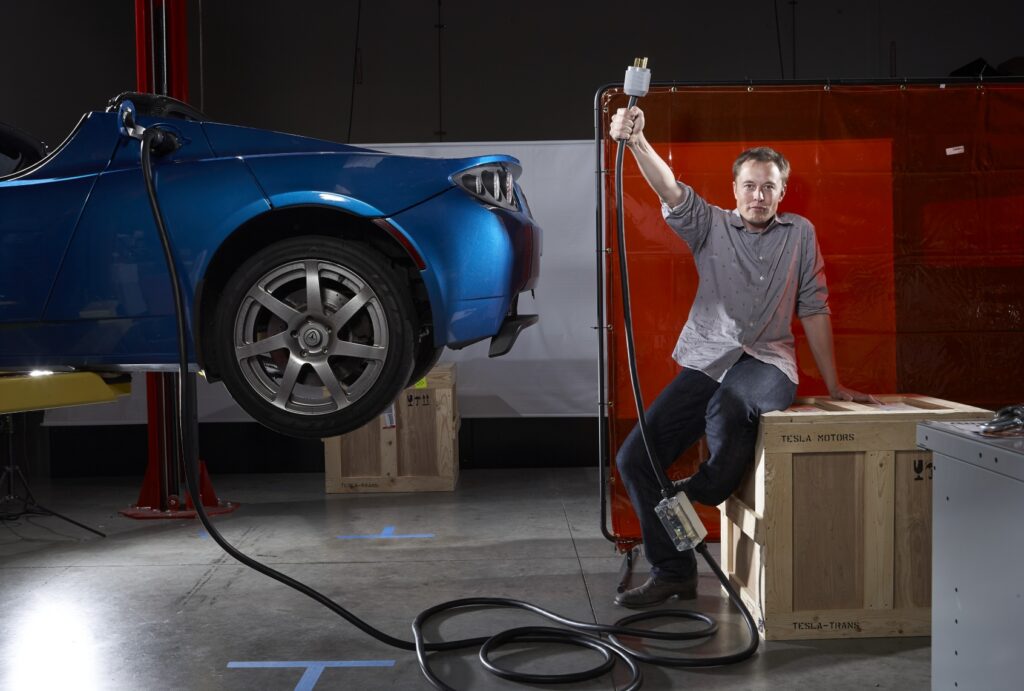
(Courtesy Bleecker Street Film / Ken Cedenoupi / UPI Alamy News) Elon Musk

In addition, it just so happened that as he embarked on his political project, a lot of people that I was talking to in the background, trying to persuade them to come forward, did come forward because they saw some of the more problematic aspects of Musk wielding power as part of MAGA world. That gave the story a kind of human dimension as well.

Weirdly, you know, I was having trouble kind of putting it all together, and I didn’t really get a sense of how to shape it until I watched Guillermo del Toro’s “Frankenstein,” which in itself was a kind of take on the tech bros. That helped me kind of find a way forward in terms of what became a kind of epic narrative.

How so?

Well, you know, you start with a scientist who wants to do something big and important. And there’s even a sense of idealism about his ambition. But then he literally creates a monster, and the whole enterprise becomes utterly reckless and irresponsible and all about his own sort of grandiosity. Rather than a mission that might help people, it becomes about him.

What are you hoping this documentary will do in terms of making people a little bit more aware of who Elon Musk is and getting at the man behind the curtain, so to speak?

Well, I mean, it is an agent provocateur. I don’t provide a solution, but I do provide, I think, a pretty compelling story, which asks the kind of fundamental question I posed at the beginning, which is, how did this guy get so much power, and why did we give it to him? Because it’s both about him and it’s about us, and it asks some discomforting questions about how literally existential power rests in the hands of one man who is increasingly chaotic, unhinged, and seemingly pursuing power without reason. There’s a chilling moment at the end of the film where somebody asks him, “Why have you accreted so much power?” And he literally can’t answer the question…

He’s a very peculiar character who’s a chaos agent. But we’ve allowed him to become normalized in a way.

I remember writing about him being on “Saturday Night Live” and people shrugging it off, like, “Oh, it’s not that big of a deal.” But it was a very big deal. Those kinds of things make him into a character when the reality is he has massive access to power.

And he’s saying things, even on “Saturday Night Live,” that were patently untrue… Even when he says, “Did you think I was going to be a chill, normal dude?” Well, there’s a funny hidden message there, which is kind of discomforting if you really think about it. Like, if you want to drive a Tesla, be prepared to endure a lot of performative cruelty from me, including cruelty that may end up killing people. . .  That’s a pretty brutal message, honestly, for “Saturday Night Live.” But it was a joke, right? And that’s the genius, in a way, of Elon Musk: he’s constantly saying stuff that is deadly serious and a joke at the same time.

Speaking of that, the images and the joke, let’s talk about using the [CGI] avatar. I remember when the news first broke about that, someone said, “Well, I wonder if that’s Alex kind of trolling Musk back.”

I mean, it’s kind of a troll-back, yeah. In a way, it’s kind of investing in him, playing in his sandbox, because he didn’t agree to appear.

And I should make it clear, as I tried to do in the film, that what we hear from him are actual audio recordings of him. In other words, they’re not AI-confected answers. We didn’t ask AI what Elon would say. We’re taking real audio recordings, but how to couch that visually? And we took our cue, having done all this research into stuff that Elon said, from something he kept going over again: This idea that we’re likely living in a simulation. So I thought, OK, how about a simulated interview?

And yes, he’s famous for trolling people. He’s famous for creating memes. What was it he said in 2020 on Twitter? He said, you know, parodying “Dune,” he said, “He who controls the memes, controls the universe,” right? OK, well, here’s a meme for you, Elon, of you.


Want more from culture than just the latest trend? The Swell highlights art made to last.
Sign up here


What, if anything, about this documentary may help illuminate a few things for people, regardless of their political leanings, as we approach the midterms?

I mean, this should be our concern, whether you’re from the left or the right, is giving people unaccountable power. Also, this whole idea that our politics and, indeed, our Department of Justice and our Department of Defense can be utterly transactional.

We’re not getting the best that money can buy. We’re getting what money can buy. Period. In other words, the military stuff that you’re seeing is a third-rate frontier AI technology being fully integrated into our Department of Defense. And why is the worst technology being integrated? Because Elon Musk is literally paying for political advantage. So it’s a payback system, and we should all be outraged about that, left, right, or otherwise.

And now you’re seeing him trying to buy the midterms. He’s spending way more now than he did for the presidential campaign in 2024, and in part that’s to get more money for himself in the form of military contracts. But also, he knows that a reckoning is coming for him if the Democrats take over the House and the Senate, and there’s going to be a lot of investigations into him for corruption and abuse of power, taking our information, particularly possibly relating to DOGE, and doing God knows what with it.

Our whole system is built on a system of checks and balances, and the idea that the government is our instrument for making a better world, rather than, you know, making a few people rich…

But I think that what’s changed now with Trump is that the Department of Justice has become a protection racket for those who flatter and ally themselves with the president, and an instrument of revenge for those who oppose the president. You can’t depend on it as a kind of law-enforcing mechanism, and that may be the scariest thing of all. . . What we’re talking about is Putin’s Russia here, right? And if people want to avoid that, then I would strongly urge them to go out to the polls. Because this is a rogue administration that goes beyond any kind of sense of party affiliation. It’s a rogue administration that’s literally destroying our democracy.

“Musk” is playing in theaters nationwide.


The post Alex Gibney’s “Musk” asks why we gave Elon Musk so much power appeared first on Salon.com.

  •  

Vurt wants you to look at vertical videos as a genre of their own

An image displaying Vurt’s mobile interface.

From Disney Plus to HBO Max, almost every major established streaming service is experimenting with ways to get into vertical content. It's clear that these companies see video-focused social media platforms like TikTok and Instagram as existential threats. In this arms race for viewers' attention, it has often felt like everyone is trying to find new ways to exist on people's phones. But a new startup thinks that the next step in vertical series' evolution is going to take place on our wide-screen televisions.

Unlike most vertical microdrama / series streaming platforms on the market that have focused on mobile viewing experiences, Vurt ha …

Read the full story at The Verge.

  •  

Betty Gilpin Is Having a Moment

On the heels of her Emmy win for “Widow’s Bay,” the “GLOW” star reflects on her slew of new projects, growing up with actor parents, taking on Cole Escola’s role in “Oh, Mary!,” and the importance of performing with your whole heart.

  •  

K-pop star Sunmi loves Notion and ear cleaning videos

K-pop start Sunmi with blond hair in a very light blue dress in some very dreamy early morning light.

Sunmi is an undeniable force in K-pop. She first made her debut as a member of the Wonder Girls back in 2007, one of the first K-pop acts to really break through in the West. The English version of their single "Nobody" was the first K-pop song to hit the Billboard Hot 100 in October 2009.

In 2010 Sunmi left the group to go back to school, but the siren call of a music career pulled her back in. She released her debut solo EP Full Moon in 2014. That began a run of award-winning releases for the pop star, including Song of the Year for "Gashina" at the Gaon Chart Music Awards.

Despite her near-constant presence in the K-pop world as a solo …

Read the full story at The Verge.

  •  

TV never left “The Twilight Zone”

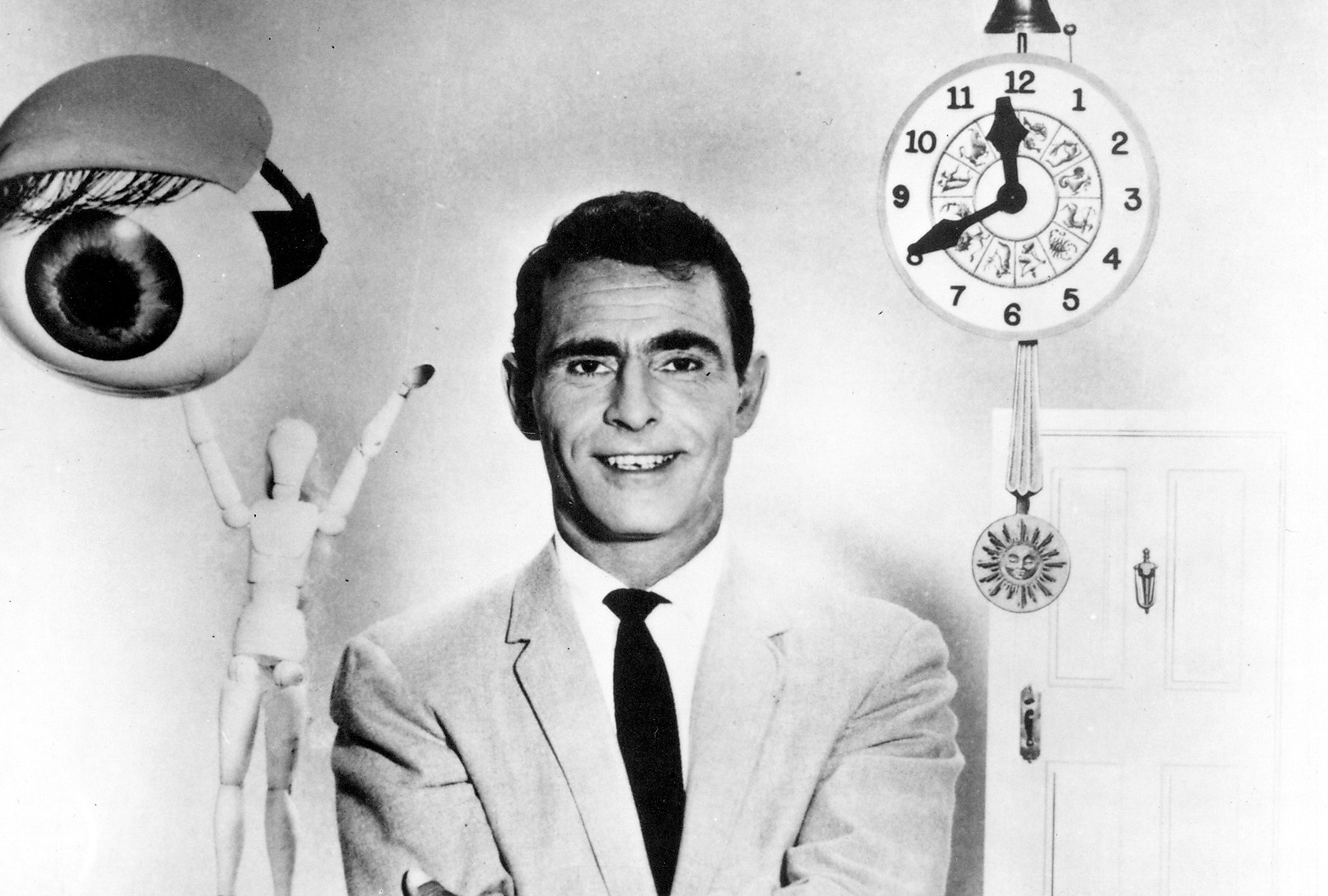
“Serling” author Alan Sepinwall didn’t know it, but he was about to enter another dimension. A dimension not only of sight and sound but of mind and, in his telling, unexpected connections. The scene was Los Angeles, where the veteran TV critic (and, full disclosure, a friend of mine) was set to moderate a 20th anniversary panel for “It’s Always Sunny in Philadelphia.” While making small talk with series star and creator Rob Mac in the event’s green room, Sepinwall casually mentioned he was writing about Rod Serling, creator of “The Twilight Zone.”

Suddenly Mac’s face lit up. “Alan,” he said, “You have to talk to me for this book. Rod Serling is my guy. Rod Serling is a huge influence on me.”

“And thinking in my head, OK. Sure,” Sepinwall recalled. “I was deeply skeptical, but figured, all right, I will indulge him because I like Rob. We’ll see what happens.”

Once they got around to talking, Sepinwall’s doubts dissolved. Instead, he ended up seeing Mac’s shows in a whole new light. “There really is ‘Twilight Zone’ DNA in ‘It’s Always Sunny in Philadelphia’ and ‘Mythic Quest’ and a lot of the other stuff he’s done,” Sepinwall said. “And I kept coming across that more than anything else.”

As long as television exists, “The Twilight Zone,” which premiered on Oct. 2, 1959, is unlikely to disappear completely. Heck, Bernard Herrmann’s eerie theme song alone will outlive humanity.

But if some calamity causes the show to fade into the mists of forgetting, Sepinwall argues in his upcoming biography, “Serling: A Journey Into the Twilight Zone with TV’s First Visionary,” that its creator’s influence is forever woven into the medium. From the greatest genre series to less obvious links, like the preposterous shenanigans at Paddy’s Pub, Serling left his mark on screens large and small, and on American audiences. 

Since Sepinwall wrote the book on TV – no, really, he co-authored “TV: The Book” with fellow critic Matt Zoller Seitz – who better to break down the essence of Serling’s evergreen appeal? That’s what we did in our recent Zoom conversation about the mythic creator, writer and actor who has haunted us for most of a century by changing TV for the better.


The following interview has been lightly edited for length and clarity.

(Courtesy of Alan Sepinwall)

After researching your book, what have you found about people’s common understanding of Rod Serling and “The Twilight Zone” that might not be entirely accurate?

I think people assume that the guy who created “The Twilight Zone” and was this really creepy, ominous host must have been this very dark and tormented person. Obviously, and he had some darkness in him; he came back from World War II really scarred, couldn’t really deal with it . . . but he was also a very outgoing guy. A jokester, warm, fun dad, you know, had this idyllic childhood and was just a very popular people-pleaser kind of guy that you would not expect whatsoever from that image of him.

When people think about Rod Serling and his influence on TV, they basically associate him with genre television like “Lost.” But they don’t necessarily think of shows like “Sunny.” What are some others where you were kind of surprised to find DNA of “The Twilight Zone” on a closer look?

Well, this isn’t one I was surprised to find because it’s quoted a few times in the show, but it’s still like a less obvious one: “The Sopranos.” David Chase is obsessed with “The Twilight Zone.” One of the reasons that he wanted to become a writer was that he just thought Rod Serling was the coolest guy on the planet. So I’d say that’s one.

The work of Pamela Adlon, who did “Better Things” and a lot of other stuff. I mainly knew she liked “Twilight Zone,” but I didn’t realize the depth of it to the point where she named one of her kids after a character in a “Twilight Zone” episode.

So yeah, it’s all over the place. There are the obvious ones like J.J. Abrams and Damon Lindelof with “Lost,” Charlie Brooker with “Black Mirror.”  But you look at, like, “All in the Family” or “Hill Street Blues” or a lot of these other things, and it’s hard to imagine them existing in the form that they did if there hadn’t been Rod Serling in the ‘50s, and especially with “Twilight Zone,” saying that TV can be asking these bigger questions, can be wrestling with thornier moral issues, and can really challenge people to turn their brain back on and not just, you know, have it on in the background while they’re folding laundry.

One of the things you write early in the book is that he really had a jaundiced view of nostalgia.

I mean, his relationship with nostalgia was really complicated because on the one hand, he has this idyllic childhood in Binghamton, New York, you know: doting parents, popular kid, dated all over the place. Binghamton largely resisted the effects of the depression. Then he immediately goes from there to Hell on earth, fighting in the Pacific . . . And the shock of going from one to the other really affected everything he would write about for the rest of his life.

On the one hand, there’s the part of him that wishes he had never left Binghamton and wishes he could go back to this time before the war, before humanity dropped atomic bombs on civilians, before there was this constant fear of the nuclear apocalypse and all of the other things that people were starting to worry about in the ‘50s and ‘60s and the Cold War.

On the other hand, he knew that this was a bad idea. You can’t go backward; you have to move forward. And that, as good as life was for him in those moments, it was not great for other people. And he kept trying to push humanity forward. He would argue on behalf of civil rights and nuclear disarmament, and all these other causes that he cared about. So almost every time you do a “Twilight Zone” episode where somebody goes back in time, either to their own childhood or even further back than that, it doesn’t go well for them. The past is not a place you should be.

What do you think it is about the metaphorical messages within each episode that keep “The Twilight Zone” eternally relevant?

Because people are people, and we keep making the same mistakes and facing the same challenges, even if sometimes we get better about it than at other times. But you watch these episodes, and he’s asking really elemental stuff about humanity. Like being selfish versus trying to think about the world around you, or taking the easy choice versus the hard one. You know, racism, fascism — how easy it is for us to give in to the ideas of conformity, to give in to the ideas of letting someone else do all of the thinking for us.

That’s there again and again. And so you watch those episodes, and it’s like they’re 60-plus years old. They’re in black and white. The fashions are what the fashions are, and yet over and over it feels like, really, he could have written this yesterday.

“Serling: A Journey Into the Twilight Zone with TV’s First Visionary” hits bookshelves on Tuesday, Oct. 13. You can pre-order your copy by clicking here.

All five seasons of “The Twilight Zone” are streaming on Paramount+.


The post TV never left “The Twilight Zone” appeared first on Salon.com.

  •  

The director of Fjord takes the ‘risky position’ of moderator

Renata Reinsve (top center) and Sebastian Stan (top right) play religious Romanians living in Norway. | FLC Press

Cristian Mungiu's sixth feature, Fjord, concerns a family on trial. The parents seem like good people, God-fearing. They would never be accused of gentle parenting. They've just moved from Romania to a small hamlet nestled in the fjords of rural Norway. There is Mamma (Renate Reinsve), Tata (a bald and bespectacled Sebastian Stan), and their passel of children. They are an openly religious and proselytizing family. All ought to be well, only Norway in 2026 is extravagantly suspicious of the devout - their famous tolerance reserved for the secular.

Fjord starts quietly and builds subtly. We are with the family as they are introduced to thei …

Read the full story at The Verge.

  •  

The gospel according to Andy Beshear

Andy Beshear has a favorite song: “Universal Sound” by Tyler Childers, the Grammy-winning country artist with a special place in the Kentucky governor’s heart. That title is something of a metaphor, about connecting to a deep, abiding spirituality accessible to us all. It’s meant to be an ecumenical message — just like the one Beshear hopes to deliver.

“Universal Sound” carried him through a “nasty” reelection campaign in 2023, which ended with a comfortable victory over his GOP opponent, state Attorney General Daniel Cameron, who had been hand-picked for the race by Sen. Mitch McConnell. Amid mounting speculation that Beshear could become a leading contender in the 2028 Democratic presidential primary, “Universal Sound” may well become familiar to more voters.

Beshear’s newly published book, which is de rigueur for potential candidates seeking to raise their political profile and lay out a vision, is also stoking talk of 2028. With its title taken from the biblical parable of the Good Samaritan, “Go and Do Likewise: How We Heal a Broken Country” explores how President Donald Trump and his administration have, in Beshear’s words, “hijacked” Christianity, and how the governor’s brand of inclusive faith underpins his political life, offering readers a blueprint for governing with compassion. 

I interviewed Beshear last week on the sidelines of Bourbon & Beyond, the music festival held annually in Louisville, Kentucky. He spoke about a reinvigorated religious left, addressed the tricky question of whether Trump should be considered a Christian, discussed his willingness to take unpopular stands in a red state, hinted at his plans for 2028 and explained why, as a politician often compared to Mr. Rogers, his kindness shouldn’t be mistaken for weakness. (Full disclosure: My husband, the novelist Silas House, served as Kentucky poet laureate under Beshear, and I once briefly assisted the governor on a writing project.) 

This conversation, which took place in a backstage trailer vibrating from the country and hip-hop tunes emanating from nearby stages, has been edited for length and clarity.

Governor, thank you for taking the time to talk. “Go and Do Likewise” is centered around the parable of the Good Samaritan from the Bible. What do you think that story has to tell us and teach us today? 

Well, it’s a perfect story for a moment of division. So the parable of the Good Samaritan is about a man lying bloodied and naked on the side of the road, and everybody that looks like him and thinks like him and votes like him and prays like him and loves like him goes to the other side of the road, ignores him and walks on. But Jesus chooses someone who’s raised to hate that man on the side of the road — the man on the side of the road was raised to hate the Samaritan — and that’s the person he has come over, not kick the man while he’s down, but lift him up, carry him to safety and, if you read it carefully, pay for his healthcare moving forward.

But the parable of the Good Samaritan is more than just a story to emulate; it’s an instruction, because Jesus then looks at the crowd and says, “Now go and do likewise” . . . This is one of the fundamental — not teachings but instructions of the Bible. It’s for us to be good, especially when it’s hard. For us not to judge people, and at people’s worst moments, to just be good to each other.

Faith is obviously so important to you, and I’ve heard you many times refer to it as your “authentic why.” What do you mean by that?

“In an age of authenticity — when your Instagram video is important and your TikTok video is important — people want to know you, what drives you. They don’t have to agree with what drives you. They just want to see that it drives you to do good. And for me, that is my faith.”

Well, first, I would never impose my faith on anyone. I’m not somebody who thinks that my faith needs to be written directly into law. That’s Christian nationalism, and I’m against that. But I do think in an age of authenticity — when your Instagram video is important and your TikTok video is important — people want to know you, what drives you. They don’t have to agree with what drives you. They just want to see that it drives you to do good. And for me, that is my faith.

It tells me I’m supposed to leave this world a little better than I found it, and that’s one of the reasons I’m still [here]. You know, I thought that two terms as governor would be enough, and they still may be. But I see a world now that’s moving backward and not forward. And doesn’t faith call you to stand up and to speak out at that moment?

What do you think being in that position — I imagine you sitting there in Frankfort at night, weighing this [calculus] — has taught you?

First, I believe in any job that I’ve taken on. I am fully dedicated to the people of Kentucky, and when I fight with the president, it’s not because I’m a Democratic governor and he’s a Republican president. It’s because he’s doing something that hurts the people of Kentucky, and whether it’s popular or not, that was the job I took on to do my very best to move us not right, not left, but forward.

But you know, [the COVID pandemic] taught me a lot of lessons. I did what I thought was the right thing, that might not be the popular thing, the thing that would save the most lives. And you know what I found? As long as you’re willing to respect people enough to explain your why and not just your what, doing the right thing is oftentimes the politically popular thing, even if it wasn’t beforehand. People respect conviction, even if they don’t necessarily agree with it. And when you’re willing to explain why you did something, people can disagree with you but still believe you’re coming from a good place.

One thing I’ve been thinking about as I read your book is that the religious left used to be such a strong force in American politics. You know, Bobby Kennedy, all of his work —

All of the War on Poverty, even if not couched in those terms —

Yes. Bobby Kennedy’s work for social justice was rooted in his Catholicism. Jimmy Carter, famously a Sunday school teacher, spoke about his faith a lot. Even Hillary Clinton, in her husband’s 1992 presidential campaign and administration, talked about her faith and took a lot of flak from establishment media. What happened to the religious left? Why do you think it declined, or kind of went underground?

Well, what I think we’re seeing now, when you see the James Talaricos of the world, our Kansas Senate candidate [Democrat Adam Hamilton] who’s a Methodist minister and others . . .  you know, the media will always try to take something as a tactic. They’re like, “Why are Democrats talking more about faith right now?” instead of “Why are people of faith running as Democrats right now?” And I think it’s because there is such a manipulation and a hijacking of faith going on, in such a transparent manner, that people of faith are saying, “I’ve had enough.”

When you see Donald Trump hold a Bible in a way that you’re pretty sure he’s never held it, much less never read it; when he says he doesn’t think there’s any way he’s going to heaven, he doesn’t seem to be worried about it; when he walks out after Erika Kirk gives voice to the Golden Rule in such a beautiful way, and says, No, no, I believe in the exact opposite; when you see JD Vance using faith to kick people while they’re down instead of lift them up, and to judge as many people as possible — then I think people of real faith want to stand up and take that back. Or at least to provide the counterexample. I think people are tired of seeing faith used for bad in public life instead of for good, and that’s the core of why I wrote the book.

You don’t shy away from going after President Trump. You write that he “makes people feel good about themselves by telling them it’s okay to be the worst version of themselves.” At another point you say, “Trump may occasionally talk about Jesus (or ‘Two Corinthians’), but he has missed the point. Jesus lifted up the very people this Republican administration pushes down . . . Trump throws Gatsby parties with his billionaire friends, while Jesus hung out with the exact opposite. Trump clears the very people out of city parks that Jesus would minister to.” 

That’s a powerful indictment. You’re saying that the president doesn’t love his neighbor as himself.

No, he calls his neighbor “the enemy from within.” It is the most stark contrast. I think about “love your neighbor as yourself” versus the president [characterizing] your neighbor as the enemy from within. I also think about Erika Kirk saying, I forgive my enemies, and Donald Trump saying, no, I hate my enemies . . . It’s just the exact opposite of what the Bible is supposed to teach us.

At one point, you question if he even knows the story of the Good Samaritan. 

I’m not sure he does.

Christ said, “You will know them by their fruits,” right? Do you think President Trump is a Christian?

I try not to question people’s faith, because I admit that that is judging. But he is not living and he is not governing like a Christian. Now, when you think about the miracle of the fishes and the loaves in each of the four first books of the New Testament, it’s that important. Jesus, in a time of scarcity, makes sure everybody has enough. Donald Trump has repeatedly tried to take food off kids and seniors’ table [and] was willing to use starving Americans as leverage during a government shutdown. That is not living or governing like a Christian, and I doubt they ever run out of food at the White House. 

“Jesus, in a time of scarcity, makes sure everybody has enough. Donald Trump has repeatedly tried to take food off kids’ and seniors’ tables [and] was willing to use starving Americans as leverage during a government shutdown. That is not living or governing like a Christian.”

I think about the “Big Ugly Bill,” and it’s causing kids to lose having enough food, but it’s also taking doctors away from the sick. And while I think he was talking about spirituality, the actual words of the Bible — which many people believe is the direct word of God — is that Jesus said a doctor is for the sick. Yet there’s a lot of sick [people] that aren’t going to have a doctor. So Donald Trump certainly isn’t living out faith. And for those that preach that he is a person of faith, my granddad, a lay Baptist minister, always said, you know, faith without action —

Yeah, is “dead.” In the book you call for a “Great American Reset.” What do you mean by that? How would you define that?

I did not live through McCarthyism, but we have read about McCarthyism — about attacking and othering people, throwing them in jail — and Donald Trump’s doing it right now. He’s so desperate, he’s calling people communists. I mean, just blatantly ripping off Joseph McCarthy. But the president himself is doing it. But we reached a point where people said enough, and they took a breath, and we came back together and did not repeat it — at least until now. 

I don’t want to leave a broken country to my kids or to anyone else’s. I don’t want to leave this divided of a country to anyone else. I don’t want to leave a country where we are told it’s OK to hate each other and that your neighbor is the enemy. And so while I judge MAGA politicians, I don’t judge MAGA voters — and I don’t even use that phrase. Why? Because I want them to take a breath and to say, “OK, you know, let’s do something better. You know, this went too far. Let’s repair the wounds that we have,” so that we don’t move from retribution from one side to retribution to another side, and back and forth and back and forth, but that we get something more like what we had growing up. 

When you were talking, I thought of another scripture — “the repairer of the breach” from the Book of Isaiah, which Bill Clinton used quite a bit. That’s kind of what you’re talking about, bringing people back together, healing divides.

I feel like we’ve done that better in Kentucky than most places. I still don’t always agree with the way people vote, but if you look at where we were with [my predecessor as governor] Matt Bevin, [who was] going after everybody who is different, othering anyone and everyone, judging everyone . . . Look at where we are now. That last [presidential] election, you didn’t see nearly the signs or the flags or anything else. You saw people who, in the very least, wanted to genuinely respect their neighbors.

You talk about that happening here in Kentucky. How do you think that can begin nationally, though, when a lot of MAGA Republicans out there think, as you write in the book, that “Democrats are Satan in the flesh”?

Well, Republicans right now are costing them about $4,500 extra a year in tariffs, about $800 extra a year in gas. If they need diesel, it’s even worse. So they might think that Democrats are Satan in the flesh, but Republicans are bankrupting them. If you want to eat, to be able to afford groceries for yourself or your kid, if you want to be able to see a pediatrician for your child in your own community, you’re going to think about things a little bit different. Democrats have the chance to grab that lane. And we should be. That’s where we should want to be. That’s certainly where I’ve always governed. 

Think about a soybean farmer, and you and I both know we got a lot in Kentucky, and I’m not sure if any of them voted for Kamala Harris. But look at what’s happened to them. First, the USAID program’s eliminated. That’s one of their major clients, because if you feed starving nations, people like the United States better. Then [Education Secretary] Linda McMahon comes in, using her wrestling knowledge, to end the farm-to-cafeteria program. Then Donald Trump — and he alone decides on tariffs — throws them on China, and they stop buying our soybeans. They’re the largest purchaser in the world. They move to Brazil and Argentina.

Then he decides to get in a war with Iran that he doesn’t even explain to the American people a couple days before in his State of the Union. And now the price of diesel, which runs all farm equipment, is at an all-time high. If that’s not enough, a third of the world’s fertilizer runs through the Strait of Hormuz. So, a soybean farmer that voted for Donald Trump, who believed that was their guy, is totally betrayed, trying to decide if they’re going to plant crops at all, or if Donald Trump has bankrupted their family farm.

You’re the most popular Democratic governor in the country, according to the polls, and this book is introducing you and your beliefs to a whole other set of people, of potential voters. What are your plans for 2028?

Well, I haven’t made any final decisions, but I will say when I walked off the stage in 2023 . . . I looked at [my wife] Britainy, and I said, “Hoo, I’ll never have to run for anything ever again.” As I’m here today, I’m not sure that’s the case anymore. And I’ll make that decision later. 

But I think about two core tenets of my faith. Number one, that I am made by a loving God that calls me to love other people, and that ought to be the baseline. And number two, I ought to leave things better than I found them.  

Listen: When you’re governor of a place you love, it’s enough. It’s special. What we’ve done in Kentucky together, all of us, people of all different parties over the last seven years, [has] been transformational, and I couldn’t be more proud — and I was willing to go out on top . . .  But I can’t watch a country slide back. I can’t see progress that folks in Selma marched for 60 years ago, undone by a rogue Supreme Court. So I don’t know exactly what my role will be in the future, but I just will not leave a broken country to my kids or anyone else’s. I will not.

I want to ask you sort of a different question. Let’s say that a popular Democratic governor, who has been elected twice to that job in what many see as one of the reddest states in the country, decides to run for president. What would they offer the American people?

Well, a vision of both reviving the American dream, of proving to people [who] believe the economy is broken that it can work again. That if you work hard and play by the rules that you can get ahead — that you can take your kids on the same vacation that you went on, that you can leave your family better off. That we can fix the darn government that people look at as corrupt right now, and we can heal this divide that is such a threat to our future as Americans. And none of us enjoy — none of us wants to be mad at the person that lives across from us. I think we can get back to being, yes, an imperfect nation, but one that’s stable, [where] at least we are moving toward progress each and every day.

“Don’t mistake kindness for weakness. If I’m Kentucky’s ‘Mister Rogers’ — he went up against Trump before Trump. He went up against a Republican incumbent governor that attacked him every day for four years, and the ‘Mister Rogers’ is the one still standing.”

Right now, polls are showing that Democratic voters want fighters, leaders who are unafraid of punching back against corrupt and MAGA politicians. Some Democratic politicians are resorting to using strong language, dropping F-bombs to get their point across. You, by contrast, have built your political identity on leading with kindness. “Kentucky’s Mister Rogers” is how many people see you. One of your book’s chapters is titled “Be the Adult in the Room.” So I wonder if you think there’s room for that kind of politics in the party and America today, coming in the wake of Donald Trump.

Don’t mistake kindness for weakness. If I’m Kentucky’s “Mister Rogers” — he went up against Trump before Trump. He went up against a Republican incumbent governor that attacked him every day for four years, and the “Mister Rogers” is the one still standing. A lot of people can claim they’re fighting in different ways from the bluest of states. How many people have sued [Trump] 30-plus times from the reddest of states? How many people speak out against him when it could negatively impact their approval rating instead of positively impact their approval rating? 

You know, every day that I stand up for Kentuckians and Americans, every day that I fight back against this administration, I have more to lose than anybody else. But what’s an approval rating worth if you’re not going to use it for something? So there are different ways to fight, and here’s what I’d say to a lot of people: If somebody’s yelling, and you yell back, then nobody can hear a thing. There’s effective ways to defeat that person to fight and win. But shouldn’t we want one that will actually win in the end? And so I think that when people look at who’s fighting in the hardest of places, they see this governor. 

The midterms are about six weeks away. What do you think the Democratic Party is getting right, and where do you think it’s falling short?

“What’s an approval rating worth if you’re not going to use it for something? There are different ways to fight, and here’s what I’d say to a lot of people: If somebody’s yelling, and you yell back, then nobody can hear a thing. There’s effective ways to defeat that person, to fight and win.”

I think that they are getting right how hard the world is on American families right now. I hate to use the “affordability” word, because I believe it’s becoming like a political science term. What it really [means] is that your medical bills cost too much. That’s why we forgave $250 million in medical debt here in Kentucky [via executive order]. It’s that your utility bill is going up. It’s that groceries are too much, and my goodness, gas is through the roof. We need to make sure that we’re communicating in terms that the American people communicate in. 

You said something at a recent book event that caught my ear, that the Democrats have gone too far on a few things. I’m wondering what those might be.

We went too far on overregulation. We’ve got to protect our environment, we’ve got to protect our workers. But if we make things so onerous, then it takes a long time to accomplish anything. If you believe we need more housing, and it takes that much longer to build housing, then people lose out. If it takes too long to build a factory, you don’t have those jobs that pay the good wages. So we’ve got to have a sense of urgency . . . Democrats have to design our policies in a way to get results, and if we believe truly in something, even if we’re only 80% right on what the policy looks like, understanding if we get it done faster, it benefits more people.

You come from what many observers would call the party’s more traditional wing. Right now, there’s a lot of energy behind progressives like Dr. Abdul El-Sayed of Michigan, and democratic socialists like Alexandria Ocasio-Cortez and Zohran Mamdani. Do you think there’s room in the party for this wide range of political identities?

I think — and you’re not doing it — but I think that the media tries to put everybody in a box to have a narrative. How many people in a Trump plus-30 state that have vetoed every anti-LGBTQ+ bill that [has reached] their desk would suddenly be lumped in as a moderate? And that’s not to suggest I view myself as a progressive. I just — I don’t view myself as either. I view myself as pragmatic.


Start your day with essential news from Salon. Sign up for our free morning newsletter, Crash Course.


My job is to stand up for my people and all their rights, live out my faith and to see everyone as a child of God, but [also] to solve problems. And that’s where Democratic governors are. You know, I think that this debate can play out in the House and in the U.S. Senate, where they might have different caucuses. But governors aren’t one of 50 or one of 24 in a party. You’re one of one, and your job, if you’re doing it right, is to get things done, to actually improve people’s lives. So, I can’t be as ideological as someone who votes on the amendment to the rule, right? My job has to be to figure out how to get the best results for our people on each and every day. 

Are you worried that Republican attempts to deploy terms like “communist” across the board will hurt the Democratic brand overall?

Oh, I think what the president’s doing is so hyperbolic and so transparent that people see right through it. There is only one elected official in the entire country actively engaged in socialism, and his name is Donald J. Trump. 

The definition of socialism is government ownership of the means of production, and he is the only person negotiating a U.S. government interest in a private company. But, you know, what you do is you call people the name that you’re worrying that you are, and so he’s calling people “communist.” So now that he’s engaged in socialism, which he is, what is the difference between that and communism? It is the people in charge enriching themselves, which he and his family are doing. It’s turning the police and the justice system into your own personal force, which is what he’s doing. You see in each and every one of these that the things that Trump is calling people is what he’s actively engaged in.

The post The gospel according to Andy Beshear appeared first on Salon.com.

  •  
❌