BERLIN — Berlin mayoral candidate Elif Eralp is facing accusations of hypocrisy from political opponents after private remarks about “people with connections to Hamas” raised questions about her party’s approach to policing and the Middle East conflict.
The controversy risks complicating efforts by Eralp’s Left Party to form a coalition with the Social Democrats and Greens after winning the Sept. 20 Berlin election. The far-left party’s pro-Palestinian stance helped mobilize voters, but Jewish organizations have accused it of antisemitism. The party denies this.
The remarks appeared in internal comments accidentally included when Eralp’s office returned an annotated transcript of an interview to Der Spiegel, as per customary German journalistic practice.
Der Spiegel asked Eralp about antisemitism within her party. Eralp acknowledged that boundaries had been crossed at some campaign events. The journalists then asked whether she was referring to Ibrahim Ibrahim, a pro-Palestinian agitator who attended the Left Party’s election-night celebration. Eralp answered “yes,” according to Der Spiegel, but later sought to remove the exchange from the interview transcript.
In private comments apparently to her assistants, inadvertently included in the returned transcript, Eralp referred to advice she said she had previously received from Berlin’s State Criminal Police Office (LKA) about publicly naming individuals linked to organized crime: “The LKA said at the time that they recommend never naming specific individuals. Back then, it was about organized crime. Now it’s about people with connections to Hamas.”
She added: “I cannot put myself and my family in danger for SPIEGEL. What do we do now? Cancel the entire interview?”
In a statement through his lawyers earlier this month, Ibrahim said he was not a member of the Left Party and said he rejected antisemitism. “I categorically reject the accusation of supporting terrorism,” his statement said.
In another private comment on the Ibrahim Ibrahim question, Eralp referred to an unidentified man by his first name, saying he “does not want to name specific individuals, neither does my husband, nor do I. He is afraid of these people, and so am I.” Der Spiegel did not identify the unknown man or explain his relationship to Eralp.
The CDU’s mayoral candidate, Stefan Evers, who placed second in the vote, said the remarks exposed a contradiction between Eralp’s concerns and her party’s position. The Left Party has called for reducing police numbers, while Evers alleged that members were working with the people Eralp feared.
“If the woman who is supposed to govern Berlin in the future is so afraid for herself and her family that she hesitates to publicly name terrorist sympathizers, while parts of her own party are working hand in hand with those very circles, then reasonable voices within the Greens and [Social Democrats] must finally pull the emergency brake,” Evers told POLITICO.
Former Berlin Mayor Michael Müller, a Social Democrat, warned that Eralp could be vulnerable to blackmail.
Eralp said Thursday she still wants to become Berlin’s mayor. Asked about the report, she told journalists: “I will not comment because private, internal information has been published. But what I can say very clearly is that, as governing mayor, I will ensure the safety of all Berliners.”
“My name is Abdul; it means servant.” So begins the most compelling ad of this year’s election cycle. Dr. Abdul El-Sayed speaks, simply and directly, to the camera. Seated in a brown leather armchair while holding a coffee mug, Michigan’s Democratic Senate nominee lays claim to his Muslim faith in straightforward, affecting terms.
“I pray everyday,” he says. “I reflect on my role in this life, on this earth, how we leave it better than we found it, to serve God, to serve our neighbors.”
A cloud of suspicion, much of it tangled up in his ethnicity and religion, has hovered over El-Sayed’s candidacy. The othering has been both blatant and subtle. In August, I spoke with Sen. Tommy Tuberville, R-Ala., as he made his way from the Capitol subway to his Senate office the day after El-Sayed’s primary win. Tuberville told me the Michigan Democrat was “a cheerleader for 9/11” and “basically” a terrorist. A pair of debates has seen El-Sayed’s Republican opponent, former Rep. Mike Rogers, accusing him of being “bought” by and “pledg[ing] his support” to the Muslim Brotherhood, claims that are unfounded. Others, including wavering centrist Democrats such as party strategist James Carville, who recently gave El-Sayed a reluctant endorsement, have pointed to the nominee’s attacks on Israel over the Gaza war as evidence that he is hostile to Jews and Judaism. More broadly, anti-Muslim rhetoric and attacks are becoming a defining feature of the GOP.
El-Sayed’s ad, released last Sunday, is entitled “Prayer” and marks an obvious attempt to refute those accusations and change the conversation — to persuade hesitant voters in the final days of this tight race to pull the lever for him. As El-Sayed speaks, snapshots roll. He stands with a voter, who points across the river, a subtle message of an aspirational future. There is El-Sayed standing and holding hands in prayer with a group of Black churchgoers. A menorah and a humble church flash on the screen. And then there’s the candidate himself, standing alone in prayer, his head bowed.
El-Sayed connects his belief to a national crisis of faith embodied in Washington: “We don’t have faith in our future; we don’t have faith that we can actually fix things.” Then he returns to his own candidacy. “I’m Abdul El-Sayed,” he says at the end. “A man of faith — and that’s a good thing.”
The ad offers a reason for his candidacy and life of public service, and ends what has been a tumultuous campaign on a grace note — and with an implicit promise. Everyone is welcome in my coalition, El-Sayed is saying, I’ll protect you.
A good election spot offers an appeal to voters by telling a story, and “Prayer” certainly does that. But there are other ingredients that can boost a political ad to the realm of greatness. In a positive ad, voters are offered an intimate look into the candidate’s reason for running. “Prayer” also does that, and therein lies its true power. It shows a different side to El-Sayed, whose refusal to back down from a fight and ability to cut through the noise, as Salon’s Amanda Marcotte recently wrote, “terrifies MAGA.” The ad offers a reason for his candidacy and life of public service, and ends what has been a tumultuous campaign on a grace note — and with an implicit promise. Everyone is welcome in my coalition, El-Sayed is saying, I’ll protect you.
Even though “Prayer” is targeted to Michigan voters, it cannot be divorced from what’s happening nationally. It adds El-Sayed to an emerging list of Democrats who, as unabashed members of the religious left, are comfortable talking about their faith openly. Most, such as Texas U.S. Senate candidate James Talarico, Kansas U.S. Senate nominee Adam Hamilton, former Transportation Secretary Pete Buttigieg, Georgia Sen. Raphael Warnock, Kentucky Gov. Andy Beshear and Maryland Gov. Wes Moore, are Christian. Others, such as Georgia Sen. Jon Ossoff and Pennsylvania Gov. Josh Shapiro, are Jewish. By attaching his name to those ranks, El-Sayed is staking out important space for Muslims in public life.
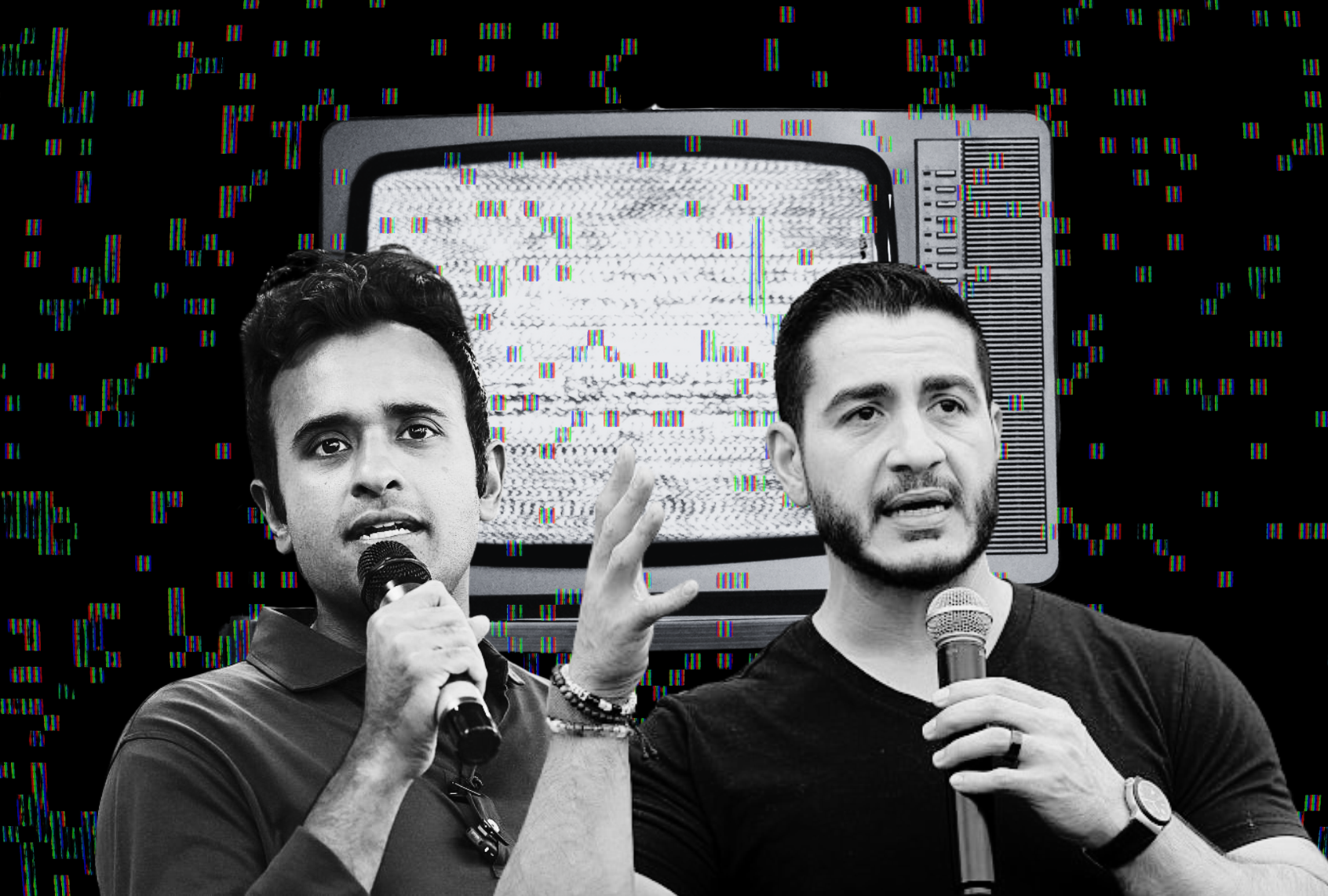
But there’s more to it than just his religious and ethnic identity. The ad’s message serves as a proxy for the stark choice facing voters across the country, and just south of the Wolverine State’s border. In Ohio, Vivek Ramaswamy, the Republican nominee for governor, funded and produced an ad attacking Dr. Amy Acton, his Democratic opponent, and featuring her own mother.
The spot, released only 24 hours after El-Sayed’s, carries a message that is the direct inverse of the Michigan candidate’s. Rooted in cruelty and scripted with a lashing of DARVO, a tactic easily recognizable to victims of abuse — Deny, Attack and Reverse Victim Offender order — the ad is uncomfortable to watch, and vile.
Viewers see an elderly woman looking into the camera and identifying herself as Donna Arthur. “It’s not easy for a mother to say this,” she says, “but Amy has a serious problem: she is a liar.” Arthur goes on to attack her daughter’s credibility, but without producing any evidence beyond her own testimony, which is severely imperiled by a documented history of her own actions.
Arthur has been estranged from her daughter since 1978, when the 12-year-old Acton accused her stepfather of raping her. According to court records, Cledith Arthur was arrested and charged with the crime, but fled the state before being tried. When his wife supported him, branding young Amy Acton a liar, both the girl and her younger brother were removed from Donna Arthur’s custody and raised by their biological father. In a statement released by her campaign, Acton’s brother stood by his sister’s account and branded Ramaswamy’s campaign “despicable” for turning the abuse Acton says she suffered “into a political talking point.”
In the ad, Arthur does not mince words. “My daughter needs help,” she says, “and she can’t help you if she can’t help herself . . . Don’t vote for people who lie; don’t let her become your governor.”
Setting aside Arthur’s agency and the willing role she played in the ad, Ramaswamy has chosen to retraumatize his opponent before the eyes of millions of voters. By platforming a woman who is, at the very least, an enabler and accomplice to the alleged sexual assault of a minor, if perhaps only in the aftermath, he is sending a chilling signal to victims of abuse in Ohio and throughout the U.S.: There are consequences to speaking up.
But if Ramaswamy’s behavior wasn’t bad enough, Donald Trump and JD Vance had to get in on the act. Vance, who as an Ohioan has particular skin in the game, positioned himself alongside Ramaswamy as a truth-teller, saying he “wasn’t even supposed to talk about” the ad but “couldn’t help himself.” The vice president went on to praise the candidate for having the “audacity to run a TV commercial which calls it out like it is and calls Amy Acton a liar.”
On Thursday, the president was even more crass, calling the ad an example of “hitting pay dirt.” Ramaswamy, he wrote on Truth Social, “should keep it up, and let everyone listen to the mother of a defective, dishonest, and incapable Candidate, explain how the daughter is a DISASTER who, uncontrollably, lies, cheats, and steals! I only wish the mothers of my opponents would be so brave.”
A handful of other Republicans, including outgoing Gov. Mike DeWine and former Ohio Rep. John Kasich, decried the commercial and said it should be taken down.
There is no other word for the behavior of Ramaswamy and MAGA leaders: It is personally and publicly cruel, and the message it sends acts as a reveals far too much about Republican policies and the political leaders who advance and implement them. In their world, victims are treated with disdain and abusers defended while the American people are subjected to severe economic and psychological mistreatment.
The cost-of-living crisis is ignored, all because a vainglorious president decides to wage an unnecessary war in Iran. The healthcare of millions is stripped away to line the pockets of the wealthiest. The rights of women, people of color, immigrants and LGBTQ+ Americans are under assault because of leaders and voters who want to hoard their privilege.
Against this backdrop, El-Sayed’s ad stands as a balm for voters who long not just for a fighter, as he has well demonstrated he is, but also for a leader who is unafraid to lead with compassion and humility. It’s too early to know if his appeal will result in success at the polls. But the ad, in contrast to Ramaswamy’s, nonetheless underscores what’s at stake in the midterms: a choice between faithful service and abject cruelty.

 Login