Typically, to be named a principal at a school, the school needs to be open first. That wasn’t the case in New York this year. In January 2026, Next Generation Technology High School hired Caleb Haraguchi-Combs to be the “project director.”
Despite the school not even existing yet, the New York Post reports that Haraguchi-Combs earned a $50,000 raise to principal-level compensation. In most cases, the project director of a school that is still under construction becomes the new school’s principal. What’s different about this scenario is that the planned school has been denied.
The proposed school, Next Generation Technology High School, would be located in the Financial District of New York. It would focus on artificial intelligence and computer tech. The new school has never been approved, and New York Schools Chancellor Kamar Samuels shot down the proposal in April 2026. The proposed school received significant backlash due to fear of AI and its “merit-based admissions model.”
Who Is Haraguchi-Combs?
Aside from being an educator by day, Haraguchi-Combs is a rapper at night. Under the stage name Cal Combs, he has released two rap albums. In 2017, his album Carmel was named after a city in Indiana where Haraguchi-Combs once lived. It tells the story of a drug deal in the area, from which he had to flee due to gunfire. In another song, “Roundabout”, the song focuses on drug use and excessive drinking.
Previously, Haraguchi-Combs was an assistant principal at Manhattan Center for Science and Mathematics in East Harlem. According to public records reported by The Post, Haraguchi-Combs made $141,960 a year in this role. Despite the school not even existing yet, Haraguchi-Combs received a $50,000 raise when accepting the role. This has been particularly frustrating for the Department of Education, as it has been an excessive waste of taxpayer money.
The DOE has questioned, “What was the plan? There are a lot of schools that could use a principal; there are opportunities to appoint principals since then, it’s a huge waste of resources.” They also added, “Unless a principal has tenure, they get bumped back to AP if their schools don’t open.” They also claim Haraguchi-Combs should have “never named a principal before the school was approved.”
New York Post tracked down Haraguchi-Combs, spotting him outside his high-ride in Brooklyn. In this confrontation, Haraguchi-Combs refused to say where he worked.
New York City Mayor Zohran Mamdani knows what they’re saying about his grocery plan.
Conservative media outlets and right-wing commentators have, for more than a year, been practically apoplectic about Mamdani’s push to open five municipal stores to sell discounted food. Local Republicans have responded to the initiative by comparing Mamdani to Fidel Castro and Hugo Chavez. Last year, as Mamdani made the plan a central plank of his campaign, Fox Business published a dramatic piece featuring interviews with “descendants of socialism” from Eastern Europe and Cuba suggesting Mamdani’s agenda was reminiscent of the “vivid memories,” “tales of woe” and “scars” they experienced.
Now, the plan is underway. The first store is set to open its doors by the end of next year, and Mamdani is thoroughly unmoved by the backlash. In a conversation with TPM last week, the mayor dug into the details of his grocery store plan and brushed off the critics.
“If I listen to that commentary every day, I would become afraid of my own shadow,” Mamdani said with a laugh. “And I think, for too long, we have allowed the right to dictate the entirety of the discussion. And we have limited ourselves to a response to a landscape that they have created.”
As he sat in the Governor’s Room of City Hall, Mamdani emphasized his words by tapping his hand against the large conference table. It’s a gesture that would go unnoticed if it were not for his signature silver rings gently rapping against the wood. The sound served as periodic punctuation as he expressed his frustration with the limitations of Democratic politics as usual and his enthusiasm for the city-run stores.
“It is time for us to ask ourselves, what is our party for?” he asked. “And to me, the answer has to be the working class. It’s the only majority in this country. And then what can we do to materially change the lives of those working class New Yorkers or Americans?”
Those are the people who inspired Mamdani’s groceries initiative. The mayor explained that he settled on the idea during his campaign last year based on conversations with city residents.
“If you ask New Yorkers, .. what are the costs that you’re reckoning with as part of the skyrocketing cost of living crisis in our city? … What is pushing you to reconsider if you should be living in this city? … Again and again, you hear about housing, childcare, groceries,” Mamdani said. “We’d hear about public transit, we’d hear about other things, but groceries would always be up there.”
Data shows it’s gotten far more expensive to eat in New York City. A report released by the state comptroller last year showed food prices in the metropolitan area were up over 25 percent since 2019. And as Mamdani and his advisers looked at ways to confront the issue, they became adamant new approaches were needed.
“When everyone is telling you that prices are too high, the common refrain is therefore we should subsidize the private market further,” said Mamdani. “And yet, what we’ve seen is that we’ve explored those kinds of strategies here in New York City. They have not had a substantial impact on the cost of groceries.”
The plan is rooted in a very New York “tradition.” Mayor Fiorello La Guardia, a progressive New Deal Republican who steered the city through the Great Depression, opened public markets that gave street vendors support and space for their businesses. That vision has continued with Essex Market, a warren of shops and restaurants on the Lower East Side that the city has operated since the 1990s.
Mamdani describes La Guardia as “an inspiration each and every day.” One of New York’s five new grocery stores is being constructed at La Marqueta in East Harlem’s El Barrio, a site that was home to one of the original 1930’s markets. More recently, a similar public grocery store initiative has begun in Atlanta.
Despite the histrionics — including dire warnings from Fox News and right-wing think tankers that Mamdani’s stores could cause widespread food shortages — the actual plan is fairly limited in its scope. There will just be five stores (one in each of New York City’s boroughs). In addition to La Marqueta, another is planned for a city-owned site at Hunts Point in The Bronx. That store, which has been dubbed The Peninsula, is slated to be the first to open towards the end of next year. The other three locations, which will be in Brooklyn, Queens, and on Staten Island, have not been identified yet. Mamdani has pledged to open all of them by the end of his term in 2029.
Inside the stores, a slate of items that Mamdani’s team has dubbed a “core basket” will be offered at a 30 percent discount that will be adjusted monthly and pegged to the market rate. This includes produce, meat, seafood, dairy, and a selection of pantry staples. Other items will be on sale at standard prices. The city estimates this will save customers roughly $90 per month.
Those market rate costs for the majority of goods in the grocery stores are hardly in line with the visions of Havana spun by the right. The “government-run” moniker conservatives have slapped on the project is also an exaggeration. Mamdani’s grocery stores are actually a public-private partnership. The New York City Economic Development Corporation currently has proposals out looking to rent privately owned sites for the final three stores. They also have accepted bids from experienced operators to run all of the venues.
Some of the criticism of the plan has been based on its potential cost to taxpayers. The city initially invested $70 million to cover construction and real estate expenditures associated with the five sites. According to officials, with solicitations for sites and operators ongoing, the final annual cost of the program is not clear. However, they are confident having the spaces paid for will be sufficient incentive to enable the store operators to offer the “core basket.” If necessary, the city may also provide further subsidy beyond covering real estate capital costs to ensure operators can stock the discounted items. Furthermore, they expect the NYCEDC’s competitive bidding process will help identify companies who can keep the stores’ overhead low.
In the interview with TPM, Mamdani insisted the plan will be “sustainable.” And, thus far, the mayor has a track record of managing the costs of his ambitious programs. This year, Mamdani, who inherited an approximately $12 billion deficit when he took office in January, balanced the city budget. While much has been made of the fact that the feat required some help from the governor’s mansion and a delay in pension payments that will need to be dealt with down the road, Mamdani made up nearly half the difference by finding new revenue through taxes on the wealthy and cost-saving measures like cutting unnecessary overtime.
Joseph Hernandez, the Republican candidate for state comptroller, has been one of the more vocal critics of Mamdani’s municipal grocery stores. He’s unveiled estimates claiming the plan could cost $200 million. There are some issues with that figure. Along with the initial $70 million in construction costs and an estimated $106 million in projected operating costs, Hernandez’s tab includes a supposed $30 million that he says will be lost by other businesses from competing with the stores.
“We can absolutely afford it,” Mamdani said with a laugh. “We are a city budget that has significantly north of $100 billion on an annual level — and we already spend about $850 million in programs that seek to address food insecurity, ranging from our school system to funding food pantries.”
“What we’re talking about here is a drop in the bucket of what the city already spends,” he added. “But one that will be felt by every single New Yorker who goes to these stores.”
Mamdani further argued that those who raise questions about the price of social programs “prefer not to see the cost today” of the underlying issues those initiatives seek to address.
“We are dealing with the costs of food insecurity every single day. We’re sitting down to talk in the wealthiest city in the wealthiest country in the history of the world and yet one in four New Yorkers are in poverty,” Mamdani said. “It is not tenable, it is not acceptable.”
For the mayor, the situation calls for a different kind of politics. He described himself as “unwilling” to simply point at the problem “and then hope that somebody comes up with a solution.”
“This is a city of innovation. It’s a city of imagination. It’s time we bring those kinds of ethos to our politics as well,” Mamdani declared.
The idea that the new stores will hurt other businesses has been one of the more persistent arguments from critics of the plan. A group of minority-owned bodegas and supermarkets has even sued to stop the initiative. Yet Mamdani argues his stores are fundamentally different, particularly from bodegas which typically offer ‘round-the-clock service and core items that won’t be available in the municipal shops.
“The biggest things that drive revenue for bodegas are tobacco, lottery tickets, and alcohol. We’re not selling those,” Mamdani explained. “Our goal here is not to compete with fundamental parts of New York City.”
Mamdani, who noted there are thriving bodegas in the immediate vicinity of the existing public Essex Market, also framed it as fairly simple math.
“We’re speaking about a city that has north of 10,000 bodegas, north of a thousand different grocery operators. We’re talking about five city-run grocery stores,” he said emphatically as his ring tapped against the wooden table.
As they select locations for the stores, city officials are looking for neighborhoods where there isn’t much competition. They are aiming for locations with insufficient grocery store options as well as a high rate of residents accessing public benefits. Though the goal is to ensure the discounted food will be easily accessible for lower income New Yorkers, the stores will be available to anyone who wants to shop at them.
“These are stores for everyone,” Mamdani said.
In building out his vision for the municipal grocery stores, Mamdani named his chief of staff, Elle Bisgaard-Church, who he calls his “left hand,” as a key force behind the project. He also pointed to Deputy Mayor for Economic Justice Julie Su, the highest ranking City Hall official with the stores in their portfolio, and NYCEDC Executive Vice President Jamie Horton as being among the key officials overseeing the plan.
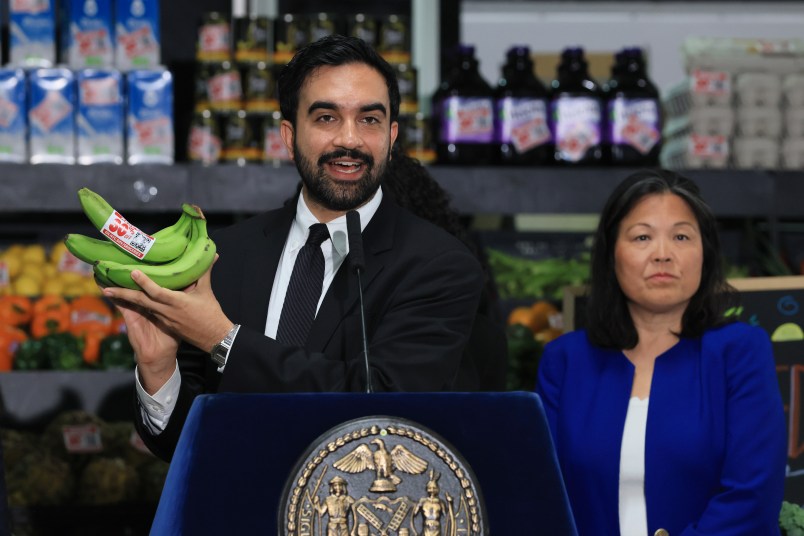
New York City Mayor Zohran Mamdani at a food distribution center on July 27, 2026. Mamdani announced that the five upcoming city-owned grocery stores will offer a 30 percent discount on produce, meat, bread, and milk when they begin to open next year. (Photo by Spencer Platt/Getty Images)
Speaking to TPM, Horton said one key aspect of the program for Mamdani is ensuring that the stores will be a “pleasant experience” without “stigma.” The solicitations for operators and sites specify the visual language and design elements that will be part of creating an elevated environment inside the shops.
“It’s really important that this is an example of public excellence, that the public sector can deliver a high quality experience. It’s also about providing a service … that treats folks with dignity, that this isn’t a handout for folks, it’s that the government is delivering for its people,” Horton said.
Overall, Mamdani said a core goal of the project is making a real change in the environment for city residents.
“I am tired of the fact that politics has increasingly become an act of describing working peoples’ struggles as opposed to putting forward what you will do about those struggles,” he said, before asking, “How are you going to deliver them a different reality?”
That ethos and desire to take concrete steps to address cost of living has been the central plank of Mamdani’s platform. As he ran for office last year, the grocery stores were one of the highest profile parts of his campaign along with a partial rent freeze and a plan for fast, free city buses. Mamdani delivered on the rent freeze for certain stabilized units in June. While the plan for free buses has run into legislative opposition, in July, Mamdani and Gov. Kathy Hochul unveiled a road map to speed up service.
At every turn, Mamdani’s various proposals have faced backlash and questions about costs. The criticism has been amplified by Mamdani’s membership in the Democratic Socialists of America. All of this has, for better or worse, made Mamdani a national figure who has received both positive attention and ire from President Donald Trump. Last June, after Mamdani won the Democratic primary en route to City Hall, Trump took to social media and blasted him as “a 100% Communist Lunatic.” Less than five months later, after Mamdani was victorious in the general election, the two had a warm meeting in the Oval Office where the president heaped praise on the new mayor.
“I met with a man who’s a very rational person. I met with a man who wants to see — really wants to see — New York be great again,” Trump said, adding, “I’ll be cheering for him.”
Along with the rhetoric, Trump’s allies have also played their part in the opposition to Mamdani’s grocery plan. One of the legal complaints from store owners was filed with the America First Policy Institute, a right wing dark money group chaired by Larry Kudlow, the former director of the National Economic Council in the Trump White House.
Mamdani smiled broadly as he offered some choice words for Kudlow.
“Larry must love paying a lot of money for eggs,” Mamdani said, adding, “There will always be opposition wherever there is innovation and wherever there is imagination. And we welcome it. We are fully confident in the legality of this program and even more so than the legality, the urgent necessity of it.”
While the mayor clearly has his critics, Mamdani and the swirl of national buzz around his rise helped turn “affordability” into one of the major talking points of this election cycle. And, in New York, the most recent polling shows his popularity has surged to nearly 70 percent favorability.
Mamdani believes his fellow Democrats need to be less preoccupied with their detractors.
“I think you simply have to prepare and expect for this kind of backlash. What it is, is a backlash to any kind of change. And if you want to avoid backlash, then all you will do is just steward the status quo. And that is exactly what has gotten us to this point,” he said. “It is critically important that we stop the act of constructing an ever-lowering ceiling on our ideas.”
For Mamdani, his grocery stores epitomize this ambitious, unafraid vision and approach.
“That is what is so exciting to me,” he said. “Politics so often is something that has to be translated to someone who lives outside of the political world. There is no translation required about cheaper groceries. You understand it when you’re checking out.”
“For too long, politicians have had things to say and they haven’t had anything to do,” he added. “And it’s time to make this city an example of what we can do for people.”
I ate lamb ribs sticky with tamarind and dates, watched fairy tales transformed into extravagant burlesque, learned to make stained glass and watched people take shots of alcohol poured directly from the head of a bluefin tuna during my latest trip to New York City. It wasn’t exactly a conventional sightseeing itinerary, but that’s increasingly how I like to experience the city.
I used to live in New York, and no matter how many times I return, it never fails to surprise, delight, frustrate and invigorate me. I spent another week revisiting favorites and adding to the list of must-visit places I might never get to. The possibilities seem endless, particularly when you’re willing to follow your curiosity. From unforgettable meals to unexpected experiences, here’s where mine took me this time — and where I’d happily go again.
One of my favorite things about eating in New York is how easily a casual lunch can become one of the most memorable meals of the trip. Take LAUT in Union Square, the first Malaysian restaurant in New York City to be awarded a Michelin star. While the establishment hasn’t retained it, if the bustling lunch crowd was any indication, it’s certainly a worthwhile stop. The menu draws from Singaporean, Thai and Malaysian cuisine, with fragrant curries, flaky roti, chewy noodles and wok-fried dishes.
We loved the fried butter garlic soft-shell crab with fragrant, crispy curry leaves. The roti canai was another standout, perfectly flaky and served with a spice-forward sauce you’ll want to eat with a spoon. Bone-in duck curry followed, braised in coconut milk with lime leaf and tomato, and served with rice. It had a stick-to-your-bones constitution, and you could easily get lost in the flavorful sauce.
Peruvian food is influenced by flavors from around the globe, with delicious peppers, lots of citrus and fresh ingredients as the stars of the show. At Mission Ceviche, also in Union Square, I found an excellent lunch menu offering a variety of ceviches — ceviche nikkei was my favorite! — and tiraditos, cravable mocktails and main dishes ranging from classics like lomo saltado to whole grilled branzino over a bright tomato chorrillana sauce. I could have easily downed several basil breeze mocktails.
Harlem is home to Red Rooster, co-founded by the acclaimed Marcus Samuelsson. Inspired by Black American, Southern and Caribbean cuisines, the restaurant serves as a gathering place with live music, good food and a lively atmosphere. The service was excellent despite the full restaurant and busy bar, and we ordered a variety of dishes for the three of us.
I loved fried chicken and this one was coated in a crispy shell while perfectly juicy inside, served with greens and unctuous mashed potatoes. Jerk wings were great, too, as well as the Uptown Guac, served with fried hushpuppies. Surprisingly, the highlight of our meal was dessert: a strawberry and mango salad with coconut sauce. So refreshing, and a perfect way to end the meal.
Of course, not every great food discovery requires a sit-down meal. Two small but mighty cafes in Greenwich Village made particularly memorable stops, each with a very different specialty.
Savory pastries meet halloumi from Cyprus at Hello Halloumi, a small bakery where the cheese is the star of the menu. Halloumi appears fried, baked into pastries, turned into grilled cheese, served as the meat in a “burger,” and featured in gyro wraps and bowls. The rose cloud matcha was delicious, and if you want something sweet, don’t miss the tahinopita, a cinnamon roll-style treat slathered in decadent tahini icing.
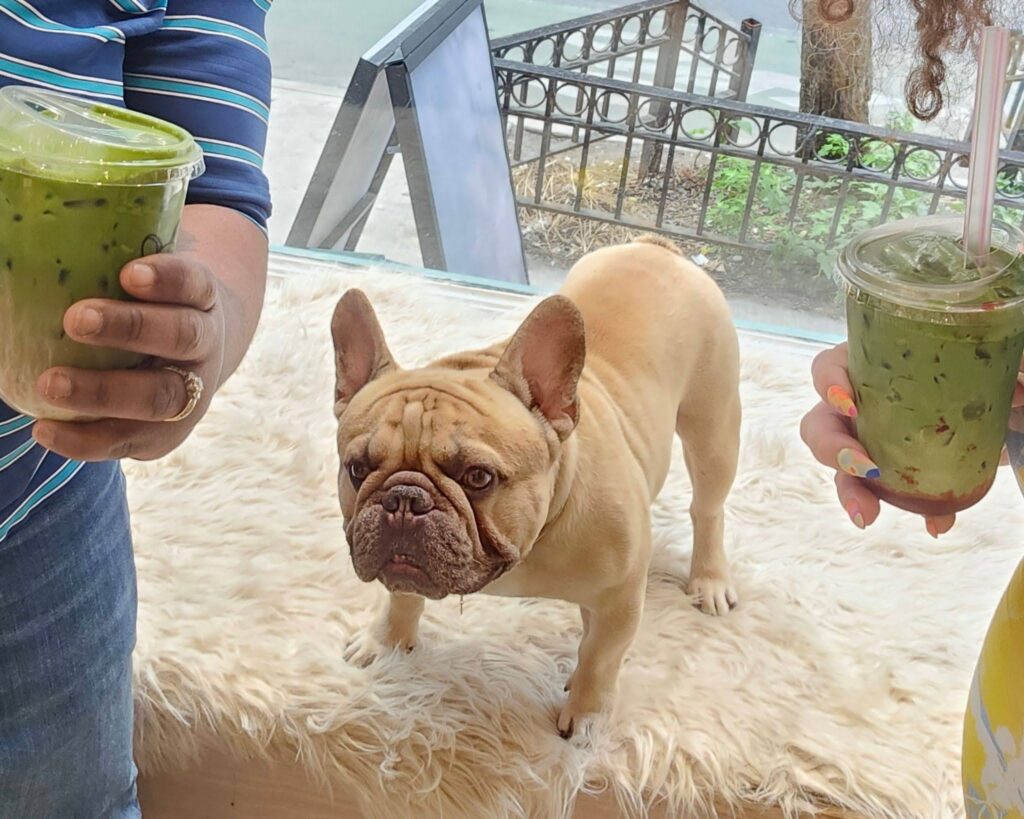
(Chaya Milchtein) Matcha and a Frenchie at Kawaii Cafe
Nearby, Kawaii Cafe is a little Vietnamese coffee shop with a French bulldog named Latte as its mascot that should be a required stop for any coffee or matcha lover. Kim, the owner, came to the United States from Vietnam and worked as a nail tech. Kawaii’s signature beverages hearken back to those days, when she’d talk to clients and hear all about their relationship problems. Situationship, Thirst Trap and What Are We are all handcrafted drinks inspired by those conversations.
Coffee beans are carefully sourced from Vietnam, cream toppings and jellies are made in-house, and vibrant green matcha from Shizuoka, Japan, makes for unforgettable combinations. The matcha was so good I came back twice!
Leisurely dinners
For dinner, New York offers endless opportunities to get a little more adventurous. Some of my favorite dishes from this trip came from restaurants drawing on different culinary traditions and finding exciting ways to bring them together.
At Eyval in Bushwick, an Iranian restaurant that bills itself as “recreating traditional Iranian cooking for a contemporary audience,” the dining room was bustling and lively, with every table full when we arrived. The menu isn’t overly extensive, but every dish we ate balanced flavors, textures and ingredients superbly.
I could eat the citrus, date and cabbage salad every day and probably never get tired of it. The punchy, rich chile-tahini dressing balances perfectly with the sweet, chewy dates, bursts of orange and crunchy cabbage. Match made in heaven, really. Then there were fall-off-the-bone lamb ribs with a sticky tamarind-and-date sauce that you just have to lick your fingers after devouring, and a saffron half chicken, pressed and served over rice studded with barberries and pumpkin seeds. This restaurant will live rent-free in my brain for quite some time.
Marcus Samuelsson’s Hav & Mar offers another inventive approach to familiar ingredients. Born in Ethiopia and raised in Sweden, Samuelsson draws on both culinary traditions at this seafood-focused restaurant. The space is beautiful and lively, with mermaids on the walls and a central bar. The menu is spice-forward, with raw and cured dishes, small plates and a range of entrees.
We loved the crudo trio: tuna tartare with miso and injera, hamachi with gooseberries and crispy onions, and berbere-cured salmon, lox-style, in an orange broth. The highlight of our meal was a whole crispy-skin branzino served with fresh injera, shiro and plenty of herbs, while dry-aged lamb chops rounded out our order. My only regret is skipping the Hav bread basket, with teff biscuits, blue cornbread and injera crisps.
New York can also deliver an exceptional steak dinner, whether you’re drawn to Brazilian specialties or an old-school white-tablecloth institution.
The dimly lit Berimbau Brazilian Table in Midtown, from restaurateur Mario de Matos, was a delight, with a relatively small menu of Brazilian specialties. We started with the nearly obligatory pão de queijo, crispy, cheesy, chewy bread that’s naturally gluten-free and positively scrumptious.
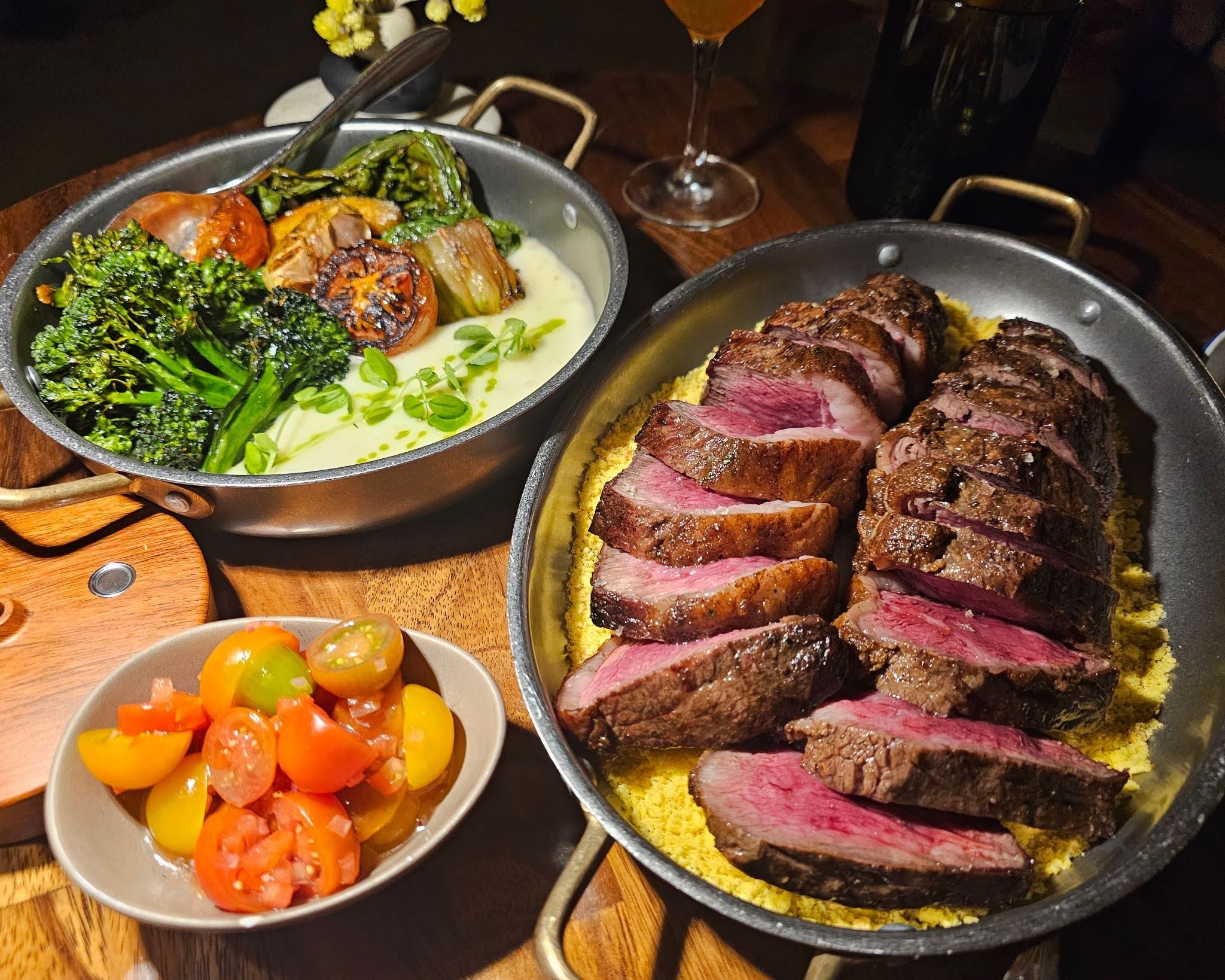
The star of the menu is clear immediately: tableside-carved prime picanha, a treat for the eyes and certainly the taste buds. The massive 38-ounce portion sits on a bed of corn farofa, a textural delight, and is served with cheesy yuca purée, charred vegetables and salada vinagrete that adds a much-needed acidic punch. It technically serves three but is perfect for two, with plenty of leftovers. This might have been the best picanha I’ve ever had. The service, ambiance and lighting make it an excellent choice for a memorable meal.
Gallagher’s Steakhouse, on the other hand, is where you go for an old-school New York experience, complete with waiters in bow ties, dry-aged steaks and classic sides. Originally a speakeasy that opened during Prohibition, it changed hands several times and became a New York City institution.
The menu offers classics: a raw bar with delicious oysters (ask for horseradish, they have it!), Caesar salad, French onion soup and other starters. Steaks of all kinds, some dry-aged in the meat lockers you walk past as you’re seated, can be topped with blue cheese or served with bone marrow. I’d skip the latter, even as a bone marrow lover.
We opted for a well-aged, medium-rare T-bone steak cooked over hickory logs, with buttered corn and spinach served family-style. In the classic Gallagher’s way, the waiter fills your plate. Endearing or disconcerting? You decide. Save room for the New York cheesecake. It’s made in-house and was a surprising standout.
And for a completely different kind of fine dining, there’s Sushi Akira, where chef-owner Nikki Zheng is right at home behind the counter.
Sushi Akira specializes in Edomae-style sushi, using curing, marinating and dry aging to bring out the best texture and flavor of each ingredient without relying on heavy sauces. Chef Zheng is generous with her time, answering questions and explaining techniques and ingredients as she creates an 18-course omakase. Each carefully crafted piece of nigiri changes depending on what’s in season, and the meal unfolds in a choreographed dance for just 16 lucky diners.
Get the sake pairing if you’re imbibing, even if you don’t usually think of yourself as a sake drinker. The selections brilliantly complemented and enhanced each course and introduced me to combinations I wouldn’t have expected.
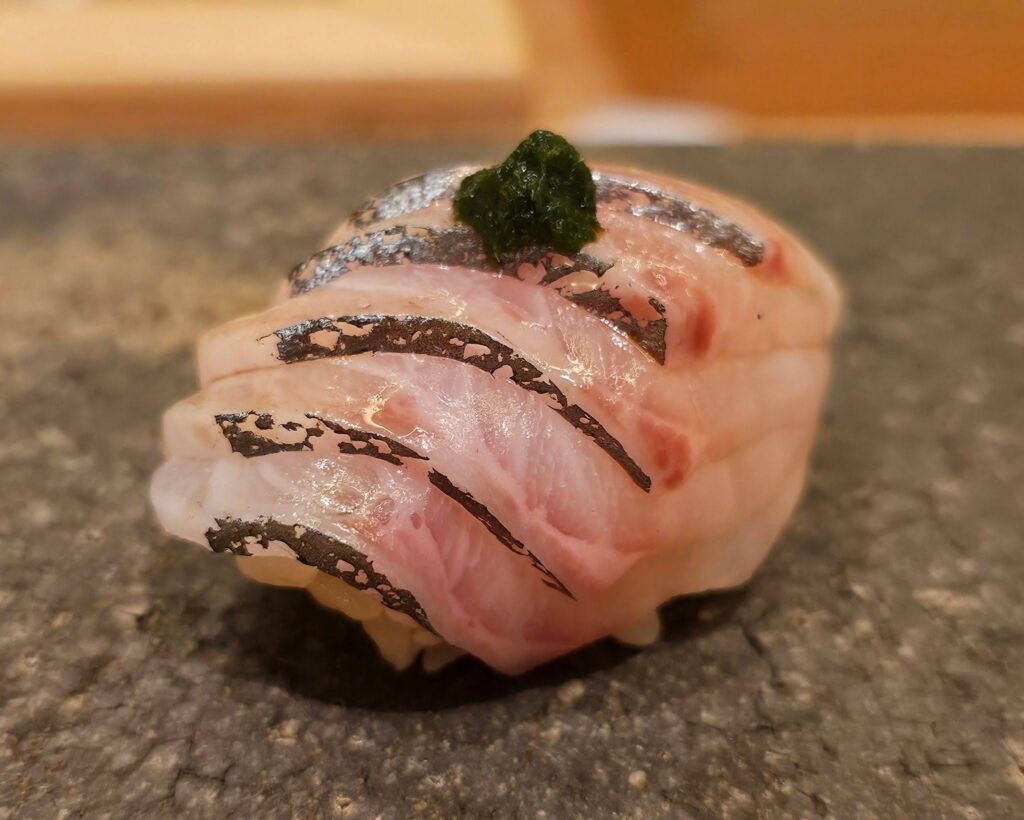
(Jodyann Morgan) Stripped jack nigiri at Sushi Akira
For a lively dinner with a group, I loved MangoSeed in Brooklyn’s Flatbush neighborhood. The playlist really set the mood. Billed as “Caribbean-inspired” and heavily influenced by Jamaican cuisine, the restaurant offers a fun atmosphere, hearty food and excellent service. My wife and I invited her mother, niece and nephew to join us, and despite the restaurant’s size, it fit our multigenerational group perfectly.
We really enjoyed the whole grilled fish with charred lemon and spicy jerk wings. Order a rum punch if you like a fruity drink that packs a punch, pun intended. A beloved favorite, the baked four-cheese mac and cheese was gooey and decadent. The rice and peas and oxtail didn’t quite live up to our high standards, but they rounded out the meal. And for dessert, the chocolate cake was moist and deeply chocolatey, a surprising standout for the entire group.
Getting around
Of course, getting to and around New York City can be stressful. Between traffic and the sheer number of people, it can overwhelm even seasoned travelers. A couple of transportation services made my recent visits easier.
Having a professional driver from Gotham Ride Chauffeur Service pick you up at the airport can help a trip start off right. The company tracks your flight so the driver can meet you even if it’s delayed, and you’re greeted with cold beverages while you take a load off.
I’ve used the service on two trips, and both were a breeze, even when one of my flights was turned around midair and another was canceled as we were about to get into the car. Those are precisely the moments when having some help with the logistics makes a difference.
For getting around town, I’ve also been testing alternatives to the usual rideshare options. I lived in New York during the golden age of rideshare, when it was largely budget-friendly and so many new apps were popping up that the competition was fierce. In the years since, Uber and Lyft have become the primary choices, but whenever I return, I try to test-drive newer options.
Empower isn’t exactly traditional rideshare. The company bills itself as a software platform, allowing drivers to set their own rates and keep 100% of the fare revenue while paying a daily or monthly fee to use the service.
On my visits, drivers were available quickly, rates were reliably lower than the Uber fares I was comparing against, and service was what you’d expect. I plan to use the app again the next time I’m in New York City.
Experiences worth booking
As much as I love eating my way through New York, every trip deserves a few experiences that don’t revolve entirely around a restaurant reservation. This time, that meant everything from burlesque and close-up magic to a four-hour stained-glass class and a very unusual encounter with a bluefin tuna.
For a night out with some genuine spectacle, Company XIV reimagines classic stories like “Little Red Riding Hood” as full-scale burlesque productions. Complete with live singing, expert choreography, ballet, aerial performances and costumes designed to be removed piece by piece, the shows are sensual and mesmerizing.
The theater is a magnificent setting for each performance, decked out in velvet and glitter, with chandeliers overhead. If you enjoy a really good performance art, you must catch a show at Théâtre XIV. Whether you’re with a lover or a group of friends, prepare to be dazzled!
(And if you’re peckish before or after the show, stop by Tortillería Mexicana Los Hermanos, just a three-minute walk away. The restaurant operates inside a tortilla factory that has been making tortillas in-house since 1998, and the food never disappoints. I always get the carnitas, perfectly crispy and deeply savory, served in fresh, warm tortillas.)
For another kind of performance, consider the tuna-cutting experience at Sushi by Bou. If your TikTok feed looks anything like mine, you’ve probably watched plenty of videos of live tuna cuttings. If omakase isn’t interactive or exciting enough for you, this is a chance to watch an entire bluefin tuna being carved, sliced and served in an endless parade of toro, akami and more.
Sushi by Bou curated a party-like atmosphere in a room full of eager sushi lovers. Libations flowing, delicious fatty tuna passed around, and alcohol poured directly into your mouth from the tuna head itself were some of the highlights. You can even scrape tuna directly off the ribs if you choose. It’s not exactly a typical sushi dinner, but that’s part of the fun.
For an experience that trades culinary spectacle for old-fashioned wonder, there’s Chamber Magic at the glitzy Lotte New York Palace.
Tune out everything and let yourself believe in magic — at least for an hour and 45 minutes. Magician Steve Cohen makes everyone feel like an important part of the show. Held on Friday and Saturday, with a cocktail-attire dress code, the performance brings together just 64 people to giggle, laugh and try to figure out how Cohen pours someone’s perfect cocktail from a teapot unprompted, among other magical acts. You’ll leave with a wide smile, enchanted by the experience.
Not all my favorite activities involve watching someone else demonstrate a skill, though. I love finding a creative experience while traveling, particularly when it means learning something new and bringing home a one-of-a-kind souvenir I made myself.
Craftsman Ave in Brooklyn offers classes for even the most adventurous crafter, including knife making, leatherwork, textiles and stained glass, which I chose. Its introduction to stained glass is a four-hour class that walks you through every step of making a wall hanging, from selecting your design to cutting the glass, soldering and finishing the piece.
My wife and I have taken many craft classes, but this one felt more advanced than anything we’d tried before, with experienced artists working alongside us. I definitely felt frustrated at times because it took me a while to grasp each step. But in the end, I was glad I took the class, even if my cat was more amateur than I’d hoped.
If you’re looking for a bite before or after class, stop by Sahadi’s at Industry City, just a few minutes away on foot. The longtime Lebanese grocer has been operating in New York since the late 1800s, and this location has a grab-and-go deli as well as seated lunch and dinner service.
Another New York experience worth considering is having something made specifically for you. Have you ever put on a suit and had it fit perfectly? Me neither! Nothing off the rack makes me feel like a million bucks.
That’s what makes Alan David Custom in Midtown such an interesting stop. The bespoke tailoring house crafts suits to your exact measurements and requirements, guiding you through the process from fabric selection to final fitting.
The fabric choices are endless, and every detail is dictated by you rather than a mass-market clothing producer: pocket or no pocket, type of stitching, exact fit, even the hemline for the style of shoes you actually wear. After the initial measurements, the company can ship a basted fitting and arrange a virtual fitting to finalize the details before sewing and sending the finished garment.
Whether you’re preparing for a big occasion or simply tired of wearing something that doesn’t quite fit, it’s a luxury experience that offers something more personal than an ordinary shopping trip.
Where to stay
After a full day of exploring, there’s something to be said for returning to a comfortable hotel, particularly one that feels a little different from the generic, nondescript rooms you can find almost anywhere.
The Kimberly Hotel has old-school charm and timeless elegance, with gracious, helpful service and a massive round fish tank in the lobby that you can get lost in. The hotel has 194 rooms, including one- and two-bedroom suites.
We stayed in a massive one-bedroom suite, even by regular standards, with a lounge area and kitchenette complete with a microwave and refrigerator that we put to good use. The bed was super comfortable, but the bathroom was tiny considering all the space. A balcony with Manhattan views was simply the pièce de résistance. Even if your room doesn’t have a balcony, you can get 360-degree views at the rooftop lounge, aptly called Upstairs at The Kimberly.
The lobby is inspired by a living and dining room spread across two spaces, with the registration desk at the center. It’s designed to give you room to relax and connect, and it’s great for people-watching, although the hustle and bustle means it isn’t a place to go for peace and quiet.
Our room was surprisingly spacious for New York City, with a table, chairs and a jetted tub — which was quite difficult to climb into, if I’m honest. Kimpton Ashbel is also pet-friendly, with no deposit required and no weight, size or breed restrictions, a huge boon for travelers with pets.
My stained-glass cat didn’t turn out quite as I’d hoped, and there are still countless restaurants on my list I never managed to visit. But I came home with some excellent meals, a few wonderfully strange memories and plenty of reasons to return.
Elevate your taste buds
New York’s legal cannabis scene is flourishing, with countless dispensaries competing for your business. Each dispensary offers a different experience depending on your style and preferences.
Housing Works Cannabis Co. is both New York’s first legal recreational cannabis dispensary and one of a handful of nonprofit dispensaries. If the name sounds familiar, it’s because Housing Works has been serving homeless and low-income New Yorkers, particularly people living with HIV, in a variety of capacities for years. The dispensary, just a short walk from Union Square and the Village, puts all of its profits toward supporting that mission.
Then there’s The Daily Green in Times Square, impossible to miss beneath digital green billboards with cannabis displayed in bold newspaper type. The massive dispensary has a selection to match, with products ranging from pre-rolls and tinctures to topicals and vapes, including New York brands like ayrloom and national ones including STIIIZY and Dogwalker.
An interactive bud bar lets customers get a firsthand look at different cannabis varieties, with a terpene guide providing additional information. It’s a distinctly different experience from visiting a small neighborhood shop, and an interesting example of how cannabis has become part of the Times Square retail landscape.
On the Upper West Side, Superfly Dispensary offers another approach. The budtenders are knowledgeable, cannabis varieties are available to examine under magnification, and the selection intentionally includes LGBT- and Black-owned brands. Superfly also serves as a community hub, with weekly yoga and Pilates, disco nights, Halloween parties and brand activations. There’s something for people looking to connect and spend time with like-minded neighbors, not simply shop. Great choices include ayrloom’s Lychee Dream pre-rolls, Good Tide guava gummies and Sluggers Lemon Cherry Gelato vape.

 Login