❌

Reading view

Germany leads push against EU’s ‘associate membership’ label for Canada

BRUSSELS — Germany, France and at least six other EU countries are pushing against “associate membership” as the name for closer EU ties with Canada, six diplomats involved in the negotiations said.

The label is one of the main sticking points in talks over a joint declaration setting areas of deeper cooperation between Brussels and Ottawa ahead of the EU-Canada summit in Montreal on Oct. 29-30, the six diplomats and two EU officials told POLITICO. They were granted anonymity to discuss the sensitive negotiations.

The diplomats said the objections center on the wording of “associate membership,” not the broader goal of closer ties.

Five weeks after European Commission President Ursula von der Leyen first proposed Canada becoming an “associate member” of the EU in her State of the Union speech — to the surprise of both Ottawa and EU capitals — and one week out from the summit itself, the disagreements show the term remains a political and messaging hurdle.

The EU “is really keen to have close cooperation with Canada,” said Bernd Lange, chair of the European Parliament’s trade committee. But, he added, he too would avoid using the term “associate membership,” as it leaves too much room for confusion with other forms of EU partnerships, such as association agreements.

Germany is pushing hardest to remove the label from the draft declaration, five of the EU diplomats said, while France, Italy and Belgium were among those expressing skepticism about the phrasing.

The central concern among the capitals that object to the term is that the EU is labeling the relationship before agreeing what it would mean. They argue the name should have been defined before negotiations with Canada began, four diplomats said, with two others adding that the objecting capitals are annoyed that von der Leyen proposed the label without first consulting national governments.

“We’ve definitely put the cart before the horse,” one diplomat said. “We’re announcing something and then figuring out how to flesh it out.”

A representative for the German Permanent Representation to the EU declined to comment.

The European Commission will engage with skeptical capitals and work on acceptable language, an EU official said, adding that they believe the countries’ doubts stem from not yet understanding what the proposal means in concrete terms.

There is no disagreement over the aim of strengthening an already close relationship, including economic and defense cooperation, international engagement and institutional links, the official stressed. “What matters is what we do, not what we call it.”

What’s in a name?

The label aims to describe the EU-Canada relationship as closer than Brussels’ partnerships with other countries, without making Canada a member of the bloc, one of the diplomats said. Canada cannot become a formal member, as the EU’s founding documents limit that status geographically to Europe.

The distinction matters because existing arrangements with European neighbors, including the U.K., Switzerland and countries in the European Economic Area, center largely on access to the EU’s internal market. Canada, on another continent, is not seeking the same model or the four freedoms of movement, the diplomat said.

The idea is to identify practical areas for cooperation first, then decide whether new treaties or formal negotiations are needed, the same diplomat said.

Work on six priority areas is expected to begin after the summit, with progress reviewed after six months and then a proper stock-take one year later at the next EU-Canada summit, which will be held in Europe.

The stock-take would consider whether Canada has moved closer to the EU by becoming a full member of Horizon Europe and Erasmus, is building undersea cables and stockpiling critical raw materials with the EU, and is exploring pension-fund investment. If Canada meets those criteria, it could become the EU’s first associate member, the diplomat said.

The diplomat described the idea as an experiment, adding that “Canada might be the only one” to ever get associate membership of the EU.

The plan reflects changing calculations on both sides. Canada has long depended heavily on trade with the United States, but tariffs and political pressure from Washington have sharpened concerns about that reliance. Prime Minister Mark Carney wants to diversify trade and modernize the country’s infrastructure, including energy links that largely run north to south.

For the EU, a closer partnership with Canada is part of a broader effort to build relationships as pressure from the United States, China and Russia grows. The summit is intended to give the partnership a more distinctive political framework.

The declaration is still being revised, with EU ambassadors due to discuss it again on Monday. One of the EU officials cautioned that several parts of the declaration still had comments outstanding.

Another controversial element concerns energy cooperation, with Austria pushing back against any mention of deepening nuclear ties, while France, Romania, Slovakia and some other countries support its inclusion.

A spokesperson from the Canadian mission to the EU did not respond to POLITICO’s request for comment.

  •  

Farage plays down his Trump friendship in Britain — and talks it up to MAGA

LONDON — Nigel Farage has been careful to downplay his closeness to Donald Trump to a MAGA-loathing British public. But to U.S. conservatives, it’s a different story. 

“There are very few human beings I know with whom I agree on so much as I do with Donald Trump,” the Reform UK leader told an American podcast. “And I admire his guts and I admire his courage.”

During an interview with Trump-aligned commentator Benny Johnson on Sept 30., the veteran Brexiteer struck a markedly warmer tone toward the U.S. president than in any of his recent remarks for a British audience.

“Donald’s been a friend for many, many years. I’m a regular at Mar-a-Lago,” Farage boasted on the Benny Show. “I get on with many of his family. We have a laugh together — I mean, he’s a proper bloke.”

In Britain, Farage has publicly dampened his closeness to Trump as he tries to position himself as a contender for U.K. prime minister, particularly since the war with Iran.

“I haven’t really been in touch with Trump for many months,” Farage said in an interview with Times Radio in April, as the U.S. and Israel got bogged down in a price-spiking conflict with Tehran.

A spokesperson for Farage told POLITICO: “Nigel has never hidden his relationship with the President. However, he has been a critical friend over Canada, Greenland, Ukraine and various other issues.”

Farage, whose right-wing Reform insurgency has been a disruptive force to traditional British politics, had to correct his initial support for the war, which has been perceived negatively in U.K. from the off.

Initially Farage said that Britain should “do all we can” to support the U.S.-Israeli action in the Middle East. He’d later go on to say “let’s not get ourselves involved in another foreign war.”

Farage described Trump’s tariff threats as “wrong” and said that he’d be “having some words” with the U.S. administration; he has also been careful to question Trump’s “51st state” comments on Canada; and, at times, he has distanced himself from Trump’s views on Ukraine.

The U.S. president is deeply unpopular in the U.K., like he is across much of Europe. And Farage’s relationship with him is off-putting to many British voters.

But Farage clearly sees his links with the U.S. right as deeply important, too. As he told Johnson, there have been numerous trips to D.C. and Mar-a-Lago — even if allies have also noted their relationship has cooled since 2024 and not all his Palm Beach visits have yielded meetings with Trump.

Farage noted on the show that there are things they don’t see eye-to-eye on, but was keen to stress they are “friends and allies” who “agree on quite a lot.”

  •  

‘There is no immunity to Donald Trump’

he world is starting to understand that there is no way to fully and lastingly protect itself from President Donald Trump.

The man just can’t let things go — and he’ll get creative to get what he wants.

The latest blowup over Ukraine is emblematic of Trump’s wily persistence, and it suggests a challenging two years lie ahead for the international set even if Democrats gain some power in the midterm elections.

Not that long ago, Trump seemed to have patched up ties with Ukrainian President Volodymyr Zelenskyy as Kyiv made gains against Russia. Trump signed legislation last month that was championed by his late friend, Sen. Lindsey Graham (R-S.C.), to impose heavy new sanctions and tariffs to punish Russia for its war on Ukraine.

This month, the original Trump — the one who fawns over Russian leader Vladimir Putin and despises Zelenskyy — roared back. He waived many of the legislation’s penalties on Russia, moved to buy Russian diesel and signaled he’s more interested in doing business with Moscow than seeking justice for Kyiv. Ukrainians suspect the U.S. has pressured them by throttling its satellite connections and intelligence-sharing. (The Trump administration disputes much of this.)

“Russia, frankly, has been fine on Ukraine,” Trump said Monday as he welcomed the idea of an arms control summit with Putin and Chinese leader Xi Jinping that might include talks about Ukraine.

The lesson, foreign officials and others steeped in diplomacy tell me, is that you cannot truly change Trump’s mind or stop his overall trajectory. Even if Trump seems briefly chastened or stages a tactical retreat, he will eventually return in new, often-surprising modes to push his original views and goals. He will try to exhaust you into submission.

Imagine how startling it is to be Ukrainian these days as Trump pressures you to make concessions to Russia by blaming you for a global energy crisis he caused by launching a war on Iran. Or what it’s like for officials across European capitals trying to craft a response, knowing there’s never an end to the process.

“There is no immunity to Donald Trump. He makes a deal in order to make a better deal the next day,” one senior European official mused, having been granted anonymity because the topic involves sensitive diplomacy.

It’s hard to blame world leaders who think they’ve learned to manage Trump only to be bewildered by a sudden left hook on his part. Foreign policy is often driven by hope when you lack good options. And Trumpology is a confounding, but still a relatively new, subfield.

Besides, Trump’s messaging is inconsistent, incoherent and nonstrategic — characteristics that can obscure his single-minded pursuit of his goals. So the global actors dealing with him — whether it’s the Gulf Arab states who shower him with gifts or the Canadians furious over his trade and territorial threats — sometimes think they’ve come to terms with him only to find they’re fighting on a newly configured plane.

A Supreme Court ruling that gutted many of Trump’s tariffs earlier this year was good news in many capitals. But since then, the so-called Tariff Man has moved to impose the import taxes under pretexts not considered by the court, including turning to accusations involving forced labor.

The White House doesn’t dispute Trump’s aggressive tactics.

“There is no greater fighter for America First interests than President Trump — and he is willing to look anyone in the eye to deliver wins on behalf of the United States,” spokesperson Anna Kelly told me in a statement.

The Greenland saga shows the limits of trying to mollify Trump.

In his first term, Trump wanted to buy the frozen island. The idea was shelved amid global laughter, but authorities in Greenland and Denmark made it clear to Trump that they welcomed more U.S. investment in the Danish territory.

In his second term, Trump huffed and puffed about an all-out U.S. takeover of Greenland, only to agree in September to an expanded U.S. military footprint that he could have gotten anyway under existing, decades-old diplomatic accords without all the drama. The whole affair has led to lingering anger in Europe about what Canada’s leader called a “rupture” in the global order — but many European officials hoped that the saga had faded away.

Yet, it’s far from certain that Trump has given up on possessing Greenland. Just days ago, he touted on social media plans to start oil, gas and mineral exploration in “our new and beautiful Greenland.”

The use of “our” is more than a little suggestive.

Defying Trump, too, can get you only so far.

Brazilians effectively told Trump to take a hike when he used tariffs and sanctions to punish the country for charging its former president, Jair Bolsonaro, in a coup attempt.

A few months later, as Bolsonaro was about to start his prison sentence, Trump seemed to admit defeat in his effort to help his political ally. “That’s too bad,” he said in November 2025, with little emotion. (“Brazil Defied Trump and Won,” The New York Times declared.)

But Trump wasn’t done with Brazil. He and his team have pursued efforts to undercut the current Brazilian government while quietly backing Bolsonaro’s son, Flávio, in his efforts to win the presidency this year. The runoff election is on Sunday, and it’s tight.

World leaders are doing what they can to make their countries Trump-resistant, if not all-out Trump-proof.

That has meant everything from diversifying their sources of trade and security alliances to joining Trump on ventures that, on the surface at least, can be helpful to them. (Then there are the many countries, especially in Africa, that diplomats privately tell me are happy to be off Trump’s radar.)

My takeaway from watching all of this, though, is that it’s not enough to stay one step ahead of Trump. You have to stay several steps ahead, and you have to be wildly imaginative about the lengths to which Trump and his devoted aides are willing to go to complicate your life.

The second Trump administration is filled with people who have turned to unique, bizarre and clever interpretations of law and reality to push his agenda. It’s not always clear who is behind which move, but it’s hard to imagine Trump isn’t fine with most of what’s happening.

It’s why a teenager is being held in immigration detention for the actions of his grandmother decades ago. It’s why Congress can scream and shout about its spending orders yet Trump ignores it.

Sen. Chris Murphy (D-Conn.) said other nations should not hope that the Republican Party will shed Trump’s worldview, including his disdain for allies, once Trump’s out of power.

“I would love for our allies to know that we have consistent common adversaries that we’re going to work together to fight. I just don’t know that you can make that guarantee,” Murphy, a frequent Trump critic, told me. “That’s painful to say, but given the state of the Republican Party right now, it’s true.”

I understand why Ukraine and the European Union are trying to diversify their sources of intelligence and military industrial bases as Trump keeps chasing love from Russia.

Despite Secretary of State Marco Rubio’s claims, the reality is that the United States can no longer be trusted for such security assistance.

But it’s not enough to find new intelligence partners or weapons manufacturers. You have to ask bigger questions, like, “What are the untapped streams of intelligence that no one knows are out there? What’s a potential weapon no one has considered? How can I acquire what I need before Trump stops me?”

Governments need to have plans — now — for scenarios that seem completely crazy. Better to be wrong than unprepared.

Still, even if you do all of that … “I don’t think it’s possible to stay two or three steps ahead of Trump,” said Charles Kupchan, a former senior national security official during the Obama administration who apparently enjoys raining on parades.

“He acts on impulse,” argued Kupchan, who has a new book out on the crumbling world order. “We need to try to limit the damage he’s causing and ride him out.”

A Democratic win in November’s midterms — one or both chambers of Congress — is unlikely to do much to rein in Trump’s actions abroad during his final years, current and former U.S. and foreign officials tell me.

He still has the veto and has been willing to ignore congressional demands. There’s also the fact that presidents have significantly more power to act in unilateral ways overseas than they do domestically.

Ukraine, the European Union, the world — all will be dealing with a politically wounded Trump who’s likely to double down on what he feels he must have.

“He’s going to be angrier,” Murphy predicted.

  •  

AfD’s Alice Weidel urges quick Ukraine talks and a return to cheap Russian energy

Alice Weidel, co-leader of the far-right Alternative for Germany party, told European lawmakers on Wednesday that Russia and Ukraine need to negotiate a peace deal, while insisting that German businesses require access to cheap Russian energy to remain competitive.

“It isn’t about capitulating to Russia, far from it, absolutely not, but we want people to sit down around the table. It’s high time they did, and went into it with a sensible diplomatic approach, making sure we pay due regard to the interests of both Ukraine and Russia,” she told a press conference.

Four and a half years since Russia launched its war on Ukraine, President Donald Trump is pressing Kyiv to negotiate with Moscow, while Russian President Vladimir Putin agreed on Wednesday to resume trilateral talks with Ukraine.

Weidel made the comments during a visit to the European Parliament in Strasbourg, where she unveiled her opposition AfD party’s EU program at an event organized by the far-right Europe of Sovereign Nations group.

The party aims to shrink the Commission, turn the European Parliament into an assembly of delegates appointed by national parliaments, and seek an opt-out for Germany from EU policies it can’t reform to its liking — potentially including an exit from the Schengen border-free travel area, she told reporters.

During an event following the press conference, Polish MEP Tobiasz Bocheński, from the right-wing European Conservatives and Reformists group, asked what she thought of Poland’s fears regarding Russia. Weidel said her party “puts German interests first,” insisting that “now we are in a critical phase that our industry is dying without Russian gas and oil.”

Germany needs “a sustainable, reliable and cheap energy resource that has been guaranteed by Russia for the last four decades,” she added, claiming that sanctions on Russia have “destroyed” Germany’s “business model.”

German industry is shedding jobs amid high energy costs, Chinese competition and U.S. tariffs, while Chancellor Friedrich Merz continues to push for reforms to revive a stagnant economy.

Weidel said that Russia, the U.S. and China are the only ones steering talks on Ukraine while European leaders aren’t even invited to sit at the table. The EU should have pushed for peace since the start, she added, as “four years down the road, it’s in a much worse position going into negotiations with Russia.”

EU countries are discussing who should represent them at the negotiating table. European leaders have repeatedly said that any decision on a peace deal must involve Ukraine and must include security guarantees.

Asked whether she was in contact with France’s far-right National Rally to repair ties, Weidel said the AfD was “pragmatic.” The French party broke with the AfD in 2024 and later helped shut it out of the far-right Patriots group amid concerns about its extremism and stance on Russia.

“We need to work together on a European unique level, and therefore we need to be in talks and discussions,” Weidel said, adding: “And we are.”

  •  

China threatens retaliation if UK follows the EU on tariffs 

LONDON — Beijing has threatened to retaliate if the U.K. raises tariffs on Chinese electric vehicles, aligning with the European Union.

Responding to POLITICO’s story that Britain was looking to act in “lockstep” with the bloc to counter China’s market dominance in electric cars, a spokesperson from the Chinese Ministry of Commerce said: “If the U.K. insists on imposing restrictions on Chinese electric vehicles, China will resolutely retaliate and safeguard the legitimate rights and interests of Chinese industries.”

The U.K. is currently working with its European partners to avoid a 10% electric vehicle tariff from the beginning of next year, when stricter rules of origin under the Brexit trade deal kick in. 

The British government is also lobbying to be included in the EU’s Made in Europe policies, which give Brussels-made products preferential treatment in certain procurement projects. 

U.K. Trade Minister Anas Sarwar told POLITICO on the sidelines of the German-British Business Summit at Mansion House last week that “the more that the U.K. and the EU work together and act in lockstep, the better it is for both the U.K. and the European Union.” 

“The automotive sector and partnership remain strong, but do we have to grapple with the challenge that comes from rapid expansion in China? Of course we do,” he added. 

China urged Britain to follow World Trade Organization rules and warned it against copying Brussels’ approach, arguing that tariffs on Chinese EVs would be discriminatory. 

“China urges the U.K. to abide by WTO rules, think carefully, and not follow the European Union,” said the Chinese Ministry of Commerce spokesperson. “China will closely monitor the U.K.’s developments.”

  •  

How Maroš Šefčovič talked his way to a China trade breakthrough

How Maroš Šefčovič talked his way to a China trade breakthrough

Europe’s trade chief has won a first concession from Beijing. Now he must convince EU leaders that dialogue can deliver more.

By Camille Gijs and Carlo Martuscelli
in Brussels

Illustration by Natália Delgado/POLITICO

When Maroš Šefčovič set out his strategy for engaging with China to European Union ambassadors in July, he had a warning for governments urging tougher action on trade against Beijing.

“Sometimes, it’s even popular to start a trade war, but it’s very difficult to finish it,” the EU trade chief recalled later in an interview with POLITICO.

Three months on, Šefčovič has secured a first breakthrough, reaching a deal in Beijing last week to sharply reduce imports of Chinese hybrid cars. The symbolic win marks a small step toward stabilizing a trading relationship that Brussels believes has reached a dangerous tipping point.

The agreement, which will initially cap imports at 350,000 vehicles a year, marks a significant concession from Beijing, whose carmakers have been flooding the European market with increasingly competitive vehicles. 

For Šefčovič, who negotiated last year’s tariff truce with Donald Trump, the agreement suggests his strategy of engagement backed by the threat of tougher trade measures may be starting to pay off.

Šefčovič agreed to launch the trade dialogue at a meeting with Chinese Commerce Minister Wang Wentao in Brussels in late June.

By focusing initially on cars — an area where the EU has leverage as one of the few major markets still open to Chinese manufacturers — the Slovak commissioner hoped to secure a confidence-building win before tackling thornier questions, from critical raw materials to China’s vast industrial overcapacity.

At the same time, he worked to coalesce European governments behind a parallel effort to strengthen the bloc’s trade defenses, reinforcing his negotiating position with the threat of tougher action to bring down the EU’s €1 billion-a-day trade deficit with China.

The hybrid deal, however, is only the opening move in a much bigger contest.

EU leaders meet in Brussels on Thursday to take stock, weighing the benefits of continued engagement against demands for more aggressive action to protect European industry from a surge in Chinese imports.

The meeting will test whether a commissioner who has made a career of finding compromises with difficult partners can maintain Europe’s support for a strategy whose success is far from assured.

“You have to deal with the same partner across the table,” Šefčovič said of the risks of starting a trade war, in the interview with POLITICO in August. “So if you can avoid this, it would be much better.”

Market power

Šefčovič’s opening move was to focus on an area where Europe still has leverage: access to its market of 450 million people.

China’s fiercely competitive manufacturers have become global powerhouses, but they are struggling with weak demand at home. A prolonged property slump has weighed on consumer spending, while cutthroat competition has triggered price wars. Domestic sales of passenger vehicles fell 28% in September from a year earlier.

That makes overseas markets increasingly important. With the U.S. shutting out Chinese imports, Europe remains one of the most lucrative markets still open to Chinese manufacturers.

Šefčovič gambled that Beijing would prefer to accept limits on exports rather than risk losing access to the European market altogether.

He set his sights on the automotive sector, where Chinese manufacturers have been making rapid inroads. Chinese carmakers accounted for just 2% of both the European hybrid and plug-in hybrid markets in 2024; by the first half of 2026, their respective shares had risen to 14% and 25%, industry figures show.

The Commission was preparing to restrict hybrid imports even without an agreement. But a negotiated settlement also offered Šefčovič something valuable politically: evidence that engagement with Beijing could deliver tangible results.

BYD electric cars in a dealership in Berlin on April 5, 2025. | Sean Gallup/Getty Images

The negotiations were intense, according to a person familiar with the talks on the Chinese side.

“It was very, very tough,” the person said, speaking on condition of anonymity to discuss the closed-door negotiations. “Both sides hadn’t seen such intensity in a long time. No summer break, no holidays. They worked around the clock even one, two days prior to Šefčovič’s trip to Beijing.”

While pursuing dialogue, Brussels also wanted to convince Beijing that it was prepared to take tougher action if the negotiations failed.

Šefčovič had earlier flagged plans for a new “diversification instrument” that would require businesses in critical sectors to source essential inputs from at least three suppliers — a move to reduce China’s ability to exploit Europe’s dependence on its critical raw materials.

Then, just three days before Šefčovič’s trip to Beijing, France and Germany raised the stakes.

President Emmanuel Macron and German Chancellor Friedrich Merz called for a powerful new trade weapon that would allow Brussels to restrict — or even shut off — access to the European market within days for countries deemed to have severely distorted the bloc’s single market.

The proposal did not explicitly name China, but Beijing was its obvious target. 

Keeping it together

EU leaders are expected to welcome the agreement but also press the Commission to act quickly to strengthen the bloc’s trade defenses, according to several diplomats. The understanding reached in Beijing has bought time, but hasn’t settled how far Brussels should go if Chinese exports keep rising or negotiations stall.

“We’re losing thousands of jobs in industry; olive oil and ice cream won’t solve the core issue,” said one EU diplomat after Šefčovič briefed ambassadors on Sunday, referring to reported deliverables from the talks.

A senior German official welcomed the Beijing deal as a first step in the right direction. “It’s a positive sign — which, of course, doesn’t fully solve the problem of the trade deficit with China,” the official said.

But Berlin’s support for a tougher line might prove short-lived.

Alicia García-Herrero, a senior fellow at the Bruegel think tank, argued that Beijing’s concessions had been calculated to assuage Berlin, given the importance of the automotive industry to the German economy.

Production line at the Stellantis multinational car manufacturer’s plant in Poissy, France on April 15, 2026. | Simon Wohlfahrt/AFP via Getty Images

“I’m just hoping Merz doesn’t turn away from the letter he sent to the Commission,” she said. With the German chancellor politically weakened at home, García-Herrero fears he may be reluctant to risk a prolonged confrontation: “I worry Merz will take this quick win and run.”

That leaves Šefčovič facing a balancing act: keeping EU governments on board with continued engagement with China while maintaining a credible threat of tougher action if the talks break down. 

“I expect [leaders] to give the Commission a nod to move ahead with other trade defense measures. China may see this as a betrayal. If that is the case, we could return to conflict very quickly,” said Noah Barkin, a senior adviser at the Rhodium Group’s China practice.

The battle ahead

For Šefčovič, the challenge now is to turn a limited breakthrough on cars into a broader rebalancing of trade with China — while buying Europe time to strengthen its defenses should the negotiations fail.

“There is an argument for doing to China what China had done to Europe for years — bogging Beijing down in dialogue and process while Europe gets its tools in place. But the EU needs to make full use of the time that these talks provide,” said Rhodium’s Barkin. 

The trade chief is expected to hold a video call with Wang in January, before the two meet again next March. Those talks will test whether Beijing is prepared to make further concessions in sectors where European industry is increasingly on the defensive, including chemicals.

Another priority is critical raw materials, where China has agreed to continue issuing export licenses for rare earths. Beijing’s grip on their supply gives it considerable leverage over European manufacturers, underscoring the limits of Šefčovič’s negotiating position.

The Commission is also preparing two proposals for December: the diversification instrument, aimed at reducing dependence on Chinese supplies, and a mechanism to shield European industries and regions from retaliation.

The scale of the challenge is daunting. Chinese hybrid imports were worth €6.7 billion in the first half of 2026, against an EU-China trade deficit of €360 billion last year. The agreement offers some relief to European automakers but does little to address the underlying imbalance.

Brussels hopes the hybrid safeguard can serve as a blueprint for protecting other industries facing a surge in Chinese imports.

“We hear our industry. That includes the chemical industry, the wind industry, the furniture industry. We know where there’s a surge, and we know what hits the hardest in terms of our deindustrialization,” a senior Commission official said on Monday.

Šefčovič acknowledged the limits of dialogue in his August interview, warning that negotiations would become harder to sustain without tangible progress.

“What would be very important is to come back to say there is acknowledgment of the issue and there are already some pilot schemes which we want to test and to see if they are working,” he said.

“But if simply there will be no action, then of course it will be much more difficult for us just to talk about these issues.”

Jordyn Dahl in Brussels and Hans von der Burchard in Berlin contributed reporting. 

  •  

France’s Philippe says Le Pen’s EU proposals would ‘crack open’ bloc

PARIS — French center-right presidential candidate Edouard Philippe accused his far-right rival Marine Le Pen of trying to force a Frexit in disguise with her euroskeptic campaign promises.

“There is something in Marine Le Pen’s proposals that has the potential to blow Europe up, or let’s say to crack it open,” Philippe said at POLITICO’s Paris Competitiveness Summit on Tuesday.

The former prime minister — who is currently the best-placed centrist candidate to challenge the front-running Le Pen, according to recent polls — said Le Pen’s plan to unilaterally demand a drastic cut to France’s contribution to the EU budget was akin to “saying you want out of Europe” without openly advocating for leaving the bloc. Le Pen had previously called for a referendum in France on leaving the EU but dropped the proposal after her crushing defeat to Emmanuel Macron in the 2017 presidential election. Her party, the National Rally, now says it wants to change the EU from within.

Philippe, a fiscal conservative who has been pitching himself as the voice of reason in a campaign dominated by populist rivals, also slammed budget plans Le Pen unveiled last week as “grotesque,” accusing her of pitching “fantasy” savings.

Le Pen’s fiscal plans have faced serious scrutiny since being presented, with many observers saying they either lack key details or overestimate savings on major proposals like immigration. Progressive think tank Terra Nova wrote in a note out Tuesday that Le Pen’s budget presentation was “riddled with errors and contradictions” as well as “botched estimates.”

“She isn’t even able to estimate the cost of the pension reform she is proposing,” Philippe said.

Le Pen said in August that her plan to bring France’s legal retirement age back down to 62 for most workers would cost €9 billion a year, and last week she said she would lay out at a later stage how she intends to fund her flagship pledge. However, the Institut Montaigne, a fiscally conservative think tank, estimated the proposal would cost €34.7 billion a year.

Philippe is hoping to convince voters that his fiscally conservative agenda is the right path in a country burdened by a ballooning public debt and a budget deficit still above 5% of gross domestic product, in breach of EU rules.

Philippe said France needed to get its finances back on track to regain credibility on the European stage after a “loss of influence” over the past few years.

Though he currently leads a crowded field of centrist candidates, Philippe’s campaign has struggled in recent weeks to gain momentum — and far-left candidate Jean-Luc Mélenchon is now challenging the former PM for second place in the polls. France’s presidential election goes to a runoff if no candidate receives more than 50% of the vote, and Le Pen’s strong poll numbers all but guarantee her a spot in the second round.

Tough on China

The former prime minister pitched a pragmatic European agenda with less regulatory burden, more focus on investment and a tougher approach to China.

Philippe had some harsh criticism for an already embattled flagship measure of the EU’s green deal, saying the 2035 combustion engine ban has been “disastrous.”

There was “a great naiveté toward China,” which ultimately benefited from Europe’s push on electric vehicles, Philippe said.

“We need to much better protect our market,” he added. “If one wants access to the European market, one has to manufacture in Europe. If a carmaker doesn’t manufacture here, then we have to slap high tariffs.”

The EU is in the process of drawing up new “Made in Europe” rules that would favor European producers over those outside the bloc, in response to trade practices by competitors like China and the United States.

Shortly before Philippe took the stage, European Commissioner for Industry Stéphane Séjourné said at the POLITICO event that a Franco-German deal trading stronger protections on the definition of Made in Europe in exchange for a loosening of combustion engine rules should be finalized “in the next few hours or in the next few days.”

On artificial intelligence, Philippe aligned himself with Macron, advocating for European sovereignty in the field and the need to regulate what he described as “an instrument of power.”

“What I see is an AI world making money for the U.S. with European savings and European data, and that bugs me,” he said.

  •  

Germany wants UK to raise tariffs on Chinese EVs

LONDON — Germany wants the U.K. to raise tariffs on Chinese electric vehicles in exchange for protection from Made in Europe rules, according to a person familiar with Berlin’s position.

Friedrich Merz’s government believes the move would show reciprocity on trade and counter accusations from other EU member states that Britain is trying to “cherry pick” the benefits of EU membership, said the person, who was granted anonymity to discuss closed-door talks.

It comes as Prime Minister Andy Burnham met with the German chancellor on his first official visit to the country this week.

Burnham and Merz were due to talk about possibilities for Britain’s future relationship with the EU — after the British prime minister put rejoining the bloc back on the table of U.K. politics for the first time in a decade.

Berlin’s position on EV tariffs is significant as Germany has broadly backed a tolerant policy towards the U.K. on trade matters since Brexit — in contrast to more hard-line positions taken by countries like France.

The EU is in the process of drawing up new Made in Europe rules that would favor European producers over those outside the bloc — in response to trade practices by competitors like China and the United States.

The U.K. is worried that the measures will hit British business — especially automakers — and wants assurances from Brussels that it will get an opt out. If Berlin gets its way, those assurances could be dependent on emulating EU trade policy with regard to Chinese EVs.

Predatory strategy

Germany’s vaunted car industry, arguably the jewel in the country’s economic crown, has faced stiff competition from Chinese imports in recent years.

EU countries have accused China of dumping low-cost, state-subsidized electric vehicles into the European market and in December 2024 imposed countervailing duties as high as 35.3. percent on some manufacturers.

Industry Commissioner Stephane Séjourné accused China of pursuing a deliberate “predatory strategy” with state subsidies to the tune of €10,000 per vehicle.

The U.K.’s Trade Secretary Jonathan Reynolds told POLITICO last month that the government was keeping tariffs “under review, to be frank, more closely than lots of other issues” and that “different parts of our own sector want different things from” the government’s policy.

Hamish Falconer, the U.K.’s minister for European relations, told POLITICO’s Brussels Playbook Podcast this week that he was “surprised” at reports tariffs might be a condition of Made in Europe opt-outs, adding: “That’s not the kind of conversation that I’m having with my European counterparts.”

Going ahead with higher tariffs risks alienating Beijing, which has expressed serious concerns about the policy. It would also raise the price of electric vehicles on the market, potentially making it harder for the government to meet its decarbonization targets.

  •  

China trade talks test EU’s appetite for tougher action

BRUSSELS — European Trade Commissioner Maroš Šefčovič opened two days of talks in Beijing on Thursday aimed at rebalancing a gaping trade deficit, with failure to reach a deal likely to test Brussels’ resolve to impose tougher trade restrictions.

The meeting marks the final round of an effort launched in June to reset the lopsided trading relationship, and will hinge on whether China’s Commerce Minister Wang Wentao is prepared to make substantial concessions.

If no agreement can be reached to narrow the EU’s €1 billion-a-day goods trade deficit, Brussels and Beijing could find themselves on a collision course. EU leaders will review the outcome of the talks at a summit in Brussels next Thursday, where they will consider next steps.

Arriving in China, Šefčovič said his goal was to balance what he called an unsustainable trade deficit. Heading into a meeting with Wang, he said it was crucial that the talks deliver “tangible outcomes.”

The discussions have zeroed in on cars, with Chinese exports increasingly eating into the market share of European automakers. In August, one in eight cars bought in the bloc was Chinese, thanks largely to a boom in sales of plug-in hybrid electric vehicles.

European negotiators have been pushing China to commit to some form of export restraint — in particular for hybrids. Unlike Chinese-made battery-electric vehicles, which were hit with extra countervailing duties in 2024, plug-in hybrids are not subject to such measures.

Without meaningful commitments from Beijing, the Commission has warned it will resort to unilateral trade restrictions. For cars, it is considering safeguard measures that would mix import quotas and tariffs to protect European automakers.

Chemicals are next. Industry Commissioner Stéphane Séjourné said Thursday that the Commission plans to introduce targeted safeguards on plastics and composite materials, subject to a request from EU governments that Brussels do so.

Wind in his sails 

Šefčovič flew to Beijing with the backing of the leaders of Europe’s two biggest economies — France and Germany — to take a tougher approach to trade.

In a joint appeal on Monday, President Emmanuel Macron and Chancellor Friedrich Merz said the Commission should be given a freer hand to shut off access to the EU for goods from countries that distort the bloc’s single market.

While the two leaders did not mention China in their letter to Commission President Ursula von der Leyen, there was no mistaking the target of their proposed trade “kill switch,” which could be blocked only by a qualified majority of EU countries.

The EU already has a powerful trade weapon in its Anti-Coercion Instrument, designed to counter economic bullying by foreign powers. 

But Brussels has yet to muster broad support from member countries to deploy it, most recently in January when U.S. President Donald Trump threatened to seize Greenland, a Danish territory.

The EU’s difficulty in responding swiftly to trade threats has heightened concerns about a surge in Chinese exports that European officials say benefit from unfair government subsidies. With Trump hiking U.S. tariffs, ever more Chinese exports are heading to Europe — increasing pressure on industries that are already being forced to retrench.

Europe’s heavy dependence on China for processed rare earths and other critical raw materials also leaves it vulnerable to retaliation should relations deteriorate.

“If we aren’t willing to fix the way our model works, then we’ll be destroyed,” said one EU diplomat, summing up the concerns flooding Brussels.

“What’s the point of having [more tools] if the Chinese can shut down our strategic production in a matter of days?”

Low expectations

Although Šefčovič entered the talks strengthened by the Franco-German letter, a second diplomat said they didn’t foresee a deal with Beijing this week.

“He knows that a lot of member states are behind the Franco-German push,” the diplomat said, adding that this “has been seen in China.” 

But Beijing has little room to compromise, given its reliance on exports to sustain growth amid weak domestic demand and a prolonged property slump.

“The Chinese side is starting to recognize that there is a problem. But I don’t think they are ready to enter into a substantial deal,” said Gunnar Wiegand, a former head of the EU diplomatic service’s Asia-Pacific department.

Wiegand, now a visiting fellow at the German Marshall Fund, said Šefčovič had earned a reputation as a dealmaker in talks on Britain’s exit from the EU and in last year’s trade deal with Trump. This time, however, “both sides are bound by their own circumstances,” he said.

Europe is desperate to halt the erosion of its industrial base, while China remains heavily dependent on exports to sustain economic growth. 

“The Chinese are going to object to being singled out. Even if a deal with the EU would be the most rational solution, other important markets for Chinese exports, such as ASEAN countries, will start asking the same. It will undercut their global market,” he said. 

  •  

Trump’s tariffs may kill free chips and salsa

There are certain sensations you don’t realize belong to an era until they’re gone: the modem’s electronic shriek as it connected to the internet, the satisfying clack of a landline receiver, the little metallic weight of an arcade token in your palm. Lately, I’ve been wondering if the basket of free chips and salsa — dropped almost ceremonially onto the table before anyone has ordered a thing — might eventually join them.

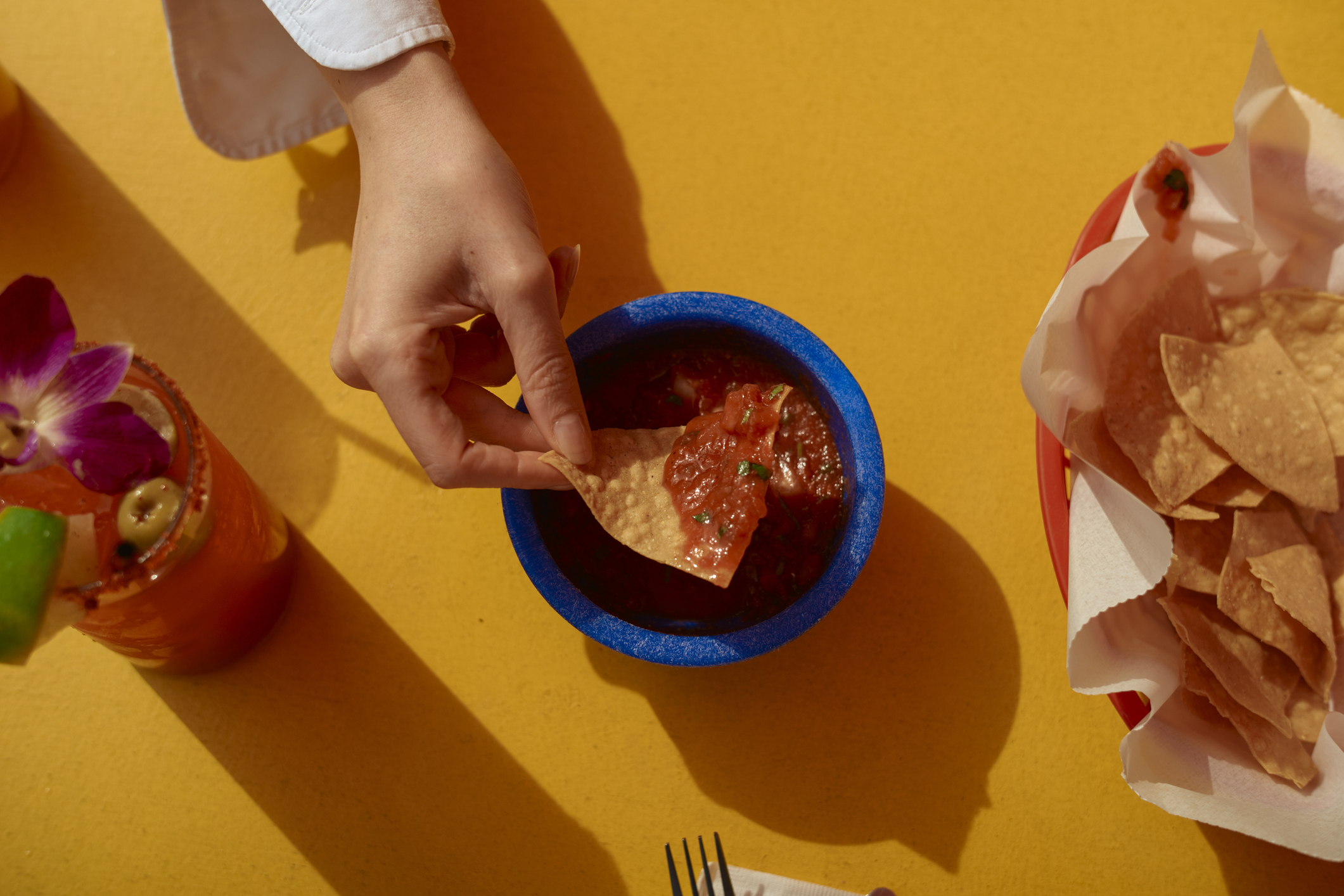
At El Nopal, a regional Mexican chain my family has frequented for years, the opening minutes of dinner follow a familiar choreography. We slide into a pleather booth beneath burnt-orange walls and televisions playing Spanish-language fútbol. Half the table orders Diet Coke, the other water with lemon; someone requests a skillet of molten white queso. Then come the chips: hot, sturdy, generously salted, piled into black woven baskets alongside ramekins of fire-engine-red mild salsa and a darker, spicier version flecked with onion and jalapeño.

For our family of six, there are always two baskets, dividing the table into loose territories. Those seated in the middle are expected to choose a side; reaching from both feels vaguely lawless. Everyone has a salsa ritual. Mine is two-thirds spicy, one-third mild. My sister mixes the mild with queso until it turns a muted pink. One of my brothers splashes vinegary house hot sauce into the spicy. Soon the menus are stacked, the pebbled Coke cups are sweating rings onto the table and somebody is pointing with a chip while saying, “No, no, tell her the part about —”

The Trump administration has made that little ritual more expensive to maintain.

In July 2025, the administration withdrew from a long-standing agreement governing fresh tomatoes imported from Mexico and imposed a 17.09% antidumping duty on most of them. The Commerce Department said the move was intended to counter Mexican tomatoes being sold in the United States at unfair prices and protect domestic growers.

Then the weather got bad.

Poor conditions in Mexico and Florida further reduced supplies, and tomato prices climbed to their highest level in roughly two decades. Dante Galeazzi, president of the Texas International Produce Association, told Houston Public Media that at one point the fresh tomato market had jumped to about $80 a box. Grocery stores began backing away from tomatoes earlier in the year; restaurants, he said, held on longer.

There is only so much a restaurant can absorb.

“The challenge is for our Texas restaurants, they operate on very narrow profit margins in what I would call good economic times,” Kelsey Erickson Streufert, chief public affairs officer for the Texas Restaurant Association, told the publication.

These are not, she continued, particularly good economic times for running a restaurant. Food is more expensive, but so are labor, utilities, insurance and credit card swipe fees — virtually everything required to keep the doors open. Eventually, the arithmetic gets down to the ramekin.

“You have restaurants that are simply saying, ‘Look, I can’t afford to put salsa on the tables anymore,’” Galeazzi said. “What are consumers going to do? Where are consumers going to find this relief?”

The tragedy of a $4 basket of chips is obviously not the $4. It is the moment someone at the table inevitably says, “Eh, do we need these today?” Sometimes the answer will be yes. Some days undoubtedly call for acid, salt and crunch. On other days, maybe you skip them. You wait patiently for the entrées. The stories still get told. Someone finds a plastic straw to point with instead.

It’s fine.

But the texture of the wait is different.


Want more great food writing and recipes? Sign up for Salon’s free food newsletter, The Bite.


That small decision — chips or no chips — moves the diner almost imperceptibly from guest to customer. The thing that once arrived as part of the welcome now joins the same mental ledger as everything else: Drinks? An appetizer? Queso? Dessert? Do we need it? Is it worth it? Should we just save the money?

People sometimes joke online about whether you grew up in an “appetizers and drinks” family or an “entrées and water” family. It is a joke, mostly, about the invisible financial rules children learn at restaurants: what counts as normal, what counts as a treat and what you know better than to ask for.

Part of the appeal of the neighborhood Americanized Mexican restaurant has long been that it offers a particularly accessible kind of abundance. You can order an inexpensive combination plate and a soda, or water with a squeeze of lime, eat something hot and filling and deeply flavorful, and be out the door in 45 minutes without anybody making you feel strange about any of it.

And while you wait, you get the same chips as the table ordering margaritas.

Free chips briefly flatten the distinction between the appetizers-and-drinks family and the entrées-and-water family. Everybody gets to start with something.

Of course, restaurants cannot run on symbolism.

The “free” things on the table have never actually been free to them. Somebody bought the tomatoes. Somebody fried the chips. Somebody washed the ramekins and refilled the baskets. Hospitality has always had scaffolding beneath it; ideally, the guest simply doesn’t spend much time looking at it.

Lately, that scaffolding has become harder for restaurants to hide.

One of my favorite Chicago breakfast spots recently changed the way it serves Texas toast. Two slices had been the default for years. Now the waiter asks: Do you actually want two, or would one be enough? They were happy to bring two, he explained. But a lot of second slices were coming back uneaten, and they simply couldn’t afford to keep throwing them away. It is difficult to begrudge a restaurant that calculation. In fact, the question struck me as a rather thoughtful solution: Have as much toast as you want. Just tell us you want it first.

But it also made visible, for a moment, the financial scaffolding behind the plate.

That is what interests me about the chips and salsa, too. Not that restaurant owners are becoming less generous, but that the economic forces pressing on them increasingly require them to show their work.

Trade policy tends to arrive in public dressed in abstraction: percentages, agreements, investigations, duties, markets. Then someone opens an invoice. A tomato costs more. A batch of salsa costs more. The complimentary appetizer that was once cheap enough to disappear into the cost of doing business becomes expensive enough to notice. Eventually, somebody has to decide whether hospitality can continue to absorb it.

And then, one night, a server has to ask if you would like to add chips.

This is a mundane outcome of economic policy — almost comically so. No one’s dinner is destroyed. No one sits staring mournfully at the bare lacquered table. There is simply a small patch of negative space where something automatic used to happen.

But small gestures are often where hospitality lives.

The loss of free chips and salsa isn’t really about chips and salsa. It is about what happens when policy decisions force restaurants to make the scaffolding of their hospitality more visible — when a gesture designed to make guests forget about the transaction becomes part of the transaction itself. At El Nopal, when the baskets arrive, nobody asks who is paying for this round. Nobody pauses to determine whether everyone wants enough chips to justify them. Nobody calculates how hungry they are with their entrée still twenty minutes away.

Someone tells a story. Someone interrupts to improve the punchline. Someone else points across the table with a tortilla chip. And everyone reaches into the basket without asking.

The post Trump’s tariffs may kill free chips and salsa appeared first on Salon.com.

  •  

Trump rolls over for China’s panda gift

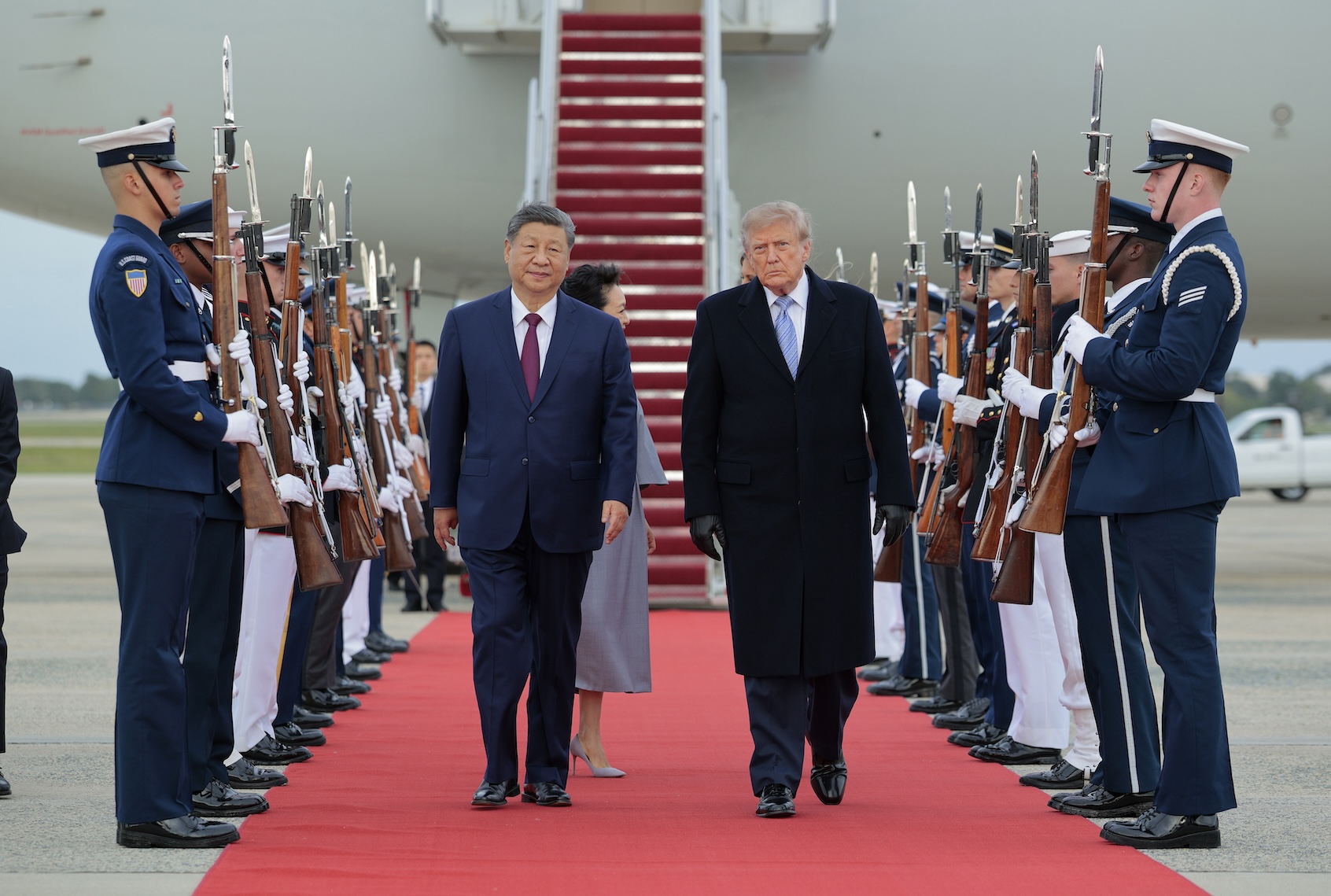
Certain obvious questions arise from Chinese President Xi Jinping’s visit to Washington this past week, a spectacle that one observer has described as “diplotainment” rather than actual diplomacy. Exactly how much did Donald Trump abase himself in service to a temporary and transactional friendship with the dictatorial leader of a nation that is, at least by conventional standards, America’s principal strategic enemy? 

No one knows; I am tempted to surmise that Trump doesn’t know himself. The man who in sunnier times for his regime enjoyed calling himself “your favorite president” does not seem to be his own favorite president these days. Trump almost visibly glowed with delight when Xi praised the quality of service and attention to detail of his White House visit. “Everything is done to the highest order of perfection, and there is thought in every little detail,” the Chinese president said through a translator. “And it’s greatly appreciated.”

You could describe that as the meaningless courtesies of routine statecraft, but it also suggested a high-flying hotel guest offering his compliments to the concierge: The eggs this morning were entirely delicious. And the way your people turn down the sheets at night: exquisite!

If we could somehow remove ourselves from the anguish and destruction caused by Trump’s improvised policies (which resemble comic-book versions of Big Brother’s “Two Minutes Hate” from the film version of “1984”) and his aggressively stupid public persona, we might be able to perceive some pathos in his predicament. He cannot escape from a situation he believed he had created and felt he could control: He is the massively unpopular elected leader of a rapidly collapsing superpower, whose downward slide he promised to reverse but has only accelerated, perhaps to the point of terminal velocity.

Trump visibly and hungrily longs for things he cannot have: the alleged greatness of the mythological American past, rendered as white supremacist schlock inherited third hand from the more vigorous fascist movements of the last century; the enforced adulation and obligatory public spectacle of a totalitarian regime such as Xi’s China or Kim Jong-un’s North Korea; most of all, perhaps, his own youth as a brash Manhattan philanderer and unstoppable political renegade, when he didn’t fall asleep in public or stumble around awkwardly with an unexplained contraption under his clothing.

Trump visibly longs for things he cannot have: the alleged greatness of the American past, rendered as white supremacist schlock; the enforced adulation of a totalitarian regime; most of all, perhaps, his own youth as a brash Manhattan philanderer and unstoppable political renegade.

To consider such matters is not a distraction; it begins to point us toward the larger and more painful questions behind the Xi-Trump pseudo-summit. It surprised literally no one that the two leaders negotiated no new agreements on regulating A.I. (or “Super Intelligence,” in Trump’s self-parodying rebrand), the status of Taiwan, the sporadic trade war between the two nations or ending the war with Iran and restarting the global flow of Middle East oil. No mention was made of Trump’s vaporware claims last May that the Chinese had agreed to buy hundreds of Boeing aircraft and $10 billion worth of U.S. beef and soybeans, but Xi promised to send two pandas from China’s breeding facility to the Atlanta zoo. So much winning. It’s impossible to calculate.

In large part, the absolute nothingness of this summit reflects the fact that China is already winning across the board and Xi needed nothing from Trump beyond the legitimation provided by a diplotainment spectacle “to the highest order of perfection.” As China scholars Nicholas Bequelin and Yaqiu Wang write in a Foreign Policy analysis published before the summit, over the first 19 months of Trump’s second term, the geopolitical “balance of power has shifted in Beijing’s favor”:

China has weathered the trade war, narrowed the technology gap, tightened its leverage over critical supply chains, increased pressure on Taiwan, and deepened ties with Russia and much of the global south.

Contrary to more Sinophobic commentators, they argue that China’s ruthlessly pragmatic leadership is not interested in dominating the world, or at least not in the same way postwar America did. But it does have a long-term agenda, they write, which includes breaking the global dependence on U.S.-centric financial institutions, discrediting democracy and furthering a historical process Xi has described as “the rise of the East and the decline of the West.”

I don’t disagree with any of that, but the most important aspect of Bequelin and Wang’s analysis gets a little buried beneath a forest of impeccably organized policy details. Xi has no need to strike an overtly aggressive posture and can afford to cosplay friendship with Trump because “the West,” or at least its greatest military and economic power, is doing a terrific job of declining all on its own. To borrow the nostrum attributed to Napoleon, the Chinese president is smart enough not to interrupt an opponent while he’s making a mistake. 

It may take generations — if there are any future generations — to measure the scale of America’s self-inflicted damage, which goes well beyond material issues into the realm of psychology or perhaps spirit. (If it’s pretentious to use the Hegelian term Geist, it still fits.) It remains astonishing, not to mention upsetting and enraging, that in the face of a global climate crisis that has already caused millions of deaths and is obvious to nearly everyone on the planet, the U.S. has deliberately chosen to double down on fossil fuels while “China is consolidating its worldwide dominance in batteries, solar, and EVs,” as Bequelin and Wang write. 

Faced with America’s spectacular self-own, who can blame people in the Global South for suspecting that the tradeoff between “democracy” and “authoritarianism” was never as straightforward as they were led to believe?

Chinese solar panels and batteries, often offered at steeply discounted prices, are revolutionizing transit and energy issues in many poorer countries, beginning to break the expensive and damaging addiction to foreign oil. Meanwhile, the U.S. has largely abandoned or dismantled its foreign aid programs aimed at fostering economic development, public health and education, while doing its level best to destroy its own reputation as a multiracial secular republic rooted in the rule of law. Faced with America’s spectacular self-own (which didn’t start with Trump, to be clear), who can blame people in the Global South for beginning to suspect that the tradeoff between “democracy” and “authoritarianism” was never as straightforward as they were led to believe?

Despite the widespread anger and disillusionment of Trump’s second term — an encouraging trend, to be clear — it’s still too easy for Americans to duck the biggest and most glaring question of all: To paraphrase one of the greatest works of postmodern angst, how did we get here? It no longer feels remotely adequate (if it ever did) to suggest that angry, vicious people accidentally elected an angry, vicious president who is pursuing a self-destructive and nihilistic agenda, and that at some future date our national sanity and our “indispensable” role in world affairs will be reasserted. 


Want more sharp takes on politics?
Sign up for our free newsletter, Standing Room Only by Amanda Marcotte, also a weekly show on YouTube or wherever you get your podcasts.


We tried that, remember? It didn’t work. Perhaps, from some great historical remove, Joe Biden’s presidency will appear noble and tragic. But it was also doomed, trapped in a vision of the past every bit as delusional as the MAGA fantasy, and nearly as damaging. The Biden regime’s self-appointed mission of enforcing a “rules-based order” involved pretending that the world had not changed, that America was still widely beloved and admired, that our so-called republic had not bred and nurtured Donald Trump and that he did not embody its bottomless greed, its gleeful ignorance, its wounded and flatulent national pride.

And so we arrive at the final conundrum of the Trump-Xi summit, and our president’s stopped-clock tendency to stumble upon hard truths. In his inimitable ass-backward fashion, Trump has discerned that the “free world” has become a meaningless abstraction and liberal democracy is in a state of systemic failure. He is correct about that, at least to a point. But he can provide no answer beyond prostrating himself before dictators and building monuments to himself in imitation of their grandiosity. If China’s repressive techno-state makes a distinctly unappealing candidate to lead the world into the future, America can only offer competing versions of an imaginary past. Hey, at least we got those pandas. 

The post Trump rolls over for China’s panda gift appeared first on Salon.com.

  •  
❌