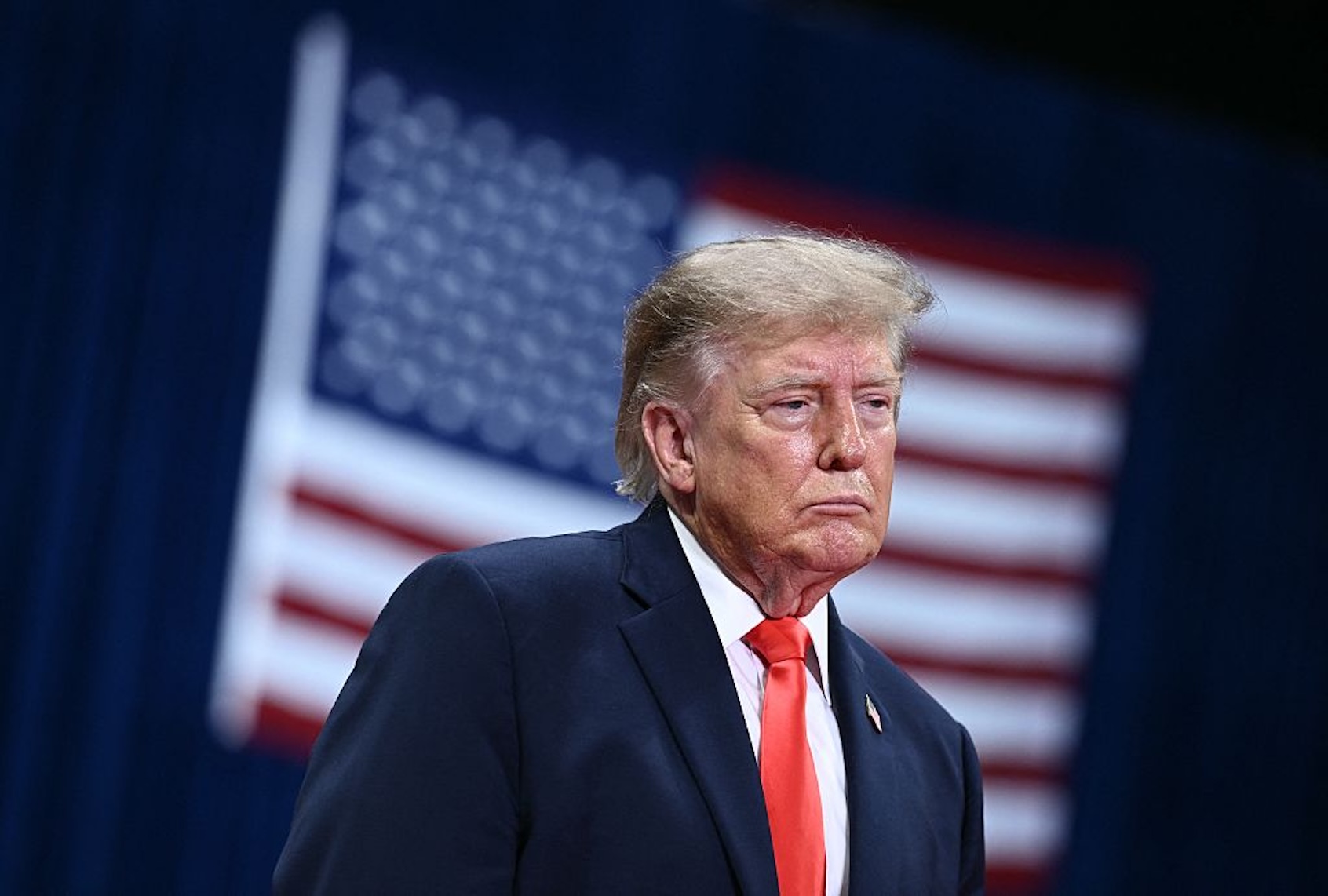
President Donald Trump, Secretary of State Marco Rubio, and Defense Secretary Pete Hegseth at a news conference during the NATO Summit in Ankara, Turkey, on July 8, 2026. | Krisztian Bocsi/Bloomberg via Getty Images
This story appeared in The Logoff, a daily newsletter that helps you stay informed about the Trump administration without letting political news take over your life. Subscribe here.
Welcome to The Logoff: It’s a whole new world for President Donald Trump.
What’s happening? So far, surprisingly little: As we wrote yesterday, Trump has largely stayed quiet since his shellacking in Tuesday’s midterms (ballroom tour aside), and that continued on Thursday.
With the days counting down until Democrats take control of Congress, though, there are signs that things could begin to shift in his administration.
What could happen? A Cabinet shakeup, whether that means firings, resignations, or something in between. It’s not unusual after any midterm, and especially not after a loss this seismic (Defense Secretary Donald Rumsfeld stepped down the day after the 2006 midterms amid voter anger about Iraq).
Whatever happens, though, might need to happen fairly soon: It’s always possible that Trump could skate by with acting secretaries (he’s previously said he’s a fan), but if he wants to get replacements confirmed, he’ll likely need to do it in the final two months of the current Republican Senate majority.
Who’s eyeing the exits? Secretary of State Marco Rubio and Defense Secretary Pete Hegseth, potentially — but for very different reasons.
In Rubio’s case, it would give him a chance to distance himself from a radioactively unpopular presidency ahead of a potential 2028 presidential run — particularly as Vice President JD Vance is stuck writing social media posts about why the Iran war was maybe a bad idea.
Hegseth, meanwhile, is one of the public faces of the war. Trump has — for now — denied any designs on replacing Hegseth, but the secretary faces the prospect of impeachment as soon as next week. He’s also reportedly interested in being appointed to a soon-to-be-vacant US Senate seat for Tennessee, which would provide him a convenient escape (though based on Tuesday’s results, he might be an underdog to win an election anywhere in America).
What’s the big picture? We don’t yet know anything for sure about what’s next, but the chatter is reflective of the new world Trump and his administration are facing: dismally unpopular, deprived of easy confirmation hearings and cover from Republicans in Congress, and facing an aggressive oversight agenda.
And with that, it’s time to log off…
Hi readers, here’s a very cool story about an atmospheric phenomenon I’d never heard of before — transient luminous events, a type of lightning occurring in the upper atmosphere. You can read all about them — and see them! — here with a gift link.
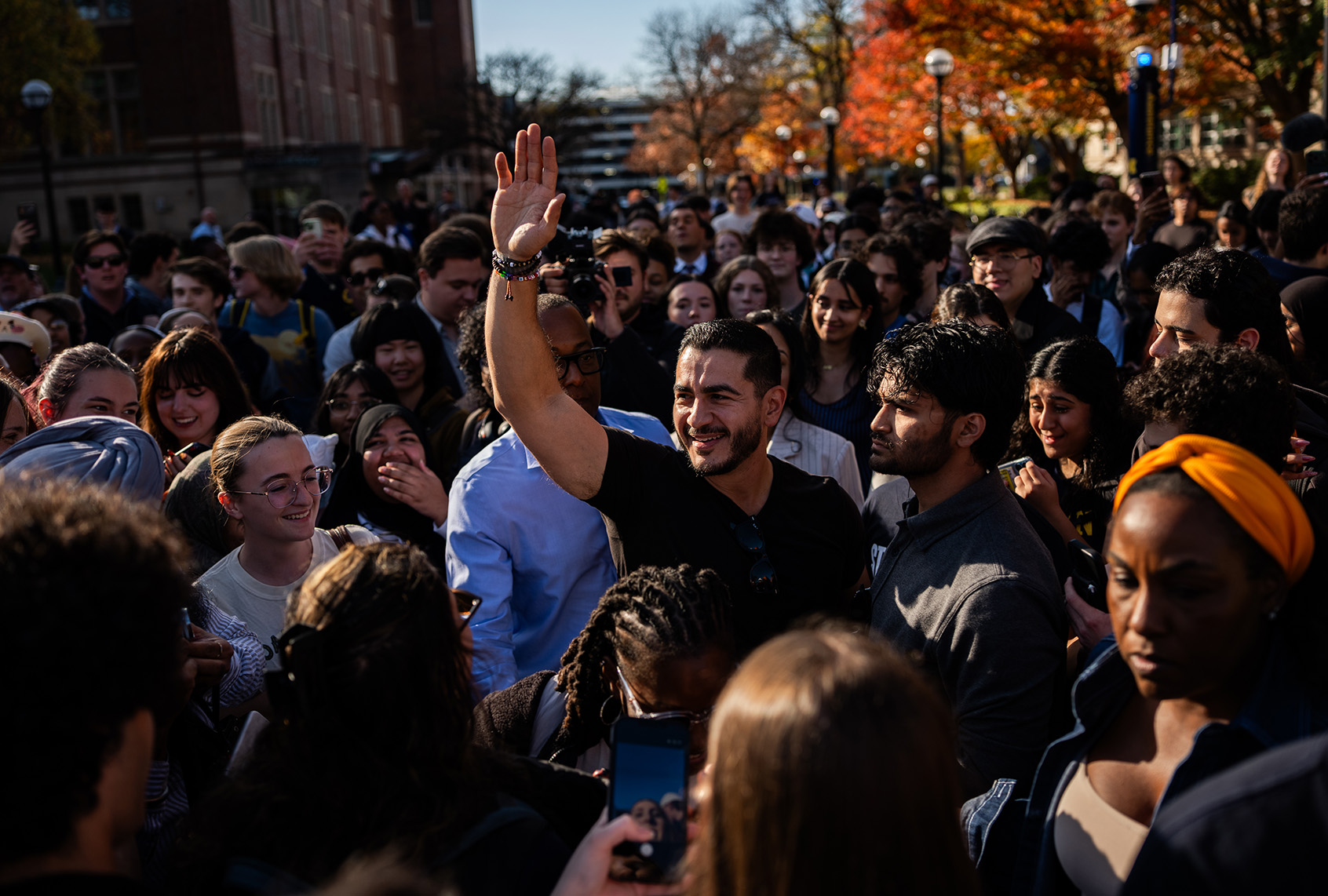
Democratic Senate candidate Adam Hamilton speaks to reporters at a canvassing event in Kansas City, Kansas on October 31, 2026. | Jim Vondruska/Getty Images
This story appeared in Today, Explained, a daily newsletter that helps you understand the most compelling news and stories of the day. Subscribe here.
As the dust from Tuesday’s elections continues to settle, Republicans are looking around their shrunken ranks and wondering precisely where they went wrong on this one.
President Donald Trump, who’s been generally (and surprisingly) mellow about his party’s loss, said it was because he wasn’t on the ballot.
Vice President JD Vance, who hopes to lead MAGA into its post-Trump future, squarely blamed the war in Iran.
Multiple things can be true at once, of course — and, in this case, they plainly are. It’s hard to look at the more than 44,000 races that played out across the country Tuesday and come away with a single unified theory of Democrats’ blowout.
But if you wanted to try, why not go with a theory that will make you feel better about other people? My colleague Christian Paz surveyed the landscape and came away with the conclusion that voters finally turned on cruelty this election.
Christian reports on politics and religion for Vox, and even before the midterms, he had some firsthand experience with the anti-cruelty camp. In October, he flew to Kansas to spend some time on the campaign trail with Democratic Senate candidate Adam Hamilton, a Methodist megachurch pastor who ran on a platform of “radical love,” mercy and kindness.
Hamilton’s chances looked remote when he launched his campaign: Kansas hadn’t elected a Democratic senator in almost a century. But on the trail, Christian met a lot of people — including registered Republicans — who liked the generous, neighborly way that Hamilton talked about politics and morality.
On Tuesday, Hamilton won his Senate seat by roughly 5 points. And he celebrated in a characteristically gracious manner: “I want us to model what it looks like when thoughtful people actually work together to solve problems,” he said, “instead of slinging mud at each other.”
For much of American history, that would have been a fairly anodyne comment. But this isn’t much of American history: We’re living in the age of Trump and Vance.
Meanness, incivility, and outright cruelty have been the political mode for the past 10 years, not just in how lawmakers speak and campaign (with insults, curses, epithets, innuendos, and undisguised racial animus) but also in how they legislate (namely, by pursuing and celebrating policies that cause distress to their political opponents and marginalized groups).
The clearest, cruelest example of both is probably Trump’s mass deportation campaign, which has seen almost 1 million largely law-abiding people ejected from the US. As part of that campaign, the Trump administration also regularly mocks and humiliates its targets in social media posts.
As Christian explains in a forthcoming article for Vox, however, the midterms suggest that many voters find this nastiness off-putting, even if they’re concerned about immigration. In Colorado, where roughly half of residents surveyed last year called illegal immigration a “very serious” problem, 55 percent of voters nevertheless rejected a measure that would have required law enforcement to coordinate with federal immigration agents.
Voters also swung hard against the GOP in places that saw ICE raids or stricter enforcement, including heavily Hispanic areas of Florida, Kansas, and Texas.
“These are voters who were very supportive of securing the border, very supportive of Border Patrol. … But the cruelty of what ICE was doing, tearing apart families and communities, was just a bridge too far” for them, the Democratic strategist Lis Smith told Vox.
Elsewhere, candidates like Hamilton, Texas Sen.-elect James Talarico, and Ohio Gov.-elect Amy Acton prevailed over opponents known for their morally dubious pasts or ugly attack ads.
Does this mean we’ve entered a new political era? A world where the nice guys…do sometimes win?! The midterms weren’t all sunshine and drum circles, after all: Some bona-fide jerks were also elected.
“I do anticipate a more conciliatory tone from the new voices heading into Congress — but when the 2028 primary season starts, I wonder how much these calmer heads will prevail,” Christian told me. “And at least for the GOP, everyone I’ve talked to seems to hope a new page will turn and a calmer politics will be embodied by the right — but at least not until Trump leaves office.”
One link for later
➨ Life is too short to finish bad books. So…don’t do it! I wish I’d taken this advice before slogging through a creepy, underplotted historical romance for a book club I probably won’t even stick with. Other tips to help you read more, even in our era of boundless distractions: Experiment with different formats — print, ebooks, audio — and take breaks to help shore up your attention span.
Before you go…
Did you know…that the original Pledge of Allegiance didn’t include the words “under God”? President Dwight D. Eisenhower made that little edit during the anti-communist fervor of the 1950s.
Today’s trivia: Which planet takes 165 Earth years to orbit around the sun? (You can find this and other brain puzzles in Vox’s daily crossword. Look for the answer in tomorrow’s edition.)
Yesterday’s trivia: Yesterday we asked you which e-commerce site bars users from selling their souls. That would be eBay, which first confronted this thorny metaphysical problem more than 25 years ago.
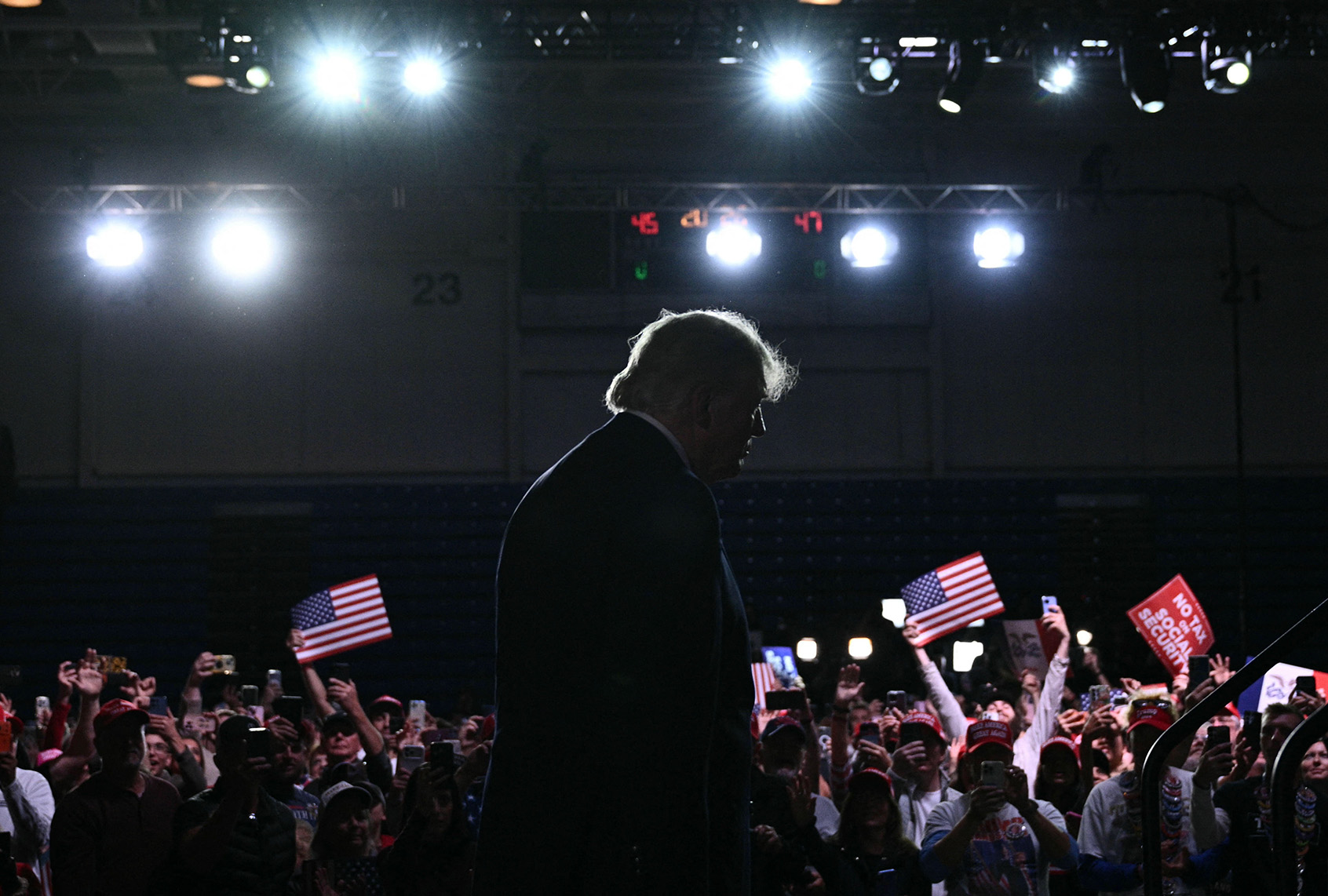
President Donald Trump arrives on stage to deliver remarks during an election rally at McMorran Place Sports & Entertainment Center on October 25, 2026, in Port Huron, Michigan. | Alex Wong/Getty Images
Democrats just partied like it’s 1974. On Tuesday night, they pulled off the largest midterm victory since the post-Watergate wave. Democratic Senate candidates conquered longtime Republican strongholds like Kansas and Texas — and probably (in the view of the internet’s gamblers) Mississippi and Alaska. When the dust settles, and all ballots are tallied, Democrats are expected to boast a 13-percentage-point popular vote victory and more than 250 House seats.
Taken together, these results exceeded many Democrats’ wildest dreams — and Republicans’ greatest fears. Countless Americans are therefore asking: How the hell did that happen?
To make some headway on that question, I spoke with the Democratic data scientist David Shor. Founder of the consultancy Blue Rose Research, Shor has access to volumes of large-sample polling, precinct-level data on which voters did (and did not) turn out in multiple states, and fine-grained estimates of demographic shifts in party allegiances.
Democratic turnout surged, particularly among young, politically disengaged, and Latino voters.
The Iran war was President Donald Trump’s downfall.
Campaign donors have weird priorities and issue positions, which can undermine politicians who take their money.
Polling is getting harder.
Americans think AI might take their jobs and kill their families.
So, I wanted to ask him about the story that his numbers are now telling — and whether it challenges his past assumptions about how American politics works.
On Wednesday afternoon, we also discussed shifts in youth turnout, why Elon Musk’s money bought Republicans so little, and Americans’ growing contempt for artificial intelligence, among other things. Our conversation has been edited for clarity and length.
What happened Tuesday night? How did Democrats end up with the biggest landslide in half a century?
It’s early; a lot of precincts haven’t come in and we only have individual-level data in a couple of places. But Democrats appear to be running about 7 points ahead of where Kamala Harris was [in 2024].
And it seems like a very large portion of that was due to turnout. You can see this in both the precinct and county-level data. But we also have data on individual voters in Texas and Georgia. And in those two places, Harris supporters turned out at a rate about 9 points higher than Trump supporters did. That’s likely the largest turnout advantage going back to at least 2006. For context, the gap in 2018 was about 3 points.
And a lot of that was young voters. It’s funny; in 2022, everyone said there was a “youthquake” — a huge spike in youth turnout — which was overstated. But this time, one genuinely happened. In Georgia and Texas, there was an enormous increase in youth turnout and actual declines in turnout among voters over 65.
We also have evidence that Democrats gained ground with politically disengaged voters. In the precincts that had the lowest turnout rates in 2022, Democrats gained something like 11 points. Whereas the highest turnout precincts swung toward us by only 2 or 3 points.
It’s a little hard to distinguish changes in support from changes in turnout. But it’s clear that young voters, Hispanic voters, and infrequent voters swung toward us, reversing much of the gains that Republicans made with those groups in 2024.
How big was the increase in Black turnout? Looking at Democrats’ remarkable success in South Carolina and Mississippi, it seems like African American mobilization must have been a factor.
In the Georgia data, we see a 4-percentage-point increase in the Black share of the electorate relative to 2022, which is quite a bit. And in Texas, we see a nearly 6-percentage-point increase in the Latino share of the electorate.
What explains these shifts in turnout and voting patterns?
If you look at Trump approval — both from 2016 to 2020 and then from 2024 until the end of 2025 — it was really quite stable. Obviously, it was highest at the beginning of his terms and went down after a month or two. But then for most of Trump’s first term, he was hovering around the mid-40s in our data and it really barely moved in response to events. And it was much the same for the first year of Trump’s second term. Which was worrisome: Trump had all of these scandals, but at the end of the day, the line didn’t move. A good day would be like, “Oh, Trump approval is down three-tenths of a percentage point — amazing!”
So, a lot of people became very nihilistic. They were like, “Oh, we really live in this world where nothing matters.”
But then, the Iran war happened. And there was a giant structural shift in public opinion. His approval rating on the cost of living plummeted. To put some numbers on this, the day before the Iran war, Donald Trump had a 49 percent approval rating on gas prices. Within a week, it was 33 percent.
Trump’s overall approval rating isn’t that much lower than in 2018. And his approval on immigration, healthcare, and a lot of other issues is pretty similar. The big change in our polling has been a giant decline in Trump’s approval on the economy.
And previously, voters’ trust in his economic management was the one thing propping him up. But the Iran war destroyed it. And he went from being a complicated political figure — who was popular on the economy but unpopular on other things — to being unpopular on everything.
So, Tuesday’s wave had less to do with what Democrats did right than what Republicans did wrong? Are there portable lessons here for Democrats besides, “When a GOP president engineers a massive increase in gas prices, tell voters you disapprove?”
I’m not going to claim that the Democratic brand is perfect. But I think the Democratic leadership and both wings of the Democratic Party — the left and the “establishment” or whatever — deserve a lot of credit for making big, concrete shifts in their messaging; specifically, focusing more on economic issues that affect people’s everyday lives. That was not a given. It was not uncontroversial at the time. And it paid dividends.
Right before the 2024 election, Republicans had a 12-point trust advantage on the cost of living. Today, among 2026 voters, Democrats actually have the trust advantage on the issue, which continues to be voters’ No. 1 concern by far.
We ask voters questions like, “What do you think the Democratic Party cares about?” And when we asked that question a year after the 2024 election, voters thought Democrats prioritized catering to their base over the cost of living by 4 to 1.
When we ran that survey again right before this year’s election, voters thought Democrats cared about the cost of living more than anything else, just like them. They thought Democrats’ second concern was fighting Donald Trump, which maybe wasn’t a total positive. But then No. 3 was healthcare and No. 4 was the economy. And so Democrats really did execute a big pivot.
And meanwhile, if you ask voters what they think that Trump cares about, they say border security, immigration, national security, and war in the Middle East. You have to go far down the list to get to costs.
The other thing I’d say for Democratic strategy: The 2025 government shutdown did damage Trump.
Until then, Trump really felt like he had escalation dominance, that basically every time he would violate norms and trigger a fight, he felt — based on previous experience — that he would win and that Democrats would have to back down. And this was the first high-profile fight between Democrats and Trump where he really paid a big price and his approval started to go down.
And I think that partly reflects Democrats choosing to center the shutdown on healthcare, one of the issues voters really cared about. There were a lot of people in the Democratic Party who wanted to focus on other things, for understandable reasons. But if you look at the postmortem, the healthcare shutdown corresponded with a massive increase in the salience of healthcare in the minds of voters. And that correspondingly led to an increase in support for Democrats and disapproval of Trump.
In our past conversations, you often painted a pretty bleak picture of the Democratic Party’s prospects for winning control of the Senate. And not without reason.
In the last few elections, it seemed like moderate Democratic candidates were having a harder and harder time competing in Republican-leaning states. Which was a problem, since Democrats couldn’t win control of the Senate without prevailing in states that voted for Trump every chance they got.
And you argued that Democrats’ problem was structural: Voters increasingly got their political information from national outlets, which focused on the big-picture ideological divides between the two parties rather than the idiosyncratic positioning of individual candidates. Culturally conservative Montana voters realized that voting for Jon Tester meant empowering social liberals. And so Democrats were kind of screwed, unless they found a way to moderate their national image.
And yet, the national Democratic Party didn’t really moderate any of its issue positions between 2024 and 2026 — yet still managed to win statewide elections in Kansas, Iowa, and probably Alaska and Mississippi. So, how do you reconcile these results with your model of political reality?
I’m a little more wary of making long-term predictions than I was in my 20s. Obviously, I would have been shocked in 2019 if you had told me how many Senate seats we would have today. But it’s worth walking through what happened, year by year.
What’s interesting about 2022 and 2024 is that we really should have lost a lot of races, in many different senses. What saved us is that, in both those years, Democrats had a historic advantage in candidate quality — measured by objective things like, “Was this person elected to a previous office?”
And if you really drill into individual details, this was largely because Trump intervened in swing-state primaries in the House and Senate to support lower-quality candidates who were loyal to him.
One mathematical way to see this is to look at how Democrats in swing races did relative to Democrats in non-swing races. And in 2014 and 2018, the gap was basically zero. But in 2022, it was something like 3 percent. And then in 2024, it was a little bit more muted, but similar.
So, I think Republicans were on the cusp of securing a level of power in American politics that no party had experienced in decades. But Trump spent down that power to accomplish his goals. I definitely didn’t see that coming.
As for this election, I did not predict that Trump would start a super unpopular war while also doing massive tariffs and making a bunch of other domestic political miscalculations.
I have two takeaways from all this. The first is I think that political parties have a real tendency towards equilibrating behavior, where in response to having lots of seats, they go and do a bunch of politically counterproductive things.
The other piece is: In the past, I had said that it was impossible to hold the Senate without Democrats winning culturally conservative voters in states that backed Trump by large margins.
And that continues to be true. The question was, “Is it possible for us to get there?” At the time, I think a lot of people really thought that these levels of overperformance were impossible. But it turns out there are different paths to getting there, and one is having the president launch a giant unpopular war, while doing everything he can to drive down his own approval rating.
What do you think this election tells us about the power of money in politics? The GOP had a financial advantage this cycle. And yet, at first glance, it doesn’t look like Elon Musk’s $445 million investment in Republican power made much of a difference.
Obviously money does matter. Ads do work. It’s not like these effects are zero. But as the amount of money in politics has increased, political parties have started catering enormously to the whims of donors who are really quite weird.
In our issue priorities polling, the cost of living is the top issue for every subgroup imaginable — young voters, Hispanic voters, Black voters, old voters, whatever. Every single group, except for the 0.7 percent of the population that has donated to a Democratic campaign in the last year. And for them, climate change is No. 1, voting rights is No. 2, you have to go down to like 11 or something to get to the cost of living. And I think that explains a lot about elite Democrats’ behavior historically.
So, it’s better to be outspent and in touch with the American voter than it is to be the opposite. I like to say: Whichever party listens less to their donors usually wins.
You can’t blame donors for everything in the Trump presidency — tariffs were probably all him — but if you look at what he did, his donors pushed him to take incredibly unpopular positions on AI and on data centers.
“In our issue priorities polling, the cost of living is the top issue for every subgroup imaginable — young voters, Hispanic voters, Black voters, old voters, whatever.”
After Jacob Coxon resigned from Anthropic, Trump said that no new AI regulations were needed. We polled that statement. And it was literally the most unpopular position I’ve ever seen a mainstream politician endorse. About 8 percent of people supported it. That’s three times less popular than defunding the police.
Holding all else equal, more money is helpful. But if getting it requires you to spend 70 to 80 percent of your time talking to some of the weirdest people on the planet — and forces you to prioritize issues that the general public doesn’t care about — you’re better off with less money.
Zohran Mamdani is an example of this. He showed that if you single-mindedly focus your campaign on voters’ top issue — affordability — you can really do incredible things, while your opponents are wasting time arguing about Israel.
Why did the polls underestimate Democrats so significantly? In some recent elections, polls had tended to overestimate Democrats, particularly in redder areas. And you argued this was because voters with low social trust had become both less likely to answer a pollster’s call — and more likely to support Republicans. And that led pollsters to systematically undercount Trump voters. But this time, the miss went in the other direction.
We’re still trying to piece together exactly what the data says. But the fundamental problem in polling is that the two biggest predictors of answering a phone survey are: 1) how interested you are in politics and 2) your socioeconomic status — as measured not only by education and income, but also things that are much harder for survey takers to gauge, like, “How educated were your parents?” or “What’s the occupational prestige of your job?” or “What kind of neighborhood do you live in?”
In 2012, a voter’s level of interest in politics wasn’t super correlated with support for Obama or Romney. But now they are.
And technology is part of why. If you go back to the 1950s, if someone received a call from a pollster, they’d be like, “Oh my God, there’s a researcher who wants to know my views on contemporary events!” and they would excitedly drop what they’re doing and talk to them. But now there is a multitrillion-dollar war for people’s attention. And so it is in fact quite hard to get non-random samples of people excited to take that call. That problem isn’t going away. So I expect more polling misses in the future.
How do you interpret the variation in Democratic performance between states? Democratic Senate candidates in Texas and Iowa vastly outperformed Kamala Harris’s 2024 margins, while those in Maine and Michigan did so more modestly. How much of that gap is driven by demographics — Trump simply induced a backlash among specific groups that are more present in some states than in others — versus candidate quality? And to the extent that candidate quality was important, did that boil down to ideological positioning or more intangible assets?
We did a big survey right before the election where we asked voters, “How moderate do you think this candidate is?” And then we also asked a bunch of other questions like, “How much do you think this person cares about economic issues?” “How in touch are they with the economic struggles that everyday people face?”
And we found that perceived moderation is associated with higher vote share. Though I think in the House, these effects are smaller than a lot of people would guess. What’s more interesting, though, is it really seems like the extent to which voters see you as focused on economic issues — and in touch with what regular people care about — is much more predictive of overperformance than ideology.
And I think that if you go and look at individual politicians, there are lots of examples of both progressive and moderate politicians who are perceived as out of touch.
And I think the left is learning this. If you look at the ideological penalty that candidates supported by Justice Democrats have paid each election cycle, they’ve gone down over time, as these groups have matured a bit and focused on economic messaging.
One big story from Tuesday night was the massive backlash to data center construction. Forty out of 41 ballot proposals for restricting data centers passed. What do you make of that? In your polling, is this opposition driven primarily by concerns about the structures themselves — their appearance, pollution, and impact on local energy bills? Or is it primarily an outlet for voters to express their antipathy for AI as a technology?
Over the last two years, voters have grown increasingly concerned about AI. In 2024, AI ranked 40th out of 40 on our list of voter priorities. But it’s gained salience by more than any other issue since the start of Trump’s presidency; now it’s ranked 24th out of 39, roughly tied with crime.
And as that salience has increased, people have become increasingly negative about AI. In December of last year, we asked people whether they were more optimistic or pessimistic about AI, and optimism led by about 5 points. In our most recent polling, pessimism leads by 10 points.
Late last year, when we asked, “Do you want a data center built in your neighborhood?” we saw 45 percent support. In our polling a month or two ago, that fell to 14 percent. For context, when you ask voters whether they want a prison in their neighborhood, that figure is 15 percent.
And obviously, part of that is NIMBY concerns. But I think that this is part and parcel of AI becoming more unpopular.
And I think it’s impossible to understand why AI is unpopular without considering voters’ views on the broader economy. Consumer confidence is roughly at the level it was right after the Great Recession. Ask people, “Do you think the economy is rigged for elites or are things fair?” People say “rigged.” Ask, “Do you trust our business elites?” People overwhelmingly say no. And these are very big changes from before the pandemic.
So, if you believe the country’s elites cannot be trusted — and then you also hear a bunch of business people saying, “AI is going to change everything!” — it’s natural to assume that change is going to screw you.
And in fact, 80 percent of voters say it’s either very likely or somewhat likely that there will be large-scale job loss due to AI in the next five years. And something like 64 percent say it’s either very likely or somewhat likely that AI will threaten human survival. So the median voter thinks that there is a considerable chance that AI will take their job and kill their family.
If America’s tech elites really want this large-scale build out and reorganization of the economy to happen, they will have to actually pressure Congress to meaningfully protect the downside risks of the American people and guarantee them some share of AI’s upside. Because, as we saw yesterday, we live in a democracy. And the American people will not allow this AI transition to happen unless they get something for it.
When the pied piper loses his audience, we must ask whether the people have rediscovered their conscience or simply found a new tune to follow.
On Tuesday night, Donald Trump and his MAGA movement saw what happens when political influence collides with the everyday realities of the people it seeks to lead.
The 2026 midterm elections brought a dramatic shift in political power. Democrats won control of both the House and the Senate, flipping Senate seats in states such as Texas and Kansas, which were long thought to be out of reach, and winning House districts Trump easily carried just two years ago.
Voter polls placed the president’s approval at approximately 38%, with roughly six in 10 voters saying he was a factor in their vote. But beneath those numbers lies a more consequential story. Americans are confronting the cost of living, the economic consequences of tariffs, the uncertainty of war with Iran and diminishing confidence in American leadership abroad.
Trump promised his voters he would drain the swamp, end foreign wars and bring prices down. Yet many Americans went to the polls questioning whether those promises had been kept. Unlike the Pied Piper of Hamelin, who rid the town of its rats, Trump now faces an electorate concerned that the problems he promised to eliminate have instead multiplied.
In the original story, the Piper fulfilled his bargain. He played his pipe, led the rats into the river and freed the town. But when the townspeople refused to pay him, he returned to exact revenge by leading away their children.
Over and over again throughout the midterm campaign, Trump urged supporters to vote as though he were personally on the ballot. In this telling, the Piper did not eliminate the rats. He added to them, and still he expected to be paid.
Critics argue that Trump reversed that bargain. Rather than delivering the relief promised to ordinary Americans, the administration has left many struggling with economic uncertainty while continuing to demand political loyalty. Over and over again throughout the midterm campaign, Trump urged supporters to vote as though he were personally on the ballot. In this telling, the Piper did not eliminate the rats. He added to them, and still he expected to be paid.
Trump’s supporters see a different story. They point to immigration raids and mass deportations, deregulation and challenges to established political institutions as evidence that the president delivered on important commitments. From their perspective, voters who rejected those policies after experiencing the consequences resemble townspeople who accepted the Piper’s services, but refused to honor their bargain.
Both interpretations expose a fundamental ethical question: When does political loyalty cease to be an expression of shared principles and become an abdication of independent judgment?
In a democracy, voters are not obligated to follow the music indefinitely. They retain the right to question the destination, reconsider promises and withdraw their support. Political loyalty is not a debt citizens owe their leaders. It is a trust that leaders must continually earn.
Albert Hirschman, an American economist and author of “Exit, Voice, and Loyalty: Responses to Decline in Firms, Organizations, and States,” distinguished between voice (working to change an organization from within) and exit (abandoning it). A vote against an incumbent is often itself an act of a voice. But where voters withdrew their allegiance from a party or movement altogether, Tuesday looked more like an exit. Hirschman saw loyalty as what keeps members inside, speaking up rather than leaving. His framework suggests that when loyalty silences voice instead, exit becomes the only remaining option.
But elected officials carry a different and greater responsibility.
Like the children of Hamelin, many Republican lawmakers followed the music toward an uncertain destination. Unlike those children, however, they had the authority — and the responsibility — to question where they were being led. Some embraced the president’s direction; others followed him despite reservations, knowing that dissent could invite a primary challenge. After all, they had seen others who challenged his leadership pay a considerable political cost. Kentucky Rep. Thomas Massie and Louisiana Sen. Bill Cassidy lost their Republican primaries to Trump-backed challengers.
Political cooperation is essential to governing. But cooperation becomes ethically troubling when loyalty to an individual displaces the obligation to question, deliberate and act independently. The oath of office is not a pledge of allegiance to a president, a party or a political movement. It is a commitment to uphold the Constitution. A president can command attention, share public debate and place enormous pressure on members of his own party. But the ability to demand loyalty does not create a moral entitlement to receive it.
The children of Hamelin’s Pied Piper tale had no part in the broken bargain, yet they paid its price. In our democracy, ordinary Americans and future generations often inherit the consequences of political decisions, and today they are paying a price. Economic instability, weakened public trust and the costs of war do not disappear when an election ends. A leader’s success cannot be measured solely by the number of people willing to follow along with them. It must also be measured by what happens to those who never chase the tune.
The election has shifted power in Washington. Democrats, after winning sizable, historic victories throughout the country, will soon have an opportunity to exercise congressional oversight and reinforce the institutional independence our constitutional system requires.
But changing who holds the instrument does not necessarily change the music.
Democrats now face their own ethical test. Will they exercise power with the transparency, accountability and respect for constitutional checks they demanded from their opponents? Will they welcome dissent within their own ranks? And will they resist the temptation to substitute partisan loyalty for independent judgment?
An election can change the balance of power overnight. It cannot, by itself, restore public trust or guarantee ethical leadership. That requires leaders willing to place constitutional responsibility above political convenience, institutions prepared to exercise meaningful oversight, and citizens who refuse to surrender their judgment to the most compelling voice in the room. The first six months of the 120th Congress must be defined not merely by a change in political power, but by a demonstrable commitment to ethical reform, transparency, and accountability. The American people did not vote simply for a change in leadership. They voted for a government worthy of their trust.
The Pied Piper’s greatest power was not simply his ability to play a captivating tune. It was his ability to persuade others to follow without questioning where their journey would end.
Political ethicist Dennis Thompson called this the problem of many hands: When many officials each contribute a small part to a collective outcome, responsibility seems to dissolve until no one bears it. So, when political loyalty becomes more important than independent judgment, who bears responsibility — the leader who plays the tune, or those who willingly follow? Thompson’s framework does not allow individual lawmakers to hide behind presidential leadership, party discipline or collective decisions. Nor does it assign blame equally. Responsibility depends on each official’s authority, knowledge, contribution and the alternatives available to them. By that measure, those who knew better and had the power to act cannot claim they were merely following the music from the leader in the red hat.
When the music finally stops, the question is not simply who will lead next.
It is whether we have learned to listen differently.
For all the horrible things Donald Trump has wrought upon the world — and there are so, so many — he’s also taught us some important lessons. Trump is proof of several truths: A red-meat-and-stress-addled heart can withstand otherwise unthinkable conditions with the federal government’s medical secrets; reality television ruined the world; and, if we’re not careful, we’re all liable to become parodies of ourselves one day, crying about it online.
That latter bit is certainly true for filmmaker Taika Waititi, whose otherwise tacky-yet-progressive veneer cracked last weekend when he took to Instagram to condemn the poor reviews of his latest film, “Klara and the Sun.” After a torrent of bad press and worse box-office performance, the film’s distributor, Sony, opted to scale back the movie’s wide release, reducing the sci-fi dramedy’s reach from 2,000 theaters nationwide to 800, most of which returned a meager profit. Never one to take his mediocrity on the chin, Waititi deflected the negativity outward, which, as we know, always paints someone in a good light!
Waititi’s childish outburst is straight from the MAGA playbook. And while refuting film critics isn’t akin to Donald Trump’s most damning sins, Waititi’s mockery is a symptom of a problem that won’t be washed away by one blue wave, no matter how sizable.
Waititi reposted a graphic claiming that “Klara and the Sun” was “rebounding” with a 78% audience score on Rotten Tomatoes, a 53-point gap from the film’s 25% critics score. (For what it’s worth, neither number should ever be used to accurately measure a film’s quality.) “I haven’t read a review of anything aimed at me or my peers in 15 years,” Waititi captioned the post. “But I do listen to the people . . . Let’s spare a thought for those sad, lost souls who couldn’t achieve their dreams of becoming artists, and thus settled, and became critics. Irrelevant. Out of touch. Obsolete. In the bin.”
Reading Waititi’s emoji-peppered caption, I was surprised to find it so carelessly evoked the Trumpian crybaby approach to social media. Whether on X or his own Truth Social, Trump’s favorite way of addressing critics and opponents has long been to toss out adjectives at will. Tack a “SAD!” at the end of Waititi’s caption, and it could easily pass for one of Trump’s poetic musings. (If only Waititi had gone so far as to parrot my personal favorite Trump quip about Barney Frank by saying, “The critics looked disgusting, nipples protruding, in front of my movie. Very very disrespectful.”)
Want more from culture than just the latest trend? The Swell highlights art made to last. Sign up here
Ironically, all those admonishments in Waititi’s caption are also fitting descriptors for the state of Donald Trump’s agenda, the one imitated by his legions of Republican cronies spread out across America, hoping to be elected in Tuesday’s midterms. But judging by the results, MAGA’s influence is waning fast. Seven Senate seats flipped, historically red states turned blue and a spate of monumental wins popped up nationwide. The MAGA bubble popped in real time. Americans have seen firsthand what little good fascist ideology does for the average, working-class person. And though the country may not become great again overnight, it appears the last 12 years of freefall have finally been suspended — at least for now.
Not to be all, “Oh, won’t someone think of the celebrities?” about it, but such overwhelmingly positive election results left me wondering what happens to someone like Waititi, whose childish outburst is straight from the MAGA playbook. For over a decade, Trump has used social media to peddle broadly disparaging, dangerous rhetoric that has legitimate impact outside the phone screen. The reckless hatred comprising MAGA ideology is so potent that it’s bled into the ways even otherwise progressive people wield their power, like crude oil painting an ocean black. And while refuting film critics isn’t akin to Trump’s most damning sins, Waititi’s mockery is a symptom of a problem that won’t be washed away by one blue wave, no matter how sizable.
One would think that Waititi would know better. For one, the guy is 51 years old, certainly experienced and well-established enough to let a flop roll off his back. How fitting that his biggest success is the anti-fascist yet aesthetically tasteless political satire, “Jojo Rabbit,” which won the Oscar for best adapted screenplay in 2020, just as the Trump era was revving up for its second leg. That film, about a 10-year-old Hitler Youth who begins to grapple with the realities of life in 1940s Germany, examines propaganda’s influence and the power of hegemony, even if it often lacks the nuance and perspective such a satire warrants. For better, or more often, for worse, Waititi’s writing displays a self-possessed vulgarity that gets in the way of his more salient observations. Case in point: It’s downright ludicrous to stake your name on a film renouncing hate, then take aim at critics — people not exactly matched in influence to someone like Waititi — just six years later.
But this is the rot that social media creates. Whether it’s Instagram, X, TikTok, or YouTube, these sites have incentivized and monetized incendiary opinions. Their algorithms push small people into major power. What was designed to ostensibly be a great equalizer has only divided the world more, making animosity easily accessible to anyone who gets their rocks off on sewing discourse through cruelty.
For some time now, arts critics have been easy targets on these platforms. Gone are the days of the critic playing dilettante, having intellectual conversations over martinis and cigarettes at the month’s salon for like-minded individuals. To be a critic today — to pursue one’s passion for art and writing and learning, all rolled into one — is to subject oneself to a pretty bleak existence. In most cases, the pay is meager. The hours are long. The job is demanding. And virtually no one has the patience or attention span to read an entire article anymore, let alone engage with its ideas. A legitimate critic doesn’t stumble into the job just to point and laugh; they write because they have real passion for what they cover. Surely someone like Waititi would say the same when he begins a new project after a string of flops.
If living in MAGA-world for a decade has taught us anything, it’s that things aren’t just good because one person says so. Uniformity is the enemy of art, and blind trust is the scourge of politics. There is no future without recognizing the subtleties existing between the lines.
What Waititi fails to realize is that he’s not punching up or down, but laterally. This is artist versus artist. If the context is right, a good piece of criticism can be as life-altering as a good film. But that’s hard to see when the internet has built such a wide chasm between people, reducing the impact of writing in favor of scrolling. Along with social media’s effect on human behavior, it’s had a heavy hand in blunting the journalism industry. If everyone’s a critic, then no one is, and that’s precisely why monitoring Rotten Tomatoes scores like they’re poll numbers is futile and ridiculous.
But it’s not just Waititi who’s vulnerable to this unique form of MAGA-tinged, social media-brained psychosis; critics can fall prey to it, too. Whether it’s a filmmaker, a film critic, or just your average filmgoer, social media has confined us all to its machine. No one is exempt from consumer tech’s sway. And if a writer or filmmaker wants to make a splash, tossing out an inflammatory opinion aimed at a peer is a surefire shortcut. I’ve seen this affect critics’ prose over time, with certain writers (or their outlets) favoring button-pushing pull quotes and headlines for attention. But in most cases, no critic is happy to spend two hours watching something they find insufferable. No matter how gleeful Siskel and Ebert used to look sparring over movies, their industry was built on intellectual debate in pursuit of cinematic resonance, not schadenfreude.
What’s most concerning in Waititi’s response is his foul self-importance, which is the real stain of MAGA politics. While an artist should avoid burdening themselves with hypothetical responses to their work before it’s even out in the world, considering the eventual reaction is worthwhile. Engaging with other people’s perceptions is a practice we could all stand to do with more grace and tact. Contemplating a differing opinion shows maturity and humility, not absolute agreement. Pointing a finger won’t do anything for a person’s growth, artistic or otherwise. America’s politicians are only just beginning to relearn that lesson, understanding the value in trying to address problems, rather than gesture toward them with a shrug.
If America’s blue wave is indeed going to usher in a new era where politicians actually act in favor of the people, and Trumpian artists like Waititi make themselves look foolish on Mark Zuckerberg’s Instagram, we owe some props to one of the century’s most prolific liberals. Aaron Sorkin’s “The Social Reckoning” actually got a few things right. In last month’s companion piece to “The Social Network,” Sorkin posited that the average American would soon be mobilized by their fatigue with MAGA politics and social media. But his director’s eye lacked style and discernment. Sorkin responded to criticisms with pleasant diplomacy, even questioning his own merits as a director versus a screenwriter. “I’m worried that the parts of directing that I’m not good at are those parts you can’t learn,” he admitted.
While there may be truth to his concern, Sorkin’s introspection is precisely the kind of pause this country could learn from. If living in MAGA-world for a decade has taught us anything, it’s that things aren’t just good because one person says so. Uniformity is the enemy of art, and blind trust is the scourge of politics. There is no future without recognizing the subtleties existing between the lines. The only thing that is, to quote Waititi, irrelevant, out of touch and obsolete is the arrogance in thinking anyone could know it all.
Die blaue Welle lässt Donald Trump politisch stark geschwächt aus den Midterms hervorgehen. Während bei den Republikanern die Loyalitätsfront bröckelt, stehen die siegreichen Demokraten vor weiteren Diskussionen um ihre künftige Ausrichtung. Die Vize-Chefredakteurin von POLITICO Deutschland, Annett Meiritz, analysiert im Gespräch mit Maximilian Stascheit, warum der Richtungsstreit ein Kulturkampf ist und wie Trump seinen Fokus nun noch stärker auf die Geopolitik richten wird.
Außerdem im 200-Sekunden-Interview: Rixa Fürsen trifft Florian Hahn (CSU) auf der Berlin Security Conference. Im Gespräch ordnet er ein, was die deutsche Außenpolitik nach den US-Wahlen nun erwartet.
Der Weg zum Führerschein kostet mittlerweile ein kleines Vermögen. Obwohl die schwarz-rote Koalition Besserung versprach, fällt die geplante Reform nun kleiner aus als erhofft. Cedric Looks aus der POLITICO-Redaktion schlüsselt auf, wie SPD und Union die Transparenzregeln für Fahrschulen verwässern und warum begleitete Übungsfahrten mit den Eltern künftig womöglich neue Bürokratie bringen, obwohl man die doch abbauen will.
Das Berlin Playbook als Podcast gibt es jeden Morgen ab 5 Uhr. Rixa Fürsen, Maximilian Stascheit und das POLITICO-Team liefern Politik zum Hören – kompakt, international, hintergründig.
Für alle Hauptstadt-Profis: Der Berlin Playbook-Newsletter bietet jeden Morgen die wichtigsten Themen und Einordnungen. Jetzt kostenlos abonnieren.
POLITICO Deutschland – ein Angebot der Axel Springer Deutschland GmbH Axel-Springer-Straße 65, 10888 Berlin Tel: +49 (30) 2591 0 information@axelspringer.de Sitz: Amtsgericht Berlin-Charlottenburg, HRB 196159 B USt-IdNr: DE 214 852 390 Geschäftsführer: Christoph Eck-Schmidt, Carolin Hulshoff Pol, Mathias Sanchez Luna
President Donald Trump speaks at the site of the White House ballroom on November 4, 2026. | Andrew Harnik/Getty Images
This story appeared in The Logoff, a daily newsletter that helps you stay informed about the Trump administration without letting political news take over your life. Subscribe here.
Welcome to The Logoff: President Donald Trump’s midterms response is a shrug.
What happened? By now, you certainly know: Democrats won overwhelmingly in Tuesday’s midterm elections, and they won everywhere. The party will head into 2027 with commanding majorities in the House and the Senate, breaking two years of unified Republican control in Washington, DC.
The results are a sweeping repudiation of Trump, the Republican Party, and the first two years of his second administration. But you wouldn’t know it from the president’s only public appearance on Wednesday, which focused on his beloved East Wing ballroom.
How is Trump responding? To a surprising extent, he’s not. He blamed the loss on Republican candidates and his absence from the ballot in social media posts Tuesday night, but his public comments have been subdued, with none of the claims of election fraud that have become his hallmark.
One Trump adviser, according to CNN, said that Trump likely would not attempt to challenge the results (Alaska notwithstanding, potentially) because the scale of the Democratic victories was “too big to rig.”
On Wednesday, Trump gave remarks from inside the partially completed ballroom — dwelling on its size, the kitchen setup, and his choice of marble for the flooring — and signed his name on a steel beam. His only comments on the midterms came in response to questions from the press, including about the Iran war, which Vice President JD Vance has blamed for the GOP loss.
“I think it’s largely true,” Trump said, “but at the same time, if I had to do it again, I’d have to do it again.”
What’s the big picture? It’s pretty likely that we’ll see a few different versions of Trump’s response in the coming days, not to mention when Democrats actually take power in January — my colleague Astead Herndon described it on Wednesday as Trump’s “stages of grief.”
Whatever the next two years look like, though, his tepid response to a historic defeat makes one thing clear: Donald Trump’s time at the center of American politics is slipping away.
And with that, it’s time to log off…
Another result of Tuesday’s elections: More than a million low-income Texans could soon have access to healthcare, after Democratic victories in the state opened up the possibility of Medicaid expansion. You can read all about it from my colleague Dylan Scott here with a gift link.
Or, if you’re ready to be done with politics content for today, here’s a picture of a baby muskox.
During the final weeks of the campaign, convicted felon and oft-accused of sexual misconduct, Donald Trump kept talking about Jon Husted's butt.
After repeatedly describing Husted's backside as a "pile of muscle," Dementia Don claimed the Ohio senator had jumped 12 points in the polls because "the audience loved" his anatomical review. — Read the rest
Vice President JD Vance speaks to the media outside Air Force Two on November 2, 2026 in Joint Base Andrews, Maryland. | Tom Brenner/Getty Images
Republicans began picking through their party’s post-midterms wreckage Wednesday to ask about — and argue over — how things went so, so wrong in President Donald Trump’s second term.
Tuesday’s blue tsunami not only washed out Republicans’ House and Senate majorities, it carried Democrats into office even in deep red strongholds like South Carolina, Kansas, and possibly Mississippi. It seemed to be a decisive thumbs down from the electorate on the second Trump administration.
These results also mark the effective start of the battle to determine what the Republican Party will become after Trump — both who the 2028 GOP presidential nominee will be, and what the party will stand for overall.
Within hours of the results, a sort of narrative warfare began to unfold, as different politicians, advocates, and factions tried to advance their preferred accounts of what exactly went wrong, who should get the blame, and what the party should change for the future. Here are three theories of what went wrong that are already starting arguments between big names on the right.
Was the war by far the most important thing – or just one problem among many?
The conversation about what went wrong is especially important for Vice President JD Vance, who remains the frontrunner for the GOP presidential nomination, but is inextricably tied to an administration that increasingly looks like a failure. So it was noteworthy that he offered his own account of what happened.
Vance’s post-mortem glancingly mentioned a few issues, such as “cost of living/inflation,” and floated that he’d be open to changing immigration “enforcement” (though he reiterated he’d never support “amnesty”). He also cited voters’ belief that the United States should “change our relationship to Israel,” perhaps helping explain why Trump announced on Election Day that he’d decided to end aid to Israel after this year.
Yet there was one factor Vance wanted to be sure got most of the blame: the Iran war.
“The reason we lost is the war,” Vance wrote. What’s more, he claimed that “everyone knows” that is the case, and that “any honest conversation about where we go from here must start there.”
That position is no surprise coming from Vance, who has long been a critic of the hawkish GOP foreign policy establishment, and who had hoped to help steer Trump’s second term on a different course.
Vance is associated with an “America First” faction that was deeply skeptical of US involvement in foreign conflicts, particularly in Ukraine and Iran.
But Trump ignored their advice, sided with the hawks, and launched his Iran war early this year. And though Vance stood by that decision publicly, he now wants it known that he was right all along.
Curt Mills, executive director of the American Conservative magazine and a critic of the hawks, told me Wednesday that Vance had a tremendous opportunity to help negotiate an end to the conflict: “He’s in a pole position to get us out of this mistake, and I think if he does do that, he will be associated with ending the war, not starting the war.”
The right’s internal conflict between the hawks and the America Firsters, has long been bitter and personal, and goes beyond Vance. Aspects of it played out publicly among commentators Wednesday, with hawks like talk radio host Mark Levin deriding the idea that the war sank Trump.
“The mid-terms were not lost over a single issue. And anybody with a functioning brain knows that,” Levin posted on X. He added that, to the extent the war harmed Trump politically, it was the fault of the America Firsters’ campaign to “undermine” it.
But right-wing commentator Ryan James Girdusky argued to me that the war hurt Trump’s coalition beyond just driving up energy prices. “In 2024, TikTok was all, ‘Trump is great, Trump is the man,’” he said. “What’s the vibe on TikTok today? It’s, ‘You’re at war for Israel.’ That is a completely different narrative, and that’s a mainstream narrative on TikTok.”
Is this outcome a rejection of Trumpism – that necessitates something very different?
Another narrative some began advancing was that the midterm elections were a repudiation of Trumpism in general — and, particularly, all the ways Trump deviated from the GOP’s pre-Trump conservative principles.
The exact specifics varied, but the conservative commentator Erick Erickson summed up the gist of it by writing:
It was gas prices. It was the war. It was also the corruption. The incompetence. The tariffs. The playing nice with Russia. The impression of cruelty. The overly aggressive deportations. The accidental arrests of American citizens who were Hispanic. The arrogance. The ballroom. The reflecting poll. The golf courses. The arch. The Qatari 747. The aggressive redistricting push. The threats against enemies.
There was also Sen. John Curtis (R-UT), who criticized “a hastily executed war, headline after headline of scandals, a ballooning $40 trillion debt, and unpredictable tariffs” while saying it was “time for Republicans to return to the principled conservative values that once defined us—and that we’ve steadily abandoned over the last decade.”
Florida Gov. Ron DeSantis, a past and perhaps future Republican presidential candidate, had some pointed criticisms for the Trump administration even before the results were in. This week, he said that in addition to failures on affordability and the Iran war being a “big, big drag,” the administration’s aggressive approach to immigration under former Homeland Secretary Kristi Noem had created “unnecessary” conflicts.
But DeSantis also emphasized another issue: corruption.“This swamp here is the worst it’s ever been,” he said. “Look at the amount of money these people are making, who are in the administration,” he went on, specifically calling out Trump lawyer Alina Habba for reportedly getting a $10 million a year contract while advising the Justice Department.
Then on Wednesday, DeSantis gave a lengthy press conference in which he portrayed the results as “close to an extinction-level event for Republicans.” Again, he cited the cost of living and corruption, and said that he himself does not trade any stocks while he’s in elected office.
What can Republicans do about the economy?
There was widespread agreement on the right that Trump had failed to address voters’ concerns about affordability and high prices.
There was much less agreement on why, exactly, Trump had failed on the economy — and what Republicans should do instead.
To the GOP’s free market faction, Trump had blundered with his tariffs, which, in addition to being handled chaotically, helped drive prices up. Curtis, the senator from Utah, mentioned tariffs and a failure to address the debt as major errors from the administration.
Those sympathetic to the populist right were more reluctant to blame the tariffs per se. Gidurksy told me that “the tariffs didn’t do what the anti-tariff audience said they were going to do” — that they did not cause economic catastrophe or raise prices as much as economists had predicted.
Indeed, beyond the tariffs, many on the populist right believe that the Trump administration’s true failure was not delivering on their economic populist rhetoric. For instance, Trump’s biggest legislative accomplishment — the One Big Beautiful Bill Act — was mostly orthodox conservative Republican policy, focused on cutting taxes (particularly for the wealthy) and paying for it by slashing Medicaid and SNAP benefits.
But outside a couple of working-class flourishes, like exempting tips from taxes, it did little to address the broader affordability problem. Gidursky told me that the administration’s most acute problem was that gas prices, interest rates, and health insurance premiums kept getting more expensive, and the administration simply didn’t manage to address that.
“Life is too expensive,” right-wing commentator Benny Johnson posted on X. “Especially for young people. This is a crisis. Communists will win on the ‘affordability’ question if we don’t end the war and fix prices.”
Still, coming up with an agenda that can actually address those voter concerns is more challenging, especially with the deficits and inflation concerns potentially constraining both parties from considering major new tax cuts and benefits. And making major long-term headway on spending cuts would likely require looking at programs like Medicare and Social Security that voters punished Republicans in the past for trying to remake, and that Trump moved the GOP away from considering touching. This tension between offering voters more direct help or retreating to austerity is likely to loom over the 2028 presidential campaign. But for now, Republicans are still struggling to figure out a clear agenda on the economy that resonates with voters.
“Voters are signaling they are unhappy with the economy, the Iran War, and corruption,” the influential right-wing activist Christopher Rufo posted. “It’s about policy.”
Democrats had a big night on Election Day. The bluenami was also filled with tons of nationwide firsts, with many candidates breaking the so-called glass ceiling.
Forty-five minutes before the first polls closed on Tuesday, Greg Gutfeld was still doing what Fox News does best, acknowledging reality just long enough to replace it with a culture-war hallucination. “Gas prices are so high, I’m going to vote for the party that wanted to trans my kids,” he joked on “The Five,” adding that he didn’t see Democratic wins on the horizon. “There is no blue wave materializing,” Clay Travis, the Outkick founder and Fox contributor,posted at 3 p.m. EST, adding that Republicans were surging in Florida and the polls were about to be proven wrong yet again.
Then the polls closed, and MAGA’s delusions were pulverized. The country that right-wing media had spent two years describing as angry, ascendant and permanently realigned voted in an avalanche that crushed years of manufactured MAGA hype. American voters told the president to take his $5,000 “Trump Dividend” checks and shove them. Elon Musk, who moved to Texas to get away from Democrats and then spent a reported $150 million to deliver the Lone Star State for Republicans, saw his early Tuesday post urging people to vote red disappear from his profile by Wednesday.
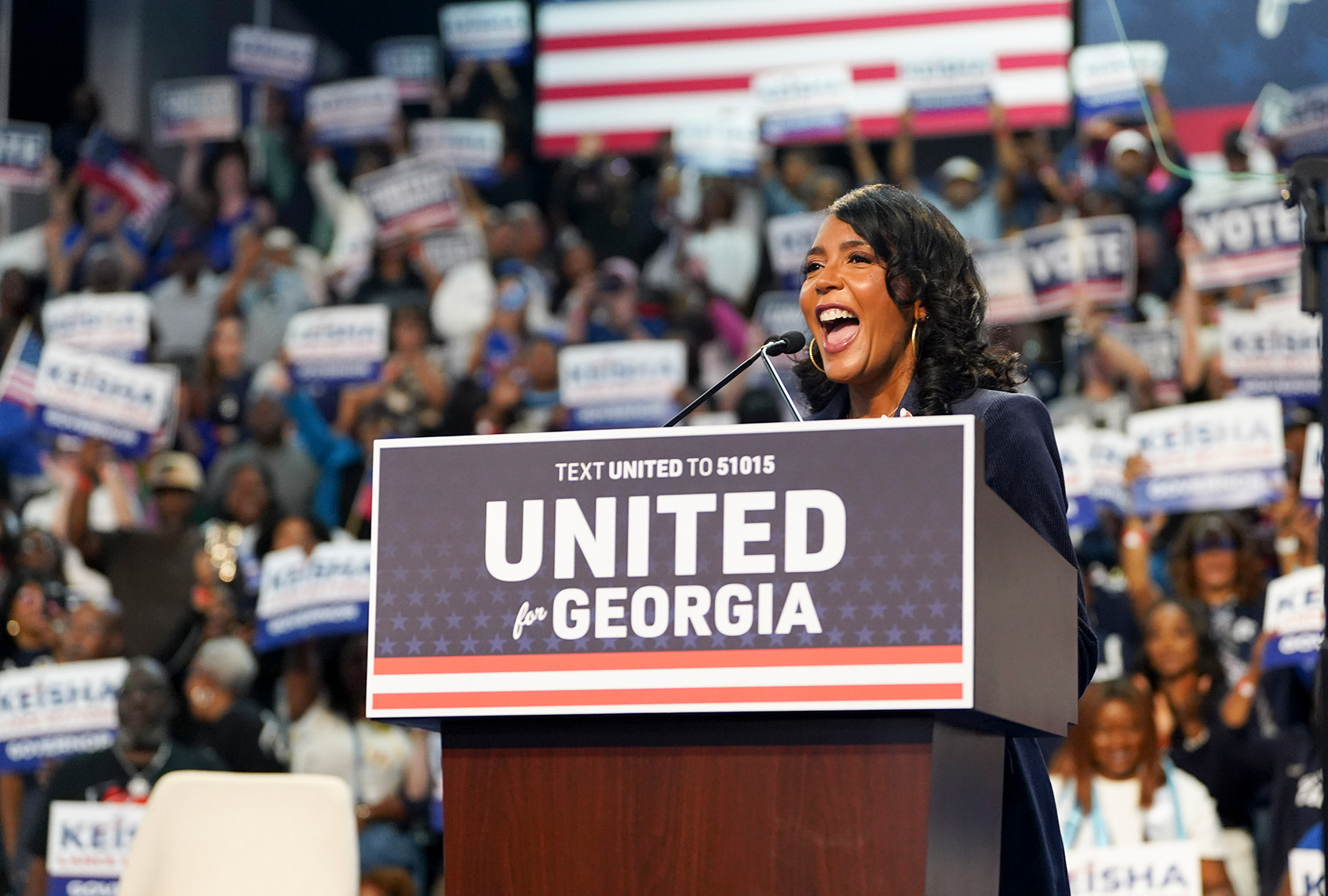
The country woke up to results that few expected — and a long list of historic firsts. Georgia elected Keisha Lance Bottoms, the first Black woman governor in American history. Michigan sent Dr. Abdul El-Sayed to Washington as the first Muslim senator. New Hampshire elected Chris Pappas as the first openly gay man in the Senate. New Mexico made Deb Haaland the first Native American woman governor, and Peggy Flanagan became Minnesota’s first Native American woman senator. Texas elected Gina Hinojosa over three-term Gov. Greg Abbott — the state’s first Latina governor and its first Democratic governor in more than three decades. Ohio got its first woman governor in Dr. Amy Acton. South Carolina tapped Dr. Annie Andrews as its first elected woman senator. Democrats won a Senate seat in Kansas for the first time in 94 years. While votes are still being counted in key races, solid majorities in both the Senate and House are assured, and Democrats are set to make Hakeem Jeffries the country’s first Black speaker.
Even the New York Post, Rupert Murdoch’s tabloid and a loyal Trump house organ, refused to mince words on its front page: “Trump suffers historic rebuke as Dems romp in midterms,” with “BLUE TSUNAMI” blaring beneath it. On “Fox and Friends” Wednesday morning, Ainsley Earhart warned viewers that “your wallet and your way of life” are now in the crosshairs.
The deeper truth the conservative media apparatus could never say out loud is that MAGA was always a Trump-specific phenomenon. It does not transfer to his imitators, and it only ever worked when the economy let voters treat Trump as entertainment.
It is no surprise that Trump 2.0, stripped of its previous establishment Republican guardrails like Mike Pence and Mitch McConnell, has culminated in such total structural collapse. The deeper truth the conservative media apparatus could never say out loud is that MAGA was always a Trump-specific phenomenon. It does not transfer to his imitators, and it only ever worked when the economy let voters treat Trump as entertainment. Right-wing media spent years confusing its ability to dominate a conversation with its ability to represent a country. When Tuesday’s returns exposed the difference, its leading voices reached for almost everything except accountability. They blamed immigration. They blamed insufficient restrictions on voting. They blamed each other. Alex Jones even decided Trump might secretly be a Democrat.
For the network’s election night coverage, Fox News seated former New York Mayor Bill de Blasio between two of Trump’s former press secretaries, Kayleigh McEnany and Karoline Leavitt, and he told them to their faces that they were “missing the plot.” He said, “The American people are looking at a war they do not believe in, and they did not authorize. They’re looking at prices that are making it impossible for middle-class people, let alone working-class people, to live.”
Trump, watching at the White House, raged on Truth Social — “Why does FoxNews have deBlasio” — and seethed at the panel’s lone liberal: “I can’t stand Jessica Tarlov’s voice — DUMB AS A ROCK, but it’s the voice that gets me.” After Gutfeld read the president’s text on air — which is as good a diagram as exists of what Fox News is now: a suggestion box the president monitors live — Tarlov answered on X, not on Truth Social: “Reality is a tricky thing,” and the president “should get better at dealing with it.”
On Newsmax, things were somehow worse. Political strategist Dick Morris argued that Trump’s problem was effectively excessive success: He had solved the major problems that would otherwise motivate Republican voters. The influencer ecosystem, meanwhile, went straight for the circular firing squad, and every faction picked a different target.
Jones, livestreaming as the returns buried his movement, said Trump himself is the plant: “I think he’s a Democrat. I’m 100% at war with Trump. He’s not that r*tarded. He did this on purpose. I think he’s the ultimate Democrat sleeper cell and he works for them.” Benny Johnson and Libs of TikTok reached for the great replacement theory, and Fox’s Lawrence Jones supplied the broadcast version, surveying Texas and concluding, “Texas, there is a lesson here. Don’t be so welcoming.”
So much for celebrating people voting with their feet and the U-Hauls leaving California.
Laura Loomer went straight doomer: “America is over and so is the American Dream.” Others blamed Sen. John Thune for failing to pass the SAVE Act and shrink the electorate further, as though the answer to such a broad repudiation were fewer voters. The Daily Wire’s Ben Shapiro posted the “everything is fine” fire GIF — “Just checking in to see how things are goi—” — and the Federalist’s Sean Davis answered with the hot-dog-suit meme, the one where the man in the costume insists everyone else is the problem.
The recriminations got personal fast. Rep. Nancy Mace told Fox’s Mark Levin to “STFU,” blamed his “beloved” war for the losses and called the night “devastating . . . for the hard-working American who can’t afford to buy a home, or fill their tank with gas or put food on the table.” Levin returned fire: Mace was a “washed up political loser” and “one of the most mentally unhinged POS to ever be in Congress.” She was angry, he said, “because you’ll actually have to now work for a living . . . Good riddance, crackpot.” Florida Gov. Ron DeSantis gloated that with governors’ races lost in Texas and Ohio and Georgia, the Sunshine State would stand alone among the ten most populous states with a Republican governor. And Katie Miller — podcaster, administration wife, professional MAGA explainer — told CBS’s Norah O’Donnell that she had not voted at all. “I did not vote in Virginia because in Virginia when you vote, you dox your own address, and so I prefer my own safety and security over giving that up.”
In the end, the movement’s loudest voices spent the cycle performing for each other. Some of them couldn’t even be bothered to vote.
Democrat Abdul El-Sayed is projected to defeat Republican Mike Rogers for Michigan‘s open U.S. Senate seat, a closely watched race that capped off a massive night for progressives.
The Associated Press called the race shortly after 2 a.m. Wednesday morning with El-Sayed leading by about seven points.
The candidates were competing to replace retiring Democratic Sen. Gary Peters, whose departure created one of the most consequential open-seat contests of the midterm elections. El-Sayed, a former Detroit health director, campaigned on expanding access to health care and lowering costs, while Rogers, a former congressman and House Intelligence Committee chairman, emphasized manufacturing jobs, tax cuts and his alignment with President Donald Trump.
The race took an unexpected turn just two days before Election Day when Democratic Rep. Haley Stevens, who narrowly lost the party’s August primary to El-Sayed, endorsed Rogers during an appearance at a Detroit church.
The endorsement stunned Michigan Democrats, prompting condemnation from party leaders and resignations among Stevens’ staff. Stevens cited disagreements with El-Sayed over Israel and his campaign’s direction, while Democrats accused her of undermining their nominee in a critical Senate contest.
El-Sayed sought to move past the controversy, urging supporters to focus on voting. His campaign reported raising $2.4 million on Sunday, while Michigan Democratic officials said the endorsement had prompted an increase in volunteers. Rogers, meanwhile, highlighted Stevens’ support in the campaign’s final days.
More than 2.3 million Michigan voters had already cast ballots by Monday, according to The Associated Press, raising questions about how much the late-breaking controversy could influence the outcome.
Two years into President Donald Trump’s unruly presidency plagued by endless lawlessness, corruption, self-dealing, executive branch overreach, a lethal immigration enforcement operation and an unauthorized war that has tanked the economy, House Democrats successfully took back control of the House, and, as a result, Congress.
The Associated Press made the call at 1:25 a.m. EST after Democrats officially secured 218 seats and the majority, hours after Democrats’ flip of the Senate became official.
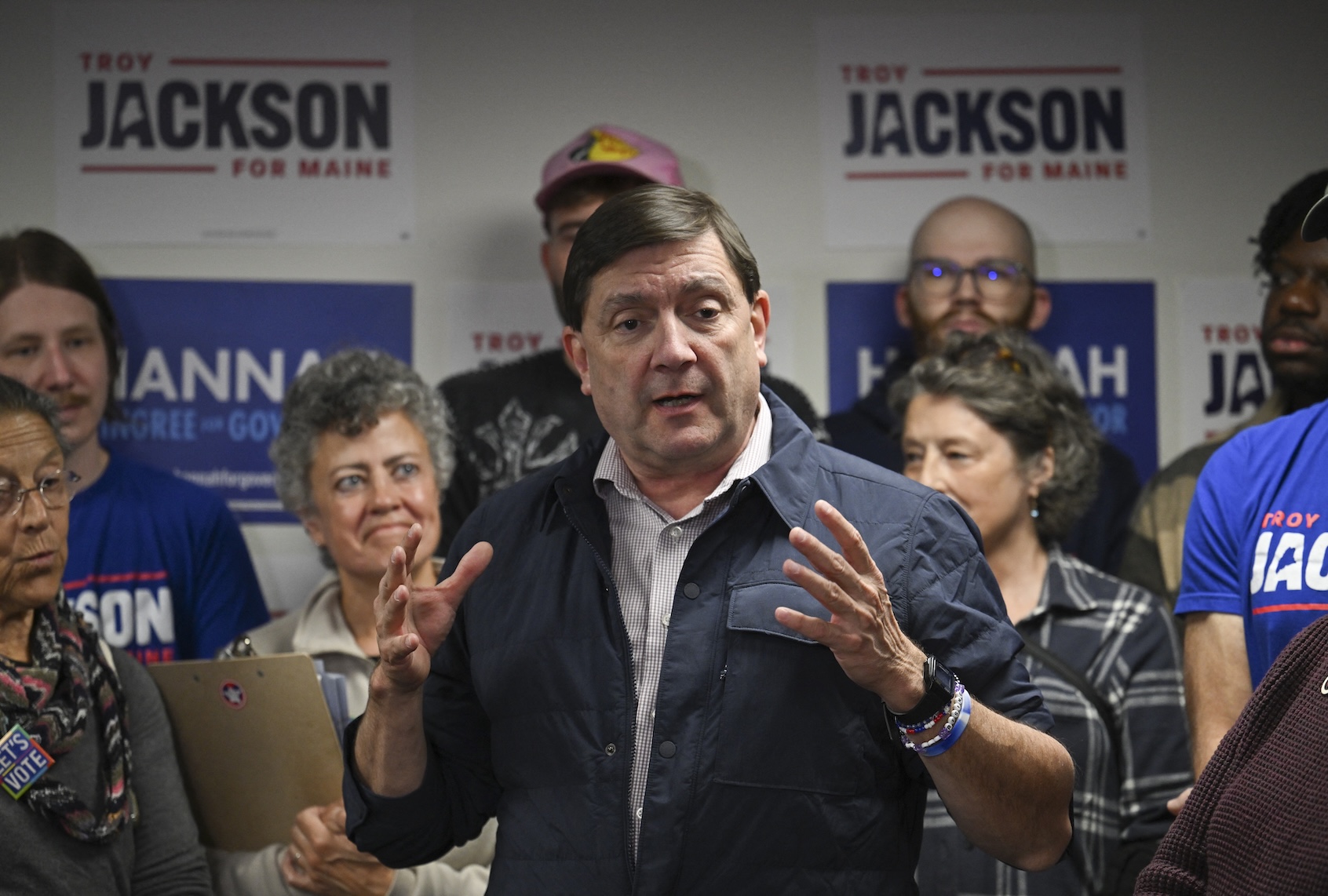
Sen. Susan Collins, the five-term Republican from Maine, called her opponent Troy Jackson, a former logger and state senate president, to concede Tuesday night. The Associated Press called the election just after midnight, with Jackson leading by about six percentage points.
Despite nearly 30 years in the Senate, Collins has been seen as one of the most vulnerable Republican incumbents, a smaller pebble in the blue avalanche that wiped out MAGA candidates in the midterm elections. She was the lone Senate Republican to represent a state that former Democratic Vice President Kamala Harris carried in the 2024 election. She lost despite her efforts to distance herself from President Donald Trump. Her campaign claims she has never voted for the president and reportedly refused his help with her run.
That hasn’t stopped her from often playing a key role in Trump’s agenda, casting a critical vote in Brett Kavanaugh’s confirmation to the Supreme Court. Kavanaugh would later join the majority opinion in Dobbs v. Jackson Women’s Health Organization, which overturned Roe v. Wade and ended the constitutional right to an abortion. Indeed, Collins’ position on reproductive rights seems to have played a key role in her defeat. Collins received support from Trump despite her efforts, according to reporting from ProPublica earlier this year, which revealed how an FBI anti-corruption squad was investigating Collins before Trump killed the case.
As for Jackson, he first ran for office in 2000 as a Republican for the Maine House of Representatives, but lost. He ran again as an independent two years later and won, becoming the first non-Democrat to represent the area since the late ‘70s.
Before delegates at a state convention chose Jackson in July, Collins was originally running against oyster farmer Graham Platner, who won the Democratic primary with support from progressive leaders. But controversies surrounding Platner continued to pile up, and he finally withdrew from the race on July 10 following sexual assault allegations.
Pretend I’m on the ballot, the president of the United States repeatedly told American voters over the last several weeks. Millions of voters did exactly that. Be careful what you wish for, my dude.
The astonishing results of the 2026 midterm elections do not just represent a rebuke or a political setback for Donald Trump. Those neutral-sounding terms of art are not remotely adequate. This was a historic smackdown, a massive, crushing defeat on a scale suffered by no incumbent president in living memory. It represents this nation’s collective awakening — admittedly rather late in the game — to this individual’s uniquely poisonous effects on our public life and civil society.
Many larger political questions will emerge from this epic defeat, which will see any and all surviving elected Republicans (not that there are many) scurrying for cover and trying to establish as much distance as possible from Trump. They will lose his number. They will profess that they were never convinced MAGA believers, or that they secretly disagreed with the ICE reign of terror, with the war in Iran, with the disastrous tariffs, with the ideological assault on liberal democracy.
Is JD Vance still a plausible 2028 presidential contender, having hitched his wagon to this tyrant, who has now been thoroughly pantsed in public and exposed as a pathetic loser? Will Pete Hegseth get even one more opportunity for podcaster-style flexing before the defanged Pentagon press corps? Let’s give Marco Rubio an infinitesimal amount of credit for creeping quietly through the corridors of power and staying out of the headlines. Whether his neocon mouse act is enough to survive the Trumpocalypse moment remains to be seen.
In his inimitable style, Trump is already blaming others for this defeat. He has accused Texas Gov. Greg Abbott — who lost his seat to Democrat Gina Hinojosa in one of Tuesday night’s numerous shockers — of being a RINO sellout. As impossible as it is to talk about honor with these people, that is an act of dishonorable treachery, given how eagerly Abbott has crawled and begged and prostrated himself before the Trumpian throne.
Then again, in an ass-backward way, Trump has a point. He didn’t do this all by himself; no one could have managed that. He loaded up the pipe with bigotry and xenophobia and fear and insane conspiracy theories, and adult Republican humans who used to believe in wrong-headed but somewhat sane political doctrines inhaled it all eagerly, persuading themselves that the resulting high would insulate them from the failure of their ideas. It only made the problem worse — all the problems, really — and they should have seen that coming.
The president corrupted and enslaved a historic American political party with a complicated but illustrious history, the party of Abraham Lincoln and Ulysses S. Grant and Dwight Eisenhower and Ronald Reagan. I’m not the biggest fan of that party either, but it has certainly had its moments, including the first woman to serve in both houses of Congress and the first Black man elected to the U.S. Senate. Trump insisted that it surrender everything to him — its principles, its history and its soul, if political parties have such a thing — and as in every fable about making a deal with the devil, now it has been destroyed.
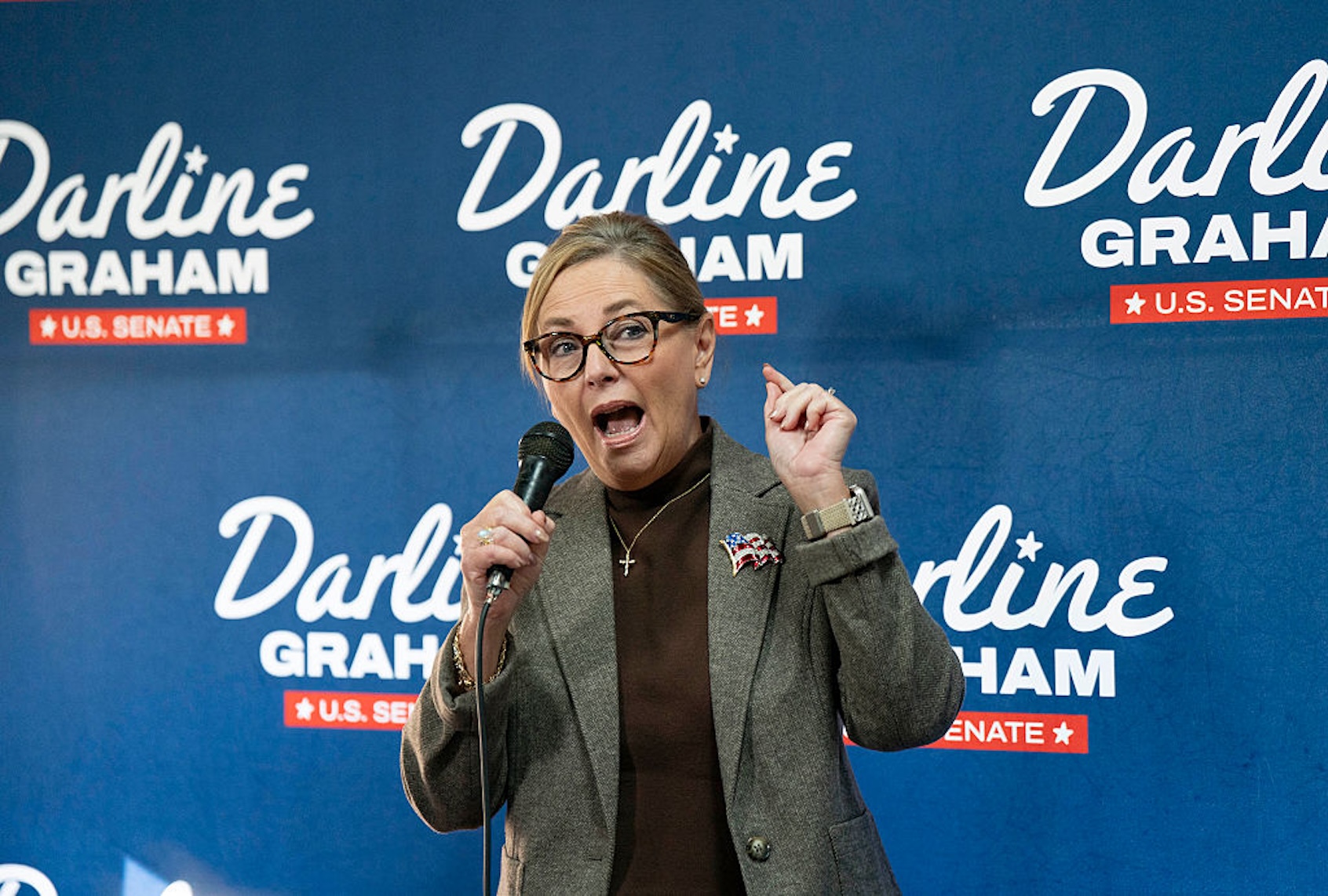
We don’t know how this election would have turned out in the unimaginable alternate universe where Trump stayed out of it. But he didn’t. He forced Sen. John Cornyn out of the race in Texas, in favor of Ken Paxton. Look what happened. He picked Darline Graham to replace her late brother, Sen. Lindsey Graham, in South Carolina. Look what happened. He picked Mike Collins to run against Sen. Jon Ossoff in Georgia, and Michael Whatley to run against former Gov. Roy Cooper in North Carolina. Look what happened. He praised Ohio Sen. Jon Husted’s rear end and embraced gubernatorial candidate Vivek Ramaswamy’s noxious campaign ad. Look what happened there, too.
And that’s without considering the supposedly ingenious MAGA strategy of redistricting congressional seats in one state after another, with the objective of locking in a permanent Republican majority. How will that play out over the longer term? That’s impossible to say, but in 2026 it seems to have unleashed an extraordinary backlash. Forget all the hand-wringing about purple districts and swing districts; the congressional map is a nationwide wipeout. As I write this, the New York Times is predicting a Democratic majority in the House of Representatives of 256 seats. That may or may not hold up, but however this ends, it’s likely to be the biggest midterm swing in more than 30 years.
Are there still die-hard MAGA Republicans in deep-red exurbs or rural districts who will continue to profess fealty to Trump in the wake of this catastrophe, and perhaps even maintain that it’s all some kind of grand misunderstanding? Yeah, sure. Any cult movement has its true believers and willing sacrifices. Years after his resignation, the postmistress in the rural town where I spent summers as a kid never took down the portrait of Richard Nixon. Then she retired and moved away, someone else took the job and Nixon’s picture wound up out back, in the dumpster.
That’s about where we are. Trump has always been poisonous. Republicans are finally learning that the hard way.
The signs were there from the outset. About 30 minutes after the polls in Kentucky’s 6th Congressional District closed at 6 p.m., the first numbers from rural counties began trickling in. It was no surprise that they favored Republican Ralph Alvarado over Democrat Zach Dembo. The district was reliably Democratic until 2012, when Andy Barr, a Republican who is now running to replace Mitch McConnell in the Senate, eked out a win. Since then, the GOP has gerrymandered the district to all but ensure it stayed in the fold.
The real story, though, could be found in the margins. Alvarado was underperforming Barr’s 2024 results by around 20 percentage points — a staggering drop, indicating that a significant number of Republicans had either stayed home or decided to take a chance on Dembo. Off the Democratic map for the last 14 years, by 9:15 p.m., when it was reported that Alvarado had conceded, the district had become a microcosm of what was unfolding nationwide.
The blue landslide, long predicted by pundits but mentioned with fingers crossed by Democrats, was becoming an avalanche.
Further south in Georgia, an earlier-than-expected call for Jon Ossoff buoyed Democratic hopes, followed by a pickup in the North Carolina Senate race, which saw Gov. Roy Cooper projected to defeat former Republican National Committee Chairman Michael Whatley. Democrats even put up a fight in ruby-red Florida’s statewide races, with David Jolly, the nominee for governor, and Angie Nixon, the democratic socialist Senate candidate, running ahead of their opponents until the conservative Panhandle’s votes were counted.
Then came South Carolina, where Darline Graham, who was foisted upon the state’s Republican Party by Donald Trump to succeed her brother, Sen. Lindsey Graham, after his death, went down to an historic defeat. The Palmetto State hasn’t seen a Democrat elected to the Senate since 1998.
Amy Acton, Ohio’s Democratic nominee for governor, routed her opponent Vivek Ramaswamy after he released a widely condemned ad that weaponized a horrific part of her childhood. In Texas, James Talarico is projected for a stunning win over scandal-plagued Ken Paxton, and Gina Hinojosa ousted the incumbent Greg Abbott from the governor’s mansion.
Other elections around the country — Senate races in Michigan, Kansas and Iowa; pivotal House contests and gubernatorial races — appear to be trending for Democrats.
For a decade, the party has wondered when, or if, a reckoning would arrive for Trump and MAGA. That moment has arrived.
Again and again, Republicans have followed the president over the cliff, no more so than during the past 22 months. In 2024, Trump expanded on the coalition that had carried him to success in 2016 by making inroads with Black men, Latinos and young voters. It was a success that, at least in part, led Republicans to launch a national gerrymandering scheme largely thwarted by Democrats, as well as an unfavorable economic climate of the president’s own making.
But Trump also made the grievous error of attacking the very communities that helped return him to the White House. The combination of his assaults on voting rights and Black history, as well as the Supreme Court’s gutting of the Voting Rights Act, ensured that Black voters turned out overwhelmingly for Democrats. After more than a year of ICE raids, mass deportations and threats against naturalized citizens, Latinos have swung to the Democrats en masse, playing a decisive role in Talarico’s win. Trump’s attacks on civil rights, immigrants’ rights and the social safety net have cut across demographic groups, and have had a strong negative impact on young voters. Drunk on his own power, the president has spent the better part of two years splintering his own coalition — and giving Democrats an opening they were happy to exploit.
The monumental defeat suffered by Republicans offers a sobering lesson for Democrats — to not forget what brought them to this night of victory.
The message voters are sending is loud and clear: They want fighters, leaders who are willing to throw out conventional wisdom and do battle for working-class interests. That’s what Ossoff sensed last fall, when he was considered to be the nation’s most endangered Democrat. Instead of playing it safe, he staked his candidacy on affordability issues, particularly subsidies for the Affordable Care Act. In the midst of the longest government shutdown on record, Ossoff held firm: He would not vote to reopen the federal government unless the tax credits were restored.
Other Democratic candidates got the message. Dr. Abdul El-Sayed in Michigan proved steadfast in linking the billions in federal funding that continue to subsidize Israel’s ongoing assault on Gaza to skyrocketing consumer prices on the homefront. Another physician, Dr. Annie Andrews, who defeated Graham, unabashedly campaigned on creating a healthcare public option and gun control measures in South Carolina — and won.
Right now, Democrats are feeling the wind at their backs. But after the excitement fades from tonight’s successes, they will realize they are now facing an even bigger challenge: To stay true to the mandate they have been given by voters, grudgingly in some cases, and to not, as they have done so often in the past, slip on the proverbial banana peel that is always waiting for them around the corner.
Throughout his campaign for the Senate, Paxton was fond of saying, “If we lose Texas, we lose America.” Tonight, Democrats put Texas solidly in their column — and America is still standing.
Supporters of James Talarico react to early election results during a midterm election night watch party at Long Center for the Performing Arts in Austin, Texas, on November 3, 2026. | Ronaldo Schemidt/AFP via Getty Images
Voters just ushered the United States into the post-Trump era.
The ballots are still being counted, and key races are still being called, but here’s the short version of the midterm election: It’s a blue tsunami.
Democrats looked set to take full control of Congress; they flipped crucial seats and won state-level offices where they’d barely been expected to compete. If anything, their performance was significantly stronger than expected — even after weeks of polls showing the party surging, and President Donald Trump’s approval cratering, and mounting outrage over gas prices, the war in Iran, healthcare, and corruption. It’s quite possible this is the biggest midterm wave since Watergate, and it appears likely to send large Democratic majorities to Congress.
What happens now? The historic shift that voters signaled Tuesday goes beyond just the raw numbers. Simply put, Americans are waking up in a different country today — one in which voters have decisively repudiated Trump’s party and opened up a new era of American politics.
Democrats won back groups they lost in 2024, like Latino voters, and made previously unheard-of incursions into MAGA territory, including rural and working-class white communities. Democrats even won the governorship of Texas — Texas!
One potential takeaway is that a new version of a Democratic coalition could be emerging. A more realistic way to see this, though, might be as the latest and loudest affirmation that the politics of the post-Trump era remain highly unsettled, with no voting group or state to be taken for granted by either party.
The incoming class of leaders is a diverse portrait of America in the 21st century, and a picture of the kind of nation that Trump has explicitly been trying to roll back. Georgia elected the nation’s first Black woman governor; New Hampshire will send the first openly gay man to the Senate; and (as of this writing) the would-be first Muslim senator was leading in Michigan. In Kansas, a megachurch pastor won evangelical voters to the Democratic ticket, sending the state’s first non-Republican to the Senate in nearly a century. In an election where the closing Republican arguments often relied on tribal fears around religion, country of origin, masculinity, and gender identity, the results were a loud rebuke to those impulses.
Taken together, the night was also, as election analyst Sean Trende put it, “a complete collapse of the Republican coalition.” Democrats will now have a chance to carry out the mandate they’ve been handed — on affordability, corruption, and foreign policy — and convince voters they can still be trusted with greater power in 2028 and beyond. How Trump responds, and the Republicans who must now balance their loyalty to a vengeful 80-year-old lame duck against a partywide emergency heading into the presidential cycle, will be one of the defining stories of the rest of his term.
Here’s the story of the historic shift so far, and what it will mean for the country going forward.
The House: Democrats are poised to take control in a major way
Many of the Democrats’ newly won House seats could be hard for the party to defend in future elections, but for now the results could have major implications for how the chamber governs.
Both Democrats and Republicans have struggled with narrow majorities in recent years, in which a small handful of members can threaten to withhold their votes and tank legislation or procedural votes. The new Democratic majority is big enough to avoid that problem in the next session. But it also might diminish the influence of the energetic new progressive wing, since their votes would not necessarily be crucial to pass certain measures.
From the very first votes counted in Indiana and Kentucky, in districts that Trump had won by double digits in 2024, it was clear that Republicans’ small House of Representatives majority would likely soon be washed out by a blue wave. But as the night went on, the size of the wave became more and more clear. Democrats were flipping Republican seats across the country, without any particular geographic or regional pattern to speak of.
They flipped Republican-held seats in Kentucky, Pennsylvania, New Jersey, and North Carolina. They looked favored to win more in Arizona, Michigan, Iowa, and Virginia.
Democratic House challengers with mainstream political experience, like Scranton Mayor Paige Cognetti (PA-8), won. So did Democrats with military experience, like Navy helicopter pilot Rebecca Bennett (NJ-7). And so did Democrats with more against-the-grain backgrounds, like farmer Jamie Ager (NC-11).
The exact size of the Democratic majority wasn’t immediately clear as races remain uncalled, but forecasts on Tuesday night suggested it would likely be enormous — something like a 60-vote edge over the GOP in the chamber.
More votes means more leeway for leadership, which could perhaps give the party’s growing progressive faction, or a soon-to-be considerable moderate wing, less leverage to make demands and more freedom to vote “no” when their conscience or local politics calls for it.
The Senate: Some very weak Republican candidates helped Democrats beat all expectations
Control of the Senate will be hugely important in shaping the final two years of Trump’s presidency — because a Democratic majority would make it much harder for him to confirm controversial nominees to administration positions. It would also likely make it impossible for him to confirm a new Supreme Court justice, should a vacancy arise.
Furthermore, if Democrats hope to achieve their ambitions next time they control the presidency (which they hope will be in 2029), they’d have to start building a Senate majority now — only a third of the chamber is up in each cycle.
The problem for Democrats was that political analysts had long believed the Senate map they faced this year would be forbiddingly difficult. They’d have to hold their own seats, including contests in swing states like Georgia and Michigan.
To win a majority, though, Democrats then had to pick off at least four Republican seats, and some of those would have to be in deep red territory, which meant breaking into states Trump won big, such as Ohio and Texas.
In doing this, they didn’t just benefit from a blue wave. They also got help of a kind from a surprising source: Trump, whose choices and actions often seemed designed to put safe GOP-held seats at risk.
Trump’s attacks on Sen. Thom Tillis (R-NC) spurred the veteran legislator to retire. Trump backed a primary challenge to Sen. John Cornyn (R-TX) that resulted in a flawed and scandal-plagued candidate, state Attorney General Ken Paxton, becoming the GOP nominee. And when Sen. Lindsey Graham (R-SC) died suddenly in July, Trump decided to appoint his sister Darline, a political neophyte, to his seat.
On Tuesday, Republicans lost all three of those races. In North Carolina, the state’s popular Democratic governor, Roy Cooper, easily triumphed over former RNC chair Michael Whatley. In Texas, 37-year-old state Rep. James Talarico became a nationally viral phenomenon with his faith-inflected message and defeated Paxton soundly. And in South Carolina, a pediatrician named Annie Andrews defeated Darline Graham in one of the night’s most shocking results.
But the GOP’s Senate woes were broader. In Ohio, a state Trump won three times, former Sen. Sherrod Brown (D) defeated Sen. Jon Husted (R), who Trump had appointed to fill JD Vance’s Senate seat once Vance became vice president. In Iowa, Republicans had viewed their candidate for the open Senate seat, Rep. Ashley Hinson, as one of the stars of the cycle, believing she did everything right. It wasn’t enough. She, too, went down to defeat, to state Rep. Josh Turek (D). In Maine, Sen. Susan Collins (R), who had long defied political gravity, finally lost to former state Sen. Troy Jackson (D).
And yet another shocker ensued in Kansas, a state that has not elected a Democrat to the Senate since 1932. Methodist megachurch pastor Adam Hamilton (D) led Sen. Roger Marshall (R-KS), a one-term incumbent whose campaign was dogged by reports that, back when he was a doctor, he’d sued patients for unpaid bills.
All in all, depending on how uncalled races in Mississippi and Alaska turn out, Democrats could end up with somewhere around 55 Senate seats — an impressive majority, particularly in a year when they weren’t expected to come anywhere close to that.
Governors: Democrats get their chance to lead
Even with significant majorities, Democrats will be limited in how much they can check Trump and enact their agenda in Congress.
But at the state level, Democrats won major gubernatorial victories around the country, giving them an immediate opportunity to pursue policies that could directly affect hundreds of millions of Americans — including in states that they haven’t led in decades.
In Georgia, Keisha Lance Bottoms is set to become the first Black governor, and the first Black woman to govern any state in America, after defeating Republican businessman Rick Jackson. In Texas, Gina Hinojosa rode a backlash over data centers to beat Greg Abbott, long considered one of the most politically successful and influential conservative governors in the country.
In Iowa, Democratic state auditor Rob Sand, who campaigned as a pragmatist, won the governorship. And in Ohio, Democratic public health expert Amy Acton overcame a last-ditch ad from Republican Vivek Ramaswamy that featured her own mother — who lost custody of a then-12-year-old Acton after her husband was indicted for sexual abuse — to handily win her election.
A bright spot for Republicans is Florida, where Rep. Byron Donalds overcame a surprisingly tough race against Democrat David Jolly and is set to become the state’s first Black governor.
Latino voters gave Democrats a second chance
Underlying some of the night’s most surprising results were powerful demographic currents — for the GOP, not unlike a wave quickly pulling back from the beach. Trump had shocked Democrats over the last 10 years by making steady gains with Latino voters, first with conservative-leaning Cuban Americans in Florida, and then in 2024 with Mexican American and Puerto Rican voters around the country moving right over concerns about inflation and border security.
But Trump’s economic mismanagement and aggressive deployment of ICE helped spur a backlash from early on in his second term that culminated in a massive swing back toward Democrats in key races. From South and Central Florida to rural Kansas to the Rio Grande Valley, Latino voters again favored Democrats, helping power candidates to big wins.
Nowhere was the impact greater than in Texas, where exit polls found Talarico won 64 percent of Latino voters in his race against Paxton, giving Democrats a statewide victory after decades of failure. Trump had won 55 percent of the Latino vote just two years earlier.
The gerrymanders didn’t work. In fact, they sparked a backlash.
Republicans, egged on by Trump, had a last-ditch plan to save the House: Break from the usual once-a-decade redistricting process and gerrymander seats wherever state Republicans had the ability to do so. They got an added boost from the Supreme Court, which overturned decades of Voting Rights Act protections for minority-majority districts in its Louisiana v. Callais decision.
It didn’t work. While the new maps gave Republicans an advantage on paper, the scale of the blue wave was so big that it quickly overpowered it. In Florida, Democrats herded into Trumpier districts appeared to all survive their contests. And in North Carolina, the situation was even worse for Republicans, with the former state house speaker who masterminded the new maps, Tim Moore, trailing in his own congressional run with nearly all votes counted in what was expected to be a solidly Republican seat.
It may have backfired in ways that went beyond the House results. There was a massive surge in Black turnout across the South, where voting rights have long been a touchstone issue, that spilled into statewide races. Democratic Senate and gubernatorial candidates not only won by wide margins in Georgia and North Carolina, but put up shockingly competitive fights in Mississippi and Louisiana Senate races that only came on the national radar late in the cycle.
The most important takeaway: Voters are really, really, really mad
Americans chose to overlook some pretty glaring concerns with Trump when they sent him back to office in 2024, but they did so with a clear mandate: Get prices down, secure the border, and bring a positive resolution to conflicts abroad.
It’s clear now he blew it, and they aren’t happy.
The scale of voter outrage was the story of the night, just two years after Democrats faced its wrath and arguably far more intense this time. Sixty-two percent of voters in preliminary exit polls disapproved of his job as president, 53 percent of them strongly; 62 percent said he prioritized his own interests more than the country’s; 65 percent believed he had made the economy worse; and 44 percent said their own financial situation had worsened since his election.
It’s a complete loss of confidence, and a sharp contrast to his — in comparison now, modest — rebuke in the 2018 and even 2020 election, when voters still credited his economic stewardship even as they rebelled against his personal behavior and broader agenda.
Both parties now know just how poisonous the current Trump brand is. The question is whether Democrats can offer a compelling alternative vision now and — above all, after years of anti-incumbent sentiment — prove they can deliver tangible results. Even on a historic night, a majority of voters told pollsters they held an unfavorable view of the Democratic Party.
Bei den Midterms in den USA erobern die Demokraten das Repräsentantenhaus und auch ein Sieg im Senat ist wahrscheinlich. Donald Trump poltert bereits. Helge Fuhst, Vorsitzender der Chefredaktionen von POLITICO, Welt und Business Insider, berichtet direkt aus Washington über den Wahlschock für die Republikaner, die Auswirkungen in der Innen- und Außenpolitik und wie es jetzt mit Blick auf die Präsidentschaftswahl in zwei Jahren weitergeht.
Wenn Hacker nicht mehr auf Kraftwerke zielen, sondern Supermarkt-Kühlsysteme auf 50 Grad erhitzen, wird Cybersicherheit zum direkten Alltagsproblem. Tonnenweise verdorbene Lebensmittel in ganz Europa werfen eine drängende Frage auf: Stecken russische Akteure hinter dieser neuen Form der Sabotage? POLITICO-Expertin Anouk Schlung von „Technologie & KI am Morgen“ ordnet ein, warum bei diesen Angriffen klassische Lösegeldforderungen fehlen und wie sich die kritische Infrastruktur nun wappnen muss.
Während die Welt auf die US-Midterms blickt, wächst in Europa der Druck, sicherheitspolitisch auf eigenen Beinen zu stehen. Die Grünen-Co-Parteichefin Franziska Brantner wirbt auf ihrer Reise nach Litauen und dann nach Polen für eine europäische Verteidigungsunion und eine Koalition der Willigen bei der Rüstungsbeschaffung. Warum ausgerechnet wichtige Partner wie Polen bei gemeinsamen Waffenkäufen blockieren und wie Europa seine Abhängigkeit von den USA verringern kann, darum geht’s im 200-Sekunden-Interview mit ihr.
Das Berlin Playbook als Podcast gibt es jeden Morgen ab 5 Uhr. Rixa Fürsen, Maximilian Stascheit und das POLITICO-Team liefern Politik zum Hören – kompakt, international, hintergründig.
Für alle Hauptstadt-Profis: Der Berlin Playbook-Newsletter bietet jeden Morgen die wichtigsten Themen und Einordnungen. Jetzt kostenlos abonnieren.
POLITICO Deutschland – ein Angebot der Axel Springer Deutschland GmbH Axel-Springer-Straße 65, 10888 Berlin Tel: +49 (30) 2591 0 information@axelspringer.de Sitz: Amtsgericht Berlin-Charlottenburg, HRB 196159 B USt-IdNr: DE 214 852 390 Geschäftsführer: Christoph Eck-Schmidt, Carolin Hulshoff Pol, Mathias Sanchez Luna
The results will probably set in motion investigations into the war in Iran, the running of the FBI and, of course, Donald Trump’s family business dealings. Think Bill Clinton’s Whitewater scandal and Trump’s first impeachment rolled into one, with Iran-Contra thrown in for extra froth.
How will these seismic political shifts impact Europe? From energy prices to the war in Ukraine, the continent has a lot riding on what happens in Washington. Here are five things to watch out for.
Europe risks bearing the brunt of Trump’s frustration
Some seasoned observers think this is not only possible but highly likely. “We need to brace ourselves for not more harmonious transatlantic relations but more acrimony and even more Trump demands on Europe,” warned Wolfgang Ischinger, the veteran German diplomat and longtime chair of the Munich Security Conference.
Democrats will have more opportunities to challenge Trump through appropriations procedures and by being more aggressive in oversight hearings and probes. They will also likely start attaching stricter conditions to legislation the White House wants.
But a U.S. president has considerable constitutional discretion over foreign policy, diplomacy and national security — as well as trade policy — and Trump has unabashedly grabbed more by using edicts and developing novel, contentious legal maneuvers to bypass Congress.
“[Trump] leads military force. He has control over tariffs and trade deals. He has the bully pulpit. Even if Democrats take both houses, he can veto bills,” Phil Gordon, former national security adviser to ex-Vice President Kamala Harris, told Brussels Playbook.
Expect more confrontation. Trump will likely want to show he’s still the boss and a master of the universe — and he has more chance to do that on the international stage. Europe has long been in his crosshairs and those of MAGA stalwarts, who shed crocodile tears for the continent, saying they want to save Europe from itself.
They now only have two years to do so. Pedal to the metal!
Breathing space for Ukraine
Most leading Democrats have consistently backed sending aid to Ukraine, framing it as a defense of global democracy and international law — as well as being in America’s national security interests.
The Democrats can begin to create the circumstances to assist Ukraine. But don’t “expect instant salvation for Zelenskyy,” said Bronwen Maddox, director of the U.K.’s Chatham House think tank. “Because even if the Democrats decide to start sending Kyiv more things, including money, that really will take months to unfold and even possibly years,” she said
Ukraine needs immediate assistance, especially Patriot missiles for its air defenses, to get through this winter under Russia’s continuing bombardment.
A Trumpian peace deal
Trump has framed himself as the president of peace and loudly claims to have ended eight international conflicts. He’s said Ukraine should have been the easiest peace deal to conclude and has increasingly blamed the country’s president, Volodymyr Zelenskyy, for failing to reach an agreement.
Former U.S. diplomat Kurt Volker reckons Trump will ignore protests from Kyiv and European allies and “start lifting sanctions and doing business deals with Russia.”
He said: “I can very well see him doing that unilaterally and directing the U.S. Treasury to refrain from implementing sanctions and trying to get more deals on energy with Russia. He’s been talking with Putin about getting the U.S. majors back into Russia.”
But when it comes to NATO and following through on threats to reduce U.S. deployments on the continent, Volker expects Trump will be more bark than bite. “With NATO, I think not much is gonna change much when it comes to pulling out of NATO or force posture reduction. Trump is really alone on this in the U.S. — he doesn’t have support from Democrats, Republicans, Congress, or the media.”
A fall in energy prices
Will energy prices plummet? Don’t bet on it. On Monday, oil prices fell at their fastest pace since August — though Brent crude, a key international benchmark, still traded at $108 a barrel.
Unless Trump strikes a peace deal with Tehran to reopen the Strait of Hormuz, the prolonged energy shock that’s spiking power costs in Europe and adding to the cost-of-living crisis will continue — skewing European politics. On air travel and the airline industry, Ryanair CEO Michael O’Leary warned that without a deal, the industry will be “facing a real crisis by next March or April.”
Trump doesn’t have good choices on Iran: relaunch military operations in the hope the Iranians will back down or the theocratic regime collapses; back down himself; or walk away and say others — i.e. the Europeans or Asians — need to solve the problem.
Resuming military operations and spiking energy prices even more will be highly unpopular in the U.S., but the electoral damage has already been done.
Just chaos — with not much time for anywhere else
There’s also a chance that the U.S. will become so distracted and consumed by the political warfare in Washington that neither Trump nor the Democrats have much time for anything — including foreign policy.
Rahm Emanuel, the former mayor of Chicago, has urged fellow Democrats to avoid a “food fight” and to focus legislative priorities on affordability, raising the federal minimum wage and developing new ethics rules for all three branches of government.
Despite the pleas, Washington has seldom avoided vicious food fights.
And the political bloodletting is likely to wash up everywhere, with some of the biggest fights inside each party, forecasts POLITICO’s John F. Harris. “Both major parties face acute choices about how to present themselves to voters in the coming post-Trump era of politics,” Harris argued.
Democrat Keisha Lance Bottoms defeated Republican billionaire Rick Jackson in Georgia‘s gubernatorial election Tuesday, becoming the first Black woman elected governor in American history and ending more than two decades of Republican control of the state’s highest office.
The contest pitted two sharply different candidates to succeed term-limited Republican Gov. Brian Kemp, whose departure opened the governor’s office for the first time in eight years.
Bottoms, a former Atlanta mayor and adviser to President Joe Biden, campaigned on expanding access to health care, improving public education and addressing the rising cost of living. Jackson, a billionaire health care executive and political newcomer, emphasized cutting taxes, reducing government spending and bringing his private-sector experience to state government.
Jackson invested more than $200 million of his own money into the campaign, making his bid one of the most expensive self-funded gubernatorial campaigns in American history.
The election also ended Republicans’ decades-long control of Georgia’s governorship. The last Democrat elected governor was Roy Barnes in 1998. Barnes lost his reelection bid to Republican Sonny Perdue in 2002, and Republicans have held the office since Perdue took office in January 2003.
Georgia’s changing political landscape added another dimension to the contest. Once a reliably Republican state in presidential elections, Georgia narrowly backed Democrat Joe Biden in 2020 before returning to President Donald Trump in 2024. Democrats also captured both U.S. Senate seats in 2021, with Raphael Warnock subsequently winning a full term in 2022.
On Tuesday, Georgia voters also reelected Democratic Sen. Jon Ossoff, demonstrating the state’s continued willingness to support Democrats in statewide contests.
Bottoms is the first Black governor elected in Georgia, the first woman to hold the state’s highest office and the first Black woman elected governor anywhere in the United States. She is also the first Democrat to win Georgia’s governorship in 28 years, breaking a Republican winning streak dating back to 2002.

 Login