Login

“Chaos” in the air: Five ways voting could be disrupted on Election Day
As Americans head to the polls on Tuesday, voting experts are watching to see how the Trump administration’s unprecedented efforts to assert more federal control over elections will play out.
Since President Donald Trump retook the White House, his administration has tried to force states to turn over their unredacted voter rolls and to restrict mail-in voting. The Department of Homeland Security has used its resources to identify and prosecute noncitizen voters, an effort that has unfolded alongside the agency’s massive crackdown on immigrants.
The president has justified these steps by claiming, without evidence, that American elections are beset by fraud and that illegal voting is tipping the scales in favor of Democrats.
Courts have thwarted most of the administration’s plans to date, but Trump and his top deputies have kept up the pressure. Most recently, they’ve threatened to prosecute election officials who don’t reject ballots from people that the federal government has identified as likely noncitizens.
The administration hasn’t explicitly ruled out sending federal agents to the polls or seizing ballots or voting machines.
Election experts say the cumulative effect has been to ramp up anxiety about the midterms and to erode voters’ trust in the system.
“The administration has been creating a lot of noise, a lot of confusion, a lot of doubt,” said Ben Hovland, whom Trump fired as a commissioner for the bipartisan Election Assistance Commission earlier this year. He said he worries that this will make voters “sit it out” and “throw their hands up.”
In an emailed response to questions, a DHS spokesperson said Immigration and Customs Enforcement “is not planning operations targeting polling locations,” adding that the agency would only arrest people at the polls to address a safety threat as part of “intelligence-driven targeted enforcement.”
The DHS and the Justice Department “are laser focused on identifying, prosecuting and removing aliens who vote and dilute the votes of U.S. citizens,” the spokesperson added. “Our message to aliens who vote in American elections is clear: we will find you, arrest you, and you will face the consequences — including criminal charges and deportation.”
Before and on Election Day, it’s typical for the major political parties to mount poll-watching operations, but both Democrats and Republicans say they’ve expanded these activities in this pressurized midterm.
Republicans will focus on issues such as voter eligibility and voter-roll accuracy, according to Ally Triolo, the Republican National Committee’s election integrity communications director. Democrats will concentrate on voter intimidation and other hurdles to voting, Angelo Fernández Hernández, a Democratic National Committee spokesperson, said.
Here are five issues that voting rights experts say they’re watching as this year’s election unfolds:
1. Will There Be Federal Interference?
An incident in Leon County, in the Florida Panhandle, illustrates the widespread anxiety about law enforcement at the polls.
Mark Earley, the county’s supervisor of elections, told ProPublica he was “furious” when two marked U.S. Customs and Border Protection vehicles parked outside the county’s busiest early voting location last month, after he’d been repeatedly reassured by the administration that agents would not do this.
He reported the sighting to the FBI, then learned that the agents, who were headed out of state, had just stopped by to try to vote themselves. The episode generated a flurry of news coverage.
“Given the negative media coverage regarding federal agents at the polls, it shows pretty bad judgment that they showed up in their official vehicles,” Earley said.
It’s against the law for federal law enforcement to be near polling places.
Start your day with essential news from Salon.
Sign up for our free morning newsletter, Crash Course.
Nick Brown, Washington’s attorney general, leads a group of Democratic state officials and voting rights advocates who have been planning how to respond if, indeed, there is real federal interference. The group has “war-gamed” how to react if government agents attempt to commandeer voting equipment or ballots.
“We’ve seen the tension and chaos that’s in the air,” Brown said. He called the federal government “the biggest challenge to smooth elections right now, which is not the way it’s supposed to be.”
A DOJ spokesperson said “the best preparation for any election official is following federal law.”
It’s routine for DOJ monitors to watch over polling places, and the agency has assured states that, in the midterms, its observers will follow the law and not interfere with voting or election administration. Still, state officials remain concerned. During Wyoming’s primary election, poll workers said they felt uneasy when DOJ monitors asked about their training and to inspect voting systems. The state’s governor criticized these actions as “a bit aggressive” and “irregular.”
2. What Effect Will Noncitizen Voter Challenges Have?
The Trump administration’s multipronged effort targeting alleged noncitizen voters has already led to eligible voters being improperly removed from the rolls. Voting rights groups fear this will block some U.S. citizens from being able to vote when they show up on Tuesday.
Federal officials have made clear they plan to go after anyone they think is committing voter fraud.
On the first day of early voting in Texas, Aaron Reitz, the U.S. attorney for the Southern District of Texas, posted a YouTube video announcing his intentions. “If you violate federal election law,” he warned, “I will hunt you down and prosecute you.”
This threat came days after the DOJ sued California, seeking to block the state from counting mail ballots from more than 20,000 voters it claims are “likely” noncitizens. The administration had obtained the state’s public voter rolls, which the DHS had blended with its own immigration information and third-party data.
In a court filing, California called the claim that there are 20,000 noncitizens on its voter rolls “specious.” Los Angeles County analyzed a sampling of the likely noncitizen voters that the federal government claimed were registered there. Many weren’t registered in the county or had never voted, the analysis showed. Some said on their voter registration forms that they were born in the United States.
Asked about the case, the DOJ told ProPublica, “Federal law prohibits noncitizens from voting in federal elections, and the Department has a duty to enforce it.”
A federal judge has rejected the DOJ’s motion for an emergency order that would have barred California from counting the 20,000 voters’ ballots. (A federal appeals panel later backed that decision.) On Thursday, the administration sent grand jury subpoenas to California officials demanding records about their response to allegations of noncitizens on the state’s rolls. Late Friday, a federal judge issued a restraining order blocking the DOJ’s demands, calling them an “intimidation plan” that would interfere with legal voting.
Last week, the DOJ wrote a letter threatening to sue Washington state if officials there refused to review a list of 400 voters it believes to be noncitizens within 24 hours. U.S. Attorney General Todd Blanche told reporters late last month that the department was considering additional actions, saying there were “a number of states that we’re looking at.”
In a letter responding to the DOJ, Washington Secretary of State Steve Hobbs called the government list of 400 names “not reliable,” saying it included U.S. citizens, people who aren’t registered to vote and duplicate entries. “Time and time again,” Hobbs wrote, “DHS claims about noncitizen voter registration turn out to be greatly exaggerated or false.”
Sam Trepel is Rule of Law program director at States United Democracy Center and a former attorney for the DOJ’s Civil Rights Division. She said the agency’s actions involving California and Washington were a “disturbing use of prosecutorial authority.”
Trepel worries that the DOJ may try to seize ballots cast by voters identified as likely noncitizens, before or after the election, which would “put their votes at risk and undermine trust more broadly.”
Voting rights advocates also worry that the government’s efforts to target noncitizen voters could frighten eligible voters to the point that they won’t show up.
A federal judge recently put limits on a multistate effort by the DHS to go door-to-door in search of suspected noncitizen voters, at least through Election Day, saying it was illegally intimidating legal voters.
“A voter could say, ‘Well, maybe I don’t want to put myself on the target list here, maybe I won’t register, or maybe I won’t vote,’” said David Janovsky, acting director of The Constitution Project at the watchdog group Project on Government Oversight.
3. Will There Be Problems at the Polls?
States often change laws and rules related to voting.
Since 2024, Republican-led states have taken a number of steps that experts say will make it more difficult for some of their residents to cast ballots and have them count.
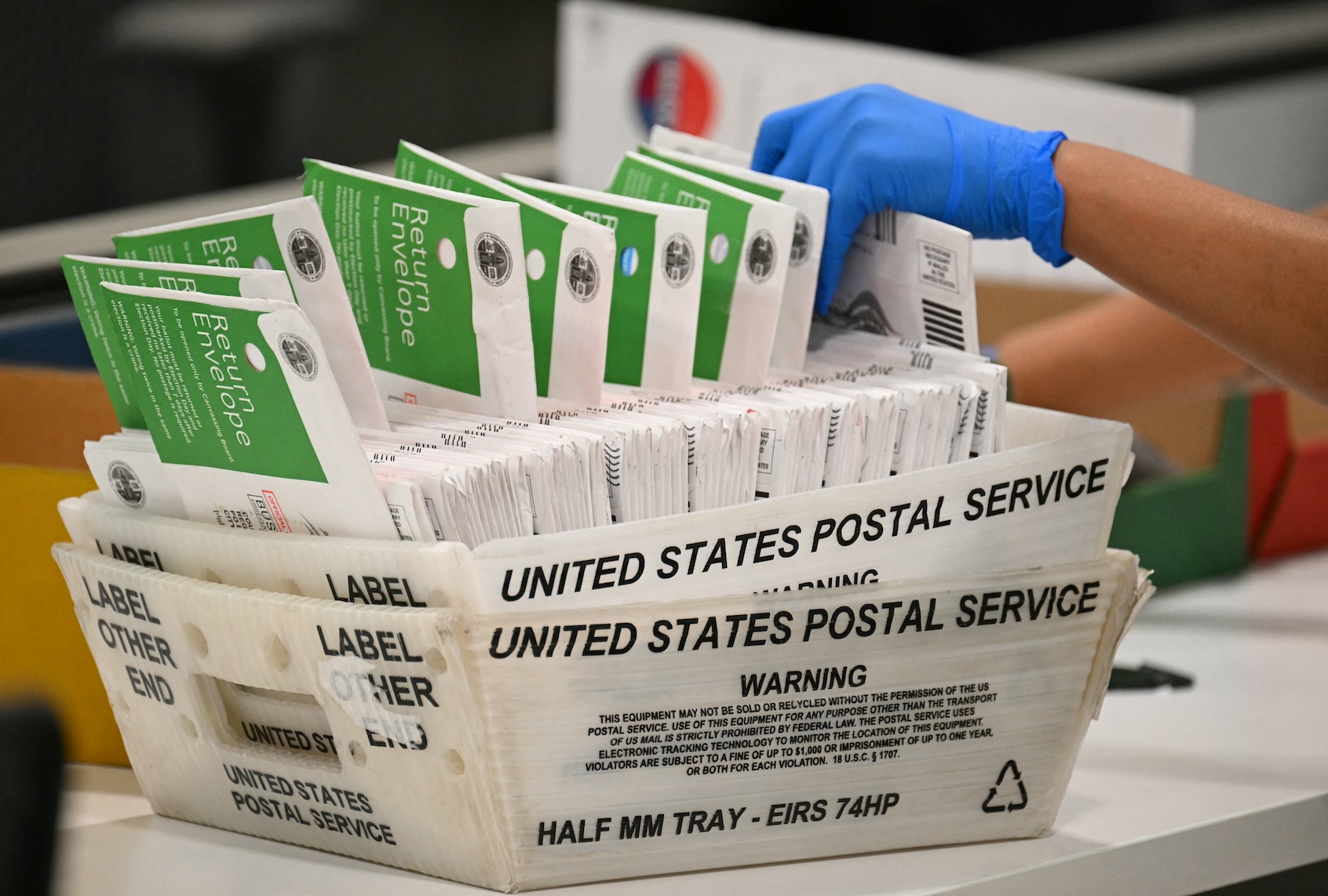
A North Carolina law, for example, requires voters to provide proof of identification when sending mail-in ballots. Under new rules, ballots now come with two envelopes, both of which must be sealed. Ballot rejections have skyrocketed, Democracy Docket reported, because voters aren’t sealing the inner envelope.
Texas and other states have cut back on the number and location of polling places, especially in areas favoring Democrats. In hotly contested Tarrant County, which includes Fort Worth, the number of polling sites was slashed by almost a third. This could increase the risk of long lines and voter confusion on Election Day.
Voting rights groups such as the Texas Civil Rights Project are tracking two issues involving the state’s voter registration systems. A software error at the Texas Department of Public Safety stopped several hundred thousand new voter registrations from being forwarded to local election officials, preventing them from being added to the rolls. A separate state system for updating registration information wasn’t processing changes for several weeks, leading to more backlogs. Counties say they’ve been able to address these problems.
Every election features some issues with voting equipment.
So far, there have been isolated complaints involving touch-screen voting machines — including one from Dolly Parton’s sister in Tennessee — spawning fears that machines have been “rigged” to switch votes.
ES&S, the company that makes the machines garnering the complaints, told ProPublica that the company hadn’t received widespread reports. Election experts say occasional problems with touch-screen machines don’t signify tampering or manipulation. Any attempt to tamper with programming would surface during testing by election officials and be corrected, they said.
4. How Secure Will the Election Be?
Incidents in the run-up to the midterms have ratcheted up election officials’ concerns about the potential for both cyber and physical attacks.
Last month, officials in several states, including Arizona, received envelopes with an unknown white powder. Arizona eventually deemed the material nontoxic, but Secretary of State Adrian Fontes said “the fear it caused was real.”
In 2024, false bomb threats, thought to be from foreign actors, caused widespread evacuations of vote-counting sites across the country. The disruptions were brief, however, in part because a message board funded by the federal Cybersecurity and Infrastructure Security Agency, or CISA, alerted election officials that the FBI had deemed the threats not credible.
Trump, however, has dismantled CISA since retaking the presidency, leaving states and local election officials to grapple with both physical and cyber threats on their own. Election nonprofits have stepped up to try to fill the gap, and states, with CISA’s help, have enhanced their own cyber defenses.
Derek Tisler, counsel and manager for the elections and government program at the Brennan Center for Justice, said the federal government’s absence has weakened the defenses.
“States acting on their own just do not have the same power,” he said.
5. Where Will Postelection Challenges Come From?
Election lawyers fear that actions by the Trump administration in the run-up to the midterms suggest the government will aggressively pursue postelection challenges if the results are not to the president’s liking.
Late last month, the DOJ sued Alaska, seeking to block the state from certifying the result of its Senate race if the Republican incumbent doesn’t win. A federal judge threw out that lawsuit on Sunday, but the administration is expected to appeal.
Trump has said he personally ordered the lawsuit to be filed. It claims the system is unfairly rigged against Sen. Dan Sullivan, because another Alaska man named Dan Sullivan also qualified for the general election ballot. The New York Times reported last week that campaign aides to Democratic Senate nominee Mary Peltola orchestrated the candidacy of the second Dan Sullivan after a monthslong, statewide search to recruit someone with the same name.
Nonetheless, the DOJ’s case is unusual, both because federal law prohibits the government from interfering with an active election and because challenges typically come after voting is complete. Postelection challenges are most often brought by losing candidates in state courts.
“This is using the federal government to interfere with our election process in a way that I think is pretty troubling on multiple levels,” said Brown, the Washington attorney general.
In response to ProPublica’s questions, the DOJ pointed to Blanche’s statement about the lawsuit on social media, which said the agency “does not seek to stop any ballot from being cast or to stop the certification of Alaska’s election.” (The lawsuit calls it “vital” that the state not certify “any election result that may be impacted by voter confusion” and asks the judge to prevent Alaska from doing this.)
Some election lawyers have suggested that if the GOP suffers significant losses, Trump could try to pressure Republicans in Congress to block new members from being seated. Several lawyers, including Derek Muller, a law professor at the University of Notre Dame, say that the incoming Democratic majority would be able to fend off such an effort; courts, too, are likely to stymie it, though it might cause a short delay, according to Muller.
Brown said he and other attorneys general are also planning how to respond if local election officials or boards refuse to certify election results, based on their own claims of fraud or claims by the administration.
“I worry tremendously about what they might do,” Brown said.
Read more
about the midterm elections
The post “Chaos” in the air: Five ways voting could be disrupted on Election Day appeared first on Salon.com.