Reading view

Christopher Nolan’s Odysseus could only be Matt Damon

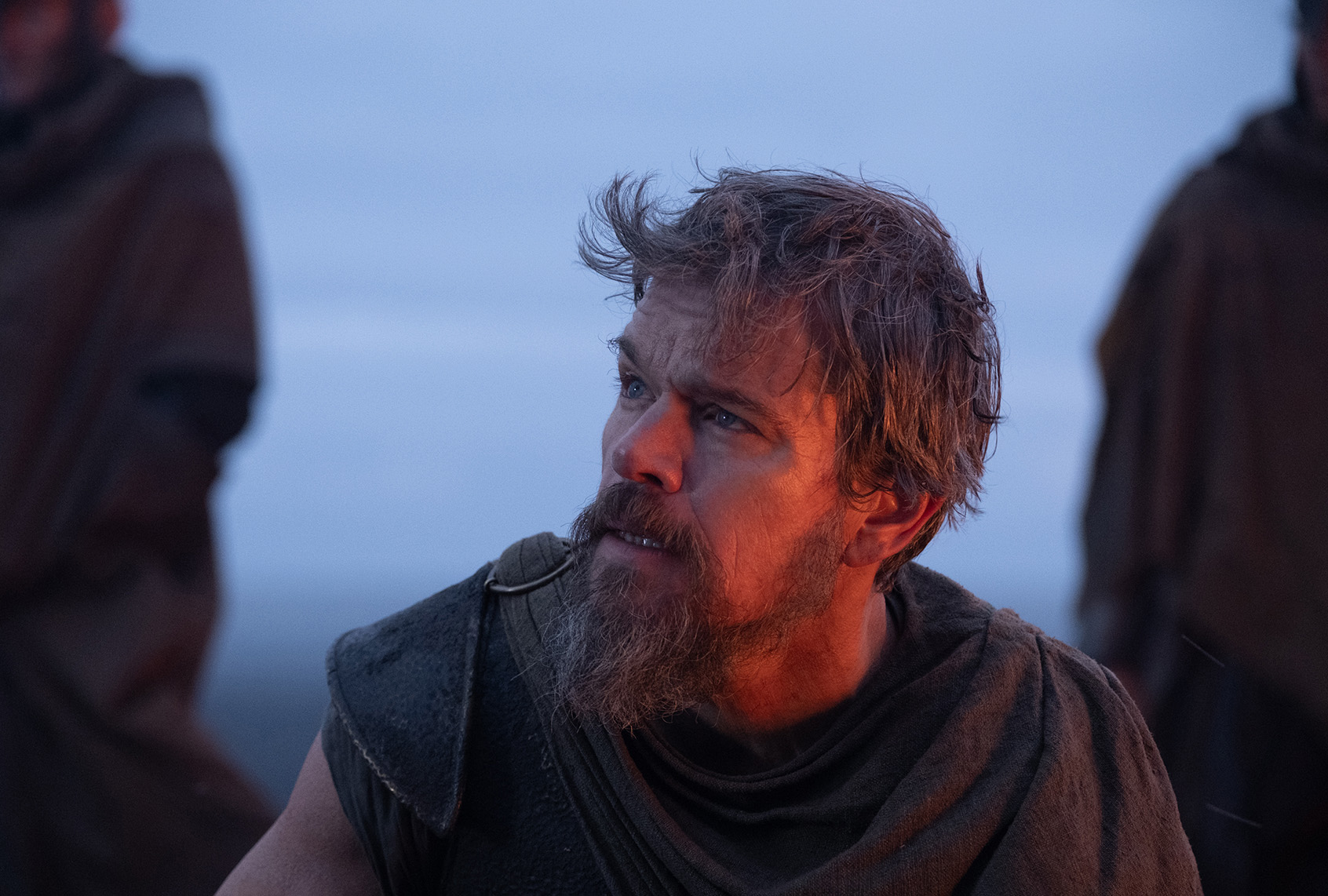
Allow me to sing, o Muse, of a recent dinner conversation about “The Odyssey.” The setting was not a Greek restaurant but a Vietnamese joint. My friend Sharon and I had just settled at our table and ordered our dinner and drinks when she steered our conversation toward Christopher Nolan’s latest opus.

Have I seen it? she asked. Of course. What did I think? It was fine, I said. A little too long, definitely overhyped. I think I described it as Nolan’s baroque reward for “Oppenheimer.

Then, like Odysseus himself, she aimed at her main target of derision: Matt Damon. What on Earth possessed Nolan, a notoriously detail-oriented director, to tap the all-purpose flour of movie stars to portray one of the most storied heroes in literature?

“What, was Leo not available?” she asked, as if petitioning the gods. But divine entities stopped intervening in man’s affairs long ago; besides, I had the answer drawn and nocked since I’d walked out of the theater days before.

Why not Leo? Because nobody would believe Leonardo DiCaprio could string that bow.

I can only imagine that at this point, restaurant waitstaffs across the world have picked up crumbs and slices of chatter about Nolan’s adaptation of Homer’s 2,700-year-old blockbuster. Nolan’s work is designed to bring out everyone’s inner critic and professor, but his execution of “The Odyssey” tosses us plenty of bones to pick.

By now the distinctiveness of Nolan’s cinematic ruminations is common knowledge. Whether we’re talking about “Oppenheimer,” “Interstellar” or his “Batman” trilogy, Nolan is a seasoned explorer in the realm of man’s hubris and its relationship with personal history, time and memory, especially the selective variety, among many touchstones. The nonlinear nature of Homer’s epic poem lends itself to his style.

But perhaps the least appreciated aspect of Nolan’s approach is his conscious use of modern celebrities in his version of one of the earliest stories to question the human compulsion to reach for fabled immortality at the cost of the people beside us. In essence, Nolan chose a superstar cast to drive home the interpretation of Homer’s saga as a legend about fame.

Spinning that lore for a modern audience, then, calls for fronting the cast with a star whose popular persona is outsized compared to his dramatic proficiency. Damon is the simplest and most reliable vehicle to tell us about a complicated man, as the highly lauded translator Emily Wilson describes Odysseus.

By this, I don’t mean to call Damon a bad actor. I’m just saying that his “Odyssey” performance is workmanlike. Wilson, for her part, walked away from the film with an impression of Nolan’s efforts that makes a person picture the Muse Calliope whispering in her ear, “Drag him.”  Thus inspired, she wrote a long and brutal essay for the London Review of Books.

Damon’s Odysseus captures all the heroic arrogance, bravery and selfish stupidity of an action-flick brawler who would shoot a giant cyclops in the eye as he’s making his escape, just because.

In my view, though, if the idea is to position Odysseus as an everyman hero swept up in a maelstrom of ordeals too vast for him to conquer, Damon was always going to be Nolan’s guy.

Which brings us back to the hero’s mythical recurve. Odysseus’ bow is an extension of his valorous identity. It is his Excalibur, his Andúril, the vaunted weapon only he can string and use to hit a bullseye through a row of twelve crossed axes. The fact that none of Penelope’s suitors could do that marked them as unfit to take his place as Ithaca’s king.

And while my friend made very good points about Hollywood personal trainers and physics and how, through creatine, all things are possible, the simple fact is that we’re more likely to buy that the man synonymous with Jason Bourne would be the only one who can bend that buster, string it, and make it sing.

It might seem strange to look this deeply into the why of Matt Damon as Odysseus, since his casting didn’t agitate right-wing trolls. The MAGA crowd whined early and loudly when the trades announced Lupita Nyong’o’s selection to play Helen of Troy, a fuss only slightly outdone by the news of Elliot Page’s casting as a Greek soldier named Sinon. When the rumor mills incorrectly assumed Page was playing Achilles, heads exploded.

But Nyong’o’s Helen, admirably performed though it was, contained few of the metatextual implications of Nolan’s other casting choices.

Tapping Travis Scott to play the Bard singing the tales of Odysseus’ exploits, for example, doesn’t merely reframe the role of ancient storytellers and poets as that age’s rappers. Scott is a 10-time Grammy nominee whose ability to combine spectacle with his lyrical craft has gained him a significantly passionate following. He is a brand unto himself and a sought-after corporate ambassador. If a queen like Penelope (played by Anne Hathaway) desired to send a message to her unworthy suitors about their inadequacy, she’d choose a rhapsodist with that kind of pull who also blends in with a boisterous crowd.

Then we have Benny Safdie as Agamemnon, the king of Mycenae, whom Odysseus follows to Troy and, ultimately, his cursed fate. Placing famous directors in front of the camera is a classic auteur filmmaker flourish, and Safdie is both an actor and a director mainly associated with indie films.

Notably, unlike Damon’s Odysseus, Safdie’s Agamemnon is not jacked. But his intimidating onyx armor obscures all that, much in the way Darth Vader’s helmet and cloak overcompensate for his shriveled form. We don’t see Agamemnon’s face for most of the movie until the end, when his wife and Helen’s twin Clytemnestra (also Nyong’o) murders him in the bathtub as revenge for sacrificing their daughter. Only then do we see this dark colossus for the slight creature he always was.


Want more from culture than just the latest trend? The Swell highlights art made to last.
Sign up here


Admittedly, that’s a lot more flexible interpretation than the obvious reasoning behind Damon’s selection. Yes, Nolan has worked with some of the most distinguished actors of our time, including Christian Bale, Cillian Murphy and Leo.

But when reading the famous opener of one longstanding translation — “Speak, memory, of the cunning hero/The wanderer, blown off course time and again” —  few broadly popular A-list actors besides Damon live up to that picture.

Damon’s Odysseus captures all the heroic arrogance, bravery and selfish stupidity of an action-flick brawler who would shoot a giant cyclops in the eye as he’s making his escape, just because. Moves like that make it easy to comprehend that his ill-fated meanders could have been avoided if he’d followed the same directions that got everyone else home sooner.

But really, it all comes back to that bow. Only a true and blustery hero can string it, much as we believe that only Damon can win a knife fight by wielding a pen. And if we’re being honest, DiCaprio may have earned an Oscar for his performance in “The Revenant,” but he does not have the biceps to take on that CGI grizzly.

The post Christopher Nolan’s Odysseus could only be Matt Damon appeared first on Salon.com.
  •  

Trump’s FIFA pal in trouble as plan to sell off World Cup collapses

By most objective standards, the 2026 FIFA World Cup tournament — which concluded two weeks ago in New Jersey with Spain’s grueling 1-0 victory over Argentina — was a major success. Despite global anxiety over the collision between the world’s largest sporting event and Donald Trump’s “America First” regime, stadiums were mostly full across North America, fans and players from all sorts of large and small countries seemed to enjoy themselves (and tried to smuggle home large quantities of ranch dressing) and, of course, something like $15 billion flowed into FIFA’s coffers. 

Just below the surface, however, the soccer world was seething with discontent. That erupted into all-out rebellion this week, which could finally bring down Gianni Infantino, the Swiss administrator who has served as FIFA chief executive for the last decade. Unpacking the byzantine history of alleged or actual corruption within FIFA and the numerous regional and national federations under its purview would be a dissertation-length project. But it’s definitely not wrong to say there’s a Trump angle, and that Infantino’s marriage of convenience and shared sensibility with the U.S. president may bring his downfall. 

Even before this year’s tournament, Infantino stood accused of commercializing or “Americanizing” world soccer — a process he did not start but has certainly accelerated — and of shamelessly cozying up to Trump, whom he presented with the newly-invented FIFA Peace Prize, aka the “Temu Nobel,” last December. That was all inarguably true, and the guy has form, as they say on British cop shows. Back in 2022, while seeking to justify holding the World Cup in Qatar, an autocratic monarchy with a famously dreadful human rights record, Infantino launched a thousand memes with this memorable monologue:

“Today I have very strong feelings, I can tell you. Today I feel Qatari. Today I feel Arab. Today I feel African. Today I feel gay. Today I feel disabled. Today I feel a migrant worker.”

If it seems extraordinary that a major executive of any enterprise, anywhere in the world, could say stuff like that and still have a job four years later, you are beginning to appreciate the hallucinatory Infantino experience. Anyway, in 2026 Infantino seems to have swapped all those intersectional identities for an adjunct MAGA membership, and this year’s World Cup pushed the soccer world’s bizarre love-hate relationship with its leader into overdrive. 

Even before this tournament, Infantino stood accused of “Americanizing” world soccer — a process he did not start but has certainly accelerated — and shamelessly cozying up to the current occupant of the White House. This was inarguably true.

Tom Burrows of the Athletic did a nice job this week of summarizing the indictment: Infantino drove World Cup ticket prices to previously unimagined levels, introduced “commercial breaks in each half [of matches] dressed up as hydration breaks” — a network-friendly innovation that global football had resisted for decades — capitulated to Trump in reversing a red-card suspension for U.S. star striker Folarin Balogun, and introduced a “surreal halftime show” featuring Madonna, BTS and Justin Bieber in the final match, in obvious (and inept) imitation of the Super Bowl. 

All of that, mind you, came before Infantino’s big surprise this past week: Apparently without consulting any relevant stakeholders, he announced a plan to spin off commercial rights to the World Cup into a new for-profit company (FIFA is a nonprofit, like other international sporting federations) and then sell off a big chunk of that company to an investment consortium led by Joshua Kushner, the younger brother of Trump son-in-law Jared Kushner. So it’s not entirely accurate to say that Infantino wanted to sell world soccer’s biggest brand to the Trump family. But it’s not exactly false either. 

To coin a phrase, you can’t make this stuff up. But the good news, or the kind-of good news, or the “why in God’s name did this take so long” news, is that Infantino has finally choked on an overdose of hubris. His proposal collapsed within 48 hours and as of this weekend has been abandoned completely. (Soccer fans will discern unmistakable echoes of the European Super League, a proposed NFL-style closed competition for Europe’s top club teams that was announced in 2021 and imploded within a few weeks.)

UEFA, the federation that governs European soccer and is by far the most powerful of FIFA’s regional subsidiaries, wasted no time in rejecting Infantino’s scheme and announcing that none of its 55 national teams would participate in any FIFA competitions until the proposal was ditched. That was almost certainly enough to torpedo this galaxy-brain plan, and other regional confederations — most notably Concacaf, which represents North America, Central America and the Caribbean, and therefore includes the U.S. — soon followed UEFA’s lead, if not as aggressively. 

Donald Trump did not pick up the phone on this occasion. (“Johnny who? Really, I barely know the guy.”) Only the Confederation of African Football — whose member nations, fairly or otherwise, are perceived as Infantino supporters — remained silent. More on that shortly.

Anyone who follows world soccer already knows that UEFA has its own extensive history of political intrigue and internal scandal, and is not well positioned to play populist hero in this drama. But as is so often the case in world affairs, there are no good guys in the story and you have to pick your poison. One could draw a rough analogy with the European Union, a deeply flawed entity that nonetheless represents some degree of ideological or economic counterweight to Trump’s America. In this particular confrontation, Europe held nearly all the cards. 

If Infantino somehow pushes through his scheme to sell shares in the World Cup, he will do so — believe it or not — by casting himself as a defender of the downtrodden and underprivileged. He feels gay and African and disabled, remember?

While the next men’s World Cup, FIFA’s biggest golden goose, is still four years away, the consequences of a European boycott would have been felt immediately. The under-20 Women’s World Cup begins in Poland about a month from now, and qualifying playoffs for FIFA’s second-biggest event, the Women’s World Cup (to be held next summer in Brazil) are set for October. Given his avowed commitments to promoting the women’s game and youth soccer at all levels, Infantino simply couldn’t afford to play chicken with UEFA and risk losing those tournaments. Joshua Kushner and his family, one imagines, will not starve. 

This may be stretching the point, but there’s a thematic resemblance at work here to the worldwide pushback against Big Tech data centers, and against the opaque government processes that gets them built, as well as to the popular and legal resistance that has stalled the $110 billion merger between Warner Bros. and Paramount. It’s also true that Infantino is now understood, both to soccer fans and the world at large, as a proxy for Donald Trump, which looks like a much worse bet than it did a year ago. Infantino was cruising to likely re-election as FIFA president next year, but right now it’s an even-money bet that he can survive the next month. 


Want more sharp takes on politics? Sign up for our free newsletter, Standing Room Only by Amanda Marcotte, also a weekly show on YouTube or wherever you get your podcasts.


Like his White House buddy, Infantino has thrived on a remarkable ability to weaponize greed and cynicism, both on an epic scale and at ground level. He fully intended to push through his scheme to sell shares in the World Cup by casting himself, believe it or not, as a defender of the downtrodden and underprivileged. He feels gay and African and disabled, remember? The uncomfortable truth is that he has ruled over a vast global sports and merchandising empire largely by fulfilling his promises to channel lots of money into regional and national federations in the Global South that have historically had few resources. 

Under Infantino’s proposed plan, each of FIFA’s 211 federations — at least the ones who supported him! — would have received an immediate cash infusion of $40 million, with further annual installments to follow. That sum would barely make a difference to the football gods in England, Spain or France, but would been enormous in Malawi or Madagascar. Affluent European nations don’t need infusions of private equity capital to build new stadiums and support younger players, and can afford to stand up to Infantino’s Trump-flavored bribery scheme. For players, parents, coaches and local officials in sub-Saharan Africa, the equation might have looked very different. Why should they care where the money comes from? This particular grift may have failed, but in a world built on massive structural inequality, grifters tend to prosper.

The post Trump’s FIFA pal in trouble as plan to sell off World Cup collapses appeared first on Salon.com.

  •  

“Diarra From Detroit” shows what a media merger could cost TV

The trouble with Diarra Brickland is she can’t let things go.

Diarra From Detroit” presents this as the schoolteacher-turned-detective’s greatest asset and her biggest flaw. If it weren’t for her stubborn insistence on finding out why a great guy, Chris (Shannon Wallace), ghosted her after an incredible first date, she might be happier. Then again, nobody would have noticed that Chris had been kidnapped.

But Diarra’s tendency to fixate on small details and slights eventually cracked the case. They also brought to light a broader conspiracy, starting with the twist that this wasn’t Chris’ first kidnapping.

As Season 2 begins, Chris and Diarra have settled into coupledom, which is precisely what Diarra thought she wanted, but nothing like she pictured it would be. Chris is a mess. Diarra would love to dump him, but her nearest and dearest friends Aja (DomiNque Perry) and Tea (Bryan Terrell Clark) warn her that would damage her reputation. The single bright spot and mixed blessing to come out of all this is that her neighbors see Diarra as the go-to person for fixing lost causes and finding lost people. Hence her latest caper, which begins with a mission to track down a vintage desk and turns on a dime into a heist tied to a cache of gold.

But wait, as our hard-boiled citizen investigator is fond of saying. I should go back. You see, these latest episodes of “Diarra From Detroit,” created by its star, Diarra Kilpatrick, have been cooking for more than two years. Three, if you count the series’ debut at the 2023 Tribeca Festival before its 2024 premiere on BET+. From there, it sat in limbo until Paramount renewed it in 2025.

But limbo is better than canceled, which is more likely to happen if the proposed merger between Paramount Skydance and Warner Bros. Discovery goes through.


Like Diarra and Chris’ relationship status, the case of Paramount’s proposed marriage to Warner Bros. is complicated. Hollywood all but accepted that the merger was a done deal until mid-July, when a dozen state attorneys general and along with the Writers Guild of America West and East  filed a lawsuit to stop the merger and California U.S. District Judge Araceli Martínez-Olguín issued a restraining order to temporarily halt the proceedings. (Salon’s unionized employees are represented by the WGA East.) 

On July 24, Paramount’s legal team agreed to postpone the merger pending the outcome of the states’ antitrust case. That could potentially delay the transaction for more than a year, since the opposing sides can’t agree on when they want the trial to begin. The states would prefer a 2027 start while Paramount wants to kick it off this fall. If the AGs win, Paramount’s inevitable appeal could keep the $110 billion deal backburnered well into late 2027.

The states argue that this merger would leave consumers paying more for less diverse news and entertainment options if finalized. 

The continued existence of shows like “Diarra From Detroit” — shows by female, non-white creators about a place and people rarely depicted in the fullness of their humanity on television — is a miracle under normal circumstances.

What this means is that as tough as it already was for a TV series created by a Black woman to be picked up by a major platform, it could be nearly impossible in a universe in which Paramount has swallowed HBO, CNN and other prime Warner Bros. channels. Even in a scenario where BET+ still existed — it officially shut down on July 22 — making original stories like “Diarra” requires resources and a level of corporate will that a megacorporation’s smaller brands don’t tend to be afforded. In a contracted media landscape with fewer places to pitch, its odds of landing in front of audiences on a major platform decline even further. And they weren’t all that high to begin with.

Meanwhile, Paramount is urging us to pay no attention to the Ellisons behind the curtain. “This merger is lawful, pro-competitive, and will benefit consumers, creators, workers, and the entertainment industry,” a Paramount spokesperson said in a statement.

Many maintain the opposite is true, especially with regard to inclusive content. Included in that crowd are scholars working with the University of California San Diego’s Media and Consolidation Research Organization (MACRO) Lab.

“All four categories of diversity—ownership, representation, viewpoint, and outlet—are threatened by this merger, reducing the forms of diversity the public depends upon in cinemas, over the airwaves, and across online platforms,” they warn in a recently published paper. Previous findings by the University of Southern California’s Annenberg Inclusion Initiative back this conclusion.

Among those paying attention to The Mystery of the Media Merger, the survival of TV’s Diarra Bricklands is not the top concern. All eyes are on CNN, as Sharon Waxman, the founder and editor-in-chief of The Wrap, explained in a recent New York Times column.

If what’s happening to CBS News under editor-in-chief Bari Weiss is a sign of things to come, that’s another assault on our already besieged democracy. A greater one, even, since CNN is a global news brand.

Consider that only days ago, “60 Minutes” announced that former New York Times Opinion columnist Ross Douthat is joining its ranks. Douthat, if you’ve forgotten, is the guy who proposed in a 2018 column that the solution to placating incel violence may be between the legs of hypothetical charitable women who feel sorry for them. Or sexbots.

Corporate media traded insightful journalism for ragebait like this years ago, which is what makes figures like Diarra Brickland and her creator ever more valuable. They’re Black women excelling in roles not often associated with (or awarded to) people of color.

And to specifically bring it back to Douthat’s dubious query, Diarra — either of them — is precisely the kind of woman who puts the lie to fantasies about female submissiveness. Season 2 starts with her realizing she’s probably better off free of her mystery prize.

But for now, Chris and Diarra are in counseling. Part of their unofficial relationship homework involves field missions that spark heated conversations about masculine insecurity and Diarra’s conflicted desires about motherhood.

One topic she’s absolutely clear about, however, is being in control of every aspect of her life — including but not limited to Chris’ access to the part of her body she describes as “the Cadillac of the human anatomy: Gorgeous interior, impeccable design, not to mention the portal for all of humanity.”


Want more from culture than just the latest trend? The Swell highlights art made to last.
Sign up here


Writing like this ensures that “Diarra From Detroit” remains nimble from start to finish of each episode. That alone isn’t why this show and others like it need to be championed and protected. Television history is littered with the bodies of terrific shows denied more than a few seasons, or even a full order of one.

Citizen detectives like Diarra Brickland, who arranges her messy life around ensuring that the people and prizes typically overlooked or quietly erased by the mainstream keep being seen, are even less common. The continued existence of shows like “Diarra From Detroit” — shows by female, non-white creators about a place and people rarely depicted in the fullness of their humanity on television — is a miracle under normal circumstances. With that in mind, both the show and the merger are cases worth tracking right now and in the months to come, as if the quality of our lives depends on it.

New episodes of “Diarra From Detroit” stream Wednesdays through Sept. 9 on Paramount +.

The post “Diarra From Detroit” shows what a media merger could cost TV appeared first on Salon.com.

  •  

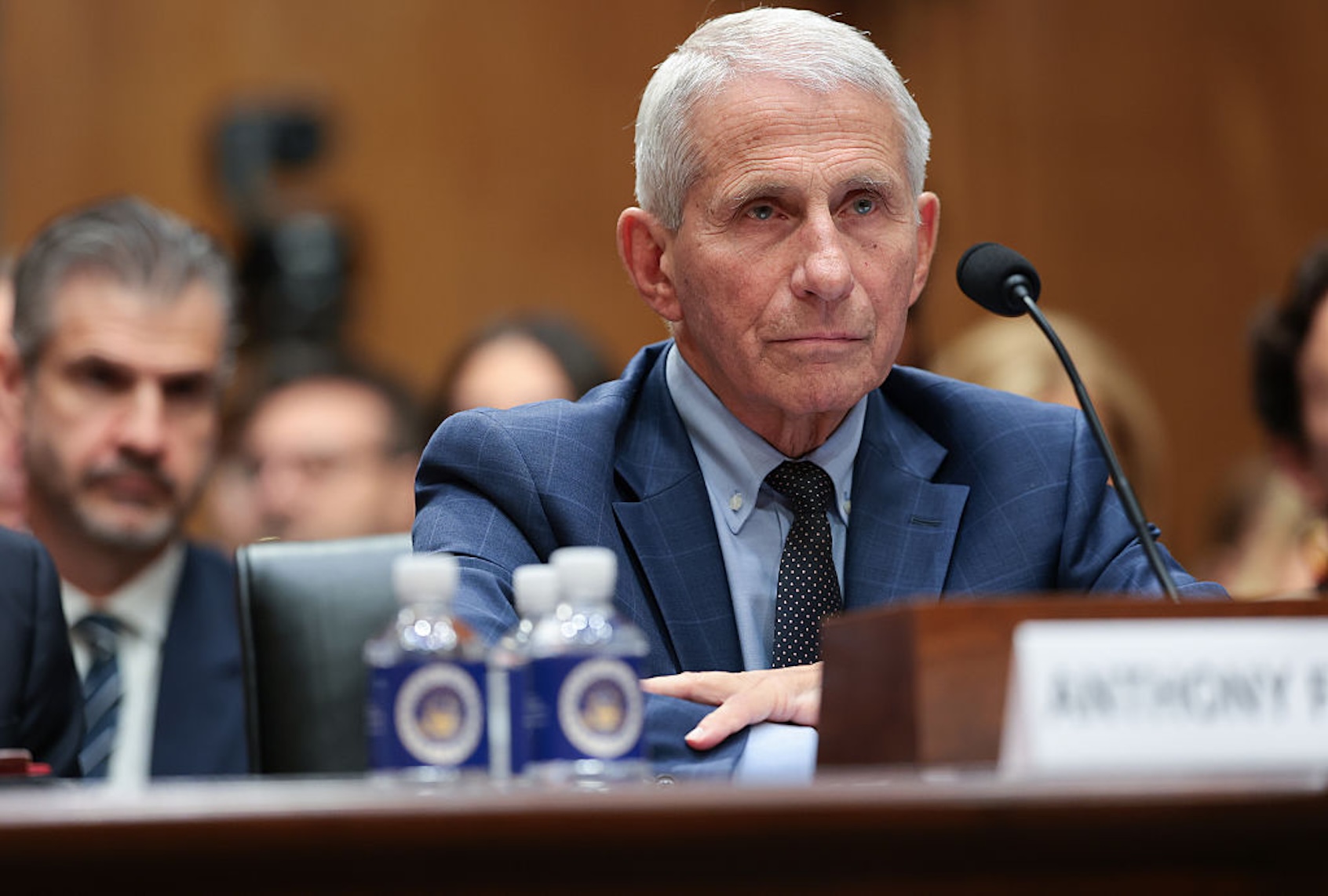
Anthony Fauci’s Senate hearing proves we’re still living in 2020

Six years ago, Match.com released an ad in which the devil met his true love: 2020. The couple spent their courtship sharing fun Covid-era activities, like stealing toilet paper, enjoying empty cinemas and stadiums, and taking selfies in front of dumpster fires, all to the tune of Taylor Swift’s “Love Story.” In a memorable tagline, Satan said, “I just don’t want this year to end.” Released in December, only weeks after the presidential election between Donald Trump and Joe Biden, it reflected the national mood perfectly: horror at what we’d all been through, and vast relief that it was almost over.

Sadly, it seems we are destined to live in that damned year until the end of our days. 

The year ended on a high note. Biden was elected president, the new Covid-19 vaccines were about to become available and we felt we could look forward to a day in the not-so-distant future when going to the grocery store didn’t come with a potential death sentence. Many people were back at work in one way or another, and the government had managed to get the American people through the crisis without suffering economic ruin. But it soon became clear Trump was unable to admit he had lost his reelection bid, and by January he and his army of surrogates and influencers had worked his MAGA followers into such a frenzy that they stormed the Capitol to stop certification of the election results. 

At the same time, the MAGA faithful at home, which had, with the president’s help, pushed snake oil cures and conspiracy theories about the virus for months, were unwilling to move on from their various obsessions. They were set to turn the anti-vaccine movement into a juggernaut that would be ready to take on the entire American public health system and challenge medical science in general. The “do-your-own-research” crowd had felt their power, and they liked it. 

Still, most of the country eventually moved on. Things had changed in some ways. Working from home is now a regular feature of the work world, Zoom calls are an everyday thing, and digital learning and telehealth have become mainstream. 


Start your day with essential news from Salon.
Sign up for our free morning newsletter, Crash Course.


Imagine my surprise, then, to awaken on Wednesday to a Senate hearing featuring Dr. Anthony Fauci in which he was being asked about hydroxychloroquine and Ivermectin. I had to check to make sure I wasn’t accidentally watching a documentary about the pandemic. But no: Rand Paul, Kentucky’s GOP senator had decided to scrape off the scab yet again by calling Fauci to face a grilling by Republicans on the Senate Homeland Security and Governmental Affairs Committee. Fauci looked the same. Paul looked the same. The daft conspiracy theories sounded the same. It was as if the last six years never happened. Déjà vu all over again. 

Before leaving office, Biden preemptively pardoned Fauci — and for good reason. The doctor had become the whipping boy of the MAGA right, commonly accused of personally creating Covid-19 (in cahoots with Chinese communists, naturally) and then making a vaccine that they insist killed more people than the virus. It’s all nonsense, of course. There are still debates about the origins of the virus, but the idea that Fauci created or enabled it in some way is ridiculous. The hearing, ostensibly called to get to the bottom of all this, is actually just the latest step in Rand Paul’s petty vendetta against Fauci that began when they sparred in a series of confrontations during the crisis. 

Despite being a doctor, Paul has always had, shall we say, an eccentric view of medical science, and he could never get the better of Fauci in their meetings. But the senator wanted the last word, and he got it.

Despite being a doctor, Paul has always had, shall we say, an eccentric view of medical science, and he could never get the better of Fauci in their meetings. But the senator wanted the last word, and he got it. Ignoring Biden’s pardon, Paul threatened Fauci with perjury if he “lied” during this latest hearing, a charge he claimed would not be covered by the pardon. In fact, the whole hearing was obviously a perjury trap. 

Paul had released Fauci’s 1,000-page private pandemic diaries — helpfully provided to him by Health and Human Services Secretary Robert F. Kennedy Jr. — which had been stored on government servers. The senator knew there would likely be inconsistencies between Fauci’s memory and what he wrote at the time. Fauci’s attorney wisely told him to assert his Fifth Amendment rights, which he did. Paul threw that attorney out of the hearing for attempting to explain why. 

The senator’s Republican colleagues piled on in their questioning of Fauci. Ohio’s Bernie Moreno was especially grotesque, bellowing “Who the f**k do you think you were?” at the 85-year-old scientist. Even Trump was less harsh in his commentary about the hearing, merely saying that he stopped listening to Fauci after a while. 

But the hearing wasn’t the only recent time warp. Trump has spent the last six years attempting to rewrite the 2020 election, and apparently it’s not enough that he made one of the greatest political comebacks in history. He needs to erase the fact that he ever lost in the first place, so he has deployed the intelligence community to find proof that he didn’t. and decided to give a primetime presidential address on July 16 to reveal the findings. 

To no one’s surprise, it was a dud. The information he presented was mostly old news, and he failed to provide any proof that domestic or foreign actors had any impact on the election that year — because they didn’t. Even his MAGA media ecosystem was left unimpressed.

But Trump remains undaunted. He’s been willing to completely blow up the legislative session going into November’s midterms unless he gets his way with the SAVE America Act, legislation designed to suppress the vote, which Senate Republicans have so far refused to pass. (It will suppress their own voters too.) 

For Trump and Republicans, the worst year in living memory will never end, and it’s easy to see why. Like the devil in that famous ad, it’s their idea of a good time.

The post Anthony Fauci’s Senate hearing proves we’re still living in 2020 appeared first on Salon.com.

  •  

“I Want Your Sex” is deliberately unsexy

Are you having sex? Do you want to be? 

These days, there are a million different possible answers to either question. Our culture has confused sex — a relatively uncomplicated, biological thing — with desire, which is an entirely different, much more complex can of worms just waiting to be opened. While the two frequently meet one another on the bed, on the floor or in a back alleyway behind that dive bar on Cherry Street after a few well-tequilas, both of these things are their own animals. It’s act versus thought, performance versus feeling. And yet, sex and desire have become irrevocably intertwined in our modern age, like two sweaty bodies, tangled together, realizing halfway through the deed that they don’t actually have as much in common as they initially thought.

In his first feature film in 12 years, “I Want Your Sex,” veteran counterculture director and perennial cool guy Gregg Araki is looking to have some fun in the technicolor midpoint where sex and desire meet. Sex has played a major role throughout Araki’s filmography, but never in quite such explicit terms as this. His characters — impulsive adolescents and young adults, slicing through their disaffection with sharp bursts of hormonal momentum — typically experience sex as a product of their furious youth. In their eyes, it’s an act of heady rebellion, more in line with the drugs and crime that permeate these underground, nihilistic worlds than it is with true romantic intimacy. So for Araki to dispose of all that to home in on sex itself, rather than building his characters and their worlds around it, there must be a good reason. 

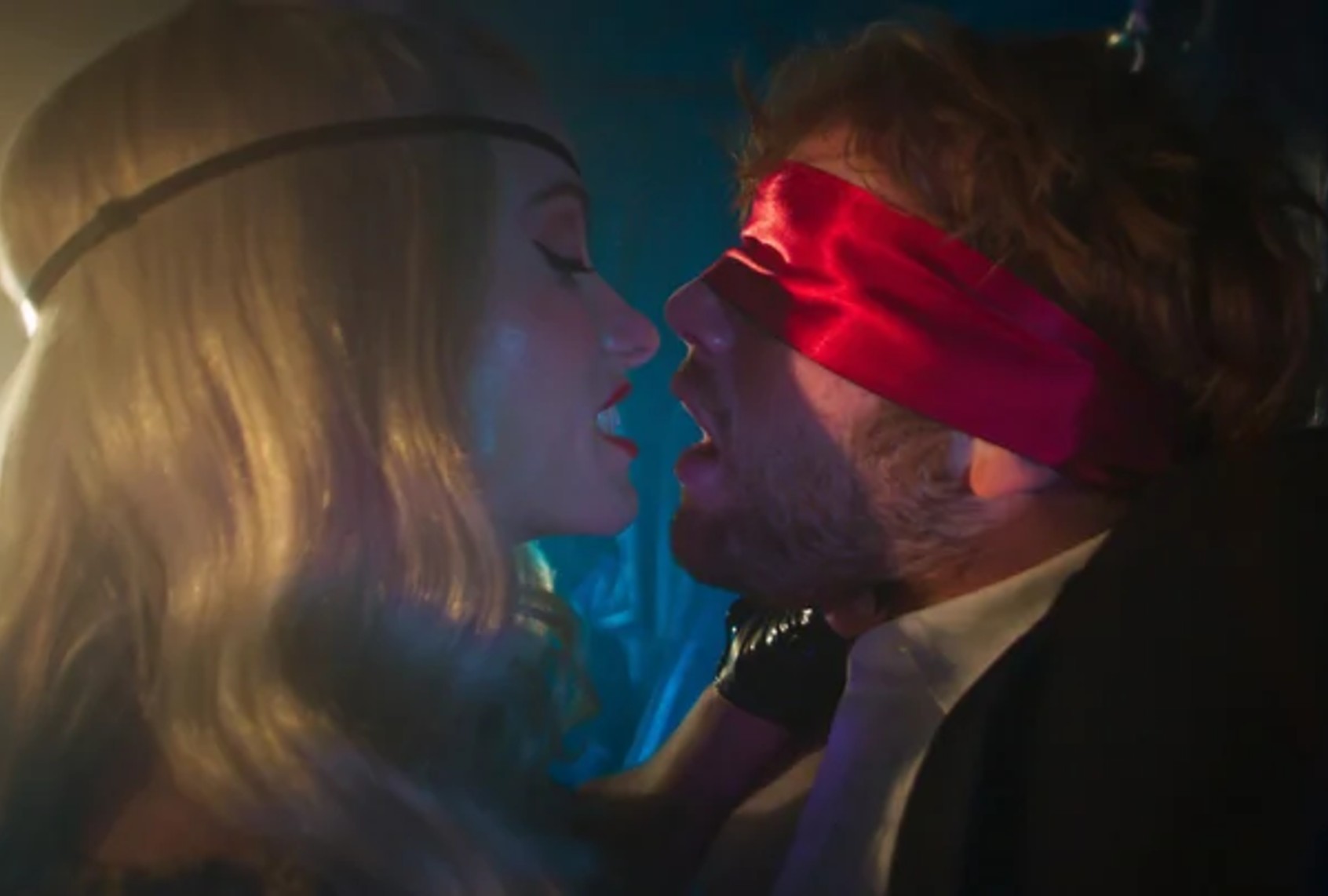
(Magnolia Pictures) Olivia Wilde and Cooper Hoffman in “I Want Your Sex”

By steeping his film in modern hypersexuality, Araki fashions a humorous how-to guide on how to find real, memorable sexual connection in a world where everything is designed to be sexy, but isn’t actually stimulating.

In short: There are plenty. The ’90s-era nihilism that threaded so many of Araki’s films has taken a hard slant toward technological despondency. Many young people act as though life begins and ends with the digital ecosystem. And even if that fact might make you depressed, scrolling will deplete one’s cynicism until it’s replaced by another attention-grabbing post. The simple fact of the matter is that, with so much time spent solitary and online, there’s less time for sex — or even the possibility of it. 

And yet, sex (or at least the implication of it) is everywhere. OnlyFans is its own viable economy, with some users raking in millions per year from people who want to live the fantasy through a screen. Manufactured eroticism not only pays the bills but stops the scroll. And, of course, there’s the fact that anyone in the world can access hundreds of terabytes of porn in two measly seconds. It used to be that, if you wanted sex, you had to be forward about it, seek it out to some degree. Now, the proliferation of sex and sexuality has resulted in an ironic prudishness among digital natives, who, as a result of growing up with sex quite literally in the palm of their hands, abstain from intercourse and all the lessons and joy it has to offer. And it’s that reserve that Araki aims at with “I Want Your Sex.” 

Yet, for a film with such a bold, George Michael-ripping title, “I Want Your Sex” is curiously unerotic. The characters have sex, sure, but their coitus is so instantly excessive it veers on silly. But that’s also the kind of frisky fun Araki wants his viewers to remember, the outrageous sexual dynamics that are the byproduct of our wildest adventures — exploits that don’t always begin with carnal intentions. By steeping his film in modern hypersexuality, Araki fashions a humorous how-to guide on finding real, memorable sexual connection in a world where everything is designed to be sexy, but isn’t actually stimulating.

And if anyone knows stimulating, it’s hotshot mixed media artist Erika Tracy (Olivia Wilde, in her second hoot-and-holler role this summer), who’s made a name for herself in the Los Angeles art scene with a dedication to provocation. Her work is suggestive and boundary-pushing, and she’s exactly the kind of person that neurotic Gen Z art scene sycophant Elliot (Cooper Hoffman) would love to work for. After a chemistry-rich interview in her office, Erika hires Elliot on the spot — strange, considering his complete lack of experience and the spate of promising applicants that preceded him in the interview process. But Elliot doesn’t question it. Only later, when he’s tasked with chewing gum to stick onto the outline of a massive portrait of a vulva, does he learn that Erika has a habit of sleeping with her interns.

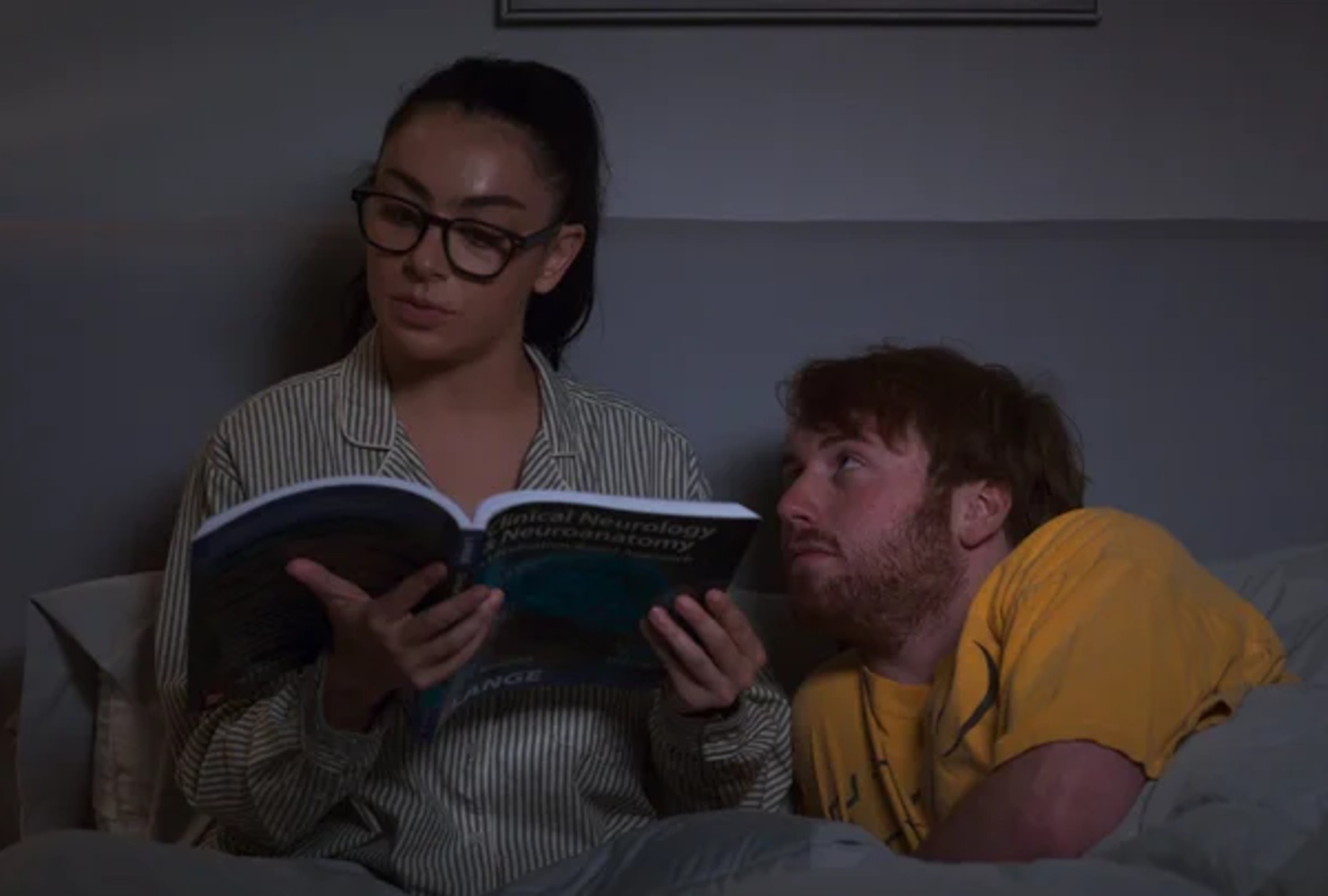
This piece of gossip soon begins to cloud Elliot’s life and better judgement. His girlfriend, the uptight med student Minerva (Charli xcx, speaking in an accent no one’s ever heard before, with a name no one’s had in 60 years — brilliant), is as cold in the bedroom as she is in the operating room. But Elliot also has no idea how to verbalize his desires. He’s of a generation that overthinks and underperforms. That is, until a wide-ranging chat with Erika in her home results in a proposition: Erika would like to enter into a consensual, primarily physical boss-employee relationship with her inferior, and use their inverse power dynamic to rock Elliot’s world: leashes, S&M, dildos, spanking, the works. But Erika calls the shots. If she says it’s over, it’s over. And there’s nothing like a suspicious, sudden disappearance to pull the plug on a burgeoning sexual connection.


Want more from culture than just the latest trend? The Swell highlights art made to last.
Sign up here


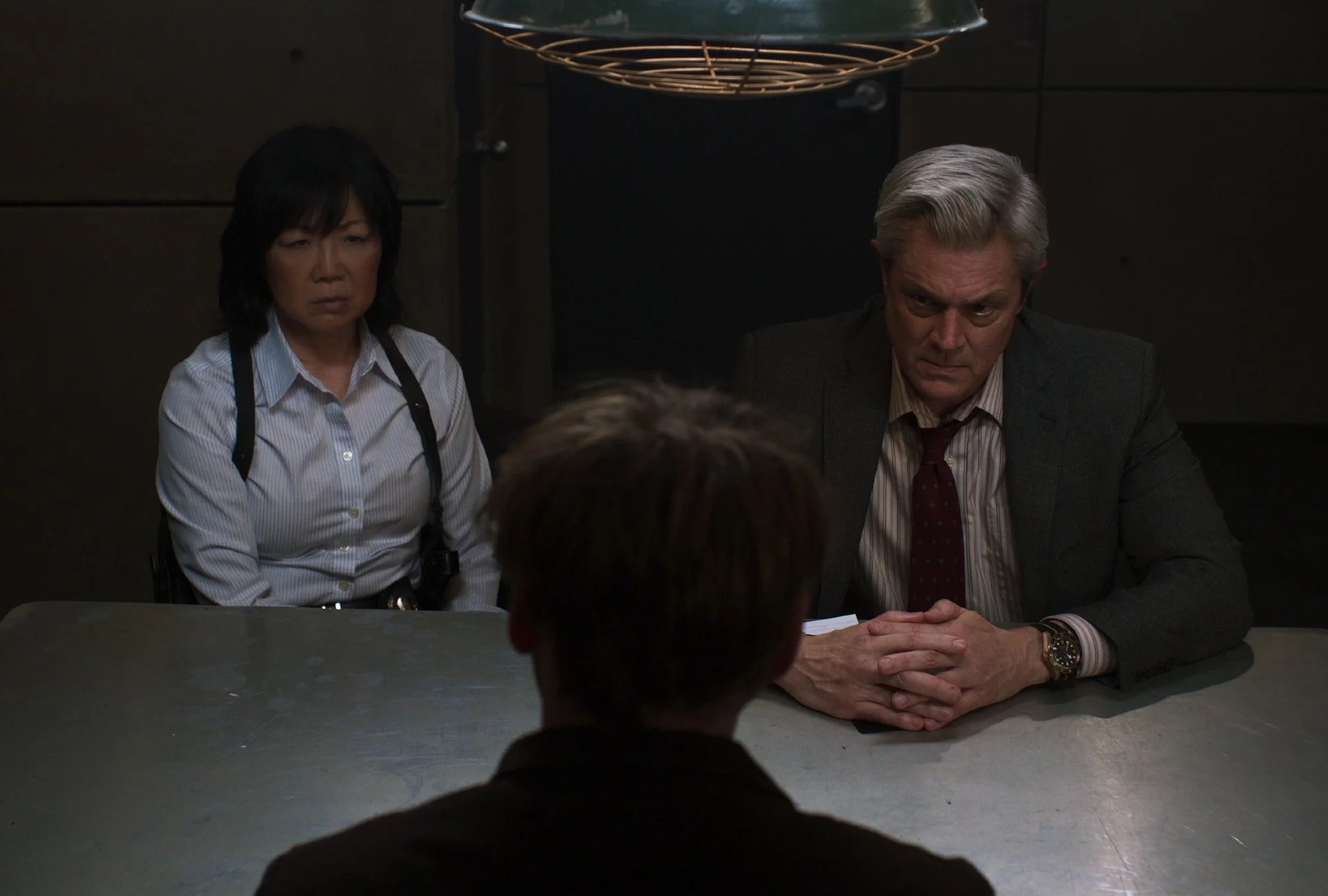
Araki’s screenplay, written alongside his “Now Apocalypse” series co-writer Karley Sciortino, hops back and forth between the time before Erika’s vanishing and immediately after. Her disappearance is mystifying and arousing — for both Elliot and the police. Elliot is abruptly without his sensual supervisor, and his loss is seismic. Left to his own devices with a new sexual skillset, yet still pining for his boss, Elliot is unsure of how to move forward. And it’s this impasse where Araki fleshes out his clever, if not entirely unique, ideas about the innate limits of the libido.

For as much handwringing as there has been about Gen Z’s attitudes toward sex — and whether they’re having it at all, which is debatable — Araki is careful not to indict the youth. He is, after all, famously still babyfaced at 66, a physical spriteliness mirrored in his bright visual aesthetics and effervescent directorial tone. Araki is very much in touch with what young people enjoy and how they operate. He simply wants more for them. Youth is wasted on the young, after all, and Araki’s mission with “I Want Your Sex” is to make it patently clear that the clock will continue to tick whether they choose to get physical or not. So why not give it a try?

(Magnolia Pictures) Charli xcx and Cooper Hoffman in “I Want Your Sex”

Sex is great, but what we remember most is what led up to it. We recall the excitement of shared energy, the potency of possibility, the spark so palpable it culminated in something intimate and naked. That’s the kind of animal electricity that points us toward our purest selves.

Araki posits that it’s fear holding people back; not just the fear of rejection, but a broader fear of the unknown. As much as I hate to parrot the sentiments of irritable older people who grumble about every kid getting a participation trophy, it is true that we live in a world that caters to our fragile egos. Every possible result for any conceivable situation is spelled out for us via a few quick internet searches. In a time when explainers and how-to guides exist for everything, influencers tell you how to dress and what to buy, and making a phone call has become a Herculean task for many, the margin for error has grown so slim it’s invisible. That also means the potential for surprise has dwindled, too. Humans have adopted an aversion to the casual risks that used to be a part of everyday life. Hazarding heartbreak and embarrassment is too dangerous. But the alternative, as Araki suggests, is an utterly boring existence, where, either way, you’ll always wonder “what if?”

(Magnolia Pictures) Margaret Cho and Johnny Knoxville in “I Want Your Sex”

But just depicting the pleasures of sex wouldn’t be enough to quell all that fear. Members of Gen Z might just fast forward through those scenes anyway, given that they want to see less sex onscreen as it is. Though Erika and Elliot’s intercourse is raucous and sultry, it’s their unpredictable relationship outside of the bedroom that keeps their fire — and the film’s madcap pacing — fueled. Elliot runs around LA doing Erika’s menial tasks until he drops everything at her beck and call. He upends his relationship with Minerva and screws up his best friendship with his roommate, Apple (Chase Sui Wonders). And he demolishes his own ego by throwing himself into something wild and capricious headfirst. He’s chasing the spark and expanding his horizons in the process. Great sex is no longer the goal, but rather a nice bonus.

To some, it may feel like Araki is flattening complex social mores and misunderstanding the anxieties behind this era of semi-celibacy. And at times, “I Want Your Sex” does sorely miss the sharp, scrappy bite of Araki’s early films, which had far more to say than his one-track-minded latest. But there’s an amiable flair to the way Araki conveys an old adage in a new way. It’s not the destination; it’s the journey — and if anyone knows this, it’s someone whose youth was spent pursuing sex, art and feeling at risk of mistake and failure. Sex is great, but what we remember most is what led up to it. We recall the excitement of shared energy, the potency of possibility, the spark so palpable it culminated in something intimate and naked. That’s the kind of animal electricity that points us toward our purest selves. When we fear the act of sex, we don’t experience the desire that leads up to it. And when we don’t have desire, we don’t truly live.

The post “I Want Your Sex” is deliberately unsexy appeared first on Salon.com.

  •  

What Comic Con cosplay taught me about America’s divided politics

I walked up to the wizard and asked him, “What do they call you?” He clearly got the reference.

“Some would call me Tim.” he said with a smile.

I turned around to see a man dressed as a World War II aviator. “Hey, Amelia Earhart, how you doing?” I asked.

That “Caddyshack” reference  got a laugh. I hope I made that joke my own.

I certainly wasn’t in Washington, D.C., anymore, Toto. No, I had abandoned the freakshow capital of the world and was in the exhibit hall at the San Diego Convention Center, watching thousands of people walk by dressed as their favorite character from comics, sci-fi, fantasy or video games. One guy I noticed looked like Alex Jones as an Ewok. I turned to my left and saw another guy who looked like Stephen Miller dressed as Lord Voldemort. To my right was a woman who looked like Karoline Leavitt dressed as Dolores Umbridge. Behind her? A guy who looked like Tom Homan dressed as the Kingpin.

It was certainly more enjoyable than seeing the real people in D.C. Hey, if you can’t enjoy yourself at Comic Con, the most famous fan convention in several worlds (if the fans are to be believed), then your ability to have fun is even below that of the religious zealots spouting biblical quotes who  gather on the streets outside the convention center every year to protest the event, while becoming part of it. Who looked sillier, the guy wearing a crown of thorns or the guy dressed as the Green Lantern? Actually, I still think that was Pete Hegseth — no matter what he’s wearing.

As a political reporter, I came away from Comic Con with one overriding impression: If world politics were more like the comic book world, reality would be a safer, saner and healthier place. Who wouldn’t enjoy watching world leaders cosplaying their favorite sci-fi or fantasy characters at U.N. meetings, peace-treaty negotiations and other staged events? True peace in the Middle East could one day come with the headline; “Batman and the Joker have signed a historic agreement in Beirut. Details at 11.”

Comedian Bill Hicks famously once said that he not only supported the legalization of marijuana but thought its use should be mandatory. “Shut up and smoke this. It’s the law,” he said, imagining a peaceful world where people stopped taking life “too seriously.” Walking around Comic Con, I couldn’t help thinking that dressing up in gaudy costumes wouldn’t be a bad idea either. Doing both? Well, that’s up to you.

If politics were more like the comic book world, reality would be a safer, saner and healthier place. Who wouldn’t enjoy watching world leaders cosplaying sci-fi or fantasy characters at U.N. meetings, treaty negotiations and other staged events?

If you think that’s an absurd idea, I will say that it’s less absurd than what we see in the White House every day, and it would be a lot more enjoyable. Donald Trump has long since lost his appeal, whatever that was. He offers never-ending reruns of the same speech, and at this point it fails to entertain, enlighten or move anyone. How many more times do we have to hear about how “hot” the country is, how only losers support wind power, how 2% of the people commit 90% of crimes, or how prescription medication is now 600 percent cheaper? 

Trump is dull and lackluster. He looks somnambulant. He is about as entertaining as a stale powdered donut and even less nutritious.

In a Comic Con panel discussion with a “Superman historian” — a man who has relentlessly tracked down every salient fact about Superman co-creators Jerry Siegel and Joe Shuster — I learned that the two comic book innovators met in their Cleveland high school in the late 1920s and first proposed Superman as a newspaper comic strip in 1933, during the Great Depression. One was a ladies’ man and one was a partier. They sold the rights to their creation to DC Comics and much controversy ensued. Siegel apparently wrote letters putting “curses” on people and telling the world he got screwed. Shuster was once found on a park bench and thought to be a vagrant. He told the police he was the original Superman artist, and to prove it he drew the Man of Steel convincingly enough to stay out of jail.

I loved these stories, but the most fascinating thing I learned that night was that I knew far more about the creation of the comic strip that became a billion-dollar empire after listening to a single historian for one hour than I know right now about the Iran war or the condition of Mitch McConnell, the senior U.S. senator from Kentucky, whom I have covered since the 1980s and who disappeared on June 14 into the back of a D.C. ambulance and hasn’t been seen in public since.

Future historians may make their living trying to figure out what happened to McConnell — hell, that story might become a comic book, though not one as popular as Superman. But right now, McConnell and Trump are at the heart of the loathsome divisiveness that defines American politics, makes it so disreputable and nowhere near as much fun as Comic Con.

“United we stand. Divided we fall.” Believe it or not, that’s the state motto of Kentucky. No one in politics today seems to care about our divided nature. They seem to nurture it.

Comic Con, on the other hand, was the embodiment of the Kentucky motto.

The panels featured lengthy, often in-depth discussions. Sometimes they featured celebrities recounting past glories or promoting their newest releases. Only one panel I encountered, featuring action star Alan Ritchson of “Reacher,” ventured directly into politics. Ritchson said that Trump was “raping the world” and that he chose to speak out  because “I want to live a life that feels meaningful.”

It appears Trump was not pleased. White House spokesperson Davis Ingle told the Daily Beast, “Alan Ritchson is a talentless hack who clearly suffers from a severe and incurable disease known as Trump Derangement Syndrome that has completely rotted his peanut-sized brain.”

Keep it classy, Trump people. 

Inside the exhibit hall I ran into actor Sam J. Jones, the former football player who played Flash Gordon back in 1980. Younger fans may remember him playing himself in “Ted,” conducting the wedding ceremony and doing the “Flash” jump at the end of the movie. He was signing autographs and handing out football cards showing him, as Flash Gordon, wearing legendary quarterback Johnny Unitas’ old number 19.

“I recognize you,” he told me.

I said I recognized him too. We talked a bit about politics and he offered this observation: “I’ve worked a lot of these Comic Cons. These are the best people you’ll ever meet. They’re genuine and they are here to enjoy themselves. The world needs more of that.”

All day on Saturday I walked through a world I rarely get to visit and didn’t know I wanted to. From the panels to the exhibit hall, I was floored by the number of artists, the collectibles and the displays. It was like a theme park. Outside in the streets, the cosplayers enjoyed mugging for the cameras or taking selfies and laughing at themselves and others while interacting with their favorite celebrities.


Want more sharp takes on politics? Sign up for our free newsletter, Standing Room Only by Amanda Marcotte, also a weekly show on YouTube or wherever you get your podcasts.


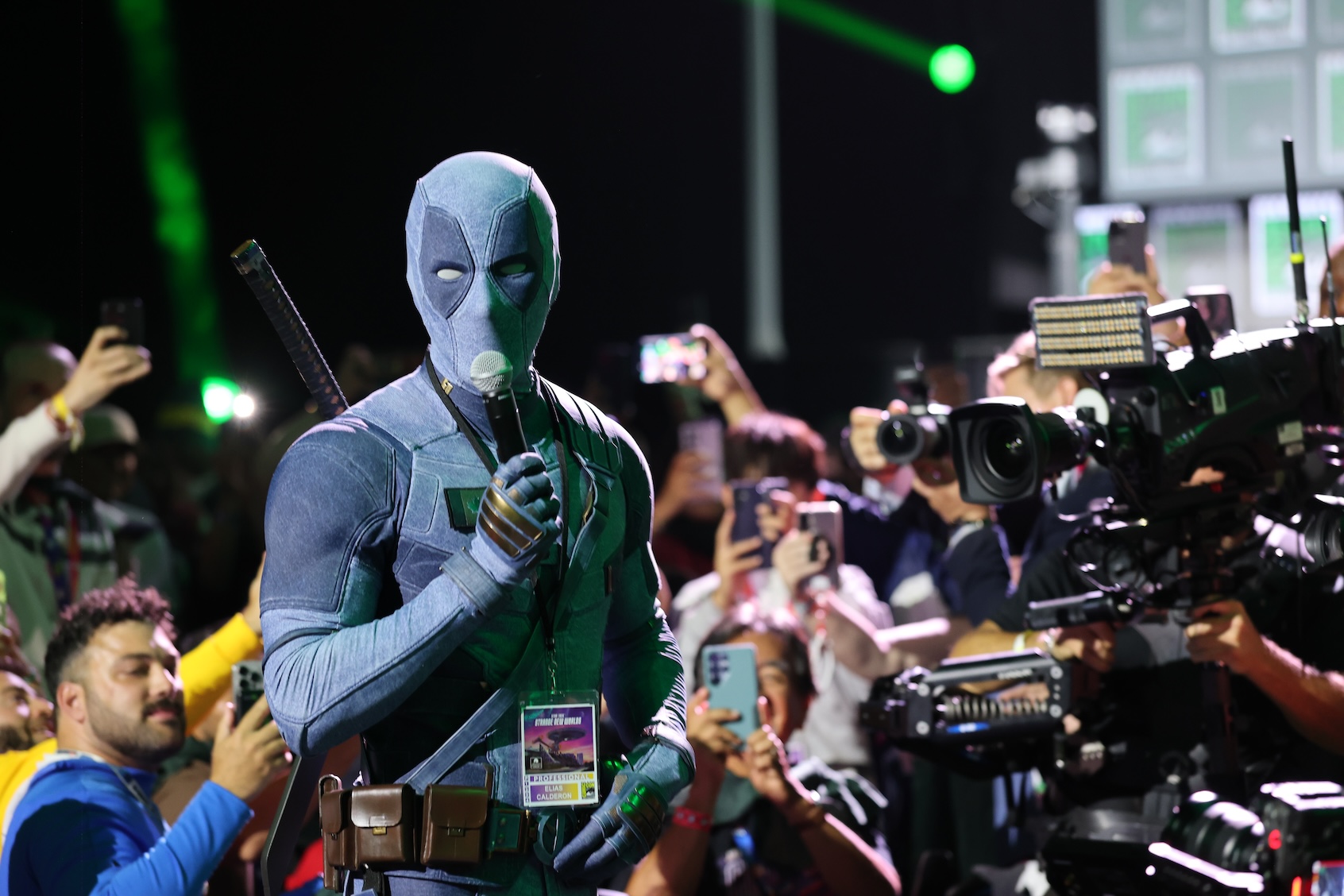
As I walked out of a restaurant, I passed a guy who had the most authentic Deadpool costume I’d ever seen. He was prancing about and really getting into it. Hey, I’m sorry for elbowing you, Ryan Reynolds. I didn’t know it was you. But you did step on my arthritic foot.

As Saturday afternoon turned into Saturday night, I felt like I was detoxing from the Friday night debacle back in D.C. — the rescheduled White House correspondents’ dinner. Late on Friday, my phone started buzzing with alarms from the speech. I feared the worst. But if anything, it was worse. The president was on stage, trolling reporters, insulting his own speechwriters and questioning why he was even there.

I’m sorry for elbowing you, Ryan Reynolds. I didn’t know it was you. But you did step on my arthritic foot.

For an hour, Trump meandered through a variety of subjects in a freak-show  appearance, always landing with an insult aimed at the press. He stood in front of a backdrop celebrating free speech, something no one in his administration actually celebrates. Hegseth has tried to kick reporters out of the Pentagon. Trump has subpoenaed reporters, ejected them from the White House press (or tried to), and never mentions us without saying “fake news.”

“This is so toxic. I’m leaving,” a friend of mine texted me from the event. “I didn’t even want to go.” Well, I didn’t either. But unlike my friend, I don’t have a boss who insisted that I do so.

Instead, I was in San Diego at an event that was nothing like anything in politics. I’ve been to a dozen of those dinners. None were nearly as much fun as Comic Con. And that’s coming from a guy who never read comic books as a kid. The closest I got was Mad Magazine. Oh, yeah: I think I saw a guy who looked like Kevin Hassett dressed as Alfred E. Neuman. “What? Me Worry?”

I’m genuinely sick and tired of today’s politics, and I know I’m not alone. I can only take so much of Trump’s nonsense and divisiveness. “I hate some people,” he said on stage Friday night. My friend called it “toxic,” but I would call it corrosive. It destroys the ties that bind and encourages anger and petulance. It is a modern plague on humanity.

Instead of suffering through that, I watched people of every imaginable race, creed, sexual orientation and color enjoying life. Some of them were dressed as aliens. Some of them might have been aliens. Nobody cared. Nobody judged. 

Saturday night ended with some friends at a barbecue place across from the convention center, a spot  made famous by the movie “Top Gun.”

The weather was amenable and the company was great. I listened as people sitting at a nearby table spoke about who made “the best Batman” with all the fervor and passion I hear from those involved in politics in D.C., but none of the vitriol. After a while they laughed, changed the subject and found something they could agree upon. Their biggest area of agreement was that Ewoks were horrible, just an effort “to give the kids something,” and that while “Stargate” was a terrific movie, “Stargate SG1” was an even better series. 

Other stuff that Comic Con people seemed to agree upon, in no particular order: Grogu is cool, “Rogue One” is the best Star Wars movie and “The Wrath of Khan” is quintessential “Star Trek.” Furthermore, if anyone asks you the airspeed velocity of an unladen swallow, the proper answer is “African or European?”

I looked up from my table, and thought I saw a guy who looked like Hegseth dressed as the surgeon general of Beverly Hills from “Escape from L.A.” kissing his husband, who looked like Josh Hawley dressed up as Mr. Poopybutthole from “Rick and Morty.”

I hadn’t even been drinking but, boy, I felt buzzed.

If only we could all get along like that.

The post What Comic Con cosplay taught me about America’s divided politics appeared first on Salon.com.

  •  

The real reason Todd Blanche won’t drop Trump’s slush fund

Todd Blanche, President Donald Trump’s nominee to be attorney general, promises Americans that he has no intention of going forward with a $1.8 billion slush fund designed to funnel money out of the Treasury and into the pockets of right-wing attorneys. The outcry that followed the Justice Department’s May 19 announcement of the fund, which would pay the legal bills of political allies charged with crimes ranging from fraud to storming the Capitol on Jan. 6, was deafening. In addition to blowback from many congressional Republicans, a federal judge halted the administration’s disbursement of the money, which was created as part of Trump’s agreement with the federal government stemming from his lawsuit  for the leak of his tax returns. Blanche, in his role as acting attorney general, claimed the administration would voluntarily walk away from using the money.

Now, months later, he has resolutely avoided putting this promise in writing, and his failure to formally give up the slush fund is putting at risk his Senate confirmation to permanently head the Justice Department.

The reason behind Blanche’s refusal is obvious: He and Trump want to keep the option to re-open the fund at a later date, along with the ability to write fat checks, paid for with taxpayer money, to the lawyers working on behalf of unsavory right-wing figures.

Blanche knows that world quite well; he has become personally wealthy doing exactly this kind of work.

Blanche knows that world quite well; he has become personally wealthy doing exactly this kind of work. Before taking his job at the Justice Department, first as Pam Bondi’s deputy attorney general, and then as her replacement, Blanche was making millions representing Trump in everything from a civil rape case to criminal fraud. Blanche also knows how such funds pay for that type of work. According to ABC News, between March 2023 and December 2024, his law firm was paid almost $10 million, not by Trump personally, but by a political action committee that was supposed to be funding Republican campaigns. 

Blanche’s nomination is imperiled by his refusal to let go of the chance to flood the coffers of right-wing lawyers defending shady characters like his former client and current boss. Thursday’s vote to approve his nomination by the Senate Judiciary Committee was delayed. Sen. John Cornyn, R-Tex. and Sen. Thom Tillis, R-N.C., both who are leaving the Senate at the end of the year, are threatening to vote no unless Blanche formally commits to rolling back the deal that created this slush fund and also gave Trump and his family eternal immunity from IRS audits.

“This is not popular,” Tillis told the New York Times. “It is killing some of our candidates because they can’t explain it. And now it looks like they weren’t being honest when they said it was inoperative.”

It’s not just a “looks like” issue. Anyone who said the fund was inoperative because of Blanche’s informal say-so is either ignorant or lying. As the Democrats on the House Judiciary Committee wrote in June, Blanche and Trump remain committed to funding a “pipeline of taxpayer-funded payouts to political allies and convicted criminals.” Even the conservative National Review’s Andrew McCarthy agrees, writing on Wednesday that “Blanche has resisted memorializing in writing his claim that the fund is kaput, because President Trump wants the fund.”

The White House has already been funneling taxpayer funds to these bad actors through a slightly different but related process. As the Washington Post reported in June, the Justice Department has paid out millions to Trump allies who claim victimization because they were investigated or even convicted of crimes. The family of Ashli Babbitt got a nearly $5 million check over baseless claims that her shooting death during the Jan. 6 riot was unwarranted, even though video footage clearly showed her climbing through a window in an apparent attempt to chase down congressional members and staff fleeing in fear. On Wednesday, the New York Times reported on a seven-figure check written to Paul Vaughn, who was convicted of a federal crime in 2024 for conspiring to blockade an abortion clinic before being pardoned by Trump last year. 

Vaughn’s legal representation by the Thomas More Society is a reminder of who really benefits if Blanche and Trump succeed in reviving the fund after the midterm elections: right-wing lawyers, who started licking their lips within moments of the Justice Department’s announcement. 


Want more Amanda Marcotte on politics?  Sign up for her free newsletter, Standing Room Only, now also on YouTube or wherever you get your podcasts.


“Everybody’s very excited about it,” Mark McCloskey, a lawyer representing Jan. 6 defendants, told the Washington Post. Even though his clients have been pardoned by Trump, he has been lobbying for the fund, hoping to see a big payday by claiming wrongful prosecution. Such a claim would be all but certain to fall apart in a court of law. But as the existing track record shows, the goal is to get the Justice Department to “settle” these claims by writing checks to people who otherwise wouldn’t see a dime. Clients would get money, but so would the lawyers — especially those who, like McCloskey, would get a cut of check after check. 

At this point, it’s unclear if Blanche would be able to personally benefit from various schemes to pay off Trump’s political allies with government money. He could return to private practice and start taking on those kinds of clients after leaving the Justice Department. By then, though, it’s possible a Democrat will be in the White House again, and will have either shut down the fund or started blocking payments for phony claims made by right-wing operatives. But, as someone who was on a similar gravy train not that long ago, Blanche knows full well how rich his fellow right-wing lawyers could get from this. 

And it’s not just private practice lawyers, either. Groups like the Thomas More Society, Alliance Defending Freedom and other far-right legal nonprofits need funding for their legal crusades, as seen by the lawsuit that overturned Roe v. Wade, or the ongoing cases meant to curtail voting rights or LGBTQ+ equality. Taking on right-wing clients with baseless claims of victimization could be an easy way to get money, which could then be used to fund cases attacking reproductive rights or religious freedom. 

That Cornyn and Tillis are taking this stand is surprising. The pair have a long history of supporting the right-wing legal organizations that could find themselves flush with slush money. As Tillis’s comments about the midterm campaigns show, it may not be anything deeper than a sense that this is politically toxic. Trump’s consideration of withdrawing Blanche’s nomination would be nothing more than a pause until after the midterm elections, when he is banking on new Republican senators to replace Cornyn and Tillis — and put his payola scheme back into action.

It may not even come to that. On Thursday, Senate Majority Leader John Thune, R-S.D., was assuring reporters that Blanche’s nomination would be back as soon as next week, after “a resolution on the issues that Senators Cornyn and Tillis raised.” Thune’s comments suggest that as long as Trump does a slightly better job at deflecting attention from the fund, the two senators can claim victory and give Blanche their support. 

Or perhaps this will really be the moment that Republicans, two of them at least, stand up to Trump for real, instead of just doing so as quickly-dispatched political theater. If so, it’s a hopeful sign that Republicans can read a poll and see his corruption is starting to wear thin, especially for a public struggling to make ends meet while the president enriches himself and his cronies. 

The post The real reason Todd Blanche won’t drop Trump’s slush fund appeared first on Salon.com.

  •  

Your magical burnout cure is in this Miyazaki film

Throughout July, The Swell is celebrating the lasting cultural inspiration of animator Hayao Miyazaki and the legendary films he created with Studio Ghibli. As part of GKIDS’ annual Studio Ghibli Fest, which kicked off in June, you can enjoy theatrical re-releases of some of his most famous works.

Writing about culture means thinking about the world in magical terms. Or maybe it’s just me. I frequently struggle to find the right words to describe the elements weaving together the concrete and the conceptual, so I find it simpler to sum up all that as magic. All of us understand magic. Not everyone believes they have the capacity to express it, which is a shame. That’s why I think everybody needs a little “Kiki’s Delivery Service” in their lives.

Out of all of Miyazaki’s movies, “Kiki’s Delivery Service” may be his most timeless. It’s made for young hearts but also has a way of growing up with us, taking on new meaning when viewed at different life stages.  

“Kiki’s Delivery Service” is not a Hayao Miyazaki original. He adapted it from Eiko Kadono’s 1985 children’s novel about a half-witch who strikes out on her own to fulfill a tradition established by her kind. 

Kiki’s willingness to help others conveys a more important teaching about interdependence as an integral part of independence. Her efforts are acts of caring, moving others to do the same for her.

But “Kiki” holds several themes that recur in Miyazaki’s work. Our titular heroine is only 13 years old when her escapade begins – a little more mature than most of the director’s protagonists, but still innocent enough not to be jaded. Miyazaki’s tales also tend to immerse us in supernatural domains existing parallel to our own, as if reality masks more ethereal, life-affirming realms. Kiki, however, lives in a world that sees magic as part of the natural order, which plunges her into an existential crisis when she loses hers.

To young children, Kiki’s adventure is a simple fantasy about a kid who can fly on her mother’s broom and launches a business with the same enthusiasm that elementary schoolers radiate while running a lemonade stand. 

Once Kiki leaves her village with her constant companion Jiji, a talking cat, she sails through the skies, albeit insecurely. She’s uncertain about her flight capabilities, and even less sure of herself when she encounters a more experienced and stuck-up witch who’s around her age, and who brushes her off instead of propping up her confidence. 

Eventually Kiki ends up in a bustling seaside city that hasn’t had a witch in its midst in many years. After a rough start, including a run-in with an irritating policeman, she lands at the home of a baker, Osono, who gives her a place to stay in exchange for labor and her delivery services.

Since Kiki’s abilities allow her to defy gravity, she runs packages across town, avoiding auto traffic and pedestrian crowds. Her world looks and operates like ours, and that means there are no free lunches.

Osono’s kindness is part of the fantasy, in that she takes in a strange little girl and lets her live in her extra room without asking many questions. But even when Kiki botches a delivery by dropping a toy mid-air, sending it tumbling into a nearby forest, a bit of reciprocal effort solves the problem. Ursula, the artist who lives there, finds it broken and has Kiki scrub her floors in exchange for repairing it.  

I’ve read a few interpretations of the narrative’s emphasis on labor exchange that assume these moments are meant to teach children that labor has value. Maybe. As I see it, Kiki’s willingness to help others conveys a more important teaching about interdependence as an integral part of independence. Her efforts are acts of caring, moving others to do the same for her.

While Kiki’s coming-of-age year as a witch requires her to live on her own, she’s never alone and can’t succeed without other people. That part of the story appeals to the restless adolescent versions of ourselves that can’t wait to find our place in the world.

The third act, however, hits hardest when you’ve lived long enough to lose your mojo and doubt yourself. Kiki meets a boy, Tombo, who is obsessed with flight and, specifically, Kiki’s marvelous ability to fly without the help of a machine. Initially she pushes him away, but Tombo is persistent. Eventually they become friends. And it’s to him that she admits, “Flying used to be fun until I started doing it for a living.”

Soon after that, Kiki wakes up to find her magic is absent. She’s expended so much of it on others that she has none left for herself. She can’t even understand Jiji anymore.

(1989 Eiko Kadono/Hayao Miyazaki/Studio Ghibli, N) A still from “Kiki’s Delivery Service.”

If every Miyazaki movie has a whiff of biographical relevance, one might see “Kiki’s Delivery Service” as his statement of creative purpose and motivation. Who can help a witch who’s lost her flight? A woman who lives alone in a house in the woods, of course – although she’s an artist, not a witch. Ursula’s advice to Kiki is the same as any career coach or mental health professional counseling someone through a crisis of confidence: Stop working so hard, take a walk and look at the world for a while.

“We each need to find our own inspiration, Kiki,” says Ursula. “Sometimes it’s not easy.”


Want more from culture than just the latest trend? The Swell highlights art made to last.
Sign up here


I can’t think of a person who makes a living from their talent that doesn’t feel that way at some point. We call it burnout. To Miyazaki, Kiki’s depletion is a sign that she’s leaving childhood behind. She regains her ability to fly but is never able to communicate with Jiji again. So maybe she doesn’t quite regain her magic but taps into a new version of it.

Magic is a five-letter word that does so much heavy lifting when it comes to describing the essence of what makes something special. Thinking of it that way makes life sweeter, too. Science can explain the world around us, but magic helps us appreciate the wonder in the atomic arrangement of nature, chance meetings with open-hearted souls and kindness without expectation of anything in return. “Kiki’s Delivery Service” has been telling us that since the very first time we saw it, and in new ways with each repeat viewing.

“Kiki’s Delivery Service” is streaming on HBO Max.


The post Your magical burnout cure is in this Miyazaki film appeared first on Salon.com.

  •  

Madison police killing shows accountability can’t stop at ICE

After the killings of Lorenzo Salgado Araujo, Alex Pretti, Ruben Ray Martinez, Renee Good and too many others, a familiar scene is unfolding in Madison, Wisconsin. Following yet another fatal shooting by law enforcement in broad daylight, the streets are full of protesters while social media is aflame with horrifying videos.

The difference is that this time, those responsible are local police — not Immigration and Customs Enforcement.

The United States has watched federal immigration agents wreak havoc and fear in communities, shooting eight people to death in public on the streets since January and allowing more than 50 people in detention to die on their watch since 2025. The nation is justifiably angry, with nearly two-thirds of Americans saying ICE has gone too far. 

Being overlooked is the violence being brought by local law enforcement. On July 22, four police officers in Madison held down Corey Ruiz, a 38-year-old Black man, and shot him three times during an attempted arrest. Tens of thousands have now seen the videos circulating on social media platforms: bystanders screaming in the background, the attempted arrest turning violent within seconds, another person killed by police. 

Ruiz’s killing is a painful reminder that state and local police have been left out of the conversation about violence and accountability.

This is nothing new. Ruiz’s killing is a painful reminder that state and local police have been left out of the conversation about violence and accountability. Much of the country has moved on from the mass protests in 2020 after George Floyd was murdered by a Minneapolis police officer. 

But police violence has never slowed.

Police continue to kill around 1,300 people every year, with at least 689 killings in 2026 already. Much media attention has gone to ICE’s traffic stops, but far less to the 93 people killed by police in traffic stops this year. While the enthusiasm behind police accountability in 2020 resulted in some important changes — including state bans on chokeholds and no-knock warrants — we never saw the “major changes” 58% of Americans called for, including reforms that would protect everyday people from police brutality. Congress failed to pass even modest police accountability legislation in George Floyd’s name after bipartisan negotiations broke down, and most federal lawmakers have shown little interest in returning to the issue.

Under the Biden administration, the federal government remained an important force for police reform, including executive orders that increased accountability and prioritized deescalation and alternatives to use of force. These orders quickly fell after Donald Trump returned to office, alongside consent decrees designed to curb police violence, leaving communities to fend for themselves.

Part of the reason the issue has fallen off the national radar has to do with a (perverse) relative comparison. ICE has made local police look astonishingly well-trained, well-behaved and accountable, leading Senate Democrats to take action. In January, Nevada Sen. Catherine Cortez Masto introduced a bill to redirect $75 billion in federal funding from ICE to local police. Her colleague and fellow Nevadan, Sen. Jacky Rosen, said, “It’s simple: ICE should be held to the same standards as our local police departments.” Rosen and Cortez Masto, and their colleagues like Senate Minority Leader Chuck Schumer are correct, but we should hold ICE and police to a significantly higher standard of accountability.

A majority of voters agree. Extensive polling by Vera Action has found that the most popular position on policing is “supporting police who put their lives on the line for us everyday and holding those who use excessive force or abuse their power accountable.” This message consistently ranks far above simply adding more police officers or funding. The majority position on policing is one of support and accountability — better policing, not simply more policing.


Start your day with essential news from Salon.
Sign up for our free morning newsletter, Crash Course.


Six years ago, the country’s demand for police accountability was subsumed by a muddled debate over “defunding the police” and valid concerns about rising crime. In 2026, we are past that conversation. The country is in the middle of a quiet public safety revolution, in which police departments, despite having fewer officers, are working with partners like mental health crisis response and community violence intervention to drive record-low crime rates.

Many people have become numb or indifferent to — or even defensive of — police violence. But ICE violence continues to shock us. The killing of Ruiz is a reminder that both problems persist — and can be solved with similar measures. As lawmakers propose accountability measures for ICE like better use-of-force standards, ending qualified immunity, improved training and more budgetary oversight, these same accountability measures should apply to police. We should also demand more than the tools, like body cameras, that have failed to stem police violence.

The officers who killed Corey Ruiz should and may face accountability. Madison Mayor Satya Rhodes-Conway said, “Our community deserves full transparency and accountability,” and the killing is being investigated as a homicide. 

But it will be a rare exception. One ICE officer recently told a reporter that the Trump administration has empowered aggressive behavior by officers because they know “they’re going to be protected.” Until accountability becomes the norm across all levels of law enforcement, this violence will continue. 

The message should be clear: If America wants accountability from federal law enforcement, it is time to demand real accountability for police as well.

The post Madison police killing shows accountability can’t stop at ICE appeared first on Salon.com.

  •  

The performing arts can help solve America’s empathy crisis

As The New School’s 2026 class of performing arts graduates enters the workforce and we face the beginning of a new school year, we are reminded of what our students will take into the world. Viola Spolin, one of the great acting teachers of the 20th century, put it simply: “being part of the whole generates trust and frees the player for playing, the many then acting as one.” 

That lesson — how to genuinely inhabit a shared world with others — has never felt more urgent.

Our nation is divided on everything from food safety to our country’s future, and there are numbers to back this schism. Half of Americans report feeling divided from one another; a recent Stanford study gives this fracture a sharper name: the “empathy perception gap.” People have not stopped caring about others, but they believe that no one else does. This misperception carries profound consequences and is currently rippling through our world, eroding trust, deepening isolation and creating a social environment in which empathy is swiftly becoming an atrophied muscle in desperate need of exercise. 

We are living through a crisis of empathy and, more precisely, of empathy not being learned. We live saturated in opinion, reaction and digital noise, a culture that turns other people into content: flattened, accelerated, easy to dismiss. We’re quick to cut off those we disagree with, and the conditions that might allow for empathy to flourish — time, attention, presence and vulnerability — are increasingly scarce. Empathy becomes something we endorse in principle but rarely practice. There is one place, however, where these conditions not only still exist, but are required: the stage.

Actors, musicians and performers train to inhabit perspectives not their own, to remain present through discomfort, and to sustain attention across time. In rehearsal and performance, they develop the capacity to hold another’s reality without collapsing it into their own. Crucially, they do so in the presence of others — before audiences who are themselves engaged in the rare act of collective attention. 

Empathy, on stage, becomes a cornerstone of experiencing live performance that pulls heartstrings, inspires raucous laughter or elicits a collective groan when a poorly-hatched plan falters. For example, in “Hadestown,” the moment Hades allows Orpheus to lead Eurydice back to the land of the living on one impossible condition — he can’t look back to make sure she’s there — converts a moment of positive surprise when the song lands into a dark swell of tension, anxiety and doom. It’s felt between the actors on stage and from the orchestra pit to the last row of balcony seats.

What the ancients understood, and what remains true now, is that empathy can be taught through the sustained act of attending to another’s experience in the presence of others.

Of course, this is not a new function of the stage. When audiences gathered in ancient Athens to watch plays by Sophocles, they were confronting a shared reality together. Theater operated as a civic technology, a structured environment in which a society could examine itself in public. What the ancients understood, and what remains true now, is that empathy can be taught through the sustained act of attending to another’s experience in the presence of others. 

The stage has always taught this, and the evidence of its impact is no longer anecdotal. Participation in the arts has been shown to reduce isolation, improve mental health and strengthen social bonds. 

Broadway is home to several plays that address these issues head-on while bringing deeply human experiences to life in creative, even comedic ways. For example, in “Every Brilliant Thing,” the lone person on stage, currently played by Tracee Ellis Ross, is tasked with cheering up a deeply depressed mom by making a list of things that make life worth living. The answer: bring the second cast member — the theater audience — into the brainstorming session to help them understand and connect more deeply to the very human situation the main character finds himself in.

Programs in social prescribing — the act of doctors prescribing non-medical care — are now expanding from their origins in the United Kingdom to states like Massachusetts and New Jersey — recognize that engagement in shared cultural activity can be a meaningful complement to clinical care. Medical schools, too, have long incorporated the study of performance to develop empathy and observational acuity in future doctors. These practices point to something central: The ability to encounter another person’s experience with care and attention is a skill, and it can be taught.


Start your day with essential news from Salon.
Sign up for our free morning newsletter, Crash Course.


That skill is cultivated through education in the performing arts. Actors and musicians learn to exist and create out of tension without rushing to resolve it. They learn to inhabit perspectives that are not their own, and to recognize the humanity within them. They practice sustaining tension, navigating uncertainty and responding in real-time to others. 

Playwrights from Shakespeare to Sondheim to Manuel-Miranda, meanwhile, write around human emotion while infusing relatability to enrich the audience’s theater experience. But it’s the actors who execute their vision by playing off of each other and leaning into creative impulse when the scripted scene or real-time audience reaction calls for it.

The ability to hold another person’s reality alongside one’s own, without reducing it or rewriting it, requires training, repetition and exposure. Studies have even shown that inhabiting a character increases one’s ability to see from others’ perspectives. And crucially, they do so in the presence of others—before audiences who are themselves engaged in the rare act of collective attention. 

At its best, the performing arts create a space for shared witnessing. Audiences experience a story alongside others, in real time, aware of each other’s presence. Faces clench before pivotal moments of conflict on stage. Eyes tear up when unrequited love leads to isolation or forbidden love leads to death. Our bodies experience excitement and anticipation when hearing musical tension or suspension. Outside the theatre, this collective attention is increasingly rare and necessary. In a society shaped by fragmentation and misperception, the capacity to remain present with complexity is one of the most urgent skills we can cultivate.

A performing arts education does more than train artists to perform. It prepares individuals — actors as well as audience members — to live with tension rather than flee from it, to participate in spaces of collective witnessing and to build communities grounded in attention, responsiveness and critical reflection. It offers a structured, repeatable method for developing empathy as a lived, practiced capacity. At a time when our social contract with each other is fraying, and we speak to Claude or ChatGPT as much as we chat with friends or family, we need more spaces where this work can happen, and more people trained to do it.

The stage is one of the last places where we learn, together, how to be with one another. It may be the most important classroom we have left. 

The post The performing arts can help solve America’s empathy crisis appeared first on Salon.com.

  •  

JD Vance will never be the GOP Obama

JD Vance sees himself in a former president. In a recent on-stage conversation about his memoir “Communion: Finding My Way Back to Faith,” the vice president was apparently inspired when talking about how this politician was a “political genius” and “peacemaker” who pulled America out of an unpopular war. “Young senator, writes some bestselling books,” he said, ticking off a number of shared qualities. “It kinda sounds like JD Vance.”

The vice president was talking about Richard Nixon. But it’s understandable if readers first imagined the face of Barack Obama. As Vance gears up to run for president in 2028, he’s clearly trying to position himself as the GOP’s answer to the 44th president, who remains the most popular political figure in the country.

Vance will likely never say this out loud. It’s possible, though unlikely, that he’s unconscious of it. But following his recent book tour, it’s hard to ignore how much the vice president fancies himself to have the charisma, demeanor and even the wife required to be the GOP’s answer to Obama. 

Vance’s public arrogance certainly suggests he believes himself equal to the former president in both intellect and charm. In this, he’s utterly deluded, nor it is it clear that Republican voters, despite the persistent bitterness over Obama’s continued popularity, would even want a candidate who possesses these traits. Vance may well end up bumbling his way into the Republican nomination, giving him a real shot at the White House, but it would only be because the GOP has a dearth of contenders to replace Donald Trump.

Between his camera-hogging and social media addiction, Vance is ubiquitous. This serves to conceal how thinness of his political resume. Besides his victory as Trump’s running mate, he has won only a single election: the 2022 Ohio Senate race, an easy victory in a mostly-red state. He skipped the line of career politicians, not by beguiling ordinary Republican voters, who aren’t impressed with Ivy League degrees or his tendency to pontificate like a wannabe philosopher-king instead of a baby-kissing politico. It was because of money from tech billionaire investor Peter Thiel and other Silicon Valley types who seem to equate being rich with being learned. 

For tech bosses like Thiel, having a Barack Obama of their very own is an appealing prospect. On paper, Vance seems to check all the boxes. Humble background but an Ivy League education? Check. Gorgeous, accomplished wife who was induced to set her career aside for her husband’s ambitions? Check. A talented wordsmith who writes his own books, and with a bestselling memoir penned before he considered running for office? Check. Youth appeal, down to listening to actual pop music and an agility with 21st century slang? Check. 

Like any cheap knock-off, with Vance the ruse becomes clear at even a cursory examination. The vice president’s long list of Obama-esque attributes read like ill-fated attempts at parody in the real world.

Sadly for Vance, in politics, as in art and sex, it’s less about your stat block and more about your ability to execute. Like any cheap knock-off, with Vance the ruse becomes clear at even a cursory examination. The vice president’s long list of Obama-esque attributes read like ill-fated attempts at parody in the real world.  

When it was published in 2016, Vance’s first book, “Hillbilly Elegy,” got a similar glowing reception to the one Obama received when his debut, “Dreams from My Father,” was published in 1995. Although both authors were only 32, they had lived unusual enough lives to justify memoirs. But while Obama’s tome remains beloved for its nuance and grace, Vance’s book has soured with time as many critics and readers come to recognize the shallow Appalachian stereotypes and conservative agenda it contains. “Hillbilly Elegy” was turned into a 2020 film by Ron Howard, but it is mostly remembered as an embarrassment

The contrasts become worse in looking at Vance and Obama’s second books, both of which were more obviously written with an eye toward running for higher office. Obama’s “The Audacity of Hope,” released in 2006 less than four months before he announced his candidacy for president, is an exemplar of the form, with authentic autobiographical details that remind readers the book was not primarily the work of a ghostwriter. Vance’s “Communion: Finding My Way Back to Faith,” released in June, has mostly raised questions about whether the vice president cares for anything but his own ambition. His high-minded rhetoric about his conversion to Catholicism sounds hollow in light of his willingness to spread racist lies about immigrants and rebuke Pope Leo for opposing war. In a passage a more compassionate editor might have removed, Vance reveals the higher power he seems to actually worship. Of hearing Thiel speak for the first time in 2011, Vance writes he saw the man who would become his patron as “[p]ossibly the smartest person I’d ever met.” 

Obama endeared himself to voters, especially younger ones, by coming off as the cool college professor who manages to sound erudite without being condescending. A former community organizer, he used youthful slang and pop culture references with the same ease he played pick-up basketball games. Vance’s efforts to seem hip come across as forced, as if he has never met a fellow millennial and can only approximate their lingo and cadence from reading old magazine reviews of movies like “Clueless.” 

When it comes to relatability and authenticity, perhaps no better example of the differences between the two men can be seen in their marriages. Both have beautiful wives with impressive careers of their own. Michelle Obama and Usha Vance were arguably more accomplished than their husbands were at the start of their political careers. Both women were openly wistful about having to leave that behind for one spent supporting their husbands in Washington, D.C.


Want more Amanda Marcotte on politics? Sign up for her free newsletter, Standing Room Only, now also on YouTube or wherever you get your podcasts.


The difference is that the Obamas appear to like each other and, especially in the early years of his presidency, had palpable chemistry that induced romantic fantasies. The Vances, however, can’t seem to shake off suspicions that they loathe each other, no matter how many smiles they flash at the camera. It doesn’t help that the vice presidents constantly runs down his wife in speeches, comments he tries to play off as jokes, but which are too hard-edged to sell as jovial. 

Vance has admittedly been getting better in interviews and speeches in recent months. He managed to get through his entire book tour, including a stint on “The View,” without clips of his awkward behavior going viral. That may seem like a low bar, but this is the man whose time on the campaign trail in 2024 is mostly remembered for his angry “cat lady” obsession and an unfortunate incident in which he attempted to seem normal (and failed) while ordering donuts.

Vance will never have Obama’s easy charm. But if he keeps practicing, he might start being read by Republican voters as person-shaped enough to shrug his way into the nomination. 

Ultimately, Vance has erred in a way Obama was smart enough to avoid. The vice president tied himself to another politician whose stink rubs off on everyone around him. Obama’s political talents helped him rise quickly through the Democratic ranks, but his best asset was that he was able to plausibly run as an anti-war candidate, while his opponent for the 2008 Democratic nomination, Hillary Clinton, couldn’t escape her early support for the Iraq War.

Nearly two decades later, the public is yearning even more for an outsider uncorrupted by the failings of the Washington political establishment. Vance, however, didn’t have the foresight to see what should have been obvious: that Trump would make easily avoidable mistakes, like the Iran war, which has resulted in historic disapproval numbers that could well taint everyone who associates with him.

No amount of slang or smug chuckling will be able to get Trump’s stank off the vice president. 

The post JD Vance will never be the GOP Obama appeared first on Salon.com.

  •  

Trump’s great private school handout

The new federal Education Freedom Tax Credit will soon allow parents, including parents earning $500,000 a year or more, to send their children to private schools at public expense. In fact, many of them already send their children to private schools, and they will now be reimbursed by federal tax dollars.

According to the Department of Education, students “from a household with income not greater than 300% of the area’s median gross income qualify.” The EFTC, part of the One Big Beautiful Bill Act passed in 2025, defines “area” as any county, including those with median incomes upwards of $200,000. This encompasses an estimated 18 million school-aged children. EFTC funds will come from donations repaid in full by federal tax credits — money that would have been paid to the federal government in taxes but will now be diverted.

What will this taxpayer money be buying? In North Carolina, which has had a program broadly similar to the EFTC since 2014, 74% of the 143,998 private school students receiving state-funded scholarships had already been attending private schools. A Rand Corporation study of a similar Arizona program found that, just like North Carolina, nearly 75% of the 64,000 students who were awarded money had already been enrolled in private school, or were already being home-schooled, before participating in the program. According to the Brookings Institution, under Arizona’s Empowerment Scholarship Account program, “more advantaged communities are securing a highly disproportionate share of the funds” while “families in the poorest communities are the least likely” to get them.

Over the past five years, the number of states implementing some form of voucher or ESA program has swelled. A 2025 Brookings Institution analysis of six of them found that the problematic enrollment patterns prevalent in North Carolina and Arizona hold true for state programs in general.

Supporters see the EFTC as a remedy for what they often refer to as “failing public schools.” Conservative syndicated columnist Star Parker recently asserted that teachers unions have a “vice grip” on public schools and parents need the opportunity to get their children out of them. As evidence of America’s failures, she pointed to the Organization for Economic Cooperation and Development’s Programme for International Student Assessment, an examination in reading, science and math given annually to 15-year-olds in 80 countries. “The US, she wrote, “ranks 18th behind Poland, Czechia, and Denmark.”

The statistics Parker cites put U.S. students in the top quantile. In 2022, out of 37 OECD countries, American students ranked sixth in reading, 13th in science and 28th in math


Start your day with essential news from Salon.
Sign up for our free morning newsletter, Crash Course.


While America’s education system has problems, these scores are hardly indicative of “failing public schools.” This is particularly true since, unlike most of the countries ranked by the OECD, the student body in major American school districts is overwhelmingly low-income and heavily immigrant. Moreover, our students have to contend with high levels of crime and violence in their neighborhoods; the U.S. has the seventh highest murder rate among the OECD countries. All of these problems inevitably drag down students’ test scores. 

Proponents of the EFTC assure concerned lawmakers and parents the move won’t harm public schools. Yet schools have many fixed costs, such as maintaining, repairing, heating and cooling school buildings, operating cafeterias and managing many administrative functions that cannot easily be scaled down when enrollment declines inevitably reduce funding. 

In 2018, one detailed study of the Los Angeles Unified School District found that 55% of its costs were fixed. While that figure is higher than most, school districts’ fixed costs have been found to be a third of overall district costs at minimum, and generally higher. Moreover, when students leave public schools for private academies, the students left behind are disproportionately special needs students who cost more to educate.

The EFTC’s supporters are correct that schools’ variable expenses — which is primarily the cost of educators and administrators — can be adjusted downward. But they often make this process sound simple and painless. At the Los Angeles Unified School District high school where I teach, this exact type of “adjustment” is happening for the 2026-2027 school year because of declining enrollment. The students’ process of losing teachers they had bonded with, come to trust and looked forward to having again is anything but painless. There were a lot of tears at my school on June 10, the last day of school, not just from students but from many teachers as well.

With messianic zeal, conservatives have long sold school choice programs as a way to liberate low-income and minority children from “failing” public schools. But state school choice programs have turned out just as teachers unions and other critics predicted — as little more than a way to subsidize well-off families whose kids are already in private schools, or who seek to place them there. 

For opponents of public education and teachers unions, these programs come with the added benefit of undermining public schools. The EFTC threatens to expand and accelerate this destructive process.

The post Trump’s great private school handout appeared first on Salon.com.

  •  

Trump and Musk both want to control America’s history

Donald Trump and Elon Musk recently made headlines over an issue we don’t typically associate with this president of the United States and a tech CEO: history. 

On July 22, Musk posted on X, the social media platform he owns, that his generative artificial intelligence model Grok would produce, by year’s end, a feature-length movie of “The Odyssey” that is “historically accurate and true to the art of Homer.” Two days later, Trump issued an executive order mandating that signage be placed on the exterior of Smithsonian Institution museums, alerting visitors to the “inaccurate information” conveyed in the displays within, and directing them to “locations and resources for accurate information regarding America’s history.” Striking in these two apparently unrelated episodes is one word in particular — accuracy — and important lessons museums and historians can learn to combat these attacks on the integrity of historical research.

While frenemies Trump and Musk have a complicated relationship, both continue to be involved in a large-scale transformation of government by means of its fusion with corporate interests, and particularly with corporate investment in AI.

There is an important, material connection between these incidents: AI. While frenemies Trump and Musk have a complicated relationship, both continue to be involved in a large-scale transformation of government by means of its fusion with corporate interests, and particularly with corporate investment in AI.

In the same week that the pair were ranting over historical “accuracy,” Michael Kratsios, the president’s science adviser, proposed overhauling the government’s approach to funding the sciences. His plan would leave that role to corporations and private philanthropists instead. Kratsios is not a scientist; his previous experience includes working at an investment fund run by Peter Thiel and for the Department of Government Efficiency under Musk. Among the priority areas Kratsios promotes for this new funding model are AI, quantum computing and robotics. And on the same day he introduced his proposal, Kratsios announced the winners of research grants from the Genesis Mission, the administration’s AI initiative.

While this push to redirect the country’s scientific research has incited alarm, reactions to interventions in the historical humanities have been more muted. Yet attacks on public museums and on creative retellings of historical narratives are just as dangerous to the health of this country’s democracy.

When he testified on July 21 before the Republican-led House Oversight Subcommittee on the perils of government intervention in the Smithsonian’s activities, David Blight, a professor of American history at Yale University, offered a righteous defense of his profession. Besides highlighting the need for close engagement with history to lead to richer understandings of the past, Blight said it was necessary to disturb the questionable stories — those supposedly incontestable truths that the Trump administration insists are more “accurate” — that have been ingrained in our cultural memory. “If we’re not careful,” he warned, “we will end up with what the great writer Toni Morrison called ‘statist history.’ And it will create what she called ‘sanctioned ignorance.’”

AI has become a blunt instrument in the enterprise to impose precisely this form of sanctioned ignorance about America’s past. The signs Trump proposed for the outside of the Smithsonian suggest vaguely that there is another, more “accurate” history to be found elsewhere, and generative AI is exactly what Musk is proposing to provide this. Taken together, their plans amount to a one-two punch, history in the hands of the corporate state. 


Start your day with essential news from Salon.
Sign up for our free morning newsletter, Crash Course.


The federal government’s prospective disinvestment in the sciences has long been the status quo for the humanities, with corporate foundations and private philanthropy providing the main funding sources. Media outlets have recently been reporting on partnerships between museums, historical image collections and AI firms. A recent Financial Times article pointed to the prevalence of AI companies throwing struggling museums a “lifeline” by promising to bring in new audiences attracted by the prospect of chatbot-led “personalized” tours, along with other glitzy experiments. 

It may be tempting to see value in projects such as the Schmidt Foundation — that’s Eric Schmidt of Google — funding a fellowship in AI at the Metropolitan Museum of Art, or the Musk Foundation’s support of the Scroll Prize to use AI in reconstructing ancient texts in the burnt scrolls of Herculaneum. But these projects are simply two among countless others that have been seeding AI into museums and historical research for well over a decade. Even more egregious is the case of AI companies buying  and destroying rare books en masse in the process of scanning them for data. In the context of the dire austerity we are witnessing, the juggernaut of tech money seems impossible to resist. But the public should know the dangers of ceding the precious work of peering into the past to those whose chief aims are to exploit it for data and build visions of our collective history to their own liking. 

It is a fact that AI is inherently incapable of producing an accurate image of the past. The data on which image recognition and generative models are based rely on statistics and probability to arbitrate the truth. Algorithmic mediation of the past means that the greatest weight will be given to what privileged institutions have already been able to preserve in the greatest numbers. 

In other words, AI is unable to treat evidence — or people — equally with context and knowledge of how that evidence relates to the inequities built into museums and image archives themselves. Yet the more space we grant to Big AI, in partnership with an authoritarian state, into institutions of historical research and public communication about history, the less able we will be to find our way toward historical accounts that have fallen into the cracks of algorithmic data sets. 

No amount of feeding them more data will make them better able to offer a vision of history that is more accurate to the past and an essential part of our striving toward a more equitable future. That fact alone threatens the future of democracy.

The post Trump and Musk both want to control America’s history appeared first on Salon.com.

  •  

The conservative movement’s sporadic anointment of Gen-Z spokeswomen

Emma Waters was first introduced to readers of The New York Times in an April 2025 report titled “Trump’s White House assesses ways to persuade women to have more children.” The piece’s hero image is Waters, sitting on a couch with what appears to be a toddler while, blurred in the foreground, a pair of baby feet dangle into the frame. There is no getting around the fact that she looks incredibly smug. Perhaps any of us would be too if we were being funded and groomed as the next big policy star by the right-wing think tank behind Project 2025.

More than a year later, Waters is the subject of her very own New York Times profile. Mrs. Waters (she’s emphatic that the outlet identify her with this title; it normally goes with a default Ms.) has a lot of confident prescriptions for raising the birth rate without the use of assisted reproductive technology like in vitro fertilization. But when the piece was published, Waters was offended that its writer zeroed in on her domestic aptitude: “The profile made sure to note my homemade raw milk butter — a ‘MAHA elixir,’ as they called it — alongside our sourdough, Vivaldi’s ‘Four Seasons,’ and my request to be called ‘Mrs. Waters,’ Mrs. Waters wrote in a peevish Daily Wire editorial. “My actual work promoting root-cause care for infertility received less airtime.” 

Being anointed the new standard bearer for young woman conservatives might have been a really great gig 5 or 10 years ago, before young women conservatives realized that they are convenient smoke screens for a Republican agenda that no longer bothers to hide its anti-woman agenda.

It’s infuriating when a woman’s accomplishments outside the home are overlooked in favor of her homemaking bona fides. But what if that woman’s work, the work she believes was overlooked by The New York Times, is telling women like her that they should not work outside the home? Well, that is a conundrum that Mrs. Waters, in the interest of avoiding confrontation with her life’s cognitive dissonance, should probably learn to live with.

Waters’ new book, “Lead Like Jael: 7 Timeless Principles for Today’s Women of Faith,” published last March, is not the kind of book that The New York Times considers serious: self-helpish, sentimental, and authored by someone whose policy prescriptions are backed by very little real-world experience. But The Heritage Foundation is investing in Waters, offering a platform for her book, a new podcast, a salary on which to support her husband (currently in his last year of seminary school) and 2 — soon to be 3 — young daughters. 

Being anointed the new standard bearer for young woman conservatives might have been a really great gig 5 or 10 years ago, before young women conservatives realized that they are convenient smoke screens for a Republican agenda that no longer bothers to hide its anti-woman agenda. Before antifeminist tradwives and grandstanding edgelords alike began publicly sharing stories of what happened when they signed on as handmaidens for a regressive, misogynist worldview and then realized, little by little and then all at once, that they weren’t exempt from the regressive misogyny.

Canadian YouTuber Lauren Southern, for instance, was an early adopter of pick-me conservatism whose first video, posted when she was 19, was titled “Why I’m not a feminist.” Southern identified with the irreverent shock tactics that originated in online gaming before taking shape as a culture-war agenda; after her videos began spreading like norovirus, she was hired by Tenet Media, which was later revealed to be a Russian influence operation. 

Southern’s second act was tradwife. “I figured if I just follow the manual of look pretty, wear the right dress, quit my job, have babies, serve my husband, then I will be able to have this happy family life that so many people crave,” she told “On Point” host Meghna Chakrabarti in early 2026, when her memoir, “This is Not Real Life,” was published. Southern was one of the first high-profile women to try and square the circle of being both a godly wife and helpmeet, and the internet’s loudmouthed, outrageous Nazi queen. Her book is disarmingly honest — if not exactly remorseful — about the bleak results, which included drug addiction, mental-health breaks, and an alleged sexual assault involving Andrew Tate


Want more from culture than just the latest trend? The Swell highlights art made to last.
Sign up here


Then there’s former influencer Alice Llani, who started her channel, Alice and Fern, as a peek into the life of an earthy-crunchy, freebirthing, shoe-shunning tradwife. Via TikTok, Llani disseminated conspiracy-coded proto-MAHA fearmongering about sunscreen and vaccines; she shamed women who didn’t or couldn’t breastfeed; she proclaimed that no mother should take their children for pediatrician visits because pediatricians are all pedophiles. Married at 19, Llani was, by age 25, divorced from her controlling and allegedly abusive husband. She also had full custody of her baby and toddler and limited job prospects. “If any woman is considering being a tradwife and dedicating herself to a man,” she told Newsweek in 2024, “I would beg her not to and tell her she is worthy of achieving her own dreams and goals.” 

And there’s 27-year-old Ashley St. Clair, the former Turning Point USA brand ambassador and Elon Musk baby mama, who appeared on Fox News to fret about the declining birth rate and wrote a children’s book, “Elephants Are Not Birds,” with a clear anti-trans message. Since leaving MAGA, St. Clair has admitted on social media that she regrets her previous demonizing of the trans community and that Musk has slashed child-support payments, happily let his fanboys on X create deepfake porn images of her, and has little apparent interest in being a presence in his youngest child’s life. 

In many cases, these women aligned themselves with conservatism because they reveled in being loudly and proudly politically incorrect. “I was in love with the frisson of transgression,” said Anna, one of the disillusioned former believers profiled in Sam Adler-Bell’s March 2026 investigation “The women leaving the new right.” Anna’s thirst to luxuriate in racism, bigotry and woman hating meant supporting the flaccid alpha cope of JD Vance and Tucker Carlson who never missed a chance to paint women as crazy cat ladies who, by suffocating their true feminine nature, made themselves miserable; she told Adler-Bell that she believed she would be grandfathered into this thrillingly transgressive movement in exchange for a chunk of her dignity and self-respect. Instead she found herself biting her tongue around male peers with open contempt for women, existing conditionally in a space where sexism was no longer dressed up in the language of chivalry, protection and life-giving. 

In many cases, these women aligned themselves with conservatism because they reveled in being loudly and proudly politically incorrect.

Former podcaster Alex Kaschuta, who hosted a wealth of reactionary thought leaders on her show “Subversive,” told Adler-Bell that she saw her role as dispensing “this insider perspective on the dark side of female nature from . . . the rare self-aware member of the female sex.” It took the grave mistake of objecting to rank misogyny from her peers to confirm that whatever she wrote, whatever her accomplishments, whatever high-profile New Right icons she platformed on “Subversive” were not enough to overcome being a woman in a movement that believes women are property who must be reminded of their place, lest they forget.

For all these women, it took having terrible, even traumatizing experiences in these movements to make them realize that perhaps it’s not feminist claptrap to believe in equal rights and bodily autonomy. Waters has the confidence — if not the audience — of someone certain that her policy-wonk rigor is insurance against the fate of so many other conservative women thrown under the bus as soon as they became inconvenient.

(Bettmann Archive/Getty Images) Phyllis Schlafly

Waters has taken comparisons to antifeminist activist Phyllis Schlafly as a compliment: After all, Schlafly was brilliant and confident and media savvy too. She was the most prominent antifeminist of her era, yet Schlafly couldn’t outmaneuver her core contradiction: A working mother famous for dissuading other women from working; an ambitious politico who told women that they should strive only to be good wives and mothers. It will be interesting to see what happens when Waters is no longer her family’s de facto breadwinner — when her husband, who is currently in seminary, graduates and assumes his rightful place as head of the family.

And though Waters is one of the Heritage Foundation’s current stars, she is also at odds with the organization’s increasingly radical flank, which includes president Kevin Roberts, chief economist E.J. Antoni, and Senior Research Fellow Scott Yenor, all of whom represent an ideological rift between classical conservatism and wingnut zealotry. In 2025, Roberts defended Tucker Carlson’s chummy interview with pocket Nazi Nick Fuentes and did not expect the pushback he received. Antoni’s nomination to head the Bureau of Labor Statistics was withdrawn in 2025 amid protest from both conservative and liberal economists, a history of sexually demeaning social-media insinuations, and a presence at the January 6 Capitol riots.

And Yenor is a well-known misogynist who has called professional women “medicated, meddlesome, and quarrelsome,” believes employers need to stop emasculating workplaces with consequences for sexual harassment or gender discrimination, and hopes to help repeal women’s suffrage. The Heritage Foundation’s growing tendency toward mask-off extremism threatens to expose its own fraudulence; the think tank’s “original scam,” wrote Paul Krugman, “was designed for a different era — a Reaganesque era in which plutocrats could discreetly leverage bigotry and intolerance to elect Republicans who then delivered deregulation and tax cuts.” 

The platform given to Waters by the Heritage Foundation is prominent, but despite the efforts of The New York Times, her intended audience doesn’t seem to be interested. Or perhaps they’ve simply seen this show before, and already know how it ends. 

That’s not great news for a woman like Waters who hopes, probably sincerely, that men and women can get past differences in the interest of getting that birth rate up. “At the center of every problem, there is a woman with too much power,” wrote Adler-Bell. And the more prominent Waters becomes, the more of a problem she’ll be.

Which is unfortunate, because there are moments in which Waters gets very close to some revelations about when and why women are valued. One of the 7 principles outlined in “Lead Like Jael” is that women seek out the wisdom and counsel of older women on marriage, children, and the Biblical feminine, which bucks the complementarian expectation that husbands guide women’s most important decisions. Elsewhere, she comes tantalizingly close to recognizing the sexism of expecting women alone to bear the brunt of managing reproduction.

Discussing the development of hormonal birth control for men, Waters points out that a study on men receiving regular injections had to be shelved due to the number of men who dropped out after experiencing side effects like acne, moodiness, and weight gain. Her conclusion is a little bizarre: For Waters, the fact that men could not handle the kind of side effects that women regularly experience on hormonal birth control was proof positive that hormonal birth control is inherently bad for women. (Rather than, say, proof of medicine’s prioritizing of men’s physical comfort.)

The platform given to Waters by the Heritage Foundation is prominent, but despite the efforts of The New York Times, her intended audience doesn’t seem to be interested. Or perhaps they’ve simply seen this show before, and already know how it ends. 

Schlafly, were she around today, would probably not be the wise mentor Waters conjures in “Lead Like Jael.” She would not tell Waters that the game she’s playing is rigged, or reveal that a woman can be a bright star in the conservative firmament only with the permission of men. It’s unlikely she’d talk about the cabinet appointment Ronald Reagan dangled in front of her as she worked tirelessly to get him elected, the cabinet appointment she never got. She would believe that Waters has to find out the hard way, just as she did.  

The post The conservative movement’s sporadic anointment of Gen-Z spokeswomen appeared first on Salon.com.
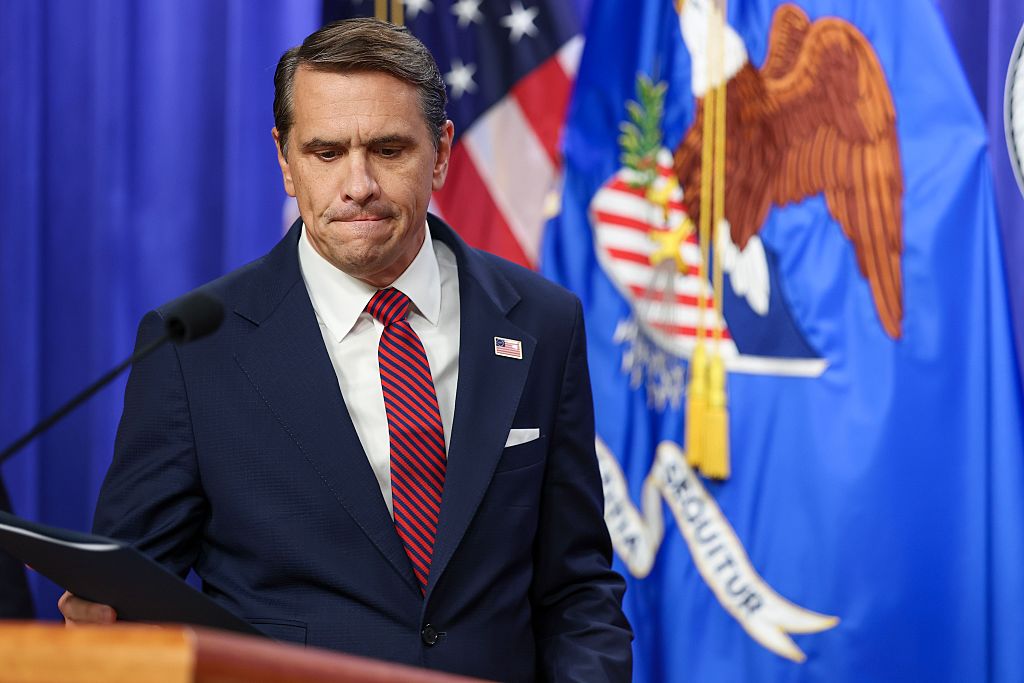
  •  

A former FBI target has the playbook to fight Rubio’s enemies list

On July 16, Secretary of State Marco Rubio led a gathering of over 60 nations to discuss “political terrorism” by leftist organizations. Rubio, whom every Democratic senator voted to confirm, used dehumanizing language to describe the left, deeming them “enemies of civilization.” 

This was followed, on July 20, by the State Department issuing a 100-page report on Cuba’s connection to American leftists in an alleged “campaign of subversion against the United States.” As activists, artists and politicians in the U.S. begin to face increasing charges of communism and even terrorism by the current administration, there are lessons to be gleaned from mid-20th century America, and they are not solely confined to the McCarthy era.

One set of lessons comes from the life of Lillian Smith, the white Southern civil rights activist and best-selling author of “Strange Fruit,” who was the subject of a multi-decade surveillance project conducted by the FBI beginning in the early 1940s. Accused by agents of being a communist or at least a “fellow traveler,” the FBI compiled a 134-page file on Smith — longer than its file on Ernest Hemingway, and nearly as long as the one on John Steinbeck. 

Like many of the artists and activists being targeted today, Smith’s writings advocating peace and equality for all people made her a primary target of the state. From the pro-integration magazine South Today she edited in the 1930s and 1940s to her column in the Black-owned Chicago Defender to her seven books, both fiction and nonfiction, dealing with white supremacy and colonization, Smith challenged the status quo her entire life. 

Putting her career and reputation on the line, and risking more surveillance, Smith chose to place the safety and well-being of others first, and often paid the price.

Smith’s response when her friends and colleagues were threatened by the government offers us a model for our own actions now. Putting her career and reputation on the line, and risking more surveillance, Smith chose to place the safety and well-being of others first, and often paid the price: In addition to book bans and professional blackballing, she lost everything to arsonists in a 1955 fire, and dealt with frequent death threats and other attempted arsons.

In 1942, when one of the leaders of the House Un-American Activities Committee baselessly accused the famous educator and civil rights activist Mary McLeod Bethune of being a communist, Smith sprang into action. She crafted a letter to Congress defending her longtime friend. Bethune believed the letter helped exonerate her from the allegations for which no charges were formally brought, and she wrote to Smith personally to thank her, generously offering to set up an in-person meeting with First Lady Eleanor Roosevelt. 

(St. Martin's Press) Keri Leigh Merritt’s “An Inconvenient Woman: The Extraordinary Life of Lillian Smith, the Southerner Who Defied Jim Crow America” will be released Sept. 29, 2026

The following year the FBI opened a file on Smith, keeping tabs on her travel, her friends and colleagues, and her publications. On the very first page, a memorandum addressed to FBI Director J. Edgar Hoover expressed concern over “a friend of Mrs. Franklin D. Roosevelt” who was known to be “a social uplifter in favor of the Negroes.” That was Smith.

By 1945, the bureau flagged news articles announcing that Smith had joined the Committee for Equal Justice for Recy Taylor, the Black woman whose white rapists were acquitted — twice — in Alabama. In further memos, agents seemed particularly interested in Smith’s association with the Southern Conference for Human Welfare, a group that promoted New Deal-like reforms, likely due to the unfounded allegations of SCHW serving as a communist front.

In August 1949, four years after the end of World War II, HUAC accused Paul Robeson, the artist and activist who was another of Smith’s longtime friends, of being a communist after he stated that Black Americans would not fight the Soviet Union in yet another war. Smith published one of the most empathetic pleas from any white writer of the time: “I cannot see how any white person who has a grain of sportsmanship in him can criticize any Negro, who, in confusion, has turned to communism for the answer that democracy has not yet given.” Communism may not have been the best answer, Smith continued, “but we white folks have not yet given Negroes in the South a better one. Until we do, I wish we had the grace to keep our mouths shut.”

Perhaps a testament to the persistence and power of her work, when the revised edition of Smith’s book “Killers of the Dream” was published in 1962, the FBI clipped an article from the Atlanta Journal announcing she would “be an honored guest at an autograph tea” for the book’s release. The column’s last sentence was undoubtedly the reason for its inclusion in the bureau’s files: “Mrs. MARTIN LUTHER KING, JR., was listed as one of the hostesses of the affair.”

The targeting of Smith — who herself was never a communist, and did not support the party — shows that in times of questionable politics, anyone can be put on a government list by simply advocating for basic human rights, equality and peace. The allegations rarely have anything to do with communism; the term is merely a scare tactic Republicans use when they begin to worry their power is in peril.


Start your day with essential news from Salon.
Sign up for our free morning newsletter, Crash Course.


The Trump administration isn’t being shy about naming names. Rubio’s own “enemies list,” which was included in the State Department report, targeted individuals and groups such as New York City Mayor Zohran Mamdani (for not denouncing the Democratic Socialists of America’s tribute to Assata Shakur, who was convicted of killing a police office in 1973 before escaping to Cuba), journalist Amy Goodman (for attending the wedding of CodePink co-founder Jodie Evans to Neville Roy Singham, the tech tycoon and nonprofit funder who has been accused of financing Chinese propaganda), the Amazon Labor Union, Black Lives Matter, Democratic Socialists of America and the People’s Forum, a community center located in Manhattan. (Full disclosure: I have spoken at the People’s Forum, and I’m scheduled to speak there again this fall). 

As Rubio and the State Department try to dehumanize people who support human rights while ramping up programs to take legal actions against them, Americans with the most power and privilege must act by fighting on behalf of the persecuted, just like Lillian Smith did. 

Smith was committed to fighting hate, in all its forms, with art. Creativity helps form and inspire social movements, and Smith believed that art serves as spiritual and psychological nourishment for activists. She also believed in fighting oppression at the local level, knowing that small actions in our own communities are not only effective and immediate, but they also shut out the despair that often arises in the face of a seemingly unconquerable task. Much like her friend Dr. Martin Luther King Jr., Smith considered love as a generative force essential to overcoming hatred, and believed that the more each of us cultivate relationships based on loving kindness, the harder it would be for hate to prevail.

Noting both the profound sadness and farcical tragedy ahead “if those who are gifted stay silent,” Lillian Smith in 1951 hoped for a better future. It “seems to me a fine time to be alive, in this age of falling walls,” she asserted. “It is an age full of risks but the stakes are high and worth the risk.” 

The same holds true today.

The post A former FBI target has the playbook to fight Rubio’s enemies list appeared first on Salon.com.

  •  

The small-screen seduction of the middle-aged woman

The starkest contrast between two summertime TV hits about women navigating midlife’s challenges shows up in the way its leading ladies handle themselves in the kitchen. For Jennifer Garner’s Hollis Shaw, the influencer around whom “The Five-Star Weekend” revolves, the kitchen is her happy place and moneymaker. Within moments of the series’ opening, she’s sliding a pie in the oven and futzing over tiny tarts and meringue kisses to photograph for her Hungry with Hollis followers.  

Hannah Waddingham’s “Ride or Die” assassin, Judith Burton, earns her pay quite differently: She kills the world’s worst people. To her, the kitchen is an arsenal; in the premiere, she beats two men silly with a stock pot, a skillet and several dinner plates. Later, her best friend, Debbie Claybourne (Octavia Spencer), is shocked to discover that Judith stores a submachine gun in her oven.

Both series meet a cultural moment many middle-aged women would call miraculous, and pharmaceutical and cosmetic corporations would describe as profitable. No generation of 40- and 50-somethings has been as extensively catered to as Gen Xers and geriatric Millennial ladies, for whom hormone replacement therapy, along with the secret ways of retinol, hyaluronic acid serum and collagen therapies, have been normalized.

Every TV show is selling us something: “Five-Star Weekend” markets the expectation of how women should age well and politely.

There comes a point at which a woman realizes she’s a lot closer in age to Diane Keaton in “Something’s Gotta Give” than Amanda Peet, and she’s OK with that. Remember which one got to smash Keanu Reeves’ doctor?

In this economy, though, not many people can afford a house in the Hamptons or Nantucket. But we can vacation vicariously with Hollis and her friends Dru-Ann (Regina Hall), Brooke (D’Arcy Carden), Tatum (Chloë Sevigny) and Gigi (Gemma Chan) to the place Dru-Ann virally nicknames “white person clam island.”

(Greg Gayne/Peacock) Regina Hall as Dru-Ann, Jennifer Garner as Hollis, D’Arcy Carden as Brooke, Chloë Sevigny as Tatum in “The Five-Star Weekend”

“The Five-Star Weekend,” based on Elin Hilderbrand’s novel, is currently topping Peacock’s list of most popular series because of its breezy familiarity; we’ve spent time with these women in past summers, dating all the way back to “Big Little Lies.” You should know the formula by now. They have enviable wealth and careers, except for one who’s relatively less well-off than the rest. A tragedy or a mystery that brings everyone to a seaside locale; here, the sudden death of Hollis’ husband sends her sailing off to her family home on Nantucket, where all the interiors are as creamy and dreamy as a Nancy Meyers film. And there must be romance, represented in Hollis’ conveniently single high school sweetheart, played by the perennially foxy Timothy Olyphant.

Everybody’s hiding something from themselves and their host, who has planned all their fun with a pathological degree of anal retentiveness. There is a spa trip and fancy dinner at a restaurant and behind it all, lurking silently, a cancer scare.

If the “Five-Star” crew were to meet “Ride or Die” duo Debbie and Judith at a pub, they’d have war stories to swap. Debbie is a politician’s wife who sidelined her career aspirations to support his ambition to be Prime Minister. She gets him within spitting distance of Downing Street just in time for her husband to dump her.

You think that’s bad? How about this: Hours before that happens, Judith’s younger handler Sam (Calam Lynch) invites her to retire over lunch, suggesting that her recent 50th birthday might have made her a little psychologically unstable. “My mum turned 50 last year,” he shares, “and she went absolutely insane!”

The funniest part of that conversation is when Sam labels Judith a WOACA, a Woman of a Certain Age, pronouncing it as if he were Fozzie Bear punctuating a joke in an old-timey stand-up set. Only the real joke, it seems, is that Judith assumed her mission-completion rate and dedication were enough to maintain the respect of Sam and their boss, played by Bill Nighy. Not so.

(Courtesy of Prime Video)

There’s an additional slathering of irony in Garner, the woman behind “Alias” superspy Sydney Bristow, playing the happy homemaker. Meanwhile “Ride or Die,” created by Tessa Coates, introduces Waddingham, the elegant and proper boss lady from “Ted Lasso,” by showing Judith trading an easy assassination by distant sniping for an up-close-and-personal stabbing. Just for the fun of it.

I’d say that’s a pretty good representation of the gap between the long-shot fantasy of midlife and an intimate understanding of how it actually turns out.  

As every perimenopausal woman knows, it’s really hard to relax when so many people in the world deserve to be punched.


Every TV show is selling us something: “Five-Star Weekend” markets the expectation of how women should age well and politely, which is to propose we seek respite from all the heartbreak, ageism and our creeping fear of obsolescence and decrepitude by leaning on our nearest friends. That, and sitting in salt rooms and mud baths or gazing at the bottom of our stand mixer’s bowl. Expressing our rage at all that, however, is still frowned upon.

That makes Debbie and Judith relatable and extraordinary figures, in that they are 50-something women, played by 50-something women headlining a high-velocity espionage thriller, linked to developments each is entitled to be angry about. Instead of proposing Waddingham as a Bond co-star, she’s the expertly skilled agent flanked by a best friend with an equally formidable intellect – the Moneypenny to her 007.

With the scrape Debbie and Judith find themselves in, a beach holiday is out of the question. Besides, as every perimenopausal woman knows, it’s really hard to relax when so many people in the world deserve to be punched.

“Ride or Die” reminds us that our local multiplexes used to be dominated by buddy action blockbusters in past summers, most of which starred men.

An exception was “Thelma & Louise,” which became the talk of the season and then year when it landed in theaters 35 years ago in May. Susan Sarandon’s Louise and Geena Davis’ Thelma spurred debates about what it meant that this film, written by a woman, created two female folk heroes out of the cold-blooded killing of a would-be rapist. Feminists loved it, but plenty of other women viewed it as improper.

It only occurred to me recently that Sarandon was 44 years old when she played Louise, the pal who pulled the trigger. I wasn’t thinking about that when I first saw “Thelma & Louise” because my 40s were far away enough to not even consider that detail. Now I know how much it matters.


Want more from culture than just the latest trend? The Swell highlights art made to last.
Sign up here


Ultimately, what sisterhood there is between “Five-Star Weekend” and “Ride or Die” can be seen in the way they consider the resources a woman has as she enters middle age. If we are “Five-Star”-fortunate, we can hire assistance to handle the inevitable difficulties associated with this time of life, whether that means groundskeepers or divorce lawyers. Would that were possible for all of us.

“Ride or Die,” for all its fanciful twists, ultimately has more realistic counsel for all the WOACAs watching: Bank on yourself and your extensively earned skills. You don’t need to be rich to burn the road behind you to the point of no return, just confident enough to keep barreling forward. And if you’re really lucky, you’ll have a trustworthy person riding shotgun in your getaway car.

The post The small-screen seduction of the middle-aged woman appeared first on Salon.com.

  •  

Trump’s foreign policy enters its decadent, desperate end stage

It’s tough to find any semblance of a silver lining in the humiliating implosion of Donald Trump’s foreign policy over the last year, especially after a week that has brought us another escalation of the war no one supports, a recycled trade war with Canada, an out-of-nowhere nuclear deal with a country that should never have access to nuclear weapons, and yet more threats against a small nation that poses no threat to the United States. 

But here’s the upside, just maybe: The tiny and perverse cadre of “anti-anti-Trump leftists” has been decisively silenced. If you find that phrase baffling, consider yourself fortunate. You evidently haven’t wasted any of your one wild and precious life arguing with renegade Marxists about whether the Trump-Putin alliance, in world-historical terms, was “objectively” superior to neoliberal internationalism on the Clinton-Obama model. 

If this is a safe space, I will admit here that at one time I was around one-third vulnerable to such arguments. I don’t mean the part about Trump being a force for progressive change in any sense, even if entirely by accident, since that was obviously and hilariously wrong, not to mention based on the same “enemy of my enemy” pretzel logic that produced the disastrous Nazi-Soviet pact of 1939. But on the level of a sophomore-seminar intellectual exercise, I could understand why self-appointed contrarians like Julian Assange and Glenn Greenwald saw Trump as a disruptive force who might upend the softcore imperialism of the previous three or four decades, which had led to the “forever wars” in Iraq and Afghanistan and the global hegemony of corporate capital. 

You didn’t have to be an unregenerate Leninist or an online troll or a Pat Buchanan-style paleoconservative (or all three at once!) to be momentarily seduced by Trump’s “America First” nonsense. Disgruntled Americans of all varieties voted for Trump by the millions, based in large part on his populist, isolationist rhetoric. Maureen Dowd’s notorious “Donald the Dove, Hillary the Hawk” column from 2016 should be inscribed above the gates of one of the lower circles of hell as a permanent warning to know-it-all media commentators. 

It was, of course, immensely helpful to Trump’s agenda of fabrications, exaggerations and outright lies that we experienced the failings of mainstream U.S. foreign policy all over again during the strange interregnum of Joe Biden’s presidency, with its pious invocation of a “rules-based order” — where the rules are set by America, of course — and its theological commitment to a now-entirely-imaginary “two-state solution” in the Middle East. Several things can be said in retrospect about Biden’s fateful embrace of Benjamin Netanyahu on the Tel Aviv tarmac after the Oct. 7 attacks: It was an authentic and heartfelt gesture, it was a grievous political error and it paved the way for a humanitarian catastrophe now widely perceived as genocidal. 

Joe Biden; Benjamin Netanyahu

(GPO/ Handout/Anadolu via Getty Images) Joe Biden is welcomed by Benjamin Netanyahu at Ben Gurion Airport, Oct. 18, 2023.

Trump’s return to power has, at the very least, finally confounded all the doofuses who ever took anything he said at face value, and has also dispensed with the contradictory or two-faced rhetoric of the Biden years. There’s no more talk of universal human rights or the spread of democracy. The fundamental logic of Trumpian policy is cynicism all the way down: We don’t care about any of those things and we never did. To paraphrase Stephen Miller, surely the most instrumental figure in the Trump White House, the only thing that matters is power. 

Maybe we should be grateful for the epic and reckless corruption of this administration, since Miller’s ambitious schemes to reshape America and the world as a white-supremacist wonderland are consistently undercut by the enormous levels of graft surrounding him. (Miller strikes me as a true believer whose corruption is moral rather than financial, one of many traits he appears to share with Joseph Goebbels.)


Want more sharp takes on politics? Sign up for our free newsletter, Standing Room Only by Amanda Marcotte, also a weekly show on YouTube or wherever you get your podcasts.


As the Trump administration veers unsteadily into its lame-duck phase and a likely midterm wipeout, its quest for a legacy achievement becomes increasingly pathetic, not to mention increasingly dangerous. Trump’s dance of death with the Iranian regime might have a comical aspect if the lives of many thousands of people and the future of the global order were not at stake. By goading the president into restarting the war for the third time (by my count), the new roster of hardline leaders in Tehran, at least for now, have strengthened both their domestic control and their international reputation. It’s difficult to imagine, in fact, how Trump and his ludicrous cast of advisers could possibly have screwed this up worse than they did. (D.C. rumors suggest that high-testosterone “Secretary of War” Pete Hegseth will ultimately be compelled to walk the plank over this fiasco.)

Maybe we should be grateful for the epic corruption of this administration, since Stephen Miller’s ambitious schemes to reshape America and the world as a white-supremacist wonderland are consistently undercut by the enormous levels of graft around him.

Meanwhile, the search for something that can be pitched to last-ditch MAGA loyalists as a victory, no matter how petty and insignificant, continues. Trump has never given up on his dream of seizing or annexing Greenland, but it was always more like an extortion scheme or a real estate scam than a military threat. Roughly the same applies to his improvised plan to rebuild Gaza as a Trumpified new Riviera, which took even Netanyahu by surprise and was never likely to escape the uncanny valley of AI fantasy. 

I’m inclined to feel similar about this week’s reports that Seb Gorka, an unhinged far-right free radical with some sort of roving-ninja role in the Trump White House, is urging a military assault against Islamist militia groups in Mali, a West African nation with complicated internal dynamics and no relationship whatever to U.S. national security. Again, this might be amusing if real human lives weren’t at stake, and if billions in taxpayer dollars appropriated by Congress for aid to impoverished countries like Mali weren’t being diverted to right-wing nationalists, white supremacists and anti-LGBTQ groups instead of humanitarian and healthcare NGOs. (Read this ProPublica report for more on that.)

Things have truly gotten dark if we’re looking to JD Vance and Marco Rubio as the proverbial adults in the room, managing the worst impulses of their increasingly disinhibited and incapacitated boss. I don’t know which of those two geniuses signed off on the reported nuclear deal with Saudi Arabia, which may fall apart, goddess willing, under the weight of its impromptu idiocy and the fact that literally no one thinks it’s a good idea. Mohammed bin Salman, that kingdom’s journalist-murdering leader, is roughly the last person in the world who should have access to nuclear materials. If this deal goes through, it could rank among the very worst of Trump’s foreign policy blunders. Of course there’s still time for more. 

The post Trump’s foreign policy enters its decadent, desperate end stage appeared first on Salon.com.

  •  

Pete Hegseth’s Iran war math doesn’t add up

Defense Secretary Pete Hegseth is a busy man. When he isn’t working out with fellow Cabinet members and denying promotions to Black and female officers, he’s making videos ordering the troops to take testosterone tests to prove they are manly enough to serve their country. He’s fighting the culture war morning, noon and night. When he can find the extra time, he’s also running the Pentagon as it wages war in Iran, commits murder on the high seas in the Caribbean and prepares to invade Cuba — and possibly Mali and Greenland. Hegseth has a lot on his plate. 

That includes demanding a $454 billion increase in the 2027 Pentagon budget, which brings the total request to nearly $1.5 trillion — a 44% increase from the previous year. Hegseth has called this a “generational investment” that comes out roughly to all of U.S. military spending in World War II. You might think that it’s because of Donald Trump’s war in Iran and all the munitions the military is going through, but you would be wrong because, like most wars, it is paid for separately from the Pentagon budget through emergency supplemental requests.

During a combative appearance on Tuesday before the Senate Appropriations Committee, Hegseth asked for another $67 billion in supplemental funding for the rest of the budget year. But the shock of that request paled in comparison to another number. Hegseth estimated that the Iran war has cost $37.5 billion so far, far higher than the $30 billion figure the Pentagon only recently gave to lawmakers. 

That number is astounding on its own, but according to most sources and experts, it significantly lowballs the war’s true cost, which continues to mount. NBC News reported that, according to internal estimates by the Defense Department peg the amount at $80 billion to $100 billion. 

It’s not unusual for administrations of both parties to bulk up the Pentagon budget, although the Republicans have always been the most passionate about it. But this is beyond the wildest dreams of Pentagons past. With all the cuts the Trump administration has made to everything else in the government, you’d think they would be a little less greedy. But that’s not how they roll. In Trump’s first term, military spending was profligate, and this time it’s a free-for-all.

Hegseth is basically asking for an unlimited supply of money to finance an extremely unpopular war and such “generational investments” like the “Trump-class battleships,” otherwise known as the Golden Fleet. We needn’t worry that they are being irresponsible, though. They are committed to rooting out “woke” wherever they find it, and that will surely save a few bucks somewhere down the road.

When the senators asked him why the Pentagon needed all this extra money, Hegseth fell back on the Trump administration’s catch-all explanation: “Joe Biden did it.”

When the senators asked him why the Pentagon needed all this extra money, Hegseth fell back on the Trump administration’s catch-all explanation: “Joe Biden did it.” In this the secretary was correct. Biden requested military funding for Ukraine through emergency supplemental requests. But the Trump administration has created an unprecedented innovation. In partnership with MAGA allies on Capitol Hill, they are trying to get it passed through the reconciliation process, which cannot be filibustered but is subject to ruling by the Senate parliamentarian, who can strip the provision if it is determined to be non-budgetary.

The U.S. is running through its supplies of expensive precision-guided munitions and air-defense interceptors at record pace in the Iran war, and there are concerns that reduced inventories are going to affect readiness in case the country is drawn into a war it didn’t choose. Hegseth, though, would not cop to that, insisting instead that all was well — and that the Pentagon just needed more cash to fix up the depleted military Biden left them.

House Republicans have proven more pliant. On Wednesday, by a margin of 216 to 212, they passed a $1.15 trillion defense bill to cover some of what the White House is requesting, adding some juicy extras for artificial intelligence and other tech-bro projects led by the private-equity types who are running much of the Pentagon these days. According to Guardian, one of them, former Uber executive Emil Michael, the Pentagon’s undersecretary for research and engineering who is an aggressive promoter of AI, made a profit of up to $24 million by selling a private investment he held in xAI, Elon Musk’s AI company, earlier this year. (In March 2025, Michael declared the value of his stake at between $500,000 and $1 million.) Since the company isn’t public, no one is quite sure how he came to own the shares or who he sold them to, but it shouldn’t come as a surprise that the defense department entered into two separate contracts with xAI before Michael sold his shares. 


Start your day with essential news from Salon.
Sign up for our free morning newsletter, Crash Course.


He’s not the only one who appears to be milking the military-industrial complex. The Washington Post reported that Donald Trump Jr. and Eric Trump, the president’s eldest sons, have a portfolio of tech companies that are raking in billions from the Pentagon. These are not businesses with which the Trumps have any experience, and the partnerships and investments have all been initiated since their father became president the second time. Don Jr. has said publicly that he works with Hegseth to steer more contracts to drone manufacturers, of which he is a beneficiary. Both brothers are heavily involved with firms that have contracts all over the Pentagon. They insist, though, there’s no conflict of interest and no one in the department has even considered favoritism.

As usual, Hegseth behaved like a teenage bully during the Senate hearing. He argued with senators, blamed Biden and insisted that America has won the war in Iran while simultaneously requesting many more billions to win it. Since the GOP is attempting to push this supplemental package through using reconciliation, they won’t need Democrats to pass it, so one can probably expect that he’ll get what he wants. The firehose of money flowing to the Pentagon and all the insiders who are making massive bank from it isn’t going to dry up any time soon. 


Hegseth ended the week with a gratuitous gesture to his commander in chief, who spent a good part of his time explaining that the 18 deaths in the Iran war are nothing compared to all the deaths in previous wars. To make Trump feel better, Hegseth removed from the tally four troops who were killed in renewed fighting, bringing the official death toll back down to 14. Military officials told the New York Times that “one reason behind the change was . . . because their deaths occurred after President Trump declared a cease-fire in the war in April.”

Nonetheless, Trump attended the dignified transfer of the four fallen soldiers’ remains and concocted a story to burnish his war lust. “All of them said very strongly, ‘We cannot let Iran have a nuclear weapon.’”

Sure they did.

The post Pete Hegseth’s Iran war math doesn’t add up appeared first on Salon.com.

  •  

How Holden Caulfield became a performative male

Somewhere in the halcyon years of internet writing, I read — or, at least, I remember reading — a piece titled “Holden Caulfield was the first millennial dipsh*t.” I’m almost positive this piece existed, and the fact that I couldn’t find any mention of it in the sad, hollowed-out husk of the 2026 internet offers no proof that it didn’t. What did turn up are a newer generation’s takes on Holden, many of them unexpectedly harsh: He’s “the most insufferable character ever written,” “an entitled brat,” the “original ‘needs to touch grass’ guy,” a “clueless rich kid who’s never had to try,” a “self-important, spoiled and worthless little sh*t,” and “an emo narcissist with an inflated sense of his own self-worth.” 

Millennials were the first generation to anoint old Holden as “problematic” — a 2009 New York Times piece titled “Get a life, Holden Caulfield,” quoted educators who still taught “The Catcher in the Rye,” a book that turns 75 this year, and was once a standard in the English curriculum for grades 9–11. One educator said that, when she taught at a public charter school, “I had a lot of students comment, ‘I can’t really feel bad for this rich kid with a weekend free in New York City.’” A teacher who taught the book over 3 decades noted that “Holden’s passivity is especially galling and perplexing to many present-day students . . . “[T]hey do not have much sympathy for alienated antiheroes.” And one recalled a boy telling her, “We just wanted to tell him, ‘Shut up and take your Prozac.’”

One of the timeworn accusations against Holden Caulfield is hypocrisy: This guy calls everyone else phony, but he’s just as phony!

Reddit threads and Goodreads reviews suggest that Gen Z has similar smoke for Holden, which makes sense when you consider that for these kids, active-shooter drills are as much a part of grade school as multiplication tables, and creepy full-grown adults are sliding into their DMs asking for nudes. You can’t really blame them if their response to the self-absorbed internal monologues of an unreliable narrator is, Oh, boo hoo. Get some real problems. 

But they’ve got another bone to pick with Holden Caulfield: He is being used as a prop by performative men to impress those around him. “Among Gen Z, books have become a symbol not of intelligence but of ‘hotness,’ an accessory to be worn with a good outfit, wedged in the bottom of a designer bag or pretentious tote,” wrote one young woman in a piece for the Times of London. And she has some pitiless words for the callow young men toting “The Catcher in the Rye” pretentiously around: The book, she writes, “has become a go-to summer read for incel types who overly identify with the petulant protagonist Holden Caulfield . . . [W]henever [my friend] sees a man with J. D. Salinger in hand, she assumes he must still be at school: ‘It screams English literature A-level.’” Another piece, this one written by two Gen-Z women, posits that Holden himself is “the ultimate performative male.” 

This take is ungenerous but not surprising, given that one of the timeworn accusations against Holden Caulfield is hypocrisy: This guy calls everyone else phony, but he’s just as phony! It did make me wonder, though, whether Gen-Z readers who are assigned “The Catcher in the Rye” still get the same decontextualized introduction to the book as I and the rest of Gen X did. I don’t remember how old I was the first time I read the book, but each time I’ve returned to it as an adult, and there have been a few, I reach the end thoroughly baffled. Are students still introduced to “Catcher” as a novel about disaffection and anomie rather than one about grief, trauma and other things that were absolutely not talked about in Salinger’s day and rarely talked about in mine? And if so, why? 


Want more from culture than just the latest trend? The Swell highlights art made to last.
Sign up here


The idea that the art can be separated from the artist has never made sense to me — and the way it was foregrounded within the cultural discourse of #MeToo too often felt like a disingenuous avoidance of the clear reality that great art has been made by people who cause profound harm to others. “The Catcher in the Rye” is a text that is flatly impossible to decouple from its author: A book about trauma written in the midst of trauma by a traumatized man. This doesn’t mean that anyone reading the book needs to know Salinger’s whole deal, but both its creation (much of it was written during World War II, when Salinger served as a counterintelligence agent and was one of the first G.I.s to see the human toll at Dachau) and its wild commercial success (which repelled the author and led to his withdrawal from public life.)

Are students still introduced to “Catcher” as a novel about disaffection and anomie rather than one about grief, trauma and other things that were absolutely not talked about in Salinger’s day and rarely talked about in mine? And if so, why? 

As Mikki Halpin noted in these virtual pages following his death in 2010 at the age of 91, Salinger’s quasi-hermithood, among other things, gave cover to his relationships with inappropriately young women; his desire for privacy was inflated into mythology by a “literary establishment,” Halpin wrote, whose collective investment “in the fictional, reclusive Salinger . . . is a convenient cudgel with which to silence any discussion of Salinger’s personal life, particularly any revelation of unsavory truths.”

I would add that the Salinger myth also delayed a reckoning with his most famous character’s mental health. Gen Z men are not the first to use “The Catcher in the Rye” as a prop, after all: Years before I read it, I knew it only as the book Mark David Chapman was carrying when he assassinated John Lennon in 1980 and that, in 1981, was left in the hotel room of John Hinckley Jr. shortly before he attempted to assassinate Ronald Reagan. (In 1989, it resurfaced in another high-profile shooting when Robert John Bardo murdered actor Rebecca Schaeffer, dropping his copy as he fled her Hollywood home.) There’s been plenty of skepticism about whether the latter two were Chapman copycats rather than murders actually inspired by the book. Either way, reluctance to associate either Salinger or his most indelible creation with crazed murderers meant keeping their own wounds at arms’ length. 

(MANDEL NGAN/AFP via Getty Images) “The Catcher in the Rye”

This is, in part, why I’m surprised at Gen Z’s dismissal of Holden Caulfield as a whiny white rich-kid hypocrite. This cohort has come of age having open conversations about mental health that were unthinkable as recently as 4 decades ago; they understand the way formative traumas burrow into the minds and bodies of those affected and eventually grow unmanageable. I can definitely understand why there might not be, let’s say, a surplus of empathy for a privileged young man carelessly and repeatedly squandering his expensive education. But brushing by consequential facts of Holden’s life — parents who treat him as an out-of-sight-out-of-mind problem, the death of his brother, the suicide of his classmate, a history of being molested by older men — to call him performative feels awfully heartless for a generation this conversant with how trauma works. 

Listen, I don’t know anyone who liked Holden Caulfield the first time they read the book, probably because he is not supposed to be particularly likable; Salinger wrote the book for adults, not teens. But reading “The Catcher in the Rye” as an adult, and again as the parent of a Holden-aged boy, has made me realize that if the circumstances in which young readers meet the character have been slow to change, and the lens on him informed largely by a calcified reputation of youth in revolt, that’s on the adults in the room who, like the adults in his life, can’t hear everything he’s telling us.   

The post How Holden Caulfield became a performative male appeared first on Salon.com.

  •  

“Remake” will shift your perspective on grief

Early in his extraordinary new documentary, “Remake,” seasoned filmmaker Ross McElwee reminisces with his young son, Adrian, about their travels together, presenting McElwee’s films at various festivals around the world. “What’s your favorite place that we’ve been to, Adrian?” McElwee asks his son in the archival footage. Adrian recalls a snafu from the Munich Film Festival, but can’t quite remember the details. McElwee explains that the numbers on his film reels were mislabeled, causing extended confusion as they tried to put the footage back in the correct, chronological order. Still a child, Adrian looks off into the distance, biting his gelato spoon while registering the information.

Then the footage burns out, replaced by shots of Adrian across his youth, preserved in celluloid amber: raking leaves on an autumn afternoon, waving a sparkler around in the summertime, looking at himself in the mirror as a baby. McElwee’s voice, more mature and stoic than before, fades in. “The story I thought I was telling with my filmmaking, the stories of lives lived over decades, is now disjointed, confused — the reels are all out of order,” he says. “First there is a father, and he has a son: me. But then it starts all over. I am now father, and I have a son: you. But something goes awry. Something goes off-script. And then, suddenly, you’re gone.”

“Remake” is McElwee’s first film in 15 years, appearing like a jewel out of a mountain of life’s rubble. His extended absence from filmmaking was necessitated by Adrian’s death in 2016 and the monumental torrent of confusion and emotional displacement that followed. McElwee’s last documentary, 2011’s “Photographic Memory,” saw Adrian as a young adult, trying to come into his own and figure out his place in life amid a shifting social landscape riddled with digital black holes. 

(Music Box Films) Adrian McElwee in “Remake”

McElwee stitches together the past and present to find new meaning in their seams, a jagged line that runs through time and points toward the future. To call his latest film a contemporary masterwork would be true, but there’s also no quantifying the magic McElwee conjures here, no comparing it to anything else.

In that film, McElwee set out to reconcile his somewhat fractured relationship with Adrian, who’d become distant and disillusioned compared to his spritely, curious youth, by traveling back to France, where he worked as a photographer’s assistant in his early 20s. In retracing his steps, McElwee sought to understand Adrian better, to comprehend the grasp digital media had on his son in contrast to his own fascination with the analog film camera he frequently used to capture his family, both for his own memories and for his documentaries. In “Remake,” McElwee laments the hope that making “Photographic Memory” gave him, an aspiration that he was depicting his son on the cusp of finding his way through the dark. “The film might’ve been shot as a documentary,” McElwee says, “but now it’s fiction.”

“Remake” may be the story and study of a tragedy. But McElwee’s nonlinear construction and brusque, confessional narration slowly transform the film into something much deeper, a poignant work of art that instantly yet subtly aligns itself with the great stories of our time. His mission is unassuming. This is a film McElwee feels compelled to make, as if it were something living inside of him that had to be excised by any means necessary. 

Like all grieving, it is complicated and disordered, and beautifully so. McElwee stitches together the past and present to find new meaning in their seams, a jagged line that runs through time and points toward the future. To call his latest film a contemporary masterwork would be true, but there’s also no quantifying the magic McElwee conjures here, no comparing it to anything else. “Remake” is a truly singular piece of art, a self-reflexive rumination on life and the result of all its passions. It is memory embodied.

Sometime in the 2010s, McElwee received a call from director and producer Steve Carr, who wanted to explore remaking his breakthrough documentary, 1986’s “Sherman’s March,” into a narrative film. “Sherman’s March” loosely explored McElwee’s hapless search for love during a trip to his native South, where he planned on making a film about a Civil War campaign through the area. Along the way, the movie became less about American history and more about McElwee’s family and his experiences with religion and relationships. 

Carr, the director of fun-for-the-whole-family crowdpleasers like “Daddy Day Care” and “Paul Blart: Mall Cop,” didn’t exactly seem like the best candidate to take on something as intricate as “Sherman’s March.” But at the time, a teenage Adrian, hoping to break into the more commercial side of the film business, was vexed by his father’s reluctance to pursue Hollywood money-makers. So, in hopes that a remake might bring the two of them together in some way, McElwee signed the rights to “Sherman’s March” over to Carr, with a condition: McElwee would be granted access to produce a making-of documentary about the new film. McElwee set up his camera to film himself the day he signed the contract. He preferred an easygoing static tripod shot — a point Adrian contested, as is shown in the film. After some back and forth, McElwee relented, letting Adrian try his slow zooms and dynamic shots. The final product in “Remake” is a combination of the two styles, with the loving squabble between a father and his son left in the middle. 


Want more from culture than just the latest trend? The Swell highlights art made to last.
Sign up here


“Remake” is often startingly honest in this way. McElwee refuses to scrub the truth from his personal histories, choosing instead to confront his own regrets head-on. His regret lingers alongside his grief, allowing the viewer to understand his complex feelings of remorse. Occasionally, McElwee will verbalize his paternal contrition. But most of the time, his choices in archival footage do the talking, asking silent questions. Was he too hard on his son? Did he push him in the wrong direction by trying to reorient his path? Did the fun of the film festival circuit eventually become a blinding limelight, through which Adrian couldn’t see past as he got older? None of these questions have answers. Still, McElwee seeks meaning that may be embedded somewhere in the film grain, revisiting the footage he compiled during the documentary for a remake that never came to fruition, and measuring its tenor against his finished films.

In the process, McElwee creates a patchwork tapestry, comprised of vignettes across time. This one heartwarming, that one agonizing. Together, they form a rich yet incomplete portrait of an existence cut short, which McElwee hopes to broaden by weaving in meaning from before and after Adrian’s life, all captured by McElwee’s omnipresent camera. 

(Music Box Films) Adrian McElwee in “Remake”

But even that begins to feel disingenuous. There’s an elephant in the room in every scene, and its lens follows the subject everywhere. “Remake” stars McElwee, his son and the camera — that one simple tool that connects Adrian and his father through space and time, life and death. What forged McElwee’s passion and helped him establish his life’s work now reveals its dual nature as the wedge that kept him and Adrian apart. For McElwee, the revelation presents a new crisis. Was he so concerned with capturing his son’s malaise as Adrian became an adult that he missed details he might’ve seen if one eye weren’t looking through the viewfinder? Set against the backdrop of our modern culture, where we’re filming everything but listening to no one, McElwee finds himself trapped in irony’s clutches. In his desire to portray Adrian’s immersion in parasocial worlds filled with shadowy, destructive figures, McElwee’s own perspective was equally one-sided. 

Of course, this is a film about life, and nothing in life is ever so simple. Alongside his regret, McElwee wears compassion for himself and even more for his son, bravely journeying into Adrian’s own archives, including footage from a film Adrian was making about his addiction and recovery. McElwee finds images both startling and serene; videos that fill in gaps he couldn’t on his own. He lovingly omits most graphic footage, but commits to approaching his and Adrian’s shared story from a different viewpoint — a remake.

“Remake” stars McElwee, his son and the camera — that one simple tool that connects Adrian and his father through life and death. For McElwee, the revelation presents a new crisis. Was he so concerned with capturing his son’s malaise that he missed details he might’ve seen if one eye weren’t looking through the viewfinder?

Throughout the film, alongside the contemplation on the sacrifices he’s made for his work, McElwee repeatedly revisits the importance of filmmaking from different angles: as a tool for preservation, for storytelling, for survival. A film, especially a documentary film, can often tell the story of our lives more succinctly than we ever could. It can also distort that same story into something untruthful. It’s both fact and fiction, and the meaning changes depending on your vantage point.

This idea got me thinking about a class I took in college about ethnographic filmmaking, after an extended break from school following some of my own issues that took me off-track and made my life listless. Searching for direction, I found guidance in professor and documentary filmmaker Carolyn Strachan, whose average RateMyProfessor score hovered somewhere around 2.1. She was a stickler for analysis, whose intensive assignments were the bane of many classmates. But her thorough coursework and off-the-beaten-path syllabus of films opened my eyes to countless new ideas and perspectives. Her class reignited my passion for both writing and film, and pushed me back toward a version of myself that I recognized. 

(Music Box Films) Ross McElwee in “Remake”

It took some time to realize how fundamental this course was. But when I understood the connection last year, I tried to get in touch with Professor Strachan to thank her, only to find out that, in 2022, she died after a long battle with cancer. It was a personal matter that never came up in class, but almost certainly influenced her passion for her work and her teaching. Immediately, I thought of how many of my peers complained that her assignments were too difficult, and her film choices were too unconventional to analyze easily, even for college-level writers. She wanted too much from us, they thought. Now I see that she simply wanted us to work a little harder to see how truly beautiful and varied life can be. 

I was upset that I’d never be able to thank her, to laud her for pushing students out of their comfort zones by showing them documentaries that were not easily palatable. There was nowhere to put my grief. So, I’m putting some of it here. As McElwee’s film reminded me, there’s no easy way of making sense of life. But art is our foremost way of working through it, of trying to understand who we are, who we become and how. There’s no better way to honor someone than through art, even if it’s imperfect, even if it can’t reflect their substantial impact, no matter how brief.

Shortly after he and Adrian reminisce about the mishap in Munich, McElwee continues his narration. “So, yes, you’re gone,” he says. “But you’re not gone, not entirely. Because I still have all these moments with you I captured on film.”

The post “Remake” will shift your perspective on grief appeared first on Salon.com.

  •  
❌