❌

Reading view

Clearing Up Some Misconceptions About FDR’s Court-Packing Plan
This article is part of Cafe, TPM’s home for opinion and news analysis.

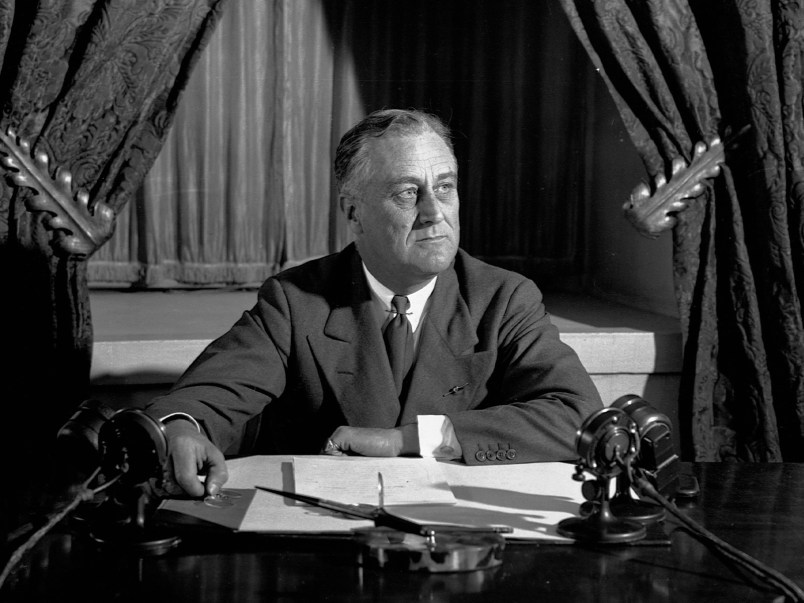
The Overton window on expanding — or packing or unpacking — the Supreme Court is now wide enough that it’s worth revisiting one inevitable part of the conversation: FDR’s Court-packing proposal in 1937. Misconceptions about the events abound in popular discussions.

Here’s the short version of the story you’ve probably heard: In 1935 and early 1936, the conservative-dominated Supreme Court handed down several decisions whose doctrines threatened important parts of FDR’s New Deal economic policies. After his overwhelming reelection in November 1936, he decided to pack the Supreme Court with six new justices, using the excuse that the sitting justices over the age of 75 weren’t able to handle the Court’s work effectively. Announced in January 1937, the Court-packing plan came as a surprise to political Washington, and immediately met strong resistance. FDR slogged on but the plan suffered several severe blows, including a letter from Chief Justice Charles Evans Hughes endorsed by liberal justice Louis Brandeis saying that the Court was completely up to date with its work. Other developments undercut the urgency for the president and his allies, including a decision favoring New Deal economic policies in March 1937 in which swing justice Owen Roberts cast the deciding vote and the retirement in May of conservative justice Willis Van Devanter. When the plan was formally interred in a mid-summer Senate vote, a New York journalist called Roberts’s vote the “switch in time that saved the nine,” and the phrase — and Roberts’s vote — have come to dominate today’s understanding of the episode.  

That version isn’t completely inaccurate and it isn’t a caricature, but it does contain some misconceptions, the most important of which is probably the focus on the captivating “switch in time” phrase. If we think that the story of the Court packing plan has some lessons for us today, it’s important to clear up these misconceptions. Historians have written books about the events surrounding the Court-packing plan and this essay won’t be able to explore all the ins-and-outs of a complicated set of events. Even more, the story has many moving parts, most of which are connected to others, so you can pick pretty much any place to start.

Was the Court-packing plan a surprise?

Yes and no. After one important decision in May 1935 going against the New Deal, FDR held a press conference and said that the Court wanted to take the country back to the horse-and-buggy days. Almost from the start of his first term FDR groused about the possibility that the Supreme Court would stand in the way of what he thought were programs needed to recover from the economic crisis the nation faced. Ideas about “doing something” about the Court floated around Washington starting in 1933, leaked from the administration to favored reporters and discussed at Georgetown dinner parties.

Still, FDR hadn’t directly targeted the Supreme Court during his 1936 reelection campaign. Instead, he regularly attacked the American Liberty League, an advocacy organization founded and funded by wealthy opponents of the New Deal. The League produced a series of pamphlets designed as templates for legal briefs laying out the constitutional arguments against a host of New Deal programs. When FDR went after the League, he was really taking on reactionary legal arguments he feared the Supreme Court would adopt. So, in the guise of the American Liberty League, the Supreme Court was part of the 1936 presidential campaign.
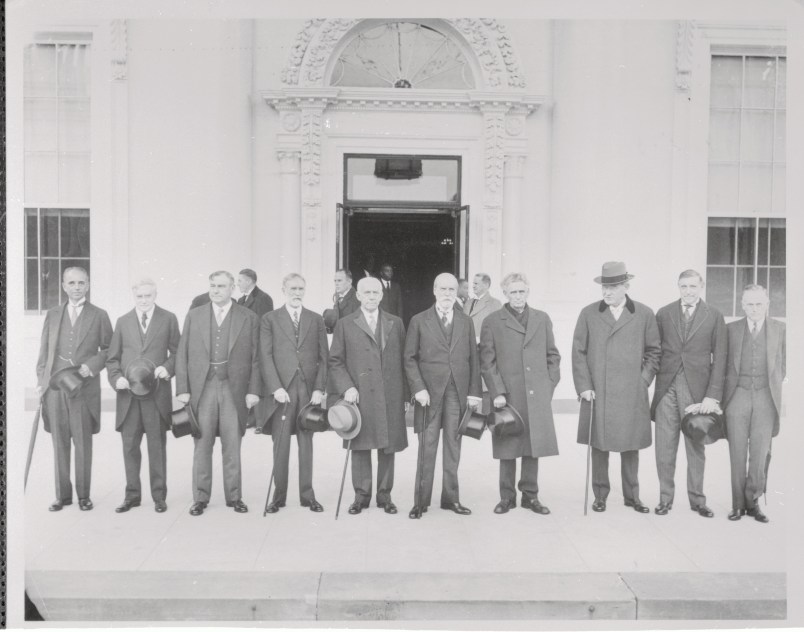
Supreme Court Justices visit the White House in the early 1930s. (Getty Images)

Supreme Court reform of some sort was in the air after FDR’s massive victory in November 1936. The development of the Court-packing plan was a closely held secret within the administration. The content of the announcement on February 5, 1937, was something of a surprise. But no one was surprised that FDR wanted to move some sort of Court reform through Congress.

Was there a switch in time?

No, but maybe yes. On June 1, 1936, the Supreme Court held a New York statute setting a minimum wage for women workers unconstitutional by a vote of 5-4, with Justice Roberts in the majority. Then, on March 29, 1937, the Court held an essentially identical Washington state statute constitutionally permissible by a vote of 5-4, with Roberts in the majority. Coming less than two months after the Court-packing plan’s announcement, Roberts’s “new position” is the switch in time.
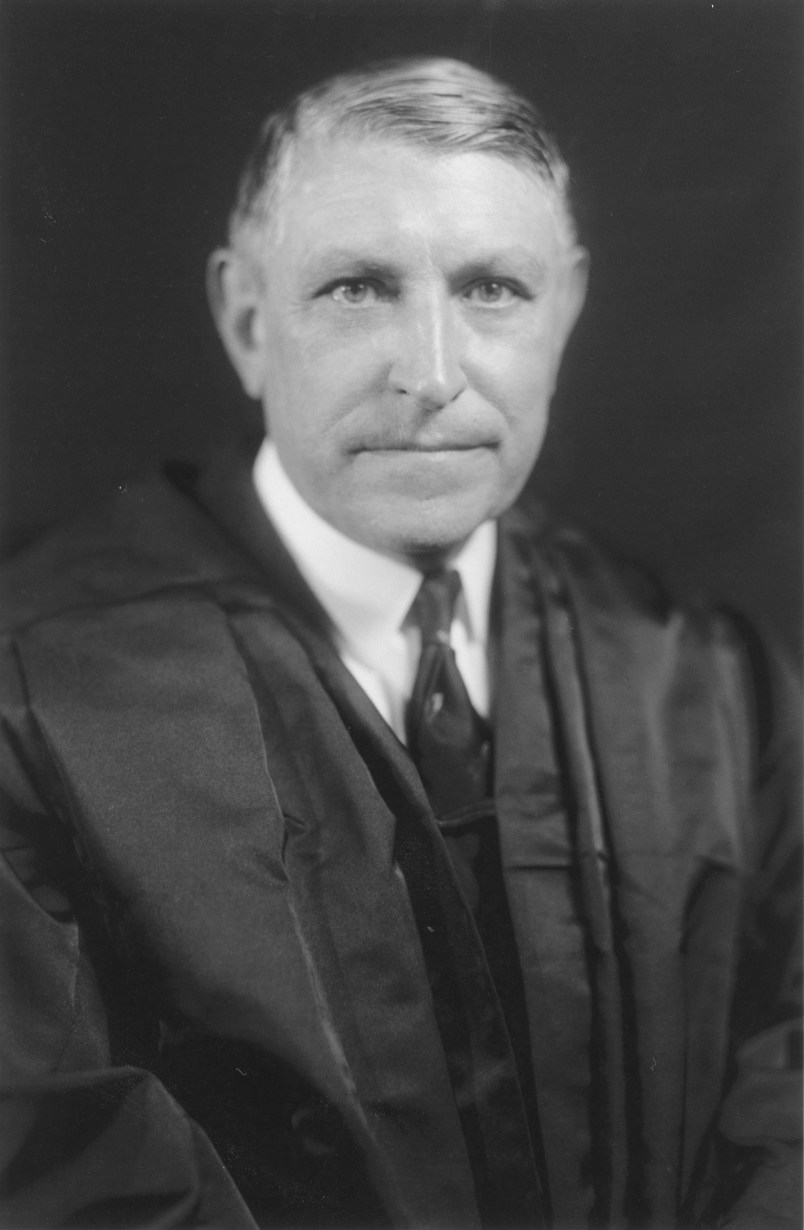
Owen Roberts in the 1930s. (Photo by Harris & Ewing/Interim Archives/Getty Images)

It’s been known for decades, though, that Roberts actually cast his deciding vote in mid-December 1936, before the Court-packing plan was announced. Justice Harlan Fiske Stone was absent because he was recovering from a near-fatal illness. The justices divided four-to-four, with Roberts voting to uphold the Washington statute. Stone’s vote was necessary for the new majority but everyone knew that he’d vote to uphold the Washington statute (he’d joined the dissent in the New York case).  The case was essentially over when the Court took its initial vote. The formal vote was delayed until February 6, 1937, the day after the Court-packing plan was announced. Justice Felix Frankfurter later reported that Roberts came up with a lame explanation for his switch, saying that New York’s lawyers hadn’t explicitly asked the Supreme Court to overrule a controlling precedent but Washington’s lawyers did. (The excuse was lame because New York’s lawyers had indeed asked the Court to overrule the precedent, though in a short and somewhat cryptic paragraph.)  Whatever the reason, it didn’t come “in time” — that is, it didn’t come as a response to the February 5, 1937, unveiling of the Court-packing plan.

Remember, though, that Court reform was in the air. Maybe Roberts was picking up what we’d now call “vibes” about a threat to the Court, and maybe the lameness of his explanation was just a cover story for a change induced by the general atmosphere of threats to the Court as an institution.

Was the plan doomed from the start?

No. Vote counters knew that the House of Representatives would accept the plan. All the action was in the Senate, where there was fierce opposition from conservative Republicans and some Democrats, and unease among other Democrats. 

An adept politician, FDR held an ace in his hand, and everyone knew it. He promised one of the seats on an expanded Supreme Court to Senate majority leader Joseph Robinson of Arkansas. Robinson found the offer irresistible. He called in all the chits he had with his colleagues, putting together a potential majority for the plan one vote at a time. Political observers at the time weren’t sure what the outcome would be but they were inclined to think that Robinson could pull off a victory for FDR.

The final vote was scheduled for mid-July in an exceptionally hot (and un-airconditioned) Washington. Robinson held a meeting–social gathering where he continued to lobby wavering colleagues. The combination of heat and stress gave Robinson a fatal heart attack. The possibility of a majority for the Court-packing plan in the Senate always depended on personal ties between Robinson and other senators, and, with his passing on, the plan failed. 

Did FDR lose the battle but win the war? How?

Yes, yes, and maybe no. FDR lost the battle over expanding the Court but reached his main war goal — having a Court that wouldn’t completely obstruct his favored programs. As with almost all successful military campaigns, the path to the goal wasn’t straight. The war wasn’t over on March 29 when the nation learned that Roberts had voted to uphold Washington’s minimum wage law. FDR’s legal team worried that Roberts wasn’t going to be a reliable ally going forward — and indeed he wasn’t: a careful modern statistical study shows that Roberts reverted to his conservatism within a year.

The war wasn’t over on May 18, either, the day Justice Willis Van Devanter announced his intention to retire even though the retirement seemingly gave FDR the opportunity to replace a conservative with a reliable supporter of the New Deal. 
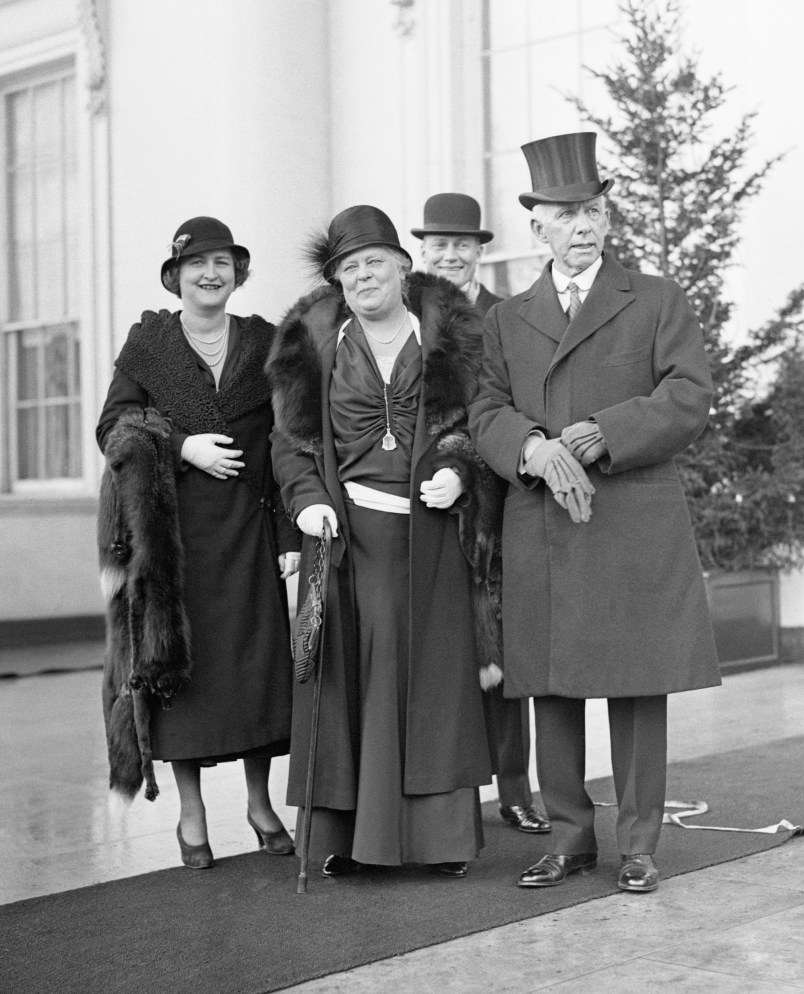
Justice Willis Van Devanter at the White House with family in 1932. (Getty Images)

Van Devanter had wanted to leave the Court for years, mostly so that he could take care of his medically compromised wife. The obstacle was financial. Van Devanter was something of a penny-pincher, once complaining that he had been overcharged five cents for a package of seeds. With some reason, he worried that his financial condition would deteriorate if he left the Court. As the statutes stood at the beginning of 1937, lower court judges could either retire from the bench and continue to receive their judicial salaries or they could resign and take their pensions. The rules for Supreme Court justices were different. They had to resign, not retire — they could take their pensions, but not their salaries. And that mattered because judicial salaries for retired lower court judges couldn’t be reduced, but judicial pensions for them and for Supreme Court justices could be — and they were, as part of the austerity programs Herbert Hoover and FDR pursued at the Great Depression’s outset. That was what worried Van Devanter, because the statutes didn’t give him the retirement option. He would have to resign and be at the mercy of congressional decisions about judicial pensions. 

Hatton Sumners, the chair of the House Judiciary Committee, had long thought that treating Supreme Court justices worse than lower court judges was silly. Some lawyers worried that “retirement” required that the judge be available to serve as needed — something now known as “senior status” — and that the Constitution didn’t allow that for Supreme Court justices. Sumners disagreed. In 1936 he introduced a bill to eliminate the difference. It failed. The next year, with Supreme Court reform on the table, he tried again. With some misgivings, and aware of the important role Sumners would play in shepherding the Court-packing plan through the House, FDR’s lawyers decided that Sumners’s bill wouldn’t undermine support for Court-packing.  The House passed the bill on February 10, the Senate on February 26, and FDR signed it on March 1, whereupon Van Devanter decided to leave the Court.

Why wasn’t the ability to appoint a justice enough to get FDR to abandon the politically costly Court-packing campaign? The answer: Senator Joe Robinson, to whom FDR has promised a court seat. Despite that promise, Robinson wasn’t a full-throated New Dealer and FDR’s lawyers worried that he might end up as unreliable as they feared Roberts would be. FDR took his time filling the vacancy Van Devanter created, with the excuse that Robinson was still needed to push the Court-packing plan through the Senate. A month after Robinson died, FDR nominated Senator Hugo Black to the Court, giving him a reasonably solid five-to-four majority. The next year conservative Justice George Sutherland, who like Van Devanter had wanted to leave the Court for several years, retired, and FDR nominated Solicitor General Stanley Reed to succeed him. 
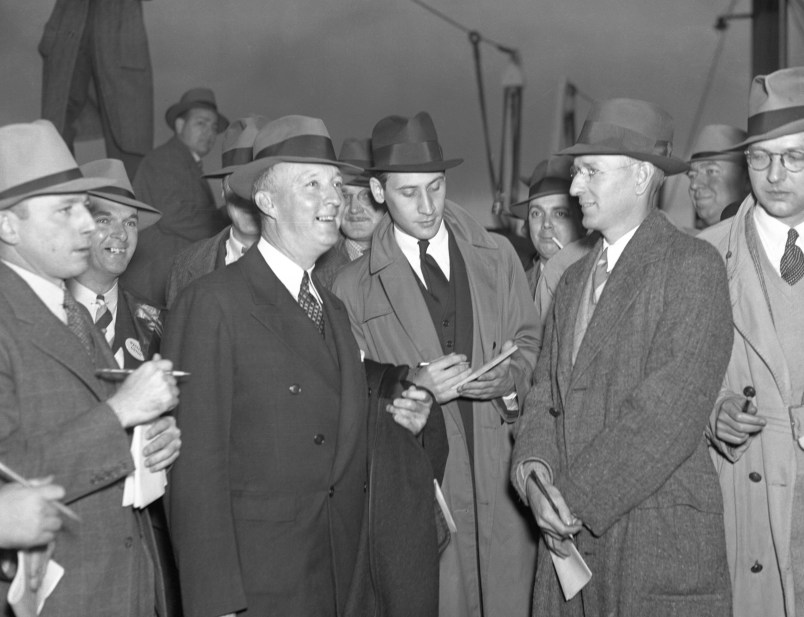
Journalists interview the new Supreme Court Justice Hugo Black as he arrives in Norfolk, VA. (Photo by Bettmann Archive/Getty Images)

By then the war really was over. The Supreme Court didn’t invalidate any major New Deal programs after 1937, although it did sometimes interpret major statutes — especially the National Labor Relations Act — in ways less friendly to labor than FDR’s labor allies would have liked. Democrats suffered severe losses in the 1938 midterm elections, mostly because the nation was in a severe economic recession induced by FDR’s too-rapid return to the orthodoxy of balanced budgets — but maybe the Court-packing episode made it easier for some voters to abandon the Democratic Party.

In the even longer sweep, the conservative war against legal liberalism continued. Liberals liked to describe a “New Deal settlement” that coupled judicial deference to legislatures on matters of economic policy with judicial activism on civil rights and civil liberties. Recent scholarship has made the case that conservatives never really accepted the so-called settlement, making some tactical concessions while biding their time — which came toward the end of the 20th century.

Did 1937 set a “precedent” for Court expansion?

Maybe yes, but a lot depends on how you describe the precedent. Focus on the politics of Court size and the answer is that the 1937 episode might have created what the British call a constitutional “convention” against changing the size of the Supreme Court simply to affect predicted outcomes — but that kind of convention can itself be changed when politicians think that it stands in the way of getting something important done. And focus on the politics of the federal courts more generally and the answer is that changing their powers to advance partisan goals is standard practice.

The Court’s size has been fixed at nine since 1869. Before that the Court grew to accommodate national growth — a “good government” reason for changing its size. Sometimes the timing of expansion was affected by partisan concerns. And in the decade of the Civil War, Congress expanded the Court, shrank it, and expanded it again mostly for partisan reasons but with some real “good government” explanation as well. 

FDR’s Court-packing plan was packaged in “good government” terms — too many of the Court’s justices were old and unable to keep up a work pace adequate to needs. That was a fig-leaf covering the partisan motivation and FDR and his allies quickly abandoned it. The fig-leaf that’s offered in today’s discussions is “thirteen circuits, thirteen justices,” but no one really thinks that there’s a strong good-government reason for having one justice for each circuit. The Court-packing plan’s failure might be understood as establishing a convention against changing the Court’s size unless there’s a real “good government” reason for doing so. 

Unwritten constitutional conventions like that are always up for grabs. One problem is distinguishing between practices that persist because no one cares enough to challenge them and practices that persist because people think they ought to follow them. The complicated politics that account for the failure of FDR’s Court-packing plan — Robinson’s death, Roberts’s change in vote, Sumners’s bill and Van Devanter’s retirement — weaken the case for saying that 1937 shows that there’s a convention against changing the Court’s size to affect predicted outcomes. Since then, the issue of the Court’s size didn’t matter enough for anyone to try to do something about it — until now. So maybe having a Court with nine members results from a practice rather than a convention.

Even more, conventions can be fragile — certainly they’re not as robust as provisions written into the constitutional text. A scholar writing in 1925 offered an example. From Washington’s presidency to the early 20th century American presidents stayed on American soil (broadly defined, it turns out). U.S. presidents stayed on the U.S. side of the Mexican border when they met their Mexican counterparts on the bridge connecting El Paso and Juarez. In 1914 Woodrow Wilson reluctantly declined an invitation to England to celebrate the anniversary of the treaty ending the war of 1812. Within five years he went to Versailles, and the convention disappeared. 

The picture is much more clear when we look at the politics of the federal courts generally. Congress has adjusted their powers for good government reasons, of course, but it also has routinely tinkered with the federal courts to change predicted outcomes. When Congress feared that the national courts would rule against workers seeking compensation for injuries, it shunted those cases to state courts. When Congress feared that state courts would treat Blacks badly, they allowed the cases to be shifted into the federal courts. The list goes on and on. Seen in that light, changing the Court’s size is just another example of treating the federal courts as one of the many tools politicians can use to achieve their goals.

Lessons from the past?

One of the first things graduate students in history are told is that they should be wary about drawing lessons from the foreign country that is the past. If lessons are to be drawn, though, they should be drawn on the basis of as full an understanding as possible of what really happened — an understanding informed by the story I’ve told, and of course by the even more complete story that can be found in the historical record.
  •  

DOJ’s List of Noncitizen Voters Exposed As Crap

That Didn’t Take Long

The top election official in Los Angeles County has done a preliminary review of the Trump DOJ’s purported list of alleged noncitizen voters and found it to be … shoddy. Surprising absolutely no one.

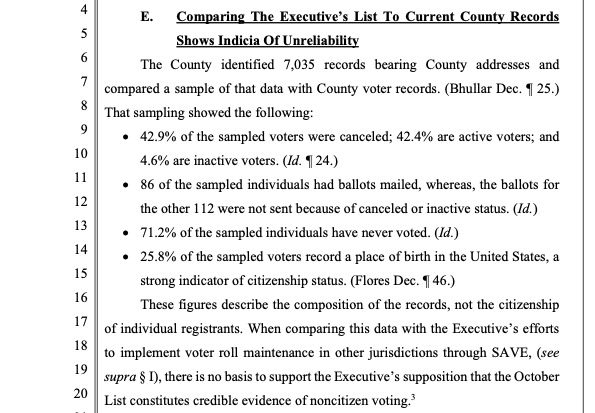
Out of DOJ’s list of 20,000 alleged noncitizen voters in California, more than 7,000 had Los Angeles County addresses. Dean C. Logan’s office took a sample of 200 of those L.A. voters and found that 1/4 may have been born in the United States, nearly 1/2 were cancelled or inactive voters, and nearly 3/4 had never voted, according to a new court filing:

It’s critically important to frame this properly: Election administrators must always balance making sure ineligible voters don’t vote with assuring that eligible voters aren’t wrongfully denied their right to vote. Make voting rules and regulations too strict and the risk goes up of excluding legitimate voters and not counting their votes.

It’s a balance that Trump and Republicans refuse to strike in their jihad to vilify noncitizen voters and elevate a vanishingly small problem into a reason to distrust election results. It’s telling that they voice more apparent concern about what they call “vote dilution” by noncitizen voting than they do about outright denying U.S. citizens the right to vote and have their vote counted.

In the California case, the shoddy list makes even more stark the incredible demand the Trump administration is suing to impose on the state. It wants California — with voting already underway — to introduce new additional steps into the vote tabulation process: review DOJ’s crap list, segregate all the ballots cast by people on that list, and run a real-time review to confirm whether those voters are citizens. Then — and only then — can California count those ballots.

Note on whom the burden falls here: The Trump administration can supply a flawed and unreliable list, then California — while already conducting a live election — has to run around and jump through the extra hoops that the administration has created for it.

Here’s how a top Los Angeles County election official put it in her own declaration in the case:

Because the County results must be submitted by December 3, 2026, and certified by the State by December 11, 2026, ballots held pending an open-ended federal review may, in practical effect, never be counted. This process would risk disenfranchising voters who are validly registered. The process the DOJ seeks to have the Registrar undertake jeopardizes that core right for potentially thousands of voters, not to mention the finalization of election results, confidence in election results, and the ability to allow new elected officials to be instated in their positions.

I should mention that the administration has offered to “help” California and work together in cooperative fashion to vet the administration’s crappy list, but it’s too precious an offer to need its own debunking:

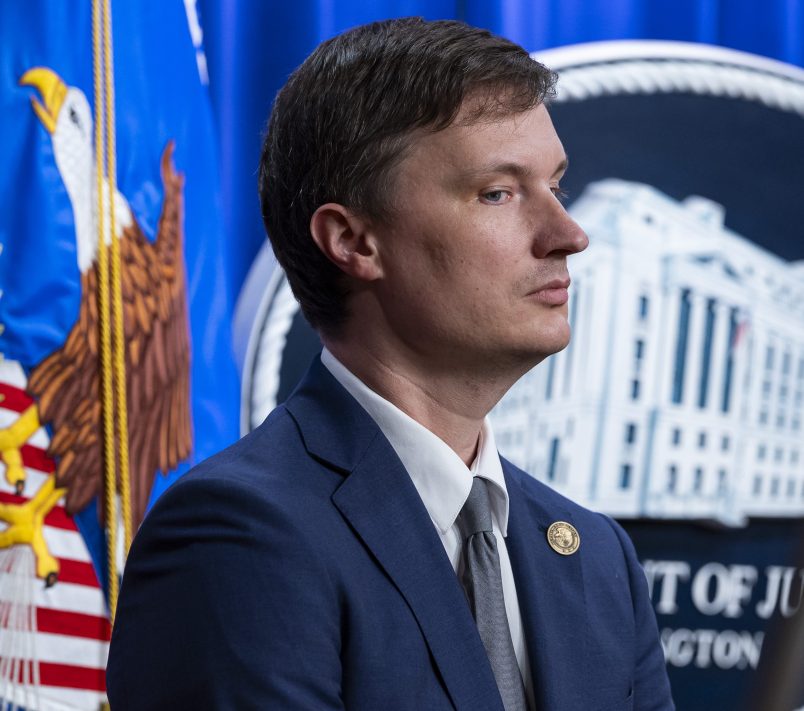
“We’re not perfect and that’s why we’ve asked California to cooperate with us,” acting Deputy Attorney General Trent McCotter said in a Monday press conference, anticipating exactly what happened yesterday. “These are the ones where we’re kind of the most confident that they are noncitizens.”

“Kind of the most confident.”

You get it.

Dems Sue Trump for Election Interference

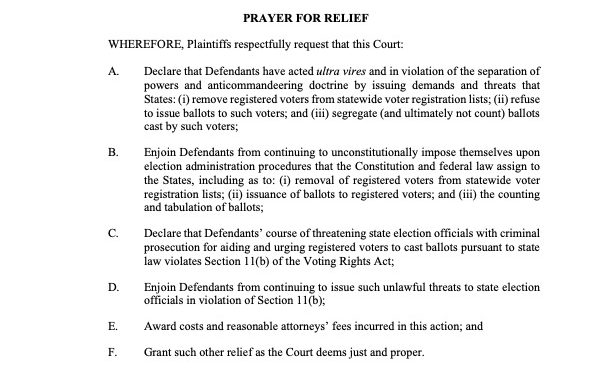
Various Democratic entities filed a new federal lawsuit in D.C. to try to block the worst of President Trump’s attacks on the midterm elections, including his demands to purge voter rolls and not count ballots, his threats against election officials, and his interference in state-run elections:

The Corruption: $50M Woman Edition

Where to even start with this?

The recently remarried Alina Habba, who now goes by Alina Mildon, landed a guaranteed $50 million deal to serve as general counsel of a brand new corporate entity tied to Venezuelan billionaire Julio Herrera Velutini, the NYT reports. Among the lowlights:

  • The company — Concord Partners, LLC — was formed in Florida on Oct. 22, 2025 by Isabela Herrera, 27, the billionaire’s daughter and a U.S citizen.
  • The deal was for $10 million a year for four years, plus bonuses, bringing the total guaranteed compensation to $50 million.
  • Mildon “finalized the deal” while she was still the acting U.S. attorney in New Jersey.
  • Mildon’s start date was Jan. 1, 2026. By then, Mildon was a senior adviser to then-Attorney General Pam Bondi, the role she took after being disqualified as U.S. attorney in New Jersey.
  • President Trump pardoned Julio Herrera Velutini on Jan. 15, 2026.

Mildon denies having any role in the pardon.

The timing of this revelation may be connected to the epic ongoing feud between Mildon and Ric Grenell that has produced a sleazefest of competing allegations of off-the-charts corruption.

Russia’s Failed Attack on Germany

This still hasn’t broken through in the U.S., but over the summer, Russia intelligence launched a drone attack on a cargo plane carrying military assistance to Ukraine while it was parked at an airport in eastern Germany. It was the most dramatic of Putin’s provocations against NATO countries which have been on an uptick since that failed attack.

The WSJ offers a comprehensive overview of that incident and its significance:

The attack was part of a broader effort to position agents, explosives and weapons across Europe to strike targets supporting Ukraine and sow chaos that could strengthen political opposition to military aid for Kyiv, according to investigators and intelligence officials.

Investigators have uncovered networks smuggling explosives, drones and weapons into the EU, along with safe houses and concealed underground caches near airports, arms manufacturers and other potential targets.

There’s been a lot of chatter lately about whether World War III is already underway. I think that’s overdetermined, but it’s also true that we probably won’t notice until we’re deep into it.

‘Mongoloid Moron’

The Independent’s Andrew Feinberg writes about being targeted by President Trump as a “Mongoloid Moron” in the Oval Office yesterday — an outburst that the White House happily touted on social media.

Who Gets to Define We the People?

Jamelle Bouie: “[T]he drive to denaturalize Omar is, by itself, a startling attack on the liberty of all Americans. It’s a move that harks back to the worst of the nation’s past — those moments when the government sought to shape, define and ultimately choose who would be ‘the people’ of the United States.”

The Most Rancid Racism

In the racist rants of President Trump and his enablers, Somali Americans are both primitives who eat your pets and ingrates who are undeservedly “living the high life” at your expense:

Stephen Miller claims Somali-Americans in Minnesota are "buying Mercedes, buying BMWs, they buy a nice house, all their kids fly first class all over the world"(This is a lie!)

— Aaron Rupar (@atrupar.com) 2026-10-20T18:37:16.369Z

The only consistency is the rancid appeal to every base human emotion.

News? Tips? Feedback? Please let me know. For sensitive information, use the encrypted methods here.

  •  

Todd Blanche Gets Sucked Into Trump World’s Pre-Midterms Drama

Laura Loomer and Todd Blanche Are Fighting

Josh Marshall has been chronicling the many ways that Trump world is descending into petty feuding ahead of the midterms — and how, in the midst of that, Trump is starting to cut loose those hangers-on who look too much like dead weight. Josh has dubbed stories in this vein “‘Layla’-coda updates” which, TPM publisher Joe Ragazzo eventually explained to me, is a reference to the scene in Goodfellas when Robert De Niro’s character has his crew members killed off, one by one, to avoid sharing the cash from a successful heist. The coda of Derek and the Dominos’ “Layla” plays in the background as the bodies are discovered.

Anyway.

This dynamic of escalating intra-MAGA feuds and score settling has now come to involve Attorney General Todd Blanche, who has usually managed to hover above it all, studiously going about the work of prosecuting Trump’s enemies. Dragging Blanche into the muck is Laura Loomer.

The dispute between the two improbably involves the Camp Lejeune Justice Act, a 2022 law that allows members of the military, their family members, and others who were exposed to contaminated water on the North Carolina military base to seek compensation from the federal government. Wells on the base are believed to have been contaminated with toxic chemicals, a problem that went on for more than three decades; residents developed a wide range of conditions including cancer and Parkinson’s disease.

Loomer has, for some reason, turned up advocating for these military families, and on X accused associate attorney general Stanley Woodward of “sending these veterans insulting lowball offers designed to insult and belittle their suffering.” She described Woodward as “a lifelong Democrat at the DOJ” and suggested he was plotting to hand North Carolina to the Democrats in the midterms. “He has got to be one of the WORST hires of the second Trump administration,” she said. “But, I tried to warn people.” The message seemed intended to capture Trump’s attention.

Blanche shot back last night. “Laura, you should be transparent with your followers, and you are dead wrong about Stanley,” he wrote on X. “He is a patriot who is fighting for POTUS and the American people every day.”

Blanche went on to take personal responsibility for the Camp Lejeune cases, saying that the DOJ has been “consulting with and keeping the White House counsel’s office and DOW updated along the way.”

“Find a different obsession other than going after one of DOJ’s best fighters,” he concluded.

This dispute does appear to be on Trump’s radar. At a rally in North Carolina last night, Trump cast any DOJ offers that victims found unsatisfactory as part of an effort to keep the money from going to “trial lawyers.” “We want it to go to the families, not to the lawyers,” he said, per a local NPR station.

Trump then grotesquely told the crowd they better vote Republican if they wanted to see the veterans get their money.

“If we don’t win, there’s no money,” he said. “If we do win, you’re getting it.”

It’s not yet clear whether it’s time to cue the “Layla” coda in this story, but it does appear to be yet another example of the brutal midterm environment — Democrats are favored to win up and down the ballot in North Carolina — causing accusations to fly among the president’s allies.

The ‘Manosphere’ Falls on Hard Times?

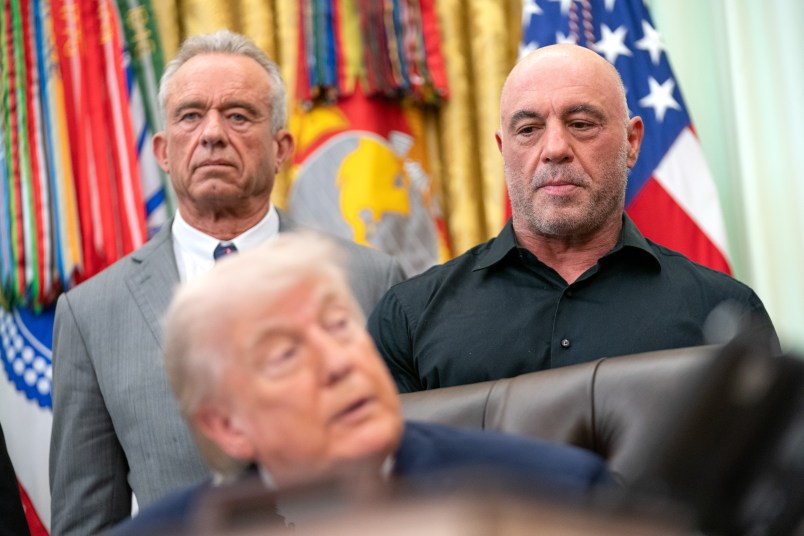
WASHINGTON, DC – APRIL 18: Podcast host Joe Rogan, right, and HHS Secretary Robert F. Kennedy Jr. look on as U.S. President Donald Trump makes an announcement on researching the effects of psychedelic drugs in medical treatment for veterans, on Saturday, April 18, 2026 in the Oval Office at the White House in Washington, D.C. (Photo by Allison Robbert/For The Washington Post via Getty Images)

No one ever found the “Joe Rogan of the Left,” and maybe it doesn’t matter.

  • As I noted in July, the New York Times recently conducted a fascinating analysis that found traffic to and engagement with various right-wing media personalities — such as Benny Johnson and Steven Crowder — to be falling.
  • Puck this week reports on research from the Democratic-backed Speaking With American Men project that finds male voters holding increasingly negative opinions about a range of male, Republican-aligned influencers, from Joe Rogan to Tucker Carlson to the recently arrested Tate brothers.
  • Axios flags research from Cygnal’s 2026 Young American Men survey also finding Trump and Vice President JD Vance to be unpopular with this demographic.
  • It is, of course, unclear that the podcasts were ever truly the problem — or even a significant part of the problem. I still have not heard a convincing explanation that fully captures how to think about voters post-COVID, anti-incumbent angst, and the role various media play in either inspiring it or piggybacking on it. That angst can be seen prompting instability worldwide, not just in the U.S. — sometimes empowering reactionary parties, but sometimes working against them.
  • Regardless, manosphere-aligned influencers are still sowing toxicity into our politics. Christopher Mathias writes for TPM on the campaign by these figures to cast Democratic candidate Bernadette Greene-Placentia’s story of being raped earlier this year as a hoax intended to attract votes.

Tabs

  • Don Jr. disagrees with his dad about the Iran war, two unnamed people tell The Atlantic for an article that sure reads like the younger Trump trying to distance himself from one of the administration’s least popular decisions.
  • Elena Kagan denounced a series of recent Supreme Court decisions during an appearance at Catholic University, in particular casting Rucho v. Common Cause, which effectively greenlit partisan gerrymandering, as “deleterious” to our democracy, with its impact on display this year. She also criticized decisions like Citizens United that have opened the doors for a deluge of money in politics. “The people of America look around this political system and think that all this money chasing all these political candidates is a nightmare,” she said. “And they’re right.”

Woman of the Hour

Alina Habba at Amazon MGM Studios’ film, “MELANIA” World Premiere held at the Trump-Kennedy Center on January 29, 2026 in Washington, D.C.. (Photo by Craig Hudson/Variety via Getty Images)

It’s Alina Habba, already locked in a damaging feud with fellow Trump world operator Ric Grenell, and now the subject of a New York Times investigation that finds a Venezuelan billionaire set her up with a gig through which she’ll make $50 million. In exchange, the billionaire, Julio Herrera Velutini, finally got the pardon from Trump he had long been seeking.

  •  

New Entrant Pollster Was Publishing All Fake Polls

A crazy, crazy story unfolding tonight in the online virtual terrain of political social media and poll-watching. It’s late. But I will give you the bare outline. Seemingly out of the blue earlier this evening an outfit called “Wedgewood Polling” put out a press release stating that all but one of their polls had been fake and that the fakery was all part of a “social experiment” to test how easy it would be to produce fake polls that got aggregated on the big aggregation sites and made their way into news stories. If you’re thinking, wait, didn’t I hear something like this last summer? Yes, you did. There was a smaller-scale version of this, with the same “social experiment” rationale back in August. “Wedgewood,” though, released a lot of polls, in a number of high profile races, not just two or three of them. And there’s at least an argument that they meaningfully impacted some Democratic primary races. They certainly helped shape some campaign narratives. They had appeared to be the only independent poll of the Mississippi Senate race and the only one at all since August.

But then it got weirder.

  •  

GOP Abandons Republican Incumbent Who Broke With Trump on Blue State Retribution

Subtle Trump Distancing May Not Be Enough

Republican Rep. Thomas Kean Jr (R-NJ) may be best known on the national scene as the son of the former New Jersey Gov. Thomas H. Kean and the Republican member of Congress who piqued curiosities when he missed months of votes earlier this year, later to reveal he had been hospitalized for depression. He’s also the Republican incumbent in a key battleground House race coming up next month where he faces an increasingly popular Democratic candidate in a race that the Cook Political Report now rates as “lean Democratic.”

Projections about the race started to shift in mid-September. While Kean was able to flip New Jersey’s 7th Congressional District back in 2022 (mind you, after the seat went to a Democrat for the first time in decades in 2018) and he won reelection by five percentage points in 2024, President Trump won the district by just about 1 point the same year. So, it was hardly an exercise in bravery when he decided to aggressively break with Trump on a few key issues during debates with his Democratic challenger Rebecca Bennett last month.

But Kean was one of the first Republican candidates this cycle to break with Trump on an issue that TPM has been following closely throughout Trump’s second term, as he innovates on the idea of political retribution against his perceived political foes and those who did not vote for him for president. I wrote about Kean breaking with Trump in detail here, but, in essence, Kean, on the debate stage, stood up for the infrastructure projects that Trump’s White House decided to shut down as part of some Russ Vought-led anti-DEI retribution campaign against blue state and city officials in the New York City/New Jersey area.

“I will challenge anybody who gets in my way, including this president,” Kean said last month, when asked about the Trump administration’s freeze on federal funding for the Gateway rail tunnel project — a $16 billion infrastructure renovation plan for the tunnels that connect Manhattan to New Jersey.

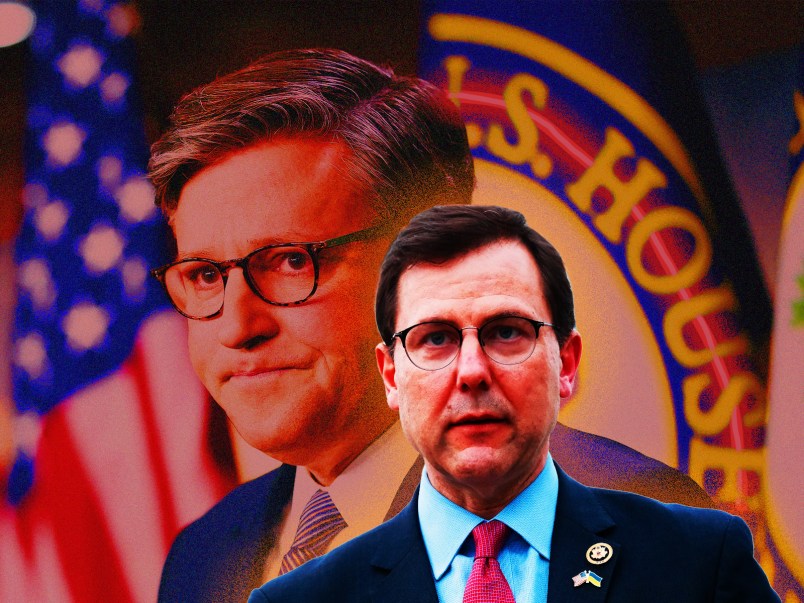
But the distancing from Trump may not be enough. It appears that Republican congressional leadership has all but written off his reelection campaign as a lost cause. While both House Speaker Mike Johnson (R-LA) and House Minority Leader Hakeem Jeffries (D-NY) have traveled to District 7 to stump for Kean and Bennett, respectively, the New York Times reported last week that there is a pretty glaring sign that the Republican Party has abandoned Kean’s bid. Per the Times:

Top Republican super PACs aligned with President Trump and congressional Republican leadership are cutting off financial support for two Republican House members seeking re-election, according to three people with direct knowledge of the plans.

The decision represents the first instance this cycle of national Republican groups abandoning incumbents as the party scrambles to prevent more widespread losses in the midterm elections.

Officials with the two super PACs decided to cancel all remaining advertising booked for Representative Thomas H. Kean Jr. of New Jersey and Representative Mariannette Miller-Meeks of Iowa over the weekend after internal G.O.P. polling had showed their re-election chances dimming.

The Congressional Leadership Fund, the political action committee aligned with Johnson, is reportedly “redirecting $10 million from the seats it is effectively ceding in Iowa, Michigan, New Jersey and Ohio and spreading it across 16 new districts, two of the people said,” in the Times’ words.

Campaign finance filings from last week show that Bennett out-raised Kean by more than $2 million last quarter, though Kean still holds a cash advantage overall. Despite signs of a potential flip, Kean’s campaign is projecting confidence he’ll hold the seat.

“This is still a very well-funded effort that will be at parity with our opponents,” Harrison Neely, a spokesperson for his campaign said. “And historically, that hasn’t been the case in this district, we’ve always been outspent.”

  •  

This Week on Polltober: Are We Seeing the Midterms Clearly?

On this week’s episode of The Polltober Show, Kate and Josh discuss whether the story of the midterms can be trusted in this week’s grab bag episode.

If you want your question answered next week, drop it in the YouTube comments on the latest episode of the TPM Show or the Polltober Show itself. And don’t forget to subscribe to our YouTube page for all of our Polltober episodes, livestreams, and other original TPM content!

Psst, you’re a TPM member, right? You asked, and we answered: we’re launching a members-only podcast feed where you can listen to episodes of Polltober! Head to your account settings page to find the special RSS feed that you can add to your preferred podcast player and enjoy!

  •  

It’s the AI Economy … We’re Just Living In It

I corresponded with a TPM Reader from the tech world recently who marveled at the political salience of data centers when data centers have been around since the late 90s. Many data centers today are orders of magnitude larger than their pre-AI relatives, gobbling up much more energy, making more noise and physical pollution. But he noted that the bulk of them aren’t nearly that large. These points each have some truth to them, though I think it understates the real-world impact of hyperscaler data centers. And, as I’ve noted, a lot of our collective social angst about data centers and AI is really focused on oligarchy — the way that it appears to be the tech oligarchs’ world and we’re just living in it. The ability for town and county councils to say no to data centers is irresistible precisely because it’s the one case where democratic self-government is in a position to say “NO!” and that’s so contrary to all our other experience these days. But there’s an entirely different vantage point on this question I want to focus on.

The impact of particular data centers in particular places is one issue. But the macro-story is even bigger and more jarring. Axios has a piece this morning about how the housing sector is getting hammered by the hyperscaler AI boom, both buildings and buyers. And as you may have heard the lack of affordable housing is a rather pressing issue in American society today. This applies to everything from inflation/scarcity of the physical building blocks that are used for building housing to the scarcity of capital to fund it. If that sounds overstated look at this chart from a study we discussed late last month and which got written up in various publications.

  •  

The Trump DOJ Is Now the Greatest Threat to Free and Fair Elections

Open and Ongoing Ratfuckery

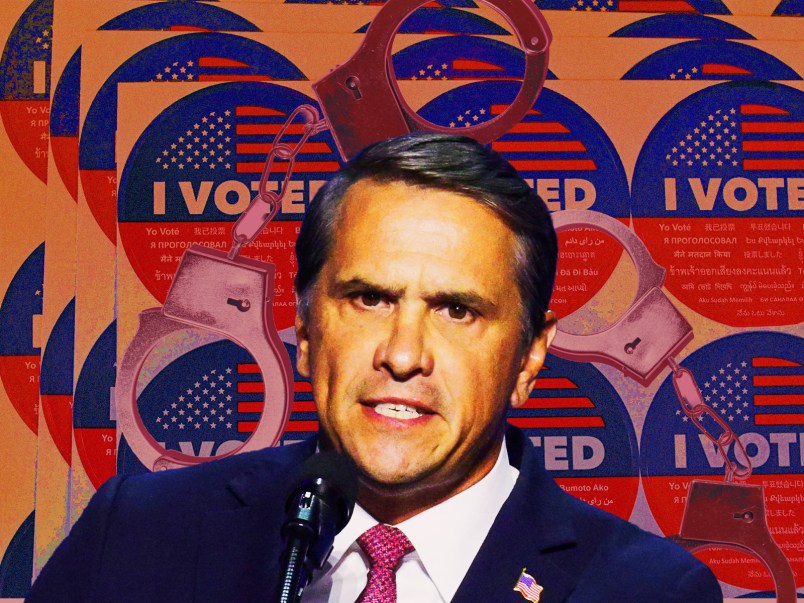
The Trump DOJ — corruptly deployed by the White House as an unprecedented election interference tool — sure is getting the headlines it wants from its campaign to prosecute alleged noncitizen voting while the midterm elections are already underway:

  • NYT: Justice Dept. Charges 28 in California With Voting-Related Crimes
  • AP: Justice Department arrests more than 2 dozen in California sweep targeting alleged noncitizen voters
  • NPR: DOJ charges 28 in California with voting crimes as election tensions escalate

Even though those stories include the usual caveats — about the rarity of noncitizen voting, Trump’s track record of inflating the risks thereof, and the administration’s disinformation campaign targeting the election — the top-line news remains arrests and prosecutions.

DOJ says it has charged 113 people in 20 states with illegal voting and illegal registration offenses over the last seven weeks. 

The timing is no accident, of course.

Rolling out alleged noncitizen voting prosecutions right before the election instills fear in Black and brown communities, may dampen voter turnout, provides a ready-made excuse for GOP losses, serves as a pretext for challenging/delegitimizing the election results, and generally is a brazen display of ratfuckery.

The DOJ has not been discreet or muted in its approach. It has issued press releases touting its noncitizen voting prosecutions that contain photos of the defendants (albeit with their faces digitally obscured). Yesterday, acting Deputy Attorney General Trent McCotter held a press conference in California — where mail-in voting is already underway — to announce the 28 new prosecutions there, which DOJ has dubbed “Operation Protect the Vote.”

The arrests weren’t low-key either. The wife of a 72-year-old man from Belize said federal agents showed up at their house before dawn in full tactical gear with guns drawn — along with camera crews and news helicopters. He later appeared in court still in his pajamas. He is reportedly a registered Republican.

The timing is especially glaring because some of the new alleged noncitizen voting cases go back years, to 2020 and earlier. A couple of the new California cases allege fraudulent voter registration as far back as 2002 and 2003. Some of the cases don’t even allege illegal voting per se, but rather making false statements on naturalization paperwork. One lawful permanent resident charged in North Carolina has been in the United States for so long that DOJ identifies her as a “national of former Yugoslavia.”

Why The Timing Is Extra Pernicious

But the timing isn’t accidental for another reason: Bringing these cases so late in the cycle leaves no time to test these allegations in court before the election. If the cases later fall apart, if they’re dismissed, if they result in acquittals, then … too bad, so sad.

The attempted prosecutions will have served their election disinformation purposes, and there’s no way to roll back the clock and undo the damage.

There are already early signs that some of the new prosecutions in California are flimsy. Some of the newly charged immigrants said they had no memory of ever registering to vote, the LA Times reported:

At the federal courthouse in downtown Los Angeles late Monday, several green card holders arrested in a crackdown on alleged California voter fraud expressed confusion over the charges — with some saying they had no recollection of registering to vote, as Trump administration officials accuse them of doing.

Among them was Ana Domínguez, 60, a native of El Salvador living in Long Beach as a lawful permanent resident. Federal authorities accused her Monday of fraudulently registering to vote in July 2006 and then lying about it in her naturalization paperwork in March 2026.

Domínguez said she did not have any memory of registering to vote.

Another man accused of the same crimes as Domínguez said the same: He wasn’t aware of ever registering to vote, as federal prosecutors claimed he had.

It’s not uncommon for noncitizens to end up being unknowingly registered to vote during previous interactions with the government. “There is only a crime if the government can prove willful violations of federal law,” election law expert Rich Hasen noted.

DOJ’s One-Two California Punch

The new round of criminal cases is happening in parallel with the Trump DOJ’s lawsuit against California trying to force it to segregate and not count alleged noncitizen mail-in ballots — again, while voting is already happening.

The administration continues to try to ratchet up pressure on California election officials. In a letter Friday, the DOJ reportedly warned that state election officials who knowingly process ballots cast by noncitizen voters are at risk of investigation.

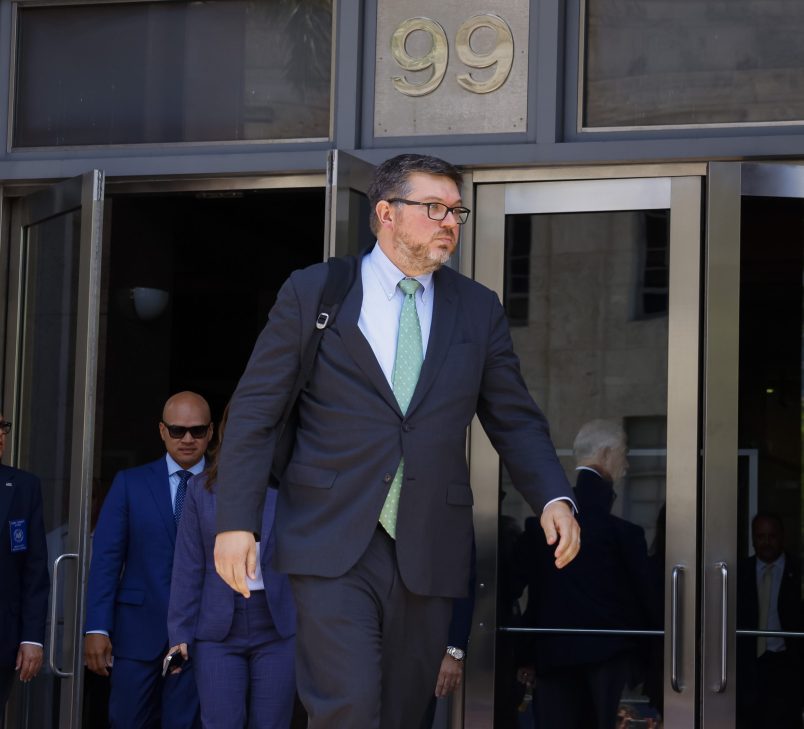
In a striking admission, acting DAG McCotter, the DOJ’s No. 2, conceded yesterday that the list of some 20,000 alleged noncitizen voters that the administration is demanding California use to segregate ballots may contain some citizens:

WOW. Trump’s #2 at DOJ just admitted this:“There may be some names on there who it turns out ultimately are citizens. We’re not perfect.”

— Governor Newsom Press Office (@govpressoffice.gov.ca.gov) 2026-10-19T18:25:27.311Z

Ultimately, the most pernicious aspect of this campaign against the phantom scourge of noncitizen voting is the risk that the administration’s sloppiness, indifference, and aggressiveness results in legally cast ballots from U.S. citizens not being counted.

In a 180-degree turn, the Justice Department has gone from its historic role of protecting and defending the individual right to vote to being the leading threat to free and fair elections.

Why California?

I remain puzzled why so much of the Trump administration’s election-interference and disinformation campaign is focused on California. The electoral math doesn’t add up. Thoughts?

Good Read

ProPublica:

A few months into President Donald Trump’s second term, political appointees at the Department of Homeland Security made an unusual request of its agency focused on cybersecurity: Secretly acquire a voting machine and hack it.

The appointees wanted the Cybersecurity and Infrastructure Security Agency to procure the machine, examine it and report back the findings so they could be given to the White House, according to two former administration officials with knowledge of the request. 

This scheme appears to have never gotten off the ground.

Just In …

WaPo: A small group of about 10 current and former U.S. national security officials with DoD experience has been discreetly advising state governments and members of Congress on how to prepare for the possibility that the Trump administration will attempt to interfere in November’s midterm elections.

Quote of the Day

“Our number one risk at this point is the federal government.”—Colorado Secretary of State Jena Griswold (D) on the biggest threat to free and fair elections

Pure Unadulterated Racism

Trump: "You go up to Minnesota — number one place in the entire country for the sale of Mercedes-Benz. And Somalians are buying them. They come here with low IQs and no money and they get rich. Do we feel stupid? Our fraud division is getting them all."

— Aaron Rupar (@atrupar.com) 2026-10-20T00:27:21.787Z

News? Tips? Feedback? Please let me know. For sensitive information, use the encrypted methods here.

  •  

Dem Candidate In Arizona: My Rape Was Not A ‘Hoax’ Concocted for Votes

Bernadette Greene-Placentia would like you to know the story of her rape is not an “October Surprise.” 

She did not conspire with the media to publish the graphic details of her sexual assault on the same day early voting ballots were sent out to voters in Arizona. Her harrowing account of being bludgeoned and violated by two men in the middle of the night in a suburban parking lot is not a “hoax” she concocted to win over voters’ sympathies. Her fragmented memories of the attack, and her initial reluctance to go to authorities, are not evidence of an elaborate lie, nor of a nefarious Democratic plot to wrest control of Congress, as some right-wing influencers have suggested. It was hard enough coming forward to say she was raped, she told TPM. Now she has to contend with all these men, with millions of followers online, loudly asserting that maybe she wasn’t. She can’t help but remember that these men publicly trying to poke holes in her story have mothers. “Is this really how you were raised?” she wants to ask them.

  •  

Democrats Have Big Plans for Elon Musk

Democrats Get Ready to Probe DOGE

Ahead of the 2024 election, Elon Musk and Tucker Carlson joked on a livestream that Musk was “fucked” if Democrats won the White House. Musk had trollishly asked on Twitter why, despite two Trump assassination attempts, no one tried to assassinate Joe Biden or Kamala Harris. That, he and Carlson mused, was enough for the Democrats to throw him in prison. “How long do you think my prison sentence is going to be?” Musk said. “Will I see my children, I don’t know.”

  •  

DOJ Charges 28 People In Big Show of Cracking Down on Noncitizen Voting Ahead of Midterms

‘We Are Not Impressed by Their Case’

The Trump administration’s Justice Department has escalated its pre-midterm crusade against California, using the myth of widespread noncitizen voting as its justification for novel and bizarre adventures to try to undercut trust in elections ahead of the midterms.

Just last week, the DOJ sent a letter to election officials in Los Angeles demanding election administrators take a series of actions after claiming it found thousands of noncitizens who were registered to vote in the state. DOJ officials laid out a list of steps they wanted local election administrators to take to ensure that these people, who it alleged were “likely noncitizen voters,” didn’t receive mail-in ballots or have their votes counted.

Since then, the Justice Department has also sued the state of California and threatened investigations and the potential prosecution of any election worker in the state who might knowingly process ballots from noncitizen voters. The DOJ has previously issued similar warnings to election officials across the nation.

Noncitizens voting in federal election is vanishingly rare and there is no evidence to show that it has impacted the outcome of any federal election. But President Trump and his allies roll out the conspiracy theory that it is widespread anytime he loses, or thinks he’s about to lose, an election, as TPM has reported for years.

On Monday, federal law enforcement arrested 11 people and charged 28 people residing in California, accusing them of making false statements and submitting fraudulent voter registrations. Each of the people charged have legal status in the U.S. but are not U.S. citizens, the DOJ said. The Justice Department is calling the sweep of arrests “Operation Protect the Vote.” The DOJ in an online statement accused California election officials of not properly maintaining the state’s voter rolls and ignoring its wild claims that there are some 20,000 noncitizens registered in the state.

My colleague David Kurtz got into the DOJ’s potentially unfounded accusations in Morning Memo a bit more last week, which you can catch up on here. There are plenty of reason to be suspicious of the DOJ’s claim that it has found tens of thousands of noncitizens on California’s voter rolls. The DOJ has been trying to force states to hand over their voter lists and/or to run their voter rolls through a faulty federal database that has a poor track record with finding eligible voters to be ineligible. Courts across the nation have blocked the DOJ’s campaign to seize voting records from states.

California Democratic Attorney General Rob Bonta told reporters on Monday that there is not a widespread issue with voter fraud in California and described the DOJ’s arrests as “a drop in the bucket” of the state’s 23 million registered voters.

“They provided no — no basis, fact, evidence, substantiation, backing for that allegation, all they provided was a list of people and nothing about why they’re purportedly ineligible,” Bonta said, referencing the DOJ’s claims that it’s identified 20,000 noncitizens on California’s voter rolls.

“If they have such information we would be happy to review it, but they’ve provided none. And what words they’re using are very important,” Bonta continued. “They’re not saying that ‘we have conclusive proof,’ they’re not saying ‘we know,’ they’re not even saying ‘we think we know.’ They’re saying ‘we believe it’s likely.'”

Bonta then brought up the last time that the Justice Department claimed to have found tens of thousands of noncitizen voters in Nevada earlier this year. Those claims fizzled out entirely.

“We are not impressed by their case, we are not impressed by their position. Our north start is the law and the facts and they have neither on their side,” he said. “We believe their case is meritless and we’ll make our position very clear in court.”

  •  

Steve Bannon Casts Bo French as the Future of the GOP

Steve Bannon has spent years trying to make himself the face of resurgent white resentment in America, championing the Trump administration as a means to punish the movement’s enemies while pushing the president to try for an unconstitutional third term.

But now, with the president’s approval rating at historic lows and the upcoming midterms set to wrest Congress away from the Republican Party, Bannon is looking downballot, stumping for Bo French, the Texas politician who has turned his race for a job regulating oil and gas in the state into a vehicle to test how far open racism can get you in politics.

  •  

‘Let Them Fight!’—Maybe It’s Grenell’s Turn In the Barrel Edition

In my earlier posts on the Habba-Grenell mutual self-immolation spectacle, I’d told you that while Ric Grenell is as nasty as they come, I was skeptical that he was quite dumb or reckless enough to be involved in what Alina Habba and her new husband were alleging.

But I may heve been wrong!

There’s a new report out in Axios that adds a bunch more detail to the story. But before getting to that report, there’s some important context and caveats. I wouldn’t see this new Axios report as quite a “report” in the sense of new reporting that advances the story. It’s better to see this as three players (the White House, Grenell and Habba/Mildon) each of whom are trading a very hot potato back and forth between the three of them and hoping not to be the one left holding it when the music stops. But instead of a literal potato, that lashing out is taking place through new batches of leaks. We need to be clear that each batch of new leaks is from an interested party, with its own goals and agenda. And it may include some false details or more likely ones that are misleading. But on balance each batch of leaks is probably mostly true, helps fill out the emerging picture and sinks both adversary parties (Grenell and Habba/Mildon) deeper into the quicksand.

  •  

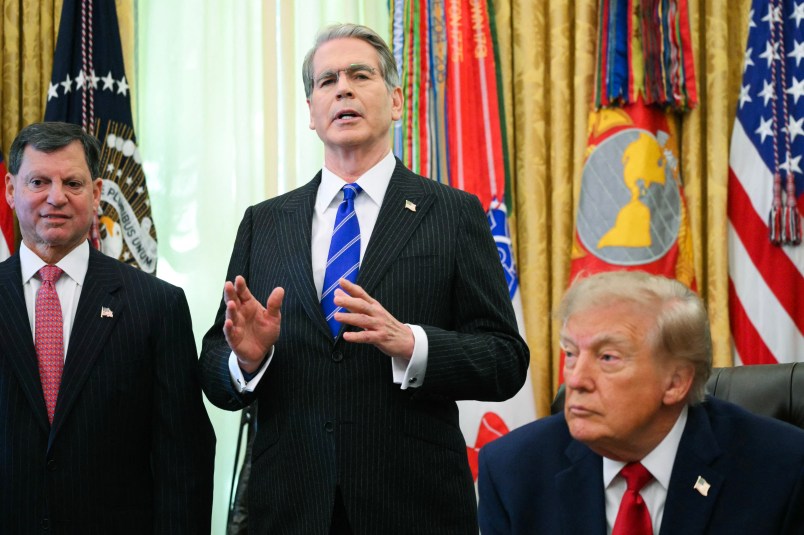
Judge Rebukes Trump DOJ for Pushing Her to Recuse

Trump Calls Judge ‘Crazed Lunatic’

Over the past week, the East Potomac Park case has morphed from another of President Trump’s personalist projects in D.C. to a burgeoning confrontation between the executive and judicial branches.

U.S. District Judge Ana Reyes had, by her own admission, bent over backwards to accommodate the Trump administration as it defended its supposedly nascent plan to remake a popular park in the heart of monumental D.C.

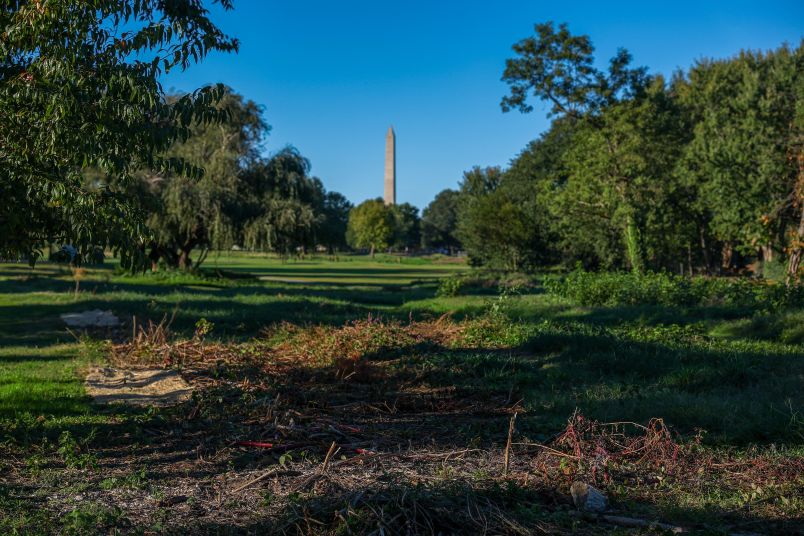
But then — in violation of her orders that the administration provide advanced notice and a chance for the court to intervene before undertaking any major projects in the park — the National Park Service removed hundreds of trees from the park’s golf course after providing scant notice just before 5:00 p.m. ET on a Friday before a holiday weekend.

That led to a fiery hearing in front of Reyes on Columbus Day in which she deplored the conduct of the administration and its DOJ attorneys. The hearing culminated with Reyes temporarily blocking any more tree removals at the park.

In the kind of self-defeating move that’s become common in cases where Trump has taken a close personal interest, the Trump DOJ responded to the courtroom woodshedding with a defiant motion on Friday evening calling on Judge Reyes to step aside from the case.

The motion to disqualify was over the top, accusing her of “histrionics,” “bias,” “disdain,” “open hostility,” and “animosity” toward the Trump administration in this and other cases.

The motion was signed by a single attorney: Stanley E. Woodward, Jr., the No. 3 official at DOJ.

Judge Reyes last night denied the motion to disqualify herself but not before eviscerating the Justice Department again: “That is a serious charge. The Court answers it. With the record.”

With that prelude, Judge Reyes spooled out pages of transcripts from prior proceedings in the case that rebutted the administration’s claims against her, before concluding:

It is easy to weaponize selective quotations to bring a baseless recusal motion. But it is much harder to meet the demanding legal standard against a full record. By any objective measure, the Government fails to meet the standard for recusal.

But things didn’t stop there.

Trump announced over the weekend that he plans to begin work on remaking the park on Nov. 15, closing it for 15 months. So much for Trump’s plans being nascent, as the administration had insisted for months. Judge Reyes took judicial notice of Trump’s post on Sunday and asked if it changed the administration’s prior position in the case:

The Court ORDERS that the Government notify it, by 8:00 p.m. today, whether it continues to take the position that it took in its October 16, 2026, filing, that, “there is no final agency action” and that “at most [] the President has given preliminary thought to” the plan to rebuild East Potomac Golf Course.

In its response — signed again only by Associate Attorney General Woodward — the administration insisted nothing had changed.

Then came this morning’s pre-dawn tirade from President Trump in which he called Judge Reyes a “crazed lunatic.”

Another hearing in the case is underway this morning on whether to issue a preliminary injunction blocking the administration’s plan. In her Sunday order, Reyes upped the ante by requiring Woodward and Deputy Assistant Attorney General Robert N. Stander to appear in person at today’s hearing.

Stay tuned …

We Can Afford to Have Nice Things

WASHINGTON, DC – OCTOBER 18: Logs and debris are piled on the course at East Potomac Golf Links on October 18, 2026 in Washington, DC. The National Park Service confirmed in a filing they had marked over 500 trees for removal as the Trump Administration mulls over a renovation for the golf course. (Photo by Tasos Katopodis/Getty Images)

Until the open clash between Trump and Judge Reyes, I’d hesitated to cover the East Potomac Park case for a national audience because in some ways it’s a parochial D.C. issue and not of the same import as, say, the demolition of the East Wing of the White House, the blight of the Trump Triumphal Arch, the renamings of the Kennedy Center and the Institute of Peace, or the unspeakable painting of the intricate exterior of the grand Eisenhower Executive Office Building.

But there’s more going on here than a threat to one public golf course.

For those not familiar, it should be noted that while the public golf course within the historic park is at the center of the dispute, the identity, public use, and access to the park as a whole is at stake. The park features a heavily used paved waterfront loop for walkers, runners, and cyclists. It has a playground and picnic area. People fish, enjoy the views of the D.C. core and northern Virginia, and watch planes taking off and landing from DCA.

The park was created for the public by Congress in the late 19th century and then was built using fill on the tidal mud flats of the Potomac. The low-cost golf course, like two other public courses in D.C. on National Park Service land, has always catered to a broad clientele, trying to keep the sport accessible.

What makes this a national story beyond the clash with Judge Reyes is that the narrowing of public spaces is happening in parallel with the shrinkage of civic life under Trump. The concern is that Trump’s plan would make the golf course more exclusive and less accessible. It would alter the public nature of the park as it has existed for more than 100 years.

Must See

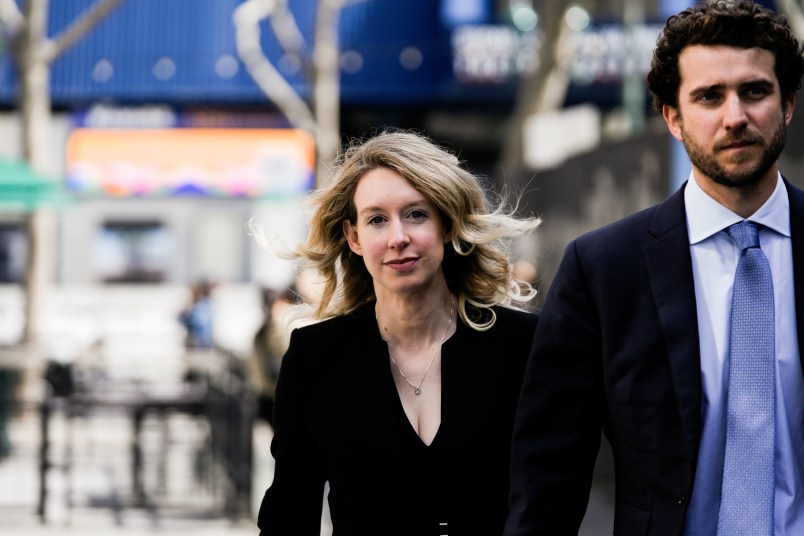
SAN JOSE, CA – Former Theranos CEO Elizabeth Holmes alongside her boyfriend Billy Evans, walks back to her hotel following a hearing at the Robert E. Peckham U.S. Courthouse on March 17, 2023 in San Jose, California. Holmes appeared in court for a restitution hearing. (Photo by Philip Pacheco/Getty Images)

Let me join the chorus of reviewers urging you to go see Nathan Fielder’s “You Can See Everything.” It’s among the smartest documentaries I’ve ever seen.

I came to it unfamiliar with Fielder’s previous work and with only passing Wikipedia-level familiarity with the Theranos scandal.

If you’re a Theranos obsessive, you may come away disappointed. It’s not a Theranos documentary. It’s a psychological profile of Elizabeth Homes and of her romantic partner Billy Evans. While it may be tempting to make a judgment on Holmes’ culpability in the Theranos scandal based on Fielder’s work — and audiences probably come out of theaters chatting about exactly that — it would be a mistake.

The Theranos fraud, while inextricably woven into the documentary, exists separate and apart from it. Trials and depositions and financial filings and good investigative reporting already explore the fraud itself in great detail. This isn’t that. (If you feel the strong need for a villain in the documentary, Billy more than fills that role on his own — even though he had nothing to do with Theranos and didn’t first meet Holmes until after the company’s collapse.)

What really sets Fielder’s documentary apart is its acute self-awareness. It grapples openly with the range of challenges that confront documentarians and storytellers: the limits of objectivity, the nature of truth, the intrusive role of the observer, the inevitability of bias, the constraints of narrative forms. I’m barely even getting started. There’s a lot going on.

Fielder inoculates himself against the most obvious criticisms by confronting them as part of the story he’s telling. It gets super meta at times, but it doesn’t lose the thread of the story. I can’t say much more than that without spoiling it for you.

If you’re comfortable with uncertainty, bask in nuance, enjoy the challenge of juggling competing explanations, and can tolerate not having everything reduced to a single “answer,” you’ll delight in this artwork.

News? Tips? Feedback? Please let me know. For sensitive information, use the encrypted methods here.

  •  

Tom Homan Shares the Omar Plan

Homan States Explicitly That Denaturalization is an Option

On Saturday, Tom Homan, President Trump’s “Border Czar,” made explicit what had only been reported before based on unnamed sources: the administration is looking at denaturalizing Rep. Ilhan Omar (D-MN), an outspoken critic of the president and one of the first Muslim members of Congress.

“I’m not going to get ahead of the bureau or HSI, but I’ve been told they have a strong case, and we’ll let the evidence lead where it leads,” he said on Fox.

“Of course, if you lie during the naturalization process, there is a process to denaturalize somebody,” he said at another point, adding, “And certainly, if the evidence points that way, that could happen.”

Homan, the kindler, gentler face of Trump’s immigration crackdown after Greg Bovino was shown the door amid his too-explicit fascism, is developing a reputation for his blunt comments making clear the administration is doing exactly what it appears to be doing. Long before the raid, he had been saying during media appearances that Omar was under criminal investigation.

DHS Secretary Markwayne Mullin also made the “strong case” claim on a Turning Point USA podcast Friday. “This was about enforcing once again our nation’s laws, and it’s a strong case,” he said.

The Trump administration has attempted to ramp up denaturalizations, though it’s a complicated process and its ability to navigate it has seemingly fallen far short of its ambition. It’s filed hundreds of cases, though each of those cases is still pending.

This latest, politicized prosecution, ramped up, in violation of DOJ policy, within weeks of the midterms, has inspired widespread condemnation. “The full weight of the federal government is being brought down on a law-abiding elected official because she has dared to criticize the president,” former President Barack Obama said over the weekend, joining that chorus.

Omar’s lawyers said in a letter Friday, reported by multiple outlets, that the search violated her rights and the restrictions a magistrate judge placed on DHS. Her lawyers were not given a copy of the search warrant, they said, and DHS didn’t consult with the House general counsel, which would have given Omar an opportunity to prevent congressional work product from being seized.

“There is no legitimate basis for any suggestion that she has violated any law concerning her citizenship status,” said the letter, per the Wall Street Journal.

A Talarico Win Downballot

Much of the national conversation has focused on the possibility that a James Talarico win would help Democrats flip control of the Senate. That level of support for a Democrat could, however, have significant effects down-ballot as well.

  • Governor Greg Abbott is facing a strong challenge from state Rep. Gina Hinojosa, with Cook Political Report on October 1 shifting the race from “likely Republican” to “lean Republican.”
  • In the U.S. House, there is the possibility that Republican’s attempt to gerrymander their way to a majority will backfire. In order to create five districts in which they hoped their candidates would win, they had to make many others less Republican; Democrats now have a real chance in some of those.
  • Meanwhile, even the districts Republicans gerrymandered in such a way that they expected them to flip may not: they used a vote for Trump to measure the districts’ Republican lean, but many voters — especially Latino voters — voted for Trump in 2024 but still voted for Democrats down ballot.
  • The Texas state legislature could also see a significant shift, as former Speaker of the Texas House Dade Phelan outlined in a fascinating recent interview with Texas Monthly. “People say eight Republican seats are at risk. I could see ten,” Phelan said. “I hear there’s more than that in the margin of error. That doesn’t mean they’re all going to lose. But these suburbs are nasty. Nasty. Houston, DFW, Bexar County [San Antonio]—you can’t spend enough money to keep up. And if Talarico wins this and gets the margin up to six or seven, it’s a bloodbath down [the] ballot. I don’t know how people survive.”
  • Early voting begins in the state today.
  •  

How Trump’s ‘Grand Conspiracy’ Investigation Failed to Become the New QAnon

In Rough Edges, Mike Rothschild writes about fringe groups, conspiracy theories and how the Internet broke our brains. This column is part of TPM Cafe, TPM’s home for opinion and news analysis.

People love a grand conspiracy. The bigger the scheme is, the more people get drawn into it. And the more details and players that are involved, the more believable it seemingly becomes. After all, who would go to the trouble of making up something so complicated? It must be true.

And nobody loves a conspiracy more than President Trump. He and his inner circle especially seem to have fallen in love with what has literally been dubbed “The Grand Conspiracy.” It’s a hopelessly complex, entirely unevidenced theory claiming that a high-ranking group of political figures have been plotting in the shadows for years to stop Donald Trump from making America great again through investigations, indictments and impeachments. It has all the hallmarks of the type of grandiose schemes that Trump supporters especially fall for: countless players, sprawling plots, intricate secrets, and a total lack of evidence that it actually took place.

Despite lacking cogent answers to foundational questions such as “what it is” and “who is doing it,” revenge for the Grand Conspiracy has been a driving force in the administration, prompting an investigation that has trundled along over the last year and a half, involving dozens of officials looking for some reason to indict the president’s enemies.

And there are many, many enemies. They include a greatest hits of Trump’s obsessions and grievances, from former special counsel Jack Smith to minor players like former FBI agent Peter Strzok, and even former President Barack Obama himself. According to Grand Conspiracy believers, they are all powerful Deep State figures who supposedly worked together in a single, years-long scheme to destroy Trump and undo the will of the people. 

Precisely what these conspirators have actually done remains unclear — even, seemingly, to the prosecutors themselves, who, per the Wall Street Journal, complained to the Justice Department that they weren’t getting much guidance from the local U.S. attorney. The probe is now being run out of Washington, where it continues to baffle those assigned to move it forward. 

In the last few weeks, there have been a host of indications that DOJ efforts to prosecute these figures — and tie them all together into one grand scheme — are falling apart. And, as the Grand Conspiracy prosecution flails at DOJ, the claims also aren’t doing much in the court of public opinion, where Republicans are looking for anything they can find to shore up their crumbling midterm prospects.

  •  

Why Current Polling Averages May, in Fact, Understate Democratic Support

This article is part of Cafe, TPM’s home for opinion and news analysis.

Significant polling errors most often result when late-deciding voters break differently from historical patterns. That’s likely to happen this year, and not in a way that favors Republicans. 

Start with the observation that the current midterm environment is utterly unlike any in recent history. The CNN average of recent polls pegs the proportion of voters who disapprove of Trump at 65 percent, and a recent You/Gov Economist poll found that of those who disapprove, 84 percent of them disapprove of him “strongly.” We’ve had no recent midterm cycle in which most American voters strongly disapprove of the president. 

If we look at the distribution of Trump disapprovers, the implications for Republicans become even more ominous. Let’s say that Trump’s most loyal MAGA voters make up 30 percent of the electorate and assume, plausibly, that most of them associate largely with Americans of similar views. Since this group is largely devoid of Trump disapprovers, the upshot is that an overwhelming majority of voters not in this group — some 70 percent of the electorate — are Trump disapprovers. And since there are also almost no undecided voters among Trump loyalists, the portion of the electorate that describes itself as “undecided” also must consist almost entirely of Trump disapprovers.

To see how this may matter, consider the observation that most of us are more heavily influenced than we realize by the behavior and beliefs of peers. (This was the core premise of my 2019 book, Under the Influence: Putting Peer Pressure to Work.) As decades of careful studies have shown, peer behavior strongly influences almost everything we do and think — what we eat, how much we exercise, whether and how much we smoke and drink, how much we weigh, and which candidates we support.

Now imagine the decision facing an undecided voter. She’s almost surely not a Trump loyalist, and virtually all of her close friends and relatives are likely to disapprove of Trump, a majority of them strongly. They’re unhappy about gas prices, the cost of groceries, corruption, the war in Iran, the behavior of ICE, and more. Herself a likely Trump disapprover, she’s almost surely unhappy about many of these things as well. Late deciders in past elections often tended to break toward candidates who share their political identity. If this year’s late decider is a conservative, that would predict she’d vote Republican. But given everything we know about human behavior, casting that vote would be difficult in the current environment. It would mean bucking the views of almost everyone she knows and cares about.

How much might all this matter? A recent generic ballot poll estimated that 8 percent of likely voters remain undecided. If these voters would have split 4D-4R in a normal midterm environment, a 6D-2R split in today’s climate would hardly seem unlikely. And that four percentage point swing would almost surely be more than enough to erase any pro-R polling bias from other sources.

But there’s more. Peer influences shape not only the decision about whom to vote for but also the decision about whether to vote at all. This influence will of course cause current polling averages to further understate Democratic strength.

In a recent interview with MS NOW host Jen Psaki, former Obama adviser David Plouffe was understandably reluctant even to discuss the possibility that current polls might be understating Democratic strength. Acknowledging this possibility could of course encourage some people to slack off, thinking the prize already in hand. 

But understating Democratic prospects also entails risk. As we’ve seen, Republican seats are vulnerable in many areas that earlier Democrats would never have thought to contest. There’s reason to believe that the playing field may yet warrant further expansion. 

  •  

Powers Jostle Over Oil Prices and US Midterms

Today’s world would be a fascinating object of study if one weren’t also living in it. The price of energy isn’t the cause of Donald Trump’s deep unpopularity. But for months it’s been driving it to new depths. The price of oil plateaued in early October, which seemed to blunt some of Democrats’ electoral momentum. On Friday though it jumped up again, with the Brent Crude price hitting $110 a barrel, the highest since May. That was the worst of all possible worlds for Trump and that clearly played a key role in his decision to waive sanctions against Russia. Reuters reports that the prospect of greater supply from Russia knocked oil off those highs in early Monday trading in Asia. That was clearly the main goal of that waiver. But just in the last hour, reports have come out that Ukraine launched a massive volley of 1,000 drones targeting Russian energy infrastructure.

  •  
❌