In the Henrik Ibsen play The Wild Duck, Dr. Relling dispenses a drug that soothes the most profound self-loathing: livsløgn, a “life-lie,” a form of grandiose self-delusion that lets the pathetic figures who take it believe that they are geniuses and noble romantics. The life-lie, it turns out, is a hell of a drug—perhaps the most potent Scandinavian pharmaceutical invention before Ozempic—and keeps the play’s fragile characters from succumbing to “self-contempt and despair.” Against Relling’s advice, another character, Gregers, decides to free these losers from their life-lies and expose them. The play ends with a suicide.
On Friday, the former Cambridge professor Jason Arday died at the age of 41. British police said his death was “unexpected” but not “suspicious.” This classification, unexpected but not suspicious, includes the possibility that he died accidentally. But reports of Arday’s delicate emotional state at the time have led most to assume that he killed himself after weeks of accumulating revelations that he had lied compulsively for personal and professional gain. One of his last public statements was an interview with The Times of London in which he affirmed that he was “not a liar,” a line itself so blatantly false that any Ibsen fan would have recognized symptoms of a livsløgn overdose. He gave no George Santos–like, impish shrug at having been finally caught. (What took you so long?) He did not prepare to switch careers to pursue reality-TV stardom or write a Catch Me if You Can–style memoir about the dupes he met along the way. Instead, his response suggested—it is painful to notice this now, when nothing can be done—that he felt he had to stick with his story. That way led to a catastrophic end: narcissistic collapse, in which the lies stop working on others and finally on the liar himself. Arday appears to have convinced himself, wrongly, that the last remaining option was suicide, which was, of course, his final self-delusion. His lies won him undeserved praise and status, and they gave (unforgivably) false hope to people whose loved ones have severe developmental delays. But the only lie that ever killed anyone was the last one.
Some are now suggesting that Arday was the victim, and the people who drew attention to his lies, the villains. Ibram X. Kendi suggests that Arday might even be vindicated after a full accounting of the allegations against him. (Keep in mind that in addition to his straightforward acts of fabrication and plagiarism, always of less powerful academics, he claimed to have taken part in a British documentary series that preceded his birth.) And the hapless Good Law Project, which persuaded dozens of Cambridge bigwigs to rally behind Arday and dismiss his critics as racists, has issued an open letter calling for an investigation of “the press.” The media’s alleged crime: writing about this extraordinary case of a habitual liar’s appointment to a distinguished academic post, rather than letting the liar keep embarrassing himself and his institution. “Reasonable public interest” in the case had dissipated, the letter says, yet the press kept digging. Arday’s death was, it says, the “direct, foreseeable and foreseen result of press harassment.”
A Buddhist proverb says that when a wise man points at the moon, the fool stares at his finger. The media were unrelenting, but con-man stories are always popular, and the bigger the victim, the better. The press’s obsession was in proportion with the outlandishness of the lies told by Arday and on his behalf, and with public interest in the failures they revealed. Those failures were intellectual, institutional, and even legal. Arday called the cops on an academic who had asked him hostile questions, and he instructed a law firm to send a threatening letter to a reporter who did the same. The focus on those who pointed out Arday’s shortcomings, rather than on Arday himself and those who abetted his rise, is a clear sign that lessons from this miserable episode remain unlearned. The people responsible for it may repeat their errors and, in some cases, commit appalling new ones. (Kendi compares Arday’s treatment to a “lynching.” This analogy is tenable only if you think lynching means harshly criticizing people for actual transgressions, rather than summarily murdering them for no reason at all.)
Some lies are so preposterous that intelligent people who believe them bear some responsibility for being taken in. And they are outright guilty for repeating the lies and urging others to believe them. This is obviously so in Arday’s case. The lies depended on willful credulity, as well as amplification by other professors, including Cambridge’s Hilary Cremin, who went on the BBC and told Arday that “you are the best in the world, in terms of the research that you do.” Reviewers gushed over his books and pronounced them moving, “brave,” and “insightful.” Defenders did begin to distance themselves when the lies became even more lurid and inexplicable, as with the claims that a masked man invisible to security cameras had menaced Arday with a knife and that someone had sent him the head of a pig, which he disposed of rather than preserved as evidence. The trajectory of his deception seems to have been from tragedy (a man carried away with lies and too compulsive to stop telling them) to farce (once the lies became ridiculous enough that only a complicit person could believe them) and finally back to tragedy on Friday. Arday’s colleagues, his editors, and the people who knew he was a fraud but said nothing have absorbed some ridicule for their role in hiring and publishing him. But to date, I have seen no evidence that they have considered their complicity, let alone repaired the damage to their institutions by explaining their error or, better yet, just resigning.
They elevated Arday, a fragile and disturbed person, into a position where his fragility would be tested and he would be shattered. Even if the Cambridge Faculty of Education’s standards were so low that his inadequacies would remain unremarked there, he was a fellow of a Cambridge college with real scholars who would eventually be indignant upon realizing that their new colleague’s scholarship consisted of copy-paste jobs, semiliterate nonsense, and fan notes on his favorite 1990s Brit-pop. Did Arday’s allies think no one would notice? That those who noticed would be forever intimidated into polite silence? That drinking sherry in the common room of Jesus College would be a pleasant experience for Arday himself as he waited to be found out? Those who placed Arday in that situation were cruel and heartless. They may as well have taken a skin-and-bones Make-A-Wish kid, told him that he could fly, and shot him out of a cannon. The journalists were not the ones who stuffed Arday into the cannon and lit the fuse. They were gravity.
In The Wild Duck, Ibsen’s main villain is Gregers, the crusading moralist who makes it his mission to “rescue” the characters from their sustaining life-lies and help them and those who respect them see their deficiencies. The Gregers in this case is Nathan Cofnas, a philosopher with an abiding interest in race and a particular curiosity about the supposed mental deficiencies of Black people. Cofnas’s views on race science (he believes that very few Black people are cognitively equipped to be employed at a “meritocratic” university) led him to be run out of Cambridge in 2024, just as Arday was being appointed to one of the university’s most prestigious chairs. Cambridge’s failure to vet this appointment left an opening for Cofnas, smarting from his own dismissal, to take on the unsavory task of assembling a dossier on Arday’s work. The results were so galling that morbid curiosity drove others to scrutinize everything else about Arday, including his implausible claims that he secretly raised large sums for charity and was among the world’s greatest long-distance runners.
Dr. Relling calls Gregers’s urge to disabuse and expose “an acute attack of integrity,” and he warns that going cold turkey off livsløgn will not end well for patients or others. (Other Ibsen plays are relevant here too: In some, the collapse of illusions afflicts whole towns, not just a few of their members.) The difference between Gregers and Cofnas seems to be that the latter, perhaps as a result of his being scorned by Cambridge, has no affection for the people whose life-lies he methodically destroyed. Cofnas recently told the podcaster Winston Marshall that “talking about” race “makes people feel bad, and there are a lot of things that are true that make people feel bad that we don’t need to talk about.” But the subversion of academic standards, at what Cofnas perceives as his own expense, demanded action. The result will be good for academia, Cofnas insists, a far better outcome than preserving the good feelings that went along with silence.
In Ibsen, when Gregers forces integrity on a self-deluded character, that character’s daughter decides to kill herself. Gregers sounds most like Cofnas in the final scene. He is confident that her death, however horrible, will “set free all that is noble” in those who partook in the life-lie as they see life for what it is. Life sustained by delusion “is not worth living,” Gregers says. But he knows the cost of being an odious truth teller. “I am glad that my destiny is what it is,” he tells Relling: “to be the thirteenth at table,” the guest who everyone wishes would stop showing up, because he brings misfortune to any dinner he attends.
Arday was hired to teach social science. A terminal irony is that his main contribution to that body of knowledge will be as a case study, about a community that elevated a flawed man to a position exalted beyond his ability, without knowing or caring that they were actually offering him as a human sacrifice.
Since September 11, 2001, al‑Qaeda has pulled off exactly one fatal attack inside the United States. If you remember the details of that attack, you probably spend too much time thinking about terrorism. On December 6, 2019, in Pensacola, Florida, a 21-year-old Royal Saudi Air Force officer took out a legally acquired Glock pistol and killed three U.S. sailors at a naval air base, before police arrived and killed him. The shooter, an affiliate of al‑Qaeda’s branch in Yemen, had been on the base for flight training. I was in Taif, Saudi Arabia, at the time, and the Saudis I met said they were sorry about the incident but relieved that after 18 years of terrorist R&D, the most ferocious blow al‑Qaeda could strike on the path of jihad was not much worse than the kind of mundane workplace violence that we Americans regularly inflict on ourselves.
The group yearned to attack America again after 9/11 and had considered several schemes, but only on three occasions before Pensacola had it actually tried to execute an operation. All three plots had failed.
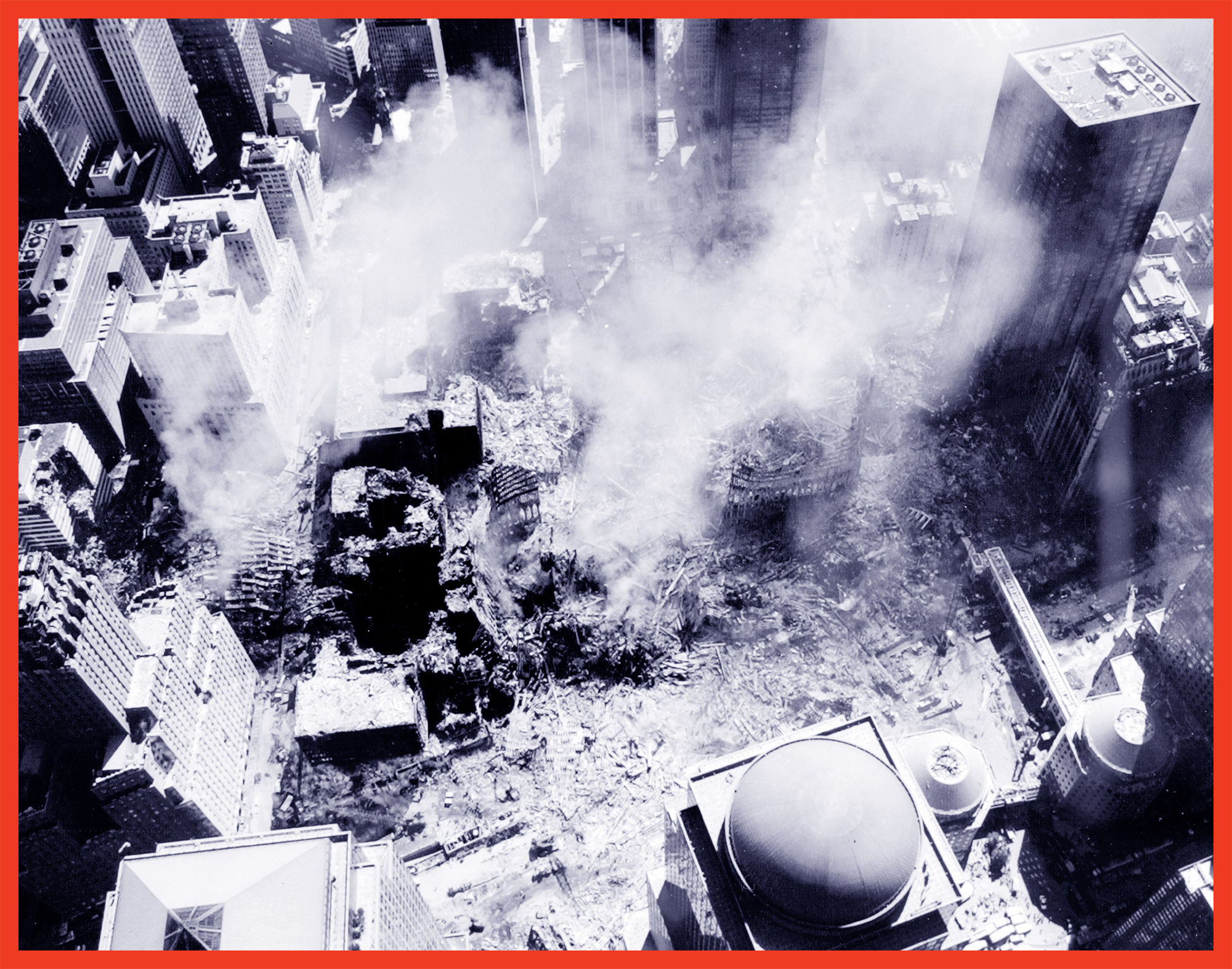
Universal History Archive / Getty
The 9/11 attacks, which killed 2,977 people, instilled fear in Americans. But for al-Qaeda, fear was a means to an end: political change.
On December 22, 2001, a slovenly thug named Richard Reid tried to blow up a Miami-bound airplane by lighting a bomb concealed in his high-top sneakers. He failed because he could not light the fuse—which had apparently been moistened by foot sweat and rain—and because he tried to light it, striking match after match, in full view of other passengers rather than in the privacy of an American Airlines lavatory.
The next attack would not occur for another eight years. That one, in 2009, resembled the first: A competent bomb maker entrusted his package to a complete moron. On a plane descending into Detroit, a passenger with an explosive charge sewn into his underpants injected a chemical initiator that fricasseed his crotch but left the plane intact. The next year, in a much more formidable plot, al‑Qaeda used FedEx and UPS to send bombs hidden in laser printers on cargo planes bound for the United States. Authorities intercepted the packages. In 2017, the United States killed the bomb maker, Ibrahim al-Asiri, in a drone strike in Yemen.
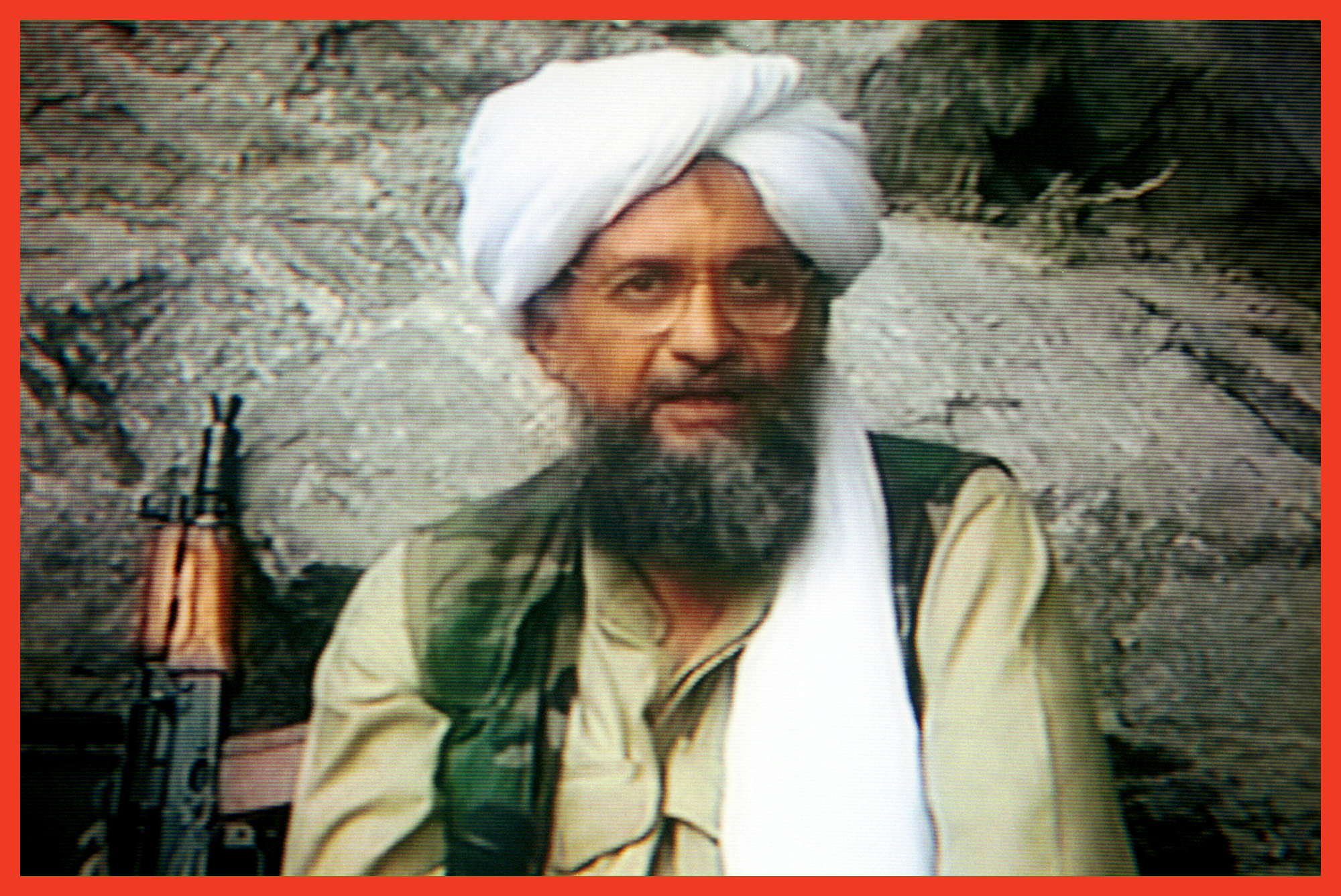
Surviving until 2017, as an al-Qaeda leader, was itself something of an accomplishment. Anne Likuski, the author of Al‑Qaida After 9/11 and a researcher at the Norwegian Defence Research Establishment, told me the upper echelons of al‑Qaeda had been “eradicated” by 2012—droned into oblivion and replaced by younger jihadists with less experience and credibility. In 2011, Osama bin Laden himself was killed in Abbottabad, Pakistan, and his successor, the Egyptian physician Ayman al‑Zawahiri, was struck by Hellfire missiles on his balcony in Kabul in 2022.
Judging from this streak of incompetence, it is difficult to see al‑Qaeda as anything but a failure. In a November 2002 audiotape, bin Laden posited a ledger of death, and promised that his group would keep it balanced. “The time has come to settle the accounts,” he said. “Just as you kill, so you shall be killed; just as you bomb, so you shall be bombed.” His group murdered 2,977 people on September 11, but in the past 25 years, it has run a serious deficit in its account.
Among terrorism analysts, a prominent school of thought nevertheless holds that the group is the shrewdest and most effective terrorist organization of all time—and that it is more dangerous than ever. Bruce Hoffman, who has been studying terrorist groups since before al‑Qaeda was founded, told me that it was singular in its resilience. “They’ve survived the greatest military onslaught in history ever directed against a terrorist group,” Hoffman, a senior fellow at the Council on Foreign Relations, said. He pointed to the very simple strategy that bin Laden articulated in a 2004 video: wear Americans down and “bleed” them “to the point of bankruptcy.”
“That strategy is working,” Hoffman said. A 2021 Brown University report put the cost of the War on Terror at more than $8 trillion.
This unfathomable investment succeeded in removing al‑Qaeda from the little camps it once controlled in Afghanistan. But these havens have been replaced by large ones elsewhere, including in parts of the Horn of Africa, Yemen, and the Sahel, the arid region of West Africa just south of the Sahara. The al‑Qaeda franchises in those places are ruthless and rich. The East African branch fields a force that has been estimated at 10,000 men and pulls in about $100 million in revenue annually through taxation, smuggling, and outright theft. It gets a taste of almost all commerce in Somalia and has recruited supporters from as far away as Southern California.
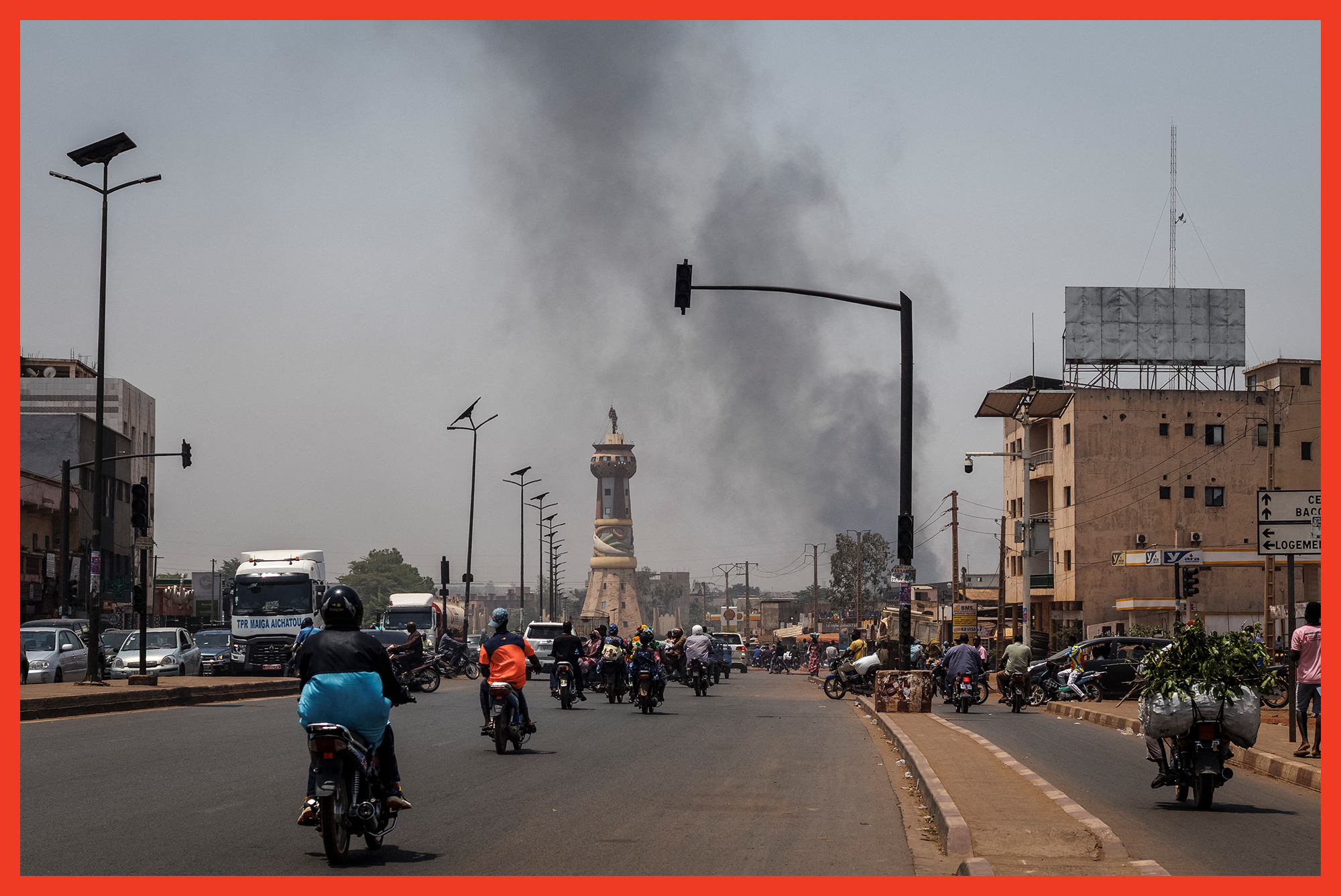
“On the ground, these groups are not only winning military victories but also exercising sovereignty and governance,” Hoffman said. Al‑Qaeda’s branch in the Sahel, Jama’at Nusrat al-Islam wal-Muslimin (“The Support Group for Islam and Muslims”), sounds like it meets over coffee and stale doughnuts in a church basement. But just this year, trucks bristling with weapons swept across Mali under its banner and nearly toppled the country’s government. Militants associated with JNIM killed Mali’s defense minister in his own home.
If al‑Qaeda halted its attacks on America because it preferred, temporarily, to measure its progress not in American corpses but in square miles of planet Earth, then it has been a roaring success. And it could, Hoffman said, turn back to its old priorities. “The al‑Qaeda concept has taken root,” he said, and has given the group’s leadership—sometimes called “al‑Qaeda core”—the luxury of deciding when to begin killing Americans again. “What worries me is that al‑Qaeda is husbanding its resources to do something in the U.S., and might enlist the franchises to carry it out.”
Worry is an occupational hazard for people who study terrorist attacks professionally. Al‑Qaeda’s resurgence has been predicted for two decades, and so far, no resurgence. Another possibility, rarely uttered for fear of jinxing things, is that sending exploding hoboes onto airplanes 17 years ago was the pinnacle of the group’s post-9/11 powers, and that al‑Qaeda core has been quiet because it has gone the way of RadioShack, Blockbuster, and the Hartford Whalers. It no longer exists, and the affiliates—fearsome though they may be in the deserts where they operate—are just wearing the jersey of a team that folded long ago.
A quarter century after the 9/11 attacks, about half the world’s population is too young to remember them. Those who do will recall both the horror of the imagery—thousands dying on live television, in seconds—and the disorientation of the day. Nobody knew whether the four planes were the only ones, or whether 40 more were hurtling toward other targets. That evening, CNN was speculating that the death toll might be in the tens of thousands.
If fear was the goal: mission accomplished. But fear was the means, not the end. The end was political change. And any assessment of al‑Qaeda, both on 9/11 and in the ensuing decades, should ask whether it leveraged that fear to bring about the political results it sought.
The people who grade bin Laden most generously in this regard focus on how al‑Qaeda persuaded America to poke itself repeatedly in the eye in the years that followed September 11. In 2021, the political theorist William A. Galston awarded bin Laden “a sweeping if posthumous victory” for provoking stupid responses that have distracted, divided, and weakened America. Others, such as the former CIA official Bruce Riedel, have suggested that these traps were bin Laden’s plan all along, and that he wanted to lure the United States into an invasion of Afghanistan and “a long and bloody war of occupation.”
The American capacity for self-harm, at astronomical cost, is at this point undeniable. Equally incalculable is the cost in human life: soldiers and civilians killed during the open-ended hunt for remnants of al-Qaeda, and others who survived but saw their communities destroyed or traumatized. But these costs are evidence of an American defeat, not necessarily a bin Laden victory.
Because bin Laden was a chatterbox and loved giving interviews before he became the most hunted man in history, the record he left of his hopes and strategic thinking is quite complete, and provides a standard—his own—against which to measure al‑Qaeda’s success or failure. To these public statements we can add roughly 6,000 pages of internal documents seized by the United States from the Abbottabad compound where bin Laden spent his final years. These private documents banish any temptation to think of him as a mastermind who predicted each misstep by his enemies and laid traps years in advance.
In 1998, he stated his goals: to “kill Americans and their allies,” and “to liberate al-Aqsa Mosque in Jerusalem and the Holy Mosque in Mecca from their grip, so that their armies leave all the territory of Islam, defeated, broken, and unable to threaten any Muslim.” This theme—the withdrawal of the United States from Muslim land, particularly his native Saudi Arabia, as well as the end of Israel and of American support for Israel and secular autocracies in the Arab world—was consistent in his statements.
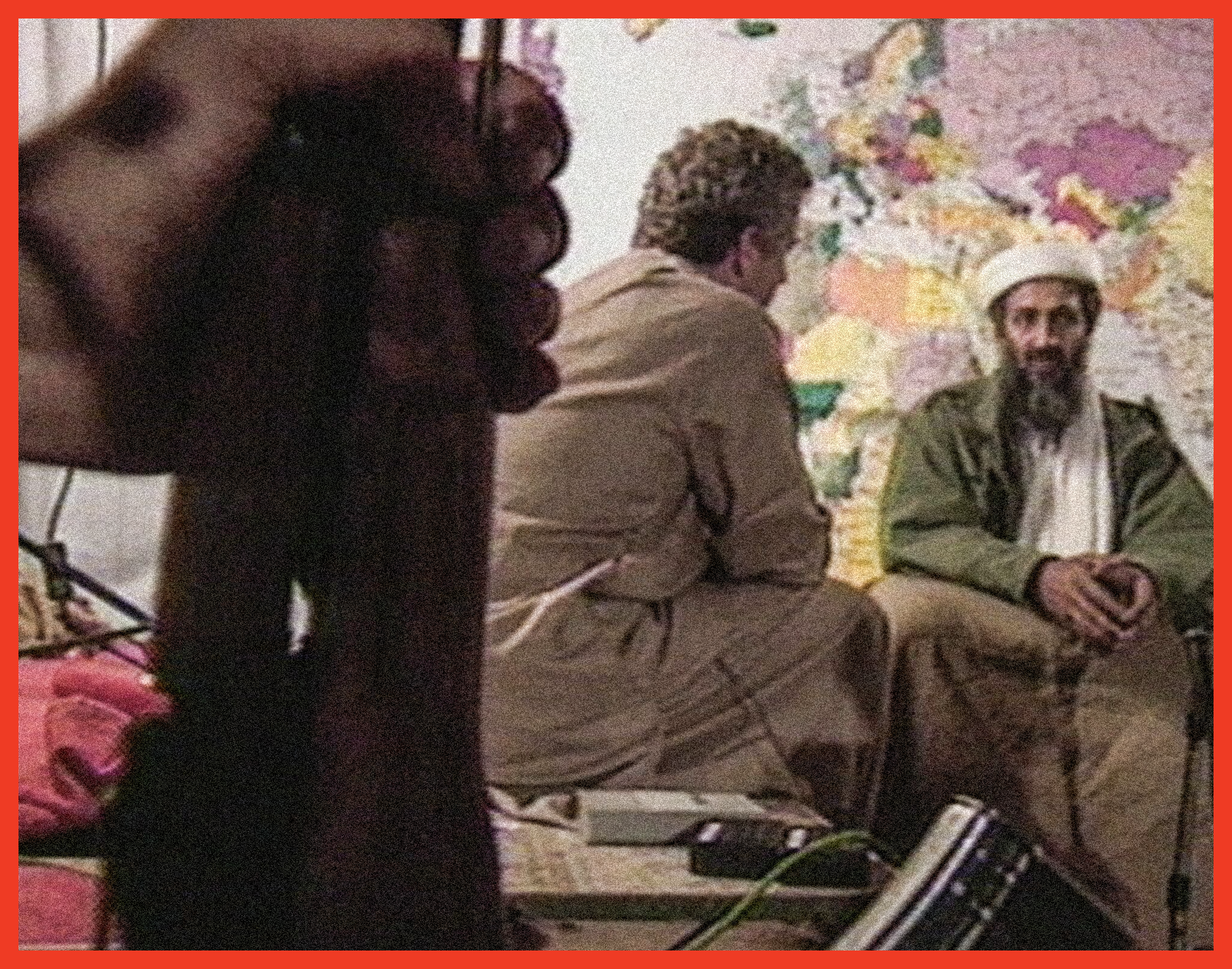
Bin Laden was equally clear about how he thought terrorism would yield his desired result. In a March 1997 CNN interview with Peter Bergen, he spoke of transferring “the battle into the United States.” In a May 2000 speech, he told supporters that the war would henceforth be waged “against the United States, in the United States.” Americans, he observed to ABC’s John Miller in 1998, cannot tolerate pain, and will react to attacks not by fighting back and blaming al‑Qaeda, but instead by asking “what their government has done that forced us to defend ourselves.” In a November 2001 interview, he hinted at a theory of political change in America: Its citizens should “take the same stand that they did previously,” when they protested the Vietnam War and the presidents who waged it.
ABC Photo Archives / Getty
ABC’s John Miller interviews Osama bin Laden in 1998. Bin Laden said Americans could not tolerate pain and would not fight back if attacked.
Nelly Lahoud, a professor at the Army War College and the author of the definitive book on the Abbottabad documents, told me this political pipe dream was bin Laden’s whole plan: “to replicate the anti–Vietnam War movement of the United States, to get the American public to put pressure on the U.S. government to withdraw its forces from the Middle East.” The documents reveal a man and an organization blindsided by the American reaction to the September 11 attacks. Bin Laden and his associates “didn’t think that the United States would respond by waging war,” Lahoud said. He did not contemplate or plan for the long-term occupation of Afghanistan, nor did he expect the methodical killing of his operatives in a campaign that lasted years.
For good or ill, American Middle East policy during this period was roughly the opposite of what bin Laden expected and intended. Rather than withdrawing, U.S. forces surged into the region. The United States has troops, and friends, in Syria, Bahrain, Iraq, Jordan, Saudi Arabia, Kuwait, Qatar, and the United Arab Emirates. The only Middle Eastern despot the United States abandoned post‑9/11 was Egyptian President Hosni Mubarak, and after less than two years of experimentation with Islamist rule, Egypt switched back to an America-friendly autocrat. In the mid-2000s, Saudi Arabia—whose leaders bin Laden considered tyrants—was a decrepit gerontocracy in regular peril of jihadist revolution. Its current leader, Crown Prince Mohammed bin Salman, is in his early 40s and an ally of the Trump administration. He began his quest to transform his kingdom into a modern state by locking up anyone who had expressed even the faintest interest in jihad.
Bin Laden experienced the 2000s as a series of disappointments. After nine years of continuous hunting of his comrades, and after one of them had ignited his scrotum somewhere over southeastern Michigan, he was ready to concede privately that his theory of political change was ill-considered. “By 2010, bin Laden had to reflect on things,” Lahoud said. Having looked further into the Vietnam comparison, he learned that about 58,000 Americans were killed during that 20-year war. Because Americans were then being killed in Iraq and Afghanistan at a rate of about 500 a year, he decided that his allies could not plausibly step up the pace enough to stoke popular outrage in the United States. In one captured document, bin Laden argues that a better strategy would be a financial hit that affected the “income of every American citizen.” He suggests that al-Qaeda consider attacking shipping in the Strait of Hormuz. He was developing that plan (clever, come to think of it) around the time SEAL Team 6 shot him in the face.
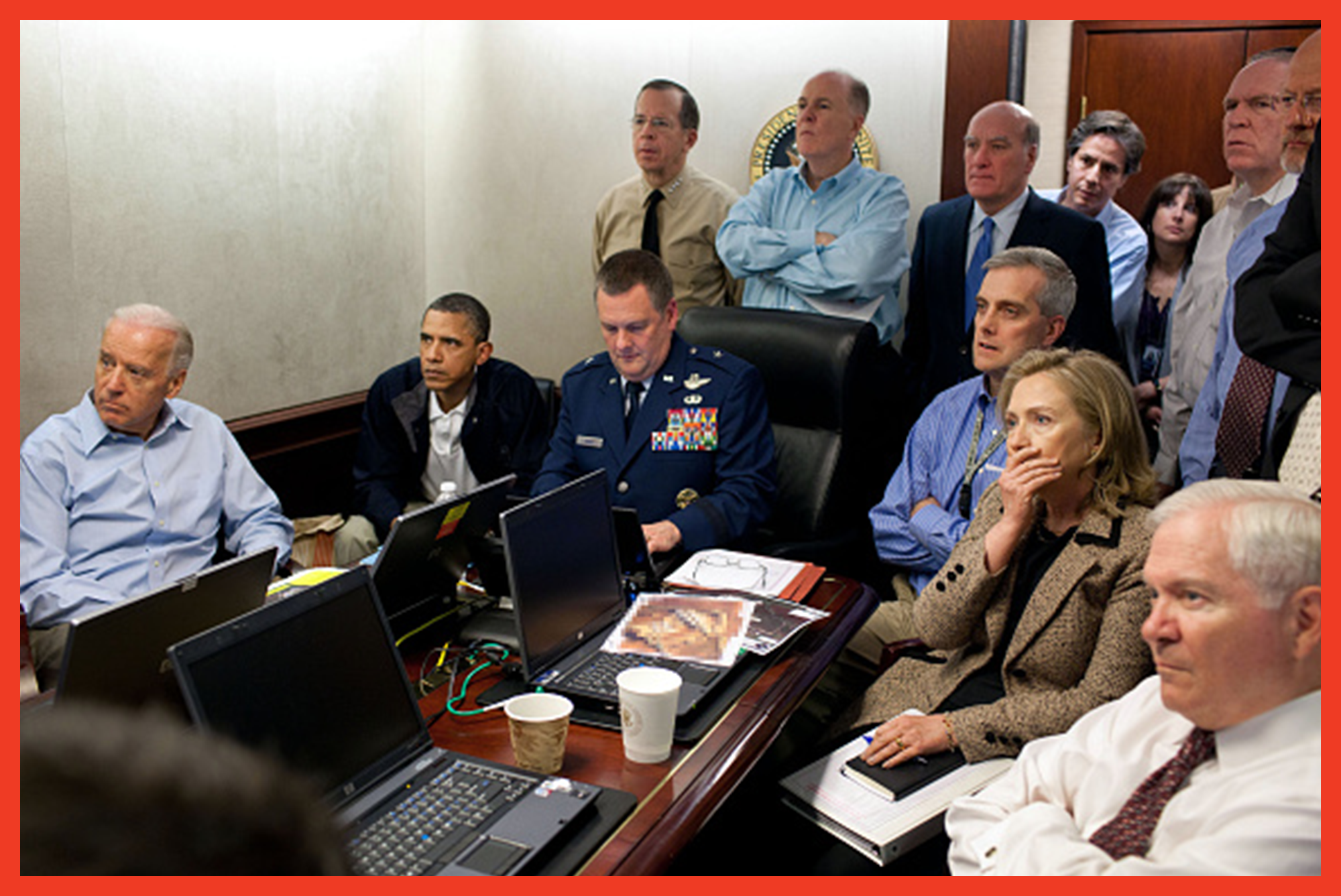
Pete Souza / The White House / Getty
Members of the Obama administration receive an update on the mission to kill bin Laden in May 2011. By 2012, much of the upper echelons of al-Qaeda had been eliminated.
The evidence that bin Laden was mostly neutralized in the years immediately after 9/11—according to Lahoud, the Abbottabad documents indicate that he was barely in touch with anyone in al-Qaeda from 2002 to 2004—makes for a peculiar contrast with the attribution of strategic genius to him that was occurring during this exact period. He was more Clouseau than Clausewitz. But the United States was at the time preparing to embark on the Iraq War, and perhaps it was difficult to imagine that a folly of such magnitude could be self-inflicted, rather than planned by a Machiavellian enemy.
Bin Laden encouraged this impression. In 2004, when he issued his first video in nearly three years, addressing American voters on the eve of the presidential election, he told them he was planning a war of attrition. He warned them that he intended to bleed them slowly, as al-Qaeda had “bled Russia for 10 years” in Afghanistan, “until it went bankrupt and was forced to withdraw in defeat.” (Bruce Hoffman noted that bin Laden was engaging in stolen valor here, because his Arab fighters had been war tourists and the Afghans had done the hard work of fighting the Soviets. “Still,” he said, “it fit the narrative.”)
Publicly, bin Laden made a virtue of necessity and told the world that getting attacked by America was a blessing. But Lahoud is adamant that the Abbottabad documents show the opposite of crafty planning, and instead reveal constant complaining about the very setbacks that al‑Qaeda supposedly welcomed. Privately, bin Laden bemoaned his network’s impotence, lack of money, and inability to mount even small operations. “Al‑Qaeda came up with the ‘war of attrition’ idea afterward,” Lahoud said. “This was not by design.” Those who awarded bin Laden points for strategic genius had fallen for his propaganda.
After bin Laden’s death, al-Zawahiri made attrition the official al‑Qaeda doctrine: to exhaust America and bleed it to death, “so that it meets the fate of the former Soviet Union and collapses under its own weight.” A similarly themed article appeared in The Onion, under the headline “FBI Uncovers al‑Qaeda Plot to Just Sit Back and Enjoy Collapse of United States.” It was illustrated by a calm bearded man, relaxing on a sofa with a television remote in his hand. The photo appeared to be modeled on one of the last known videos of bin Laden, channel surfing in a shabby, windowless room.
Bin Laden seemed to have realized that he’d created a debacle for himself and his allies. At one point, he argued that the Taliban was doomed anyway, and that he was therefore blameless for provoking an invasion of the group’s country and the destruction of its regime. “We knew for certain that Afghanistan was already a target, and that America was determined to bring down the Taliban,” he wrote in a document quoted by Lahoud. He and his non-Afghan terrorist crew could hardly be faulted for an American invasion that was already inevitable. “Everything that happened was going to happen even if we did not strike,” he wrote. This ludicrous claim, that George W. Bush wanted to occupy Afghanistan and merely advanced his calendar because of 9/11, is self-serving, Lahoud writes, and “reeks of repressed Arab guilt.”
Whether al‑Qaeda hit upon the attrition strategy brilliantly or simply claimed prescience after the fact is in some ways immaterial. The United States was, in fact, eventually exhausted by protracted war—that is why we fled Kabul in 2021 and handed over the government to the Taliban, with our compliments—and American overreach was predictable even if bin Laden failed to predict it. One could conclude that al‑Qaeda stumbled at first by losing its haven in Afghanistan, but then recovered its composure and played its hand masterfully thereafter. But that, too, would be giving the group too much credit, and would underestimate just how catastrophic the attacks on America were for its cause.
The cause, as of September 9, was going well—in part because of a cunning move by bin Laden, though he unwittingly undid its effect on September 11. Two days before the 9/11 attacks, bin Laden sent two Tunisian suicide bombers, posing as journalists, to kill Ahmad Shah Massoud, the leader of the anti-Taliban coalition known as the Northern Alliance. Had he stopped there—killing Massoud and calling off the planes—the trajectory of South and Central Asia, and the future of political Islam, would have been different.
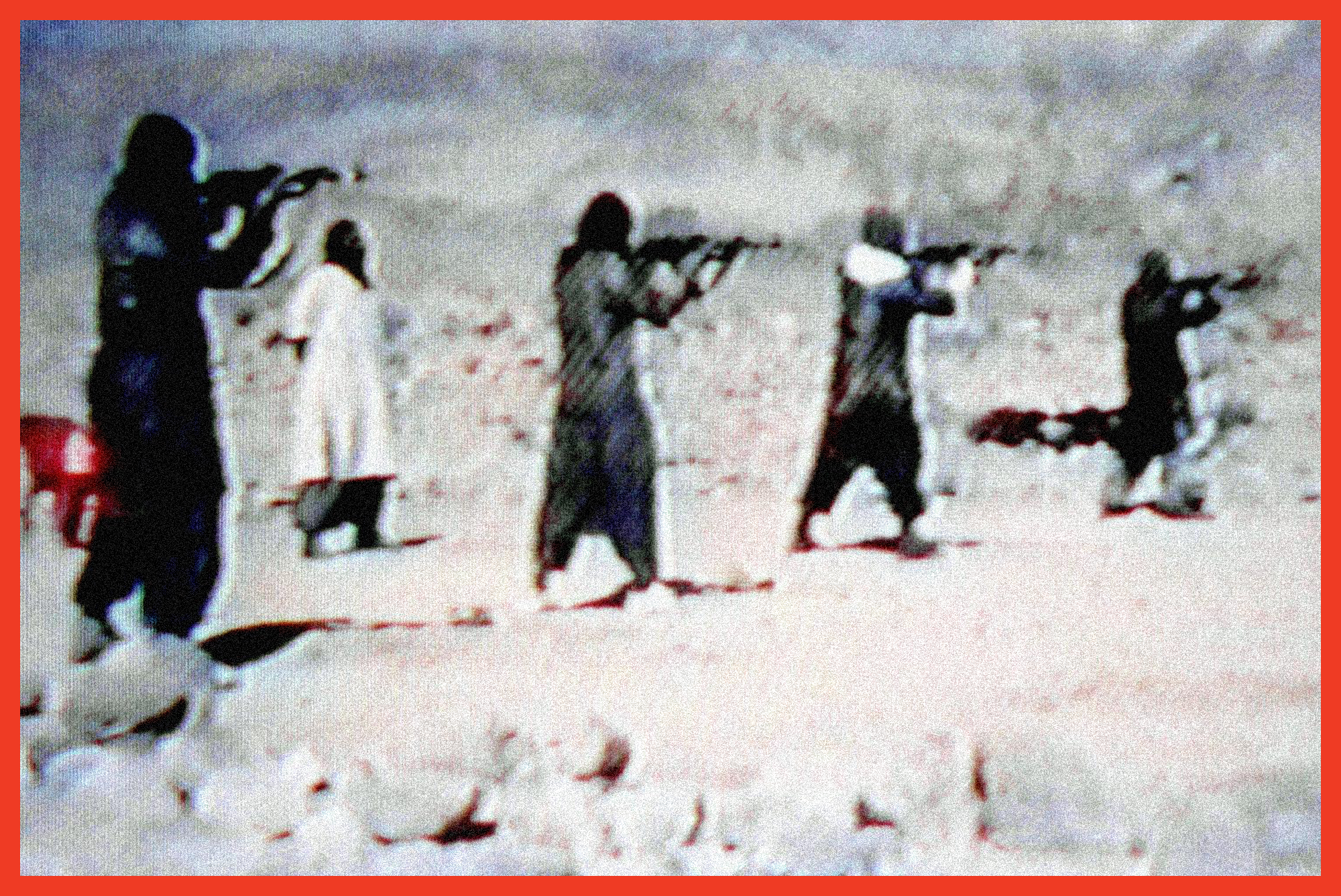
By mid-2001, the Northern Alliance had lost Kabul to the Taliban and had no prospects of recovering it. The group had been pushed into the Panjshir Valley and the rugged northeastern corner of Afghanistan, and with Pakistani help, the Taliban had begun consolidating its gains. For Pakistan, Afghan territory was useful as a base for attacks on India. The videos of al‑Qaeda terrorists swinging from monkey bars in a training camp in Afghanistan before 9/11 made news in the United States. But most campers at sites like these were training to fight in Kashmir. India had no control over or access to Afghanistan, and Pakistan viewed the Taliban as an asset.
AFP / Getty
A video showing al-Qaeda fighters training circulated in June 2001, making news in the U.S.
What some Pakistani generals saw as a strategic asset, other Pakistanis saw as a religious one. It is difficult to overstate how much hope South Asian Islamists invested in the Taliban’s success. My first acquaintance with the Taliban and its supporters came five months before the September 11 attacks. I was in Peshawar, the Pakistani city just over the Khyber Pass from Taliban-controlled Afghanistan. Taliban supporters were ubiquitous there that April because members of their sect were holding a jamboree with thousands of attendees. They regarded the Taliban takeover of Afghanistan as an epochal event, not so different from the Islamic State’s declaration of its caliphate 13 years later. (Mullah Omar, the Taliban’s leader, called himself “commander of the believers,” a title historically reserved for caliphs.)
At the jamboree, I met men from the Persian Gulf countries, England, and South Asia. (Few were Afghan.) The Taliban itself was an Afghan movement with little knowledge of the world or interest in conquering it. But other Sunni Islamists thought that from these provincial beginnings a state would arise that could incubate a range of Islamist projects. The attendees viewed Taliban-led Afghanistan as a laboratory of conservative Islamic governance, and they considered bin Ladenism a particularly promising and righteous experiment. Outside the conference, I bought a T-shirt that said OSAMA BIN LADEN—GREAT MUJAHID OF ISLAM. It was decorated, in brazen defiance of trademark law, with a Nike swoosh.
In 2001, the Taliban was, in other words, ceasing to be a merely local movement. Others had plans for the group, and it had tentative plans of its own to seek outside help and lock in its rule. In fact, at precisely the point when al‑Qaeda decided to attack America, the Taliban was seeking international approval—and had a path to getting it. Rateb Popal, an Afghan who had fought in the jihad in the 1980s (he’d lost an eye and an arm in a failed bombing in Kabul) and later ran a security company during the American occupation, told me just how close the Taliban had come.
The United States had ostracized the Taliban for harboring bin Laden and for its human-rights record. But other countries—not just Pakistan—were ready to do business there. I met Popal in Beijing in 2010. He had lived in the United States and served time in a U.S. federal prison for drug smuggling. He was unusually worldly for an Afghan, and when he returned to Afghanistan from the United States, he ended up becoming a liaison to the Chinese. The China Building Material Industrial Corporation, he said, had sent a single intrepid representative to meet with the Taliban in the late 1990s. Kabul was wrecked from years of war. After seeing the rubble, the Chinese sent a group of engineers to determine whether they could open a cement factory—a resource that would be in high demand, if ever the country were to be rebuilt. The Chinese, as usual, were also sniffing around for mining opportunities. In 1999, Popal led the first Taliban delegation to Beijing. They met with company officials and discussed collaboration. “They treated us like VIPs,” he told me. “All halal food.”
By late 2000, China had sent a delegation to Kabul and to Kandahar to see Mullah Omar—a rare meeting between the reclusive Taliban leader and non-Muslims. China’s one political demand was that the Taliban restrain any Chinese Muslim organizations challenging Beijing’s rule in Xinjiang.
“If September 11 didn’t happen,” Popal told me, “the Chinese government would have recognized” the Taliban no later than 2003. The alternative history he imagines is tantalizing. With Massoud gone, he said, “the morale of the Northern Alliance was 99 percent dead,” and the Taliban could have “just walked” into the Panjshir Valley, completed its conquest of the country, and enjoyed uncontested control of Afghanistan. Most countries hated the Taliban—even the Chinese were furious after it blew up ancient stone-cut Buddhas in early 2001—but at some point, any country hoping to do business with Afghanistan would have had no choice but to join Saudi Arabia, the United Arab Emirates, and Pakistan in recognizing Taliban rule over the country. With China on board, one of the last barriers to recognition would have fallen, and this jihadist proving ground would have been on its way to enjoying the same official status as Turkey and Luxembourg.
Popal told me that the Taliban was operating at that point “completely separately” from bin Laden and al‑Qaeda, even though they were religiously simpatico. (There is a debate about how closely the Taliban worked with al-Qaeda, or for that matter how well it would have understood the 9/11 plot and its ramifications. The leaders were at least socially close. Popal twice dined with al-Zawahiri, whom his Taliban hosts introduced as “an Egyptian doctor building hospitals.”) The group was eager to clinch its control over Afghanistan, and was in no rush to risk it all to strike a blow against infidels in a distant land. Had bin Laden refrained from attacking America, he might have lived to see his movement nurtured by Taliban rule into a more formidable and mature Islamic power. Formal international recognition became impossible as soon as the Americans determined that al‑Qaeda had committed the atrocity, using Afghanistan as a base. The Taliban is now seeking recognition again. Bin Laden set it back 25 years.
The contention that al‑Qaeda deserves high marks, or even a passing grade, as a terror group must therefore fend off the objections that, for the past 25 years, it has almost completely failed to attack America; its key personnel have been killed off; the war of attrition it apparently stumbled into has failed on its own terms; and its great success, the September 11 attacks, abruptly ended the most promising Sunni Islamist–state project to have been launched since the end of the Ottoman caliphate, in 1924.
The most compelling answer to these objections comes down to one word: franchises. Like a malevolent Ray Kroc, bin Laden and later al-Zawahiri began licensing the al‑Qaeda brand to hitherto independent jihadist organizations far from Afghanistan. In 2004, after overtures from jihadists in Iraq, bin Laden started the process of taking on franchises; it had become clear that the frontier of jihad would be the killing of American soldiers there. Al‑Qaeda received loyalty oaths from the franchises’ leaders and tried to vet them. Bruce Hoffman called this proliferation a “survival strategy” and said it had worked as intended, as a solution to the unrelenting heat that the United States was putting on the core group. Hoffman said bin Laden accepted, reluctantly, that he no longer had a base in Afghanistan, and he established bases elsewhere to hedge against extinction. Those affiliate organizations—in Iraq, North and West Africa (joined in 2007), Yemen (2009), East Africa (2012), and the Indian subcontinent (2014)—have at times misfired, but the successes have paid off handsomely.
Compared with al‑Qaeda core, these groups are nouveau riche. Bin Laden whined for years about a lack of money and fighters. The franchises, particularly in Africa, are flush with men and materiel. Even one of the weaker affiliates, on the Indian subcontinent, is now in an enviable position, with the Taliban back in power in Afghanistan and ready to support that group by letting its followers congregate and train within Taliban territory. Neither the United States nor any other country has managed to destroy one of these franchises; indeed, the governments of Somalia and Mali have come very close to falling to them, as have cities in Yemen. In April, fighters affiliated with the Sahel franchise, Jama’at Nusrat al-Islam wal-Muslimin, raided Bamako, the capital of Mali, and they continue to control much of the northern part of the country.
Sara Harmouch, a security contractor and terrorism expert who monitors jihadist groups, told me the franchises have learned from the mistakes of al‑Qaeda core. She cautions against assessing al‑Qaeda as weakened merely because it has not carried out attacks recently. “Al‑Qaeda is making huge gains across multiple theaters,” she said. “Their current capability is far beyond what they were before 9/11.” Silence is a “deliberate strategy,” she said, to allow clandestine rebuilding. “They don’t want to make noise that would put eyes on them right now, because they’re not ready to make the comeback attacks they’re planning.” The Yemeni branch, which carried out the Pensacola shooting in 2019, has been tasked with leading operations against the West, and it has developed drone programs.
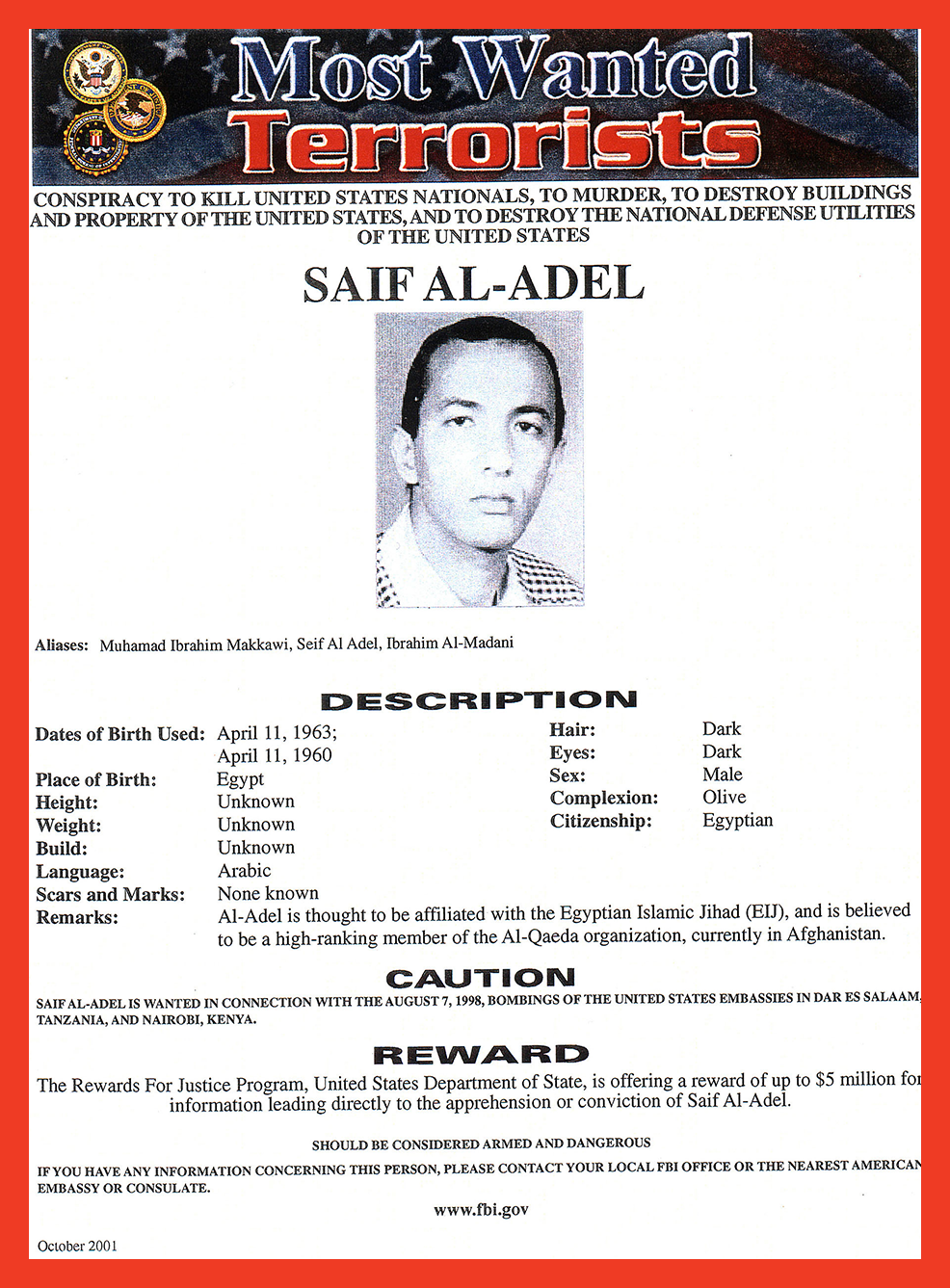
Moreover, Harmouch said, there are signs that the franchises’ loyalty oaths to al‑Qaeda core are still being honored. Since al‑Zawahiri’s death, in 2022, most signs have pointed to succession by another Egyptian, who goes by the nom de guerre Saif al-Adel, or “Sword of Justice.” A former military officer now in his 60s, Saif al-Adel seems to have paid attention, during his training, to strategy and tactics. He advised bin Laden not to attack the Twin Towers, on the correct theory that doing so would invite reprisals against the Taliban. He has survived being marked for death by the most powerful country in the world for 30 years—the past two decades as the guest of the Islamic Republic of Iran, under an enemy-of-my-enemy deal whose terms are not known. (As an extremist-Sunni group, al‑Qaeda is not a natural ally of extremist-Shiite Iran.)
Maher Attar / Sygma / Getty
The Egyptian physician Ayman al-Zawahiri succeeded bin Laden. He was killed in a Hellfire-missile strike in Kabul in 2022.
According to Harmouch, the affiliates are heeding Saif al‑Adel’s commands. He told the Yemeni branch of al‑Qaeda to focus on maritime-attack capabilities. It did. He directed the groups to concentrate on achieving financial independence, and the Sahel branch began developing ransom-based revenue streams. Newly detected efforts to deploy drones and adopt 3-D-printing technologies also followed his statements urging the franchises to nerd out on the path of jihad. Harmouch allowed that the groups manage their own affairs, and that none has publicly renewed its loyalty oath to al‑Qaeda by acknowledging Saif al-Adel as its new emir. “But they are listening to him,” she said. “They are following what he’s been saying to a T.” If true, this claim is concerning, because Saif al-Adel’s recent directives include the advice to poison wells, contaminate food supplies with bacteria, conduct urban assassinations, and replace human suicide bombers with killer drones.
By now the rhythm of terrorism analysis should be familiar: For every piece of evidence that makes al‑Qaeda’s leaders look like evil geniuses, there is counterevidence that makes them look like hopeless bumblers. As with the war of attrition, Nelly Lahoud said, there is little evidence that bin Laden ultimately thought franchising out was a winning strategy, and a lot of evidence that he considered his far-flung allies pains in the terrorist ass. Bin Laden called them a “liability to jihad.” In his Abbottabad compound, he became a pioneer in remote work, realizing long before COVID how hard it is to manage an organization whose employees he never saw.
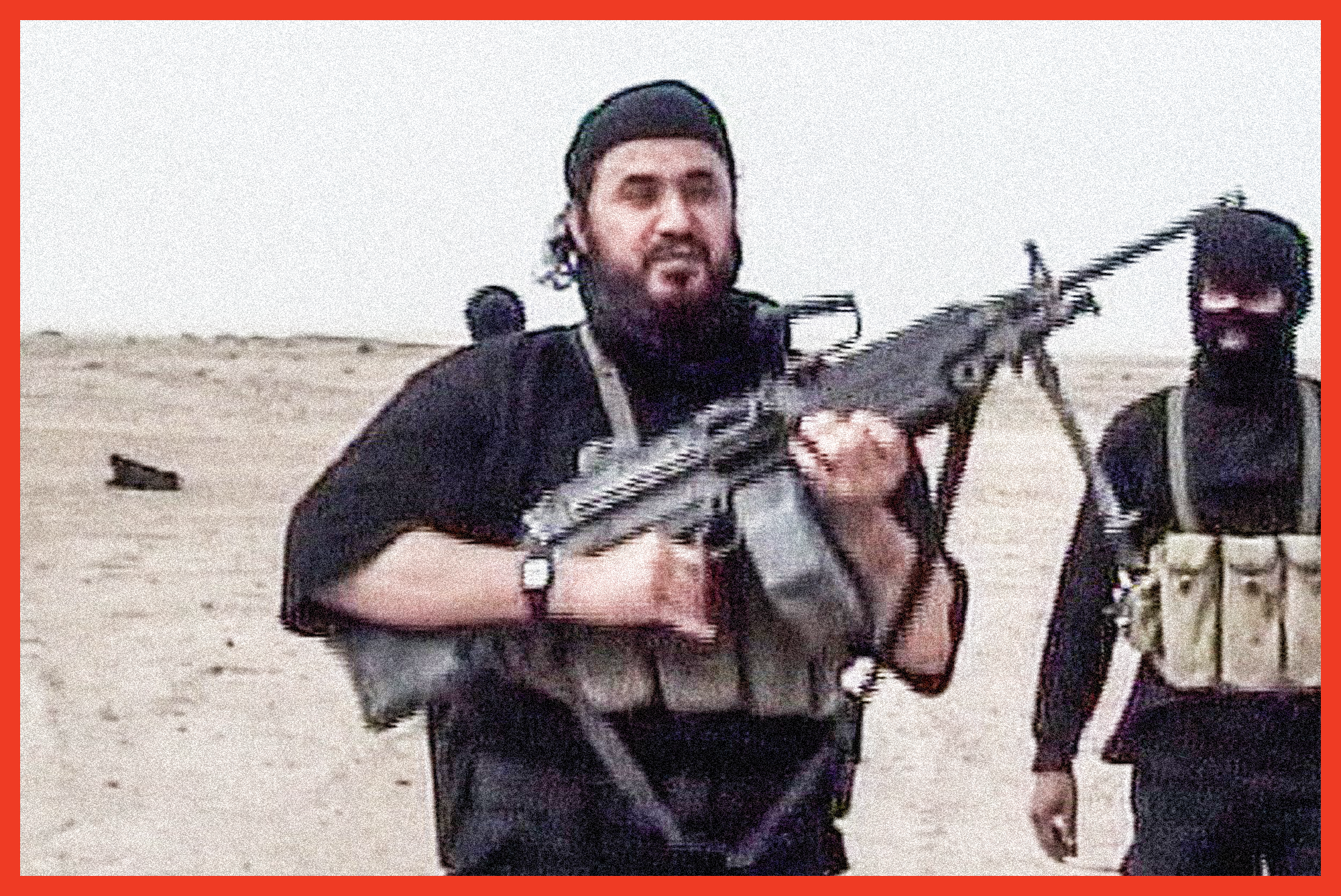
Almost immediately, the franchises proved unruly and, frankly, insane. Abu Mus’ab al-Zarqawi, the leader of the Iraqi franchise, turned out to be a raving psychopath. Bin Laden fancied himself cerebral, deliberate, and discriminating in deciding who should die. Al-Zarqawi, by contrast, erred on the side of beheading, and positively reveled in gore. When al‑Qaeda leaders asked him to stop killing Shiite civilians because doing so was alienating potential supporters, al-Zarqawi ignored the request. The group ghosted al‑Qaeda in 2007 and never really listened to it again.
Other franchises adopted the al‑Qaeda brand before the group’s leadership could vet them. Their priorities often conflicted with bin Laden’s, and he and al-Zawahiri were reduced to an advisory role. Instead of building loyal, resilient versions of itself, al‑Qaeda created a management problem from hell. Even the more housebroken of the franchises, such as those in Yemen and North and West Africa, at various times told bin Laden, in the most deferential terms, to mind his own business. Chronically behind on the local agendas because of his isolation, he gave advice that was stale or ill-informed. He told the group in North and West Africa not to cut a ransom deal with France after the group seized hostages. He reminded the Yemenis that they ought to focus on attacking America, and not the Yemeni government or the Iranian-backed Houthis. In both cases, the affiliates assured their absentee leader that they knew best, and bin Laden was left to pout and write frustrated internal memos.
The most dramatic instance of insubordination was the Islamic State, the successor to al-Zarqawi’s branch of al‑Qaeda. The ISIS project eventually foundered after the whole civilized world decided to stop it by force. But before that happened, it overtook al‑Qaeda as the premier jihadist group. By comparison, al‑Qaeda looked cautious and stuffy. It had taken far less territory, shed less blood, and earned a reputation as the group of choice for radical Muslims who enjoy hiding in basements with elderly Egyptians. Al-Zarqawi was killed in 2006, but ISIS continued its spiritual founder’s passion project of dismembering infidels on camera, a practice al‑Qaeda considered counterproductive.
U.S. Department of Defense / Getty
Abu Mus’ab al-Zarqawi was the leader of the Iraqi franchise of al-Qaeda. But al-Zarqawi ignored requests from al-Qaeda leaders to stop killing Shiite civilians.
In her book, Lahoud quotes a 2011 letter from al-Zawahiri to bin Laden, incredulous at the Islamic State’s apparent policy of shocking and appalling even its own potential followers. “I do not understand,” al-Zawahiri wrote. “Are the Brothers not content with the number of their current enemies, being so eager to add new ones to their list?” In 2014, al-Qaeda disavowed ISIS after months of disputes between their leaders. Later, ISIS excommunicated al‑Qaeda after its leaders refused to pledge loyalty to the caliphate of Abu Bakr al-Baghdadi.
The Islamic State turned many Muslims off the idea of jihad altogether. Many had sympathized with bin Laden and been bitter toward America and Israel, and were intellectually but not viscerally opposed when those two countries were attacked. (I don’t condone terrorism, but …) The Islamic State convinced many otherwise undecided Muslims that the logical conclusion of jihadist terrorism was a death cult.
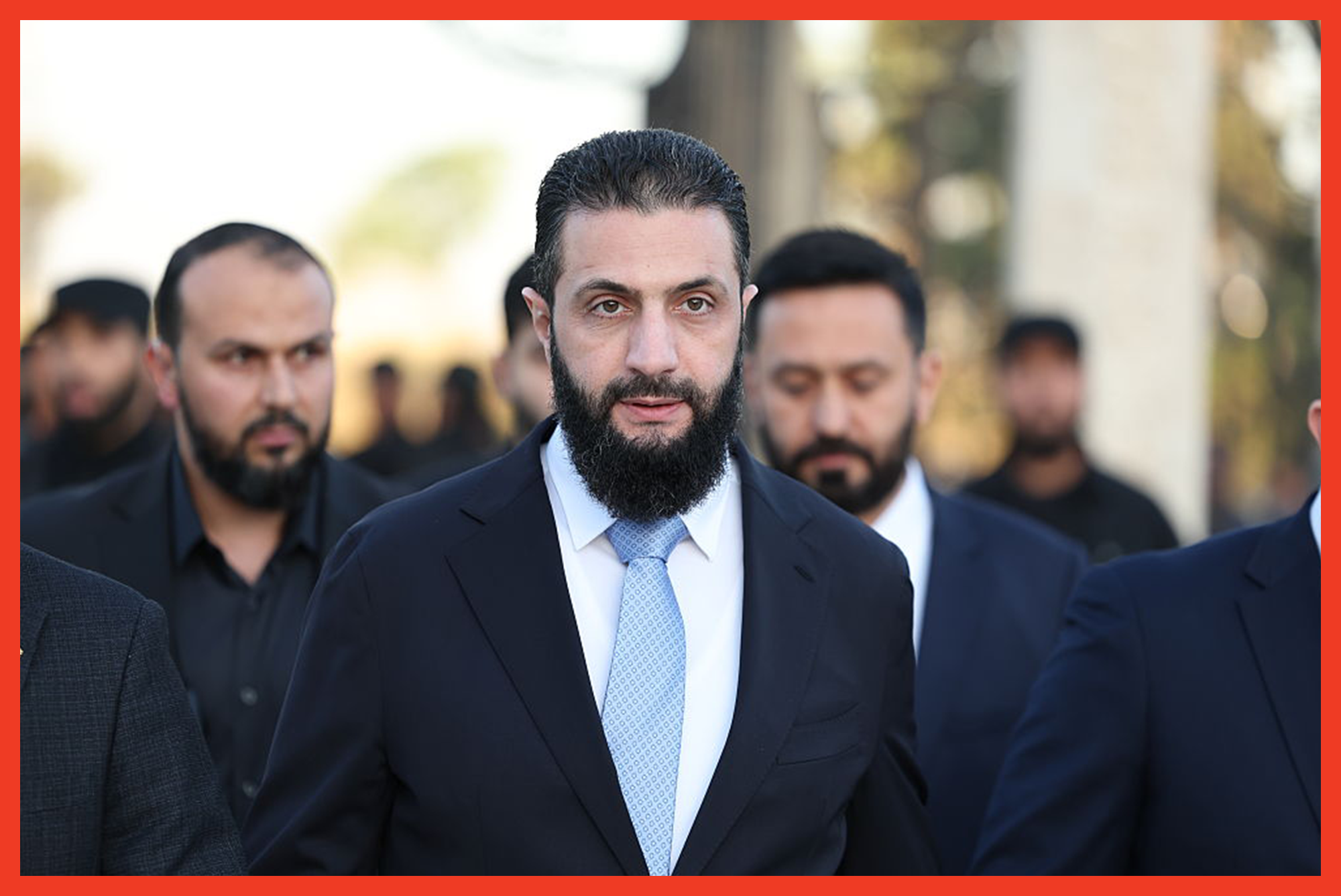
In some ways even more devastating to the al‑Qaeda model was the opposite transformation of al-Qaeda’s other regional leader, Ahmed al-Sharaa. A veteran of the jihad against the Americans in Iraq and a close associate of al‑Baghdadi’s, al-Sharaa split with al‑Baghdadi in 2013, shortly before he declared his caliphate. The group al-Sharaa led, the Nusra Front, was not much better: It, too, tortured and killed and established a jihadist state, in this case loyal to al-Zawahiri. But over a period of about five years, al‑Sharaa and his followers lost their taste for jihad. In 2023, he told the journalist Wassim Nasr that they were no longer jihadists, and that the global jihadist movement had “only brought destruction and failure to their communities.” According to reports, he and his recovering jihadists helped the United States attack ISIS elements in the Middle East. Then, in December 2024, they sacked Damascus and took over the Syrian government. As president, al-Sharaa has since visited London and Washington. Donald Trump met him, pronounced him “a young, attractive guy,” and later gave him a bottle of cologne.
Mohammad Daher / Nurphoto / Getty
Ahmed al-Sharaa, a former leader of an al-Qaeda affiliate and now the president of Syria
This example has been noticed. Nasr, a reporter for France 24 and a senior research fellow at the Soufan Center, recently interviewed the leadership of al‑Qaeda’s current Sahel branch, JNIM. He told me that the group learned from al-Sharaa that it is “possible to get out of the jihadi sphere and be accepted by the international community—if global terrorism is denounced.” He said the group is thinking about trying to transform along similar lines. The main impediment to such a move is the Islamic State West Africa Province. Before he could moderate, al-Sharaa had to wait for ISIS to be crushed in Syria, so he would not face defections. JNIM is still fighting ISIS, and Nasr said it isn’t yet in a position to explore moderation.
“Al-Qaeda fathered a good son and a bad son,” Thomas Hegghammer, a scholar of jihadism at the University of Oxford, told me. “The bad son was ISIS and went on to do so much bad stuff that the whole family got a bad reputation. But then the good son played his cards so well that he reached state power.” Al‑Qaeda wanted the franchises to show how it endures. Instead they showed that its ideology leads to crucifixions and beheadings if followed, and power if renounced.
Mai / Getty
Smoke rising above the streets of Bamako, Mali, after an attack in April orchestrated partly by al‑Qaeda’s branch in the Sahel, Jama’at Nusrat al-Islam wal-Muslimin
It’s hard to accept that your enemy is an idiot and that somehow you are losing to him anyway. Perhaps Saif al‑Adel, with ample free time in his safe house in Iran, has taken online executive-M.B.A. classes and learned how to motivate his employees and keep them on mission, as his predecessors surely did not. The other possibility is that Saif al‑Adel controls nothing and has been irrelevant for years. Neither possibility makes the United States look good. The first suggests that after 25 years of the War on Terror, terror is winning. The second suggests that these incompetent nobodies have persuaded the U.S. to burn through its military budget without improving its standing in the Middle East.
Both are possible, and it is difficult to tell the difference between an al-Qaeda that is stealthily rebuilding and an al-Qaeda that is dead. A cat that is stalking its prey is exactly as silent as a cat that was hit over the head two weeks ago with a shovel. Some of those who study and analyze jihadism sound exasperated by the task of convincing people that al‑Qaeda core is the second type of cat. Cole Bunzel, a historian at the University of Texas at Austin, told me he considers the notion that al‑Qaeda is a “secret behemoth,” gathering strength under the guise of weakness, “mostly nonsense.”
“I see pretty much no evidence that al‑Qaeda has any competence or capability as a centralized organization,” Bunzel said. The various affiliates call themselves al-Qaeda, but they appear to take no meaningful guidance from anyone in al‑Qaeda core. He likened the core group to a “mostly defunct podcast,” a bunch of old guys who occasionally get together to put out a statement, but who have no power to do anything other than shout into a void, because global jihad has long since moved on.
“The branches that operate under al-Qaeda’s name have very little to do with the central leadership based in Iran, Afghanistan, and Pakistan,” Bunzel said, adding that the fact that Saif al-Adel lives under Iranian supervision would make it awkward for anyone to take orders from him without having to wonder whether the orders were dictated by an Iranian intelligence officer. While other jihadists have spent the past 25 years declaring caliphates, sacking major cities, and sowing carnage and fear, Saif al-Adel has been writing essays and murmuring promises about something big in the works. Those essays, Bunzel said, are not exactly greeted with enthusiasm by jihadists, especially younger ones. The kids are lining up for other acts.
Daniel Byman, a veteran al-Qaeda watcher at Georgetown University, reminded me that al-Qaeda has not even officially announced that Saif al-Adel is in charge. “Their unwillingness to name a leader seems to me very damning,” he said. “If you’re a 20-year-old who wants to join, what are you going to think? Here’s a group that hasn’t done much, and I don’t even know who the leader is. That’s the group for me! ” As time passes and al-Qaeda delivers almost no punches against its prime enemy, “at some point the numbers just get pretty clear,” Byman said, and the most probable conclusion is that al-Qaeda core is “very, very weak.”
AFP / Getty
A “Wanted” poster for Saif al-Adel, the purported new leader of al-Qaeda
For decades, Thomas Hegghammer said, he has been puzzled by the speculation that a big al-Qaeda attack is just around the corner: “How long do we have to wait before we decide that prediction is wrong?” He acknowledged that an attack could happen at any time. But almost any terror group, including ones that nobody has ever heard of, can pull off a single attack. The question to ask, he said, is whether al-Qaeda can mount a sustained campaign of terror, as the Islamic State did in 2015. That question can be studied and assessed, and right now the answer appears to be no.
What’s most remarkable about al-Qaeda, Hegghammer said, is that it has persuaded so many of its enemies to bumble along with it. This band of incompetents has somehow managed to “live rent-free inside the head of the American national-security establishment for an extraordinary number of years.” It has dwelled in and dominated this collective imagination, and its persistent ability to remain in its enemies’ mind is more impressive than any substantive accomplishment. The threats posed by the group were real, he said, and it made sense to find and destroy it. But what Hegghammer called the “ghost story” of al-Qaeda—the incessant and intrusive thoughts about it, including frantic projection of power and genius onto an organization that by all evidence is in shambles—should have ended long ago.
In 2015, during the Islamic State’s heyday, I gave a talk about it before a private audience of policy makers and experts. I emphasized that the group wanted to build a state, and that unlike al-Qaeda, it would reduce its efforts to mount terrorist attacks in the United States if it thought those attacks would conflict with its state building. After the talk, a former senior official at the State Department came up to me and said he had no reason to doubt my analysis. But he said I should choose my words with great care, because anyone who predicts fewer attacks will be ridiculed when one occurs, and anyone who says the enemy’s capabilities have been degraded is going to be forever ignored when the enemy manages to lash out one last time. “You don’t want to be that guy,” he said: the one who tells everyone to chill out, the day before thousands of people are poisoned with Saif al-Adel’s ricin in their Cheerios.
But in the case of al-Qaeda, that guy has been right for the past 25 years.
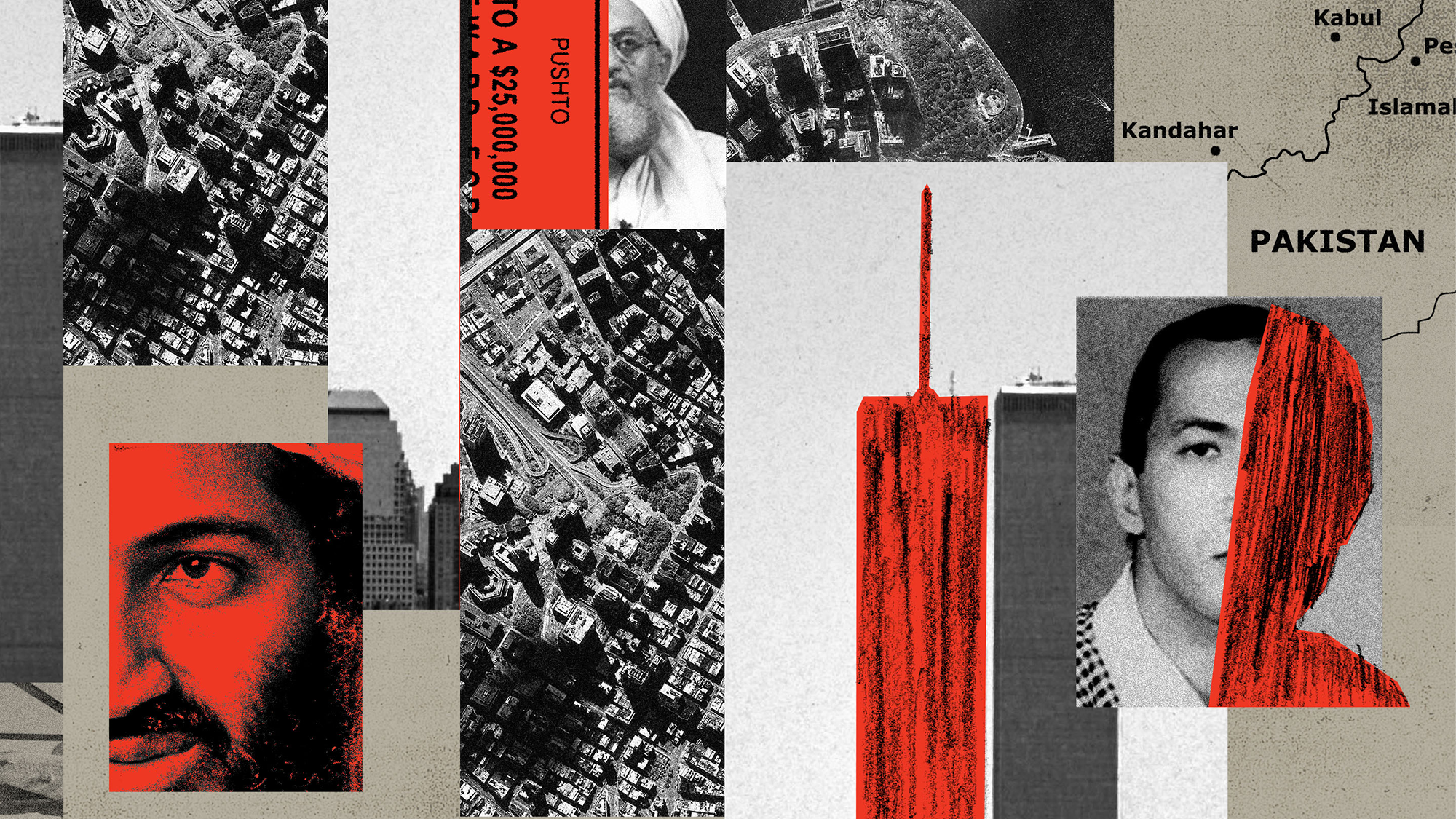
* Lead illustration sources: U.S. Department of Defense / Getty; AFP / Getty; Getty; Brian Cleary / Allsport / Getty; MAI / Getty; Universal History Archive / Getty; Joe Raedle / Getty.
This article appears in the September 2026 print edition with the headline “Did al-Qaeda Succeed?” When you buy a book using a link on this page, we receive a commission. Thank you for supporting The Atlantic.
On July 8, Spain’s supreme court issued a seemingly reasonable decision, unaware that by the end of the month, it would contribute to the deaths of at least 57 people, many by drowning. The court ruled that people who had migrated illegally could be sent back summarily only if they’d circumvented a physical barrier at the border. If no barrier exists—if they’d walked across open ground, say, or swum—then the government must go through a much more complicated process to deport them.
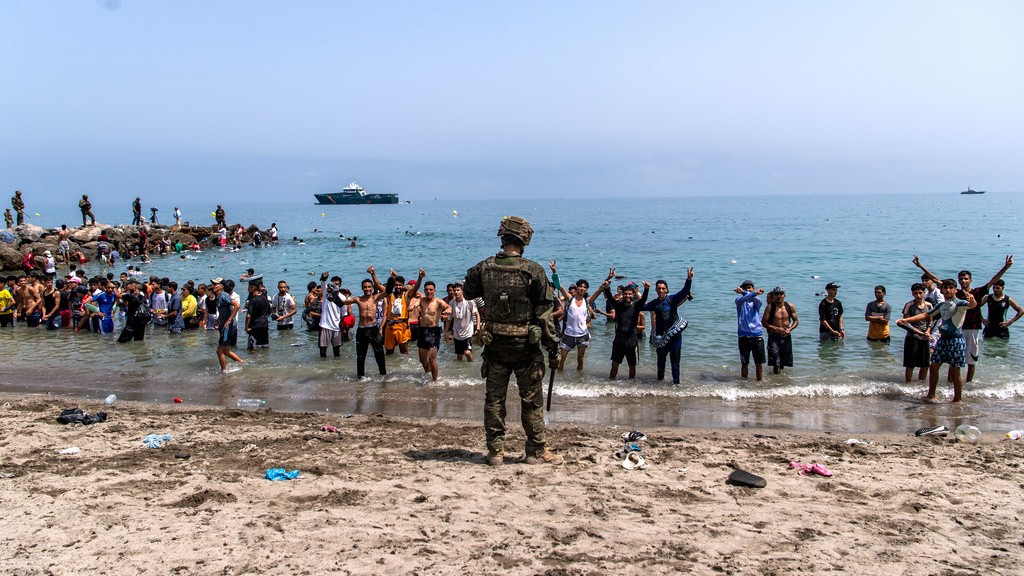
And if you’re trying to swim to Europe from Africa, there may be no better destination than Ceuta, a speck of Spanish territory in North Africa, surrounded by Morocco on its western edge and the Mediterranean elsewhere. Every year, some migrants try to swim to Ceuta, especially in the summer, when the waters are relatively calm. Ceuta has a facility that can process about 500 people at a time. But Thursday, 100 times that number—an estimated 50,000 people—made an amphibious attempt to swarm Ceuta and emigrate illegally from Morocco.
This was evidently a coordinated attempt, assisted by social media. One Facebook group, the now-defunct “Hraga Ceuta,” reportedly featured exact maps of the three-hour maritime journey from the Moroccan town of Fnideq, which bypassed the land border with Ceuta and ensured that anyone who arrived alive would break no barriers and would land on sand or rocks rather than at a fence or turnstile. People showed up with fins, wet suits, and floaties. They discussed going in together on kayaks and coordinating their departures. Their conditions on arrival were not all dire. An El País reporter in Ceuta met an unaccompanied 16-year-old girl, still wet from the sea, her mascara runny, wearing earrings and a gold necklace, “as if just back from clubbing.”
Europe will probably spend weeks trying to figure out exactly what led to Thursday’s catastrophe. (Danish and Italian leaders havecalled for suspending Spain from Schengen, the free-movement zone that allows someone to travel from Córdoba to Copenhagen without passing through border control.) But one contributing factor is that the supreme court effectively directed migrants to choose life-threatening routes. People saw their shot, and took it. Spain has alleged that human traffickers were among these opportunists. Morocco has been blamed for encouraging the migrants, to cause trouble for Spain. However, the Moroccan king happened to be giving his Throne Day speech nearby in M’diq, and it would have been an odd choice to spring a disaster of this magnitude so close by.
Another possible factor is socioeconomic: the long-term trends in Morocco that make life there miserable and send young people into the sea in search of opportunity. The youth-unemployment rate in Morocco is roughly one-third, and years of drought have led to a farming bust.
This second factor needs scrutiny, however. The past 25 years have been, droughts aside, good for Morocco’s economy. Indeed, its shift away from agriculture and mining and toward modern industry has powered consistent growth, led by such sectors as automotive manufacturing and phosphate processing. Youth unemployment is high, but it’s not much better in Spain, where it is currently about 25 percent, down from a high of 55 percent in 2013. So the migration is from a poor country without jobs to a rich one without jobs. I, too, would prefer a rich one, but the faster-growing economy of Morocco and the not-exactly-healthy labor sector of Spain complicate the picture.
In none of the accounts I have read from journalists in Ceuta do the migrants claim to be refugees—that is, people who fear persecution if they return to their home country. Some Moroccans have protested government policies, and according to reports, at least some of the migrants are sub-Saharan; some of them may have a legitimate asylum claim. But most of the Moroccans seem to be economic migrants, moving away from a country with economic problems but no economic catastrophe. In that sense, they are rational people seeking a better life, as anyone would. Because Spain has officially given swimmers a pass, it is also rational for them to have chosen that route, if they thought they could make it.
Far-right Spanish leaders are calling the incident an “invasion,” and even Prime Minister Pedro Sánchez has described it as an “attack.” What I think perturbs Spaniards, and not just those on the right, is the combination of so many migrants’ awareness of the rules—knowing exactly how they work, and acting upon that knowledge for personal advantage—and their brazen unwillingness to submit to those rules when they prove disadvantageous. The name of the Facebook group that coordinated migrants used the Arabic-dialect word hraga. It means “burners,” and refers to the common practice of destroying one’s identity documents upon arrival in the intended country, to thwart even lawful efforts to detain, track, and deport their bearer. This combination of being a stickler for the rules and trying to evade them will leave a bitter taste for many Europeans.
The strongest case for mass immigration has always been that some people have no home to go back to, and need help. But the events in Ceuta seem very far from this category. They will empower right-wing parties that see Ceuta and say: Not a millimeter closer.
“No plan survives first contact with the enemy”is a military dictum usually credited to Field Marshal Helmuth von Moltke the Elder, and more recently to the boxer Mike Tyson in the form “Everyone has a plan until he gets punched in the mouth.” The United States, in its war with Iran, is an unusual counterexample, insofar as it appears that the Trump administration did not have a plan. It did however get punched in the mouth, and spat bloody Chiclets out all over the document it was forced to sign last month, pausing the war on terms favorable to Iran.
On July 14, the United States returned to the field of battle. The administration has said almost nothing about why it is attacking Iran again, and how this round will improve on the previous. The Washington Postreported last weekend that U.S. intelligence doubts that the new attacks will force Iran to change course. But the Pentagon does seem to have patched some of the holes in its initial strategy, or lack thereof. Regime collapse is unlikely, but a revised approach might still degrade the Iranian position.
In the initial assault, the U.S. killed Iran’s leadership, then set to work on Iran’s defense-industrial capability. But Iran inflicted so much pain on the economy of the United States and its allies that their will to fight petered out first. Iran inflicted this pain through drone and missile attacks and by closing the Strait of Hormuz. The patch for round two: move the bases for the American operation away from the most vulnerable American allies—the United Arab Emirates, Qatar, and Saudi Arabia—and instead stage attacks from Jordan, Kuwait, and Bahrain. These three countries have vulnerabilities of their own, but they all have a long history of hostility to Iran, and therefore have less to lose from going all in with the United States. Falling back to Jordan also places valuable American assets slightly farther from Iran’s missiles and drones. The Iranian response has been painful and effective nonetheless: In Jordan this weekend, Iranian missiles killed three U.S. service members by blowing apart their barracks, and seem to have destroyed numerous air assets.
In round one, Iran characterized its responses as self-defense and tit-for-tat retaliation. American public diplomacy, nonexistent then as now, all but conceded this framing, which left the blame on the United States and Israel for the woes of their allies: the cratered tourism sector of Dubai, the destruction of a fifth of Qatar’s natural-gas capacity, and, of course, the maiming of the world economy resulting from the closure of the Strait. These points were each raw nerves, and Iran vivisected them adeptly while attributing the pain to the United States.
A political goal of the second round seems to be to change perception of the war from one of American aggression and Iranian resistance to one of Iranian aggression and hostage-taking. Iran has retaliated as before and hit American military targets. But to maintain its leverage, it has to focus on targets that push the blame for the war and its consequences further toward Tehran.
Iran has attacked civilian ships transiting the strait. In the most serious such incident, Iran killed an Indian merchant seaman and seriously wounded another nine on an Emirati-flagged oil tanker that was hugging the Oman side of the Strait, presumably to avoid Iranian interdiction, when an Iranian cruise missile hit its side and caused a fire. The Indian government summoned the chargé d’affaires of Iran’s embassy in Delhi to protest the strike. The Financial Timesreported that missiles fired at eight vessels since July 8 have hit ships’ engines, near where crew sleep.
Iran has also launched attacks against Saudi Arabia’s Red Sea port of Yanbu, and has coordinated with its Houthi allies in Yemen to close the Bab al-Mandab strait, at the south end of the Red Sea. The Houthis are attacking ships that attempt to pass. Yanbu is Saudi Arabia’s alternate exit path for its oil—a bypass route that will allow it to avoid the menace of the Iranian navy and export without hindrance. Already about 70 percent of its crude exports pass through Yanbu, via pipelines from eastern Saudi Arabia, and the Saudis are raising that percentage as fast as they can. The Emiratis have a similar play: shipping through Fujairah, the emirate on the Gulf of Oman, also bypassing Hormuz and the Iranians.
The Iranians hate being cut out of the deal. But the theory that they have the right to shut down passage through international waterways, or charge tolls to pass through them, is based on extreme circumstances: War is afoot, and it can detain enemy commercial vessels. As the Emirates and Saudi Arabia fall back from the field of battle, this theory applies less and less, and Iran’s rationale becomes more and more untenable. The basis for attacking Yanbu and Fujairah is shakier still: Even if Iran had the right to control the strait, it would have no right to force other countries to squeeze their traffic through the Iranian tollbooth, when those countries have a sovereign right to routes that could bypass it. The recent outbreak of war occurred because ships tried to pass the strait simply by avoiding Iranian waters—an act that Iran, but not the United States, considered a transgression of the June agreement.
None of this change of perception will stop Iran from throttling maritime passages or striking Saudi or Emirati ports. These are, as all agree and the Iranians themselves state openly, the only sources of leverage for Iran, and it will under no circumstances give that leverage up. In the past weeks, the United States has declared that it will transfer nuclear technology to Saudi Arabia, sell weapons to Qatar, and load up the UAE with AI-enabling chips. These goodies will help the Gulf Arab countries zoom further past Iran, and none of them depend on the strait. But Iran has gone from attacking its neighbors because they are helping the United States to attacking them because the United States is helping them.
The objective of this strategic turn is the re-isolation of Iran. Among the blunders of the first round was to turn Iran from a pariah state into a sympathetic one. If it insists on disrupting international shipping—including, at least for now, ships from China—then it will move steadily back into the category of an internationally recognized bad actor, ready to collapse under its own incompetence. It will, in other words, be back where it was in January, before this whole mess began.
And what, if that happens, is Iran’s next move? Iran has performed well against a hapless foe. But if its long-term plan is to threaten its neighbors and close international waterways—formalizing an extortion racket, and keeping that up forever—then it is not the only party to this conflict that is strategically bankrupt.

 Login
Login