This is an edition of The Atlantic Daily, a newsletter that guides you through the biggest stories of the day, helps you discover new ideas, and recommends the best in culture. Sign up for it here.
This morning, House Speaker Mike Johnson finally broke his silence on the scandal engulfing Representative Max Miller of Ohio. Well, sort of—Johnson didn’t have much to say.
“I haven’t spoken to Max about this in the last few days. Of course, I will,” he told Politico. Johnson said that Miller, a fellow Republican, was taking the allegations seriously (despite evidence to the contrary) and that a House Ethics Committee process should “play out.” (Miller requested the investigation this week, an apparent stalling tactic.) Johnson added, “There’s all sorts of domestic events going on with 435 members of Congress all the time. It’s not my business to get engaged in it.”
This raises the question of what Johnson does think the speaker’s business is. One might imagine that the Miller situation would concern Johnson for several reasons. Johnson positions himself as a staunch social conservative and defender of morality; Miller has been accused of domestic abuse against his ex-wife and toddler daughter, and of illegal drug use. (Miller has denied the abuse allegations and said that although he has used illegal drugs in the past, he no longer does.) For his caucus, it’s a big distraction from any midterm messaging that the Republican Party might wish to do in the last 100 days before elections. The scandal also puts another GOP seat in play in November; Miller said on CNN last night that Donald Trump had told him that it would be a “tough” race to win. If Miller drops out by Monday afternoon, Republicans in Ohio can replace him on the ballot, but it’s not clear how quickly the Ethics Committee process will move.
If Johnson doesn’t think that his job includes protecting the moral reputation of the House, his small and endangered House majority, or the prospects of the Republican Party more broadly, he must have some other idea about his role. What that might be is mysterious.
Passing legislation would seem like an obvious answer, but the 119th Congress has been one of the least productive in history. Legislators have succeeded in enacting just 104 laws since January 2025. That’s the lowest number by far since at least 1947—only the 274 laws passed last Congress even come close. This is especially remarkable because Republicans hold control over both chambers. Legislative leaders have also yielded some of their power over budgets, one of their most basic duties, to the White House. Even worse, 2025 saw the longest complete shutdown of the federal government in history, as legislators failed to fund the government for 43 days.
Some of the blame for this unproductivity belongs to the Senate, where the GOP edge is narrow and where rules mean that a Democratic minority can more easily block legislation. But senators are at least filling their time with other official duties, such as confirming presidential appointments, that the House doesn’t have. Another basic congressional duty is oversight of the executive branch, but the House has done little to investigate or shed light on what the administration is doing, much less hold it to account. In May, Johnson called a recess rather than hold a vote condemning Trump’s war in Iran, after it became clear that the nonbinding measure would pass. (The House has since passed a similar resolution.)
Johnson isn’t setting some sort of broader agenda for the legislature either. That, too, has been left to Trump, who seems to have been interested in only two bills: the One Big Beautiful Bill Act, passed last year, and the SAVE America Act, currently and perhaps permanently bottled up in the Senate. Johnson’s deference to Trump has reportedly led the president to joke in private that he has “two jobs: being president and being speaker.”
That’s rather demeaning for Johnson, but given how Trump dominates the House, one might expect that Johnson would pay close attention to what the president says and does. Yet Johnson has a consistent pattern of pleading ignorance when asked about controversial statements or actions by Trump or his administration. In a characteristic example, Johnson dodged a question in October about cuts to funding for special education: “I’ve been so busy on this; I’ve not had a chance to dig into the details.” Busy on what, precisely?
In fairness to Johnson, he’s working in a difficult environment with just a seven-seat majority, a rebellious right flank, and a mercurial president. But he does have some power when he wants to use it—as became apparent this week. On Monday, the House Ethics Committee found that Representative Chuck Edwards of North Carolina, a Republican, had “engaged in persistent unprofessional and inappropriate conduct towards two young female staffers” and had likely “violated House rules related to sexual harassment and hostile workplaces.” (Edwards denied that any of his conduct had been intended as a sexual or romantic advance.) Yesterday, CNN reported that House leaders were pressuring Edwards to drop his reelection bid. Early this morning, Edwards did just that.
By attempting to remain distant from the Miller scandal, Johnson is allowing Miller to claim, as he did in an interview last night, that “Speaker Mike Johnson, everyone else—they’re standing behind me.” Johnson’s reluctance to become involved in a messy, lurid story like this one is understandable, but it’s also one of the burdens that falls on leaders. By declining to bear it, Johnson may help ensure that he doesn’t have to worry about the duties of the speaker when the new Congress opens next January.
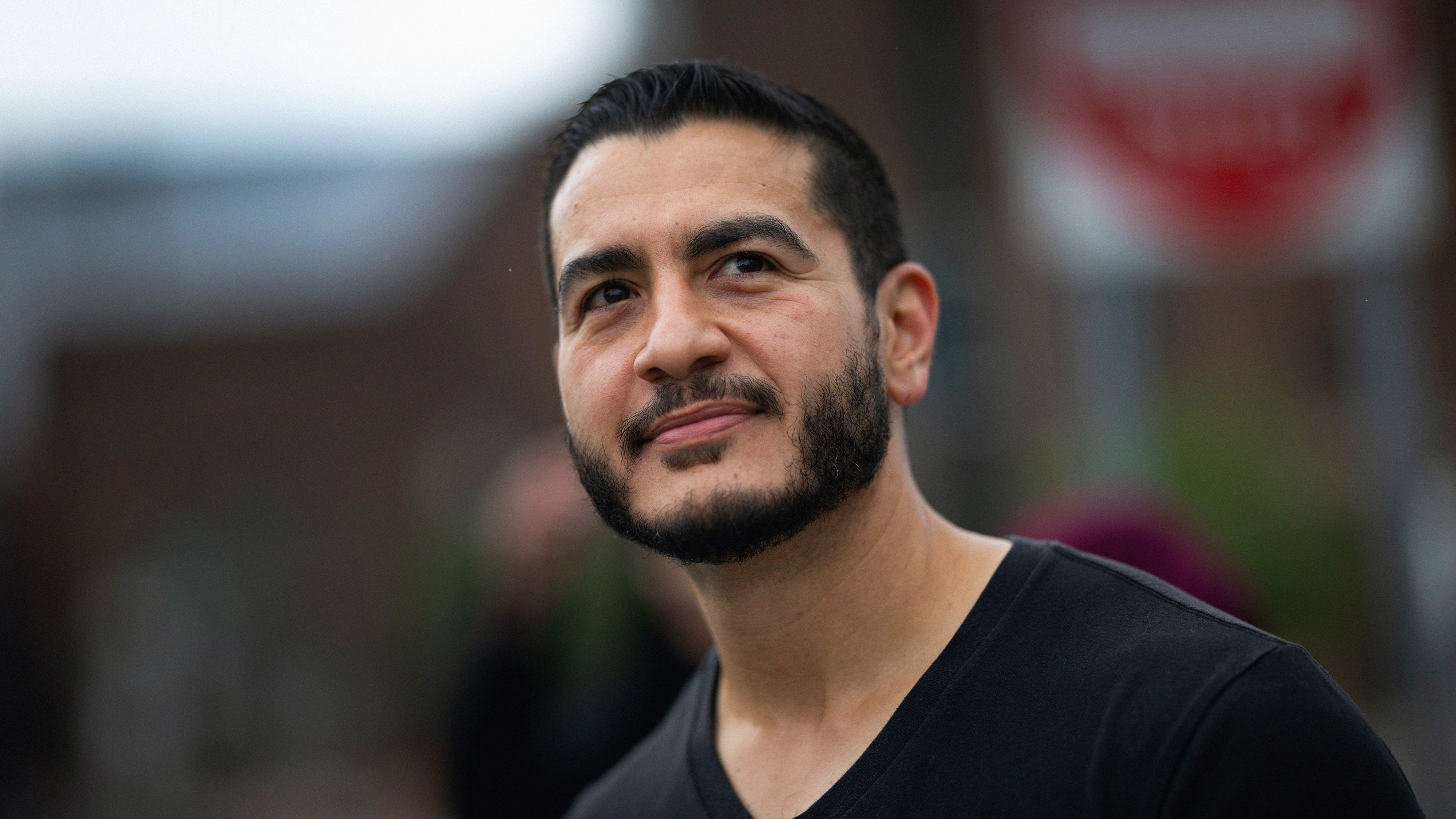
Abdul El-Sayed defeated Representative Haley Stevens in Michigan’s Democratic U.S. Senate primary, marking a significant win for the party’s progressive wing after a tight race. He will face Republican Mike Rogers in November in a battleground contest that could help determine control of the Senate.
The cyclosporiasis outbreak has reached six more states, bringing the total to 15 states. The CDC said there are more than 22,000 confirmed or suspected cases, 517 hospitalizations, and two deaths linked to the outbreak.
The White House has declassified FBI records showing that the bureau opened a 2017 investigation into whether President Trump had been acting on Russia’s behalf when he fired then–FBI Director James Comey, according to administration officials. They said that the inquiry had ultimately found no evidence to support the theory.
Evening Read
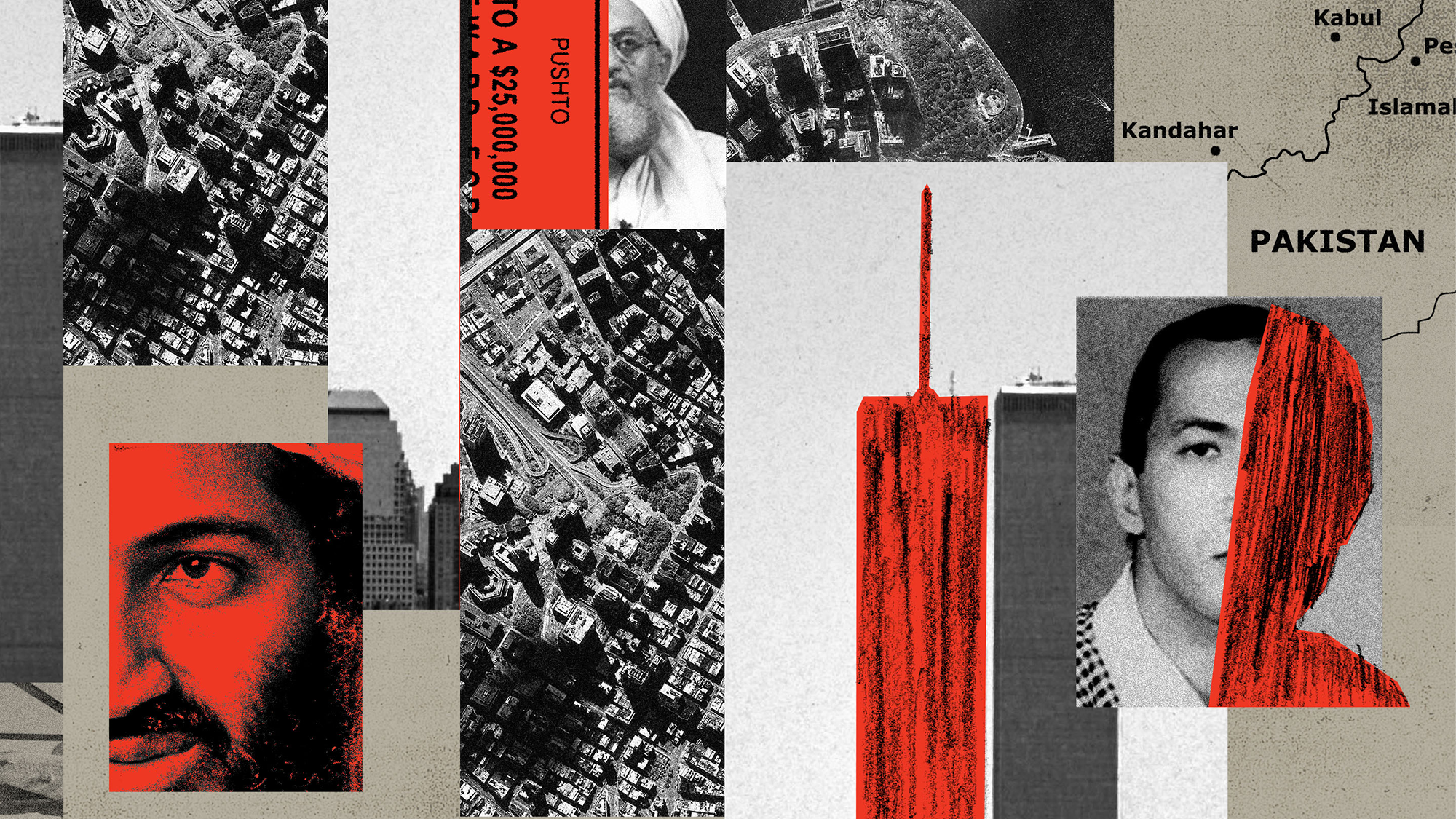
Illustration by Mark Harris*
What Happened to al-Qaeda?
By Graeme Wood
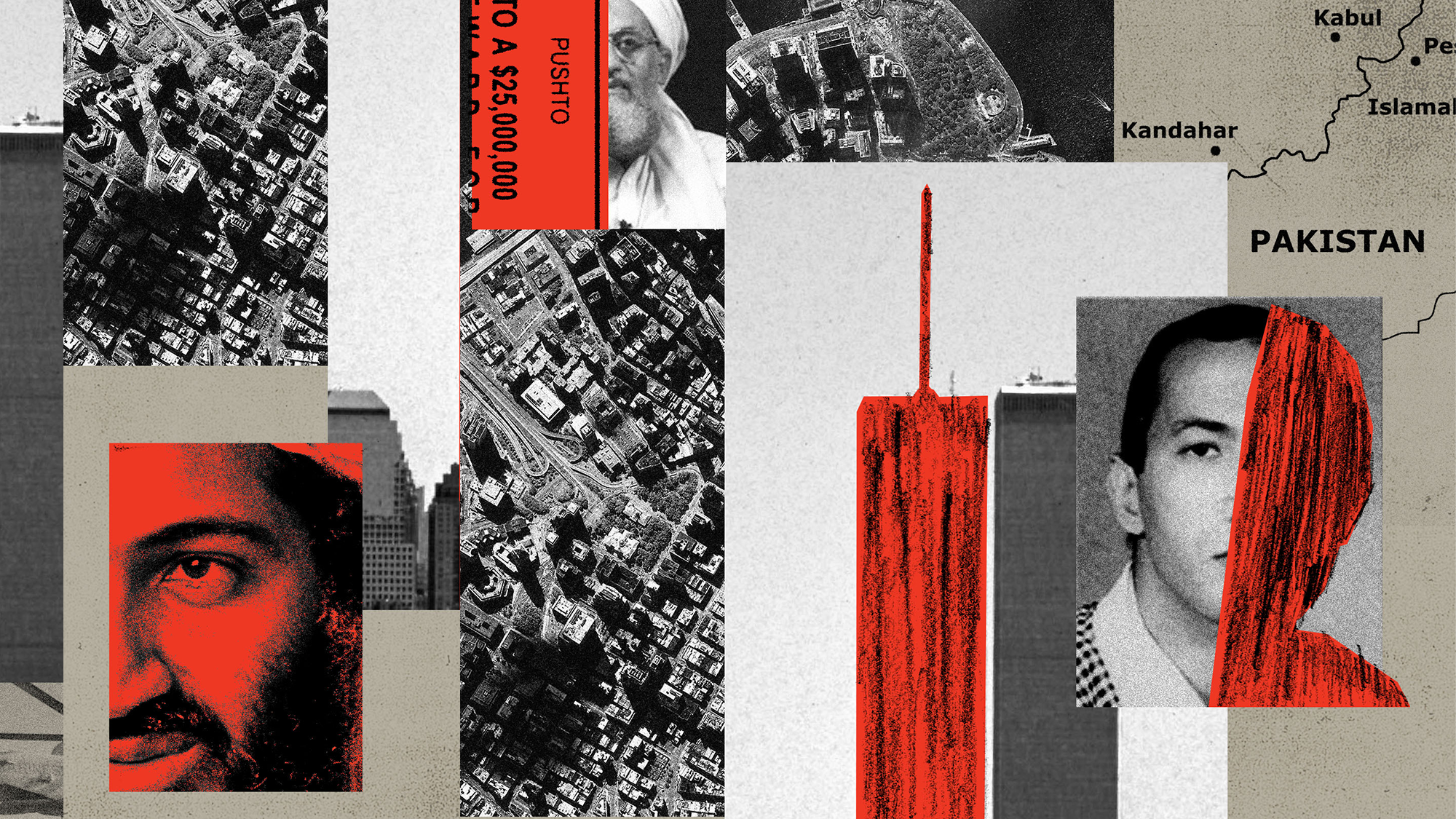
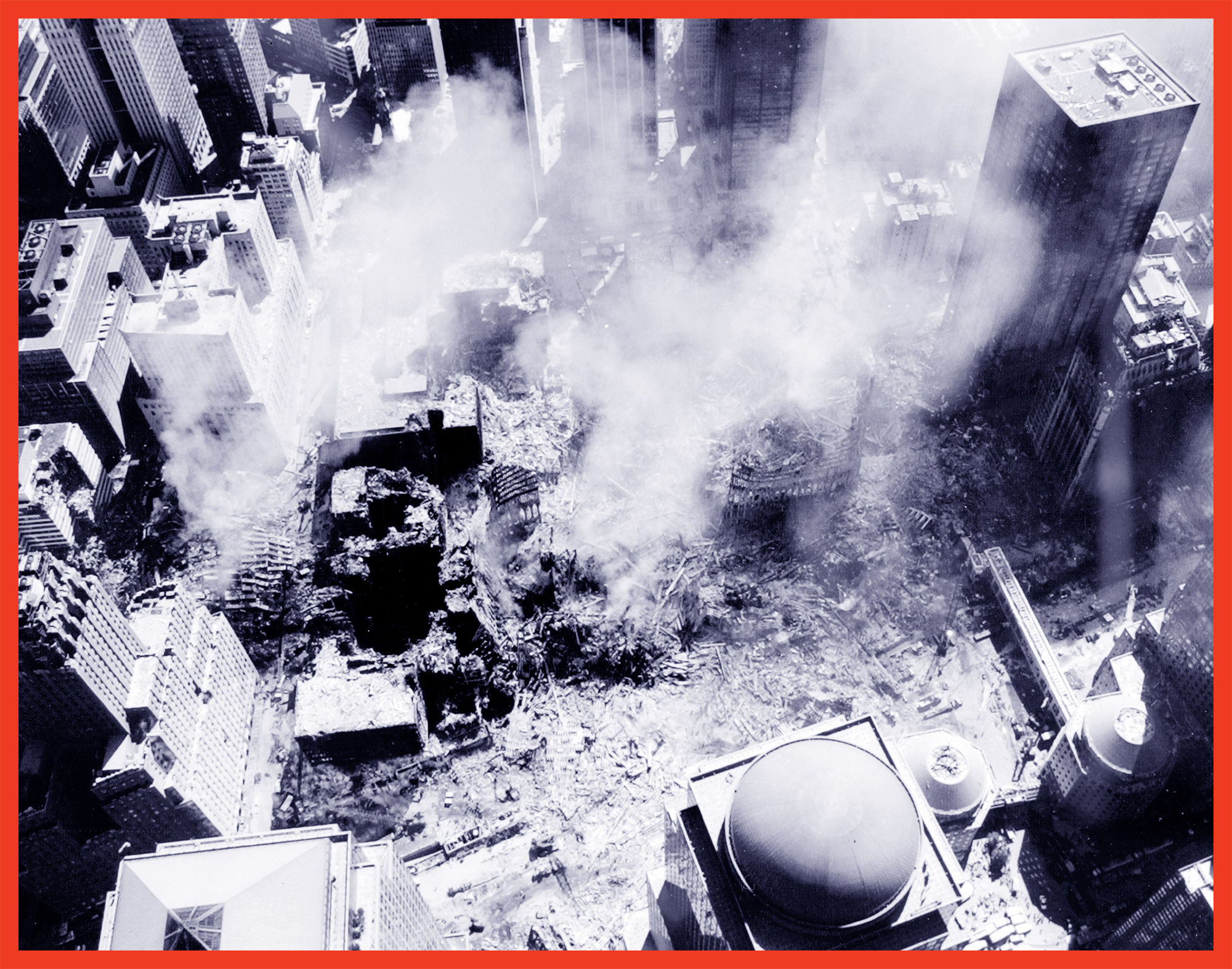
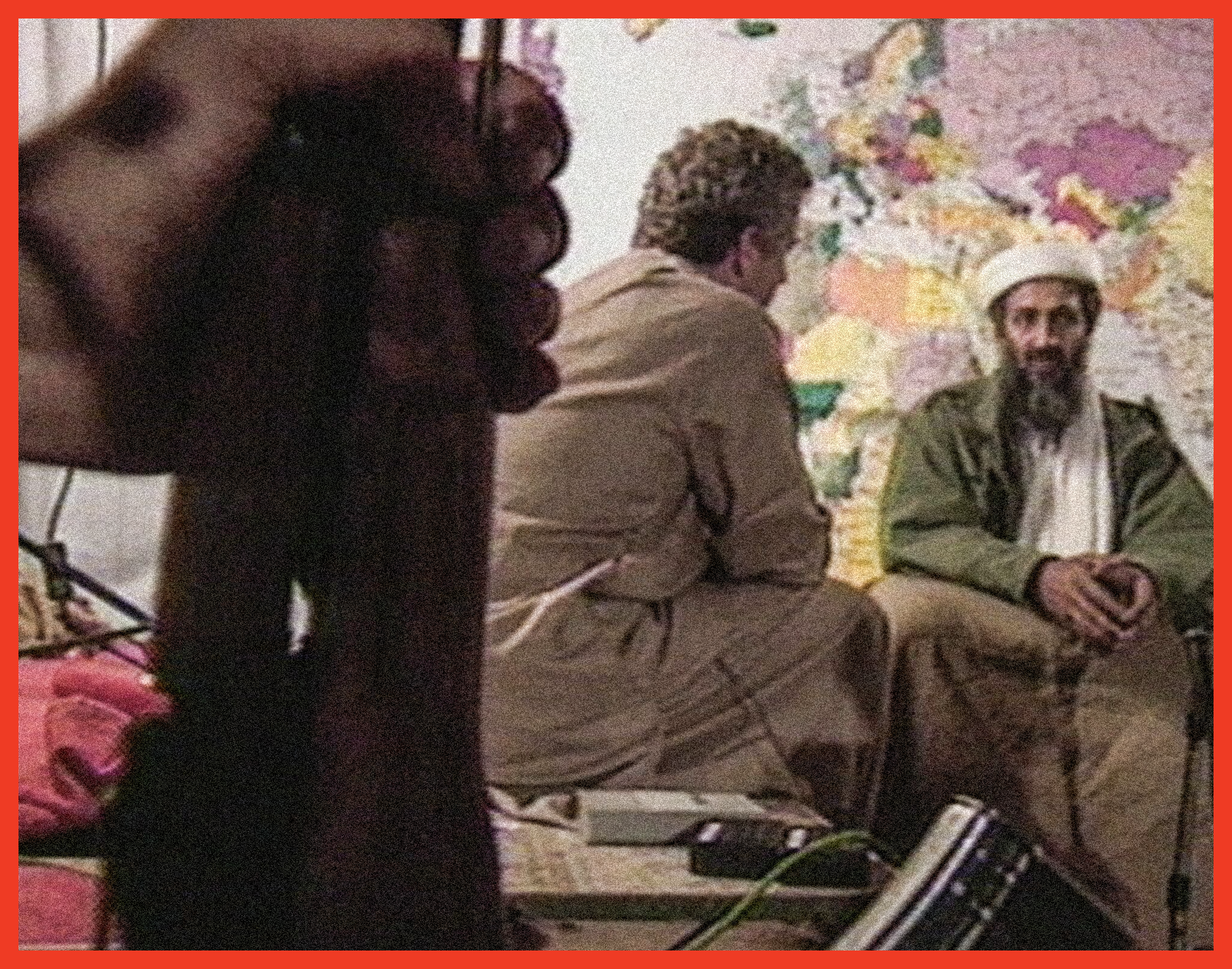
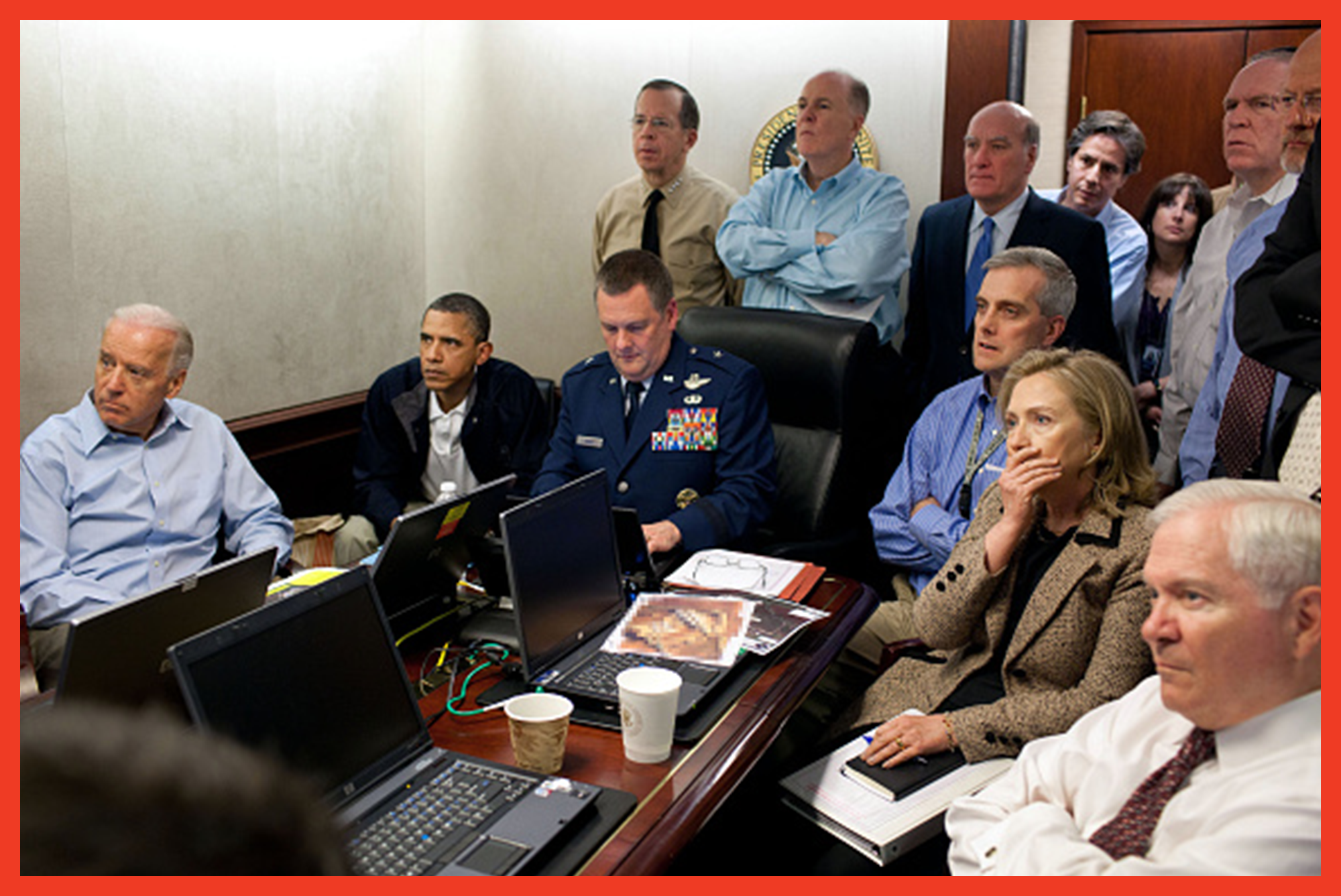
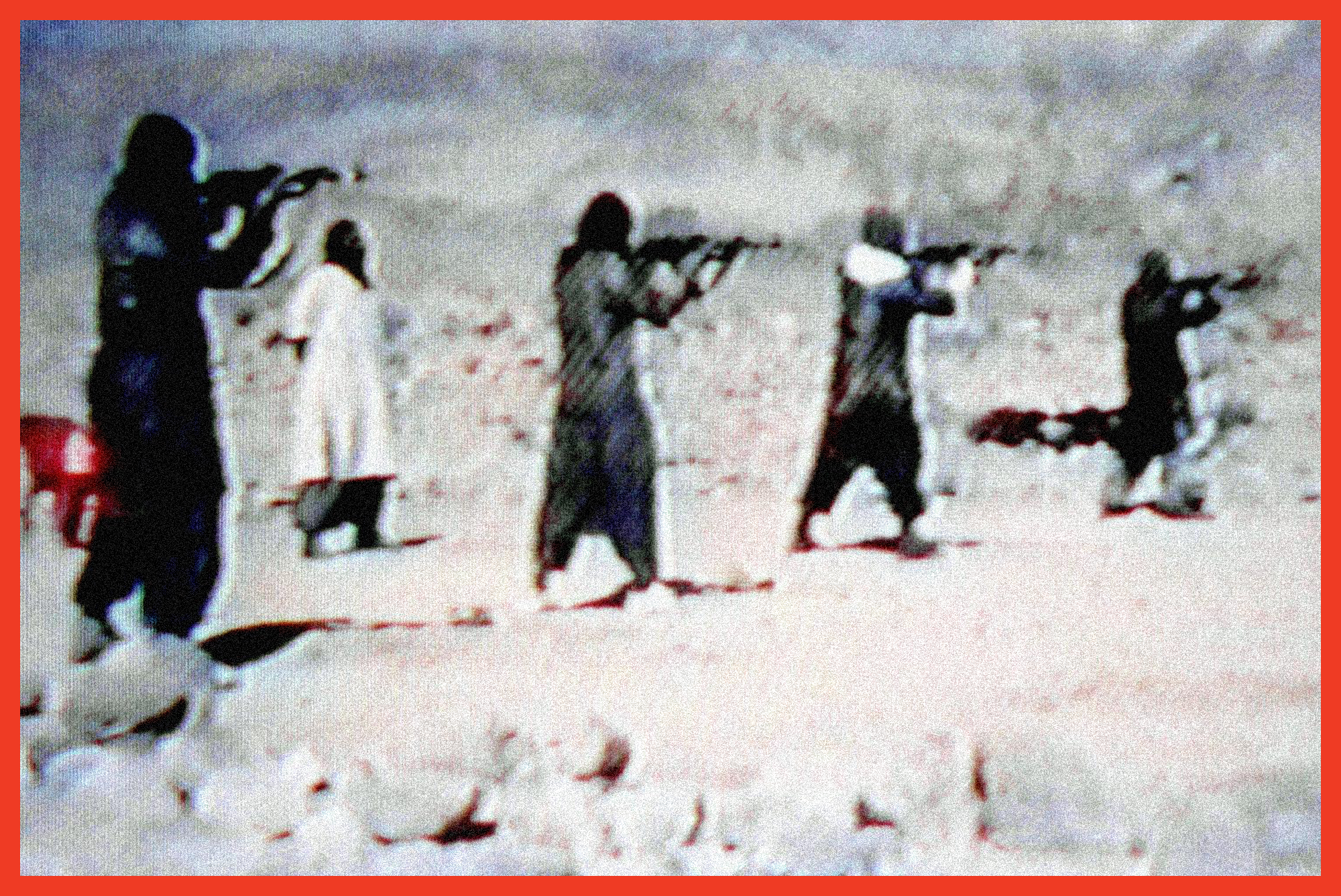
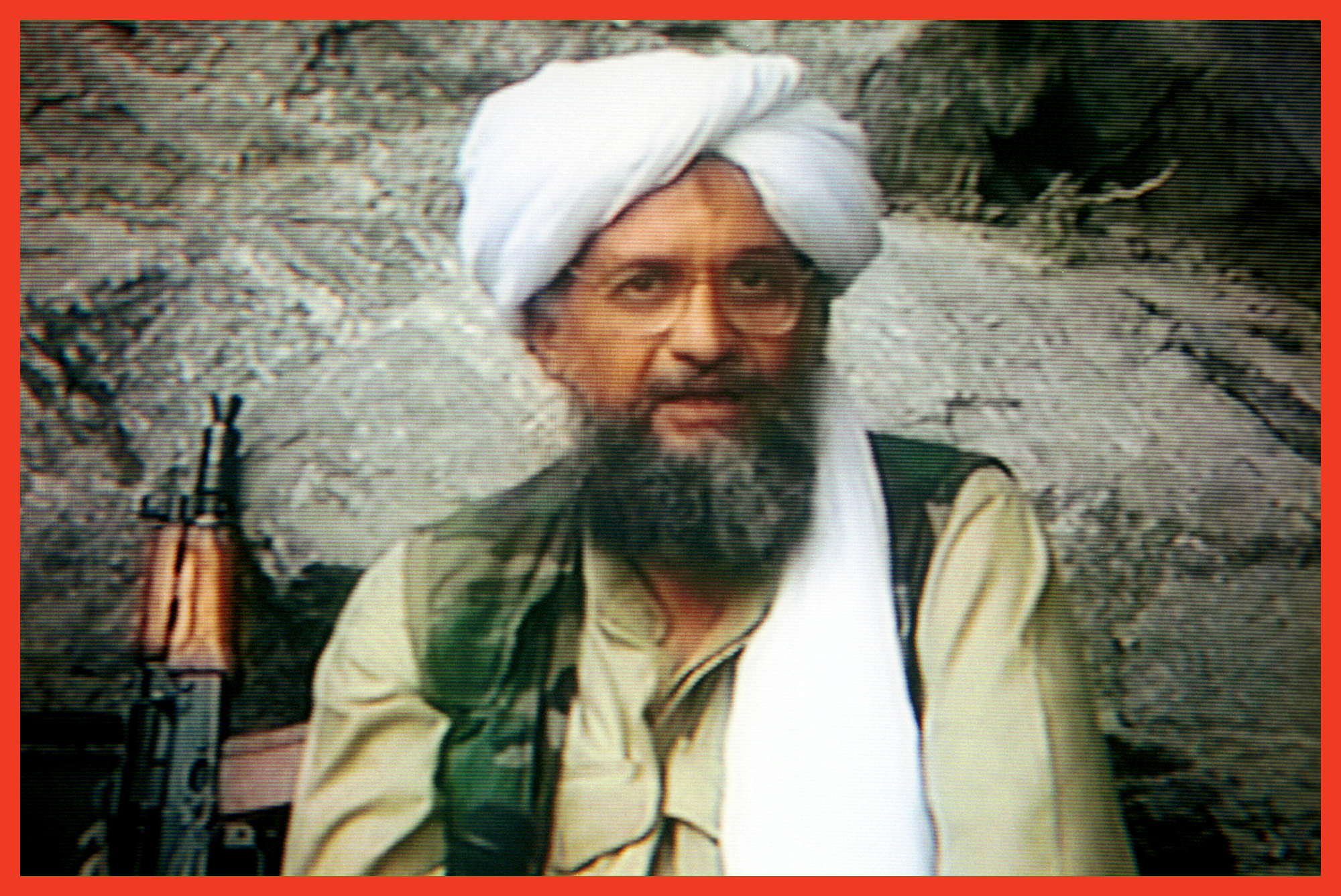
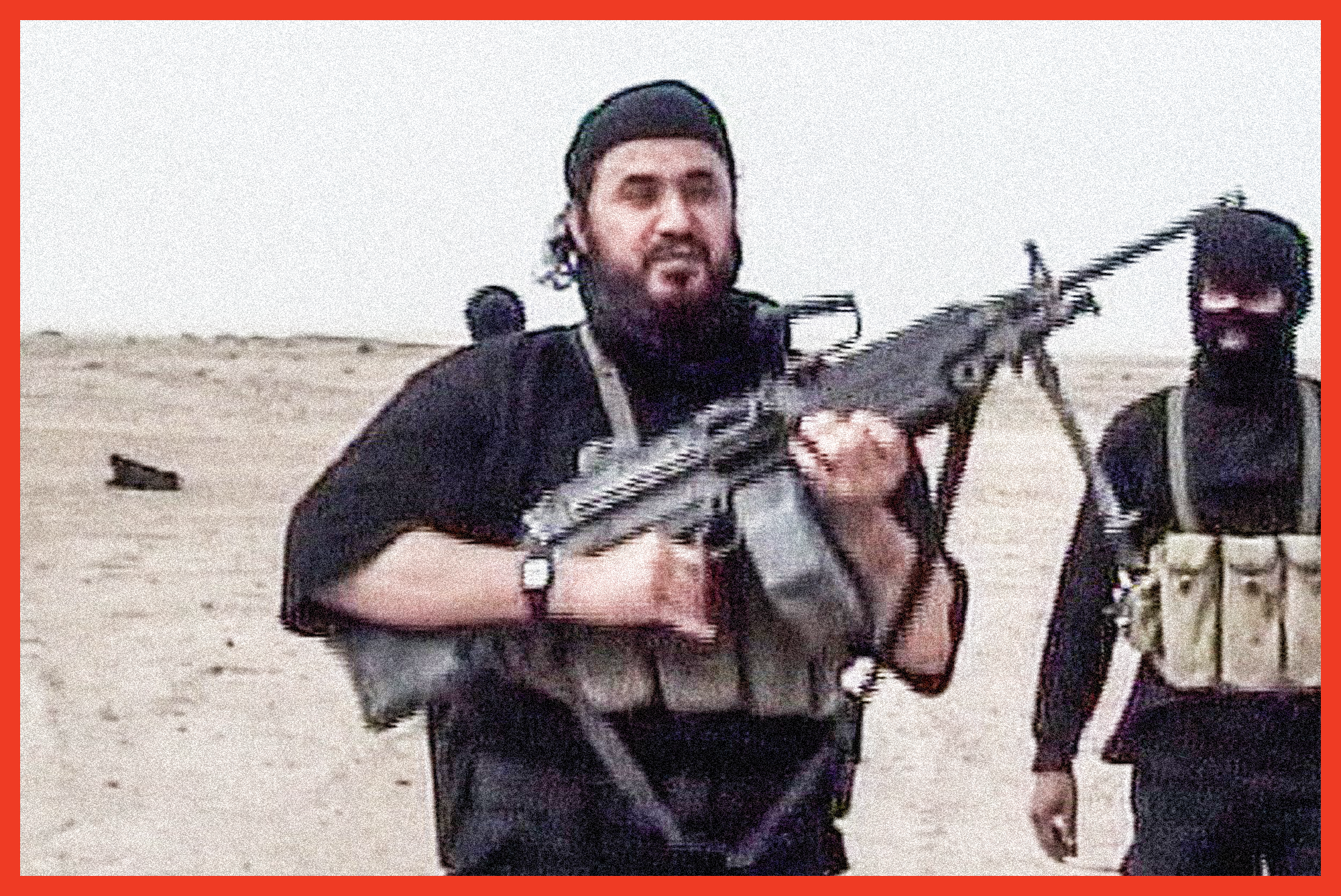
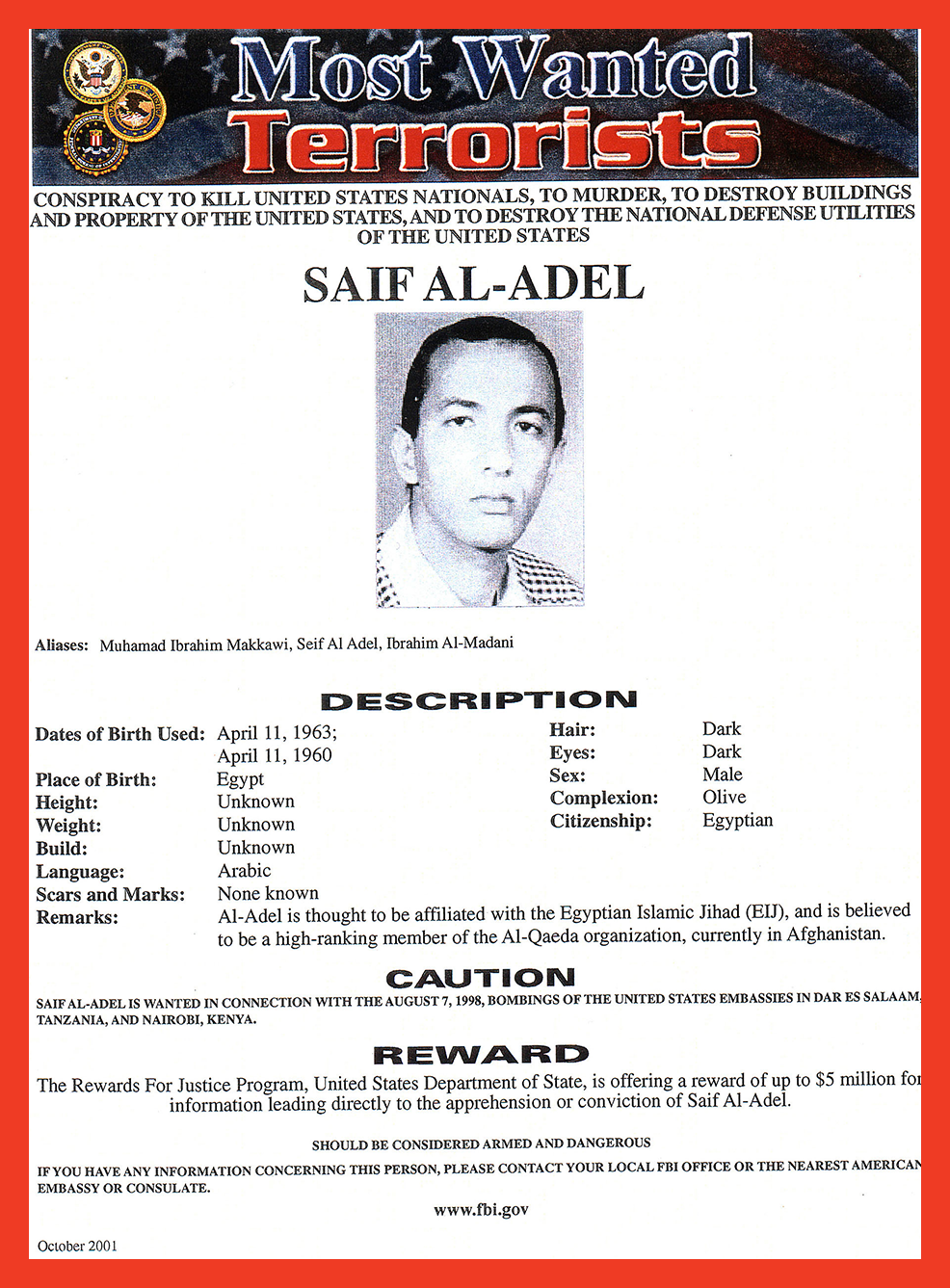
Since September 11, 2001, al‑Qaeda has pulled off exactly one fatal attack inside the United States. If you remember the details of that attack, you probably spend too much time thinking about terrorism. On December 6, 2019, in Pensacola, Florida, a 21-year-old Royal Saudi Air Force officer took out a legally acquired Glock pistol and killed three U.S. sailors at a naval air base, before police arrived and killed him. The shooter, an affiliate of al‑Qaeda’s branch in Yemen, had been on the base for flight training. I was in Taif, Saudi Arabia, at the time, and the Saudis I met said they were sorry about the incident but relieved that after 18 years of terrorist R&D, the most ferocious blow al‑Qaeda could strike on the path of jihad was not much worse than the kind of mundane workplace violence that we Americans regularly inflict on ourselves.
Tony follows a very familiar sort of 19-year-old menace—the kind of character coming-of-age movies like this were made for. He’s someone you might have crushed on in college: He sulks around with worldly paperbacks stuffed into his rear pockets, dresses in leather jackets even if it’s unseasonably warm, and seems to wear a permanent glower. Yet Tony, as played by Dominic Sessa, is more than just a pretentious bad boy; he’s starting to work his way toward something meaningful. His full name also just so happens to be Anthony Bourdain, who the audience likely knows will one day become a renowned chef and author, tapping his back-of-house experiences for material; eventually, his celebrity as a TV personality will transcend his punchy writing about the life of a cook.
The film, directed and co-written by Matt Johnson, should be hamstrung by this conclusion. On paper, Tony sounds like it requires the audience to understand something that doesn’t happen during the movie; it saves calling Tony by his full name until its final moments. This often irritating, barely grown dilettante will become someone important when he does a little more maturing, off-screen. The truth about Bourdain, however, is that he really was a cinematic figure, even in his wayward adolescence—at least if his evocative writing on that period is to be believed.
Tony draws from Kitchen Confidential, Bourdain’s 2000 best seller that laid bare the rough-and-tumble world of haute cuisine from the perspective of a jaded yet passionate New York chef. But the screenplayadapts only the early chapters, which cover Bourdain’s tentative beginnings in the cooking profession, including one teenage summer he spent, frequently hungover, working in the kitchen of a seafood restaurant on Cape Cod. Presenting that appetizer as a rich, earthy main course somehow comes together beautifully. Tony is not burdened by the complex details of Bourdain’s adult life, and Sessa is not asked to imitate a well-known man who spent the latter half of his career on TV. Instead, he just has to capture the feeling of possibility, wrapped up in the recognizable foolishness of youth. He and Johnson both do a beautiful job of it.
The viewer meets Tony at Vassar College, where he spent two years before dropping out. The school year is over, and he’s hoping to gain a summer writing fellowship that will impress his ditzy dad, Pierre (played by Rich Sommer), and his far more judgmental mother, Gladys (Dagmara Domińczyk). When that falls through, Tony instead follows a crush named Nancy (Emilia Jones) to Provincetown, Massachusetts, where she has a summer job; he eventually stumbles into a gig washing dishes at the Flagship, a seafood spot. The staff is made up of the hard-partying guys one might expect (including a garrulous Stavros Halkias and a brooding Leo Woodall). For much of the run time, Tony is an observer, sucking up what knowledge he can while trying to project a precious aloofness—a trait that beguiles many a young man in search of inspiration.
His muse is found, primarily, in a character simply called “Chef” (Antonio Banderas). He’s a wise, older Brazilian man who silently greets the ocean every morning and still loves his trade enough to make his own ketchup rather than buy bottles of Heinz. Banderas could play this role in his sleep: the meditative, somewhat elusive mentor, delivering advice with simultaneous bluntness and poeticism. But he might actually be the best actor alive who could inhabit that sort of senseirole without it feeling clichéd and off-the-rack. Chef exists mostly to invest Tony with a sense of pride in what he does, even if it’s the manual labor of cooking rather than whatever intellectual pursuits Tony thinks he should follow. Johnson understands that this respect for artistry was what made Bourdain such an enduring figure.
That inherent empathy is how Tony gets away with being a biopic that ends in the early chapters of a person’s life. It’s an origin story for how a man became a chef, yes, yet it’s more concerned with how someone might fall in love with a scrappy culture and the beautiful way that cuisine blends the highbrow and the low. Tony is learning how to create shellfish delicacies; at the same time, he’s cracking open oysters and cleaning plates. (He’s also holding his own among seedy, profane company, the kind of ribald back-and-forth that Johnson can present with hilarious immediacy—be it in his prior biopic,BlackBerry, or in the riotous Nirvannathe Band the Show the Movie.) Although Tony is a necessarily minor piece of storytelling, it feels deceptively major nevertheless—and is infused with just enough of its subject’s real-world charisma.
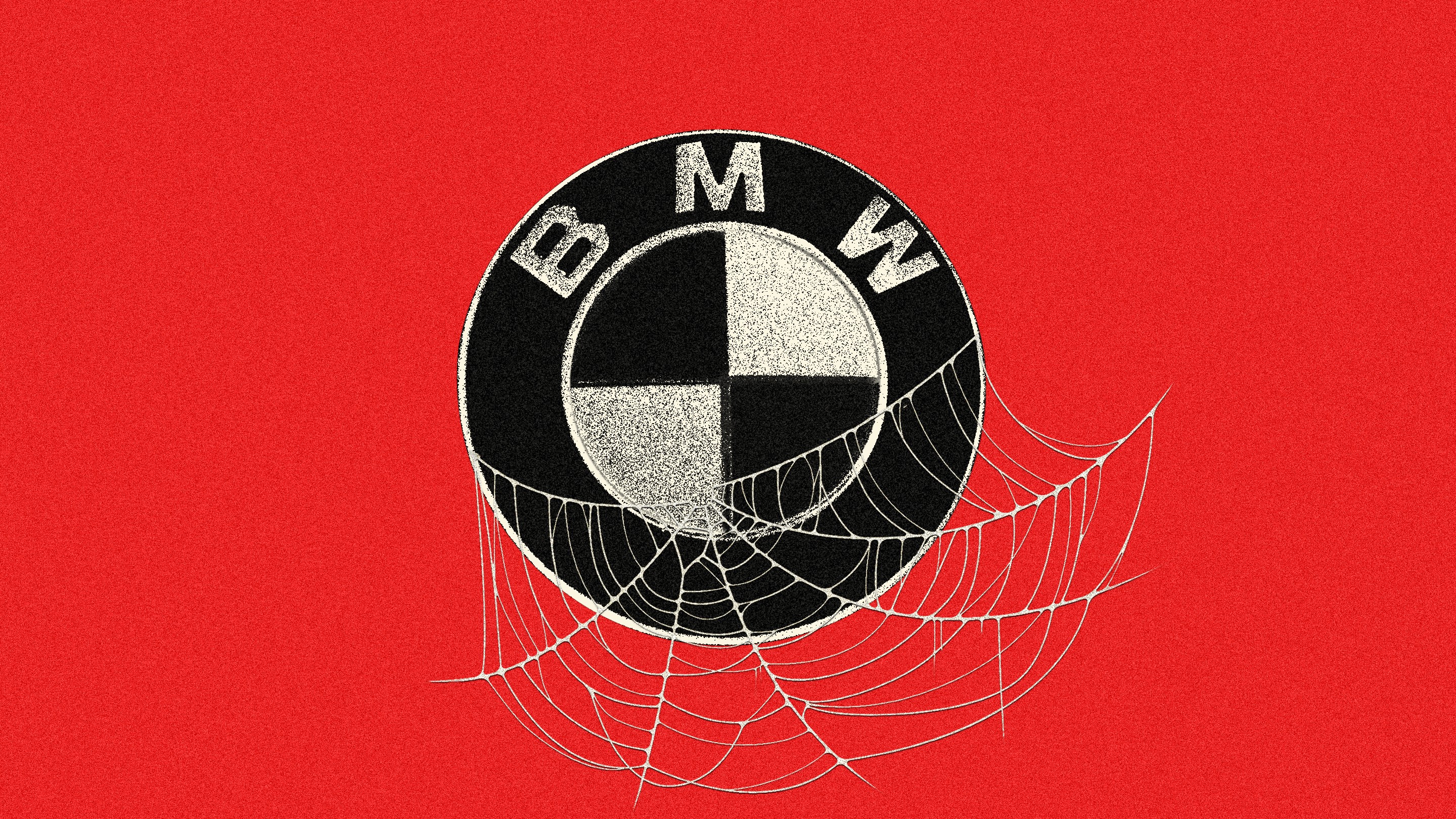
What does a roughly $100,000 BMW 7 Series get you? With a few taps on the sedan’s massive touch screen, you can play Pac-Man or let the car park itself. Last week, BMW added a new feature to its infotainment system: When drivers start up their car, they are greeted by the following message: “Surprise! Spider-Man just dropped on your BMW!”
Click on the prompt, which appears in most BMWs made after 2020, and the touch screen is taken over by a commercial for Spider-Man: Brand New Day, the latest movie in the Marvel franchise. The video is accompanied by blinking lights inside the vehicle. Though drivers can choose to skip the ad, it persists as an app on their car’s display.
Many BMW drivers have not been thrilled by this uninvited pitch for Peter Parker. “Stupid and annoying and totally unnecessary,” one user posted on a BMW Reddit forum. “Wtf am I getting an ad? How is that appropriate in a vehicle?” wrote another. In an email, Phil DiIanni, a BMW spokesperson, told me that the ad is part of a broader partnership between BMW and Marvel, which has included placing a tricked-out Spider-Man-themed SUV on the red carpet during the movie premiere, last week. “The animation is available for a limited time and only visible to drivers who proactively initiate it on their vehicle’s touch screen,” he said.
A few other carmakers, such as Stellantis, have attempted in-car advertising before in the United States, but not a luxury brand like BMW. Regardless of what you drive, your car might be next. That’s because—to use the automotive world’s favorite cliché—cars are becoming “smartphones on wheels.” No longer is your vehicle a static piece of machinery governed by physical switches and buttons. This comes with many benefits. The modern, digital car can get better over time by virtue of its software: Over-the-air updates deliver new features that weren’t available when you bought the vehicle.
But with great connectivity comes great responsibility. When carmakers can beam code (and content) into our cars, they have more control over our time and money. The tech industry’s most grating strategies are invading the car.
You might already be feeling one downside of smartphones on wheels: subscription fees. Though drivers have already spent decades paying for in-car communications systems, such as OnStar, monthly subscriptions have proliferated. My Tesla wants me to pay $10 a month for “premium connectivity” to access Spotify or Netflix through the touch screen, adding a monthly payment on top of the monthly payment I already pay to access those services outside the car. Self-driving features in Tesla vehicles require an ongoing monthly plan. Subscription fees aren’t always limited to software. In 2022, BMW itself announced that, in countries including the U.K. and South Korea, drivers would have to pay $18 a month to activate the heated seats already built into cars. (The company canceled the plan when customers revolted.)
In-car advertisements are the obvious next step. Cars are the perfect vehicle for this phenomenon because their passengers are quite literally stuck. You can put down your phone if the ads get too annoying, but you can’t just forgo driving the kids to school because your SUV is hounding you to watch a movie trailer. (BMW does allow drivers to permanently disable the pop-ups.) If the automotive industry continues to follow in the footsteps of Big Tech, it’s not hard to see where this goes from here: Soon, you might face targeted ads based on where you drive or Netflix-like tiers that ask you to pay to go ad-free. Serenity inside one’s car, something that was once a given, may become a luxury good.
Carmakers have plenty of reasons to do all of this. New-car prices have reached an average of nearly $50,000, and Americans may be reaching a breaking point. Auto companies facing tariffs, Chinese competition, and even a computer-memory shortage may nickel-and-dime you with subscriptions and ads to keep car prices under control, squeezing money from drivers long after the car is off the lot.
In this way, the auto industry has generated one more thing that’s already widespread with digital technology: nostalgia. Like users fleeing the constant distractions of their devices for a flip phone that does less, plenty of drivers already resent the way cars have ditched physical buttons and routed features such as climate control through a touch screen. But a low-tech new car is hard to find.
Sooner or later, Americans must come to terms with the fact that our machines are not always ours. In that sense, BMW’s Spider-Man ad is eerily reminiscent of another awkward tech collab: In 2014, Apple announced that U2’s new album would be automatically downloaded to hundreds of millions of iPhones without owners’ permission. At the time, the incident starkly illustrated the company’s power. Today that affair seems almost quaint. BMW’s in-car commercial may look tame compared with what comes next.
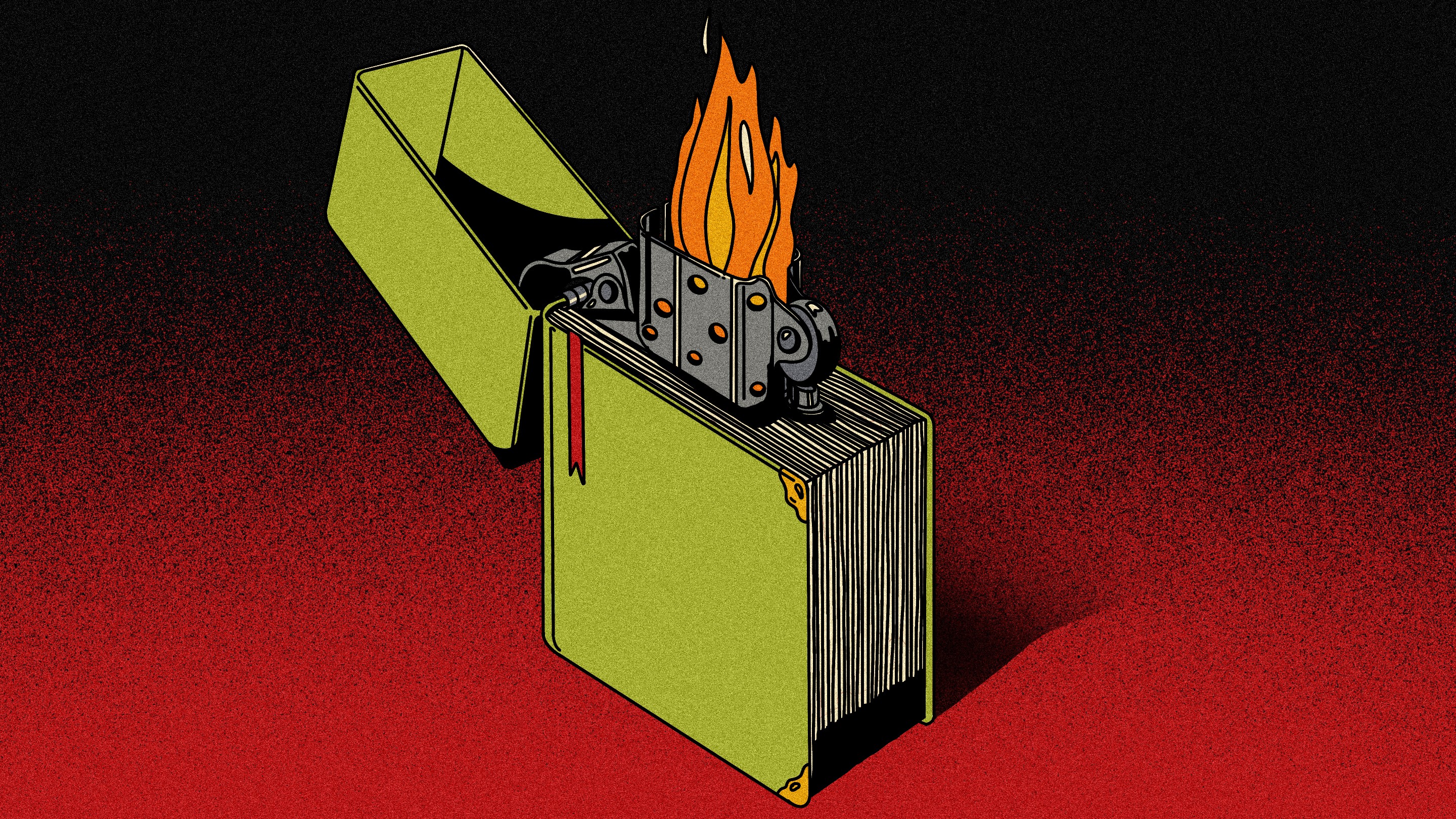
Last week, the internet raged as social-media posts and news articles accused AI companies of “destroying the world’s books”—including “millions of rare” ones—by chopping off their spines to scan them more easily, and discarding them afterward. One article said the news was “sparking concerns that the last remaining copies of out-of-print texts are being destroyed.” The investor and AI skeptic Michael Burry called the practice of sacrificing rare books “evil incarnate.” Even Elon Musk weighed in, posting that he had asked the engineers training xAI’s models to “preserve any rare books in a library and scan them the hard way.”
The destruction of physical books in the process of training AI has been public knowledge for more than a year, but debate over the practice intensified after an article by 404 Media, which described a large number of orders coming to booksellers, suggested that rare books might be included, and named a book-database company called ISBNdb as the possible buyer.
Lost in the outrage, however, are several unanswered questions. The 404 Media story said ISBNdb had advertised bulk buying of books for AI companies, but acknowledged that no evidence directly connects the company to the recent wave of purchases that booksellers have described. And although the story calls out rare-book sellers, it’s unclear how rare most of the books being bought actually are, or whether they’re of great value.
Despite that, the conversation rapidly intensified into a panic. So what is actually going on? And who is actually responsible?
Many of the specifics of this situation are obscured by hard-to-trace purchasing histories and the silence of AI companies and other potential buyers, so let’s lay out what we know. We know that at least one major AI company has used physical books to train their models. Documents unsealed earlier this year in a lawsuit against Anthropic reveal that in the spring of 2024, the AI giant bought millions of new and used books and destroyed them in order to scan the pages to train its AI models. Anthropic and other AI companies are likely keen on books published before the launch of ChatGPT, in 2022, which are all but guaranteed to be free of AI-generated text. Although AI-generated text is readable—if often unpleasant—to humans, it can be devastating to AI models: When trained on their own output, they can degrade significantly in quality in a phenomenon known as “model collapse.”
We also know that something mysterious is afoot. Someone—if not more than one group or company—has been snapping up massive volumes of books from shops around the world. “What’s with the online purchasing bonanza of used books right now?” asked one bookseller on Reddit three months ago. Several people who identified themselves as booksellers responded with their own stories of unusually large orders.
Charlie Becker, the manager of Becker’s Books, in Houston, told me that 95 of the past 100 books ordered through one of his online-selling platforms went to a single buyer. One of the orders was for 70 books. (To avoid breaking the terms of service of his selling platform, Becker would not tell me the name of the buyer.)
But contrary to many newsreports, the old books bought from these sellers do not appear to be “rare” in the typical sense of the word. According to Becker and the online discussions I read, the books in these orders are almost entirely nonfiction, were mostly published from the 1970s to the 1990s, and were written in a variety of languages. Becker wrote in a blog post that he has received orders for “stuff like The Insider’s Guide to Metro Denver from 1995 or How to Use Corel WordPerfect 1991.” These belong to a category of books that you could call rare because a small number of copies remain, but they may also be out-of-date, undesirable to readers, and not valuable per se. In some cases, booksellers have noted, the cost of shipping exceeds the books’ resale value.
By most accounts, AI companies want a large volume of text for as little cost as possible. It would be strange if they were intentionally paying premium prices for first editions, unusual printings of cult classics, or yellowed books of esoteric knowledge. Yet it’s possible: The pursuit of training data that their competitors don’t have could lead them to such titles.
We also have a good sense of who’s behind the book buying—and it seems unlikely to be ISBNdb.com, the subject of the 404 Media story. For one thing, no bookseller I could find in online discussions had mentioned an order from ISBNdb. The company maintains a public book database and charges for access to it, but does not appear to buy or sell any books. Things get confusing because, in March, the company added a page to its website that offered AI developers the ability to buy physical books, “up to 1 million titles per order,” with a nondisclosure agreement to preserve anonymity.
When I asked ISBNdb about the service, I received an email from a customer-support representative claiming that “ISBNdb has never purchased, scanned, or destroyed a book—for AI training or anything else. We don’t train AI models, and we never have. The page was up to explore demand for a service we never brought to life.” In response to recent “concern,” the representative said, the company had removed the page advertising that service from its website.
Reddit users did call out a different company for “frequent and sizable online orders”: Zoom Books, based in Canada, claims to use “smart logistics” to “acquire, sort, and resell over 2 million books monthly.” Booksellers in Germany mentioned similar orders from Zoom, as did a New Zealand bookseller who wrote that Zoom had placed multiple orders, including one for 71 titles. Becker would not confirm or deny whether his bulk buyer was Zoom.
On May 26, a book-industry newsletter called Publishers Lunch noted accusations that Zoom was buying books for AI companies. On the following day, the newsletter included a response from Zoom, claiming that it “has no involvement in digitization, scanning, or destruction of books, and we do not sell books for those purposes to our knowledge.” (Zoom did not respond to a request for comment.)
Some booksellers who received orders from Zoom have reported that the shipping addresses on these orders belong to a company called PrepFort. PrepFort specializes in preparing items for sale on Amazon and Walmart, but as a third-party logistics company, it can route books to other destinations as well. Using such a company would be consistent with the AI industry’s practice of acquiring training data through intermediaries, a strategy that has been used for images, paywalled articles, and other media. I emailed PrepFort to see if it could provide any details about these orders. Sufyaan Kalota, a co-founder of the company, responded: “While we would love to assist, we unfortunately cannot share any details regarding our customer agreements due to our confidentiality commitments.”
In June, the NL Times, an Amsterdam-based publication, reported that some Dutch booksellers had received emails from a Singapore-based organization called 2077AI, which claims to be “revolutionizing AI data,” partly by creating training data sets. One bookseller reported that the email from 2077AI was accompanied by a list of 3,000 English-language titles the company wanted to purchase. The examples given were academic books such as Distinct Element Modelling in Geomechanics and Laser Shock Peening of Advanced Ceramics. Such books might legitimately be considered “rare”: they had small print runs, contain esoteric knowledge, but are important within a specific field. (404 Media linked to this story but did not reference these books specifically, or 2077AI.) 2077AI did not immediately respond to a request for comment.
For now, this is what we know: A lot of used books are suddenly being bought up by companies including Zoom Books. But we do not know how many of these orders are coming from AI companies, or whether these books will be destroyed. Based on the practices of Anthropic and the attempted purchases by 2077AI, it seems very possible that the books are destined for AI companies, but we can’t be certain.
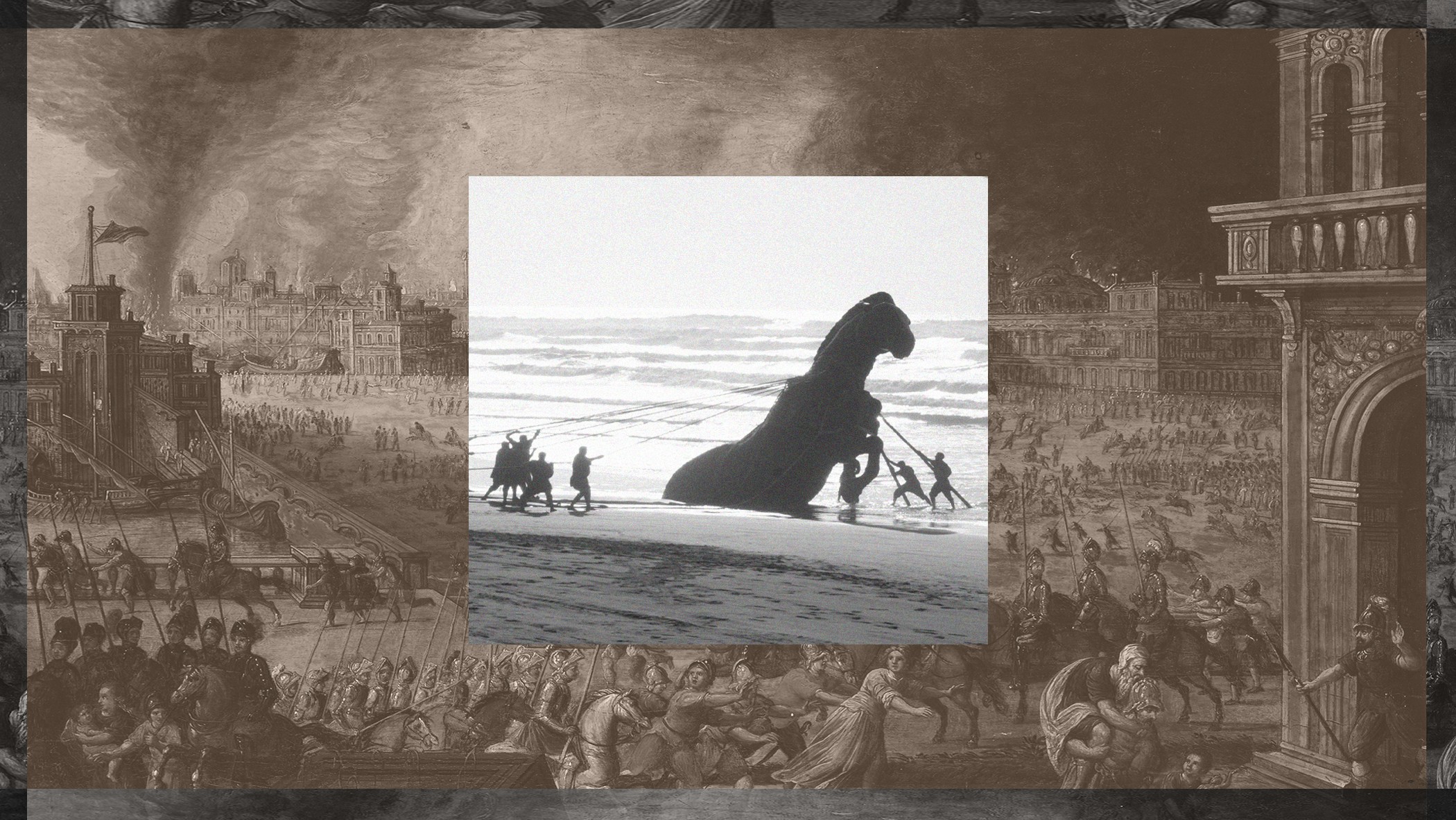
Regardless, the idea of an AI behemoth destroying books has sent a bolt through the collective psyche. Book destruction is historically linked to authoritarian regimes and attempts to control public discourse, as well as ancient tragedies—the burning of the Library of Alexandria comes to mind. The encroachment of AI, particularly in the realm of books, is now everyday news: Last month it emerged that a top-selling Kindle book may have been partly written by AI, and grandparents are buying children’s books filled with AI-generated slop.
Even if a literal book burning is not under way, the process of ingesting millions of books, stripping them of authorship, and blending them into a homogenous “intelligence” branded with the name of a chatbot certainly feels destructive. It masks the hard work and collaboration that goes into knowledge creation, undermines incentives for authors to write books, prevents experts from finding one another, and gives AI companies tremendous power over what information people can access. Given this scale of cultural damage, the physical destruction of books seems almost quaint.
One of President Trump’s superpowers is his shamelessness. Most of the time, he demonstrates a singular ability to shrug off—or flat-out lie about—scandals or missteps that would have caused another politician’s career to self-immolate. Get caught on an Access Hollywood video boasting about abusing women? That’s just locker-room talk! Grow insecure about crowd size? The photo must be doctored! Mistakenly suggest that Alabama was in the path of a hurricane? Someone get a Sharpie and a map! Trump has long been able to shrug off a bad headline and move on to the next news cycle, counting on his base to swallow his claims and never waver in their support.
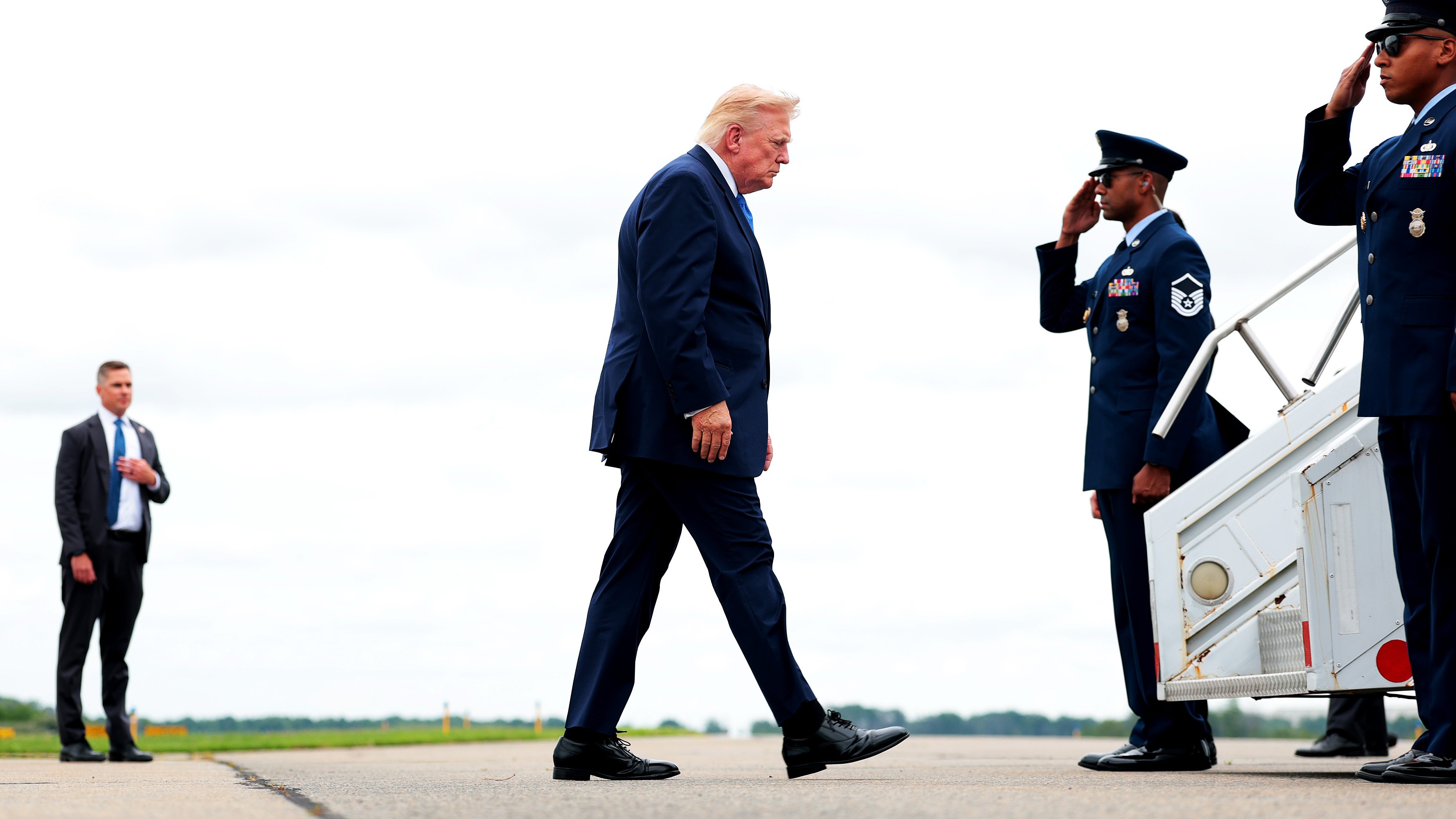
But that power appears to be fading. Trump is undeniably in a bad spot. His poll numbers have tumbled, and Republicans are fearful that they will lose at least one chamber of Congress this November. Trump’s behavior has grown more erratic in recent months—just check out his Truth Social account most nights—and he recently marked his 80th birthday. And lately, he has shown something else: an ability to be embarrassed. When that has happened, he has lashed out angrily—and has been willing to deploy the levers of government, and his compliant staff, to menace those he blames for his humiliation.
His recent targets include an Olympic canoeist accused of vandalizing the Lincoln Memorial Reflecting Pool after a rushed and botched renovation project, and journalists who reported about the security deficiencies of Trump’s new Air Force One. In the first matter, he pushed for a prosecution after an arrest was made; in the other, he ordered a criminal investigation. (The case against the canoeist and other alleged vandals fell apart, and the subpoenas of the journalists have been dropped, at least for the moment.)
For months now, Trump has been on the receiving end of another humiliation: He has been repeatedly mocked and ignored by the hard-line leaders in Iran. Once more this week, the president reacted with rage when Iran again contradicted his claims about negotiations to bring the war to a close. How will he lash out this time?
Trump really, really does not want to be forgotten, and he cares deeply about leaving his physical mark on Washington. He is a developer at heart who spent decades obsessing over the details of his homes in Manhattan and Palm Beach while also overseeing the design of luxury golf courses around the world. He mostly kept that impulse in check during his first term, but now, facing his political mortality, he has decisively shifted his focus to his legacy, whether that be trying to claim territory for the United States or reshaping the nation’s capital. You know the list: the East Wing, the Rose Garden, the Kennedy Center, the arch, the municipal golf courses, a helipad on the White House South Lawn, and so on. Trump has long prized symbols—particularly when the symbols can project his power—and seized upon America’s 250th birthday as an opportunity to further beautify Washington, his backdrop as he presided over the grandiose celebrations. His attention was particularly drawn to the Reflecting Pool.
Trump was not wrong in thinking it could use a little love. The Reflecting Pool, which stretches east from the Lincoln Memorial, on the National Mall, toward the Washington Monument, has long leaked and showed its age, bedeviling administrations for decades. In April, Trump announced a solution: a swimming-pool liner that would be, in his words, American-flag blue. To complete the project before the July 4 festivities, the Trump administration awarded no-bid contracts to redo the base of the pool and install a nanobubbling system that was meant to kill off algae growth. Instead, the algae flourished, the pool turned green, fences went up, and mitigation efforts failed. The Reflecting Pool undeniably looked worse. More than $16 million was wasted, and the national symbol was closed on the nation’s birthday.
Trump was furious. One of his signature projects had fallen apart—and he needed a scapegoat. He settled on an unexpected one: an Olympic canoer. David Hearn, 67, says he had just finished up a bike ride when he swung by the Reflecting Pool to see the failing sealant and reached down to touch the green water. He was arrested and detained for hours. The case, on its surface, seemed ridiculous. But it gained traction when Trump, reeling from the renovation’s failures, began going on Truth Social to blame so-called vandals for destroying the pool and accuse them of cutting an (improbable) 250-foot gash down the middle. Media outlets promptly debunked the claim with a series of fact-checks, but Trump was undeterred, relentlessly claiming that the pool had been vandalized.
Even some of his closest allies, two of them told me, privately rolled their eyes at the president’s obsession and scoffed at his refusal to admit a mistake. One Republican lawmaker, speaking to me on the condition of anonymity to avoid Trump’s wrath, deemed it “the dumbest controversy of his term” but added, with a rueful chuckle, that “it’s better than talking about how badly everything else is going.” But the episode had real-world consequences: Hearn told my colleague Matt Viser that it was “unsettling to feel like I’m being targeted by my government.” He had to hire lawyers and attend court dates, and he had his phone seized. The legal process itself functioned as a form of punishment.
The Reflecting Pool was an unlikely cause célèbre this summer, but it seemed likely to end with a whimper at the end of last week. U.S. Attorney Jeanine Pirro, who once touted her office’s ability to prosecute the case, executed a textbook Friday news dump when her office asked to dismiss the cases against Hearn and the handful of others accused of vandalism because evidence had emerged that suggested the damage was the the result of a botched installation, not vandalism. The farce seemed, mercifully, over.
Nope! Trump went on social media this past weekend to eviscerate Pirro, who has been one of his most loyal allies. Throwing the facts out the window, Trump declared that “to me, it was a pure case of VANDALISM” and that he would “disagree 100%” with the U.S. attorney in D.C. Accustomed to complete fealty, he raged to allies. In the Oval Office on Monday, he declared that the former Fox News host had “choked” and “folded like an umbrella.” Pirro was then summoned to the Oval Office; she was later seen walking out of the West Wing, wheeling a box full of materials from the case that she had brought to show the president and Interior Secretary Doug Burgum, whose agency has oversight of the Reflecting Pool (Trump did not appear to be mollified by the meeting and continued to criticize his longtime ally last night). A White House official told me that Pirro still had her job. The official added that may not be the case for long.
Trump has complained about Air Force One for nearly a decade. When he took office after his 2016 election, the president—who had grown accustomed to flying around in his luxury private jet—was dismayed by the antiquated state of the two VC-25 aircraft that usually bear the call sign, which had been in use since the early ’90s. He pushed for a new plane with a more Trumpian color scheme, but a series of setbacks and delays pushed the arrival of the modern replacement jet until 2028. This was not something, most people understood, that could be rushed: Air Force One needed to be outfitted with top-of-the-line (and often classified) communications and security features that allow it to serve as a White House in the sky, especially in case of an emergency.
But Trump grew impatient. So when Qatar’s royal family offered to give him a $400 million “palace in the sky,” Trump immediately demanded that the luxury liner become his interim aircraft until Boeing completed delivery. It would, Trump said, be a gift to the Department of Defense, and it would go to his presidential library once he left office. This, of course, prompted all sorts of pushback. Permitting a foreign government to supply the signature American aircraft struck many people as not just unpatriotic, but also an outrageous security risk. It was also yet another example of Trump displaying a disregard for norms and for traditional legal and political guardrails—and this time at a truly gargantuan scale.
Trump didn’t care. Nor did he seem bothered that it would cost up to $1 billion to retrofit the jet to make it acceptable for an American president to use. He set the same aggressive timeline as with the Reflecting Pool: He wanted the interim plane ready for use on the nation’s birthday. And there it was, soaring above Mount Rushmore on July 3 and then off to a NATO summit in Turkey a week later. But then, suddenly, Trump was back aboard the old baby-blue-and-gold Air Force One when he left Ankara. He claimed that the new jet had gone ahead of him to England to give troops stationed there a chance to tour it and that he was taking the original “for old time’s sake.”
A few days later, The New York Times reported what many had suspected: When hostilities ignited again in nearby Iran, the Secret Service determined that there were security concerns with the new aircraft flying near a danger zone. It was missing some key defense modifications, the paper reported, in a story that ran only after the president had safely returned to the United States. Trump, once more, was furious and embarrassed, and summoned FBI Director Kash Patel to the White House. In an extraordinary escalation of the administration’s pressure on independent news organizations, subpoenas were issued to several Times reporters, some delivered at their homes. The government requested the reporters’ phone records and demanded that they provide grand-jury testimony as part of a leak investigation to unmask the confidential sources who had provided information to the newspaper about a national-security matter.
The Times defended its reporters, while press organizations and Democrats issued statements about overreach and intimidation. Trump, once again, took to social media to blast his hometown paper and its journalists, sometimes in ugly, personal ways. It didn’t matter, it seemed, that the White House later admitted that the new plane would need upgrades, and that the president himself said it would be “maxxed out,” which all but confirmed the newspaper’s reporting. Trump was “incensed,” one adviser told me, and “wanted a head on a pike.” But, again, the legal process intervened, this time in the shape of a federal judge who grilled Department of Justice lawyers late last month over the handling of the subpoenas. DOJ then withdrew them. White House Press Secretary Karoline Leavitt told me in a statement, “The President and the Administration remain committed to holding individuals who recklessly and illegally leak classified information to the media accountable.”
There was a reason Trump reacted so strongly to those two humbling moments, some people close to him told me. And that’s because they came against the backdrop of the near-daily humiliation that the president has been suffering at the hands of Iran. The war is not going well. A conflict that Trump thought might take a few weeks at most has now stretched into its sixth month, and, try as he might, he can’t get out of it. He has declared victory many times and threatened to wipe Iran off the map nearly as often. Neither has happened. At this point, his unfulfilled threats—with Iran calling his bluff—have almost become a dark running gag.
The past few days, in a way, have been a microcosm of the whole conflict: Over the weekend, Trump came close to ordering a new wave of attacks, but walked them back after calls from regional allies, including Saudi Arabia, and fears of how Iran might respond. Instead, Trump said he would give diplomacy another chance, claiming that good progress was being made and that the Strait of Hormuz would soon be open. But Tehran denied that any negotiations were happening. And then another ship was attacked in the strait. Trump reacted in fury, posting that the Iranian regime was “unbelievably duplicitous,” when decades of history would suggest that Tehran was, in fact, very knowably duplicitous.
But how Trump will respond next to this ongoing embarrassment remains unknown. He’s made the war deeply personal. Will he now bail on the stalled war entirely, leaving Iran more empowered in the region? Will he follow through on his threats to dramatically escalate the conflict, perhaps even to strike civilian infrastructure and energy sites? Or will he channel his rage against Americans who point out his mistakes?
Charlie Surfs Up barks as he is pushed through the breakers in the second heat of very large dogs during the World Dog Surfing Championships in Pacifica, California, on August 3, 2024.
Paul Kuroda / ZUMA Press Wire / Reuters
People gather to watch the World Dog Surfing Championship on August, 1, 2026, in Pacifica, California.
K.C. Alfred / The San Diego Union-Tribune / Getty
Faith, a pit bull, owned by James Wall, surfs in the medium-size division during the 20th Annual Helen Woodward Animal Center Surf Dog Surf-A-Thon on September 7, 2025, in Del Mar, California.
Frederic J. Brown / AFP / Getty
Rusty wipes out during the annual Surf City Surf Dog event in Huntington Beach, California, on September 25, 2021.
Richard Vogel / AP
A Labrador retriever, Charlie, pulls his surfboard after competing in the annual Incredible Dog Challenge at the Western Regional Surfing Competition in Huntington Beach, California, on June 20, 2025.
Ringo H.W. Chiu / AP
Sugar the Surfing Dog competes in the annual Surf City Surf Dog event in Huntington Beach, California, on September 25, 2021.
K.C. Alfred / The San Diego Union-Tribune / Getty
Bailey, a Dalmatian, surfs in the large-dog division of the 20th Annual Helen Woodward Animal Center Surf Dog Surf-A-Thon on September 7, 2025, in Del Mar, California.
K.C. Alfred / The San Diego Union-Tribune / Getty
Rocket, a French bulldog, leaps from a board during the Helen Woodward Animal Center Surf Dog Surf-A-Thon on September 7, 2025.
Matthew Huang / Icon Sportswire / Getty
A dog with a lifeguard scarf looks on before the World Dog Surfing Championships at Linda Mar Beach in Pacifica, California, on August 2, 2025.
Godofredo A. Vásquez / AFP / Getty
Rusty competes in the World Dog Surfing Championships in Pacifica on August 1, 2026.
Eakin Howard / AP
Joey whips water from his tail as he jumps off his board after catching a wave at the World Dog Surfing Championships on August 2, 2025, in Pacifica.
Patrick T. Fallon / AFP / Getty
The Bing Bang Family of surfing Chihuahua dogs and a beagle surf a wave during the Helen Woodward Animal Center Surf Dog Surf-A-Thon in Del Mar, on September 7, 2025.
Eakin Howard / AP
David Fasoli carries Iza, a French bulldog, through the breakers during the World Dog Surfing Championships in Pacifica on August 2, 2025.
Paul Kuroda / ZUMA Press Wire / Reuters
A competitor barks during the World Dog Surfing Champions on August, 1, 2026, in Pacifica.
Godofredo A. Vásquez / AFP / Getty
Stella (right) and Moxy compete in the World Dog Surfing Championships in Pacifica on August 1, 2026.
Mindy Schauer / Orange County Register / MediaNews Group / Getty
Skylar stays focused while riding a wave during the Surf City Surf Dog competition in Huntington Beach, California, on September 25, 2021.
Daniel Knighton / Getty
A competitor rides casually during the Helen Woodward Animal Center’s 18th Annual Surf Dog Surf-A-Thon at Del Mar Dog Beach on September 10, 2023.
Andrew Matthews / PA Images / Reuters
Marina White practices with her dog Coco before the Dog Masters 2022 UK Dog Surfing Championships at Branksome Dene Chine beach in Poole, Dorset, England.
Charlie Surfs Up barks as he is pushed through the breakers in the second heat of very large dogs during the World Dog Surfing Championships in Pacifica, California, on August 3, 2024.
In this episode of The David Frum Show, The Atlantic’s David Frum opens with his reaction to the Justice Department’s decision to drop its case against the Olympian David Hearn. He argues that the prosecution was baseless from the start and, using the classic “prisoner’s dilemma” thought experiment, explains why future administrations must hold abuses of power accountable if American democracy is to endure.
Then, David is joined by Margaret Hoover, the host of PBS’s Firing Line and the great-granddaughter of President Herbert Hoover. They discuss the newly renovated Herbert Hoover Presidential Library, Hoover’s remarkable life of public service, and why his presidency deserves a more nuanced place in American history.
David ends the episode with a discussion of The Spy Who Came in From the Cold by John le Carré, exploring the evolution of the spy novel and the moral questions at the heart of the genre.
The following is a transcript of the episode:
David Frum: Hello, and welcome to The David Frum Show. I’m David Frum, a staff writer at The Atlantic. My guest this week will be Margaret Hoover, host of the TV program Firing Line, and, very relevantly for today’s discussion, great-granddaughter of President Herbert Hoover. This week’s book will be The Spy Who Came in From the Cold, a classic from 1963 of espionage literature by John le Carré.
But before either the dialogue with Margaret Hoover or the book discussion, I want to open with some thoughts that build from the news that the Department of Justice has at last dropped its indictment of David Hearn, the U.S. Olympian who was absurdly and falsely charged with vandalizing the Reflecting Pool at the Lincoln Memorial.
The United States Constitution has a guarantee of a fair trial. The United States Supreme Court has long interpreted this guarantee to mean that when the Department of Justice discovers exculpatory evidence against an accused—that is, evidence that proves that the accused is falsely accused—it must immediately drop the case or at least bring the information to the notice of the defendant. The Department of Justice in this case is claiming that while they indicted David Hearn on July 2, it took them until July 31 to find out that no, the damage at the Reflecting Pool was due to shoddy work by the no-bid contractor selected by President Trump and not by the three-time Olympian canoeist.
Now, you knew from the first instant that the charge was false, and I knew from the first instant that the charge was false, but the Department of Justice wants us to believe that it took them a month to figure it out, that they didn’t have the basis to bring these charges, and they therefore were not acting outside their duty but were behaving perfectly conscientiously in letting somebody hang for a month under a threat of a 10-year prison sentence.
The question for all of us is what are we to do with this information now that we have it? Now, you might say, David Hearn is not one of the worst injustices of the presidency of Donald Trump. He’s walking away from this, and he may be able to recover his legal fees and other costs by some kind of civil action against the U.S. Department of Justice. So it’s not the worst, but in some way it’s the most startling because it was so obviously true that there was nothing here to meet the eye, no basis for this prosecution. And we’re all left to wonder—what do we do with this? With the lawyers who brought the case, with the U.S. Attorney’s office—what do we do?
And I want to suggest a way to think about this. Perhaps you’ve heard of the political-science problem the prisoner’s dilemma. Imagine two people are arrested for a crime and held in separate rooms, unable to communicate. Each is given the same offer. If you betray your partner by testifying against your partner and the partner stays silent, you will go free and your partner gets a heavy sentence, say, 10 years. If you both stay silent, the evidence against you is thin and you each get a light sentence, say, one year. If you each betray the other, you both get a moderate sentence, say, five years each. Each prisoner has to decide without knowing what the other will do. Okay. And now, the problem with this game is while both are hoping to get off scot-free, they end up to get—each of them getting a five-year sentence because they didn’t cooperate.
Now, this is a profound problem in political science, and political science has been wrestling with it. A political scientist named Robert Axelrod proposed to solve the problem once and for all by inviting academics from all over the world to write suggestions that he would model on a computer game. The winner was a Toronto political scientist named Anatol Rapoport, and he designed a solution called tit for tat. And we are getting back to the Trump administration, but this simple story has a lot of richness for what is ahead.
The tit-for-tat program designed by Anatol Rapoport had an almost absurdly simple structure: Cooperate on the first move, and after that, do whatever your opponent did on their previous move. Cooperate if they cooperate; retaliate if they retaliated. Tit for tat won not by beating any individual opponent head-to-head, but by creating incentives for the other opponent—that if you behave wrongly, there will be retaliation, but if you resume cooperation, we’re happy to rejoin you with a cooperation of our own. In a game with two players [who] play round after round against each other, this threat of retaliation from bad conduct and cooperation for good conduct proved extremely powerful.
Now, this I think is very relevant to American politics. We have, right now, a game with multi rounds between two parties, one of which has, over the decade of the Trump experience, but especially since January of 2025, broken every rule of the game, including the rule “you don’t prosecute people who are innocent because the president told you to do it.” Now, there is going to be a lot of impetus, as the power balance in Washington maybe changes in November of 2026, maybe changes in a bigger way in November of 2028, to let bygones be bygones and to let the party that broke the rules get away with it in the name of turning the page and going on to the future.
The suggestion of the tit-for-tat program is, this is not going to lead to better outcomes. The only way to get back to a stable political situation in the future is for those who broke the rules when it was their turn to pay a price for breaking the rules, so that everyone understands tit for tat. You do this; we do that. You break the rules; you will suffer. There will be consequences. Maybe not perfect consequences—maybe not even exactly justice. Justice is a very hard thing to achieve, but some understanding that the rule-breaking that has been in place since January 2025 comes at a future cost. If that cost is not in some way imposed by those in a position to impose it, the whole system will break down into ever worse spirals of defection, betrayal, violation of norms.
That’s the challenge ahead. I think there are a lot of people, especially on the Democratic left, who think the answer to the Trump problem is to create a better and fairer society so that Donald Trump will never reappear. You know, building a better or fairer society is a big agenda, and it may not work. And who knows what a better and a fairer society is anyway? But saying, For those people who broke rules, clear rules, like, “don’t prosecute the innocent,” there will be consequences. Keep that in mind. It won’t be forgotten. It will be retaliated against, I think that may be the first step on the path to wisdom.
Oh, one last thing. The David Frum Show will be taking a two-week break on August 12 and August 19. No shows on those two days. Resuming thereafter for the later part of August and early September.
And now my dialogue with Margaret Hoover.
[Music]
Frum: Margaret Hoover hosts Firing Line With Margaret Hoover, which she launched on PBS in 2018. I had the honor of appearing on Season 4 of that show alongside my friend Anne Applebaum, as I had appeared on its predecessor program with William Buckley back in the 1990s. Margaret Hoover published her book, American Individualism: How a New Generation of Conservatives Can Save the Republican Party, in 2011. In that book, she argued that Republicans should modernize on social and personal issues—wise advice that was not taken. She worked for the George W. Bush administration as associate director of intergovernmental affairs, on Bush’s 2004 reelection campaign, and as deputy finance director for Rudy Giuliani’s presidential bid. She’s also the great-granddaughter of President Herbert Hoover and one of the driving forces behind the 20-month renovation and restoration of the Herbert Hoover Presidential Library, which will reopen its public galleries August 6, the day after this program posts online. And Margaret, welcome.
I want to talk a little bit about that library restoration and your important role in driving it. Now, this may seem to some viewers and listeners a kind of off-the-beaten-path issue, but one of the emerging scandals of the Trump administration is Donald Trump’s break from the presidential-library system fighting a legal battle to reassert, for the first time in half a century, personal presidential ownership of his presidential papers so he can, not the National Archives, but he personally can offer access to them or refuse access according to whether people meet his favor or don’t meet his favor, maybe even according to whether they pay a fee.
I’ll say one more thing about this before talking about Herbert Hoover’s innovations in the system. The modern presidential-library system started with a scandal almost exactly a century ago. President Warren Harding died unexpectedly in the summer of 1923. At the time, he was very popular, but his widow, Florence, the real brains of the operation in the Harding household, knew that tremendous scandals, both financial and sexual, were about to break upon the legacy of Warren Harding. And so she tried to destroy many of his papers. She was not successful. She was thwarted by some of President Harding’s staffers, but she did a lot of damage, and important things were lost to history. And she was able to do that because these records were, at that time, considered presidential private property. The system became public in tranches, and Herbert Hoover is the beginning of the modern presidential-library system.
And Margaret, let’s talk now about what you have done to bring that library back into the modern age and to reassert the example that presidential papers belong to the people of the United States, not to the president himself.
Margaret Hoover: Well, I mean, that’s the entire premise. You’ve summarized it so clearly. And look, there are 16 official presidential libraries in the National Archives and Record Administration. And the reason Herbert Hoover, along with Harry Truman, in conjunction sort of accepted funds for a library from the federal government was particularly because Hoover had felt and always felt that the gifts that were given to him when he was president of the United States and the papers that consisted of the operations of the presidency were the possession of the American people.
Prior to the Presidential Records Act, Hoover had actually collected all of his and had them on display at the Hoover Institution at Stanford University, a public-policy think tank that he had invented in 1919 at the end of World War I because nobody was collecting the documents from the Treaty of Versailles, and he thought they would be rather important for the future.
But that said, there is this premise that Hoover believed deeply and that every president until now, with perhaps the exception of Nixon, believed that these papers were part—they belonged to the American people because the institution of the presidency is only bestowed on individuals because of the faith of the American people, and thus they belong to the American people.
Frum: Let’s retrace some of this history so we can understand what you have accomplished. So the tradition through the 18th and 19th century and into the 20th was that presidential papers were the private property of the president. And this theory made a kind of intuitive sense in the age of quill pens. I mean, many of the presidential papers were in the president’s own handwriting, or if not his handwriting, the handwriting of secretaries whom he paid for out of his own personal presidential allowance. So the president would say, This work is mine. There aren’t that many papers, because they are written by hand, and I’m taking them back with me, and I will do with them what I will. Now, many donated their papers to the Library of Congress.
Hoover: And many also donated them to universities that they were associated with. Thomas Jefferson’s were at the University of Virginia. George Washington donated his. There’s a long tradition of universities holding these papers. And I do think there was a sense amongst the founding that the papers were part of establishing a precedent for a self-governing republic, and so they ought to be on display. I mean, private matters are private matters, but any matter that the president assumes in the context of his responsibility to the people of the United States and in the context of leading the country—there is a really strong sense of responsibility towards the American people so they could establish precedence. And that has been the case, I think, until the 20th century.
Frum: As you just said, Herbert Hoover was a great collector of papers, not only from the Versailles conference but from his famine-relief work in Belgium and his work in the Russian Revolution. I don’t think people are always aware of the prepresidential career of Herbert Hoover and its extraordinary impact. And one could argue that if Hoover had never become president, he might be an even more famous person than if he did become—
Hoover: There’s no question.
Frum: He would be there with George Marshall among the greatest Americans of the 20th century. So tell us a little bit about Herbert Hoover’s prepresidential career.
Hoover: I would suggest he still is one of the greatest Americans of the 20th century. And I think the full story—I think the dust hasn’t settled in terms of history really reckoning with Hoover’s, the scope of Hoover’s full legacy.
Frum: Take the career up to 1928.
Hoover: Well, Herbert Hoover—first of all, his father died when he was six years old. He was a blacksmith in a small frontier town in 1873 in West Branch, ’74, in West Branch, Iowa. His mother was a Quaker minister, which is a bit of an oxymoron because ministers didn’t really exist in the Quaker tradition, except for that she was so powerful of a speaker and an evangelist of the word of God that she went on a speaking circuit in sort of the central part of Iowa.
And his father dies when he’s—
Frum: And she’s a Canadian. She was a Canadian by origin.
Hoover: She was a Canadian! Only David Frum would point that out, and also Herbert Hoover’s wife, Lou Henry Hoover, also is descended from Canadian Quakers. So there is a good representation of Canadians in the Hoover family. (Laughs.) I’m so glad you pointed that out. I would expect nothing less.
The mother died when he was nine, leaving him orphaned after his father had died when he was six. He was sent to live with, actually, Native American Osage tribes in Oklahoma for a period of time, and then ultimately adopted by an estranged uncle in Oregon, who raised him with an incredibly strong Quaker work ethic and not much TLC. And Hoover stumbled upon an opportunity to enroll in a new university that was started by Leland Stanford in California. He was, in fact, the first student to matriculate into Stanford University, because he had to get there early for classes that would then qualify him to be a student there. His formal education stopped when he was 14 and [he] was essentially an autodidact until he got to Stanford.
He graduated with a degree in geology. He met his wife, Lou Henry Hoover, there, who was the first woman to graduate with a degree in the hard sciences from Stanford, but started in the middle of an economic downturn, and so he shoveled ore in a mine for $2 a week in the graveyard shift in the Sierra Nevadas until he had an opportunity to work for an English mining firm to explore properties in Western Australia.
And so in the outback, outback, outback outside of Perth, he happened upon what ultimately became the most productive gold mine for the next 50 to 75 years in Western Australia. It is currently still functioning. It is an open-pit mine that can be seen from the moon.
Anyway, really, his innovations in terms of new technologies in mining and efficiencies that he created brought him under the sort of esteem of his bosses in London, which was the capital of mining finance, and he cabled a marriage proposal to his wife, Lou Henry Hoover. Goes to California, marries her, and they take off to China, where they are then overseeing additional properties by their English investors in China, where they are caught in the beginning of the Boxer Rebellion. Ultimately, they’re part of a group of 137 foreigners who are kicked out of China. They’re the last of the foreign encampments. They’re rescued in a German mail boat and ultimately spend the next decade or so of their lives circumnavigating the globe on steamship, exploring and investing in mining properties all over Southeast Asia, Africa, Russia, literally all over the world.
He ultimately leaves the firms, sets up his own consulting establishment, and publishes his first book, called The Principles of Mining, which is still in print, and becomes this sort of technologist in this new age of, sort of, mining and materials and metallurgy, which really is the new tech of its day.
And the one other thing I would say about this is that he spends so much time on steamships going to these different countries, interacting with the highest level of people in the countries: the leadership, the governance, the monarchies, and also the laborers and the people and everyone in between. He observes—really, this is the turn of the century, and he observes the tide of revolution sweeping the globe and begins to develop philosophies about what kinds of governments are workable, don’t work. He has this practical experiment or observation of political science practically applied, and he notices the wave of isms that are sweeping the globe—Bolshevism, Marxism, Leninism, fascism—and begins to develop a theory about why his life has been possible as an orphan of no means from this frontier town in the West [that] has put him in a place to become a person of enormous influence and self-made wealth at the turn of a century.
And so he is really sort of this extraordinary figure. At 40 years old, he’s Stanford University’s most famous alum. He’s invited onto the board of overseers. And in 1914, when war breaks out in Europe, he’s heading home to Stanford, to California, to ultimately buy a newspaper or do something that is a bit more public-facing and decides instead to stay in Europe and organize famine relief for the country of Belgium, which had been invaded and occupied by the Germans, blockaded by the English, and faced imminent starvation.
Frum: This is the summer of 1914. He’s 40 years old. He’s a rich man. He’s one of the best traveled Americans ever to date at that point. He’s trapped in London by the First World War, and he has an idea—and it needs to be stressed because this idea is now so familiar: No one’s had this idea before—that in a war, it should be possible to deliver some kind of humanitarian relief to hungry civilians. Now, this is a new idea, and there have always been displacements and refugees as long as there has been wars. The idea that you would organize mass feeding of displaced people—no one had ever thought that that was possible, and that’s his first innovation in the realm of public policy. What if we fed people in a war zone? Could that be done? And that’s what he organizes, beginning in the summer of 1914.
Hoover: And when you think about it, because he had been moving materials around the world in the form of ore and coal and gold and minerals, he actually had a network of ships with which to send food around the world.
And so he was actually uniquely positioned as a private citizen. Of course, the U.S. wasn’t in the war yet, so he’s an American living in London, but both sides decide that he can fairly administer food relief in the name of feeding the Belgians. Because remember, the Belgians were occupied by the Germans, and the Germans took no responsibility for feeding the population they occupied. They were happy to let them starve to death, and it would’ve taken six to eight weeks. Belgium didn’t have enough food inside it. It was a postindustrial country. Eighty percent of their food was imported. Because no food could get in, they really were going to starve. This is 8 million Belgians, and then there were, like, 2 million French on the other side of the lines. And they would’ve faced imminent starvation, and Hoover is able to get wheat, corn, flour from all over the world, from Argentina, from the United States. And he creates, essentially, this independent republic of relief. It’s called the Commission for the Relief of Belgium. They have their own ships. They have their own flags. They have their own powers of immunity. They have their own powers to negotiate treaties, and they have their own set of volunteers, and it’s all run by volunteers.
And essentially, they bring all the food into Belgium, unload it into ports, and then volunteers within Belgium distribute it under the watchful eye of the Germans and the watchful eye of the English, who don’t want the Germans to be—they don’t want to be feeding or allowing for the feeding of their enemy army.
So this process—it took about 10 weeks to get under way, and then it lasted until the end of the war. Hoover is the only individual, they say at the Treaty of Versailles—I think John Maynard Keynes said he was the only individual to emerge from the ordeal in Paris with his reputation enhanced.
I mean, it was just this extraordinary sort of endeavor that actually ultimately creates the model for international humanitarian food relief.
Frum: And he then repeats the experiment inside the area of what had been the Russian empire during the Russian Revolution, feeding millions of people in Russia and Ukraine.
Hoover: He becomes so popular that [President Woodrow] Wilson realizes he has to be in his wartime cabinet. And nobody knew if he was a Republican or a Democrat, but he actually, in this post of Wilson’s government, persuades the U.S. Congress to feed Bolshevik Russia because Russians are also about to starve. And so there were U.S. outlays in the budget to feed Communist Russia. [The Russian writer] Maxim Gorky said that he’s the most impactful person in the 20th century at that time. Of course, he’s been completely forgotten in Russia since then. But it was this notion that America could feed her enemies and still sort of win a war, that food wouldn’t be a weapon of war.
And it was also the first time that Hoover, or that the United States, had really deployed humanitarian relief in a way that became legitimate American soft power. Even though it was voluntarily orchestrated at first and then it became part of U.S. policy, this is a charitable American volunteerism turned outward to the world in what becomes this extraordinary display of soft power, and then becomes one of, sort of, the arsenals of our diplomacy in the 20th century.
Frum: Let me add a point here, because one of the things—we’re having a little resurgence of communism in contemporary America—and one of the things communists are very bad at is telling the truth about history. One of the myths that communists and their apologists promote is that the United States and the other countries tried to strangle the Bolshevik Revolution in its cradle, which would’ve been a good thing to do if it had been done—it was not done—because Russia, under Lenin, became a kind of de facto ally of the Germans, who were still fighting. The Bolshevik Revolution is in the fall of 1917. They become, in 1918, an important source of food and assistance to Germany, still battling the Western Allies. And so the United States and others were suspicious. There were American troops and other troops as well on the territory of the Russian empire. But through all of this, the Americans are feeding Russian people, more and more of them, and this feeding will continue until past the war, into about 1920, correct?
Hoover: That’s right. He did two rounds because there were basically two seasons in which Lenin requisitioned the grain, and so there were two full harvest seasons where they were entirely depleted of foodstuffs, and so Hoover fed them both times.
Hoover writes at this time, eventually, this pamphlet, it’s called American Individualism, from which I riffed my own title, but—which is, and the title is often misunderstood. But he writes about the feeding of the Bolsheviks in that period, that as deadly and bloody as the revolution was, it was important for humanity to see for itself with its own eyes that the idea of Bolshevism and of communism, which is, you know, theoretically a beautiful idea, had proved itself in rivers of blood, and that Hoover believed this was, as horrible as it was, this necessary experiment for humanity to then learn from, because this idea, practically applied, simply doesn’t work. It had proved itself in rivers of blood. And this is Hoover developing his own political philosophy about what made the U.S. of his time so extraordinary and the ideas of these other new nations—nations that had swept off monarchies, czars, old forms of power—flirt with new sort of isms that had ultimately and were ultimately failing before all of our eyes.
They forget that part, the modern communists, I think, and the modern socialists.
Frum: So Hoover then returns to the United States after the Russian Revolution.
Hoover: So he comes back, and he’s so popular, [President Warren] Harding puts him in the Cabinet. Harding wins; Harding puts him in his Cabinet. He has this, like, backwater agency called the Commerce Department, which didn’t really do anything except for it was the beginning of the Roaring ’20s, and he thought, Huh, well, there’s these new frequencies. Perhaps radio; we can grab radio and television. He’s the first person to appear on television. His image is the first image of a face to be transmitted through television waves. Yeah, you can see the television itself at the Hoover Library. So when they tell you that it’s FDR who’s the first president on television, actually, Hoover was the first president on television, but he wasn’t president at the time.
Sorry, there’s always little quibbles with FDR’s legacy.
Frum: Little family pride, yeah.
Hoover: So he standardizes industry, essentially, which allows for a housing boom, which allows—when I say standardizes industry, I mean, we all take for granted that two-by-fours all come in the same dimensions, and we take for granted that bricks are all in the same dimensions, and that screws and nails and nuts and bolts and tires and bedsheets are kings and queens and twins, and eggs come in half dozens and dozens, and milk comes in liters and quarts. All of that happened as Hoover was overseeing the Commerce Department, not because he decided, Here’s how we’re going to do it, but he believed—and this is part of his philosophy of government—that government had an important role in terms of convening industry and convening stakeholders. And so there are parodies of all of the conferences that he hosted in the Commerce Department, because he would invite the farmers and the dairy people and the distributors, all the different players to the table, and exhaustively they would talk and then ultimately decide that, Sure, we’ll do half dozens and dozens of eggs, or whatever it was.
And ultimately, this created an efficiency because of the convening of the government and then the agreement of the stakeholders that allowed for massive booms in every area of industry throughout the 1920s.
Frum: My impression is the most enduring or the most significant thing he did as secretary of commerce was the United States—Louisiana, Texas—were hit by a devastating hurricane in the second [Calvin] Coolidge administration.
Hoover: It was a flood.
Frum: A flood. Okay, my mistake.
Hoover: Nineteen twenty-seven Mississippi River flood.
Frum: Thank you. And just as no one had ever before had the idea that you could feed people in a war zone, no one had ever thought that it might be the responsibility of the federal government to organize aid to victims of a natural disaster, but that was another Hoover innovation.
Hoover: Well, you know, Silent Cal, who was, of course, the, sort of, begrudging president, begrudging of Hoover a bit. Hoover had earned such a huge reputation. He was called the secretary of commerce and the undersecretary of everything else, and it just sort of bothered the president. But the president really didn’t believe there was, to your point, a role in emergency relief. But Hoover, who had really cut his teeth in emergency relief in Europe, thought, Certainly there are things that can be done. Because it was 50 million acres that was flooded, David. So it was the entire Mississippi River Valley all the way down through Missouri, Alabama, Louisiana—the entire portion of the South. I mean, like, a third of the agricultural land in the South—and by the way, it’s a lot of Black Americans who are farming and growing cotton on those lands—essentially are wiped out.
But the thing about a flood is that you know it’s coming. And so what he did is worked with local authorities to move people out of the rising part of the flood days before it would hit. So he would go to the local mayors; he would go to the governors and say, Look, we’re building a tent city over here. You have to take all your things and get out. And sometimes they would agree, and sometimes they wouldn’t, but as soon as word got out that this was happening up the river, people started listening.
And essentially, he organized these massive tent cities—that had vaccines, food, water—that were temporary that people could then live in until they were able to go back and rebuild. And this was the largest, to your point, weather event up until [Hurricane] Katrina. And Hoover basically took charge, but then also deployed this, sort of, spirit of volunteerism. He got the American Red Cross involved in a way the American Red Cross had never been involved at this large of a scale. And through massive telethons and fundraising drives, they didn’t take a cent—there was no congressional money deployed to help in the 1927 Mississippi River flood. It was all voluntary donations distributed through the American Red Cross that helped the country rebuild in that time.
And so Hoover had this very strong philosophy that if you asked Main Street for what you needed, Main Street would deliver tenfold, because there was something about his experience with the American people as opposed to peoples in sort of all over the world, and literally he had been in every other continent except Antarctica, that really felt committed to communities they were part of. And he observed this in the American people. He observed a sort of deep, embedded degree of philanthropy on a local level that he felt could be harnessed in a way unlike anywhere else.
Frum: And again, the papers and all of this must be a massive collection.
Hoover: It is the largest private collection in the United States. One of the largest in the world. And by the way, it now doesn’t just contain the czar’s abdication papers and all of the materials from Russia that, by the way, the Bolsheviks would have destroyed, but it also contains enormously important materials from all over the world that deal with war, revolution, and peace. So we have all of the secret papers from Saddam Hussein’s Baathist secret police; many of the papers from Adolf Hitler’s top-tier, inner-circle cabinet as they litigated the war. We have papers from the Republic of China, from the fleeing parties, the Kuomintang, before they came to Taiwan to establish their own country, papers that for sure would have been destroyed by Mao’s revolutionaries.
And Hoover really became—his organizing principle in his later years was anti-communism because he had taken the lessons to heart, but realized that the world hadn’t. And so these materials are incredibly diverse, long span, and really concentrate on the political history of the 20th century.
Frum: Because Hoover lived to an enormous age.
Hoover: He was 90 years old. So up until the point that Reagan died, he had been the oldest president, and up until the point where Jimmy Carter died, he had had the longest post-presidency. And it’s often commented that Jimmy Carter, who had this long and enormous post-presidency, also very much modeled his post-presidency on Hoover. There had never been a longer post-presidency up until Hoover.
And so there’s this pre-presidency part of Hoover’s life, but then there’s this post-presidency part of Hoover’s life that I’ll just say, you know, we probably don’t have time to get into, but Jared Cohen wrote a very good book called Life After Power that follows different post-presidencies. And his research, academic research, on Hoover’s humanitarian work in his post-presidency, of course: He’s laying the foundation for the Marshall Plan. He’s brought back into public life by Truman two days after Roosevelt dies. He’s just this elder statesman in his post-presidency, reorganizes the federal government.
Frum: He outlives John F. Kennedy.
Hoover: He does outlive John F. Kennedy, sadly. And this is another piece of the narrative that’s wrong, but Hoover and the Kennedys were quite close. Like, you can listen to these YouTubes of John F. Kennedy calling Mr. President to let him know about the Cuban, the Bay of Pigs invasion, the Cuban missile crisis.
So Joe Kennedy was a dear friend of Herbert Hoover’s. There’s actually a still-living research assistant who worked with Herbert Hoover in the Waldorf Astoria when she was in her early 20s. She’s 92 now, 93, and she tells a story of Joe Kennedy calling and thinking, Oh, God, what are you gonna want to do talking to him? And instead, he puts him through. He comes to visit. You know, there’s a very close bond between the Kennedys and the Hoovers, mostly because both of them were exiled by FDR from the Democratic Party for some time. So they bonded in their distaste of FDR, among other things.
Frum: And Truman had the same distaste for FDR, and so did—
Hoover: He did. He did.
Frum: I’m going to double back to the presidency, but I want to—so the library’s founded in what year?
Hoover: 1962. Harry Truman dedicates it in 1962. But Hoover actually acquired his birth cottage, a 200-square-foot cottage, two bedrooms—sorry, two rooms—in which he is born, his brother is born, his sister is born which is right across from the blacksmith shop that his father works in and the Quaker meeting house that his mother ministers in.
And this siting is incredibly important to Hoover because it suggests a degree of possibility and opportunity that he believes his story could happen in nowhere else besides the United States. So this siting is all there in West Branch, Iowa, which was, again, then a town of 600 and now a town of 3,000. It’s on the outskirts of Iowa City, Iowa, where the University of Iowa is. If you happen to be anywhere in the Midwest, it’s a very easy day visit, and it tells the story of Hoover’s life, of somebody who feeds the world, who serves the world, but is ultimately from just a small, humble beginning.
And look, here’s the thing. There are a lot of presidential libraries. Now there are 16 that are part of the National Archives and Records Administration system. They have evolved over time. I mean, it is really Eisenhower, FDR, Truman, and Hoover who begin the process, recognizing that—and Hoover had this innovation. He created a foundation because ultimately he thought private philanthropy would have to sustain the library.
Now, as we have moved forward, it has become abundantly clear that the federal government is not gonna continue to sustain these temples to presidencies. I mean, if you go to the LBJ Library in Austin, Texas, it is literally a temple to LBJ’s presidency. And Hoover’s is quite small. It is very humble. It represents his Quaker roots and the humility that he very much felt and embodied.
Every president gets to tell their story the way they want to tell it, and ultimately, there has been this evolving question about to what degree should the taxpayers be on the hook for that? And so, Reagan was really the first to create a massive foundation for his. I mean, he had, like, a $400 million endowment by the time he died. Nancy continued raising to endow that presidential library. And the Bushes, and then the Clintons, and then the Bushes again, and each president has sort of evolved the way they both present their story and the way they fund the continuing operations of their presidential library.
But it is the first four presidential libraries—Eisenhower, FDR, Hoover, and Truman—that really created a template for how these other ones should improve upon it. And for those four presidents, who, if they’re lucky, have completely obsessed descendants who want to continue to tell their story, but most don’t. And it’s a really hard thing to go about and raise money for a presidential library for dead presidents. I mean, the Obamas have billions of dollars and a huge endowment, and they will have the benefit of young daughters to continue to raise money and support the operations for many, many years, as do the Bushes and as do the Clintons.
But when you get down to a great-granddaughter who’s four generations down, who never met the president that she’s obsessed with—not obsessed with,but who quite inspires me. Like, his presence is quite palpable and was quite palpable in my upbringing because it was such a foundational pillar in terms of growing up in the family I grew up in.
But I also am unburdened by a sense of, I don’t know, my identity being tied to it. I’ve really chosen it because I’m quite passionate about Hoover’s legacy. I really want a fair accounting of not just his presidency, but his life in the fullness of his contributions, which we have not yet seen but we continue to near, get closer to every year. And so, it’s a passion project for me. And frankly, it’s, you know, it’s—well, we can get to the presidency, but I think the 800-pound gorilla in the Hoover story is the Depression, and it continues to cast a long shadow. And I continue to believe that as people take more into account what was known about modern macroeconomics in the 1920s and the 1930s and the 1940s, nobody really knew what to do. And Hoover did the best he could, and probably better than anyone else.
Frum: Well, now let’s focus on the part of the story that people think they know and that makes a negative example. So when President Trump explained why he was making the disadvantageous peace he made in the Persian Gulf he said, I don’t want to be Herbert Hoover. Because he remembers Herbert Hoover as being associated with—
Hoover: Economic hard times.
Frum: With economic hard times. And America had had a very severe depression in the 1890s, but there weren’t very good records and numbers, so we don’t exactly know whether the 1930s are worse than the 1890s. By the 1930s, we’re beginning to have statistics. We know what the unemployment rate is. And of course, it’s on the edge of living memory.
So tell us your understanding of the presidency and how to-blame Hoover was or wasn’t for the events of the Great Depression. And we may have slightly different views on this question.
Hoover: By the way, and I would love to engage with your views on them, David, because you’re one of the smartest people I know. But also, I’ve spent a lot of time thinking about it, and you and I have spoken about this before. And I’ve amended my thinking in some ways, and in other ways, I haven’t.
Hoover, of course, is nine months in. By the way, the book 1929 that Andrew Ross Sorkin just wrote about 1929, about the Great Depression, is a really important contribution to the understanding of the Hoover narrative. Hoover comes to the presidency in March of 1929, and the stock market crashes in October of 1929. So he’s there for roughly less [than] six months. He had this fabulous quote, actually, which was that he was basically swept into the presidency almost unopposed. I mean, five states went against him. It wasn’t that he was unopposed, but, like, he wasn’t unopposed, essentially, on the Republican side, and on the Democratic side, it was a complete landslide.
And Hoover had been made into this kind of Superman because he had fixed the Mississippi River flood. He had done the Belgian relief. He had done European food relief. He had done all these marvelous things. People just thought, like, Of course, he should be the president. He had never been in elective office before. He was the first president, literally, to ascend to the presidency without ever being elected to public office. And he said, My friends have—”
Frum: Or serving in the military.
Hoover: Or serving in the military, exactly. “My friends have made the American people think of me some sort of Superman. They expect the impossible of me, and should there arise in the land of conditions in which the political machinery is unable to cope, I will be the one to suffer.” Like, he knew his reputation was too outsized and too big to meet a moment that a political circumstance couldn’t meet. And the Great Depression, to be very clear, was that moment.
It is the largest economic calamity in the history of the world—the second-largest calamity in the history of the country after the Civil War. And if a quarter of Americans are out of work, that’s, like, way more than a quarter because only men are working. I mean, there’s no downsizing what happened or minimizing how difficult a period that was. What is true is that, and this is the main point—and you and I can disagree on this perhaps—but when we had the global financial crisis in 2008, Ben Bernanke was at the Fed and is largely credited with having used monetary policy to help stave off what could have become a Great Depression, another global Great Depression. And it is Ben Bernanke’s Ph.D. thesis from Princeton that centered entirely on what happened in 1929, ’30, ’31, ’32 to begin to understand and develop alternative theories about what happened, that the collapse of the economy and the banks had as much to do with monetary policy—though it was little understood—as it did with fiscal policy.
And nobody understood really anything about monetary policy. Very few people did. Keynes wasn’t publishing until the 1940s about stimuluses and how to get us out of the war. Ultimately, I think historians and economists now believe that it was World War II that got us out of the [depression], not the New Deal. You know, FDR’s own sort of kitchen cabinet, Ray Mosley in particular, sort of admits to the programs of the New Deal being essentially throwing things against the wall to see what sticks. And so there’s this narrative that maybe Hoover didn’t cause it, or maybe he did, but he sure didn’t do anything about it. And the truth is: Nobody really knew what was happening. What we understand about modern macroeconomics, we understand now because of exhaustive study of that period. And to be clear, the economy bottoms out again in 1937, worse than in 1932. And as you review that, I mean, you simply can’t look at the details and say, Well, the New Deal got us out, if what happened in 1937 rivals 1932.
What you have to say is everybody was trying their best. People were making mistakes. Hoover certainly made mistakes. I mean, conservatives begrudge him for raising taxes when he shouldn’t have, for forcing wages to be lower. He tried to get industry to keep wages even and so sort of tampered with the free markets. Certainly, there are mistakes that were made on Hoover’s side. And yet, it’s hard to use a modern and contemporary context and knowledge to judge him at that time, or even FDR, really.
Frum: Here’s what I think is one of the most important lessons for living politicians from Herbert Hoover’s legacy.
Supposing somebody got into a time machine right now with Ben Bernanke’s thesis and everything that is known about exactly what is the right thing to do, and traveled back to the fall of 1929 and said, “President Hoover, here’s the book from the 21st century of exactly everything you need to do to get everything right, which includes, yeah, a much more stimulative monetary policy. It means getting rid of the tariffs that were—never mind not signing Smoot-Hawley—but getting rid of the tariffs that your Republican predecessors passed in the 1920s, which sustains the completely false and inflated reputation on the right of Harding and Coolidge, who had as much to do with the Depression by their tariff policies as anybody else. Oh, and you have to go off gold when the British do in 1931. Here’s the book.” And Hoover said, “Right, I accept the book. I’ll read the book. I’ll do everything you say.” If he had done everything right, American economic recovery would have begun probably sometime in 1931. And that would’ve been great because you would’ve missed the terrible year 1932. German democracy might’ve been saved. No Hitler, no World War II. But [Hoover] would still have presided over the worst recession in living memory from 1929 to ’31. That’s in the cake already. And he would still have lost the election of 1932, even if he had done everything right.
And one of the things that is hard for a modern politician: Sometimes you can do everything right, and you don’t get a political reward for it because the timing of doing the thing right comes too late to save your particular career.
Hoover: That’s certainly true. I think the economy actually was getting better in 1931. At least there were some signs that it was getting better in 1931. There were also,—Andrew Ross Sorkin actually documents very clearly in his book that the biggest story in The New York Times in, at the end of 1929 was not the stock-market crash, it was Admiral Byrd’s discovery of the North Pole. Nobody realized sort of that there was going to be this cataclysmic effect. But what also did happen, and I think this is where Hoover really failed in his presidency and departed from his previous habits and patterns. Something happened with Hoover, and I’ve heard this both from his biographers and from my father, and from my grandmother when she was alive: Hoover had been masterful at managing his image in the press, really, throughout his entire career. I mean, from the time he was in Western Australia, he was getting coverage of the successful mining operations in Australia; all through the good press he got through World War I—you know, the only man to emerge from the ordeal in Paris with his reputation enhanced. All through the Commerce Department years, he had very strong relationships with the media, the press, with reporters, journalists, and many people who helped tell his story or tell the story of what he was doing. And something happened in the presidency where he—and this is what my father has told me, but it is complemented by a biographer’s accounts—is that he believed suddenly that the American presidency was such a revered position that his ambition should no longer drive the efforts to shape how it was seen. And so he stopped engaging in a robust communications effort. He just stopped. Like, he didn’t talk to the press. I mean, he would do press conferences or whatever, but he just didn’t do all the sort of reputational management stuff that he had previously done. And so nobody was telling his side of the story. And, you know, perhaps, perhaps he might have done better in 1932 had he bothered to care for his reputation.
Frum: In my view, for whatever is worth, the key moment, because this is where you have to deal with the speak bluntly about this, the Wall Street Journal version of history. So the Wall Street Journal version of history is that what Hoover got wrong was raising taxes in 1931.
And you say, Okay, why did he do that? Why did he raise taxes in 1931? And the answer is because the budget deficit was growing, and had the budget deficit continued to grow, the United States would’ve been put in a position, as Britain was, where it could not stay on the gold standard. And Hoover chose preserving the dollars linked to gold.
Now, The Wall Street Journal won’t talk about this because they believe in putting the United States back on the gold standard, and the idea that the gold standard and the tariffs are the villains of the Depression is a story they can sort of accept, but sort of can’t.
So he’s confronted in 1931: If you continue to run deficits, you will be forced off gold like Britain, and that will be a calamity. It won’t. It’s the solution. But you had to be a very unusual person or a very desperate person in 1931 to understand that being forced off gold was the solution, not the problem. And so he said, “I can’t be forced off—”
Hoover: Especially as a mining engineer.
Frum: Yeah. “We can’t be forced off gold, therefore we have to raise taxes in the middle of a depression to keep the link to the gold standard.” No one understood that.
Hoover: I think you’re right. I mean, I think The Wall Street Journal’s version of history has changed a little bit over time. It used to blame it entirely on Smoot-Hawley. Smoot-Hawley of course was the, the tariff acts that everybody implored Hoover not to sign; that he really didn’t want to sign but he signed because he was trying to work with the Congress. But you know, everybody says that was definitive, but global trade was what, less than 3 percent of GDP at the time?
Frum: Also Smoot-Hawley comes too late. People don’t know, and this is very relevant to where we are today. The United States at the end of World War I went back to high tariffs, choked off European exports, forced Europe into debt, made the monetary situation unstable, made the gold standard untenable in any kind of shock. And Coolidge and Harding are villains in the story, but in the Wall Street Journal version of history, they’re heroes. And so we have to blame the Hoover tariff, not the Harding and Coolidge tariffs, and above all, never, never, never the gold standard, which for some crazy reason they keep on promoting into the 21st century.
Hoover: Hoover had a quote later on. He said, “Once upon a time my political opponents honored me as possessing the fabulous intellect and economic power by which I created a worldwide depression all by myself.”
Frum: Yes. I want to say one last thing as we head toward the end here about one of his great contributions, and it’s a contribution that is really under immense threat now, and this is, I think, quite an urgent problem.
So, as you said, because of the New Deal and the war, the United States creates this jumble of regulatory agencies in the 1930s and ’40s with very weak and mysterious constitutional basis, very murky limits on their powers, and that operate outside the constitutional system. And Hoover was one of the people who was really alarmed by this. And President Truman then gave him the mission—and when I say “the Administrative Procedure Act of 1946,” I can feel eyes glaze over—but this is like, along with the Bill of Rights, this is maybe the most important law that you, it’s certainly the most important law you’ve never heard of, and it’s the one that is under direct attack now by the Trump administration. Talk a little bit about his contribution to bringing these agencies back under constitutional review after World War II.
Hoover: Well, so I mean, one of the things that—another piece of the history is as soon as FDR is inaugurated, Hoover is alarmed by the New Deal, and he writes a book called The Challenge to Liberty.The Challenge to Liberty might be among Hoover’s least-read books, but again, like in the 1946 Administrative Procedure Act, eyes glaze over at roll. This is Hoover’s description of how the exploding of these federal agencies is going to impede and impose upon individual liberty. And so he calls it—he actually has his own word for it—he calls it “regimentation.”
And what he ultimately does when Truman brings him back in to feed the world after World War II and help establish the foundation of the Marshall Plan, he also, both through Truman and then through Eisenhower, is asked to assemble a review of how the executive branch and the federal government work. And he has essentially this huge committee, a congressionally mandated committee, that reviews the executive agencies, reviews their authority, and then makes recommendations to Congress, of which 80 to 90 percent of them are passed into law that are intended to bring efficiencies and accountability to the federal government that had exploded previously.
And then Eisenhower brings him back in. So this is called the Hoover Commission. I mean, it had its own title, but it is known as the Hoover Commission: the first Hoover Commission and then the second Hoover Commission. And one of the things Hoover was known for was his ability to operate massively scaled operations in a highly efficient way. And so it was this idea of bringing his abilities at efficiencies to the federal government.
Frum: And this is maybe the point of alarm to end on. So the Trump administration is arguing that every administrative agency is a pure expression of the will of the president. The president can give an order to the Food and Drug Administration, to the Federal Trade Commission, to any agency—even the Federal Reserve—and they have to carry it out just as much as if they are a member of the military. That his order is absolute and plenary over the entire administrative aspect of the government.
And this was a vision that Americans had in the 1930s and ’40s, from which they retreated in fear and terror and corrected very much under Hoover’s leadership with laws that said the administrative apparatus of the federal government must be bound by law. It is not a pure expression of the president’s will. And every day we’re having battles with the Trump administration of, is it presidential will that governs the country? Or is it the law? And you can feel the ghost of Herbert Hoover reminding us of his achievements after his presidency.
Hoover: I think that’s right because the point is that one can have professionals in the federal government that are intended to execute the operations of the executive branch and the federal government despite the person who is in the office. And if you don’t, then what you’re doing is reverting to a 19th-century system of spoils, where political appointees are rewarded for their loyalty and placed in positions of power where they can take advantage of the trust placed in the president by the American people to their own ends. This is not the sort of fair administration of the government that is to serve all of us as equally as possible. And it is true, and it’s an affront, actually, on the notion that the government is there to operate very specific tasks on behalf of all of us who need it rather equally rather than through privilege or patronage or association with power.
Frum: Margaret, thank you so—I know, speaking of family, you have taken time away from your family on holiday to join me today, and I’m very grateful for that. I hope anyone who hears your voice and is anywhere in the vicinity of the great state of Iowa will make a special trip to see what you have accomplished with the renewal of the Herbert Hoover library. Thank you so much for joining me today.
Hoover: You’re so kind to have me, David. It is a great privilege and honor to be on with you.
Frum: Bye-bye.
Hoover: Bye.
[Music]
Frum: Thanks so much to Margaret Hoover for joining me today on The David Frum Show. As mentioned at the top of the program, my book this week is a classic of espionage literature, The Spy Who Came in From the Cold, published in 1963 by John le Carré. John le Carré being a pseudonym for an English writer named David Cornwell, who had served as an officer in the English intelligence system in the 1950s.
The novel The Spy Who Came in From the Cold is a kind of a reply to the success of the James Bond novels. James Bond, written by Ian Fleming, offered a very glamorized view of the life of a spy, full of excitement and danger, lavish expense accounts, and beautiful women. The Spy Who Came in From the Cold is a much grimmer reality of betrayal and mutual betrayal.
I won’t summarize the plot. It’s very complicated and very exciting, and if you haven’t read it before, I urge you to read it now, and I will not dim your enjoyment of this very morally complicated novel. I want to talk instead about the evolution of the spy novel as a form, how it came about that this form was developed in the 20th century, and why we associate it so much with British writers especially.
There are American spy thrillers, but they tend to emphasize either technology or, like Robert Ludlum’s novels, a hero who is so powerful, so tough, so indestructible that he himself is more like Batman or Spider-Man or Superman than he is like a human secret agent. The British tradition—Len Deighton, John Buchan, Eric Ambler, Ian Fleming, and John le Carré—emphasizes even very human people. Even James Bond, at least in the novels, does not have superpowers. If you shoot him, he will die.
Why this particular attraction of British writers to the creation of this particular form? What is it about the spy novel that made it such an important form in the 20th century? Now, I’ve been thinking about this as I wrestle with The Spy Who Came in From the Cold. I see two great themes in these books and others like them. The first is that spy novels are novels ultimately about bureaucracy. There’s a person in a government office doing a government job; dealing with expense accounts, which figure large in the work of John le Carré; dealing with all the drabness and meanness of government offices, especially in the pinched years after World War II; and trying to achieve things for their fellow countrymen against the background of this bureaucracy. And it’s difficult, and it raises very complicated moral choices.
At one point, the British protagonist of The Spy Who Came in From the Cold is confronted by an East German counterpart who asks him, Why do you do it? What do you believe in? And he’s a little taken aback by the question. The real answer is a kind of personal commitment, a personal vendetta, but under the circumstances of the question, he can’t answer. And the East German spy goes on to explain he’s a Marxist. He thinks it’s perfectly valid to sacrifice one human life for the benefit of humanity or other human lives for the benefit of the collective. But Britain is nominally a Christian society, where each life is sacred in itself. How do they justify sacrificing one life to save others? And that is the kind of moral dilemma of a bureaucratic system of the one versus the mass that I think haunted the generation that came through the Second World War and the early part of the Cold War where they saw good people being sacrificed as individuals for some idea of the benefit of many others, and not quite able to answer what that benefit was and not being quite so sure that benefit was really there.
The second theme that struck me as I pondered this is: Spy fiction is fiction about people who are secretly powerful. And not the American version. Again, it’s about machines or superheroes. But the British novels are about people who look humdrum, ordinary, but who, in fact, have these giant bureaucracies at their back.
And this fantasy of secret power is something that seems especially appealing to a society like Great Britain that had been so powerful and was watching its power ebb through the 20th century and being displaced by a power with which they had some friendly relationship—the United States—but also some relationship of envy.
I don’t think it’s entirely a coincidence that those American writers who, in my opinion, do excel at the spy fiction form—not, again, in the superhero, Robert Ludlum way—are Alan Furst, Daniel Silva, are both Jewish and are therefore, in their own way, marginal people in the way just as the British are marginal to American power, Furst and Silva have experiences that are at the margin of their own society.
Spy fiction at its best can be morally challenging in a way that few other forms really are. The particular moral dilemma in The Spy Who Came in From the Cold—and again, no plot spoilers here; if you haven’t read it, I recommend it—is a really heart-rending one because the moral calculus that you see that is revealed by the end of the novel makes a kind of sense—a brutal sense, but a kind of sense. But the human costs of this calculus are extreme and painful, and we are made to feel them and not allowed to escape them. That’s something that it’s easy to dismiss as you simply read the news and read about espionage as a product of something that reveals information, and not see that behind all of these stories, there are real human beings whose lives are compromised in one way or another.
Thank you so much for watching The David Frum Show this week. As I mentioned, we are taking two weeks holiday, August 12 and August 19, or a two-week break. We will be working, but we will not necessarily be producing video content in that period. We will resume in the later part of August and early September. Thank you for watching The David Frum Show. Please, as always, if you can, share and subscribe [to] the show so others find out about it. And as ever, the best way to support the work of this program is by subscribing to The Atlantic. That supports me and all of my colleagues. Again, thank you. See you soon on The David Frum Show. Bye-bye.
The Democratic nominee for Montana’s open U.S. Senate seat, Alani Bankhead, has been telling everyone for months that there is no price anyone can pay to keep her name from appearing on the November ballot. “Why is it you are asking me a question I have been asked a thousand times?” she told me on Monday, when I tried to probe her commitment to the race. “There is nothing that is going to force me from the ticket unless God himself tells me to drop out.”
The lack of divine intervention has challenged Democratic hopes for a big-sky Senate pickup. As it stands, Bankhead will likely split the state’s ever shrinking number of non-Republicans with an independent candidate, Seth Bodnar, who has raised more money and secured more support from senior party leaders who believe he will caucus with Democrats if he prevails. That all but ensures a win for the Republican candidate, Kurt Alme, which has set off a last-minute scramble to push Bankhead from the race before the August 10 deadline for locking the ballot. The state Democratic Party has been preparing for her to leave the race. A national Democratic polling firm, Global Strategy Group, circulated new polling yesterday arguing that she should drop out. And national Democrats have been calling her, seeking meetings. Bankhead told me that former Governor Steve Bullock, a Democrat who has not yet endorsed in the race, called her last week to ask if she would meet him for coffee. She said she did not respond. “It is a very strange process to be in this position where Alani feels more like the independent than the independent,” Jeri Bucy, her communications strategist, told me.
Shannon O’Brien, the head of the state party, convened a meeting of its executive board last Thursday to discuss the possibility of leaving the Democratic line on the ballot empty if Bankhead does leave the race. State law says political parties “shall” appoint a replacement if the nominee bows out 85 or more days from an election. State Democratic party bylaws say that the party central committee “shall” call a meeting and “shall” vote on a replacement. The Montana secretary of state, a Republican, says the state party must follow those words and pick a replacement.
But Jacquelyn Lopez, the general counsel for the Democratic Senatorial Campaign Committee, attended the meeting to argue that the party would likely win in court if it opted not to replace Bankhead, according to three people familiar with the meeting who were not authorized to speak publicly. Under this plan, the party would gloss over the “shall”s in state law and party rules on the grounds that political parties have the power to interpret their own rules and significant right under the First Amendment to do what they please. Someone in the meeting asked Lopez if the Democratic National Committee would fund the inevitable lawsuits that would result from such a move, the three people said. Lopez answered in the affirmative, all three said, including one who referenced written notes of the meeting made the following day. “There was without a doubt comments made that made everyone think the DNC would pay for it,” one of the people told me. “For everyone after the meeting, there was the gist that we were going to have our bills paid for us.”
Lopez, an attorney at the Elias Law Group, told me that she represented the state party and not the DSCC at the meeting. “I did not state that the DNC would fund a lawsuit at any point, and it would be inaccurate to report that,” she told me. She did not respond to follow-up questions. A spokesperson for the DNC, Angelo Fernández Hernández, told me that the national party “has never been approached to pay any legal bills related to candidates dropping out from the election.” A DSCC spokesperson told me the committee was not involved in the meeting.
The discussion only deepened suspicions that national Democrats are conspiring against the state’s Democratic candidate in what is emerging as the clumsiest, if not the most catastrophic, political gambit of the 2026 midterms. “It’s pretty wild out here,” Nancy Keenan, a former Montana Democratic Party executive director, told me. “They call it the Wild West—but holy Toledo.”
The disappear-the-Democrat electoral strategy—a response to the party’s terrible national brand, especially in states Donald Trump comfortably won—has had more success elsewhere. In Nebraska, Democrats nominated a candidate for Senate who pledged to abandon her campaign to clear the way for an independent, Dan Osborn. In Idaho, the Democratic Senate nominee, David Roth, dropped out last week to make way for the independent Todd Achilles. Yesterday Julian Beaudion, the Democratic nominee for the U.S. Senate seat in South Dakota, said he would suspend his campaign to protect “the mental and physical safety of my family,” making way for an independent candidate, Brian Bengs.
Democrats hoped Montana would follow a similar script to clear the way for Bodnar, a former university administrator and U.S. Army Green Beret, who is running on a moderate Democratic platform with a “both parties are to blame” message. As former Senator Jon Tester put it in a text message to fellow state Democrats about supporting Bodnar, “During my last two races the democratic Party was poison in my attempts to get re-elected.”
But that message never filtered down to the Democratic rank and file, a largely populist and freethinking bunch who have watched their state vote for Trump by double digits three times in a row. Party activists have rebelled, saying that there will be downballot repercussions for abandoning the party brand in the premier statewide race this year, and state voters continue to show significant support for Bankhead, a retired Air Force lieutenant colonel and a first-time candidate. Recent Republican and Democratic polling shows Bodnar and Bankhead roughly splitting the non-Alme vote, giving the Republican a significant double-digit lead in a four-way race that also includes a libertarian candidate.
The situation has created a last-minute scramble and deepening paranoia on all sides. Days after Bankhead heard from Bullock, Montanans began getting calls from pollsters, first reported by theWashington Reporter, testing a hypothetical scenario in which Bullock replaced both Bodnar and Bankhead, creating a two-person race between Bullock and Alme. The possibility of Bullock running again for Senate, after losing a bid in 2020, has long circulated in the state, and the funding for the poll has not been disclosed. Bullock did not respond to multiple requests for comment.
To make matters more complicated, Bankhead won her June 2 primary with significant financial backing from apparent Bodnar allies, according to federal records. They sided with Bankhead over another primary candidate, the fierce Bodnar critic Reilly Neill. The Progressive Vet PAC spent $2.8 million to support Bankhead and oppose Neill. Jason Carroll, a tech entrepreneur and Bodnar donor, gave the group $200,000. The other $2.6 million came from a nonprofit called Contours Inc. that has supported other independent-candidate efforts. Bankhead maintained that she had no ties to the group, and had made no pledge to get out of the race if she won. She has held true to that bargain.
The pledges of other Democrats in the state have been a bit more complex. Back in April, O’Brien told me she would “support the Democratic nominee,” and rejected any rumors that the state party was preparing to clear the way for Bodnar. “To my knowledge there is no intention to change the rules to allow for support of anyone else,” she said. State Senate Minority Leader Pat Flowers told me that the idea of secret plotting for a change in rules to allow Democrats to not field a nominee was a “fever dream.”
Days after the executive-board meeting last week, O’Brien sent a four-page legal memo from the Elias Law Group to Democrats in the state. The memo acknowledges that the state party’s bylaws instruct the committee to name a replacement candidate if a nominee withdraws. But it went on to argue that if the party tries to replace a candidate and fails, it would likely survive the resulting lawsuit. “The key question,” the document reads, is how the Montana Democratic Party “interprets its own bylaws and whether a failure to appoint a replacement candidate is defensible as a reasonable interpretation of the party’s own rules.” In one scenario, the state party could construe its rules to put forward a “none of the above” option at its nominating meeting. In another scenario, the state party could require qualifications for a replacement candidate that are so stringent that “no available candidate satisfies those requirements.”
Bankhead has concluded that O’Brien cannot be trusted. “There is only one person in the state Democratic Party that is standing against me, and that is Shannon O’Brien, who has been in Bodnar’s pocket the whole time,” Bankhead told me. O’Brien has previously denied any effort to support Bodnar, but could not be reached for comment for this story. A spokesperson for the state party declined to comment.
Bodnar’s campaign, for its part, says he is prepared to win a four-way contest. A super PAC supporting his campaign began running new ads against Bankhead today, asking, “What else don’t we know about Alani Bankhead?” Bankhead and Bodnar met privately in Helena on Friday, according to three people familiar with the meeting. Bankhead asked Bodnar to drop out and transfer his endorsement and money to her, two people said, which he declined to do. Bankhead told me Monday that Bodnar has not made the same request of her. “He said, I would never ask you to drop out, and I said, Great, because I wouldn’t,” she told me. But both candidates have also made clear that they think the other can’t win, and allies of Bankhead have been calling for Bodnar’s exit. “If there were somebody else who had a pathway to defeat Kurt Alme in this race, I’d step aside in a heartbeat,” Bodnar told supporters in a livestream Monday night.
The pressure is likely to only increase over the coming days, testing Bankhead’s resolve. “Nobody can accurately predict any election,” she told me. “If polls mattered, Hillary would have won. If name ID mattered, Bullock would have won. If money mattered, Tester would have won.”
When she mentioned the Almighty as the only one who might persuade her to abandon her campaign, I asked how frequently she communicated with God. “I am a person of faith,” she said.
On a recent Thursday night, I sat among other guests at a house party and listened intently to a PowerPoint presentation about radium. Lauren Pickens, a 25-year-old who lives in the Washington, D.C., area, stood at the front of the room and flipped through slides about the carcinogenic chemical: A century ago, radium was marketed as a miracle. Americans added it to everything—including food and cosmetics. Within years, some had died. “We’re smarter than that these days,” Pickens said, pivoting to raw milk and other questionable substances people are ingesting today. Everyone laughed.
The presentation was part of the theme that night. The co-hosts—Pickens and her boyfriend, Luke Brandl—had sent detailed instructions to everyone: “Pick a historically bad decision, from either personal or public memory, and tell us about it in the form of an 8–10 minute presentation.” We’d then vote and crown a winner. One guest discussed the chaotic 1904 Olympic marathon (one runner ate rotten apples and took a nap during the race, yet still managed to place fourth); another rehashed her relationship with an ex in the form of a book report. The party was held at Brandl’s home, which doubles as a museum of sorts to the various parties the couple has hosted. Sticky notes from an “embracing your cringe” party hung on a wall, as did a poster of the 1978 film Starcrash, which people had watched at another themed party—“bad-movie night.”
Pickens and Brandl are more ambitious than the average party planner, but their events lean into a common enthusiasm among young partygoers for niche, even absurd, themes. I’ve been collecting examples for weeks: “dress like your favorite Metro stop,” a murder mystery about tech billionaires on a private island, a farewell to Spirit Airlines (“bring the spirit and spirits”). In some circles, hyper-specific party themes are becoming a norm, sometimes a requirement. “Having a coherent theme is more of an expectation now than it was two years ago,” Alexa Jordan, a 25-year-old incoming law student, told me. She’s hosted a spelling-bee birthday party and a cul-de-sac 5K, which entailed running in a circle for more than 65 laps. She estimated that about eight out of every 10 parties she’s invited to now have a theme.
In one sense, the appeal of a niche party is simple. Themes are fun, as people discovered long ago. (In 1897, New York City socialites held a costume ball that has been dubbed the “most ostentatious party in US history.”) Now that friends are only a text message or FaceTime away, though, there’s also a higher bar for what gets people hanging out in person. Wearing a funky costume or presenting on a weird interest gives people “something to talk about,” Samika Lewis, a 25-year-old who also attended the bad-decisions party, told me. Especially at a time when some young adults are turning away from alcohol, a wacky party can act as its own kind of social lubricant. “I never really liked bars that much,” Brandl told me. “I always wanted something a little bit different and more creative.”
These parties are themselves fueled by social media as much as they are a rebuke of hyper-online culture. The event I attended started the way it ended—on Partiful. The couple had invited everyone through the popular event-planning app. The morning after, Brandl sent a text blast via Partiful, announcing that a presentation on dueling had won. One of the guests added pictures to the app’s shared photo album.
Partiful, which was founded in 2019, has become especially integral to the rise of niche party themes. Events can be made public or accessible only to those who are sent the link, which is the setting that the hosts I talked with primarily use. Public events show up on the homepage for anyone to see, allowing the strangest parties to get lots of attention and priming people to get creative with their own themes. If you’re stuck, the app has a feature, “Ask the Party Genie,” that lets you choose a vibe (such as “chill” or “chaos”) to get specific theme ideas. When I tried it out, the genie suggested that I host parties including “make lamps out of non-lamps” and a “Lana del Rage Room.” On Partiful, RSVPs to “niche and high-concept events” grew more than four times from 2024 to 2025, Partiful’s CEO, Shreya Murthy, told me.
On Instagram and TikTok, many recaps of themed parties draw millions of views, which help inspire more niche parties. Jordan, the law student, hosted her spelling-bee bash after a friend sent her an Instagram Reel of a similar event. At the extreme, social-media memes are themselves the theme. Komal Kamdar, a 27-year-old who lives in New York City, attended a party where guests dressed up like Adam Sandler, who has gone viral for his combinations of a baggy graphic T-shirt and shorts.
The result is a feedback loop: People get inspiration from Instagram and TikTok. Then they whip up an invitation on Partiful and upload pictures to social media when the party’s over. In some cases, the themes can start to feel forced—more of a performance for some brief attention online than anything else. In D.C., more than 5,000 Partiful users have expressed interest in attending a five-minute “eat an apple with me” event. Normal park picnics have been rebranded as “sit down and touch grass” events.
At the party I attended, one guest scrambled to finish making his PowerPoint before the start of the event. And hosts often drop hundreds of dollars on decorations and spend weeks planning to make sure that the theme comes to life. Kamdar said she spends an average of $200 to host a niche party, and has held fewer gatherings because of the cost.
Still, any kind of in-person gathering seems better than the alternative. Americans could certainly stand to party more. At its best, a niche party is not about chasing clout, but about actually getting to know people. At the PowerPoint party, guests initially exchanged awkward small talk and nibbled on homemade garlic knots. But once the presentations began, everyone loosened up. By the end, we hardly felt like strangers at all. As I slipped out, at close to midnight, the stragglers were already talking about Pickens and Brandl’s next party. Of course, there would be a theme: Guests would compete in a treasure hunt dressed up as either a Roman or a pirate.
Yuri is a 52-year-old Ukrainian who runs a market stall in Kherson, not far from the front line. Yesterday, he was sorting through vegetables when he heard the loud, distinctive buzz of a Russian drone. As he later told the journalist Zarina Zabrisky, he had nothing more than a couple of garlic bulbs in his hands, and no weapons. “Not even a phone.” He gestured at his tomatoes and peppers, so that the drone operator, whoever and wherever he might be, could see that he wasn’t a soldier.
The drone kept following him. Police footage shows it chasing Yuri around his truck. He hides under the umbrella that covers the stand, runs from one side to the other, gestures at the vegetables. Then the drone dives beside him and explodes. Miraculously, Yuri survived, with just cuts and a concussion. Zabrisky interviewed him in the hospital, where he was lucid, and surprisingly sane.
Sane might be the key word here, because the experience of being chased by a murderous kamikaze drone, a flying machine that behaves as if it were alive, is not one that humans are equipped to understand. Premodern fanatics used to hallucinate flying devils. But few modern civilians have been chased by mechanized flying objects. Unless they live in or around Kherson.
Today, many were shocked by yet another video of the drone “safari” Russians are carrying out against civilians in Kherson. A Russian drone deliberately hunted down a man selling vegetables and detonated right next to him. The Russians even admitted to the crime, showing zero… pic.twitter.com/uGjC7esFwR
— Volodymyr Zelenskyy / Володимир Зеленський (@ZelenskyyUa) August 4, 2026
Since 2024, Russian drones have been conducting human safaris in Kherson and other parts of southern and eastern Ukraine, tracking Ukrainian civilians with the aim of killing them. When I reported in the city in 2023, no one went near the Dnipro River, because the Russians were on the other side. Rapidly changing technology has now put the whole city and surrounding countryside within range of Vladimir Putin’s forces.
A United Nations inquiry last year documented hundreds of drone attacks on individuals across eastern Ukraine that targeted people walking on sidewalks, working in gardens, driving ambulances, commuting to work. Sometimes drones hang over burning buildings, waiting for fire brigades to appear so that firemen can be murdered too. The motive can only be terror, and perhaps revenge. Russian troops occupied Kherson at the start of the full-scale invasion in 2022; Ukrainian forces took the city back seven months later following what remains the most significant counter-offensive of the war.
Many people, myself included, have written about the incredible achievements of the Ukrainian drone industry. In Kyiv, I’ve visited warehouses where hundreds of different drones and robots, each with specialized properties, are on display. They can defend Ukrainians and surveil and attack enemies. They can deliver food and weapons. They can crawl along the ground and rescue people stranded in no-man’s-land. They can make intelligent decisions autonomously.
Drones with capabilities like the ones that hit Yuri originally offered a humanitarian advantage, allowing their operators to avoid civilian casualties. Because they have cameras, the remote operator can see whether the target is really a soldier or military object, and call off the drone if it is not. But as with all technologies, the purpose can be radically altered by the users. Instead of avoiding civilians, Russian operators can now target them, as if playing a video game.
They will not be the last drone operators to do so. Although not all Pentagon procurement officers (or indeed Pentagon leaders) know it yet, nobody is prepared, technically or psychologically, for a new era of intelligent, deadly machines. Warfare is on its way to being transformed beyond recognition. Separate drone battalions are a thing of the past. Every aspect of fighting now requires drones, and drone interceptors.
How long until the rest of the world also experiences this change? Crime and terrorism will be transformed next, followed by the work of lawyers and police. Today’s bizarre dystopia, something we view in video clips coming from Ukraine, might be tomorrow’s new normal.
Last year, an Atlanta activist, Samuel Tunick, caught a felony charge for something that Americans are free to do anytime: He wiped the data from his phone. The only problem was that he did it by providing a federal agent in an airport with a “duress password” that, rather than unlock the device so the agent could search it, deleted its contents.
Federal prosecutors have charged Tunick with destruction of evidence. He was detained at the Atlanta airport in January 2025, after returning from a vacation to the Dominican Republic. His attorneys have argued that agents approached him to inspect his phone because he was a member of the Defend the Atlanta Forest movement, which was protesting against a proposed police-training facility in Atlanta that opponents refer to as “Cop City.” But prosecutors have not suggested what underlying crime he committed or released any information about what the agents might have been looking for.
The authorities who wanted to search Tunick’s phone had no warrant. Thanks to a massive Fourth Amendment loophole, they didn’t need one. This is the so-called border exception. The Supreme Court has held for years that searches at the border are distinct from the usual law-enforcement search. As a result, Department of Homeland Security officers don’t need a warrant to search your luggage for contraband or weapons. Although the rules differ based on federal-circuit-court decisions, in many states, Customs and Border Protection agents at international ports of entry can do the same with cellphones. Some courts have distinguished between a manual search, in which a border agent scrolls through your phone, and a forensic search, which involves copying and downloading the entire contents of the device. In Georgia, border officials can search your phone either manually or forensically—a rule buttressed by a 2018 decision by the Eleventh Circuit Court of Appeals, in Atlanta, that upheld a conviction based on a warrantless search of a man’s phone that uncovered child pornography.
For obvious reasons, though, a cellphone is different from a suitcase. When the Fourth Amendment was written, establishing “the right of the people to be secure in their persons, houses, papers, and effects, against unreasonable searches and seizures,” its authors could not have imagined that someone could carry a device with all their “papers and effects” in it.
“You search someone’s luggage, maybe that person is traveling with a diary or a bank statement or a few photographs or something in their wallet or whatever, but that’s a small sliver of who they are as a person,” Sophia Cope, an attorney with the Electronic Frontier Foundation (EFF)—a nonprofit focused on protecting digital rights—told me. But a smartphone can hold all the intimate details of a person’s life: their medical, financial, and location history; their faith, sexual orientation, political views. Group-chat gossip is the least of it.
It was with this in mind that the Supreme Court ruled in a 2014 case, Riley v. California, that police need a warrant to search a cellphone. “It is no exaggeration to say that many of the more than 90% of American adults who own a cell phone keep on their person a digital record of nearly every aspect of their lives—from the mundane to the intimate,” Chief Justice John Roberts wrote. “The fact that technology now allows an individual to carry such information in his hand does not make the information any less worthy of the protection for which the Founders fought.”
But this decision said nothing about searches at the border. Federal agents continued to treat those searches differently, a practice that was then sanctioned by the Eleventh Circuit ruling. “The way the government interprets the Eleventh Circuit rule is they can search for any purpose at all with no limitation,” Nate Wessler, an attorney with the ACLU, told me. “They don’t need to go to a judge; they don’t need reasonable suspicion” to swipe through someone’s device without a warrant.
The Supreme Court’s jurisprudence on warrantless border searches has previously focused on the illegal movement of goods and people in and out of the country. But a phone is a different kind of container from a car or a piece of luggage, and the high court has yet to rule on digital searches. EFF rightly argues that device searches are different because only a few possible kinds of contraband can be contained on a phone—including child pornography. Nevertheless, as it stands, border officials anywhere in the country can initiate a manual search of your device simply by stating that they are looking for such digital contraband. That is a legal standard that is easily exploited as a pretext to target someone for reasons that have nothing to do with contraband, digital or otherwise.
Under Donald Trump, the number of border searches of cellphones and other devices has grown significantly, amounting to tens of thousands a year. Although those tens of thousands of searches amount to a small fraction of total international travelers, the increase means that journalists, activists, or anyone seen by the administration as a political enemy may reasonably fear being targeted. The Trump administration has made no secret of its intent to prosecute left-wing activists as terrorists—in June, the Department of Justice indicted anti–Cop City activists on conspiracy charges for a protest in which fireworks were set off. The administration has indicted more than 50 people on such charges, NPR reported. Although most of those prosecutions have failed so far—and the administration has been frequently rebuked for trying to deceive the courts—at least one has resulted in serious prison time.
Before the American Revolution, one of the English abuses of power most hated by the colonists was the use of “general warrants” or “writs of assistance”—documents that gave representatives of the Crown blanket authority to enter people’s homes and search through their private effects. Searches could be done without any evidence or suspicion of a crime, “a power that places the liberty of every man in the hands of every petty officer,” in the words of the founding-era lawyer James Otis.
In the 18th century, though, your “persons, papers, and effects” couldn’t be held on a powerful pocket computer that also tracks your location at all times. Virtually everything that a corrupt or authoritarian government would have wanted to know about someone in the founding era can now be found on your cellphone. This may be of greater concern to Trump critics today, but conservatives inclined to insist that they have nothing to hide should consider how they would feel about a future Democratic president authorizing border agents to perform warrantless searches on the devices of people he considers his political enemies.
The Trump administration already has a track record of using the Justice Department for political persecution—a use facilitated by Roberts Court jurisprudence that eviscerated the department’s independence. In addition to left-wing activists, federal prosecutors have gone after former FBI Director James Comey, a sometime Trump critic, and accused a former Olympian of having vandalized the Reflecting Pool (the charges were eventually dropped; the damage was actually caused by the shoddy work of a Trump-selected contractor). Anyone critical of the administration would have ample reason to be concerned about federal agents searching their phone without a warrant, but one needn’t be a vocal opponent to find themselves subject to a nonsense prosecution by a president trying to shore up one lie or another.
A duress password can be set up through the use of a third-party operating system. But using one is risky precisely because the government is more likely to prosecute someone who deletes their phone’s content before a search. Anyone worried about a warrantless border search would likely be better off using an alternate phone for their trip, or backing up their data and then wiping their device before leaving.
But Americans should not have to make those kinds of calculations to avoid federal agents invading their privacy. The possibility of having to prepare for such a search might be enough to persuade people to censor themselves—to avoid public criticism, political activity, or any kind of personal expression that might draw the wrath of the government—lest they attract the wrong kind of attention from federal authorities. And online anonymity is not necessarily a shield—TheWall Street Journal has reported that DHS has been seeking to unmask online commenters critical of ICE by subpoenaing social-media companies. These people weren’t committing crimes—they were “saying naughty things about ICE and immigration enforcement,” as one attorney put it to the Journal.
Tunick’s lawyers are arguing that the search itself was a violation of his constitutional rights. The Guardianreported that Tunick was being observed because of “suspected terrorism activities” and that, while being detained, he repeatedly asked for an attorney, a request rebuffed by interrogators. “Law enforcement seemingly took advantage of the relaxed constitutional protections at the border to try to dig up evidence against Mr. Tunick, and possibly others” connected to his political activism, Tunick’s attorneys wrote.
If their account is correct, then the worst-case hypothetical is already taking place: Federal authorities are searching for legal loopholes that allow them to drum up prosecutions against people the Trump administration sees as political enemies by circumventing their basic constitutional rights.
The result, Wessler said, will be “domestic law-enforcement agencies, from the FBI on down, who can call up their buddies at CBP and say, Hey, we think the suspect of ours is gonna come across the border. Would you do us a solid and search his phone? We wanna see if there’s evidence for our domestic investigation.”
This is a relatively simple problem for Congress to solve. In 2021, Democratic Senator Ron Wyden of Oregon and Republican Senator Rand Paul of Kentucky proposed legislation to close the border-exception loophole for electronic devices. Congress could easily pass a law compelling warrants for most border searches of electronic devices.
Were Tunick’s case to make it to the Supreme Court, the Riley decision suggests the Court might rule that federal authorities at international ports of entry should not be allowed to just rummage through the private life of anyone who commits the crime of taking an international flight. This Court’s Fourth Amendment jurisprudence has been friendlier toward civil liberties than one might expect, and in Riley, the justices unanimously told the police that if they want to search a suspect’s phone, they need to get a warrant.
That was years ago, however, and it is fair to wonder whether the perspective of the Roberts Court has changed, as it has become far more receptive to kingly assertions of power than it once was.
This article was featured in the One Story to Read Today newsletter. Sign up for it here.
When left-wing insurgents defeated a trio of progressive House members in New York, the House Democratic leadership suffered merely an embarrassment. Last night’s primary election in Michigan, by comparison, is an outright catastrophe for the party’s leaders. The Democratic Senate nominee, Abdul El-Sayed, who defeated the four-term Representative Haley Stevens, has attacked the party as corrupt, offends some of its heretofore-cherished principles, and is currently trailing the Republican candidate in a race to hold a Democratic seat that ought to have been safe this year.
Parties generally follow bitter primaries with talk of coming together and moving forward. But the center-left liberals who have run the Democratic Party for decades need to be honest with themselves: They just suffered a crushing blow, and more will come unless they quickly absorb bracing lessons from this debacle.
Some of the fixes are obvious. AIPAC has become a poisoned brand among Democratic voters. Fending off a leftist insurgency will be all but impossible unless Democrats reject AIPAC’s endorsements and stop supporting unconditional aid for an Israel that no longer works toward a two-state solution. Democrats also have to stop passively allowing multiple candidates to split the mainstream vote while the leftist vote consolidates behind a single candidate, as occurred in Michigan’s Seventh District and the Wisconsin governor’s race.
But the greatest challenge for mainstream liberals is to find a way to engage in and win the substantive argument with the left. This is inherently difficult, because within any political party, the extreme faction can appeal to ideological purity without concern for the opinions of voters outside the party. Democratic socialism, for instance, is unpopular with the American public as a whole, yet it wins the approval of three-quarters of Democrats. As a result, Democratic Party moderates who have good reason to oppose socialism have a hard time convincing partisans who show up to vote in primaries to feel the same way.
A similar dynamic has played out in Republican primaries for years on end. Conservatives have lost winnable Senate races because hard-right candidates such as Herschel Walker, Kari Lake, and Todd Akin won their primaries by emphasizing positions that appealed to most of their party’s voters but repelled a majority of the electorate. Political consultants use the term wedge issues for positions that separate a candidate’s views from those of a majority of voters. But in primaries, the wedge can work the opposite way: It can discredit a broadly popular stance in favor of a narrowly base-pleasing one. El-Sayed does not endorse socialism, but he does support abolishing ICE, providing health insurance for undocumented immigrants who pay taxes, and making private health insurance “redundant and unnecessary.”
Policy is only part of the disagreement between the factions. Left-wing insurgents have won support less by appealing to ideological disagreements within their party and more by expressing a broad frustration with its failures.
The Democratic Party establishment lost credibility by standing behind a wan, ineffective president who failed in his fundamental goal of burying Trumpism. Democratic voters, writes the former Barack Obama adviser Dan Pfeiffer, “just don’t trust Democratic politicians to tell them who can really win. This is a very understandable impulse after 2024 and every Democratic leader backing Biden when he clearly shouldn’t have run.”
What makes the Democratic revolt so perverse, however, is that the party’s left provided Joe Biden with his longest-lasting and most enthusiastic base of support. Biden gave progressives a free hand to shape his domestic policies. Elizabeth Warren had more influence than anybody, perhaps even Biden himself, over the administration’s personnel. And even after Biden’s catastrophic debate performance laid bare his unfitness to run for a second term, Bernie Sanders and Alexandria Ocasio-Cortez stood behind his candidacy. It was the dread party establishment, including Nancy Pelosi and Chuck Schumer, that was trying to push Biden out of the race, while Ocasio-Cortez was attacking the efforts to replace Biden as a putsch by “a bunch of rich people.” Amazingly, however, the left has turned this history on its head. The establishment now bears the brunt of Biden’s failure, whereas the left positions itself as an untried alternative.
And the deeper you wade into the left’s view of the Democratic Party and its legacy, the more bizarre and counterfactual that belief system becomes. Left-wing activists and intellectuals have settled on a historical account that blames the Democratic Party for everything that has gone wrong in America, including Donald Trump’s rise. Under Jimmy Carter or perhaps Bill Clinton, the theory holds, Democrats adopted “neoliberalism”—a pro-capitalist ideology only marginally preferable to the Republican platform—and stubbornly adhered to it through the Obama era. In fact, the left rallied around Biden precisely because he adopted its theory that the key to restoring the trust of the working class is to reject neoliberalism.
El-Sayed, for instance, expressed this view to Hasan Piker in response to the left-wing streamer’s mockery of the former Clinton adviser James Carville. “You think about James Carville. I’m like, Bro, you architected the complete right-wing, like, ascent to neoliberalism in ’96,” he said. Piker, nodding along, replied, “This state is a swing state because of the machinations of the Clinton era of politics.”
These claims don’t stand up to casual scrutiny. Even if you hold Carville responsible for everything Clinton did, and hold Clinton responsible for everything that happened in Michigan over the past 30 years, the fact is that Clinton made the state more, not less, Democratic. Republicans won Michigan for five straight elections before Clinton ran in 1992. His campaign began a streak of six straight presidential-election victories in the state. Republicans haven’t won a Senate election in Michigan since 1994.
Ahistorical beliefs such as those held by El-Sayed and Piker have circulated in part because the left has relentlessly waged factional warfare against the leadership of the party. It is normal for political parties to experience a mix of winning and losing. The left has played down every success by the establishment while forcing it to own every failure, including those for which the left shares responsibility.
This dynamic points to a broader asymmetry between the two factions. The mainstream liberals of the Democratic Party have focused their energies on defeating Republicans. The left-wing faction has focused on defeating them.
El-Sayed has suggested that he will beat Mike Rogers, the Republican candidate, by seven points. Piker, during a rally he held for Francesca Hong, the socialist candidate who is leading in polls to be the Democratic nominee for governor in Wisconsin, repeated his claim that her state and Michigan had become swing states only because of the bungling of the party’s establishment. He promised that they would turn permanently Democratic under left-wing leadership. “We are going to bring back the working class to both Wisconsin and to Michigan,” he declared, without mentioning that El-Sayed and the Democratic Socialists of America have performed poorly among voters who lack a college degree. “A Republican will never be elected in this state ever again once our movement is done.”
Carville recently said that he would leave the party rather than share it with the likes of Piker. That is an understandable impulse, given Piker’s oft-expressed admiration for terrorist groups and authoritarian regimes (he has, for example, called Communist China the state he most wishes the United States would emulate). But it is also a prospect that fills Piker and other leftists with glee.
Piker appeared alongside El-Sayed on Monday at a pool party for content creators. “You got John Fetterman, James Carville fantasizing about leaving the party. I’m like, You’re sweetening the deal!” Piker gloated.
What left-wing insurgents such as El-Sayed and Piker want is to take over the Democratic Party, a goal that gets easier when traditional liberals flee it. Carville’s wing of the party is being out-strategized by an insurgent faction that has shrewdly exploited the weaknesses of the party’s leadership. The soundest course of action for mainstream liberals is to recognize how and why they have been losing, and learn how to fight smarter and harder.
Joe Biden’s signature climate law was not just about climate. The Inflation Reduction Act was also a big bet on a particular theory of politics: Pass a law that creates factories and good-paying jobs in communities across the country, and voters will reward you at the ballot box. Such a law might even become too popular to repeal.
The conventional wisdom today is that Biden’s bet was a bust. His White House had hoped that “the Inflation Reduction Act would allow the party to make inroads in communities that had been drifting away from them,” TheBulwark’s Sam Stein observed after the election. “The theory proved wrong.” According to this line of thinking, the IRA poured billions of dollars into left-behind places, only for voters to decisively reject Democrats in 2024. Even places such as Lordstown, Ohio, which got a gleaming new battery plant courtesy of IRA incentives, still swung toward Donald Trump. Then, when restored to the White House, Trump partnered with a Republican Congress to effectively wipe the IRA from existence.
Every part of that story, however, is at best incomplete and at worst simply wrong. The law did, in fact, deliver votes for Democrats. And key components of it are still on the books—still growing the clean economy and cutting pollution. As politicians consider what climate policy should look like after Trump, it’s important that they avoid drawing the wrong lessons from the Biden administration’s experience.
From a political perspective, the centerpiece of the IRA was a massive tax credit for clean-energy manufacturing. By Election Day, this policy, alongside other, smaller Biden-era programs, had driven $185 billion in announced private investment into factories that make solar panels, batteries, and electric vehicles, among other clean technologies. The administration believed that, as voters saw new factories going up in their community, they would reward the party responsible for those investments. Did that happen?
A fewearlystudiesconcluded that the IRA generated little to no political reward. But those papers had two key limitations. First, they studied county-level election results. That’s a poor match for a federal election. Counties contain anywhere from a few hundred people to many millions, and a big one can include a dozen House districts. Drop a factory into Los Angeles County (population: 10 million) and its effect all but disappears. Second, these early studies lumped factories—brick-and-mortar operations that employ people in a community—together with other forms of investment, such as energy generation, transmission, and storage, that had not been touted for their electoral benefits in the first place.
In a new working paper, my colleague Denis Lomov and I attempted to more precisely measure the political impact of the IRA’s manufacturing credits, which were the primary driver of this manufacturing boom. Just because Kamala Harris lost the 2024 election doesn’t mean that the law didn’t help her. The question is about whether more people voted for her than would have in the absence of the investments. To answer that, we identified 234 House districts that saw a total of 523 clean-energy factories announced during the Biden years and compared them with demographically similar districts that weren’t slated for factories.
Over the four presidential elections preceding 2024, voting patterns in these two sets of districts moved in lockstep, rising and falling together with the national tides. Then, they split. In 2024, we found that clean-energy manufacturing lifted Harris’s vote share by roughly 1.5 percentage points—a swing of 2.5 million votes across the 234 districts. For context, Trump won the national popular vote by just 2.3 million.
The Electoral College vote came down to three states that Trump carried by less than two points: Michigan, Pennsylvania, and Wisconsin. In Michigan, where every single district had at least one factory announced, the swing we identified was larger than Trump’s entire margin of victory. Without the manufacturing build-out, our estimates suggest, Harris would have lost that state by three times as much as she did. And we find that the effect scaled: Larger investments moved more votes than smaller ones did. And there was no backlash, not even in deep-red districts.
Political scientists have a name for this phenomenon: policy feedback. A law that puts a battery factory in a district changes the politics of that place. Suddenly, its representative has a reason to protect that policy. This was part of the theory of the IRA. More than 70 percent of announced clean-manufacturing investments went to districts that Trump carried in 2020. And in March of last year, during the lead-up to the passage of Trump’s One Big Beautiful Bill Act, 21 House Republicans sent a letter opposing the repeal of the clean-energy tax credits. The next month, four Republican senators followed suit. Behind the scenes, clean-energy companies lobbied hard. With factories and jobs now established or poised to arrive in Republican districts, several senators worked to strip out the House’s harshest cuts before the repeal bill passed.
Which brings us to the other half of the story—the notion that Trump erased Biden’s climate law. In my new book, The Carbon Wave, I chronicle the long, brutal fight to pass the Inflation Reduction Act, which I participated in. Now I’m often told that the law is “dead.” I understand why people think that. Even sympathetic publications have run stories with headlinesdeclaring that “Biden’s Climate Law Is Dead” and lamenting “The Quick and Shameful Death of Biden’s Biggest Policy.” But the truth is more complicated.
The Trump tax bill did repeal some aspects of the IRA. It canceled grant programs to help disadvantaged communities. Consumer tax credits, which had given people a discount on rooftop solar, electric vehicles, and heat pumps, are gone. But much of the law survived Trump’s axe, including the manufacturing tax credits—just as policy-feedback theory had predicted. Of the 523 projects we looked at, only 37 had been canceled as of April, when we did our study.
The OBBBA was at one point expected to get rid of tax credits for building solar- and wind-energy projects. Instead, Congress shortened the window during which the credits would be available. A looming deadline tends to pull projects forward, not kill them. In the first half of this year, developers raced to break ground before a July cutoff, locking in funding for projects that will come online by 2030. Even after the passage of Trump’s bill, U.S. solar capacity is expected to double over the next five years. Wind installations will surge this year, too, despite Trump doing his best to kill them. The long-term picture is murkier, but history suggests that these kinds of credits have a way of coming back from the dead. Congress has extended earlier rounds of clean-energy credits when they’ve expired, in some cases on a bipartisan basis, and has even applied some of them retroactively.
Meanwhile, the commercial-battery tax credits are still around. With these policies in place, America is on track this year for its biggest build-out of power generation in history, 93 percent of it clean. This is happening because of the IRA’s deepest legacy: It helped make clean energy cheaper. Since the law passed, battery prices have fallen by roughly a third. A tax credit can be repealed, but a price decline cannot. (Trump is, unfortunately, doing the next worst thing: His tariffs raise the price of clean-energy inputs, making Americans pay extra for technology that the rest of the world gets for cheap.)
Despite its partial repeal, the IRA has fared better than many other climate policies. For decades, economists advised policy makers that carbon pricing was the optimal solution to reducing emissions. But in practice, the approach has proved to be a political disaster. Australia passed a carbon tax and repealed it within two years. France’s attempt helped ignite the country’s massive yellow-vest protests, forcing the government to abandon it. Canada’s prime minister, a former central banker who once championed carbon pricing, killed his country’s consumer-carbon tax on his first day in office. Voters turn out not to like policies designed to make energy more expensive. The IRA has proved relatively resilient because it instead was designed to make clean energy cheaper.
But good policy design is only half the battle. Politicians also have to move fast enough to reap the political rewards. With the clean-energy-manufacturing tax credits, they did: Companies announced factories within months of the law’s passage, some projects broke ground, and by Election Day voters could see things happening in their community. Grants were another story. A $20 billion “green bank” established by the IRA moved so slowly that the money was still sitting in bank accounts when Trump took office, allowing him to freeze the whole thing. A policy that is never implemented cannot create policy feedback. If politicians want their legislation to move votes, the benefits have to arrive before the next election.
None of this means that Biden’s climate law saved Democrats. But they lost in 2024 in the way that nearly every incumbent party lost that year: deluged by a wave of global inflation that toppled governments around the world. Climate policy didn’t lose Harris the election. Building all of these clean-energy factories appears to have kept the vote much closer than it otherwise would have been.
Neither does the success of the IRA mean that overall climate policy is alive and well in America. Trump has done real damage, not only through the OBBBA but also through a number of executive orders. America is on track to blow past its 2030 carbon-emissions goal. Under Trump, we have fallen further behind, and time is not on our side. But a day will come when Trump is no longer the president, when passing another climate bill is a real possibility. When that time comes, lawmakers should remember the lesson of the IRA: Voters respond to benefits that they can actually see. Politicians should make sure those benefits materialize quickly—and that voters know who delivered them.
Since September 11, 2001, al‑Qaeda has pulled off exactly one fatal attack inside the United States. If you remember the details of that attack, you probably spend too much time thinking about terrorism. On December 6, 2019, in Pensacola, Florida, a 21-year-old Royal Saudi Air Force officer took out a legally acquired Glock pistol and killed three U.S. sailors at a naval air base, before police arrived and killed him. The shooter, an affiliate of al‑Qaeda’s branch in Yemen, had been on the base for flight training. I was in Taif, Saudi Arabia, at the time, and the Saudis I met said they were sorry about the incident but relieved that after 18 years of terrorist R&D, the most ferocious blow al‑Qaeda could strike on the path of jihad was not much worse than the kind of mundane workplace violence that we Americans regularly inflict on ourselves.
The group yearned to attack America again after 9/11 and had considered several schemes, but only on three occasions before Pensacola had it actually tried to execute an operation. All three plots had failed.
Universal History Archive / Getty
The 9/11 attacks, which killed 2,977 people, instilled fear in Americans. But for al-Qaeda, fear was a means to an end: political change.
On December 22, 2001, a slovenly thug named Richard Reid tried to blow up a Miami-bound airplane by lighting a bomb concealed in his high-top sneakers. He failed because he could not light the fuse—which had apparently been moistened by foot sweat and rain—and because he tried to light it, striking match after match, in full view of other passengers rather than in the privacy of an American Airlines lavatory.
The next attack would not occur for another eight years. That one, in 2009, resembled the first: A competent bomb maker entrusted his package to a complete moron. On a plane descending into Detroit, a passenger with an explosive charge sewn into his underpants injected a chemical initiator that fricasseed his crotch but left the plane intact. The next year, in a much more formidable plot, al‑Qaeda used FedEx and UPS to send bombs hidden in laser printers on cargo planes bound for the United States. Authorities intercepted the packages. In 2017, the United States killed the bomb maker, Ibrahim al-Asiri, in a drone strike in Yemen.
Surviving until 2017, as an al-Qaeda leader, was itself something of an accomplishment. Anne Likuski, the author of Al‑Qaida After 9/11 and a researcher at the Norwegian Defence Research Establishment, told me the upper echelons of al‑Qaeda had been “eradicated” by 2012—droned into oblivion and replaced by younger jihadists with less experience and credibility. In 2011, Osama bin Laden himself was killed in Abbottabad, Pakistan, and his successor, the Egyptian physician Ayman al‑Zawahiri, was struck by Hellfire missiles on his balcony in Kabul in 2022.
Judging from this streak of incompetence, it is difficult to see al‑Qaeda as anything but a failure. In a November 2002 audiotape, bin Laden posited a ledger of death, and promised that his group would keep it balanced. “The time has come to settle the accounts,” he said. “Just as you kill, so you shall be killed; just as you bomb, so you shall be bombed.” His group murdered 2,977 people on September 11, but in the past 25 years, it has run a serious deficit in its account.
Among terrorism analysts, a prominent school of thought nevertheless holds that the group is the shrewdest and most effective terrorist organization of all time—and that it is more dangerous than ever. Bruce Hoffman, who has been studying terrorist groups since before al‑Qaeda was founded, told me that it was singular in its resilience. “They’ve survived the greatest military onslaught in history ever directed against a terrorist group,” Hoffman, a senior fellow at the Council on Foreign Relations, said. He pointed to the very simple strategy that bin Laden articulated in a 2004 video: wear Americans down and “bleed” them “to the point of bankruptcy.”
“That strategy is working,” Hoffman said. A 2021 Brown University report put the cost of the War on Terror at more than $8 trillion.
This unfathomable investment succeeded in removing al‑Qaeda from the little camps it once controlled in Afghanistan. But these havens have been replaced by large ones elsewhere, including in parts of the Horn of Africa, Yemen, and the Sahel, the arid region of West Africa just south of the Sahara. The al‑Qaeda franchises in those places are ruthless and rich. The East African branch fields a force that has been estimated at 10,000 men and pulls in about $100 million in revenue annually through taxation, smuggling, and outright theft. It gets a taste of almost all commerce in Somalia and has recruited supporters from as far away as Southern California.
“On the ground, these groups are not only winning military victories but also exercising sovereignty and governance,” Hoffman said. Al‑Qaeda’s branch in the Sahel, Jama’at Nusrat al-Islam wal-Muslimin (“The Support Group for Islam and Muslims”), sounds like it meets over coffee and stale doughnuts in a church basement. But just this year, trucks bristling with weapons swept across Mali under its banner and nearly toppled the country’s government. Militants associated with JNIM killed Mali’s defense minister in his own home.
If al‑Qaeda halted its attacks on America because it preferred, temporarily, to measure its progress not in American corpses but in square miles of planet Earth, then it has been a roaring success. And it could, Hoffman said, turn back to its old priorities. “The al‑Qaeda concept has taken root,” he said, and has given the group’s leadership—sometimes called “al‑Qaeda core”—the luxury of deciding when to begin killing Americans again. “What worries me is that al‑Qaeda is husbanding its resources to do something in the U.S., and might enlist the franchises to carry it out.”
Worry is an occupational hazard for people who study terrorist attacks professionally. Al‑Qaeda’s resurgence has been predicted for two decades, and so far, no resurgence. Another possibility, rarely uttered for fear of jinxing things, is that sending exploding hoboes onto airplanes 17 years ago was the pinnacle of the group’s post-9/11 powers, and that al‑Qaeda core has been quiet because it has gone the way of RadioShack, Blockbuster, and the Hartford Whalers. It no longer exists, and the affiliates—fearsome though they may be in the deserts where they operate—are just wearing the jersey of a team that folded long ago.
A quarter century after the 9/11 attacks, about half the world’s population is too young to remember them. Those who do will recall both the horror of the imagery—thousands dying on live television, in seconds—and the disorientation of the day. Nobody knew whether the four planes were the only ones, or whether 40 more were hurtling toward other targets. That evening, CNN was speculating that the death toll might be in the tens of thousands.
If fear was the goal: mission accomplished. But fear was the means, not the end. The end was political change. And any assessment of al‑Qaeda, both on 9/11 and in the ensuing decades, should ask whether it leveraged that fear to bring about the political results it sought.
The people who grade bin Laden most generously in this regard focus on how al‑Qaeda persuaded America to poke itself repeatedly in the eye in the years that followed September 11. In 2021, the political theorist William A. Galston awarded bin Laden “a sweeping if posthumous victory” for provoking stupid responses that have distracted, divided, and weakened America. Others, such as the former CIA official Bruce Riedel, have suggested that these traps were bin Laden’s plan all along, and that he wanted to lure the United States into an invasion of Afghanistan and “a long and bloody war of occupation.”
The American capacity for self-harm, at astronomical cost, is at this point undeniable. Equally incalculable is the cost in human life: soldiers and civilians killed during the open-ended hunt for remnants of al-Qaeda, and others who survived but saw their communities destroyed or traumatized. But these costs are evidence of an American defeat, not necessarily a bin Laden victory.
Because bin Laden was a chatterbox and loved giving interviews before he became the most hunted man in history, the record he left of his hopes and strategic thinking is quite complete, and provides a standard—his own—against which to measure al‑Qaeda’s success or failure. To these public statements we can add roughly 6,000 pages of internal documents seized by the United States from the Abbottabad compound where bin Laden spent his final years. These private documents banish any temptation to think of him as a mastermind who predicted each misstep by his enemies and laid traps years in advance.
In 1998, he stated his goals: to “kill Americans and their allies,” and “to liberate al-Aqsa Mosque in Jerusalem and the Holy Mosque in Mecca from their grip, so that their armies leave all the territory of Islam, defeated, broken, and unable to threaten any Muslim.” This theme—the withdrawal of the United States from Muslim land, particularly his native Saudi Arabia, as well as the end of Israel and of American support for Israel and secular autocracies in the Arab world—was consistent in his statements.
Bin Laden was equally clear about how he thought terrorism would yield his desired result. In a March 1997 CNN interview with Peter Bergen, he spoke of transferring “the battle into the United States.” In a May 2000 speech, he told supporters that the war would henceforth be waged “against the United States, in the United States.” Americans, he observed to ABC’s John Miller in 1998, cannot tolerate pain, and will react to attacks not by fighting back and blaming al‑Qaeda, but instead by asking “what their government has done that forced us to defend ourselves.” In a November 2001 interview, he hinted at a theory of political change in America: Its citizens should “take the same stand that they did previously,” when they protested the Vietnam War and the presidents who waged it.
ABC Photo Archives / Getty
ABC’s John Miller interviews Osama bin Laden in 1998. Bin Laden said Americans could not tolerate pain and would not fight back if attacked.
Nelly Lahoud, a professor at the Army War College and the author of the definitive book on the Abbottabad documents, told me this political pipe dream was bin Laden’s whole plan: “to replicate the anti–Vietnam War movement of the United States, to get the American public to put pressure on the U.S. government to withdraw its forces from the Middle East.” The documents reveal a man and an organization blindsided by the American reaction to the September 11 attacks. Bin Laden and his associates “didn’t think that the United States would respond by waging war,” Lahoud said. He did not contemplate or plan for the long-term occupation of Afghanistan, nor did he expect the methodical killing of his operatives in a campaign that lasted years.
For good or ill, American Middle East policy during this period was roughly the opposite of what bin Laden expected and intended. Rather than withdrawing, U.S. forces surged into the region. The United States has troops, and friends, in Syria, Bahrain, Iraq, Jordan, Saudi Arabia, Kuwait, Qatar, and the United Arab Emirates. The only Middle Eastern despot the United States abandoned post‑9/11 was Egyptian President Hosni Mubarak, and after less than two years of experimentation with Islamist rule, Egypt switched back to an America-friendly autocrat. In the mid-2000s, Saudi Arabia—whose leaders bin Laden considered tyrants—was a decrepit gerontocracy in regular peril of jihadist revolution. Its current leader, Crown Prince Mohammed bin Salman, is in his early 40s and an ally of the Trump administration. He began his quest to transform his kingdom into a modern state by locking up anyone who had expressed even the faintest interest in jihad.
Bin Laden experienced the 2000s as a series of disappointments. After nine years of continuous hunting of his comrades, and after one of them had ignited his scrotum somewhere over southeastern Michigan, he was ready to concede privately that his theory of political change was ill-considered. “By 2010, bin Laden had to reflect on things,” Lahoud said. Having looked further into the Vietnam comparison, he learned that about 58,000 Americans were killed during that 20-year war. Because Americans were then being killed in Iraq and Afghanistan at a rate of about 500 a year, he decided that his allies could not plausibly step up the pace enough to stoke popular outrage in the United States. In one captured document, bin Laden argues that a better strategy would be a financial hit that affected the “income of every American citizen.” He suggests that al-Qaeda consider attacking shipping in the Strait of Hormuz. He was developing that plan (clever, come to think of it) around the time SEAL Team 6 shot him in the face.
Pete Souza / The White House / Getty
Members of the Obama administration receive an update on the mission to kill bin Laden in May 2011. By 2012, much of the upper echelons of al-Qaeda had been eliminated.
The evidence that bin Laden was mostly neutralized in the years immediately after 9/11—according to Lahoud, the Abbottabad documents indicate that he was barely in touch with anyone in al-Qaeda from 2002 to 2004—makes for a peculiar contrast with the attribution of strategic genius to him that was occurring during this exact period. He was more Clouseau than Clausewitz. But the United States was at the time preparing to embark on the Iraq War, and perhaps it was difficult to imagine that a folly of such magnitude could be self-inflicted, rather than planned by a Machiavellian enemy.
Bin Laden encouraged this impression. In 2004, when he issued his first video in nearly three years, addressing American voters on the eve of the presidential election, he told them he was planning a war of attrition. He warned them that he intended to bleed them slowly, as al-Qaeda had “bled Russia for 10 years” in Afghanistan, “until it went bankrupt and was forced to withdraw in defeat.” (Bruce Hoffman noted that bin Laden was engaging in stolen valor here, because his Arab fighters had been war tourists and the Afghans had done the hard work of fighting the Soviets. “Still,” he said, “it fit the narrative.”)
Publicly, bin Laden made a virtue of necessity and told the world that getting attacked by America was a blessing. But Lahoud is adamant that the Abbottabad documents show the opposite of crafty planning, and instead reveal constant complaining about the very setbacks that al‑Qaeda supposedly welcomed. Privately, bin Laden bemoaned his network’s impotence, lack of money, and inability to mount even small operations. “Al‑Qaeda came up with the ‘war of attrition’ idea afterward,” Lahoud said. “This was not by design.” Those who awarded bin Laden points for strategic genius had fallen for his propaganda.
After bin Laden’s death, al-Zawahiri made attrition the official al‑Qaeda doctrine: to exhaust America and bleed it to death, “so that it meets the fate of the former Soviet Union and collapses under its own weight.” A similarly themed article appeared in The Onion, under the headline “FBI Uncovers al‑Qaeda Plot to Just Sit Back and Enjoy Collapse of United States.” It was illustrated by a calm bearded man, relaxing on a sofa with a television remote in his hand. The photo appeared to be modeled on one of the last known videos of bin Laden, channel surfing in a shabby, windowless room.
Bin Laden seemed to have realized that he’d created a debacle for himself and his allies. At one point, he argued that the Taliban was doomed anyway, and that he was therefore blameless for provoking an invasion of the group’s country and the destruction of its regime. “We knew for certain that Afghanistan was already a target, and that America was determined to bring down the Taliban,” he wrote in a document quoted by Lahoud. He and his non-Afghan terrorist crew could hardly be faulted for an American invasion that was already inevitable. “Everything that happened was going to happen even if we did not strike,” he wrote. This ludicrous claim, that George W. Bush wanted to occupy Afghanistan and merely advanced his calendar because of 9/11, is self-serving, Lahoud writes, and “reeks of repressed Arab guilt.”
Whether al‑Qaeda hit upon the attrition strategy brilliantly or simply claimed prescience after the fact is in some ways immaterial. The United States was, in fact, eventually exhausted by protracted war—that is why we fled Kabul in 2021 and handed over the government to the Taliban, with our compliments—and American overreach was predictable even if bin Laden failed to predict it. One could conclude that al‑Qaeda stumbled at first by losing its haven in Afghanistan, but then recovered its composure and played its hand masterfully thereafter. But that, too, would be giving the group too much credit, and would underestimate just how catastrophic the attacks on America were for its cause.
The cause, as of September 9, was going well—in part because of a cunning move by bin Laden, though he unwittingly undid its effect on September 11. Two days before the 9/11 attacks, bin Laden sent two Tunisian suicide bombers, posing as journalists, to kill Ahmad Shah Massoud, the leader of the anti-Taliban coalition known as the Northern Alliance. Had he stopped there—killing Massoud and calling off the planes—the trajectory of South and Central Asia, and the future of political Islam, would have been different.
By mid-2001, the Northern Alliance had lost Kabul to the Taliban and had no prospects of recovering it. The group had been pushed into the Panjshir Valley and the rugged northeastern corner of Afghanistan, and with Pakistani help, the Taliban had begun consolidating its gains. For Pakistan, Afghan territory was useful as a base for attacks on India. The videos of al‑Qaeda terrorists swinging from monkey bars in a training camp in Afghanistan before 9/11 made news in the United States. But most campers at sites like these were training to fight in Kashmir. India had no control over or access to Afghanistan, and Pakistan viewed the Taliban as an asset.
AFP / Getty
A video showing al-Qaeda fighters training circulated in June 2001, making news in the U.S.
What some Pakistani generals saw as a strategic asset, other Pakistanis saw as a religious one. It is difficult to overstate how much hope South Asian Islamists invested in the Taliban’s success. My first acquaintance with the Taliban and its supporters came five months before the September 11 attacks. I was in Peshawar, the Pakistani city just over the Khyber Pass from Taliban-controlled Afghanistan. Taliban supporters were ubiquitous there that April because members of their sect were holding a jamboree with thousands of attendees. They regarded the Taliban takeover of Afghanistan as an epochal event, not so different from the Islamic State’s declaration of its caliphate 13 years later. (Mullah Omar, the Taliban’s leader, called himself “commander of the believers,” a title historically reserved for caliphs.)
At the jamboree, I met men from the Persian Gulf countries, England, and South Asia. (Few were Afghan.) The Taliban itself was an Afghan movement with little knowledge of the world or interest in conquering it. But other Sunni Islamists thought that from these provincial beginnings a state would arise that could incubate a range of Islamist projects. The attendees viewed Taliban-led Afghanistan as a laboratory of conservative Islamic governance, and they considered bin Ladenism a particularly promising and righteous experiment. Outside the conference, I bought a T-shirt that said OSAMA BIN LADEN—GREAT MUJAHID OF ISLAM. It was decorated, in brazen defiance of trademark law, with a Nike swoosh.
In 2001, the Taliban was, in other words, ceasing to be a merely local movement. Others had plans for the group, and it had tentative plans of its own to seek outside help and lock in its rule. In fact, at precisely the point when al‑Qaeda decided to attack America, the Taliban was seeking international approval—and had a path to getting it. Rateb Popal, an Afghan who had fought in the jihad in the 1980s (he’d lost an eye and an arm in a failed bombing in Kabul) and later ran a security company during the American occupation, told me just how close the Taliban had come.
The United States had ostracized the Taliban for harboring bin Laden and for its human-rights record. But other countries—not just Pakistan—were ready to do business there. I met Popal in Beijing in 2010. He had lived in the United States and served time in a U.S. federal prison for drug smuggling. He was unusually worldly for an Afghan, and when he returned to Afghanistan from the United States, he ended up becoming a liaison to the Chinese. The China Building Material Industrial Corporation, he said, had sent a single intrepid representative to meet with the Taliban in the late 1990s. Kabul was wrecked from years of war. After seeing the rubble, the Chinese sent a group of engineers to determine whether they could open a cement factory—a resource that would be in high demand, if ever the country were to be rebuilt. The Chinese, as usual, were also sniffing around for mining opportunities. In 1999, Popal led the first Taliban delegation to Beijing. They met with company officials and discussed collaboration. “They treated us like VIPs,” he told me. “All halal food.”
By late 2000, China had sent a delegation to Kabul and to Kandahar to see Mullah Omar—a rare meeting between the reclusive Taliban leader and non-Muslims. China’s one political demand was that the Taliban restrain any Chinese Muslim organizations challenging Beijing’s rule in Xinjiang.
“If September 11 didn’t happen,” Popal told me, “the Chinese government would have recognized” the Taliban no later than 2003. The alternative history he imagines is tantalizing. With Massoud gone, he said, “the morale of the Northern Alliance was 99 percent dead,” and the Taliban could have “just walked” into the Panjshir Valley, completed its conquest of the country, and enjoyed uncontested control of Afghanistan. Most countries hated the Taliban—even the Chinese were furious after it blew up ancient stone-cut Buddhas in early 2001—but at some point, any country hoping to do business with Afghanistan would have had no choice but to join Saudi Arabia, the United Arab Emirates, and Pakistan in recognizing Taliban rule over the country. With China on board, one of the last barriers to recognition would have fallen, and this jihadist proving ground would have been on its way to enjoying the same official status as Turkey and Luxembourg.
Popal told me that the Taliban was operating at that point “completely separately” from bin Laden and al‑Qaeda, even though they were religiously simpatico. (There is a debate about how closely the Taliban worked with al-Qaeda, or for that matter how well it would have understood the 9/11 plot and its ramifications. The leaders were at least socially close. Popal twice dined with al-Zawahiri, whom his Taliban hosts introduced as “an Egyptian doctor building hospitals.”) The group was eager to clinch its control over Afghanistan, and was in no rush to risk it all to strike a blow against infidels in a distant land. Had bin Laden refrained from attacking America, he might have lived to see his movement nurtured by Taliban rule into a more formidable and mature Islamic power. Formal international recognition became impossible as soon as the Americans determined that al‑Qaeda had committed the atrocity, using Afghanistan as a base. The Taliban is now seeking recognition again. Bin Laden set it back 25 years.
The contention that al‑Qaeda deserves high marks, or even a passing grade, as a terror group must therefore fend off the objections that, for the past 25 years, it has almost completely failed to attack America; its key personnel have been killed off; the war of attrition it apparently stumbled into has failed on its own terms; and its great success, the September 11 attacks, abruptly ended the most promising Sunni Islamist–state project to have been launched since the end of the Ottoman caliphate, in 1924.
The most compelling answer to these objections comes down to one word: franchises. Like a malevolent Ray Kroc, bin Laden and later al-Zawahiri began licensing the al‑Qaeda brand to hitherto independent jihadist organizations far from Afghanistan. In 2004, after overtures from jihadists in Iraq, bin Laden started the process of taking on franchises; it had become clear that the frontier of jihad would be the killing of American soldiers there. Al‑Qaeda received loyalty oaths from the franchises’ leaders and tried to vet them. Bruce Hoffman called this proliferation a “survival strategy” and said it had worked as intended, as a solution to the unrelenting heat that the United States was putting on the core group. Hoffman said bin Laden accepted, reluctantly, that he no longer had a base in Afghanistan, and he established bases elsewhere to hedge against extinction. Those affiliate organizations—in Iraq, North and West Africa (joined in 2007), Yemen (2009), East Africa (2012), and the Indian subcontinent (2014)—have at times misfired, but the successes have paid off handsomely.
Compared with al‑Qaeda core, these groups are nouveau riche. Bin Laden whined for years about a lack of money and fighters. The franchises, particularly in Africa, are flush with men and materiel. Even one of the weaker affiliates, on the Indian subcontinent, is now in an enviable position, with the Taliban back in power in Afghanistan and ready to support that group by letting its followers congregate and train within Taliban territory. Neither the United States nor any other country has managed to destroy one of these franchises; indeed, the governments of Somalia and Mali have come very close to falling to them, as have cities in Yemen. In April, fighters affiliated with the Sahel franchise, Jama’at Nusrat al-Islam wal-Muslimin, raided Bamako, the capital of Mali, and they continue to control much of the northern part of the country.
Sara Harmouch, a security contractor and terrorism expert who monitors jihadist groups, told me the franchises have learned from the mistakes of al‑Qaeda core. She cautions against assessing al‑Qaeda as weakened merely because it has not carried out attacks recently. “Al‑Qaeda is making huge gains across multiple theaters,” she said. “Their current capability is far beyond what they were before 9/11.” Silence is a “deliberate strategy,” she said, to allow clandestine rebuilding. “They don’t want to make noise that would put eyes on them right now, because they’re not ready to make the comeback attacks they’re planning.” The Yemeni branch, which carried out the Pensacola shooting in 2019, has been tasked with leading operations against the West, and it has developed drone programs.
Moreover, Harmouch said, there are signs that the franchises’ loyalty oaths to al‑Qaeda core are still being honored. Since al‑Zawahiri’s death, in 2022, most signs have pointed to succession by another Egyptian, who goes by the nom de guerre Saif al-Adel, or “Sword of Justice.” A former military officer now in his 60s, Saif al-Adel seems to have paid attention, during his training, to strategy and tactics. He advised bin Laden not to attack the Twin Towers, on the correct theory that doing so would invite reprisals against the Taliban. He has survived being marked for death by the most powerful country in the world for 30 years—the past two decades as the guest of the Islamic Republic of Iran, under an enemy-of-my-enemy deal whose terms are not known. (As an extremist-Sunni group, al‑Qaeda is not a natural ally of extremist-Shiite Iran.)
Maher Attar / Sygma / Getty
The Egyptian physician Ayman al-Zawahiri succeeded bin Laden. He was killed in a Hellfire-missile strike in Kabul in 2022.
According to Harmouch, the affiliates are heeding Saif al‑Adel’s commands. He told the Yemeni branch of al‑Qaeda to focus on maritime-attack capabilities. It did. He directed the groups to concentrate on achieving financial independence, and the Sahel branch began developing ransom-based revenue streams. Newly detected efforts to deploy drones and adopt 3-D-printing technologies also followed his statements urging the franchises to nerd out on the path of jihad. Harmouch allowed that the groups manage their own affairs, and that none has publicly renewed its loyalty oath to al‑Qaeda by acknowledging Saif al-Adel as its new emir. “But they are listening to him,” she said. “They are following what he’s been saying to a T.” If true, this claim is concerning, because Saif al-Adel’s recent directives include the advice to poison wells, contaminate food supplies with bacteria, conduct urban assassinations, and replace human suicide bombers with killer drones.
By now the rhythm of terrorism analysis should be familiar: For every piece of evidence that makes al‑Qaeda’s leaders look like evil geniuses, there is counterevidence that makes them look like hopeless bumblers. As with the war of attrition, Nelly Lahoud said, there is little evidence that bin Laden ultimately thought franchising out was a winning strategy, and a lot of evidence that he considered his far-flung allies pains in the terrorist ass. Bin Laden called them a “liability to jihad.” In his Abbottabad compound, he became a pioneer in remote work, realizing long before COVID how hard it is to manage an organization whose employees he never saw.
Almost immediately, the franchises proved unruly and, frankly, insane. Abu Mus’ab al-Zarqawi, the leader of the Iraqi franchise, turned out to be a raving psychopath. Bin Laden fancied himself cerebral, deliberate, and discriminating in deciding who should die. Al-Zarqawi, by contrast, erred on the side of beheading, and positively reveled in gore. When al‑Qaeda leaders asked him to stop killing Shiite civilians because doing so was alienating potential supporters, al-Zarqawi ignored the request. The group ghosted al‑Qaeda in 2007 and never really listened to it again.
Other franchises adopted the al‑Qaeda brand before the group’s leadership could vet them. Their priorities often conflicted with bin Laden’s, and he and al-Zawahiri were reduced to an advisory role. Instead of building loyal, resilient versions of itself, al‑Qaeda created a management problem from hell. Even the more housebroken of the franchises, such as those in Yemen and North and West Africa, at various times told bin Laden, in the most deferential terms, to mind his own business. Chronically behind on the local agendas because of his isolation, he gave advice that was stale or ill-informed. He told the group in North and West Africa not to cut a ransom deal with France after the group seized hostages. He reminded the Yemenis that they ought to focus on attacking America, and not the Yemeni government or the Iranian-backed Houthis. In both cases, the affiliates assured their absentee leader that they knew best, and bin Laden was left to pout and write frustrated internal memos.
The most dramatic instance of insubordination was the Islamic State, the successor to al-Zarqawi’s branch of al‑Qaeda. The ISIS project eventually foundered after the whole civilized world decided to stop it by force. But before that happened, it overtook al‑Qaeda as the premier jihadist group. By comparison, al‑Qaeda looked cautious and stuffy. It had taken far less territory, shed less blood, and earned a reputation as the group of choice for radical Muslims who enjoy hiding in basements with elderly Egyptians. Al-Zarqawi was killed in 2006, but ISIS continued its spiritual founder’s passion project of dismembering infidels on camera, a practice al‑Qaeda considered counterproductive.
U.S. Department of Defense / Getty
Abu Mus’ab al-Zarqawi was the leader of the Iraqi franchise of al-Qaeda. But al-Zarqawi ignored requests from al-Qaeda leaders to stop killing Shiite civilians.
In her book, Lahoud quotes a 2011 letter from al-Zawahiri to bin Laden, incredulous at the Islamic State’s apparent policy of shocking and appalling even its own potential followers. “I do not understand,” al-Zawahiri wrote. “Are the Brothers not content with the number of their current enemies, being so eager to add new ones to their list?” In 2014, al-Qaeda disavowed ISIS after months of disputes between their leaders. Later, ISIS excommunicated al‑Qaeda after its leaders refused to pledge loyalty to the caliphate of Abu Bakr al-Baghdadi.
The Islamic State turned many Muslims off the idea of jihad altogether. Many had sympathized with bin Laden and been bitter toward America and Israel, and were intellectually but not viscerally opposed when those two countries were attacked. (I don’t condone terrorism, but …) The Islamic State convinced many otherwise undecided Muslims that the logical conclusion of jihadist terrorism was a death cult.
In some ways even more devastating to the al‑Qaeda model was the opposite transformation of al-Qaeda’s other regional leader, Ahmed al-Sharaa. A veteran of the jihad against the Americans in Iraq and a close associate of al‑Baghdadi’s, al-Sharaa split with al‑Baghdadi in 2013, shortly before he declared his caliphate. The group al-Sharaa led, the Nusra Front, was not much better: It, too, tortured and killed and established a jihadist state, in this case loyal to al-Zawahiri. But over a period of about five years, al‑Sharaa and his followers lost their taste for jihad. In 2023, he told the journalist Wassim Nasr that they were no longer jihadists, and that the global jihadist movement had “only brought destruction and failure to their communities.” According to reports, he and his recovering jihadists helped the United States attack ISIS elements in the Middle East. Then, in December 2024, they sacked Damascus and took over the Syrian government. As president, al-Sharaa has since visited London and Washington. Donald Trump met him, pronounced him “a young, attractive guy,” and later gave him a bottle of cologne.
Mohammad Daher / Nurphoto / Getty
Ahmed al-Sharaa, a former leader of an al-Qaeda affiliate and now the president of Syria
This example has been noticed. Nasr, a reporter for France 24 and a senior research fellow at the Soufan Center, recently interviewed the leadership of al‑Qaeda’s current Sahel branch, JNIM. He told me that the group learned from al-Sharaa that it is “possible to get out of the jihadi sphere and be accepted by the international community—if global terrorism is denounced.” He said the group is thinking about trying to transform along similar lines. The main impediment to such a move is the Islamic State West Africa Province. Before he could moderate, al-Sharaa had to wait for ISIS to be crushed in Syria, so he would not face defections. JNIM is still fighting ISIS, and Nasr said it isn’t yet in a position to explore moderation.
“Al-Qaeda fathered a good son and a bad son,” Thomas Hegghammer, a scholar of jihadism at the University of Oxford, told me. “The bad son was ISIS and went on to do so much bad stuff that the whole family got a bad reputation. But then the good son played his cards so well that he reached state power.” Al‑Qaeda wanted the franchises to show how it endures. Instead they showed that its ideology leads to crucifixions and beheadings if followed, and power if renounced.
Mai / Getty
Smoke rising above the streets of Bamako, Mali, after an attack in April orchestrated partly by al‑Qaeda’s branch in the Sahel, Jama’at Nusrat al-Islam wal-Muslimin
It’s hard to accept that your enemy is an idiot and that somehow you are losing to him anyway. Perhaps Saif al‑Adel, with ample free time in his safe house in Iran, has taken online executive-M.B.A. classes and learned how to motivate his employees and keep them on mission, as his predecessors surely did not. The other possibility is that Saif al‑Adel controls nothing and has been irrelevant for years. Neither possibility makes the United States look good. The first suggests that after 25 years of the War on Terror, terror is winning. The second suggests that these incompetent nobodies have persuaded the U.S. to burn through its military budget without improving its standing in the Middle East.
Both are possible, and it is difficult to tell the difference between an al-Qaeda that is stealthily rebuilding and an al-Qaeda that is dead. A cat that is stalking its prey is exactly as silent as a cat that was hit over the head two weeks ago with a shovel. Some of those who study and analyze jihadism sound exasperated by the task of convincing people that al‑Qaeda core is the second type of cat. Cole Bunzel, a historian at the University of Texas at Austin, told me he considers the notion that al‑Qaeda is a “secret behemoth,” gathering strength under the guise of weakness, “mostly nonsense.”
“I see pretty much no evidence that al‑Qaeda has any competence or capability as a centralized organization,” Bunzel said. The various affiliates call themselves al-Qaeda, but they appear to take no meaningful guidance from anyone in al‑Qaeda core. He likened the core group to a “mostly defunct podcast,” a bunch of old guys who occasionally get together to put out a statement, but who have no power to do anything other than shout into a void, because global jihad has long since moved on.
“The branches that operate under al-Qaeda’s name have very little to do with the central leadership based in Iran, Afghanistan, and Pakistan,” Bunzel said, adding that the fact that Saif al-Adel lives under Iranian supervision would make it awkward for anyone to take orders from him without having to wonder whether the orders were dictated by an Iranian intelligence officer. While other jihadists have spent the past 25 years declaring caliphates, sacking major cities, and sowing carnage and fear, Saif al-Adel has been writing essays and murmuring promises about something big in the works. Those essays, Bunzel said, are not exactly greeted with enthusiasm by jihadists, especially younger ones. The kids are lining up for other acts.
Daniel Byman, a veteran al-Qaeda watcher at Georgetown University, reminded me that al-Qaeda has not even officially announced that Saif al-Adel is in charge. “Their unwillingness to name a leader seems to me very damning,” he said. “If you’re a 20-year-old who wants to join, what are you going to think? Here’s a group that hasn’t done much, and I don’t even know who the leader is. That’s the group for me! ” As time passes and al-Qaeda delivers almost no punches against its prime enemy, “at some point the numbers just get pretty clear,” Byman said, and the most probable conclusion is that al-Qaeda core is “very, very weak.”
AFP / Getty
A “Wanted” poster for Saif al-Adel, the purported new leader of al-Qaeda
For decades, Thomas Hegghammer said, he has been puzzled by the speculation that a big al-Qaeda attack is just around the corner: “How long do we have to wait before we decide that prediction is wrong?” He acknowledged that an attack could happen at any time. But almost any terror group, including ones that nobody has ever heard of, can pull off a single attack. The question to ask, he said, is whether al-Qaeda can mount a sustained campaign of terror, as the Islamic State did in 2015. That question can be studied and assessed, and right now the answer appears to be no.
What’s most remarkable about al-Qaeda, Hegghammer said, is that it has persuaded so many of its enemies to bumble along with it. This band of incompetents has somehow managed to “live rent-free inside the head of the American national-security establishment for an extraordinary number of years.” It has dwelled in and dominated this collective imagination, and its persistent ability to remain in its enemies’ mind is more impressive than any substantive accomplishment. The threats posed by the group were real, he said, and it made sense to find and destroy it. But what Hegghammer called the “ghost story” of al-Qaeda—the incessant and intrusive thoughts about it, including frantic projection of power and genius onto an organization that by all evidence is in shambles—should have ended long ago.
In 2015, during the Islamic State’s heyday, I gave a talk about it before a private audience of policy makers and experts. I emphasized that the group wanted to build a state, and that unlike al-Qaeda, it would reduce its efforts to mount terrorist attacks in the United States if it thought those attacks would conflict with its state building. After the talk, a former senior official at the State Department came up to me and said he had no reason to doubt my analysis. But he said I should choose my words with great care, because anyone who predicts fewer attacks will be ridiculed when one occurs, and anyone who says the enemy’s capabilities have been degraded is going to be forever ignored when the enemy manages to lash out one last time. “You don’t want to be that guy,” he said: the one who tells everyone to chill out, the day before thousands of people are poisoned with Saif al-Adel’s ricin in their Cheerios.
But in the case of al-Qaeda, that guy has been right for the past 25 years.
* Lead illustration sources: U.S. Department of Defense / Getty; AFP / Getty; Getty; Brian Cleary / Allsport / Getty; MAI / Getty; Universal History Archive / Getty; Joe Raedle / Getty.
This article appears in the September 2026 print edition with the headline “Did al-Qaeda Succeed?” When you buy a book using a link on this page, we receive a commission. Thank you for supporting The Atlantic.
This is an edition of The Atlantic Daily, a newsletter that guides you through the biggest stories of the day, helps you discover new ideas, and recommends the best in culture. Sign up for it here.
For Donald Trump, social media is a fundamental component of the presidency. He shares his thoughts freely and constantly; world-shaking announcements that other presidents might have reserved for prime-time speeches, he posts online.
Trump Media and Technology Group, the company that controls Truth Social and is majority-owned by the president, is now selling speedy access to those posts through a service called Truth API. Launched this weekend, it provides users a raw feed of “market-moving” posts from the “highest-ranking Truth Social accounts”—the top one being Trump’s, which has 13 million followers. Typically, social-media users encounter split-second lag times before being notified about new posts; Truth API purports to minimize delays. It’s aimed at investment firms that can afford the subscription price (Trump Media has not publicized the cost, but The Wall Street Journal and others have reported that it’s up to $100,000 a month), and promises traders an advantage over their competitors. It also gives Trump Media a way to capitalize directly on the president’s words—and gives Trump another way to capitalize on the nation’s highest office.
The initial press release for Truth API made no mention of the president’s posts. But Truth Social was created primarily as a vehicle for Trump’s own commentary after he was booted off Twitter in 2021 following the January 6 riot. New accounts on the website automatically follow Trump, as well as Donald Trump Jr. and many others. (Trump Media declined to answer my questions, and the White House denied that Truth API creates conflicts of interest for the president.)
The value of the new service hinges on the fact that Trump’s statements move markets. This president has a habit of sharing new policies on social media before the White House has had a chance to release an official statement. He has used Truth Social to make adjustments to tariff rules, announce military actions, and telegraph future plans for foreign interventions. (Many observers have also pointed out that he tends to wait until after trading hours to share news that might have an undesirable effect on markets, as has been the case throughout the Iran war.)
The president’s comments portend stock-market shifts in lower-stakes situations too. One recent example: Trump told the public to “go out and buy” a Dell computer at least four times this year. He began doing this on February 19, about a week after he purchased at least $1 million worth of Dell stock. The last time Trump dropped this line, at the White House in July, the share price immediately climbed by almost 8 percent. Maybe the president just really likes Dell computers—or maybe he really likes the company’s CEO, Michael Dell, who, along with his wife, pledged to donate more than $6 billion to the administration’s new child-savings-account program. The president encouraged people to buy in, and shareholders made money.
Trump Media has said that Truth API data will be delivered in “milliseconds,” providing what they say is the “fastest access” to these posts. Critics argue that this gives certain traders an unfair, or even illegal, leg up: Senators Elizabeth Warren and Adam Schiff wrote a letter to the Securities and Exchange Commission last week demanding an investigation into the service. The letter suggests that, because the service offers access to market-moving posts before most people have had a chance to see it, it could potentially violate insider-trading laws, which ban trades based on nonpublic information.
But most of the experts I spoke with questioned this logic. Existing securities laws don’t fit this situation perfectly. Trump Media told The Wall Street Journal that Truth Social posts will continue to be publicly viewable at the same time for all users, whether they pay for Truth API or not. Those who subscribe will be notified slightly before the rest of us, but the posts themselves won’t be delayed or hidden—which could make it hard to argue that the information contained within them isn’t actually public. And Trump Media didn’t invent the concept of high-speed data feeds for institutional traders. As Stephen Bainbridge, a professor at UCLA Law, has pointed out, today’s stock exchanges already sell similar products, which are broadly considered legal.
Some of the legal scholars I interviewed observed that because this situation is unprecedented, the law may simply not have caught up. The SEC could potentially play a role in investigating Trump Media, but the agency, now under the aegis of Trump’s handpicked chair, Paul Atkins, has not commented on Warren and Schiff’s letter. (A spokesperson for the SEC declined to comment for this story.) When I asked Jonathan Macey, a professor at Yale Law, what he thought of Warren and Schiff’s letter, he told me that they were essentially asking the fox to come check on the henhouse.
Truth API is a clear attempt to create a new revenue stream for a struggling company—its CEO, former Representative Devin Nunes, stepped down earlier this year after overseeing hundreds of millions of dollars in losses during his tenure. It’s also yet another way for Trump to make money from the office of the presidency. Trump reported that he earned more than $2.2 billion last year, much of which came from cryptocurrency tokens and investments. No other president has ever come close to generating this much personal wealth while in office. Now he stands to profit from something more straightforward: unmediated access to his own thoughts.
President Trump met with U.S. Attorney Jeanine Pirro at the White House after publicly criticizing her for dropping vandalism charges related to damage at the Reflecting Pool. Pirro was not fired and did not resign following the meeting, according to people familiar with the matter.
Representative Max Miller’s attorney apologized after the Ohio Republican publicly shared unredacted court documents that included a “sensitive” image of his young daughter, saying that the photo was inadvertently released. Miller is facing domestic-abuse allegations, which he has denied, from his ex-wife, Emily Moreno, who is also the daughter of Senator Bernie Moreno of Ohio.
Evening Read
Illustration by The Atlantic. Sources: Harold Cunningham / Getty; Riccardo De Luca / Anadolu / Getty.
The Catholic Church’s New Schism
By Luis Parrales
At an open-air Mass in Écône, Switzerland, before a crowd of about 16,000 people, four priests became bishops last month. The men professed their fidelity to tradition against “heretics, schismatics, and those who rebel against our Holy Father.” They did so knowing full well that, in becoming bishops, they lacked something the Catholic Church deems essential: permission from the pope.
Debate. Stop calling siblings “gifts,” Amanda Ruggeri urges. The term assumes that adding a child to a family is for the best. But that’s not always the case.
Many Americans—and much of the rest of the world—have become inured to Donald Trump’s strange rants. When he shouts about sharks, when he drones on about his brilliant uncle, when he casually ponders violating the Constitution, his supporters try to dress his statements up as some kind of strategy: He’s not lost touch with reality, you see. He’s doing the weave, or he’s owning the libs. He’s fighting the fake news and flooding the zone. He knows what he’s doing.
These excuses have never really held much water. But his rant yesterday about the Reflecting Pool (speaking of things that don’t hold water) was a warning that the president has encased himself in the hard amber of irrationality that inevitably surrounds authoritarian leaders. He has become detached from reality—and that detachment is extremely dangerous.
The Reflecting Pool mess is different from other Trump obsessions because it reveals just how immune to evidence and logic his beliefs have become, even when a trusted lieutenant wheels an entire box of supporting evidence into the Oval Office. In Trump’s world, nothing is ever innocent. If something went wrong, the fault must lie with Americans conspiring against him, not with a contractor who did shabby work. And so the boss put out the order: Find the criminals who destroyed my lovely pool.
The task of prosecuting this inane case fell to Jeanine Pirro, who has known Trump for more than three decades. She has long been one of his most loyal defenders on Fox News, and she was his personal choice for the job of U.S. attorney for the District of Columbia after the failed nomination of Ed Martin. She dutifully charged multiple people with vandalizing the Reflecting Pool, including the Olympic athlete David Hearn. But last week, she moved to drop the case after admitting that the pool’s condition was “the result of a botched installation” and not of criminal activity. Trump immediately turned on her. In a Truth Social post after Pirro’s filing, Trump said he disagreed “100%” with his old friend. “I don’t know what she was thinking? To me, it was a pure case of VANDALISM.”
This outburst, however, was merely a warm-up for a nearly 10-minute performance yesterday afternoon in the Oval Office that went well beyond Trump’s usual whining. Pirro, he said, “choked” under pressure from the court. She “made a mistake. It was vandalism.” He continued:
One of the things was, the Reflecting Pool hasn’t worked since 1922, because it always leaked. It always leaked from 1922. You know, it’s the largest, longest pool ever, all that. The concept is beautiful, but it always leaked because of the size, because of maintenance, whatever. But it was built in 1922, and from the day it was built, it was—it leaked. Biden spent $58 million. Barack Hussein Obama spent much more than that. He said, “I have an idea. Let’s take the river from, let’s take the water from the Potomac.” So they took the water from the Potomac, and it was putrid. It was putrid. It was a disaster. Biden was a disaster.
But how did Trump know that Pirro was wrong and he was right? “We have photographs or tapes,” he said, “like moving cameras, right? We have them where people are on the side, cutting it with a box knife.” Trump then admitted that he wasn’t “thrilled” with the work the contractor did, but “in addition, there was vandalism.” He complained about some damage to the grass nearby, but then came back to the pool, where “they took knives or cutters, and they cut the material—it’s material. And they put their hands and they pulled it.”
Pirro undermined all of this in a lengthy filing to the court that accompanied her request to withdraw the case. Perhaps in an earlier time, when Trump appeared more amenable to listening to the advice of friends and trusted advisers, he might have been satisfied with the harassment of his opponents. As the New York Times reporters Maggie Haberman and Jonathan Swan wrote in their recent book on Trump, he admitted that he wanted charges filed just to harass perceived enemies such as New York Attorney General Letitia James, even if the charges were unlikely to stick. “I want to make her life miserable,” they quote him as saying to an adviser.
But Trump has now passed from being a stubborn narcissist to a cocooned authoritarian. Political scientists since World War II have studied the problem of “irrational” leaders, people in positions of power who seem unable to accept any version of reality that conflicts with their assumptions. Irrational, in this sense, does not mean “stupid,” or “incompetent,” or “psychotic.” It refers more specifically to leaders who have become so trapped by their own self-regard, so isolated from the outside world, so imprisoned within their own sense of infallibility that they refuse to consider any arguments or information that conflicts with their beliefs.
Trump reportedly relishes being compared to some of the great dictators of the past, but he apparently does not comprehend how their stories are also warnings. Joseph Stalin was so certain he had outfoxed the Nazis that he fell into catatonic denial for several days after the Germans attacked in 1941. Saddam Hussein refused to believe that American troops were crossing into Iraq, even as tanks rumbled toward Baghdad. Nicolae Ceaușescu of Romania was one of many leaders throughout history who refused to believe that he was about to be deposed, despite troops advancing on their palace. (He and his wife died shouting orders at their firing squad.)
Trump’s detachment from reality is sometimes amusing and often alarming, but the price of his irrationality until now has been mostly economic and reputational (or, in the case of the Reflecting Pool, aesthetic, now that the cases against innocent Americans have been dropped). His belief in tariffs, for example, is a flatly irrational attachment to a tool that has been proven, over and over, to harm Americans. Likewise, his fixation on NATO has undermined decades of careful diplomacy and weakened the strongest alliance in history.
The war in Iran, however, has shown that Trump’s inability to perceive reality has become truly dangerous. He led the United States into a disastrous conflict because he thought his “gut” was smarter than the advisers who warned him that deposing Iran’s regime was unlikely. He continues to mislead the American people, and perhaps himself, about America’s strategic defeat at the hands of one of its worst enemies. The world economy and the balance of power have been changed, perhaps for many decades to come, because Trump cannot draw links between cause and effect; he does not understand that his actions and the failures that follow are somehow related to each other.
Iran is a disaster, but Trump’s irrationality could create other, even more perilous situations. When the water systems in seven states were recently subjected to cyberattacks, Trump blamed his fellow Americans, despite evidence of foreign involvement. What if America suffers another mass-terror attack, and Trump decides that it, too, is the work of disloyal Americans instead of foreigners? Will his underlings round people up based on such a delusion? Or perhaps Trump, if his party is beaten soundly in the midterms, will make up his mind that such a loss is impossible and call for invalidating the election’s results. He might even inspire his supporters to violence—as he did on January 6, 2021.
More worrisome is the possibility of a military crisis that unfolds quickly and threatens U.S. allies or the United States itself. If Russian President Vladimir Putin decides to test NATO and attacks a member of the alliance, or if China begins to move in the Pacific, could anyone in Trump’s inner circle contradict the president’s presumptions and biases? If, say, Russia or China or other powers go to a heightened state of nuclear alert, Trump would have to make decisions of potentially cataclysmic importance. Would he listen, even to basic information, if it conflicted with his omniscient gut?
Trump has always been notoriously un-briefable, but in his first term, he had people who would try to speak the truth to him. More important, he was capable, at least to some limited degree, of occasionally listening to those assistants. All of that is gone. Trump slamming his old friend Pirro shows that when even the most trusted allies offer him the truth, he won’t accept it.
Trump is not going to have some sudden epiphany about the need for an open and honest policy process. Like other authoritarians before him, the president has retreated, irrevocably, behind the walls of his own Forbidden City of the mind—a place where he is the emperor, his judgment is always right, and his commands must always be obeyed.
“cool use case of chatgpt work i heard last night:
connect your family calendars and explain your kids' interests.
every morning for the drive to school, have it make a podcast that talks about one kid's soccer game that afternoon, one kid's upcoming birthday, some news, etc.”
Parents! Are you getting fed up? Throwing away your life interacting with your children when you could be profitmaxxing? When you could be proteinmaxxing? When you could be doing whatever it is that billionaire guy with the repeated infusions of fresh young blood is doing?
Consider: What do children bring to the table, besides sticky fingers? Forget networking! They don’t know anyone. Bluey? That is a cartoon dog. Paw Patrol? Still a cartoon dog, but now it possesses law-enforcement powers.
Besides, kids are fonts of misinformation. Anyone can see that the floor is not lava. That is plainly not a fort. Those are cushions. If you wanted erroneous information presented to you in a confident way, you would be asking ChatGPT. At least it has the decency to grovel. And what can children offer you in return? Magnatiles? A picture of an ape? Wait, that could be something! Oh, never mind. It’s hand-drawn on construction paper.
What a relief that AI can handle all these pointless interactions. It can make a podcast. This offers two advantages: You can avoid talking with your children (this makes it less embarrassing that you do not remember your second child’s name; maybe … Tid?), and it may endear your children to AI, which will come in handy in case it ever does gain sentience.
You’re missing nothing. Kids have no information of value to impart. On the contrary, all they ever do is ask embarrassingly basic, rudimentary questions about the world. “What is gravity?” “Why is the microwave spinning?” “Why do you keep putting on that weird podcast every time we’re in the car?” ENOUGH WITH THE QUESTIONS, TID!
If you make the mistake of listening to your children now, you might be stuck with them in your life forever. Maybe they’ll fall in love and want to tell you about it! Maybe they’ll need a ride home from a party! Maybe they’ll make something they’re proud of and want to show you! And you will have to spend the rest of your life listening to them. Ugh. You might even get invited to their wedding, or be asked to spend time with your grandchildren.
The inefficiency is chilling. It’s so much work for so little reward. All these people, wasting their life going to their children’s soccer games and piano recitals and listening to them tell their interminable stories. What does it all amount to, anyway? Best-case scenario, they will stand up at your funeral and deliver a eulogy saying that you were a “loving, present parent who shaped me into the person I am today”—and you won’t even be around to hear it! Not worth it.
Within months of having her first child, Samantha Savran began hearing from family and friends that she should have a second. Doing so would be the greatest “gift” that she and her husband could give their son, people told them.
At first, Savran agreed. Growing up with a brother, she had liked having a live-in playmate and confidant. But the more she thought about her situation, she grew hesitant. Her birth experience had been traumatic. And she wasn’t sure if having a sibling would be the best for her son, who was thriving. What she and her husband could offer him—Montessori preschool, a family trip to Japan—might not be possible with a second child. But she also knew that sibling relationships could turn painful. In adulthood, her connection with her brother had splintered. They had disagreements that had spiraled into a full-blown falling out, and their relationship was now “difficult,” she told me. “It’s hard to say that I still see it as a ‘gift.’”
The notion that parents should give children a sibling is common. “Life Is Better With Siblings,” declared the headline on a recent New York Timesop-ed by the Catholic University professor Catherine Pakaluk, who argued that, unlike small families, “large families generate moral education the way an engine generates heat.” In a column last year for The Guardian, a writer explained that she had “gifted my daughters each other,” and that doing so was a way of “quietly healing my childhood loneliness.” On social media, heartstring-tugging posts of small children holding hands and nuzzling underscore the point: “A baby brother is the universe’s way of giving a little girl her first real love story,” one mom captioned a video.
When I asked online about this kind of messaging, I heard from dozens of parents who had been on the receiving end. A New York City woman who works in health care, fresh off maternity leave, said a patient had told her that she would be “selfish” not to have a second child. Scarlet de Lemeny, a recently married retail consultant based in Boston, told me that before she’d even set a wedding date, people had advised her to have multiple children—because “they need a friend.” This month, the British celebrity Kate Lawler, who has one 5-year-old, wrote in Metro: “I’m now regularly hounded with abuse when I talk about the positives of having just one, as if raising my daughter without a sibling is the cruellest thing I could possibly do.” This prodding isn’t limited to one-child parents. A mother of two boys told me that she keeps hearing she should “definitely try for a third, so you can have a girl.”
The people who implore women to have more kids usually mean well. It’s lovely, and reasonable, to hope that a sibling might become a child’s lifelong friend and source of support. But the “gift” messaging isn’t always benign. For parents, it can add pressure, guilt, and anxiety to an already huge life decision—particularly for women, who in addition to giving birth tend to bear the brunt of fertility expectations, care responsibilities, and mental and physical health burdens, and to take a hit to their long-term employment and earnings prospects.
The “gift” phrasing also rests on a shaky premise. People, after all, aren’t inanimate objects. They are unpredictable beings with a will and their own motivations. And not even the best of intentions can guarantee that a child will experience a new sibling as a gift.
The sibling bond can be unlike any other. I’ve heard people describe their siblings as their “first phone call,” their “life raft,” their “village.” Some siblings can finish one another’s sentences or seem to sense when something is wrong even when they’re far away, in another state. One of my friends is so close with her brother that he made her the “best ma’am” at his wedding. Another person told me that, when her parents kicked her out, her sister took her in—the same weekend the sister was getting married.
Broadly, research shows that sibling relationships tend to be more positive than negative. One large, recent U.S. survey found that more than half of respondents ages 25 to 35 had “tight-knit” relationships with their full siblings. Although events such as starting their own family can cause siblings to drift apart, they typically experience a “rebound,” the sibling researcher Megan Gilligan, an associate professor at the University of Missouri, told me. In one study, a sample of older adults found that most reported warm, low-conflict sibling ties.
But these bonds can be uniquely complicated. “Sibling relationships are different than our other family ties, and they tend to be more complex,” Gilligan said. “We use the term ambivalence: They can be both very positive and very negative, simultaneously.” The same factors that can make these relationships go so right—growing up together; knowing one another’s triggers, foibles, and flaws—can also make them go very wrong. When aging parents need care or die, for instance, their grown children might find benefits to sharing the costs, decision making, and emotional burden, Gilligan said. But in some families, the same situations can cause conflict and resentment.
Research also indicates that it isn’t simply having a sibling that benefits children—it’s having a good relationship with one. That may sound like plain common sense, but the distinction is crucial. A paper last year identified sibling aggression and abuse as “invisible and widespread public health problems.” One watershed 2013 study found that children who endured sibling aggression, including name-calling and “mean” comments, had worse mental health than those who didn’t.
Still darker and less discussed is sibling sexual abuse. There’s no way to know how common it is, Brad Watts, a Tennessee-based therapist who specializes in sibling abuse, told me. But in more than a decade of working with affected families, he has seen a theme: No family is guaranteed immunity. “It can happen in my home,” he told me. “It can happen in anybody’s home.”
Watts has three boys. He has loved watching them become close friends. But he would never tell someone to “give” their child a sibling. “I can talk about all kinds of siblings that were not ‘gifts,’” Watts said. “They were, more or less, terrors.” Even close sibling relationships aren’t always beneficial. Studies over the years have found that adolescents are more likely to engage in risky behavior, such as smoking or unsafe sex, and even to break the law if another sibling did—especially if their relationship is tight.
Calling a younger sibling a “gift” can create unintended consequences, too, Whitney Goodman, a Miami-based therapist, told me. Although this is surely no one’s intent, the phrasing can imply that a child has been brought into the world in the service of another. The parental preference it suggests may cause children to feel they’re treated or desired differently—one of the most common reasons sibling relationships fracture.
Learning to navigate life with someone you didn’t choose to grow up with can be rewarding. But not always. The same large U.S. survey that found “tight-knit” relationships among many full siblings also found that up to one in five sibling relationships were characterized by “detachment”—meaning that siblings were less likely to have frequent contact, to feel emotionally close, or to offer one another social or financial support. In Germany, researchers looking at a nationally representative sample of nearly 6,000 adults found that 28 percent of respondents were estranged from a sibling at least once over the study’s six-year period.
De Lemeny, the Boston retail consultant, has amassed more than half a million followers across TikTok and Instagram by sharing about her life and childhood, and her experience going no-contact with her parents. Many followers ask about her brother, assuming that they must have “trauma-bonded.” When she explains that, actually, she and her brother don’t speak, some are shocked. Others thank her: They weren’t close to their siblings and thought they were alone in this. “It’s a dynamic that doesn’t really get spoken about,” de Lemeny said. “It’s something that carries a lot of shame.”
This silence about conflict and estrangement can have ripple effects in the broader culture. It might lead parents-to-be to assume that, barring some grave unlikelihood, siblings will be friends for life. It also contributes to the narrative that if a person doesn’t “give” their child a sibling, they will be, unequivocally, depriving them of something important.
Anna de Sapio, a social worker in the United Kingdom, gave birth during the first COVID lockdown and struggled with isolation, exhaustion, and postpartum depression and anxiety. Yet when her daughter was only four months old, de Sapio began to get the question: When are you planning to give her a sibling? It made de Sapio feel “depleted,” she told me—as if, no matter how much of herself she gave, it wasn’t enough.
Nearly every mother I spoke with expressed guilt about her decision making: one-child moms for not “giving” their child a built-in best friend; multiple-child moms who after having additional kids felt awful that they had less time and attention for their first. And these days, the pressure is coming not just from friends and family but also from politicians and other public figures: Donald Trump floating “baby bonuses”; Elon Musk arguing that the “number one threat to the West” is low birth rates; tradwives, tech bros, and other proponents of the pronatalist movement who repeat over and over that having more children isn’t a lifestyle choice—it’s a moral good.
Like the “moral good” rhetoric, which assumes that having more babies is all upside, the “gift” rhetoric ignores the fact that having one child may simply be the best decision for many families—including for solo children. Research spanning decades suggests that, contrary to stereotype, only children tend to be just as well-adjusted as kids in multi-child households, enjoy the same or better mental health, and have closer relationships with their parents. They are no more narcissistic, competitive, or lonely than those with siblings. And although they may possess, as very young children, slightly-less-developed interpersonal skills, these differences generally disappear over time.
Plus, let’s be blunt: Regardless of how much parents love every child that they have, additional children can add stress and expense. This can affect the mental well-being of parents and, by extension, their children. Kids generally fare better when their caregivers are in good mental health, can invest more time in caregiving, and are sensitive and responsive to their child’s needs. These nuances may help explain why, on average, children with more than three or four siblings have worse mental and physical health than kids with fewer or none.
The “gift” phrasing misses something else, too: When people frame siblings as gifts and being an only child as a deficit, they discount what many only-child families told me they’ve experienced: the joy that can come from having a small, tight-knit family where jealousies and conflicts are mostly absent, and parents’ time and attention are undivided.
After several years of uncertainty, Savran and her husband made a decision: They would stick to having one child. “Giving the best life we can to the one kid we have,” she said, “and making sure he’s surrounded by friends and ‘framily’ and people who love him, ended up being our priority.” No one knows what a sibling might bring. But this kind of careful decision making—which takes the capacities, joys, and temperaments of already existing family members into account—can be its own gift.
If you go to Christopher Nolan’s Odyssey, you may be able to purchase, for a mere $69.99, a plastic receptacle shaped as a Trojan horse. The horse is used in the film as an image of moral decline. But the repurposing of a sinister instrument of war into a popcorn container hints at the malleability of the conceit: A Trojan horse contains unexpected multitudes.
This mythical item has always been a tricky symbol, used by generations of storytellers and artists to map shifting perceptions of deception in war. The physical design of Nolan’s version is striking and wildly out of keeping with earlier representations, including ancient depictions and the pull-toy design of the giant equine in Wolf Petersen’s fun 2004 blockbuster, Troy. Nolan’s horse rears upright rather than standing on four hooves. The unwieldy creature is discovered half-buried in the sand, and proves almost impossible for the Trojans to lug into the city. This cinematic prop is an extraordinary feat of engineering: It stands nearly 40 feet tall and took hundreds of people to drag up the beach. The physical horror of people being trapped inside as the seawater rises is brilliantly and terrifyingly evoked.
But on a narrative level, Nolan’s horse is light as air. In comparison with other blockbusters—such as, say, the Die Hard films, also action-packed tales of one man’s dangerous journey back to his wife—TheOdyssey contains far more pontificating about values and civilizational decline, but much less coherence and less heart. It gestures at a critique of xenophobia and violence, but it focuses primarily on the perspective of the guilty, traumatized warrior rather than that of his victims. Moreover, the movie’s devoted attention to mechanics, and its heedless willingness to give us massacres as spectacle, undermines its moralizing claims of caring about man’s inhumanity to man. Verbally, we are told that people matter; visually, we are shown that they do not.
In ancient myth, Troy was a wealthy, powerful city whose walls were built by two gods, Apollo and Poseidon. Such walls could never be breached by mere mortals. So when Greek warriors gathered to besiege the city and retrieve the wife and wealth stolen from the Spartan king Menelaus by the Trojan prince Paris, they found themselves at an impasse: The great army, unable to break through Troy’s divinely constructed defenses, remained immobilized on the beach for 10 years.
Things changed only when Athena, the daughter of Zeus and goddess of military strategy, put an idea into the mind of her favorite mortal, Odysseus: to instruct the master craftsman Epeius to build a massive, hollow horse, inside which Odysseus and the other Greeks could hide. Odysseus was, as Nolan obviously recognizes, a mythical Robert Oppenheimer: a hero able to devise the ultimate weapon that could end a seemingly unwinnable war.
We do not know who first told the story of the Trojan horse, but it was in circulation by at least the early seventh century B.C.E. The earliest extant artistic depiction is on a large storage jar (in Greek called a pithos) from the island of Mykonos. It features a long-legged horse that has square cutout windows for the warriors to be seen through; outside the horse, more fighters are enslaving terrified women and children. The image is, like the popcorn-bucket horse, a joke: It would ruin the trick if the horse had windows.
The Homeric Odyssey, along with TheIliad and the poems of Hesiod, were likely composed around roughly the same time as the making of the Trojan-horse pithos, using the new technology that had become available in the Greek-speaking world in the mid-eighth century B.C.E.: the alphabet. This development enabled one or more composers—“Homer”—to create and preserve monumental written poems based on the oral tales about the great, lost days of heroes—characters who did extraordinary things and were closer to the gods than any normal mortal. The myths included partial, fictionalized folk memories of the earlier period of Greek prosperity, when the Mycenaeans built palatial structures and formed extensive trade routes across the eastern Mediterranean and beyond. Homer’s Odyssey draws on many generations of preexisting myth but reshapes the old stories for its own era—a time of migration, colonization, urbanization, political and social diversity, and technological change.
In TheOdyssey, Odysseus repeatedly finds new ways to reenact his most famous trick of hiding inside the horse (an assumed backstory not described in the main narrative). He hides in the care of Calypso (whose name suggests “hiding”), beneath the name of No Man, under the sheep of Polyphemus, and in the guise of an old beggar. Eventually, he replicates his triumph at Troy in his own house by technological mastery of another trick involving a wooden weapon (this time, his bow). Odysseus’s mastery of technology enables him to invade a heavily defended home in disguise, achieve an impossible victory, and break an impasse, answering the long-deferred question of which man will claim the household and Penelope as his bride.
In one of only two extensive passages in Homer that evoke the horse explicitly (a long episode that Nolan excises), Odysseus, while enjoying the lavish hospitality of the Phaeacians on Scheria, asks a blind poet to sing the story of the Trojan horse. The poet complies, and Odysseus weeps at the story of his greatest triumph. The narrator offers a surprising simile: Odysseus sobs “as pitifully as a woman weeps” while watching her warrior husband die in a failed attempt to defend his city and his children. The woman falls desperately on her dying husband, but his killers are behind her, hitting her with spears as they force her into a life of enslavement. The simile suggests a connection between the victorious Odysseus and the victims of his greatest success. We are not told whether Odysseus is crying because he feels guilt and pity at the thought of those he has killed, tricked, and enslaved, or because he is tormented to be trapped so far away from either the battlefield or Ithaca—the spheres where he can be honored and known. The scene is a memorable reminder that warfare has victims as well as victors, and that it may sometimes be difficult to tell which is which.
After many misadventures, and eight years in the beds of two different goddesses, Odysseus makes it home from eastern Troy to western Ithaca. He is able to move from what Homer’s contemporary Hesiod calls the brutal “age of bronze” and the glorious “age of heroes” into the conflict-ridden “age of iron,” because he has mastered not only warfare with bronze weapons but also the more social skills of rhetoric, cunning, and technology—skills that enable him to survive and win eternal glory, even when he is far from the battlefield. Homer’s Odysseus specializes in clever scheming—in Greek, mētis—and the narrator does not invite us to moralize against a flexible relationship with the truth.
Many centuries later, Virgil set his Roman epic, TheAeneid, in the aftermath of the Trojan War, and modeled its narrative on both TheOdyssey and TheIliad. The protagonist, Aeneas, is like Odysseus in that he is a warrior on a journey from Troy to his western homeland. But whereas Odysseus returns to his original home, Aeneas is a migrant Trojan, fleeing his fallen city for a new homeland to which he has never been: Italy, where he will begin the historical process that is fated, one day, to lead to the foundation of the glorious city of Rome. Virgil reinvents the story of Odysseus in a double way. Homer’s hero becomes both the pious refugee, Aeneas, and the cruel liar, Ulysses (the Roman name for Odysseus), who destroys a city through his unscrupulous wiles.
Homer leaves the Trojans to decide for themselves whether to take the horse into the city. But Virgil adds a character who persuades them to do so: Sinon, a cousin of “cruel Ulysses,” who shares his penchant for lies. Sinon, whose name means “harmer,” is found bound and alone after the Greeks pretend to sail away. He tells the Trojans a pitiful story about how he barely escaped being sacrificed by Ulysses, claiming that the horse is an offering specifically for Athena (Minerva in Latin), who will ensure the city’s salvation if they take the horse inside. Yielding to their pious respect for the gods, and their eagerness to show mercy toward vulnerable suppliants, the Trojans free Sinon from his bonds and take the deadly horse inside their city. Aeneas, who narrates the story to the Carthaginian queen Dido, comments (in the translation by Scott McGill and Susannah Wright):
His tactics and the tears he falsely shed
now captured us—we who had not been beaten
by Tydides, Thessalian Achilles,
ten years of warfare, or a thousand ships.
The addition of Sinon makes it clear that deception happens not primarily through inanimate mechanical objects but through people deliberately using rhetoric to manipulate audiences, and through the choices of those audiences about what and whom to believe. With the Sinon episode, Virgil asks his readers to consider whether cities and civilizations may fall for noble motives rather than because of moral failures.
Virgil’s version of the Trojan-horse episode was written in the time of the first Roman emperor, Augustus. The new leader was a canny manipulator of words and imagery who presented his revolutionary autocratic regime as if it were in line with Roman tradition. Virgil showcases the dangers of deception and offers an account of how easily good people can be deceived. The scene offers an ambivalent reflection on the culture and politics of its time. We might read Sinon’s deceptions in light of his Greekness: Perhaps the future Roman people need fear no such schemes, as long as they hold fast to their own identity and maintain suspicion of all foreigners, especially Greeks. But we can also see a dark shadow in Augustus’s manipulation of the Roman people through clever storytelling that disguised and enabled the destruction of the old Republic and the slide into one-man rule.
Where Virgil’s Ulysses is cruel and predatory, and his mendacious instrument, Sinon, is unambiguously a bad guy, Nolan re-creates Sinon as his film’s sinless moral center. The focus on “sin” is presumably the reason for the odd but consistent pronunciation of the name: More normally pronounced by English-speakers as Sigh-non or See-non—echoing the long i of the Latin—in Nolan’s film, it’s always Sin-none as if to reinforce the Christlike innocence of Elliot Page’s version of the classical “harmer.” Nolan’s Sinon is not a trickster but a poor innocent to whom Odysseus has lied by omission, in failing to tell him about the trick with the horse. The episode is a cautionary fable about a director who fails to trust an actor to play his part: Odysseus lies so that Sinon will give the most convincing possible performance when he falsely tells the Trojans, with his dying breath, that the horse is a gift.
The film’s oft-invoked “Zeus’s law” is explained as a version of the Golden Rule: We must host beggars and strangers kindly, to “do as we would be done by,” and because they could be gods in disguise (a quite different point). The unkindness of Penelope’s suitors to Odysseus’s poor dog Argos and to the blind Eumaeus is a clear violation of this principle. Yet the film also suggests that the law of Zeus is concerned with a quite different moral problem: deception. The horse is presented as the ultimate violation of the law of Zeus, because it entails wielding a weapon of mass destruction disguised as a gift. The Homeric Zeus is a cunning schemer, whereas Nolan’s Zeus takes a particularly hard line on deceit, especially in relationships between hosts and guests. The film’s arch-villain, the lead suitor, Antinous, proves his villainy by being a bad guest, and a bad host, and an entertainingly weaselly liar. The horse is presented as breaking “civilization” because it represents the moment when the good guy, Odysseus, echoes the behavior of the bad guy by being a deceitful, ungrateful guest. But the film does not explain what “hospitality” has to do with a narrative situation in which the Greeks have been besieging Troy for 10 years already; the Trojans are not their hosts but their enemies in war. If the war is bad, it is nonsensical to suggest that the most important turning point is the use of the horse rather than Agamemnon’s choice to invade Troy in the first place and Odysseus’s choice to yield to the empire’s demands. The visually impressive spectacle of the horse on a stunning stretch of pristine beach (shot in Essaouira, Morocco)contributes to the narrative muddle: The Greeks have supposedly been encamped there for the past decade, yet it shows no sign of human habitation.
Nolan shot the Calypso episodes in the disputed Moroccan-occupied territory of Western Sahara without the consent of the Indigenous Sahrawi people. The choice underlines the lack of seriousness in Nolan’s thinking about his themes: the ethical and cultural costs of entering other people’s homes uninvited, for the purpose of extracting resources without respect for an unwilling host.
In Homer, deception is relatively benign. In Virgil, it is evil. But in both poems, we learn directly about how the Greeks enacted their schemes, as well as the decision-making process of the pious, thoughtful Trojans. In Nolan, we never see Odysseus planning the construction of the horse or lying to the innocent Sinon, and his Trojans take mere seconds to make up their minds. The film is not interested in the social or psychological questions of how people deceive and are deceived. Deception is a fait accompli: The horse appears on the beach in the opening sequence as if deposited there by helicopter, and Sinon does not know that he is not telling the truth. What matters cinematically are the logistics: the rolling of the horse uphill and the claustrophobic, waterlogged interior. Once the ambush of the Trojans begins, the camera lingers repeatedly not on the human actors but on the enflamed, toppling buildings and the great gates of the city, whose slow-moving mechanism is observed at great length. The script tells us loudly that people matter, but the camera shows us that what matters is the mechanical challenge of moving objects through space.
Nolan’s Odysseus goes to war to protect his biological son, Telemachus, but in so doing betrays his quasi-son, Sinon—an irony whose emotional impact is dulled by the film’s frenetic pacing. Page is a luminous, heartbreaking presence on-screen, whereas the Trojans are mostly masked nonentities. Odysseus’s moral development is retold in miniature on the island of Circe, where he shoots what he thinks is an animal but then realizes was actually a human being. Yet neither Odysseus nor the film itself seems to move beyond the occasional moment or two of noticing the humanity of all humans. The face of the slaughtered deer-man is not shown, and the film’s narrative rushes on. The final massacre of the cartoonishly bestial suitors inside Odysseus’s house is presented with thrilling exuberance, and the camera does not linger on the pain and humanity of those who die or allow for the possibility that they, too, should be mourned. Instead, the long, repetitive final fight sequence fixates, again, on logistics: how the weapons are hidden, and how they descend from the storeroom through a hole in the ceiling. The film’s primary fascination with maneuvering objects creates a mismatch between what we see and what we are being told to think and feel. We see inside the horse, but we do not see inside the characters or their world.
In the final sequence of the movie, Odysseus leaves home for yet another journey. It draws heavily on Alfred Tennyson’s poem Ulysses, whose narrator abandons his “agèd wife” and leaves his son, Telemachus, on the throne of Ithaca, while he departs for the “untravell’d world” “to follow knowledge like a sinking star.” Matt Damon as Odysseus likewise embarks in a boat toward the sunset, although he gets to take his wife (played by Anne Hathaway) along for the ride. The self-imposed exile of Odysseus enables his son (Tom Holland) to rule over the Ithacans who survive. The camera depicts the newly becrowned prince as a sunlit golden boy, who can receive the power and wealth won by his father’s bloody hands without having to taint his own—although we have been given no reason to believe that Telemachus is ready for the role, or that the concentration of power and wealth in one man is beneficial for anyone.
The final goal of Nolan’s Odysseus is not infinite knowledge but redemption: He is at last awake from his amnesia and intends to bury the comrades left uninterred on his journeys. Yet the waking vision of the protagonist, and hence also of the film, remains extraordinarily narrow. There is no suggestion that he will offer burial to the Trojans, or the suitors, or the various foreigners killed during his journey. Despite Odysseus’s spiritual awakening, the dead remain as dead as ever. But there is a spectacular sunset and yet another lavish display of a large vehicle grandly making its way through space, across churning waves.
Nolan’s Odyssey is itself a kind of Trojan horse. The script grandly insists on the importance of human kindness, while the camera shows us an entirely different set of values. In these times of hatred and misinformation, we need more than the “apparent magic” of deceptive images. We need art that is truthful about the costs and the necessity of compassion, and that recognizes that a sense of spiritual superiority may not protect us from lies. These lessons are legible in Homer and Virgil, but are elided by Nolan’s visually stunning, emotionally empty film.
At an open-air Mass in Écône, Switzerland, before a crowd of about 16,000 people, four priests became bishops last month. The men professed their fidelity to tradition against “heretics, schismatics, and those who rebel against our Holy Father.” They did so knowing full well that, in becoming bishops, they lacked something the Catholic Church deems essential: permission from the pope.
All four of these men are members of the Society of Saint Pius X, or SSPX, an arch-traditionalist group of clergy founded in 1970 by the French archbishop Marcel Lefebvre. For decades, SSPX has battled with the Vatican over the group’s fear that, as one theologian told me, “in reading the signs of the times, the Catholic Church is more beholden to the times than she is a light to the nations.” Now tensions have reached a breaking point.
The Vatican warned SSPX before the Écône Mass that consecrating bishops without a papal mandate would be considered a “schismatic act,” a formal separation from the Catholic Church. After the Mass, the Church issued a decree saying that the new bishops, plus the two who ordained them, incurred an automatic excommunication: They can neither receive communion nor celebrate licit Masses nor officiate valid marriages and confessions. The 700 or so SSPX priests worldwide will also fall into schism, and thereby be excommunicated, if they remain with the society. Even lay churchgoers who “formally adhere” to the group may face the same sanction.
By some estimates, 25,000 people in the United States are affiliated with SSPX—a tiny fraction of the roughly 53 million American Catholic adults. Many Catholics may not even know that the Church finds itself in arguably its largest schism since the 19th century. Nonetheless, the SSPX excommunications touch on broader disputes in Catholicism today: about reform, orthodoxy, and whether the Church’s institutional changes of the past half century have been for the better. That is, this schism is about more than just SSPX. It’s also about how the Church will respond to a larger group of traditionalists—those who, though still Catholic, have questioned or even attacked many of the beliefs and practices that characterize the faith today.
SSPX’s fight with the Catholic Church began as a response to the Second Vatican Council, or Vatican II, the most pivotal event of 20th-century Catholic history. From 1962 to 1965, the Church instituted a series of reforms that reimagined its role in a secular age. Perhaps most famous was the council’s overhaul of the Mass in hopes of increasing participation among the faithful. In most Masses, priests stopped facing the altar and began facing the people. The local language replaced Latin as the main tongue of worship. In some parishes, out went Gregorian chants and in came guitars.
Vatican II also reformed the doctrine of extra ecclesiam nulla salus, or “outside the Church, there is no salvation.” As Larry Chapp, a former theology professor at DeSales University, told me, the council clarified that Catholics “have to be open to the movement of grace outside of the boundaries of the Church.” Guided by this vision, Vatican II produced writings that promoted religious freedom, ecumenical efforts with other Christians, and “dialogue and collaboration” with non-Christian religions.
To SSPX, these changes were calamitous. The society’s 28-page profession of faith asserts that true Catholicism rejects ecumenical and interfaith dialogue, and states that other faiths are “false religions” and “the work of the devil.” SSPX also holds fast to the pre–Vatican II Traditional Latin Mass as the only legitimate liturgy: The profession of faith declares that the vernacular Mass “favours heresy, weakens the faith,” and “turns the faithful away from the adoration due to God.”
Lefebvre participated in Vatican II himself—he even signed all of the writings that SSPX now objects to. But he soon started denouncing the council’s reforms. Five years after the council concluded, he founded SSPX with the mission of training priests in preconciliar beliefs and practices. In 1974, Lefebvre condemned Vatican II for contributing to “the destruction of the Church,” one of the many accusations and acts of defiance that prompted Church authorities to revoke his permission to run the society. Lefebvre kept recruiting priests anyway. By 1988, SSPX had approximately 200 clergy worldwide, mainly in France, Switzerland, and the United States. In June of that year, Lefebvre ordained four priests as bishops, ignoring Pope John Paul II’s orders not to. The pontiff excommunicated Lefebvre and the four bishops but declared no formal schism. Lefebvre, for his part, continued leading the society—and vehemently opposing Vatican II, which he described as the “adulterous marriage of the Church with liberal ideas”—until his death in 1991.
The Vatican let SSPX exist in a kind of limbo state in the years after the 1988 excommunications. Members of the society were officially limited in the sacraments that they could officiate, but SSPX kept ordaining priests and holding illicit Masses. And yet they were still, technically, a part of the Catholic Church. Church leaders, Chapp said, made “efforts to bring them back into the fold.” In 2009, Pope Benedict XVI lifted the excommunications of the four living SSPX bishops that John Paul II had effected two decades prior. A few years later, Pope Francis granted SSPX priests permission to hear confessions and officiate marriages. Still, SSPX has no interest in being part of a Church that doesn’t spurn Vatican II. The society holds that the council’s reforms create a “state of necessity” that allows it to do what it must “to preserve the faith.” This is the irony at the heart of SSPX’s theology: The society claims to be a bulwark of the Catholic faith; it also dismisses the pope’s authority as the final interpreter of that faith. “This is not a trivial issue,” Chapp said. “Staying in union with the vicar of Christ is a central defining feature of what it means to be Catholic.”
Although SSPX considers itself a lone defender of tradition, other prominent Catholics—including popes—have expressed concerns about the liturgy and emphasized the importance of doctrinal clarity. Before his pontificate, Pope Benedict XVI worried that Vatican II’s liturgical changes, as implemented, had in some situations downplayed the “authentic inner vibrancy” of the Mass. John Paul II was a consistent proponent of interfaith dialogue, but nonetheless cautioned in 1990 against “a religious relativism which leads to the belief that ‘one religion is as good as another.’”
But these popes—and many other Catholics who have raised questions about the implementation of certain Church reforms—were working within the Church, not against it. SSPX, by contrast, “doesn’t have to wrestle with unclarity or ambiguity,” Father Gregory Pine, a professor of moral theology at the Dominican House of Studies in Washington, D.C., told me. It doesn’t do the hard theological work of interpreting new teachings alongside tradition. It simply maintains a posture of rejection—and calls it orthodoxy.
It’s one thing for a tiny sect to go rogue. But traditionalism has many supporters in the broader Catholic Church—which means that how the Church moves forward has implications not only for SSPX but also for this larger set of traditionalists, and for the unity of the Church as a whole.
Like SSPX, some traditionalists have been viciously critical of the pope, especially during Francis’s pontificate. On a 2024 visit to Singapore, for example, the late pontiff met with an interfaith group of youth and said that “all religions are paths to God”—an off-the-cuff comment that reflected a Vatican II teaching that non-Christian religions “often reflect a ray of that Truth which enlightens all.” Still, several prominent Catholic traditionalists denounced Francis. One said that he spouted “heresy that flies in the face of Jesus Christ.” Another created a video titled “Pope Francis Is a Heretic Denying Tradition, Part 2” that echoed arguments SSPX had made before. The Traditional Latin Mass also has a following beyond SSPX. Roughly 1 million American Catholic adults attend it weekly, which is just 2 percent of the country’s overall Catholic adult population but still many more people than are affiliated with the society.
The SSPX excommunications contain a clear message to all traditionalists: Vatican II itself is not up for debate. The council’s teachings and reforms are essential components of the faith, not optional addenda to it. Some Catholics believe that the Church should also continue its official position of limiting access to the Traditional Latin Mass. The Catholic writer Mike Lewis told me that support for the liturgy tends to come with an “entire theological structure” that questions the authority of Vatican II and, by extension, the pope.
Father Pine, however, said that some proponents of the Traditional Latin Mass are simply looking for a liturgy that is “celebrated worthily” and at a “transcendent register.” And some Church leaders have signaled an openness to the Traditional Latin Mass in the weeks since the excommunications. Archbishop Salvatore Cordileone—whom Pope Leo XIV recently appointed to the Vatican’s highest court—has called for “more access” to the liturgy, and someU.S. bishops have promoted it as part of their pleas to SSPX’s followers to return to the Church.
Leo XIV has stressed unity since he became pope, last year, and he has not made his position on the Traditional Latin Mass fully known. In excommunicating SSPX, he rebuked a small group of the most vocal supporters of the Traditional Latin Mass. But he has also met with a well-known proponent of the liturgy, as well as with the authors of a forthcoming book that argues that Traditional Latin Mass–goers aren’t the recalcitrants their critics make them out to be.
Excommunication, the theologians I spoke with told me, serves a dual purpose: It’s punitive, but it’s also medicinal, meant to call a person or group back to communion. SSPX’s lay members, by early indications, plan to remain in schism for the time being. Those who return, though, may well find their Church to be a bit more open to traditionalism than they imagined it would be.

 Login
Login