Joyce Vance was U.S. Attorney for the Northern District of Alabama. I’m grateful to her for sharing her views on today’s shameful and dishonest Supreme Court decision kneecapping Section 2 of the Voting Rights Act, in which Samuel Alito pretends he’s not nullifying Section 2 while doing exactly that. It’s a bad day for American democracy.
Today, with all six Republican appointees in favor and all three Democratic appointees opposed, the Supreme Court in Louisiana v. Callais significantly weakened the Voting Rights Act.
In striking down a Louisiana voting map as a racial gerrymander, the court opened the door for other states to redraw their maps in ways that dilute the votes of minority voters.
But Justice Alito — writing for himself and the five other Republican appointees on the court — did this by sleight of hand. Rather than directly strike down Section 2 of the Voting Rights Act, which prohibits voting practices that discriminate on the basis of race, Alito weakened Section 2 so much he renders it almost toothless.
Until today’s decision, an assessment of whether a state violated Section 2 of the Voting Rights Act would begin with a simple question: Is a minority group sufficiently large and compact to form a single member district where they would have a fair chance of electing their candidate of choice?
Now, according to the test announced by Alito, plaintiffs get that chance only if a random computer model would give them that opportunity.
This is totally contrary to the history of Section 2 of the Voting Rights Act, which Congress amended in 1982 specifically to respond to an earlier Supreme Court decision (City of Mobile v. Bolden) in which the court said plaintiffs had to prove discriminatory intent. Congress responded by saying that if a redistricting plan results in vote dilution — that is, has that effect — plaintiffs have proven their case.
Today Alito says that the court must reject that 1982 law to avoid a clash with the 14th and 15th Amendments. Rubbish. The ratifiers of those amendments engaged in race-conscious legislation to protect former slaves. Everyone understood that those amendments permitted race consciousness in order to reverse America’s horrible history of slavery — which still has repercussions today.
Rather than be faithful to Congress’s effects test, Alito revives the intentional discrimination test:
In short, §2 imposes liability only when the evidence supports a strong inference that the State intentionally drew its districts to afford minority voters less opportunity because of their race.
This effectively guts Section 2 of the Voting Rights Act. It will end what has been the most successful way Black and other minority voters have gotten fair representation in Congress, in state legislatures, and in local bodies. It will make all our legislative bodies whiter. It will significantly diminish protection for minority voters.
A Supreme Court so fundamentally hostile to the rights of minority voters places the court at odds with democracy itself.
From now on, favoring a party is viewed as a venerable tradition in districting. And when a state favors a party in a way that significantly dilutes the votes of minorities, it’s not a Section 2 violation unless minority voters would have been hurt without a redistricting plan that favors one party.
What does this mean for the 2026 elections? In many states, primaries are over, or nearly so. But the decision could affect places still redistricting for 2026, including, most importantly, Florida. It could also affect state and local elections, from school boards and city councils to state legislatures.
Its major effect will be in 2028.
Justice Kagan’s dissent is correct. She notes that the court is now bringing back the requirement that minority voters prove discriminatory intent — while denying it is doing so.
Alito knew precisely what he was doing today — making it seem as if he’s not gutting the Voting Rights Act through legal and technical gibberish, while turning it on its head.
Alito’s mission has long been to favor the white Republicans he seems to think he represents, rather than all Americans. His five Republican-appointed colleagues on the court appear to believe the same thing.
So many of you participated in last week’s Office Hours discussion about who should be the Democratic presidential candidate in 2028 that I think it will be useful to have your views about the “second tier” of candidates (second tier only in terms of national name recognition at this point).
Last week, I listed the top four potential Democratic candidates by current name recognition: Kamala Harris, Gavin Newsom, Pete Buttigieg, and Alexandria Ocasio-Cortez. Out of the 7,174 of you who voted on these four, only 6 percent chose Kamala Harris; 12 percent were for Gavin Newsom; 26 percent of you chose Pete Buttigieg; and 6 percent were for AOC.
The rest of you — 49 percent — wanted someone else.
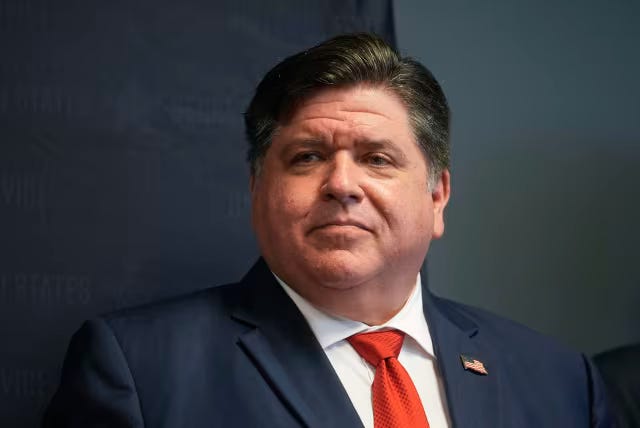
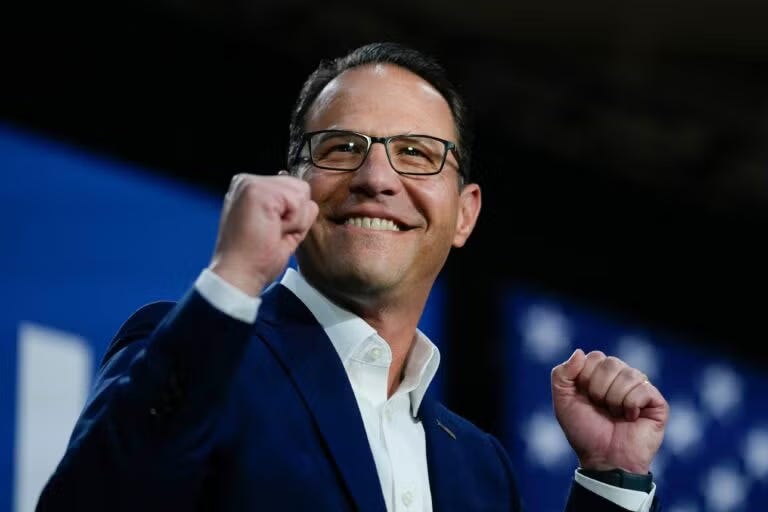
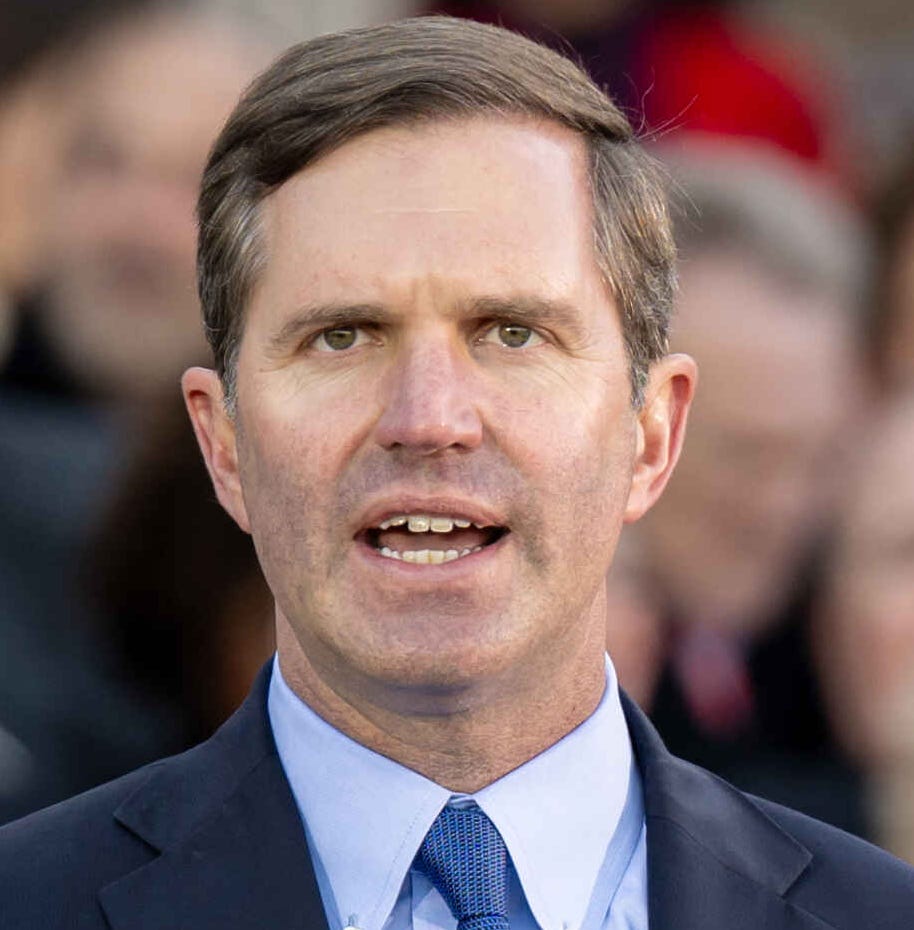
So today we’re going to focus on the top “someone else” options in current polls: Illinois Governor JB Pritzker, Arizona Senator Mark Kelly, Pennsylvania Governor Josh Shapiro, and Kentucky Governor Andy Beshear. (That still leaves a “third tier” comprising California Congressman Ro Khanna, New Jersey Senator Cory Booker, Michigan Governor Gretchen Whitmer, and former congressman and Chicago mayor Rahm Emanuel — all of whom we’ll get to soon.)
Here’s a summary of the current second tier’s pros and cons.

 Login
Login