Reading view

The Most Important Thing You Should Know About the CEOs Traveling to China with Trump
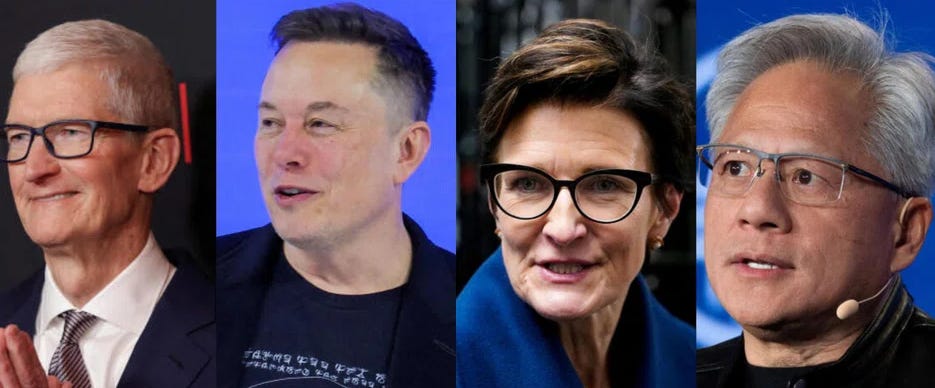
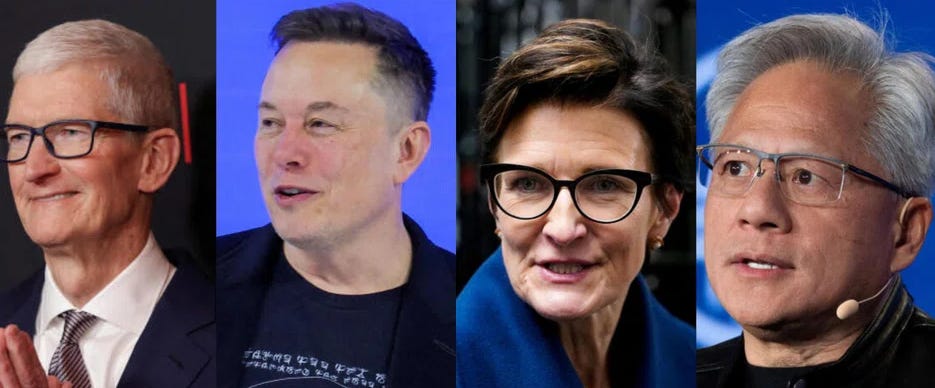
Tim Cook, Elon Musk, Jane Fraser, Jensen Huang

Friends,

Trump calls the entourage of 12 CEOs accompanying him to China an “incredible gathering” of America’s “Greatest Businessmen/women.”

Well, it may be an incredible gathering. But to characterize them as America’s greatest business leaders — who are assumed to be leading America’s competitive charge against China — is misleading.

The American CEOs traveling with Trump to China don’t think of themselves as being in competition with China. In fact, they’d like nothing better than to make more money for themselves and their shareholders by setting up more lower-cost, highly productive factories and research facilities in China and hiring more Chinese talent.

It’s an important distinction. The CEOs of Chinese companies are in business not only to make money but also to strengthen China’s geopolitical power in the world. The CEOs of American companies want to make gobs of money, of course, but they couldn’t give a rat’s ass about strengthening America’s geopolitical power in the world.

This basic difference is airbrushed away in breathless media stories about the competitive race between the American and Chinese economies — the so-called “race for supremacy” in AI, advanced semiconductors, supercomputers, solar wafers, biotechnology, and other industries of the future.

The distinction never appears in the breezy press coverage of Trump’s trip to China, along with his “U.S. corporate” delegation.

Take Elon Musk, obviously a conspicuous presence in Trump’s CEO delegation. Musk’s Tesla Gigafactory Shanghai produces over a third of Tesla’s global car sales. It’s also Tesla’s most productive factory. In February 2025, Musk opened a second factory in Shanghai, a $200-million plant focused on producing Megapack batteries. Nearly 40 percent of Tesla’s entire battery supply chain relies on Chinese companies.

All good for Musk and for Tesla shareholders, but what about American workers, who aren’t getting this work? What about America’s national security, which could be compromised if China gains further global dominance over batteries (as well as other renewables)? Do you think Musk cares?

Or consider Apple’s Tim Cook, also in Trump’s CEO delegation. China has become the gravitational core of Apple’s supply chain. Indeed, much of Apple’s success is due to Cook’s move to consolidate virtually all of his company’s manufacturing in China. About 90 percent of iPhones are assembled there, backed by massive investments in local supplier expertise and infrastructure. Cook explains that he’s taking advantage of China’s “unmatched” expertise in advanced tooling and manufacturing.

Since 2008, Apple has worked with Chinese suppliers to train 30 million workers there and has transferred practical engineering knowledge of how to make complex things from American engineers to thousands of Chinese engineers in hundreds of Chinese factories and research centers. Apple’s Cupertino, California, headquarters has sent so many American engineers to China to teach Chinese engineers that it even persuaded United Airlines to schedule three weekly flights from San Francisco to Chengdu and Hangzhou.

A third CEO in Trump’s delegation is Jane Fraser, CEO of Citigroup. Her goal has been to expand the bank’s (and its clients’) investments in China by growing Citigroup’s team in China and capturing market share for the corporation in high technology and advanced manufacturing.

Fraser’s moves may be good for Citigroup’s bottom line, but they may not be good for America. As she connects international investors with opportunities within China, she may be siphoning off potential investments in high technology and advanced manufacturing in the United States.

Another American CEO in Trump’s delegation is Jensen Huang, CEO of Nvidia. Huang’s goal is to get China to buy Nvidia’s AI and its advanced H200 processors, even at the risk that Chinese computer scientists and engineers might reverse-engineer them, as they have so many other technologies America once dominated.

Huang argues that with roughly half of all the world’s AI researchers, China is strategically vital for American tech companies. Huang may be right, but what’s strategically vital for American AI companies may not be in the strategic interest of the United States. The capacities that increase these corporations’ profits and returns to their American investors (including the pay packages of their CEOs) do not necessarily increase the productivity, knowledge, or strategic strength of America’s AI.

Doesn’t Trump know this? Does he assume that the rest of us don’t know? Is he really ignorant of the fact that Chinese corporations are tethered to China, but the CEOs of Tesla, Apple, Nvidia, and other so-called “American” corporations are not strategically bound to America? American CEOs aren’t paid to worry about the competitiveness of the United States, nor the number of good jobs in America, nor even about American national security.

Maybe Trump knows all this but doesn’t care. When it comes to making big money doing global deals, Trump’s merry band of CEOs has about as much loyalty to the United States as does Trump himself.
Share

  •  

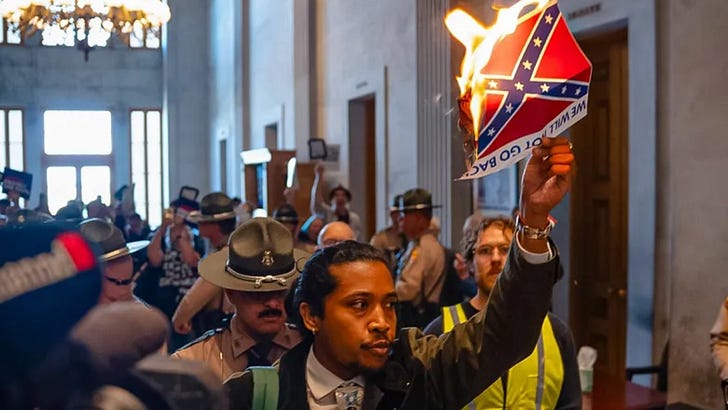
My interview with Justin Jones

Friends,

Sorry to invade your inbox for a third time today, but I thought you’d find this interesting and useful.

Southern white Republican legislatures are now breaking up Black districts — both because Donald Trump asked them to, and because the Supreme Court now allows them to.

The vast majority of Americans understand this is morally wrong. It’s not where the nation should be now, more than 161 years after General Robert E. Lee surrendered to General Ulysses S. Grant at Appomattox Court House.

Justin Jones, a rising star among southern Black political leaders, joins me to explain what’s happening, why it’s happening, and what we must do in response.

***

As you’ll hear, Jones says that in light of the Supreme Court’s shameful decision in Louisiana v. Callais, the Tennessee legislature has already turned all its congressional districts into white-majority districts. Now, Black voters in Tennessee — who comprise nearly 30 percent of the state’s population — have no voice.

Jones describes the lengths to which the Tennessee legislature has gone to create white-majority districts. “There’s a Krispy Kreme in Nashville,” he explained. “There’s another just 30 minutes away by car. In traveling from one to another, you now pass through five of Tennessee’s nine congressional districts.” That’s how absurdly gerrymandered Tennessee has become.

What to do?

First, Jones notes that the state used census maps to redistrict. Those maps identify people by race but not by political party. Jones believes this could be sufficient evidence of intent to racially gerrymander — the Supreme Court’s new test under the Voting Rights Act. Intent is incredibly difficult to prove, however.

Jones also thinks it would be appropriate for the young people of America to undertake another Freedom Summer, as they did in 1964.

“It’s the moment for courage,” Jones says. “We’re fighting the same forces of the confederacy as in the Civil War. Sometimes a democracy requires disruption …. We have to sound the alarm. The story of civil rights is being written at this moment. The question is whether you stand up now. We need a new multiracial generation of civil rights activists.”

Hope you get a chance to watch the whole interview, which runs 12 minutes, 40 seconds.

Share

  •  

The Single Biggest Question Hanging Over Kevin Warsh's Fed

Friends,

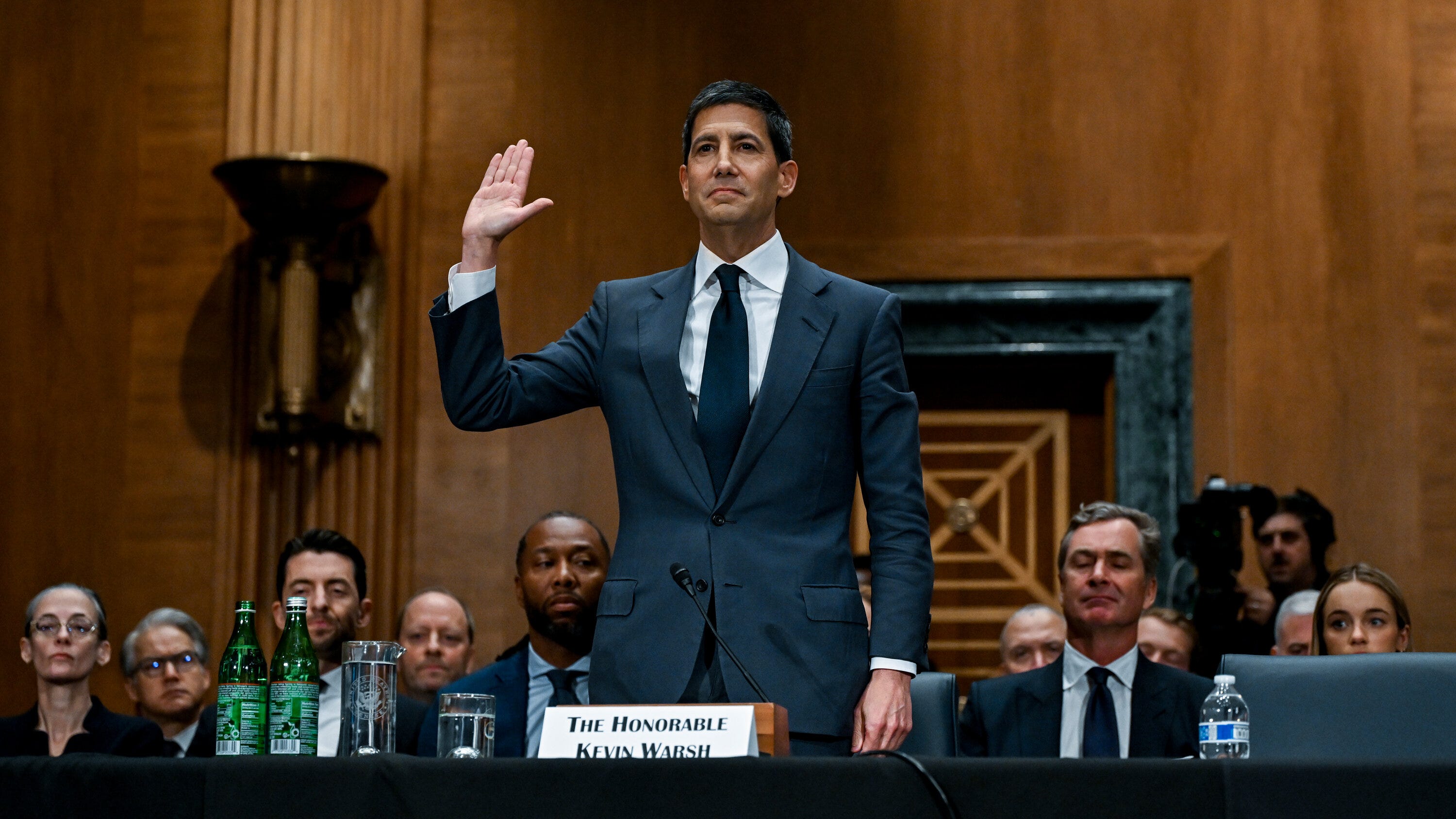
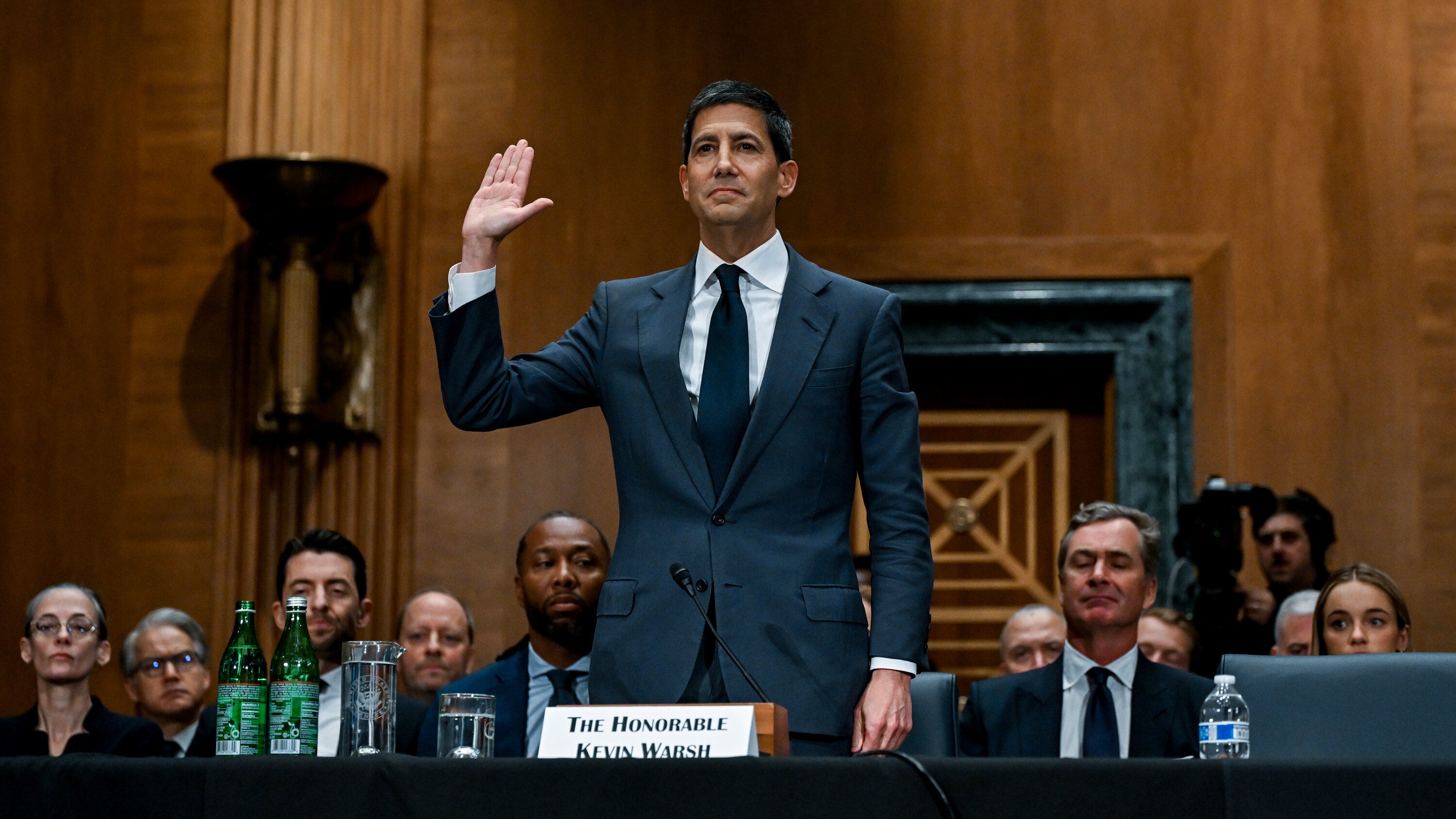
The Senate just confirmed Kevin Warsh to become the next chair of the Federal Reserve on a 54-45 vote.

This marks a new chapter in the history of an institution that depends for its credibility on political independence. That independence is important to you and everyone else who wants prices to remain stable and avoid inflation.

Trump has repeatedly attacked the Fed and its former chairman, Jerome Powell (not incidentally, a Trump appointee) for not lowering interest rates as quickly as Trump wants. Presumably, Trump wants lower interest rates because he figures that a “hot” economy is good for Republicans going into the 2026 midterms and perhaps even the 2028 general election, even if it means faster inflation.

Trump launched a trumped-up (pardon me) criminal investigation of Powell based on alleged cost overruns for refurbishing the Fed building and another against Fed member Lisa Cook based on alleged mortgage fraud. Neither of these individuals has left the Fed. (Powell’s term as chair ends May 15, but he has announced he’ll fill the remainder of his term, which runs until January 31, 2028, as a Fed governor. He says Trump’s pressure campaign against the central bank left him no choice but to stay on. The case against Cook has been taken up by the Supreme Court, which is expected to issue an opinion before its current term ends in July.)

Senator Thom Tillis, Republican of North Carolina and a member of the Senate Banking Committee, blocked Warsh’s nomination until Trump dropped his legal threats against Powell. (Tillis thereby earns one of my Joseph N. Welch Awards for courage in the face of Trump’s tyranny.)

The big question now is whether Warsh will do Trump’s bidding and advocate lower interest rates even in the face of rising inflation — a move that would worsen the inflation even if it gives the economy (along with Trump and the Republicans) a temporary boost. (All but one Democrat in the Senate voted against confirming Warsh, reflecting concerns about his willingness to maintain the Fed’s political independence. During his confirmation hearing, Senate Democrats derided Warsh as Trump’s “sock puppet.”)

Why Fed independence is so important

The reason why the Fed, like most nations’ central banks, is supposed to be independent of politics is so people who are buying and selling financial assets don’t base their transactions on Trump’s or any other political leader’s desire for a booming economy in the short run (that is, until the next election) even at the risk of inflation.

Otherwise, inflation could easily get out of control. As William McChesney Martin Jr., the longest-serving chairman of the Federal Reserve, famously put it, the role of the Fed is “to take away the punch bowl just as the party gets going.”

Martin’s “party” is an expanding economy with growing inflationary pressures, and the “punch bowl” is low interest rates and easy credit that fuel these growing pressures. As the designated chaperone, the Fed has to raise interest rates to prevent the economy from overheating, even if doing so harms a president’s political prospects.

I was in the Carter administration when Fed Chair Paul Volcker decided to “break the back” of inflation by raising interest rates so high that he put the economy into a recession and, arguably, caused voters to boot Carter out of office in 1980.

I was in the Clinton administration when Fed Chair Alan Greenspan threatened to raise interest rates (which might also have led to a recession and caused voters to boot Clinton out of office in 1996) unless Clinton reduced the federal budget deficit — which Clinton did (over my strenuous but failed objections).

Can Warsh succeed?

Warsh’s success on the job depends on the perceptions of millions of financial traders, who presumably will be looking for any hint that he’s soft on inflation.

Ironically, Trump’s loud insistence on lower interest rates, coupled with rising inflation due to Trump’s war in Iran and his tariffs, all make Warsh’s job far more difficult.

I don’t expect the Fed to lower interest rates before the end of the year, regardless. Warsh’s first meeting as chair will be June 16-17.

Share

  •  
❌