❌

Reading view

Trump’s Iran war could escalate. Is anyone paying attention?

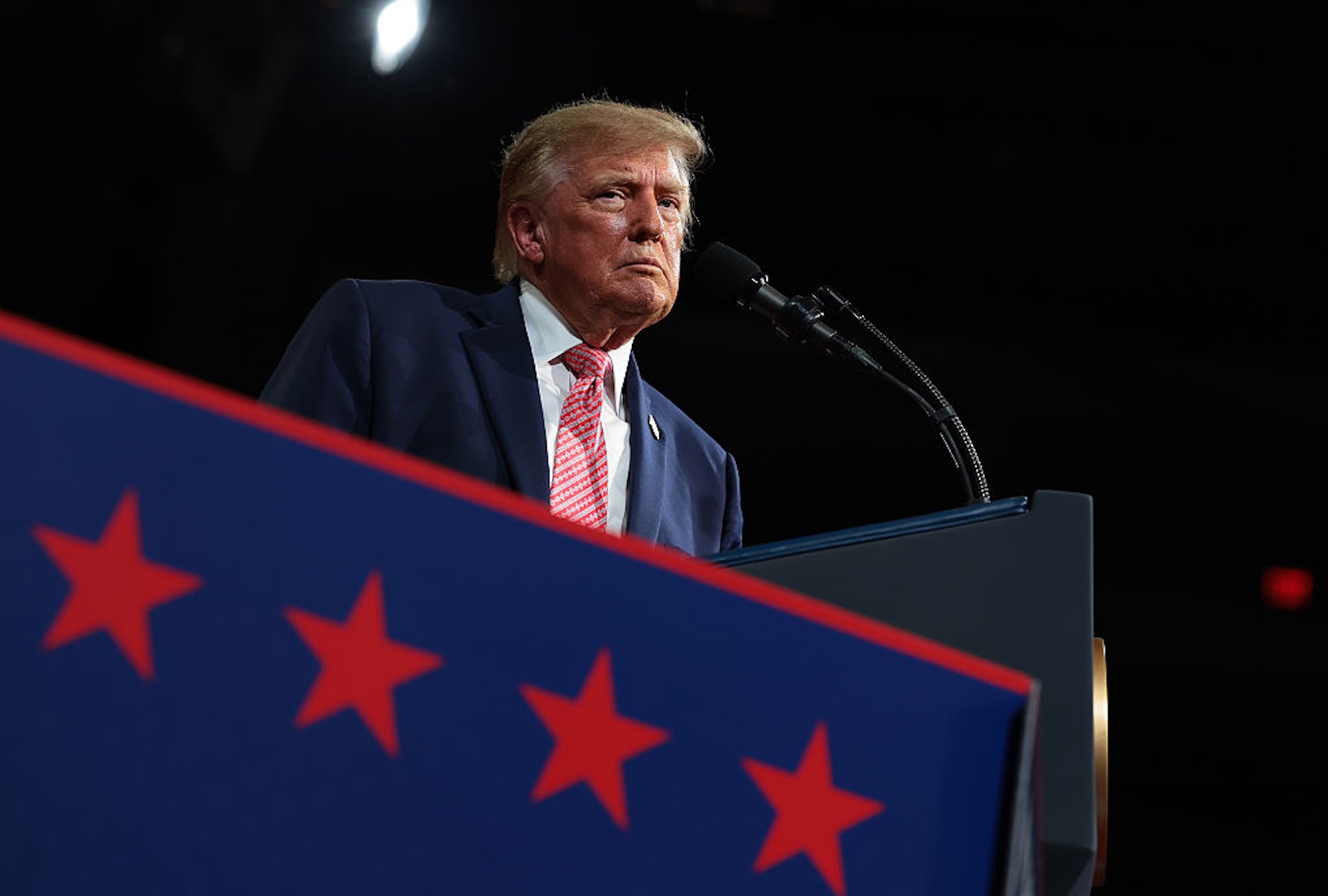
Barely noticed among all the talk in the election campaign about great asses, shithouse countries and commie jihadists running for the Senate was a report from The New York Times warning of “heightened levels of tension and risk” surrounding Israel’s parliamentary elections, slated for today, and America’s Nov. 3 midterms due to the countries’ war with Iran, which has “entered a new phase.” They also offered this bracing observation: “This is how countries can escalate into full-scale war, several diplomats and outside experts noted.”

How’s that for a wake-up call?

In fairness, Donald Trump has mentioned in passing that he plans to “finish the job” after the midterm elections, with CNN reporting that the president “appears to be leaning toward major action.” On Oct. 15, the outlet revealed that the U.S. is considering using the “mother of all bombs” on Iranian energy infrastructure and nuclear facilities. (They admit that such a strike would be “performative,” since it would not actually accomplish anything, but would supposedly allow Trump to declare victory.) 

If anyone had the idea that a midterm election campaign would be the place where serious people of goodwill debate the major issues of the day, they were mistaken. For the most part, the war with Iran has hardly come up, and to the extent that it has, it’s been in the context of high gas prices.

If anyone had the idea that a midterm election campaign would be the place where serious people of goodwill debate the major issues of the day, they were mistaken. For the most part, the war with Iran has hardly come up, and to the extent that it has, it’s been in the context of high gas prices, not the possibility of the conflict turning into a major conflagration from which the United States will not be able to walk away after putting on a fireworks show. We may be at a turning point, and nobody’s paying attention.

The U.S. has received credible intelligence, according to the Times report, that Iran has “advanced” plans to attack Americans at home and abroad. According to Reuters, the State Department has ordered non-emergency government employees and their family members to leave ‌U.S. diplomatic ⁠missions in Saudi Arabia and has reduced staff in Lebanon, the United Arab Emirates, Qatar and Jordan. NBC News revealed that “the U.S. military has been quietly scaling back its troop presence at bases across the Middle East as well.” It certainly sounds as if something is afoot, which the Times characterized in fairly alarming terms:

The fact that Prime Minister Benjamin Netanyahu of Israel and President Trump are facing critical elections that could dramatically affect the balance of power in their countries feeds into the complex set of calculations that all sides are making. Even if he is defeated on Tuesday, Mr. Netanyahu could decide to launch one last strike that he may believe his successor would hesitate to execute. Similarly, Mr. Trump, who knows how unpopular the war is even among his strongest supporters, may want to show that at least when it comes to his powers as commander in chief, his authority is undiminished.

Trump has claimed dozens of times that we have already won the war. This is not out of character; his habit is to prematurely declare victory in everything, apparently assuming that the force of his declaration makes it a reality. In the lead-up to the U.S. and Israel’s Feb. 28 attacks on Iran, Trump was apparently so pumped up by his historic political comeback and success at cruel mass deportation, murder on the high seas and the conquest of Venezuela, an oil-rich country, that he assumed he could succeed at what every former president knew was a fool’s errand: take over Iran, seize its oil and dominate the world’s oil supply. And, as Haberman and Swan reported in their book “Regime Change,” Trump had been convinced by whom he called a presidential historian (actually a caddie for Gary Player) that he was “the most powerful man who’s ever existed on the planet by far” — more powerful than Mao, Alexander the Great, Stalin, Hitler, all of them.

What Trump has succeeded in doing is making Iran a global power, capable of re-ordering the world through control of one of the most important waterways on the planet. In the process, he has exposed the U.S. as a second-rate military power, at least compared to the country’s previous reputation, by insisting on fighting an unnecessary war of choice without a strategy while being low on munitions and proving that it lacks the capability of fighting on more than one front. Having let down our Middle Eastern partners who assumed that by allowing bases in their countries they could count on America to defend them — not to mention the administration’s destructive tariffs and abandonment of Ukraine — the world knows that the U.S. is unreliable, and they are looking elsewhere for alliances and economic partnerships.

All this brings to mind historian Barbara Tuchman’s “The March of Folly.” Published in 1984, the book examines tragic wars of choice that needn’t have been fought but, because of hubris and ignorance, were waged anyway, despite being against the best interests of the countries that started them. As Tuchman put it:

To qualify as folly for this inquiry, the policy adopted must meet three criteria: it must have been perceived as counter-productive in its own time, not merely by hindsight . . . Secondly a feasible alternative course of action must have been available . . . third . . . the policy in question should be that of a group, not an individual leader.

The war with Iran ticks all those boxes. 


Want more sharp takes on politics? Sign up for our free newsletter, Standing Room Only, written by Amanda Marcotte, now also a weekly show on YouTube or wherever you get your podcasts.


Among the conflicts Tuchman chronicled in the book are the errors of the Catholic Church that led to the Reformation, as well as King George III’s epic misunderstanding of the dynamics driving the colonists (and England’s other enemies) to rebel against the British Crown. She also turned her keen historical eye to the big kahuna of her era, Vietnam, in which the U.S. squandered its power and moral authority on a war that began as an ideological experiment, escalated for political reasons, and ended in failure and embarrassment only 51 years ago. You’d think that lesson would still be fresh enough that we wouldn’t indulge in such a folly again.

But, of course, we have. While Afghanistan had at least the fig leaf of justification after 9/11, Iraq and now Iran have both demonstrated that the U.S. has learned nothing from its own recent history. Eight months in, Trump’s misadventure in the Islamic Republic has proven even more irrational than the others. As with all the follies, Trump indulged his fantasies, failed to understand the adversary and ended up working against his country’s own interests.

A delusional, psychologically unfit president started a war based on shifting rationales, finally landing on the idea that Iran was pursuing a nuclear weapon. This was the same country that had been complying with an agreement not to pursue a nuclear weapon, but which this president tore up simply because it had been negotiated by the man he succeeded in office. 

We don’t yet know whether these latest threats will lead to an escalation by either party. But either way, the deed is done. The world has been fundamentally changed by Trump’s daft decision to start this war, and there is no going back. That’s how all these follies end, and it’s very rarely a happy ending for the countries that started it.

The post Trump’s Iran war could escalate. Is anyone paying attention? appeared first on Salon.com.
  •  

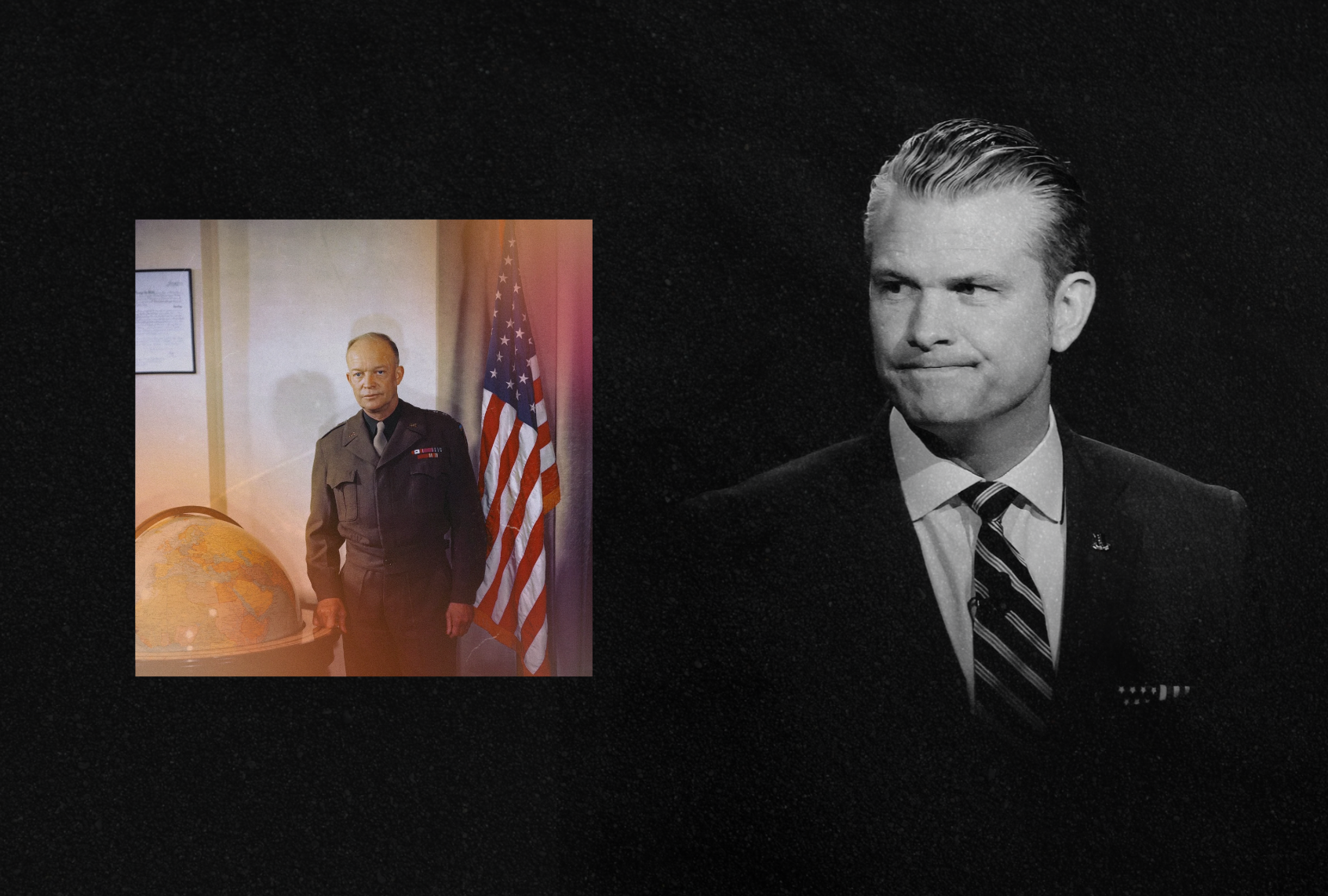
How Hegseth shattered the world Eisenhower made

Gen. Dwight D. Eisenhower was not buff, at least to our knowledge. He didn’t exercise in public or show off his abs, and there is no record of him ever leading his troops in calisthenics or challenging his peers to a pull-up contest. As far as we know, he didn’t even have any tattoos. 

Eisenhower may not have been a “beardo” or a “weirdo,” in the recent words of Pete Hegseth, but were he alive today he would in all likelihood call the defense secretary a wimp and possibly even a radical. The 34th president would almost certainly not see him as a “warrior,” a term Hegseth uses as shorthand for a muscled, tough bully who is ready to engage in hand-to-hand combat with the enemy at a moment’s notice. 

Despite this, Eisenhower remains one of America’s most celebrated generals, the man who led the Allied invasion of Europe, served as Army Chief of Staff, helped create NATO and served as its first Supreme Allied Commander. While he never served in combat, Eisenhower rose in the ranks because of his exceptional talent for strategy, logistics and diplomacy, skills which used to be held in high regard in the military. 

Not too long ago, it was once understood that, in the modern world, a “warrior ethos” is more a matter of brains than brawn, and it was Eisenhower’s gift for coalition management, logistical organization, discipline and strategic patience that made him a successful war-time leader. 

But those qualities are now out of fashion. When Donald Trump tapped Hegseth, the “Fox and Friends Weekend” co-host, to be his defense secretary, it was largely because the president thought Hegseth looked like he came out of “central casting” — a square-jawed, Sgt. Rock-style cartoon hero. They had become acquainted when Hegseth had taken up the cause of a group of men accused of war crimes, and persuaded Trump to intervene on their behalf, which he did over the loud objections of the military brass. 

Hegseth had the attitude Trump wanted to lead the military, a man who wouldn’t feel restrained by all those rules and regulations that had made America, in his view, a weak, loser country under previous presidents. Once installed at the Pentagon, the secretary began modeling his “warrior ethos” very quickly by personally leading the charge on the front lines of America’s most important battleground: the culture war. He vanquished diversity, equity and inclusion policies one by one, and got rid of any of the women and people of color who had been promoted over the butch white men. He called all the brass to sit and listen to him lecture them about what a true military leader should be. After all, Hegseth has served as a platoon leader in the National Guard and as a prison guard for a little while, so he knew what he was talking about. And he has demonstrated time and again that he is in pretty good physical shape by doing jumping jacks and jogging with enlisted men wherever he goes, which is apparently the only authentic test of military leadership. 

Meanwhile, Hegseth has presided over a policy of murder on the high seas, ordering the military to summarily kill people in small boats in the Caribbean and Western Pacific who, according to the Pentagon, are suspected of running drugs. He is also in charge of the military that is losing the war in Iran, a conflict to which he seems oddly disconnected, busy as he is with planning a (later canceled) public execution, holding prayer meetings, mandating testosterone testing and all that jogging. 

Even though Hegseth would surely have fired Eisenhower long before the future president ever became a five-star general for lacking the proper “warrior ethos,” he does seem to like the idea of basking in the reflected glow of the monumental victory Eisenhower led in World War II.

Even though Hegseth would surely have fired Eisenhower long before the future president ever became a five-star general for lacking the proper “warrior ethos,” he does seem to like the idea of basking in the reflected glow of the monumental victory Eisenhower led in World War II. The secretary is also clearly entertaining the idea of running for president, which Eisenhower successfully did twice, after helping to rebuild Europe. (Incidentally, Eisenhower fully endorsed changing the name of the War Department to the Defense Department in 1949, a decision Hegseth and Trump have attempted to reverse.) 

Hegseth obviously sees himself as a modern leader of similar stature to Ike. According to The Washington Post, when Hegseth assumed the office, he spied a relic that once belonged to Eisenhower: a handmade globe the general had reportedly used during the war, which even bore some markings he may have placed there himself. Hegseth demanded that it be moved to his office. He had furloughed people who handled such things during the partial government shutdown over immigration, and since he famously lacks patience, Hegseth sent a couple of flunkies to retrieve the historic object immediately.

Not realizing its weight, and with no experience in caring for precious artifacts — or, according to the report, listening to words of caution — the crew dropped the globe and broke it. They ended up just leaving it where it stood, with a huge hole in it. 


Want more sharp takes on politics? Sign up for our free newsletter, Standing Room Only, written by Amanda Marcotte, now also a weekly show on YouTube or wherever you get your podcasts.


There are metaphors, and there are metaphors, but this one is just too on the nose. Eisenhower and America helped rebuild the world after World War II, understanding that to survive in the nuclear age, the old, primitive ways were just too dangerous. They used diplomacy and alliances to build a bulwark against the kind of aggression that Germany and Japan had unleashed on the world, and despite some marked abuses and exceptions, that order largely held for 70 years. 

Then Trump and his acolytes like Hegseth came along. With little care for the vast responsibility they held to keep the fragile planet stable and safe, and with no knowledge or experience of how to do so, they have broken the world order that Eisenhower led and represented. And it doesn’t seem as if they think it matters.

These are reckless people who think the government is cosplaying reality television, where all that matters is looking tough and projecting strength through cartoon clichés and cheap propaganda. The symbolism of that globe and what it meant completely escapes them, just as Eisenhower’s legacy has been dismissed by them wholesale.

Other than winning D-Day and commanding NATO, Eisenhower’s most famous moment was perhaps his January 1961 farewell address as president, when he warned about the military-industrial complex, which he said could sap resources from the public, threaten democratic governance and social balance, and put profit ahead of national security. His warnings were realized long ago, but now the Trump administration is taking it to an entirely different level. Hegseth is demanding a total of almost $1.5 trillion dollars for the Pentagon in 2027, calling it a “generational investment.” And Elon Musk, with his Starlink system, now appears to be operating more or less on his own, putting global security at severe risk. 

Sometimes a cigar is just a cigar — but sometimes it isn’t. This administration has broken the world, and nobody knows whether it can be fixed. But even if it can be pieced back together, it will never be the same. 

The post How Hegseth shattered the world Eisenhower made appeared first on Salon.com.

  •  

Putin has Trump right where he wants him

America’s descent into chaos and depravity was foretold 10 years ago at a press conference. Donald Trump, who had just been nominated for president at the 2016 Republican National Convention, issued an invitation for one of America’s foes to hack the emails of Hillary Clinton, the former secretary of state and Democratic nominee for president. “Russia, if you’re listening, I hope you’re able to find the 30,000 emails that are missing,” he said. “I think you will probably be rewarded mightily by our press.”

The call came only days after emails from the Democratic National Committee were released following the hacking of the organization’s computer servers, which was widely assumed to have been perpetrated by Russian agents. As would become the habit over the following decade, many dismissed Trump’s remarks as mere trolling that weren’t intended to be taken seriously. 

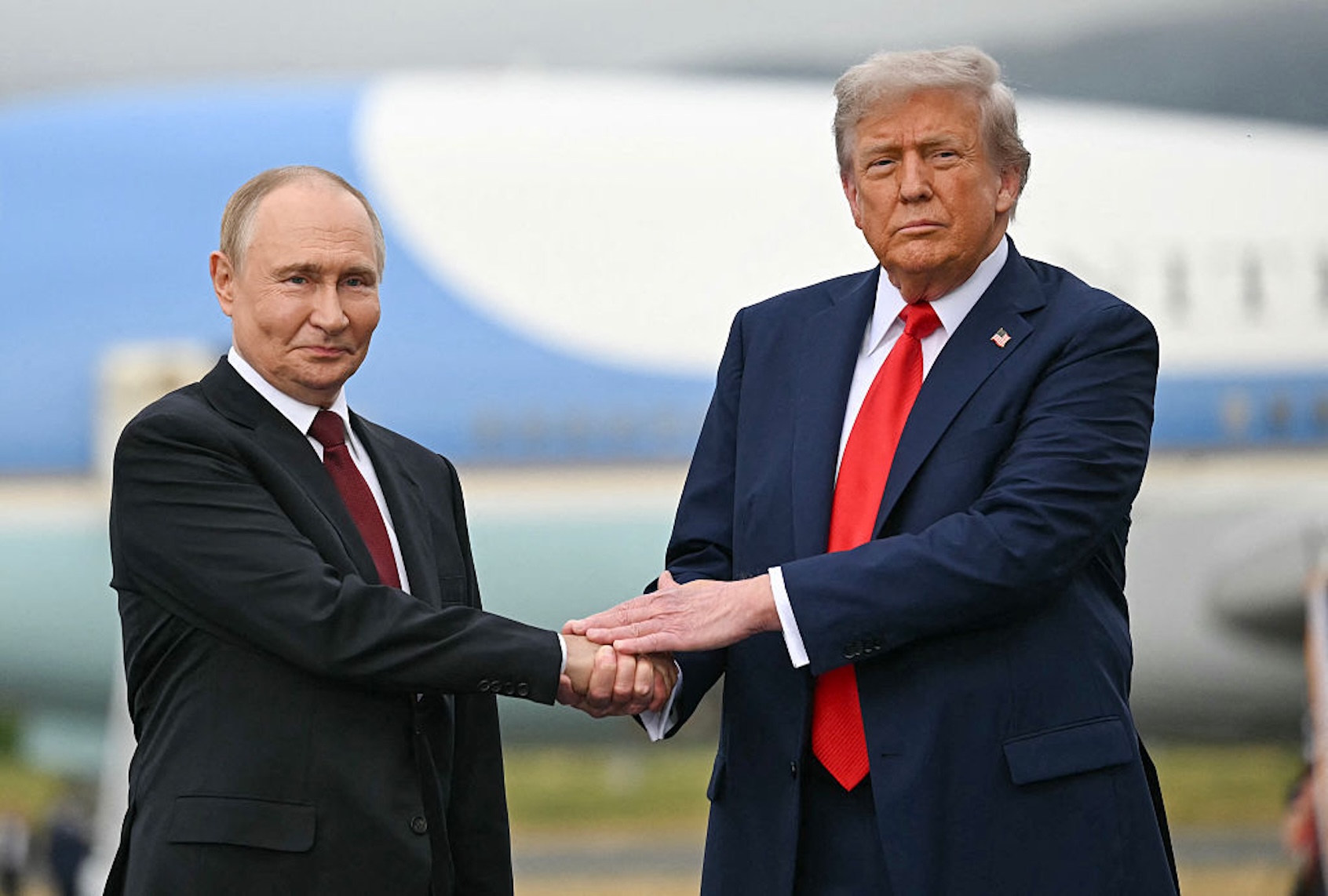
This was not the first time he had invoked Russia. Throughout the primary season, Trump had gushed in multiple interviews about Russian President Vladimir Putin and signaled his intentions to draw closer to Putin once in office. Trump even defended the dictator’s extra-judicial killings, blithely explaining, “Our country does plenty of killing.” But the press conference did mark the first time he enlisted Russia as his ally. 

The overtures continued throughout Trump’s first term, most infamously when he sided with Putin during a bilateral meeting over America’s own intelligence agencies, which had found that Russia had interfered in the 2016 election. The president suggested an “election integrity” sharing operation between the two countries, a proposal that made it clear Putin had Trump wrapped around his little finger. 

Then came Russia’s war of aggression against Ukraine. Throughout the 2024 election, Trump pledged to end the war in Ukraine within 24 hours of taking office — or of being elected. (His rhetoric often shifted.) He apparently believed that he could get on the phone with Ukrainian President Volodymyr Zelenskyy and order him to immediately surrender or face his mighty wrath. Needless to say, this did not happen, and since then Trump has grown increasingly frustrated that he’s been shown to be nothing more than a paper tiger, a frustration that has now reached fever pitch due to his abject failure in the Iran war. Desperate for a “win” — by which he means a Russian win — the president is now in the process of completely selling out Ukraine to his good friend Vlad. 

Trump has grown increasingly frustrated that he’s been shown to be nothing more than a paper tiger, a frustration that has now reached fever pitch due to his abject failure in the Iran war. Desperate for a “win” — by which he means a Russian win — the president is now in the process of completely selling out Ukraine to his good friend Vlad. 


In recent days, Trump has signed an executive order temporarily lifting the sanctions on Russian oil. While supposedly done to secure diesel fuel for the United States, which has seen prices skyrocket due to the president’s war of choice with Iran, the act is in practice a sign of goodwill toward Putin, America’s enemy, and will help him fund his war against Ukraine, our erstwhile ally. A few days later, Trump waived several additional sanctions that a bipartisan congressional majority had passed just a few weeks ago at the behest of the late Sen. Lindsey Graham, R-S.C., who foolishly believed himself to have the president under his control. 

Worse yet, in what will go down as one of the most appalling betrayals by a U.S. president in history, Trump and his good friend Elon Musk apparently sabotaged Ukrainian intelligence by slowing the Starlink and Starshield communications systems the country relies on for its defensive and offensive weapons systems. Russia took swift advantage of the favor and unleashed one of the most massive bombardments of the war, killing civilians and hitting Ukraine’s energy sector. Trump also called for Zelenskyy’s ouster, and in an interview with Bloomberg published Sunday, the Ukrainian president accused Trump of pushing the country to surrender to Russia.


Want more sharp takes on politics? Sign up for our free newsletter, Standing Room Only, written by Amanda Marcotte, now also a weekly show on YouTube or wherever you get your podcasts.


Trump has a number of apparent rationales for these moves. He wants to be seen before the midterms to be doing something about the price of gas and diesel. But that is a crisis of his own making due to his misbegotten war in Iran, for which he has no way out that will solve the problem. His ongoing war has altered the global energy markets in ways that are not easily fixed, which was the reason no president before him was stupid enough to attack Iran. So now Trump is blaming Ukraine because it is bombing Russian oil refineries and demanding they stop so that Russia can sell its diesel — and finance its war, which led to the sanctions in the first place. Not to be overlooked is that Russia is a staunch ally of Iran and is helping them fight us, which Trump has waved off as having “nothing.” Some might argue that could constitute providing “aid and comfort” to America’s enemy.

Meanwhile, fingers are being pointed in multiple directions. Musk said the government is to blame for the Starlink/Starshield gambit. According to sources in the Pentagon, the order came from the White House. Trump claimed he doesn’t know anything about it. Secretary of State Marco Rubio shrugged that “it just sort of happened.” Now, lest the Europeans get it in their heads that they should try to step up their own defenses by restricting Starlink in favor of a European-based system, the U.S. government is reportedly threatening them with “devastating” or “destructive” economic retaliation.

As a cherry on top of the administration’s full-on embrace of Russia, the Wall Street Journal reported that Putin has floated a summit with Trump and Chinese President Xi Jinping to decide Ukraine’s fate. (On Monday, Trump told reporters he was open to a meeting but denied it would focus on Ukraine, saying he wanted to discuss denuclearization.) If Trump knew any history, he would know that such a meeting would prove to be his Yalta, the trilateral conference between President Franklin Roosevelt, British Prime Minister Winston Churchill and Soviet Premier Joseph Stalin that carved up Europe in the wake of World War II. The summit became widely seen by the right as “the sell-out at Yalta” because the Soviets ended up with Eastern Europe, but things have changed within the GOP. 

The summit is clearly intended to elevate Russia back to superpower status, which it is not in any economic or military sense, and to demonstrate a new order in which Trump, Putin and Xi run the world. In reality, Putin and Xi now have the United States dancing to their tune, handing them power and influence to dominate their respective spheres. 

The president’s flagrant betrayal of Ukraine is an outrage that has seemingly awakened some of the slumbering Republicans who know they are facing a drubbing at the polls in the quickly approaching midterm elections. Whether it will arouse the consciences of enough to truly step up and stop this breach of trust is unknown. But the mere fact that Trump has gone this far to salve his ego, defy his critics by embracing Putin even more fervently and drum up a lame excuse for what may be the worst national security decision in American history leaves this country weaker, poorer and more distrusted around the world. It hardly seems possible, but we have reached yet another new low.

The post Putin has Trump right where he wants him appeared first on Salon.com.

  •  

America’s last annexation holds a lesson for Trump on Greenland

Forty years ago, the United States added territory for the last time.

On Nov. 4, 1986, the U.S. entered into political union with the Northern Mariana Islands, a tiny archipelago in the western Pacific that most Americans could not locate on a map. After more than two centuries of astonishing American growth, this mostly forgotten act completed the nation’s current borders.

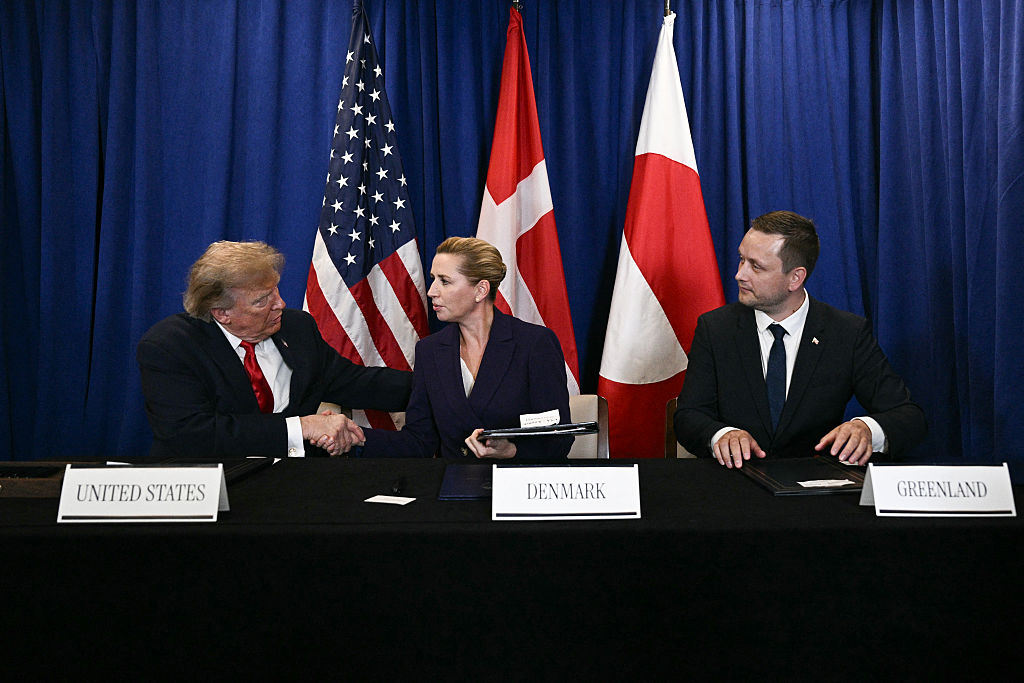
The anniversary is notable in light of the recent security agreement between the United States, Denmark and Greenland. After repeatedly calling for American ownership of Greenland, President Donald Trump now appears prepared to accept expanded American rights there without acquiring sovereignty. The agreement illustrates a historical pattern: The United States no longer needs to annex land to achieve its strategic objectives abroad.

Previous generations of Americans assumed that their nation’s growing power would naturally lead to more territory. And for a time it did. But as the U.S. became the world’s dominant country in the 20th century, its expansion on the map slowed, then stopped.

What changed?

In its early years, the country bounded across a continent with the Louisiana Purchase, the annexation of Texas and the conquest of California. Generations of Americans debated not whether the nation should grow, but where. More land led directly to more wealth and power as the country scooped up farmland, mineral resources and harbors. The expansion came at an enormous cost to Native Americans, who were displaced and deprived of their sovereignty, and to Mexicans, whose country lost half its territory.

America’s expansion slowed in the late 19th century as it became more selective, taking some territories while passing up others. By this time, the nation was big enough that it wanted the most valuable land, not just any land. International conditions were also changing. Most of the world was now divided by fixed borders into independent states and their colonies, and international respect for those borders was growing. The U.S. increasingly exerted control over nearby countries through military interventions and pressure on their governments, but not annexation.  

After World War II, the U.S. increasingly relied on military alliances, overseas bases, trade and international institutions to project power. Territorial acquisition was no longer necessary to achieve the objectives that earlier generations had pursued through expansion.

So how did the Northern Marianas become the exception?


Want more sharp takes on politics? Sign up for our free newsletter, Standing Room Only, written by Amanda Marcotte, now also a weekly show on YouTube or wherever you get your podcasts.


After America defeated the Marianas’ colonial ruler in the Spanish-American War, it wanted a base to project power over the western Pacific. So it annexed the southernmost Mariana island, Guam, in 1898. But America declined to take the northern islands, seeing little additional strategic value in them. By this time, America’s territorial growth was winding down.

The Northern Marianas passed from Spain to Germany to Japan, and then back to the U.S. when it captured them, along with other Pacific islands, in World War II. After the war America governed all of these islands temporarily under a United Nations trust while their residents decided their political future. After years of negotiations, most of the territory eventually chose independence as three new countries with strong defense ties to the U.S. The fourth region was the Northern Marianas.

Already closely tied to Guam by culture, kinship and trade, the majority of residents wanted to follow their neighbor’s path as a U.S. territory. Washington didn’t strongly push for this outcome, but it accepted the islanders’ decision and Ronald Reagan completed the process in 1986. After a history of aggressive expansion and conquest, this was a rare example of a territory joining the U.S. through its own free choice, rather than being pursued.

The islands became a self-governing U.S. commonwealth, similar to Puerto Rico, and eligible residents gained U.S. citizenship. They are part of the country, but not a state. Today the islands are home to fewer than 50,000 people and are best known for beaches, diving and some World War II battlefields.

Trump’s renewed interest in territorial expansion has collided with a world in which established borders are much harder to change.


America hasn’t added territory since, and for decades there was little reason to think it would. But Trump upended that understanding during his first term when he proposed that the U.S. buy Greenland. After his return to the White House in January 2025, he has talked about even more annexation targets, including the Panama Canal and Canada.

But Trump’s renewed interest in territorial expansion has collided with a world in which established borders are much harder to change. The international opposition to his Greenland proposal is just one of the difficulties of annexation today. The Greenland security agreement demonstrates another way forward. Rather than annexing the island, the United States appears poised to secure many of its strategic objectives without changing any borders.

Earlier presidents acquired territory because sovereignty itself delivered things they wanted: minerals, ports, military positions and control over trade routes. The modern United States can gain those advantages through military bases, defense agreements, trade relationships and alliances, without assuming responsibility for governing another population.

The Northern Marianas may seem like an unlikely place for the story of America’s growth to end, but it is precisely their isolation and lack of global power that allowed them to quietly buck the trend. Unlike Greenland, no countries objected to their joining the U.S. Unlike the Panama Canal, they aren’t crucial to the global economy. And their small population and longstanding ties to Guam made it easier to integrate them into the nation.

Forty years later, Trump is still talking about taking territory. But whether he acknowledges it or not, the president is operating in a world where the conditions that once made annexation attractive and feasible have largely disappeared. It still looks like the distant Northern Marianas will be the final act of America’s long story of territorial growth.

The post America’s last annexation holds a lesson for Trump on Greenland appeared first on Salon.com.

  •  

Donald Trump abdicates as leader of the free world

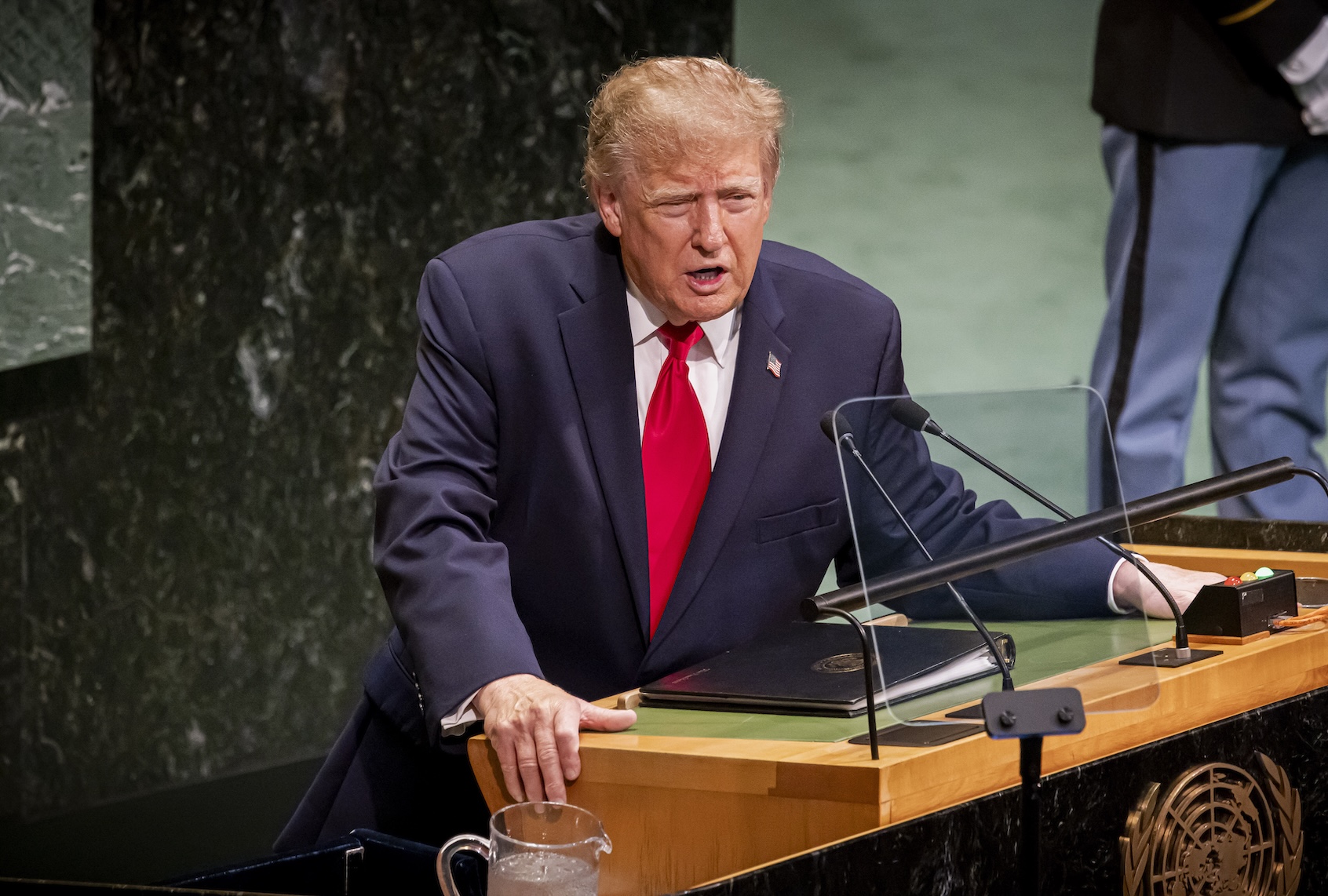
On Tuesday, Donald Trump stood before the United Nations General Assembly to give a speech in which he made it clear that the United States has now fully abandoned its last remaining fig leaf of decency and morality on the world stage, and has embarked on an imperialist model not seen since the 19th century. Since this was a Trump speech, filled with his usual bombast and braggadocio, it didn’t have quite the shock value it might have carried in the past. But there was a new atmosphere in the room. The world sees America as a threat now, and countries are making new arrangements.

The speech was the worst he’s given, and that’s saying something. Delivered with a bored, desultory tone, the obviously tired president spent 40 minutes rambling on and on with his usual litany of grievances and lies. He made it clear that he sees no limits on his power. Looking directly at the Iranian president, he mused aloud, “I have a big decision to make. Will a deal be made with Iran that lets them rebuild? Or do I annihilate the Islamic Republic? Do I drive them into hell with no chance of survival, and no hope of future greatness for generations?” It was outrageously provocative and insulting, and on Wednesday, Iranian President Masoud Pezeshkian responded in his own U.N. speech by describing the Islamic Republic as “victims of terrorism” at the hands of the U.S., while claiming “we are ready for dialogue and diplomacy and negotiations without accepting the language of force.”

In many ways, this was familiar ground for the president. But there was one portion of his speech that brought home just how far gone American foreign policy is today. Speaking of his policy of murder on the high seas in the Caribbean, Trump claimed that drug traffickers, whom he calls “terrorists,” must be “killed, exiled or detained as enemy combatants without the possibility of release, which is what we’re doing.” The Navy is routinely blowing up small boats and killing human beings based upon unproven claims that they are transporting drugs. No U.S. or international law sanctions such a thing. And according to a fact-check by the New York Times, Trump’s assertion that this operation has reduced the flow of drugs by 90% is a blatant lie. It has made no difference at all. The policy is an abomination, and it proves to the world that the United States has abandoned all fealty to the rule of law, not to mention common decency. 

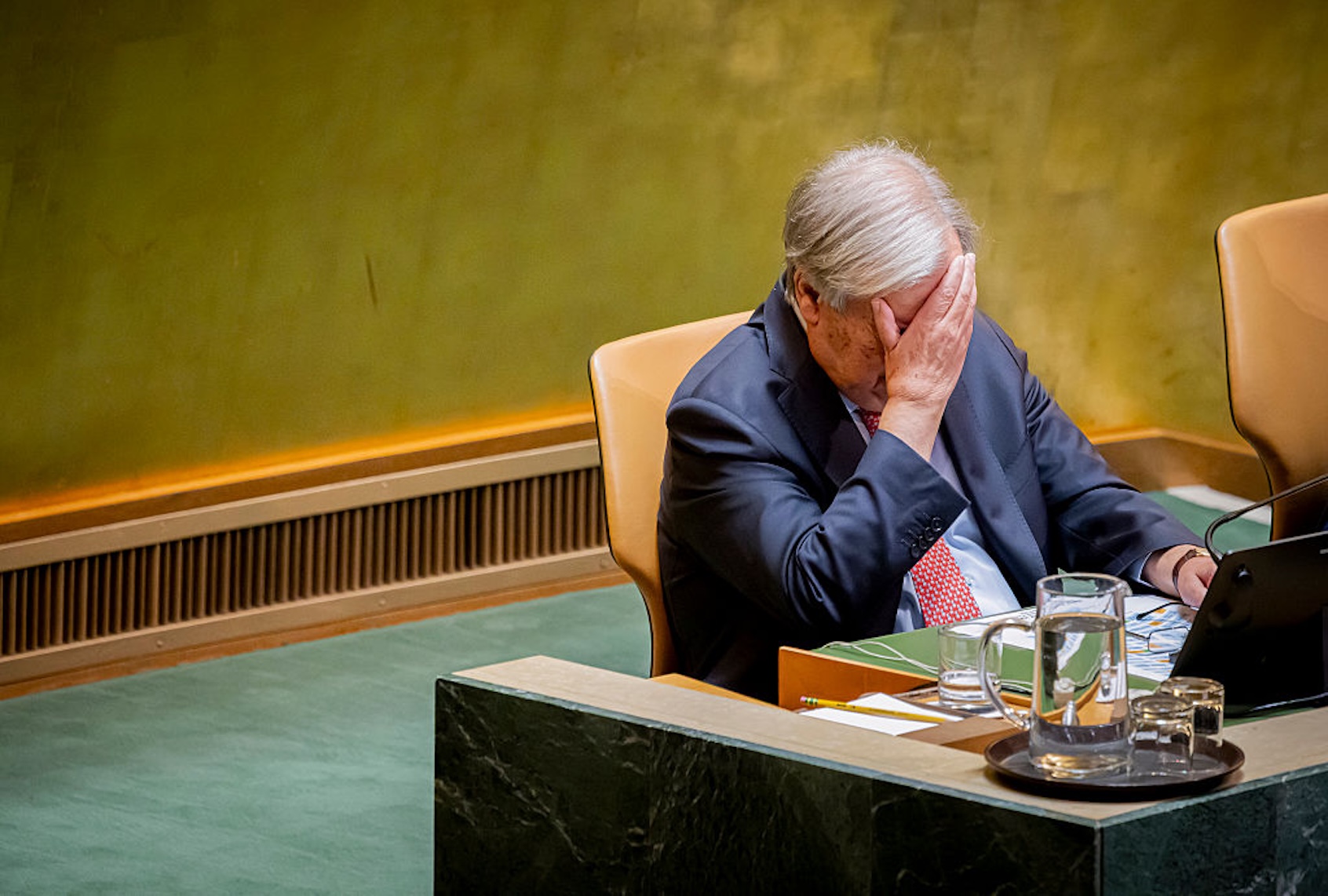
United Nations Secretary General Antonio Guterres covers his face with his right hand as President Donald Trump speaks before the U.N. General Assembly

(Patrick van Katwijk/Getty Images) United Nations Secretary General Antonio Guterres during the speech of President Donald Trump during the 81st U.N. General Assembly on Sept. 22, 2026.

But that wasn’t all. The president bragged about his actions in Venezuela, declaring that since his incursion in January, which deposed President Nicolás Maduro, Trump has now acquired “more than 60% of the oil in the world . . . it was a war, but it’s perhaps the biggest deal ever made. To the victor belong the spoils. You’ve all heard that.” (The number is actually about 23%, according to the Times.) We have certainly heard that before — from him. The saying is one of his favorite maxims, but it hasn’t been uttered by any other world leader for centuries. He went on to proclaim, “Our actions in Venezuela are proof that the United States will no longer permit threats to America to gain a foothold anywhere in the Western Hemisphere. And if necessary, we will use our unmatched military might to secure the vital national interests of the United States.” What threat Venezuela posed to our “vital national interests” is unclear, unless it means simply having something we want to take.

To say this at the U.N., which was formed to prevent this very behavior, confirms every nation’s worst fears about what the United States has become under Trump. It is crude, antediluvian imperialism, and the assembled dignitaries did not applaud or even respond, although the Iranian and Cuban delegations did walk out when they were threatened. 

The U.S is obviously now seen by many as a rogue state, disrespected and disdained by allies and adversaries alike. All you had to do was look at the faces of those in attendance to see it. 

But many are realizing, even as Trump besmirched the U.S. and U.N. alike, there is a new “leader of the free world” on the scene. 

Mark Carney did not speak at the General Assembly, but he did hold bilateral meetings and a press conference. In the process, the Canadian prime minister gave some measure of hope to those — including many Americans themselves — who see the U.S. as a threat to world peace and yearn for something better.

Mark Carney did not speak at the General Assembly, but he did hold bilateral meetings and a press conference. In the process, the Canadian prime minister gave some measure of hope to those — including many Americans themselves — who see the U.S. as a threat to world peace and yearn for something better. “This is, in many respects, a time that comes once or twice every century,” Carney told the media gathered in New York. “What comes ahead, it’s not wishful multilateralism, which defends only the status quo, nor a cold realpolitik that dismantles the status quo altogether. The alternative that Canada and many others are pursuing is values-based realism, an approach that’s both principled and pragmatic.”

The last few weeks have been productive for Carney, as he led a summit of big money investors and CEOs, partnering with former prime minister Steve Harper to make a bipartisan pitch for opportunities in manufacturing, natural gas, mining and ports on two oceans. Canada has a wealth of resources, including an educated workforce. You know, kind of like America — before it turned itself into a global pariah. 

Carney followed his U.N. appearance with a triumphant trip to Europe, where he was greeted like a rock star, obviously appreciated for his bold break with the U.S. that began with a visionary speech in January at the World Economic Forum in Davos that called for a new world order. On Sept. 16, at the meeting of the European Commission, President Ursula von der Leyen called for Canada to become the European Union’s first “associate member.” In making the case, she said, “We must urgently reimagine our partnerships. And build global coalitions for our resilience and democracies.” 


Want more sharp takes on politics? Sign up for our free newsletter, Standing Room Only, written by Amanda Marcotte, now also a weekly show on YouTube or wherever you get your podcasts.


In his speech, which was greeted ecstatically by E.U. members, Carney said “Put simply: we’re in a position where we need to pursue calibrated alliances, integrating deeply with those countries who share our values, remaining open-eyed with those who do not.” 

That vision was put into action this week in New York, when Carney and leaders from the European Union and six other nations announced “Partners for Multilateralism,” which he described as “a new forum that looks at universal institutions, practical coalitions and capacities that exist outside of governments to build trust and bring people together.” The prime minister explained that they do not see this as an attempt to form consensus among nations, an impossible task, but to instead create a new paradigm for countries “formed around problems rather than geography or size, not as an alternative to multilateralism, but as an instrument of it.”

I have written before that the post-World War II order has run its course. The end of the Cold War, and the burden of being the world’s policeman and guarantor of security, has warped America’s values. It was clearly time for something new, hopefully better, to emerge in the 21st century. But Trump’s bellicose “transactional” approach, aside from the clear corruption and immorality, exacerbates the problem at a time of serious global challenges that include nuclear threats, climate change and the emergence of artificial intelligence. These issues demand cooperation. But Trump prefers to blow everything up — and reap the financial rewards wherever he can find them.

Finally, someone is proposing something new to take its place. It’s still in the very nascent stages, and who knows where it will go? But it’s a serious proposal that seeks to find some stability and predictability in a modern, multi-polar world that requires both cooperation and flexibility. 

We can thank Carney for taking the president’s threats to Canadian sovereignty seriously and starting this overdue conversation. He is the man to whom those who believe in freedom and democracy now look for leadership, and we should all be grateful that he has willingly taken on the role. 

The post Donald Trump abdicates as leader of the free world appeared first on Salon.com.

  •  
❌