❌

Reading view

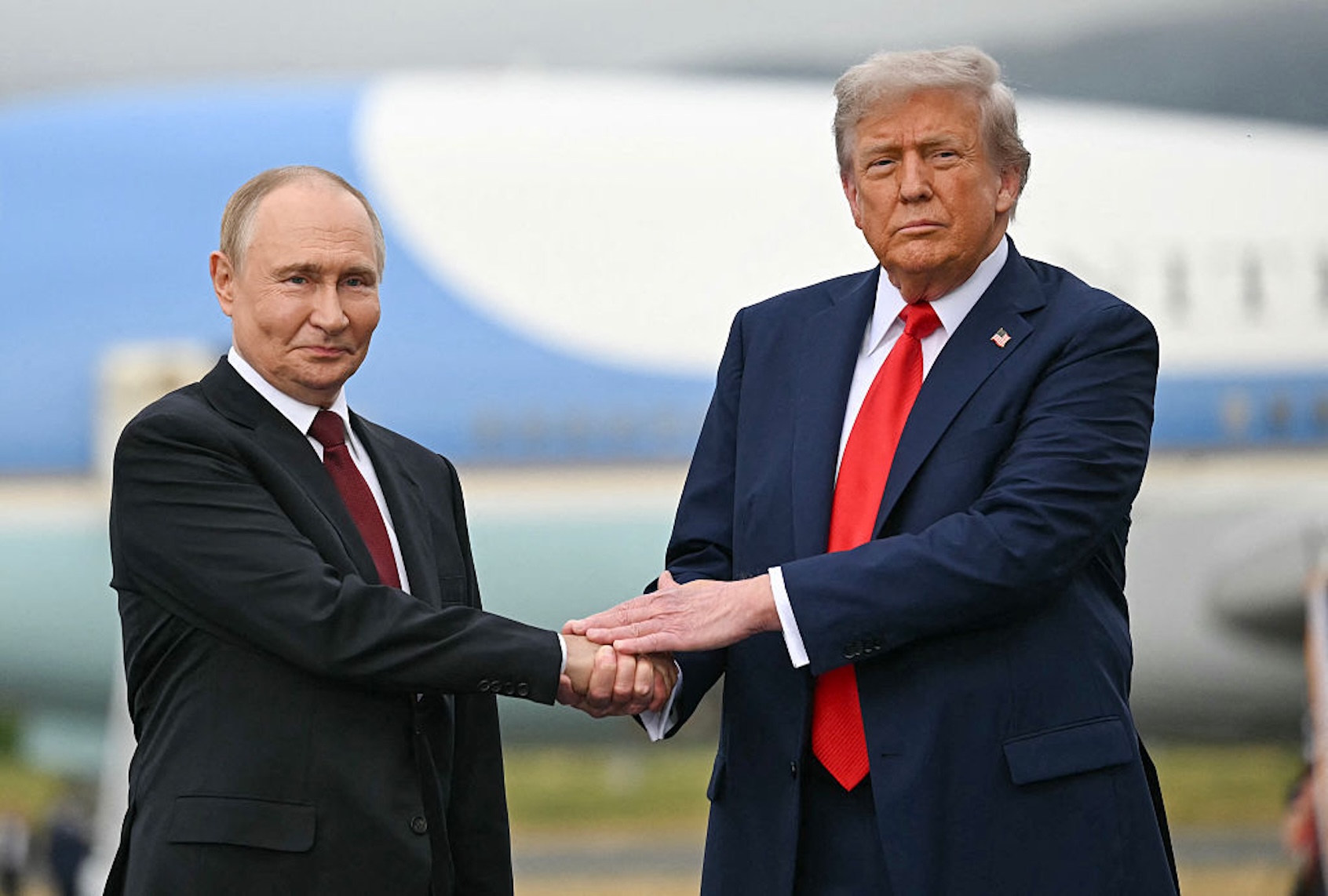
Putin has Trump right where he wants him

America’s descent into chaos and depravity was foretold 10 years ago at a press conference. Donald Trump, who had just been nominated for president at the 2016 Republican National Convention, issued an invitation for one of America’s foes to hack the emails of Hillary Clinton, the former secretary of state and Democratic nominee for president. “Russia, if you’re listening, I hope you’re able to find the 30,000 emails that are missing,” he said. “I think you will probably be rewarded mightily by our press.”

The call came only days after emails from the Democratic National Committee were released following the hacking of the organization’s computer servers, which was widely assumed to have been perpetrated by Russian agents. As would become the habit over the following decade, many dismissed Trump’s remarks as mere trolling that weren’t intended to be taken seriously. 

This was not the first time he had invoked Russia. Throughout the primary season, Trump had gushed in multiple interviews about Russian President Vladimir Putin and signaled his intentions to draw closer to Putin once in office. Trump even defended the dictator’s extra-judicial killings, blithely explaining, “Our country does plenty of killing.” But the press conference did mark the first time he enlisted Russia as his ally. 

The overtures continued throughout Trump’s first term, most infamously when he sided with Putin during a bilateral meeting over America’s own intelligence agencies, which had found that Russia had interfered in the 2016 election. The president suggested an “election integrity” sharing operation between the two countries, a proposal that made it clear Putin had Trump wrapped around his little finger. 

Then came Russia’s war of aggression against Ukraine. Throughout the 2024 election, Trump pledged to end the war in Ukraine within 24 hours of taking office — or of being elected. (His rhetoric often shifted.) He apparently believed that he could get on the phone with Ukrainian President Volodymyr Zelenskyy and order him to immediately surrender or face his mighty wrath. Needless to say, this did not happen, and since then Trump has grown increasingly frustrated that he’s been shown to be nothing more than a paper tiger, a frustration that has now reached fever pitch due to his abject failure in the Iran war. Desperate for a “win” — by which he means a Russian win — the president is now in the process of completely selling out Ukraine to his good friend Vlad. 

Trump has grown increasingly frustrated that he’s been shown to be nothing more than a paper tiger, a frustration that has now reached fever pitch due to his abject failure in the Iran war. Desperate for a “win” — by which he means a Russian win — the president is now in the process of completely selling out Ukraine to his good friend Vlad. 


In recent days, Trump has signed an executive order temporarily lifting the sanctions on Russian oil. While supposedly done to secure diesel fuel for the United States, which has seen prices skyrocket due to the president’s war of choice with Iran, the act is in practice a sign of goodwill toward Putin, America’s enemy, and will help him fund his war against Ukraine, our erstwhile ally. A few days later, Trump waived several additional sanctions that a bipartisan congressional majority had passed just a few weeks ago at the behest of the late Sen. Lindsey Graham, R-S.C., who foolishly believed himself to have the president under his control. 

Worse yet, in what will go down as one of the most appalling betrayals by a U.S. president in history, Trump and his good friend Elon Musk apparently sabotaged Ukrainian intelligence by slowing the Starlink and Starshield communications systems the country relies on for its defensive and offensive weapons systems. Russia took swift advantage of the favor and unleashed one of the most massive bombardments of the war, killing civilians and hitting Ukraine’s energy sector. Trump also called for Zelenskyy’s ouster, and in an interview with Bloomberg published Sunday, the Ukrainian president accused Trump of pushing the country to surrender to Russia.


Want more sharp takes on politics? Sign up for our free newsletter, Standing Room Only, written by Amanda Marcotte, now also a weekly show on YouTube or wherever you get your podcasts.


Trump has a number of apparent rationales for these moves. He wants to be seen before the midterms to be doing something about the price of gas and diesel. But that is a crisis of his own making due to his misbegotten war in Iran, for which he has no way out that will solve the problem. His ongoing war has altered the global energy markets in ways that are not easily fixed, which was the reason no president before him was stupid enough to attack Iran. So now Trump is blaming Ukraine because it is bombing Russian oil refineries and demanding they stop so that Russia can sell its diesel — and finance its war, which led to the sanctions in the first place. Not to be overlooked is that Russia is a staunch ally of Iran and is helping them fight us, which Trump has waved off as having “nothing.” Some might argue that could constitute providing “aid and comfort” to America’s enemy.

Meanwhile, fingers are being pointed in multiple directions. Musk said the government is to blame for the Starlink/Starshield gambit. According to sources in the Pentagon, the order came from the White House. Trump claimed he doesn’t know anything about it. Secretary of State Marco Rubio shrugged that “it just sort of happened.” Now, lest the Europeans get it in their heads that they should try to step up their own defenses by restricting Starlink in favor of a European-based system, the U.S. government is reportedly threatening them with “devastating” or “destructive” economic retaliation.

As a cherry on top of the administration’s full-on embrace of Russia, the Wall Street Journal reported that Putin has floated a summit with Trump and Chinese President Xi Jinping to decide Ukraine’s fate. (On Monday, Trump told reporters he was open to a meeting but denied it would focus on Ukraine, saying he wanted to discuss denuclearization.) If Trump knew any history, he would know that such a meeting would prove to be his Yalta, the trilateral conference between President Franklin Roosevelt, British Prime Minister Winston Churchill and Soviet Premier Joseph Stalin that carved up Europe in the wake of World War II. The summit became widely seen by the right as “the sell-out at Yalta” because the Soviets ended up with Eastern Europe, but things have changed within the GOP. 

The summit is clearly intended to elevate Russia back to superpower status, which it is not in any economic or military sense, and to demonstrate a new order in which Trump, Putin and Xi run the world. In reality, Putin and Xi now have the United States dancing to their tune, handing them power and influence to dominate their respective spheres. 

The president’s flagrant betrayal of Ukraine is an outrage that has seemingly awakened some of the slumbering Republicans who know they are facing a drubbing at the polls in the quickly approaching midterm elections. Whether it will arouse the consciences of enough to truly step up and stop this breach of trust is unknown. But the mere fact that Trump has gone this far to salve his ego, defy his critics by embracing Putin even more fervently and drum up a lame excuse for what may be the worst national security decision in American history leaves this country weaker, poorer and more distrusted around the world. It hardly seems possible, but we have reached yet another new low.

The post Putin has Trump right where he wants him appeared first on Salon.com.
  •  

Zelenskyy warns: “We will not prevail” if U.S. backs Russia

Ukrainian President Volodymyr Zelenskyy confirmed Sunday that the United States temporarily interrupted intelligence-sharing with Ukraine, as a Republican congressman demanded an investigation into separate disruptions affecting Ukrainian battlefield communications.

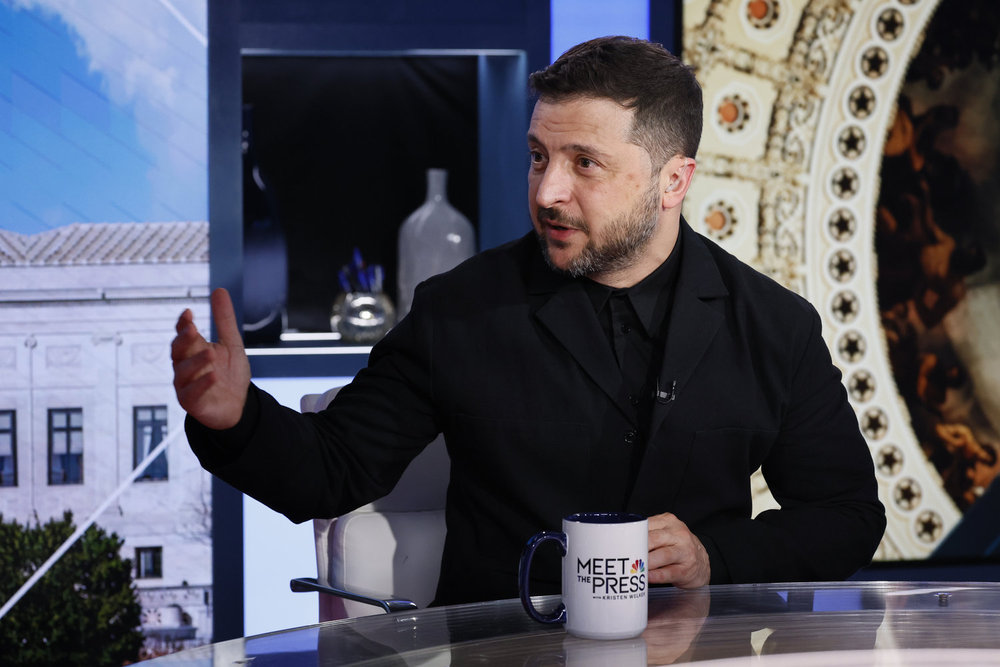
Speaking on NBC’s “Meet the Press,” Zelenskyy said American intelligence used to detect incoming Russian missile strikes had been restored after a brief interruption.

“We are very thankful for this,” Zelenskyy said. “Now it works.”

President Donald Trump previously maintained that intelligence-sharing had never stopped, despite Ukrainian officials reporting that some Russian attacks occurred without warning.

Zelenskyy also criticized the administration’s decision to allow Russian diesel imports and waive new sanctions targeting Moscow, warning that Washington’s actions could undermine Ukraine’s defense.

“If the United States will officially take the side of Russia … we will not prevail and we will not be able to stand,” he said.

Treasury Secretary Scott Bessent, appearing on the same program, declined three times to directly answer whether the United States considers Ukraine an ally.

“I’m not the secretary of state. I’m not the president,” Bessent said after repeated questioning by moderator Kristen Welker.

Bessent pointed to continued American intelligence and military assistance, arguing that Washington was seeking a negotiated end to the war.


Start your day with essential news from Salon.
Sign up for our free morning newsletter, Crash Course.


Meanwhile, Rep. Mike Turner, R-Ohio, called for a congressional investigation into disruptions involving SpaceX’s Starshield satellite communications system, which Ukrainian forces rely on for battlefield operations.

On CBS’ “Face the Nation,” Turner rejected Secretary of State Marco Rubio‘s explanation that the slowdown occurred without a White House order.

“Absolutely not,” Turner said when asked whether Rubio’s explanation was sufficient. “There needs to be a congressional investigation.”

Turner warned that interrupted communications could endanger Ukrainian lives and urged Trump to reconsider waiving sanctions on Russia.

The tensions also provided material for Saturday night’s “SNL UK,” which spoofed Zelenskyy’s meeting with British Prime Minister Andy Burnham.

James Austin Johnson, reprising his Trump impersonation from the American “Saturday Night Live,” crashed the meeting as the fictional Zelenskyy pleaded for restored Starlink access. Johnson’s Trump offered to help Ukraine with anything, “provided it’s not help with war.”

The post Zelenskyy warns: “We will not prevail” if U.S. backs Russia appeared first on Salon.com.

  •  

Zelenskyy: Trump is letting Putin off

Ukrainian President Volodymyr Zelenskyy criticized President Donald Trump’s decision to waive new sanctions against Russia on Saturday, warning that easing economic pressure would only embolden Russian President Vladimir Putin.

Trump signed an executive order Friday suspending sanctions and tariffs under the Lindsey O. Graham Sanctioning Russia and Iran Act, which he signed into law last month. The penalties were scheduled to take effect Sunday.

“A decision was unfortunately made in America to completely disregard the Lindsey Graham Act, which was supposed to impose truly effective pressure on Russia to bring this war to an end,” Zelenskyy wrote Saturday.

Yesterday, the Russians carried out one of their largest attacks on Ukraine’s energy sector – more than 15 critical power generation and transmission facilities were targeted across different regions of Ukraine. Restoration work is ongoing, with all necessary services and all available resources of Ukrainian energy companies involved. I thank everyone working practically nonstop to restore power.

The most difficult situation was in Lutsk, Rivne, Zhytomyr, Vinnytsia, Shepetivka, Slavuta, and Netishyn. Energy facilities in the Kharkiv, Kyiv, Dnipro, and other regions were also hit. The Russians have scaled up their anti-energy operation and are trying to stretch our reserves and repair capabilities as thin as possible. Between 7 p.m. yesterday and 7 a.m. today alone, more than 320 jet-powered and gasoline-powered “shaheds,” along with loitering munitions, cruise missiles, and ballistic missiles, were used against our energy sector, our cities, and our communities. And although our warriors are shooting down a significant number of them, the sheer scale and unrelenting pace of Russia’s strikes, specifically against our energy sector, are unfortunately having severe consequences.

It is important that our European partners have already prepared new support packages for Ukraine. I am grateful to them for this. And it is important that everyone in America also sees what is really happening. At a time when the Russians have carried out such a massive attack on our energy sector, a decision was unfortunately made in America to completely disregard the Lindsey Graham Act, which was supposed to impose truly effective pressure on Russia to bring this war to an end. This Act could have helped enormously – and still can! But it needs to actually work, and every voice in support of it matters.

Russia is trying to cause a blackout in Ukraine – right before winter. Russia is trying to leave millions of our people without electricity and heating. Pressure is needed to stop this. A U.S. sanctions blackout, easing pressure on the aggressor, financial rewards for Putin – all of this only encourages him to keep attacking. We must not give up ground. We must keep trying to end the war. To end it, not give Putin every reason to continue it indefinitely. I thank everyone who is truly fighting for peace and helping Ukraine!

— Volodymyr Zelenskyy / Володимир Зеленський (@ZelenskyyUa) October 17, 2026

“This Act could have helped enormously — and still can! But it needs to actually work, and every voice in support of it matters,” he added.

The White House said the waiver was in the national interest. The order suspends the new penalties but leaves existing sanctions against Russia in place.

Moscow, meanwhile, welcomed the decision. Kirill Dmitriev, Putin’s investment envoy, called it an “important and truly historic moment,” suggesting it could open the door to renewed economic cooperation with Washington.

The move comes as Russia intensifies attacks on Ukraine‘s energy infrastructure ahead of winter. Zelenskyy said Russian forces targeted more than 15 energy facilities in an overnight assault. Ukraine’s air force reported 332 drones and four cruise missiles launched during the attacks.


Start your day with essential news from Salon.
Sign up for our free morning newsletter, Crash Course.


Rep. Don Beyer, D-Va., accused Trump of undermining bipartisan efforts to pressure Moscow.

“Trump’s latest surrender to Putin again betrays our Ukrainian partners and defies clear congressional intent of legislation designed to punish Russia for its illegal war of aggression,” Beyer said.

Trump just waived all of the sanctions on Russia provided for in the Lindsey Graham Sanctioning Russia Act, just as I and others warned he would.

Trump’s latest surrender to Putin again betrays our Ukrainian partners and defies clear congressional intent of legislation designed to punish Russia for its illegal war of aggression.

Trump has proven he will twist this law and abuse the powers it conferred on him, and while he has let the tariff powers lie for the moment, the law as written also empowers Trump to weaponize new trade authorities against our allies and trading partners.

Congress must fix this flawed law to stop Trump from capitulating to Putin and ensure that it truly supports Ukraine.

— Rep. Don Beyer (@RepDonBeyer) October 17, 2026

The Graham Act authorized new economic penalties, including tariffs targeting countries that purchase Russian energy, but also granted the president authority to waive them on national-interest grounds.

The post Zelenskyy: Trump is letting Putin off appeared first on Salon.com.

  •  

The internet isn’t dead. It’s even worse

Earlier this month, three data centers in western Russia suddenly went dark due to a “rapid unplanned disassembly,” to use euphemistic engineering parlance. They exploded, in other words. Operated by Yandex, a Russian technology company often compared to Google that offers many similar services — a search engine, online shopping, cloud computing and the like — the centers were heavily damaged in a series of coordinated drone strikes over four days by Ukraine, which saw them as a valuable target in the country’s military campaign against Russian infrastructure.

As Russia’s war against Ukraine slogs on, both sides are increasingly adopting this strategy. While power plants and oil refineries have been hit, data centers and internet facilities are becoming the latest quarry for drone and missile strikes — and not just in Europe. Data centers operated by Amazon in Bahrain and the United Arab Emirates have also been targeted in the ongoing Iran war.

Few Americans have probably heard of Yandex, let alone use its services, and most likely didn’t notice when many of its hosted websites became inaccessible. But after Ukraine’s attacks, many people started to claim that social media was seemingly different. Ukrainian President Volodymyr Zelenskyy was quick to suggest his country had dealt a massive blow to Russia’s online disinformation machine, saying, “It suddenly became a little easier to breathe on many social platforms. There was less hate, less division and fewer provocations.” Several reports seemed to support his claims, citing data from internet monitoring service Cloudflare, that allegedly showed “Russia’s Yandex bot traffic nearly eliminated overnight.” 

But the truth is far more complicated, as some experts have noted. Yandex did experience a crash in bot activity, but at least some of that traffic seems to be legitimate. “When Cloudflare data shows a precipitous drop in ‘bot’ traffic, that does not mean ‘automated social media troll accounts’, it means ‘software that makes automated web requests on a large scale,’” Michał ‘Rysiek’ Woźniak, an internet infrastructure expert, told The Guardian. Others noted that they haven’t seen an actual drop in online disinformation. “Our platforms are still monitoring Russian social networks across the world and there is no discernible change in their posting patterns,” said Amil Khan, the chief executive of Valent, a tech startup that tracks disinformation.

None of that has stopped Reddit and other corners of the web from celebrating and memeing the issue. If those celebrations aren’t quite justified, there’s still something to be learned from the ordeal, which digs into the so-called dead internet theory. The basic premise is that almost nothing we see online is human-generated anymore. In his 2025 book “Market-Oriented Disinformation Research,” business academic Carlos Diaz Ruiz, who has studied how disinformation spreads in social media echo chambers, describes what many of us experience online on a daily basis: “an eerie feeling that the Internet is made up of bots talking to bots, following and liking bots, and posting AI-generated content designed for machine consumption, the algorithm, not humans.”

Indeed, bot traffic makes up an increasingly large share of the internet, surpassing human traffic for the first time in history over the summer, according to a June Cloudflare report. No doubt the surge in generative artificial intelligence use is what tipped the scales, but of course, not all bots are created equal. Many have legitimate, beneficial uses, like archiving web data.


Start your day with essential news from Salon.
Sign up for our free morning newsletter, Crash Course.


Some people have wedged dead internet theory into a conspiracy theory that Diaz Ruiz divides into “weak” and “strong.” The weak version of the theory is that the internet is now little more than a hall of mirrors used to manipulate the masses into fighting a culture war instead of a class war. “The Internet drama keeps the population occupied and distracted, preventing them from resisting the elites secretly controlling the world,” as Diaz Ruiz says. “The ‘strong’ version of the dead internet conspiracy theory claims that online activity is entirely disconnected from human activity because our society ceased to exist some time ago. In some versions, a catastrophic event occurred in the past, triggering society’s collapse.”

OK, so we’re basically talking the plot of “The Matrix” here. The argument that humanity peaked in 1999 may be compelling, and I won’t argue against it. If reality truly is nothing more than a hallucination, dream or computer screensaver in the brain, why should we waste time disputing it? Proving a negative with such a lack of evidence is fruitless. The point is, some people may be taking dead internet theory a little too far, but that doesn’t change the fact that within the last week people felt like they got a taste of some version of it.

If we lift the hood on some of these conspiracies, we can understand what people are really afraid of. Last December in the journal Computer, Hal Berghel, a computer science professor at the University of Nevada, argued the dead internet is more than a conspiracy and should not be dismissed, writing, “There’s certainly evidence of the distortion of the internet from the original concept as a liberating, self-healing, packetized purveyor of useful and important information: the original commitment to net neutrality is on life support, the goal of a shared public information repository is constantly compromised by paywalls, the content has moved from valuable scholarship to a sub-cerebral landfill, and the users are subjected to a mind-numbing cacophony of digital threats: spam, phish bait, spyware, malware, online bullying, online fraud, extortion, hacking, VoIP 911-swatting, doxing, slander, pretexting, etc.”

In other words, there’s a good reason so many people find dead internet theory attractive. Once a zone of promise and connection, the web has not only rotted and enshittified, it’s turned into a literal warzone. There really are algorithms out there, unleashed by governments actively dropping bombs on one another, that are designed to infect our minds and prejudice our ability to perceive the truth. It’s one of the many ways modern warfare has become invisible, pervasive and endless. No wonder social media is making so many people depressed — it can be a form of assault.

“In tandem with proxy warfare, cyber operations have become a central pillar of modern statecraft. Cyber warfare enables states to conduct aggressive acts; espionage, sabotage, infrastructure disruption without engaging in kinetic violence,” philosophers Oluyemi Opeoluwa Adisa and Kareem Shwan Adham wrote last year in a study published in the International Journal of Scientific Research and Management. “The strategic advantage of cyber warfare lies in its stealth and ambiguity. Because it blurs the line between war and crime, attribution becomes difficult, enabling perpetrators to operate with minimal consequences.”

How do we even tell how much of the dead internet theory is true? Perhaps through that old tech-support adage: Turn it off and back on again. And no, I don’t mean bombing more data centers, though we’re likely to see more of that, for better or worse. If everything feels fake, maybe we’re better off getting outside and experiencing something real for a minute. Yeah, yeah, we’ve all been told to touch grass so much that such advice is routinely mocked, and anyway, not everyone can easily do that.

But here’s your daily reminder that humans are primates whose still-evolving brains are exponentially outpaced by technological advancement. Being in nature is essential because we are nature. There’s a certain reset available in the presence of trees, birds and clouds. Even more important is connecting with real humans: family, friends, neighbors. Socialization is the essence of the primate brain too. You don’t have to uninstall any apps or delete Facebook, though you could try it too. Off, on again. 

And when you are online, which is unavoidable for many of us, try to remember that you are probably interacting with fewer humans than you might think. So don’t take it so seriously. Temper those outrageous emotions, the ones the algorithms have gotten so good at teasing out of us. Maybe instead we can fortify them into weapons to attack the real problems we face, like widening wealth gaps, destruction of the environment and the rise of authoritarianism. 

The post The internet isn’t dead. It’s even worse appeared first on Salon.com.

  •  

Zelenskyy rallies allies as Putin stalls in potential ceasefire deal

Russian forces struck Ukrainian energy infrastructure Sunday after President Donald Trump declared an immediate ceasefire between Russia and Ukraine, according to Ukrainian officials, raising questions about an agreement that Moscow has yet to publicly confirm.

“Effective immediately, there is an ENERGY CEASEFIRE in the War between Russia and Ukraine,” Trump wrote on Truth Social. “Both parties have agreed. Do not break it!”

But Ukrainian President Volodymyr Zelenskyy reported continued Russian attacks, including strikes on energy facilities in Kyiv and Kharkiv after Trump’s announcement.

“Today, there was a statement from the President of the United States that an energy ceasefire has been secured,” Zelenskyy said in a video posted to X. “This is good news for everyone – and it is important that it become reality.”

Today, there was a statement from the President of the United States that an energy ceasefire has been secured. This is good news for everyone – and it is important that it become reality.

Unfortunately, Ukrainian skies have been infested with Russian “shaheds” all day today. There have been glide bomb strikes and strikes on our energy infrastructure too. A power plant in Kharkiv was attacked this evening.

Overall, this past week alone, the Russians have carried out more than 200 strikes on our electricity generation and transmission facilities in Ukraine, and another 17 strikes this week targeted gas and oil facilities. They have killed more than 150 of our people, and more than 700 people have been wounded.

Ukraine has proposed many de-escalatory steps. Putin had one answer to all of them – “nyet.” We do hope that he will finally say something to America, Ukraine, and the entire world that will lead to a real and dignified peace.

Ukraine wants peace. The question is whether Russia does. The Armed Forces of Ukraine have received all the appropriate orders. We are awaiting clear details of the dialogue between America and Russia – and we expect Putin to follow through on what President Trump said.

— Volodymyr Zelenskyy / Володимир Зеленський (@ZelenskyyUa) October 11, 2026

He said Russian drones remained active over Ukraine throughout the day and that a power plant in Kharkiv had been attacked Sunday evening.

“Ukraine wants peace. The question is whether Russia does,” Zelenskyy said.

The Ukrainian leader welcomed the proposed ceasefire but emphasized that Kyiv was still waiting for details from Washington and a response from Moscow.

“Ukraine supports such a step, and we have stated that, but now Russia’s response is needed,” Zelenskyy wrote after speaking with Canadian Prime Minister Mark Carney.

I am grateful to @MarkJCarney for his sympathy for Ukrainians amid the ongoing Russian strikes. The Prime Minister is very well informed about our defense needs, particularly anti-ballistic defense and preparations for winter. It is very good that Canada has become actively involved in developing the FREYJA anti-ballistic system jointly with Europe. This is exactly what can provide greater protection not only to Ukraine but also globally.

Of course, we also discussed the energy ceasefire announced by the President of the United States. Ukraine supports this step, and we have stated so, but now we need a response from Russia – what Russia will say to the American President and whether it will stop striking our energy infrastructure.

I thank everyone who helps defend Ukraine and advances clear, fair steps toward peace! Thank you to Canada and Mark personally for their full support!

— Volodymyr Zelenskyy / Володимир Зеленський (@ZelenskyyUa) October 11, 2026

Zelenskyy said Ukraine’s armed forces had received appropriate orders, although he did not specify what those instructions entailed.


Start your day with essential news from Salon.
Sign up for our free morning newsletter, Crash Course.


The announcement came amid tensions over Trump’s decision to ease restrictions on Russian diesel exports, a move intended to lower fuel prices. Trump subsequently criticized Ukraine’s attacks on Russian oil refineries and suggested that Zelenskyy should be replaced.

Zelenskyy said Ukraine would stop striking Russian refineries if Moscow ended its attacks on Ukrainian energy infrastructure, provided the arrangement included credible guarantees.

The Russian diesel deal has also drawn objections from U.S. lawmakers. North Carolina Republican Sen. Thom Tillis questioned its legality Sunday on NBC’s “Meet the Press,” warning that easing pressure on Moscow could have deadly consequences.

Trump announced a similar energy ceasefire in September, but neither Russia nor Ukraine confirmed that agreement, and attacks continued.

The post Zelenskyy rallies allies as Putin stalls in potential ceasefire deal appeared first on Salon.com.

  •  

Russia‑Ukraine war is accelerating the dangerous race toward fully autonomous drones

A battlefield dominated by fully autonomous drones capable of selecting and engaging targets without human intervention sounds like a dystopian sci-fi plot. And while that scenario has not yet arrived, the conflict between Russia and Ukraine has moved modern warfare a notch down that road.

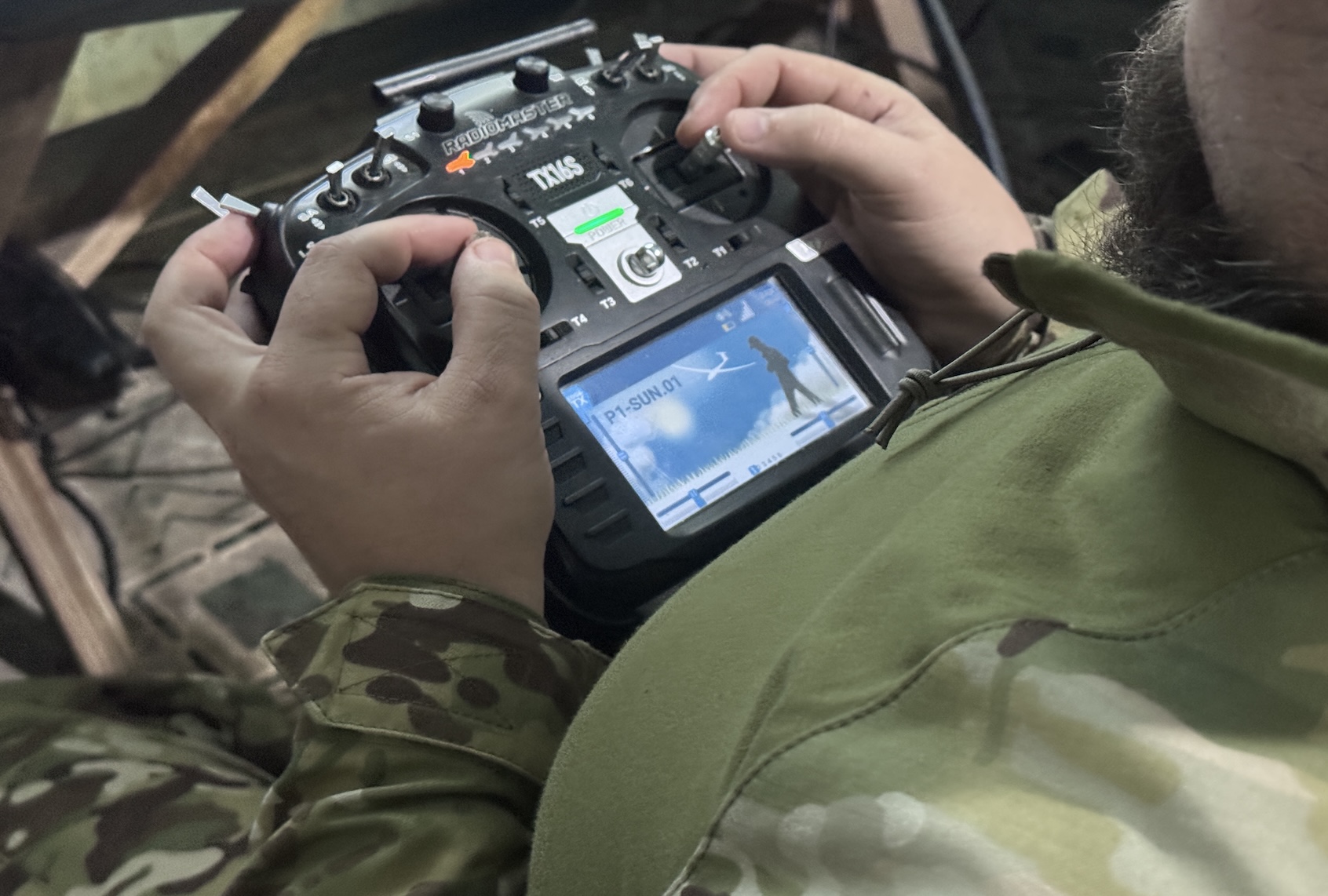
In recent years, both nations have deployed semi-autonomous drones in combat and are rapidly racing toward fully autonomous unmanned aerial vehicles.

Given these developments and the pace of Russian and Ukrainian drone production, a battlefield with hundreds to thousands of fully autonomous drones operating is plausible within the next few years. Yet, the technology underpinning autonomous warfare risks outpacing the Russian and Ukrainian frameworks for maintaining some degree of human control over weapons.

As an expert on weapons technology, I worry that the battlefield incentives to deploy more autonomous drones will completely push aside human targeting decisions related to using proportional force, avoiding strikes on non-combatants and limiting collateral damage.

The creeping drone war

Both Ukraine and Russia have increasingly prioritized the use and production of drones since the war began in February 2022. Unable to produce large numbers of one-way attack drones at first, Russia turned to Tehran for technological assistance – and has steadily developed its own capacity. Ukraine had a nascent drone industry and has grown it using private defense firms and technological innovation.

As the war has progressed, both sides have added autonomous features to existing drones, as well as developed new drones with autonomous capabilities. Specifically, both Russia and Ukraine have deployed drones with autonomous functions using AI on the battlefield to recognize targets, navigate and self-guide to targets.

In November 2025, a Ukrainian first-person-view drone used an AI-assisted guidance system to strike a probable Russian tank after the drone’s communications link with its operator was disrupted. A human operator selected the target, but the drone itself guided the final stages of the attack.

Reliable estimates of the numbers of these drones on the battlefield are unavailable. However, reports on their usage suggest they represent only a small percentage of the millions of drones both sides have deployed to date.

At the advanced end of the spectrum, Russia reportedly fielded at least one model of a fully autonomous unmanned aerial vehicle in early 2025. Ukrainian analysis of recovered Russian V2U drones revealed a small Nvidia computer designed to run AI-enabled decision-making software. Variants recovered in late 2025 no longer contained the external communications systems suggestive of operator control.

Autonomous targeting

The V2U’s technical systems are configured to enable autonomous selection and engagement of targets without operator intervention following launch.

Human operators have generally selected intended targets or target areas for moral reasons, highlighting the significance of the V2U’s ability to carry out these missions autonomously.


Start your day with essential news from Salon.
Sign up for our free morning newsletter, Crash Course.


The onboard AI utilizes computer vision, allowing the drone to analyze images from its onboard sensors. It can autonomously recognize objects, track them, navigate and select potential targets.

In July, Russia employed a different AI-enabled drone in combat that demonstrated a less comprehensive form of autonomous targeting. The strike, on a gas station in Zaporizhzhia, killed three Ukrainian civilians. Human operators selected the gas station as the target area, while onboard software independently picked the final aim point.

Russia is also integrating versions of a similar technology into its Geran series unmanned aerial vehicles, which are based on Iran’s delta-wing Shaheed-136 attack drone. Some Gerans include a seeker guidance package that allows the onboard computer to guide the drone in the final flight phase, after a human operator initially selects the target.

Ukraine, for its part, has focused on modular AI-driven packages, including chips with embedded software and sometimes cameras, that it can install widely across drone and other platforms. It has fielded drones that use onboard AI to identify targets and guide them in their final flight phase.

One such module tracks targets and guides the drone the final 500 meters to them. The company that makes the computer advertises more advanced modules, which it claims will provide additional and even full autonomy.

Ukraine claims to have used more advanced autonomous drones on the battlefield as well. Former Defense Minister Mykhailo Fedorov said in July that Ukraine used a drone that autonomously chooses targets with no radio connection to a human pilot in strikes in Russian-occupied Crimea at an unspecified date. He added that Ukraine has not mass-produced this drone.

Ukraine also reportedly employed what have been dubbed fully autonomous quadcopter drones two years ago against Russian forces near Bakhmut, Ukraine, killing Russian soldiers. However, reports that the drones were preprogrammed raise questions about whether the drones independently selected the targets.

Battlefield advantages, ethical concerns

Russian and Ukrainian drones with autonomous capabilities already have had battlefield impact, even though Kyiv and Moscow have not yet deployed the most advanced systems in large numbers.

The benefits of deployment are clear. Drones with autonomous functions reduce their dependence on communications links and can continue despite jamming and other forms of electronic warfare. These capabilities help enable strikes deep into each other’s territory.

Autonomous navigation and guidance in the final portion of flight can also improve drones’ ability to engage moving targets. Deployment of fully autonomous drones at scale could reduce the personnel required to operate large numbers.

But autonomous drones come with serious ethical concerns.

A major risk is that the development and employment of this technology leapfrogs the ability of Russia and Ukraine to maintain some type of human control over autonomous weapons. Ukrainian Ministry of Defense rules require keeping humans in the loop for “combat” decisions, meaning that humans verify targets in the “final stages of interception.”

In contrast, Russia’s arms control positions provide insights into its views on human control. Russian officials highlight “human control,” with a focus on the ability to alter the system, deactivate it or provide limitations, such as on the types of targets that it can engage. But Moscow does not stress that a human has to be in the loop for verifying targets before they strike them.

As worrying as that sounds now, the next step in AI drone warfare is even more concerning: Swarming drones that can hunt in packs of a few to thousands and autonomously alter their behavior based on communicating with one another present a frightening challenge to maintaining human control.

Amy McAuliffe, Visiting Distinguished Professor of the Practice, University of Notre Dame

This article is republished from The Conversation under a Creative Commons license. Read the original article.

The post Russia‑Ukraine war is accelerating the dangerous race toward fully autonomous drones appeared first on Salon.com.

  •  
❌