The moon has a brand new crater as of Wednesday, thanks to a rogue SpaceX rocket that crashed into Earth’s nearest neighbor at 5,400 miles an hour. Originally part of a 2025 mission to launch a pair of lunar landers for U.S. and Japanese companies, the rocket was supposed to fall back to Earth. Instead, it strayed off course and eventually reached its final resting place on the moon’s surface.
According to the Guardian, astronomers were unable to confirm the impact, “possibly because the impact site was close to the visible edges of the moon.” A day later, a Korean lunar orbiter captured images of the impact, but it will still take time to confirm the size of the crater, which is expected to be about 60 feet wide and 12 feet deep.
This isn’t the first time this has happened, for the record. In March 2022, a rocket slammed into the moon, creating a double crater about 95 feet wide. That object was later identified as part of China’s Long March 3C rocket, which propelled the Chang’e 5-T1 mission around the moon in 2014. In fact, there’s been trash on the moon ever since humans first landed there, which some scientists cite as evidence of the Anthropocene, a new geological era defined by how badly humans have messed up the planet and its nearby neighbors.
NEWS 🚨: A Korean lunar orbiter has photographed the crash site of a SpaceX Falcon 9 second stage on the Moon pic.twitter.com/chI8hpWdsv
Indeed, it’s difficult to estimate how space junk is currently orbiting our planet. By one count, there are more than 17,000 metric tons of objects in Earth orbit, including nearly 19,000 satellites. Every time we shoot more stuff up into space, we risk it hitting something else, as in a giant game of billiards. That threatens to create a cataclysmic chain reaction, in which every collision creates more space debris and also risks damaging satellites and space stations we’d like to keep operational. This might make future space launches unsafe (such as the planned Artemis IV moon landing mission) and could render GPS devices completely useless. If you think Google Maps is glitchy now, just wait.
This hypothetical scenario is called Kessler Syndrome, but I propose renaming it Tesla Syndrome, given that Elon Musk’s Starlink has nearly 11,000 satellites in orbit, with eventual plans to launch as many as 42,000. Musk’s car is still floating out there somewhere, too. The statistical probability of a company owned by the world’s richest man making our space trash problem even worse is high, so we’d better keep crossing our fingers for more near misses — and, just maybe, a future in which humans behave less like slobs.
On May 31, 1921, an armed white mob poured into Tulsa, Oklahoma’s majority African-American Greenwood district and began setting it ablaze. Families were driven out of their homes at gunpoint as their neighbors looted their belongings and burned their property to the ground. The lucky ones escaped the city with their lives, the less fortunate were rounded up and detained by law enforcement, and scores of men, women, and children were simply gunned down in the street.
Within the space of 48 hours Greenwood, a beacon of prosperity previously nicknamed the Black Wall Street, was wiped from the face of the earth. More than 10,000 black families were left homeless, and the death toll, tallied at 36 in 1921, is now estimated to be upwards of 300.
In all likelihood, most people who tune in to Sunday’s highly anticipated premiere of “Watchmen” (9 p.m. ET, HBO) will have never heard of this bloody, racist massacre that occurred almost a century ago on American soil.
The thought that such a crime could happen at all beggars belief to those of us who cling to the version of the American story that draws the place as heroic and just, where our greatest wrongs are made right. But nearly two weeks ago came the headlines that scientists and forensic anthropologists have begun the process of searching for the mass graves where untold numbers of murdered Tulsans may be buried.
And this is why series creator Damon Lindelof opens his part of the story with a re-enactment of that massacre that includes historically accurate eyewitness details from the thick of the nightmare. The vision of planes swooping down and dropping bombs on the screaming, unarmed citizens below, and the Klan openly hunting them, might appear to be heightened elements tossed in for dramatic effect, just part of the story that differentiates reality from fictionalized alternate history.
Except, according to records, that is actually what occurred. By air and on the ground, American citizens waged war on other American citizens, and made sure the survivors were frightened enough to stop talking about it, thereby keeping this account out of the history books.
The Tulsa massacre is the origin story of Lindelof’s “Watchmen,” an inspired, riveting continuation of the seminal comic book series co-created by Alan Moore and Dave Gibbons first published between 1986 and 1987.
In the original series Moore and Gibbons presented an interrogation of our relationship with superheroes and the popular notion of heroism itself with its story of people with purported superhuman abilities emerging between World War II and the 1960s and changing the trajectory of history itself.
In Moore’s and Gibbons’ history, these heroes gave the United States political and military advantage, allowing America to win the war in Vietnam, making it a state in the process, and gain the upper hand during the Cold War.
Within that history, too, are the effects of things that never came to be. Richard Nixon was never forced out of office, and term limits were abolished, allowing him to remain president well into the 1980s. After that, he was replaced by our first celebrity president, Robert Redford. It is against the law for freelance masked vigilantes to operate, and those that remain either work for the government or have gone into retirement.
The looming threat of World War III serves as the backdrop to the A-plot, a story comprised of many smaller tales and plots told from various points of view. But this overarching anxiety pitting the United States against the Soviet Union is annihilated when a gigantic squid reported to be from another dimension drops on Manhattan, immediately killing millions.
Lindelof’s continuation is intimately informed by that game-changing climax, only not in any way that the fly-by comic book consumer might immediately connect. The threat in the “Watchmen” comics mirrors the overriding fear hanging over the Reagan era, which is that of nuclear annihilation. Twenty-seven years later, in the alternate and actual histories of 2019, the all-destructive threat assumes the form of violence driven by white supremacy.
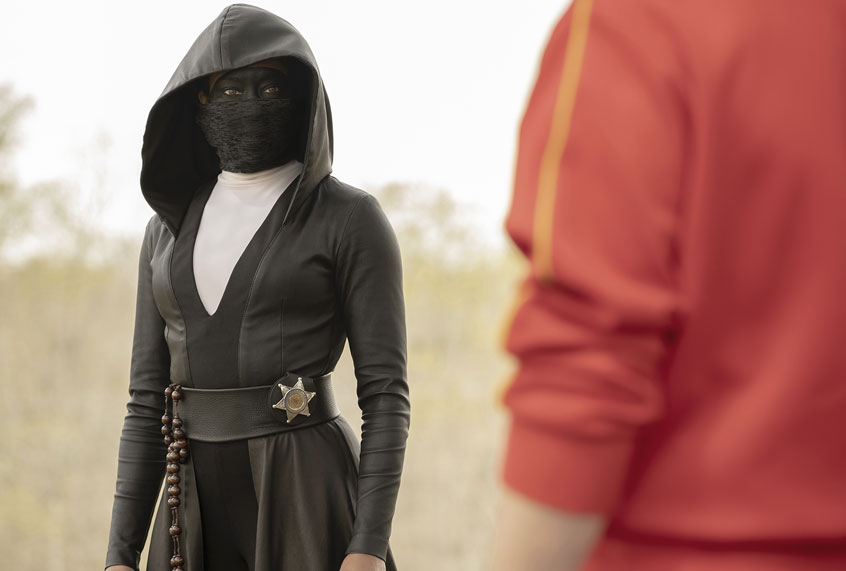
Only in this new “Watchmen,” the cops in Tulsa are the ones wearing masks, yellow face coverings for the uniformed beat cops, and more elaborate, fully immersed get-ups for its detectives. Nominally this protocol allowing the police to remain anonymous was enacted to keep officers safe; only Tulsa’s Chief of Police Judd Crawford (Don Johnson) allows his face to be seen while he is on duty.
In practice, as is quickly evidenced, this inability to be identified allows the cops to operate with near-impunity and intimidate any population it deems a threat – mainly poor whites suspected of making up the ranks of the racist Seventh Kavalry, branded a terrorist organization.
Second in the chain of command is the fearsome cloaked Sister Night, the alter ego of Angela Abar (Regina King), a devoted wife, mother of three, and bakery owner. Angela claims to be retired; a hideaway under her bakery proves otherwise.
And her costume is the sleekest and most intimidating of her band of law-enforcement besides that of her colleague Looking Glass (Tim Blake Nelson), a severe by-the-book soldier whose engulfing reflective mask renders him featureless, and hints at a streak that is equally skeptical and paranoiac.
I suspect each will inspire a few Halloween costumes, maybe and hopefully replacing the popularity of Rorschach’s mask following Zack Snyder’s 2009 theatrical adaptation. In alt-2019, the Rorschach mask is the uniform of the Seventh Cavalry, making it the equivalent of a Klansman’s hood. He’s not around to critique this appropriation of his mantle, but other original characters are, including Doctor Manhattan (referenced but not seen), the former Silk Spectre, who now just goes Laurie Blake (Jean Smart), and Adrian Veidt (Jeremy Irons), now the lord of a manor and still very much an arrogant tinkerer.
What Lindelof has achieved in the six episodes of “Watchmen” provided for review is extraordinary for its execution alone. It is dark, but it’s also exciting; grim, but also invigorating. The action sequences are stunning, as are the performances. King is a mesmerizing presence, as is Louis Gossett, Jr. as the mysterious Will Reeves, a figure who seems designed to irritate Angela at first but, owing to his age, is obviously there to give her clues as to how modern-day Tulsa connects to its past.
For all of its fantastical details, elements of “Watchmen” resemble the real 2019 too closely to be thought of as comfortable escapism. But the viewers that it hooks will be as fascinated, inquisitive, and passionate as its haters are rabid. If that isn’t a hallmark of inventive, provocative television, I’m not sure what is.
As I stated earlier, Lindelof’s “Watchmen” is not a divergence from the original story but an extrapolation – and a brutally intelligent one – of the original comic’s theories about our blind trust in authority, our misplaced reliance and trust in power, and even our concept of identity, shared and individual.
And yes, part of this has to do with the title itself, and Lindelof’s signature creative approach. The audience that knows him via “Lost” may have been flummoxed by “The Leftovers” and its insistent, unsettling interpretation of the mystery surrounding grief and loss.
What’s funny is that “Watchmen” is more straightforward than “The Leftovers” but will nevertheless confuse anyone who tunes in expecting a straightforward superhero tale, or even an obvious sequel to the comic.
“Watchmen” is very true to the original mythology – so much, in fact, that at the very least I’d advise reading a few summaries about the comic’s plot before diving into the show. This is because Lindelof intentionally steeps “Watchmen” in history: its own, and ours, and the version that answers the various “what if” questions that hold the potential to tweak the trajectory of an entire culture.
On the page, “Watchmen” liberally toys with the meaning of story and the power of perspective, but it also forces the question of whether the systems and structures we presume to be good or working for us actually are. The HBO series also does this in obvious ways, but makes answering that question more complicated and foggier as the series progresses.
But where Lindelof’s take finds the strongest and more fertile common ground with Moore’s is in the examination of history, and the difference between what actually happened and the so-called official record.
What “Watchmen” posits throughout its story is that history is only as accurate as the honesty in the edit and of the editor. In large part, history is a means of asking a culture to adopt an identity by remembering the past in a prescribed way. At its most aggressive, it demands we accept a particular point of view to the erasure of others that may blemish that perspective – essentially asking an entire nation of people to live in the heads of a select few.
That the series begins with an actual historic account that’s been intentionally kept out of the books is part of the trick, one that dares the viewer to simultaneously believe and distrust everything we see afterward. That’s very much in keeping with 2019, both the version in “Watchmen” and the one we’re living through. After all, if hate can wipe an entire town off the face of the earth in two days, an event that tens of millions never knew about, then why couldn’t squid rain down from the sky?
“Watchmen” premieres on HBO at 9 p.m. on Sunday, Oct. 20.
Writing something is a bit like polishing rocks. You start with an ugly hunk of something, a phrase or an idea you’ve tripped over. It rattles against the hard edges of your brain until it gets polished and smooth. Moving the rock through finer and finer grits is time-consuming, strenuous and not always rewarding. Sometimes, the lump becomes a slightly smaller and shinier lump, marginally less ugly than it was on the ground. But like exercise and tough conversations, the process is the point. You feel better for having gone through the ritual yourself.
Boy George didn’t get the memo.
The former Culture Club frontman, whose voice adorned New Wave pop hits like “Karma Chameleon” and “Do You Really Want to Hurt Me” in the 1980s, had artificial intelligence spew out an unfortunate reggae song last week that turned out to be a statement of support for Israel’s ongoing war in Gaza. “You say genocide, I say war,” the song, titled “We Will Dance Again,” starts, and the lyrics seem to revel in the ugliness of the ongoing violence in Gaza. The tens of thousands of Palestinian deaths, the song claims, are “what the military’s for.”
Obvious AI tells throughout this track make clear that Boy George hasn’t just gotten lazy, he’s also lost the quality of discernment. The song’s meter is odd, and its lines are overstuffed. There are no interesting choices, no glimpses of an artist’s vision. It’s a hollow provocation over a royalty-free riddim.
Against that backdrop, a song defending and celebrating the Israeli military is nasty work, no matter who made it. The fact that no one made it, that it’s the creation of a machine that hallucinates in exchange for electricity, only intensifies the sick, empty feeling the track leaves behind.
Since Hamas militants attacked Israeli military installations and civilians on October 7, 2023, the ensuing war in Gaza has left more than 73,000 Palestinians dead. The United Nations has called Israel’s campaign a genocide. The International Criminal Court has issued an arrest warrant for Benjamin Netanyahu, accusing the Israeli prime minister of crimes against humanity. Attacks on Gaza continue despite a ceasefire deal. Against that backdrop, a song defending and celebrating the Israeli military is nasty work, no matter who made it. The fact that no one made it, that it’s the creation of a machine that hallucinates in exchange for electricity, only intensifies the sick, empty feeling the track leaves behind.
The track’s release has been a disaster for George. He split acrimoniously from Tony Pontius, the long-time manager of his record label BGP, because of Pontius’ refusal to release the song. A planned role as King Herod in a production of “Jesus Christ Superstar” was put on ice. Spotify pulled the track down for violating its restrictions around AI-generated music. Bandcamp followed soon thereafter. Boy George has dug in his heels in recent days, calling the platforms a “bunch of c**ts” as part of a steady stream of Instagram posts. His doggedness would be almost admirable, if “We Will Dance Again” wasn’t so lazy.
In releasing the track, Boy George presumably wanted to turn heads, to make a statement. But he didn’t want to do any work. He didn’t want to record multiple vocal takes of lines he supposedly wrote and believes in. He didn’t want to arrange actual instruments to better emphasize his lyrics and pro-war stance. He didn’t want to mix the track carefully to refine his statement. He could have made something that shimmers, a piece of true pop that expresses repellent ideals. It wouldn’t have been the first.
Merle Haggard’s iconoclastic “Okie From Muskogee” is considered a country classic, even though the sentiment is about as far from mainstream American thought in 2026 as can be imagined. When even right-wing commentators are pushing microdosing as a path to self-betterment, his disparaging remarks about longhairs taking LSD come off as impossibly square. But you can hear the heart in Haggard’s leathery vocals, buoyed by the sweet harmonies of his backing band. Haggard waffled over the years on whether the anti-hippie hardliner anthem was a satire of the crew cut set or a genuine tribute to his conservative father. Either way, Haggard sounds like he believes what he’s saying, regardless of whether that’s true, because of the time and effort he spent working out the song.
With 2013’s “Blurred Lines,” Robin Thicke and Pharrell set out to make a groovy single in the vein of Marvin Gaye. Though the song has been relegated to the dustbin following a widespread critical backlash and later allegations of sexual assault against Thicke by model and actress Emily Ratajowksi, who appeared in the song’s video, they were extremely successful. The song itself, creepiness aside, is a Swiss watch of a partystarter. Pharrell’s ad-libs and inserts interrupting the groove at perfect intervals to wake up the dancefloor. They arguably did too good a job recreating the shuffling, glass-clinking percussion of 1970s cocktail party classics, as they lost almost everything they’d made from the song in a subsequent — and successful — lawsuit from Gaye’s estate.
“We Will Dance Again” does none of that. It warrants no qualifiers, no deeper thought, because Boy George clearly didn’t think too hard about it himself before spitting it out into the world. He asked a machine to build him a song to support what many consider to be an ongoing genocide. When it offered him half a song, he said, “Good enough” — without even bothering to run it through a few rounds of polishing. I regret to inform you that, in 2026, Boy George won’t even tumble for us.
When Netflix announced the first-ever Chef’s Table Food Festival, bringing 70 internationally acclaimed chefs to Park City for four days of dinners, demonstrations and excursions, I felt something between excitement and apprehension.
The series changed the way I understood food. I wasn’t yet sure whether a festival built around it could preserve the reason why.
If you asked me to name the greatest piece of modern food media, I would hesitate. Without missing a beat, I would say Season 1 Episode 1 of “Chef’s Table.”
It’s not because I think Massimo Bottura is the greatest chef alive. It wasn’t only the breathtaking cinematography or the immediate fantasy of booking a flight to Modena and a table at Osteria Francescana.
I’ve returned to it so many times because it permanently changed the way I think about food.
Yes, food media should make you hungry. But the very best examples also make you care about something greater than what’s on the plate.
I was initially drawn in by Italy. Like so many Italian Americans, I grew up seeing pieces of my family’s history reflected in its food and had an insatiable desire to learn as much as I could about the country my grandparents grew up in. Watching Bottura reinterpret the flavors of Emilia-Romagna felt familiar, even comforting, but that’s not why the episode stayed with me.
I still think about it and watch it over and over again because it beautifully articulates something I’ve always believed but struggle to find the words to explain.
“Chef’s Table” showed me that food could be a lens through which to understand culture, grief, resilience, identity, and community. It showed me that restaurants weren’t simply places to eat. They were living institutions capable of preserving history, supporting entire local communities, and bringing people together in moments of crisis.
Looking back now, I can trace so much of my own career back to that realization.
For years, I’ve found myself gravitating towards stories about neighborhood restaurants, family businesses, local farmers, and food traditions — not because they’re quaint or nostalgic, but because they’re windows into something larger. These people have tangible passion and intoxicating energy for what they do. “Chef’s Table” helped open my eyes to the fact that that’s the story. Not the rare ingredients or celebrity guests, the pure, genuine joy for cooking and sharing that with others.
One moment from Bottura’s episode has lingered most.
After earthquakes struck Emilia-Romagna in 2012, warehouses collapsed around hundreds of thousands of wheels of Parmigiano Reggiano, threatening the livelihoods of the cheesemakers who depended on them. Bottura responded by creating a recipe for riso cacio e pepe and inviting people around the world to cook it with him. Nearly 40,000 participated, and all 360,000 damaged wheels were sold.
In Bottura’s hands, Parmigiano was never merely an ingredient. It represented years of labor, centuries of knowledge and an entire community’s economic survival.
One of Bottura’s most famous dishes from his three-star Michelin restaurant is the Five Ages of Parmigiano Reggiano, featuring the PDO product at five distinct aging points (24, 30, 36, 40, and 50 months). He manipulates the physical form of the ingredient to showcase different temperatures and textures: souffle, cream, biscuit, foam, and air.
The dish isn’t about the cheese. It’s about tradition and craftsmanship and protecting your community.
As Bottura says in the episode, “Cooking is an act of love.”
It’s not a love expressed through expensive ingredients or elaborate techniques just for the sake of it. It’s expressed through responsibility — to your producers, neighbors, and the place you call home.
Years after I first watched Bottura’s episode, I read Ruth Reichl’s “Why Food Writing Matters” and felt the shock of recognition. Food writing has been dismissed as frivolous or shallow — as if writing about restaurants somehow exists outside the realm of “real” journalism. Reichl had found the language for something I had understood only emotionally: food journalism belonged in the larger conversation about labor, politics, culture and power. Every person needs to eat, which means every person has a relationship with food that extends beyond the plate.
“Food touches everything we do. And that it is definitely a political issue,” she says, “Every election analyst has pointed to rising food costs as a major concern for voters. Yet despite the evolution of food writing over the last thirty years, consumers still have very little understanding of the forces that drive those costs.”
For the first time, I felt as though I had discovered the tradition I wanted to join.
A cohort of people who pursued and brought light to all genres of food stories. That feeling has become harder to find these days.
In today’s media, there is simply so much food content competing for our attention. Social media has democratized food storytelling in remarkable ways, but it has also created an endless stream of restaurant rankings, viral menu hacks and “must-try” lists that reward speed over substance.
Thankfully, there are still creators proving that audiences are hungry for something deeper. Nicholas Nuvan reminds me that thoughtful food storytelling hasn’t disappeared—it has simply adapted. His videos don’t stop at recommending where to eat. They introduce viewers to the people, histories and communities behind a dish, proving what the best food journalists have always known: people don’t just fall in love with dishes, they fall in love with stories.
When Reichl first took over the food section at the LA Times, she got a lot of pushback for covering international restaurants and including recipes for things like goat soup, sea slugs, and eel. She received dozens of letters lamenting the “good old days” of “American” recipes like cola-soaked pork chops, but she didn’t listen.
And isn’t that really what it’s all about? Reichl had the courage to dig deeper and show people a different side of food writing in a time when most people only read the food section for the ads. Not only were readers interested in what she had to say, she helped show people and restaurants of all cultures and styles that their food and their story matters just as much as any Michelin restaurant.
That’s why I felt a genuine sense of cautious optimism when Netflix announced the Chef’s Table Food Festival. On paper, it’s easy to dismiss it as another celebrity chef event, many of which have become exercises in exclusivity — expensive tickets, buzzy names and Instagrammable bites. There is nothing inherently wrong with that, but it isn’t what made “Chef’s Table” resonate in the first place.
The series never asked us to admire chefs simply because they were famous. It asked us to understand them. To understand why they cooked, where they came from and what they were trying to preserve. Fame was a byproduct of that curiosity, not the goal.
“I see [the festival] as a celebration of why we come together to eat, why we go to restaurants,” “Chef’s Table” creator David Gelb told Bon Appetit, “That’s paramount and one of the most important things that makes us human. We come together around a hearth, we tell stories, and we eat.”
It wasn’t Bottura’s technical brilliance that changed me. It was his belief that food could be an act of service. That a restaurant could strengthen a community. That a wheel of Parmigiano could represent thousands of livelihoods. And that writing about those things wasn’t frivolous at all.
“Chef’s Table” didn’t convince me to become a food writer, but it convinced me that food could be the vehicle through which I wrote about everything else.
If the festival can capture even a fraction of that spirit — if it asks us to understand not only famous chefs, but the farmers, artisans, workers and communities behind them — it will be more than another stop on the culinary calendar. It will be a reminder of what food media can offer when it chooses to nourish more than our appetites.
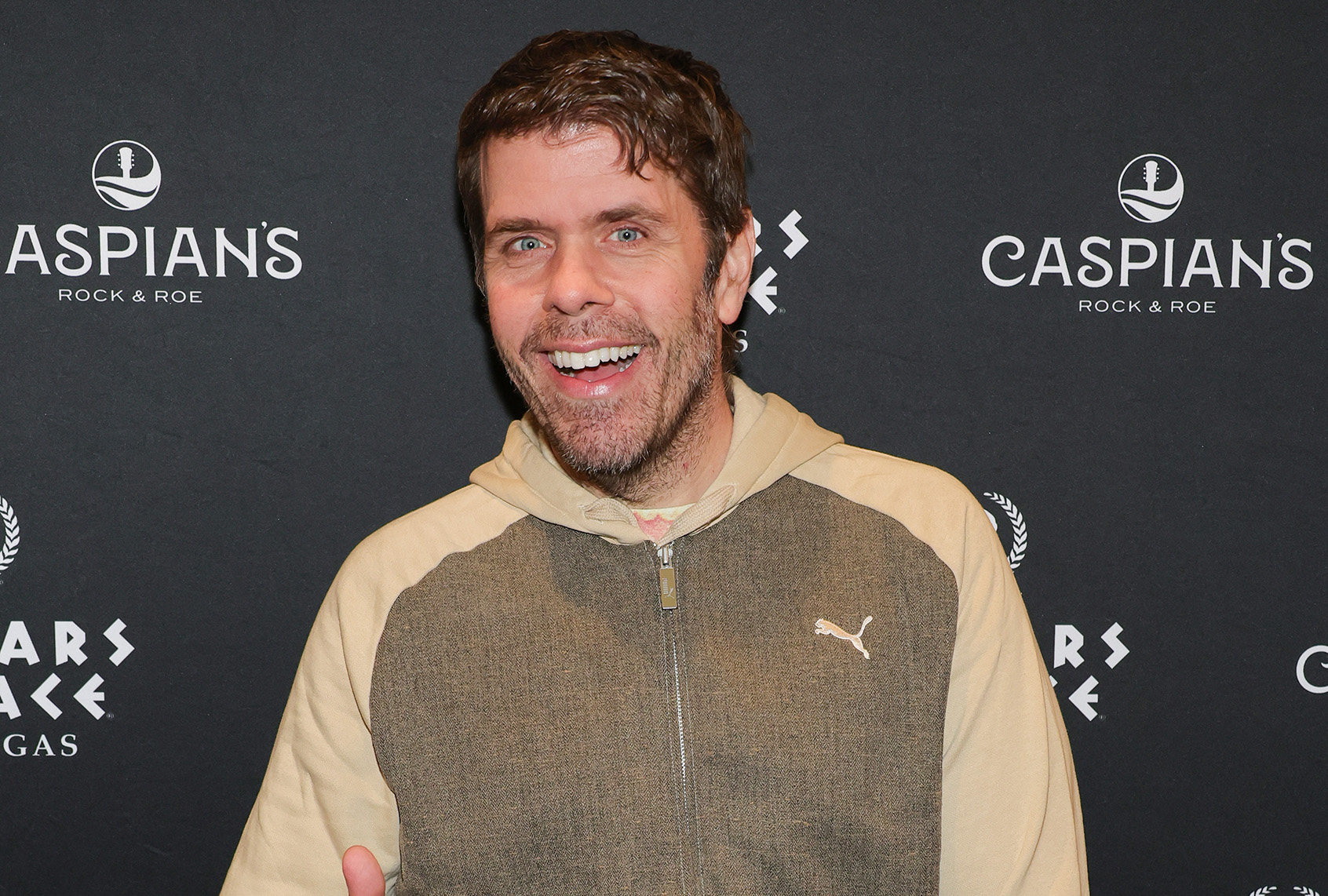
Perez Hilton always wanted to be famous. This is a statement of fact and not meant to make light of his self-harming incident broadcast via TikTok livestream on Tuesday—quite the opposite. Videos and images of Hilton, 48, covered in blood and cutting himself with a knife should be interpreted as a cry for help, not attention. A person can understand that much without seeing the footage.
But many who watched didn’t have a choice. Although Perez’s livestream proceeded for around 15 minutes before it was shut down, screenshots and clips rocketed across the internet, invading countless social media feeds. Some saw those disturbing images simply by picking up their mobile devices.
Fortunately, Hilton was transported from his Miami home to a hospital to receive medical attention, according to the local sheriff’s office. But such incidents have become increasingly commonplace to the point of numbing us.
While Wednesday morning Google search trends data showed that people were hunting for images of Hilton, I went to YouTube to see what he was up to in 2002. That year, he starred in a short film called “Dating Up,” which is not listed under his IMDb or Wikipedia filmographies.
He describes it in the video summary as “A short film about gay dating. In a world before Grindr!” It’s also a glimpse of the time before YouTube, Facebook, Instagram and TikTok, and before the man born Mario Armando Lavandeira Jr. launched PerezHilton.com in 2004 and quickly became one of the world’s most popular, controversial and despised gossip bloggers.
I chose 2002 because that year’s most famous video captured the Feb. 1 execution of Wall Street Journal reporter Daniel Pearl. Footage of his beheading circulated in the bowels of the internet for months, until the now-defunct Boston Phoenix published a link to it on its website, igniting furious debates about the morality and journalistic ethics of that decision.
Such discussions seem quaint in an age in which the video of Charlie Kirk’s assassination was posted to social media moments after it happened, and a gunman in Christchurch, New Zealand, livestreamed his killing of 51 worshippers at two mosques on Facebook.
An age, it bears adding, when X and Meta—Facebook and Instagram’s corporate owner—no longer emphasize stalwart moderation guardrails in the name of reducing “censorship” on their platforms.
The circumstances leading to Hilton’s distressing livestream and Pearl’s filmed execution are entirely dissimilar. But what brought the 2002 video to mind was that it marked the first time in modern history, at least that I can remember, that the public questioned what purpose watching something too horrible to fathom ultimately serves. Such discussions helped establish the difference between witnessing as a matter of civic responsibility and leering voyeurism.
Images of Sept. 11, 2001, were still fresh and traumatizing for millions who watched the World Trade Center’s Twin Towers collapse on live TV when Pearl was murdered.
But his death was an intimate injury to his loved ones first and foremost. Making it public, therefore, was viewed as a ghoulish act by many, including Salon’s former national correspondent Bruce Shapiro. “The idea that tossing the desires of Pearl’s family into the ashcan is ‘just what journalists do’ is only a cover for indiscriminate National Enquirer logic,” he said in a June 2002 column.
Months after that, the Phoenix’s media critic Dan Kennedy contended that it is our obligation to watch such difficult accounts in an essay for Harvard’s Nieman Foundation. “We turn away from such evil at our own peril,” Kennedy maintained.
The twin forces of cellphone footage and instantaneous social posting have long cultivated what is now understood to be a society-wide problem: the separation between the reality unfurling mere feet in front of us and the filter provided by electronic screens and lenses.
Somewhere in the middle, the rest of us wondered how absorbing such horror would change us, whether as individuals or as a society.
Twenty-four years ago, it was very easy to turn away from something you had to go digging for in the first place. YouTube would not exist until 2005. Instagram’s founding happened five years after that. TikTok turns 10 this year.
In the years between those companies’ founding and now, social media has given us plenty of opportunities to take up those debates again. But when such content is widely available, and we have so little choice as to whether we can avoid it, conversations about the ethics of it all seem like a luxury.
In exceptional cases, disseminating footage that’s hard to stomach serves a noble objective. Graphically violent video pouring out of 2011’s Arab Spring uprisings opened the world’s eyes to the deadly state violence people suffered under the repressive regimes of Tunisia, Yemen, Egypt, Libya, Syria and other Arab nations.
In the United States, bystander videography has been bringing incidents of police brutality into American living rooms since at least 1991, when Los Angeles resident George Holliday captured cops viciously beating Rodney King on videotape. But the first cellphone equivalents to go viral were the 2009 videos of a police officer fatally shooting 22-year-old Oscar Grant III in the back at Fruitvale Station in Oakland.
And the list of people whose last living, breathing moments were captured on cellphone videos and shared with the world has only gotten longer. In 2014, the nation watched Eric Garner suffocate to death as a New York City police officer subdued him using a prohibited chokehold. In 2016, Diamond Reynolds filmed the moment that a police officer shot her boyfriend Philando Castile to death during a traffic stop in the Minneapolis-St. Paul area and posted it to Facebook Live.
In 2020, 17-year-old Darnella Frazier recorded Minneapolis cop Derek Chauvin kneeling on George Floyd’s neck for more than nine minutes. And earlier this year, multiple bystanders recorded the shootings of Minneapolis residents Renee Good and Alex Pretti, footage that contradicted Trump administration officials’ claims that Good was a “domestic terrorist” and Pretti was an “assassin.”
In all those incidents, bearing witness galvanized the public. The international furor over Floyd’s death sparked nationwide protests and briefly mainstreamed the Movement for Black Lives. Videos of Good and Pretti’s killings by Immigration and Customs Enforcement agents turned all eyes to Minnesota, leading to the ouster of Kristi Noem from the Department of Homeland Security.
At the same time, our social media algorithms were not as loosely regulated a decade ago as they are now. Teams of human moderators once employed by all the major platforms have been gutted. Nobody should be shocked to know that the easiest place to find Hilton’s self-harm videos is X. As for TikTok, a spokesperson told the Los Angeles Times on Wednesday, the platform relies on automated moderation systems. They flagged Hilton’s alarming livestream within minutes, closed other live streams within 90 seconds and banned the account, the spokesperson said, but its removal was delayed by what was characterized as “a moderator error.” (TikTok previously banned Hilton in 2020 for violating its community guidelines. At the time, his account had 1.6 million followers and averaged 10 million views per week.)
Want more from culture than just the latest trend? The Swell highlights art made to last. Sign up here
The twin forces of cellphone footage and instantaneous social posting have long cultivated what is now understood to be a society-wide problem: the separation between the reality unfurling mere feet in front of us and the filter provided by electronic screens and lenses.
Knowing this, the fact that the top search terms on Wednesday morning indicated that people were looking for images of Hilton’s self-harm instead of contextualizing reporting is telling but, sadly, not surprising.
Lurid real-world footage of people harming others or themselves is being served directly to us whether we want to see it or not. What we might debate, as we did 24 years ago, is what that’s doing to us.
When Graham Platner ran for Senate, he came with an irresistible, dream candidate profile: a plainspoken veteran and man of the people who was ready to change careers from oyster farmer to politician. Platner, who turned 40 during the campaign, found immense support from other male Democrats close to his age who saw his campaign as the breath of fresh air the party needed to stay relevant. Even when his many skeletons came tumbling out of the closet — the Nazi tattoo, the Reddit posts, retweeting far-right podcaster Stew Peters and others — they only doubled down in their support. Each scandal was followed by another high-profile endorsement from a senator or influencer. Only when women accused him of rape and sexual assault did they finally drop their support, leading to his exit from the race in July.
The Platner fiasco revealed how a subset of male Democrats show symptoms of a midlife crisis. Typically, a man’s mid-life crisis occurs between his 40s and 50s when, having achieved a stable economic and sociopolitical status, a new generation emerges that threatens to replace him. He becomes depressed, irritable and restless. The cultural stereotype is that rather than accept this as a natural consequence of aging, he seeks to recapture his youth with rash impulsivity by purchasing an expensive red sports car, or having an affair with a younger woman, or changing careers on a dime without any idea of the scrutiny that comes with those who make such a shift — i.e., from oyster farmer to senator.
Politically, the midlife crisis expresses itself as an attraction to ideological extremes, represented by the trope of men growing more conservative with age. Sen. John Fetterman, once a darling of the progressive elite who embraced him as the leftier-than-thou alternative to center-left Rep. Conor Lamb in the 2022 Pennsylvania Senate primary, has become every Democrats’ face on the dartboard for embodying this exact stereotype. Fetterman’s conservative shift could have stemmed from how his staunch support of Israel amid rising sentiment toward Palestine within portions of the Democratic base pushed him further away from the party, leaving him susceptible to Republican overtures. But given that he had already displayed signs of an erratic and hostile personality before arriving in the Senate, his change feels of a piece with his past behavior.
However, in today’s political climate, Fetterman’s rightward drift makes him something of an outlier, as the Democratic midlife crisis now expresses itself as a shift toward the far-left, even if it means compromising one’s previous positions and alienating the audience that brought them to prominence.
The most public examples of this are the “Pod Save America” hosts Jon Favreau, Jon Lovett, Tommy Vietor and Dan Pfeiffer — a.k.a. the “Pod Bros” — who first jumped on this bandwagon in November 2024 when they interviewed far-left streamer Hasan Piker on their podcast. Bringing on Piker — who, by coincidence, is the same age the Pod Bros were when they founded their parent company, Crooked Media — got people talking about them again, even if the talk was that the podcast had jumped the ideological shark by hosting someone who has been accused of caping for communists and terrorists.
Since his first “Pod Save America” appearance, Piker has traveled to China and Cuba to defend their regimes, and he recently deployed Vladimir Putin-like language when he called the Soviet Union’s collapse “a catastrophe” at a Yale political union meeting in April. But the Pod Bros have interviewed him multiple times, even inviting him to Crooked Con, their Washington, D.C., convention, in November 2025, where he appeared on a panel alongside MS NOW’s Symone Sanders-Townsend and Fox News’ Jessica Tarlov.
Given their embrace of Piker, it’s no surprise the Pod Bros were also among the most ardent backers of Platner, defending him like an expensive red sports car.
Given their embrace of Piker, it’s no surprise the Pod Bros were also among the most ardent backers of Platner, defending him like an expensive red sports car. When the news broke about his Nazi tattoo, they invited him on the show to explain himself. Ben Rhodes, the former Obama aide and host of the Crooked Media podcast “Pod Save the World,” even penned a lengthy New York Times op-ed on Platner’s rise, lauding him as a voice of the anti-war movement. In the wake of the rape allegations, Favreau issued an apology for his defense of Platner; Rhodes, as of this writing, has not. (Rhodes did not respond to multiple requests for comment.)
Other elected officials within this age bracket have dunked their big toes in populist waters despite being elected as moderates in red states, such as Arizona Sen. Ruben Gallego, or as so-called center-left “Normie Democrats” in blue states, such as Connecticut Sen. Chris Murphy. Both men have been mentioned as contenders for the 2028 presidential nomination, but absent a campaign announcement, their leftward shifts are the equivalent of focus group testing on a national scale. Granted, neither Gallego nor Murphy have alienated their constituencies with these ideas, but it’s a far cry from their personas when they were first elected.
Since arriving in the Senate in 2025, Gallego has gone on the lash against big corporations and monopolies. In a speech for the American Economic Liberties Project, a left-wing think tank, in September 2025, Gallego said “anything that empowers the consumer, the everyday person, is going to be a very popular message . . . It can win in any cycle, in almost any state, or environment.” He has continued this crusade, recently endorsing a $20 minimum wage and speaking out against the proposed Paramount-Warner Bros. Discovery merger.
Murphy, who entered the Senate only a month after the massacre at Sandy Hook Elementary School, made a name for himself as one of the body’s most outspoken gun control advocates. But in a May 2025 interview with “The Atlantic,” he seemed a bit sheepish over this, arguing that by emphasizing social issues over economic ones, Democrats risk losing voters who might be more receptive to economic messaging. “I own part of that responsibility,” he said.
In addition to being spoken of as a potential 2028 contender, speculation is rampant that Murphy is positioning himself to lead the Democratic caucus after the midterms. Once known as a bipartisan negotiator, he has pivoted to a harder line, telling the Connecticut Mirror in November 2025, “I just don’t think that’s the job right now . . . I think I would be committing sort of political malpractice if I was operating this year like I’ve operated in the past.”
The psychological phenomenon of the midlife crisis masquerading as populism does not occur in a vacuum. Social media has exacerbated it, with algorithms making it easier to gain popularity by taking extreme viewpoints, as Piker has, than to represent the center-left, as the “Pod Save America” crew did for years. Moving toward extremes also has the potential to produce rewards. For pundits and influencers, that could mean boosting their voices and incomes. For politicians, it means the chance to swell their campaign coffers — even though he isn’t up for reelection until 2030, Murphy’s campaign PAC, Friends of Chris Murphy, had $11.5 million cash on hand as of June 30 — and, better yet, position themselves for future elections, regardless of whether the shift is sincere.
However, the less sincere that shift is, the greater the fallout when it turns out to be for naught. Watching Graham Platner’s campaign implode was like watching that expensive red sports car get totaled. You felt bad for anyone who got harmed. But if you’re honest, you also loved watching the guy dumb enough to buy it fume over the futility of his impulses. But the harder you laugh, the more you have a responsibility to not do what he did. Otherwise you could wind up behind the wheel.
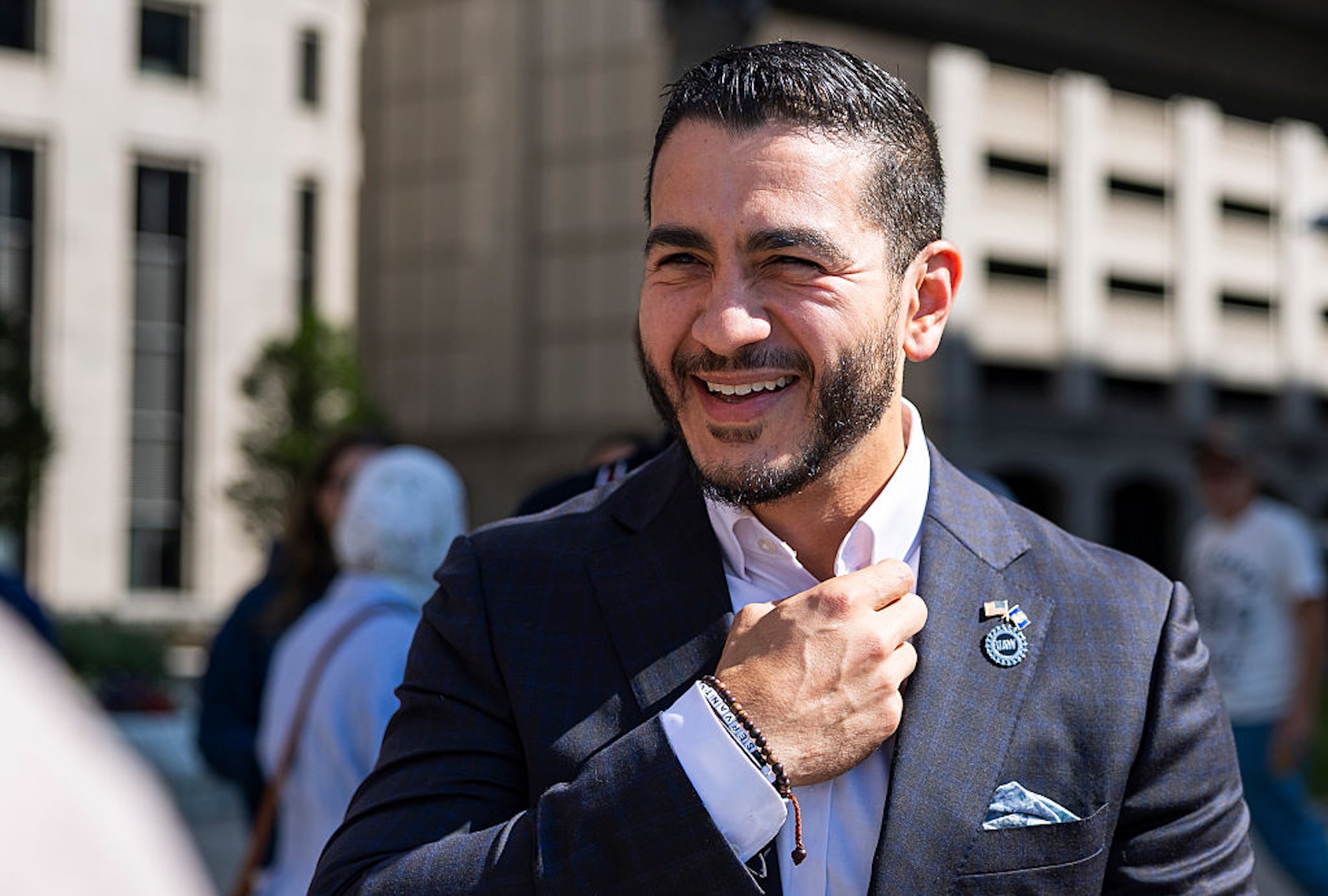
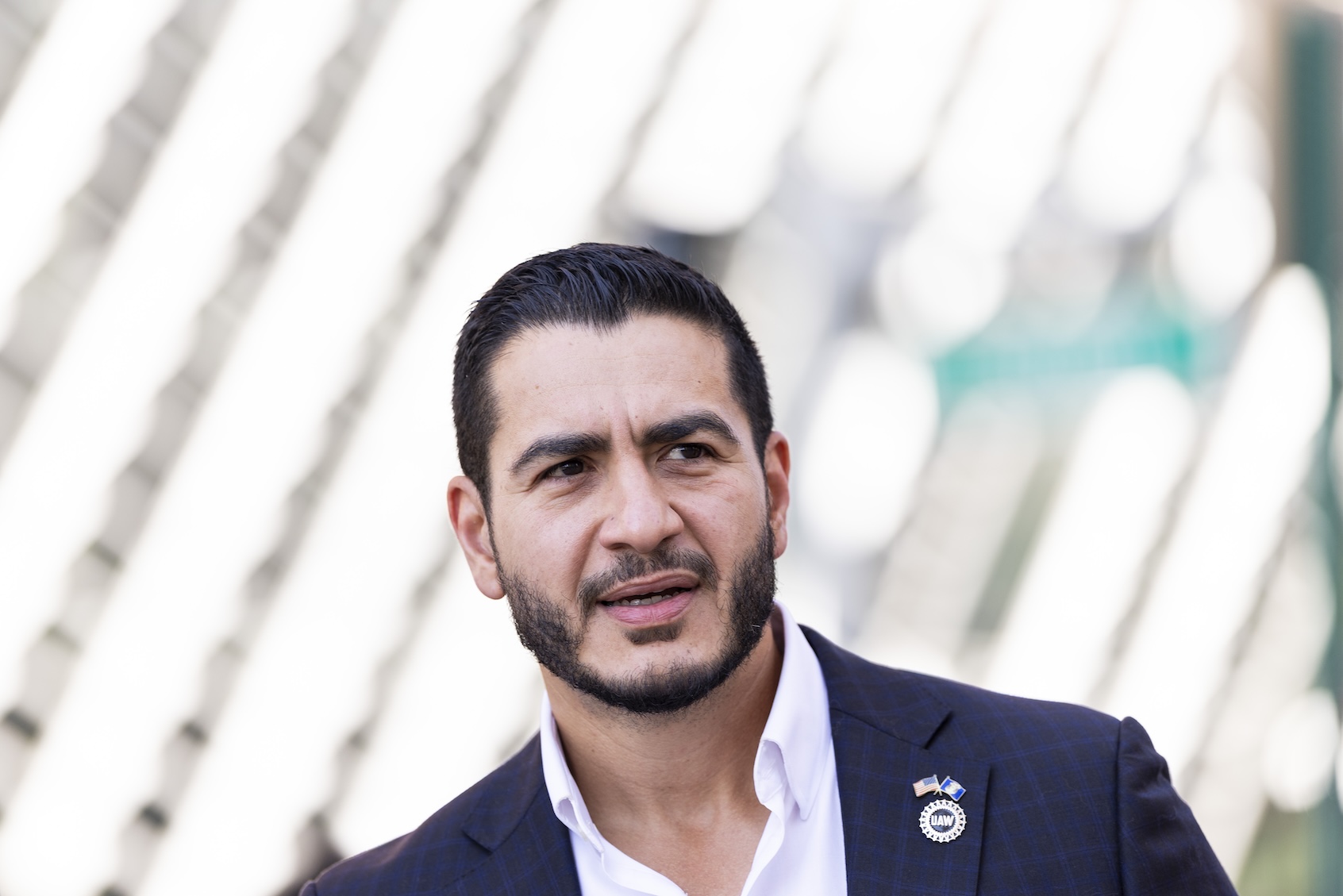
On Wednesday morning, shortly after Dr. Abdul El-Sayed won the hotly contested Michigan Democratic Senate primary in a slender victory, the Republican Party let slip the dogs of war. Barely 15 minutes after the Associated Press called the race for the unabashed progressive and first-time candidate for federal office over the centrist Rep. Haley Stevens, Donald Trump was crowing on Truth Social that the 41-year-old El-Sayed’s win was “great news for the Republican Party.” The newly minted Democratic nominee, he wrote, is “a Communist loser who hates Jews and Israel.”
As he has for 10 years, the president set the tone for the rest of the GOP.
By the noon hour, the National Republican Senatorial Committee had fired off an attack ad that led with Islamophobia and recalled the attempts from some quarters to define a certain Illinois senator who carried the name Barack Hussein Obama. “Abdulrohman Mohamed El-Sayed,” the ad began, making a point to use the candidate’s full name, an obvious move to launch the process of otherizing him to voters in Michigan and across the country, “[is] the most radical Senate candidate in America.”
But the day’s vilest moment came three hours later when Alabama Sen. Tommy Tuberville, who has always demonstrated a willingness to go there, invoked the T-word in a brief interview.
But the day’s vilest moment came three hours later when Alabama Sen. Tommy Tuberville, who has always demonstrated a willingness to go there, invoked the T-word in a brief interview as he boarded an elevator after voting to confirm Dr. Erica Schwartz, Trump’s controversial nominee to head the Centers for Disease Control and Prevention.
“The guy was basically a cheerleader for 9/11,” Tuberville told me, linking El-Sayed to a comment made by the popular far-left streamer Hasan Piker, with whom the candidate campaigned, that “America deserved 9/11.” (When asked in April by POLITICO about Piker’s remarks, El-Sayed characterized the question as a “gotcha game” and said “I’m not here to disavow people’s views”; Piker later apologized for the comments, calling them “inappropriate,” “messed up” and a failed attempt at satire.) “I mean, come on,” Tuberville continued, “the country’s changed, but it hasn’t changed this much to put people in [office] that are basically terrorists.”
When I asked if he was calling El-Sayed a terrorist, the senator replied, “I say he’s got the ability to become one.”
Tuberville has the political incentive to make such inflammatory remarks; they will play well to Republicans in Alabama, where he is running for governor, and he has no grand designs on national office. But they and the GOP’s larger response to El-Sayed’s win reflect another emotion that is running throughout the party. Although Republicans got the Democratic opponent they professed to want for former Rep. Mike Rogers, who lost a Senate race to Elissa Slotkin in 2024 only by the thinnest of margins, they are also scared — and with good reason.
El-Sayed has got game. When I approached his campaign for comment on Tuberville’s remarks, I was directed to an exchange he had on Wednesday night with CNN’s Kaitlan Collins, in which he addressed the Republican onslaught.
“There are people like J.D. Vance or Donald Trump or Mike Rogers, who want to define America as being too small to include some kinds of people, and they point to my name, they point to my faith, they try to insinuate that somehow I’m less American because of those things,” El-Sayed said. “They want America to be small. I believe that America is big. It’s open-minded. It’s big-hearted. It can include any of us, regardless of how we pray, regardless of where our families come from, regardless of who we love or how we identify. That’s the America we’re building. And I think America, in Michigan in particular, has an opportunity to remind us just how big we are.”
Although El-Sayed has never run for federal office, these are not the words of a political novice. He is a gifted communicator, able both to make open-hearted, aspirational appeals and channel anger at billionaires and elites, a needle Sen. Bernie Sanders, I-Vt., for all of his influence on the Democratic Party, has never quite been able to thread.
But unlike eloquent politicians known to be showhorses, enjoying the social media clips from their media hits, El-Sayed is a workhorse, and this combination makes him formidable. One reason for his primary win is that he simply outworked Stevens, visiting over 110 cities, according to his campaign, holding over 500 public events and, in the process, building a genuine movement. This tenacity, along with rallying cries of “Medicare for All” and getting money out of politics, helped him overcome the opposition of the Democratic establishment and over $60 million in spending by super PACs supporting Stevens.
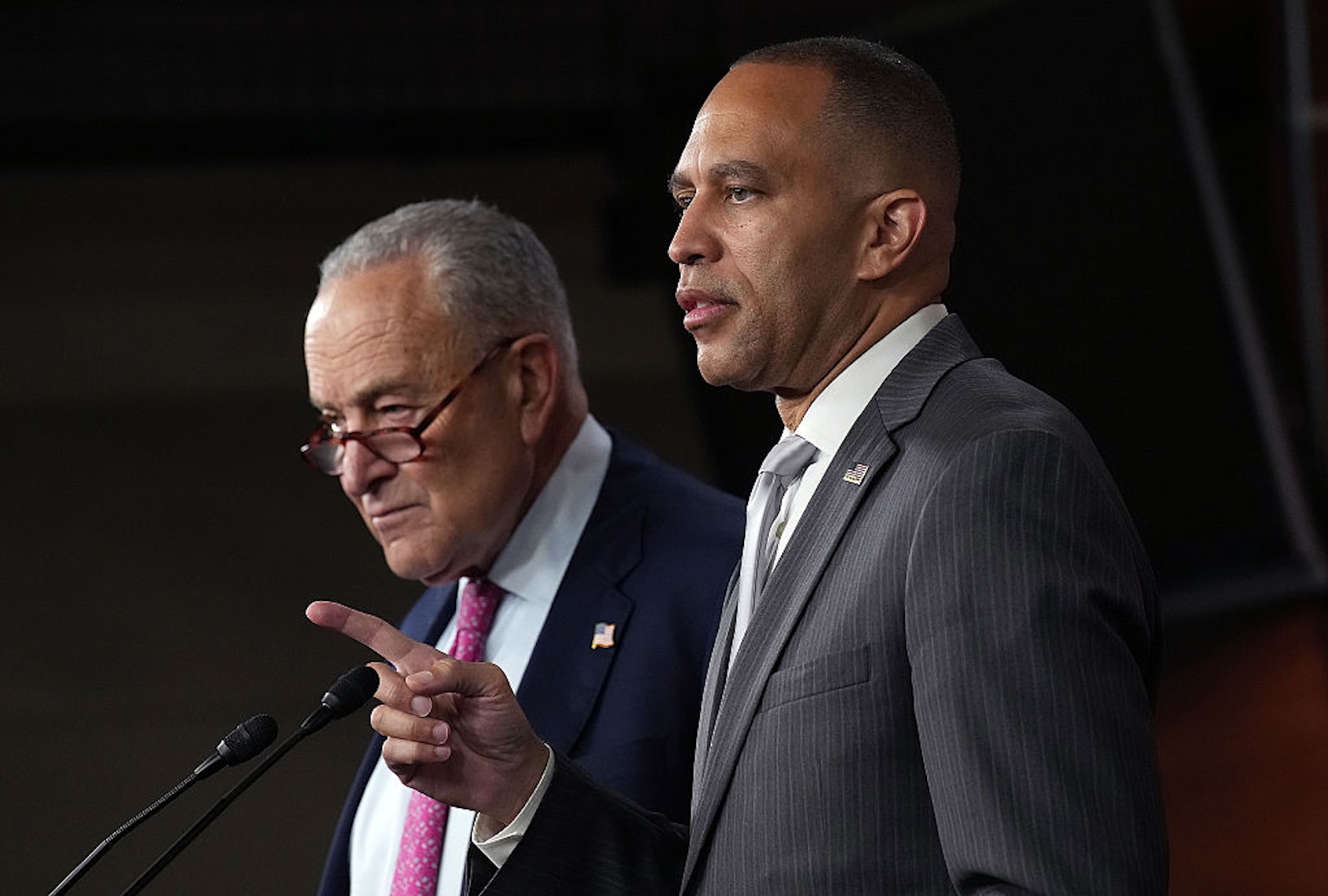
Nevertheless, after the race was called for El-Sayed, the Democratic Party quickly coalesced behind him and he was reportedly fielding calls from former Vice President Kamala Harris, former Transportation Secretary — and Michigan voter — Pete Buttigieg and Senate Minority Leader Chuck Schumer.
The stakes are high. Polls taken before the primary showed El-Sayed trailing Rogers by a larger margin than Stevens. Democratic control of the Senate runs through Michigan, and as many have pointed out, El-Sayed’s win has teed up a first-of-its-kind test: whether a progressive can win in a swing state that narrowly voted for Trump in 2016, went for Biden four years later and returned to Trump in 2024. El-Sayed will need to be even more nimble than he already is and avoid giving the GOP talking points.
Despite generous overtures to Stevens and assurances to the Jewish community El-Sayed made in remarks on Wednesday morning after the race was called, there are intraparty divisions left to heal. He must set to work convincing centrist and moderate Democrats, Black voters in urban areas and suburban voters, all of which Stevens carried, as well as disaffected independents, that he is worthy of their vote. The race will be tough, but it is winnable, even as he continues to face GOP efforts to define him on their terms.
Responding to a reporter who asked about how Republicans are deploying his name in their attacks, El-Sayed said, “That’s the only play they got.”
Whether that’s true or not, between now and November, we’ll see if it works.
Additional deaths involving Delaney Hall, a private immigration jail run by The GEO Group in Newark, New Jersey, has sparked renewed calls for the closure of the notorious 1,000 bed facility even as the Trump administration dramatically increases arrests and detentions across the nation.
On Saturday Aug. 1st, 41 year-old Edwin Lopez-Cornejo died while in custody. Multiple press reports and Lopez-Cornejo’s mother maintain that Lopez-Cornejo, a father of a 12-year-old girl, who suffered from chronic illness, died from medical neglect after he was refused treatment. He had been in the United States for 20 years and was taken into custody on his way to work.
In a statement shared with CNN, Immigration and Customs Enforcement said that Lopez-Cornejo “experienced a medical emergency while in ICE custody,” and GEO Group staff “responded immediately and called 911 for emergency medical services.”
After the confirmation of Lopez-Cornejo’s death, Rep. Robert Menendez (D-NJ) disclosed he had learned of a third death in late July in which the detainee experienced a seizure not long after arriving at Delaney Hall. According to Menendez’s account, GEO Group and ICE officials told him they called for EMS and the unidentified man was taken to University Hospital where he died. His name and additional details have yet to be disclosed.
Back in December 2025, 41 year-old Jean Wilson Brutus died while in custody in Delaney Hall. At that time, 30 people had died in ICE custody across the country that year.
Unlike the high profile violent confrontations witnessed in Minneapolis that sparked massive street protests and culminated in the murders of Renee Good and Alex Peretti, ICE is now utilizing non-law enforcement databases for programs like Medicare to target and apprehend thousands of people who are actually in this country legally. In fact, scores of American citizens have been abducted off the street and detained.
Since Delaney Hall re-opened as a private immigration prison at the start of the second Trump admin, grassroots groups like NJ Pax Christi and Eyes on Ice NJ have had a humanitarian witness at the site located next to the Essex County Correctional Facility in the Ironbound section of Newark.
At least 22 people have died in ICE custody in 2026, with close to four months still to go in this year.
Back on May 9, 2025 masked federal agents abducted Newark Mayor Ras Baraka off of a public street outside the private jail, only to release him later that day after a mass non-violent protest. While charges were dropped against Baraka, President Donald Trump’s Department of Justice continues to prosecute Rep. LaMonica McIver (D-N.J.) on charges related to that day that could result in a 17 year jail term. McIver, along with Rep. Robert Menendez Jr. (D-N.J.) and Rep. Bonnie Watson Coleman (D-N.J.), who were also on site at Delaney Hall that day, insist they were there only fulfilling their constitutionally-protected oversight duties.
The city of Newark has been pressing for The GEO Group to permit a fire inspection and obtain a certificate of occupancy for the sprawling private jail. Back in 2021, activists had successfully lobbied the state of New Jersey to prohibit municipal and county governments as well as private facilities from entering into new contracts with ICE to house immigration detainees.
Private jailers like The GEO Group successfully challenged the legislation in court. At the time, the Biden administration was holding more than 26,000 detainees nationwide at more than 120 sites. Multiple press reports indicate the Trump administration is now holding almost three times that number at over 450 facilities in all 50 states, Washington D.C. and in U.S. territories. In July, ICE reported it had arrested 51,000 people, the largest number in the Department of Homeland Security’s history, according to ABC News.
On the 2024 campaign trail, Trump pledged to target millions of U.S. residents and “deport them so rapidly” he would “rescue every town that had been invaded and conquered.” In that same campaign, Vice President JD Vance advanced an admittedly completely fabricated story about Haitian immigrants in Springfield, Ohio kidnapping and eating their neighbors’ domestic pets. The claim was so outrageous that local municipal officials and Ohio’s Republican Governor Mike DeWine spoke out on behalf of Springfield’s Haitian residents, who they said had filled jobs in the rust belt town that had actually helped revive the local economy.
At least 22 people have died in ICE custody in 2026, with close to four months still to go in this year. That does not include the multiple fatal shootings just since Trump was sworn in for the second time. According to the Guardian, last month’s fatal shooting of 52 year-old Lorenzo Salgado Araujo was the 10th such fatal ICE shooting since Trump regained office.
In an interview with WBAI Pacifica Radio, Rep. Analilia Mejia (D-N.J.), who has been in Congress for less than three months, recounted that in her multiple visits to Delaney Hall “what was clear was that there were individuals being detained with chronic health conditions that were not receiving the kind of care that is necessary and mandated by their doctors.”
Lack of access to timely medical care has been a long standing and well-documented complaint throughout the ICE system and private contract immigration prisons across the nation.
Over the Memorial Day weekend, 300 detainees launched a hunger and labor strike at Delaney Hall. Under the GEO Group business model, detainees maintain the private jail for a dollar a day. Earlier this summer, large crowds of protestors converged on Delaney Hall in support of the hunger strikers.
(Photo by Spencer Platt/Getty Images) ICE agents stand guard in front of protesters outside Delaney Hall which is being used as an Immigration and Customs Enforcement detention center on May 26, 2026 in Newark, New Jersey.
While New Jersey Gov. Mikie Sherrill has been a vocal opponent of the private jail and was turned away when she initially came for a visit, she did call out the New Jersey State Police at the height of street protests outside Delaney in solidarity with the hunger strikers.
The move marked a significant escalation and came after the Trump administration threatened to suspend the processing of international flights at Newark Liberty International on the eve of the World Cup, in which New Jersey had invested heavily.
Henry Craver, writing for the American Friends Service Committee, described GEO and ICE’s repressive and violent response to the show of solidarity for the hunger strike.
“In one incident guards tried to remove a strike leader soon after the strike began,” Carver wrote. “When other detained people formed a human shield around him, armed officers returned in force. They swept through multiple units, physically assaulted people, and deployed tear gas. People in those units told AFSC that they struggled to breathe for hours after.”
Carver continued: “The retaliation escalated in the following weeks. Hundreds of detained people have been transferred out of Delaney Hall to facilities in Colorado, Arizona, New Mexico, Texas, Louisiana, Mississippi and Pennsylvania — far away from their families and communities.”
With a Republican Congress very much under the control of Trump, efforts at oversight of ICE and the private prison system that has expanded significantly has been left to the Democrats, who are in the minority. Grassroots efforts at the municipal level have been far more effective in galvanizing resistance to the creation of new immigration prisons.
State lawmakers also have a mixed record when it comes to reigning in ICE’s mass deportation strategy. A federal judge recently struck down New York State’s legislation to prohibit federal agents from wearing masks while letting stand a provision that prohibits town and county governments from entering into so-called 287(g) partnership that deputizes local police to enforce immigration laws.
“I need to say that every single American should be paying attention to what’s happening here — our government is treating a set of people with such impunity, with such inhumanity it is costing them their lives,” Mejia said. “Now we can debate our positions on immigration and immigration reform but I think it is fair to say that essentially sentencing people to death is not what the American people are calling for or want.”
Mejia continued: “It is imperative that at least the state of New Jersey is pushing hard to make sure that our state officials have full and unrestricted access to these detention centers to ensure the well being of these individuals. These are human beings.”
Trump has repeatedly described undocumented immigrants as “animals,” “illegal monsters” and “gang members” staging “the largest invasion in the history of our country.”
These claims, which have been the way the Fox media complex frames the immigration, are easily debunked by study after study that found immigration into the U.S. is actually associated with lower crime rates.
Abdul El-Sayed isn’t worried about Islamophobic attacks on the campaign trail.
The progressive Democrat who just won a hotly contested primary in Michigantold reporters on Wednesday that he’s willing to take smears on the chin, saying that name-calling and bigotry is “the only play” in his opponents’ playbook.
“That’s the only play they got,” he said. “They’re going to point at me. They’re going to point at my name like, ‘Well, he’s different.’ That’s the best you got?”
The former public health director has stuck to a platform centered on affordability at home and an end to foreign entanglements. He said that Islamophobia is a cop-out because his opponents don’t want to debate substantive issues.
“You can’t actually talk about what you want to do?” he said. “My name is not raising your gas prices. My name is not taking us to war. My name is not the reason you can’t afford groceries.”
El-Sayed will face Former Republican Rep. Mike Rogers in the upcoming midterms. He encouraged Rogers to come up with a better line of attack than his identity, because he doesn’t think his Michigan voters will bite.
“I’ve been an Abdul in Michigan my whole life. This is the best place in the world to be Abdul,” he said. “Michiganders are big-hearted, they’re open-minded… [They’re] sick and tired of BS politics coming in to divide us.”
While Jeffrey Epstein’s island or his various mansions get a lot of attention, the late sex offender and financier’s New Mexico Zorro Ranch was also allegedly the site of extensive abuse and criminal activity. Now, in a lawsuit filed Wednesday, the Department of Justice and acting Attorney General Todd Blanche, are accused of “stonewalling” New Mexico’s criminal investigation of Epstein’s activities at the ranch outside of Santa Fe.
New Mexico’s Attorney General Raúl Torrez, who is behind the lawsuit, argues that the DOJ unlawfully withheld records, therefore delaying justice for victims. The lawsuit accuses Blanche and the DOJ of perpetuating “that disgrace” of failing to investigate or hold Epstein accountable before his death. The suit requests the court to order the DOJ to provide the requested unredacted records.
“USDOJ and Acting Attorney General Blanche are refusing to facilitate the investigation of state law crimes by hiding information about Epstein and his co-conspirators from Attorney General Torrez and state law enforcement, when New Mexico is one of few jurisdictions that still may have an opportunity to hold Epstein’s associates accountable or otherwise provide some sense of justice to survivors,” the lawsuit reads.
Meanwhile, New Mexico’s legislative “truth commission” released its first report on Zorro Ranch Wednesday, but the 119-page document offers little in the way of new revelations or recommendations. It draws heavily on news reports and what has so far been released from the Epstein files, but does underscore numerous hurdles the investigation has faced.
“Those in law enforcement most responsible for protecting New Mexicans from Epstein played a passive role in investigating him, letting others in Miami and in New York do it. As a result, the conduct of Epstein and his co-conspirators in New Mexico went unexamined and unpunished,” the authors conclude. “Going forward, this commission endeavors to uncover the truth so many for too long were blind to.”
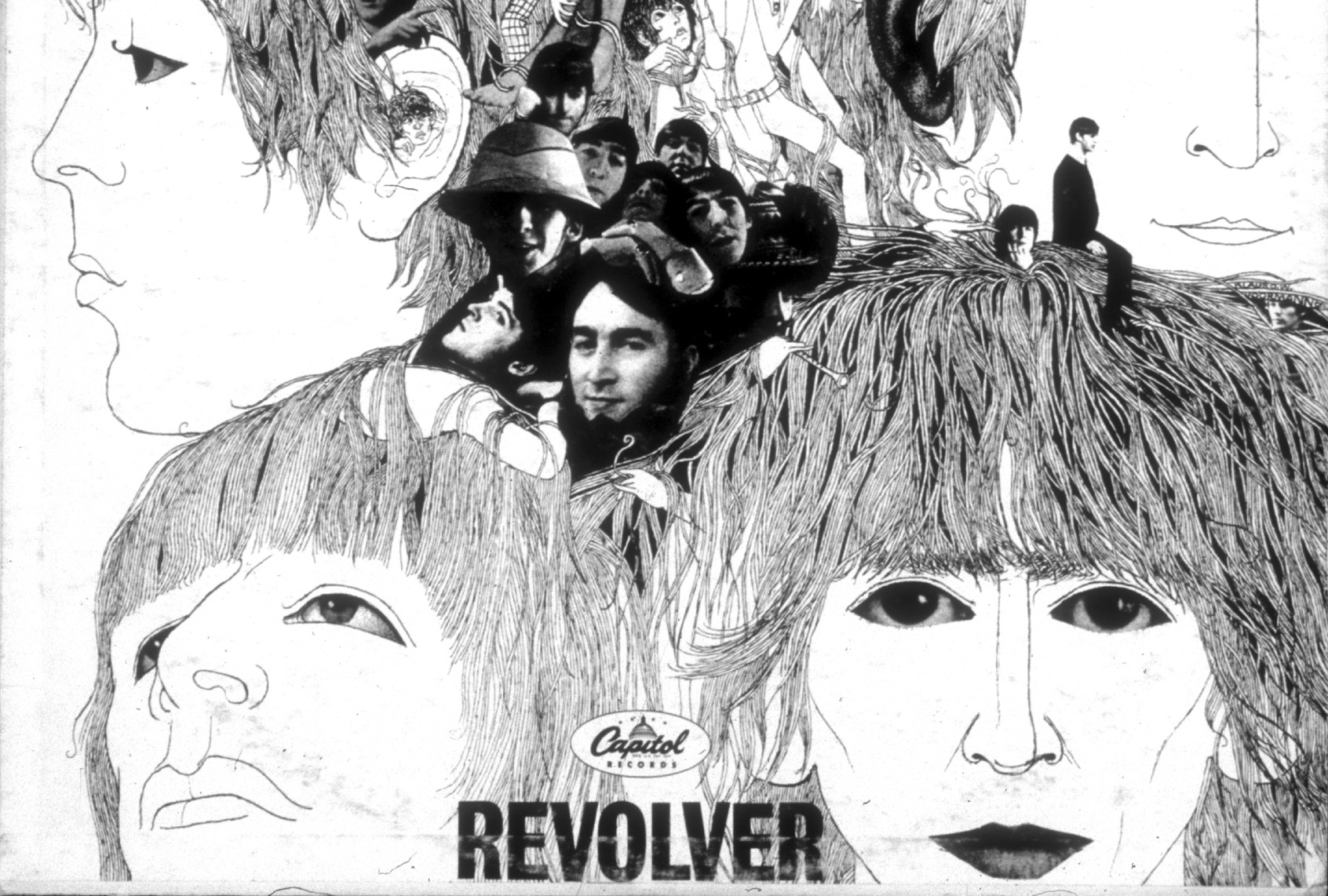
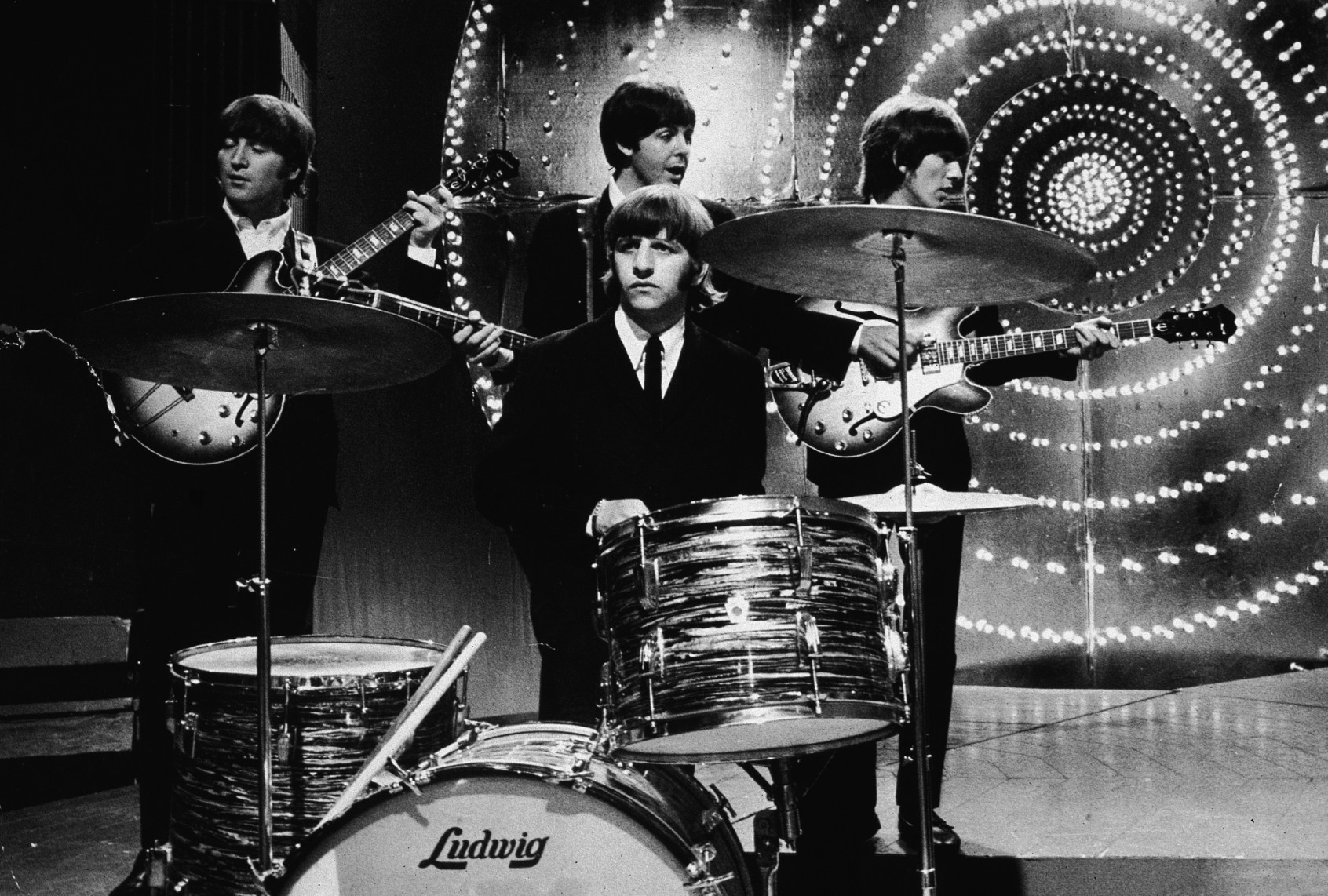
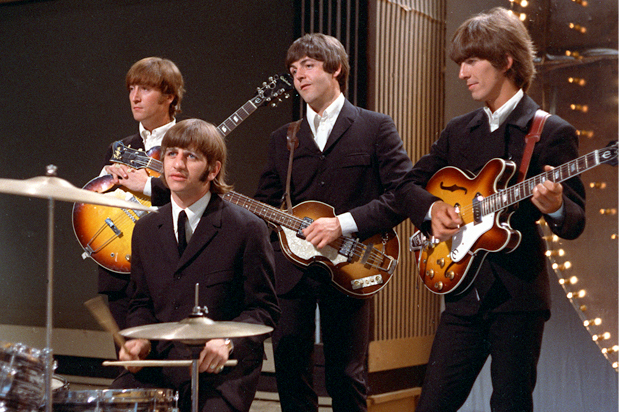
For folks who spend the majority of their waking hours contemplating the music of The Beatles — and there are probably vastly more of us than you might think — “Revolver” (released on August 5, 1966, in the United Kingdom) sure checks a lot of boxes. For one thing, the album’s 14 tracks are a tour de force, a masterpiece of inspired songwriting and musicianship. The LP is also a whirlwind of competing genres in which John Lennon, Paul McCartney, George Harrison and Ringo Starr flex their muscles and prove that they’re at home in virtually any genre.
But when it comes to The Beatles’ unparalleled legacy, “Revolver” finds the bandmates on an unimpeded trajectory towards greatness. Released the previous year, “Rubber Soul” set things into motion — arguably rock’s first cohesive LP. The Beach Boys’ Brian Wilson later recalled being mesmerized by the album, the first record, to his mind, that didn’t have any filler. Just one study in pop-music mastery after another.
In terms of the album’s reception history, “Revolver” has enjoyed a strange odyssey in the United States. For many critics, it served as the tantalizing appetizer before the release of “Sgt. Pepper’s Lonely Hearts Club Band” in 1967, a dazzling entrée if ever there were one.
And for years, “Sgt. Pepper” reigned supreme, routinely topping “best of” lists as the finest album ever recorded. In the decades since the release of The Beatles’ masterworks on compact disc in 1987, when the group’s American LPs were deleted in favor of their canonical UK counterparts, the “Revolver” album has slowly but surely gained momentum — particularly among Stateside listeners, who had no idea what they’d been missing.
As we celebrate “Revolver”’s 60th anniversary, I have come to see the album as The Beatles’ thrilling turning point — in many ways, a continuation of their virtuosic performances on “Rubber Soul.” George Harrison seemed to agree. In later years, he would describe the records as parts one and two of the same album. In one sense, he was selling himself short: “Revolver” featured three Harrison compositions, a glut of new material that included “Taxman,” “Love You To” and “I Want to Tell You.”
Want more from culture than just the latest trend? The Swell highlights art made to last. Sign up here
Harrison, of course, was by no means alone. Paul McCartney and John Lennon, too, rose fully to the occasion, reeling off such masterworks as “Eleanor Rigby” and “Tomorrow Never Knows,” not to mention a bravura single’s release featuring “Paperback Writer” and “Rain.” All told, The Beatles and their magisterial producer George Martin loosed 16 amazing new songs into the world in August 1966, an incredible bounty, by any measure.
Ultimately, “Revolver” exists as a weigh-station, of sorts. First, it was the culmination of the most profound demographic growth in the history of entertainment. During their early years, the band appealed to a narrow swathe of teens and young adults. But all of that changed with “Yesterday,” which Martin adorned with a string quartet. Not only did “Yesterday” emerge as a chart-topping American hit, but the groundbreaking song also saw the band growing their demographic to include the highly desirable world of working adults, ages 25-54, who longed for something more sophisticated.
And then there was “Revolver”’s “Eleanor Rigby” and “Yellow Submarine.” In one fell swoop, The Beatles penetrated two more demographics. “Eleanor Rigby” attracted a post-55 audience in droves, while the good-natured storyline and nautical sound effects inherent in “Yellow Submarine” drew children and pre-teens into The Beatles’ camp. Quite suddenly — and scarcely more than two years after their triumphant American debut on “The Ed Sullivan Show” — the group dominated nearly every quadrant of the consumer age range.
(Michael Ochs Archives/Getty Images) The Beatles’ “Revolver” album cover, designed by artist Klaus Voormann
Yet feats of demography are only part of what “Revolver” bequeathed. The LP served as a runway — or perhaps more accurately, a launching pad — for the more experimental and challenging efforts to follow. There they are, in quick succession: “Sgt. Pepper,” “Magical Mystery Tour” (1967), “The White Album” (1968), the “Get Back” project (1969, released the following year as the “Let It Be” album), and “Abbey Road” (1969).
And then they were gone, leaving a sense of wonder and mystique in their wake that remains unparalleled in the annals of popular music — perhaps even for the whole of Western art. But first, there was “Revolver” — a glittering array of musical chestnuts that we’re only just beginning to appreciate.
This year’s “Everything Fab Four” Fest, taking place November 5-8 at Monmouth University in New Jersey in conjunction with the Bruce Springsteen Center for American Music, will be a celebration of the 60th anniversary of “Revolver.” Please watch for more details and ticket information soon.
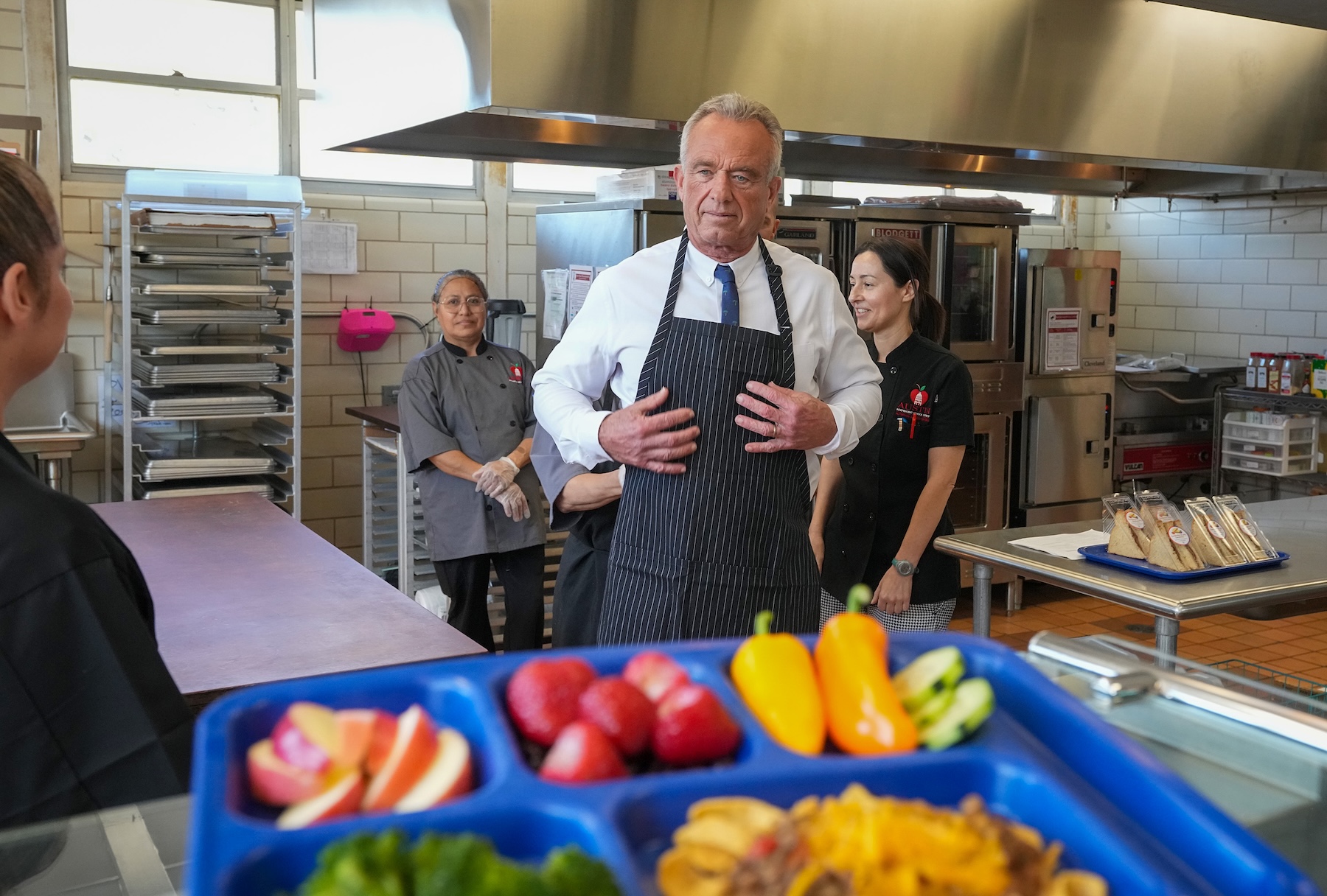
At the end of the debut episode of “The Real Food Show,” Robert F. Kennedy Jr. spears a single bite of salmon cake and brings it to his lips. “Amazing,” he says, giving chef Andrew Gruel a slack thumbs-up. The salad on the plate — arugula, white beans and sliced apple — remains untouched. Kennedy does not go back for another bite.
“Thank you,” Gruel replies. “First time I’ve cooked for a dignitary.” Kennedy pats him quickly on the back, then turns to the camera. “We’re here today to teach Americans how to eat real food, high-quality food at affordable prices,” he says, “and we’ll see you next time.”
The bite, it turns out, was less a culmination than an exit cue.
This is the central uncanniness of “The Real Food Show,” which contains all the familiar furniture of a cooking program — the studio kitchen, the chef, the recipe, the price graphics, the ceremonial final bite — but almost none of the curiosity or pleasure that ordinarily gives the form life.
Food is everywhere, but appetite is nowhere.
Officially, “The Real Food Show” is a new HHS cooking series intended to bring the Dietary Guidelines for Americans to life through affordable recipes, easy techniques, practical nutrition advice and special guests preparing their “healthy signature dishes” alongside Kennedy.
(Kennedy is not, apparently, the only member of President Donald Trump’s Cabinet to have recently heard the siren call of the web series. In May, Transportation Secretary Sean Duffy announced “The Great American Road Trip,” a family travelogue starring Duffy, his wife, Rachel Campos-Duffy, and their nine children. It was supposed to premiere in June; as The Bulwark’s Will Sommer noted this week, August arrived without a single episode. Kennedy may, for now, be the only Cabinet host who has actually managed to get his show on the air.)
The premiere opens with Kennedy standing inside a low-budget digital cornucopia. A red cartoon hunk of steak, a bronzed turkey, a few shrimp, a tub of unsweetened yogurt, an apple and a bag of frozen peas cascade alongside him. The show keeps insisting on “real food” while representing it through some of the fakest, cheapest-looking imagery available.
Thanks to President Trump, Kennedy announces, “we’ve flipped the food pyramid and put real food back where it belongs, at the center of the American plate.” He plans to travel across the country showing families how to cook delicious, nutritious meals with real ingredients at affordable prices. At the word “affordable,” a blizzard of dollar bills begins to fall behind him.
The digital collage gives way to a more familiar cooking-show fantasy. Kennedy joins Gruel — a chef, restaurateur and prominent opponent of COVID-19 restrictions in 2020 — in a bright white studio kitchen. They wear matching “The Real Food Show” aprons. Behind them, cookbooks line the shelves, fruit has been arranged decoratively across the counters and every surface gleams with aspirational domestic ease. The set, at least, knows exactly what a cooking show is supposed to look like.
Gruel begins with an entirely reasonable proposition. The ingredients will be familiar to home cooks, he says, but he will introduce a few “cheffy tricks” along the way.
Before much cooking can occur, however, Gruel explains that many Americans are addicted to processed foods because those foods have been chemically engineered to be addictive. With a few whole ingredients, he says, they can make something just as delicious. This, too, is familiar enough advice. What is strange is the air of grim discovery around it, as though the pleasures of cooking with recognizable ingredients had only recently been recovered from a hostile laboratory.
Gruel selects seafood, one of what he calls the country’s “bounty items,” and announces that they will make salmon cakes. The recipe calls for a pound and a half of frozen salmon; an on-screen graphic prices it at $8.99, without naming a retailer or indicating that the fish is on sale. When I checked my local Mariano’s in Chicago, the same amount, even at its sale price, came to about $12. The difference is not ruinous, but it is the first indication that the show may be playing loosely with its promise of meals costing less than $5 per serving.
Gruel notes that home cooks can use another kind of fish, even canned fish — useful, flexible advice that is also so broad as to become generic. Rather than explain how a leaner fish or one packed in oil might change the cake, the recipe simply expands to encompass nearly anything.
There is a brief detour about frozen salmon. Gruel explains that freezing fish kills parasites. Kennedy listens attentively. Given the secretary’s own much-discussed brain-worm story, the moment lands like a joke no one on set appears to notice.
The salmon goes onto a sheet pan. In the kitchen, Gruel recommends rubbing it with avocado oil, salt and fresh herbs. The accompanying graphic quietly offers two additional fats: olive oil and beef tallow, the latter a favorite within the administration’s anti-seed-oil discourse. Viewers are then instructed to roast the fish at 400 degrees for eight minutes. There is no meaningful guidance about the thickness of the fillets, the temperature they should reach or how to tell when they are done.
Yet, the salmon reappears cooked and cooled. Before the hosts can begin flaking it, however, the show pauses to consider why Americans eat so little fish compared with people in Japan.
Kennedy suspects the difference is cultural: In the United States, he says, people tend to think of meat when they think of protein.
It is a curious diagnosis from an administration whose senior officials have lately been swapping notes on a regimen nicknamed the “sauerkraut diet.” Kennedy and several other Cabinet members have reportedly embraced versions of the plan, which emphasizes grass-fed meat and fermented foods while eliminating alcohol and sugary foods. The physician behind it advertises direct consultations costing as much as $18,000. The show, meanwhile, suggests that ordinary Americans priced out of meat try fish — any fish, even canned.
The advice is useful. The asymmetry is difficult to miss.
Then, at last, they cook together. Kennedy flakes the cooled salmon into a metal bowl while Gruel adds an egg, panko, Dijon mustard, chopped red onion, chives, nutritional yeast and avocado-oil mayonnaise. Small price graphics pop up beside the ingredients as they go: 25 cents for the egg, another modest sum for the breadcrumbs. Gruel talks Kennedy through the mixture, offering the kind of loose, adaptable instruction home cooks have received from television chefs for decades.
The recipe proceeds in the key of perfectly fine. The ingredients are accessible, the substitutions sensible, the salmon cakes plausible weeknight fare. The show’s strangeness does not arise from strange cooking advice, but from the ideological burden placed upon it: An ordinary fish cake becomes evidence that Americans might eat their way toward a healthier, more fiscally disciplined nation.
It’s time for a side.
First, however, Kennedy pauses to relitigate the federal government’s recent nutrition policy. The Biden administration’s dietary guidelines ran 453 pages, he says, with the number offered as self-evident proof of their absurdity. His department threw that work “in the trash,” assembled a new group of nutritionists and, he jokes, locked them in a room for 11 months to produce recommendations actually grounded in science. For decades, Kennedy says, the government has lied to Americans about saturated fat.
When the cooking resumes, several salmon cakes have already been shaped and set aside. Gruel explains that resting allows the panko to absorb moisture, though he does not say how long that takes. The finished cakes are browned and appealing.
Pleasure is never quite sufficient justification for cooking something yourself; the viewer must also understand that the old version was artificial, addictive or imposed upon them by a corrupt system. Even the vinaigrette arrives as evidence in a case.
The side dish is a salad of apples, white beans and greens with a simple vinaigrette. Gruel recalls growing up in what he calls the “microwave generation,” in a house stocked with cereal, pasta, refined carbohydrates and premade salad dressings. He describes himself as having been “addicted” to them. Making your own dressing, he says, is one of the easiest ways to improve your cooking.
He is right. Homemade vinaigrette is quick, inexpensive and generally much better than the bottled kind. But “The Real Food Show” cannot recommend a salad dressing without first convening a tribunal. Pleasure is never quite sufficient justification for cooking something yourself; the viewer must also understand that the old version was artificial, addictive or imposed upon them by a corrupt system. Even the vinaigrette arrives as evidence in a case.
That moral framing has consequences beyond the kitchen. “The Real Food Show” never explicitly argues that a salmon cake can replace a social safety net. Some viewers, however, appear ready to complete the thought. “Exactly the type of videos a HHS secretary should be posting,” one commenter wrote. “Good food = Good health = Drastically reducing healthcare budgets.”
It is only one comment, not an official statement of policy. But it articulates the logic hovering around the episode: If Americans can be taught to eat correctly, perhaps they will require less care — and perhaps the government can spend less providing it. That implication is particularly grim after Trump and congressional Republicans enacted legislation projected to reduce federal Medicaid spending by nearly $1 trillion over a decade and leave over 10 million more people uninsured in 2034. The same law is expected to cut federal SNAP spending by roughly $187 billion through expanded work requirements, narrower eligibility and new costs for states.
None of this makes the show’s basic proposition false. Nourishing food can support good health, and learning to cook can make daily life cheaper, easier and more pleasurable. But nutrition instruction cannot substitute for the money, time, access and medical care required to follow it. The kitchen can do many things. It cannot absorb the obligations of the state.
Back in the studio, the final stretch is the show at its most conventionally useful. Gruel demonstrates a knife-sharpening technique, assembles the salad and plates the salmon cakes. Even with Kennedy looming over the counter more than sous-cheffing beside it, “The Real Food Show” briefly becomes the cooking program it has been dressed to imitate.
Then comes the first and final bite. Kennedy takes a stab at the salmon cake, brings one bite to his mouth and calls it “amazing.” He offers Gruel a lazy thumbs-up, accepts the chef’s joke about cooking for a dignitary and immediately turns to the camera to recite the show’s mission statement.
After an episode filled with warnings about addiction, government deception, processed food and discredited fats, the meal itself receives one adjective and one bite. Kennedy does not remark on its flavor or texture. He does not try the salad. He does not return to the plate.
The food has already performed its function. Nobody has to want a second bite.
Ariana Grande has been concerningly thin for years now, but the online discourse about her body exploded this week after she released the music video for “Petal,” the title track of her most recent album. The video’s storyline, in which the 33-year-old pop singer gets “Carrie”-style revenge for men’s misogynist judgments, was completely overshadowed by fan alarm at Grande’s apparent emaciation. Set in the 1960s, the colorful retro fashions hang off her skeletal frame.
“I can’t even enjoy the video without thinking she looks sickly every second she is on the screen,” one person posted on YouTube.
“At this point, im [sic] judging her team, friends, and family,” the video’s top commenter said. “This is insane.”
“She’s is surrounded by enablers,” another wrote. “Eating disorders are not a joke.”
These comments aren’t outliers. To the contrary, the entire discussion on YouTube was about Grande’s body, not the video’s visuals or the music, a lovely torch song where she compares herself to a “petal in the pavement.” While she likely intended the lyric to be empowering, instead it feels more like a metaphor for her apparent physical fragility.
Grande’s public relations team responded to the furor with denial, announcing that the singer would be “taking a step back from visibility” after finishing her tour, insisting that she’s living “both healthily and happily,” while blaming “endless, ongoing public scrutiny” for the move. Her retreat includes a withdrawal from a highly anticipated West End stage production of Stephen Sondheim’s musical “Sunday in the Park with George,” alongside her “Wicked” co-star Jonathan Bailey. The announcement also follows previous comments from Grande scolding people to “be gentler and less comfortable commenting on people’s bodies.”
In response to the news, the famously outspoken actress Jameela Jamil posted an Instagram story in which she argued that the calls of Grande’s team for privacy are missing the point. Jamil, who says she nearly died from her own eating disorder, pointed to Grande’s impressionable fans, “[m]any who have no support system equipped to handle the deadly clutches of anorexia.” Jamil later defended her post, pointing to the “young girls” who are watching the situation unfold, adding, “We don’t have to pretend we are blind because it’s a pop star.”
The ongoing battle over health, thinness and women’s bodies has become more political in recent years, as MAGA and MAHA influencers have turned weight into a culture war battlefield.
Jamil may be blunt, but her point is truer now than ever. The ongoing battle over health, thinness and women’s bodies has become more political in recent years, as MAGA and MAHA influencers have turned weight into a culture war battlefield. Many right-wing figures have become increasingly vocal in their belief that women shouldn’t only be skinny, they should also look weak. Conservatives aren’t just anti-fat anymore. Even building muscle is viewed as suspiciously feminist. Instead, women — and girls — are being told to strive to look frail instead.
Fueled by access to illicit use of GLP-1 appetite suppressants, recent years have seen a surge of online influencers who explicitly push starvation over health — and especially over strength — as a feminine ideal. On TikTok, the trend was even called “SkinnyTok,” where influencers like Liv Schmidt build a fanbase with videos highlighting their perilously meager diets. Most of this content is not explicitly political. But as The Atlantic’s Annie Joy Williams chronicled in June 2025, the right-wing politics aren’t far below the trend’s surface.
As soon as she started looking at SkinnyTok content, Williams wrote, “the tradwife content began to sneak in” to her algorithm. Soon she was being served videos not just about being super-thin, but also geared toward “embracing my divine femininity” and “my natural role.” Experts she spoke with noted this is a common right-wing recruitment tactic of grabbing people with seemingly apolitical content — such as “diet tips” — and then steering them toward far-right propaganda.
This is most clearly evident in the way that Evie Magazine, a far-right Christian magazine that sells its message using the aesthetics of popular women’s magazines like Vogue or Cosmopolitan, has embraced SkinnyTok influencers. In 2025 the publication profiled Schmidt, insisting that she’s merely “being honest” when telling followers that the only pathway to romantic and professional success is to eat as little as possible. Carmen Schober, the profile’s author, ignored the way members of Schmidt’s online forum, Skinni Société, commiserated about their hair loss and inability to stand without getting dizzy. The magazine also raved about “skinny queen” influencer Amanda Dobler for “not apologizing” after coaching followers to avoid even wasabi and soy sauce, because their negligible calorie counts are deemed excessive.
When I purchased a copy of Evie’s print magazine in May, I was alarmed at how the magazine not only promoted radical skinniness but also discouraged women from healthy habits like exercise. The issue explicitly told women to avoid exercise that builds muscle in “quads, hamstrings, and thighs,” on the grounds that it allegedly alienates men. The editors also discouraged women from cardio exercise, falsely claiming it will “throw your hormones off.”
“A woman who is sample size looks great in virtually everything she puts on,” Evie advised, implying throughout the issue that failure to maintain a size zero could ruin your marriage, or even drive your husband to cheat.
This hostility to women exercising has been accompanied by MAGA valorizing fitness as rightfully a masculine endeavor. Even members of Donald Trump’s administration, such as Health and Human Services Secretary Robert F. Kennedy Jr. and Defense Secretary Pete Hegseth, regularly post workout videos that frame exercise as men’s work, all about grunting and showing off muscles. While it’s rare they explicitly exclude women, the lack of female bodies becomes notable if you watch enough of the videos.
There is one form of exercise Evie and other right-wing influencers tacitly allow women: Pilates, a low-impact exercise similar to yoga. Pilates has a lot of benefits, but it’s not known for being especially sweaty or for building larger muscles. As The 19th reported in March, this has led to right-wing influencers extolling the “Pilates girl” as the ideal, since both strength and sweat are deemed too unfeminine. As a bonus, some on the right even claim there are no men in Pilates classes, a false claim that serves to protect fragile male egos from the possibility that a wife or girlfriend might speak to another man without supervision. But as any woman could tell you, Pilates isn’t exactly a calorie-burner. A woman who limits her exercise to Pilates will still have to subsist on very little food to get the delicate, bone-thin look these men conjure with the “Pilates girl” image.
Ariana Grande is an outspoken progressive who incorporates feminist themes in her music, and she would no doubt be horrified by the way the right is using the idea of thinness to bully women into submission and self-loathing. Indeed, Grande seems distressed by the discourse around her body, and she has said she wants people to leave her alone.
But this is where Jamil, perhaps in an impolitic way, is making a point that is both true and uncomfortable. Romanticizing extreme thinness contributes to eating disorders, which can do serious damage to the health of sufferers. In many cases, it might even kill them. That’s been true for decades, but now, as the issue has taken on political salience, the situation is even more alarming.
Women already have an uphill battle trying to maintain a healthy body image. It’s harder now that taking basic care of yourself is demonized as being “woke.”
The news came the way it always comes in my family, sideways, through a phone. I was in my living room, sunk into the chaise lounge I retreat to, comfortable in a way that now embarrasses me, when I heard my mother’s voice in the other room calling my father. Something in her tone. You learn your parents’ registers the way you learn weather, and this was the register of bad news from far away.
Greece was burning again. Crete worst of all, in the south, where a fire near Rethymno had driven some 8,000 people from their homes in a single night. Fires on Paros and Andros, scattered across the Aegean. And then the name I had been bracing against: Lesbos. A blaze near Plomari, the old ouzo town on the island’s south coast, was eating coastal homes while roughly 100 firefighters fought it, and a seaside resort emptied into the dark.
The fires are not a freak event, and no one in Greece pretends they are. They began in early July and have barely paused since; this is the second week of a major outbreak, dozens of fronts at once, fed by a record European heat wave, a spring of too little rain and the Meltemi, the dry seasonal winds that come screaming down the Aegean in July and August at up to 100 kilometers an hour and turn a spark into a wall. Scientists have said it plainly: Climate change is loading the dice, the Mediterranean’s pine and olive and dry scrub catch faster and burn hotter than they used to, and summers like this one are becoming the rule, not the exception. Greece has always burned in August. It has not always burned like this.
My father is from Lesbos. My mother’s people are from there too, further back, so the island runs down both sides of me like a watermark you only see when the light hits it right. It is where my family’s houses stand, where a portion of my life is already promised, where I know I will one day go to live for a while, because the pull has never once loosened. It is, if I am honest, where I come from in the deepest sense, not only the blood but the making. My love of poetry, my hunger for art — I trace all of it back to that island, to Sappho, who sang there 26 centuries ago and somehow reached a Greek-American boy in Pennsylvania and told him what he was.
I have not set foot on Lesbos in 10 years.
That is the sentence, the amount of time, I keep circling. Now I watch it burn on a screen from a soft chair, an ocean and a lifetime away, useless.
There is a particular helplessness to diaspora I have never quite found the words for, though I keep trying. You love a place you are not in. You grieve a fire you cannot smell.
There is a particular helplessness to diaspora I have never quite found the words for, though I keep trying. You love a place you are not in. You grieve a fire you cannot smell. You refresh a feed for news of a village whose name your relatives say with their whole mouths and you say with an accent that gives you away. The distance is not only miles. It is the knowledge that everyone there is living what you are merely watching, and that watching, from comfort, is its own small shame.
I was made by that island’s water. They tell me that as a baby, I would not leave the sea. I would stay in the Aegean until I cried at being carried out, submerging myself again and again until, the family story goes, I matched the sea, my skin gone the temperature of it, indistinguishable, a small animal that had already decided where it belonged. Even now, when I step into that water, something in me resets. The sun on it, the salt, the particular blue no postcard has ever gotten right — it reconnects me to my own being, returns me to whatever I was before the world got complicated.
There was a year, when I was barely one, that the island nearly kept me for good: a lost passport, a wary government that took an American baby for a Greek one, and a U.S. congressman who finally untangled it and got me home. It is a longer story than this essay can hold, but its shape has never left me. The point is this: That island has been trying to keep me since before I could speak, and I have spent a decade letting the ocean between us win.
And here is the thing I cannot hold simply, what kept me on the chaise longer than the news required. That same sea that baptized me is, for thousands of others, a grave.
Lesbos is not only my father’s Eden. For more than a decade it has been a frontline, the first Greek soil that exhausted, terrified people touch when they cross from Turkey in boats that were never built for open water. My sacred water is someone else’s last water. My homeland is a stranger’s checkpoint and, if they are lucky, their refuge.
I don’t know how to make those facts, that awful juxtaposition, clean, and I have stopped trying. Both experiences are true. The island is sacred to me for what it gave me, and it is sacred to the fleeing for what it offers them, which is the oldest thing land can offer: safety, ground, a place to stop running.
When the fires come, they do not check anyone’s passport. They take the olive groves and the goats and the summer houses, and they take the makeshift shelters and the fragile new footing of people who had already lost everything once. In Crete, the deadliest front this week, three firefighters have already died trying to hold the line against the blaze. That is what steadies me and breaks me in the same breath, that a land this rich in what it gives, in shade and figs and refuge and myth, keeps burning while the world half-watches.
A Mediterranean summer on fire has become a genre now, a seasonal rerun we thumb past on the way to something else. This year’s footage looks like last year’s, and that of the year before, a sameness that is its own quiet violence. Repetition sands horror down into wallpaper. But it is not wallpaper to the family loading a car in the dark, or to a firefighter’s widow, or to a man in Pennsylvania watching his one island go up in flames on a screen. Familiar is not the same as bearable.
What the fire has done, strangely, is make me want to go back not to take but to give. To help. To stand on the ground instead of scrolling past it. I have spent ten years loving Lesbos as an inheritance, a thing I own from a distance, and the smoke on my screen has shamed that love into something more useful. My mother’s ancestors and my father’s boyhood and Sappho’s fragments and the sea that raised me are all still there, waiting, under a sky the color of alarm. My uncle is in Athens. My family’s houses are still standing, for now. And I am here, finally understanding that loving a place from afar is not the same as loving it.
I think I will go to Lesbos this year. Not because the fire is out, but because it isn’t. The sea is still there. It is still the color no one can name. And it is still, for me and for the strangers arriving on its shore, the difference between drowning and being born.
Federal officials said the two states had failed to provide sufficient evidence that a number of disputed medical claims were legitimate. These include bills for in-home care and other services covered by the two states’ Medicaid programs for low-income residents.
Medicaid administrators say the funds can be recovered if the states supply the requested documentation. But the action is highly unusual: Typically, Medicaid officials partner with states to conduct an audit when they suspect fraud, a careful process that often takes years.
I’m a historian of social policy who led the first comprehensive historical overview of Medi-Cal, California’s statewide Medicaid system. I’ve found that U.S. leaders have long used the language of fraud and abuse to blur the line between correcting very real failures within Medicaid and – as I believe the Trump administration is currently doing – discrediting and defunding the program itself.
Who pays when Medicaid is cut? It affects children’s health care, nursing home care, disability services and health insurance.
Researchers estimate that almost 12 million people, on top of the estimated 28 million without health insurance in 2025, could become uninsured by 2034 due to these changes. By mid-2026, more than 3 million people had already lost their insurance coverage due to Republican changes to the Affordable Care Act.
‘Padlocking’ the ‘cookie jar’
In February 2026, Vice President JD Vance, Health Secretary Robert F. Kennedy Jr. and Dr. Mehmet Oz, the administrator of the Centers for Medicare & Medicaid Services, or CMS, announced a new anti-fraud initiative called Comprehensive Regulations to Uncover Suspicious Healthcare.
Also known by its rather unsubtle acronym, CRUSH, this initiative is taking unprecedented steps to withhold and defer funds in response to suspected fraud. “CMS is done trying to catch fraudsters with their hands in the cookie jar,” Oz said in announcing CRUSH’s formation. “Instead, we’re padlocking the jar and letting them starve.”
To be sure, Medicaid fraud, waste and abuse – such as providers billing Medicaid for services that are unnecessary or never rendered – are very real problems that cost taxpayers billions of dollars annually. They do divert funds from the low-income and disabled Americans enrolled in the program.
But the Trump administration’s latest moves are part of a much broader history of weaponizing Medicaid fraud and abuse – both real and imagined. I see them as a politicized attempt to prove that Medicaid itself is wasteful, that state governments cannot be trusted to administer federal money, and that public benefits inevitably invite dishonesty.
Secretary of Health and Human Services Robert F. Kennedy Jr. speaks about alleged Medicaid fraud and charges in Minneapolis in May 2026. Christopher Juhn/Anadolu via Getty Images
Providing little oversight at the start
Medicaid was established, along with Medicare for older adults, in 1965 as part of President Lyndon B. Johnson’s “Great Society” reforms. Despite providing millions of Americans with health insurance coverage for the first time, these programs had few centralized mechanisms for the kind of federal oversight that could prevent and catch fraud and abuse.
And the sheer scale and complexity of the Medicaid system – joint federal-state funding, varying eligibility requirements, millions of enrollees and thousands of providers – created opportunities for questionable billing practices among providers.
The 1970s saw a number of highly publicized Medicaid scandals involving nursing homes, laboratories, pharmacies and so-called “Medicaid mills” – healthcare providers that sought to bill the government for large numbers of Medicaid patients for shoddy and often fraudulent care.
The state-run Medicaid Fraud Control Units received generous federal matching funds to investigate and prosecute fraud.
The most serious Medicaid fraud was generally committed by healthcare providers and contractors, not patients. Medicaid Fraud Control Units were principally responsible for investigating providers, while also prosecuting the abuse and neglect of patients whose care was billed to Medicaid.
At the same time, however, Medicaid was becoming entangled in a broader political debate over social spending, whether many Americans were becoming too dependent on government benefits, and the alleged use of benefits by people who should not have received them. In the 1980s and 1990s, widely circulated stories about Medicaid exposed fraud and malfeasance by providers.
But disproportionately, they also highlighted the comparatively few instances of fraud by people enrolled in the program, such as cases where they submitted false receipts for covered medically related travel or sold drugs they obtained through Medicaid for free or at low cost.
Using Medicare fraud to justify spending cuts
The distinction between Medicaid and cash assistance programs, such as the Aid to Families with Dependent Children “welfare” program, frequently disappeared in political rhetoric. False or exaggerated stories that portrayed African American single mothers living extravagantly while fraudulently claiming welfare benefits became potent symbols of supposed government failure.
While campaigning as a presidential candidate, Ronald Reagan seized on this trope of the “welfare queen” in his attacks on social spending.
People line up at the Baltimore City Welfare Office in 1975, years before concerns about social spending led to big cuts to safety net programs. O’Halloran/Library of Congress via Getty Images
By the mid-1990s, opposition to welfare programs had become increasingly bipartisan. Politicians in both parties often used tales of Medicaid fraud on the part of providers and recipients to justify tighter eligibility rules and spending cuts.
Concerns about Medicaid’s “integrity” became highly politicized in the debates surrounding the ACA. Critics of Medicaid expansion argued that increasing the number of people who could get health insurance through the program would increase fraud and improper enrollment. Supporters of expanding Medicaid to help more Americans gain health insurance maintained that anti-fraud rhetoric often disguised ideological opposition to the program’s expansion.
Blurring distinctions then and now
For the six decades that this program has helped millions of low-income Americans get healthcare, politicians have blurred the distinction between protecting Medicaid from abuse and using abuse to discredit Medicaid itself.
In my view, the Trump administration’s campaigns against California and Minnesota continue that pattern. It is using real weaknesses within Medicaid to advance much broader political arguments: that Democratic states cannot be trusted, that public benefits naturally invite abuse, and that withholding funds is itself a form of reform.
The result will no doubt be that fewer low-income Americans will be able to get the healthcare they need.
Donald Trump hates embarrassing failures even when they are, ultimately, his own fault. So when the sealant on his $13.1 million-turned-$16-million Lincoln Memorial Reflecting Pool renovation started peeling off in sheets days after the pool reopened and the water turned green with algae, he couldn’t simply say that a rushed, no-bid contract handed to his golfing buddy’s company produced shoddy work. Instead he demanded a villain, and the weaponized Justice Department complied.
On July 2, 2026, U.S. Attorney for the District of Columbia Jeanine Pirro held a triumphant press briefing to announce a felony indictment against former Olympic canoeist David Hearn. Pirro claimed her office possessed solid evidence of guilt proving beyond a reasonable doubt that the 67-year-old had committed a deliberate, forceful and violent act causing over $1,000 in damage to the pool liner when he stopped his bike in June, reached down and touched a loose piece of lining that had already come apart before he ever laid a hand on it. When pressed by journalists like NBC’s Ryan Reilly about photographic evidence showing the liner was already peeling long before Hearn ever stepped near the water, Pirro grew combative, waving off the question with the same on-air contempt she perfected across 14 years as a host at Fox News, and insisted her office would prove the damage in court with expert testimony.
Weeks later, the Justice Department acknowledged something dramatically different.
By late July, as Hearn’s defense counsel moved for release of the grand jury transcripts to expose glaring prosecutorial irregularities, Pirro’s case collapsed. Facing the real possibility of judicial sanctions, an inspector general investigation and disbarment, her office filed a 20-page motion to dismiss the indictment. The filing threw the Interior Department under the bus, claiming Secretary Doug Burgum’s agency had withheld 695 megabytes of crucial documents revealing the damage was caused by contractor error during the rush to finish before the America 250 Independence Day festivities. The department’s own records described repeated installation failures and extensive peeling of the pool liner weeks before the alleged vandalism was ever said to have occurred. Prosecutors asked that the charges be dismissed because the evidence no longer supported Pirro’s claim, evidence that, it bears repeating, had been available to the government the entire time.
The dismissal did not stop with Hearn. Within days, Pirro’s office also moved to drop misdemeanor charges against three more people accused of the same phantom vandalism. Justin Carreno, Sophie Dennison-Gibby and Cameron Thiers all faced lesser counts of destroying property worth less than a thousand dollars, and their attorneys told reporters the common thread was simple: The federal government had just spent millions repainting and relining the pool, and when the work failed, the Trump administration needed a scapegoat. The entire theory of the case — that ordinary citizens had descended on a national monument with knives to sabotage it out of political spite — evaporated once anyone with subpoena power actually looked at the evidence.
The saga of the Reflecting Pool is emblematic of everything amiss in America right now, a perfect diorama of how right-wing media turns Trump’s fantasies into public reality, and then tries to quietly conceal the wreckage once the facts catch up.
The saga of the Reflecting Pool is emblematic of everything amiss in America right now, a perfect diorama of how right-wing media turns Trump’s fantasies into public reality, and then tries to quietly conceal the wreckage once the facts catch up. Fox News was happy to amplify the vandalism narrative when it was useful. But once the case fell apart, the network gave it barely cursory treatment, a striking silence from an outlet that had spent weeks covering the alleged desecration of a national monument when the story served the White House.
That silence makes sense once you remember Pirro’s origins. She spent years at Fox telling viewers whatever the moment required. By her own network’s private assessment, she was a “reckless maniac” whose 2020 election fraud claims helped make Fox liable for one of the largest defamation settlements in American history: a $787.5 million payout to Dominion Voting Systems.
Pirro’s appointment as U.S. attorney represented the full realization of the MAGA media pipeline, in which performative loyalty on television is treated as the primary qualification for federal law enforcement authority. What she is now discovering is that a courtroom does not run on the same rules as a cable television set. At Fox, Pirro could tell her audience whatever she wanted without personal consequence. Telling a federal judge the same kind of thing carries the threat of disbarment and perjury charges, and no amount of bravado previously reserved for on-air broadcasts could change that math.
Predictably, the moment Pirro chose self-preservation over total subversion of the law, Trump turned on her. He spent days publicly berating her, complaining to reporters that she had “folded like an umbrella” and writing on Truth Social that he fully disagreed with his own Justice Department. In a rambling, incoherent stream of consciousness to reporters from the Oval Office on Monday, he continued to insist on the existence of security tapes showing mysterious figures cutting the pool lining with box cutters — tapes no one has ever produced — while simultaneously trying to shift blame for the pool’s historical leaks onto previous administrations. On Monday, Trump met privately with Pirro and Burgum while reports circulated that he was considering replacing her.
After her Senate confirmation in August 2025, Trump promised Pirro would be a powerful crusader, and she has spent the year since prosecuting his perceived enemies with a zeal that has not been matched at trial. Her record in court is poor, with her office winning only half of its first eight criminal trials in 2026 a rate CNN reported was far below the national average. Bloomberg Law’s reporting describes a string of similarly threadbare cases: a man charged with assaulting a federal officer using a Subway sandwich following Trump’s deployment of National Guard troops in the District, who was acquitted by a jury but forced to flee his home after receiving threats; a Maryland woman jailed nearly a week for spitting on an officer at the National Zoo before the charge was quietly reduced and then dropped; a man left with permanent injuries after being tased during a high-speed chase, and whose federal charge also collapsed into a misdemeanor plea. The latter was interviewed by a Bloomberg Law reporter about his ordeal and was, according to the outlet, found dead behind a Washington rowhouse a month later.
As people swept up in this kind of prosecutorial overreach have noted, the goal is not really conviction. It is using state power to inflict maximum disruption on a person’s job, housing and relationships, and to send a chilling message to anyone else who might draw the government’s attention. A conviction, when one happens, is treated as a bonus. The process itself is the punishment.
Pirro will likely survive this particular episode. Trump did not fire her over the weekend, and by Monday he had already moved on to blaming the judge instead. But something has shifted.
The former Fox star who built a television career on never conceding a point is now the first prominent member of this administration to publicly contradict Trump’s own account of a story he has told, in increasingly baroque detail, for weeks. It turns out that feeding Trump’s delusions is a great deal easier from behind a Fox News desk, where no one can hold you in contempt, than standing in front of a federal judge who can.
Even if you scorn Boomer myth-making, the 50th anniversary of “Revolver” — perhaps the Beatles’ best album — is a big deal. It not only sent the band in a new direction, it showed new possibilities in rock music. Look at the state of rock music in the 21st century — when so much of popular music is about artfully recycling existing tropes and styles — and it can be hard to see what the fuss was about. But the album was groundbreaking for a bunch of reasons, and it’s aged better than almost any of the great records of the era.
One way that “Revolver” immediately stood out was its eclecticism. The album that preceded it, “Rubber Soul,” saw the band mostly in acoustic-folkie mode, and the one that followed it, “Sgt. Pepper’s Lonely Hearts Club Band,” was mostly expansive, psychedelic, and orchestrated. Both are masterpieces. (The hype around “Sgt. Pepper’s” has led some to dismiss it, but go listen to it sometime — even overlooking the backstory and concept-album pretensions, it’s packed full of good tunes.) But “Revolver” shows a complex band stretching all over the place: Between an Indian tune, chamber pop, acid-influenced psychedelia, muscular rockers, and everything in between, the album is so wide-ranging that, with the inclusion of one more genre, it would probably not have held together.
Part of the reason “Revolver” worked so well was that the on-again, off-again battle between the band’s three songwriters has reached a point of productive detente. The Beatles had begun as John Lennon’s band, and would soon become Paul McCartney’s: Drugs and indifference and general orneriness would take Lennon far away from the collaboration that a rock group needs. McCartney’s curiosity and squareness — his avoidance of hard drugs, his interest in contemporary art and experimental music, his earnest band diplomacy — was making him more sophisticated and essential with each album. But both were still at the top of their game and working together at least some of the time.
The emergence of George Harrison completed the perfect chemistry: Frustrated over the years by being pushed aside, the guitarist saw three of his songs — the opener, “Taxman,” the Indian “Love You To,” the moderately dissonant “I Want to Tell You” — sneak onto the album.
Throw in Lennon’s rocking “And Your Bird Can Sing” and his psychedelic breakthrough “Tomorrow Never Knows,” and McCartney’s “For No One” and “Eleanor Rigby,” and you have a collection of timeless songs even with an entire side to go.
As lively and inventive as the early Beatles albums were, “Revolver” is also the one that saw them unleashed in the studio. Abbey Road was quite primitive by the standards of our day, and less sophisticated than studios in California. But producer George Martin and Geoff Emerick went out of their way to make instruments sound uncanny, to allow Lennon to indulge strange ideas (a microphone, wrapped in a condom, submerged in water), to incorporate tape loops and unorthodox instruments into the sound.
“Revolver” was so sonically advanced, in fact, that the band stopped playing live around the time of its recording: They saw no way to play its songs outside the studio. In some ways, the process deepened an insularity that would hurt the band creatively and personally.
“Revolver” isn’t perfect. McCartney’s chipper “Good Day Sunshine” and his Motown-inspired “Got to Get You Into My Life” are not among the band’s best music: They’re musically derivative and emotionally forced. Despite its charm, “Yellow Submarine” may not quite fit on the album. “Revolver” would be too grim and brooding with all three of these numbers removed, but they tear its fabric a little bit.
But it’s still a wonder. Part of what’s odd about “Revolver” is that its eclecticism and psychedelia didn’t last long. Music and culture was changing so fast in the ’60s: Bob Dylan released the forward looking “Blonde on Blonde” the same year, and the Rolling Stones briefly dabbled in psychedelia. But by 1968 and ’69, musicians were turning back from the restlessness of “Revolver.” The Stones were in retro-country mode, as was Dylan. Between The Band and Joni Mitchell and Van Morrison, many of the most talented musicians were looking backward. By 1970, Jimi Hendrix — who seemed the most likely to extend the Beatles’ experimentation — was dead.
It’s also safe to say that “Revolver” was the album that kids who grew up in the’70s and ’80s grew into, once their pre-pubescent fascination with earlier, less-challenging Beatles albums wore off. It was the record they were listening to as teens, and it was the one that, possibly more than any other album, was a touchstone for the indie-rock movement of the ’90s. (Just try to imagine the Stone Roses or Oasis or Pavement or Radiohead without it.)
The Beatles experienced a backlash in the United States just before the release of “Revolver” because of Lennon’s remark that the band was “more popular than Jesus now.” More popular or not, as great as their earlier work had been, it was “Revolver” that made them deities.
Throughout July, The Swell celebrated the lasting cultural inspiration of animator Hayao Miyazaki and the legendary films he created with Studio Ghibli. As part of GKIDS’ annual Studio Ghibli Fest, which kicked off in June, you can enjoy theatrical re-releases of some of his most famous works.
While I would never deign to speak for all critics — I’ve been around enough to know I don’t need that smoke — we’re not generally fans of inscrutability. A little layered mystery is just fine. Many of us appreciate artistic execution that leaves plenty of openings for wild interpretations. But once we’re venturing into the territory of “What in the hell was that?” the knives tend to come out.
That’s part of the reason I left “Howl’s Moving Castle,” adapted from British author Diana Wynne Jones’ novel, for the last flight in our monthlong look at Hayao Miyazaki. The plots of “Spirited Away,” “My Neighbor Totoro,” “Princess Mononoke” and “Kiki’s Delivery Service” are as lucid and pure as spring water, relatively speaking. “Howl’s Moving Castle,” on the other hand, is an unconventional love story wrapped inside an anti-war plot about a prince who gave his heart to a demon and a young girl turned into an old woman by a jealous witch. It’s also about curses and a giant house that moves around on chicken legs and a turnip-headed scarecrow and pollution and . . . see what I mean?
It’s nice to know I was never alone in my befuddlement. “There’s much to admire in ‘Howl’s Moving Castle,’ which is precisely the problem,” remarked film critic Stephanie Zacharek in her 2005 review for Salon. “Its whimsical grandiosity practically invites us to use the passive voice, a kind of verbal genuflection.”
“Howl’s” champions the bravery of embracing maturity with a young heart.
The benefit of returning to a story like this 20 years after a first viewing is that presumably, time has softened us. For “Howl’s Moving Castle,” that matters since its heroine, Sophie Hatter (initially voiced in the English dubbed version by Emily Mortimer), spends much of the film waxing and waning between young and elderly selves. When she’s youthful, Sophie catches the eye of a handsome, richly dressed stranger who gallantly escorts her away from two men harassing her on the street. He introduces himself as Howl (Christian Bale), a flamboyant wizard who whisks her across rooftops on her way home.
But Sophie, an introverted milliner, never asked for anyone’s attention and is convinced she’s plain and unattractive. The Witch of the Waste (Lauren Bacall) echoes her insecurities back at her when she strides into Sophie’s shop, insults her, and with a wave of her hand, transforms Sophie into a hunched-over dowager (with Jean Simmons taking over the role).
I could easily hail “Howl’s Moving Castle” as a tribute to maturity, especially when placed against other Miyazaki stories starring young heroines setting out on adventures. That feel especially valid at a time when we have plenty of shoppable salves to soothe midlife crisis ego death in whatever forms that it takes. (I have no idea what the Turnip Scarecrow’s significance is in all this, other than to be this fairy tale’s frog prince.)
But when viewed in one way of many, “Howl’s Moving Castle” is an encouragement to look inward and see the truth about ourselves honestly and kindly. Most of us aren’t the same person on the inside as we seem to be on the outside — including Sophie, a woman in the early bloom of her life whose dedication to work has shriveled her vitality.
Trapping Sophie in a crone’s body and making her realize how much harder it is to cross rolling hills and climb stairs gives her a new appreciation for everything she’s been taking for granted. But more than this, as an old woman Sophie abandons her insecurities about taking up space in the world — especially when she crosses paths with the Witch of the Waste again, and a more powerful wizard’s magic deflates said Witch into an enfeebled pile of skin.
Instead of taking pleasure in the Witch’s undoing, Sophie tenderly cares for her. She understands what it’s like to be unloved and ignored more than most, after all. Eventually, Sophie’s demonstrated empathy makes Howl fall more deeply in love with her.
Want more from culture than just the latest trend? The Swell highlights art made to last. Sign up here
That’s one strand in this tale’s tangle. When following “Howl’s Moving Castle” as the story of Calcifer (voiced by Billy Crystal), the fire demon who holds Howl’s heart and fuels the castle, the movie becomes a fable about nurturing and destruction as two sides of the same coin. When Howl loses himself to a beastly form after attacking opposing forces in the war into which he’s drawn, it’s an allegory about how armed conflict robs us of our humanity. Its complexity makes the movie a treasure.
Ultimately, though, this vision of Miyazaki’s comes down to a lesson about the chameleonic nature of the human heart and soul, how we change to adapt to every situation and interaction, and how the those who love us must love every version. It champions the bravery of embracing maturity with a young heart.
But that’s just my take. Zacharek accurately referred to Miyazaki’s narratives as “wriggly, noodle-shaped things,” and not in offering her compliments to the chef. I get it. I’ve also come to understand that some of Miyazaki’s offerings are tastes worth acquiring through a few tries, even for skeptics. His filmography is as vast and varied as this bizarre castle’s meanderings, with life lessons for anyone.
When I moved to Chicago, I assumed I would become a slightly different person.
Not in the wholehearted country-song sense, where crossing the county line might allow me to outrun myself. The reinvention I had in mind was more municipal than spiritual: perhaps a change in infrastructure might produce a corresponding improvement in character.
I was moving without my car, so I would naturally become someone who walked, biked and took the train more. Our apartment was about ten minutes from Lake Michigan; perhaps proximity alone would turn me into one of those women who began the day with a brisk swim. At the very least, I would develop strong opinions about beach sandwiches.
And I would be living within walking distance of a sickening number of farmers markets.
The life I pictured appeared in View-Master slides, each image crisp and complete, with all the inconvenient connective tissue outsourced.
Click. I’m on the train.
Click. I’m wheeling my bike off it with balletic ease, definitely not annoying my fellow commuters as I lug it down the stairs.
Click. I’m wearing a helmet that looks chic rather than orthopedic.
Click. The helmet — and any evidence that it has touched my hair — has disappeared. I am now carrying a gorgeous straw tote and wearing linen that has somehow survived public transit without acquiring a wrinkle.
Click. Farmers market stalls.
Click. Farmers market haul.
Click. A thrown-together dinner party on the rooftop of my building for all my neighbors. Yes, it overlooks a nest of alleyways, and no, management does not like people going up there, and no, I don’t know all my neighbors by name or even sight yet. But I have somehow assembled enough glittering people and enough secondhand objects — a woven rug, cushions, low tables, an impossible number of candles — that it feels like a tiny seventh-floor pop-up restaurant.
In my imagination, even the building superintendent has been cast. He arrives to break up the party with the energy of the businessman who plans to level the summer camp until he witnesses the final talent-show number. Then he takes a bite of the olive oil cake I have made for dessert. He softens. “Maybe we should do this more often,” he says.
Click. Community.
What I had not pictured was shopping.
In the View-Master version, the market haul arrived already edited. There were no prices to compare, no heavy bags to carry home, no stalls selling six unrelated things I suddenly believed might change my life. I would wander in with my perfectly sized tote, allow whatever charmed me to determine dinner and wait for the ingredients to organize themselves.
Later, when someone praised the meal, I would demur in the manner of women for whom this sort of thing came naturally.
“Oh, this?” I would say. “Just something I threw together.”
Little did I know.
I was a farmers market failure.
This remained true for an embarrassingly long time — including several years when I was already being paid to write about food. I knew how to want everything at a farmers market. I simply did not know how to shop at one.
The clearest evidence came one late-summer afternoon, when several weeks of bad weather produced a scheduling anomaly: two neighborhood farmers markets on the same day. The vendors posted flyers and made an occasion of it.
I decided I would, too.
The first occupied a roped-off parking lot beside an elementary school. I left home with $45 in cash—which felt ample, even indulgent—and one of the crinkly blue totes I had picked up on our last trip to the suburban IKEA.
The day was sticky enough that the plastic adhered to my bare shoulder. Every few minutes, I peeled it from my skin and transferred it to the other side, where it promptly attached itself again. The chic tote from the View-Master apparently had another engagement.
Everyone at the market seemed either to have a distinct plan or to be genuinely content wandering. A mother steered a stroller while consulting a list. A white-haired man in a Tommy Bahama shirt amiably haggled two dollars off his peaches. Another man had a shallot tattooed on his forearm, suggesting either a career behind the line or an allium devotion I could not hope to match.
I wanted to resemble the relaxed browsers who paused over a melon because its scent had summoned them. In fact, I am much more comfortable with a list. I hadn’t learned yet that I was a Type A person masquerading as Type B. The disguise began to fray almost immediately.
I completed one slow circuit, attempting to look discerning. Nearby, a woman with timeless preschool-teacher energy played the accordion for a ring of toddlers as shoppers crowded around nearly white ears of sweet corn. Then I noticed things were disappearing behind me. Baskets I had paused over were emptier when I returned. Someone bought the last loaf of a bread I had not yet decided whether I wanted.
This sent me into a faster orbit.
The accordion sounded louder.
To steady myself, I bought a $12 arancini from a stall that accepted only cards. Because I had designated the cash as my farmers market budget, the card purchase belonged to a parallel economy; by this logic, my $45 remained intact. Arancini in hand, I passed a booth lined with turquoise jewelry, Coca-Cola merchandise and approximately 40 embroidered denim vests. It looked as though the vendor had raided a secret convention of 1990s elementary-school teachers and persuaded them to turn in their uniforms.
I chose two: one ridged and heavy, its skin receding from burgundy into a deep, almost plum color; the other a cheerful red beefsteak. They were fat and beautiful and cost about $8. A woman carrying two heirloom tomatoes could still plausibly claim to be shopping for dinner. I was back on course.
The plan splintered almost immediately. I ping-ponged from soft cheeses to eggs and squash, then past a gelato cart and a table crowded with jams, pepper jellies and a milk carton filled with VHS tapes.
Finally, I arrived at the pastry stall.
It was run by a man in his early 40s with a single gold hoop and a tight gray bun. I had never before described a man bun as severe, but no other word will do. He was arguing with another vendor in the unmistakable register of people with history. “You’re always like this,” one of them said. “I’m not sure why we’re even doing this again.”
I studied the pastries while pretending not to listen: tea-infused buns knotted with candied citrus, laminated pastry layered with spiced cream cheese, craggy oat muffins dotted with boysenberry preserves. I waited for a lull. I misjudged it.
There was no visible menu, so I began, “Excuse me, how much—” just as the baker turned toward the other vendor. “Do you remember last August?” he demanded.
There was an awkward two-second collision. Then he looked at me.
“Prices are marked,” he hissed.
They were not.
I could have walked away. Unfortunately, I have always struggled with disappointing authority figures: professors, bosses, priests, parents — and, apparently, severe-bunned bakers. I pointed to two oat muffins.
“For breakfast,” I told myself.
They were $7.50 each. I wanted them, though not $15 worth of them, but by then “Well, actually…” was beyond me. I paid and tucked them beside the tomatoes.
The bag remained almost offensively empty. For $23 in cash, it contained four objects, all of which now had to be protected from one another. Still, I had just over $20 left. The arancini did not count. The muffins were breakfast. Dinner remained possible.
I could turn this around.
I just needed to go to the second market.
It turned out to be both prettier and worse.
The vendors occupied a tree- and bench-lined pedestrian stretch that I once overheard two teenagers in airbrushed wolf T-shirts nominate as the neighborhood’s most romantic place to smoke a joint. They may have been right about the romance. Unfortunately, everyone else had arrived before me.
By then, the baskets had been picked over. The best things had departed in the totes of people who knew what they were doing. I walked one more circuit, attempting to let the remaining produce speak to me.
I bought a jar of blackberry jam because it sounded good.
Then, on the way home, I stopped at the corner store and spent the rest of my cash on a frozen pizza.
Back at the apartment, I unpacked. Everything from the markets was beautiful, delicious or both. It simply did not add up to the thing I had gone there to find.
The only dinner in that day’s haul had come from the freezer aisle.
This shouldn’t have been a surprise, really. It was not as though the open air of a farmers market was going to cure my base shopping instincts. Put me in a grocery store without a plan and I move through the aisles like a dog with the zoomies: produce, meat, back to produce, an abrupt dairy detour, then three aisles in reverse because I have remembered lemons.
For a long time, I assumed the solution was to become more instinctive. Food culture is inordinately fond of nonchalance: meals that are “almost too easy,” cakes that come together “in a snap.” It reminds me of how, recently, my younger sister — deep in the trials and tribulations of planning her wedding look — called me sounding breathless and almost conspiratorial. “Did you know pop stars wear hair extensions?”
Effortlessness, we agreed, generally has at least a little scaffolding underneath.
Perhaps the market shoppers I envied had simply made a few decisions before everything started charming them.
My reeducation began, as many good things do, with pasta.
I had rigatoni, olive oil and butter at home, which meant one good vegetable would be enough. Zucchini could be grated and cooked down until jammy, then loosened with pasta water; tomatoes could be sliced, salted and left to steep in olive oil. Cheese would be a bonus.
I wrote a two-item list: Good vegetables. Good cheese.
Then I took a beat and added: Pastries for morning.
I gave myself a five-purchase limit, leaving two slots open for surprise.
At the market, I moved differently. With dinner already half-imagined, I could pass the tomatoes and melons without treating each one as an alternate future I might regret abandoning. Instead, I gravitated toward a pile of thin-necked yellow summer squash. The day was in the low 70s, and a breeze was coming through our kitchen window; I decided I would not mind standing at the stove long enough to coax the squash toward sweet collapse. Because one caramelized vegetable is good and two are better, I added a white onion.
Then I followed my list to the cheese stall, where I found a soft chèvre, and to the baker (a different one, blessedly) for croissants and a hunk of cornbread, which I naturally counted as a single purchase. My wildcards were honey, for the vegetables and leftover cornbread, and basil, mostly for color and romance.
At home, I cooked the onion and grated squash in butter with a spoonful of honey, miso and red-pepper flakes until they became jammy. I crumbled some of the cornbread into olive oil and toasted it in a skillet. Then I added the rigatoni and enough pasta water to turn the vegetables velvety, finishing each bowl with the crisp crumbs, little pillows of chèvre and torn basil.
In a way, it really was something I had thrown together.
But the ingredients had not organized themselves.
I had given them somewhere to land.
How I shop the farmers market now
(Ashlie Stevens ) IKEA tote, and contents
The point was never to become less susceptible to the market’s charms. It was to stop asking every beautiful thing to become dinner. Here are five simple tips I keep in mind to let the market surprise me without leaving dinner to chance.
Even a well-stocked farmers market rarely behaves like a supermarket organized around a recipe’s demands. It offers what is there, in the quantity there is. A useful form already provides enough structure — a base, a binder, a vessel — that whatever looks best can find a place within it.
One tomato may not look like a grocery haul, but with bread, mayonnaise and an egg, it is dinner. A handful of mushrooms that seems meager in a paper bag can become the center of a frittata. A single bunch of greens can be folded into beans, piled onto toast or wilted through cheesy rice.
The form supplies the logic. The market supplies the surprise.
Start with the kitchen you already have
A farmers market is not a complete food system. It is exceptionally good at providing the vivid part of dinner — the ripe tomato, the thin-skinned squash, the bunch of herbs still cool from the morning — but it may not provide the starch, protein, fat, acid or seasoning required to turn those things into a meal.
That is what the kitchen at home is for.
Before I leave, I “reverse-shop” my fridge and pantry, taking stock of the support system already in place: pasta or rice, bread or tortillas, eggs, tinned fish, tender white beans; butter, olive oil, yogurt, vinegar and whatever cheese is threatening to fossilize in the refrigerator.
I jot those ingredients at the bottom of my market list. Seeing eggs, rice, yogurt in writing makes it easier to recognize what a bunch of greens or a basket of cucumbers could become—and easier to pivot when the ingredient I imagined isn’t there.
The market ingredient does not need to do everything. It only needs to be good.
Set a limit, but leave room for surprise
A rigid list can make a farmers market feel like a slightly understocked supermarket. I have better luck shopping for roles rather than exact ingredients: Good vegetables, good cheese, pastries for morning.
Perhaps the squash looks better than the zucchini. Perhaps the cheese is a bloomy little wheel rather than chèvre. The role remains useful even when the ingredient changes.
Then I decide roughly how many purchases I want to make. Three items may be plenty for tartines; a big, maximalist salad could happily accommodate eight or ten. The number is not sacred. It simply gives me a stopping point before I begin believing every peach, pickle and pastry belongs to the plan. When necessary, I set a spending limit, too. Other weeks, a predetermined number of decisions is enough.
I also leave room for wildcards. They might improve dinner—herbs, honey, good bread, something pickled—or have nothing to do with it: flowers, jam, a spice blend, a VHS tape, an embroidered denim vest.
Impulse is part of the pleasure. It simply does better with a little containment.
This also preserves the culinary reason for the limit without overpronouncing it: farmers market ingredients are usually best when they remain recognizable. You don’t need to cram every beautiful thing into the same dinner merely because it came home in the same tote.
Let one excellent thing be enough
On that note, a successful trip does not require a photogenic avalanche of produce.
One excellent vegetable can be cooked down with butter and tangled through pasta. One tomato can be grated onto toast. A small bundle of herbs can sharpen a bowl of rice and beans. A few peaches can become dinner with cheese, bread and something salty.
The smaller the minimum, the less likely you are to buy six unrelated ingredients in the hope that abundance will eventually explain itself.
Let the market be incomplete
Sometimes the stalls are picked over. Sometimes the beautiful thing costs more than you want to spend. Sometimes the market is rich in soap, flowers and decorative squash but not in dinner. Pivot to another generous form. Stop at the supermarket for eggs or bread. Buy one jar of good jam for the pantry and go home.
And when the entire enterprise has ceased to sound fun, there is always frozen pizza.
Dinner should not be held hostage by the farmers market.
This story originally appeared in The Bite, my weekly food newsletter for Salon. It is the first half of this two-part farmers market special. Next week, I’ll be back with five flexible recipes to keep in your pocket for market day—including the jammy squash pasta with chèvre and cornbread crumbs that started this whole reeducation. There will be options for tomatoes, greens, fruit and the miscellaneous beautiful thing you bought before deciding what it was for. Subscribe here to have it sent straight to your inbox.
On July 26 in Pennsylvania, House Democratic Leader Hakeem Jeffries introduced the party’s Fighting for an Affordable America agenda to mark 100 days until November’s midterm elections. The plan, according to the Associated Press, calls for “restoring healthcare cuts, bringing the cost of living down and ending the war in Iran to beat Republicans and hold President Donald Trump accountable.”
Democrats always want to run on kitchen table issues, and this time they have an opening you could drive the Titanic through. Even among Trump’s most fervent followers, the war in Iran is unusually unpopular; it’s the first time I can ever remember Republicans not rallying around a war started by a GOP president. In fact, the party used to rally around so-called “Democrat wars” too, at least most of the time, even as they condemned them for being mistakes. Trump, though, seems to have broken that knee-jerk reaction, which, if it lasts, may end up being one of the only things he has done right, even if it was by accident.
After Trump and the GOP’s anti-democracy turn, there are no Democrats — and vanishingly few independents — who are clamoring for a “return to normal,” if anyone can even remember what that looks like.
“Holding Donald Trump accountable” is obviously a necessary goal, and we can only hope that if they take back the House, and perhaps the Senate, Democrats will spend the next two years hammering Republicans on corruption, malfeasance, criminality and incompetence, pounding as many nails into the MAGA coffin as possible in anticipation of a hard-fought 2028 campaign. After Trump and the GOP’s anti-democracy turn, there are no Democrats — and vanishingly few independents — who are clamoring for a “return to normal,” if anyone can even remember what that looks like.
As we get further into Trump’s second term, the rise of the progressive left, generated at least in part by the desperate need for generational change, is bringing some longstanding issues to the surface. Younger Democrats aren’t talking about politics in technocratic terms, as the party’s politicians have been doing for the last 30 years, offering up 10-point economic plans and telling the public how they can work the system more efficiently. They see politics in largely moral terms, and they are ready to address some of the thorniest moral issues we face.
Oligarchy is at the top of the list, an issue that has animated the left since at least the Occupy Wall Street movement began in 2011. Fifteen years later, a global backlash against billionaires who have outsize influence over politics — and who do not pay their fair share — is taking shape.
The left also rejects America’s global role as security guarantor, particularly in light of the tragedy taking place in Gaza, which has been aided and abetted by the U.S. government. The party’s mainstream has moved substantially in their direction, leading to an unprecedented split in the House caucus in July that saw over a hundred House members vote to cut off aid to Israel. Whether it was done out of genuine desire to end the blank check or simply to allow members a symbolic vote going into the midterms, it’s clear that the intense opposition to Israel’s actions have made a difference, despite the ongoing debate about the scope of the policy.
These moral issues are animating a significant faction of the party, and they are having an impact. But I find myself wondering why another moral issue, much closer to home and shocking almost beyond comprehension, isn’t getting much play on the campaign trail.
The treatment of immigrants of all statuses, and sometimes American citizens who happen to look “foreign,” is an abomination. But aside from perfunctory nods to abolish Immigration and Customs Enforcement, it seems to have become background noise.
Masked federal agents are killing people with impunity. They are splitting up families without compunction, throwing people in camps and deporting them to countries they have never even visited. Now, with the permission of the MAGA-compliant Supreme Court, the Trump administration is in the process of deporting Haitians who have been here legally for decades by forcing them to leave immediately or wear an ankle bracelet in anticipation of being sent to a country which our own State Department says is too dangerous to visit. These are people who own property and businesses, and many of them have American-born children. They also happen to be Black.
This is not a popular policy. While most congressional Republicans still approve of Trump’s immigration agenda, many of them aren’t thrilled with the administration’s deportation policy. According to Strength in Numbers, most Americans are appalled and prefer a path to citizenship for non-criminals. Trump’s cruel priorities clearly work for many rank-and-file Republicans, and this seems to have some timorous Democrats spooked. But if there has ever been an issue that the left should be screaming about every single day, it’s this.
Many Americans are out in the streets protesting and putting themselves on the line. In fact, average voters may be more up in arms than Democratic politicians. If the progressive left wants to consolidate the party behind a more virtuous set of values, this is the issue that will rally the entire spectrum of ideologies. Jeffries and party leaders should move it to the very top of the agenda, and make Trump’s abuses a rallying cry across the country.
The Democratic Party should not play politics with this; the president’s abuses are happening right here on our own streets, in our own communities. It is the moral issue of our time.

 Login
Login