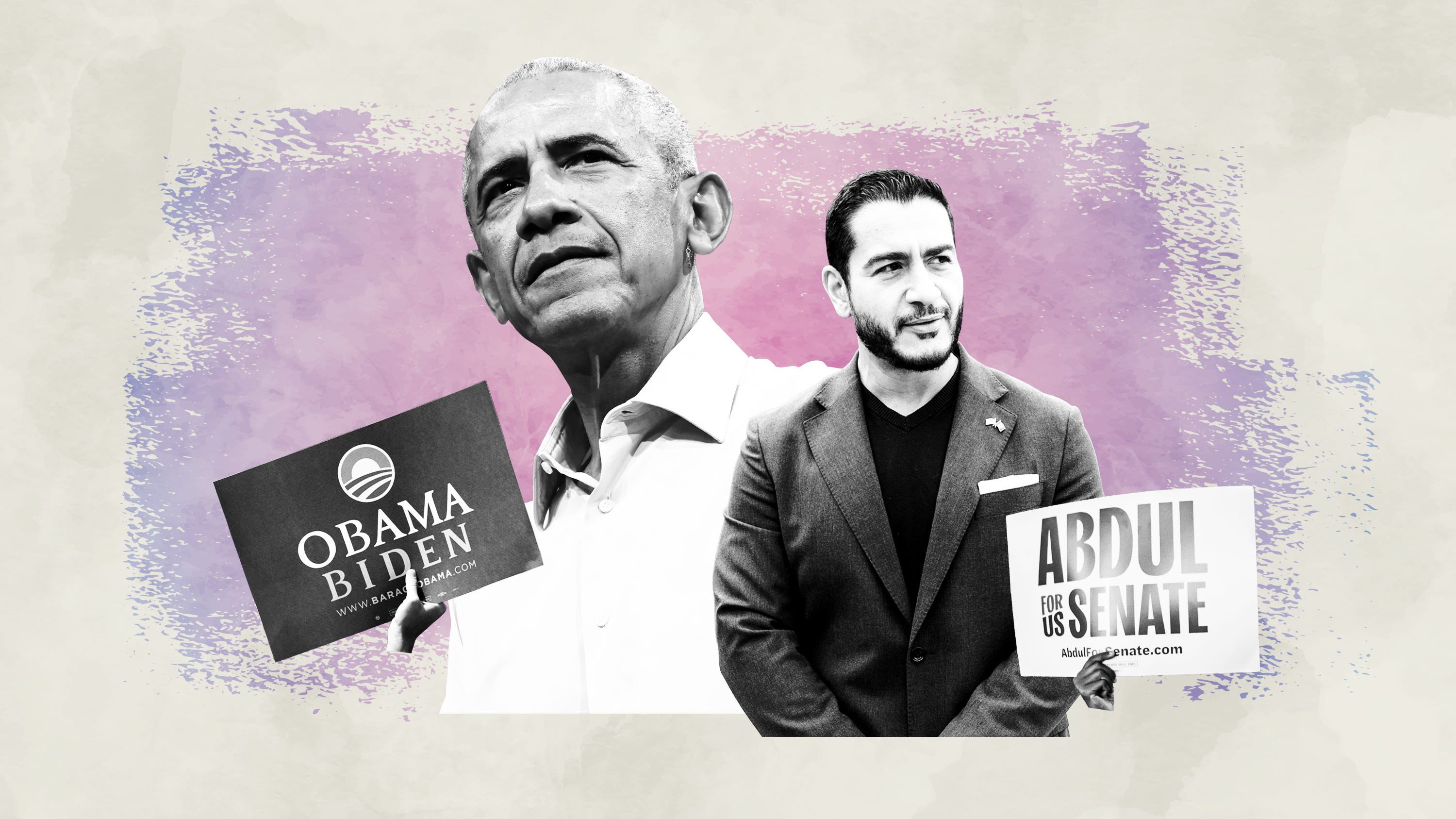
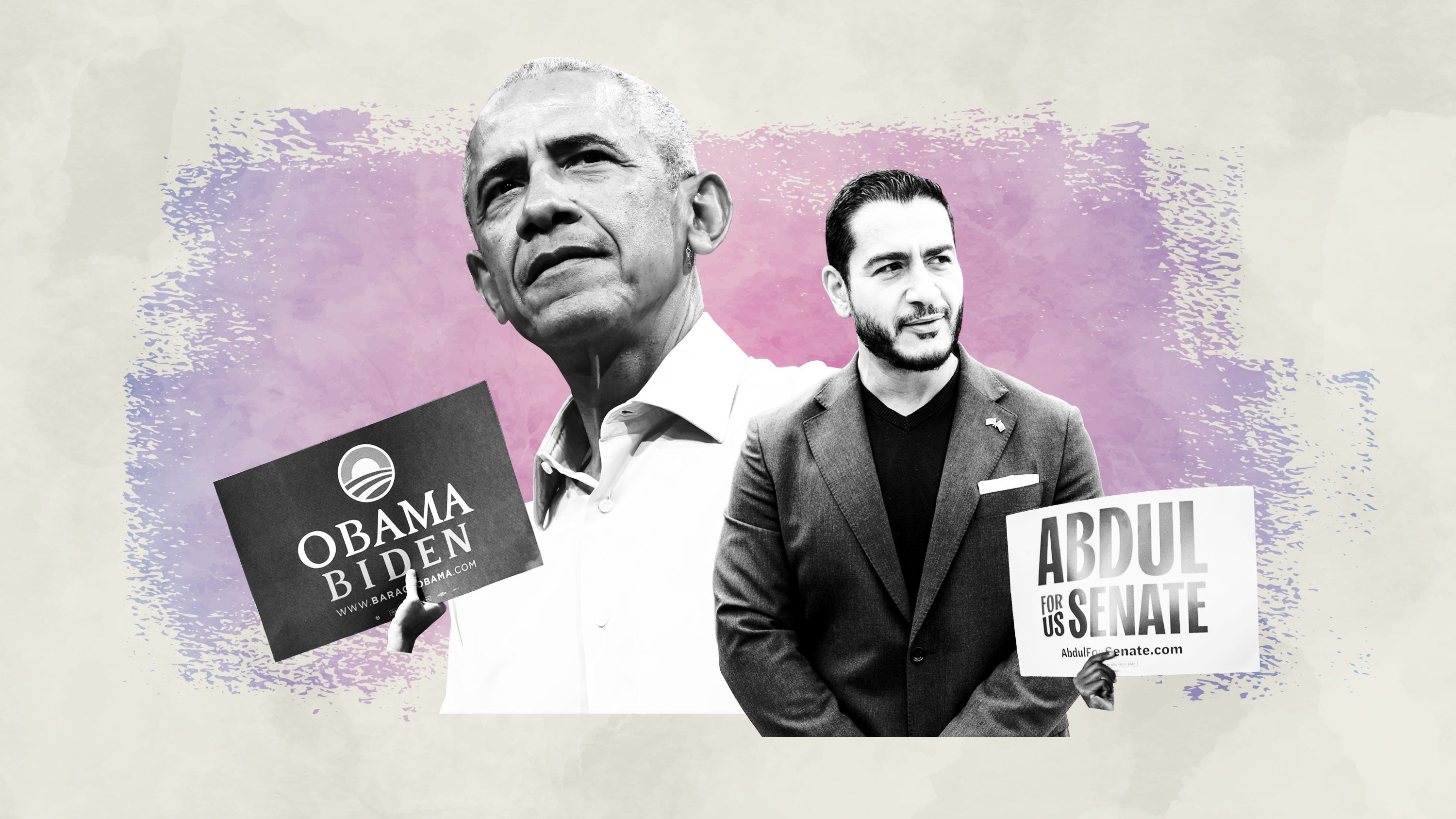
(Photo illustration by Bill Kuchman/The Bulwark | Photos: Shutterstock)
WITH THE ARRIVAL OF MID-OCTOBER in even-numbered years come the telltale signs of campaign season entering the final stretch. The ads get more vicious. The rallies get more crowded. Michael Bloomberg cuts a big fat check. And political junkies binge incremental data points that either confirm their priors or leave them in a pool of despair.
Admit it. Over the past week or so, you too have begun obsessively doomscrolling social media in search of new, unexplored angles on the congressional map. You’ve found yourself stuck in a vortex in which JoeTexasDataGuy’s breakdown of the early-vote numbers during the 8 to 10 a.m. hours from Dallas has you convinced that James Talarico actually can win, and Desantistan67counties’s look at mail-ballot requests in Broward has left you certain that Republicans are pulling it off again. You don’t even know who these people are. You’re not entirely sure that it’s a map of Dallas. You’re confused as to why the other posts in their feeds are about Uzbekistan. But you can’t stop scrolling.
In these moments of clinically diagnosable social media addiction,it can be hard to distinguish the political signals from the noise. So to help you stay sane as campaign season reaches a climax—and maybe to get you to put down your phone (but not before subscribing to The Bulwark)—I reached out to nonpartisan election analysts and data experts to ask what data and developments are actually worth paying attention to in these last few days. What are they looking at? Or, better yet, what are they ignoring?
This week’s Next Level starts out as a Secret Pod episode, before Tim and Sam crash the stage. They discuss Sarah’s interview with Pete Buttigieg, why Jon Ossoff might be history’s choice for 2028 whether he likes it or not. Plus: some hopium on some key races across the South. Then the crew turns to Vivek Ramaswamy’s despicable ad featuring Amy Acton’s estranged mother, and whether JD Vance might be (shudder) underrated in 2028. who they most want to see hauled before Democratic committees in 2027, with Elon Musk, RFK Jr., Todd Blanche, and Jared Kushner all making the list.
If following all of this is making you feel like you’re losing your mind, join The Bulwark. We can’t make the news less insane, but we can help you make sense of it with smart people who haven’t lost the plot.
(Photo illustration by Bill Kuchman/The Bulwark | Photos: Getty, Truth Social, X.com)
POLLS BEING WHAT THEY ARE, Republicans and their supporters must be feeling a bit like the condemned Frenchmen who rode to the guillotine during the Reign of Terror. It’s fitting, then, that they are seizing on unrest in France as a desperate campaign gambit. “The Riots in France Are a Warning for America,” declared the Federalist. And what is the lesson? “Mass immigration will split your country in two, and the two sides will eventually go to war.”
Rep. Keith Self, chairman of the House Foreign Affairs Subcommittee on Europe, had the script down pat:
They’ve been allowing this to happen for years and years, so they are reaping what they sowed. . . . We’re also trying to get a handle on our mass migration consequences, just like France should have done years ago. That’s why I say this is a lesson to America. We are watching the future of America in France and the U.K., frankly.
France is descending into chaos because they wanted OPEN BORDERS—just like the socialist Democrats in America. What we are witnessing is a chilling warning for all Americans of what happens if the radical Marxist insurgent left gets their way.
JD Vance warned: “This is the future congressional Democrats seek for your country.”
Naturally, Trump picked up the baton, telling reporters that the French protests were about “immigration, not schools,” and posting:
France is burning! The immigration of people from an entirely different world, people with hatred in their hearts, has shattered that once great country. Close your Borders and take control, before it is too late!
Back in reality, there is no evidence that the French protests and riots have anything at all to do with immigration. There has been Islamist violence in France over the years, perpetrated by immigrants or children of immigrants, perhaps most famously the attacks on the Paris offices of the magazine Charlie Hebdo and the Bataclan theater in 2015 and the horrific Nice truck attack the following year that killed 86.
If you believe in facts and honesty over political expediency, join our pro-democracy community.
But that’s not what’s happening today, and no desperate eagerness by American Republicans to hijack these protests for their flailing campaigns can change that. There is no data on the ethnicity or color of the thousands of people arrested in the past week—France doesn’t keep such records. Students in the Paris suburbs were protesting for weeks before the violence started. Similar protests have spread to Lyon, Marseille, Lille, Bordeaux, and many other smaller cities and rural areas—and so has the violence. What originated with students protesting poorly equipped high schools expanded to farmers and labor unions.
Some of the rioters are dissolute young men who were itching to pick a fight with the police, but the original demonstrators were students complaining about the long-running underfunding of French schools. Others who joined are furious about the price of gasoline and diesel, and the high cost of living in general. So a more likely cause of the unrest in France isn’t immigration, but President Trump’s half-baked decision to attack Iran without buy-in from Congress. In fact, the high cost of fuel and associated inflation is causing unrest in other European countries including Italy, Portugal, Belgium, and Albania. (The Albanians were already displeased by a corruption scandal linked to a resort development project by Jared Kushner and Ivanka Trump.)
THE PROTESTS IN FRANCE do bear a lesson for the United States, but it’s not the one the GOP prefers. France has a weakness for à la barricade. Princeton’s David A. Bell quotes an old saying: “While the United States has three branches of government, France has four: the executive, the legislative, the judiciary, and the street.” In 2018, the country was nearly paralyzed by the gilets jaunes (yellow vests) protests over fuel taxes. But today’s protests and riots are different. They have an end-of-an-era feel.
People are demanding better services and lower prices but are unwilling to make the trade-offs those things demand. France’s finances are in terrible shape, the effect of low growth and high spending on entitlements. France has been a poor place to start a business for decades. A 2012 “millionaire’s tax” failed and was abandoned. Efforts to deal with the crushing burden of pensions for the elderly—for example, Emmanuel Macron’s push to raise the retirement age from 62 to 64—have been met with fierce resistance. France has been borrowing to cover its costs, but the bond markets are having their say, charging France more to borrow than Italy or Greece. France now spends more to service its debt than it spends on defense or education. And because America is stepping back from global leadership, the demands on France’s budget for defense will only increase.
Lenders take account not just of a country’s debt-to-GDP ratio, but also its political stability and likelihood to repay its debts. When you look at France, you see rising support for Marine Le Pen, a right-wing extremist who is as soft on Putin as she is tough on immigrants. But on the important matter of France’s fiscal health, she makes Trumpian promises of cutting aid to immigrants while promising to reverse Macron’s increase in the retirement age. Swell. No hope of economic sanity there. Over on the left, Jean-Luc Mélenchon has made noises about repudiating part of France’s debt, a fast road to Venezuelan-style collapse. There are more centrist candidates who offer more realistic reforms, but none seems to have political traction at this moment.
The United States is not, for a variety of reasons, in quite as bad shape economically as France, but the GOP, once supposedly the party that at least paid lip service to the problem of our national debt (are you out there, Paul Ryan?), has become utterly blithe about economic realities under Trump. Not only have his tariff and war policies raised prices, but his irresponsible tax cuts combined with ballooning spending have saddled us with unsustainable debt. Like France, we are now spending more on debt service than on defense.
Lenders, by nature or necessity an unsentimental bunch, don’t seem to trust us more than they trust France to make sensible governing choices about taxes and spending. In fact, they trust us less. France is on fire, yet its ten-year bond yield only recently surpassed 5 percent, while as recently as last month we were being charged 5.2 percent. Potential lenders see a nation beclowned by repeated government shutdowns, threats to default on debt (by not raising the debt ceiling), and now, in Trump 2.0, attacks on the integrity and independence of the Federal Reserve. It’s impossible to say with specificity how threats to conquer Greenland, Iceland, and Canada, the reality of abandoning Ukraine and sucking up to Putin, and wild swings of tariff policy play into perceptions of U.S. stability, but it can’t be reassuring.
The lessons from France have nothing to do with immigration and irrepressible civil war. The primary lesson is: Don’t spend more than you earn. Don’t elect idiots who know little of economic reality and care less. Don’t impose inflation-triggering tariffs on your allies. Don’t start wars you have no idea how to win. Don’t tell yourself fairy tales about immigrants causing all your problems when you fail at the most basic tasks of governing.
Could there be a bigger sign of Ramaswamy's depravity and desperation than using a mother from hell to sell your message? His campaign for governor of Ohio against Amy Acton has been a nightmare from the beginning. Meanwhile, Murphy senses kryptonite in the water around Trump as well, particularly with the farm belt in revolt over tariffs and the price of diesel. But in Michigan, El-Sayed has got to cool it on the cocky bro stuff in the final days of his campaign. Plus: From our live show in Atlanta Tuesday evening, Gen. Hertling joined Tim to discuss the continuing blame game between Musk and the administration over the crippling of Ukraine's military communications, the lack of leadership at the Pentagon, and the failure to protect our troops.
Mike Murphy and Lt. Gen. Mark Hertling join Tim Miller.
As always: Watch, listen, hit the like button or leave a comment. We want to hear from you.
Ad-free editions of The Bulwark Daily are available exclusively for Bulwark+ members.
Tim Miller’s Bulwark Daily is available wherever you get podcasts and on YouTube. New shows drop each weekday afternoon. If you like the show, leave a comment and ⭐⭐⭐⭐⭐ wherever you listen.
(Photo illustration by Bill Kuchman/The Bulwark | Photos: Shutterstock, Getty)
THE TRUMP ADMINISTRATION HAS MADE California the central target of its efforts to intimidate voters. The Department of Justice has launched efforts to coerce California into investigating alleged illegal voters in L.A. County. And the Department of Homeland Security has begun dispatching agents to the homes of voters who they allege are casting ballots illegally.
But the efforts have gone beyond just trying to scare people away from going to the polls. The administration is also starting yet another immigration crackdown in the state, which advocates there told me left them alarmed.
Ben Parker and Michael Weiss dissect Steve Witkoff’s praise of Vladimir Putin as a “humanitarian” and JD Vance’s defense of the Trump envoy, exposing the weakness and incompetence behind the administration’s Russia diplomacy. They examine how Trump’s desperation for a deal with Putin is leading to concessions on sanctions, undermining Ukraine, and rewarding Russian aggression.
Plus, Michael explains how Russia’s growing cooperation with Iran threatens U.S. interests and why Trump’s approach is putting America’s global standing at risk.
(Photo illustration by Sarah Rogers/The Bulwark | Photos: JVL, Shutterstock)
1. Ball Is Life
I took Flash to the ballpark for the first time when he was about 16 months old. We had a minor league team down the road from our house. One Saturday afternoon, he woke up from his nap and we caught two innings in the middle of a day game. We left as soon as he got bored.
For several years, that was his experience of baseball. We would show up in the middle of the game and stay for ten minutes, or an hour, and leave when he was ready.
We made it to the end of a game for the first time when he was 5 and the conclusion of the ninth inning confused him. “Baseball is over?” he asked. In that moment I realized that, from his perspective, baseball was like the sea. It was always there. He showed up at the ballpark and baseball was happening; he left the ballpark and baseball was happening. In his imagination, baseball never stopped. The players were always there, playing, and we just visited baseball. It never occurred to him that baseball was a finite thing with a beginning, a middle, and an end.
This realization made him a little sad.
The Bulwark is reader-supported—which makes all our independent journalism possible. To receive new posts and support our work, consider becoming a free or paid subscriber.
Two Saturdays ago, Flash pitched in college for the first time. It was just fall ball; a friendly. Nothing important. The coach gave him an inning of work. He did a nice job. My heart was happy and proud. But also confused. And a little sad.
Because I realized that unless he gets drafted after college, this was the last “first time” of his baseball journey. And the last first time of my baseball journey with him.
I remember all of the first times. That first game with his chubby cheeks. The first catch in our front yard. The first time I took him to a field where he could run the bases.
As he got older, we were at the minor league park all the time. I remember the first time he caught a foul ball and the first time he worked up the nerve to talk to one of the players. Over the years he became friendly with a bunch of them. Baseball was the only thing he wanted to do. And because he saw these guys up close, and knew them, he assumed that it was normal. That becoming a ballplayer was something anyone could just decide to do; like going to law school.
Flash hanging with the boys.
I kept him out of the maw of organized baseball for as long as possible. I didn’t want to get sucked into the Kids’ Sports Industrial Complex. When he was 10, I finally relented and let him join Little League.
His first pitch of his first-ever game.
The firsts kept piling up. First travel-team game. First home run. First complete game. First immaculate inning. First middle school game. First no hitter. First high school varsity game. First showcase.
First varsity start as a freshman.
For seventeen years, baseball was a thing Flash and I did together. It was always there. Like the sea.
As I watched him throw his first college pitch I realized that this constant in our lives isn’t actually constant. It has a beginning, a middle, and an end. Some day baseball with Flash will be over.
And my soul was sorrowful unto death.
2. Tides Are Real
I know that’s too narrow a view. In the most important ways, baseball really is like the sea. It really is always there. What changes is our relationship to it.
Because there have also been a bunch of other baseball firsts for me and Flash. Our first major league game. Our first World Series game. Our first post-COVID game. Our first trip to Cooperstown. Our first night at Fenway.
Someday, God willing, there will be new kinds of firsts. For the two of us, then for him with his own kids, me with my grandkids. And then for him and his grandkids. I’ll pass away, but that stuff about the rhythm of baseball binding together the generations? It’s true. All of it.
Here’s a funny thing: I’ve never played a single game of baseball. Not once. Never even threw, or caught, a baseball until I was in college. I have no personal connection to the game. For me, it’s inextricably linked with Flash. For me, the joy of baseball has been walking with my little boy as he grew.
Someday his part in playing the game of baseball will end. But I’ll still get to walk with him.
Once I realized that, I understood that sadness has no place here. Only gratitude.
Thanks for letting me share this with you. It means a lot to me.
This piece is a reminder that there is a season for true grief. And that the only way through is together:
On the last Sunday afternoon of September, Rhenda Strub was bundled up against the autumn chill for one final day at the ballpark, eating Cracker Jack and sweet and spicy pickles. . . .
After she lost her 27-year-old son, Wyatt, to muscular dystrophy three years ago, she retreated to his room and spent countless hours alone quilting and watching baseball games on television. The constancy of baseball helped to structure her days, but the loneliness only added to her grief.
So at the beginning of this season, Ms. Strub bought two season tickets to the Mariners in Section 120, on the first base side, thinking she would regularly go with her loved ones to T-Mobile Park. But her husband doesn’t like crowds, and the rest of her family has busy lives.
So she wrote a post on Facebook — with some trepidation, she said, because the “internet can be a cruel place” — asking strangers if they wanted to attend games with her. . . .
By the end of this baseball season, Ms. Strub had attended games with about 30 strangers and found that the people she connected with needed her as much as she needed them. She built an online community, bringing together the people she had met in a private Facebook group, calling the project “Strangers to Friends.”
If she couldn’t attend a game — she had to miss a few when her husband, Mike, had brain surgery — she handed off her tickets to strangers who had reached out to her but didn’t know each other.
She said she was “gobsmacked” by the reaction to her post.
“I have made so many friends this summer,” she said. “I have friends that will be my friends for the rest of my life.”
I needed to read this piece, this week. I hope you’ll read it, too. It made me think of you guys in our Bulwark world and how we help each other.
The Bulwark is reader-supported—which makes all our independent journalism possible. To receive new posts and support our work, consider becoming a free or paid subscriber.
(Photo illustration by Bill Kuchman/The Bulwark | Photos: Getty, Shutterstock)
Along I-75 in Southeastern Michigan ABDUL EL-SAYED REMEMBERS EXACTLY where he was the first time he saw Barack Obama. It was July 2004 and El-Sayed was 19, standing at the kitchen sink of his parents’ house outside Detroit while the Democratic National Convention in Boston was playing on the television.
Obama, then a Senate candidate, was giving the primetime keynote address—an ode to hope, unity, and American pluralism that would go on to launch his career in national politics. But El-Sayed, who at the time was on the pre-med track at the University of Michigan, says the speech had a more personal significance for him. It made him believe a minority kid with a funny-sounding name could speak to and be accepted by much larger audiences, kindling an interest in politics that eventually would lead him to become this year’s Democratic nominee for Michigan’s open Senate seat.
“I was doing dishes, after I got home late and was eating on my own,” El-Sayed recalled this past Sunday, as we spoke on board his campaign bus in between events. “And I remember the TV being on and just being like holy . . . wow . . . I’ve never seen that before. And the speech was so good. And it was the first time I was thinking, ‘Bro, you’re talking about me.’”
This coming Saturday, El-Sayed will get a chance to tell Obama about this moment directly when the former president comes to Detroit to campaign for the Michigander. It will be the first time the two have met in person and only the second time they have spoken, following a phone conversation after El-Sayed won the nomination in August in which Obama called to pledge his support.
But for all of the gracious words they have said about each other in public and (reportedly) to each other in private, the fact remains that El-Sayed is part of the Democratic party’s progressive wing. And among progressives, the predominant sentiment about Obama’s presidency is a combination of ambivalence, disillusionment, and occasional hostility.
The premise is that Obama was too timid, that he failed to shake up institutions or distance himself from a party establishment bankrolled by corporate America—if not from a lack of fortitude, then at least from a lack of ambition. He may be the most popular politician alive, but there’s this long list of things he got wrong. He should have punished banks and bankers for their role in the 2008 financial crisis. He shouldn’t have embraced tough border control for the sake of bipartisan immigration reform that Republicans were bound to oppose. He shouldn’t have heeded advisers and members of his own party urging him to make deficit reduction a priority. And so on.
Progressives aren’t the only Democrats who express versions of these sentiments. But they are the ones who do so most loudly and frequently, and that includes El-Sayed, who during graduate studies in 2012 said of Obama’s re-election bid that he “was not the right choice—he just wasn’t the wrong one.” El-Sayed struck a somewhat more measured tone in his 2020 memoir, Healing Politics, praising Obama’s character and some of his policies accomplishments. But even then, he bemoaned the “inspiring intentions unfulfilled or reversed.”
During our conversation, El-Sayed didn’t exactly take back any of these sentiments. But he also expressed an appreciation for Obama’s leadership and the accomplishments of the Obama presidency not so evident in his past writing.
That evolution could be purely cosmetic, in order to avoid awkwardness now that Obama is on the way to campaign for him. Or it could be political expediency as El-Sayed tries to rally the Democratic faithful, especially black voters who have not embraced him with the enthusiasm they have Democratic candidates in the past.
Many of those voters remember ads from the bruising primary that made it appear (disingenuously) that El-Sayed had attacked Michelle Obama over the health initiatives she led as first lady. The former president’s blessing could go a long way to making those memories go away, and tilt what looks like a tight race in El-Sayed’s direction.
Trump and his cronies keep using slurs like they’re going out of style—which, to be fair, they are. On Monday in Kansas, Trump denounced news reports that he said portrayed Sen. Roger Marshall as “a Shylock-type guy.” And yesterday, after Trump tussled in the Oval Office with reporter Andrew Feinberg of the Independent—calling him a “sick person” and saying “I actually think there’s something wrong with you”—a White House communications account described Feinberg as a “Mongoloid Moron.”
Trump, as he ages, is losing his last fragments of self-control, and his comms staffers are rotting their brains more every day in the bigoted fever swamps of right-wing social media. The slurs will continue until morale improves. Happy Wednesday.
Ramaswamy’s October Surprise Blows Up in His Face
by Jim Swift
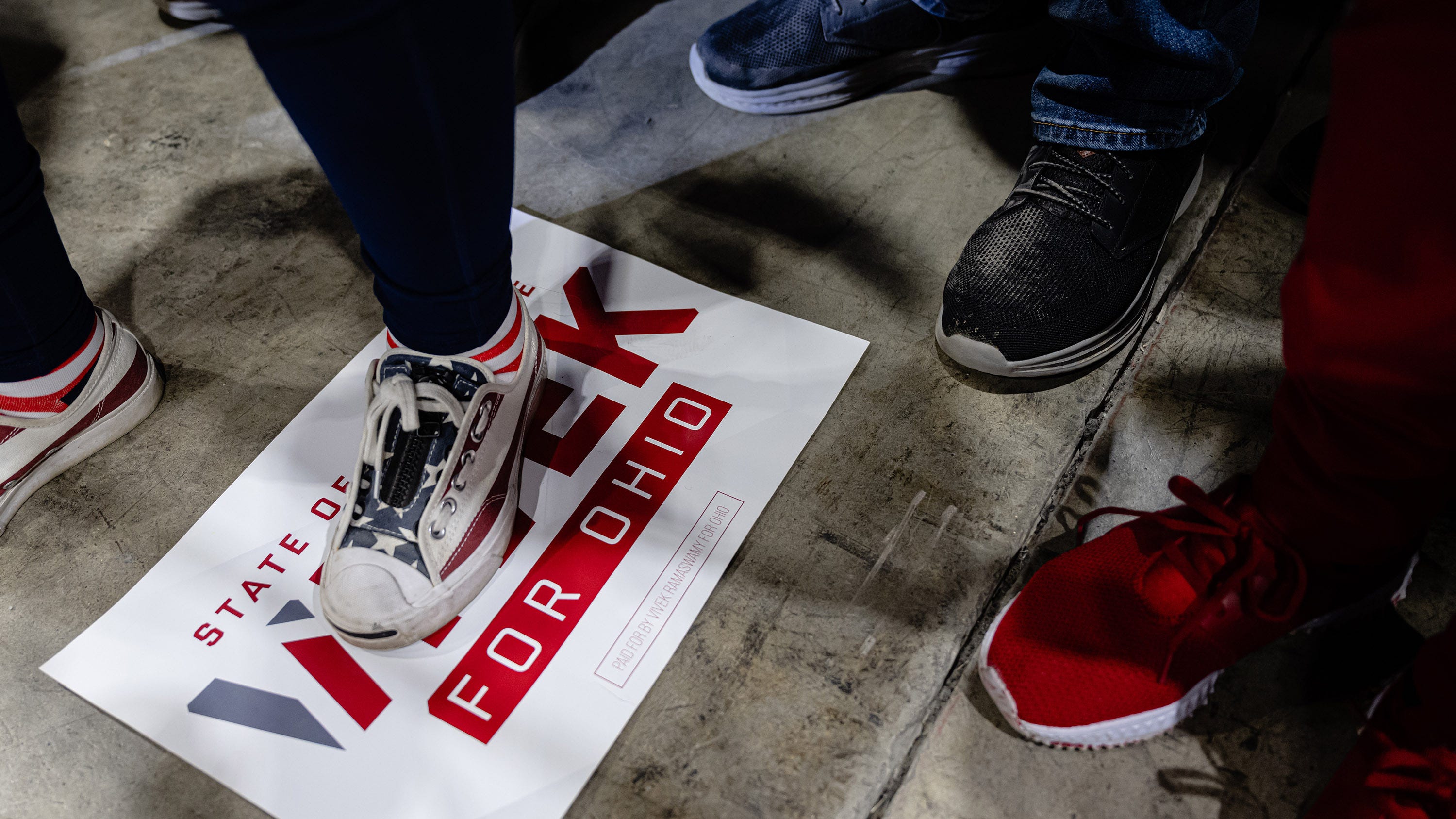
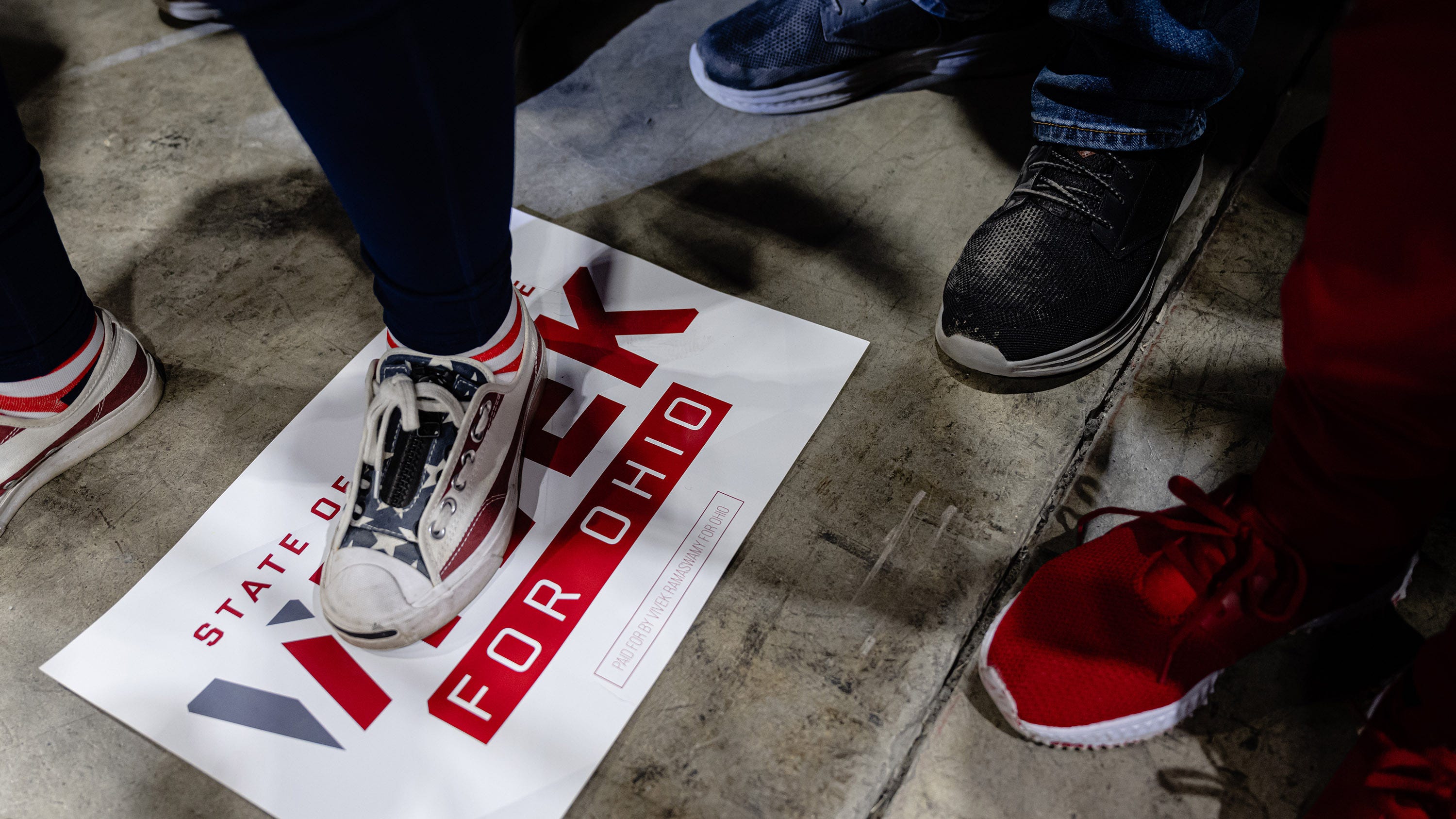
Ohio Republican gubernatorial candidate Vivek Ramaswamy’s October surprise was supposed to make voters question Democrat Amy Acton’s character. Instead, yesterday, a leak of his attack ad featuring her estranged mother blew up in his face.
By Tuesday evening, after the ad had been roundly condemned—including by other Ohio Republicans—Ramaswamy’s response was to announce he would spend $4 million promoting the ad.
The video surfaced Monday night. DJ Byrnes, author of the Ohio politics newsletter The Rooster, published a recording featuring Acton’s estranged mother, Donna Arthur. Byrnes said a voter saw it in a poll, recorded it, and sent it his way.
For hours, it was unclear who was behind the ad. V-PAC, the super PAC supporting Ramaswamy, said it wasn’t involved. Ramaswamy’s campaign initially defended the attack without answering directly if it was responsible.
At The Bulwark, we like to say that we know who the bad guys are. But honestly, sometimes it’s really not so hard to tell. Join us.
In the minute-long video, Arthur calls Acton a liar, disputes her account of growing up homeless, and tells Ohioans not to vote for her. “My daughter needs help,” she says, “and she can’t help you if she needs help herself.”
What the ad doesn’t say is why Acton and Arthur are estranged. Acton says she last saw her mother when she was 12. Her stepfather had been charged with raping her. She and her brother were removed from their mother’s custody. Her mother and stepfather then skipped town while out on bond, according to a 2019 account in the Youngstown Vindicator.
National Reviewobtained court records corroborating key parts of Acton’s account, including the criminal proceedings against her stepfather. Her account of abuse and homelessness was also public in 2019, years before she ran for governor.
Acton’s brother, Philip Stearns, has corroborated his sister’s account. He says he also suffered abuse in the household, and that their mother stayed married to the man who raped Acton until his death.
Even Ramaswamy’s copartisans were quick to denounce the ad. After learning of the circumstances behind Acton’s estrangement from Arthur, Dan Hauser, a strategist for Sen. Mike Lee, deleted his post sharing the video and apologized for sharing it. Lydia Mihalik, the director of Ohio’s Department of Development under Gov. Mike DeWine, condemned the ad.
Others questioned what, exactly, the campaign thought it would accomplish. Former Republican communications consultant Liz Mair said the ad made her sympathetic to Acton, while Fox News contributor Mary Katharine Ham wondered how anyone expected it not to backfire. Chris Christie reposted footage, shared by a Democratic strategist, of himself roasting Ramaswamy on the presidential debate stage. Nikki Haley weighed in, too: “Not laughing. Just seeing what we tried to tell everyone back then. He’s a bad guy.”
Acton’s campaign responded to the Arthur video Tuesday afternoon with an ad featuring Stearn. “I received a lot of abuse, but Amy always got the worst of it,” he says, describing how his older sister—at “11 and 12 years old”—tried to protect him.
By Tuesday evening, the backlash had followed Ramaswamy into a town hall in Westerville. Shortly after he took the stage, a heckler confronted him about Acton’s mother. The man was escorted out.
Afterward, speaking to reporters, Ramaswamy finally admitted that his campaign had made the ad. He argued that voters should listen to people who know Acton “well,” including her mother, and said he had never met Arthur and that she wasn’t paid for the ad.
Ramaswamy also said he wished the campaign were about substantive issues, accused Acton of spreading lies about him and his family, and decried her decision not to debate him.
Sources close to Ramaswamy’s campaign told Axios that the ad performed well in testing with persuadable voters. The outlet reported that the resulting $4 million statewide push began streaming Tuesday night.
Campaign manager Jonathan Ewing called it a “campaign-ending moment for Amy Acton.”
This is not the first time Ramaswamy has had a problem involving a campaign ad and a child abuser. I reported just a week ago that Ramaswamy’s property-tax ad featured Vernon Edwards, a registered sex offender who pleaded guilty to two counts of gross sexual imposition involving his niece, who was younger than 13.
The campaign pleaded ignorance. “The man has been removed from the ad,” spokesman Evan Machan told me. It also deleted an earlier social-media video showing Ramaswamy shaking Edwards’s hand and complimenting his patriotic shirt. But the ad featuring Edwards ran during the Browns victory over the Ravens, after the campaign had promised to remove him from it.
Ramaswamy’s campaign’s callousness, mendacity, and shoddy staff work would be a liability in any race. But it seems especially likely to hurt him in an environment where Republicans already have a problem with a nagging child sexual abuse scandal.
Manufacturing Trans Panic
by Andrew Egger
Ohio isn’t the only red state where Republicans seem to be resorting to desperate tricks to salvage a race. In Texas, Ken Paxton and his supporters have been trying to turn transgender issues into a centerpiece of his race against Democrat James Talarico. Now they’re trying to whip up a new, artificial trans panic to make the sale.
Last week, GOP voters across the state started receiving strange—and, to them, enraging—text messages. “New school year?” one read. “Here’s your complete guide on bathrooms and beyond for trans kids at school.” The text then linked to the “Back to School Toolkit” of the Transgender Education Network of Texas (TENT), a state trans advocacy group.
These confusing “back-to-school” texts—which arrived long after the start of the school year and mysteriously seemed to land mostly in Republican inboxes—caused an immediate outcry, with conservative influencers going viral denouncing them across social media. But TENT denied sending the texts at all.
The texts, it turns out, were only the prelude. This week, a more extensive and expensive campaign unfolded along similar lines. This time, Texas voters—again, primarily Republicans—received mailers at home, purportedly from an organization called the “Texas Transgender Student Union”—an organization incorporated last month in Wyoming, with no physical or online presence save the mailers themselves. Again, the mailers linked repeatedly to resources on TENT’s website, as well as to the American Civil Liberties Union.
While the faux TENT text messages simply reminded voters that trans advocacy groups exist, the mailers went much further, containing reams of language seemingly designed to confirm conservatives’ worst fears about such groups’ intended aims.
TENT’s actual Back to School Toolkit focuses on legal resources for trans students in navigating Texas’s increasingly trans-hostile laws, reminding them what sorts of activities and activism state law does and doesn’t restrict. It also has educational resources for students and their parents who want to protect themselves from Texas conservatives’ increasingly militant view that a child presenting as trans is prima facie evidence of child abuse, and how families might deal with, for instance, having Child Protective Services called in against them.
But the mailer that circulated this week presented a very different worldview, one in line with the common Republican belief that the chief aim of these organizations is to lure trans children awayfrom their families. It contains sections on “What to do if your parents don’t support you” and “What if I want to be emancipated?”
“Even if your family doesn’t accept you as you are,” the mailer reads, “groups like this are ready to become your found family.”
In a statement to The Bulwark, TENT strongly denied any association with either the earlier texts or the mailers. “TENT did not author, authorize, approve, or distribute these materials. Any and all materials are not affiliated with our organization and are impersonations.” The group declined to comment on the experience of being turned into an electoral scarecrow apparently by Republicans, citing their need as a nonprofit to refrain from commenting on partisan political activity. They also—understandably, but perhaps unwisely—largely scrubbed their website, meaning that their own resources can today only be accessed through internet archives.
This has only made it easier, even as it’s become clear that the mailers were impersonations, for conservative activists to argue that the mailers’ contents are broadly similar to TENT’s own advocacy materials. But, again, the opposite is true. You can still read an archived version of TENT’s “back to school toolkit” yourself. Far from being a roadmap and encouragement for trans Texas students to escape their families, the “family resources” section of TENT’s toolkit is entirely focused on helping “families navigate heightened state scrutiny, especially as state agencies have been weaponized against supportive parents and guardians of [trans] youth.”
All this is entirely in keeping with Texas Republicans’ unbelievable smear campaign against Talarico, which has darkly twisted his past enthusiastic advocacy for trans students.
The GOP messaging apparatus has repeatedly insinuated—and sometimes outright stated—that “Talafreako” has a pedophilic fetish for trans youth. In lurid GOP-funded ads, an AI model of Talarico in a dress sings about how he wants to change “the gender of all of your offspring,” or an AI Talarico in scrubs prepares to perform a sex-change surgery on a little girl. On the campaign trail, JD Vance returns again and again to the same line: “A guy that age who is so obsessed and focused on transgender children, I don’t know about you, but I never want to see that guy’s web browser history.”
Republicans would like it if Trump were popular and successful, and they could just run on that. Since he isn’t, they’d like for their threadbare old warnings that Democrats are all communists in disguise to scare voters back to their side. But that doesn’t appear to be working either. For Texas Republicans, this is the Hail Mary play: Insist that Talarico and trans organizations are working hard to steal your children from your home and subject them to “transgender mutilization,” all in furtherance of their own dark sexual urges. It probably won’t work. But that doesn’t make it any less contemptible.
Dana Bash Sees a Political Earthquake Coming in Texas and Maine… How do democracies fall apart, and why do the people who could stop it so often look the other way? SARAH LONGWELL hosts DANA BASH on Bulwark Takes.
QUICK HITS
WILL VANCE GET THE ROSE?: Vice President JD Vance wants Republicans to see him as Donald Trump’s heir apparent, and lately he’s been discussing the possibility more. “I really have not made up my mind about what to do in 2028,” he told journalist Mark Halperin on Monday, adding that “I think if I run, the president will endorse me.”
Trump doesn’t seem so sure. Asked to weigh in on the vice president’s prediction yesterday—with Vance standing right behind him—the president begged off. “He’s a very talented person and he’s a very good person,” Trump said, “but we’ve literally—I don’t think we’ve ever talked about it.”
“No sir,” Vance quickly replied. “I said that, too.”
“Who would believe that?” Trump went on. “I don’t talk about it with him, he doesn’t talk—it’s early, very early right now. We have to get through the midterms. We’ll see how it goes.”
TAKING THE OIL: Another can’t-miss report on Trumpian corruption this week from ProPublica. Yesterday, the publication obtained the 18-page strategic partnership agreement governing the United States’ new imperial access to Venezuela’s oil reserves:
The document reveals carefully constructed terms that favor U.S. interests at every turn and cements the power of a small group of people handpicked by the Trump administration to govern and profit from the deal. The role of the Venezuelan government and the potential benefits to its people are largely absent from the text.
One of the most criticized aspects of Trump’s announcement has been his choice of a partner: Alejandro Betancourt, a globe-trotting Venezuelan oligarch who has faced money-laundering investigations in three countries.
The Trump administration is taking a 35 [percent] stake in Betancourt’s firm, North American Blue Energy Partners, by acquiring shares in a Barbados-registered parent company. The deal document provides little information about the owners and investors behind the parent company, who could receive enormous wealth from the arrangement.
The agreement also safeguards Betancourt’s position as chief executive of NABEP and says the U.S. government will work with the parent company to appoint a powerful seven-member board to govern the venture for an initial 15-year term. Those aspects of the deal, according to people with knowledge of how it came together, were designed to prevent future U.S. and Venezuelan leaders from dismantling the enterprise.
FJORD IS A PROVOCATION in the best sense of the word, a probing examination into self-conceptions of tolerance and the limits therein, brought to life with a keen naturalism that pulls the neat trick of both obfuscating the facts and clarifying the reality on the ground.
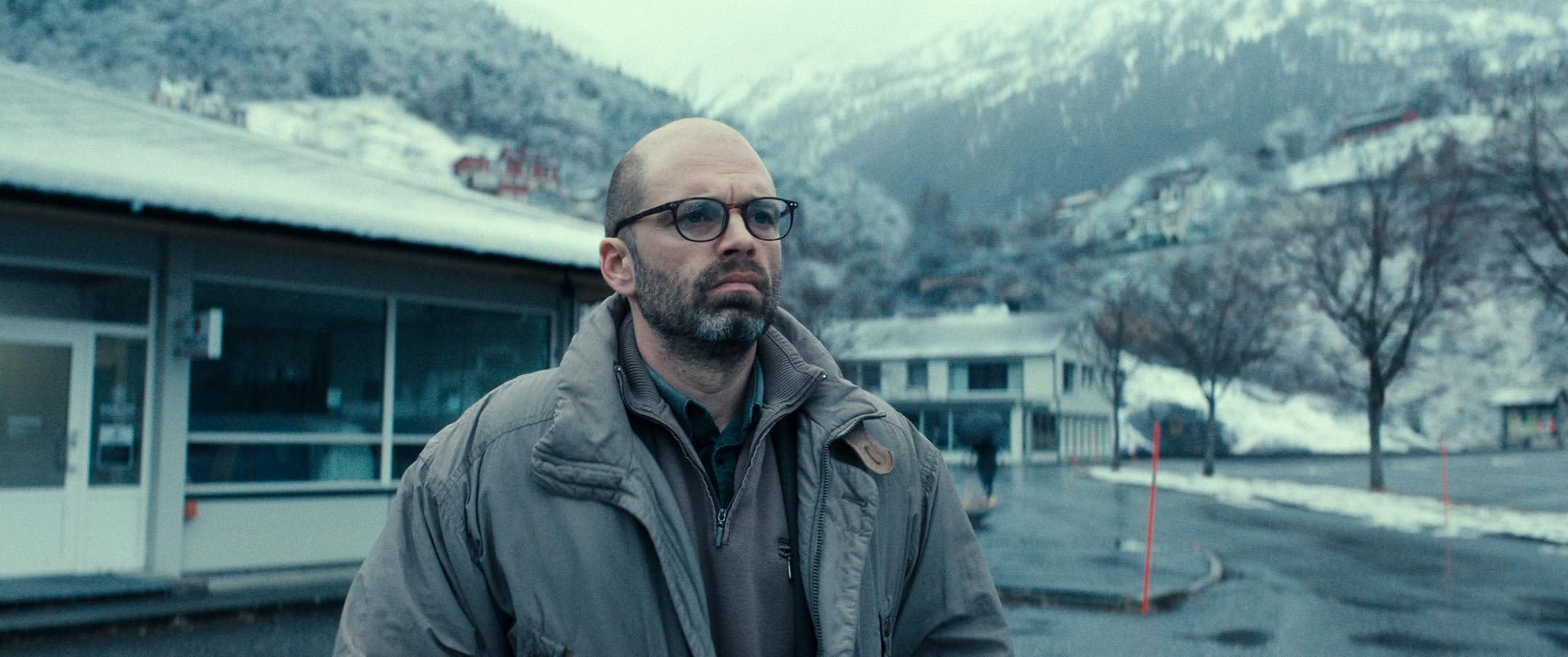
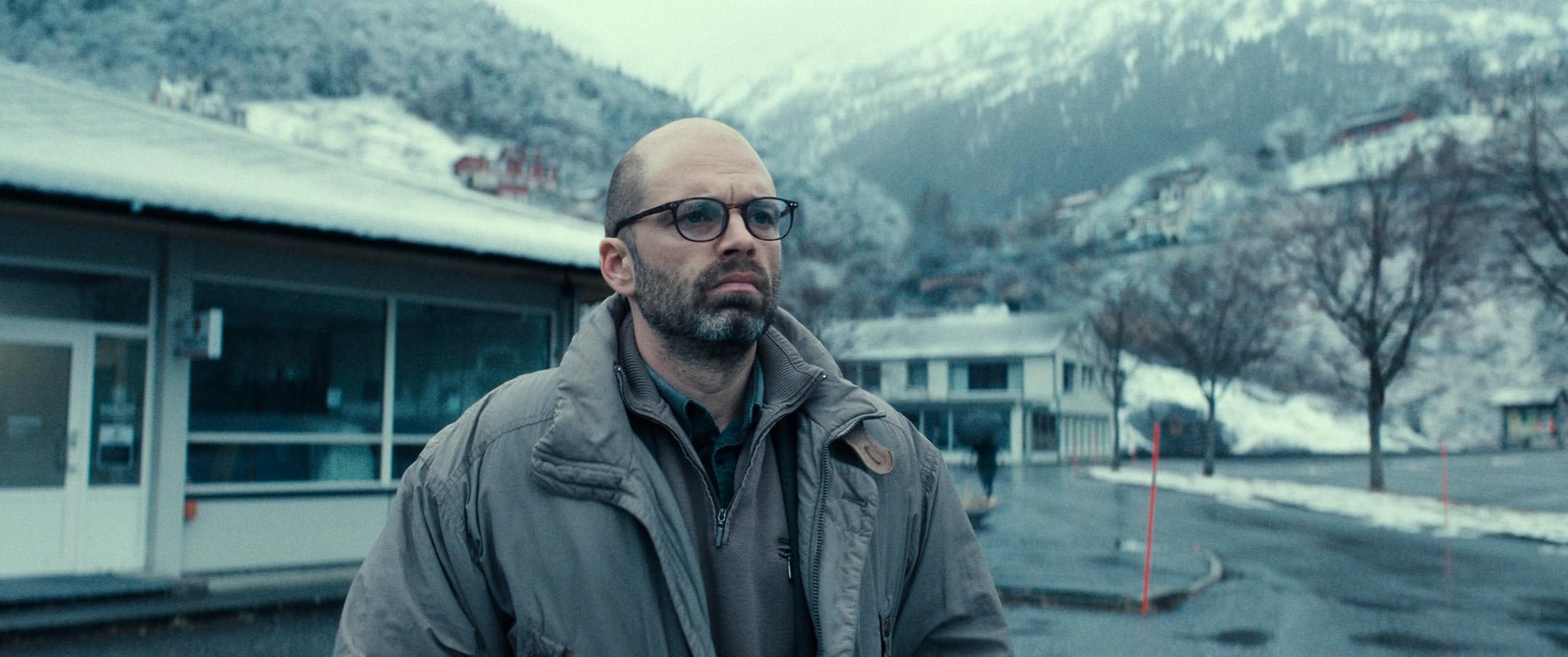
Writer-director Cristian Mungiu opens with the obfuscation. We see Elia Gheorghiu (Vanessa Ceban), a teenage girl, wiping away a tear. Her mother, Lisbet (Renate Reinsve), tells her to give her father, Mihai (Sebastian Stan), a hug. She has been punished, but we don’t know how or how severely, which will matter momentarily. For now, we just watch as this family prepares for the kids’ first day at their new school.
This Norwegian mother and Romanian immigrant father have five children, in total—four off to school, one still at home, nursing—and Fjord’s primary preoccupation is how they should be raised. Is it the responsibility of the family to instill discipline? Or does it take a village to take a child from the family and instill in him or her modernity’s progressive impulses? Norway is aggressively secular; Mihai’s neighbors and coworkers at the school (where he is the IT director) find the family’s Christian evangelicalism odd, perhaps even perverse. When he plays a few bars of “Amazing Grace” on the piano, one of the teachers, Frida (Lisa Loven Kongsli), reacts almost viscerally, grimacing at the notes.
It is this cultural clash that sets the stage for the film’s drama. After bruises are seen on Elia’s arms, the school’s teachers call the Norwegian equivalent of Child Protective Services; when Mihai admits to lightly spanking his children when they misbehave, he is taken into custody and the kids are removed from their home. That no one knows for sure how Elia got the bruises that aroused the suspicion means little, given Mihai’s admission: Norwegian law prohibits even light corporal punishment, and so does not seem to see a distinction between a swat on the butt or a slap on the wrist and an actual beating.
The real problem this town has with the Gheorghius is their religion, their refusal to let their kids have cell phones and watch YouTube and listen to pop music, their defense of the “traditional family.” Laying hands on the kids is only the stated reason for taking them; the real problem, the problem that Mungiu’s lingering camera reveals in the askance looks and the quiet asides, is that Lisbet and Mihai are poisoning their children’s minds against the religion of secularity. This is a family of heretics, one whose ideas are reviled by every element of the Norwegian state. The result of heresy is, as always, an inquisition. And if the state has its way, the family unit will be made to burn.
Sebastian Stan (center) and Renate Reinsve (right), and other cast members, in Fjord. (Courtesy Neon)
Fjord—which won the Palme d’Or at Cannes this year and is Romania’s official selection for best international feature at the Oscars this year—is an actor’s showcase, one that takes great advantage of the stark, snow-swept beauty of Norway’s mountain-bound villages. (That avalanches threaten to wipe out the town at a moment’s notice contributes to the claustrophobia of the family’s predicament; the stone walls are closing in on them.) Stan, who was born in Romania before the fall of the Iron Curtain, is exceptional as the increasingly frustrated patriarch of the Gheorghiu clan. He is friendly but not open, precisely; his furrowed brows and occasional interruptions agitate the employees of the state who demand submission when all he offers up is defiance. And those employees—every teacher, every social worker, every judge, every lawyer—are all perfectly cast as well as the visage of implacable, icy bureaucracy, faces frozen in the rictus grin that sits on all those granted authority by Leviathan.
They have the legitimate monopoly on force, a notion reinforced very subtly when Mihai, frustrated, slams an ax head into a wood stump. This is a legal drama, not a John Wick film, and his fight will be won or lost in the courts of law and public opinion. When Mihai enlists the online mob to support him—fans in America and Romania rally to the family’s cause, outraged that their kids could be stripped from them by the state’s morality police—he risks alienating the few in his community who still backed his cause.
Reinsve is similarly poignant, possessed of a quiet decency in her role as the caretaker of an old-age home who gives comfort to the families of the recently deceased. It is only when her youngest child, still nursing, is threatened with removal that she turns nearly feral in her protectiveness.
Fjord is genuinely subversive in the most pleasing sort of way, a movie that wrestles with difficult questions of assimilation, tolerance, and personal liberty without offering up easy answers or culminating in grandstanding statements. It is, ultimately, about the complications of modern life in an interconnected age, an era of unceasing cultural clashes. And it’s a movie that will stay with you for weeks after seeing it.
Jonathan Cohn sits down with Michigan Senate candidate Abdul El-Sayed to discuss his admiration for Barack Obama, the shortcomings of the Obama presidency, and the lessons he hopes to carry into the Senate. El-Sayed explains why he believes Obama made it possible for people like him to run for office, where he thinks Obama fell short on health care and other issues, and why Democrats need to stop assuming Republicans will negotiate in good faith.
Plus, El-Sayed discusses standing up to Trump, why he believes Americans are less divided than they think, and his philosophy of fighting bullies without becoming one himself.
How do democracies fall apart, and why do the people who could stop it so often look the other way? CNN’s Dana Bash joins Sarah Longwell to examine the elections that changed history, including the fatal miscalculation that helped bring Hitler to power and its disturbing echoes in Trump’s Republican Party. They also explore how a handful of votes might have prevented Trump’s rise, why Democrats need to learn how to win, and which 2026 races could change American politics for generations.
Donald Trump claims Russia has been “fine” in Ukraine, and Michael Weiss, who has witnessed Russian atrocities firsthand, is furious. Weiss and former CIA officer Marc Polymeropoulos examine Trump’s increasingly alarming alignment with Putin, reports that Elon Musk interfered with Ukraine’s satellite defenses, Pete Hegseth’s refusal to release desperately needed Patriot missiles, and whether Trump now fits the intelligence definition of a Russian agent of influence.
(Photo illustration by Bill Kuchman/The Bulwark | Photos: Getty, Shutterstock)
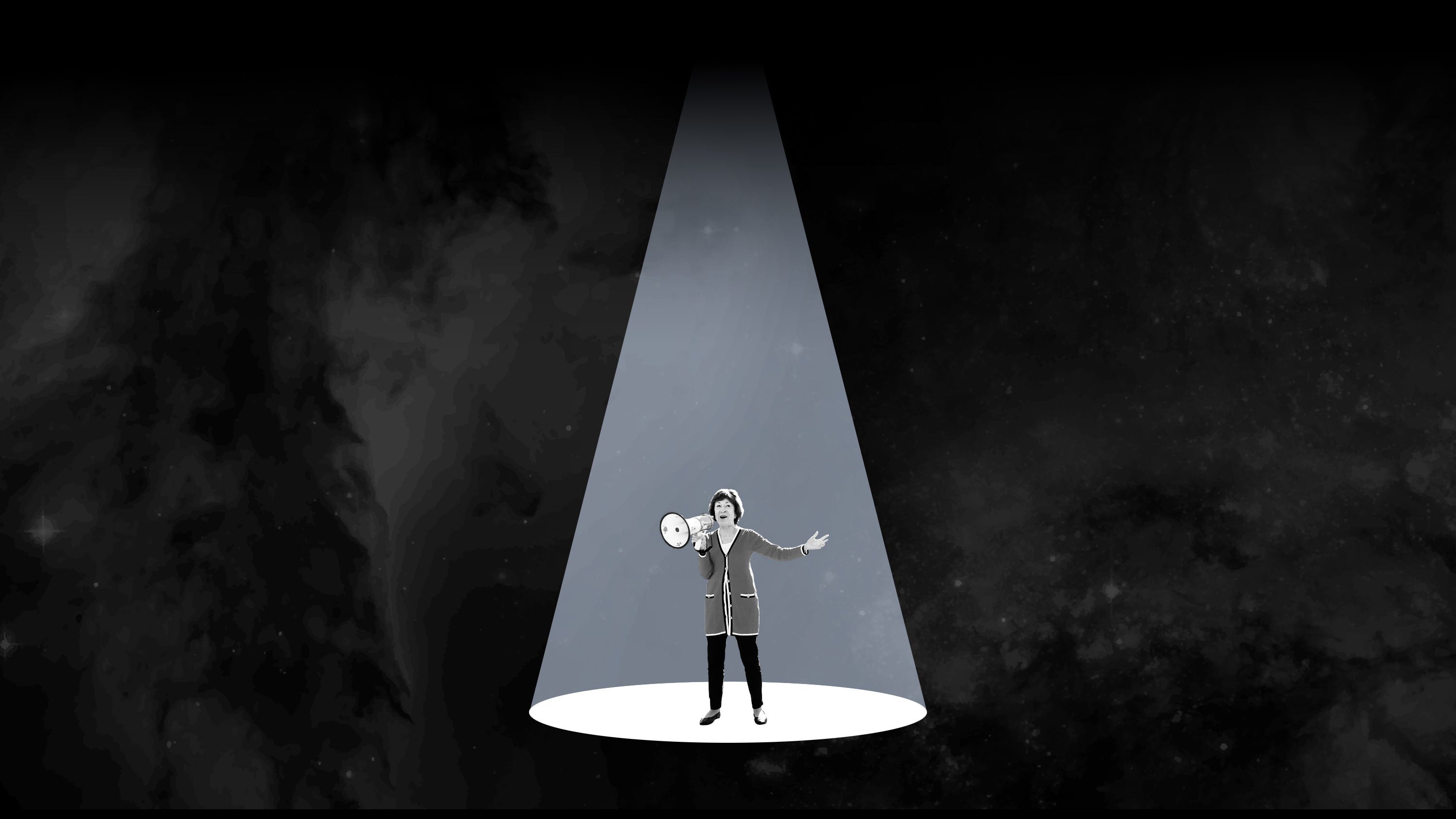
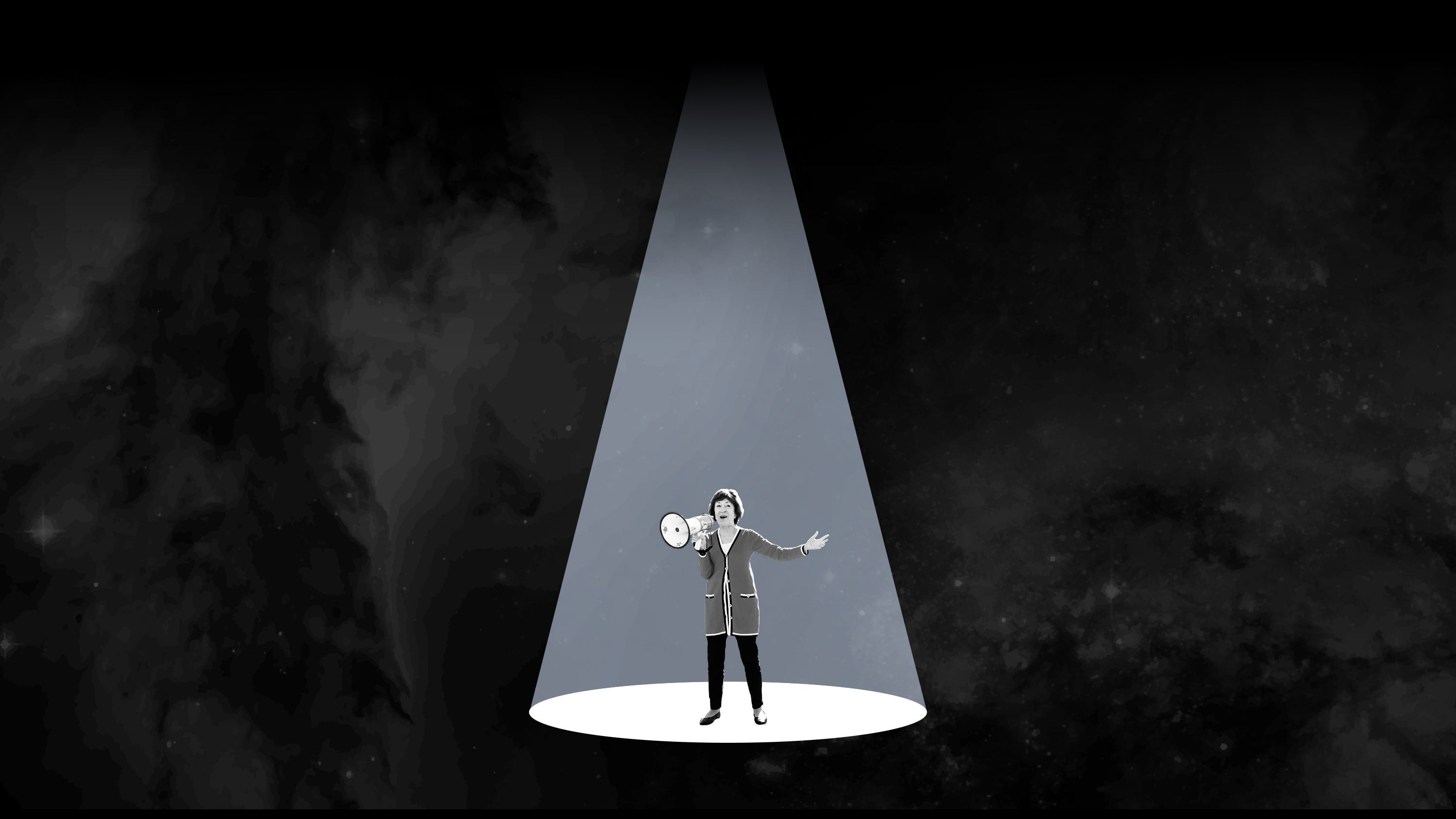
LAST WEDNESDAY, in an interview with Fox News, Sen. Susan Collins (R-Maine) accused her Democratic challenger, former state Senate President Troy Jackson, of being soft on crime. She warned viewers that months earlier, Jackson had “welcomed the endorsement of the Democratic Socialists of America” while running in the Democratic primary for governor.
Then, in a Thursday-night debate aired on Maine’s PBS stations, Collins didn’t breathe a word about the DSA. Instead, she distanced herself from Donald Trump’s policies. Emphasizing her clout as chair of the Senate Appropriations Committee, she claimed that she had used that position—along with her access to administration officials—to compensate Mainers for some of the costs imposed by the president.
By Friday night, Collins was back on Fox News. And, suddenly, she was back to fretting about socialism. “It’s interesting to me that Bernie Sanders has been to Maine to campaign with [Jackson]. Elizabeth Warren’s coming this week. AOC is coming next week. I think that tells you a lot about where Troy Jackson stands,” the senator told Sean Hannity. She concluded that Jackson had “gone far left on a lot of issues.”
This is Collins’s re-election strategy. To Trump voters, her message is that she’ll stand up to the left. To everyone else, her message is: If you’re unhappy with Trump and the GOP, only Susan Collins—by being powerful, and being a Republican—can reduce your suffering.
It’s a bleak pitch. Collins essentially concedes that the pain inflicted by her own party will go on, and that all she can do is lessen it. The question her candidacy presents to Mainers is whether they’ll settle for that grim bargain, or whether they’ll give her seat to a party that will take on Trump for real.
DEMOCRATS HAVE TRIED TO UNSEAT Collins for many cycles. They’ve always come up short. That’s because her formula—presenting herself as a moderate lawmaker who delivers for her constituents—has proved persuasive to Maine’s voters. But this time, her shtick about legislative efficacy might be overwhelmed by voters’ anger at Trump. At a minimum, his destructive presidency has prompted far greater scrutiny of her go-along-to-get-along approach.
In recent months, Collins has given three interviews that illustrate how she thinks about her job. In June, Fox News host Martha MacCallum asked her about her three decades in the Senate. “In 1996, you said you would only run for two terms,” MacCallum noted. “And yet now you’re running again [for a sixth term]. Why is that? And did that break a promise that you once made?”
Collins said she had changed her mind and decided to stay when she realized how much power she could accumulate. “I underestimated how much seniority, experience, and knowledge matters in the Senate,” she told MacCallum. “When I look at what I could do as a freshman senator, versus what I can do as chair of the Appropriations Committee, the most powerful committee in the Senate, there’s a huge difference.”
But what has Collins done with that power? In April, at a forum hosted by Semafor, she bragged about
Sam Stein and Will Sommer break down the disgusting attack ad targeting Ohio Democratic gubernatorial nominee Amy Acton, featuring her estranged mother accusing her of lying. When Acton was 12, her stepfather was accused of sexually abusing her and was indicted by a grand jury before he fled with Amy’s mother. The ad appears to be connected to Vivek Ramaswamy’s campaign, which has refused to disavow it. Sam and Will explain how the campaign’s smear tactics have backfired, how right-wing influencers rushed to amplify the attack, and why this could be a major political blunder for Vivek.
Plus, a look at Vivek’s history of dirty campaigning and why this latest stunt could be a new low for Ohio politics.
(Photo illustration by Bill Kuchman/The Bulwark | Photos: Shutterstock)
Wait a minute, Doc. Are you telling me you built a Democratic PAC out of Republicans?
The “Democrats for Mike Rogers” PAC, which recently rebranded as “Together for Michigan” (TFM), has a straightforward pitch: It represents the interests of, well, Democrats who support Republican Senate candidate Mike Rogers.
The group launched to much fanfare after Abdul El-Sayed won the Democratic primary, playing up the idea that he would be undone in the general election because his candidacy would fracture the Democratic coalition. But the PAC’s latest Federal Election Commission filings indicate that, notwithstanding its original name or its primary political theme, the operation is predominantly Republican-backed.
The group’s two biggest donations came from GLCF, Inc. (Great Lakes Conservatives Fund) and American Unity PAC, which donated $50,000 and $25,000 to the PAC, respectively. GLCF is a super PAC dedicated to supporting conservatives, and it has already spent a lot of money to run pro-Rogers ads this cycle. American Unity PAC’s stated mission is “focused exclusively on protecting and promoting Republican candidates for U.S. Congress who support freedom for all Americans, including people of faith and the LGBT community.”
TFM’s roster of individual, non-organizational donors is rather short—and the filing it made with the FEC likely does not cover the donations and expenditures it made when it was operating previously as Democrats for Mike Rogers. But of the four people TFM did list as having donated, several have a history of Republican support.
Get Press Pass in your inbox every Tuesday and Thursday
Fellow Tennessean Corey Trotz contributed a few hundred dollars to TFM in September; his mix of past support for the campaigns of members of both parties includes a donation to former Republican Rep. Steve Fincher in 2009.
TFM has spent nearly $5 million in either support for Rogers or opposition to El-Sayed, according to their annual expenditure totals. The group has also paid $30,000 to former Pontiac, Michigan council member Melanie Rutherford for “Grassroots Consulting” services. Two weeks after receiving those payments, Rutherford appeared on Fox News, touting Rogers and attacking El-Sayed—a clip that was amplified by numerous MAGA accounts. During the segment, it was never disclosed that she had received those payments.
Despite the Trump administration’s repeated efforts to undermine the security of American elections (to say nothing of what this president did last time an election didn’t go his way), the Democrats tasked with shoring up the legal protections in advance of next month’s midterms are confident that the elections will go smoothly. There are a few reasons for that.
In a call with reporters Monday, Rep. Joe Morelle (D-N.Y.), who is leading House Democrats’ election security agenda, said that after identifying a wide range of threats, Democrats have headed off a number of them, but many still remain active.
“I will say we started with about 150 threats,” Morelle said. “We’re down to about 70 because threats keep getting taken off the board. We talked about the postal service and [Trump’s] efforts to stop mail-in balloting—that’s gone away.”
Morelle’s confidence in the integrity of voting by mail isn’t something he shares with everyone in the party right now, but the courts have offered some reassurance in recent weeks.
“[Trump’s] efforts to try to invoke the SAVE Act and the SAVE America Act—those haven’t happened,” Morelle added. None of the several competing versions of the SAVE (America) Act passed.
Morelle also mentioned a post–Election Day strategy meant to make sure electoral processes remain fair and transparent through the first day of the new Congress on Sunday, January 3, 2027.
Morelle explained he has enlisted around 270 Democratic congressional staffers to function as election observers. They are being trained to take notes and provide evidence backups in the event of tampering.
“I will send them all across the country. They will be in their official capacities to be able to observe counts and recounts, to take firsthand accounts,” Morelle said of the House staffers. “We want contemporaneous notes should there be a challenge or a contest for anyone and we have to, in the Committee on House Administration, make a recommendation to the House about who to seat. But we’re on it.”
On the legal front, Democrats are preparing for the possibility of MAGA-related scheming to affect between forty and sixty of the more consequential congressional races. As Democrats have beefed up their legal rapid response and decided where to invest resources, they’ve had to put some thought into determining where local officials might engage in the kinds of election subversion that occurred in some precincts in 2020.
“Obviously, there are a lot of very good election officials, but there are also the Tina Peterses of the world,” said Marc Elias, a Democratic election attorney, referring to the Colorado elections clerk convicted of crimes related to her shenanigans trying to prove 2020 election conspiracy theories. (Her sentence was commuted by Colorado Gov. Jared Polis in May following a pressure campaign from Trump.) “There are also the bad election officials,” Elias said.
The attorney recalled the legal fights that followed the 2020 presidential election, when Trump used any ready-to-hand conspiracy theory or election-denying narrative he could find to make his case, and much of the Republican party felt bound to follow his lead. Elias expects a similar pattern to take shape if this year’s midterms result in overwhelmingly Democratic victories.
“I think that Donald Trump collects optionality of what he may find useful at any time, and then he sort of progresses through from the least preposterous to the most preposterous, and loses, right?” Elias said. “And that’s what we saw in 2020 when I was representing President Biden. We saw a series of cases in the days after the election—we won those—and then the cases got more and more preposterous, and then ultimately escalated to violence on January 6th.”
“So, I’m not saying there’s going to be violence,” Elias clarified. He added:
I do think, though, that we will see this escalation afterwards from the counties and what they can try to do there. Those will be defeated, but there’ll be a lot of activity, I suspect, and then they may try to create an uber-narrative around non-citizen voting that they use to argue that states shouldn’t certify results, that people shouldn’t get certificates of election at the state level . . . and then, ultimately, whether they take those to the floor and whether they take those to election contests under the Federal Contested Election Act—we’ll see.
Current polling strongly suggests the 2026 midterm elections could go very well indeed for Democrats. Trump and his administration have been seeking to preemptively undermine the results to maintain their power in Congress, but the House Democrats believe they are well positioned to prevent any further tampering or scheming that could compromise the results. In a particularly consequential-feeling election cycle, they hope they aren’t missing anything.
While other American industries have recently contracted largely as a result of Trump’s tariffs or his continuing elective war with Iran, there are signs of hope within one industry in particular—one that once fostered and then neglected one of our nation’s greatest inventions.
That invention, of course, is American selvedge denim. We haven’t produced it at scale domestically for years. But a new factory is now up and running, and fans of high-quality jeans across the nation have greeted this news as a beacon of light in a dark time.
Jeremy Freed writes:
In early November last year, Mount Vernon Mills, a 180-year old fabric mill and America’s largest denim producer, posted an Instagram video of a semi truck backed into a loading bay, its cargo shrouded in a white plastic sheet. The video, set to the opening chords of AC/DC’s “Hell’s Bells,” didn’t reveal much, but for those attuned to the fate of American-made selvedge over the last few years, it marked a major milestone. Under that white sheet was one of 40-some Draper X3 looms salvaged from the legendary Cone White Oak denim mill in Greensboro, North Carolina. To those who worship at the altar of 20th century workwear, it represented nothing less than the salvation of American denim. A little less than a year later, that machine and 20 others like it are up and running, fabric samples are being shipped to clothing brands across the country, and a new chapter in a 120-year story is beginning.
To be clear, the reopening of a single stateside denim factory is not going to make the slightest difference in the larger economic outlook of the United States, which remains dim. But the Mount Vernon Mills story shows that at least some Americans still crave strong craftsmanship enough to be willing to pay extra to support production on U.S. soil. That’s objectively a good thing.
Though they deny any involvement, the Trump administration and Elon Musk are apparently helping Putin escalate his campaign of terror against Ukraine. Civilian casualties across Ukraine are rising—including women and children—but Trump said Monday that Russia "has been fine on Ukraine." At the same time, Team Trump looks to be lining up business deals with Russian energy companies. And Marco's whitewashing of it all is sickening. Plus: Zelensky is tired of Trump's games, China is playing a curious role on both sides of the war, and JD has another whopper to add to his stack of lies.
As always: Watch, listen, hit the like button or leave a comment. We want to hear from you.
Ad-free editions of The Bulwark Daily are available exclusively for Bulwark+ members.
Tim Miller’s Bulwark Daily is available wherever you get podcasts and on YouTube. New shows drop each weekday afternoon. If you like the show, leave a comment and ⭐⭐⭐⭐⭐ wherever you listen.
A quick note: Will Saletan has a rare gift for methodically dismantling spin, connecting the dots others miss, and building a case so thorough that there’s nowhere left to hide. This kind of analysis isn’t built to please an algorithm. It’s built to help you understand what’s really happening. Support Will and the rest of The Bulwark team by joining.
Will Saletan gives his take on the growing panic inside House Republican leadership as bad polls, shrinking campaign budgets, and vulnerable races threaten the GOP’s hold on Congress. Even friendly voices on Fox News are pressing Mike Johnson, Tom Emmer, and Steve Scalise on why Republicans are struggling ahead of the midterms. From Texas districts where Republican gerrymandering may be backfiring to rising frustration over fuel prices and the Iran war, GOP leaders are running out of explanations.
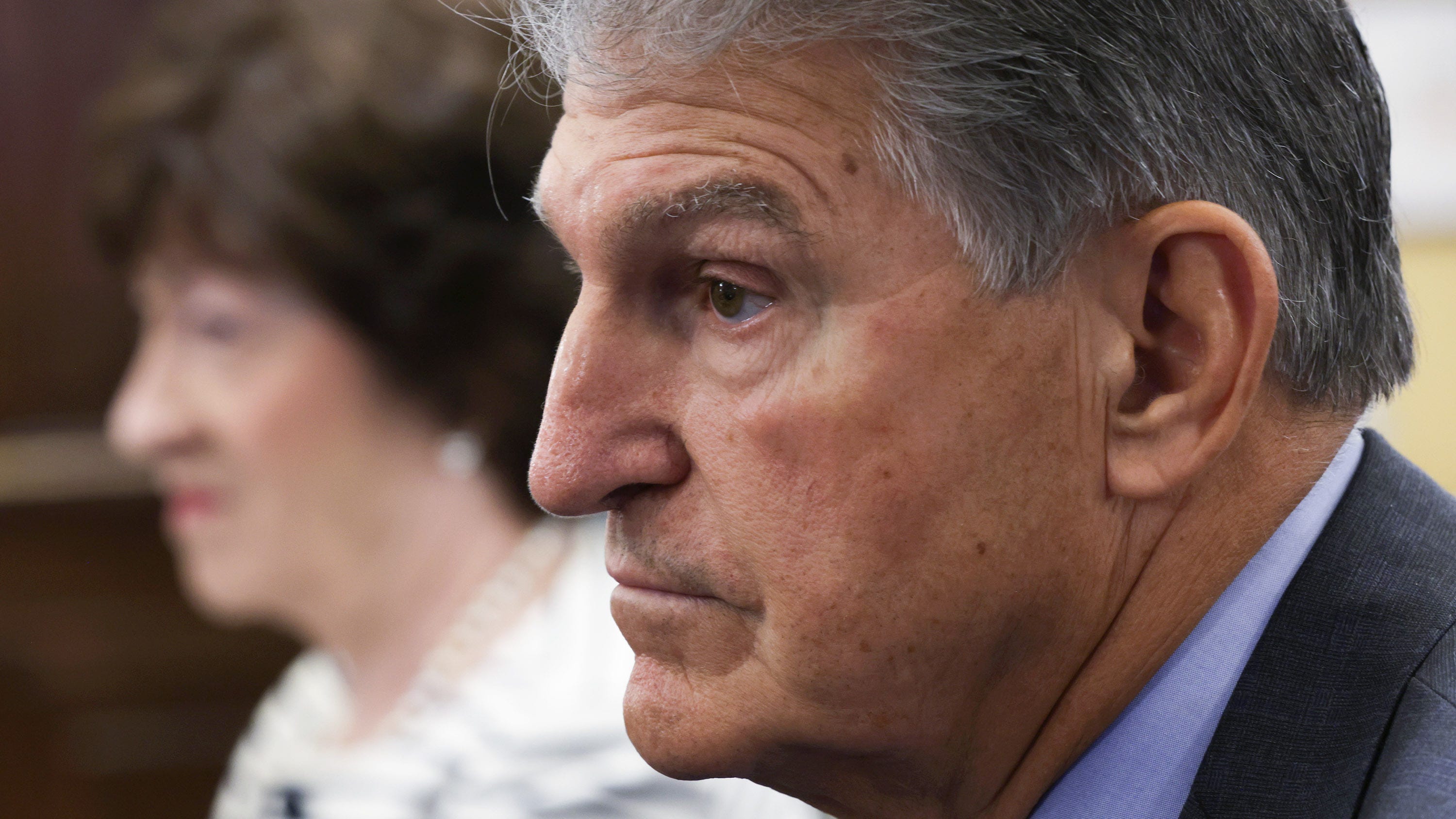
Joe Manchin and Sen. Susan Collins in 2022. (Photo by Alex Wong/Getty Images)
1. Asymmetry
Joe Manchin will be in Maine tomorrow campaigning for Susan Collins. Literally. Manchin told Semafor that he was motivated to get off the sidelines—where he merely endorsed Collins—because, well, here’s Semafor:
The moderate West Virginian said his visit is motivated by the attacks on Collins for voting too often in support of President Donald Trump.
However mad you are, it’s not mad enough. Because this isn’t just about Joe Manchin. It’s a fundamental asymmetry between Democrats and Republicans that’s driving the fascist movement in America.
Andrew Egger and Bill Kristol give their takes on Trump’s increasingly desperate push to save Republicans two weeks before the midterms. As Trump’s approval rating sinks and Democrats build a major polling advantage, the president is struggling to make the case for his party, resorting to racist attacks, religious bigotry, and bizarre defenses of vulnerable Republicans.
Plus, Trump continues to side with Vladimir Putin as Russia escalates its attacks on Ukraine and Marco Rubio is left defending the White House’s actions on Ukraine as Trump’s pro-Putin rhetoric grows harder to ignore.

 Login
Login