Reading view

The Real Danger of Russia’s Fake Elections
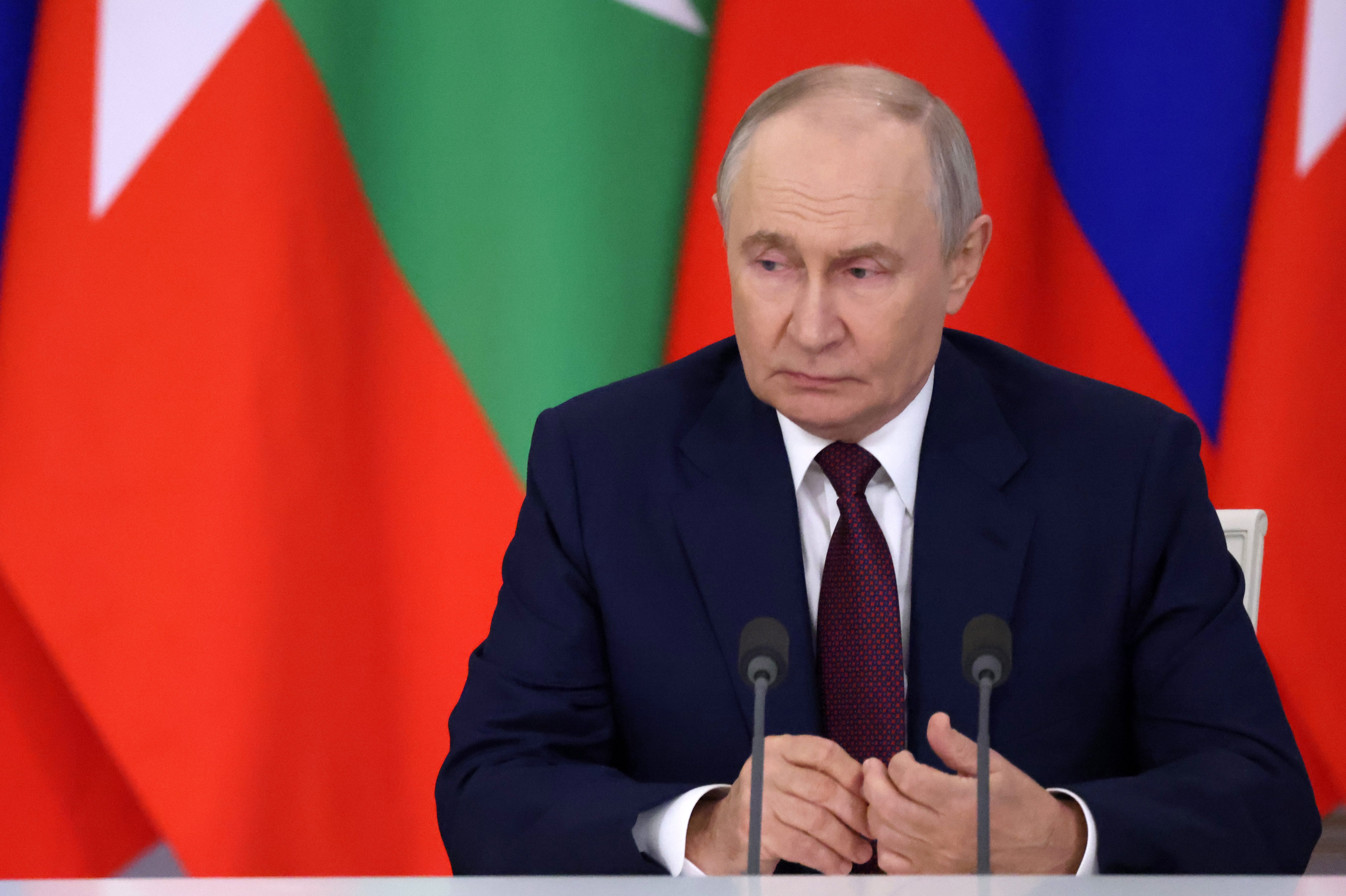
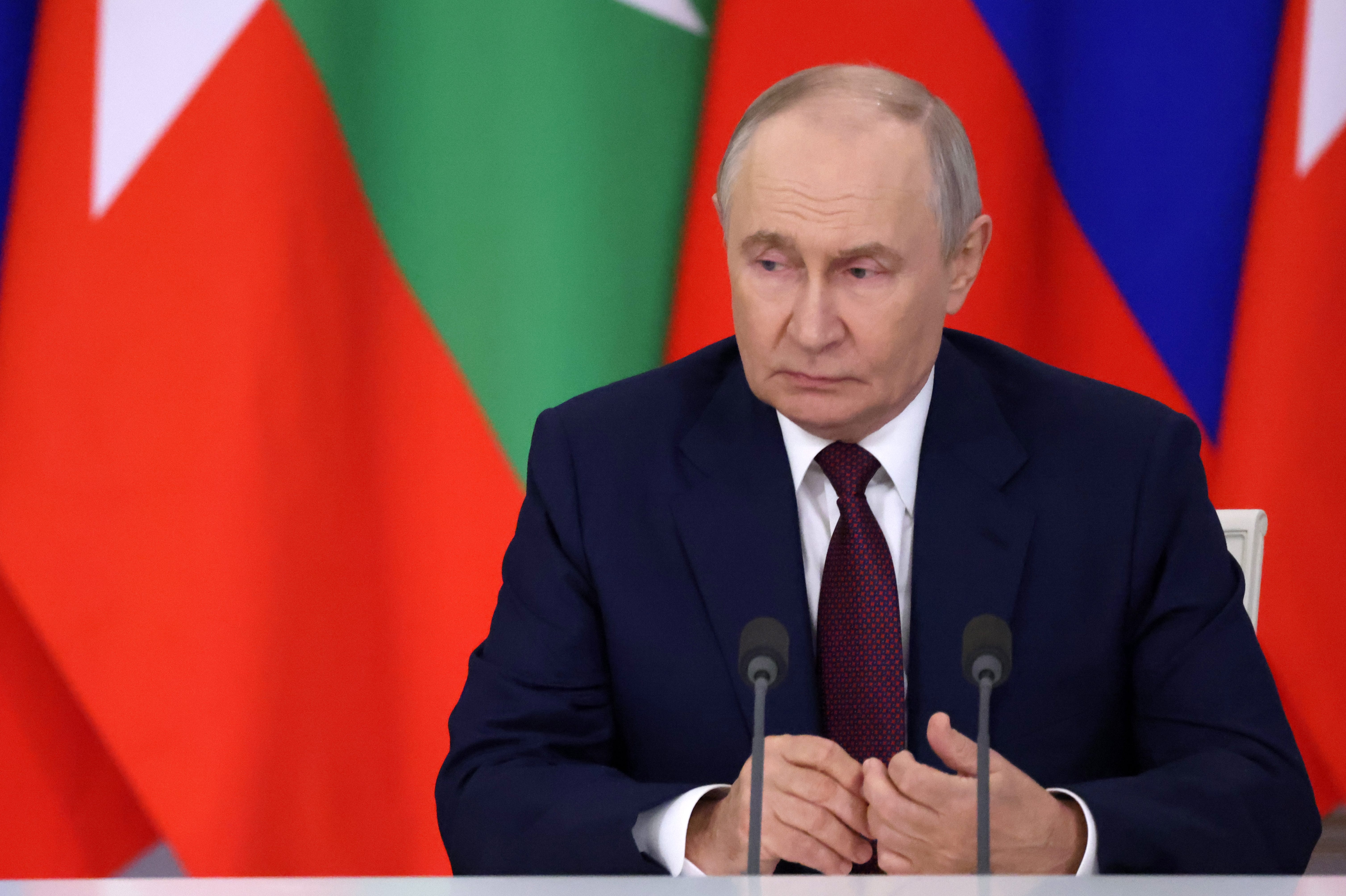
Russian President Vladimir Putin attends a Russian–Myanmar meeting at Kremlin on August 18, 2026 in Moscow, Russia. (Photo by Contributor/Getty Images)

LIKE THE UNITED STATES, Russia is having national elections this fall. From September 18 to 20, voters will cast ballots for (but not necessarily choose) members of the lower house of the federal legislature, the Duma. So far, the only party worthy of the label “opposition,” Yabloko, has been struck from the ballot, in a decision affirmed on Monday by the appellate college of Russia’s Supreme Court. On the same day, one of the same party’s most recognizable political figures, a former member of a regional assembly, was handed a prison sentence of eleven years and one month on charges of spreading “false information” about the Russian army. Earlier, another politician who had announced his Duma candidacy on an antiwar, pro-freedom platform had fled the country after a clear signal that he had to choose between emigration and prison.

It is, in other words, the sort of election you’d expect in Vladimir Putin’s Russia as the war in Ukraine creeps closer to the five-year mark.

But does the ruthless crackdown attest to the Kremlin’s totalitarian might or to its fragility—or both? And could it energize a new generation of young pro-freedom activists, hundreds of whom braved the police in Moscow to support Yabloko?

Defend democracy. Support independent media. Join our community.


YABLOKO, FOUNDED IN 1993—its name, Russian for “apple,” is also a portmanteau of the names of three founders, of whom only one, Grigory Yavlinsky, is still sort of on the political scene—has long been regarded as a quaint relic of the 1990s and as a pathetic symbol of impotent liberalism, or even faux liberalism. It has also been perceived as Putin’s pet opposition: Not affirmatively cooperative like the “establishment opposition” parties (Just Russia, Liberal Democratic Party, and even the Communists) but nonetheless tame, toothless, and permitted to exist as long as it knew its place. A former Yabloko member, blogger and activist Maxim Katz, accused the party of “self-castration” five years ago, citing such displays of cowardice as a 2019 post on the party’s Twitter account discouraging people from attending peaceful protests.

Until recently, other opposition activists generally despised Yabloko—which hasn’t had a caucus in the Duma since 2003 and has typically received less than 1.5 percent of the vote in parliamentary elections—as an officially approved spoiler deployed against genuine opposition forces. (Yavlinsky’s former personal friendship with Putin didn’t help.) In 2015, Yabloko sued Alexei Navalny, the late anti-corruption activist, over a post charging that a regional Yabloko chapter had been “bought” by an oligarch with ties to the ruling United Russia party. In February 2021, Yavlinsky shocked many people by writing an article assailing Navalny, then already imprisoned after an attempted poisoning by Russian special services, as a nationalist and populist with his own autocratic tendencies.1

Even so, Yabloko was Russia’s only officially registered political party to oppose the Crimea annexation in 2014 and the invasion of Ukraine in 2022. It also had a few highly visible and genuinely brave activists—among them Lev Shlosberg, a former member of the Pskov regional assembly who, back in 2015, publicized evidence of Russia’s covert involvement in the war in Eastern Ukraine. That’s the man who just got an eleven-year sentence for supposed fake news about the Russian armed forces. At least four other Yabloko members and activists, including the Deputy Chairman Maxim Kruglov, are already serving sentences on the same spurious charge.

Despite the official hounding, Yabloko’s registration for September’s Duma elections was approved by Russia’s Central Elections Commission in late July. It still faced some major handicaps. It was denied registration in several localities including St. Petersburg, where it enjoys relatively high popularity. In addition, over a dozen relatively high-profile Yabloko members, including Chairman Nikolai Rybakov, were disqualified from running because of typically absurd political charges such as posting “extremist imagery” online. In Rybakov’s case, the extremist image was a photo of Navalny in a condolence message on his death.

Still, Yabloko was on the ballot, with a slate of mostly young candidates and with the slogan, “For peace and freedom—for life without fear.”

That didn’t last long. Within days, Yabloko’s registration was challenged by the small, hawkish party Rodina (“Motherland”). Yabloko’s call for the immediate cessation of hostilities in Ukraine, Rodina charged, was extremist and unconstitutional because it meant leaving “Russian territory”—i.e., Ukrainian territories annexed by Putin in September 2022 and written into the Russian Constitution, but still under Ukrainian control—in the hands of “the Kiev Nazi regime.” Other allegations had to do with foreign funding, specifically donations from Russian citizens who had income from foreign sources; illegal campaign expenditures, on the assumption that social media posts and podcasts publicizing Yabloko were (or amounted to) paid advertising; and copyright violations in campaign materials.

The copyright charges were especially Kafkaesque. Initially, Yabloko was accused of the unauthorized use of a photo from the Kommersant newspaper (a tank in a sunflower field) in its campaign materials, but it turned out that the photo had been legally purchased and properly credited. When that charge fell apart, the complaint had to fall back on far more esoteric claims. Yabloko’s logo was accused of suspicious resemblance to an image from a 1920 Soviet poster by avant-garde artist El Lissitsky: both feature a triangle piercing a circle. Also flagged were a U.S. army photo of the ruins of Hiroshima (which is in the public domain) and an image made with ChatGPT without OpenAI’s permission. And then there was a podcast host’s utterance, in an interview with Yavlinsky that was later posted on the Yabloko website, of two Soviet-era antiwar quotes that have long been part of the common language: “Anything but war,” a slightly altered line from the 1959 play Five Evenings, and “May there always be sunshine,” from a famous 1962 children’s song. (The American analogues might be “War is hell” and “What is it good for? Absolutely nothing!”) To compound the absurdity, the son of the song’s composer publicly stated that his heirs had no objection to Yabloko using the line in any way it wanted.

But whether the accusations made any sense never really mattered: On August 10, Russia’s Supreme Court ordered Yabloko struck off the ballot. An appeal was filed; but, given that the Central Election Commission and the General Prosecutor’s Office supported the decision, the chances of it being reversed on were roughly the same as Putin publicly apologizing to Ukraine for the invasion. On Monday, the disqualification was upheld, after a supposedly “open” hearing where only six members of the public were allowed inside the courtroom and no audio or video feed was permitted. (Someone still managed to smuggle out an audio recording.) A final appeal to the presidium of the Supreme Court is a simple formality.

Join now


SO, WHAT IS THE MEANING of this charade? Why was Yabloko registered? Why was it booted from the ballot when, even if it miraculously won a majority of the vote nationwide, the Kremlin could have easily rigged the results—particularly now that Russia’s electoral districts include the annexed and partially occupied provinces of Ukraine, where United Russia can freely give itself 99.9 of the vote if needed?

The consensus among Russia’s independent, mostly exiled pundits and political activists is that giving Yabloko its moment in the electoral sandbox was intended primarily to demonstrate that antiwar sentiment in Russia is pathetically marginal—between one and two percent of the electorate. There’s also a view that Yabloko was meant to split the “tame liberal” vote and weaken New People (Noviye Lyudi), a six-year-old party which backs the war in Ukraine but opposes censorship and supports more democratic elections.2 While New People is basically a Kremlin project meant to appeal to young voters, the Kremlin may feel that it shouldn’t be allowed to get too big.

But something funny happened on the way to the voting booth: Support for Yabloko started to surge. The presence of an antiwar, pro-freedom party on the ballot galvanized large number of young Russians online. The party’s fruity name proved useful: Suddenly, merely posting a clip discussing one’s love for apples, or happily munching on one, became a sly act of political defiance. Apple memes and emojis multiplied, as did Internet searches for Yabloko. “Closed” government polls reportedly showed about 10 percent of voters expressing an intent to vote for Yabloko before it had even started campaigning. The threshold for representation in the Duma is five percent. (Yes, vote-rigging is a given—but too large a gap between the actual vote and the reported results could annoy enough of the populace to give the Kremlin a headache.) Meanwhile, even official and public polls have been showing United Russia’s rating at a record low of about 32 percent. And while majorities still profess approval of Russia’s actions in Ukraine—whether out of fear, passive conformism, or sincere conviction—recent polls find that nearly two-thirds of Russians support peace talks, while one in four favor immediate concessions for peace.

What’s more, it’s likely that the regime’s real fear was not so much the actual voting as the campaign. As former Duma member Dmitry Gudkov told Radio Liberty: “There are no elections in Russia—it’s a scam, the house always wins. But if we got six weeks of a legal antiwar campaign in Russia, that could have gotten a lot of traction. There would have been hundreds of thousands of activist volunteers all over the country distributing leaflets and so on.” Not to mention at least some access to mainstream media including federal television channels, guaranteed to every party on the ballot. Perhaps, by election time, the share of Russians who want peace now—even on Ukraine-friendly terms—would have risen from a sizable minority to a majority.

Many believe that the Kremlin’s strategists made another miscalculation, counting on the Russian opposition in exile—which still has an underground following in Russia, including on banned but widely accessed platforms like YouTube and Telegram—to join in a pile-on against Yabloko. Instead, there was remarkable consolidation behind it: Even activists from Navalny’s Anti-Corruption Fund, including his widow Yulia Navalnaya, set old grudges aside and urged voting for the only antiwar and pro-freedom party on the ballot.

TV-RAIN host and analyst Yekaterina Kotrikadze has said that the most dramatic effect of Yabloko’s campaign was its appeal to young people who had largely withdrawn from the political into the personal, only to see their personal world invaded by the war and the state: Ukrainian drone strikes at online retail warehouses, gas lines caused by strikes at oil refineries, moves to throttle the Internet. In Kotrikadze’s words, “People realized that they don’t want to live like this.” Hundreds of young people showed up to support Yabloko outside the Supreme Court offices, both for the initial hearing and for the appeal—braving dozens of arrests, as well as police warnings to young men that protesting would get the draft board’s attention. Dmitry Medevedev, former fake president and current Putin attack dog, was sufficiently rattled to gripe about young pridurki (“retards,” basically) who, he suggested, are either lured by promised benefits or want to show off their rebellion.

Join now


POLITICAL SCIENTIST EKATERINA SHULMAN told TV-RAIN that the rash decision to greenlight Yabloko’s run, followed by a scramble to block it, was not only a “massive embarrassment in two acts” but a sign of “dysfunction” in the regime’s upper echelons. Some see it as a sign of intensifying conflict between Kremlin factions—the legendary hawks vs. doves, or quasi-liberal technocrats vs. siloviki, hardliners from the military and security structures that represent brute force. (We could call it “technocrats vs. jackboots.”) Others agree with political analyst Stanislav Belkovsky that the warring “Kremlin towers” are largely a myth, and Putin is the only decider.

Whoever (besides Putin) may have played a role in the Yabloko two-step blunder, Russian dissidents in exile have widely viewed it as an encouraging sign of the regime’s weakness: as ex-party member Maxim Katz put it in a recent video, “from ‘Kyiv in three days’ to being scared of Yabloko.” A similar fragility can be seen in the response to onetime Duma member Boris Nadezhdin’s aborted campaign. Like Yabloko, Nadezhdin was once seen as a reliable “house liberal,” known mainly as a token dissident/whipping boy on Russian propaganda shows. In early 2024, he was allowed to register as a candidate for the presidential elections; after thousands lined up to sign his nomination forms, enough signatures were invalidated to keep him off the actual ballot. This time, 63-year-old Nadezhdin was handled far more harshly: Shortly after declaring his Duma candidacy last month, he was branded a “foreign agent,” making him ineligible to hold public office, and then arrested and fined for display of “extremist imagery.” (The offense? Once again, a Navalny photo.) When a foreign travel ban notice appeared on Nadezhdin’s electronic account for government services and then disappeared, he got the message: He is now in Paris.

Displays of weakness? In a sense, yes; but these are also displays of ruthless power. That’s why, for opposition veterans like former TV journalist Viktor Shenderovich, the signs of a new generation’s awakening are both heartening and terrifying. “We see that life goes on—there are sane people, wonderful people,” Shenderovich said in an interview on a Russian-language Polish channel. “But then I remember Iran and realize that in the next round, when Putin gets scared for real, they’ll start shooting people. For now, they’ll be throwing them in jail.”

It’s tempting to believe, with former political prisoner Vladimir Kara-Murza, that the regime’s collapse could happen soon and very suddenly. One can certainly see signs of hope in the fact that Russian troops are stuck in Ukraine and that Ukrainian long-range missiles are hitting more and more Russian strategic targets. But for the moment, Putin and his totalitarian machine are still more than capable of inflicting horrific damage—on Ukrainians and on Russian resisters.

Join now

1

Navalny was expelled from Yabloko for his nationalist views in 2007; he himself claimed that his expulsion had more to do with challenging Yavlinsky’s leadership.

2

New People initially came out against the invasion of Ukraine but quickly reversed itself. It is widely seen as a project of Putin’s first deputy chief of staff Sergei Kirienko.
  •  

The Death of Reading Has Been Greatly Exaggerated

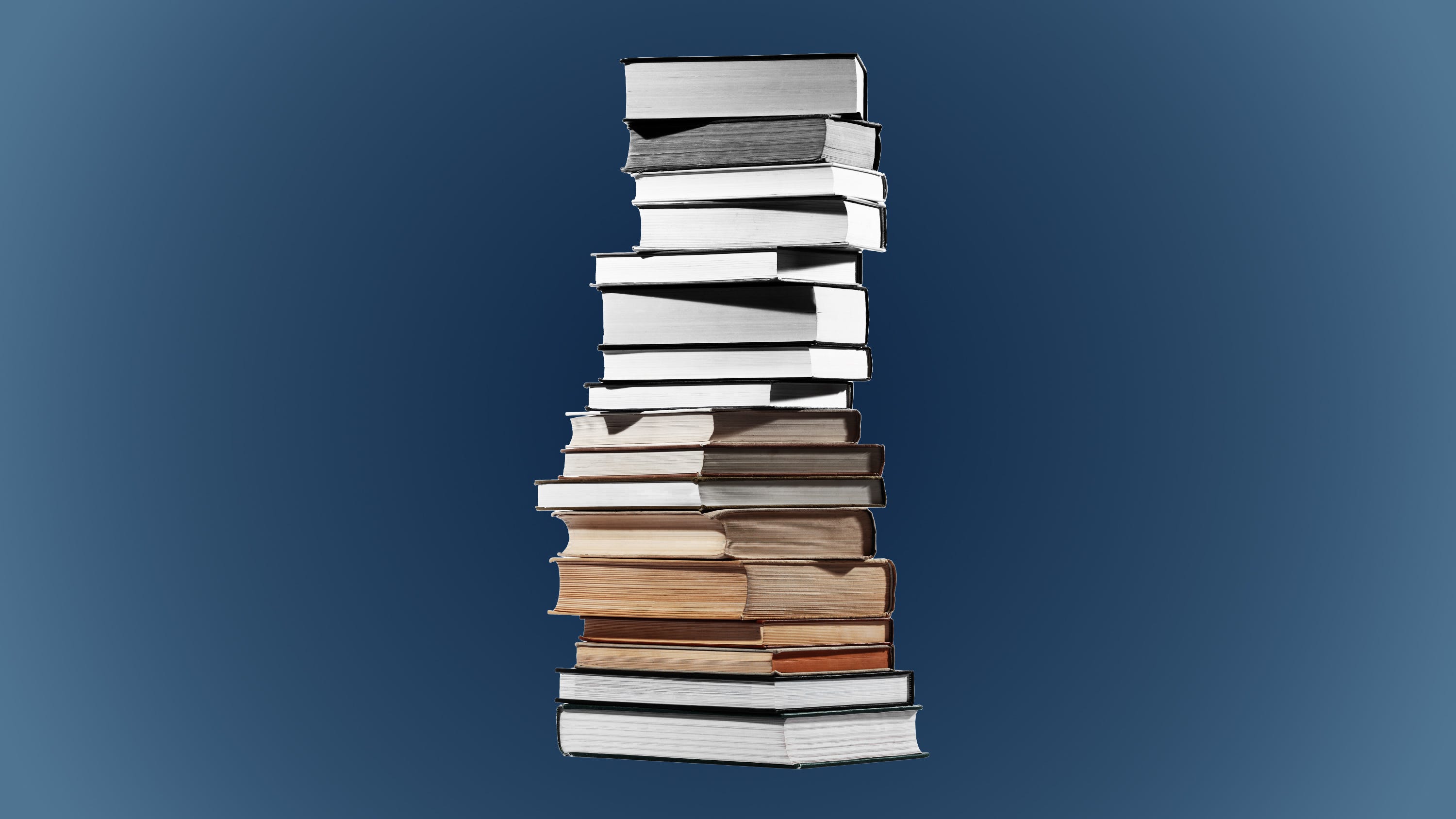
(Photo illustration by Bill Kuchman/The Bulwark | Photos: Shutterstock)

THERE IS IRONY IN THE FACT that last month’s controversy over the “end of reading,” heralded in an Atlantic essay of that name by Rose Horowitch, was succeeded by a far bigger controversy over a film retelling one of humanity’s oldest works of literature—which spurred a surge in print sales of the work itself. Christopher Nolan may or may not have helped give reading a boost with his film The Odyssey, but the debate over the “end of reading” is worth revisiting now that the dust has settled.

Horowitch is far from alone in sounding the alarm over reading in crisis. In a recent piece in the Conversation, Austin Sarat, a political science professor at Amherst College (and an occasional contributor to The Bulwark), writes that complaints about “students’ reading habits, or rather nonreading habits” have become common among faculty. Sarat concludes: “Reading—not just any kind of reading, but reading long, complex, challenging books—is quickly vanishing from the American scene.”

What’s more, we are warned that not only the fate of literature but the fate of liberalism is at stake: Liberal democracy cannot thrive without a literate citizenry capable of processing complex information. Horowitch quotes Marshall McLuhan’s observation that “the liberal world by definition is literate.” Horowitch adds: “The inverse appears to be true as well.” In other words, a postliterate world is turning postliberal—or make that simply illiberal.

Should we be worried? About illiberalism, of course. About postliteracy? That, to quote the description of Odysseus that apparently inspired Nolan, is complicated. Yes, Americans read less than they did forty years ago—not surprising, considering how many other forms of entertainment and information are competing for our time and attention. But does this spell decline or diversification? And is it really related to liberal democracy’s prospects?

Click here to join Bulwark+


MY OWN THOUGHTS on these questions are informed by my decades as a reader and a writer, and by my childhood in a culture that was at once both book-centric and part of a totalitarian system.1

But my thoughts are also informed by previous iterations of this debate. The reading (or non-reading) panic has been with us for the duration of my life in the United States, where I came from the Soviet Union as a teenager in 1980. The following year, a book titled Why Johnny Still Can’t Read by Rudolf Flesch, a blistering critique of American reading education, became an instant bestseller—though not as big as its predecessor, Why Johnny Can’t Read, published in 1955. In the early 1980s, I remember buying paperback books that featured public-service ads with the stark warning that one in five Americans can’t read. (I was shocked until I figured out that “can’t read” did not refer to actual illiteracy but to lack of sufficient reading and writing skills to function in everyday life.) Illiterate America, by activist educator Jonathan Kozol, came out in 1985. As a student at Rutgers University in 1987, I wrote a review for the Detroit News of Allan Bloom’s The Closing of the American Mind, which asserted that “our students have lost the practice of and the taste for reading” and portrayed a generation addled by rock music and television. (I thought Bloom was overgeneralizing.) There was also E.D. Hirsch’s 1987 bestseller Cultural Literacy, the premise of which was that young Americans need to remedy their lack of familiarity with the basics of history, culture, and art. In 1990, literary critic Alvin Kernan published The Death of Literature, which took note of a survey showing that nearly 60 percent of Americans had not read a single full book in the preceding year while most of the rest had only read one. Books, Kernan thought, had been done in by television and computers. The following year, a piece by Daniel Singal in—yes—the Atlantic warned that even smart and high-achieving students were often unprepared, poorly read (“one can’t assume that college students know anything anymore”), and generally familiar with political candidates only from commercials. On a familiar note, Singal warned that this situation was a potential danger to democracy.2

Horowitch acknowledges that warnings about the death of reading and of literacy itself aren’t new: McLuhan foretold the coming postliteracy in 1962, and his friend Neil Postman amplified the alarm in 1985 in Amusing Ourselves to Death. Maybe, Horowitch suggests, they weren’t wrong but “merely early”: Maybe it just took that long for the full transition from text to visual media to take place. Maybe doomsday is now.

Plenty of data confirm that Americans—children and adults—are reading less. The percentage of 13-year-olds who read for fun every or almost every day, as measured by the National Assessment of Educational Progress (NAEP), fell only slightly from 1984 to 2012 (from 35 percent to 27 percent); but it plunged to 17 percent in 2020 and 14 percent in 2025. The share of those who never or hardly ever read for pleasure hovered around 10 to 12 percent in the 1980s and 1990s, then jumped to 24 percent in 2008 and 29 percent in 2020 and 2025. The post-2012 decline in daily or almost daily reading for fun has also been tracked for 9-year-olds (from 53 percent to 37 percent). As for adults, the American Time Use Survey has found that the share of those who report any reading for personal interest dropped from 26 percent in 2003 to 16 percent in 2023.

Blame smartphones? Social media? Video games? All of the above? Probably. But before we get depressed, a few caveats are in order. We have no idea what kind of reading these surveys capture (they do not specify books, either print or digital) or what kind of reading has declined. You could be reading Jane Austen or a celebrity gossip magazine; the survey would count them as the same. Is it possible that at least some of the drop in reading reflects a shift to other media among consumers of lighter fare? People who would have been reading celebrity gossip columns twenty-five years ago, for instance, are now more likely to scratch that itch with TikTok or Instagram. People who once read the sports pages may now be listening to podcasts, and so on.

A fascinating factoid from the time-use survey actually does suggest that it was the more casual, less serious readers who drifted away between 2003 and 2023: Even as the share of people who reported reading for personal interest dropped by 10 percentage points, mean reading time among those who do read went up over the same period—from about 80 minutes to nearly 100 minutes on a given day. That’s not necessarily because serious readers started reading more. Most likely, the change reflects the fact that many people who might once have spent five or ten minutes a day reading are no longer reading at all and are consuming other media instead.

Many commentators see a particularly dire sign in the fact that fewer children are reading today: given that reading declines with age, this seems to presage an ever-shrinking minority of adult readers. But we do not know if the pattern will still hold for today’s children and adolescents.

One pessimistic nugget in Horowitch’s essay also leads to data that paint a more nuanced picture: “Nearly 30 percent of American adults cannot paraphrase or make inferences from a multipage text,” up from less than 20 percent in 2017. Those numbers, from the Survey of Adult Skills conducted by the Organization for Economic Co-operation and Development (OECD), refer to adults with literacy scores at Level 1 or below—ones who can, at best, understand short texts and find simple pieces of explicit information. But the OECD data for the United States also show little decline in the share of high-competency readers, scoring at Level 3 and above. The share of adult Americans reading at Level 3, considered to be the minimum required for functioning in modern society, dropped from 35 to 31 percent between 2017 and 2023. Level 4 and 5 readers, who can, among other things, compare different texts and evaluate the persuasiveness of arguments, remained constant at 13 percent of the adult population. The drop in reading skills was primarily among those scoring at Level 2—which is marginally better than Level 1, but is still considered below high school education goals. According to one document, it’s enough to “locate information in text, make simple inferences, and integrate easily identifiable information.”

NAEP assessments show a similar trend for high school seniors. The share of those with “below basic” reading skills rose from 20 to 25 percent in the 1990s, and then to 32 percent in 2024; but the biggest drop has been in the share of twelfth graders with “basic” skills, while the share categorized as “proficient” has decreased only slightly and the percentage with “advanced” reading skills has remained steady.3

Or, to put it more concisely: The poorly literate are getting poorer while the rest are mostly staying as they are. Is this bad? Yes, I think so. But is it a death knell for reading, or even for reading difficult books? Probably not.

If you’ve reached this point in this article, you’re obviously a reader. Send this article to other readers you know:

Share


WHEN MY FAMILY CAME HERE from the Soviet Union in 1980, one of the first things we heard from quite a few Soviet émigrés was, “Americans don’t read.” (“Except cookbooks,” said one woman, who stopped talking to my parents after my mother asked in a rather acid tone whether bookstores and publishers in America existed solely for Soviet émigrés.) As off-putting as this snobbery was, it had a certain sliver of truth in that Russia, at the time, was a “book culture” in a sense that America was not. For a college-educated person to show a lack of familiarity with the classics, including then-controversial modern classics like Mikhail Bulgakov’s The Master and Margarita, was a very definite faux pas. At the school I attended (admittedly, a specialized school that mostly drew students from a more educated background than average), nearly everyone read on his or her own time, and the reading fare often included both Russian and foreign classics; I don’t think there was a single person who hadn’t read Dumas’s The Three Musketeers and The Count of Monte Cristo by 14 or 15. Partly, the reading reflected the paucity of other entertainment: While Soviet television was not pure propaganda, as some might imagine, and it did offer some good programming, there just wasn’t very much of it. Besides, in a censoriously prudish culture, books offered glimpses of sex: Everything from Guy de Maupassant’s Bel-Ami to Ernest Hemingway’s For Whom the Bell Tolls to occasionally published translations of twentieth-century American or European mystery novels was devoured in search of titillating tidbits.

But Soviet/Russian book culture was also, in a very real sense, performative. Bookshelves full of classics—including multivolume complete collections of everyone from Anton Chekhov to the sixteenth/seventeenth-century Spanish playwright Lope de Vega—were a status symbol; so were books from the two-hundred-volume “Library of World Literature” collection, a Soviet equivalent of Everyman’s Library. It’s a fair bet that many of those books were never opened; I heard stories of people borrowing books from friends and finding uncut pages inside. Some people hunted books without the slightest knowledge of either books or authors: My father once approached a long line outside a bookstore and asked a woman what was on sale. “Some guy named Garpo,” she replied. The book turned out to be a volume of Edgar Poe in Russian translation.

For many people in the Soviet era, reading was an outlet for dissent: People took great risks to circulate banned books, in samizdat typescript and in smuggled-in foreign editions. (Sometimes, a book was borrowed for a single day and read in an all-night marathon.) And yet, as Russia’s post-Soviet experience shows, literacy did not produce liberalism. In the first years of reform and opening up—perestroika and glasnost—people avidly read once-forbidden books by Alexander Solzhenitsyn or Vladimir Voinovich. A little over a decade later, the Russian book market was inundated with trash promoting Stalin apologism or historical revisionism with a Russian nationalist and anti-Western slant. On several trips to Russia in the 1990s, I found that my former classmates—who had almost certainly read more books than the average American of similar age and social status—were dismayingly credulous toward conspiracy theories and con artists such as psychic healers on television. We haven’t kept in touch, but I wouldn’t be at all surprised if they are now equally credulous toward the Kremlin’s war propaganda.

Does that mean reading is useless? No, of course not. But the literacy/liberalism connection is much too simplistic. The Soviets, and other Communist regimes, aggressively promoted literacy and reading in their early years to use books and newspapers as propaganda tools. The Nazi regime in Germany sprang from a highly literate society with a great appreciation of art and culture; if radio played a major role in the Third Reich, so did newspapers (and the book Mein Kampf, which had sold 12 million copies by the time the regime collapsed). Audiovisual media may be more suited to stirring up mindless anger and paranoia, but there is no shortage of examples of print media doing the same—from pamphlets and newspapers during the French Revolution to books like None Dare Call It Conspiracy in the United States in the 1970s. All things being equal, I’d rather see people get their information from books than podcasts—all things being equal, I agree that information from books is likely to be processed more thoughtfully—but obviously, it all depends on the podcast and the book.

Share The Bulwark


DOES THAT MEAN EVERYTHING IS FINE as far as Americans’ cultural literacy and reading habits? I wouldn’t say that. I think there was something to be said for the middlebrow culture of the 1950s in which classics—literary, artistic, or musical—had a cachet of prestige and television networks felt a patrician and paternalistic obligation to bring them to the masses. On the other hand, I also realize that replicating that ancien régime is impossible in a media environment of infinite variety—and that even that golden age wasn’t all gold: Mike Wallace complained on his CBS interview show that only 39 percent of Americans, according to a Gallup poll, had read one or more books in 1955.

Besides the distractions of the digital age, the culture of reading has undoubtedly taken other hits—some of them political. George Orwell’s 1946 essay assailing the dominance of left-wing orthodoxies in the literary world of his time was titled “The Prevention of Literature”; paraphrasing it, one can certainly say that the modern left has engaged in what one might call ‘the prevention of reading,’ not only on the college level but in many high schools and many progressive cultural spaces. It’s hard to sustain love for books when authors and their works are “problematized” for inane reasons, identities are elevated above everything else, and classics become something to be “interrogated” rather than understood and appreciated. But today’s right with its scorn for the humanities and its suspicion of anything perceived as unpatriotic, “elitist,” or unmanly—like an overly “female” focus on feelings—is no less hostile to reading, literacy, or culture. (True, some red states such as Texas have genuflected toward “great books” with school reading lists that feature classics, but these initiatives still keep literature political: Those lists have a distinct rightward slant.)

Academics’ first-person accounts of students who don’t read assigned books and seem unable to finish a twenty-page text, let alone a book, certainly shouldn’t be ignored—even if one such account, by Tyler Jagt in the Chronicle of Higher Education in June, opens with the acknowledgment that “every generation of professors has complained that their students cannot read.” Jagt writes that “the lament is usually overblown, but data have caught up to anecdote.” Yet his own article seems short on data, other than some recent drops in NAEP reading scores—primarily, it seems likely, among the non-college-bound. And there are also competing or complicating reports from college professors and even high school teachers who say they still assign long and complex texts and that plenty of students still love to read.

The flurry of “reading in crisis” essays may have its positive side even if the alarm is overblown—if only because it gets people to talk about reading and ways to support it. But the concern shouldn’t turn to defeatism.4 We can note encouraging signs, such as the resurgence of book clubs among “Generation Z.” Maybe the trend of TikTok videos making fun of “performative reading,” such as showing off a big book while actually holding it upside down, reflects respect and not contempt for actual reading. Maybe even the Odyssey firestorm reflects an underlying sense that our literary heritage matters.

We can also talk about solutions, from improving reading programs in schools to putting pressure on institutions to help build a more reading-friendly culture. (Jeff Bezos, whose fortune started with books, should have gotten a lot more backlash for killing the Washington Post Book Review.) But one thing we shouldn’t do, I think, is link the fate of books to the fate of liberal democracy. Right now, restoring sanity and humanity to our politics should be our top priority. But one of the blessings of a saner and more humane political environment is that it will free up many of us to focus on more essential things that matter—including literature and art.

Want to comment? Join Bulwark+

1

I’m the sort of person who worries about the decline of books. I am a lifelong bookworm raised in a book-loving, even book-revering home. I believe that books enrich lives; serious reading may not make you a better person, but I think it does make you a more thoughtful, insightful and well-rounded one. I also have a personal stake in book appreciation, as a writer who has published two nonfiction books, has recently finished her first novel, and has plans for more nonfiction books and translations of beloved classics. Obviously, I don’t want to write into a void.

2

More recently, the Atlantic also published Nicholas Carr’s 2008 lament “Is Google Making Us Stupid?” in which he complained that “the deep reading that used to come naturally has become a struggle” for him and his friends because of the attention-span-eroding internet.

3

A look at the numbers year by year shows that comparisons should be treated with caution, since some of the shifts are likely to be flukes. For instance, the share of students with “below basic” reading skills was 20 percent in the NAEP’s 1992 sample, but 25 percent in the 1994 sample and 23 in the 1998 sample. The share labeled “proficient” was 36 percent in 1992 and 32 percent in 1994. A comparison of 1992 and 2019, when 31 percent of seniors were classified as proficient in reading, seems to show a 5-point drop—but taking 1994 as the baseline reduces that drop to just one point.

4

Also not helpful: snobbish dismissal of books that don’t qualify as literary fiction but are smart and well-written. Horowitch, for instance, takes a swipe at Suzanne Collins’s latest bestseller in the “Hunger Games” series—Sunrise on the Reaping, which, for what it’s worth, is rich in quotes from classics.

  •  

Special Delivery: Ukraine Blows Up ‘Russia’s Amazon’

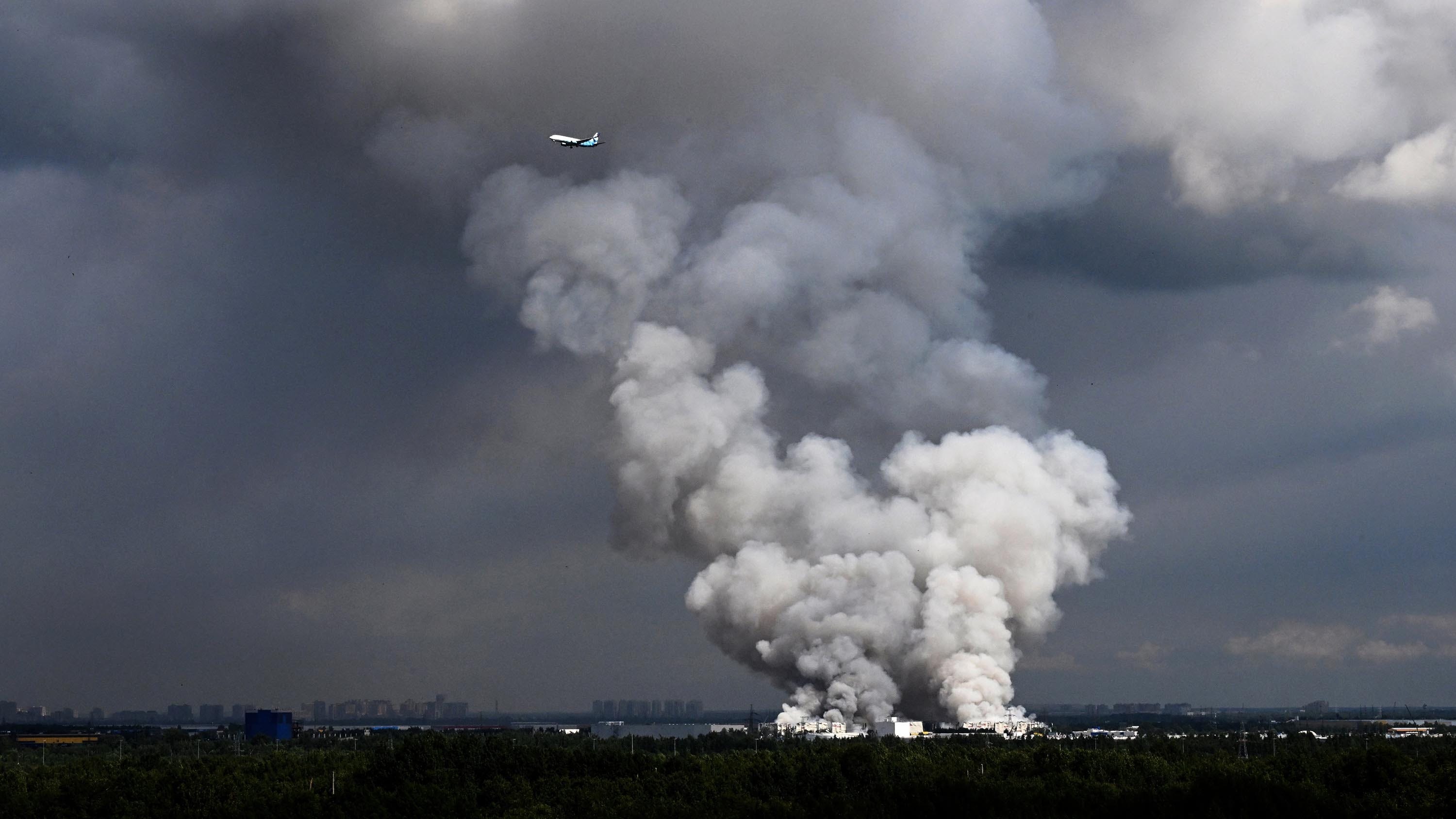
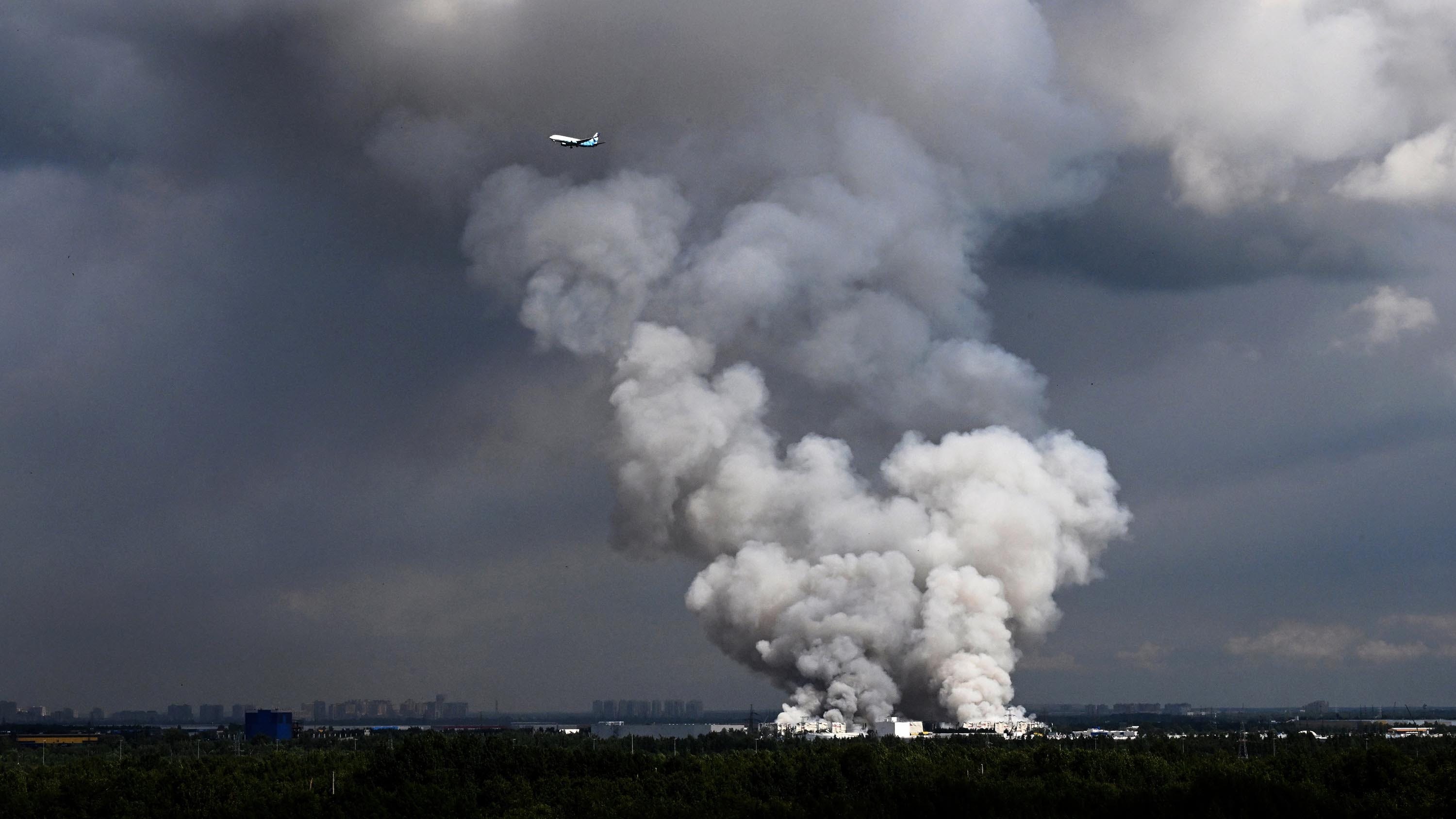
A passenger plane flies past smoke rising from a Wildberries warehouse near Saint Petersburg after being hit by Ukrainian drones on July 24, 2026. (Photo by AFP via Getty Images)

“EVERYONE JUMPED OUT OF BED in the middle of the night, no one could understand what was happening,” said an elderly woman in a short video clip that went viral in Russia over the last few days. She was talking about a nighttime Ukrainian drone strike on the outskirts of Elektrostal, an industrial city some 36 miles east of Moscow. “Scary isn’t the word,” said the woman. “People thought it was war.”

Did they, now? More than four years into Russia’s war against Ukraine, it’s hard to think of a more tragicomic symbol of the clueless Russian remaining clueless.

The war of aggression came home to Russia itself long ago, with Ukrainian drone and long-range missile strikes deep inside Russian territory—primarily targeting oil refineries and munitions factories and depots—escalating since at least late 2023. Since the start of this summer, Russians have been seeing and feeling the effect of those raids at the gas pump: long lines, closed gas stations, rationing. But the strike that so shook up the woman in the clip from Elektrostal was on a new Ukrainian target of choice: a warehouse belonging to Russia’s biggest online retailer, Wildberries, often nicknamed “Russia’s Amazon.” At least nine Wildberries warehouses—including a major hub in St. Petersburg—have been hit since July 18, with most of them either destroyed or severely damaged.

In a country where online shopping accounts for about a fifth of all retail sales and Wildberries handles about half of all e-commerce orders, that’s hitting where it hurts. Some online commenters have joked that instead of his alleged goals of the “demilitarization” and “de-Nazification” of Ukraine, Vladimir Putin is getting the “de-wildberrization” of Russia.

FREE TRIAL: 14 days of Bulwark+

Kyiv has described the Wildberries strikes as retaliation against continuing Russian attacks on Ukraine’s civilian infrastructure and also cited the firm’s role as a seller of military and dual-use goods: military helmets (described as combat-tested), bulletproof vests, radios, first-aid kits, and fiber-optic cable for drones. The Wildberries website has now apparently disabled searches for “SVO”—the Russian acronym for “special military operation”—and “everything for SVO.” But related keywords seem to still work: My own search for “SVO accessories” on Sunday returned over 100,000 items, including “tactical backpacks,” helmets, and military patches.1 (The text on one patch uses a pun on the dual meaning of mir as “peace” and “the world” for a global domination joke: “We want mir—preferably all of it.”) Russia has especially little cause for complaint, considering that it has repeatedly bombed sorting facilities and vehicles belonging to the Ukrainian private postal operator Nova Poshta, supposedly because of its use for delivery of dual-use goods.

Opinions differ on whether the military justification holds water under the Geneva Conventions. (It should also be noted that at least nine Russian warehouse workers have been killed in the strikes and dozens have been injured—though, unlike Russia, Ukraine has tried to minimize civilian casualties by striking only at night when there is likely to be minimal staff presence at the facilities.) Be that as it may, there is widespread agreement that the primary purpose of the Ukrainian strikes is not to incinerate some vests, helmets, backpacks, and patches with bad puns. As expatriate Russian commentator Dmitry Bykov put it, “It’s a very legitimate way to shatter not even the Russian economy so much as the Russian consensus that everything is normal.”

Share


WILDBERRIES SELLERS, AT LEAST, are certainly getting an unpleasant taste of the new normal—as evinced by video clips compiled by the exiled dissident network TV-RAIN. “I’m raising two children on my own,” sobs one woman. “I’ve fucking lost everything.” Others point out that you can’t do business when your inventory could be seconds away from burning to a crisp: “Yesterday you were leading a normal life, now you’re a bum.”

The sellers’ dismay has been exacerbated by the fact that on July 7—eleven days before the first warehouse strike—Wildberries had announced a policy change (or “clarification”): From that point forward, “attacks by military hardware and aircraft (including UAVs), weapons of destruction, munitions or their components” will be treated as force majeure and not subject to mandatory compensation. On July 12, another big Russian online retailer, Ozon, sent out a similar notice. Naturally, conspiracy theories have quickly taken off. Could someone at Wildberries have been tipped off about the upcoming strikes by a contact in the Ukrainian military? It’s not inconceivable, given how many personal and family ties still exist between the two countries. But it’s equally possible that the owners simply saw which way the wind was blowing, or which way the drones were flying.

Public outrage, and perhaps fear of government action, did force Wildberries management to announce that the sellers will be compensated—but so far, details remain murky. Several sellers who appear in the TV-RAIN reel complain about pitifully inadequate compensation, such as a 3,000-ruble payout for 800,000 rubles’ worth of destroyed merchandise.

Will Ukraine’s “war is hell” message reach the average middle-class Russians, until recently largely shielded from this war’s effects? Maybe. So far, says TV-RAIN host and analyst Anna Mongait, none of the video reactions from distraught sellers mention the war. There’s no surge of hatred against Ukraine—but no tangible anger at the Kremlin, either. (One young woman in the TV-RAIN compilation cited above does plaintively ask, “Why can’t we all simply live in peace?”) Mongait believes it may not be cluelessness so much as fear: “People have grown used to the fact that any talk of the war is punished.” But she also thinks this may change: “There’s a sense that people are getting so sick of all this, they’re on the brink of speaking the forbidden words” (for instance, ‘stop this war’).

Share The Bulwark

One person who has come very close to that third rail is fitness and beauty influencer Victoria Bonya, a former Russian reality-TV star who now lives in Monaco but still has a large following in her native country. As I reported in late April, Bonya caused a stir earlier this year with a viral video criticizing Putin for being out of touch with the country’s problems. While the video didn’t mention the war and ultimately blamed feckless or mendacious advisers for Putin’s indifference (the old ‘good tsar, bad boyars’ trope), it was enough to elicit a massive response and infuriate Kremlin propagandists. Now, the blazing Wildberries warehouses have apparently induced Bonya to break her silence again. In a new video, she asks:

When have we gotten so out of control and so divided from each other that we are engaging in self-destruction? Please answer this question for me. Does anyone know? We’re leaving our children a legacy more shameful than any generation has ever left.

When indeed? Numerous commenters have volunteered snide answers to Bonya’s question. True, much of the video dealt with environmental catastrophe, and Bonya stressed that she didn’t want to blame anyone. But the former reality star also offered a remarkable explanation for this sorry state of affairs: “One small dick—one small peepee is having a measuring contest with another small peepee while destroying everything in its path.” A “both-sides” analysis, to be sure, but let’s face it: In 2026, suggesting to Russian audiences that Putin is sacrificing the country to the inadequacies of his manhood is pretty radical.

It’s hard to say what further fallout the Wildberries attacks may have. Russian economist and dissident politician Vladimir Milov points out that Wildberries has made itself an easy target by investing in mega-warehouses and touting its partnership with Russia’s second-largest, primarily state-owned bank: A collapse of Wildberries, Milov says, could lead to a banking crisis. Milov estimates that damage to the company already amounts to 500 billion rubles, or about $6 billion—and the strikes will undoubtedly continue.

Whether more disaffected Russians will finally be pushed to name the war as the cause of the destruction remains to be seen. But TV-RAIN’s Mongait, at least, sees evidence that “things are starting to boil.” The Wildberries strikes certainly promise a long, hot rest of the summer for Russia—and more pressure on Putin to accept a peace deal in the fall.

Leave a comment

1

It should be noted that I conducted my test searches of the Wildberries storefront from the United States, but the company might give different results for searches originating from different locales.

  •  
❌