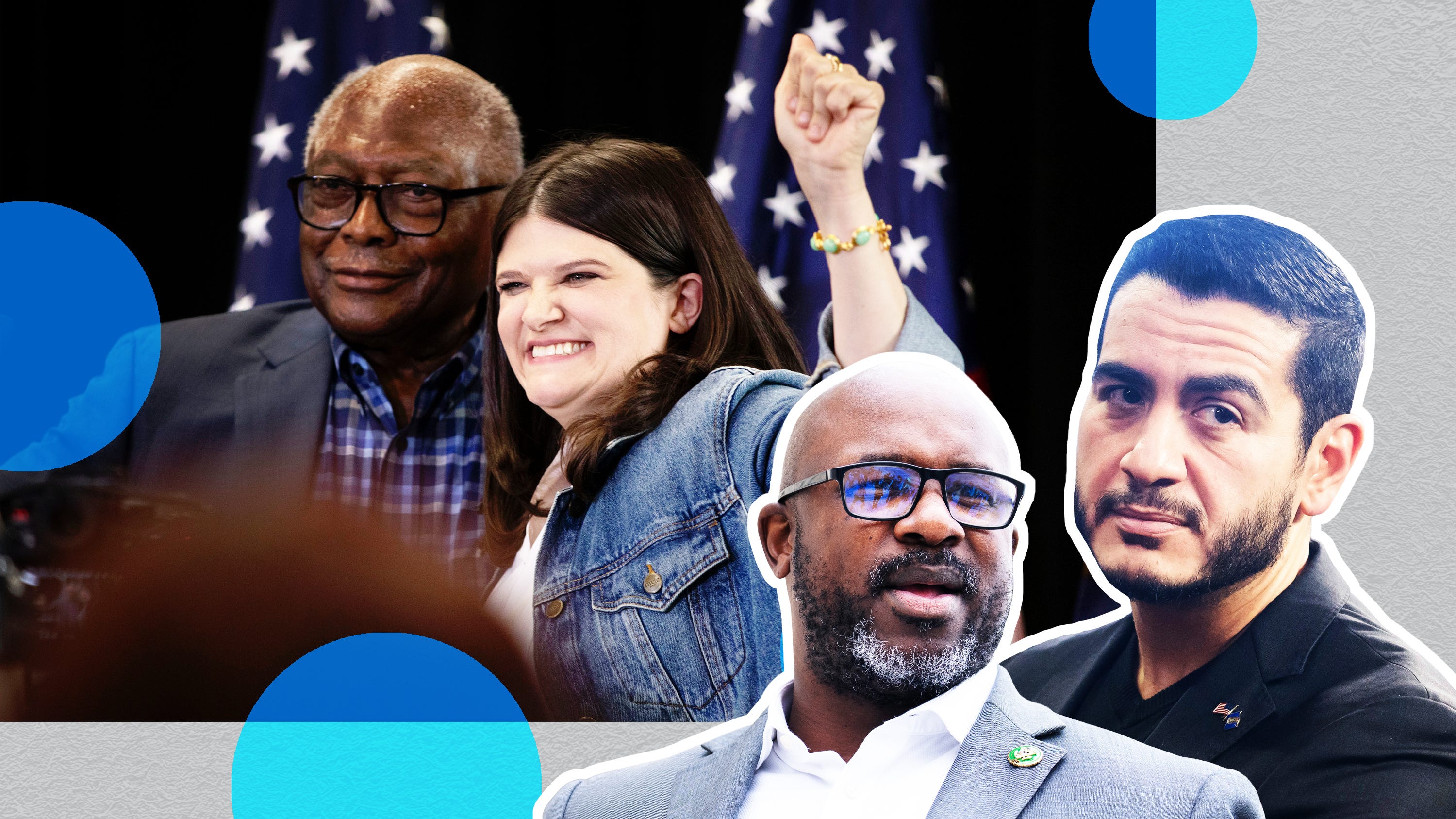
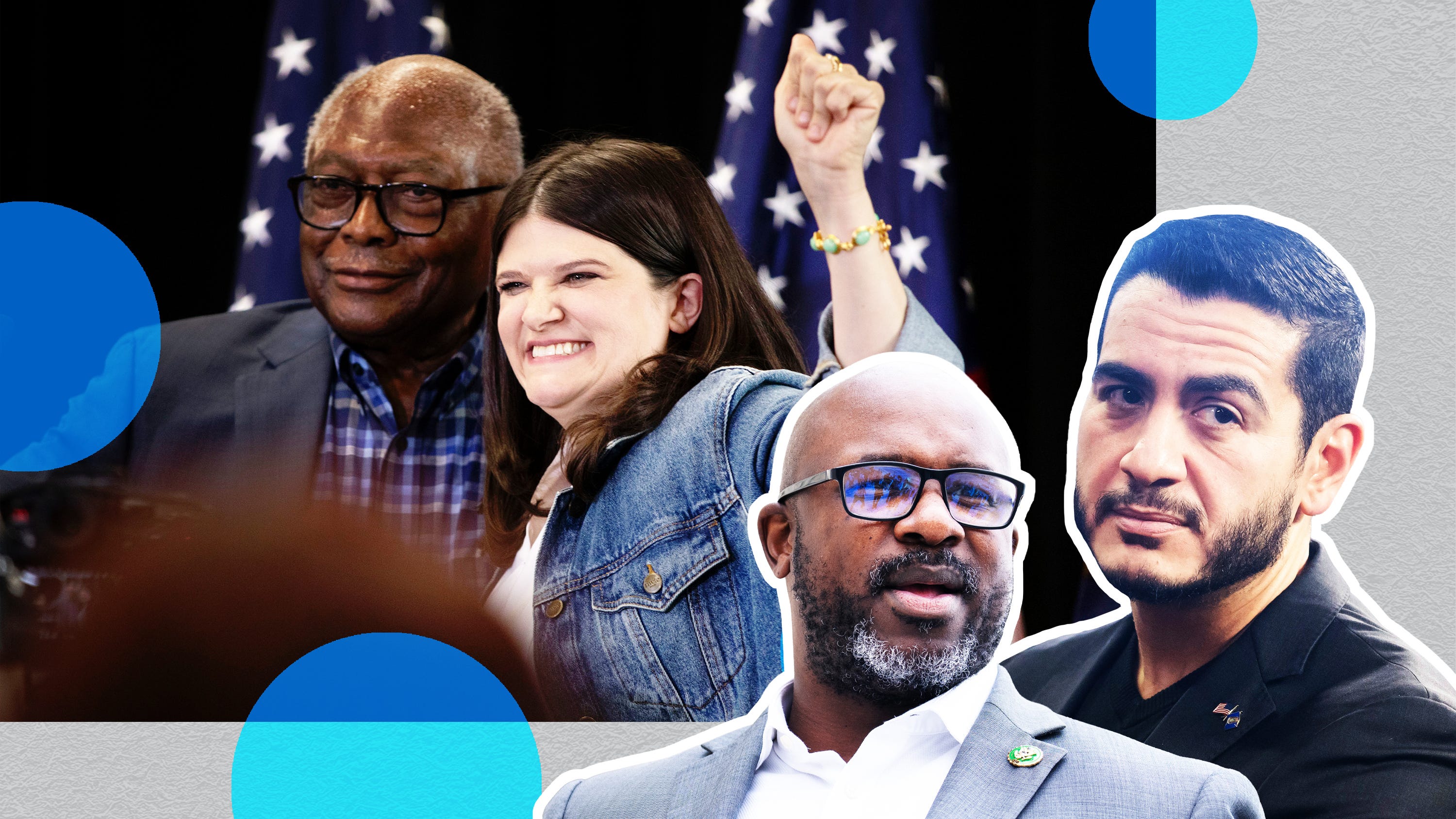
Lt. Gen. Mark Hertling (Ret.), Ben Parker and special guest Ret. Rear Adm. John Kirby went live to discuss the U.S. intercepting an attack by Iran, Trump’s response to the attacks, and the concern on U.S. missile stockpiles as the war drags on.
Drawing on his own experience in the Navy, John breaks down what it’s really like to defend the Strait of Hormuz, why Iran continues to threaten global shipping despite months of U.S. strikes, and how a lack of clear strategy is putting American readiness at risk.
Plus, a look at how the Pentagon’s silence and the White House’s inconsistent public statements are undermining public trust at a moment when Americans deserve honest answers about the war.
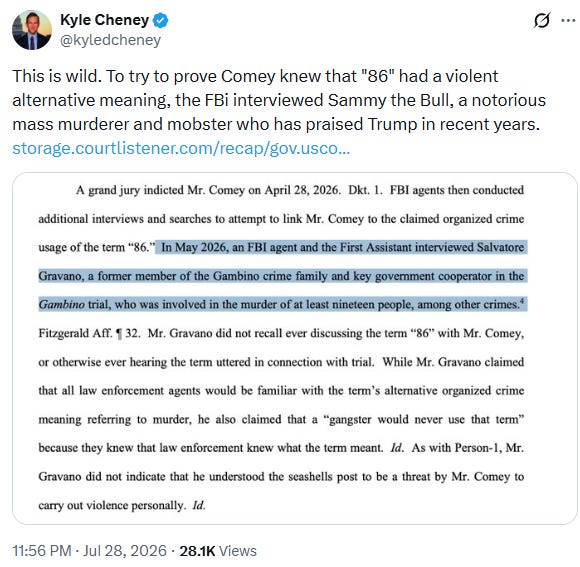
Donald Trump’s legal apparatchiks at the Justice Department have insisted for months that the criminal indictment against former FBI Director James Comey—one of the personal enemies Trump most longs to see punished—goes beyond the “86 47” Instagram post they ludicrously insist constituted an imminent threat on the president’s life.
“Rest assured that it’s not just the Instagram post that leads somebody to get indicted,” Acting Attorney General Todd Blanche said on Meet the Press in May. There had been a full investigation by “the career FBI agents, the career Secret Service agents,” and who knows what damning evidence they might have found?
Now, thanks to a series of court filings last night from Comey’s lawyers, we finally know what that investigation entailed: a ludicrous snipe hunt in which federal officials sought high and low to find people who would testify that “86” is an old mob threat, interviewing old mobsters and Comey associates to prove he should have known as much—because after all, hadn’t he prosecuted organized crime? They’ve got him on the ropes now! Happy Wednesday.
Join Mark Hertling and Ben Parker—with special guest Rear Adm. John Kirby—for Command Post at 10:00 a.m. EDT today. Watch on Substack or YouTube.
Morning Shots is free—as is most of what The Bulwark publishes. Because you can’t save democracy from behind a paywall. Our work depends on the support of Bulwark+ members. Join today to help us grow—and get two weeks free as an expression of our thanks.
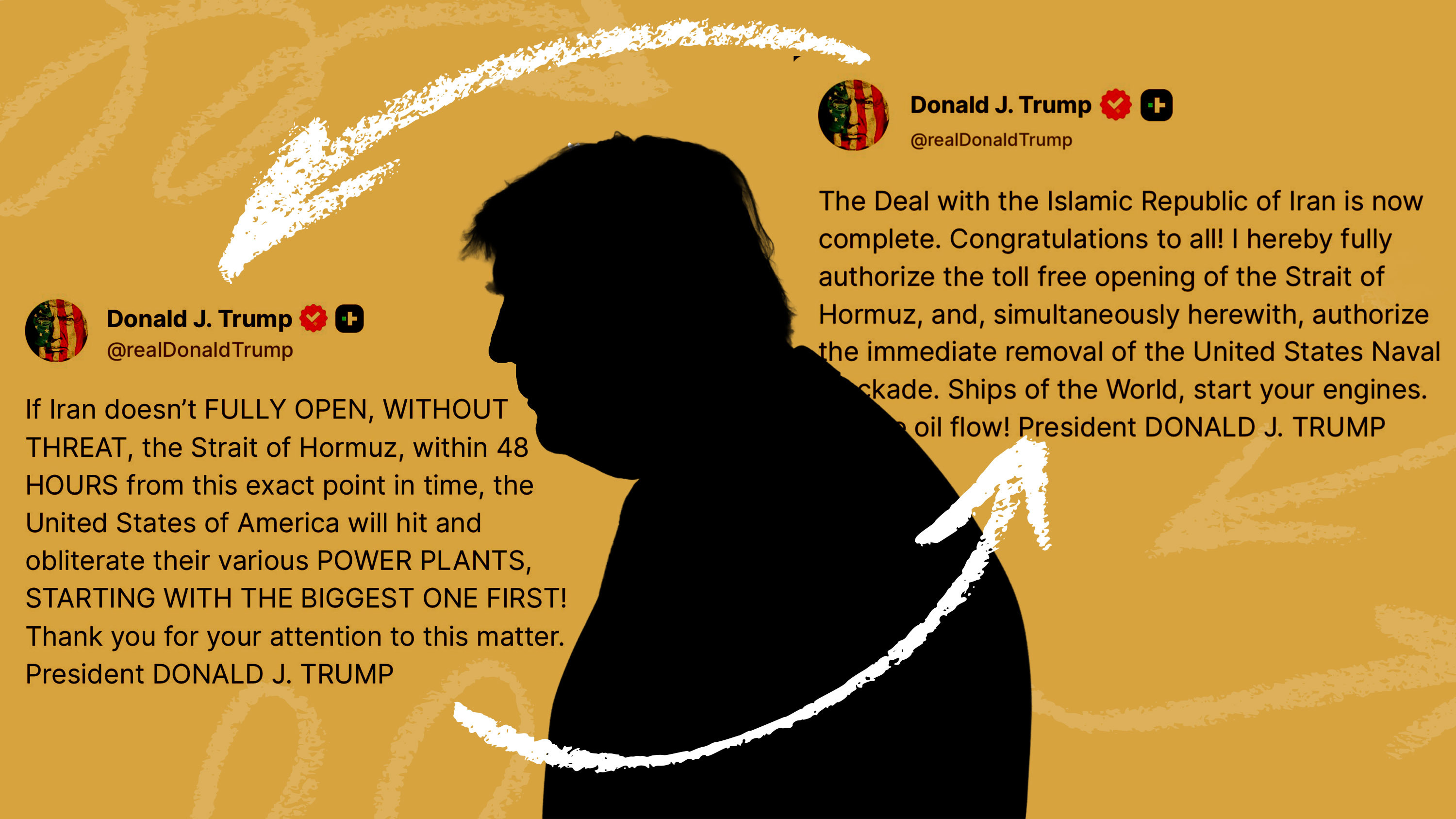
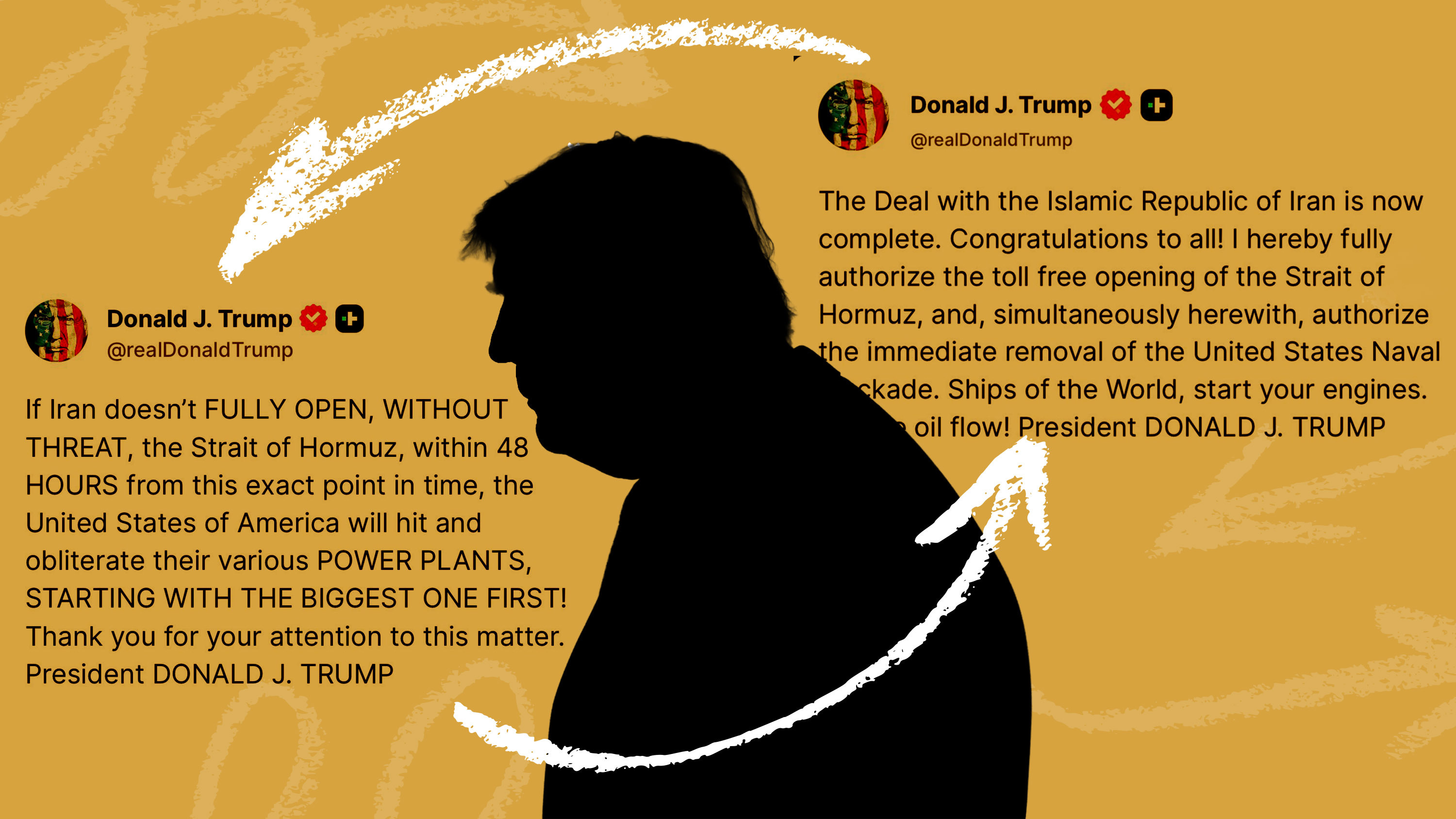
(Photo Illustration by Sarah Rogers/The Bulwark | Photos Getty, Shutterstock, Truth Social)
Bomb, Rinse, Repeat
by Andrew Egger
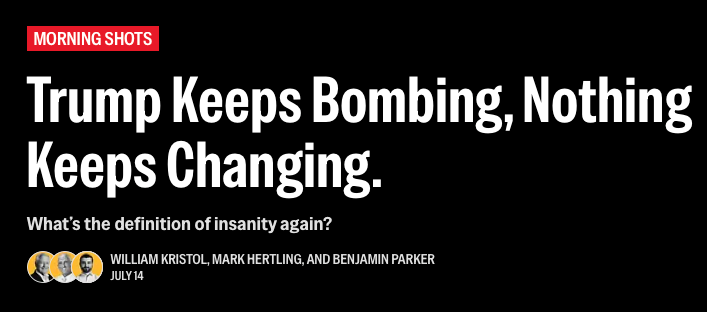
Yesterday morning, after Donald Trump called in to Fox & Friends to show off his latest peacenik turn—insisting implausibly that the late Sen. Lindsey Graham’s dying wish was a peace deal with Iran, grousing at Israeli Prime Minister Benjamin Netanyahu for stating publicly that Iran seemed ready to start rebuilding its nuclear facilities—I messaged the Morning Shots editors that I had a headline for today’s newsletter: “Trump, Iran, and the Definition of Insanity.”
Ben Parker wrote back, confused: Hadn’t we used that exact phrase before? And yeah, pretty much:
Such is life for the poor put-upon newsletter grinder in the dog days of Donald Trump’s endless Iran war. While Iran presents a steady, ironclad negotiating front—your sanctions must go, your troops must go, your nuclear demands must go, and we get the Strait of Hormuz—Trump finds himself trapped in an endless reboot loop, orbiting hopelessly around two demonstrably failed positions: If we bomb the hell out of them, they’ll give us what we want. If we stop bombing them, they’ll give us what we want. And we find ourselves scrabbling for something new to say about the same old grotesque status quo of America’s slow-motion pantsing on the world stage.
This morning, the New York Times wrote up a short history of Trump’s “Whiplash War” in Iran, laying out in stark data-viz form just how erratically Trump has toggled between his two strategic modes. In late March, just weeks after the war began, he was already threatening to blow up Iranian power plants. By early April, he was threatening genocide. Those threats gave way to a two-week ceasefire—which fell apart nearly at once after Iran continued to fire on ships in the Strait of Hormuz, leading Trump to declare an economic blockade of his own.
After a May marked by periodic bursts of attacks, June brought the vague “Memorandum of Understanding” that led Trump to declare the mission accomplished: “The Deal with the Islamic Republic of Iran is now complete. Congratulations to all!” he exulted on June 14. “Ships of the World, start your engines. Let the oil flow!”
Days later, missiles were flying again. The ceasefire was momentarily resumed on June 28—before Trump declared it truly dead July 8, leading to the heaviest period of bombardment since the opening days of the war. Then came the brief respite beginning this past weekend, which now appears to be over after Iran launched missiles at a U.S. base last night: “We are going to beat the fucking shit out of them,” Trump told Fox News this morning. “We’ll be hitting them hard. They’re going to get a beating.”
The definition of insanity, per the bumper sticker, is supposed to be doing the same thing over and over and expecting a different outcome. But I’m worried that watching Trump do the same thing over and over, fully aware the outcome will be no different, is a recipe for insanity, too.
“I could knock out the power plants within one day,” Trump said yesterday, reiterating a threat he first made on March 21, more than four months ago. “All of their power plants would be gone. And I let ‘em know that, you know, with negotiations. . . . So I think we have a very strong position right now. They know I’m going to do that if they don’t make a deal.”
I challenge anyone to spend so many months submerged in this sort of suspended reality without feeling like they’re losing their mind.
Alone, we go crazy. That’s why we started a new kind of pro-democracy community. Join us.
The basic problem is that while Trump’s approach to the war is cyclical, its damage is cumulative. Petroleum reserves, missile stockpiles, global trust in the U.S.-led world order—these are finite resources that are all being spent down at alarming rates.
More happily, American confidence in this utterly incompetent con artist turns out to be a finite resource too. Trump continues to plumb new depths in his popularity at home. And as Republicans grimly pivot their political messaging from fantasies about a Trump GOLDEN AGE to trite rabble-rousing about the threat of Democratic communism, it’s plain they too are losing hope that Trump will pull off some unexpected miracle to win the war—much less restore Americans’ confidence in his leadership.
Somehow, someday, I believe that the war will come to some sort of end. It’s all but guaranteed to be a bad end for America, but at least we can look forward to getting off the interminable psychic treadmill. It is extremely unlikely, I keep telling myself, that—as I keep suffering in dreams—I will wind down my last days on this earth decades hence hearing regular updates on President Barron Trump’s insistence that the Sixty Years’ War will be over any day now—because, after all, Iran knows we could just knock out their power plants. Forever wars only happen to stupid presidents.
BUCKS COUNTY, Pa.—Before Pennsylvania Gov. Josh Shapiro can run for president, he must win re-election against Republican Stacy Garrity, the current state treasurer who claimed Trump won the 2020 election and even pushed the Big Lie at a January 5, 2021 rally in Harrisburg.
Garrity is almost certainly headed toward an electoral calamity. Recentpolling shows her getting trounced by double digits. She raised only $1 million in the first quarter of 2025, leaving her with just $1.5 million cash on hand. Shapiro has $50 million.
To see what the energy around the doomed campaign was like I went to a Veterans for Garrity campaign event here on Monday. An older crowd of about fifty was greeted in a humid firehouse by speeches from local party leaders and a playlist of the most popular songs played at Trump rallies.
Garrity herself was not an impressive orator, but she knew her audience. Her speech lasted about fifteen minutes and focused primarily on veterans’ issues. She only attacked her opponent once—possibly a tacit acknowledgment of the futility of trying to drive down Shapiro’s high favorability ratings.
Trump clearly values his endorsements highly as a political weapon—and he likes to keep it sharp by not wasting it on sure losers. I won’t be too shocked if he finds a reason to un-endorse Garrity between now and November.
—Brendan Hartnett is a rapid response editor at The Bulwark.
Trump Is Making Government Worse on Purpose Instead of seeking to simplify and improve citizens’ lives, this administration keeps creating new obstacles and burdens, JILL LAWRENCE writes.
NO DISASTER AID FOR YOU: Unequal treatment of red and blue states has been a consistent story of Donald Trump’s second term; just yesterday, we noted how the government had admitted to canceling more than $8 billion in clean energy grants last year based solely on the fact that those grants were headed to states that voted for Kamala Harris. This hasn’t stopped. Just this month, Trump blocked petitions to FEMA for disaster aid from four blue states: New York, New Jersey, Massachusetts, and Rhode Island. In at least three of these cases, the denials came despite FEMA determining the states should qualify for aid under law. Here’s Politico, which broke the story:
Trump’s rejections came after regional offices of the Federal Emergency Management Agency and NOAA determined that the states met government thresholds for receiving aid following a record-breaking snowstorm in February. . . .
Presidents since George W. Bush approved all 69 state requests for snow assistance that met FEMA standards except for a 2016 request from New Mexico, which was being investigated for mishandling FEMA funds, according to a POLITICO analysis of agency records. . . .
“If the federal government is paying for regular operations like snow removal, what next? Garbage removal?” a FEMA spokesperson said in a statement about the recent denials. “The federal government’s role is not to fund routine functions.”
UGLY NUMBERS: The polling clunkers just keep piling up for Donald Trump. Although the long Spring slide of his approval numbers had stabilized somewhat in recent weeks, he’s back to finding new depths as Americans come to terms with the disastrous effects of his Iran war. This week’s Economist/YouGov poll put his net approval rating at an astonishing -28 percent—a record low for either Trump term. Only 34 percent of Americans either strongly or somewhat approve of the president’s second-term performance.
Here’s an equally astonishing way to slice the numbers: In the past two weeks of YouGov polling, Trump has recorded his lowest-ever approval ratings from his core demographic: white Americans without college degrees. Last week, the poll found him at -10 among this group; this week, he was at -9.
West Point undergraduates are reflected in a pool of rain water during the United States Military Academy commencement ceremony in Michie Stadium at the U.S. Military Academy on May 23, 2026 in West Point, New York. (Photo by Adam Gray/Getty Images)
DOES CHARACTER COUNT FOR ANYTHING in public life anymore? It’s a question that’s come up, it seems, more and more frequently in the past decade, as almost every politician seems eventually to face one kind of scandal or another. Ditto celebrities, professional athletes, leading scholars and scientists, business leaders, and other prominent people. As David French recently summed it up on an episode of TheFocus GroupPodcast: “Do American voters really care about character? No. . . . Does character really matter? Yes.”
I’ll leave it to David and others to analyze the priorities and virtues of the American voter. But I think, when considering the role of character in our society and politics, it’s important to keep in mind that good character isn’t a finite natural resource, but something that can be—and must be—developed intentionally in every person.
Character is easy to admire when it appears and easy to condemn when it fails. But it does not suddenly emerge when an individual runs for office. It is not conferred by elections, and it should not be judged because of promotions, uniforms, titles, wealth, or fame. It is, rather, built patiently over years, long before it is ever tested. The real question may not be whether we still value character, but whether we still understand what it is and how it is formed.
For me—like, I think, for many Americans of my generation—character formation started at home and continued at school, in athletics, in church, and in other civic institutions (in my case, the Boy Scouts). By the time I entered West Point in the summer of 1971, my family and a whole series of institutions had already imprinted themselves on me. The United States Military Academy did not begin the work of building my character; it assumed that work had already started and deliberately sought to deepen it.
WEST POINT’S MISSION WAS NEVER simply to educate engineers or produce tactically proficient Army officers. Its larger purpose was to prepare young men—and, beginning soon after my graduation, young women—to bear extraordinary responsibility for the lives of others and the trust of the nation.
What distinguished West Point is not that it claimed a monopoly on character development, but that it recognized that technical competence without moral development can become dangerous. The academy could teach engineering and history, the proper employment of artillery, and how to write a clear operations order. But none of those skills matter if the person exercising them lacks integrity, humility, and an unwavering sense of duty.
Nowhere was that pedagogical philosophy clearer than in the Honor Code: “A cadet will not lie, cheat, steal, or tolerate those who do.”
Those words establish that trust is the currency of leadership. A leader who cannot be trusted with the truth can never be trusted with soldiers’ lives. Every future decision—reporting casualties honestly, assessing an enemy accurately, advising a superior candidly, accepting responsibility for failure—rests upon that foundation.
The academy reinforced that lesson through its motto: “Duty, Honor, Country.” Those three words described an order of priorities. Duty came before personal ambition. Honor governed how duty was carried out. Country reminded future officers of the purpose that was larger than themselves.
There was one more influence that has remained with me for more than five decades. When I entered West Point, chapel attendance was still mandatory. A federal court later ended that practice on the grounds that it violated the Constitution, but to me, the lasting lesson was never about compulsory worship. It was the academy’s belief that officers entrusted with the lives of others should regularly reflect upon questions larger than themselves. They should wrestle with humility, conscience, courage, and moral responsibility long before confronting those challenges in combat.
That conviction found its clearest expression in the Cadet Prayer:
Strengthen and increase our admiration for honest dealing and clean thinking and suffer not our hatred of hypocrisy and pretense ever to diminish.
Make us choose the harder right instead of the easier wrong and never be content with a half-truth when the whole truth can be won.
Endow us with courage that is born of loyalty to all that is noble and worthy . . .
Written by Chaplain Colonel Clayton Wheat in 1920, those words have stayed with me far longer than engineering equations or military history lessons. They endure because they speak not to what a leader knows, but to who a leader is.
West Point isn’t the only institution of higher education that seeks to develop the character of its students in addition to their minds, nor is it always successful—either in forming good leaders or in living up to its own standards. No institution composed of human beings ever reaches perfection. But the academy’s expectation, its aspiration, is unmistakable: Leadership begins not with authority but with trustworthiness. I now realize that West Point was not replacing the lessons I learned from parents, teachers, coaches, or scoutmasters. It was building upon the foundations others laid. The academy assumed that character formation had already begun and sought to deepen it for a greater purpose.
In the 1970s, this was somewhat countercultural. So much of that era was about self-expression and psychological authenticity—much like today. When so much of society urges, Be true to yourself, West Point demands, Improve yourself. It’s still countercultural. And it’s still, to my mind, better advice.
THE ARMY HAS LONG DESCRIBED ITSELF as a profession of arms, and rightly so. Like medicine, law, education, journalism, or the ministry, it is a profession because society entrusts it with responsibilities carrying profound consequences for others. Technical competence is indispensable, but character ultimately determines how that competence is exercised. That is why I have come to believe that service in the military does not create character, but tests it.
Sometimes those tests appear in quiet, almost invisible moments: admitting a mistake no one else noticed, giving honest advice when a superior hopes for a different answer, accepting responsibility for a failed mission instead of blaming a subordinate. Those decisions seldom attract attention, but they shape organizations and establish trust.
Occasionally the tests become far more demanding. Combat strips away pretense with remarkable efficiency. Exhaustion, fear, uncertainty, and grief have little patience for carefully constructed public personas. Soldiers quickly discover whether their leaders possess moral courage to match their physical courage. They watch to see whether leaders share risk, tell the truth when the news is bad, care for the wounded before themselves, write the letters no commander wishes to write, and remember that every casualty report represents a family whose life has changed forever. Those moments do not suddenly produce character. They reveal whether it was there all along.
Thinking back across nearly four decades in uniform, the officers and noncommissioned officers I admired most were rarely remembered for dramatic speeches or outsized personalities. They earned confidence through consistency. They treated people with dignity regardless of rank. They accepted responsibility without hesitation. They remained calm in crises because their values had already been settled long before a crisis arrived. Soldiers followed them not because regulations required it, but because experience had convinced them those leaders could be trusted.
Only after leaving active military service did I fully appreciate that those lessons extend well beyond the Army. For more than a decade after leaving active military service, I spoke about leadership to a variety of audiences, initially healthcare providers, now graduate business students. The dean of a business school invited me to join their faculty because he believed that modern MBA programs devoted enormous attention to finance, strategy, and management while spending far too little time discussing ethical leadership and character. He wanted me to help change that, and that is a worthy mission.
The private sector “uniforms” are different, the language is different, and the tasks are different. But the essential requirements of character and leadership remain unchanged. Competence is expected in every profession, in every industry. Great organizations define what competence looks like and usually train and teach it well. What separates good organizations from exceptional ones is their understanding that competence alone is insufficient. Character—one of the key attributes of any leader—determines whether knowledge is used with wisdom, whether authority is exercised with humility, and whether success is measured not only by achievement but also by service.
Looking back across that journey—from family and school to coaches and scoutmasters, from West Point to the Army and eventually the private sector—I realize that none of those institutions believed character development was someone else’s responsibility. Each accepted a share of the task. Each expected young people to become a little more than they had been the year before. Most importantly, each reinforced lessons that had begun elsewhere.
Most Americans, regardless of political affiliation, still admire leaders whose actions consistently match their words, whose integrity survives public pressure, and whose decisions reflect something larger than personal ambition. We may disagree passionately about policy or ideology, but few would argue that honesty, humility, courage, and responsibility are obsolete virtues.
FOR GENERATIONS, AMERICANS BENEFITED from an informal partnership among families, schools, faith communities, youth organizations, athletic programs, neighborhoods, professions, and military service. Together, they created countless opportunities for young people to practice responsibility, to show their character, before being entrusted with a leadership role. Some of those institutions remain vibrant today. Others struggle. Technology, social media, and cultural change have transformed the environment in which young people mature.
I’m not suggesting we can—or should—recreate the America of my youth. Every generation must prepare its citizens for the world they will inherit, not the one their parents knew. But one principle has not changed: Character development doesn’t just happen. It grows where families, schools, coaches, employers, congregations, professions, and communities intentionally cultivate it and then expect it. Parents who insist that integrity matters when no one is watching. Teachers who refuse to lower standards. Coaches who value sportsmanship as highly as championships. Mentors who teach service before recognition. Employers who reward honesty as much as performance. Professionals who understand that authority is ultimately an act of stewardship.
Am I living in a dream world to think we can somehow recreate or strengthen all of these? Not for a minute. But if we want character to matter, and I think we do, we all need to contribute to its growth in others. If we want better character in our leaders, there is only one solution: to promote better character in each other, especially young people. If each person sees teaching others, especially the next generation, wisdom, humility, respect, conscientiousness, duty, and service as part of their basic responsibility as a citizen—as a person—then we will end up with fewer individuals of low character seeking positions of power. And those who do will have smaller constituencies.
Character is rarely noticed while it is being formed. But it becomes unmistakable when it stands before us—and its presence is every bit as obvious as its absence. And that matters. Forming character has always been the quiet work of a free society. It’s necessary work if we are to remain a free society.
(Photo illustration by Bill Kuchman/The Bulwark | Photos: Getty, Shutterstock)
Detroit, Michigan ABDUL EL-SAYED STOOD AT THE EDGE of a picnic pavilion in Detroit’s largest urban park on Sunday, making his case for why he is the Democratic Senate candidate best positioned to help the city’s voters.
El-Sayed, who is locked in a tight contest with four-term House Democrat Haley Stevens, is a doctor and epidemiologist who has served as public health director for Detroit and then (separately) its surrounding county. He reminded the crowd that in those two positions he supplied kids with free eyeglasses so they could see in school, went after polluters whose emissions were causing asthma, and spearheaded an effort to remove lead from water pipes that were slowly poisoning several city neighborhoods.
“I have been showing up for Detroit since I first stepped into the city as its health director back in 2015,” said El-Sayed, “and I intend to show up for Detroit every single day when I walk into the Capitol as your next U.S. Senator.”
The gathering in Rouge Park was one of several “Knock Out the Vote” events El-Sayed has held in these final two weeks before the August 4 primary. Judging by the cheers and scattered “amens,” it was a success. But it was also hard not to notice the complexion of the group. It was
Hey, guys — I know paywalls are a drag. But this one is easy to get around: Just sign up for a free trial of Bulwark+. You’ll be able to read this whole newsletter and enjoy all our other locked content for two weeks without paying a cent. And if you do sign up today, drop me a line in the comments!
- Mitch McConnell's SECOND proof of life photo, and what's really going on with him. - The White House Correspondents' Dinner do-over, Trump's comments about Kaitlan Collins, why anyone goes to it anymore, and how the whole thing seems to be playing into Trump's hands. - The drama inside the Democratic National Committee, and how (and whether) having a strong national party committee matters anymore. - The proposed new primary calendar for the 2028 Democratic primaries. - The final stretch of the Michigan Senate primary.
This ad-free video version of The Next Level is exclusively for Bulwark+ members. Click the learn about setting up this show, ad-free, on your podcast player of choice. Or watch in the new Bulwark App—available now in the Apple and Google App stores.
The Justice Department's case against Olympic canoeist David Hearn may have a major problem and it comes from the government's own witness. Sam Stein is joined by NBC News justice reporter Ryan Reilly to take on new court filings showing the prosecution's key witness reportedly acknowledged the reflecting pool was already damaged before Hearn allegedly touched it. If that's true, can DOJ still prove the felony charge against him? They discuss why the $1,000 damage threshold is so important, what Jeanine Pirro's office has to prove, and why Hearn's attorneys argue the grand jury may have been misled.

 Login
Login