Reading view

Trump Administration Fails to Substantiate Its Claims of Noncitizen Voting (Again)
Good morning! I hope this morning dispatch, focused on the latest updates about ongoing TPM storylines, has been useful. Starting next week, TPM members will be able to recieve it as an email. If you’re not a member, consider becoming one!

Propaganda Meets Reality

Ahead of President Trump’s big speech last month touting supposedly new information about election interference (there was little new info, and no new conclusions to draw from it), the Department of Homeland Security claimed to have uncovered “tens of thousands of non-citizens who are illegally on the states’ voter rolls.” That press release inspired credulous headlines in major news outlets, even as experts scrambled to explain that its conclusions appeared to be baseless, and likely founded on a database that would not allow the department to make such claims.

Now, despite DHS’ July assertion that it found “15,903 non-citizens registered to vote in Nevada,” the department has privately told state election administrators that it has identified on the voter rolls only a fraction of that number of “potential” noncitizens — 185, according to emails and recordings obtained by the New York Times.

Whats more, the administration has not given Nevada actionable information about who those 185 are — it hasn’t even provided names, per the Times. It also has apparently not alleged any of them voted. “In the virtual meeting, federal officials told Nevada that the nearly 16,000 they had originally identified represented ‘the ceiling’ of potential noncitizens,” the Times reports.

21-Year-Old Uses AI to ‘Test’ a ‘Theory.’ Chaos Ensues.
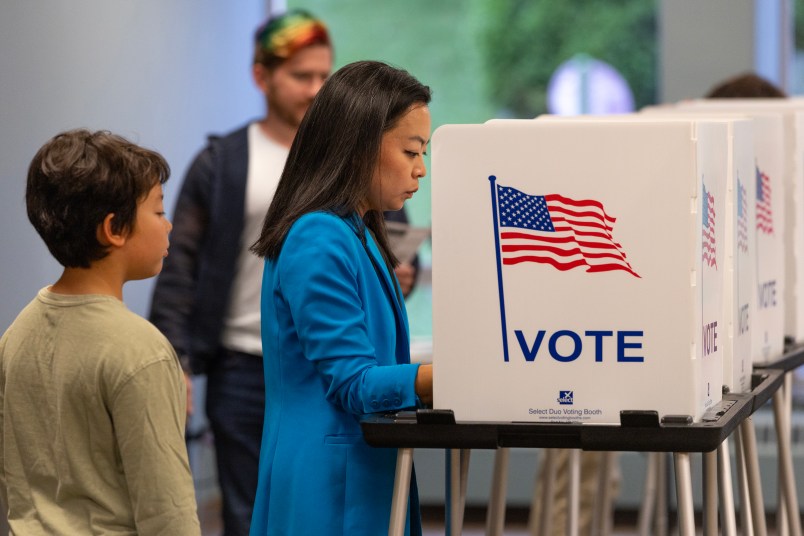
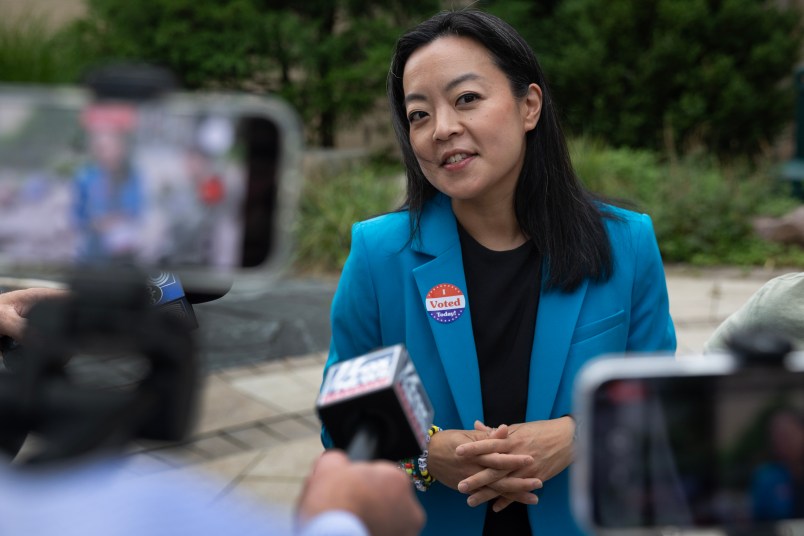
MADISON, WISCONSIN – AUGUST 11: With her son George by her side, Democratic Wisconsin Gubernatorial candidate Francesca Hong votes in the primary election on August 11, 2026 in Madison, Wisconsin. Recent polling has Hong with a substantial lead over her nearest Democratic rival David Crowley. (Photo by Scott Olson/Getty Images)

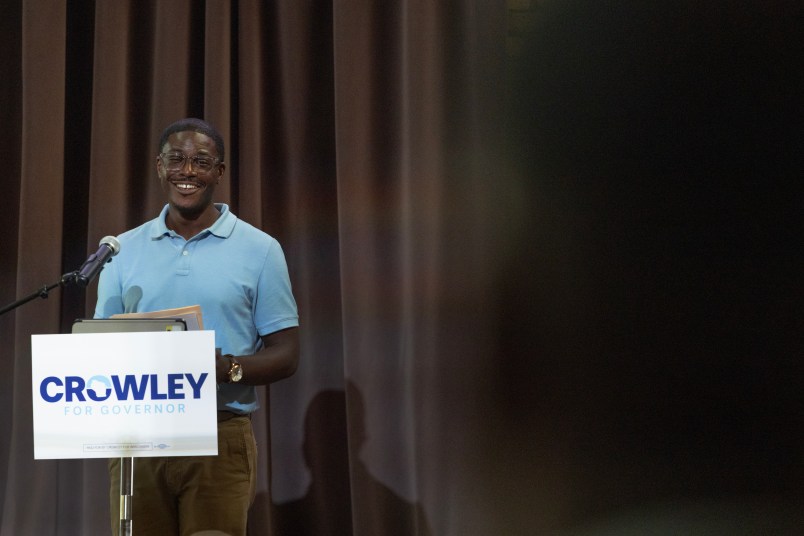
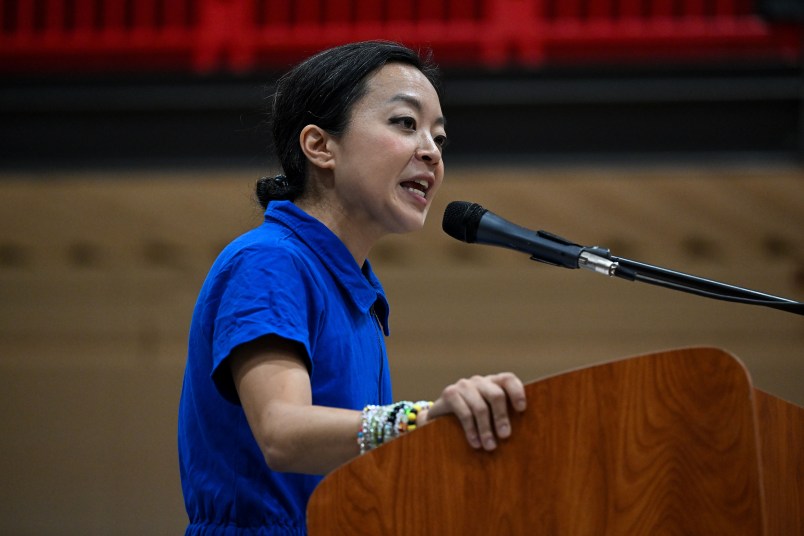
Following some impressive digital sleuthing, the Guardian identified and spoke with a 21-year-old who appears to be behind the website that put out fake polling data about California, Nevada and the gubernatorial primary in Wisconsin that saw David Crowley defeat Francesca Hong. The Hong polling, in particular — it showed her 20 points ahead, only for her to later lose her election — helped launch a thousand thinkpieces.

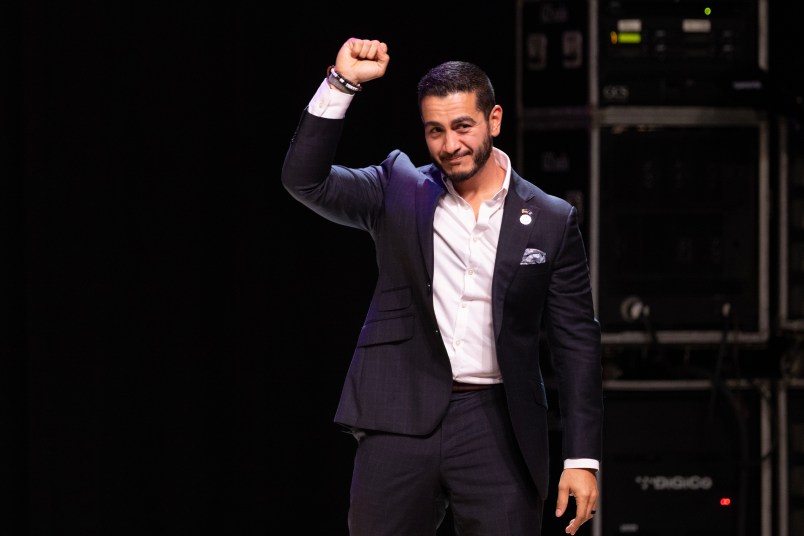
  • Rahil Prakash, the guy the Guardian identified, told the newspaper the polling miss in the Michigan governor primary, when surveys showed Abdul El-Sayed with more of an advantage over Haley Stevens than he actually had on primary day, gave him the idea for the “experiment.” “This is what inspired me to test my theory,” said Prakash. “I was a bit shocked, perhaps at how fast this sort of information can spread.”
  • Prakash said he used AI to create the fake polling results.
  • Speculation has abounded that the whole operation was some kind of scheme to make money on betting sites such as Kalshi or Polymarket, even though “Median Strategies,” the outfit behind the “poll,” insisted the “project was not undertaken for financial gain or to influence the value of any financial or prediction-market position.” It has “all the earmarks” of a “pump-and-dump scheme,” American Prospect editor Dave Dayen wrote. “I think this falls into the category of hard to prove but very hard to think it’s anything else,” Corey Frayer, a former financial regulatory staffer in Congress now with the watchdog group Consumer Federation of America, told Dayen.
  • Nonetheless, Prakash denied to the Guardian he placed bets on any prediction markets amid his scheme. “No, not at all,” he said.
  • If this is the full story, it’s a wild cautionary tale about AI and our current media environment, where slop easily insinuates itself into our social media feeds, and even into coverage by major news outlets and statements by political campaigns. It also may not be the full story.

Tabs

  • The Daily Beast has published what it says are two letters from Natalie Harp to Trump. They are bizarre!

“And please, when I fail, will you tell me? You have the absolute right to cuss me out, if need be, when I deserve it, because no one knows or cares about me more.”…“With all my heart, Natalie”

Bill Grueskin (@bgrueskin.bsky.social) 2026-08-21T00:11:50.088Z
  • Mike Rogers, the candidate running for Senate against Abdul El-Sayed in Michigan, backed a one-year moratorium on data centers, The Detroit News reports — a clever finger to the wind amid widespread distrust of AI and the facilities needed to support it.
  • Relatedly, a Reuters analysis of money in this year’s election finds that “Crypto companies, artificial intelligence firms and online betting have emerged as the biggest industries shaping the 2026 midterm races, driving a record amount of business spending on congressional contests, according to campaign finance watchdogs and interviews with more than a dozen political ​strategists from both parties.”

Man of the Hour
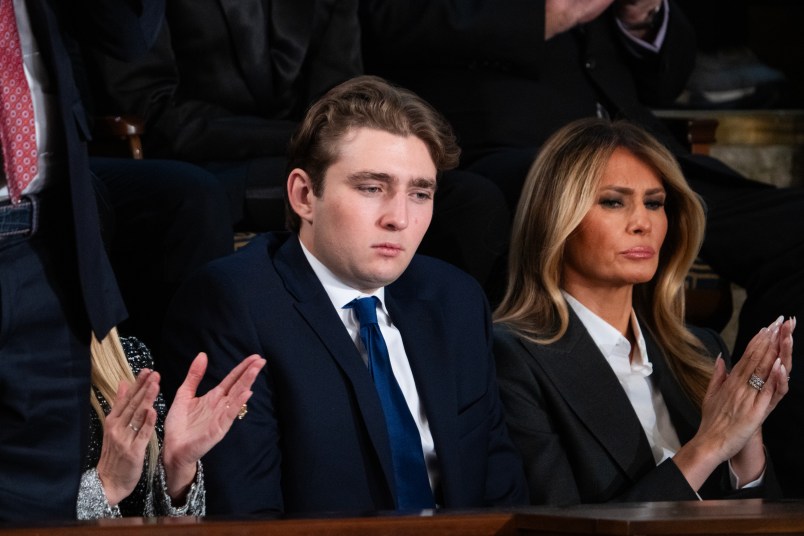
UNITED STATES – FEBRUARY 24: Barron Trump and his mother First Lady Melania Trump attend President Donald Trump’s State of the Union address in the House Chamber of the U.S. Capitol on Tuesday, February 24, 2026. (Tom Williams/CQ-Roll Call, Inc via Getty Images)

Its Barron Trump, the college sophomore who is worth $150 million. Much of that fortune comes from his family’s various cryptocurrency schemes, Forbes suggests.

Are We at War?

Oman and the UAE are thrilled that parts of their countries are now “U.S. Territory.”
  •  

Is There a Polling ‘Crisis’ and Why Should We Care If There Is?

I wanted to follow up on my post about Pat Ruffini’s deep dive about the accuracy of Senate race polling in recent cycles and whether they’ve overstated Democrats’ strength. But since I wrote that post, I’ve also gotten a few emails from friends and TPM readers about polling generally. So I wanted to combine all of this together into some general comments on polling and whether we should care about it at all.

In the wake of the big apparent polling misses in Michigan and Wisconsin, we’re seeing another wave of discussion about a purported “crisis” in polling and what we should collectively do about it or what the polling industry should do about it. Mostly, the answer is there is no “crisis” — at least in the sense of one that any of us should care about as some problem for American democracy or elections or anything else. If you’re in the polling business, it may well be a problem. But if you’re not, who cares? There might be a crisis in Swiss cheese marketing too. But if I’m not a cheese monger, why do I care?

  •  

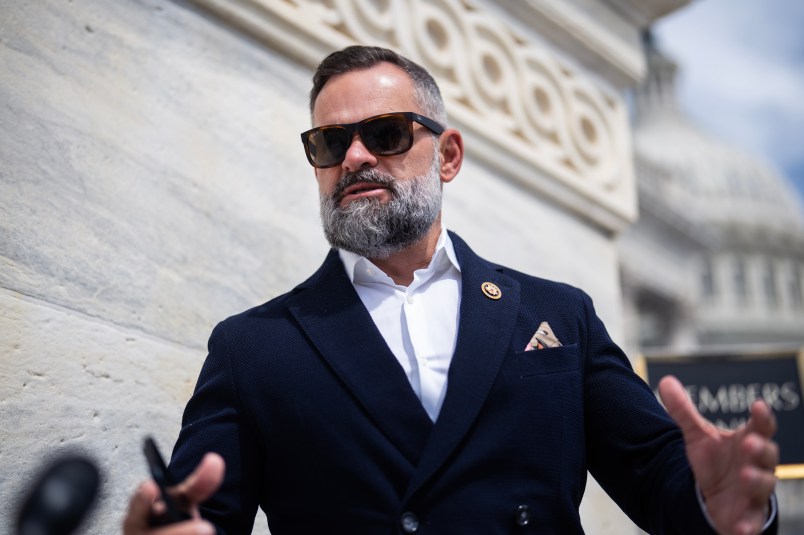
Florida Voters Reject Cory Mills’ Reelection Bid Amid Dating Violence Allegations

This story was originally reported by Mel Leonor Barclay of The 19th. Meet Mel and read more of their reporting on gender, politics and policy.

Republican voters in Florida rejected Rep. Cory Mills’ reelection bid in Tuesday’s primary, Decision Desk HQ projects, shutting out of Congress a lawmaker who is facing allegations that he assaulted a woman and threatened to publicize nude videos of a former girlfriend, among other possible misconduct.

Ryan Elijah, a former local Fox television news anchor, is the GOP nominee in the district, which President Donald Trump won by 12 percentage points in 2024.

Mills campaigned heavily on the president’s endorsement, which Trump renewed in February, months after the allegations against Mills surfaced. 

  •  

Your Vote Is a Valuable Asset. Choose Wisely.

Over the last few days as we’ve been discussing Francesca Hong’s campaign, Thanksgiving abolition and “defunding the police,” I’ve made the same argument a number of times — most recently with TPM Reader AB whose email dispatch you can read below. I wanted to share it with you because it informs my way of understanding these things.

After Zohran Mamdani won the Democratic primary last year, there were so many powerful people eager to take him down and so many ways it would be easy to do it. It’s very, very challenging to navigation the transition from a lefty/social democratic/identity politics milieu to a broader society-wide electorate. Obviously New York City is a very blue city. It’s not Wisconsin or Michigan, let alone Texas or Ohio. But the same general point remains. It’s an incredibly challenging needle to thread, one that requires immense, innate political skill. Mamdani fielded all the standard attacks, some fair, some very unfair, and again and again he was able to finesse them. This, to me, was the biggest signal. He’s an immense political talent. Some have it; most don’t; he does.

Of course I have my own issues with him on Israel/Palestine. But even on that issue, perhaps especially on that issue, I saw how he was able to navigate a super challenging electoral thicket. Again and again.

Which brings me to Francesca Hong.

  •  

‘Prediction’ Markets Get Trounced in Hong’s Defeat

We went late into the evening waiting for absentee ballots in Milwaukee County last night. But Milwaukee County executive David Crowley will become the Democratic nominee for governor in Wisconsin, despite it seeming like a certainty that Francesca Hong would be the winner. As of yesterday, every recent poll had shown Hong at least 20 points ahead. The two most recent public polls had her 22 and 25 points ahead. (The most recent poll from Crowley’s own camp showed Hong 19 points ahead!) We’ll come back to the question of why these polls have been so wildly off. But there was a different casualty from the night’s results that I personally enjoyed witnessing because it’s a hobbyhorse or pet peeve of mine — and it seems to be as well of the numbers crunchers/data nerds whose Twitter feeds I watch on elections night. I’m talking here about the “prediction markets.”

  •  

The Latest Wave of Primary Results Is in — Here’s What to Know

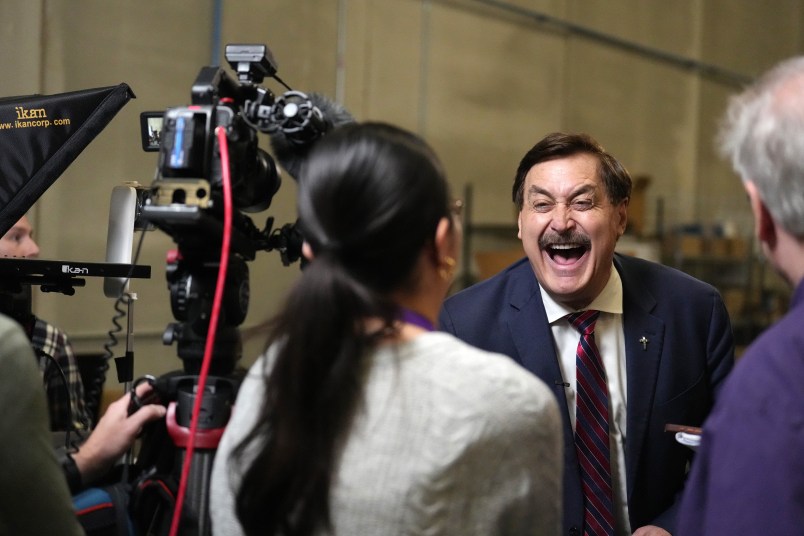
John Light has a run-down of results from last night’s major primaries in South Carolina, Wisconsin and Minnesota in this morning’s Brief. The evening saw DSA-backed progressive Francesca Hong lose her bid to become Wisconsin’s Democratic gubernatorial candidate in an upset, prominent election denier Mike Lindell lose his own gubernatorial bid in Minnesota, and more surprises.

Check out John’s post for the TLDR on a busy primary night.

  •  

Mike Lindell Has a Real Shot at Becoming Minnesota’s Republican Candidate for Governor

Mike Lindell’s Big Moment

Amid the wall-to-wall coverage of Wisconsin Democratic gubernatorial candidate Francesca Hong’s personal evolution or possible lack thereof on the topic of Thanksgiving, you may have missed that the Republican Party is on the cusp of picking two quite extreme gubernatorial nominees on the same evening.

U.S. Rep. Tom Tiffany (R-WI) faces little opposition and will become Republicans’ nominee for governor in his home state tonight. As Khaya Himmelman writes for TPM, he is an election denier who has put in the work, not just objecting in Congress against certifying the results of the 2020 election and signing onto Ken Paxton’s lawsuit that year to throw out the results, but continuing to insist that the 2020 election saw “improprieties.” (If you’re curious where he stands on such “Woke I” issues as “Thanksgiving,” he was also one of only 14 Republicans in Congress to vote against making Juneteenth a federal holiday.) This is, to be fair, why Democrats in the state are so concerned about the fate of their own ticket.

I am really here, however, to talk about Minnesota, where Mike Lindell, the man who visited Trump with a proposal for martial law in the days after Jan. 6 and who continues to boost the most outlandish conspiracy theories about the year in which our politics has become forever trapped. Tonight, Lindell has a real shot at becoming Republicans’ Minnesota gubernatorial candidate.

This is in part the result of the field splitting three ways. Minnesota state House Speaker Lisa DeMuth has the money behind her, but the state GOP endorsed another candidate, businessman Kendall Qualls.

Trump, however, endorsed Lindell, and primary voters’ hearts appear to be with the pillow salesman and conspiracy theorist. Poll after poll has shown him ahead, though it is unclear how reliable each of these surveys is. Lindell has faced a series of bizarre and sometimes dumb scandals given that he is, after all, Mike Lindell. The latest is an accusation that he violated campaign finance law by handing out MyPillows on the campaign trail. More seriously, the state GOP continues to question whether Lindell, who previously lived in Texas, even meets the residency requirements for the ballot.

“We’ve never had a party challenge the residency of one of its serious candidates,” Steven Schier, a political scientist at Carleton College, summed it up for the local ABC affiliate. “And then you add the fact that this candidate has been endorsed by the president of that party. It’s really an extraordinary situation.”

Whoever wins this race will face Sen. Amy Klobuchar (D-MN) after current governor Tim Walz (D) decided not to run again. The Minnesota primaries so far have seen record-breaking turnout, the secretary of state said yesterday.

Darline Graham Gets a Challenger

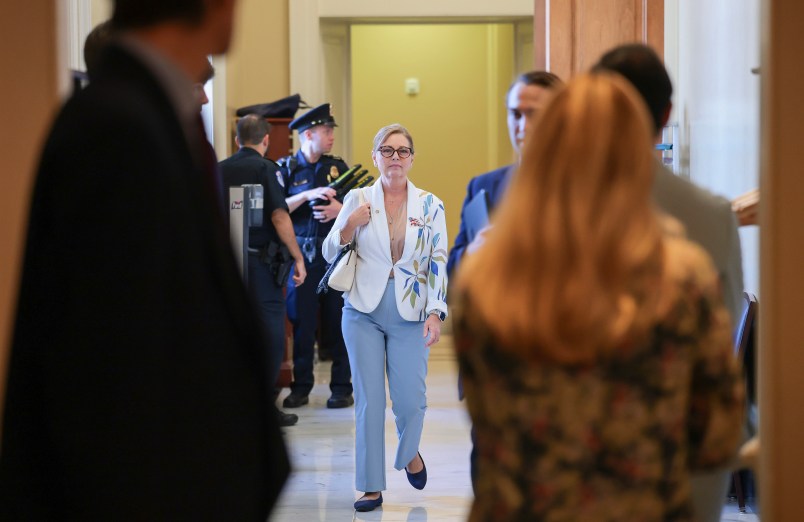
WASHINGTON, DC – AUGUST 06: U.S. Sen. Darline Graham Nordone (R-SC) departs from a lunch with Senate Republicans at the U.S. Capitol Building on August 06, 2026 in Washington, DC. (Photo by Anna Moneymaker/Getty Images)

South Carolina will hold a special election today to replace Sen. Lindsey Graham (R), whose sister, Darline Graham Nordone, has filled his seat after his death and is running to fill it for a full term. She faces a crowded field of other candidates. Two — presumably the Trump-endorsed Graham and one other — will advance to a runoff. The field contains some familiar names.

  • Ralph Norman, who — TPM broke the news — privately urged the White House to invoke “Marshall Law” following the 2020 election, is one. He was crushed in his bid to become the state’s governor earlier this year.
  • Former state governor, congressman, and hiker Mark Sanford is also running.
  • As is Rep. Russell Fry, who in 2022 unseated Rep. Tom Rice, a Republican critic of Trump who was among the 10 to vote to impeach him.
  • Whoever wins will run in November against Democrat Annie Andrews, a pediatrician who has previously run against Rep. Nancy Mace (R).

Tabs

Man of the Hour

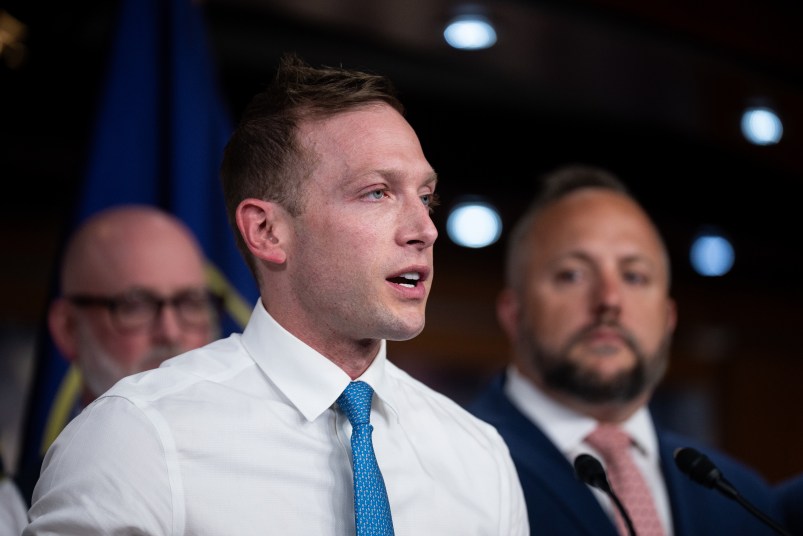
WASHINGTON – JUNE 26: Rep. Max Miller, R-Ohio, speaks during the news conference on efforts to hold Attorney General Garland in iInherent contempt of Congress in the U.S. Capitol on Wednesday, June 26, 2024. (Bill Clark/CQ-Roll Call, Inc via Getty Images)

It’s Max Miller, who we’ve covered a lot here, and who, in the face of abuse and domestic violence accusations is now running in a seat that the Cook Political Report has shifted all the way from “likely Republican” to “toss up.” Democrats are now spending seriously on his opponent, Brian Poindexter. The White House urged Republicans not to criticize Miller after it became clear he wasn’t going to quit, Politico reported yesterday.

Are We at War?

Yes, with Trump attempting to one-up Iran by demanding it pay damages to the U.S.

  •  

Why Republicans Just Can’t Quit 2020

In Rough Edges, Mike Rothschild writes about fringe groups, conspiracy theories and how the Internet broke our brains. This column is part of TPM Cafe, TPM’s home for opinion and news analysis.

With a potential midterm wipeout just three months away, Republicans have been recycling past conspiracy theories to an epic extent, mining the greatest hits of a decade of paranoid plots both to please the president and to invoke memories of the “good old days.” 

From the Senate’s contentious hearings that saw Dr. Anthony Fauci grilled with lockdown-era conspiracy theories to President Trump’s continued evocation that the 2020 election was stolen, Republicans are both replaying the past and actively rewriting it, trying to distract their voters from current crises and rally them around Trump’s brand one last time.

It’s impossible to look at the run-up to the 2026 midterms without examining the repackaging and reuse of the conspiracy theories that got us here. The midterms might be the last chance we see some of them used with any real efficacy, and nobody is missing their shot.

  •  

Pundits Dig Into Abdul El-Sayed and the Michigan Senate Race

Jon Cohn has a good piece in The Bulwark on the challenges ahead for Abdul El-Sayed. The “brutal path ahead,” Jon calls it. I’ll note here that Jon is based in Michigan, despite beginning his journalism career in the East Coast cities where most political journalists are based. (In other words, his report isn’t based on parachuting into the state for a few weeks.) He notes the two, equally accurate narratives coming out of this primary battle. El-Sayed built a potent and victorious movement. Sanders-style progressive Democrats seldom win these contests in purple states. El-Sayed did. And he did it in the face of concerted opposition from the state’s Democratic establishment, the national establishment and an ocean of outside money, mostly from AIPAC.

It’s also true that Republicans will now run a viciously Islamophobic campaign against him, which will get extra traction from his association with the willfully inflammatory Hasan Piker. There’s another dynamic we’ve seen across numerous establishment-progressive battles. The Platner campaign pitched itself as appealing to working class or at least culturally working class voters who are usually unreachable by Democrats. But the polling showed that the demographic profile of Platner’s supporters looked pretty similar to what most Democrats have gotten over the last couple decades, and especially since Trump — the educated and affluent. The loose outlines of El-Sayed’s victory in Michigan look similar. Both make a pitch about young voters but they tend to appeal most to educated and downwardly mobile voters — so again, another version of standard early 21st century Democratic coalition.

  •  

The Push to Elect Kansas Supreme Court Justices Is a Cynical Anti-Abortion Power Grab

This article is part of TPM Cafe, TPM’s home for opinion and news analysis. It was originally published at Balls and Strikes.

On Tuesday, voters in Kansas will decide whether to make a dramatic change to the process for filling vacancies on the Kansas Supreme Court. For the last 68 years, under state law, a nine-member bipartisan commission has assembled lists of three potential nominees for the governor to choose from. The commission consists of both lawyers and nonlawyers, and it is far more transparent than most systems in place for selecting high court judges: Its interviews of aspiring justices, for example, are livestreamed for the public.

This is a real problem for the state’s Republican culture warriors, who in recent years have become increasingly angry with the court’s decisions on, among other things, abortion access: Back in 2019, the Kansas Supreme Court issued a landmark opinion holding that the state constitution protects residents’ right to access abortion care. In response, the GOP-controlled legislature concocted the Kansas Elections for Supreme Court Justice Amendment, which is, as the name suggests, a constitutional amendment that would abolish the nominating commission and allow the legislature to institute partisan judicial elections instead. 

Supporters of the amendment say it would return political power to the people: Voters, not “attorneys and political insiders,” they argue, should decide who sits on Kansas’s courts. What the amendment is really about is Republican politicians’ desire to restrict abortion rights, and their frustration with both the Kansas Supreme Court, for refusing to let them do so, and also with Kansas voters, who in 2022 ratified the Kansas Supreme Court’s decision by emphatically rejecting a GOP-backed anti-abortion constitutional amendment. 

The legislature’s bet is that in a state that President Donald Trump won by 16 points in 2024, transforming state supreme court seats into explicitly partisan prizes—and infusing the judicial selection process with millions of dollars in dark-money spending—will yield a more conservative Kansas Supreme Court that will do what right-wing activists want.

Republican frustration with the Kansas Supreme Court’s insubordination reached its zenith seven years ago, when the court held in Hodes & Nauser v. Schmidt that abortion rights are protected by the Kansas Constitution’s guarantee of “inalienable natural rights.” In its opinion, the court emphasized its power to interpret the Kansas Constitution’s promises “independently of the manner in which federal courts interpret corresponding provisions of the United States Constitution.” 

For reproductive rights advocates in the state, both the holding and its legal basis were huge. Only a year earlier, Justice Brett Kavanaugh’s confirmation to the U.S. Supreme Court had created a solid majority of five anti-abortion justices primed to overturn Roe v. Wade. The result in Hodes & Nauser v. Schmidt meant that even if Roe fell, Kansans’ abortion rights would remain safe from the conservative legal movement.

Almost immediately after the court decided Hodes & Nauser, Republican lawmakers began pushing to amend the Kansas constitution to explicitly state that it does not protect abortion rights. Eventually, they got a proposal on the ballot in the form of a referendum known as the “Value Them Both” Amendment, which went before voters in August 2022.

Their timing could not have been worse. In June, just two months before Kansans headed to the polls, the U.S. Supreme Court indeed overturned Roe in Dobbs v. Jackson Women’s Health Organization. (Kavanaugh indeed joined the five-justice majority.) Support for abortion rights spiked across the country, including in Kansas, where voters responded to Dobbs by turning out in record numbers to defeat the “Value Them Both” Amendment in an 18-point blowout. 

Now, four years after failing to change voters’ minds on abortion rights, Republicans have pivoted to a new strategy: changing the composition of the court that protected those rights in the first place. One group that opposes the current amendment goes by “Vote No (Again) Kansas”—an attempt to remind voters that they already decided the substantive issue, and to urge them not to be fooled by anti-abortion politics repackaged as judicial selection reform.

Republicans, for their part, have not been shy about their motives. In 2022, then-attorney general candidate Kris Kobach called judicial elections “another path” to restricting abortion, and predicted that instituting them would allow conservatives to “slowly and quietly” overhaul the Kansas Supreme Court. In November 2025, gubernatorial candidate Ty Masterson told anti-abortion voters that supreme court elections were the “solution” they’d been waiting for, as long as they had the good sense to play it cool in public. 

“You can’t go out there and say it,” Masterson said, according to the Marion County Record. “Because they’ll say that if you elect your Supreme Court, you won’t have any right to abortion anymore.” 

To give you a sense of the stakes here, spending on the amendment—again, just on the question of whether to hold supreme court elections—has topped $12 million, per the Sunflower State Journal. Given that spending on the 2025 race for a single Wisconsin Supreme Court seat topped $100 million, $20 million of which came courtesy of the reactionary billionaire Elon Musk, it is a safe bet that if the amendment were to pass, the volume of anti-abortion money that would start pouring into Kansas would dwarf that $12 million figure in a hurry.

The amendment’s supporters love extolling the virtues of democratic accountability. But the democratic process has already yielded an unambiguous result: Kansans support their state supreme court’s decision to protect the right to abortion access, and overwhelmingly repudiated politicians’ (initial) hamfisted attempt to take it away. The legislature’s crusade for partisan supreme court elections is reactionary politics in its purest form. Republicans in Kansas do not actually care what voters want. They are upset about a policy choice that voters made, and want to reshape the legal system to shut them out of the process.

  •  

Tuesday’s Big Contest in Michigan, and a Lower-Profile One in Kansas

Two Elections to Watch Tonight

One critique of Democrats that has stuck with me — lodged by fellow Democrats against their colleagues and themselves — is that they vote in primaries not for who they want to elect, but for who they think their neighbors will elect.

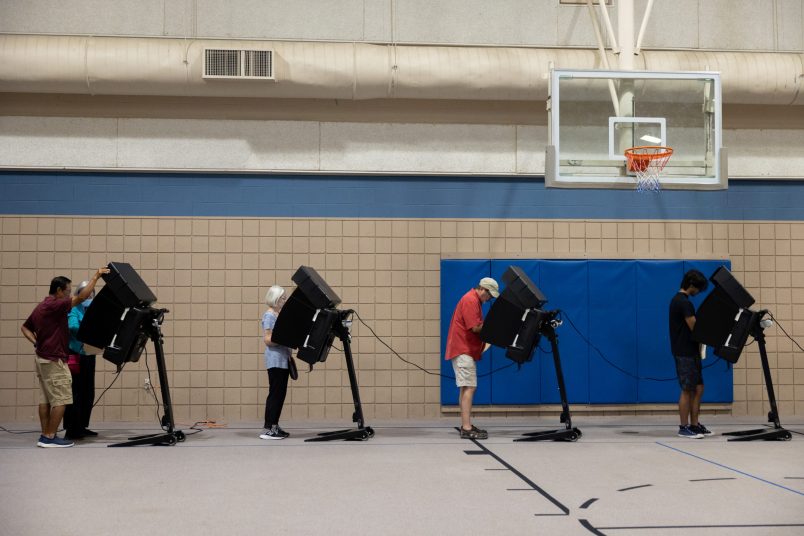
In the face of crushing increases in the cost of living and the rise of right-wing authoritarianism, left-of-center voters’ desire to engage in such mental gymnastics has stated to fray in recent years. Today is the key one for the biggest such experiment this year.

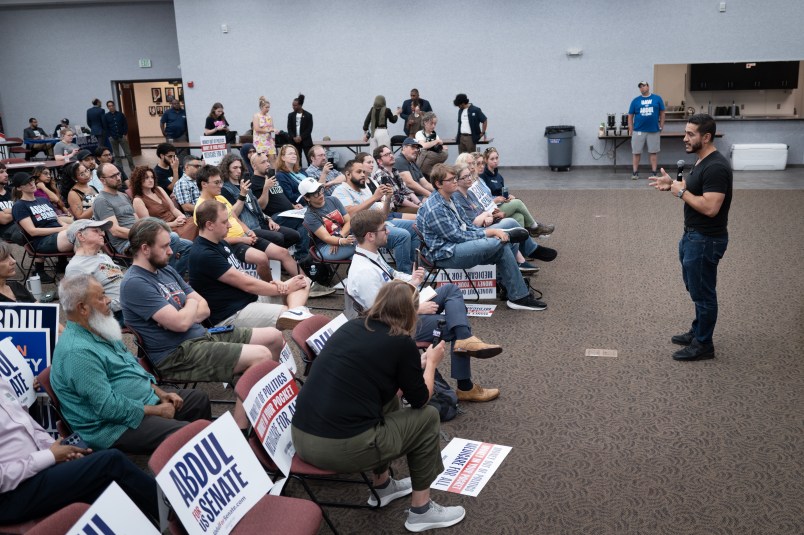
As you’re no doubt aware, public health official Abdul El-Sayed will face Rep. Haley Stevens in Michigan’s Democratic primary for Senate. Stevens has many of the party’s endorsements, but, as Josh Marshall noted last night, the energy in the primary appears to be with El-Sayed. Polls show he may well trounce Stevens this evening.

The outcome then sets up a test for the general election, the result of which, Kate Riga wrote last week, we’re going to be hearing about for years. Mike Rodgers, the Republican candidate, is a fairly run-of-the-mill figure in Trump’s Republican Party, and he’s lost this race before, in 2024. (He of course baselessly claims it was stolen from him.) If El-Sayed wins tonight, and Rodgers wins in November, cable news pundits will harangue Michigan’s Democratic primary voters about their choice until the next such test emerges. If Stevens pulls off an unlikely upset tonight only to lose to Rodgers, the left’s ascendancy in the Democratic Party will, no doubt prematurely, be declared all but assured.

At the end of the day, the voters pick who they pick. It’s then the campaign’s and the party’s job to consolidate the electorate and win.

Tuesday will also see primaries in Virginia, Missouri, Kansas, and Washington State.

We’ll have our eye on a Republican-backed ballot referendum to switch Kansas to judicial elections, the first of what both supporters and opponents see as a growing conservative push nationwide to remake courts so that they are more likely to support Republican policies. Its the latest effort by right-wing operatives in the state to undo a 2019 decision by the state Supreme Court protecting abortion — a wall they’ve been banging their heads against in various ways ever since.

Time Is Running Out For Republicans to Swap Out Max Miller

VANDALIA, OHIO – NOVEMBER 7: Republican U.S. representative candidate Max Miller arrives to speak before the arrival of former President Donald Trump at a rally at the Dayton International Airport on November 7, 2022 in Vandalia, Ohio. Trump is in Ohio campaigning for Republican candidates, including U.S. Senate candidate JD Vance, who faces U.S. Rep. Tim Ryan (D-OH) in tomorrow’s general election. (Photo by Drew Angerer/Getty Images)

Trump on Tuesday declined to publicly call for his staffer-turned-member of Congress Max Miller (R-OH) to resign in the face of multiple allegations of abuse and violence, including domestic violence against his wife and two-year-old daughter. But on Monday night, according to an Axios report, Trump called him to share the insight that things “aren’t looking good.”

  • Miller would need to drop out by tomorrow in order for Republicans to be able to replace him on the ballot. If he does, a special election would be held to pick a new candidate.
  • Miller has insisted he is not dropping out.
  • The situation invites comparisons to Democrats’ imbroglio with Graham Platner in Maine, though Platner was never accused of domestic violence. A difference, of course, is that Democrats, including most of Platner’s high-profile allies, spoke in a nearly unified voice to pressure the candidate off the ballot in the face of a sexual assault allegation.
  • By contrast, the task of muscling Miller off the ballot has largely fallen to Sen. Bernie Moreno (R-OH), the father of Miller’s ex-wife. The handful of Republicans who have also called on Miller to quit have framed their perspective as support for Moreno, not a policy of zero tolerance for the kind of allegations repeatedly made against Miller.

Tabs

  • TPM’s Emine Yücel looks at a new attempt by the Trump administration to tighten its control over grants distributed by the executive branch, and a nascent attempt by the Senate to (at least temporarily) stop it.
  • A second man in less than one year has died at Delaney Hall, a federal detention center in Newark, New Jersey, the New York Times reports.
  • NPR looks at the Trump administration’s use of a charge that was most recently widely used to prosecute January 6 insurrectionists to go after the left: conspiracy to impede or injure an officer.

Man of the Hour

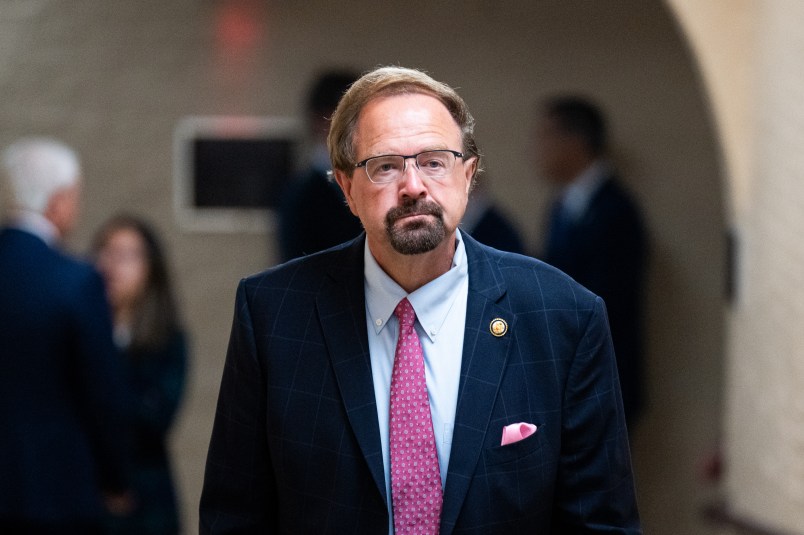
UNITED STATES – MAY 6: Rep. Chuck Edwards, R-N.C., leaves the House Republican Conference caucus meeting in the Capitol on Tuesday, May 6, 2025. (Bill Clark/CQ-Roll Call, Inc via Getty Images)

It’s Rep. Chuck Edwards (R-NC), who, in a Congress full of men accused of doing awful things, has become the first in years for whom the House Ethics Committee has recommended censure. That’s in part due to the extensive evidence of sexual harassment mustered against him, including odd gifts and reams and reams of corny messages documenting what appear to be attempts at romance with his subordinates. Kate sifts through it here.

Are We at War?

Trump called off strikes this weekend claiming their will be new negotiations, but both sides now say none are planned.

  •  
❌