❌

Reading view

Why are young people so angry? Why isn’t everyone?

A specter is haunting Europe, and plenty of other places too. Nobody knows quite what to call it. It isn’t the specter of communism this time around, or at least not under that name — although something approaching class warfare, redefined in 21st-century terms, is on the agenda for the first time in decades. 

Student protests that began at secondary schools in the northern suburbs of Paris about a month ago have sparked a wave of demonstrations and street battles— occasionally tipping over into rioting, looting, and organized property destruction — that has now spread to at least six or seven countries, with new outbreaks happening nearly every day. But there is no single unifying issue that has brought students, labor unions, left-wing activists, anarchist rebels and hundreds of thousands of ordinary people into the streets of Paris, Lisbon, Madrid, Brussels, Milan, Belgrade, Athens and Tirana, among many other cities. 

While the protests in Belgium and Italy are direct outgrowths of the French student movement, the proximate causes of unrest are local and distinct in every case. Protests in Spain and Portugal reflect years of simmering discontent over the soaring cost of living, especially a housing crisis made worse by the explosion of Airbnb-style tourist rentals. In Greece the protests were initially about workplace safety and public sector wages. In Albania and Serbia, where protest movements were well underway before the French students made headlines, the main issues involve deeply entrenched government corruption. 

Thousands of miles away in the world’s largest self-described democracy, India’s youth-driven Cockroach Janta Party (“Voice of the Lazy & Unemployed”) isn’t connected to the French protests at all, except by the kind of historical coincidence that isn’t really a coincidence. The CJP was launched earlier this year, about halfway between political satire and social media experiment, and by midsummer became a mass movement that has shaken the autocratic Hindu nationalist government of Prime Minister Narendra Modi to its foundations. 

Given this diversity and the tangential connections between all these events, it’s almost easier to say what the protest wave of 2026 is not about than to define it precisely. No dramatic world-historical event has catalyzed all this, and for the most part these protests are happening in relatively prosperous, relatively peaceful and nominally democratic nations. We’re not on the cusp of global financial or economic crisis, at least not yet, although there are troubling warning signs. There is no immediate threat of military conflict or civil warfare in any of these countries, although Russia’s war in Ukraine, Israel’s murderous war in Gaza and the spectacularly mismanaged U.S. war with Iran have all fueled the rising sense of collective outrage. 

To use one of this decade’s most overused words, the outrage seems existential. It’s about everything everywhere all at once or, to more cynical observers, about nothing in particular. It’s about underfunded schools, crumbling infrastructure and soaring rents, and also about Gaza, climate change and the enforced spread of AI, data centers and government surveillance. 

To use one of this decade’s most overused words, the outrage seems existential. It’s about everything everywhere all at once: underfunded schools, crumbling infrastructure and soaring rents; also Gaza, climate change, data centers and government surveillance.

Ironically enough given its origins, the outrage is also being driven by a highly literate and globally connected generation, one that is sufficiently well educated to perceive the underlying conditions that have made those things happen. They see paralyzed centrist governments held captive by bankers and tech billionaires; they see an economy built on worsening inequality, systematic insecurity and what sociologists call “elite overproduction” (e.g., university graduates working as baristas); they see the climate crisis addressed only with bland rhetoric or regulatory fiddling as one deadly heat wave follows another.

What the protests of 2026 are not about, to any measurable degree, is skin color or religion. Donald Trump, Elon Musk, Benjamin Netanyahu and far too many of their fellow travelers have seized on the disorder in Europe as evidence of the pernicious effects of “open borders” and Islamic immigration. It’s a losing proposition to quote stuff that the president of the United States says on social media and then feign outrage, as if we were actually surprised. But we are where we are: France is being “conquered, looted and burned to the ground by migrants, jihadists and communists who hate Christianity,” Trump informed us via Truth Social last week.

That fantastical framing tells us a lot more about him and his supporters, needless to say, than about the remarkably diverse crowds in the streets of Europe’s major cities. But the tempting prospect of blaming immigrants for the protests or the acts of violence — maybe not as the primary cause and way below the Trump level, in an effort to fend off critics on the right — has created a kind of acid test or moral hazard for political leaders and media commentators. The pass/fail ratio is both depressing and mildly surprising.

Embattled German Chancellor Friedrich Merz and the newly-installed Hungarian Prime Minister Péter Magyar, for instance, have failed the test, both suggesting that “high rates of migration and a failure to integrate the foreign-born are partly behind the sudden, violent upheaval,” to quote this week’s leading editorial in the Economist. So did New York Times opinion columnist Frank Bruni, an alleged liberal who began his breezy Oct. 22 discussion with right-winger Bret Stephens by stating the unquestioned premise that “a velocity of religious, racial and ethnic diversification over the past quarter century that has exceeded what many longtime residents could easily make sense of and comfortably adapt to” had somehow led to angry high school students and window-smashing anarchists in French cities.

As for French President Emmanuel Macron, bête noire of the protest movement, perhaps he has decided to go down fighting in the last six months of his largely disastrous decade in power. For all his arrogance and hubris, Macron is no racist and has decried the “stupid comments” by foreign leaders he declines to name, who claim that France has been “invaded by hordes of migrants and Islamists, which is completely false.”

But the most forceful rejection of current racist narratives about the European protests, and perhaps the best single summary of why they are happening in the first place, comes, improbably enough, in the above-quoted leading editorial in the Economist:

Even if some young protesters in France wear Algerian football shirts or chant pro-Palestinian slogans, the upheaval in Europe today is not about race or religion. Over 500,000 people marched in France on Saturday [Oct. 17] and they were largely unmasked and white. They were fired up, as in other countries, by the cost of living and poor public services. They want more fuel subsidies, more spending on schools, more handouts.

Leaving aside the buzzword “handouts,” which is meant to signal the innate laziness of the non-wealthy, that’s some straight-up gospel preaching. As the editorial confesses, once upon a time the Economist enthusiastically backed Macron as the golden boy of neoliberal reform, but now he and other “head-in-the-sand centrists” seem to be “out of ideas.” Strikingly, the editorial has no new ideas to offer.

In a Foreign Policy essay last week, former Estonian president Kersti Kaljulaid defines the central problem in Europe, plausibly but rather too vaguely, as “intergenerational hopelessness” and a downward spiral of economic expectation. Once again, the Economist — which can fairly be described as the house organ of global capital — goes at the issue far more directly. Demonstrators on Europe’s streets, its editorial proposes, are “consumed by rage”:

Rage at the failure of the state and against the floundering centrist politicians who govern. Rage at high prices and economic dysfunction. And for some, rage against the idea of centrist politics at all.

Go on with your bad self! It’s not irrelevant or accidental that the call, as they say in horror movies, is coming from inside the house. No one can credibly accuse the Economist of being soft on Marxism or unfaithful to free-market dogma (that same editorial mocks leftist French presidential candidate Jean-Luc Mélenchon, not inaccurately, as an “aging rabble-rouser and onetime Trotskyist”). That gives it the freedom to state plain facts that so-called moderates like Merz and Bruni would rather avoid: Yes, “centrist politics” have visibly failed, not just in France but across the Western democracies. Indeed the entire system or basket of principles known as “liberal democracy” is in big trouble, and on the verge of systemic failure. 

Yes, “centrist politics” have visibly failed, not just in France but across the Western democracies. Indeed, the entire system or basket of principles known as “liberal democracy” is on the verge of systemic failure.

“Liberalism” in that context is not an ideological label in the contemporary American sense but a term from old-school political economy, used to describe the forced marriage in Western nations between market capitalism, parliamentary democracy, and a varying list of civil rights and civil liberties. Liberalism in that sense has dominated most of the world since the Cold War, and until recently it encompassed both major political parties in the U.S. I hardly need to convince you that is no longer the case, or that proudly illiberal parties and leaders have emerged and spread throughout the Western-style democracies, like an unpleasant but unkillable fungus. (As this article was published, it appears that Luiz Inácio Lula da Silva, Brazil’s leftist president, has defeated Flávio Bolsonaro — the son of imprisoned former president Jair Bolsonaro — ending a string of six consecutive right-wing victories across Latin America. True to form, Bolsonaro called for the results to be annulled.)

Liberal democracy was a roaring economic success for most of the 20th century, at least in broad strokes and with some well-known caveats. Oddly enough, those bygone glory days are pretty much what Trump keeps promising to bring back, to no visible effect. But the current crisis of liberalism is nothing new. It began to unfold decades ago, well before Francis Fukuyama proclaimed the “end of history.” Today’s enraged French students — and their parents, teachers and neighbors, for that matter — have inherited a world of false promises and diminished expectations. 


Want more sharp takes on politics?
Sign up for our free newsletter, Standing Room Only by Amanda Marcotte, also a weekly show on YouTube or wherever you get your podcasts.


Real wages have steadily declined in most Western countries (including our own) since the 1970s, allowing for a brief uptick during the technology boom of the 1990s. Across the liberal democratic zone, social services have been slashed in one “austerity” budget after another while government debt has soared. Rapidly aging population has made large-scale immigration a necessity, while right-wing demagogues have seized on the new arrivals as the main cause of the economic problems that immigrants can ameliorate. The result almost everywhere has been an accelerating vicious cycle of political dysfunction and public disillusionment, fueling the rise of what the Economist calls “charismatic figures from the extremes,” meaning Mélenchon and Marine Le Pen in France, and no doubt Zohran Mamdani and You Know Who over here. 

As a leading Marxist scholar told me decades ago, every radical who confidently predicts the collapse of capitalism is always wrong. If and when that ever happens, no one will have expected it. The same is likely true of liberal democracy today, which has survived worse crises than this and still retains broader popular legitimacy than is visible at this moment. Students in Milan and Marseille and Mumbai may well return to school and be reconciled to their lives, at least for now. But they have shown us something: There are dark passages ahead and enormous changes coming, and none of us can accurately identify the specter who blocks the path forward.

The post Why are young people so angry? Why isn’t everyone? appeared first on Salon.com.

  •  

Why women dread male Instacart shoppers

When I began using Instacart about five years ago, grocery delivery struck me as an almost preposterous luxury. I hadn’t grown up in a household where paying someone else to do the grocery shopping was a particularly imaginable expense. I’ve only recently come around to purchasing frozen, pre-chopped onions without a small pang of guilt. But the pandemic had made grocery delivery feel sensible, even responsible, and I quickly developed an appreciation for the peculiar pleasure of having someone else navigate the supermarket on my behalf.

For a while, the service justified my enthusiasm. A missing shallot might become a red onion. All-purpose flour might arrive as bread flour. Once, a family-sized frozen lasagna was replaced with an enormous bag of frozen pasta and meatballs. None of these exchanges was perfect, but they followed a recognizable culinary logic. Someone, somewhere, appeared to understand what dinner was supposed to be.

Over the past couple of years, however, the substitutions became increasingly adventurous. Shoppers, often from profiles with traditionally male names, would inform me that a supermarket had apparently run out of tomatoes in every conceivable form. Fresh, canned, crushed, diced: all gone. Carrots became parsnips. Green cabbage became spinach. More than once, I found myself studying photographs of grocery shelves, circling the very products I’d requested and sending the images back to my shopper, who would politely assure me that they weren’t available.

Then came the order in which a request for Panko breadcrumbs was fulfilled with a box of vanilla wafers.

The breadcrumbs were meant to become a crunchy, buttery topping for a baked pasta with Parmesan, peas and ham. Instead, my shopper sent me a photograph of vanilla wafers, without comment, and marked the breadcrumbs as unavailable. I had several modest counterproposals: Italian breadcrumbs, plain breadcrumbs, even a loaf of bread would do. But by the time I opened the app to make my case, my shopper had already checked out.

The vanilla wafers were on their way.

I was hardly alone in this experience. Across Reddit, TikTok and other corners of the internet, grocery delivery customers have taken to chronicling the peculiar challenges of having their groceries selected by men. I couldn’t entirely determine whether my own disappointing experiences had made me more attentive to these complaints or whether the memes had taught me to regard male shoppers with additional suspicion. Either way, the stories were remarkably familiar.

One Reddit user, who had been ordering groceries while caring for a partner with a concussion, described receiving three bags of parsley after three separate attempts to purchase cilantro. Another shopper had suggested replacing saffron with a canned drink. The commenter had spent considerable time walking delivery workers through specialty aisles and negotiating alternatives, an especially frustrating undertaking when dietary restrictions were involved.

“Someone needs to figure this out, provide training or something!” the commenter concluded.

Eventually, the complaints became sufficiently widespread that Instacart did what corporations increasingly do when confronted with an inconvenient internet phenomenon: It made the phenomenon into an advertisement.

In late July, the company launched “The Male Shopper Project,” a mock training camp starring comedian Hannah Berner and Antoni Porowski, the culinary expert from “Queer Eye.” Wearing drill-sergeant regalia, Porowski instructs a group of hapless male shopper actors in such supermarket fundamentals as distinguishing celery from leeks, checking expiration dates and identifying ripe bananas. The casting introduces its own familiar comic premise: the polished gay man enlisted to introduce his less domestically accomplished counterparts to the finer points of everyday living.

The accompanying press release was considerably more cheerful about the whole affair. There were jokes about “bad apples” and “bananas” substitutions, followed by a ten-dollar coupon (limited to 5,000 redemptions) and a reassuring inventory of the company’s quality-control features. Customers could specify how ripe they wanted their avocados, leave detailed instructions and select acceptable substitutions in advance. 

The company’s proposed solution to the difficulties of outsourcing grocery shopping seemed to involve becoming an increasingly attentive manager of one’s outsourced grocery shopping. But the campaign raises a question that isn’t easily settled by viral videos or produce puns: Are men genuinely worse at grocery shopping, or have they become the convenient faces of a much broader problem?

The available statistics are surprisingly swampy. According to Instacart’s 2025 economic impact report, 61% of surveyed shoppers identified as women. Uber’s 2024 environmental, social and governance report, meanwhile, found that women made up 18% of its U.S. drivers but 46% of its couriers. Those are different jobs, performed on different platforms, and neither figure tells us which workers are more likely to mistake parsley for cilantro. That would require comparative performance data.

Male shoppers, for their part, have been understandably irritated by the stereotype.

“As a male shopper I hate these posts,” one Reddit commenter wrote, explaining that he handled his family’s grocery shopping and knew his local stores intimately. “Bad shoppers are bad shoppers. Being male has nothing to do with it.”

Another man described an impressive record of completed orders, along with an ability to navigate cosmetics, feminine hygiene products and unfamiliar grocery aisles. He knew how to cook, understood substitutions and was perfectly capable of asking a store employee for help. Other delivery workers pointed out that the apps themselves sometimes recommend spectacularly inappropriate replacements, leaving shoppers to make sense of suggestions generated by software.

These are reasonable objections. A competent man shouldn’t be presumed incompetent because a stranger on the internet received three bags of parsley. And grocery shopping for other people is genuinely difficult. A customer may have exacting preferences, a store may rearrange its shelves and an apparently suitable replacement may turn out to contain an allergen.

Then there’s the unpleasant economic reality of gig work. Full-service Instacart shoppers are generally independent contractors, paid by the batch rather than a guaranteed hourly wage, with earnings varying according to the order, distance, demand and tips. The work involves driving, lifting, navigating stores and responding to customers, often without the protections and benefits associated with conventional employment. 

Spending another 15 minutes searching for a particular brand of yogurt may represent good service, but it also consumes time that a worker could otherwise spend completing another order.

It’s entirely possible, then, for the customer who has paid a premium for convenience and the shopper trying to make a reasonable living to feel equally ill-served by the arrangement.

And for what it’s worth, Instacart has, in fact, tried teaching people how to grocery shop. In 2021, the company promoted Carrot Academy, a collection of optional online lessons covering customer communication, produce selection and choosing appropriate replacements. Shoppers had identified substitutions as an area where they particularly wanted guidance. By 2025, the company had expanded the program to more than forty optional lessons, including short videos and personalized recommendations.

There is something mildly amusing about the distance between this real educational apparatus and the fictional boot camp, where the central problem is apparently that grown men need help identifying vegetables.

But there’s also something revealing about recruiting people to perform a form of labor that society has never been especially consistent about expecting everyone to learn. Grocery shopping requires accumulated knowledge of ingredients, cooking, nutrition, family preferences and the mysterious geography of supermarkets. Women have historically been expected to acquire much of that knowledge, often without much recognition that they’re developing expertise at all. (There is a particular additional irony in the fact that grocery shopping, long treated as women’s unpaid responsibility, has become a marketable service.)


Want more great food writing and recipes? Sign up for Salon’s free food newsletter, The Bite.


The gender disparity isn’t entirely anecdotal. A 2019 Pew Research Center analysis found that among married or cohabiting parents living with children, 80% of mothers said they were their household’s primary grocery shopper, compared with just 20% of fathers. That doesn’t mean men are incapable of doing the shopping. It means that, in many households, they have had considerably less practice.

In the churches where I grew up, the Proverbs 31 woman got a great deal of airtime. She cooked, cleaned, cared for her family and appeared to have discovered several additional hours in the day in which to accomplish it all. Later, during my brief stint in seminary — I dropped out to head to a liberal arts college after a semester — women sometimes joked about pursuing their “MRS. degrees.” Others clarified that they weren’t just there for an MRS. degree. Matrimony, apparently, was something of an unofficial concentration.

I’d like to report that these ideas about women’s domestic responsibilities have since retired to the church basement, alongside the folding chairs and industrial coffee urns. Unfortunately, they’ve proven remarkably well-traveled. Recently, I overheard a man tell a joke about how he and his housemates needed a wife to cook and clean for them; someone suggested that perhaps what they needed was a maid.

“What’s the difference?” he replied.

“The Male Shopper Project” also brought to mind how, right before the pandemic, I was having coffee with a friend whose husband had taken their young child to the supermarket. The coffee was years ago now, and I couldn’t reproduce most of the messages verbatim. But I remember the questions, and the rhythm of her phone buzzing on the table.

Did they need salted or unsalted butter?

Buzz.

Which cereal did their child like?

Buzz.

Where was the aluminum foil? What aisle?

Buzz.

Then came the one message I remember word for word:

“Nevermind.”

My friend chuckled. Then the chuckle caught in her throat and turned into a quiet, hiccuping sob. He did this all the time, she explained. I sat with her while she talked. She had found that it was easier to do things herself than to ask him to do them and then field a steady stream of questions. But she was exhausted either way.

She left him about a year later.

Sociologist Allison Daminger has studied this invisible dimension of household work: the planning, anticipation, decision-making and monitoring that continue even when someone else is performing the physical task. In her research, women assumed a disproportionate share of this mental labor, particularly the responsibility for anticipating needs and keeping track of whether tasks had been completed.

It’s the difference between buying groceries and knowing what groceries need to be bought. Between following a list and understanding why the items are on it.

And it helps explain why the male Instacart shopper meme has proven so durable. The central frustration isn’t necessarily that a man can’t find the right box of pasta. It’s that a woman who has paid to delegate a household task may find herself unexpectedly responsible for supervising its completion. The shopper sends a photograph. She studies it. He proposes an alternative. She explains why it won’t work. The groceries eventually arrive, and dinner still requires a trip to the corner store.

There are meaningful differences, of course, between a stranger navigating an unfamiliar shopping list and a husband who should know what his own family eats. But women who have spent years managing other people’s domestic uncertainty recognize the sensation. They thought they were handing off a task. Instead, they’ve acquired another person to manage.

By the end of Instacart’s fictional boot camp, the male recruits have learned to identify ripe bananas, read expiration dates and make sensible substitutions. The joke is that men can, in fact, be taught to buy groceries. The less amusing implication is how many have been allowed to reach adulthood without anyone expecting them to know how.

The post Why women dread male Instacart shoppers appeared first on Salon.com.

  •  

Cold weather and high prices could flip the Senate

Sen. Susan Collins
Maine Sen. Susan Collins is behind in one poll by just 2 points as the midterm campaign enters its home stretch. | Bill Clark/CQ Roll Call

This story appeared in Today, Explained, a daily newsletter that helps you understand the most compelling news and stories of the day. Subscribe here.

Throughout his second term, President Donald Trump has saddled his party with no shortage of political liabilities — from the mass pardons of January 6 convictions to ICE killings of US citizens to questionable Reflecting Pool redesign choices.

For voters, however, there is one stain on Trump’s record more unsightly than all the rest: his failure to reduce Americans’ cost of living.

As the midterm campaign enters its home stretch, Americans’ expenses are rising — and the GOP’s prospects are consequently dimming.

Last month, consumer prices were 3.7 percent higher than they had been one year earlier, according to a Consumer Price Index report released on Wednesday. That represented an acceleration in the inflation rate, one driven largely by skyrocketing fuel prices: Gasoline was 9.1 percent more expensive in September than it had been in August. As a result, America’s average real wage has fallen by 44 cents since January.

In less than three weeks, Americans will head to the polls to decide which party controls Congress, along with a slew of state and local offices. As we count down to that momentous and potentially messy day, this newsletter is partnering with our colleague Astead Herndon and Vox’s The Midterms, Actually team for weekly editions on the biggest issues shaping the midterms. We’re breaking down one issue each week and suggesting further reading and races to watch in November.

Last week, we tackled the data center backlash. And this week, we’re digging into affordability.

Go a little deeper

These upward trends in prices aren’t lost on voters. In a recent Pew Research survey, just 21 percent of Americans said economic conditions were “excellent” or “good” — while 65 percent said that Trump’s policies had made the economy worse.

The high cost of living is weighing on Republican candidates in all battleground races. Maine provides just one example of how potent the issue could prove on Election Day.

From one angle, the state’s Senate race might seem like a gimme for Democrats. Kamala Harris won Maine by nearly 7 points in 2024. Thus, in 2026 — when Democrats are poised to win in a national landslide — one might expect the party to easily triumph.

But Republican incumbent Susan Collins is an unusually formidable foe. The race has been a dead heat, with Democratic nominee Troy Jackson leading by just 2 points in a recent Suffolk University poll.

Fortunately for Jackson, Mainers’ energy bills are expected to soar in the campaign’s final weeks, plausibly increasing voters’ appetite for change in the process. 

Maine is America’s second coldest state and unusually reliant on oil for home heat. As autumn advances, its residents will use more heating oil, thereby driving up both their personal bills and market prices. Thanks to the global energy crunch, a gallon of such fuel is already nearly twice as expensive as it was this time last year. 

Jackson has been hitting Collins on the issue relentlessly. That could put a chill in Collins’s reelection odds — and thus, the GOP’s hopes of retaining Senate control.

➨ Other races to watch:

  • Similar dynamics are playing out in perennially icy Alaska, where Democratic Senate candidate Mary Peltola has hammered incumbent Republican Dan Sullivan for his complicity in sky-high diesel prices, which many Alaskans use for home heat.  
  • In Ohio’s Senate race, Democrat Sherrod Brown has tried to pin rising electricity bills on Republican Sen. Jon Husted, due to his support for data center development. 
  • And in Texas, Democratic Senate candidate James Talarico has attacked his Republican rival, state Attorney General Ken Paxton, for supporting “this disastrous war in Iran that’s driving up our costs.” 

In other news

  • A brief ceasefire ends: Ukrainian drones attacked a Russian oil refinery early Thursday, days after Trump demanded both Russia and Ukraine halt such attacks.
  • Execution livestream canceled: Trump canceled a plan to livestream the execution of Fort Hood shooter Nidal Malik Hasan by firing squad.
  • On the podcast: A recent rash of violence between Saudi Arabia and Yemen’s Houthis threatens to destabilize the region — and make the Iran war much larger. Listen to the whole thing here.

One link for later

Rethink confidence. Research shows confidence is good for your job and good for your romantic prospects. Unsurprisingly, then, a whole industry has sprung up teaching people to be more confident. One writer signed up to work with a confidence coach for the first time, and ended up doubting that her self-doubt was all that bad.

Before you go…

  • Did you know…there are four state laws regarding real estate and paranormal activity in the US? That’s because purported hauntings are just one of many factors that can affect home prices.
  • Today’s trivia: What is the answer to the ultimate question of life, the universe, and everything in The Hitchhiker’s Guide to the Galaxy? (You can find this and other brain puzzles in Vox’s daily crossword. Look for the answer in tomorrow’s edition.)
  • Yesterday’s trivia: We asked which percussion instrument is famously played by Mississippi State University fans at home football games. That would be the cowbell.
  •  

Democrats have discovered the key to midterm victory

Former Speaker of the House Nancy Pelosi always said that the only way for Democrats to win elections was to focus on the proverbial “kitchen table issues.” As the leader of the caucus for 20 years, she had quite a track record, presiding over quite a few big wins and many small ones, so she knew what she was talking about. According to her way of thinking, people are motivated to vote over concerns about their own material well-being, and in recent years, this has meant healthcare, job security and the cost of living — the basics.

Republicans, by contrast, tend to rely on a broader appeal to security in general. “Law and order” has been their bumper sticker, covering a wide range of free-floating anxieties in American society having to do with cultural changes, race and the loss of status of straight white males. Their answer to economic stress comes down to blaming the bogeyman of the day, whether it’s immigrants or the deficit, and the answer is always tax cuts and more tax cuts. 

Democrats have usually been trusted more on the kitchen-table issues, depending on whether they happen to be in office when some kind of economic crisis hits. Jimmy Carter paid a high price, losing his 1980 re-election bid after having inherited crippling stagflation from his GOP predecessors, and was hit with a big recession as a result of the Federal Reserve policies — which he supported — to break it. His successor, Ronald Reagan, reaped the benefit, a common consequence of painful Democratic policies necessarily deployed to clean up a Republican administration’s economic mess.

The GOP enjoyed 12 years in the White House after Carter’s loss, including a big boom which inevitably turned into a recession and helped ensure Bill Clinton’s victory over George H.W. Bush in the 1992 election. Clinton presided over an economic boom that saved his presidency, which was otherwise dogged by scandals largely perpetrated by the GOP’s final evolution from the party of mainline Protestants and main street business owners to one of ruthless street-fighters.

Economics, of course, aren’t the only issue that motivates voters. While more abstract notions of foreign policy and national security are rarely at the top of the agenda, war certainly can be. George W. Bush learned this in 2006, when the American people finally realized the Iraq war was a disaster. But something else was looming on the horizon. Bush had also made the fatal mistake of trying to privatize Social Security, breaking whatever trust people had in Republicans to safeguard their hard-won benefits. The Democrats won the midterm election in a rout.

Two years later, Barack Obama was hit with a double whammy. The war in Iraq was still the top issue, but at the height of his campaign against Arizona Sen. John McCain, the Republican nominee, the bottom fell out of the housing market and the world suffered the worst financial crisis since the Great Depression. At the same time, the healthcare crisis had reached a crescendo, with millions of people going bankrupt, and many suffering and dying due to the high price of insurance. After his win, those kitchen-table issues were front and center in shaping Obama’s presidency. In fact, two years into his first term, as the Great Recession continued to drag on, the American people let out the equivalent of a political primal scream and gave Democrats what Obama famously admitted was a “shellacking” in the 2010 midterms. Perversely, this was largely caused by the passage of the Affordable Care Act, the party’s healthcare plan, underscoring that no good deed goes unpunished.


Want more sharp takes on politics? Sign up for our free newsletter, Standing Room Only, written by Amanda Marcotte, now also a weekly show on YouTube or wherever you get your podcasts.


Then came Donald Trump. When he announced his candidacy for president in 2015, the economy was on the upswing, and just enough people were gulled by his phony reputation as a great businessman and promises to make everyone rich that he eked out an Electoral College win. Once in office, Trump basically just rode the recovery that was already underway and took credit for it. When the Covid-19 pandemic hit and his incompetence fully manifested itself, voters turned against him. If there was ever a kitchen-table issue, the pandemic was it: We were all stuck sitting around the table for months, wondering if the world was ever going to be the same. Trump failed to rise to the occasion.

But he was elected again after Joe Biden presided over the pandemic’s economic recovery, which was painful, ushering in inflation for the first time in decades to a chunk of a population that had never experienced it. The issue did him — and his vice president, Kamala Harris, who replaced him on the ticket — in, returning Trump to the White House on the promise that he would restore the economy to the alleged golden age of his first term. Unfortunately for America and the world, enough people bought into Trump’s chicanery once again, and here we are today in a crisis of chaos, mistrust, incompetence and despair over the radical policies wrought by a second Trump administration. 

Kitchen-table issues are still at the top of most voters’ lists. The cost of living remains high and keeps climbing. Housing is out of control, and gas prices are through the roof due to Trump’s war of choice with Iran. His much-ballyhooed tariffs have helped keep inflation high, and there is now little doubt what is driving the polls showing that Republicans are about to take a drubbing in the November midterms. 

But the concept of kitchen-table issues has its limits. Not everything in life is actually about money, and people’s perceptions of the economy are often colored by other issues that don’t appear at first glance to be directly related.

But the concept of kitchen-table issues has its limits. Not everything in life is actually about money, and people’s perceptions of the economy are often colored by other issues that don’t appear at first glance to be directly related. Bush’s losses in 2006, for instance, were affected by his mishandling of Hurricane Katrina and the Iraq War, both of which contributed to a sense that the administration suffered from hubris and incompetence. There is little doubt that the backlash against Obama during his first term was also driven by the recoil on the right to his identity as the first Black president. Trump likewise benefited from the fact that misogyny and racism were in play in his victories over the first two women to win the nominations of a major party.

The problem is that Democrats have too often relied solely on the kitchen-table issue agenda and failed to address underlying anxieties that contribute to their distress. And with Donald Trump, they are legion. 

The unrelenting pandemonium of his presidency, from his brutal immigration crackdown to the flagrant corruption and degeneration of the president himself, as manifested in his obsession with gold and the building of personal monuments in a time of economic stress, is making the public depressed and angry. The fact that Trump broke one of his fundamental promises to not get the country into a war, as he whines constantly about being denied the Nobel Peace Prize, is maddening. His ongoing disregard of the rule of law and the assault on the democratic process are obvious. The disconnect between what average Americans are feeling and the way their leaders are behaving is a mile wide.

People have been yearning for a holistic explanation for this chaos and confusion — and Democrats have finally found a way to express it. As POLITICO recently noted, Sen. Jon Ossoff of Georgia, along with Senate candidates Dr. Abdul El-Sayed of Michigan and James Talarico of Texas, as different as they are individually, are “leaning hard into anti-corruption messaging in the final weeks of the campaign as new research suggests that linking corruption to Americans’ economic struggles can boost Democrats into the home stretch.”

The corruption argument is compelling. Beyond the hated war in Iran (and its resulting gas prices), Trump’s son-in-law Jared Kushner and old friend Steve Witkoff’s deals in the Middle East have come under scrutiny and outrage, as have the government contracts being handed out to companies in which Trump’s sons are invested. Pardons are being sold to anyone with enough cash, some of them to people convicted of healthcare fraud, even as the Republicans are cutting Medicaid and healthcare subsidies. Contrary to his blarney, Trump’s Louis XIV-style monuments to himself are being largely paid for by the taxpayers. On top of all that, there are the reports that Trump has made $2 billion since returning to the White House, a figure that is excessive, even for him. 

The shameless grifting is too obvious for voters to overlook, and the Democrats have finally realized that the critique of Trump and MAGA Republicans must go beyond the kitchen table because it is all connected. The chaos, incompetence, deceit and self-dealing are at the heart of America’s distress, and it’s benefiting Trump and his cronies at the expense of average taxpayers. 

Distilling all this into a media-ready indictment, a soundbite, is difficult, but “Washington is rigged to benefit the wealthy at the expense of everyday Americans” is about as good as it gets. Let’s hope Democrats can carry this message of reform past Election Day and actually do something about it.

The post Democrats have discovered the key to midterm victory appeared first on Salon.com.

  •  

The biggest GOP lie isn’t about elections — it’s the economy

Donald Trump lies. Telling untruths is not merely second nature to him; it is of the first order, automatic. He lies as naturally as he breathes.

From his claim to being a great businessman and dealmaker to calling himself not the worst president in U.S. history — which he is, by far — but the best, Trump has spewed a firehose of falsehoods to the public. But he has never reserved his lying only for his political opponents.

He has lied to his MAGA followers about, well, everything — bringing grocery prices down, ending this or that war “on day one,” the value of his cryptocurrency offerings, creating any number of “unbelievable” plans to fix our infrastructure, our healthcare, our economy. All those “beautiful” plans that were never plans but so-called concepts of plans. You know, back-of-the-envelope musings on critical national issues while heading off for another taxpayer-funded golf outing.

Suffice it to say: If you can name it, Trump has lied about it.

Journalists often write of Trump’s Big Lie about how the 2020 election was stolen from him, but that is only one of the big lies Republicans tell, and it is not the one that most adversely affects working Americans.

With Trump’s wild mismanagement of the economy, public sentiment is finally changing. More people now trust Democrats on the economy, and for good reason.

The biggest lie is the one Republicans have told for more than half a century — about how they are better than Democrats at managing the economy. A majority of Americans have believed this for my whole lifetime. But with Trump’s wild mismanagement of the economy, public sentiment is finally changing. More people now trust Democrats on the economy, and for good reason.

The idea of telling a lie so massive that not many people would think that it could be made out of whole cloth comes from Adolf Hitler’s 1925 book “Mein Kampf.” The failed artist and future German führer thought that most people would not believe that someone “could have the impudence to distort the truth so infamously.” This theory was later put to use by Joseph Goebbels, the Third Reich’s propaganda minister, to scapegoat and dehumanize Jewish people, and it led directly to the Holocaust — a horrible truth many Nazi-curious conservatives love to deny.

Trump, a fanboy of ruthless dictators, was determined to stay in office after losing the 2020 election decisively in both the Electoral College and the popular vote to Joe Biden, and he naturally turned to Hitler’s technique. (I say “naturally” because, according to his first wife Ivana, he kept a volume of Hitler’s speeches by his bedside. Also, after Trump’s first term, his former White House chief of staff Gen. John Kelly warned Americans that Trump very much admired Hitler.)

The Republican’s lie on the economy is such a whopper — so “colossal,” as Hitler put it — that it has defined American politics for decades. That’s the ruse of the colossal lie, which is not merely the propagandist’s use of repetition (Trump’s main go-to move) but a sort of verbal legerdemain. People are cunningly led to disbelieve what they see with their own eyes and feel in their own pocketbooks.

As we head into the November midterms, and as candidates begin to emerge in the 2028 presidential race, it’s a good time to refresh our memories of how costly the GOP’s colossal lie about trickle-down economics, which began with President Ronald Reagan, has been for Americans.

Running for the presidency, the former Republican California governor and B-list actor said that giving tax breaks to the wealthy and corporations would “trickle down” benefits to the working people of America. This sounded good in theory, but it was “voodoo economics” in practice, as George H. W. Bush, Reagan’s opponent in the 1980 Republican primaries, noted — until he was chosen as the Californian’s running mate).

In his two terms, Reagan’s tax cuts increased the national debt from $1.1 trillion to $2.7 trillion. But that’s nothing compared to Trump. While occupying the White House, the president has increased the national debt by a staggering $11.6 trillion so far, an increase of more than 25%.

As I’ve written before, Democratic presidents have almost always done better — I should say much better — than Republican presidents in managing the U.S. economy. According to a 2016 academic study by Alan S. Blinder and Mark W. Watson, this was true from the Truman administration through the first Obama term across all major macroeconomic measures: job creation, unemployment, national debt, GDP growth, growth in real wages and controlling inflation.

As Blinder and Watson concluded:

[T]here is a systematic and large gap between the U.S. economy’s performance when a Democrat is president of the United States versus when a Republican is. Democrats do better on almost every criterion.

We can tack on Biden’s term as well, which, amid the global inflation spikes caused by the COVID-19 pandemic shutting down supply chains, recovered far better than any other advanced country. As The Economist put it at the time, the quickly recovering economy under Biden was “the envy of the world.” People may not have felt “the vibe,” but things were on the right track by all standard economic measures.

In addition, in 2021, the Biden administration’s $1.2 trillion Infrastructure Investment and Jobs Act was passed with bipartisan support to rebuild or upgrade the nation’s aging transportation, water and broadband systems. The following year, the $280 billion CHIPS and Science Act was enacted and called for microchip manufacturing to be started up in rural areas, mostly Republican-voting districts. Unlike Trump, Biden understood that the president is charged with working on behalf of all Americans, not just those who voted for him.


Want more sharp takes on politics? Sign up for our free newsletter, Standing Room Only, written by Amanda Marcotte, now also a weekly show on YouTube or wherever you get your podcasts.


Since the Republican President Dwight Eisenhower, about 70% of all jobs have been created during Democratic administrations, and in recent decades, the percentage is more than 90%. Of the 11 recessions the country suffered between 1953 and 2020 — when the pandemic began — 10 began while a Republican was in the White House.

What Blinder and Watson studied was independently updated in 2024 with similar findings of a “striking” positive difference on the U.S. economy when a Democrat is in the White House. One doesn’t need academics or economics experts to tell that Republicans never look out for the interests of the working class, or even the middle class. But for those who still like evidence, a series of charts by Steven Rattner and graphic artist Taylor Maggiacomo tell the story of Trump’s promises on the economy and his results so far.

What these charts cannot show is the long-term economic disaster of lost markets for farmers and U.S. manufacturers caused by Trump’s tariffs and his disparagement of our trading partners, or what it will mean to our economy as countries move to de-Americanize their tech — which they must do to protect themselves from Trump.

Democrats are not only better stewards of the economy, but they also want the wealth created by American workers to be shared more equitably and for the social safety net to be made more robust, so Americans can better weather any financial vicissitudes.

Although he had once headed the Screen Actors Guild, Reagan kicked off the GOP’s modern union-busting zeal, treating union members as badly as he did university kids, our infrastructure of the future, as governor of California. This points to another factor that macroeconomic statistics do not tell us: Democrats are not only better stewards of the economy, but they also want the wealth created by American workers to be shared more equitably and for the social safety net to be made more robust, so Americans can better weather any financial vicissitudes.

Democrats also understand that the economy depends on healthy, educated, informed workers, and that the performance of parents in the workforce increases when they have access to affordable quality childcare.

Do I need to point out that Republicans have little to no desire to help workers and those in need, outside of, say, charitable contributions or church work? Indeed, rather than looking out for the poor or loving the stranger — and growing increasingly annoyed by those darned Biblical verses about a camel passing through the eye of a needle — the wealthy and powerful long ago undertook to remake American Christianity.

As Salon’s Amanda Marcotte recently noted, the right’s perversion of the message of Jesus knows no bounds; to justify their greed and avarice, they are taught that it is inconceivable to be Christian and vote other than Republican, which is yet another colossal lie by the GOP.

Public sentiment about which party does best in managing the economy has finally shifted to Democrats in the face of Trump’s gross mismanagement of the recovering Biden economy. Trump’s tax cuts, tariffs, attacks on education and journalists, his disparagement of historical allies and his war of choice with Iran have undermined nearly every aspect of what has made the United States prosperous.

But it is up to journalists to regularly tell this truth to the public in the face of the colossal Republican lie about the economy that began with Reagan, a man who had the sheer audacity to claim that the budget deficit was affected by restaurant servers not declaring their tips.

Today’s Republicans are even more Dickensian, focused as they are on deporting hard-working immigrants who long to be American citizens and taking healthcare and even food stamps away from struggling American families.

Why are Republicans terrible with the economy? Because they do not believe in government — unless it helps them.

The post The biggest GOP lie isn’t about elections — it’s the economy appeared first on Salon.com.

  •  

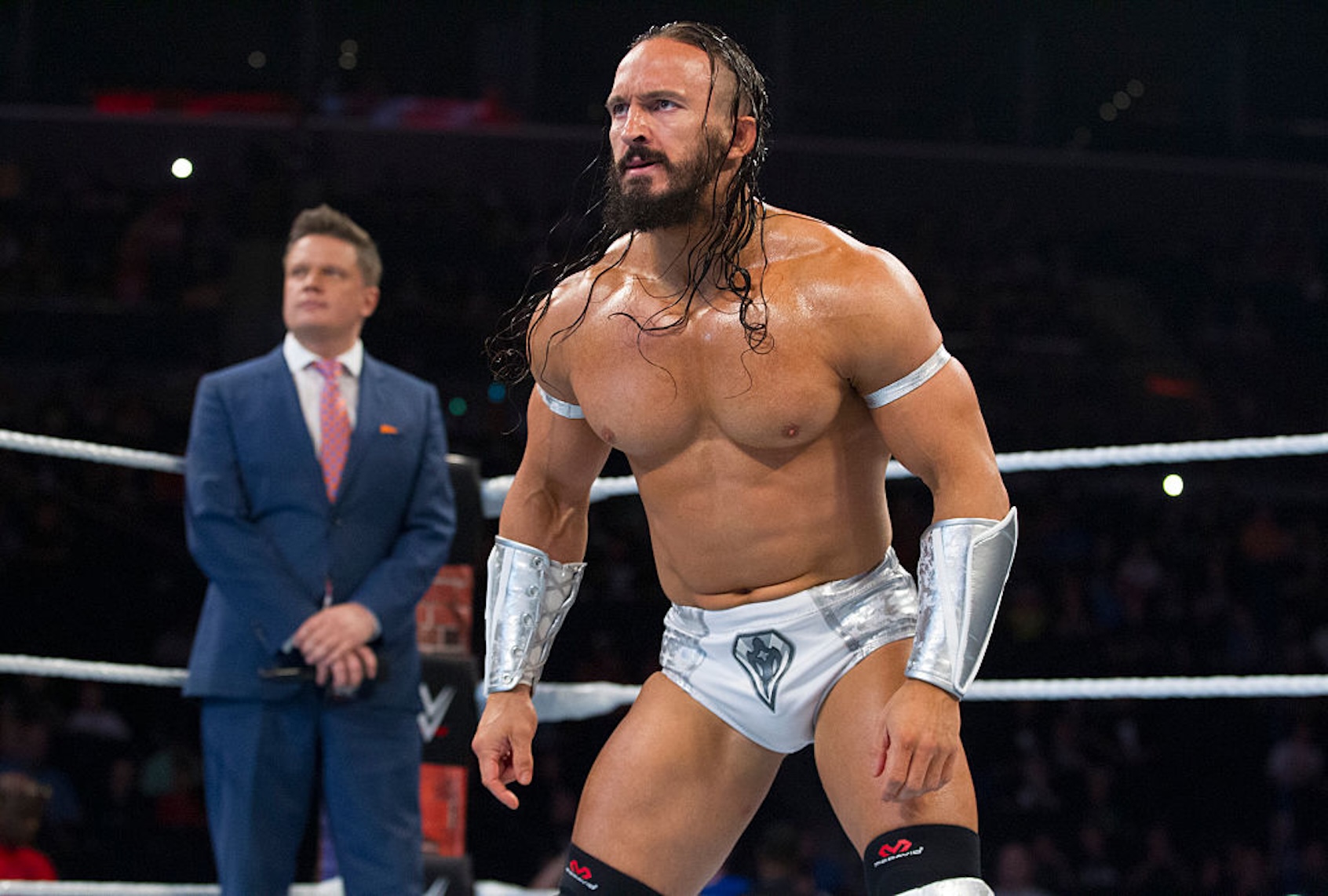
AEW wrestler Pac’s death exposes pro wrestling’s labor problem

Few things are more difficult to get down in immutable ink than the history of professional wrestling.

Born on the carnival circuit, the pseudo-sport maintained a here today-gone tomorrow feeling until relatively recently. Promoters scraped out regional fiefdoms where transient performers would fight for a spell before jumping ship in search of better deals. Sometimes they took their name with them; other times they molded themselves to whatever gimmick their new promoter needed on the roster. It makes a mess of any timeline, and that’s before you get to the kayfabe — the illusion — of it all, the fact that all these real men and women are deadly serious about keeping up their fake characters. 

Grasping for concrete facts can leave you with two immutable bits of data: when a wrestler was born and when they died, with everything in between being a show on some level. Get enough of those dates together, and it’s hard not to notice a pattern: These sideshow athletes don’t live very long. 

Gorgeous George, one of the most famous faces of wrestling’s Golden Age, didn’t make it to his 50th birthday. “Macho Man” Randy Savage and his ex-wife/manager Miss Elizabeth both died before reaching Social Security eligibility. High-flying technical wrestler Eddie Guerrero died at 38. Windham Rotunda, who freaked out the WWE for years as a swamp-dwelling cultist named Bray Wyatt, passed away at the age of 36. And earlier this week, All Elite Wrestling star Pac died in the parking lot of an Illinois chain restaurant, just a day after his most recent match. HIs cause of death is still unknown. 

Born Benjamin Satterley in a blue-collar community in Newcastle upon Tyne, England, he first came to national attention stateside in the WWE, where he wrestled under the decidedly English name Neville. He took the cruiserweight title twice before jumping for AEW in 2018. His star rose exponentially as a regular heel for the young promotion. At the time of his passing, he was only 40 years old.

Playing a fake brute who’s willing to take a folding chair to the face to settle a disagreement is hell on a body. Learning how to fall and pretending you have superpowers can’t cancel out physics. If a 240-pound man turns you upside down and drives your head into a padded floor, you’re going to feel it the next day (and probably several days after). The wear and tear is cumulative, adding up over time like it does for all contact sports. Just take a boxer’s blown-out ears and a running back’s trick knee and expand it to account for the fact that, in wrestling, shots to the back of the skull are frequently necessary to move the story along. Recruiting almost exclusively among the huge and jacked — it’s easier to appear larger-than-life on camera if you’re real-world large — makes the list of heart conditions start to pile up. It’s all a recipe for a brief career, and a correspondingly short life.

The average star of WWE or AEW signs on as an independent contractor, meaning they are responsible for their own health insurance and are subject to being fired for nearly any cause.

The situation is exacerbated by wrestling’s employer-employee relationship. Staying true to its seasonal carny roots, almost all professional wrestlers are gig workers. The average star of WWE or AEW signs on as an independent contractor, meaning they are responsible for their own health insurance and are subject to being fired for nearly any cause. The situation has been even worse for wrestling’s women, who spent decades subject to the whims of Mary Lillian Ellison, better known as The Fabulous Moolah, a wrestler-promoter-extortionist who controlled virtually all of women’s wrestling, loaning out talent to regional promotions and taking cuts of stars’ pay.

Unlike the four major professional sports in the U.S., wrestlers have no pension and no retiree health benefits. If you wrestle for a living, you’re faced with significant pressure to perform for as long as you can, through as many injuries as you can. Unsurprisingly, the list of premature wrestler deaths is heavy on accidental painkiller overdoses and acute toxicity from mixing medications with alcohol. 

The central role of the promoter — and the lack of genuine athletic competition in matches — puts wrestlers and management on remarkably unequal footing. It’s hard to cause trouble for a boss who can simply write rabble-rousers out of the scripted action. Attempts to unionize the talent were mounted in the 1980s, first by hoo-rah heel Sgt. Slaughter, and then by wrestler-turned-governor Jesse “The Body” Ventura. The latter seemingly bought into some of the era’s storylines and ringside magic, believing that a rousing speech to the wrestlers in the locker room would convince them to strike. But he was ratted on by company star Hulk Hogan, and promoter Vince McMahon quickly summoned Ventura to let him know that any future outbursts of class consciousness would come with walking papers. 


Want more sharp takes on politics? Sign up for our free newsletter, Standing Room Only, written by Amanda Marcotte, now also a weekly show on YouTube or wherever you get your podcasts.


“Vince . . .  basically threatened to fire me if I ever brought it up again and read me the riot act,” Ventura explained on The Steve Austin Show. ”I then did WrestleMania 2 and immediately left and did ‘Predator’ and was a member of the Screen Actors Guild now, my union that I get retirement from now, healthcare from, all of that from.”

The situation only got worse as WWE muscled out nearly all regional promotions. McMahon’s anti-union behemoth spent decades as the only game in town for professional wrestlers who wanted the reach of a televised promotion. In recent years, AEW has pitched itself as an antidote to the WWE, but its roster is also almost entirely composed of independent contractors. Stars like CM Punk and Ray Fenix have complained loudly about the way the promotion handles wrestler health.

Pac is the second wrestler who performed in an AEW ring to have died just this month. Andy Williams, the former guitarist for metal-core act Every Time I Die who wrestled under the name “The Butcher,” died after collapsing during a match with an independent, regional promotion on Sept. 5 at 48. (His contact with AEW expired in April, after which he became a free agent.) Williams’ official cause of death is pending, awaiting final autopsy results.

Wrestling’s treatment of its employees is a bit too abstract to be listed on either man’s autopsy report. Coroners are in the business of endings, putting a neat period on decades of damage with phrases like “cardiac arrest.” Still, anyone who has followed wrestling for years can see the way it hobbles its heels and heroes alike. In a sport that heavily encourages everyone watching to follow the narrative, it’s hard not to notice a pattern.

The post AEW wrestler Pac’s death exposes pro wrestling’s labor problem appeared first on Salon.com.

  •  

Why diesel prices are an economic time bomb

A green-and-white sign outside of a California gas station displays the price of diesel fuel at more than $8 per gallon.
The price of diesel fuel is displayed outside of a Shell gas station in Carson, California, on September 22, 2026. | Patrick T. Fallon/AFP via Getty Images

Everyone knows how much gasoline prices matter. The recent spike in gas prices triggered by the war with Iran has fueled deep pessimism about the economy and weighed heavily on President Donald Trump’s approval ratings.

But diesel fuel — the lifeblood of shipping, agriculture, and heavy industry — usually flies under the radar. Its price has surged too, and while truckers and farmers are feeling the initial blow, the rest of the country won’t be far behind.

“Most products in America are shipped along the road via trucks,” Nathan Bomey, a business reporter at Axios, told Today, Explained co-host Noel King. Diesel prices “directly affect their cost of doing business, which then eventually trickles down and affects the consumer.”

On the podcast, Bomey discusses what’s driving the price spike, how quickly it’s going to become a problem for everyday consumers, and whether electric semi trucks could offer a way out.

Below is an excerpt of the conversation, edited for length and clarity. There’s much more in the full podcast, so listen to Today, Explained wherever you get your podcasts, including Apple Podcasts, Pandora, and Spotify.

What is happening with diesel?

There was one major geopolitical event this year that disrupted the entire energy economy, which is the US and Israel attacking Iran. Iran is at the center of the oil economy in some ways, but primarily you have to look at the closure of the Strait of Hormuz and the jockeying over it that has happened in the months since.

Once they closed the strait, it disrupted the entire global energy economy because it handles a substantial portion of the shipping bringing supplies out of the Middle East. That affected diesel prices, gasoline prices, jet fuel prices, and effectively everything based on crude oil.

Who are the people right now that are profoundly freaked out about the cost of diesel?

First off, truckers are freaked out because their cost of doing business is going much higher. Farmers are also freaked out because they’re already facing real pressures from trade wars and things that are out of control, like climate issues, that have caused their costs to go higher. 

The price of diesel affecting farmers eventually affects the price they charge, which ultimately gets to the consumer because it ends up costing more to pay for things like an ear of corn.

How stark do you think this might be? In a month or two, do you think I could go down to Walmart and see that something I buy all the time is now a dollar more expensive? 

I think the impact is imminent. This flows through very quickly. We’re not talking about months; we’re talking about weeks, if not days, before people will start to notice increases, especially in the grocery aisle. That’s the first place people will notice it because fresh food has to be shipped on a weekly basis. Diesel prices are going to have a big effect on food inflation. This is coming off of several years of food price increases that we experienced in the wake of the pandemic.

We’re also barreling toward the holiday shopping season, which is going to be affected by this as well. If a toy, for example, is made with a resin affected by the cost of crude oil, which also affects the cost of diesel, and then it’s shipped over the road to Walmart in a truck that uses diesel, all of these things add up and will probably lead to higher prices.

We’ve also got an issue with heating oil, which is a fuel used primarily by households in the Northeast to heat their homes. Heating oil, diesel, and all of these oil-based products are caught up in this vortex right now. Ultimately, it is not something the ordinary person can do much about.

Do the industries that rely on diesel have any other options?

There are definitely alternatives to diesel, but in many cases, they cannot be switched to quickly. If you think about the trucking industry, they are invested heavily in big rigs that take products from place A to place B. If you are invested in a truck, yes, you could theoretically switch, but you would be scrapping this huge investment you’ve made. Diesel trucks are not really going anywhere immediately. A lot of times, they’re simply still the best way to get somewhere.

You can switch to rail; railroads are definitely a competitor to trucking, but really only best for certain types of products. There are other types of trucks you can buy. Compressed natural gas or liquid natural gas is an alternative fuel for some trucks, and biodiesel can actually be good. Hydrogen is more of a futuristic thing down the road.

In the short term, there is the possibility of using electric trucks. That is starting to become more realistic. In fact, in recent days, Tesla began major production of the Tesla Semi, an electric semitruck we’ve been waiting for for years. I remember covering this in 2018 when Tesla debuted the semi, and we all thought it was going to be coming out soon.

It has taken nearly a decade for this to finally become a reality in large proportions, but the Tesla Semi is an electric truck that could be an alternative for some. There are other companies making electric trucks too, so that could be viable. But the problem with electric trucks is that the battery is so heavy, making it tough to compete with diesel on shipping heavy items.

It was often joked that when the Tesla Semi first debuted, the very first thing it shipped was a bunch of bags of Cheetos because they were so light and the truck couldn’t handle extra weight. They had a deal with PepsiCo, and it wasn’t ready at the time to ship anything heavy. 

It’s a lot better now, but the issue is still how heavy electric truck batteries are, which will make them somewhat limited in capacity. However, we are seeing some demand for the Tesla Semi that indicates it might become more competitive because of the price of diesel.

So when prices are high, generally somebody somewhere is benefiting. Who is it, in this case?

The people benefiting from diesel prices being so high are the refineries, which a lot of people don’t think about much because they’re the middle person in this entire process. They take the crude oil and turn it into usable diesel for a pickup truck, a semi truck, or farming equipment. 

The refinery business is experiencing high demand right now, and there’s limited capacity to do this because of issues in Russia, Iran, and other places throughout the world. There’s really nowhere else to do this, and therefore they can charge higher prices. That means higher profits for the refineries.

All of this is shaping up to potentially mean a really ugly winter. One thing I think about a lot is that American consumers will accept a lot of pain. We had Covid — the inflation, and shortages of literally everything. Then we had the war in Ukraine, and prices went up again. 

People still keep spending money, even as we predict this one’s going to get bad. People go to the store and spend money, and maybe they gripe, but it’s not like we’re out in the streets. Do you think this coming diesel shock — imminent, in your words — is going to be different?

I’m not an economist, but there is an interesting phenomenon emerging in the economy where consumer sentiment is at rock bottom, but consumer spending is actually really strong. There’s a gap emerging between what people say they feel and what they’re actually doing — in this case, they’re still spending. 

Maybe it’s YOLO spending. They’re thinking they don’t have much going for them, so they’re just going to keep spending. I’ve experienced that a little bit, so I don’t blame anybody.

At the end of the day, the numbers matter a little bit more than what people say they feel. But I do think people are going to hit a breaking point because they simply cannot continue this level of spending if the underlying fundamentals of the economy start to collapse.

  •  

Perfect Storm, Brought to You by Donald Trump

As I noted a week ago, we can’t know whether the current polls will be predictive of the November election results. But the polls themselves are at least speaking with a clear voice. I want to note two things that appear to be moving in unison: consumer confidence and the Republican position on the national generic ballot.

Here’s the trend line from Nate Silver’s Silver Bulletin …

  •  

This weather threat costs us billions. And it’s about to get worse.

a person moves damaged vinyl sheets
Kevin Ross removes damaged vinyl sheets from underneath his sister's mobile home in Watkins, Colorado. The trailer park was heavily damaged by hail and very strong winds. | Denver Post/Getty Images

This story was originally published by High Country News and is reproduced here as part of the Climate Desk Collaboration.

At a specialized cold lab in Boulder, Colorado, where indoor temperatures hover around minus 4 degrees Fahrenheit (minus 20 degrees Celsius), atmospheric researcher Anthony Bernal Ayala slices hailstones with a band saw, revealing layers of icy growth like the rings of a tree. These frozen rings — clear or cloudy, thick or thin — indicate the conditions in which the hail formed: A clear layer signals the water froze slowly, while a cloudy layer means it happened quickly, trapping air bubbles. Bernal Ayala then analyzes the crystalline structures, particles, and isotopes preserved in these layers.

“All that information can tell you a wonderful story of how the hailstone was growing, but nobody — not until now — was able to tap into that history,” said Bernal Ayala, who works for Atmospheric and Environmental Research, part of the JANUS Research Group.

Bernal Ayala’s research, conducted at the National Center for Atmospheric Research (NCAR), is part of a historic effort to study one of the costliest weather hazards. Researchers hope their findings will help protect lives and property from the stones that careen to Earth, battering roofs, pummeling crops, and pockmarking cars.

From 2023 to 2025, annual severe thunderstorm losses exceeded $50 billion nationwide, according to the Insurance Institute for Business and Home Safety — more than double the losses seen just a decade earlier. Hail accounted for 60 percent to 80 percent of the damage.

Bernal Ayala holds a 3D-printed replica of one of the largest hailstones in the ICECHIP archive

In Colorado, one of the country’s most hail-prone states, hail — not wildfire — is the main factor driving up insurance premiums. And researchers expect larger, more damaging hailstones to become more common with climate change.

“It’s going to just keep getting costlier and costlier,” Bernal Ayala said.

Even basic questions about hail have been notoriously hard to study. But a long-awaited resurgence in research, including the first major US field campaign to study hail in more than 40 years, could help change that. 

ICECHIP — the “In-situ Collaborative Experiment for the Collection of Hail In the Plains” — aims to improve forecasts, make warnings more precise and help communities better prepare. It received $11 million in funding from the National Science Foundation in 2024, just before deep cuts hit the foundation in 2025. 

For six weeks in spring 2025, about 100 scientists and university students chased hailstorms across the Central Plains and Front Range, from the Canadian to the Mexican border, using radar trucks to track storms and drones to take aerial footage. Researchers photographed hail with high-speed cameras, measured its impact with a tool called a disdrometer, recorded hail’s distribution and size based on its imprints on foam pads, captured it in specialized funnels, and crushed it to test its strength. 

Scientists from the Australian Bureau of Meteorology also used balloons to release golf ball-sized sensors into storms. Once aloft, each hail-like probe collected data on how fast it was traveling and whether ice was growing on it; a microphone even recorded water droplets and hailstones hitting it.

“This has really been the first time where we’ve been able to do a real comprehensive look at hail on the ground, hail aloft, the storm itself, the environment around the storm — just everything all at once,” said Becky Adams-Selin, ICECHIP’s lead investigator and a principal scientist at Atmospheric and Environmental Research, JANUS Research Group. 

ICECHIP’s samples were packed into 26 cooler-sized boxes and brought to NCAR. This internationally renowned hub for weather and climate research has been used to study hail for decades. In one of its last major campaigns, in the 1970s, the US investigated Soviet claims that it could suppress hail. 

Researchers say there’s no other US lab like it; the backup plan to store ICECHIP’s samples involved using a walk-in freezer from a fast-food restaurant.

Now NCAR’s own future is uncertain: In late 2025, the Trump administration said it would dissolve the center and transfer its work out of state. The University Corporation for Atmospheric Research (UCAR), which manages NCAR, sued the administration in March, alleging that it’s targeting NCAR to punish Colorado for retaining its mail-in voting system and because Gov. Jared Polis initially refused to release former Mesa County clerk Tina Peters, a 2020 election denier imprisoned for breaching election security and undermining election integrity.

In June, a federal judge temporarily blocked the White House from dismantling NCAR. The government has until Sept. 30 to respond to the lawsuit.

“I can’t even quantify the impact that it would have to our community if we lost NCAR,” Victor Gensini, professor of meteorology at Northern Illinois University, told HCN. “They are the beating heart.”

Previous research has predicted climate change’s effects on hail, noting that warmer temperatures could melt smaller hailstones before they land but also fuel stronger updrafts, keeping hailstones airborne longer and allowing them to grow bigger, enabling the most damaging hail to become more common. 

A record-setting stone recovered in Yuma County, Colorado, in 2023 measured more than 5 inches across. That year, the state logged 176 reports of hail 2 inches or greater, surpassing the previous record of 91 reports in 2018, according to the Colorado Climate Center.

photographs of hailstones

Scientists say it’s difficult to know how much of the rise in damage is due to the increase in large hail versus the increased development in hail hotspots. The connection between a rapidly growing human footprint and higher insured losses has been dubbed the “expanding bull’s-eye effect.”

Gensini, a principal ICECHIP investigator, cites the development boom east of the Front Range, along Colorado’s Interstate 25 corridor, which has grown explosively in recent decades. The population of the Fort Collins metro area alone has doubled since 1990 to around 375,000 residents, according to the US Census Bureau.

This is happening across the Western US, as previously rural or open areas become densely populated, increasingly expensive targets for hail.

“Colorado is the poster child for what I expect the next 25 years to look like for hail,” Gensini said.

In 2019, Fort Collins became one of the first cities to adopt hail-specific roofing requirements for new builds and remodels. Marcus Coldiron, the city’s chief building official, said it was partly in response to all the shingles and roofing materials taken to the landfill after a catastrophic hailstorm in 2018.

It’s still unclear how well the requirements are working: Coldiron said fewer permits were being issued for roof replacements and fewer shingles were going to the dump. However, Fort Collins also hasn’t experienced a hailstorm as devastating as the one that hit in 2018.

A growing number of Front Range communities now require impact-resistant shingles in their building codes, and Colorado legislators recently passed a law offering grants to residents who install more resilient roofing.

ICECHIP’s researchers are also investigating how they can improve building materials as billion-dollar losses from single storms become more common.

“The dollars are simply piling up so fast,” said Ian Giammanco, a lead research meteorologist at the Insurance Institute for Business and Home Safety, one of ICECHIP’s key partners. “We’re still trying to understand how do we get the best materials onto roofs, onto people’s homes, onto businesses to actually start shaving off these losses.”   

  •  

How Latinos became America’s biggest swing vote

A man wearing a "Latinos for America" t-shirt
A man wearing a "Latinos for America" t-shirt attends a Republican campaign event on October 10, 2022 at the University Drafthouse in Mcallen, Texas. (Photo by ALLISON DINNER/AFP via Getty Images) | Allison Dinner/AFP via Getty Images

Welcome to The Midterms, Actually. Every week I’ll be writing about two things: one big idea or trend I see forming across the 2026 primaries, and one thing I’m hearing from a voice on the ground. Let’s get into it. You can sign up here to get it in your inbox every week. Let’s get into it.

One big idea: Latinos didn’t come home. They’re just in motion.

In the last presidential election, President Donald Trump’s strong support with Latino voters ended up one of the biggest stories of the night. After years of Democrats telling themselves that the growing number of Hispanic Americans would help lead to a permanent liberal majority, their dreams were first dashed in 2016 (when many of those voters stayed home) and then buried in 2024 (when they, and other nonwhite voters, swung toward Trump).

But just as Democrats have at times been too confident that minority voters would fall in line, it now seems Republicans have replicated their mistake. Poll after poll shows a historic reversal among Latino voters in Trump’s second term, and these days even Republican members of Congress are beginning to call Trump out on his deportation efforts. 

Why? It comes back to the numbers.

As Nate Cohn observed in the New York Times this week, Democrats now lead Republicans among Hispanic likely voters by 35 percentage points on the generic congressional ballot, 64-29 — a 28-point swing from 2024, when Kamala Harris carried Hispanic voters by just 7 points. The shift is a big reason the polling has Democrats in “blue wave” territory this November.

Last week on America, Actually I explored this shift in detail — by talking to Stephanie Valencia, co-founder and president of Equis, the research firm that has spent a decade digging into the Latino electorate. And the first thing she wanted us all to know: Get rid of the idea that Latinos will ever be permanently Democratic or permanently Republican. Part of the electoral power is that a larger section of the electorate defines itself more independently.

“Latinos often get given the title, the sleeping giant, which I just want to rid that out of everybody’s vocabulary. We should be called the swinging giant based on how much shift we have seen election to election. A third of Latinos consider themselves kind of independent or apolitical nonpartisan, and that’s that swinging middle that really is deciding every single election.”

Here are three more trends Valencia pointed out, which help explain why this all-important voting group has done such a drastic 180 on Trump in his second term.

1. It’s the economy (again)

As with all things in Trump’s second term, it starts with the fundamental problem of his second term: He has not delivered on lower prices. Equis found that Trump’s net approval with Latinos on cost of living sits at -52 — and his number on the economy (-45) is worse than his overall approval with the group (-31). Both are dramatically worse than where he sits with non-Latinos, who put him at -39 on cost of living and -25 on the economy. Among Latino men 18 to 39, cost of living hits a stunning -63.

Here’s what Valencia said:

“Latinos make up more of the wage workforce than any other racial subgroup. And so what that means is when wages are down and inflation is high, Latinos feel it more. We have less savings. We have less rates of home ownership. So the kind of safety nets that other people might have, we just don’t have.”

She also pointed this out:

“In Trump 1.0, his approval on the economy and the cost of living was actually better than his everyday approval… And he has been underwater with Latinos almost this entire term so far on the cost of living and the economy. It’s almost been a complete and total reversal.”

One of the arguments Trump made to Hispanic communities (and other groups also) was that he’d economically empower them, and that this was more important than prioritizing social causes that didn’t have a material benefit. That’s also been his fundamental flaw. From tariffs to rising gas prices, he has not only not delivered — people also feel worse off than before.

2. The immigration backlash

Valencia’s data was undeniable: More and more Latinos turned on Trump as he broadened his deportation efforts, which were broadly unpopular. But what I didn’t understand is why it took until Trump’s second term for people to realize those threats were legitimate, considering they were so front and center during his campaign. (They held up “Mass Deportation Now!” signs at the Republican National Convention!)

Here’s what Valencia said:

“I think this is really important for us as avid news consumers to understand what it is that the average voter, and especially that voter who’s coming in and out of elections, the kind of news they’re consuming. What they were seeing on mainstream media, perhaps even Fox News at the time, was a focus on Trump surrogates who said he’s gonna focus on serious criminals, securing the border, and violent criminals. And so that’s what people bought.”

“Fast-forward to 2026, the people who feel most regretful who voted for Trump in 2024 are most regretful because of immigration. They feel like there was a broken promise there. Like, they were told he was gonna focus on the border, which everybody agreed was chaos, and he was gonna focus on violent criminals and serious threats, and at the end of the day, he has not complied with that.”

There’s also an element of disbelief. When Trump said he would deport “bad people,” a lot of people thought he was only talking about people in other communities — or immigrants with criminal legal histories — not the more far-reaching immigration sweeps we’ve seen since he’s been in office. A striking ad from Rep. María Elvira Salazar (R-FL) this week where she directly criticizes Trump’s immigration policy explicitly made this distinction. 

The Equis numbers track that shift almost perfectly. In December 2024, 65 percent of Latino Trump voters believed he would target only criminals and recent arrivals. Today, 62 percent of Latinos overall say he’s going after undocumented immigrants broadly — and among his own Latino voters, the share who say that has jumped from 26 percent to 37 percent. That perception is the whole ballgame: Latino Trump voters who still believe he’s targeting only criminals give him +84 net approval. Among those who’ve concluded he’s targeting everyone, it collapses to +31.

The backlash isn’t about the border. It’s about what’s happening in the interior — the raids, the family separations, the citizens and legal residents swept up. 

Equis finds 68 percent of Latinos say Republicans promised to deport criminals and deported hardworking people instead — and 67 percent say Democrats promise immigration reform and never deliver. Forty-two percent say both parties broke their promises.

“I think it is a huge mistake for Democrats to assume or to rest on their laurels and think that because of what people are feeling around Trump and Republicans and the sense of disappointment and broken promises, that that is automatically going to translate to them as a party and as a brand. Right now, the Democratic brand has suffered a repeated set of blows among Latino voters. 20 years of comprehensive immigration reform that hasn’t been delivered. It’s a thing that comes up in almost every focus group.”

3. Meeting voters where they are

The third trend isn’t about persuasion at all. It’s about the fact that a lot of campaigns are still bad at the mechanics of reaching this electorate — and Valencia’s examples were almost comically basic.

Their testing found that more than 70 percent of Latinos who see an ad in Spanish come away thinking that candidate or party cares more about Latinos. That’s not a persuasion effect. That’s a respect effect, and it’s enormous for the price of one ad buy.

So how do campaigns blow it? Some examples, according to Valencia: translating English ads directly into Spanish, rather than tailoring them to the language and culture; and assuming English speakers and Spanish speakers are separate categories when voters often shift between media in both languages. 

The deeper error is the monolith problem — the group is still treated as a voting bloc that moves in unison, rather than a diverse set of people from varying countries of origin and contexts. And the fastest-moving division isn’t the country of origin at all. It’s age — an electorate replenishing itself faster than either party’s model of it.

“There are a million Latinos who turn 18 every single year, and an 18-year-old who turns 18 this year and will vote in this year’s election was born the year Barack Obama was elected president. … The era of politics for an 18-year-old today is chaos, Covid, and corruption. They do not remember the hopium of Obama and the beautiful coalition that we built. That is all ancient history to them.”

A million new voters a year, completely up for grabs. Nobody is inheriting these voters. Neither party owns them. Because as Valencia put it: Demographics have proven not to be destiny — effort and intention matter more.

What I’m hearing

This week I called Matthew Eadie, a reporter at Evanston Now, who has been covering an ICE stop in Evanston, Illinois that has since attracted national attention. On the morning of Sunday, September 20, federal agents stopped a man walking on Howard Street. He turned out to be a US citizen, and not the person they were looking for. Agents reportedly left him on the ground with injuries to his head, neck, and teeth. DHS says he “refused to identify himself. Now the community is demanding answers.”

What’s the community reaction been?

People are really furious. If you remember the fall here — Operation Midway Blitz, the heightened Border Patrol enforcement across the Chicago area, Gregory Bovino parading around the streets with camera crews, the protests at the Broadview processing center — people here were very aware of how impactful it was. It was also happening around the elections, so it was prominent news everywhere and everybody was talking about it.

Over the summer it really died down, and I don’t think people have paid much attention since. ICE has been around all year, but they haven’t been as flashy about it, which has been talked about nationally too. This was a flare-up, and it’s a reminder that it’s still going on even after Bovino left. There have been protests at Broadview this week unrelated to the Evanston incident. So either people are starting to pay more attention as the election gets closer, or the incidents are actually picking up again.

What are the unanswered questions you’re still chasing?

Who were they looking for? Were they actually looking for somebody? That’s been their story — a specific individual — and a lot of people I’ve talked to are really skeptical that’s the case. One witness at the scene told me he felt like they just picked him and drove up on him. Essentially what’s been called a “Kavanaugh stop” — if they’re suspicious of you, they can pretty much find a reason to detain you. And then they dropped it once they realized either that he was a US citizen, which he says he is, or that there were too many people around taking videos for it to be worth their time.

So: What happened in the lead-up, and who specifically were they looking for? 

Afterward, the agents talked to Evanston police — that’s an Evanston police policy; they’re supposed to try to get information from ICE officers. I’ve FOIAed all the body cam footage. I want to see what those conversations were like, and what exactly the agents told police officers when they talked privately.

Part of what we’re trying to do is see the issues that play out from the bottom up rather than the way they get framed nationally. Beyond immigration, is there anything in your coverage that’s shaping local politics more than the national conversation reflects?

The national issues matter to everybody, but they hit communities in completely different ways. Evanston is affluent — college town, Northwestern, wealthier than most suburbs. Affordability is a buzzword that comes up everywhere, but people here talk about it differently.

This is an overwhelmingly progressive Democratic city. Some people in Evanston certainly need it to be more affordable for themselves. But you also have progressive voters saying we want to make Evanston more affordable and more inclusive for other people. Sometimes the affordability conversation gets framed as “life is too expensive for me and we need to make it cheaper for me,” which is true in a lot of places. In somewhere like Evanston, where there are a lot of affluent people who are also very progressive voters, it’s more: If we actually want to say we’re a progressive community, we have to show it. And showing it maybe means building affordable housing.

It’s also a city that passed reparations, which the federal government is challenging right now. That’s going to be a federal court case through the end of this year and probably into next year — the feds challenging the city’s reparations program. That’s something the city prides itself on. Those are big issues here that come out of the national conversation but sound different than how we hear them in national media.

  •  

Pluralistic: Workplace "flexibility" isn't (11 Jul 2026)


Today's links


A giant arachnoid woman arched backwards on the banks of a tropical river alongside which stand armed men. Behind loom palms, mountains and a smoking volcano. Rain sleets down over the scene.

Workplace "flexibility" isn't (permalink)

Here's an irony: the "gig economy" is a statistical black hole. Workers, customers and regulators know very little about the most basic aspects of it: how much workers get paid, for example, or much unpaid time on the clock a worker puts in before they get a job from the app.

The reason this is ironic is that the "gig economy" is dominated by a handful of massive, data-driven firms that know the precise, up-to-the-second answer to these questions. The problem is that they won't share the data. Of course, workers and customers have the data, too, but our data is widely diffused, with each worker and each customer only representing a single, infinitesimal pixel in this massive picture.

Most of our industry-wide figures about the sector come from painstaking, expensive survey work. The expense and effort involved in conducting this analysis means that the public's understanding of the gig companies' business is fragmentary and thin.

But every now and again, we get a flashbulb glimpse of the full picture. One of those glimpses was captured by David Weil, the former labor standards boss at the US Department of Labor. In 2024, the Massachusetts Attorney General sued Uber over worker misclassification, with Weil serving as an expert witness, who was able to access the raw data on Uber's business operations.

In a new American Prospect longread called "The Dangerous Myth of Flexibility," Weil builds on the public record developed in the case to demolish the central myth of the gigwork companies: that they enter into a mutually beneficial arrangement with their workers by offering "flexibility" that lets workers "choose work that fits the rhythms of their lives, not the other way around":

https://prospect.org/2026/07/09/dangerous-myth-of-flexibility-uber-lyft-gig-economy/

This quote comes from Tony West, the Uber executive who has led the company's efforts to formalize its worker misclassification program, notably California's Prop 22, a $225m statewide campaign that overturned the state's landmark gig work standards. West is also Kamala Harris's brother-in-law, and he served as her campaign's corporate liaison, senior strategist and economic policy advisor.

On its face, West's statement sounds reasonable, and most of us have heard a version of it, possibly even from an Uber driver. But what Uber calls "flexibility" is really a way for the company to offload its operational risks onto its drivers.

Anyone who runs a business has to manage a key operational risk: staffing levels. A restaurateur who doesn't schedule enough cooks, bussers and servers might have to turn away business at the door if there's a rush. But if the restaurateur schedules too many people for a shift, they'll end up paying for those workers to stand around scrolling Tiktok.

In America, Congress and state legislatures have created a system that allows restaurateurs to transfer this risk onto their employees: the "tipped minimum wage." Federally, the minimum wage for tipped employees is only $2.13/hour, with the caveat that employees are obliged to "top up" their workers' pay if the tips from their shift don't add up to $7.25/hour. So if you work five hours and don't wait on a single table, your boss has to pay you $36.25 ($7.25/hour * 5 hours). But if you have a busy shift and you make $40 in tips, your boss only has to pay you $10.65 ($2.13 * 5 – the tipped minimum).

This is a transfer of risk from bosses to workers. The boss can schedule extra servers and offload most of their wages to diners who come through the doors. If your boss overestimates the amount of business, much of the cost of that miscalculation comes out of your paycheck.

This is quite a sweet deal for bosses. After all, servers have virtually no control over the amount of business a restaurant attracts. It's the boss, not the server, who decides where the restaurant will be, which hours it will keep, which food it will serve, how much the food costs, what advertisements to run, and where and when to run them. The boss controls the decor, staff attire and the music. They make the decisions, and workers pay the price if they decide poorly.

For most businesses, workers are less exposed to risks from their boss's strategic errors. If your boss screws up, you might see a lower annual bonus, or take a career hit thanks to the bad company's presence on your CV. Of course, if your boss really messes up they might lay you off or go out of business altogether, but it's a rare business that gets to externalize its risks onto its workers on a shift-by-shift basis the way restaurants get to.

But as sweet as restaurateurs have it, that's nothing compared to the incredible deal that gig platforms get. Companies like Uber and Lyft get to shift nearly all their risk to their workers, and then insist that they're doing workers a favor by offering them "flexibility." Like a restaurateur, Uber and Lyft control all the mechanisms by which the number of riders is set. They decide how to advertise and how to price their rides. When a driver signs on and makes themselves available – at no charge – to Uber, it is the company's actions, not the driver's, that determine whether that driver gets a job, and how much they'll get paid.

Uber and Lyft claim that drivers have control, too – when (if) they're offered a job, they get to decide whether to take it. This is true, but it's more complicated than that. Drivers get about 15 seconds (!) to decide whether to accept a job, which means they have 15 seconds to calculate the mileage and time-based rate on offer, all while operating a vehicle in traffic. Drivers who accept lowball offers risk having their base pay permanently eroded through "algorithmic wage discrimination," which is when the gig platforms infer that workers who accept very low wages are economically desperate and can be offered even lower wages in the future:

https://pluralistic.net/2023/04/12/algorithmic-wage-discrimination/#fishers-of-men

But workers can't simply refuse offers and wait for the wage on offer to increase. That increase may happen, but if a driver is too picky, the platform will punish them for turning down too many offers by excluding them from future opportunities. If this happens often enough, the driver may end up broke enough to start accepting those lowballs, triggering the inexorable downward trajectory of their expected earnings.

This is "flexibility," but mostly it's flexibility for Uber, not for drivers. Uber controls when a driver gets paid, and they control the data about that payment. This allows Uber to claim to be paying well north of minimum wage, while drivers average less than $2.50/hour. Uber exploits its information asymmetry to publish only the numerator (the amount a driver makes when a passenger is in the car) while hiding the denominator (how many hours it takes for Uber to put a passenger in that car):

https://pluralistic.net/2024/02/29/geometry-hates-uber/#toronto-the-gullible

Uber has perfected a system of algorithmic pricing that allows it to dangle just enough money in front of drivers to maximize their number on the road, irrespective of how many riders are looking for cars. The fact that they have all the information (while drivers have none) allows them to extract vast amounts of totally unpaid labor from those drivers. And then, once a passenger gets in the car, Uber's informational systems let it pay that driver the absolute minimum they will accept for the ride.

Of course, it works the same way for passengers, each of whom is offered a different price for the same ride, based on the company's surveillance data and its realtime calculations about how much the rider is willing to pay. When Uber launched, driver pay and passenger fares were linked (the same way a server's tips and the cost of a meal are linked). Today, these are fully decoupled. Uber runs a kind of cod-Marxist operation where workers are paid according to their desperation, and passengers are gouged according to their ability to pay:

https://pluralistic.net/2025/01/11/socialism-for-the-wealthy/#rugged-individualism-for-the-poor

This works so well (for Uber) that Uber has launched a side hustle selling algorithmic pricing and algorithmic wage discrimination systems to companies in other sectors, so expect this arrangement to infect ever-wider swathes of the economy:

https://investor.uber.com/news-events/news/press-release-details/2025/Uber-Expands-AI-Data-Platform-to-Power-Next-Gen-Enterprise-and-AI-Lab-Needs/default.aspx

(And this is neither here nor there, but holy shit, is Uber's investor relations site seriously serving ASPX pages in 2026?! Hey Khosrowshahi, the DOJ called and it wants its Clinton-era antitrust evidence back!)

Back to algorithmic pricing: this opaque, take-it-or-leave-it algorithmic pricing arrangement sets Uber apart from other platforms where sellers offer temporary use of their property to buyers. As Weil writes, at least Airbnb hosts get to override the nightly rate suggested by the platform (though I'd add that the platforms will downrank and bury people who resist their suggestions).

As Weil points out, even if Uber had to pay the minimum wage and assume other operational risks associated with running a business, they'd still have access to these algorithmic tools, albeit with different parameters. Rather than setting the wage floor for drivers at $0/hour, they'd have to pay $7.25/hour (the federal minimum wage, or more, depending on the state). This would force the company to refuse shifts to drivers when there were enough workers on the road to handle demand, but drivers would benefit from this arrangement – rather than driving around for a shift, burning gas and putting wear on your car without getting paid, Uber would just tell you to stay home.

Uber could try to offload those risks onto passengers, but remember, Uber is already charging riders a personalized price based on massive troves of surveillance data that is continuously re-analyzed to guess the largest sum you're willing to pay for any given ride. You're already paying the highest price Uber can set for you, in other words.

Weil has been in many forums – including that Massachusetts courtroom – where Uber touted its "flexibility" as a benefit to drivers. But as he shows, Uber could offer all the same flexibility to drivers without the downside risk of driving around for hours without earning a dime. Sure, forcing Uber and Lyft to extend rights and protections that every employee gets would raise their costs – but "the same is true for any company having to comply with employment law and work protections."

Outside of the US, these companies are being forced to shift the risk from their workers' backs to their own balance sheets. As Weil writes, the UN's International Labor Organization has set binding labor standards for gig companies, called Convention 193, "Decent Work in the Platform Economy":

https://onlabor.org/a-win-for-platform-workers-ilo-convention-no-193/

The US government is pulling out all the stops to prevent these standards from being applied to US gig companies, even abroad. Trump's labor boss Keith Sonderling told the world that the US government "will not sit on the sidelines while some foreign governments push to hamper American innovation in the gig economy worldwide":

https://www.washingtonexaminer.com/opinion/3435961/america-must-lead-gig-economy/

But, as Weil says, this isn't about innovation, flexibility or AI. It's about gig companies changing the distributional outcome of whole sectors, to shift money from workers to investors.

The rest of the world has its own ideas. In Switzerland, the Supreme Court found that gig companies' businesses were illegal and ordered them to extend normal labor protections to gig workers. Naturally, the gig companies just ignored the law and continued to screw those workers. Gig workers, as noted, are diffused. They don't work in the same place. They have no way to find out who else works for the same boss as they do. The same factors that keep us from gathering stats on gig work also keeps gig workers from comparing notes on how they're getting shafted.

What's a labor organizer to do? The Swiss labor union Syndicom came up with an ingenious solution. They partnered with a popular, pro-union pizza restaurant, listed it on the delivery platforms, and then placed orders for tons of pizzas through the scofflaw food-delivery platforms. They transformed the pizzeria into a pop-up union labor hub, and had an organizing conversation with every rider the company dispatched to the restaurant:

https://vimeo.com/1203473793

This is deliciously ingenious, and the labor organizing need not stop there. Companies like Para have shown how, by jailbreaking the apps used by gig workers, they can allow those workers to comparison shop for the best wage. Rather than getting 15 seconds while navigating traffic to decide whether a job is worth taking, drivers and riders could use a "counter-app" that evaluates all the offers on all the platforms and coordinates with other workers to mass-reject lowball offers:

https://pluralistic.net/2021/08/07/hr-4193/#boss-app

The only problem is the "anticircumvention" laws that criminalize this kind of reverse-engineering and modifications of apps. These laws make it a literal crime to change how an app running on your own phone works. These laws were invented in America, with 1998's Digital Millennium Copyright Act, but in the ensuing years, the US Trade Rep has used the threat of tariffs to force every country in the world to adopt their own anticircumvention laws. By caving into US bullying, all of America's trading partners have left their workers and consumers vulnerable to technological surveillance, manipulation and price-gouging, to the great benefit of the US tech companies that have fused with the Trump regime.

This is the hidden silver lining to Trump's lunatic tariffs: they take away the threat that kept all those US-protecting foreign IP laws in force. When someone threatens to burn your house down unless you do as you're told, and then they burn your house down anyway, you really don't have to keep complying:

https://pluralistic.net/2026/01/01/39c3/#the-new-coalition

The possibilities for counterapps in gig work are endless. In Indonesia, gig rider co-ops commission "Tuyul" apps that mod their dispatch apps in ways small (upsizing the font) and large (spoofing the GPS):

https://pluralistic.net/2021/07/08/tuyul-apps/#gojek

In his article, Weil cites a study showing that customers for gig apps tend not to comparison shop – once you choose your default taxi-hailing app, that becomes your go-to. But with counter-apps, your default could be a price-comparison app that bids out your job to all the platforms and chooses the cheapest one, forcing the gig companies to compete with each other:

https://papers.ssrn.com/sol3/papers.cfm?abstract_id=5729723

The platforms like to pitch themselves as "frictionless," but the reality is that they don't reduce friction so much as reallocate it. Because they control the technology, because the law makes it a literal crime to wrestle that control away, they can shift all the friction from their side of the ledger to yours, whether you're a worker or a customer:

https://pluralistic.net/2025/08/23/become-unoptimizable/#downward-redistribution

Tony West isn't lying when he says Uber values flexibility – they value their flexibility, which arises out of the constraints (technical, legal) they impose on us: the drivers and passengers.


Hey look at this (permalink)


A shelf of leatherbound history books with a gilt-stamped series title, 'The World's Famous Events.'

Object permanence (permalink)

#20yrsago Alanya to Alanya: feminist science fiction adventure https://memex.craphound.com/2006/07/12/alanya-to-alanya-feminist-science-fiction-adventure/

#20yrsago Soviet jokes https://web.archive.org/web/20060708144926/http://www.prospect-magazine.co.uk/article_details.php?id=7412

#10yrsago Empirical proof that Terms of Service are “the biggest lie on the Internet” https://web.archive.org/web/20160712233511/https://arstechnica.com/tech-policy/2016/07/nobody-reads-tos-agreements-even-ones-that-demand-first-born-as-payment/

#10yrsago Fox’s employee contracts may mean Gretchen Carlson will never get her day in court https://web.archive.org/web/20160712123858/https://thinkprogress.org/justice/2016/07/11/3797060/dirty-trick-fox-news-using-undercut-gretchen-carlsons-sexual-harassment-suit/

#10yrsago To see the future, visit the most remote areas of the GBAO https://medium.com/studio-d/6-1-glimpses-of-the-future-e3fdb510dcc1#.iwyo4x141

#10yrsago Benjamin Frisch’s “Fun Family”: good old American narcissism https://memex.craphound.com/2016/07/12/benjamin-frischs-fun-family-good-old-american-narcissism/

#5yrsago The Sacklers will get to keep billions https://pluralistic.net/2021/07/12/monopolist-solidarity/#sacklers-billions


Upcoming appearances (permalink)

A photo of me onstage, giving a speech, pounding the podium.


A screenshot of me at my desk, doing a livecast.

Recent appearances (permalink)


A grid of my books with Will Stahle covers..

Latest books (permalink)


A cardboard book box with the Macmillan logo.

Upcoming books (permalink)

  • "The Post-American Internet," a geopolitical sequel of sorts to Enshittification, Farrar, Straus and Giroux, 2027
  • "Unauthorized Bread": a middle-grades graphic novel adapted from my novella about refugees, toasters and DRM, FirstSecond, April 20, 2027

  • "Enshittification, Why Everything Suddenly Got Worse and What to Do About It" (the graphic novel), Firstsecond, 2027

  • "The Memex Method," Farrar, Straus, Giroux, 2027


Colophon (permalink)

Today's top sources:

Currently writing: "The Post-American Internet," a sequel to "Enshittification," about the better world the rest of us get to have now that Trump has torched America. Fourth draft completed. Submitted to editor.

  • A Little Brother short story about DIY insulin PLANNING

This work – excluding any serialized fiction – is licensed under a Creative Commons Attribution 4.0 license. That means you can use it any way you like, including commercially, provided that you attribute it to me, Cory Doctorow, and include a link to pluralistic.net.

https://creativecommons.org/licenses/by/4.0/

Quotations and images are not included in this license; they are included either under a limitation or exception to copyright, or on the basis of a separate license. Please exercise caution.


How to get Pluralistic:

Blog (no ads, tracking, or data-collection):

Pluralistic.net

Newsletter (no ads, tracking, or data-collection):

https://pluralistic.net/plura-list

Mastodon (no ads, tracking, or data-collection):

https://mamot.fr/@pluralistic

Bluesky (no ads, possible tracking and data-collection):

https://bsky.app/profile/doctorow.pluralistic.net

Medium (no ads, paywalled):

https://doctorow.medium.com/

Tumblr (mass-scale, unrestricted, third-party surveillance and advertising):

https://mostlysignssomeportents.tumblr.com/tagged/pluralistic

"When life gives you SARS, you make sarsaparilla" -Joey "Accordion Guy" DeVilla

READ CAREFULLY: By reading this, you agree, on behalf of your employer, to release me from all obligations and waivers arising from any and all NON-NEGOTIATED agreements, licenses, terms-of-service, shrinkwrap, clickwrap, browsewrap, confidentiality, non-disclosure, non-compete and acceptable use policies ("BOGUS AGREEMENTS") that I have entered into with your employer, its partners, licensors, agents and assigns, in perpetuity, without prejudice to my ongoing rights and privileges. You further represent that you have the authority to release me from any BOGUS AGREEMENTS on behalf of your employer.

ISSN: 3066-764X

  •  
❌