❌

Reading view

“You Can See Everything” leads 2026’s documentary revolution

“You Can See Everything” is not your standard documentary. Nathan Fielder and Lance Oppenheim’s film isn’t the first nonfictional chronicle of Elizabeth Holmes’ enigmatic psyche, but it is the most revealing. Any director pointing their camera at Holmes — before or after she was convicted of fraud for her bogus Theranos blood-testing device — won’t capture the whole truth. That’s what happens when a subject is obscured by layers of semi-permeable barriers of their own making: Eventually, the image distorts. Fielder, the film’s ringmaster, has no choice but to forgo conventional documentary tactics and seek detours. Perhaps if he takes his own unorthodox approach, the two will cancel each other out, leaving something substantial behind.

But, then again, what is a “standard” documentary? In recent years, streaming’s popularity has significantly impacted the genre and how audiences perceive it. Once executives realized there was an endless cash cow to milk in true crime and tawdry scandal, a deluge of rushed, ineffective documentaries and docuseries hit the top platforms like a string of hydrogen bombs, leveling their audience’s standards and turning their taste to ash. 

Everything was and is fair game. Murder victims, abuse survivors, pyramid and multilevel marketing schemes, unsavory business practices, music festival scams, campus life, cult leaders; you name it, you can probably find a documentary on it. The sad thing is, this boom produced legitimately compelling offerings and important stories, told well, too. But that doesn’t matter when the market’s not only crowded, but recycling its wares every week. In this era, powerful, complex stories of the intrepid human spirit sit next to ephemeral tales of cheaply made, mildew-ridden leggings. And guess which option the algorithm favors?

Once executives realized there was an endless cash cow to milk in true crime and tawdry scandal, a deluge of rushed, ineffective documentaries and docuseries hit the top platforms like a string of hydrogen bombs, leveling their audience’s standards and turning their taste to ash.

In just shy of three weeks, “You Can See Everything” has taken a sledgehammer to this era of cobbled-together documentaries. The film is on track to become the most successful theatrically released documentary ever, staring down two Michaels (Jackson and Moore) and two nature docs (“March of the Penguins” and “Earth”) as it climbs the ranks before its international release. 

More importantly, the film has ignited endless conversation thanks to its capricious subject and equally unpredictable experimentation with form, garnering chatter about whether it may be the first documentary nominated for best picture at next year’s Oscars. As another taxing year nears its end, the popularity of “You Can See Everything” reflects audiences’ desire to go deeper than the surface level most streaming documentaries are content to skim. But the film is also testing those who see the genre as one specific thing, made one specific way. 

Fielder’s film is one of many from this year reconfiguring the wider idea of what documentaries can and should look like, away from the style monopolizing the genre of late and toward something more varied and essential. Considered alongside an excellent lineup of contemporaries, “You Can See Everything” stresses that the genre isn’t about uncovering truths, but playing with our subjective relationship to them.

That notion isn’t always easy to remember when, to many, “documentary” remains somewhat of a cinematic pejorative. Whether by a diet of snoozy docs shown in history class on a wheeled-in television from the AV room, or the genre’s reputation for being innately less thrilling than narrative filmmaking because it contends with reality over fiction, documentaries simply don’t have the best rap. Their audience generally skews older, and for some, an older crowd’s curiosities skew boring. This is partly why those ripped-from-the-headlines streaming documentaries are so popular: They reflect stories that are buzzy but fleeting, perfect for those whose attention spans are already shot.

But the idea that a documentary that isn’t detailing some recent or mysterious event is inherently tedious is a gross misconception. Documentaries are about life, and as such, their relevance is evergreen. The past informs both the present and the future. And dismissing the past as unimportant in the face of, let’s say, some hot new documentary about a man who stole $10,000 worth of orange juice from a local supermarket last Tuesday means we won’t have a present worth loving or a future worth living. The hypothetical orange juice documentary sounds interesting, but it has no value unless it can do more than regurgitate a Wikipedia article or a news story with a few worthless talking heads thrown in. Documentaries can take many forms; being an arm of journalism is just one, and often it’s not very compelling.


Want more from culture than just the latest trend? The Swell highlights art made to last.
Sign up here


Occasionally, I’ve come across friends, family and acquaintances who don’t have a strong relationship to the genre, but are curious about how to forge one. In response, I like to give two pieces of advice. The first comes from Carolyn Strachan, a filmmaker and professor who taught an ethnographic films course I took in college, and changed my relationship to the genre with one simple sentence: “The only rule of a documentary is to press record.” The second comes from me, many years later: every best-of-the-year film list should include one documentary, if not more. Once someone remembers to consider docs alongside their narrative companions, that attention reshapes their connection to the genre.

Institutions also play a role in fostering that love, too. That a documentary has never been nominated for the best picture Oscar is cuckoo bananas, pure and simple. How can such a premier establishment as the Academy claim to revere filmmaking if they’re unwilling to prop up all forms of the art? There are dozens off the top of my head, released this decade alone, that should’ve been in contention — documentaries as important and memorable, if not more, than the narrative movies nominated in the category. The double standard is why “You Can See Everything” having legitimate chances at multiple top awards next year is so exciting. This could be a watershed moment. We might witness history being made in real time, like we did when “Parasite” became the first non-English film to win the top Oscar in 2020. While such an accolade might not reroute the dire timeline we’ve lived in since then, it could open countless doors and even more minds, and deservingly so, for a film as mercurial and labyrinthine as Fielder and Oppenheim’s.

A filmmaker and professor who taught an ethnographic films course I took in college changed my relationship to the genre with one simple sentence: “The only rule of a documentary is to press record.”

But “You Can See Everything” is far from the only doc that should be in contention, either for best picture or your own best-of list. This year has been decent for film as a whole, but fantastic for documentaries, which have surpassed 2026’s mainstream narrative films in many ways. Right now, “Once Upon a Time in Harlem,” a new-old film from the great American icon William Greaves, is expanding into more theaters. It’s both an account of the past, peering into an intimate gathering of Black luminaries during the Harlem Renaissance, and a tale for right now — funny, moving and pertinent, even if it was originally filmed in 1972. Just as applicable to the present is “NAZA,” the harrowing film uncovering the extent of Israeli surveillance and war crimes, which stands to dictate which way the world will spin.


Historical events a little reminiscent of stereotypical docs? Want something guaranteed to cheer you up? First, don’t be so quick to dismiss. But also, try John Wilson’s “The History of Concrete” or “Paralyzed by Hope: The Maria Bamford Story,” two very different films helmed by two very funny people, that have as much to do with how we operate as people as they do with zany subject matter. Or, let’s say “You Can See Everything” has opened your eyes to all of the different, strange and unwieldy forms a documentary can take. 

Maybe you’re craving another doc that will turn itself inside-out, revealing an underbelly of broken mirrors. Brace yourself for “Remake,” Ross McElwee’s magnificent story of fatherhood and filmmaking forced askew. It’s my personal favorite of the year, sitting just above “You Can See Everything.” Make it a double feature if you so wish, but you might need to lie on the floor and stare at the ceiling after.

But if you want facts, plain and simple, you won’t find them in any of those films. You will, however, find truths, and many of them. That’s the wonderful thing about documentaries: They might deal in reality, but the genre uses nonfictional perspective to highlight the difference between fact and truth. Reality exists in the middle, somewhere in the opaque. The thrill comes from the squint — the desperate, reflexive need to make out something in the haze. What’s laid before the viewer will never be the whole picture. Any documentary that tells you otherwise has more in common with narrative filmmaking. As it turns out, truth is indeed stranger than fiction.

The post “You Can See Everything” leads 2026’s documentary revolution appeared first on Salon.com.

  •  

What “Once Upon a Time in Harlem” can teach us about arguing over Black art

Amid a social media era where people often feel more unheard and misunderstood than ever, so much about director David Greaves’ documentary, “Once Upon a Time in Harlem,” feels like a relic: a snapshot of a time when intellectuals gathered in person for lively, productive debate. 

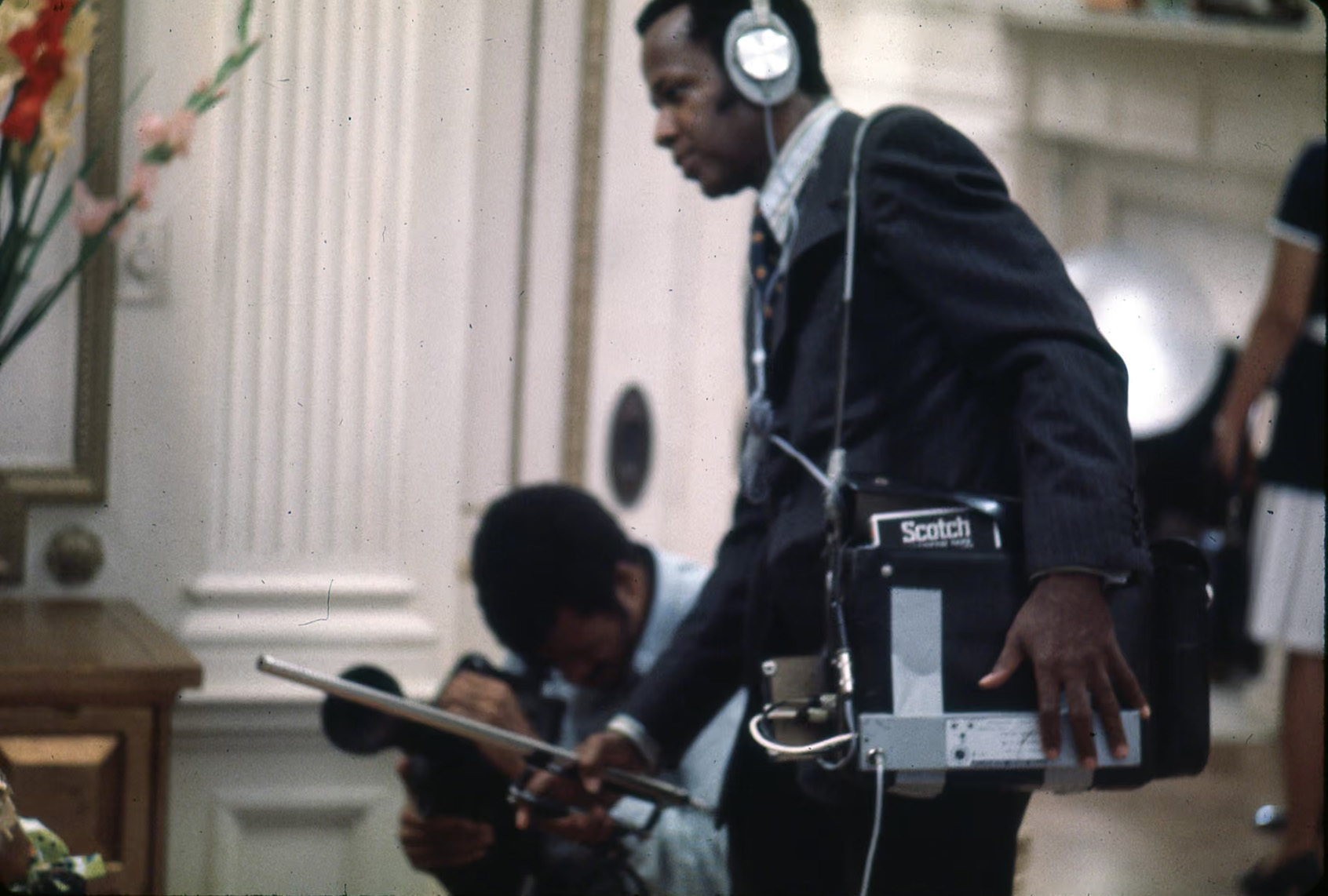
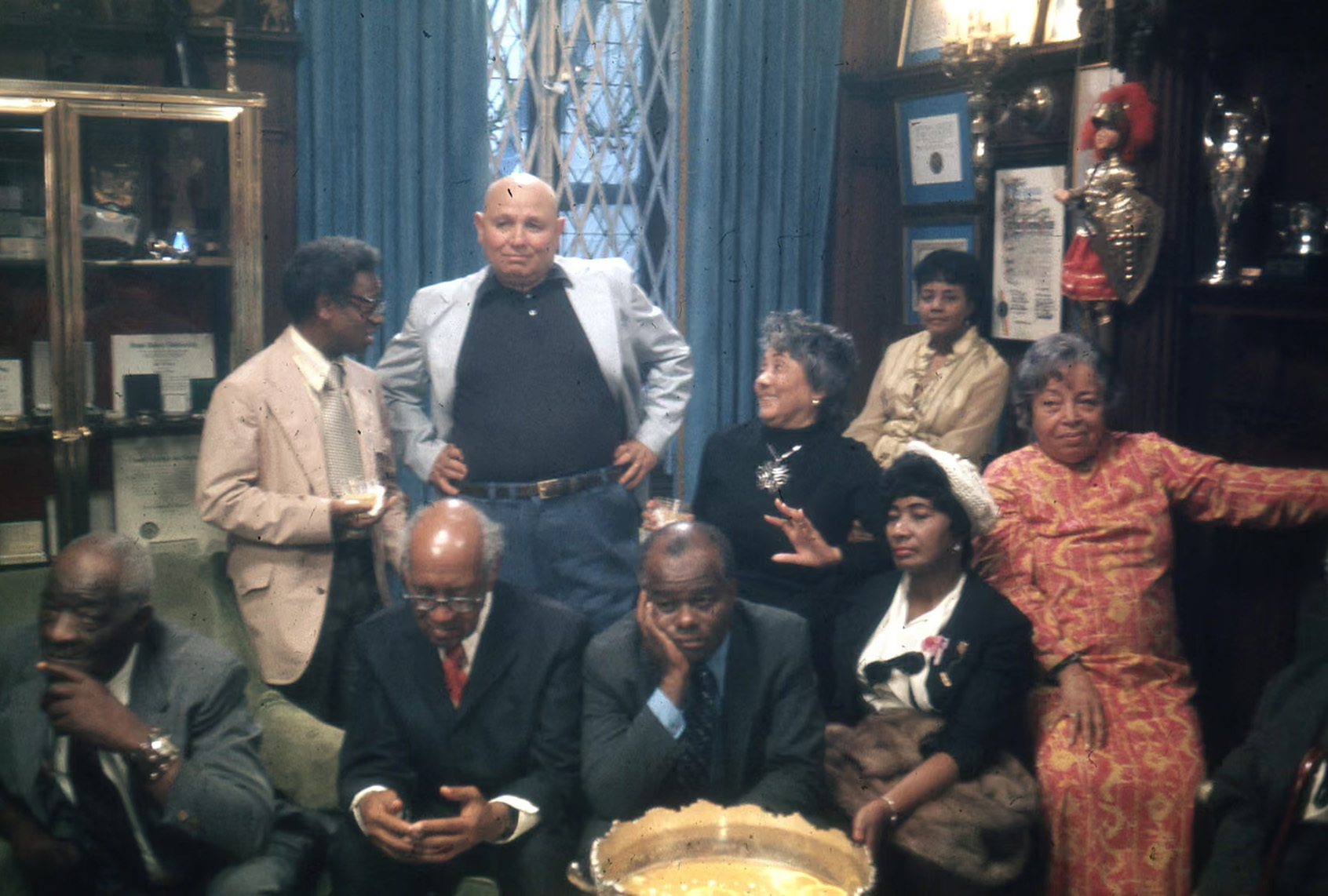
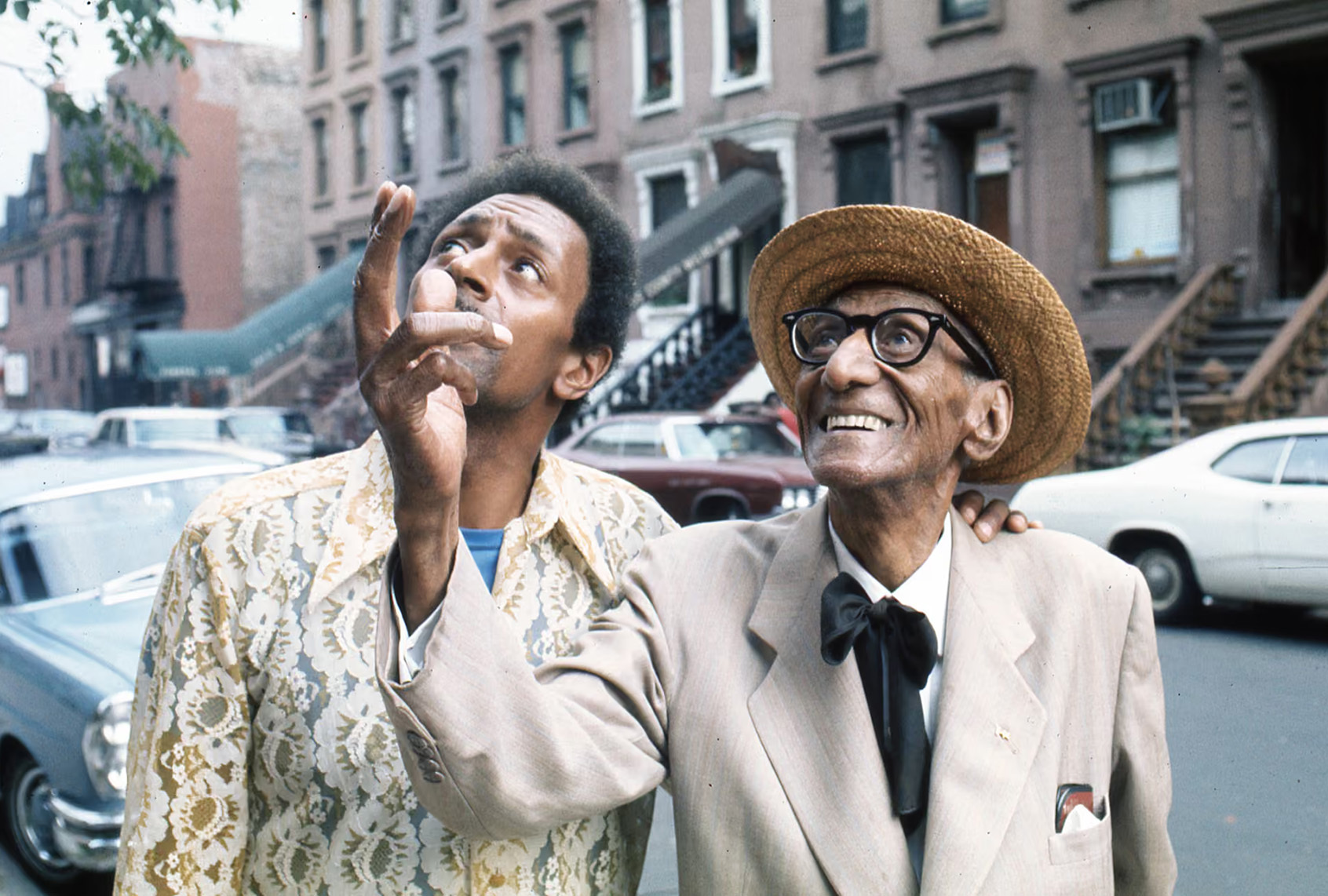
The film, newly restored from Greaves’ father William’s original offering, captures a staggering array of luminaries of the Harlem Renaissance reflecting on the period during a four-hour cocktail party at Duke Ellington’s townhouse in 1972. That salon included pianist Eubie Blake, artist Romare Bearden, activist Louise Thompson Patterson, playwright Irvin C. Miller, journalist Gerri Major, and librarian Jean Blackwell Hutson grappling with the legacy of the era and the issues it raised that persisted even then. 

It’s an intimate, engaging discussion among people with different approaches, styles, and even points of view while, as Brienne Adams, assistant professor of Black Studies at Georgetown University, put it, “still having the goal of Black humanity and liberation at the forefront.”

Among those sources of conflict expressed in “Once Upon a Time in Harlem” are the years that comprised the Harlem Renaissance, or the New Negro Movement as it was often referred to at the time. To hear one person tell it, it was the 1920s. Another suggests that it really found its footing in the ‘30s, while someone else considers its genesis around the 1910s, punctuated by the Silent Protest Parade of 1917.

What is seen in “Once Upon a Time in Harlem” is, to borrow writer and journalist George Schuyler’s words in the film, “a mark of a civilized community,” people challenging each other on everything from their art to their politics.

There are also ponderings on the Black journalist agenda; thoughts about the intentions and tactics of political activist Marcus Garvey; concerns that writer and anthropologist Zora Neale, sculptor Augusta Savage, poet and novelist Countee Cullen and others were minimized. There’s a rich conversation about the efficacy of influential figures such as gangster Casper Holstein and writer Carl Van Vechten, who helped finance and support, respectively, members of the Harlem Renaissance and their work. With Van Vechten, author of the controversial 1926 novel, “Ni**er Heaven,” comes the question of how white patronage impacted the cultural output of the era.

Relatedly, writer and journalist George Schuyler cogitates on his prominent 1926 essay in The Nation, “The Negro-Art Hokum,” and poet and activist Langston Hughes’ follow-up, “The Negro Artist and the Racial Mountain,” as urgent critiques of the white relationship to Black art.

(Neon) “Once Upon A Time In Harlem”

It doesn’t take long in “Once Upon a Time in Harlem” for the many voices in Ellington’s home to get louder and start to overlap as boozy drinks are poured and the elder Greaves flits from one side of the room to another to catch each rebuttal and vivid recollection. Decades after the Harlem Renaissance, it had to be remarkable to witness such insight and impassioned thoughts about the era from those who lived it — and in the same year that the National Black Political Convention raised the alarm on some of those same concerns once again. 

In 2026, though, at a time when social media too often mangles critical thinking and disagreement, it is downright extraordinary. It’s also nostalgic in a way that finally seems imperative in today’s Hollywood that reeks of hollow, monetized sentimentality about its past.  

What is seen in “Once Upon a Time in Harlem” is, to borrow Schuyler’s words in the film, “a mark of a civilized community,” people challenging each other on everything from their art to their politics. He recalls that every ethnic group in Harlem had “intellectual centers” for such discussions.  


Want more from culture than just the latest trend? The Swell highlights art made to last.
Sign up here


It’s not that Black critical engagement doesn’t still happen every day, even online. It’s that it’s much more difficult to parse through an algorithmic funnel of opinions and perspectives that can often appear half-formed or entirely outside their context. 

“Social media allows for more voices to be heard, but algorithmically situated based upon someone’s interests where they’re entering into the conversation,” Adams said. 

Just as Harlem Renaissance figures broached subjects such as the white influence on Black art and questions about what defines Black art or a Black artist, particularly inside a white business establishment, there are still concerns about the representation of Black art and stories. The conversations about Issa Rae’s trajectory from YouTube to HBO and Tyler Perry keeping many Black actors employed, though consistently coming up against criticism over the quality of his work, both come to mind. 

But recent pushback and critiques of offerings such as the new “A Different World” series and the “Michael” movie once again raise valid concerns about the state of critical debate on Black art. What it too often comes up against are parasocial responses, antagonism, doxing, or a preciousness around the critique, particularly at a time when Hollywood has rolled back on Black storytelling. 

Back then, it was about critiquing Black art for Black art’s sake and its possibilities, when today critical discussions seem to urgently hinge on Black art for the sake of its preservation.

Adams, whose background in digital studies examines interiority in Black cultural productions and fandom expression as an example of Black digital knowledge production and public intimacy, said that the rise of content creators is one component of those responses. 

“If they are content creators that are having these conversations because getting eyes on their content can be tied to monetary gain, that can sometimes lead to salaciousness in the approach to the ‘civilized’ society, right?” she explained. 

That motivation, Adams added, can lead to a need to demonstrate “the most,” “whether that is the most right, the most devoted (in the case of fandom), the most knowledgeable, the most (insert marginalized identity here). People resort to antagonisms to demonstrate their hierarchy of ‘most.’” That, in turn, results in a collapse of intellectual curiosity and humility that “undergirds critical thinking,” Adams concluded.


There’s also the distinction that, unlike some of the most notable figures of the Harlem Renaissance, social media assembles people from across various classes, education and media literacy levels, professions with sundry access to information and art itself. Additionally, motivation, even beyond the content creation monetization that Adams pointed out, can sometimes be connected exclusively to the idea of supporting and amplifying Black art and artists while deprioritizing inquiries of their merit. 

Contrarily, Harlem Renaissance figures such as writer Zora Neale Hurston, Hughes and others were able to gather in more intimate spaces among people they often already knew from the neighborhood with similar interests and scholarship, regardless of whether they agreed. In fact, they often didn’t. 

Where writing critiques in news media like The Nation, Fire!, and The Crisis, which ran a Black symposium with questions about how “The Negro” should be portrayed in Black art in 1926, was a way to engage with other intellectuals; social media broadens that audience and more quickly. Plus, like today when many outlets require that their readers pay for subscriptions to access essential journalism, essays from the Harlem Renaissance and even the 1972 gathering in “Once Upon a Time in Harlem” restrict engagement based on intellect or economics. 

(Neon) William Greaves on the set of “Once Upon A Time In Harlem”

“The artists and scholars of the Harlem Renaissance are still this small, kind of enclaved people that maybe most of them went to Howard who are having very similar types of training and conversation,” Adams said. 

Add to that, most patrons across the racial spectrum who engaged with the work and workers of the Harlem Renaissance didn’t have as much access to their personal lives to form parasocial relationships with them as fans have today. Back then, it was also often about critiquing Black art for Black art’s sake and its possibilities, when today critical discussions seem to urgently hinge on Black art for the sake of its preservation. Those distinctions impact the response to critical discussion — from the in-fighting on BookTok to the arguments on Threads. 

Still, concern about the increased dearth of Black artists and Black art is legitimate. Filmmaker Nina Lee said that Hollywood gatekeepers preclude greenlighting certain Black films until they determine that others of their ilk make a splash at the box office. But that reality is too often used to establish a tenderness around criticism of the Black art that does manage to come down the pipeline. 

However, that delicacy around discussing the flaws of Black art can, as Adams considered, illustrate a propriety to the white for the sake of white acceptance. “The preciousness around critiquing it still centers white gazes to say that we have to be presentable and respectable in ways,” she said.  

None of that is conducive to the type of “civilized community” Schuyler reflects upon in “Once Upon a Time in Harlem.” While some have managed to successfully carve out their own niche spaces online for critical debate, from podcasts to more curated social media discussions and personal Substacks, the recognition that it serves to help push the art forward is too often lost. 

That contemporary disconnect is what makes Greaves’ documentary that more profound. It deepens audiences’ understanding of healthy, effective debate through a reflection of our not-so-distant past at a time when too many are consumed by self-aggrandizement rather than the roadmap those who came before them already laid out. As Major says in the film, “They’re going to lose if they cannot profit from the struggles that we went through.” 

The post What “Once Upon a Time in Harlem” can teach us about arguing over Black art appeared first on Salon.com.

  •  
❌