❌

Reading view

Can Europe save the world’s war crimes court from Trump?

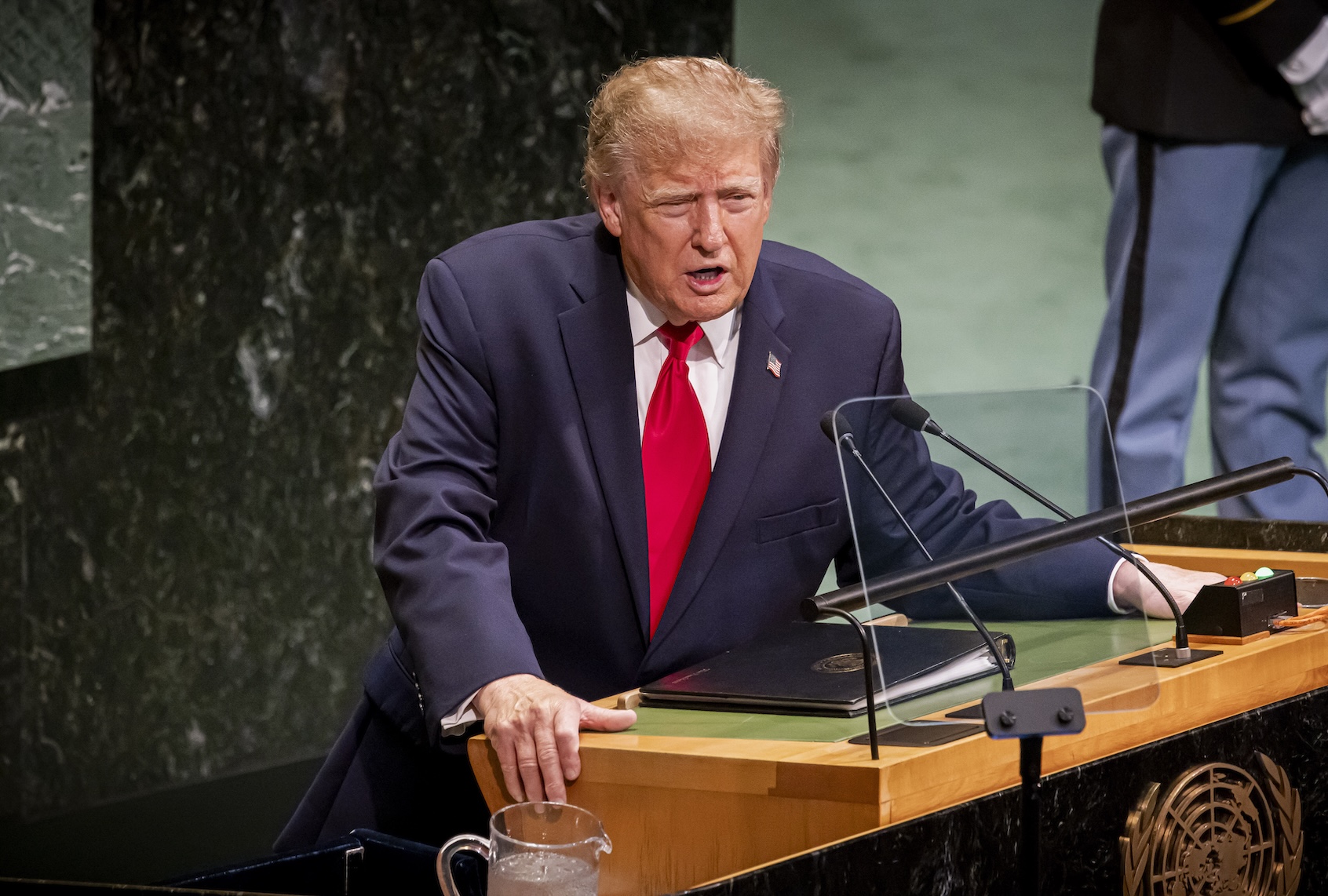
U.S. President Donald Trump has the world’s war crimes court in his crosshairs.

By sanctioning the entire International Criminal Court, his administration is threatening its ability to function. Europe has rushed to the court’s defense — but can it actually protect it from American financial power? And how far is the European Union willing to go to confront Washington when it still relies so heavily on the U.S. for its own security?

Host Sarah Wheaton is joined by European Parliament lawmaker Dirk Gotink and Atlantic Council sanctions expert Lize de Kruijf to discuss Europe’s options, its dependence on the U.S. dollar and American technology and whether the EU can stand up for international justice.

If you have any questions or comments, send us a message on our WhatsApp here or at +32 491 05 06 29.

  •  

Who speaks for Europe in the Ukraine peace talks?

As the U.S. pushes to revive peace talks between Ukraine and Russia, a question is causing tensions in Brussels: Who actually speaks for the EU?

Zoya Sheftalovich and Sarah Wheaton examine the growing influence of Ursula von der Leyen’s powerful chief of staff, Björn Seibert, and why Finnish President Alexander Stubb may be eyeing a bigger role.

Then, have you ever received a suspicious message from Booking.com? The European Commission has launched an investigation into whether the travel platform is doing enough to protect customers from scams and fraudulent listings.

Finally, Brussels rolls out the diplomatic red carpet for 19 new ambassadors. From Britain and Canada to Ukraine and India, we meet some of the fresh faces arriving on the EU diplomatic scene.

If you have a question or comment, don’t hesitate! Message us on our WhatsApp here or at +32 491 05 06 29.

Articles mentioned in this episode:

  •  

Merz‘ Montenegro-Mission

Neun Länder drängen in die Europäische Union, doch die Tür ist seit über einem Jahrzehnt verschlossen. Während Friedrich Merz in Montenegro die Beitrittschancen der Länder des Westbalkans auslotet, wäre ein Scheitern des nächsten Beitritts durch Montenegro, vor allem für Russland und China eine Genugtuung. Europa-Experte Hans von der Burchard analysiert, warum das kleine Land an der Adria zum Lackmustest für die Erweiterungspolitik wird und welche bittere Pille die Ukraine womöglich schlucken muss.

In Berlin entbrennt zeitgleich auf der Ministerpräsidentenkonferenz ein harter Verteilungskampf um die Energiekosten. Rasmus Buchsteiner beleuchtet die Milliarden-Forderungen von Hendrik Wüst zur Stromsteuer sowie die teuren Rentenpläne von Markus Söder. Die Konferenz beginnt ausgerechnet am Tag der Steuerschätzung. Die entscheidende Frage lautet: Wie sollen diese politischen Versprechen angesichts riesiger Haushaltslücken dauerhaft finanziert werden?

Antworten auf die angespannte Kassenlage liefert Sebastian Schäfer. Der Chefhaushälter der Grünen-Bundestagsfraktion erklärt im 200-Sekunden-Interview, warum er die Steuersenkungspläne der Union für unrealistisch hält. Stattdessen bringt er einen konkreten Sparvorschlag ins Spiel.

Das Berlin Playbook als Podcast gibt es jeden Morgen ab 5 Uhr. Rixa Fürsen, Maximilian Stascheit und das POLITICO-Team liefern Politik zum Hören – kompakt, international, hintergründig.

Für alle Hauptstadt-Profis: Der Berlin Playbook-Newsletter bietet jeden Morgen die wichtigsten Themen und Einordnungen. Jetzt kostenlos abonnieren.

POLITICO Deutschland – ein Angebot der Axel Springer Deutschland GmbH
Axel-Springer-Straße 65, 10888 Berlin
Tel: +49 (30) 2591 0
information@axelspringer.de
Sitz: Amtsgericht Berlin-Charlottenburg, HRB 196159 B
USt-IdNr: DE 214 852 390
Geschäftsführer: Christoph Eck-Schmidt, Carolin Hulshoff Pol, Mathias Sanchez Luna

POLITISCHE WERBUNG

**(Anzeige) Eine Nachricht der PKV: Wir sind die Besser-für-alle-Versicherung. Warum? Weil wir als private Krankenversicherung die medizinische Versorgung stärken, nachfolgende Generationen entlasten und den medizinischen Fortschritt beschleunigen. Das kommt allen Menschen in Deutschland zugute, auch den gesetzlich Versicherten. Mehr auf PKV.de**
  • Sponsor: Verband der Privaten Krankenversicherung
  • Diese Werbung steht im Zusammenhang mit der Debatte über Belastungen der privat Pflegeversicherten zugunsten der sozialen Pflegepflichtversicherung (SPV).

Weitere Informationen zu politischer Werbung hier.

  •  

Witkoff to Putin: ‘You are a humanitarian … I salute that’

Steve Witkoff, the United States’ special envoy, praised Russian ruler Vladimir Putin during face-to-face talks in St. Petersburg, calling him “a humanitarian.”

“You talk so much about my president, President Trump, being a humanitarian. You are a humanitarian also, sir, and I salute that, I commend you, and I thank you again,” Witkoff said Wednesday in a Russian state media video clip posted on social media.

Witkoff’s visit is the latest U.S. attempt to bring Moscow and Kyiv to the negotiation table, four-and-a-half years after the Kremlin launched its full-scale invasion of Ukraine.

The American envoy met Ukrainian President Volodymyr Zelenskyy in Oslo on Tuesday, and is expected to propose trilateral talks between the two leaders and U.S. President Donald Trump.

Russia’s strikes on Kyiv and Kharkiv continued overnight, killing three people, local mayors reported.

Putin’s assault on Ukraine killed 328 civilians in September alone, according to the United Nations, while Kremlin forces bombard energy infrastructure across the country heading into winter.

The International Criminal Court issued an arrest warrant for Putin in 2023 over the forced transfer of children to Russia after the Kremlin’s invasion of Ukraine began.

  •  

Macron slams ‘stupid’ comments after Trump pins French riots on immigration

PARIS — French President Emmanuel Macron on Wednesday hit out at the “unacceptable and stupid comments from many foreign leaders” in the aftermath of unrest which rocked several French cities over the weekend.

“Some people have claimed that we’ve been overrun by hordes of migrants and Islamists, which is completely false,” Macron told reporters during a trip to Qatar. His comments were a clear swipe at U.S. President Donald Trump, who this week railed that France is “being conquered, looted, and burned to the ground by migrants, jihadists, and Communists.”

While hundreds of thousands of protesters in France demonstrated peacefully over the cost of living and school conditions at the weekend, the mayhem — including public buildings being set on fire, stores being looted and clashes with riot police — sparked widespread condemnation in France and abroad, including in the U.S., where Trump is using the French unrest to rally voters ahead of November’s midterm elections.

There is no evidence tying last weekend’s incidents in France to immigration.

Macron said Trump is “among” a group of political leaders who are campaigning “off of France’s back,” adding, “it’s at times like these that you can tell who loves France and who doesn’t.”

Right-leaning leaders in other European countries like Hungary and Poland also tried to pin the unrest in France on immigration to justify their countries’ hard-line policies on the divisive issue. Hungarian Prime Minister Péter Magyar said on X that the chaos that engulfed several French cities makes it “clear to everyone why Hungary advocates the strictest possible approach to migration.”

French Foreign Minister Jean-Noël Barrot responded by offering to “assist the countries concerned in understanding the situation, to prevent them from spreading or relaying false information.”

“Foreign leaders who comment on or exploit recent events in France for electoral purposes or to harm us — without understanding anything about them — should show at least a basic measure of restraint,” he added.

  •  

Brussels goes looking for billions to fund Ukraine

With Washington’s support for Kyiv increasingly uncertain, Brussels is looking to its allies to help keep Ukraine afloat. The price tag: €70 billion.

On today’s show, Zoya Sheftalovich and Kathryn Carlson discuss how the EU hopes to persuade Canada, Britain and Japan to help foot the bill — and whether closer trade and defense ties could be part of the bargain.

Then, Germany’s far-right AfD leader Alice Weidel is in Strasbourg to present her vision for a radically different European Union.

And who owns your face and voice in the age of AI? As deepfakes become increasingly convincing, MEPs are pushing for new protections.

If you have a question or comment, don’t hesitate! Message us on our WhatsApp here or at +32 491 05 06 29.

Articles mentioned in this episode:

  •  

US to offer Putin face-to-face talks with Zelenskyy and Trump

U.S. special envoy Steve Witkoff will offer Vladimir Putin direct talks with President Donald Trump and Ukraine’s Volodymyr Zelenskyy in an effort to secure a ceasefire.

The proposal for three-way leaders’ negotiations on a peace proposal, the first such summit since Russia’s full-scale invasion of Ukraine began in 2022, was announced at a press conference Tuesday after talks in Norway between Zelenskyy and Witkoff.

Norwegian Prime Minister Jonas Gahr Støre, who hosted the talks, said Witkoff will travel to Russia Wednesday and set out proposals for peace terms, including the idea of a three-way summit between the leaders. The meeting in Oslo came after days of high tensions between Ukraine and the U.S. president.

“We have hosted today, I would say, good and constructive talks — necessary after events of the last week,” Støre told reporters after the meeting. “Steve Witkoff will fly tomorrow to St. Petersburg where he will be meeting with Russian leadership and exchange ideas from this meeting and the proposals that have been worked on by European and American colleagues, and possibly pave the way for a meeting at leaders’ level.”

Previous attempts to get Putin to meet Zelenskyy in person have fallen flat, with the Kremlin recently insisting a meeting could only take place in Moscow.

Zelenskyy told the press conference that the day had been positive. He said issues around the future of Ukrainian territory could only be discussed by leaders and that any peace settlement would require genuine security guarantees. A deal would only be acceptable if Ukraine is involved in designing it, he said.

  •  

Macron and Merz edge closer to a budget deal

The Arctic is becoming a geopolitical battleground — and the EU wants a bigger role.

The European Commission is unveiling a new strategy focused on security, as Russia builds up its military presence, China explores new shipping routes, and Donald Trump’s Greenland ambitions raise tensions.

Also on the show, hosts Zoya Sheftalovich and Nick Vinocur discuss signs of progress in the EU’s long-term budget negotiations: Emmanuel Macron and Friedrich Merz appear to be finding common ground, while Kaja Kallas warns that proposed cuts could undermine Europe’s global influence.

And finally, could that designer handbag on Vinted be stolen? France investigates suspicious listings following a weekend of riots and looting.

If you have a question or comment, don’t hesitate! Message us on our WhatsApp here or at +32 491 05 06 29.

  •  

Trump’s Russia rethink — and Europe’s response

Donald Trump’s latest moves on Russia and Ukraine have alarmed Kyiv and European capitals alike. But rather than scrambling to contain the fallout, EU leaders are keeping their cool. Zoya Sheftalovich and Nick Vinocur explore Europe’s strategy for weathering Trump’s midterm storm — and what it means for Ukraine.

Then, France reels from a weekend of violent protests, with more than 1,800 arrests and widespread destruction. As political leaders trade accusations, we look at how the unrest is shaping the battle ahead of the 2027 presidential election from Paris.

Plus, hackers turn supermarket fridges into heaters, exposing some surprisingly basic cybersecurity vulnerabilities.

If you have a question or comment, don’t hesitate! Message us on our WhatsApp here or at +32 491 05 06 29.

  •  

Starlink restrictions in Ukraine a ‘planned operation’, Zelenskyy says

Starlink restrictions hampering Ukraine’s war effort are “a planned operation,” Ukrainian President Volodymyr Zelenskyy said on Saturday.

The satellite service operated by Elon Musk’s SpaceX is still deactivated in Ukraine at speeds over 160 km/h, which prevents some of its drones to intercept high-speed Shahed drones used by Russia, Zelenskyy told reporters in a WhatsApp chat.

He added that Ukraine conducted a test by sending Starlink-equipped vehicules to European Union countries, at speeds over 180 km/h. “Starlink kept working … The conclusion is this: the restrictions are in effect in Ukraine, but they are not in effect in European Union countries. So, this is a planned operation,” Zelenskyy said.

The restrictions have revived questions on Ukraine’s reliance on the satellite system operated by a U.S. company amid escalating tensions between Kyiv and the White House. “This will cost many of us our lives,” an experienced Ukrainian officer told POLITICO and the Axel Springer Global Reporters Network earlier this week.

“We’re reaching out to everyone at the military level, at the Ministry of Defense level, and at the diplomatic level, including to SpaceX. Right now, no one is responding to our military or the Ministry of Defense,” Zelenskyy told reporters.

The European Union is under increasing pressure to provide Ukraine with an alternative to Starlink. But negotiations between Brussels and Kyiv over access to the bloc’s Govsatcom program — which gives participating governments secure communications capabilities— have been stalling. And IRIS², the EU’s in-house planned network to match Starlink, is only expected to come online in 2030.

“The Europeans are now raising the question of alternatives themselves. And they’re already working on them. They’re already making progress, and they’ll succeed in this area. I can already see that,” Zelenskyy said.

SpaceX did not immediately responded to a request for comment.

Earlier on Saturday, Zelenskyy accused Russia of looking to create a blackout across Ukraine, amid attacks on energy infrastructure and the waiver of U.S. sanctions on Moscow.

“Russia is trying to cause a blackout in Ukraine right before winter. Russia is trying to leave millions of our people without electricity and heating. Pressure is needed to stop this,” he said on Telegram.

“An American sanctions blackout, easing pressure on the aggressor, monetary rewards for [Russian President Vladimir] Putin: all of this only encourages him to keep striking,” he added.

The Ukrainian leader’s comments come after Russia carried out strikes on the war-torn country’s energy sector, including power generation and transmission facilities, with more than 320 jet-powered Shahed drones, loitering munitions, cruise and ballistic missiles. Power was reportedly cut for about 1 million people.

They also come as U.S. President Donald Trump signed on Friday an executive order that waived key sanctions on Russia — a decision that Kirill Dmitriev, Putin’s special envoy for investment and economic cooperation, described as “an important and truly historic moment.” Trump’s move comes only a few days after he made a deal with Putin over supplying barrels of diesel, leaving European countries and Ukraine stunned.

“A decision was unfortunately made in America to completely ignore Lindsey Graham’s bill, which was supposed to introduce truly effective pressure on Russia to end this war,” Zelenskyy said. “This bill could have helped a great deal, and it still can! But the law needs to actually work, and every vote for it matters.”

This article was updated. Veronika Melkozerova contributed reporting.

  •  

Trump and Putin’s ‘terrible’ alliance threatens to strain EU’s resolve on Ukraine

BRUSSELS — Ukrainian President Volodymyr Zelenskyy will make a direct pitch to European leaders for more help on Friday, amid a crisis of faith among allies over Donald Trump’s latest steps favoring Russia. 

At the second day of an EU summit in Brussels, Zelenskyy joins European prime ministers and presidents as they discuss Ukraine’s need for more weapons and cash, with concern growing that Kyiv faces a shortfall of billions of euros next year. 

The reality of the threat to European security from the four-year-long war penetrated the summit bubble after air drones hit two ships in or near Romanian waters, prompting emergency talks with NATO.

“We all in Europe want this war to end,” Zelenskyy said on social media as he arrived in the Belgian capital on Thursday. “And for that, signals of strength are needed — more real pressure on Russia and more defense support for Ukraine.”

It is especially important, Zelenskyy said, to “act together to protect lives.” But unity among European leaders is in short supply at a meeting already riddled with tensions. 

EU governments are pitted against each other in their own fraught negotiations over how much money to commit to the 27-country bloc’s budget. With populists surging, discontent raging and elections scheduled in major power centers across the continent, under-pressure leaders are a long way from approaching a deal.

Ukraine’s President Volodymyr Zelenskyy on the sidelines of the EU summit in Brussels on October 15, 2026. | Nicolas Tucat/Pool/AFP via Getty Images

That’s the combustible mix of financial discussions the U.S. president waded into.

Trump’s decision to open up American markets to previously banned Russian diesel — intended to ease price pressures in the U.S. — risks tilting the balance of an expensive war in Russia’s favor, three European officials warned. Putin’s war chest can now swell from additional fossil fuel exports, while Ukraine struggles for cash. 

As they arrived for the first day of the marathon two-day gathering on Thursday, EU national leaders began informally discussing options for how to help redress the balance. That discussion should to be picked up again around the summit table on Friday.

Russian assets

One idea rapidly rising back up the agenda is the fraught question of whether, or how, to make use of some hundreds of billions of euros of frozen Russian financial assets held in European banks. 

The bulk of these rest with the Euroclear depository in Brussels. A previous attempt to grab the funds and send them directly to Kyiv was blocked by the Belgian government ― and other countries less prominently ― over concerns it would be exposed to legal action. 

But Sweden, Finland and Germany want to take another look at the assets. The European Commission is to come up with a new detailed assessment of Ukraine’s funding needs and an options paper on how to help, including the use of assets, according to officials from these countries. 

As the summit began, German Chancellor Friedrich Merz said he had been urging his counterparts to “do everything we can to help Ukraine get through the winter and continue to support it next year as well.” 

“We will also have to increase funding once again in order to provide Ukraine with truly long-term assistance,” he said. “I remain firmly convinced that we are not only defending Ukraine’s territorial integrity, but also the political order of Europe, which is truly under pressure from Russia in every respect.” 

A German official earlier suggested that of the available options to help Ukraine, including a loan and direct grants from national governments, using the assets was the most viable way forward and should be “discussed.”

A U.S. proposal to unfreeze some of the Russian assets and transfer them to a U.S.-controlled entity so Washington could use them as leverage in peace talks with Moscow also attracted strong criticism.

Merz told reporters that the assets had been frozen in Europe and “should remain frozen in Europe … That is our business, and we will decide on it.”

‘Try again’

Finland’s Prime Minister Petteri Orpo told POLITICO as the summit began: “The best solution would be that we will have a solution on how to use frozen assets … We have to try again.” 

Finnish Prime Minister Petteri Orpo speaks to journalists at the European Arctic Summit in Rovaniemi, Finland, on Sept. 14, 2026. | Jouni Porsanger/AFP via Getty Images

Sweden is also backing the move to re-examine options on using the assets to help Ukraine’s future funding needs. “Doing nothing is not an option,” Swedish EU Affairs Minister Jessica Rosencrantz told POLITICO. “The Commission is looking into different financial options, and we need to get them on the table quite soon,” she said. 

Leaders at this week’s summit should “be really honest that Ukraine needs increased financing” and that the EU “must really step up,” she added.

Zelenskyy met Belgian Prime Minister Bart De Wever, the main opponent to a deal on assets, for talks on Thursday and thanked him for his country’s support so far.

Speaking to reporters after the first day of the summit, De Wever said the assets should be looked at as part of a future peace agreement. “Are there people on this planet who maybe dream of doing it differently this time and operationalizing those assets earlier for certain purposes? The answer to that question is: Yes there are,” he said. “Are they in this building? They are. Are there outside this building? Yes there are. Do I want to talk about it? No, I don’t.”

For Finland’s Orpo, Trump’s “terrible deal” with Putin on diesel, and the apparent U.S.-imposed limits on Starlink technology to help Ukraine counter Russian attacks, are hard to understand.

“My message to [Trump] is that we are allies,” Orpo said in an interview. “We are in NATO. And what is the biggest threat against NATO? It’s Russia — and that is why there is no logic. I don’t have answers. I have many questions.” He said Trump may be focusing on winning votes ahead of next month’s midterm elections in the U.S. but he should remember that his real allies lie in Europe and he should not “trust” Putin. 

Election anxiety

Finland holds its election next year at the same time as what could be a seismic contest in France. Far-right leader Marine Le Pen is leading the polls for the French presidency and wants to cut aid to Ukraine and slash the EU’s budget. 

French President Emmanuel Macron, who is constitutionally barred from standing next year, warned EU leaders that they must get a deal on the bloc’s next budget by December, otherwise it will be too late. 

But the 27 leaders remain split and show no signs of bridging the gap between “frugal” countries like Germany, Sweden and the Netherlands, who want to limit the settlement, and others such as Italy and Romania, who are on the side of bigger pots of cash for regional development and farming. 

European Council President António Costa also sees the urgency. He believes a deal before the end of the year is not only necessary but achievable, according to two EU officials.

Costa, who is taking over the negotiations from Ireland in its role at the helm of the rotating presidency of the Council of the EU, believes failing to secure a deal by December would push the entire budget negotiating process beyond the electoral cycle. That would potentially delay a deal until October next year — perilously close to the new EU budget taking effect in January 2028. 

In an effort to make progress on the budget talks, EU leaders will return to Brussels for an extra summit next month.

Camille Gijs, Hanne Cokelaere and Gregorio Sorgi contributed reporting.

  •  

EU leaders face off over the budget

EU leaders meet today for their first chance to beef about the budget face to face.

On the show, Zoya Sheftalovich and Sarah Wheaton dive deeper into why leaders look increasingly unlikely to reach an agreement on the EU’s next money pot by December. Plus, Zoya obtained a document revealing deepening relations between Russia and Slovakia. Will that be a cause for concern around the Council table?

Next up, Zoya spoke with Defense Commissioner Andrius Kubilius on stage yesterday. His main message? Europe should boost its defense capabilities and stop relying so heavily on U.S. military support.

And finally, ECB President Christine Lagarde plugged her upcoming memoir at a press conference … is she allowed to do that? 

If you have a question or comment, don’t hesitate! message us on our WhatsApp here or at +32 491 05 06 29.

Articles mentioned in this episode:

  •  

Europe’s development aid dilemma

The Commission is grappling with two goals that may be counterproductive: cutting migration and slashing development aid.

The EU executive’s argument is that a slash in development funding will likely result in people showing up at European borders in search of a better life. And that’s a problem for the bloc, since it’s looking to decrease migration numbers. On the show, hosts Zoya Sheftalovich and Ian Wishart explain how the dilemma will be unpacked at the upcoming European Council this week.

Next, a shooting near the European Parliament in Brussels has EU officials — and everyone else, for that matter — on edge.

Finally, the U.K. under Andy Burnham is at a big inflection point when it comes to redefining its relationship to the EU. But the bloc doesn’t even seem to care.

Questions? Comments? Let us know on our WhatsApp here or at +32 491 05 06 29.

  •  

Schaffe, schaffe, Rentenreform: Merz und sein neuer Arbeitsminister

Ein verschnupfter und heiser Kanzler im Angriffsmodus – wohl auch heute bei der Regierungserklärung am Nachmittag im Bundestag. Beim Arbeitgebertag gestern hat der Regierungschef Merz gut ausgeteilt und seinen neuen Arbeits- und Sozialminister Alexander Schweitzer öffentlich unter Druck gesetzt. Die Rentenreform soll im Eiltempo durchs Kabinett, doch in der SPD brodelt es gewaltig. Die Analyse von Rasmus Buchsteiner zeigt, warum der Kanzler jetzt auf diese harte Tour setzt und ob die Koalition da mitzieht.

Im 200-Sekunden-Interview fordert der Chef der Jungen Union, Johannes Winkel, erneut ein schnelles Ende der politischen Hängepartie. Er macht klar, an welchen konkreten Punkten der Rentenreform sich Schweitzer nun messen lassen muss und warum reine Strukturdebatten nicht mehr ausreichen.

Eine Hufeisen-Allianz formiert sich derweil in Sachsen-Anhalt: AfD und BSW machen bei der Russland-Politik gemeinsame Sache und wollen die CDU in die Enge treiben. POLITICO-Expertin Pauline von Pezold von „Inside AfD“ ordnet ein, wie die Alternative schnell wortbrüchig werden könnte, wenn es um die Neutralität des Parlaments-Präsidiums geht und wie die CDU-Fraktion im Landtag den Ministerpräsidenten-Kandidaten Ulrich Siegmund in ein Dilemma drängen könnte.

Das Berlin Playbook als Podcast gibt es jeden Morgen ab 5 Uhr. Rixa Fürsen, Maximilian Stascheit und das POLITICO-Team liefern Politik zum Hören – kompakt, international, hintergründig.

Für alle Hauptstadt-Profis: Der Berlin Playbook-Newsletter bietet jeden Morgen die wichtigsten Themen und Einordnungen. Jetzt kostenlos abonnieren.

POLITICO Deutschland – ein Angebot der Axel Springer Deutschland GmbH
Axel-Springer-Straße 65, 10888 Berlin
Tel: +49 (30) 2591 0
information@axelspringer.de
Sitz: Amtsgericht Berlin-Charlottenburg, HRB 196159 B
USt-IdNr: DE 214 852 390
Geschäftsführer: Christoph Eck-Schmidt, Carolin Hulshoff Pol, Mathias Sanchez Luna

**(Anzeige) Eine Nachricht von YouTube: Die Auffindbarkeit von Qualitätsjournalismus ist entscheidend für eine lebendige Medienlandschaft. 79 % der Medienunternehmen, die YouTube nutzen, an, dass digitale Videoplattformen ein wichtiger Vertriebskanal sind, so Oxford Economics. Und 81 % der Medienunternehmen mit YouTube-Kanal erreichen darüber weltweit neue Zielgruppen. Hier klicken und mehr erfahren.**

  •  

Hegseth puts on the “full armor of God” and sets up a sacred “direct line”

Defense Secretary Pete Hegseth is putting religion closer to the top of the Pentagon’s chain of command.

Hegseth announced the creation of a new Office of Religious Affairs during his State of the Force address Wednesday. The office will report directly to Hegseth and advise Pentagon leadership on religious policy, funding and the “spiritual readiness” of U.S. service members.

“No staff filters, no bureaucratic dilution — a direct line to the secretary,” Hegseth said.

The office will also oversee the Armed Forces Chaplains Board and advocate for funding for religious programs across the military.

The Pentagon memo establishing the office says it cannot “compel religious participation” or diminish the rights of service members, civilian employees or family members “of any faith or no faith.”

But Hegseth introduced the ostensibly inclusive office using explicitly Christian language once again.

“Our department is, you might say, putting on the full armor of God because while we wage physical war, we all know the real battle is spiritual,” Hegseth said. “God is good. Evil is not. And America’s military must understand the difference.”

Hegseth also criticized what he called the military’s previous embrace of “political correctness and secular humanism” and claimed fewer than 5% of service members identify as nonreligious.

“So 95% of our force recognizes an Almighty God,” he said.

The Pentagon’s most recent publicly released data, from 2019, found roughly 70% of active-duty personnel identified as Christian. Nearly a quarter had an unknown or unclassified religious affiliation.

The office follows a series of changes Hegseth has made to religious life in the military. The Pentagon this year condensed more than 200 religious affiliation codes to 31, initially eliminating specific classifications for atheists, Unitarian Universalists, pagans and Wiccans, among others.

Hegseth has also hosted Christian worship services at the Pentagon. During one service in March, he prayed for God to enable U.S. troops to inflict violence “against those who deserve no mercy.”


Start your day with essential news from Salon.
Sign up for our free morning newsletter, Crash Course.


Religious liberty groups have challenged those services in court, arguing that Hegseth is using his government office to promote Christianity.

Hegseth says the new office instead ensures religious freedom throughout the military.

“We’re placing spiritual health at the same level as physical health,” he said.

The post Hegseth puts on the “full armor of God” and sets up a sacred “direct line” appeared first on Salon.com.

  •  

New IRS Citizenship Question Could Make It Easier for Census Bureau to Shift Political Power

A proposed change to a key tax form could help the Trump administration achieve new anti-immigrant policy objectives, including preventing undocumented immigrants from receiving federal tax benefits. But it could also be used to accomplish a more sweeping objective: Shifting the balance of power in Congress by excluding many classes of immigrants from apportionment, the process through which power in the House of Representatives is allocated.

  •  

Colin Kaepernick knows what kneeling cost — and he’d do it again

The Merikins are the descendants of formerly enslaved African Americans who fought alongside the British during the War of 1812. At the war’s end, the British granted these fighters and their families land in Trinidad and Tobago as part of their freedom.

The third verse of the “Star-Spangled Banner” served as a threat to African Americans who sought liberation — particularly those fighting against the United States like the Merikins — from Francis Scott Key, an unabashed racist whose racism influenced his professional legacy.

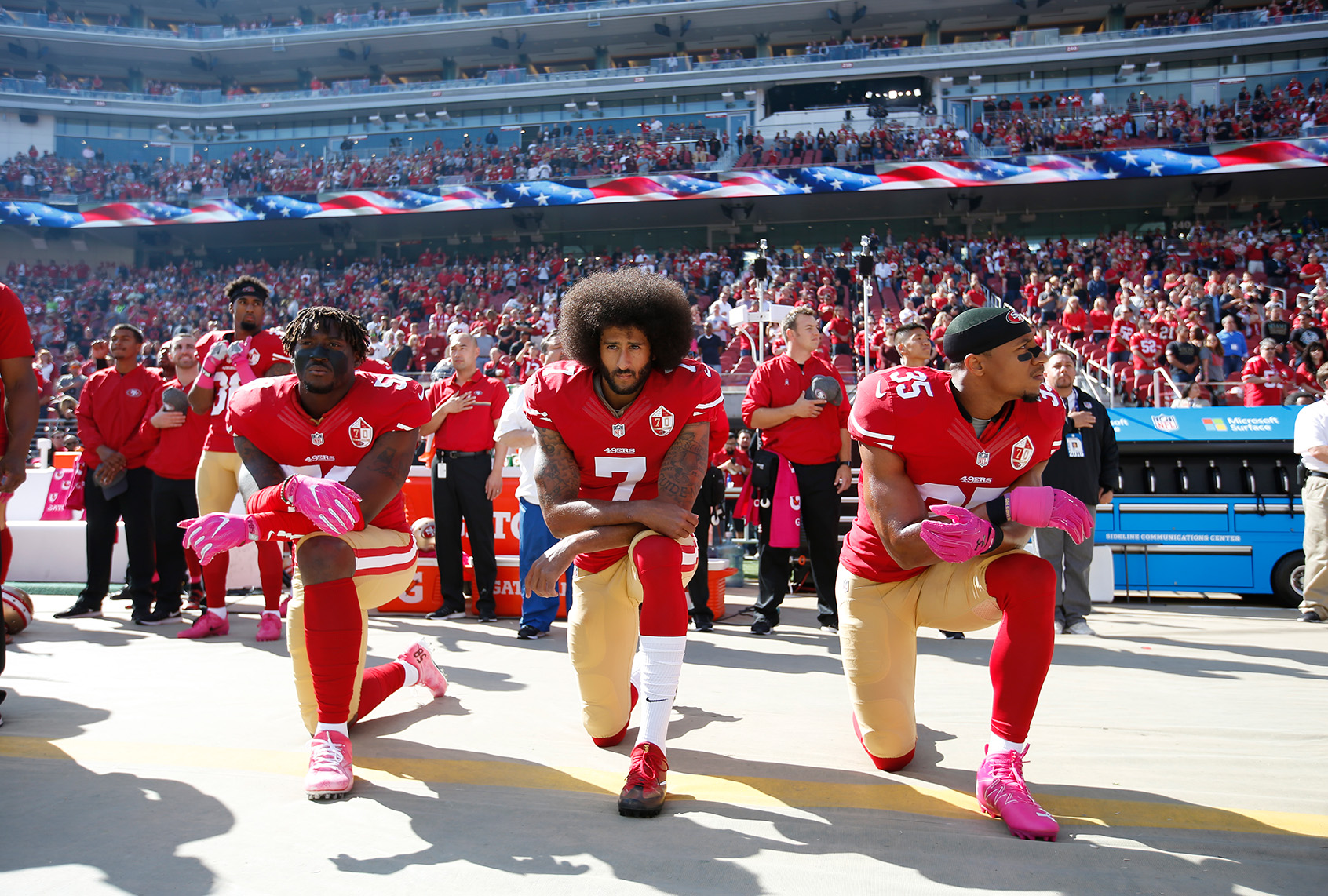
After years of playing it at sporting events out of choice or paid patriotism, Colin Kaepernick refused to stand for it:

“I am not going to stand up to show pride in a flag for a country that oppresses Black people and people of color . . . There are bodies in the street and people getting paid leave and getting away with murder,” Kaepernick told NFL Media in an exclusive interview following his now-infamous kneel.

Following a lengthy and seemingly self-imposed silence, as others sought to narrate his protest and commitment to social justice, Kaepernick has reemerged in the public square on an impressive press run promoting his book, “The Perilous Fight,” to whoever will listen, including the platforms of Karen Hunter, Katie Couric, Van Lathan, Trevor Noah, and “The View.”

Following a lengthy and seemingly self-imposed silence, as others sought to narrate his protest and commitment to social justice, Kaepernick has reemerged in the public square on an impressive press run promoting his book, “The Perilous Fight”

Kaepernick’s book discusses his life up to this point, from his childhood and adolescence to his current justice activities and life with his wife, Nessa Diab, and daughter. He takes time to explain the multifaceted origins of his activism, from the challenges of being a Black boy raised by white parents, to his experiences as a Black athlete in a space predicated on controlling Black bodies, to his awakening through literature by Black scholars and activists.

But like many Black people who were awakened by the murders of Black people by the police, Kaepernick was alarmed by the December 2015 murder of Mario Woods by San Francisco police. For refusing to drop his knife, Woods was shot twenty times by police. Police justified the killing, saying they feared for their safety, but the body camera footage said otherwise.

Kaepernick watched the Mario Woods video at his parents’ home, as his mother questioned Woods’ role in his murder. Upon reflecting on his attempt to explain to her the gravity of the situation and her lack of response, Kaepernick gained clarity:

“. . . the encounter helped bring even more clarity to the last twenty-eight years of my life, and why I was always frustrated and unsatisfied during my childhood when issues concerning race arose,” Kaepernick writes. “It was obvious my parents loved me as their son, but accepting their son was Black and dealing with that reality was not of much concern. Hell, I had white boys call me ni**er and try to tie me to a tree, yet I never told my parents. Even my mother told me I looked like a thug when I wore cornrows.”

When it was time to take a stand for Black people, he didn’t ask for permission, because he was already empowered to do so. And a Black athlete empowered to stand for Black people is an athlete who should expect to be persecuted.

Woods’ murder, followed by the murders of Alton Sterling and Philando Castile, and the not-guilty judgment for the officer who murdered Freddie Gray, compelled Kaepernick into protest at the start of the 2016 NFL season. While Kaepernick’s protest garnered acknowledgment and some support, it also led to his banishment from the NFL and the hijacking and appropriation of his protest, along with critique and ridicule of perceived inaction. 

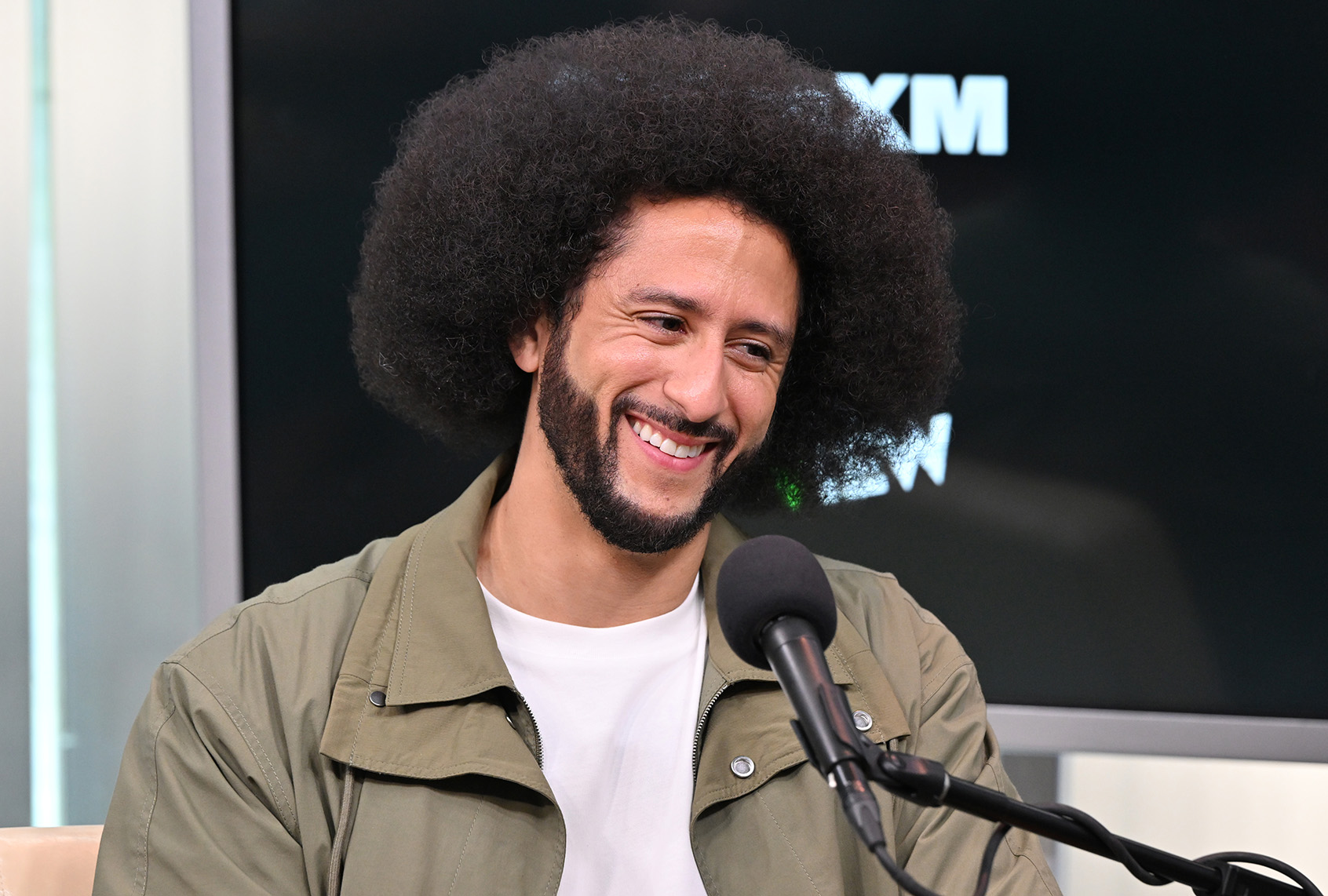
Colin Kaepernick, wearing an olive green jacket over a white T-shirt, smiles and looks to the side while seated at a microphone in a radio studio.

(Slaven Vlasic/Getty Images) Colin Kaepernick discusses his new memoir during a SiriusXM Front Row event with host Karen Hunter in New York on Sept. 10, 2026.

But Kaepernick pursued racial justice work: from the Know Your Rights Camps (KYRC) to the KYRC Autopsy Initiative, both founded with his wife and partner, radio personality Nessa Diab:

“I was hearing criticisms accusing me of just being an angry Black man without a plan. I wanted to buttress my protests on the field with action on the ground, to build an infrastructure that could start effective change where it might make a difference . . . I didn’t want to look back on this time and agonize that I should have and could have done more.”

Equally fascinating was his pulling back the curtain, so to speak, on the culture of football, particularly the NFL, where the expectation for players is to follow orders and “shut up and play.” He explained this by detailing various interactions with teammates, coaches, team executives, and even sports agents.

“Football breeds a culture of obedience. On the field, these guys were major alpha males — the biggest, baddest, most dominant dudes on the planet. But once they stepped off the field, they were just employees waiting for the boss to tell them what to do.”


Want more from culture than just the latest trend? The Swell highlights art made to last.
Sign up here


But the culture of the league also forced him to examine the implicit racism as early as his participation in the NFL Combine, asking himself, “Do all of those A’s over sixteen years of schooling plus the 3rd highest grade on the Wonderlic not mean anything? Is their stated concern over my intelligence genuine, or is there something . . . having to do with racist stereotypes?”

While all his experiences up to 2016 were instructive, they couldn’t buffer the shock and disgust of the backlash to his protest. While he did receive support, he couldn’t anticipate Nate Boyer’s attempts to profit from the protest and steal credit from Kaepernick teammate Eric Reid for the idea to kneel. Kaepernick couldn’t anticipate the Islamophobia and misogyny aimed at his wife. Nor could he anticipate the president of the United States calling him and his colleagues “sons of bit*hes.”

Who could possibly be prepared for any of that? Then again, maybe Kaepernick should have been.

All skinfolk ain’t kinfolk, and if he wasn’t aware before the protest, he certainly is now. 

His two near-death experiences made him fearless. Overcoming numerous challenges in his football career made him steadfast. Welcoming his wife into his life, and the growth that came with it, grounded him. His childhood experiences with whiteness shaped him. Therefore, when it was time to take a stand for Black people, he didn’t ask for permission, because he was already empowered to do so. And a Black athlete empowered to stand for Black people is an athlete who should expect to be persecuted, like Curt Flood, whom Kaepernick mentioned.

His protest didn’t make white people comfortable. There were no performative photo-ops with politicians or any ride-alongs with police. There was confrontation. I suspect he anticipated some of the whitelash. After all, Kaepernick didn’t appear shocked that his white family was embarrassed by his protest, with his mother calling it “disgraceful.” What he may not have anticipated was the extent of the cover Black players and notable Black folks gave the NFL.


I wonder if Kaepernick anticipated hearing a player tell him he needed “to go ask my owner if it’s okay to protest.” Did he anticipate Dr. Harry Edwards being co-opted by the 49ers, Ray Lewis by the Ravens, and the players’ coalition by team owners? Did he anticipate Michael Vick suggesting that he cut his hair to get a job in the NFL? Did he anticipate being sold out by Jay-Z for personal gain, followed by hit pieces and being dissed in a freestyle many years later?

The truth is that all skinfolk ain’t kinfolk, and if he wasn’t aware before the protest, he certainly is now. 

But Kaepernick doesn’t leave readers feeling that his work was in vain, or that he is without hope. He shares that his family, his wife and daughter, provide him with a newfound motivation to make justice a reality for Black people and all other people of color. He closed his book saying, with a Clarion call of sorts to his readers:

“Our children can’t develop to their full potential if they are constantly worried about what awaits them outside the doors of their home, or if they are on edge because of the fear of ICE agents invading their schoolyard or playground . . . What are we doing to our nation’s children when we are constantly undeserving their needs and sending them into schools that feel like war zones? They can never reach their peak in such circumstances. We must consider these factors when we think about how we are policing our communities and educational environments. We all want the same things for our children.”

But it begs the question that we all must answer: We all want the same things for our children, but do we all want the same things for each other? Colin Kaepernick has decided to move forward in hope. He’s asking us to do the same.

The post Colin Kaepernick knows what kneeling cost — and he’d do it again appeared first on Salon.com.

  •  

Donald Trump abdicates as leader of the free world

On Tuesday, Donald Trump stood before the United Nations General Assembly to give a speech in which he made it clear that the United States has now fully abandoned its last remaining fig leaf of decency and morality on the world stage, and has embarked on an imperialist model not seen since the 19th century. Since this was a Trump speech, filled with his usual bombast and braggadocio, it didn’t have quite the shock value it might have carried in the past. But there was a new atmosphere in the room. The world sees America as a threat now, and countries are making new arrangements.

The speech was the worst he’s given, and that’s saying something. Delivered with a bored, desultory tone, the obviously tired president spent 40 minutes rambling on and on with his usual litany of grievances and lies. He made it clear that he sees no limits on his power. Looking directly at the Iranian president, he mused aloud, “I have a big decision to make. Will a deal be made with Iran that lets them rebuild? Or do I annihilate the Islamic Republic? Do I drive them into hell with no chance of survival, and no hope of future greatness for generations?” It was outrageously provocative and insulting, and on Wednesday, Iranian President Masoud Pezeshkian responded in his own U.N. speech by describing the Islamic Republic as “victims of terrorism” at the hands of the U.S., while claiming “we are ready for dialogue and diplomacy and negotiations without accepting the language of force.”

In many ways, this was familiar ground for the president. But there was one portion of his speech that brought home just how far gone American foreign policy is today. Speaking of his policy of murder on the high seas in the Caribbean, Trump claimed that drug traffickers, whom he calls “terrorists,” must be “killed, exiled or detained as enemy combatants without the possibility of release, which is what we’re doing.” The Navy is routinely blowing up small boats and killing human beings based upon unproven claims that they are transporting drugs. No U.S. or international law sanctions such a thing. And according to a fact-check by the New York Times, Trump’s assertion that this operation has reduced the flow of drugs by 90% is a blatant lie. It has made no difference at all. The policy is an abomination, and it proves to the world that the United States has abandoned all fealty to the rule of law, not to mention common decency. 

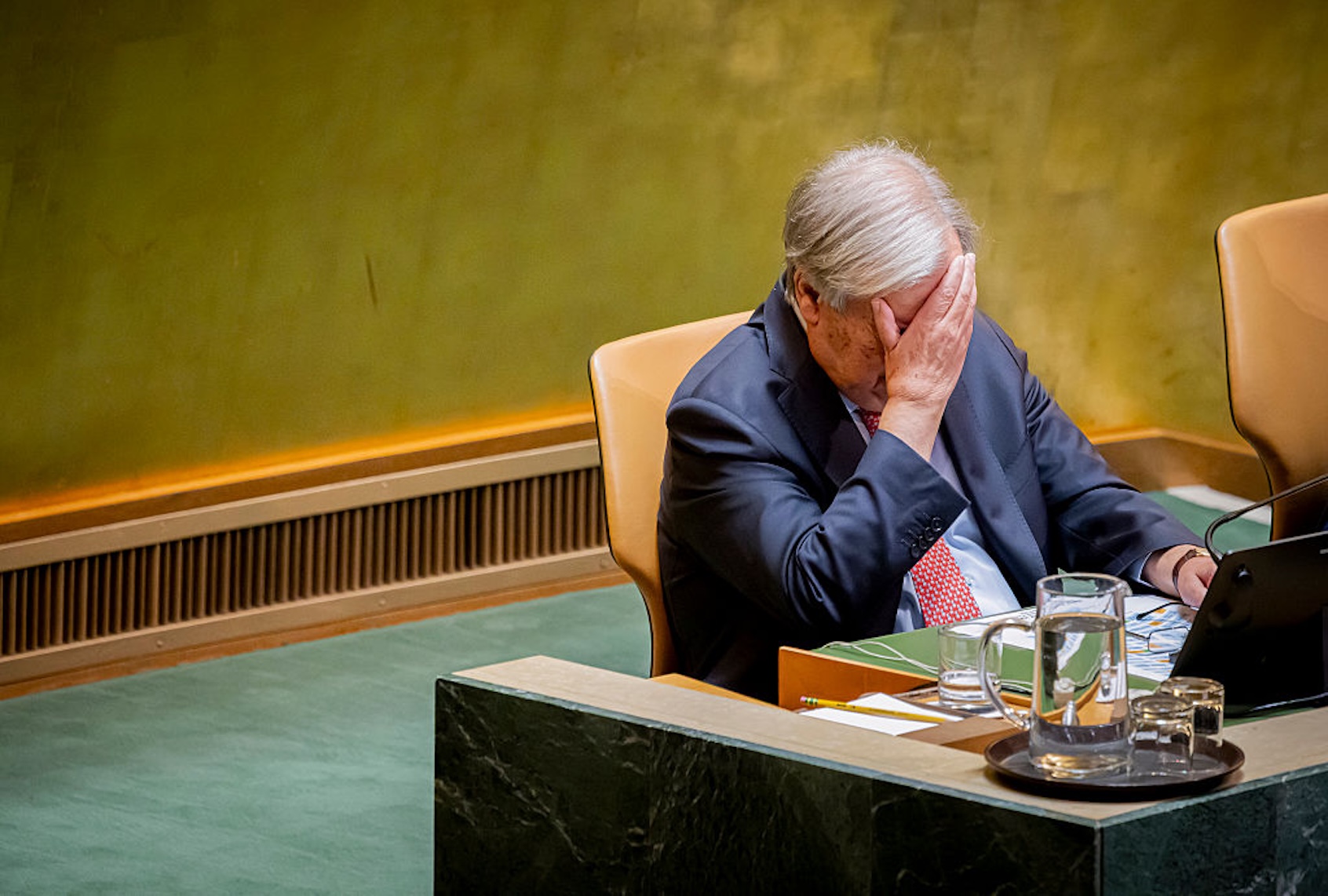
United Nations Secretary General Antonio Guterres covers his face with his right hand as President Donald Trump speaks before the U.N. General Assembly

(Patrick van Katwijk/Getty Images) United Nations Secretary General Antonio Guterres during the speech of President Donald Trump during the 81st U.N. General Assembly on Sept. 22, 2026.

But that wasn’t all. The president bragged about his actions in Venezuela, declaring that since his incursion in January, which deposed President Nicolás Maduro, Trump has now acquired “more than 60% of the oil in the world . . . it was a war, but it’s perhaps the biggest deal ever made. To the victor belong the spoils. You’ve all heard that.” (The number is actually about 23%, according to the Times.) We have certainly heard that before — from him. The saying is one of his favorite maxims, but it hasn’t been uttered by any other world leader for centuries. He went on to proclaim, “Our actions in Venezuela are proof that the United States will no longer permit threats to America to gain a foothold anywhere in the Western Hemisphere. And if necessary, we will use our unmatched military might to secure the vital national interests of the United States.” What threat Venezuela posed to our “vital national interests” is unclear, unless it means simply having something we want to take.

To say this at the U.N., which was formed to prevent this very behavior, confirms every nation’s worst fears about what the United States has become under Trump. It is crude, antediluvian imperialism, and the assembled dignitaries did not applaud or even respond, although the Iranian and Cuban delegations did walk out when they were threatened. 

The U.S is obviously now seen by many as a rogue state, disrespected and disdained by allies and adversaries alike. All you had to do was look at the faces of those in attendance to see it. 

But many are realizing, even as Trump besmirched the U.S. and U.N. alike, there is a new “leader of the free world” on the scene. 

Mark Carney did not speak at the General Assembly, but he did hold bilateral meetings and a press conference. In the process, the Canadian prime minister gave some measure of hope to those — including many Americans themselves — who see the U.S. as a threat to world peace and yearn for something better.

Mark Carney did not speak at the General Assembly, but he did hold bilateral meetings and a press conference. In the process, the Canadian prime minister gave some measure of hope to those — including many Americans themselves — who see the U.S. as a threat to world peace and yearn for something better. “This is, in many respects, a time that comes once or twice every century,” Carney told the media gathered in New York. “What comes ahead, it’s not wishful multilateralism, which defends only the status quo, nor a cold realpolitik that dismantles the status quo altogether. The alternative that Canada and many others are pursuing is values-based realism, an approach that’s both principled and pragmatic.”

The last few weeks have been productive for Carney, as he led a summit of big money investors and CEOs, partnering with former prime minister Steve Harper to make a bipartisan pitch for opportunities in manufacturing, natural gas, mining and ports on two oceans. Canada has a wealth of resources, including an educated workforce. You know, kind of like America — before it turned itself into a global pariah. 

Carney followed his U.N. appearance with a triumphant trip to Europe, where he was greeted like a rock star, obviously appreciated for his bold break with the U.S. that began with a visionary speech in January at the World Economic Forum in Davos that called for a new world order. On Sept. 16, at the meeting of the European Commission, President Ursula von der Leyen called for Canada to become the European Union’s first “associate member.” In making the case, she said, “We must urgently reimagine our partnerships. And build global coalitions for our resilience and democracies.” 


Want more sharp takes on politics? Sign up for our free newsletter, Standing Room Only, written by Amanda Marcotte, now also a weekly show on YouTube or wherever you get your podcasts.


In his speech, which was greeted ecstatically by E.U. members, Carney said “Put simply: we’re in a position where we need to pursue calibrated alliances, integrating deeply with those countries who share our values, remaining open-eyed with those who do not.” 

That vision was put into action this week in New York, when Carney and leaders from the European Union and six other nations announced “Partners for Multilateralism,” which he described as “a new forum that looks at universal institutions, practical coalitions and capacities that exist outside of governments to build trust and bring people together.” The prime minister explained that they do not see this as an attempt to form consensus among nations, an impossible task, but to instead create a new paradigm for countries “formed around problems rather than geography or size, not as an alternative to multilateralism, but as an instrument of it.”

I have written before that the post-World War II order has run its course. The end of the Cold War, and the burden of being the world’s policeman and guarantor of security, has warped America’s values. It was clearly time for something new, hopefully better, to emerge in the 21st century. But Trump’s bellicose “transactional” approach, aside from the clear corruption and immorality, exacerbates the problem at a time of serious global challenges that include nuclear threats, climate change and the emergence of artificial intelligence. These issues demand cooperation. But Trump prefers to blow everything up — and reap the financial rewards wherever he can find them.

Finally, someone is proposing something new to take its place. It’s still in the very nascent stages, and who knows where it will go? But it’s a serious proposal that seeks to find some stability and predictability in a modern, multi-polar world that requires both cooperation and flexibility. 

We can thank Carney for taking the president’s threats to Canadian sovereignty seriously and starting this overdue conversation. He is the man to whom those who believe in freedom and democracy now look for leadership, and we should all be grateful that he has willingly taken on the role. 

The post Donald Trump abdicates as leader of the free world appeared first on Salon.com.

  •  

iFixit's repair guide for the Steam Machine

Image: iFixit

Valve is said to be selling 12,000 Steam Machines a week (previously at Boing Boing), despite an indefinite waitlist and a much higher price than originally anticipated (not their fault). If you've got one, then, you'll be pleased to see iFixit's comprehensive repair guide—also interesting if you just want to see inside one. — Read the rest

The post iFixit's repair guide for the Steam Machine appeared first on Boing Boing.

  •  

Pluralistic: Unpermissioned research (02 Sep 2026)


Today's links


A car's frosted-over back windscreen, being scraped by a person's hand holding an ice-scraper. The person has scraped a Canadian maple leaf into the windscreen. In the background we see the capitol dome and a depressed caricature of Uncle Sam holding a sign reading 'I am busted.'

Unpermissioned research (permalink)

After half a century of neoliberalism, we are all drenched in capitalism's established religion, the worship of property rights. We are so marinated in property worship that even capitalism's critics frame their critiques in "property talk," to the exclusion of other, more important rights, like human rights, labor rights and privacy rights.

To do this is to surrender before the battle even starts. Critics lose when they allow oligarchs and their apologists to choose a battlefield where they have a nearly unbeatable advantage.

Take privacy: privacy is a human right, not a property right. Human rights aren't for sale. You can't sell yourself into slavery, you can't sell your kidneys to make the rent. If privacy is a property right – one that can be traded away – then Facebook's industrial-scale privacy invasions are actually fine, since you "traded" your privacy to Mark Zuckerberg in exchange for the privilege of talking to your friends.

Some self-styled critics of tech monopolists say that the answer to Facebook's privacy invasions is to force the company to pay for your privacy with cash, rather than services:

https://www.wired.com/story/opinion-andrew-yangs-plan-to-pay-you-for-your-data-doesnt-add-up/

This is ideological capture in its purest form: the "data dividend" that Facebook would owe you under this system amounts to a few dollars per year. For wealthy people, the sums would be trivial, while working people, who've been on the downward leg of every K-shaped recovery for a quarter century, who've maxed out their credit cards and re-mortgaged their homes and drive Uber on the weekends to make rent, would have to subject themselves to ongoing surveillance.

That surveillance is already used to determine the highest price those working people will pay – companies like Plexure inform fast food places when you've just gotten paid so they can tack an extra dollar onto your breakfast burrito in the app:

https://pluralistic.net/2026/04/30/something-must-be-done/#there-ive-done-something

Being forced to sell your privacy doesn't just raise the prices you pay, it also lowers the wages you earn. The same people who can't afford this "pay or privacy" system have their private data used to calculate the lowest wage they'll accept for each ride on those weekend Uber shifts:

https://pluralistic.net/2024/12/18/loose-flapping-ends/#luigi-has-a-point

In other words: not being able to afford privacy will result in you having even less disposable income, which will mean that you'll have to sell even more of your privacy. Lather, rinse, repeat.

But even the wealthy people who can afford to forego the pittances Facebook and others offer in exchange for their private information will find privacy elusive. That's because private information isn't a "rival good" – a thing only one person can own at a time. The fact that your mother is your mother "belongs" to both you and her, as well as your grandparents, your father, your siblings and your kids. The fact that you don't sell your family tree to a tech company won't stop all those other people from selling it on – as anyone whose foolish relations handed their genome over to 23andme can attest:

https://www.npr.org/2025/03/24/nx-s1-5338622/23andme-bankruptcy-genetic-data-privacy

In the property religion, the way you can tell if something is valuable is if it has a high price. Property cultists insist that the problem with privacy is that our privacy is being sold too cheaply. They're wrong: private information isn't "mispriced" – it shouldn't be priced.

Human beings are the most valuable things in our world and they are literally priceless. Murder isn't "theft of life." Rape isn't "theft of sex." While insurers and civil courts have ways of calculating the "price" of an injury or violation, great care has been taken over the centuries to ensure that this does not turn human beings into commodities. You can't buy a "murder offset" that lets you kill people provided you pay into a fund that saves a human somewhere else:

https://pluralistic.net/2021/04/14/for-sale-green-indulgences/#killer-analogy

Human beings are too valuable to be priced. We have an entire, sui generis way of balancing the conflicting interests of human rights. My daughter and wife have rights over me, I have rights over them, and when those rights come into conflict – say, if my daughter believes I can no longer care for myself and wants to put me in a care home – the process for resolving that conflict isn't an auction:

https://www.theguardian.com/technology/2008/feb/21/intellectual.property

Your kids aren't your property. In fact, all the most important relationships in your life are non-market. Doctors have patients, not customers. Any time a doctor calls you a "customer" they are demoting you. A doctor doesn't sell you health. You have rights as a patient that far exceed the rights accruing to a mere customer. Same goes for other professions: Teachers have pupils, librarians have patrons, lawyers have clients. "Customer" is a demotion from all of these.

As every "user agreement" you've ever clicked through demonstrates, Big Tech loves to have everything defined in property terms – and so does all big business.

Take the fight over scraping for AI. You might think that this is a fight over the economic rights of creative workers – certainly, my fellow creative workers treat it as such. But because this debate is being framed in terms of property rights, rather than labor rights, this is a fight that workers are set up to lose.

The tell here is how the media companies – who have been eroding the wages of creative workers for decades as they consolidated into a curdled, inbred oligopoly – describe the AI companies' scraping: as an unlicensed taking. Mitch Glazier, the $1.4m/year CEO of the Recording Industry Association of America issues press releases decrying AI training for image generators without negotiating a license fee first:

https://pluralistic.net/2026/03/03/its-a-trap-2/#inheres-at-the-moment-of-fixation

Who's Mitch Glazier? Oh, just a former Congressional staffer who was drummed out of the Capitol Building after he snuck a clause into must-pass legislation that would have transferred hundreds of millions of dollars from musicians to record labels, who was then immediately hired as the CEO of the record industry's largest lobbying group:

https://www.eff.org/deeplinks/2013/12/tpps-attack-artists-termination-rights

Mitch Glazier – and the businesses he represents – aren't opposed to AI replacing artists. They're opposed to AI replacing media companies. Remember the Hollywood writers' strike? The proposal to replace screenwriters with chatbots didn't come from OpenAI, it came from Disney, Warner, Universal and other companies who claim that AI training is "theft."

If AI training is "theft," then it can be cured by making a purchase, something that the AI companies can easily afford, thanks to the hundreds of billions of dollars they have been given by the world's richest investors, who are the high priests and cardinals of the property religion.

The Hollywood writers are the only workers in the world who have successfully beaten back the use of AI in their workplace, and they didn't do it by making recourse to property rights. The Writers Guild is a union and it enjoys a weak form of "sectoral bargaining" (where all the workers in a field bargain with all the businesses at once) called "multi-employer bargaining":

https://pluralistic.net/2023/10/01/how-the-writers-guild-sunk-ais-ship/

The Hollywood writers' strike was an unqualified victory for the writers, who defended their labor rights to co-determination when it came to the use of new tools on their jobsite. Under the terms of their hard-fought contract, screenwriters don't have to use AI, but they can if they want. For example, writers on a long-running sitcom might train an AI with every script in the series' history, so they can ask a chatbot continuity questions as they beat out a new season of the show. But they don't have to do this if they don't want to, and even if they do, neither their wages nor their headcount can be reduced.

The media companies insist that scraping is a copyright violation, that it's "theft." As a matter of law, this is far from obvious or settled: the process of making transient copies of many works, performing mathematical analysis on them, and then publishing that analysis as software is not obviously a copyright violation, and anyone who claims otherwise doesn't understand copyright:

https://pluralistic.net/2023/02/09/ai-monkeys-paw/#bullied-schoolkids

Worse: by demoting a labor rights issue to a mere property rights issue, AI critics are setting workers up to fail. Say the issue with AI training really is mere copyright. If that's so, the media companies who want nothing better than to pauperize creative workers can amend their standard contracts so that any worker who does business with them must irrevocably transfer their "AI training rights" to the company.

Then, that company will absolutely, 100% license those rights to an AI company to create a model designed to replace that worker. The company will get paid for the training, and the resulting model will come with "guardrails" to stop other media companies from using proprietary data to compete with it.

This is the story of the past 50 years of copyright expansion: every new copyright we've created "to help artists" was scooped up by their bosses, who grew more powerful and were able to demand more concessions from those artists, who were therefore poorer and thus needed more copyrights to help them (lather, rinse, repeat):

https://pluralistic.net/2026/08/18/enron-corpus/#sign-here

If creative workers' AI fight is merely a copyright fight, then that fight can only determine whether media companies or tech companies will get the biggest portion when those workers are devoured by corporations. Only a labor rights fight can take creative workers off the menu altogether.

Treating AI training as "theft" creates harms whose blast radius extends well beyond creative workers' livelihoods. Scraping is a hugely beneficial activity. If scraping – taking a vast corpus of copyrighted works without permission – is theft, then every search engine is a crime, unless it can afford to license "search indexing rights" from every site on the internet.

There's exactly one company that could pull that off: Google, a rapacious tech monopolist that is – not coincidentally – one of the leaders of the movement to beggar every creative worker. We will not improve the world, the internet, or creative workers' lives by ensuring that the last search engine anyone ever creates is Google.

Remember our earlier discussion of how privacy violations are weaponized to make poor people even poorer, by depressing their wages and raising prices based on inferences about their economic desperation? Our best weapon for fighting this practice is scraping, because that's how we catch corporations changing prices and wages based on surveillance data:

https://pluralistic.net/2023/09/17/how-to-think-about-scraping/

Scraping is how we produce evidence of the changes that powerful people are making to the world around us. Do you want to know whether Mark Zuckerberg or Elon Musk are downranking content critical of Trump and Big Tech and pumping racist and conspiratorial posts into the resulting void? You'd better hope you can scrape the feeds they cram into billions of people's eyeballs. Same goes for keeping track of genocide apologists, data-center astroturfers and ICE cheerleaders who've flooded Tiktok ever since Trump stole it and handed it over to his creepy billionaire pal Larry Ellison.

Making copies of that stuff isn't theft. It's not a copyright violation. Not even if you do it to billions of works. Not even if it's bad for the companies whose feeds you're capturing. Not even if it's bad for the dark money groups who funded the content.

Sure, if you do this carelessly or recklessly, you can end up violating someone's labor rights, or privacy rights, or human rights. And because those frameworks aren't based on the sanctity of property rights, they can be used to protect these important rights without giving corporate America the right to have you fined or arrested for documenting their takeover of the America.

The people who keep track of this stuff are worried about being fined or arrested. Ethan Zuckerman, one of America's foundational internet scholars, has just accepted Canadian government funding to move his lab from UMass to McGill in Montreal:

https://ethanzuckerman.com/2026/08/27/my-personal-contribution-to-the-us-canada-trade-war/

Zuckerman studies platform power: "using data to answer hard questions about social media, search engines and AI tools." He leads a team that is documenting exactly, precisely how tech companies collude with authoritarians to spy on us, manipulate us, and control us. And his methodology is something called "unpermissioned research," which is what academics call scraping:

https://www.techpolicy.press/ai-companies-threaten-independent-social-media-research/

"Unpermissioned research" seeks to circumvent limits that platforms establish specifically to stop outsiders from learning how they operate. When you're doing unpermissioned research, you try to get around rate limits, query throttles, and other measures that platforms use to block others from mapping their extent and documenting their conduct.

"Unpermissioned research" isn't a free-for-all. Universities have ethical rules designed to protect the privacy rights and other human rights of research subjects, and because these aren't property rights, they can be balanced against the socially beneficial outcomes of research. Universities can get this wrong, of course, but when they do, it's not theft. It's a human rights violation, a privacy violation, a labor violation.

If you want to know how AI companies are trying to destroy creators' livelihoods, you have to scrape the AI companies. You can't ask companies for permission to gather information that might be used to destroy them – they'll just say no. If taking information off the internet without permission is "theft," then gathering information by scraping AI companies is also theft.

Sometimes a tech company will set up a "research portal" that supposedly obviates the need to scrape by putting all the relevant information in one convenient place. That's what Facebook did in the wake of the 2016 election, when it was widely condemned for publishing paid political disinformation. But Facebook's official research portal omitted vast amounts of paid political disinformation, something we only know because NYU set up a scraping project called Ad Observer that documented the discrepancy:

https://pluralistic.net/2021/08/06/get-you-coming-and-going/#potemkin-research-program

Facebook used legal threats to kill Ad Observer, and then…they killed their official research portal, too:

https://pluralistic.net/2021/07/15/three-wise-zucks-in-a-trenchcoat/#inconvenient-truth

Zuckerman is one of dozens of leading US academics who are relocating their labs and teams to Canadian universities, citing fear of political interference from the Trump regime:

https://vancouver.citynews.ca/2026/08/27/canada-recruits-dozens-of-foreign-scientists-researchers-poaching-many-from-u-s/

The Canadian government has committed $504m to the project. Some of that research will help Canada develop new green energy, and some of it will help Canada make important medical breakthroughs. But Zuckerman's research has a special place in the portfolio of Canadian research projects, because – thanks to scraping – it is a leading source of information about how Trump's tech companies are waging war on the American people and the world.

Scraping isn't theft of data, just like murder isn't theft of life. Scraping can be harmful, and we can create laws and social regimes and ways of talking about those harms that don't give authoritarian governments and vast multinational corporations the right to decide who can document and analyze their conduct.

Take Wikipedia: the project exists solely to organize and disseminate information, for free, to everyone in the world. Wikipedia is among the most important parts of the internet, and one of the most positive developments of the 21st century. The entire project is licensed under a generous Creative Commons license that encourages unlimited commercial re-use of its contents. Even if you think scraping copyrighted works is theft, scraping Creative Commons Attribution 4.0 works is unquestionably not theft.

But Wikipedia is being hammered by AI scrapers, which are operating so aggressively that they threaten the project's ability to keep its servers online. Wikipedia has an AI problem, but that AI problem isn't "theft" – it's denial of service, the aggressive act of intentionally or recklessly flooding a server with so much traffic that it crashes.

If you've been lured into a cultlike worship of property rights, this seems like a contradiction. But once you relegate the relatively unimportant matter of property rights to its correct station, you can see – and reason about – the universe of rights that are far more important than mere property.

All it takes is realizing that there are far worse things you can do with information than "stealing" it.

(Image: Bearas, CC BY-SA 4.0, modified)


Hey look at this (permalink)


A shelf of leatherbound history books with a gilt-stamped series title, 'The World's Famous Events.'

Object permanence (permalink)

#25yrsago NYT says ebooks don't exist, fails to mention thriving ebook pirate scene https://www.nytimes.com/2001/08/28/business/forecasts-of-an-e-book-era-were-it-seems-premature.html

#25yrsago Parking tickets waived in exchange for written apologies https://web.archive.org/web/20010826013513/http://www.thesmokinggun.com/doc_o_day/lewiston1.shtml

#20yrsago "I, Row-Boat" https://web.archive.org/web/20060000000000*/http://www.flurb.net/1/doctorow.htm

#20yrsago Filipino students use SMS to organize mass demonstrations https://web.archive.org/web/20060902160514/http://blog.wired.com/sterling/index.blog%3Fentry_id%3D1545927

#20yrsago Spam pump-and-dumps work http://news.bbc.co.uk/2/hi/technology/5284618.stm

#25yrsago Leaked: Handspring's next PalmOS device https://web.archive.org/web/20020824213501/http://www.palmstation.com/view_article.asp?article=4614

#15yrsago “Stalwart Workers”: neglected backbone of the firm https://web.archive.org/web/20110920155246/http://blogs.hbr.org/hbsfaculty/2011/08/stop-ignoring-the-stalwart-wor.html

#5yrsago Facebook's war on switching costs https://pluralistic.net/2021/08/28/talking-hard-work-blues/#hostage-takers

#5yrsago The "work ethic" is a dirty trick we play on ourselves https://pluralistic.net/2021/08/28/talking-hard-work-blues/#work-will-set-you-free

#1yrago The capitalism of fools https://pluralistic.net/2025/08/28/strew-deal/#neither-fish-nor-fowla


Upcoming appearances (permalink)

A photo of me onstage, giving a speech, pounding the podium.


A screenshot of me at my desk, doing a livecast.

Recent appearances (permalink)


A grid of my books with Will Stahle covers..

Latest books (permalink)


A cardboard book box with the Macmillan logo.

Upcoming books (permalink)

  • "The Post-American Internet," a geopolitical sequel of sorts to Enshittification, Farrar, Straus and Giroux, 2027
  • "Unauthorized Bread": a middle-grades graphic novel adapted from my novella about refugees, toasters and DRM, FirstSecond, April 20, 2027

  • "Enshittification, Why Everything Suddenly Got Worse and What to Do About It" (the graphic novel), Firstsecond, 2027

  • "The Memex Method," Farrar, Straus, Giroux, 2027


Colophon (permalink)

Today's top sources:

Currently writing:

  • “Once Is Enemy Action,” a science fiction novel about the origins of modern technofascism. Today's words: 527 (10843 total).
  • "The Post-American Internet," a sequel to "Enshittification," about the better world the rest of us get to have now that Trump has torched America. Fourth draft completed. Submitted to editor.

  • A Little Brother short story about DIY insulin PLANNING


This work – excluding any serialized fiction – is licensed under a Creative Commons Attribution 4.0 license. That means you can use it any way you like, including commercially, provided that you attribute it to me, Cory Doctorow, and include a link to pluralistic.net.

https://creativecommons.org/licenses/by/4.0/

Quotations and images are not included in this license; they are included either under a limitation or exception to copyright, or on the basis of a separate license. Please exercise caution.


How to get Pluralistic:

Blog (no ads, tracking, or data-collection):

Pluralistic.net

Newsletter (no ads, tracking, or data-collection):

https://pluralistic.net/plura-list

Mastodon (no ads, tracking, or data-collection):

https://mamot.fr/@pluralistic

Bluesky (no ads, possible tracking and data-collection):

https://bsky.app/profile/doctorow.pluralistic.net

Medium (no ads, paywalled):

https://doctorow.medium.com/

Tumblr (mass-scale, unrestricted, third-party surveillance and advertising):

https://mostlysignssomeportents.tumblr.com/tagged/pluralistic

"When life gives you SARS, you make sarsaparilla" -Joey "Accordion Guy" DeVilla

READ CAREFULLY: By reading this, you agree, on behalf of your employer, to release me from all obligations and waivers arising from any and all NON-NEGOTIATED agreements, licenses, terms-of-service, shrinkwrap, clickwrap, browsewrap, confidentiality, non-disclosure, non-compete and acceptable use policies ("BOGUS AGREEMENTS") that I have entered into with your employer, its partners, licensors, agents and assigns, in perpetuity, without prejudice to my ongoing rights and privileges. You further represent that you have the authority to release me from any BOGUS AGREEMENTS on behalf of your employer.

ISSN: 3066-764X

  •  
❌