❌

Reading view

I miss the restaurant pager

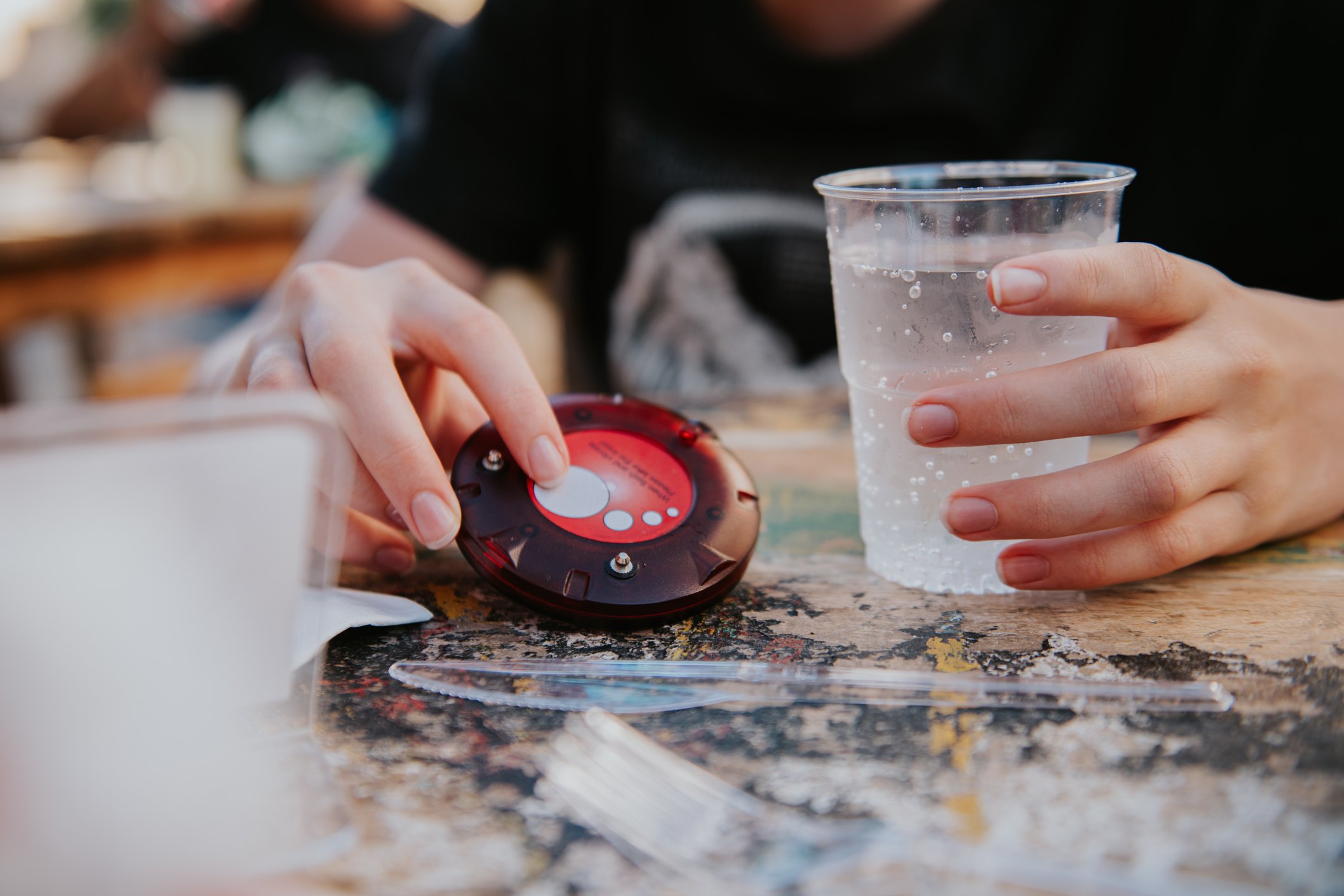
At 16, I was entrusted with one of the most important pieces of technology at a suburban Chili’s: a wire rack full of restaurant pagers.

The restaurant occupied a sprawling shopping center alongside an Olive Garden, a Cabela’s and a Costco, making it something of a regional mecca for homecoming dinners, birthday parties and Little League victories. The air smelled perpetually of tortilla chips, and the soundtrack was an agreeable mixture of Matchbox Twenty and sizzling fajita platters.

I liked the job. I liked asking people what brought them in, hearing about their celebrations and making small talk while consulting my restaurant map and section list. On busy nights, I’d estimate the wait, scribble down a last name, party size and pager number in black pen, then hand over a pleasantly hefty plastic puck.

“You can wander as far as your car,” I’d explain.

“Ope! Was hoping to make a Costco run,” some dad would inevitably reply. I laughed every time. It was a very reliable joke.

Every five or 15 minutes, another pager returned to the host stand, blinking and vibrating in the hands of a customer whose table was finally ready. I particularly liked watching one go off. A group could be deep in conversation when the puck sprang to life, producing a brief, collective flicker of delight. Dinner!

They were not beautiful objects. One woman who came in weekly after church complained that hers was ugly and bulky, then set it on the red pleather waiting bench so that it would vibrate against the upholstery rather than any part of her body. Occasionally, someone stole one, apparently deciding that a restaurant pager belonged in the same category of souvenir as a pebbled Coke glass. Sometimes the rechargeable batteries flagged, and we’d pull a pager out of rotation.

There was a reason these contraptions belonged to the Chili’s end of the dining spectrum. You wouldn’t mistake one for fine-dining theater. But they had an appealingly limited set of ambitions. They buzzed, they blinked, and when the wait was over, we took them back. The technology stayed at the restaurant.

In retrospect, what a gift. 

I don’t remember exactly when the pagers mostly disappeared. There was no retirement ceremony, no last call for the little plastic puck. I began noticing their absence most acutely when restaurants reopened after the first wave of the pandemic. Minimizing shared surfaces made sense then. Why distribute and disinfect pagers when customers already had phones in their pockets? Digital waitlists predated COVID-19, of course, but for me, that was when the phone began to feel less like an option and more like a condition of dining out.

And it rarely stops at the host stand. Your phone tells you the table is ready. It may supply the menu via QR code, take your order and settle the bill. Hours later, another text arrives asking you to rate the experience.

At some point, the meal has ended, but the restaurant apparently hasn’t finished with you.

None of this is inherently awful. Some of it is useful. But every time I wake my phone to perform one of these little tasks, I’m also opening the door to everything else it contains: emails, notifications, messages I wasn’t planning to answer over lunch. What was supposed to simplify dinner can turn it into another administrative process requiring a charged device and a willingness to look at it.

Restaurants are hardly alone in this. I reach for my phone to ride public transit, pay for parking, produce concert tickets, check in at the doctor’s office and occasionally prove to one website that I am the person trying to sign into another. Each request arrives dressed as a convenience. Together, they have made the phone feel less like a personal possession and more like mandatory civic infrastructure.


Want more great food writing and recipes? Sign up for Salon’s free food newsletter, The Bite.


And mandatory infrastructure really ought to work.

For a while, I happily used the Ventra card on my phone to ride Chicago public transit. One less thing to carry! Then, for a miserable stretch, several Red Line stations I frequented seemed to stop recognizing it. One morning, I joined a small congregation of commuters attempting to convince the turnstiles that our phones were, in fact, perfectly legitimate fare payment.

“It worked yesterday!” one man exclaimed.

“The terminals are old! They weren’t meant for this,” a tired CTA employee explained, kindly ushering us through the stroller entrance as the next train rumbled toward the platform.

The backup plan wasn’t faring much better. Around the same time, the ticket machines were proving similarly unreliable about accepting credit cards. A little queue had formed at the station ATM, where commuters were withdrawing cash to buy physical transit cards so they could get on the train.

We had arrived at the future, and it required a trip to the cash machine.

After a few weeks of this, I surrendered. I now carry a physical Ventra card, load $20 onto it when necessary and go about my business. It gets me through the turnstile without involving my phone. A modest pleasure, but one I’ve come to appreciate.

The trouble isn’t that every digital convenience is destined to malfunction. Plenty work exactly as advertised. It’s that we’ve become so accustomed to conducting ordinary life through our phones that we rarely stop to consider whether they’re necessary to the transaction in the first place.

Consider, for instance, a recent brunch in which absolutely nothing went wrong.

Recently, my husband and I went to a brunch spot I love in Chicago’s Andersonville neighborhood. The front-of-house staff always seem to be navigating the aftermath of a complicated breakup between two polycules, but the breakfast sandwich  is truly good enough to make the interpersonal intrigue part of the charm. I wanted to do very little beyond sit somewhere pleasant, eat something delicious and enjoy being newly married. There was a short wait. The host asked for my number; I provided it, then sat with my husband in two lobby chairs. We chatted. We waited. We did not move.

My phone buzzed. Our table was ready.

I looked up. The host stand was approximately two feet away.

The system had worked flawlessly. Somewhere, a piece of restaurant software had facilitated communication between two people who could reasonably have passed each other a saltshaker. The host hadn’t done anything wrong, and neither had I. But a moment that might once have involved someone looking up and saying, “You’re all set,” now required me to be reachable by a device I had no particular desire to consult.

I understand the alternative. A digital waitlist lets you wander around the neighborhood, browse the shops, maybe get a head start on another errand. Sometimes that’s a genuine gift. But I’m not convinced that being able to do two things at once means enjoying either one more. And sometimes I don’t want to wander. I want to be there, waiting for brunch, with the reassuring knowledge that the restaurant is handling the details.

That’s part of the pleasure of hospitality, isn’t it? For a little while, someone else tends to the logistics. You don’t need to manage every notification or keep every system running. You can just be a guest.

I don’t expect restaurant owners to read this and order a fresh shipment of vibrating pucks. If texts work best, fine. I’d simply like us to question whether requiring a phone is always an improvement, and remember that convenience isn’t much of a convenience when opting out stops being possible.

Maybe the pager never comes back. I can live with that. I’d just like to be able to let my phone die in my bag and still be called to breakfast.

Though I will say this for those ugly little pagers: At least you could hand one back.

The post I miss the restaurant pager appeared first on Salon.com.
  •  

Trump’s tariffs may kill free chips and salsa

There are certain sensations you don’t realize belong to an era until they’re gone: the modem’s electronic shriek as it connected to the internet, the satisfying clack of a landline receiver, the little metallic weight of an arcade token in your palm. Lately, I’ve been wondering if the basket of free chips and salsa — dropped almost ceremonially onto the table before anyone has ordered a thing — might eventually join them.

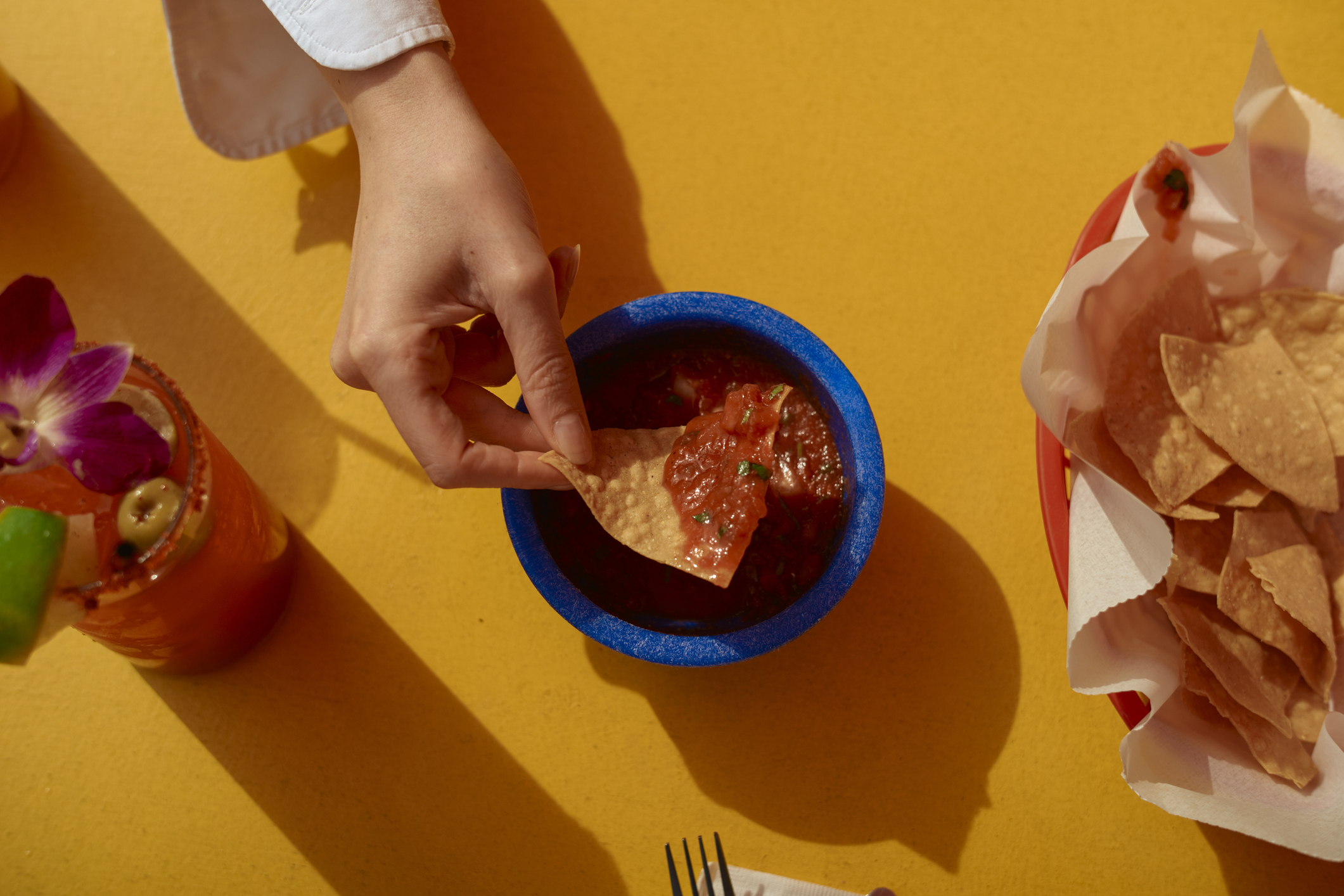
At El Nopal, a regional Mexican chain my family has frequented for years, the opening minutes of dinner follow a familiar choreography. We slide into a pleather booth beneath burnt-orange walls and televisions playing Spanish-language fútbol. Half the table orders Diet Coke, the other water with lemon; someone requests a skillet of molten white queso. Then come the chips: hot, sturdy, generously salted, piled into black woven baskets alongside ramekins of fire-engine-red mild salsa and a darker, spicier version flecked with onion and jalapeño.

For our family of six, there are always two baskets, dividing the table into loose territories. Those seated in the middle are expected to choose a side; reaching from both feels vaguely lawless. Everyone has a salsa ritual. Mine is two-thirds spicy, one-third mild. My sister mixes the mild with queso until it turns a muted pink. One of my brothers splashes vinegary house hot sauce into the spicy. Soon the menus are stacked, the pebbled Coke cups are sweating rings onto the table and somebody is pointing with a chip while saying, “No, no, tell her the part about —”

The Trump administration has made that little ritual more expensive to maintain.

In July 2025, the administration withdrew from a long-standing agreement governing fresh tomatoes imported from Mexico and imposed a 17.09% antidumping duty on most of them. The Commerce Department said the move was intended to counter Mexican tomatoes being sold in the United States at unfair prices and protect domestic growers.

Then the weather got bad.

Poor conditions in Mexico and Florida further reduced supplies, and tomato prices climbed to their highest level in roughly two decades. Dante Galeazzi, president of the Texas International Produce Association, told Houston Public Media that at one point the fresh tomato market had jumped to about $80 a box. Grocery stores began backing away from tomatoes earlier in the year; restaurants, he said, held on longer.

There is only so much a restaurant can absorb.

“The challenge is for our Texas restaurants, they operate on very narrow profit margins in what I would call good economic times,” Kelsey Erickson Streufert, chief public affairs officer for the Texas Restaurant Association, told the publication.

These are not, she continued, particularly good economic times for running a restaurant. Food is more expensive, but so are labor, utilities, insurance and credit card swipe fees — virtually everything required to keep the doors open. Eventually, the arithmetic gets down to the ramekin.

“You have restaurants that are simply saying, ‘Look, I can’t afford to put salsa on the tables anymore,’” Galeazzi said. “What are consumers going to do? Where are consumers going to find this relief?”

The tragedy of a $4 basket of chips is obviously not the $4. It is the moment someone at the table inevitably says, “Eh, do we need these today?” Sometimes the answer will be yes. Some days undoubtedly call for acid, salt and crunch. On other days, maybe you skip them. You wait patiently for the entrées. The stories still get told. Someone finds a plastic straw to point with instead.

It’s fine.

But the texture of the wait is different.


Want more great food writing and recipes? Sign up for Salon’s free food newsletter, The Bite.


That small decision — chips or no chips — moves the diner almost imperceptibly from guest to customer. The thing that once arrived as part of the welcome now joins the same mental ledger as everything else: Drinks? An appetizer? Queso? Dessert? Do we need it? Is it worth it? Should we just save the money?

People sometimes joke online about whether you grew up in an “appetizers and drinks” family or an “entrées and water” family. It is a joke, mostly, about the invisible financial rules children learn at restaurants: what counts as normal, what counts as a treat and what you know better than to ask for.

Part of the appeal of the neighborhood Americanized Mexican restaurant has long been that it offers a particularly accessible kind of abundance. You can order an inexpensive combination plate and a soda, or water with a squeeze of lime, eat something hot and filling and deeply flavorful, and be out the door in 45 minutes without anybody making you feel strange about any of it.

And while you wait, you get the same chips as the table ordering margaritas.

Free chips briefly flatten the distinction between the appetizers-and-drinks family and the entrées-and-water family. Everybody gets to start with something.

Of course, restaurants cannot run on symbolism.

The “free” things on the table have never actually been free to them. Somebody bought the tomatoes. Somebody fried the chips. Somebody washed the ramekins and refilled the baskets. Hospitality has always had scaffolding beneath it; ideally, the guest simply doesn’t spend much time looking at it.

Lately, that scaffolding has become harder for restaurants to hide.

One of my favorite Chicago breakfast spots recently changed the way it serves Texas toast. Two slices had been the default for years. Now the waiter asks: Do you actually want two, or would one be enough? They were happy to bring two, he explained. But a lot of second slices were coming back uneaten, and they simply couldn’t afford to keep throwing them away. It is difficult to begrudge a restaurant that calculation. In fact, the question struck me as a rather thoughtful solution: Have as much toast as you want. Just tell us you want it first.

But it also made visible, for a moment, the financial scaffolding behind the plate.

That is what interests me about the chips and salsa, too. Not that restaurant owners are becoming less generous, but that the economic forces pressing on them increasingly require them to show their work.

Trade policy tends to arrive in public dressed in abstraction: percentages, agreements, investigations, duties, markets. Then someone opens an invoice. A tomato costs more. A batch of salsa costs more. The complimentary appetizer that was once cheap enough to disappear into the cost of doing business becomes expensive enough to notice. Eventually, somebody has to decide whether hospitality can continue to absorb it.

And then, one night, a server has to ask if you would like to add chips.

This is a mundane outcome of economic policy — almost comically so. No one’s dinner is destroyed. No one sits staring mournfully at the bare lacquered table. There is simply a small patch of negative space where something automatic used to happen.

But small gestures are often where hospitality lives.

The loss of free chips and salsa isn’t really about chips and salsa. It is about what happens when policy decisions force restaurants to make the scaffolding of their hospitality more visible — when a gesture designed to make guests forget about the transaction becomes part of the transaction itself. At El Nopal, when the baskets arrive, nobody asks who is paying for this round. Nobody pauses to determine whether everyone wants enough chips to justify them. Nobody calculates how hungry they are with their entrée still twenty minutes away.

Someone tells a story. Someone interrupts to improve the punchline. Someone else points across the table with a tortilla chip. And everyone reaches into the basket without asking.

The post Trump’s tariffs may kill free chips and salsa appeared first on Salon.com.

  •  

We’re over restaurant slop

Recently, between medical appointments, I ended up at a grain-bowl-and-salad place in a suburban strip mall, the kind of sleek fast-casual restaurant that looks a little like an Apple Store decided to start serving brown rice and green goddess dressing. There were a few customers in scrubs and two self-order kiosks, both broken. The menu wasn’t posted anywhere else, except via a QR code printed on the back of several glossy takeout menus behind the register, which the cashier repeatedly warned us not to take because they only had a few.

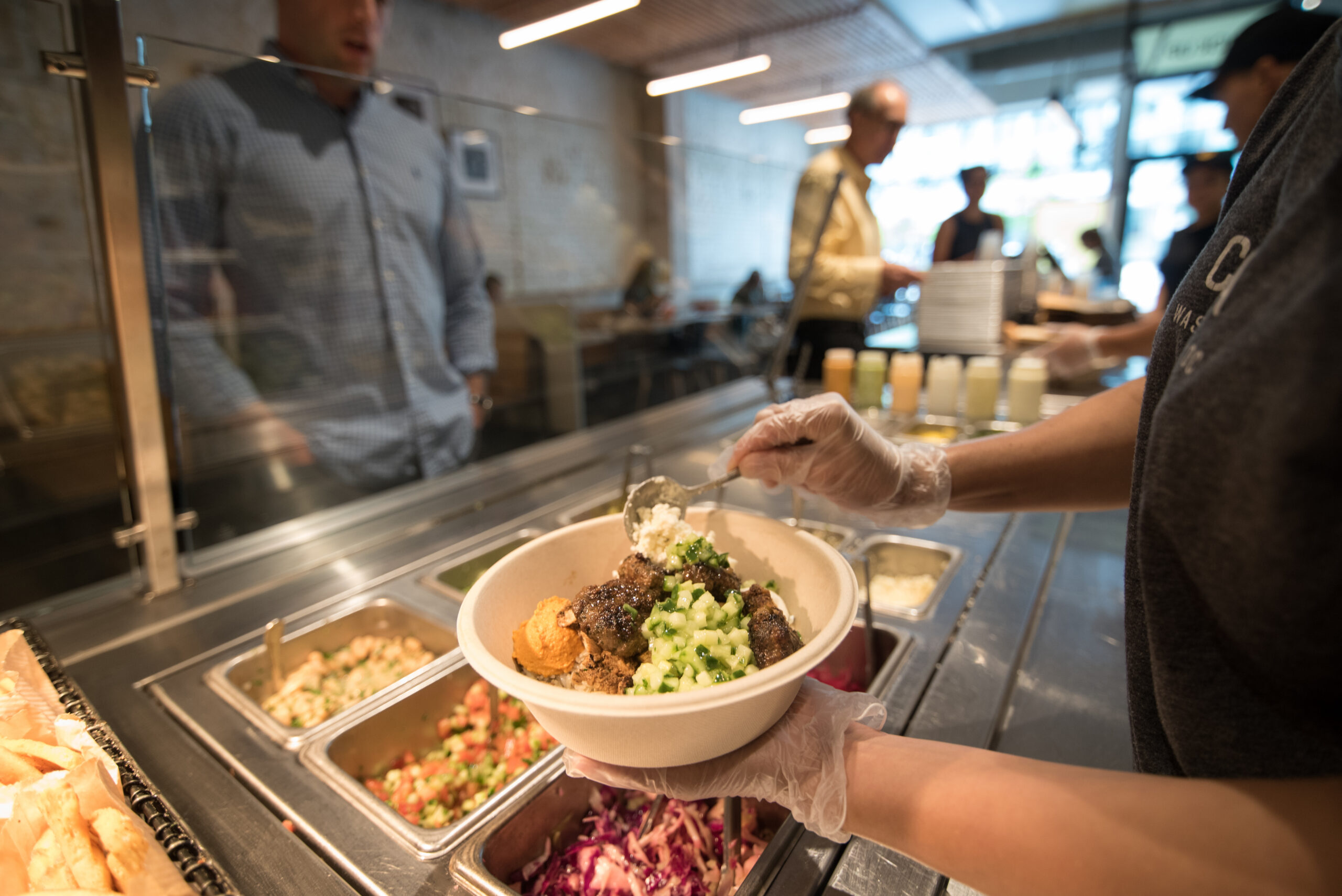
The bowls themselves were fine. Watching them come together was more memorable: the cashier held each plastic container practically at arm’s length as he scooped, two vapes clacking around in his apron pocket, with the air of someone completing a task wholly unrelated to food. What arrived cost about $14 and tasted perfectly acceptable. It was also, somehow, shockingly anonymous.

There’s a word for this feeling now: slop. 

It describes several overlapping anxieties about modern restaurant food, but its prehistory belongs, at least partly, to the ghost kitchen.

In March 2020, as dining rooms shut down, Chuck E. Cheese launched Pasqually’s Pizza & Wings, a delivery-only brand operating out of its existing kitchens. The name was technically an Easter egg: Pasqually P. Pieplate is the chef in Chuck E. Cheese’s animatronic house band. 

To anyone not conversant in Chuck E. Cheese lore, though, Pasqually’s looked on Grubhub like a new pizza-and-wings joint. CEC maintained that the pizza itself was different — thicker crust, more sauce — but plenty of customers still felt tricked when they realized the restaurant at the address they’d ordered from was, in fact, Chuck E. Cheese.

The revelation inspired a small genre of internet consumer detective work. “Now I look up the addresses of places on delivery apps before I try something ‘new,’” one Reddit user wrote after discovering that an apparent new Indian restaurant was another business operating under a second name. Elsewhere, someone warned that “Pasquale’s Pizza and Wings on delivery is just Chucky Cheese.” In the same thread, though, came the rebuttal: there were good ghost kitchens. You were simply ordering from the lousy ones.

That argument feels almost quaint now. Ghost kitchens asked diners to accept a peculiar new distance between the restaurant being advertised and the human reality of the meal. What diners surrendered wasn’t necessarily quality so much as a little hospitality, a little transparency and, increasingly, the expectation that a restaurant represented somebody’s particular idea of what a restaurant should be.

From there, the abstraction moved onto the plate.

The “slop bowl” became internet shorthand for the familiar fast-casual mash-up — grains, greens, globally inspired protein, sauce, perhaps an avocado surcharge — assembled with the logic of a cafeteria line and an over-$10 price. The joke has always contained some affection; people like these bowls because they are easy, reliable and customizable. But the name also catches their underlying sameness. There is a reason so much online energy is devoted to “hacking” them: swapping sauces, doubling proteins, gaming the system in hopes of coaxing a little more pleasure from something designed, above all, to be frictionless.

And now the same aesthetic has escaped the bowl. AI slop has begun appearing on restaurant menus, signs and advertisements, offering food imagery that looks optimized for appetite without necessarily resembling anything a person could cook. My digital feed is littered with truly uncanny generated sandwiches, but I’ve only encountered a few in the wild: outside a cafe, a poster for a coffee drink topped with marshmallow “pearls” so perfectly round and iridescent that they looked less edible than cultured in a lab; on the train, hamburger ads where the meat resembled slabs of smooth, steak-rippled marble. The images have the visual grammar of food photography without much evidence that food has ever been involved.

Diners, meanwhile, are already expressing an aversion to the whole thing. Late last year, CNN’s Jordan Valinsky noted that Cava, Chipotle and Sweetgreen — “the big three slop slingers” — were all reporting softer business among younger customers, particularly those between 25 and 35. Some of that was straightforward economics. On Chipotle’s final earnings call of 2025, CEO Scott Boatwright said younger customers weren’t defecting to another chain so much as returning to the grocery store. “They feel the pinch,” he told analysts, “and we feel the pullback.”

Yet alongside that financial retreat, though, there is a more aesthetic refusal taking shape. In one food group I follow, posts about AI restaurant marketing increasingly read like miniature boycott pledges. “If you use AI to advertise your restaurant, market, or anything else,” one person wrote, “I will know that you don’t care about food or the planet and I will never ever patronize your business.” Another was more prescriptive: “Take pictures of your food. Spend a little time and effort to make your own flyer.” 

The complaint isn’t merely that the pictures are creepy. Diners are reading them as evidence: if a restaurant cannot be bothered to photograph its own food, hire an artist or make an ugly little flyer itself, what exactly is being communicated about the care happening elsewhere? 

That inference may not always be fair. Restaurant margins are brutal, and a generated image costs less than a photo shoot. But fairness is almost beside the point. Once diners begin treating evidence of human effort as part of the product, efficiency itself can start looking suspicious.

Which may explain the newest addition to the slop lexicon: PE, or private-equity, slop. The term is less a description of any particular food than a prediction about what happens when the people optimizing a restaurant become increasingly distant from the people cooking in it.


Want more great food writing and recipes? Sign up for Salon’s free food newsletter, The Bite.


Consider Los Tacos No. 1. The New York taco shop opened in 2013, earned a devoted following for its al pastor and handmade tortillas, and eventually grew to nine locations. As The Guardian reported, when it announced this September that it had taken an undisclosed investment from private-equity firm TSG Consumer to pursue what a press release called “thoughtful, founder-led growth,” customers immediately began writing its obituary. Social posts predicted “the beginning of the end,” along with smaller portions and worse food. The response became so intense that Los Tacos’ founders issued a reassurance that sounded almost like parody: “No, we’re not going to start charging extra for guac. We’re not switching to horse meat. And no, we’re definitely not messing with the tacos.”

The tacos had not, at that point, been messed with. That’s what makes the reaction interesting. “PE slop” names an anticipatory fear: that somewhere down the line, somebody who has never stood over the grill will notice that a particular ingredient costs slightly more, or a particular process takes slightly longer, and ask whether anyone would really notice if it disappeared.

My colleague Alex Galbraith recently argued that food may be where consumers most easily recognize the otherwise abstract mechanics of private equity. Newspapers can become thinner and health care more Byzantine in ways that are difficult to trace back to an investment firm. Lunch is more intimate. 

Galbraith points to a recent interview with comedian Stavros Halkias who summed it up like this: “Everybody understands that Wendy’s has gotten s**ttier. The spicy chicken sandwich now uses shredded lettuce. Right there, that is private equity. That is someone saying ‘We don’t want a fresh head of lettuce that costs more money. So, we’re going to give you bagged sh**ty lettuce. I know in the grand scheme of things it’s not a big deal, but people will notice.”

I don’t think all these things are “slop” because they’re necessarily bad. I think we’ve reached a point of saturation with food that feels devoid of human authorship. For years, restaurants have been encouraged to become frictionless, scalable, customizable and infinitely replicable. Now diners seem increasingly sensitive to the moment when all that optimization scrubs away specificity.

The opposite of slop isn’t necessarily handmade, independent, expensive or even particularly beautiful. A chain can have it; a bowl can have it; a restaurant backed by investors can have it. It’s simply the sense that something looks and tastes the way it does because somewhere along the line a person said, I like it this way, so I make it this way.

This isn’t an argument for turning every anonymous strip mall back into a village of idiosyncratic mom-and-pop shops. It’s something smaller, and probably more achievable. After years of food designed to work everywhere for everyone, diners may simply be hungry again for evidence that somebody meant it.

The post We’re over restaurant slop appeared first on Salon.com.

  •  

paris restaurants (new updates)

I’ve been featuring some new and revisited favorite restaurants in Paris, writing them up in my newsletter. You can find a list of my Favorite Restaurants in Paris on my website but here are links to the posts in my newsletter of places I’ve eaten at lately…

To get more Paris tips (and stories and recipes) sent right to your Inbox, subscribe to my newsletter here:

  •  
❌