
 Login

Lamb Tagine recipe
One of the first lessons I learned, right after I moved to Paris, was to never, ever be on time for a dinner party. When i got my first invitation to a dinner party, my hosts told me, “Come at 8pm…which in Paris, means to come at 8:20 or 8:30pm.”
Subsequently, when I have guests for dinner, I expect them to be at least 20 minutes late, although there’s much debate on how late you’re actually supposed to be. But if you’re on time, or early, your host likely won’t not be ready and you’ll probably catch them by surprise.
It’s a tricky balance when you’ve inviting people for dinner, since you want make sure when everyone’s at the table, dinner will be ready and perfectly cooked. If your friends show up very late, and you’ve made something like pork roast, which can take a while to bake, but will dry out if overcooked, you’re sunk.
So one technique I rely on is braising. Braising is cooking something long and slow, which softens cuts of meat and poultry, and infuses whatever you’re cooking with flavor. In the case of a tagine, a North African dish that benefits from braising, your cooking the meat in a broth of onions, aromatics, and spices, which all come together after a stint in the over to make a perfect one-pot meal, that’s can be kept warm in the oven until everyone is at the table.
In Paris, with so many Arabic and North African butchers around, it’s easy to find cuts of meat that lend themselves to slow-braising, and tagines are quite popular in France. When I wrote my book, My Paris Kitchen, someone wrote to me, wondering why I had non-French recipes in my book. Just like people in other countries, such as Americans who make Mexican and Asian foods at home, or Dutch people who eat rijsttafel, an Indonesian meal composed of many side dishes, French people regularly eat a variety of foods from other cultures, especially in Paris, which is a melting pot, where you can enjoy couscous in Belleville, dosas in the Indian quarter, and Vietnamese noodles in the thirteenth arrondissement. But really, you can get all those foods in just about every corner of the city.
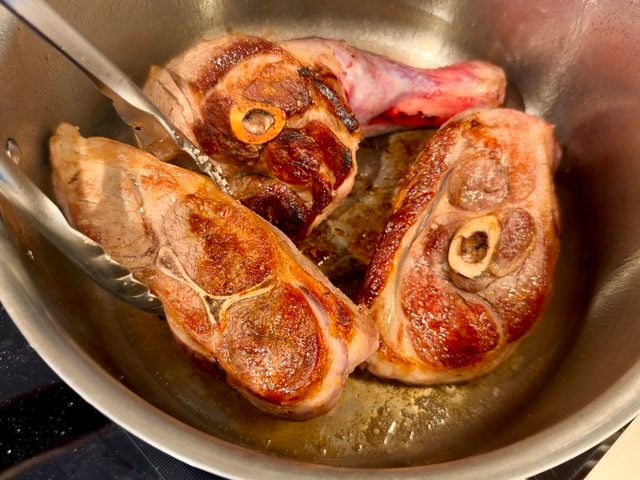
Tagines are simple to make, and once you’ve made one, you’ll wonder what took you so long to make one? You’re basically just browning the meat in a Dutch oven or large pot, then sautéing an onion with spices and seasonings, adding a few spoonfuls of tomato paste or a can of tomatoes, some stock or water, then braising it in the over for a few hours.
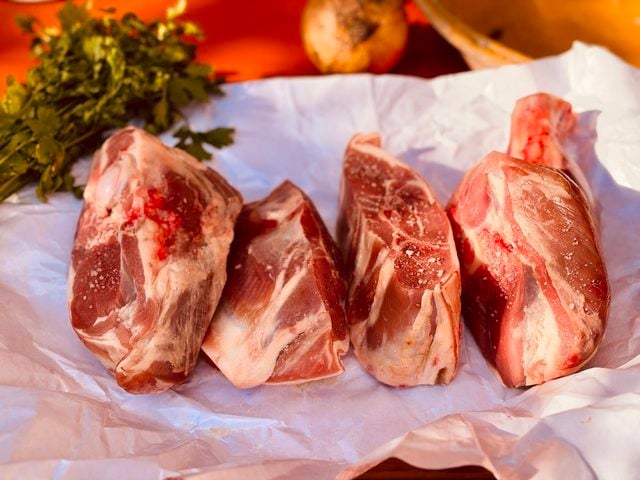
This is my basic recipe that I make often. It works great with a lamb shoulder, which you can have your butcher cut into pieces for you. If you can only get a whole lamb shoulder, you can skip the sautéing step and just braise the lamb shoulder whole. If you can get lamb shanks, this recipe works well with four of them.
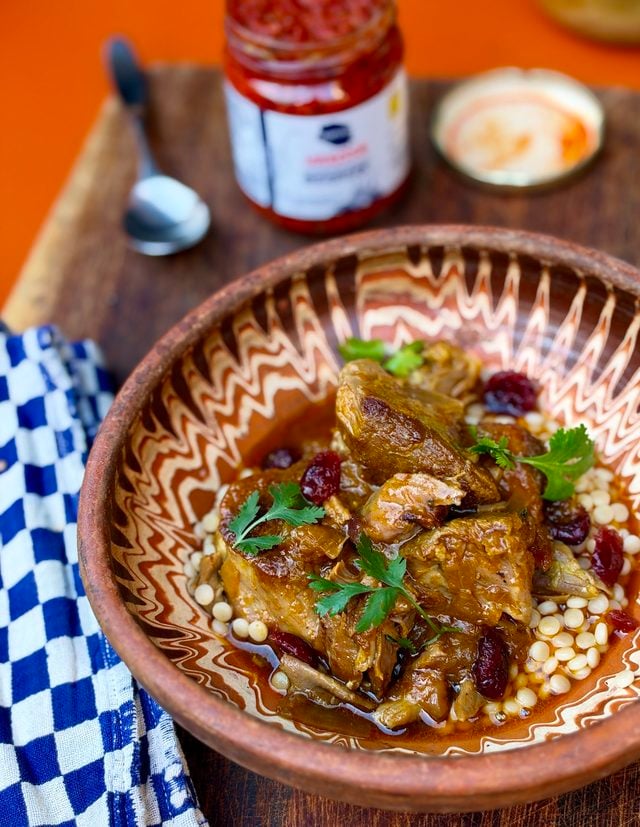
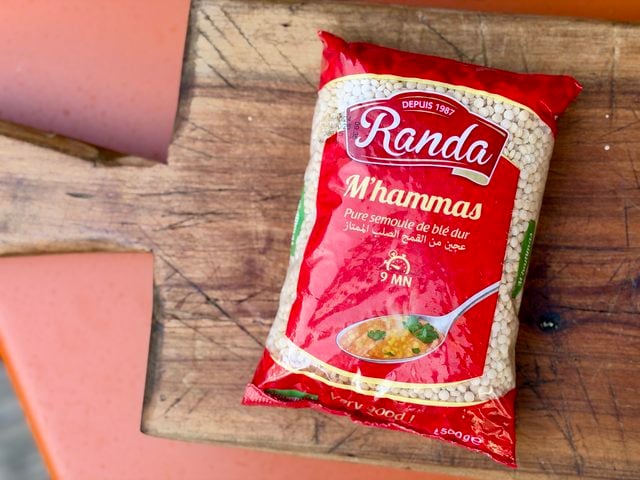
I like to serve it with pearl couscous, which you can see above. It’s basically pasta pearls, and goes by several different names. Regular couscous is also an option, as is rice-shaped pasta, known as orzo
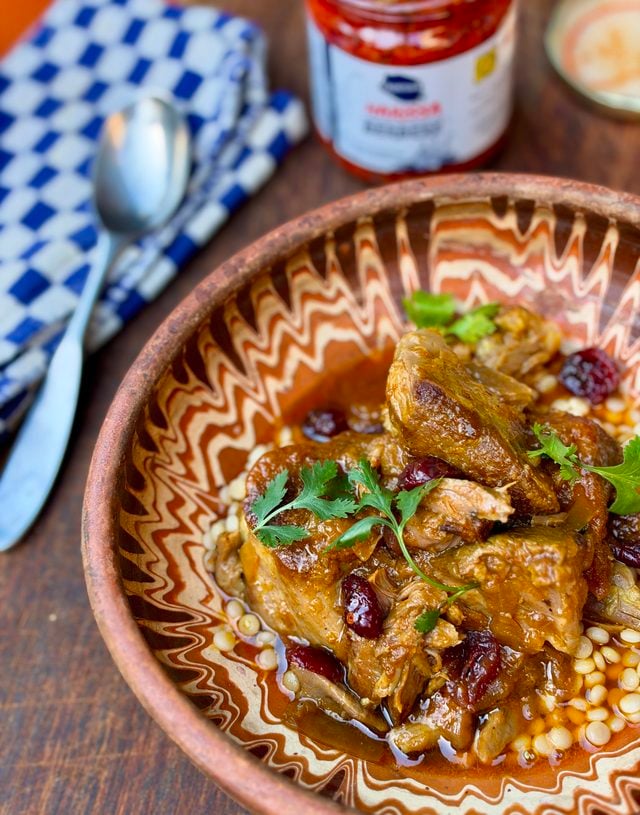
Lamb Tagine
Ingredients
- 1 lamb shoulder cut into 4 pieces
- 1 1/2 teaspoons kosher or sea salt plus more, to taste
- 1 medium onion minced
- 2 1/2 cups (600ml) chicken stock or water
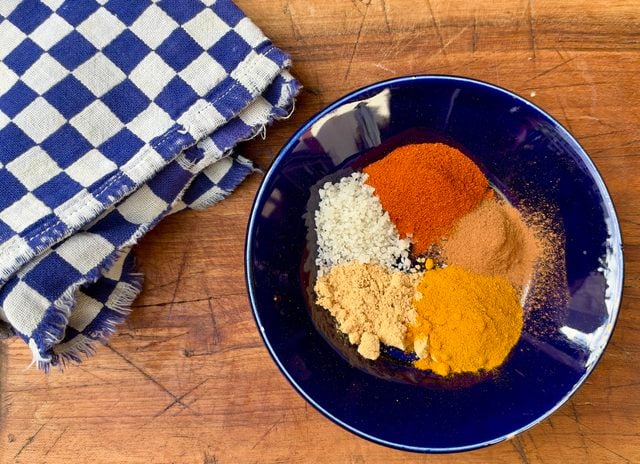
- 1 teaspoon ground ginger
- 1 teaspoon ground cumin
- 1 teaspoon ground turmeric
- 2 teaspoons paprika
- 1 teaspoon ground cinnamon
- freshly-ground black pepper
- 1 small bunch fresh cilantro tied with a string, plus a few sprigs for garnish
- a pinch of saffron threads (optional)
- 2 tablespoons tomato paste or one 14 ounce (400g) can crushed tomatoes
- Harissa for serving
Instructions
- Massage the pieces of lamb shoulder with the salt.
- Heat a few tablespoons of oil in a Dutch oven over medium-high heat, and sear the lamb pieces very well, turning them only after they’re nicely browned (this step adds flavor to the tagine.) As you cook the lamb pieces, don’t crowd them in. If your Dutch oven isn’t big enough to cook them all in a single layer at the same time, brown the lamb pieces in batches.
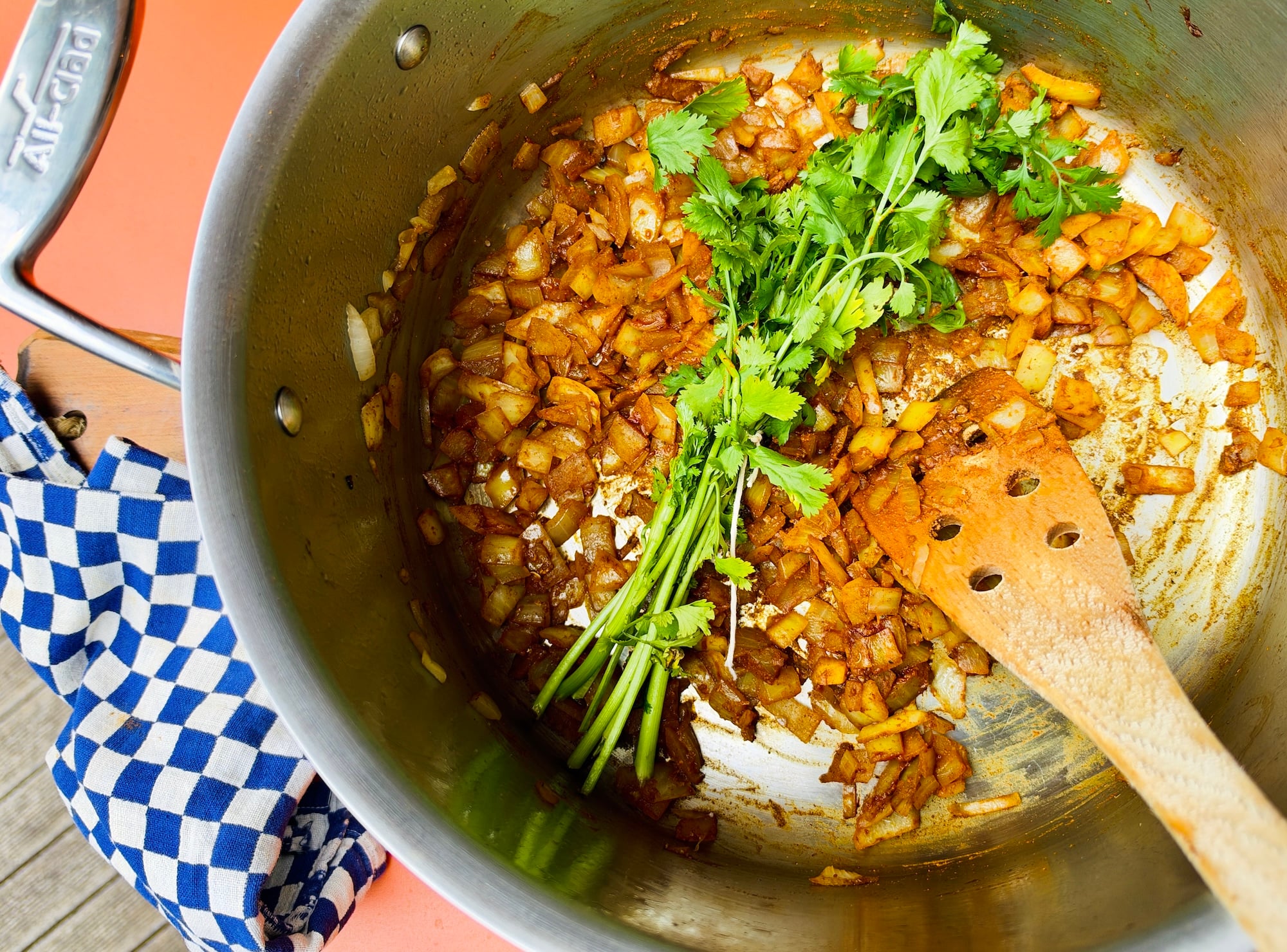
- Preheat the oven to 350ºF (175ºC). Once the lamb is browned, remove the pieces from the pot and set them on a plate. (If there is a lot of fat in the pan, you can remove some of it, but leave a film of it in the bottom of the pan.)Add the chopped onion to the pot and some of the stock (or water), then scrape the bottom of the pan with a flat wooden spatula to release the flavorful browned bits. Add the spices, the rest of the water, the bunch of cilantro, the saffron, if using, and the tomato paste or crushed tomatoes. Give everything a quick stir to mix everything together.
- Cover the pot and bake in the oven for 2 1/2 to 3 hours, turning the lamb over in the liquid a few times during baking. The liquid should just be simmering gently. If it’s boiling, turn down the heat. Add more liquid if necessary while it's cooking so the meat is half submerged in liquid. When the meat starts to fall off the bone, that’s when it’s ready. Taste the liquid and add more salt if desired.
- Pull the meat off the bones. Spoon the meat and some juices into bowls over a bed of couscous or pearl couscous (pasta). Garnish with a sprigs of fresh cilantro.
Notes

