❌

Reading view

DARVO is now in the dictionary. That’s a win for abuse survivors

In October 2017, just one day before The New York Times published its investigative report exposing his long career as a rapist, Harvey Weinstein blew into the newspaper’s offices with a phalanx of lawyers. The film producer was intent on attacking Ashley Judd, the actress, activist and humanitarian who is one of the authors of this piece, saying she had “mental issues.” For support, Weinstein brandished a photograph of the two of them taken in 1997 during the Oscar party his company Miramax hosted at Beverly Hills’ Peninsula Hotel. 

When she learned of his spectacle at the Times’ offices, Judd immediately recognized Weinstein’s slippery strategy as DARVO and felt a sense of relief. She knew there was language and a body of research that plainly identified and unpacked what can otherwise be a head-spinning distortion of reality. 

An insidious response tactic — it never happened, you’re a liar, you’re the one who hurt me — DARVO is intended to disorient the victim, painting them instead as the villain. It follows a predictable pattern: deny the harm, attack the credibility of the person who named the harm, and reverse the roles of victim and offender. The acronym, introduced to the world in the 1990s by Jennifer Freyd, another co-author, has grown in usage by individuals, media and institutions as an increasing number of people have come forward to report sexual assaults and harassment. Since then, DARVO has become so ubiquitous that it has now been canonized in the Merriam-Webster dictionary and added to its list of trending terms. 

DARVO was inspired by an infamous confirmation hearing. In 1991, Anita Hill testified before the Senate Judiciary Committee that Clarence Thomas, her former supervisor at the Department of Education and the Equal Employment Opportunity Commission, who was then a nominee for the Supreme Court, had sexually harassed her. Thomas and his supporters responded quickly. While he denied the allegations and claimed to be the victim of a “high-tech lynching,” Republican senators attacked Hill’s credibility and motivations — and Thomas was narrowly confirmed to the Court. Freyd, a psychology professor and trauma researcher, took notice. As she saw it, the collection of responses followed a specific pattern. Several years later, she introduced DARVO to the world in a research article. 

At the time, Freyd called her acronym capturing how perpetrators deflect responsibility “very speculative.” Thirty years later and a #MeToo movement later, it’s no longer speculation. A growing body of research, some of it conducted by Freyd and Sarah Harsey, another co-author of this column, has provided important insights into this tactic. A database tracking DARVO research now counts 33 peer-reviewed studies investigating it. 

The studies tell us that DARVO can shift observers’ beliefs about who is really to blame. This is a fundamental goal of DARVO-users: Convince others of your innocence.

The studies tell us that DARVO can shift observers’ beliefs about who is really to blame. This is a fundamental goal of DARVO-users: Convince others of your innocence. When study participants were exposed to a fictional perpetrator’s use of DARVO, they assigned less responsibility to the perpetrator and more responsibility to the victim. When a fictional perpetrator used DARVO to explain away sexual assault allegations, participants were less likely to say the perpetrator should face punishment and more willing to agree that the victim should be punished. 

This research is consistent with what happened during Thomas’ confirmation hearing. After he testified, Thomas gained credibility in the public’s eye. Hill’s credibility, on the other hand, was damaged. 

Research has also shown that DARVO is relatively common. When study participants were asked to report on their experiences confronting other people, nearly 72% had heard a denial, attack, and reversal of victim and offender. And the more DARVO participants heard, the higher levels of self-blame they felt. In a different study, exposure to DARVO was also linked to greater levels of psychological distress. Although these studies are correlational — which means it isn’t clear if hearing DARVO causes increases in self-blame or distress — they still suggest that being the recipient of DARVO is at least connected to worse well-being. 

But what do we know about people who use DARVO? In a survey of over 900 participants, people who used more DARVO to respond to confrontation also reported perpetrating more sexual harassment. One reason for this finding is that people who engage in bad behavior — like sexual harassment — may be accustomed to responding with DARVO as a way to get away with their actions. This survey also found that people with greater DARVO tendencies were more accepting of rape myths, which are common but inaccurate beliefs about rape that excuse the actions of perpetrators and place blame on victims. The connection here may be simple: People who personally engage in victim blaming agree that victims, including victims of rape, are blameworthy. 

As research continues to tell us more about DARVO, highly visible examples appear regularly in the news cycle. President Donald Trump, for instance, often reaches for denials, attacks, and victim-playing responses when faced with information that threatens his power or reputation. When talking about E. Jean Carroll — the writer whom Trump was found civilly liable for sexually abusing — the president has denied the sexual abuse, attacked her appearance, motives and sanity, and claimed to be the target of a witch hunt. Even Carroll herself couldn’t help but point out the pattern. In a 2019 interview with Anderson Cooper, she observed, “He denies. He turns it around. He threatens, and he attacks.”

Striking examples of DARVO can be found outside of the things political figures say. Beyond his noxious attacks on Judd, Weinstein has repeatedly used DARVO tactics in his many attempts to discredit the many women who come forward about his crimes. 


Want more sharp takes on politics? Sign up for our free newsletter, Standing Room Only, written by Amanda Marcotte, now also a weekly show on YouTube or wherever you get your podcasts.


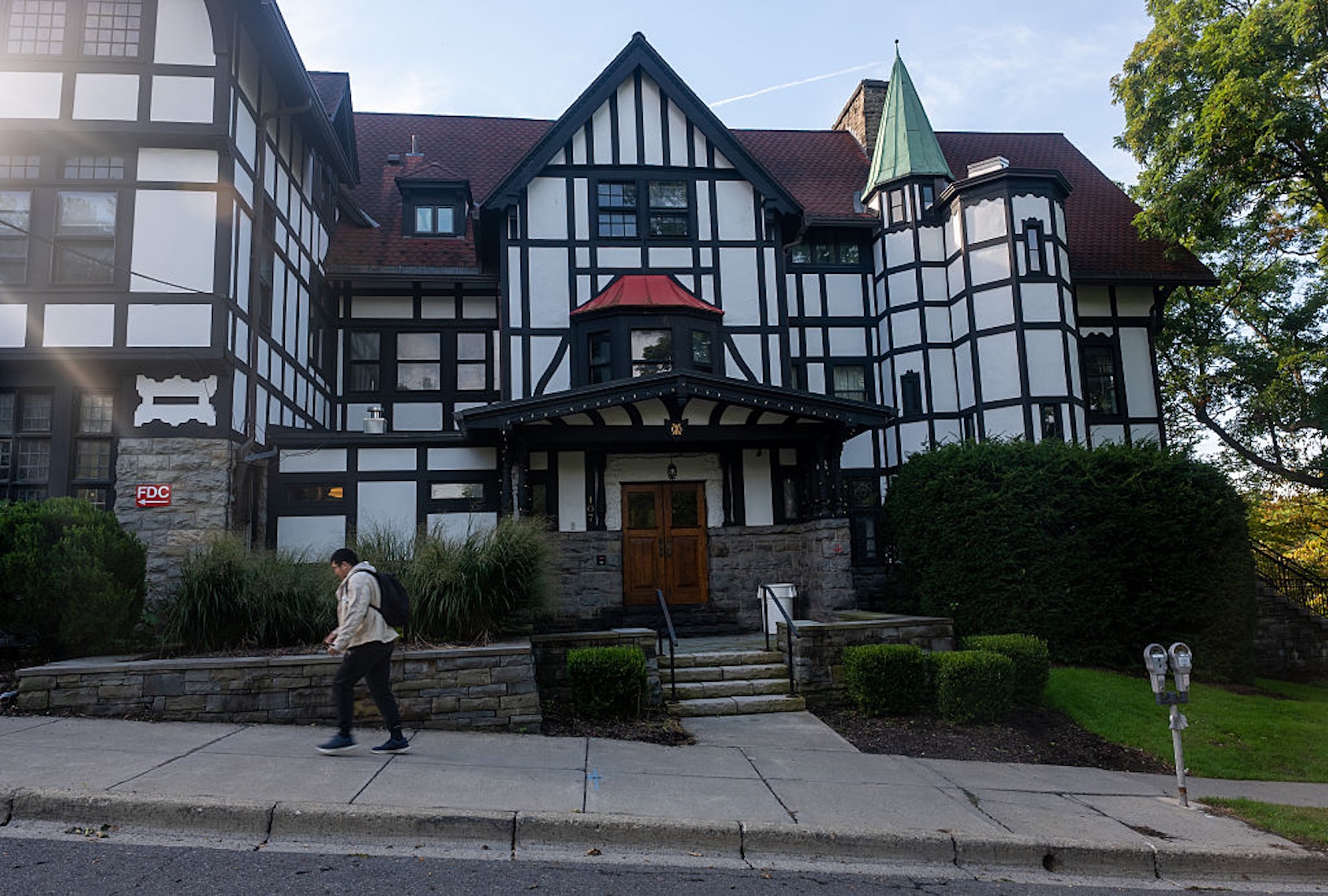
More recently, the investigation into the seven Cornell University fraternity members who are accused of sexually assaulting a female undergraduate has unleashed a torrent of DARVO against the student known as Jane Doe. A visible part of the discourse about the Cornell Seven reveals how some have flatly rejected the possibility that Doe was assaulted, attacked her credibility and her appearance, and labeled the case as a “hoax.” Sympathy for the fraternity members is not too hard to find, either; Trump himself shared that he felt “badly” for the accused men.

Many may wonder whether DARVO is a necessary response to an accusation. How else is someone supposed to respond? But DARVO is not inevitable. Someone can admit their responsibility for causing harm and sincerely apologize, which is the most constructive path for all involved. If someone is innocent of the accusation — or wants others to believe they are — they can respectfully deny the allegation without attacking or putting themselves into the victim role. Thomas, for instance, who had chaired the very agency charged with enforcing sexual harassment law, could have responded to Hill’s testimony by saying: “I do not remember the events in this way but I know these conversations about sexual harassment are important, and I want to understand your experience.”

DARVO poses a significant social problem. For even the smallest transgressions between two individuals, it’s antagonistic and fails to provide a productive resolution. On a larger scale, DARVO stands in the way of justice by encouraging a pervasive and hostile disbelief of victims. Even our institutions can use this chilling tactic, resulting in a particularly harmful form of institutional betrayal. This may be one reason many people fear coming forward to seek accountability and are effectively silenced. 

Two stories of institutional betrayal were prominently featured in the 2015 documentary “The Hunting Ground,” which investigated sexual assault on college and university campuses. In 2007, during her freshman year at the University of North-Carolina, Annie Clark reported being sexually assaulted to campus officials. One employee compared rape to football. Annie was the quarterback; what could she have done differently? She had come seeking support and instead found herself being asked to account for her own supposed failure. Four years later, while a student at Harvard Law School, Kamilah Willingham encountered a struggle for accountability after reporting a sexual assault. 

The stories of Clark, Willingham and others brought institutional betrayal painfully close: the place where you hoped to learn, belong and flourish can become another place entirely, one where you must fight to be heard.

When the documentary was recently screened at Harvard — one of the institutions whose responses it challenges — those stories were given particular force. They also offered a lens for examining institutional responses at Cornell University, the University of Chicago and beyond. 

DARVO helps us name how institutional self-protection can become an attack on the person seeking help: deny responsibility, undermine the survivor’s credibility and cast the institution or the accused as the injured party. The student asking for protection becomes a threat to someone else’s future or reputation. Freyd has identified this institutional DARVO as a particularly harmful form of institutional betrayal.

But the film also follows Clark and her colleague Andrea Pino building a network of survivors who refuse to leave one another alone with these experiences. Universities could learn from them. The Center for Institutional Courage’s 12 steps call on institutions to welcome truth-tellers, respond well to disclosures, acknowledge harm and sustain the resources needed for change. Imagine the difference if a student’s disclosure was met with care — and a commitment to stay for the work of accountability and repair.

This underscores the good news of what we have learned: DARVO loses some of its power when people know what it is.

This underscores the good news of what we have learned: DARVO loses some of its power when people know what it is. In one experiment, some participants read a one-paragraph explanation of DARVO — what it stands for and why perpetrators may use it — before reading a fictional scenario in which a perpetrator used the tactic. Compared with participants who had not read the explanation, DARVO-educated participants believed the victim more and supported the perpetrator less.

Institutional DARVO can be combated, too, with institutional courage. By taking actionable steps such as cherishing whistleblowers, practicing transparency, and committing to seek truth and engage in moral action, institutions can act in ways that restore trust and help people who have been harmed come forward.

Judd has described the effect in her own life. “When I know I’m being attacked, I immediately remind myself that that is a common strategy,” she told The Hollywood Reporter in 2017. “It’s DARVO.” 

This is why Merriam-Webster’s entry for DARVO matters. Its presence in the dictionary makes the term available to a wide audience; anyone can look it up and learn what it means. This access is especially important for victims who have been made to doubt themselves, who can now more easily reach for a term that shines a light on their experiences. It also offers a critical reassurance: No, you’re not crazy — you’re being DARVOed. The tactic’s efficacy depends on a confused audience, and every person who learns about the acronym is a little bit harder to fool.

The post DARVO is now in the dictionary. That’s a win for abuse survivors appeared first on Salon.com.

  •  

A tale of two election ads offering different visions for America

“My name is Abdul; it means servant.” So begins the most compelling ad of this year’s election cycle. Dr. Abdul El-Sayed speaks, simply and directly, to the camera. Seated in a brown leather armchair while holding a coffee mug, Michigan’s Democratic Senate nominee lays claim to his Muslim faith in straightforward, affecting terms. 

“I pray everyday,” he says. “I reflect on my role in this life, on this earth, how we leave it better than we found it, to serve God, to serve our neighbors.”

A cloud of suspicion, much of it tangled up in his ethnicity and religion, has hovered over El-Sayed’s candidacy. The othering has been both blatant and subtle. In August, I spoke with Sen. Tommy Tuberville, R-Ala., as he made his way from the Capitol subway to his Senate office the day after El-Sayed’s primary win. Tuberville told me the Michigan Democrat was “a cheerleader for 9/11” and “basically” a terrorist. A pair of debates has seen El-Sayed’s Republican opponent, former Rep. Mike Rogers, accusing him of being “bought” by and “pledg[ing] his support” to the Muslim Brotherhood, claims that are unfounded. Others, including wavering centrist Democrats such as party strategist James Carville, who recently gave El-Sayed a reluctant endorsement, have pointed to the nominee’s attacks on Israel over the Gaza war as evidence that he is hostile to Jews and Judaism. More broadly, anti-Muslim rhetoric and attacks are becoming a defining feature of the GOP.

El-Sayed’s ad, released last Sunday, is entitled “Prayer” and marks an obvious attempt to refute those accusations and change the conversation — to persuade hesitant voters in the final days of this tight race to pull the lever for him. As El-Sayed speaks, snapshots roll. He stands with a voter, who points across the river, a subtle message of an aspirational future. There is El-Sayed standing and holding hands in prayer with a group of Black churchgoers. A menorah and a humble church flash on the screen. And then there’s the candidate himself, standing alone in prayer, his head bowed. 

El-Sayed connects his belief to a national crisis of faith embodied in Washington: “We don’t have faith in our future; we don’t have faith that we can actually fix things.” Then he returns to his own candidacy. “I’m Abdul El-Sayed,” he says at the end. “A man of faith — and that’s a good thing.”

The ad offers a reason for his candidacy and life of public service, and ends what has been a tumultuous campaign on a grace note — and with an implicit promise. Everyone is welcome in my coalition, El-Sayed is saying, I’ll protect you.

A good election spot offers an appeal to voters by telling a story, and “Prayer” certainly does that. But there are other ingredients that can boost a political ad to the realm of greatness. In a positive ad, voters are offered an intimate look into the candidate’s reason for running. “Prayer” also does that, and therein lies its true power. It shows a different side to El-Sayed, whose refusal to back down from a fight and ability to cut through the noise, as Salon’s Amanda Marcotte recently wrote, “terrifies MAGA.” The ad offers a reason for his candidacy and life of public service, and ends what has been a tumultuous campaign on a grace note — and with an implicit promise. Everyone is welcome in my coalition, El-Sayed is saying, I’ll protect you. 

Even though “Prayer” is targeted to Michigan voters, it cannot be divorced from what’s happening nationally. It adds El-Sayed to an emerging list of Democrats who, as unabashed members of the religious left, are comfortable talking about their faith openly. Most, such as Texas U.S. Senate candidate James Talarico, Kansas U.S. Senate nominee Adam Hamilton, former Transportation Secretary Pete Buttigieg, Georgia Sen. Raphael Warnock, Kentucky Gov. Andy Beshear and Maryland Gov. Wes Moore, are Christian. Others, such as Georgia Sen. Jon Ossoff and Pennsylvania Gov. Josh Shapiro, are Jewish. By attaching his name to those ranks, El-Sayed is staking out important space for Muslims in public life.

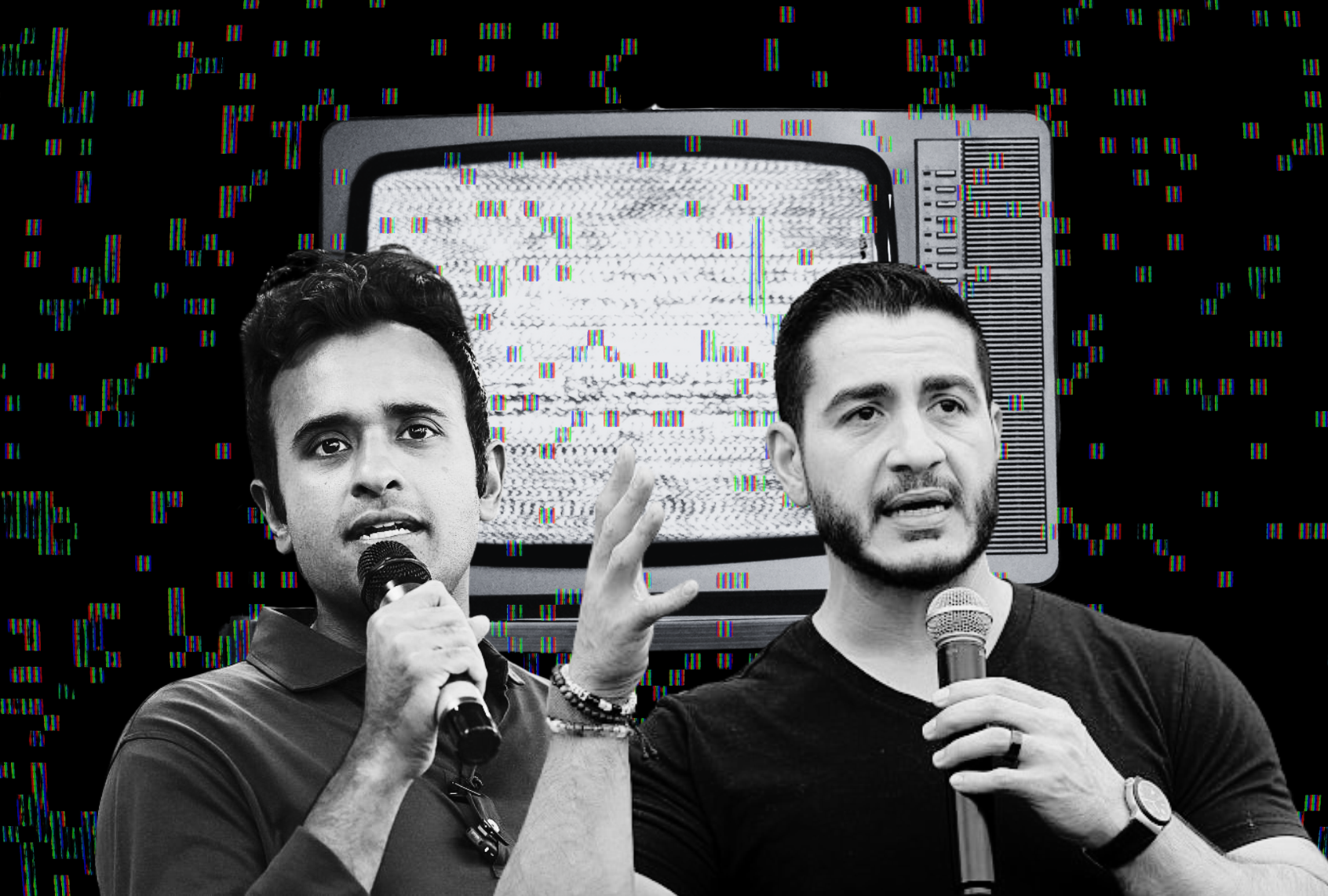
But there’s more to it than just his religious and ethnic identity. The ad’s message serves as a proxy for the stark choice facing voters across the country, and just south of the Wolverine State’s border. In Ohio, Vivek Ramaswamy, the Republican nominee for governor, funded and produced an ad attacking Dr. Amy Acton, his Democratic opponent, and featuring her own mother.

The spot, released only 24 hours after El-Sayed’s, carries a message that is the direct inverse of the Michigan candidate’s. Rooted in cruelty and scripted with a lashing of DARVO, a tactic easily recognizable to victims of abuse — Deny, Attack and Reverse Victim Offender order — the ad is uncomfortable to watch, and vile. 

Viewers see an elderly woman looking into the camera and identifying herself as Donna Arthur. “It’s not easy for a mother to say this,” she says, “but Amy has a serious problem: she is a liar.” Arthur goes on to attack her daughter’s credibility, but without producing any evidence beyond her own testimony, which is severely imperiled by a documented history of her own actions.

Arthur has been estranged from her daughter since 1978, when the 12-year-old Acton accused her stepfather of raping her. According to court records, Cledith Arthur was arrested and charged with the crime, but fled the state before being tried. When his wife supported him, branding young Amy Acton a liar, both the girl and her younger brother were removed from Donna Arthur’s custody and raised by their biological father. In a statement released by her campaign, Acton’s brother stood by his sister’s account and branded Ramaswamy’s campaign “despicable” for turning the abuse Acton says she suffered “into a political talking point.”

In the ad, Arthur does not mince words. “My daughter needs help,” she says, “and she can’t help you if she can’t help herself . . . Don’t vote for people who lie; don’t let her become your governor.”


Want more sharp takes on politics? Sign up for our free newsletter, Standing Room Only, written by Amanda Marcotte, now also a weekly show on YouTube or wherever you get your podcasts.


Setting aside Arthur’s agency and the willing role she played in the ad, Ramaswamy has chosen to retraumatize his opponent before the eyes of millions of voters. By platforming a woman who is, at the very least, an enabler and accomplice to the alleged sexual assault of a minor, if perhaps only in the aftermath, he is sending a chilling signal to victims of abuse in Ohio and throughout the U.S.: There are consequences to speaking up.

But if Ramaswamy’s behavior wasn’t bad enough, Donald Trump and JD Vance had to get in on the act. Vance, who as an Ohioan has particular skin in the game, positioned himself alongside Ramaswamy as a truth-teller, saying he “wasn’t even supposed to talk about” the ad but “couldn’t help himself.” The vice president went on to praise the candidate for having the “audacity to run a TV commercial which calls it out like it is and calls Amy Acton a liar.”

On Thursday, the president was even more crass, calling the ad an example of “hitting pay dirt.” Ramaswamy, he wrote on Truth Social, “should keep it up, and let everyone listen to the mother of a defective, dishonest, and incapable Candidate, explain how the daughter is a DISASTER who, uncontrollably, lies, cheats, and steals! I only wish the mothers of my opponents would be so brave.”

A handful of other Republicans, including outgoing Gov. Mike DeWine and former Ohio Rep. John Kasich, decried the commercial and said it should be taken down.

There is no other word for the behavior of Ramaswamy and MAGA leaders: It is personally and publicly cruel, and the message it sends acts as a reveals far too much about Republican policies and the political leaders who advance and implement them. In their world, victims are treated with disdain and abusers defended while the American people are subjected to severe economic and psychological mistreatment. 

The cost-of-living crisis is ignored, all because a vainglorious president decides to wage an unnecessary war in Iran. The healthcare of millions is stripped away to line the pockets of the wealthiest. The rights of women, people of color, immigrants and LGBTQ+ Americans are under assault because of leaders and voters who want to hoard their privilege. 

Against this backdrop, El-Sayed’s ad stands as a balm for voters who long not just for a fighter, as he has well demonstrated he is, but also for a leader who is unafraid to lead with compassion and humility. It’s too early to know if his appeal will result in success at the polls. But the ad, in contrast to Ramaswamy’s, nonetheless underscores what’s at stake in the midterms: a choice between faithful service and abject cruelty.

The post A tale of two election ads offering different visions for America appeared first on Salon.com.

  •  

Dem Candidate In Arizona: My Rape Was Not A ‘Hoax’ Concocted for Votes

Bernadette Greene-Placentia would like you to know the story of her rape is not an “October Surprise.” 

She did not conspire with the media to publish the graphic details of her sexual assault on the same day early voting ballots were sent out to voters in Arizona. Her harrowing account of being bludgeoned and violated by two men in the middle of the night in a suburban parking lot is not a “hoax” she concocted to win over voters’ sympathies. Her fragmented memories of the attack, and her initial reluctance to go to authorities, are not evidence of an elaborate lie, nor of a nefarious Democratic plot to wrest control of Congress, as some right-wing influencers have suggested. It was hard enough coming forward to say she was raped, she told TPM. Now she has to contend with all these men, with millions of followers online, loudly asserting that maybe she wasn’t. She can’t help but remember that these men publicly trying to poke holes in her story have mothers. “Is this really how you were raised?” she wants to ask them.

  •  

Arizona House candidate said she was raped while fixing campaign signs

This story was originally reported by Jasmine Mithani of The 19th. Meet Jasmine and read more of their reporting on gender, politics and policy.

Content warning: This story references incidents of sexual assault.

Bernadette Greene-Placentia, a Democratic candidate for Congress in Arizona, shared publicly for the first time that she was raped while fixing campaign signs over the summer. 

Greene-Placentia told her story to the local outlet Phoenix New Times, which published the account on Wednesday. 

She said an attacker knocked her out around 2 a.m. on August 14, a date confirmed by the campaign to ABC News, while she was out fixing her campaign signs to avoid the daytime heat and traffic. When Greene-Placentia came to, she said a man was pulling his penis out of her. She said that another man came over and began touching her, but that he backed off after she fought back. 

Somehow, she made it home. “I just wanted to forget it,” Greene-Placentia told Phoenix New Times. 

Redistricting had impacted the home Greene-Placentia shared with her husband, so she found another place to stay within Arizona’s 8th Congressional District. Her husband and campaign manager told Phoenix New Times that she disappeared for two days after the alleged assault. The only person who saw her those two days was her landlord.

She initially didn’t want to report: “I’d always considered myself a strong person, and so I was embarrassed,” she told a local ABC affiliate in a video interview. But two weeks later she called the Maricopa County Sheriff’s Office and told them what happened. 

Rape is chronically underreported.  Survivors may not report their assault to law enforcement for any number of reasons, including a fear of retaliation, not believing the police would help and not believing the crime was important enough. Of the rapes that were reported, data from the FBI shows fewer than 1 in 3 rape cases have been cleared since September 2021. 

Greene-Placentia is speaking out now, she said, because “I need to let women know that it’s okay to talk about it.” 

On Wednesday, a campaign spokesperson told The Guardian: “She chose to share her story because she knows many survivors struggle in silence, and she hopes that by speaking about her experience, others will know they are not alone.” 


Start your day with essential news from Salon.
Sign up for our free morning newsletter, Crash Course.


“She hopes the focus remains on supporting survivors and making sure people who have experienced sexual violence know they are seen, heard and supported.”

The investigation is ongoing. Greene-Placentia said she has struggled to remember details; scientists have shown how severe trauma can impact memory. 

There isn’t any confirmation of whether Greene-Placentia’s attackers knew who she was or if the violence was tied to the House race. She was wearing a campaign shirt when she was attacked and was repairing campaign signs, but Greene-Placentia told the local ABC News affiliate that there was no way to know, and that it could have been a crime of opportunity. 

The violence may not have been partisan, but gender-based violence is political. Studies have shown that nearly all women lawmakers experience harassment, despite being a smaller portion of representatives, and threats of violence prevent women from running for office. 

Politics isn’t her first foray into a field where women are underrepresented. Greene-Placentia is a long-haul trucker and runs her own business. Her campaign platform includes strengthening and fully funding SNAP, supporting abortion rights and expanding paid family leave. She also talks about affordability and increasing border security. 

Greene-Placentia is challenging the Republican incumbent Abe Hamadeh. Winning is a long shot;  the Cook Political Report rates the district as “Solid Republican.” 

Hamadeh’s campaign provided the following statement to ABC News: “I have read the disturbing story and call upon authorities to investigate these serious allegations thoroughly, including finding all possible camera footage of the time and place in order to prosecute the crime to the fullest extent of the law. No American should become a victim of a crime in their own community.”

If you or a loved one have experienced sexual assault and are in crisis, please call RAINN (the Rape, Abuse & Incest National Network) hotline at 1-800-656-4673 or reach out to the 24-hour chat service at rainn.org. LGBTQ+ people experiencing any type of violence can call the Anti-Violence Project’s hotline at 212-714-1141 Monday through Thursday 10 a.m. to 6 p.m. Eastern or Friday 10 a.m. to 2 p.m. Eastern.

The post Arizona House candidate said she was raped while fixing campaign signs appeared first on Salon.com.

  •  

What Cornell says about universities’ MAGA complicity

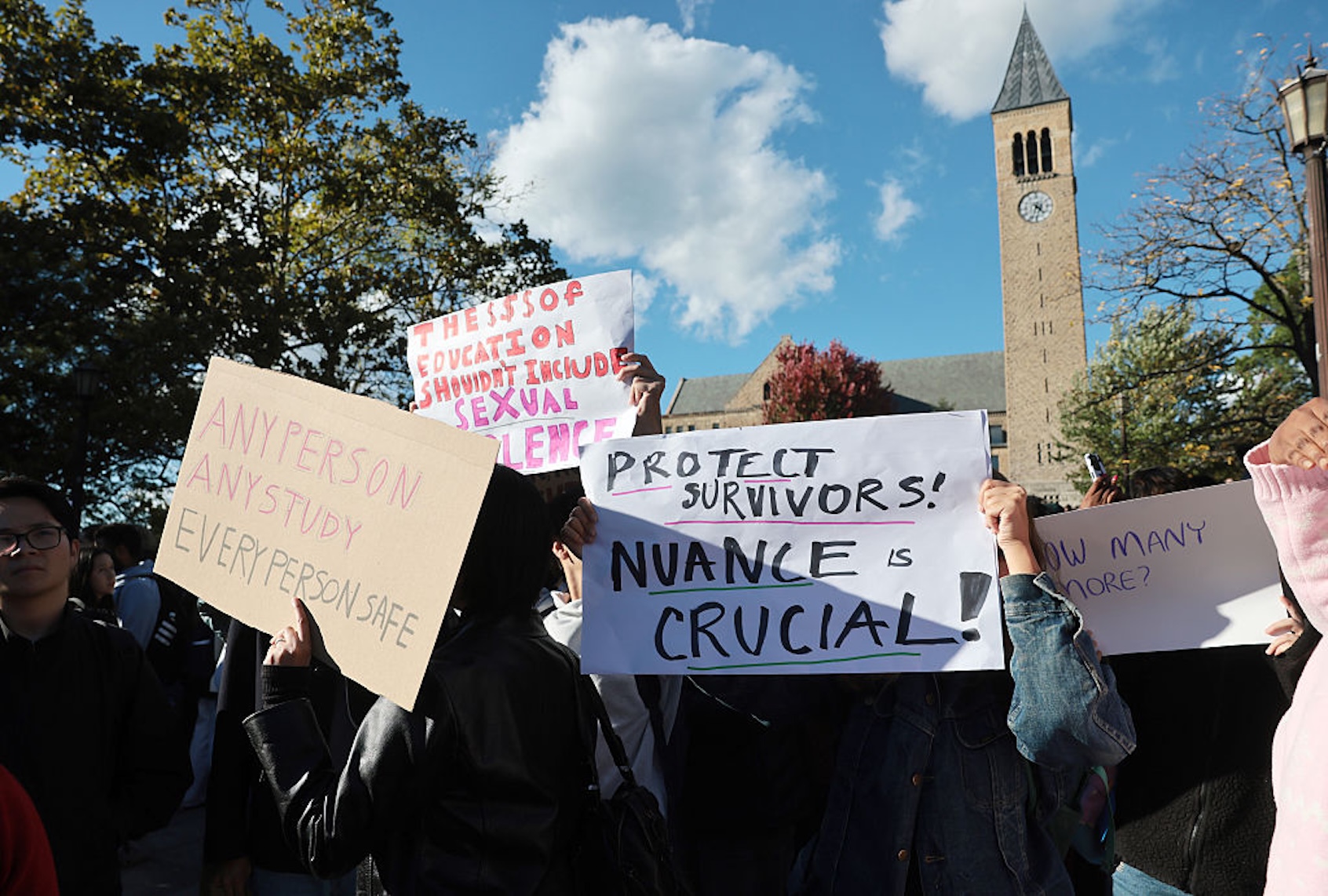
In the wake of a national story of an alleged gang rape at the Chi Phi fraternity house at Cornell University in October 2024, both students and faculty are turning their ire on the Ivy League school’s administration. On Monday, thousands of students and faculty members marched on the office of Michael Kotlikoff, who became the university’s president a few months before the alleged rape, with chants of “Resign!” The night before, graffiti appeared on his office building reading, “At Cornell, rapists are protected, protesters are expelled,” a reference to students who were suspended for protesting Israel’s war on Gaza. The university’s faculty senate is preparing a vote of no confidence on the administration’s leadership over claims that the school mishandled the rape allegations after the alleged victim, called Jane Doe, made a report to the campus police. 

The whole debacle has refreshed interest in the previous big controversy of Kotikoff’s brief but eventful presidential tenure: Cornell’s $60 million settlement with Donald Trump’s administration, which was announced in November 2025. The agreement was widely lambasted as a capitulation to the White House’s all-out war on diversity, equity and inclusion programs. Not only did the university implicitly concede that programs meant to help women and minorities are discriminatory against white men, they agreed to hand over data on race in admissions to the Trump administration and impose anti-DEI materials, provided by the White House, on faculty and staff. 

After the settlement was announced, the American Association of University Professors said in a statement that the agreement would “threaten some of the most vulnerable students on campus and invite ongoing federal government supervision to reduce the diversity of Cornell’s student body.” In July, the organization published an extensive report comparing the administration’s war on DEI to the Red Scare of the 1950s and called on university leadership to resist the Trump administration’s efforts to destroy racial diversity and gender equity efforts on campus. 

As the AAUP report shows, Cornell was far from the only university to cave to Trump; the norm for colleges and universities was rapid compliance. Diversity offices were shut down. Progressive student protesters were bullied and punished. Title IX protections, including rules protecting students from sexual harassment and abuse, were scaled back. Anecdotes have spread from faculty and students about a new chill descending over college campuses — a fear of retaliation for acknowledging the ongoing realities of racism, sexism and homophobia on campuses and in larger society. 

The fallout from the Cornell assault accusations, however, suggests that it may have been more than fear that was compelling this swift bending of the knee by many universities to Trump. There is also a degree of complicity. Progressive reforms to make campuses more welcoming to women and minority students are often a hassle for university administrators, even those ideologically who are aligned with the left. It means conflicts with board members, donors and alumni with more conservative leanings. It means having to handle student complaints of harassment, discrimination and even sexual abuse that would be easier to sweep under the rug. It means having to confront institutions — like fraternities — that reinscribe racism and sexism but are often simultaneously protected by the most elite and wealthy people connected to the universities. Giving into the Trump administration on DEI means being able to revert to older, easier ways of doing things — even if it comes at the expense of student freedom and safety. 


Want more Amanda Marcotte on politics?  Sign up for her free newsletter, Standing Room Only, now also on YouTube or wherever you get your podcasts.


It’s worth remembering that Jane Doe filed her complaint before Trump was president. Her case has all the hallmarks of an institution that tried to make her go away. Cornell police excluded relevant language — including the unambiguous phrase “I was raped” — from their report to the district attorney on Doe’s statement. Her lawyer claims that the university made her believe that the authorities were pursuing a criminal investigation, even though her case had already been closed. As Cornell philosophy professor Kate Manne noted in an essay for New York magazine, the university’s student code of conduct has a stricter definition of rape-by-intoxication than New York State’s, which would seem to cover the situation alleged here, where a woman is as high and drunk as Doe admits she was. And yet only five of the seven men accused were expelled from school, even as she was forced to drop out due to the subsequent stress and anxiety. 

Kotlikoff has a public record of flirting with “anti-woke” backlash. Last year, he wrote an op-ed for the New York Times that framed “free speech” as a conservative concern and censorship as a leftist phenomenon, bragging about how his school had invited Ann Coulter and other right-wing speakers to campus, despite student protests. But as reader Michael Handelman wisely pointed out in a letter to the editor, “I was troubled by what he didn’t say. Right now, the greatest threat to academic freedom is the Trump administration.” Kotlikoff’s omission was telling, and left the reader with the impression that a few student protesters are a bigger threat to free speech than the heavy boot of the federal government stomping on academic freedom, which the administration was doing by suing Cornell in the first place. 

If Cornell is guilty of abandoning Jane Doe, it has no reason to fear consequences from the federal government for failure to enforce Title IX protections against sexual abuse on campus.


Earlier this year, Kotlikoff made news by bumping student protesters with his car, claiming he was the victim of “harassment and intimidation, with the direct motive of silencing speech” — an odd statement, as student protest is a form of protected speech. In this case, the students were asking Kotlikoff about the suspensions of pro-Palestinian protesters, which also put them on the “pro” side of the free speech issue the Cornell president claims to hold so dear. The board of trustees cleared Kotlikoff in its investigation and blamed the students, but the student protesters accused the board of bias. 

If Cornell is guilty of abandoning Jane Doe, it has no reason to fear consequences from the federal government for failure to enforce Title IX protections against sexual abuse on campus. As the New York Times reported this week, the Trump administration barely enforced the law during his first term. In his second term, enforcement is basically nonexistent. According to analysis by the Washington Post, Cornell’s track record is already alarming. From 2018 to 2024, there were 1,216 reports of sexual assault, domestic and dating violence, and stalking on campus. Only 51 people were ever found responsible, and of those, fewer than half faced serious consequences.

Jane Doe reported her alleged rape a few days after Trump got elected. With that history in mind, Cornell police and administrators could have had every reason to believe there would be no federal repercussions if they failed to reach a just outcome in her case.

Jane Doe’s lawyer, Thomas Giuffra, told CNN that his client “was not somebody who was a legacy [student], from a wealthy family” and “came from a small town.” Fraternities, in stark contrast, enjoy immense protections from exactly those wealthy people from legacy families. As historian Nick Syrett, author of “The Company He Keeps: A History of White College Fraternities,” told Time, former fraternity members are “a base of alumni that universities don’t want to upset because they’re generous and they’re powerful.” Whatever an administrator’s personal feelings, in a situation like this, it is objectively easier to cut loose an alleged victim rather than take on alleged assailants who are well-connected to powerful elites.

From a purely self-interested point of view, the Trump administration’s demands that schools give up policies and programs to help women and minority students is a win-win for administrators. It allows school leaders to give up a miserable, uphill battle against elite forces, while handing them a way to deflect blame onto the White House for forcing them into it.

We can’t peer into the hearts of administrators and know the exact mix of complicity and fear that drove these capitulations. But the Cornell case is a stark illustration of why the prospect of letting Trump have what he wants has a dark allure. 

The post What Cornell says about universities’ MAGA complicity appeared first on Salon.com.

  •  

The Cornell case is exposing a legal gap around intoxication and sexual assault

This story was originally reported by Shefali Luthra of The 19th. Meet Shefali and read more of their reporting on gender, politics and policy.

The reopened criminal investigation into an alleged gang rape at Cornell University has sharpened scrutiny on voluntary intoxication laws, which make it harder to protect assault survivors if they chose to drink alcohol or use drugs at the time of the attack. 

A former Cornell student identified as Jane Doe said she arrived intoxicated at the Chi Phi fraternity house in October 2024. In a civil lawsuit filed in September, she said that she was then drugged and sexually assaulted by multiple fraternity members while incapacitated. 

But voluntary intoxication laws, which are in place around the country, say that if the person who was assaulted chose to become intoxicated, they are capable of consenting to sex, so sexual assault laws do not apply. The county’s district attorney, who announced Monday his office would reopen an investigation into the alleged assault, cited New York’s laws around intoxication and consent in explaining why he initially did not pursue criminal charges. These laws are in place in states around the country. 

Here is how these laws work and how they affect sexual assault prosecutions.

What are voluntary intoxication laws?

Individual states handle sexual assault law differently. Most states say that being intoxicated may prevent someone from being able to consent to sex, but not all of them do. Without that explicit provision, it can be much harder to prosecute sexual assault that occurred when the person assaulted was drinking or using drugs.

According to the Associated Press, 19 states say that an intoxicated person is only considered incapacitated — and therefore unable to consent — if they were given drugs or alcohol without knowing. New York, where Cornell is located, is one of those states.

That means that if someone chose to consume alcohol or drugs and then was sexually assaulted, it can be harder to pursue criminal charges.

“In these states where these laws are still persisting for some reason, they still want to continue to be holden to this notion that somebody who is inebriated deserves to be punished, or has it coming for them, so to speak,” said Dr. Chinmoy Gulrajani, a professor at the University of Minnesota Medical School who has studied these laws.

Which states have these laws? 

  • Connecticut
  • Delaware
  • Florida
  • Hawaii
  • Indiana
  • Kentucky
  • Maine
  • Mississippi
  • Missouri
  • New Hampshire
  • New York
  • New Jersey
  • North Dakota
  • Oklahoma
  • Pennsylvania
  • Tennessee
  • Utah
  • West Virginia
  • Wyoming

How did this come up in the Cornell case? Has it come up in others? 

Tompkins County District Attorney Matthew Van Houten — who had authority to pursue criminal charges — cited New York’s voluntary intoxication law in explaining why he initially did not do so.

“Under New York State Law, ‘mental incapacitation’ occurs when a victim is rendered incapable of controlling her own conduct due to the administration of a drug without her consent,” Van Houten wrote in a statement released Monday. “The facts provided by Jane Doe’s statement do not allege that she was either rendered incapable of controlling her own conduct or that any drug was administered to her without her consent.”

This provision has come up in other cases. 

Last year, Texas lawmakers changed their definition of sexual assault to include voluntary intoxication based on the experience of a woman named Summer Willis, who said she was raped at a fraternity party 10 years prior after accepting a drink that she believes was laced. 


Start your day with essential news from Salon.
Sign up for our free morning newsletter, Crash Course.


Prosecutors had said that because she accepted a drink, the incident would not, at the time, have been considered sexual assault.

What do we know about alcohol and sexual assault, including on college campuses?

Research shows that drinking alcohol can impair people’s ability to make decisions about or consent to sex. Studies have repeatedly found that in most sexual assaults, someone — the person who committed the assault or the person assaulted — consumed alcohol. The figure is higher for sexual assaults on college campuses. 

One paper, published in 2019 by Johns Hopkins University using data from the American Association of Universities, found that close to 80 percent of men or women who were assaulted said they had been drinking before the incident. About 60 percent of trans, genderqueer or nonbinary respondents said they had been drinking before. In most cases, the person who perpetrated the assault had also been drinking.

People who have been drinking or using drugs can, in some cases, consent to sex. But broadly over the past decade, there has been a societal shift toward understanding that people who are more heavily intoxicated cannot do so, Gulrajani noted.

“With more, better sex education regarding consent, some guidelines have been set down about informed consent, especially when it comes to sexual matters,” he said. 

Have there been changes in sexual assault prosecutions?

It’s not clear what consequences that cultural shift regarding consent has had — including whether it has changed how sexual assaults are handled in the justice system. 

In fact, a paper published in 2022 in the Journal of the American Academy of Psychiatry and the Law noted that when someone was assaulted after being intoxicated, police and prosecutors are less likely to follow up with rape allegations. Conviction rates are lower than when the person assaulted was sober. 

“Gendered roles about consensual sex and rape myths, such as that intoxicated women are more sexually available than sober women, may alter a juror’s opinion about voluntary intoxication,” the authors of that paper wrote.

But laws are starting to change. In the past five years, at least three states — Minnesota, Michigan and Texas — have changed their laws so that they do not differentiate based on whether someone had voluntarily become intoxicated. Those changes have largely been the result of public scrutiny after high-profile cases of sexual assault, such as in the Texas case.

Bills have been introduced in other states to make similar changes, Gulrajani said. In New York, legislation has been put forth every year since 2019 to make it easier to prosecute these cases. It has never passed. But the attention on the Cornell case could spur action, he said.

“The court of public opinion is the most consequential for politicians and legislatures,” he said.

The post The Cornell case is exposing a legal gap around intoxication and sexual assault appeared first on Salon.com.

  •  

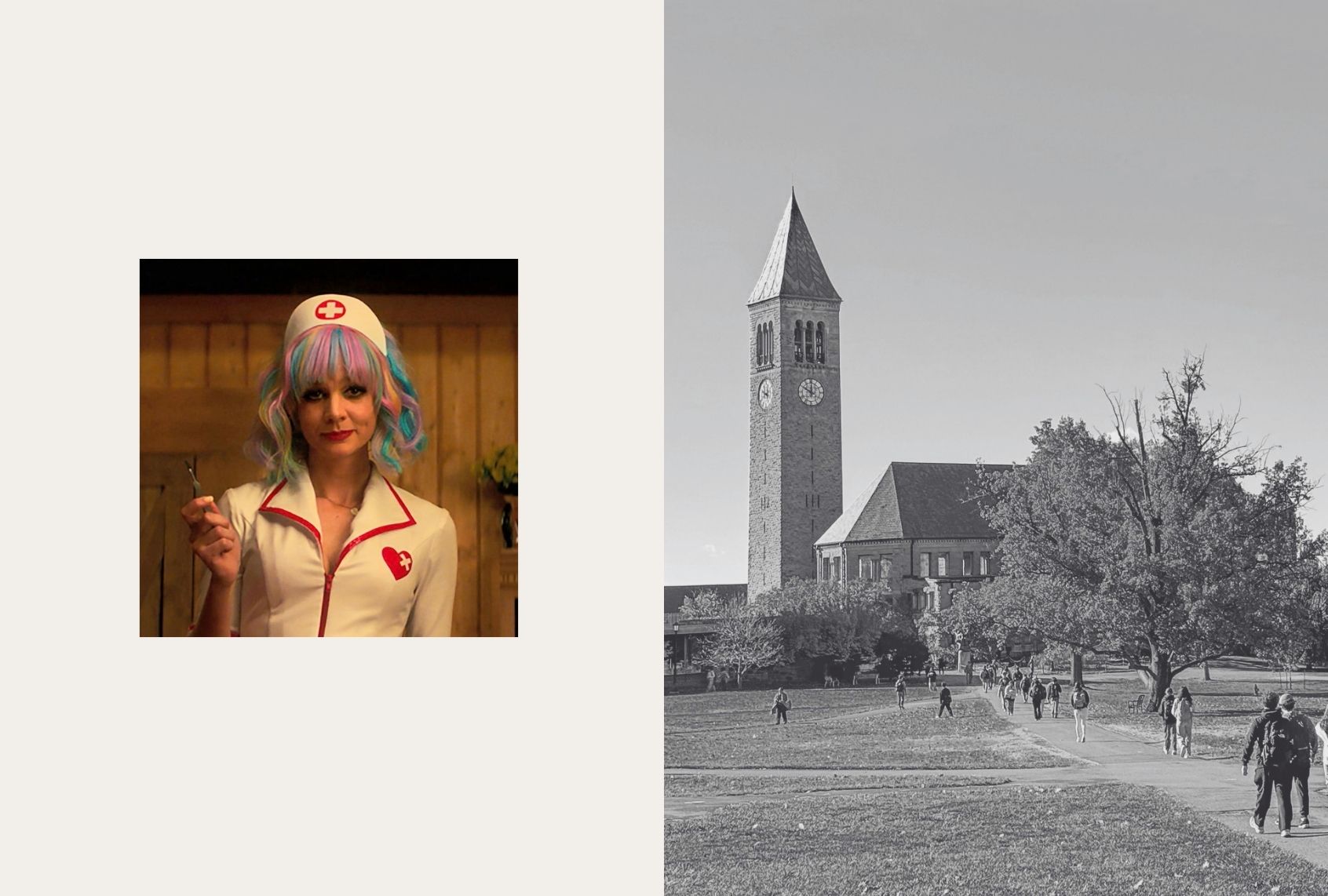
The Cornell case puts “Promising Young Woman” back in focus

It makes perfect sense that Emerald Fennell’s debut film, “Promising Young Woman,” is divisive. In fact, divisive isn’t quite the right word. Since its 2020 release, “Promising Young Woman” has become a lightning rod for heated conversation — quite a far cry from its initially warm reception, which led to five Oscar nominations and one win. 

Much of this radioactivity results from Fennell’s proclivity for pushing buttons (a habit I defended earlier this year). But in the case of “Promising Young Woman” — about Cassie (Carey Mulligan), a directionless 30-year-old who spends her free time pursuing cosmic justice for her late best friend Nina, whose death was the byproduct of a brutal sexual assault — the discourse is understandable. Fennell wanted to make audiences uncomfortable right out of the gate. And to create this air of discomfort, Fennell crafted a movie that darts from hopeful to despairingly bleak in the blink of an eye. 

Fennell’s acid-tongued rape-revenge film is caustic and cruel; a feel-bad film for, as Salon described it then, “the #MeToo times.” And though Cassie’s extracurricular pursuits echo that cultural reckoning, some distance reveals that “Promising Young Woman” is less about justice than protection. Revisiting the movie through this lens offers plenty of important wisdom that its detractors were quick to shrug off. But what’s tragic is that such a reappraisal has come at the cost of another woman’s safety.


Want more from culture than just the latest trend? The Swell highlights art made to last.
Sign up here


Over the past two weeks, Cornell University has faced a very public and very courageous rebellion, similar to the one Cassie attempts to mount in “Promising Young Woman.” The unrest is courtesy of four exemplary student journalists at the college’s newspaper, The Cornell Daily Sun, who published the names of seven male students named in a lawsuit against the university by an anonymous Jane Doe. The plaintiff alleges that, during a party at the school’s Chi Phi fraternity in 2024, she was coerced into taking drugs and gang raped by seven fraternity members. 

Some distance reveals that “Promising Young Woman” is less about justice than protection. Revisiting the movie through this lens offers plenty of important wisdom that its detractors were quick to shrug off. What’s tragic is that such a reappraisal has come at the cost of another woman’s safety.

Shortly after, Jane Doe reported the incident to Cornell police, leading the school to assemble a sexual assault task force and conduct an internal investigation. Although students were alerted to the allegations, they never received the results of the school’s investigation. On September 16, nearly two years after the initial report, Jane Doe filed her suit against Cornell. The Cornell Daily Sun, having followed the case from the beginning, made the bold decision to publish all seven defendants’ names on the paper’s front page in an editorial titled, “Cornell Won’t, We Will.”

The editorial sparked immediate national attention, putting Cornell and Greek life — long the subject of intense scrutiny for its hypermasculine culture promoting sexual assault — in the public’s crosshairs. With discrepancies abound, a startling lack of clarity about Cornell’s systems (despite the school publishing a tail-between-its-legs FAQ), and the local district attorney revisiting the case, the rigor of Cornell’s Title IX investigation now looks shaky at best. In as little as two weeks, Jane Doe, The Cornell Daily Sun’s intrepid staff, and thousands of angry students and spectators around the country have turned their eyes toward Ithaca, New York, hoping this case might finally bring real change. 

This is what protecting each other looks like. Safeguarding isn’t only about what we do for one another before a tragedy, but how we respond in the days, weeks, months and years that follow.

It’s not entirely surprising, then, that “Promising Young Woman” has found its way back into the conversation surrounding what’s happening at Cornell. Some years before the film takes place, Cassie drops out of med school, consumed by remorse and, later, grief. Reminders of Nina and the assault linger around the campus’ every corner, exacerbated by the school’s dean (Connie Britton) choosing not to pursue an investigation into, or discipline for, Nina’s assault. The film isn’t only about justice; it’s about the people standing in its way. Faculty incompetence directly echoes the Cornell case. But, then again, so does Cassie’s greater endeavor. 

More than revenge, Cassie wants to embarrass potential assailants and jolt them, however briefly, out of their repugnant misogyny. She wants to scare them straight, in hopes that they won’t touch another woman without her consent ever again. Cassie understands this is probably futile, especially in the patriarchy’s grand scheme. But it’s something she can do not only for Nina, but for every other vulnerable woman.

Before we go further, though, I should be clear that I don’t disagree with the notion that comparing a real-life rape allegation to Fennell’s film is in poor taste. My intention here is not to say, “Hey, this unspeakable event unfolding in the headlines right now? It’s just like that movie!” My objective is to use the existing comparisons to reexamine “Promising Young Woman,” try to understand Fennell’s intentions, and look at the bleak truths her movie stares straight in the face. If you dislike or even detest this film, I don’t seek to negate your feelings. I only posit that it’s important to understand art — especially contentious art about pertinent crises — on a cellular level to learn what it, and our responses to it, can teach us.


Revisiting the film for the first time in six years this week, I was caught off guard. Reputation is a funny thing — how easily it can subconsciously skew one’s perception, even when we try our best to remain impartial. I remember finding “Promising Young Woman” to be contemplative. Yet the steady post-Oscar blowback and general friction surrounding Fennell made me certain I’d overrated it. But this isn’t exactly a film one jumps at the chance to rewatch just for their edification.

Though I’d say we’ve reached a point where that undertaking is worthwhile. “Promising Young Woman” is not a compare-and-contrast film, where overly didactic morality coaching encourages the viewer to say, “Ah, yes, now I understand rape culture.” Here, Fennell asserts that rape culture is our culture, that patriarchy and misogyny seep through the cracks of every single surface. Having come face to face with its most brutal consequences, Cassie’s rose-colored glasses have been removed, stomped on, ground to a pulp and had their remains burnt to ash. Even when life offers her a grain of solace or happiness, the morsel is already rotting from the inside out. The decay just hasn’t made itself known yet.

Take that dichotomy between the self-importance running like a virus through young men and the prudent actions taken by The Cornell Daily Sun staff. Egotism reigns in our modern world, and only those brave enough to stand up to it can impede its rule.

Between pretending to be wasted at bars to trick predators into taking her home, Cassie learns that one of Nina’s rapists, Al (Chris Lowell) — now a successful doctor — is getting married. Seeing Al prosper while Nina’s memory fades is enough to push Cassie into full vigilanteism, working her way through the parties complicit in Nina’s death. In her quest, Cassie discovers that there is cellphone video footage of Nina being assaulted, reluctantly handed over by her ex-classmate, Madison (Alison Brie). “I don’t know how we could’ve watched that, and all thought it was funny,” Madison admits. 

This aspect mirrors a frightening contemporary pattern reflected in the Cornell case, in which an alleged Snapchat thread from the Chi Phi house is presented as evidence. Social media has bolstered the narcissistic machismo already present among many men and ubiquitous in fraternity life. In a recent thread discussing her article on the “burnerverse” — a male social media subculture that seeks to exploit young women — Wired senior writer EJ Dickson explained the connection between social media and abuse. 

“Sexual assault has always been a thing; ‘boys will be boys’ has always been a thing,” Dickson writes. “What’s new is the main character syndrome. It’s the complete lack of respect for others in favor of building up a narrative around yourself as a ketamine-blowing, hard-partying Zyn bro that doesn’t give a f*ck about anyone but yourself.”

Take that dichotomy between the self-importance running like a virus through young men and the prudent actions taken by The Cornell Daily Sun staff. Egotism reigns in our modern world, and only those brave enough to stand up to it can impede its rule. Cassie’s methods may be unorthodox, but they’re driven by her ardent desire to remind people that someone is always watching. Her approach is to shame and reveal, but not always to get justice. As Fennell reminds us at the end of the film, justice — if it ever comes — often arrives too late, and at the expense of too many lives.

That ending, which I won’t spoil here, is where the film most often divides. It is certainly alienating and somber. But I’d argue that Fennell intends to galvanize thought and action, not outrage. No conventional idea of justice, be it carceral or social, can reverse the harm that’s already been done. Given the fact that these problems have only worsened in the six years since the film’s release, the conclusion is pragmatically bleak. Anything less would be a fallacy, a dream of a world that we don’t, and might never, live in.

But amid darkness, there is hope, too. The film’s great strength is in remarking on how much tertiary damage sexual assault does. It’s not only the survivors who are left to pick up the pieces, but the people who love and take care of them, too. The aftermath is anything but simple, and that “Promising Young Woman” is so vexing only proves there is no easy way to make sense of the senseless. The most we can offer is our voices, actions and constant vigilance; to refuse ignorance together and demand accountability as a community. That’s Fennell’s challenge: When something is hard, and when the pain is gratuitous, don’t turn the other cheek, don’t let the heart-wrenching horror slip away. Do something, anything. And then do more.

The post The Cornell case puts “Promising Young Woman” back in focus appeared first on Salon.com.

  •  

Cornell assault case shows #MeToo didn’t go far enough

Jane Doe, a former Cornell University student who has filed a civil lawsuit alleging gang rape at the hands of seven Chi Phi fraternity members, has struggled since she first reported the incident to the police in November 2024, a few weeks after night a frat party turned ugly. “Her life has been destroyed,” her attorney Thomas Giuffra told CNN’s Jake Tapper. Unlike most of the alleged assailants, Doe left college after what Giuffra has described as a “horrifying” semester in which she had to attend classes “where she saw these guys on a fairly regular basis.” 

She was not from “a wealthy family,” he said. “This was her dream and it was taken away from her at a young age in just a horrific fashion.”

But according to some on the right, Doe has not suffered enough for reporting her alleged assault to the police and then later suing the accused, the university and the fraternity. It’s not enough that she saw no charges filed, or that reportedly only two of the accused were expelled from campus. On top of her existing pain, therefore, many of the MAGA faithful are punishing her further by calling her a liar, implying she’s a slut and even threatening to out her, which would put her personal safety at risk. Whatever their intent, by doing this, they are sending a strong message to any victim of rape who might feel tempted to seek justice: Stay silent, or you’ll be next. 

In 2017, the #MeToo movement took the nation by storm. A veritable flood of women, and some men, spoke out about their own experiences with sexual abuse, leading to a slew of firings, lawsuits, arrests and social opprobrium of the accused, especially since so many accusers produced compelling evidence. Despite this, it was barely weeks before the backlash began, with countless articles about how #MeToo had gone “too far,” despite scant evidence that innocent men were getting entangled. That response swelled until it overcame #MeToo, which has largely faded into the background. 

Much — if not most — of the time, alleged victims still face far more serious consequences than their accused assailants, and for many people and institutions, it still feels much easier to make the issue go away by suppressing accusations than dealing with these cases which are, admittedly, often complex. 


The Cornell case shows, though, that far from going too far, the #MeToo movement didn’t go far enough. Much — if not most — of the time, alleged victims still face far more serious consequences than their accused assailants, and for many people and institutions, it still feels much easier to make the issue go away by suppressing accusations than dealing with these cases which are, admittedly, often complex. 

There is no doubt that the Cornell case is messy. By her own account, the victim was initially consenting, though perhaps not enthusiastically, to a threesome with two fraternity members. But the situation apparently took a turn when she took ketamine during the encounter and more fraternity members joined in, even communicating about “free p—y” on Snapchat. She describes hiding and swatting the new men away, but being too incapacitated to fight back.

“I can say with 100% confidence I was raped,” she told police during a November 2024 interview. 

It took time for the alleged victim to get to the point where she was ready to file a report, which right-wing pundits have seized on as evidence that she was not really raped. The New York Times, using campus police documents and witness statements, laid out the timeline showing that she initially reacted with confusion and shame. While she didn’t call it “rape,” she was clearly unhappy about what had happened. Over the course of a few weeks, she came around to first texting one of the accused that “90% of what happened that night was not consensual,” and then filing a police report. 

“After rape, it’s common that victims don’t realize what happened was rape,” explained Anne DePrince, a psychology professor at the University of Denver and author of “Every 90 Seconds: Our Common Cause Ending Violence Against Women.” 

Victims “feel some shame about reporting it,” especially if they initially “liked the boy or they wanted to go to an event,” Sharon Gandarilla-Javier, an assistant professor at the John Jay College of Criminal Justice, told me. She noted that it’s also common for someone to initially consent to one activity that then becomes “totally different than what they expected.” 

Journalists and feminist writers have been cautious in addressing this case, making it clear that the claims haven’t been tested in court and that New York’s rape laws may not be enough to secure an indictment, much less a conviction. Tompkins County District Attorney Matthew Van Houten has reopened the case, arguing that this new lawsuit presents evidence he didn’t have when he initially made the decision to not charge the accused. New reporting also shows that Van Houten was given a condensed version of Doe’s report to Cornell police, one that omitted her use of the word “raped.” 

But on the right, there appears to be no similar care when lobbing unproven — and unevidenced — accusations that Doe is lying. 

“Her account has radically changed,” The Daily Wire’s Ben Shapiro said on Tuesday’s episode of his podcast, insisting “it turned out that the details of the police report did not amount to anything like rape.”

While he may be proven right if prosecutors can’t secure an indictment, this is not the same thing as saying that all Doe reported was “bad things happening with consent,” as Shapiro claimed. She herself said she was “raped,” and as many have pointed out, the very fact that she filed a police report is relevant. Calling the police suggests that a person believes they are reporting a crime. 

Matt Walsh, also of the Daily Wire, accused feminists of “rushing into the next Duke lacrosse/UVA-style hoax” and argued on X that the situation was nothing more than “a disgusting drug and alcohol fueled orgy,” where “the drunk men have just as valid a claim to being raped.” This, of course, ignores the fact that the alleged victim did not get on Snapchat to advertise “free p—y” to strangers, as well as her own testimony that she pushed them away and tried to hide.

The story “gets transformed from a night of regrets that the young woman is ashamed of into a night in which she’s a victim,” former Fox News host Megyn Kelly said on her podcast, where she also threatened to release the accuser’s name.


Want more Amanda Marcotte on politics?  Sign up for her free newsletter, Standing Room Only, now also on YouTube or wherever you get your podcasts.


Feminists and journalists are wise to use words like “alleged” and to be clear that the evidence has not been fully evaluated in a court of law, and it is true that there remains much about this case that is unknown. Still, there are the Snapchats and text messages, including one where the alleged victim uses the word “nonconsensual” and another where the accused wrote “I just wanted to apologize for how things went down the other night.” This alone makes it hard to believe the accusations are a “hoax,” as Walsh suggested, even if there are outstanding legal questions about whether a consensual encounter turned into something illegal. 

For people who insist on the principle of “innocent until proven guilty,” many on the right have proven themselves quick to make claims about the alleged victim’s motives. It’s worth remembering that E. Jean Carroll won a defamation civil suit against Donald Trump after he accused her of lying when she claimed he sexually assaulted her in the dressing room of a Manhattan department store in the 1990s. There is a demonstrable psychological and reputational toll on alleged victims when they face public accusations that they are lying, especially when they come from high-profile people who also insinuate that the victim is an immoral person because of their sexual history.

In this case, no one is required to have an opinion about the accuser’s character. They don’t know her history or her life or why she was even at the party, beyond her stated desire to have some fun . . . Shutting up is free.

In this case, no one is required to have an opinion about the accuser’s character. They don’t know her history or her life or why she was even at the party, beyond her stated desire to have some fun. They could, like most decent people, consider the allegations and assume that, even if there is not a crime here, what is described should never happen to anyone. Shutting up is free.

But the past decade of Trumpism has largely been built on stirring up male anger at women’s growing equality. Paranoid and unsupported claims that women have immense power to ruin men with false accusations have been the bread-and-butter of a MAGA media industry designed to exploit men’s resentment for profit. Their audiences yearn to hear that Jane Doe is the real bad guy here, and so attacking her without a single shred of real evidence against her is an opportunity that many right-wing pundits can’t seem to pass up. 

Despite the hysterical claims of its critics, #MeToo was never about ruining the lives of innocent men. In a very real sense, the movement was about leveling the playing field, which is so dramatically tilted against victims that it makes justice nearly impossible to achieve. No one truly disputes the importance of due process to handle accusations of sexual violence. That’s why Jane Doe is going through the court system. It’s also why it’s good that, in light of new information, the district attorney is re-opening the case. 

But due process is endangered if victims can’t report allegations without facing  public abuse and threats of being falsely accused themselves that it becomes psychologically impossible to live their lives. As its name suggested, that was the whole point of #MeToo: to create enough solidarity between victims and allies to make it safe for victims to speak out without their lives being destroyed. If the right really believes in the value of due process, then they would let it play out, instead of dogpiling and harassing accusers so that future victims are too scared to report crimes. 

The post Cornell assault case shows #MeToo didn’t go far enough appeared first on Salon.com.

  •  

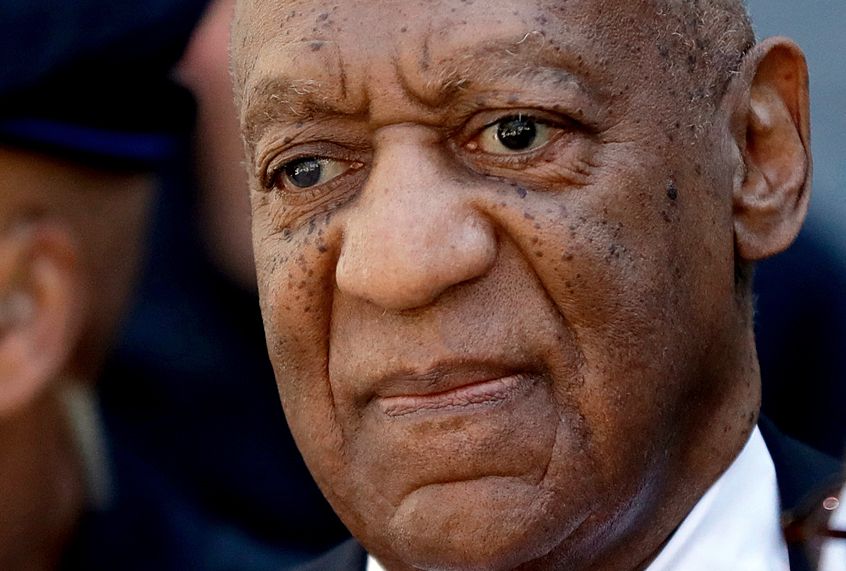
How Bill Cosby, America’s dad, used TV to betray us

Through the medium of television Bill Cosby has been intimately influencing American perspectives on race, class, how we think about ourselves and, most crucially, how we feel about him, for more than five decades.

Give that information a moment to sink in, to really scrabble its way inside the inkiest crannies of your gray matter. Only by processing how long the comedian, actor and self-styled moral police commander of the African-American community has been running his game on an entire nation of viewers — several generations’ worth — can we begin to comprehend the significance of Thursday’s verdict.

Cosby’s conviction comes years after the diminishment of his power, long after Hollywood, and much of the populace, declared him persona non grata. As sacrifices go, Cosby is a sizable one but also hobbled, softened and ready for slaughter.

Nevertheless, Thursday’s news that a jury in Norristown, Pennsylvania, found Cosby guilty on three counts of aggravated indecent assault against Andrea Constand, a former Temple University employee, came as a shock.

Constand is one of scores of accusers — 60, by USA Today’s count — who have accused Cosby of sexual assault. Until now, however, these allegations rolled off of Cosby like raw eggs off Teflon. Stories about these rapes and assaults have circulated for decades; Constand first came forward in 2005, a year after her original assault took place. Police dropped her case then for lack of evidence, and with Cosby insisting the sex was consensual, it became a matter of his word against hers.

And who were they to believe: Bill Cosby, TV icon, philanthropist and national father figure, or a lowly office worker at his alma mater?

Constand’s ordeal and the many others resembling it tell a bigger and much more sinister story: that of Cosby malevolently capitalizing on an image carefully cultivated over decades spent in front of TV audiences. Television is a medium that is only effective when its products forge a sense of intimacy, trust and belief for its viewers. People don’t necessarily have to believe the characters we watch on television or even like the people who play them. But we do have to trust the programs and platforms on which they appear enough to invite those characters into our homes time and again.

The fact that Cosby was able to get away with his crimes against Constand for so long — in addition to allegedly assaulting and abusing a vast array of women in his orbit, even friends — speaks to the potency of that idea.

Cosby didn’t merely gamble on the notion that a culture hardwired to question the credibility of sexual assault victims would never support the claims of the women he targeted. He also spent years grooming millions to view him as a man who couldn’t possibly commit such acts. He convinced Americans that he was a safe paternal figure who sold Jell-O pudding to giggling youngsters, who instilled wholesome values in children via Saturday morning cartoons. He wasn’t content to play America’s best dad — he had to make us believe that he himself was an example of the wise and noble paterfamilias.

Such a man is incapable of plying women with drugs before raping them.

In fully accounting for every part of our relationship with Cosby’s many television personas, we only begin to get a sense of how extensively he hoodwinked millions of people. Indeed, the timeline of Cosby’s mass deceit by way of popular culture is almost as long as the modern history of the television medium itself.

In the mid-’60s, around the time Sunni Welles alleges she was raped (according to her statement at a news conference held on March 27, 2015), Cosby was a popular comedian who made television history in becoming the first black actor to star in a weekly drama series, 1965’s “I Spy.” He shared lead billing with Robert Culp, went on to win three Emmys for his performance in the role, and followed that successful run with a sitcom bearing his own name, “The Bill Cosby Show,” which ran from 1969 to 1971.

Cosby went on to become a staple figure of Saturday morning cartoons with “Fat Albert and the Cosby Kids,” voicing the title role in addition to speaking directly to all the kids watching him. Anyone who watched television between 1972 and 1985 can imitate Fat Albert’s “hey, hey, hey!”  Even if you didn’t stick around to absorb the important moral lessons Albert, Rudy, Mushmouth and the rest of the gang were learning that day, you couldn’t avoid it.

Those of us who did watch also took in Cosby’s jovial live-action appearances bookending each episode. That goofy grin and friendly voice imprinted on the memory centers of Generation X, Constand’s cohort, from the time they were toddlers and elementary school kids.

Prior to her assault, Constand said she thought of Cosby as a mentor. Many people may have viewed him thusly, even those who never met him. “Fat Albert” is one reason why.

Another accuser who provided testimony in this second trial, Chelan Lasha, says Cosby invited her to his Las Vegas hotel suite in 1986, when she was 17 years old. She alleges that he handed her a blue pill and offered her a double shot of Amaretto to wash it down. The last thing she remembers, according to her account in the now-famous 2015 New York magazine story that features 35 of Cosby’s accusers, was him “humping her leg and grunting.”

By 1986 my mother had signed us up to be a Nielsen family. As part of that task, she believed it was our responsibility to strategically wield whatever infinitesimal power we had to help keep “The Cosby Show” on the air. Whenever it was on, even if the episode was a repeat, our main television had to be tuned in to NBC.

“The Cosby Show” represents massive, transformative success, not only to the sitcom genre itself and NBC’s prime-time fortunes, but in its capacity as a symbol of middle-class possibility. For most of the years between the comedy’s debut in 1984 through its 1992 cancellation, the upwardly mobile Huxtables shaped how white America viewed a specific segment of black America, for good or ill.

To black families like ours it represented progress and pride. Cliff Huxtable, a physician, and his wife Clair, an attorney, promoted an image of the black family that placed education and refinement at the center of its world. They shared similar problems to those of middle-class white America, rarely making race the focus of episodic plots.

They were, to put it bluntly, the right kind of black folks. Model minorities. Neither NBC, nor its viewers, nor the community heartened to see a positive portrayal of black life on a major network in the 1980s would have countenanced the notion that Cosby also was a sexual predator.

Only since Cosby’s divisive and insulting oratory given during a 2004 NAACP award ceremony, his infamous “Pound Cake” speech, did we come to understand the part “The Cosby Show” played in perpetuating its creator’s brand of respectability politics.

Rather than wandering further into the briar patch with that particular acre of his hypocrisy, let’s instead consider that Cosby used it, along with the rest of his work, to construct a heretofore impenetrable bulwark to delay justice for his victims.

The surprise revamp of the series’ third season opening credits in 1986, for example, was quite a thrill. Tweaking the theme song with the debut of each new season became part of the show’s identity, and that version incorporated a Latin jazz flair. I recall my family, along with tens of millions of other households, took delight in his purposely awful Dad Dancing.

I spent a lot of time thinking about that particular credits sequence since Thursday’s news broke, setting its infectious percussion line and sparkling piano riff against my imaginings of Lasha’s trauma.

Lasha says in 1986 she wanted to be a model. Her stepmother sent a letter about her as well as her photo to Cosby, the nicest man in America, a champion of education and symbol of black success, a man who might be able to make her stepdaughter’s dream come true.

It’s very likely that in October 1985 or in some repeat airing of the episode thereafter that Lasha watched the man who would attack her join his character’s wife and kids in a lip-sync of Ray Charles’ “Night Time Is the Right Time.”

Remember tiny, 6-year-old Keshia Knight Pulliam, as Rudy, bringing down the house with her adorably exaggerated mimicry of “Bay-bay! Bayee-bay!…Hold me tight! Make everything alright!”? What you might not remember is the context. This performance was part of an anniversary gift to Cliff’s parents. Rudy’s grandparents.

Lasha said Cosby invited her and her grandmother to his comedy show. He met this teenager’s grandmother. Afterward, she said, Cosby assaulted that woman’s grandchild.

Lasha was in high school, not much older than I was when the incident would have taken place. “You remember, don’t you, Mr. Cosby?” she yelled across the courtroom. These contradictory images now battle and merge as part of our collective memory. They’re another kind of sickening transgression.

In the years following the end of “The Cosby Show,” the performer starred in “Cosby” for CBS, which ran between 1996 and 2000, and one season of “The Cosby Mysteries” on NBC in 1994. He also hosted a revival of “Kids Say the Darndest Things.” By then he’d established himself as America’s Dad.

None of this computes with the perception of, as model and TV personality Janice Dickinson testified, “’America’s Dad’ on top of me, a happily married man with five children, on top of me.”

Dickinson says Cosby assaulted her in 1982, which was around the time Cosby’s “Picture Pages” segments were running as part on CBS’ “Captain Kangaroo” and later on Nickelodeon’s “Pinwheel,” children’s programming starting in the late 1970s. He was teaching millions of kids how to draw and use their imaginations at the time Dickinson says he forced himself on her.

This is why even after multiple accusers came forward with the eerily similar stories of violation, Cosby not only remained free but had the juice to sell a comedy pilot in 2014 and even as recently as January of this year could attract people to his live stand-up appearances.

All of these assaults, those recounted in courtroom testimony and the dozens of others reconstructed in allegations made public and ignored for decades, took place behind the heavy curtain of a career that helped sustain and was sustained by important pillars of the entertainment industry. And the lifeblood of that industry is attention, affection and the audience’s belief.

Wrapping our brains around that truth feels stunning, frankly. It explains why the 2017 proceedings ended in a mistrial. Despite all the evidence presented to the jury, including Cosby’s admission that he used to give Quaaludes to women he wanted to have sex with, two jurors simply refused to accept the possibility that Cliff Huxtable, TV’s Greatest Dad, attacked women.

But that mistrial occurred before the shocking revelations about Harvey Weinstein’s years of harassment and misconduct broke in October, before multiple sexual misconduct reports took down Matt Lauer. It came before the end of Louie C.K.’s TV career after he confessed to exposing himself to women and forcing them to watch him masturbate.

As such, this guilty verdict for Cosby is being considered as the first true legal victory of #MeToo. But in the longer, broader view it can and is likely to be seen as more than this. This moment represents many things to many different parties.

Cosby’s actions betray the community he claimed to represent, the one he admonished for being responsible for creating the social and economic woes that have befallen it. And he insisted that community stand by him even so.

Cosby’s reputation for education advocacy and his philanthropy played a role in enabling him to spend most of his life and career as a free man. It is now reasonable to believe he targeted and attacked women over the course of at least 50 of the 80 years he has spent on this Earth.

Let’s be careful before declaring it to be a sign of a beginning of something larger, or an end to women’s collective struggles to be heard, or a sign of lasting change in any respect. In the fullness of time it may prove to be any of those things or none of them. But as of Friday afternoon his works are still easily available to the public: reruns of “The Cosby Show” may have been pulled from Bounce TV, but the show remains available to be streamed via Amazon’s Prime subscription service. Similarly, as of this writing “I Spy” episodes are still streaming on Hulu.

That matters less than knowing one of Cosby’s victims has been seen, heard and believed, and has attained some level of vindication for herself and others.

But it’s going to take a while for the rest of us to fully grasp the heinousness of the duplicity to which we were unwittingly subjected throughout many stages of our lives.

The post How Bill Cosby, America’s dad, used TV to betray us appeared first on Salon.com.

  •  
❌