Reading view

Talarico floods Texas airwaves in U.S. Senate race as Paxton, GOP stay quiet

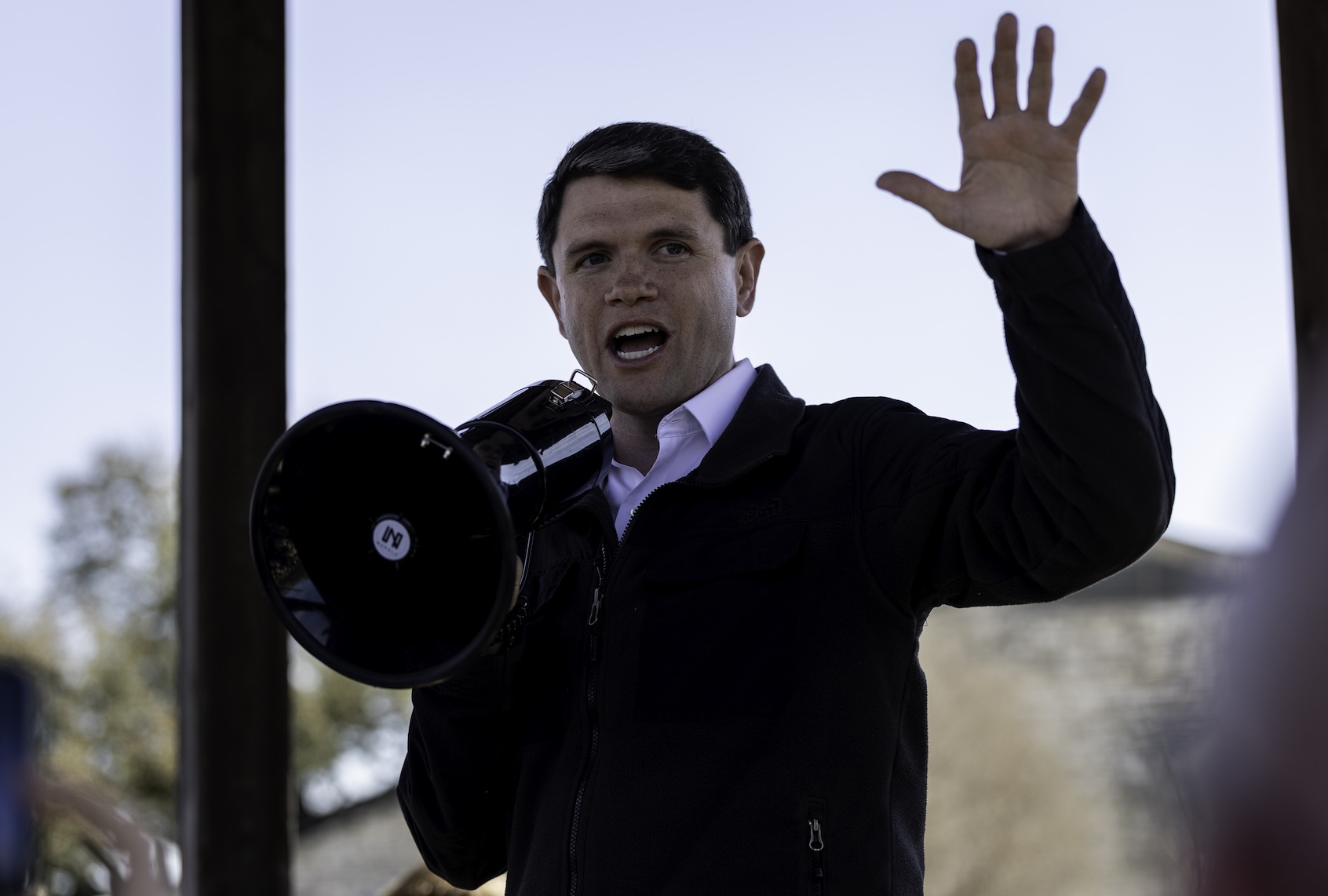
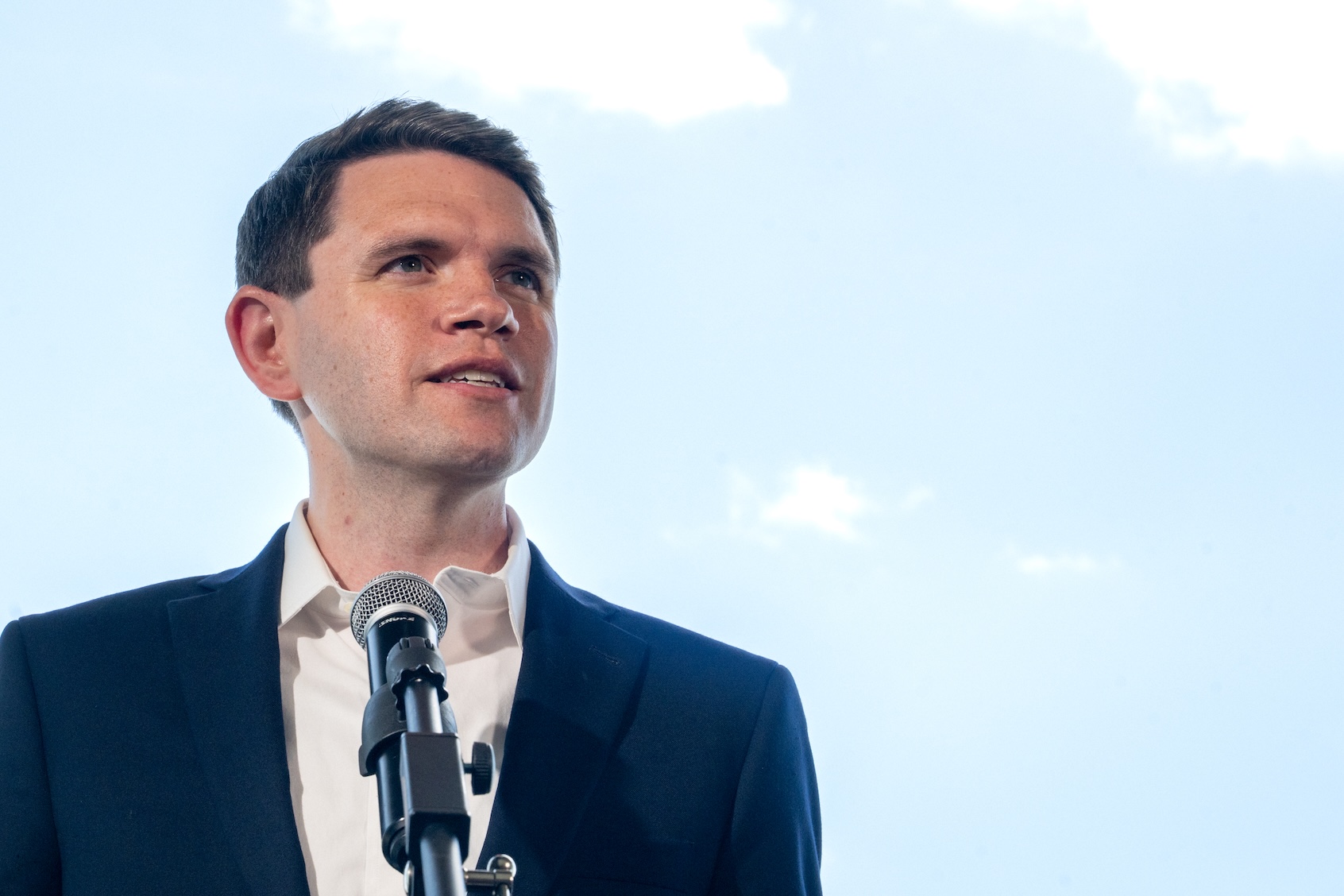
WASHINGTON — With under nine weeks to go until early voting begins in Texas’ U.S. Senate race, both Ken Paxton and James Talarico have been campaigning around the state, meeting voters everywhere from restaurants to music halls as they’ve pitched their political visions.

But on television, Texans have only seen one of them.

Talarico, an Austin state representative, has spent over $25 million on advertising since the general election began in late May, according to ad tracking firm AdImpact — with nearly $10.7 million deployed on broadcast and an additional $8.4 million on streaming devices. (The rest has gone to a combination of cable, digital, radio and satellite.)

Texans turning on their TVs this summer have seen Talarico talk about the importance of loving God and neighbor in a spot featuring his grandfather. They’ve seen the Democrat lamenting high costs in a grocery store and while driving a truck, and heard about his record in a World Cup-themed Spanish language ad.

Over that same time period, the Paxton campaign has spent $119,000 — nearly all of it on digital advertising — meaning that Talarico has essentially had the airwaves to himself. Over that time, he’s built a narrow polling lead, pulling ahead in numerous surveys within the margin of error.

In television interviews, Paxton has noted this disparity and appealed to donors for help. On Fox News recently, the Republican nominee laid out his timeline for campaign spending, saying he expects that litigating Talarico’s record will cement the Democrat’s loss — but that he needs resources to do it.

“As we’re raising money, we’re working our way back into October, which is where we can spend money, and we’re trying to work our way back to September,” Paxton said. “But we need help now, because James Talarico’s been spending $3 or $4 million a week on TV for the last month. So, I want to compete.”

The Paxton campaign has also touted that while he was outraised by Talarico in the second quarter, Paxton still raised more money — over $9 million — than any non-incumbent GOP Senate candidate in the country. And Paxton has noted that the expensive primary runoff left his coffers more depleted than those of Talarico, who could afford to spend the spring stockpiling his war chest after winning his March primary.


Start your day with essential news from Salon.
Sign up for our free morning newsletter, Crash Course.


Conventional election wisdom states that most voters don’t start paying attention until after Labor Day, and that Republicans can still win while being outspent on ads — which Sen. Ted Cruz, R-Texas, did in both his narrow victory in 2018 and comfortable win in 2024. Republican strategists expect the cavalry to come for Paxton, with well-heeled outside players helping narrow the spending gap.

But as September approaches, they’re eyeing the calendar.

“I do think Paxton needs to define Talarico, and he needs to do it soon,” John Wittman, an unaffiliated Republican consultant and former adviser to Gov. Greg Abbott, said in an interview. “We’re about three months out from Election Day. So it’s important for Republicans to combat this Democrat aggression, that they do start to spend and start to define Talarico for the crazy liberal he is.”

Republican strategists caution that Democrats’ polling is typically strongest in the summer, and that they expect those numbers to shift once Paxton or his allies begin attacking Talarico on television. A Republican group called Protecting America’s Future, seeded by longtime Paxton ally and West Texas billionaire Tim Dunn, became the first GOP group to run an anti-Talarico ad, attacking him in two spots on China policy and crime in a $120,000 ad spend airing mostly in the Corpus Christi media market this week.

By comparison, Talarico’s campaign has spent over $7.3 million on ads over the past couple weeks, over 36 times the amount dropped by Republicans.

In 2024, when Cruz beat Democrat Colin Allred by an 8.5-point margin, he was also outspent over the summer — though Cruz was spending more on a week-by-week basis than Paxton is now. Cruz started spending six figures a week on advertising in late July 2024, according to AdImpact data, and ramped up to a weekly seven-figure spend by late September. When combined with outside spending, Republicans were dropping at least $2 million on ads each week by the end of August two years ago.

Paxton, by contrast, has spent no more than $20,000 on ads in any week of the general election thus far. AdImpact has tracked over $72,000 in Republican spending this week, the party’s high-water mark since the runoff.

In total, Democrats outspent Republicans by a margin of $119.7 million to $82.6 million in Texas’ 2024 Senate race after the primaries. Cruz’s campaign was aided by tens of millions in outside ad support and coordinated spending, the bulk of which did not come until late September.

And Cruz, of course, was an incumbent senator who had six years to build his war chest, while this is Paxton’s first federal race.

“GOP donors need to get off their asses”

Beyond Paxton’s campaign itself, well-heeled groups including Senate Leadership Fund, the national PAC aligned with Senate GOP leadership, and MAGA Inc., the massive campaign super PAC aligned with Trump, could even the field in Texas — though both groups are operating with a national map bigger than Texas. The question animating Republicans in Texas remains: When will the money come?

Paxton has acknowledged that Talarico’s superior spending has affected the standing of the race. Polls have put the race essentially tied, with Talarico narrowly leading in recent polls that put him within the margin of error — an unprecedented situation for the top-of-the-ticket race in Texas since Republicans solidified control of the state.

“He’s got money,” Paxton told GOP radio host Dana Loesch. “He’s been on TV for about four or five weeks. And it’s helped him a little bit in the polls — that’s why the polls have gotten closer.”

But the current lack of future ad reservations — from Paxton or allies — has some Republicans offering warnings to the outside groups that have yet to spend money. After the Paxton interview, Loesch, whose show is broadcast from Dallas, told her listeners that Republican groups were “leaving you to hang” and questioned, “Where’s the GOP in this race?”

“This is a winnable race,” Loesch said. “All these big money GOP donors need to get off their asses and make a decision. Because I guaran-damn-tee you, if their inaction results in us having somebody like James Talarico, dear God in heaven, my rage will be limitless.”

Karl Rove, a longtime Republican strategist who supported Sen. John Cornyn in the primary against Paxton, put it even more starkly. Rove said Texas is a Republican state, but that the disparate fundraising dynamics have made the race unusual.

“He’s not going to change as a fundraiser,” Rove said on Fox, referring to Paxton’s past performances. “So this is going to be one that is going to depend mightily upon the decision of President Trump to spend or not spend the half a billion plus dollars that he has in his two super PACs — MAGA Inc. and Never Surrender. If he does spend, then he can sort of even it up. If he doesn’t spend, this could be a really bad night for Republicans in Texas.”

Texas Bullpen reported that MAGA Inc. fielded a message testing poll in Texas with possible attacks against Talarico this month, portending potential future spending.

In the Fox News interview, Paxton said Republican leadership is “planning on spending money here, is my understanding,” but he noted that he can’t coordinate with them.

“We haven’t yet, but we’re very hopeful that that’s coming soon,” Paxton told Loesch when she asked if he was getting adequate funding from GOP groups. “We’ve been told September.”

Across the Republican spending landscape, Texas stands out for the lack of future TV ad reservations. GOP candidates and their allies have booked at least $10 million from Sept. 1 onward in eight battleground states, according to AdImpact. In the five other competitive states where Republicans are playing defense — Alaska, Iowa, Maine, North Carolina and Ohio — the GOP has outspent Democrats in its fall bookings.

Democrats have not booked any ad reservations in Texas past Sept. 1 either. That includes Senate Majority PAC, the super PAC aligned with Senate Democratic Leader Chuck Schumer, which has bought ad time in other battleground states.

A few factors could explain why both parties are waiting to get involved in Texas.

In smaller states with fewer media markets, ad rates can rise quickly, especially when there are competitive governor and House races also competing for airtime. In those cases, early reservations can be critical. Meanwhile, Texas has 20 different media markets, placing less pressure on outside groups to commit money early and lock in rates, one national GOP strategist told the Tribune. That’s why campaigns and groups often buy ad time on a week-to-week basis here.

Super PACs can also make a difference. But on that front, Democrats also had an advantage at last count.

Lone Star Liberty PAC, the pro-Paxton super PAC that dropped $5.7 million throughout the primary, has yet to spend any money on television since the runoff. That’s expected to change at some point, but the group went into July with major reloading to do after an expensive second quarter taken up by the primary runoff. The PAC only had $35,000 in its war chest at the end of June, according to federal records.

Meanwhile, Lone Star Rising PAC, which supports Talarico, had nearly $12.7 million on hand.

Outside of the Senate race, Republicans’ cash advantage in other statewide contests — especially the governor’s race — could serve to benefit Paxton as well, when an expected deluge of pro-Republican, anti-Democrat messaging hits the airwaves this fall.

The next round of federal campaign fundraising data will not be available until mid-October, just before early voting begins.

This article first appeared on The Texas Tribune.

The post Talarico floods Texas airwaves in U.S. Senate race as Paxton, GOP stay quiet appeared first on Salon.com.
  •  

Paxton, Talarico tap contrary versions of God and Christianity in appeal to Texas voters

Republican Ken Paxton and Democrat James Talarico portray their U.S. Senate campaigns as a fight for the soul of America — one in which God plays an active yet vastly different role.

Talarico, believing God is on the side of the oppressed and the marginalized, focuses his message to voters on equity and protecting personal freedom.

Paxton sees God as on his side — a force safeguarding his ability to protect Texas and the nation from disaster at the hands of the “radical left.”

“I truly believe that God just delivered me, not because I am a great person, because God is sovereign and he does what he wants to do,” Paxton said on Lt. Gov. Dan Patrick’s podcast, referring to tribulations that included an unsuccessful 2023 impeachment on corruption charges.

“I don’t take credit for it, it’s really by the grace of God,” Paxton said.

In Texas — where two-thirds of the adult population identifies as Christian and 45% say religion is “very important” in their life — the candidates are asking voters to choose between two dramatically different views of Christianity. Paxton’s version insists conservative Christian values — such as protecting the unborn and preserving the nation’s Judeo-Christian heritage — must prevail. Talarico’s Christianity celebrates pluralism, affirms LGBTQ+ individuals and believes God transcends all partisan divisions.

“Scripture says you can’t love God and hate other people,” Talarico, a seminarian, said in a sermon posted on TikTok in December 2025. “You can’t love God and abuse the immigrant. You can’t love God and bully the outcast. You can’t love God and oppress the poor.”

“We spend so much time looking for God out there that we miss God in the person sitting right next to us, in that neighbor who bears the divine image. In the face of a neighbor, we glimpse the face of God,” he said.

Talarico has made the New Testament command to love thy neighbor a centerpiece of his campaign. That focus has also given Paxton ammunition to portray his opponent as out of touch with Texas values and Scripture.

“So, what are the differences between me and my opponent?” Paxton said in a July campaign rally in McAllen in a now viral X clip. “I’m sure you know some of them. One of them is family.”

“Actually, let me talk about faith first,” he said.


Start your day with essential news from Salon.
Sign up for our free morning newsletter, Crash Course.


Paxton spent the next minute critiquing Talarico’s faith, stating the Democratic nominee had said that God is nonbinary and that supporting the oil and gas industry is un-Christian.

Talarico has dismissed the criticism, saying his statements were taken out of context, but the Republican continues to assail his opponent’s faith, implying and outright stating that Talarico cannot be considered a Christian. 

Talarico’s views, Paxton said on Patrick’s podcast, are “antithetical to historical Christian views” and “adopted from liberal theology that do not reflect what Scripture says.”

The message is a frequent theme in Paxton’s stump speeches.

Talarico has gone on the offensive as well, criticizing Christian nationalism, an ideology that depicts the U.S. as a nation founded on Christian principles that must be protected by the government. Many Paxton-supported policies, according to Talarico, advance that agenda.

Talarico pointed to a state law requiring Texas public school classrooms to display donated copies of the Ten Commandments — a law that Paxton supports and has defended in court as state attorney general.

“It’s using political power to elevate one religious tradition over all the others,” Talarico told podcaster Joe Rogan in July 2025. “It’s using governmental power to dominate our neighbors instead of loving them as ourselves, which is exactly what we’re called to do as Christians.”

The Texas Tribune and Religion News Service requested interviews from both candidates. Paxton’s campaign did not respond to the interview request but had sent an earlier statement criticizing Talarico’s understanding of Christianity. Talarico’s campaign pointed to the Democrat’s extensive comments about his faith in sermons, speeches and interviews.

“Founded on the rock of Biblical Truth”

Paxton is an evangelical Christian, though his denominational affiliation is unclear, who has questioned a strict separation of church and state, arguing the phrase does not appear in the U.S. Constitution. Last year he encouraged Texas students to recite the King James version of the Lord’s Prayer in support of a law allowing school districts to dedicate class time for prayer.

“In Texas classrooms, we want the Word of God opened, the Ten Commandments displayed, and prayers lifted up,” Paxton wrote in a message on the office of attorney general’s website. “Twisted, radical liberals want to erase Truth, dismantle the solid foundation that America’s success and strength were built upon, and erode the moral fabric of our society.”  

The U.S. was “founded on the rock of Biblical Truth,” he wrote, vowing to fight “far-left attempts to push our country into the sinking sand.”

Paxton has also said his faith — and the Constitution, which he said was “written by people of faith” in a 2015 interview with the Tribune — informs his opposition to abortion and gay marriage, and he has called gun ownership a God-given right protected by the Second Amendment.

Paxton’s combination of religion and politics is rooted in the alliance between the Republican Party and conservative Christianity that dates to “the late 1970s and early 1980s in the formation of the Moral Majority and the Christian Coalition,” said Janine Giordano Drake, a professor of history at Indiana University.

There were “many efforts at that time to define a so-called Christian moral politics around what they call family values, personal responsibility, what they defined as appropriate expression of sexuality and patriotism,” Drake said.

Talarico, disagreeing with many of the theological and political positions commonly associated with the religious right, rejects the idea that faithful Christians must oppose abortion and says he trusts women to make decisions about their own bodies.

“That’s a belief I have not despite my faith, but because of it. Jesus never talks about abortion. The Bible is silent on abortion,” he said in an interview with Jamie Kern Lima in late May.

Talarico’s campaign emphasizes the need to get the government out of private personal decisions, and the Democrat advocates for a version of Christianity that accepts all people as made in God’s image.

Talarico attends Austin Presbyterian Theological Seminary and is training to become a pastor in the Presbyterian Church (USA), the nation’s largest Presbyterian denomination. He is currently on leave from his degree program.

Both Senate candidates have been criticized for falling short of being an authentic or true Christian — Talarico for his progressive Christian message, and Paxton for two alleged extramarital affairs whose wife, state Sen. Angela Paxton, filed for divorce “on biblical grounds” in July 2025.

Elesha J. Coffman, a professor of American intellectual and religious history at Baylor University, traces debates over the “correct” practice of Christianity to the Civil War, when Christians on both sides of the conflict disagreed over interpretations of the Bible.

“The pro-slavery factions were picking on specific verses like ‘slaves obey your masters’ and saying, ‘Well, we’re clearly advancing the more biblical society because look, the Bible says exactly what we’re doing,’” Coffman said.

“The Northern abolitionists had some specific verses, but it was also bigger picture — what do we understand to be true about God? What do we understand to be true about human nature and human flourishing? So even if the Bible says these specific things, like let’s nuance that, let’s contextualize that, let’s acknowledge that our world is different,” she said.

A recent Fox News poll found 78% of white evangelicals would choose Paxton over Talarico. Support for Paxton drops to 57% for “regular worship attenders.” The same poll found 51% of registered voters in Texas preferred Talarico, as did 63% of moderates.

“Forcing our religion down their throats”

Protecting religious freedom and practice has been a Paxton priority since he became attorney general in 2015, generating loyal support from grassroots conservatives.

“I was thinking about one of my very first cases when I was attorney general,” he said during a July campaign speech in McAllen. “There was a teacher in Bell County, just an innocent teacher who put up a Linus cartoon over Christmas that said ‘Unto us a child is born, unto us a son is given.’ And the school board voted to make her take that down.”

“We defended her,” Paxton said. “She has a right to her free expression, her religious liberty.”

Over the last 10 years, Paxton has championed religious freedom in court, often defending groups or individuals with conservative Christian views, particularly on marriage and gender.

Paxton has filed legal briefs defending Christian prayer as an acceptable way to open court proceedings, supporting an employer’s right to refuse to supply contraceptives, defending foster parents who “hold traditional beliefs about marriage,” defending a baker who refused on religious grounds to make a cake celebrating a “gender transition,” supporting a football coach who was fired for praying after games, and more.

Tisa Wenger, a professor of American religious history at Yale Divinity School, said religious liberty has long been understood as “an all-American ideal that many Americans are very proud of.”

“It’s a kind of principle that lots of people can claim, and do claim — and they claim it for their own purposes,” Wenger said in an interview.

“It is not restricted to one group or one side of the political spectrum,” she said, adding that the past two decades have seen a “more conservative approach to religious freedom.”

This shift prioritizes the expression of conservative Christianity over other religions, replacing “older American traditions” that believed the separation of church and state was the foundation of religious freedom, Wenger said.

At the nation’s founding, “the fear was religious tyranny of one particular church over others,” she said.

“In some ways, we are also returning to that moment now,” Wenger said. “Conservative Christians have a lot of public power, and there are many minorities — including Christians who are more on the left — who are protesting that on very similar grounds that people like Baptists did in the Revolutionary period against a kind of established church.”

As the Republican Party has increasingly embraced blurring the line between religion and government, Paxton has called the Ten Commandments an expression of America’s legal, moral and historical heritage, even as families have sued — and are suing — to remove them from classrooms, arguing the displays violate their right to practice religion and improperly expose students to religious doctrine.

On the floor of the Texas House, where Talarico has served since 2019, the Austin-area representative said displaying the Ten Commandments in public schools was un-American and un-Christian.

“I believe this bill is idolatrous, I believe it is exclusionary, and I believe it is arrogant,” he said in a May 2023 clip that went viral on X with over 5.7 million views. “And those three things, in my reading of the Gospel, are diametrically opposed to the teachings of Jesus.”

Talarico expanded on the notion during a February appearance on the Late Show with Stephen Colbert, saying: “We are called to love all of our neighbors, including our Muslim, Jewish, Buddhist, Hindu, Sikh, agnostic, atheist neighbors.”

“Forcing our religion down their throats is not love. It’s why I’ve fought so hard for that sacred separation in our First Amendment,” he said.

“If God wants me here, no one can stop me”

Paxton, a vocal supporter of President Donald Trump, has frequently portrayed himself as a victim of political witch hunts. And like Trump, Paxton believes he is destined to usher in a greater, God-ordained future.

“Despite the fact that the left and the establishment wanted me out, there’s a greater power,” Paxton said during the Faith & Freedom Coalition’s Road to Majority Conference in June.

“I’m not here because of some great thing I did, I’m here because God delivered me,” Paxton said, likening himself to other “not particularly perfect” biblical figures like Peter, Paul and David. “If God wants me here, no one can stop me. If God doesn’t want me here, no one can help me.”

Daniel Shelton attended an early August campaign rally in Houston and said he admired Paxton’s common sense.

“A lot of people say, ‘Well, he’s got baggage, he cheated on his wife.’ Well, so did King David. Get over it,” said Shelton, 66. “I’m voting for the office. I’m praying for the man that’s going to fill that office.”

Across the political spectrum, invocations of divine favor have a long history in the United States, said Heath Carter, professor of American Christianity at Princeton Theological Seminary and author of “Union Made,” a book about the 19th-century labor movement in Chicago.

“The workers that I write about in Union Made, they believed God was on their side,” Carter said. “They looked at the Bible and they said, look, Jesus said the labor is worthy of his hire.”

Black Christians during the civil rights movement also understood “that God was on their side, that God was the God who led the Israelites out of Egypt and out of slavery and into liberation,” he said.

Over the last four decades, members of the Christian right “felt that they have the momentum, the kind of wind in their sails, and that God is with them in their righteous fight to take back America,” Carter said.

Talarico said he does not believe Jesus would be on the side of Democrats or Republicans. ”Jesus is far more radical than any political party. … I think he would challenge both political parties to keep working toward a more radical vision for democracy,” he said in an interview with The Breakfast Club.

Paxton has described his political fights with Democrats in terms of spiritual warfare.

“The fight is vicious,” he told the Faith & Freedom Coalition crowd after encouraging them to pray for him and the future of the country. “They try to put us in jail. They try to disparage us. … They try to ruin our families.”

“This is a battle not with flesh and blood, as we know, this is a spiritual battle,” he said.

Colleen DeGuzman contributed to this report.

This story is published through a collaboration between The Texas Tribune and Religion News Service.

Disclosure: Baylor University and Fox News have been financial supporters of The Texas Tribune, a nonprofit, nonpartisan news organization that is funded in part by donations from members, foundations and corporate sponsors. Financial supporters play no role in The Texas Tribune’s journalism. Find a complete list of them here.

This article first appeared on The Texas Tribune.

The post Paxton, Talarico tap contrary versions of God and Christianity in appeal to Texas voters appeared first on Salon.com.

  •  

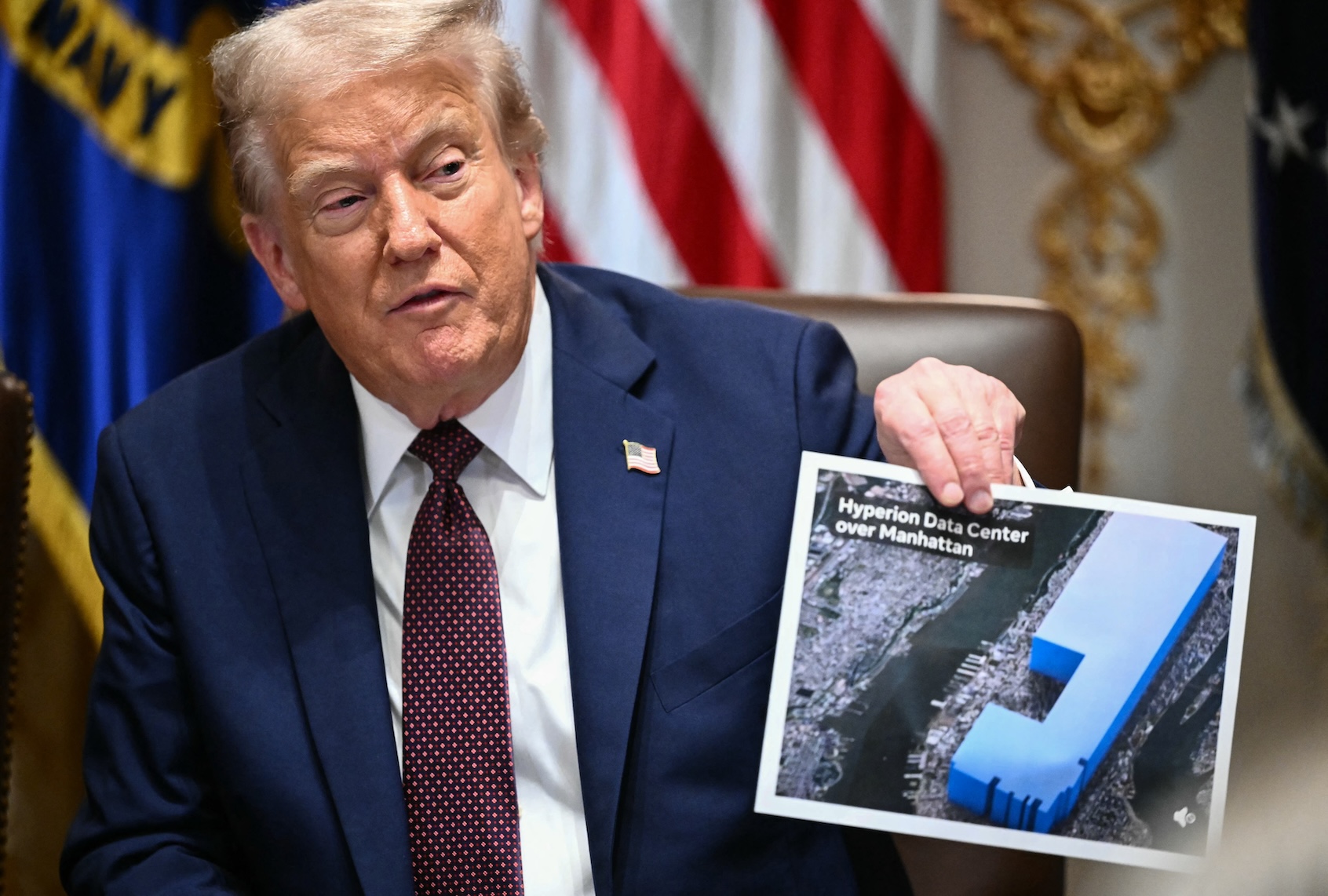
Trump calls Texas’ data center opposition a “mistake”

President Donald Trump this week criticized Texas for being anti-data centers, just days after Republican Gov. Greg Abbott paused industry-wide approvals until the companies provide the state with more information on things like power and water use.

“I saw Texas the other day sort of is against data centers,” Trump said in a nearly hourlong sit-down interview with Punchbowl News released Friday. “I think it’s a mistake. And I’m not taking positions, I just think it’s a mistake, because there are other communities that want it. When a community wants it, it means a lot of money is going to come into that community.”

Abbott’s spokesperson in a statement Friday defended the policy move as necessary because less than 10% of data centers responded to the state’s requests for them to report their power and water usage.

“Many are unaware that [the Electric Reliability Council of Texas] is tracking a more than 500% increase in peak electricity demand. This unprecedented growth could endanger the reliability and stability of the Texas electric grid,” Andrew Mahaleris said. “The Governor’s pause requires data centers to provide [Public Utility Commission of Texas] and ERCOT with the required information for them to make fully informed decisions. Simply put, Texans must come first.”

The moratorium, which Abbott announced Monday, will require state regulatory agencies to audit proposed data centers seeking connection to the state’s electric grid and find out whether they’re receiving tax breaks, how much power and water they will use, what kind of cooling they will use, what efforts they’ve made to reduce community impacts, and who owns the facilities.

Any projects that fail Abbott’s ordered “comprehensive verification and audit” should be denied connection to the grid, the governor said.

The move was in contrast to the Republican’s typical pro-business stature, underlining how the data center debate has put Texas conservatives between Trump and angry constituents in rural, unincorporated areas where The Texas Tribune has reported most planned data centers are set to be located. Texans have mobilized across the state to oppose the new developments, airing concerns that the facilities will drain local water supplies, drive up electric bills and cause noise, light and air pollution.


Start your day with essential news from Salon.
Sign up for our free morning newsletter, Crash Course.


Abbott’s announcement came after he had previously been bullish about the industry, calling Texas “epicenter of AI development” in November when he unveiled Google’s $40 billion investment in the state that included data center facility development.

The three-term governor’s Democratic opponent, Gina Hinojosa, has made greater oversight of data centers a key piece of her campaign.

“Abbott’s call for a ‘pause’ could be for one day – and no one buys it,” she said in a statement this week. “He’s taken millions from data center CEOs while giving Texans lip service to non-existent restrictions.”

Trump went on to say that data centers are “tremendously important for the economics.”

“For Texas to say no to data centers is a mistake in the sense that it could be bigger than oil,” he added.

Disclosure: Google and Punchbowl News have been financial supporters of The Texas Tribune, a nonprofit, nonpartisan news organization that is funded in part by donations from members, foundations and corporate sponsors. Financial supporters play no role in The Texas Tribune’s journalism. Find a complete list of them here.

This article first appeared on The Texas Tribune.

The post Trump calls Texas’ data center opposition a “mistake” appeared first on Salon.com.

  •  

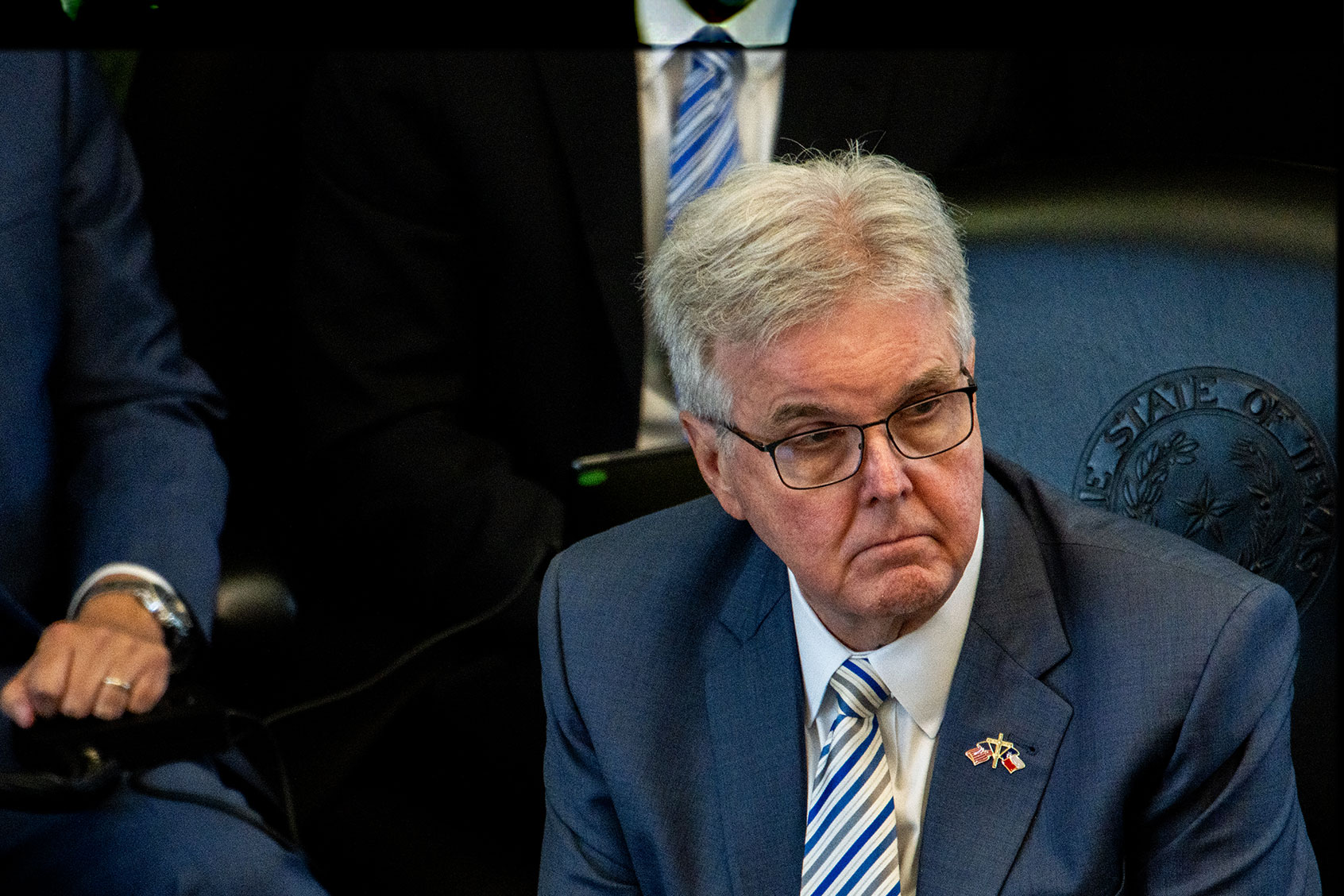
Dan Patrick directs Texas Senate to study ways to further ingrain religion into public life

Lt. Gov. Dan Patrick on Monday asked state lawmakers to study ways to further infuse religion into public life as part of a new crop of interim charges unveiled by the Texas Senate leader.

One of the lieutenant governor’s directives tells senators to compare state and federal laws surrounding religious liberty, with specific instructions to look at whether state laws line up with the “establishment” and “free exercise” clauses of the First Amendment and determine if “additional protections are needed.” Another charge instructs lawmakers to examine ways to educate Texans about their right to practice their religion “in all settings, including, but not limited to: education, workplace, government, and healthcare.”

A third calls for a pulse check on a law passed by the Legislature in 2025 that lets public schools excuse student absences for off-campus religious instruction. All three charges are assigned to Patrick’s newly formed Religious Liberty Committee, chaired by state Sen. Phil King, R-Weatherford, that was announced in March.

The latest charges arrive as Texas’ Republican leaders continue to attack Muslims in the state. One of Patrick’s first charges, released earlier this year, called for “preventing Sharia law in Texas,” while party members at the Texas GOP convention last month tried to expel Muslims who arrived to participate in the event.

Patrick has long been a champion of Christian conservative values and has said he does not believe there is a separation between church and state. Last year, President Donald Trump tapped him to lead a new commission on religious liberty.

“There is no such thing as ‘separation of church and state’ in the Constitution. For too long, the anti-God left has used this phrase to suppress people of religion in our country,” Patrick said in April after the commission held its final hearing.

Interim charges are lists of issues that the lieutenant governor and speaker give to their respective chamber’s committees to study during the period between legislative sessions. They typically include reviews of recently passed laws and instructions to recommend laws for the upcoming session. Patrick has already released multiple waves of interim charges ahead of the Legislature’s reconvening in January.

The lieutenant governor’s other charges Monday call for preventing unfair online ticket sales, studying gaming platforms that target children for inappropriate advertising, examining “inefficient or inconsistent” divorce and child custody proceedings, and assessing the Pecos River Basin’s water situation.

The Republican-controlled Legislature has already thinned the line separating church and state in recent years. A new law requires public schools to display the Ten Commandments and another lets schools set aside time for prayer, yet few school boards did so last school year. 

Lawmakers have also required classrooms to hang donated signs that say “In God We Trust”; allowed unlicensed religious chaplains to supplant mental health counselors in public schools; and approved new curriculum materials that teach the Bible and other religious texts alongside grade-school lessons.

This article first appeared on The Texas Tribune.

The post Dan Patrick directs Texas Senate to study ways to further ingrain religion into public life appeared first on Salon.com.

  •  

Talarico leads Paxton by 5 points in new poll of Texas’ U.S. Senate race

The latest survey of the U.S. Senate race from Texas Public Opinion Research shows Democrat James Talarico leading Republican Ken Paxton, 45% to 40%, marking the Austin state representative’s largest lead in any public poll taken during the general election period.

Since Paxton locked up the GOP nomination in late May, polling of the contest has found a neck-and-neck race with neither candidate able to break 50%. But TPOR’s poll found Talarico leading among voters who do not have a college degree — a group that has consistently favored Republicans in Texas and across the country — and dominating among independents, less than a quarter of whom said they planned to vote for Paxton. The attorney general also had weaker Republican support than in other recent surveys, with nearly one in five GOP voters saying they were undecided or would vote for Talarico.

TPOR labels itself as a nonpartisan public opinion research group. It is directed by Democratic strategist Luke Warford.

The group surveyed 1,048 likely voters between July 15 and July 17, and has a margin of error of +/- 3.4 percentage points. Of those poll respondents, 53% voted for Donald Trump and 42% voted for Kamala Harris in 2024, making the sample only slightly bluer than the 2024 electorate, which favored Trump by a 14-point margin in Texas. Trump carried Texas by 5.6 percentage points in 2020, two years after the last midterm held during his presidency.

TPOR’s previous poll, fielded just after the May 26 runoff in which Paxton defeated Sen. John Cornyn, found Talarico leading 47% to 44%.

Texas’ U.S. Senate race figures to be one of the most closely watched and expensive contests in the nation. Democrats have not won a statewide race in the Lone Star State in over 30 years, but they believe a combination of Trump’s lagging approval ratings, Paxton’s ethical baggage and Talarico’s fundraising and populist messaging could deliver the victory that has eluded them for decades.

Republicans are taking the threat of Talarico seriously but nevertheless believe that, as the bitter primary between Paxton and Cornyn fades from memory and they highlight Talarico’s progressive views on social issues, Republicans will coalesce behind the attorney general. The nonpartisan Cook Political Report rates the race as “Lean Republican.”

Paxton’s 40% vote share is the lowest he has received in a public poll post-runoff. Other surveys have found Republicans were consolidating behind him. But the TPOR poll had Talarico winning 7% of self-described Republicans, and an additional 12% remained undecided. Meanwhile, only 1% of self-identified Democrats indicated they would vote for Paxton, and 6% were undecided.

For comparison, a New York Times/Siena poll of the Texas contest fielded in June, which found the overall result tied at 47%, found Talarico winning 5% of Republicans and only 4% unsure.

Perhaps the biggest outlier was Talarico’s lead among non-college-educated voters, who favored the Democrat by nine percentage points — 45% to 36%. He led by 1 percentage point among those with at least a bachelor’s degree.

In recent elections, education has been one of the most reliable predictors of how people vote, with a sharp partisan dividing line between those with and without degrees. Exit polling found that Republican Sen. Ted Cruz beat Democrat Colin Allred by 18 percentage points among non-college-educated Texans in 2024. Even in 2018, when Democrat Beto O’Rouke came within 3 percentage points of victory, Cruz still won that bloc by a 6-point margin, exit polls found.

In the New York Times/Siena poll, Paxton had an 8-point lead among voters without a degree, and in TPOR’s own poll in May, Paxton led by a whopping 21 points among that group.

Other results hewed closer to recent polling of the race. The TPOR poll found Talarico leading heavily among Black and Latino voters, while Paxton maintained a strong lead with white voters. Black voters broke 71% for Talarico and 8% for Paxton, while Latinos preferred Talarico by a 66% to 20% margin.

Paxton led among white voters, 53% to 33%.

Talarico’s polling lead owes to his strength with independents and non-college educated voters. The poll found Talarico garnering 43% of independents to Paxton’s 23%; 29% remain undecided. Among self-described moderates, Talarico’s lead is even more pronounced, with the Democrat ahead 54% to 20%.

The poll found that 14% of voters of all political stripes remain unsure about their pick. Among undecided voters, there is evidence Paxton has more room to grow: 19% of that bloc said they leaned toward the Republican, compared to 10% who leaned toward Talarico. Two-thirds reported being truly on the fence.

Some conservatives have cast doubt on the validity of TPOR’s polling given its Democratic ties. Warford is also a founding partner of Agave Democratic Infrastructure Fund, a political action committee dedicated to building Democratic campaign infrastructure in Texas. The fund’s largest donor, Simone Coxe, has also given $500,000 to a pro-Talarico super PAC this cycle.

Elsewhere on the ballot, the TPOR poll finds Republicans leading in the contests for governor and attorney general — though both are also close.

In the governor’s race, incumbent Republican Greg Abbott was leading Democratic state Rep. Gina Hinojosa of Austin by a 3-point margin, 45% to 42%. And in the open race to succeed Paxton as attorney general, Republican state Sen. Mayes Middleton of Galveston was up 39% to 38% over Democratic state Sen. Nathan Johnson of Dallas, well within the margin of error.

Both of those spreads would represent Democrats’ best performances for those offices in decades. But the high level of undecided voters in all three contests — U.S. Senate, governor and attorney general — suggest lots of room for movement in the less than 12 weeks remaining until Oct. 19, when the polls will open for early voting.

Disclosure: Simone Otus Coxe and The New York Times have been financial supporters of The Texas Tribune, a nonprofit, nonpartisan news organization that is funded in part by donations from members, foundations and corporate sponsors. Financial supporters play no role in The Texas Tribune’s journalism. Find a complete list of them here.

This article first appeared on The Texas Tribune.

The post Talarico leads Paxton by 5 points in new poll of Texas’ U.S. Senate race appeared first on Salon.com.

  •  

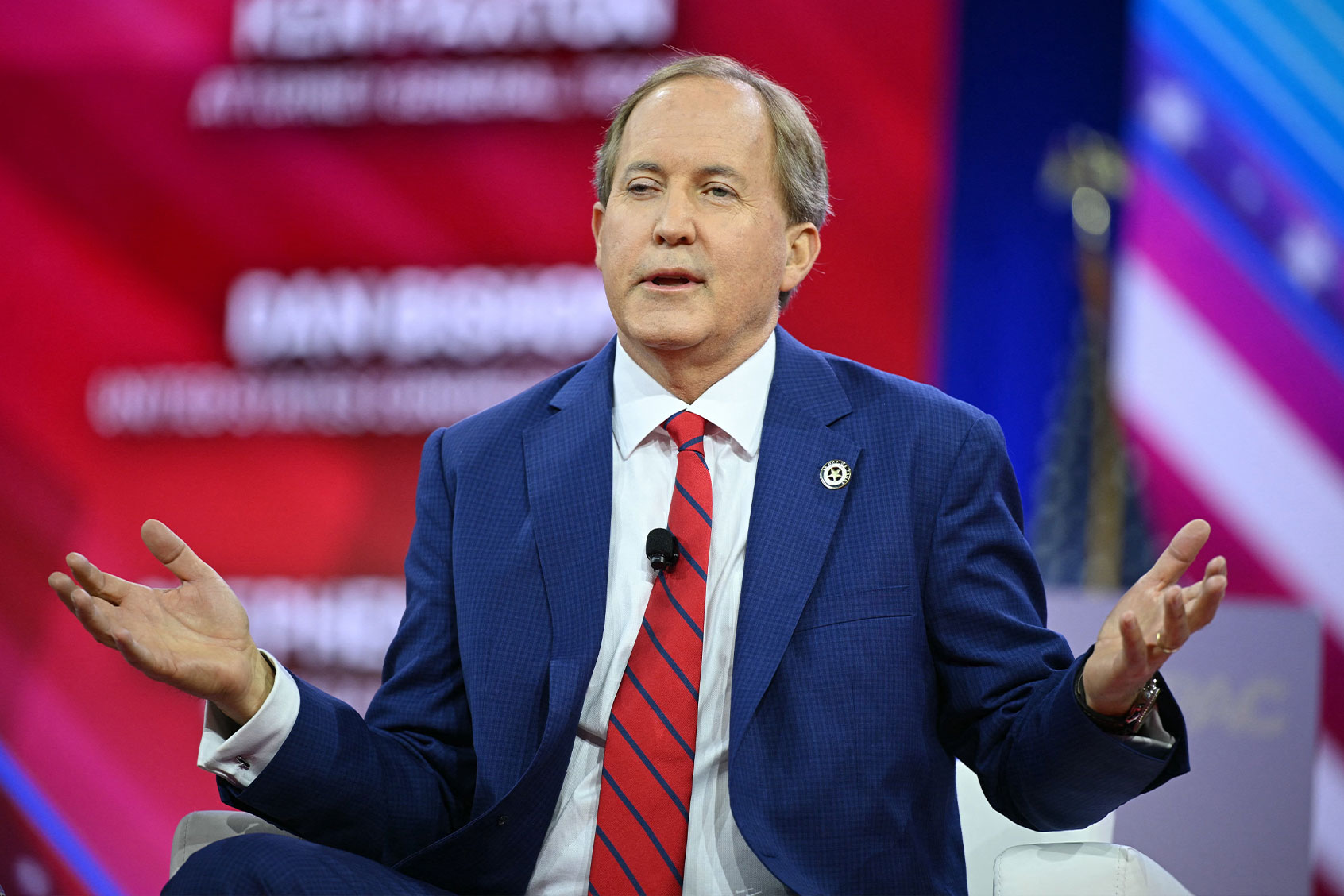
Ken Paxton has long crusaded against voter fraud. His Senate rival now accuses him of committing it.

The Democratic candidate for U.S. Senate in Texas is trying to turn a key talking point of his Republican opponent against him — alleging Attorney General Ken Paxton is guilty of the same type of voter fraud he has spent years trying to eliminate.

“As our state’s attorney general, Ken Paxton has gone on a voter fraud witch hunt,” state Rep. James Talarico, who is challenging Paxton in the race to replace U.S. Sen. John Cornyn, said during a campaign event in Houston. “Turns out, he was committing voter fraud the whole time, voting illegally in six elections in a row from the wrong address.”

Talarico’s comments come after ProPublica and The Texas Tribune revealed that Paxton moved out of the home he shared with his wife, state Sen. Angela Paxton, in 2024 but continued to vote using that address, including during the March Republican primary in which he beat Cornyn. Three election experts told the news organizations that Paxton may have broken state law. 

Last week, the Collin County Democratic Party filed a complaint with the Texas secretary of state, urging that office to investigate Paxton for election fraud.

Paxton has repeatedly declined to answer the newsrooms’ questions about his voter registration and residency. On Tuesday, he held a rare news conference to tout the endorsement of nearly two dozen sheriffs and attacked Talarico as soft on crime. Talarico denied the charge at his own news conference Wednesday, saying he’d voted for billions of dollars in law enforcement funding as a member of the Legislature. 

When a Dallas Morning News political writer asked Paxton why he voted in Collin County, the attorney general shook his head as a campaign aide interceded. 

“We’re just going to answer questions on law enforcement today,” the aide said.

Paxton’s office and campaign did not respond to similar questions on Thursday from ProPublica and the Tribune. They also did not answer questions about Talarico’s comments.

The fact that Paxton voted in six elections from an address at which he appears not to live may resonate with voters because it reinforces longstanding accusations by critics that he has used his office for personal gain, said Southern Methodist University political science professor Cal Jillson. That was the central theme of the Texas Legislature’s impeachment of Paxton in 2023 on charges of bribery and corruption. The state Senate voted to acquit Paxton.

“There’s been a whole series of legal challenges he’s been able to slip out of, but voters are at least vaguely aware of them,” Jillson said. The latest reporting about his voting practices “is just another example of playing fast and loose with a law you must be familiar with as attorney general,” Jillson said.

Texas law permits voters to temporarily cast ballots using an address where they do not reside, so long as they intend to return. Election lawyers told the newsrooms that it is unlikely Paxton could make such an argument given his ongoing public and acrimonious divorce. (Examples of reasons considered valid include attending an out-of-area college or serving in the military.)

It is unclear what will happen with the complaint filed against Paxton.  

State law requires the secretary to “promptly” refer complaints to the attorney general if “there is reasonable cause to suspect that criminal conduct occurred.” 

Secretary of State Jane Nelson’s last day in office was Friday, three days after the complaint was filed. Gov. Greg Abbott appointed one of his senior advisers, Robert Howden, to replace her. The office continues to decline to answer questions from reporters, but Collin County Democratic Party Vice Chair Mary Higbe said the secretary of state told her in an email Thursday that the complaint “remains under review by one of our staff attorneys.” 

The attorney general’s office has not responded to questions about whether it received the complaint or whether it would hire a special prosecutor to investigate it, given that it involves the attorney general himself.

The silence from the Republican-led state government suggests an effort to slow-walk investigating Paxton, said Jon Taylor, a political science professor at the University of Texas at San Antonio. He said that’s difficult to square with rhetoric by Paxton and the secretary of state’s office that securing Texas elections is a top priority.

“You push the idea that you’re going to be really tough on election wrongdoing, and yet here you are with allegations in which you seem to be uninterested in pursuing,” Taylor said. “That smacks of rank hypocrisy.”

This article first appeared on The Texas Tribune.

The post Ken Paxton has long crusaded against voter fraud. His Senate rival now accuses him of committing it. appeared first on Salon.com.

  •  
❌