He might look like something found in the dumpster at a Lynyrd Skynyrd concert. He might shamelessly plunder the sonics of decades of deep-fried and gravy-smothered hits. But despite everything about his presentation and performance, Kid Rock is not actually southern.
If he were, he might have done the friendly thing and warned Eminem off of collaborating on “Heal My Faith,” a song on his recent Christian album “Halfway 2 Jesus.” He might have stopped his longtime friend and fellow Michigander from irreparable reputational damage. Instead, he let Slim Shady learn a hard lesson that true southerners know: You lay down with dogs, you wake up with fleas.
“Heal My Faith” is genial to the point of being unmemorable, a bit of cringy Christian pablum that encourages loving someone even when you’re outside of the pit. It’s student-athlete core, a mish-mash of choirs, electric guitar noises over pounding drums that all sound like keyboard presets. Kid Rock’s contributions are entirely lifted from inspirational T-shirts, table scraps from rejected Jelly Roll songs. The result is that “Heal My Faith” offers very little to chew on — until Eminem shows up.
The boilerplate praise chug of the song has one upside: It forces the “Rap God” to slow down. Left to his own devices, middle-aged Eminem has been the hip-hop equivalent to masturbatory guitarists, his late-stage work full of technically impressive displays of chops that nonetheless lack the fun and melody of his radio hits. Hearing him enter the song with a flow that’s not indebted to a J.J. Fad outro offered a glimmer of hope. But it was short-lived.
On “Heal My Faith,” the rapper who first gained mainstream attention by lighting the pop chart’s sacred cows afire wonders why we can’t all just get along. It’s shocking stuff from the rapper who famously mused about dropping an “awfully hot coffee pot” on Donald Trump in a freestyle at the BET Hip Hop Awards in 2017. Now, Slim Shady seems to be saying, “We might believe in fundamentally opposed directions for this country. We might differ on the idea of extending dignity to all people, but can’t we put that aside for the sake of a new single you can buy?”
You don’t need to hear it. You’ve already heard it. It’s the realm of purple state campaign ads and Earthbound Trading Co. bumper stickers. It’s junk, and Eminem seems to know it.
How else can you explain a verse that is 90% throat-clearing and preemptive dodges of the backlash he knows is coming? Eminem spends bar after bar defending his decision to even appear on the song, touting his decades-long friendship with Kid Rock and their intertwined history in the music industry.
He talks about their shared roots in Detroit’s music scene, and how their paths crossed again and again. He details an early CD release party at length, where the more established Kid Rock showed up to lend support to the emerging rapper. It isn’t until the closing lines of his verse that Eminem turns to God and the brotherhood of man.
“Liberal and evangelical can agree,” he raps. “It’s God first, home of the free.”
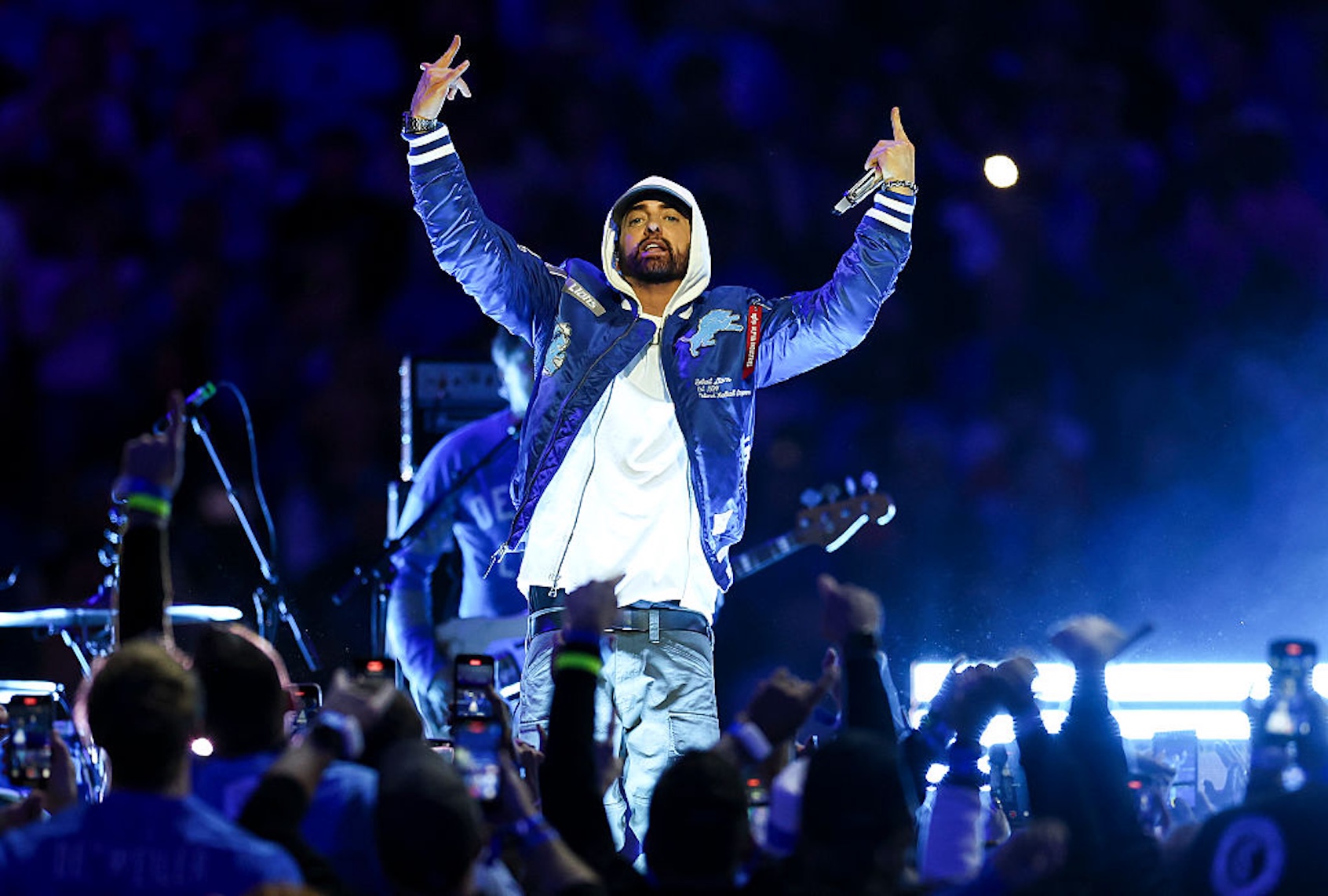
Reputation-wise, the collaboration does far more for Kid Rock than it does for Eminem. The former has long been fully consumed by Trump World, becoming more of a standby entertainer for MAGA events than a rock star. Eminem, on the other hand, once told fans who supported Trump to stop streaming his music.
(Ke.Mazur/WireImage) Kid Rock and Eminem during Experience Music Project Opening Gala at Experience Music Project in Seattle, Washington.
Rock told Billboard that he hadn’t planned to “drag [Eminem] into my political world,” but he had to have known that was impossible. The nod from a supposed Trump critic removes a small bit of the stain on Kid Rock, but it also transfers directly to his collaborator.
Eminem might have been hoping to build a bridge with this collaboration, but at least according to his Instagram comments, his fans aren’t ready to get over it. One commenter assured him that it’s okay to cut off a friendship “over moral differences.” Another said Eminem’s line in the sand against Trump must have been “brushed back into the beach.” The rapper’s newfound neutrality, one wrote, still amounted to “choosing a side.”
You can’t feel too bad for Eminem, who’s had plenty of opportunities to see that who you rap with is who you are. After all, more than a year after her breakout single “What I Want,” which she recorded with the controversial country music star Morgan Wallen, the pop singer Tate McRae is still being confronted by fans and interviewers with questions about the pair’s collaboration.
Wallen, who’s been given about as many second chances as gold records, has never explicitly identified himself as a supporter of the MAGA movement. But his history of using slurs on camera, the general nastiness of his dejected young man music and a massive social media tiff with “Saturday Night Live” have solidified him as an anti-woke warrior in the popular conception.
“It’s crazy to think that one song could define a whole person,” McRae told W Magazine earlier this month.“There are many aspects of my personality that three-quarters of my audience has no idea about. You hope one day you figure out a way to show all aspects of it.”
There’s little chance that Eminem will face such questions in the future, if only because his career as a hitmaker is basically over. He was something exciting and fresh when he pantsed the pop culture landscape in the late 1990s, but joking about how much everything sucks is a young man’s game. Coming from an older man, it just sounds bitter and out-of-touch.
Different listeners draw the start of his decline and the end of his relevancy at different points. Most agree that the zeitgeist of rap started to shift away from the stubbornly anachronistic rapper sometime around the end of the aughts. In 2013, he released a well-received album seemingly purpose-built to cap on his career, and then he just kept going. The 23-year-old McRae, on the other hand, will have her past decisions dug up by what remains of the music press after each new chart smash. Eminem may well be staring down a future where his regrettable decision to record contemporary worship dreck with Kid Rock generated his last real headlines.
It’s something the culturally savvy clown of Eminem’s early career would have been smart enough to avoid.
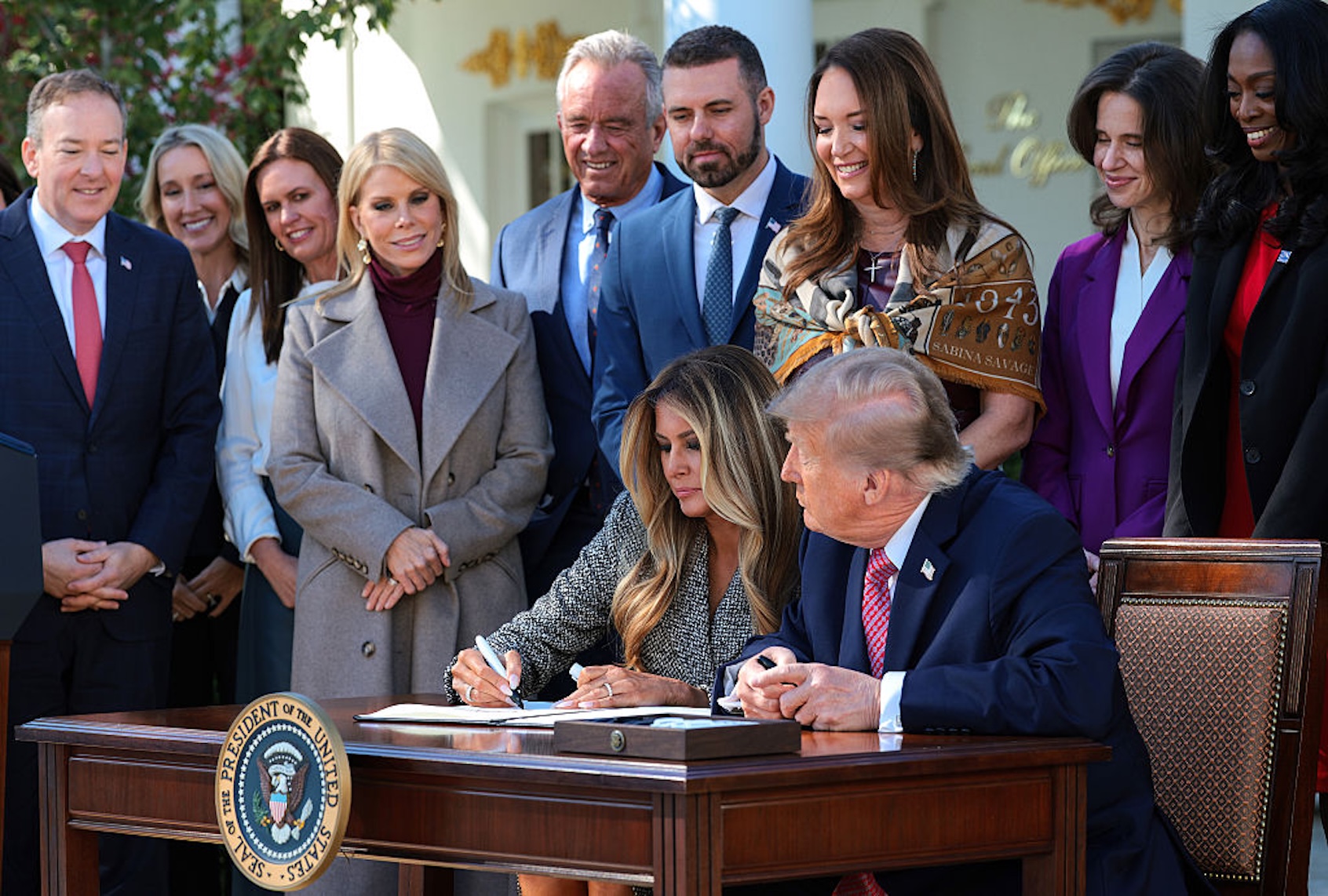
On Monday, alongside First Lady Melania Trump, President Donald Trump signed an executive order establishing the Women’s Health Division at the National Institutes of Health and a White House Women’s Health Task Force. According to the White House, the aim is to support policy reforms to ensure that women’s research is well-funded and that women have access to “stage-specific prevention, diagnoses, treatment, and care.”
At first glance, the action is in line with what women have long been advocating for. But in reality, the order is a startling setback, reversing an order signed by Joe Biden pushing for women’s research while advancing the Trump administration’s fertility-focused, pronatalist agenda.
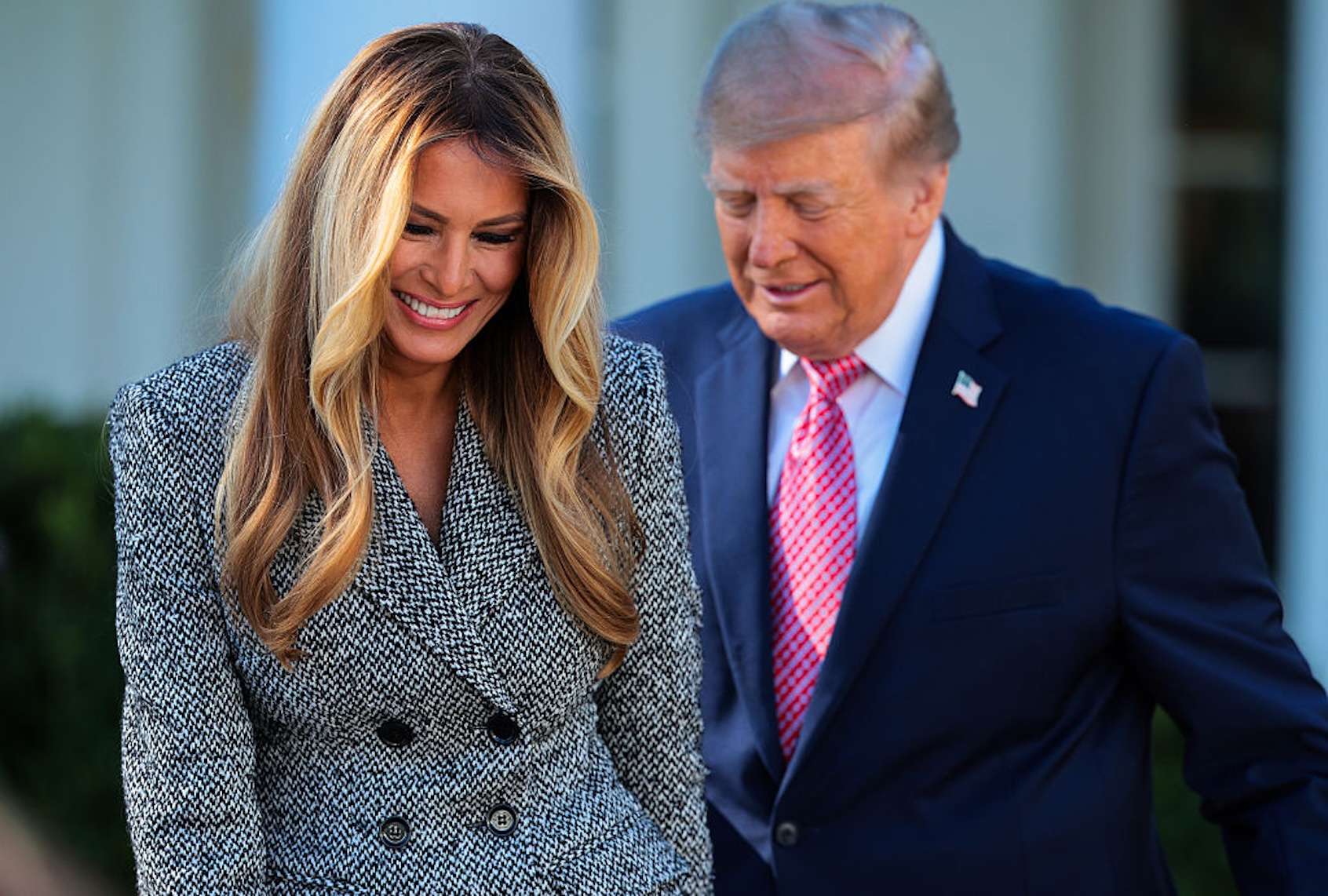
Melania Trump is a key part of this effort. In addition to championing the executive order, she also signed it — a purely symbolic act, as the formal role of first ladies is ceremonial. (In an historic first, she also signed an executive order with her husband in 2025 that expanded resources for the foster care system.) But symbolism matters, and Melania Trump is lending her signature and voice to an action masquerading as a boon for women.
In speaking at the signing ceremony, held in the Rose Garden at the White House, the first lady called the event “a transformative moment for women in America. Beginning today, we will change the reality of women’s health.”
That remains to be seen. The White House Women’s Task Force established by Donald Trump promises to work towards creating a federal government that recognizes and works to rectify medical conditions that affect women throughout their lives by enacting “necessary policy and regulatory reforms to ensure timely and state-specific prevention, diagnosis, treatment, and care for women.”
For many women who have faced systematic gaslighting from doctors who claim that our real physical symptoms are solely psychological, or a lack of funding and real-life effects of diseases largely affecting women being severely behind in clinical trials or lacking funding, this sounds like a good thing. As the order reads, “despite considerable advances in biomedical science, many diseases and conditions that disproportionately or uniquely affect women have not received the level of research, clinical attention, and treatment that other diseases and conditions have received.”
That is fundamentally true. Medical conditions that solely or disproportionately affect women, such as endometriosis and autoimmune diseases, have for decades been denied funding or excluded from clinical trials. Even conditions that affect men and women have routinely left girls and women out of clinical trials, failing to collect vital information about the different ways that diseases present and progress.This includes cardiovascular disease, in which women may experience different heart attack signs and symptoms compared to men and, consequently, often misattribute heart attack symptoms. The result is significant, often deadly, delays in seeking treatment.
The same disparity exists in medication research, with women experiencing adverse reactions to medications about twice as often as men because girls and women are not included in clinical studies where medication effectiveness and dosage is studied. This all trickles down into mainstream medicine, where women have for decades been denied care, diagnoses and medication. But the solution that Donald Trump is offering is not going to fix it.
While the goals of this task force are legitimate, the president has routinely cut and downscaled women’s healthcare funding and initiatives as Melania Trump has stood idly by.
While the goals of this task force are legitimate, namely to advance and coordinate research on women’s health through all phases of life, to increase inclusion of women and girls in clinical trials, and develop accountability for grant recipients, the president has routinely cut and downscaled women’s healthcare funding and initiatives as Melania Trump has stood idly by.
During his second administration, the president has cut Medicare, which provided vital healthcare for women, and shut down data-collection contracts for the Women’s Health Initiative study. (He reversed this decision days later.) As part of his efforts at targeting scientific grants connected to diversity, equity and inclusion, the president has further defunded women’s healthcare.
But perhaps the most glaring example of the administration’s neglect came in June when Trump cancelled millions of dollars in grants under the Teen Pregnancy Prevention Program. This change affected thousands of universities, community organizations, public health departments and Planned Parenthood clinics that provide vital gynecological care to women in states where abortion is currently illegal — and where Trump and the GOP’s continued fight against abortion access is costing women their lives.
The Department of Health and Human Services, which oversees the grants, issued new funding criteria mandating abstinence-only sex education with an increased emphasis on marriage and fertility tracking, which advocates warn will increase the rate of teen pregnancy. But that may be the point.
Since his return to office in January 2025, Trump has worked to reverse the decline in U.S. birth rates, even calling himself the “fertilization president” at a Women’s History Month celebration in March 2025. Many of his allies have claimed that the decline in teen pregnancy rates is a “crisis” rather than a societal success. With this context, women’s healthcare advocates argue that Trump is trying to raise the birthrate by increasing the number of teen pregnancies.
(Chip Somodevilla/Getty Images) President Donald Trump and First Lady Melania Trump sign an executive order establishing the Women’s Health Division at the National Institutes of Health and a White House Women’s Health Task Force on Oct. 19, 2026.
The president’s latest executive order advances this pronatalist agenda. The White House touts TrumpRx.gov as “delivering massive savings on some of the most commonly used fertility medications in the country to help families grow,” and hails the work of Moms.gov “to support new and expecting mothers, bringing together information intended to help families navigate pregnancy and early parenthood.”
Although Melania Trump has not spoken publicly about the Moms.gov portal, she did publish an op-ed in the Washington Post around the same time Trump launched the platform earlier this year on Mother’s Day, writing that America’s strength is tied to how mothers mold their children’s and family’s moral character. “America can restore the honor of motherhood after years in which feminism often placed career above family, with consequences to our nation,” she wrote.
With these words in mind, it comes as no shock that the order makes no mention of protecting access to abortion or contraception. As scholars and advocates like Dr. Karen Leader responded online to an X post from the official HHS account, writing, “‘Reproductive health’ without access to legal abortion is a death sentence for women.” Another person replied, “You might ask @FLOTUS to address the many preventable deaths of women who are bleeding out in parking lots or have sepsis or ectopic pregnancies due to republican draconian abortion laws.”
Even the people Trump has assigned to the new task force have a proven track record of supporting cuts to women’s healthcare and using medicine as tools to police and restrict women’s bodies. Led by White House chief of staff Susie Wiles, it will include HHS Secretary Robert F. Kennedy Jr., who has in the past supported cuts to Medicaid coverage and maternal health initiatives and medical abortion restrictions, as well as championing vaccine skepticism.
In a move that is especially galling, Pete Hegseth, who was accused of sexual assault and reached a financial settlement with the accuser, will also serve on the task force. During his time in office, the defense secretary has led a sustained attack on women’s healthcare and diversity in the military. In September 2026, the Pentagon released (and then temporarily rescinded) guidance as part of Hegseth’s “Health and Human Performance Optimization” initiative, which includes regularly screening female service members for fatigue and irregular menstrual cycles.
Women service members 35 and older who report significant symptoms of perimenopause or menopause are required to undergo testing to determine if these symptoms impact their station or quality of life. In response, advocates and medical professionals voiced concern that this policy could lead to unwanted and unwarranted tracking of women’s menstrual cycles, compromising medical privacy and potentially opening the door to use period tracking as a way to police miscarriages and abortions.
Instead of advancing women’s healthcare, the president’s executive order and task force should be seen for what it is: a cynical ploy for votes ahead of the November midterms. Taken together, the actions represent a last ditch attempt to save the support of women — and especially white women — for Trump’s allies amid growing criticism of the president.
It makes sense that the first lady, who herself defended abortion rights in her 2024 memoir “Melania”and urged Congress to hold public hearings for Epstein survivors, would be Trump’s choice to share the news. Once again, Melania Trump is willingly being used as a political prop to show that Trump values and respects women, despite the fact that he routinely fires the women in his Cabinet and press office, continues making sexist and predatory remarks to reporters, and most importantly, has named hostile men as many members of a task force dedicated to women’s health.
Women have long been medically disenfranchised, and Trump is trying to argue that he and the first lady care about women’s health. But for a president that has fought against abortion rights, opposed the release of the Epstein files and even defended the “Cornell 7,” many American women will remain unconvinced of his motives. Rather than reassured, they will also be rightly skeptical of the first lady who continues to stand by his side.
If Sen. Susan Collins loses reelection, “a lot of it will be put at the feet of President Trump,” Washington Post reporter Dan Merica told Vox’s Today, Explained. | Graeme Sloan/Bloomberg via Getty Images
With two weeks until the midterm elections, Democrats are comfortably favored to take the House. Their path to Senate control, though, is harder — and it could run through Maine, where longtime Republican Sen. Susan Collins is in a tight race against former state Senate president Troy Jackson, a Democrat.
When Collins first ran for Senate in 1996, she pledged to serve only two terms in the Senate. But 30 years later, she’s still in office despite the odds, as Maine has grown more blue around her.
One secret to her political durability is her success in “bringing in the bacon” for Mainers: Her official Senate website features a map of projects that she says she helped fund as chair of the Senate Appropriations committee, including hospitals, bridges, affordable housing, public transportation, and water systems.
This year, though, all of that money might not be enough for Mainers to look past their frustration with another Republican: President Donald Trump.
To learn more about what Maine voters are thinking as they prepare to head to the polls, Today, Explained co-host Sean Rameswaram spoke with Washington Post reporter Dan Merica, who’s on the ground reporting from Maine, about why some Mainers who backed Collins before are now reconsidering their support.
Below is an excerpt of their conversation, edited for length and clarity. There’s much more in the full podcast, so listen to Today, Explained wherever you get podcasts, including Apple Podcasts, Pandora, and Spotify.
Tell me how this race got to be so fascinating.
Maine this cycle was going to be interesting no matter what. Susan Collins is the only Republican senator who is running for reelection in a state that Kamala Harris won in 2024 this cycle.
But since the outset, it has really defined, I think, these midterm elections. The rise of Graham Platner, the oysterman turned politician, really hinted at the populist anti-establishment fervor that was in the Democratic base. That fervor was so strong that it prevented the sitting incumbent Democratic governor from winning the primary here in Maine to challenge Susan Collins. I think that said a lot about the Democratic Party.
But then you have the Collins angle of it, and she is really the poster candidate for a Republican who, in this election where Donald Trump’s approval rating is so low, is having to basically suspend political gravity in a state that really does not approve of the job that he’s done as president.
I want to ground this conversation in how voters in Maine feel about him right now because I know you’ve been talking to voters. What is the vibe out there? Are people mad?
There’s a lot of anger for the president here. Maine is in a unique position where it’s been on the receiving end of a lot of what those people who are mad at Trump would say is harm that he has caused.
It’s a border state. It borders Canada. There’s a ton of cross-border relationships. And so his attacks on Canada, his suggestion that it’s going to be the 51st state, has really hurt the state of Maine because it’s hurt tourism in the state. Many Canadians come down south to vacation in Maine. And there’s been a drop in tourism because of that fight with Canada.
The tariffs have hurt Maine because so much of the wood and the lumber that is grown and cut here in Maine is actually shipped up north to Canada to be processed, and then what it is processed as is shipped back across the United States. The tariffs have been incredibly harmful for the state.
And then you have ICE. I’m in Biddeford. There was a shooting of an individual here in Biddeford. That has been an issue in this race as well.
So there’s a lot of anger at the president, and it’s very easy to feel that when you’re talking to voters. I actually just spoke with a voter who voted for Troy Jackson, dropped his ballot in an early voting box. And I just asked him, “What did you vote for? Who’d you vote for? Why did you vote?” And he got visibly emotional when he started talking about the Trump administration and how scared he was for the future of democracy and that was why he was voting for Troy Jackson.
I’ve also talked to voters who supported Susan Collins just six years ago at the end of the first Trump administration. They voted for her back then and they feel like the last six years have made it impossible for them to vote for her again. And then on the other side, you have people who are hardcore die-hard Trump supporters and they actually think that Susan Collins has been too hard on the president.
She’s in a really tough spot politically where on her left, there are a lot of voters, including some who have voted for her recently, who are furious with her, who don’t think she stands up to the president enough. And then on her right, there are voters who think that she stands up to the president too much.
It’s funny to think about these two figures representing the same political party because while they might agree on a few issues here and there, they couldn’t represent more different brands of Republicanism. What’s the truth of how much Susan Collins sides with Donald Trump?
She has sided with the president at times. She has voted against the president at times. I was struck that, in the debate on Thursday, she said, “I have been a senator under five different presidents.” I don’t exactly remember what her number was, but she noted that she had only endorsed one Republican president and that was George W. Bush.
I was just in Kennebunk, which is right next to Kennebunkport, which is a historical location for the Bush family. They have a large home at Walker Point. There is some relationship between the Bush family and Maine, [and it] makes sense that Susan Collins really does kind of line up more with the Bush-style Republican Party than she does the Trump-style Republican Party.
What’s her actual relationship with the president like? And surely he’s well aware that she was one of the few Republicans who voted to impeach him over the January 6 insurrection. Does that get in the way of their relationship?
I think he’s very well aware when somebody breaks with him. I would have to imagine he’s aware of that.
“It was a fascinating comment that there are rules for Republicans who are running across the country, but that maybe Susan Collins doesn’t exactly have to adhere to those rules.”
I was actually told by a Republican early in the campaign that President Trump demands loyalty from people that he supports, but this person actually said that there are rules for Republicans and that there are rules for Susan Collins and that Republicans were willing to kind of give her some leeway, which is actually an acknowledgement that they know the bind that she is in.
They know that she’s running for reelection in a blue state, in a state that the president lost, in a state that is very hostile right now to the president. It was a fascinating comment that there are rules for Republicans who are running across the country, but that maybe Susan Collins doesn’t exactly have to adhere to those rules.
Affordability is a huge issue in Maine, right? And Donald Trump hasn’t exactly helped…
That has really heightened the competitiveness of this race. The same race is always going to be competitive, but the fact that gas prices are where it’s at, the fact that we’re going into winter, it’s starting to get cold up here. Home heating oil prices are above $6 a gallon.
I think about 80 percent of homes that are heated by home heating oil are in the Northeast, a large portion of them probably in Maine and New Hampshire, two states with Senate races in November. It’s been a huge issue up here.
The Trump administration has actually tried to get rid of a low-income program to help with home heating oil that helps a lot of folks in Maine. You’ve seen Republicans, from the gubernatorial candidate to congressional candidates, break with the president on that because they know it’s a huge issue.
So when you talk about affordability, yes, we’re talking about the price of beef, the price of groceries, the price of gas, but there’s also these localized issues in a state like Maine, in particular. And I think home heating oil actually could be a really fascinating, underappreciated issue in this race. If you grew up or live in Arizona or Nevada or California, you’re not thinking about the oil that you need to heat your home. That could be a real issue here in a state like Maine.
Collins is a political survivor. For all of it to come crashing down because of, essentially, who the president was — is that a bit of a sad ending to this political story for her? Do you think she’d maybe have regrets about how she approached Donald Trump?
It’s certainly possible. And you’ve seen other senators who have bucked the president and have then retired and not run for reelection. I’m thinking of Thom Tillis, for example, in North Carolina. There is this fascinating case study in how the Republican Party has changed when you look at Susan Collins and you look at Donald Trump.
Someone like Susan Collins in an earlier iteration of the Republican Party would’ve had a lot of success and would’ve probably stayed onside the Republican Party in a way that she just hasn’t done under Trump. She represents a different kind of era of the Republican Party.
I think there was a time when bringing home the bacon to a small state really worked politically. I’m thinking about Harry Reid, for example — he represented Nevada. In 2010, he faced a really difficult reelection campaign and his entire campaign was bringing home the bacon to Nevada, a similarly small state, and he won reelection in 2010.
I think if Susan Collins wins reelection in 2026, it’ll prove that there’s still a lot of goodwill for politicians who can deliver funding projects for states like Maine, states like Nevada, smaller states that maybe don’t get the kind of national attention that others do.
If she does lose, a lot of it will be put at the feet of President Trump. I’ll be fascinated to talk to her if she does lose, because I do think she will have a lot to say that she probably hasn’t said yet, but I think that’s an if, and I think we have two more weeks to find that out.
In so-called normal times and under business-as-usual administrations the job of White House Press Secretary doesn’t lead to renown or infamy. Those terms — normal, business as usual — don’t apply to Donald Trump’s tenure in the Oval Office, and his press secretaries have become household names mostly for the wrong reasons.
Sean Spicer’s claim to fame is being a terrible liar and an even worse dancer. Sarah Huckabee Sanders distinguished herself by reducing the once-frequent White House press corps briefings to very occasional insult exchanges peppered by lies. Her successor Stephanie Grisham, meanwhile, spends her time appearing on the One America News Network, Sinclair Broadcast Group stations, and Fox News instead of serving as a liaison between the press corps and the Oval Office.
More than 300 days have passed since the White House has held a news conference with reporters. In light of the recent saber-rattling between the U.S. military and Iran, that number is stunning. Times such as these require an official briefings from the White House and the military, who are charged with a duty to convey information to citizens via the press corps with clarity.
Such times also present tremendous opportunities to spin the administration’s actions in a persuasive light, leading citizens to have confidence in its actions. Indeed, Ari Fleischer used his position as George W. Bush’s press secretary to sell a war that has been dragging on now for 17 years.
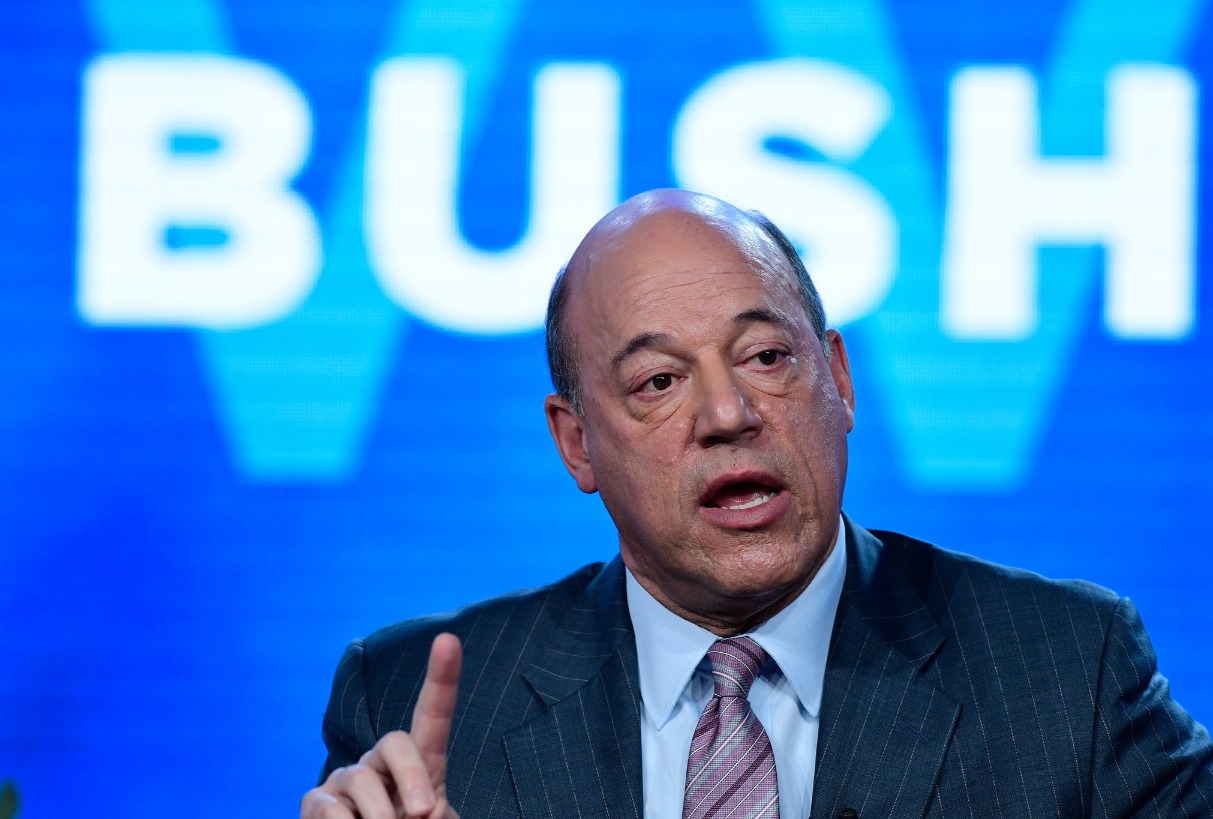
On Friday, Fleischer appeared in Pasadena to talk about the upcoming “American Experience” profile “George W. Bush,” part of PBS’ day of press conferences at the Television Critics Association winter press tour. This is where Salon sat down with him for an interview that took place before the “American Experience” panel.
Right around the same time, 13 former White House press secretaries, military and foreign service officials published a letter on CNN calling for the restoration of regular press briefings.
“An informed press corps strengthens our ability to govern,” the letter states. “Yes, presidents are now able to communicate directly via the internet, social media and tweets. But most Americans will learn about the work of the White House in the reports they see, read, and hear in what we collectively call ‘the press.'”
The statement then observes that regular White House briefings generally lead to better and more responsible reporting, later adding, “In times of military conflict and international crisis, these briefings take on even more importance. Americans want to know the latest developments and seek the truth. On social media, wild rumors can fly, and our adversaries can manipulate disinformation to their advantage. This is now well documented.”
“For that reason, among many, the country needs trusted sources of information delivered on a timely and regular schedule. That is the fundamental responsibility of people who serve as spokesmen and women for presidents, cabinet secretaries and other high-ranking government officials.”
White House spokesman Hogan Gidley responded to the letter by calling its writers “D.C. establishment swamp creatures.”
Among those who signed are Victoria Clarke, who worked under Defense Secretary Donald Rumsfeld, and Scott McClellan, who worked under Bush as his press secretary.
Missing from that list are McClellan’s fellow Bush-era press secretaries Dana Perino and Fleischer. Perino is now a Fox News anchor, and Fleischer is a contributor at Fox News.
In this one-on-one conversation with Salon, Fleischer talked about his view of the press’ relationship with the White House in the current climate and was asked to reflect on his time as press secretary to the second President Bush, specifically with regard to conveying false information about Saddam Hussein possessing weapons of mass destruction that led us to the U.S. invasion of Iraq in 2003.
Please note that this interview has been lightly edited for clarity and length.
I don’t know if you read the recent Twitter challenge from authors Don Winslow and Stephen King to Stephanie Grisham.
No, I haven’t.
They stated that if she would hold a press briefing, they’ll give $200,000 to St. Jude’s Charity. This was a serious offer, speaking to the fact that there has not been a White House press briefing for more than 300 days.
Yeah.
You held that job and observed the traditional means of operating as an information bridge between the White House and the press corps. So what do you think about the fact that the last couple of press secretaries have been not only less approachable, but granting less access to official information coming out of the White House?
I’m a traditionalist, so it concerns me a lot and there’s a tremendous value to the briefing. There certainly was during the Bush era, and historically now, the advantage to a president is you have people reinforce his message and buttress what he says. The advantage to the country is it gives reporters a chance to ask more probing, longer follow-up questions.
But everything’s changed now in this era of hostility between President Trump and the press. And I’ve never seen such rancor and hostility in both directions. And so as much as I’m a traditionalist and see the benefits of the briefing, I don’t know that if they brought the briefing back in this current environment, it would serve the press, the public or the press secretary any good cause. I just think it would turn the room into nothing but a TV show that was full of nasty arguments both directions.
I’m not going to disagree with the partisan rancor in this country. That is abundantly clear. But I do not believe that what you’re saying about the animosity in terms of the press, particularly the actual people in that briefing room, is justified.
I say that because there is a habit nowadays, as we’re consuming media, of conflating the people who are on the ground and in that room doing their job as journalists and asking questions, with punditry. You know this. You’re a pundit. So I understand that you’re going to have a viewpoint on this topic that’s going to be a bit skewed. But I just want to say that when you’re blaming both sides, I need to disagree with that.
The questions that are being asked are probing and they’re certainly pressing tough issues with the president. But I would also say that the reaction the president has had, and the press secretaries from Sean Spicer to Sarah Huckabee Sanders and now what we seen of Stephanie Grisham, that is where the rancor has showed up. And you can call me biased on the behalf of those journalists, but when I’m watching the news, the rancor is really elevated from the [White House] side.
Just one other factor I’ll mention – and I’ll come back to that. But there’s another big factor here that’s changed things. And that’s the accessibility of the president himself versus President Obama, President Bush, President Clinton. No predecessor has been as open and accessible to the press as the president himself. And that is the primary job of the White House press corps, is to ask the president hard questions. So he’s doing it on virtually a daily basis, whether it’s a good day for him or a bad day —
As he’s getting on a helicopter with very loud rotors where he limits amount of time spent answering questions.
—that matters. I mean, if you’re, if you’re sitting there, they’re getting seven, eight, nine, 10 questions —
They’re getting in a couple of questions repeated seven, eight, nine, 10 times…And he’s not really answering those questions.
I don’t think that’s the case.
I’m just saying that there’s a difference between those formal briefings, which as you know, you have a controlled environment that you, as the press secretary, used to your advantage. Just in terms of being able to distill information accurately and effectively to the press. What you did, and I’m not saying this was right, but you distilled the message to the press, and the press gave it credibility and repeated it. I’ll also say the press should have questioned you even more. I would say that to every press secretary.
But the role that the press secretary plays carries a certain level of respect with the press. By saying Trump is more accessible, that doesn’t necessarily mean that the press is getting a better value in the information he’s sharing.
That’s on the press, not on the president. They have daily access and the press can get out of it whatever they seek. And I don’t think venue matters. They have access to the president, which is an improvement over prior White Houses for the press. So given the fact that the president is so accessible, I still wish as a traditionalist there were the briefing, but I’m realist enough to know that that rancor, that hostility would turn into a nasty red hot TV show where the few grandstanders in the room will spoil it for the lot of them, particularly print reporters who really do just want to get questions answered.
[CNN White House correspondent] Jim Acosta, for example. He acts like a pundit when he should be a correspondent. He states his opinion. He tells the White House what they should be concluding, and I think it’s that type of grandstanding along with the breakdown of the media in the modern era that has led to such polarizing media outlets. We used to have a much more dedicated, neutral fact-finding press corps and now, in both directions, the press takes stands for and against. And I think that’s a reality that’s going to live long after President Trump as well. There’s just been a breakdown on what the media represents that’s changed with this polarization. All of it in the Trump era leads me to think that as traditional as I am, and as constructive as the briefing can be, it makes little to no sense to fiddle with the Trump administration.
At the same time you have to also consider who is that in that room. You’re talking about the breakdown in the media. But there are people in that room who aren’t actually, and I am saying this politely, traditional media. They’re not even really media at all. The White House has invited propaganda machines into that room.
They’ve always been there.
So you’re saying this is normal, that you let in the likes of One America News, conspiracy bloggers ,and newsletter writers, you let those in during the Bush era?
Oh yeah. I mean, my approach during the Bush era was the press secretary should not be the person who decides who was or who was not media. There were people who worked for me who made that decision based on logistics and Secret Service reviews. I don’t think it’s helpful for the press secretary to decide you are acceptable as a journalist. That’s a thin line on thin ice. So I had people in there who were far, far left pundits and then far, far right pundits. That’s the way it goes. I’d spend most of my time taking questions from the front couple of rows, which is where the traditional mainstream outlets sit.
The difference now is that when Trump has appeared and asked questions, he’s gone to the “friendlier” outlets that aren’t actual news organizations. And that’s something as press secretary when you would brief Bush, my guess is, and you can clarify this, but I suspect you encouraged him to take questions from the traditional news outlets that carried the most weight.
He did, regularly. What really changed is the internet and social media has created profound changes in the way the media operates. And then breakdown of the media in terms of the polarization that the rest of the nation is going through as well.
When I was there, there was no Facebook, there was no Twitter, it was the dawn of the social media internet era. Toward the end of the Bush years, Twitter existed and Facebook existed, but I remember thinking if we ever wanted to produce a White House video, we would have released it through government channels and I’d have been hammered for creating government propaganda.
Technology changed, and the Obama administration regularly released YouTube videos and it was widely accepted. It was measured then by how many clicks it got as a measure of whether it was popular, whether it was successful. Gone was the notion that this could be propaganda even though the only difference was who carried it: YouTube versus the government channel.
Technology has really changed everything for the media probably in many ways that are positive in many ways that are negative and we’re still flushing that out.
Let’s talk about that. A lot of your tweets and recent interviews have been quoted. You are getting on Fox News and saying a lot of things in the moment, that you’re having thrown back in your face and you’re being asked to defend yourself.
I’m talking about everything that’s happening in Iran, the missile strikes in Iraq, and all the reaction around this new conflict in the Middle East. People have taken issue with your recent initial reaction of “we’ll be greeted as liberators,” which is what you said in 2003. After that, there were marches in the streets of Iran showing that not to be the case.
Looking at this part of a 17-year war – one which you had role in starting – it’s curious to me that now, 17 years later that you wouldn’t look back and observe that maybe we shouldn’t be doing this, maybe we shouldn’t be increasing tensions with Iran.
Yeah, I’d do it the same way I always have. And that’s to say what I believe. It’s not complicated.
Not even in hindsight?
First off, you have to make the distinction between the military operation, the war itself, and then the occupation. The aftermath fact is from March of 2003 till roughly July, August of 2003, we were greeted as liberators. You could go to cafes and downtown Baghdad, sit outside and have meals. It was a peaceful city. People welcomed the Americans. Starting in the fall of 2003 predominantly, that’s when the occupation turned terrible. And that’s when we start to lose many more lives. And that’s when the tide turned.
So two things can be right at the same time. We were greeted as liberators, and then a guerrilla war became a highly successful guerrilla operation. And we didn’t handle the occupation, right? We handled the military invasion. We didn’t handle the occupation.
But I’m talking about the information that was dispensed to the press before the war.
I’ll get back to that. The other big thing was the issue of weapons of mass destruction. This is an entirely legitimate issue. Of course, I faithfully and accurately reported to the American people precisely what the CIA concluded. The CIA concluded the Saddam had weapons of mass destruction, biological or chemical, no if, ands, or buts.
And the UN investigators went in and didn’t find any conclusive evidence of WMDs.
The CIA said that he had them. That was the CIA’s conclusion. And that was what the president relied on when he made the decision to go to war.
Now, tragically, that intelligence turned out to be wrong, and we all acknowledge that that’s what led to the creation of the war. They called the Robb-Silberman Commission, a bipartisan investigation into how and why it went wrong. Their conclusion was it was an intelligence failure. That’s the heart of it.
And to this day, I’m certain that if the CIA had said to President Bush, “We don’t know. We’re not sure if he has weapons of mass destruction or not,” there never would have been [a war].
And the tragedy is the information turned out to be wrong and we went to war based on a wrong conclusion by the CIA.
Famously, you said that you didn’t support Trump in the election. But you do now. At what point do you look at the events that are either connected to Trump or that he’s precipitated in terms of tensions not just between party but also between the people of this country and say to yourself, “Enough is enough”? Or, “You know what? Looking back, I might not have been correct in this initial assessment”? At what point do you maybe reassess and actually say in public, “Maybe I wasn’t correct?”Do you apologize for anything?
In the primary, I voted for somebody else. I wanted to be for him in the general against Hillary Clinton. And as I watched it all unfold, I ultimately left my ballot blank at the presidential level and voted for him all the levels below president. And as I have watched President Trump, there are many times I have criticized him and there are many times that I have praised him. I’m not afraid to be independent and call it as I see it.
I regularly defended [Special Counsel Robert Mueller] because I know Bob Mueller. I know what a man of integrity is. I was one of few, if not the only person, on Fox News from start to finish to defend Bob and Bob Mueller’s honor and integrity and how he conducted that investigation. And I’ve never hesitated to criticize the president on Twitter or on Fox News.
. . . So I don’t hide what I think or say. And I think one of the highest duties you have having once worked at the White House is no longer to be a spokesperson for any one president or cause. That’s what I used to do with tremendous pride. Now the more important thing is to try to shine a light on what’s right, what’s wrong, what worked, what didn’t, and explain it.
And that’s what I’ve tried to do with President Trump. There are things that he’s done that . . . I don’t support his manner. His style is not mine. It’s not like that any of the people that I’ve worked for. It’s too truculent. It’s too offensive.
But I’ll also point out that many of the criticisms against him are too truculent and too offensive. He’s been called Adolf Hitler, he’s been called Mussolini. As soon as he was the president-elect, a movement [arose] that was based on the word “resistance,” which was the word used against the Nazis in France. . . . Talk about going beyond the norms. These are all actions beyond the norms.
But do you believe that he has been a normal president? You’ve worked for a man who I think people would say operated within the social contract of what we expect from a president.
He’s the president that the American people through the electoral college elected. And I see a lot of people who rejected that, who tried to overturn it in the electoral college, if they could have, who are now trying to overturn it through impeachment if they can. And I think that is equally, if not more so, violative of the norms that I believe are important to the traditions that George Bush represented and the people that I used to work for represented. So I think there’s way too much hostility in the system. But it’s on every side. It’s not just President Trump.
Just to clarify, what would you say those norms are?
To treat people you disagree with, with respect. When President Obama was reelected in 2012 I tweeted the next morning, congratulations to President Obama. He’s my president and he’s all our president. I think that’s the way we should all be. That’s how you show respect for the American people and the decisions made within our constitutional system. I didn’t vote for President Obama. I voted for Mitt Romney, but I recognized he’s my president. As soon as President Trump was elected, you had this massive movement on Twitter and social media saying, “not my president.”
That same thing happened with Obama.
But not by me. You’re asking me questions of me. That’s why I said to you, I instantly tweeted, he’s my president. I wanted to strike that civil tone that much more representative of the Bush family’s tone. So if you’re asking about my behavior, I can just tell you what I’ve done. And that’s represented by what I believe about President Bush. and how you treat people, and how you should be civil with people even if you disagree with them.
You’re a contributor to Fox News and a lot of people have pointed out that Fox is one of the less respectful, less civil, less considerate proponents of discourse right now, particularly in politics. So when you’re talking about respect and civility — obviously they employ you, so there’s only so much you can say — but what do you see that they’re contributing to this conversation?
Well, I think you have to make a distinction between opinion shows and news shows.
Viewers don’t make that distinction.
But I think there is a distinction between the opinion shows and the news shows, and the news shows are superb. I think Bret Baier’s show at six o’clock is one of the best, most fair shows in journalism, and their daytime shows as well. I wake up in the morning, I watch CNN in the morning, and I watch Fox in the afternoon because I like the balance. I want to hear what all parties are saying and I think you can make many of the same points you made about Fox, about CNN and certainly about MSNBC.
So that’s part of that polarization, the breakdown in the media that I was talking about. But I also suggest if you see the things that I say on Fox, it is very much an independent voice and a voice that reminds people about the importance of civility.
This is the point I was making to you about Bob Mueller and I could give you dozens of examples where I’ve said things that were critical of the president and said things that are supportive of the president. I don’t have to be polarizing.
The “American Experience” two-part biographical profile “George W. Bush” with Fleischer airs Monday, May 4, and Tuesday, May 5 at 9 p.m., on PBS member stations.
A man clears debris at the site of an air attack in Kyiv on October 19, 2026, amid the Russian invasion of Ukraine. | Oleksii Filippov/AFP via Getty Images
This story appeared in Today, Explained, a daily newsletter that helps you understand the most compelling news and stories of the day. Subscribe here.
You can’t quite say that President Donald Trump is “turning” on Ukraine President Volodymyr Zelenskyy, because he never truly seemed to have Zelenskyy’s back.
There was that time Trump panned Zelenskyy as a “modestly successful comedian.” Or that excruciating meeting where Trump and Vice President JD Vance harangued Zelenskyy for inadequately “thanking” them.
But over the past week, Trump has dropped even the meager niceties he sort of faked before. On Monday, he blamed Zelenskyy for failing to end Russia’s invasion…and suggested it was time for “somebody else” to take over negotiations.
Three days earlier, he delayed a package of tariffs and other sanctions designed to pressure Russia to end its four-year onslaught in Ukraine. And a week before that, Trump announced — after an apparently chummy phone call with Russian President Vladimir Putin — that the US would reopen its market to Russian diesel, reversing a ban imposed shortly after the invasion.
All this diplomatic whiplash comes as Russia continues to bombard Ukraine with drone and missile strikes, killing hundreds of civilians in September alone and leaving hundreds of thousands of people without power. The first two weeks of October ranked among the deadliest periods for civilians in the country since 2022, according to UN monitors.
But while those escalating strikes threaten both human lives and long-standing international norms around territory and sovereignty — norms that actually matterquite a lot to American security, long-term — there’s another issue that Trump is more concerned with right now: Ukrainian strikes on Russian oil refineries.
Those strikes drive up the cost of gas, and those prices are, of course, of profound concern to American voters, who are paying near- record highs for gasoline and diesel fuel (…primarily due to the war in Iran, I am obliged to note). More than any other issue, high living costs threaten to hamstring the GOP in next month’s midterm elections.
Trump has, perhaps predictably, pursued a Russia policy that he says could ease prices at home. In addition to allowing imports of Russian diesel, Trump has demanded that Ukraine stop targeting Russian oil refineries and ramped up pressure on Zelenskyy to negotiate an end to the war.
In either case, it will likely take more than arm-twisting to make the whole situation go away for good. As Vox’s Josh Keating laid out earlier this year, the US does have quite a lot of leverage over Ukraine — and Trump could very well pressure Zelenskyy to accept a peace deal with no real assurance that Russia won’t just invade again.
But we’ve all seen this movie before, as recently as 2014: Without credible guarantees, Putin could catch his breath, regroup, and return to Ukraine in a few months or years to take even more land.
The real, long-term threat there is that a stronger Russia would be even better positioned to menace the rest of Europe. And America’s power could suffer as its allies look elsewhere for less fair-weather friends.
But uh…diesel might be a bit cheaper? Thank God for small mercies, I guess.
One link for later
➨ May we suggest a truly miserable read? My colleague Marina Bolotnikova calls The Opposite of Happiness: How Bad Feelings Make and Break Us “a bracing, useful, and even comforting lens on what it means to be alive.” The recent book, by the noted economist George Loewenstein, examines the (necessary!) role of negative emotions in our lives and civilization…and suggests, albeit indirectly, some paths for making peace with them.
Before you go…
Did you know…that Turkey is the world capital of hair transplants? There are at least 500 clinics for that purpose in Istanbul alone, beloved by medical tourists.
Today’s trivia: What’s the currency of Poland? (You can find this and other brain puzzles in Vox’s daily crossword. Look for the answer in tomorrow’s edition.)
Yesterday’s trivia: Yesterday we asked you for the mass-market beer named after a Dutch river. That would be Amstel. The city of Amsterdam is also named for a dam on the same river.
Remember when billionaire Elon Musk and President Donald Trump were supposedly enemies? At the start of Trump’s second term, the world’s richest man, was busy ripping through nearly every level of the U.S. government with the Trump-approved Department of Government Efficiency. But by June 2025, the Wall Street Journal reported the pair had “torched” their relationship, which amounted to a lot of social media slapfights and accusations about who was in the Epstein files. But the truth is, the two men have a storied on-off relationship that seems to fluctuate based on who’s grabbing the check.
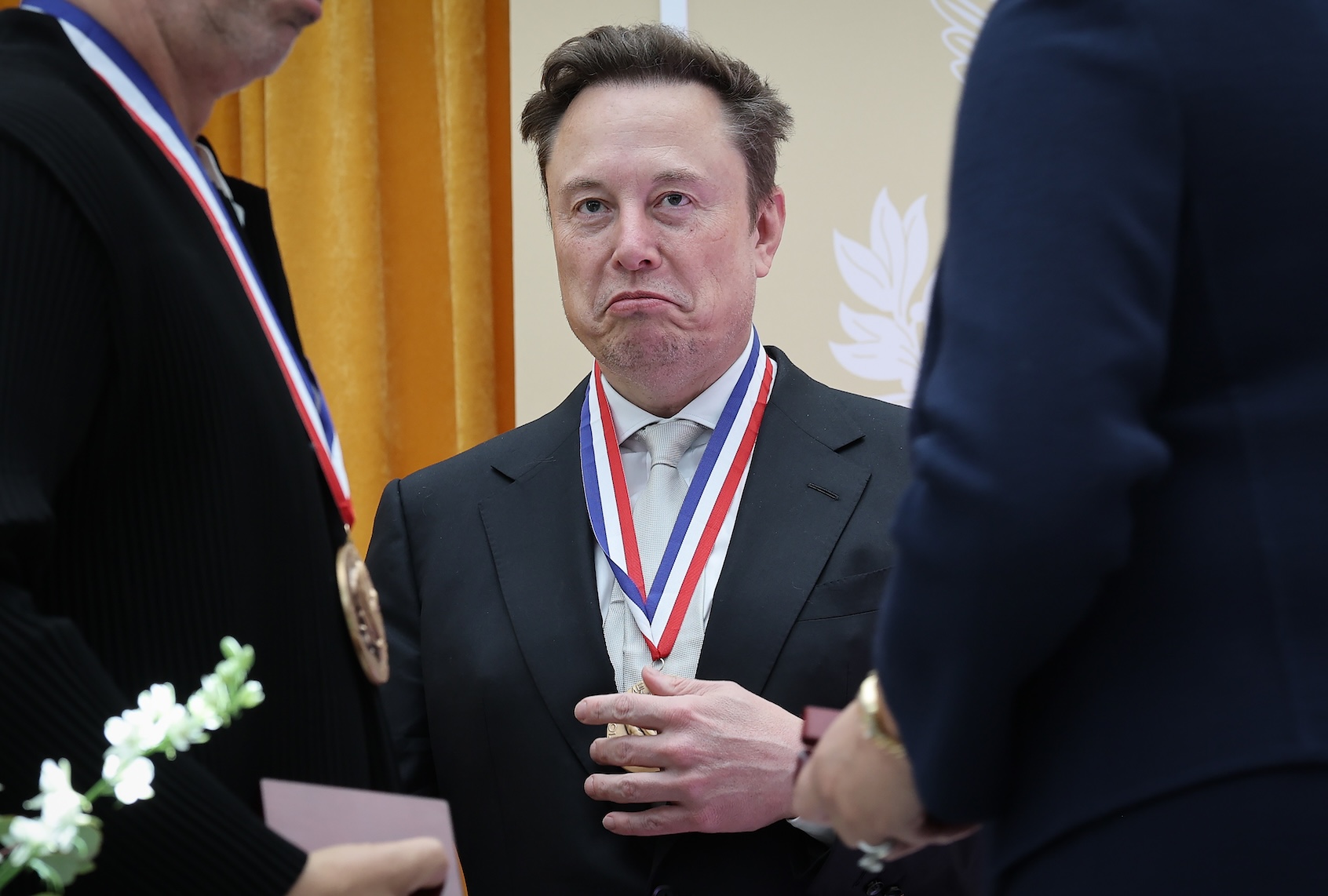
Lately, Musk and Trump are back to acting like close pals. It was hard not to cringe watching the president award Musk the National Medal of Science on Oct. 8, the highest honor the U.S. can bestow on a scientist or engineer. I was probably reading too much into it, but I sensed some awareness on Musk’s part that it was an empty gesture, unless inflating stock prices is a scientific achievement. But maybe the pageantry is meant to distract from how many government grants Musk has been awarded. According to multiple reports, Tesla and SpaceX basically would not exist without the government giving Musk’s companies wads of cash.
At any rate, Musk is now stepping in to try to save Trump’s allies in the midterms, dumping hundreds of millions into races, with Axios reporting he is “single-handedly keeping the Republican Party afloat in some of its most vital races.” So far, he’s spent some $366 million in pro-GOP midterm TV spots and other campaign efforts, with $276 million donated since July alone. No other known donor comes close to dishing out more funding. But for Musk that’s a relatively trivial amount, even though his fluctuating trillionaire status is currently hovering below the threshold for designation.
Some of Musk’s money went to his own super PAC, but a good chunk also to the Senate Leadership Fund and the Lone Star Liberty PAC, both of which are backing Texas GOP Attorney General Ken Paxton’s endangered campaign for the U.S. Senate against state Rep. James Talarico. Right now polling indicates that statewide election results in the Lone Star State are going to be extremely tight, with new data from the University of Texas/Texas Politics Project released Wednesday indicating Democrats are statistically tied in key races. It’s not just Talarico, who leads Paxton 50% to 47%, but Democratic state Rep. Gina Hinojosa holds a one-point lead over Republican Gov. Greg Abbott, which is effectively a tie. Trump is reportedly already searching for someone to blame if Democrats pick up their first Senate seat in Texas since 1988.
Across the country, other races indicate a high likelihood that Democrats will retake the House, while the Senate still looking like a tossup. With these numbers, Musk is likely to dump even more cash into the election before Nov. 3, but it increasingly smells like desperation. As Alex Gibney, director of the new documentary “Musk,” recently told Salon’s Melanie McFarland, Musk is “literally paying for political advantage.”
“He’s spending way more now than he did for the presidential campaign in 2024, and in part that’s to get more money for himself in the form of military contracts,” Gibney said. “But also, he knows that a reckoning is coming for him if the Democrats take over the House and the Senate, and there’s going to be a lot of investigations into him for corruption and abuse of power, taking our information, particularly possibly relating to DOGE, and doing God knows what with it.”
It remains to be seen if this midterm meddling will pay off for Musk. He got what he wanted out of the 2024 presidential election by propping up Trump’s campaign, but his attempts to financially sway results in other races haven’t worked. In 2025, Musk dumped more than $18 million into a Wisconsin Supreme Court race, hoping to suborn the state’s redistricting efforts and regulations of car manufacturers and dealers. His influence made it the most expensive judicial race in U.S. history, but that still didn’t get him the outcome he wanted.
Last Thursday, Musk settled a class action lawsuit alleging that his PAC had engaged in fraud in the 2024 presidential election by falsely telling voters they had a chance to randomly win $1 million when the winners were actually predetermined. He also dodged bribery charges in August for trying the same stunt in the Wisconsin Supreme Court election.
In the end, the results will all come down to voter appetites, and there are increasing indicators that the majority of Americans are fed up with the ultra-rich meddling in government. A recent Fox News poll indicates that corruption is the top concern among both Democratic and Republican voters, with 60% extremely concerned, a figure that outpaces inflation (58%), gas prices (50%), government leadership (49%) and healthcare (48%). Data from a Washington Post-ABC News-Ipsos poll released Sunday found roughly two in three Americans believe Trump is using the presidency to enrich himself, with most of the increase over the past year coming from people who lean Republican.
These numbers may indicate that people are starting to see through Musk’s ruse. He could probably pour even more money into politics, and probably will anyway, but there’s a glimmer of hope that it won’t accomplish much.
America’s descent into chaos and depravity was foretold 10 years ago at a press conference. Donald Trump, who had just been nominated for president at the 2016 Republican National Convention, issued an invitation for one of America’s foes to hack the emails of Hillary Clinton, the former secretary of state and Democratic nominee for president. “Russia, if you’re listening, I hope you’re able to find the 30,000 emails that are missing,” he said. “I think you will probably be rewarded mightily by our press.”
The call came only days after emails from the Democratic National Committee were released following the hacking of the organization’s computer servers, which was widely assumed to have been perpetrated by Russian agents. As would become the habit over the following decade, many dismissed Trump’s remarks as mere trolling that weren’t intended to be taken seriously.
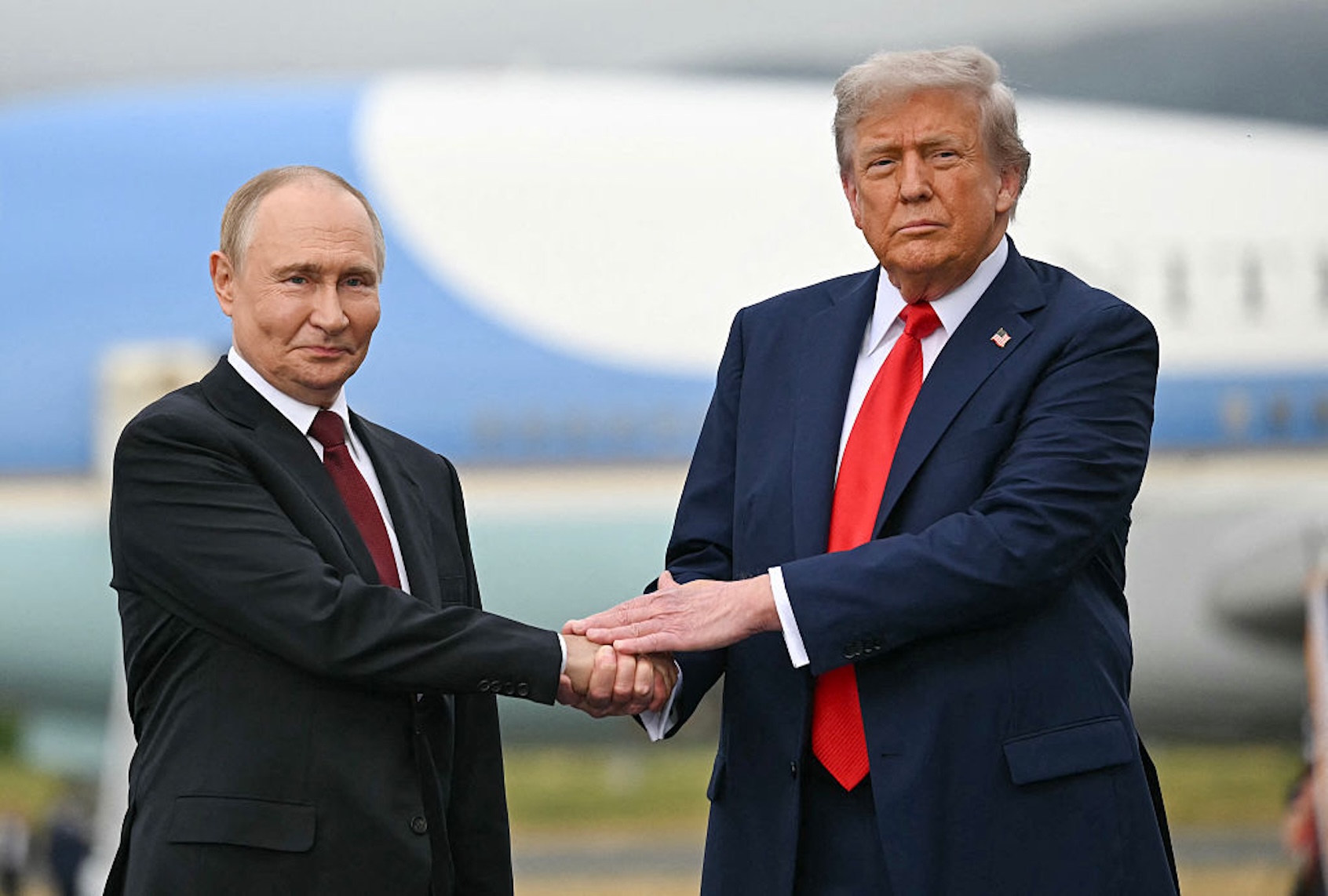
This was not the first time he had invoked Russia. Throughout the primary season, Trump had gushed in multiple interviews about Russian President Vladimir Putin and signaled his intentions to draw closer to Putin once in office. Trump even defended the dictator’s extra-judicial killings, blithely explaining, “Our country does plenty of killing.” But the press conference did mark the first time he enlisted Russia as his ally.
The overtures continued throughout Trump’s first term, most infamously when he sided with Putin during a bilateral meeting over America’s own intelligence agencies, which had found that Russia had interfered in the 2016 election. The president suggested an “election integrity” sharing operation between the two countries, a proposal that made it clear Putin had Trump wrapped around his little finger.
Then came Russia’s war of aggression against Ukraine. Throughout the 2024 election, Trump pledged to end the war in Ukraine within 24 hours of taking office — or of being elected. (His rhetoric often shifted.) He apparently believed that he could get on the phone with Ukrainian President Volodymyr Zelenskyy and order him to immediately surrender or face his mighty wrath. Needless to say, this did not happen, and since then Trump has grown increasingly frustrated that he’s been shown to be nothing more than a paper tiger, a frustration that has now reached fever pitch due to his abject failure in the Iran war. Desperate for a “win” — by which he means a Russian win — the president is now in the process of completely selling out Ukraine to his good friend Vlad.
Trump has grown increasingly frustrated that he’s been shown to be nothing more than a paper tiger, a frustration that has now reached fever pitch due to his abject failure in the Iran war. Desperate for a “win” — by which he means a Russian win — the president is now in the process of completely selling out Ukraine to his good friend Vlad.
In recent days, Trump has signed an executive order temporarily lifting the sanctions on Russian oil. While supposedly done to secure diesel fuel for the United States, which has seen prices skyrocket due to the president’s war of choice with Iran, the act is in practice a sign of goodwill toward Putin, America’s enemy, and will help him fund his war against Ukraine, our erstwhile ally. A few days later, Trump waived several additional sanctions that a bipartisan congressional majority had passed just a few weeks ago at the behest of the late Sen. Lindsey Graham, R-S.C., who foolishly believed himself to have the president under his control.
Worse yet, in what will go down as one of the most appalling betrayals by a U.S. president in history, Trump and his good friend Elon Musk apparently sabotaged Ukrainian intelligence by slowing the Starlink and Starshield communications systems the country relies on for its defensive and offensive weapons systems. Russia took swift advantage of the favor and unleashed one of the most massive bombardments of the war, killing civilians and hitting Ukraine’s energy sector. Trump also called for Zelenskyy’s ouster, and in an interview with Bloomberg published Sunday, the Ukrainian president accused Trump of pushing the country to surrender to Russia.
Trump has a number of apparent rationales for these moves. He wants to be seen before the midterms to be doing something about the price of gas and diesel. But that is a crisis of his own making due to his misbegotten war in Iran, for which he has no way out that will solve the problem. His ongoing war has altered the global energy markets in ways that are not easily fixed, which was the reason no president before him was stupid enough to attack Iran. So now Trump is blaming Ukraine because it is bombing Russian oil refineries and demanding they stop so that Russia can sell its diesel — and finance its war, which led to the sanctions in the first place. Not to be overlooked is that Russia is a staunch ally of Iran and is helping them fight us, which Trump has waved off as having “nothing.” Some might argue that could constitute providing “aid and comfort” to America’s enemy.
Meanwhile, fingers are being pointed in multiple directions. Musk said the government is to blame for the Starlink/Starshield gambit. According to sources in the Pentagon, the order came from the White House. Trump claimed he doesn’t know anything about it. Secretary of State Marco Rubio shrugged that “it just sort of happened.” Now, lest the Europeans get it in their heads that they should try to step up their own defenses by restricting Starlink in favor of a European-based system, the U.S. government is reportedly threatening them with “devastating” or “destructive” economic retaliation.
As a cherry on top of the administration’s full-on embrace of Russia, the Wall Street Journal reported that Putin has floated a summit with Trump and Chinese President Xi Jinping to decide Ukraine’s fate. (On Monday, Trump told reporters he was open to a meeting but denied it would focus on Ukraine, saying he wanted to discuss denuclearization.) If Trump knew any history, he would know that such a meeting would prove to be his Yalta, the trilateral conference between President Franklin Roosevelt, British Prime Minister Winston Churchill and Soviet Premier Joseph Stalin that carved up Europe in the wake of World War II. The summit became widely seen by the right as “the sell-out at Yalta” because the Soviets ended up with Eastern Europe, but things have changed within the GOP.
The summit is clearly intended to elevate Russia back to superpower status, which it is not in any economic or military sense, and to demonstrate a new order in which Trump, Putin and Xi run the world. In reality, Putin and Xi now have the United States dancing to their tune, handing them power and influence to dominate their respective spheres.
The president’s flagrant betrayal of Ukraine is an outrage that has seemingly awakened some of the slumbering Republicans who know they are facing a drubbing at the polls in the quickly approaching midterm elections. Whether it will arouse the consciences of enough to truly step up and stop this breach of trust is unknown. But the mere fact that Trump has gone this far to salve his ego, defy his critics by embracing Putin even more fervently and drum up a lame excuse for what may be the worst national security decision in American history leaves this country weaker, poorer and more distrusted around the world. It hardly seems possible, but we have reached yet another new low.
According to a Washington Post-ABC News poll, including a substantial minority of Republicans, almost two-thirds of Americans believe President Donald Trump is using the presidency for personal profit. | Chip Somodevilla/Getty Images
This past January, when the New York Times asked President Donald Trump about concerns he was blatantly intermingling his family’s business interests with the presidency, he had a pithy response. During his first term, Trump said, he learned that “nobody cared.”
But after a seemingly endless set of headlines about influence-peddling and profiteering involving Trump or people close to him, voters care now.
A Fox News poll asked voters how concerned they were about more than a dozen issues, and “corruption in government” ranked at the very top. In Gallup polling, the amount of respondents saying they thought government corruption was widespread reached 89 percent — a record high. Almost two-thirds of Americans believe Trump is using the presidency for personal profit, according to a Washington Post-ABC News poll, including a substantial minority of Republicans.
Even Trump seems a bit more worried than usual. Earlier this month, he distanced himself from two of his top political advisers’ foreign consulting work and threatened to fire them if it presents a conflict. Vice President JD Vance was questioned in a CBS town hall that aired Saturday about whether he’d witnessed any potential corruption in the White House (he said he hadn’t).
Accordingly, corruption has emerged as one of the key themes in Democrats’ closing midterm message, with candidates of all kinds hammering it in ads, debates, and interviews. And party strategists have landed on a particular argument about it: They want candidates to link it to Democrats’ message about voters’ other top concern, affordability.
That is, things aren’t just expensive because of government incompetence — it’s actually powerful interests conspiring to rip you off with the help of politicians compromised by campaign donors and personal conflicts.
Georgia Sen. Jon Ossoff has been hammering this theme all year, listing eye-popping improprieties among what he calls the “Mar-a-Lago Mafia,” while also arguing that pharmaceutical companies and corporate landlords are corruptly driving up your prices. Texas Senate candidate James Talarico, too, regularlyargues that “we have an affordability crisis because we have a corruption crisis.” In Kentucky’s Sixth District, House candidate Zach Dembo put out a reform plan while warning “corruption has cost our families, driven up our prices and enriched politicians more interested in their own bottom lines than us.”
Indeed, the Washington Post and Politico report that candidates across the country are being egged on by Democratic messaging firms urging them to make that link. One memo from the Democratic group Senate Majority PAC recommended arguing that corruption “drives up the price of everyday goods: gas, groceries, utilities, housing.” Republican strategists have also noticed voters making a connection between corruption and prices in battlegrounds like Ohio, according to CNN, suggesting their efforts may be breaking through.
“Voters care about corruption right now because it explains why their lives keep getting more expensive while the Republicans are creating a separate class of people who act as if the rules don’t apply to them,” Lauren French, a spokesperson for Senate Majority PAC, told me.
This marriage of affordability and corruption is in part one of convenience — voters are mad about both things, so why not link them together?
And Hakeem Jeffries, the potential next speaker of the House, said this week that corruption would be at the top of the party’s 2027 agenda alongside affordability and healthcare: “We’re going to hold the crooks accountable who’ve visited unprecedented corruption on the American people — beginning on day one.”
This marriage of affordability and corruption is in part one of convenience — voters are mad about both things, so why not link them together? If you’re already going to attack the other side for cutting taxes for big business while slashing healthcare, it’s not a huge leap to name donors or candidates who might benefit and suggest a connection.
“Voters are asking: ‘Why is life getting harder when I’m doing everything right?’” Democratic strategist Jesse Ferguson told me. “The answer is: Because somebody paid to make sure it would.”
The message is clear enough. But what would these candidates actually do about it?
In practice, the strategy is a consequential victory for the rising progressive wing of the party, which has long argued that Americans’ economic problems are the result of corporations’ and billionaires’ greed and corruption. And it’s leading candidates to embrace many ideas that have long been pushed by progressive advocates — some of which involve “good government” reforms to block conflicts of interest, and others of which involve taking on big business and the ultra-wealthy.
While enacting some of these ideas may be difficult, there’s little doubt they’ll be a priority in the near future — and some might even draw bipartisan support. Here’s what they’re proposing.
Democrats’ 3-part anti-corruption agenda
Under the broad umbrella of “corruption,” we can think of three basic categories of ideas that Democrats are embracing.
The first category is: investigating Trump and other people in and around his administration for potential malfeasance.
In such a target rich environment, one question will be what to prioritize. Another will be: How can these investigations best be designed to achieve actual results? But Democrats are vowing that they will use the powers of congressional majorities to investigate corruption vigorously on many fronts.
The second category: proposing broader ethics or government reforms to the system as a whole.
Progressive advocates have long had a set of favored reforms around this front, such as restricting dark money, super PAC, and corporate spending on elections, as well as requiring greater transparency around donors. Populists on both the left and right have supported banning stock trading by members of Congress.
It would be challenging for a new Democratic Congress to pass any of these reforms into law (for one, they’d need Trump’s signature or a veto-proof two-thirds majority of both chambers). Furthermore, several of these ideas — particularly on campaign finance and term limits — would almost surely be deemed unconstitutional by the current Supreme Court majority. So the path to success on this front is more challenging; unless a particular idea can strike a chord and win broad bipartisan approval.
The third category, then, would be on policies that would actually seek to deliver on that promised link between affordability and corruption — policies that seek to drive down voters’ healthcare costs, utility bills, and grocery prices by challenging malfeasance from corporations or special interests.
The people in the Democratic coalition that have ideas for this are predominantly associated with the progressive wing of the party and specifically the “anti-monopoly” movement. These progressives tend to argue that behind almost every high price is a corporation trying to get one over on consumers, via price fixing or some other monopolistic behavior.
The new messaging linkage of corruption and affordability boosts these progressives’ credibility inside the party — because it’s exactly what they’ve been saying for years. So expect new Democratic majorities to pursue investigations into and propose legislation about pharmaceutical companies, utilities, tech giants, food conglomerates, and more.
To this end, Talarico has proposed breaking up “healthcare monopolies,” Michigan Senate candidate Abdul El-Sayed has proposed to “break up corporate concentration in agriculture” by challenging “consolidated seed, fertilizer, and chemical market monopolies,” and Peltola wants to block “anti-competitive” mergers of grocery chains that drive up prices.
Still, there’s a debate among Democratic wonks and commentators over whether taking on corporate villains and unwinding mergers is actually likely to succeed in delivering lower prices for consumers.
Skeptics on the party’s center left argue that broader economy-wide forces are more important than individual cases of corporate wrongdoing. They argue that President Joe Biden already pursued a strategy of “turning to the federal government’s antitrust authorities to try to tame red-hot price increases,” as the New York Times put it in December 2021, and it failed to rein in inflation.
Other policies candidates have sometimes mentioned in their corruption and affordability combo platter could more directly address costs — scrapping tariffs, undoing health care cuts — but also might add to deficits, putting more pressure on inflation, which could in turn keep interest rates higher on mortgages and auto loans. So there may not be any easy choices for Democrats if they gain control of government after 2028, and the most effective message might not necessarily be the most effective policy.
But the momentum for change is there inside the party. Just as the first post-Watergate midterms ushered in a generation of politicians determined to enact new good-government reforms, it’s likely there will be significant energy from Democrats behind both corruption and affordability issues for the foreseeable future. If they win congressional majorities, and especially the presidency in 2028, they’ll get to put their theory to the test.
A golfer plays on the course at East Potomac Golf Links in Washington, DC, on October 19, 2026. | Saul Loeb/AFP via Getty Images
This story appeared in The Logoff, a daily newsletter that helps you stay informed about the Trump administration without letting political news take over your life. Subscribe here.
Welcome to The Logoff: Donald Trump is trying to take over a public park.
What’s happening? On Sunday, Trump announced in a social media post that East Potomac Golf Links, a municipal golf course on the Potomac River in Washington, DC, would close next month for what he described as “restoration work” to transform it from a three-course complex into a single professional-caliber course.
According to a rendering of the “restoration” shared by Trump, the new course would also eliminate a popular public park and multiuse road around the course, which is currently home to some of DC’s historic cherry trees.
Why does this matter? Relative to many other Trump decisions (like, say, the Iran war or interfering with Ukraine’s ability to defend itself), the fate of a golf course is not so high-stakes.
But it’s shaping up to be a major legal fight over the administration’s blitzkrieg approach to Washington that saw the East Wing of the White House demolished last year and Trump’s name attached to (and subsequently removed from) the Kennedy Center.
A DC preservation group previously sued over Trump’s plan to transform the course, which has been in the works for months prior to Sunday’s announcement. And the administration was already in hot water with a DC District Court judge over the recent removal of more than 500 trees from the course, which it described at the time as maintenance rather than part of Trump’s renovation scheme.
Trump, for his part, has said that his administration has “an absolute right” to renovate the course and does not need approval, setting him on a course for a bigger clash with federal courts.
What’s the big picture? Setting aside everything else about Trump’s golf course push, it’s unlikely — with just 15 days until the midterms — that this is a fight that will endear him or his party to voters, who are broadly fed up with corruption, inflation, and the overall cost of living.
And with that, it’s time to log off…
Hi readers, happy Monday! Early voting is getting underway in some states and while The Logoff officially encourages you not to read too much — or anything, really — into early voting numbers, I do recommend this post from the Substack newsletter Can We Still Govern? by Don Moynihan. He rounded up some of the best “I voted” stickers with art submitted by (mostly) children, ranging from charming to deeply strange. You can find them all here.
As always, thanks for reading, have a great evening, and we’ll see you tomorrow!
President Donald Trump points after addressing attendees on the first day of the 2026 Republican National Convention at the American Airlines Center on September 9, 2026 in Dallas. | Andrew Harnik/Getty Images
Wall Street is sending the public a dire warning: President Donald Trump has become a threat to the very foundation of American freedom — your frequent flier miles.
Okay, America’s big banks haven’t been using rhetoric quite that grandiose. But they are accusing Trump of imperiling Americans’ credit card rewards.
The feud between Wall Street and the White House centers on the Credit Card Competition Act (CCCA). Long stalled in Congress, that legislation aims to drive down the “swipe fees” that merchants pay to banks when customers use credit cards. In theory, if those fees fall, retailers might pass on some of the savings to consumers, in the form of lower prices.
Trump first endorsed the bill in January. But he’s ramped up his advocacy for it recently, amid a broader(belated) push to address voters’ affordability concerns ahead of November’s midterms. Last week, the White House urged Congress to “put Main Street over Wall Street” by enacting the law. On Monday, Trump praised Kansas Sen. Roger Marshall for “working tirelessly to pass the Credit Card Competition Act, in order to stop the out of control Swipe Fee ripoff!”
The financial industry is used to taking fire from Trump right before Election Day, then receiving favorable treatment from him thereafter. But in this case, Trump’s threat is not entirely idle. Large retailers are lobbying hard to get the Credit Card Competition Act passed during December’s lame-duck congressional session. Banks have responded by issuing a “code red,” in the words of the Wall Street Journal. In recent days, their lobbyists have warned policymakers that, if swipe fees fall, credit cardholders’ cash rewards and travel points will go down with them.
In truth, the consequences of the Credit Card Competition Act are uncertain. But if the banks’ big-picture story is right — and the law cuts both swipe fees and credit card rewards — that would probably benefit the average American.
Poor people pay for your travel points
To see why, we need to first examine how the credit card system currently works — and whom it does and doesn’t benefit.
Whenever you use a credit card to purchase a banana from Aldi, or volleyball from Dick’s, or an adult-sized Grape Fanta Can Halloween costume from Party City, the retailer must pay a fee to the bank that issued your card. The bank then uses that revenue to fund your rewards.
Critically, merchants don’t just eat the costs of swipe fees. Rather, they pass on part of the expense to consumers, in the form of higher prices. Some businesses concentrate these price hikes on card users (for example, barbershops often charge less if you pay with cash). But most retailers charge every customer the same price, regardless of their payment method.
For this reason, shoppers who pay with cash or debit effectively subsidize those who pay with cards: The former face higher prices than they would in a world without credit cards, yet they receive no “cash back” or travel points in recompense.
This arrangement seems unfair on its face. But it is especially troubling when one considers class disparities in the use of credit cards and receipt of rewards.
As a general rule, the higher a person’s income, the more they use credit cards. In 2024, US households who earned less than $25,000 a year put just 17 percent of their payments on credit cards; among households earning more than $150,000, that figure was 51 percent, according to Federal Reserve data.
What’s more, the rich are also more likely to qualify for premium cards that charge merchants exceptionally high fees, in order to fund extraordinarily lavish benefits.
As a result of all this, swipe fees effectively redistribute money from poor and working-class people to affluent and wealthy ones. According to a 2026 working paper from the National Bureau of Economic Research, the credit card system takes, on average, $88 a year from households with annual incomes below $150,000, while delivering an average yearly benefit of $390 to households with incomes above that threshold.
To be sure, this does not mean that lower-income Americans would be better off in a world where credit cards didn’t exist. Such cards serve a variety of valuable economic purposes, from helping households weather unexpected expenses and irregular incomes to facilitating online commerce. And maintaining a credit card system costs money: Banks need to finance the loans they extend, while payment networks must maintain vast computer systems to process transactions and detect fraud.
Yet America’s credit card system is needlessly expensive. Our nation’s merchants — and thus, consumers — pay far higher swipe fees than their counterparts in other rich countries.
To take one illustrative example: When an American buys $100 worth of groceries using a standard Visa card, the supermarket must pay the issuing bank a minimum of $1.23. Some disfavored stores must pay as much as $1.57 on such a purchase. If a customer uses a premium “Visa Infinite” card, meanwhile, the grocer’s fee can run as high as $2.07.
By contrast, in Canada, a grocery purchase worth $100 US dollars would incur a fee worth 95 cents if the customer used a standard Visa card.
In Australia and the European Union, meanwhile, government regulations would cap that fee at 30 cents (or .3 percent), no matter what kind of card was used.
Suffice to say, Australia and the EU manage to sustain functional credit card systems, despite charging merchants a tiny fraction of the swipe fees absorbed by US businesses. And although retailers have pocketed some of these savings, research suggests that fee caps have also lowered consumer prices.
This affordability gain does come at a cost; American cardholders do tend to reap higher rewards than Australian or European ones. But this is not a good trade from the standpoint of economic justice; few think it is fair to take money from the poor to give to the rich.
The Credit Card Competition Act might not work
All this said, whether the Credit Card Competition Act would actually yield those outcomes is uncertain. The bill does not directly regulate swipe fees. Instead, as the name suggests, it aims to give credit card companies greater competition.
Today, each time you buy an adult-size Grape Fanta Can Halloween costume with a Visa, Party City is required to process your purchase using Visa’s network. Which means it needs to pay whatever swipe fee Visa decrees. The store can protest an exorbitant rate by refusing to accept Visa cards. But this would send a large number of customers into the hands of Spirit Halloween. So its leverage is limited.
Under the CCCA, however, Party City would be able to accept Visa on a transaction — without necessarily using Visa to process the payment. Instead, the bank that issued the customer’s Visa would need to provide Party City with at least one alternative payment processor — a different network that has no relationship with Visa and which might offer lower fees.
The law’s authors hope — and the banking industry fears — that this mandatory competition will force down swipe fees. But it’s not clear how much of a difference the CCCA would actually make.
After all, under the law, banks would still get to choose the alternative payment network available to retailers when their customers pay with Visa (or Mastercard, or American Express, etc.). Party City would no longer need to pony up whatever Visa asks when a shopper pays with a Visa-Bank of America card. But if the store did decline to use Visa’s network, it would then need to partner with Bank of America’s hand-selected alternative. And since banks benefit from high swipe fees, BofA would have an incentive to pick an expensive backup option.
Nevertheless, the banks and retailers both seem to believe that the CCCA will sharply reduce swipe fees. If they’re right, then Congress shouldn’t vote down the bill, merely to protect affluent Americans’ travel points.
It doubtlessly feels nice to receive a free flight or hotel stay, as a reward for spending a lot of money on yourself. But the poor probably should not have to pay higher prices, just so the affluent can enjoy such satisfactions.
In Rough Edges, Mike Rothschild writes about fringe groups, conspiracy theories and how the Internet broke our brains. This column is part of TPM Cafe, TPM’s home for opinion and news analysis.
People love a grand conspiracy. The bigger the scheme is, the more people get drawn into it. And the more details and players that are involved, the more believable it seemingly becomes. After all, who would go to the trouble of making up something so complicated? It must be true.
And nobody loves a conspiracy more than President Trump. He and his inner circle especially seem to have fallen in love with what has literally been dubbed “The Grand Conspiracy.” It’s a hopelessly complex, entirely unevidenced theory claiming that a high-ranking group of political figures have been plotting in the shadows for years to stop Donald Trump from making America great again through investigations, indictments and impeachments. It has all the hallmarks of the type of grandiose schemes that Trump supporters especially fall for: countless players, sprawling plots, intricate secrets, and a total lack of evidence that it actually took place.
Despite lacking cogent answers to foundational questions such as “what it is” and “who is doing it,” revenge for the Grand Conspiracy has been a driving force in the administration, prompting an investigation that has trundled along over the last year and a half, involving dozens of officials looking for some reason to indict the president’s enemies.
And there are many, many enemies. They include a greatest hits of Trump’s obsessions and grievances, from former special counsel Jack Smith to minor players like former FBI agent Peter Strzok, and even former President Barack Obama himself. According to Grand Conspiracy believers, they are all powerful Deep State figures who supposedly worked together in a single, years-long scheme to destroy Trump and undo the will of the people.
Precisely what these conspirators have actually done remains unclear — even, seemingly, to the prosecutors themselves, who, per the Wall Street Journal, complained to the Justice Department that they weren’t getting much guidance from the local U.S. attorney. The probe is now being run out of Washington, where it continues to baffle those assigned to move it forward.
In the last few weeks, there have been a host of indications that DOJ efforts to prosecute these figures — and tie them all together into one grand scheme — are falling apart. And, as the Grand Conspiracy prosecution flails at DOJ, the claims also aren’t doing much in the court of public opinion, where Republicans are looking for anything they can find to shore up their crumbling midterm prospects.
When Donald Trump returned to the White House in 2025, he seemed like the leader, or at least the dominant figure, of a globalized version of the MAGA movement, a worldwide network of far-right parties sometimes described as the “nationalist international.” We can make a long list, starting with Nigel Farage’s Reform UK, Marine Le Pen’s National Rally in France, the not-quite-neo-Nazi Alternative for Germany, or AfD, and Giorgia Meloni’s Brothers of Italy, along with other previously-fringe parties now creeping toward the mainstream in many different places.
If it strikes you that the term “nationalist international” contains its own contradiction, by the way, you’re miles ahead of JD Vance and Stephen Miller and the rest of the Trumpian pseudo-intellectuals, who still haven’t figured that out.
That vision of a MAGA-centric new world order was always an illusion, although it began with some fragments of plausibility and was enormously amplified by the Trump distortion effect, meaning our president’s uncanny ability to soak up media attention and make himself the main character of every narrative. Now that illusion has melted away like an ice cube in Europe’s catastrophic summer (where I personally experienced a 104℉/40℃ day in Berlin, the highest recorded temperature in that city’s history).
Indeed, the world now faces another apparent contradiction, or at least a historical irony. If Trump still looms over the American landscape like an unkillable ogre in a third-rate AI fairytale, he is all but finished as a political force. He has done more damage to his own country than anyone since Jefferson Davis, his disillusioned supporters are deserting him, he is universally despised around the world and he’s headed for a potentially historic electoral defeat in November.
Europe’s far right, on the other hand, is doing fine without him. It’s about a 50/50 proposition that by the end of this decade the four largest nations in Europe will be governed by right-wing populist parties. All of them at some time sought inspiration and financial support from Trump and his Mar-a-Lago hangers-on, and pretty nearly all of them have now ghosted him entirely, and pretend they never really knew the guy: “Neues Handy, wer bist du?”
Trump’s second term began with a triumphal sense that a hard-right “vibe shift” was transforming not just America but the world (which Americans are always ready to perceive as a picturesque but unreliable subsidiary). Those early months of 2025 were undeniably terrifying and inordinately destructive, but they were also ridiculous. In retrospect, from half a tick into the future, those guys were immeasurably high on their own supply, based on a narrow electoral victory over incompetent and disorganized opposition.
Early in Trump’s second term, Vance, Marco Rubio, Elon Musk and others were dispatched to various world capitals to urge support for right-wing candidates or to deliver preposterous blood-and-soil history lessons straight out of wingnut “Great Books” podcasts.
As part of that extended touchdown dance, Vance, Marco Rubio, Elon Musk and others were dispatched to various world capitals to urge support for right-wing causes and candidates, or to deliver preposterous blood-and-soil history lessons straight out of wingnut “Great Books” podcasts. That tendency culminated in the now-legendary 2025 National Security Strategy, a document that offers most presidential administrations a chance to deliver boilerplate language about shared values, human rights and democracy.
Not this time. As I wrote last year, the NSS featured a poisonous combination of “Great Replacement-fueled fanboy enthusiasm for far-right parties” and “unhinged and unconcealed racist panic.” Europe was losing its cultural identity, the document warned, and faced the “stark prospect of civilizational erasure” as well as the (entirely imaginary) possibility that “certain NATO members will become majority non-European.”
That was one of many vainglorious MAGA failures to read the room, on an international scale. Right-wing European politicians traffic in similar rhetoric, to be sure. But nobody on that continent, of any dispensation, enjoys receiving arrogant lectures on history and civilization from Americans, and even extremist parties like Reform UK or the AfD prefer to cloak the bigotry in layers of euphemisms and some degree of plausible deniability.
In a long and painful video interview with Economist editor Zanny Minton Beddoes published this past week, for instance, AfD co-leader Alice Weidel professed horror and amazement when asked whether her party contains overtly racist or proto-fascist elements. As Weidel took pains to point out, she is married to a Swiss woman of Sri Lankan ancestry, which presumably cleanses her of any bad intentions when she rejects “gender theory” or insists that all the Syrians and Afghans now living in Germany must leave.
That interview is an instructive experience in other ways. Beddoes repeatedly asks Weidel why she can’t just be a normal budget-cutting conservative, of a variety less frightening to readers of The Economist. Oh, but she absolutely is, Weidel insists, lulling her interlocutor for a while with prodigiously dull business-school chatter before returning to her central theme: Germany’s financial woes will be cured, somehow, by expelling the Muslims.
To return to our main theme, Weidel mentions Trump only twice, with evident distaste, in that hour-long conversation. That’s not exactly news at this point. By the time the above-mentioned NSS was published last December, Europe’s far-right populists had already reached the conclusion that Trump was a loser. Or, in the more delicate phrasing of Armida van Rij in the newsletter Strategic Europe, that “Trump’s repeated threats to invade Greenland, his attacks on the pope and Italian Prime Minister Giorgia Meloni, and his trade war on the EU have made the friendship electorally costly.”
That became obvious to the entire world last April, when MAGA darling Viktor Orbán was routed in Hungary’s election after JD Vance’s campaign visit provided the “political kiss of death,” in the words of Daniel Hegedüs of the Institute for European Policy in Berlin. That was the same month, as it happens, when Meloni publicly broke with Trump over the latter’s criticisms of Pope Leo XIV.
But Marc Bassets of the Spanish newspaper El País identifies the real turning point a full year earlier, in the Canadian elections of April 2025, when Trump’s threats and mockery drove mainstream liberal Mark Carney to an unexpected victory over a MAGA-friendly opponent who seemed to hold the advantage.
That result, coming just three months into Trump’s term, “became an example closely watched in Europe,” Bassets writes, which was replayed in several subsequent elections. Then came Trump’s threatened annexation of Greenland, his raid on Venezuela and his disastrous war with Iran, all of which were blatant violations of national sovereignty, the core principle of Europe’s new right.
Like Trump’s capricious tariff war and his public feuds with Meloni and the pope, this reflected the president’s profound ignorance about the world and a fundamental mismatch between the grandiose neo-imperialism of MAGA foreign policy and a European far right that “increasingly presents itself as a rebellion against Americanization” and wants no part of world maps plastered with the Stars and Stripes or arbitrarily renamed bodies of water.
All of this reflects a fundamental mismatch between the grandiose neo-imperialism of MAGA foreign policy and a European far right that “increasingly presents itself as a rebellion against Americanization” and wants no part of world maps plastered with the Stars and Stripes.
That quotation comes from Robert Benson of the centrist think tank Center for American Progress, who argues that the Trump administration “has mistaken cultural affinity for strategic alignment” in empowering political parties like the AfD that may “share mutual enemies” with MAGA — such as multiculturalism, racial justice, LGBTQ rights and climate policy — but “do not share American interests, or even the interests of this administration.”
As Europe’s far-right leaders draw closer to holding power (or already do, as in Meloni’s case), Trump’s support “appears almost as a liability,” as Dominique Moïsi of the Paris think tank Institut Montaigne tells El País. Trump has long been massively unpopular among European voters across the political spectrum, and his approval ratings cratered to new lows after the Iran war drove energy prices into the stratosphere. Across Europe, the U.S. is now viewed less favorably than either Russia or China, a remarkable accomplishment whose long-term effects are impossible to calculate.
In France, Marine Le Pen is focused on winning next year’s presidential election and has conspicuously avoided saying Trump’s name throughout his second term. She leaves that to her deputy and potential future prime minister, Jordan Bardella, who has repeatedly castigated Trump’s “totally erratic” war with Iran: “No one can say what the ideological backbone of this war is, a war whose end seems nowhere in sight.”
Meloni recently became the longest-serving Italian prime minister since World War II — an extraordinary fact in itself — and over her four years in office has gone from “Trump whisperer” to the evident conclusion that Trump is a “toxic asset,” in Bassets’ phrase. (The “Trump whisperer” label has also been affixed to former British Prime Minister Keir Starmer and current German Chancellor Friedrich Merz, with dire political consequences.)
Even the AfD, despite its aforementioned “cultural affinity” with MAGA and a mutual eagerness to throw Ukraine overboard and make nice with Vladimir Putin, has evidently concluded that glowing endorsements from the likes of Musk, Vance and Rubio are a mixed blessing when the U.S. “has become so unpopular in Europe that being close to Trump is not a source of legitimacy,” in Moïsi’s words. Weidel has reportedly described the Iran war as a “catastrophe” in private meetings, while Björn Höcke, the most inflammatory figure on the AfD’s right flank, has mocked mainstream politicians as “German-speaking Americans” and demanded the withdrawal of U.S. troops from German soil.
All of this points us toward the inescapable conclusion that Donald Trump was never the leader of anything. He was an empty vessel into which hundreds of millions of people in America and around the world poured their confusion, rage and desire. He became a global symbol of the failure of liberal democracy, but was not the reason for it. As he fades from the scene, the global crisis he came to represent is more urgent than ever.
Donald Trump was never the leader of anything. He was an empty vessel into which hundreds of millions of people in America and around the world poured their confusion, rage and desire. He was a global symbol of the failure of liberal democracy, not the reason for it.
As Italian journalist Mattia Ferraresi recently observed in a New York Times panel discussion, “Mainstream liberal politics, in both its left- and right-wing versions, failed to deliver on its promises, not only in terms of welfare and economic growth but also in the more complex realm of identity and meaning.” What we see around the world today, in the ascendant far right and in a newly radicalized generation of young people from Paris to New York, are “expressions of the same disillusionment with liberalism and its policies.”
It has become almost irresistible to compare this era to the 1930s, when “bourgeois democracy” collapsed in Europe, plunging the world into murderous darkness. If the parallels are clear enough, the world is a very different place in this century and the outcome does not have to be the same. The future remains unwritten, and Donald Trump will not be its author.
Ein mögliches rot-grün-rotes Bündnis in Berlin schlägt bundespolitisch hohe Wellen. Während z.B. Grünen-Chef Felix Banaszak vor radikalen Kräften warnt und die Tür zur CDU taktisch offen halten will, ist Friedrich Merz wiederum hart und unerbittlich im Ton gegenüber Grünen und der SPD, wenn es um die Gespräche mit radikalen linken Kräften geht. Rasmus Buchsteiner ordnet ein, wie nun auch in der SPD der Widerstand wächst und Parteichef Lars Klingbeil sich derweil zurückhält.
Die Junge Union fordert derweil drastische Konsequenzen: Eine künftige Berliner Landesregierung soll z.B. von Geheimdienstinformationen des Bundes abgeschnitten werden. Im 200-Sekunden-Interview erklärt der CDU-Abgeordnete Johannes Volkmann, warum er Teile der Berliner Linken als Sicherheitsrisiko sieht und eine politische Ächtung der Partei verlangt.
Auf internationaler Bühne sorgt die Kehrtwende der USA für Entsetzen, nachdem Donald Trump die Sanktionen gegen Russlands Schattenflotte auf Eis gelegt hat. Hans von der Burchard analysiert, wie dieser Schritt Europa sicherheitspolitisch erneut herausfordert und welche Folgen der Wegfall amerikanischer Unterstützung für die Ukraine im nahenden Winter haben könnte.
Das Berlin Playbook als Podcast gibt es jeden Morgen ab 5 Uhr. Rixa Fürsen, Maximilian Stascheit und das POLITICO-Team liefern Politik zum Hören – kompakt, international, hintergründig.
Für alle Hauptstadt-Profis: Der Berlin Playbook-Newsletter bietet jeden Morgen die wichtigsten Themen und Einordnungen. Jetzt kostenlos abonnieren.
POLITICO Deutschland – ein Angebot der Axel Springer Deutschland GmbH Axel-Springer-Straße 65, 10888 Berlin Tel: +49 (30) 2591 0 information@axelspringer.de Sitz: Amtsgericht Berlin-Charlottenburg, HRB 196159 B USt-IdNr: DE 214 852 390 Geschäftsführer: Christoph Eck-Schmidt, Carolin Hulshoff Pol, Mathias Sanchez Luna
POLITISCHE WERBUNG
**(Anzeige) Eine Nachricht der PKV:Wir sind die Besser-für-alle-Versicherung. Warum? Weil wir als private Krankenversicherung die medizinische Versorgung stärken, nachfolgende Generationen entlasten und den medizinischen Fortschritt beschleunigen. Das kommt allen Menschen in Deutschland zugute, auch den gesetzlich Versicherten. Mehr auf PKV.de**
Sponsor: Verband der Privaten Krankenversicherung
Diese Werbung steht im Zusammenhang mit der Debatte über Belastungen der privat Pflegeversicherten zugunsten der sozialen Pflegepflichtversicherung (SPV).
Ukrainian President Volodymyr Zelenskyy confirmed Sunday that the United States temporarily interrupted intelligence-sharing with Ukraine, as a Republican congressman demanded an investigation into separate disruptions affecting Ukrainian battlefield communications.
Speaking on NBC’s “Meet the Press,” Zelenskyy said American intelligence used to detect incoming Russian missile strikes had been restored after a brief interruption.
“We are very thankful for this,” Zelenskyy said. “Now it works.”
President Donald Trump previously maintained that intelligence-sharing had never stopped, despite Ukrainian officials reporting that some Russian attacks occurred without warning.
Zelenskyy also criticized the administration’s decision to allow Russian diesel imports and waive new sanctions targeting Moscow, warning that Washington’s actions could undermine Ukraine’s defense.
“If the United States will officially take the side of Russia … we will not prevail and we will not be able to stand,” he said.
Treasury Secretary Scott Bessent, appearing on the same program, declined three times to directly answer whether the United States considers Ukraine an ally.
“I’m not the secretary of state. I’m not the president,” Bessent said after repeated questioning by moderator Kristen Welker.
Bessent pointed to continued American intelligence and military assistance, arguing that Washington was seeking a negotiated end to the war.
Meanwhile, Rep. Mike Turner, R-Ohio, called for a congressional investigation into disruptions involving SpaceX’s Starshield satellite communications system, which Ukrainian forces rely on for battlefield operations.
“Absolutely not,” Turner said when asked whether Rubio’s explanation was sufficient. “There needs to be a congressional investigation.”
Turner warned that interrupted communications could endanger Ukrainian lives and urged Trump to reconsider waiving sanctions on Russia.
The tensions also provided material for Saturday night’s “SNL UK,” which spoofed Zelenskyy’s meeting with British Prime Minister Andy Burnham.
James Austin Johnson, reprising his Trump impersonation from the American “Saturday Night Live,” crashed the meeting as the fictional Zelenskyy pleaded for restored Starlink access. Johnson’s Trump offered to help Ukraine with anything, “provided it’s not help with war.”
The nationwide “No Kings” protest movement took its opposition to President Donald Trump from the streets to the ballot box Saturday, holding rallies across the country to encourage early voting ahead of the Nov. 3 midterm elections.
Organizers billed the latest demonstrations as a nonpartisan effort to increase voter participation and protect election integrity, marking a shift from the massive anti-Trump marches that have defined the movement since his return to the White House.
In Washington, demonstrators gathered at the Lincoln Memorial carrying signs reading “VOTE EARLY” and “HANDS OFF MY VOTE!” Similar events took place in New York, Los Angeles, Atlanta and communities across the country.
At an Atlanta rally, City Councilman Michael Julian Bond urged participants to recognize the power of their ballots.
“You don’t see Superman giving up his power,” Bond told the crowd, according to The Associated Press. “You don’t see Black Panther giving up his power.”
But the movement’s officially nonpartisan message did not prevent some demonstrators from explicitly advocating Democratic victories.
In Alexandria, Virginia, protesters told Fox News Digital they wanted Democrats to win control of Congress, despite national organizers’ instructions against endorsing candidates or political parties.
“We got to take the power away from Trump, from the Republicans,” one participant said.
No Kings spokesperson Eunic Epstein-Ortiz defended the movement as a peaceful, nonpartisan coalition. Individual protesters’ political statements do not, by themselves, establish that organizers violated election laws.
The rallies also came amid escalating disputes over voting access. On Thursday, the Trump administration sued California election officials over mail ballots from people federal authorities identified as potential noncitizens. The Justice Department subsequently warned local election officials about possible criminal investigations involving such ballots.
With Election Day approaching, the movement’s latest demonstrations reflected a new emphasis: turning public opposition to Trump’s administration into participation at the polls.
President Donald Trump endorsed Israeli Prime Minister Benjamin Netanyahu for reelection Sunday, warning Israeli voters against choosing the “wrong Leader” just nine days before the country’s national election.
In a lengthy Truth Social post, Trump praised Netanyahu as a “Great Warrior Prime Minister” and a partner in confronting Iran, while suggesting that electing someone else could complicate future U.S. military action against Tehran.
“If Israel has the wrong Leader, which would be anyone other than Bibi, America will have to do this work ourselves, and I am not inclined to do so,” Trump wrote.
Trump also threatened to “soon finish the job” against Iran unless its leaders “change their ways, rapidly.”
The endorsement marks a shift for Trump, who had spent months declining to publicly back Netanyahu despite their longstanding alliance. Earlier this month, when asked whether he supported Netanyahu’s reelection, Trump told Time magazine, “I’m not involved in politics anymore.”
Their relationship has been strained by disagreements over the nearly eight-month war with Iran, Israeli military operations in Lebanon and efforts to negotiate a ceasefire in Gaza.
Netanyahu welcomed Sunday’s endorsement.
President Trump, my friend Donald – thank you for your extraordinary endorsement. Israel has never had a greater friend in the White House. Together we will never let Iran’s regime get nuclear weapons. Thank you for your clarity, courage and unwavering support.
@realDonaldTrump https://t.co/GqaOVB74Dj
— Benjamin Netanyahu – בנימין נתניהו (@netanyahu) October 18, 2026
“Thank you, President Trump, for the tremendous support and work together,” Netanyahu wrote on X. “Together we will complete the mission!”
His Likud party also circulated a campaign video featuring the two leaders.
Netanyahu faces a competitive election against opposition parties led by figures including former military chief Gadi Eisenkot and former Prime Minister Naftali Bennett. Recent polls suggest Netanyahu’s governing bloc could fall short of the 61 seats needed to command a majority in Israel’s 120-member parliament.
Trump has increasingly departed from the traditional U.S. practice of avoiding explicit endorsements in foreign elections, backing candidates in countries including Hungary, Japan and Argentina.
Israelis vote Oct. 27 in their first national election since Hamas’ October 2023 attack.
When Donald Trump clinched the presidency in 2016, my wife broke into tears on camera as a local journalist interviewed patrons at a bar in Queens that had advertised a presidential watch party, complete, in its wide-eyed audacity, with Clinton cocktails. As an immigrant and Deferred Action for Childhood Arrivals (DACA) recipient who had to navigate the cruel vagaries of the U.S. immigration system, she grokked then what it would take many people years to understand. Not long after, Trump attempted to dismantle DACA, the executive order that defended immigrant children in lieu of the DREAM Act. While my wife is now a citizen, the raid of Democratic Minnesota Rep. Ilhan Omar’s home is a reminder that not even U.S. citizenship guarantees the safety of immigrants in Trump’s United States.
The case against Omar worries me, not only because it’s bald-faced political vengeance, a grim milestone in our collective lurch toward fascism, but also because of what it means for naturalized citizens in the United States — people like my wife, my sister and my mother. Attacks on citizens who did not arrive on the Mayflower or through Ellis Island is an extension of the Trump administration’s remorseless persecution of immigrants in the U.S. Child of immigrants? Side eye. Naturalized citizen. Well, let’s revisit that paperwork, shall we?
On the first day of his second term, Trump attempted to end birthright citizenship, how I became a U.S. citizen, via executive order. Over the summer, the Supreme Court ruled against the president, but a month later, he signed two more executive orders targeting so-called birth tourism and birthright citizenship. As this latest attack on immigrants faces fresh challenges, the Department of Homeland Security is focusing on denaturalization.
In June 2025, DHS issued a memo about “prioritizing denaturalization,” a process that enables the federal government to strip people of their citizenship, which historically was reserved mostly for Nazi war criminals. At the time, I worried the memo signaled the escalation of an effort to broaden the discretion of the federal government to determine, even retrospectively, who deserves to be a U.S. citizen. Given Monday’s sweep of Omar’s Washington, D.C., home by Homeland Security Investigations agents, my fears appear to be well-founded.
The federal case against Omar follows years of accusations and innuendoes — and even a review during Trump’s first term that reportedly found no issues with her citizenship. But the president has still repeatedly called for her denaturalization and deportation, saying on social media earlier this year that she “should be in jail” and “sent back to Somalia.” He has called people from Somalia “scammers” and “lowlifes.” Vice President JD Vance has also suggested that Omar is likely guilty of immigration fraud. But what is the actual case against her?
Unfortunately, the judicial warrant is sealed, and as usual, the Department of Justice hasn’t revealed much information except to say that it is an “ongoing criminal investigation.” The involvement of Immigration Customs and Enforcement in the search, however, gives weight to comments made by public officials about potential immigration fraud. Is there any merit to the accusation? Not really.
The U.S. government granted Omar’s family, refugees from Somalia, asylum in 1995. Five years later, Omar became a U.S. citizen via a law in which minors are eligible for citizenship once their parents naturalize. Some critics have suggested without evidence that Omar was born a year earlier, which would have made her ineligible for citizenship through the aforementioned law. The bigger question is: Why now?
It’s been over 25 years, and the federal government happened to unearth “incriminating” evidence of a vocal Trump critic three weeks before the midterm elections? It’s dubious at best, and a rank abuse of power at worst.
It’s been over 25 years, and the federal government happened to unearth “incriminating” evidence of a vocal Trump critic three weeks before the midterm elections? It’s dubious at best, and a rank abuse of power at worst. Even in the worst-case scenario, Omar was a girl at the time, so any fudging of numbers would have been done by her late father, who filed the paperwork.
But this is nothing new for Trump. Casting doubt on a political adversary’s right to be in the U.S. was how Trump made his presidential bones. His 2011 birtherism tour, in which he suggested President Barack Obama was not born in the United States but rather in Kenya, was his beautillion ball, laying the groundwork for what would become his primary political strategy: Attack with conspiracy theories. Never bother to substantiate. Repeat ad infinitum. The difference now is that he has a loyal Justice Department and DHS at his back.
The birtherism lie was not unlike the current mudslinging campaign against Omar. But between then and now, a couple of major changes have taken place. One, Trump became president, and two, in his second term, he has, through a series of executive orders, communiqués and personnel rejiggering, weaponized DHS, Customs and Border Protection, ICE, Border Patrol, U.S. Marshals and other federal agencies by affording them a dangerous amount of latitude.
A salient example is the expanded 287(g) program, which allows ICE to deputize local law enforcement, thereby entangling local and federal police, effectively eliminating a peacekeeping backstop against federal overreach. Congress established the 287(g) program in 1996 through the Illegal Immigration Reform and Immigrant Responsibility Act, but in Trump’s second term, the program has so far ballooned from 140 memorandums of agreement to 2,660 agreements in 38 states and two U.S. territories.
Combine that with $70 billion in immigration funding, donning masks, failing to produce identification and eschewing judicial warrants in favor of administrative warrants — nothing more than a performative gesture — and Trump has effectively created a paramilitary domestic force that does his bidding, including going after political foes with impunity.
Denaturalizations are up, owing to this administration’s expressed priority, and naturalizations are down 75%, a consequence of intimidation tactics and the practice of federal agents ambushing immigrants at green card and naturalization hearings.
Omar’s case will be a litmus test for this administration’s authority, both in terms of carrying out political vendettas and processing denaturalization. Even if Trump’s DHS fails to denaturalize and expel the congresswoman from the country, the mere attempt sends a chilling message to naturalized citizens across the country, including my own family: You’re not safe in Donald Trump’s America.
In January, my wife and I will return to the U.S. for the first time in 15 months — the longest time we’ve been away from the country. Before becoming a U.S. citizen four years ago, my wife hadn’t left the country since she arrived as a toddler. Suddenly, she was free to come and go as she pleased, so when her postgraduate program in Versailles accepted her application, we went. Now, as our return to the U.S. approaches, a worm of doubt squirms within us. We’re both U.S. citizens, safe on paper, but what if the value of our papers has changed? What if the manner by which we obtained our citizenships — birthright and naturalization — now invites skepticism and scrutiny?
Before we moved to Europe, we went on a weekend trip to Montreal. Ahead of our return, prompted by horror stories I had seen in the news about people being detained for something as innocuous as a meme, I deleted media on my phone that could be construed as critical of the Trump administration, and I turned my phone off while going through customs. It was the only time in my life I’ve done that.
“A decision was unfortunately made in America to completely disregard the Lindsey Graham Act, which was supposed to impose truly effective pressure on Russia to bring this war to an end,” Zelenskyy wrote Saturday.
Yesterday, the Russians carried out one of their largest attacks on Ukraine’s energy sector – more than 15 critical power generation and transmission facilities were targeted across different regions of Ukraine. Restoration work is ongoing, with all necessary services and all available resources of Ukrainian energy companies involved. I thank everyone working practically nonstop to restore power.
The most difficult situation was in Lutsk, Rivne, Zhytomyr, Vinnytsia, Shepetivka, Slavuta, and Netishyn. Energy facilities in the Kharkiv, Kyiv, Dnipro, and other regions were also hit. The Russians have scaled up their anti-energy operation and are trying to stretch our reserves and repair capabilities as thin as possible. Between 7 p.m. yesterday and 7 a.m. today alone, more than 320 jet-powered and gasoline-powered “shaheds,” along with loitering munitions, cruise missiles, and ballistic missiles, were used against our energy sector, our cities, and our communities. And although our warriors are shooting down a significant number of them, the sheer scale and unrelenting pace of Russia’s strikes, specifically against our energy sector, are unfortunately having severe consequences.
It is important that our European partners have already prepared new support packages for Ukraine. I am grateful to them for this. And it is important that everyone in America also sees what is really happening. At a time when the Russians have carried out such a massive attack on our energy sector, a decision was unfortunately made in America to completely disregard the Lindsey Graham Act, which was supposed to impose truly effective pressure on Russia to bring this war to an end. This Act could have helped enormously – and still can! But it needs to actually work, and every voice in support of it matters.
Russia is trying to cause a blackout in Ukraine – right before winter. Russia is trying to leave millions of our people without electricity and heating. Pressure is needed to stop this. A U.S. sanctions blackout, easing pressure on the aggressor, financial rewards for Putin – all of this only encourages him to keep attacking. We must not give up ground. We must keep trying to end the war. To end it, not give Putin every reason to continue it indefinitely. I thank everyone who is truly fighting for peace and helping Ukraine!
— Volodymyr Zelenskyy / Володимир Зеленський (@ZelenskyyUa) October 17, 2026
“This Act could have helped enormously — and still can! But it needs to actually work, and every voice in support of it matters,” he added.
The White House said the waiver was in the national interest. The order suspends the new penalties but leaves existing sanctions against Russia in place.
Moscow, meanwhile, welcomed the decision. Kirill Dmitriev, Putin’s investment envoy, called it an “important and truly historic moment,” suggesting it could open the door to renewed economic cooperation with Washington.
The move comes as Russia intensifies attacks on Ukraine‘s energy infrastructure ahead of winter. Zelenskyy said Russian forces targeted more than 15 energy facilities in an overnight assault. Ukraine’s air force reported 332 drones and four cruise missiles launched during the attacks.
Rep. Don Beyer, D-Va., accused Trump of undermining bipartisan efforts to pressure Moscow.
“Trump’s latest surrender to Putin again betrays our Ukrainian partners and defies clear congressional intent of legislation designed to punish Russia for its illegal war of aggression,” Beyer said.
Trump just waived all of the sanctions on Russia provided for in the Lindsey Graham Sanctioning Russia Act, just as I and others warned he would.
Trump’s latest surrender to Putin again betrays our Ukrainian partners and defies clear congressional intent of legislation designed to punish Russia for its illegal war of aggression.
Trump has proven he will twist this law and abuse the powers it conferred on him, and while he has let the tariff powers lie for the moment, the law as written also empowers Trump to weaponize new trade authorities against our allies and trading partners.
Congress must fix this flawed law to stop Trump from capitulating to Putin and ensure that it truly supports Ukraine.
The Graham Act authorized new economic penalties, including tariffs targeting countries that purchase Russian energy, but also granted the president authority to waive them on national-interest grounds.
Donald Trump relished delivering two devastating words — “You’re fired” — in his role on the reality show “The Apprentice,” and years later, he repeated them incessantly on the campaign trail, much to the delight of his audiences. But the president has a dirty little secret: He does not like confrontation. In real life, he prefers to delegate the unpleasant task to an underling.
This emerged as a pattern during his first term, when personnel churn was a constant. Trump often had his chiefs of staff — there were several — deliver the bad news, and sometimes he would even fire people on social media rather than confront in person. Rex Tillerson, Trump’s first secretary of state, famously learned of his dismissal from his staff via a printed tweet after returning from a diplomatic trip to Africa. FBI Director James Comey saw the news of his firing on TV news reports. Once the person was gone, Trump often publicly insulted them, portraying them as “lowlifes,” “nutjobs” and worse, never seeming to realize the glaring contradiction — that a man with his alleged business savvy should have had better judgment than to hire such people in the first place. According to a Brookings analysis, the president had a 92% turnover rate among his “A team” during his first administration, the highest of any president in history.
Trump’s second term has been much more stable. Where before Trump had hired qualified people — aside from his daughter Ivanka and son-in-law, Jared Kushner — recommended by experienced Washington hands, this time around he has surrounded himself with nothing but the most loyal sycophants. As a result, there has been much less personnel drama. Still, there have been a few notable departures.
The first was the richest man in the world, Elon Musk. After a bromance budded between the billionaire and Trump during the transition period, when Musk essentially moved into Mar-a-Lago, the president appointed him to head the Department of Government Efficiency and take a chainsaw to the federal government. Then there was a rupture in the relationship and Musk departed, although they seem to have mended fences. Since then, Trump has only fired a few people: Attorney General Pam Bondi, Department of Homeland Security Secretary Kristi Noem, Centers for Disease Control Director Susan Monarez, Labor Secretary Lori Chavez-DeRemer, Director of National Intelligence Tulsi Gabbard and Ambassador to Greece Kimberly Guilfoyle. (The latter three “resigned” under duress.) On Friday afternoon, after only a few days on the job and widespread criticism of her tenure, Trump dismissed White House press secretary Katie Zacharia.
The White House has insisted it’s entirely coincidental that all the firings have been women. But as the New York Times reported on Wednesday, “In many instances, the female officials who departed appeared to have failed some kind of loyalty test to Mr. Trump.” (You know how women are.) The departures of these women isn’t because none of the administration’s men have been implicated in misconduct or corrupt dealings. To the contrary: Some of Trump’s male officials and staffers are stunningly incompetent and dishonest, but their behavior has either been overlooked or rewarded with promotions and transfers.
So when reports surfaced that another high-profile female staffer may be on the chopping block, it would have come as no surprise — if it weren’t for the fact that the woman in question is the single most powerful female in the administration.
Susie Wiles has earned the distinction of being Trump’s longest tenured chief of staff, and with good reason: She has managed to stay on the president’s good side by enabling him and never telling him what he doesn’t want to hear. She has admitted that herself, saying, “These seminal moments where you have to go in and tell the president what he wants to do is unconstitutional or will cost lives. I don’t have that.”
One would certainly think that would guarantee her job security. But ahead of the monumental loss Republicans are expected to endure during the upcoming midterm elections, Trump is reportedly raging — and looking for a scapegoat. Apparently, it’s going to be Wiles. According to recent reports, the president has been calling around to friends to see what they think of his chief of staff — a common precursor to a Trump firing. According to POLITICO, plenty of people have their knives out for Wiles, with one person close to the White House saying, “She’s burned a lot of people.”
Since Wiles, who guided Trump to his historic 2024 comeback, has also been tasked with doing the same in 2026, she is in the presidential crosshairs, even though there is little room to address Trump’s overwhelming unpopularity because he won’t listen to anyone.
This, though, is an occupational hazard for any Trump chief of staff. It’s also not unusual for turnover following a midterm election. But the GOP is facing what looks to be a massive loss, attributed to the president’s historically low approval ratings among the American people. Since Wiles, who guided Trump to his historic 2024 comeback, has also been tasked with doing the same in 2026 — along with her partners James Blair and Chris LaCivita — she is in the presidential crosshairs, even though there is little room to address Trump’s overwhelming unpopularity because he won’t listen to anyone.
The big question now centers on Wiles’ replacement. POLITICO reported there are three likely candidates. One is Bill Pulte, the head of the Federal Housing Finance Agency and chairman of Fannie Mae and Freddie Mac, a fierce Trump loyalist known most recently for spending as much time as possible with the president, feeding him memes and ideas on big white poster boards. Another is Kevin McCarthy, the former House Speaker who once told an aide to fill a jar with only the red Starburst candies for him to give to the president because he had noticed that Trump preferred them, earning him the presidential sobriquet “My Kevin.” Then there is Stephen Miller, the notorious senior adviser of everything.
The choice of Pulte or McCarthy would signal a continuation of current practices, albeit with less discipline and adult behavior in the White House, which may be inevitable no matter who wins the job. Pulte is dramatically unqualified, but since Trump once made him acting director of national intelligence, that distinction is obviously not an impediment.
McCarthy is one of the most incompetent and ignorant leaders in GOP history, but this is likely a plus, since Trump likes people who are just like him. If anyone expects that the president is looking for someone who is stronger than Wiles, the fact that McCarthy is being considered should lay those thoughts to rest.
The most frightening prospect is, of course, Miller, who is already serving as the shadow president and would, as chief of staff, essentially have the full power of the presidency at his fingertips. Trump is obsessed with his legacy projects and making as much money as possible, and the only other thing he cares about is vengeance on his enemies, a desire he shares in equal fervor with Miller. If Miller has the full power of chief of staff, we can assume that he will be ordering and approving the most authoritarian policies the United States has ever seen, and Trump may not even know it’s been done. That is clearly Miller’s mission, and given the power to enact such policies, he will not hesitate.
Being far more ruthless and determined, Miller would no doubt run a tighter ship than Pulte or McCarthy. Trump, though, will still be in charge, and it’s easy to imagine that Miller’s actions would make him even more unpopular than he is now. That could make the legacy-concerned president uncomfortable as he confronts the possibility that he will leave office with a personal reputation far worse than Richard Nixon’s and a record of failure lower than Jimmy Carter’s.
It’s not too early to start blaming Miller for Trump’s unpopularity, and Democrats would be wise to start doing that publicly as soon as possible. If he becomes the chief of staff wielding power with fascist fervor, it may just be too late.
Grandpa Pudding Brains has spent a week making up reasons he calls Michigan's Abdul El-Sayed "Mohammed," as if we don't already understand. Apparently, after reading the man's full legal name, Encyclopedia Trump made a huge discovery and announced today: "his middle name is Mohammed." — Read the rest

 Login