Reading view

An Illinois man built all six Magic Kingdom lands out of Lego in his basement

LEGO bricks

There's a replica of Disney World's Magic Kingdom in a basement in O'Fallon, Illinois. But unless you are a Minifig, you can only view it from above.

Doug Schieppe started building it from Lego bricks six years ago during COVID, after his family trip to the full-size park had to be postponed. — Read the rest

The post An Illinois man built all six Magic Kingdom lands out of Lego in his basement appeared first on Boing Boing.

  •  

Disney Had to Rename This Movie in Italy Because of a Famous Porn Star

The animated Walt Disney musical Moana tells the story of a young girl named—you guessed it—Moana (Auli‘i Cravalho), the daughter of a Polynesian chieftain, who sets out to find the demigod Maui (Dwayne Johnson) in the hopes of saving her people. Or, that’s at least how somebody from the U.S. would explain the basics of the film. People living in Italy, on the other hand, know the movie and its lead character by totally different names. Over there, Disney released the film as Oceania, and Moana is known as Vaiana. 

Why the changes, you ask? Disney has never given an official reason, but that hasn’t stopped word from getting around. As it turns out, there was once a well-known adult film actress in Italy by the name of Moana Pozzi, who The New York Times once referred to as the country’s “most revered porn star.”

According to them, Pozzi was “as popular with hormonally charged young men as with devout grandmothers.”

The Adult Film Star Who Reportedly Forced Disney to Rename ‘Moana’ in Italy

Shortly after Moana was released, The Telegraph reported that the film’s directors confirmed Pozzi “played a big part in the decision.” They were evidently asked about the name change at the Annecy International Animation Film Festival. Davide Romani, Disney’s head of theatrical marketing in Italy, appears to have verified that claim around the same time. As he tells it, the company had been discussing the issue during a meeting with Italian exhibitors the previous year.

An Italian marketing expert, who didn’t wish to be identified, told Fox that there were two reasons for the title change. “One is that if you type ‘Moana’ and do a Google search in Italy, you risk coming up with porn videos. And it’s very expensive and a waste of money to try and change that.”

The other reason, the marketing executive explained, was that “in any Italian focus group, ‘Moana’ is Moana Pozzi the porn star.”

The post Disney Had to Rename This Movie in Italy Because of a Famous Porn Star appeared first on VICE.

  •  

“Ice Princess” quietly defined Hayden Panettiere’s whole career

The fame machine is a distinctly American invention. In what other country is it wired into people’s heads from the moment they can coherently string together five words that they, too, can be a star if they work hard enough and dream big enough? Here, “fame” doesn’t merely suggest flashy movie-star celebrity; it’s a status you can attain in any industry, so long as you climb to its upper ranks. Fame is a bedfellow of the newer, more modern American dream, which promises not only contentment, but success, as a reward for ambition, ravaging the lifestyles of millions of people in the process. It’s getting harder to be happy with what one has, and even more difficult to stop destroying ourselves — either with contempt for others or regret for what we perceive as imperfection — in striving for more. America might not have a monarchy, but that doesn’t mean most of us won’t try to bow at fame’s feet at some point. Each trade has its kings and queens, its princes and princesses.

When news broke of actress Hayden Panettiere’s death at the age of 36 late last week, the immediate aftermath felt like watching the fame machine go on the fritz, rumbling and sputtering before outpouring a swath of both genuine grief and rubbernecking greed. Those who grew up watching Panettiere light up screens both big and small were devastated. Others — maybe even a subset of the same people — jumped to alarmism and misinformation. After an extended hiatus from acting, Panettiere was returning to work and primed for an even bigger comeback. Earlier this summer, she detailed her struggles with postpartum depression, abuse, child stardom, addiction and recovery in her memoir, “This Is Me: A Reckoning.” Many assumed her death was a result of any one of these. (First responders found Panettiere in cardiac arrest, but no exact cause of death is known at the time of writing.) 

Considered alongside its stars’ tragically brief lives, “Ice Princess” conveys the critical need to give teenagers both stalwart encouragement and the tools to speak up when they need help. And while the movie’s legacy looks a little more macabre now, Panettiere and Trachtenberg’s glimmering performances are enough to push through the darkness. 

Within hours, conspiracies about Panettiere being killed for speaking out about Hollywood appeared online. A TikTok search for her name brings up ghoulish videos with thousands of views: “Last video of Hayden Panettiere alive”; “Nobody realized Hayden made three unusual moves before her death.” CBS News posted audio of the 911 response call to their TikTok page just this morning. It’s as if, in the untimely death of a famous person — especially a former child star — particles of their fame dissipate into the air, leaving the desperate and discontent to try to snatch a piece of their own before it dissolves completely.

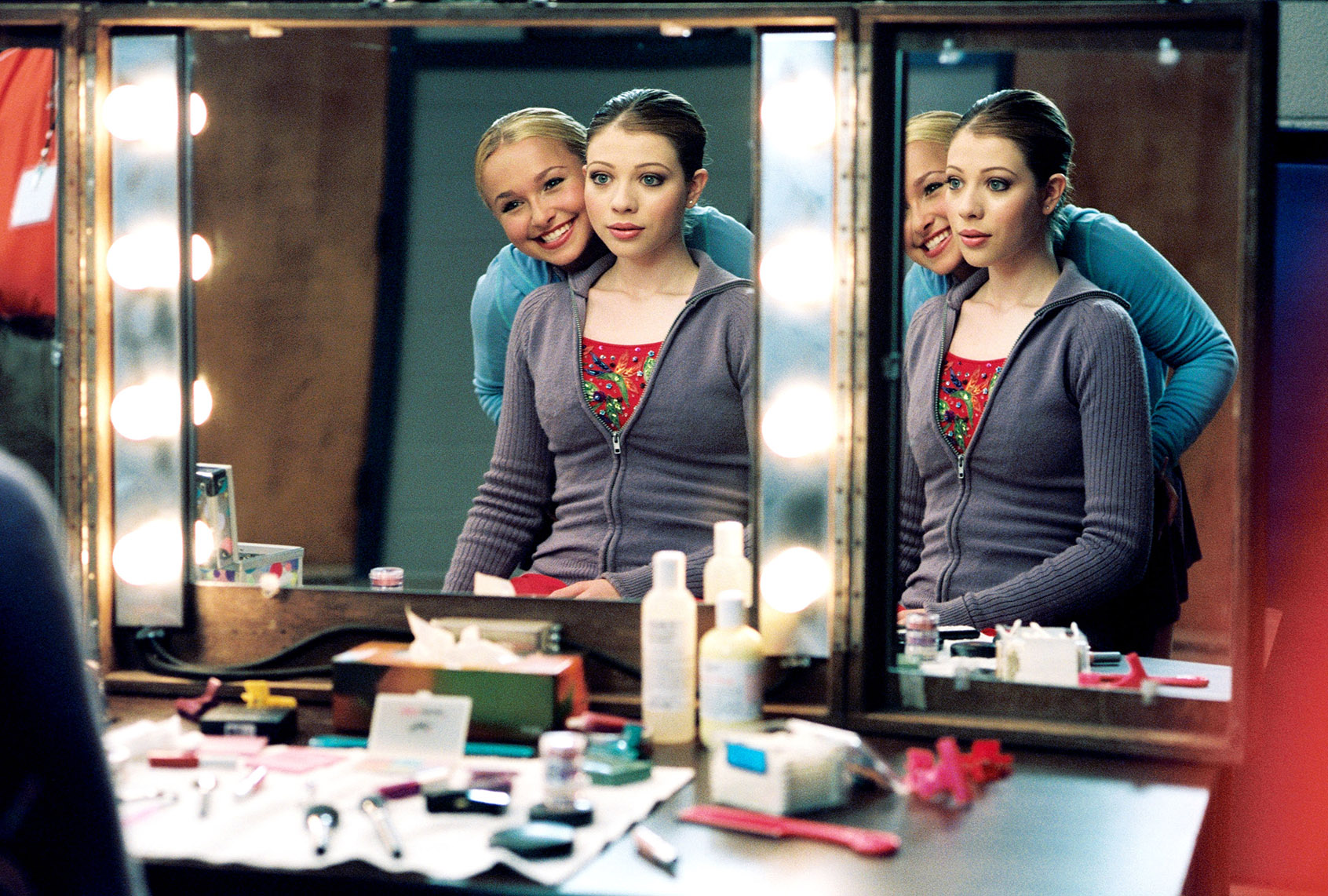
Some of Panettiere’s most notable roles point back to this phenomenon, with her TV arcs in series like “Heroes” and “Nashville,” at their cores, tracking the effects of the whole world watching and depending on you. But it’s her 2005 Disney film, “Ice Princess” — one of my first experiences with Panettiere’s work — that’s most illustrative of both fame’s pitfalls and the culture that cosigns them in the name of success. In the movie, Panettiere plays Gen Harwood, an archetypal most-popular-girl-in-school and less-than-standard teenage ice-skating prodigy. Though her form and marks in the sport are good, real success is just out of Gen’s reach. That is, until physics geek Casey Carlyle (Michelle Trachtenberg, another child star gone far too soon) begins studying the science of Gen’s skating in hopes of scoring a college scholarship. 


Want more from culture than just the latest trend? The Swell highlights art made to last.
Sign up here


Casey and Gen’s journey from competitors to confidantes is the film’s familiar emotional center, but tucked into an unfamiliar narrative. Beneath its Disney dialogue and some smoothed-over depictions of the harsher realities of competitive sports, “Ice Princess” boasts winning messages about the pressures put on young people to achieve greatness at an age when they’re too young to define personal success. That the film is led by two young women who accomplished such greatness in their childhood and teenage years at the risk of their privacy and potentially their well-being is a tragically meta asterisk that will now hang over the movie forever.

But that doesn’t mean “Ice Princess” doesn’t still come loaded with hope and pertinent themes of personal choice, active listening, and cheering young people on in whatever they choose to do (within reason). Considered alongside its stars’ tragically brief lives, “Ice Princess” conveys the critical need to give teenagers both stalwart encouragement and the tools to speak up when they need help. And while the movie’s legacy looks a little more macabre now, Panettiere and Trachtenberg’s glimmering performances are enough to push through the darkness.

Casey and Gen are, for a Disney movie, as different as they come. Casey lives with her mother, Joan (Joan Cusack), in a cozy, rural house outside of town, where Casey skates for fun on the frozen pond in their backyard. Gen is your typical blonde suburbanite who wishes she could spend her Saturday nights at parties or with her friends, instead of in intensive training on the ice, coached by her mother, Tina (Kim Cattrall). Gen and Casey aren’t enemies, but they’re not exactly friends, either. But when Casey’s science teacher encourages her to apply for a college scholarship that could change her entire life — and make the project she submits as part of her application personal — Casey’s affection for ice skating becomes a thorn in Gen and Tina’s side.

The two girls are thrown together by their mutual commitment to their passions, science and skating. What Gen and Casey want is to enjoy these things for the personal thrills they offer. Fame or excellence in either field seems to be the desire of their parents and other adult figures in their lives. “People wait their whole life to find their calling,” Casey’s teacher tells her about the scholarship, asserting that a natural fluency in science means it must be her destiny. These sentiments are reflected by Joan, who desperately wants more for her daughter than she’s been able to provide on her own teacher’s salary.

Tina, on the other hand, gets to the point with candor. “You’re not like other girls,” Tina tells Gen when her daughter asks why she can’t take a half-hour break from training to be with her boyfriend. “Winners make sacrifices.” For Gen, those sacrifices come at the expense of joy. Gen knows the exact measurements of her salad order and is strictly forbidden from eating any bread. Her practice doesn’t stop when the sun goes down. And attending a high school party is entirely out of the question. There is something genuinely quite heartbreaking about watching Panettiere, a young woman just coming to understand Hollywood industry standards, repeat the sickly refrains of a similarly demanding profession. When Gen orders cheese (in a strict one-quarter cup measurement) for her salad one afternoon, her friends poke fun at her. “It’s Saturday,” she replies, “I can pig out if I want to.”

With its focused screenplay, “Ice Princess” quickly cultivates an atmosphere that’s sympathetic to Gen and Casey. The film frames their lapses in rigor as the joys of being a teenager, rather than imperfections — or worse, weakness in the pursuit of glory. No 16-year-old should be so strictly confined to a routine that prevents them from actually living their life.

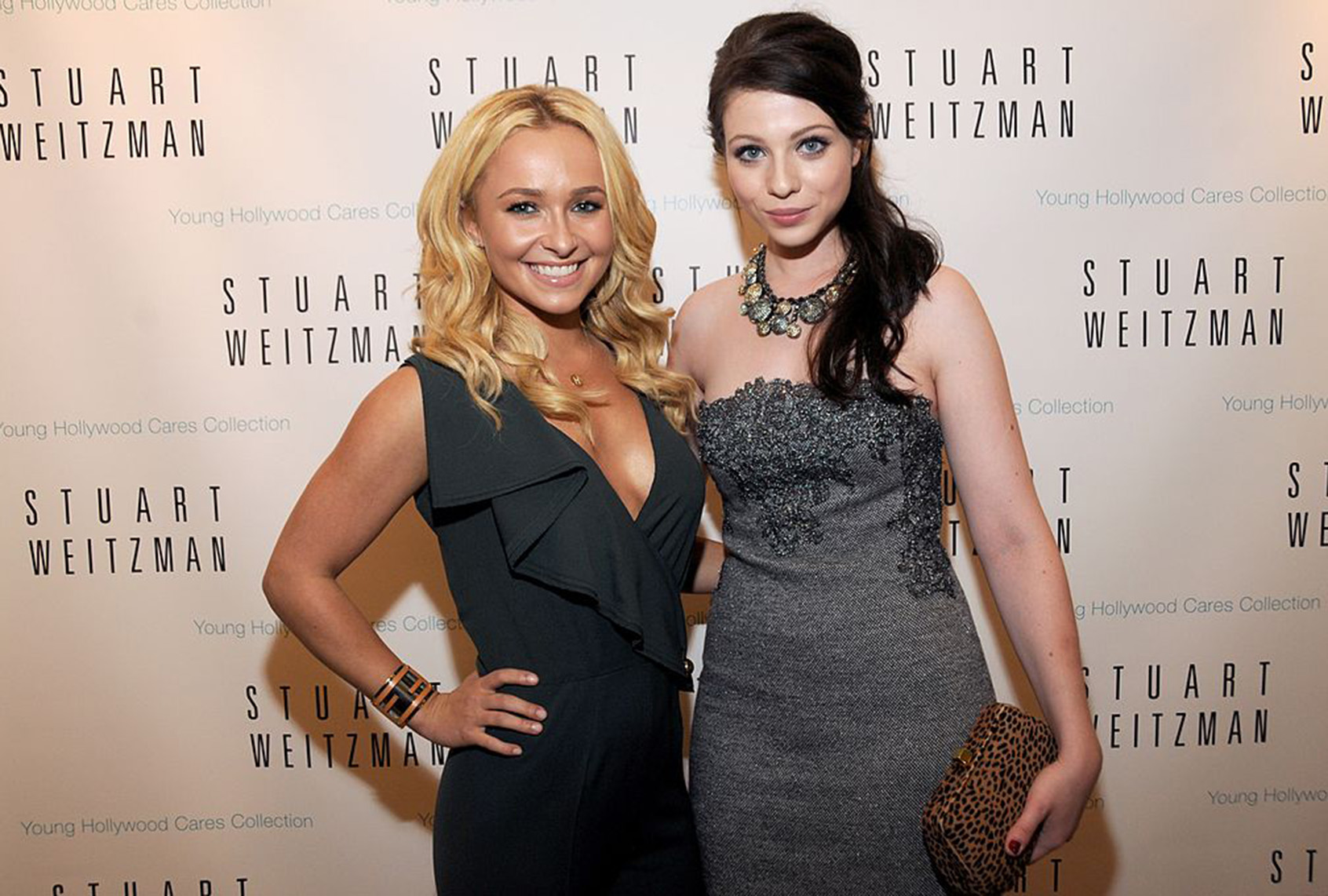
Actors Hayden Panettiere and Michelle Trachtenberg pose together at a Stuart Weitzman event for the Young Hollywood Cares Collection.

(Alli Harvey / Getty Images for Stuart Weitzman) (L-R) Hayden Panettiere and Michelle Trachtenberg attend the unveiling of Stuart Weitzman’s Young Hollywood Cares Collection in aid of ovarian cancer research during Fashion’s Night Out at Stuart Weitzman Boutique on September 8, 2011.

It’s ironic that, in the aftermath of Panettiere’s death, so much of the response has been about the lack of protections offered to child stars in the film and television industries, and not the content creation field. Social media is the new breeding ground for the kind of toxicity that the people mining Panettiere’s death for views purport to abhor.

But that’s not the message that America is selling. The same tracks to success still exist for young people gifted in sports or science. But fame as a general concept also seems much more attainable than it did 21 years ago. Teenagers want to grow up to be influencers or TikTokers, spending a significant portion of their youth creating content about life instead of actually living it.

It’s a lifestyle not entirely dissimilar to the rigorous training of an ice-skating prodigy, putting in the work at all hours to hone their skill. But it does strike me as odd that, in the aftermath of Panettiere’s death, so much of the response was about the lack of protections offered to child stars in the film and television industries, and not the rapidly booming content creation field. How ironic that social media is the new breeding ground for the kind of toxicity that the people mining Panettiere’s death for views purport to abhor.

That dissonance is a big part of why “Ice Princess” holds up today. One could even argue that it’s now an even more critical part of Panettiere and Trachtenberg’s legacies. The film is no longer just a tender-hearted story of fame and all its drawbacks, but also a look at two women who bravely wrestled with those flaws, making a major impact in the short time they were here. When they’re on screen, Panettiere and Trachtenberg shine through all the Disney conventions, their characters pointing back to their real selves. 

Each one has her singular presence — Trachtenberg plucky and inspiring; Panettiere charming and bold — but together, they’re beautiful complements. Panettiere’s grounded presence helps untether the film from its somewhat corny conceit, giving it authentic complexity. She deviates from the one-note mean girl role, supplying Gen with dimensionality and kindness that characters like these were rarely afforded. That Gen’s growing discontent with skating is so closely linked to Panettiere’s real-life trajectory — trying to figure out where she fits in a ruthless industry — is a sour cherry on top: unexpected, but worth embracing. Though the importance of “Ice Princess” is obscured by histrionic high school drama and feel-good fluff, it remains a vital work for teaching parents and kids of all ages that success is what you make of it. And none of that would be possible without its two forever-shining stars.

The post “Ice Princess” quietly defined Hayden Panettiere’s whole career appeared first on Salon.com.

  •  

ABC sues the FCC over Trump and Carr’s campaign of threats

An illustration of FCC chairman Brendan Carr

ABC is suing the Federal Communications Commission over claims the agency "waged a retaliatory campaign" against its networks over the content they broadcast. In a lawsuit filed in federal court on Tuesday, ABC and its parent company Disney accuse the FCC of "punishing ABC for its speech" by threatening its broadcast licenses.

It's the latest escalation in the dispute between ABC and the Trump administration, which has been critical of the network's political coverage - especially by late-night host Jimmy Kimmel and The View. The FCC opened an investigation into The View's airtime of political candidates in February and ordered ABC stations

Read the full story at The Verge.

  •  

Disney patent for a fake-elevation ride trick matches new Encanto ride

Disney fake-elevation ride patent — Antonio's Fiesta de Encanto concept art. Posted with the permission of Disney Experiences.

As reported by wdwmagic.com, last week, Disney Enterprises, Inc. published a patent for "a way to make a flat ride track feel like it's climbing or dropping, without the track actually changing height."

U.S. Patent Publication

The core version of the trick needs no moving parts and no screens at all, just angled walls and stairs, though the patent leaves room for add-ons like video projection and set pieces that shift or change dimension as a vehicle passes, layered on top of the static illusion for a stronger effect. — Read the rest

The post Disney patent for a fake-elevation ride trick matches new Encanto ride appeared first on Boing Boing.

  •  

Disney will reunite Figment and Dreamfinder at EPCOT

reunite Figment and Dreamfinder — @DisneyParks and @Disney / YouTube.com

Disney made many announcements for the future of its theme parks at the D23 Disney fan event in Anaheim, California, Saturday night. One headline is that an upcoming refurbishment of the Imagination Pavilion in Disney World's EPCOT (Orlando, Florida) will feature beloved but neglected characters Figment and Dreamfinder. — Read the rest

The post Disney will reunite Figment and Dreamfinder at EPCOT appeared first on Boing Boing.

  •  

Disney D23 2026: Everything announced for Star Wars, Marvel, and more

Ryan Gosling and Shawn Levy in front of a Star Wars Starfighter logo.
Shawn Levy, Ryan Gosling | Image: The Walt Disney Company/Image Group LA

The annual Disney fan event showed off the cast of Marvel’s X-Men movie, plus a new trailer for Avengers: Doomsday, and our first look at the VisionQuest TV show for Disney Plus. For Star Wars fans, there was a teaser trailer for season two of Ahsoka, plus a special look at Star Wars: Starfighter with an appearance from Ryan Gosling.

Other new announcements included a few updates about Pixar, The Simpsons, Bluey, and others you can find below.

  •  

How Disney builds immersive theme park worlds from their movies

Posted with the permission of Disney Experiences

The upcoming hour-long film on Disney+, "Disney Worldbuilders," focuses on how the cinematic visions of seven filmmakers have been realized as physical, immersive areas of Disney theme parks.

The film has more than its share of Disney and former CEO Bob Iger corporate P.R., — Read the rest

The post How Disney builds immersive theme park worlds from their movies appeared first on Boing Boing.

  •  

Disney Plus tries a new AI-powered search

Disney’s AI tools for Disney Plus and ESPN.

Disney is testing a new AI-powered tool for Disney Plus that uses a natural language search, a voice query, or a suggested prompt to create a customized row of show and movie recommendations.

Disney Plus, like other streaming services, can recommend shows to watch based on your viewing history. But the company says this new tool, which is "a limited beta experiment" that's in testing with a "small group of select subscribers," is intended to recommend content that "fits the moment."

A screenshot of Disney's AI-powered search experiment.

The feature is the latest in a broader push to offer AI-powered recommendation tools that help you find something to watch among massive catalogs of streaming …

Read the full story at The Verge.

  •  

ABC Unleashes: Carr Wants a ‘Media Industry Too Fearful of Official Reprisal to Report the News Freely’

Get in Line or ‘Pay the Price’

In a scathingly-written regulatory filing posted on the Federal Communications Commission’s website on Thursday, ABC’s lawyers tore into Trump administration FCC head Brendan Carr for “attempted censorship” and accused Carr of helping President Trump in his retribution campaign against media that criticizes him.

  •  

Pluralistic: Vicky Osterweil's "The Extended Universe" (28 Apr 2026)


Today's links


The Haymarket Books cover for Vicky Osterweil's 'The Extended Universe.'

Vicky Osterweil's "The Extended Universe" (permalink)

Vicky Osterweil's The Extended Universe: How Disney Killed the Movies and Took Over the World makes the kind of long, polemical, startling and illuminating argument that defines great cultural criticism; it's the sort of book that encapsulates the reasons I read criticism in the first place:

https://www.haymarketbooks.org/books/2525-the-extended-universe

My first brush with this kind of criticism came more than two decades ago, when I read John Kessel's now-classic "Creating the Innocent Killer," a critique of Orson Scott Card's Ender's Game, a book I had read and enjoyed enough to re-read several times:

https://johnjosephkessel.wixsite.com/kessel-website/creating-the-innocent-killer

Kessel's argument is that Card used Ender's Game to smuggle in some very ugly ideas, wrapped in a story that was compelling, even exhilarating. In Ender's Game, we meet Andrew "Ender" Wiggin, a small, physically weak boy possessed of a prodigious intellect and a great deal of sensitivity and empathy. Ender is tormented by an escalating series of aggressors, whom he retaliates against with overwhelming force, first to the point of lethality and then all the way to literal genocide. And here's where Card makes his move: Ender's sensitivity and empathy and intellect tell him that he must respond this way, because he can tell that his aggressors will not back off from their intention to harm him; and because Ender is so small and weak, he has to use whatever tactic his brilliant mind can devise, and if that tactic results in the death penalty for mere bullying, well, that's the bully's fault, not Ender's. Indeed, in dying at Ender's hands, these bullies re-victimize Ender, because Ender is a gentle, smart, wise, weak person, and these inescapable murders that he is goaded into committing are a stain on his soul that he can never wash away.

Before reading "Creating the Innocent Killer," I confess I didn't really understand what criticism was for. Like many people, I conflated "criticism" with "reviews," thinking of critical works as a species of inconveniently difficult-to-digest essays that might help me figure out which books to read and which movies to see.

Kessel's magnificent essay changed all that, and not in spite of the fact that Kessel had pointed out some very important problems with a book that I loved, but because of that fact. In helping me understand the ugliness hidden within something whose beauty and virtues I saw very clearly, Kessel taught me more about myself – about where my aesthetics and my values overlapped, and where they diverged. It was literally life-changing.

Like Kessel, Osterweil's 'Extended Universe' deals with media that I have a great deal of affection for – the products of the Walt Disney Company. Though I'm primarily interested in theme parks – I love a big, ambitious built environment of any description and Disney pursues these with a seriousness that few others can touch – the Disney films (and the films of the studios Disney purchased, like Marvel and Lucasfilm) are obviously intimately bound up in those theme park designs.

Osterweil has her own ambivalent affection for these movies. Like so many of us, she's been raised on them, and they've shaped how she sees the world and its stories. But – like me – Osterweil is deeply suspicious of capitalism, American imperialism, and the notion of "intellectual property," and she uses reviews of a dozen Disney films to make the case that Walt Disney and the studio he founded with his brother are standards-bearers for these odious forces, and not just in the overt ways that might immediately spring to mind, but also in subtle ways that can be teased out of a close reading of the films.

In so doing, Osterweil also makes a sharp and well-argued case that intellectual property, colonialism and racial oppression are all facets of the same drive, the drive of people who fancy themselves born to rule to dominate others, which requires that those others also be dehumanized and their work denigrated. When Walt Disney insisted that his be the only name associated with "his" movies, he was playing out the same logic that underpinned his virulent opposition to labor unions and his participation in American imperialism in Latin America.

As with Kessel, Osterweil's argument is full of surprises and illuminations that are especially vivid for those of us who have great affection for these works. As her chapter on Black Panther shows, this contradiction need not go unresolved. There is plenty of scope for fans to seize the reins of the narrative (and as her chapter on the reactionary backlash to the later Star Wars movies shows, it's not just the forces of progress and anti-racism who can pull off this move).

Like the very best criticism, Osterweil's book is more than a way to deepen your understanding of the material she dissects – it's a way to deepen your understanding of the world that produced it, and to deepen your understanding of yourself.


Hey look at this (permalink)


A shelf of leatherbound history books with a gilt-stamped series title, 'The World's Famous Events.'

Object permanence (permalink)

#20yrsago Frank Zappa’s anti-censorship letter https://www.flickr.com/photos/mudshark/117551768/in/set-72057594090059726/

#15yrsago Chemistry kit with no chemicals https://web.archive.org/web/20110427212354/http://blog.makezine.com/archive/2011/04/chemistry-set-boasts-no-chemicals.html

#15yrsago Russian corruption: crooked officials steal multi-billion-dollar company, $230M tax refund, then murder campaigning lawyer https://web.archive.org/web/20110426045152/http://www.foreignpolicy.com/articles/2011/04/20/russia_s_crime_of_the_century?

#15yrsago Golden-age short-change cons https://web.archive.org/web/20110429014539/https://blog.modernmechanix.com/2011/04/26/tricks-of-short-change-artists/

#10yrsago Campaigners search Londoners’ phones to help them understand the Snoopers Charter https://www.youtube.com/watch?v=szN7DlmMLYg

#10yrsago Mitsubishi’s dieselgate: cheating since 1991 https://web.archive.org/web/20160427145038/https://www.cnet.com/roadshow/news/mitsubishi-cheated-fuel-economy-tests-since-1991/#ftag=CAD590a51e

#10yrsago Bellwether: Connie Willis’s classic, hilarious novel about the science of trendiness https://memex.craphound.com/2016/04/26/bellwether-connie-williss-classic-hilarious-novel-about-the-science-of-trendiness/

#5yrsago The Big U https://pluralistic.net/2021/04/26/moolah-boolah/#poison-ivies


Upcoming appearances (permalink)

A photo of me onstage, giving a speech, pounding the podium.


A screenshot of me at my desk, doing a livecast.

Recent appearances (permalink)


A grid of my books with Will Stahle covers..

Latest books (permalink)


A cardboard book box with the Macmillan logo.

Upcoming books (permalink)

  • "The Reverse-Centaur's Guide to AI," a short book about being a better AI critic, Farrar, Straus and Giroux, June 2026 (https://us.macmillan.com/books/9780374621568/thereversecentaursguidetolifeafterai/)
  • "Enshittification, Why Everything Suddenly Got Worse and What to Do About It" (the graphic novel), Firstsecond, 2026

  • "The Post-American Internet," a geopolitical sequel of sorts to Enshittification, Farrar, Straus and Giroux, 2027

  • "Unauthorized Bread": a middle-grades graphic novel adapted from my novella about refugees, toasters and DRM, FirstSecond, April 20, 2027

  • "The Memex Method," Farrar, Straus, Giroux, 2027


Colophon (permalink)

Today's top sources:

Currently writing: "The Post-American Internet," a sequel to "Enshittification," about the better world the rest of us get to have now that Trump has torched America. Third draft completed. Submitted to editor.

  • "The Reverse Centaur's Guide to AI," a short book for Farrar, Straus and Giroux about being an effective AI critic. LEGAL REVIEW AND COPYEDIT COMPLETE.
  • "The Post-American Internet," a short book about internet policy in the age of Trumpism. PLANNING.

  • A Little Brother short story about DIY insulin PLANNING


This work – excluding any serialized fiction – is licensed under a Creative Commons Attribution 4.0 license. That means you can use it any way you like, including commercially, provided that you attribute it to me, Cory Doctorow, and include a link to pluralistic.net.

https://creativecommons.org/licenses/by/4.0/

Quotations and images are not included in this license; they are included either under a limitation or exception to copyright, or on the basis of a separate license. Please exercise caution.


How to get Pluralistic:

Blog (no ads, tracking, or data-collection):

Pluralistic.net

Newsletter (no ads, tracking, or data-collection):

https://pluralistic.net/plura-list

Mastodon (no ads, tracking, or data-collection):

https://mamot.fr/@pluralistic

Bluesky (no ads, possible tracking and data-collection):

https://bsky.app/profile/doctorow.pluralistic.net

Medium (no ads, paywalled):

https://doctorow.medium.com/

Tumblr (mass-scale, unrestricted, third-party surveillance and advertising):

https://mostlysignssomeportents.tumblr.com/tagged/pluralistic

"When life gives you SARS, you make sarsaparilla" -Joey "Accordion Guy" DeVilla

READ CAREFULLY: By reading this, you agree, on behalf of your employer, to release me from all obligations and waivers arising from any and all NON-NEGOTIATED agreements, licenses, terms-of-service, shrinkwrap, clickwrap, browsewrap, confidentiality, non-disclosure, non-compete and acceptable use policies ("BOGUS AGREEMENTS") that I have entered into with your employer, its partners, licensors, agents and assigns, in perpetuity, without prejudice to my ongoing rights and privileges. You further represent that you have the authority to release me from any BOGUS AGREEMENTS on behalf of your employer.

ISSN: 3066-764X

  •  
❌